20 Kitchen Cabinet Organization Ideas for 2026
Kitchen cabinets are where good intentions go to hide. You buy the turntable, the bins, the spice rack — and six months later you are still reaching past three things to find the one pan you actually use.
These 20 kitchen cabinet organization ideas fix that without a remodel: pull-outs, turntables, dividers and zones that put everything you use daily within one reach.
Every idea below works in a real, rented or owned kitchen. Pick three that fit your worst cabinet, start with the one you open every morning, and build from there.
Make every cabinet easy to reach
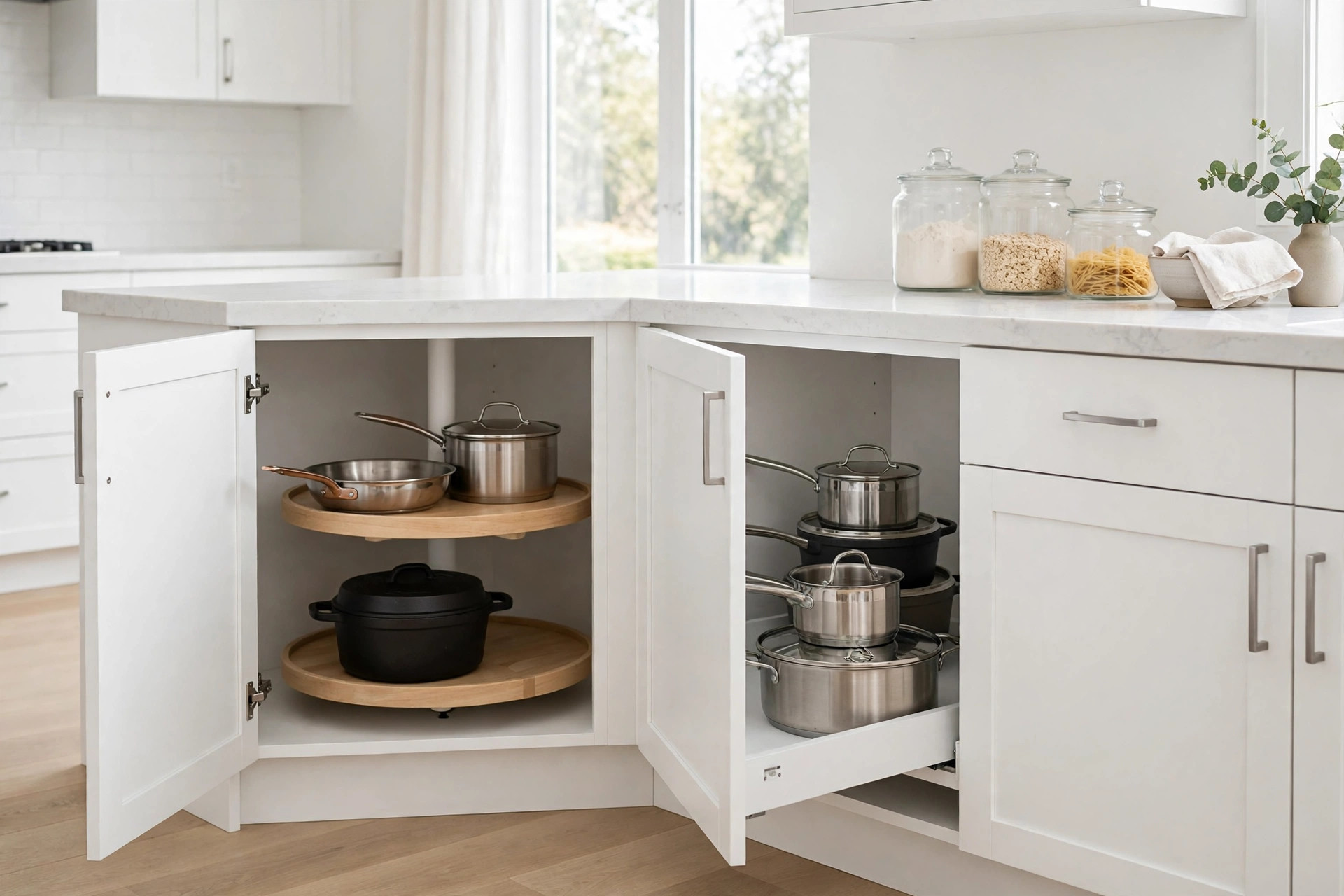
1. A turntable in every deep corner cabinet
A turntable is the fastest win in a corner cabinet. It holds oils, sauces, spices and cans, and one spin brings the back row to the front — no more kneeling to reach the soy sauce. Choose a non-slip surface so jars do not slide, and a raised edge so nothing falls off mid-spin. In a small kitchen, one turntable per corner cabinet is enough; in a large one, use a two-tier turntable for spices on top and taller bottles below. Measure the cabinet depth first — the turntable should leave at least 2 cm clear on every side.
2. Pull-out shelves instead of fixed shelves
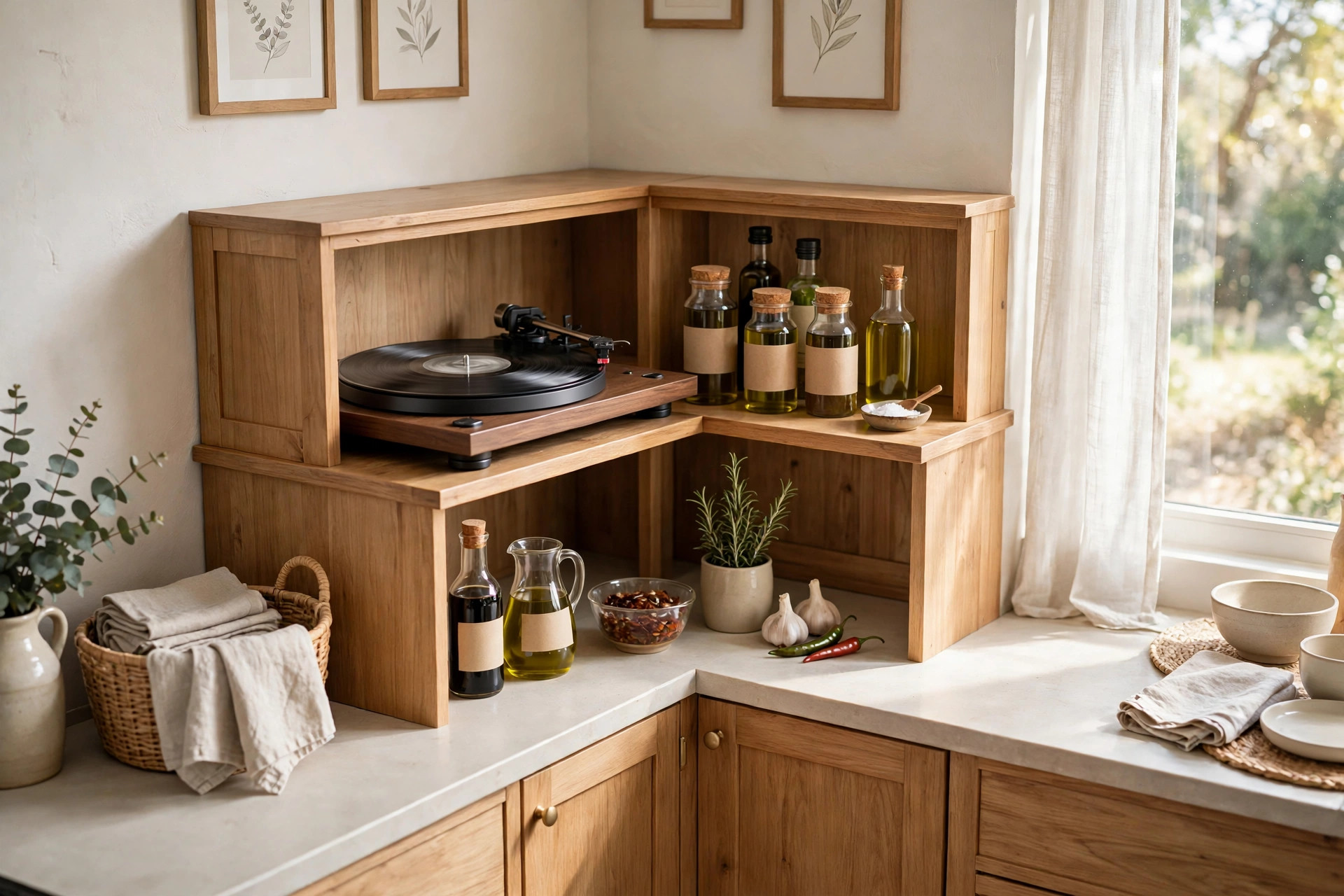
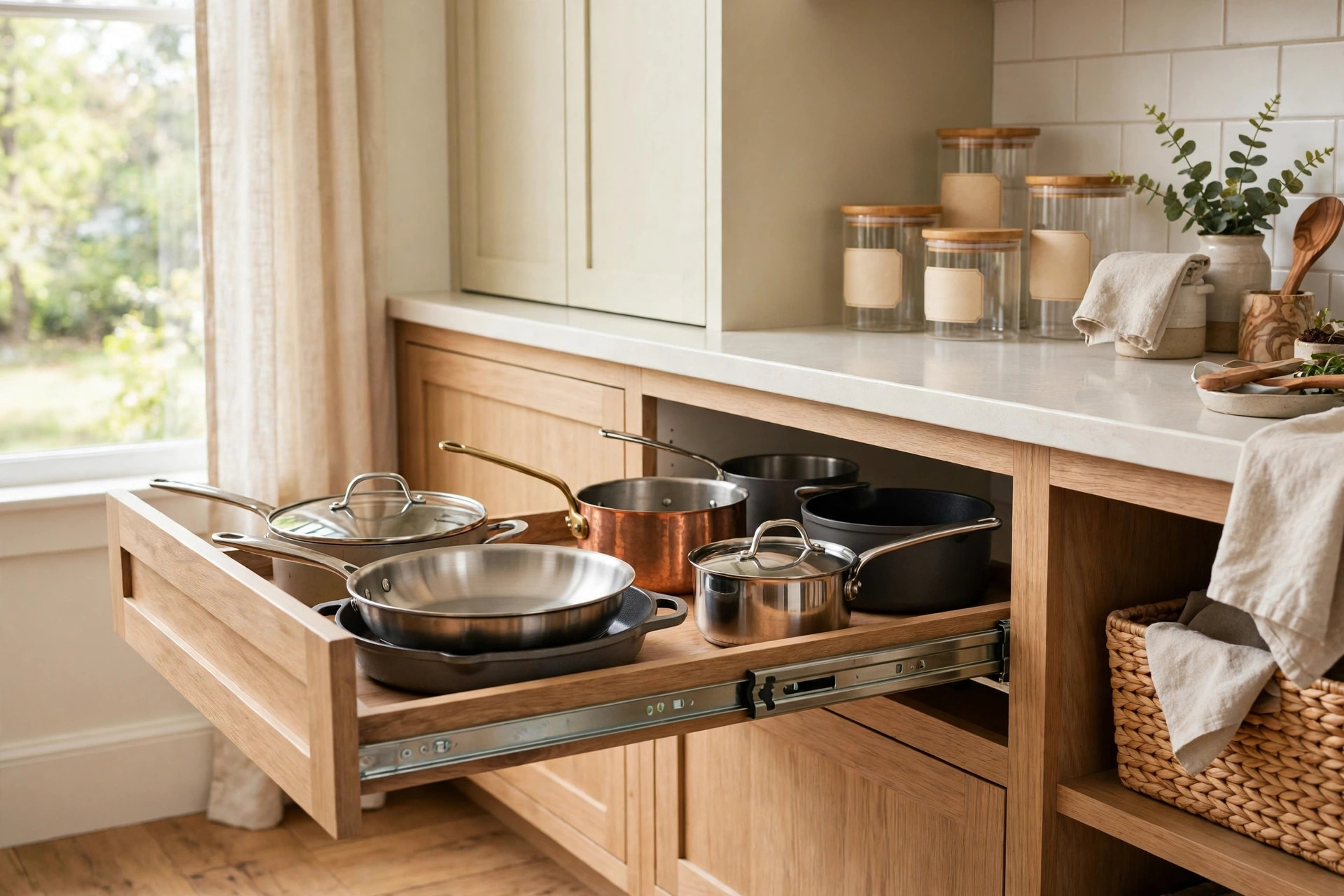
A fixed shelf wastes the back half of every deep cabinet. Pull-out shelves bring the whole shelf to you, so pots, pans and small appliances slide out like a drawer. They are the single best upgrade for lower cabinets, and they cost far less than new cabinets. Look for full-extension slides rated for kitchen weight, and keep heavy items — Dutch ovens, stand mixers — on the lowest pull-out so nothing tips. If you rent, use a freestanding pull-out basket that sits on the existing shelf instead of screwing anything in.
3. Stack shelves to double a tall cabinet
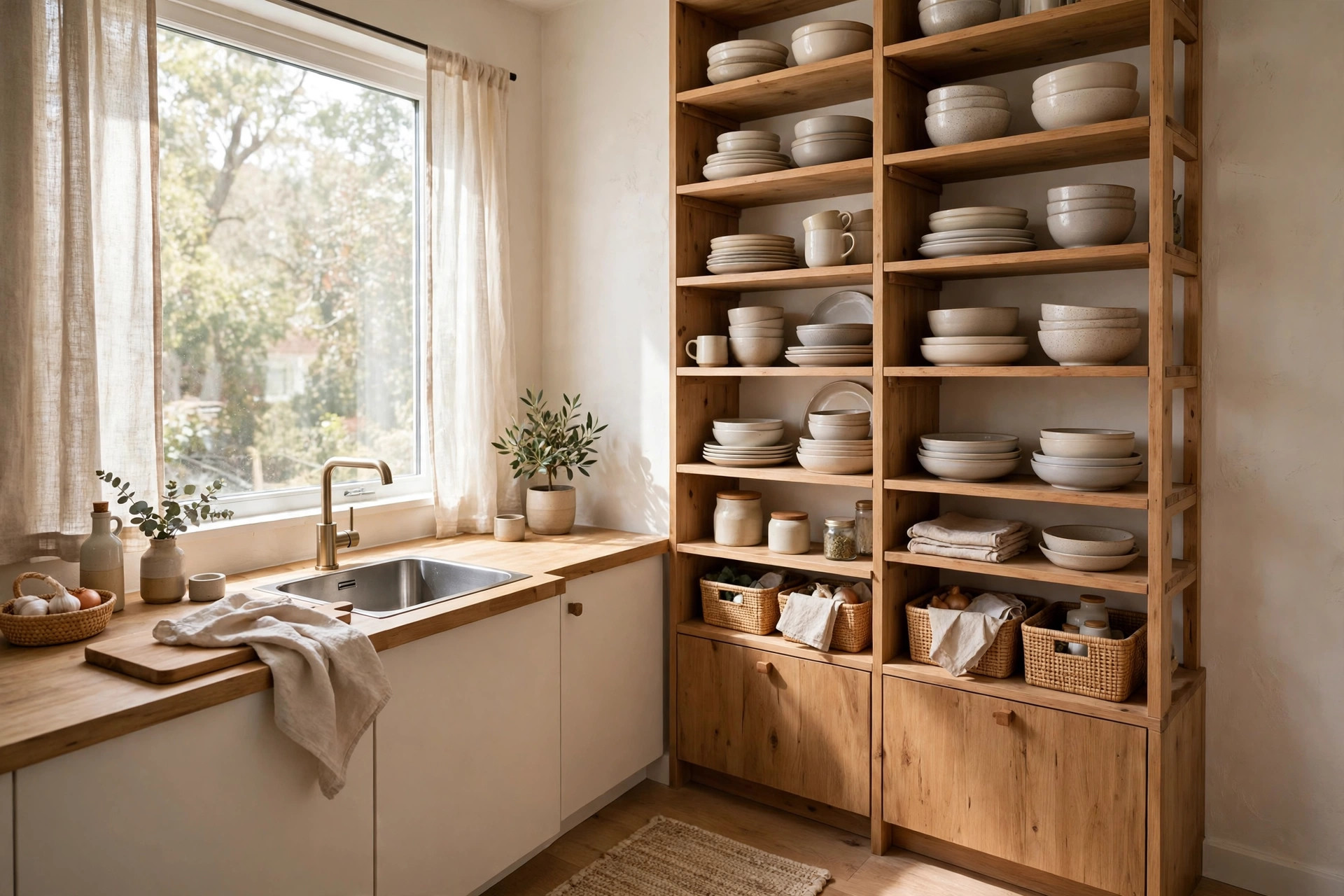
Most cabinets have one shelf and a metre of wasted air above it. A stackable shelf insert creates a second level for mugs, bowls and plates, doubling usable space for the price of a lunch. Use wire or bamboo inserts that match your cabinet colour, and keep daily items on the lower level and rarely used pieces on top. This works best in upper cabinets where plates and glasses live, and it is the easiest idea on this list to start today — no tools, no measuring beyond height.
4. A spice rack on the inside of the door
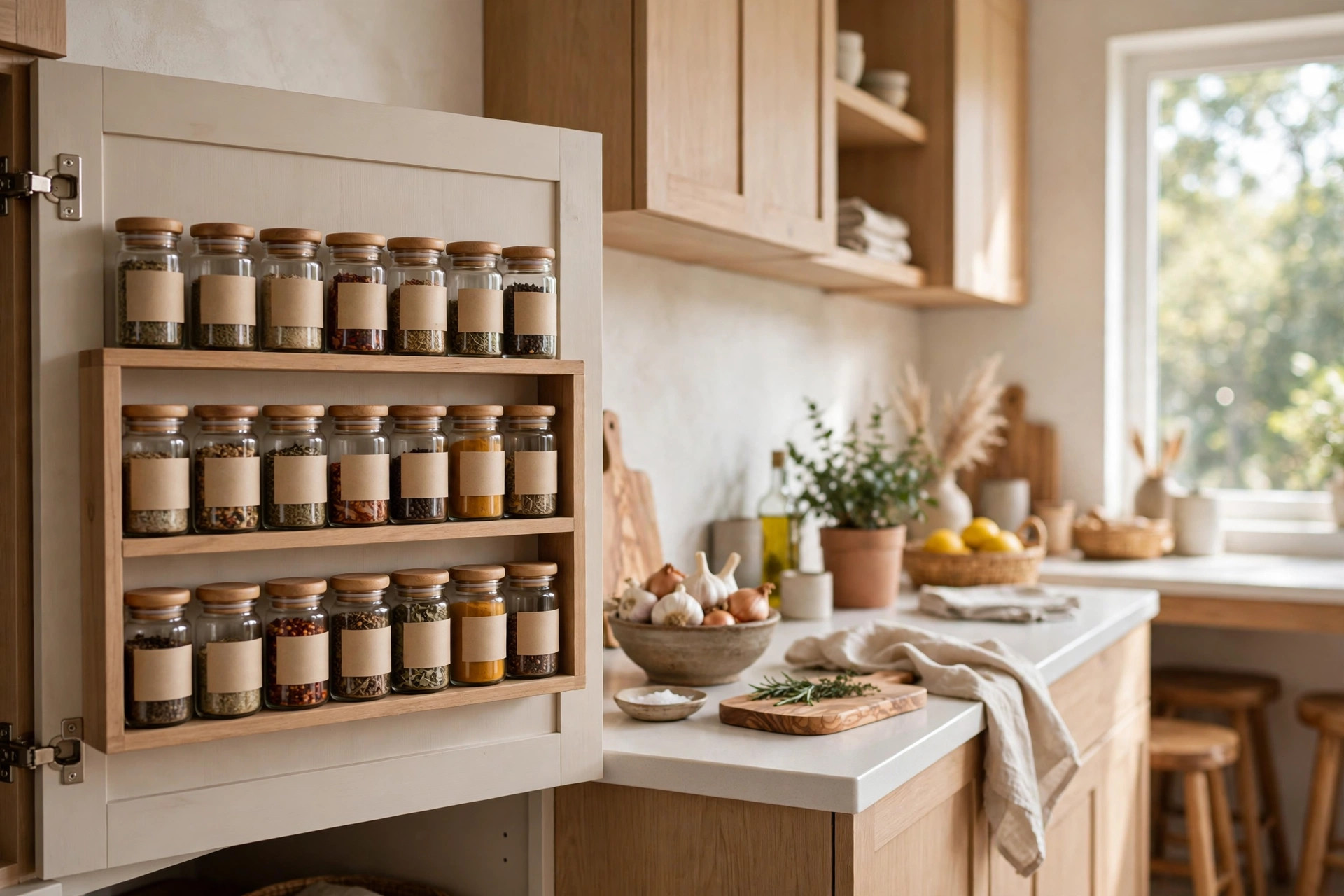
Spices are small, numerous and always in the wrong place. A slim rack on the inside of a cabinet door puts every jar at eye level, frees a whole shelf, and stops the spice avalanche every time you open the cabinet. Choose a rack with a lip so jars cannot slide out when the door closes, and decant into matching jars with labels on the lid — you will find cumin in two seconds instead of ten. Keep the rack on the cabinet nearest the stove, not the one across the kitchen.
5. Vertical dividers for baking sheets and cutting boards
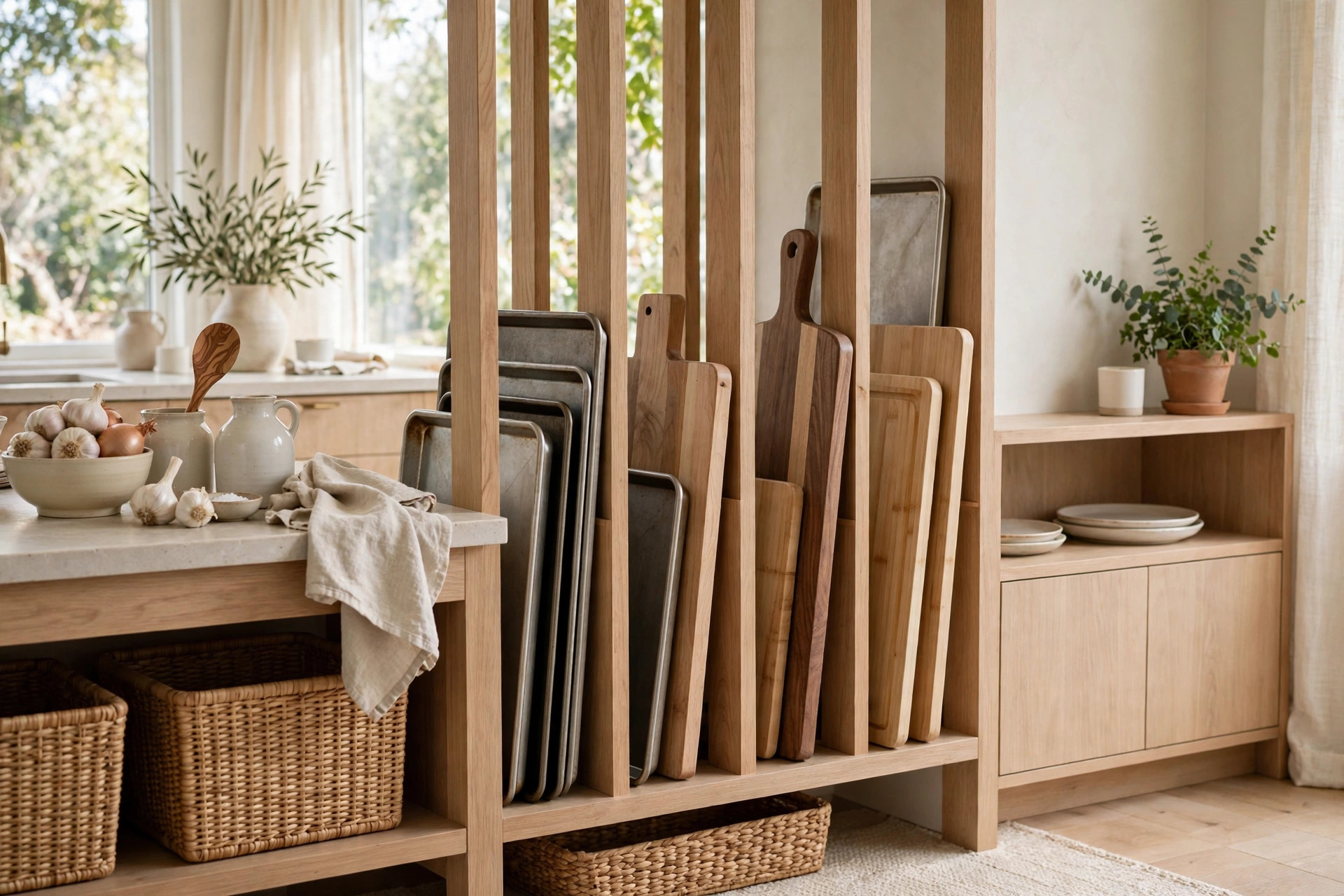
Baking sheets, cutting boards and lids are flat, awkward and always falling over. A vertical divider — a tension rod, a file organizer, or a purpose-made rack — stands them upright like books, so you pull out one without disturbing the rest. Put the divider in the narrow cabinet beside the oven, or in a deep drawer if you have one to spare. This is the cheapest fix for the cabinet that currently sounds like a crash every time you open it.
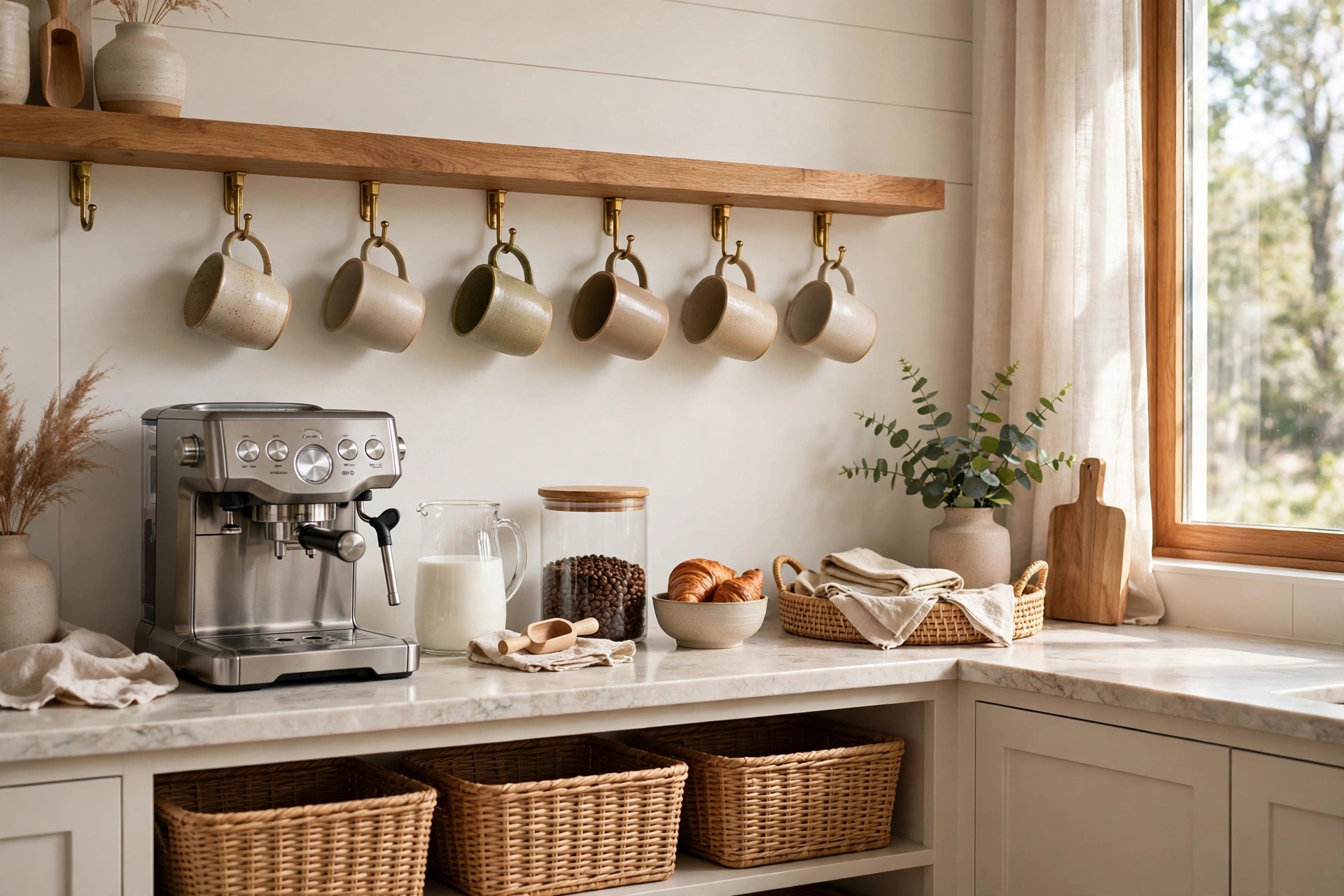
6. Hooks under the shelf for mugs
The underside of a cabinet shelf is free real estate. Screw-in or adhesive hooks hold mugs by their handles, freeing shelf space for plates and bowls and keeping your favourite mugs visible. Use hooks rated for a full mug, space them so mugs do not clink, and keep this to the cabinet above the coffee station if you have one. In a rental, use adhesive hooks and remove them cleanly when you leave — no drilling needed.
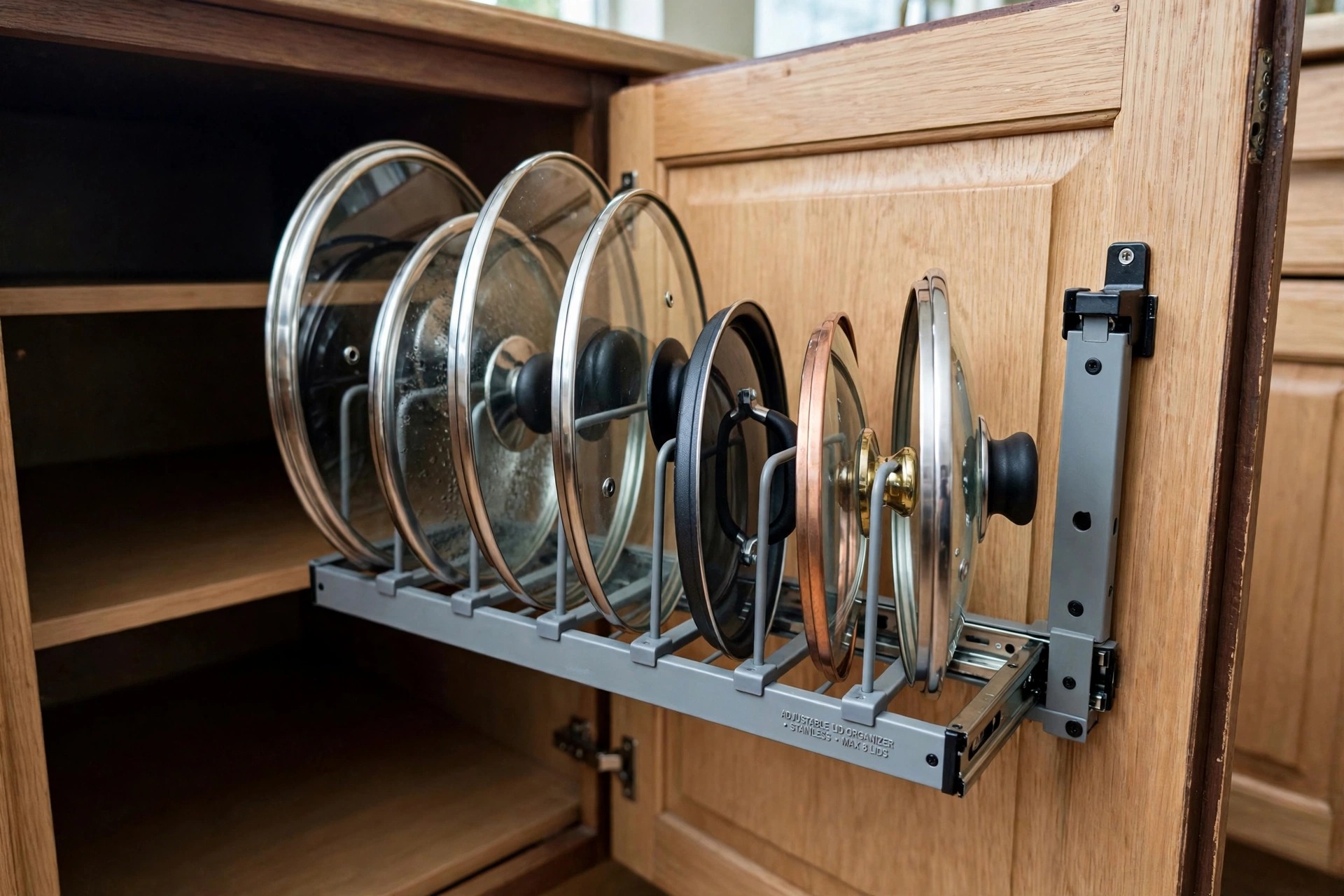
7. A lid organizer on the cabinet door
Pot lids are the hardest shape in a kitchen to store. A rack on the inside of a lower cabinet door holds three or four lids upright, right where the pots live, so you stop stacking lids on top of each other and hoping. Choose a rack with adjustable slots for different lid sizes, and match each lid to the pot directly below it. This one idea can empty an entire drawer that is currently doing nothing but holding lids.
Drawers and zones that do the work
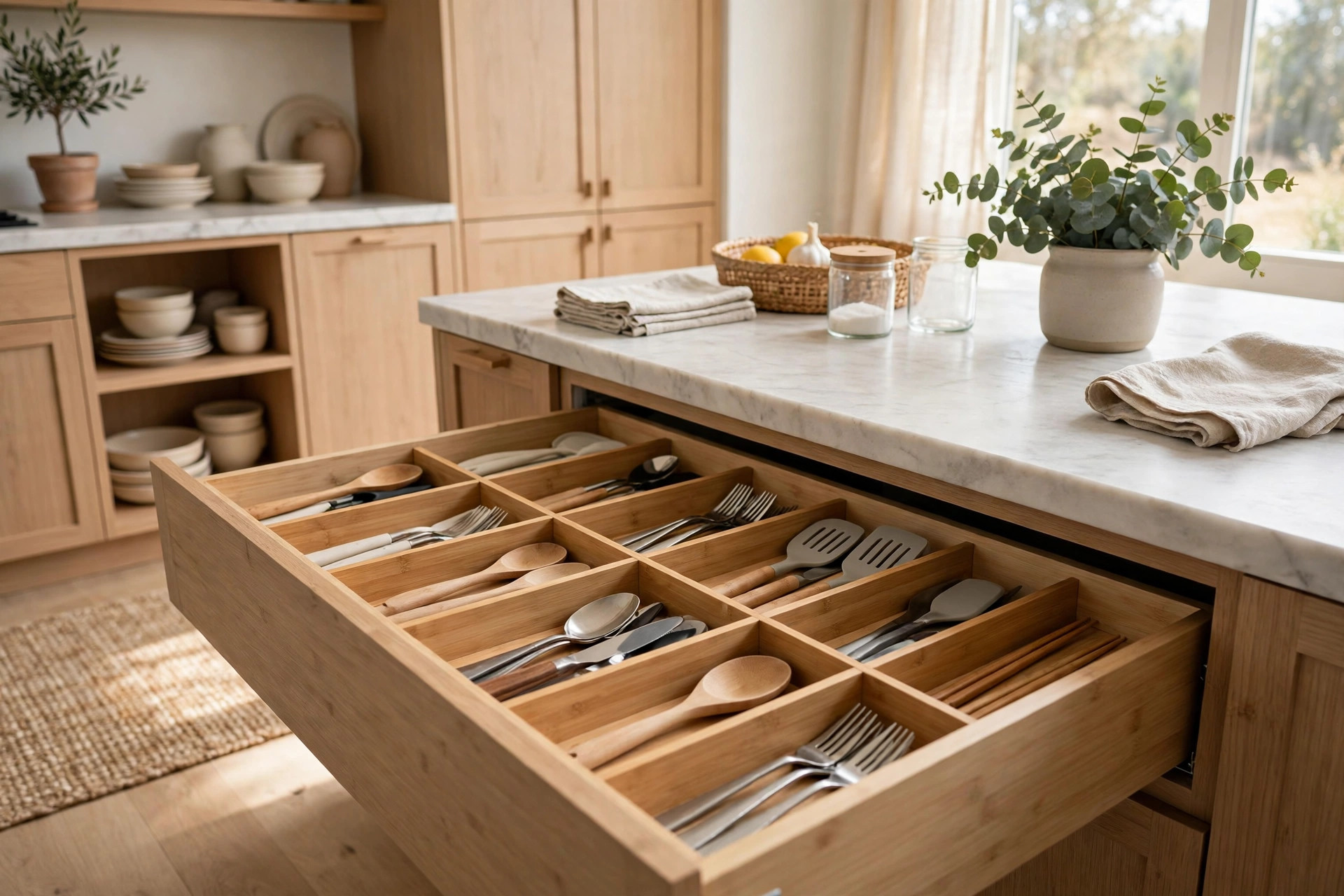
8. Drawer dividers for utensils, not a junk drawer
A drawer without dividers becomes a junk drawer in a week. Adjustable dividers give every utensil a home — spatulas in one slot, tongs in another, measuring spoons in a small tray — and the drawer opens to order instead of chaos. Use bamboo dividers that expand to fit, and keep only the utensils you use weekly in the top drawer; the rest belong in a lower drawer or a crock on the counter. Label nothing — the dividers themselves are the system.
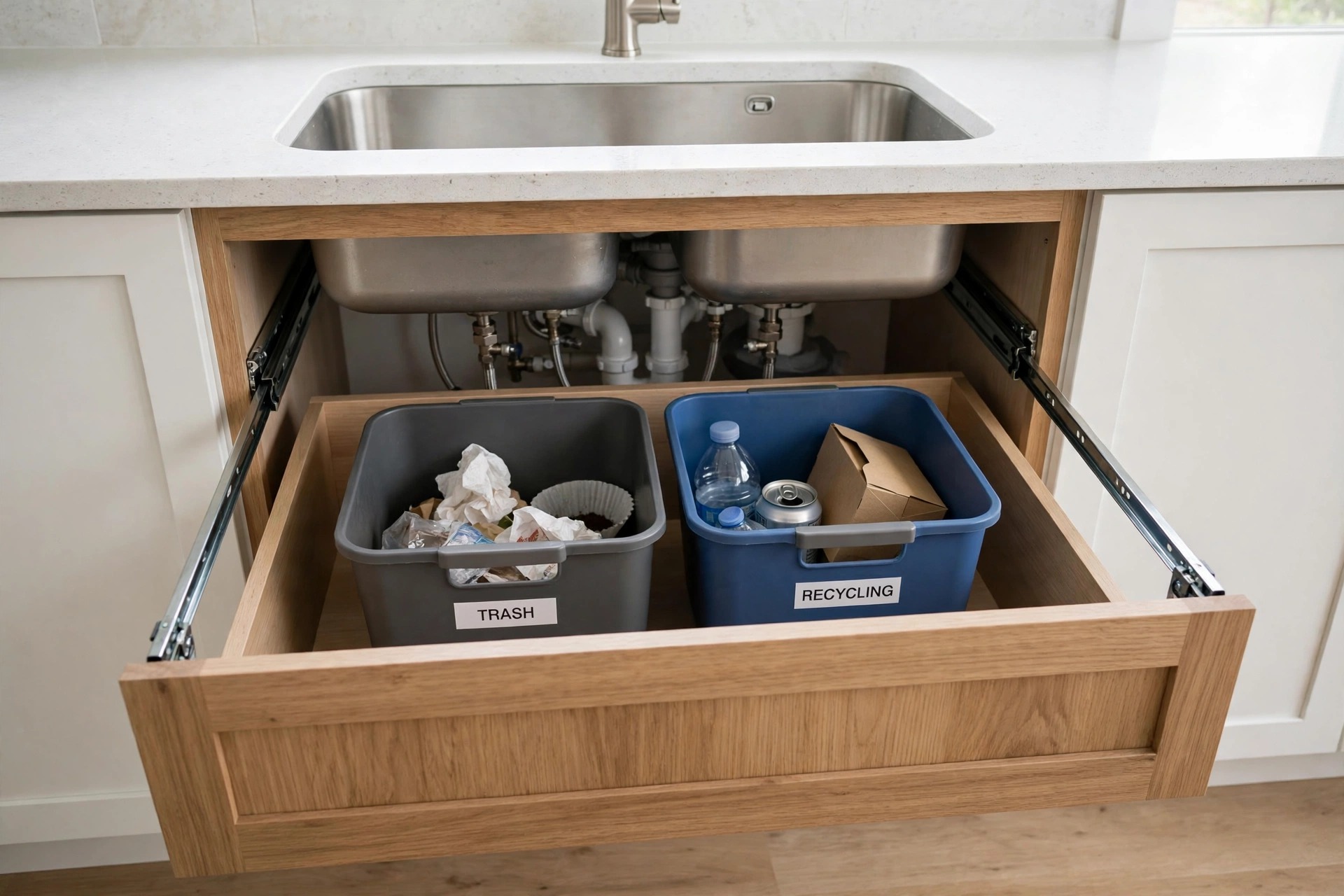
9. A pull-out trash and recycling cabinet
Trash and recycling bins on the floor waste space and look messy. A pull-out cabinet under the sink or beside it hides both bins, keeps bags within reach while you cook, and frees the floor for a step stool or a pet bowl. Choose a pull-out with a soft-close slide and a lid that stays open while you scrape a plate. If a built-in is out of budget, a slim freestanding bin with a lid inside a tall cabinet gives you most of the benefit.
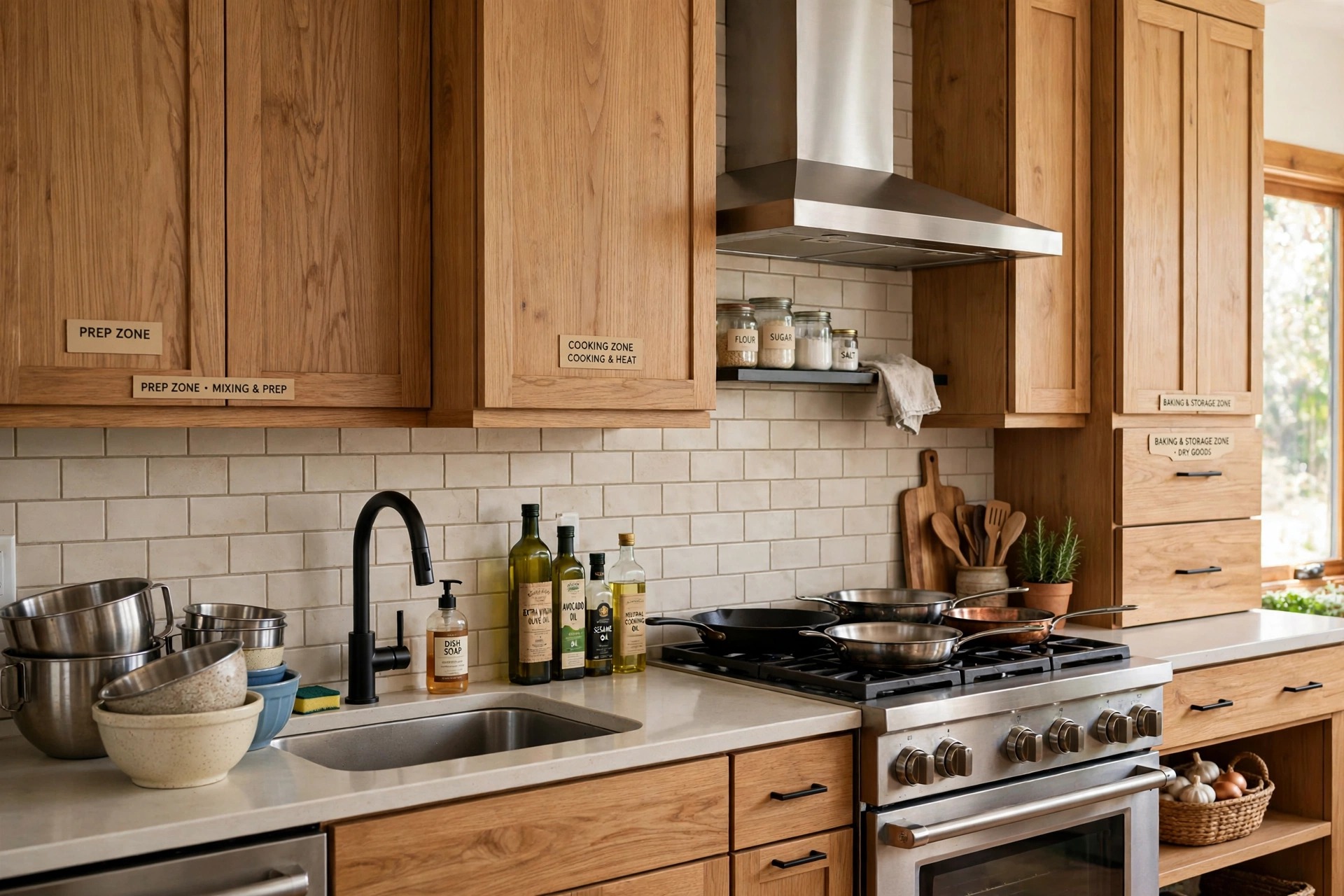
10. Zone your cabinets by task
Divide the kitchen into zones — cooking, prep, baking, coffee — and give each zone its own cabinets. The cooking zone, beside the stove, holds oils, spices and pans; the prep zone, beside the sink, holds cutting boards, knives and mixing bowls; the baking zone holds flour, sugar and trays. When everything has a zone, putting things away takes five seconds instead of a decision, and two people can cook without colliding. This is a habit, not a purchase, and it makes every other idea on this list work better.
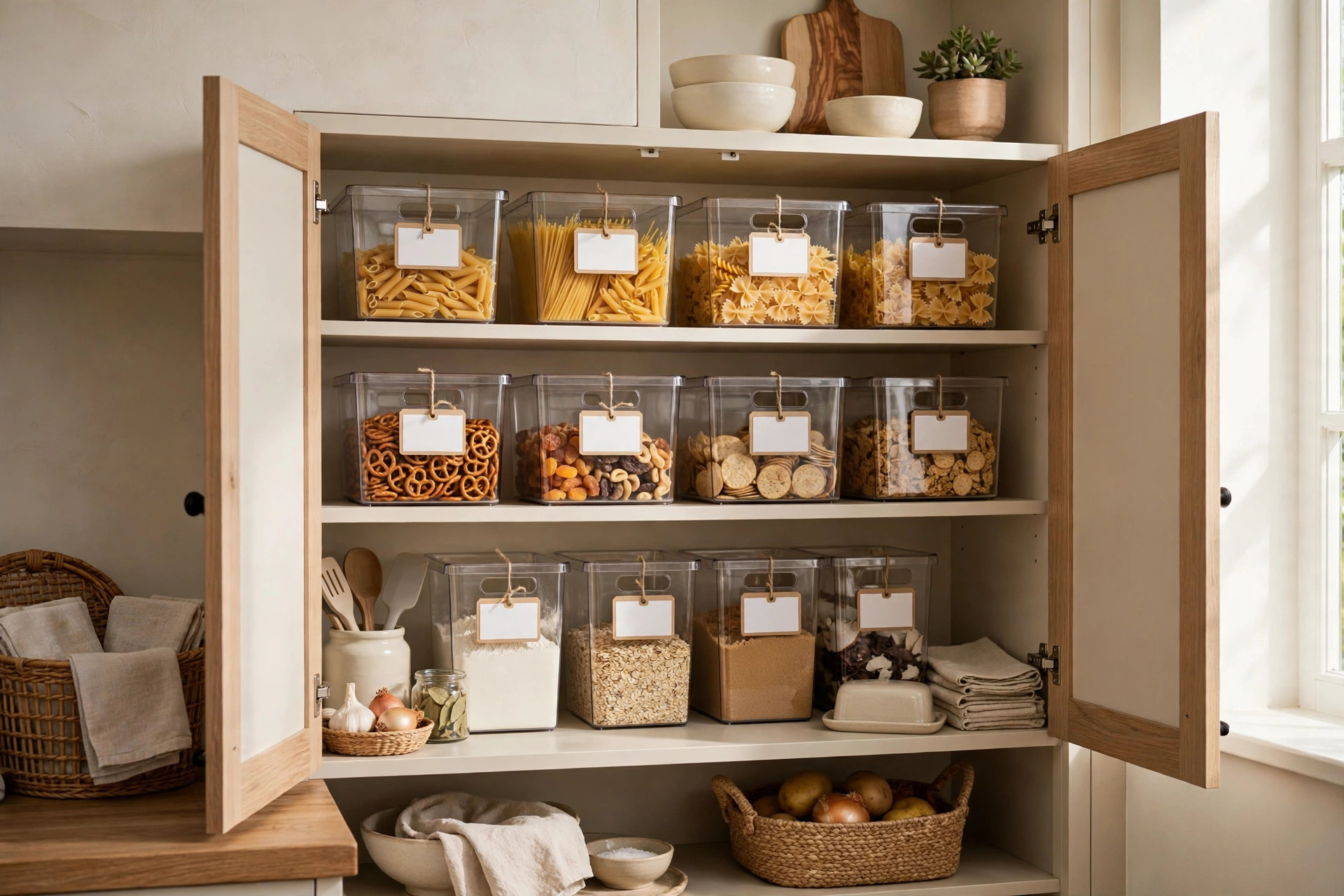
11. Clear bins with labels for the pantry cabinet
Clear bins turn a dark pantry cabinet into a shop shelf. One bin per category — pasta, snacks, baking, canned goods — with a simple label on the front, so you see at a glance what is running low. Use bins with handles so you can pull the whole category out like a drawer, and keep the bins the same size so they stack neatly. Decant only the things you buy in bulk; everything else stays in its original packaging inside the bin.
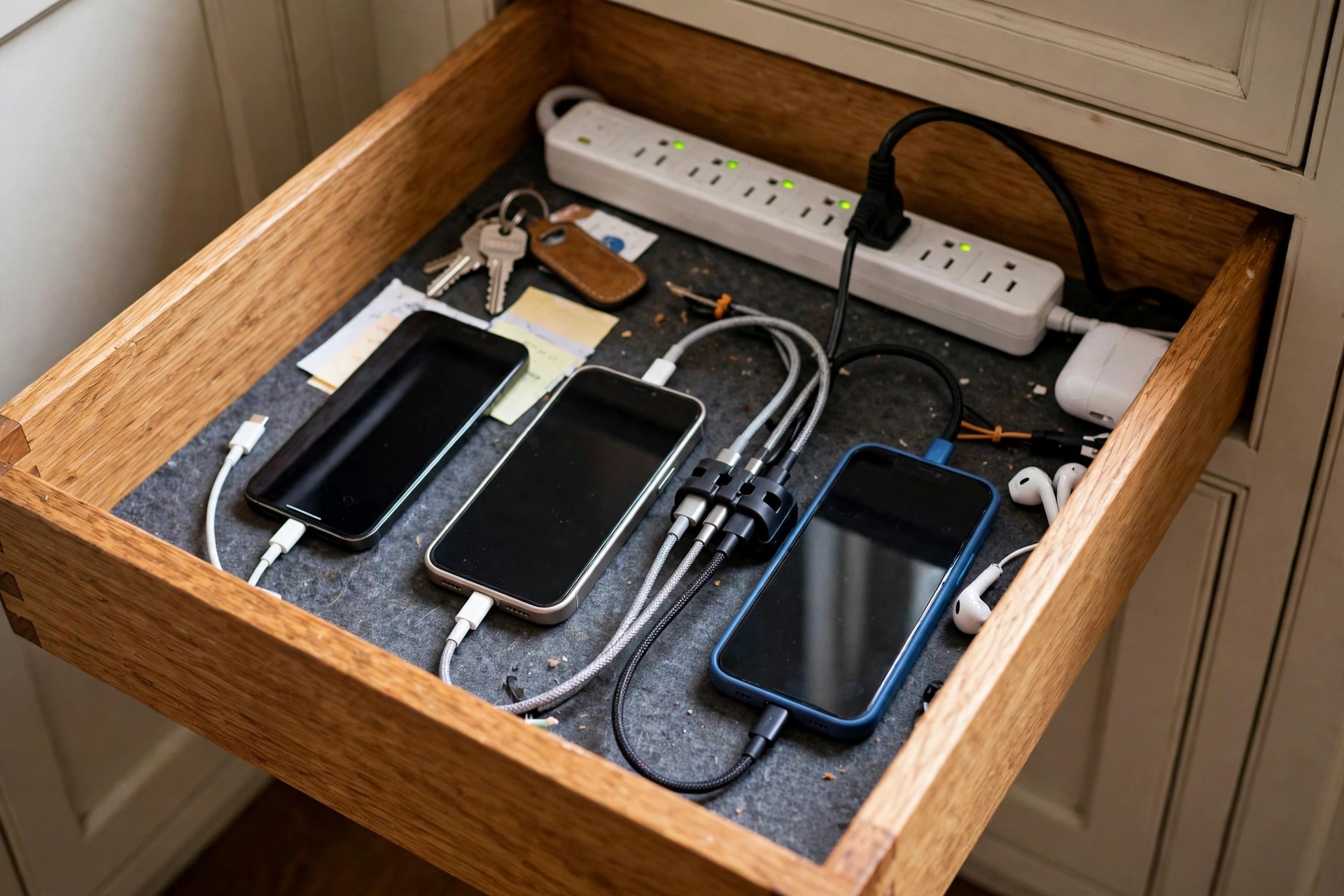
12. A charging drawer for the kitchen
Phones, tablets and recipe screens end up on the kitchen counter because there is nowhere else to charge them. A drawer with a power strip inside — or a small charging station in a cabinet near the counter — hides the cables and keeps the counter clear for cooking. Use a drawer you rarely open for food, add a cable hole in the back, and keep one short charging cable per device. This is the idea that makes the kitchen look tidy even when dinner is in full chaos.
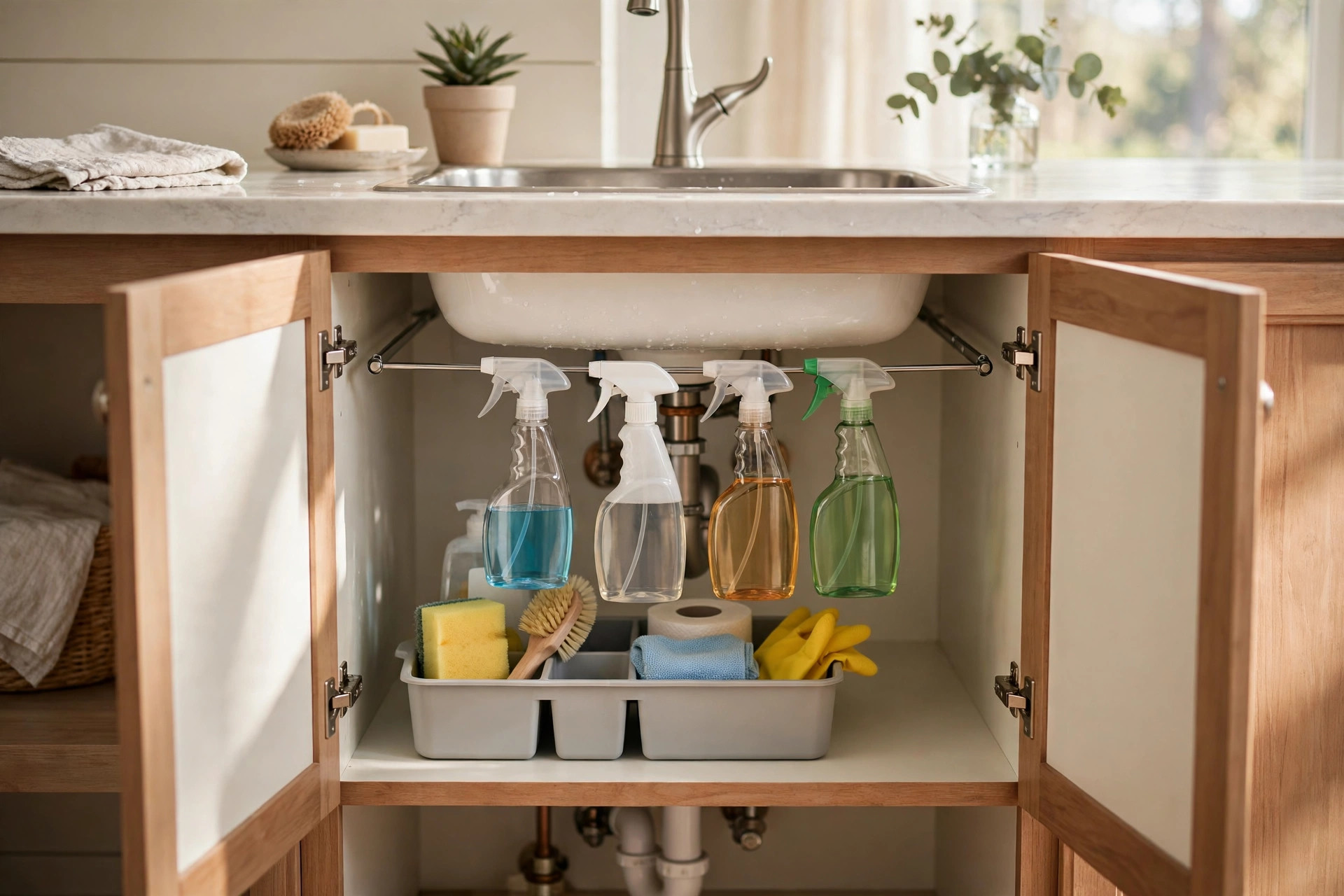
13. Store cleaning supplies under the sink, properly
The cabinet under the sink is usually a tangle of bottles. A small tension rod across it holds spray bottles by their triggers, a turntable holds sponges and cloths, and a caddy holds the rest — so you can actually find the dish soap without moving five things. Keep a bin for recycling bags in the same cabinet, and check for leaks once a month, because a tidy under-sink cabinet is also the first place you will spot a drip.
Small kitchens: storage that does not shrink the room
14. Use the space above the cabinets
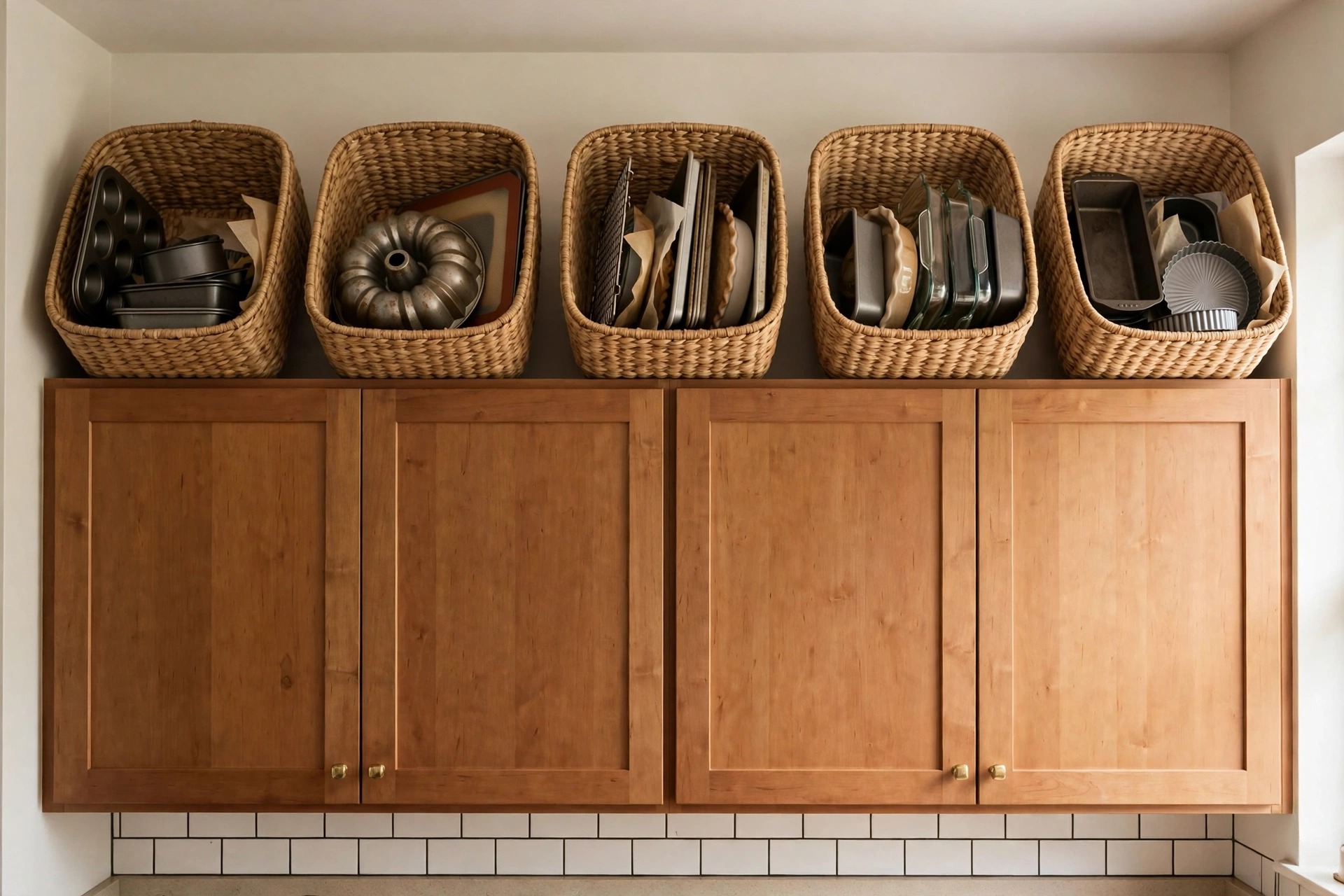
The gap above upper cabinets is wasted in almost every kitchen. Matching baskets or labelled boxes there hold rarely used things — holiday bakeware, the big roasting pan, spare paper goods — out of the daily sightline but still in the kitchen. Keep it to one tidy row in the same colour, and dust it when you clean the tops of the cabinets. This works best in kitchens with high ceilings, and it keeps bulky items out of the cabinets you open every day.
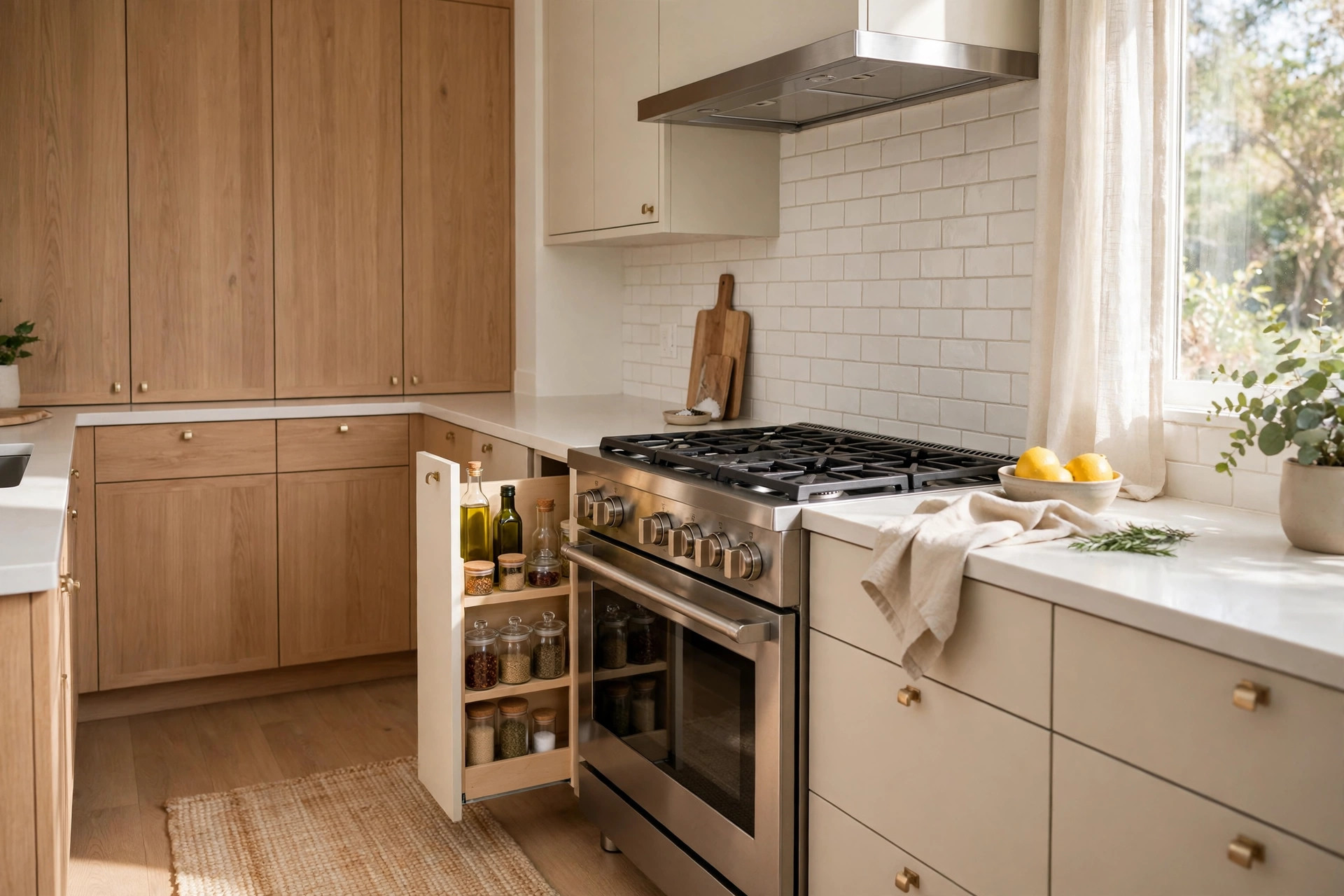
15. A narrow pull-out beside the stove
The 15-centimetre gap beside the stove is often a filler panel. A narrow pull-out there holds oils, vinegars and spice jars in a single vertical row, right where you cook. It uses space that was doing nothing, and it stops oils from living on the counter. If your kitchen has no such gap, a slim rolling cart in the same spot gives you the same effect without any installation.
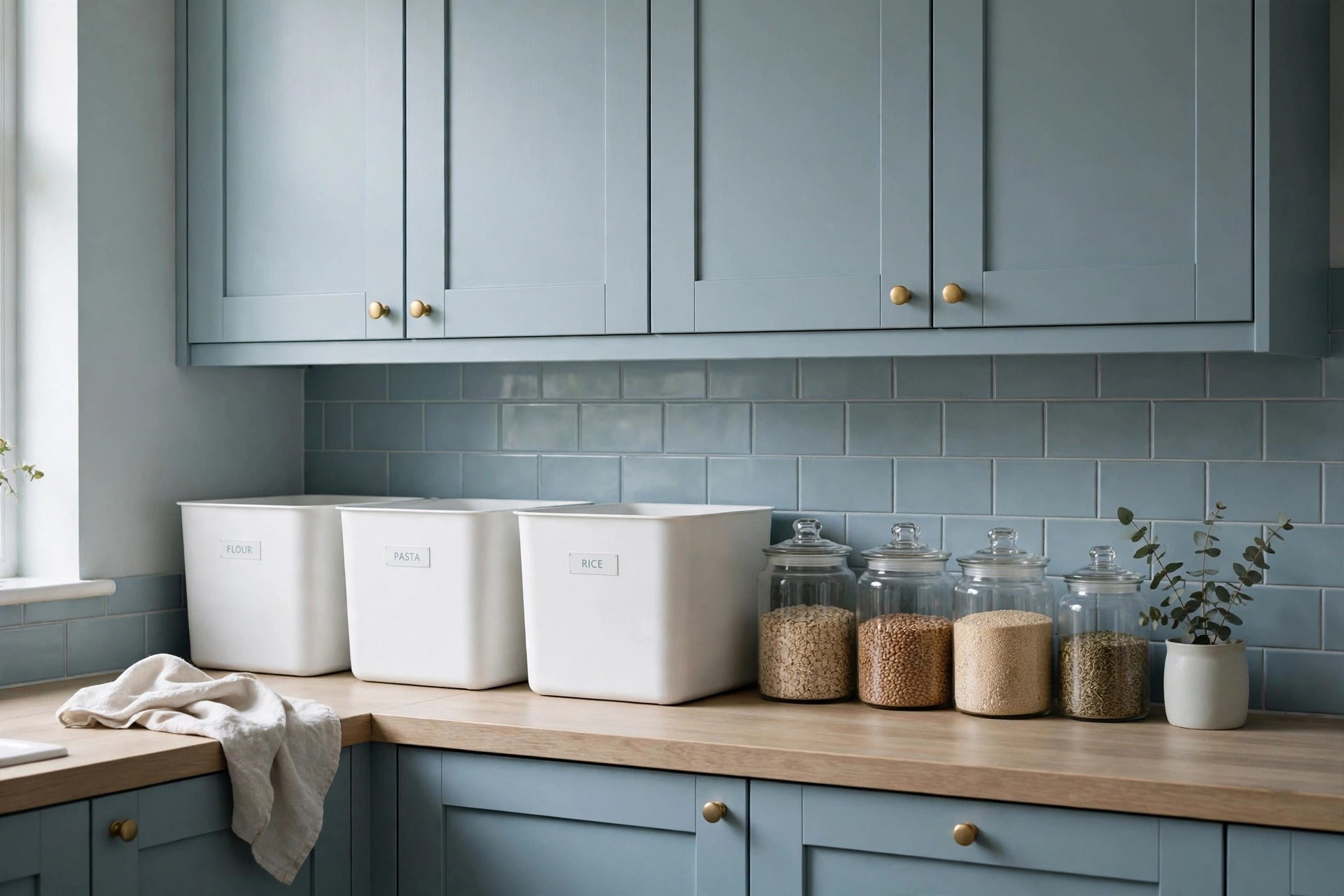
16. One colour for all your bins and jars
When every bin, jar and basket is a different colour, the cabinets look like a storage unit when you open them. Pick one material and one neutral colour — clear plastic, warm wood, or matte white — and use it for every visible container. The storage is still there, but the eye reads it as one calm system instead of ten separate objects. This is the cheapest styling trick in the whole list, and it works in a rented kitchen with nothing fixed to a wall.
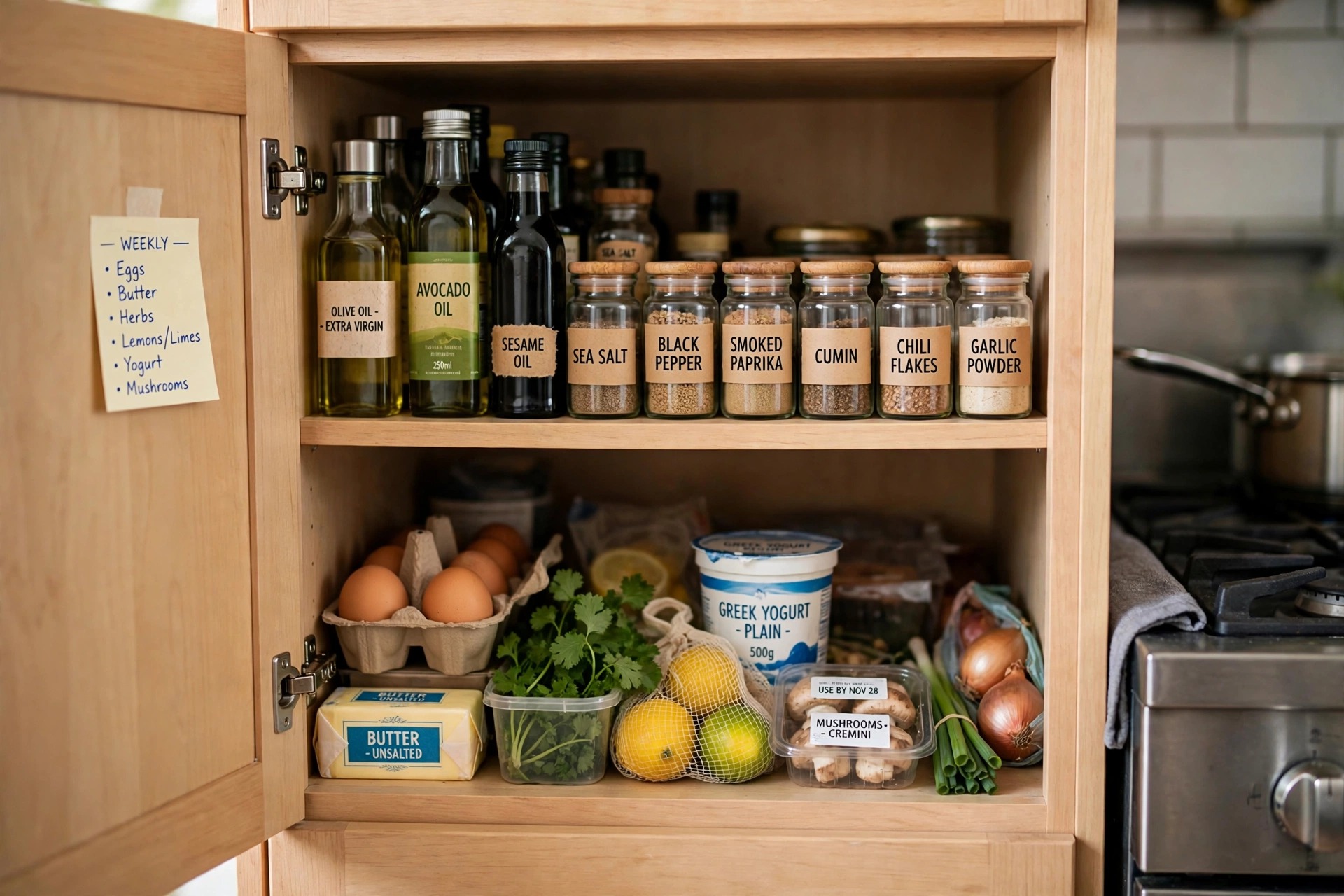
17. Keep only what you use weekly in the prime cabinets
Prime cabinets — the ones at eye level, nearest the stove and sink — should hold only what you use weekly. Everything else — the turkey roaster, the fondue set, the twelve extra mugs — belongs in a high cabinet, a low cabinet, or another room. Audit once: pull everything out of one prime cabinet, put back only the weekly items, and move the rest. You will be shocked how much space appears, and how much faster cooking feels when the cabinet you open most is the one with the least in it.
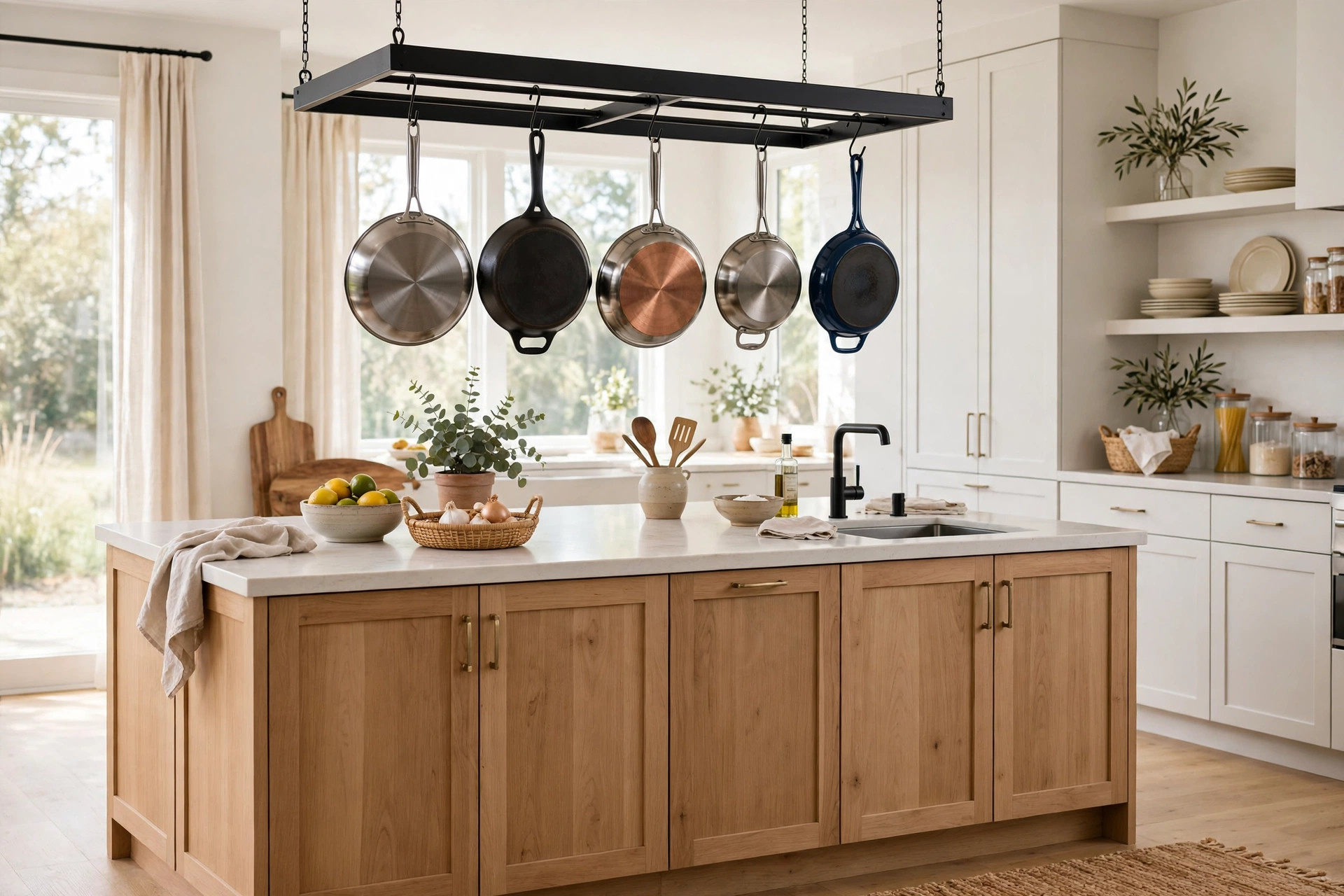
18. A pot rack that frees a whole cabinet
Hanging pots from a ceiling rack or a wall rail frees an entire lower cabinet for lids, baking trays or small appliances. It also puts the pans you use most within arm's reach, and it looks intentional in a way a stacked pile never does. Choose a rack rated for the weight of your heaviest pan, hang it where it will not block a walkway, and keep it to the five pans you actually use — the rest can stay in the freed cabinet.
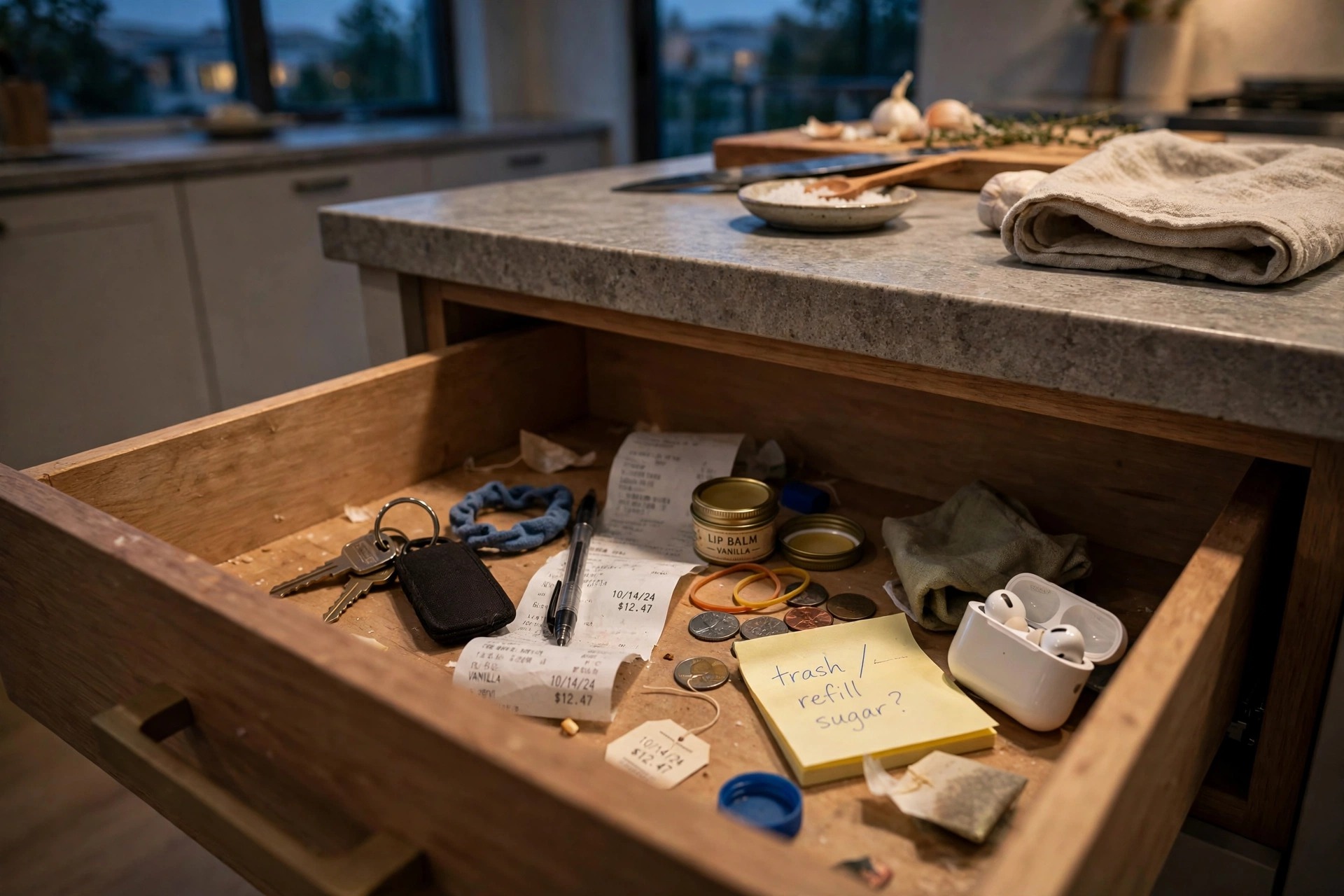
19. The 10-minute reset drawer
Keep one empty drawer or basket near the kitchen. Every evening, walk the kitchen once and put everything out of place into it, then put its contents where they belong. It takes ten minutes, it needs no new furniture, and it is the system that makes all the other storage on this list actually work — because storage only helps if things go back into it. If the drawer is full every night, you have too much stuff in the kitchen, not too little storage.
20. A closed cabinet for the things you use once a month
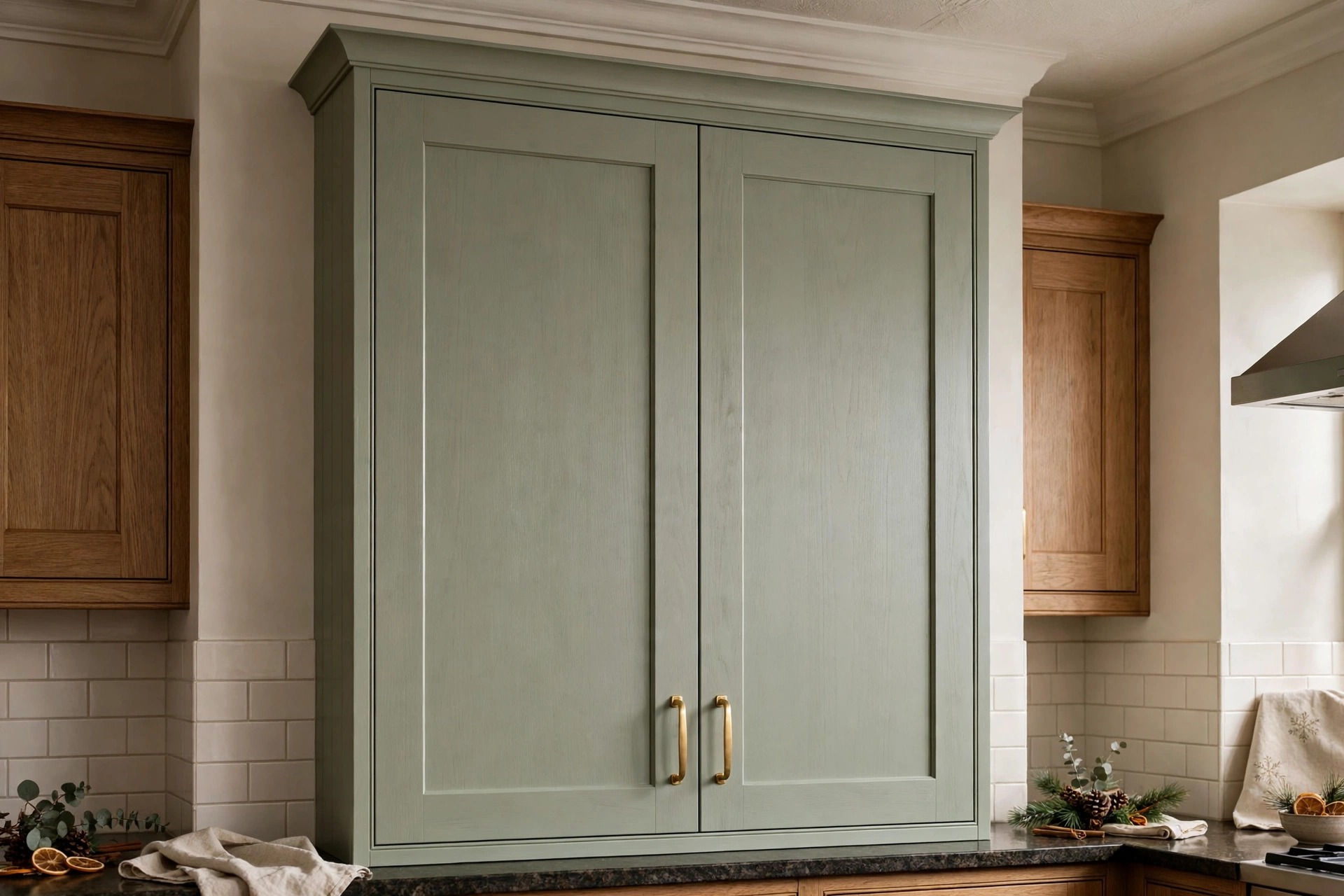
Every kitchen has a category that is used rarely but has nowhere else to go — the big baking trays, the holiday dishes, the spare blender parts. Give that whole category one closed cabinet, one high shelf, or one lidded box on top of the cabinets, and stop letting it live in the prime cabinets. When rarely used things are closed away, the things you use daily finally have room to breathe, and the kitchen stops looking like it is storing someone else's life.
Which cabinet fix fits which kitchen?
| Kitchen | Best first move | Budget | Tools needed |
|---|---|---|---|
| Small / rented | Stack shelves + turntable (ideas 3, 1) | Low | None |
| Deep lower cabinets | Pull-out shelves (idea 2) | Medium | Screwdriver |
| Corner cabinets | Turntable + vertical dividers (ideas 1, 5) | Low–medium | None |
| Family kitchen | Zones + clear bins (ideas 10, 11) | Low | None |
| Coffee lovers | Mug hooks + charging drawer (ideas 6, 12) | Low | None / adhesive |
| Buying new storage | Pull-out trash + pot rack (ideas 9, 18) | Medium–higher | Drill / install |
You do not need all 20 ideas. You need the three that solve your biggest mess — usually the corner cabinet, the spice chaos, and the drawer that will not close. Start with a turntable, zone your cabinets by task, and give every category its own clear bin. Do that this weekend and cooking will feel different by Sunday night.
Save this post for your next kitchen tidy-up, and if you are planning a whole-room refresh, read 28 Living Room Storage Ideas for 2026 next — it is Post 01 in the same Storage by room cluster and pairs with this kitchen plan room by room.
Published 10 November 2026. Updated as new kitchen storage finds are tested.
Frequently asked questions
How do I organize deep kitchen cabinets?
Pull-out shelves and turntables are the fix for deep cabinets. A pull-out shelf brings pots and pans to you instead of making you reach to the back, and a lazy Susan turntable in a corner cabinet keeps everything visible with one spin.
What is the best way to store spices in a small kitchen?
Use the inside of a cabinet door. A slim door-mounted spice rack keeps jars visible and reachable without using shelf space, and grouping spices by use — everyday cooking, baking, grilling — means you grab the right one first time.
How can I organize kitchen cabinets without renovating?
Add renter-friendly inserts instead of changing the cabinets. Drawer dividers, vertical dividers for trays and lids, mug hooks under a shelf, clear bins for the pantry, and stackable shelves inside tall cabinets all install in minutes and come with you when you move.