24 DIY Wreath Ideas for 2026
A front door with nothing on it is a door that says nothing. The porch is swept, the mat is straight, the plants are watered, and still the door looks bare — because a door without a wreath is a door without a welcome, and the first thing a visitor sees is a flat slab of paint with nothing to look at. The wreath is not the problem — the problem is that nobody ever made one, so the door stays plain while the rest of the porch gets all the attention.
These 24 DIY wreath ideas give every front door a handmade welcome: a wreath for every season, built on a base that lasts, hung without a single hole in the door, and stored flat so it comes out round next year — so the door looks loved from the street, not just from the hallway.
Every idea below works in a real home, from a flat where the wreath hangs on an inside wall to a house where the front door gets a new wreath four times a year. The Christmas wreath itself gets its own storage system in 25 Holiday Decor Storage Ideas for 2026, where the seasonal boxes hold the wreath alongside the ornaments — and the craft supplies the wreath borrows from get their full treatment in 26 Craft Storage Ideas for 2026. Pick three ideas that fit your door, start with the base, and build from there.
Pick your wreath style
1. Classic evergreen wreath — the full green wreath that suits every door
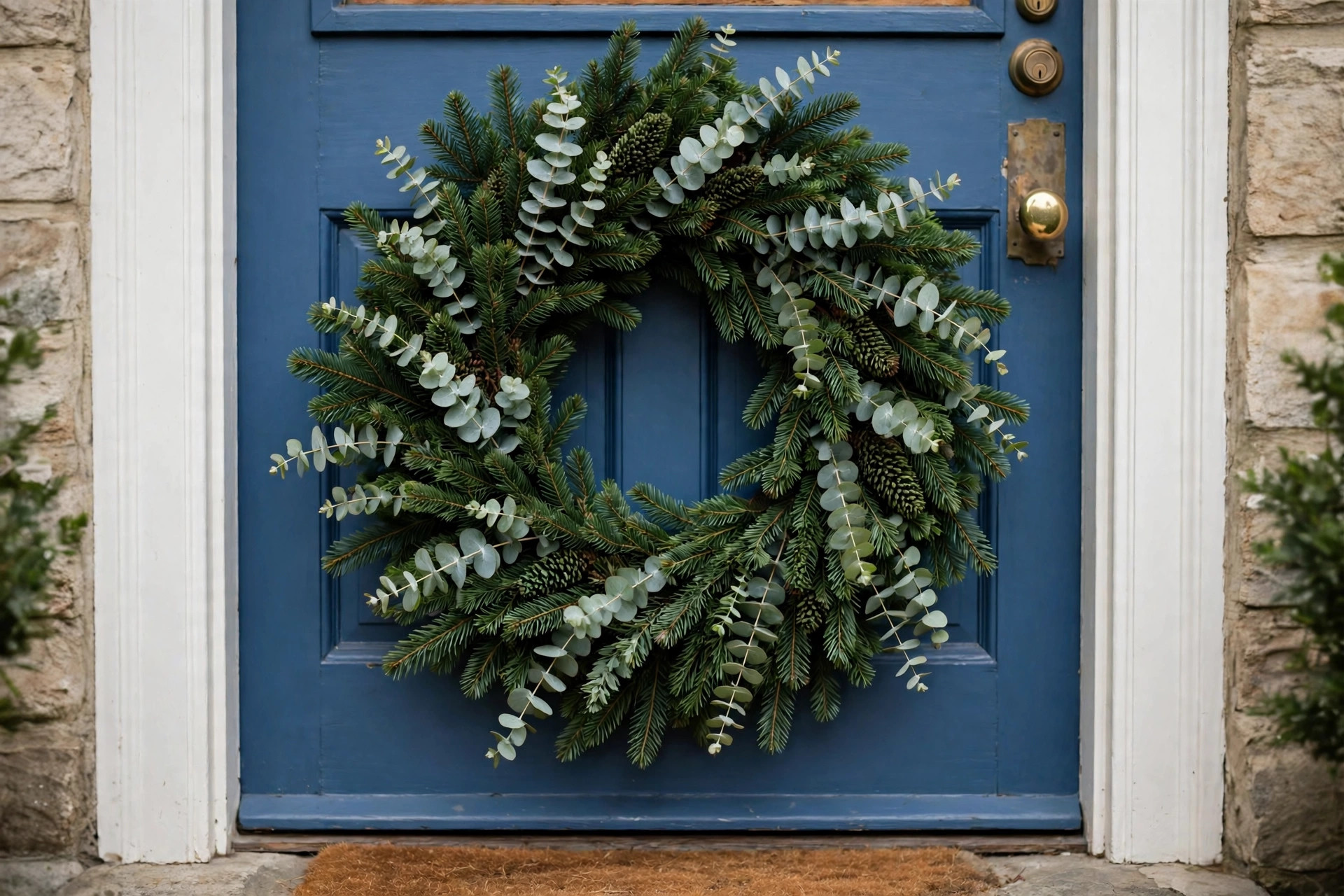
A plain door needs a full green wreath, because the evergreen wreath is the wreath that suits every house, every season and every colour of door, and the door that wears one looks finished the moment it goes up. Build it on a wire or foam base, layer the green stems in one direction so they all point the same way, and keep the greenery full all the way round, because the wreath that is full is the wreath that looks bought, and the wreath that is thin in one spot is the wreath that looks unfinished. Use a mix of two greens — a dark pine and a lighter eucalyptus, for example — because the mix that has two tones is the mix that looks alive, and the single green that is all one shade is the green that looks flat from the street. Add a simple bow in a colour that matches the door, because the bow that matches is the bow that finishes the wreath, and the door that wears a classic evergreen wreath is the door that looks loved all year. One full green wreath, and the bare door is gone.
2. Grapevine wreath — the twiggy natural base that takes any decoration
A grapevine wreath is the easiest wreath to make, because the base is already a wreath — a ring of twisted twigs that looks good on its own — and everything you add is decoration, not structure. Start with a plain grapevine base, tuck the greenery and flowers into the twigs so they hold without glue, and add one focal piece — a bow, a cluster of pinecones or a few dried oranges — because the base that is twiggy is the base that grips, and the decoration that is tucked in is the decoration that stays. Keep the decoration to one side or spread it evenly, because the wreath that is balanced is the wreath that looks made on purpose, and the wreath that is heavy on one side is the wreath that hangs crooked. A grapevine base suits a rustic door, a cottage door and a modern door with wooden details, because the twigs that are natural are the twigs that go with everything. One grapevine base, and the wreath is half made before you start.
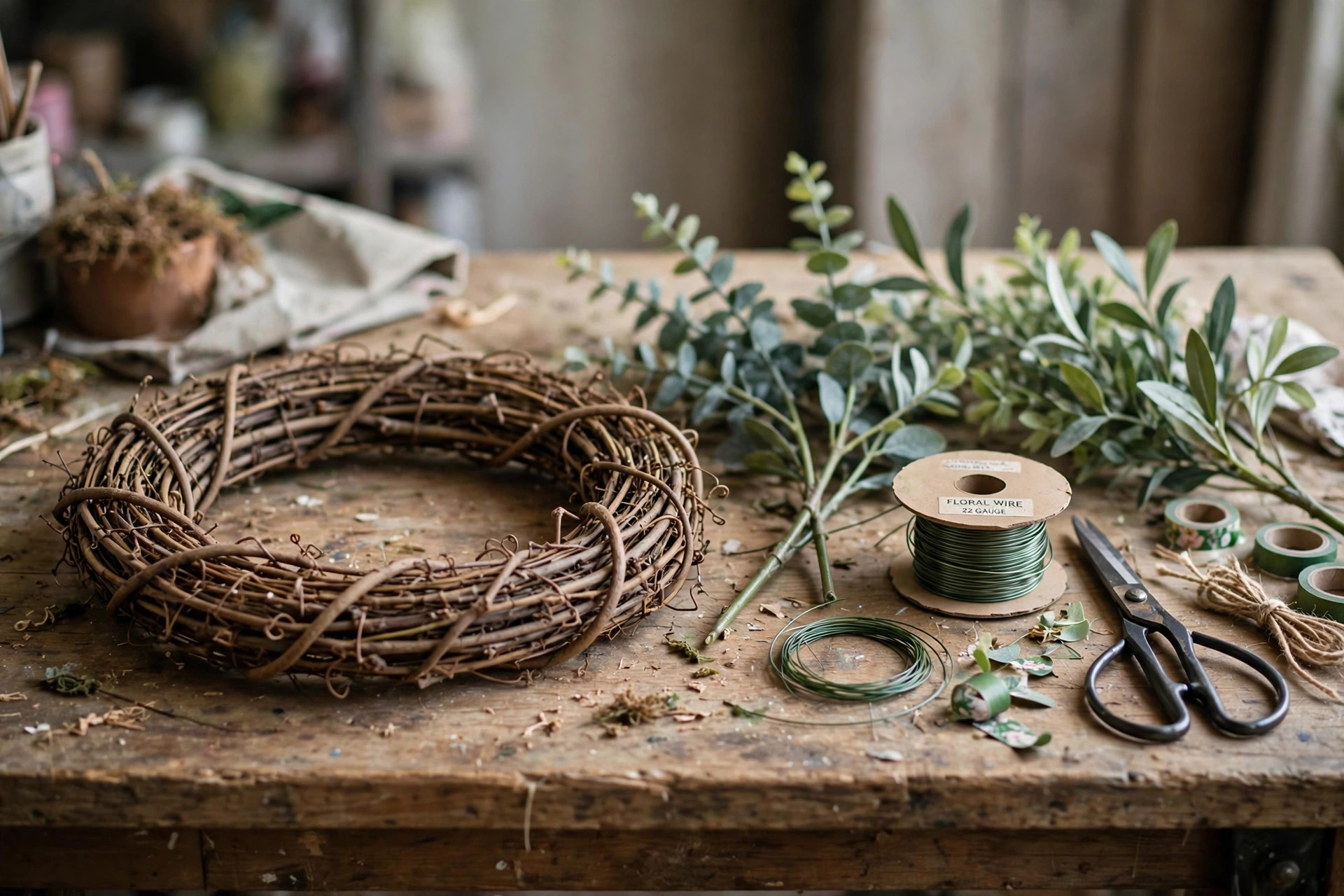
3. Modern hoop wreath — the slim metal hoop with greenery on one side
A modern home needs a modern wreath, because the full green wreath looks heavy on a slim glass door, and the hoop wreath — a thin metal ring with greenery on one side only — is the wreath that suits clean lines and pale walls. Pick a gold or black metal hoop, attach a small bunch of eucalyptus and a few dried stems to one side with floral wire, and leave the rest of the hoop bare, because the hoop that is mostly empty is the hoop that looks modern, and the greenery that covers only a third is the greenery that looks deliberate. Hang it on a nail or a small hook, because the hoop that is light is the hoop that hangs anywhere — on a front door, on a bedroom wall or on a mirror — and the wreath that is slim is the wreath that fits a narrow space. The hoop wreath is the quickest wreath in this list, because the base is bought ready and the greenery is one bunch, and the door that wears a hoop is the door that looks calm and current. One hoop, one bunch, and the modern door is done.

4. Full floral wreath — the flower-covered wreath for spring and summer
A spring door needs flowers, because the green wreath says winter and the floral wreath says the garden is awake — and the flower-covered wreath is the wreath that makes the front door the brightest thing on the street. Cover a foam or wire base with faux flowers in one colour family — pinks and whites, or yellows and creams — so the wreath reads as one big bloom from the pavement, because the flowers that share a palette are the flowers that look rich, and the flowers that are every colour at once are the flowers that look messy. Pack the flowers close so no base shows through, and add a few green leaves between them, because the wreath that is full is the wreath that looks expensive, and the base that shows through is the base that gives it away. Faux flowers last all season without watering, and the wreath that is faux is the wreath that still looks fresh in August. One full floral wreath, and the spring door blooms.
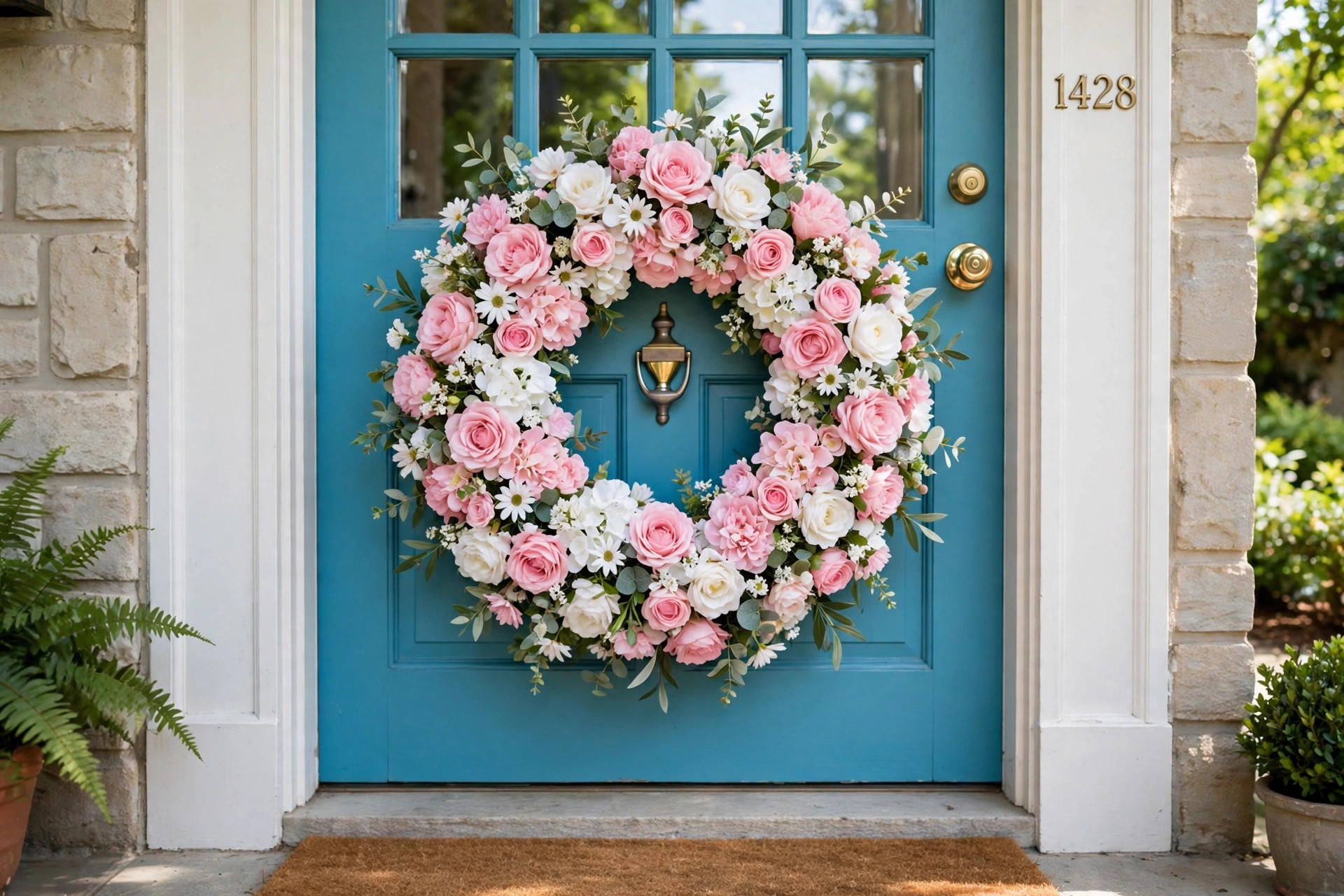
5. Rustic burlap wreath — the soft looped burlap wreath for farmhouse doors
A farmhouse door needs a soft wreath, because the green wreath looks too formal and the burlap wreath — loops of soft natural fabric pulled through a wire frame — is the wreath that suits wood, stone and a porch full of planters. Loop the burlap through a wire wreath frame, pulling a loop through every other ring, and keep the loops even in size, because the loops that are even are the loops that look full, and the loops that are random are the loops that look tangled. Add a small wooden sign or a few cotton stems in the middle, because the wreath that has one accent is the wreath that looks finished, and the wreath that has five accents is the wreath that looks crowded. Burlap comes in natural, white and sage, so pick the shade that matches the door, because the burlap that matches is the burlap that looks made for the house. One burlap wreath, and the farmhouse door feels warm.
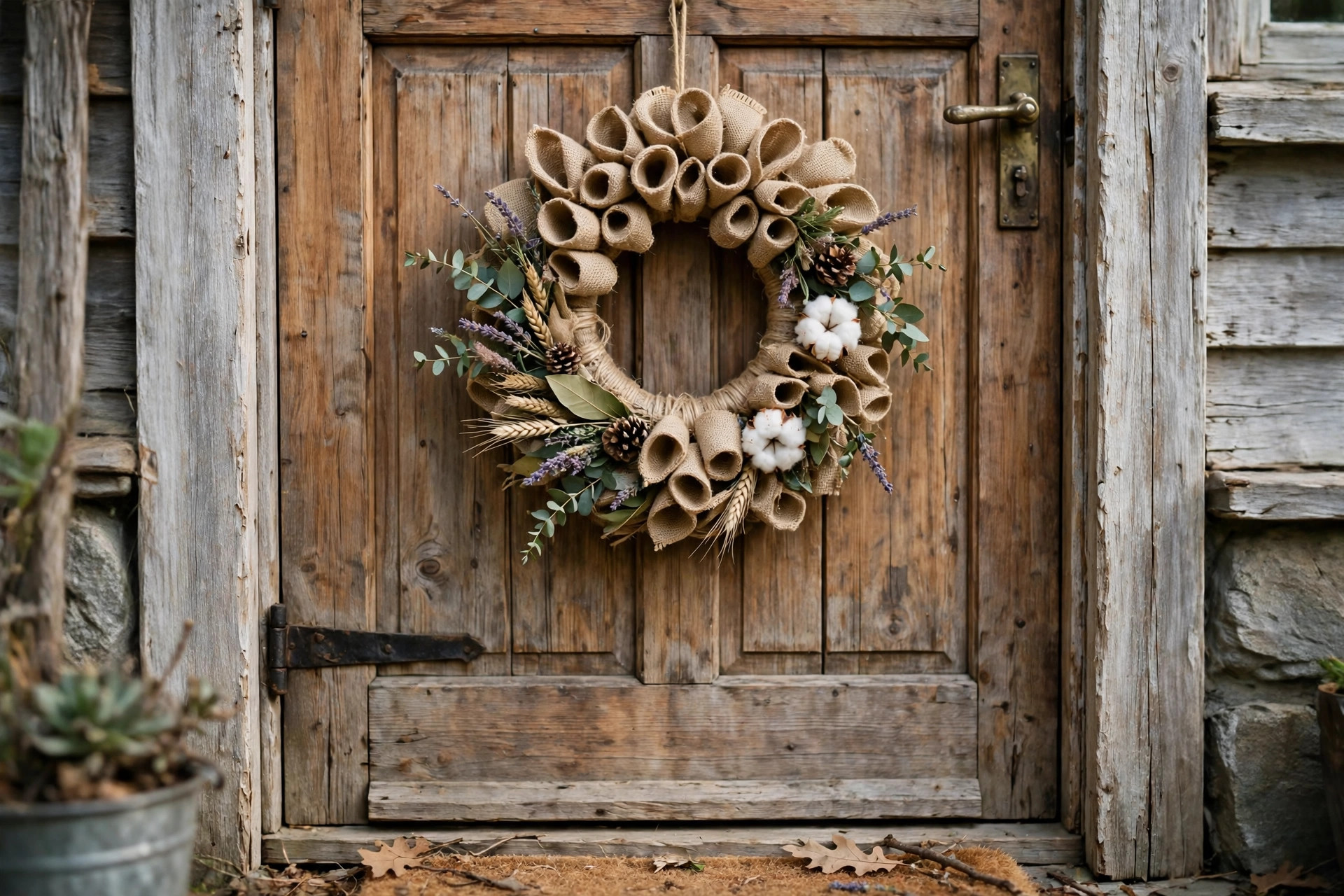
6. Minimal eucalyptus wreath — the simple green wreath for a calm modern door
A calm door needs a calm wreath, because the busy wreath shouts and the minimal eucalyptus wreath — a few stems of soft green on a plain base — is the wreath that whispers. Use fresh or faux eucalyptus, lay the stems in one direction around a slim wire base, and tie them with twine at the top and bottom, because the stems that lie flat are the stems that look neat, and the wreath that is simple is the wreath that suits a modern door. Keep the colour to one green, because the single green is the green that looks calm, and the wreath that has no bow and no berries is the wreath that lets the door speak. Eucalyptus dries well, so a fresh bunch keeps its shape for months, and the wreath that dries is the wreath that lasts into the next season. One minimal wreath, and the calm door stays calm.
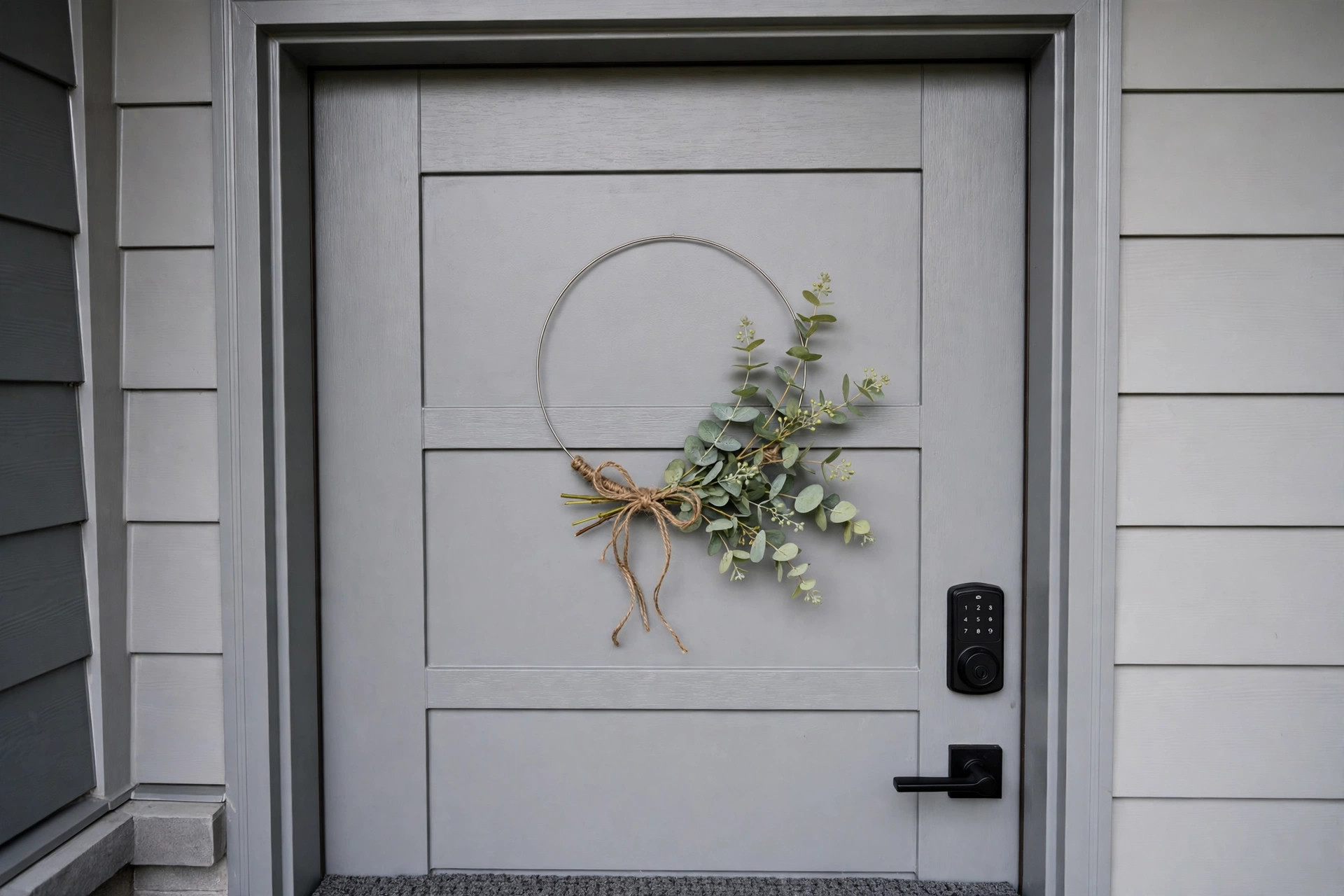
Build it yourself
7. Choose the right base — grapevine, foam, wire or hoop, matched to the look
A wreath that fails usually fails at the base, because the base that is wrong for the look is the base that fights you — the foam base that will not hold heavy pinecones, the wire base that shows through thin greenery, the grapevine that is too thick for a slim hoop look. Choose the right base — grapevine, foam, wire or hoop, matched to the look — so the base works with the decoration instead of against it. Pick grapevine for a natural look, foam for a full floral wreath that needs pinning, wire for a light greenery wreath, and a metal hoop for a modern minimal wreath, because the base that matches the look is the base that disappears into it. Hold the base up against the door before you buy, because the base that is too small is the base that looks lost on a wide door, and the base that is too big is the base that crowds a narrow one. One right base, and the wreath builds itself.
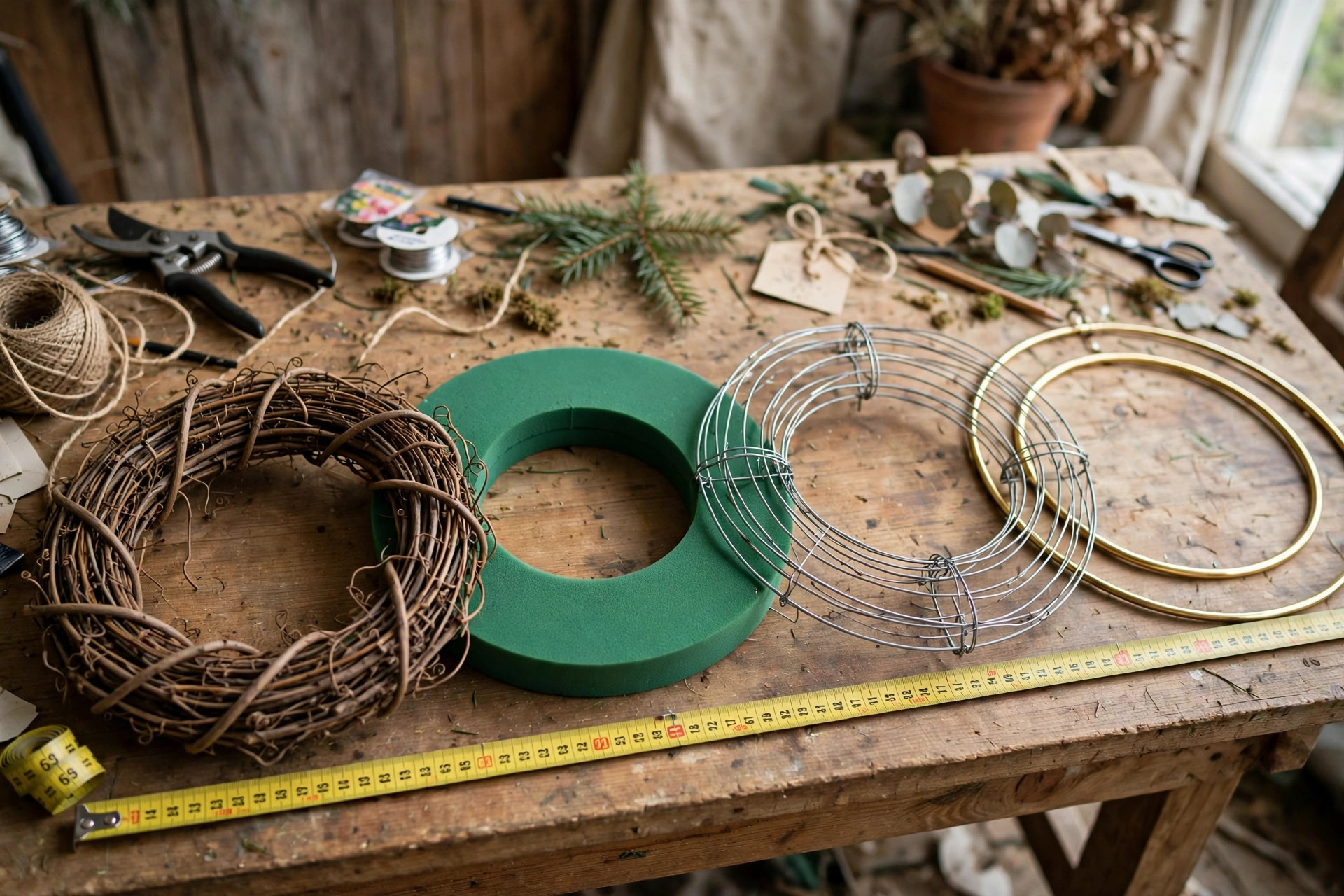
8. Attach the greenery — layer stems, wire them on, and work in one direction
Greenery that points every way looks wild, because the stems that cross each other are the stems that look tangled, and the wreath that has no direction is the wreath that looks like a bush. Attach the greenery by layering the stems in one direction — clockwise or anti-clockwise, it does not matter, as long as every stem points the same way — so the wreath reads as a smooth ring instead of a tangle. Lay the first layer flat against the base, then layer the next stems on top, overlapping each one by half, because the stems that overlap are the stems that hide the wire, and the base that is hidden is the base that never shows. Work in small bunches of three stems, because the bunch that is wired together is the bunch that stays put, and the single stem that is loose is the single stem that falls off. One direction, and the greenery looks grown that way.
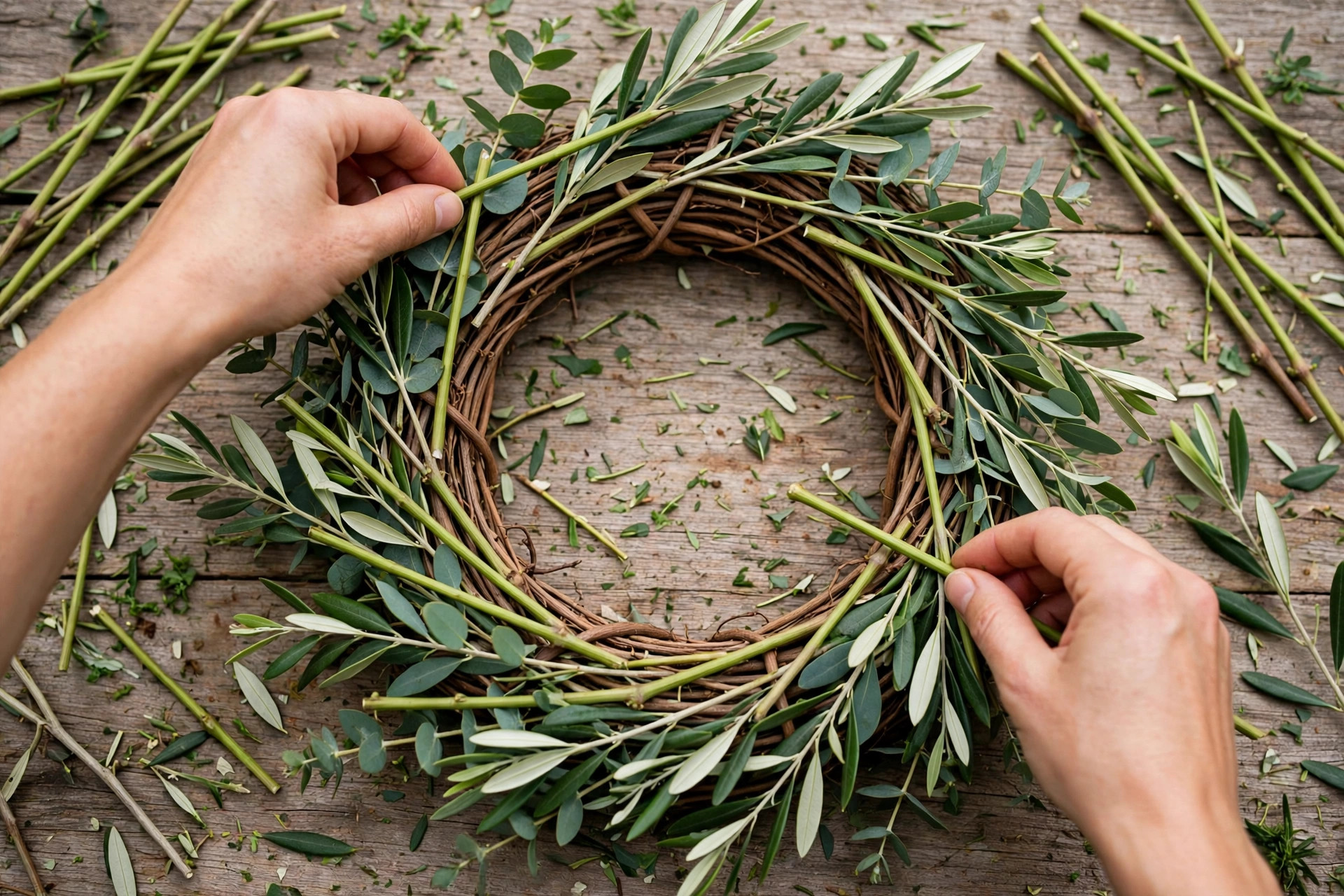
9. Wire the stems so they stay — floral wire, not glue, for a wreath that lasts
Glue lets go outdoors, because the sun softens it, the rain washes it, and the wreath that was glued in June is the wreath that drops its flowers by August. Wire the stems so they stay — floral wire, not glue, for a wreath that lasts — because the wire that wraps round the stem and the base is the wire that holds through rain and wind. Cut a length of green floral wire, wrap it twice round the stem and the base, and twist it tight at the back, because the wire that is twisted at the back is the wire that never shows, and the stem that is wired is the stem that survives a storm. Use the wire for the heavy pieces too — pinecones, dried oranges, the big bow — because the heavy piece that is wired is the heavy piece that stays, and the heavy piece that is glued is the heavy piece on the doormat. One spool of wire, and the wreath outlasts the season. (Check on Amazon for green floral wire in a 22-gauge spool, which is thin enough to hide and strong enough to hold.)
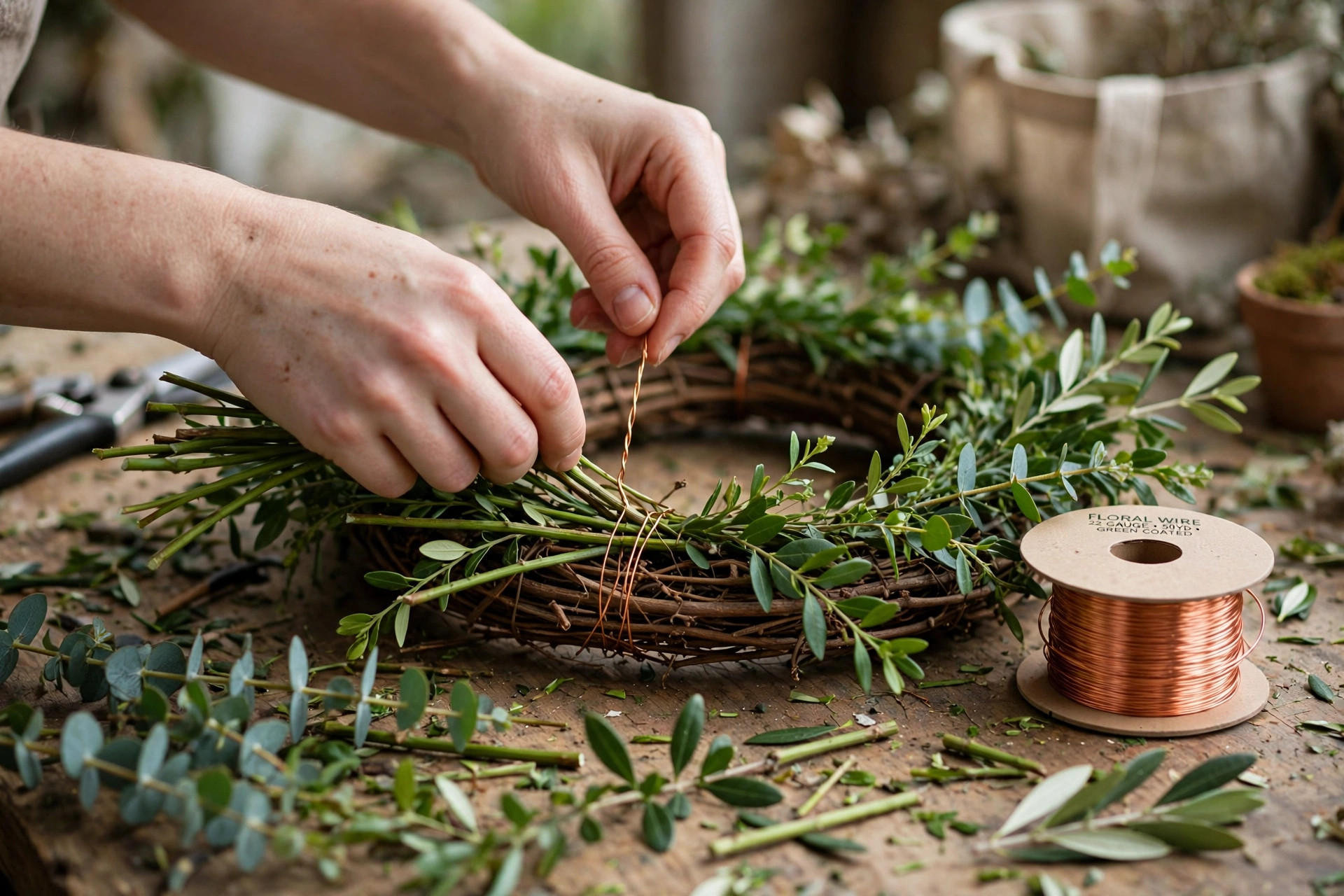
10. Add the focal pieces — one big bow, pinecones or dried oranges as the centre
A wreath with no focal point is a wreath with no place for the eye to rest, because the greenery is even all the way round and the door that looks at it sees a ring and nothing more. Add the focal pieces — one big bow, pinecones or dried oranges as the centre — so the wreath has one spot that draws the eye, usually at the bottom or slightly to one side. Pick one kind of focal piece and use it in a cluster of three, because the cluster that is three is the cluster that looks made on purpose, and the single piece that sits alone is the single piece that looks lost. Wire the focal pieces on, not glue them, because the bow that is wired is the bow that stays through the wind, and the pinecone that is wired is the pinecone that stays through the rain. One focal cluster, and the wreath has a heart.

11. Hang it without damage — over-door hooks and suction hooks that leave no marks
A wreath that needs a nail is a wreath that leaves a hole, because the nail that goes into the door is the nail that stays there, and the door that is drilled is the door that shows the damage long after the wreath comes down. Hang it without damage — over-door hooks and suction hooks that leave no marks — so the wreath hangs on a hook that slips over the top of the door, and the door never gets a hole. Pick an over-door hook that matches the door's thickness, because the hook that fits is the hook that sits flat and does not rattle, and the hook that is too loose is the hook that slides. For a glass door, use a suction hook rated for the wreath's weight, because the suction that is rated is the suction that holds, and the wreath that is heavy is the wreath that needs a hook rated for it. One hook, no holes, and the door stays perfect. (Check on Amazon for an adjustable over-door wreath hook that fits doors up to two inches thick.)
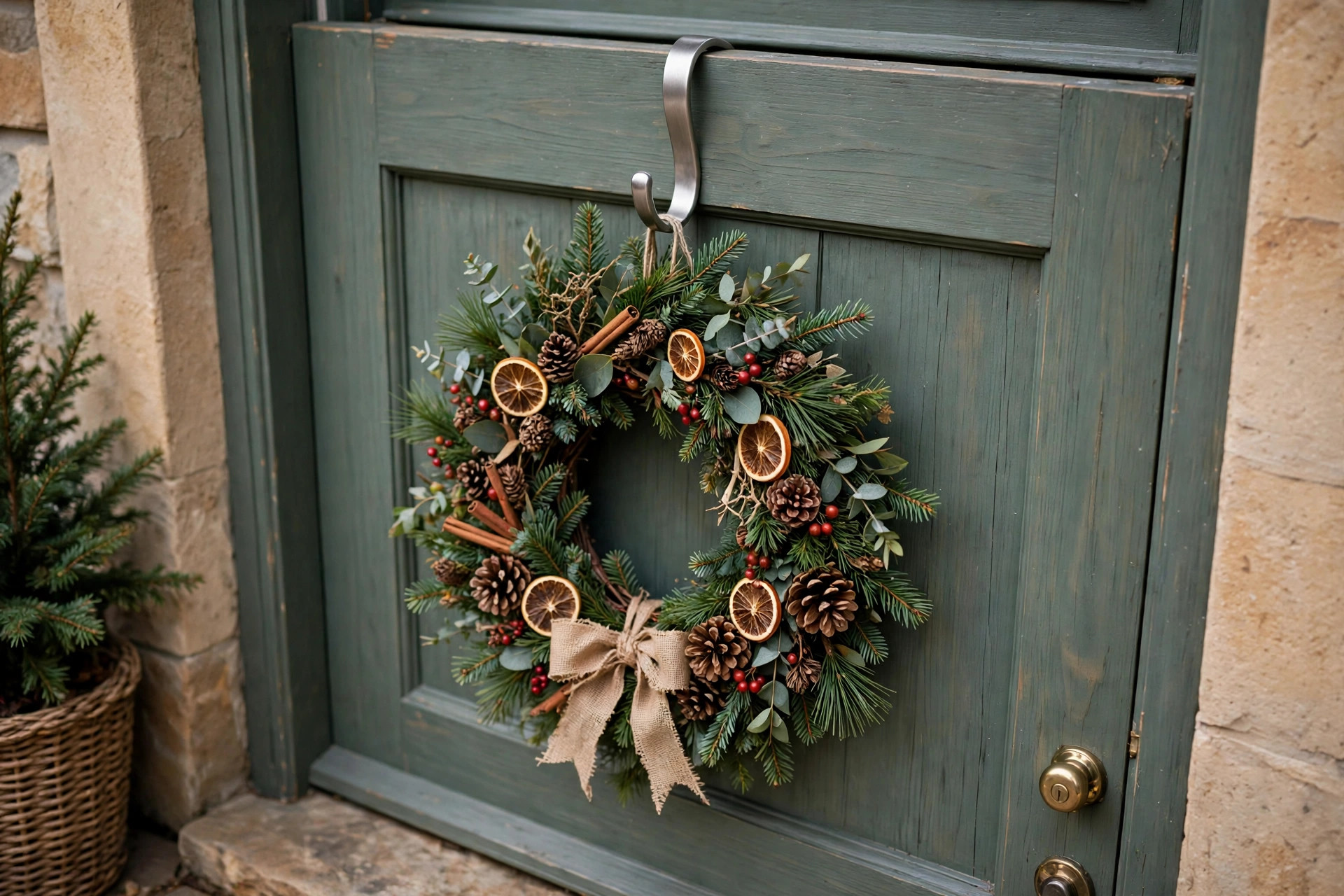
12. Seal it for outdoors — a light spray seal so rain and sun do not ruin it
A wreath on a front door lives outside, because the rain hits it, the sun fades it, and the wreath that was bright in November is the wreath that is grey by January. Seal it for outdoors — a light spray seal so rain and sun do not ruin it — because the seal that coats the greenery is the seal that keeps the colour in and the water out. Spray the finished wreath lightly from all sides, let it dry, and spray once more, because the coat that is light is the coat that does not stiffen the leaves, and the second coat is the coat that covers the gaps the first one missed. Use a clear UV-resistant sealant made for outdoor decor, because the sealant that is UV-resistant is the sealant that stops the fading, and the wreath that is sealed is the wreath that still looks new at the end of the season. One spray, and the wreath survives the weather. (Check on Amazon for a clear UV-resistant outdoor sealant spray for faux greenery and fabric.)

Wreaths for every season
13. Spring wreath — blossom, tulips and fresh green for the first warm weeks
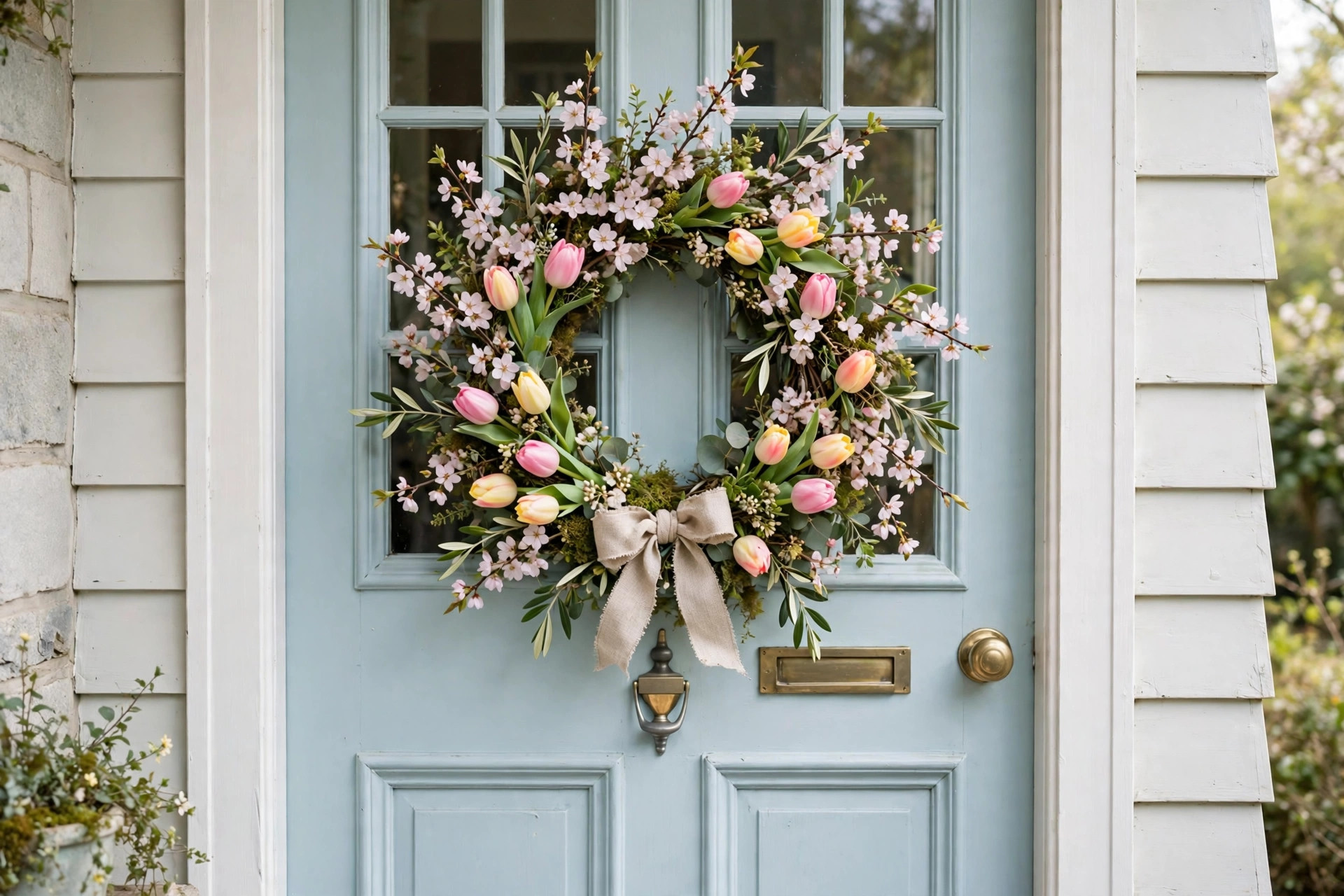
Spring needs a wreath that says the cold is over, because the winter wreath is tired by March and the spring wreath — blossom, tulips and fresh green — is the wreath that welcomes the first warm weeks. Use pale pink blossom, a few faux tulips and light green eucalyptus on a grapevine base, because the colours that are pale are the colours that say spring, and the wreath that is light is the wreath that suits a door in soft morning light. Keep the bow small and pale too, because the bow that is pale is the bow that does not shout over the blossom, and the wreath that is spring is the wreath that looks fresh from the garden. Hang it in March and take it down in May, because the wreath that is seasonal is the wreath that feels special, and the spring wreath that stays up all summer is the spring wreath that nobody notices. One spring wreath, and the door wakes up.
14. Summer wreath — sunflowers, lavender and bright colour for long days
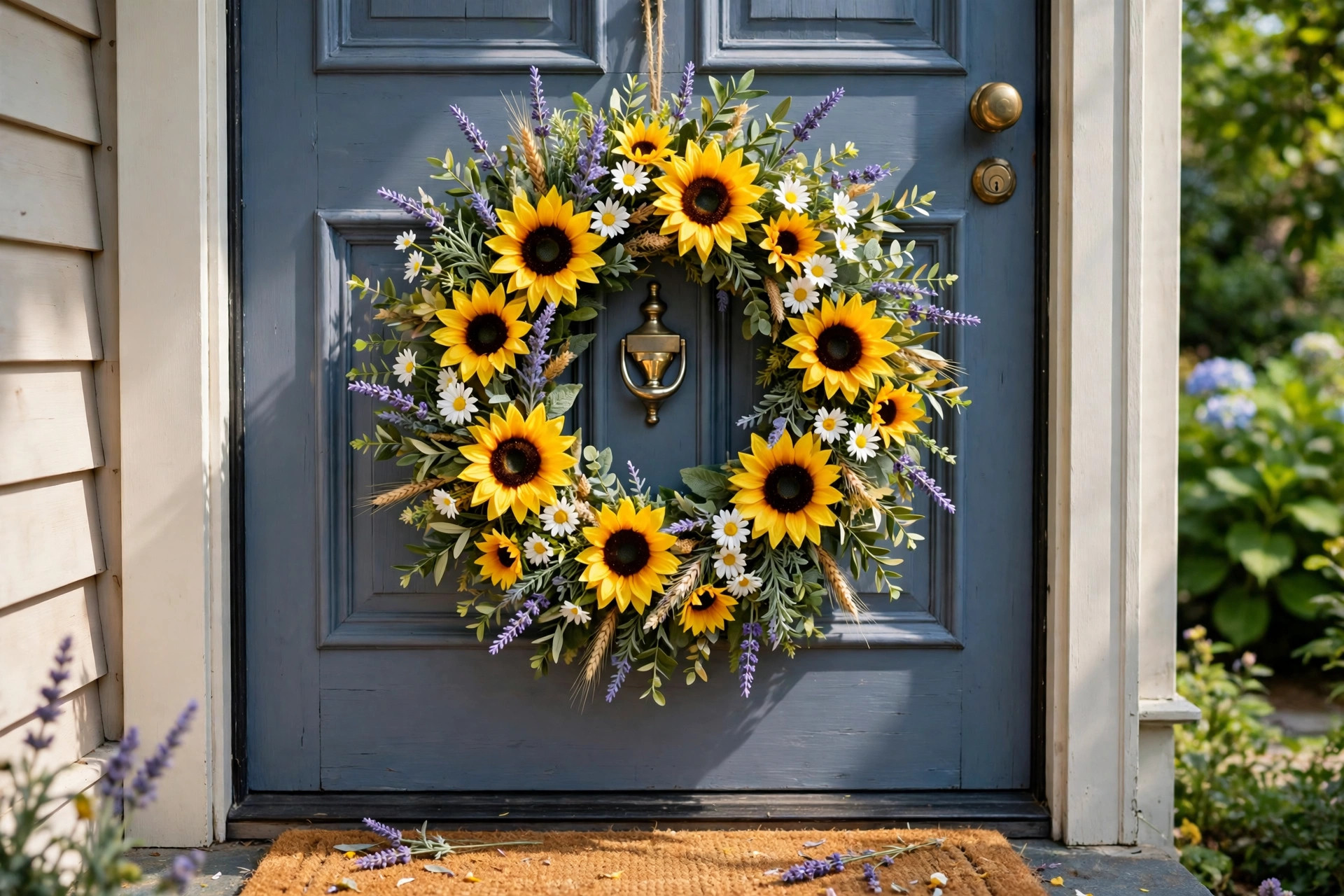
Summer needs a wreath that can stand the sun, because the pale spring wreath fades by June and the summer wreath — sunflowers, lavender and bright colour — is the wreath that holds up to long bright days. Use faux sunflowers for the big focal flowers, because the sunflower that is faux is the sunflower that does not wilt in the heat, and add lavender sprigs and small white daisies around them, because the mix that is bright is the mix that suits a summer door. Pick a grapevine or wire base, because the base that is open is the base that lets the air through, and the wreath that breathes is the wreath that does not trap heat and moisture. Keep the wreath out of the fiercest midday sun if the door faces south, because the sun that is direct is the sun that fades even faux flowers, and the wreath that is shaded is the wreath that stays bright all summer. One summer wreath, and the door feels like July.
15. Autumn wreath — maple leaves, pumpkins and warm rust tones for fall
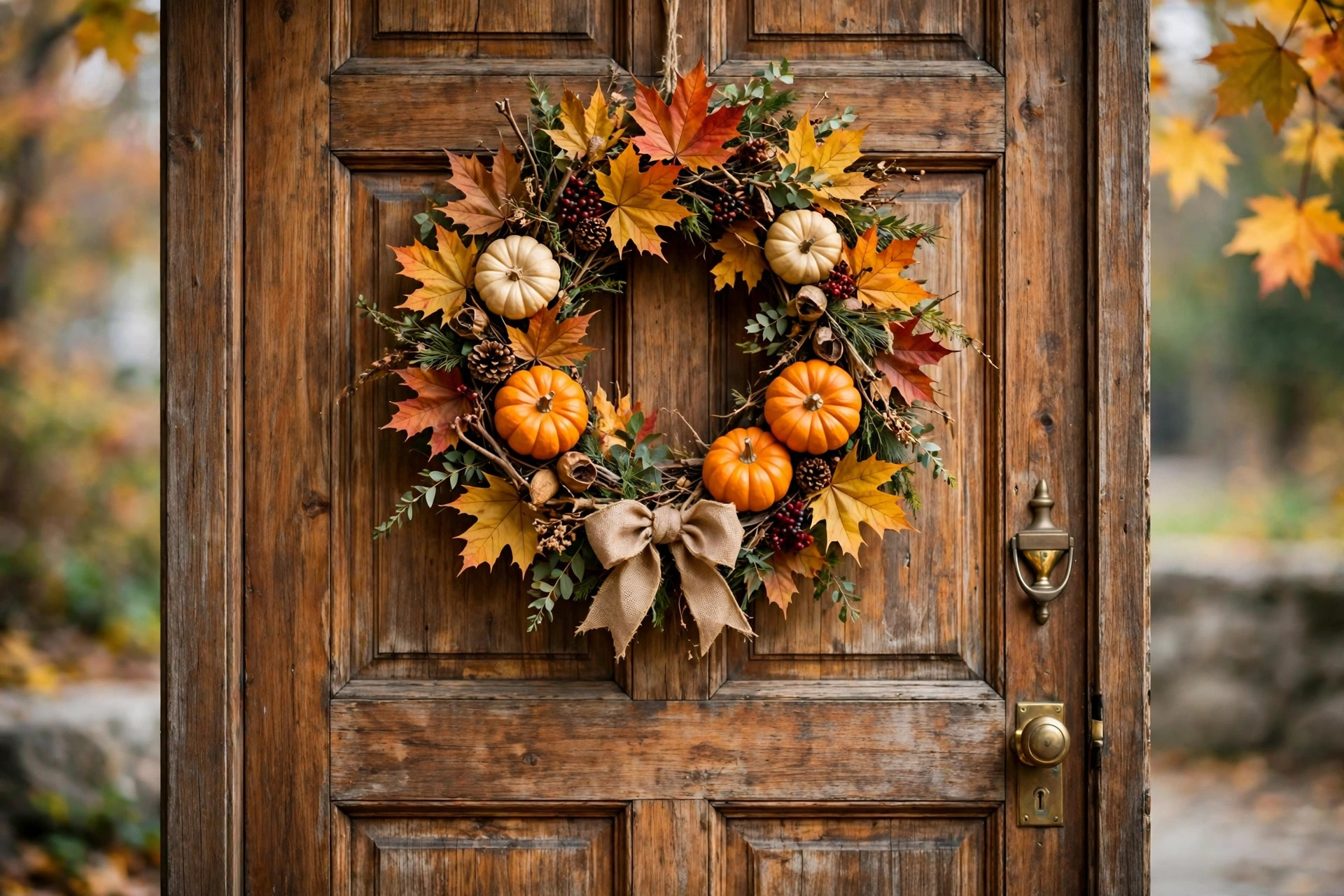
Autumn needs a wreath that matches the leaves, because the green summer wreath looks wrong against orange trees and the autumn wreath — maple leaves, pumpkins and warm rust tones — is the wreath that belongs to fall. Use faux maple leaves in rust, gold and deep red, add small pumpkins and a few pinecones, and tie it with a rust-coloured ribbon, because the colours that are warm are the colours that say autumn, and the wreath that is warm is the wreath that suits a door in October light. Mix in a few wheat stems for texture, because the wheat that is golden is the wheat that catches the low sun, and the wreath that has texture is the wreath that looks gathered from the fields. Hang it in September and keep it up through Thanksgiving, because the wreath that is autumn is the wreath that covers the whole season, and the door that wears it is the door that welcomes the harvest. One autumn wreath, and the door turns with the leaves.
16. Christmas wreath — pine, berries and a red bow for the holiday door
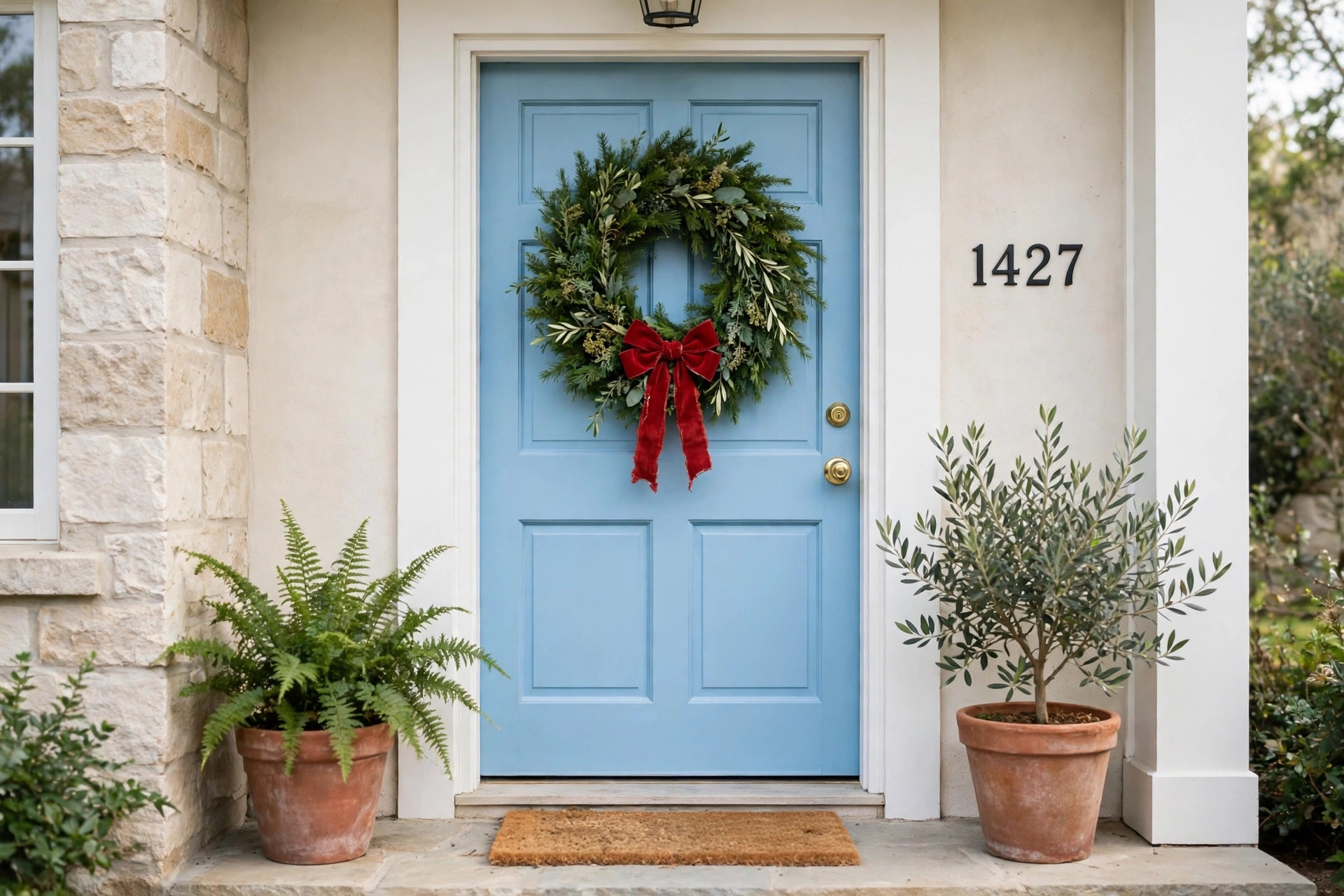
Christmas needs the classic wreath, because the holiday door without a wreath is a door that forgot Christmas, and the Christmas wreath — pine, berries and a red bow — is the wreath that every neighbour recognises. Build it on a full evergreen base, tuck in red berries and a few pinecones, and finish it with a big red velvet bow at the bottom, because the bow that is velvet is the bow that looks rich, and the berries that are red are the berries that pop against the green. Add a few dried orange slices for warmth, because the orange that is dried is the orange that smells faintly of Christmas, and the wreath that has oranges is the wreath that feels handmade. Hang it on the first of December and take it down in January, because the wreath that is Christmas is the wreath that belongs to the holiday, and the door that wears it is the door that says welcome home. The Christmas wreath itself gets its own storage system in 25 Holiday Decor Storage Ideas for 2026, where the seasonal boxes hold the wreath alongside the ornaments. One Christmas wreath, and the door is ready for the holidays.

17. Everyday wreath — the neutral green wreath that works all year round
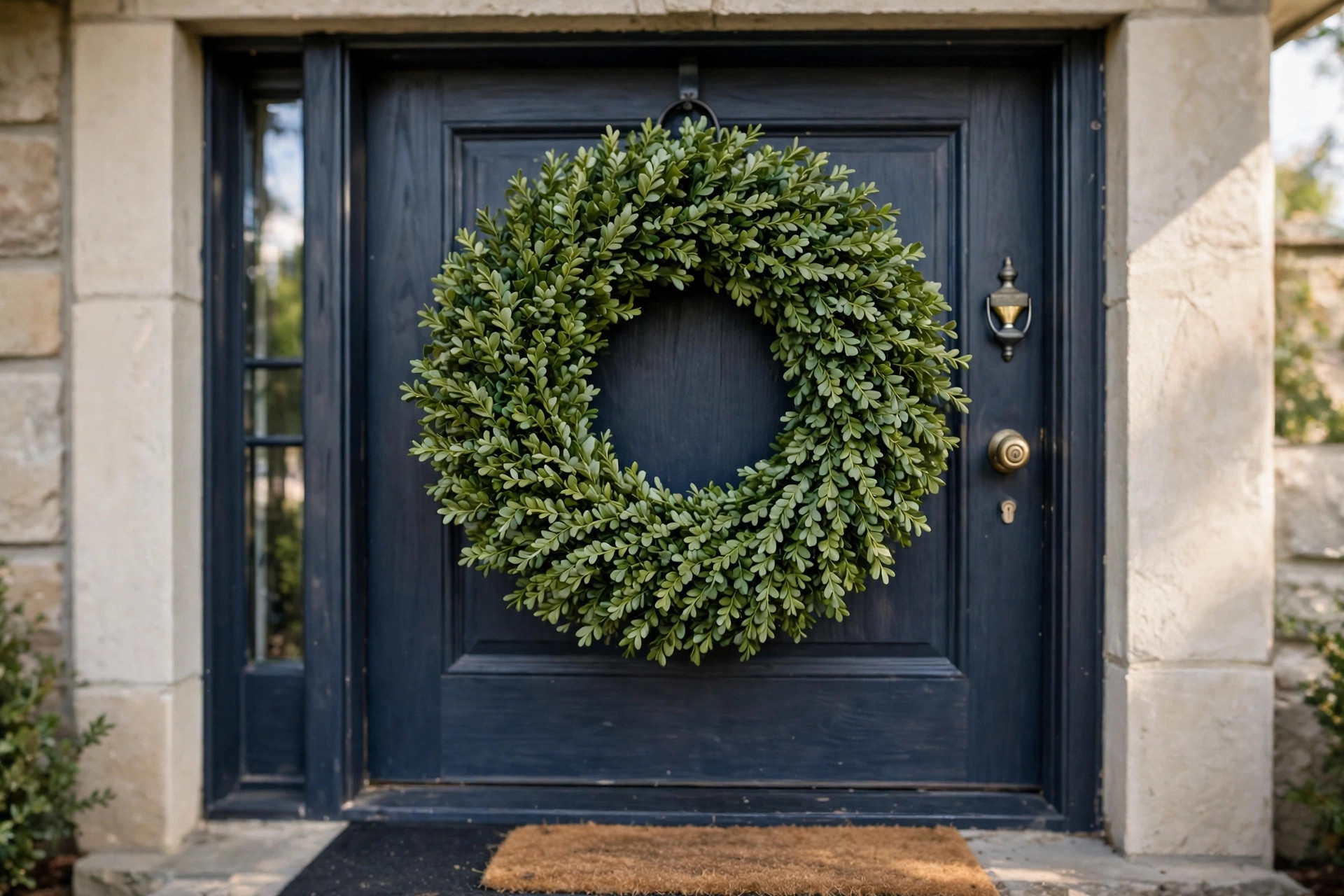
Not every door needs four wreaths a year, because the seasonal swap takes time, and the everyday wreath — the neutral green wreath that works all year round — is the wreath for the door that wants one welcome and no fuss. Use plain green eucalyptus or boxwood on a simple base, with no bow and no seasonal extras, because the wreath that is neutral is the wreath that suits January and July alike, and the door that wears it is the door that always looks finished. Keep it clean and full, because the wreath that is full is the wreath that looks cared for, and the wreath that is thin is the wreath that looks forgotten. When a season arrives, clip on a small accent — a few berries at Christmas, a sunflower in summer — because the base that is neutral is the base that takes any accent, and the wreath that accepts a clip-on is the wreath that changes with the year. One everyday wreath, and the door is done for twelve months.
18. Front door or wall — where each wreath looks best, inside and out
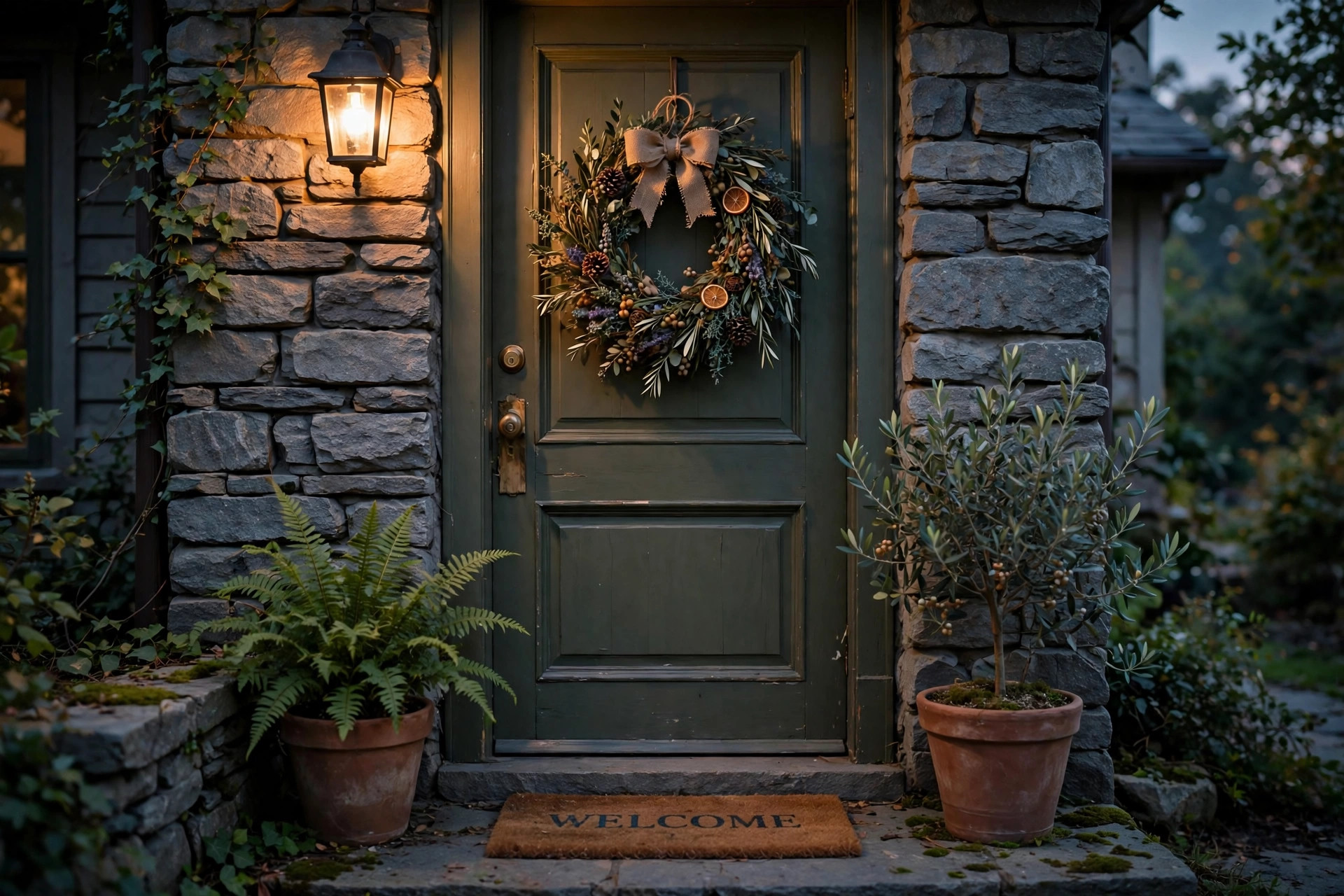
A wreath is not only for the front door, because the wall wreath is the wreath that fills a blank wall, and the door wreath is the wreath that welcomes from the street — and the same wreath can do both, if you know where it looks best. Hang the full, heavy wreaths on the front door, because the door that is outside is the door that can take the weight and the weather, and the wreath that is heavy is the wreath that needs a strong hook. Hang the slim hoop wreaths and the minimal eucalyptus wreaths on an inside wall, because the wall that is indoors is the wall that suits a light wreath, and the wreath that is slim is the wreath that looks like art. Try a wreath above a mantel, over a mirror or on a bedroom door, because the wreath that moves indoors is the wreath that gets a second life, and the wall that holds a wreath is the wall that no longer looks blank. The wall art that hangs beside a wall wreath gets its full treatment in 22 DIY Canvas Wall Art Ideas for 2026, where the blank wall finds its picture. One wreath, two places, and the house has two welcomes.
Keep it looking good
19. Store it flat — the box and the hook that keep a wreath round between seasons
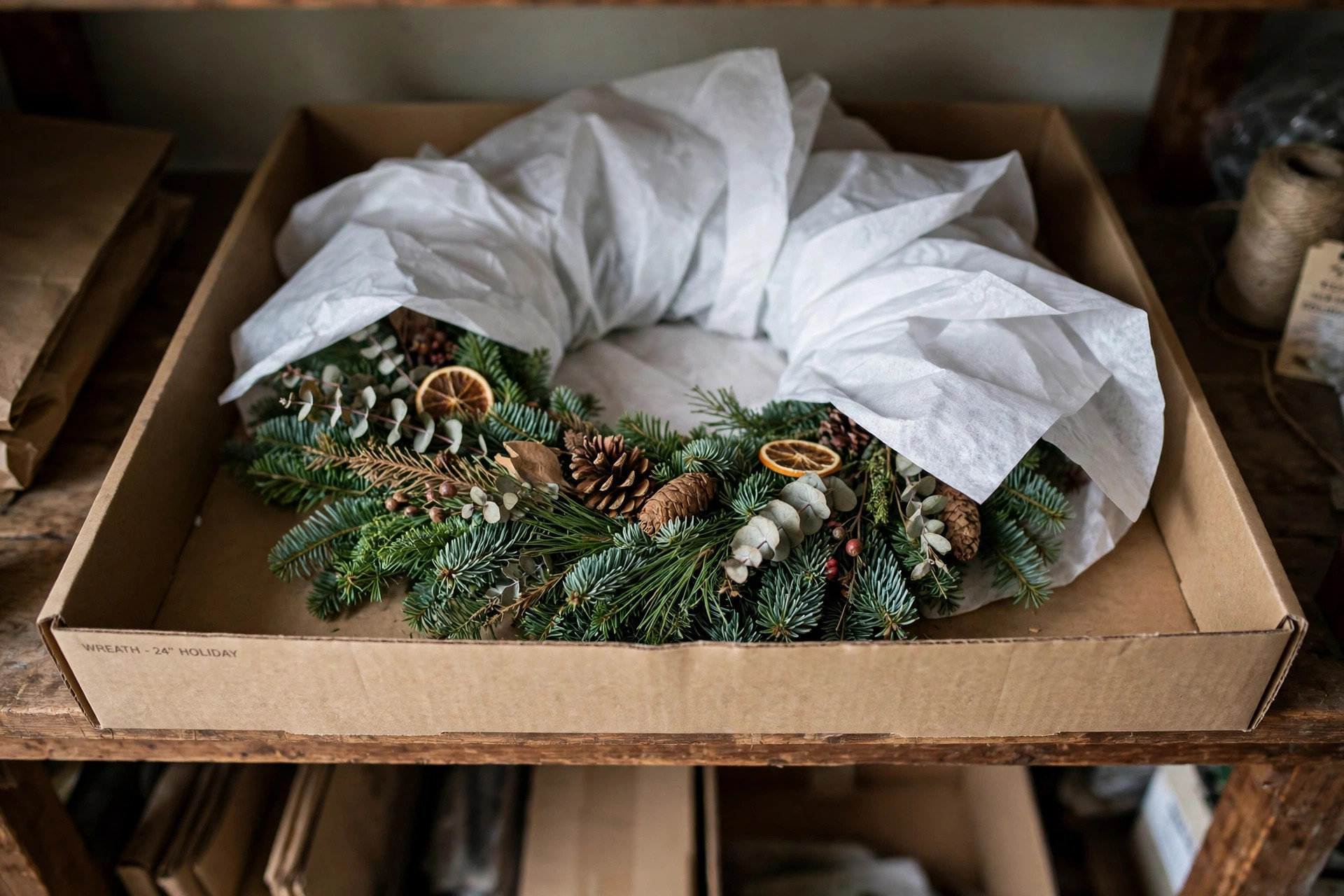
A wreath that is stored badly comes out flat, because the wreath that is squashed in a bag is the wreath that loses its shape, and the wreath that is hung on a nail in the garage is the wreath that gets dusty and bent. Store it flat — the box and the hook that keep a wreath round between seasons — so the wreath lies flat in a wide shallow box, with tissue paper on top, and the box sits on a shelf where nothing presses on it. Pick a box wider than the wreath, because the box that is wider is the box that does not squash the edges, and the wreath that lies flat is the wreath that comes out round. Or hang it on a wide hook in a closet, because the hook that is wide is the hook that does not dent the base, and the wreath that hangs is the wreath that keeps its shape. One flat box, and the wreath comes out round next year.
20. Refresh faded greenery — swap tired stems instead of starting again
Greenery fades, because the sun bleaches it, the dust dulls it, and the wreath that was bright last year is the wreath that looks tired this year — but the base is still good. Refresh the faded greenery — swap the tired stems instead of starting again — because the stems that are faded are the stems that come out, and the base that is wired is the base that takes new stems. Pull out the faded stems, snip in fresh ones in the same spots, and the wreath looks new for the cost of one bunch, because the wreath that is refreshed is the wreath that costs a fraction of a new one. Check the focal pieces too, because the bow that is faded is the bow that needs replacing, and the wreath that gets a new bow is the wreath that looks brand new. One bunch of fresh stems, and the old wreath is new again.

21. Fix loose pieces — re-wire the stems that slipped, before they fall off
A wreath sheds, because the wire loosens, the stems slip, and the wreath that loses a stem a week is the wreath that ends up thin and sad. Fix the loose pieces — re-wire the stems that slipped, before they fall off — because the stem that is loose is the stem that can be saved, and the stem that is gone is the stem that leaves a hole. Turn the wreath over, find the loose wire at the back, and twist it tight again, because the wire that is twisted is the wire that holds, and the check that takes five minutes is the check that saves the wreath. Do this check every time the wreath comes out of storage, because the wreath that is checked is the wreath that never sheds on the doormat, and the door that wears a tight wreath is the door that looks cared for. Five minutes with the wire, and the shedding stops.

22. Swap the seasonal accents — one base, four looks, by changing the extras
Four wreaths take four boxes, because each seasonal wreath needs its own storage, and the door that changes with the seasons is the door that fills a shelf with boxes. Swap the seasonal accents — one base, four looks, by changing the extras — so the same green base wears a different accent each season: blossom in spring, sunflowers in summer, maple leaves in autumn, berries at Christmas. Clip the accents on with floral wire, because the accent that is wired is the accent that comes off cleanly, and the base that stays is the base that never needs rebuilding. Keep the accents in one small box, labelled by season, because the box that is labelled is the box that is found, and the swap that takes ten minutes is the swap that actually happens. One base, four looks, and the storage shelf stays empty.

23. Dust and clean it gently — the soft brush that keeps a wreath fresh
A wreath gathers dust, because it hangs in the open, the dust settles on the leaves, and the wreath that is dusty is the wreath that looks old before its time. Dust and clean it gently — the soft brush that keeps a wreath fresh — because the brush that is soft is the brush that lifts the dust without pulling the stems, and the wreath that is brushed is the wreath that looks new. Use a soft paintbrush or a feather duster, work from the top down, and never use water on a dried or faux wreath, because the water that soaks in is the water that stains, and the brush that is dry is the brush that is safe. Clean the wreath when it comes out of storage and once mid-season, because the wreath that is cleaned twice is the wreath that never looks dusty, and the door that wears a clean wreath is the door that looks loved. One soft brush, and the dust never wins.

24. A budget refresh — new ribbon and a few stems make an old wreath new
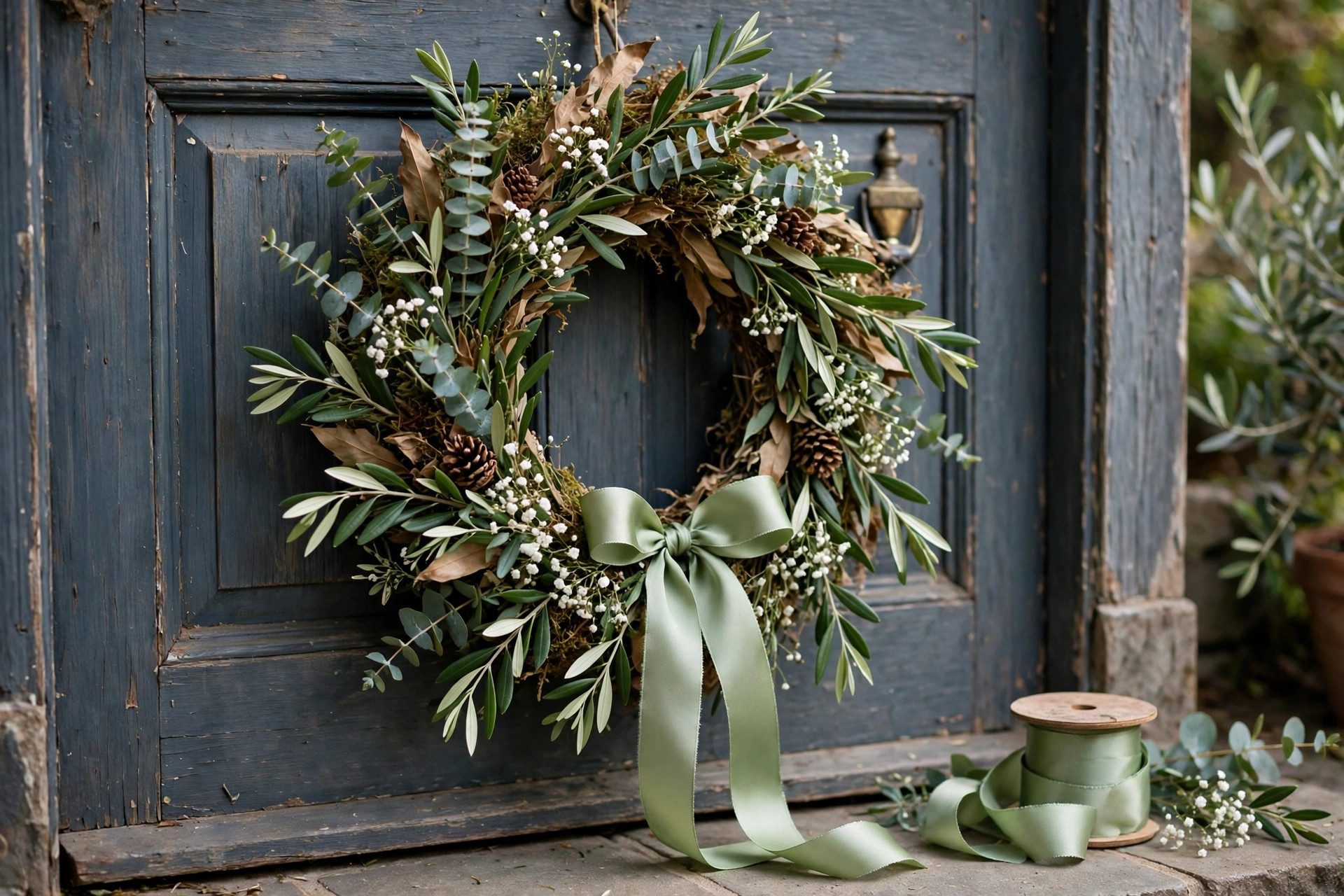
A new wreath costs money, because the base, the greenery and the flowers add up, and the door that wants a new look every season is the door that spends a fortune. Do a budget refresh — new ribbon and a few stems make an old wreath new — because the ribbon that is new is the ribbon that changes the whole wreath, and the few stems that are fresh are the stems that fill the gaps. Buy one spool of ribbon in the season's colour and one bunch of stems, wire them onto the old base, and the wreath looks bought yesterday, because the refresh that costs a few pounds is the refresh that looks like a new wreath. The budget supplies for a cheap refresh get their full treatment in 25 Dollar Store DIY Ideas for 2026, where the dollar-store finds turn into chic decor. One ribbon, one bunch, and the old wreath is new for the price of a coffee.
Which DIY wreath idea fits which situation?
| Situation | Best first move | Budget | Tools needed |
|---|---|---|---|
| Plain front door, no welcome | Classic evergreen wreath (idea 1) | Low | Wreath base |
| Want a natural, rustic look | Grapevine wreath (idea 2) | Low | Grapevine base |
| Modern home, slim look | Modern hoop wreath (idea 3) | Low | Metal hoop |
| Spring door needs colour | Full floral wreath (idea 4) | Medium | Faux flowers |
| Farmhouse style door | Rustic burlap wreath (idea 5) | Low | Burlap ribbon |
| Don't know which base to buy | Choose the right base (idea 7) | Free | None |
| Greenery keeps falling off | Wire the stems (idea 9) | Low | Floral wire |
| Can't drill the door | Hang it without damage (idea 11) | Low | Over-door hook |
| Wreath must survive rain | Seal it for outdoors (idea 12) | Low | Sealant spray |
| Christmas door, classic look | Christmas wreath (idea 16) | Medium | Pine and berries |
| One wreath for all year | Everyday wreath (idea 17) | Low | Green stems |
| Wreath went flat in storage | Store it flat (idea 19) | Free | Box |
You do not need all 24 ideas. You need the three that solve your door — usually the base that matches the look, the wire that keeps the stems on, and the hook that hangs it without a hole. Start with the base, do it this weekend before the next season, and hang the wreath on the door. Do that and the door will look loved from the street, the greenery will stay where you wired it, and the hook will leave no mark when the wreath comes down.
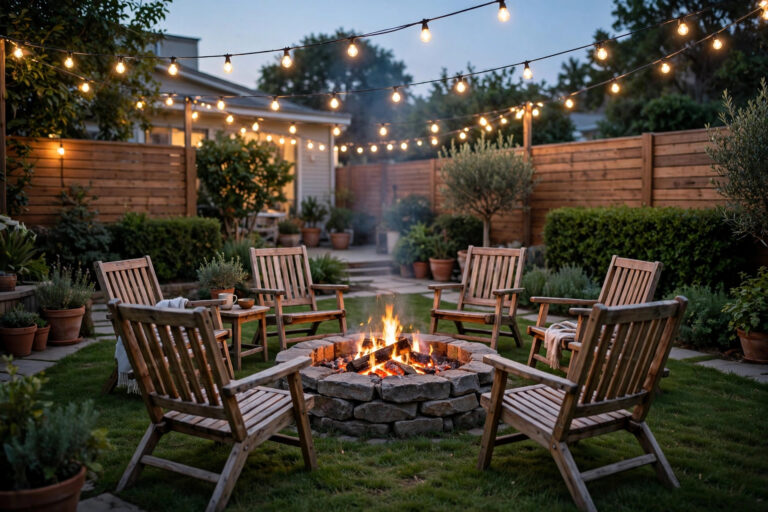
Save this post for the next season, and if the room the wreath hangs in needs the same treatment, read 25 DIY Room Decor Ideas for 2026 next — it is Post 84, the handmade decor the wreath matches — and 24 DIY Wall Shelves Ideas for 2026, Post 90, for the shelves that hold the wreath supplies. This is the nineteenth post of the new DIY by project return run — Posts 81 to 100, one project at a time — and the run keeps going with the outdoor lighting next door. The garden itself gets its own deep dive in DIY Outdoor Lighting, where the warm string lights make the evening garden glow.
Publish date assigned at publishing time. Updated as new wreath finds are tested.
Frequently asked questions
How do I make a DIY wreath without a hot glue gun?
Use floral wire instead of glue, because the wire wraps round the stem and the base and holds through rain and wind, while glue softens in the sun and lets go outdoors. Tuck the greenery and flowers into a grapevine base, which grips the stems on its own, and wire the heavy pieces — pinecones, dried oranges, the big bow — twice round at the back. A grapevine base with wired stems needs no glue at all, and the wreath that is wired is the wreath that lasts the whole season.
What is the best base for a DIY wreath?
It depends on the look you want. Grapevine is best for a natural, rustic wreath, because the twigs grip the decoration and the base looks good on its own. Foam is best for a full floral wreath, because the flowers pin straight into it. A wire frame is best for a light greenery wreath, and a metal hoop is best for a modern minimal wreath. Match the base to the look, hold it up against the door before you buy, and pick a size that fits the door — a base too small looks lost on a wide door.
How do I hang a wreath on a front door without damaging it?
Use an over-door hook that slips over the top of the door, so the wreath hangs without a single hole. Pick a hook that matches the door's thickness so it sits flat and does not rattle, and check the door still closes properly before you load the wreath. For a glass door, use a suction hook rated for the wreath's weight. Never drill into a front door for a wreath — the hook that leaves no marks is the hook that keeps the door perfect when the wreath comes down.