22 DIY Wall Art Ideas for 2026
Every home has a blank wall. It is the wall you walk past a hundred times a day without seeing it, the wall behind the sofa that holds nothing, the hallway wall that is just white paint and a light switch. The wall is not ugly — it is empty, and empty is the problem, because a room with a blank wall feels unfinished no matter how good the sofa is or how tidy the shelves are.
These 22 DIY wall art ideas fill that blank wall with art you make yourself: a painted canvas above the sofa, framed prints in a neat row, a woven hanging above the bed, a wood sign in the hallway — so the wall that was empty becomes the wall people look at first.
Every idea below works in a real home, from a flat where one framed print is the whole gallery to a house where every room gets its own piece. The canvas art gets its full deep dive in 22 DIY Canvas Wall Art Ideas for 2026, where the painting itself is the project — and the room the art lives in gets its full treatment in 25 DIY Room Decor Ideas for 2026. Pick three ideas that fit your wall, start with the one piece that fills the biggest blank, and build from there.
Pick your wall art style
1. Painted canvas art — the classic first piece
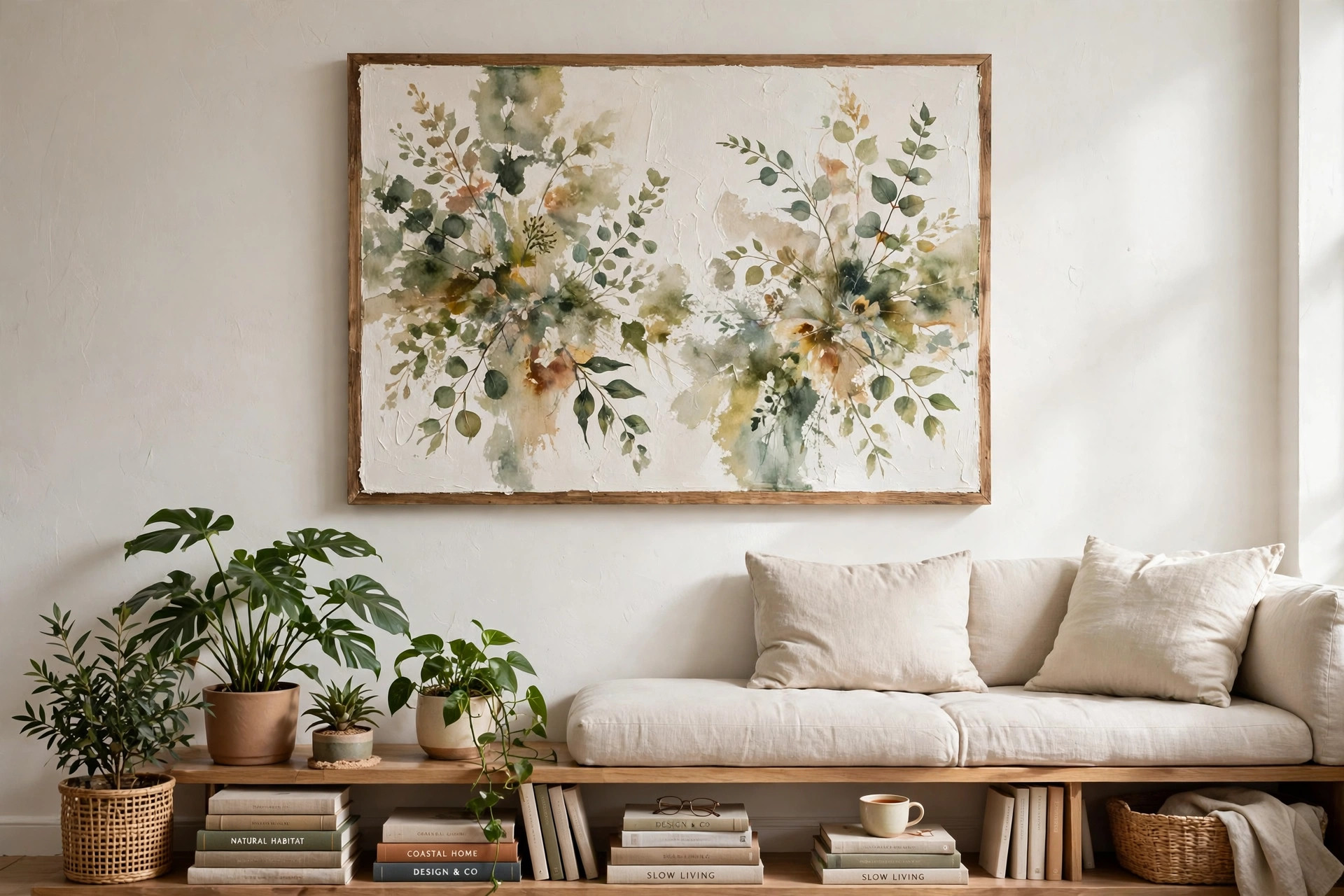
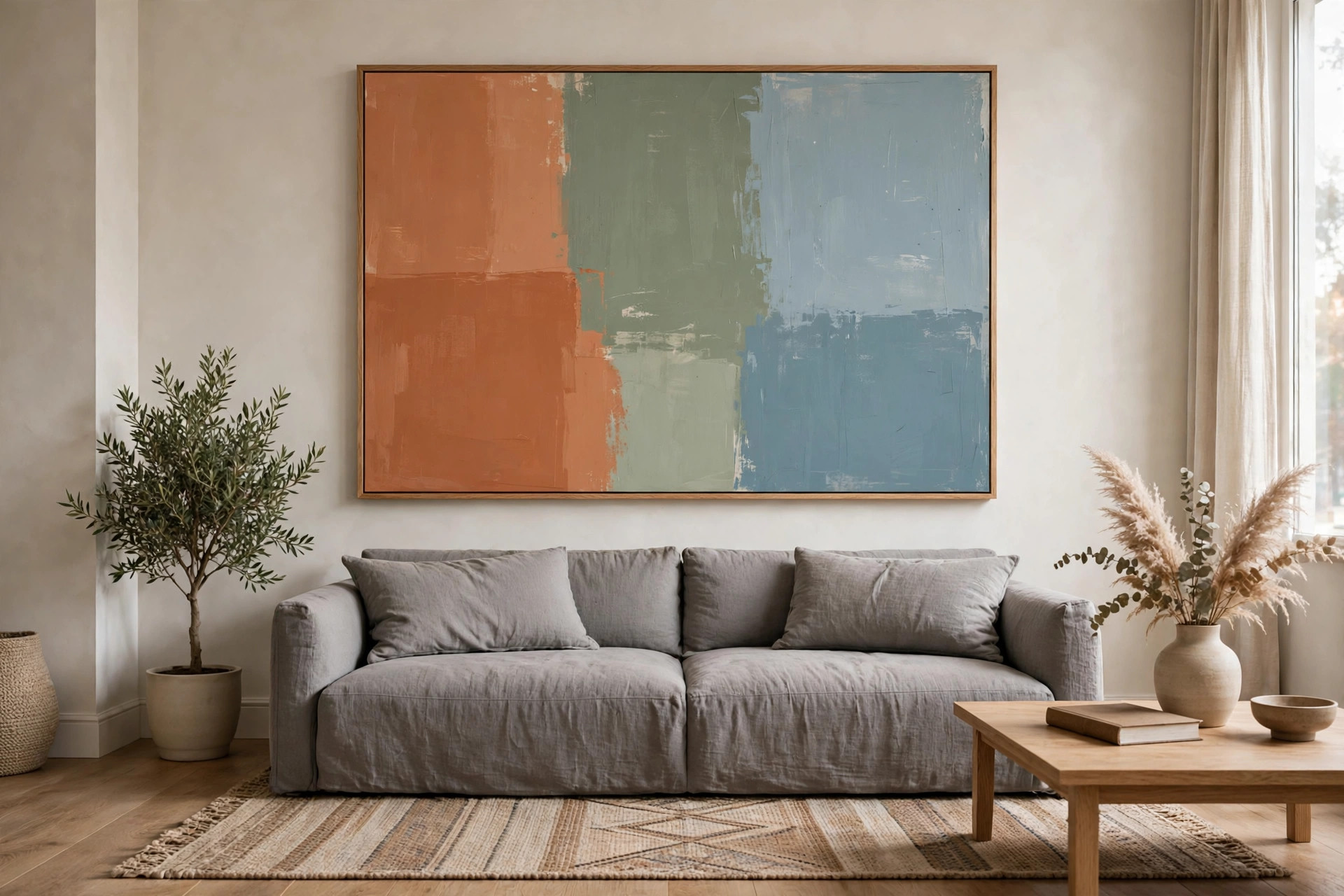
A blank wall above the sofa is a blank wall that asks for one big piece, because a small frame gets lost on a big wall, and the wall that holds nothing is the wall that makes the whole room feel unfinished. Painted canvas art is the classic first piece — one large canvas, painted by you, hung above the sofa — so the wall has a centre and the room has a focal point. Pick the size first: the canvas should be about two-thirds as wide as the sofa below it, because the canvas that is sized to the furniture is the canvas that looks like it belongs there. Paint in three colours you already have in the room — the cushion colour, the rug colour, one accent — because the painting that borrows the room's colours is the painting that ties the room together. You do not need to paint a landscape; big brushstrokes, colour blocks and simple shapes are enough, because the canvas that is bold and simple is the canvas that looks expensive. One canvas, and the blank wall is gone.
2. Framed prints — the quickest blank-wall fix
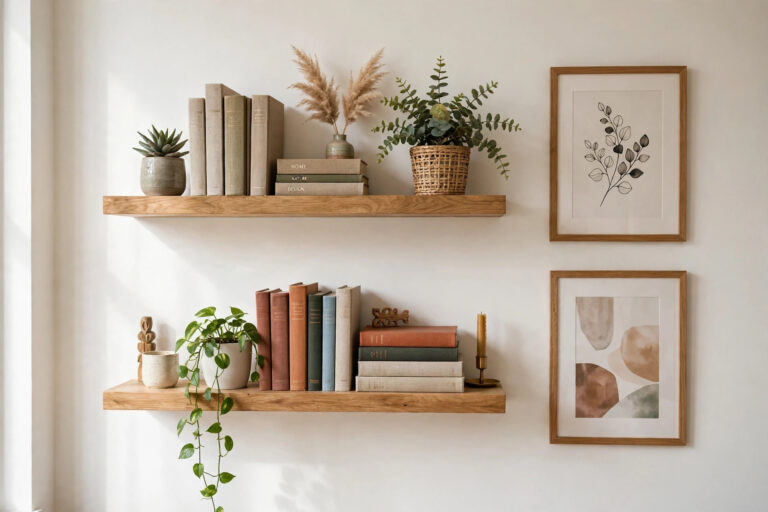
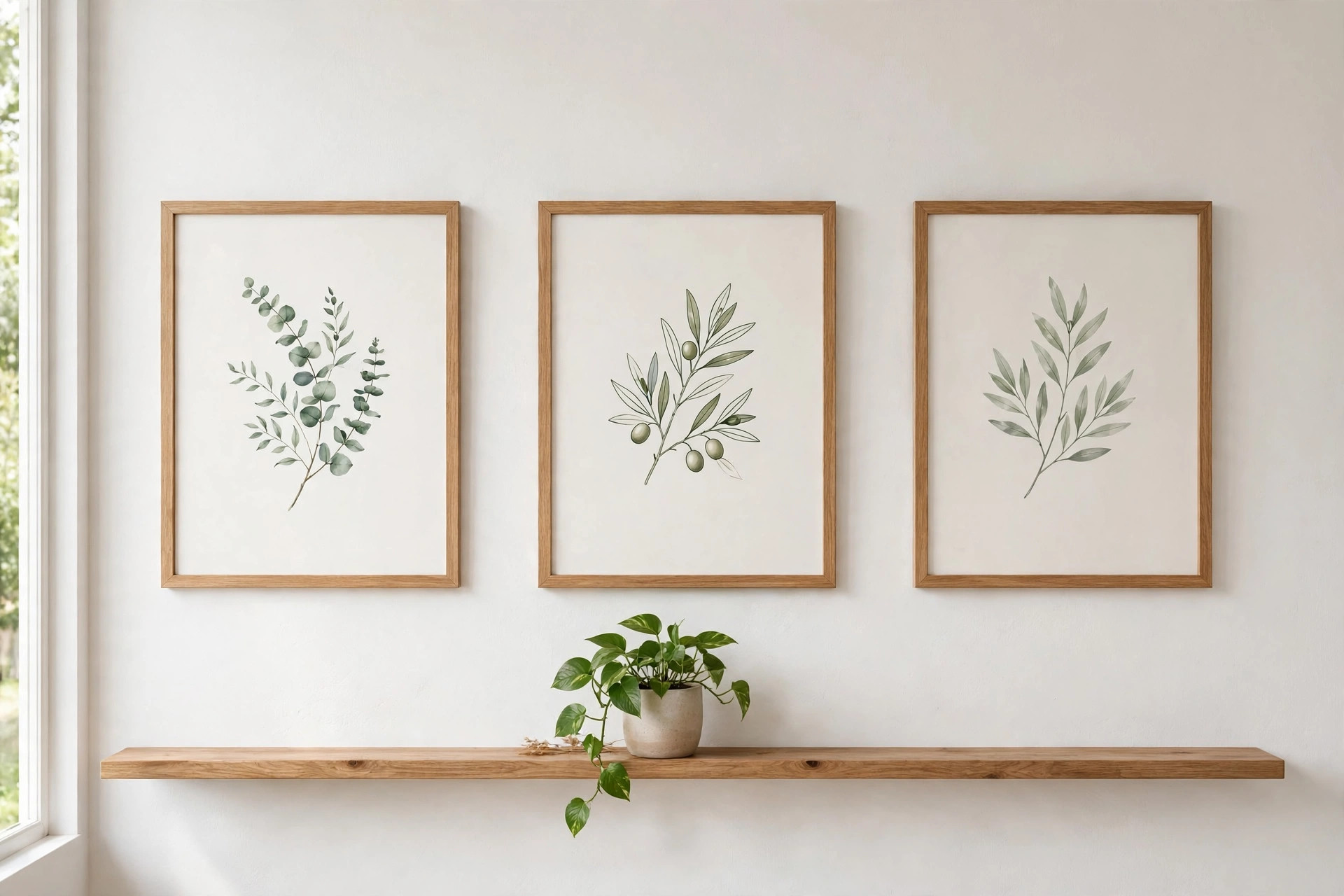
Some walls do not need a painting — they need a frame, because the wall is small, the room is busy, and the art that works there is the art that is finished in an afternoon. Framed prints are the quickest blank-wall fix — a print in a frame, hung in a neat row — so the wall is dressed before dinner. Pick prints you already love: a free printable, a page from a calendar, a postcard from a trip, because the print that means something to you is the print that looks right on your wall. Use matching frames for a tidy row, or mixed frames for a collected look, because the frames that match are the frames that calm a busy wall, and the frames that mix are the frames that suit a room full of character. Hang the row at eye level, with the centre of the row about 57 inches from the floor, because the row that hangs at eye level is the row people actually look at. The budget route to framed art gets its full treatment in 25 Dollar Store DIY Ideas for 2026, where a cheap frame becomes a chic one. One row of frames, and the wall is finished.
3. Macramé wall hangings — soft texture for plain walls
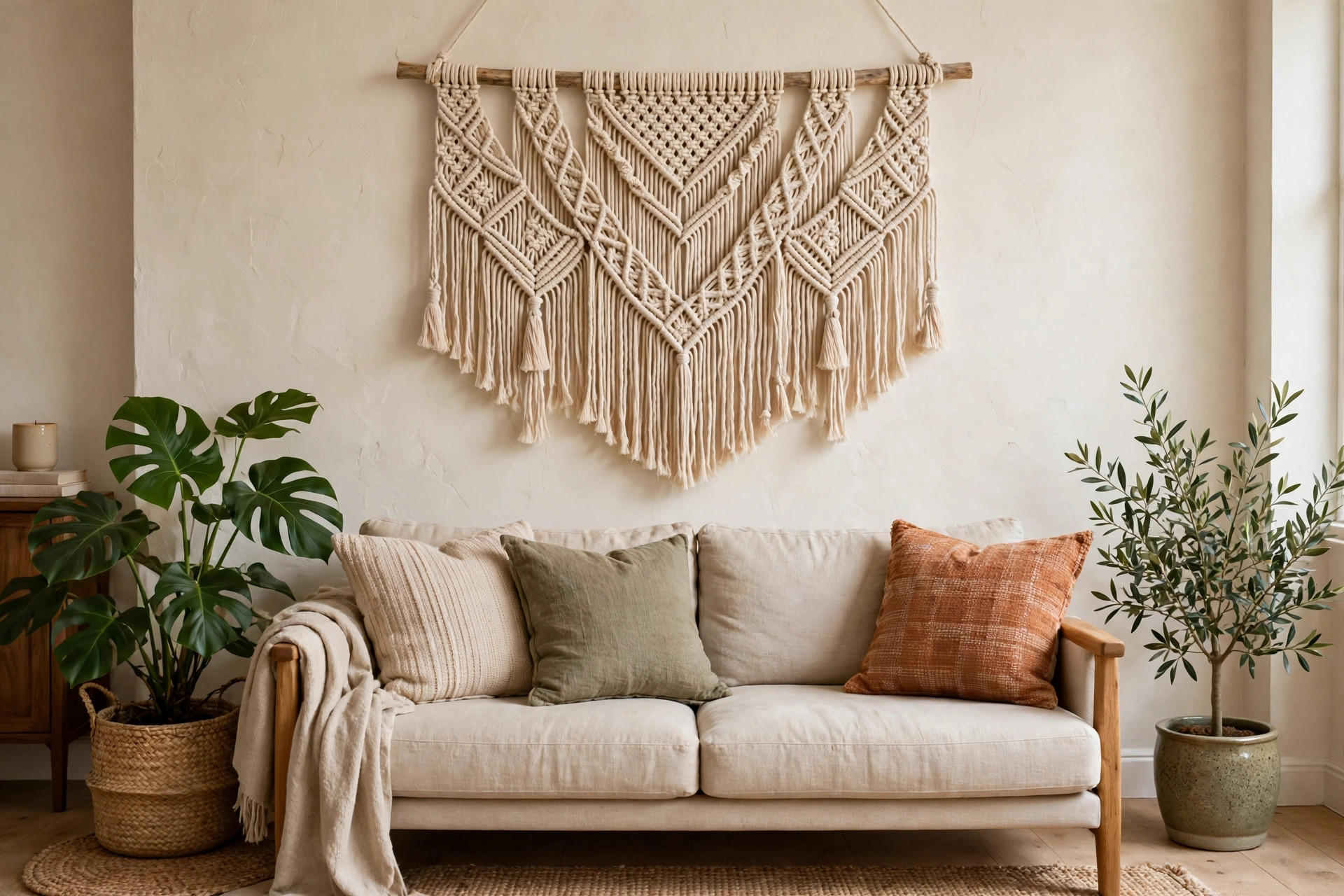
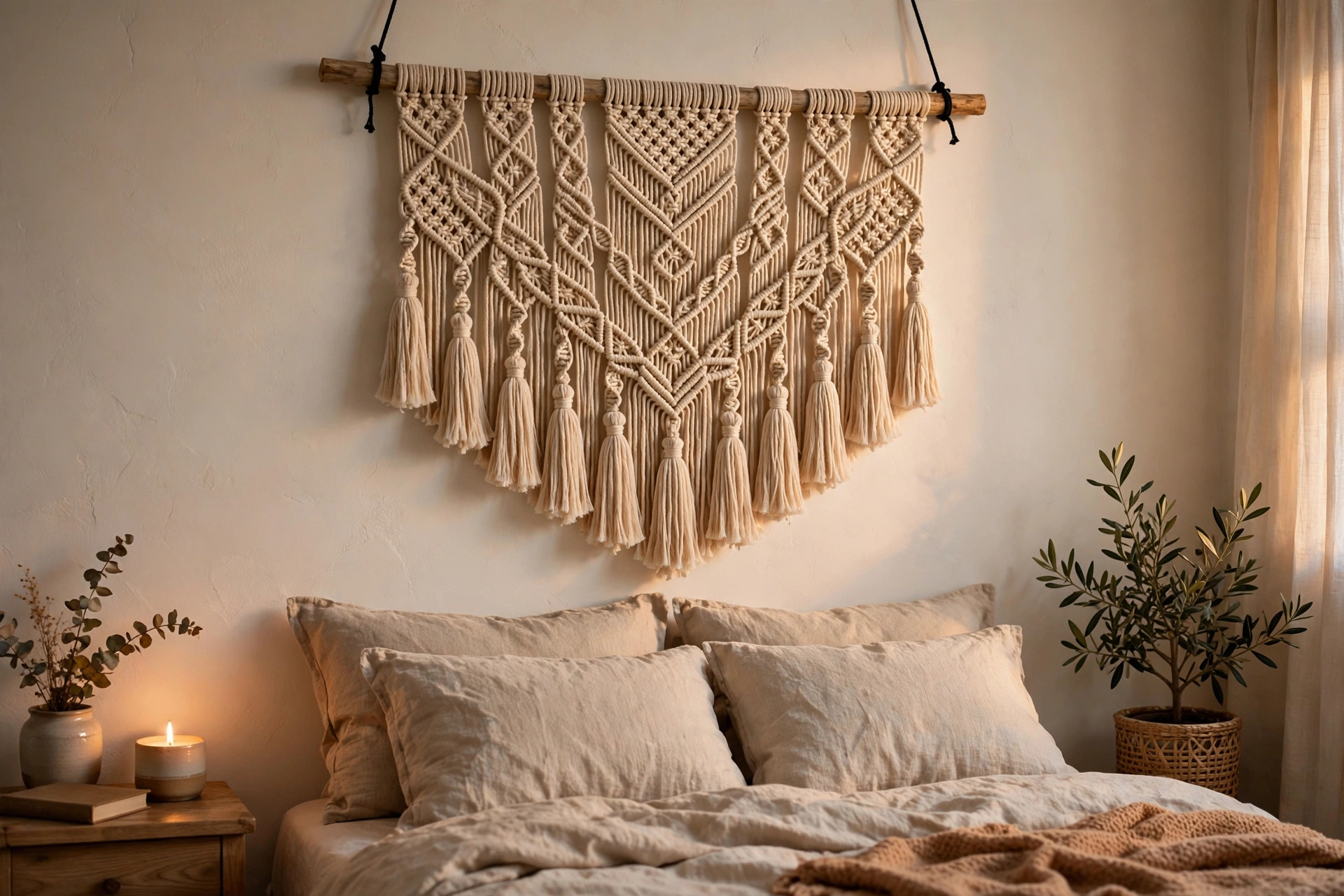
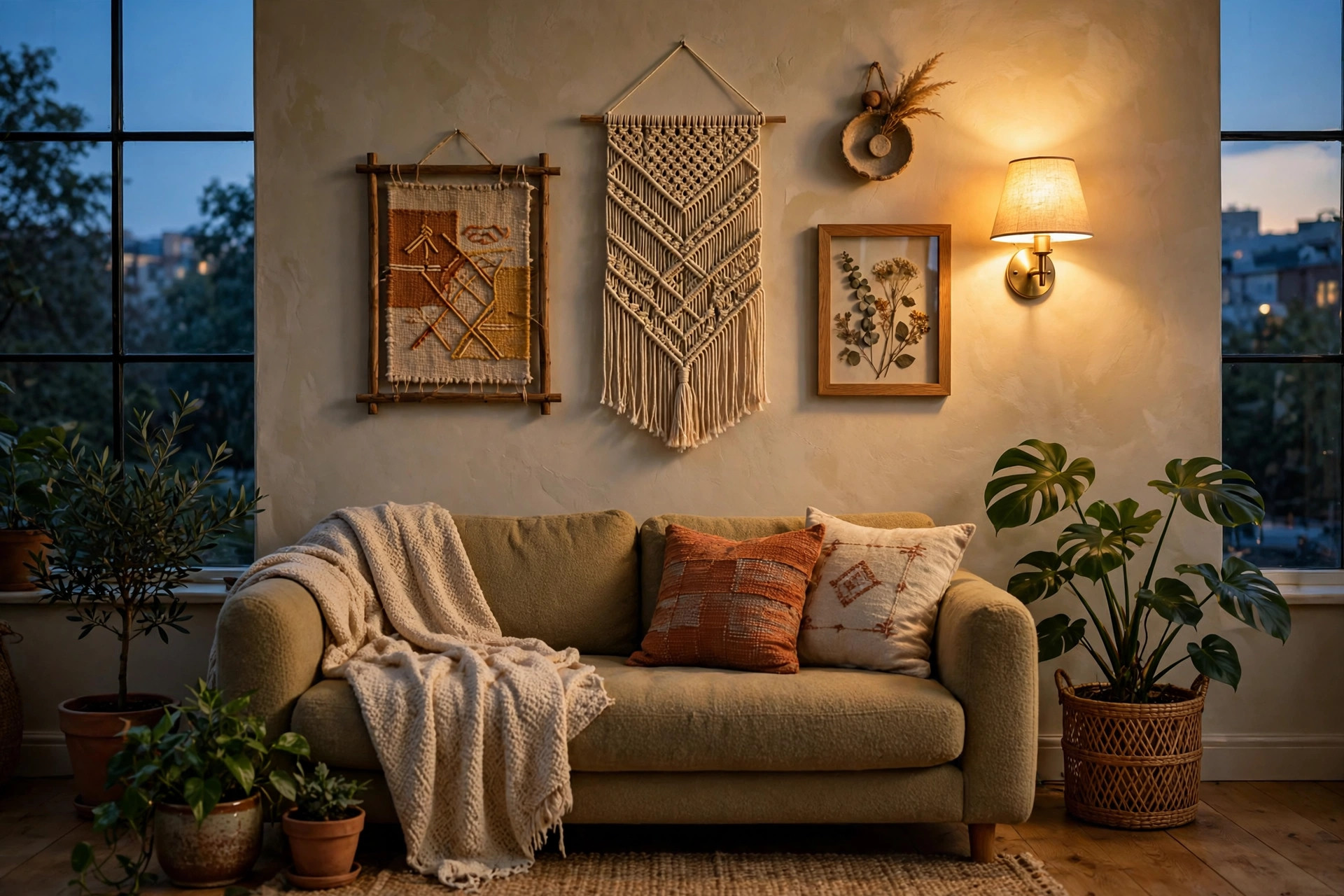
A plain wall can feel cold, because the paint is flat, the furniture is hard, and the room that holds only hard surfaces is the room that feels like a showroom instead of a home. A macramé wall hanging adds soft texture — knotted yarn on a wooden dowel, hanging above the bed or the sofa — so the wall feels warm and the room feels lived in. Pick a simple pattern first: a few rows of square knots and a fringe at the bottom, because the hanging that is simple is the hanging you actually finish, and the fringe that is uneven is the fringe you trim with scissors. Hang it on a dowel wider than the hanging itself, because the dowel that sticks out a little on each side is the dowel that looks finished, and the hanging that is centred on the dowel is the hanging that hangs straight. Keep the yarn in one or two colours that match the bedding or the cushions, because the hanging that borrows the room's colours is the hanging that belongs there. One woven hanging, and the cold wall is warm.
4. Wood signs — words and shapes cut from timber
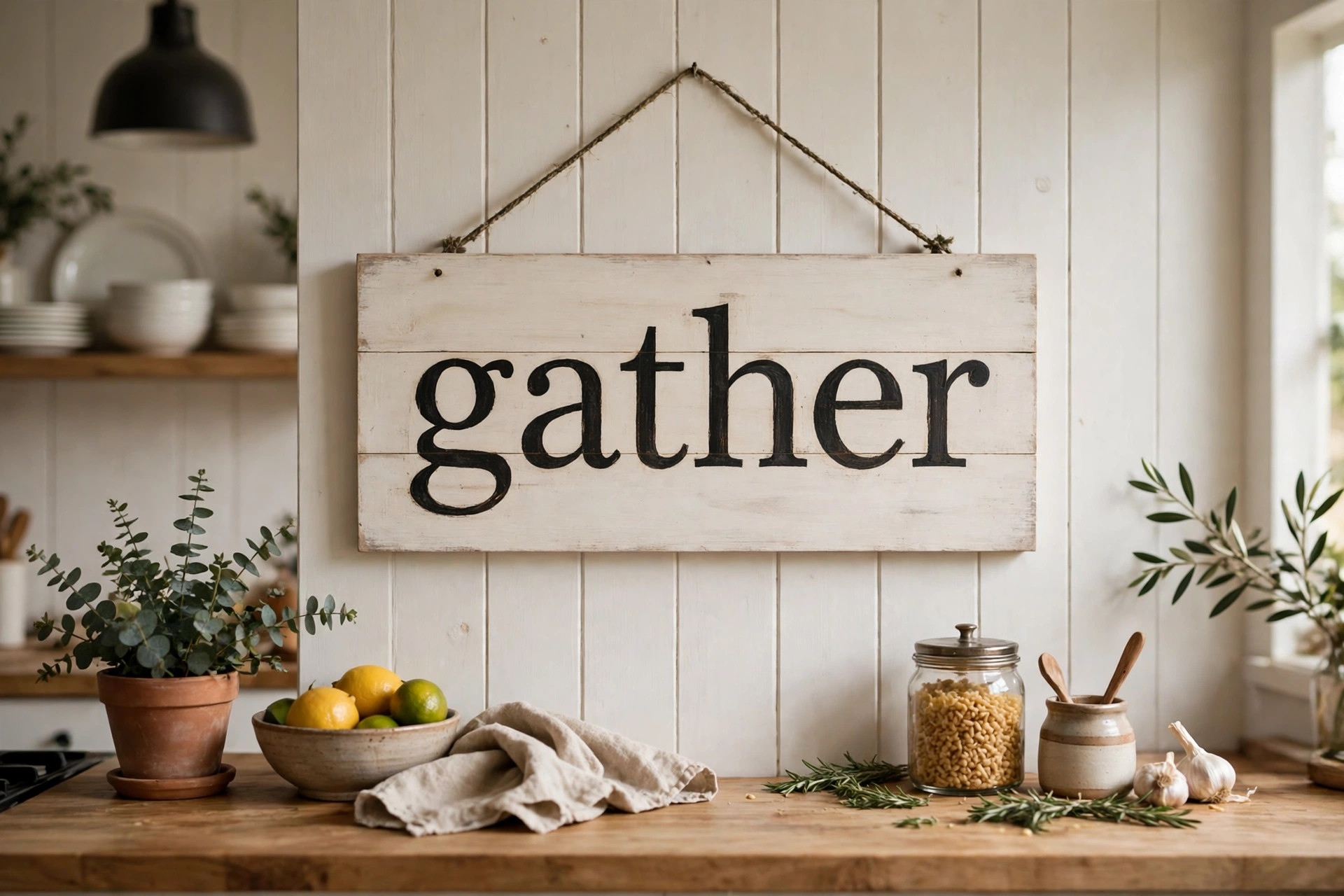
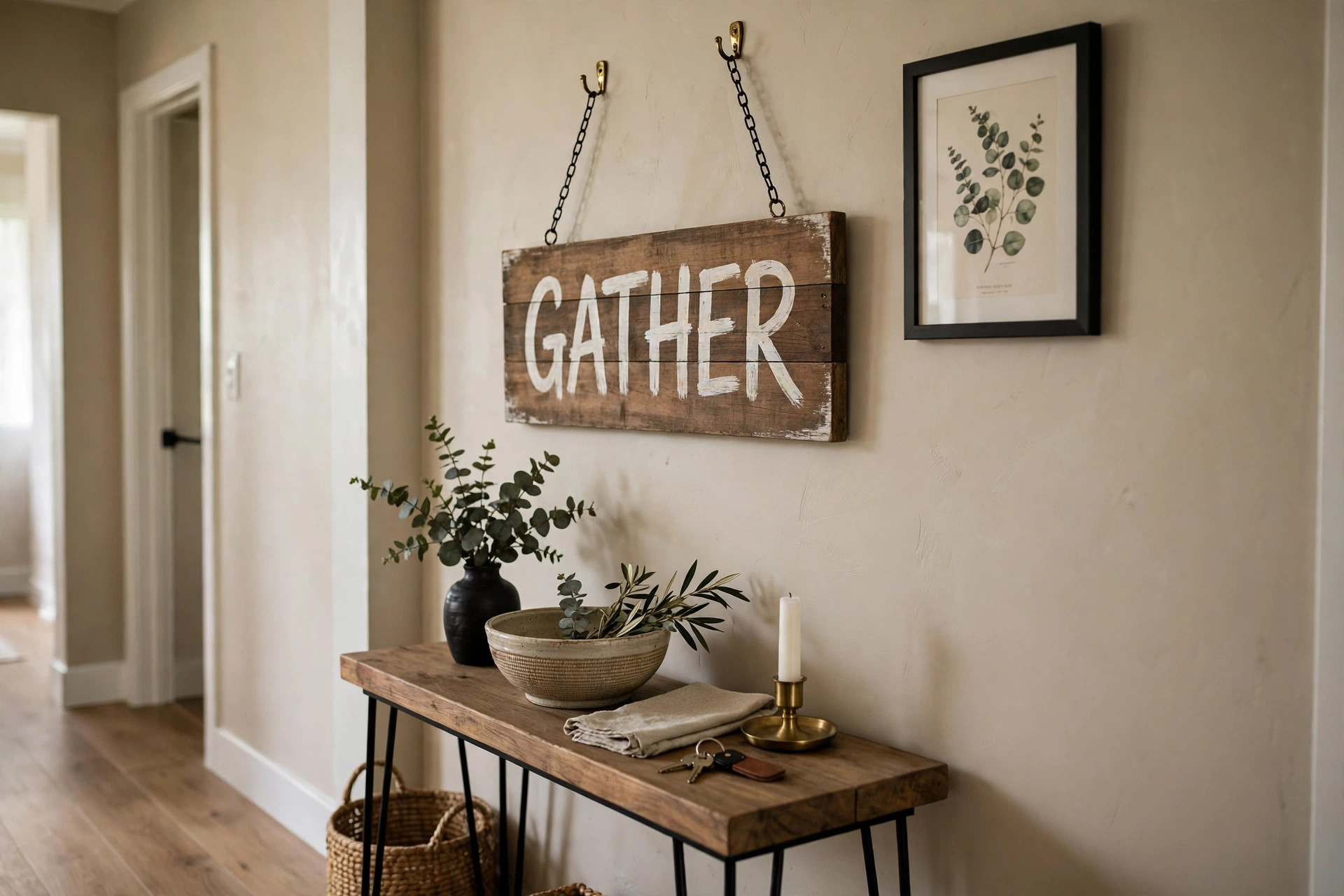
Some walls want words, because the room is a kitchen that says "gather", a hallway that says "welcome", or a bedroom that says "rest" — and the wall that holds a word is the wall that tells you what the room is for. Wood signs are words and shapes cut from timber — a painted board, a cut-out shape, a short phrase — so the wall speaks. Pick a short phrase, three words at most, because the sign that is short is the sign people actually read, and the phrase that is long is the phrase nobody finishes. Paint the board a colour that stands out from the wall — dark on a light wall, light on a dark wall — because the sign that contrasts is the sign you can read from the door. Hang it where the eye lands first, above the console table or the bed, because the sign that hangs at eye level is the sign that greets you. One wood sign, and the wall has something to say.
5. Photo gallery walls — your own pictures as the art
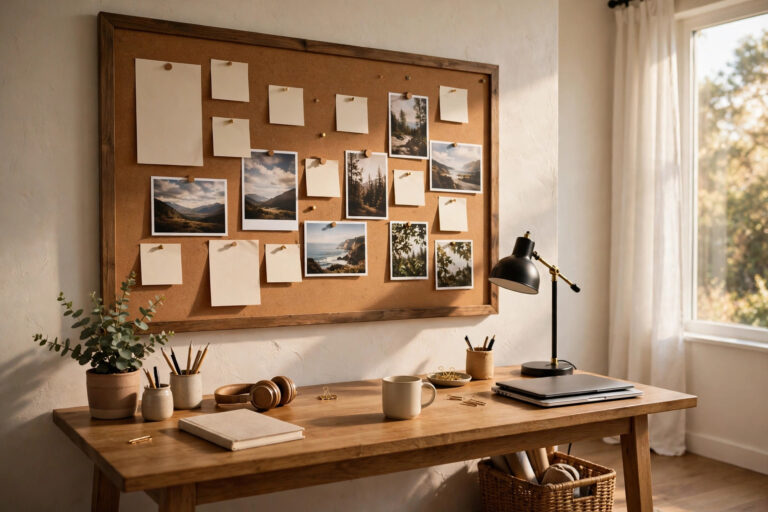
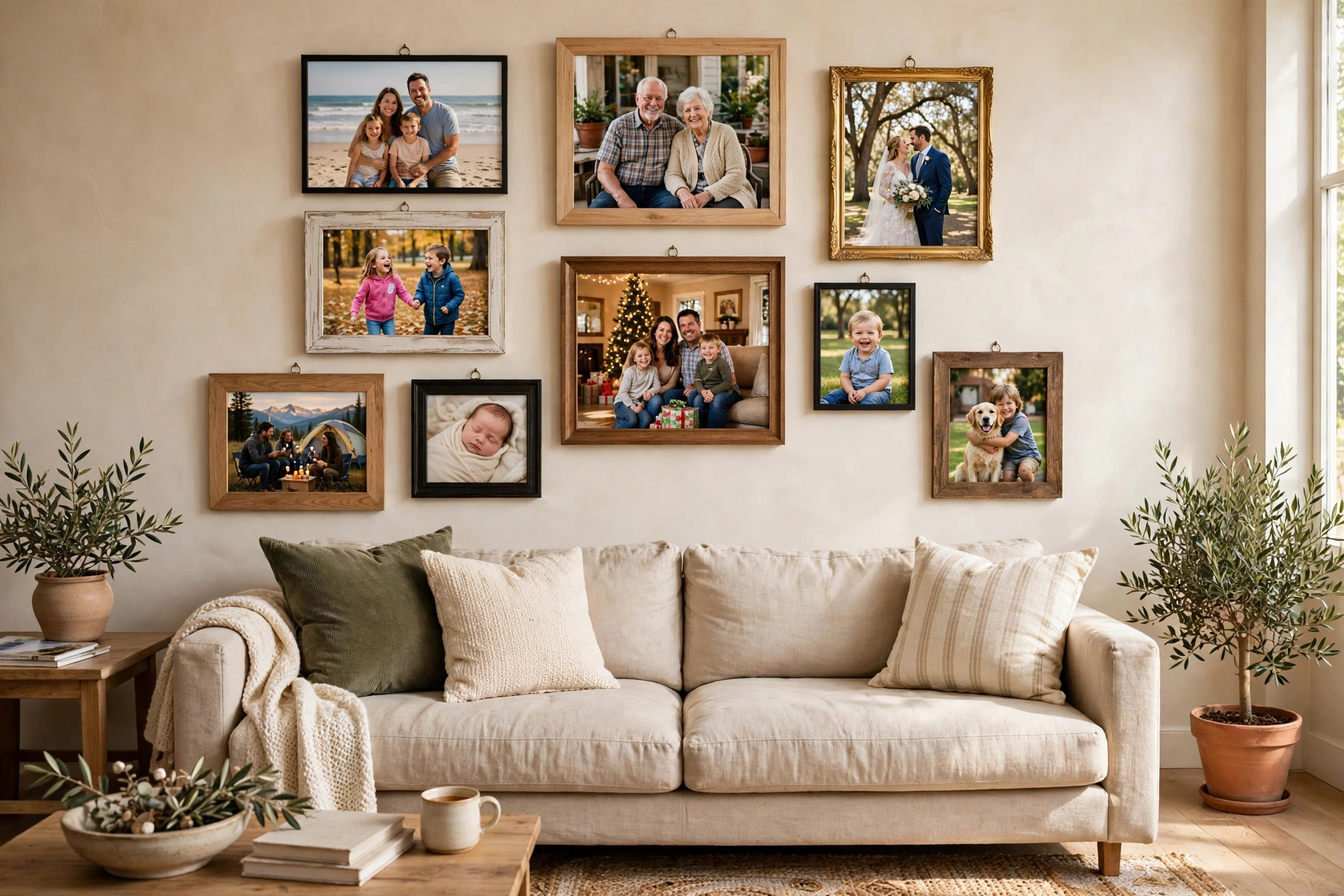
The best art in a home is the art that is already yours, because the photos on your phone are the holidays, the birthdays and the people you love — and the wall that holds them is the wall that tells your story. A photo gallery wall turns your own pictures into the art — a cluster of framed photos, hung together — so the blank wall becomes the family wall. Pick ten photos you love, print them in the same size, and use matching frames, because the gallery that matches is the gallery that looks planned, and the photos that are the same size are the photos that hang in a neat grid. Lay the frames on the floor first and arrange them until the grid feels right, because the gallery that is planned on the floor is the gallery that hangs straight on the wall. Leave two inches between the frames, because the gap that is even is the gap that makes the gallery look calm. One gallery wall, and the blank wall is your story.
Make it yourself
6. Paint a canvas in an afternoon — the beginner's first canvas
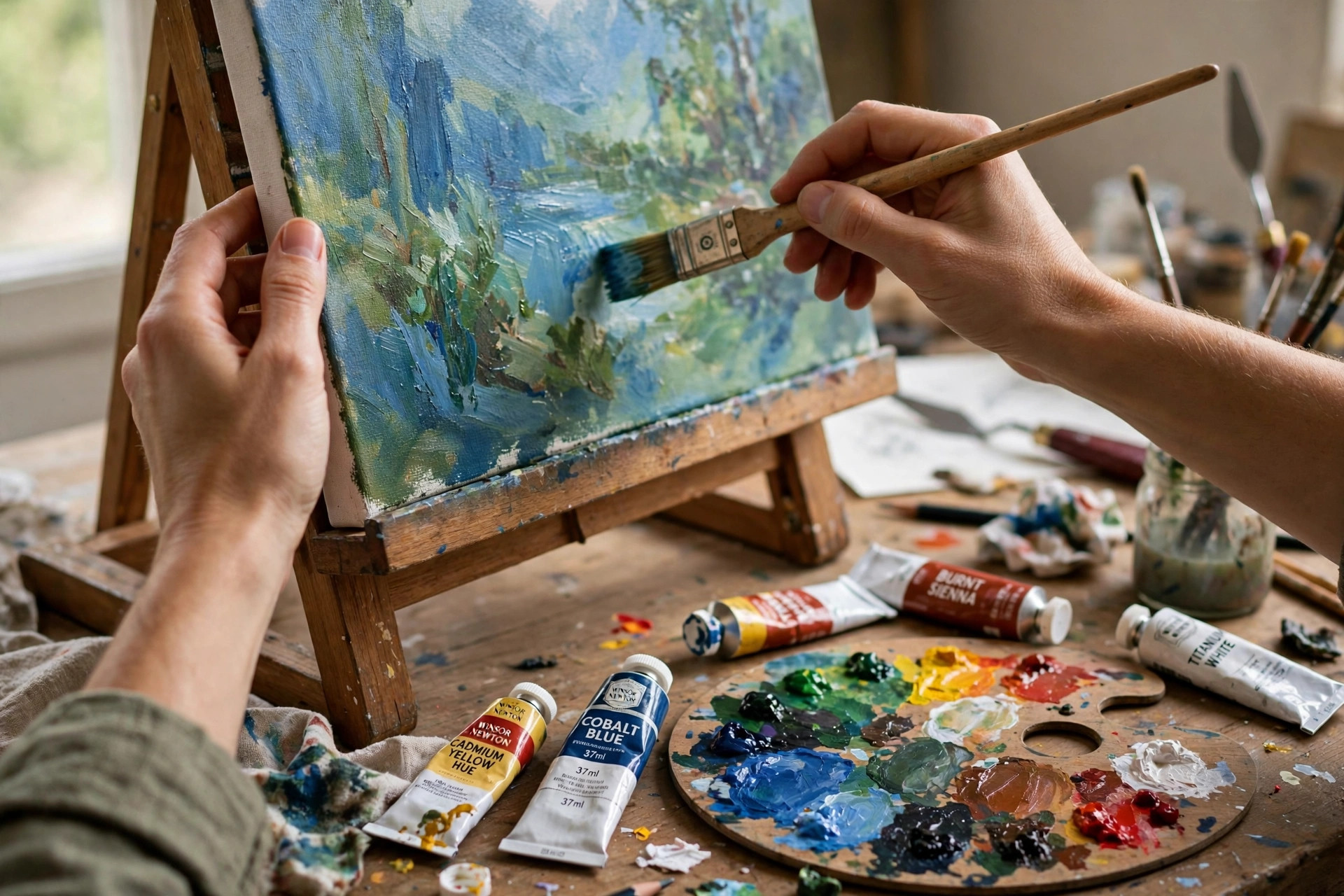
Painting a canvas sounds like a skill you do not have, because the blank canvas is white and big, the paints are in tubes, and the fear is that the first brushstroke will ruin it. Paint a canvas in an afternoon — the beginner's first canvas — so the white canvas becomes a finished piece before dinner. Start with a small canvas, not a big one, because the canvas that is small is the canvas you can finish, and the painting that is finished is the painting that hangs on the wall. Tape off a border with masking tape, paint three big colour blocks inside it, and peel the tape off when the paint is dry, because the border that is taped is the border that looks crisp, and the blocks that are big are the blocks that look bold. Add one simple shape on top — a circle, an arch, a line — because the shape that is simple is the shape that looks deliberate. (Check on Amazon for a beginner canvas and acrylic paint set with brushes included, sized for a first piece.) One afternoon, and you are a painter.
7. Print and frame — turn a free printable into framed art
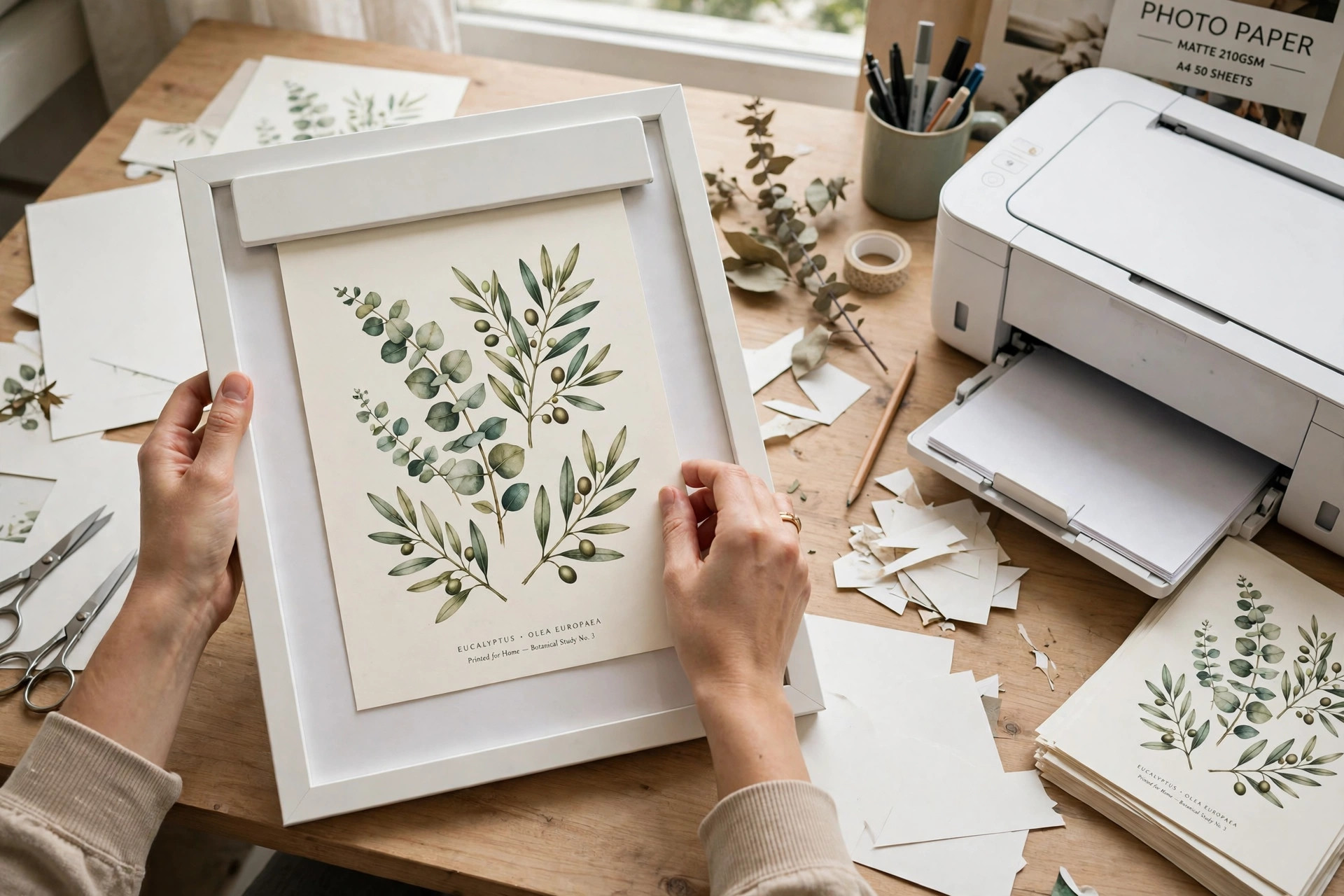
Not every piece of wall art needs paint, because the print you download tonight is the art that hangs tomorrow, and the wall that is blank today is the wall that is dressed by the weekend. Print and frame — turn a free printable into framed art — so a download becomes a finished piece for the price of a frame. Pick a printable that matches the room: a botanical print for the bedroom, a food print for the kitchen, a quote for the hallway, because the print that matches the room is the print that belongs there. Print it at home on thick paper, or at a print shop for a bigger size, because the paper that is thick is the paper that looks like art, and the print that is thin is the print that curls in the frame. Put it in a frame with a mount, because the mount that is white is the mount that makes a small print look big. One printable, one frame, and the wall is dressed.
8. Cut paper art — layered paper shapes in a frame
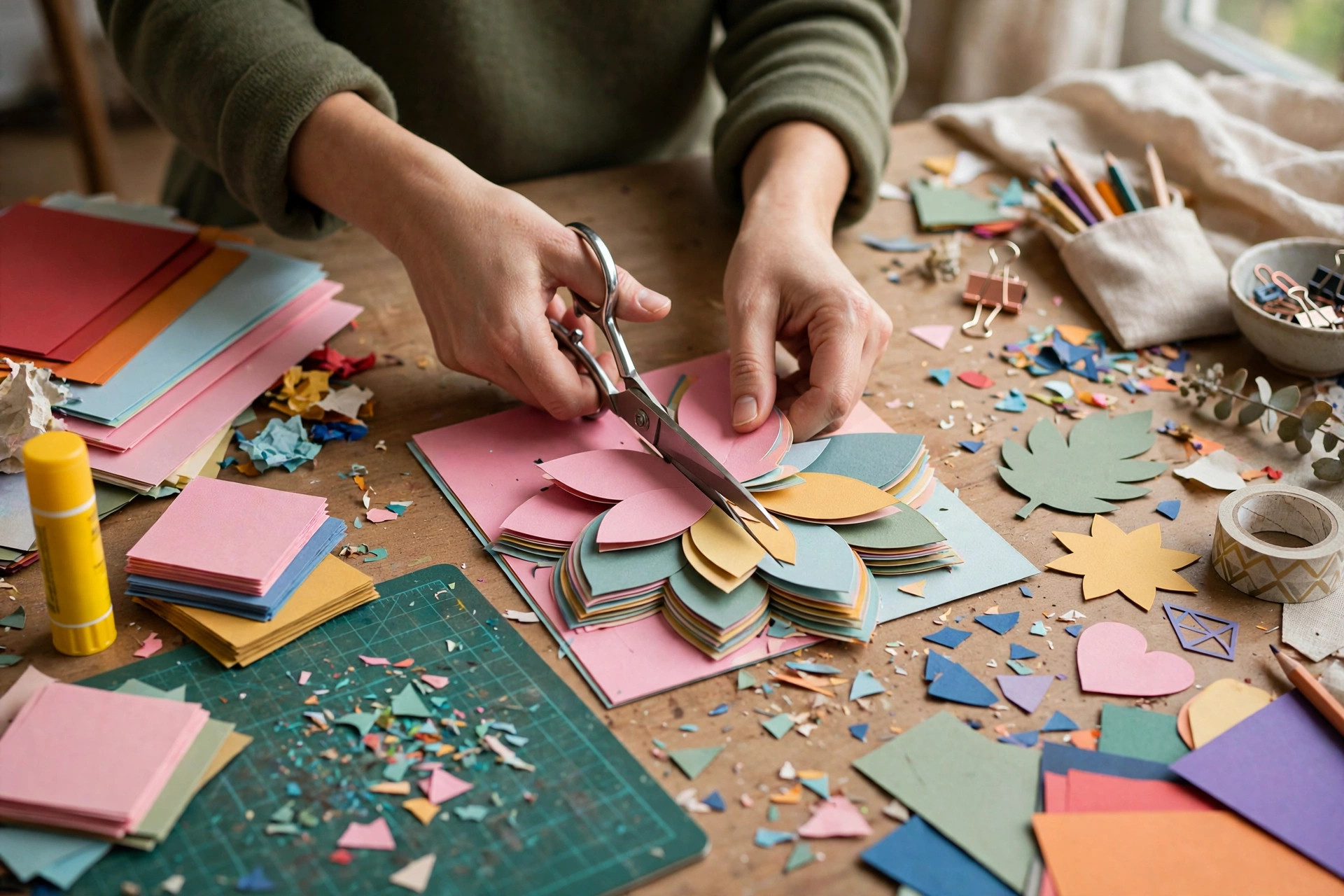
Paper art costs almost nothing, because the paper is in the craft drawer, the scissors are in the kitchen, and the frame is the one you already own — and the wall that needs art today is the wall that gets it for free. Cut paper art — layered paper shapes in a frame — so coloured paper becomes a picture. Cut three shapes in three colours — a big arch, a medium circle, a small leaf — and layer them on a backing card, because the shapes that overlap are the shapes that look like a picture, and the layers that are deep are the layers that catch the light. Glue the shapes down with a dot of glue in the centre only, so the edges lift a little and the picture has depth, because the edge that lifts is the edge that casts a shadow. Frame it behind glass, because the glass that protects it is the glass that keeps the paper crisp. The craft skills behind the paper art get their full treatment in 25 DIY Crafts Ideas for 2026, where the scissors and glue earn their keep. One sheet of paper, and the wall has art.
9. Weave a wall hanging — yarn, dowel and a free evening
A woven wall hanging looks like it took a week, because the yarn is soft, the pattern is neat, and the hanging that is on the wall looks like it came from a shop. Weave a wall hanging in a free evening — yarn, a dowel and a few knots — so the wall gets texture you made yourself. Tie the yarn over the dowel in a row, then knot the strands in pairs down the length, because the knots that are even are the knots that make the pattern, and the fringe that is trimmed straight is the fringe that finishes it. Mix two yarns — a thick one and a thin one — because the mix that is varied is the mix that looks interesting, and the hanging that is one texture is the hanging that looks flat. Add a wooden bead or two on the fringe, because the bead that is wood is the bead that matches the dowel. One evening, and the wall is woven.
10. Build a wood sign — cut, sand and paint your own sign
A wood sign from a shop costs more than the wood it is made from, because the board is cheap, the paint is cheap, and the price is for the cutting and the sanding you can do yourself. Build a wood sign — cut, sand and paint your own sign — so a board from the timber yard becomes the sign on your wall. Cut the board to the size you want, sand the edges smooth, and paint it in two coats, because the board that is sanded is the board that takes the paint evenly, and the paint that is two coats is the paint that covers. Add the letters with a stencil or a steady hand, because the letters that are stencilled are the letters that look straight, and the sign that is painted by you is the sign that is yours. (Check on Amazon for a wood sign making kit with a pre-cut board, stencil letters and paint included.) One board, and the wall has your words.
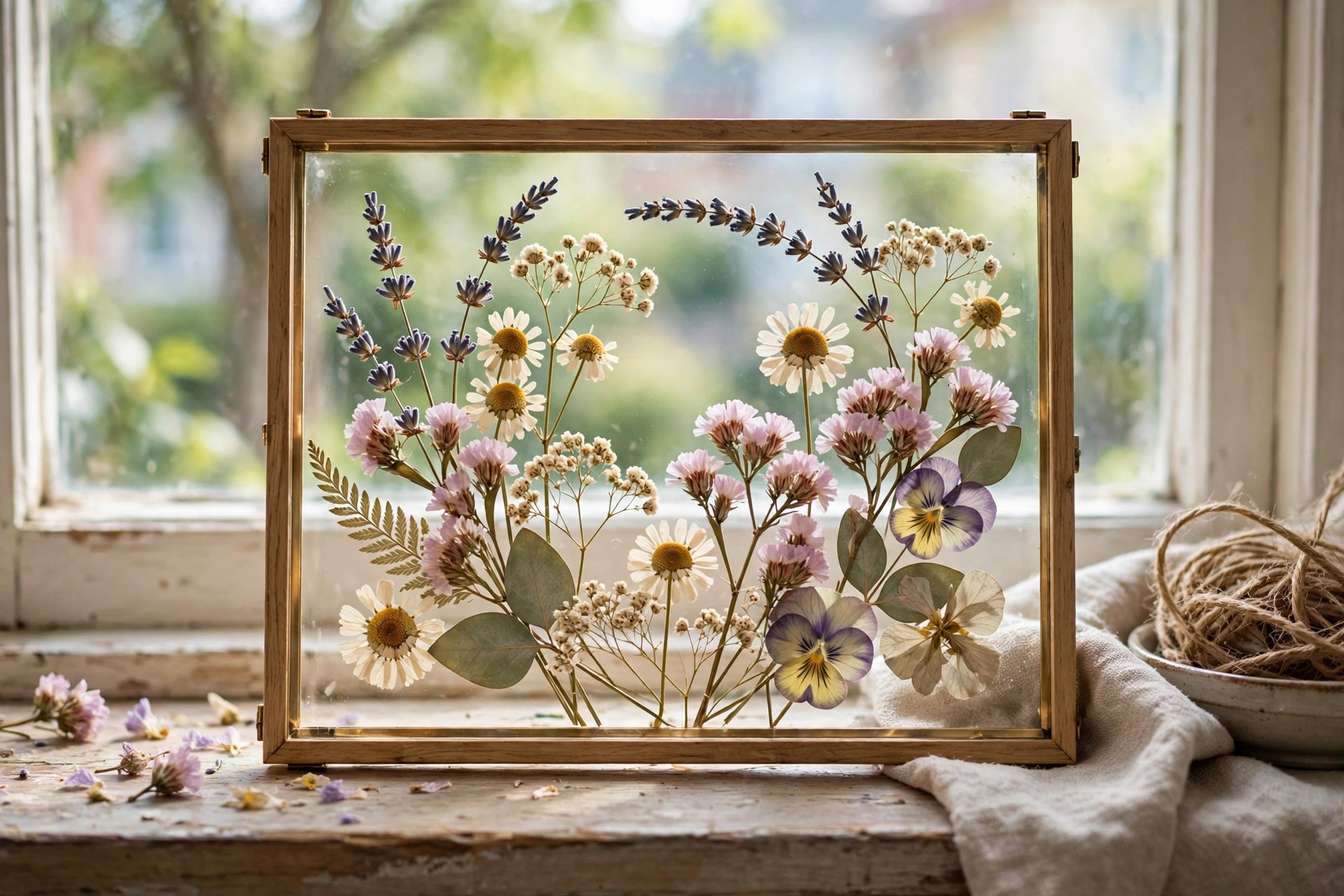
11. Press flowers into art — dried flowers under glass
Flowers from the garden last a week in a vase, because the petals fall, the stems bend, and the bunch that was beautiful on Monday is compost by Sunday. Press flowers into art — dried flowers under glass — so the flowers from the garden stay on the wall all year. Pick flat flowers — daisies, pansies, ferns — press them between the pages of a heavy book for two weeks, and lay them on a backing card, because the flower that is flat is the flower that presses well, and the press that is patient is the press that keeps the colour. Arrange them in a loose bunch, not a neat row, because the bunch that is loose is the bunch that looks like a garden, and the glass that covers them is the glass that keeps them from fading. One pressed bunch, and the garden is on the wall.
Hang it in every room
12. Living room statement wall — one big piece above the sofa
The living room wall above the sofa is the biggest blank wall in the house, because the sofa is wide, the wall is tall, and the space that holds nothing is the space everyone sees first when they walk in. Make it a statement wall — one big piece above the sofa — so the wall has a centre and the room has a focal point. Hang the piece so its centre is about 57 inches from the floor, and its width is about two-thirds the width of the sofa, because the piece that is sized to the sofa is the piece that looks like it belongs there, and the centre that is at eye level is the centre people actually see. Leave the wall around it bare, because the statement that is alone is the statement that is strong, and the wall that is crowded is the wall that says nothing. The shelves that share the wall with the art get their full system in 24 DIY Wall Shelves Ideas for 2026, where the shelf sits under the picture. One big piece, and the living room is finished.
13. Bedroom art — calm colours above the bed
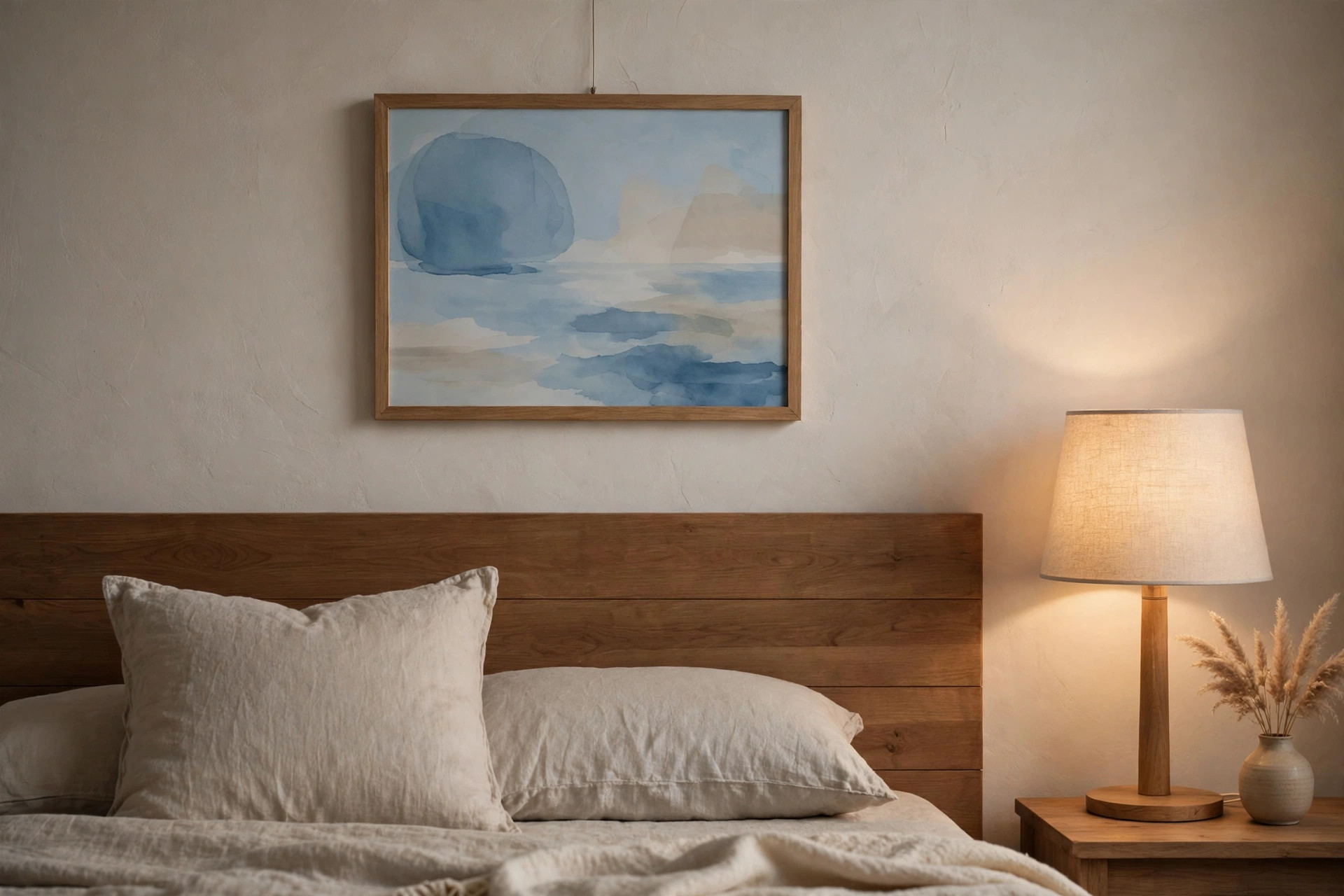
The bedroom wall above the bed is the wall you see last at night and first in the morning, because the bed faces it, the lamp lights it, and the art that hangs there is the art that sets the mood of the room. Hang bedroom art in calm colours — soft blues, warm neutrals, gentle greens — so the wall helps you rest. Pick one piece, not three, because the bedroom that is calm is the bedroom that has one quiet picture, and the wall that is busy is the wall that keeps you awake. Hang it low, just above the headboard, because the art that sits close to the bed is the art that belongs to the bed, and the gap that is small is the gap that ties them together. Keep the frame simple and the colours soft, because the frame that is plain is the frame that lets the picture speak. One calm picture, and the bedroom is restful.
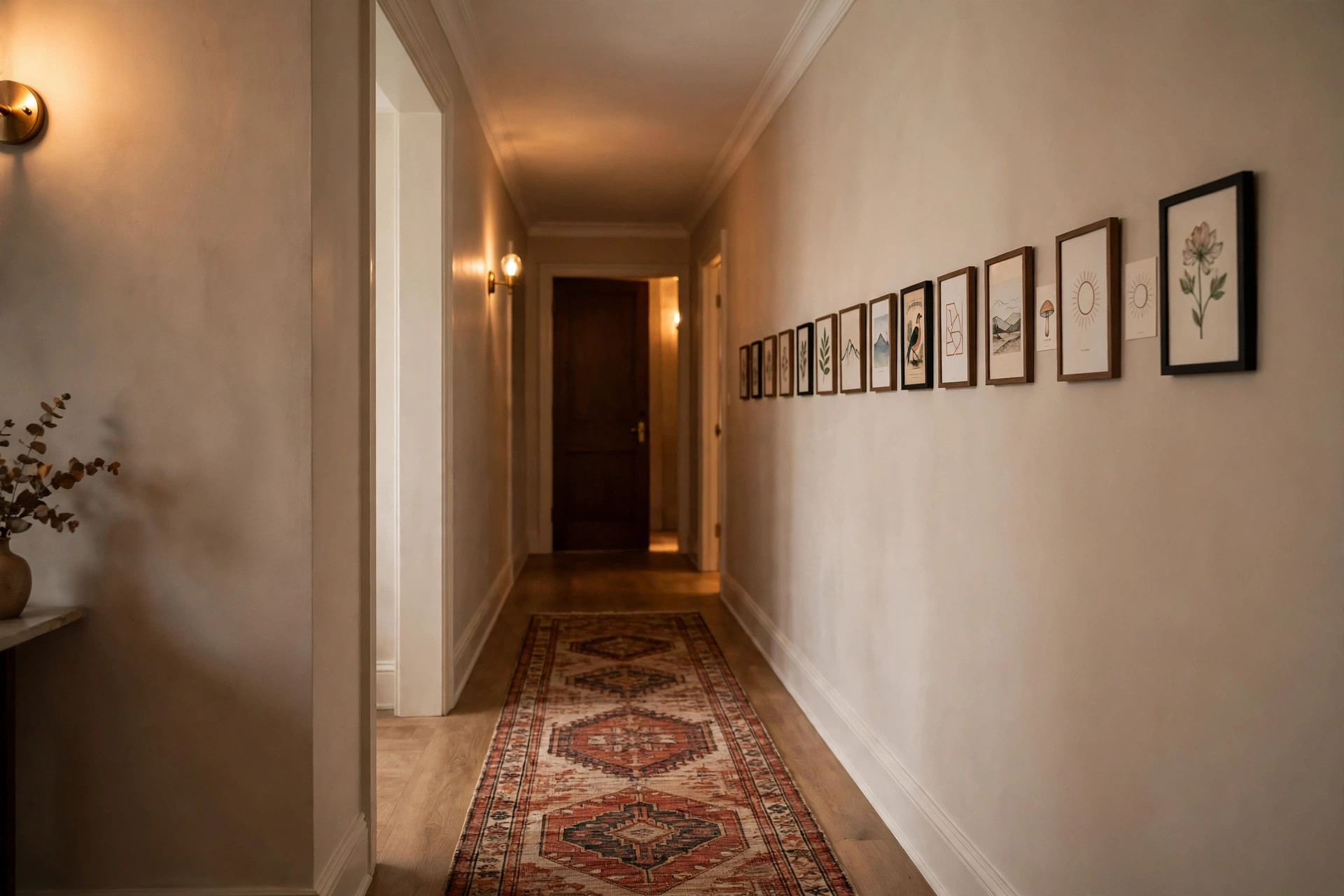
14. Hallway gallery — a line of small frames down the hall
The hallway is the room nobody decorates, because it is narrow, it is dark, and the wall that runs past the doors is the wall that gets ignored. Make it a hallway gallery — a line of small frames down the hall — so the corridor becomes a gallery. Hang the frames in a straight line at the same height, spaced evenly, because the line that is straight is the line that makes the hallway feel longer, and the frames that are even are the frames that look planned. Use the same frame for every picture, because the frames that match are the frames that calm a narrow space, and the pictures that vary are the pictures that keep it interesting. Keep the pictures small, because the frame that is small is the frame that fits a narrow wall, and the gallery that is small is the gallery that never overwhelms the hall. One line of frames, and the hallway is a gallery.
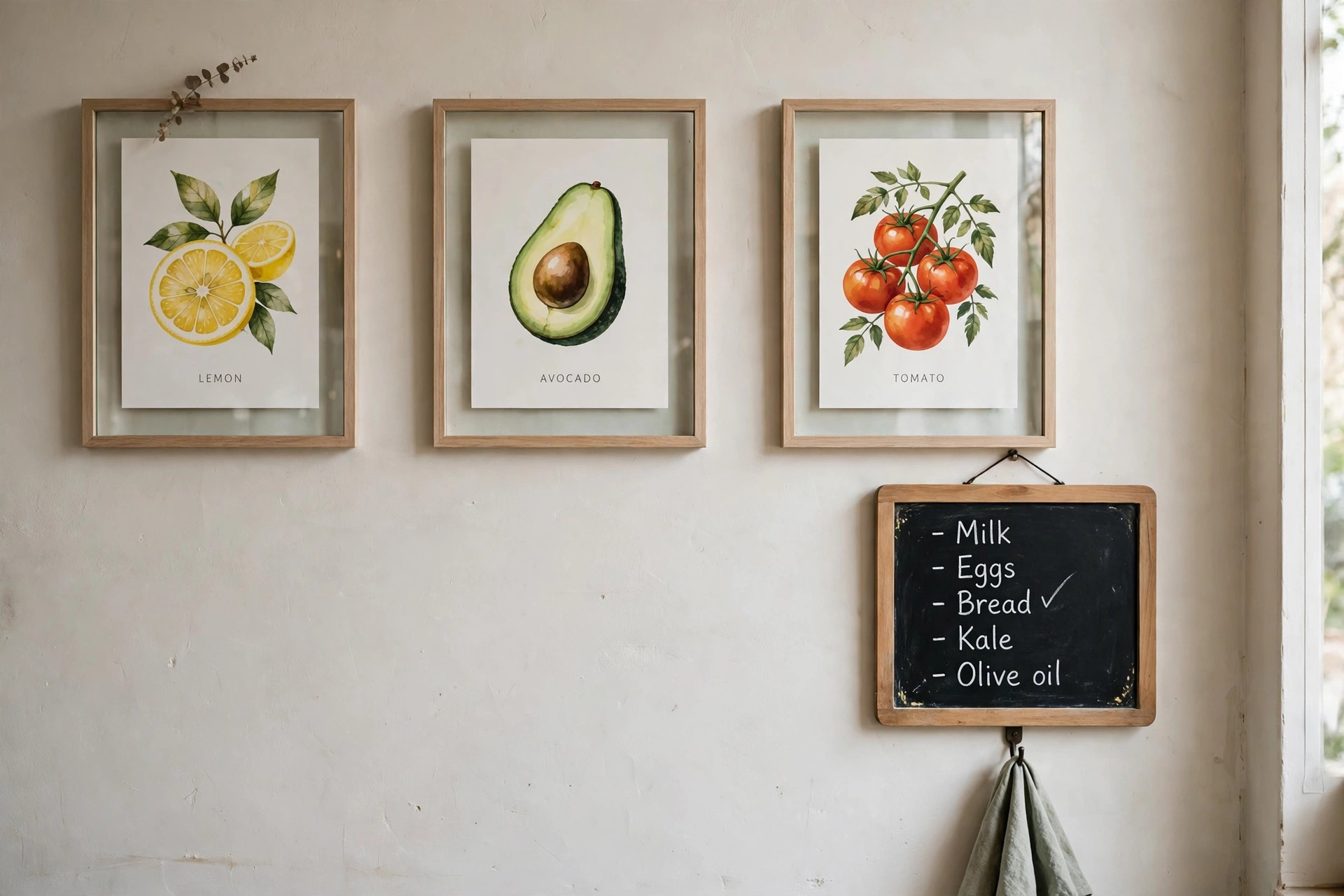
15. Kitchen wall art — food prints and chalkboard art
The kitchen wall is the wall that gets splashed, steamed and wiped, because the hob is below it, the kettle is beside it, and the art that hangs there is the art that has to survive the cooking. Hang kitchen wall art that can take it — food prints behind glass, a chalkboard for the shopping list — so the wall is dressed and the kitchen still works. Pick prints with food, herbs or a recipe on them, because the print that matches the kitchen is the print that belongs there, and the chalkboard that holds the list is the chalkboard that earns its place. Frame everything behind glass, because the glass that covers the print is the glass that wipes clean, and the art that is protected is the art that lasts. Hang it away from the hob, because the art that is far from the steam is the art that stays crisp. One food print, and the kitchen has art.
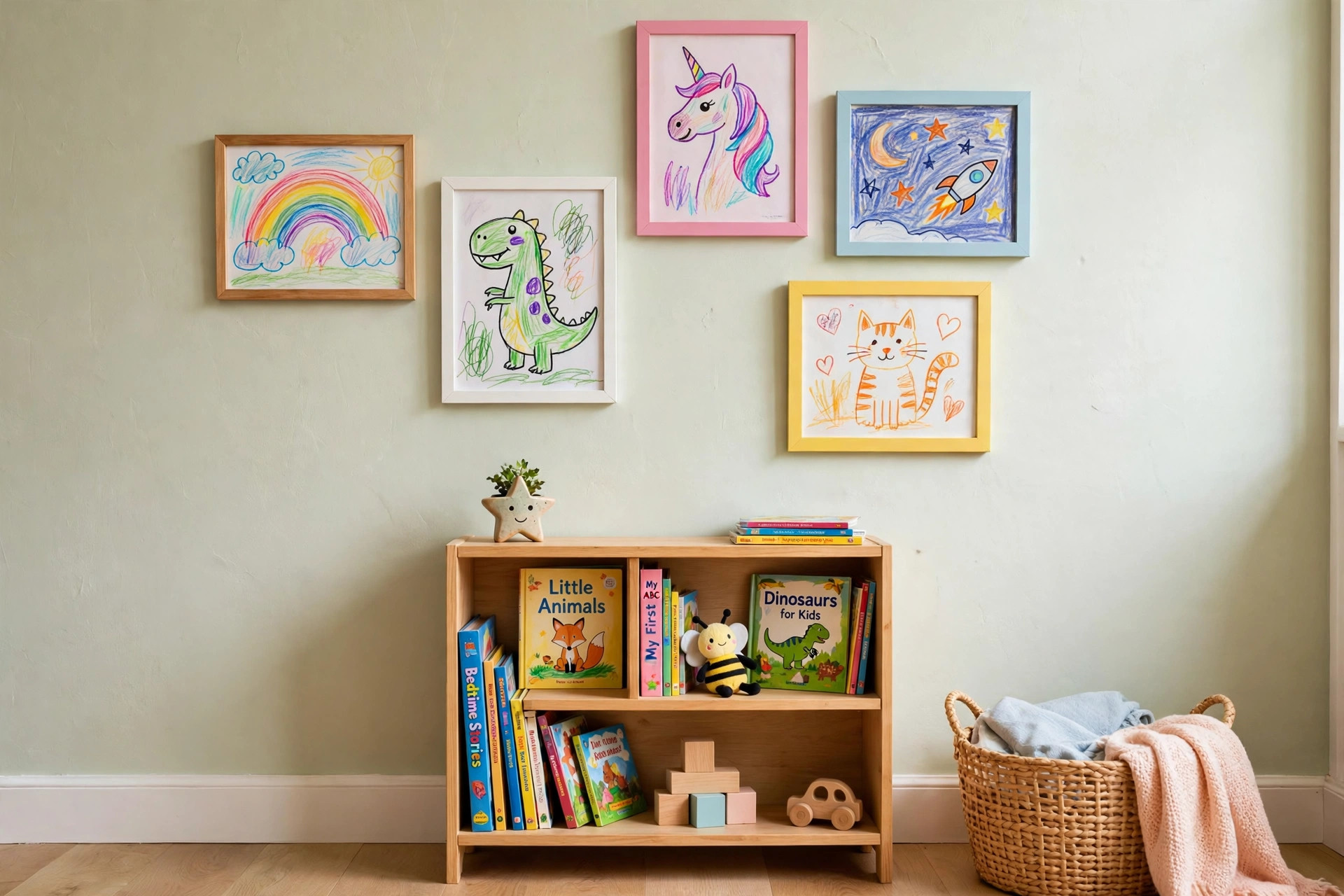
16. Kids' room art — their drawings, framed like a gallery
The drawings on the fridge are the art your children are proudest of, because they made them, they chose the colours, and the picture that is stuck to the fridge with a magnet is the picture that deserves a frame. Frame their drawings like a gallery — kids' room art — so the wall celebrates what they made. Pick their best three drawings, frame them in matching frames, and hang them at their eye level, because the frame that matches is the frame that says the drawing matters, and the height that is theirs is the height that lets them see their own work. Swap the drawings every few months, because the gallery that changes is the gallery that stays exciting, and the drawing that is new is the drawing they show their friends. One framed drawing, and the kids' room is a gallery.
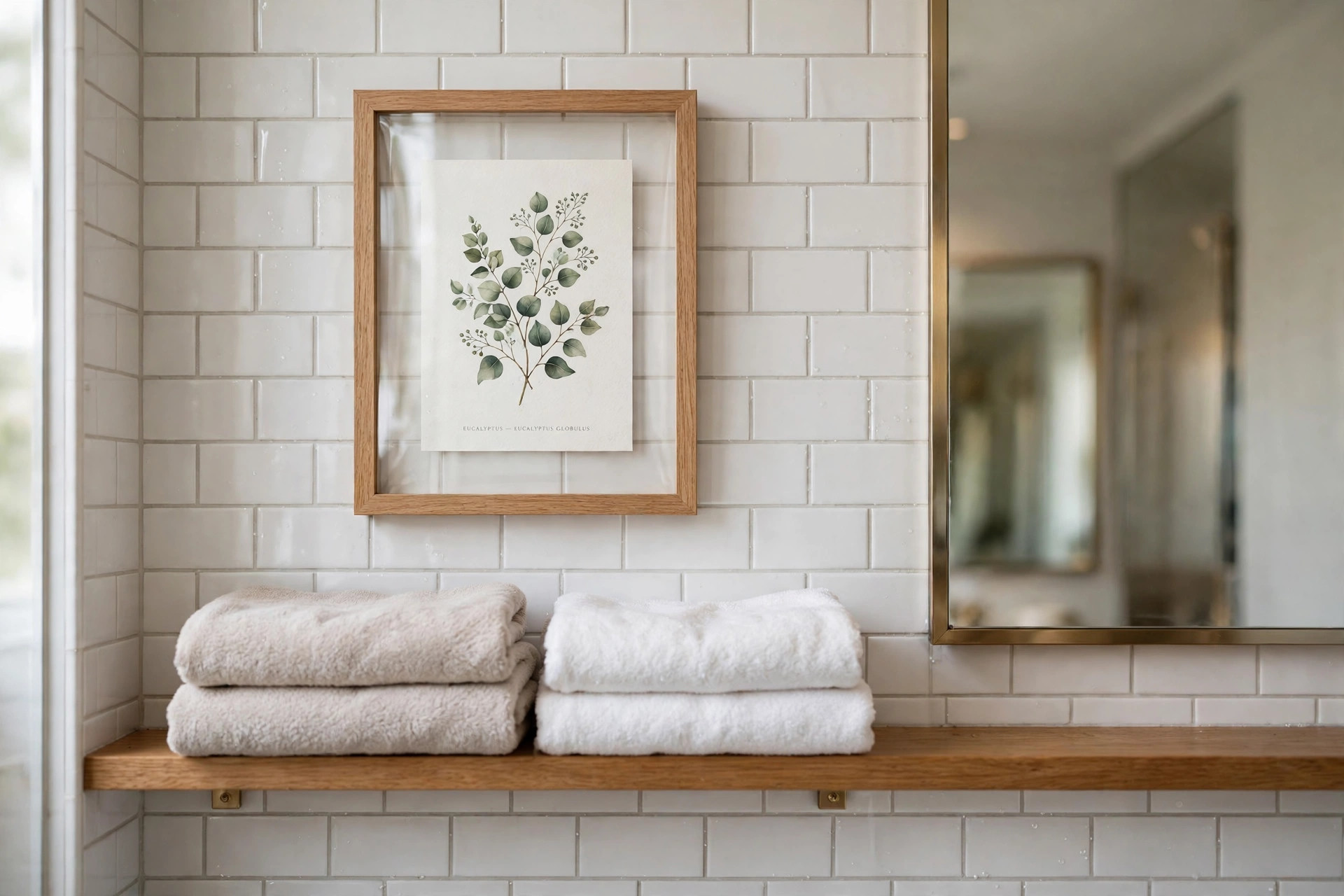
17. Bathroom art — small prints that survive the steam
The bathroom wall is the wall that gets wet, because the shower steams, the mirror fogs, and the art that hangs there is the art that has to survive the damp. Hang bathroom art that can take it — small prints behind glass, in a frame that seals — so the wall is dressed and the art does not warp. Pick a small print, not a big one, because the bathroom that is small is the bathroom that suits a small picture, and the frame that is sealed is the frame that keeps the steam out. Hang it opposite the mirror, not above the bath, because the art that is away from the water is the art that stays dry, and the wall that is dry is the wall that holds the picture. One small print, and the bathroom is dressed.
Keep it looking good
18. Hang it level and safe — the right hooks for the right wall
A picture that hangs crooked is a picture that looks wrong, because the eye catches the tilt, the frame slides, and the art that was straight on Monday is crooked by Friday. Hang it level and safe — the right hooks for the right wall — so the picture stays straight and stays up. Use a picture hook rated for the weight of the frame, and fix it into a stud or use a proper wall plug, because the hook that is rated is the hook that holds, and the wall that is plugged properly is the wall that never drops a frame. Put a spirit level on top of the frame before you step back, because the level that is checked is the level that is straight, and the frame that is level is the frame that looks right. Add a small felt pad behind each bottom corner, because the pad that cushions is the pad that stops the frame sliding. (Check on Amazon for a picture hanging kit with hooks, wall plugs and a small spirit level included.) One level check, and the art stays straight.
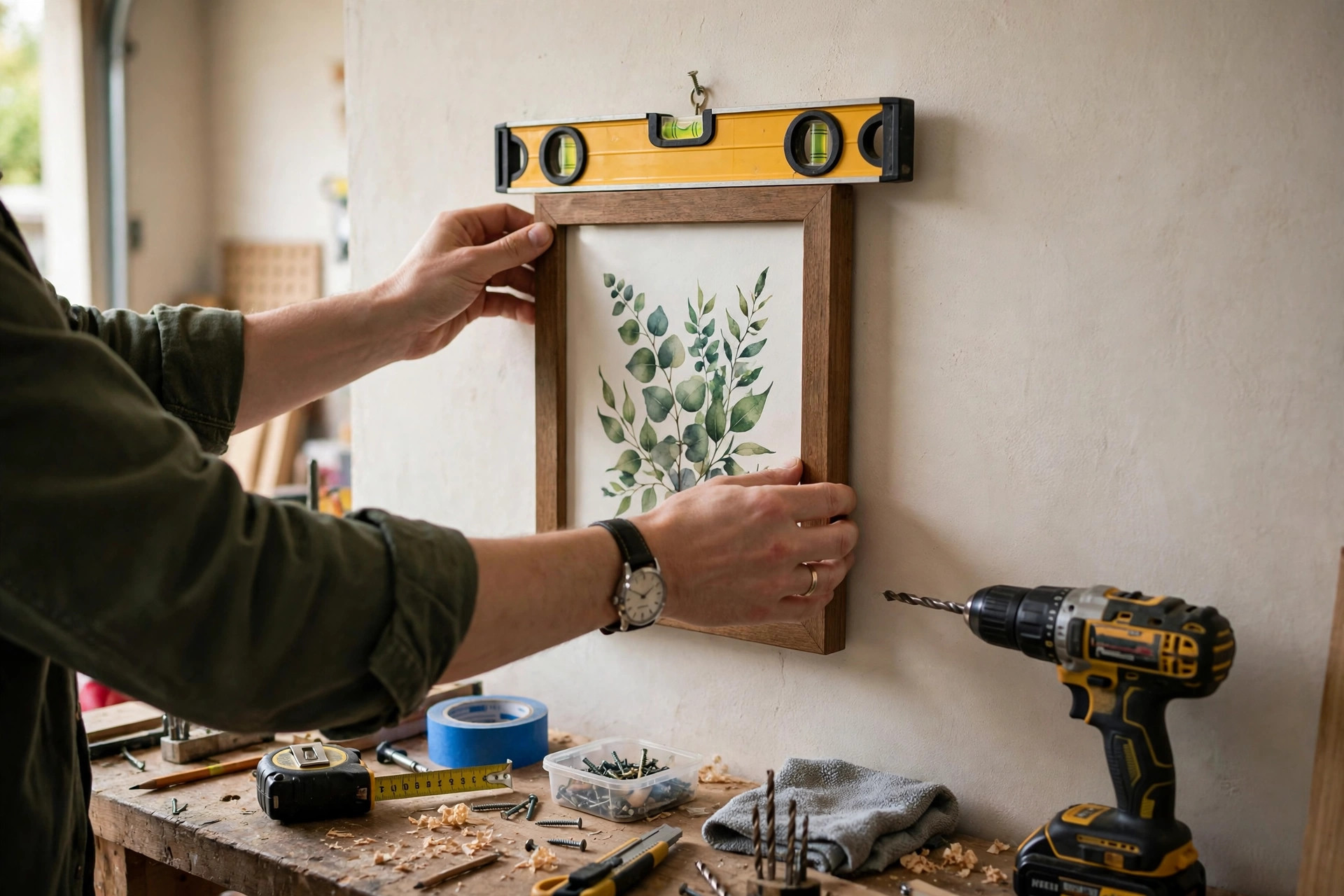
19. Protect art from the sun — keep colours from fading
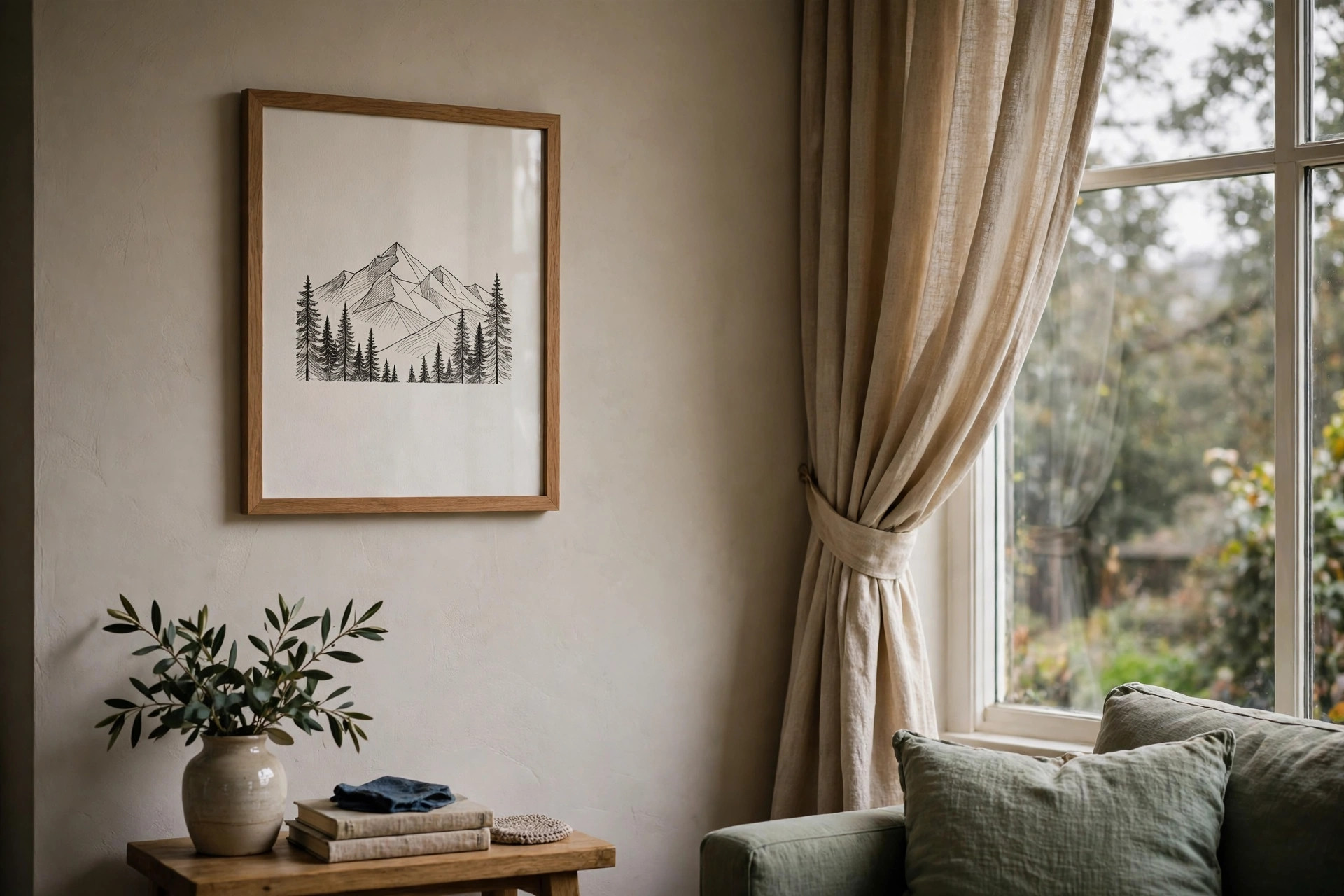
Sunlight fades art, because the ultraviolet light bleaches the colours, the print that was bright in June is pale by September, and the wall that faces the window is the wall that eats the colour. Protect art from the sun — keep colours from fading — so the picture that hangs in a sunny room stays bright. Hang art on a wall that does not face the window directly, because the wall that is shaded is the wall that keeps the colour, and the picture that is out of direct sun is the picture that lasts. Use glass that blocks ultraviolet light for the pieces you love most, because the glass that blocks the light is the glass that protects the print, and the frame that is glazed is the frame that keeps the colour. Move the art to a shadier wall in summer, because the swap that is seasonal is the swap that saves the colours. One shady wall, and the colours stay bright.
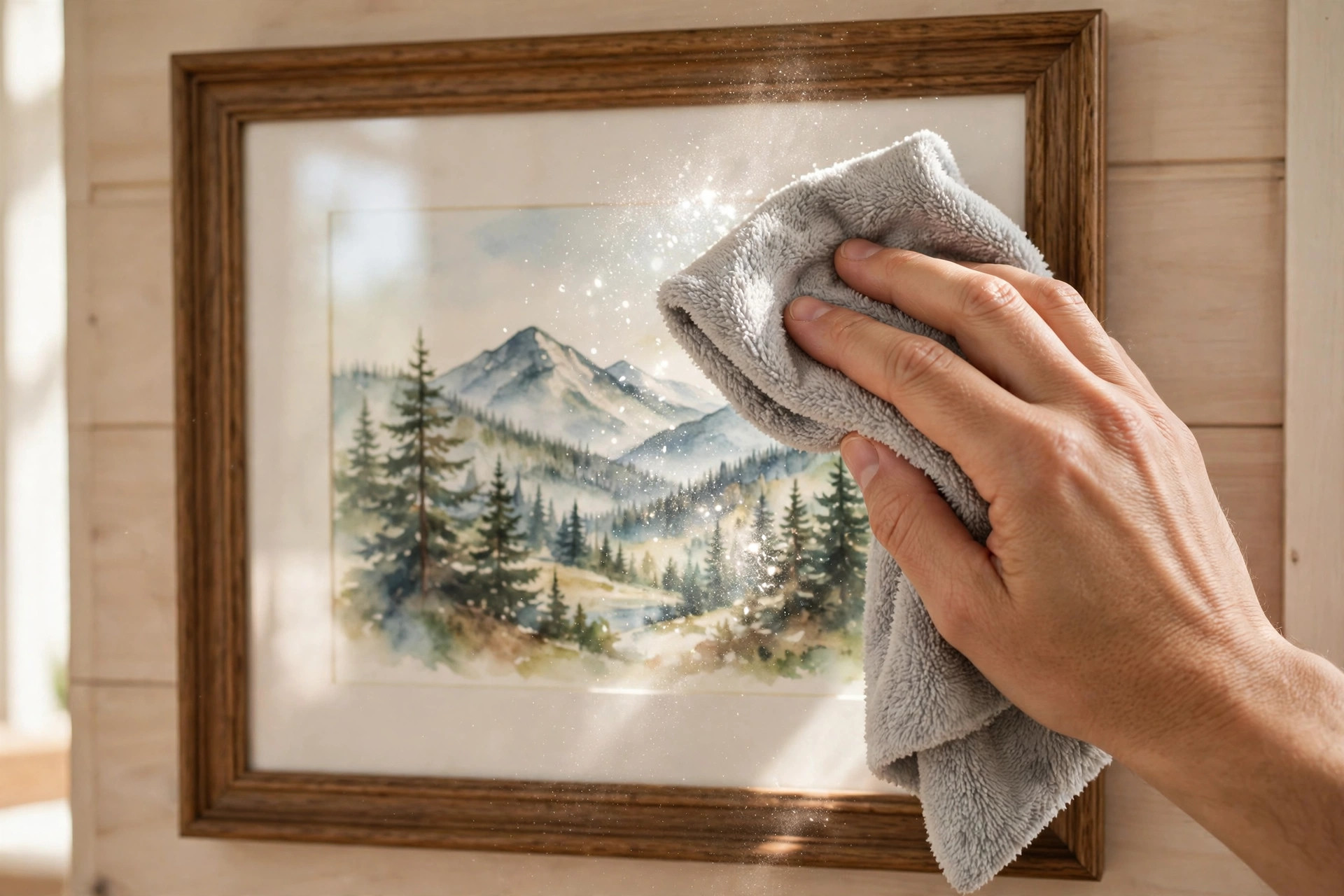
20. Dust it without damage — the gentle clean
Dust settles on art, because the frame is a ledge, the glass is a magnet for dust, and the picture that was bright in January is grey by June. Dust it without damage — the gentle clean — so the art stays bright and nothing is scratched. Dust the frame with a dry soft cloth, and the glass with a barely damp cloth, because the cloth that is dry is the cloth that lifts the dust, and the glass that is wiped gently is the glass that stays clear. Never spray cleaner directly onto the art, because the spray that hits the print is the spray that stains it, and the cleaner that is sprayed on the cloth is the cleaner that stays where it belongs. Dust once a month, because the dust that is monthly is the dust that never builds up. One gentle wipe, and the art is bright again.
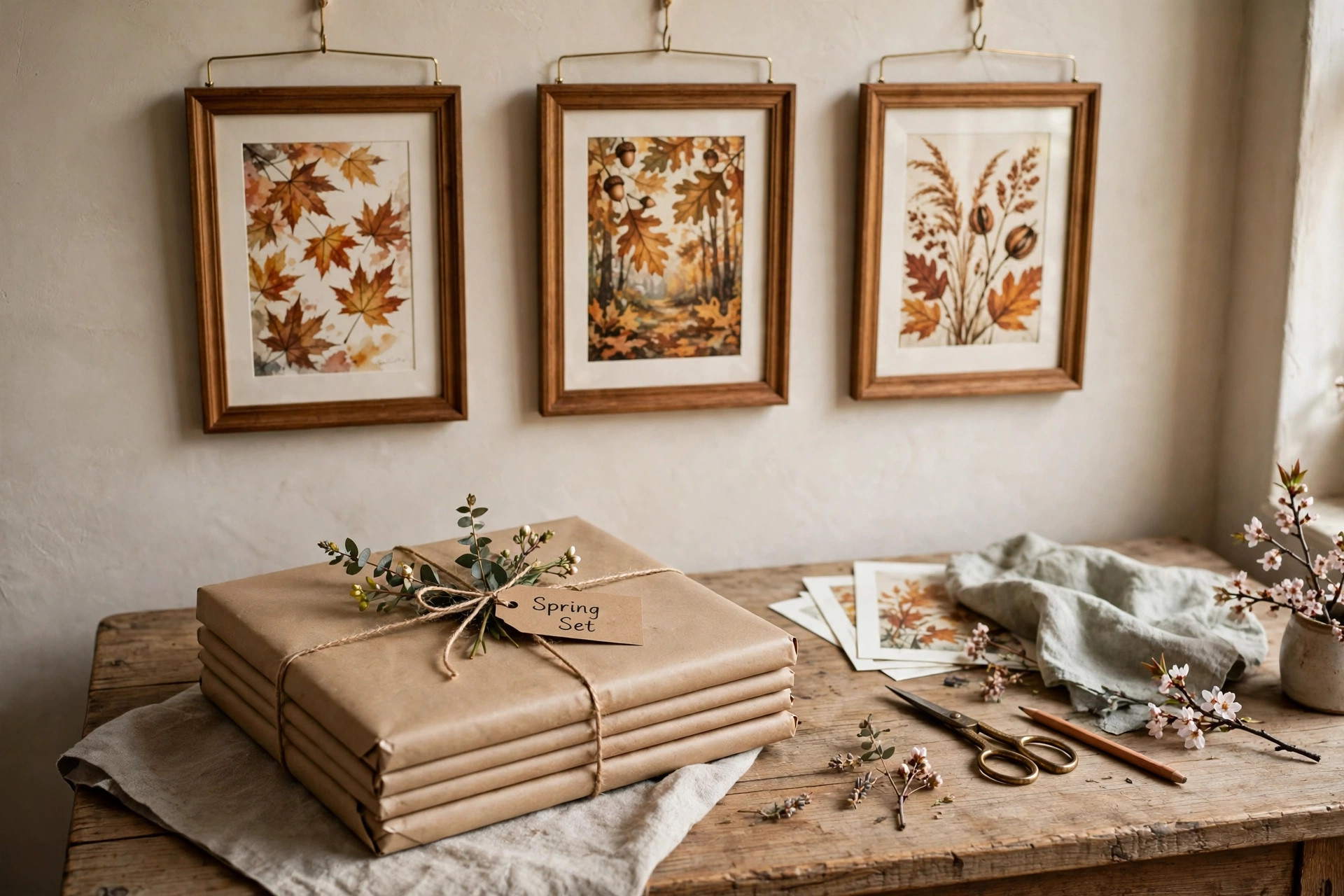
21. Swap it seasonally — rotate the art twice a year
A wall that never changes is a wall you stop seeing, because the picture that has hung there for a year is the picture your eyes skip, and the room that never changes is the room that feels stale. Swap the art seasonally — rotate it twice a year — so the wall feels new without buying anything. Keep two sets of art: one for spring and summer, one for autumn and winter, because the set that is stored is the set that feels new when it comes back, and the wall that changes is the wall you notice again. Store the off-season art flat, wrapped in paper, in a dry place, because the art that is stored flat is the art that stays crisp, and the swap that is gentle is the swap that never creases a print. The shelves under the art get their own rotation in 22 DIY Floating Shelves Ideas for 2026, where the shelf styling changes with the seasons too. One swap a season, and the wall is always fresh.
22. Fix a broken frame — the five-minute frame repair
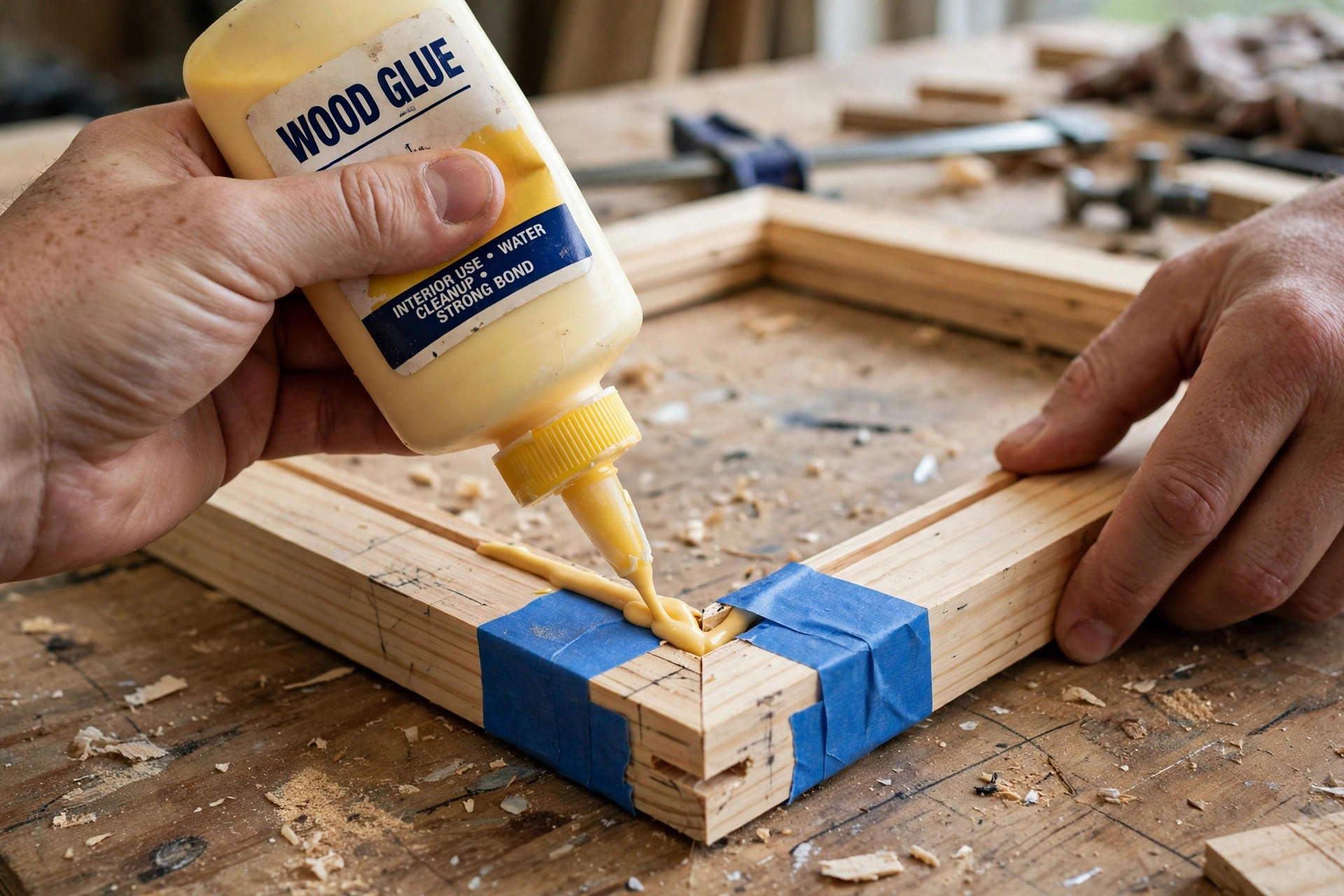
A frame with a corner coming apart is a frame that looks broken, because the joint has opened, the glass is loose, and the picture that was fine is the picture that leans in its frame. Fix a broken frame in five minutes — the frame repair — so the art is back on the wall before dinner. Take the picture out, squeeze wood glue into the open joint, and clamp it or tape it tight until the glue dries, because the glue that is clamped is the glue that holds, and the joint that is taped is the joint that sets straight. Check the glass is seated properly before you put the back on, because the glass that is seated is the glass that does not rattle, and the frame that is whole is the frame that hangs straight. One dab of glue, and the frame is fixed.
Which DIY wall art idea fits which situation?
| Situation | Best first move | Budget | Tools needed |
|---|---|---|---|
| Blank wall, no art at all | Framed prints (idea 2) | Low | Frame |
| Want a big statement piece | Painted canvas art (idea 1) | Low | Canvas, paint |
| Wall feels cold and hard | Macramé wall hanging (idea 3) | Low | Yarn, dowel |
| Love words on walls | Wood signs (idea 4) | Low | Wood, paint |
| Too many photos, no display | Photo gallery wall (idea 5) | Low | Frames |
| Never painted before | Paint a canvas in an afternoon (idea 6) | Low | Canvas set |
| No budget at all | Cut paper art (idea 8) | Free | Paper, scissors |
| Bedroom wall feels empty | Bedroom art (idea 13) | Low | Frame |
| Hallway is bare | Hallway gallery (idea 14) | Low | Small frames |
| Art keeps going crooked | Hang it level and safe (idea 18) | Low | Hanging kit |
| Colours fading in the sun | Protect art from the sun (idea 19) | Free | None |
| Frame corner came apart | Fix a broken frame (idea 22) | Free | Glue |
You do not need all 22 ideas. You need the three that solve your blank wall — usually the painted canvas that fills the biggest space, the framed prints that dress the small wall, and the level hook that keeps the picture straight. Start with the one big piece, do it this weekend before the next guest arrives, and hang it at eye level. Do that and the wall that was empty will be the wall people look at first, the room will feel finished, and the art on the wall will be art you made.
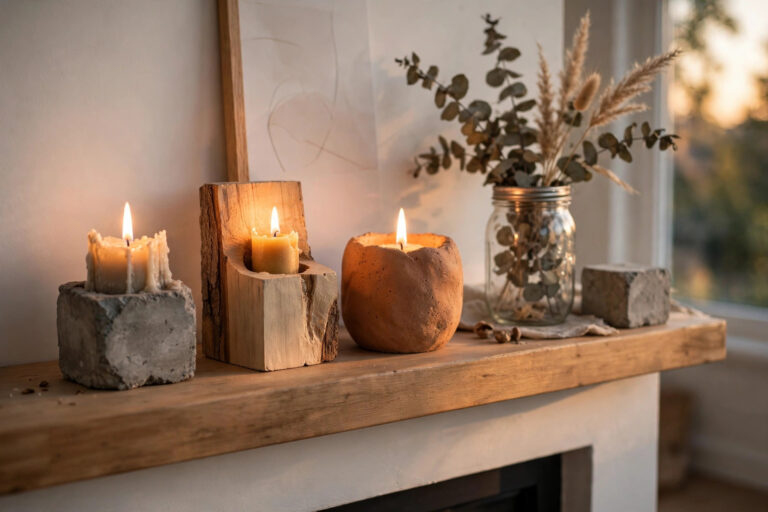
Save this post for the next blank wall, and if the room around the art needs the same treatment, read 25 DIY Room Decor Ideas for 2026 next — it is Post 84, the room the art lives in — and 22 DIY Canvas Wall Art Ideas for 2026, Post 29, for the canvas art deep dive. This is the eighteenth post of the new DIY by project return run — Posts 81 to 100, one project at a time — and the run keeps going with the wreaths next door. The candle holders that glow beside the wall art get their own deep dive in DIY Candle Holders, where the warm light meets the handmade art.
Publish date assigned at publishing time. Updated as new DIY wall art finds are tested.
Frequently asked questions
How do I hang wall art without damaging the wall?
Use adhesive picture hooks or removable hanging strips for light frames, and a picture hook with a proper wall plug for heavier pieces. Clean the wall first so the strip sticks, press it on firmly, and wait an hour before hanging the frame. For rented homes, adhesive strips are the safest choice — they hold up to a few kilos and peel off cleanly. Never use a nail in a plasterboard wall without a plug, because the nail will pull out and take a chunk of wall with it.
What is the cheapest way to make DIY wall art?
Cut paper art costs almost nothing — coloured paper, scissors and a frame you already own. A free printable in a cheap frame is the next cheapest, and a painted canvas from a beginner set is the cheapest way to a big statement piece. Use what you already have: a page from a calendar, a postcard from a trip, pressed flowers from the garden. The art that costs the least is the art made from things already in the house.
How high should I hang wall art above a sofa?
Hang it so the bottom of the frame is 6 to 8 inches above the top of the sofa, with the centre of the piece about 57 inches from the floor. That gap is small enough that the art and the sofa read as one group, and the centre is at eye level for most people standing in the room. For one big piece, make it about two-thirds as wide as the sofa below it — the piece that is sized to the sofa is the piece that looks like it belongs there.