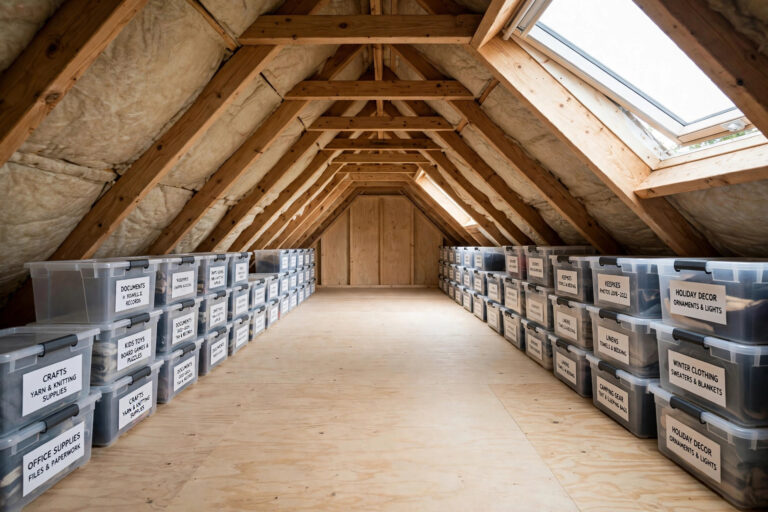
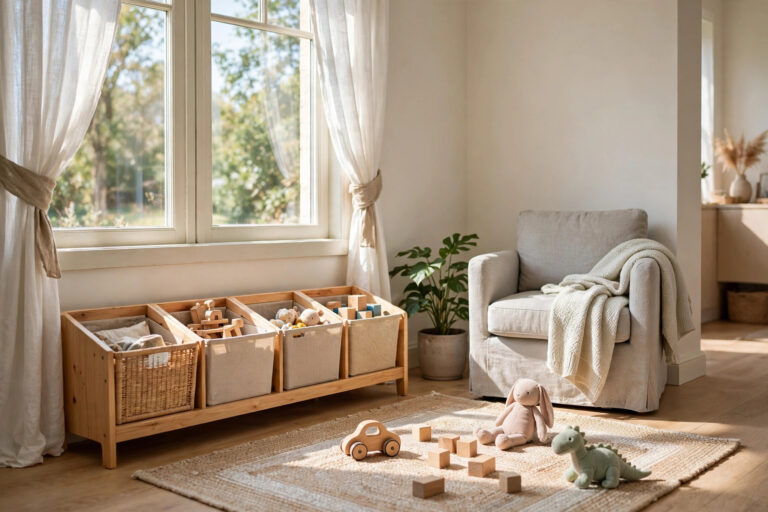
22 Entryway Storage Ideas for 2026
An entryway is only useful when everything you need on the way out has a place to go. Most entryways fail the same way: the coats pile on one hook, the shoes spread across the floor, the keys live wherever they were last dropped, the thing you need is always behind the pile you have not put away yet, and the first thing guests see is the dumping ground for everything the house does not know what to do with.
These 22 entryway storage ideas fix that without a bigger hallway: one hook per person, a bench you can sit on, a shelf you can actually see, labelled baskets for the daily things, and a rule that everything goes back in its place, not wherever there is a gap.
Every idea below works in a real home, from a single narrow hallway to a full mudroom. Pick three that fit your worst corner, start with taking everything out and sorting it by who uses it, and build from there.
Start with a system, not another hook
1. One home for every thing, and only one home
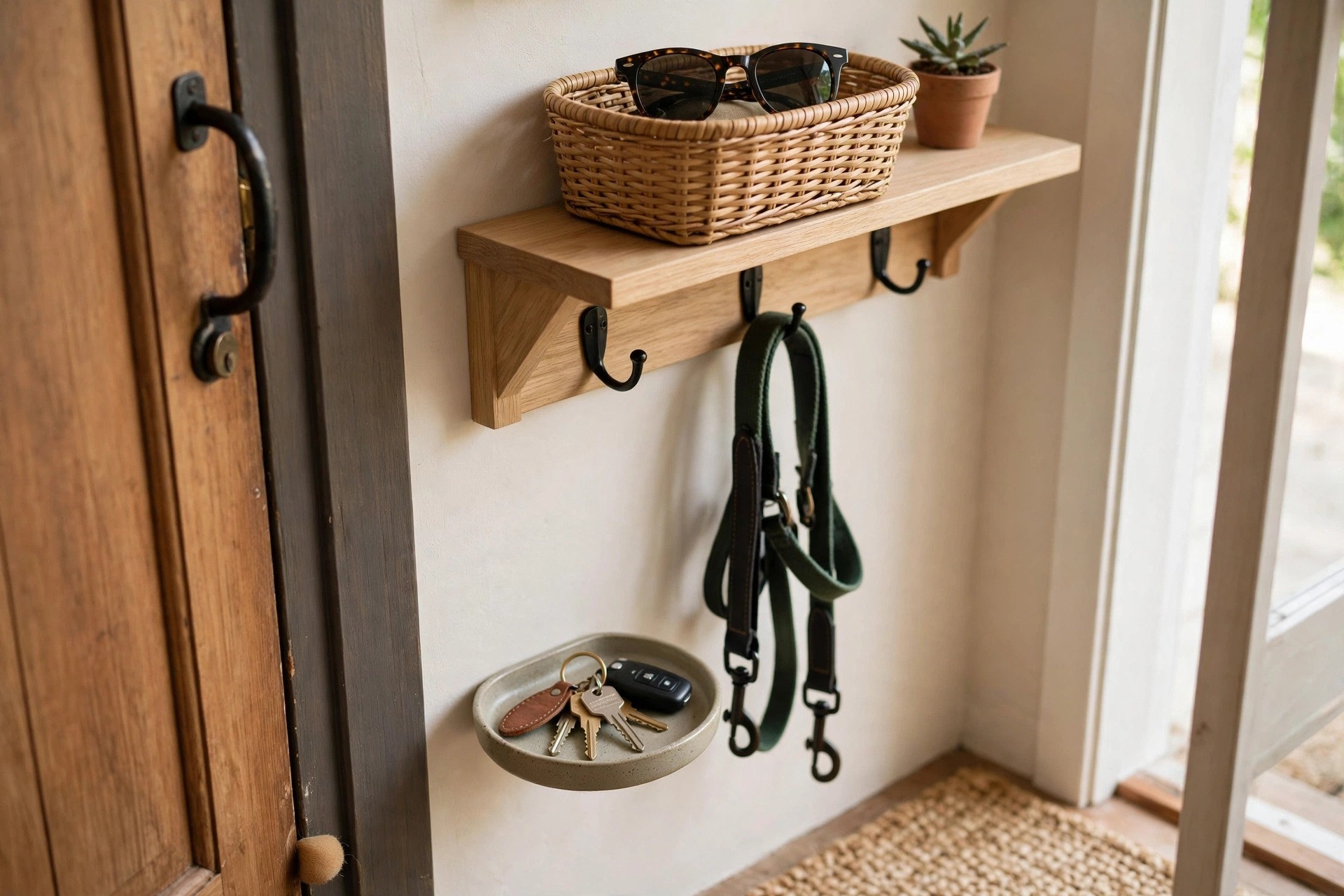
A key with two homes ends up in neither — it lives on the bench, the shelf and the windowsill between them. Give every entryway item exactly one place: the keys in their tray by the door, the dog lead on its hook, the sunglasses in their basket on the shelf. When you come home, everything goes straight to its home before anything else happens, and leaving the house is just walking to the door. If an item has no home, it does not get a new basket — it gets a hook, or it gets moved to the room it belongs in. One home per item is the whole system in one rule.
2. Sort by person, not by pile
Sorting by pile looks tidy and helps no one find their own coat. Sort by who uses it instead: one hook, one basket and one shelf space per person, in a row, so every coat, bag and pair of shoes has an owner. Person zones also tell you the real shape of the hallway: if one person has three coats and another has none, the entryway is telling you where the clutter actually comes from. Keep one zone per person, label the front, and never let a zone hold two people's things at once. One zone per person is enough; if you need a second hook, you need a second person, not a bigger pile.
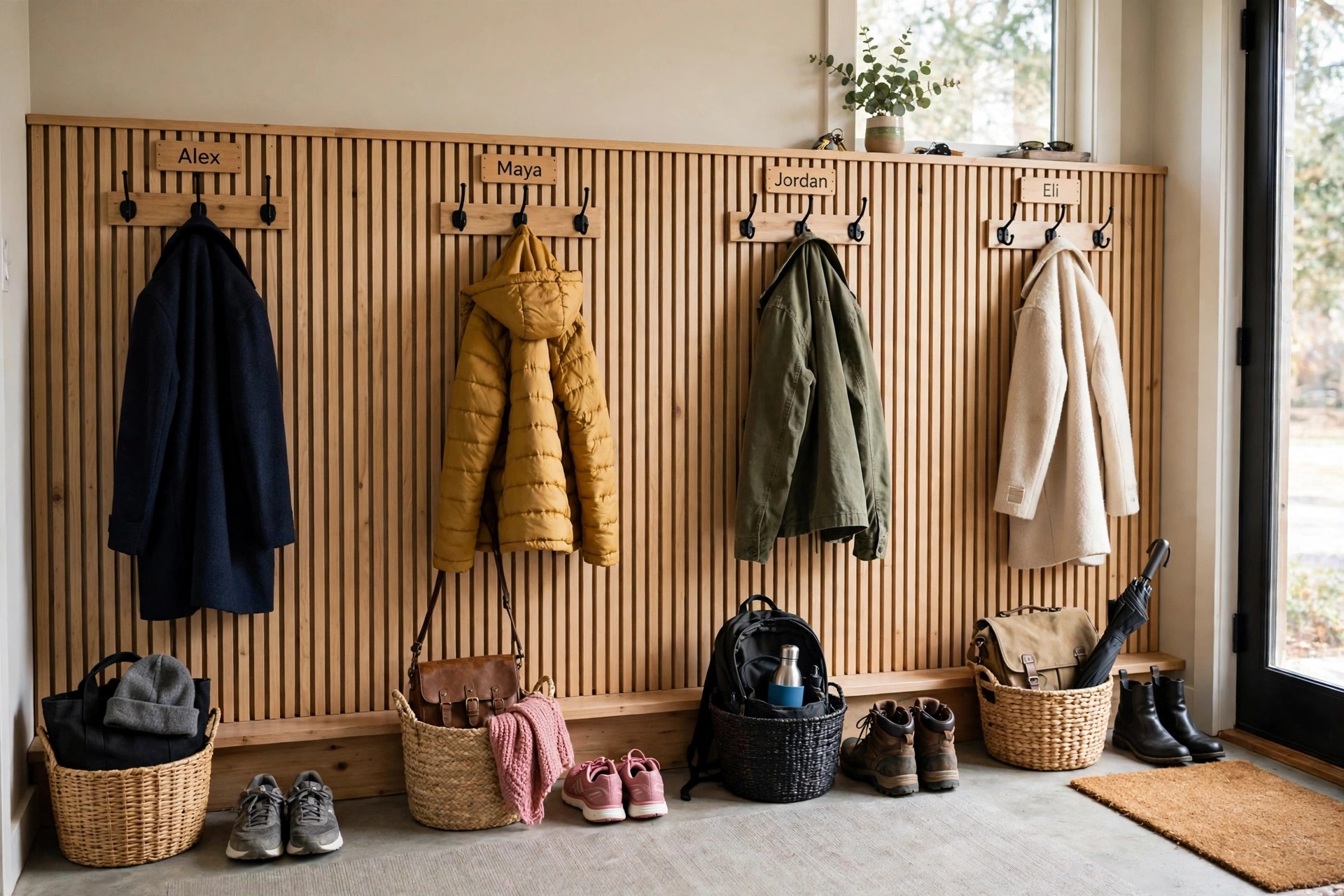
3. Eye level is for the everyday, high and low are for the rest
The most-used things should live where you can see them without stretching or bending, and everything else should live out of its way. Put the daily things — keys, the dog lead, the bag you carry every day — at eye level, the weekly things just above or below them, and the backstock and the things you use monthly on the highest and lowest shelves. An entryway that puts the spare umbrellas at eye level and the daily keys on the top shelf is working backwards. Move one thing a day until the eye-level shelf holds only the things you touch every time you leave, and the hallway will feel twice as big.
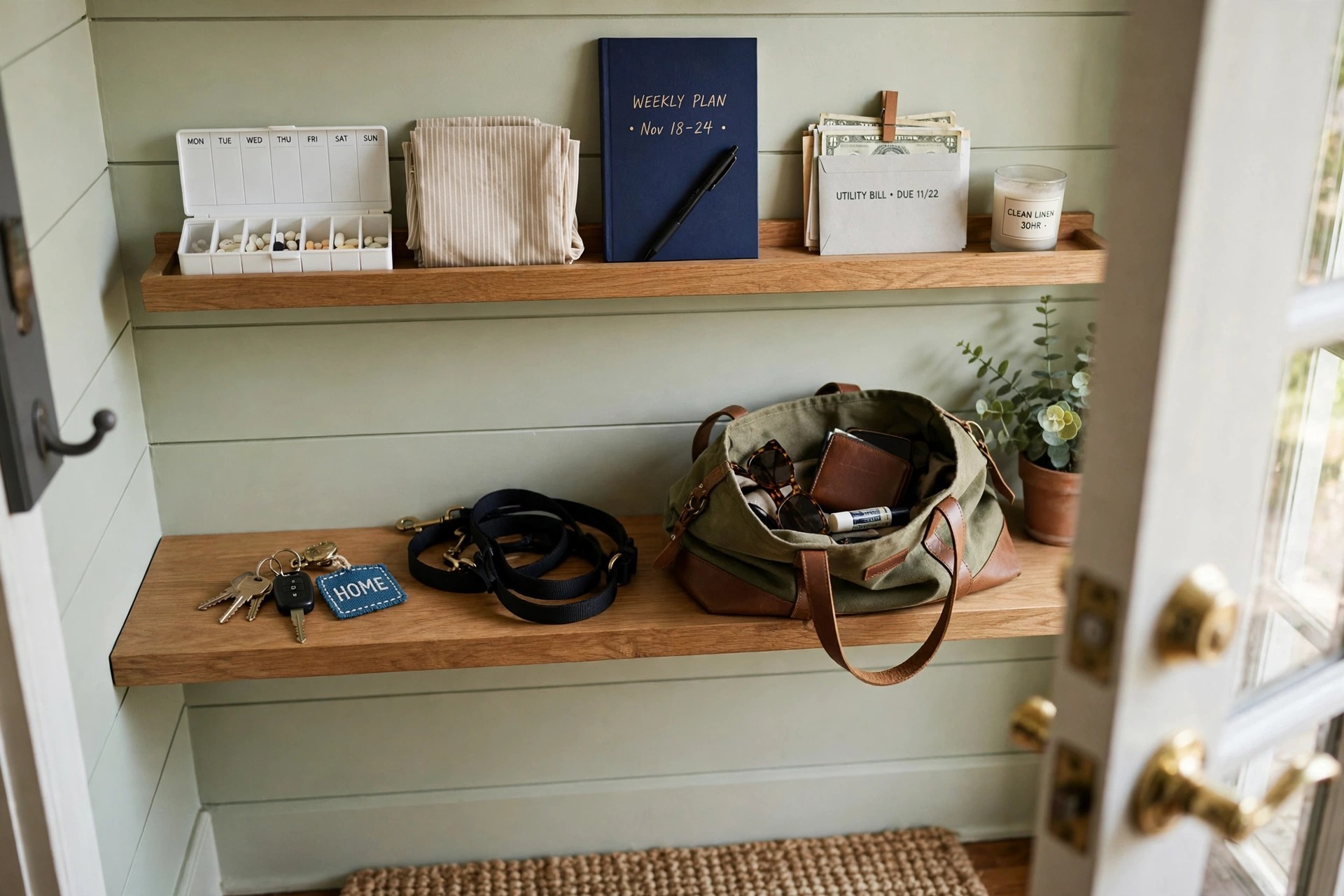
4. The drop zone rule: everything lands in one place
Things pile up by the door because there is no agreed place for them to land. Make the rule before the next school run: everything that comes through the door lands in the drop zone — keys in the tray, post in the basket, bags on their hook — always, on the same shelf. When you leave, you take from the drop zone, and when you come home, you put back in the drop zone. It takes five seconds and it stops the same search happening every morning for keys, wallet and sunglasses. Put a small tray on the shelf as a reminder until the habit sticks, and the morning hunt drops within a week.
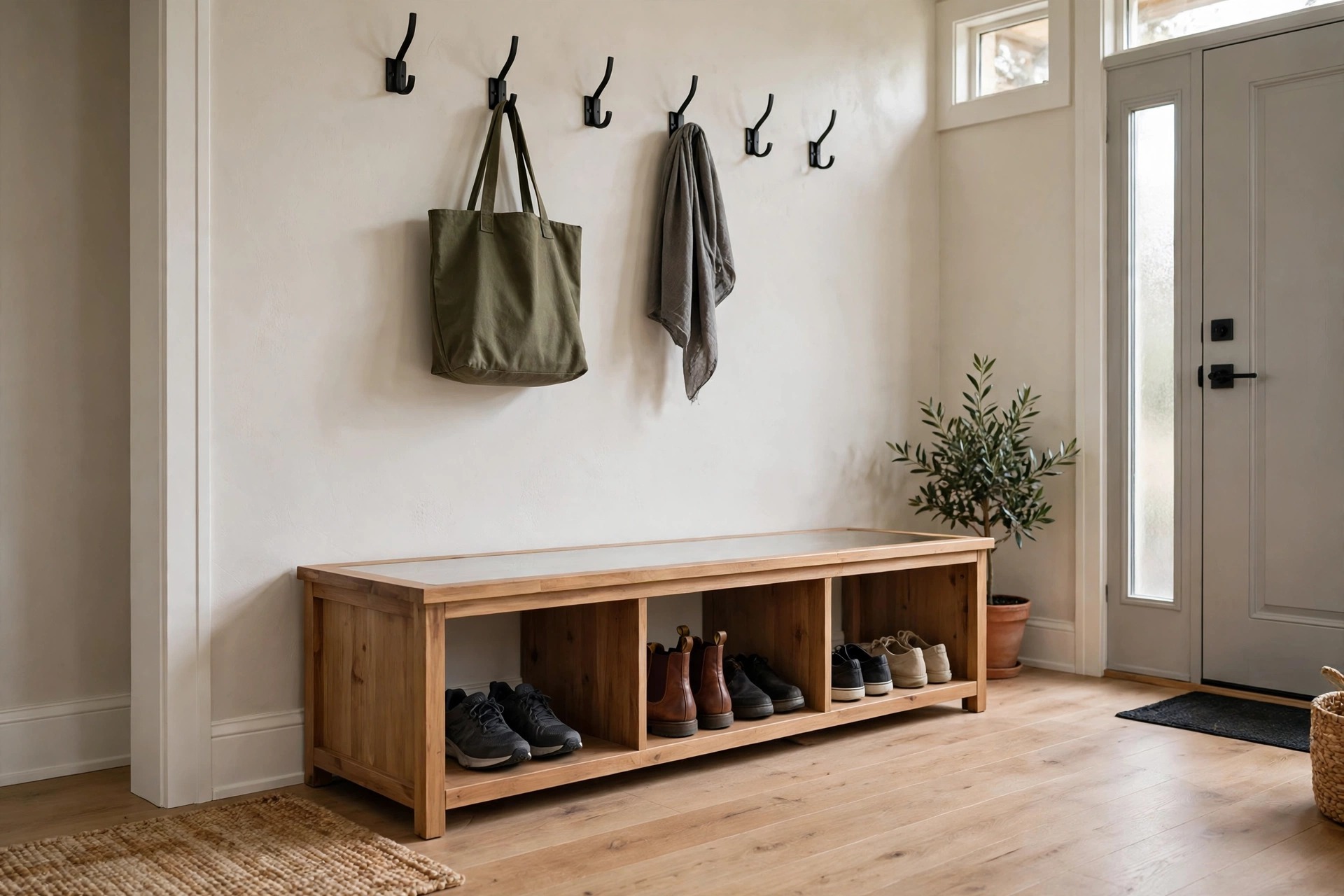
5. A bench at sitting height, kept clear
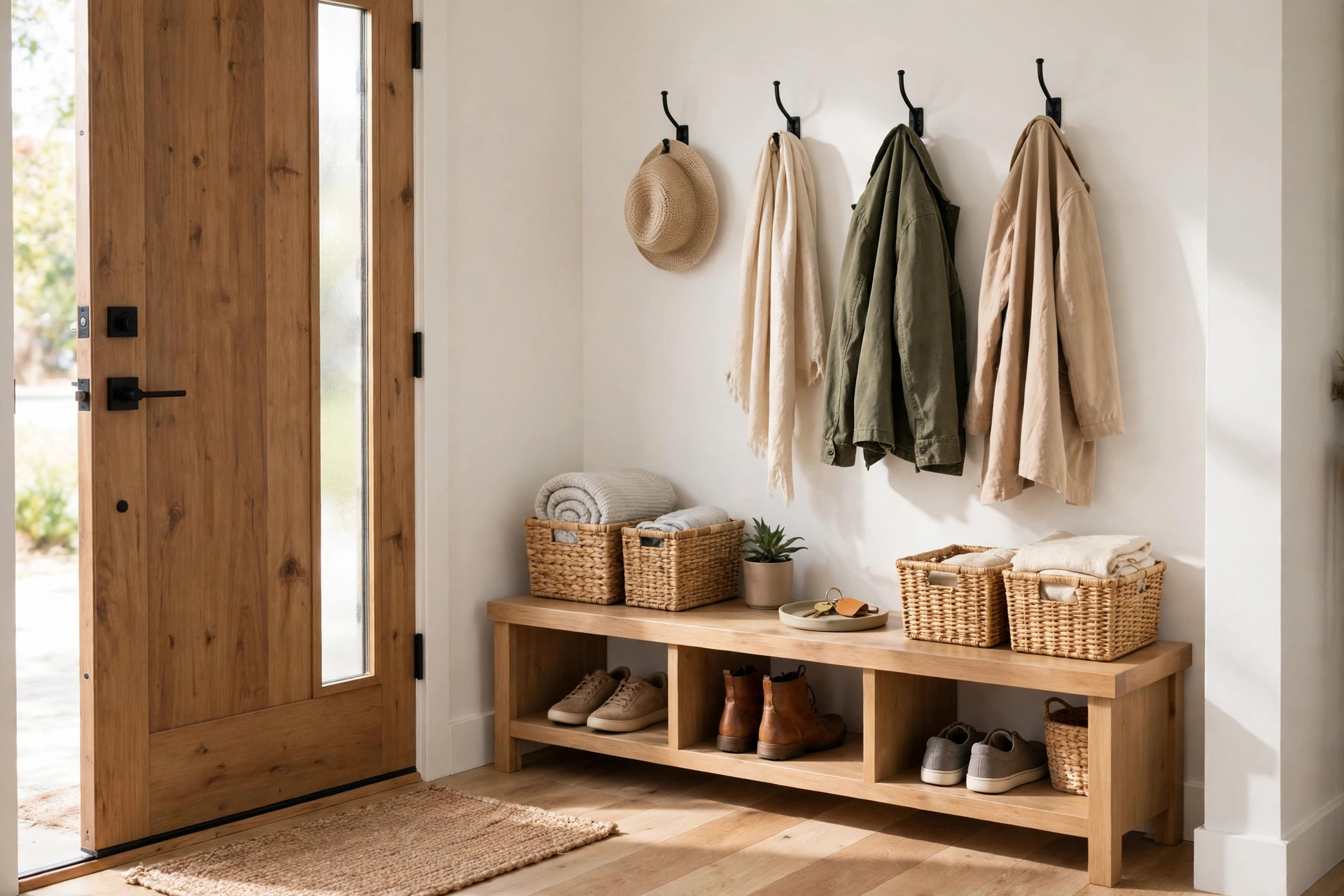
Shoes fail when there is nowhere to sit to put them on, so they end up kicked off by the door and left where they fall. Give the entryway one bench at sitting height — with storage underneath if the hallway allows it — and keep the top clear, always, so sitting down to put shoes on is the easy option. The bench lives at a height you can sit at comfortably, near the door, so shoes go on in one step instead of a hop across the hall. Keep the bench top to sitting only, and clear it once a day, so the next person never starts with a move-the-pile-first chore. One clear bench, and the shoe pile stops spreading.
Hooks, benches and shoe storage that work
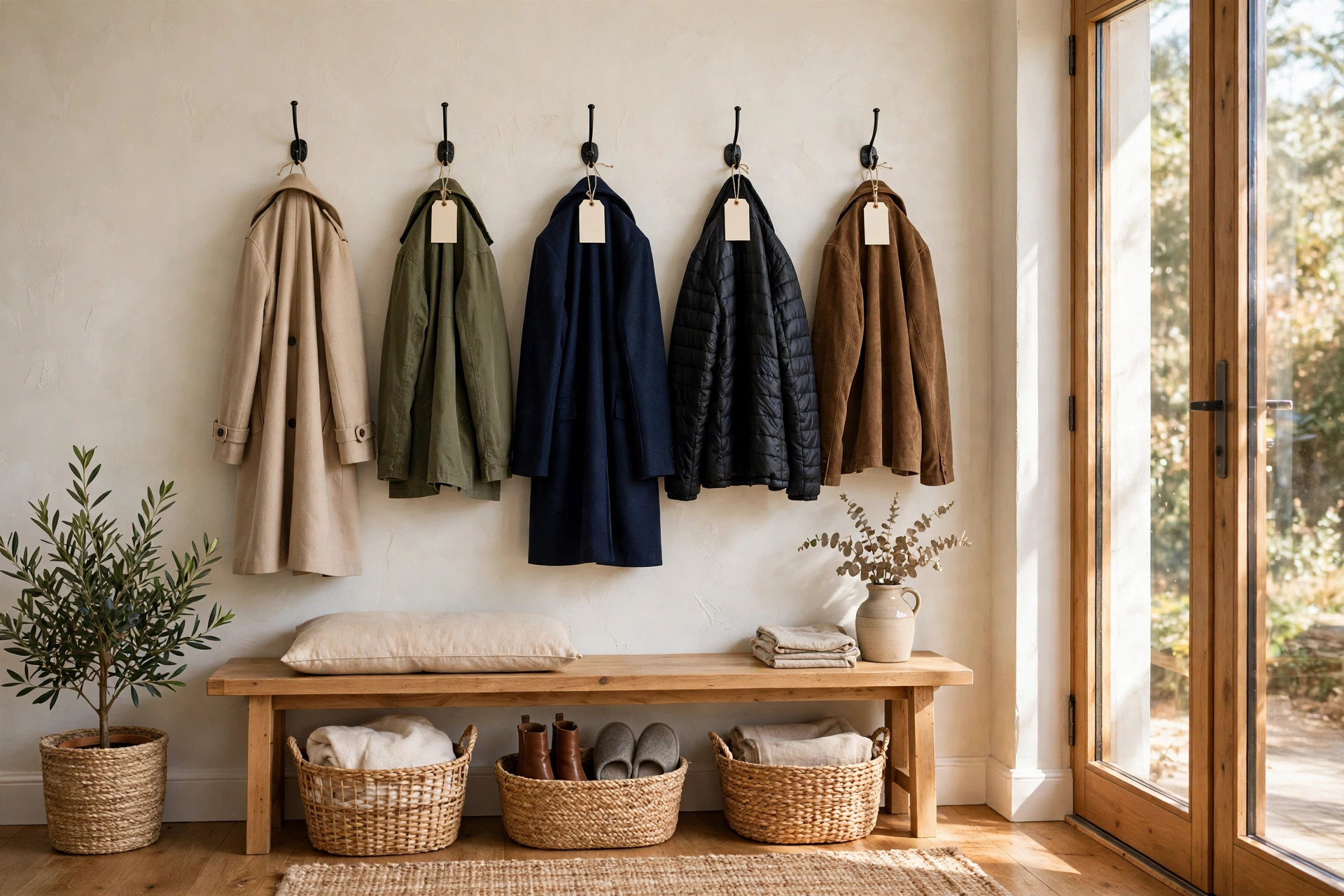
6. One hook per coat, never one hook per pile
A single hook holding three coats is a hook nobody can use, because the coat you want is always at the back. Use one hook per coat — a row of sturdy hooks at a height everyone in the house can reach — so every coat hangs flat and comes off in one pull. Single hooks also stop a wet coat soaking the dry ones behind it, because each coat has its own air. Keep one hook per coat, label the row by person if the household needs it, and never let a hook hold two coats at once. One hook per coat is enough; if you need a second row, you need a second row of hooks, not a bigger pile.
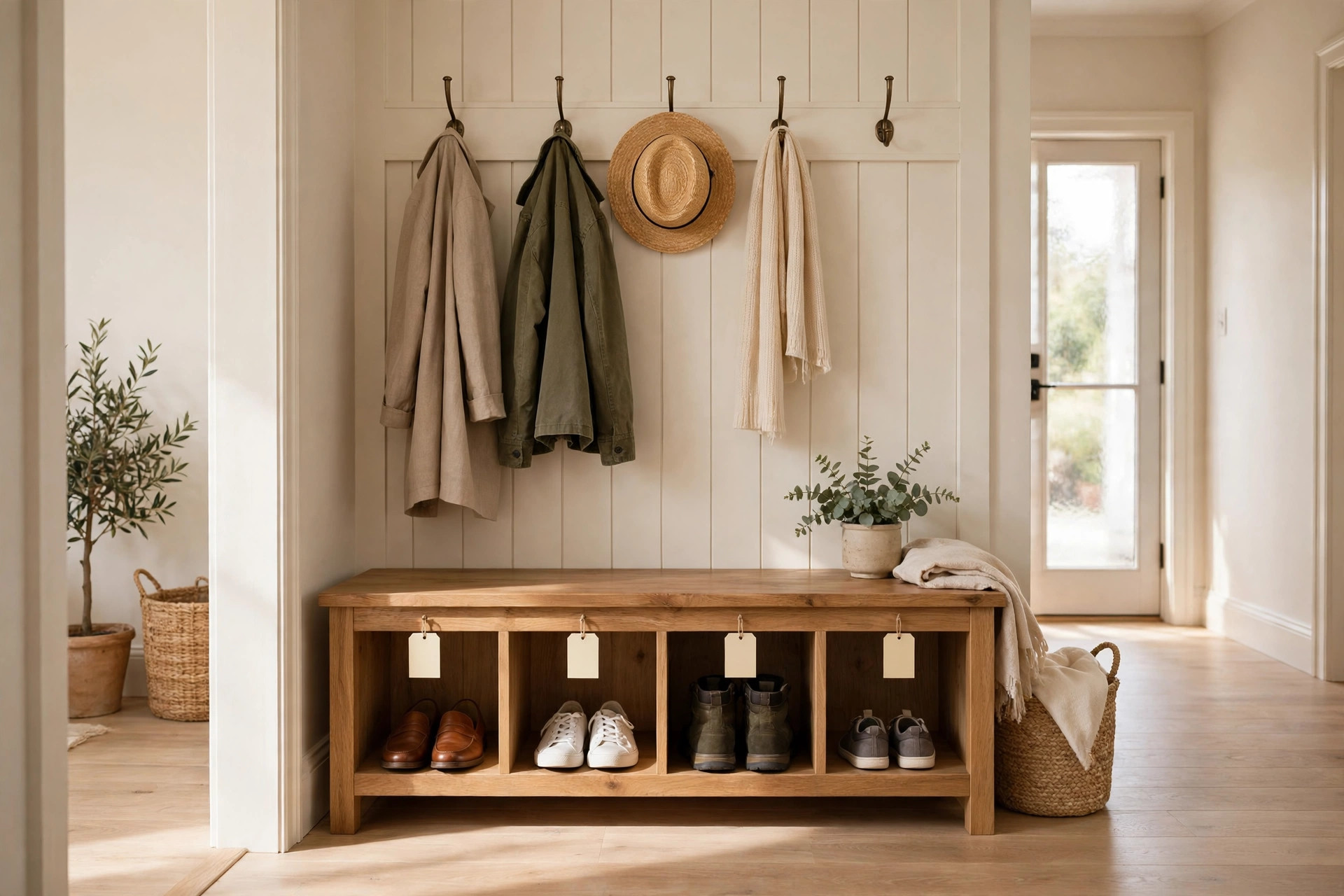
7. A bench with shoe storage underneath
Shoes in a pile by the door get stepped on, lost and tripped over, and nobody puts them away happily. Use a bench with open shelves or cubbies underneath — one cubby per person, or one per kind of shoe — so the shoes slide in the moment they come off. Bench storage also stops shoes spreading across the floor, because the floor is clear the moment the shoes are in. Keep one cubby per person, label the front, and never let a cubby hold two people's shoes, because that is how pairs get lost. One cubby per person, and the shoes stop taking over.
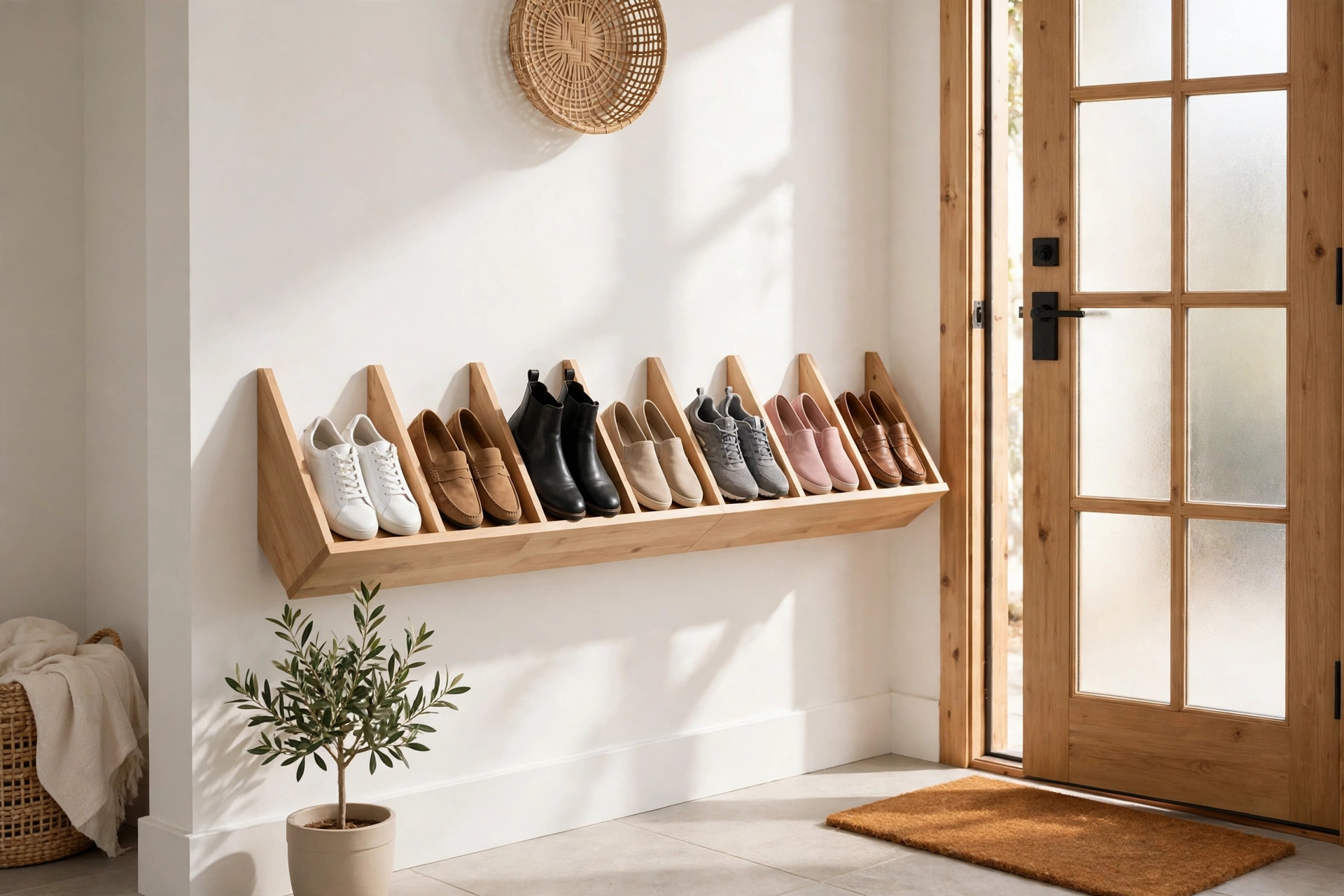
8. A shoe shelf that shows every pair at a glance
A shoe shelf where pairs hide behind each other is a shelf where the same two pairs get worn and the rest get forgotten. Use a slanted or open shoe shelf, one pair per slot, standing where you can see them, so every pair is visible and none of them falls behind. Shelves also stop a muddy pair spreading dirt across the clean ones, because the mess stays on its own slot. Keep the shoes on the shelf you reach most, and never let a slot hold two pairs, because that is how shoes get lost again. One slot per pair, and the shoe pile stops taking over.
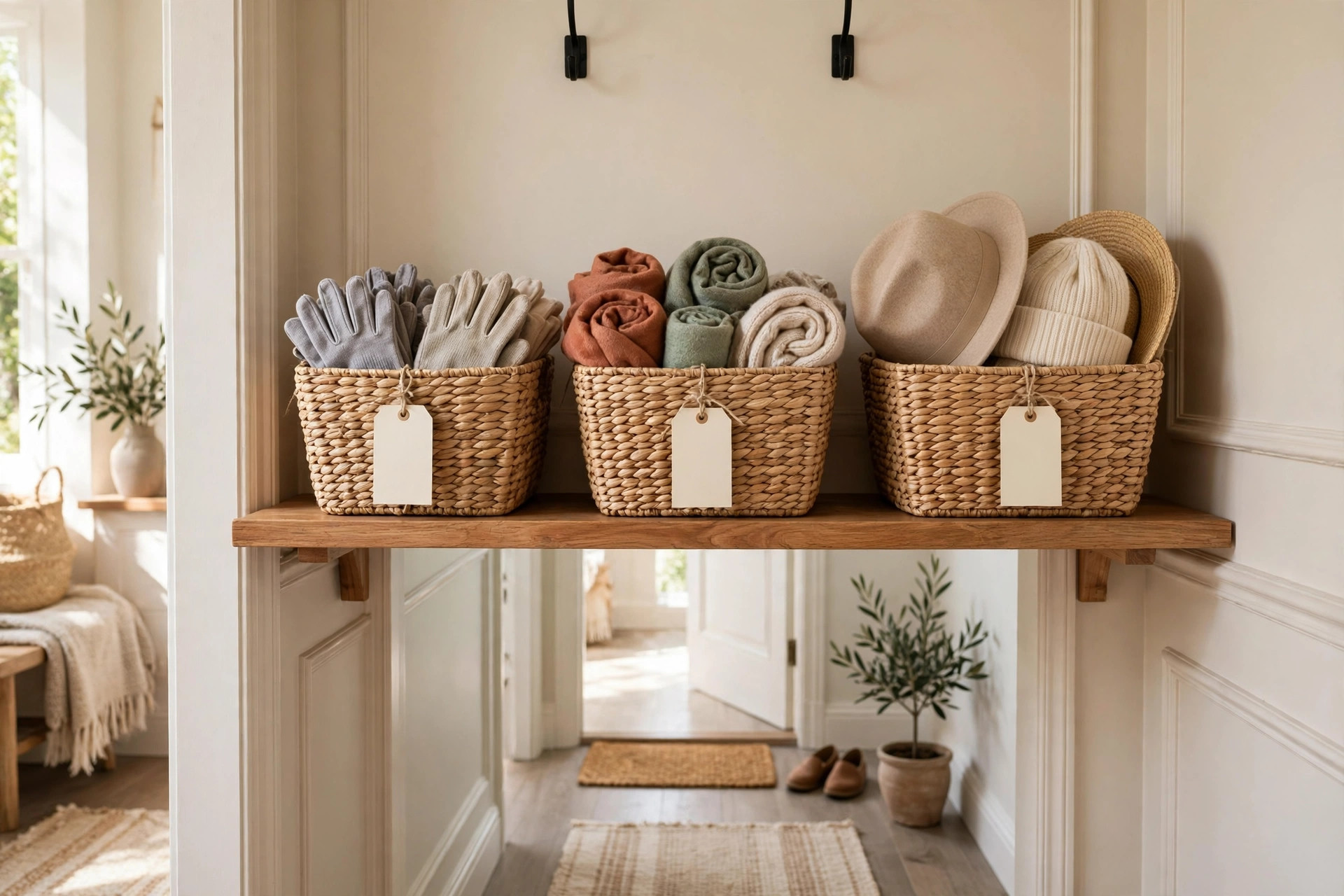
9. Baskets for the loose bits and the odd shapes
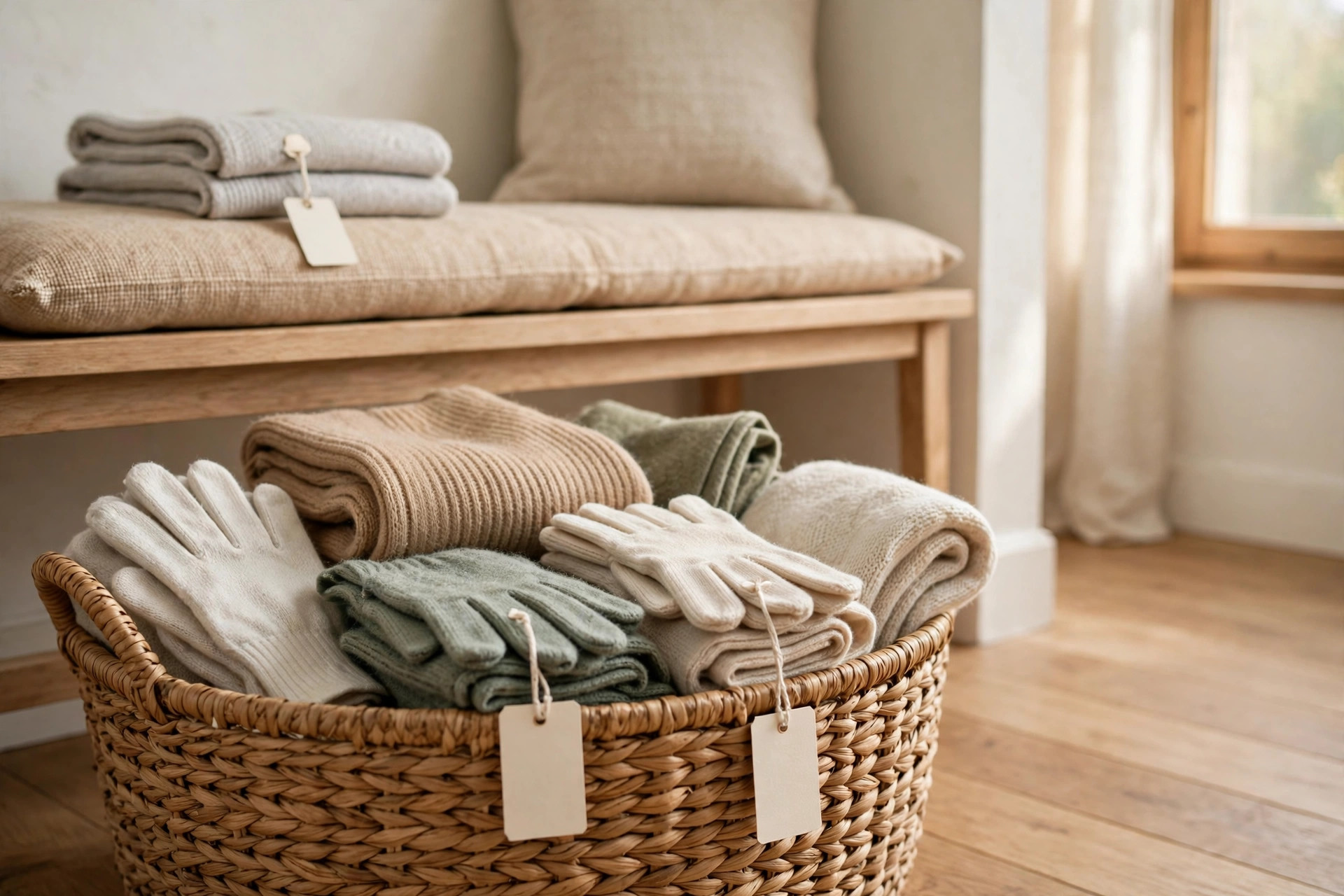
Loose bits — gloves, scarves, hats, spare keys — slide, fall over and fill every gap, and they are the first thing to make an entryway look messy. Put them in a basket, one basket per kind, standing upright like files in a drawer, so every bit is visible and none of them falls. Baskets also stop a spilled packet spreading across the shelf, because the mess stays inside the basket. Keep the baskets on the shelf you reach most, and never let a basket hold two kinds of thing, because that is how the bits get lost again. One basket per kind, and the loose bits stop taking over.
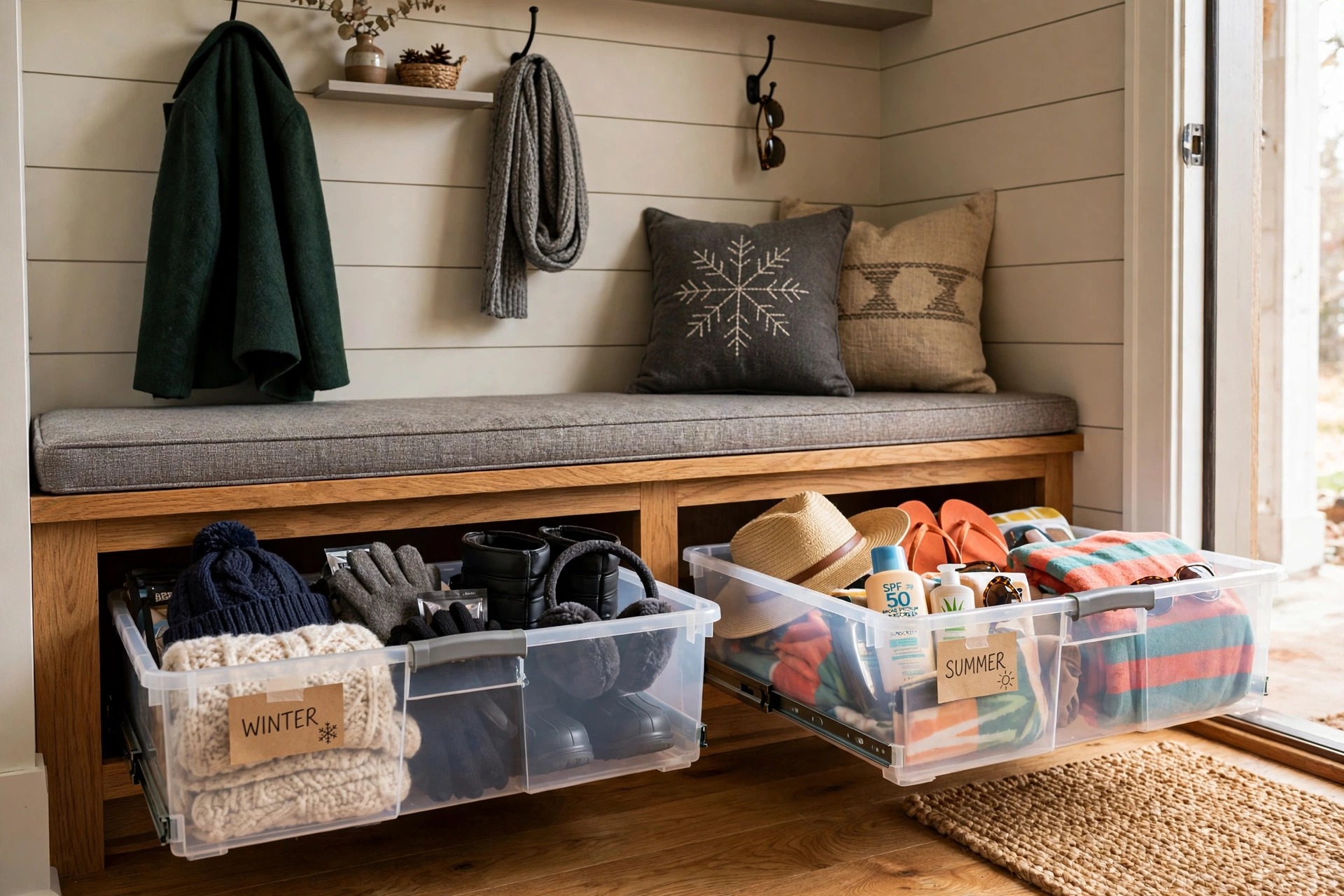
10. Stackable bins for the deep bench
A deep bench wastes its back half, because things pushed to the back are things forgotten. Use stackable bins, pulled out like drawers, so the back of the bench comes to you instead of you reaching into the dark. One bin per group — winter things in one, summer things in another — and the bin slides out, you take what you need, and it slides back. Label the front of each bin, so you can grab the right one without opening three, and keep the bins shallow enough that nothing gets buried at the bottom. One bin per group, stacked two high at most, and the deep bench stops eating things.
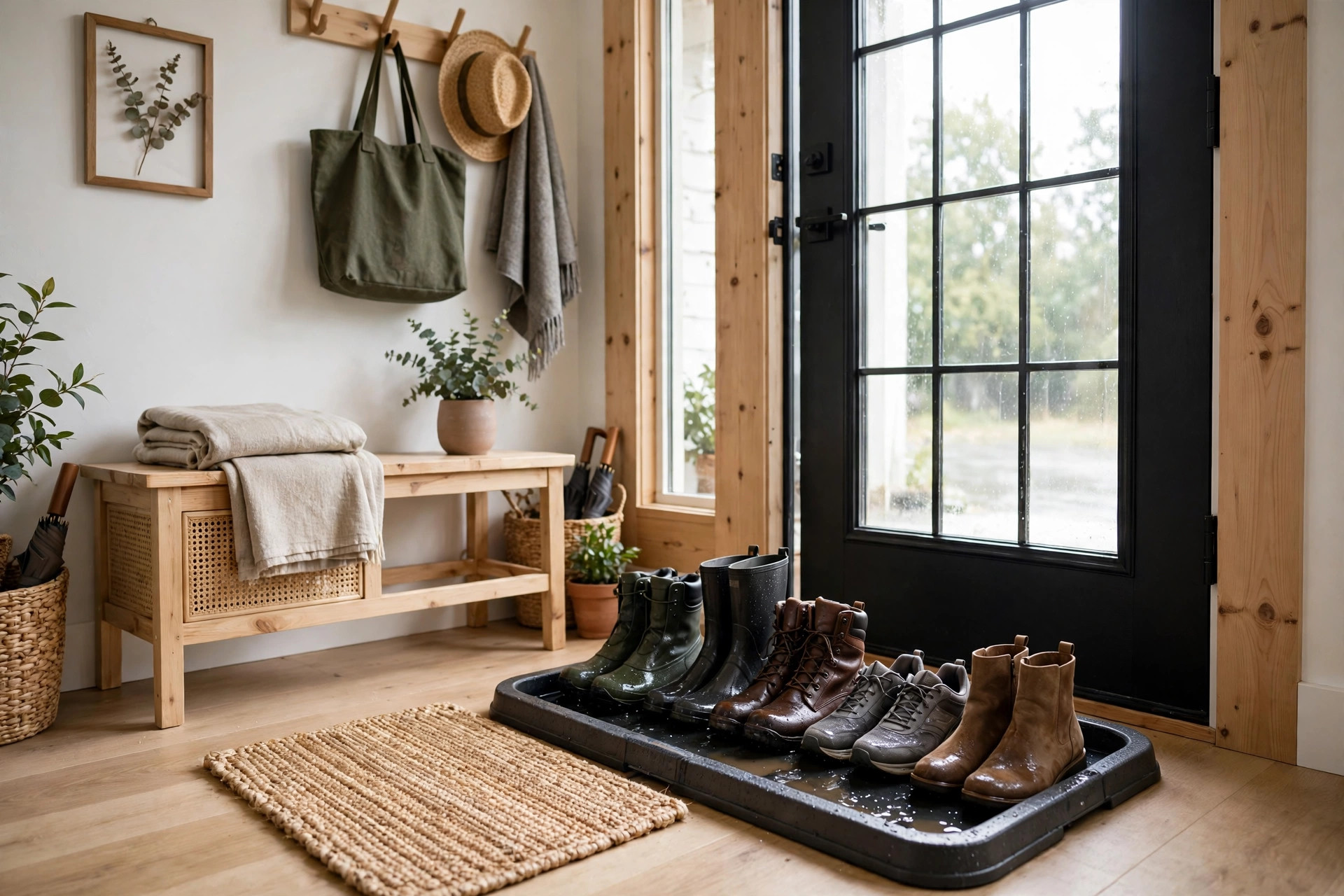
11. A boot tray, so wet shoes stop ruining the floor
Wet shoes dripped across the floor are how an entryway stays damp, and damp is how it starts to smell. Give wet shoes one tray — a shallow tray with a rim, by the door, ideally near a mat — so every wet pair lands in the same place. The tray makes the wet shoes visible, so they dry in one spot instead of trailing mud across the house, and it stops shoes living on the rug, which is where they get damp and musty. Keep the tray to wet shoes only, and empty it once a week, so the mud never builds up. One tray, and the floor stays dry.
Organization by person, season and task: coats, keys and bags
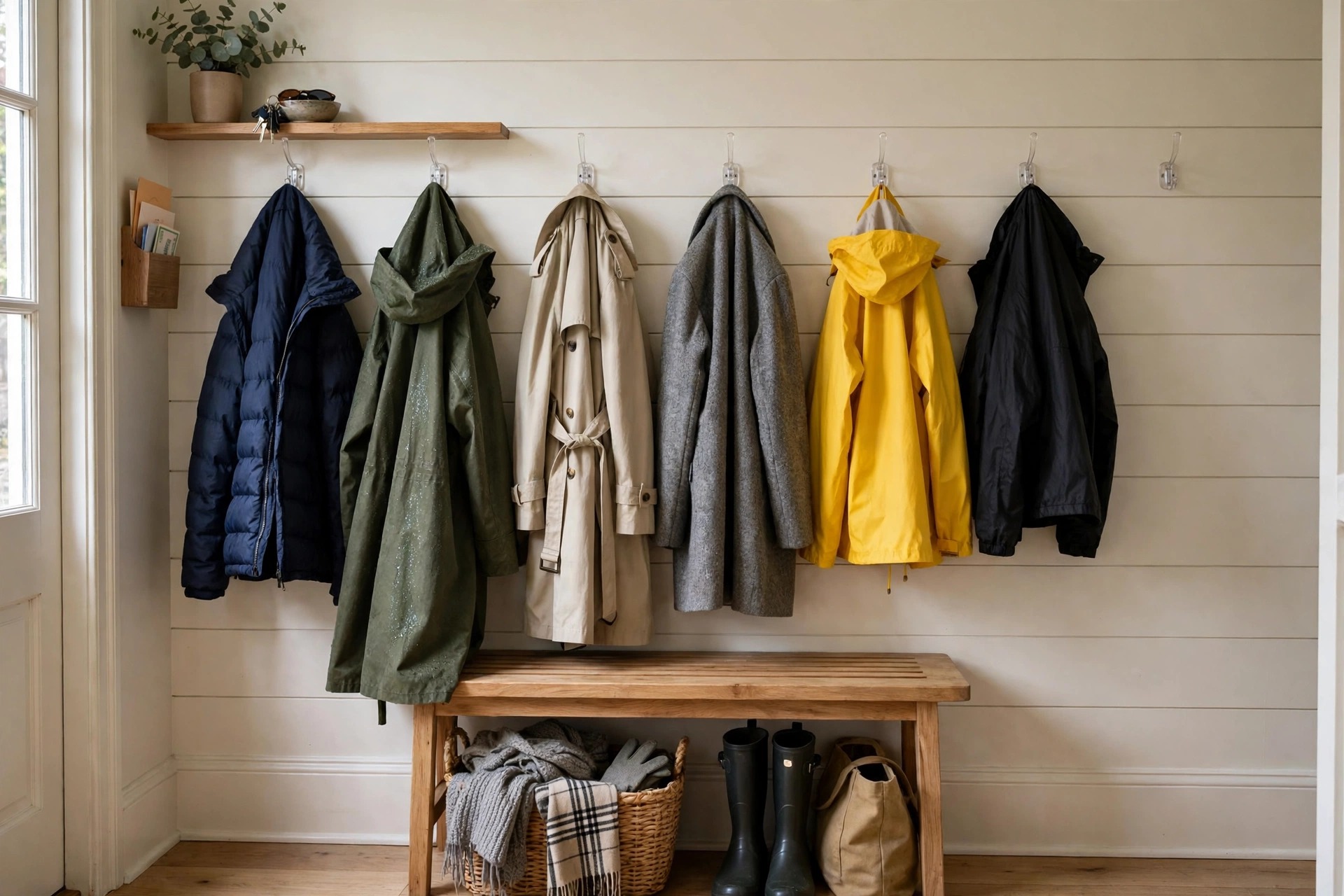
12. A coat zone, all in one place
Coats fail when the everyday coat is on one hook, the rain coat on another and the spare is nowhere. Give coats one zone — everyday coats, rain coats and spare coats together, on clear hooks and one basket for the small things. The zone lives on a single stretch of wall, ideally by the door, so leaving the house starts with one reach instead of three trips across the hall. Keep the coat zone separate from the shoe zone, so putting on a coat does not disturb the shoes. One zone, one wall, and the morning starts on time.
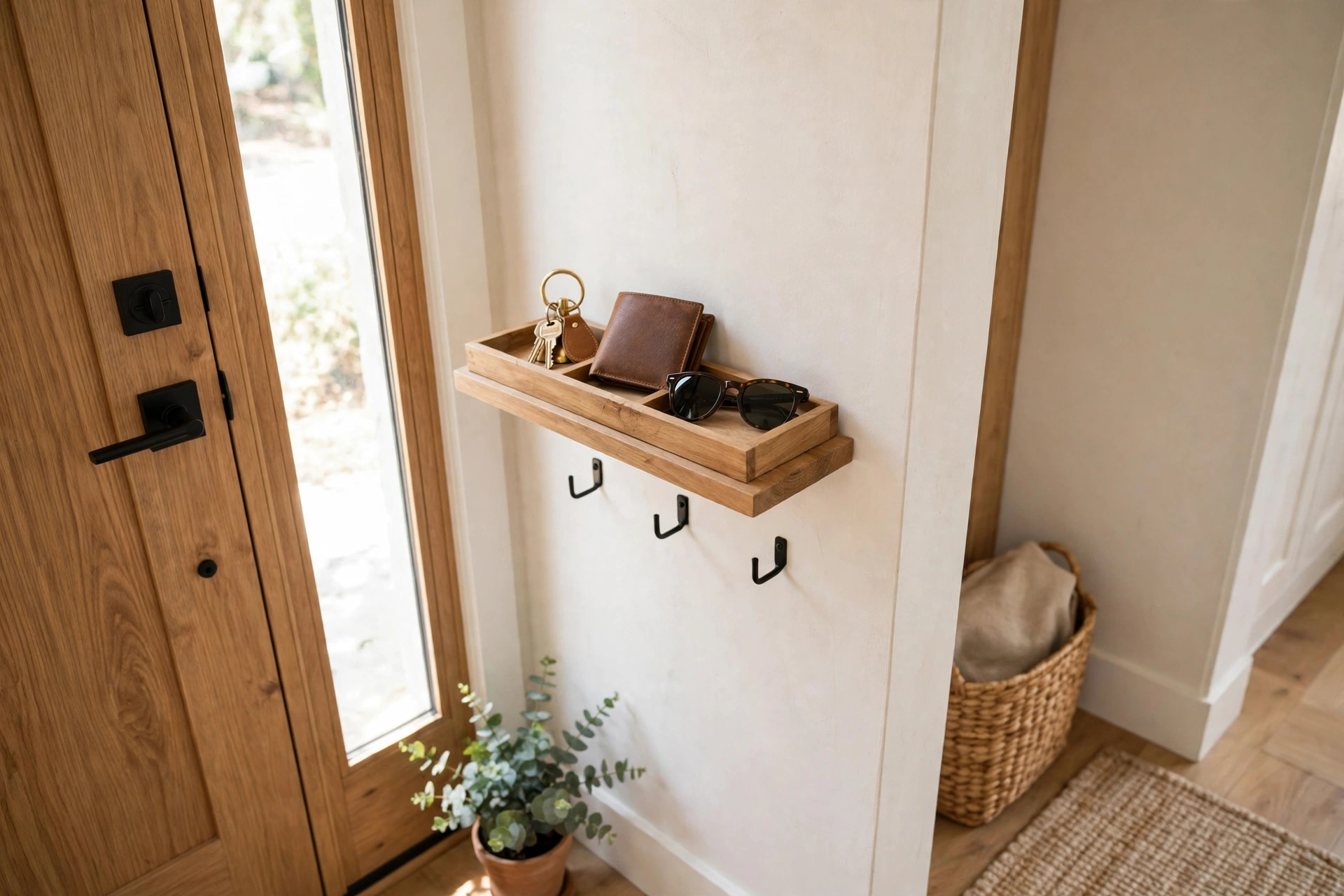
13. A key tray, so keys stop disappearing
Keys dropped wherever they land are how a household loses ten minutes every morning, and lost keys are how it loses a whole day. Give keys their own tray — a small tray or a set of hooks by the door, in one place, ideally at eye level — so every key lands in the same spot the moment you come home. The tray lives within arm's reach of the door, so grabbing keys is one step instead of a search. Keep the key tray to keys only, and check it once a week, so it never fills with coins and receipts. One tray, one place, and the keys stop disappearing.
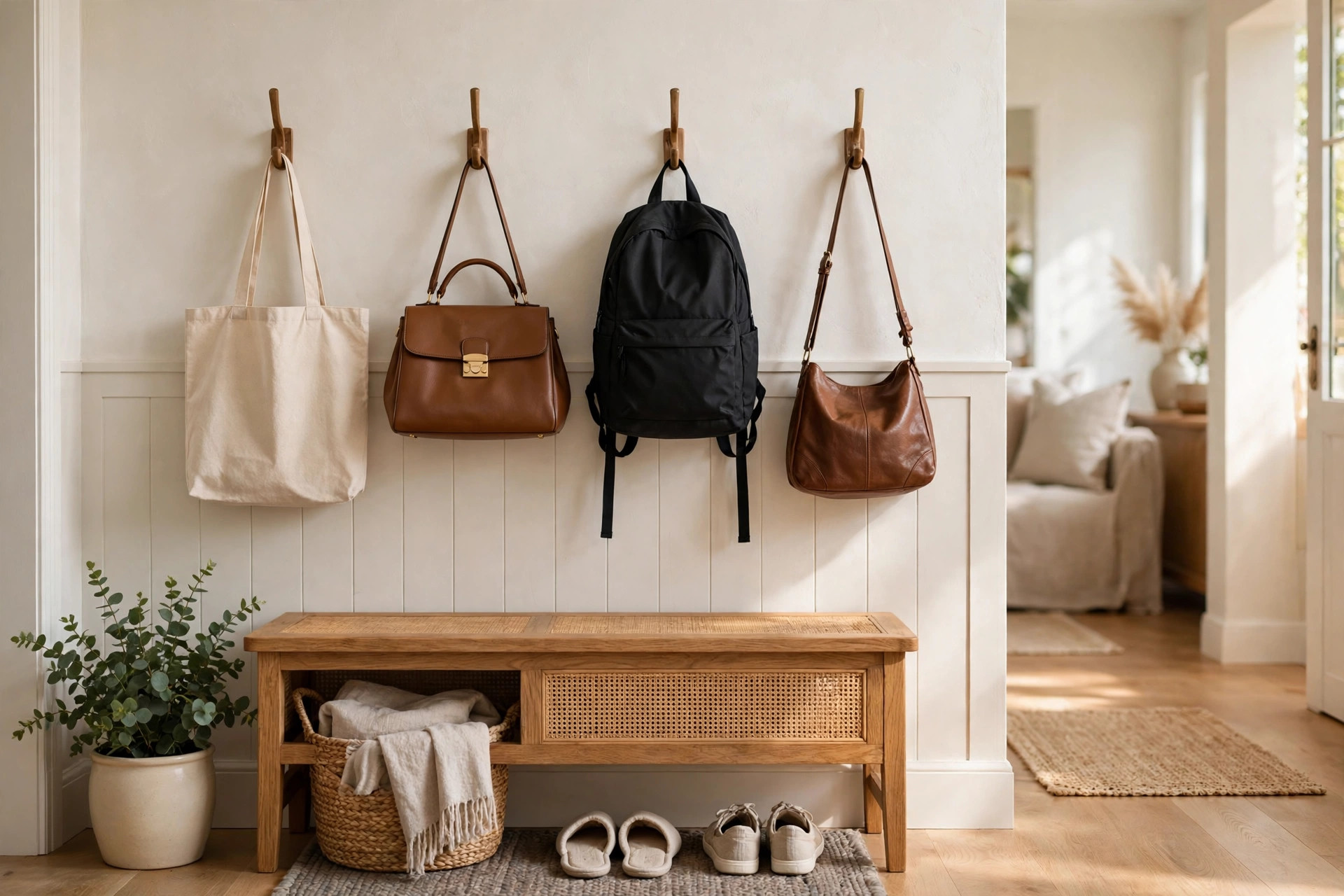
14. A bag station that hangs, not piles
Bags fail when they have to be stacked on a bench, because the bag you want is always at the bottom. Give bags one station — a row of hooks or a single shelf where each bag hangs on its own hook — and the setup takes ten seconds instead of ten minutes of digging. The station lives on a single stretch of wall, so grabbing a bag is one pull instead of a pile move. Keep the bag station separate from the coat hooks, so a heavy bag never drags a coat to the floor. One station, hung up, and bags stop piling.
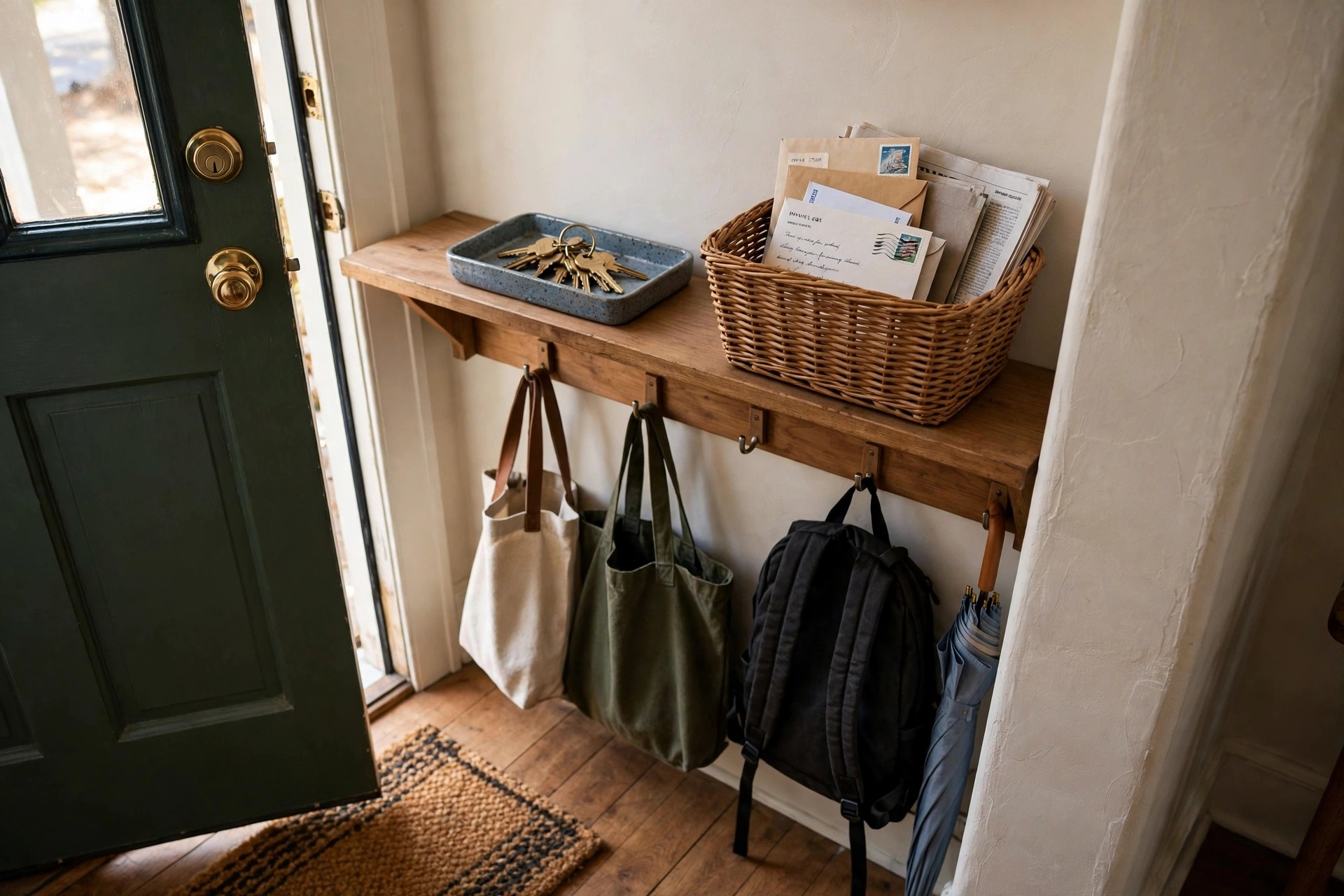
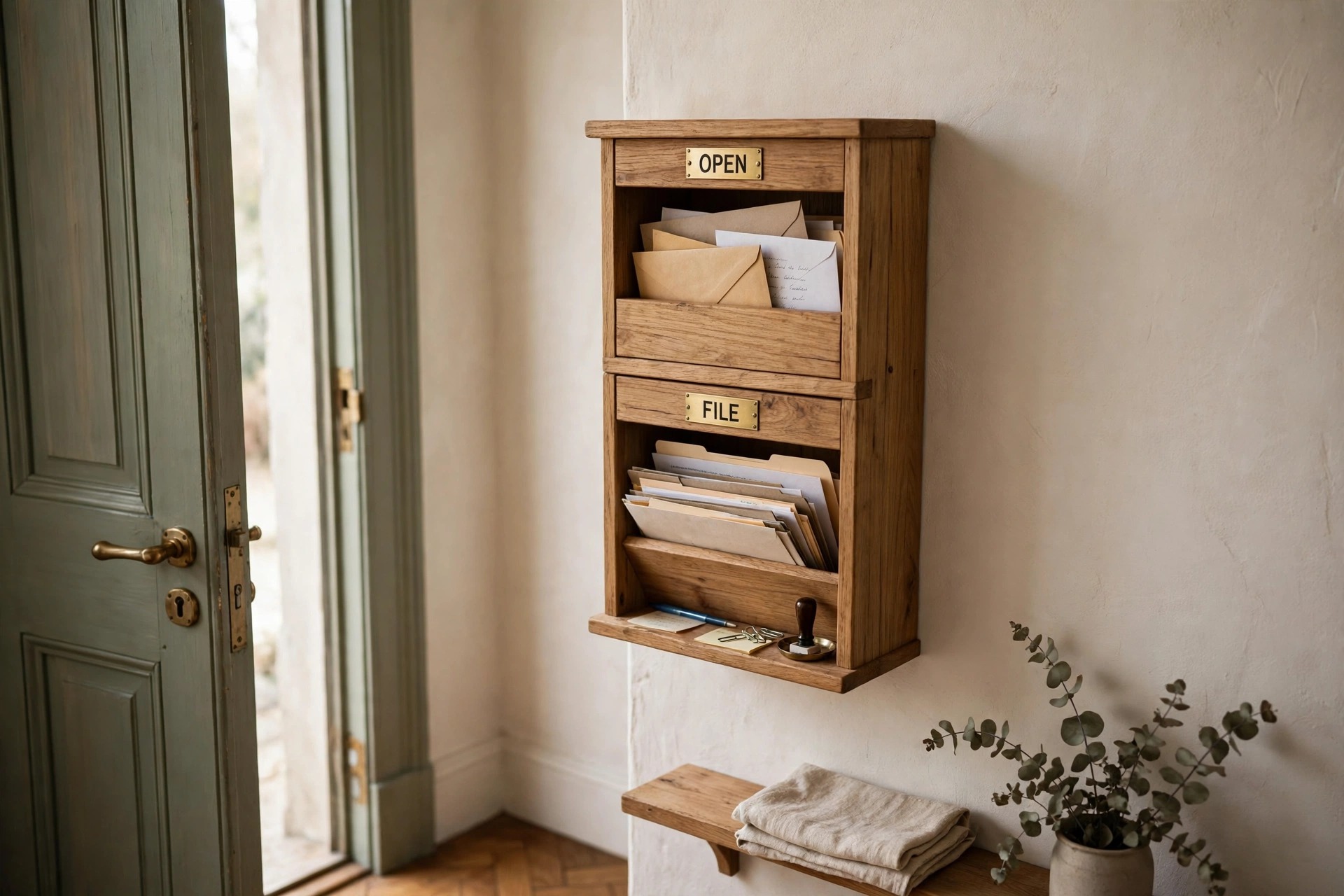
15. A post station by the door, sorted before it spreads
Post left in a pile by the door is post that never gets opened, and a pile that never gets opened is a pile that grows. Put a small post station by the door — a basket or a wall file, with one slot for letters to open and one for letters to file — so every letter is sorted the moment it comes in. The station lives within arm's reach of the door, so sorting post is one step instead of a search. Keep the post station to post only, and empty it once a week, so it never overflows on the day the important letter arrives. One basket, and the post stops spreading.
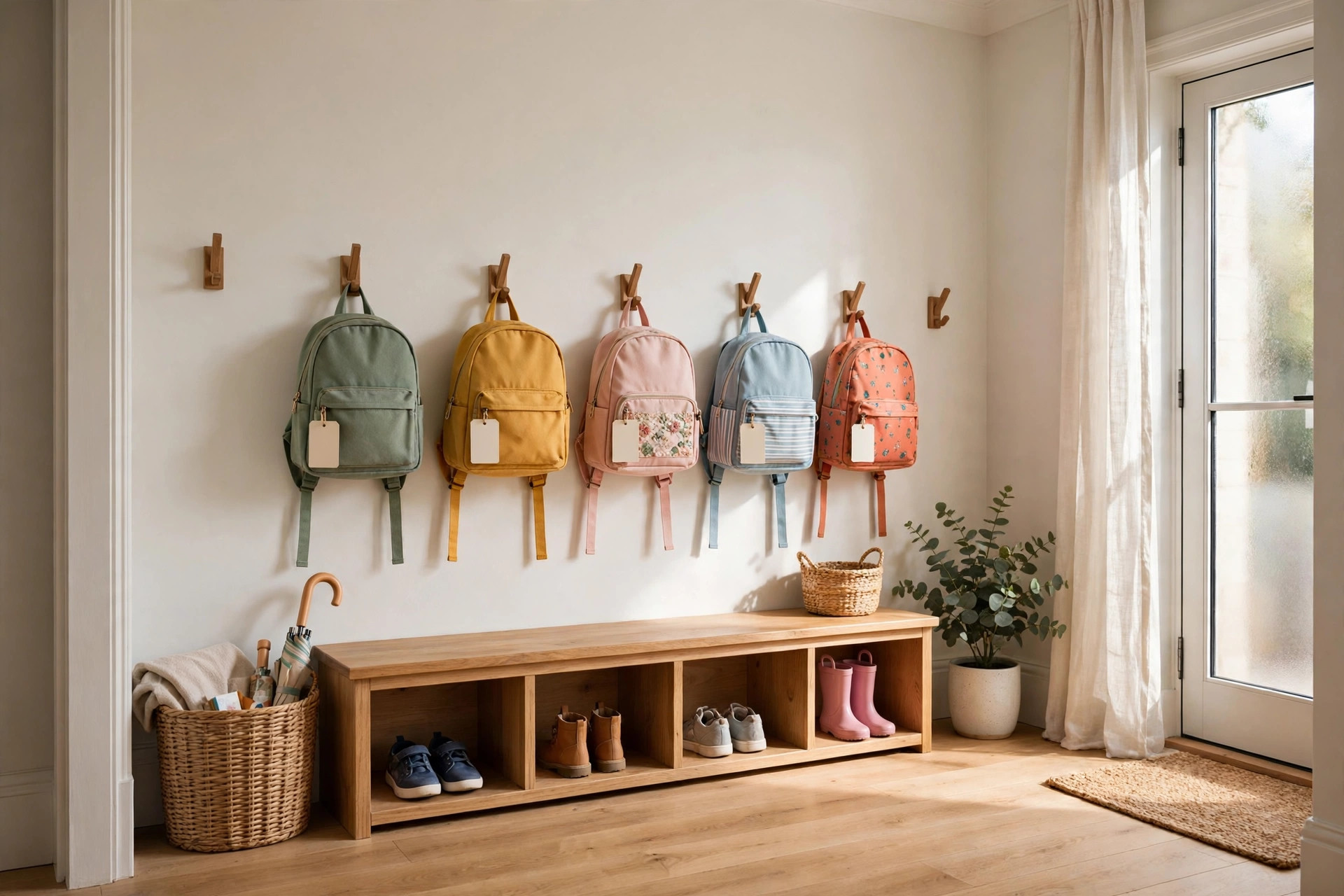
16. School bags in one row, at a height children can reach
School bags scattered across three hooks get used at random and packed at random, and nobody knows what is ready. Put all the school bags — one hook per child, or one cubby per child if the hallway needs it — in one row, at a height the children who use them can reach. The row makes the bag count visible, so the morning pack buys what is actually missing, and it stops bags living on the floor, which is where they get stepped on. Keep the row to school bags only, and check it once a week, not every day. One row, and the school bags stop spreading.
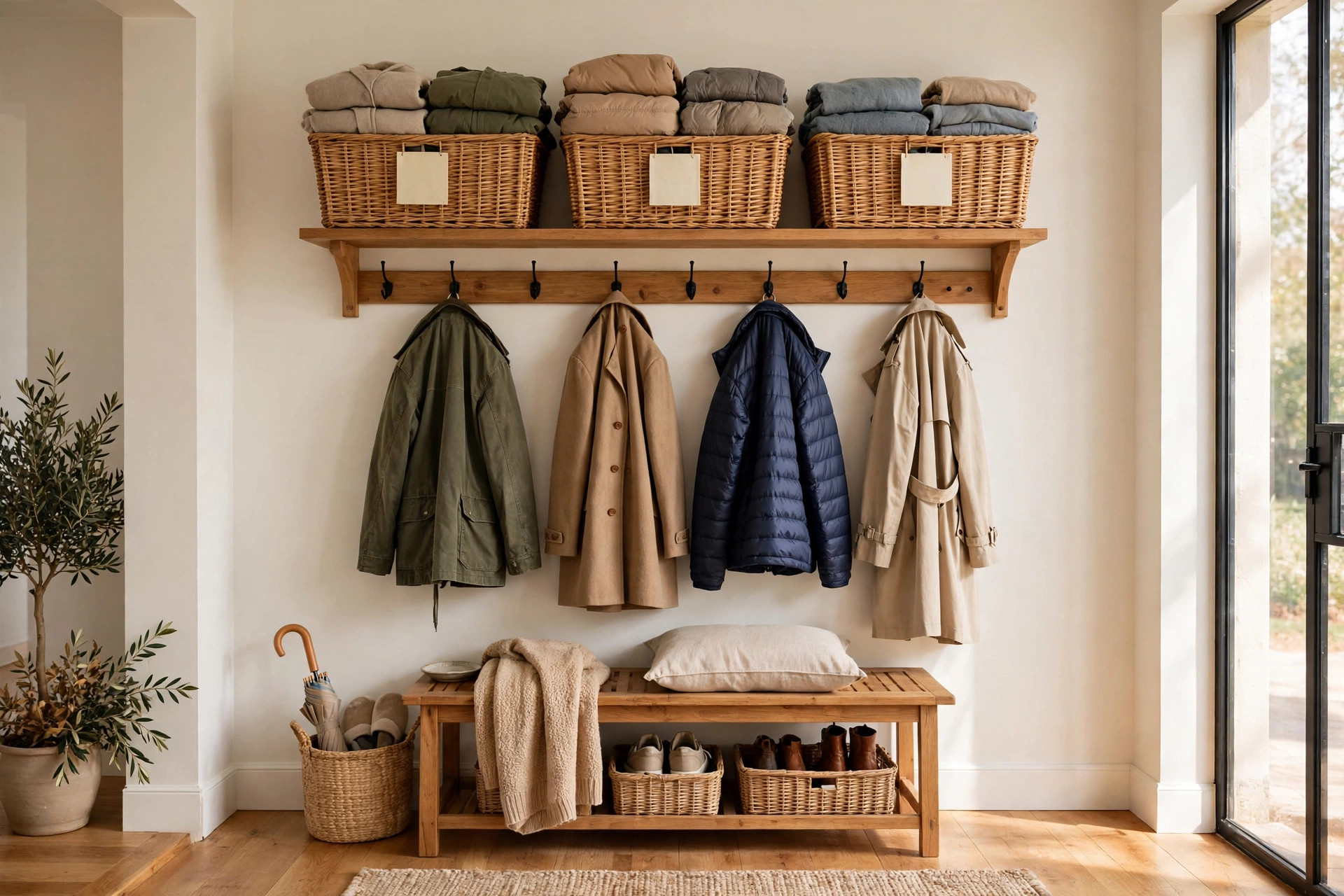
17. A seasonal shelf, clearly separate from the everyday coats
Seasonal things mixed with everyday coats are how you end up wearing a winter coat in spring because it was the one on top. Give seasonal things their own shelf — the highest or the lowest one, clearly labelled — and keep only the current season's coats on the everyday hooks. When the season changes, you swap the shelf, take one coat down, and add the next season to the shopping list. The seasonal shelf also shows you the real count at a glance, which is the first step to owning fewer coats. One seasonal shelf, and the duplicates stop.
Small entryways, narrow halls and keeping it tidy
18. Use the wall: hooks, rails and narrow shelves above the bench
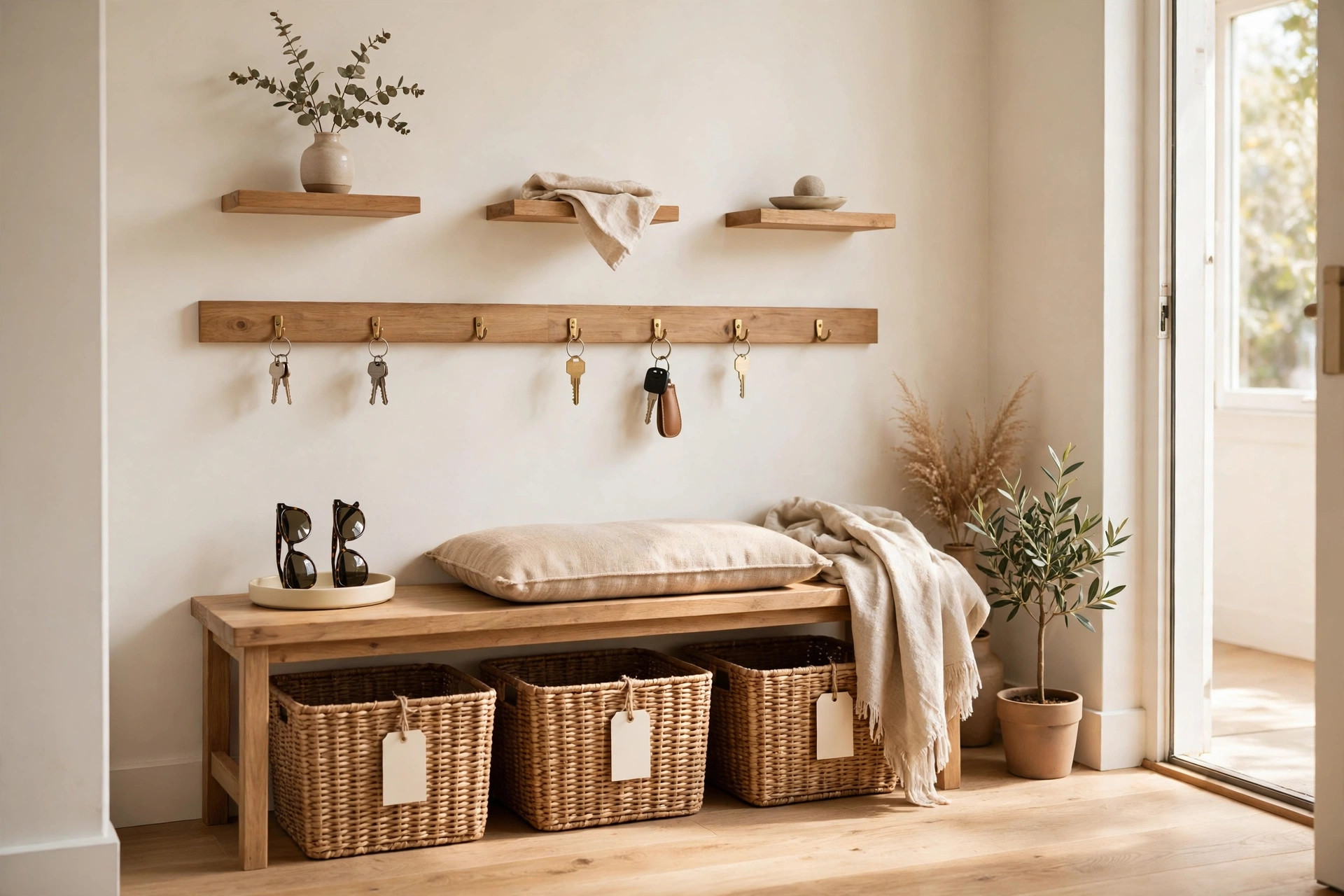
A small entryway has no floor space to spare, so storage has to go on the wall. Fit a narrow rail or a set of small shelves above the bench, and keep the small things there — keys, sunglasses, dog leads, small bags — standing upright where you can see them. The wall uses space that is otherwise wasted, keeps the small things visible, and costs almost nothing to fit. Keep the heavy bags off the wall rail, because that is how rails bend and bags fall, and keep the daily things there, not the monthly ones. One wall rail, and a tiny hallway gains a whole row of storage.
19. Label everything, in the same place, in the same way
An entryway with no labels is a hallway only one person in the house can use, and that person is always the one tidying it. Label every basket, cubby and hook in the same place — the front, at the same height — in the same handwriting or the same printed style, so anyone can put things away and find them. Labels also stop a basket drifting into a second zone, because the label says what belongs inside. Keep the labels short — one or two words — and replace them when the zone changes, not a year later. One label per container, and the entryway works for the whole household.
20. A nightly two-minute reset, not a yearly big clear-out
An entryway stays tidy with a small nightly habit, not a heroic yearly clear-out. Once a night, for two minutes, pull the front row forward, check what is out of place, move the coats back to their hooks, and put anything that has drifted back in its zone. The reset is small enough to do while the kettle boils, and it stops the slow drift that turns a tidy hallway into a messy one in a week. Keep a small basket by the door for things that belong in another room, and empty it during the reset. Two minutes a night, and the entryway never needs a big clear-out again.
21. Small entryways: go vertical, and use every inch of height
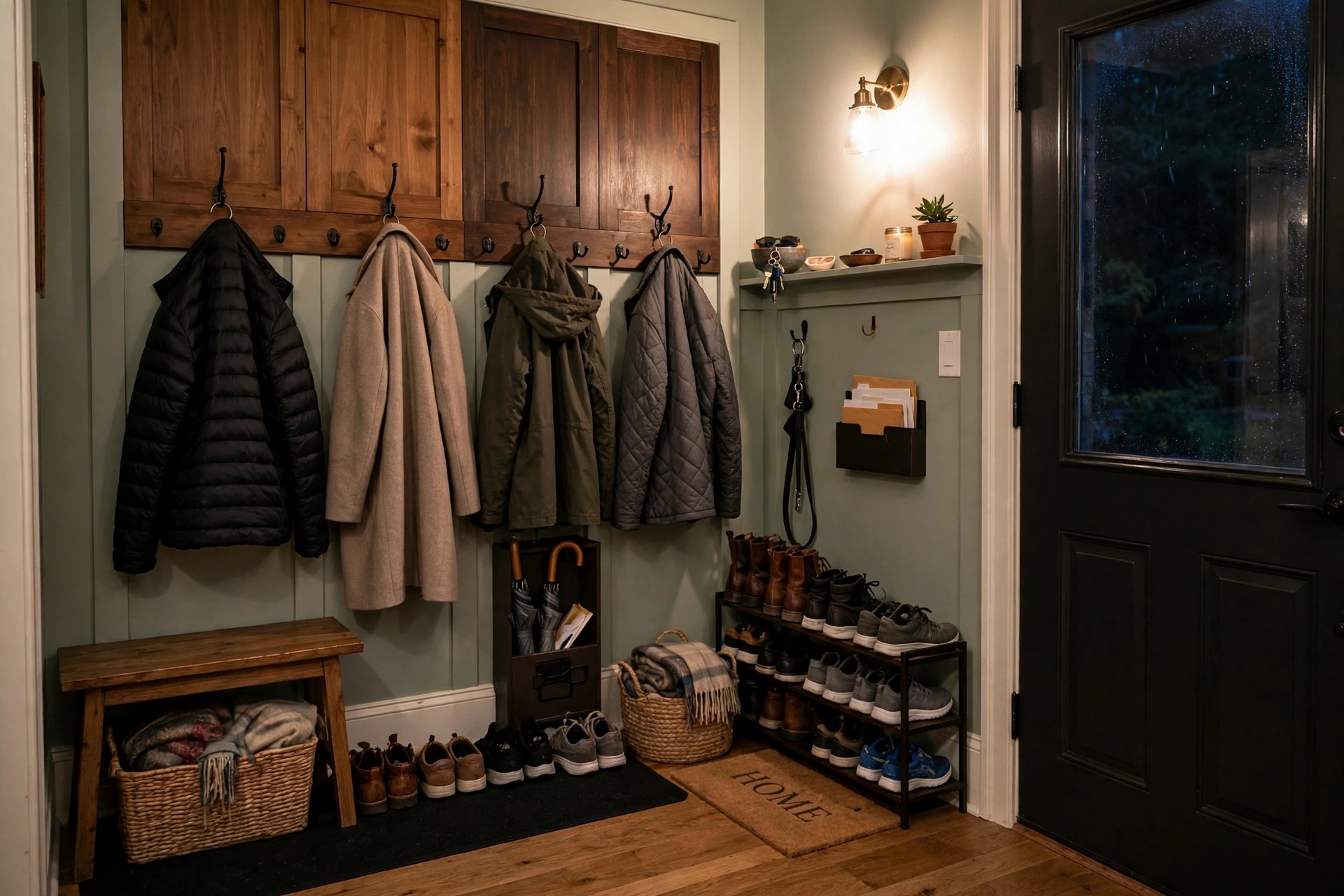
A small entryway feels full because its hooks are too far apart, not because it holds too much. Add a hook, a rail or a stackable basket to use the empty air above the bench, and the same wall holds a second row. Store the tall things on the bottom shelf, the short things on a rail above them, and the flat things — post, spare keys, sunglasses — standing upright in a file holder at the side. Measure the wall height before buying anything, and buy to fit the things, not the other way round. One extra layer per wall, and a small hallway gains a whole shelf of space.
22. Care for the door area, not just the storage around it
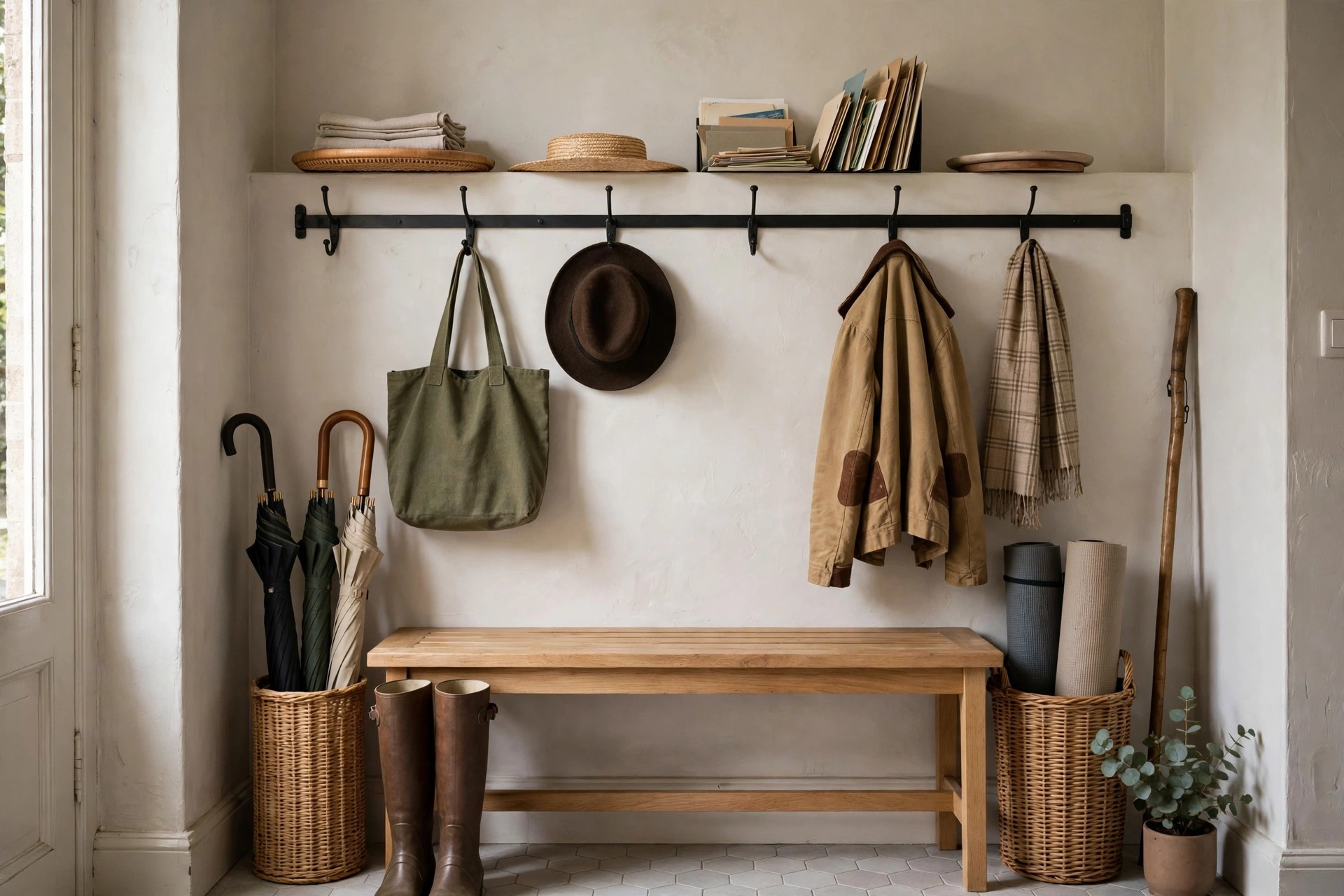
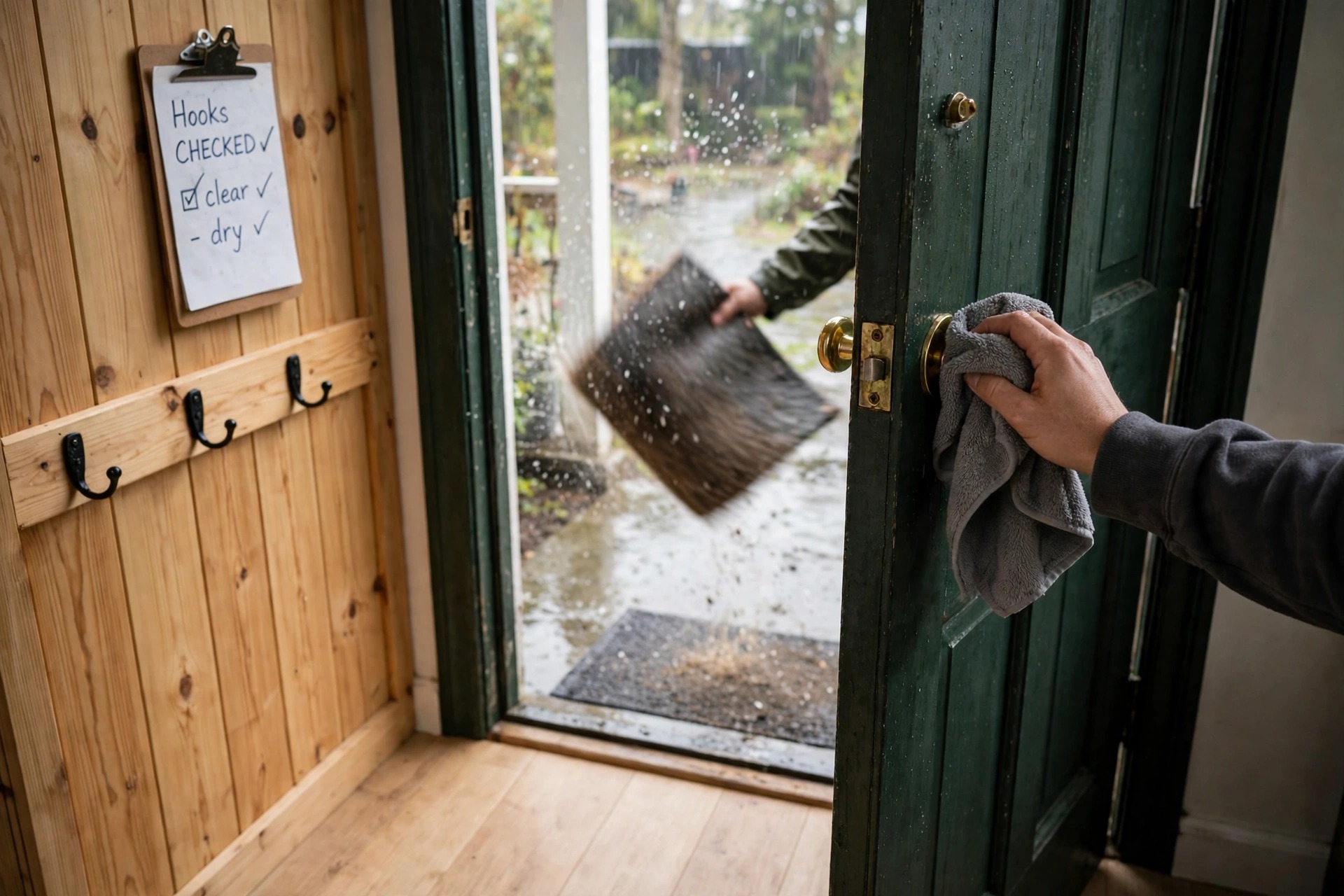
Storage only helps if the door area itself is looked after. Wipe the door handle once a week, shake the mat after every wet day, check the hooks once a month, and keep the floor clear of clutter, because that is how trips happen and coats get torn. Check the bench fixings once a year, keep things out of direct sunlight by the door and away from the damp of wet shoes, and never hang a heavy bag on a hook without checking it can hold it, because that is how hooks pull out of the wall. A door area looked after lightly lasts longer than one stored perfectly and never checked. Care for the door area, and the storage takes care of itself.
Which entryway storage fits which hallway?
| Hallway / situation | Best first move | Budget | Tools needed |
|---|---|---|---|
| Crowded hallway / lots of coats | Person zones + one hook per coat (ideas 2, 6) | Low | Hooks |
| Small hallway / no floor space | Wall rail + bench with cubbies (ideas 7, 18) | Low | Rail / bench |
| Deep bench / things at the back | Stackable bins + baskets (ideas 9, 10) | Low | Bins / baskets |
| Everyday use, always in and out | Eye-level everyday shelf (idea 3) | Low | None |
| Wet shoes household | One boot tray (idea 11) | Low | Boot tray |
| Keys going missing | Key tray + nightly reset (ideas 13, 20) | Low | Tray / labels |
You do not need all 22 ideas. You need the three that solve your biggest mess — usually the coats with no hook, the shoes with no cubby, and the keys with nowhere to land. Start with one hook per person, give every thing one home, and make the rule that everything goes back in its place, oldest at the front. Do that tonight and leaving the house will feel different by tomorrow morning.
Save this post for your next hallway clear-out, and if you are finishing the Storage by room cluster too, read 22 Laundry Room Storage Ideas for 2026 next — it is Post 09 in the same cluster — and 25 Coat Closet Organization Ideas for 2026, Post 11, to carry the same system from the front door to the rest of the house.
Published 18 November 2026. Updated as new entryway storage finds are tested.
Frequently asked questions
How do I organize a small entryway with no closet?
Use the wall, not the floor. A bench with shoe cubbies underneath, a row of coat hooks, a wall rail above the bench for hats and bags, and baskets for gloves and scarves give a small entryway everything a closet would — without building one.
How do I stop shoes piling up by the front door?
Give shoes a fixed home at the door. A bench with cubbies holds one pair per person, a boot tray catches wet shoes, and a slanted shelf keeps pairs visible so nobody digs through a pile to find the matching shoe.
Where should keys and wallets go in an entryway?
Use one small tray at eye level by the door. Keys, wallet and sunglasses land in the tray every time you come in, so leaving the house means one grab instead of a search. Clear the tray once a week so it never becomes a junk drawer.