25 Fridge Organization Ideas for 2026
A fridge with no system is a fridge you have to dig through — the yoghurt is behind the milk, the sauce you need is at the back of the shelf, and something at the bottom has gone off because nobody could see it. The fix is not a bigger fridge, it is a fridge with zones, one clear bin per zone, and a label on every bin, so everything you own has a place and the place is the first thing you see when the door opens.
These 25 fridge organization ideas are clear-bin fridge layouts that look satisfying: start by emptying the whole fridge and zoning it by shelf, add clear bins and labels, put a rotating shelf in for the jars, and finish with a weekly ten-minute reset — so the fridge stays tidy, the food stays fresh longer, and nothing hides at the back.
Every idea below works in a real family fridge, from a big French-door fridge to a small flat fridge with one shelf that does everything. The kitchen the fridge lives in is covered in 20 Kitchen Cabinet Organization Ideas for 2026, where the cupboards get the same zone system as the fridge — and the dry food that backs the fridge up is in 25 Pantry Organization Ideas for 2026, so the whole kitchen runs on one plan. Pick three ideas that fit your fridge, start with the clear-out, and build from there.
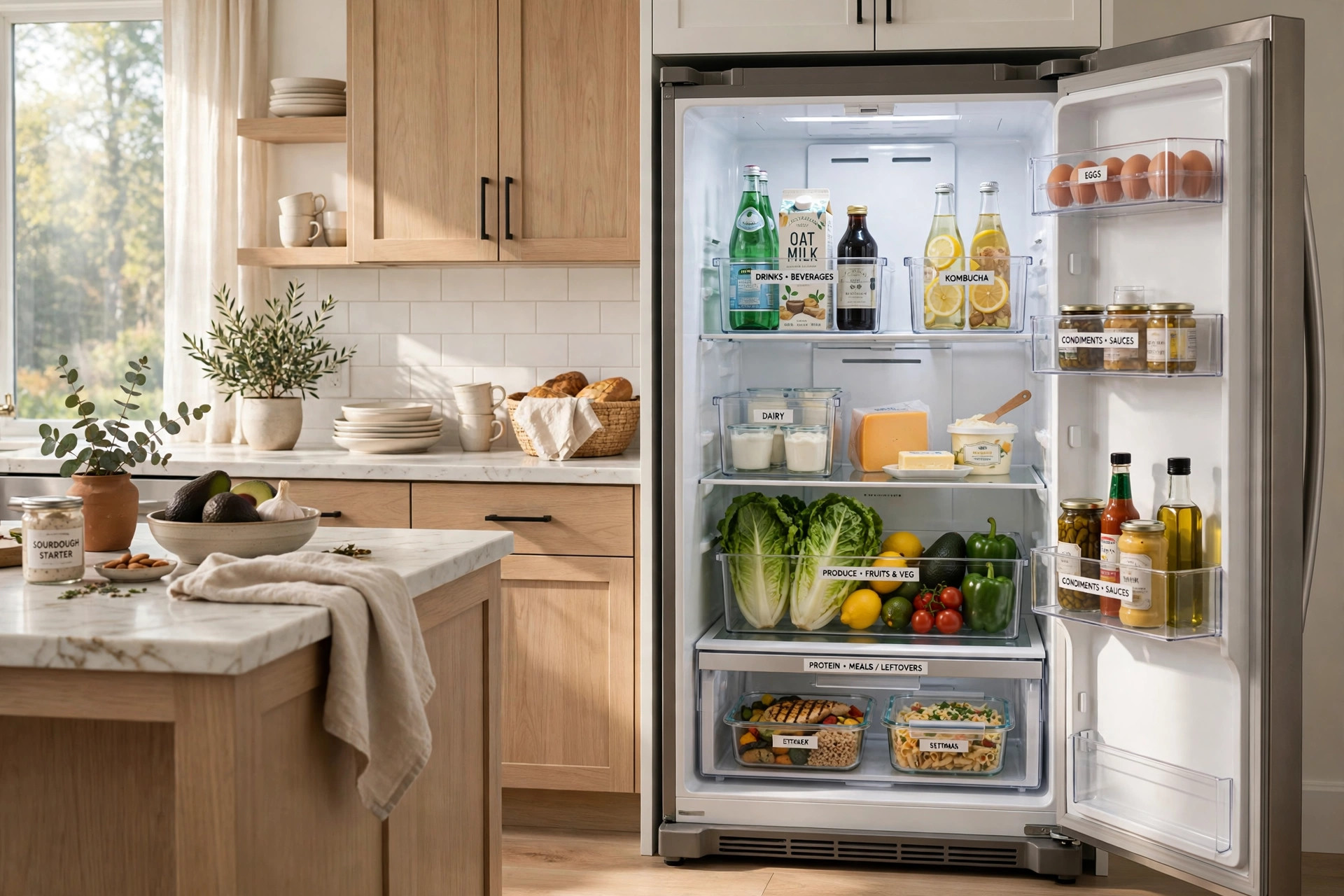
Clear the fridge and start with zones
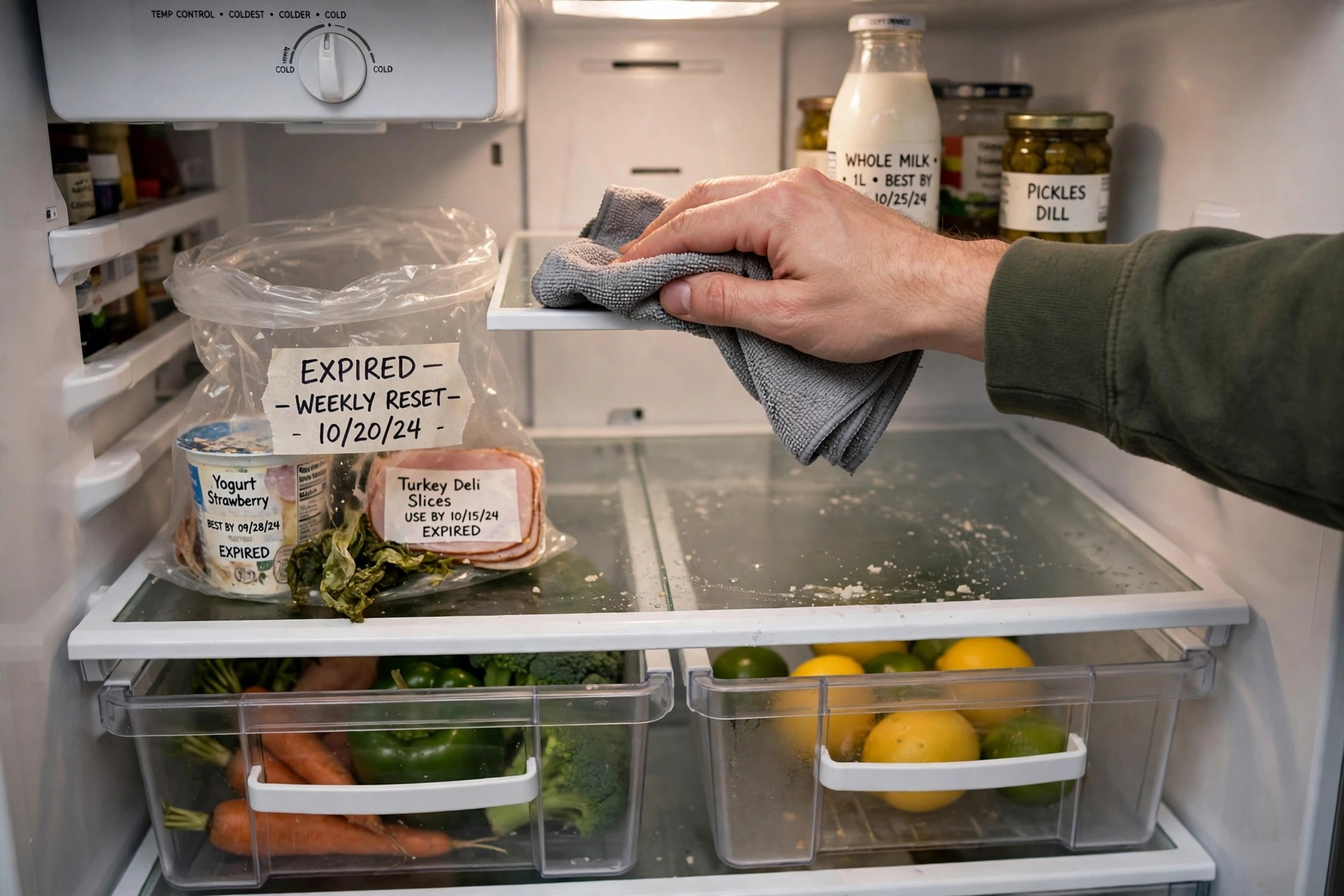
1. Empty the whole fridge first — everything out, expired out, wipe the shelves
A fridge you sort while it is full is a fridge you never really sort, because the food that is already in the way is the food that stops you reaching the back. Take everything out — everything — and put it on the counter, because the empty fridge is the fridge you can see and the fridge you can see is the fridge you can fix. Throw away anything past its date and anything you cannot name, wipe every shelf with warm soapy water, and dry it before a single thing goes back. An empty, clean fridge takes twenty minutes, and it is the only honest start, because the zones you draw on a dirty fridge are zones that will not stick. Everything out, and the fridge is a blank shelf again.
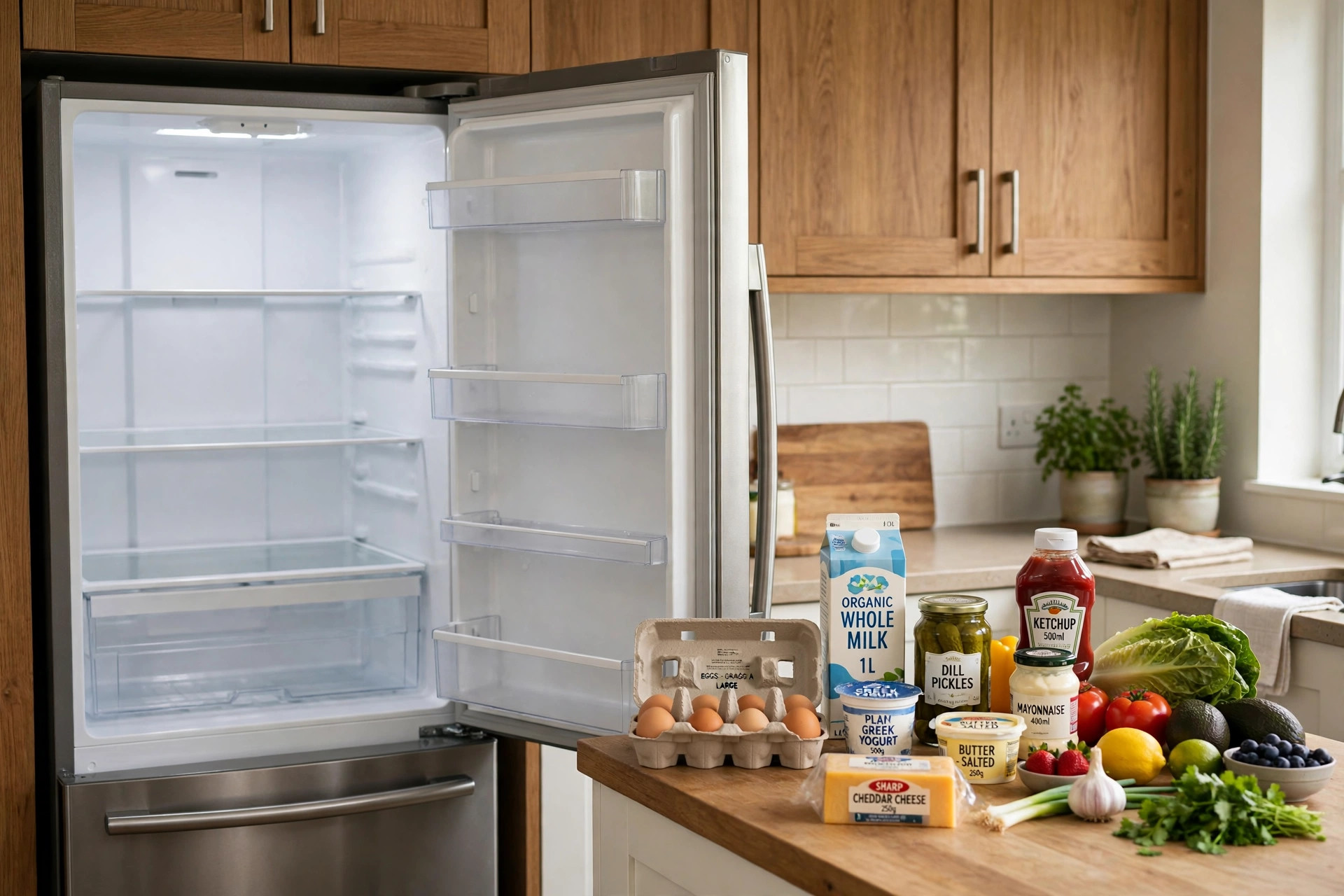
2. Zone the fridge by shelf — top ready-to-eat, middle dairy and eggs, bottom raw meat, drawers produce, door condiments
A fridge with no zones is a fridge where everything lands wherever there is a gap, because the shelf with space is the shelf that gets the next thing. Give every shelf a job — top shelf for ready-to-eat food, middle shelf for dairy and eggs, bottom shelf for raw meat, drawers for produce, door for condiments — so the food lives where it belongs and the shelf tells you where to put it. The zones follow the cold: the bottom is the coldest spot, so the raw meat goes there, and the door is the warmest, so the sauces go there. Write the zones on a sticky note inside the door until the family learns them, because the zone that is written down is the zone that gets used. Five zones, and the fridge has a map.
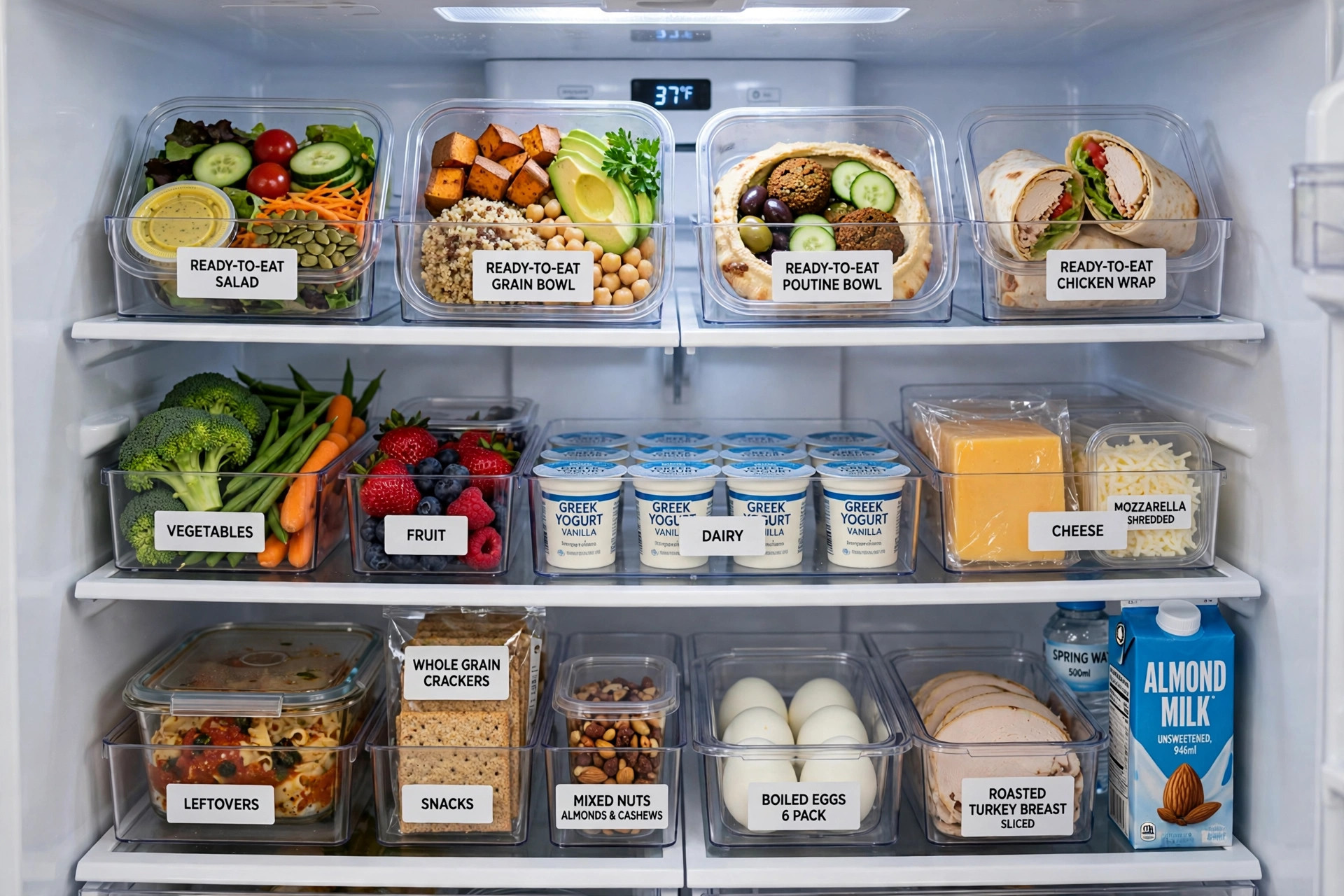
3. One clear bin per zone — the bin is the boundary
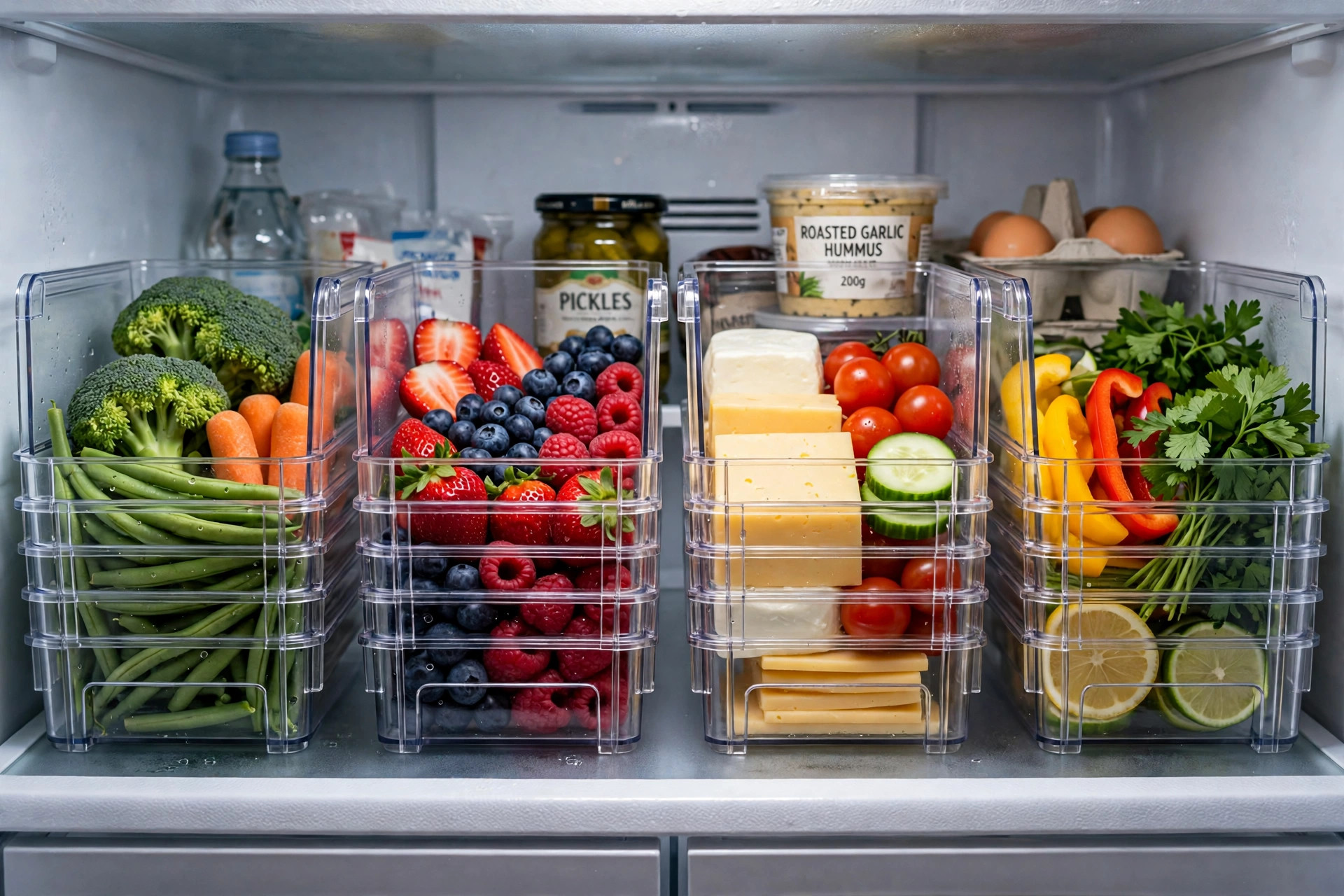
A shelf with no bin is a shelf where things slide, because the yoghurt that has no edge is the yoghurt that ends up behind the milk. Put one clear bin per zone — the bin is the boundary — so the food stays inside its own space and the shelf stays in its own shape. Choose clear bins, not coloured ones, because the clear bin is the bin you can see through and the food you can see is the food that gets eaten. Measure the shelf before you buy, because the bin that fits is the bin that stays and the bin that does not fit is the bin that lives on the counter. One bin per zone, and the fridge stops sliding around. (Check on Amazon for clear stackable fridge bins with handles, which pull out like a drawer.)
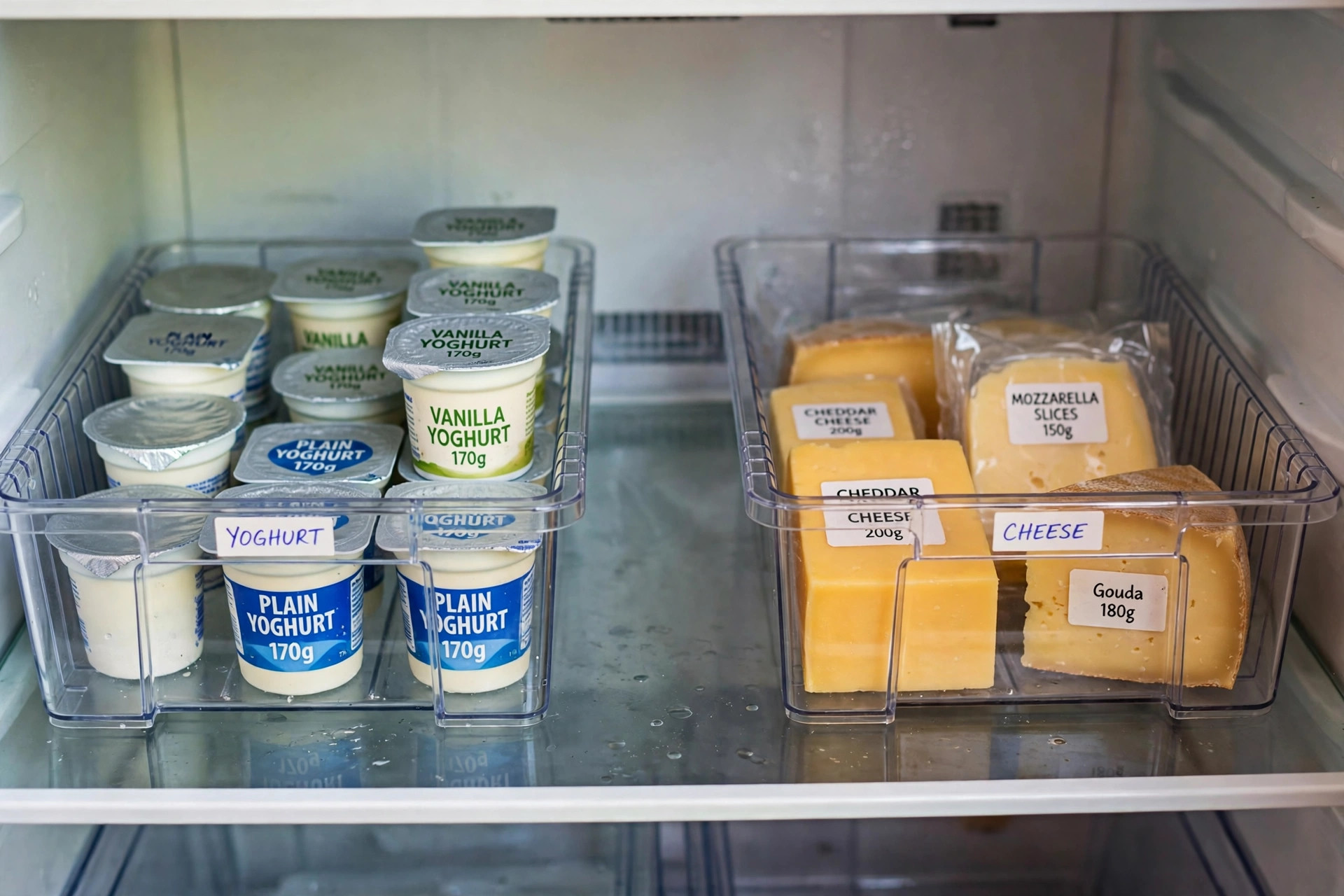
4. Label every bin — a label is a rule everyone can follow
A bin with no label is a bin anyone can fill with anything, because the bin that says nothing is the bin that holds everything. Label every bin — a label is a rule everyone can follow — so the yoghurt bin holds yoghurt, the snack bin holds snacks, and nobody has to ask where the cheese lives. Use a label maker or plain masking tape and a marker, because the label that is easy to change is the label that gets updated when the zone changes. Put the label on the front of the bin, facing the door, so it is the first thing you read when the fridge opens. Keep the labels short — one or two words — because the label you can read at a glance is the label that works. A label on every bin, and the whole household follows the same system.
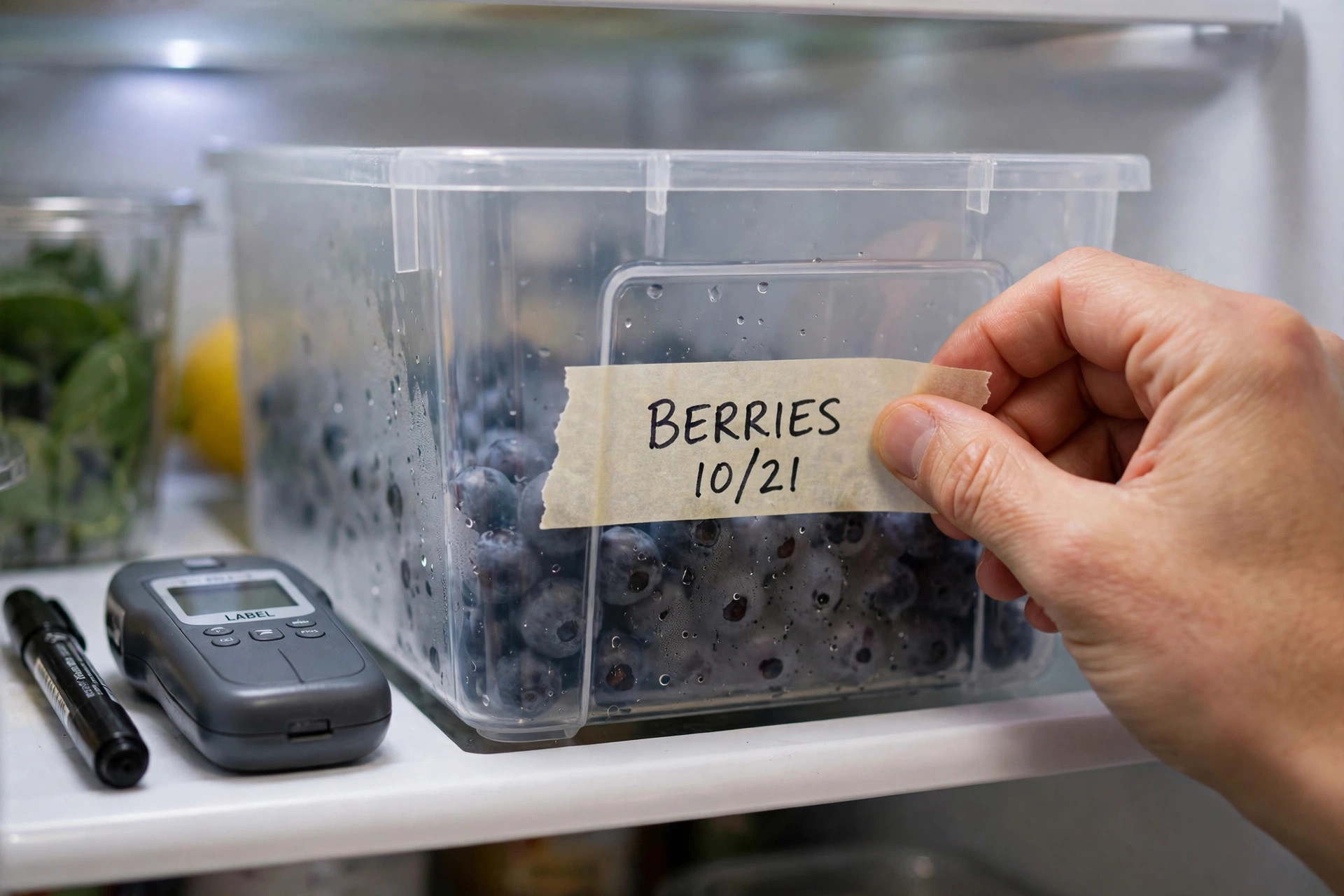
5. Put the food you use most at eye level — the food at eye level is the food that gets eaten
A fridge where the everyday food lives on the bottom shelf is a fridge that makes you bend down for the milk, because the food that is hard to reach is the food that gets forgotten. Put the food you use most at eye level — the food at eye level is the food that gets eaten — so the milk, the butter and the yoghurt are the first things you see and the first things you reach. Move the things you use once a week to the top shelf and the things you use once a month to the back, because the shelf that matches how often you use it is the shelf that saves you time. Stand in front of the open fridge and look at what your eyes land on first, because that spot is the eye-level shelf and the food that lives there is the food that gets used. Eye level for the everyday, and the fridge works with you, not against you.
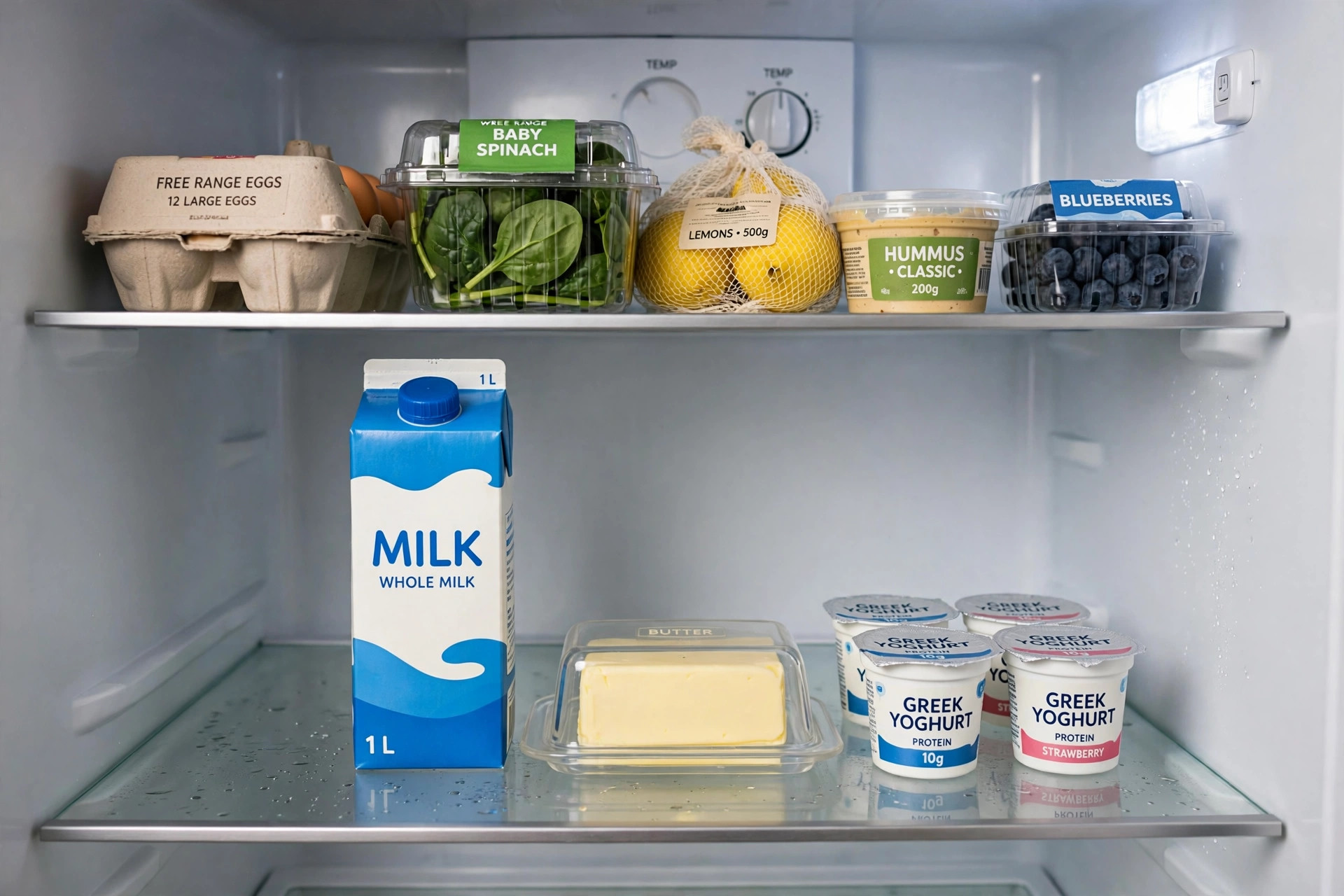
6. Keep raw meat on the bottom shelf — the bottom shelf is the safe shelf
Raw meat on a middle shelf is a drip waiting to happen, because the juice that falls is the juice that lands on the food below it. Keep raw meat on the bottom shelf — the bottom shelf is the safe shelf — so nothing sits underneath it and a drip has nowhere to go. Put the meat in a tray or a lidded container as well, because the tray is the second line of defence and the container is the thing that catches the drip before it spreads. The bottom shelf is also the coldest spot in the fridge, so the meat stays colder there than anywhere else, which is exactly where it needs to be. Raw meat low, everything else above it, and the fridge is safe as well as tidy.
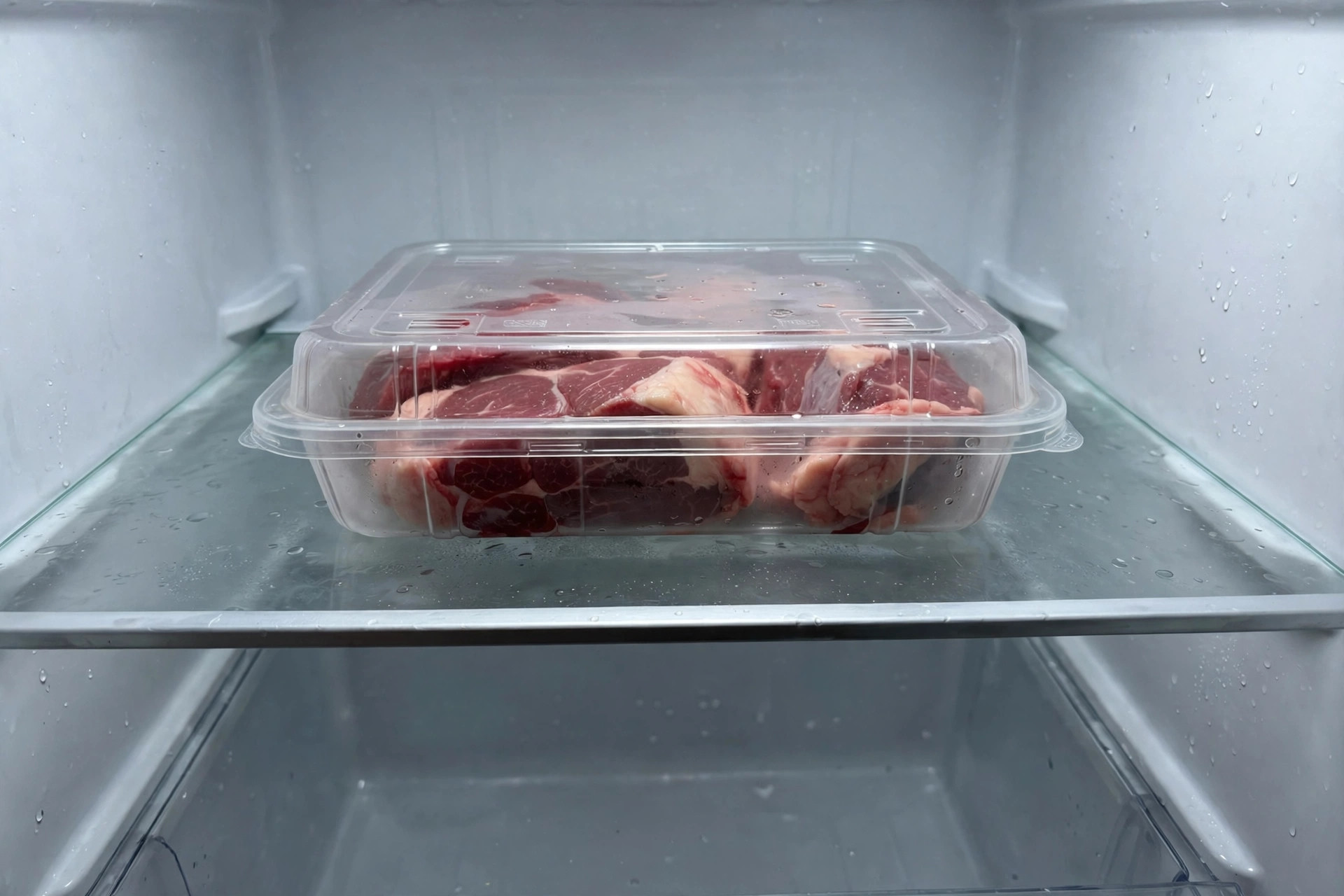
Clear bins and labels that make it satisfying
7. Clear stackable bins for the deep shelves — stack up, not back
A deep shelf is a shelf where food disappears, because the thing at the back is the thing you cannot see and the thing you cannot see is the thing that goes off. Use clear stackable bins for the deep shelves — stack up, not back — so the food rises in view instead of sinking into the dark. Put the tall things at the back of the bin and the short things at the front, and pull the whole bin out like a drawer when you need something, because the bin that slides out is the bin that shows you everything. Stack two bins where the shelf is tall, but never three, because the stack that is too tall is the stack that tips. Stack up, and the deep shelf stops eating your food.
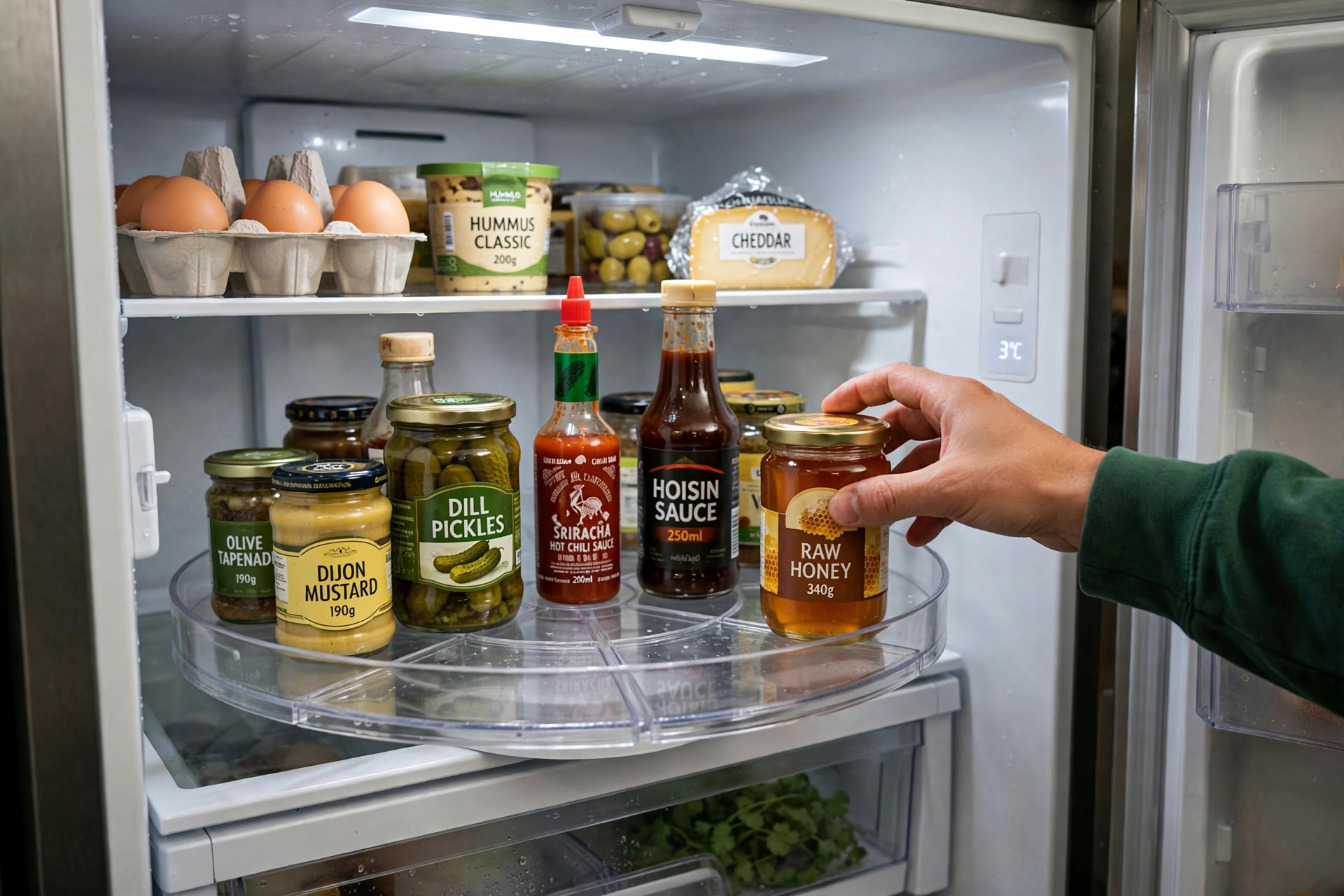
8. A rotating shelf for jars and sauces — spin, don't dig
A shelf of jars is a shelf you have to dig through, because the sauce you want is always the one at the back and the jars in front are the ones in the way. Put a rotating shelf in for the jars and sauces — spin, don't dig — so one turn brings the back to the front and the jar you want is the jar you can reach. Choose a rotating shelf with a raised edge, because the edge is the thing that stops the jars sliding off when it spins, and pick one that fits the shelf with room to turn. Keep all the jars on it, sauces and dressings and pickles together, because the shelf that holds them all is the shelf that ends the dig. The same rotating shelf idea works in the cupboards too, in 21 Lazy Susan Organization Ideas for 2026, where the shelf spins the pantry jars the same way. Spin, and the back of the shelf comes to you. (Check on Amazon for a clear rotating shelf with a raised edge, which keeps tall jars from sliding off.)
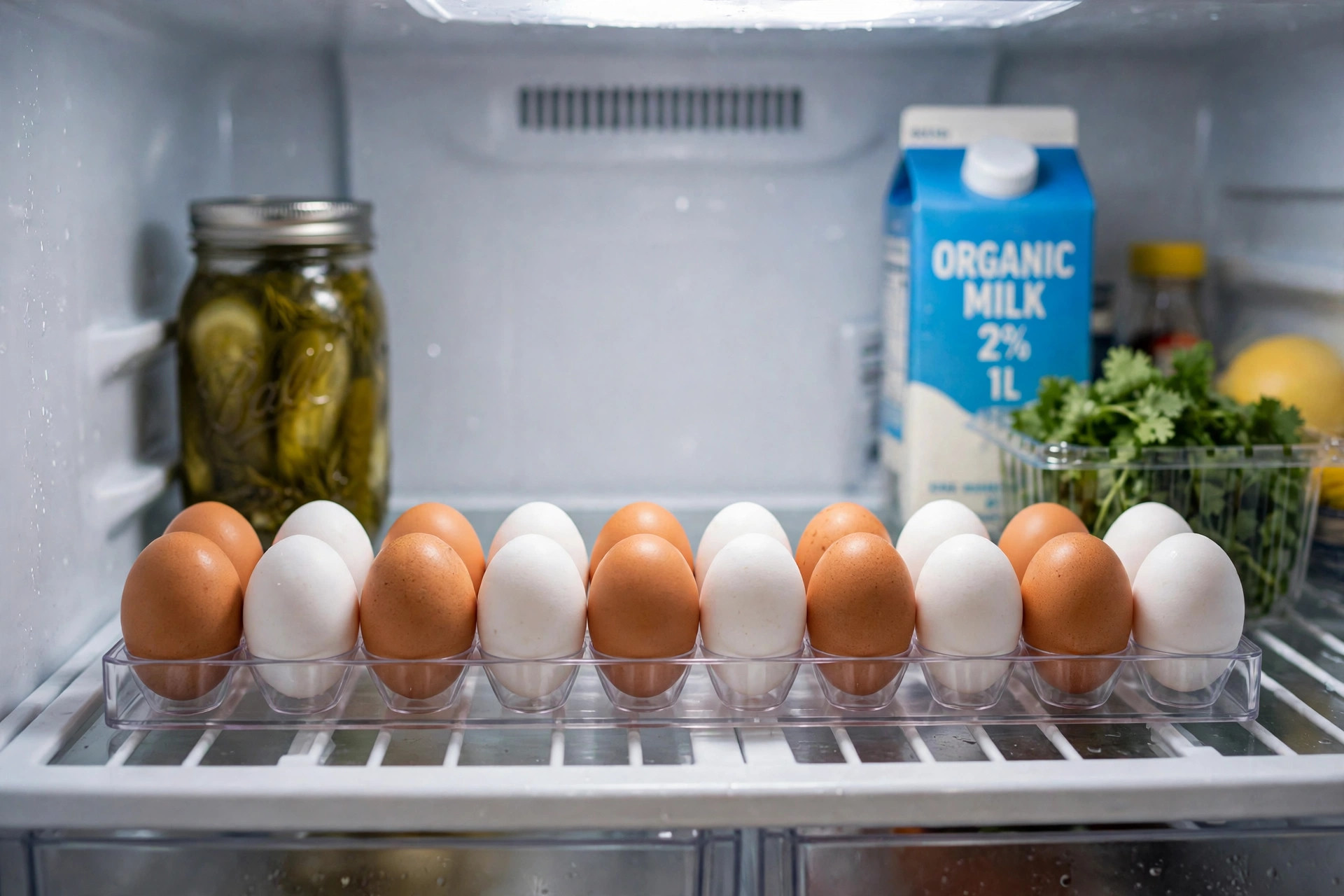
9. An egg holder that keeps eggs visible — eggs in a row, not in a carton
Eggs in a carton are eggs you cannot count, because the carton that is closed is the carton that hides how many are left. Use an egg holder that keeps eggs visible — eggs in a row, not in a carton — so you can see at a glance whether there are two left or twelve. A clear holder with a lid works best, because the lid is the thing that stops the eggs cracking against the shelf and the clear sides are the thing that shows the count. Keep the holder on the middle shelf, never in the door, because the middle shelf is the cold, steady spot and the door is the warm, swinging one. Move the eggs out of the carton the day you buy them, because the eggs in the holder are the eggs you will actually use. Eggs in a row, and you will never run out mid-recipe again.
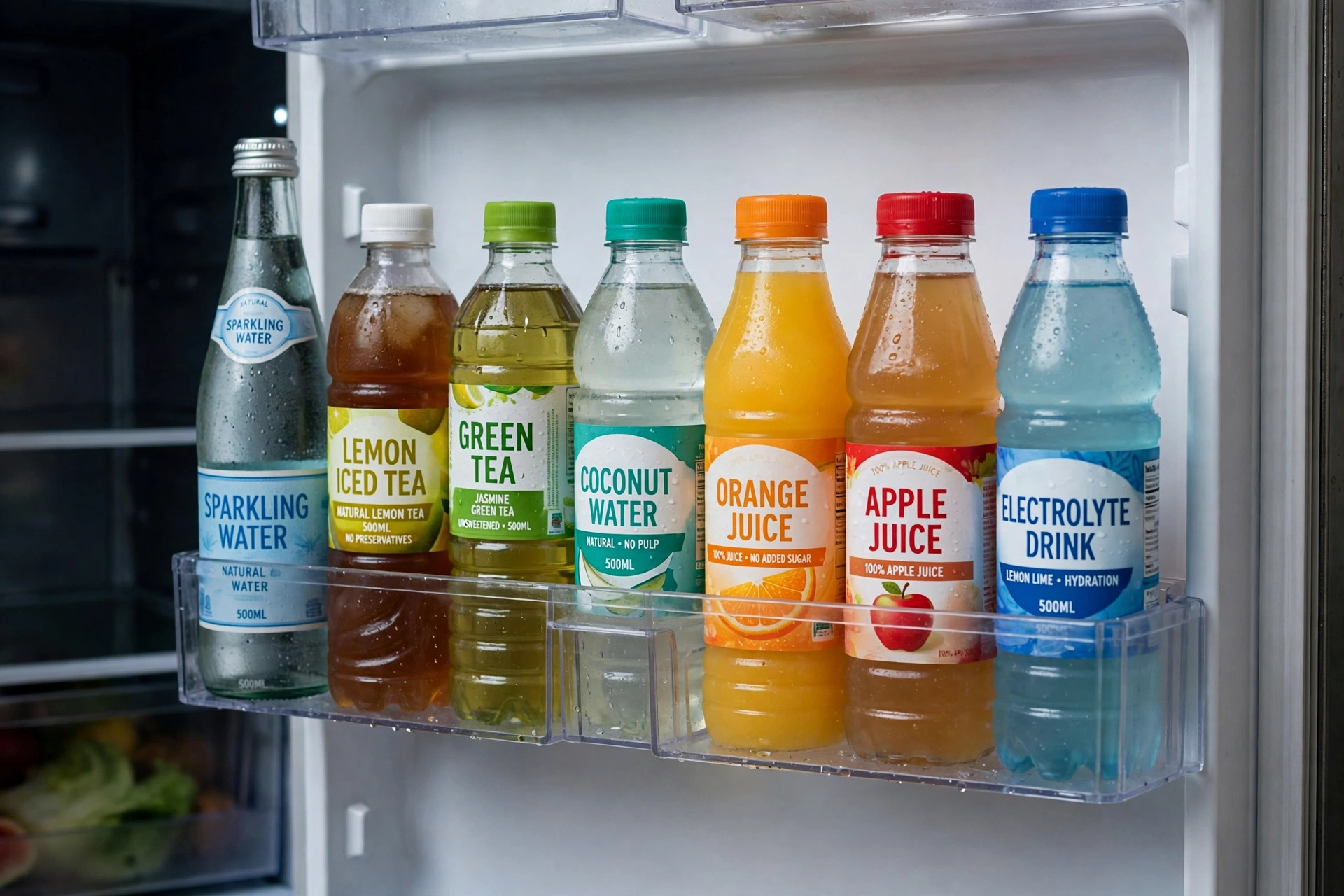
10. A drink rack or dispenser — drinks in one place, upright and cold
Bottles lying on their sides roll, because the bottle that lies down is the bottle that ends up behind the milk. Give the drinks one place — a drink rack or dispenser — so the bottles stand upright, the cans stack in a row, and the whole family knows where the cold drinks live. A rack that holds the bottles on their sides in slots works, because the slot is the thing that stops the roll, and a small dispenser that rolls the next can forward works even better. Keep the drinks on one shelf, not spread across three, because the shelf that holds them all is the shelf that ends the hunt. Drinks in one place, upright and cold, and the fridge door stops being a bottle graveyard.
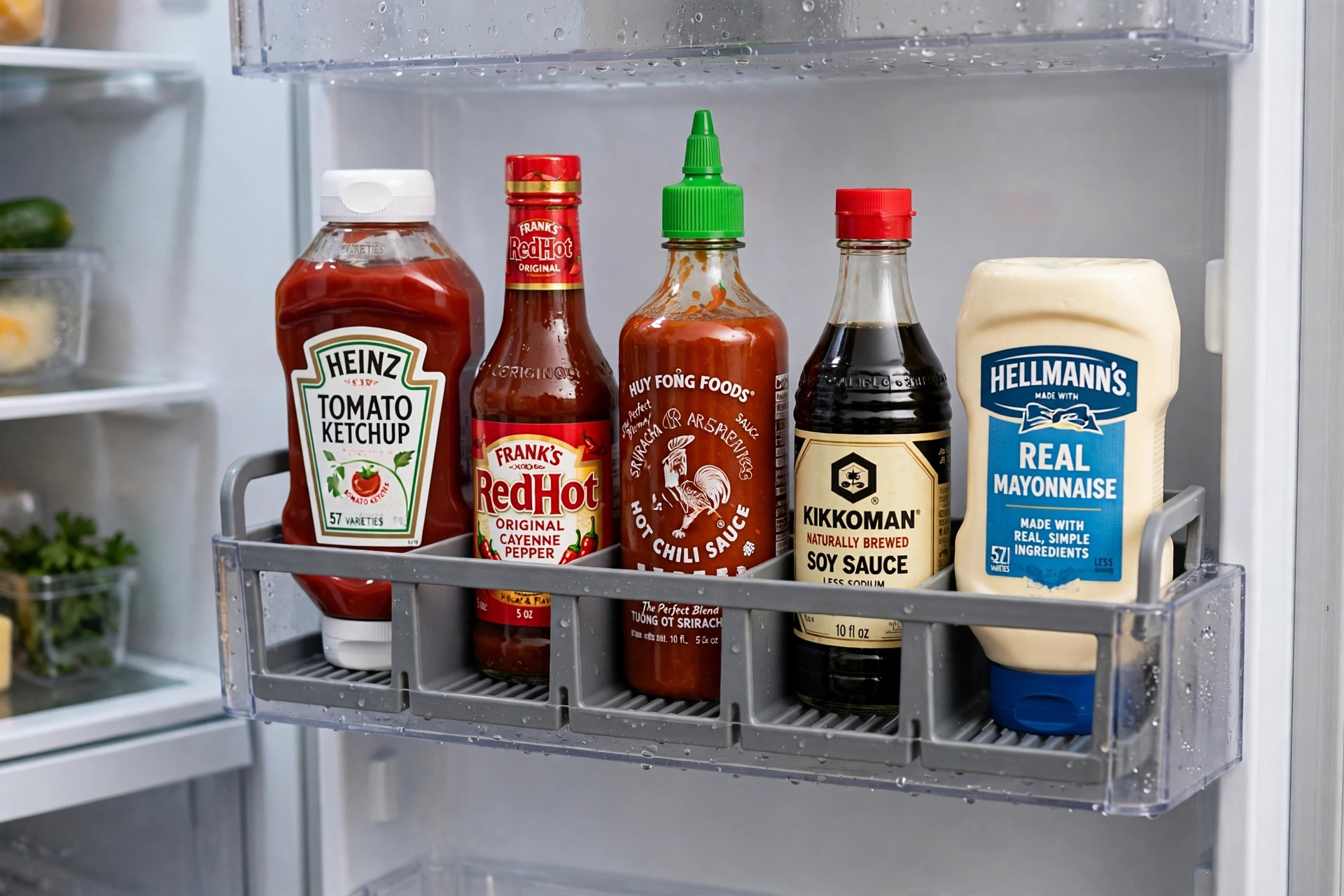
11. A condiment caddy on the door — sauces together, no more door avalanche
A fridge door full of loose sauces is a door that avalanches, because the bottle you pull out is the bottle that knocks three more over. Put the sauces in a condiment caddy on the door — sauces together, no more door avalanche — so the whole set lifts out as one piece and goes to the table as one piece. Choose a caddy with a handle, because the handle is the thing that carries it to the table and back, and keep the tall bottles at the back of the caddy and the short ones at the front. Group them by meal if you like — breakfast sauces together, dinner sauces together — because the caddy that matches the meal is the caddy that comes out once, not three times. One caddy, and the door stops falling over.
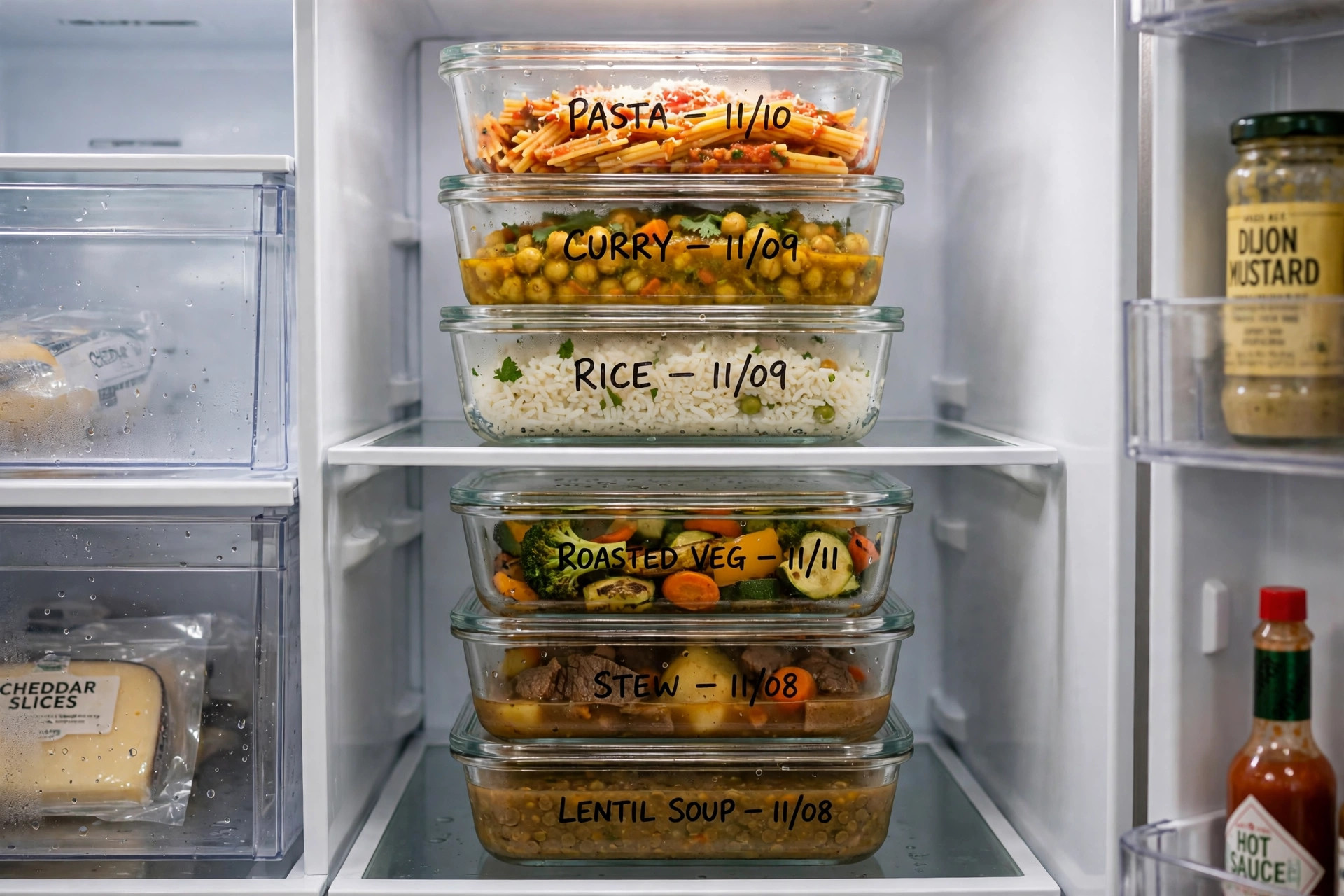
12. Matching glass containers for leftovers — one size, one stack, dates on the lid
Leftovers in a jumble of tubs are leftovers you cannot stack, because the tub that is a different size is the tub that will not sit on top of the other. Use matching glass containers for leftovers — one size, one stack, dates on the lid — so the containers line up in a neat tower and the date tells you what to eat first. Glass beats plastic here, because the glass is the container you can see through and the glass is the container that does not stain. Write the date on masking tape on the lid, not on the container, because the tape comes off and the container stays clean. Keep the stack to one shelf, the leftovers shelf, because the stack that has its own shelf is the stack that never spreads. Matching containers, dated lids, and the leftovers stop being a mystery. (Check on Amazon for matching glass food containers with lids in one size, which stack neatly and do not stain.)
Food that stays fresh longer
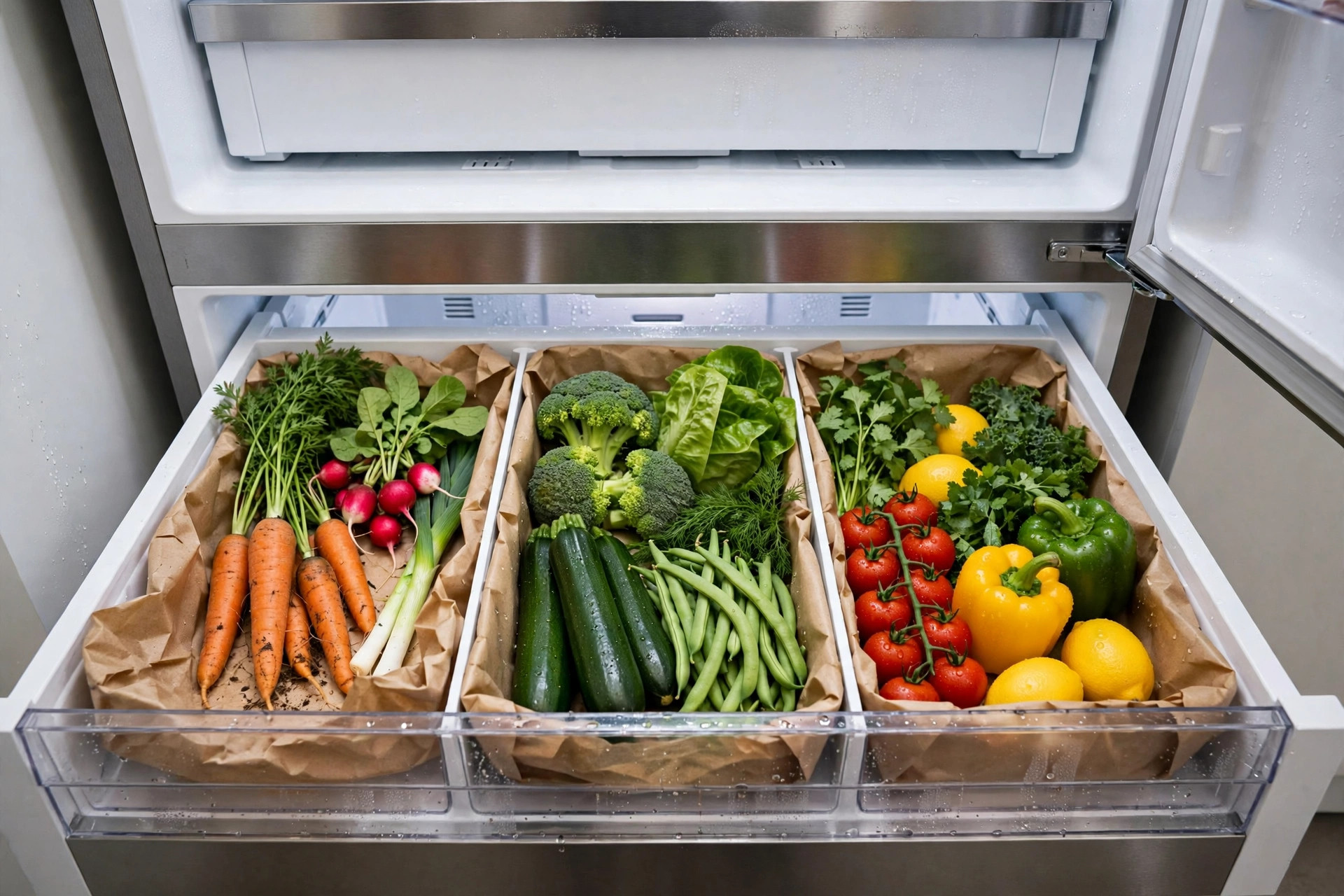
13. Produce in the drawers with liners — see the veg, use the veg
Produce loose in a drawer goes soft, because the drawer that is damp is the drawer that rots the veg. Line the drawers and keep the produce in them — see the veg, use the veg — so the drawer stays dry, the veg stays crisp, and the drawer you open shows you what needs cooking. Put a washable liner or a folded tea towel in the bottom of each drawer, because the liner is the thing that soaks up the damp and the liner is the thing you can wash. Keep fruit in one drawer and vegetables in the other, because the fruit that gives off gas is the fruit that makes the veg go soft faster. Open the drawers every day when you cook, because the veg you see is the veg you use and the veg you use is the veg that never goes off.
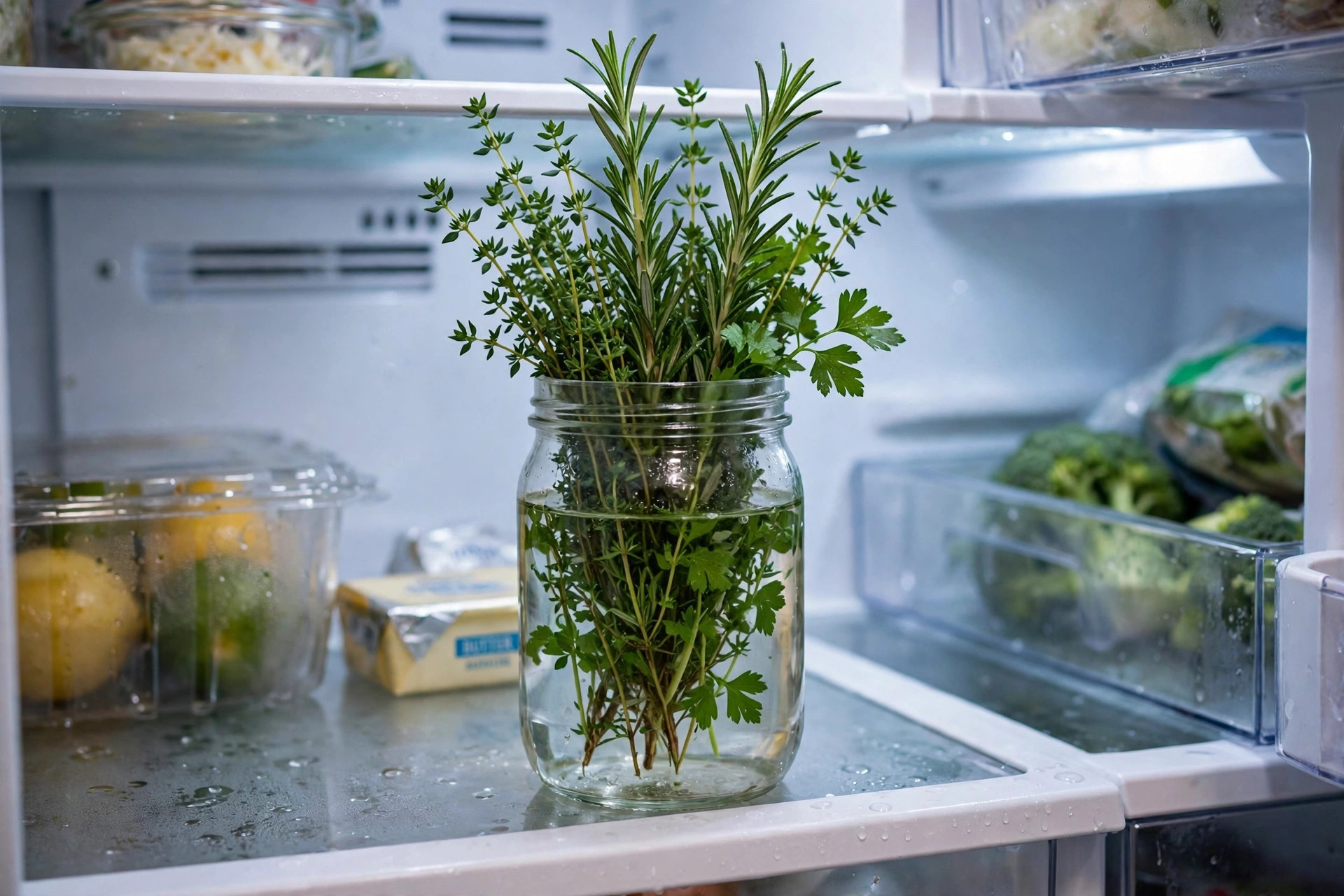
14. Herbs standing in water in a jar — herbs last two weeks, not two days
Herbs in a bag go limp in two days, because the bag that is sealed is the bag that traps the damp and the damp is the thing that turns them black. Stand the herbs in water in a jar — herbs last two weeks, not two days — so they drink like flowers and stay green like the day you bought them. Trim the stems, stand them in an inch of water in a jam jar, and pull a small bag loosely over the top, because the jar is the water and the bag is the greenhouse. Change the water every few days, because the water that is fresh is the water that keeps them alive. Parsley, coriander and dill all love this, and the jar costs nothing. Herbs in a jar, and the bunch lasts the fortnight.
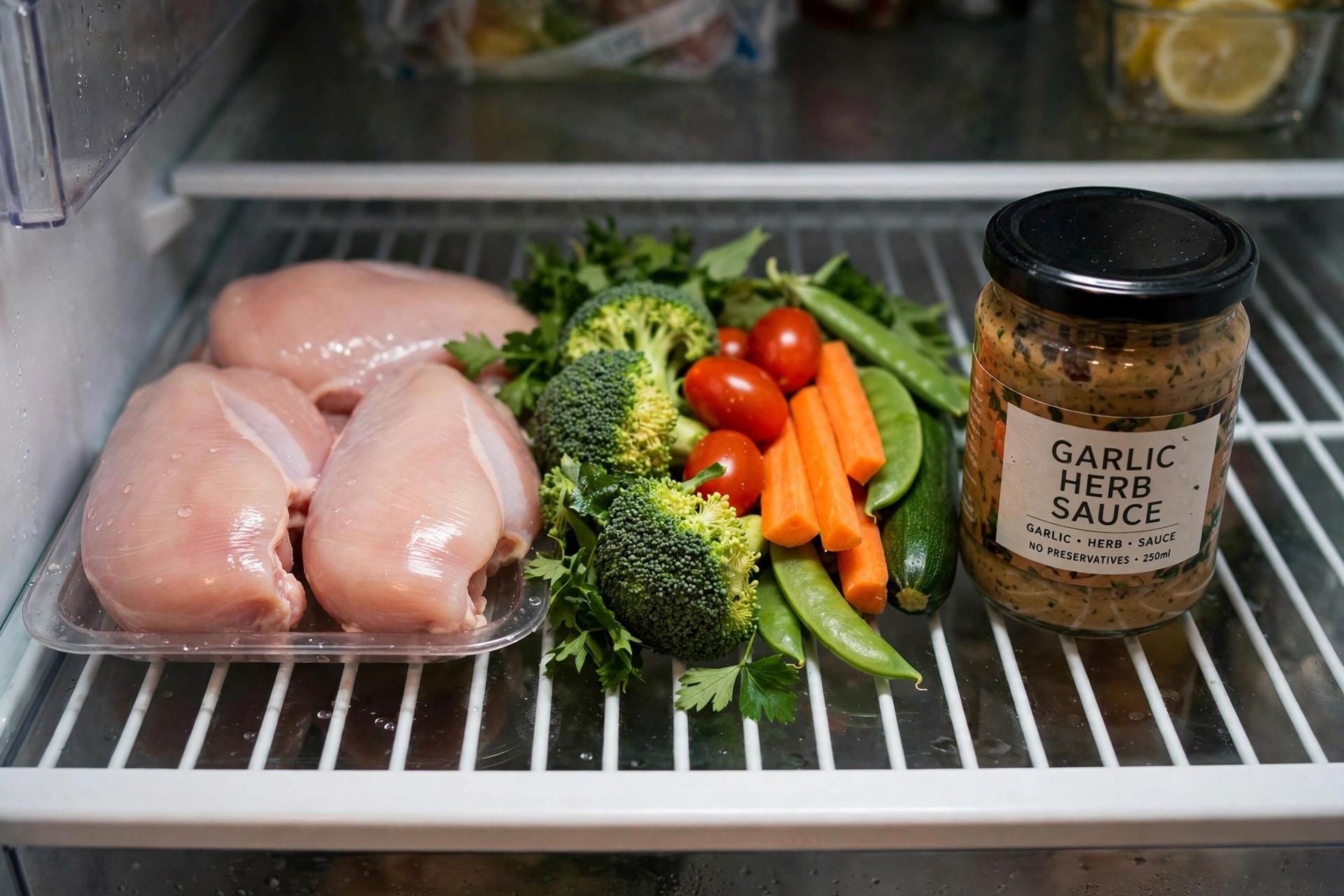
15. A "use tonight" shelf — dinner decides itself
A fridge with no plan is a fridge where dinner takes twenty minutes to decide, because the food that could be dinner is spread across five shelves. Give one shelf a job — the "use tonight" shelf — so the food that needs cooking today lives in one place and dinner decides itself. When you come home from the shop, put tonight's ingredients on that shelf, and when you open the fridge at six o'clock the shelf tells you what to cook. Keep the shelf at eye level, because the shelf you can see is the shelf you will use, and clear it every night, because the shelf that is empty in the morning is the shelf that is ready for tonight. One shelf, and the question of what is for dinner answers itself.
16. FIFO — new food goes behind old food, every time
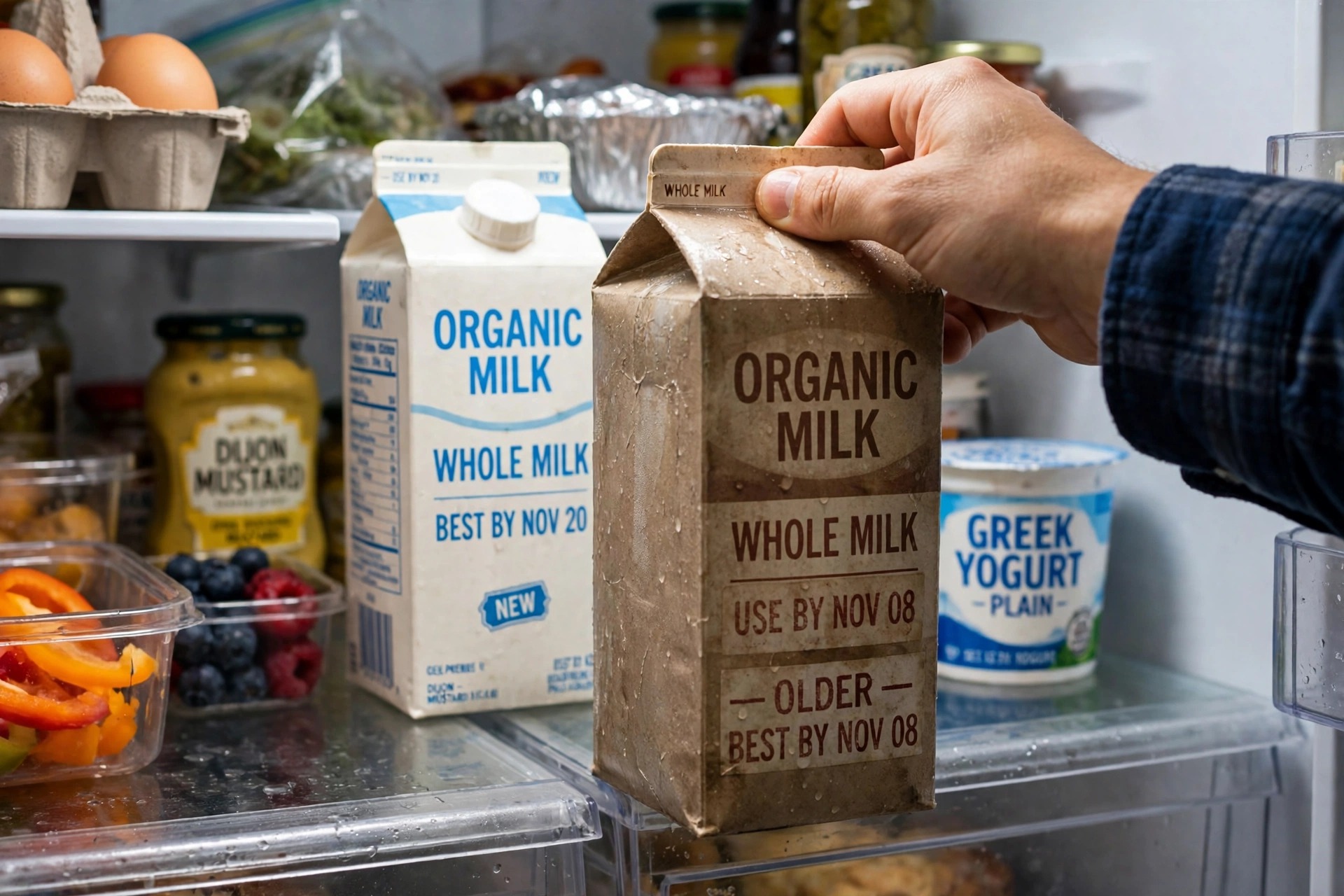
A fridge where the new milk goes in front of the old milk is a fridge where the old milk goes off, because the milk at the front is the milk you grab and the milk at the back is the milk you forget. Follow FIFO — new food goes behind old food, every time — so the oldest thing is always the thing you reach first. When the shopping comes home, pull the old tubs forward and slide the new ones in behind, because the thirty seconds that takes is the thirty seconds that saves the food. Teach the whole household the rule, because the rule that everyone follows is the rule that works. New behind old, every time, and nothing goes off at the back of the shelf again.
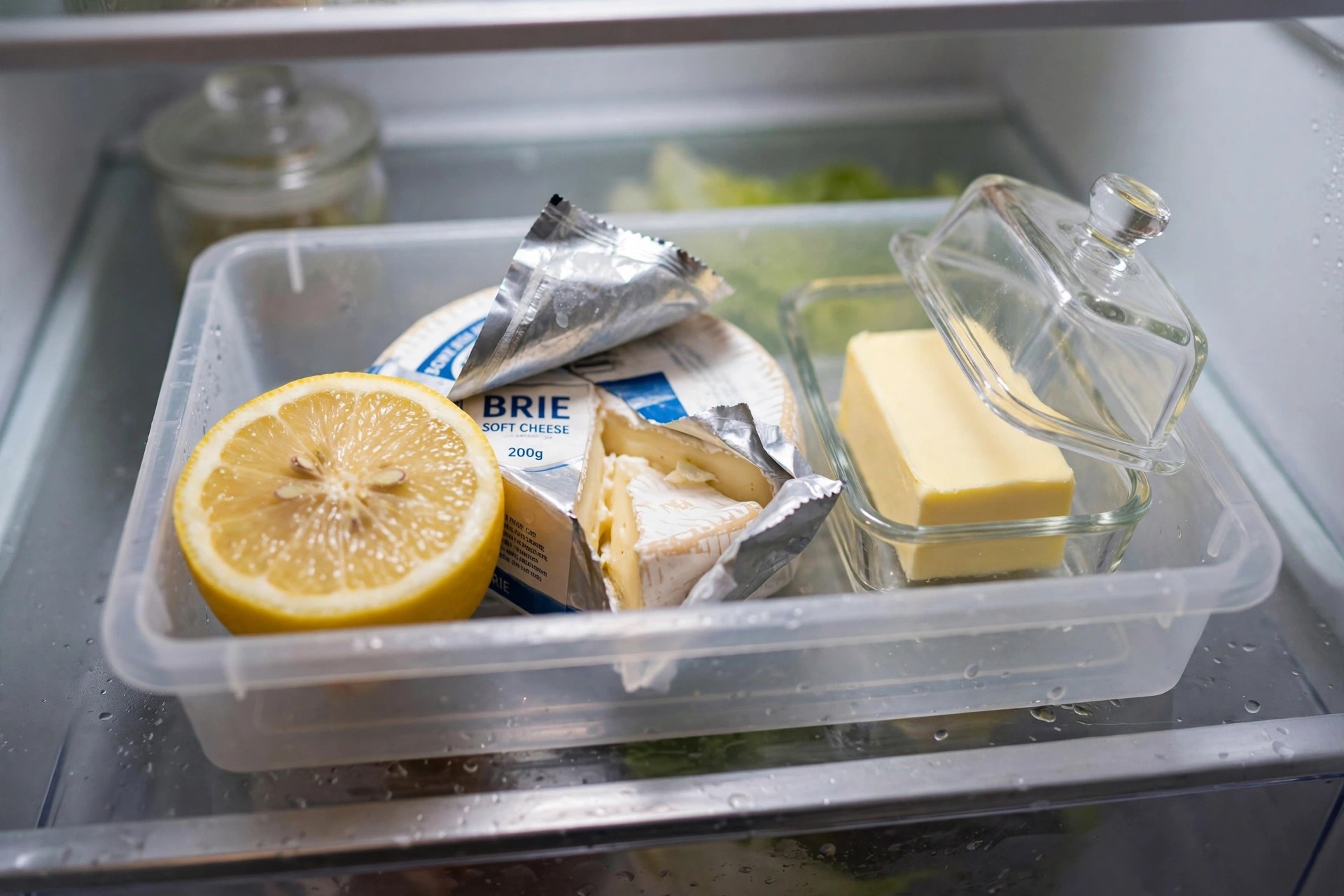
17. A small bin for the bits and bobs — half a lemon, the open cheese, the butter dish
A fridge has a dozen small things with no home — half a lemon, the open cheese, the butter dish, the bit of ginger — and they are the things that end up pushed to the back. Give them one small bin — a small bin for the bits and bobs — so the half-used things live together in one place and the back of the shelf stays clear. Choose a small, shallow bin, because the bin that is shallow is the bin you can see into and the bits you can see are the bits you will use. Put the bin on the middle shelf where you cook from, because the bin that is near your hand is the bin that gets opened. One small bin, and the half-used things stop disappearing.
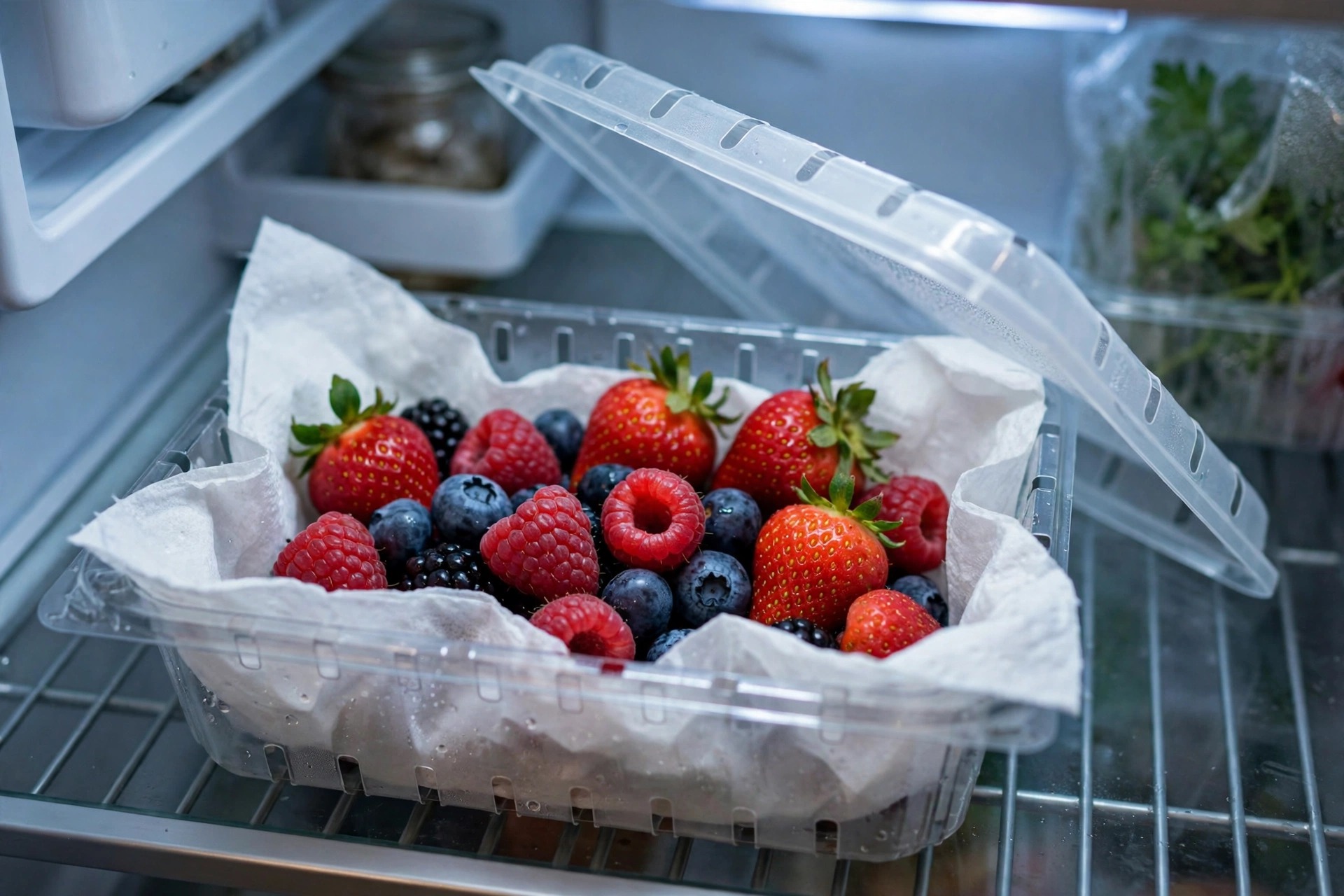
18. Berries in a breathable container — berries that last the week
Berries in a sealed tub go mouldy in two days, because the tub that is sealed is the tub that traps the damp and the damp is the thing that grows the mould. Keep berries in a breathable container — berries that last the week — so the air moves, the damp escapes, and the berries stay firm until the weekend. Line the container with a paper towel, because the towel is the thing that soaks up the damp, and leave the lid ajar or use a container with vents. Do not wash the berries until you eat them, because the berries that are washed are the berries that go soft first. A breathable container, a paper towel, and the berries last the week instead of two days.
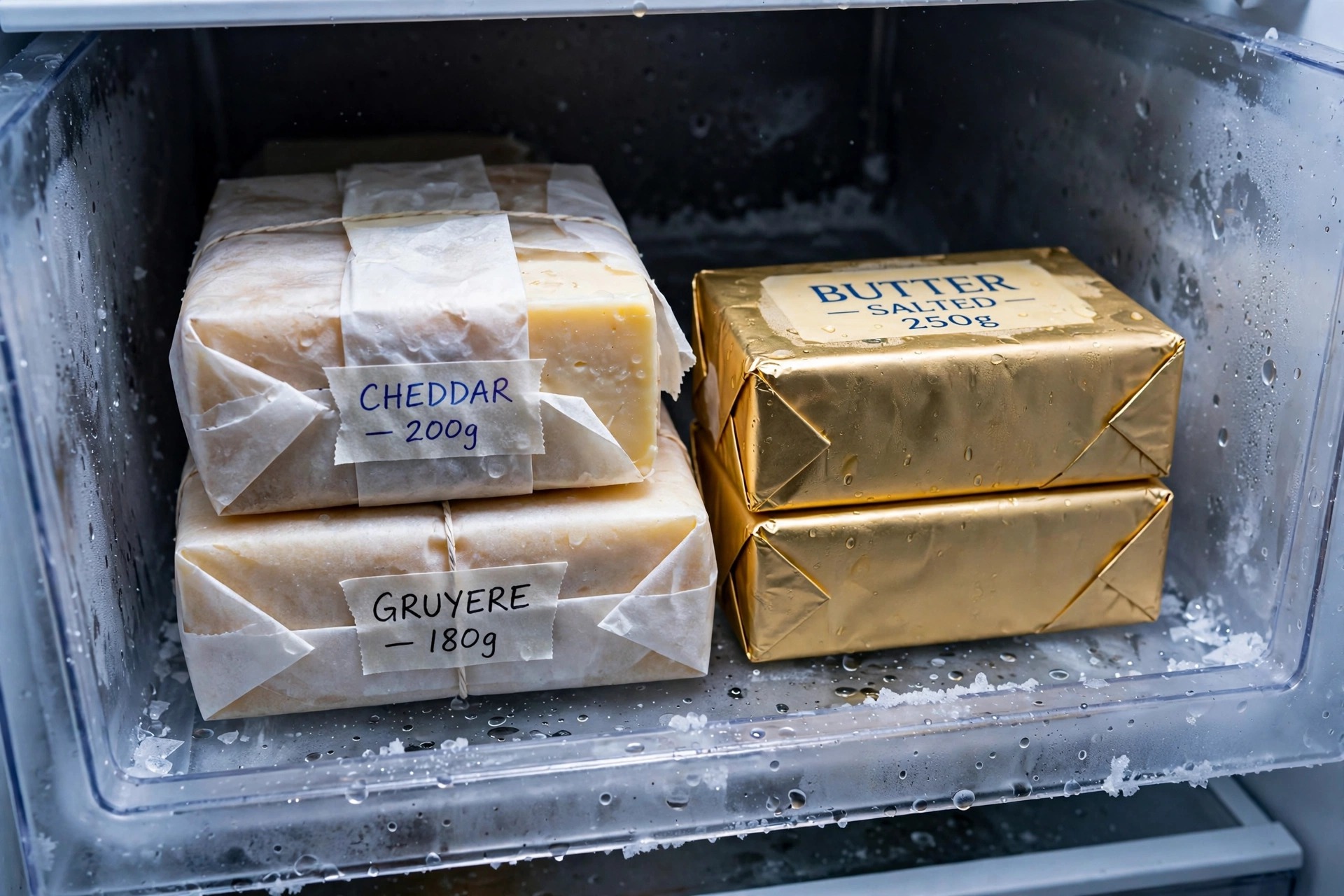
19. A dairy drawer that stays cold — cheese and butter in the coldest spot
Cheese on a warm shelf goes soft and butter on a warm shelf goes oily, because the dairy that sits in the warm spot is the dairy that spoils first. Give the dairy one drawer that stays cold — cheese and butter in the coldest spot — so the cheese keeps its edge and the butter keeps its shape. Use the drawer nearest the back of the fridge, or the coldest shelf if your fridge has no dairy drawer, because the cold that is steady is the cold that keeps dairy fresh. Keep the cheese wrapped and the butter in its dish, because the wrap is the thing that stops the smells mixing. Dairy in the coldest spot, and the cheese lasts the week.
Fridge systems that stay tidy
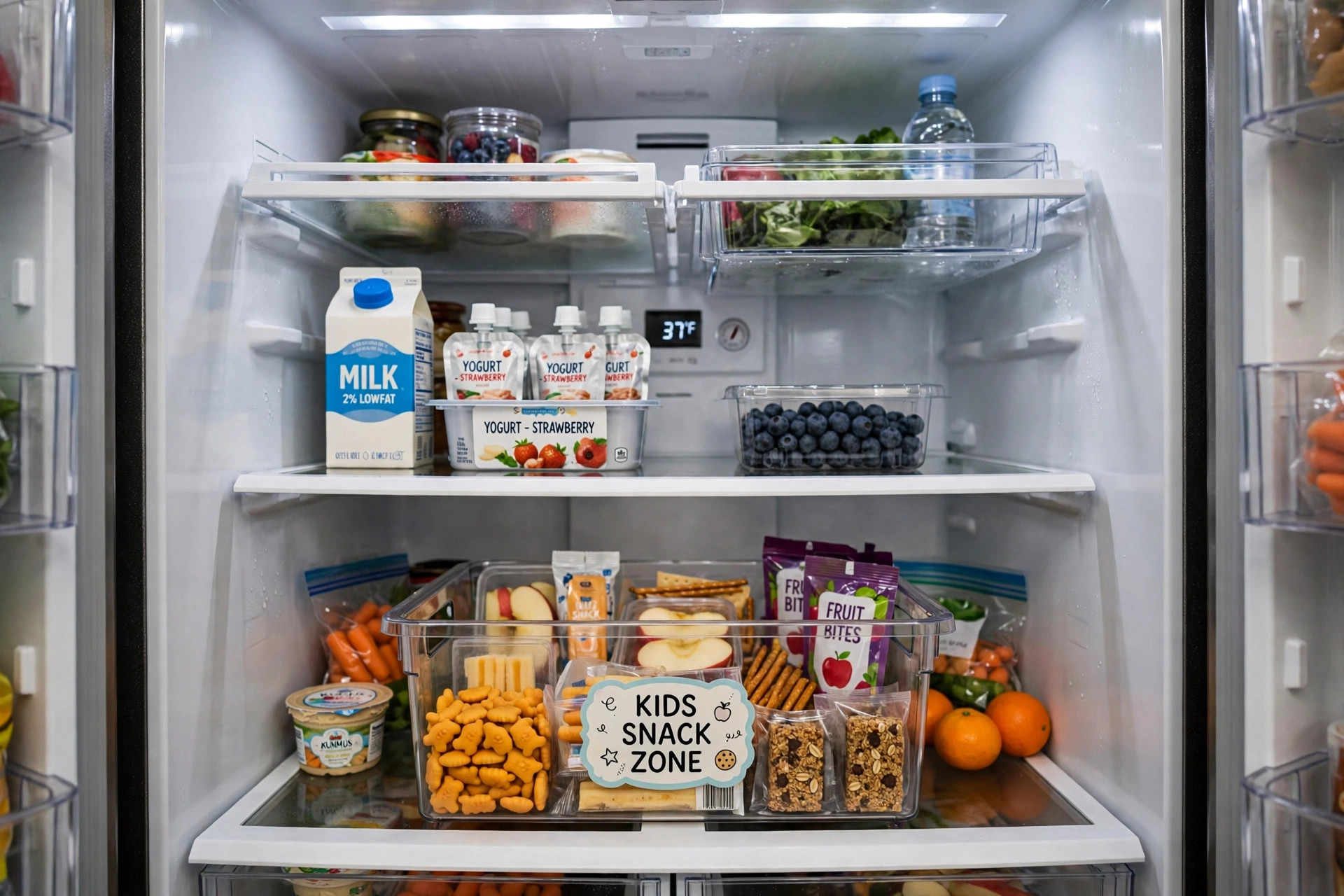
20. A snack zone the kids can reach — one bin, their snacks, no asking
A fridge where the kids' snacks live on the top shelf is a fridge where the kids ask you every ten minutes, because the snack they cannot reach is the snack they need you for. Give them one snack zone they can reach — one bin, their snacks, no asking — so the yoghurt tubes, the cheese sticks and the fruit pouches live in one low bin and the kids help themselves. Put the bin on a low shelf, at their height, because the bin they can reach is the bin they will use, and fill it once a week, because the bin that is full on Monday is the bin that lasts the week. Keep the grown-ups' food out of it, because the bin that is only theirs is the bin they will guard. One low bin, and the snack questions stop.
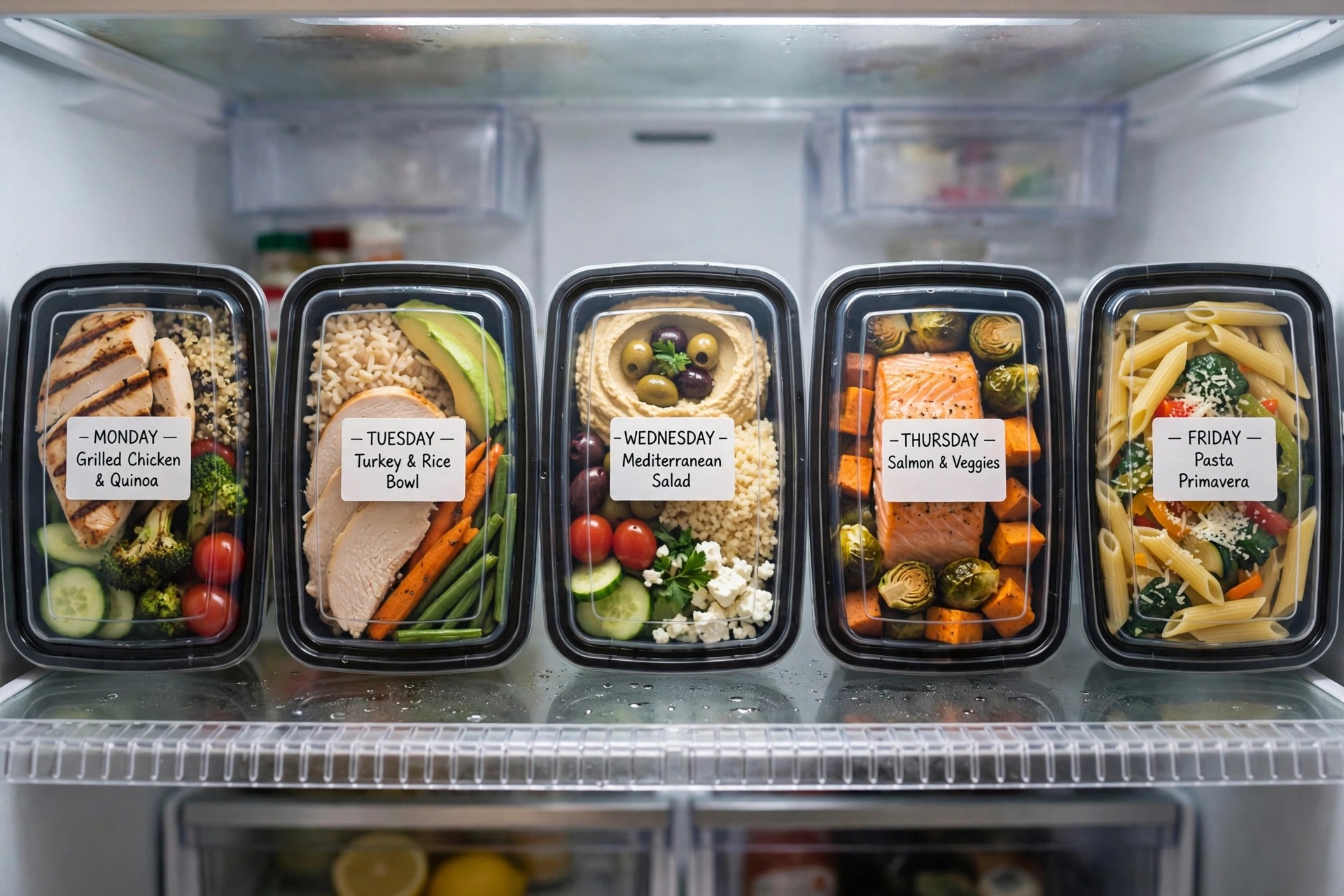
21. A meal-prep shelf — the week's lunches in one row
A week of lunches made one by one is a week of mornings spent packing, because the lunch that is not ready is the lunch that takes twenty minutes. Give the week one shelf — a meal-prep shelf — so the week's lunches sit in a row, ready to grab, and the mornings run themselves. Cook on Sunday, pack the lunches in matching containers, and line them up on the shelf in day order, because the row that is in order is the row that gets eaten in order. The school lunches the shelf is built for are in 22 School Organization Ideas for 2026, where the morning routine gets the same treatment as the fridge. One shelf, five lunches, and the school run stops being a scramble.
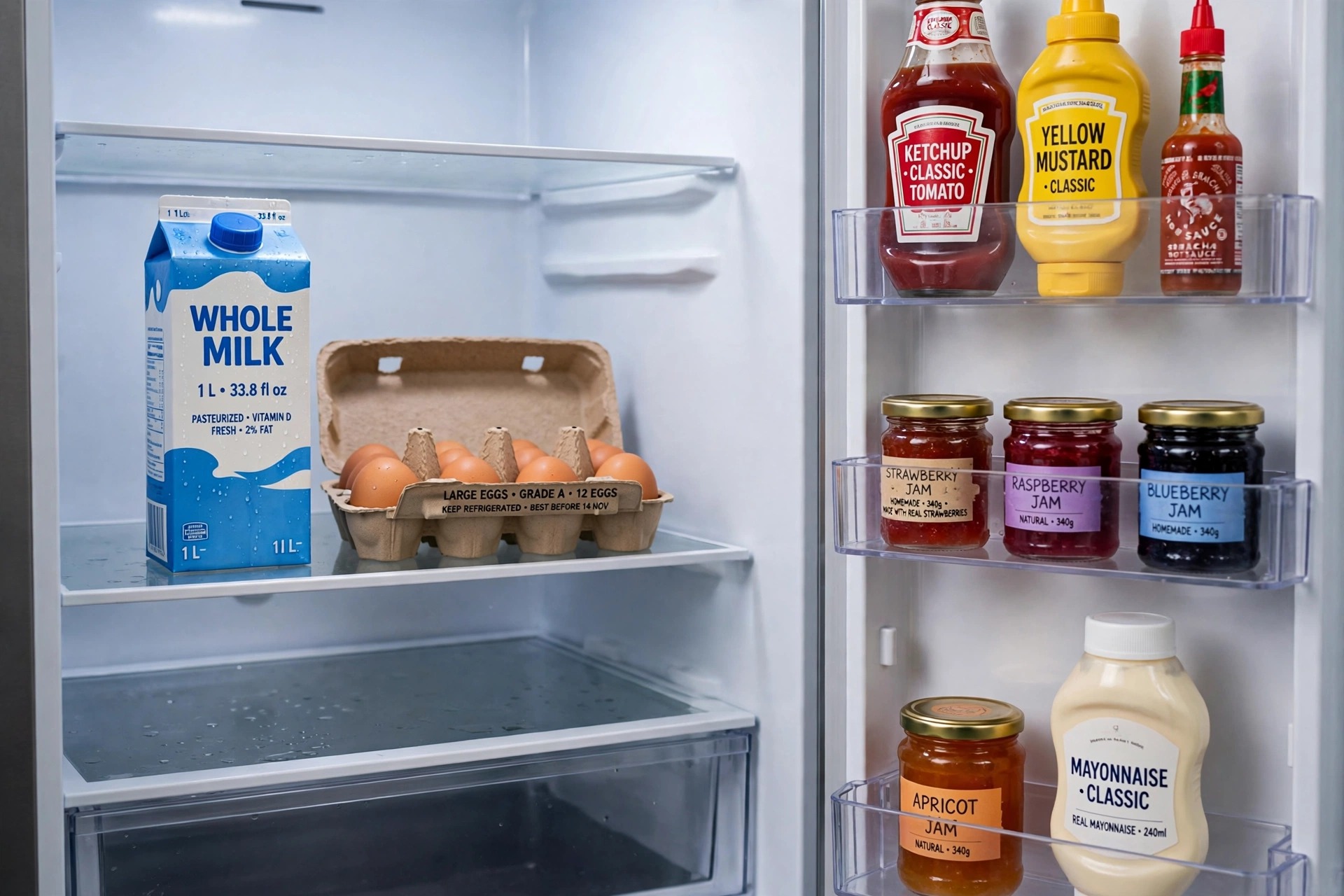
22. Milk and eggs never live in the door — the door is the warmest spot
Milk in the door goes off faster, because the door that opens and closes is the door that warms up and the milk that warms up is the milk that sours. Keep milk and eggs off the door — the door is the warmest spot — and put them on the middle shelf instead, where the temperature stays steady. The door is for sauces, jams and drinks, the things that do not mind the warmth, because the sauce that warms a little is the sauce that still keeps. Move the milk today, because the milk on the shelf is the milk that lasts to its date. Milk and eggs on the shelf, sauces on the door, and the fridge keeps its food safe.
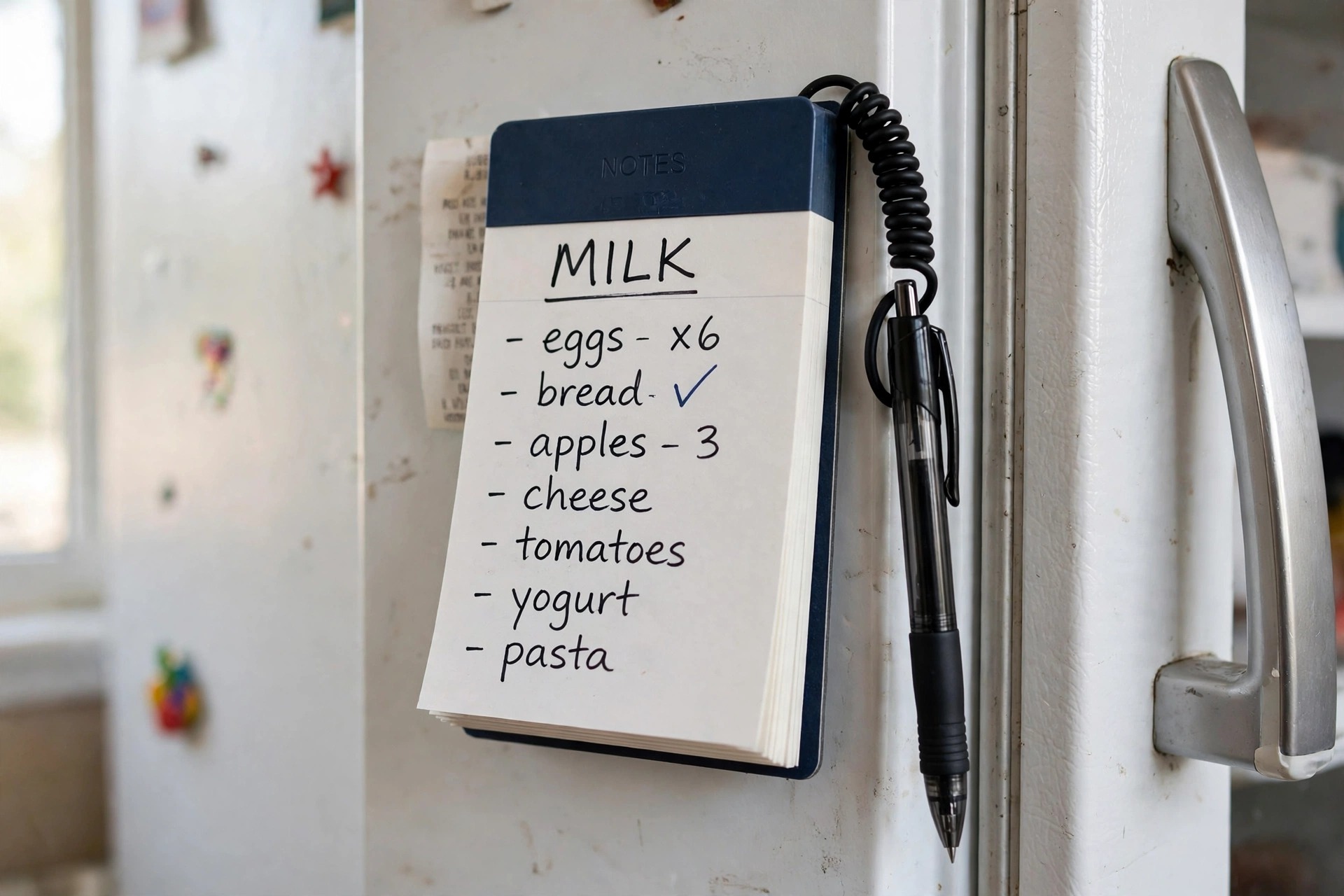
23. A magnetic shopping list on the door — write it down the moment it runs out
A shopping list you write at the shop is a list you have already forgotten, because the thing that ran out on Tuesday is the thing you cannot remember on Saturday. Put a magnetic shopping list on the door — write it down the moment it runs out — so the empty milk carton becomes a line on the list before the carton is even in the bin. Use a magnetic notepad or a whiteboard strip, and keep the pen on the door too, because the pen that is there is the pen that gets used. Tear the list off when you shop and start a fresh one, because the list that starts empty is the list that only holds what you need. Write it the moment it runs out, and the shop stops being a guessing game.
24. A weekly 10-minute fridge reset — same day, same time, every week
A fridge with no reset day is a fridge that slowly slides back to chaos, because the bin that is out of place is the bin that stays out of place. Give the fridge a weekly ten-minute reset — same day, same time, every week — so the zones get checked, the expired food goes out, and the bins go back where they belong. Pick the day before the big shop, because the fridge that is reset is the fridge that shows you what you actually need to buy. Set a timer for ten minutes, because the reset that is short is the reset that happens, and the reset that takes an hour is the reset that gets skipped. Ten minutes, once a week, and the fridge never slides back.
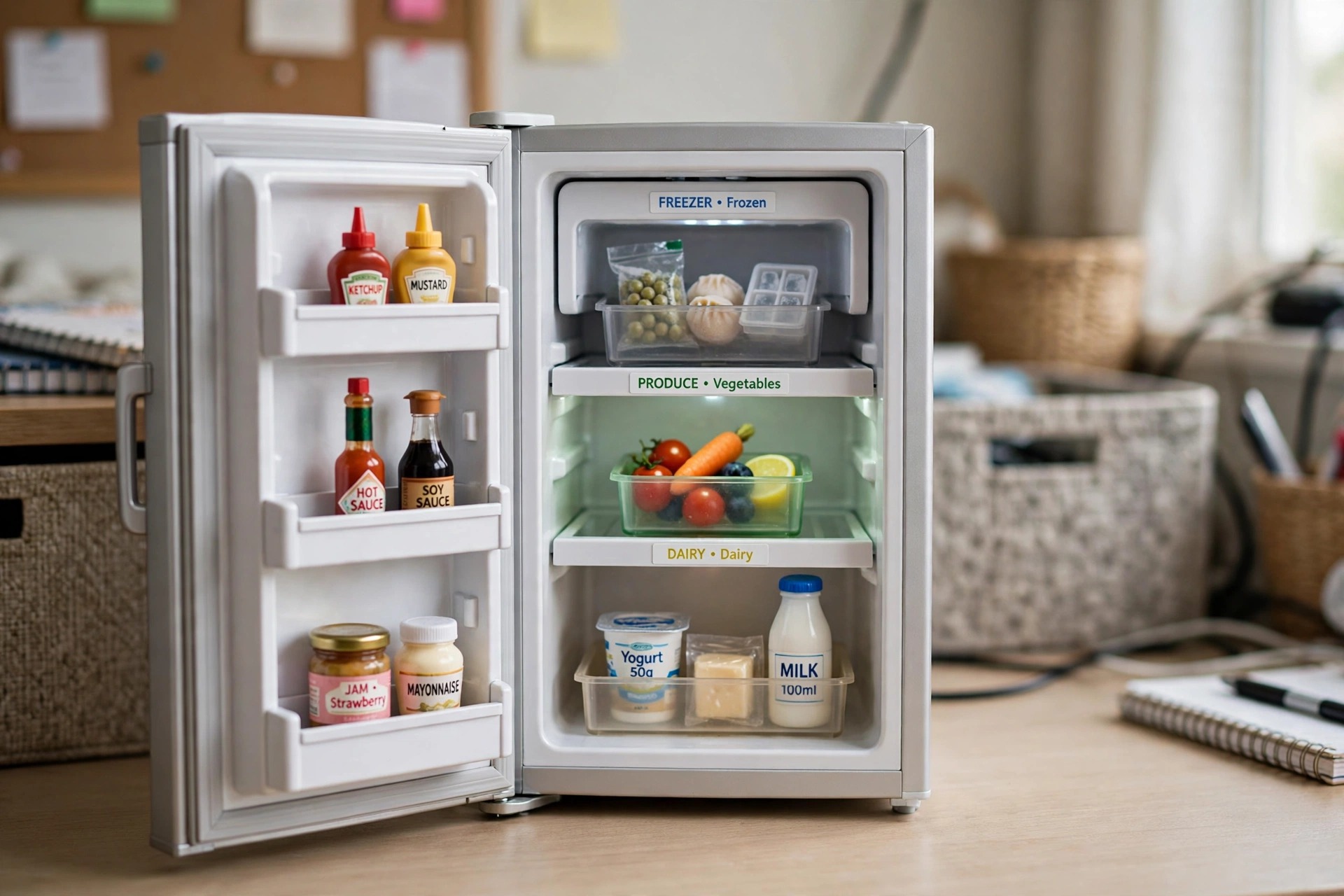
25. A small fridge, dorm fridge or garage fridge — same zones, smaller scale
A small fridge feels impossible to organize, because the shelf that is small is the shelf that seems to hold nothing. Use the same zones, smaller scale — a small fridge, dorm fridge or garage fridge — so the top shelf is still ready-to-eat, the bottom is still the safe shelf, and the door is still for condiments. One clear bin per zone still works, because the bin that is small is the bin that fits, and a stackable bin still doubles the space. Keep the same rules — raw meat low, milk off the door, labels on the bins — because the rules that work in a big fridge are the rules that work in a small one. Same zones, smaller scale, and the little fridge works as hard as the big one.
Which fridge organization idea fits which situation?
| Situation | Best first move | Budget | Tools needed |
|---|---|---|---|
| Fridge is a mess and you don't know where to start | Empty the whole fridge first (idea 1) | Free | Bin bags, cloth |
| Food lands wherever there is a gap | Zone the fridge by shelf (idea 2) | Free | Sticky notes |
| Things slide around the shelf | One clear bin per zone (idea 3) | Low | Clear bins |
| Nobody puts things back in the right place | Label every bin (idea 4) | Low | Label maker or tape |
| Everyday food is hard to reach | Food you use most at eye level (idea 5) | Free | None |
| Raw meat drips on the food below | Raw meat on the bottom shelf (idea 6) | Free | Tray |
| Deep shelves hide food at the back | Clear stackable bins (idea 7) | Low | Stackable bins |
| Jars and sauces are always at the back | Rotating shelf for jars (idea 8) | Low | Rotating shelf |
| You never know how many eggs are left | Egg holder in a row (idea 9) | Low | Egg holder |
| Bottles roll around the shelves | Drink rack or dispenser (idea 10) | Low | Drink rack |
| Fridge door avalanches when you open it | Condiment caddy on the door (idea 11) | Low | Caddy |
| Leftovers in a jumble of tubs | Matching glass containers (idea 12) | Low | Glass containers |
| Veg goes soft in the drawer | Produce in lined drawers (idea 13) | Low | Drawer liners |
| Herbs go limp in two days | Herbs in a jar of water (idea 14) | Free | Jam jar |
| Dinner takes twenty minutes to decide | A "use tonight" shelf (idea 15) | Free | None |
| Old food goes off at the back | FIFO, new behind old (idea 16) | Free | None |
| Half-used bits disappear | Small bin for the bits and bobs (idea 17) | Low | Small bin |
| Berries go mouldy in two days | Berries in a breathable container (idea 18) | Low | Vented container |
| Cheese and butter go soft | Dairy drawer in the coldest spot (idea 19) | Free | None |
| Kids ask for snacks all day | Snack zone they can reach (idea 20) | Low | Low bin |
| School mornings are a scramble | Meal-prep shelf (idea 21) | Low | Matching containers |
| Milk goes off before its date | Milk and eggs off the door (idea 22) | Free | None |
| You forget what ran out | Magnetic shopping list on the door (idea 23) | Low | Magnetic notepad |
| Fridge slowly slides back to chaos | Weekly 10-minute reset (idea 24) | Free | Timer |
| Small or dorm fridge feels impossible | Same zones, smaller scale (idea 25) | Low | Small bins |
You do not need all 25 ideas. You need the three that solve your fridge — usually the clear-out that starts it, one clear bin per zone that keeps it in shape, and the weekly ten-minute reset that stops it sliding back. Start with the clear-out, do it this weekend, and put the bins in before a single thing goes back. Do that and the next time you open the fridge door you will see every shelf at a glance, for the price of a few clear bins and an afternoon.
Save this post for your next fridge sort, and if the kitchen needs sorting first, read 20 Kitchen Cabinet Organization Ideas for 2026 next — it is Post 02, the cupboards that back the fridge up — and 25 Pantry Organization Ideas for 2026, Post 08, for the dry food that runs on the same zone system. The freezer gets its own turn next, in 20 Freezer Organization Ideas for 2026, where the deep freeze stops being a dig. This is the eleventh post of the second Storage by room/object run — Posts 31 to 55, one room at a time — and the next posts carry the same clear-bin system into the rooms that follow.
Publish date assigned at publishing time. Updated as new fridge organization finds are tested.
Frequently asked questions
What is the best way to organize a fridge?
Zone it by shelf first — top shelf ready-to-eat food, middle shelf dairy and eggs, bottom shelf raw meat, drawers for produce, door for condiments — then put one clear bin per zone and label every bin. The zones give every food a place, the bins keep the zones in shape, and the labels mean the whole household follows the same system. Start by emptying the whole fridge and wiping the shelves, because the zones you draw on a clean fridge are the zones that stick.
How do I keep my fridge organized and not messy again?
Give the fridge a weekly ten-minute reset on the same day, at the same time, every week — check the zones, throw out anything past its date, and put the bins back where they belong. The reset that is short is the reset that happens, and ten minutes once a week is enough to stop the fridge sliding back to chaos. Pick the day before the big shop, so the reset also shows you what you actually need to buy.
Should eggs and milk go in the fridge door?
No — the door is the warmest spot in the fridge, because it opens and closes and warms up every time. Keep milk and eggs on the middle shelf, where the temperature stays steady, and they will last to their date. The door is for sauces, jams and drinks, the things that do not mind the warmth. Milk and eggs on the shelf, sauces on the door, and the fridge keeps its food safe.