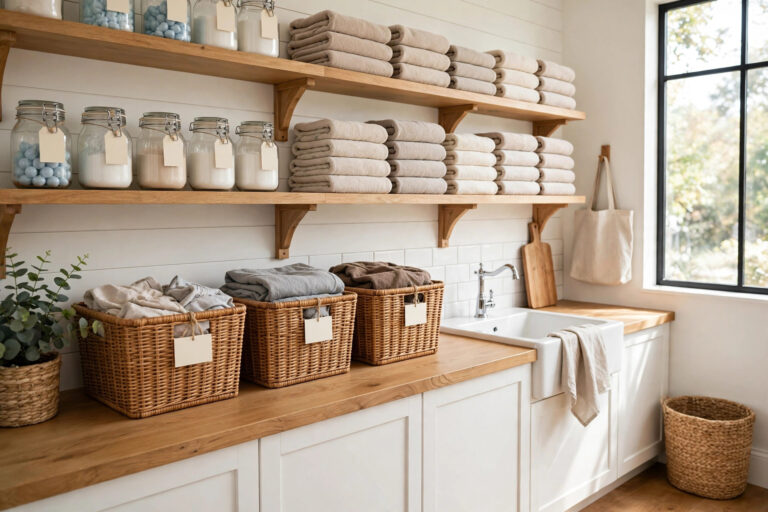
24 Book Storage Ideas for 2026
Books are the one thing nobody wants to throw away and the one thing that takes over a house the fastest — a pile on the bedside table, a stack by the sofa, a tower on the kitchen counter that started as one cookbook and grew into a small library. The fix is not a bigger bookcase, it is book storage that gives every book a home and lets the shelf look like it was styled on purpose, not filled by accident.
These 24 book storage ideas are styled bookshelves that double as decor: start with shelves that work harder, tuck books into the small spaces a house already has, let the books themselves dress the room, and finish with systems that keep the collection tidy — so every book has a home and the room still looks good.
Every idea below works in a real home, from a one-bedroom flat with a single shelf to a house with books in every room. The living room the bookshelf lives in is covered in 28 Living Room Storage Ideas for 2026, where the room gets its own homes before the books arrive — and the bedroom shelves the nightstand books sit on are in 28 Bedroom Storage Ideas for 2026, so the whole house reads as one system. Pick three ideas that fit your rooms, start with the shelf, and build from there.
Shelves that work harder
1. Built-in bookshelves around a fireplace — the wall that was wasted becomes the library
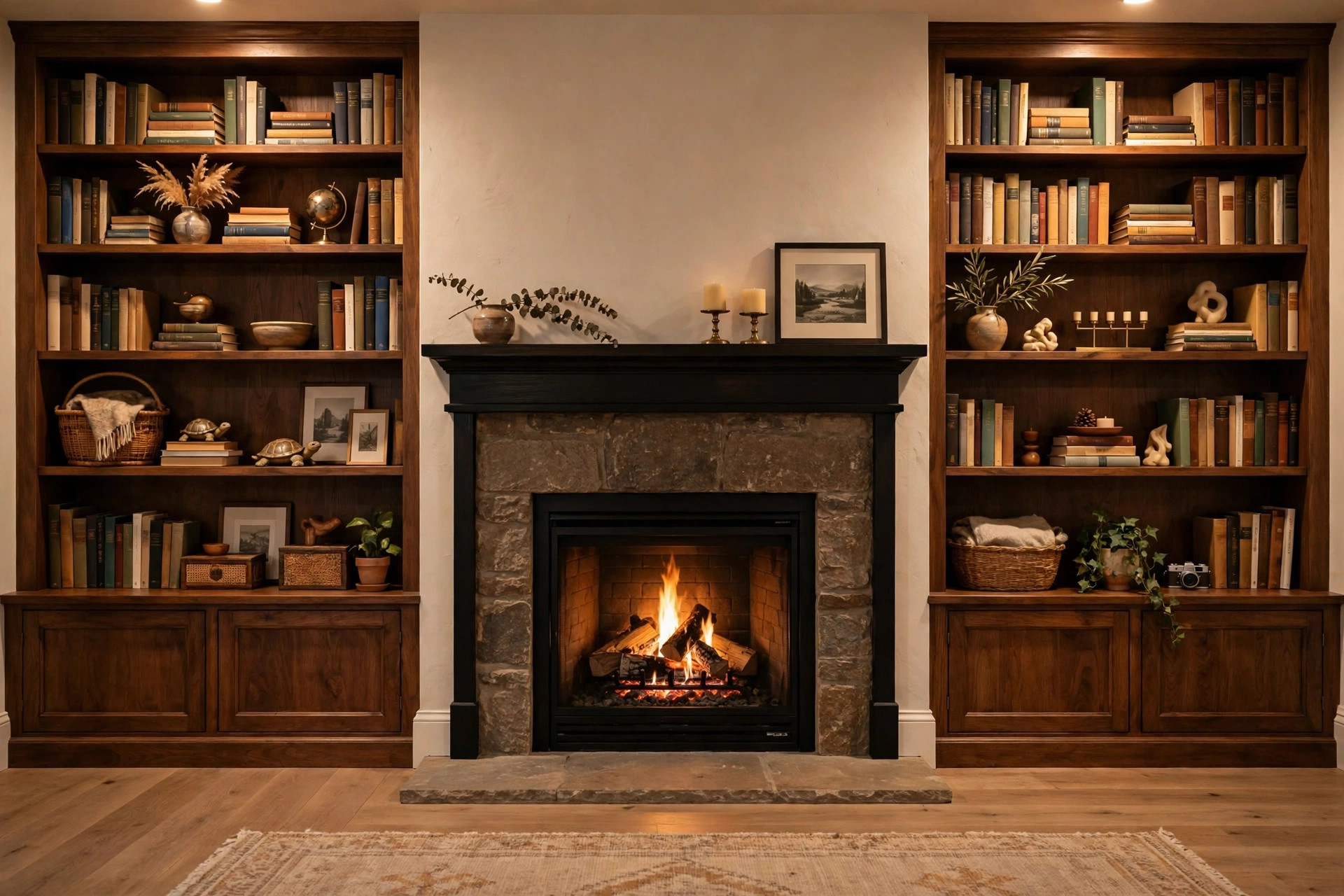
A fireplace wall with empty space on either side is a library waiting to happen, because the wall is already the focus of the room and the shelves are the thing that makes it useful. Build shelves into the alcoves on both sides of the fireplace — the wall that was wasted becomes the library — so the books live where the eye already goes and the room gains storage without losing a single inch of floor. Keep the shelves the same depth as the books, about 25 centimetres, so nothing is lost behind a row, and paint them the same colour as the wall, because the shelf that matches is the shelf that looks built in. Mix books with one or two objects per shelf — a plant, a framed photo, a small vase — because a shelf of solid books reads as a wall and a shelf with breathing room reads as a library. Put the books you reach for most at eye height and the heavy art books low, where their weight is safe. Two alcoves of shelves, and the fireplace wall is the library.
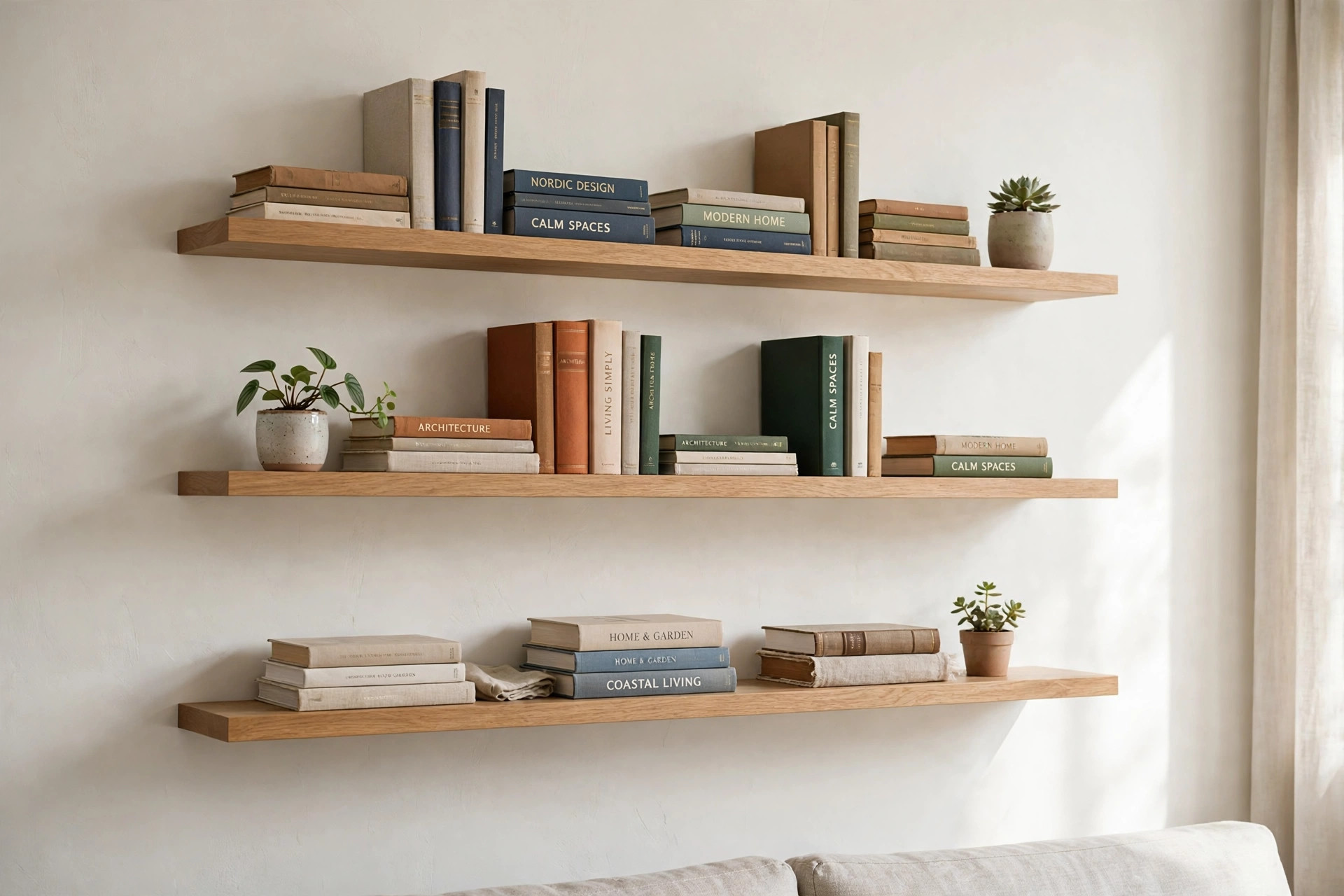
2. Floating shelves in a row — books on the wall, floor space untouched
A room with no floor space for a bookcase still has wall space, because the wall above the sofa and the wall beside the door are the places nobody stores anything. Hang floating shelves in a row — books on the wall, floor space untouched — so the books live on the wall and the floor stays clear for living. Fix the shelves into studs or solid wall plugs, never just plaster, because a shelf of books is heavy and the shelf that falls is the shelf that was never fixed properly. Space the rows about 35 centimetres apart, so a paperback stands upright with room to pull it out, and keep each shelf to one row of books with a small gap at the end, because the shelf that is packed edge to edge is the shelf you cannot browse. Leave one shelf in the row for a plant or a framed print, so the wall reads as a display and not a warehouse. (Check on Amazon for hidden-bracket floating shelves in a wood tone that matches your floor, which look like the shelf grows out of the wall.) A row of floating shelves, and the books are on the wall where they belong.
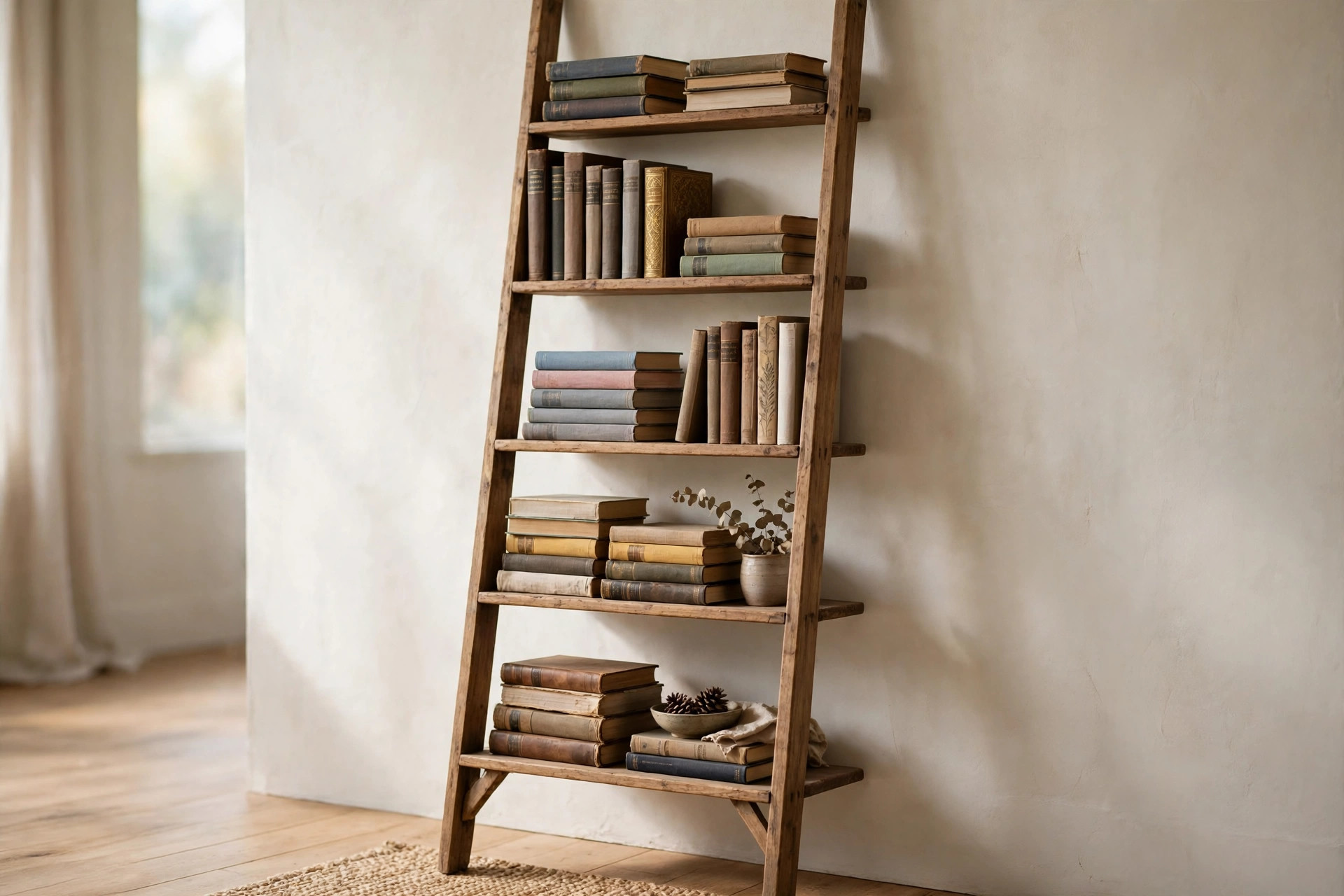
3. A tall ladder shelf — books climb the wall without a single screw in the ceiling
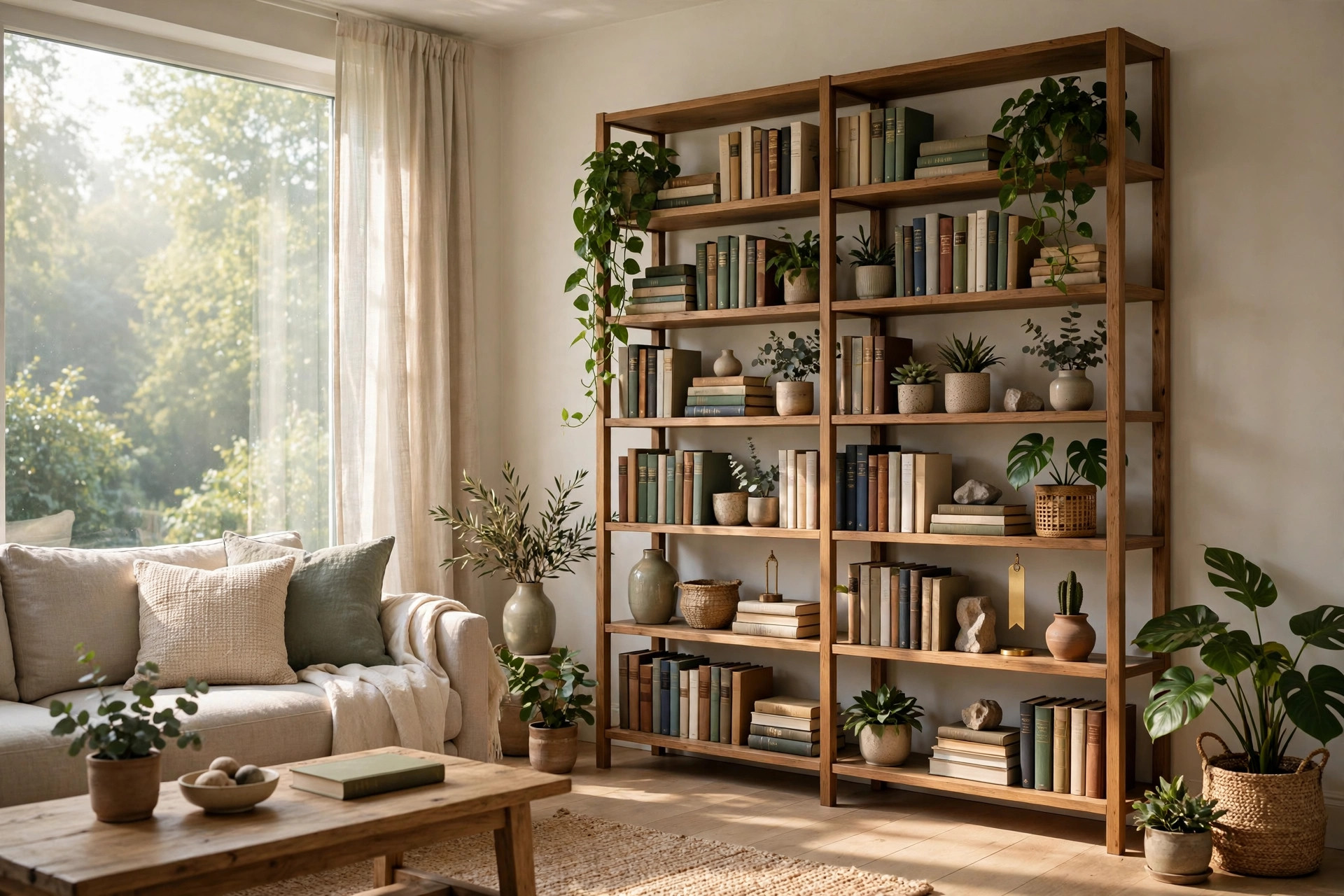
A ladder shelf leans, it does not hang, because the shelf that leans on the wall is the shelf that needs no fixing and no holes. Stand a tall ladder shelf against a living room wall — books climb the wall without a single screw in the ceiling — so the books rise up the wall and the shelf itself becomes part of the room. Put the heaviest books on the deepest bottom shelves and the lightest on the narrow top ones, because the ladder shelf is widest at the bottom and the weight that sits low is the weight that keeps it steady. Anchor the top to the wall with a small strap if there are children or pets in the house, because the shelf that is strapped is the shelf that cannot tip. Alternate a shelf of books with a shelf that holds one object — a candle, a small plant, a framed photo — so the ladder reads as furniture and not a book stack. A leaning ladder shelf, and the books climb the wall.
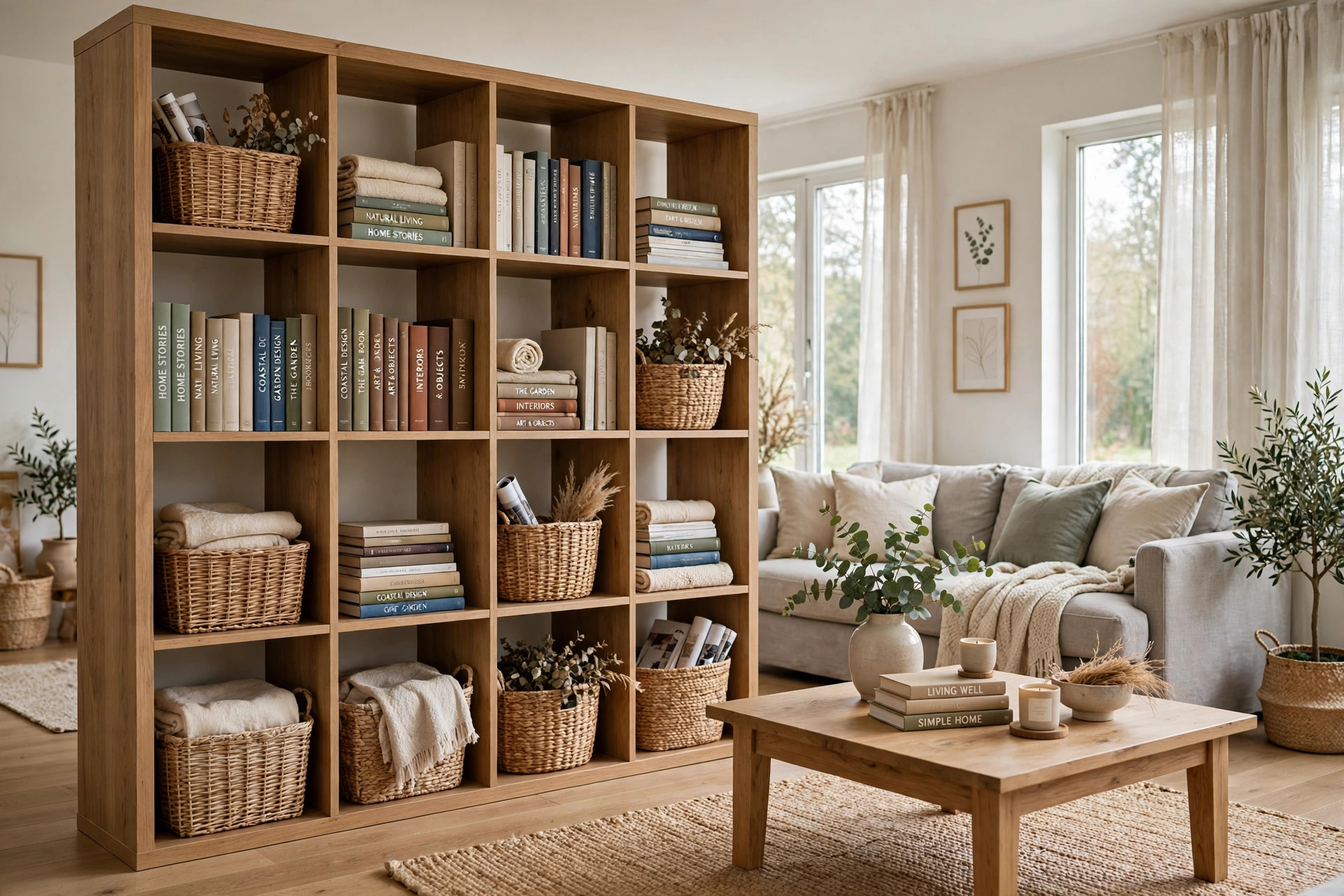
4. Cube shelves with baskets — books in the open cubbies, clutter behind the baskets
A cube shelf is two kinds of storage in one piece of furniture, because the open cubbies show the books and the baskets hide everything else. Fill a cube unit with books in the open cubbies and baskets in the rest — books in the open cubbies, clutter behind the baskets — so the shelf looks tidy from across the room and still holds the things that do not deserve to be seen. Put the books upright in the cubbies with their spines out, two or three to a cubby with a small gap, and use the baskets for the board games, the chargers and the magazines that would spoil the look. Label the baskets if the shelf is shared, because the basket with a label is the basket that gets things put back in it. Keep the top of the unit clear or give it one row of books lying flat, because the top that is empty is the top that keeps the unit looking calm. Cubes and baskets, and the shelf does two jobs at once.
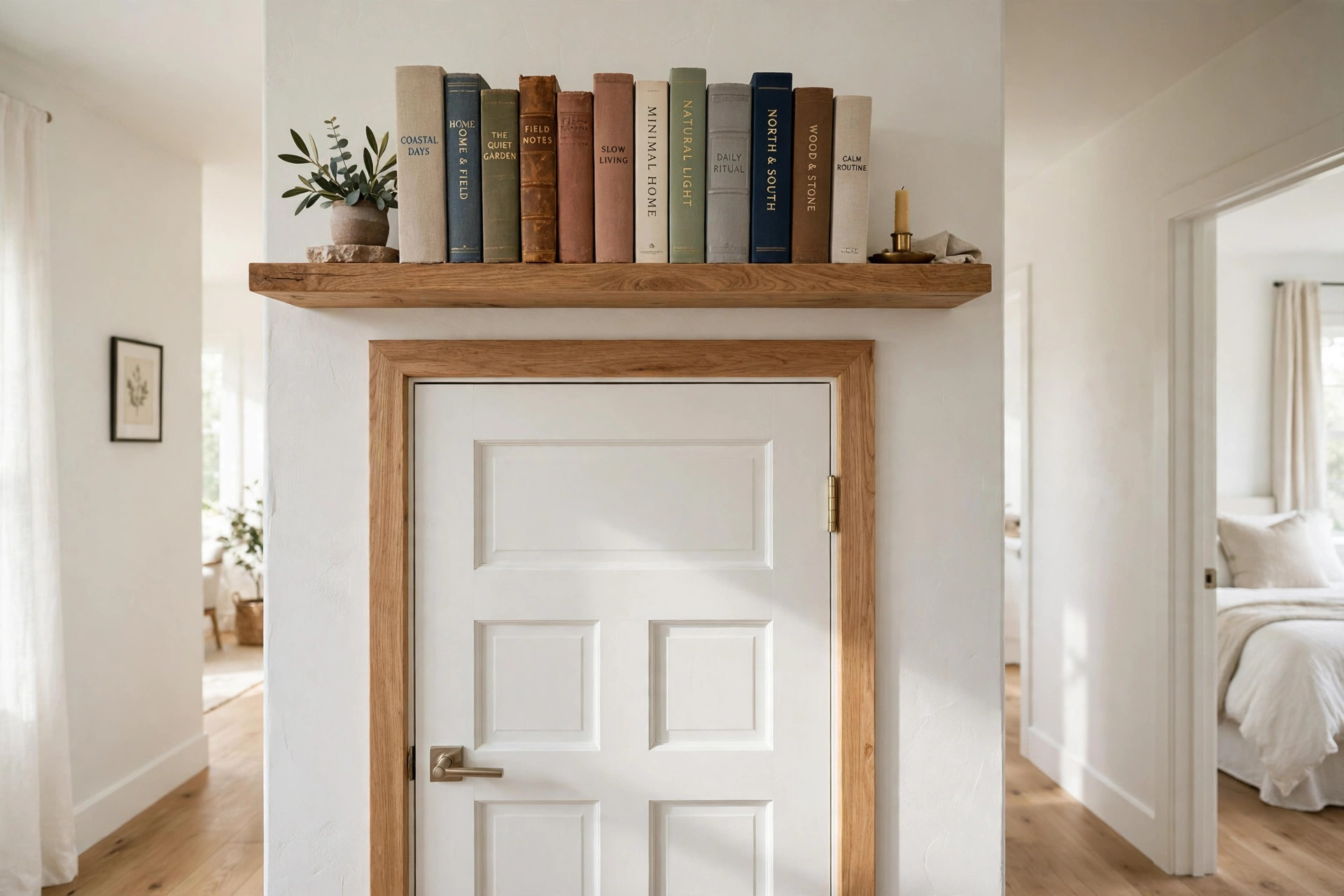
5. A shelf above the door — the strip of wall nobody uses holds a whole row of books
Every room has a strip of wall above the door that nobody looks at and nobody uses, because the space above a door is the space that feels too high to reach. Put a shelf there — the strip of wall nobody uses holds a whole row of books — so the books you have already read live above the door and the shelves below stay free for the books you are reading now. Fix the shelf into studs and keep it to one row of paperbacks, because the shelf above a door is the shelf you reach with a step stool, not the shelf you browse every day. Keep the books in a single colour run or one series, so the high shelf reads as a display and not a dumping ground, and dust it when you dust the top of the door frame, because the shelf that is forgotten is the shelf that gathers dust. One shelf above the door, and a whole row of books has a home.
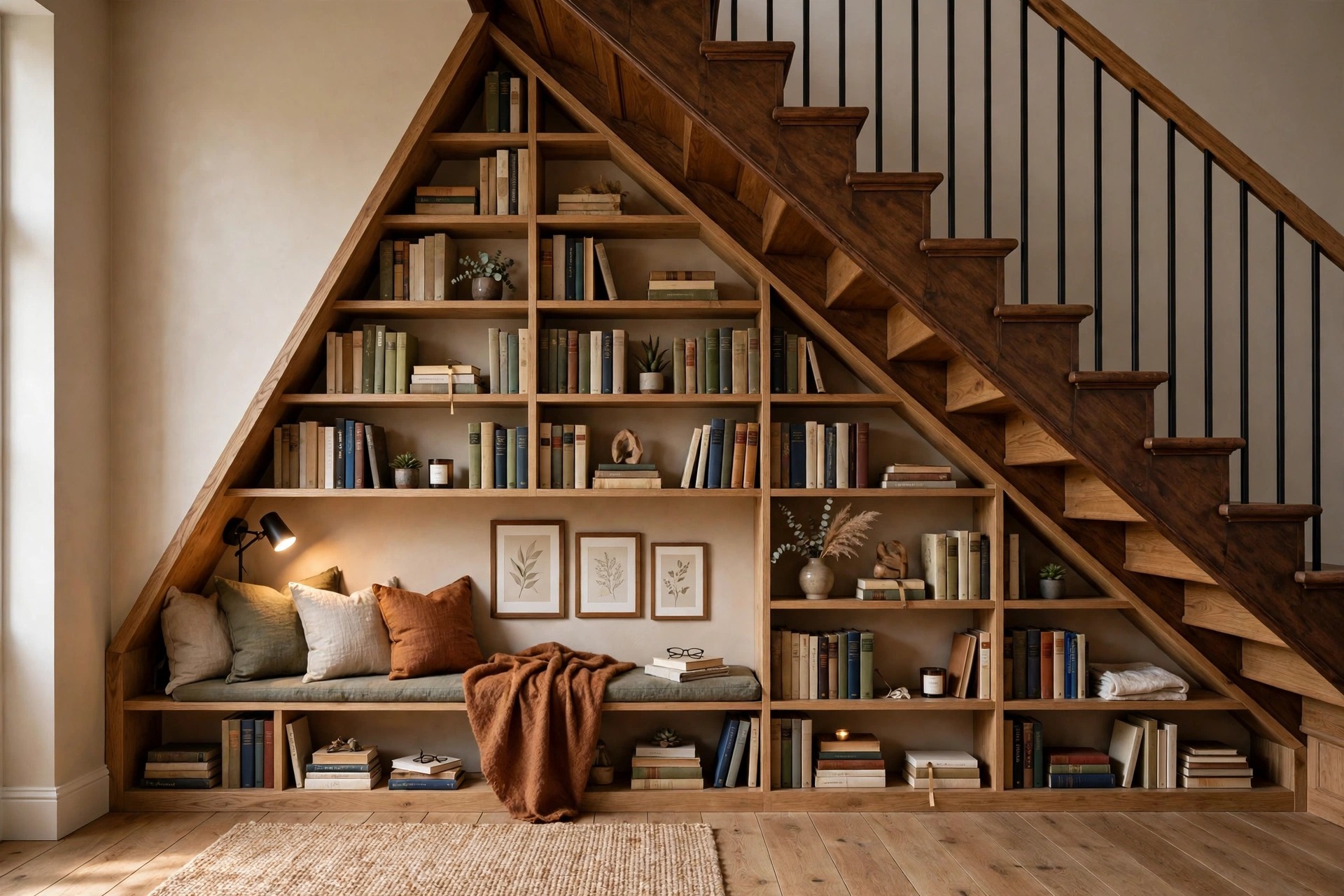
6. Under-stair shelves — the triangle under the stairs becomes a reading wall
The triangle under the stairs is the most wasted space in a house, because the sloping ceiling makes it useless for standing and the corner makes it useless for furniture. Build shelves into it — the triangle under the stairs becomes a reading wall — so the books fill the slope and the dead space becomes the best-looking wall in the house. Fit the shelves to the slope, deepest at the bottom where the ceiling is highest and shallow at the top, and put the children's books low where small hands can reach them and the heavy books at the bottom where their weight is safe. Paint the shelves the same colour as the stairs, because the shelves that match are the shelves that look like they were always there. Add a small reading light under the lowest shelf, and the under-stair wall becomes a reading nook as well as a library. Shelves under the stairs, and the wasted triangle works for a living.
Small-space book storage
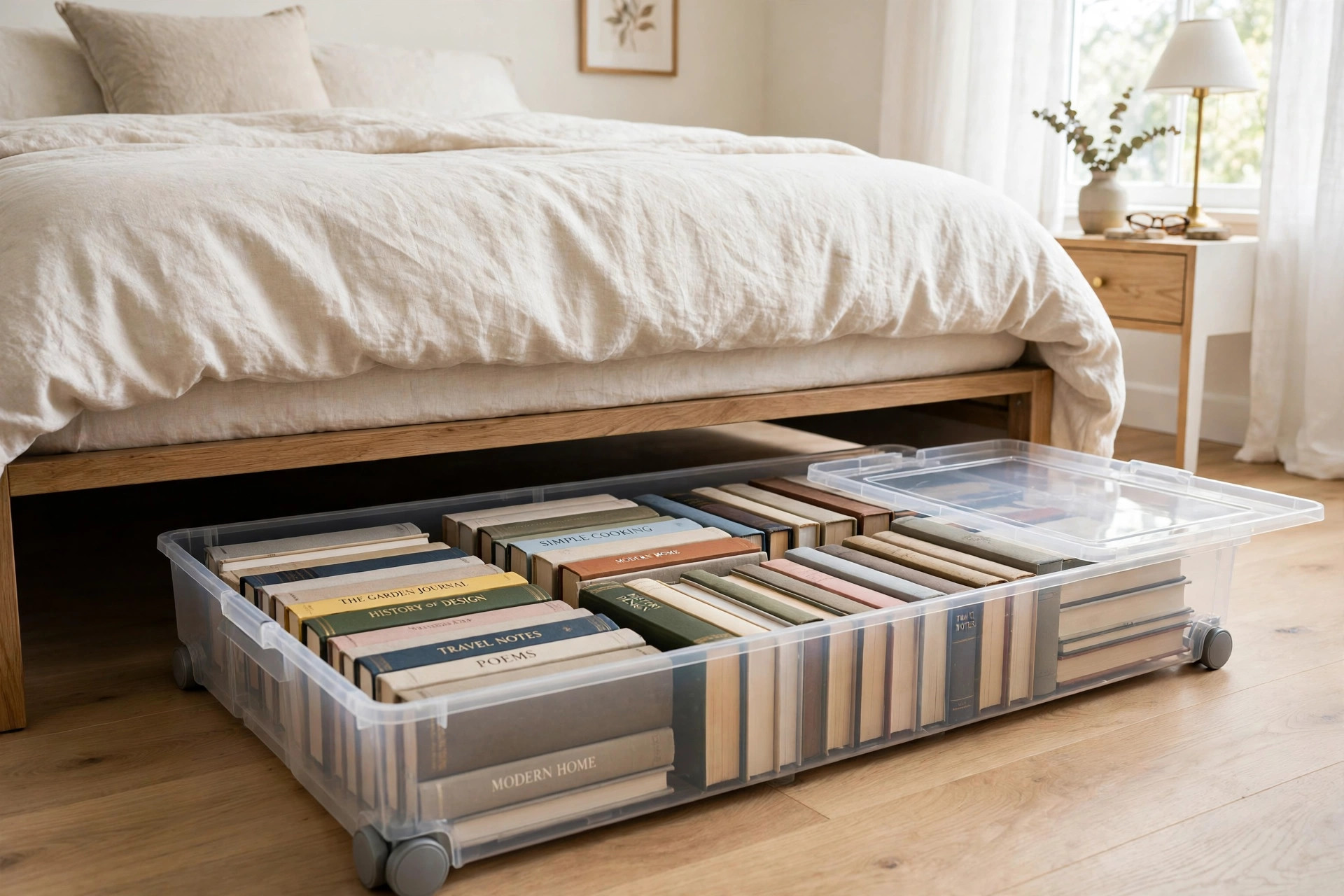
7. An under-bed book box — the books you are not reading live flat under the bed
A bed with space underneath is a bookshelf in disguise, because the gap under the bed is the size of a shelf and the books that live there are the books you are not reading right now. Slide a shallow box under the bed — the books you are not reading live flat under the bed — so the finished series and the books you are keeping for later are out of the way but still in the house. Use a box with a lid and wheels, so it slides out without catching on the carpet, and stack the books flat in two layers with a sheet of paper between them, because the books that lie flat are the books that do not warp. Label the end of the box, so you know what is inside without pulling it out, and keep the box to one per bed, because the bed that hides one box is a bed and the bed that hides five is a warehouse. One box under the bed, and the books you are keeping have a home.
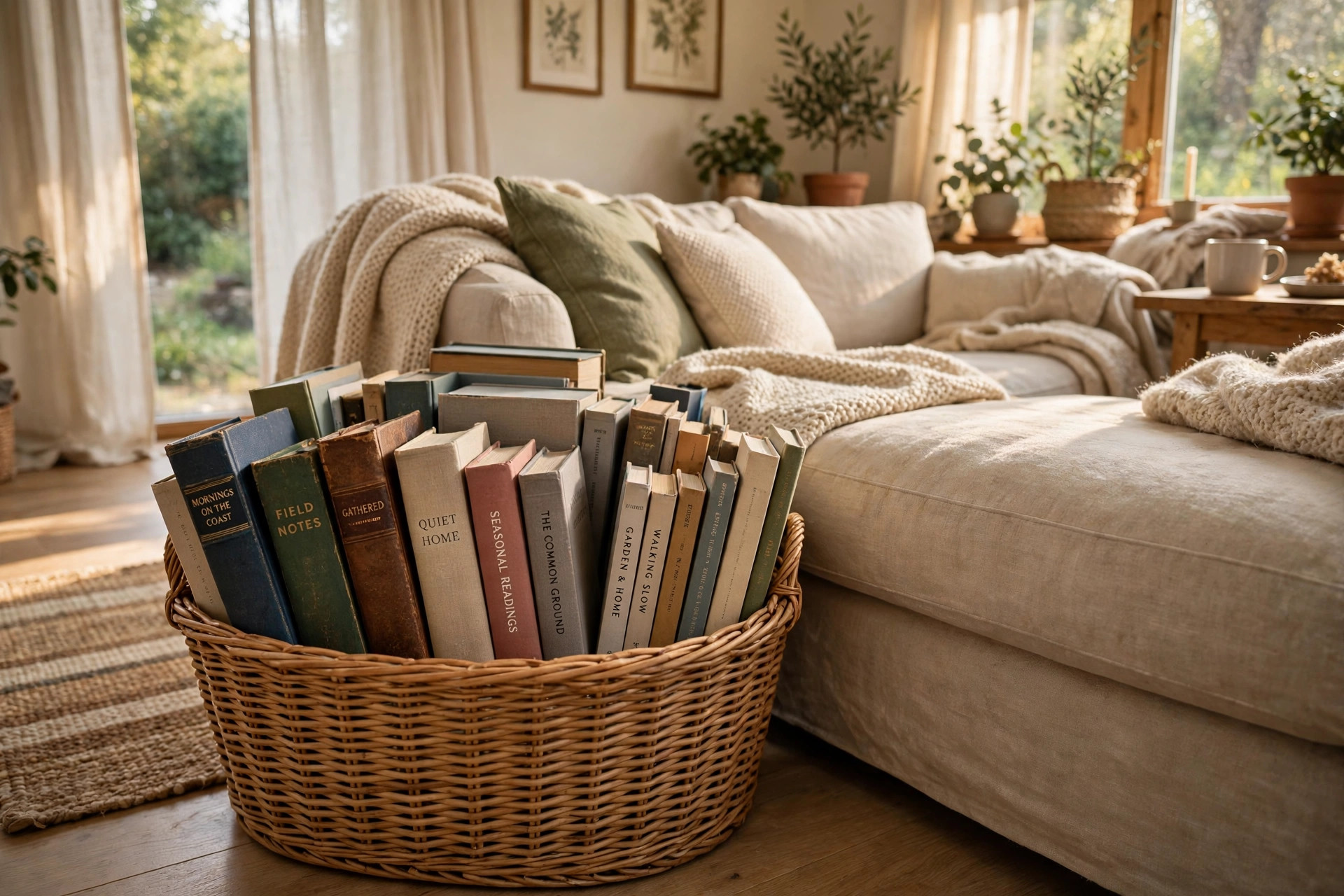
8. A book basket by the sofa — one basket, the books you are reading now, always in reach
The books you are reading now do not belong on a shelf, because the shelf is the place you store books and the sofa is the place you read them. Keep one basket by the sofa — one basket, the books you are reading now, always in reach — so the current book, the one you are halfway through and the one you are about to start are always where your hand reaches. Choose a basket with low sides, so you can see the books inside without digging, and keep it to four or five books, because the basket that holds five is a reading basket and the basket that holds fifteen is a pile. Put a small notebook and a pen in the basket too, if you are the kind of reader who writes in the margins of life, and empty the basket back to the shelf once a week, so the finished books go home and the basket stays a basket. One basket by the sofa, and the books you are reading are always in reach.
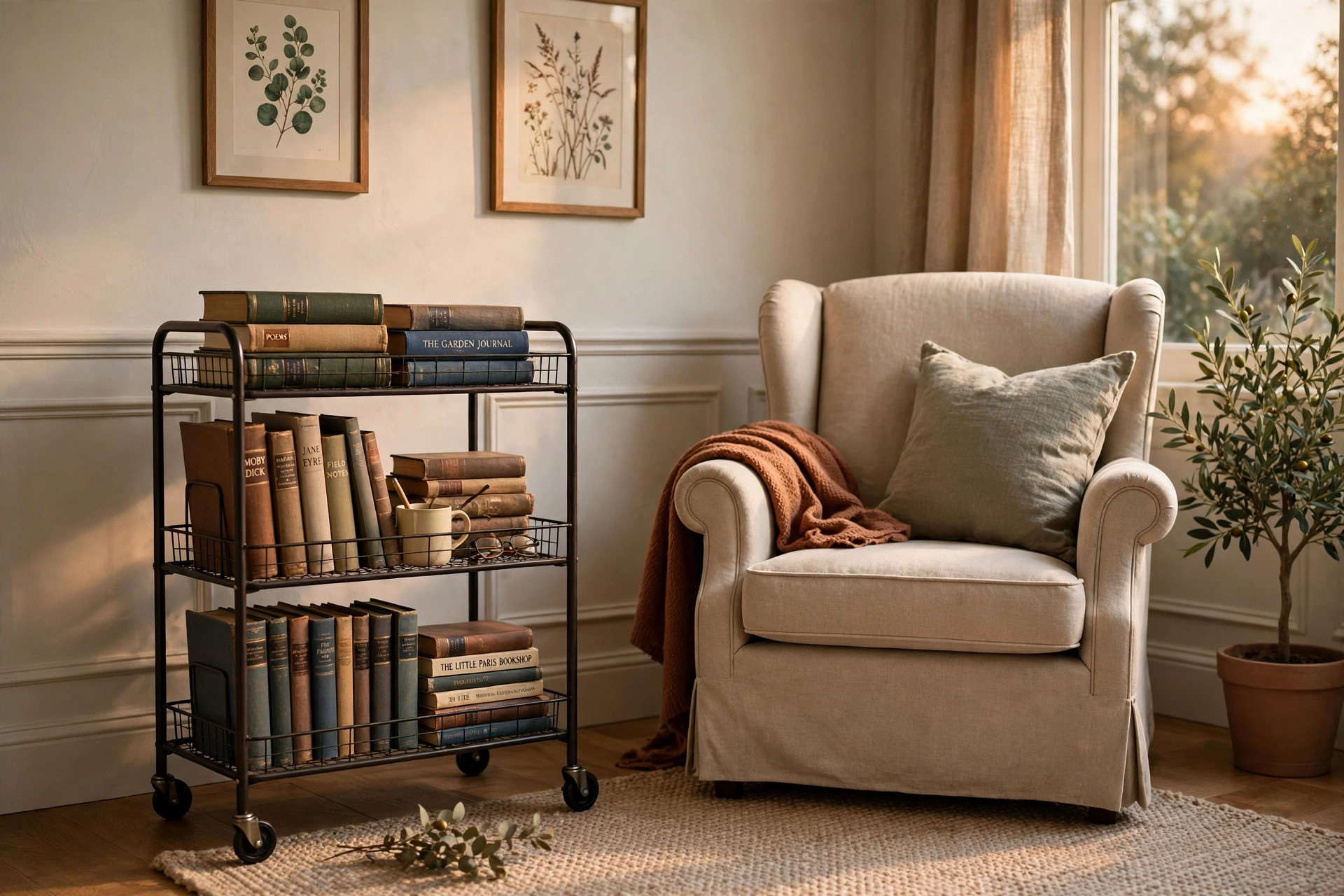
9. A small rolling cart for books — the library that moves to wherever you sit
A reader who moves around the house needs a library that moves too, because the book you are reading in the morning lives by the kitchen table and the book you are reading at night lives by the bed. Use a small rolling cart — the library that moves to wherever you sit — so the books, the reading glasses and the cup of tea travel together from room to room. Keep the current book on the top shelf, the next two on the middle shelf and the notebook on the bottom, because the cart that has an order is the cart that works, and the cart that is a pile is the cart that tips. Choose a cart with a lip on each shelf, so the books do not slide off when you wheel it across a rug, and park it beside the chair when you sit down, because the cart that is beside you is the cart you use. (Check on Amazon for a three-tier rolling cart with a handle, which steers easily and fits beside an armchair.) A rolling cart, and the library follows you.
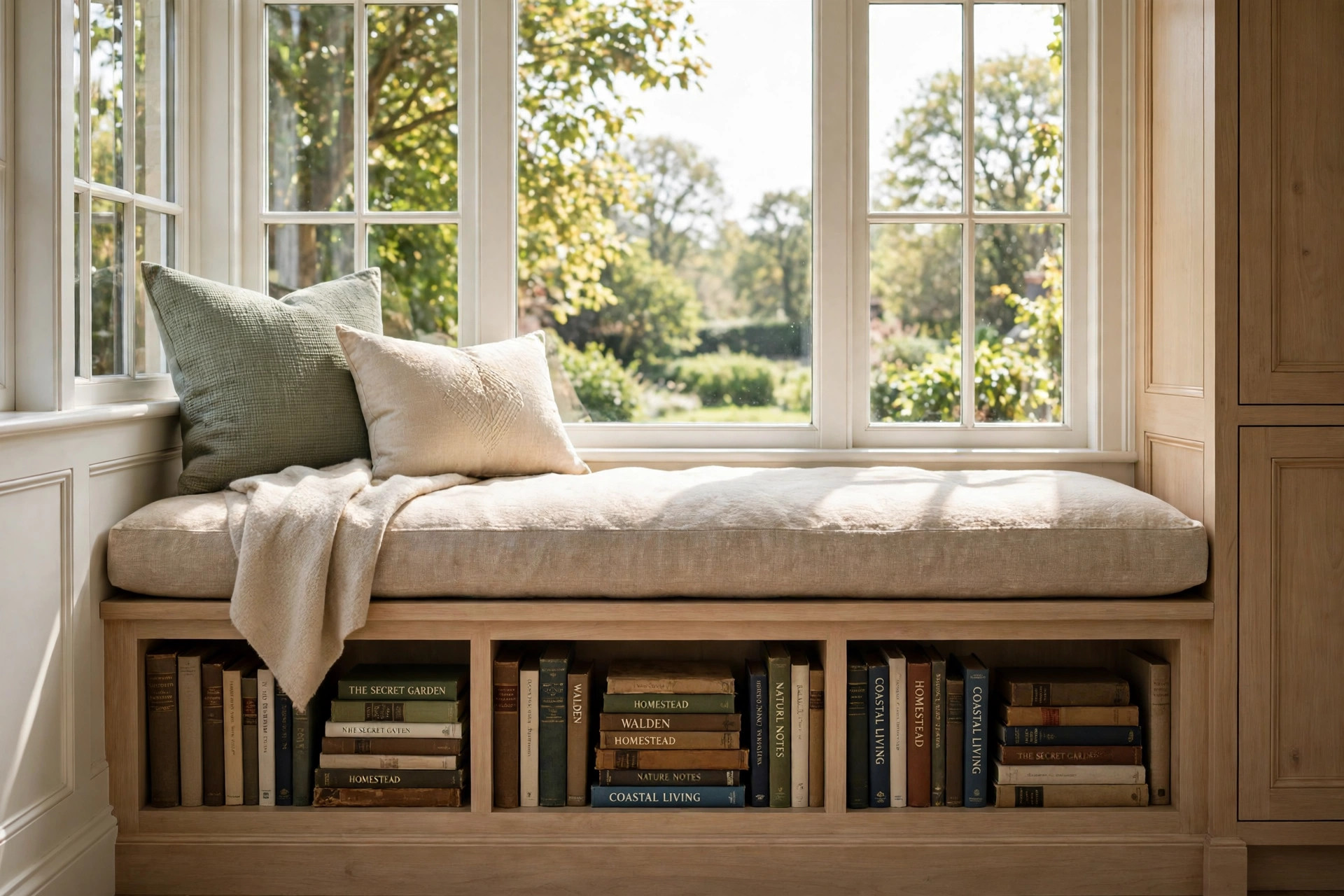
10. Books under the window seat — the seat you sit on hides the books you love
A window seat is a shelf with a cushion on top, because the box underneath the seat is the size of a bookcase and the seat is the place you sit to read. Lift the lid and fill the box — the seat you sit on hides the books you love — so the books live underneath the very place you read them and the room gains a whole bookcase without losing a wall. Store the books upright in rows with their spines up, so you can see what is there when you lift the lid, and put the children's books at one end and the grown-ups' at the other, because the box that has an order is the box that gets used. Keep a small cushion and a folded blanket on the seat, so the window seat reads as a reading nook and not a storage box, and open the lid once a month to air it out, because the box that never opens is the box that smells of damp. Books under the window seat, and the reading nook stores its own library.
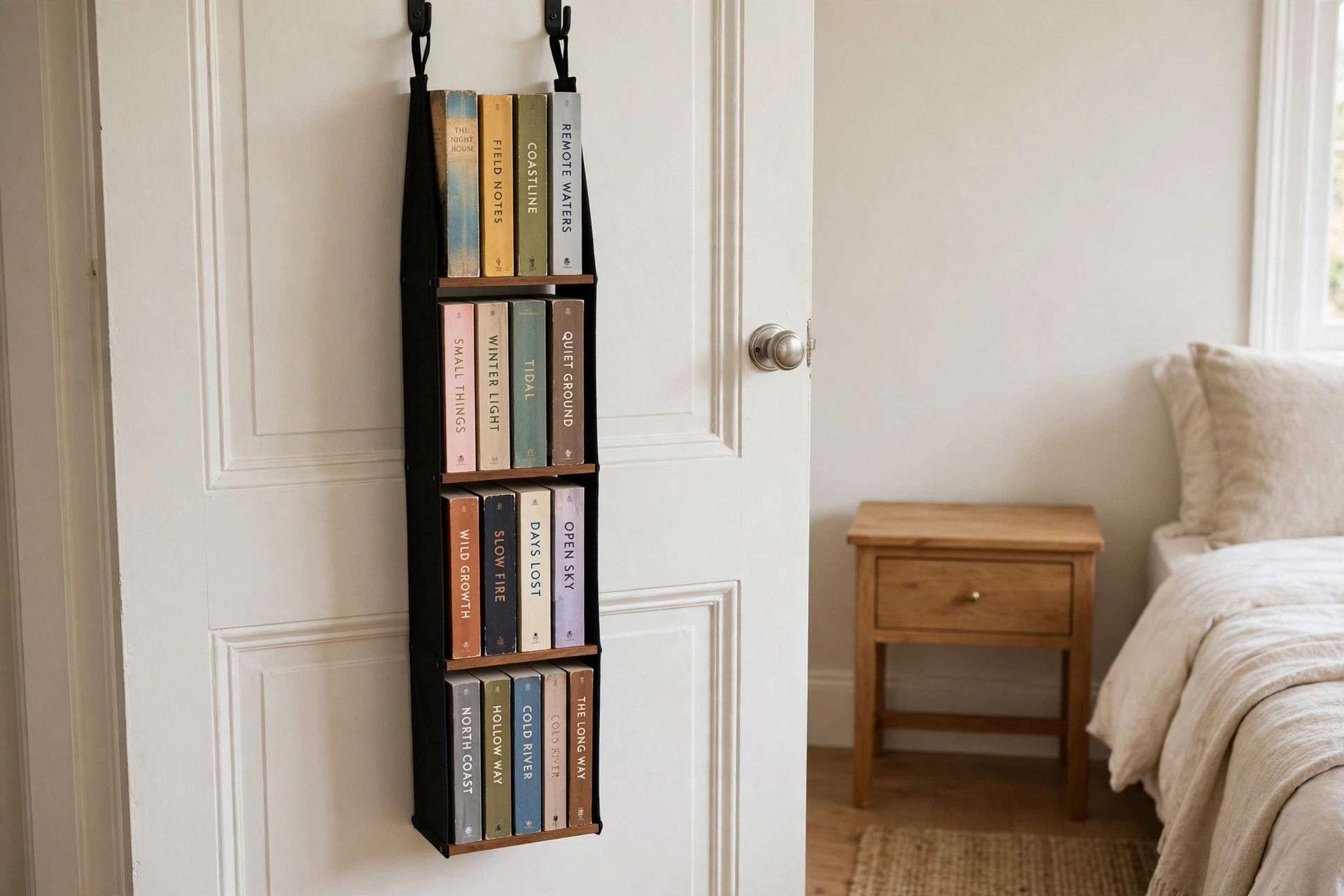
11. A behind-the-door book rack — the back of the door holds a row of paperbacks
The back of a bedroom door is a wall that moves, because the door is the size of a shelf and the space behind it is the space nobody uses. Hang a narrow rack on it — the back of the door holds a row of paperbacks — so the books you are reading at night live on the door and the bedside table stays clear for a glass of water and a lamp. Use an over-door rack with hooks that sit on the top of the door, so there are no screws and no holes, and keep it to one row of paperbacks, because the rack that holds ten books is a rack and the rack that holds thirty is a door that will not close. Put the book you are reading tonight at eye height and the next one below it, and keep the rack on a door that is not slammed, because the rack that swings is the rack that drops books. A rack behind the door, and the paperbacks have a home.
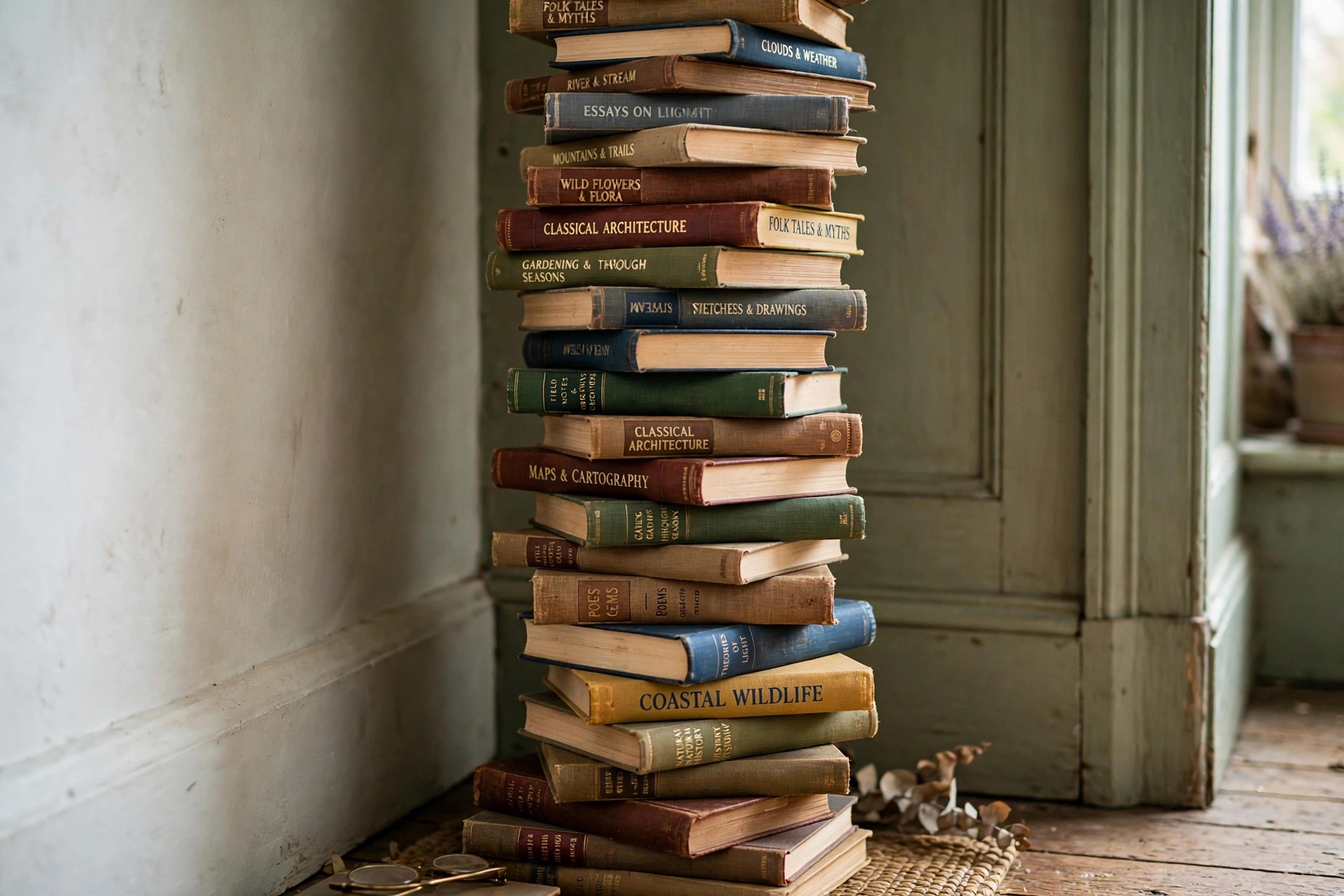
12. A book tower that stacks, not shelves — a spiral stack in the corner that holds fifty books
A corner with no wall space still has floor space, because the corner is the place where two walls meet and nothing fits. Stand a book tower there — a spiral stack in the corner that holds fifty books — so the books rise in a column and the corner becomes a sculpture made of reading. Stack the books in a spiral, each one turned a little from the one below, so the tower is stable and the spines face out in every direction, and put the heaviest books at the bottom, because the tower that is heavy at the bottom is the tower that stands. Keep the tower to about waist height, so you can reach the top book without a stool, and cap it with a small plant or a candle, because the tower that is finished is the tower that looks like furniture. A book tower in the corner, and fifty books live in a square foot of floor.
Books as decor
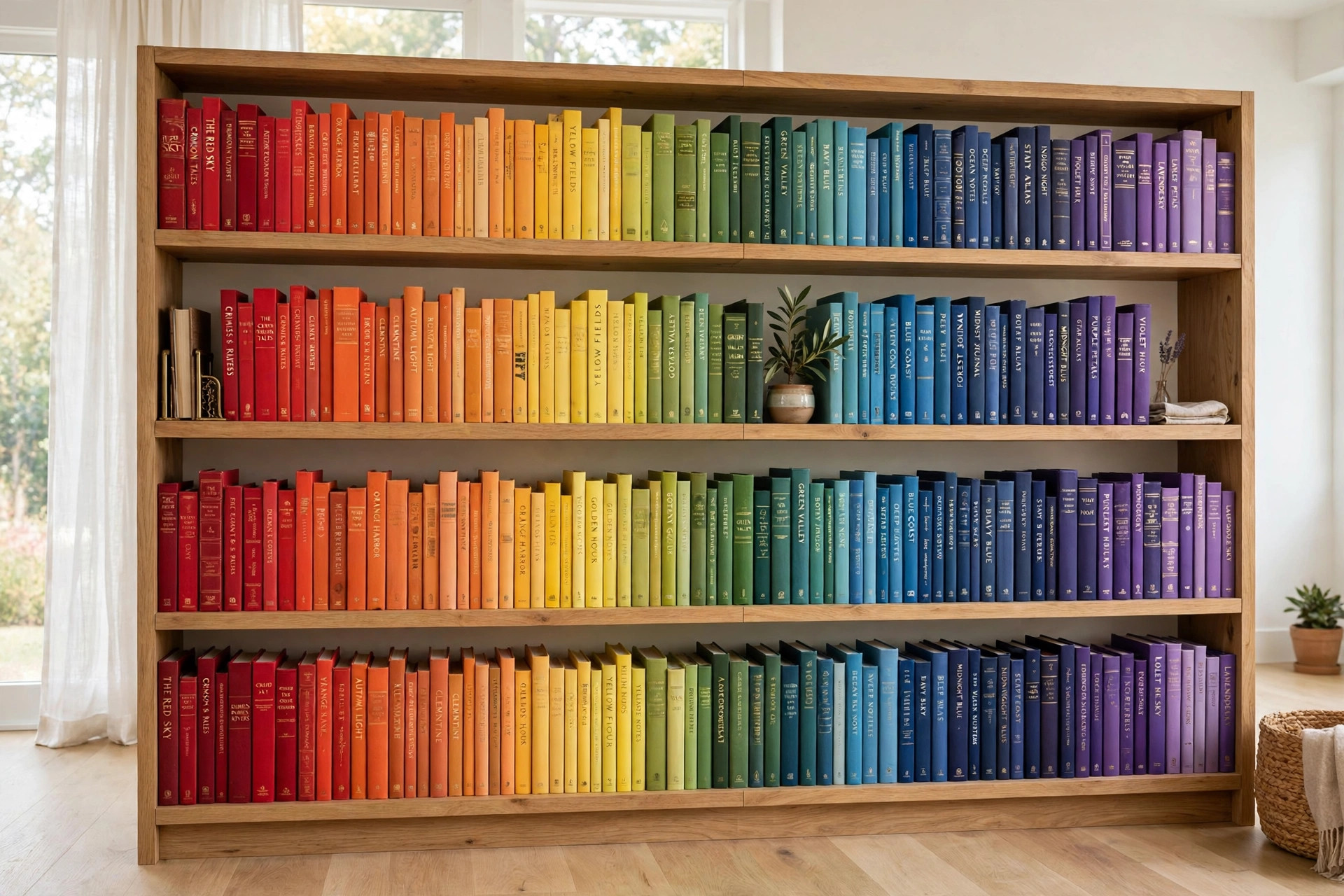
13. Colour-sorted shelves — the rainbow row that makes the whole room look styled
A shelf of books in random colours looks like a shelf of books, because the spines are the thing you see first and the colours are the thing that decides whether the shelf looks styled or stuffed. Sort them by colour — the rainbow row that makes the whole room look styled — so the shelf reads as a gradient and the room looks like it was designed around the books. Start with the reds on the left and run through oranges, yellows, greens, blues and purples to the right, and pull out any spine that breaks the run, because the shelf that flows is the shelf that looks calm. Keep the tallest books at the ends of each colour block, so the shelf has a shape, and leave one small gap in the middle of the run for a plant, because the gap is the thing that stops the rainbow from looking like a paint chart. A colour-sorted shelf, and the books dress the room.
14. Forward-facing display ledges — the covers face out, like a bookshop window
A bookshelf shows spines, but a bookshop shows covers, because the cover is the thing that makes you pick a book up and the spine is the thing you only read when you already know what you want. Hang shallow display ledges — the covers face out, like a bookshop window — so the prettiest books in the house face the room and the shelf becomes a gallery. Use picture ledges about ten centimetres deep, fixed into studs, and lean one book against the wall per ledge with a small stack lying flat beside it, because the ledge that holds five covers is a display and the ledge that holds fifteen is a shelf that fell over. Rotate the covers every month, so the wall changes with the seasons and the books you have forgotten get a second chance, and keep the ledges in the hallway or above the sofa, where guests actually see them. Display ledges, and the books face the room.
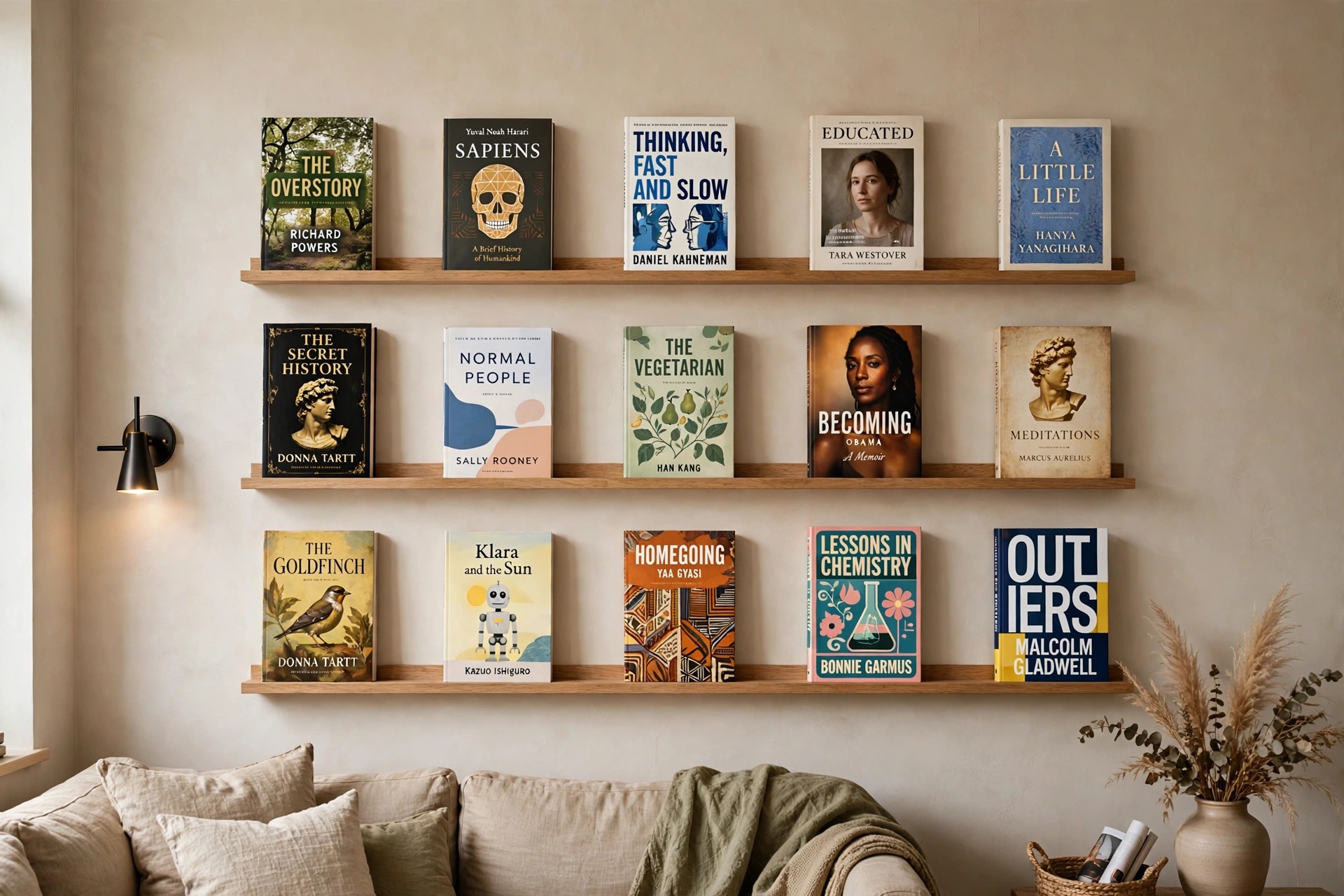
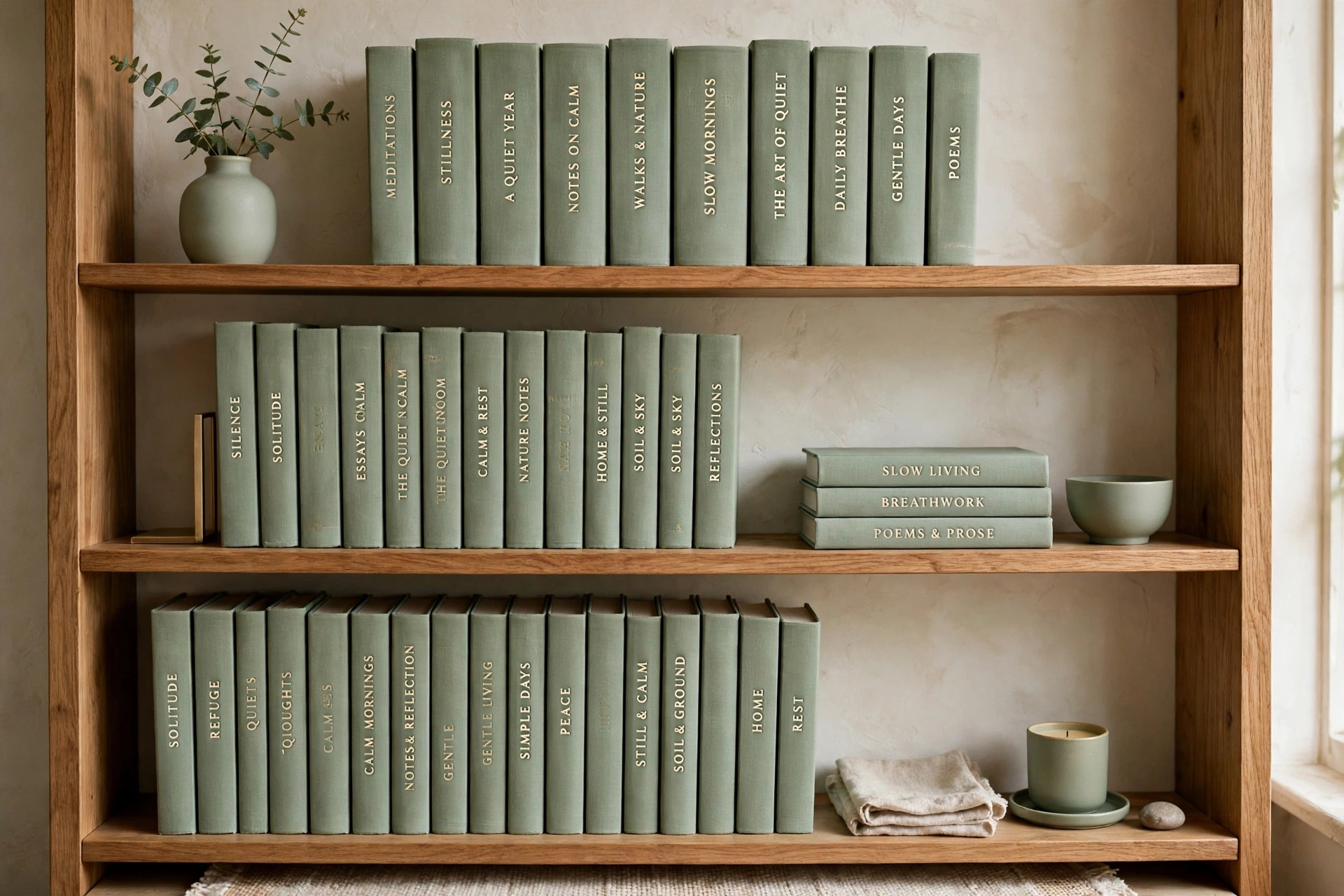
15. A book wall in one colour — spines in a single tone, and the shelf reads as art
A wall of books in every colour can shout, because the colours are the thing that fills the room and the room is the thing that has to live with them. Choose one colour — spines in a single tone, and the shelf reads as art — so the book wall becomes a texture instead of a rainbow and the room feels calm. Pick the colour that already lives in the room — the sage of the sofa, the charcoal of the fireplace, the cream of the walls — and gather every book with a spine in that family onto one wall, moving the rest to another room. Turn the odd spine that does not match around, so its pages face out in a pale cream, because the wall that is one colour is the wall that looks intentional. Add a single object in a contrasting colour — a brass lamp, a terracotta pot — so the wall has one focal point and the eye knows where to rest. (Check on Amazon for simple wooden bookends in a matching wood tone, which hold the row upright without adding another colour.) A book wall in one colour, and the shelf is art.
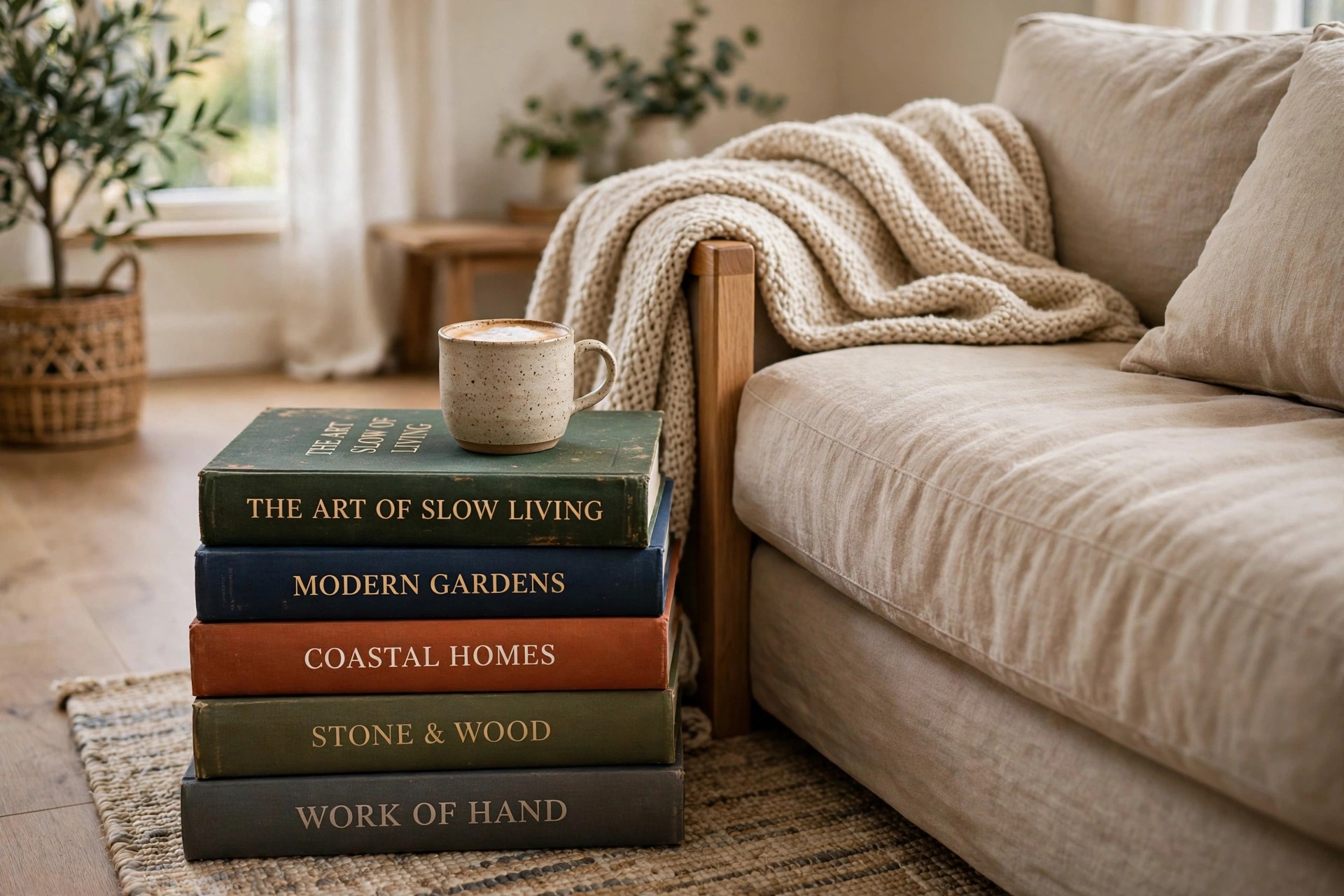
16. Stacks as a side table — a pile of hardbacks becomes the table beside the sofa
A sofa with no side table still needs somewhere for a cup, because the arm of the sofa is the place the cup falls off and the floor is the place the book ends up. Stack hardbacks into a table — a pile of hardbacks becomes the table beside the sofa — so the biggest books in the house earn their keep as furniture and the cup has a home. Choose four or five large hardbacks, all roughly the same size, and stack them with the largest at the bottom, because the stack that is wide at the bottom is the stack that stands. Put a small tray on top, so the cup sits on the tray and not on the book, and keep the stack to the books you have already read, because the table that is made of books you are reading is the table that falls apart. A stack of hardbacks, and the sofa has a table.
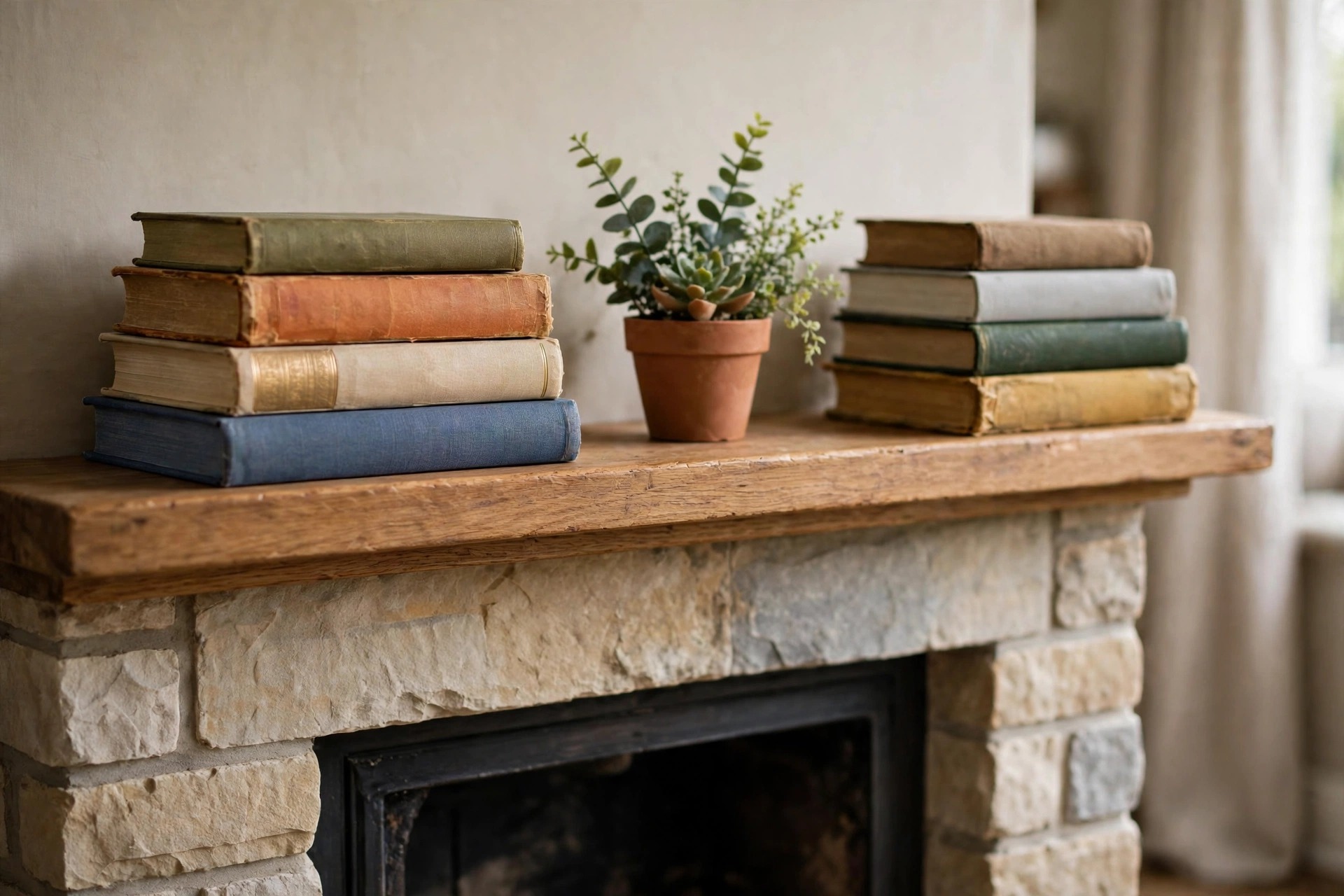
17. Books on the mantel — the mantel gets a low row of books, not another ornament
A mantel with another ornament on it is a mantel nobody looks at, because the ornament is the thing that has always been there and the eye slides straight past it. Put books on it instead — the mantel gets a low row of books, not another ornament — so the mantel becomes a shelf that changes with what you are reading and the room gains a talking point. Lay the books flat in two low stacks, one at each end of the mantel, with a small plant or a candle between them, because the mantel that holds books is the mantel that looks lived in. Keep the stacks low, no more than four books high, so they do not block the mirror or the picture above, and choose books with covers that suit the room, because the mantel is the most visible shelf in the house. Books on the mantel, and the fireplace has a library.
18. Coffee-table books, styled not stacked — the big books earn their place on the table
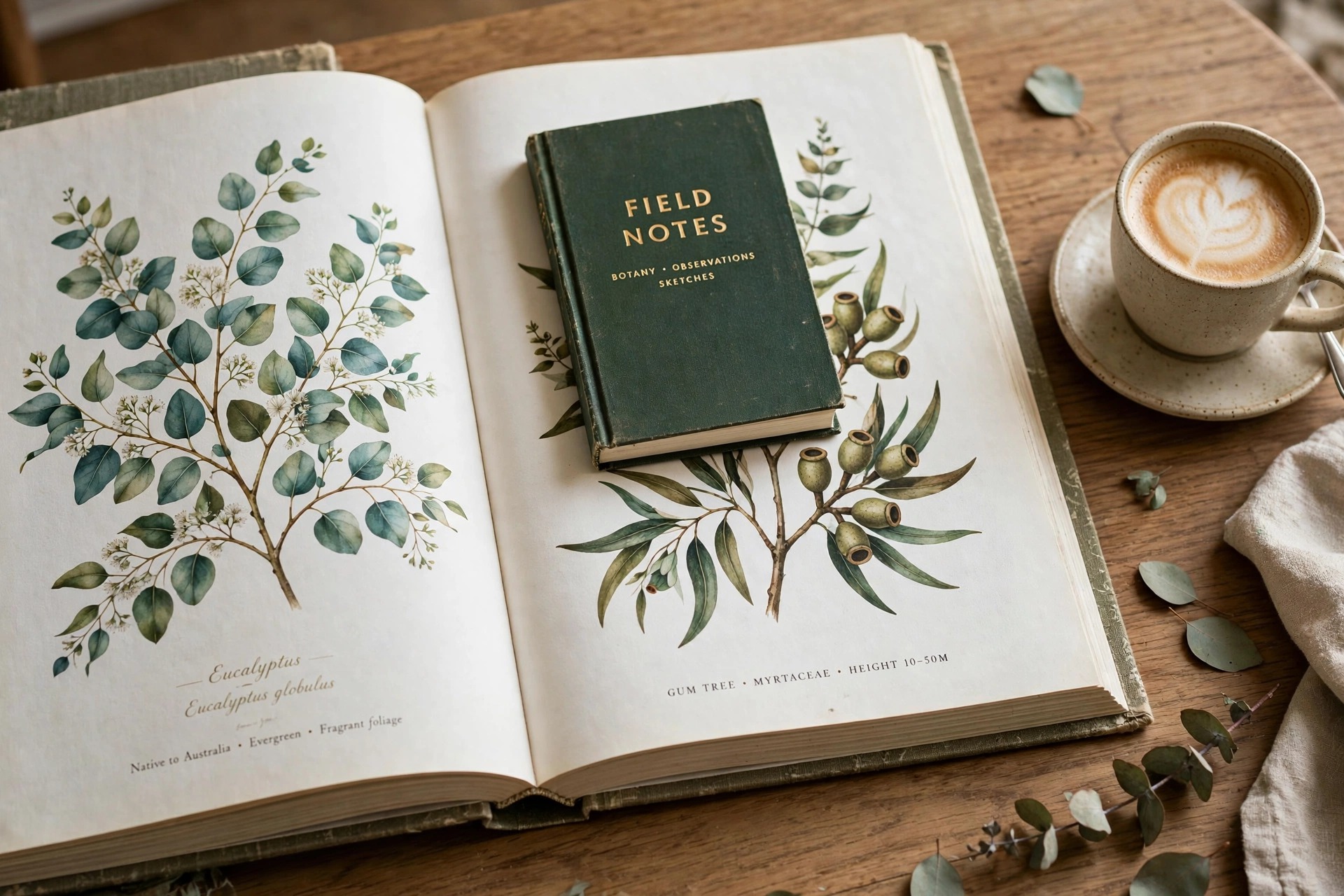
A coffee table with a pile of big books on it is a coffee table nobody uses, because the pile is the thing that takes up the whole table and the cup is the thing that has nowhere to go. Style the books instead — the big books earn their place on the table — so the table holds one or two books and still has room for a cup and a candle. Put the largest book flat in the centre of the table, open it to a beautiful page, and lay a smaller book on top at an angle, because the table that shows one book is the table that invites you to look. Keep the rest of the big books on the shelf and rotate the one on the table every few weeks, so the table changes and the books you bought for their pictures actually get seen. One book on the table, and the coffee table works.
Keeping books tidy and protected
19. Forward-facing bins for children's books — little hands see the cover and pick the book
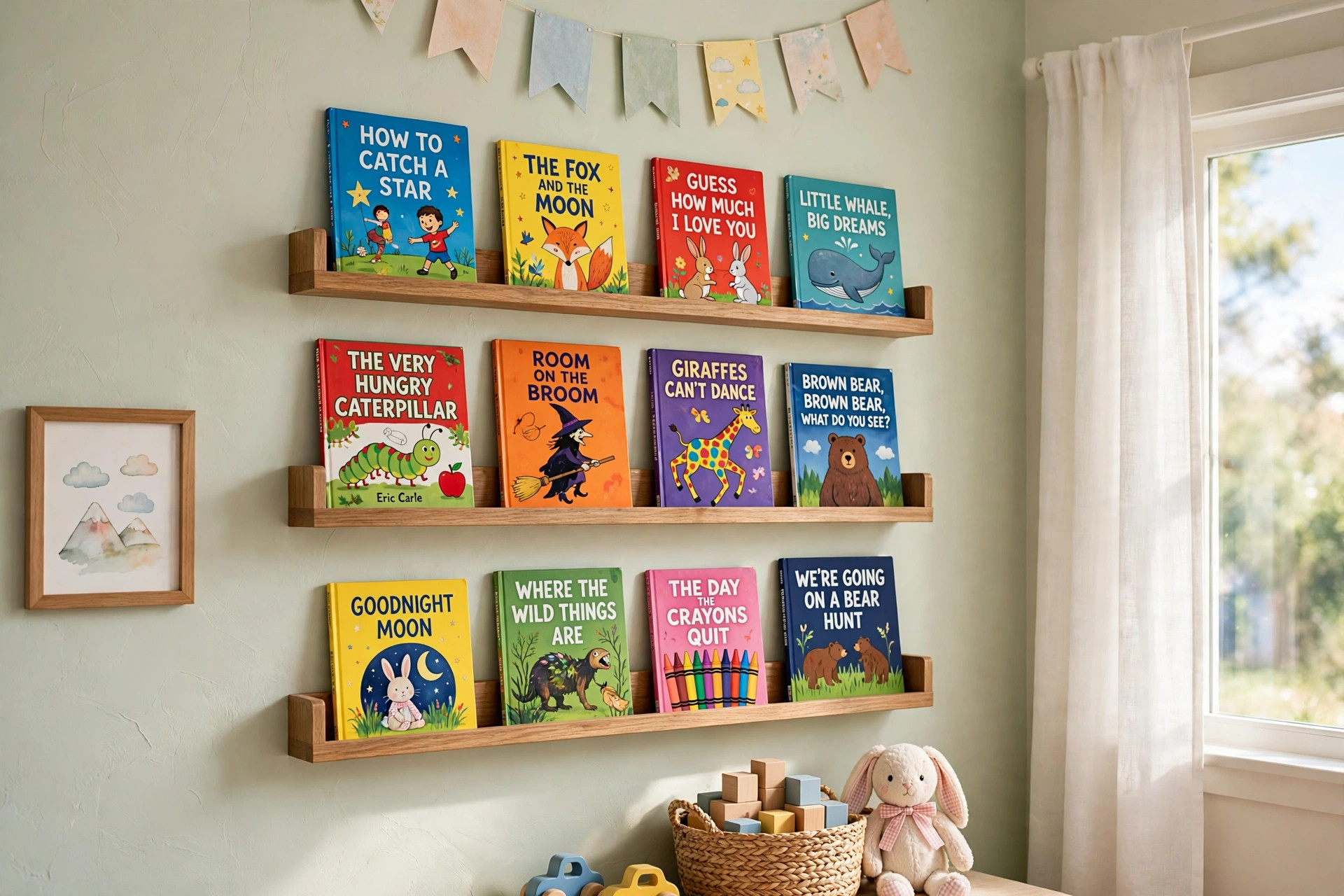
A child's bookshelf shows spines, and a child cannot read spines, because the spine is the thing that names the book and the child is the person who chooses by the picture. Use forward-facing bins — little hands see the cover and pick the book — so the child chooses the book by its cover and puts it back by its cover, and the shelf stays tidy because the system makes sense to the person using it. Choose low, wide bins with a sloped front, so the covers face out and the books lean back, and keep each bin to one kind of book — animals in one, trucks in another, bedtime stories in a third — because the bin that has a kind is the bin a child understands. Put the bins at the child's height, on the floor or on the lowest shelf, and let the child choose which bin each new book goes in, because the system the child helped build is the system the child uses. The children's books live in 26 Kids Room Storage Ideas for 2026, where the whole room is built around the same low, reachable storage. Forward-facing bins, and the children choose their own books.
20. A home library checkout system — a simple label and list, so borrowed books come back
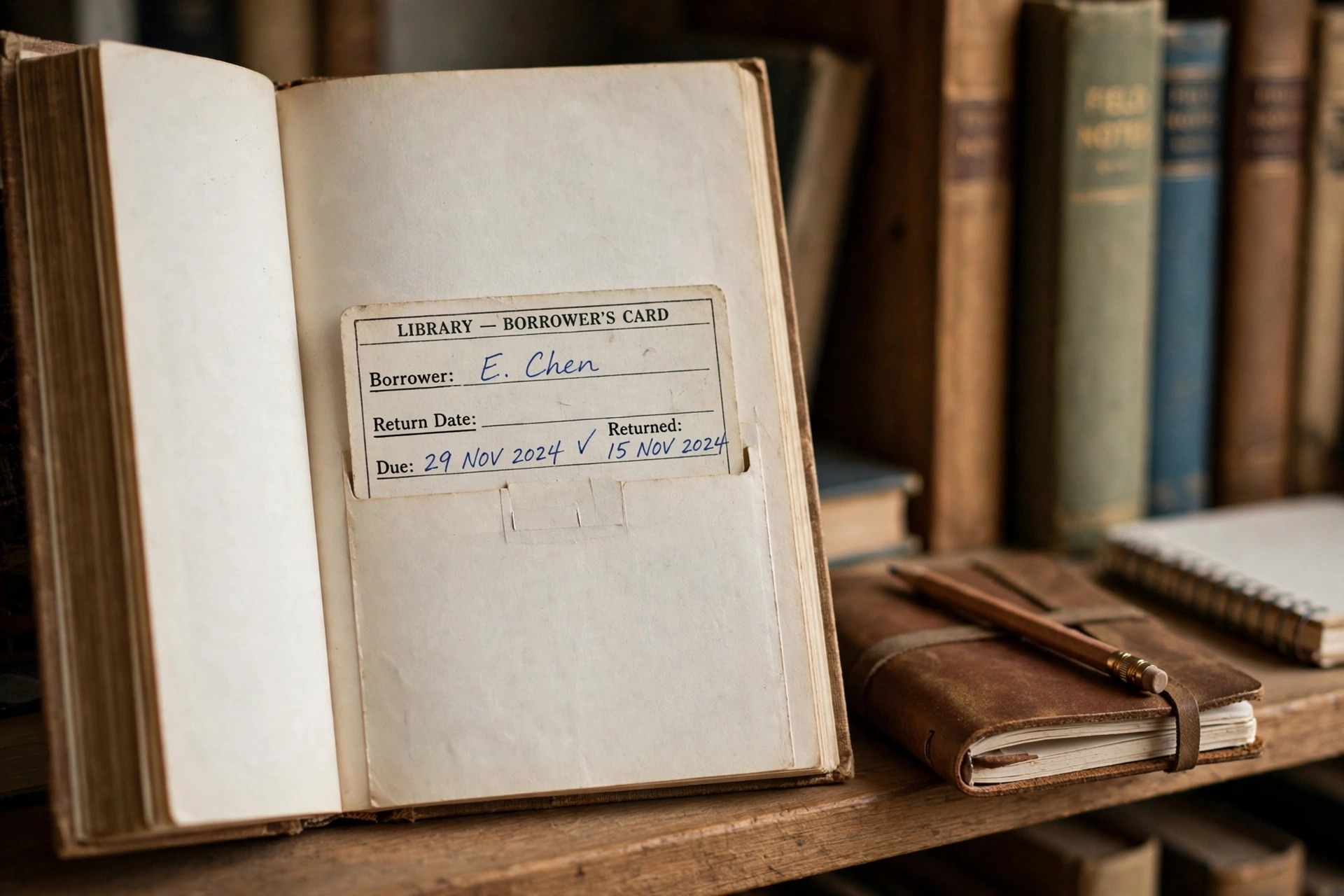
A book that leaves the house is a book that may never come back, because the borrower forgets and the owner forgets and the book is the thing that disappears quietly. Run a checkout system — a simple label and list, so borrowed books come back — so every book that leaves has a name next to it and a date it is due back. Put a small card inside the front cover with the book's title, and keep a notebook by the shelf where the borrower writes their name and the date, because the list that is written down is the list that gets checked. Keep the system to one page, with the book, the borrower and the date, and check it once a month, because the system that takes a minute is the system that survives. A label and a list, and the borrowed books come home.
21. Rotate the collection — the shelf shows twenty books, the rest wait in a box
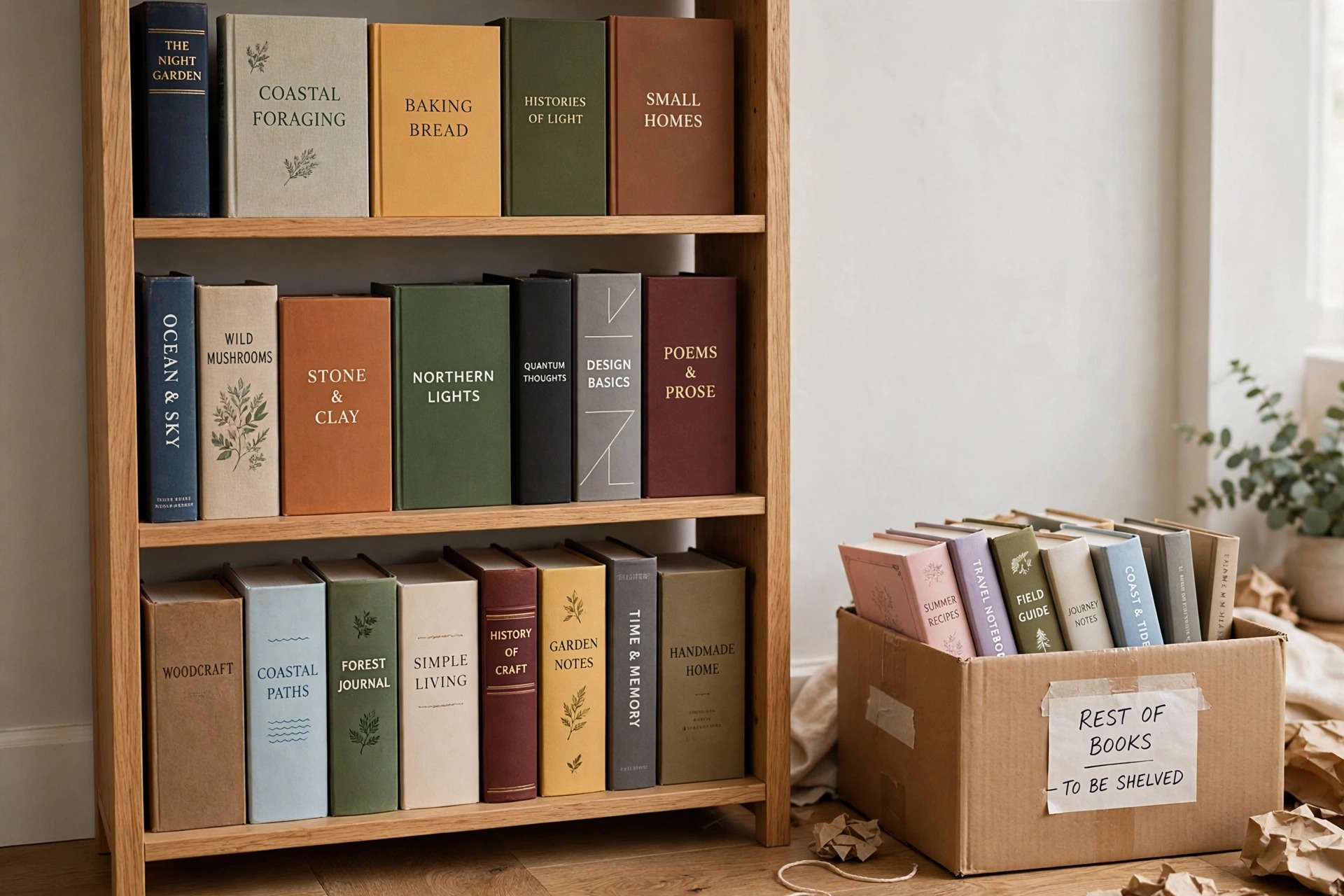
A shelf that shows every book you own is a shelf that shows nothing, because the books are the thing that fill the shelf and the shelf is the thing that has no room to breathe. Rotate the collection — the shelf shows twenty books, the rest wait in a box — so the shelf always looks fresh and the books you have forgotten get a turn in the light. Pick twenty books for the shelf — the ones you are reading, the ones you love to look at, the ones guests ask about — and pack the rest in a labelled box in the cupboard, because the box that is labelled is the box you can find. Swap the shelf every season, so the books change with the year and the collection feels new four times a year, and use the swap as the moment to decide what leaves the house for good. The box of waiting books lives in 25 Utility Closet Organization Ideas for 2026, where the cupboard is organised to hold exactly this kind of box. Rotate the shelf, and twenty books at a time is plenty.
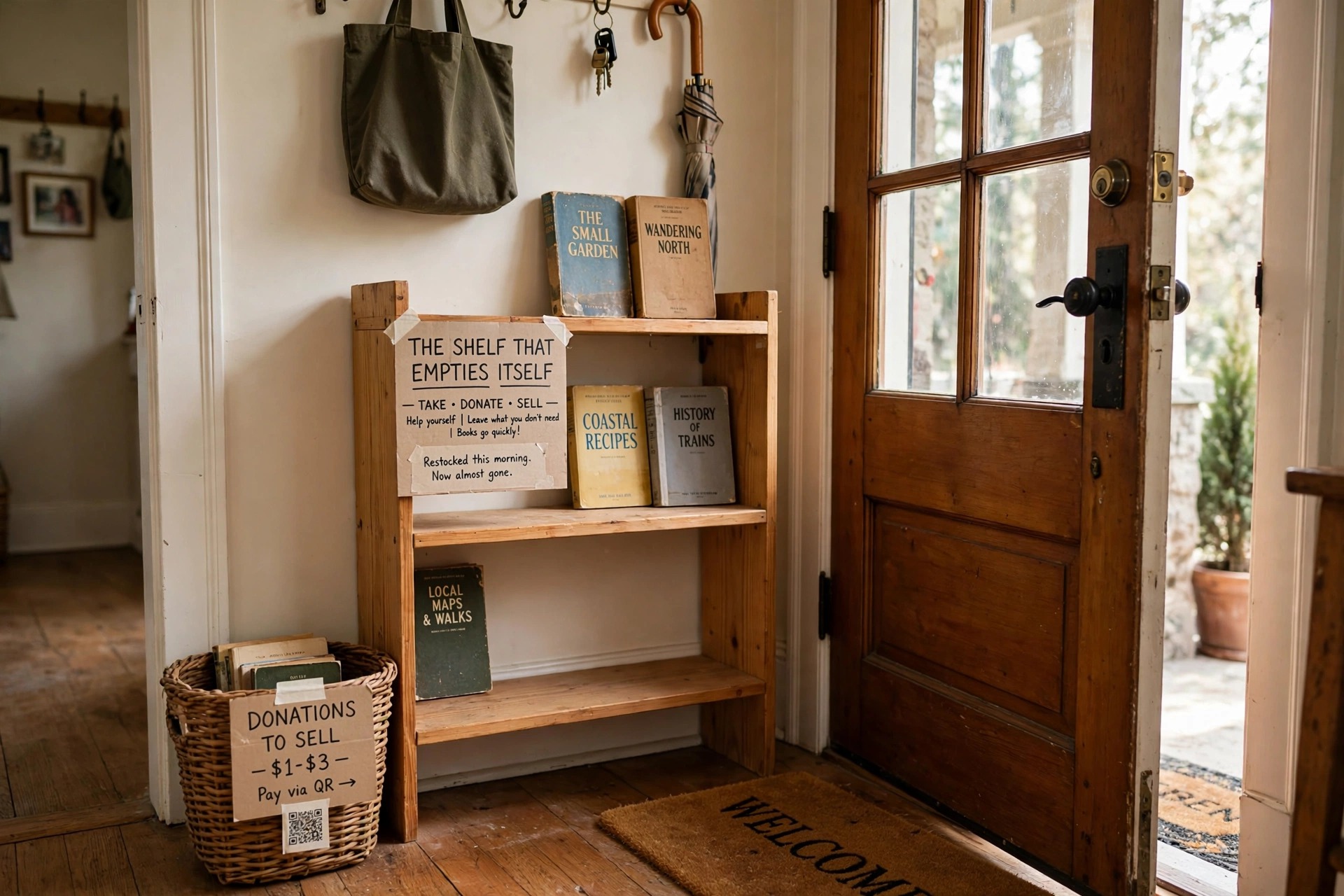
22. A donate-or-sell shelf — one shelf that empties itself, so the collection stays the size you want
A collection that only grows is a collection that takes over the house, because every new book is a book that arrives and no book ever leaves. Keep one shelf for leaving — one shelf that empties itself, so the collection stays the size you want — so every book you finish goes onto the leaving shelf and the shelf decides for you. Put the shelf by the front door or in the hallway, where you see it every day, and make a rule: when the shelf is full, the books go, because the shelf that empties itself is the shelf that keeps the house in balance. Take the full shelf to the charity shop or list the books online once a month, and let the children choose which of their books go too, because the shelf the children use is the shelf that teaches them to let go. A leaving shelf, and the collection stays the size you want.
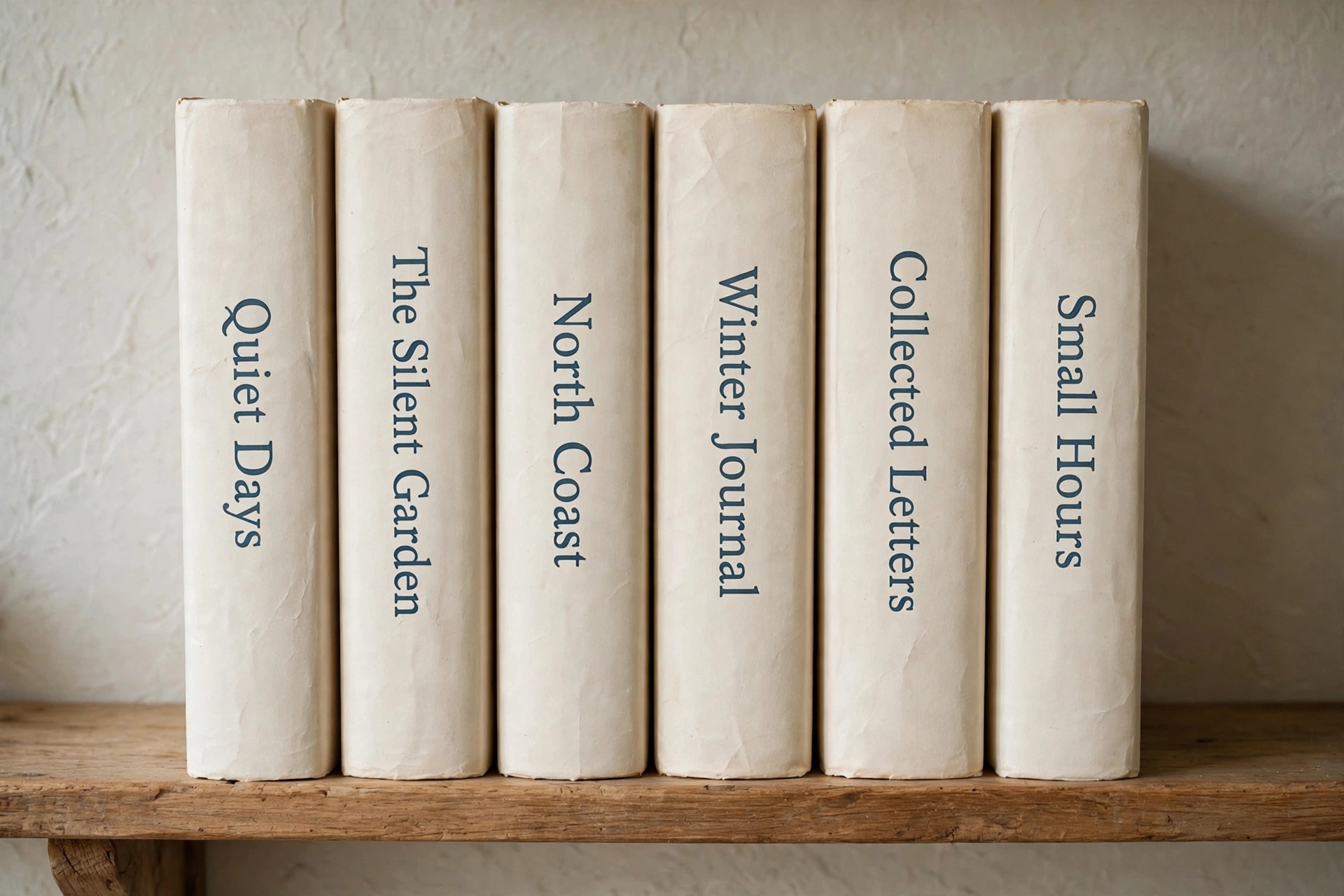
23. Dust covers that match the room — plain covers protect the books and calm the shelf
A shelf of bright, clashing spines can make a calm room feel noisy, because the covers are the thing that shouts and the room is the thing that has to live with them. Slip plain covers on — plain covers protect the books and calm the shelf — so the books are protected from dust and sun and the shelf reads as one quiet colour. Use plain paper or fabric covers in the room's own palette — cream, sage, charcoal — and write the title on the spine in a neat hand or a small label, because the cover that is labelled is the cover you can still find. Cover the books you keep for looks and the books you rarely open, and leave the ones you read every day bare, because the cover that protects is the cover for the books that sit, not the books that travel. Plain covers, and the shelf is calm and the books are safe.
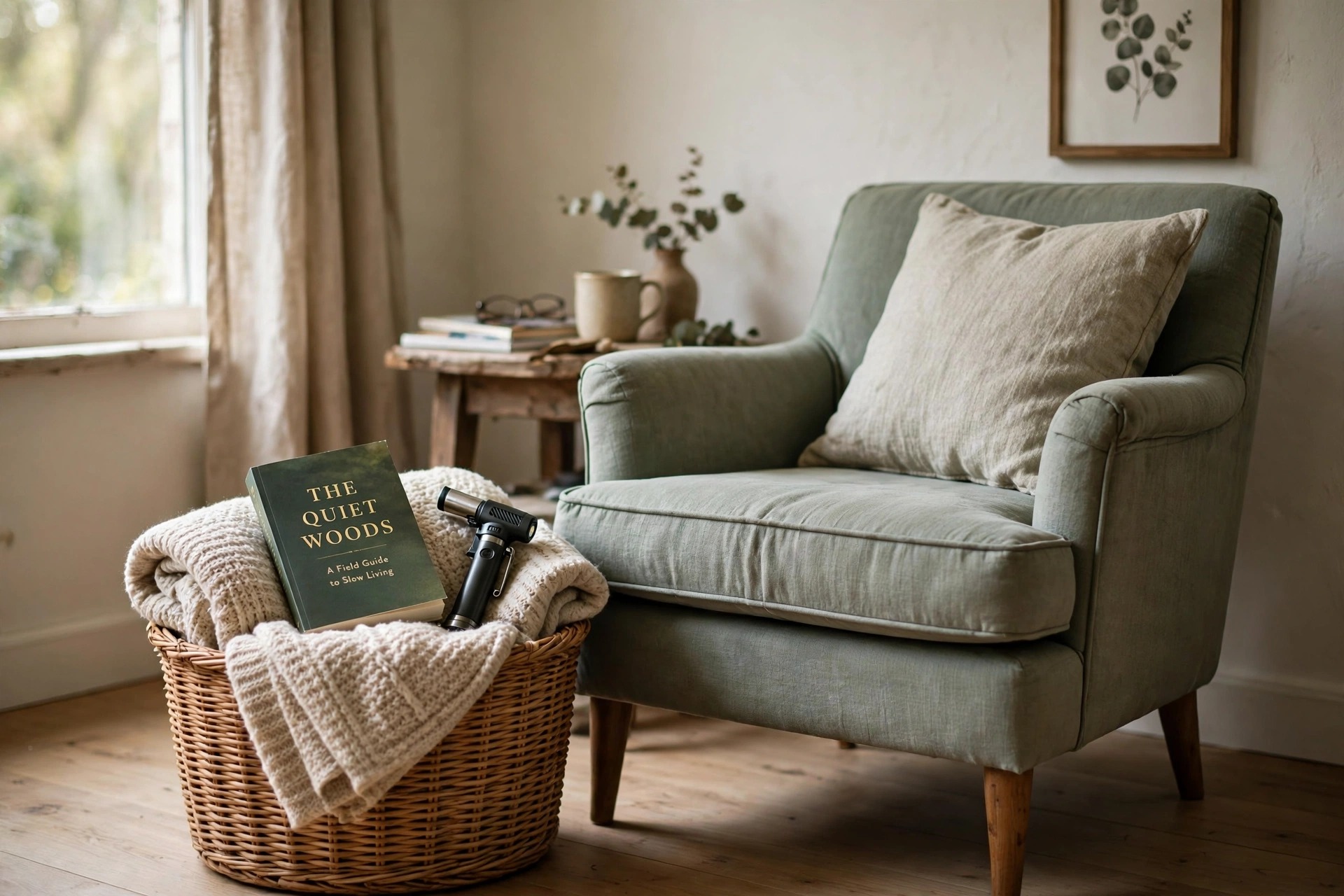
24. A reading nook basket — the book, the blanket and the torch, all in one basket by the chair
A reading chair with nothing beside it is a chair you leave, because the book is on the shelf, the blanket is in the cupboard and the torch is in a drawer. Keep one basket by the chair — the book, the blanket and the torch, all in one basket by the chair — so everything a reader needs is within reach and the chair becomes a nook. Choose a basket big enough for a folded blanket, a book and a small torch, and keep it beside the armchair you actually sit in, because the basket that is beside the chair is the basket you use. Refill it when the book changes, fold the blanket back in when you stand up, and put a small notebook in the basket too if you are a reader who writes things down. The blanket that lives in the basket is the layer that makes the chair cosy, and the basket is the thing that makes the chair a place to stay. A reading nook basket, and the chair is a nook.
Which book storage fits which situation?
| Situation | Best first move | Budget | Tools needed |
|---|---|---|---|
| Wasted wall by the fireplace | Built-in shelves in the alcoves (idea 1) | Medium | Shelves, paint |
| No floor space for a bookcase | Floating shelves in a row (idea 2) | Low | Shelves, brackets |
| No holes in the wall allowed | Tall ladder shelf (idea 3) | Low | Ladder shelf |
| Shelf looks messy | Cube shelves with baskets (idea 4) | Low | Cube unit, baskets |
| Books you have already read | Shelf above the door (idea 5) | Low | Shelf, brackets |
| Dead space under the stairs | Under-stair shelves (idea 6) | Medium | Shelves, paint |
| Books you are keeping, not reading | Under-bed book box (idea 7) | Low | Box with lid |
| Books you are reading now | Book basket by the sofa (idea 8) | Low | Basket |
| You read in every room | Small rolling cart (idea 9) | Low | Rolling cart |
| Window seat with a hollow base | Books under the window seat (idea 10) | Low | None |
| Bedside table is full | Behind-the-door book rack (idea 11) | Low | Over-door rack |
| Corner with no wall space | Book tower that stacks (idea 12) | Low | None |
| Shelf looks unstylish | Colour-sorted shelves (idea 13) | Free | None |
| Prettiest books deserve a show | Forward-facing display ledges (idea 14) | Low | Picture ledges |
| Room feels too colourful | Book wall in one colour (idea 15) | Free | Bookends |
| Sofa needs a side table | Stacks as a side table (idea 16) | Free | Tray |
| Mantel looks bare | Books on the mantel (idea 17) | Free | None |
| Coffee table is a pile | Coffee-table books, styled (idea 18) | Free | None |
| Children cannot choose books | Forward-facing bins (idea 19) | Low | Low bins |
| Borrowed books never return | Home library checkout system (idea 20) | Free | Cards, notebook |
| Shelf is overstuffed | Rotate the collection (idea 21) | Free | Labelled box |
| Collection keeps growing | Donate-or-sell shelf (idea 22) | Free | None |
| Spines clash with the room | Dust covers that match (idea 23) | Low | Paper covers |
| Reading chair has nothing beside it | Reading nook basket (idea 24) | Low | Basket |
You do not need all 24 ideas. You need the three that solve your rooms — usually the shelves that work harder where the books actually live, one small-space fix for the books you are reading now, and a system that keeps the collection the size you want. Start with the shelf, build it this weekend, and put the books you reach for most at eye height. Do that and the next time you walk into the room the books will look like they belong there, for the price of a shelf and an afternoon.
Save this post for your next bookshelf sort, and if the books need something to hold them upright, read 22 DIY Bookends Ideas for 2026 next — it is Post 22, the bookends that keep the rows standing — and 26 Kids Room Storage Ideas for 2026, Post 32, for the children's books and the low bins they can reach themselves. This is the seventeenth post of the Storage by room/object return run — Posts 31 to 55, one room at a time — and the next posts carry the same storage system into the rooms that follow.
Publish date assigned at publishing time. Updated as new book storage finds are tested.
Frequently asked questions
How do I store books in a small room without it looking cluttered?
Give every book a home and keep the shelf to one job — use floating shelves or a ladder shelf for the books you love, a basket by the sofa for the ones you are reading, and a box under the bed for the ones you are keeping. Keep each shelf to one row of books with a small gap, and leave one shelf for a plant or a photo, because the shelf that breathes is the shelf that looks styled, and the shelf that is packed edge to edge is the shelf that looks like a warehouse.
What is the best way to organize books on a shelf?
Sort them the way you actually find them — by subject or by the room they belong in first, then by colour within each group if you want the shelf to look styled. Keep the books you reach for most at eye height, the heavy art books low where their weight is safe, and the children's books low enough for small hands to reach. Leave a little space at the end of each row, because the shelf with room to grow is the shelf that stays tidy.
How do I keep books from getting damaged in storage?
Store them upright, never stacked on their spines, and never pack them tight — books that lean or squeeze warp and crease. Keep them in a cool, dry place away from direct sunlight, which fades covers and dries out glue, and use a box with a lid if they are going under a bed or into a cupboard. Slip plain dust covers on the books you rarely open, and check the box once a season, because the books that are checked are the books that stay safe.