25 Utility Closet Organization Ideas for 2026
The utility closet is the smallest closet in the house and the one that works hardest — the broom, the mop, the vacuum, the bucket, the sprays, the spare lightbulbs and the tools nobody can find all live behind one narrow door — and most utility closets fail the same way: the leaning pile of brooms in the corner that falls over every time the door opens, the vacuum buried behind the bucket so nobody uses it, and the shelf of half-empty spray bottles that nobody dares throw away because nobody knows which ones are still good.
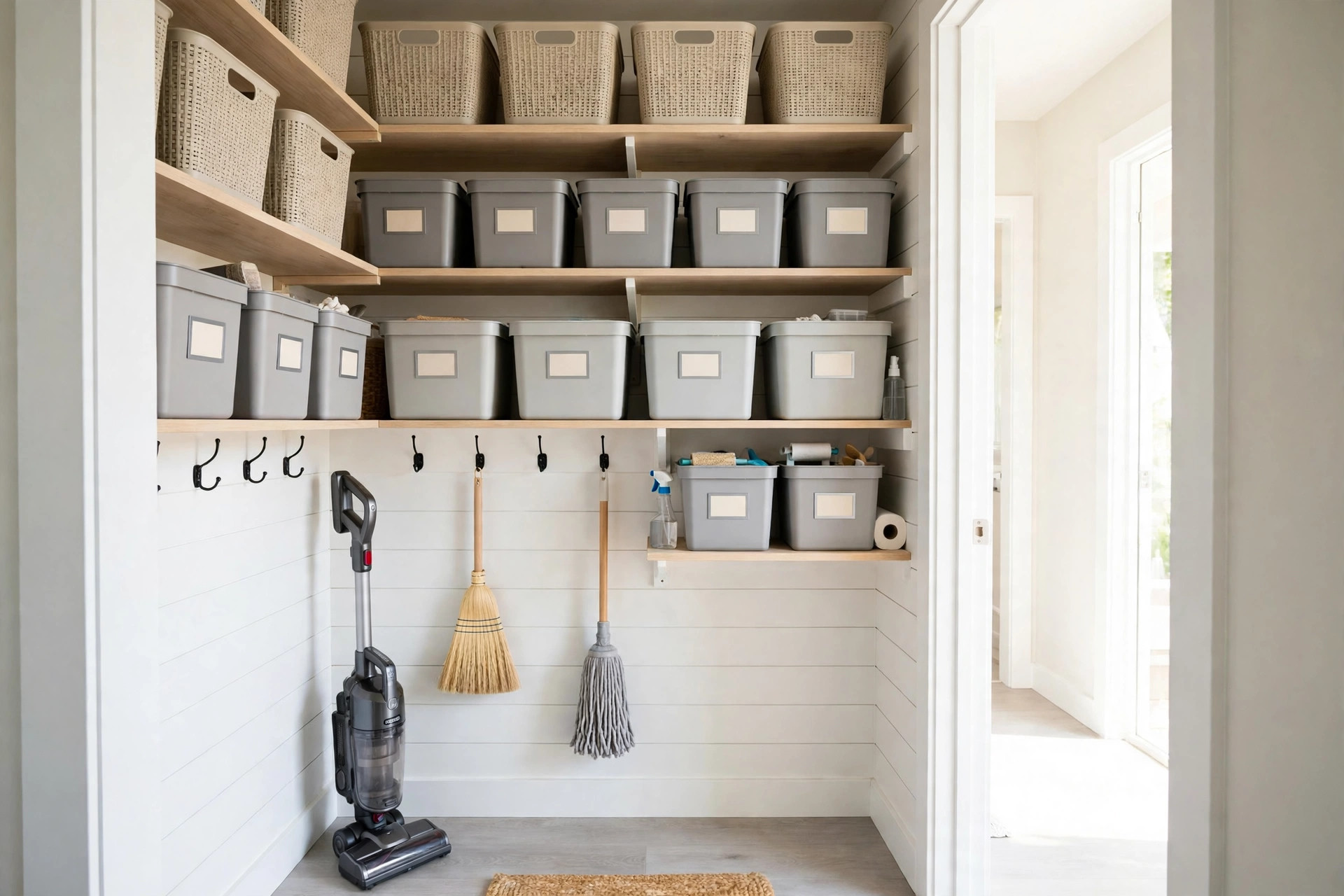
These 25 utility closet organization ideas fix that without a bigger closet: empty it first and keep only what the house actually uses, give every job its own zone, hang the long tools on the wall, park the vacuum where the socket is, and label every bin by its job — so the smallest closet in the house finally pulls its weight.
Every idea below works in a real home, from a single narrow closet beside the laundry room to a cupboard under the stairs. If the laundry room itself needs a rethink first, 22 Laundry Room Storage Ideas for 2026 covers the room the closet usually sits beside — the ideas below are the closet layer that lives inside it. Pick three ideas that fit your worst shelf, start by emptying the whole closet, and build from there.
Sort it first
1. Empty the whole closet before you organize a single shelf — you cannot sort what you cannot see
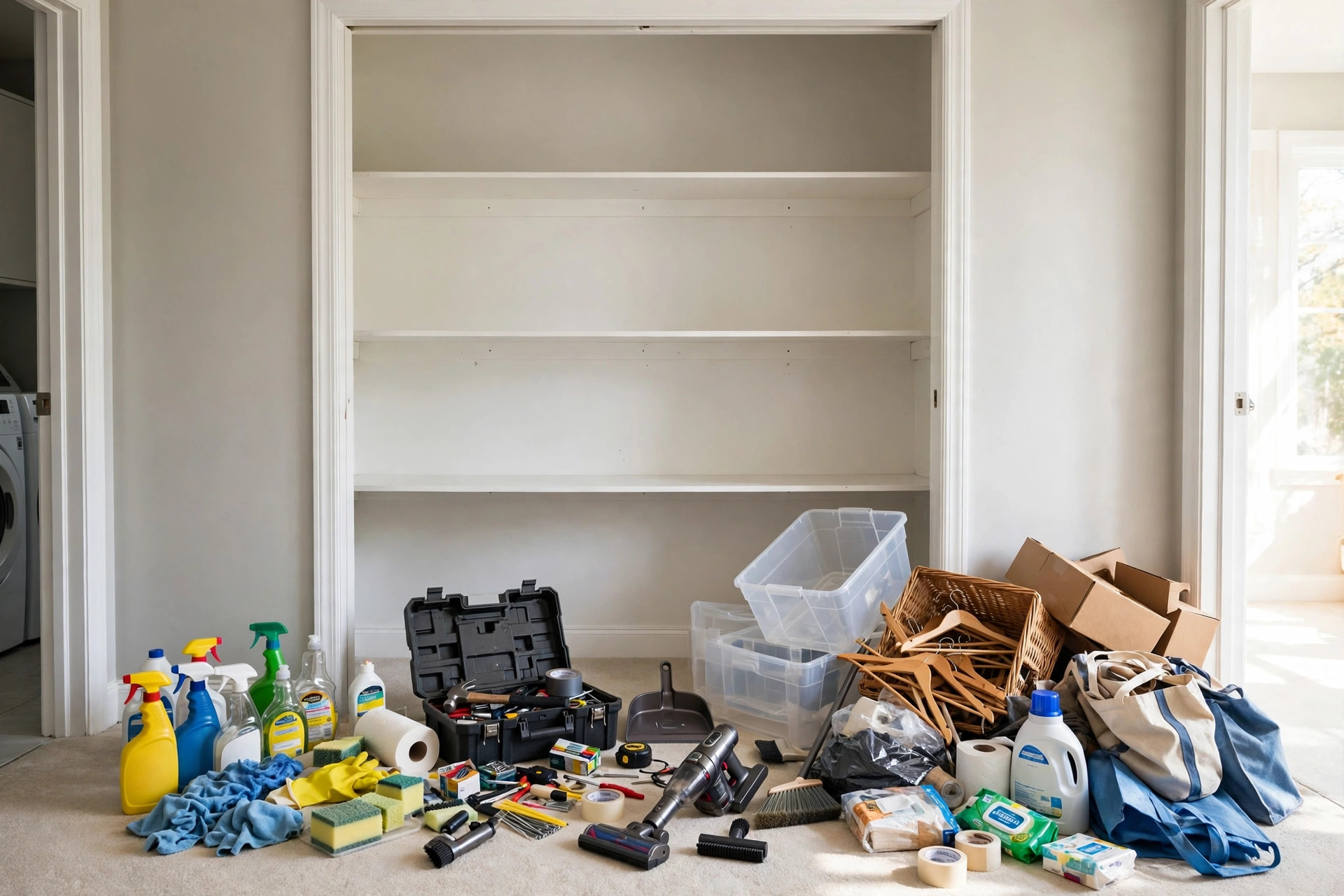
A utility closet that is sorted in place is a closet that stays a mystery, because the shelf you organize without emptying it is the shelf with a broken vacuum hiding behind the sprays and a third mop leaning at the back. Empty the whole closet before you organize a single shelf — pull everything out onto the floor, so you can see what the house actually owns, what is broken, and what has been duplicated three times over. Emptying first also stops you organizing around the junk, because the junk is on the floor in front of you and not hiding behind a tidy row of bins. Keep everything out until the sort is done, wipe the shelves while they are bare, and never put a single thing back until it has a zone. The empty-it-first rule in detail is in 22 Linen Closet Organization Ideas for 2026, where the same narrow-closet sort works for sheets. Empty it first, and the closet stops hiding.
2. Keep only what the house actually uses — the third mop and the broken vacuum go, not back on the shelf
A utility closet that keeps everything is a closet that holds nothing useful, because the third mop and the broken vacuum take the shelf the working mop needs, and the spray bottles from three years ago take the space the new ones need. Keep only what the house actually uses — the mop that works, the vacuum that runs, the sprays you reach for every week — and let the rest go, not back on the shelf. Keeping only what you use also stops the closet filling up again, because the rule is simple: if it has not been used in a year, it does not live here. Keep the working tools, let the broken ones go, and never keep a spare "just in case" of something the house has never needed. Use what you keep, and the closet stops being a museum.
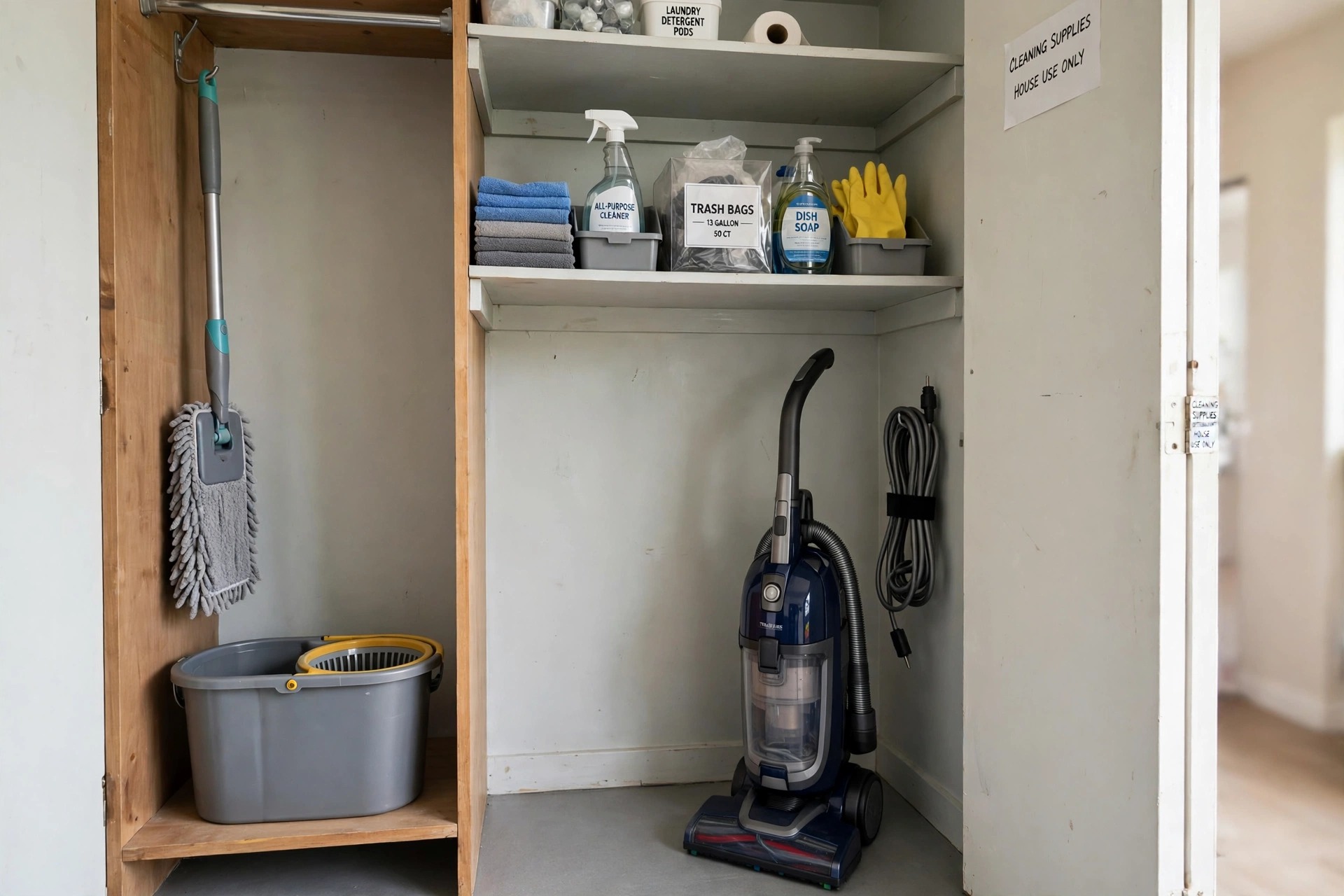
3. Group by job, not by where it came from — cleaning, laundry, tools and spares each get their own zone
Cleaning supplies mixed with laundry things and tools is a closet you dig through, because the spray you need is behind the screwdriver and the cloth you need is under the detergent. Group by job, not by where it came from — cleaning in one zone, laundry in another, tools in a third, spares in a fourth — so the job you are doing is the zone you open. Grouping by job also stops the zones drifting into each other, because the job says what belongs in the zone and what does not. Keep one job per zone, put the zones in the order you use them, and never let a zone hold two jobs, because that is how the closet becomes a pile again. One job per zone, and the digging stops.
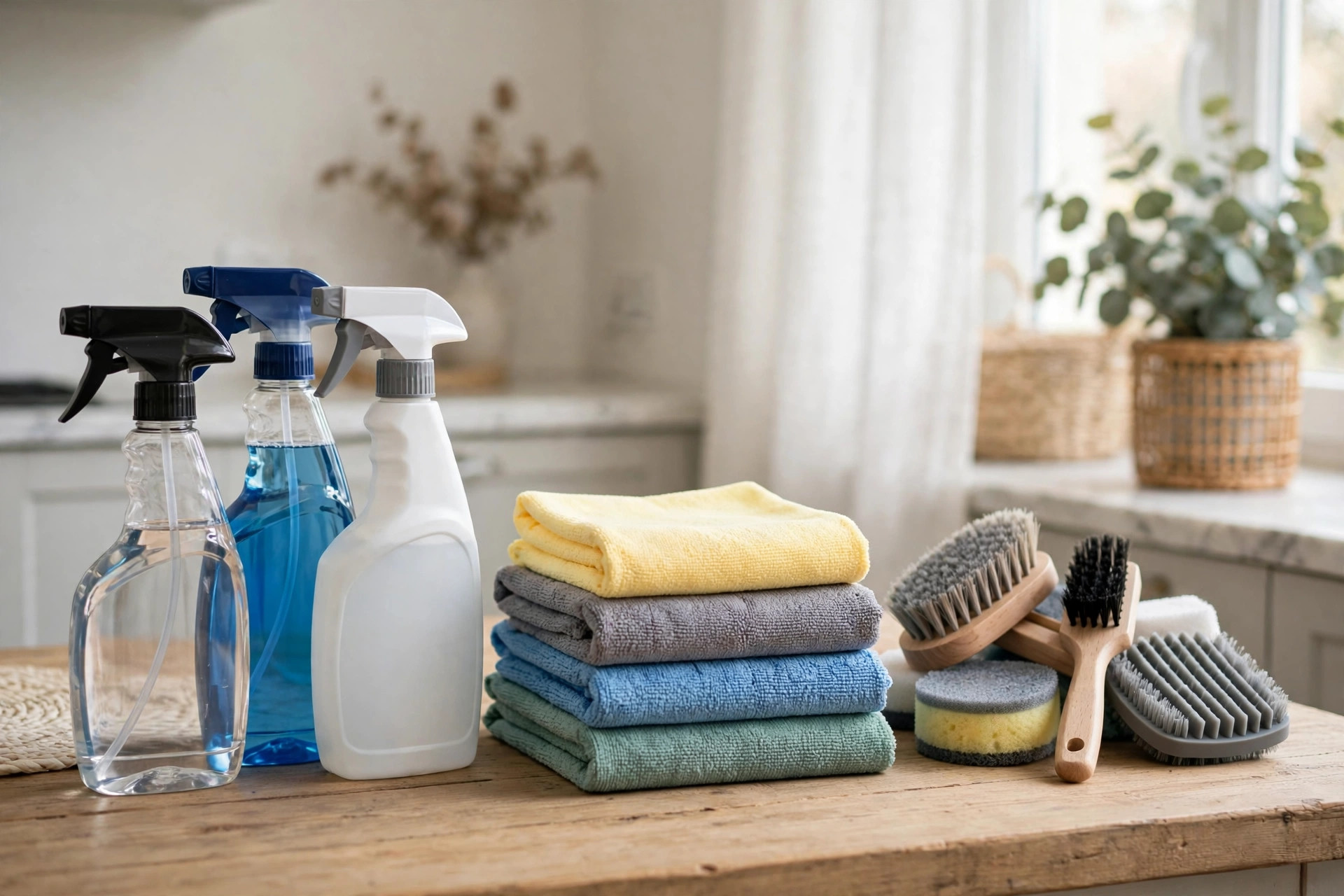
4. Give every zone a shelf, not a pile — a pile is a shelf that gave up
A zone that lives in a pile is a zone that has already failed, because the pile on the shelf is the pile you dig through, and the thing at the bottom is the thing you never find. Give every zone a shelf, not a pile — a shelf for cleaning, a shelf for laundry, a shelf for tools, a shelf for spares — so every zone has a flat place to live and nothing sits on top of anything else. A shelf per zone also stops the zones collapsing into each other, because the shelf edge says where one zone ends and the next begins. Keep the shelves shallow enough that nothing hides at the back, one layer deep, and never let a shelf hold two zones, because that is how the pile comes back. A shelf per zone, and the pile stops forming.
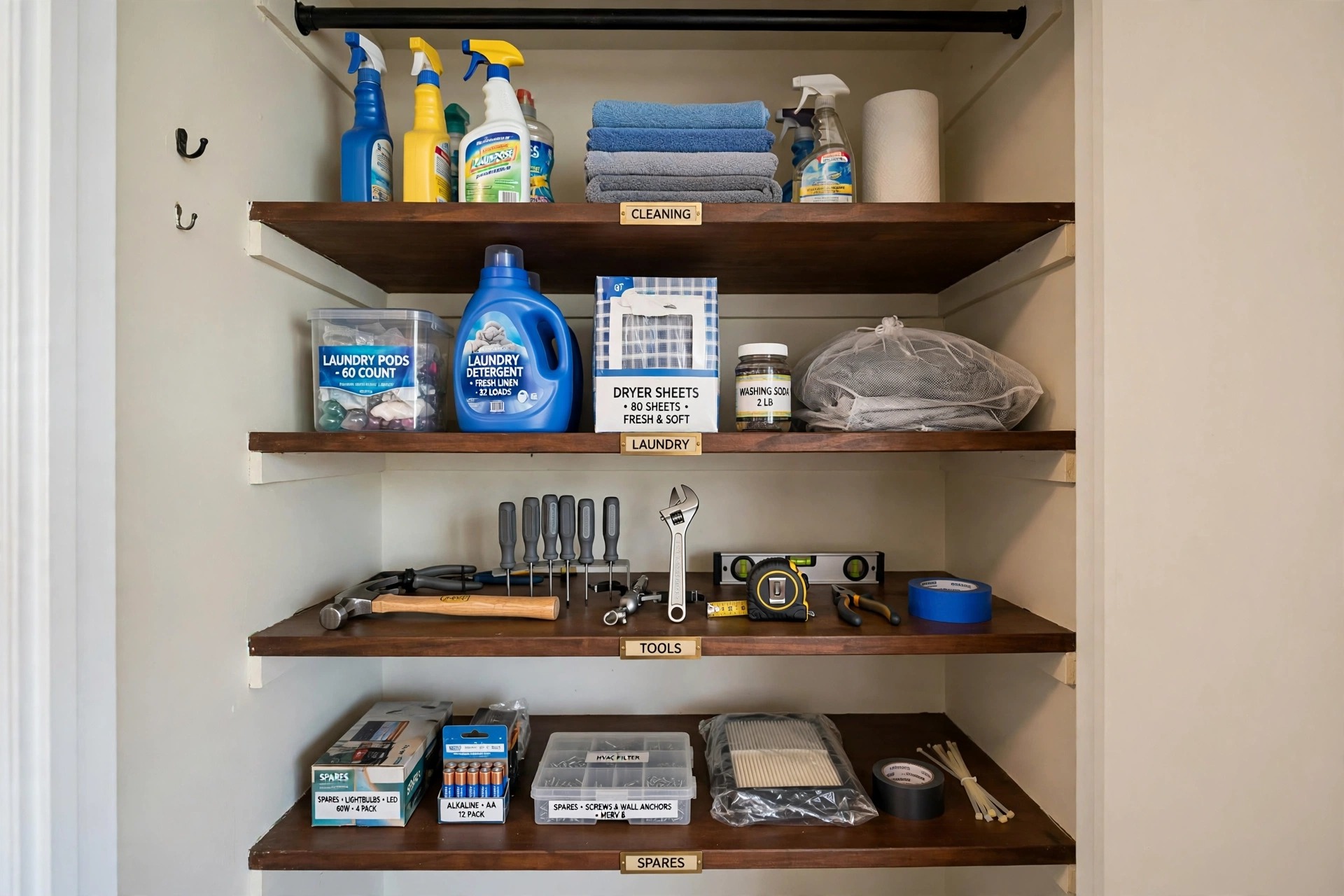
5. Put the daily tools at hand height — the vacuum and the mop live where you grab them, not where you climb for them
A vacuum on a high shelf is a vacuum that stays on the shelf, because the tool you have to climb for is the tool you do not use, and the mop on the top shelf is the mop that never mops. Put the daily tools at hand height — the vacuum and the mop live where you grab them, on the floor or on a low hook, not where you climb for them. Daily tools at hand height also stop the closet being a workout, because the things you use every week should be the easiest things to reach. Keep the daily tools between your knees and your shoulders, the weekly tools just above, and never put a daily tool on the top shelf, because that is how the daily tool becomes a decoration. Hand height for the daily, and the tools get used.
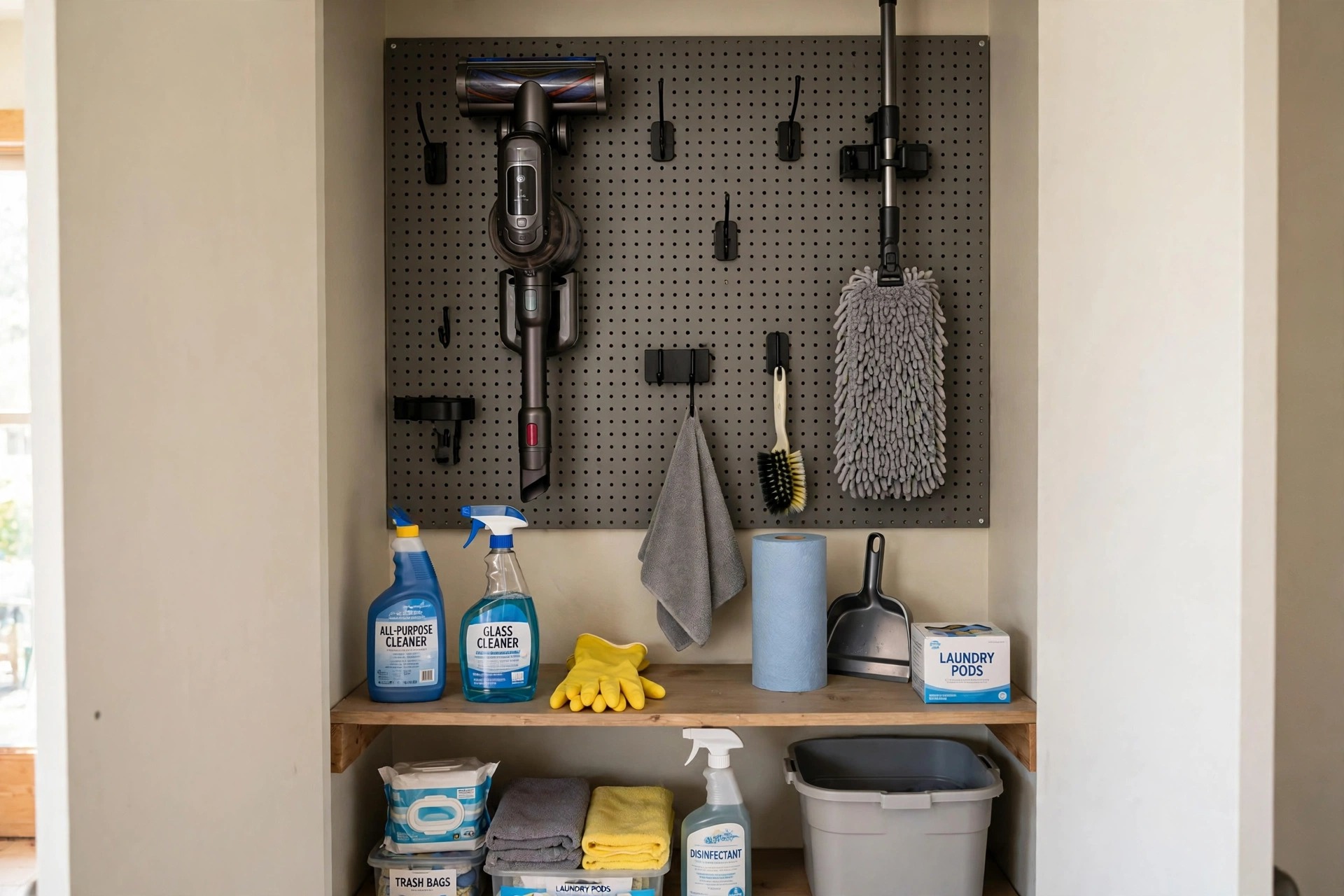
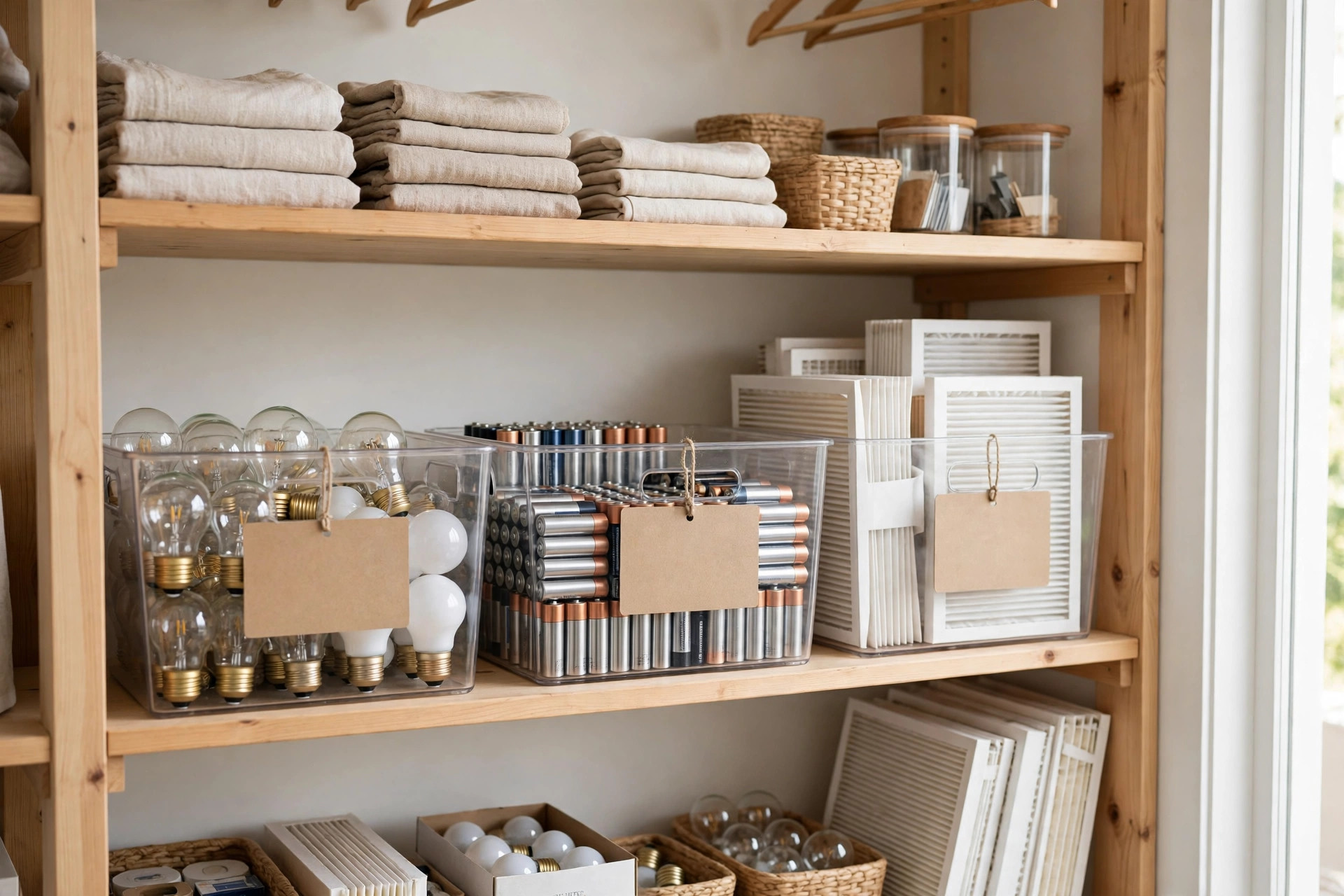
6. One shelf for spares, and a limit on it — lightbulbs, batteries and filters in one place, restocked not hoarded
Spares scattered across the closet are spares you buy twice, because the lightbulb you need is in three different places and the battery you need is the one you already bought last month. Give the spares one shelf, and a limit on it — lightbulbs, batteries and filters in one place, in labelled bins, restocked when they run low and not hoarded when they do not. A limit on the spares also stops the shelf filling up, because the rule is simple: when the bin is full, nothing new comes in until something goes out. Keep the spares in one place, one bin per kind, and never let a spare live on another shelf, because that is how the duplicates start. One shelf, one limit, and the spares stop multiplying.
Cleaning tools and the big things
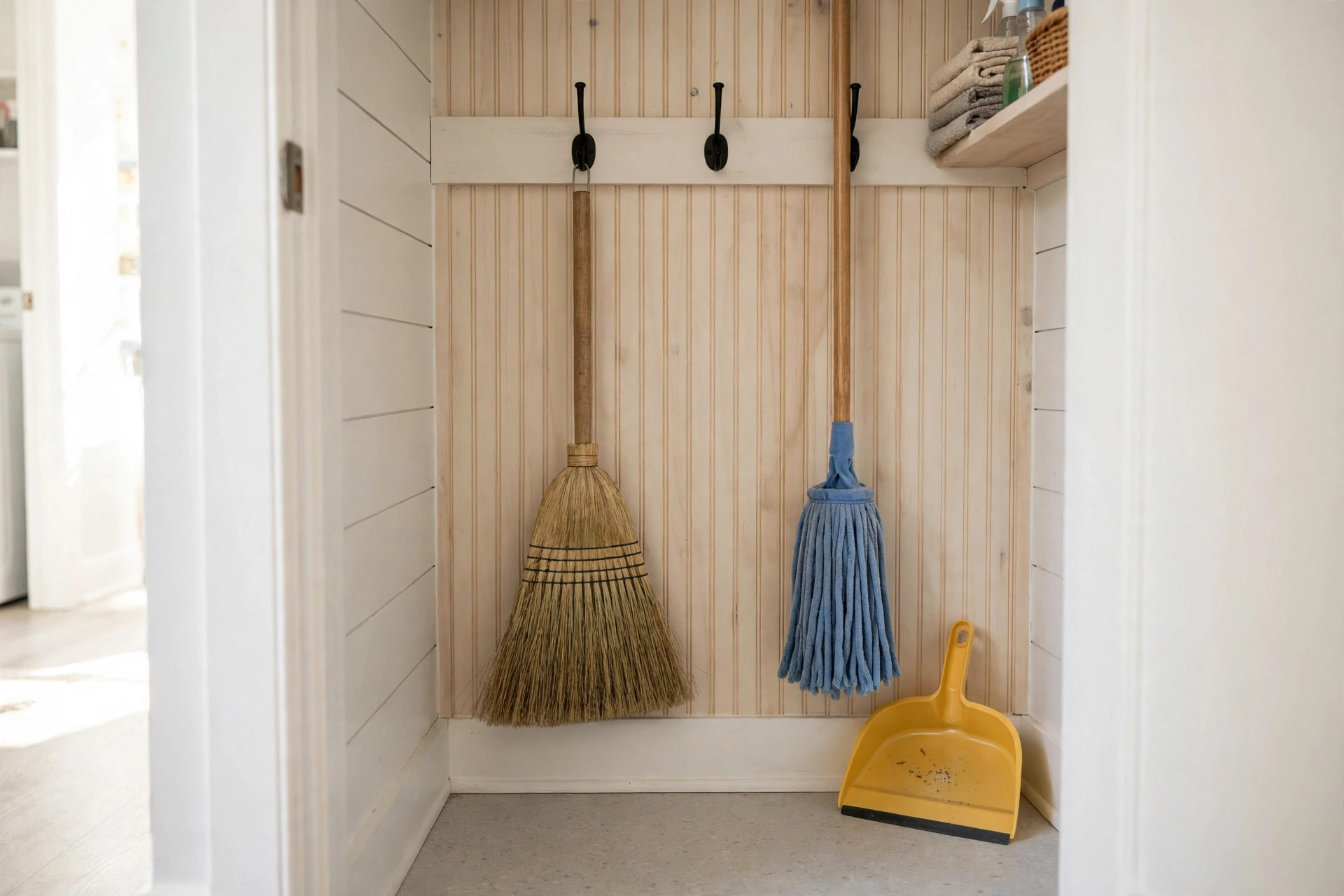
7. Hang the broom and mop on the wall — hooks on the wall beat a leaning pile in the corner
Brooms leaning in a corner are brooms that fall over every time the door opens, because the leaning pile is held up by nothing and the dustpan at the bottom is the one you cannot reach. Hang the broom and mop on the wall — hooks on the wall, one per tool, handles up and heads down, so the tools hang straight and the floor stays clear. Wall hooks also stop the handles bending, because a hanging broom keeps its shape and a leaning broom bends at the head. Keep the hooks at a height where the heads clear the floor, one hook per tool, and never lean a broom in the corner again, because that is how the pile falls over. Hooks on the wall, and the leaning pile stops falling. (Check on Amazon for wall hooks made for brooms and mops that grip the handle.)
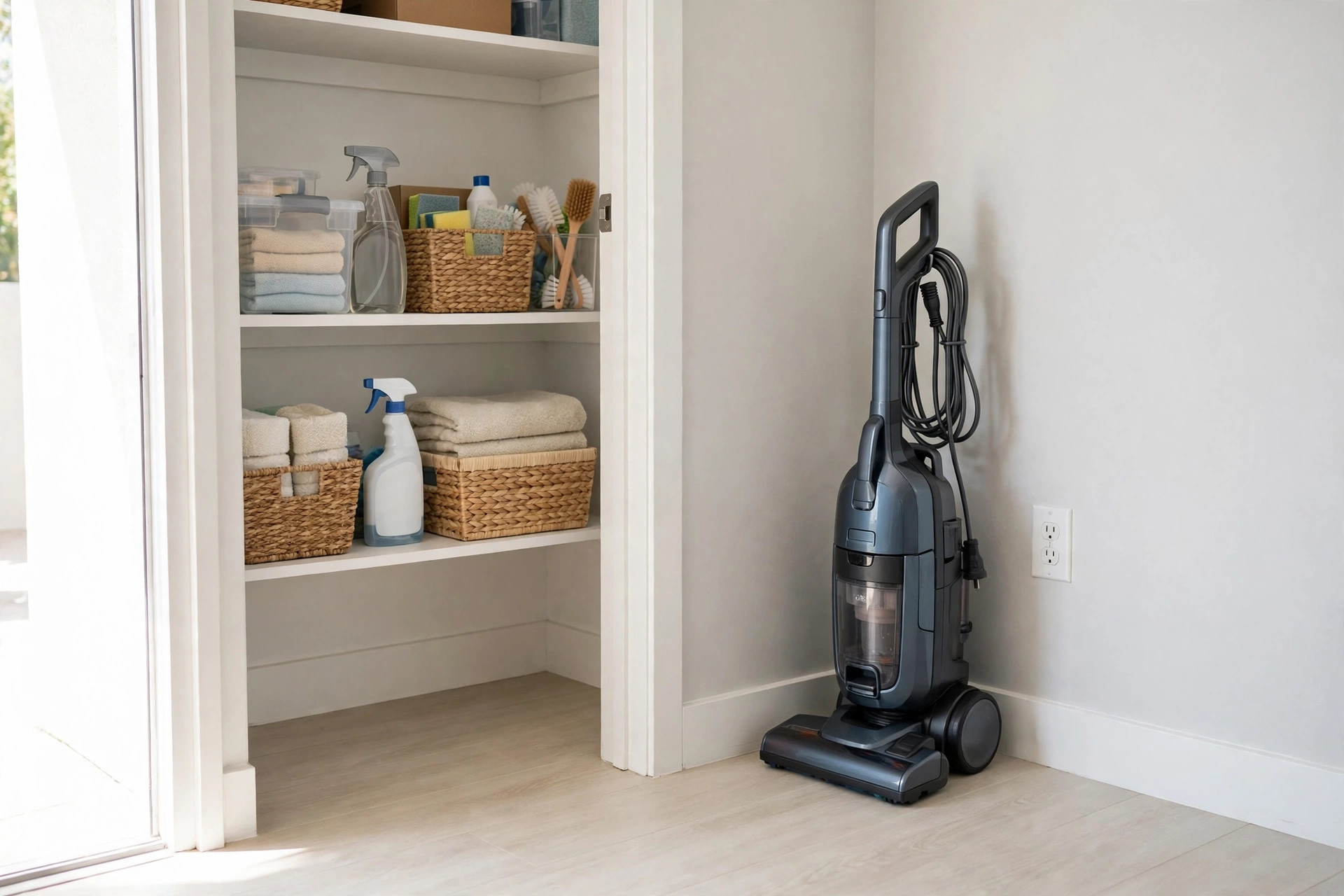
8. Park the vacuum where the cord reaches the socket — a vacuum that has to be carried is a vacuum that stays in the cupboard
A vacuum parked behind the bucket is a vacuum that never vacuums, because the vacuum you have to drag out from behind everything else is the vacuum you leave in the cupboard and the floor stays dirty. Park the vacuum where the cord reaches the socket — a corner of its own, cord wrapped, plug in reach, so the vacuum is the first thing you grab and the last thing you put back. Parking by the socket also stops the cord tangling, because the cord wraps in one place and the vacuum never travels further than the cord allows. Keep the vacuum on the floor, not on a shelf, and never let anything sit in front of it, because that is how the vacuum becomes furniture. Parked by the socket, and the vacuum gets used.
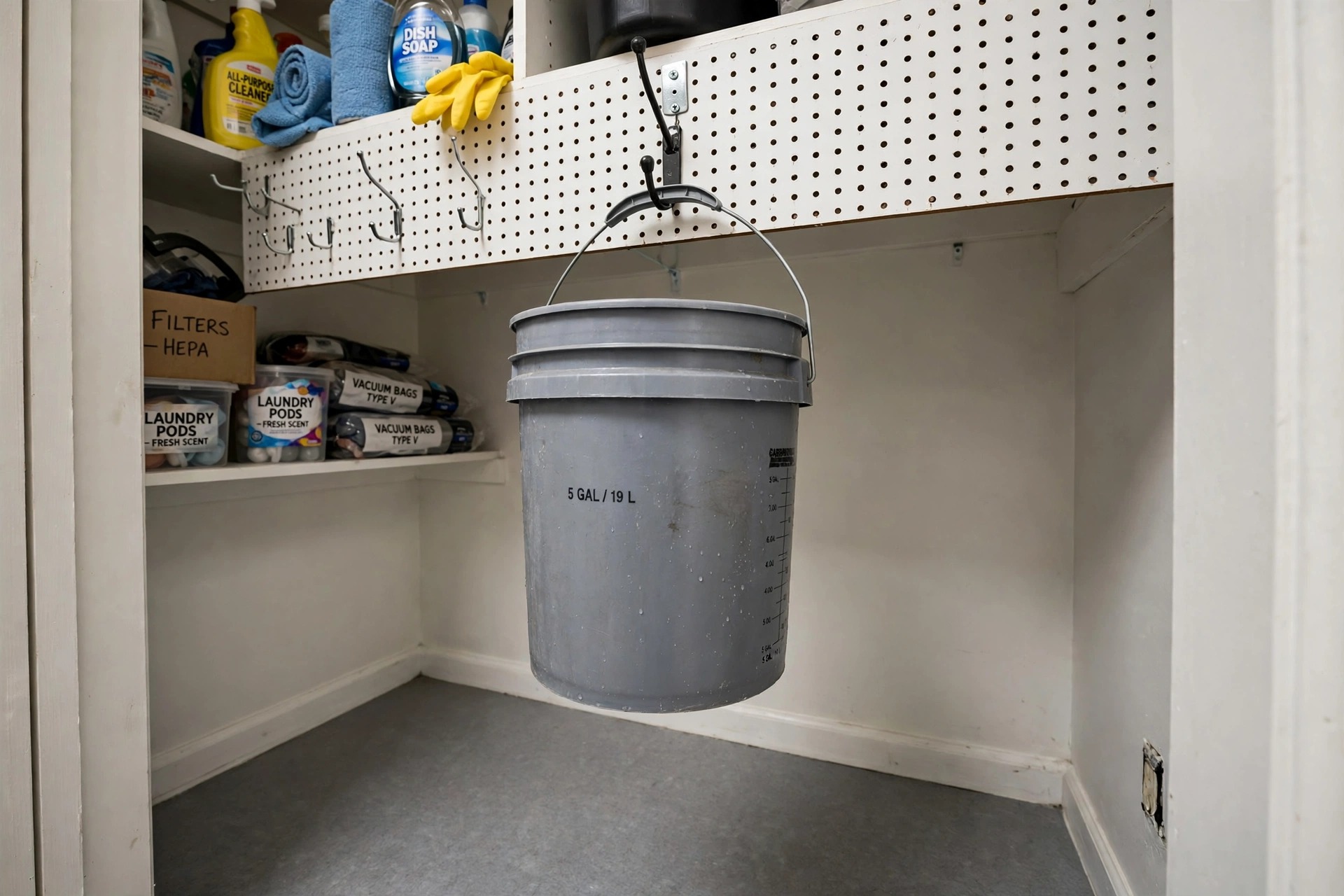
9. A bucket that hangs, not one that sits — the bucket on a hook leaves the floor for the vacuum
A bucket that sits on the floor is a bucket that takes the vacuum's parking space, because the floor of a small closet holds one big thing and the bucket is not the one that should be there. Hang the bucket on a hook — the bucket on the wall, handle on the hook, so the floor stays for the vacuum and the bucket is off the ground where it dries. A hanging bucket also stops the bottom going musty, because the air moves under it and the bucket dries between uses. Keep the bucket on a strong hook, empty it after every use, and never let the bucket sit on the floor, because that is how the floor disappears. Bucket on a hook, and the floor stays for the vacuum.
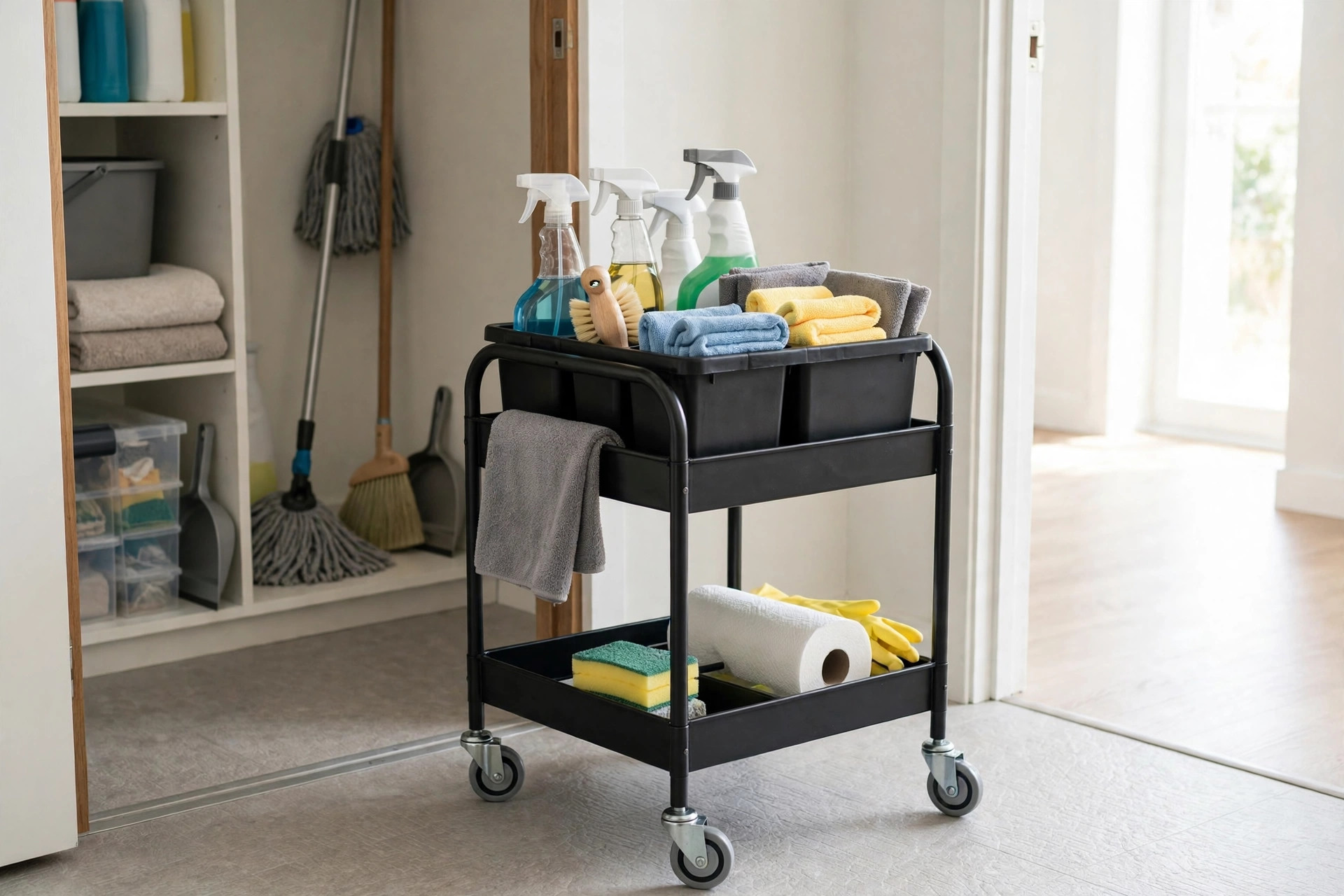
10. A cleaning caddy that rolls to the job — the caddy on a rolling cart carries the sprays, not your arms (see Post 18)
Cleaning means carrying — sprays in one hand, cloths in the other, bucket in the third that you do not have — and the carrying is how the spray bottle gets left in the bathroom and the cloth gets left in the kitchen. Put the cleaning caddy on a rolling cart — the sprays and cloths on the cart, the cart rolls to the job, so the cleaning travels in one trip and the closet holds one cart instead of a dozen trips. A rolling caddy also stops the sprays living in three different rooms, because the cart is the one place for them. Keep the caddy stocked, park the cart in the closet between jobs, and never let the cart hold the everyday kit as well, because that is how the rolling caddy becomes a second closet. The rolling cart in detail is in 22 Rolling Cart Organization Ideas for 2026, where the caddy rides to the room that needs it. Sprays on the cart, and the carrying stops. (Check on Amazon for a rolling cleaning caddy with a handle and a bucket slot.)
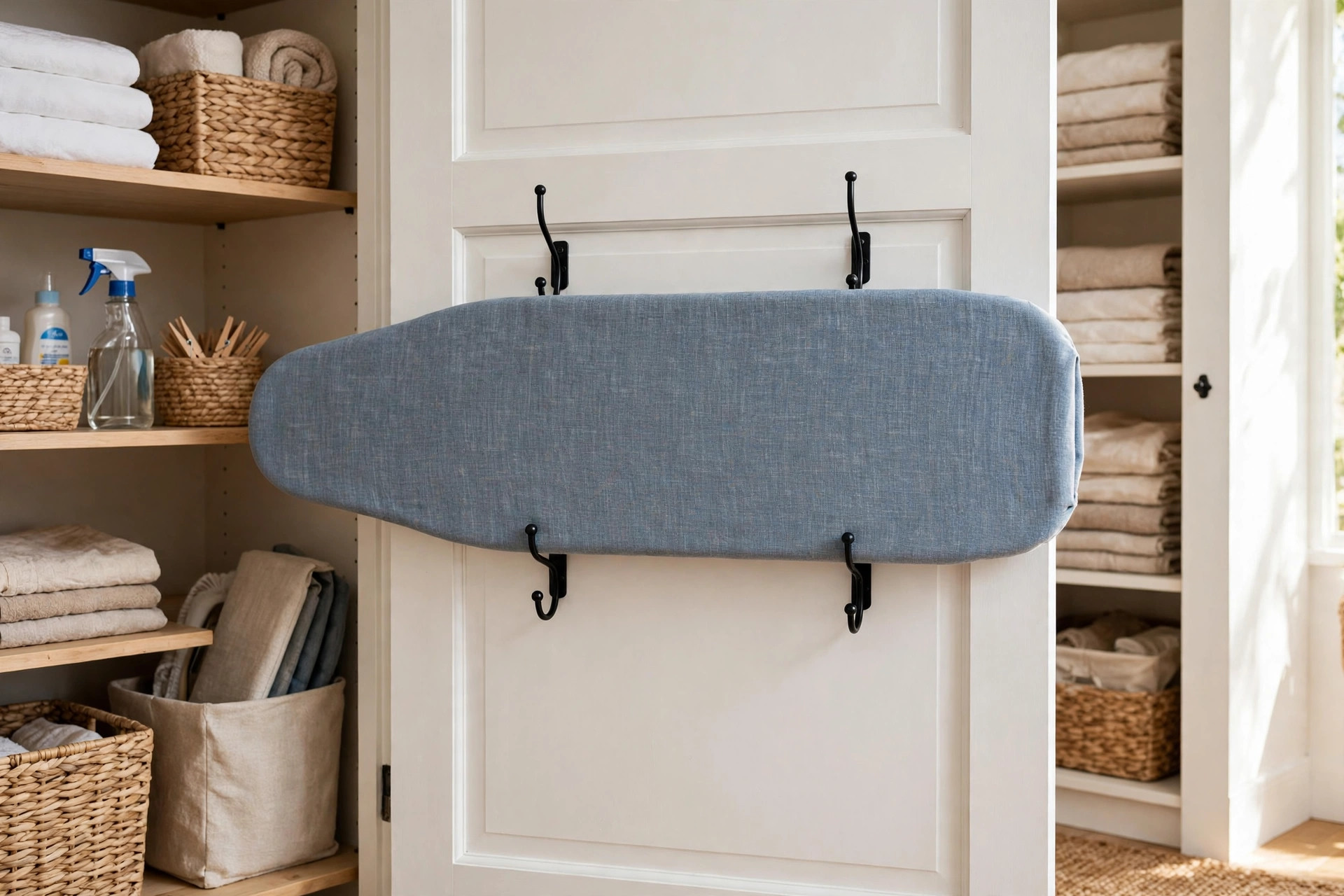
11. The ironing board on the door, flat and out of the way — the board that hangs on the door is the board that gets used
An ironing board leaning behind the door is a board that falls over every time the door opens, because the leaning board is held up by nothing and the door is the thing that knocks it down. Hang the ironing board on the door, flat and out of the way — hooks on the inside of the door, the board flat against it, so the board is there when you need it and invisible when you do not. A board on the door also stops the board taking a shelf, because the door holds it and the shelves stay for the bins. Keep the board on strong hooks, check the door still closes, and never lean the board in the corner again, because that is how it falls over. Board on the door, and the ironing stops being a wrestling match.
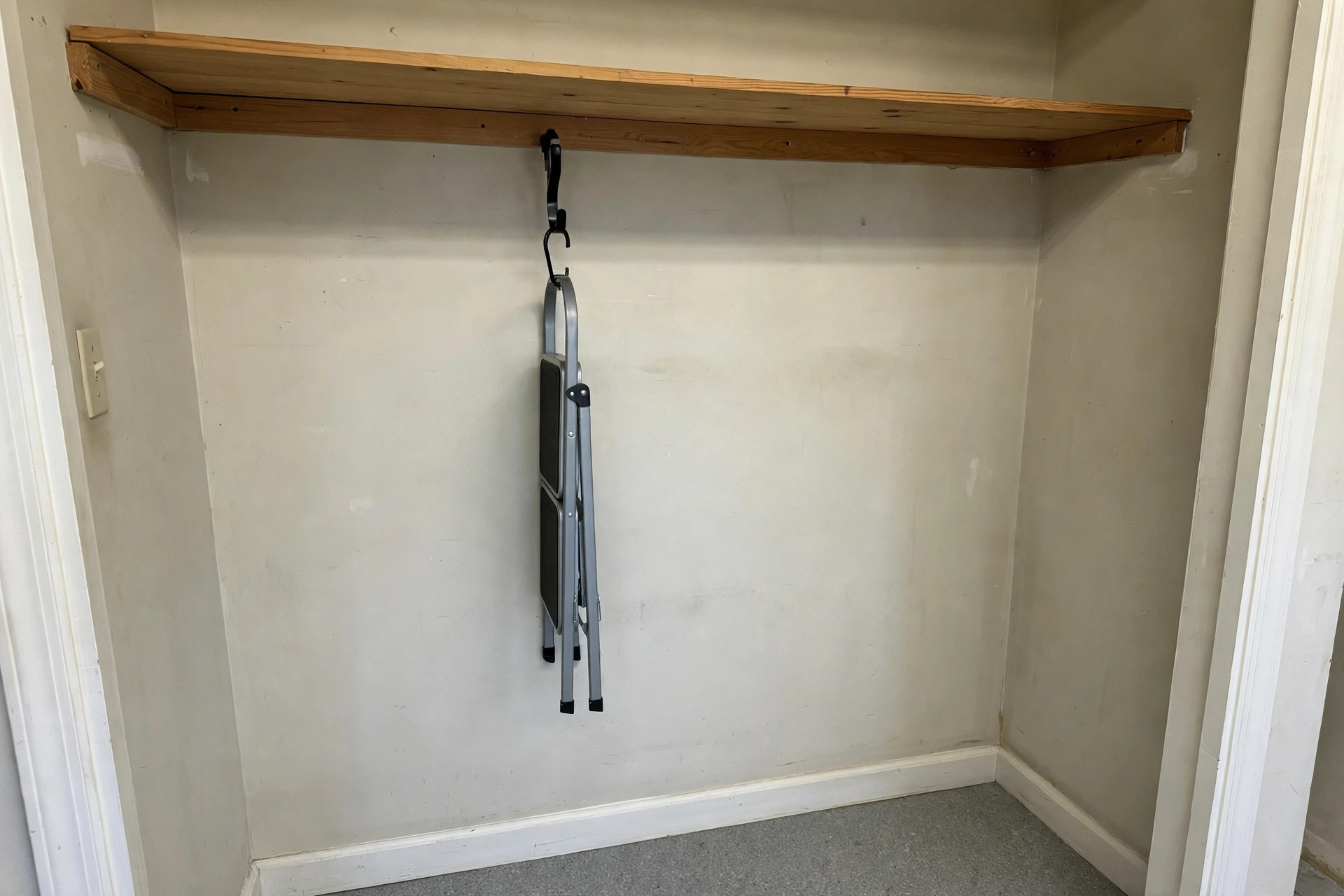
12. A step stool that folds flat against the wall — the stool you need once a week should not take a shelf
A step stool that sits on a shelf is a stool that takes a whole shelf for a tool you use once a week, because the stool is wide and the shelf is narrow and the stool is the thing that fills it. Use a step stool that folds flat against the wall — the stool folded, hung on a hook, flat against the wall, so the shelf stays for the bins and the stool is there when the high shelf needs reaching. A folding stool also stops the stool becoming a second shelf, because the folded stool takes no shelf at all. Keep the stool on a hook at hand height, unfold it when you need it, and never let the stool sit on a shelf, because that is how the shelf disappears. Flat against the wall, and the shelf stays for the bins.
Small things, shelves and bins
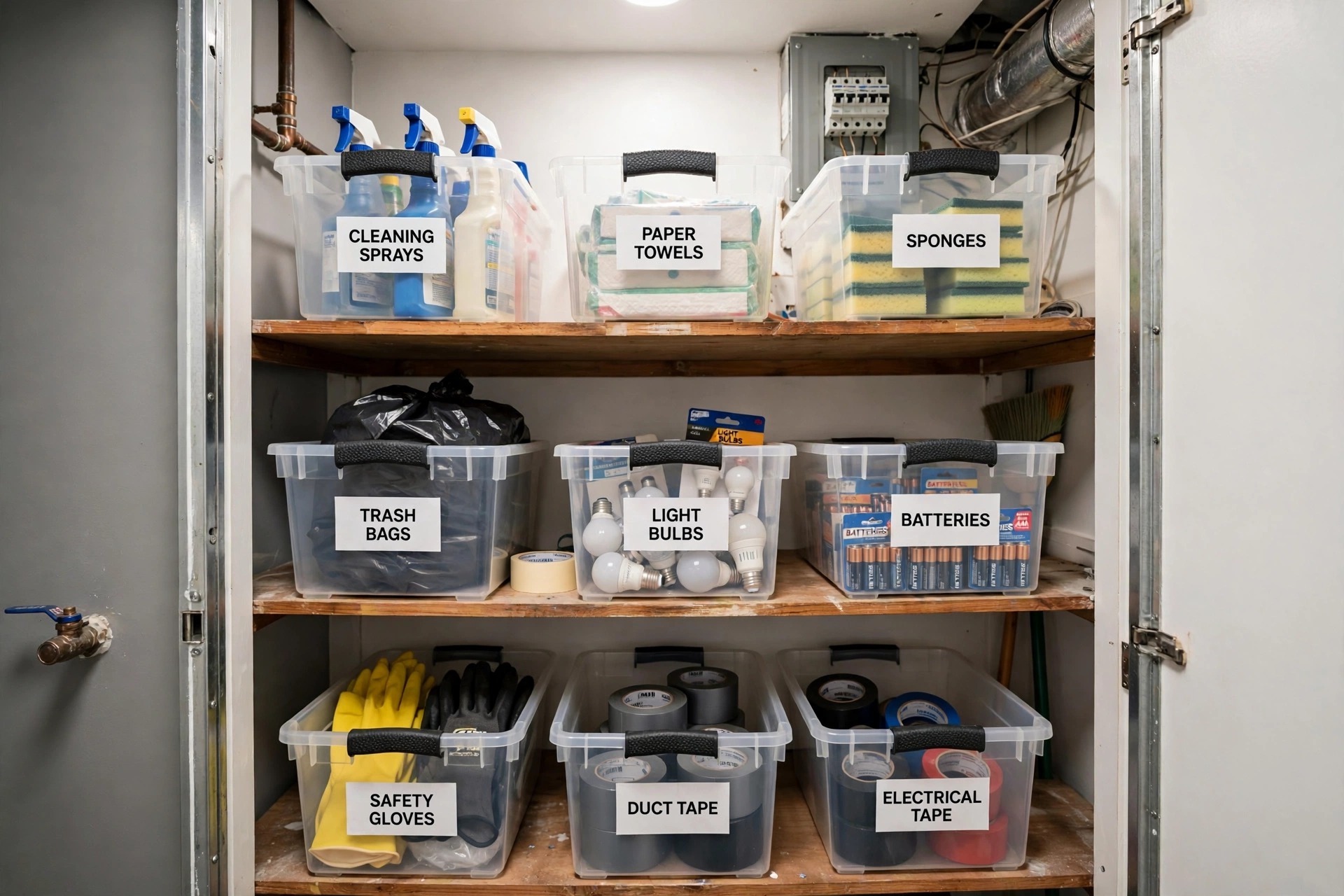
13. Labelled bins on every shelf — one kind of thing per bin, the label on the front (see Post 08)
Spray bottles loose on a shelf are spray bottles you knock over, because the shelf with no bins is the shelf where everything slides, and the bottle you need is the one at the back. Put labelled bins on every shelf — one kind of thing per bin, the label on the front, so the bin says what is in it and the shelf says where the bin lives. Labelled bins also stop you buying a fourth bottle of the spray you already own, because the bins show what you have. Keep one kind of thing per bin, label the front where you can read it, and never let a bin hold two kinds, because that is how the digging starts again. The labelled-bin system in detail is in 25 Pantry Organization Ideas for 2026, where the same bins work for food. Bins on the shelves, labels on the front, and the shelf stops being a slide.
14. Small jars for the loose bits — screws, batteries and spare bulbs in clear jars, not in a drawer (see Post 19)
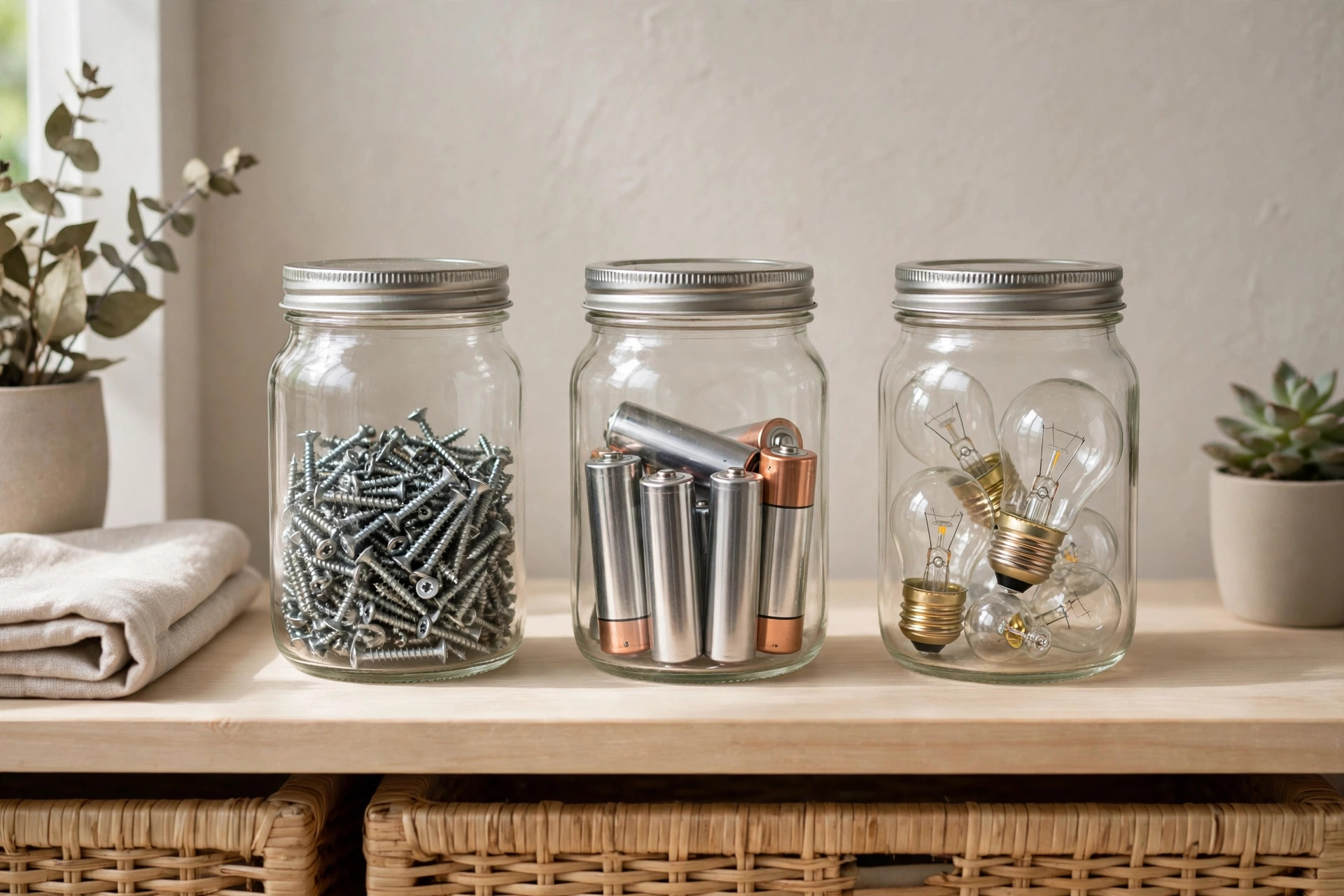
Screws, batteries and spare bulbs in a drawer are loose bits you dig for, and the digging is how the small things end up everywhere except where you need them. Put them in small clear jars on a shelf — the jars hold the loose bits, the clear glass shows what is inside, and the shelf holds the jars where you can see them, so the digging stops. Clear jars also stop you buying a third packet of the screws you already own, because the jars show what you have. Keep one kind of thing per jar, one jar per shelf spot, and never let a jar hold two kinds, because that is how the digging starts again. The small jars in detail are in 20 Pegboard Organization Ideas for 2026, where the jars hang on hooks for buttons and beads. Jars on the shelf, and the loose bits stop hiding.
15. A high shelf for the things you use twice a year — the seasonal and the spare live up high, out of the daily way
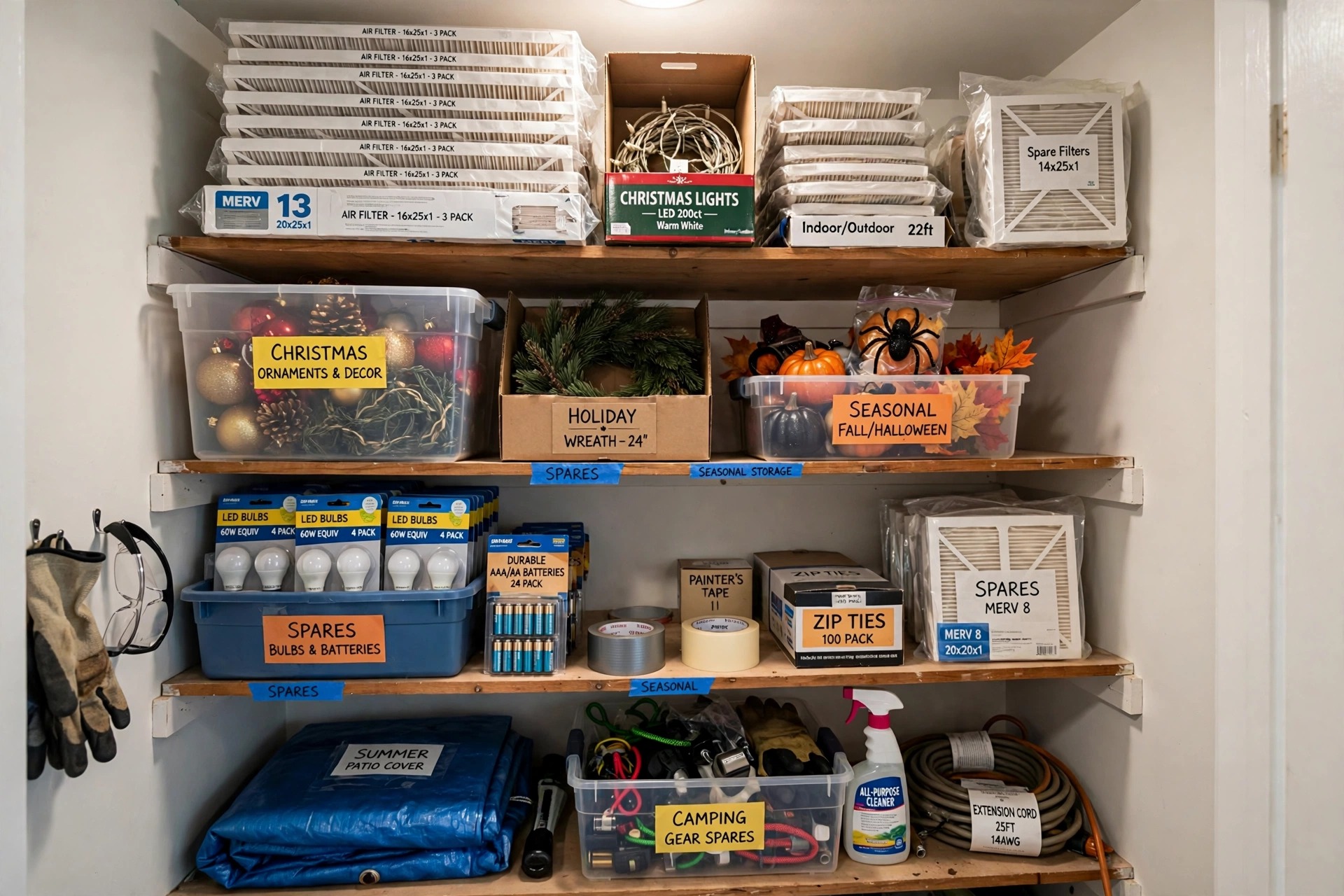
Seasonal things on a daily shelf are seasonal things in the way, because the spare filter and the Christmas lights take the space the weekly sprays need, and the shelf you reach every day is the shelf that should hold the daily things. Put a high shelf for the things you use twice a year — the seasonal and the spare live up high, out of the daily way, so the daily shelves stay for the daily tools. A high shelf also stops the seasonal things getting lost, because the high shelf is the one place for them and the step stool reaches it when you need it. Keep the high shelf for the twice-a-year things only, label what is up there, and never let a daily tool live up high, because that is how the daily tool becomes a decoration. High shelf for the rare, and the daily shelves stay daily.
16. A shelf just for laundry day — detergent, stain spray and cloths together, beside the machine (see Post 09)
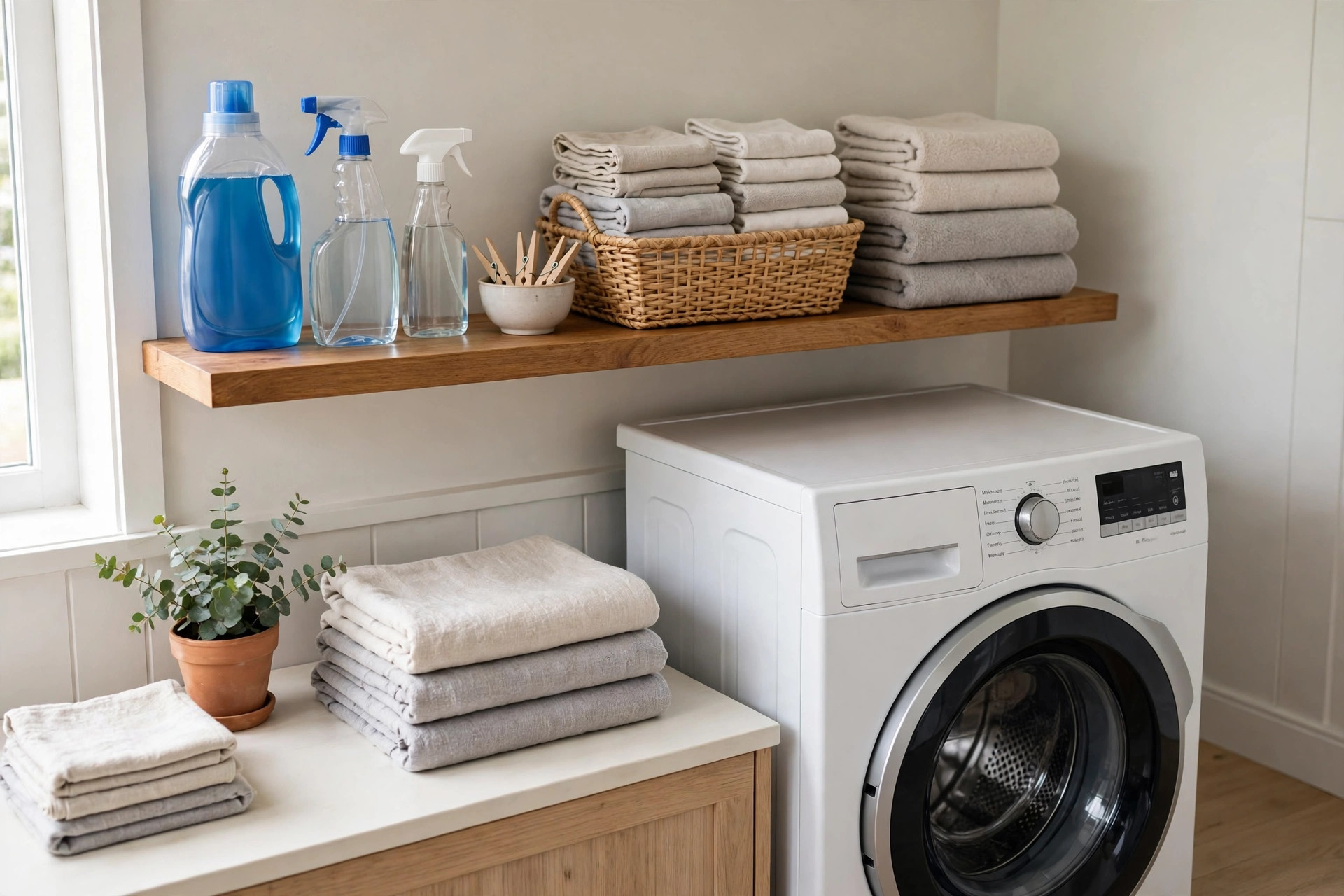
Detergent in one cupboard, stain spray in another and cloths in a third is a laundry day that starts with a hunt, because the things you need together live apart and the hunt is how the stain sets. Give laundry day its own shelf — detergent, stain spray and cloths together, beside the machine, so the laundry shelf is the shelf you open and the stain never waits. A laundry-day shelf also stops the detergent living in the kitchen, because the shelf is the one place for it. Keep the laundry things on one shelf, at arm's reach from the machine, and never let the shelf hold the cleaning sprays as well, because that is how the laundry day becomes a hunt. The laundry room the shelf serves is in 22 Laundry Room Storage Ideas for 2026, where the machine and the shelf live together. One shelf for laundry day, and the stain stops setting.
17. A tool strip for the screwdrivers and the tape — the small tools on a magnetic strip, not at the bottom of a box
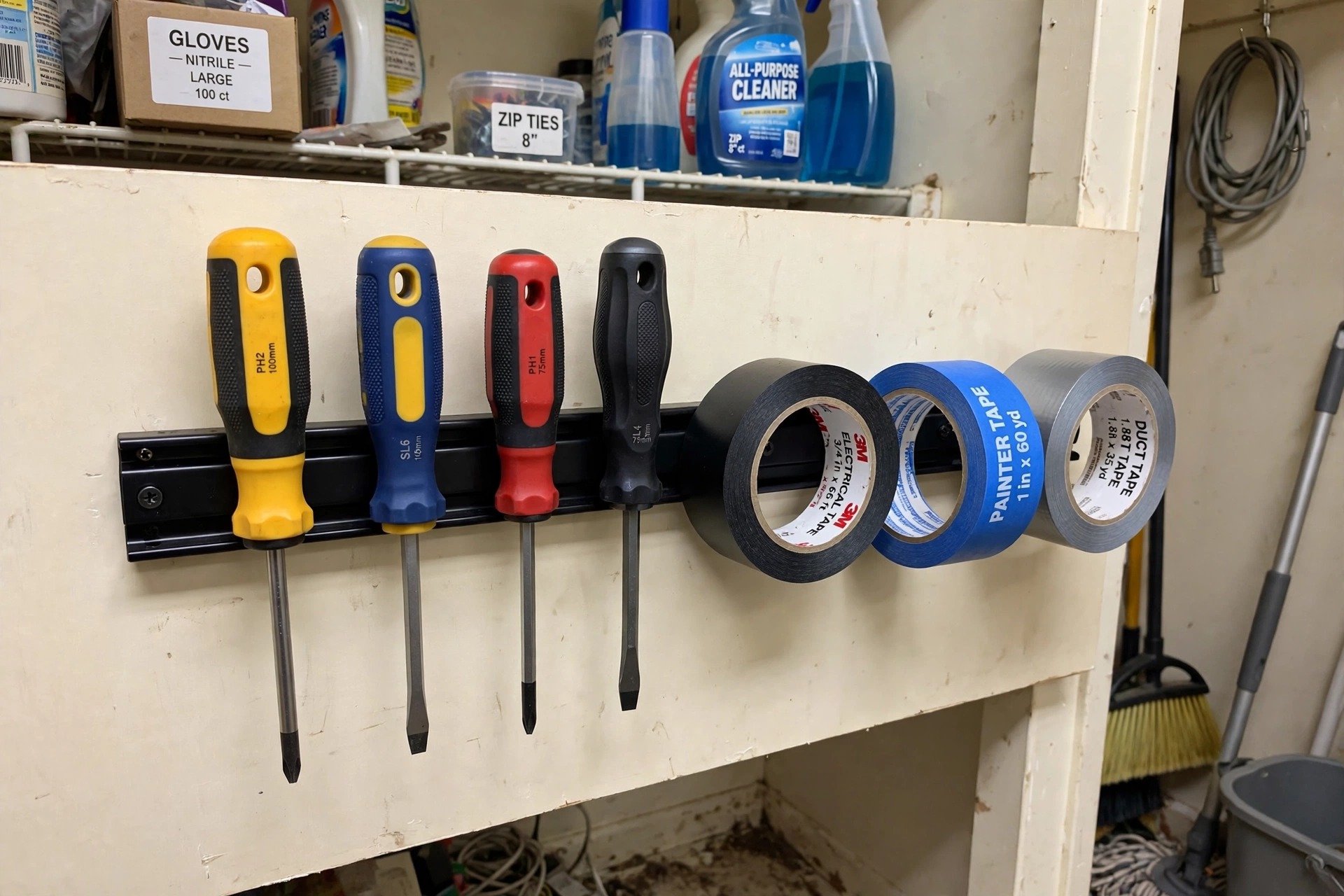
Screwdrivers and tape at the bottom of a box are tools you dig for, and the digging is how the small tools end up in three different boxes. Put a tool strip on the wall — the screwdrivers and the tape on a magnetic strip, in a row, where you can see them and grab them without opening a box — so the small tools are the tools in sight. A strip on the wall also stops the tools bending, because they hang straight and the tape hangs by its roll, not in a pile. Keep the strip at eye level, one tool per spot, and never let the strip hold the everyday scissors, because that is how the small tools get buried again. Small tools on a strip, hung not buried, and the box stops being a hunt. (Check on Amazon for a magnetic tool strip that mounts on a closet wall.)
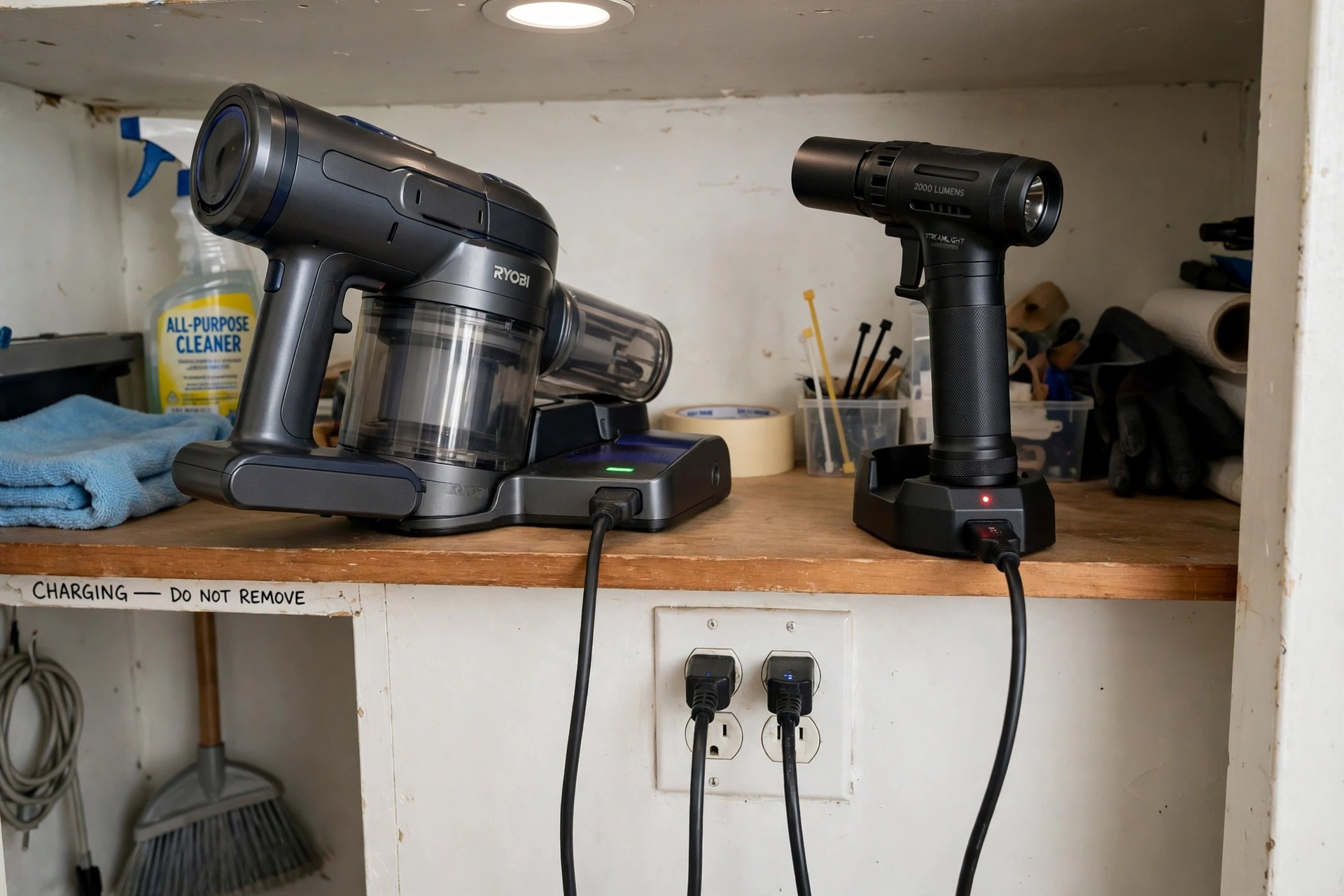
18. A charging shelf for the hand vacuum and the torch — the things that need power live where the socket is
A hand vacuum that lives on a shelf with no socket is a hand vacuum that is always flat, because the thing that needs power lives where there is no power and the charging is the chore that never happens. Give the charging things their own shelf — the hand vacuum and the torch on a shelf where the socket is, plugged in between uses, so the things that need power live where the power is and are charged when you grab them. A charging shelf also stops the chargers tangling, because the shelf holds the chargers where the cables hang straight. Keep the charging shelf near the socket, one charger per thing, and never let the shelf hold the things that do not charge, because that is how the charging shelf becomes a dumping ground. Power where the socket is, and the hand vacuum stops being flat.
Door, walls and a closet that stays tidy
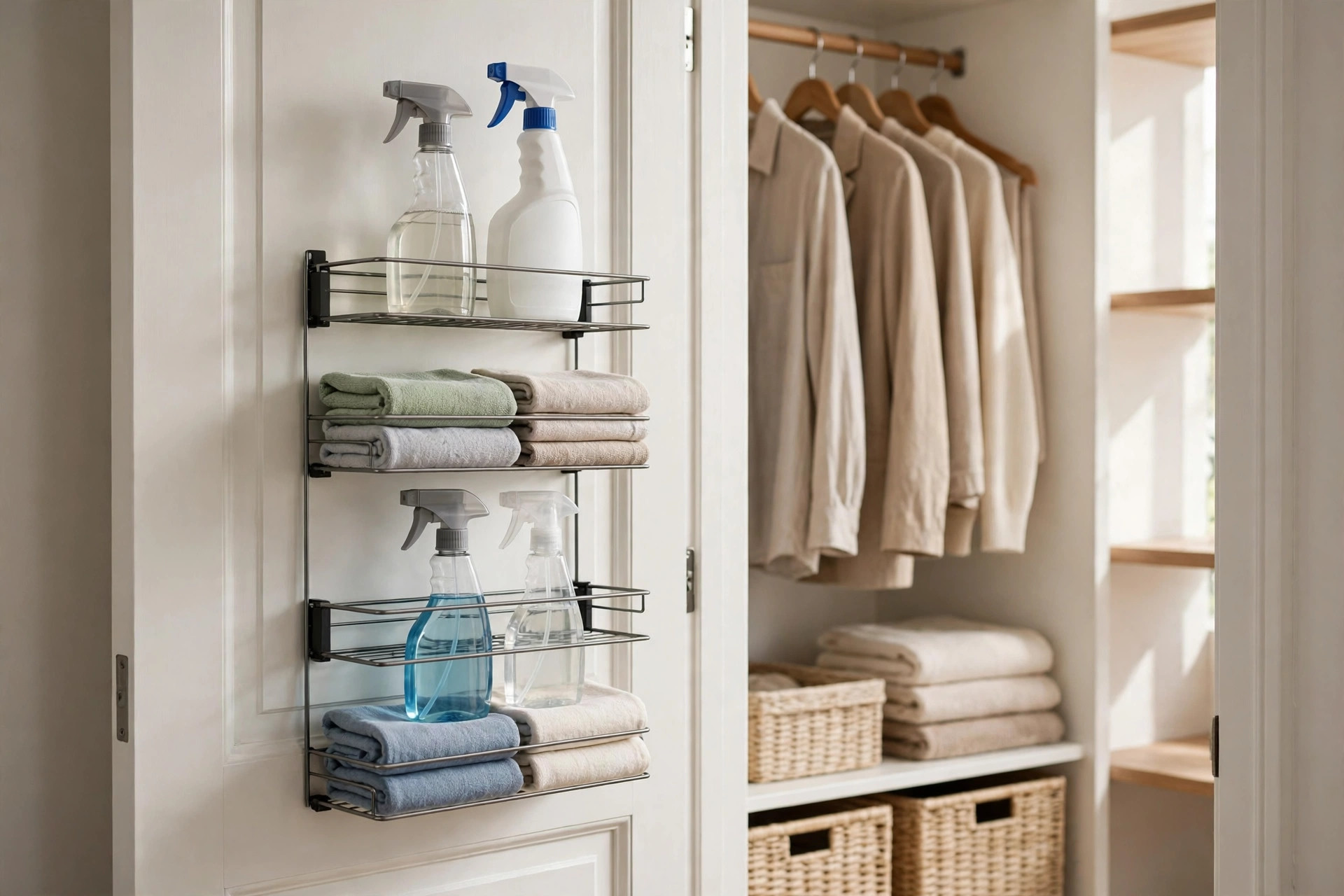
19. Use the inside of the door — hooks and a narrow rack on the door double the closet without a bigger room
A door that holds nothing is a door that wastes half the closet, because the inside of the door is a whole wall nobody uses and the narrow closet is the closet that needs every wall it has. Use the inside of the door — hooks and a narrow rack on the door, spray bottles and cloths on the rack, so the door doubles the closet without a bigger room. A door rack also stops the small things filling the shelves, because the door holds the small things and the shelves stay for the bins. Keep the rack narrow so the door still closes, use short hooks, and never let the door hold the heavy things, because that is how the door stops closing. Door used, and the closet doubles without a bigger room.
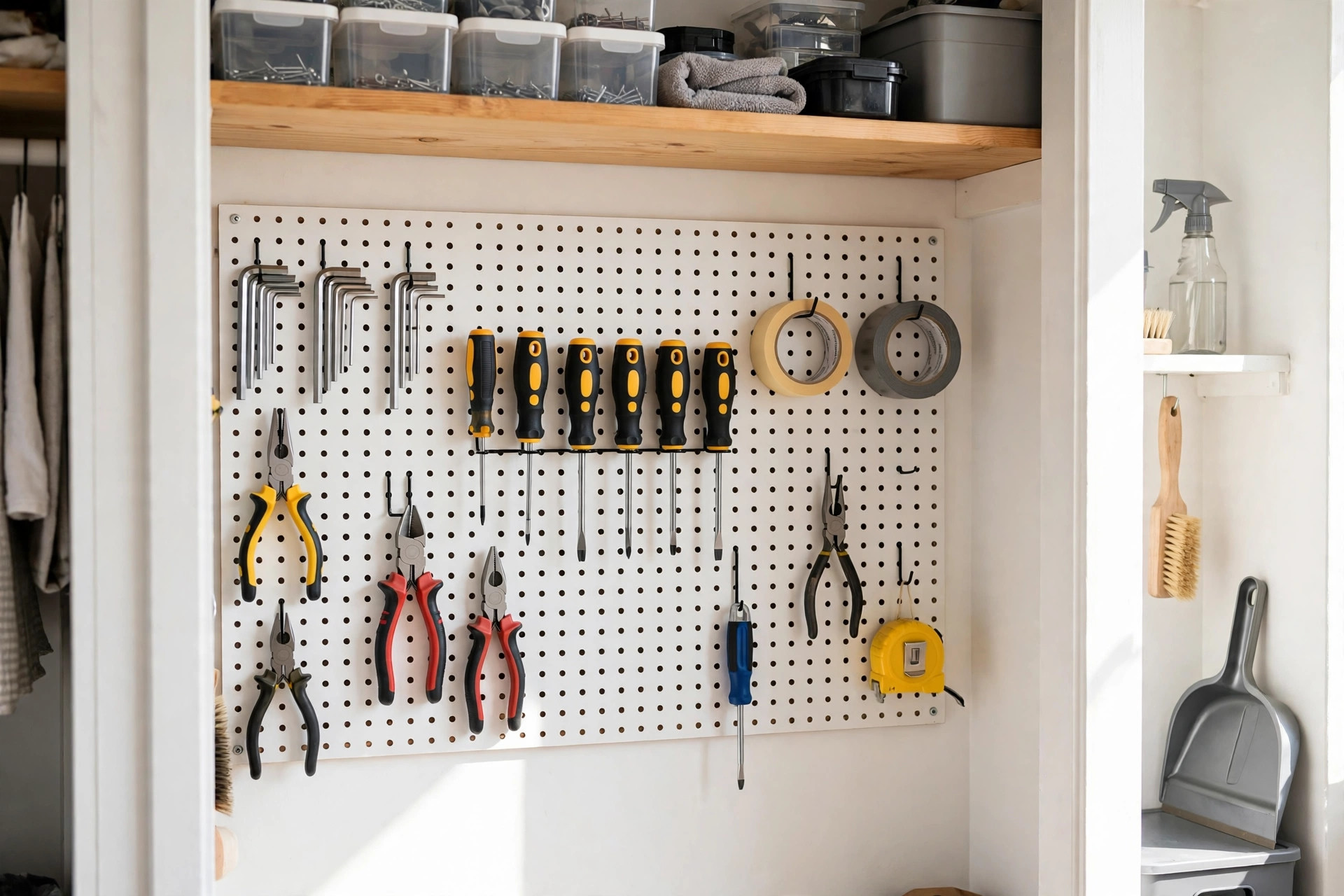
20. A pegboard panel on the back wall — the small tools on hooks, visible at a glance (see Post 19)
Small tools in a box are small tools you cannot see, and the tool you need is always the one at the bottom. Put a pegboard panel on the back wall — the small tools on hooks, visible at a glance, so the tool you need is the one you can see and the box stops being a hunt. A pegboard panel also stops the tools living in three different places, because the back wall is the one place for them. Keep the panel small, hang the tools on hooks, and never let the panel hold the everyday kit, because that is how the pegboard becomes a general wall. The pegboard in detail is in 20 Pegboard Organization Ideas for 2026, where the panel holds the craft and garage tools. Small tools on hooks, and the box stops being a hunt.
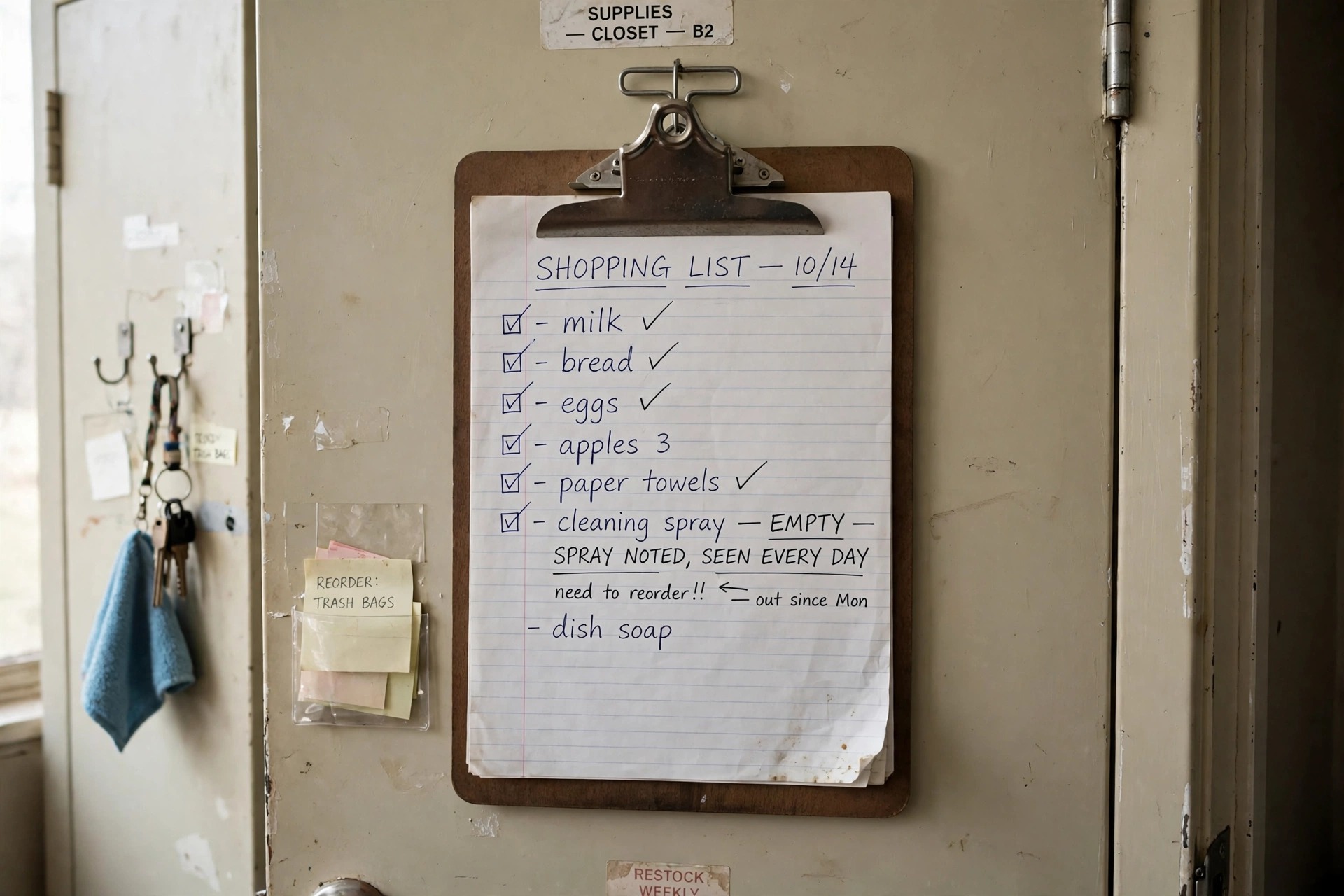
21. A clipboard or a list on the door — the shopping list for the closet lives where you see it every day
A shopping list for the closet that lives on the fridge is a list you forget, because the list you write in the kitchen is the list you never see when you open the closet and notice the spray is empty. Put a clipboard or a list on the door — the shopping list for the closet lives where you see it every day, so the empty spray gets written down the moment you notice it and bought before it runs out. A list on the door also stops the duplicates, because the list says what is needed and the closet says what is already there. Keep the list on the door, a pen beside it, and never let the list live anywhere else, because that is how the empty spray stays empty. List on the door, and the spray stops running out.
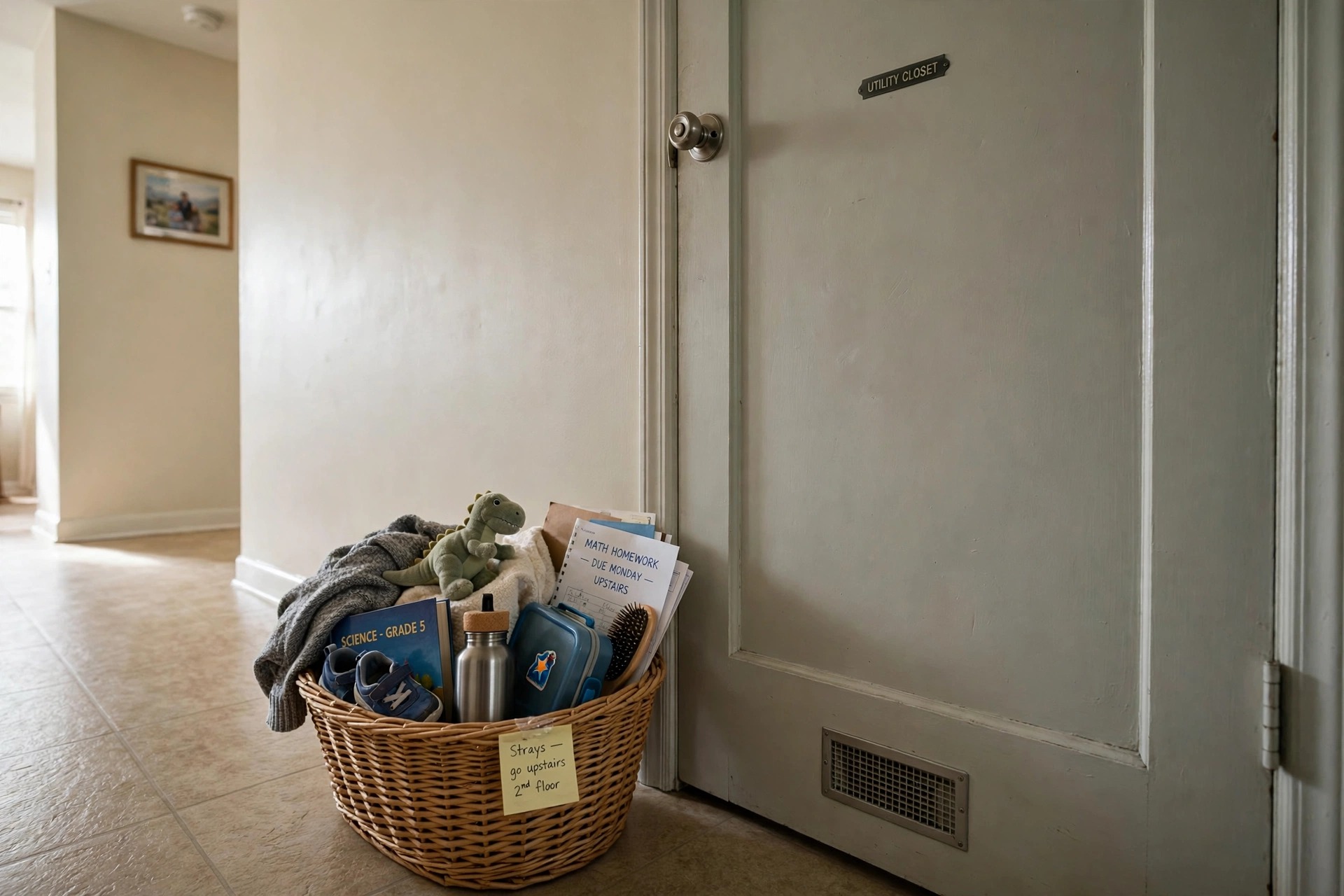
22. A basket for the things that belong in another room — the stray that goes upstairs waits in the basket, not on the shelf
A stray that belongs upstairs and lands on the closet shelf is a stray that stays on the shelf, because the shelf is the place things land and the upstairs is the place nobody carries them to. Give the strays a basket — the things that belong in another room wait in the basket by the door, not on the shelf, so the shelf stays for the closet things and the basket carries the strays upstairs when you go. A basket for strays also stops the shelf filling up with other rooms' things, because the basket says what belongs here and what does not. Keep the basket by the door, empty it when you leave the room, and never let a stray live on a shelf, because that is how the shelf becomes a dumping ground. Strays in the basket, and the shelf stays for the closet.
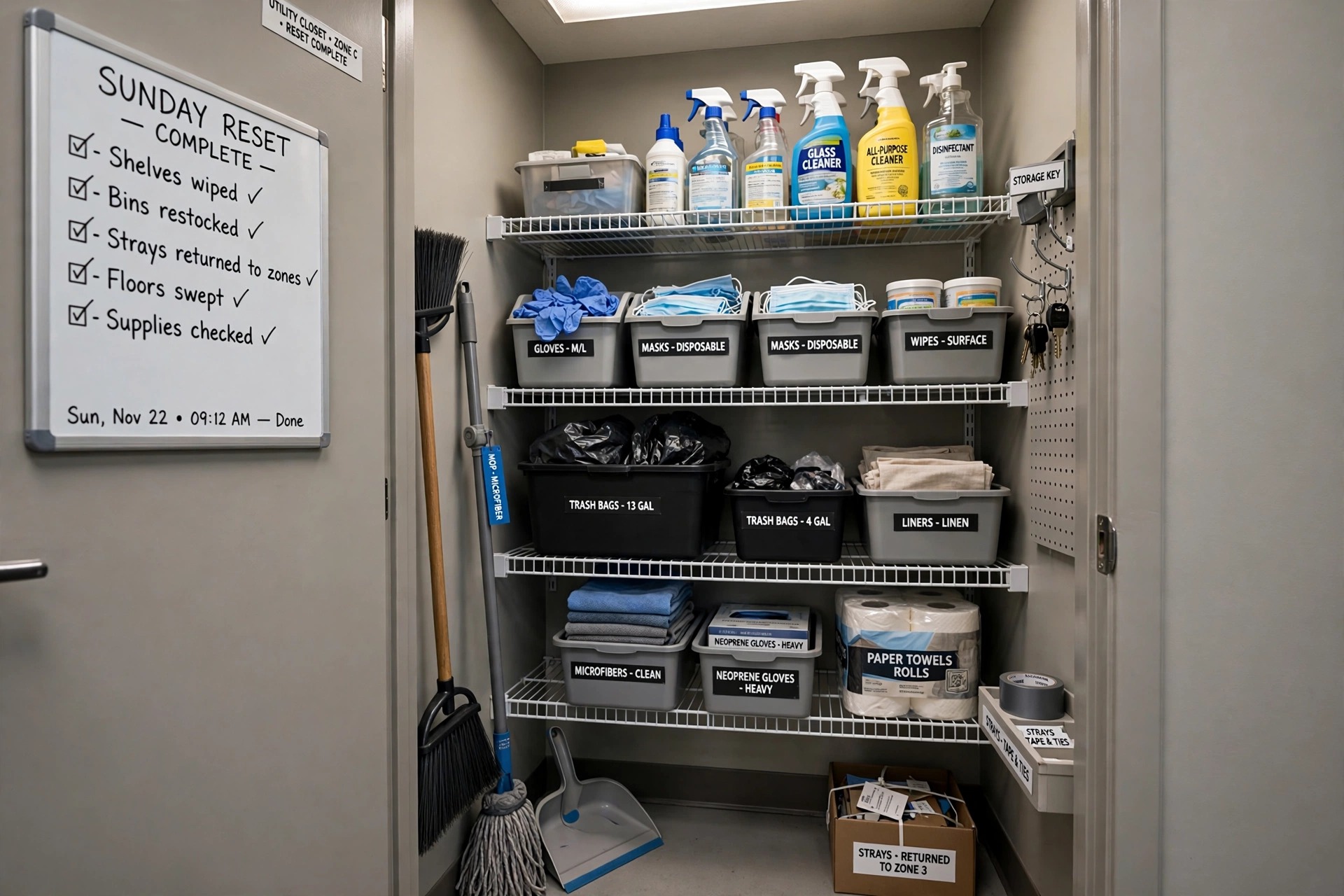
23. A five-minute reset every Sunday — return strays, wipe the shelves, restock the bins (see Post 19)
A utility closet stays tidy with a small habit every week, not a heroic clear-out once a month. Every Sunday, for five minutes, return the strays to their zones, wipe the shelves, and restock the bins, so the closet never drifts back into a leaning pile of brooms and a shelf of half-empty bottles. The five-minute reset is small enough to do before the next thing, and it stops the slow drift that turns a tidy closet into a junk cupboard in a week. Keep the reset on the same day every week, and make it part of the week, not an extra chore. The five-minute reset in detail is in 20 Pegboard Organization Ideas for 2026, where the same Sunday habit keeps the wall tidy. Five minutes every Sunday, and the closet never needs a big clear-out again.
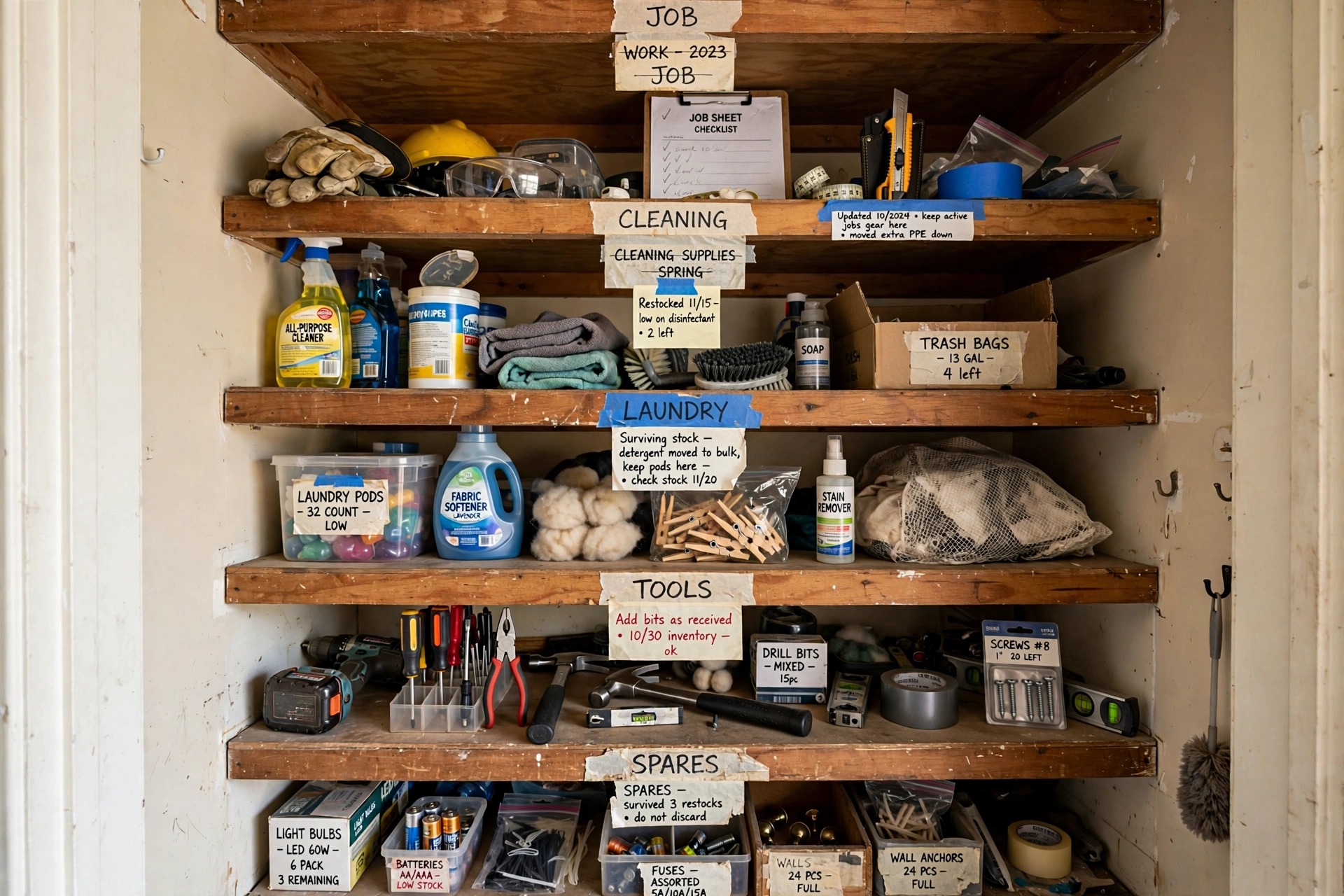
24. Label every shelf by its job, not by what is on it today — the label survives the day the stock changes
A label that says which bottle sits on a shelf is a label that lies the day the bottle changes, because the spray becomes the polish and the label says spray. Label every shelf by its job, not by what is on it today — "cleaning", "laundry", "tools", "spares" — so the label survives the day the stock changes. Labels by job also stop a shelf drifting into a second category, because the label says what belongs there. Keep the labels short — one or two words — and replace them when the job changes, not a year later. One label per shelf, by job, and the closet keeps working wherever the stock changes.
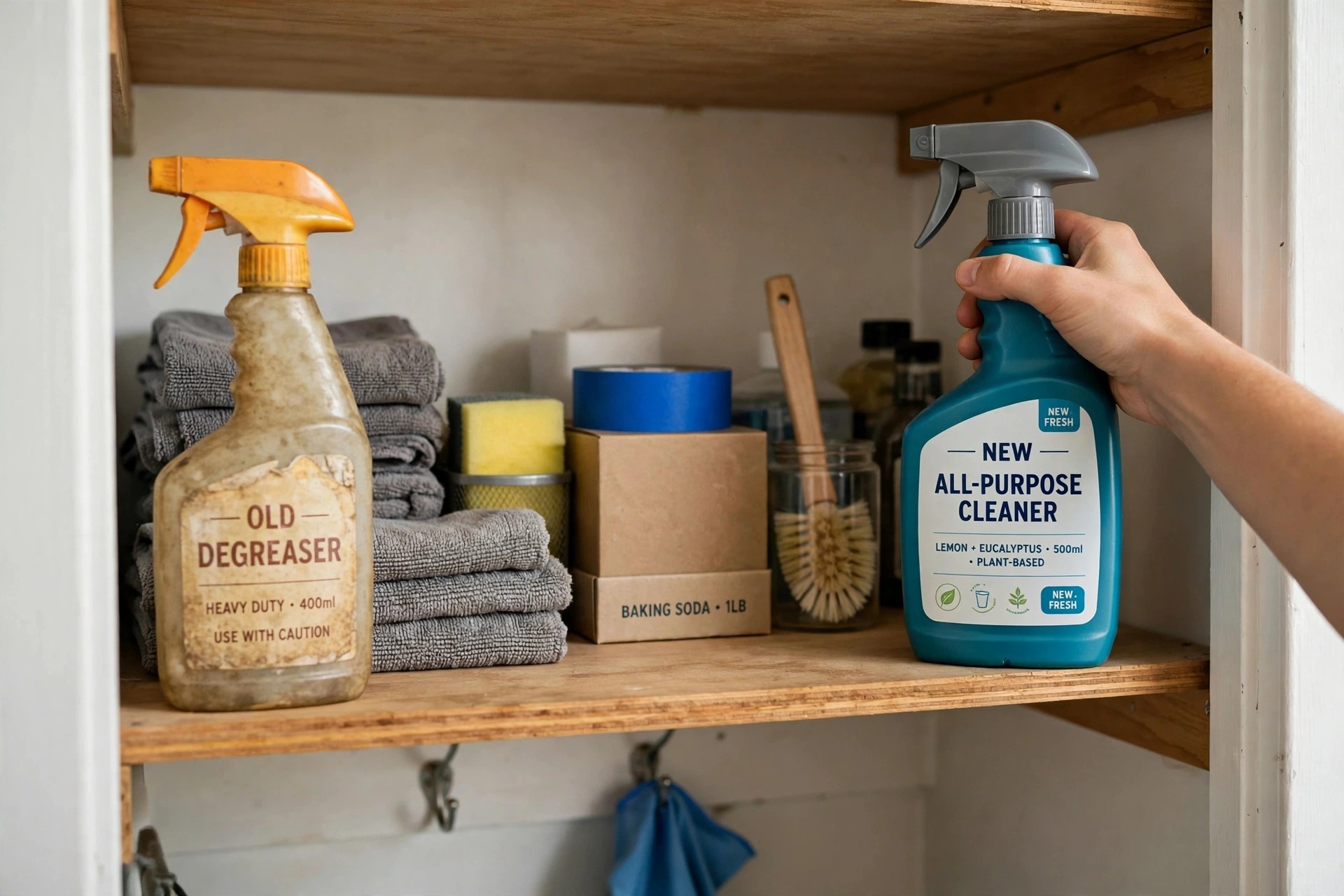
25. One in, one out — a new spray in means an old bottle out, so the closet never fills again
A closet that only ever gains is a closet that fills again, because the new spray comes in and the old bottle stays, and the shelf that held ten bottles holds twelve by Christmas. Keep one in, one out — a new spray in means an old bottle out, so the closet never fills again and the shelf holds the same ten bottles it held in January. One in, one out also stops the duplicates, because the rule forces a choice every time something new arrives. Keep the rule on the door, next to the list, and never let a new thing in without an old thing out, because that is how the closet fills again. One in, one out, and the closet stays the size it is.
Which utility closet fix fits which situation?
| Situation | Best first move | Budget | Tools needed |
|---|---|---|---|
| Closet is a mystery pile | Empty it all, keep only what you use (ideas 1, 2) | Low | Bags for the sort |
| Zones mixed together | Group by job, one shelf per zone (ideas 3, 4) | Low | Labels |
| Daily tools buried on high shelves | Daily tools at hand height (idea 5) | Low | Hooks |
| Spares bought twice | One shelf for spares, with a limit (idea 6) | Low | Labelled bins |
| Brooms falling over | Hang broom and mop on wall hooks (idea 7) | Low | Wall hooks |
| Vacuum never used | Park it by the socket, floor clear (idea 8) | Low | Cord wrap |
| Bucket takes the vacuum's spot | Hang the bucket on a hook (idea 9) | Low | Strong hook |
| Cleaning means carrying everything | Rolling cleaning caddy (idea 10) | Medium | Rolling cart |
| Ironing board always in the way | Board flat on the door (idea 11) | Low | Door hooks |
| Small things lost in drawers | Labelled bins and clear jars (ideas 13, 14) | Low | Bins, jars |
| Laundry day starts with a hunt | One laundry-day shelf by the machine (idea 16) | Low | Bins |
| Door wastes half the closet | Hooks and a narrow rack on the door (idea 19) | Low | Narrow rack |
| Closet becomes a junk cupboard again | Five-minute Sunday reset + one in, one out (ideas 23, 25) | Low | Labels |
You do not need all 25 ideas. You need the three that solve your biggest mess — usually the closet that was never emptied, the brooms leaning in the corner, and the shelf with no labels. Start by emptying the whole closet, hang the long tools on the wall, and give every shelf one job. Do that tonight and the next time you open the door the vacuum will be where you left it, the spray will be where the label says it is, and the floor will be clear.
Save this post for your next closet clear-out, and if the laundry room needs sorting too, read 22 Laundry Room Storage Ideas for 2026 next — it is Post 09, the room the utility closet usually sits beside — and 20 Pegboard Organization Ideas for 2026, Post 19, for the back-wall panel that holds the small tools. This is the last post of the Organization by problem cluster — Posts 11 to 20, one closet, one problem at a time — and the next cluster carries the same system into storage by room and object.
Publish date assigned at publishing time. Updated as new utility closet finds are tested.
Frequently asked questions
How do I organize a utility closet in a small space?
Empty the whole closet first, so you can see what the house actually owns, and keep only what it uses — the broken vacuum and the third mop go, not back on the shelf. Give every job its own zone and every zone its own shelf, so nothing sits in a pile, and put the daily tools at hand height where you grab them. Use the inside of the door for hooks and a narrow rack, because the door doubles the closet without a bigger room, and label every shelf by its job, not by what is on it today. Empty it, zone it, hang the long tools, and the small space stops being a pile.
Where should I store a vacuum and mop so they are easy to grab?
Hang the broom and mop on the wall on hooks, handles up and heads down, so they hang straight and the floor stays clear — a leaning pile in the corner falls over every time the door opens. Park the vacuum on the floor in a corner of its own, where the cord reaches the socket, so the vacuum is the first thing you grab and the last thing you put back, and never let anything sit in front of it. Hang the bucket on a hook too, so the floor stays for the vacuum. Hooks for the long tools, floor space for the vacuum, and the cleaning gets done instead of being dug out.
How do I keep the utility closet from becoming a junk cupboard again?
Two small habits keep it tidy: a five-minute reset every Sunday — return the strays to their zones, wipe the shelves, restock the bins — and one in, one out, so a new spray in means an old bottle out and the shelf never fills again. Keep the labels by job, not by the bottle on the shelf today, so the label survives the day the stock changes, and keep a basket by the door for the strays that belong in another room, so they never land on a shelf. Five minutes a week and one in, one out, and the closet never needs a big clear-out again.