20 Bathroom Drawer Organization Ideas for 2026
A bathroom drawer is the smallest storage in the house and the one that gets opened the most, and that is exactly why it turns into a jumble first. The toothbrush ends up beside the hair dryer, the moisturiser hides under a pile of cotton pads, the spare razor lives next to three half-used lip balms, and every morning starts with the same five-minute dig for the one thing you need. The drawer is not too small. The drawer has no system.
These 20 bathroom drawer organization ideas are a divider-first system for the vanity: empty the drawer and sort honestly, give every category one home, fit dividers that stop the slide, and finish with a two-minute reset that keeps the jumble from coming back — so the morning routine runs itself.
Every idea below works on a real vanity, from a single shallow drawer in a small flat to a double vanity with a drawer per person. The divider thinking borrows from 22 Linen Closet Organization Ideas for 2026, where the same one-zone-per-category rule keeps a deep shelf tidy, and the counter above the drawers follows the same rules as 25 Bathroom Counter Organization Ideas for 2026, so the drawers and the counter work as one system. Pick three ideas that fit your drawers, start with the empty-and-sort, and build from there.
Sort first: the empty-and-sort that ends the jumble
1. Empty the drawer completely — the drawer you can see is the drawer you can fix
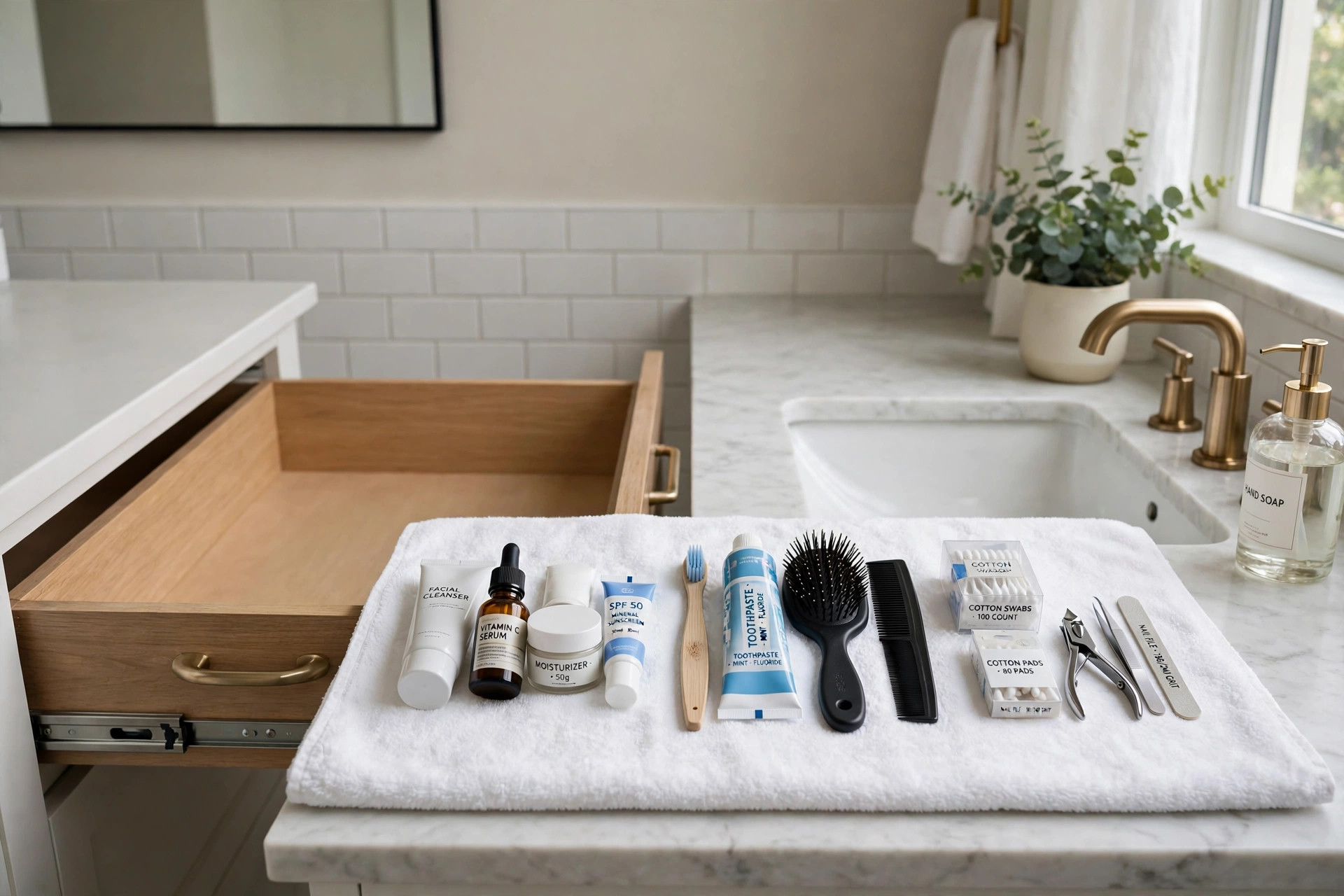
A drawer you organize by shuffling things around is a drawer you have not organized at all, because the thing at the bottom stays at the bottom, the thing you forgot stays forgotten, and the jumble simply settles into a new shape. Empty the drawer completely — the drawer you can see is the drawer you can fix — so every single item is out on the counter and the empty drawer is the only thing left to look at. Take everything out, wipe the drawer clean, and look at the empty box for a full minute, because the empty drawer is the drawer that tells you how much space you actually have. The empty-and-sort is the same first move as the coat closet cull, and the honest sort is covered in 22 Linen Closet Organization Ideas for 2026, where the same empty-first rule turns a stuffed shelf into a system. One empty drawer, and the fix starts from zero.
2. Keep, toss, move out — three piles, one honest afternoon
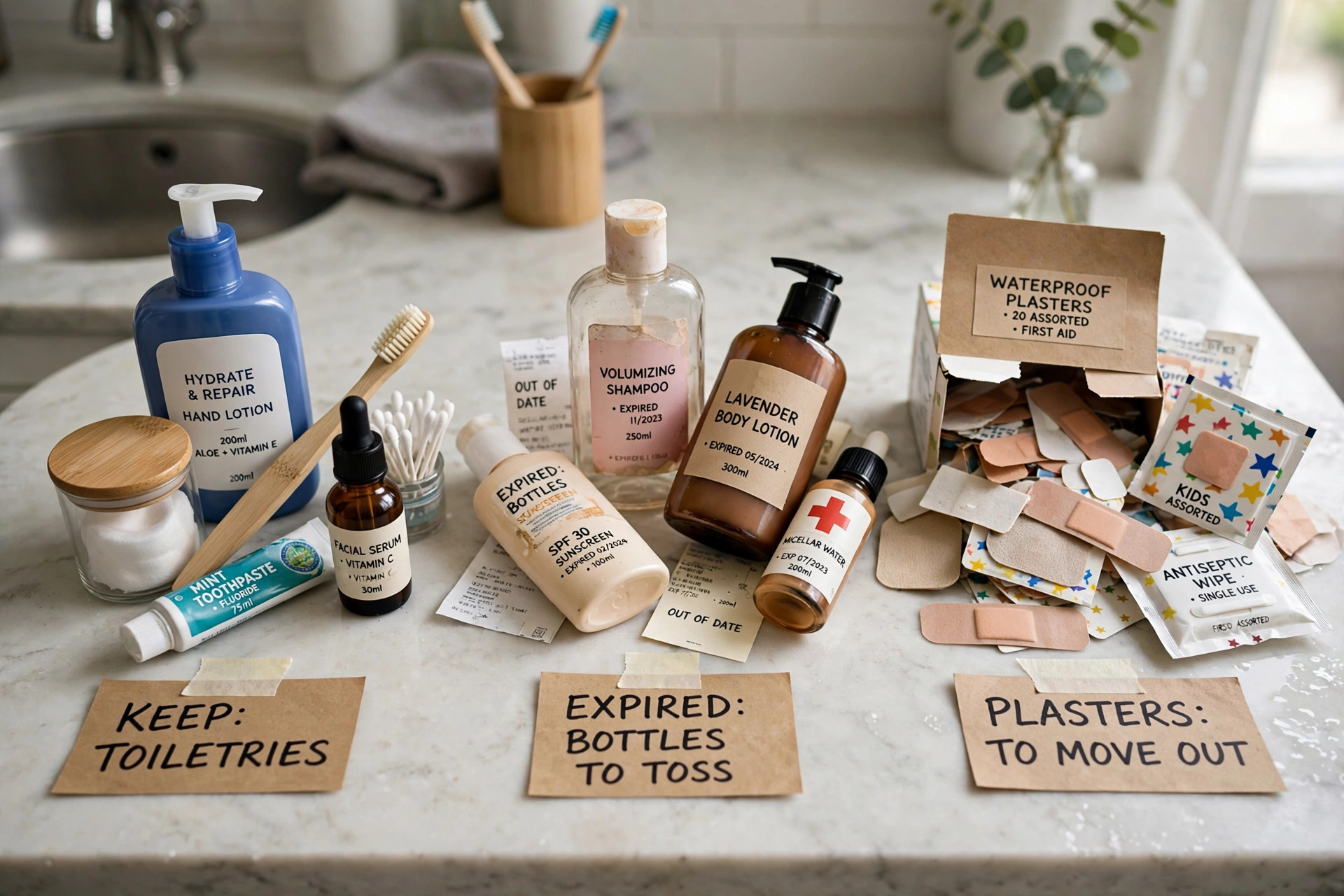
A pile of bathroom products with no decision is a pile that goes straight back into the drawer, because the bottle you are unsure about is the bottle you keep by default, and the bottle you keep by default is the bottle that takes the space the toothbrush needs. Make three piles — keep, toss, move out — so every item gets one honest decision and nothing goes back into the drawer undecided. The keep pile is the products you use every week, the toss pile is the dried-out mascara, the empty bottles and the things that expired two years ago, and the move-out pile is the things that belong somewhere else entirely, like the nail file that lives in the bedroom and the plasters that belong in the medicine cabinet. Be honest about the half-used serums you will never finish, because the product you have not touched in six months is the product you will not touch in the next six. Three piles, one afternoon, and the drawer loses a third of its weight.
3. One category per drawer — the drawer with one job is the drawer that stays tidy
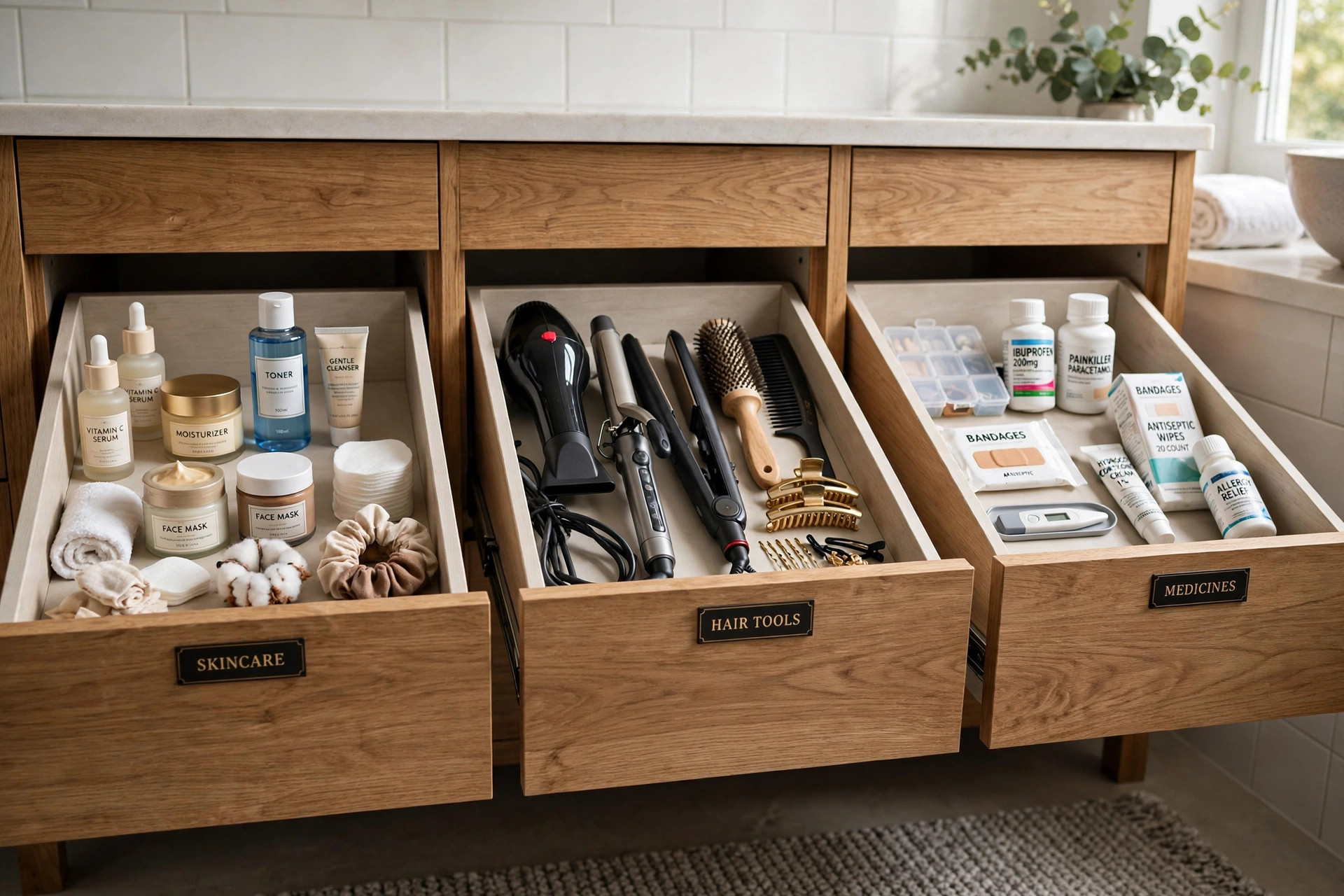
A drawer holding skincare, hair tools, medicines and makeup at once is a drawer holding four systems in one box, because the category that shares a drawer is the category that gets buried, and the category that gets buried is the category you dig through every morning. Give every drawer one category — the drawer with one job is the drawer that stays tidy — so the top drawer is skincare, the second is hair, and the third is medicines, and your hand goes to the right drawer before it goes to the right item. If you only have one drawer, give it one category and move the rest to the counter, the cabinet or a caddy, because the drawer that tries to hold everything is the drawer that holds nothing findable. The one-category rule is the same rule that keeps the makeup collection usable, and the category split is covered in 24 Makeup Storage Ideas for 2026, where the same one-home-per-category thinking turns a crowded vanity into a system. One job per drawer, and the morning starts in the right place.
4. Group by routine, not by product — the morning drawer and the evening drawer
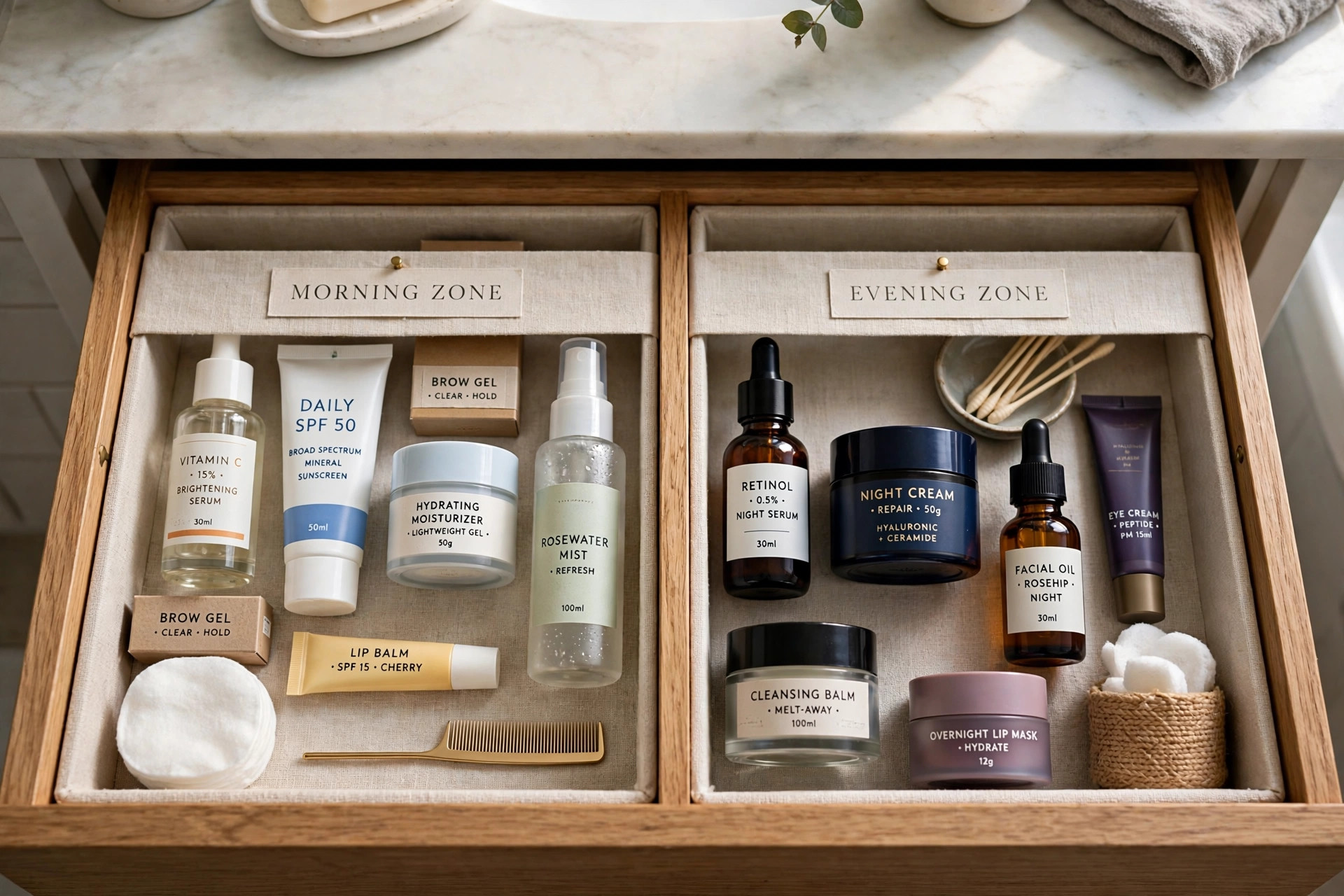
A drawer sorted by product type is a drawer that makes you open three drawers for one routine, because the cleanser is in the skincare drawer, the moisturiser is in the makeup drawer, and the night cream is in the drawer you never open. Group by routine instead — the morning drawer and the evening drawer — so everything the morning needs is in one drawer and everything the evening needs is in another, and one open drawer is the whole routine. Put the cleanser, the day cream and the sunscreen in the morning drawer, and the makeup remover, the night cream and the lip balm in the evening drawer, because the routine that lives together is the routine that runs without thinking. The routine grouping borrows its thinking from 20 Medicine Cabinet Organization Ideas for 2026, where the same by-routine split keeps the daily medicines separate from the first-aid supplies. One routine per drawer, and the morning takes two minutes, not ten.
5. Decant the duplicates — one bottle out, the spares in a labelled box
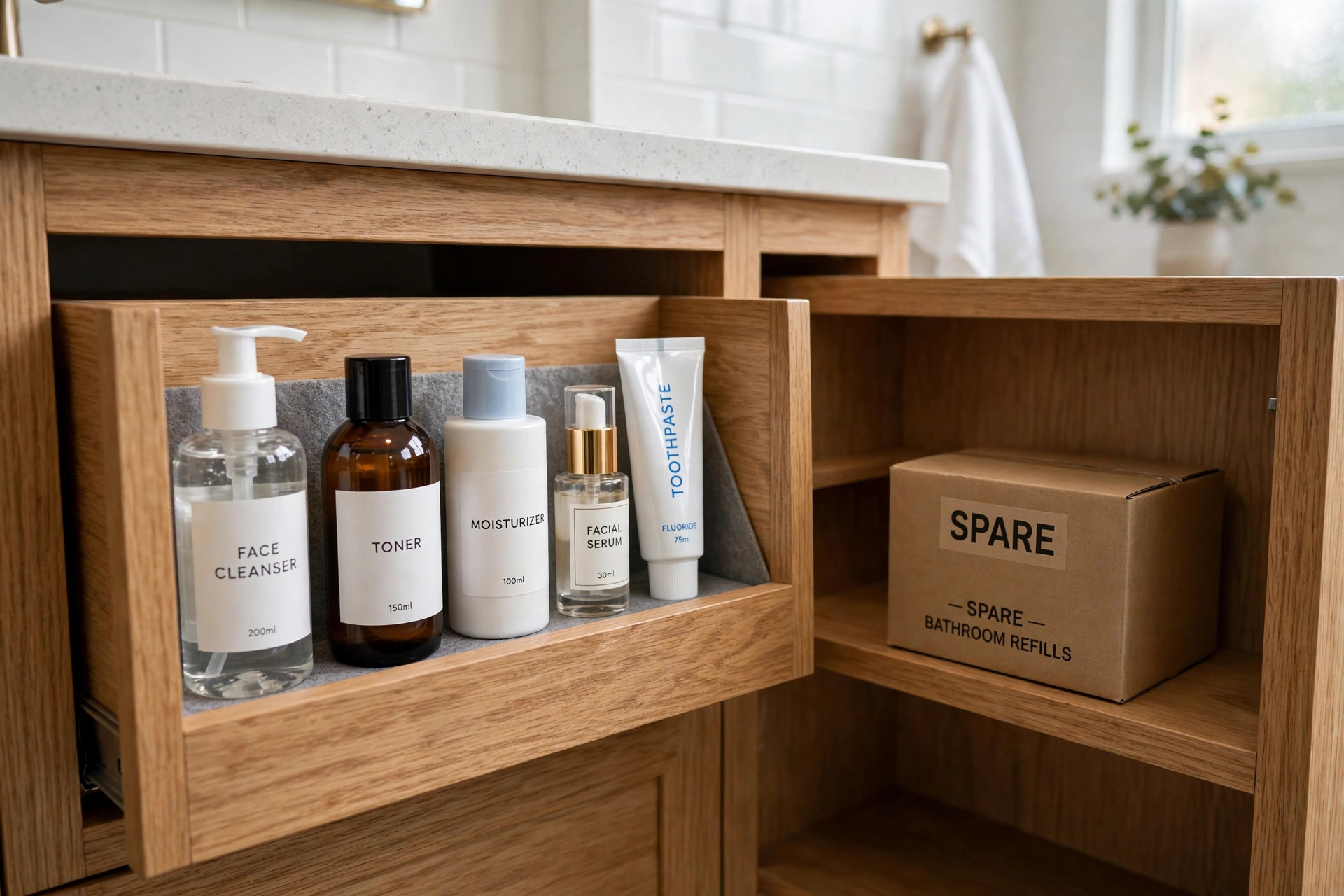
A drawer holding three bottles of the same shampoo is a drawer holding two bottles too many, because the spare is the spare that takes the space the toothbrush needs, and the space that holds spares is the space that cannot hold the things you use today. Decant the duplicates — one bottle out, the spares in a labelled box — so only the bottle in use lives in the drawer and the spares wait on a shelf or in the linen closet until they are needed. Keep one of everything in the drawer, put the spares in a labelled box with the product name and the date you bought them, and pull a spare out only when the bottle in use is finished, because the rule that is followed every time is the rule that keeps the drawer at one bottle per product. The spare-box thinking is the same thinking that keeps a linen closet from overflowing, and the labelled-box system is covered in 22 Linen Closet Organization Ideas for 2026, where the same one-out-one-in rule keeps the shelves honest. One bottle out, and the drawer breathes again.
Dividers that do the work
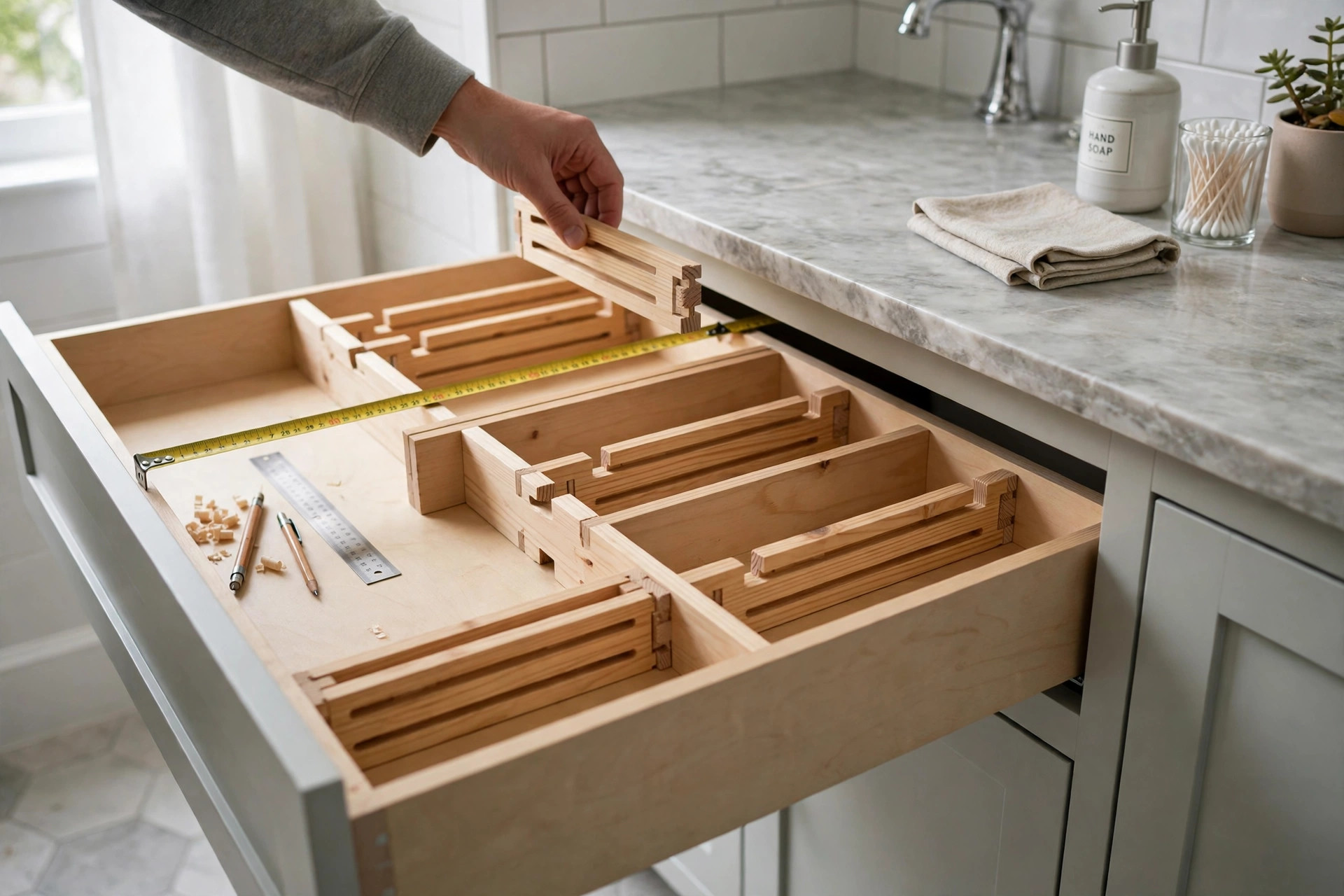
6. Adjustable dividers — the grid that fits the drawer you actually have
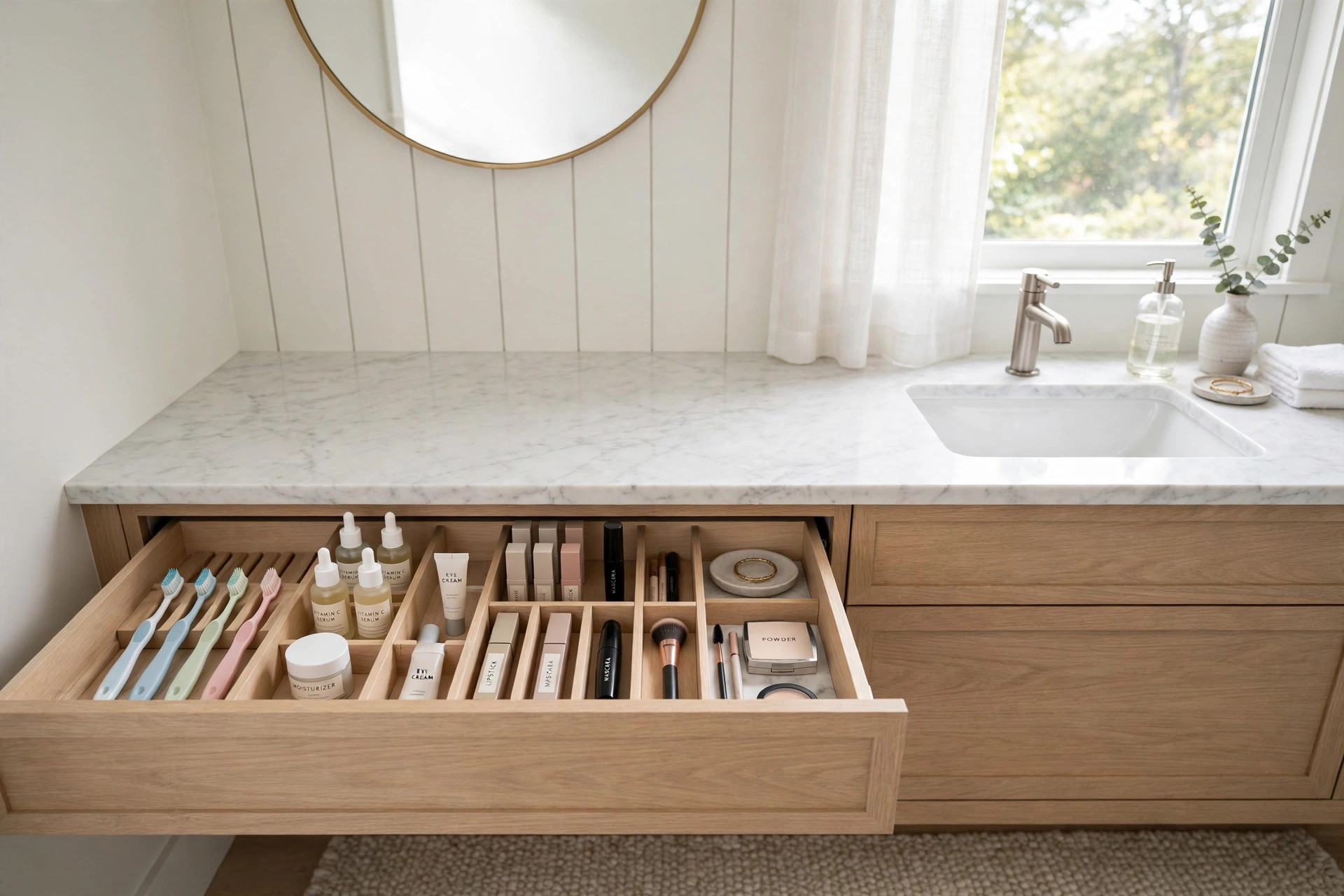
A drawer with no dividers is a drawer where everything slides, because the tube that slides is the tube that ends up sideways, the sideways tube is the tube that leaks, and the leak is the leak that sticks everything together. Fit adjustable dividers — the grid that fits the drawer you actually have — so the drawer becomes a grid of slots and every slot holds one thing that cannot slide into the next. Measure the drawer first, slide the dividers to fit without forcing, and leave one slot empty at the end of each row, because the empty slot is the slot the next product goes into. Adjustable dividers work in shallow drawers and deep ones, and they move when the routine changes, because the grid that moves is the grid that lasts. One grid, and the slide stops. (Check on Amazon for adjustable bamboo drawer dividers with spring-loaded ends, sized for bathroom vanity drawers.)
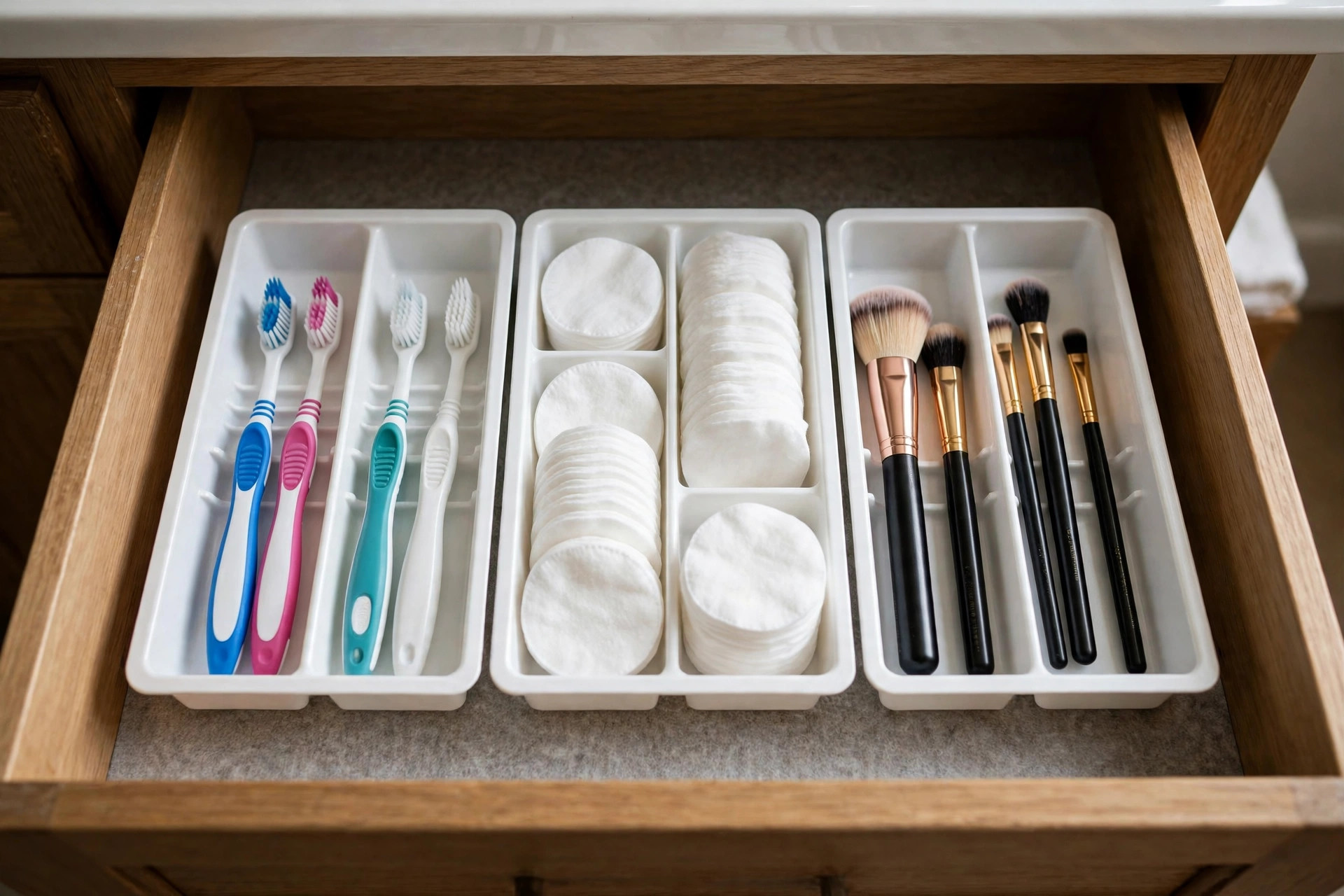
7. Small trays inside the drawer — the tray that stops the slide
A divider grid is too big for the small things, because the cotton pads, the hair ties and the bobby pins are the things that slip through the gaps and end up in a pile at the back of the drawer. Put small trays inside the drawer — the tray that stops the slide — so every small thing has a tray it cannot escape from and the tray itself cannot move. Choose trays that sit snugly side by side, keep one tray for cotton pads, one for hair ties and one for clips, and lift the whole tray out when you need to clean underneath, because the tray that lifts out is the tray that makes cleaning take thirty seconds. Small trays work in the shallow top drawer best, where the small things live, and they stack neatly when the drawer changes. Trays inside the grid, and the small things stop migrating.
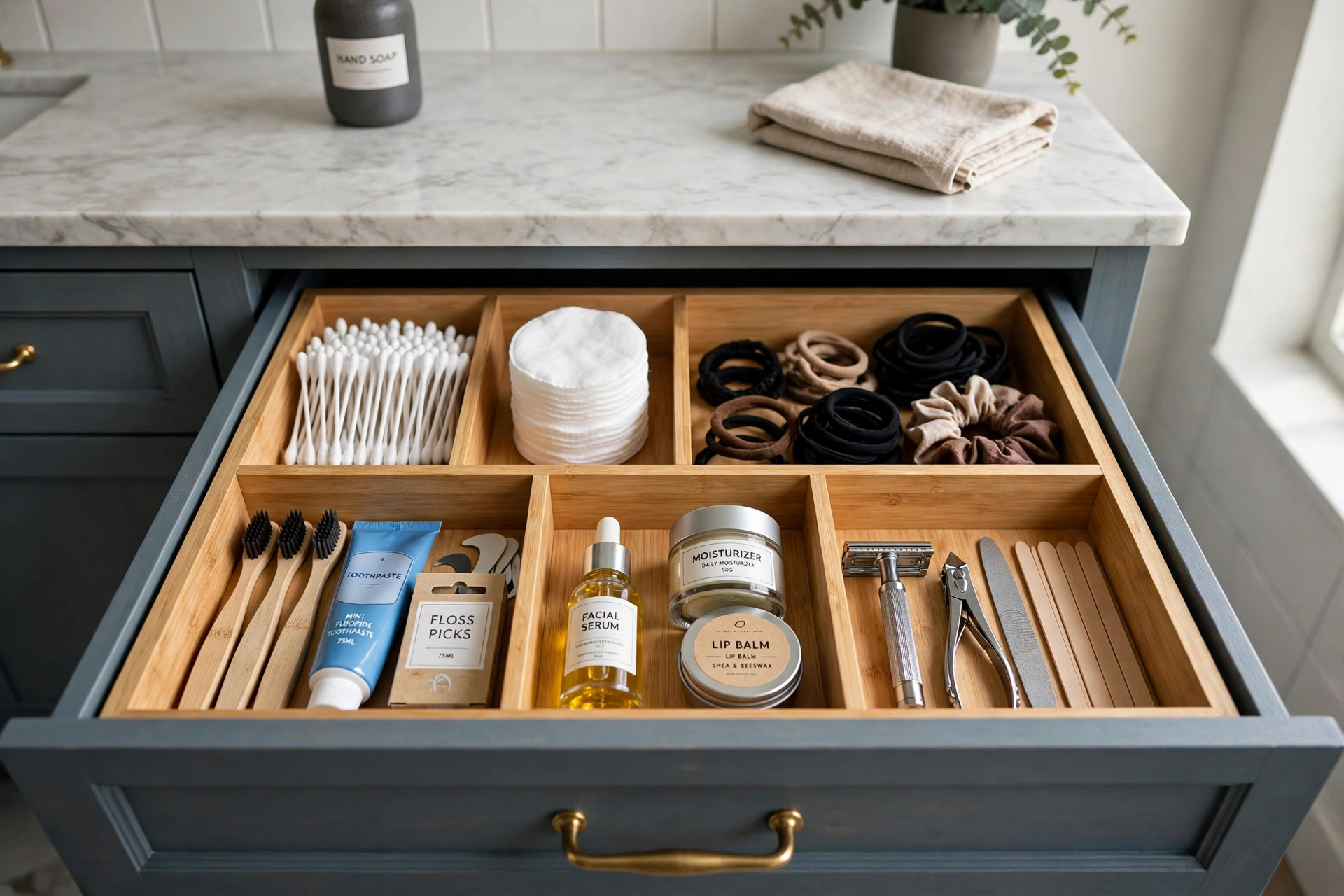
8. A drawer insert that fits the vanity — the insert that turns a box into a system
A drawer with loose dividers is a drawer that still looks improvised, because the dividers shift, the trays slide, and the system that moves is the system that falls apart by Friday. Fit a drawer insert made for the vanity — the insert that turns a box into a system — so the whole drawer becomes one fitted piece with compartments that cannot move at all. Choose an insert that matches the drawer's measurements within a centimetre, keep the tall compartments for bottles and the shallow ones for brushes, and wipe the insert once a week, because the insert that is clean is the insert that looks built in. The fitted insert borrows its thinking from 24 Makeup Storage Ideas for 2026, where the same fitted-tray rule turns a makeup drawer into a display. One fitted insert, and the drawer stops looking improvised. (Check on Amazon for a bamboo vanity drawer insert with adjustable compartments, measured to fit standard bathroom drawers.)
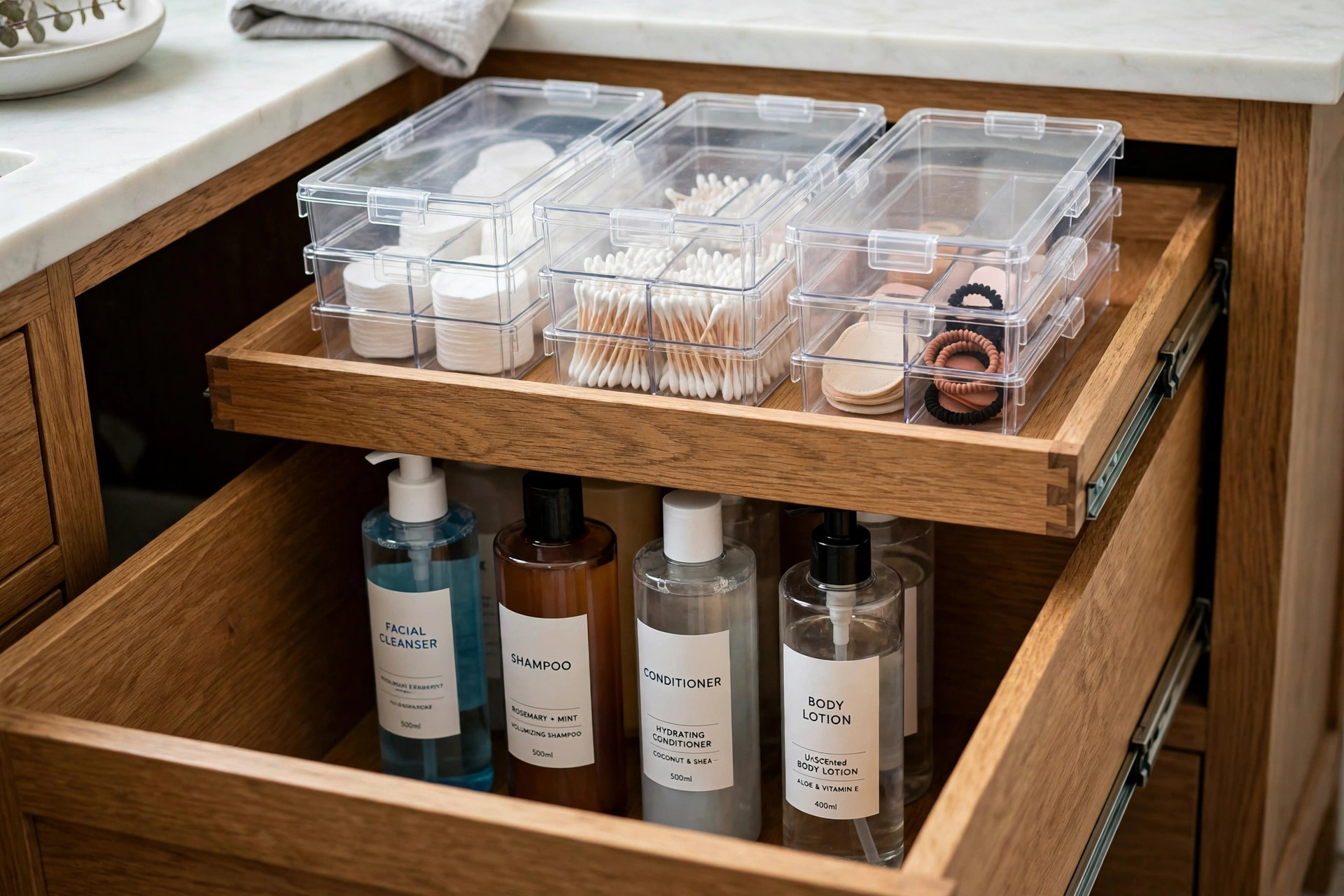
9. Stackable bins for the deep drawer — the second floor that doubles the space
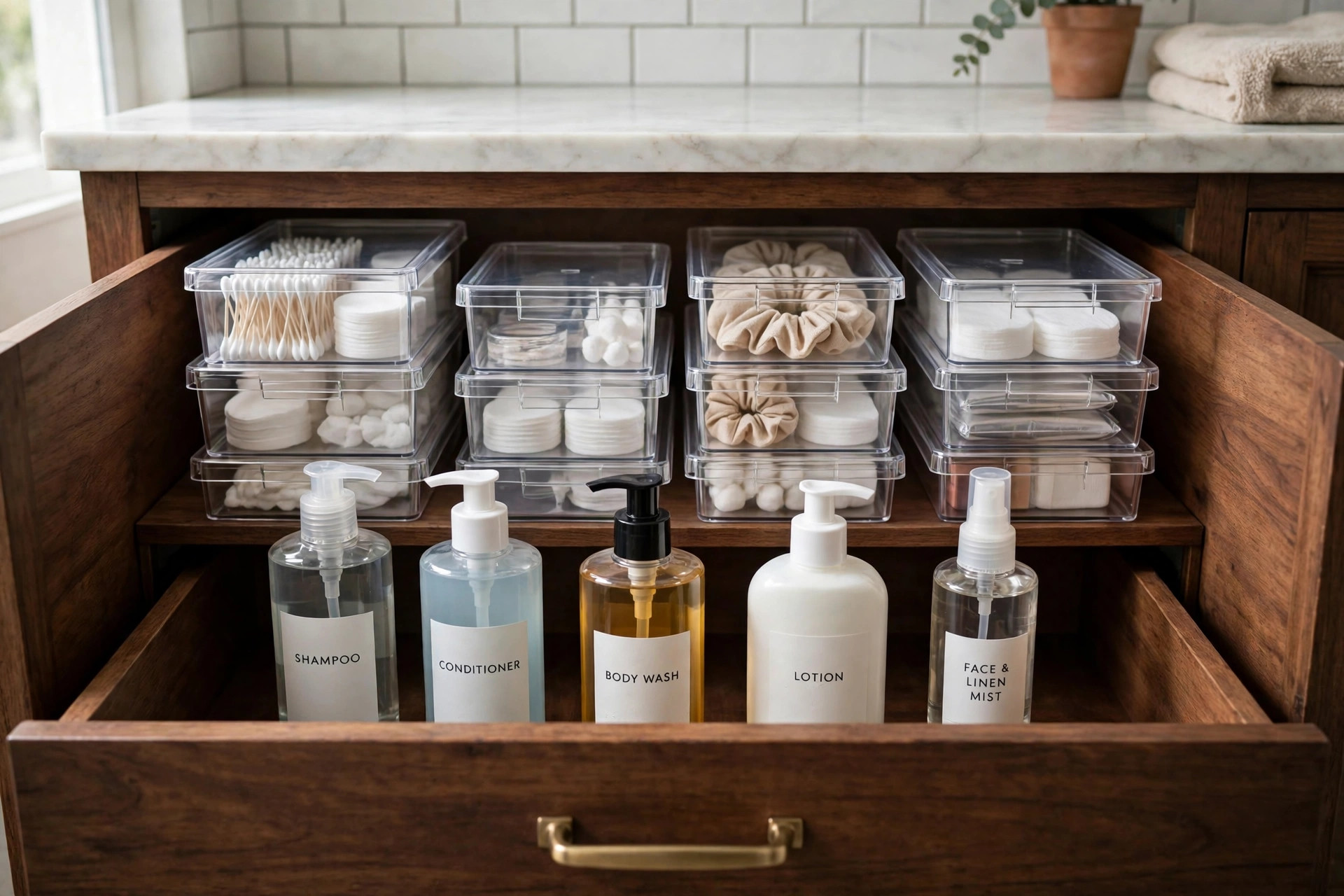
A deep drawer is a drawer where things pile up, because the bottle at the bottom is the bottle you cannot see, the bottle you cannot see is the bottle you buy twice, and the pile that hides the bottom is the pile that wastes half the drawer. Use stackable bins — the second floor that doubles the space — so the deep drawer gets a second level and the things on top no longer bury the things underneath. Put the tall bottles on the bottom level and the small things in the bins on top, keep one bin per category, and lift the top bin out when you need the bottom, because the bin that lifts out is the bin that makes the bottom reachable. Stackable bins work in the deep bottom drawer best, where the tall bottles live, and they come out entirely when the drawer needs a deep clean. A second floor, and the deep drawer stops wasting space. (Check on Amazon for clear stackable drawer bins with low sides, sized for deep bathroom drawers.)
10. Label every zone — the label that keeps the system honest
A divider system with no labels is a system only one person understands, because the slot that is obvious to you is the slot that is a mystery to everyone else in the house, and the mystery slot is the slot that fills with random things by the end of the week. Label every zone — the label that keeps the system honest — so each slot says what belongs in it and the wrong item has nowhere to hide. Stick a small label on the front edge of each divider, write the category in one or two words, and use the same labels on the spare box, because the label that matches is the label that keeps the system working in two places at once. Labels work best on the front edge where you see them when the drawer opens, and they peel off cleanly when the routine changes. One label per zone, and the system survives the rest of the household.
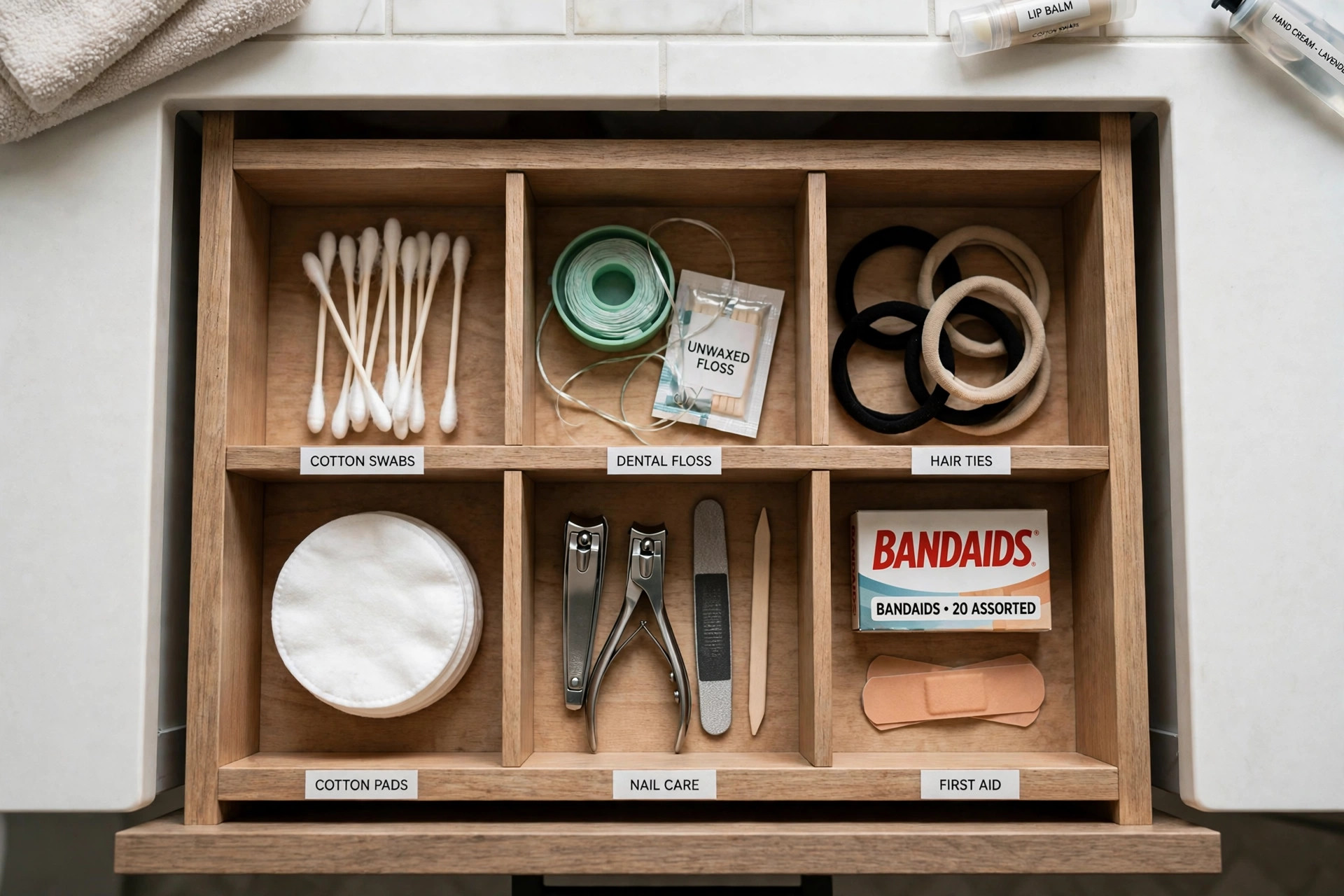
11. The shallow top drawer — everyday essentials only, nothing else
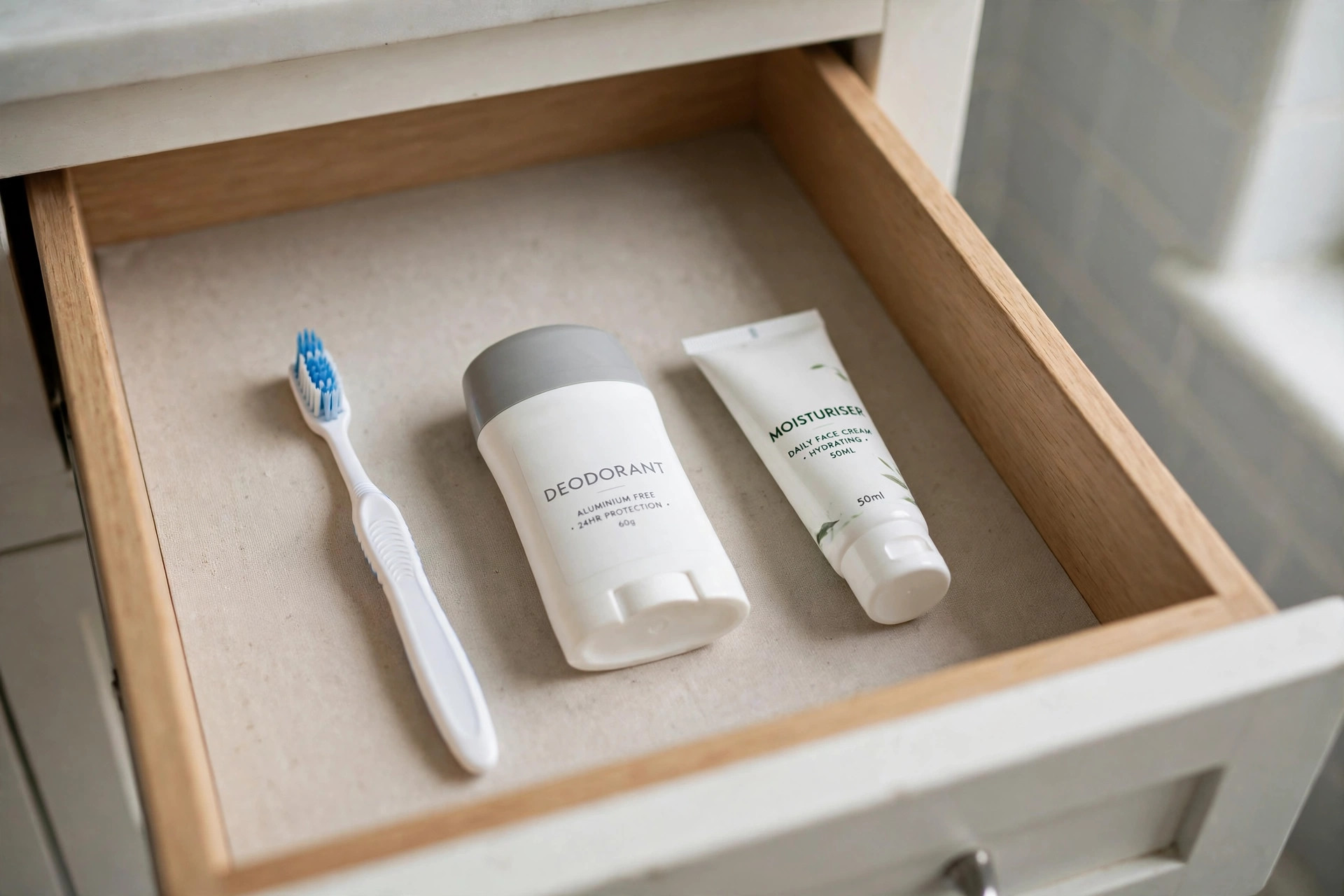
The shallow top drawer is the drawer you open first every morning, and that is exactly why it fills up first, because the thing you use daily goes in the top drawer, the thing you use weekly goes in the top drawer too, and the drawer that holds everything is the drawer that holds nothing findable. Keep the shallow top drawer for everyday essentials only — the toothbrush, the deodorant, the moisturiser, the lip balm — and move everything else down, because the drawer that holds only the daily four is the drawer that opens on exactly what the morning needs. Measure what fits: if the drawer is too shallow for a bottle to stand, lay it flat in a tray, and if a product does not earn its place every single day, it goes to the drawer below. The shallow drawer borrows its discipline from 25 Bathroom Counter Organization Ideas for 2026, where the same everyday-only rule keeps the counter clear. Four essentials, and the morning starts in seconds.
12. The deep bottom drawer — tall bottles standing, risers doing the lifting
The deep bottom drawer is the drawer where tall bottles go to hide, because the bottle that stands in a deep drawer is the bottle you cannot see over the rim, and the bottle you cannot see is the bottle you forget and buy again. Give the deep drawer risers — tall bottles standing, risers doing the lifting — so the back row stands on a small riser and every bottle shows its label above the rim. Put the tallest bottles at the back on the riser, the medium bottles in the middle, and the short things at the front, because the row that steps up is the row you can read without digging. Risers work in the deep drawer best, where the height is the problem, and a small shelf riser from the kitchen works just as well as a purpose-made one. One riser, and the deep drawer stops hiding its bottles.
A shared bathroom drawer is a drawer where two people's products fight for the same space, because your moisturiser is buried under their shaving kit, their toothbrush is on top of your serum, and the drawer that holds both is the drawer that holds neither findable. Give every person one drawer — the shared bathroom, divided fairly — so each person owns a drawer, labels it, and keeps only their own things in it. If there are more people than drawers, give each person a tray inside the shared drawer, because the tray that is yours is the tray nobody else fills. The per-person split is the same fairness that keeps a hallway closet working, and the shared-space thinking is covered in 22 Linen Closet Organization Ideas for 2026, where the same one-zone-per-person rule keeps a shared shelf tidy. One drawer per person, and the morning stops being a negotiation.
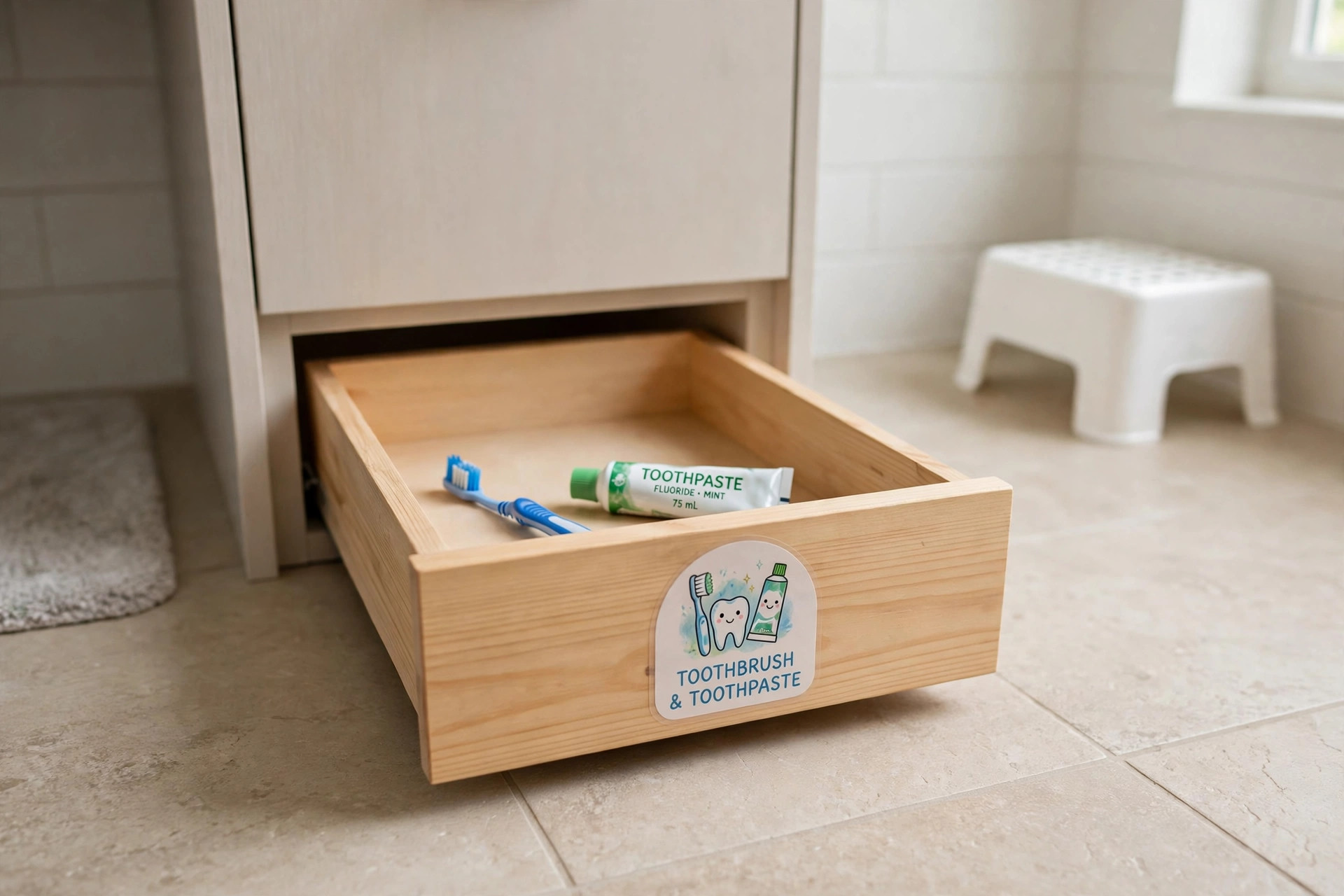
14. A low drawer the kids can reach — the step that makes mornings independent
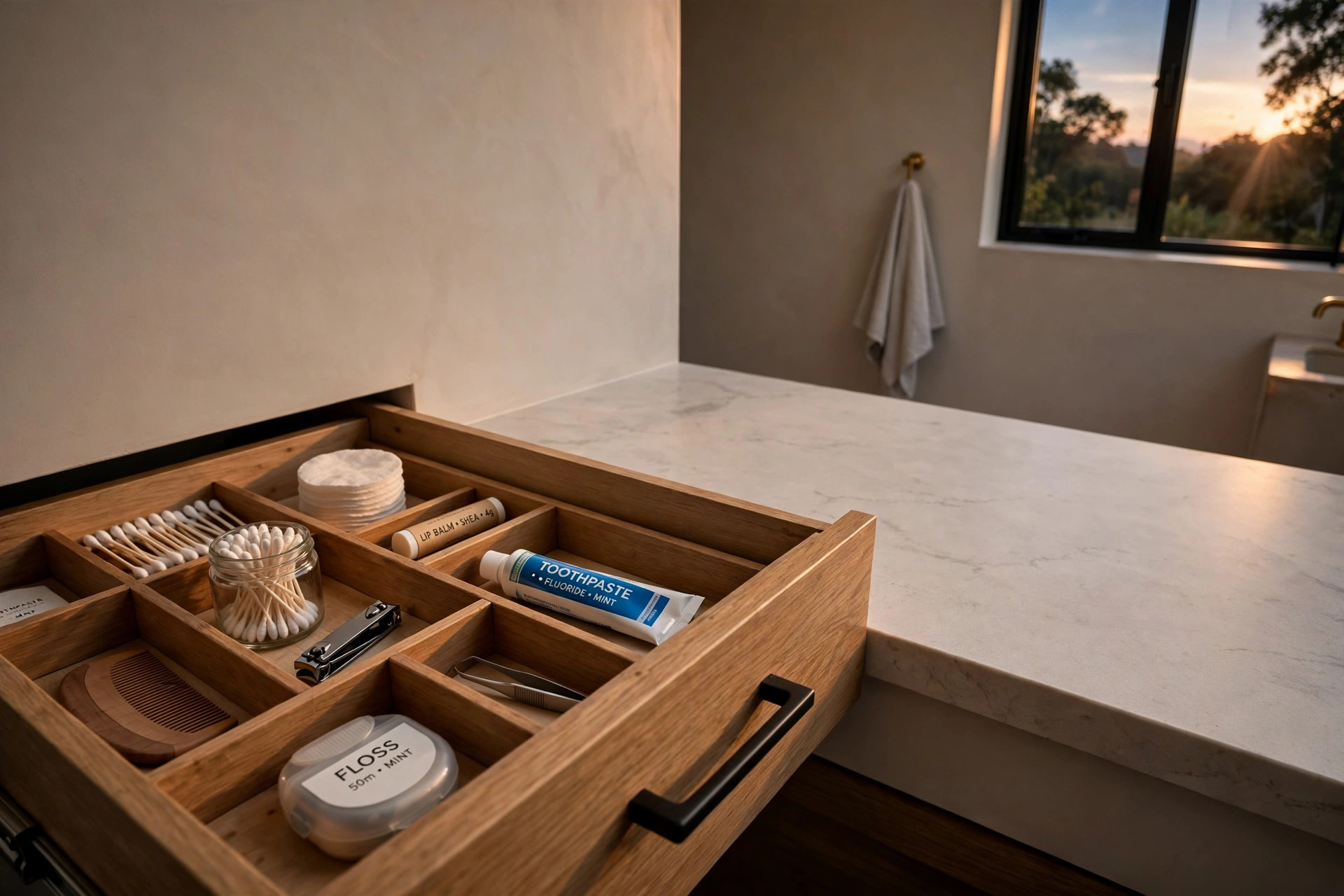
A bathroom drawer the kids cannot reach is a drawer that makes every morning your job, because the toothbrush they cannot reach is the toothbrush you have to hand them, and the toothbrush you hand them is the toothbrush they never learn to get themselves. Give the kids a low drawer they can reach — the step that makes mornings independent — so their toothbrush, their toothpaste and their hairbrush live where their hands can find them without climbing. Keep the drawer low, keep the contents to the three things they need, and label it with a picture as well as a word, because the label a child can read is the label a child will follow. The low drawer borrows its thinking from 22 School Organization Ideas for 2026, where the same child-height rule turns a homework station into something a child actually uses. One low drawer, and the morning runs itself.
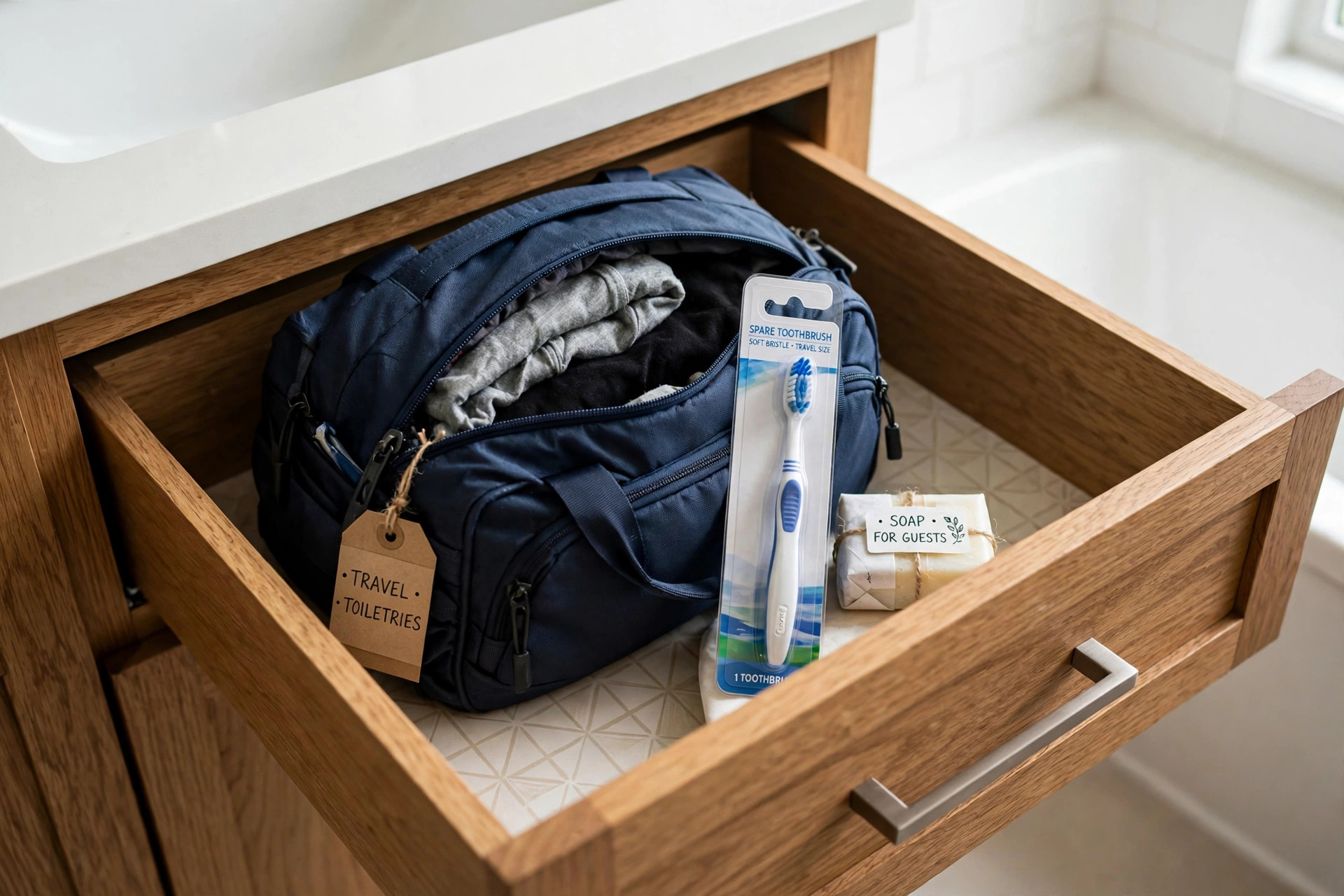
15. A travel and guest drawer — the packed bag that never lives on the counter
A travel bag left on the bathroom counter is a bag that takes the space the morning needs, because the bag that sits out is the bag that collects clutter, and the clutter that collects is the clutter that ends up in the drawer anyway. Give travel and guests their own drawer — the packed bag that never lives on the counter — so the travel kit stays packed in its bag inside a drawer, and a guest finds a spare toothbrush, a clean towel and a small soap without opening your drawers. Keep the travel bag packed between trips, check it once a month for expired minis, and keep a small guest tray with the essentials on top of the drawer, because the tray that is ready is the tray that makes a guest feel welcome. One drawer for travel and guests, and the counter stays clear.
Systems that stay tidy
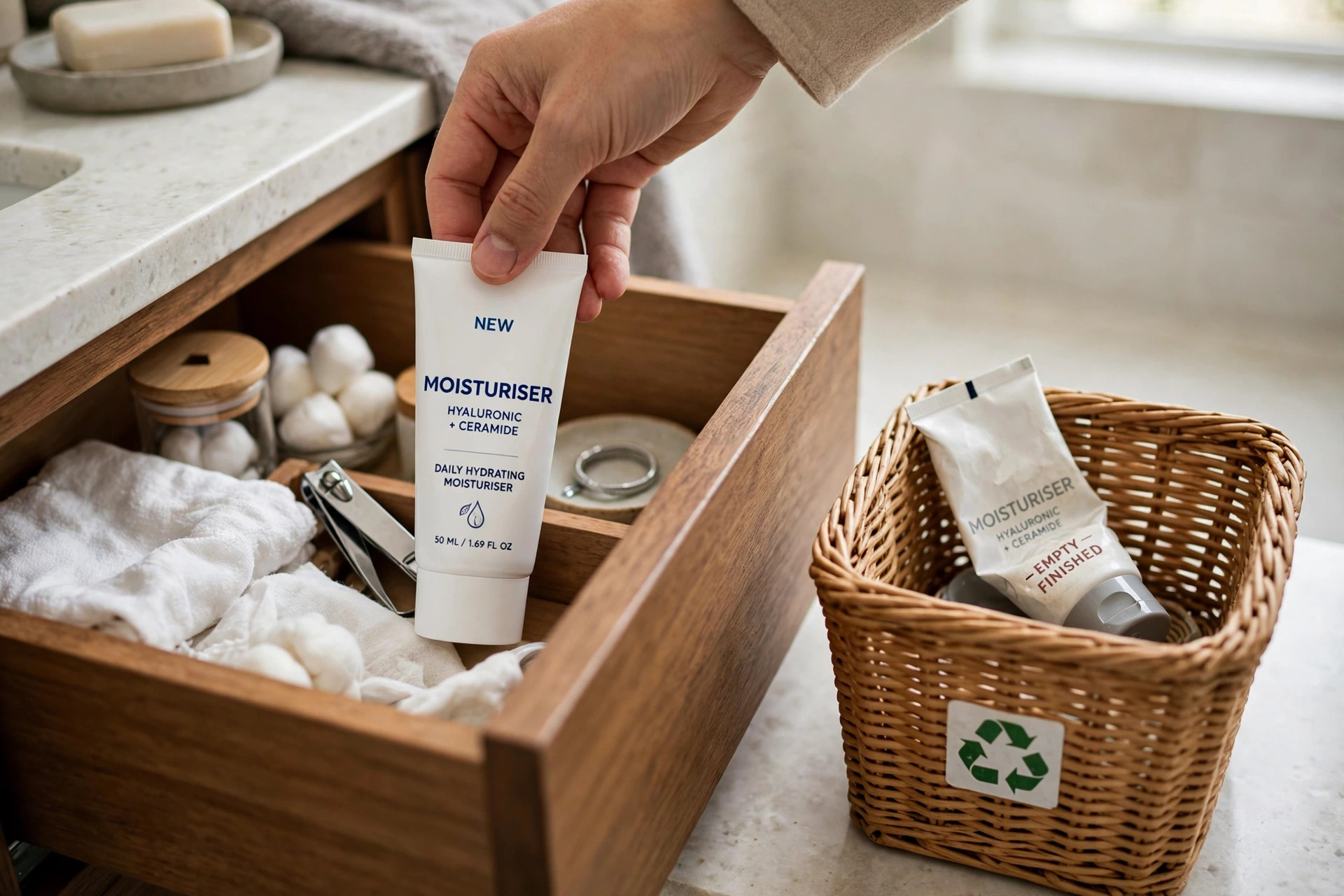
16. One in, one out — the rule that stops the drawer refilling
A drawer you organized once is a drawer that refills itself, because the new serum goes in, the old one stays, the new mascara goes in, the dried-out one stays, and the drawer that only ever gains is the drawer that is a jumble again by Christmas. Follow one in, one out — the rule that stops the drawer refilling — so every new product that enters the drawer means one old product leaves it, on the same day, without exception. When the new moisturiser comes home, the old tube goes in the bin or the recycling, and when a gift set arrives, the duplicates go to the spare box or to a friend, because the rule that is followed every time is the rule that keeps the drawer at the size you organized. One in, one out, and the drawer stays the size you made it.
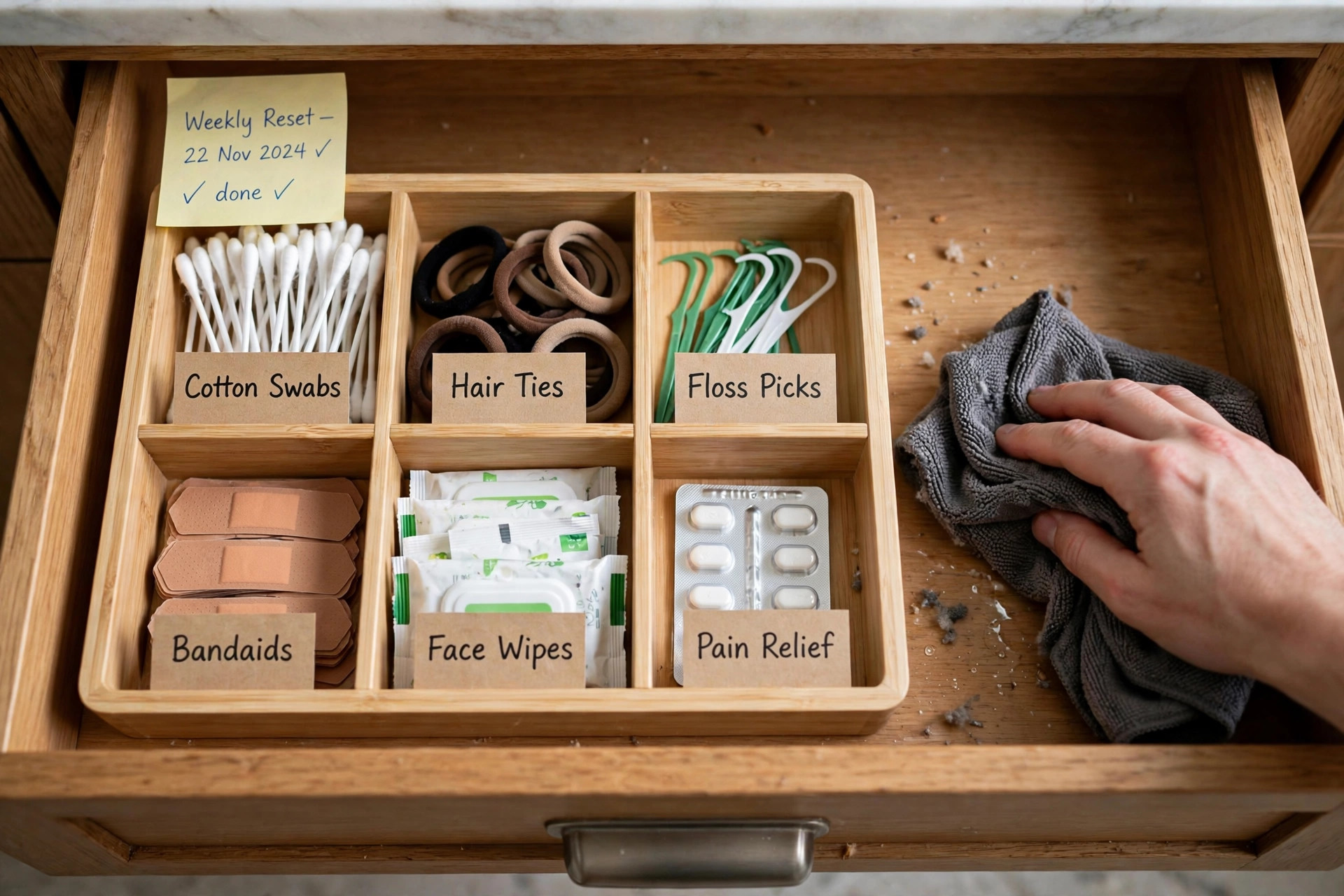
17. A two-minute weekly reset — the reset that keeps the jumble from coming back
A drawer system with no maintenance is a system that decays, because the cotton pad that lands in the wrong slot is the cotton pad that starts a pile, and the pile that starts is the pile that becomes the jumble again. Do a two-minute weekly reset — the reset that keeps the jumble from coming back — so once a week, on the same day, you open every drawer, put the three things that drifted back where they belong, and wipe the tray. Pick the same day every week, keep a small cloth in the drawer for the wipe, and do the reset while the shower warms up, because the reset that fits into a routine is the reset that actually happens. The weekly reset borrows its rhythm from 22 Rolling Cart Organization Ideas for 2026, where the same two-minute habit keeps a cart that rolls through three rooms tidy. Two minutes a week, and the jumble never gets a foothold.
18. An expiry check every season — the date that stops the drawer holding rubbish
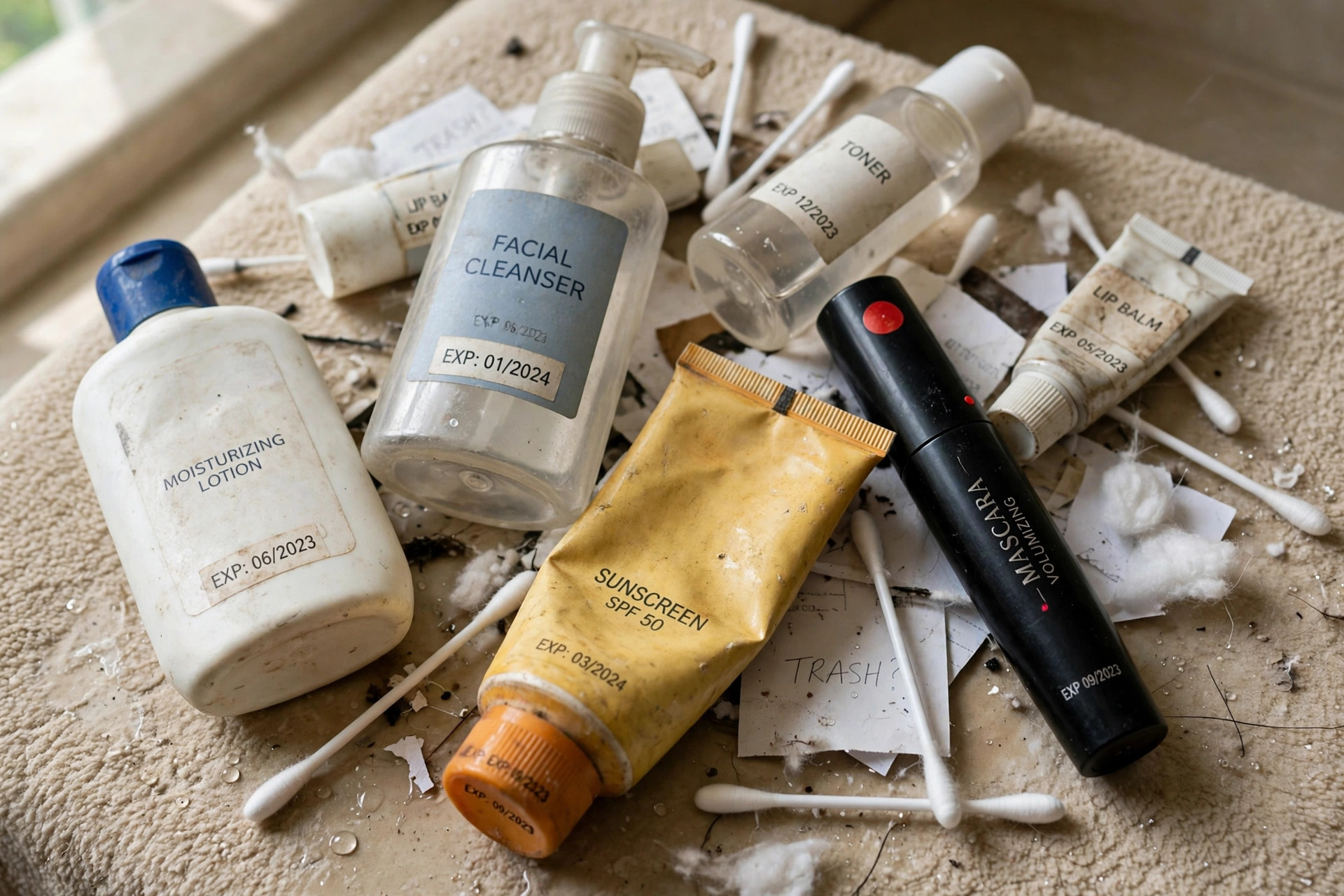
A bathroom drawer is the one place in the house where expired products hide the longest, because the sunscreen from two summers ago looks the same as the one from this summer, the mascara from last year looks the same as the one from last month, and the product that looks fine is the product that expired eighteen months ago. Do an expiry check every season — the date that stops the drawer holding rubbish — so four times a year you open every drawer, check the date on every bottle, and toss anything past its date or open for more than a year. Write the month you opened a product on a small dot on the lid, because the dot that says when it opened is the dot that tells you when it goes. The expiry check is the same seasonal habit that keeps a medicine cabinet safe, and the date discipline is covered in 20 Medicine Cabinet Organization Ideas for 2026, where the same check keeps the first-aid supplies current. Four checks a year, and the drawer never holds rubbish.
19. Keep the damp out — the liner and the airflow that stop the musty smell
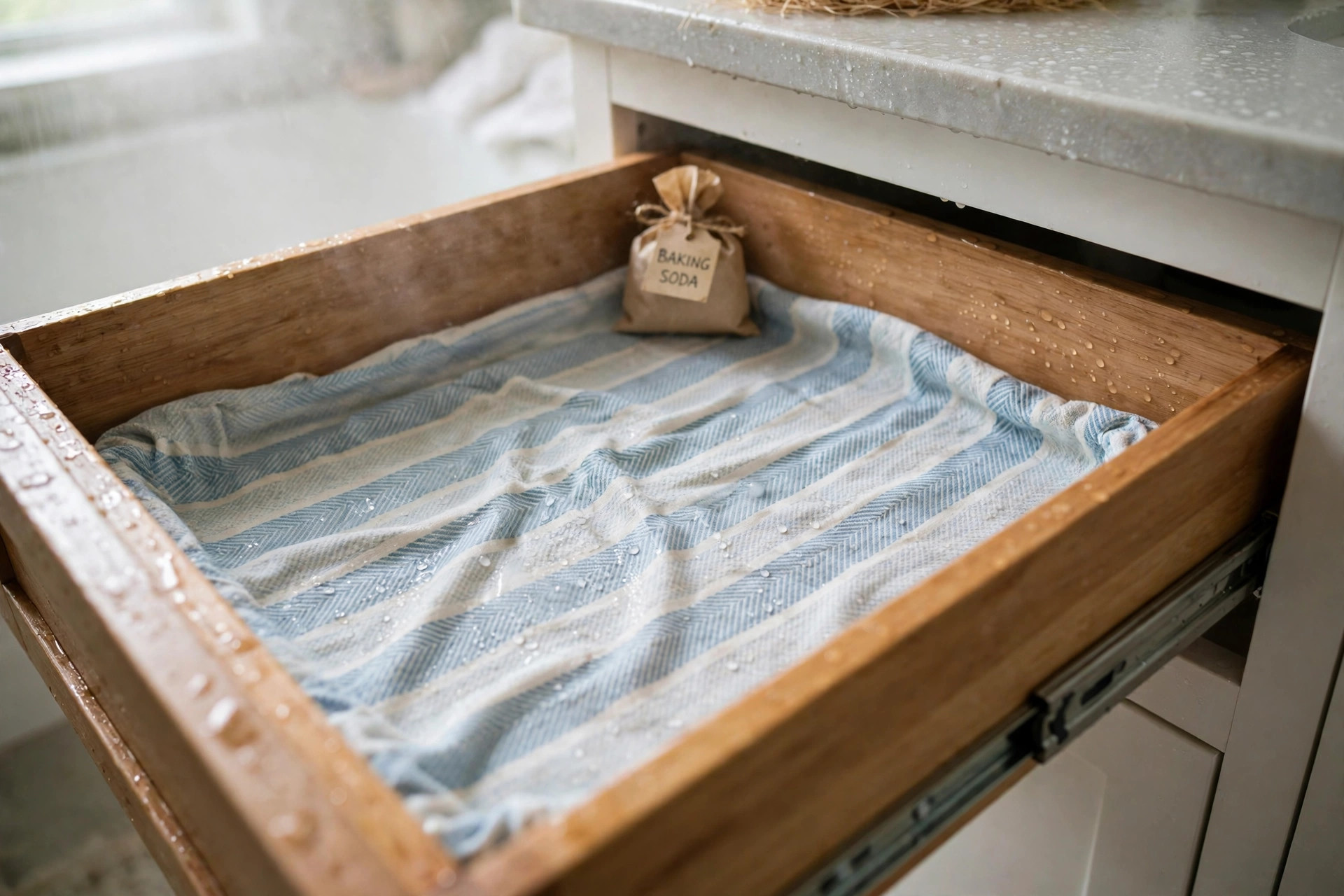
A bathroom drawer lives in the dampest room in the house, and that is why it smells musty first, because the steam from the shower settles into the drawer, the damp settles into the wood, and the drawer that never dries is the drawer that smells like a wet towel. Keep the damp out — the liner and the airflow that stop the musty smell — so every drawer gets a washable liner, a small sachet of baking soda or silica, and a habit of leaving the drawer open for ten minutes after a shower. Choose a liner you can lift out and wash, keep the sachet at the back where it cannot spill, and never put a wet item straight into the drawer, because the item that goes in wet is the item that makes the drawer smell. A liner, a sachet and ten minutes of air, and the drawer smells like nothing at all.
20. A seasonal swap — summer sun care out, winter skin care in, before the season starts
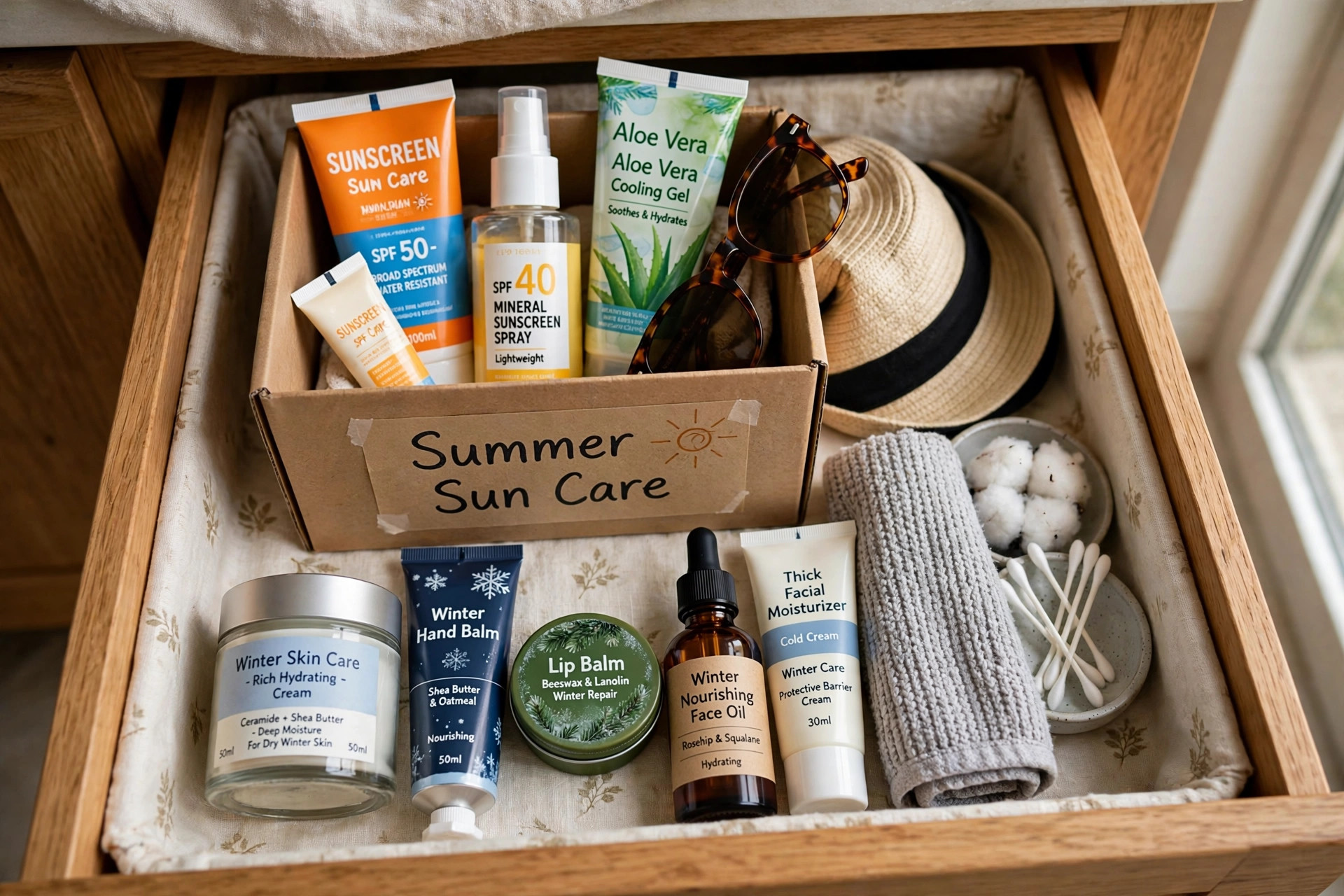
A bathroom drawer holding every season at once is a drawer holding none of them properly, because the summer sun care takes the space the winter skin care needs, and the space that holds both is the space that holds neither where you can find it. Do a seasonal swap — summer sun care out, winter skin care in, before the season starts — so the drawer only shows the season you are living in. Before each season, pull the out-of-season products into a labelled box, bring the in-season ones to the front, and check the list inside the lid, because the list on the lid is the list that stops you forgetting the one product you need. The seasonal swap is the same rhythm that keeps a polish collection in season, and the swap habit is covered in 18 Nail Polish Organization Ideas for 2026, where the same before-the-season move keeps the vanity dressed for the right weather. One box for the off-season, and the drawer is dressed for the right season every time.
Which bathroom drawer organization idea fits which situation?
| Situation | Best first move | Budget | Tools needed |
|---|---|---|---|
| Drawer is a total jumble | Empty the drawer completely (idea 1) | Free | Towel, bin |
| Drawer holds things you never use | Keep, toss, move out (idea 2) | Free | None |
| One drawer holds four categories | One category per drawer (idea 3) | Free | None |
| Morning needs three drawers at once | Group by routine (idea 4) | Free | None |
| Three bottles of the same product | Decant the duplicates (idea 5) | Low | Labelled box |
| Everything slides around | Adjustable dividers (idea 6) | Low | Dividers |
| Small things slip through the gaps | Small trays inside the drawer (idea 7) | Low | Trays |
| Dividers keep shifting | A drawer insert that fits (idea 8) | Low | Insert |
| Deep drawer hides its bottom | Stackable bins (idea 9) | Low | Bins |
| Nobody else keeps the system | Label every zone (idea 10) | Low | Labels, pen |
| Top drawer is the busiest | Everyday essentials only (idea 11) | Free | None |
| Tall bottles disappear in a deep drawer | Risers doing the lifting (idea 12) | Low | Riser |
You do not need all 20 ideas. You need the three that solve your drawers — usually the empty-and-sort before you buy another divider, the adjustable dividers that fit the drawer you actually have, and the two-minute weekly reset that keeps the jumble from coming back. Start with the empty drawer, do it this weekend on the counter, and put the labels where the zones are. Do that and the next time you reach for the moisturiser, the moisturiser will be the first thing your hand finds.
Save this post for your next bathroom tidy, and if the drawers lead you further, read 24 Makeup Storage Ideas for 2026 next — it is Post 38, the makeup storage that sits in the drawer beside this one — and 25 Bathroom Counter Organization Ideas for 2026, Post 04, for the counter above the drawers. The same divider thinking works in the kitchen too — 22 Kitchen Drawer Organization Ideas for 2026 is coming in this run, plain for now until it is published. This is the eighth post of the Organization by problem return run — Posts 56 to 80, one everyday problem at a time — and the run continues with the kitchen drawer, where the same grid turns a junk drawer into a system.
Publish date assigned at publishing time. Updated as new bathroom drawer organization finds are tested.
Frequently asked questions
How do I organize a bathroom drawer with no dividers?
Start with the empty-and-sort: take everything out, keep only what you use weekly, and give the drawer one category. Then fit the cheapest divider you can — small trays, a cut-to-fit insert, or even small boxes from around the house — so every category has a slot it cannot slide out of. The divider does not need to be expensive; it needs to fit the drawer and stay put. Label each zone, and the drawer stays tidy even without a fitted system.
What should I keep in the top bathroom drawer?
Keep only the everyday essentials — the toothbrush and toothpaste, the deodorant, the moisturiser and the lip balm — the four or five things the morning actually needs. Everything else goes down: hair tools in the second drawer, medicines in the third, and spares in a labelled box on a shelf. If a product does not earn its place every single day, it does not live in the top drawer.
How do I keep bathroom drawers from getting damp and musty?
Line every drawer with a washable liner, keep a small sachet of baking soda or silica at the back, and leave the drawer open for ten minutes after a shower so the steam escapes. Never put a wet item straight into the drawer, and wipe the liner once a month. The liner, the sachet and the airflow together are what stop the musty smell — any one of them alone is not enough.