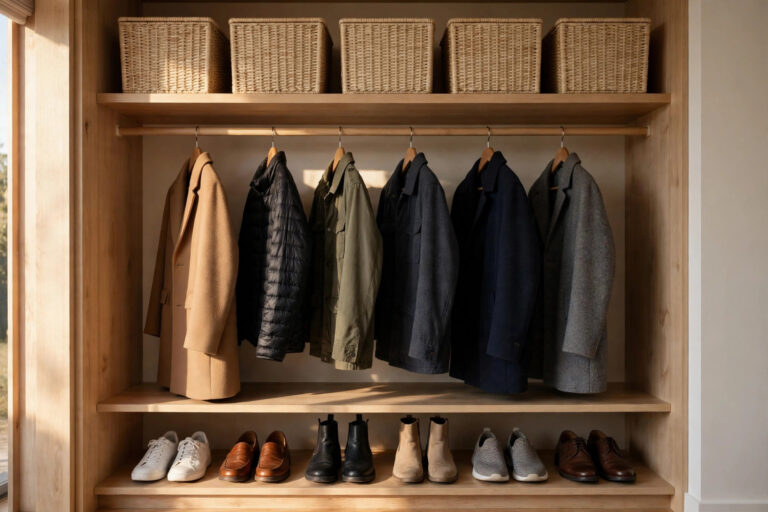
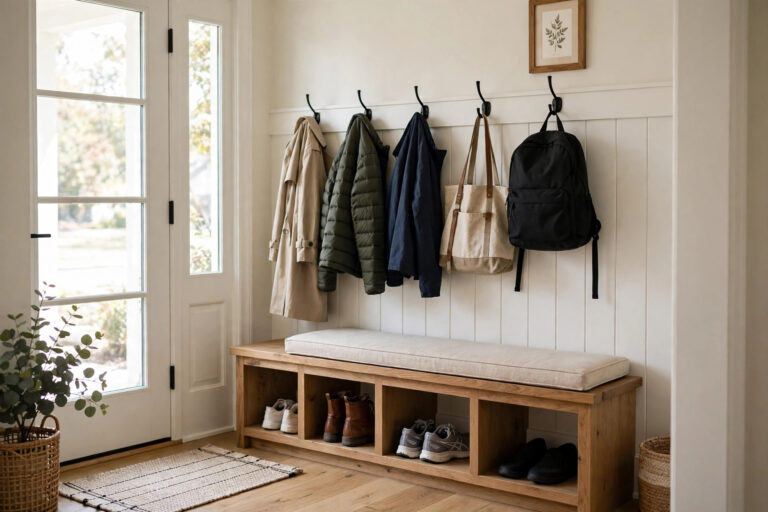
22 School Organization Ideas for 2026
A school morning only works when everything a child needs is already where they expect it to be. Most school mornings fail the same way: the backpack is half-packed, the homework is in yesterday's pile, the lunchbox is still in the sink, the shoes are under a chair, the permission slip is somewhere in a stack of papers, and the thing everyone is looking for is always the thing nobody put back last night.
These 22 school organization ideas fix that without a bigger house: one hook per child by the door, a bag packed the night before, a homework station with everything in arm's reach, an inbox tray for every paper that comes home, and a checklist on the door that gets ticked off before anyone leaves.
Every idea below works in a real home, from a single small hallway to a house with three children and three different school schedules. If the front door is the first mess, start there — 22 Entryway Storage Ideas for 2026 sorts the drop zone, and 25 Coat Closet Organization Ideas for 2026 (Post 11) sorts the coats and bags beside it. Pick three ideas that fit your worst morning, start by giving every school thing one home, and build from there.
Start with a system, not a morning rush
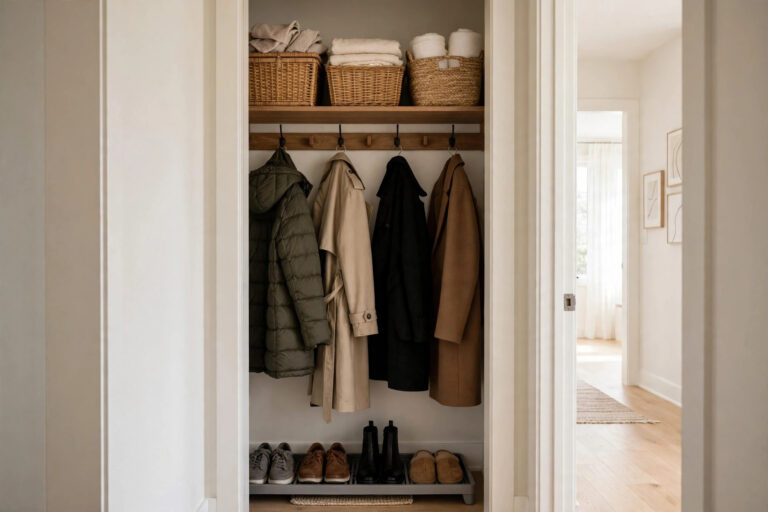
1. One backpack hook per child, at child height, by the door
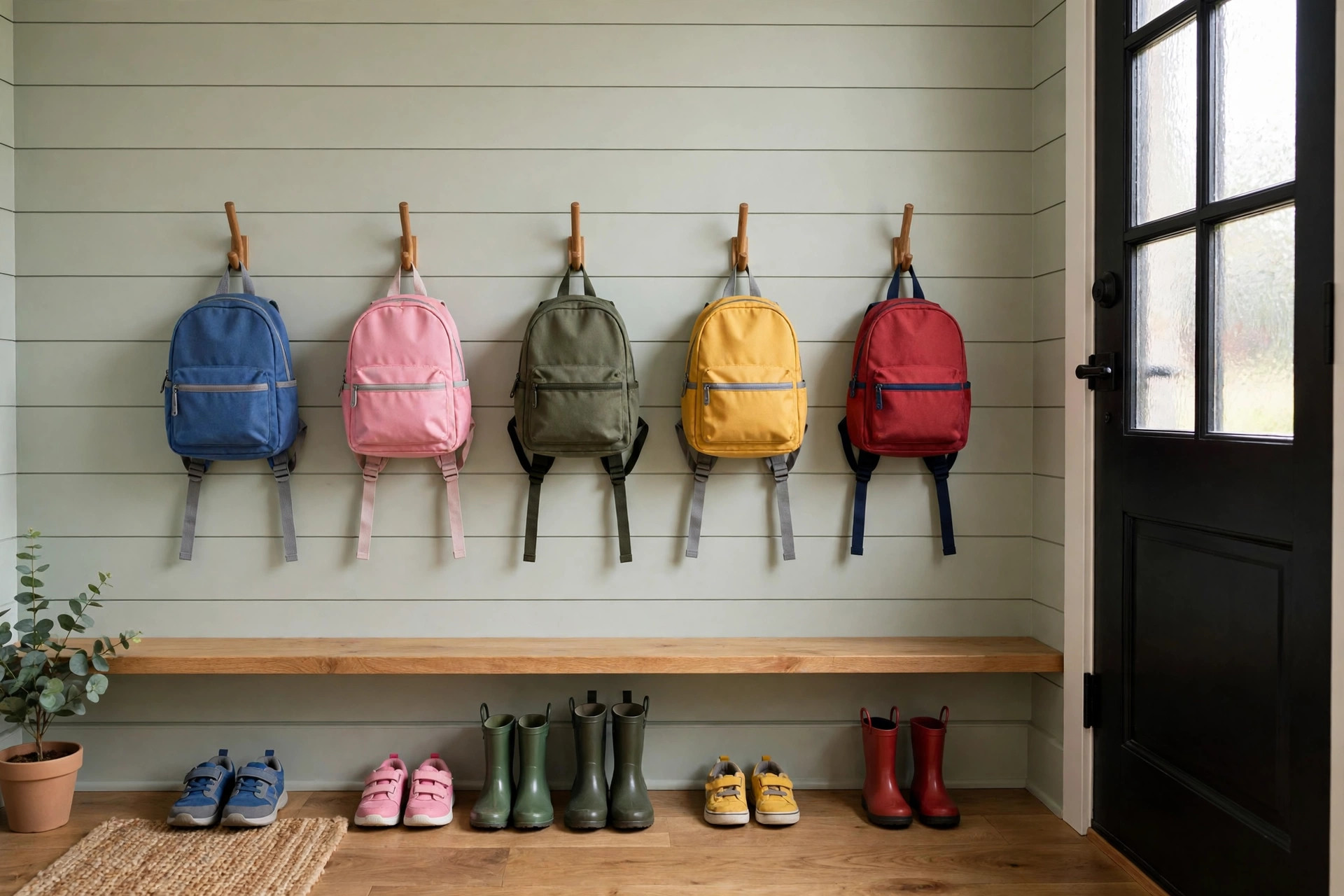
A hook holding three backpacks is a hook nobody can use, because the bag you want is always at the back and the one in front slides to the floor. Give every child one hook of their own, at their height, by the door they leave through — low enough that the smallest child can hang their own bag without help. The bag hangs flat, straps untangled, packed and ready, instead of dumped on the floor where it gets stepped on and forgotten. A hook per child also shows you the real count at a glance: if a hook holds two bags, something has no home. One hook per child, at child height, and the bag stops landing on the floor.
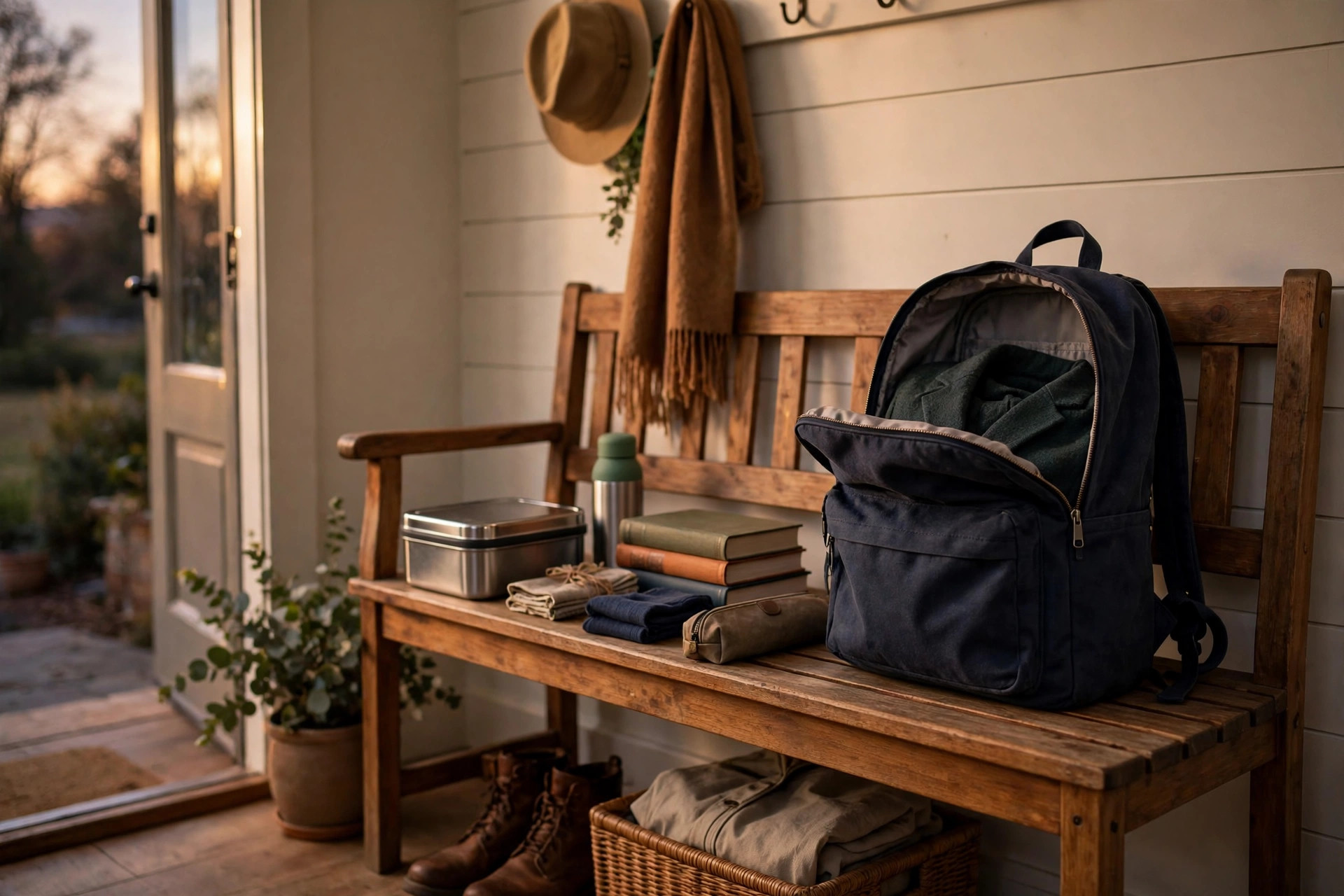
2. Pack the school bag the night before, not in the morning
A bag packed in the morning is a bag packed in a rush, and a rushed bag is how homework, lunch money and library books get left behind. Pack it the night before, when there is time to check: books for tomorrow's lessons, the lunchbox, the water bottle, the gym kit on gym days, and anything the teacher asked for. Lay it all out on a bench or a chair first, check it against the timetable, then zip the bag and hang it on its hook. The morning then has nothing left to pack — only shoes, a coat and the door. Pack it the night before, and the morning stops being a search.
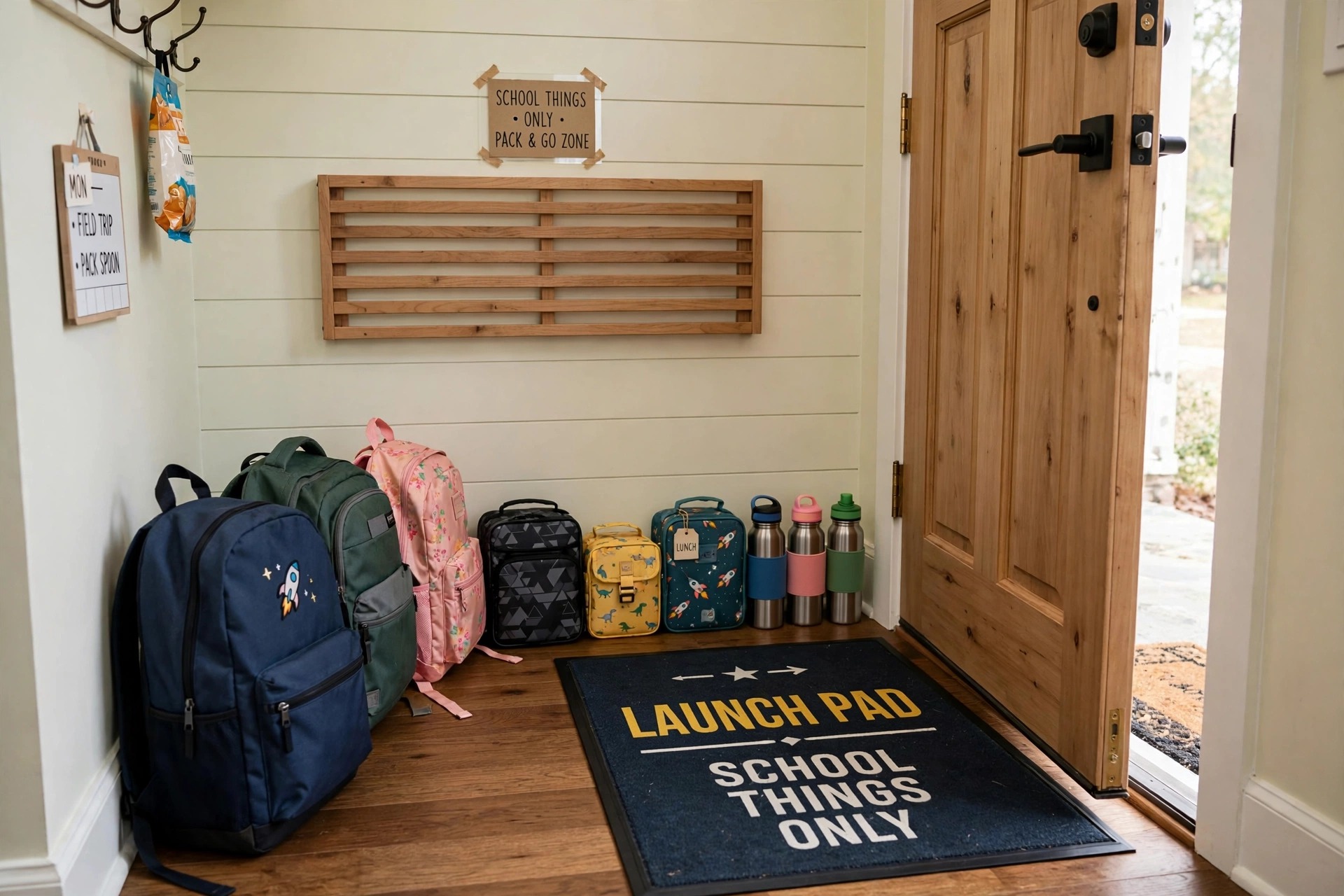
3. A launch pad by the door for school things only — nothing else lands there
A hallway table that holds everything holds nothing well, because the school things get buried under mail, keys and shopping bags. Give school things one launch pad by the door — a bench, a shelf or a row of hooks — and make it school-only: backpacks, lunchboxes, water bottles and the things that leave the house each morning, nothing else. Nothing else lands there, ever: no post, no parcels, no coats that belong in the closet. A launch pad works because it is small and the rule is simple — if it goes to school, it lives here; if it does not, it lives somewhere else. One launch pad, school things only, and the pile by the door stops growing.
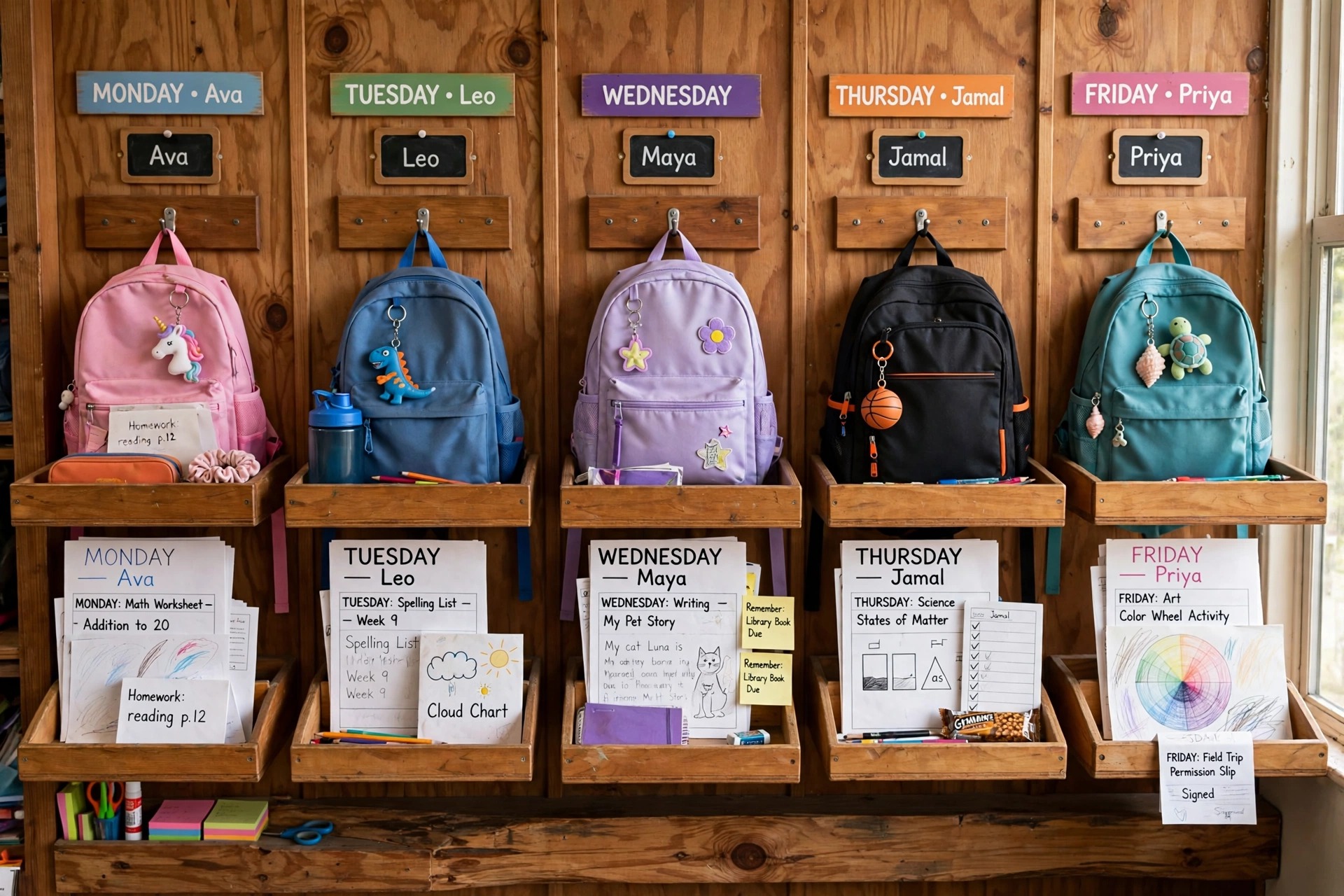
4. Sort school stuff by child first, then by day of the week
Sorting by subject looks tidy in a photo and helps no one find their own bag in the morning. Sort by who uses it first: one hook, one tray and one shelf per child, in a row, so every bag and every paper has an owner and every owner knows exactly where to reach. Inside each child's zone, sort by day — Monday's books together, Friday's kit together — so the bag for tomorrow is packed from one small pile, not hunted through the whole house. Child zones also show you where the clutter actually comes from: if one child's zone is always overflowing, that is the routine to fix. Sort by child, then by day, and the system works for the whole household, not just the person who tidied it.
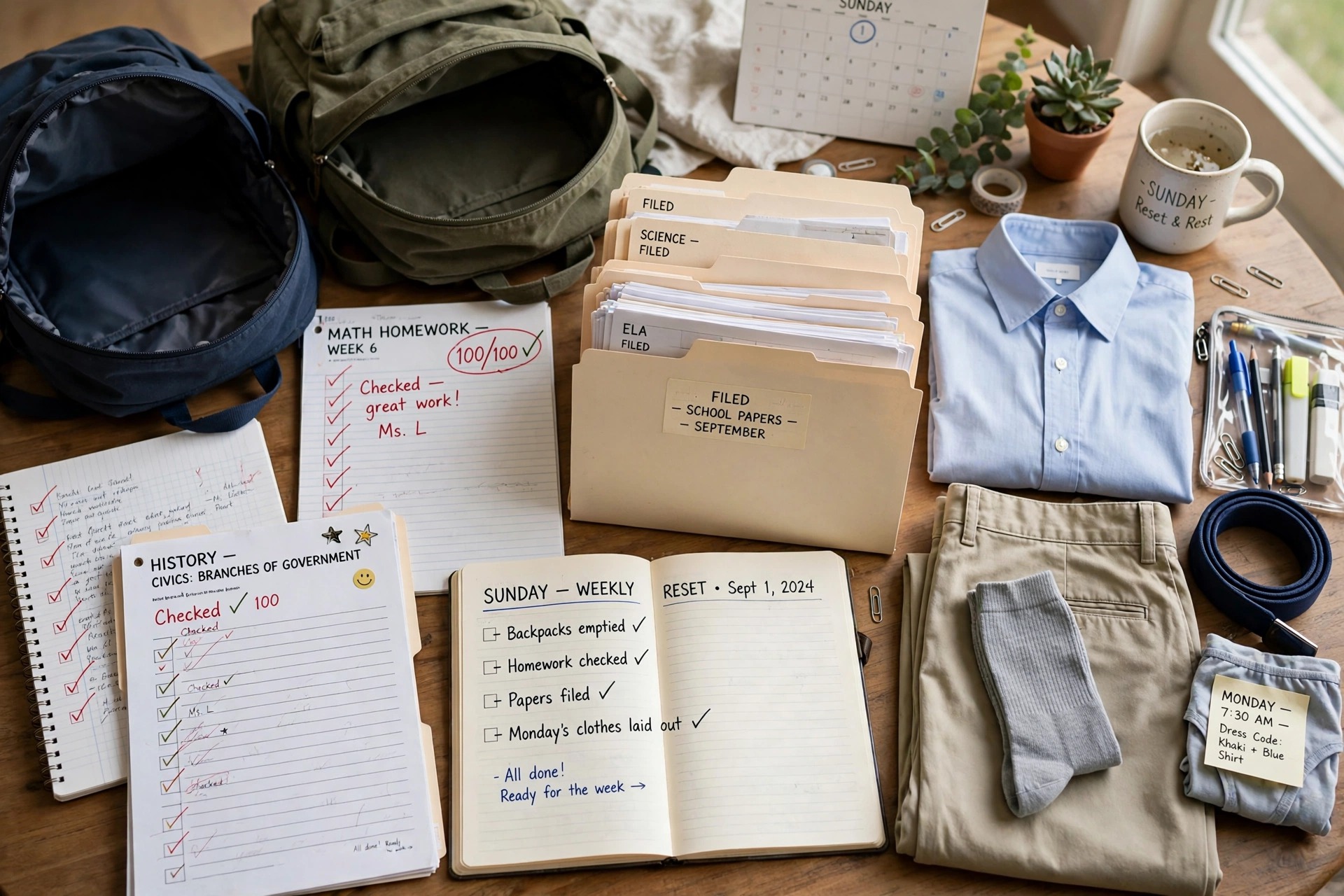
5. A Sunday weekly reset, not a daily battle over lost things
A system that needs fixing every morning is a system that was never set up, because the week starts messy and stays messy. Reset it once a week, on Sunday, for fifteen minutes: empty the backpacks, check the homework is done, file the week's papers, restock the lunch cupboard, lay out Monday's clothes, and put every bag back on its hook packed for the morning. The reset is small enough to do while dinner cooks, and it stops the slow drift that turns an organized Monday into a chaotic Thursday. Keep a small box for things that belong in another room, and empty it during the reset. One Sunday reset, and the week stops starting with a battle.
A homework station that actually gets used
6. A homework station with everything in arm's reach — no hunting mid-homework
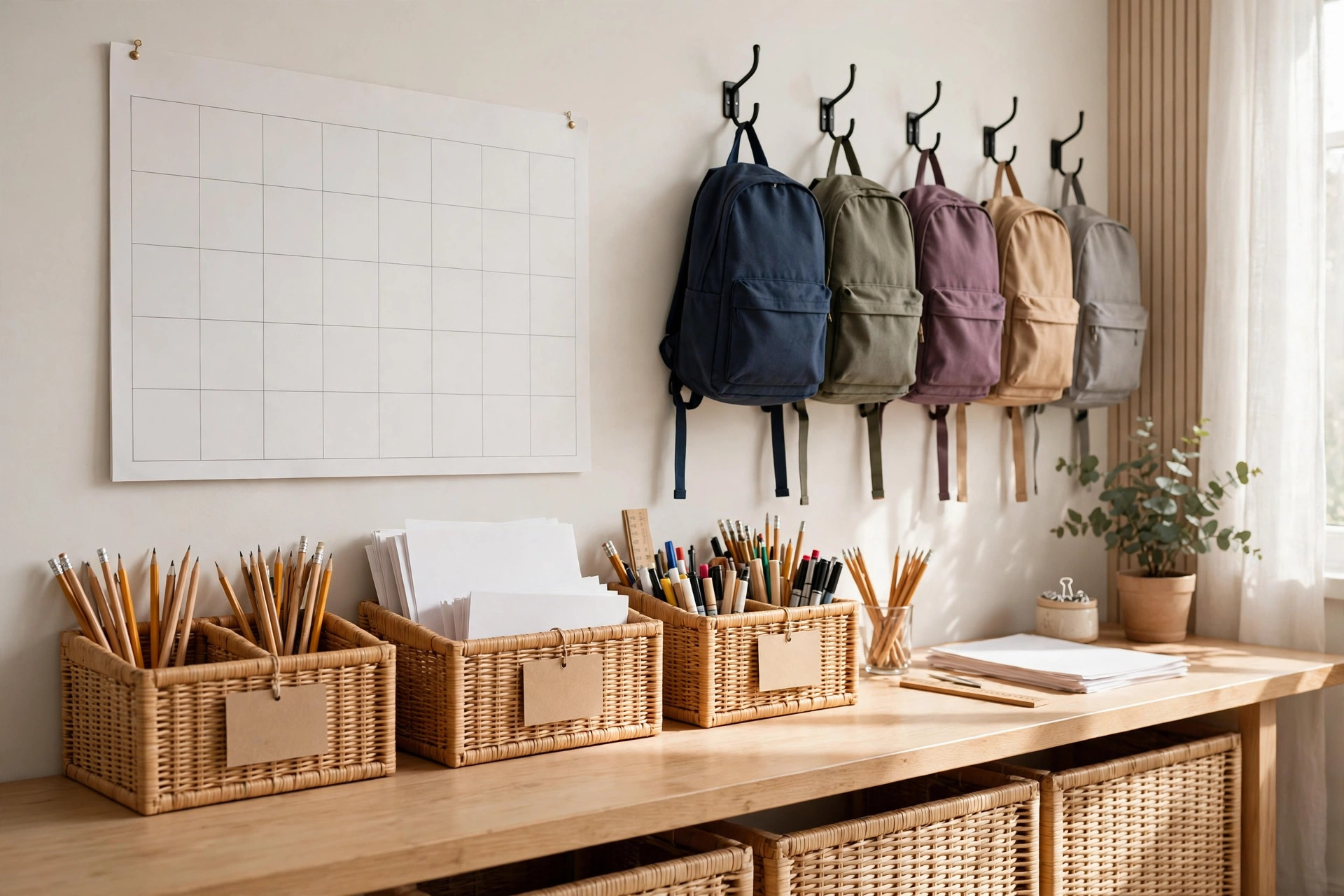
Homework that starts with a hunt for a pencil never really starts, because every trip to find a supply is a reason to stop working. Give homework one station — a desk, a table end or a corner of the kitchen table — with everything in arm's reach: pencils, paper, scissors, glue and the charger, all in their places before the books open. The station lives in one spot, always set up, so sitting down means starting, not setting up. Keep the station to homework only, and clear it when the work is done, so the next session starts clean. One station, everything in reach, and the hunting stops.
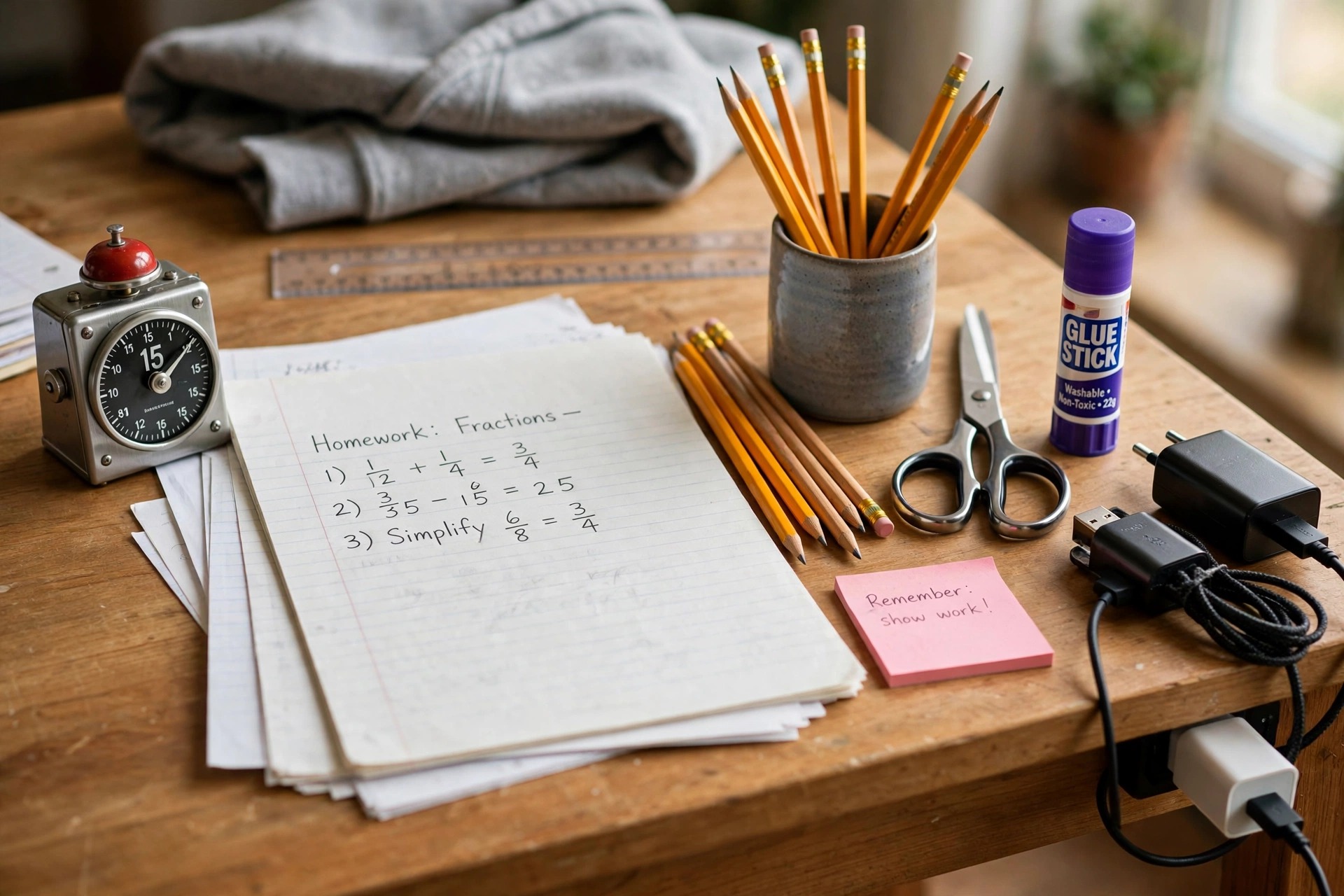
7. One labelled caddy per subject on the desk, pencils and paper inside
A desk drawer full of mixed supplies is a drawer nobody can find anything in, because the pencils are under the glue and the paper is under everything. Put one labelled caddy per subject on the desk — maths, reading, art — with the pencils, paper and tools for that subject inside, standing upright where they can be seen. Caddies also stop a subject's supplies drifting across the desk, because the label says where each thing belongs. Keep one kind of thing per caddy, and never let a caddy hold two subjects, because that is how supplies get lost again. One caddy per subject, and the desk stops being a pile. (Check on Amazon for desk caddies that fit your desk depth.)
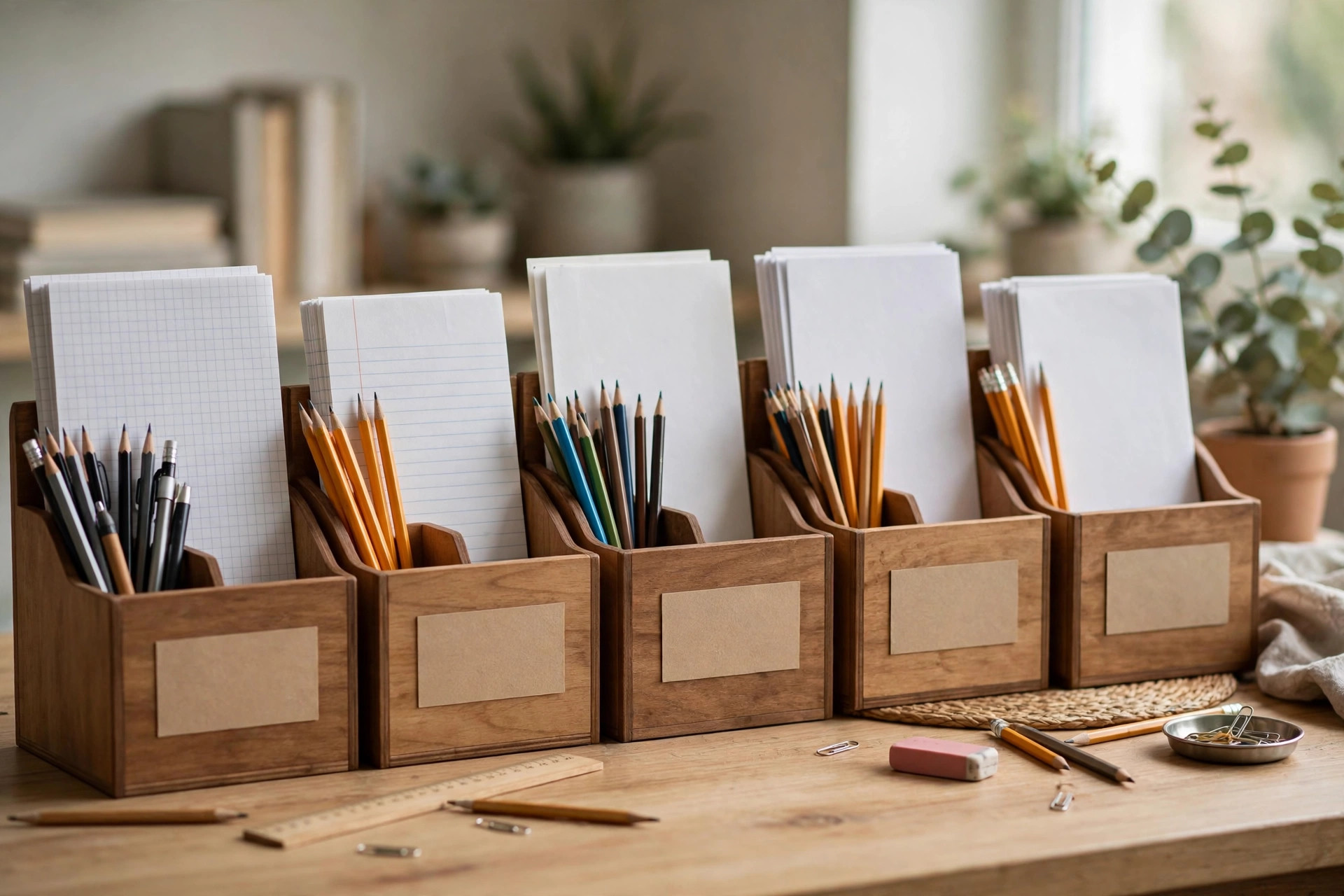
8. A wall calendar the whole family can see — tests, trips and deadlines in one place
A test date that lives only in a child's head is a test date the whole family finds out about the night before. Put one wall calendar where the whole family can see it — above the homework station, in the kitchen, by the door — with tests, school trips, deadlines and holidays marked in one place. Every child adds their own dates, in their own colour, the day they hear about them, so nothing is remembered by one person alone. The calendar also shows the shape of the week at a glance, which is the first step to planning around it. One wall calendar, visible to everyone, and the surprises stop.
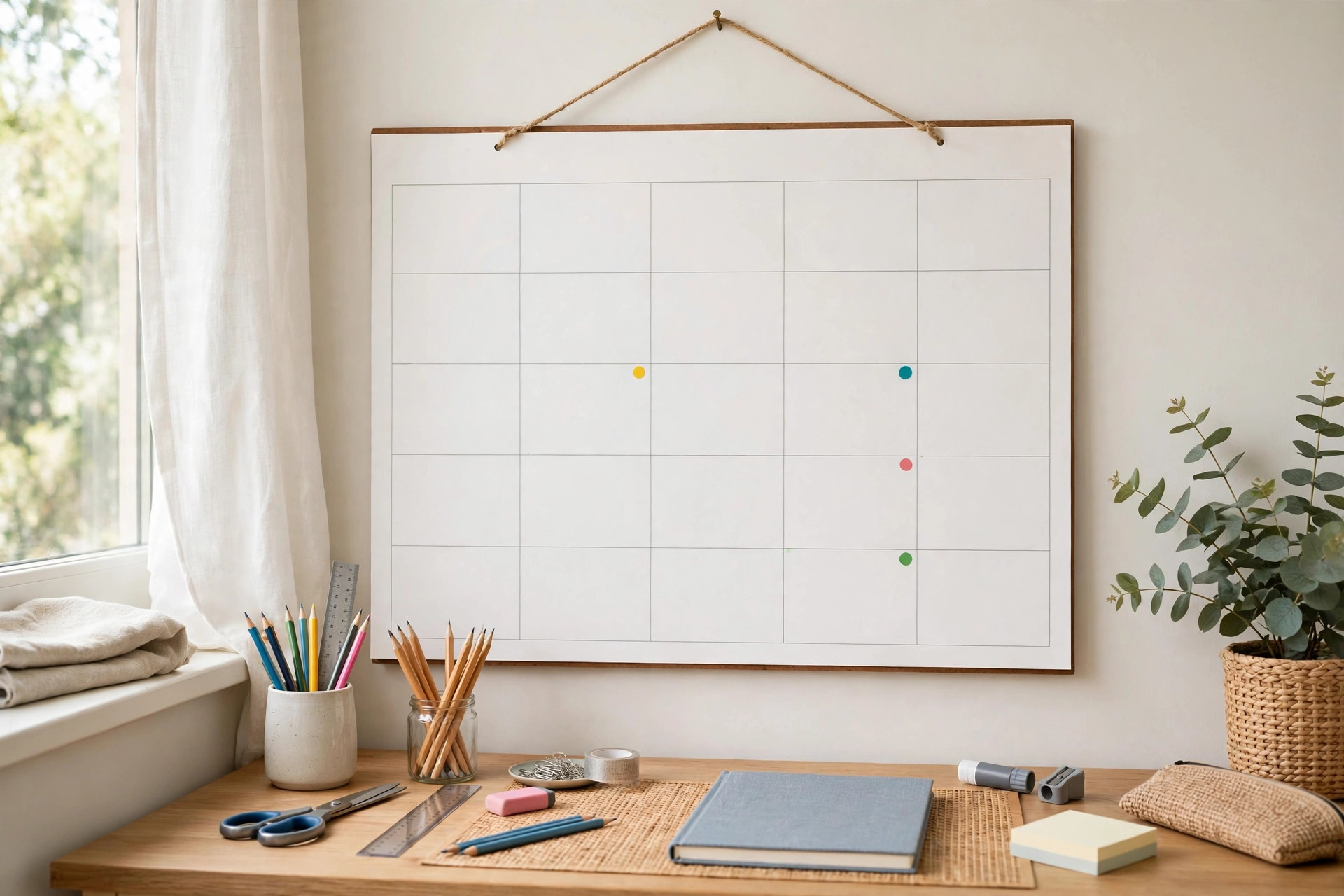
9. A charging spot for tablets and laptops, cables labelled, devices back by bedtime
A tablet charging in a bedroom, a laptop cable in the kitchen and a charger nobody can find are how devices end up flat on a school morning. Give school devices one charging spot — a shelf or a tray near the homework station — with cables labelled per device and every device back on it by bedtime. The rule is simple: the device lives at the charging spot when it is not being used, so it is always full and always findable. Keep the spot to school devices only, and check it once a week, so it never fills with old cables and dead batteries. One charging spot, devices back by bedtime, and the flat battery stops happening.
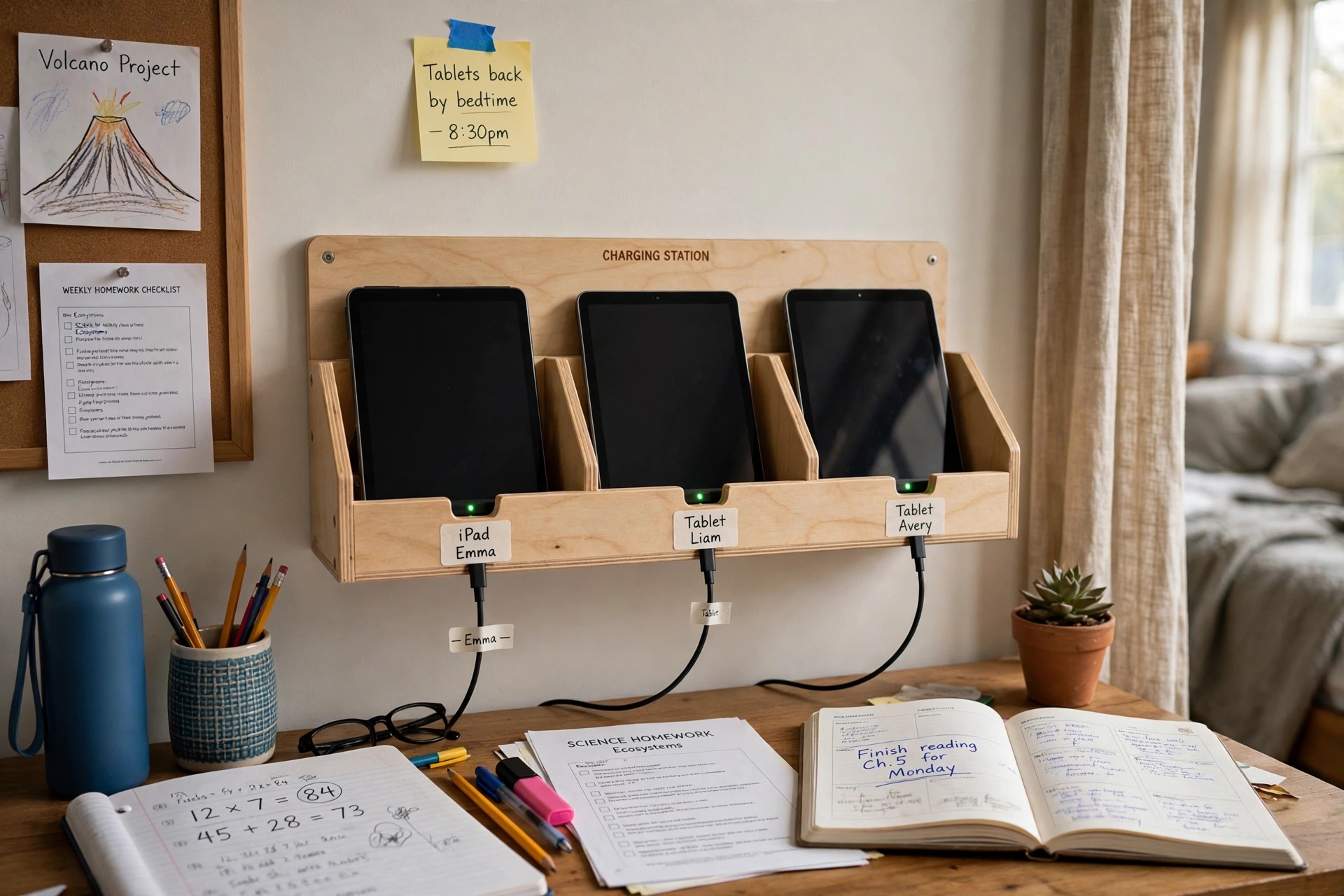
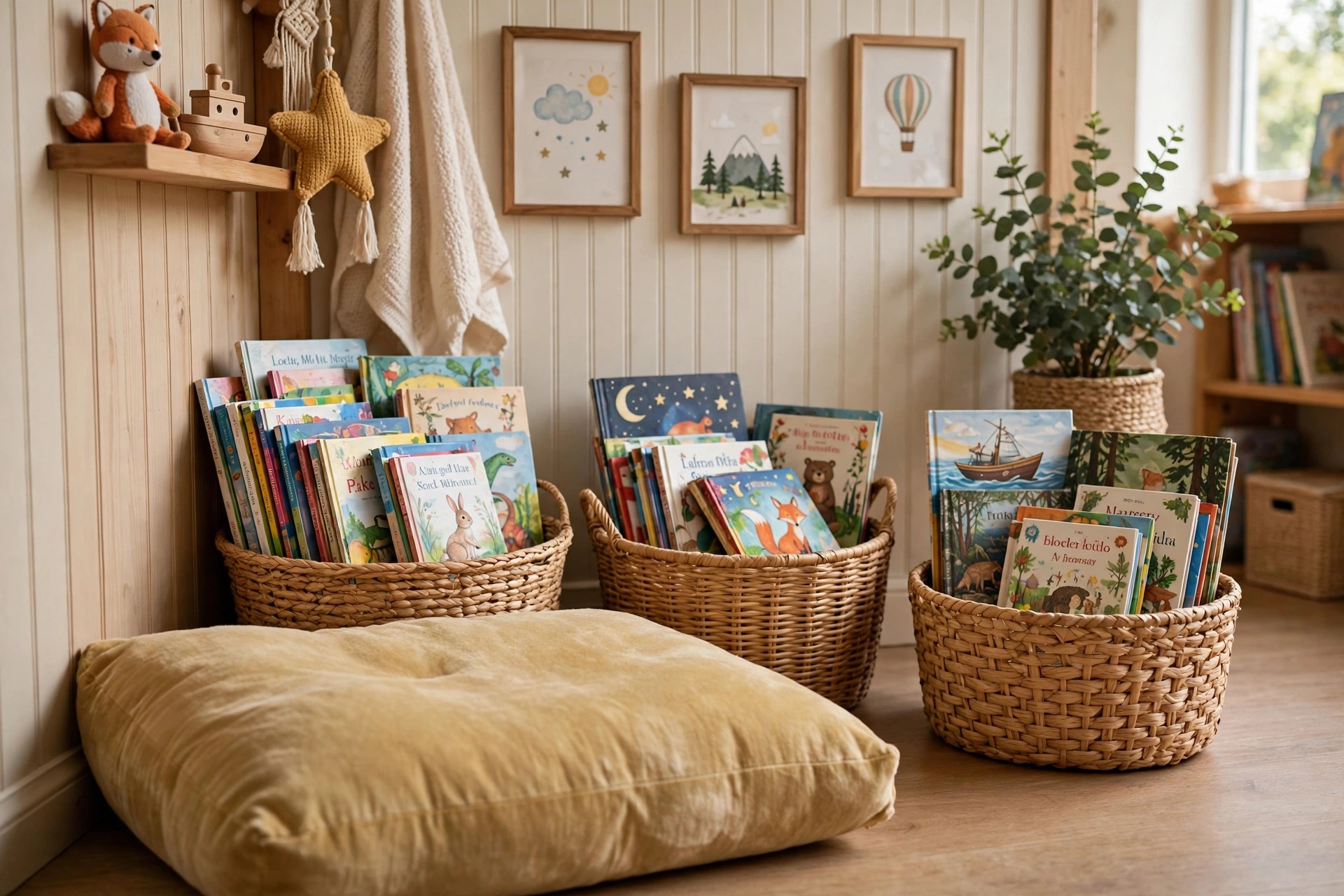
10. A reading corner with books at child height, one basket per reader
Books on a high shelf are books nobody reads, because the shelf is too high for the child who owns them. Give reading one corner — a cushion, a small chair, a basket of books at child height — with one basket per reader, so every child has their own books within reach. Baskets also stop books drifting around the house, because the basket says where each book lives. Keep the baskets to current reads only, and swap them when a book is finished, so the corner never fills with books nobody is reading. One basket per reader, at child height, and the books stop living on the floor.
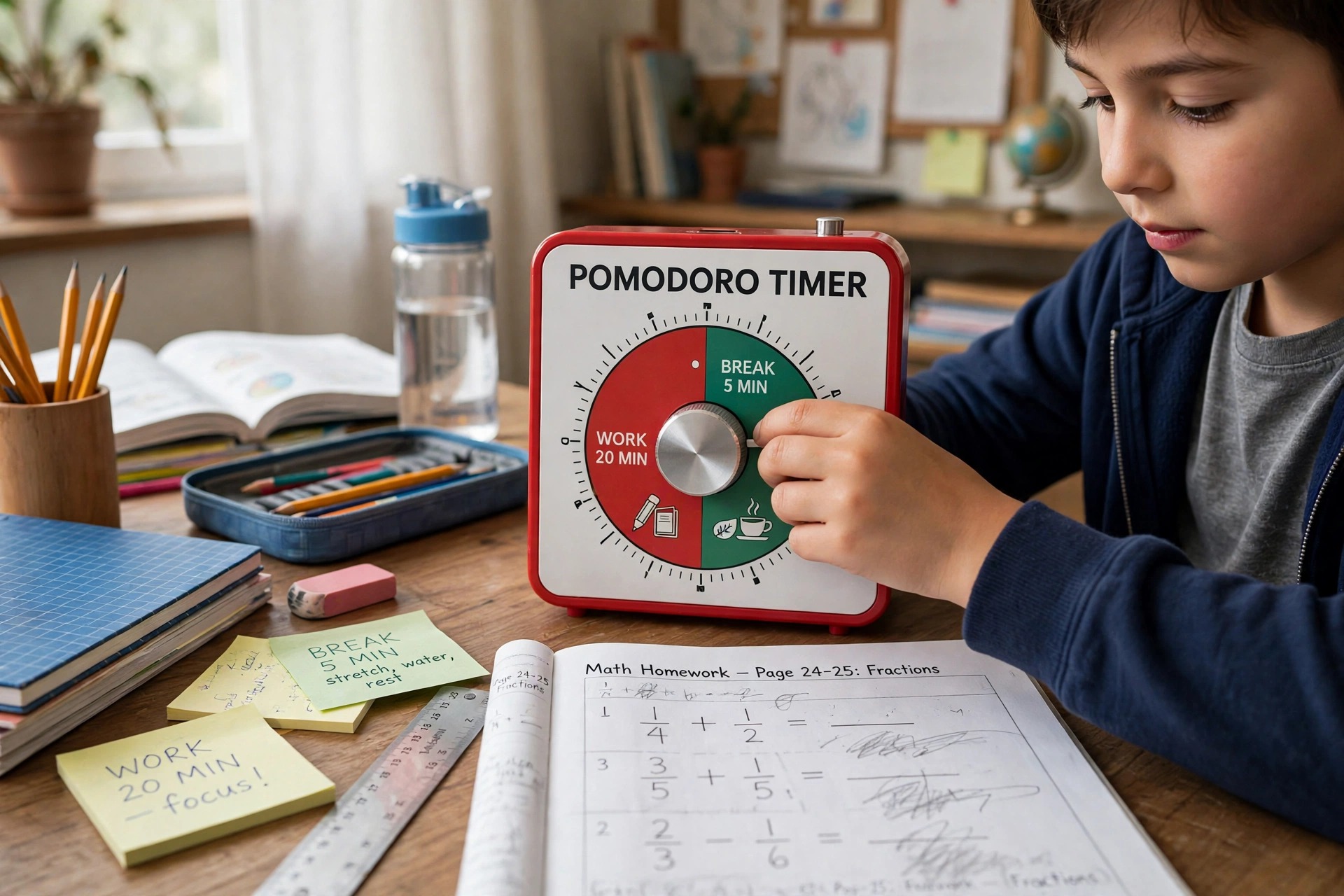
11. Homework in timed blocks with a desk timer, not one long marathon
Homework as one long marathon is homework that never starts, because an hour of work looks too big to begin. Break it into timed blocks — twenty minutes of work, five minutes of break — with a desk timer the child can see and set themselves. The timer makes the work small: nobody has to finish everything, they just have to work until the timer rings. Short blocks also stop the drift that turns homework into an evening-long battle, because the end of each block is always close. One desk timer, timed blocks, and the marathon stops. (Check on Amazon for a simple desk timer a child can set alone.)
Papers, lunch and the weekly rhythm
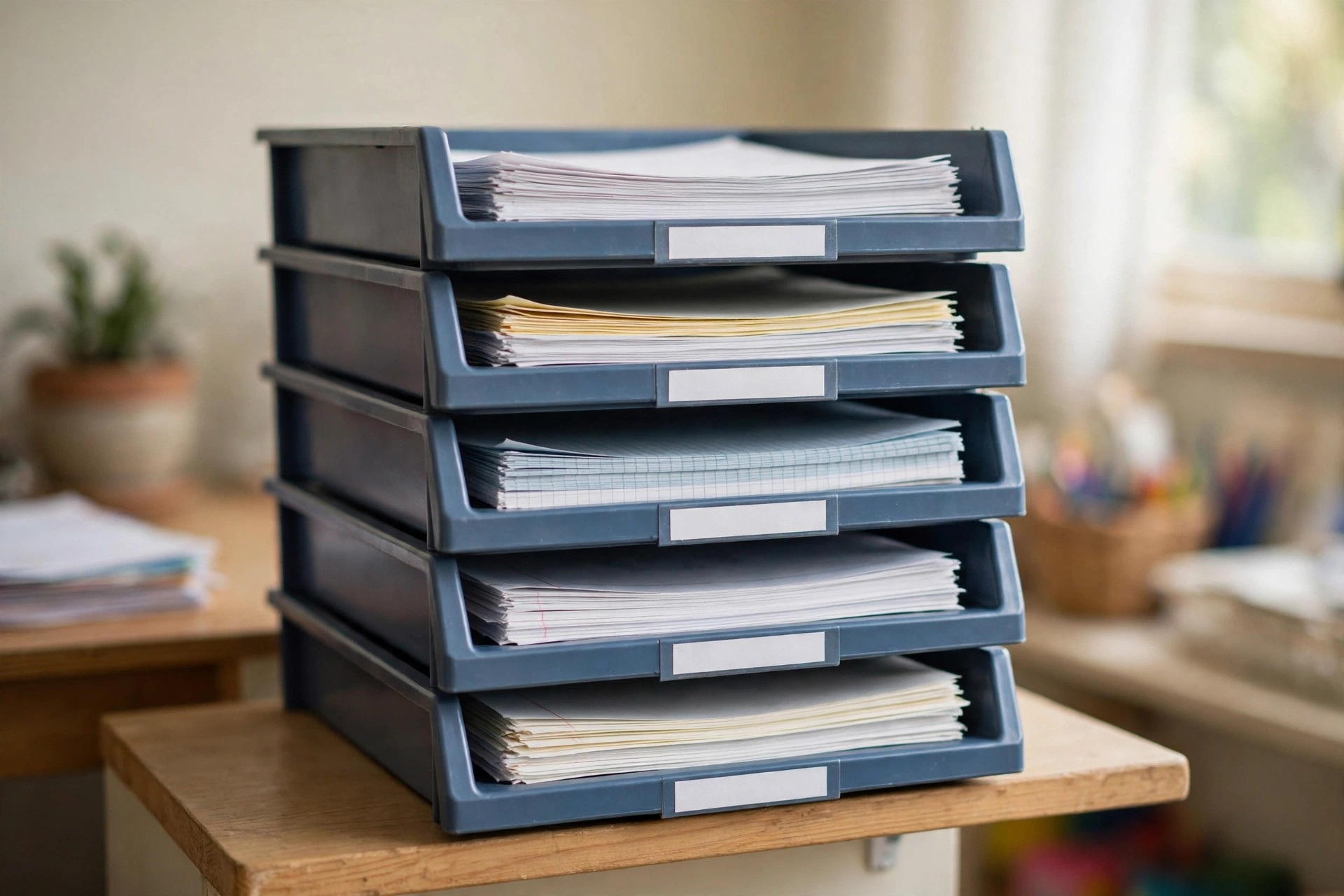
12. An inbox tray per child for school papers coming home
School papers that land on the kitchen counter get buried under everything else, and the permission slip is always the paper at the bottom. Give every child one inbox tray — on a shelf by the door or on the homework station — for every paper that comes home, so nothing lands in a pile. The tray is emptied every evening: papers to sign, papers to file, papers to recycle, each dealt with the day they arrive. A tray per child also stops one child's papers hiding another's, because the tray says whose papers they are. One inbox tray per child, and the papers stop taking over the counter.
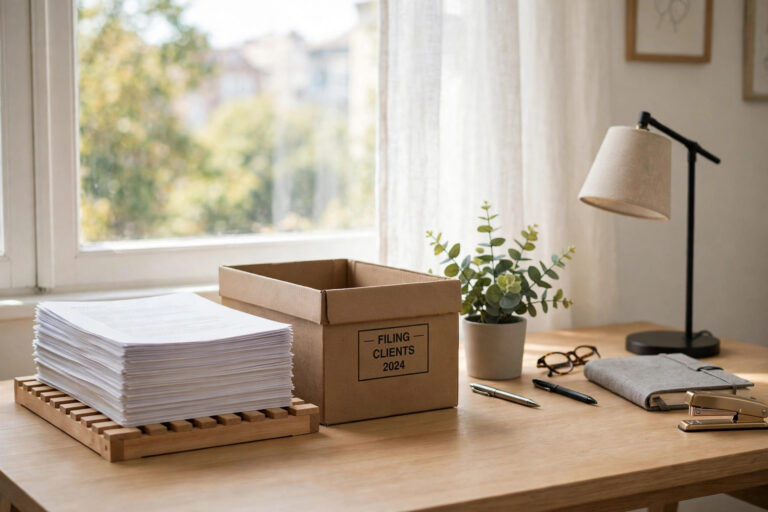
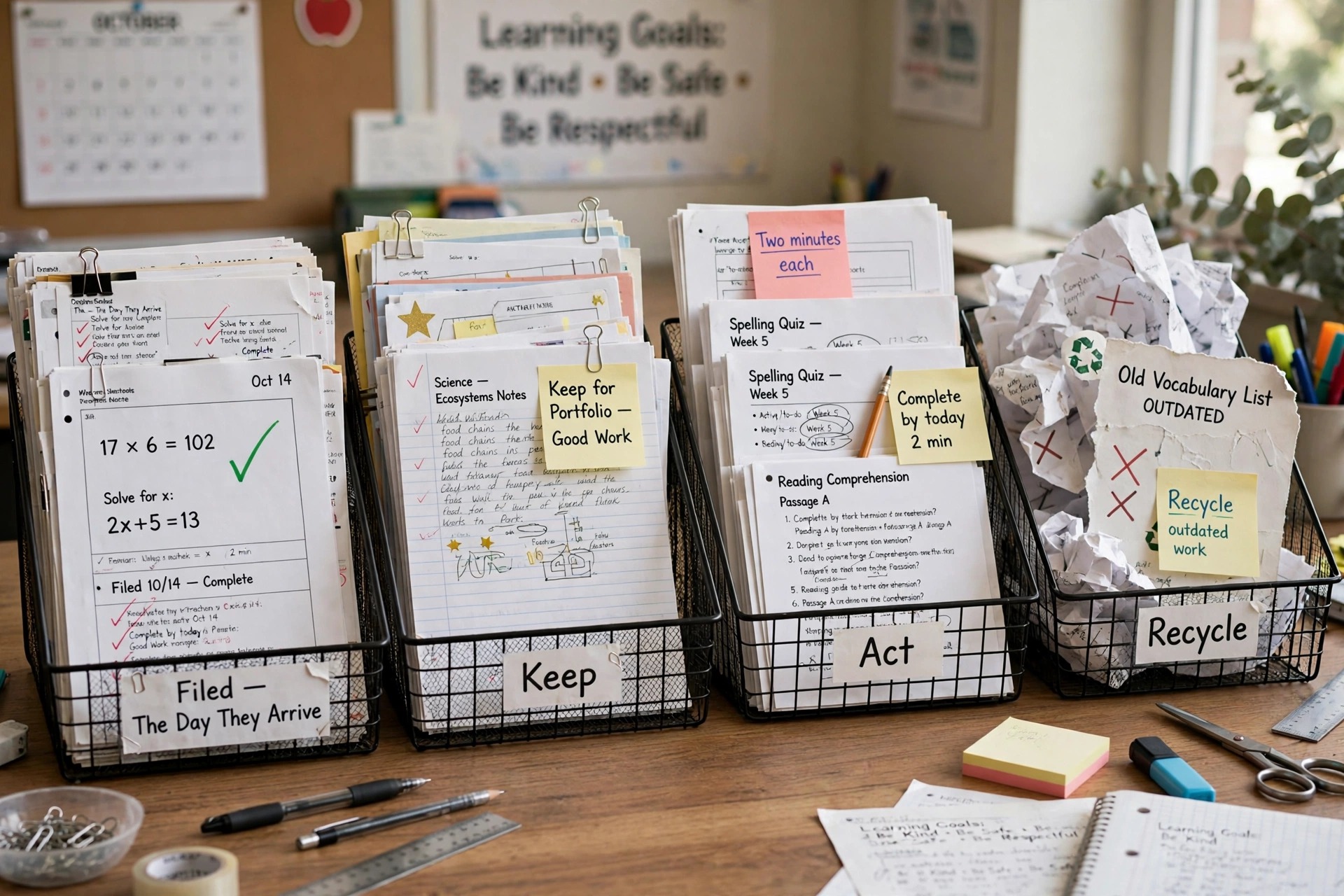
13. File school papers the day they arrive — keep, act, recycle
A paper filed a week late is a paper that was needed yesterday, because the reply date passed while it sat in a pile. File every school paper the day it arrives, with three choices only: keep it in the child's file, act on it now and send it back, or recycle it. The filing takes two minutes per paper, done during the evening inbox check, and it stops the pile that turns a kitchen counter into a second school bag. Keep the file to one folder per child, and clear it at the end of each term, so nothing lives there past its use. Keep, act or recycle — the day it arrives — and the pile stops.
14. A lunch-packing station — boxes, bottles and snacks in one cupboard
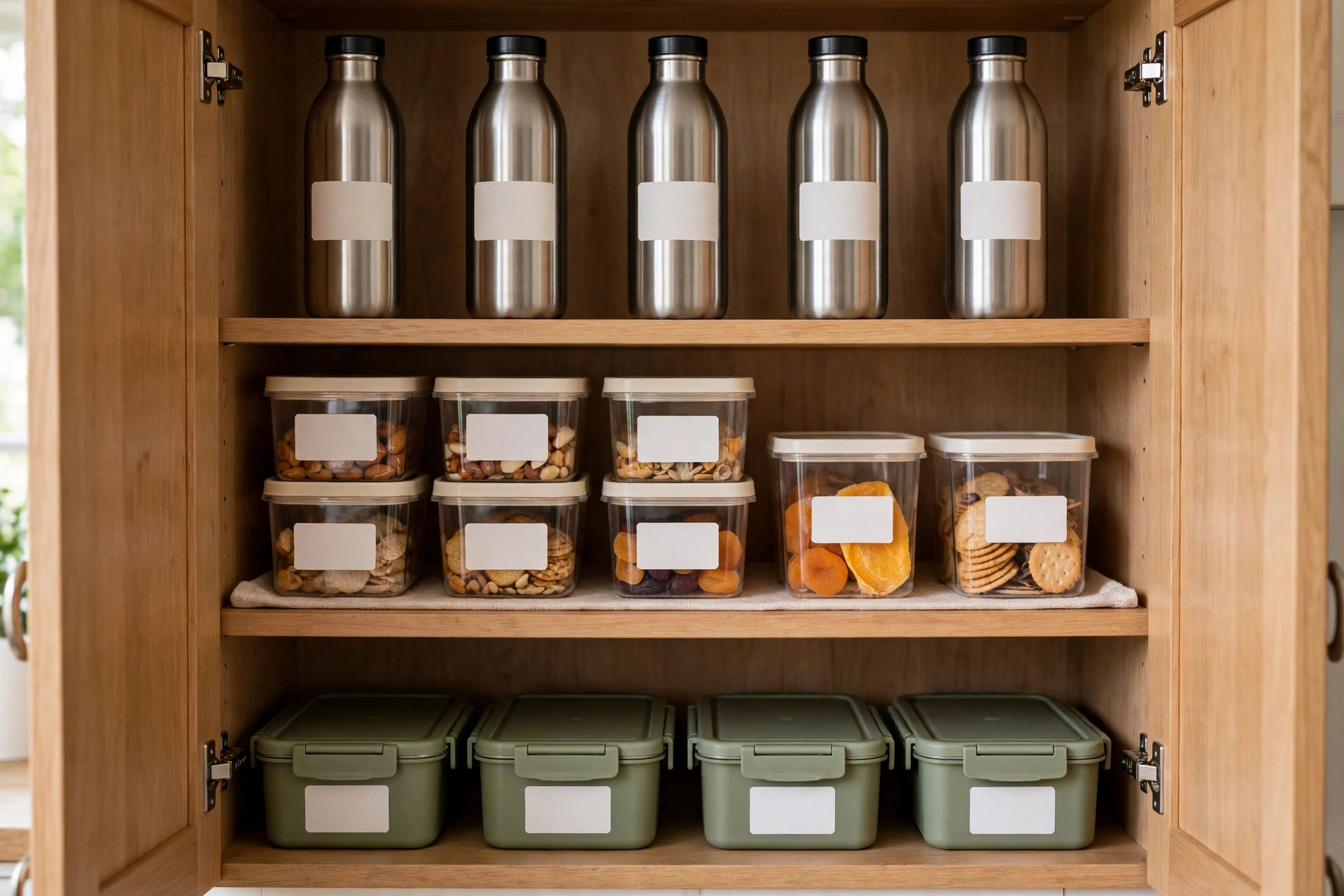
A lunch packed from three different cupboards is a lunch packed in a rush, and a rushed lunch is how the water bottle gets forgotten. Give lunch-packing one cupboard — boxes, bottles, snack pots and lids in labelled rows, all in one place — so packing a lunch means opening one door. The station also shows you what is running low at a glance, which is the first step to restocking before the morning it runs out. Keep the cupboard to lunch things only, and put every box back in its row the day it comes home washed. One lunch cupboard, everything in a row, and the morning lunch stops being a hunt.
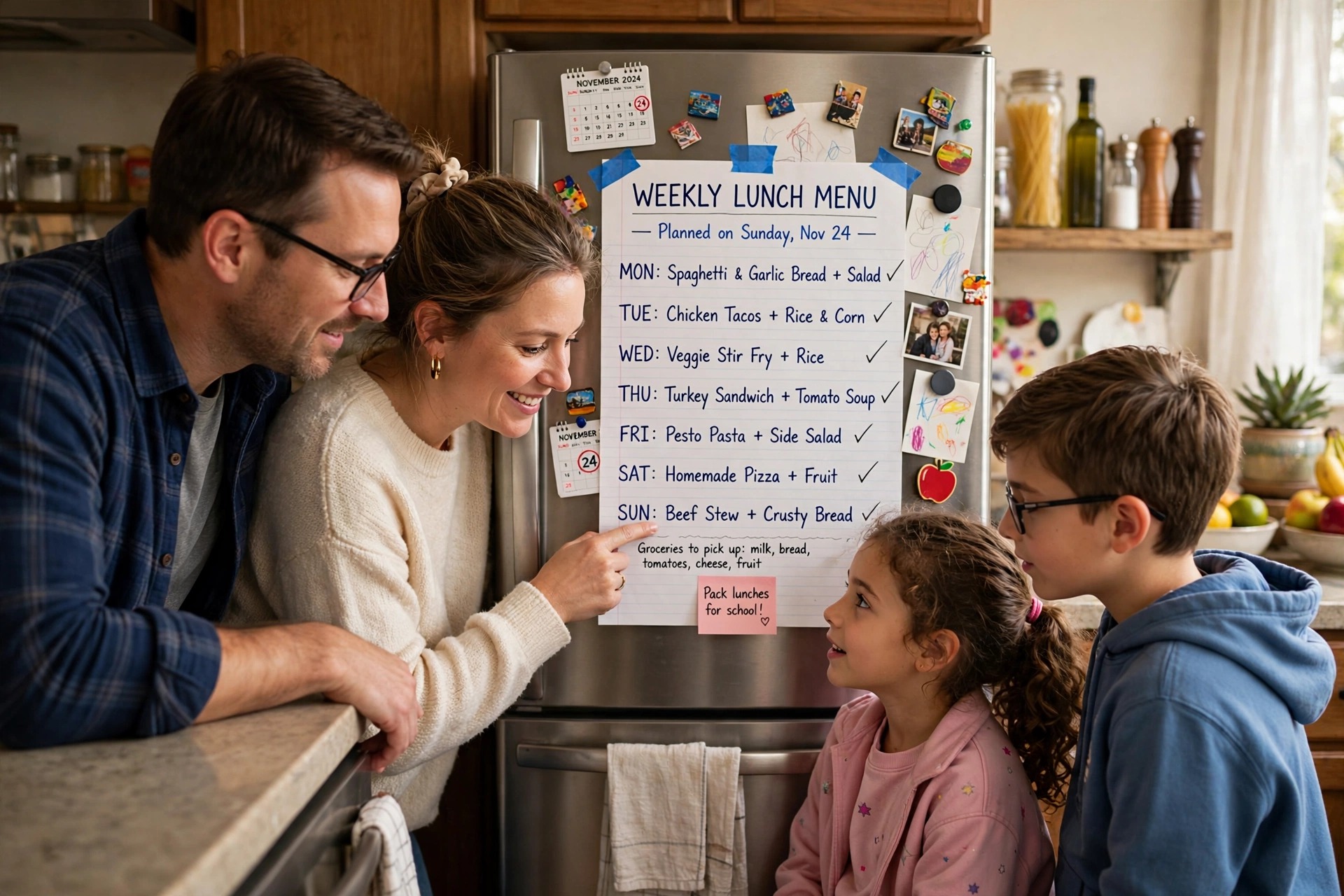
A lunch decided at seven in the morning is a lunch decided in a panic, and a panicked lunch is the same sandwich every day. Plan the week's lunches on Sunday, on one menu on the fridge, with each day's lunch written down where the whole family can see it. The menu makes the shopping list write itself — buy for the week, not for the morning — and it stops the daily argument about what goes in the box. Keep the menu to five days, one line each, and let each child pick one day's lunch, so the menu is theirs too. One weekly menu, planned on Sunday, and the morning decision stops.
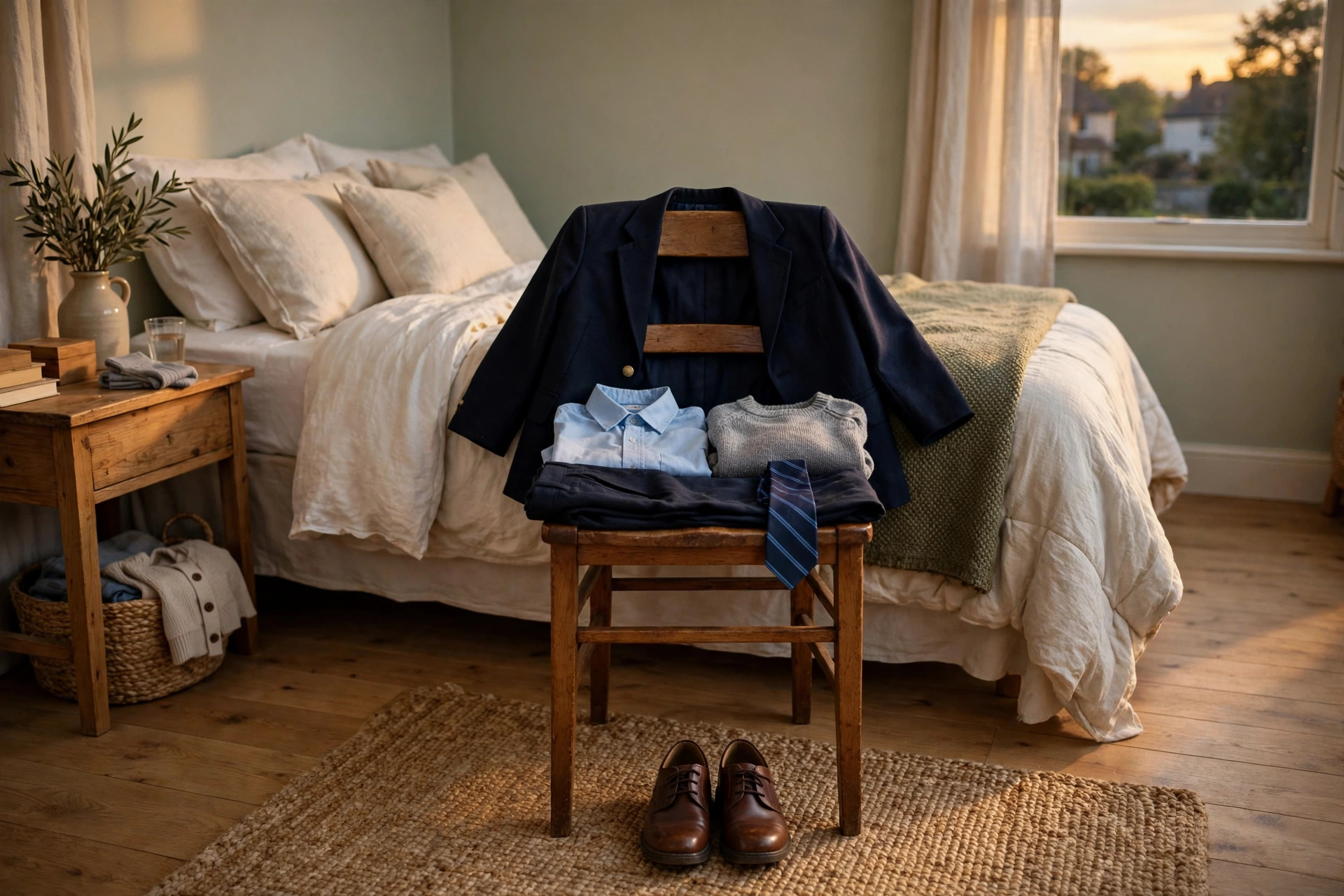
16. School clothes and uniforms laid out the night before
A uniform hunted for in the morning is a uniform that is still in the wash, and the morning is lost before it starts. Lay out school clothes and uniforms the night before — on a chair, on a hook, shoes below — checked against tomorrow's timetable, gym kit included on gym days. The clothes hang flat, crease-free and ready, instead of pulled from a pile while the bus waits. Laying them out also shows you the night before what is missing, which is when there is still time to wash it. One chair, clothes laid out the night before, and the morning stops starting with a wardrobe search.
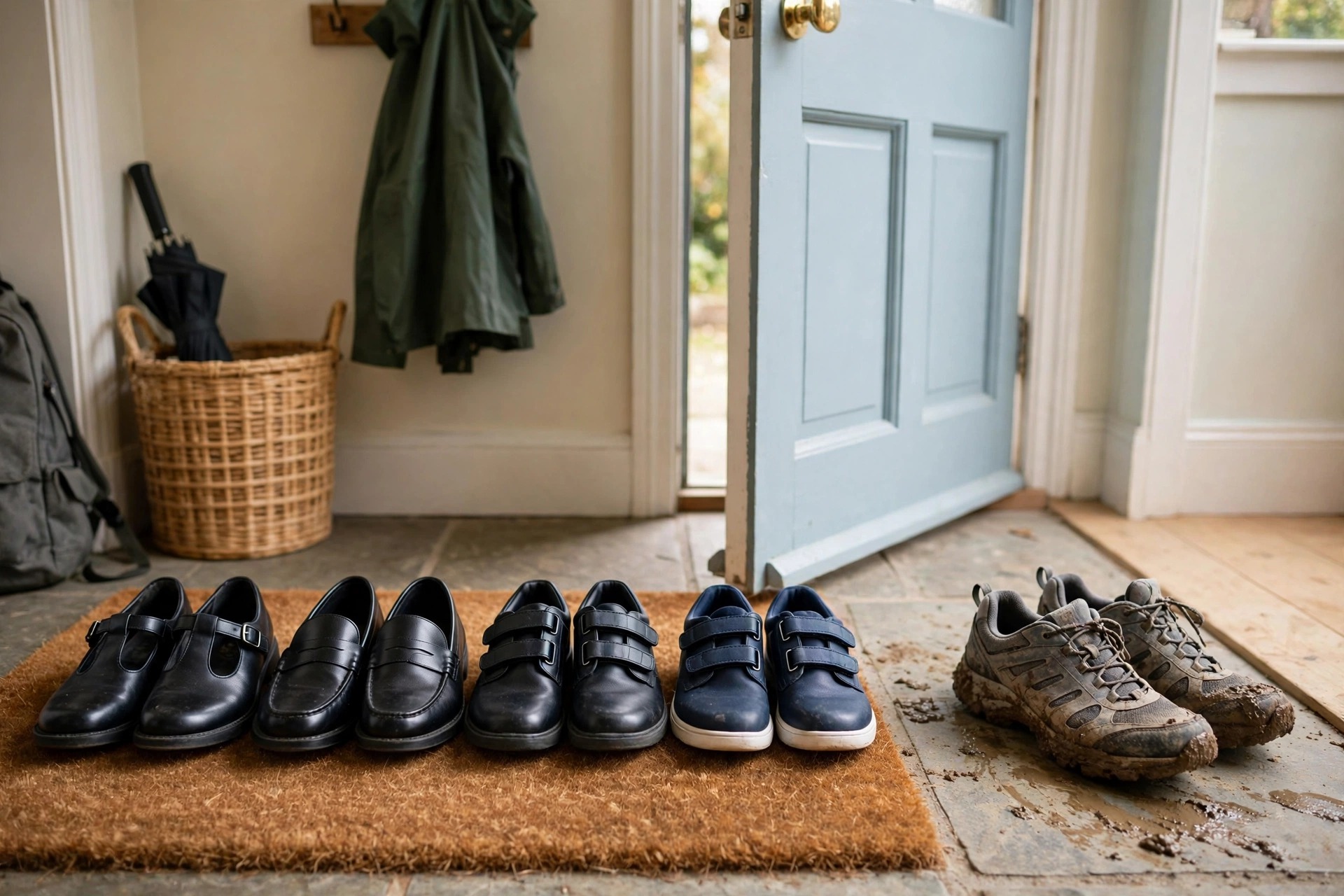
17. A shoes-by-the-door rule for school shoes, one pair per child
School shoes that live wherever they were kicked off are shoes that take ten minutes to find, and the morning is lost looking for them. Make the rule: school shoes live by the door, one pair per child, toes out where they can be seen, the moment they come off. The row also stops a muddy pair spreading dirt across the clean ones, because the mess stays on its own slot. Keep the shoes you wear most at the front, and never let a slot hold two pairs, because that is how pairs get lost. One pair per child, by the door, and the shoe hunt stops.
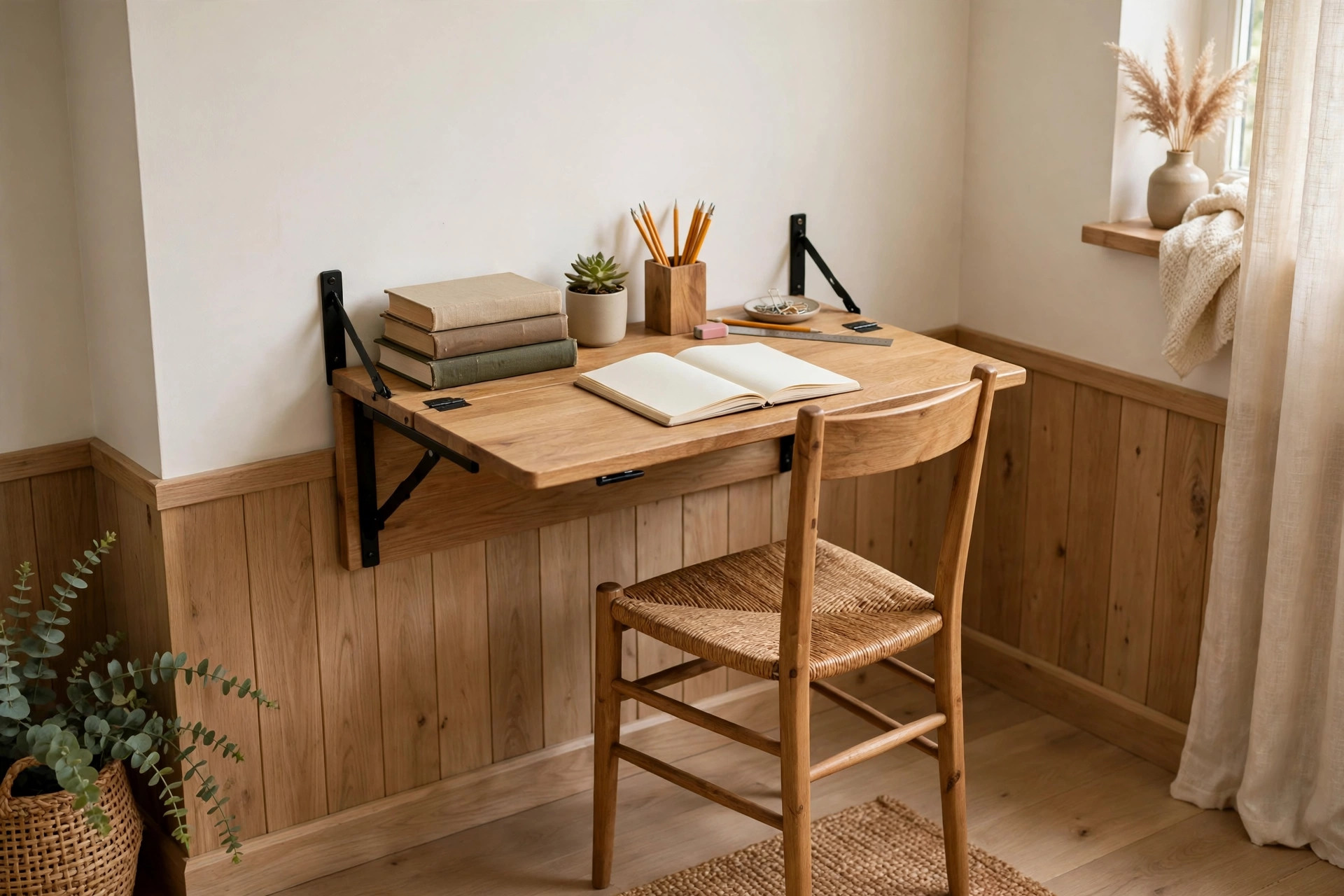
18. Small-space homework — a fold-down desk or a rolling cart that parks away
A small home has no room for a permanent homework desk, so homework ends up on the kitchen table and stays there. Give it a fold-down desk or a rolling cart — a desk that folds away when the work is done, or a cart with every supply on it that parks in a corner — so homework has a home that appears when it is needed and disappears when it is not. The cart also stops supplies spreading across the house, because the cart is the supply cupboard on wheels. Keep the cart to homework things only, and park it in the same spot every night, so the morning starts with a clear table. One fold-down desk or rolling cart, and a small home gains a homework station. (Check on Amazon for a fold-down desk that fits your wall space.)
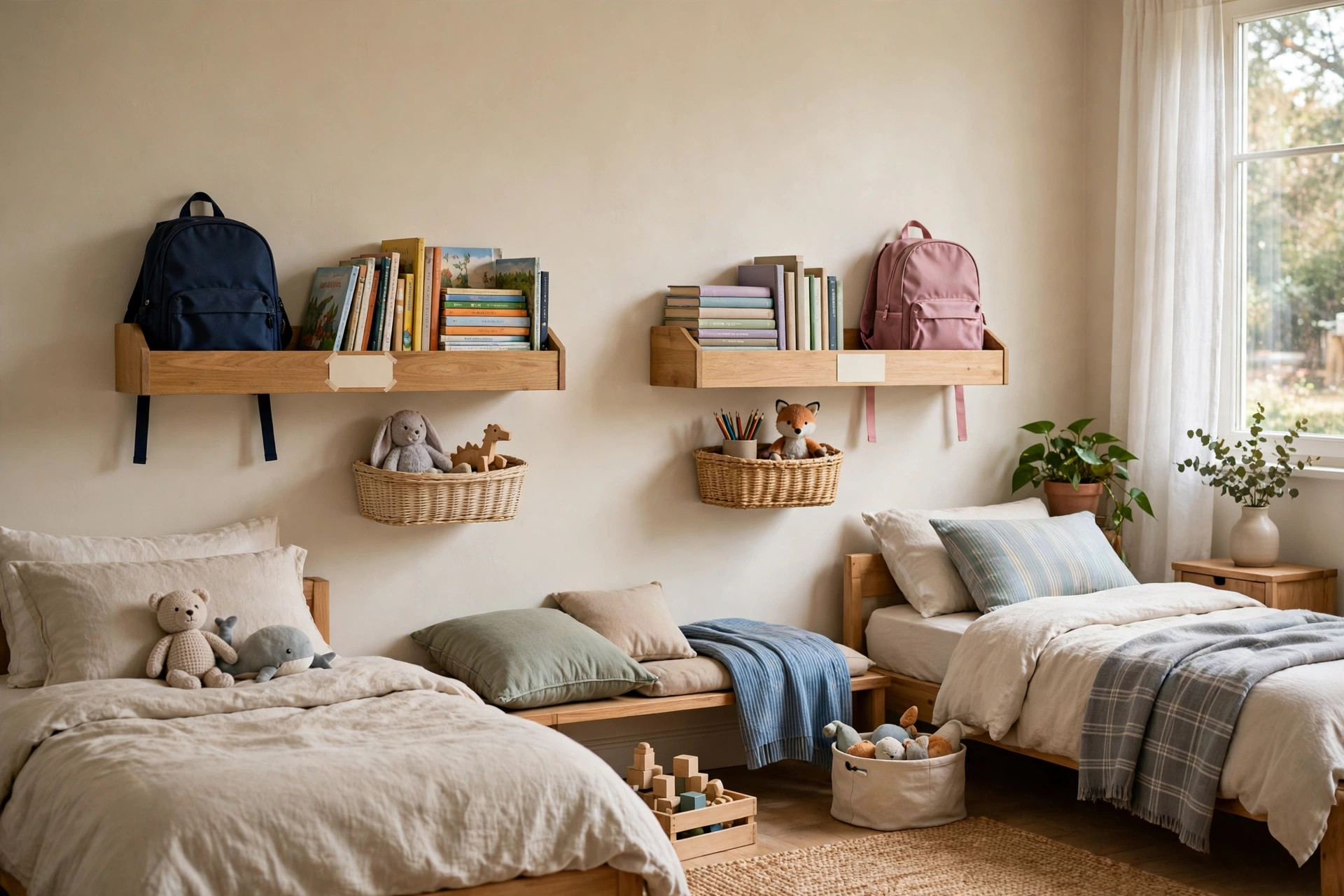
A shared bedroom with shared piles is a bedroom where nobody can find their own things, because every pile belongs to everyone and therefore to no one. Give every child one labelled shelf of their own — books, bags and school things on their shelf, nothing else — so every thing has an owner and every owner knows exactly where to reach. Shelves also stop one child's mess spreading into another's, because the label says where one child's things end and the next child's begin. Keep one shelf per child, label it with their name or a picture, and never let an adult's things take a child's shelf. One labelled shelf per child, and the shared piles stop.
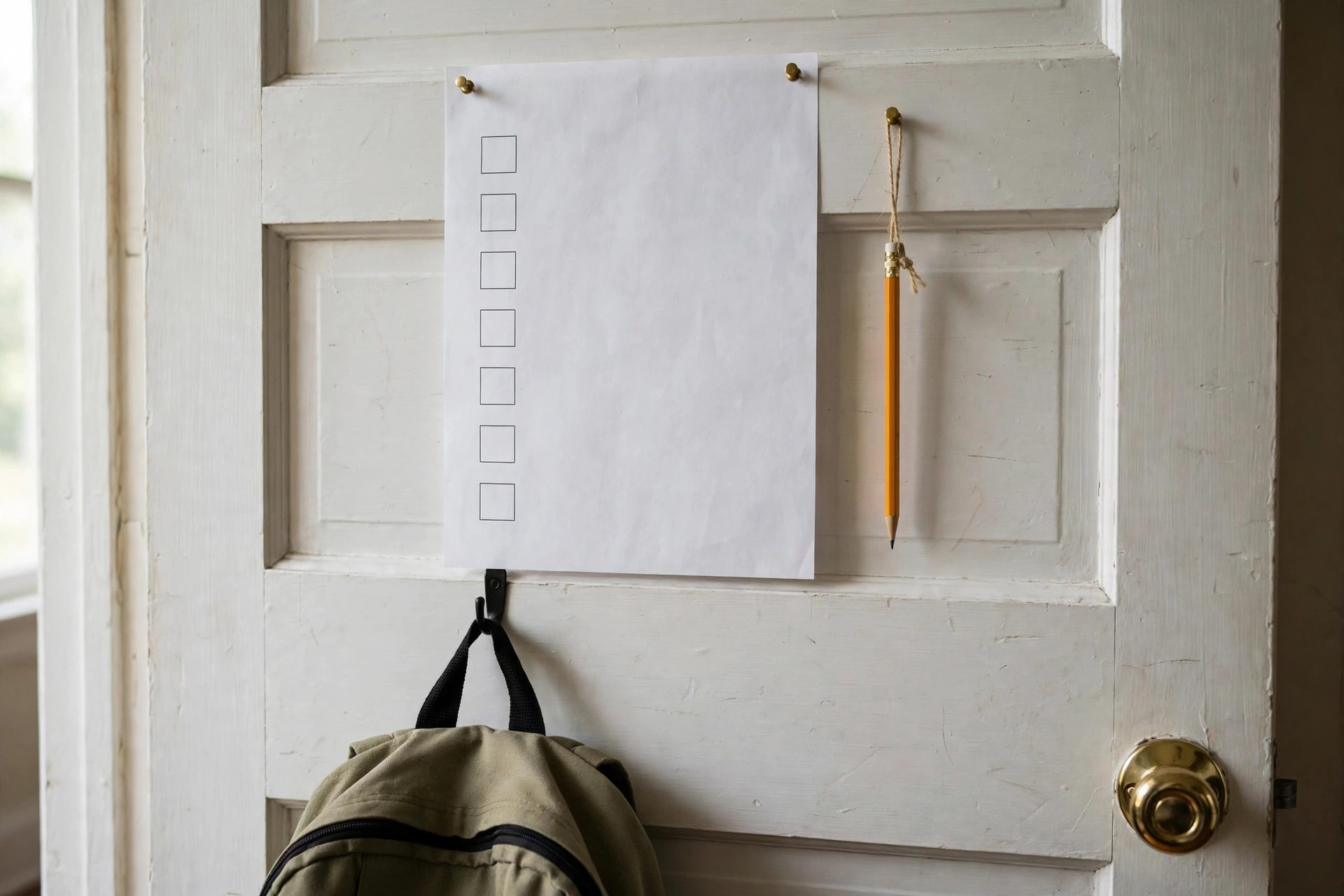
20. A school-bag checklist on the door, ticked off every morning
A morning routine that lives only in a parent's head is a routine that gets forgotten the moment the parent is busy. Put a school-bag checklist on the door — bag, lunchbox, water bottle, homework, keys, gym kit on gym days — and tick it off every morning before anyone leaves. The checklist lives where it is used, at eye level by the door, so the child checks it themselves instead of being asked. Keep the list short, one line per thing, and let the child tick it off with a pencil, so the habit is theirs. One checklist, ticked off every morning, and the forgotten lunchbox stops.
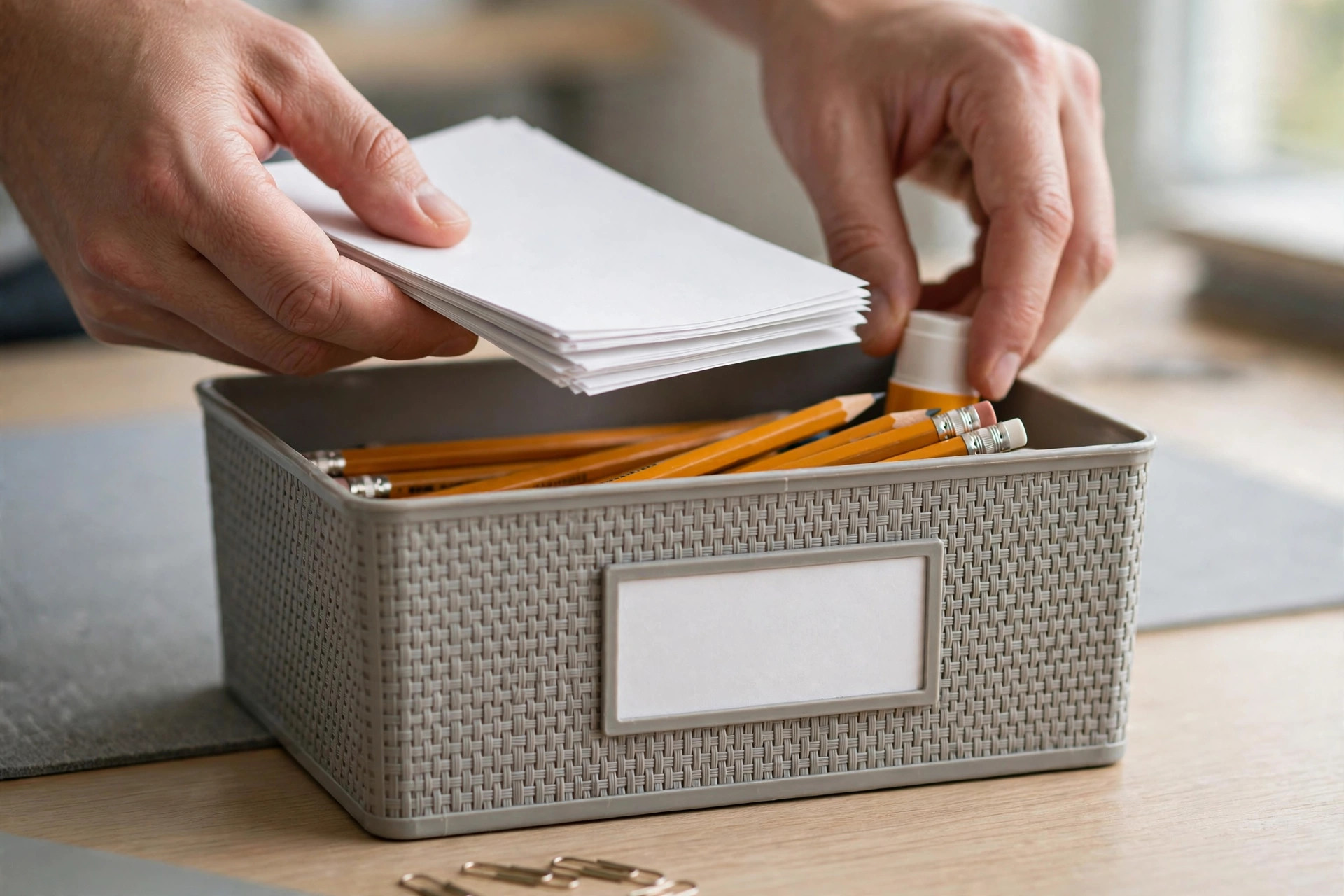
21. Keep spares stocked — pencils, glue and paper in one labelled box
A homework session that stops because the pencils ran out is a session that never restarts, because the trip to the shop is a reason to stop working. Keep spares stocked in one labelled box — pencils, glue, paper, erasers and sharpener, all in one place — and check it during the Sunday reset, so the box is full before the week it is needed. The box also stops emergency shopping trips, because the spare is already in the house. Keep the box to spares only, and put every new pack straight into it, so the stock is always where you expect it. One labelled spares box, checked weekly, and the run-out stops.
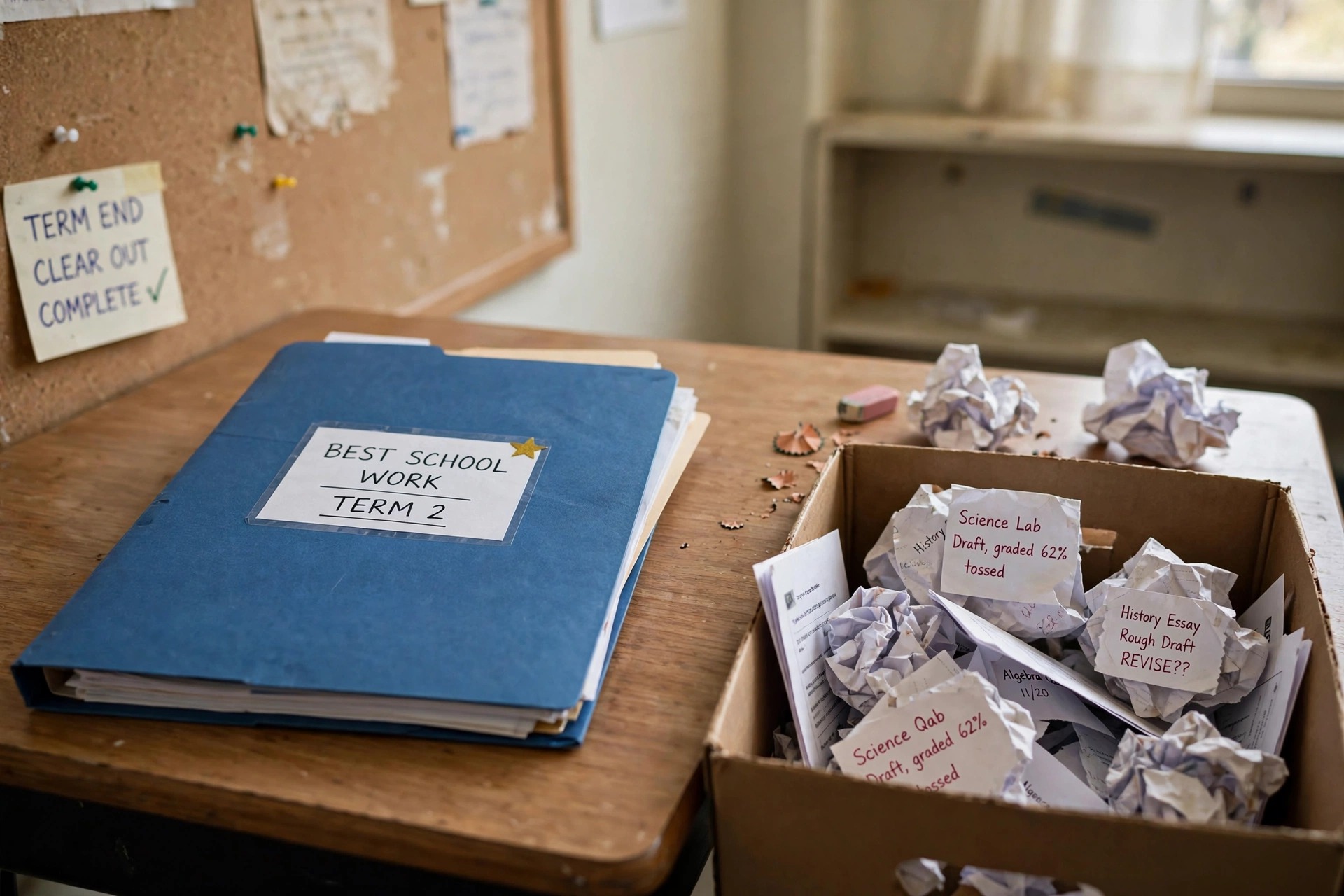
22. A term-end clear-out — keep the best work, recycle the rest
A school file that is never cleared is a file nobody can find anything in, because the best work is buried under a term of worksheets. Clear it out at the end of every term: keep the best work — one folder of the pieces worth keeping — and recycle the rest. The clear-out takes twenty minutes, once a term, and it stops the file growing until it bursts. Keeping the best work also shows the child how far they have come, which is the first step to being proud of it. One term-end clear-out, keep the best, recycle the rest, and the file stops overflowing.
Which school organization fix fits which morning?
| Morning / situation | Best first move | Budget | Tools needed |
|---|---|---|---|
| Mornings are a rush, bags half-packed | Pack the night before + door checklist (ideas 2, 20) | Low | Hooks / checklist |
| Homework never starts, supplies missing | Homework station + caddies (ideas 6, 7) | Low | Desk / caddies |
| Papers pile up on the counter | Inbox tray per child + file same day (ideas 12, 13) | Low | Trays / folders |
| Lunch is a daily panic | Lunch station + weekly menu (ideas 14, 15) | Low | Cupboard / fridge menu |
| Small home, no homework space | Fold-down desk or rolling cart (idea 18) | Low–Medium | Desk / cart |
| Shared bedroom, shared piles | One labelled shelf per child (idea 19) | Low | Labels / shelves |
You do not need all 22 ideas. You need the three that solve your biggest morning — usually the bag with no hook, the homework with no station, and the papers with no tray. Start with one hook per child, give every school thing one home, and make the rule that the bag is packed the night before and checked on the door before anyone leaves. Do that tonight and tomorrow morning will feel different before the bus comes.
Save this post for your next Sunday reset, and if you are finishing the front of the house too, read 22 Entryway Storage Ideas for 2026 next — it is Post 10, the school run's neighbour at the front door — and 26 Small Walk-In Closet Organization Ideas for 2026, Post 03, to carry the same system into the school clothes. Later in this cluster, 25 Coat Closet Organization Ideas for 2026 (Post 11), 22 Playroom Organization Ideas for 2026 (Post 13) and 25 Utility Closet Organization Ideas for 2026 (Post 20) carry the same system into the coats, the playroom and the spares cupboard.
Frequently asked questions
How do I organize school mornings so nothing gets forgotten?
Pack the night before and check on the door. Pack the bag, lay out the clothes and put the lunchbox by the door the night before, then tick off a short checklist on the door every morning — bag, lunchbox, water bottle, homework. One hook per child by the door holds the packed bag, so the morning has nothing left to find, only things to pick up on the way out.
What should a homework station have?
Everything in arm's reach, in one spot, always set up: a desk or table end, one labelled caddy per subject with pencils and paper inside, a wall calendar above it for tests and deadlines, and a charging spot nearby for tablets and laptops. Add a desk timer for timed work blocks, and keep the station to homework only so every session starts clean instead of starting with a tidy-up.
How do I stop school papers piling up on the kitchen counter?
Give every child one inbox tray for papers coming home, and empty it every evening with three choices only — keep it in the child's file, act on it now, or recycle it. Filing the day a paper arrives takes two minutes and stops the pile; a weekly Sunday reset clears anything left, and a term-end clear-out keeps only the best work.