20 Board Game Storage Ideas for 2026
Board games do not stay where you put them. The boxes live on top of the wardrobe, the pieces live in a drawer that will not close, the card games live in a carrier bag behind the sofa, and every game night starts with a hunt through three rooms for the dice. The games are not the problem — the problem is that board game storage has no home, so every box, card and token drifts to wherever there was a gap, and the gap is never where you are standing when the family sits down to play.
These 20 board game storage ideas give every box, card and token one home: a game shelf with the boxes standing upright like books, the pieces in labelled bags, the cards filed flat, and a flat surface to play on — so the next game night takes five minutes to set up instead of twenty minutes to find the dice.
Every idea below works in a real home, from a flat where the whole collection fits in one cube shelf to a house where the games live with the toys. The toy storage the game shelf borrows from gets its full treatment in 35 Clever Toy Storage Ideas for 2026, where the small pieces get their own system — and the playroom where the family games live is organized in 22 Playroom Organization Ideas for 2026. Pick three ideas that fit your space, start with the one home, and build from there.
Set up the game home
1. Give board games one home — the shelf that stops the scatter
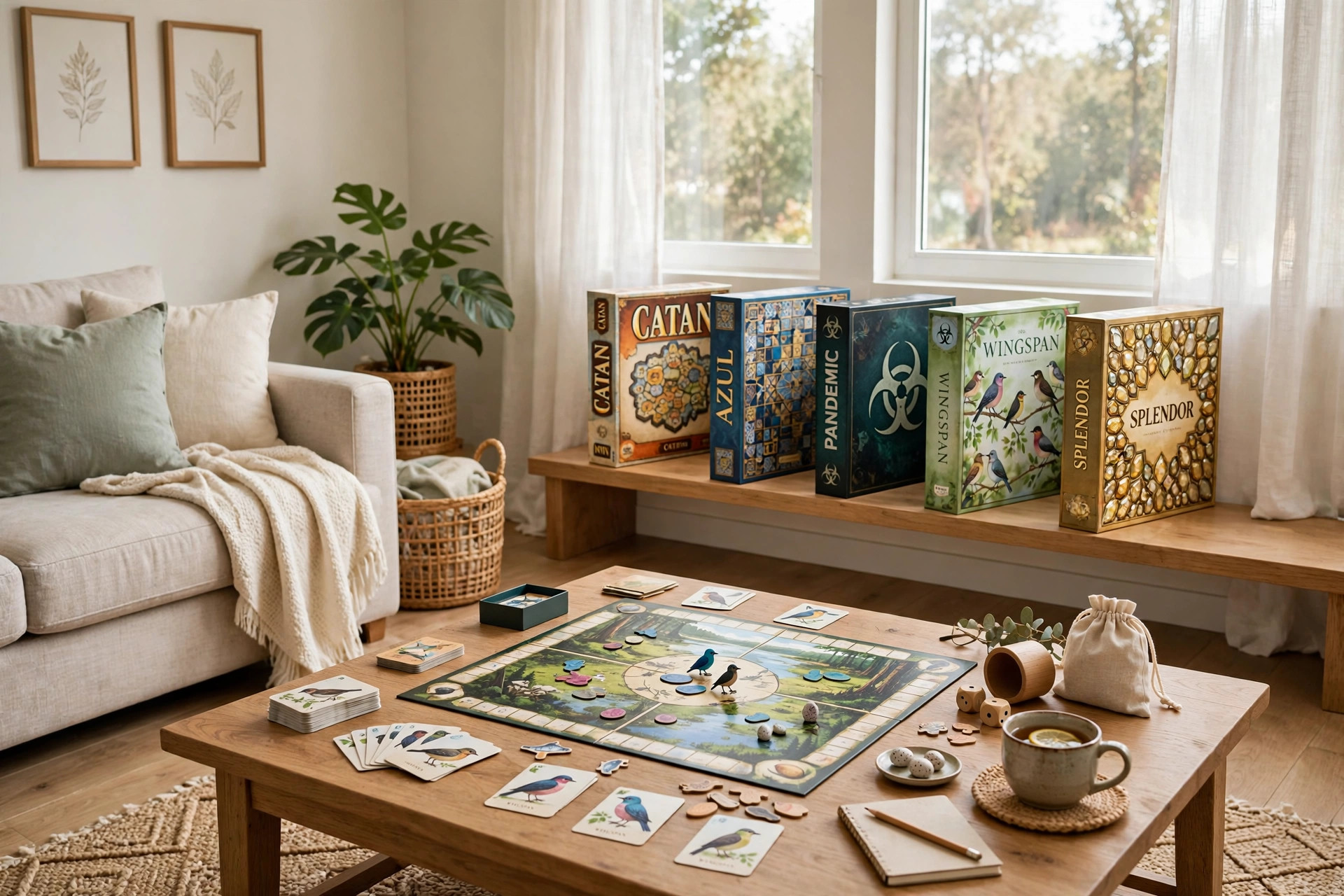
Board games scattered across the house are board games you cannot play, because the box is on top of the wardrobe, the dice are in the kitchen drawer, and the cards are behind the sofa — and the family that sat down to play tonight is waiting while you hunt through three rooms. Give board games one home — the shelf that stops the scatter — so every box, card, token and score pad lives in one place and the hunt ends. Pick the spot first: a low shelf in the living room, a cube unit in the playroom, or one end of the bookcase, because the shelf that has a fixed spot is the shelf that gets used. Move everything there in one go, and the next game night starts at the shelf instead of starting with a search. Start by emptying every hiding place onto the table — the wardrobe top, the kitchen drawer, the bag behind the sofa — because the shelf cannot hold what is still hidden, and seeing the whole pile at once is what shows you how many games you actually own. One home, and the scatter stops.
2. Measure the boxes before you buy storage
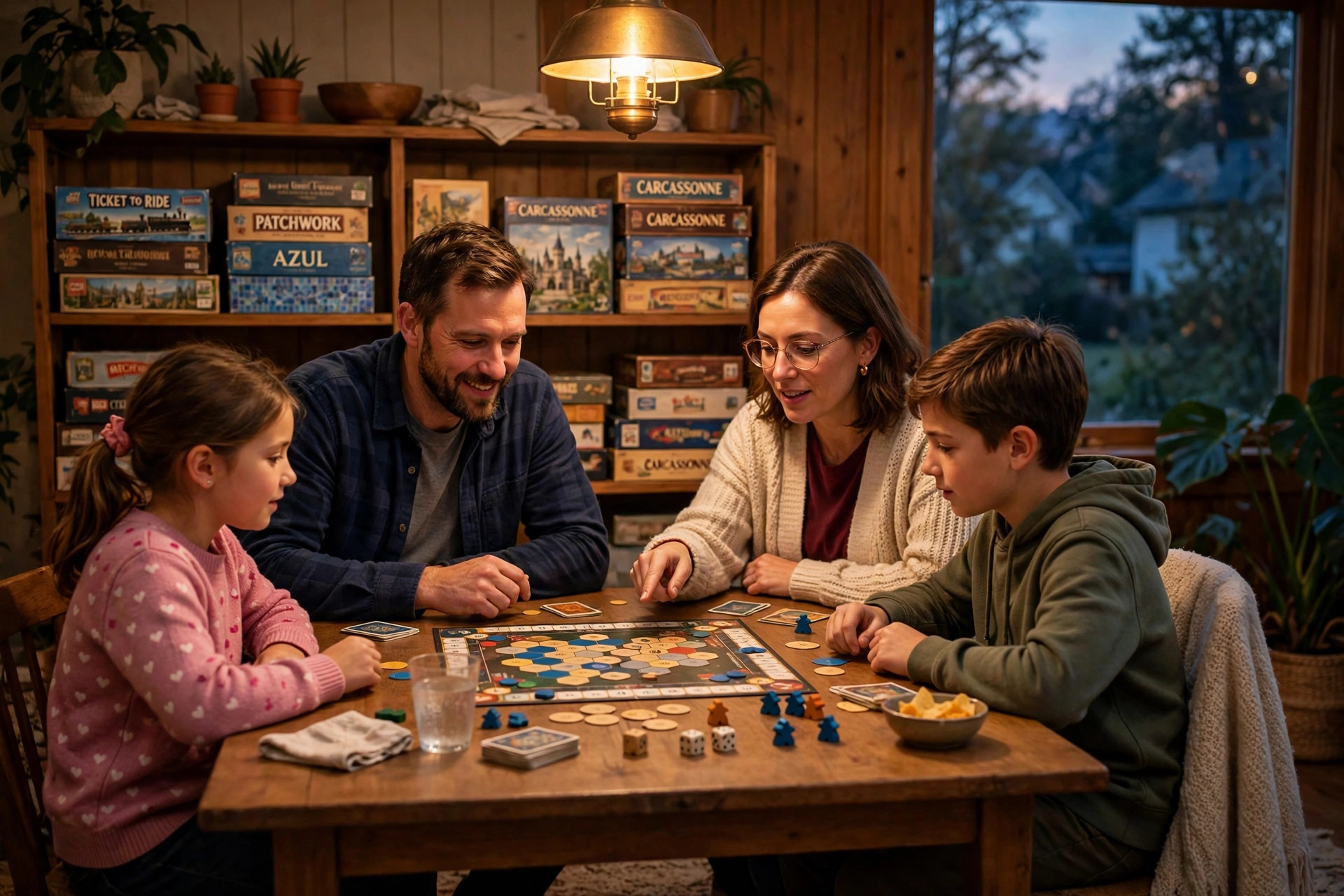
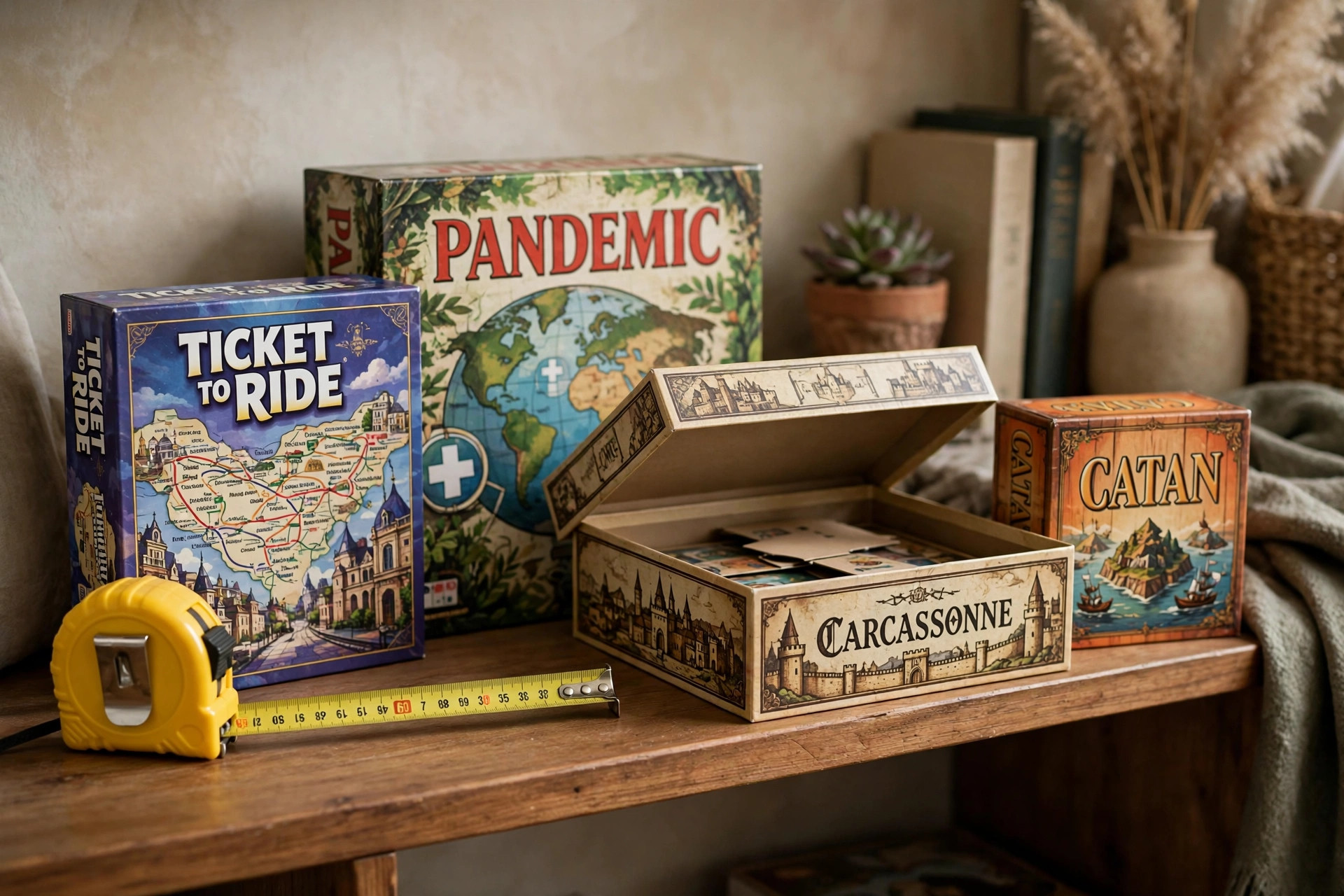
Game storage bought by guessing is game storage that does not fit, because the longest box is two inches wider than the cube, the tallest box will not stand upright, and the shelf that looked right in the shop is the shelf that comes home and goes straight back. Measure the boxes before you buy storage — the tape measure that saves the returns — so every cube, bin and box you buy is bought for your games, not for games in a photo. Measure the longest box end to end, measure the height of the tallest box, and measure the space the shelf will live in, because the numbers that travel with you are the numbers that stop the returns. Write them in a notebook and take the notebook to the shop, because the box that is measured once is the box that fits the first time. Measure the space too — the width of the wall, the height under the shelf, the depth of the bookcase — because the cube that fits the boxes but not the wall is the cube that lives in the hallway, and the shelf that is measured is the shelf that holds the games. One afternoon with a tape measure, and everything you buy fits.
3. Sort by who plays — kids, family, adults, card games
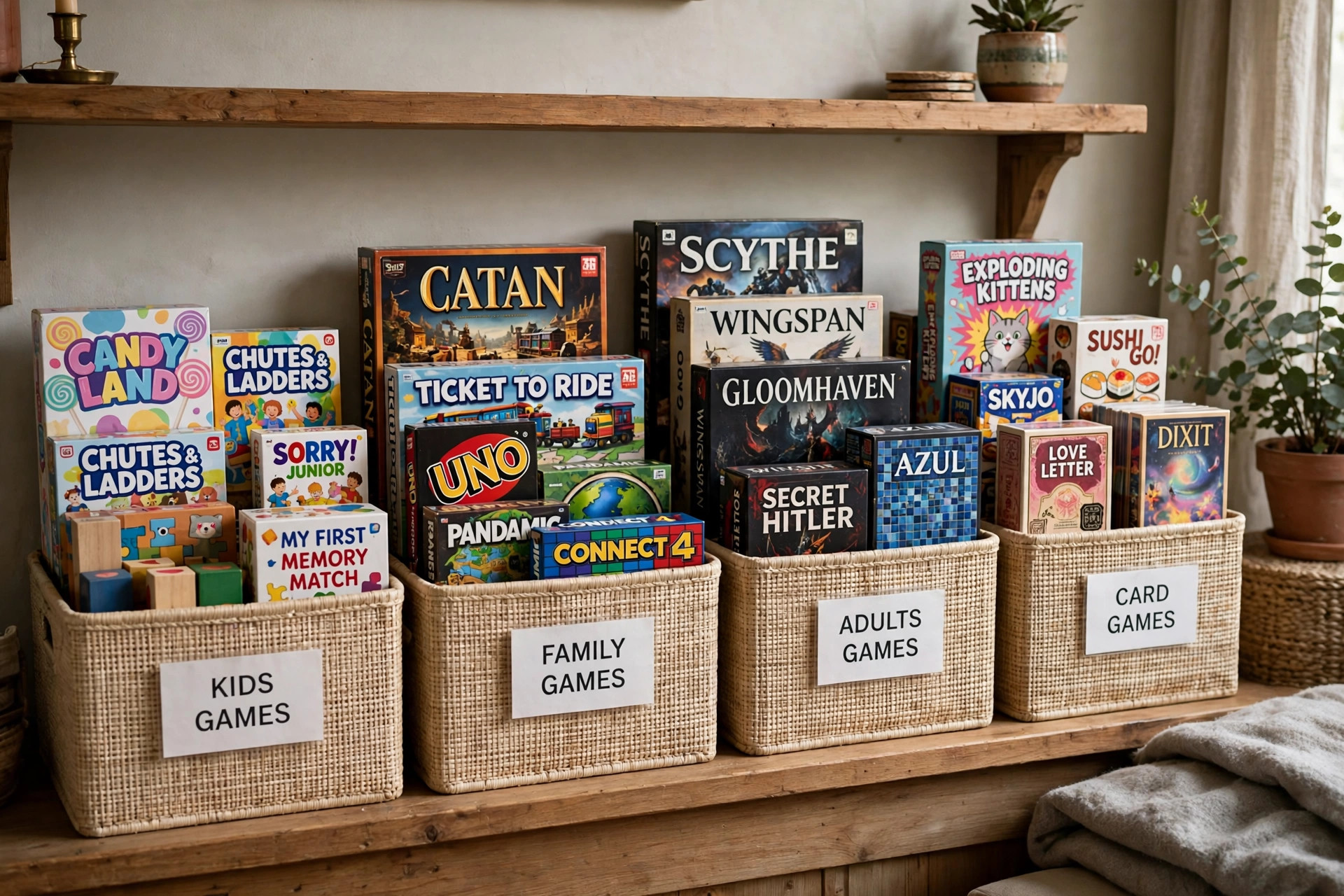
A pile of mixed games is a pile you have to dig through, because the kids' games are under the strategy games, the card games are behind the family games, and the game you want is always the game at the bottom. Sort by who plays — kids, family, adults, card games — so each kind of game has its own shelf, its own cube, or its own section of the bookcase, and the game you want is the game you can reach. Keep the kids' games together because they come out every day, keep the family games together because they come out on game night, and keep the adults' games together because they come out after bedtime, because the sort that follows the player is the sort that matches how you actually play. Keep a small section for the card games as well, because the card game is the game that fits in a pocket, travels in the car and fills ten minutes, and the shelf that holds a card box is the shelf that is never stuck for something to play. One sort by who plays, and the dig ends.
4. Keep the pieces together — bag everything, every time
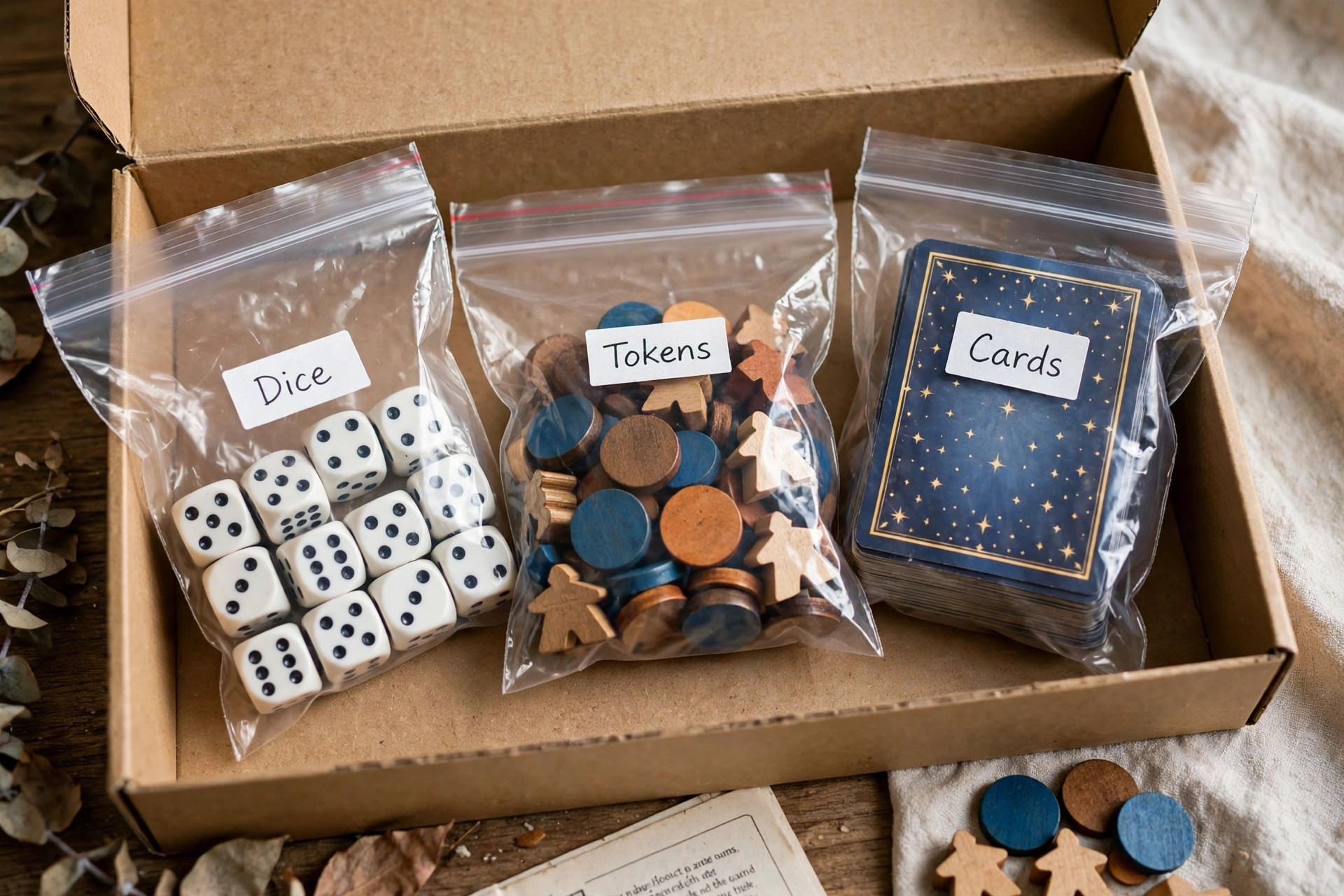
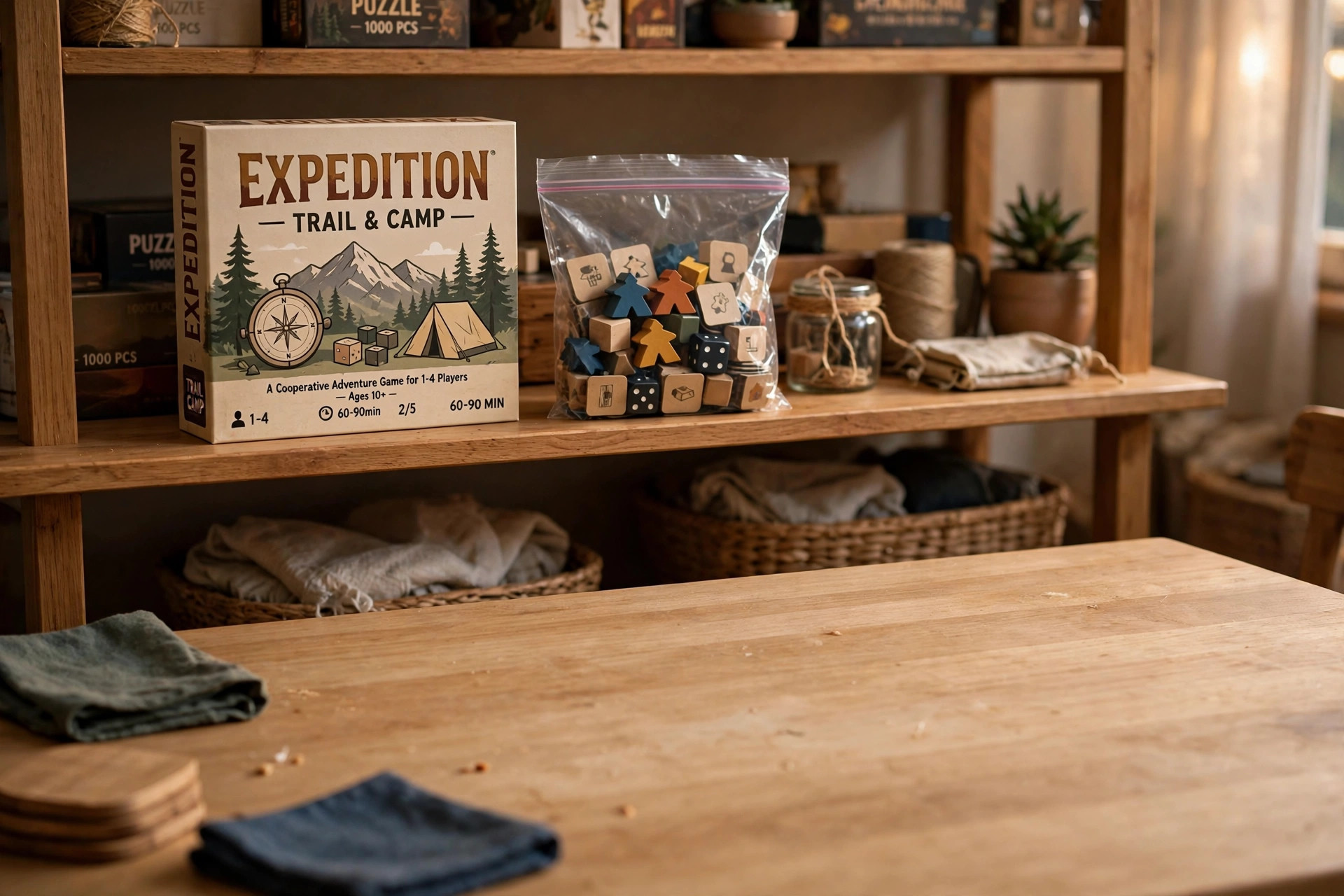
The pieces are the part of board games that wanders most, because the dice go back to the kitchen, the tokens go back to the junk drawer, and the cards go back to wherever they were last seen — and the game night starts with a hunt for the missing pieces every single time. Keep the pieces together — bag everything, every time — so every game's pieces live in labelled zip bags inside its own box, and nothing ever leaves the box. Put the dice, the tokens, the cards and the score pad in separate small bags, and keep the bags in the box, because the bag that stays in the box is the bag that is there when you open it. Label each bag with the game name too, so the bag that falls out of one box can find its way home, because the bag that is labelled is the bag that comes back to the right box instead of wandering off to the junk drawer. The same bagging logic keeps the toy pieces findable in 35 Clever Toy Storage Ideas for 2026, where the small parts live in bags too. One bag per game, and the hunt for the dice ends. (Check on Amazon for small clear zip bags in assorted sizes, sized for dice, tokens and cards.)
5. A flat play surface — play where you store
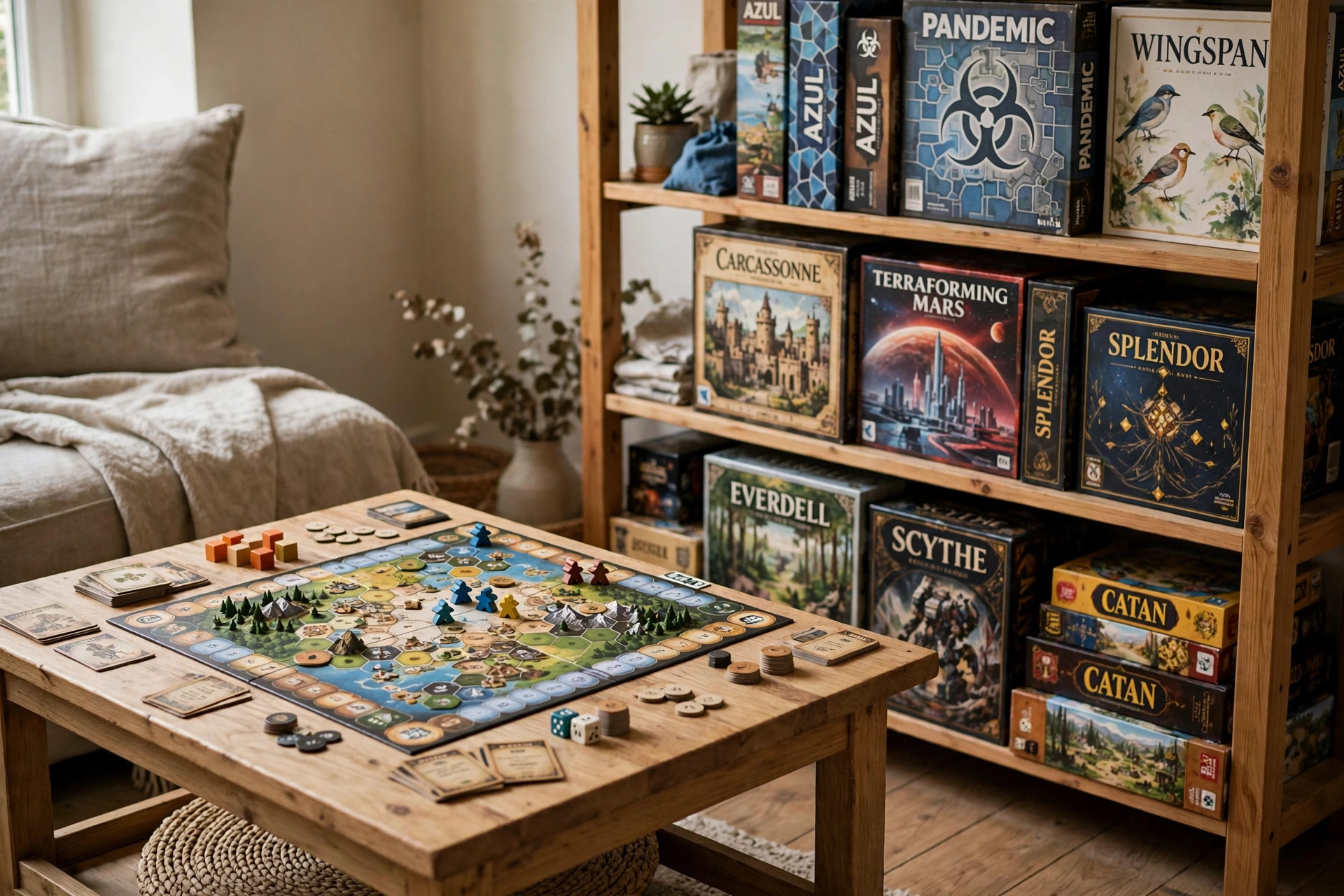
Playing on the bed or the floor is playing that scatters the pieces, because the surface moves, the board slides, and the game that should take an hour takes ninety minutes because there is nowhere flat to play. Use a flat play surface — play where you store — so the shelf has a table, a coffee table or a board to play on, and the pieces stay where they are put. A low table beside the shelf works in a small home, the dining table works if the shelf lives nearby, and a folding table that leans against the wall works where there is no table at all, because the surface that is flat is the surface that plays well. If the shelf lives in a cupboard, a folding table that leans against the wall beside it is enough, because the table that folds away is the table that does not take a room, and the surface that appears when you play is the surface that is always clear. Keep the surface clear between game nights, because the surface that holds clutter is the surface that cannot play. One flat surface, and the scattered pieces stop.
Store the boxes right
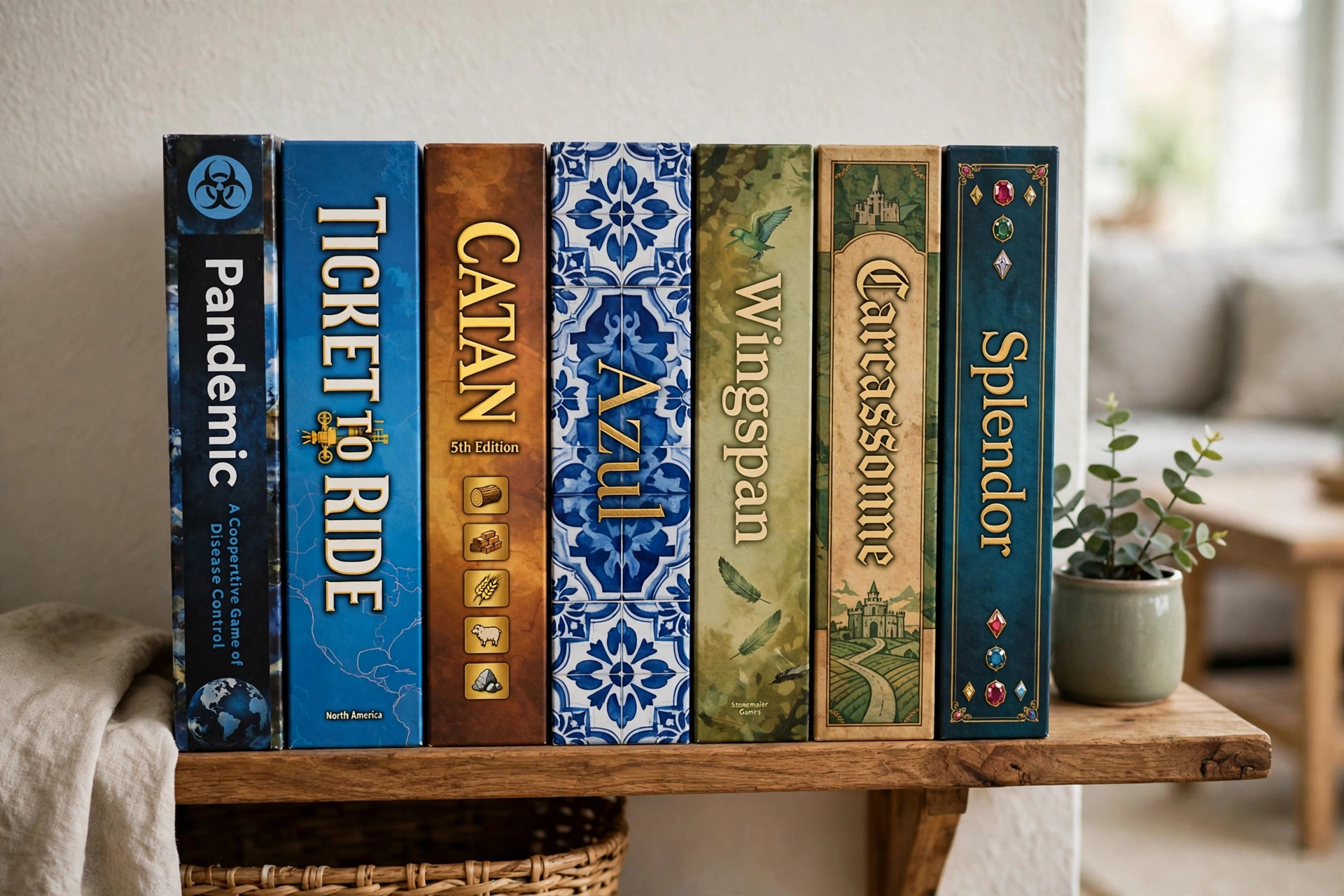
6. Shelve the boxes upright like books — the shelf that keeps them stackable
Boxes stored flat get crushed, because the box at the bottom takes the weight of the boxes above it, the lids dent where they are pressed, and the box that looked fine in the shop is the box with a crushed corner by Christmas. Shelve the boxes upright like books — the shelf that keeps them stackable — so each box stands on its own edge, nothing presses on it, and the lids stay flat and smooth. Pick a shelf deep enough for your widest box with an inch to spare, and keep the shelf at a height everyone can reach, because the shelf that is reachable is the shelf that gets used. Keep the boxes upright and never lay a heavy box on top of a light one, because the box that is stacked is the box whose lid bends, and the shelf that stands the boxes up is the shelf that keeps them crisp all year. Books get the same upright treatment in 24 Book Storage Ideas for 2026, where the spines face out and nothing is crushed. One upright shelf, and the crushed boxes stop.
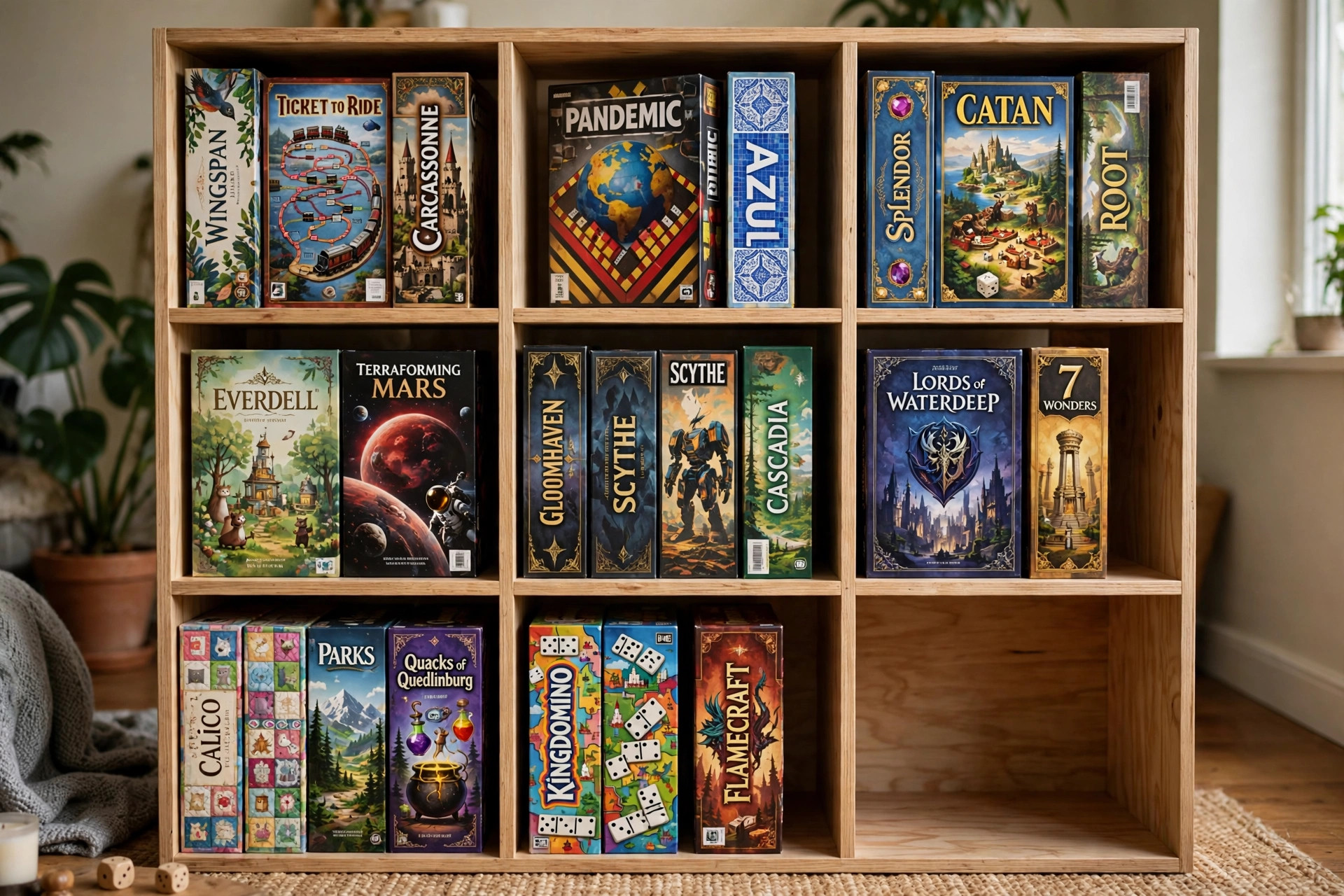
7. Cube shelves for the games that live together
Games on a long shelf slide and lean, because each box is a different size, the boxes lean on each other, and the shelf that holds twenty games holds a leaning tower that falls the moment you pull one out. Use cube shelves for the games that live together — the cubes that stop the lean — so each cube holds two or three games, the boxes stand upright inside their cube, and pulling one game out never topples the rest. Sort the games by who plays as you fill the cubes, kids' games in the low cubes and adults' games up high, because the cube that is sorted is the cube you can reach into without a dig. Leave one cube empty, because the cube that is empty is the cube for the game that arrives at Christmas, and the shelf that has room is the shelf that never overflows. One cube unit, and the leaning tower stops. (Check on Amazon for a cube shelf unit with square compartments sized for standard board game boxes.)
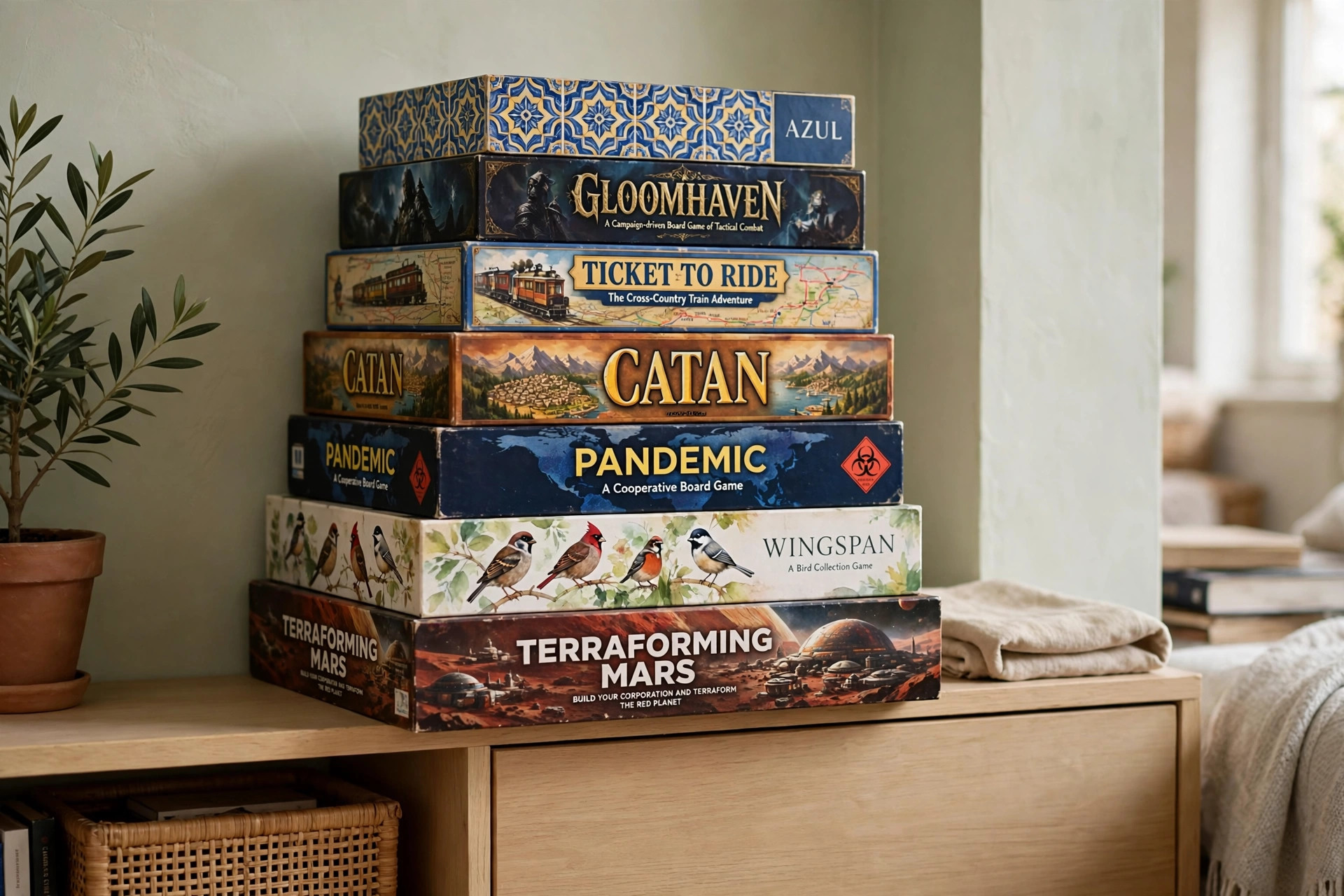
8. Stack flat for the big boxes — the pile that never topples
Some boxes are too big to stand upright, because the box is wide, the shelf is shallow, and the big box that will not stand up ends up leaning in a corner where it gets knocked over. Stack the big boxes flat — the pile that never topples — so the big boxes lie flat in a neat pile on a low shelf, the heaviest at the bottom and the lightest on top, and the corner is clear. Keep the pile to four or five boxes at most, because the pile that is too tall is the pile that topples when you pull the bottom box, and the pile that is short is the pile you can lift from safely. Slide the pile out with both hands, because the pile that is lifted with one hand is the pile that drops, and the shelf that holds the flat pile is the shelf that keeps the big boxes safe. One flat pile, and the big boxes have a home.
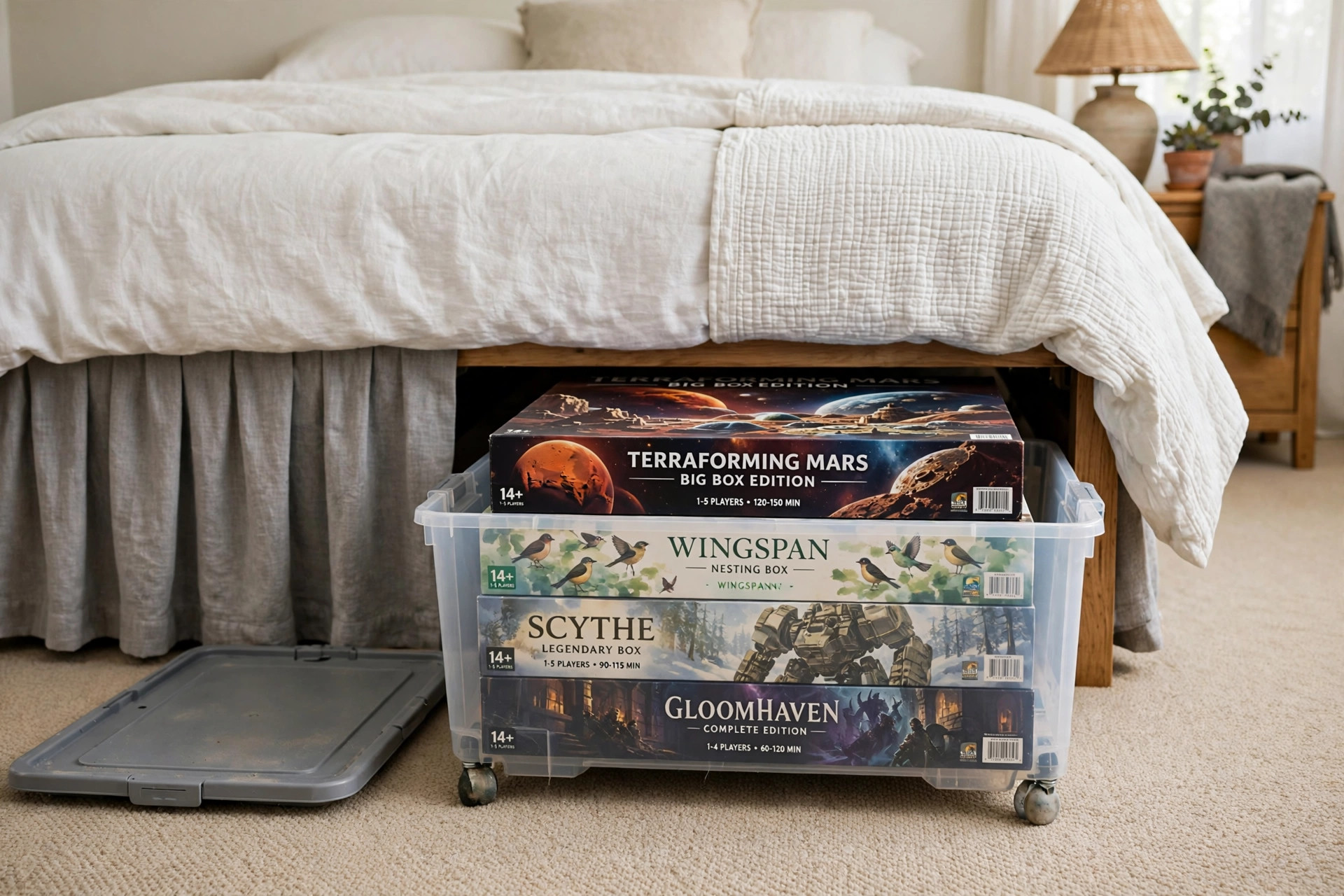
9. Under-bed flat storage for the oversized games
Some games are too big for any shelf, because the box is forty inches, the shelf is thirty, and the game that will not fit anywhere ends up leaning in a corner where it gets knocked over. Store the oversized games flat under the bed — the flat storage for the games that fit nowhere else — so the big boxes lie in a long flat box under the bed, protected by a lid, and the corner is clear. Keep the games in the box in the order you play them, with the Christmas games at the back and the family games at the front, because the box that is ordered is the box you can open and close without a dig. Slide the box in with the opening facing out, because the box that opens from the front is the box you can reach into without pulling it all the way out, and the bed that hides the box is the bed that keeps the games dust-free. The under-bed space itself gets its full system in 22 Under-Bed Storage Ideas for 2026, where the long flat things live. One flat box, and the oversized games have a home.
10. A rolling cart for the games you grab most
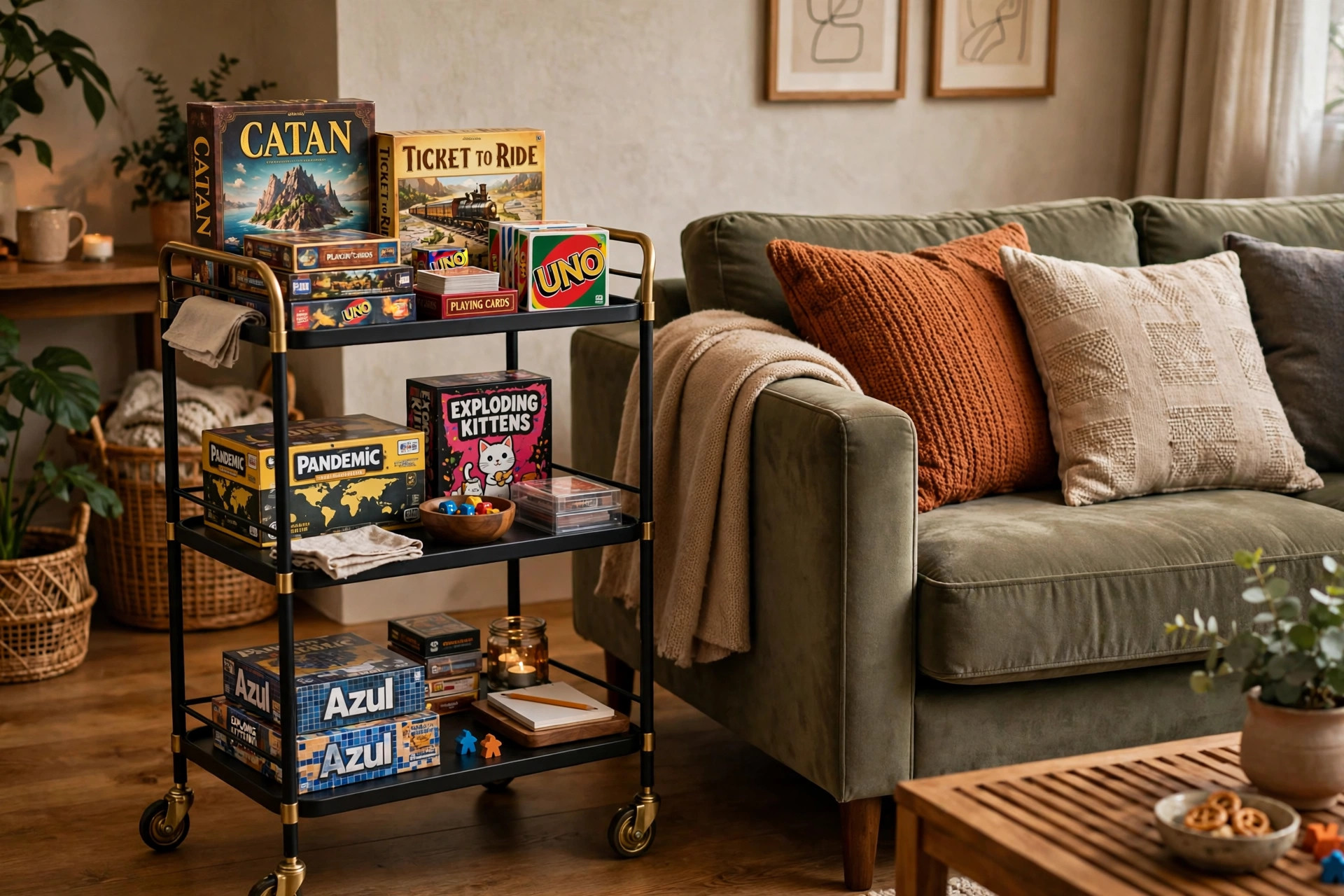
The games you play most should be the games you can reach fastest, because the family game comes out every Friday, the card game comes out every evening, and the games buried at the back of the shelf are the games you never reach for. Keep a rolling cart for the games you grab most — the cart that brings the games to the sofa — so the three or four games you play all the time ride on the cart, in reach the moment you sit down, and the rest stay on the shelf. Keep the heavy boxes on the shelf and the light, everyday games on the cart, because the cart that holds the light games is the cart that still rolls properly. Check the cart still fits through the door before you load it, because the cart that is too wide is the cart that stays in one room, and the cart that rolls is the cart that brings game night to wherever you are sitting. The rolling cart that carries the games gets its full system in 22 Rolling Cart Organization Ideas for 2026, where the same cart works as a game station and a craft station in turn. One rolling cart, and the everyday games are always in reach.
Pieces, cards and the small things
11. Small parts in labelled zip bags — the bags that stop the lost dice
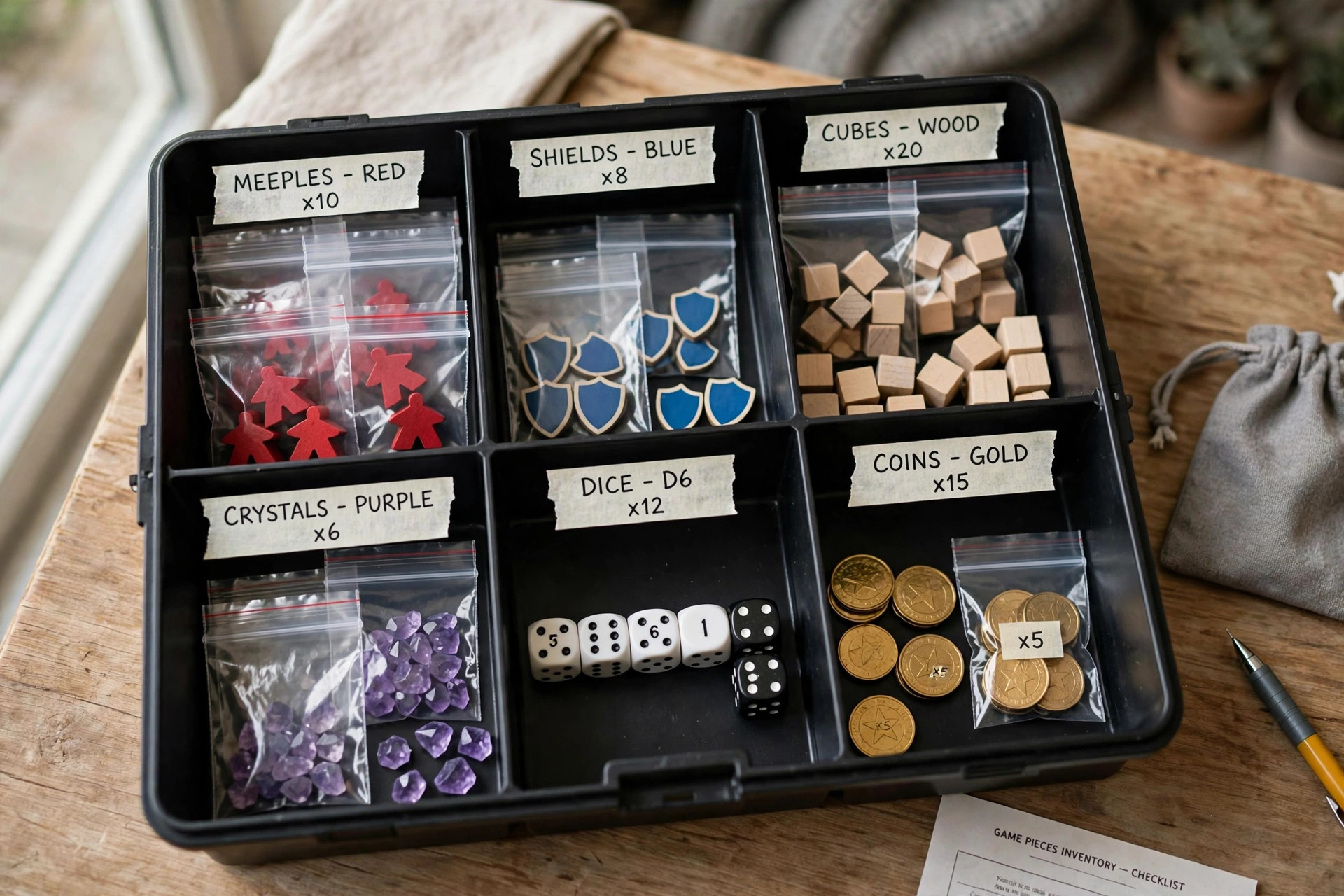
Small parts in a box loose become small parts lost, because the dice roll, the tokens slide, and the box that holds the loose parts is the box where every part is mixed with every other part. Put the small parts in labelled zip bags — the bags that stop the lost dice — so each kind of part has its own small bag, the bags live inside the game's box, and nothing mixes. Use a small bag for the dice, a small bag for the tokens, and a small bag for the cards, because the bag that is sorted is the bag you can open and see everything at once. Keep one spare bag in each box, because the bag that is spare is the bag for the new parts that arrive with the next expansion, and the box that has room is the box that never overflows. The toy pieces get the same bagging treatment in 35 Clever Toy Storage Ideas for 2026, where the small parts live in labelled bags too. One bag per part, and the lost dice stop.
12. Card games filed upright in a card box
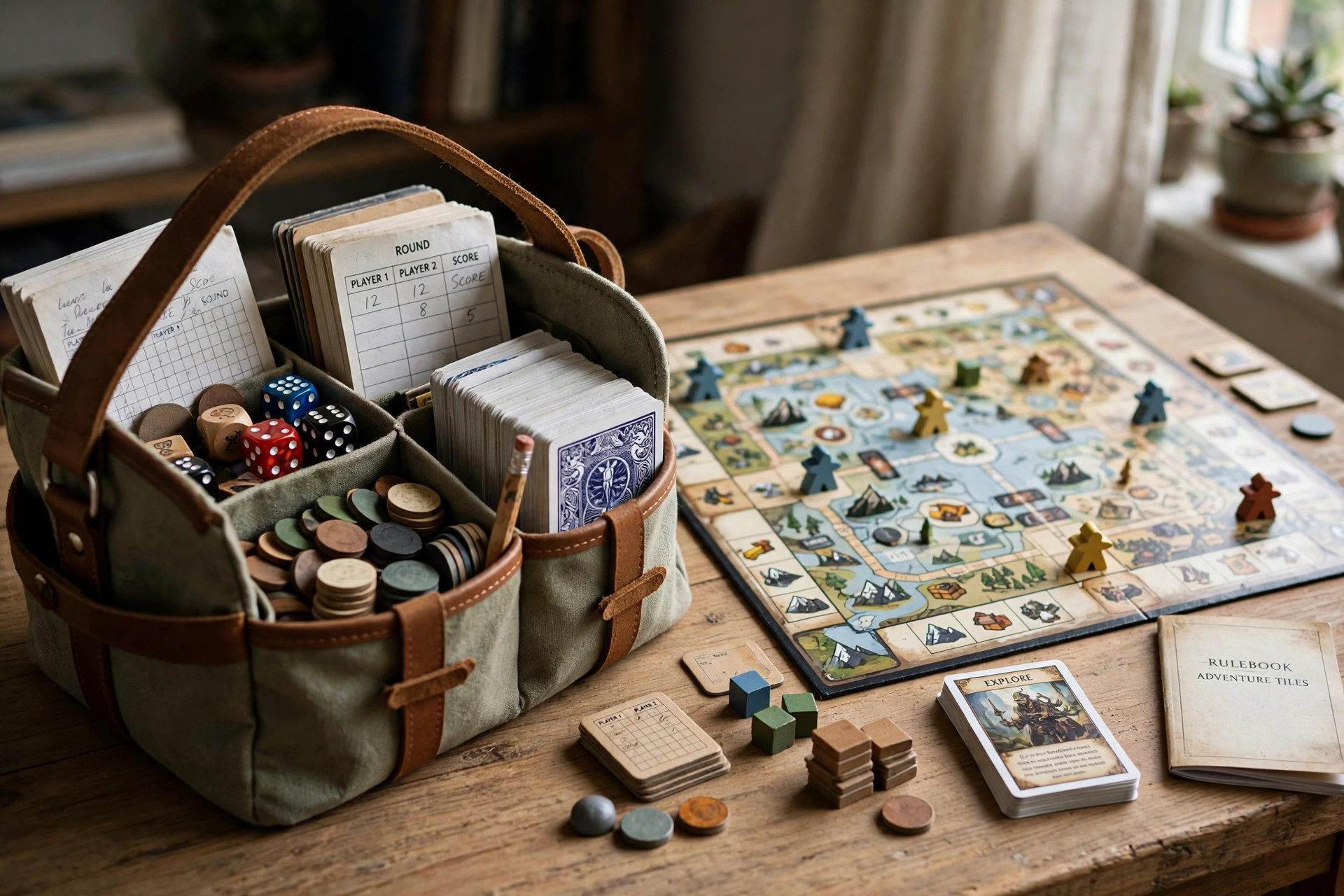
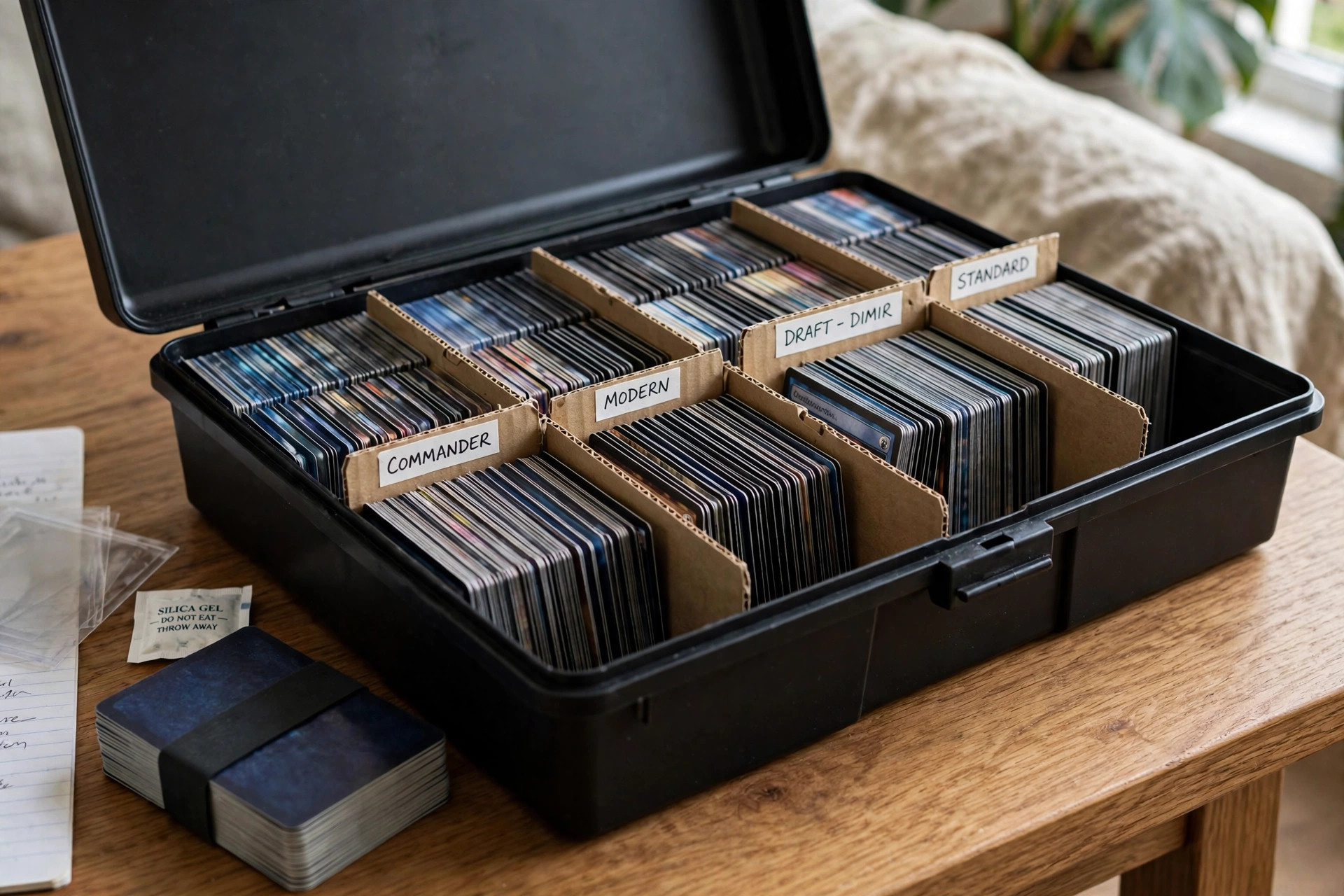
Card games in a pile get bent, because the decks lean, the cards slide, and the pile that looked tidy on Sunday is a heap of bent cards by the next game night. File the card games upright in a card box — the decks that stay crisp — so each deck stands upright like a file, and the box holds them in order by game. Sort the decks by how often you play them, the favourites at the front and the rest behind, and keep the score pads in the same box, because the box that files the cards is the box that keeps them crisp. Keep the box on the shelf where the card games live, because the box that is at hand is the box that gets used, and the deck that is filed upright is the deck that never bends. One card box, and the bent cards stop. (Check on Amazon for a card storage box with dividers, sized for standard playing card decks.)
13. Dice and tokens in a divided box — the small things in their own sections
Dice, tokens and counters in one box become one mess, because the dice roll under the tokens, the tokens slide under the dice, and the box that holds the small things is the box you have to dig through for a single die. Put the dice and tokens in a divided box — the small things in their own sections — so each kind of small thing has its own compartment and nothing mixes. Use a shallow box with adjustable dividers, sort the dice by game, the tokens by colour, and the counters by type, because the box that is divided is the box you can open and see everything at once. Keep one empty compartment in the box, because the compartment that is empty is the compartment for the new dice and tokens that arrive with the next game, and the box that has room is the box that never overflows. One divided box, and the dig for a die ends.
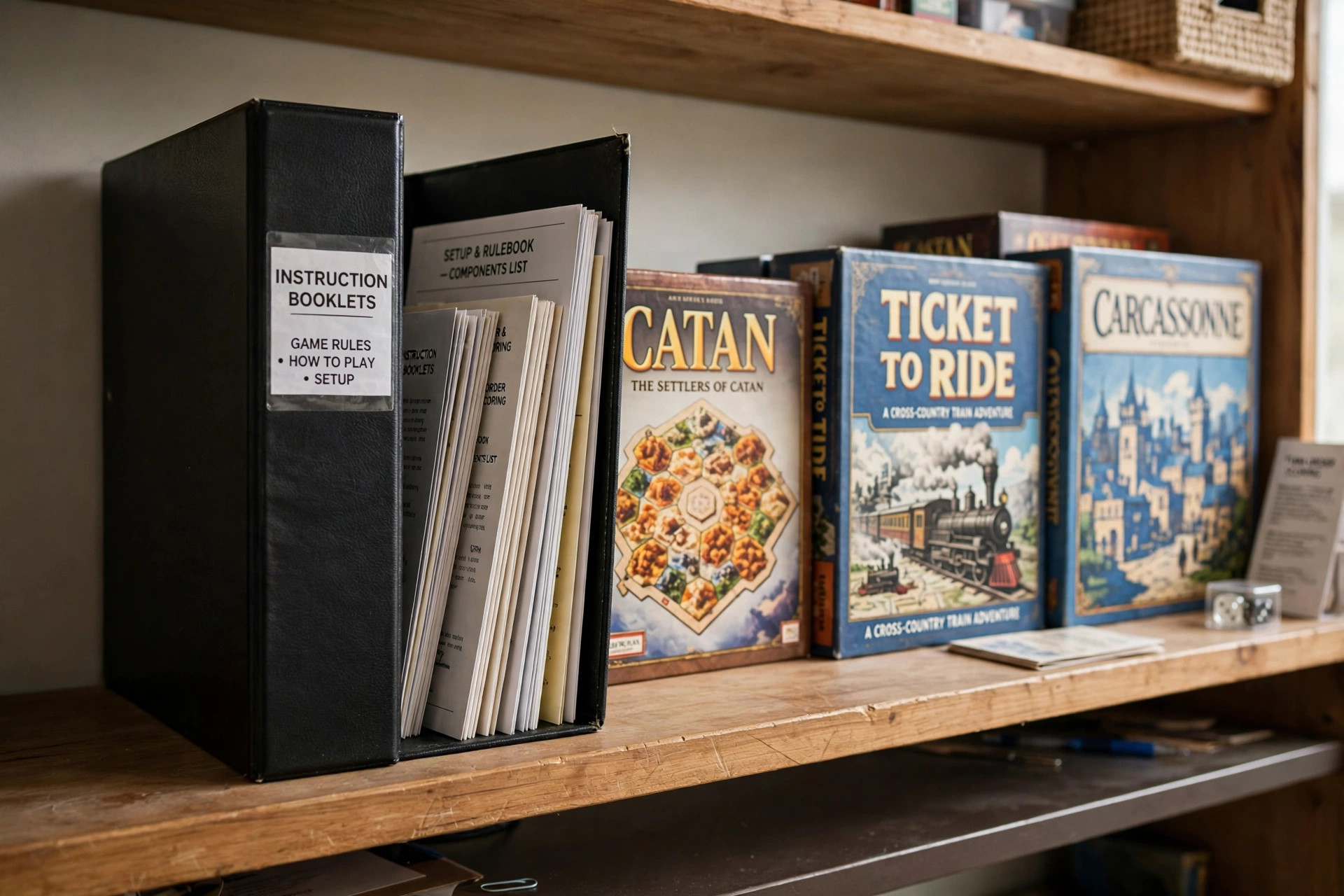
14. Instruction booklets in one binder — the rules that never go missing
Instruction booklets in a drawer get lost, because the booklets slide, the pages fold, and the drawer that holds the rules is the drawer you have to dig through for the one booklet that explains the game you are about to play. Put the instruction booklets in one binder — the rules that never go missing — so each booklet lives in a clear sleeve in the binder, and the binder lives on the shelf beside the games. Sort the booklets by game, in the same order as the games on the shelf, because the binder that is sorted is the binder where the rules are always at hand. Keep the binder on the shelf, not in a drawer, because the binder that is visible is the binder that gets used, and the rules that are in the binder are the rules that never go missing. One binder, and the hunt for the rules ends.
Keep it tidy for good
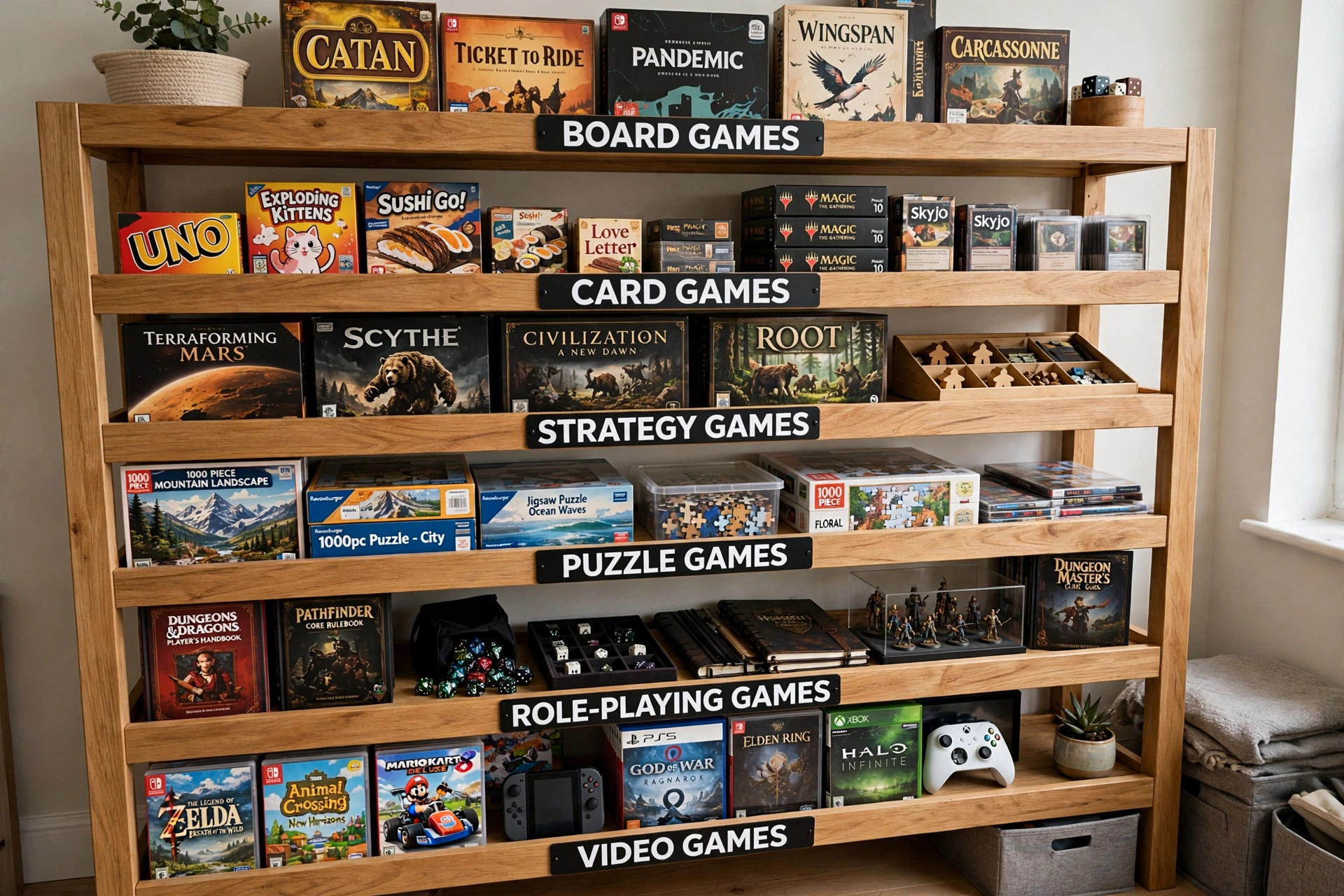
15. Label every shelf and bin — the label that stops the dig
Shelves without labels are shelves you have to search, because the shelf that holds the kids' games looks exactly like the shelf that holds the family games, and the shelf that holds unlabelled bins is a shelf you never use. Label every shelf and bin — the label that stops the dig — so each shelf says what it holds and the collection becomes usable instead of a mystery. Put the label on the front of the shelf, not the top, because the label that faces you is the label you can read from the door, and use one label per shelf, because the shelf that holds one kind of game is the shelf that stays sorted. Write the label in big clear letters and put it where you look when you open the cupboard, because the label that is big is the label that is read, and the shelf that is labelled is the shelf that gets used first. One label per shelf, and the dig stops.
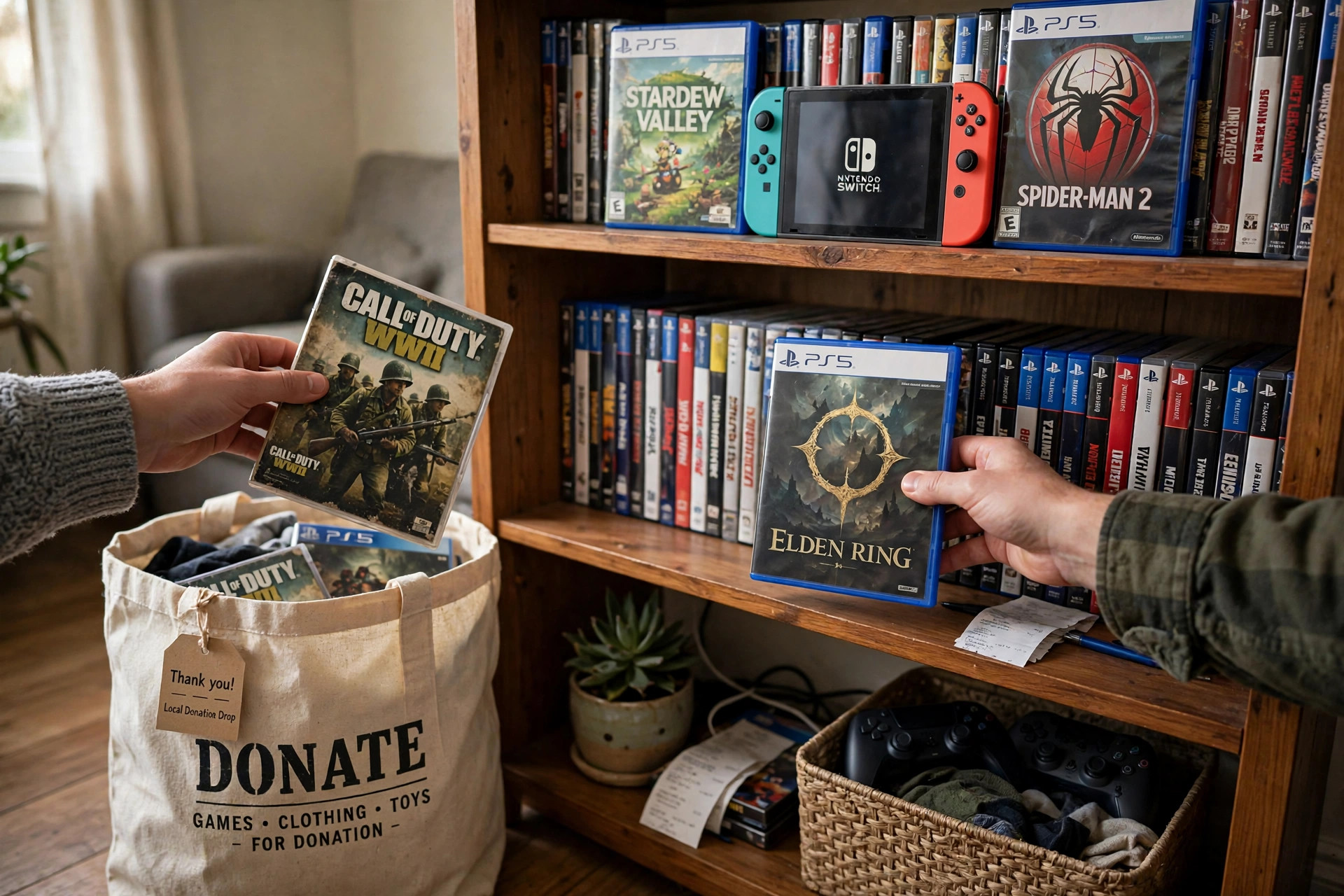
16. One in, one out for the game collection
A game collection grows on its own, because every birthday adds a game, every Christmas adds three more, and the shelf that held ten games in January holds thirty by December. Use one in, one out for the game collection — the rule that stops the shelf overflowing — so every new game that enters the shelf means one old game leaves it, into the donate bag or the bin. Keep the donate bag at the shelf, so the game that leaves has somewhere to go the moment you decide, because the bag that is at the shelf is the bag that gets used. Count the games when you do the swap, because the count that is written down is the count that shows you how many you really own, and the collection that is counted is the collection that stops growing. One rule, and the shelf never overflows.
17. A game-night reset — five minutes after every game
No game shelf stays tidy without a habit, because the shelf is only tidy on the day you organize it and the mess creeps back one game at a time. Do a game-night reset after every game — boxes back on the shelf, pieces back in their bags, cards back in the box — so the shelf is tidy before the next game night and starts clean every time. Bag the pieces, file the cards, and put the box back, because the reset that takes five minutes is the reset that actually happens. Keep a small bin for the rubbish beside the table, because the rubbish that is binned at once is the rubbish that never becomes clutter, and the shelf that is reset after every game is the shelf that is tidy on game night. Five minutes a game, and the shelf never needs a big clean.
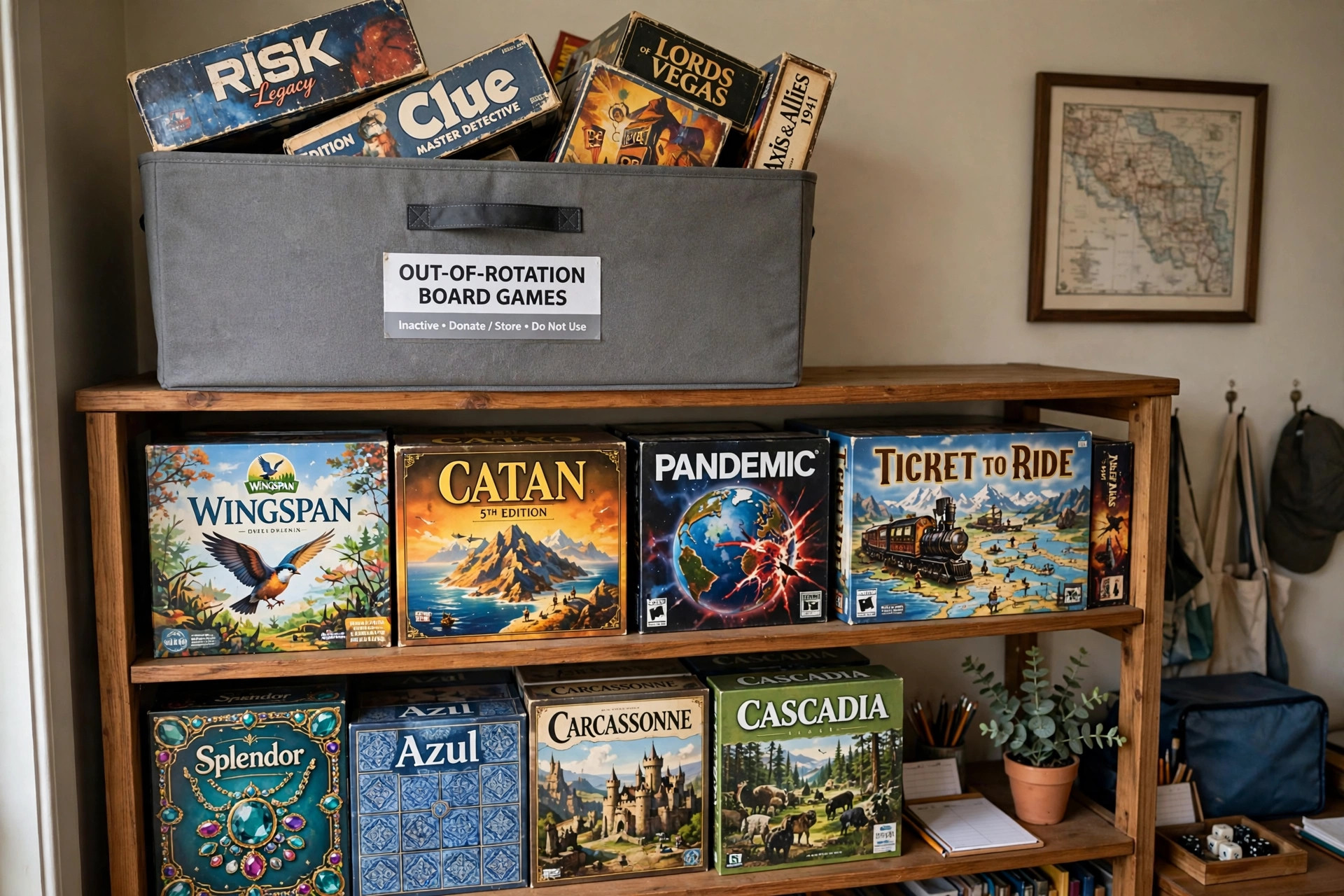
18. Rotate the games — the out-of-rotation bin
A shelf that holds every game at once is a shelf that holds too much, because the games you never play crowd the games you play every week, and the game you want today is buried under the game you will not play for six months. Rotate the games — the out-of-rotation bin — so the shelf holds only the games you play now, and the rest live in a labelled bin on the top shelf or in the garage. Swap the bin every few months, and check each game as it goes in and out, because the rotation that checks the games is the rotation that catches the ones with missing pieces or torn boxes. Wipe the shelf down during the rotation, because the rotation that cleans is the rotation that finds the dried-out glue and the bent cards, and the shelf that is cleaned with every rotation is the shelf that is always ready. The out-of-rotation games get their own home in 25 Garage Storage Ideas for 2026, where the spare games live when they leave the shelf. One rotation a season, and the shelf holds only what you play now.
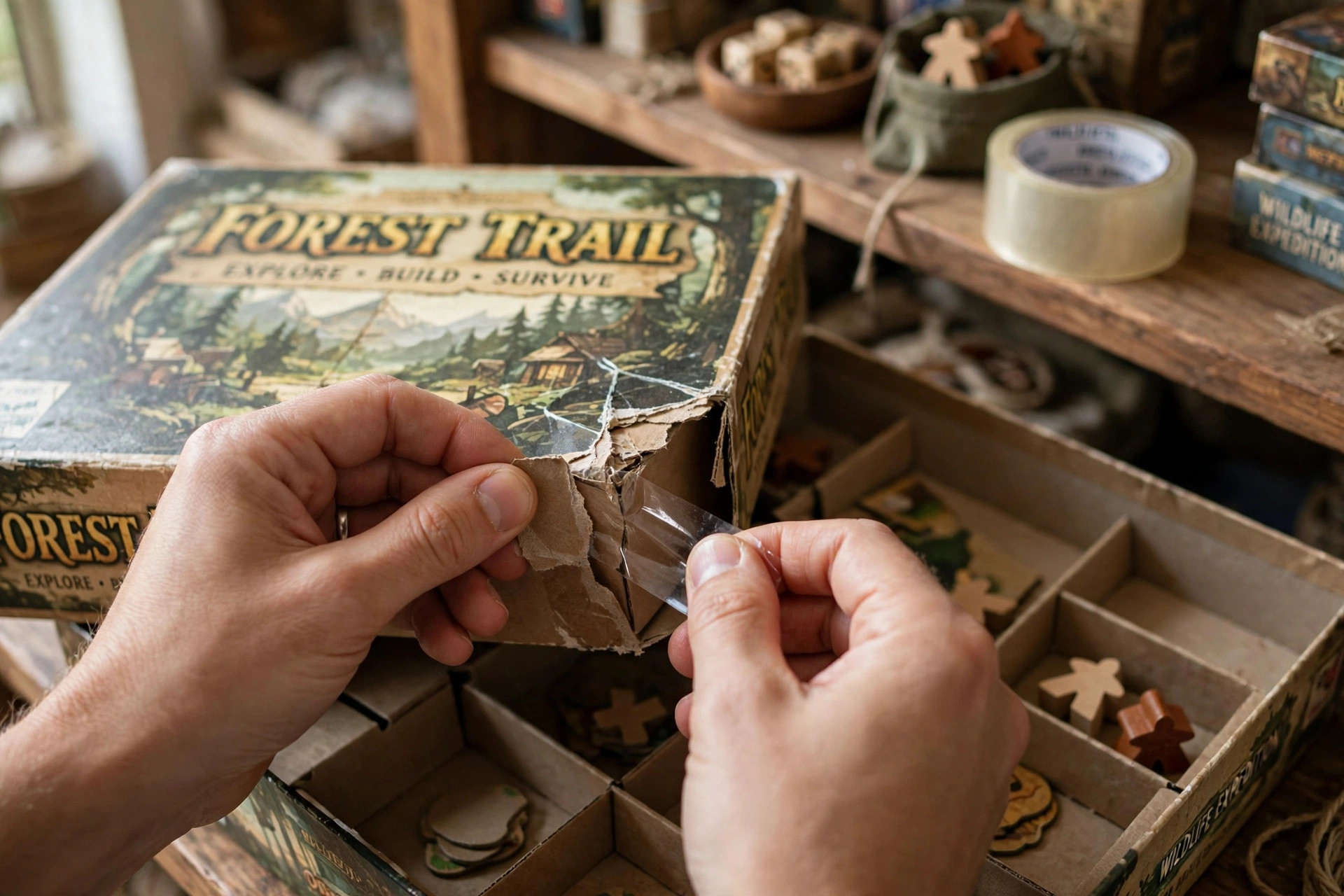
19. Repair the torn boxes — the box that lasts another year
A torn box gets thrown away, because the corner splits, the lid will not stay on, and the box that is torn is the box whose pieces spill out the next time you carry it. Repair the torn boxes — the box that lasts another year — so each split corner gets clear tape on the inside, each loose lid gets a strip of tape along the edge, and the box that was headed for the bin stays on the shelf. Fix the box the day you notice the tear, because the tear that is fixed at once is the tear that never grows, and the box that is repaired is the box that holds its pieces. Keep a roll of clear tape at the shelf, because the tape that is at hand is the tape that gets used, and the box that is taped is the box that survives another year of game nights. One strip of tape, and the box lives on.
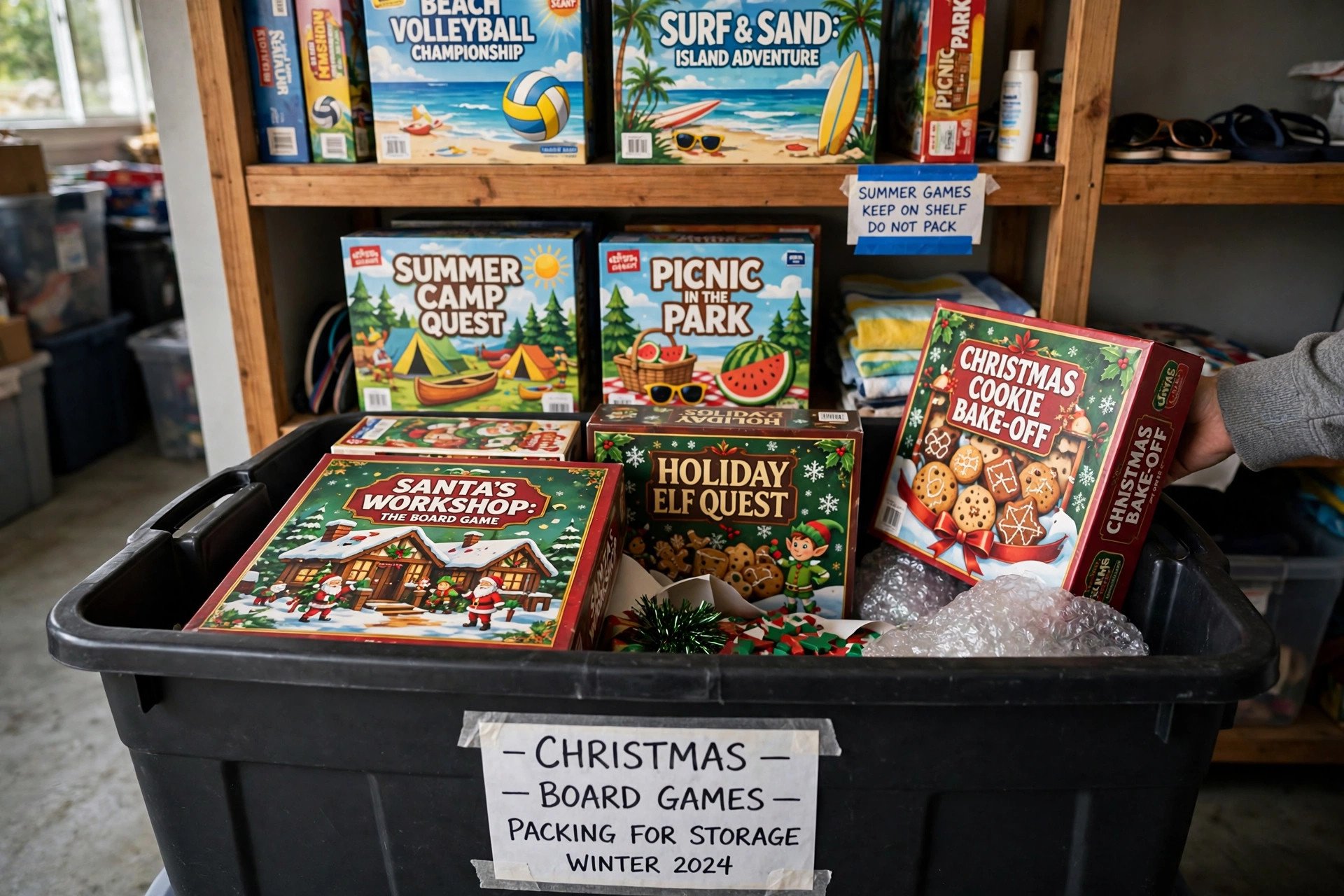
20. A seasonal swap — Christmas games out, summer games in
A shelf that holds all four seasons at once is a shelf that holds too much, because the Christmas games crowd the summer games, and the game you need today is buried under the game you will not need for six months. Do a seasonal swap — Christmas games out, summer games in — so the shelf holds only this season, and the rest live in a labelled bin on the top shelf or in the garage. Swap twice a year, after Christmas and before the summer holidays, and check each game as it goes in and out, because the swap that checks the games is the swap that catches the ones that are torn or missing pieces. Wipe the shelf down during the swap, because the swap that cleans is the swap that finds the dried-out tape and the bent cards, and the shelf that is cleaned twice a year is the shelf that is always ready. The small-space thinking for a shelf that holds only one season gets its full treatment in 28 Small Apartment Storage Ideas for 2026, where the seasonal swap lives when it leaves the shelf. One swap a season, and the shelf holds only what you play now.
Which board game idea fits which situation?
| Situation | Best first move | Budget | Tools needed |
|---|---|---|---|
| Games scattered in three rooms | Give board games one home (idea 1) | Free | None |
| Bought storage that does not fit | Measure the boxes first (idea 2) | Free | Tape measure |
| Can't find the right game | Sort by who plays (idea 3) | Free | Labels |
| Pieces always go missing | Bag everything, every time (idea 4) | Low | Zip bags |
| No room to play | A flat play surface (idea 5) | Free | Table |
| Boxes crushed and dented | Shelve upright like books (idea 6) | Low | Shelf |
| Big boxes topple the pile | Stack flat for the big boxes (idea 8) | Free | None |
| Oversized games fit nowhere | Under-bed flat storage (idea 9) | Low | Flat box |
| Card games in a messy pile | File upright in a card box (idea 12) | Low | Card box |
| Dice and tokens vanish | A divided box (idea 13) | Low | Dividers |
| Rules always lost | One binder for the booklets (idea 14) | Low | Binder |
| Shelf messy again by January | A game-night reset (idea 17) | Free | None |
You do not need all 20 ideas. You need the three that solve your game mess — usually the one home that stops the scatter, the upright shelf that keeps the boxes uncrushed, and the bags that end the lost dice. Start with the one home, do it this weekend before the next game night, and stand the boxes upright like books. Do that and the next game will take five minutes to set up, the dice will be in the bag where you left them, and the box will be on the shelf where it belongs.
Save this post for the next game night, and if the toys around the games need the same treatment, read 35 Clever Toy Storage Ideas for 2026 next — it is Post 05, the room the games live in — and 22 Playroom Organization Ideas for 2026, Post 13, for the playroom that holds the family games. This is the twentieth post of the new Organization by problem run — Posts 56 to 80, one problem at a time — and the run keeps going with the photos next door. The photo boxes themselves get their own deep dive in Photo Organization, where the memory boxes get the same shelf treatment.
Publish date assigned at publishing time. Updated as new board game finds are tested.
Frequently asked questions
How do I store board games so the boxes don't get crushed?
Store the boxes upright like books on a shelf, so each box stands on its own edge and nothing presses on it. Pick a shelf deep enough for your widest box with an inch to spare, keep the shelf at a height everyone can reach, and never stack a heavy box on top of a light one. For boxes too big to stand upright, stack them flat in a short pile — heaviest at the bottom, no more than four or five high — and for oversized games, store them flat in a long box under the bed.
What is the best way to organize board game pieces?
Bag everything, every time — put each game's dice, tokens and cards in separate small labelled zip bags inside its own box. Keep the dice in one bag, the tokens in another, and the cards in a third, so nothing mixes and a bag that falls out of one box can find its way home. For dice and tokens you use across games, keep a divided box with one compartment per kind of part, and keep one spare bag in every box for new pieces.
How do I store board games in a small space?
Give them one home — a single shelf, even if the whole collection is one cube unit and a card box. Stand the boxes upright like books, file the card games upright in a card box, bag the pieces so nothing goes missing, and keep the games you play most on a rolling cart you can wheel to the sofa. Measure the boxes before you buy storage, sort by who plays so the game you want is the game you can reach, and rotate the games you are not playing into a labelled bin on the top shelf.