20 Pantry Label Ideas for 2026
A pantry without labels is a pantry you have to open to understand. The jars all look the same through the glass, the bins all hide their contents, the spice jars are a row of brown dust that all smells vaguely the same, and every meal starts with opening three jars to find the one you wanted. The food is not the problem — the problem is that nothing on the shelf says what it is, so every jar, bin and basket is a guess, and the guess is usually wrong.
These 20 pantry label ideas give every jar, bin and basket a name you can read at a glance: one matching style across the whole shelf, contents named and dated, a label for every container from the spice jar to the basket — so the next meal starts with reaching, not with opening and sniffing.
Every idea below works in a real home, from a flat where the whole pantry is one cupboard to a house where the pantry is a walk-in room. The pantry itself gets its full system in 25 Pantry Organization Ideas for 2026, where the shelves, bins and zones come first — and the spice jars that need the smallest labels get their full treatment in 22 Spice Storage Ideas for 2026. Pick three ideas that fit your shelf, start with the one matching set, and build from there.
Choose a label style that fits your pantry
1. One matching set for the whole pantry — the look that makes shelves feel calm
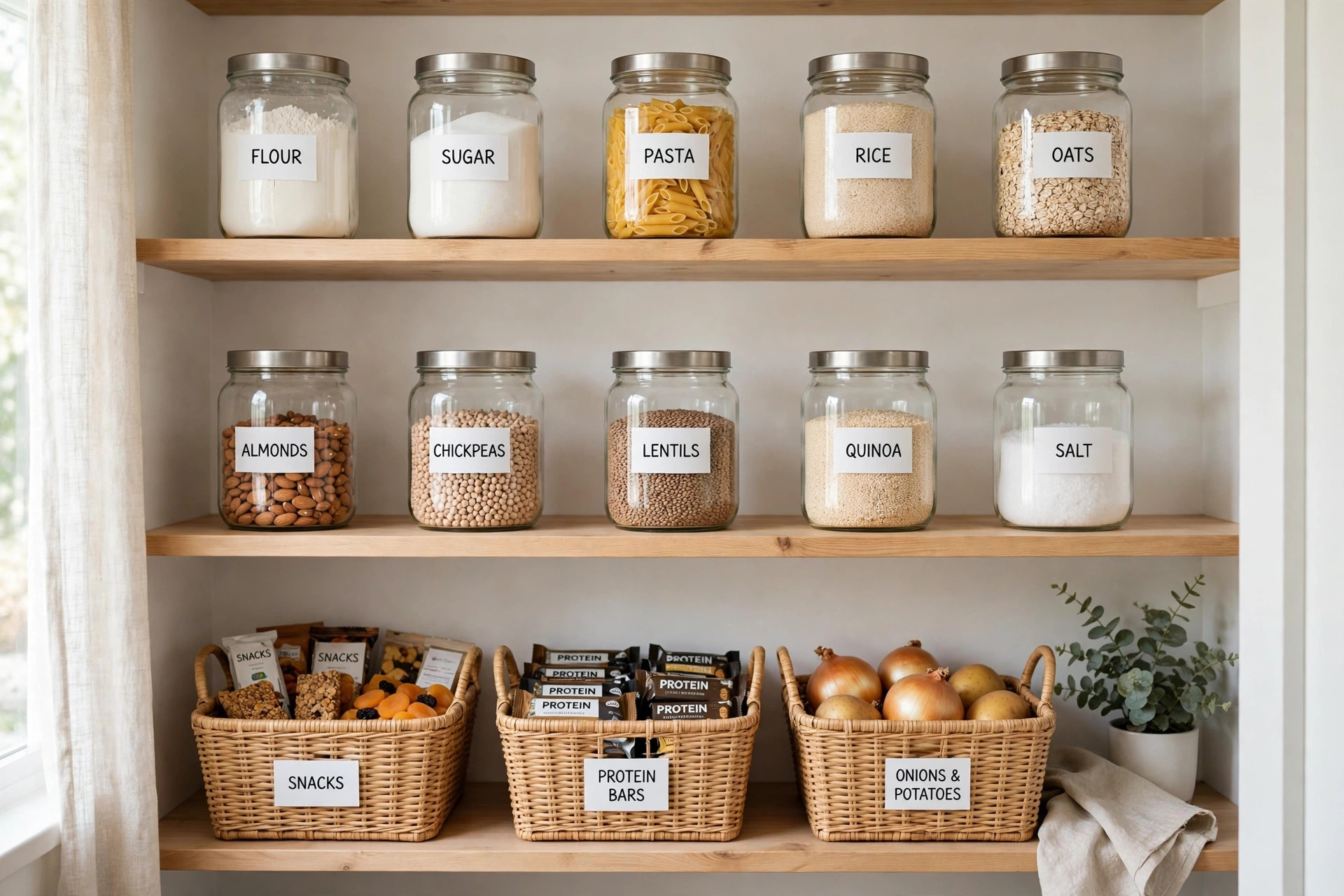
A pantry with five different label styles is a pantry that looks messy even when it is tidy, because the handwritten jar sits next to the printed bin, the chalk label sits next to the sticky note, and the shelf that holds good food looks like a shelf that nobody finished. Use one matching set for the whole pantry — the look that makes shelves feel calm — so every label is the same style, the same font, the same size family, and the shelf reads as one system instead of five half-finished ones. Pick the style first, before you label a single jar: white labels with black text, kraft labels with brown text, or clear labels with white text, because the style that is chosen once is the style that holds the whole pantry together. Buy or print enough for the whole shelf in one go, because the set that covers everything is the set that looks finished, and the shelf that looks finished is the shelf you keep tidy. One matching set, and the pantry looks calm.
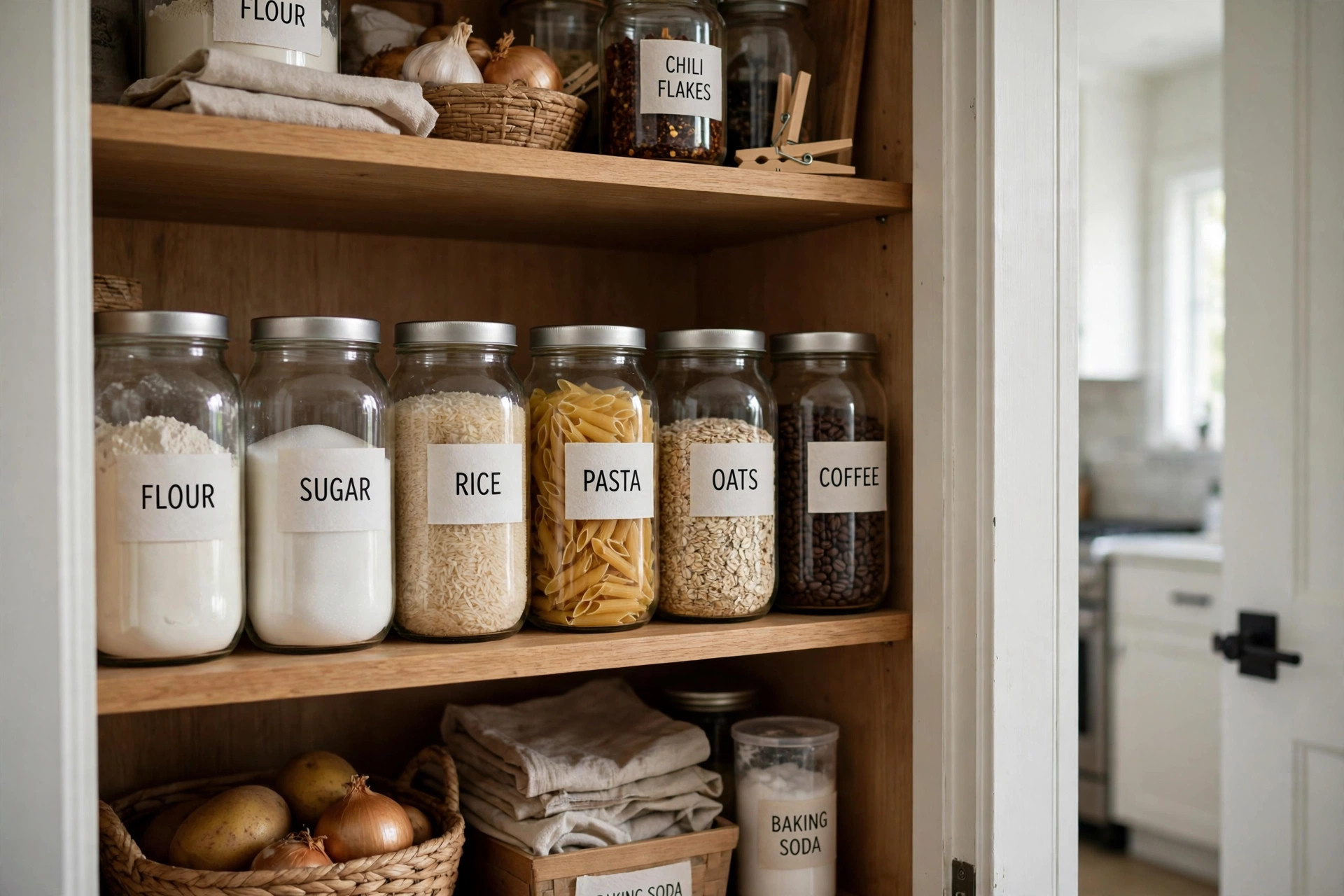
2. Chalkboard labels you can rewrite — the label that changes with the jar
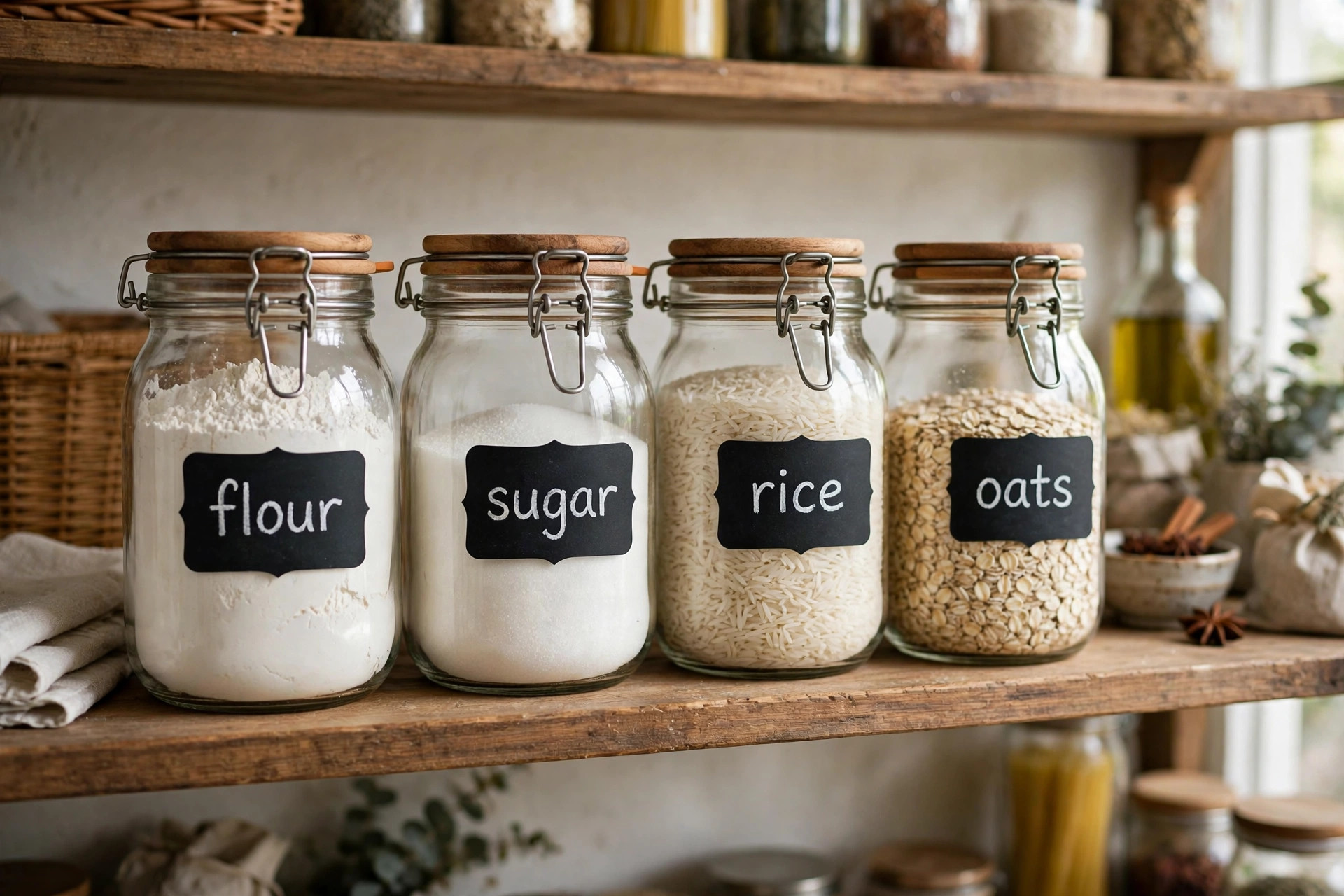
A printed label is a promise that the jar will always hold the same thing, and jars do not keep promises, because the rice jar becomes the pasta jar, the oats jar becomes the flour jar, and the label that said rice is now lying about what is inside. Use chalkboard labels you can rewrite — the label that changes with the jar — so the label wipes clean with a damp cloth and takes a new name in ten seconds, and the jar that changes contents never needs a new label. Write the name in neat chalk or a chalk marker, let it dry, and keep the marker in the pantry drawer beside the labels, because the marker that lives with the labels is the marker that gets used. Stick the chalkboard label on the front of the jar, not the lid, so the name is readable where you look, and wipe it when the jar changes, because the label that rewrites is the label that never lies. One chalkboard set, and the jars can change their minds. (Check on Amazon for a chalkboard pantry label set with a chalk marker included.)
3. Clear printed labels with a clean font — the readable label
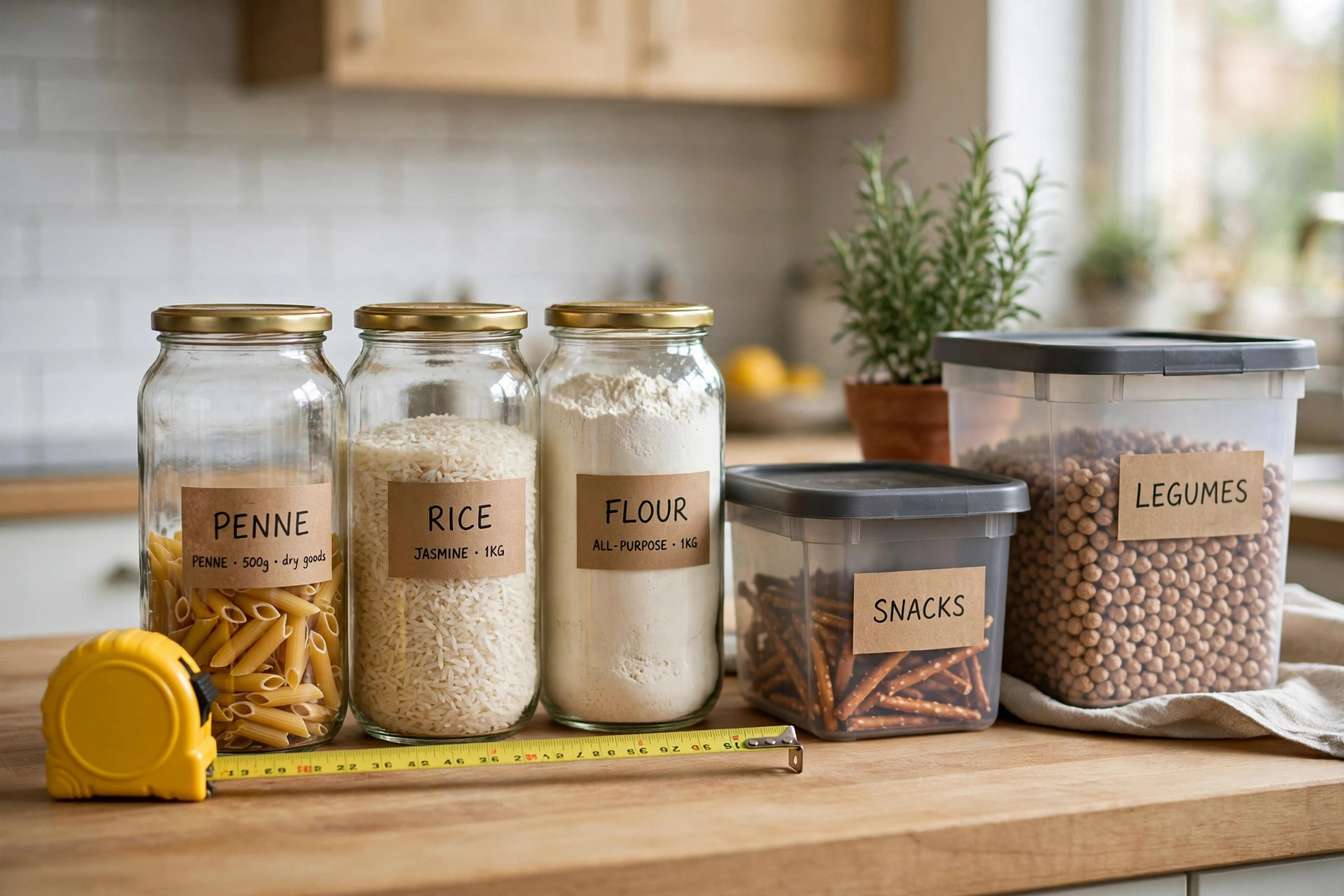
A label you cannot read is a label that does not exist, because the fancy script is pretty from a foot away and unreadable from the kitchen door, the tiny font disappears in the evening light, and the jar that holds the sugar looks exactly like the jar that holds the salt. Use clear printed labels with a clean font — the readable label — so the name is printed in a plain sans-serif font, big enough to read from two steps back, and the jar that holds the sugar is the jar you can tell apart from the salt. Print the labels in black on white or white on clear, keep the words short — one or two words, flour, sugar, rice — because the label that says one word is the label that is read in half a second. Print a full set in one sitting, because the set that is printed together is the set that matches, and the shelf that matches is the shelf that looks calm. One clean font, and every label gets read.
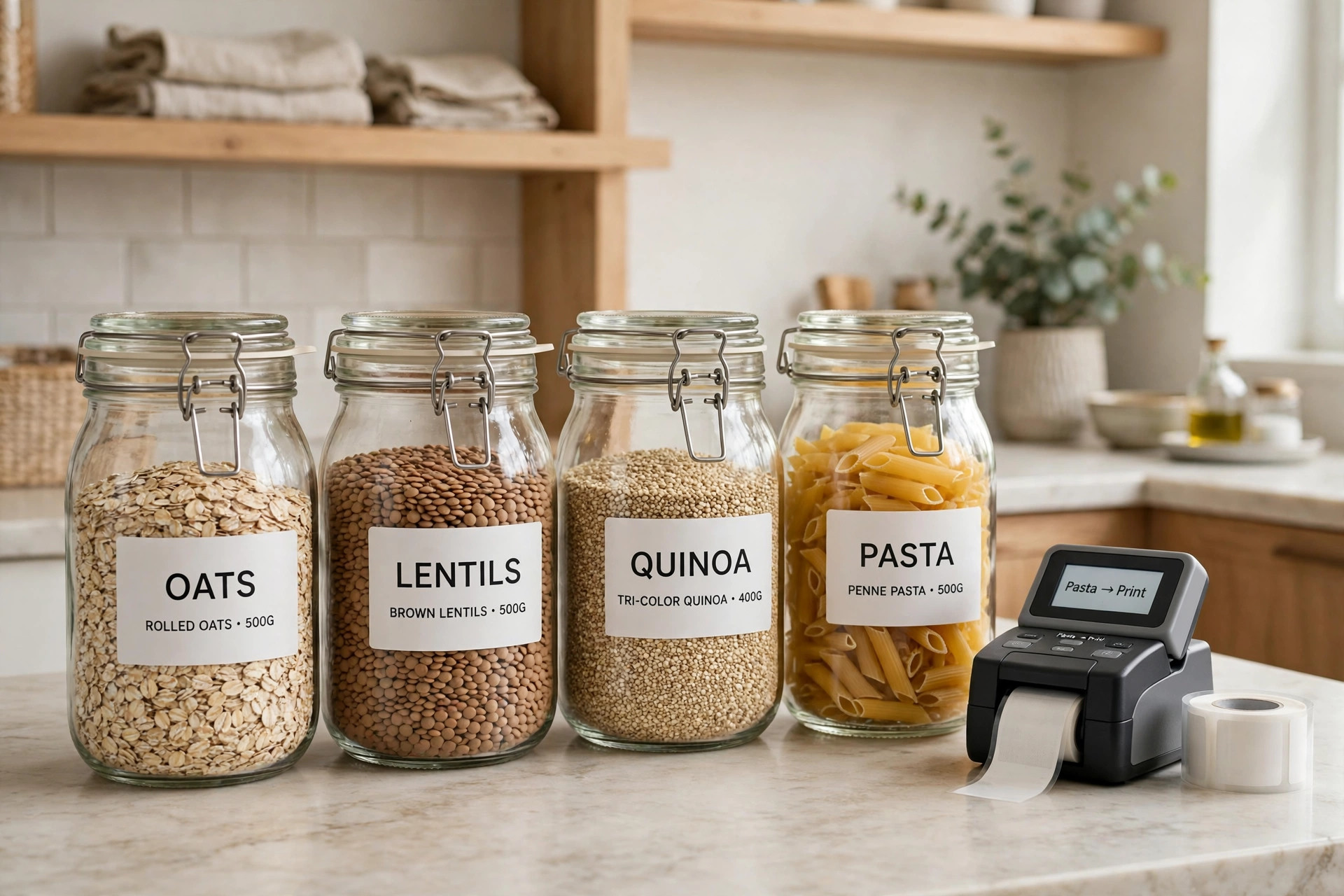
4. A label maker for neat handwritten-style labels — the tidy label without the fuss
Handwritten labels look charming for a week and scruffy for a year, because the pen runs out halfway through the word, the writing slopes downhill on the third jar, and the shelf that started with good intentions ends up looking like a school project. Use a label maker for neat handwritten-style labels — the tidy label without the fuss — so every label comes out in the same neat type, the same size, the same spacing, and the shelf that holds twenty jars looks like one person labelled all of them. Type the name, print it, stick it on the front of the jar, and move to the next, because the maker that prints is the maker that finishes the whole shelf in one evening. Keep a spare tape cartridge in the pantry drawer, because the cartridge that is spare is the cartridge that saves the labelling session, and the label that is printed is the label that never slopes downhill. One label maker, and the handwriting is always neat. (Check on Amazon for a handheld label maker with white tape cartridges.)
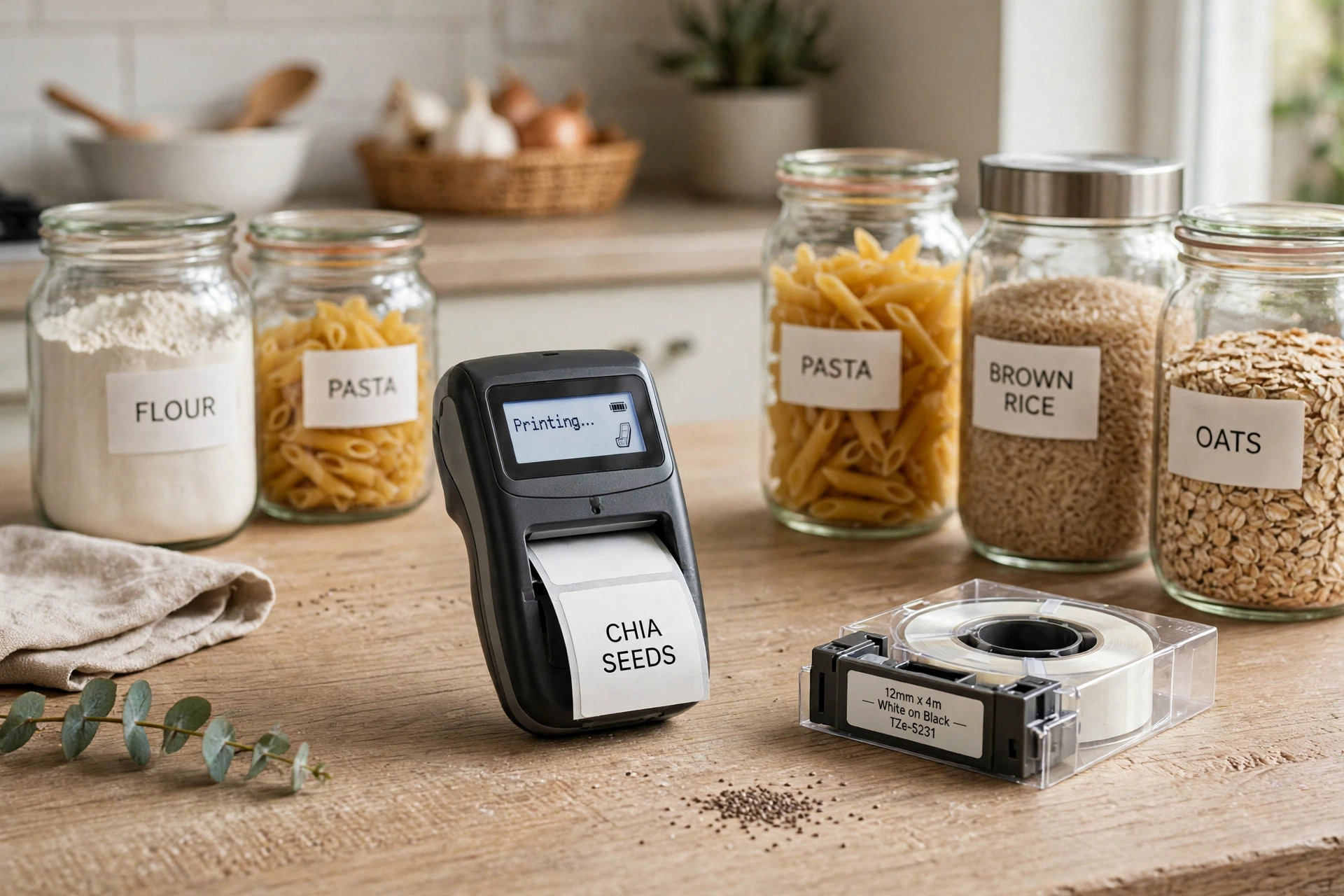
5. Colour-coded labels by zone — baking, breakfast, snacks, spices
A pantry where every label is the same colour is a pantry where your eye has to read every word, because the baking zone looks like the snack zone, the breakfast shelf looks like the spice shelf, and the jar you want is the jar you find by reading twenty names. Use colour-coded labels by zone — baking, breakfast, snacks, spices — so each zone has its own colour and your eye finds the zone before it reads a single word. Give baking sage green, breakfast mustard, snacks terracotta and spices charcoal, and keep the colour the same across the whole pantry, because the colour that is consistent is the colour that guides the eye. Write the zone colour on a small card inside the pantry door, so the next person who puts the shopping away knows the code, because the code that is written down is the code that gets followed. One colour per zone, and the eye finds the jar before the brain reads the word.
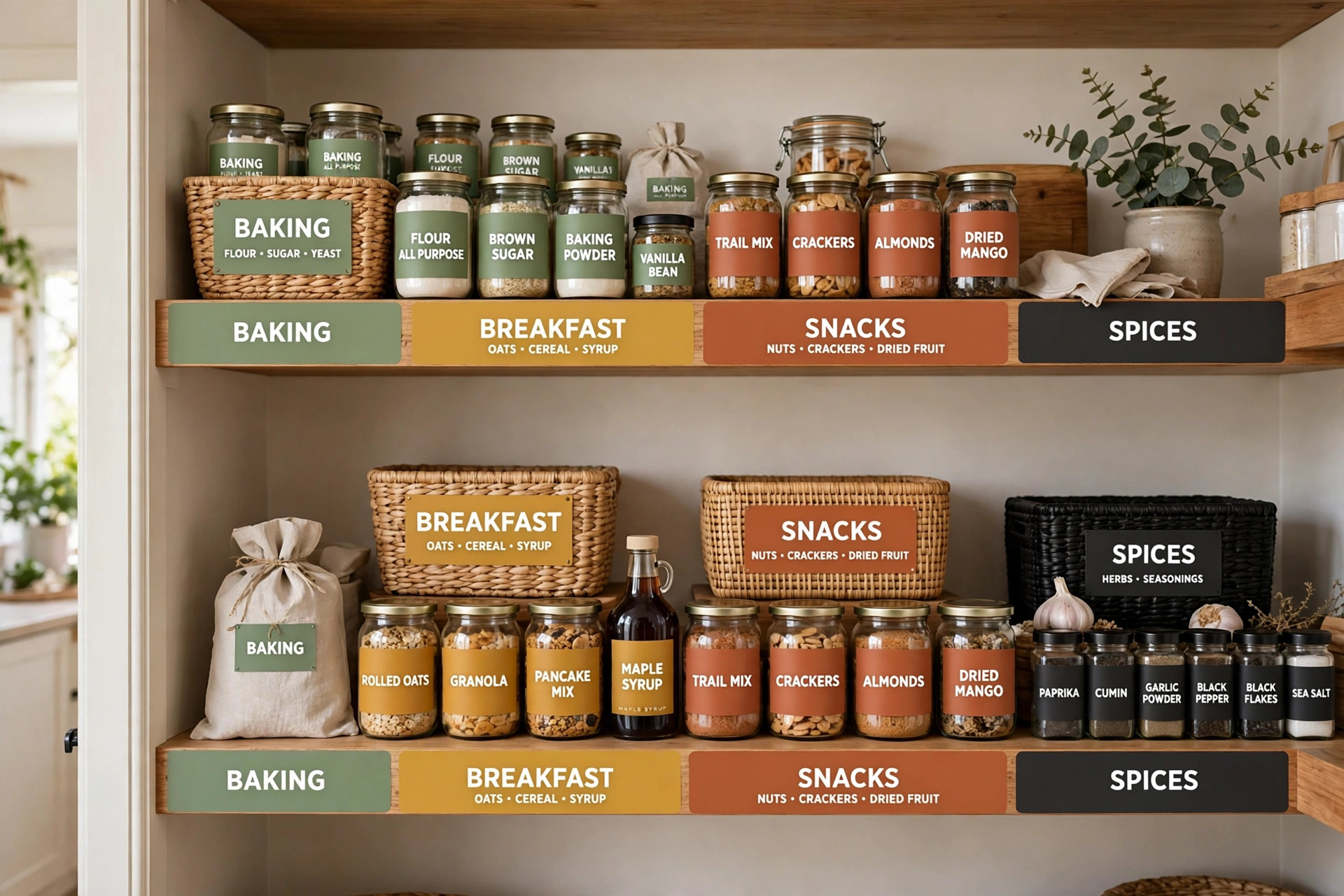
Label the contents, not just the container
6. Name + date on every jar — the two-word label that stops waste
A jar with a name but no date is a jar that hides its age, because the flour could be from last month or last year, the rice could be fresh or stale, and the jar that looks fine is the jar that has been sitting there since before Christmas. Put a name and a date on every jar — the two-word label that stops waste — so the label says what it is and when it went in, and the jar that is oldest is the jar you use first. Write the date you decanted it, or the expiry date from the packet, in small print under the name, because the date that is written is the date that gets checked. Check the dates when you put the shopping away, because the check that happens at the shelf is the check that catches the jar that is about to go off, and the pantry that is dated is the pantry that wastes less. One name, one date, and the waste stops.
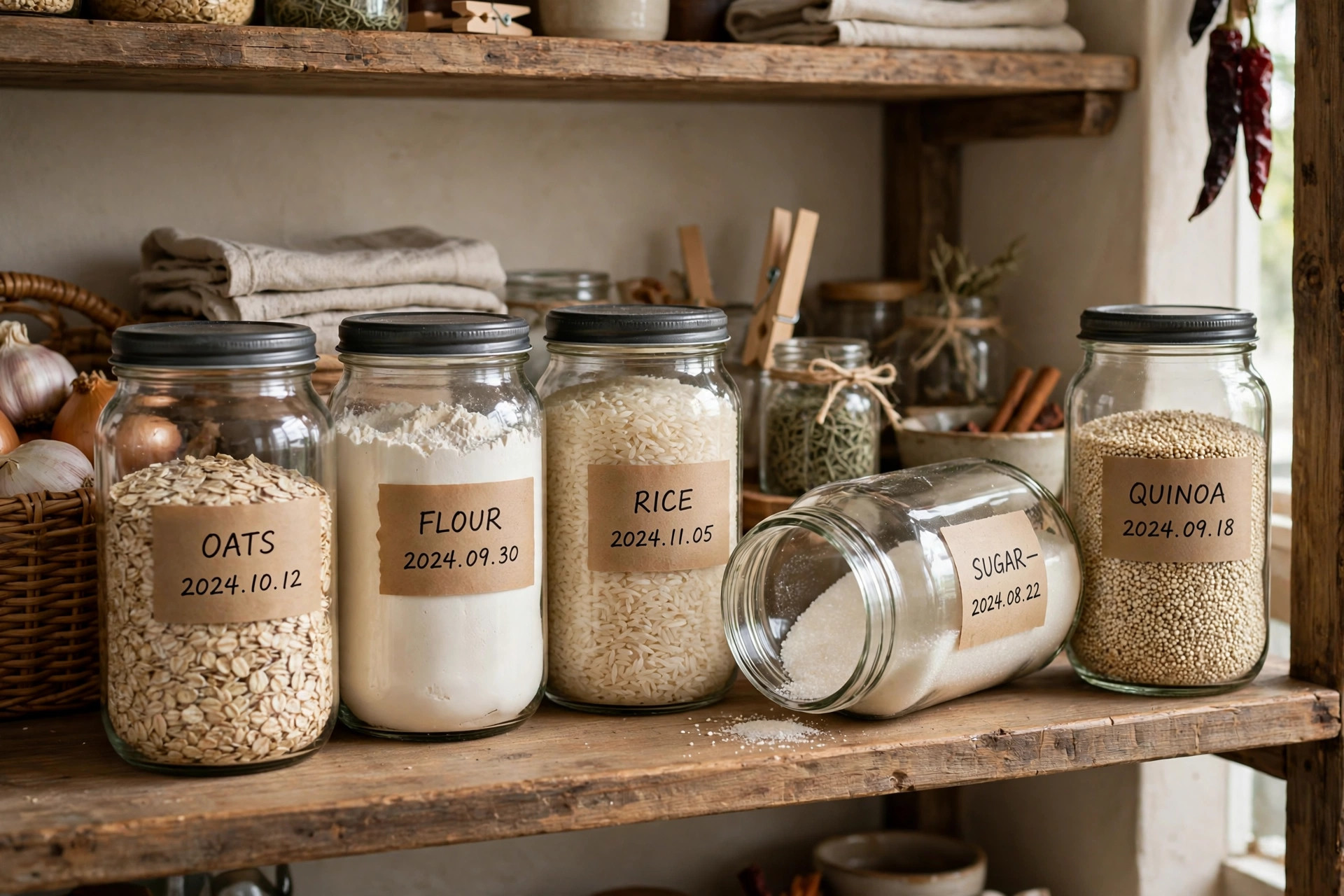
7. Expiry dates you can actually read — the date that saves the food
An expiry date printed on the bottom of the packet is an expiry date nobody reads, because the packet is in a jar, the jar is on the shelf, and the date that matters is the date you cannot see without emptying the jar. Put the expiry date where you can actually read it — the date that saves the food — so the label on the front of the jar carries the date in big clear numbers, and the food that is about to go off is the food you notice before it goes off. Write the date in the same place on every label, bottom right, so your eye knows where to look, because the date that is always in the same place is the date that gets checked without thinking. Move the jar with the nearest date to the front of the shelf, because the jar at the front is the jar that gets used first, and the food that is used first is the food that never goes off. One readable date, and the food gets used in time.
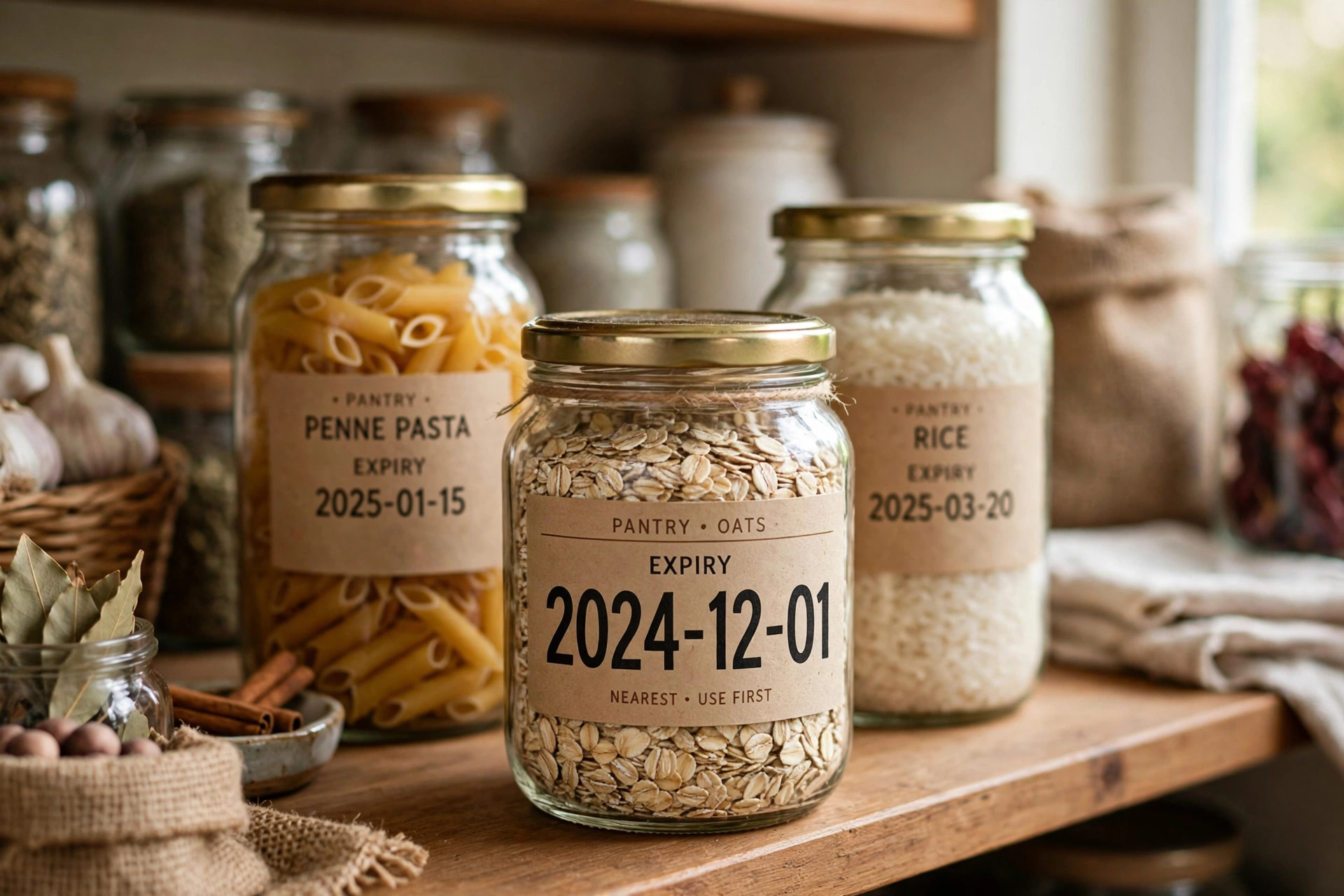
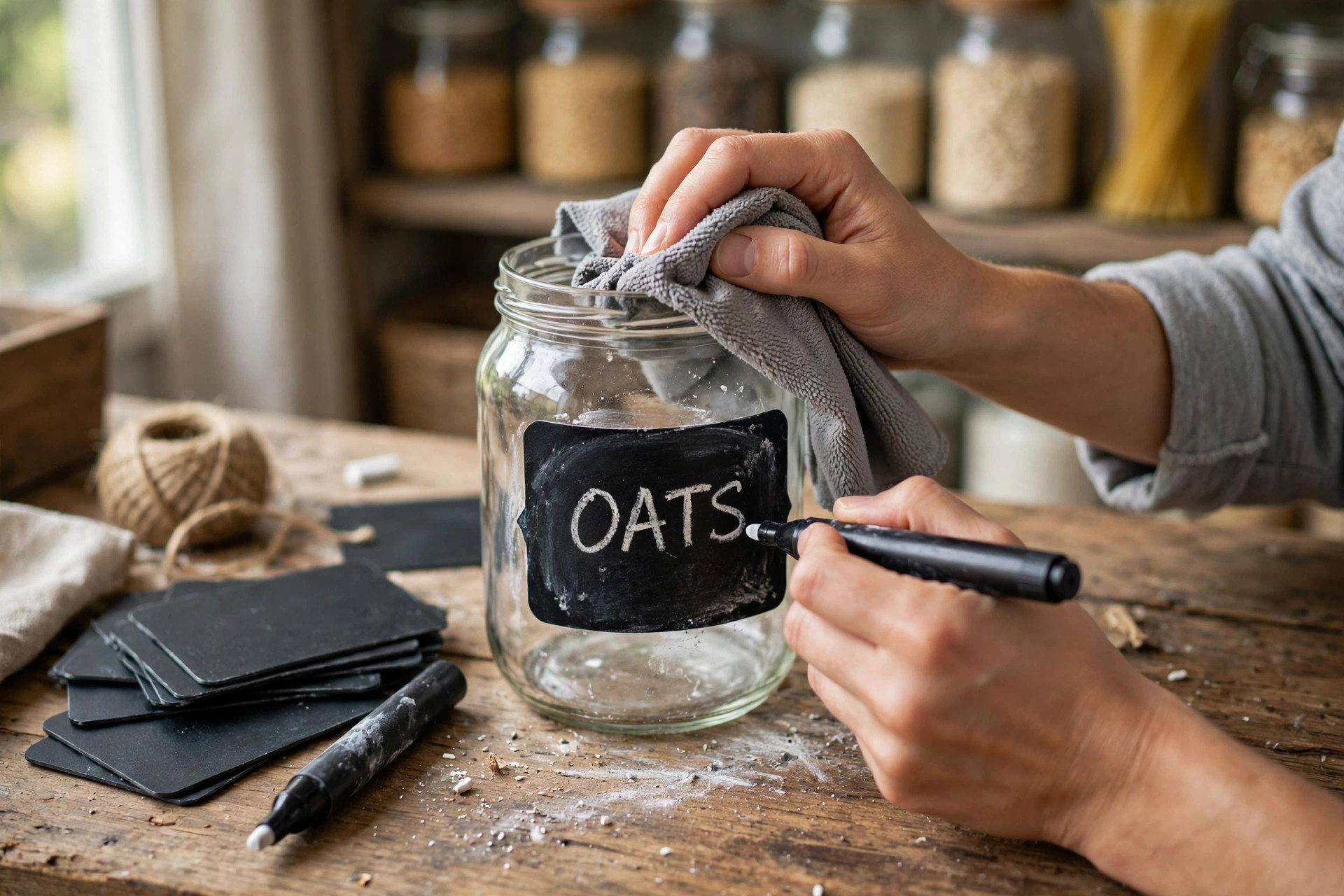
8. Labels for decanted dry goods — flour, sugar, rice, pasta
Decanted dry goods all look alike, because the flour is white, the sugar is white, the rice is white, and the jar that holds the icing sugar looks exactly like the jar that holds the plain flour — until the cake comes out wrong. Label the decanted dry goods — flour, sugar, rice, pasta — so every jar says exactly what is inside, including the kind, because plain flour and self-raising flour are not the same jar. Write the full name on the label, not the short one, because the label that says self-raising is the label that saves the cake, and the jar that is named properly is the jar that never gets mixed up. Keep the scoop inside the jar it belongs to, because the scoop that lives in the flour is the scoop that never puts flour in the sugar, and the label that names the jar is the label that keeps the scoop honest. One full name per jar, and the white powders stop looking alike.
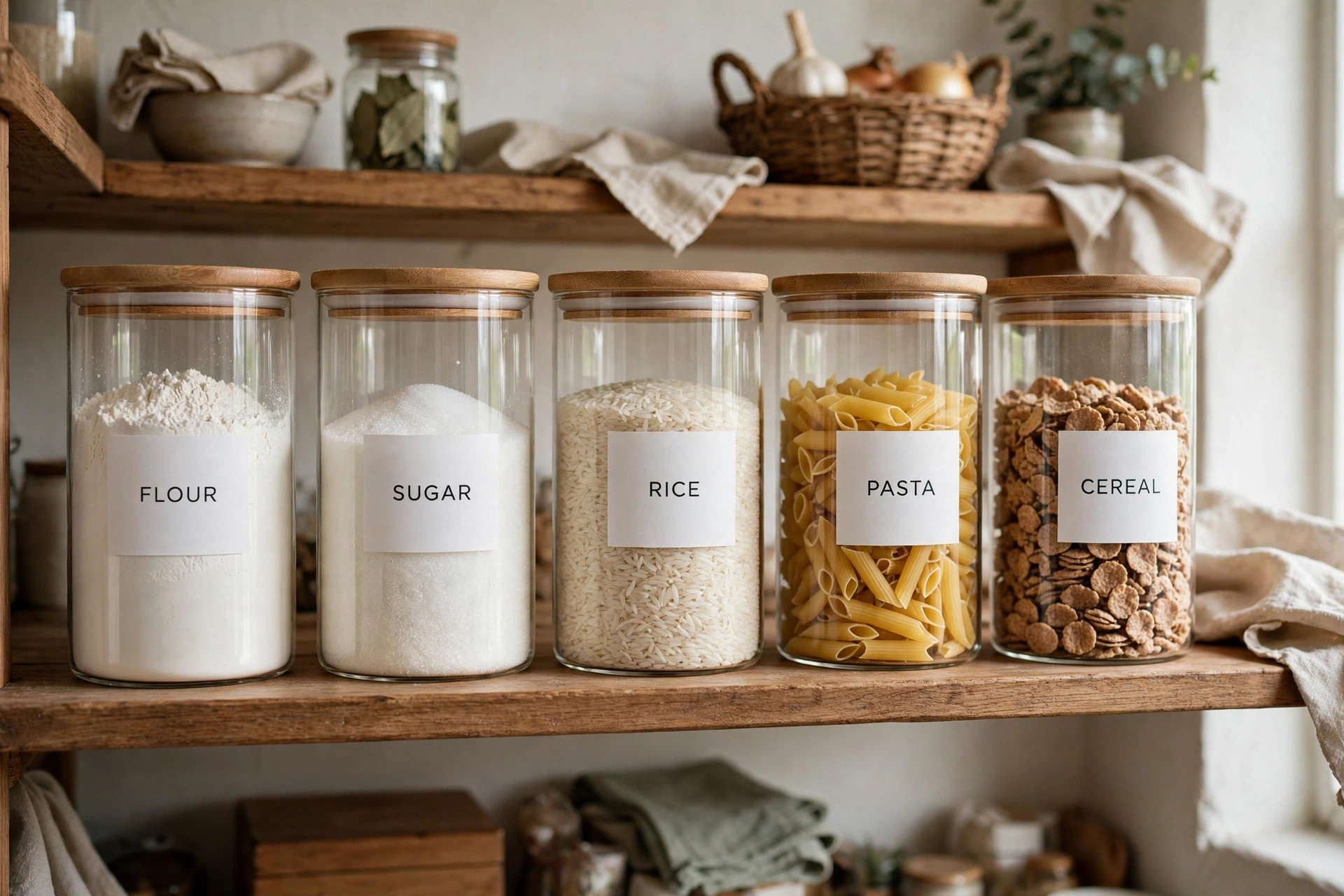
9. Labels for the back of the shelf — the label you read from the front
The jars at the back of the shelf are the jars you forget, because you cannot see them, you cannot read them, and the jar that holds the lentils is the jar that sits behind the rice for six months. Label for the back of the shelf — the label you read from the front — so the front jar carries a small note for the jar behind it, or the back jars sit on a riser with their labels facing forward, and nothing on the shelf is hidden. Put a small shelf riser at the back, so the back row stands taller and every label faces the door, because the row that is raised is the row that gets seen. Or stick a tiny label on the front edge of the shelf itself, naming what lives behind, because the shelf-edge label is the label that tells you the lentils are there without moving a jar. One riser or one shelf-edge label, and the back of the shelf stops being a mystery.
10. Allergy and diet labels — the label that keeps everyone safe
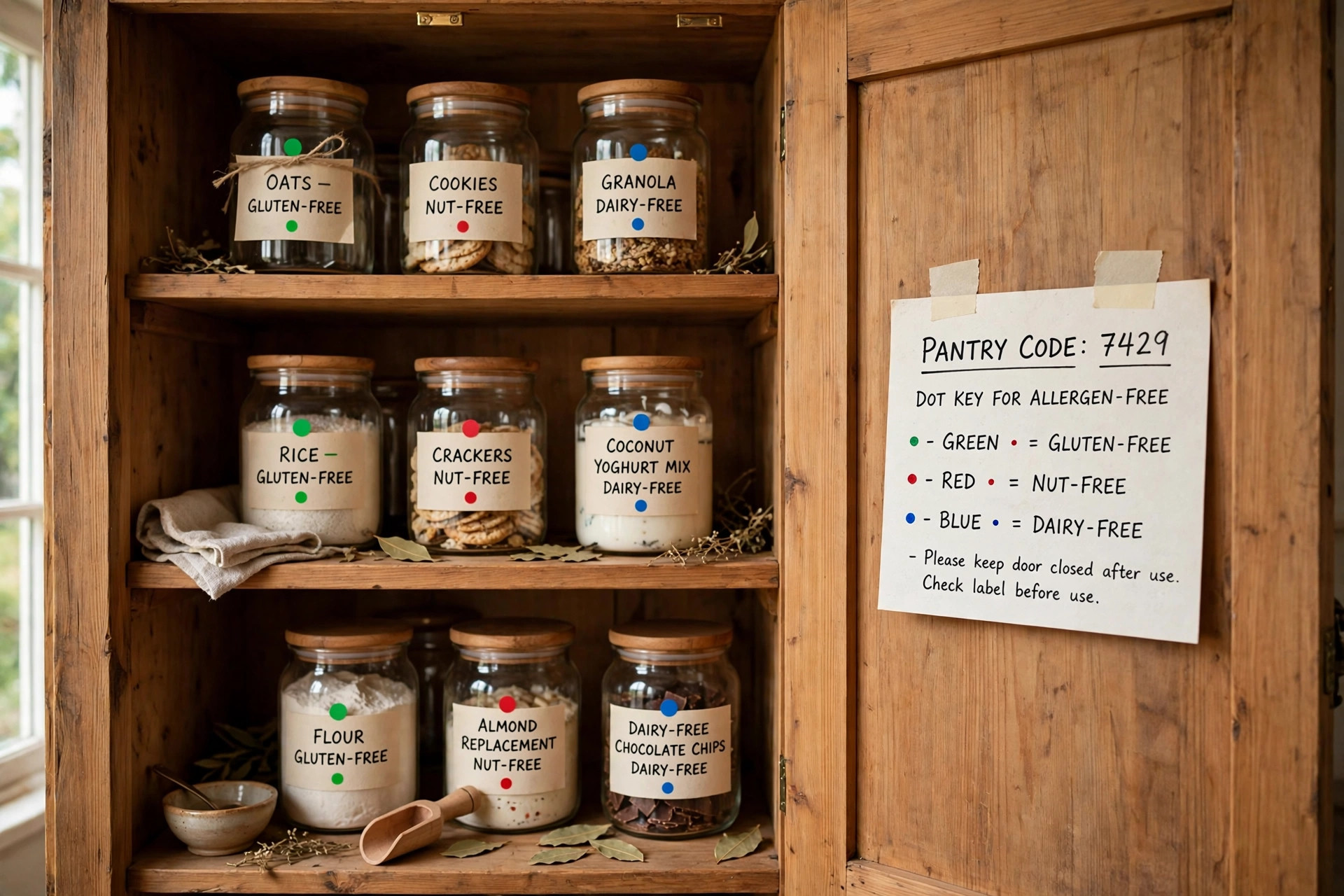
A pantry where the gluten-free flour looks like the ordinary flour is a pantry where a mistake is one scoop away, because the jars are identical, the labels are identical, and the person cooking for the allergic child has to remember which jar is which. Use allergy and diet labels — the label that keeps everyone safe — so the gluten-free jar, the nut-free jar and the dairy-free jar each carry a clear coloured dot or a bold word on the label, and the safe jar is the jar anyone can spot. Pick one colour for each diet need and use it everywhere, on the jar, on the shelf edge and on the shopping list, because the colour that is consistent is the colour that is trusted. Tell everyone in the house what the colours mean, and write the code on the inside of the pantry door, because the code that is written down is the code that gets followed when you are not there. One coloured dot, and the safe jar is unmistakable.
A label for every container
11. Labels on clear jars and canisters — the see-through shelf
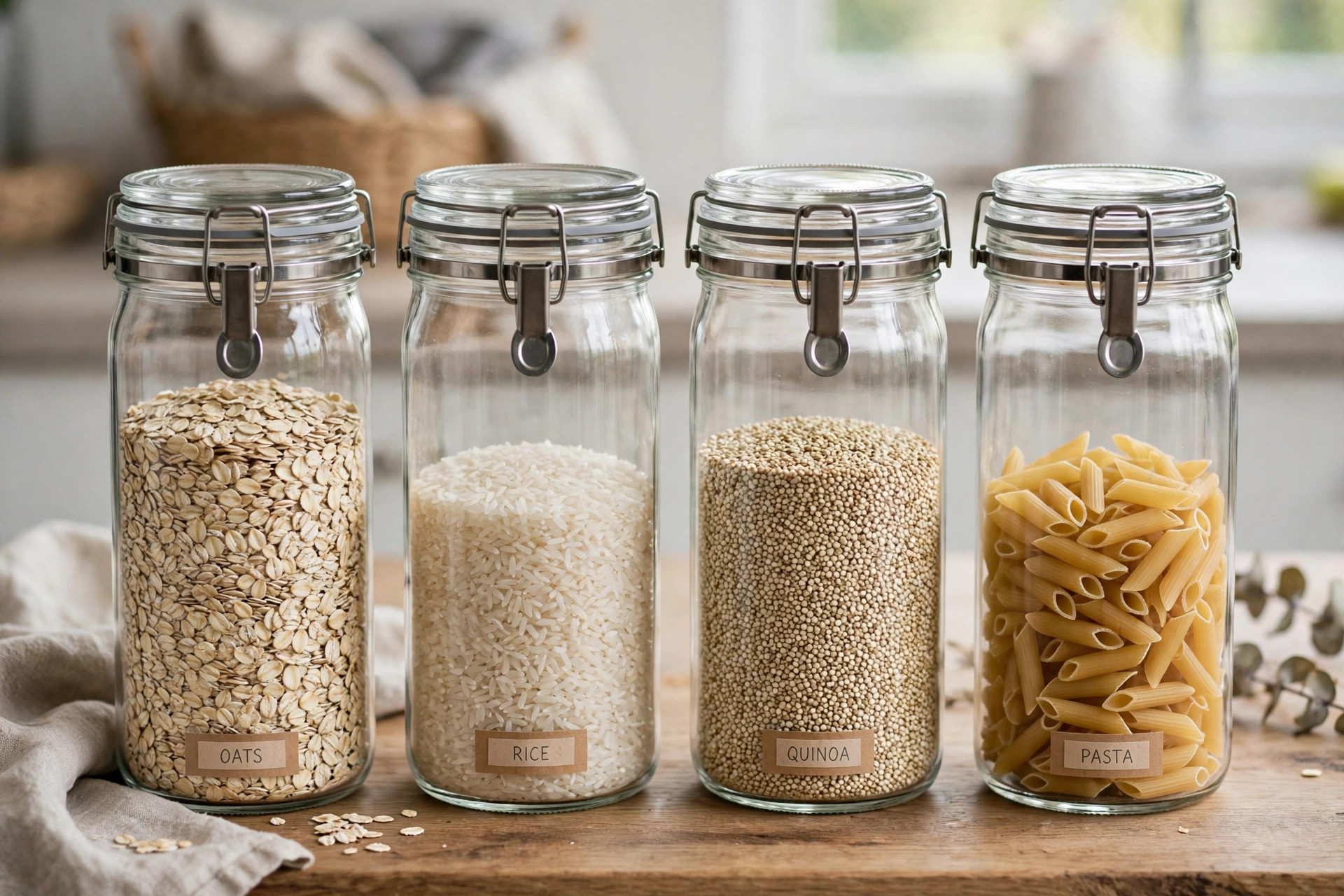
A clear jar shows you what is inside but not how much is left, because the jar that looks full is the jar that is half empty from the back, and the shelf that holds clear jars is a shelf where you still have to pick each one up to check. Put labels on the clear jars and canisters — the see-through shelf — so the label names the contents and the clear glass shows the level, and the jar that is running low is the jar you can see is running low. Stick the label low on the jar, near the bottom, so the label never hides the level, because the label that sits low is the label that lets the glass do its job. Use a clear canister set with matching lids, so the jars stack, the labels line up, and the shelf that holds matching canisters is the shelf that looks like a shop. One label, low on the jar, and the clear glass works twice as hard. (Check on Amazon for a clear airtight canister set with matching lids, sized for pantry staples.)
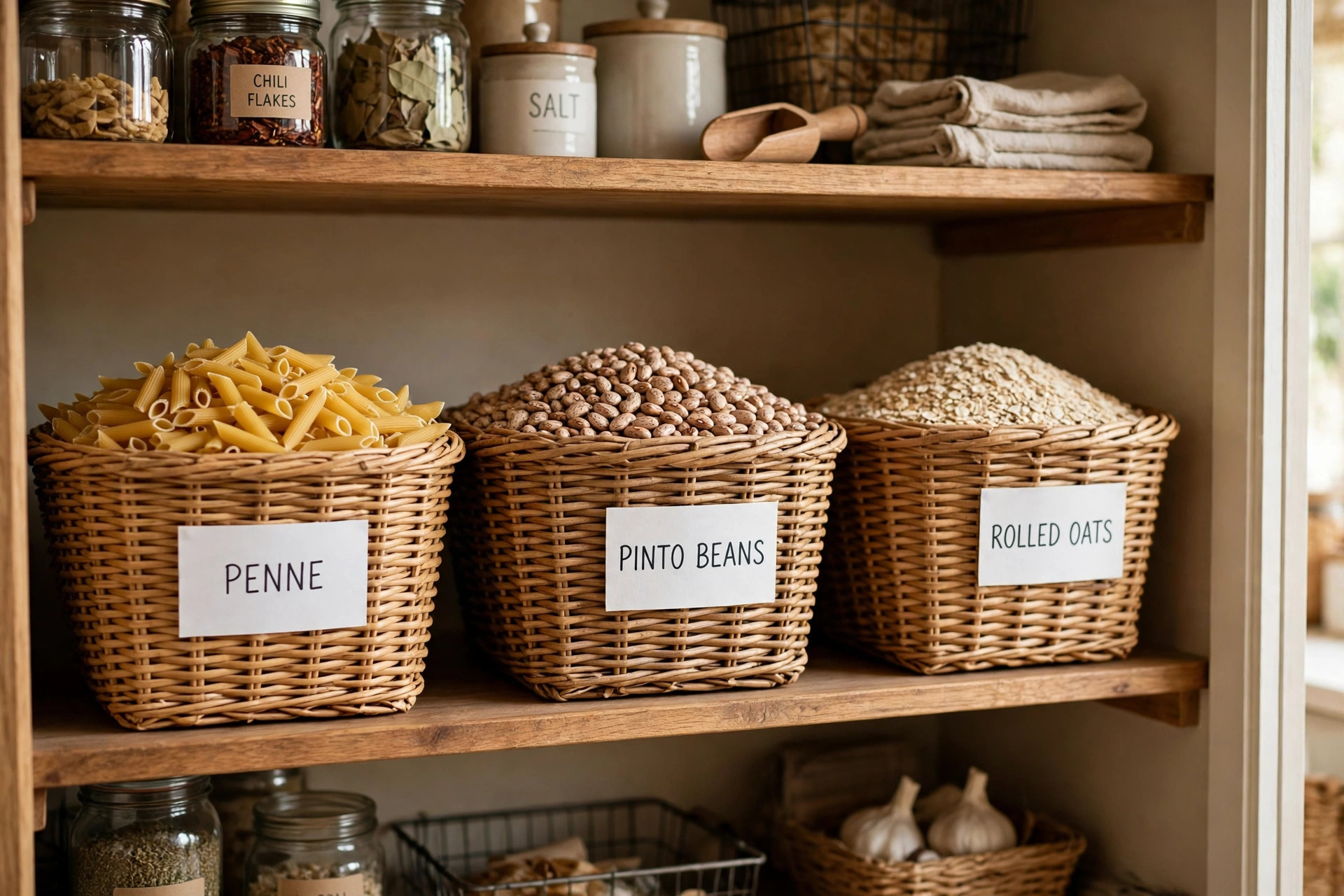
12. Labels on baskets and bins — the basket that tells you what's inside
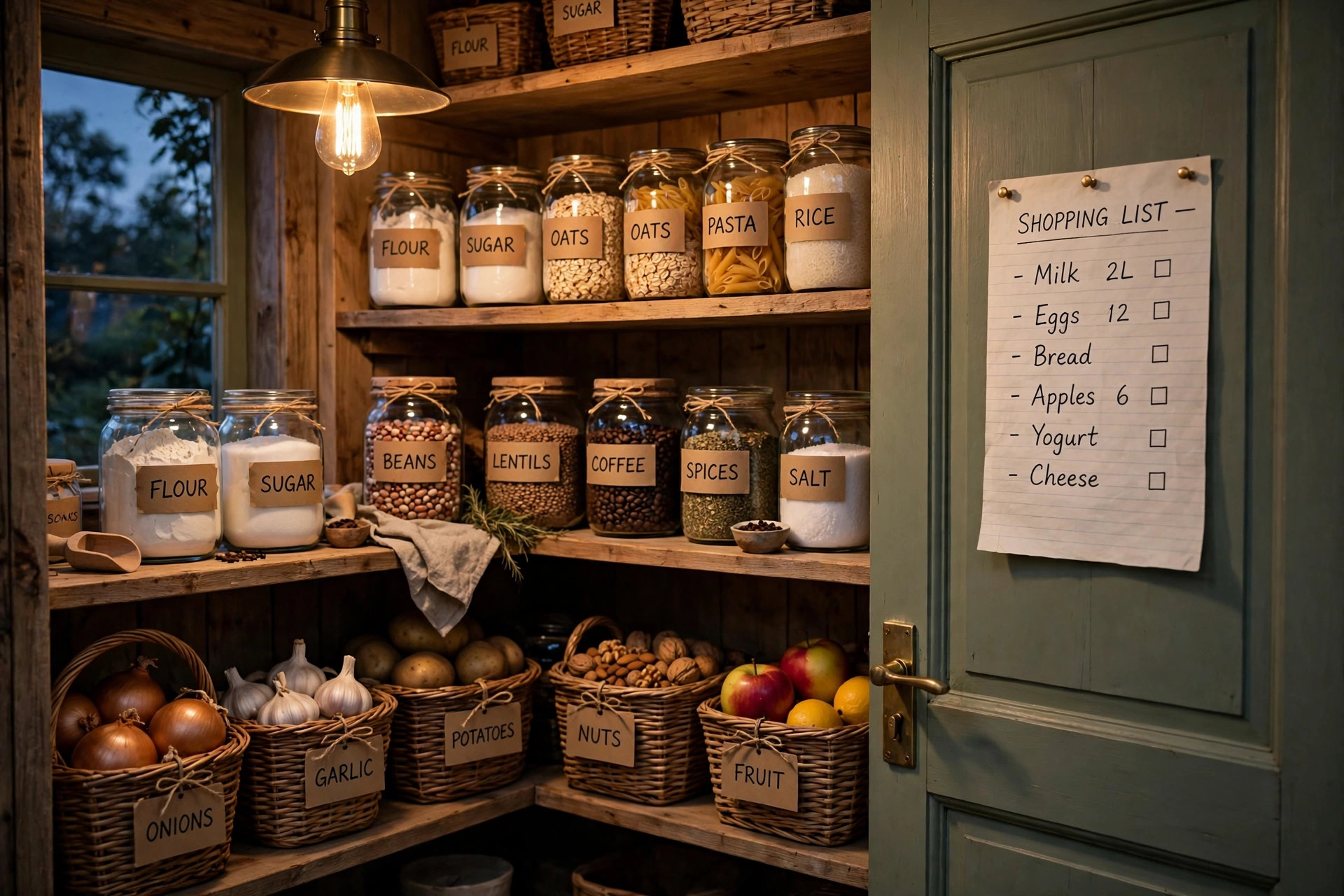
A basket hides its contents by design, because the basket is opaque, the snacks are inside, and the basket that holds the crisps looks exactly like the basket that holds the pasta — until you tip both out. Put labels on the baskets and bins — the basket that tells you what's inside — so each basket carries a label on its front, big enough to read from the kitchen door, and the basket you want is the basket you reach for. Use a clip-on label holder or a chalkboard tag tied to the handle, because the label that clips on is the label that moves when the basket moves. Write the basket's contents in one or two words, snacks, pasta, baking, because the label that says one word is the label that is read in half a second. One front label per basket, and the opaque basket stops hiding its contents.
13. Labels on drawers and pull-outs — the drawer you never have to open to check
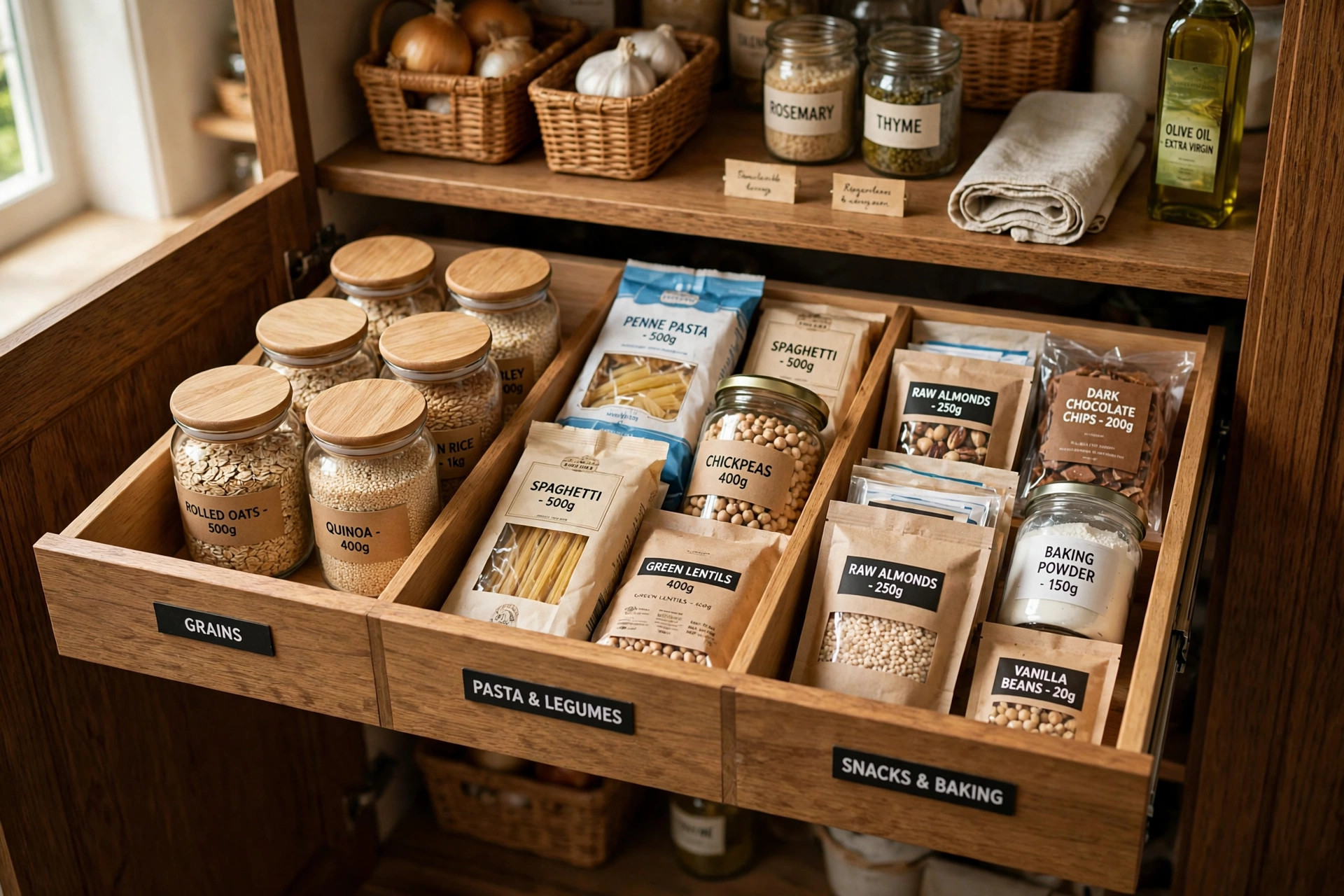
A pull-out drawer is a drawer you open to check, because the drawer is closed, the contents are hidden, and the drawer that holds the baking trays looks exactly like the drawer that holds the lunchboxes. Put labels on the drawers and pull-outs — the drawer you never have to open to check — so each drawer front carries a label naming what lives inside, and the drawer you want is the drawer you pull. Stick the label on the front of the drawer, centred, at the same height on every drawer, because the label that is always in the same place is the label your eye finds without searching. Use the same label style as the jars, because the drawer that matches the jars is the drawer that belongs to the same system, and the pantry that matches is the pantry that looks calm. One label per drawer front, and the closed drawer stops being a guess.
14. Labels on the lazy Susan rotating shelf — the shelf that stays readable as it spins
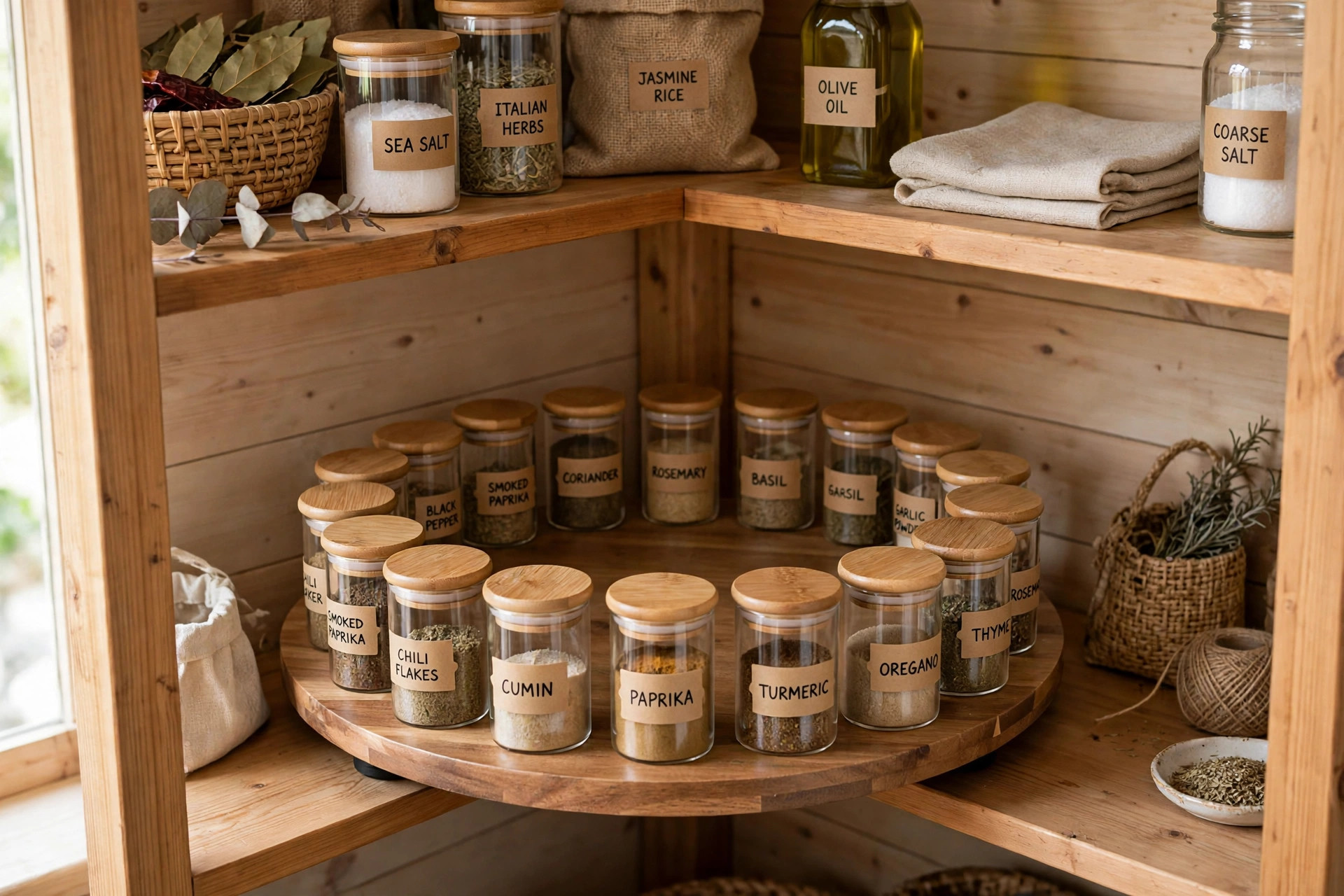
A lazy Susan rotating shelf spins the labels away, because the jar you want is at the back, the shelf turns, and the label that was facing you is now facing the wall — while the jar you need is the jar you cannot read. Label the lazy Susan rotating shelf so it stays readable as it spins — put the label on the front of every jar at the same height, keep the jars in a single circle with a gap at the front, and spin the shelf slowly, because the shelf that is labelled all round is the shelf that reads from any angle. Keep the tallest jars in the middle and the shortest at the edge, so no label hides behind another jar, because the jar that is hidden is the jar that gets forgotten. Give the shelf one zone — spices, or sauces, or baking — so the shelf that holds one zone is the shelf whose labels all make sense together. One label per jar, all round, and the spinning shelf stays readable. The rotating shelf itself gets its full system in 21 Lazy Susan Organization Ideas for 2026, where the spin and the zones come first.
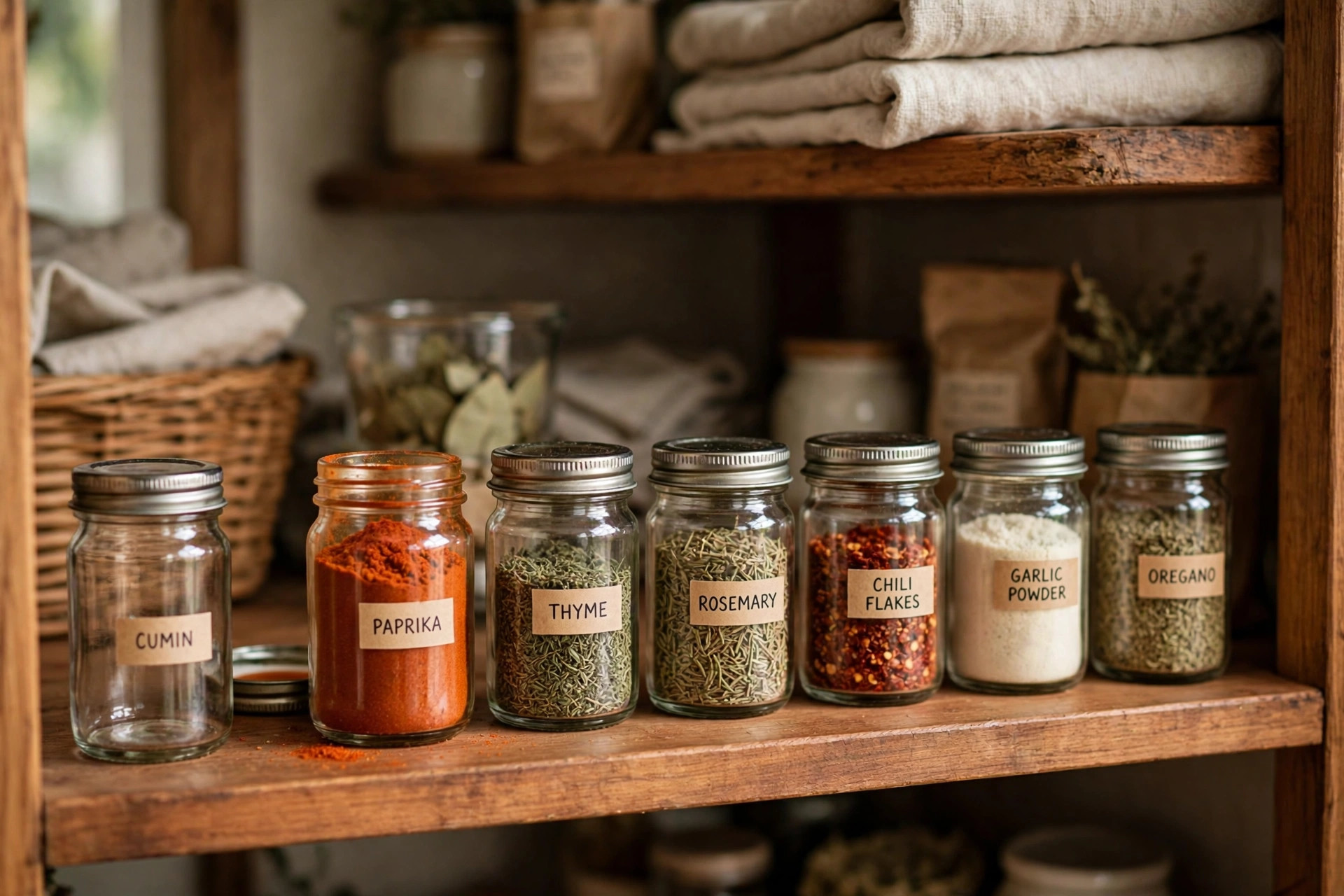
15. Labels on spice jars — the small label that ends the sniff test
Spice jars are the hardest labels in the pantry, because the jars are small, the spices are all brown dust, and the jar that holds the cumin looks exactly like the jar that holds the coriander — until the curry tastes wrong. Put labels on the spice jars — the small label that ends the sniff test — so every spice jar carries a small neat label with the name in full, and the jar you reach for is the jar you meant to reach for. Use small labels, the same style as the big jars but smaller, and write the name in full, not the abbreviation, because the label that says cumin is the label that saves the curry. Stick the label on the front of the jar, not the lid, because the lid is where the label goes to hide, and keep the jars in alphabetical order, because the row that is alphabetical is the row where the cumin is always next to the coriander. One small label per spice jar, and the sniff test ends. The spice jars themselves get their full treatment in 22 Spice Storage Ideas for 2026, where the small jars and the sniff test come first.
Keep the labels working for good
16. Label at eye level, not on the lid — the placement that gets read
A label on the lid is a label you have to look down to read, because the lid is on top, the jar is on the shelf, and the label that sits on the lid is the label you cannot see without picking the jar up. Label at eye level, not on the lid — the placement that gets read — so the label sits on the front of the jar at the height your eye naturally lands, and the jar you want is the jar you can read without touching it. Stick the label in the middle of the jar's front face, the same place on every jar, because the label that is always in the same place is the label your eye finds without searching. Keep the lids plain, because the lid that is plain is the lid that never confuses the eye, and the jar that is labelled on the front is the jar that reads from the door. One label, front and centre, and the lids stop hiding the names.
17. A label refresh every season — the five-minute tidy that keeps labels honest
Labels go stale, because the jar changes contents, the handwriting fades, the chalk smudges, and the label that said rice in January is the label that lies about the pasta in April. Do a label refresh every season — the five-minute tidy that keeps labels honest — so once a season you walk the shelf, check every label against its jar, wipe the chalk labels, replace the faded ones, and the shelf that is checked is the shelf that tells the truth. Do it when the seasons change, January, April, July, October, because the refresh that has a date is the refresh that actually happens, and the label that is checked is the label that never lies. Keep a spare set of blank labels in the pantry drawer, so the label that needs replacing is replaced on the spot, because the spare that is ready is the spare that gets used. One refresh a season, and the labels stay honest.
18. Labels the whole family can follow — the system kids can put away
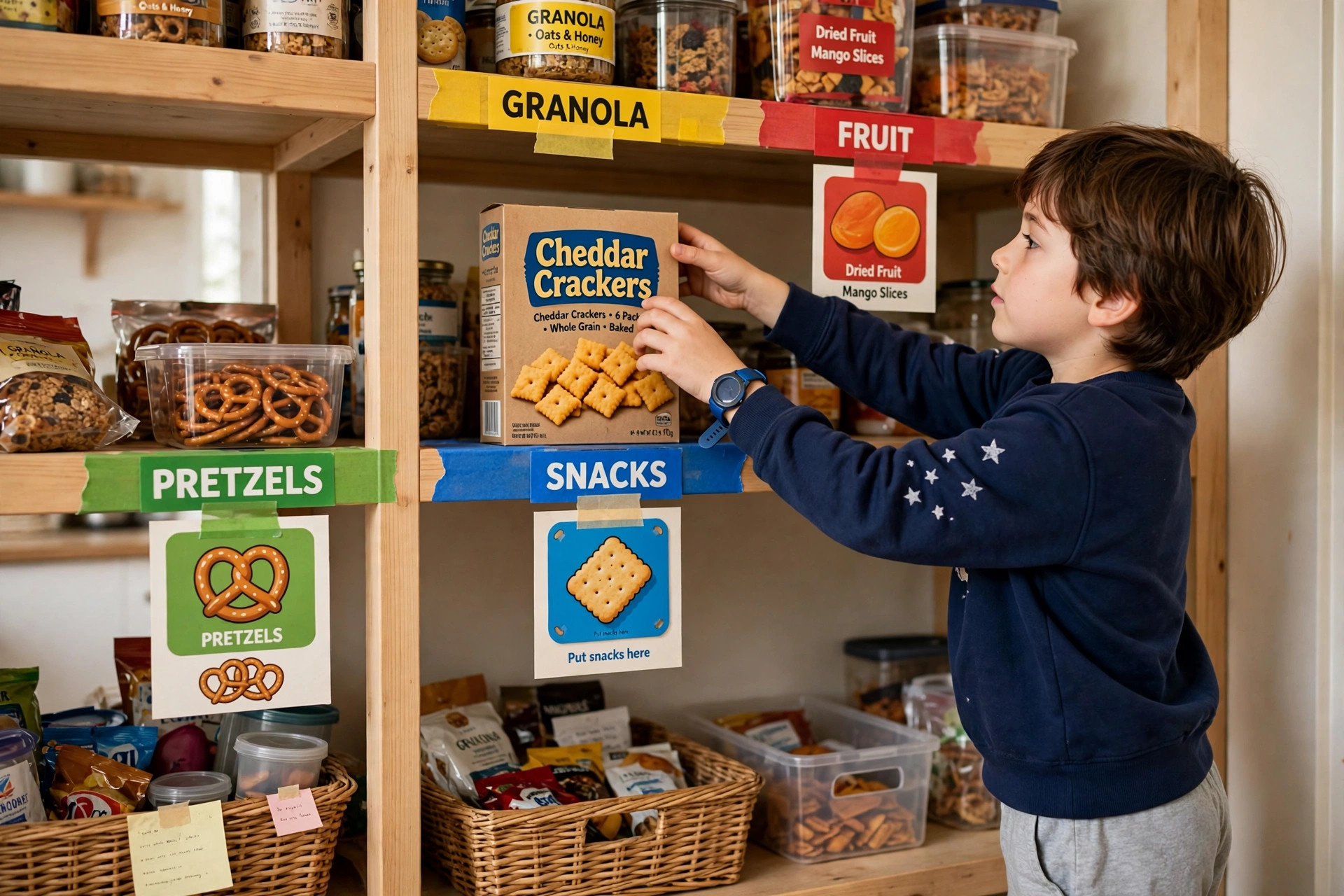
A label system only you understand is a label system that fails the moment you are not there, because the kids put the pasta in the rice jar, the partner puts the snacks in the baking basket, and the shelf that was tidy on Monday is a mess by Friday. Make labels the whole family can follow — the system kids can put away — so the labels use pictures as well as words for the youngest, the zones are colour-coded, and the basket that holds the snacks is the basket a child can find. Put a picture label on the snack basket and the cereal shelf, because the picture that shows the snack is the picture a child can follow without reading. Show everyone the system once, and write the colour code on the inside of the pantry door, because the system that is shown is the system that gets used. One picture, one colour, and the whole family puts things back right.
19. Labels for the "use first" shelf — the shelf that stops food going off
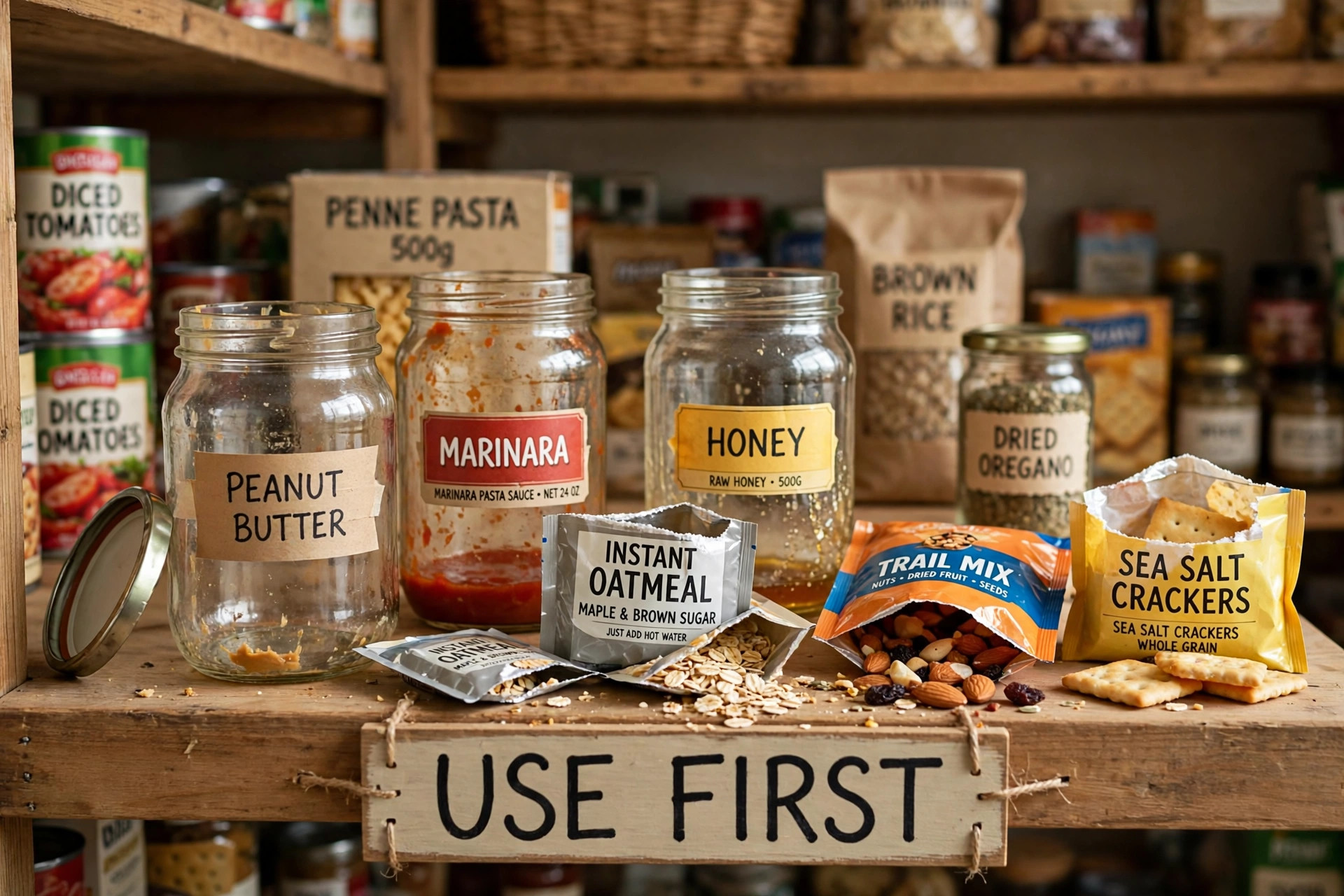
Food goes off because the new jar goes in front of the old jar, because the shopping is put away in a hurry, the new rice goes in front of the old rice, and the jar at the back is the jar that goes stale. Label a "use first" shelf — the shelf that stops food going off — so one shelf, or one section of a shelf, carries a clear label saying USE FIRST, and every jar that is nearly empty or nearly out of date lives there. Put the new shopping behind the old stock, every time, because the jar at the front is the jar that gets used first, and the shelf that is labelled USE FIRST is the shelf that gets checked first. Move the jar to the USE FIRST shelf the moment you open it, because the jar that is open is the jar that should be finished first, and the food that is used first is the food that never goes off. One labelled shelf, and the food stops going stale at the back.
20. One spare set of blank labels — the labels ready for the next shop
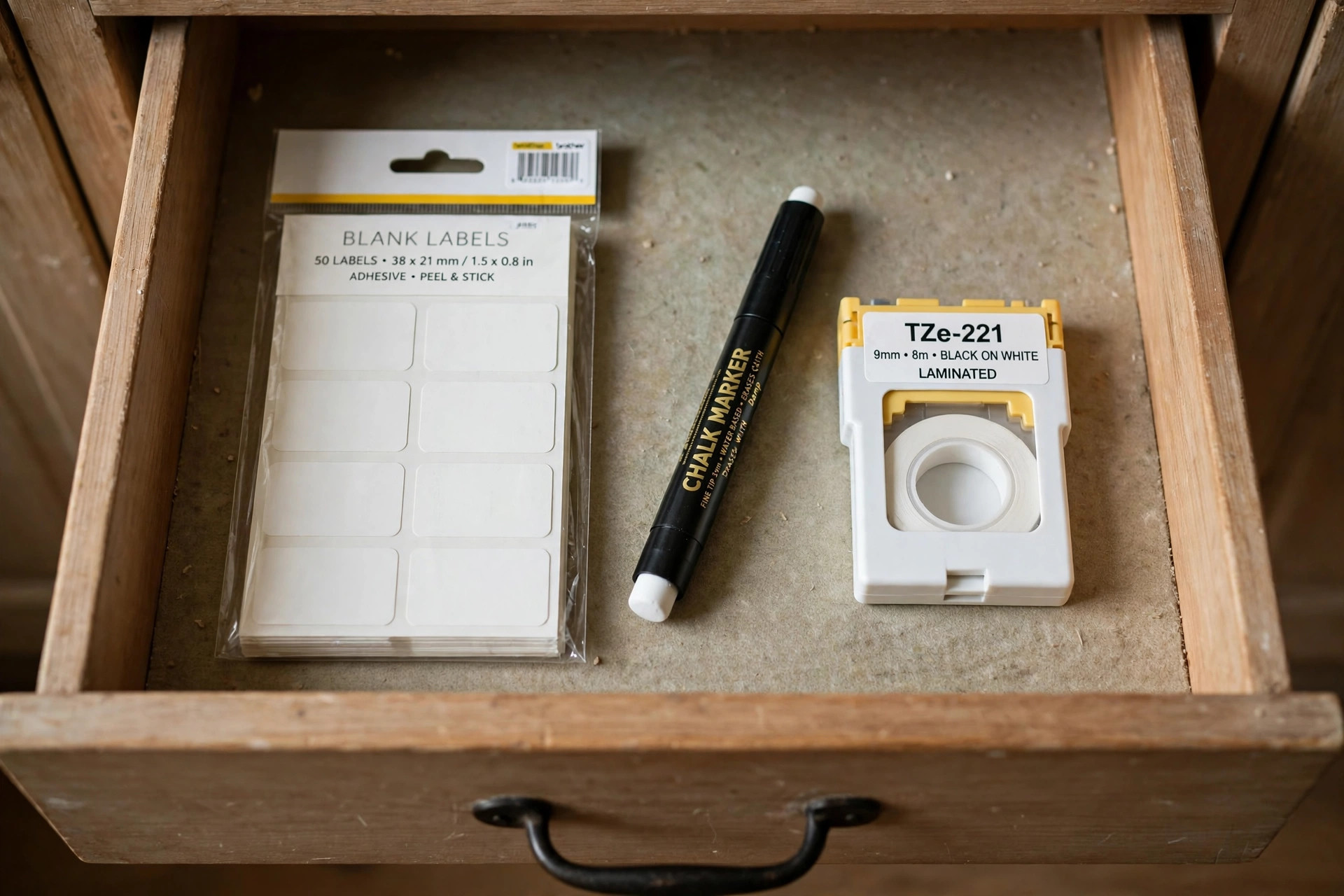
A labelling session stops the moment you run out of labels, because the new jars are on the counter, the labels are finished, and the shelf that was nearly done stays half-labelled until the next order arrives. Keep one spare set of blank labels — the labels ready for the next shop — so the drawer always holds a full set of blanks, the marker always has ink, and the jar that arrives on Tuesday is labelled on Tuesday. Buy the spares when you buy the set, not when you run out, because the spare that is bought early is the spare that is there when you need it. Keep the blanks in the same drawer as the marker, because the label that is next to the marker is the label that gets used, and the pantry that is always ready to label is the pantry that never goes half-labelled. One spare set, and the labelling never stops halfway.
Which pantry label idea fits which situation?
| Situation | Best first move | Budget | Tools needed |
|---|---|---|---|
| Pantry looks messy even when tidy | One matching label set (idea 1) | Low | Labels |
| Contents change all the time | Chalkboard labels (idea 2) | Low | Chalk markers |
| Labels are hard to read | Clear printed labels (idea 3) | Low | Printer |
| Handwriting looks scruffy | A label maker (idea 4) | Low | Label maker |
| Can't find the right zone | Colour-coded labels (idea 5) | Free | Coloured labels |
| Food goes off unnoticed | Name + date on every jar (idea 6) | Free | Pen |
| Decanted goods all look alike | Labels for dry goods (idea 8) | Free | Labels |
| Baskets hide their contents | Labels on baskets and bins (idea 12) | Low | Labels |
| Spices all smell the same | Labels on spice jars (idea 15) | Low | Small labels |
| Labels only on the lids | Label at eye level (idea 16) | Free | Labels |
| Family puts things back wrong | Labels the family can follow (idea 18) | Free | None |
| Labels go stale and lie | A label refresh every season (idea 17) | Free | None |
You do not need all 20 ideas. You need the three that solve your pantry mess — usually the one matching set that makes the shelf look calm, the name and date on every jar that stops the waste, and the labels at eye level that you can actually read. Start with the one matching set, do it this weekend before the next shop, and label the jars you open most. Do that and the next meal will start with reaching, not with opening and sniffing, the flour will be the flour, and the shelf will look like a shop.
Save this post for the next pantry refresh, and if the shelves around the labels need the same treatment, read 25 Pantry Organization Ideas for 2026 next — it is Post 08, the pantry the labels live in — and 20 Kitchen Cabinet Organization Ideas for 2026, Post 02, for the cabinets that hold the pantry. This is the twenty-second post of the new Organization by problem run — Posts 56 to 80, one problem at a time — and the run keeps going with the charging station next. The photos themselves get their own deep dive in Photo Organization, where the memories get the same label treatment as the jars.
Publish date assigned at publishing time. Updated as new pantry label finds are tested.
Frequently asked questions
What is the best way to label pantry containers?
Use one matching set of labels across the whole pantry, so every jar, bin and basket carries the same style, the same font and the same size family. Write the contents in one or two words, add the date underneath, and stick the label on the front of the container at eye level — not on the lid. Chalkboard labels are the best choice if the contents change often, because they wipe clean and take a new name in ten seconds, and clear printed labels are the best choice if the contents stay the same, because they are the most readable from two steps back.
How do I make pantry labels that stay on?
Clean the jar or bin before you stick the label on, because dust and grease are what make labels peel. Use labels made for the kitchen — vinyl or laminated labels that survive steam, splashes and wiping — and press them on firmly, smoothing out any air bubbles. For jars that go in the dishwasher, use waterproof labels and stick them on the front of the jar, not the lid, because the lid is where the label gets handled most. Chalkboard labels hold best on smooth glass and plastic; if a label keeps peeling, switch to a clip-on label holder on the basket or a tie-on tag on the handle.
Should I label the front of the jar or the lid?
Label the front of the jar, at eye level, every time. The front is where your eye lands when you open the pantry door, so the jar you want is the jar you can read without picking it up. A label on the lid can only be read from above, which means bending down or pulling the jar out, and the lid is the part of the jar that gets handled, washed and swapped most — so a lid label peels first and lies first. Keep the lids plain, put the name and date on the front, and use the same spot on every jar so your eye always knows where to look.