22 Drop Zone Organization Ideas for 2026
The front door is where the day falls apart — the coat that lands on the chair, the shoes that pile by the mat, the school bag dropped where it was carried in, and the keys that vanish into a pocket the moment you walk through. A house without a drop zone is a house where the entryway does the job of a closet, a post office and a lost-property box, all at once, and it loses at all three.
These 22 drop zone organization ideas are grab-and-go entryway systems for busy families: start by measuring the spot and giving every person one hook, one cubby and one tray, add a basket packed the night before, and finish with a five-minute reset at the door — so the entryway stays clear and mornings run on time.
Every idea below works in a real entryway, from a hallway barely wide enough for a bench to a proper mudroom with a wall to spare. The small-space thinking is the same as in 28 Small Apartment Storage Ideas for 2026, where a tiny flat learns to hold a whole household — and the entryway itself borrows its storage from 22 Entryway Storage Ideas for 2026, so the first thing you see when you come home is the first thing that gets put away. Pick three ideas that fit your front door, start with the tape measure, and build from there.
Start with the spot: measure, sort, zone
1. Measure the entryway before you buy a single hook — the tape measure is the first organizer
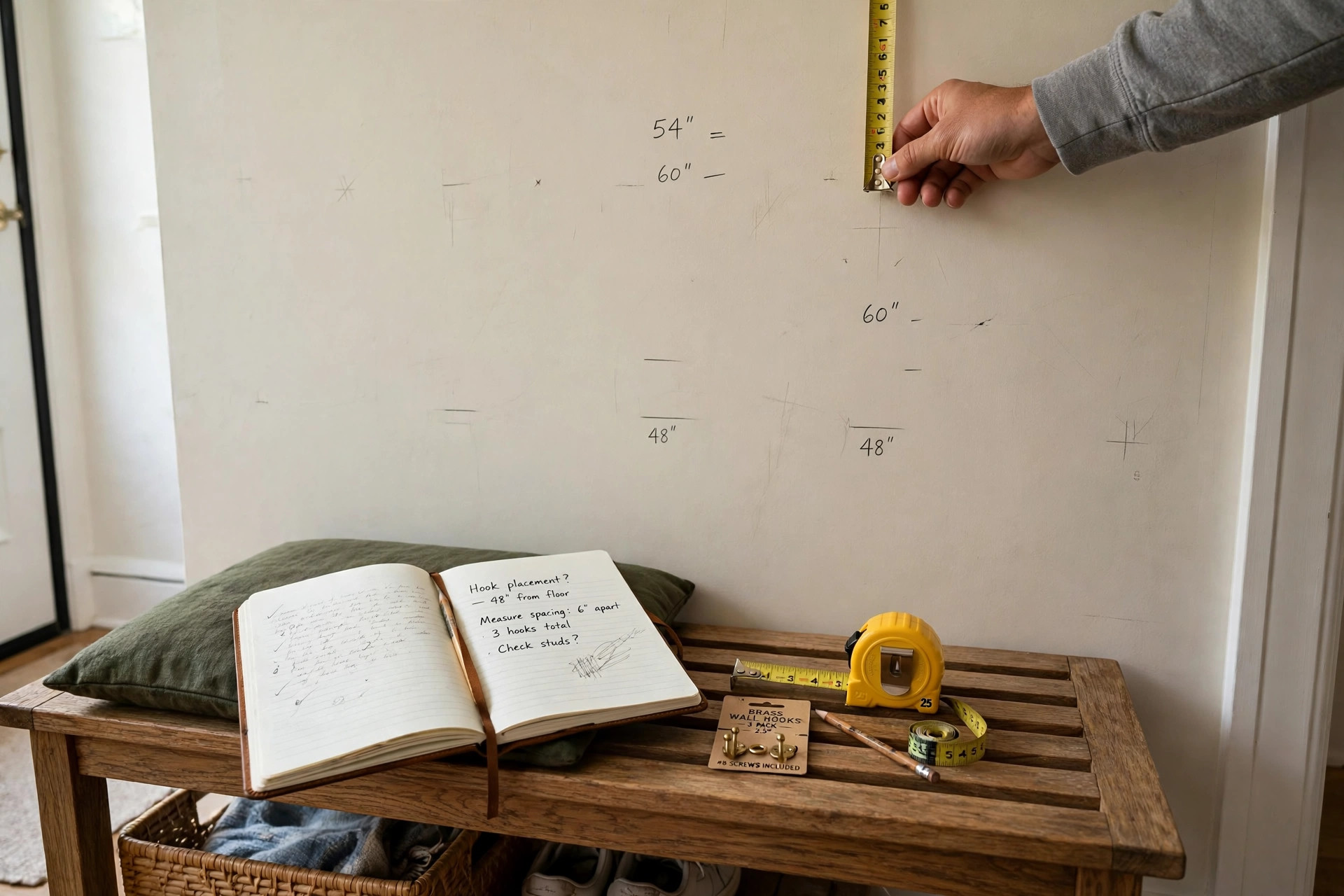
A hook that does not fit is a hook in the way, because the wall by the front door is never the size you guessed and the bench you bought on a guess is the bench that blocks the door from opening. Measure the entryway before you buy a single hook — the tape measure is the first organizer — so the hook rail you bring home fits the wall first time and stays there. Measure the width of the wall, the depth from the door swing to the opposite wall, and the height your tallest coat needs, and write the numbers in a notebook, because the numbers in the notebook are the numbers that stop you buying the wrong size twice. Measure the awkward spots too, the gap beside the radiator and the wall behind the door, because the awkward spot is often the spot with the most room. One afternoon with a tape measure, and every hook after it fits.
2. Sort everything into keep by the door, move to the closet, leave the house — the drop zone only holds what leaves with you
An entryway packed with "just in case" is an entryway with no room for the things you actually carry, because the spare scarves, the outgrown wellies and the coats nobody has worn since last winter are the things that fill the hooks first. Sort everything into keep by the door, move to the closet, leave the house — the drop zone only holds what leaves with you — so the hooks hold the day, not the clutter. Lay it all out on the hall floor, and be honest about what went out last week and what never left its hook, because the coat that never left its hook is the coat that belongs in the closet. Keep what you grab every day, move the spares to the closet, and leave behind anything that belongs in another room. A ruthless sort, and the entryway breathes again.
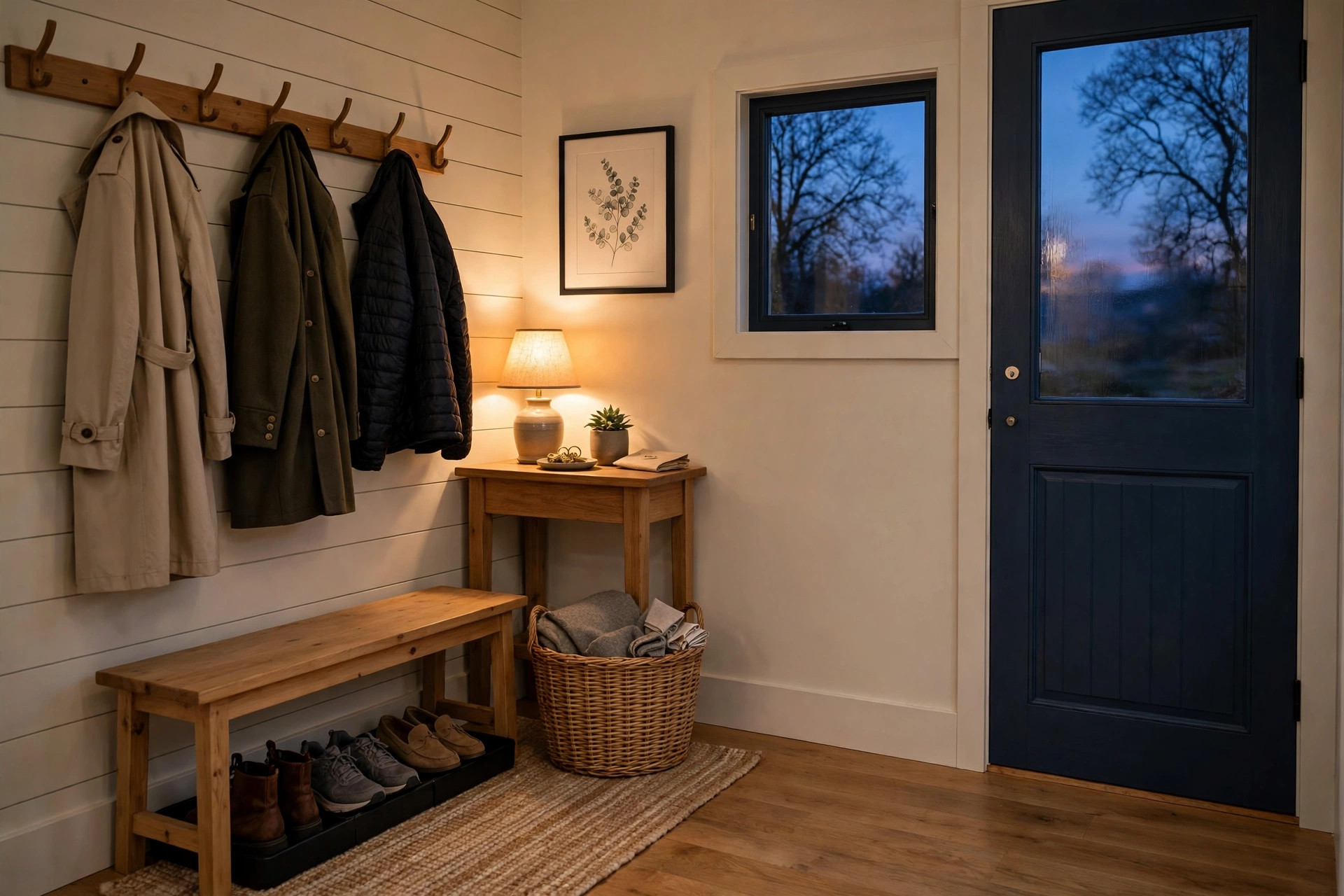
3. Zone the drop zone: coats, shoes, bags, keys — one zone, one job
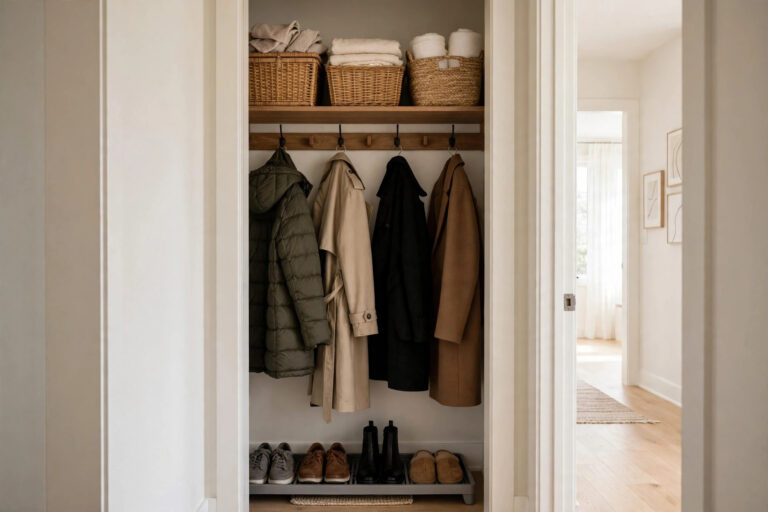
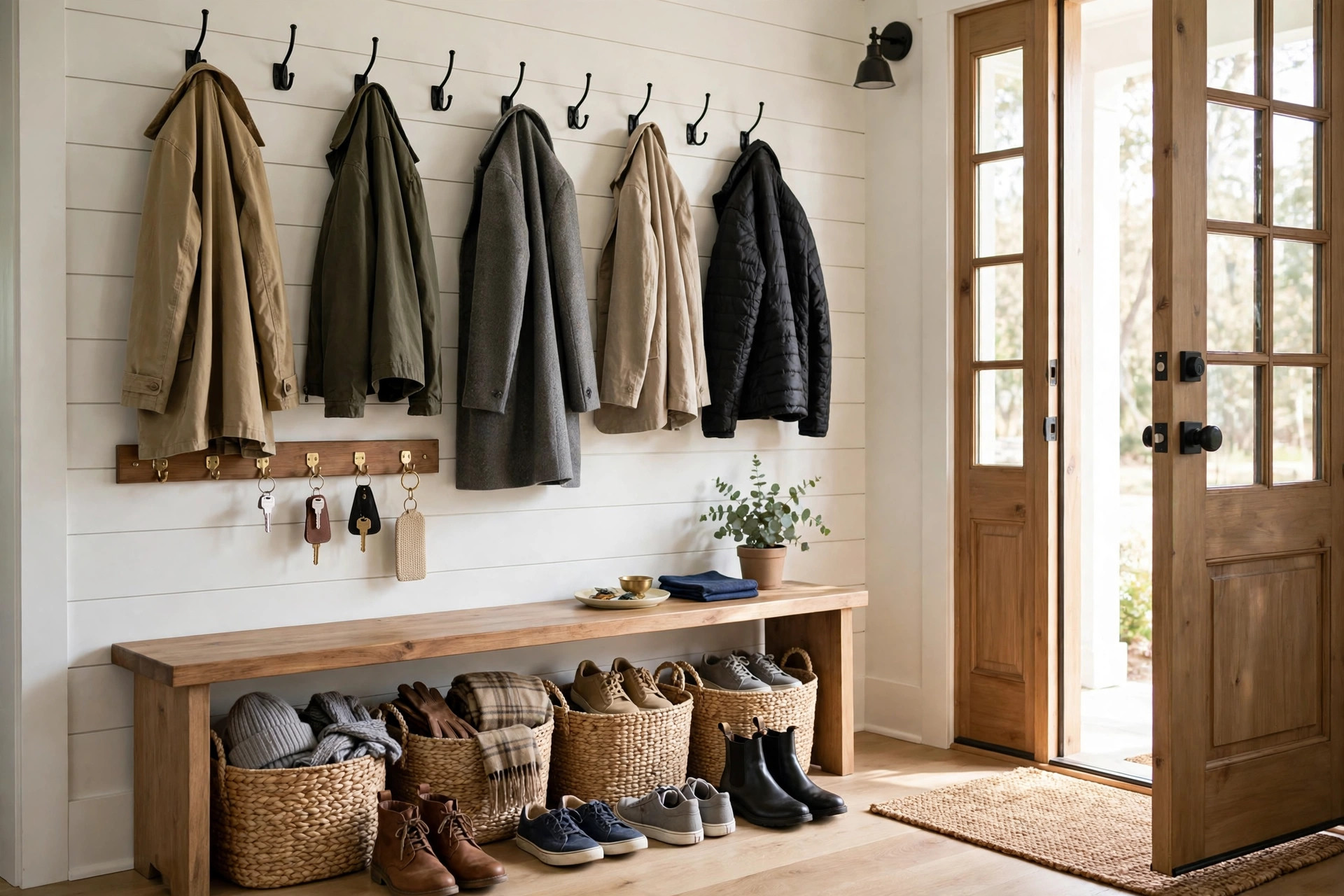
A drop zone where everything lives everywhere is a drop zone where nothing is findable, because the keys are in the coat pocket, the school bag is under the shoes, and the dog lead is somewhere behind the bench. Zone the drop zone — coats, shoes, bags, keys — one zone, one job — so every thing lives where its job happens and your hand finds it without thinking. Coats live on the hooks, shoes live in the tray, bags live on the rail, and keys live on the key rail by the door, because the zone that matches the job is the zone that stays tidy. Tell everyone the zones on the first morning, because the zones everyone knows are the zones everyone keeps. Four zones, and the entryway stops being a search.
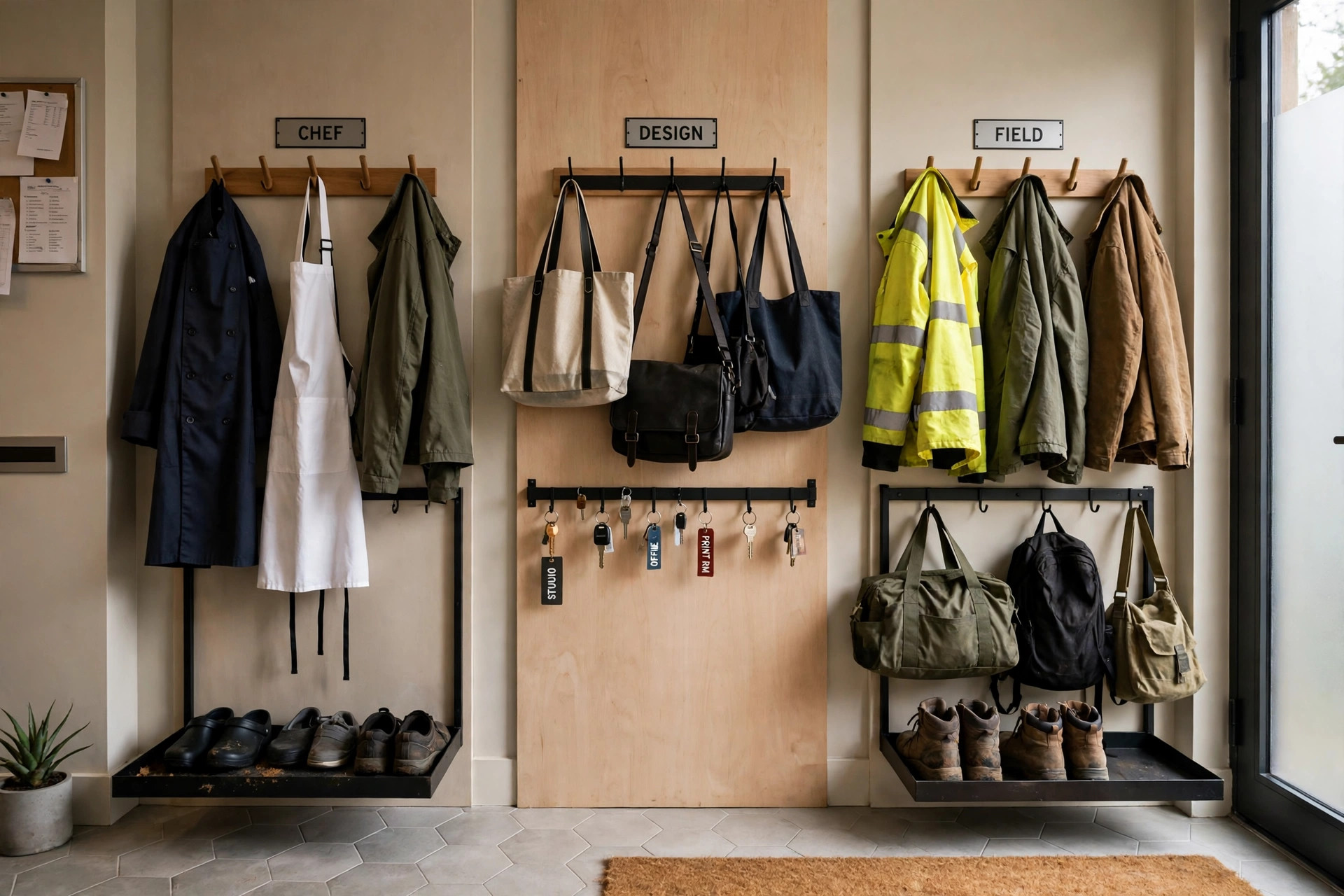
4. A hook, a cubby and a tray per person — one person, one landing spot, no mixing
One shared row of hooks for the whole family is a row nobody owns, because the coats mix, the shoes vanish, and the person looking for their own scarf is the person digging through everyone else's. Give every person one hook, one cubby and one tray — one person, one landing spot, no mixing — so each person owns one spot and the spot is their whole drop zone for the day. Label the hook with a name, not a category, because the name on the hook is the name that stops the mixing, and keep the tray where its owner walks in, because the tray by the door is the tray that gets used. One spot per person, and the morning hunt for the missing shoe ends.
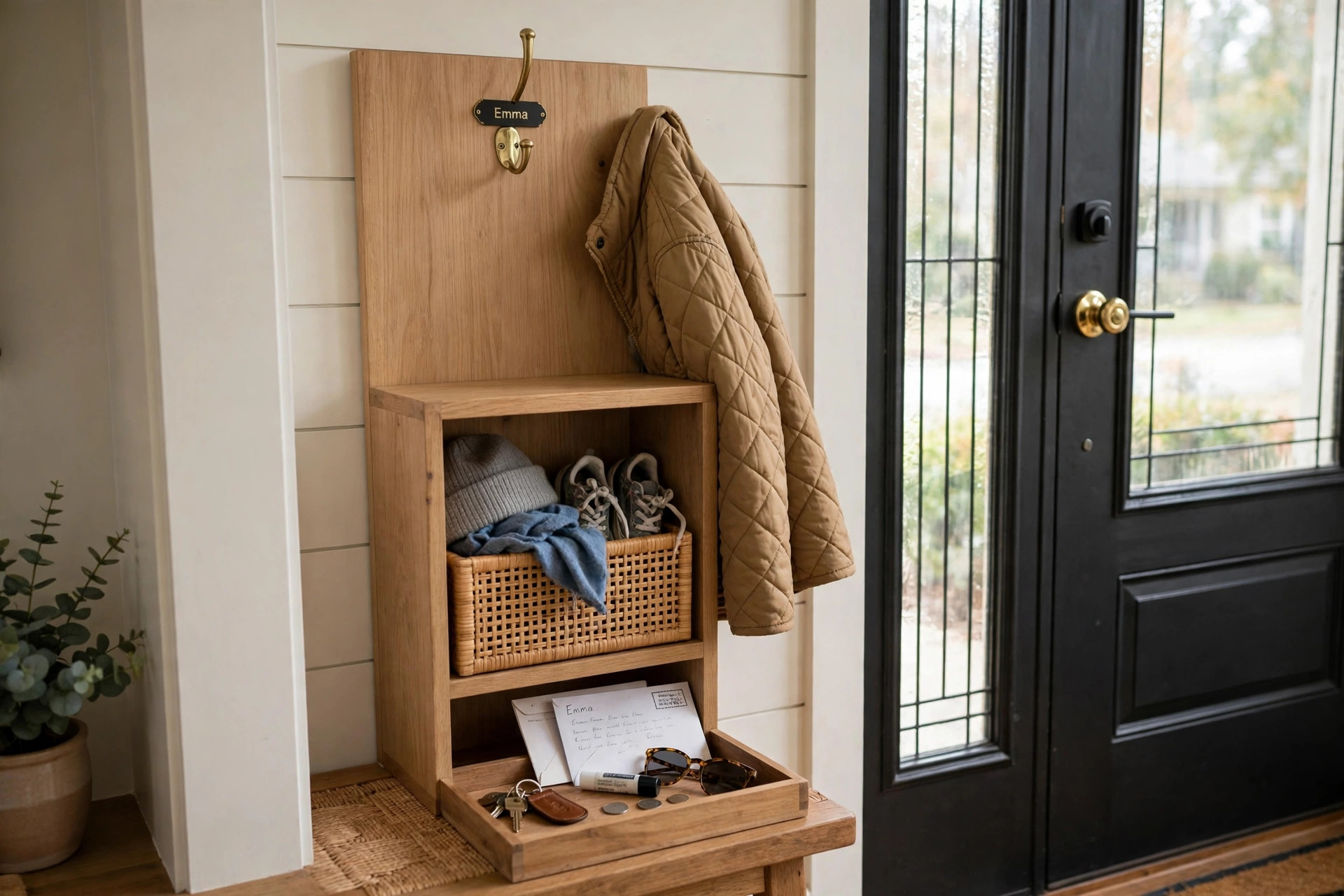
5. A "grab-and-go" basket — tomorrow's things packed tonight, ready before the morning rush
The morning rush is the worst time to be packing, because everyone is half-dressed, the clock is running, and the lunchbox is still in the fridge while the school bag is still empty. Pack a "grab-and-go" basket — tomorrow's things packed tonight, ready before the morning rush — so the first ten minutes of the morning are walking out, not hunting. Put the school bag, the lunchbox, the keys and the permission slip in the basket the night before, and keep the basket by the door, not buried in the hall cupboard, because the basket by the door is the basket you can grab in the dark. One basket, packed last thing and grabbed first thing, and the morning feels calm.
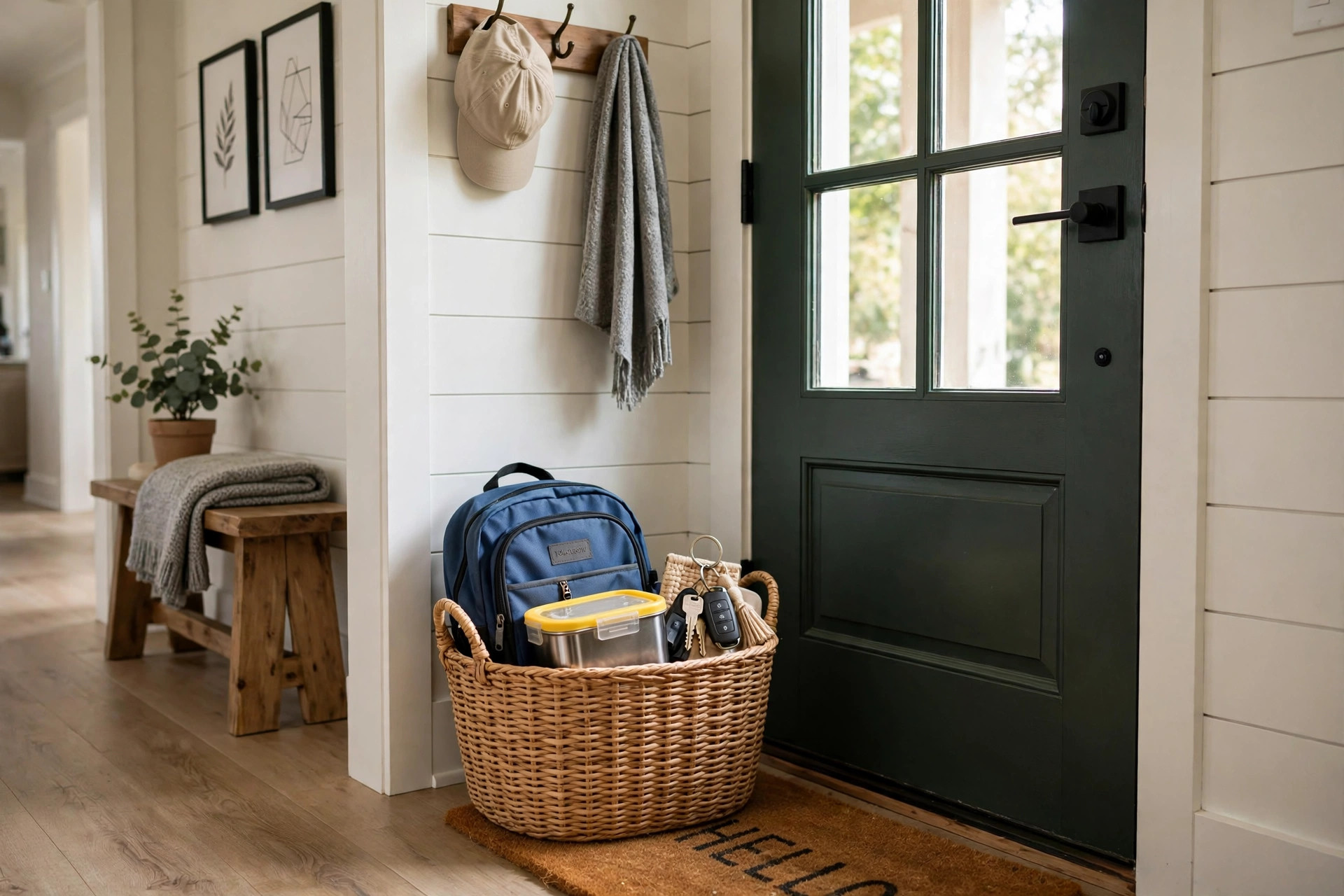
Coats, shoes and bags in a small space
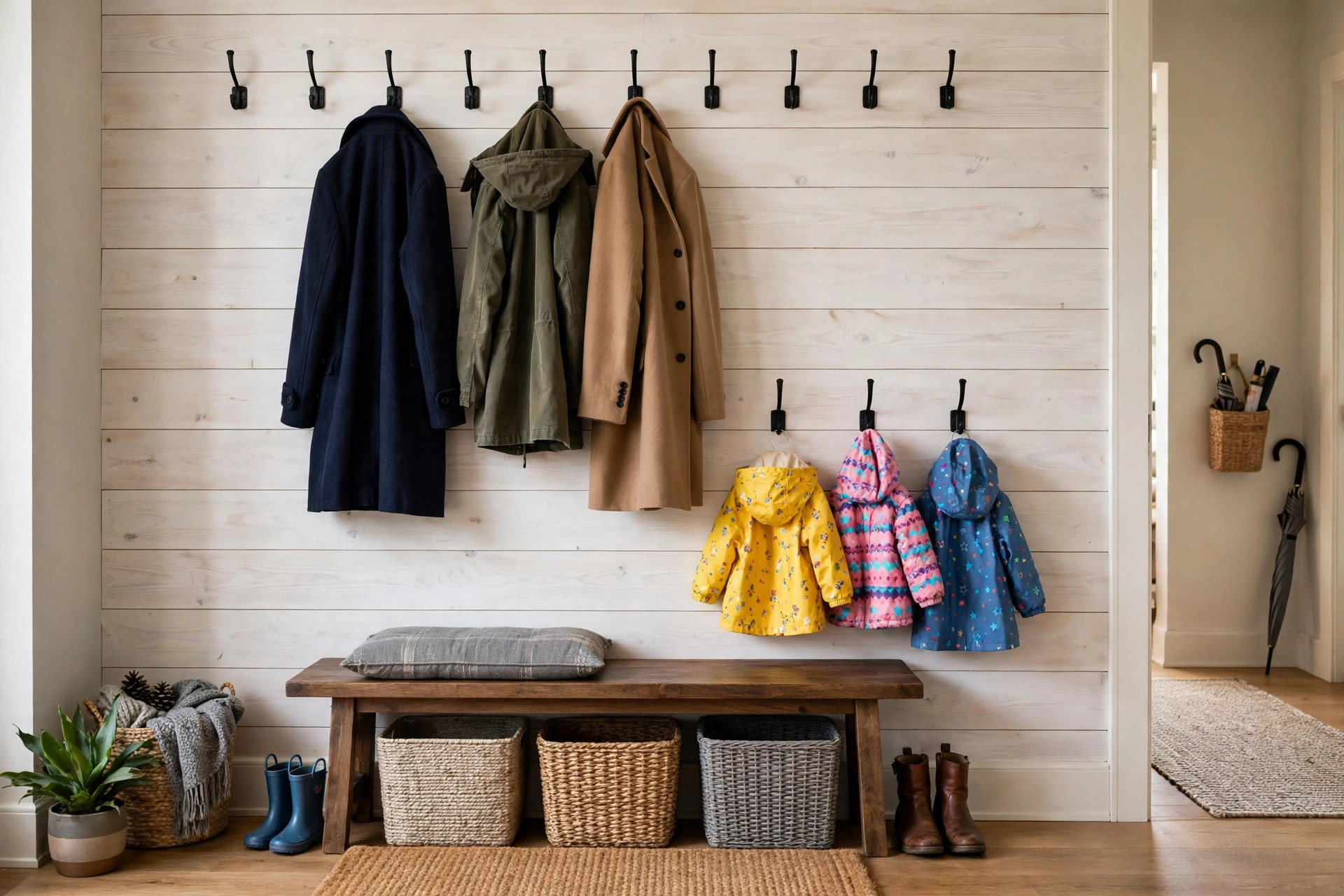
6. Hooks at kid height and adult height — coats hung where their owners can reach them
Hooks at one height serve one person, because the coat hung too high is the coat that lands on the floor, and the coat on the floor is the coat that gets stepped on. Fit hooks at kid height and adult height — coats hung where their owners can reach them — so every coat gets hung by the person who wears it, not dropped by the person who cannot reach. Put the children's hooks at shoulder height for a six-year-old, the adults' hooks above them, and leave a gap between the rows so the long coats do not cover the short ones, because the hook that is reachable is the hook that gets used. A row for the kids, a row for the grown-ups, and the floor stays clear of coats.
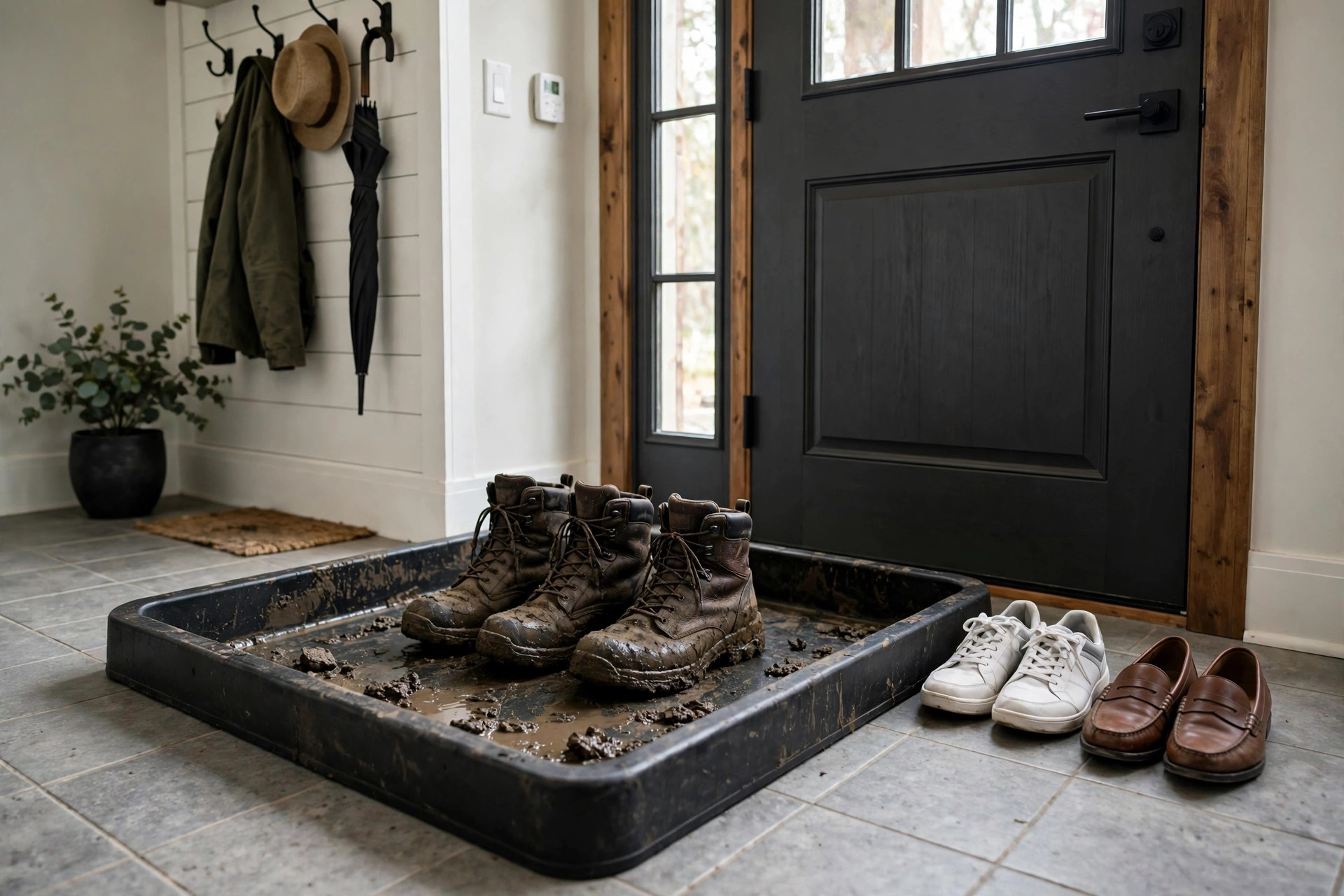
7. A shoe tray with a lip — muddy shoes contained, the floor stays clean
Shoes loose by the door are shoes all over the hall, because the muddy boots lean on the trainers, the trainers lean on the wellies, and the first rainy day is the day the mud walks through the house. Use a shoe tray with a lip — muddy shoes contained, the floor stays clean — so every pair stands inside the tray and the mud stays where it landed. Pick a tray with a raised edge tall enough to hold a puddle, keep it just inside the door, and empty it once a week, because the tray that empties often is the tray that never overflows. The shoe tray borrows its thinking from 24 Shoe Storage Ideas for 2026, where the same contained-tray rule keeps a whole shoe collection tidy. A tray with a lip, and the hall floor stays clean. (Check on Amazon for a boot tray with a raised lip, sized for two pairs of adult shoes.)
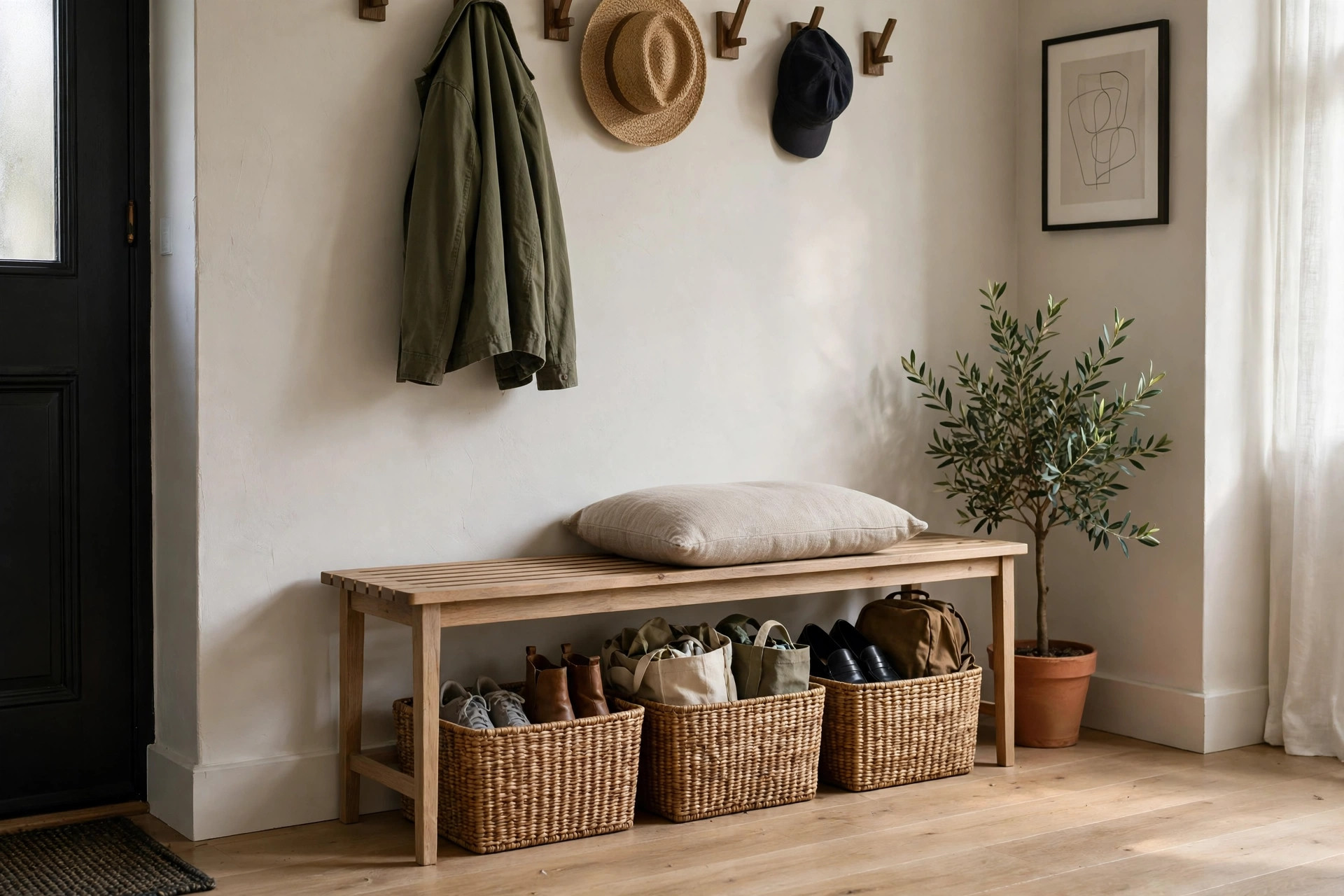
8. A slim bench with storage underneath — sit, stash, go
An entryway without a seat is an entryway where shoes go on standing up, because the person balancing on one foot is the person who drops the other shoe, and the shoe that drops is the shoe that stays where it landed. Put in a slim bench with storage underneath — sit, stash, go — so there is a place to sit while shoes go on and a place to stash them when they come off. Keep baskets under the bench for the shoes, the dog lead and the spare umbrella, and keep the bench slim enough that the door still opens past it, because the bench that blocks the door is the bench that gets removed. Sit, stash, go, and the entryway works for the whole family.
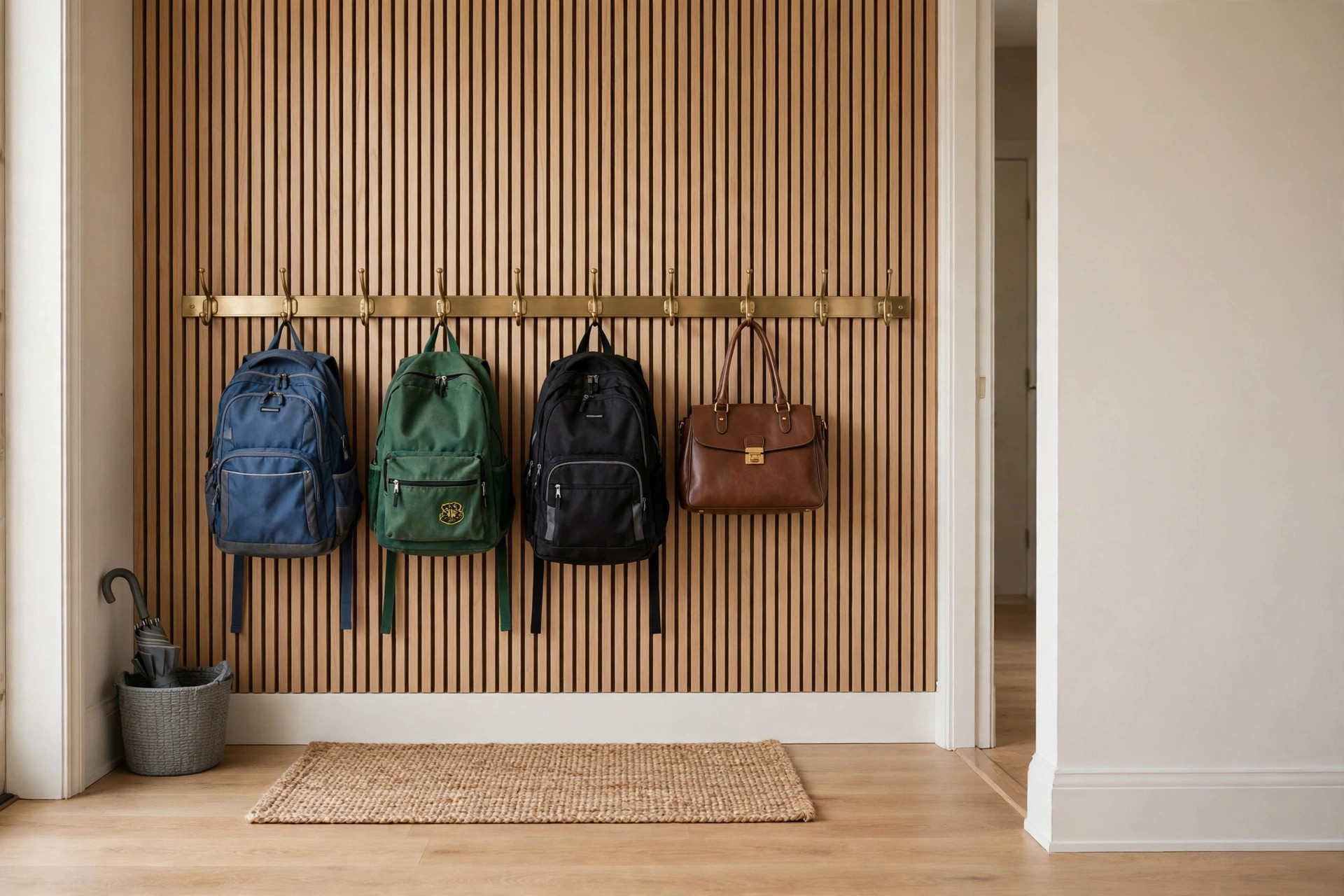
9. A wall-mounted bag rail — school bags and handbags off the floor
Bags on the floor are bags underfoot, because the school bag is by the mat, the handbag is on the stairs, and the gym bag is somewhere behind the door. Hang a wall-mounted bag rail — school bags and handbags off the floor — so every bag has a hook and the floor is free to walk on. Screw a sturdy rail to the wall at shoulder height, hang one bag per hook, and keep the heaviest bag nearest the studs, because the rail that holds is the rail that stays on the wall. One rail, and the bags stop being trip hazards.
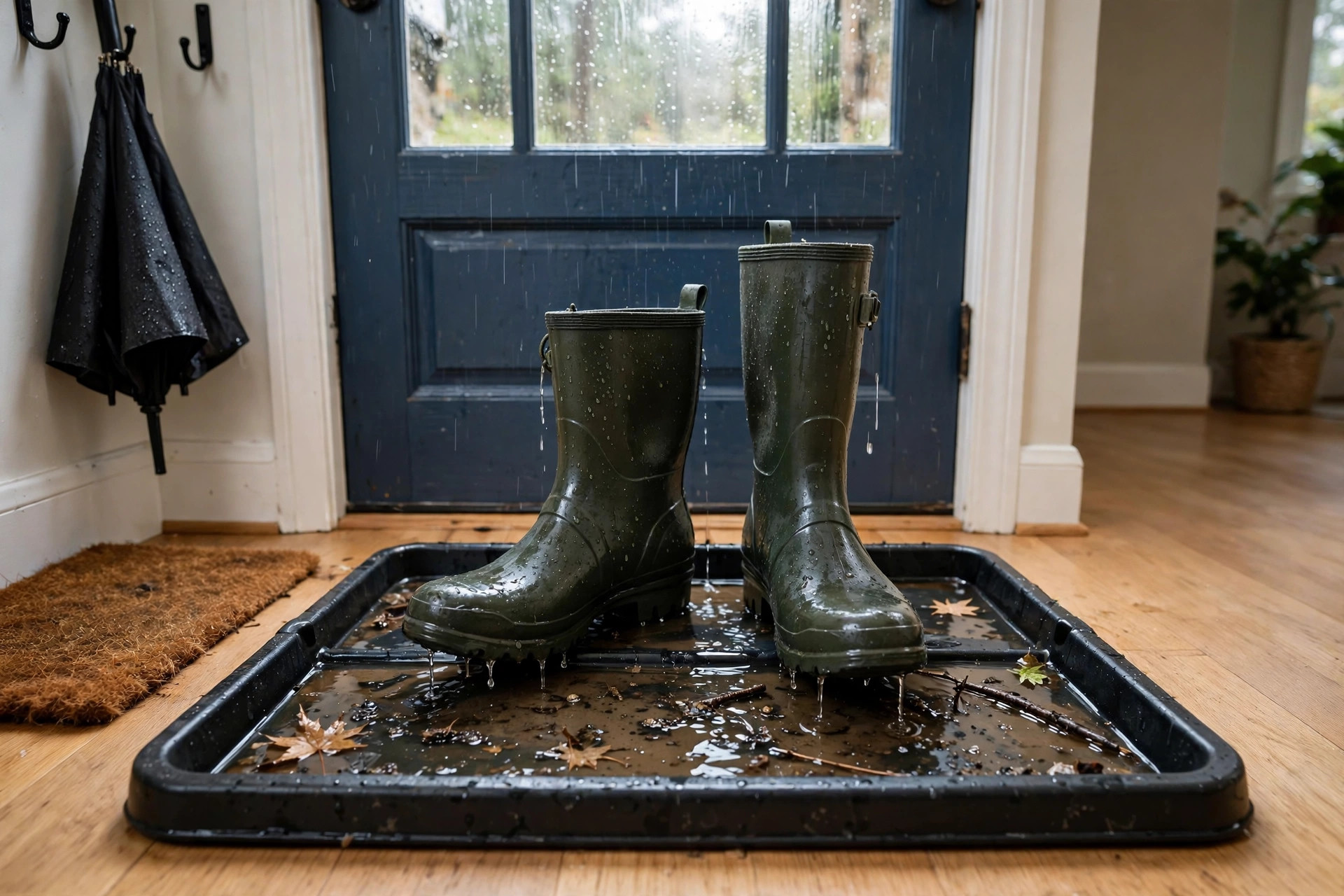
10. A boot tray by the door for wet days — rain stays in the tray, not on the floor
Wet boots by the door are wet floors through the house, because the rain that drips off the boots is the rain that walks to the kitchen, and the kitchen floor is the floor that shows every footprint. Keep a boot tray by the door for wet days — rain stays in the tray, not on the floor — so the wettest shoes never leave the tray until they are dry. Put the tray on the mat side of the door, line the boots up with the toes facing out, and tip the tray out after the rain stops, because the tray that tips out is the tray that does not smell. A boot tray for wet days, and the rain stops at the door.
Keys, post and the small stuff that wanders
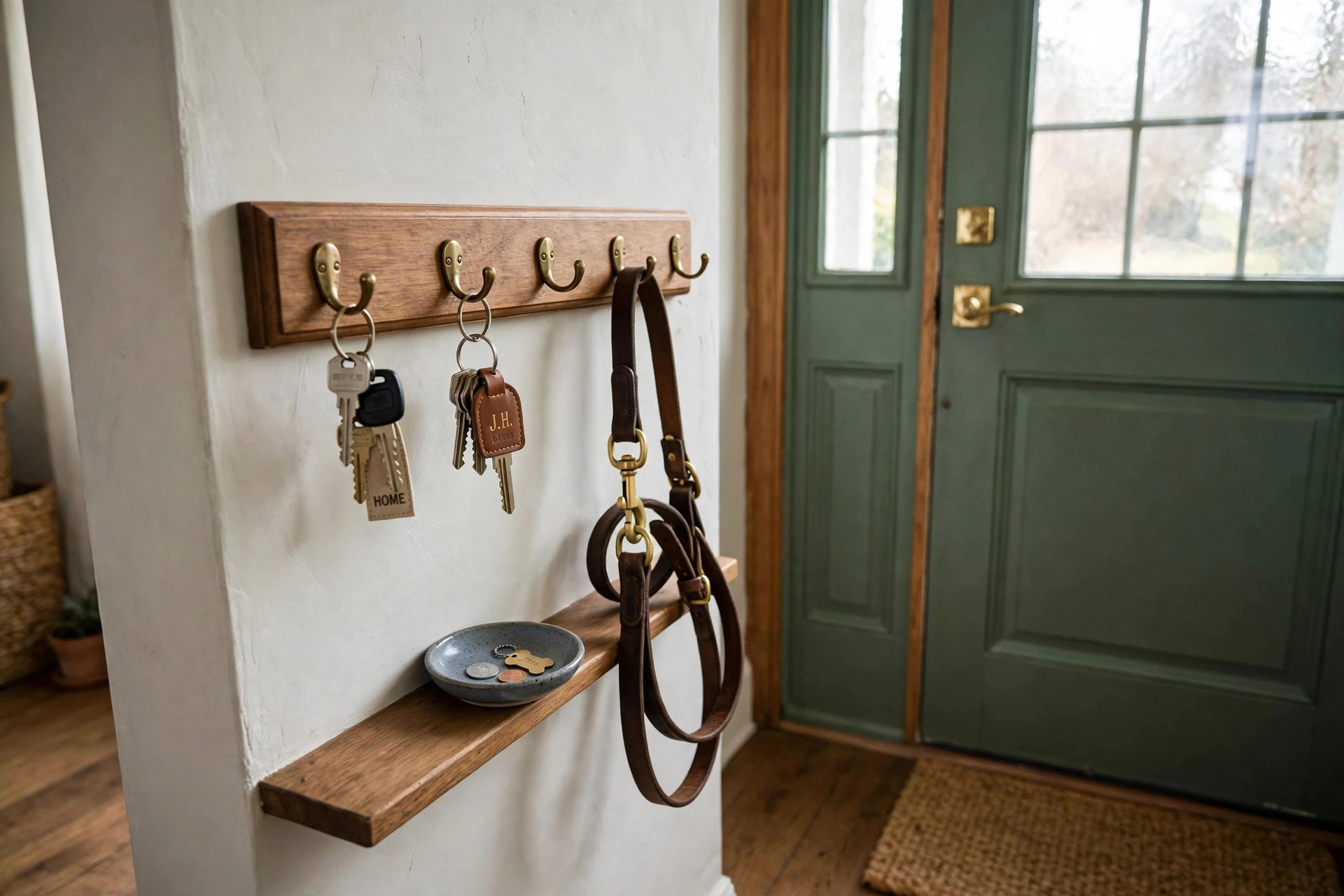
11. A key rail by the door — keys hung the moment you walk in
Keys loose in a pocket are keys lost in the morning, because the keys that went into the coat pocket are the keys that stayed in the coat pocket, and the coat that went into the closet is the coat that took the keys with it. Hang a key rail by the door — keys hung the moment you walk in — so the keys live in one place and the morning starts with the keys already in your hand. Screw a small rail with three or four hooks beside the door handle, hang the house keys, the car keys and the spare set in the same order every day, and make hanging the keys the last thing you do when you come in, because the habit that happens at the door is the habit that sticks. A key rail by the door, and the morning hunt for the keys ends.
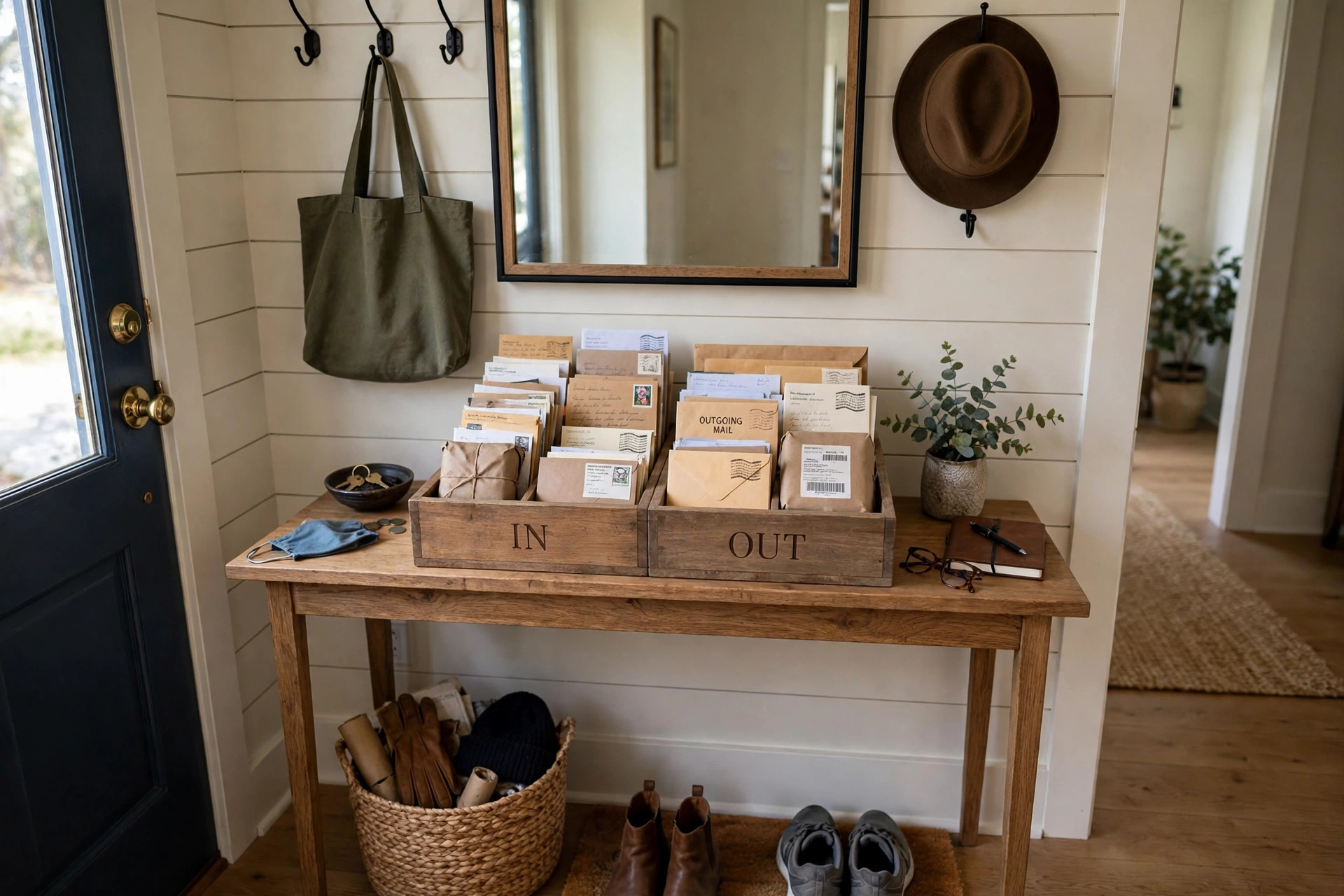
12. A post tray with "in" and "out" — letters sorted before they pile up
Post with no home is post on every surface, because the letter that lands on the hall table is the letter that slides under the phone, and the bill that slides under the phone is the bill that gets found a month late. Use a post tray with "in" and "out" — letters sorted before they pile up — so every letter has a side and nothing waits in a pile. Put the incoming post in the "in" side the moment it arrives, move the outgoing letters to the "out" side with the stamp already on, and empty the "in" side every evening, because the tray that empties daily is the tray that never becomes a pile. Two sides, one tray, and the post stops wandering.
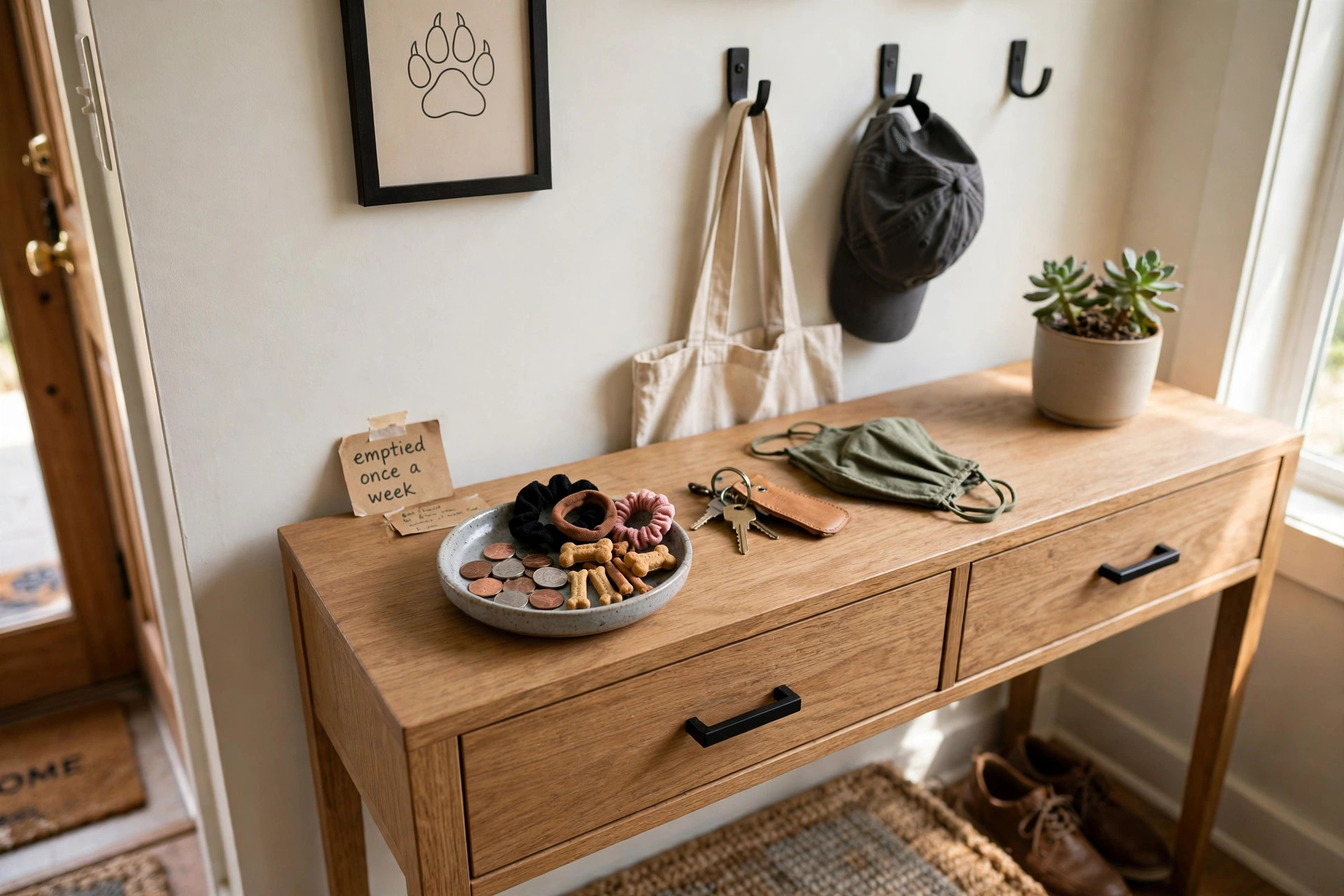
13. A small dish or tray for pockets — coins, hair ties and dog treats in one place
The small things from pockets are the small things that scatter, because the coins land on the console, the hair ties land on the stairs, and the dog treats land wherever the dog finds them first. Keep a small dish or tray for pockets — coins, hair ties and dog treats in one place — so everything that comes out of a pocket lands in the same spot. Put the dish on the console or the bench where hands naturally empty, and empty it once a week into the right rooms, because the dish that empties weekly is the dish that never overflows. One small dish, and the pocket clutter has a home.
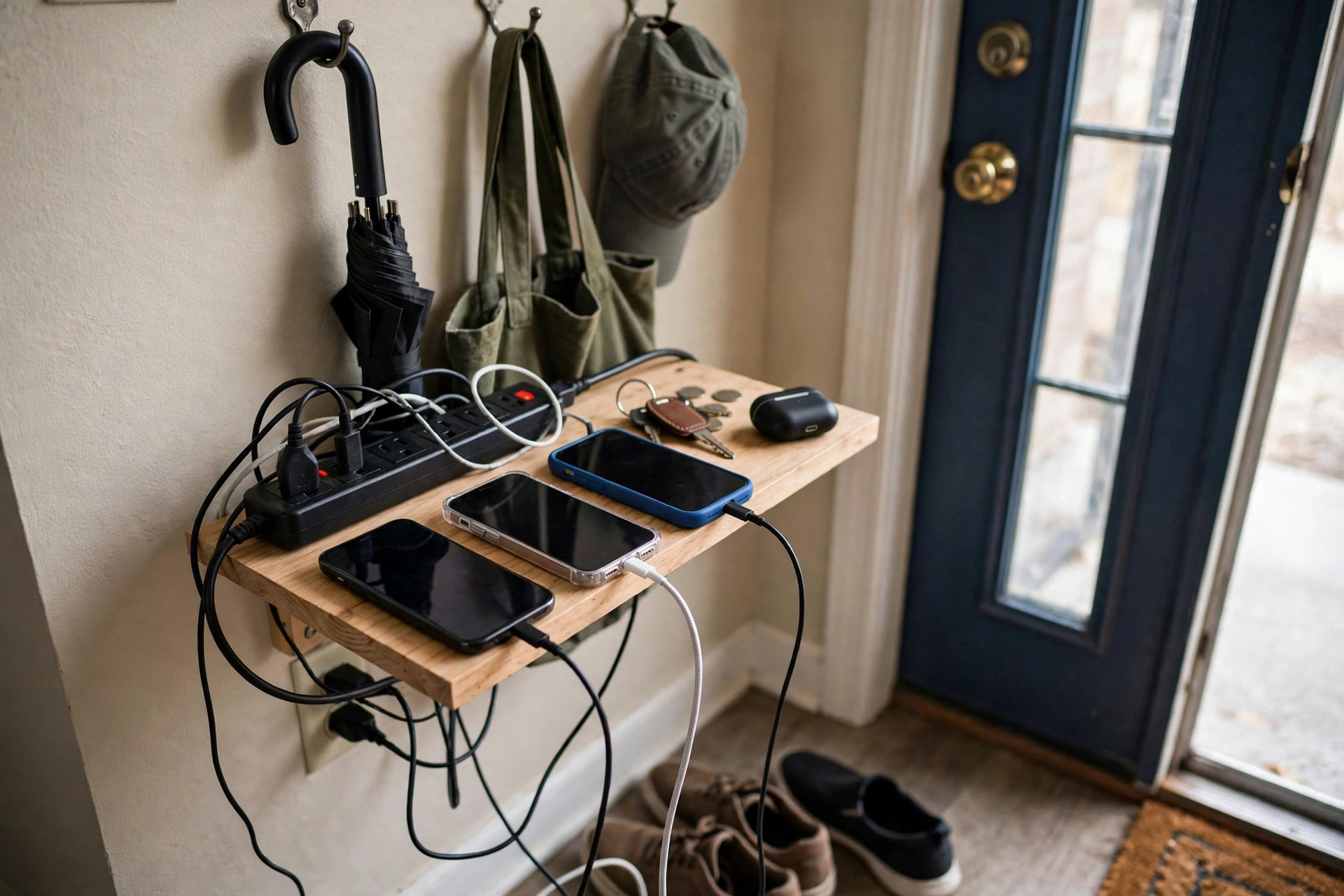
14. A charging spot by the door — phones charged where they are grabbed
A phone charging in the bedroom is a phone forgotten in the morning, because the phone that charged upstairs is the phone that stays upstairs, and the person who leaves without it is the person who turns back for it. Put a charging spot by the door — phones charged where they are grabbed — so the phone charges overnight in the place you pass on the way out. Fix a small shelf or a narrow console with a power strip and two or three cables, keep one cable per person, and plug the phone in the moment you come home, because the phone that charges by the door is the phone that leaves with you. A charging spot by the door, and the morning U-turn ends. (Check on Amazon for a small multi-cable charging station with short cables, sized for an entryway shelf.)
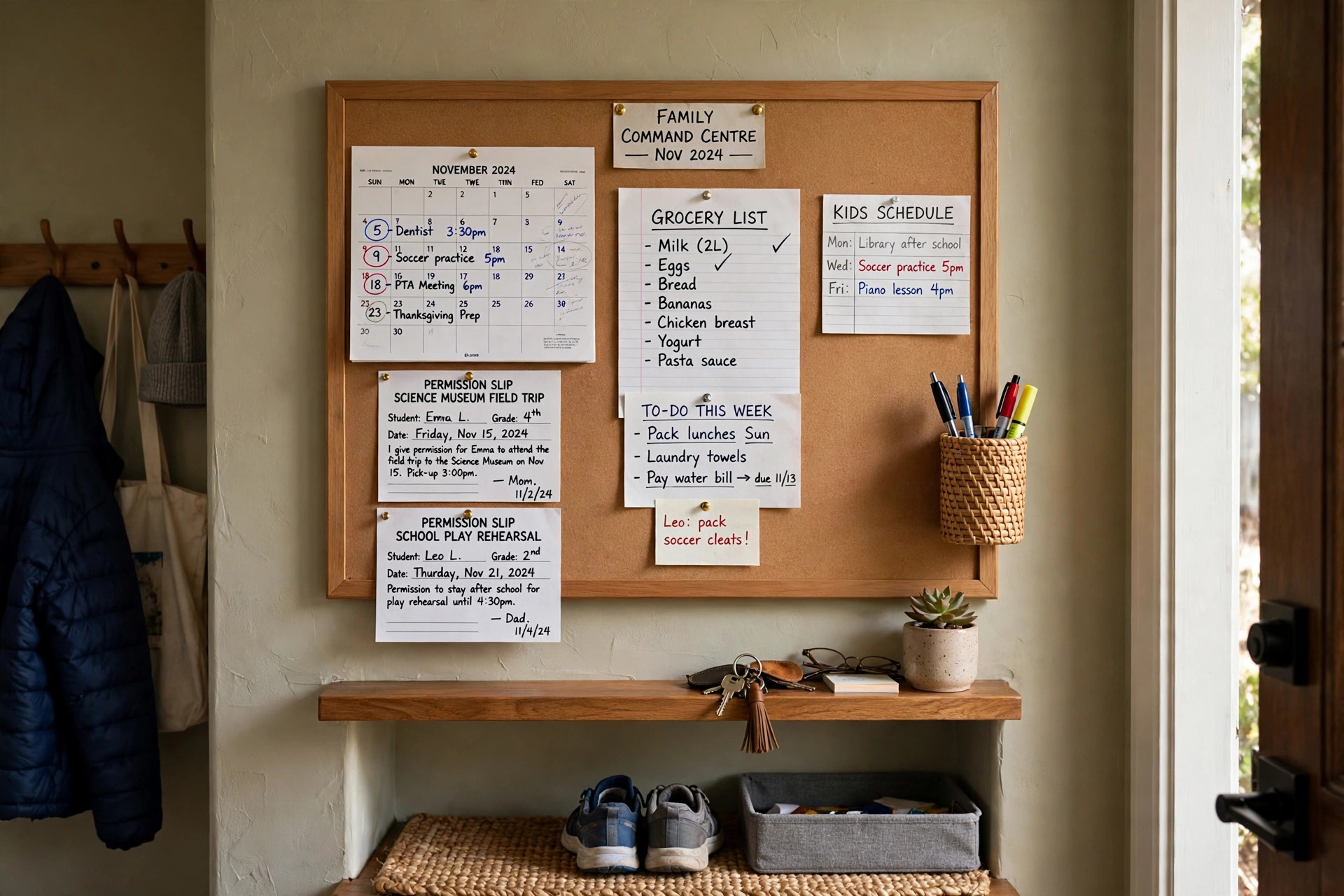
15. A command centre board — the week's calendar, permission slips and lists in one place
A family without a command centre is a family where the calendar lives in three places, because the school dates are on the fridge, the dentist is on a phone, and the permission slip is in the bottom of the school bag. Put up a command centre board — the week's calendar, permission slips and lists in one place — so everyone in the house looks at the same board and knows the same week. Pin the calendar at eye height, clip the permission slips beside it, and keep a shopping list and a pen on the board, because the board that holds the week is the board that stops the surprises. The school mornings the board serves are covered in 22 School Organization Ideas for 2026, where the same one-board rule keeps the whole school week on track. One board by the door, and the week stops being a surprise.
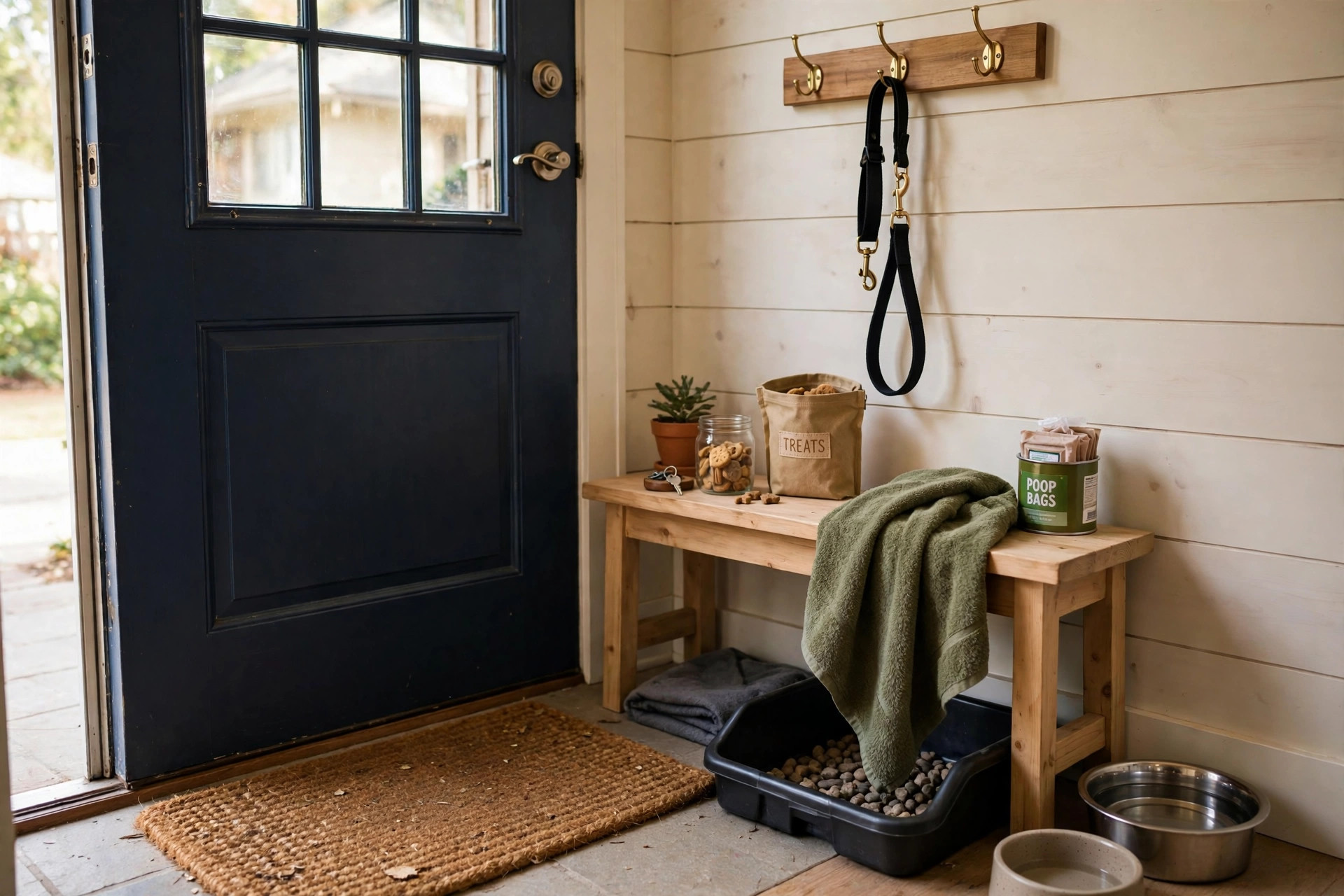
16. A pet station in the drop zone — lead, treats and towels by the door
A dog without a station is a dog whose things live everywhere, because the lead hangs on the stair rail, the treats live in the kitchen, and the muddy-paw towel is wherever it was last dropped. Build a pet station in the drop zone — lead, treats and towels by the door — so everything the dog needs is in the place the dog leaves from. Hang a hook for the lead, keep a jar of treats on the bench, and fold a towel over the boot tray for muddy paws, because the station by the door is the station that gets used on every walk. One hook, one jar, one towel, and the dog walk starts without a search.
Systems that keep the drop zone tidy
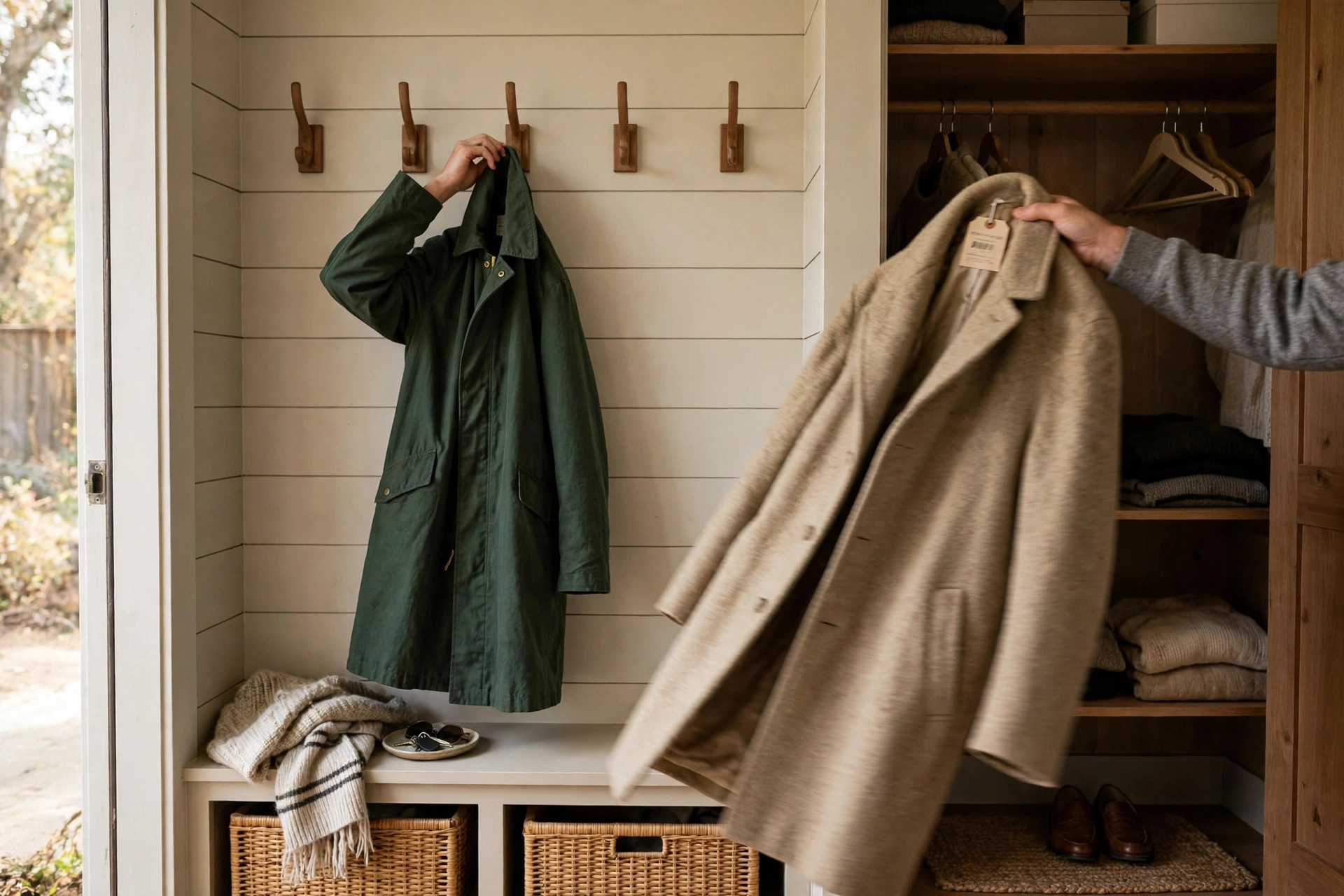
17. A one-in-one-out rule for the hooks — a new coat means an old one goes to the closet
Hooks without a rule are hooks that fill, because the new coat goes up, the old coat stays up, and the hook that held one coat is the hook that now holds three. Use a one-in-one-out rule — a new coat means an old one goes to the closet — so the number of coats on the hooks never grows. When a new coat comes home, pick the coat that has not been worn in a month and move it to the closet, because the rule that moves one out is the rule that keeps the hooks usable. The closet the coats move to is covered in 25 Coat Closet Organization Ideas for 2026, where the same one-in-one-out thinking keeps the closet from overflowing. One rule, and the hooks never fill up.
18. Label every hook and cubby — the label that stops the pile
Hooks without labels are hooks anyone can use, because the hook that belongs to nobody is the hook that holds everybody's coat, and the coat that holds everybody's is the coat that buries the one underneath. Label every hook and cubby — the label that stops the pile — so each spot has an owner and the owner is the only person who uses it. Use a small wooden tag, a chalk label or a printed name, and put the label at eye height for the person who owns the hook, because the label that is seen is the label that is respected. Labels, not nagging, and the pile stops forming.
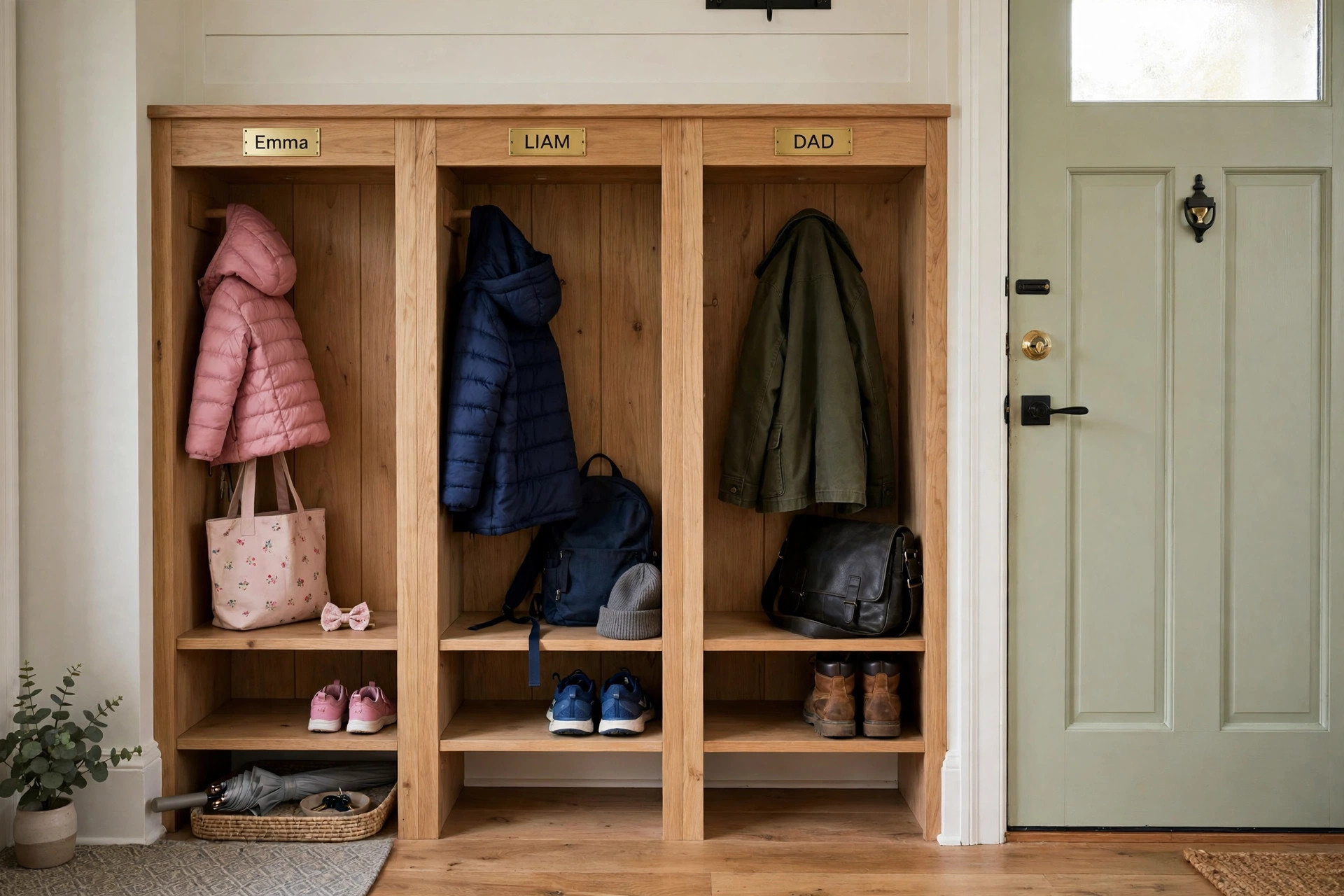
19. A five-minute reset at the door — the habit that keeps the entryway clear
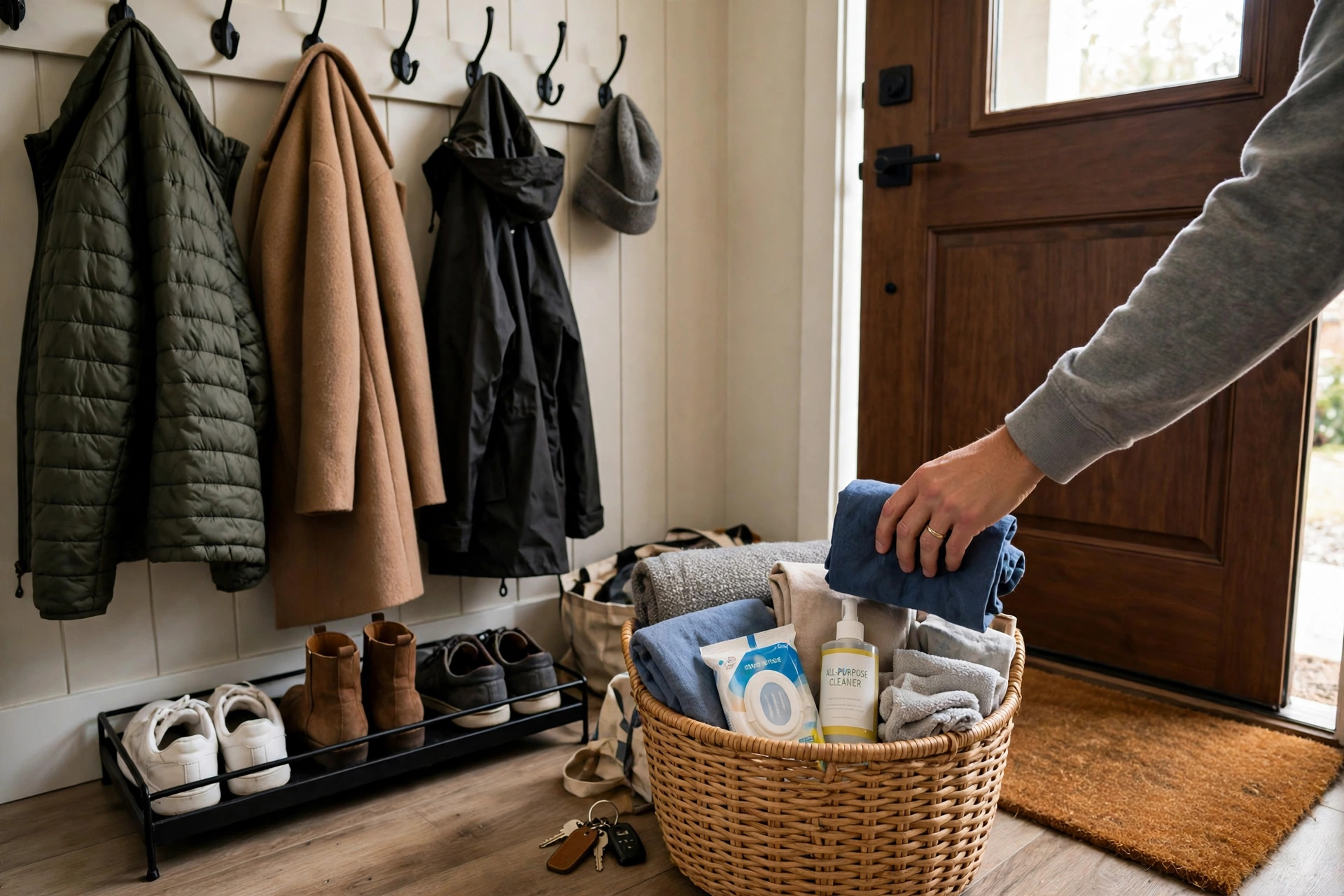
No system survives an entryway without a habit, because the hooks are only tidy on the day you fit them and the mess creeps back one shoe at a time. Do a five-minute reset at the door — the habit that keeps the entryway clear — so the entryway is tidy before bed and starts clean in the morning. Coats on their hooks, shoes in the tray, bags on the rail, and the basket packed for tomorrow, because the reset that takes five minutes is the reset that actually happens. Do it together, because the reset everyone does is the reset that takes five minutes and not fifty. Five minutes at the door, and the entryway never needs a big clean.
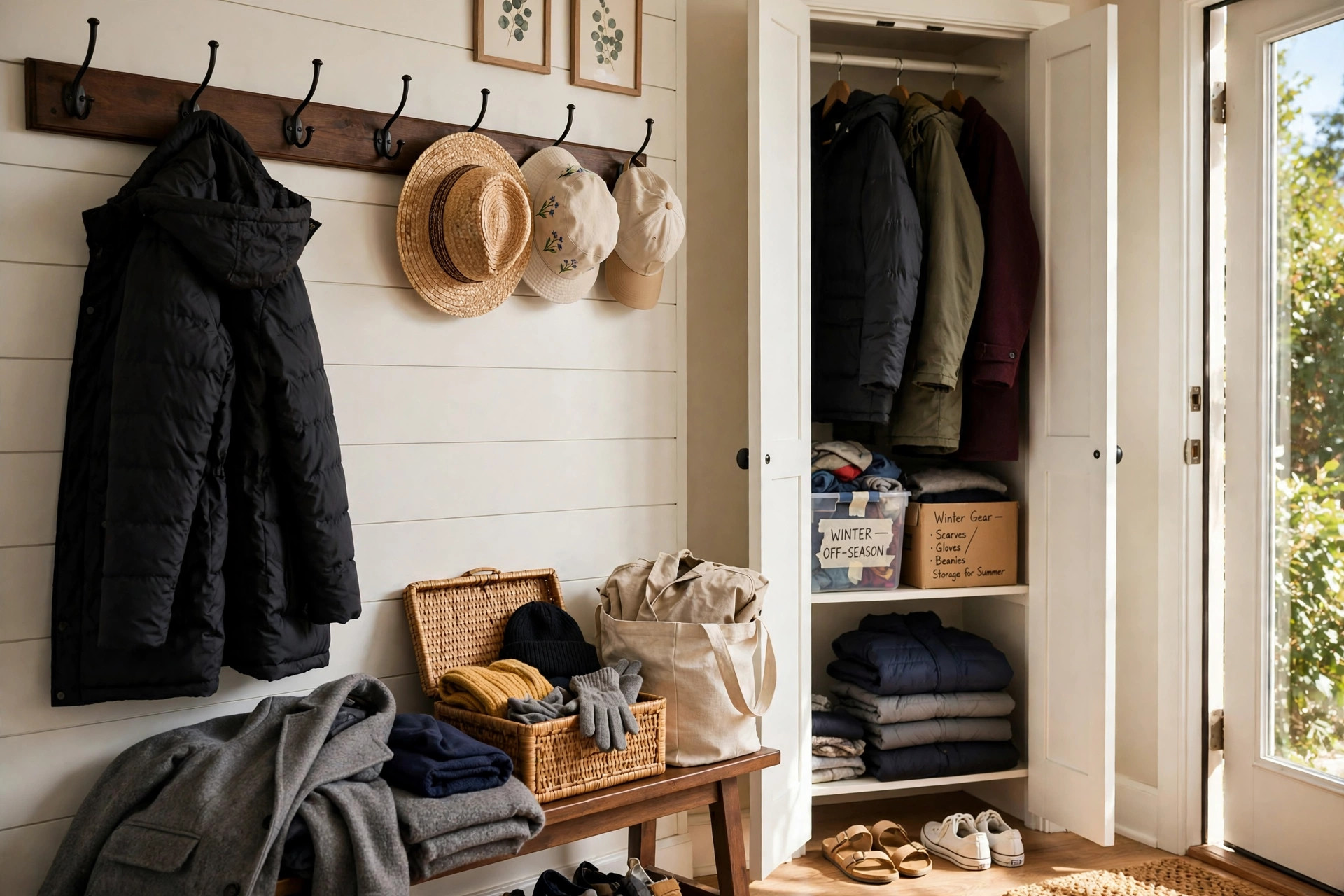
20. A seasonal swap at the drop zone — winter coats out, summer hats in, before the season turns
A drop zone packed for every season is a drop zone packed for none of them, because the winter coats take the hooks the summer hats need, and the hooks that hold both are the hooks that hold neither properly. Do a seasonal swap at the drop zone — winter coats out, summer hats in, before the season turns — so the hooks only hold the season you are walking into. Before each season, pull the off-season coats to the closet, bring the right ones to the hooks, and check the list inside the cupboard door, because the list on the door is the list that stops you forgetting the one thing you need. One swap a season, and the drop zone is dressed for the right weather every time.
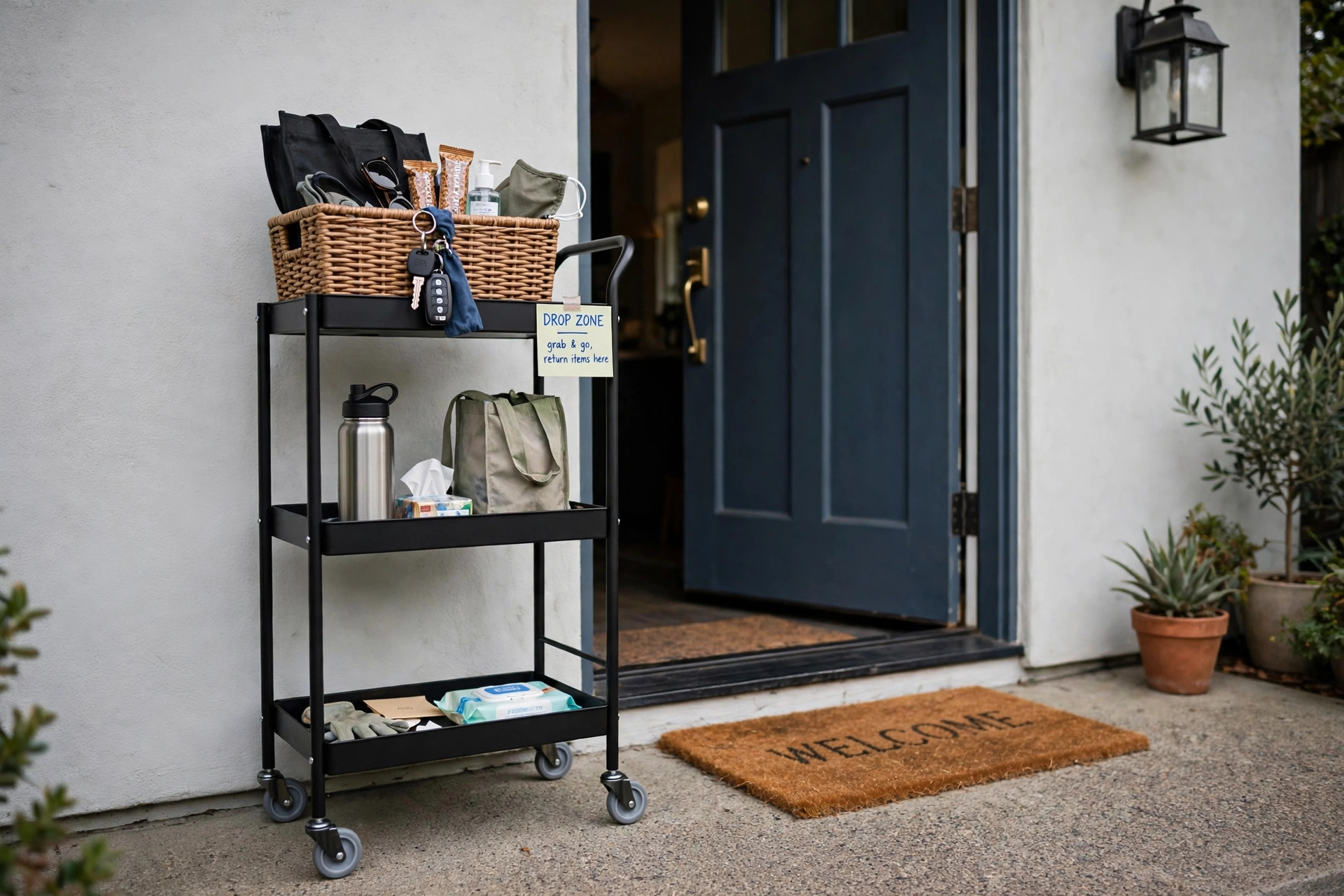
21. A slim rolling cart as a mobile drop zone — the cart that parks by the door
A fixed drop zone cannot move, because the bench that is screwed to the wall is the bench that stays where it is, and the hallway that needs a drop zone today is the hallway that needs the space back tomorrow. Use a slim rolling cart as a mobile drop zone — the cart that parks by the door — so the drop zone rolls where it is needed and parks out of the way when it is not. Keep the grab-and-go basket on the top shelf, the shoes on the middle shelf, and the dog lead on the hook at the end, and roll it to the door in the morning and back to the hall at night, because the cart that rolls is the cart that never blocks the walkway. The rolling cart itself is covered in 22 Rolling Cart Organization Ideas for 2026, where the same one-cart rule turns a small cart into a whole room's helper. A cart by the door, and the drop zone moves with you. (Check on Amazon for a slim three-tier rolling cart with hooks, narrow enough for a hallway.)
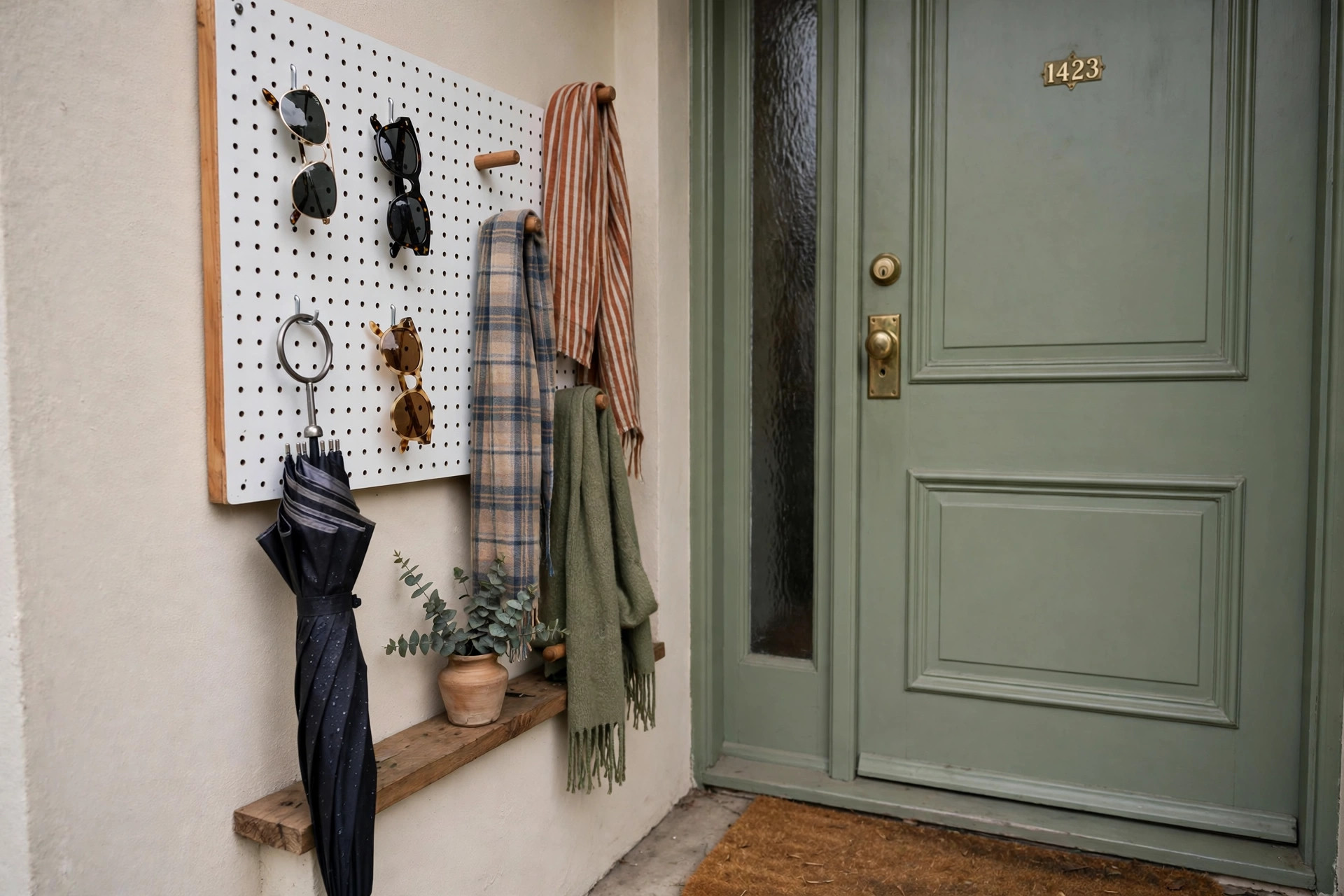
22. A pegboard panel for the odd bits — sunglasses, umbrellas and scarves in plain sight
The odd bits are the bits with no home, because the sunglasses live in the car, the umbrella lives behind the door, and the scarves live in a drawer nobody opens. Hang a pegboard panel for the odd bits — sunglasses, umbrellas and scarves in plain sight — so everything small and grabbable hangs where you can see it. Fix a small pegboard beside the door, add hooks for the sunglasses, a ring for the umbrella, and a row of pegs for the scarves, because the panel that shows everything is the panel that gets used. The pegboard itself is covered in 20 Pegboard Organization Ideas for 2026, where the same see-it-grab-it rule turns a plain board into a whole wall of storage. One panel by the door, and the odd bits stop wandering.
Which drop zone organization idea fits which situation?
| Situation | Best first move | Budget | Tools needed |
|---|---|---|---|
| Hooks and bench do not fit the wall | Measure the entryway first (idea 1) | Free | Tape measure |
| Entryway packed with "just in case" | Sort into keep, move, leave behind (idea 2) | Free | None |
| Nothing is findable at the door | Zone the drop zone: coats, shoes, bags, keys (idea 3) | Free | Labels |
| Coats and shoes mixed between people | One hook, cubby and tray per person (idea 4) | Low | Hooks, labels |
| Mornings are a scramble | Pack a "grab-and-go" basket tonight (idea 5) | Low | One basket |
| Kids' coats land on the floor | Hooks at kid height and adult height (idea 6) | Low | Hooks |
| Muddy shoes all over the hall | A shoe tray with a lip (idea 7) | Low | Tray |
| No place to sit and put shoes on | A slim bench with storage underneath (idea 8) | Medium | Bench, baskets |
| Bags underfoot by the mat | A wall-mounted bag rail (idea 9) | Low | Rail, hooks |
| Keys lost every morning | A key rail by the door (idea 11) | Low | Rail, hooks |
| Post piling up on every surface | A post tray with "in" and "out" (idea 12) | Low | Tray |
| Hooks fill up and never empty | A one-in-one-out rule (idea 17) | Free | None |
You do not need all 22 ideas. You need the three that solve your front door — usually the tape measure before you buy a single hook, one hook and one tray per person, and the grab-and-go basket packed the night before so the morning runs itself. Start with the measuring, do it this weekend before the next school week, and put the basket by the door tonight. Do that and the next time everyone walks in, the entryway will be ready before the coats come off.
Save this post for your next tidy-up, and if the entryway thinking needs to go further, read 22 Entryway Storage Ideas for 2026 next — it is Post 10, the entryway storage this drop zone builds on — and 25 Coat Closet Organization Ideas for 2026, Post 11, for the closet the hooks feed into. This is the first post of the Organization by problem return run — N056 onwards, one problem at a time — and the run opens with the spot every family trips over first. The next post in the run is Dollar Tree Bedroom Organization, where the same one-person-one-spot thinking goes budget.
Publish date assigned at publishing time. Updated as new drop zone organization finds are tested.
Frequently asked questions
What is a drop zone in a home?
A drop zone is the small, organised spot by the front door where everything you carry in and out lives — coats on hooks, shoes in a tray, bags on a rail, keys on a rail and tomorrow's things in a basket. It is not a room and it does not need one: a wall, a bench and a few hooks are enough. Its job is simple — stop the entryway from becoming a pile by giving every thing that leaves the house a home by the door.
How do I create a drop zone in a small entryway?
Measure first, then fit only what the space allows: one row of hooks, one shoe tray and one small basket are enough for most halls. Use the wall, not the floor — hooks and a wall-mounted rail take no floor space at all — and pick a slim bench that the door can still open past. Give every person one hook and one tray, label them, and keep anything that does not leave the house every day in the closet, not on the hooks.
How do I keep a drop zone from turning into a dumping ground?
Three rules hold it: one hook, cubby and tray per person so nothing is shared and nothing is anonymous; a one-in-one-out rule so a new coat means an old one goes to the closet; and a five-minute reset at the door every evening so coats, shoes and bags go back to their spots before bed. A drop zone becomes a dumping ground when things have no owner and no reset — give them both, and the entryway stays clear.