24 Shoe Storage Ideas for 2026
Shoes are the first thing you take off and the last thing you put away — a pair by the front door, a pair kicked under the bench, a pair that migrates to the middle of the hallway and stays there until somebody trips over it. The fix is not fewer shoes, it is shoe storage the shoes actually live in, one that sits where the shoes come off and looks neat enough to stay there.
These 24 shoe storage ideas are neat shoe displays for entryways and closets: start with a rack by the front door, put the wet shoes on a tray, build a wall display for the pairs you wear most, and finish with boot racks and matching bins — so every pair has a home and the hallway stops looking like a shoe shop that exploded.
Every idea below works in a real home, from a small flat with one front door to a house with a hallway full of family shoes. The entryway the shoes live in is covered in 22 Entryway Storage Ideas for 2026, where the hallway gets its own home before the shoes arrive — and the closet the shoes move into is in 26 Small Walk-In Closet Organization Ideas for 2026, so the storage matches the room. Pick three ideas that fit your front door, start with the rack, and build from there.
Start simple: shoes off the floor
1. A shoe rack by the front door — the rack the shoes live on
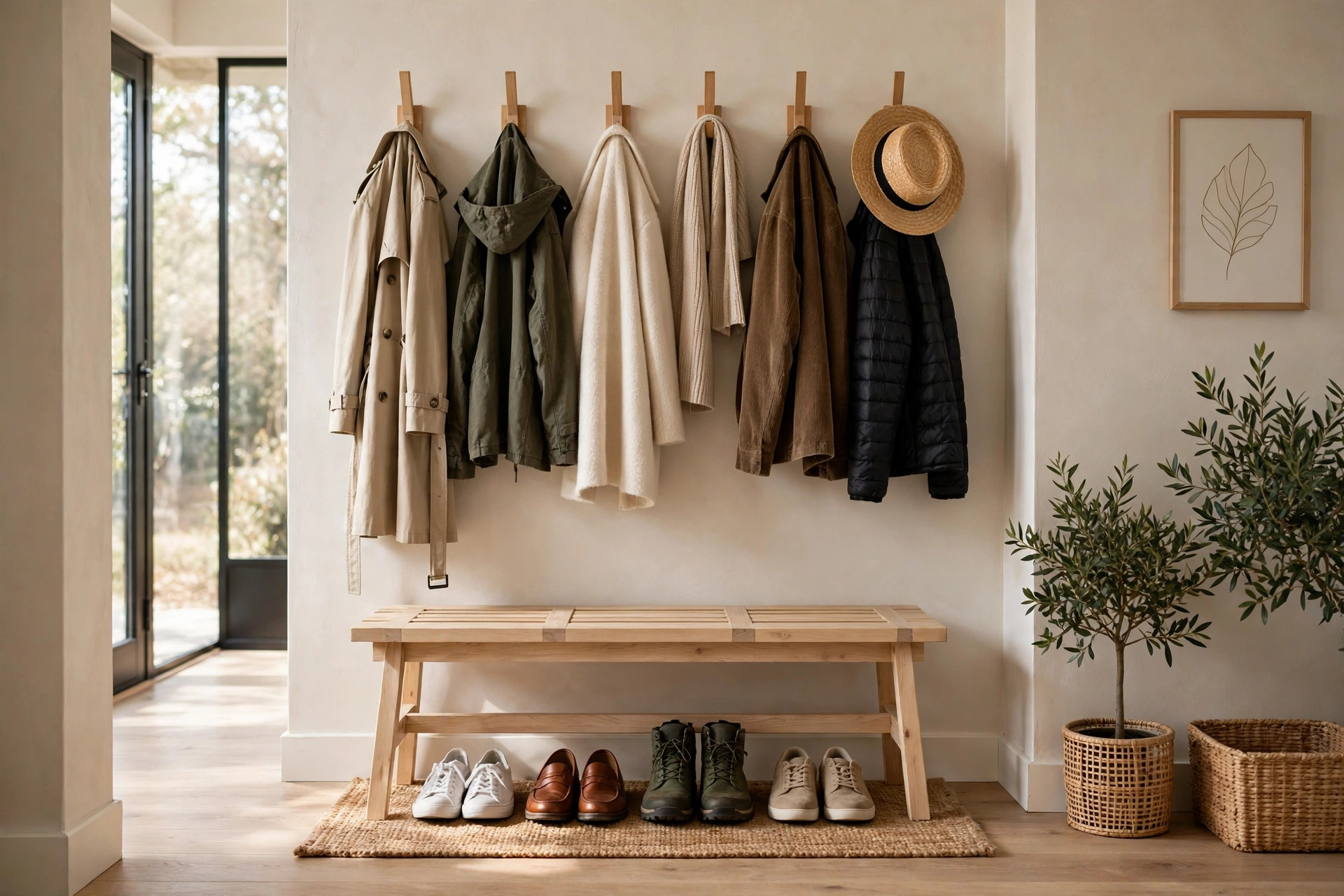
Shoes with no rack are shoes on the floor, because the shoes you take off have nowhere to go and the floor is the place they land. Put a shoe rack by the front door — the rack the shoes live on — so the shoes have one home and the home is the first thing you see when you walk in. Choose a rack with two or three tiers, one pair per slot, and keep it against the wall by the door, because the rack that is by the door is the rack that gets used. Leave one empty slot on the rack, because the rack that is full is the rack that starts a pile on the floor beside it. Put the shoes you wear every day on the middle tier, because the middle tier is the one your hand reaches first. One rack by the door, and the shoes stop spreading across the hallway.
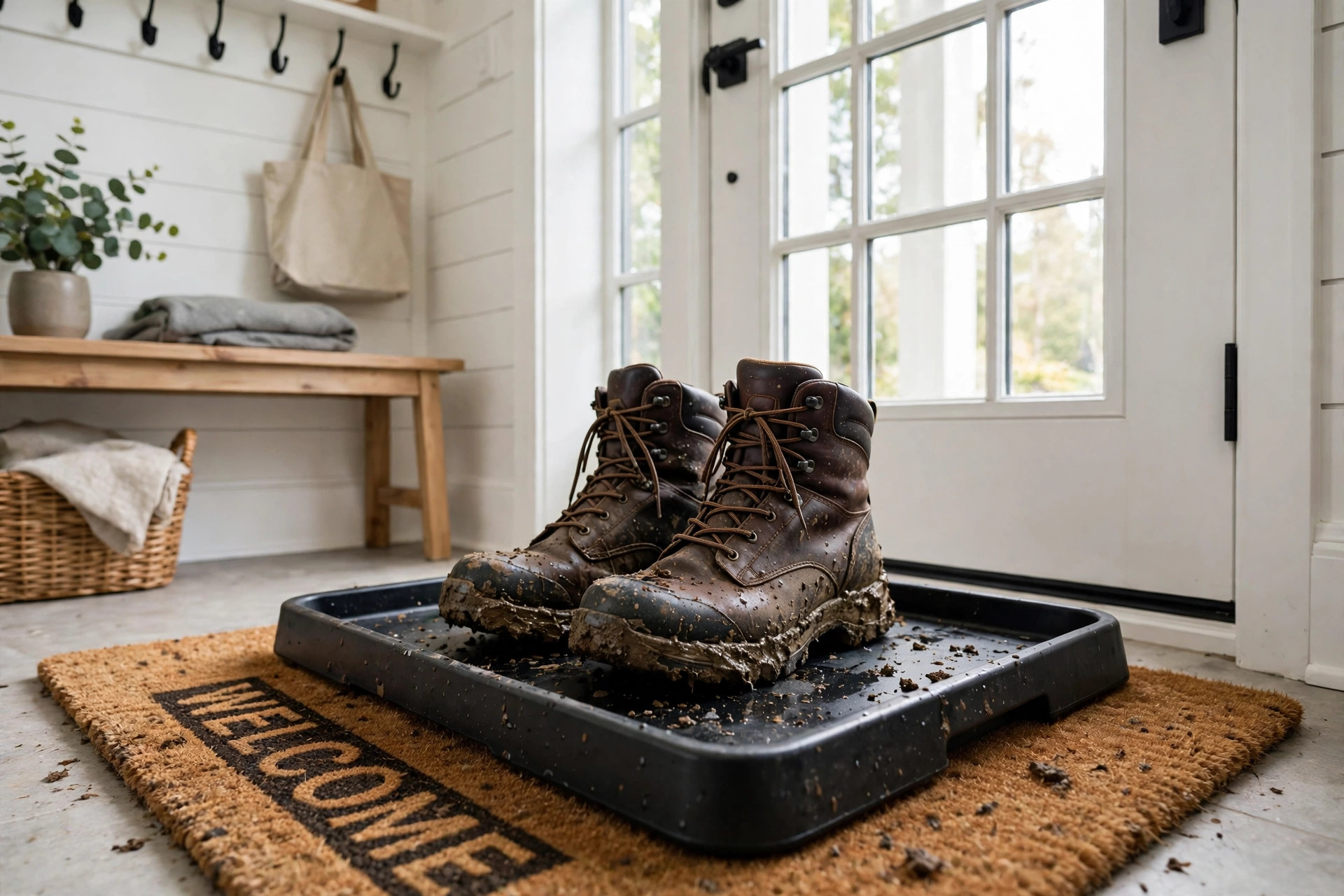
2. A shoe tray for wet and muddy shoes — one tray, mud stays in it
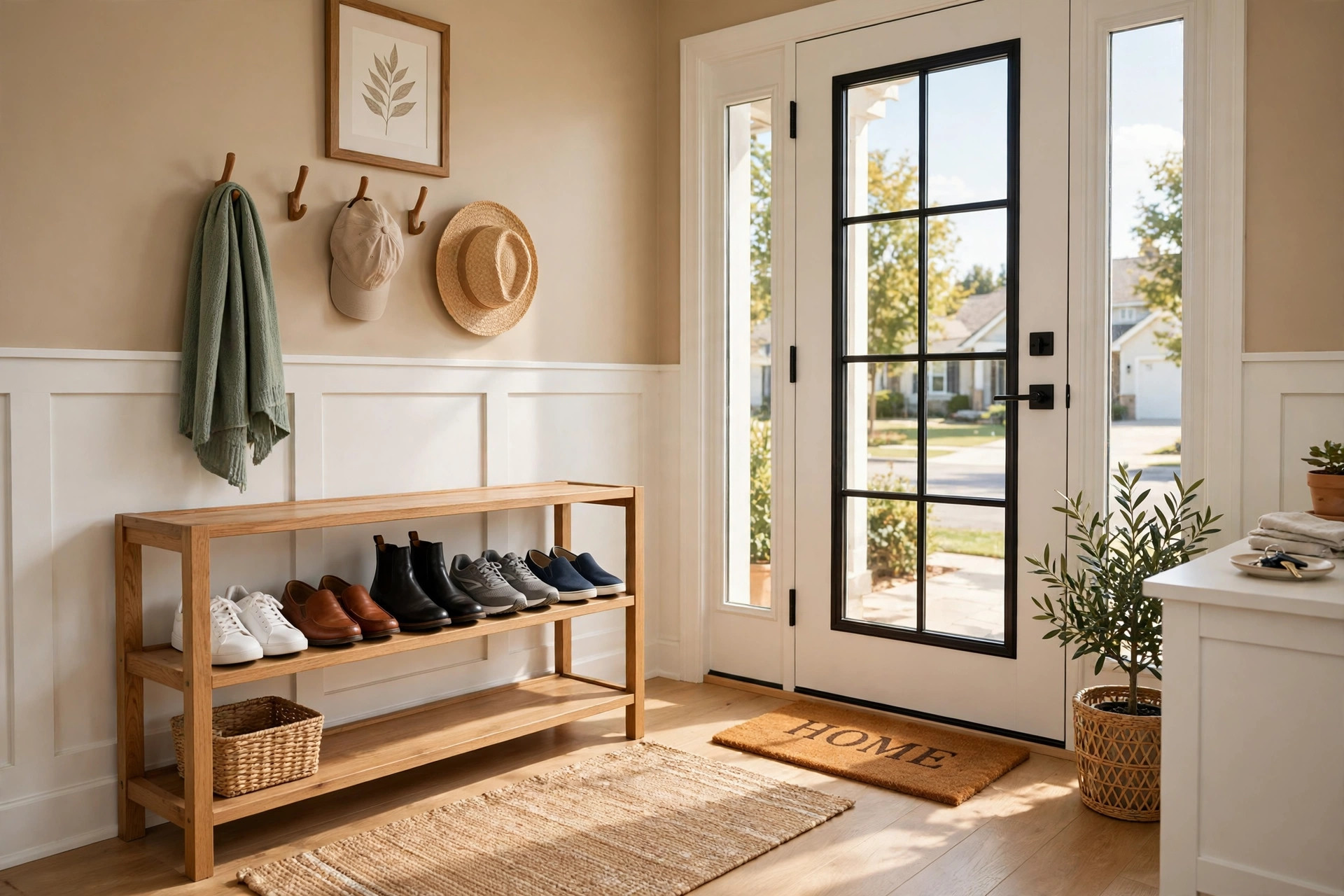
Wet shoes on a bare floor leave a puddle, because the shoes that come in from the rain are the shoes that drip where they stand. Put them on a shoe tray — one tray, mud stays in it — so the water and the mud land in the tray and the floor stays dry. Choose a tray with a raised edge, big enough for two pairs, and keep it by the door on a mat, because the tray that is by the door is the tray the wet shoes land in. Empty the tray when it fills, because the tray that is full of water is the tray that starts smelling, and wipe it once a week when you wipe the hallway. A boot tray works the same way for tall boots, because the boots that stand in the tray are the boots that drip into it. One tray, and the mud stays where it belongs.
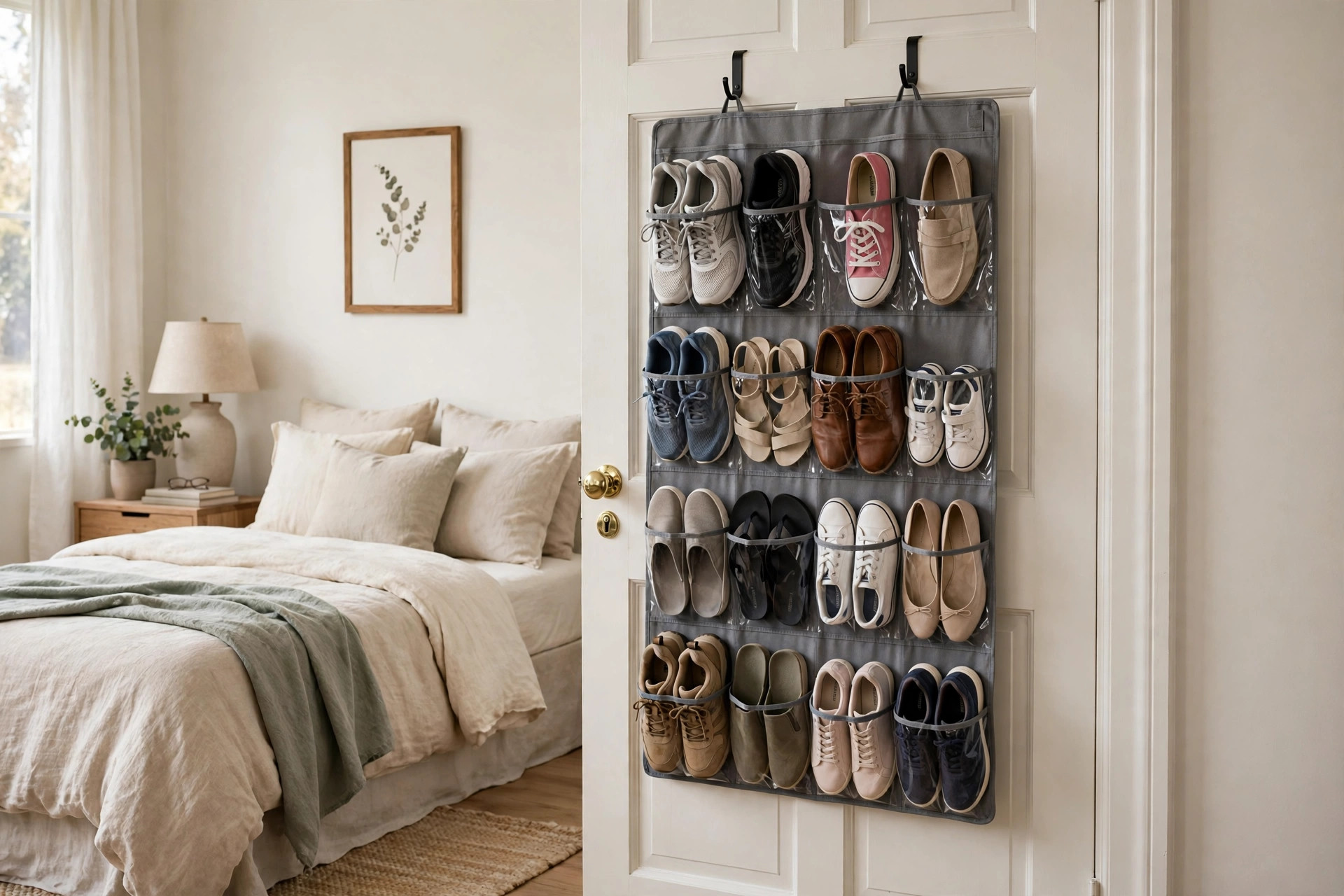
3. An over-the-door shoe organizer — the door nobody uses becomes shoe storage
A bedroom door is a door that does nothing, because the door you open and close is the door whose back is empty. Hang an over-the-door shoe organizer on it — the door nobody uses becomes shoe storage — so the back of the door holds the shoes and the floor loses a whole row of them. Choose an organizer with clear pockets, one pair per pocket, and hang it on the inside of the closet door or the bedroom door, because the pockets you can see through are the pockets that find the pair fast. Keep the shoes you wear least in the top pockets, because the top pockets are the ones you reach last, and the everyday pairs at eye height, because the eye-height pockets are the ones you grab on the way out. One organizer, and a door becomes a shoe shelf. (Check on Amazon for an over-the-door shoe organizer with clear pockets, which lets you see every pair at a glance.)
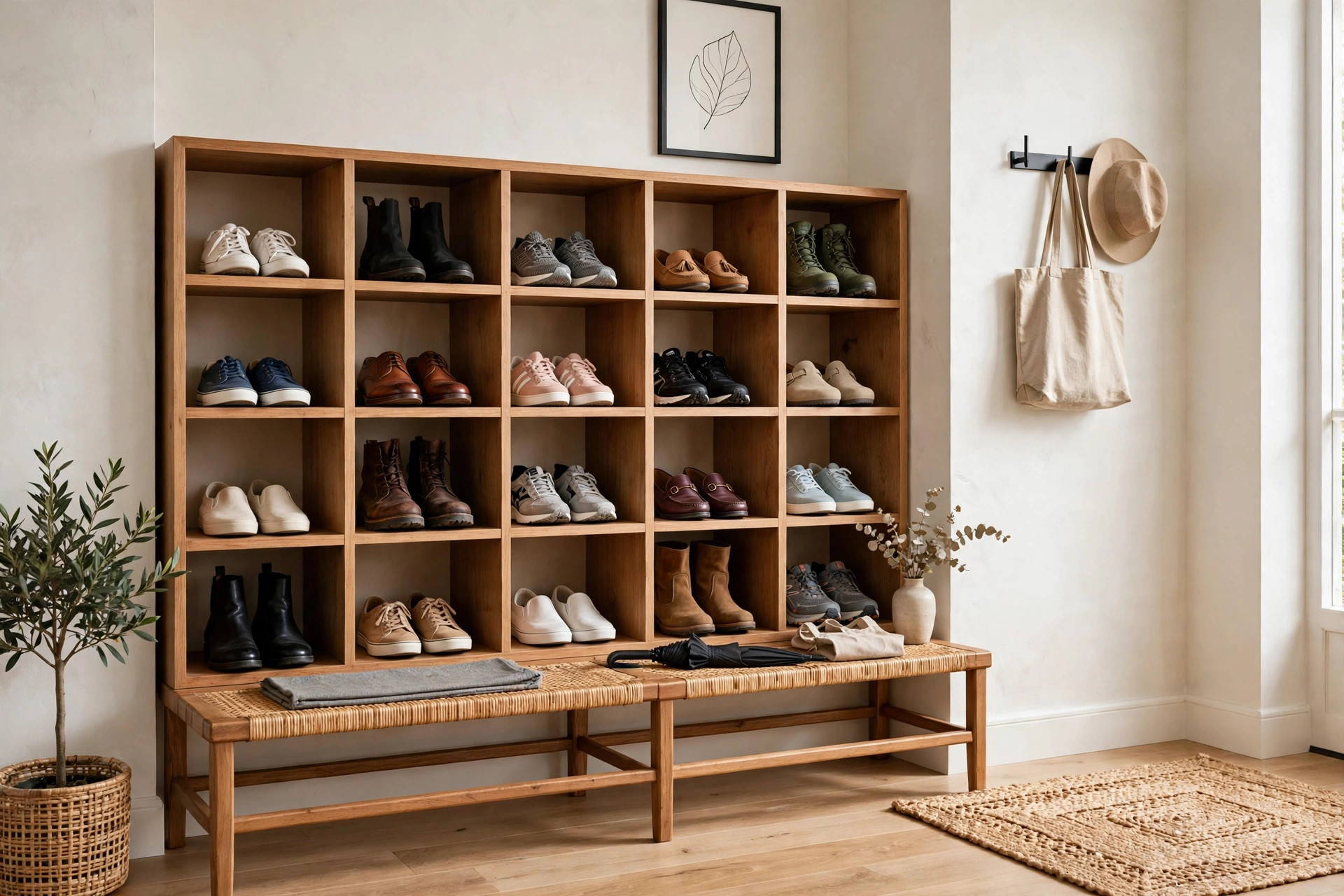
4. Shoe cubbies from a bookshelf — a bookshelf turned into a shoe shelf
A bookshelf with no books is a bookshelf doing nothing, because the shelf you emptied is the shelf that sits there empty. Turn it into shoe cubbies — a bookshelf turned into a shoe shelf — so the shelves hold shoes in pairs and the hallway gains storage for free. Lay the bookshelf on its side or stand it upright, one pair per cubby, and keep it by the front door or in the closet, because the shelf that is there is the shelf that gets used. Add small dividers if the shelves are wide, because the shelf that is divided is the shelf that keeps the pairs apart, and label the cubbies if the family shares them, because the labelled cubby is the cubby that stops the mix-ups. Put the kids' shoes on the bottom shelf, because the bottom shelf is the one small hands can reach. A spare bookshelf, and the shoes have cubbies.
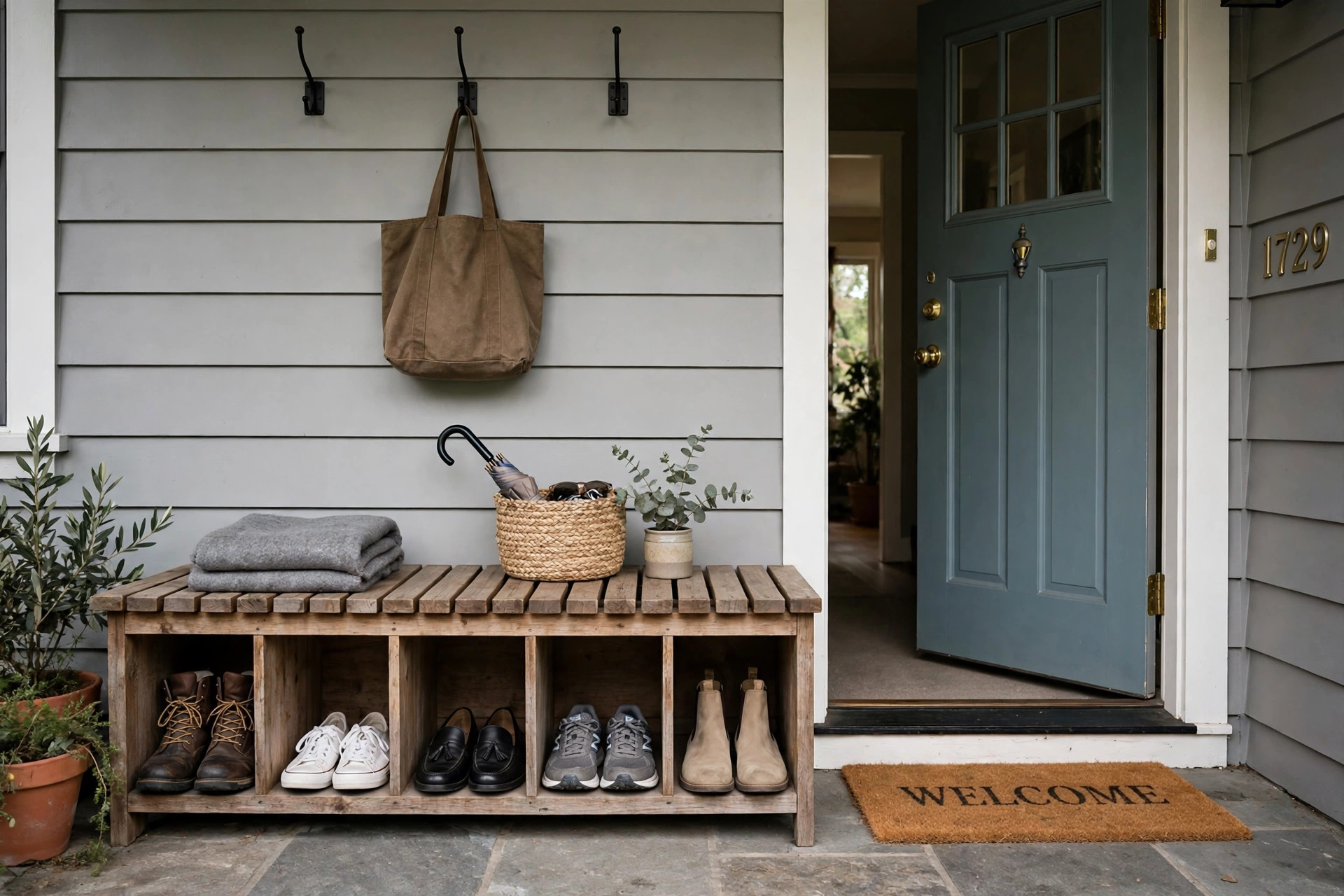
5. A bench with shoe storage underneath — sit down, shoes underneath
Putting shoes on standing up is a wobble, because the shoe you put on while standing is the shoe that makes you hop on one foot. Sit on a bench with shoe storage underneath — sit down, shoes underneath — so you sit to put the shoes on and the shoes live under the seat you sat on. Choose a bench with two open shelves or cubbies underneath, one pair per cubby, and keep it by the front door, because the bench that is by the door is the bench that gets sat on. Put the everyday shoes on the top shelf under the seat, because the top shelf is the one your hand reaches without bending, and the shoes you wear least on the bottom shelf, because the bottom shelf is the one you reach last. Add a cushion on top, because the bench that is comfortable is the bench that gets used. A bench with storage, and the shoes live where you sit.
6. Stackable shoe racks — two racks become four shelves
One shoe rack fills up fast, because the rack that holds six pairs is the rack that meets a family of four. Stack a second rack on top — two racks become four shelves — so the same footprint holds twice the shoes and the hallway still has floor to walk on. Choose racks that lock together, not racks that slide, because the rack that locks is the rack that does not topple when you pull a pair out. Keep the stack against the wall, because the stack against the wall is the stack that stays standing, and put the heaviest shoes on the bottom tier, because the low weight is the weight that steadies the stack. Two racks stacked, and the shoes double without taking more floor.
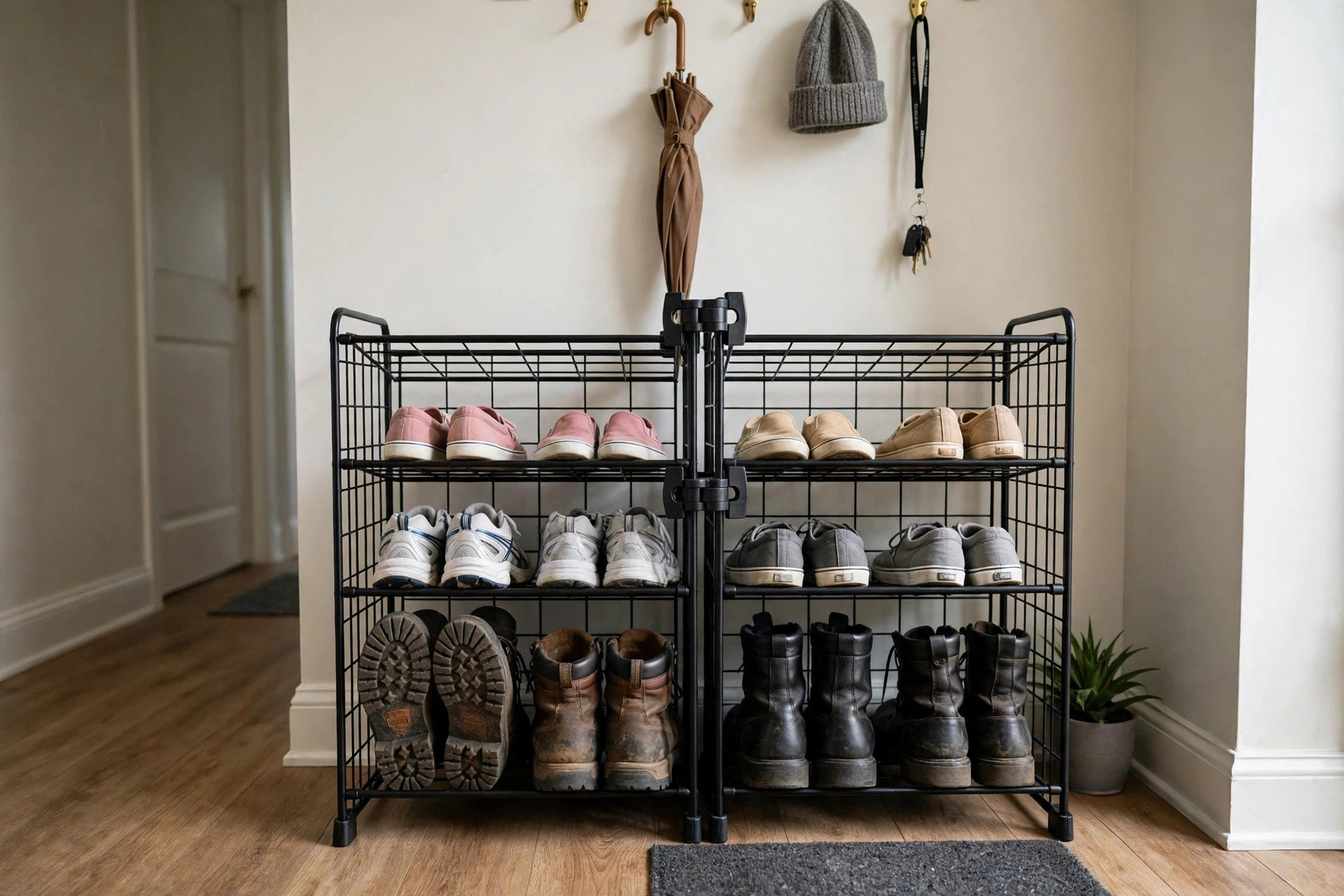
Neat shoe displays for entryways
7. A wall-mounted shoe display — shoes on the wall like a shop
Shoes in a pile on the floor look like a mess, because the pile is the thing that hides the pair you want and the pair you want is the pair at the bottom. Mount the shoes on the wall — shoes on the wall like a shop — so every pair is on display and the floor stays clear. Screw slanted shelves or short rails to the wall, one pair per shelf, and keep the display at eye height in the hallway, because the shoes you can see are the shoes you choose fast. Put the pairs you wear most at the front of the display, because the front shelves are the ones you reach first, and keep the display to the shoes that look good, because the wall that shows the best pairs is the wall that looks like a shop. A few screws and slanted shelves, and the hallway has a shoe display.
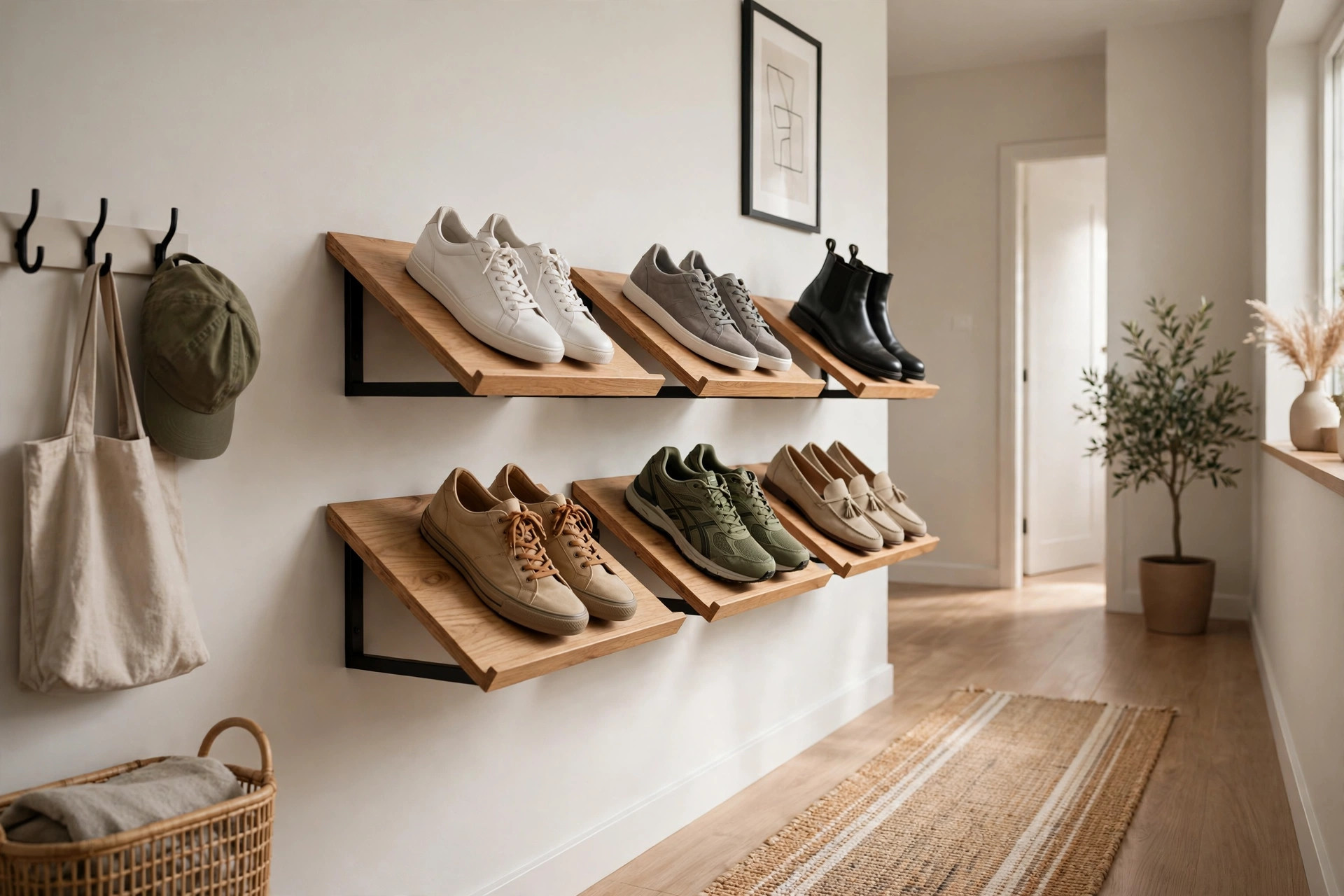
8. A slanted shoe shelf — the shelf that shows the shoes off
A flat shelf hides the shoes, because the shoes that lie flat are the shoes you cannot see and the shoes you cannot see are the shoes you forget. Use a slanted shelf — the shelf that shows the shoes off — so the shoes tilt forward where you can see them and the shelf still holds them in place. Angle the shelf just enough that the shoes lean without sliding, about the angle of a book on a lectern, and add a small lip at the front edge, because the lip is the thing that stops the shoes sliding off. Keep the slanted shelf in the hallway or the closet, and put the trainers and the everyday shoes on it, because the shelf that shows the shoes is the shelf that gets used every morning. A slanted shelf, and the shoes show themselves off.
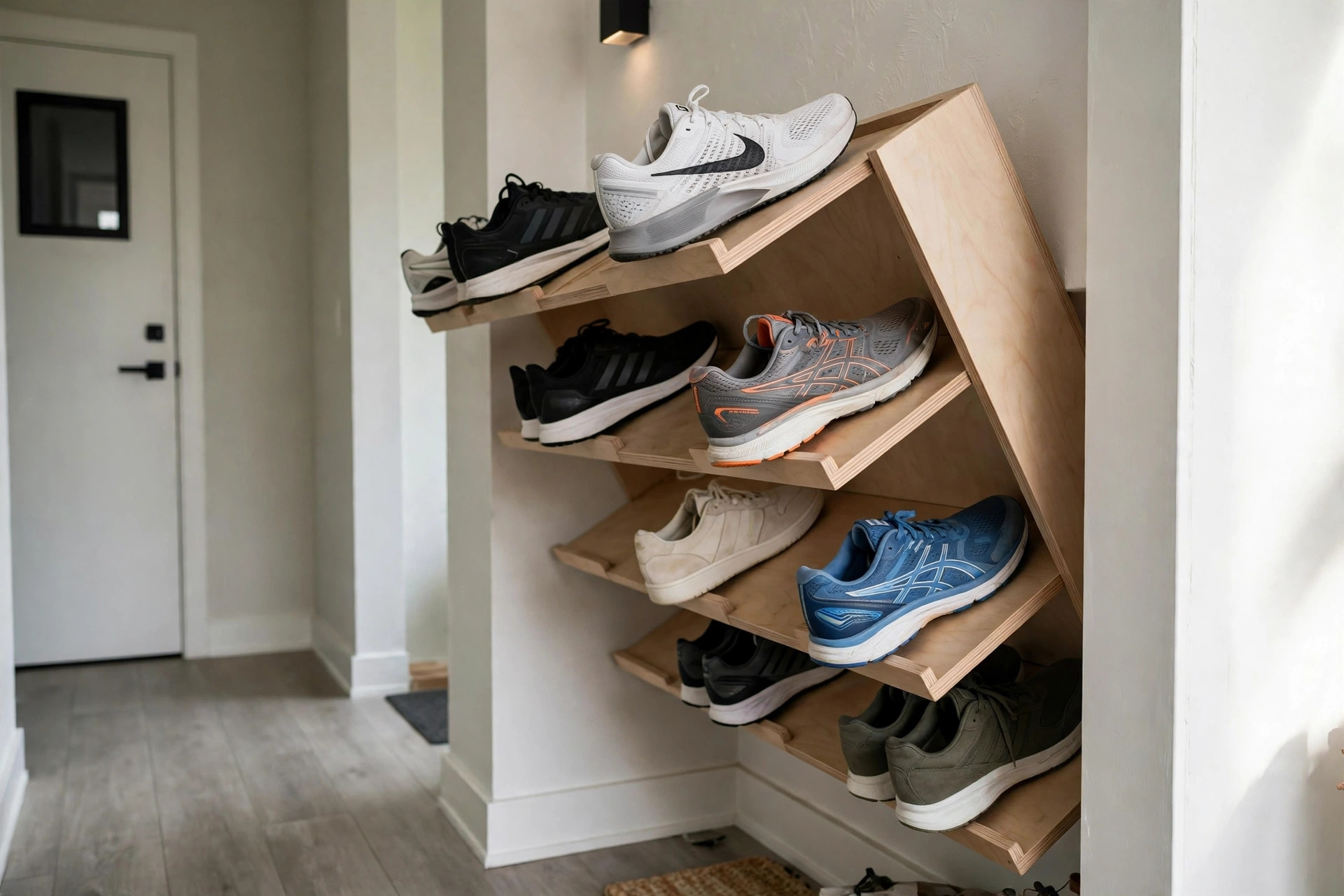
9. Clear shoe boxes with labels — see the shoes, grab the pair
Shoes in cardboard boxes are shoes you cannot find, because the box that hides the pair is the box you have to open to check, and the box you open to check is the box you leave open. Use clear shoe boxes with labels — see the shoes, grab the pair — so the box shows the shoes inside and the label names them for the days you are in a hurry. Stack the boxes in the closet or under the bed, one pair per box, and put the label on the front edge where you can read it, because the label on the front is the label that finds the pair fast. Keep the everyday pairs in the boxes you reach first, because the boxes you reach first are the boxes that get used, and the special-occasion pairs on the top of the stack, because the top of the stack is the place you reach last. Clear boxes, and the shoes are visible and labelled. (Check on Amazon for clear stackable shoe boxes with a front opening, so you can pull a pair out without unstacking the pile.)
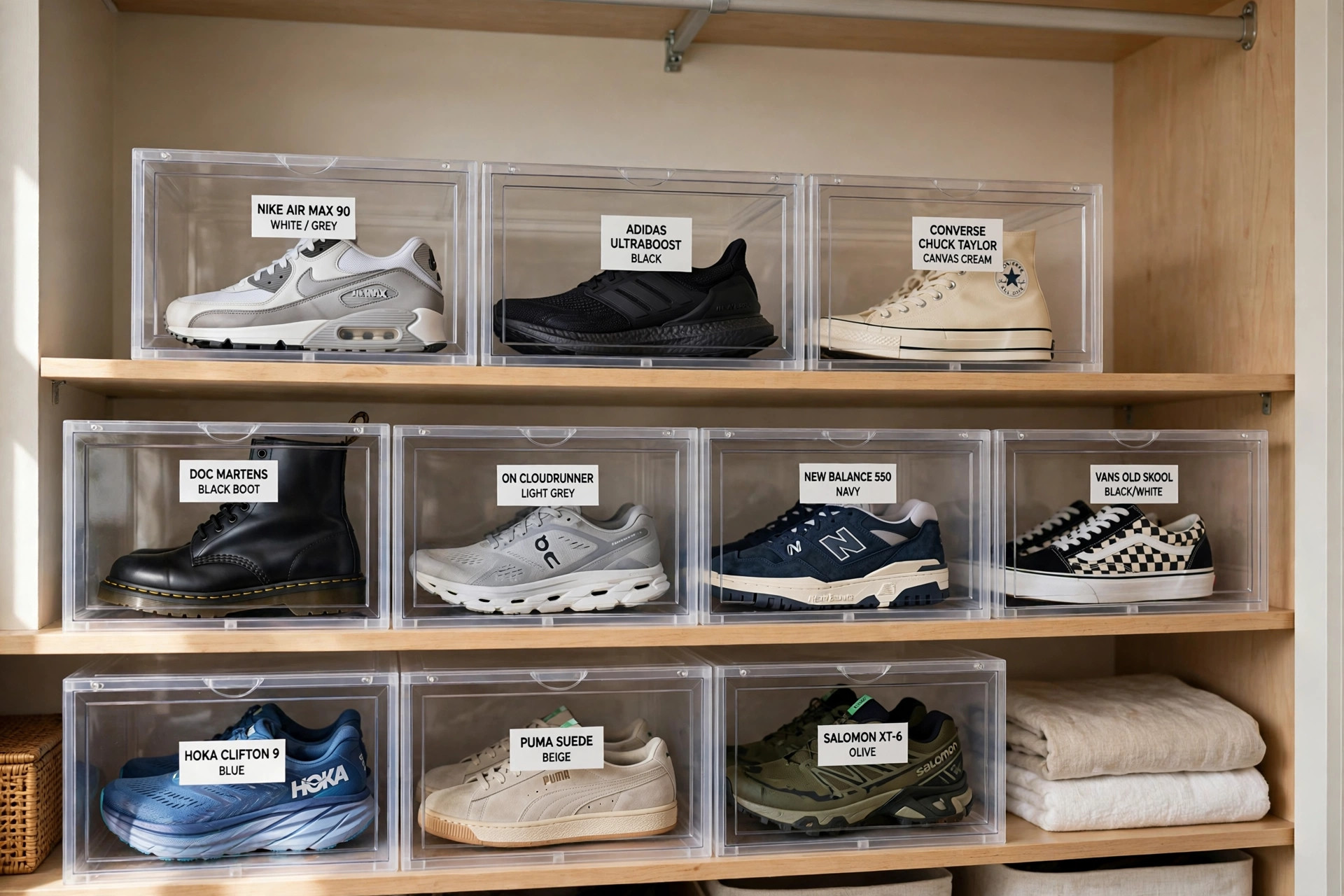
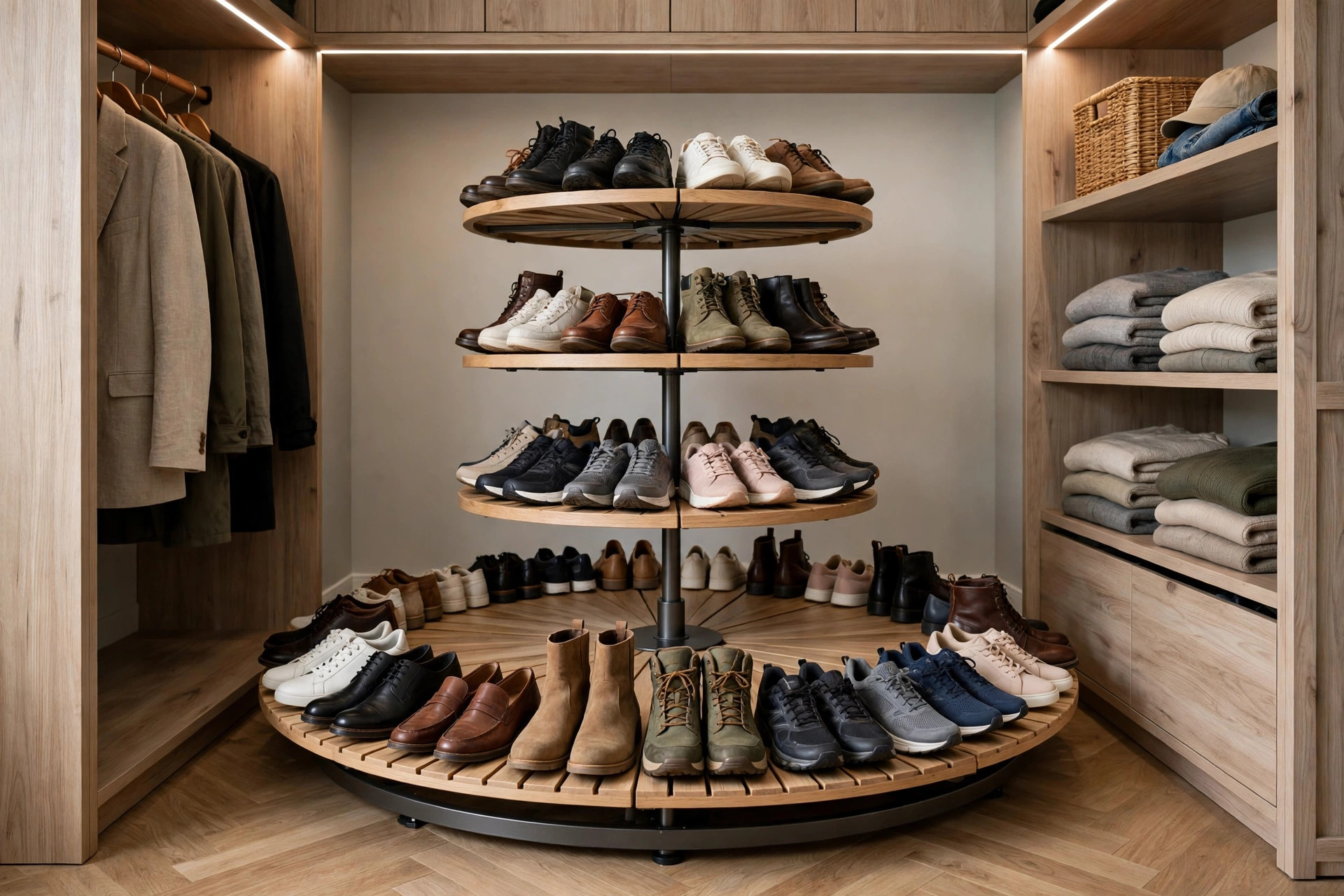
10. A rotating shoe shelf — spin to the pair you want
Shoes at the back of a deep shelf are shoes you never wear, because the shelf that is deep is the shelf that hides the back row and the back row is the row you forget. Use a rotating shoe shelf — spin to the pair you want — so the shelf turns and the pair you want comes to the front. Put the rotating shelf in the closet or on a low cupboard, load the shoes around the edge in pairs, and spin it slowly to find the pair, because the shelf that turns is the shelf that shows every pair. Keep the shelf level, because the shelf that tilts is the shelf that slides the shoes off, and load the heavier shoes at the bottom, because the low weight is the weight that steadies the spin. Say "rotating shelf" when you shop for it, and check it turns smoothly before you load it. A rotating shelf, and every pair comes to the front.
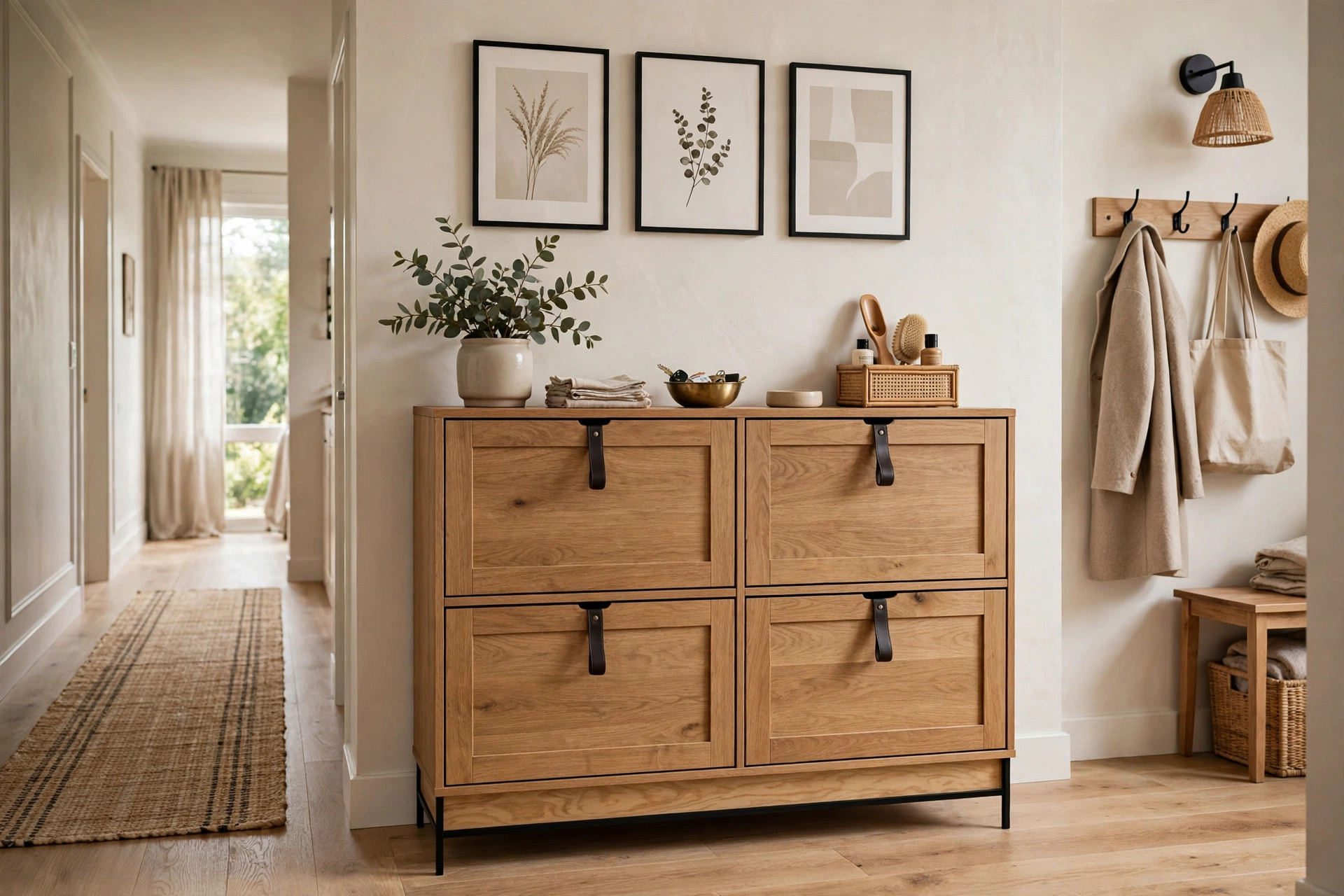
Shoes on open shelves look untidy, because the shelf that shows every shoe is the shelf that shows the muddy ones too. Hide them behind a shoe cabinet with drop-front doors — shoes hidden behind a tidy front — so the cabinet looks like furniture and the shoes live inside it. Choose a cabinet with two or three drop-front compartments, one pair per compartment, and keep it in the hallway against the wall, because the cabinet that is by the door is the cabinet that gets used. Open the front, slide the pair in, close it again, because the door that closes is the door that hides the mess, and keep the cabinet to the shoes you wear most, because the cabinet that holds the everyday pairs is the cabinet that earns its place. A slim cabinet fits even a narrow hallway, because the cabinet that is slim is the cabinet that does not block the walkway. A drop-front cabinet, and the shoes disappear behind a tidy front.
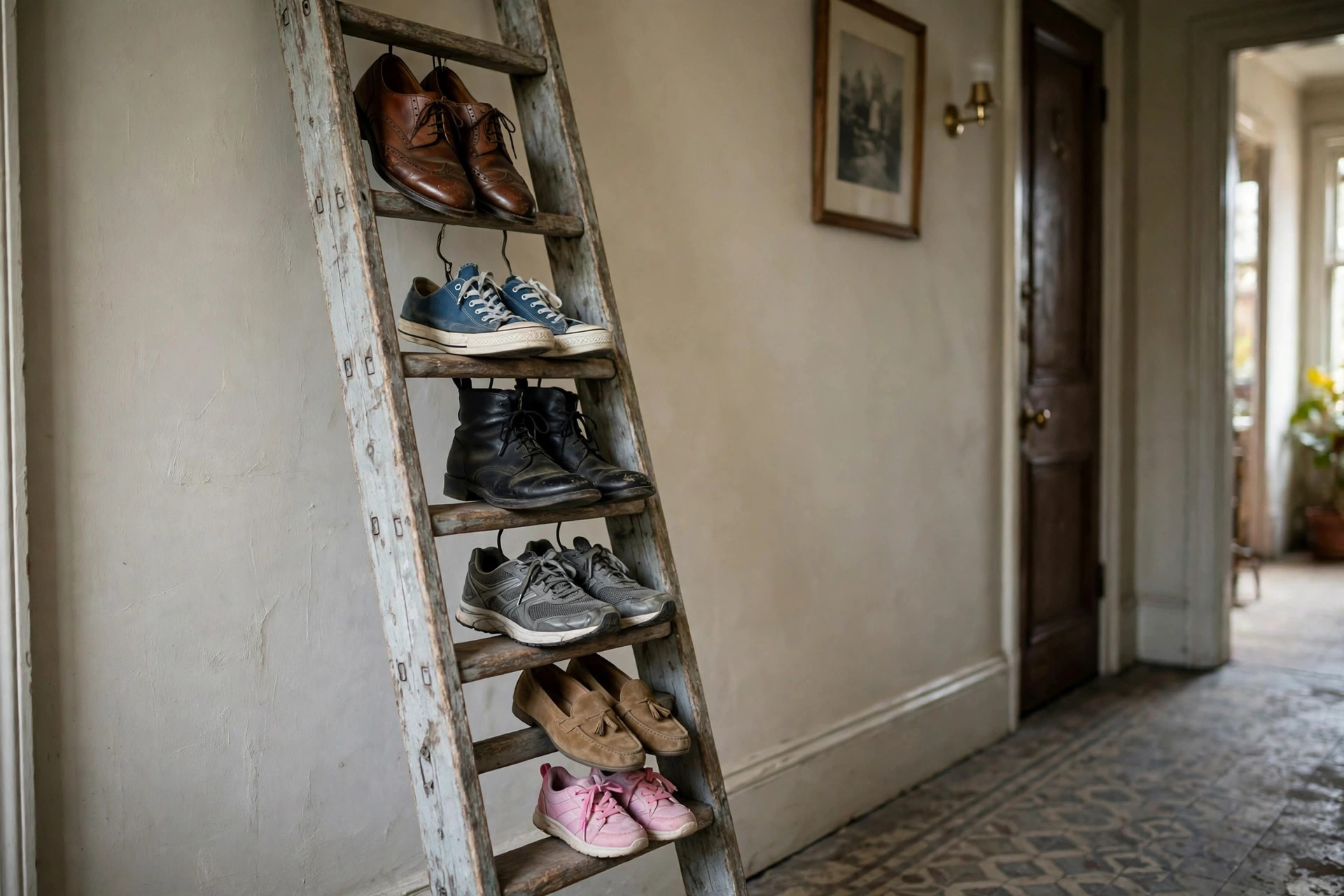
12. A ladder shoe rack — an old ladder becomes a shoe display
An old ladder in the garage is a ladder doing nothing, because the ladder you replaced is the ladder that leans in a corner gathering dust. Turn it into a shoe rack — an old ladder becomes a shoe display — so the rungs hold the shoes and the hallway gains a display for free. Lean the ladder against the wall, one pair per rung, with the heels hooked over the rung, and keep it in the hallway or the bedroom, because the ladder that leans is the ladder that shows the shoes off. Sand the rungs smooth first, because the rung that is rough is the rung that snags the shoes, and paint the ladder one colour, because the ladder that matches is the ladder that looks like it belongs. Put the everyday shoes on the middle rungs, because the middle rungs are the ones you reach first. An old ladder, and the shoes have a display.
Shoe storage for closets
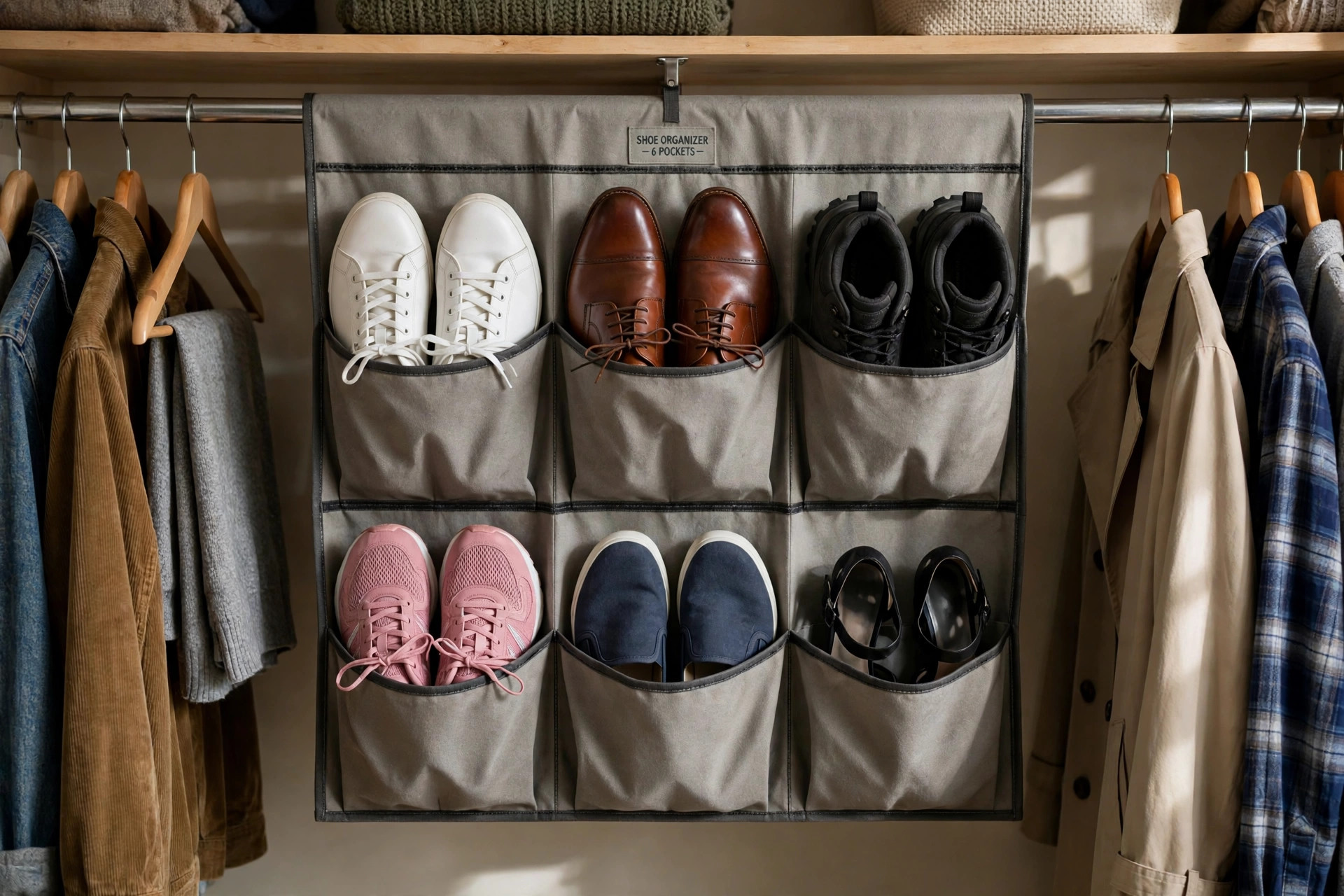
13. Hanging shoe pockets on the closet rod — pockets on the rod, shoes in pairs
Shoes on the closet floor are shoes in a pile, because the floor is the place the shoes land when the closet has nowhere else for them. Hang shoe pockets on the closet rod — pockets on the rod, shoes in pairs — so the shoes hang where you can see them and the floor stays clear. Choose a hanging organizer with deep pockets, one pair per pocket, and hang it from the rod beside the clothes, because the pockets on the rod are the pockets that use the space the clothes do not. Keep the everyday pairs at eye height, because the eye-height pockets are the ones you grab on the way out, and the special-occasion pairs at the top, because the top pockets are the ones you reach last. One hanging organizer, and the closet rod holds the shoes too.
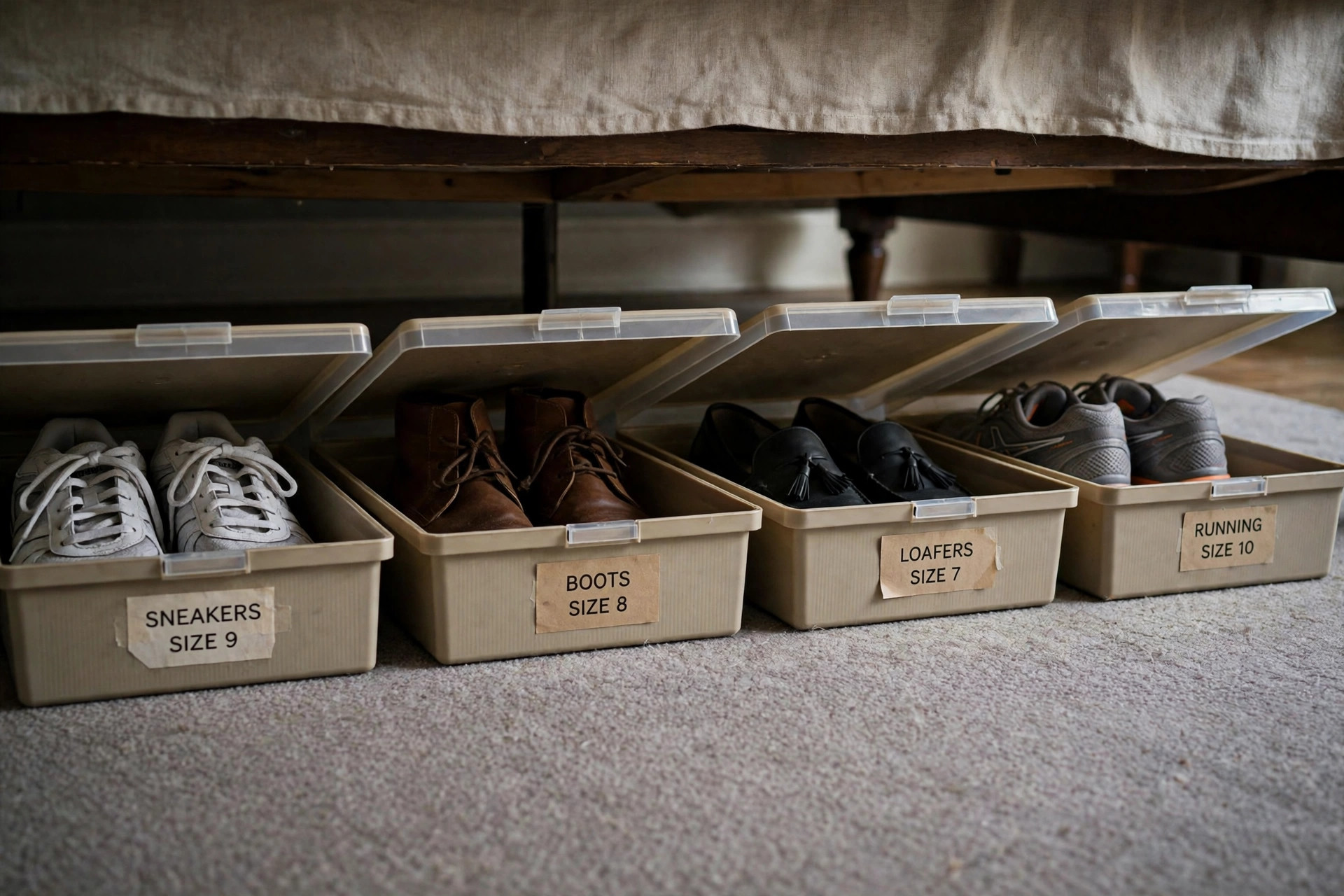
14. Under-bed shoe storage — shoes under the bed, out of the way
Shoes you wear once a month do not belong by the front door, because the door is the place for the shoes you wear every day and the shoes you wear once a month are the shoes that crowd them out. Put them under the bed — shoes under the bed, out of the way — so the out-of-season and special-occasion pairs live where they do not crowd the door. Use flat boxes with lids, one pair per box, and slide them under the bed in a row, because the box with a lid is the box that keeps the dust out. Label the boxes on the end you can see, because the label you can read is the label that finds the pair without pulling every box out, and keep a list of what is under the bed, because the list is the thing that stops you buying a pair you already own. The under-bed space the shoes live in is in Post 34, Under-Bed Storage, where the whole space under the bed gets put to work. Flat boxes under the bed, and the door stays clear.
15. Pull-out shoe drawers in the closet — drawers that slide out, shoes in a row
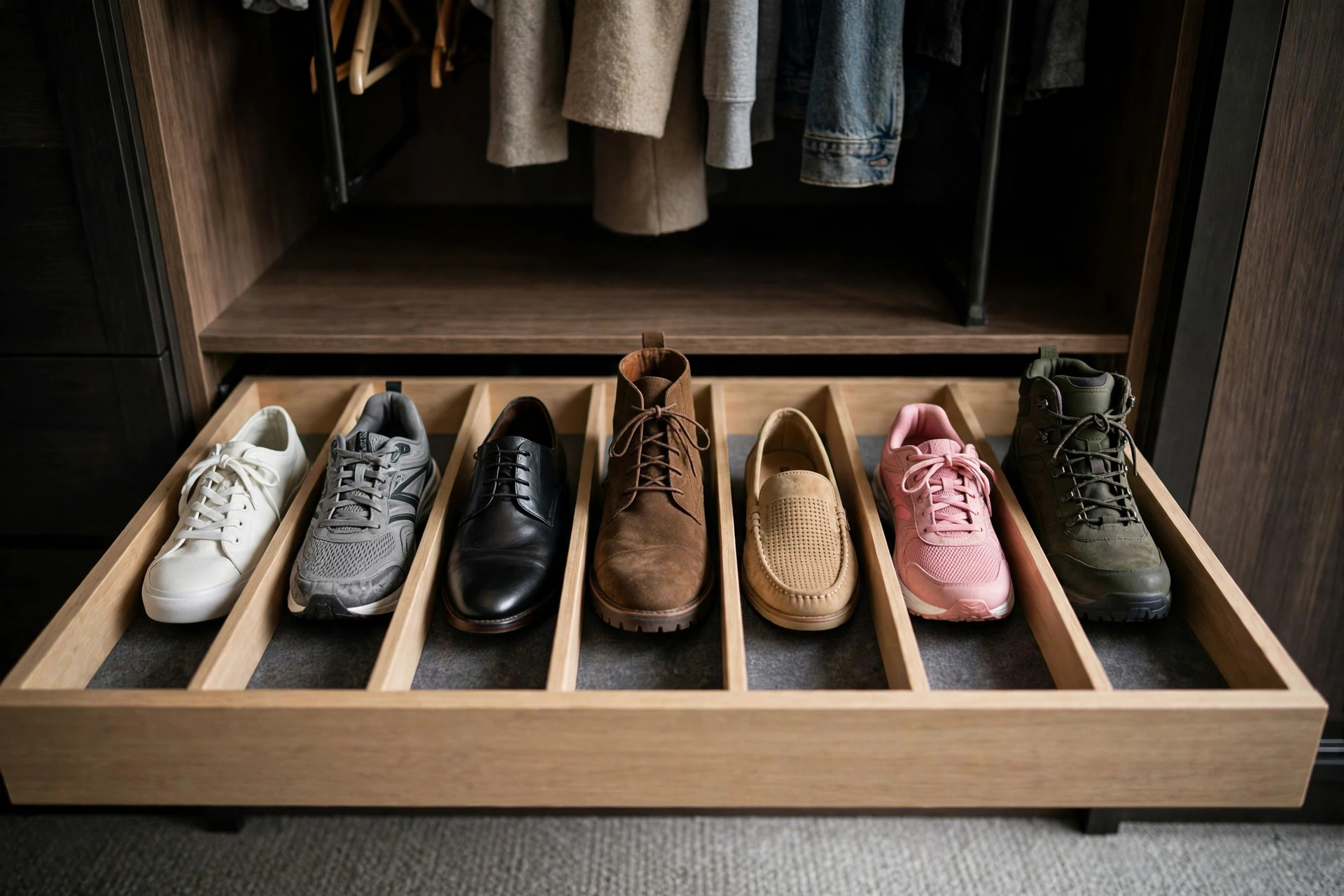
Shoes at the back of a closet shelf are shoes you forget, because the shelf that is deep is the shelf that hides the back row and the back row is the row you never reach. Put the shoes in pull-out drawers — drawers that slide out, shoes in a row — so the drawer comes to you and every pair is in reach. Fit shallow drawers or sliding trays into the closet, one pair per slot, and pull the drawer out to choose, because the drawer that slides is the drawer that shows every pair. Keep the drawers shallow, because the drawer that is shallow is the drawer that shows the shoes instead of stacking them, and label the drawer fronts if you have many pairs, because the labelled drawer is the drawer that finds the pair fast. Pull-out drawers, and the back of the closet stops hiding shoes.
16. Shoe shelves above the hanging rail — the space above the clothes becomes shoe shelves
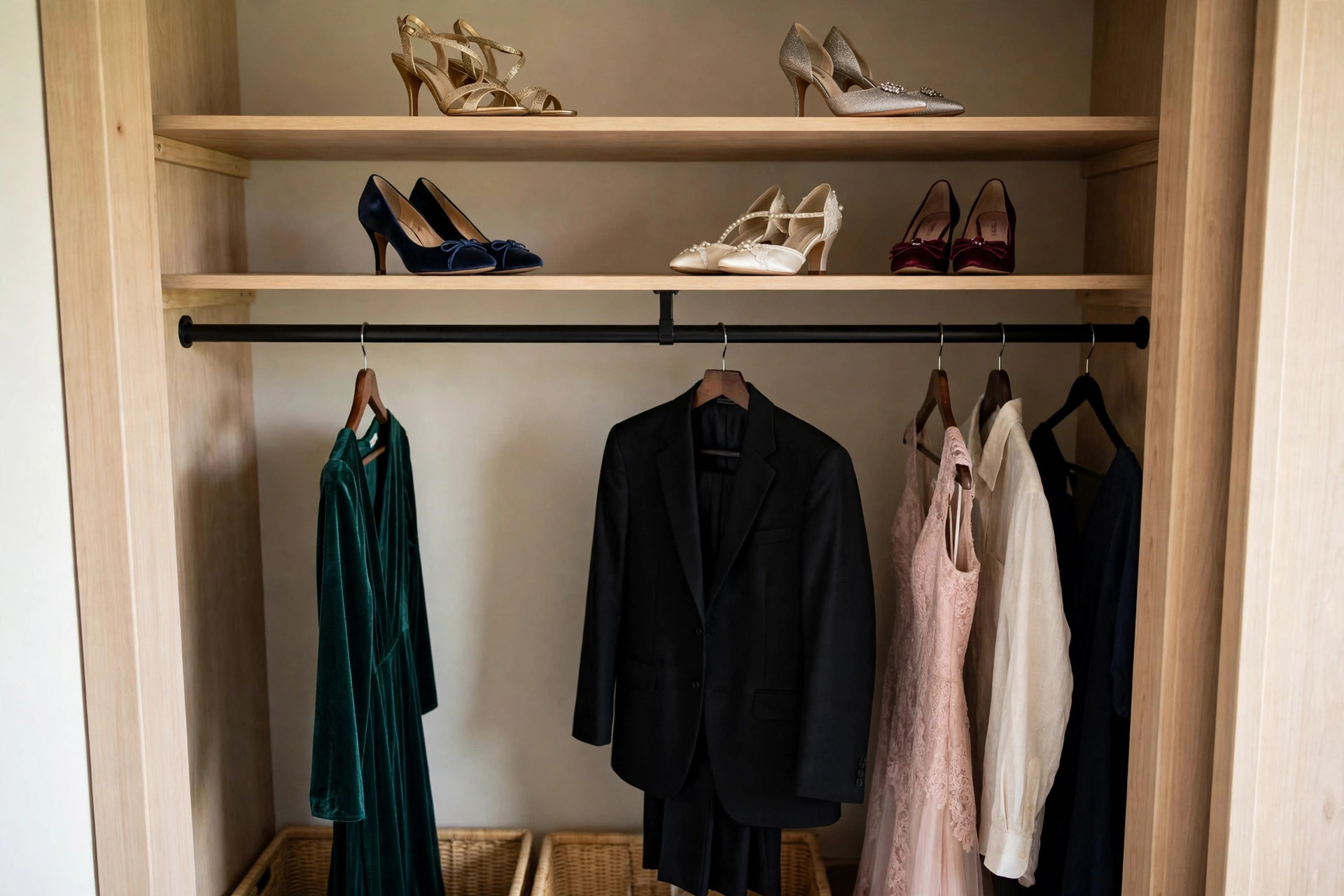
The space above the hanging rail is space doing nothing, because the rail is the thing that holds the clothes and the space above it is the space nobody uses. Put shoe shelves there — the space above the clothes becomes shoe shelves — so the shoes live above the clothes and the closet floor stays clear. Screw two or three shelves above the rail, one pair per shelf, and keep the shoes you wear least up there, because the top shelves are the ones you reach last. Use the shelves for the special-occasion pairs and the out-of-season shoes, because the shelf above the clothes is the shelf for the shoes that wait their turn, and keep a small step stool in the closet, because the stool is the thing that makes the top shelf reachable. Shelves above the rail, and the closet gains a whole row of shoe storage.
17. A boot tray and boot rack for tall boots — boots standing straight, not flopping
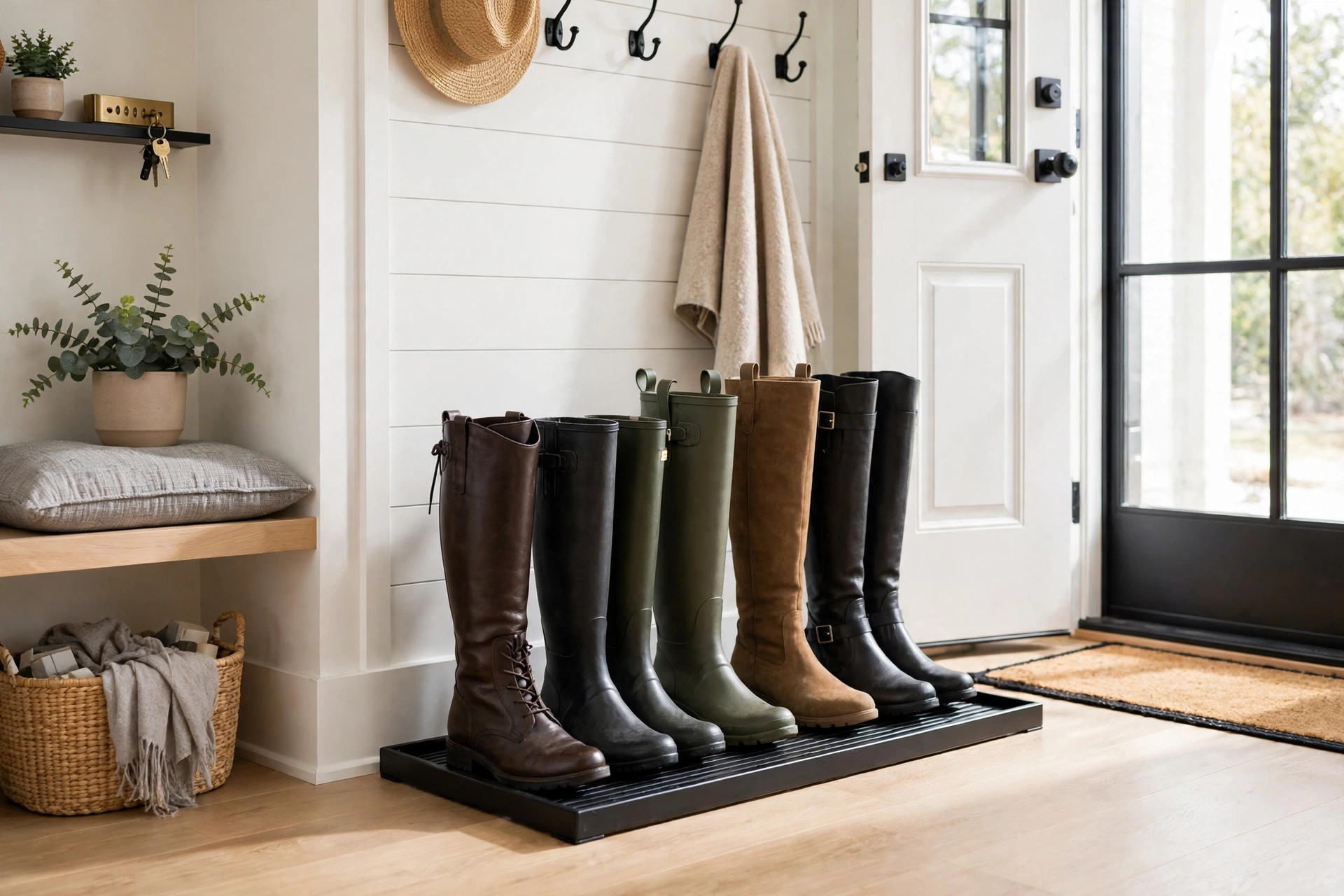
Tall boots left on the floor flop over, because the boot that has no support is the boot that folds at the ankle and the boot that folds is the boot that creases. Keep them standing on a boot tray with a boot rack — boots standing straight, not flopping — so the boots stay upright and the hallway stays tidy. Put a boot tray by the door, stand the boots on it in a row, and slide a boot rack or a pair of boot shapers inside each boot, because the shaper is the thing that holds the boot straight. Keep the tray by the door for the boots you wear in the rain, because the tray that is by the door is the tray that catches the drips, and move the boots to the closet rack when they are dry, because the dry boots are the boots that belong in the closet. A tray and a rack, and the boots stand straight. (Check on Amazon for tall boot shapers, which hold the boot upright and stop the ankle creasing.)
18. Shoe dividers in a drawer — one drawer, shoes in pairs, dividers between them
Shoes loose in a drawer slide around, because the drawer that has no dividers is the drawer where the pairs mix up and the mix-up is the thing that wastes the morning. Add shoe dividers — one drawer, shoes in pairs, dividers between them — so each pair has its own slot and the drawer stays in order. Cut dividers from wood or stiff card to fit the drawer, one slot per pair, and lay the shoes in the slots heel to toe, because the slot is the order and the order is the thing that finds the pair fast. Keep the drawer for the flat shoes and the trainers, because the drawer that holds the flat shoes is the drawer that uses the space well, and put the bulky boots somewhere else, because the boots that are bulky are the boots that need a tray. Dividers in a drawer, and the pairs stay paired.
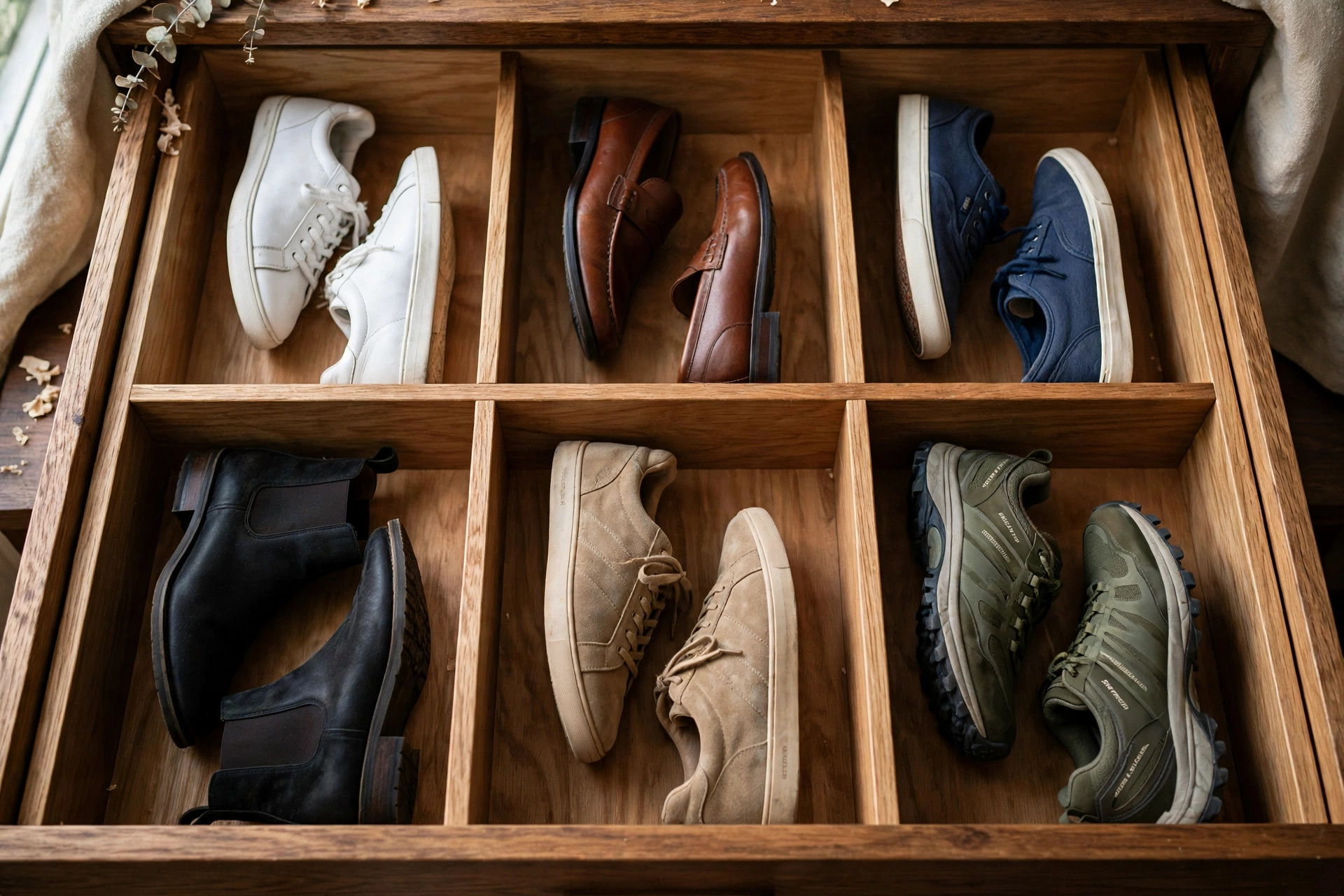
Shoe storage that works harder
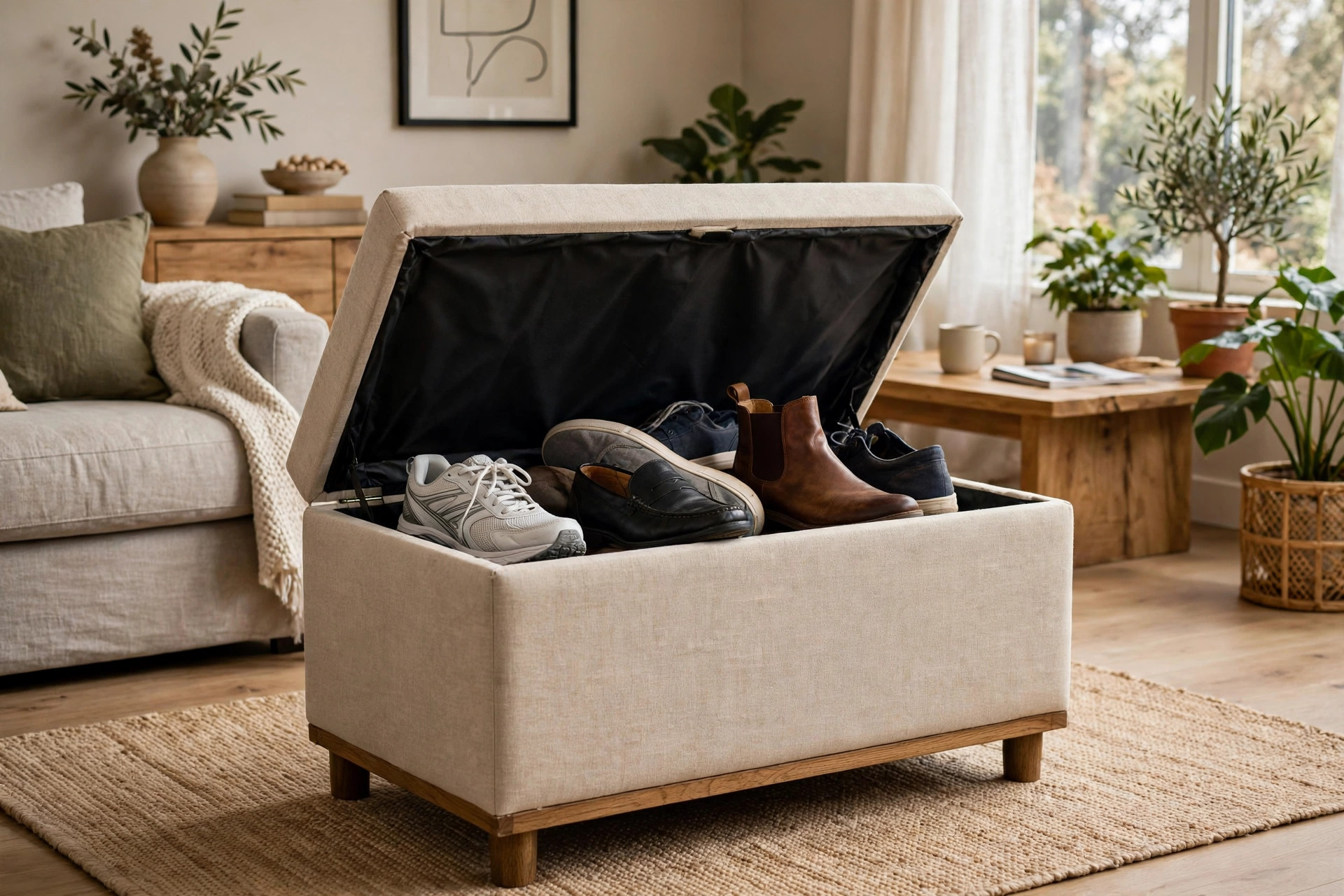
19. A shoe storage ottoman — sit on it, shoes inside it
A hallway with no seat is a hallway you stand in, because the hallway that has nowhere to sit is the hallway where you put the shoes on standing up. Use a shoe storage ottoman — sit on it, shoes inside it — so you sit to put the shoes on and the shoes live inside the seat. Choose an ottoman with a lift-up lid, room for four or six pairs inside, and keep it by the front door or at the end of the bed, because the ottoman that is by the door is the ottoman that gets sat on. Put the everyday shoes inside, because the ottoman that holds the everyday pairs is the ottoman that earns its place, and keep the lid closed when you are not choosing, because the lid that is closed is the lid that hides the shoes. An ottoman with storage, and the hallway gains a seat and a shoe cupboard in one.
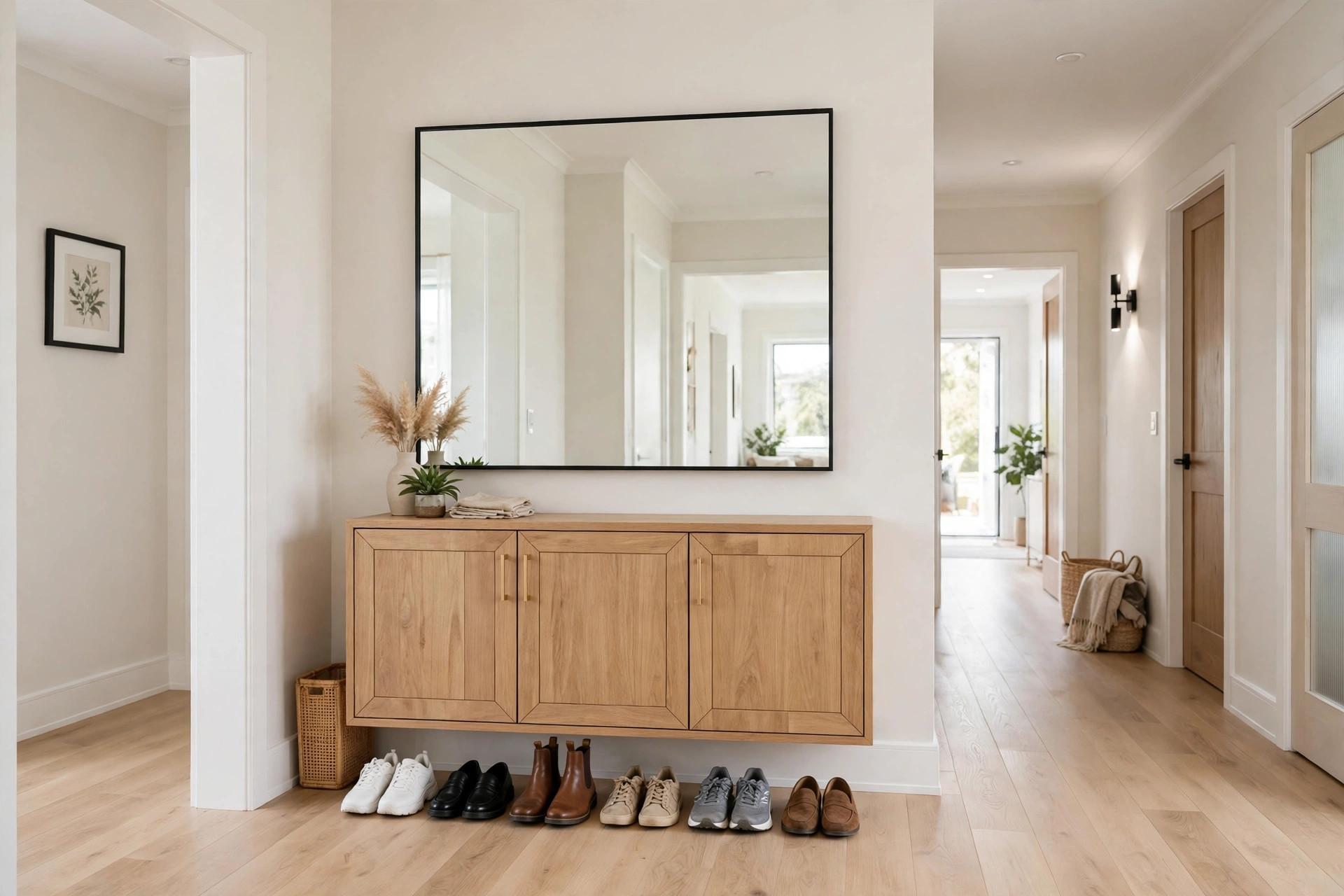
20. A hallway shoe cabinet with a mirror — the mirror doubles the hallway light
A dark hallway feels smaller, because the hallway with no light is the hallway that closes in on you. Put a shoe cabinet with a mirror above it — the mirror doubles the hallway light — so the cabinet holds the shoes and the mirror bounces the light back down the hall. Hang the mirror above the cabinet at eye height, and keep the cabinet slim so it does not block the walkway, because the cabinet that is slim is the cabinet that fits a narrow hall. Wipe the mirror once a week, because the mirror that is dusty is the mirror that dulls the hallway, and keep the shoes in the cabinet closed away, because the cabinet that is closed is the cabinet that looks like furniture. The mirror the hallway gains is the mirror that makes the whole entrance feel bigger. A cabinet and a mirror, and the hallway feels twice as bright.
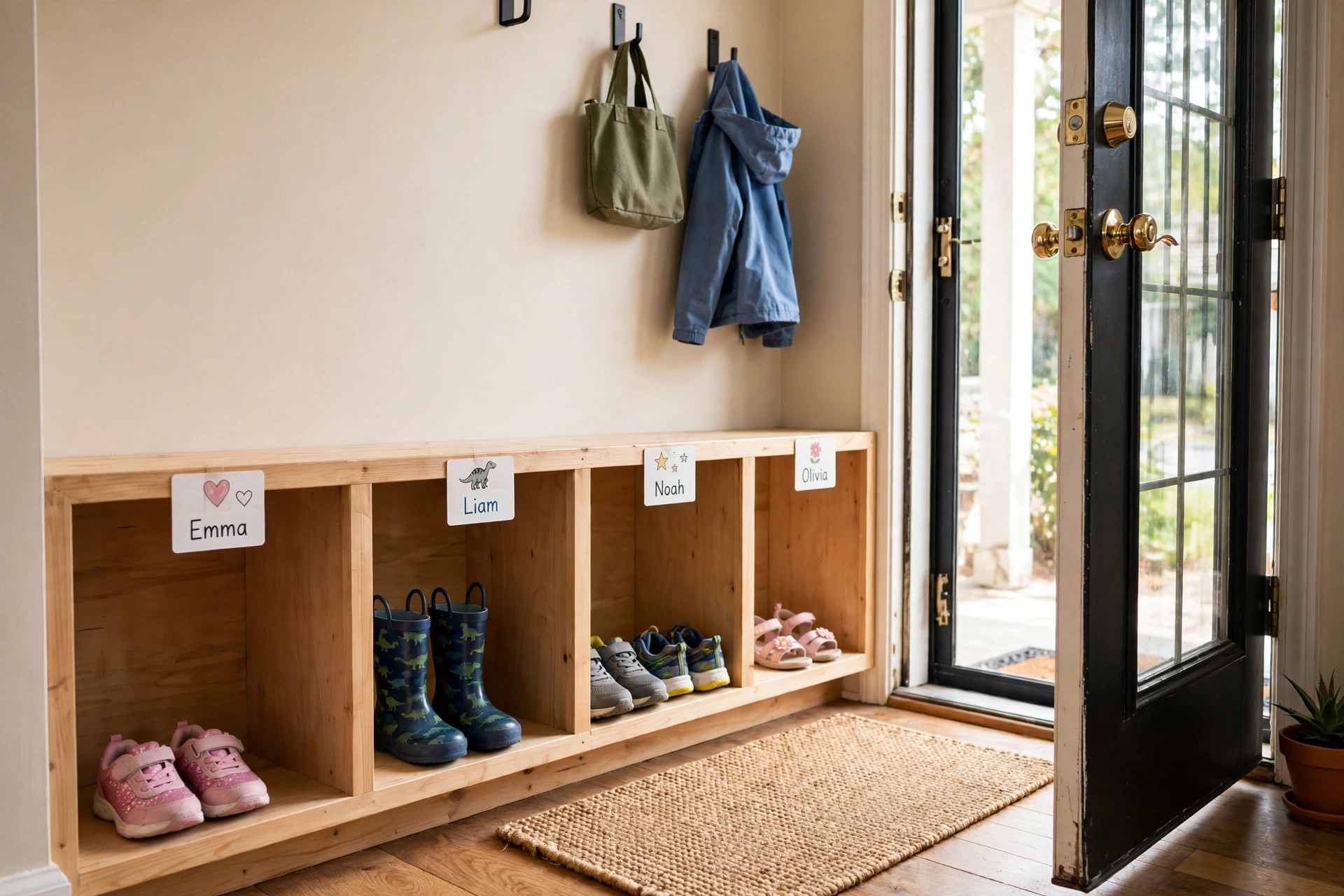
21. Shoe storage for kids — low cubbies the kids can reach
Kids' shoes end up everywhere, because the shoes that belong to small feet are the shoes that get kicked off wherever the child stops. Give them low cubbies they can reach — low cubbies the kids can reach — so the child can put the shoes away without help and the hallway stops collecting them. Put the cubbies at knee height by the front door, one pair per cubby, and label each cubby with a picture of the shoes or the child's name, because the picture label is the label a child who cannot read yet can still follow. Keep the cubbies to the shoes the child wears every day, because the cubby that holds the everyday shoes is the cubby that gets used, and put the outgrown pairs in a box for passing on, because the box that is labelled is the box that finds the next child fast. The playroom the kids' shoes come from is in 22 Playroom Organization Ideas for 2026, where the toys get the same low-cubbies treatment. Low cubbies, and the kids put their own shoes away.
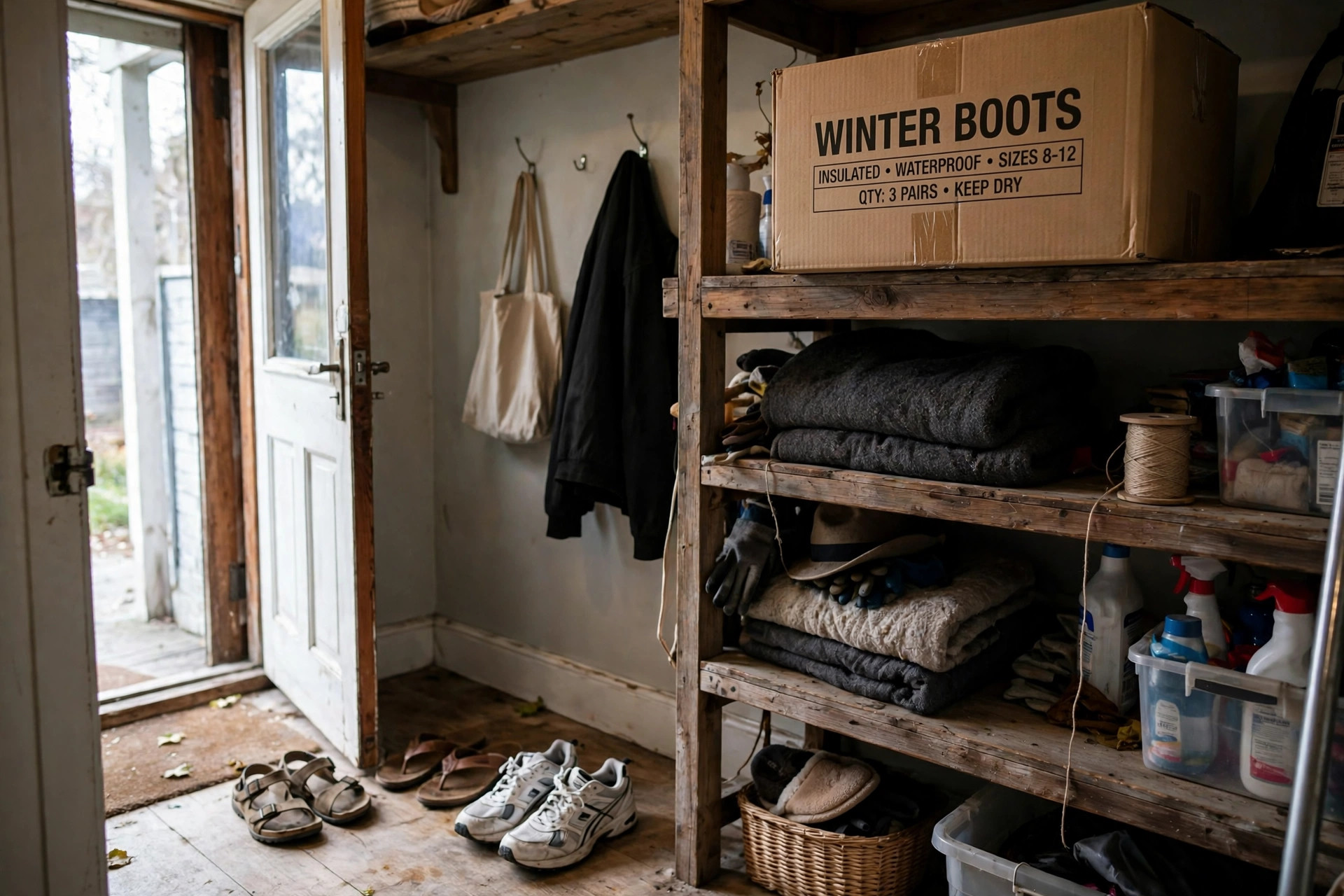
22. Seasonal shoe rotation — out-of-season shoes in a labelled box, in-season shoes by the door
Winter boots by the door in July are boots in the way, because the boots that belong to winter are the boots that crowd the sandals in summer. Rotate the shoes with the seasons — out-of-season shoes in a labelled box, in-season shoes by the door — so the door holds only the shoes the weather needs. At the start of each season, swap the box: winter boots into the labelled box on the top shelf, sandals and trainers by the door, because the box that is labelled is the box that finds the boots again in October. Keep the box on a high shelf or under the bed, because the box that is out of the way is the box that does not crowd the door, and clean the shoes before you box them, because the shoes that go away clean are the shoes that come back clean. The coat closet the seasonal swap happens in is in 25 Coat Closet Organization Ideas for 2026, where the coats rotate the same way. A seasonal swap, and the door holds only this season's shoes.
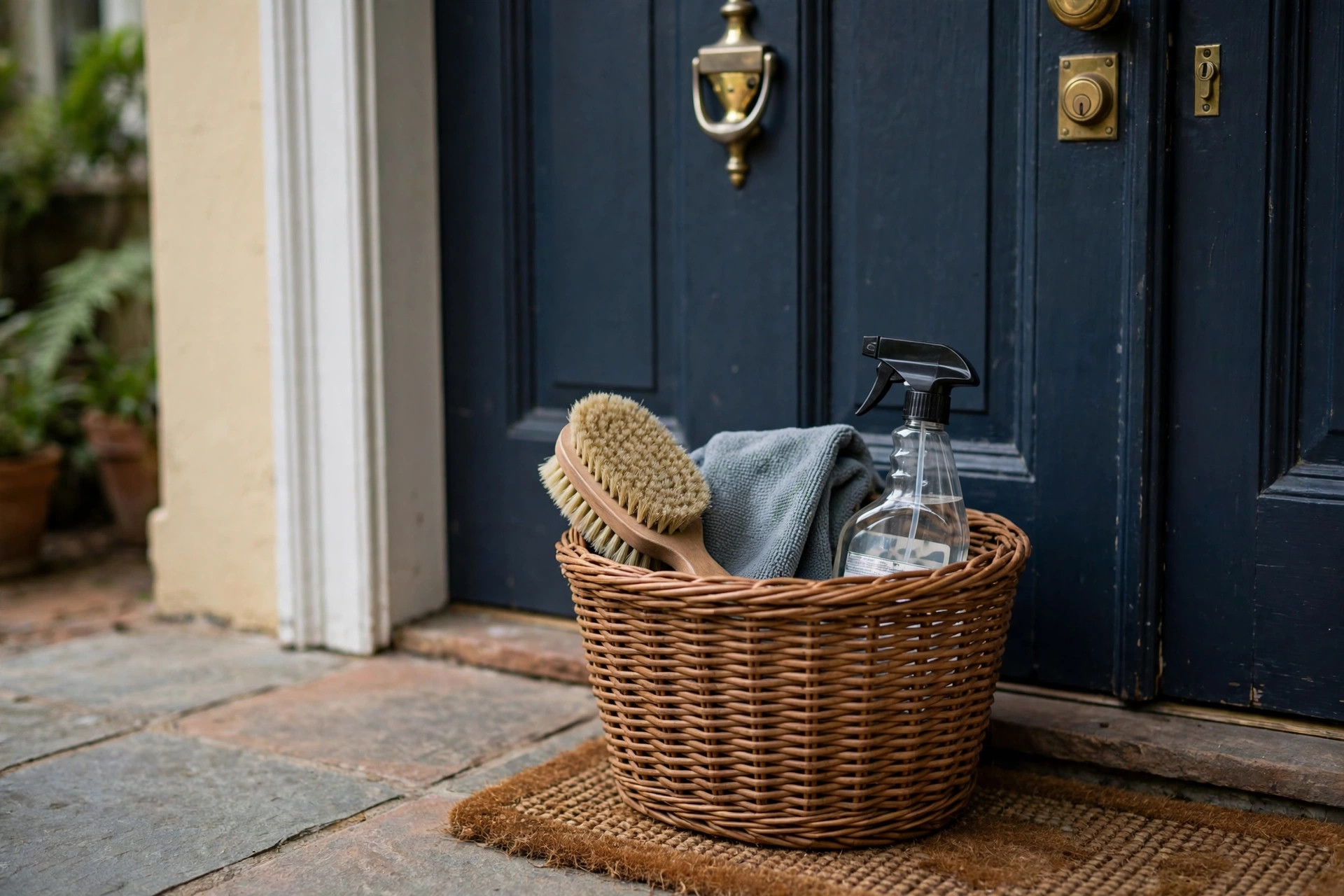
23. A shoe cleaning station by the door — brush, cloth and spray in one basket
Dirty shoes by the door stay dirty, because the shoes that come in muddy are the shoes that nobody cleans until the mud dries on. Put a cleaning station by the door — brush, cloth and spray in one basket — so the mud gets cleaned off before the shoes go on the rack. Keep one basket with a stiff brush, a cloth and a spray bottle, and wipe the shoes when you come in, because the shoes that are wiped at the door are the shoes that do not bring the mud inside. Hang the basket on a hook or keep it on the shoe rack, because the basket that is by the door is the basket that gets used, and replace the cloth once a week, because the cloth that is dirty is the cloth that spreads the mud. The pegboard the cleaning supplies hang on is in 20 Pegboard Organization Ideas for 2026, where the hallway wall gets put to work. A basket by the door, and the shoes get cleaned before they come in.
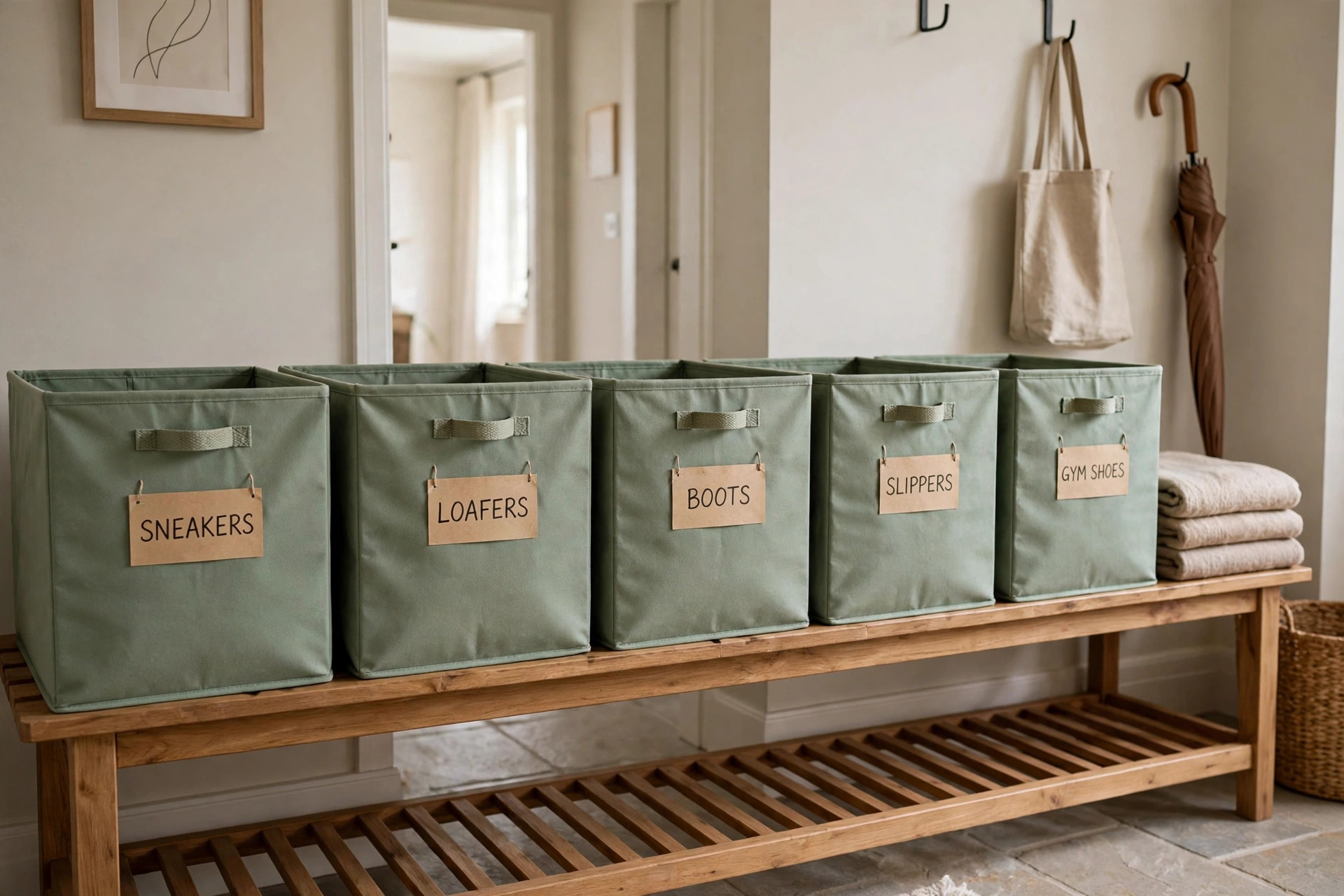
24. Matching shoe bins in one colour — one colour, one look, shoes disappear into the room
Shoe bins in five different colours look like clutter, because the bins that do not match are the bins that shout and the bins that shout are the bins that make the room look messy. Use matching bins in one colour — one colour, one look, shoes disappear into the room — so the bins read as one piece of furniture and the shoes inside them vanish. Choose bins in the sage, white or wood tone of the hallway, all the same size, and label each one on the front, because the bins that match are the bins that blend and the labels are the things that find the pair. Keep the bins on the rack from idea 1 or in the closet, because the bins that live in the rack are the bins that stay in order, and the bin rack the shoe bins live on is in 18 Storage Bin Rack DIY Ideas for 2026, where the rack gets built to fit the bins. One colour, one size, and the shoes disappear into the room.
Which shoe storage fits which situation?
| Situation | Best first move | Budget | Tools needed |
|---|---|---|---|
| Shoes piled by the front door | Shoe rack by the door (idea 1) | Low | Shoe rack |
| Wet and muddy shoes | Shoe tray by the door (idea 2) | Low | Tray, mat |
| No floor space for a rack | Over-the-door organizer (idea 3) | Low | Organizer, hooks |
| A spare bookshelf doing nothing | Shoe cubbies from the bookshelf (idea 4) | Free | Bookshelf |
| Putting shoes on standing up | Bench with storage underneath (idea 5) | Low | Bench |
| One rack already full | Stackable shoe racks (idea 6) | Low | Two racks |
| Shoes look like a mess on the floor | Wall-mounted shoe display (idea 7) | Low | Shelves, screws |
| Shoes hidden on a flat shelf | Slanted shoe shelf (idea 8) | Low | Slanted shelf |
| Cannot find the pair you want | Clear shoe boxes with labels (idea 9) | Low | Clear boxes |
| Back row of the shelf forgotten | Rotating shoe shelf (idea 10) | Low | Rotating shelf |
| Open shelves look untidy | Shoe cabinet with drop-front doors (idea 11) | Medium | Cabinet |
| Tall boots flop over | Boot tray and boot rack (idea 17) | Low | Tray, boot rack |
| Kids' shoes everywhere | Low cubbies the kids can reach (idea 21) | Low | Low cubbies |
| Winter boots in the way in July | Seasonal shoe rotation (idea 22) | Free | Labelled box |
| Mud comes in on the shoes | Shoe cleaning station by the door (idea 23) | Low | Basket, brush |
| Bins in five colours look messy | Matching bins in one colour (idea 24) | Low | Matching bins |
You do not need all 24 ideas. You need the three that solve your front door — usually the shoe rack where the shoes come off, the tray that catches the mud, and the boot rack that keeps the tall boots standing. Start with the rack, put it by the door this weekend, and put the shoes on it when you come in. Do that and the next time you walk in the hallway will be clear, for the price of one rack and an afternoon.
Save this post for your next entryway sort, and if the hallway needs sorting first, read 22 Entryway Storage Ideas for 2026 next — it is Post 10, the hallway the shoes live in — and 25 Coat Closet Organization Ideas for 2026, Post 11, for the coats that hang above the shoes. This is the fifth post of the Storage by room/object cluster — Posts 31 to 35, one room at a time — and the next posts carry the same storage system into the rooms that follow.
Publish date assigned at publishing time. Updated as new shoe storage finds are tested.
Frequently asked questions
How many pairs of shoes should I keep by the front door?
Keep one pair per person by the front door — the shoes you wear today, plus one spare pair for rain — and move the rest to the closet or under the bed. The door that holds one pair per person is the door that stays tidy, because the shoes by the door are the shoes in use and the shoes in use are the only ones that need to be there. If the household has more than four people, give each person one cubby or one slot on the rack, because the slot that is yours is the slot that keeps the pairs from mixing up.
How do I store boots so they don't flop over?
Stand tall boots upright with something inside them — boot shapers, rolled-up magazines or a pool noodle cut to length all hold the boot straight and stop the ankle creasing. Put the boots on a boot tray by the door while they are wet, then move them to a boot rack in the closet once they are dry, because the dry boots are the boots that belong in the closet. Never fold a tall boot flat to store it, because the boot that folds is the boot that creases and the crease is the thing that never comes out.
What is the best shoe storage for a small entryway?
A slim shoe cabinet with drop-front doors, because the cabinet that is slim is the cabinet that fits a narrow hallway and the doors that close are the doors that hide the shoes. If there is no room even for a slim cabinet, use an over-the-door shoe organizer on the inside of the nearest door, because the door that holds the shoes is the door that uses no floor at all. Keep only the shoes you wear this week by the door, and rotate the rest to the closet, because the small entryway that holds few shoes is the entryway that stays tidy.