20 Hat Organization Ideas for 2026
Hats are the hardest things in the house to store, because a hat is mostly air — a crown that crushes, a brim that bends, a shape that disappears the moment anything sits on top of it. Stack them and they flatten. Hang them on a thin hook and the hook leaves a dent. Toss them on a shelf and they slide off the edge and land on the floor, where the dog walks over them.
These 20 hat organization ideas keep every hat shaped and visible: start with a row of wooden pegs by the door, build a pegboard wall that shows the whole collection, keep the best hats in boxes on the closet shelf, and finish with a travel case and a seasonal swap — so the hat you want is the hat you can see, and the hat you grab is the hat that still holds its shape.
Every idea below works in a real house, from a hallway with one free wall to a closet with one crowded shelf. The closet the hats live in is covered in 26 Small Walk-In Closet Organization Ideas for 2026, where the closet gets its own system before the hats arrive — and the entryway the hats hang in is in 22 Entryway Storage Ideas for 2026, so the pegs by the door match the rest of the hall. Pick three ideas that fit your hats, start with the pegs, and build from there.
Start simple: hooks, pegs and the wall
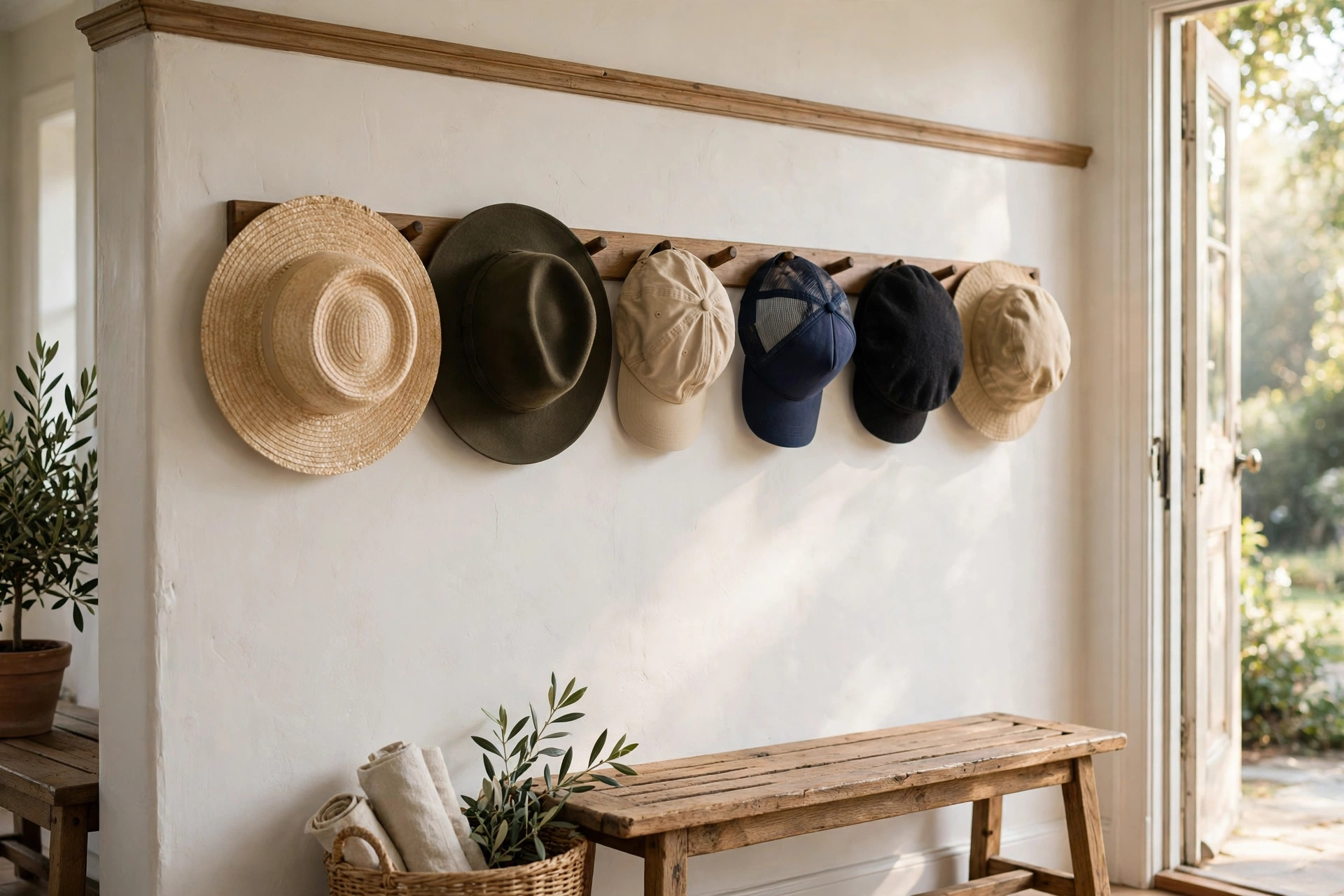
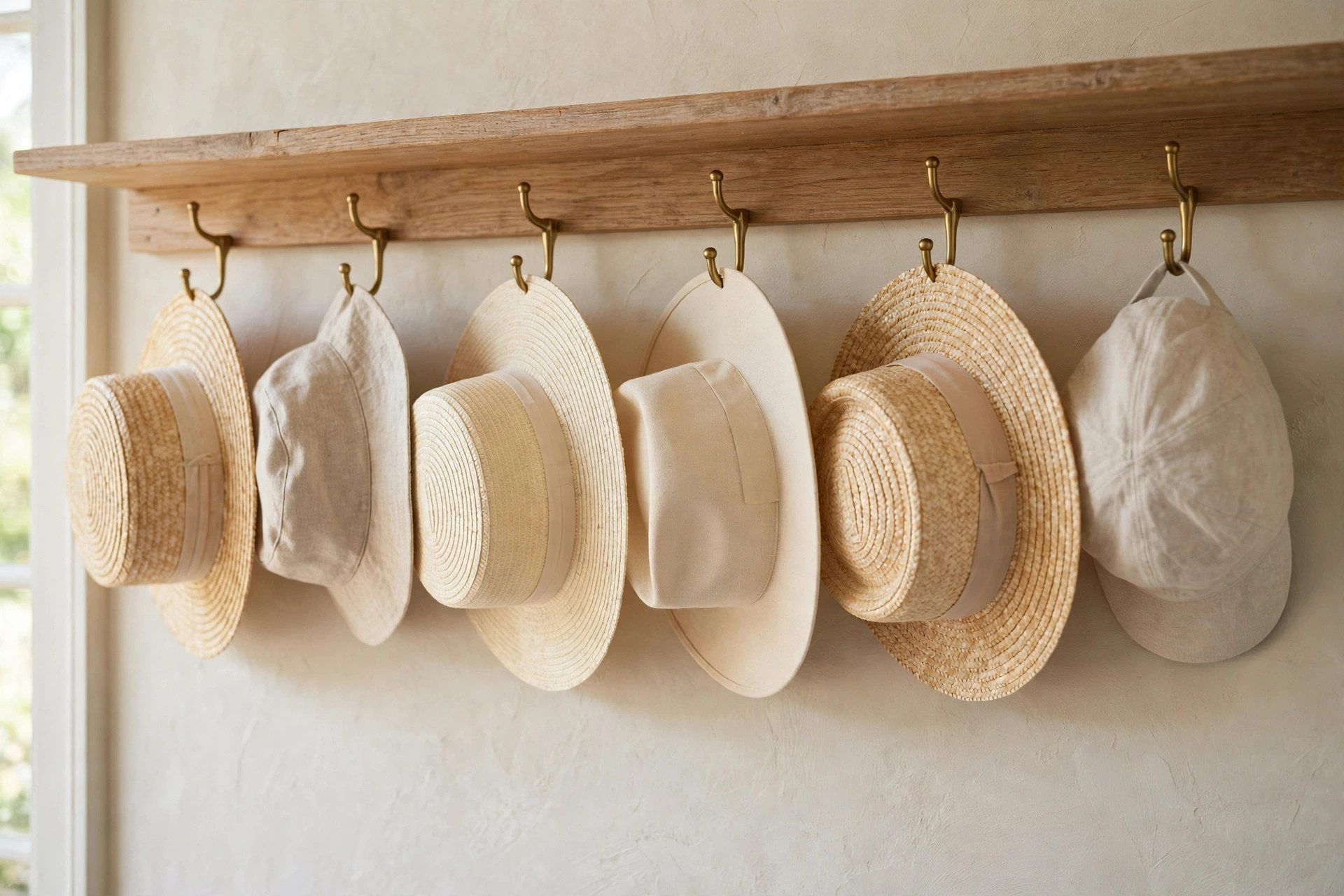
1. A row of wooden pegs by the door — one hook, one hat, no pile
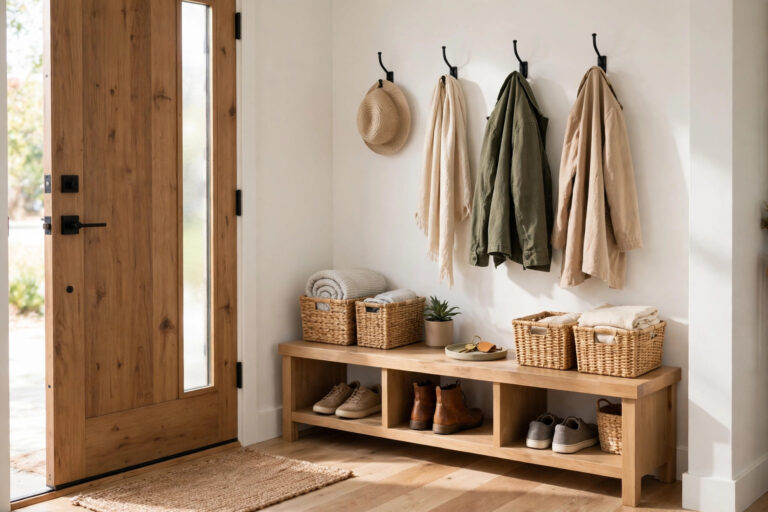
A hat with no hook is a hat on the pile, because the hat you take off has nowhere to go and the pile is the place it lands. Put a row of wooden pegs by the door — one hook, one hat, no pile — so every hat has its own peg and the pile never starts. Screw the pegs into the wall at head height, one peg per hat, with enough space between them that the brims do not touch, because the brim that touches is the brim that bends. Hang the hat you wear most on the peg nearest the door, because the peg nearest the door is the peg your hand reaches first. Choose wide wooden pegs, not thin metal hooks, because the wide peg holds the crown without denting it. One row of pegs, and the hats stop piling up.
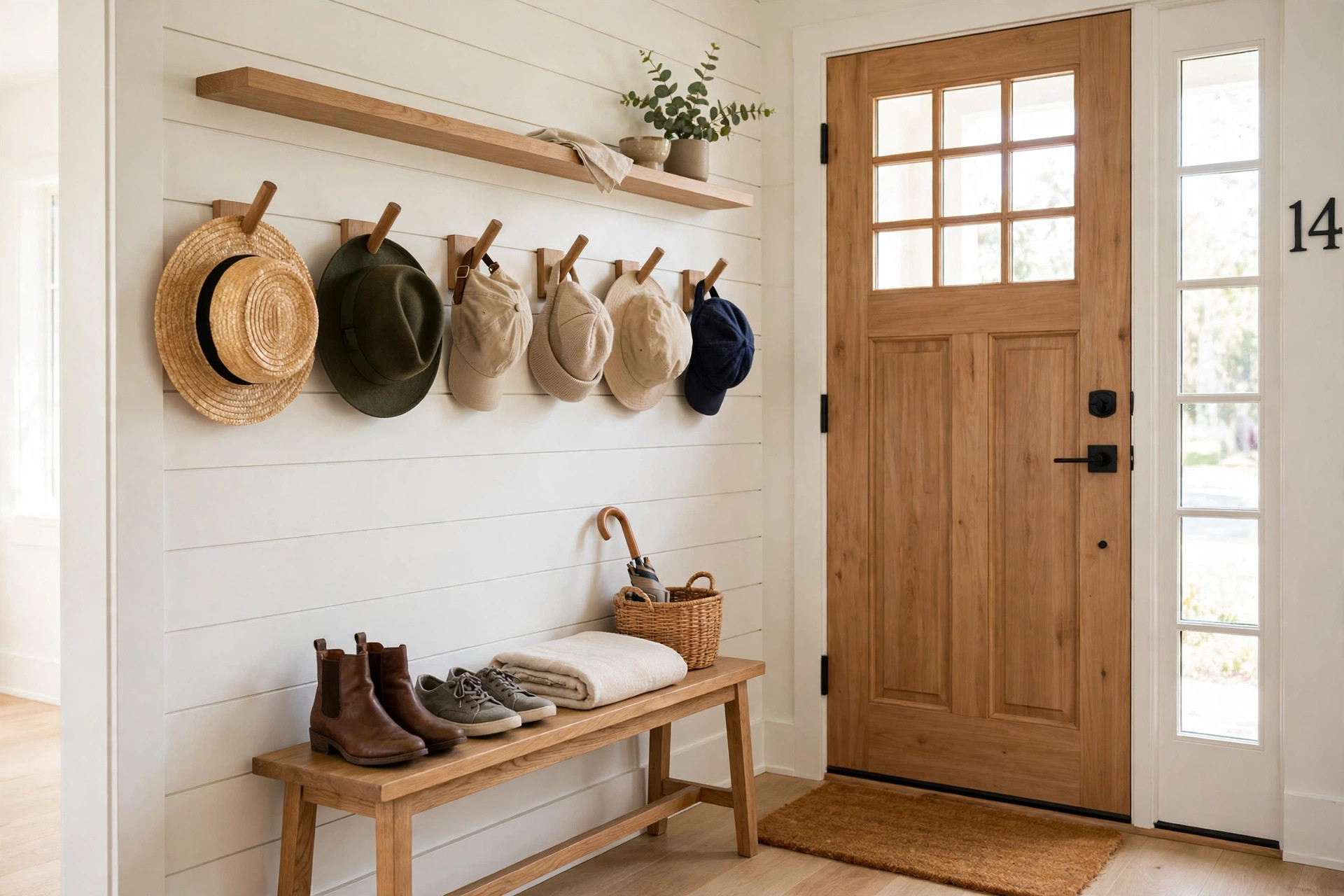
2. A pegboard wall for hats — every hat visible, none crushed
A hat in a closet is a hat you forget, because the hat you cannot see is the hat you do not wear and the hat you do not wear is the hat that gathers dust. Build a pegboard wall for hats — every hat visible, none crushed — so the whole collection hangs where you can see it and no hat ever sits under another one. Mount a pegboard on the wall, add hooks at different heights, and hang the hats by their crowns or their brims, because the pegboard is the wall and the hooks are the storage. Keep the heavy hats low and the light ones high, so nothing pulls the board off the wall, and leave a gap between the hats, because the gap is the thing that keeps the brims from bending. A pegboard wall, and the hats are on display instead of in a pile. (Check on Amazon for a pegboard kit with hooks, which comes with the hooks you need in one box.)
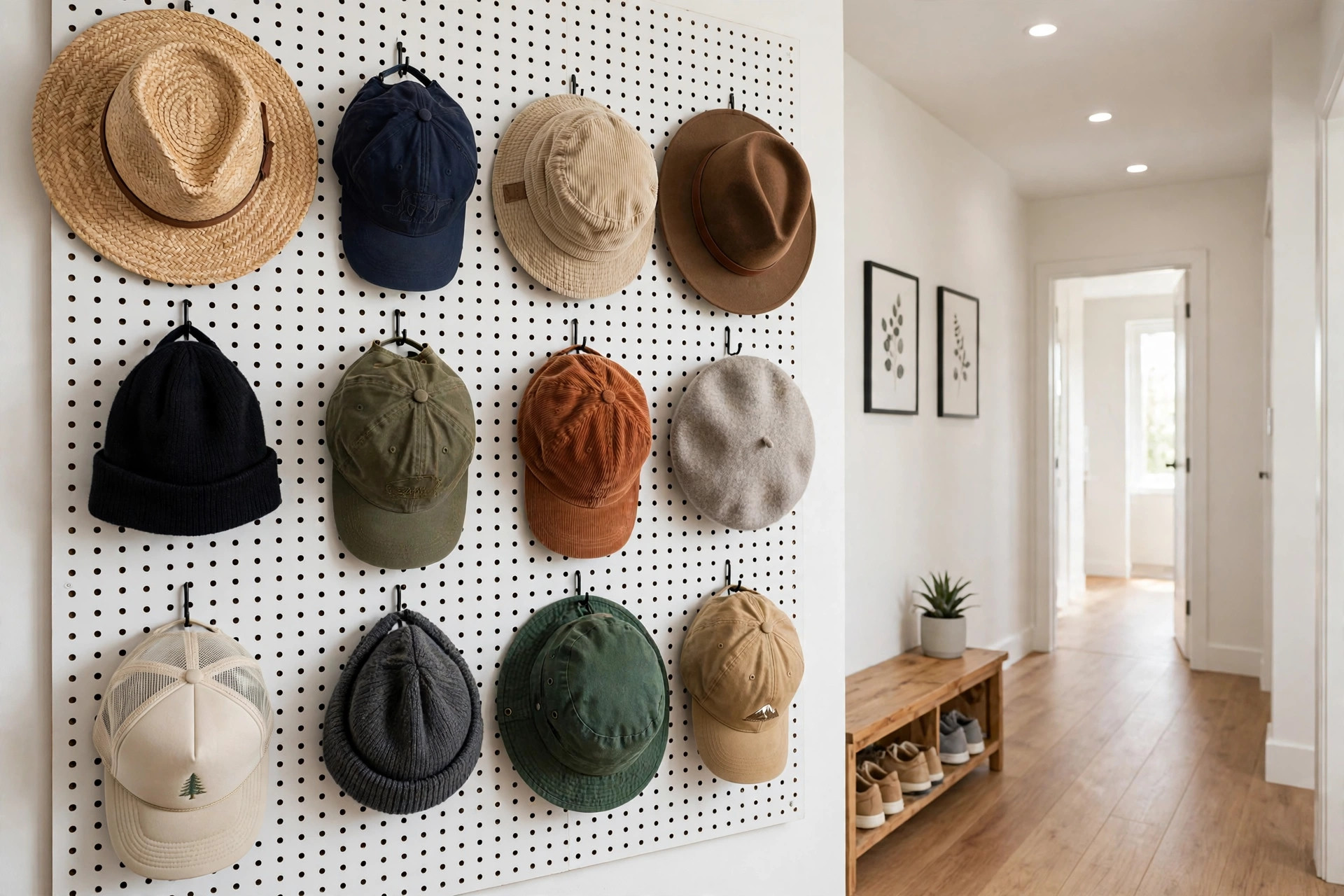
3. A hat rack with wide hooks — the hooks that hold the shape
A thin hook dents a hat, because the hook that is narrow is the hook that presses one point into the crown and the dent is the thing that stays. Use a hat rack with wide hooks — the hooks that hold the shape — so the weight of the hat spreads across the hook and the crown keeps its curve. Pick a rack with hooks at least two fingers wide, in wood or padded metal, and hang the hats by the inside band, not the brim, because the band is the strong part and the brim is the part that bends. Mount the rack where the hats come off, by the door or in the bedroom, because the rack that is there is the rack that gets used. Wide hooks, and the hats keep their shape.
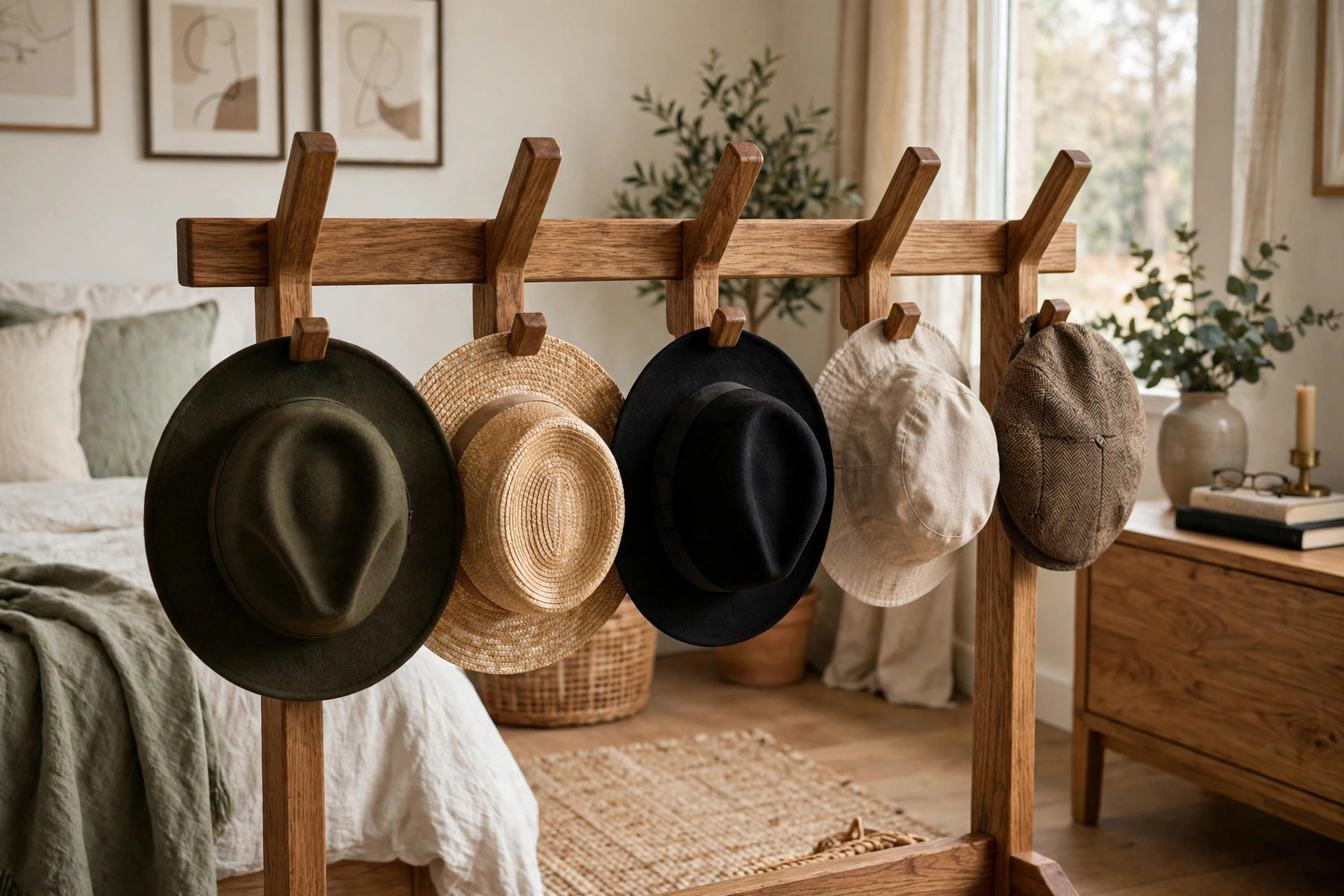
4. A tension rod under a shelf — clip hats to the rod, crowns free
A shelf with hats on it wastes the space underneath, because the hats sit on the shelf and the air below the shelf does nothing. Slide a tension rod under the shelf — clip hats to the rod, crowns free — so the hats hang in the empty air and the shelf keeps its own storage. Wedge the rod between the sides of the closet or the shelf brackets, clip the hats to it with shower rings or binder clips, and let the crowns hang down free, because the rod is the holder and the clips are the grip. Keep the rod low enough to reach and high enough that the brims do not brush the floor, and clip the hats by the band, because the band is the part that holds. A rod and a few clips, and the hats use the air the shelf was wasting.
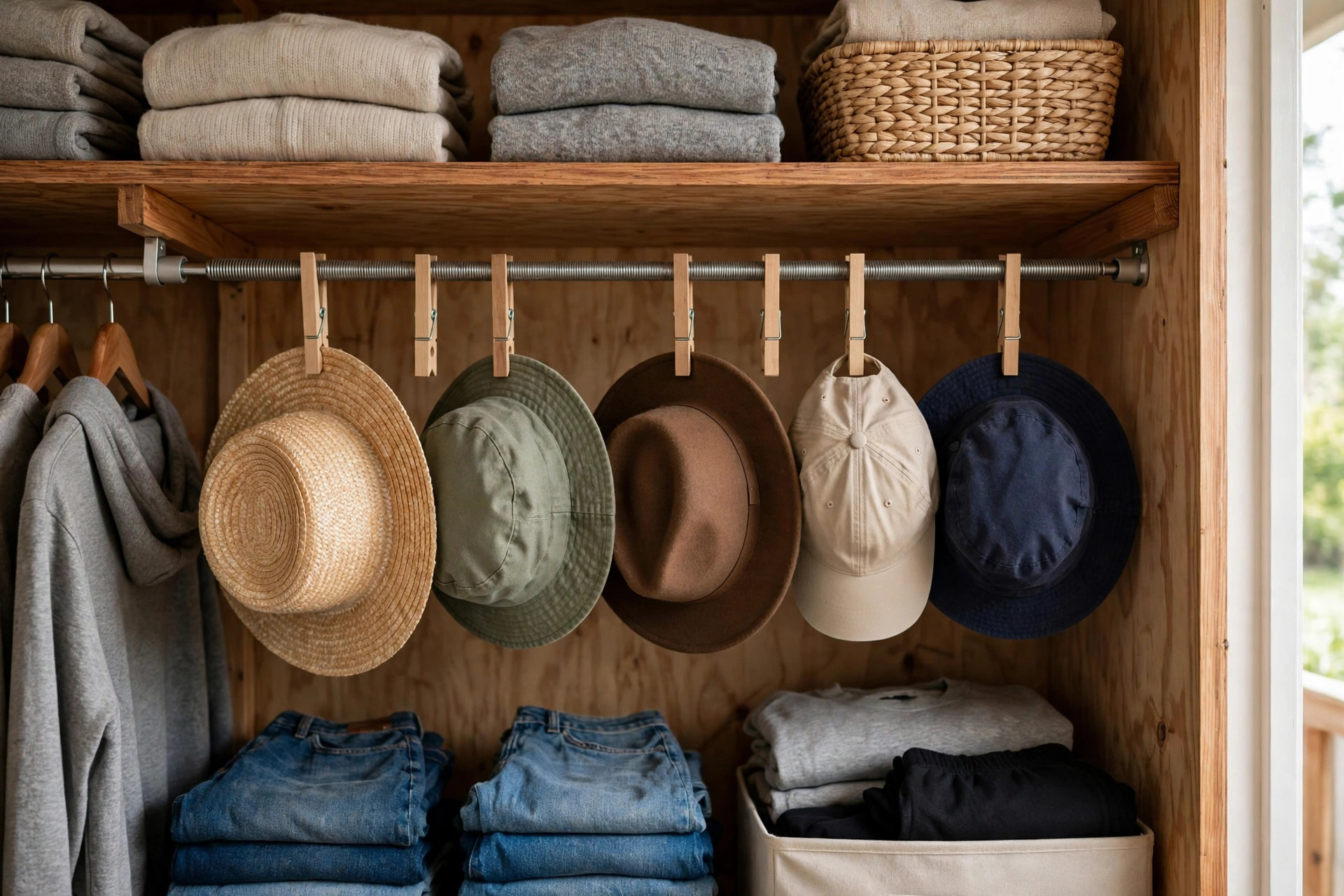
5. A row of cup hooks under a shelf — hang hats by the brim
A cup hook is a hook made for cups, but a hat hangs on it just as well, because the hook that holds a cup by its handle holds a hat by its brim. Screw a row of cup hooks under a shelf — hang hats by the brim — so the hats dangle where you can see them and the shelf above keeps its boxes. Space the hooks a hand's width apart, so the brims do not overlap, and hang the hats with the crown facing out, because the crown that faces out is the crown you can grab. Keep the light hats on the cup hooks and the heavy ones on the pegs, because the cup hook is small and the heavy hat is the one that pulls it out. Cup hooks under a shelf, and the hats hang in the space nobody was using.
Hat displays that look like decor
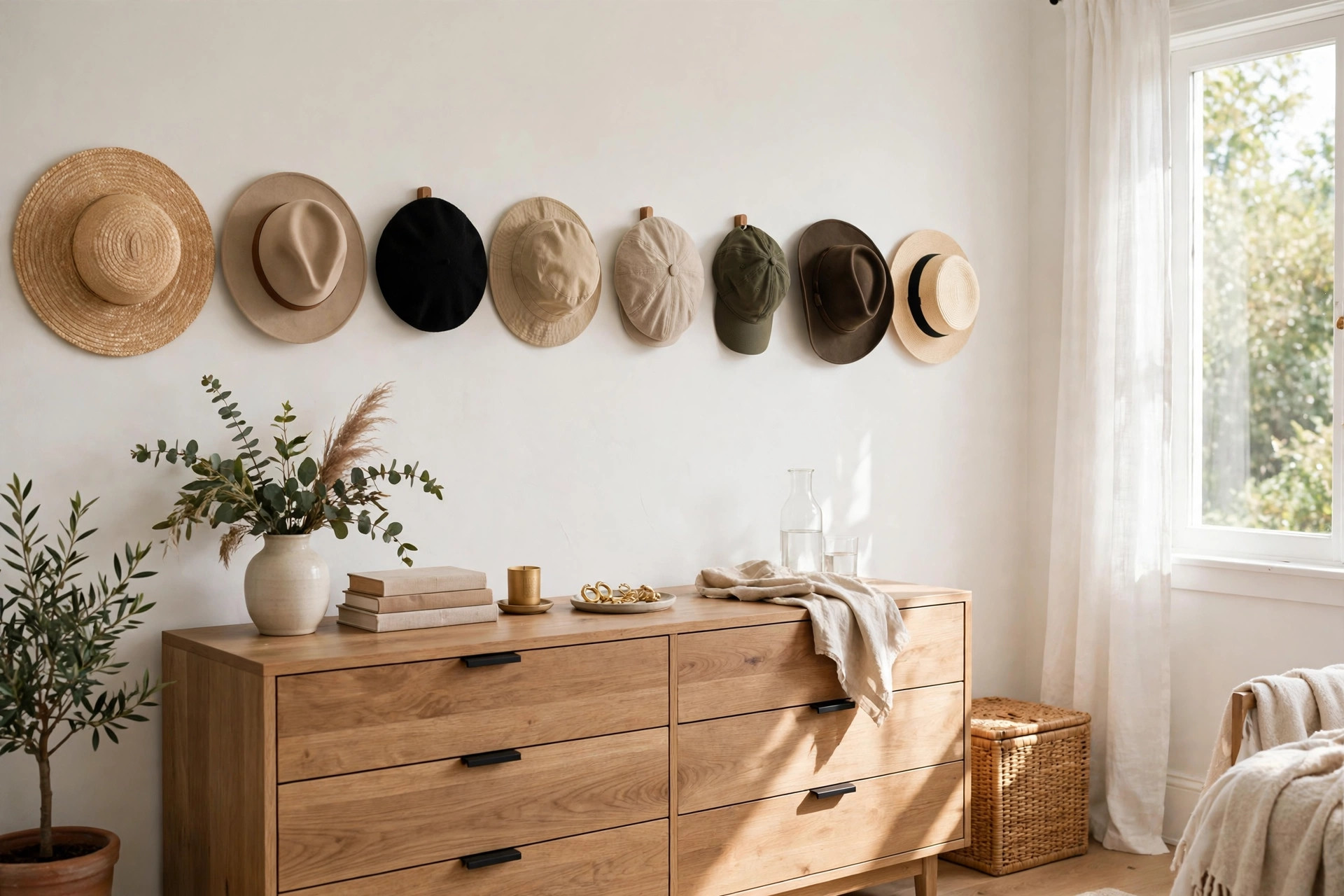
6. A wall of hats as decor — the hats are the art
A wall with nothing on it is a wall waiting for art, and a hat is art you already own, because the hat you love is the hat with the colour and the shape and the story. Hang a wall of hats as decor — the hats are the art — so the collection becomes the decoration and the wall stops being blank. Arrange the hats in a loose grid or a gentle arc, mixing wide brims and caps, dark and light, and hang them on small pegs or clear hooks, because the peg is the holder and the wall is the gallery. Keep the hats you wear most at hand height, because the hats you can reach are the hats you wear, and put the showpieces higher, because the showpieces are the ones you look at. A wall of hats, and the room gains art for free.
7. A hat display on a wooden ladder — lean it, hang the hats
A ladder leaning in a corner is a ladder doing nothing, because the ladder you do not climb is the ladder that stands there holding nothing. Turn it into a hat display — lean it, hang the hats — so the rungs hold the hats and the corner gains a display. Lean a wooden ladder against the wall, hang the hats from the rungs by their bands or their brims, and put the tallest hats at the top, because the top rung is the one that shows. Keep the ladder in the bedroom or the hallway, not the garage, because the ladder that is in the room is the ladder that holds the hats you wear. Lean it at a gentle angle so it cannot slip, and never load it so full the hats touch the floor. A ladder and a few hats, and the corner has a display.

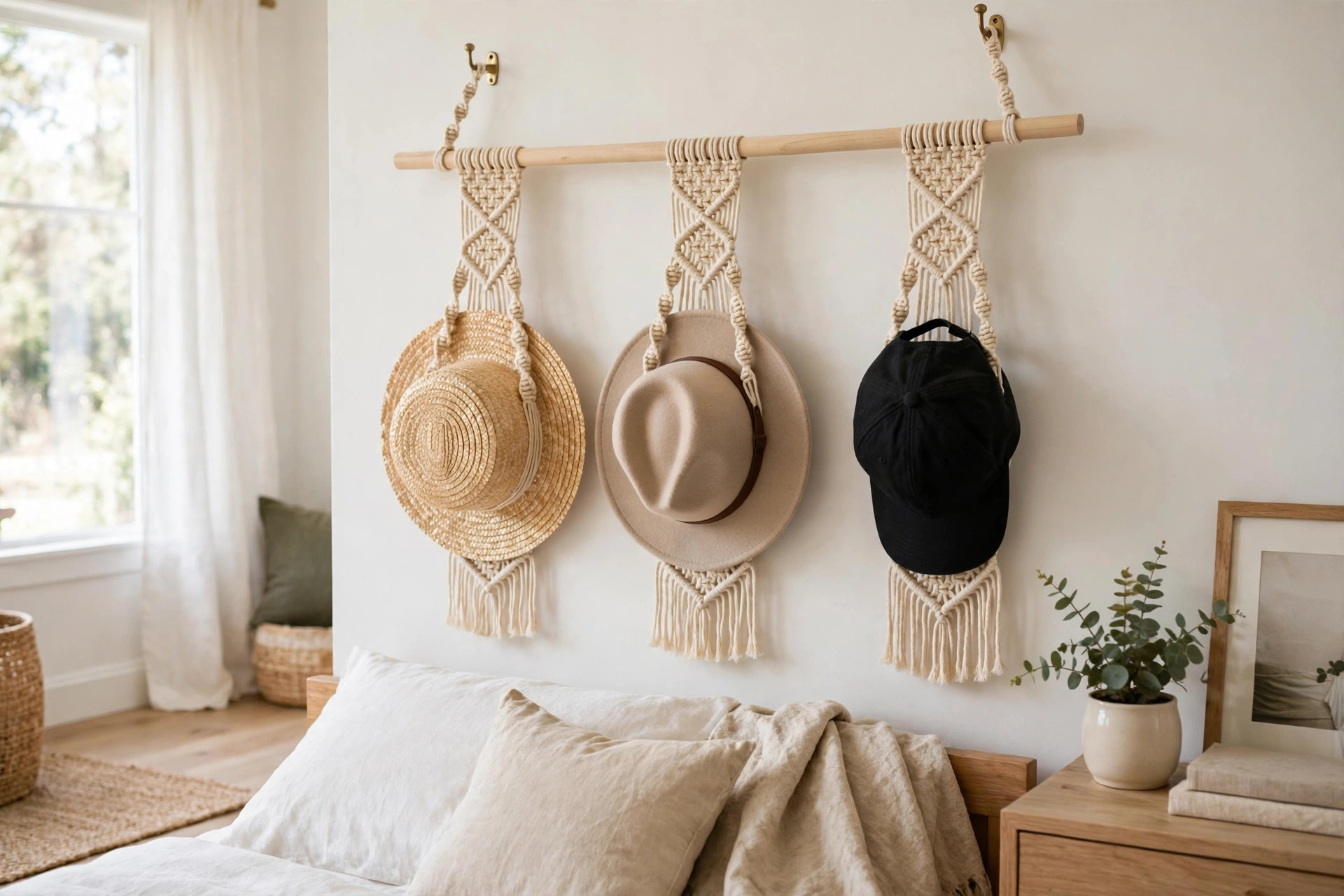
8. A macramé hat hanger — one hanger, three hats, no marks
A hat hung on a nail gets a mark, because the nail is the point that presses into the crown and the mark is the thing that stays. Hang the hats in a macramé hanger — one hanger, three hats, no marks — so the hats rest in soft loops and the crowns never touch anything hard. Hang the hanger from a hook on the wall or the ceiling, slip the hats into the loops one above the other, and let the cords hold them gently, because the cord is the holder and the loop is the cradle. Keep the hanger in the bedroom where the hats live, and put the hat you wear most in the bottom loop, because the bottom loop is the one your hand reaches first. A macramé hanger, and the hats hang without a mark.
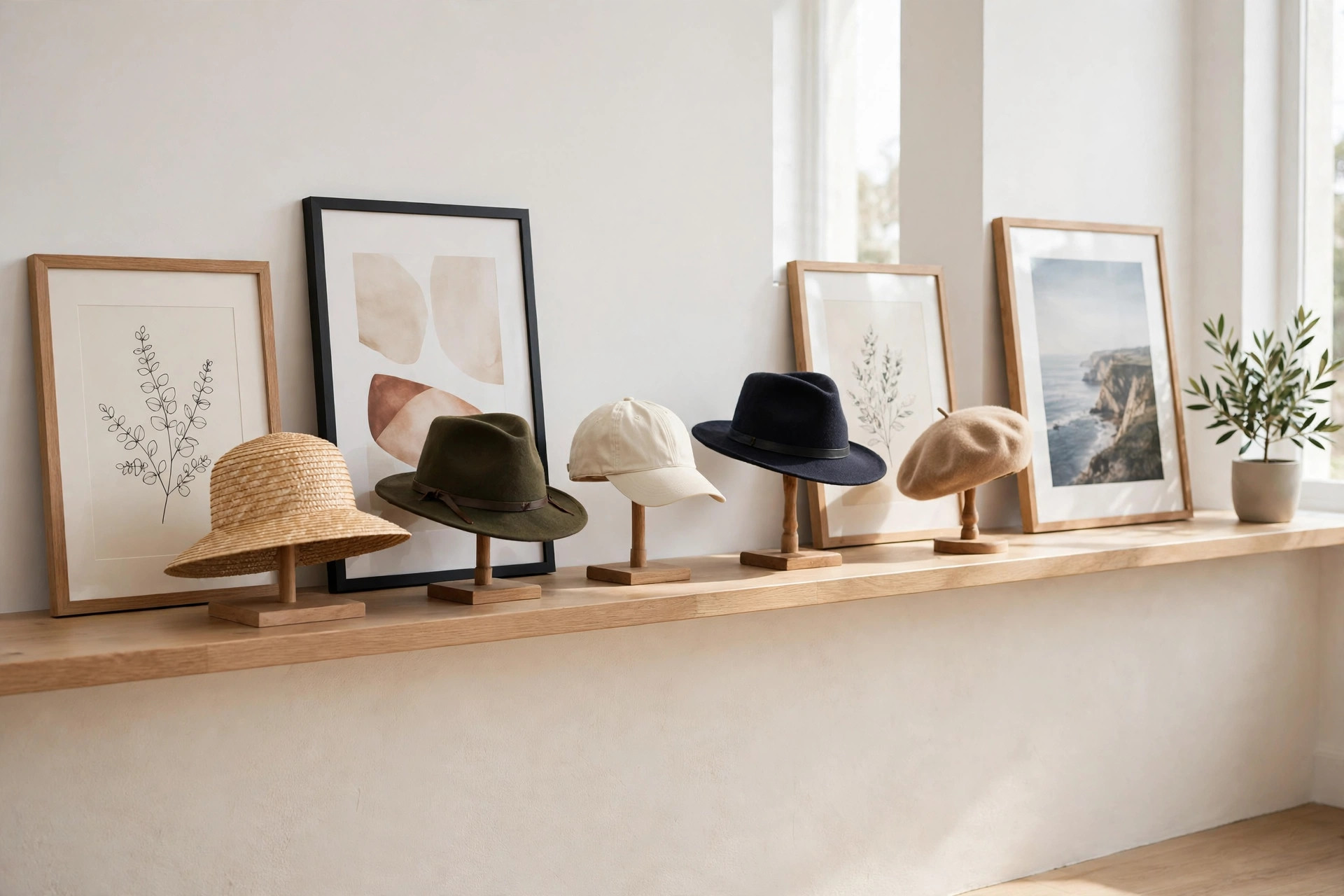
9. A gallery ledge with hats on stands — the hats on display
A hat on a shelf slides off, because the shelf is flat and the hat is round and the round thing rolls. Put the hats on stands on a gallery ledge — the hats on display — so each hat sits on its own stand and the ledge holds them like pictures. Set a narrow picture ledge on the wall, put a small hat stand on it for each hat, and space the stands so the brims do not touch, because the stand is the holder and the ledge is the shelf. Mix the hats with a framed print or a small plant, because the ledge that holds one thing is a shelf and the ledge that holds three is a display. Keep the ledge at eye height, so the hats are the first thing you see when you walk in. A ledge and a few stands, and the hats are on display.
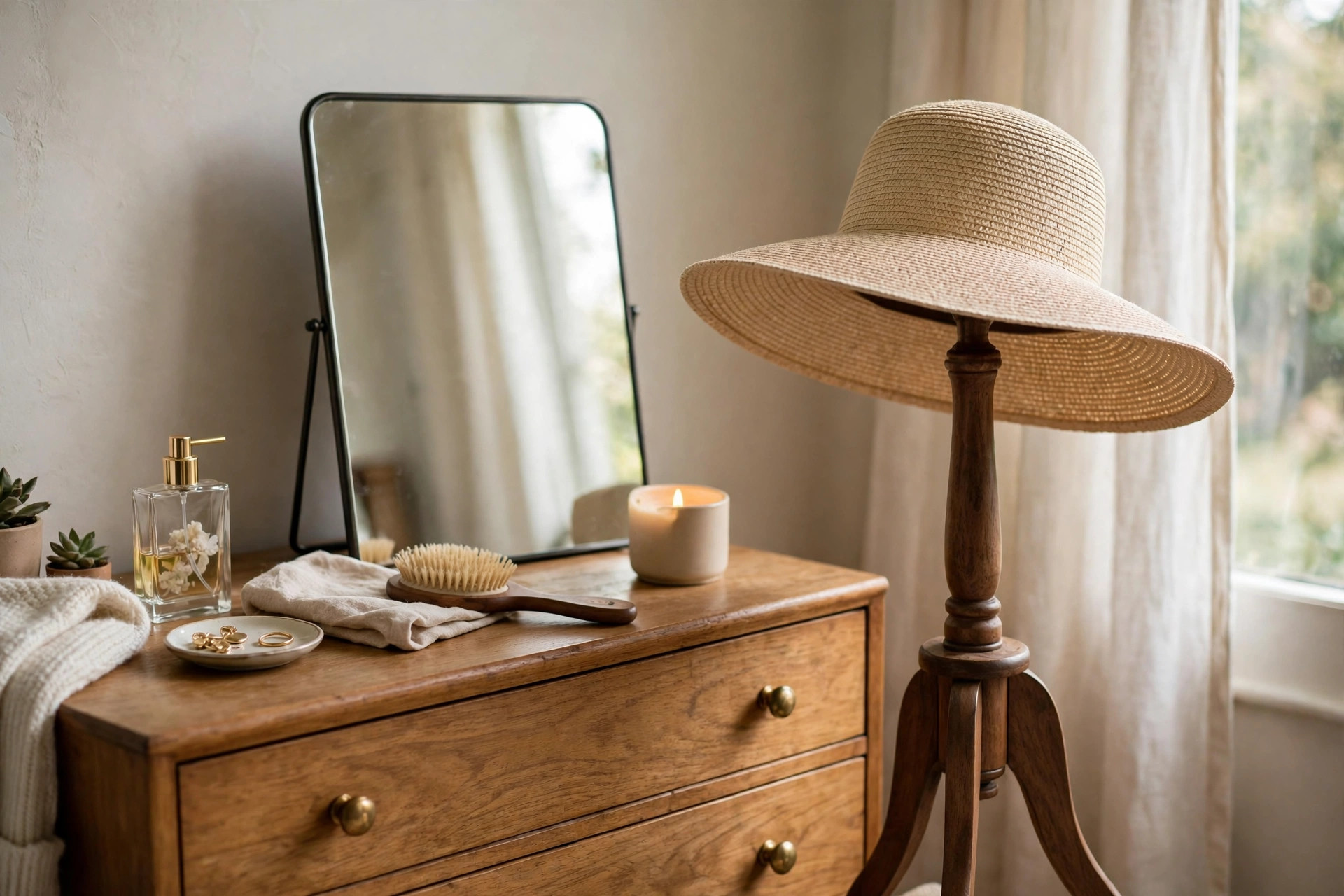
10. A hat stand by the mirror — try it on, hang it back
A hat tried on in front of a mirror is a hat that ends up on the bed, because the mirror is where you choose and the bed is where the hat lands. Put a hat stand by the mirror — try it on, hang it back — so the hat goes back on the stand the moment you decide. Choose a stand with a wide top that holds the crown without denting it, put it on the dresser or the floor beside the mirror, and hang the hat on it every time, because the stand that is there is the stand that gets used. Keep one stand per hat you wear most, and the rest on the wall, because the stand by the mirror is for the hat of the day. A stand by the mirror, and the hat never lands on the bed.
Closet and shelf storage that keeps hats shaped
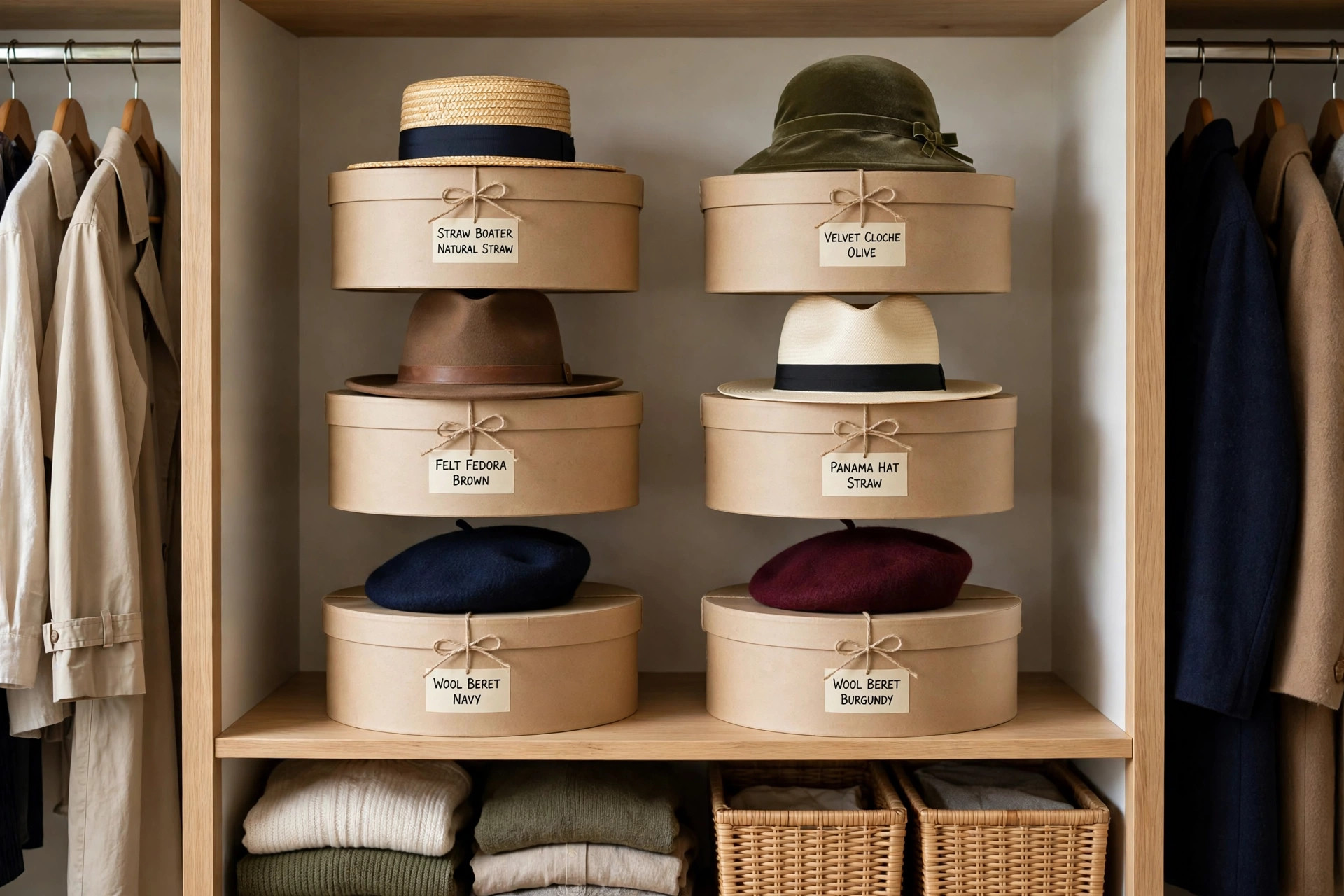
11. A shelf with hat boxes — one box, one hat, shape safe
A hat in a pile is a hat that loses its shape, because the hat underneath is the hat that gets crushed and the crushed hat is the hat that never looks right again. Keep the best hats in boxes — one box, one hat, shape safe — so each hat has its own round home and nothing ever sits on top of it. Choose round hat boxes, one per hat, and stack the boxes on the closet shelf with the heaviest at the bottom, because the box is the protection and the stack is the storage. Label the boxes with what is inside, because the labelled box is the box that finds the hat fast, and keep the boxes you reach for most at the front. One box per hat, and the hats keep their shape for years. (Check on Amazon for round hat boxes in a set, which stack neatly and come with lids.)
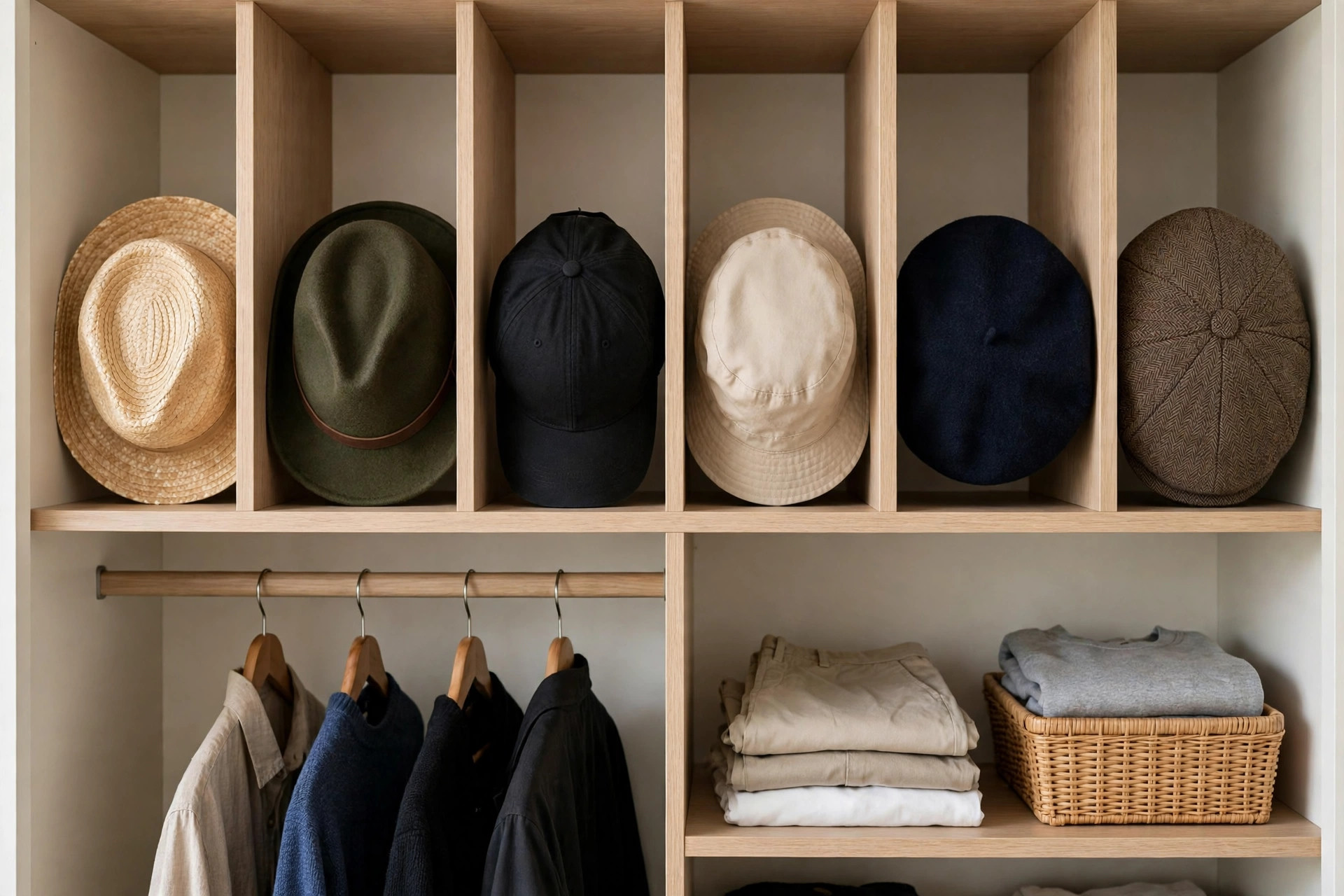
12. A closet shelf with dividers — hats in a row, crowns up
A closet shelf with no dividers is a shelf where the hats slide into each other, because the hats that touch are the hats that crush and the crushed hats are the hats that lose their shape. Add dividers to the shelf — hats in a row, crowns up — so each hat has its own bay and the crowns stand up where nothing presses on them. Slide shelf dividers onto the shelf, one per hat, and stand the hats crown-up in their bays, because the divider is the wall and the bay is the home. Keep the dividers tall enough that the hats cannot flop over them, and put the hats you wear most at the front of the shelf, because the front is the place your hand reaches first. Dividers on a shelf, and the hats stand in a row.
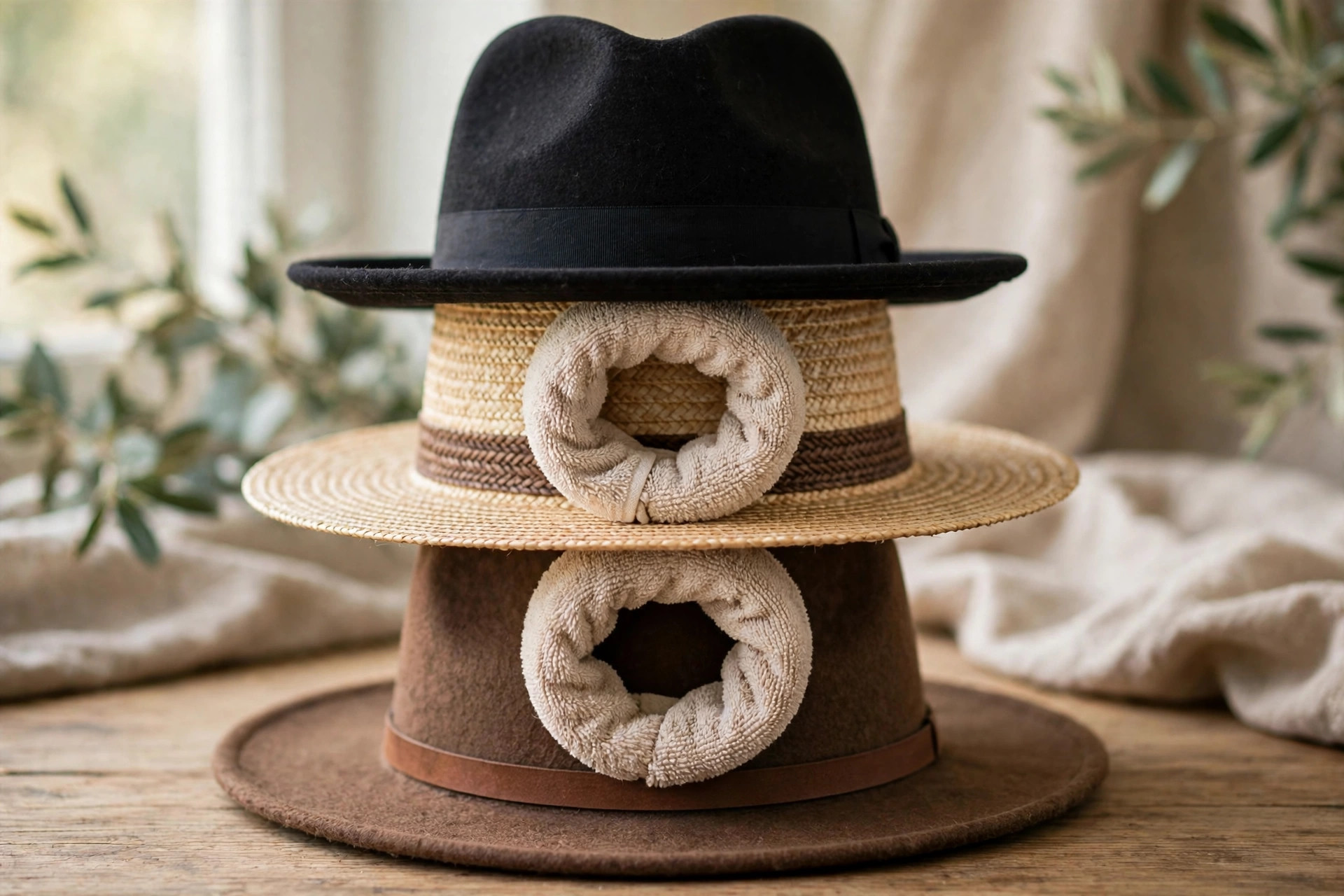
13. A stack of hats with a soft ring between them — the ring that saves the crown
A stack of hats with nothing between them is a stack that flattens the crown below, because the hat on top is the hat that presses down and the crown below is the crown that gives way. Put a soft ring between them — the ring that saves the crown — so the hats stack without touching and the crowns keep their shape. Roll a soft towel into a ring, or use a pool noodle cut into a circle, and rest it inside the crown of the lower hat before you set the next hat on top, because the ring is the spacer and the spacer is the shape. Stack the lightest hats on top and the heaviest at the bottom, and never stack more than three, because the stack that is too tall is the stack that topples. A soft ring between the hats, and the stack keeps its shape.
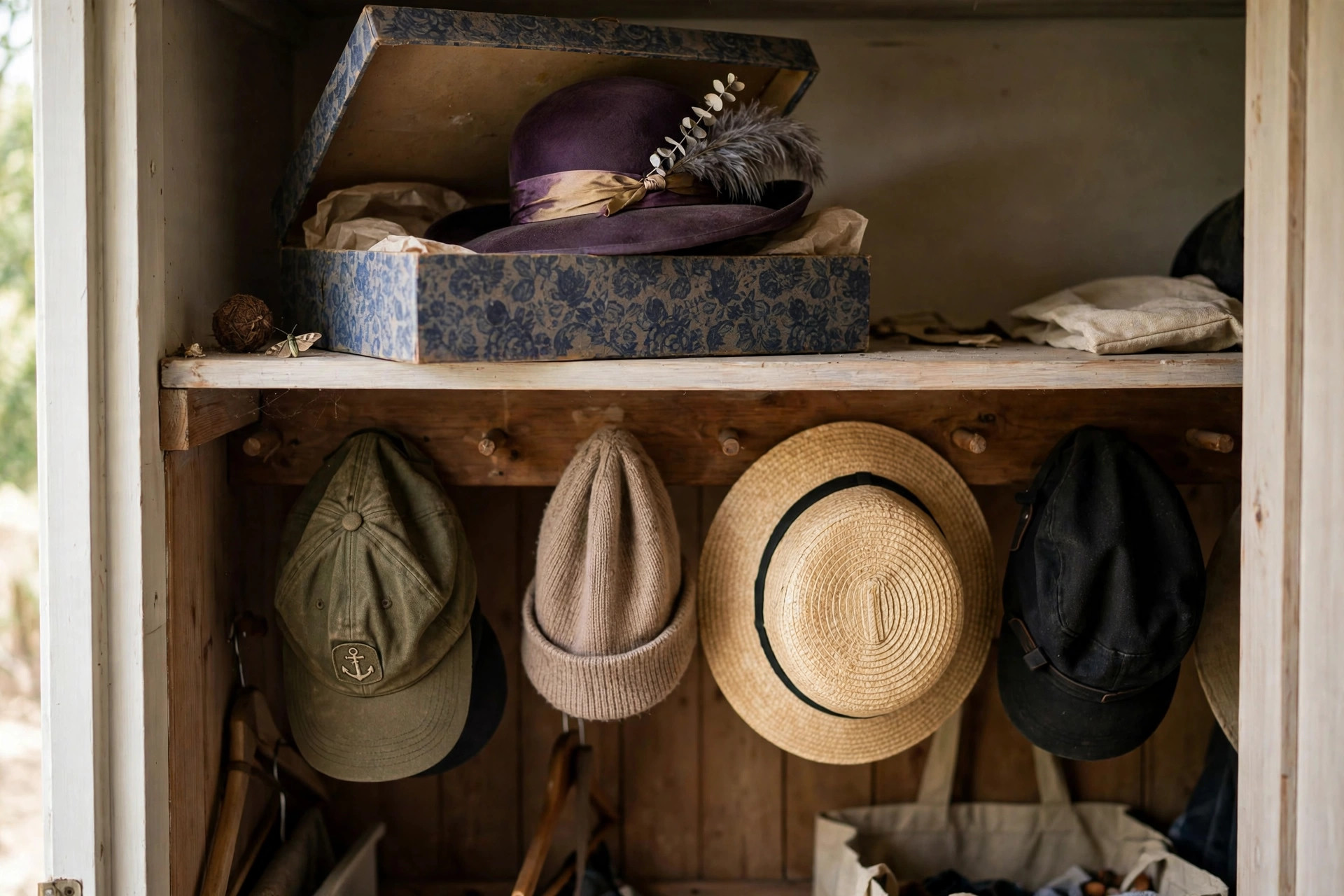
14. A hat box on the top shelf — the hats you wear least, safe
A hat you wear twice a year does not belong on the peg by the door, because the peg by the door is for the hats you wear and the hat you wear twice a year is the hat that blocks it. Put it in a hat box on the top shelf — the hats you wear least, safe — so the everyday pegs stay free and the special hats stay protected. Choose a sturdy box with a lid, put the hat inside with tissue paper in the crown, and slide the box onto the top shelf, because the top shelf is the place for the things you reach for rarely. Label the box with the hat and the season, because the labelled box is the box you find when the season comes back. A box on the top shelf, and the everyday hats have their pegs back.
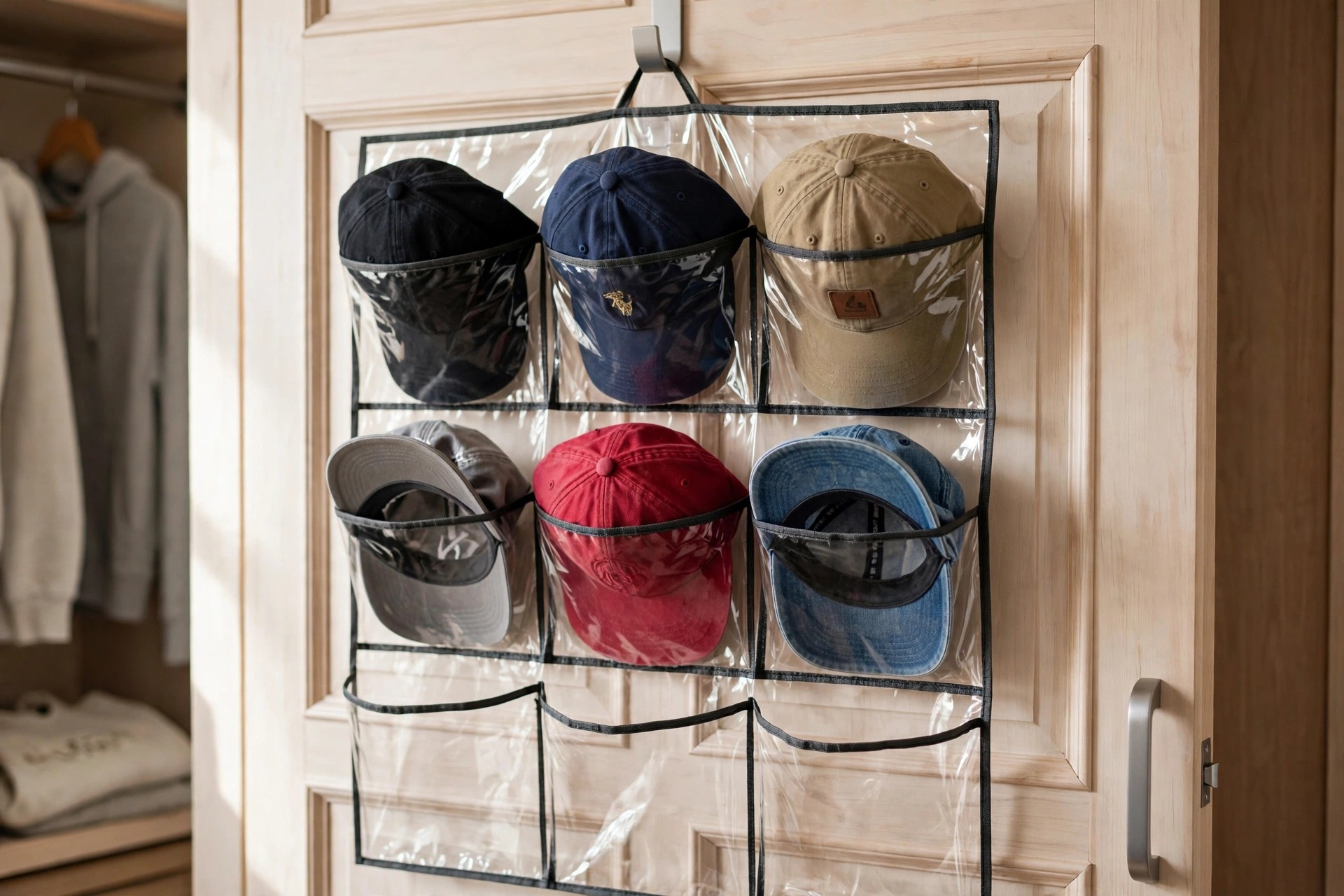
15. A shoe organizer on the closet door — one pocket, one cap
A cap in a drawer is a cap that gets crushed under the other caps, because the drawer is the place things pile and the pile is the thing that flattens. Hang a shoe organizer on the closet door — one pocket, one cap — so each cap has its own clear pocket and the drawer loses the pile. Slip a cap into each pocket, brim first, and let the clear plastic show you which cap is which, because the pocket is the home and the clear front is the label. Keep the caps you wear most at eye height, and the ones you wear least at the bottom, because the pocket at eye height is the pocket your hand reaches first. A shoe organizer on the door, and the caps have a home that costs nothing. The closet door the organizer hangs on is in 26 Small Walk-In Closet Organization Ideas for 2026, where the door gets a job of its own.
Hats that work harder: travel, kids and seasonal
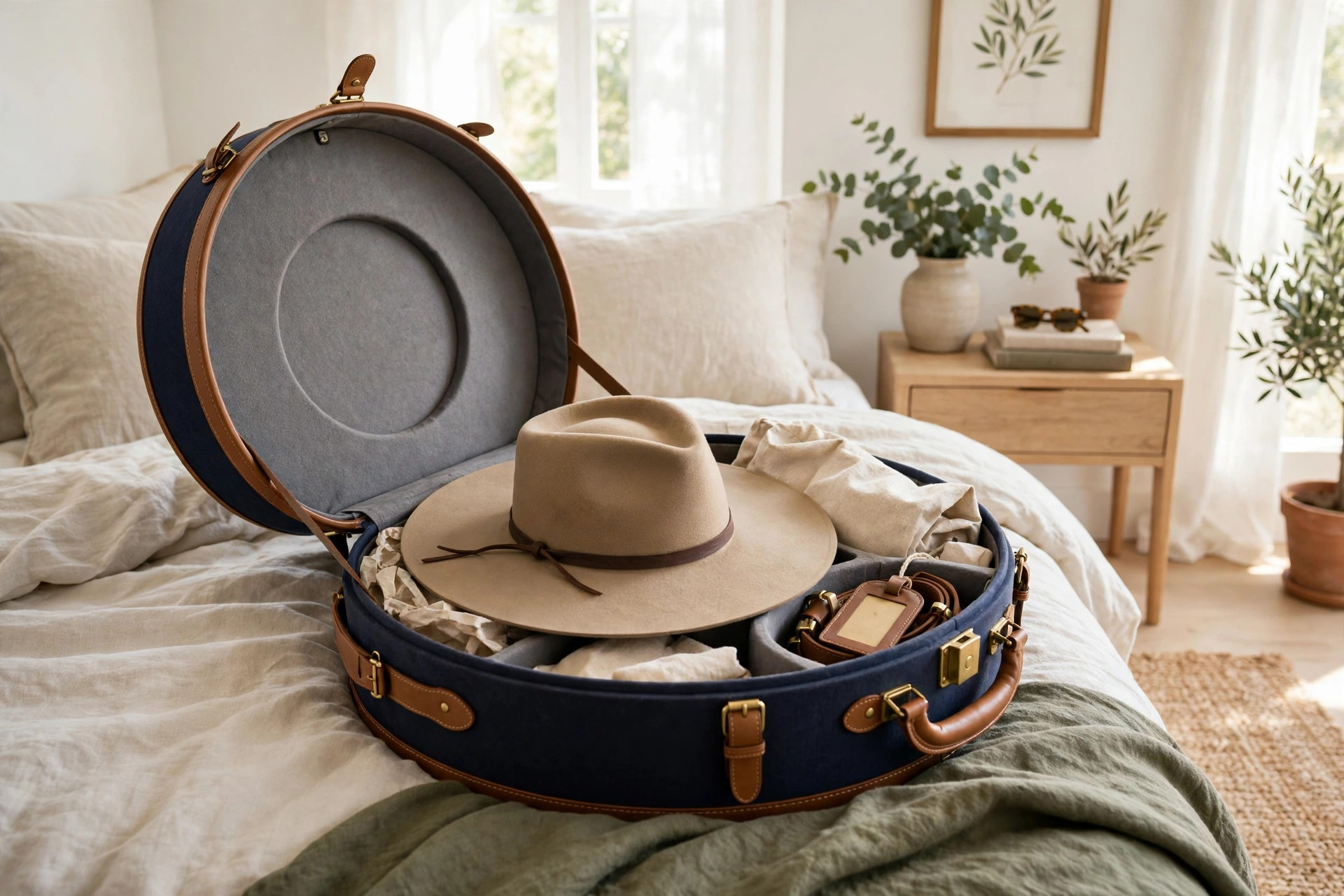
16. A travel hat case — the hat arrives shaped, not squashed
A hat in a suitcase is a hat that arrives squashed, because the suitcase is the thing that presses everything flat and the hat is the thing that cannot take the pressure. Pack it in a travel hat case — the hat arrives shaped, not squashed — so the hat travels in its own hard shell and comes out the way it went in. Choose a case that fits the hat, round and rigid, and pack the soft things around it, never on top of it, because the case is the protection and the suitcase is the transport. Keep the case in the carry-on if you can, because the carry-on is the bag you control and the hold is the bag you do not. A travel case, and the hat arrives shaped. (Check on Amazon for a hard travel hat case in your hat size, which holds the crown without pressing it.)
17. A hat clip for the bag — the hat rides along, hands free
A hat in your hand is a hat you put down somewhere, because the hand that holds the hat is the hand that needs to open a door and the hat is the thing that gets left behind. Clip it to the bag — the hat rides along, hands free — so the hat travels with you and never gets left on a chair. Clip a hat clip to the bag strap, hang the hat from it by the band, and let it ride beside you, because the clip is the holder and the bag is the transport. Keep the clip on the bag even when the hat is on your head, because the clip that is there is the clip that gets used when the sun goes in. A hat clip on the bag, and the hat never gets left behind.
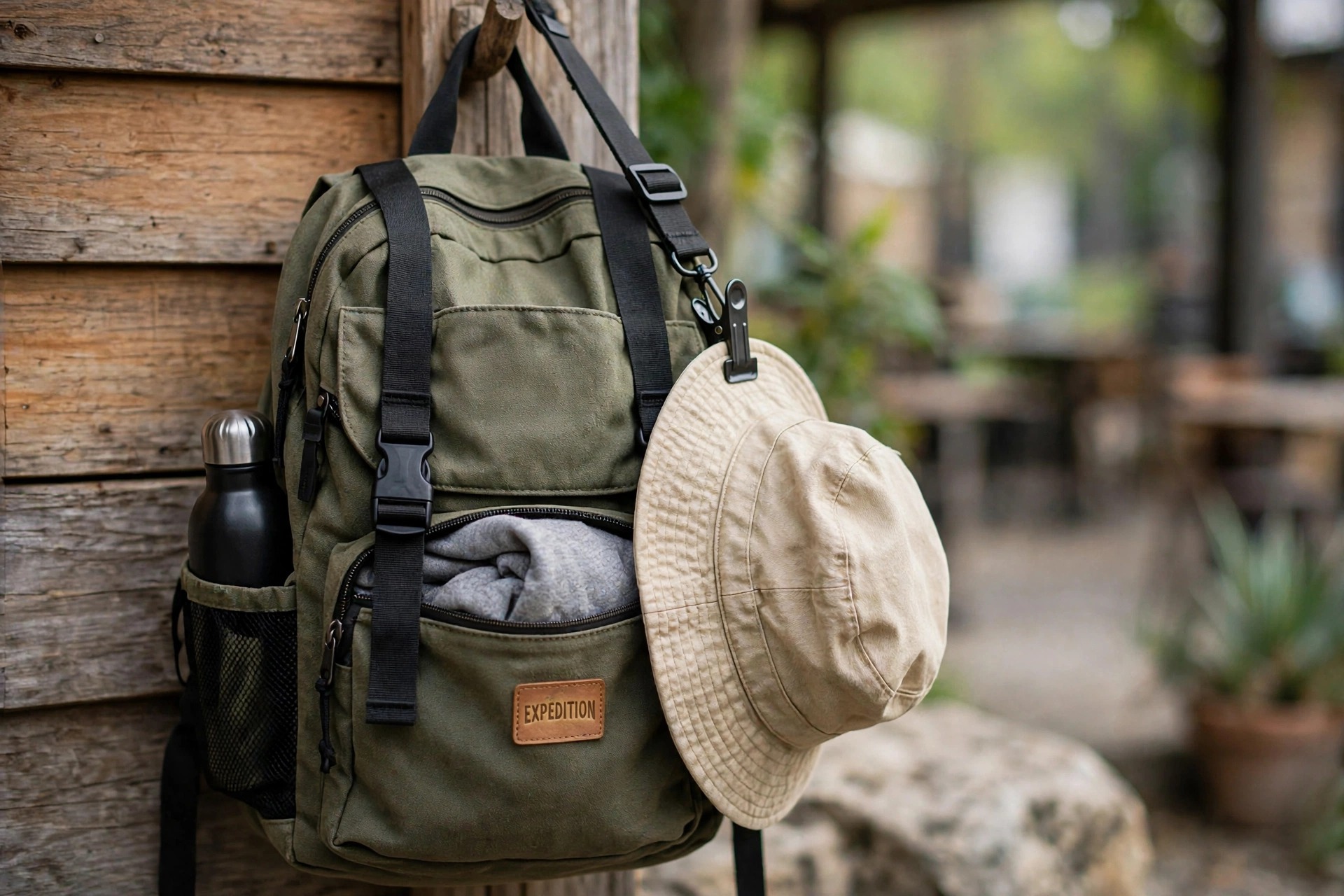
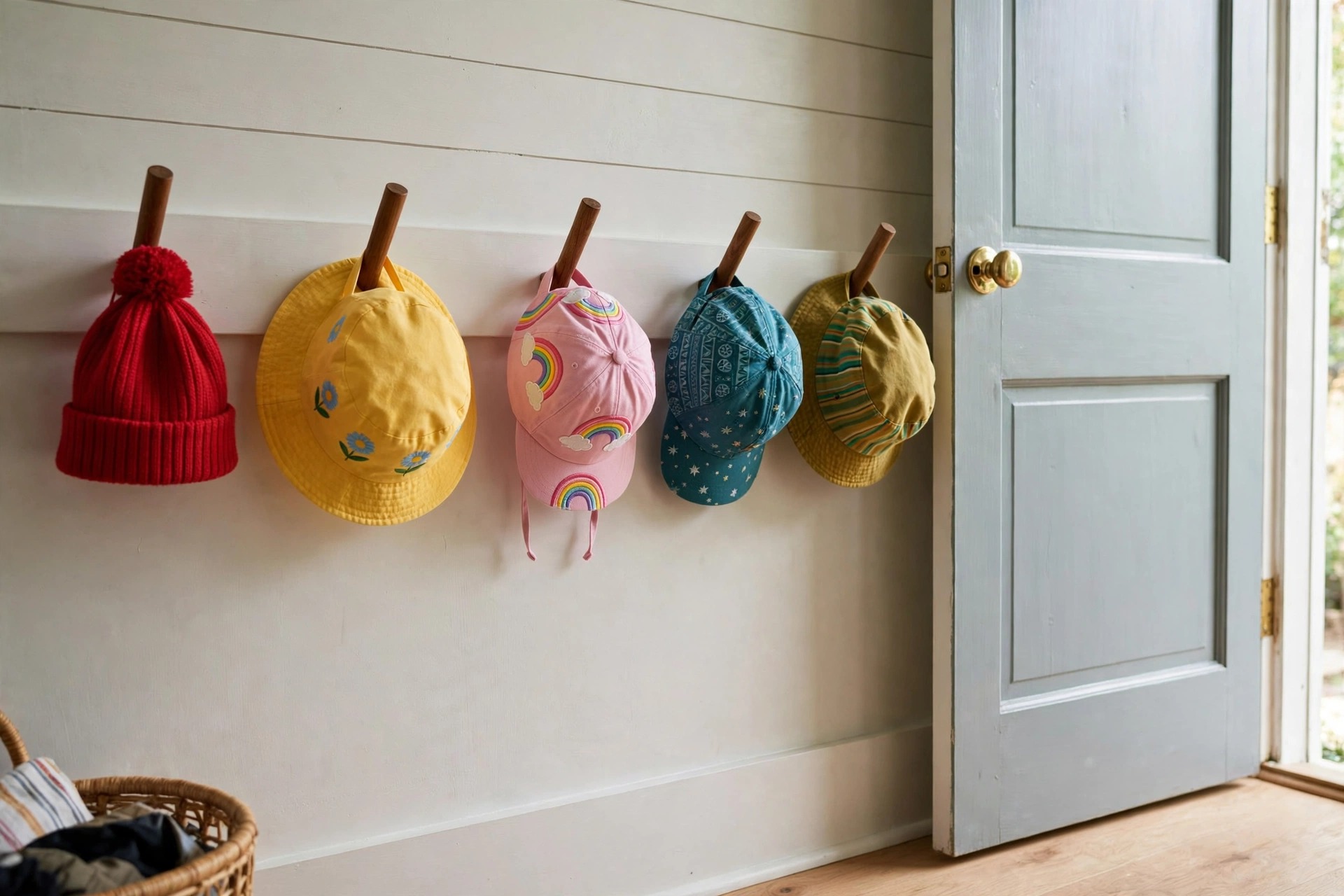
18. A kids' hat wall at kid height — hats they can reach themselves
A child's hat on a high peg is a hat the child cannot reach, because the peg that is too high is the peg that needs a grown-up and the grown-up is the one who ends up fetching the hat. Put the kids' hats on a wall at kid height — hats they can reach themselves — so the child grabs the hat, puts it on, and hangs it back without asking. Screw a row of pegs at the child's shoulder height, one per hat, and let the child choose which peg is theirs, because the peg they chose is the peg they use. Keep the wall by the door they leave through, because the wall by the door is the wall they pass every morning. Pegs at kid height, and the hats put themselves away.
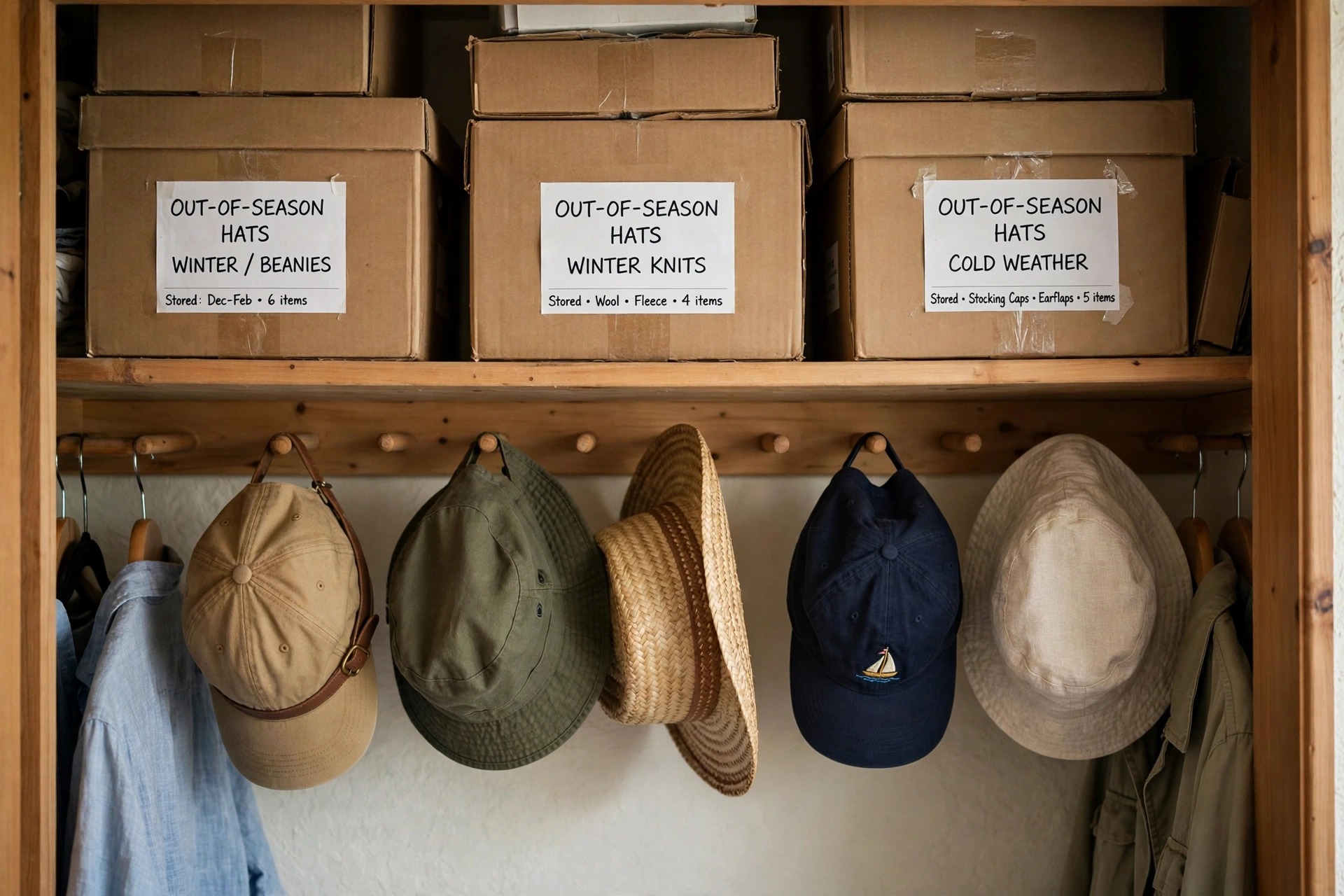
19. A seasonal swap — winter hats out, summer hats away
A closet with every hat in it all year is a closet with no room, because the winter hats are the hats that take the pegs in July and the summer hats are the hats that take the pegs in January. Do a seasonal swap — winter hats out, summer hats away — so the pegs hold the hats of the season and the rest wait in boxes. Twice a year, take the out-of-season hats off the pegs, put them in labelled boxes on the top shelf, and bring the in-season hats down, because the swap is the reset and the boxes are the storage. Keep one hat from the other season on a peg, for the day the weather surprises you, because the surprise day is the day you are glad it is there. A swap twice a year, and the closet always fits the season.
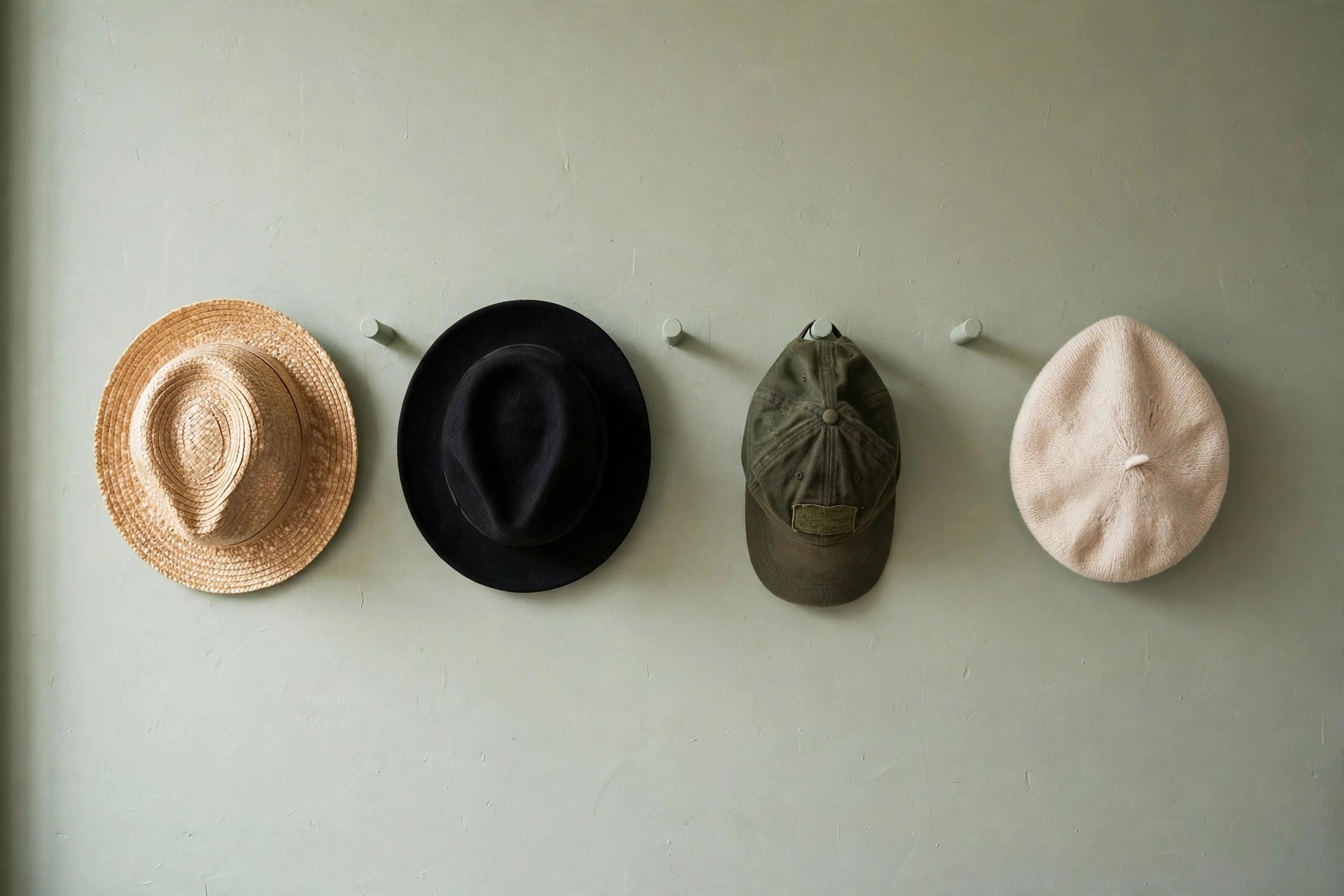
20. A hat hook painted to match the wall — one colour, and the hooks disappear
A hat hook in the wrong colour stands out, because the hook that does not match is the hook that shouts and the wall that shouts is the wall that looks cluttered. Paint the hook to match the wall — one colour, and the hooks disappear — so the hats look like they float and the wall reads as one piece. Paint the pegs, the hooks and the rack the same colour as the wall, in the same finish, matt or gloss, because the finish that matches is the finish that blends. Test the paint on the back of a peg first, because the paint that matches on the back is the paint that matches on the front. Keep the hats the only colour on the wall, because the hats are the display and the hooks are the frame. One colour, one finish, and the hooks belong to the wall.
Which hat organization idea fits which situation?
| Situation | Best first move | Budget | Tools needed |
|---|---|---|---|
| Hats piled by the door | Wooden pegs, one per hat (idea 1) | Low | Pegs, screws |
| Hats forgotten in the closet | Pegboard wall (idea 2) | Low | Pegboard, hooks |
| Hooks denting the crowns | Wide-hook hat rack (idea 3) | Low | Hat rack |
| Empty air under a shelf | Tension rod + clips (idea 4) | Low | Tension rod, clips |
| Blank wall, hats to show | Wall of hats as decor (idea 6) | Free | Pegs, hooks |
| Corner doing nothing | Wooden ladder display (idea 7) | Low | Ladder |
| Best hats getting crushed | Hat boxes, one per hat (idea 11) | Low | Hat boxes |
| Hats sliding on a shelf | Shelf dividers, crowns up (idea 12) | Low | Dividers |
| Caps crushed in a drawer | Shoe organizer on the door (idea 15) | Low | Shoe organizer |
| Hat squashed in a suitcase | Travel hat case (idea 16) | Low | Hat case |
| Hat left behind | Hat clip on the bag (idea 17) | Low | Hat clip |
| Kids' hats out of reach | Pegs at kid height (idea 18) | Low | Pegs, screws |
You do not need all 20 ideas. You need the three that solve your hats — usually the row of pegs by the door where the hats come off, the pegboard wall that shows the whole collection, and the hat boxes that protect the hats you wear least. Start with the pegs, put them up this weekend, and hang the hats on them the moment you walk in. Do that and the next time you take a hat off it will have a home, for the price of a row of pegs and an afternoon.
Save this post for your next closet sort, and if the coats need sorting first, read 25 Coat Closet Organization Ideas for 2026 next — it is Post 11, the coats that hang beside the hats — and 22 Purse Storage Ideas for 2026, Post 07, for the accessories that travel with the hats. This is the sixth post of the Storage by room/object return run — Posts 31 to 55, one room at a time — and the next posts carry the same storage system into the rooms that follow.
Publish date assigned at publishing time. Updated as new hat storage finds are tested.
Frequently asked questions
How do I store hats so they don't lose their shape?
Keep the hats from being pressed — hang them by the band on wide hooks or pegs, or keep them in round hat boxes, one hat per box, so nothing ever sits on top of them. Never stack hats flat on each other without a soft ring between them, and never hang a hat on a thin nail, because the narrow point dents the crown. Wide hooks or a box per hat, and the hats keep their shape.
What is the best way to hang hats on a wall?
Hang them on wide wooden pegs or a pegboard with hooks, spaced so the brims do not touch, and hang each hat by its inside band so the crown hangs free. Put the hats you wear most at hand height and the showpieces higher, and keep heavy hats low so they do not pull the hooks out. Wide pegs, a gap between brims, and the band as the hanging point — that is the wall that works.
How do I store a lot of hats in a small closet?
Use the wall and the door, not just the shelf — a row of pegs on the closet wall, a shoe organizer on the door for caps, and hat boxes on the top shelf for the hats you wear least. Keep only the hats of the season on the pegs and swap the rest into labelled boxes twice a year, because the closet that holds one season is the closet that fits. Walls, doors and a seasonal swap, and a small closet holds a big collection.