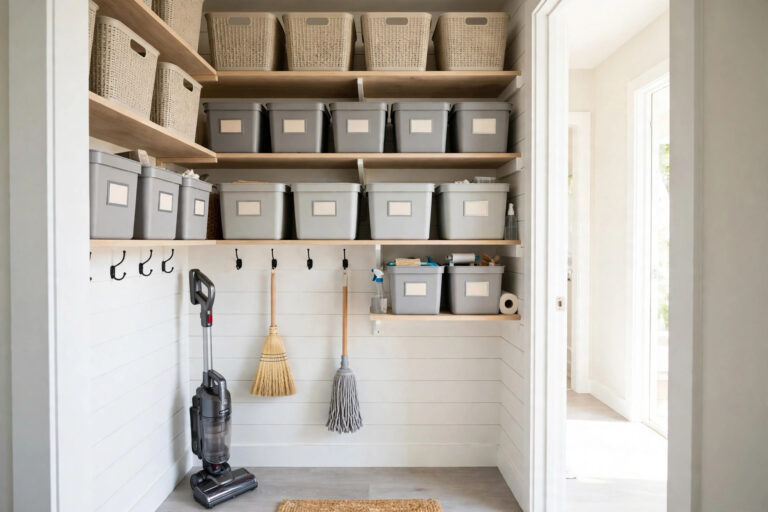
25 Coat Closet Organization Ideas for 2026
A coat closet only works when every coat has a place and every place is used. Most coat closets fail the same way: the rod is full of coats nobody wears, the top shelf is a pile of things that fall down when you reach for them, the shoes spread across the floor, the gloves live in three different places, and the coat you actually need is always behind the one you never wear.
These 25 coat closet organization ideas fix that without a bigger closet: one coat per person, a second rod for short coats, shelf dividers that stop stacks toppling, labelled bins for the loose bits, and a rule that everything goes back in its place, not wherever there is a gap.
Every idea below works in a real home, from a single shallow hallway closet to a shared family closet that holds four people's coats. If your entryway is the first mess, start there — 22 Entryway Storage Ideas for 2026 sorts the front door, and this post sorts the closet beside it. Pick three ideas that fit your worst corner, start by taking everything out, and build from there.
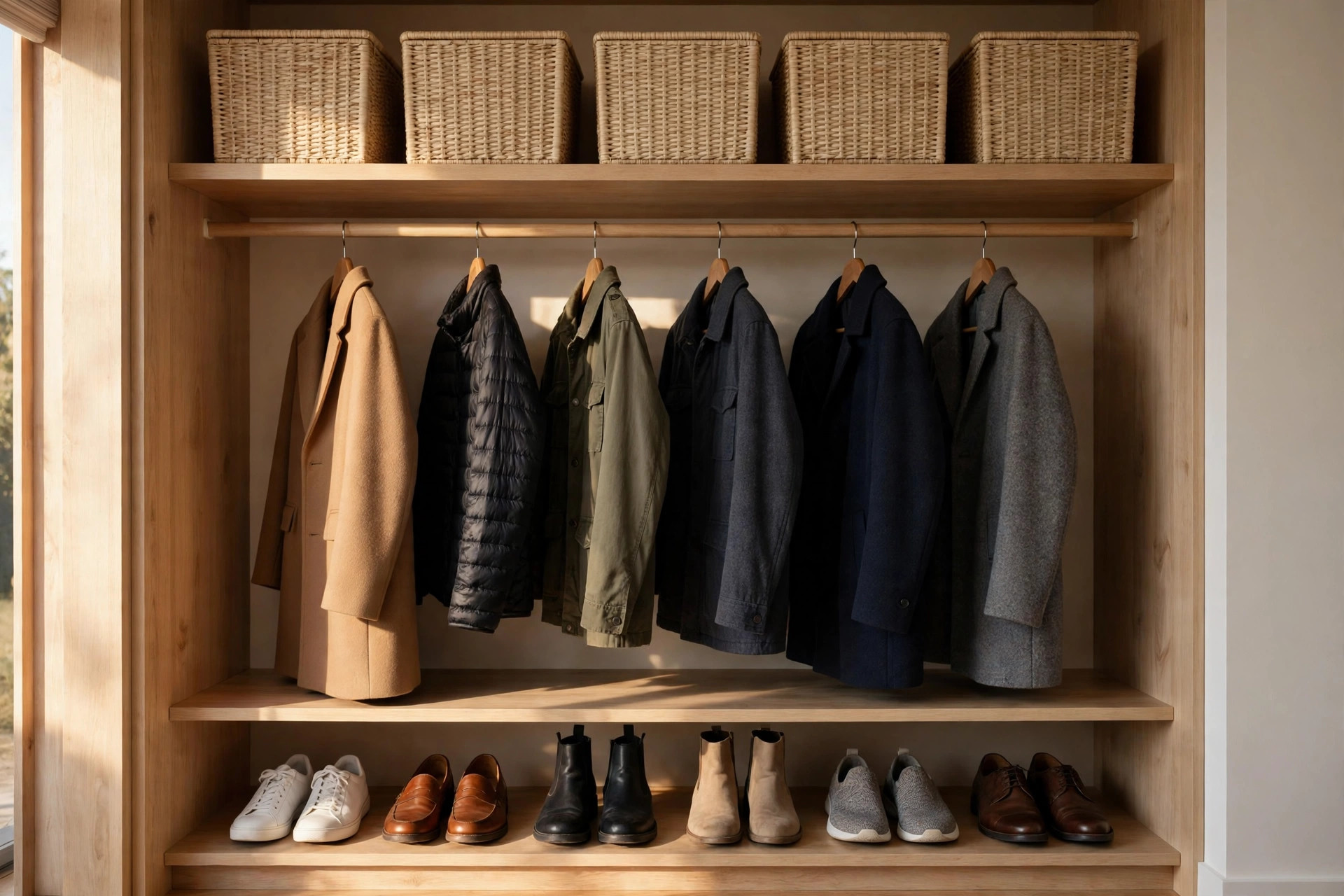
Start with a system, not another rod
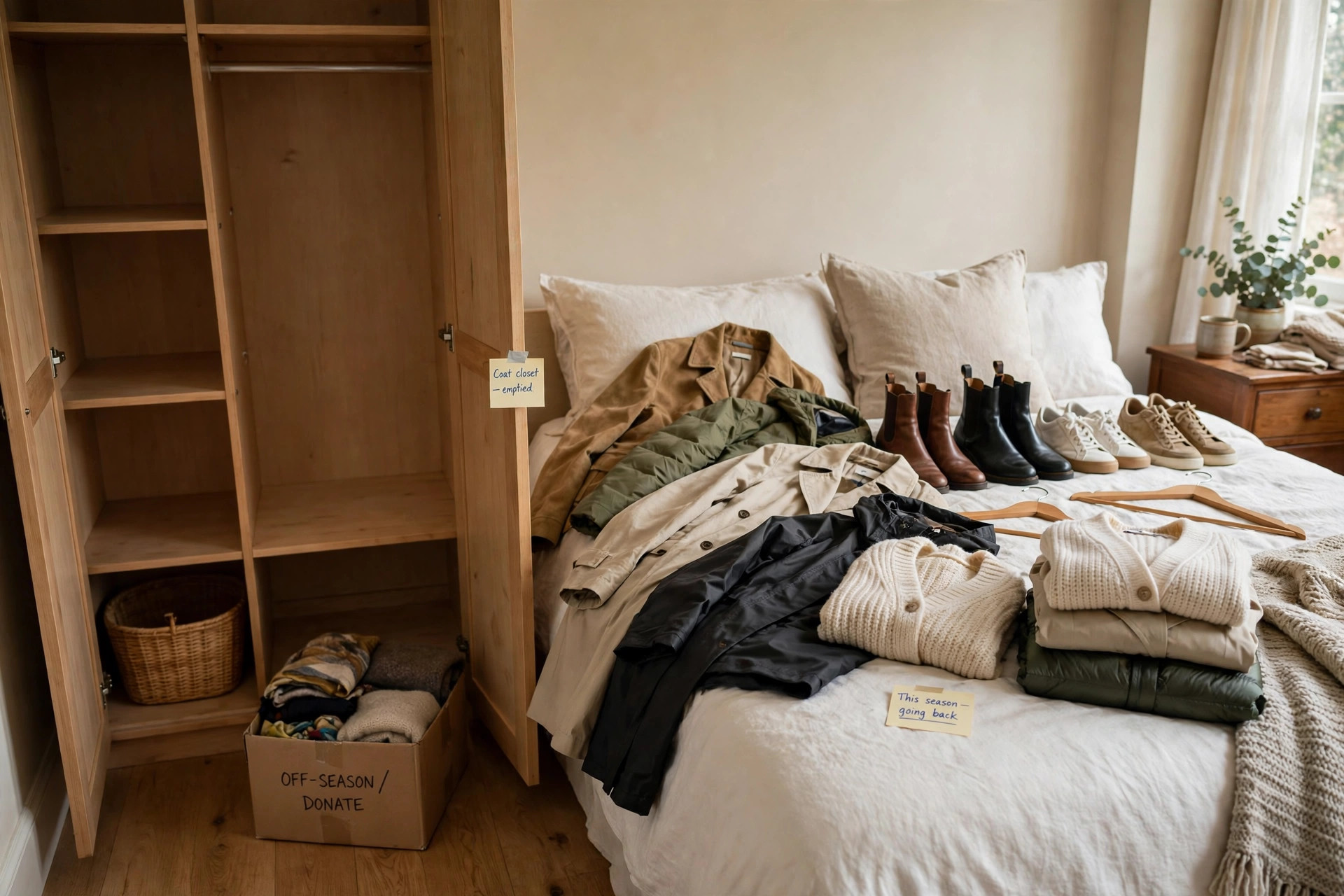
1. Empty it completely, then put back only what fits the season
You cannot organize a closet you cannot see. Take everything out — every coat, every pair of shoes, every basket on the top shelf — and put it on the bed or the floor where you can see it all at once. Then put back only what fits this season: the coats you actually wear now, the shoes for this weather, the hats and gloves for the months ahead. Everything else goes into a labelled bin for the off-season shelf or out of the house entirely. The empty closet tells you the truth about what you own: if the pile on the bed is twice the size of the closet, the closet was never the problem — the number of coats was. Empty it once, put back only the season's coats, and the closet stays tidy because there is finally room to hang things properly.
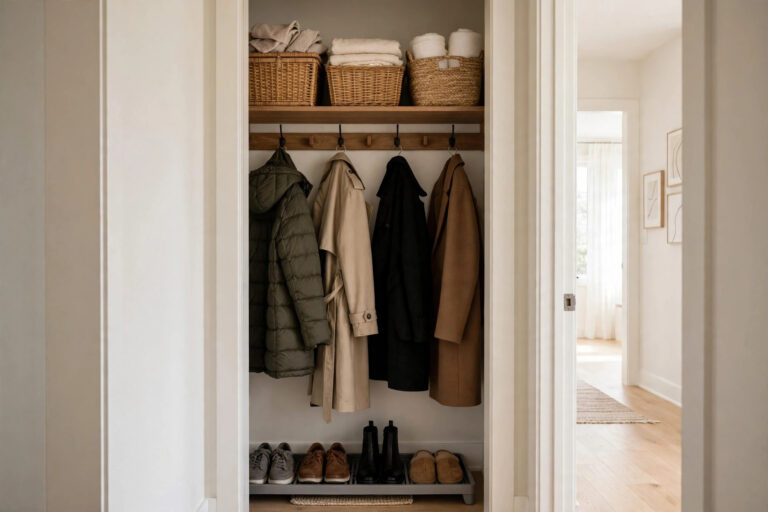
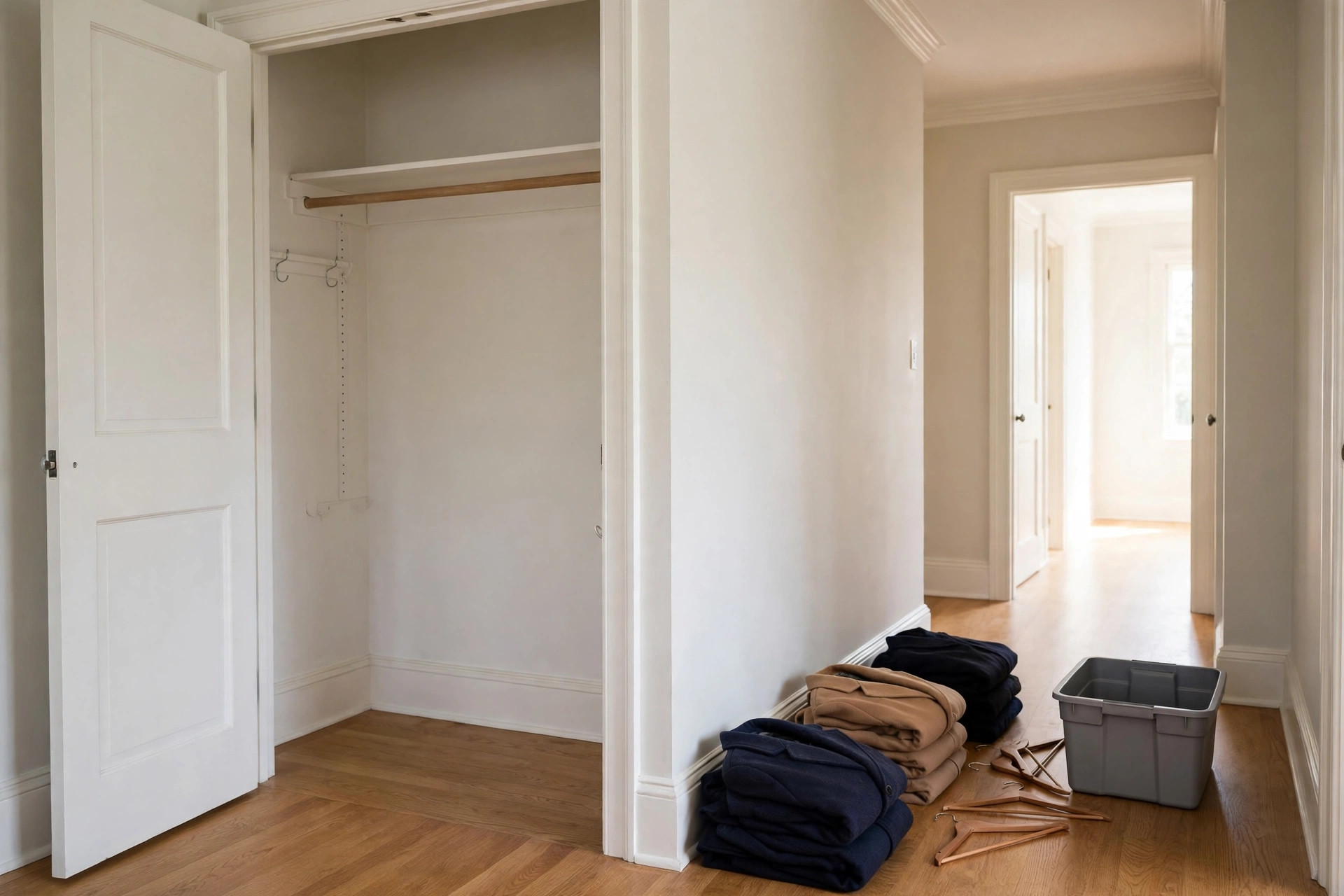
A hook holding three coats is a hook nobody can use, because the coat you want is always at the back and the one in front gets dragged to the floor. Give every person in the house one coat in the closet — one hanger or one hook each — and no more. The everyday coat hangs on its own hanger, flat, with air around it, so it comes off in one pull and goes back in one movement. Shared piles hide the real count: three coats on one hook look like one coat until you need the one at the back. One coat per person also tells you when the closet is full — if someone needs a second hook, a coat has to leave first. One hanger per person, and the pile stops.
3. Sort by person first, then by season, not by colour alone
Sorting by colour looks tidy in a photo and helps no one find their own coat in the dark. Sort by who wears it first: one stretch of rod per person, in a row, so every coat has an owner and every owner knows exactly where to reach. Inside each person's stretch, sort by season — the coat for now at the front, the one for next month just behind it. Person zones also show you the real shape of the closet: if one person has five coats and another has one, the closet is telling you where the clutter actually comes from. Colour can come last, inside each person's zone, if you like the look of it. Sort by person, then by season, and the closet works for the whole household, not just the person who tidied it.

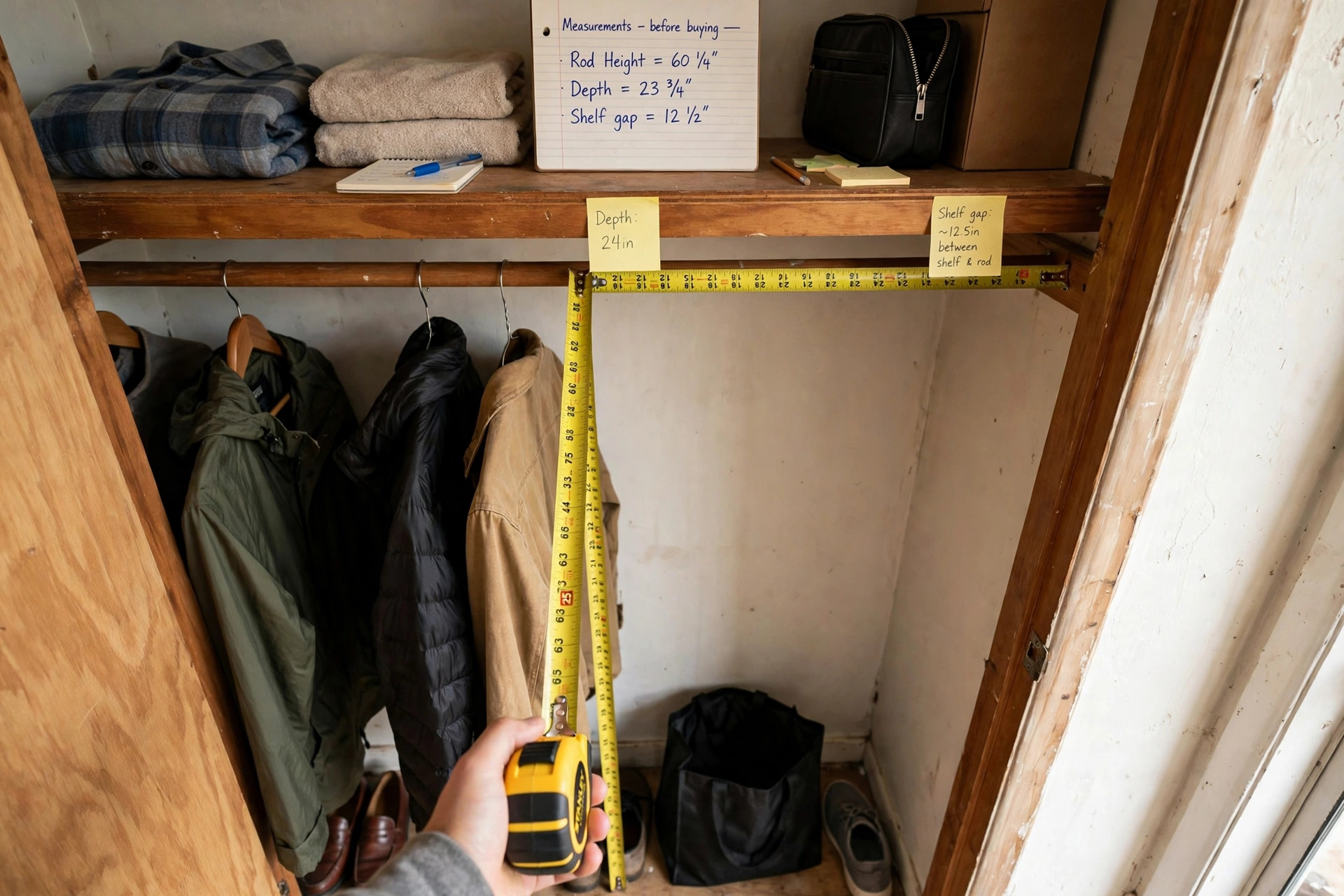
4. Measure the closet before buying anything — rod height, depth, shelf gap
A rod bought before measuring is a rod that does not fit, and a shelf divider that is too tall for the gap is a divider that lives in a drawer. Measure first: the height from the rod to the floor, the depth from the back wall to the door, the gap between the top shelf and the ceiling, and the width of the opening. A long coat needs about 40 inches of hanging length; a short jacket needs about 30. If the gap between rod and shelf is less than a folded stack, the shelf will never hold one. Write the numbers on a card and keep it in your phone, so every divider, bin and hook you buy is bought to fit the closet, not the other way round. Measure once, buy once, and nothing ends up in a drawer.
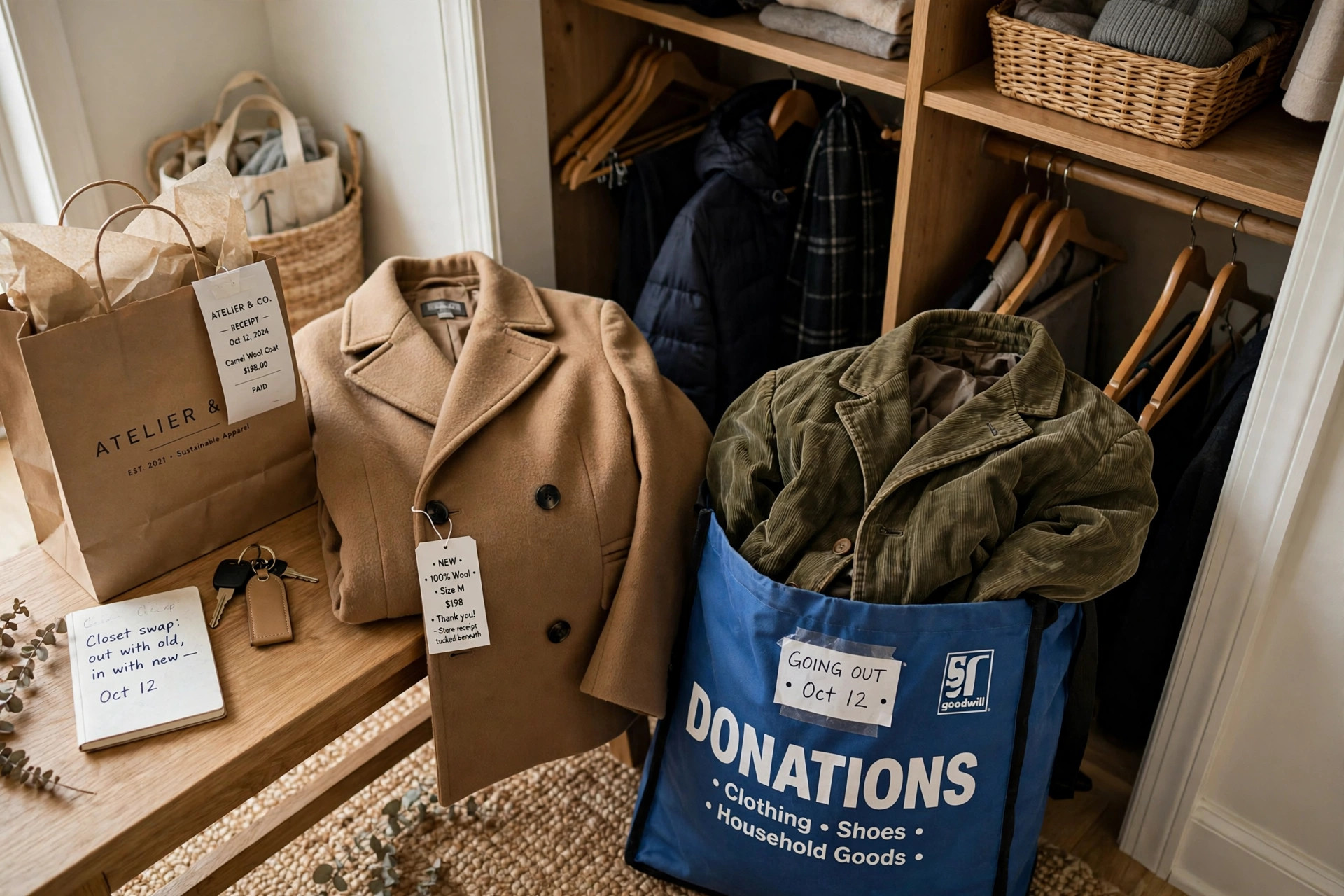
5. The one-in, one-out rule for coats, so the closet never refills
A closet refills because new coats come in and old coats never leave. Make the rule before the next coat arrives: one coat in means one coat out, every time, no exceptions. When a new coat comes home, an old one goes to the donation bag the same day — not next month, not when you get round to it, the same day. The rule works because it is small: nobody has to clear out the whole closet, they just have to choose one coat to let go of. Keep a donation bag on the top shelf so the outgoing coat has somewhere to go immediately. One in, one out, and the closet never refills.
Rods, shelves and dividers that double the space
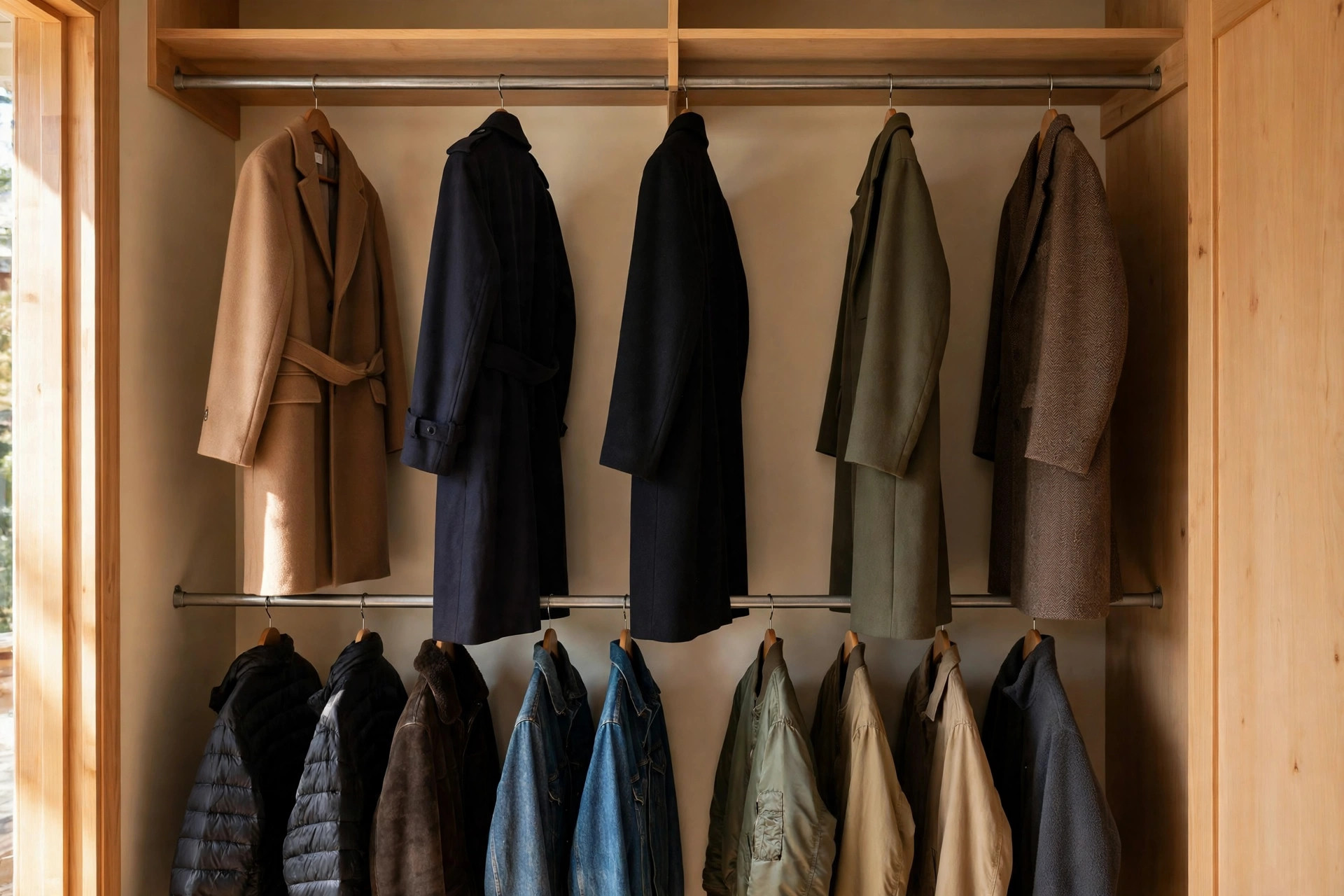
6. A second rod below the first for short coats and jackets
One rod wastes the air below it, because short coats hang at the top and leave a metre of empty space underneath. Fit a second rod below the first — at about waist height — and hang the short coats and jackets on it, so two rows of coats fit in the height of one. The long coats stay on the top rod, the short ones live on the lower rod, and the space below them is still free for shoes. A second rod costs little and doubles the hanging space in a single afternoon, and it stops short coats getting buried behind long ones. Two rods, one closet, and the hanging space doubles.
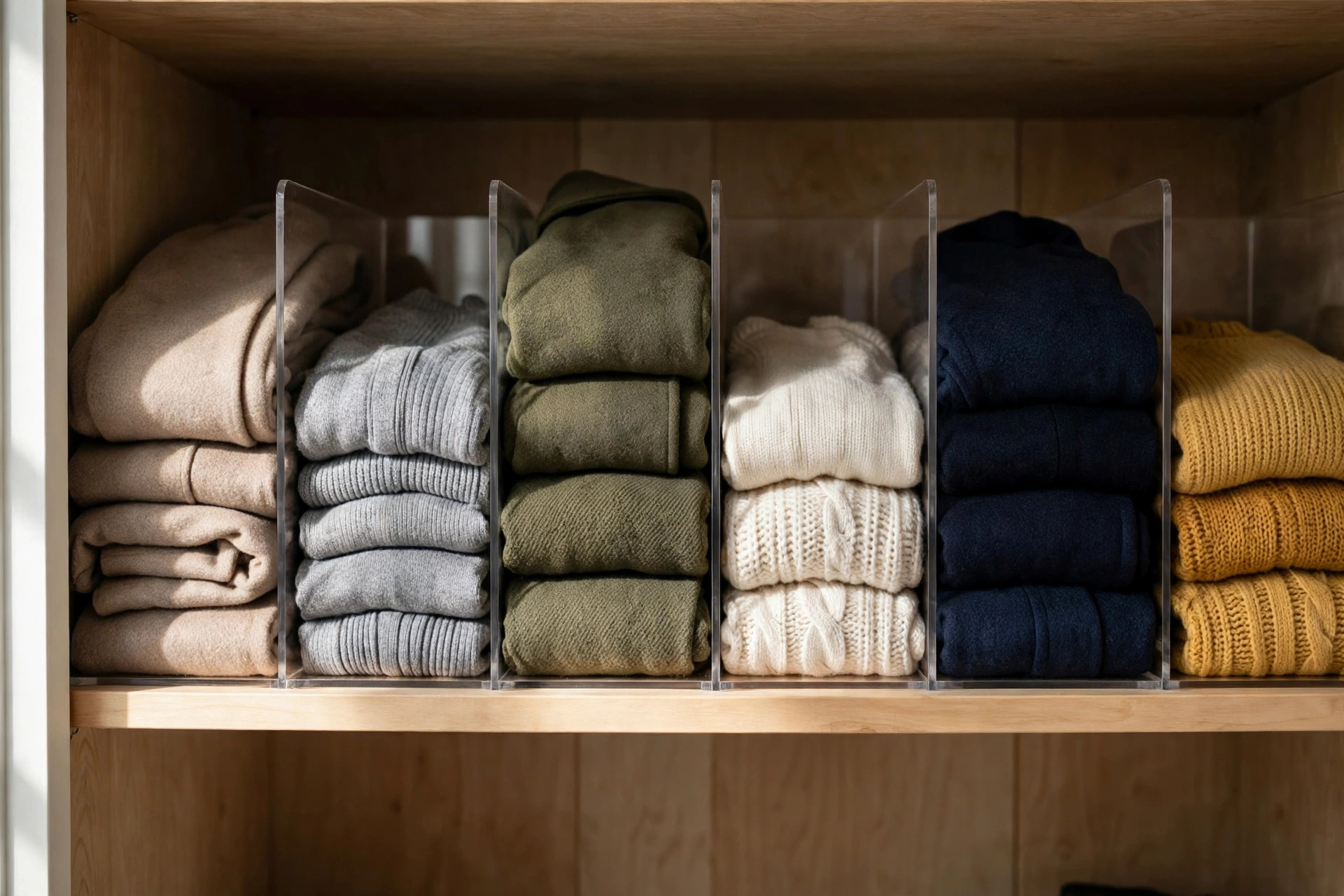
7. Shelf dividers on the top shelf, so stacks stop toppling
Folded coats on an open shelf lean, slide and topple the moment you pull one out, and the stack that falls is the stack you never rebuild. Fit shelf dividers on the top shelf — one divider per stack, upright like bookends — so every pile of folded jumpers or coats stands on its own. Dividers also stop a stack drifting into the next one, because the divider says where one pile ends and the next begins. Keep one kind of thing per stack, and never let a stack grow taller than the divider, because that is how it topples again. One divider per stack, and the top shelf stays standing. (Check on Amazon for shelf dividers that fit your shelf depth.)
8. A high shelf for off-season coats, clearly labelled
Off-season coats mixed with everyday coats are how you end up wearing a winter coat in spring because it was the one on top. Give the off-season coats their own shelf — the highest one, clearly labelled — and keep only the current season's coats on the everyday rod. When the season changes, you swap the shelf: take the coats down, put the next season up, and add anything worn out to the donation bag. The high shelf also shows you the real count at a glance, which is the first step to owning fewer coats. One high shelf, clearly labelled, and the duplicates stop.
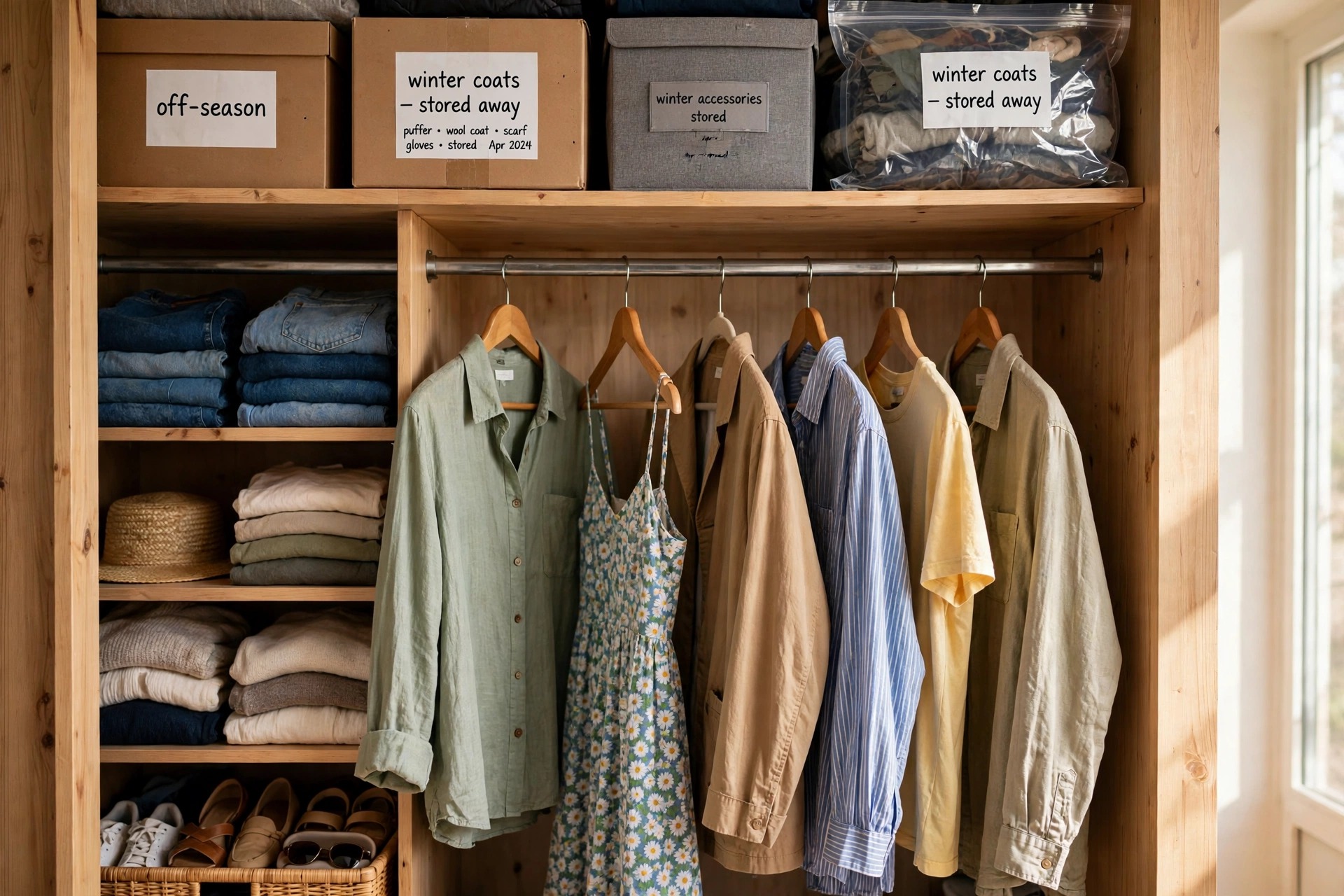
9. Slim, matching hangers — same hanger, same direction, same gap
Mixed hangers make a closet look messy before a single coat is out of place, because every hanger is a different shape, a different thickness and a different direction. Switch to slim, matching hangers — the same hanger, all facing the same way, with the same small gap between them — and the rod suddenly holds more coats and looks twice as tidy. Slim hangers also stop coats sliding off and bunching up, because each coat has the same amount of space. Keep one hanger per coat, and when a hanger is empty, the coat that belongs on it is the one to find. Same hanger, same direction, same gap, and the closet looks organised even on a busy morning.
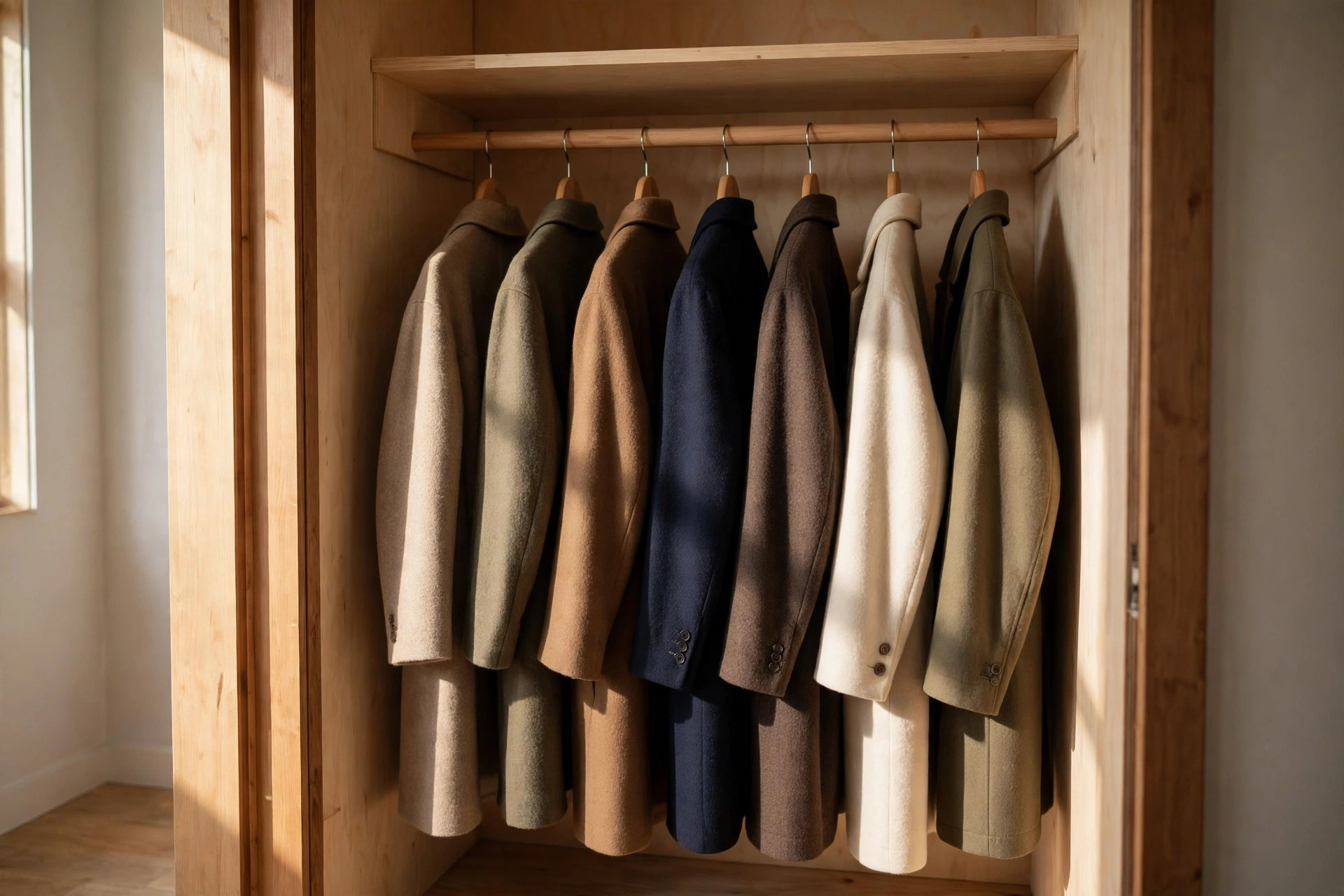
10. A pull-out rod or valet hook for tomorrow's coat
Tomorrow's coat ends up on a chair because there is nowhere to put it tonight. Fit a pull-out rod or a valet hook inside the closet — a short rod that slides out, or a single hook on the door frame — and lay out tomorrow's coat the night before. The coat hangs flat, crease-free and ready, instead of draped over a chair or the back of a sofa. A valet hook also works for the coat that needs airing after a rainy day, so it dries in the closet instead of on the floor. One pull-out rod, and the chair stops being a coat rack.
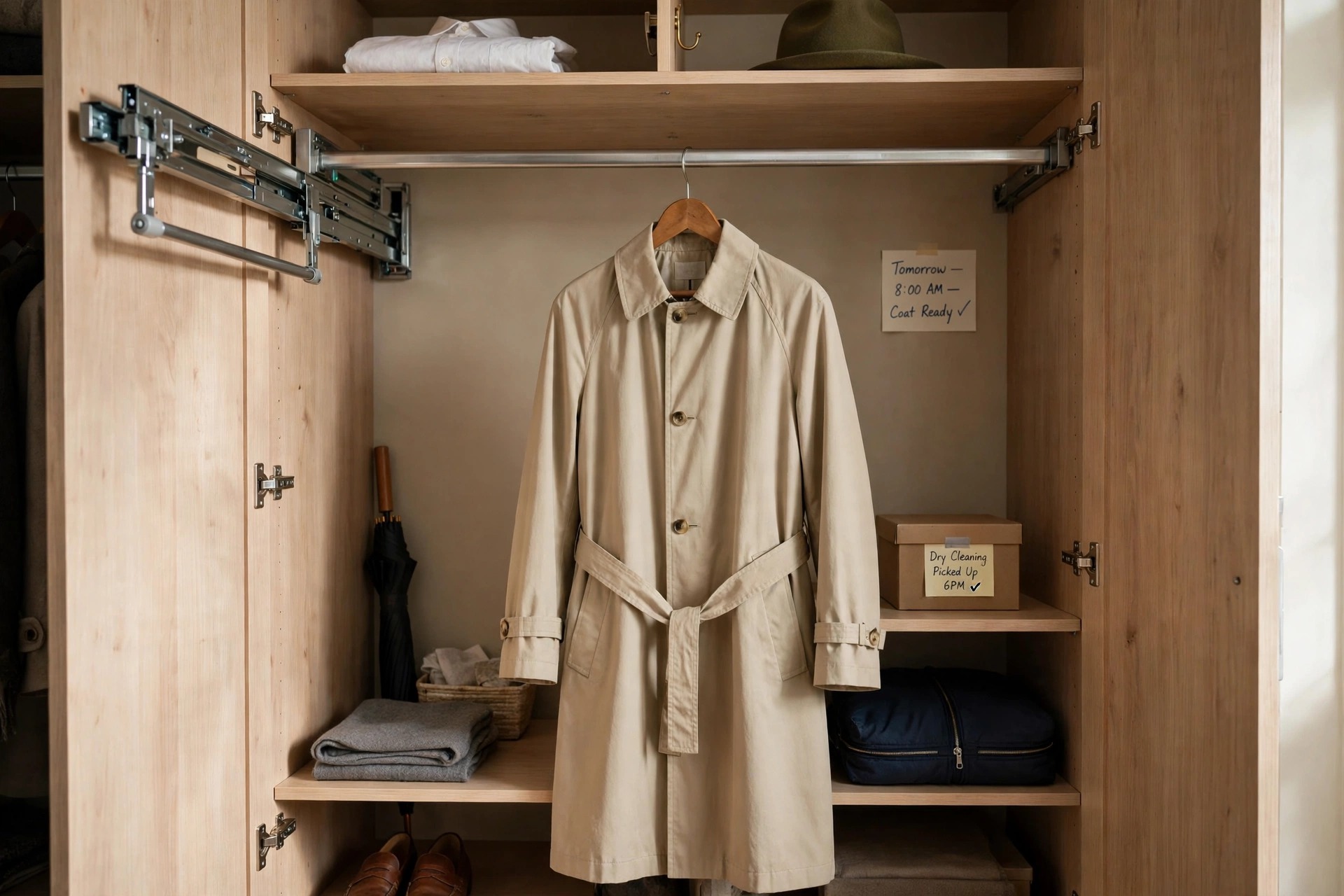
11. Adjustable shelving instead of one fixed shelf
A fixed shelf is the wrong height for everything except the thing it was built for, and a closet changes with the seasons. Replace it with adjustable shelving — brackets and shelves you can move up or down — so the gaps fit what the closet actually holds: tall gaps for folded coats, short gaps for bins, one shelf that moves when the season changes. Adjustable shelves also stop the top shelf becoming a dead zone, because you can lower it to a height you can actually reach. Measure the closet, fit the brackets, and move the shelves until the gaps fit the things, not the other way round. One adjustable shelf, and the closet fits the season.
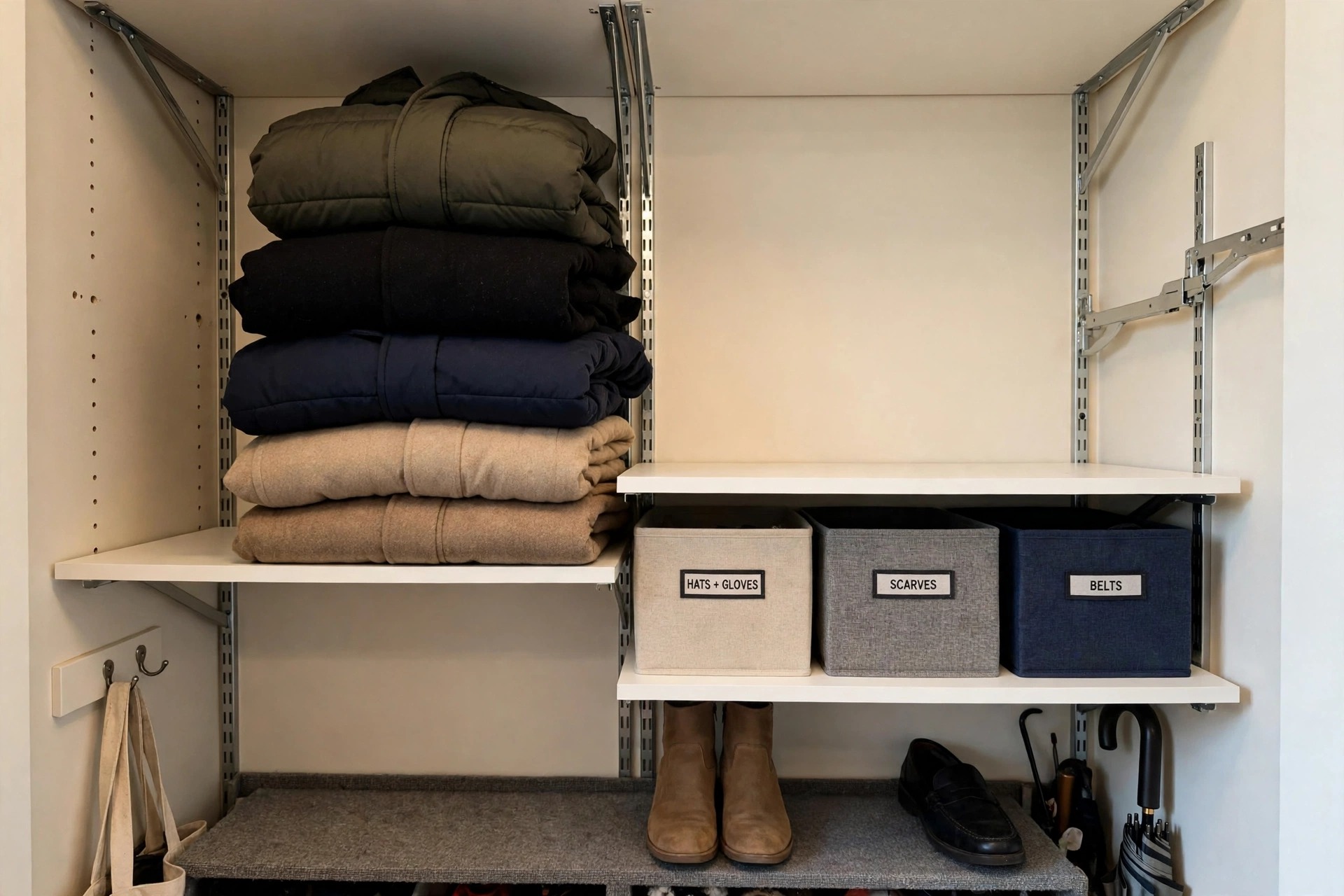
Shoes, bags and the loose bits, inside the closet
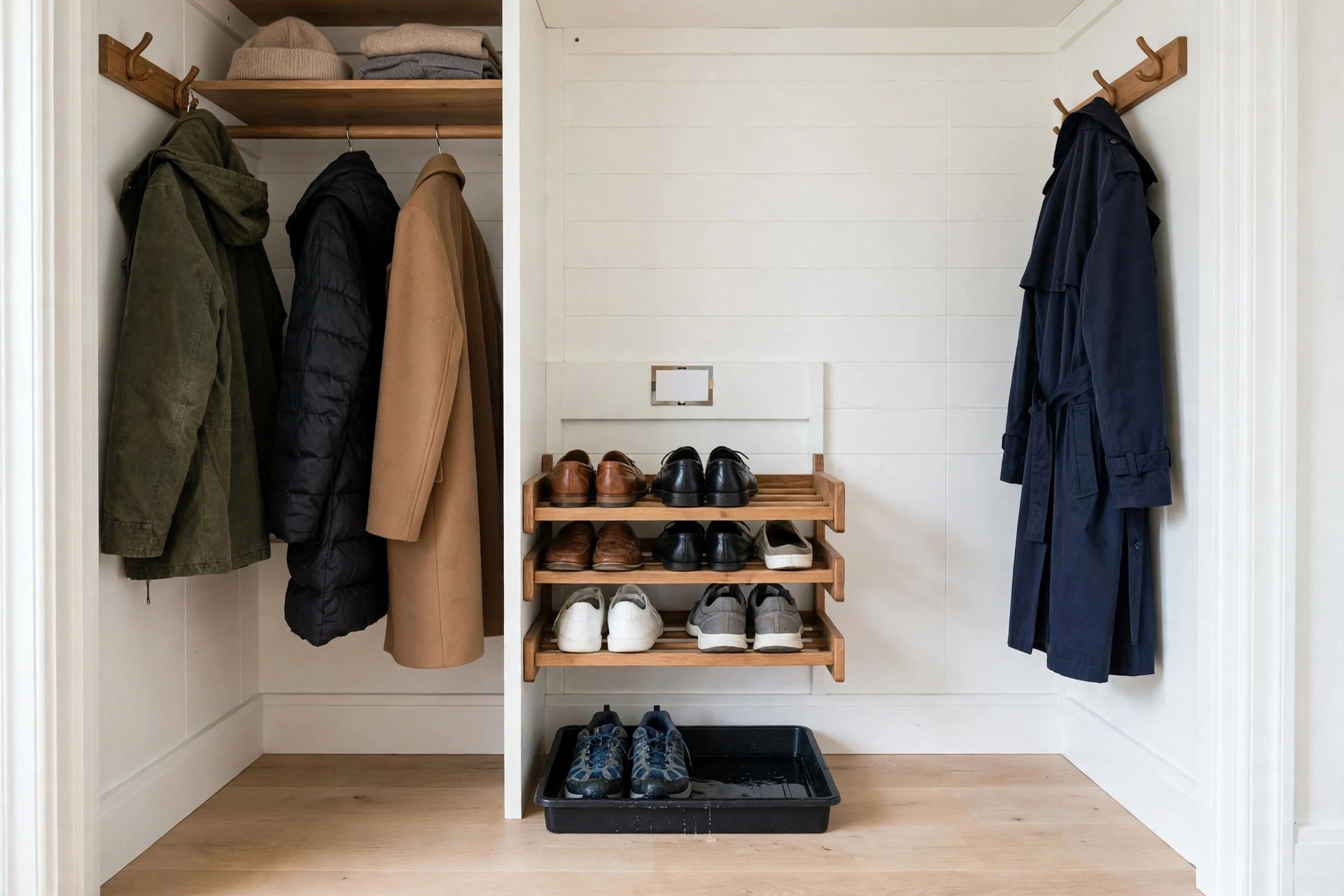
12. Shoes in a row on the closet floor, one pair per slot
Shoes in a pile on the closet floor get stepped on, lose their pairs and spread until there is nowhere to stand. Line them up in a row on the closet floor — one pair per slot, toes out, where you can see them — so every pair is visible and none of them falls behind. A row also stops a muddy pair spreading dirt across the clean ones, because the mess stays on its own slot. Keep the shoes you wear most at the front, and never let a slot hold two pairs, because that is how pairs get lost. One slot per pair, and the floor stays clear.
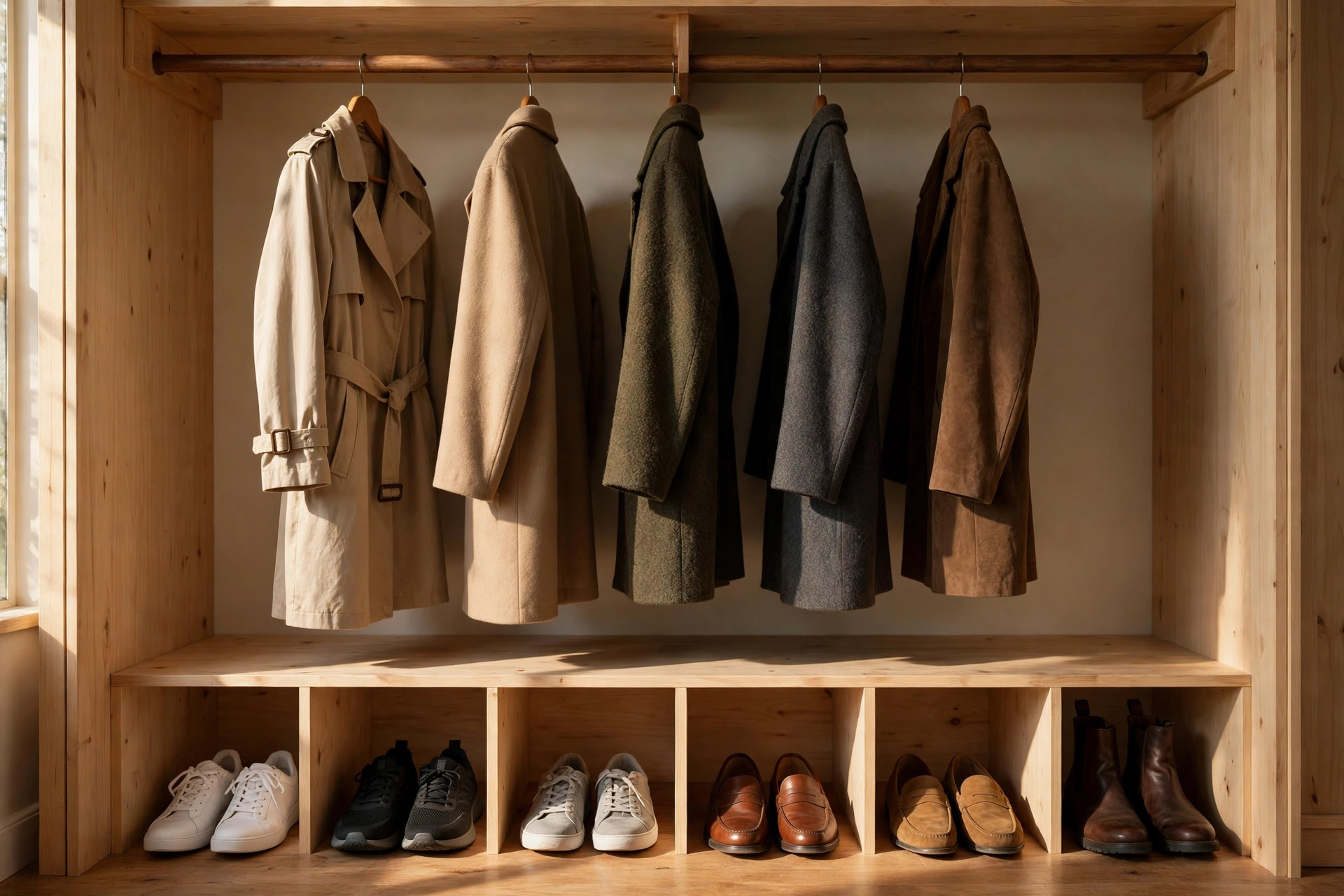
13. A boot tray inside the closet for wet shoes
Wet shoes dripped across the closet floor are how a closet stays damp, and damp is how it starts to smell. Give wet shoes one tray inside the closet — a shallow tray with a rim, on the floor by the door side — so every wet pair lands in the same place. The tray makes the wet shoes visible, so they dry in one spot instead of trailing mud across the floor, and it stops shoes living on the rug, which is where they get damp and musty. Keep the tray to wet shoes only, and empty it once a week, so the mud never builds up. One tray, and the floor stays dry. (Check on Amazon for a boot tray that fits your closet floor.)
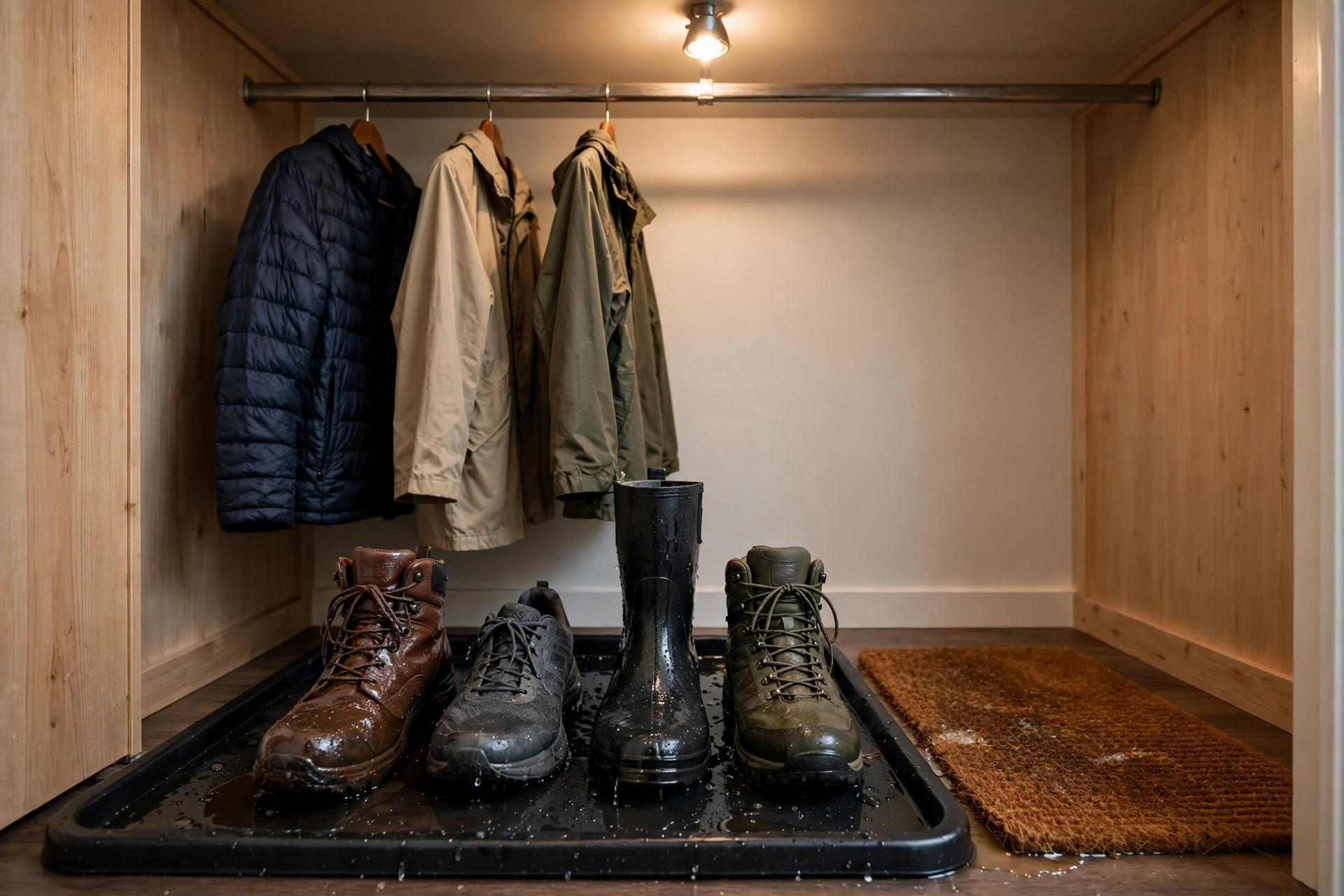
14. Bags on hooks on the inside of the door, not on the floor
Bags on the closet floor get stepped on, buried under coats and forgotten, and the bag you want is always at the bottom. Hang them on hooks on the inside of the door — one hook per bag, at a height you can reach — so every bag hangs flat and comes off in one pull. Door hooks also use space that is otherwise wasted, and they keep bags off the floor where they get damp and dirty. Keep one hook per bag, and never let a hook hold two bags, because that is how straps tangle and bags fall. One hook per bag, and the bags stop piling.
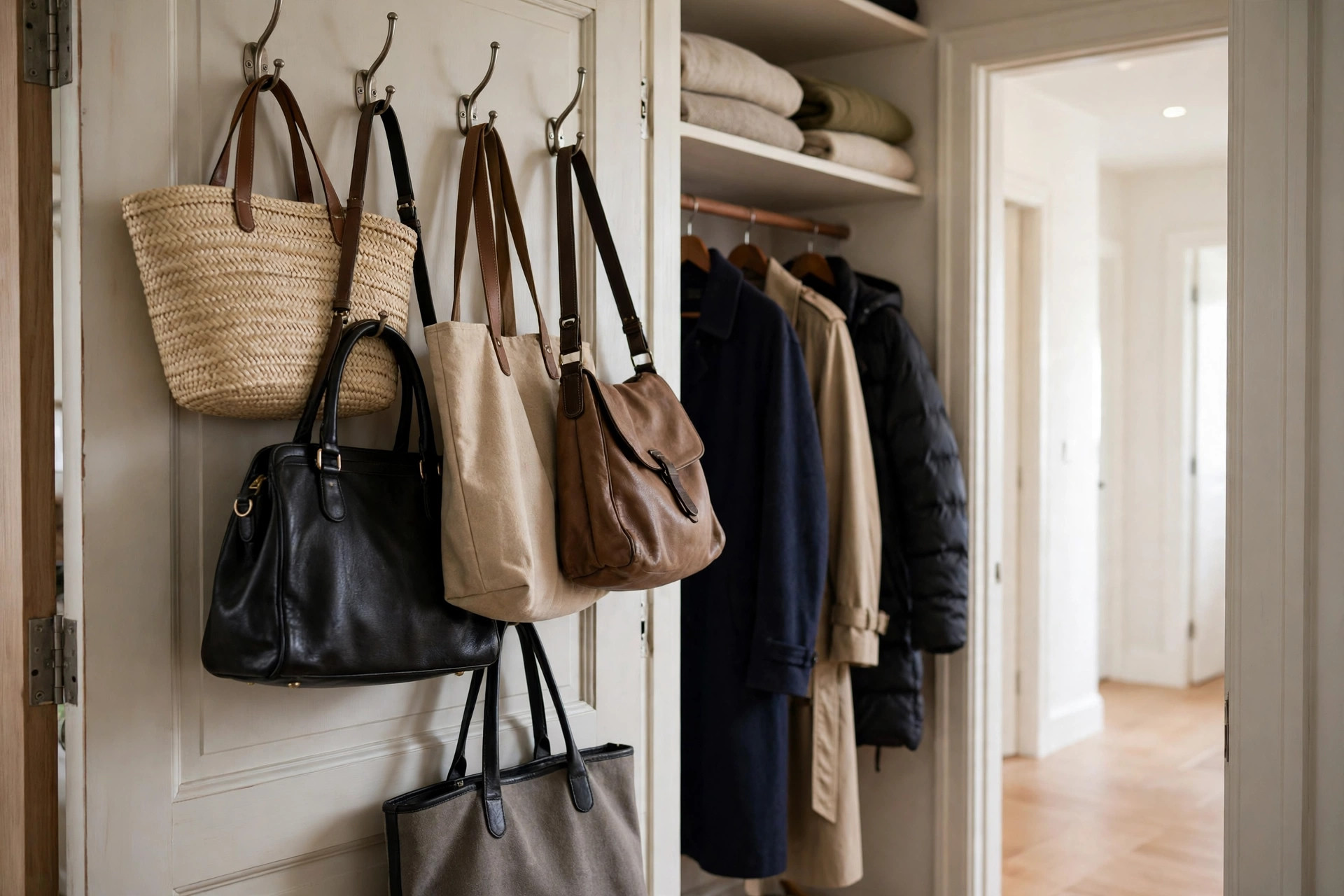
15. One basket per kind for gloves, scarves and hats
Gloves, scarves and hats slide, fall over and fill every gap, and they are the first thing to make a closet look messy. Put them in a basket, one basket per kind, standing upright like files in a drawer, so every bit is visible and none of them falls. Baskets also stop a single glove disappearing into a pile, because the pile is now one basket with a label on the front. Keep the baskets on the shelf you reach most, and never let a basket hold two kinds of thing, because that is how the bits get lost again. One basket per kind, and the loose bits stop taking over.
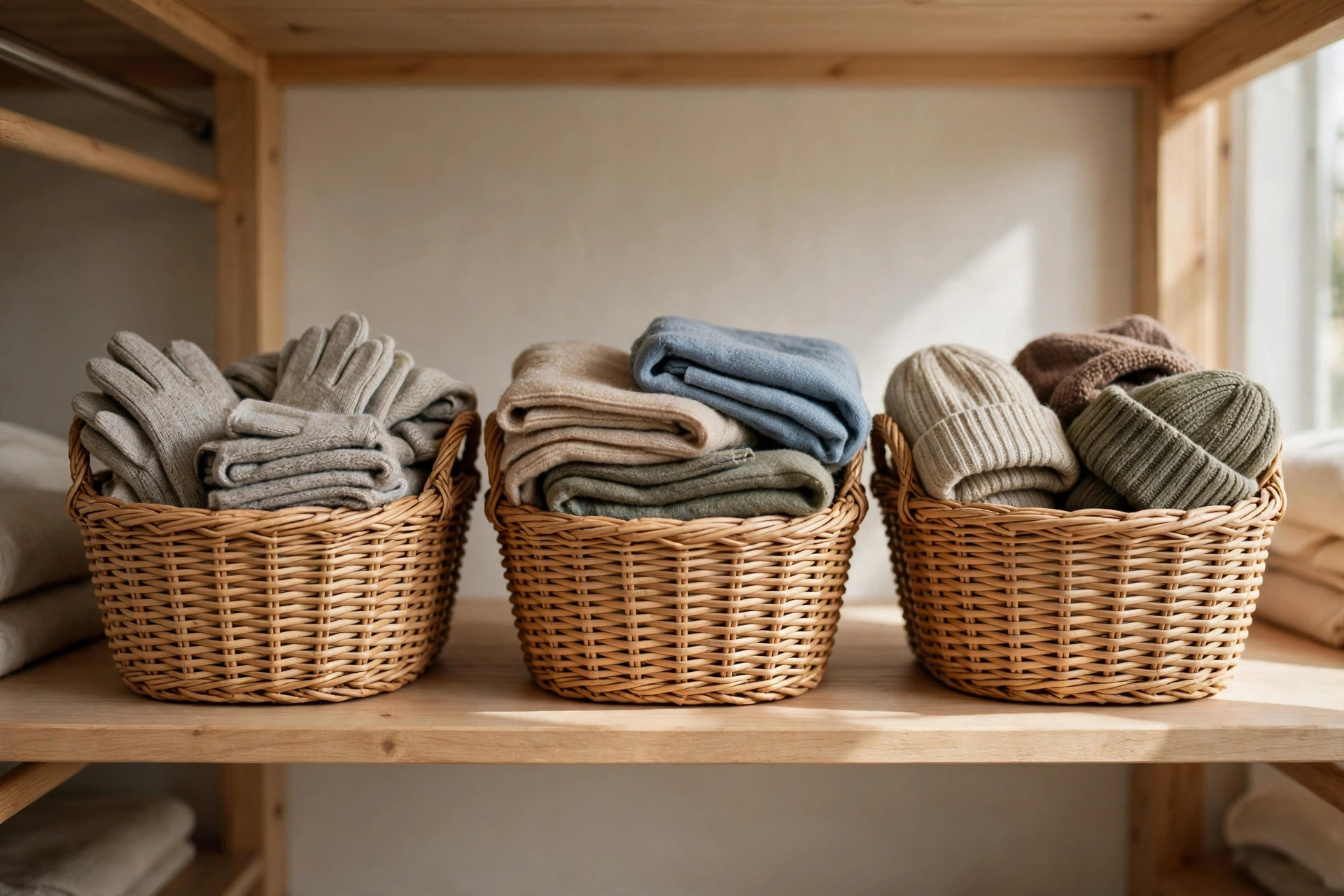
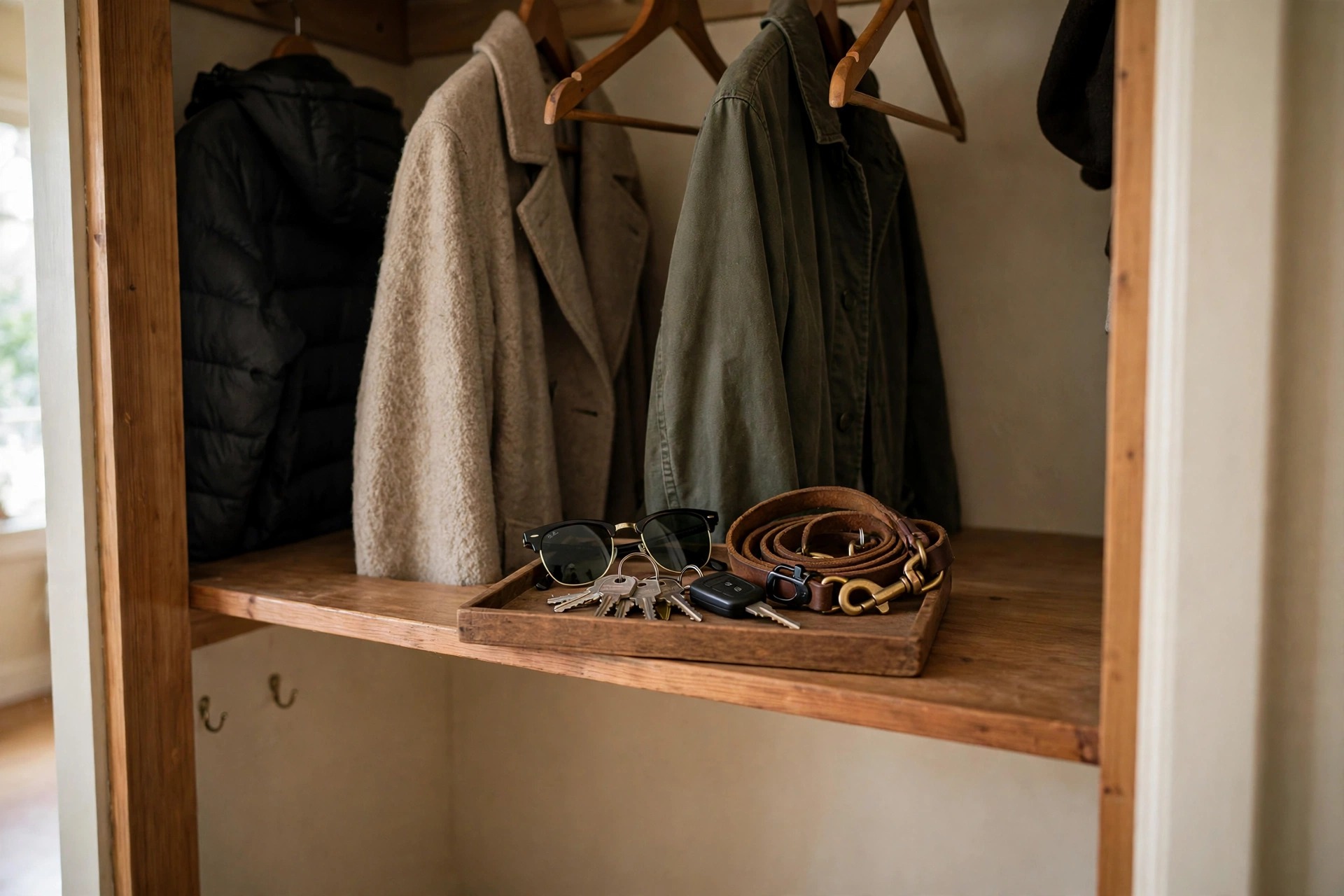
16. A small shelf or tray for keys, sunglasses and the dog lead
Keys, sunglasses and the dog lead dropped wherever they land are how a household loses ten minutes every morning. Give them one small shelf or tray inside the closet — a tray on the shelf by the door, or a narrow shelf at eye level — so every small thing lands in the same spot the moment you come home. The tray lives within arm's reach of the door, so grabbing the lead is one step instead of a search. Keep the tray to the daily small things only, and check it once a week, so it never fills with coins and receipts. One tray, one place, and the small things stop disappearing.
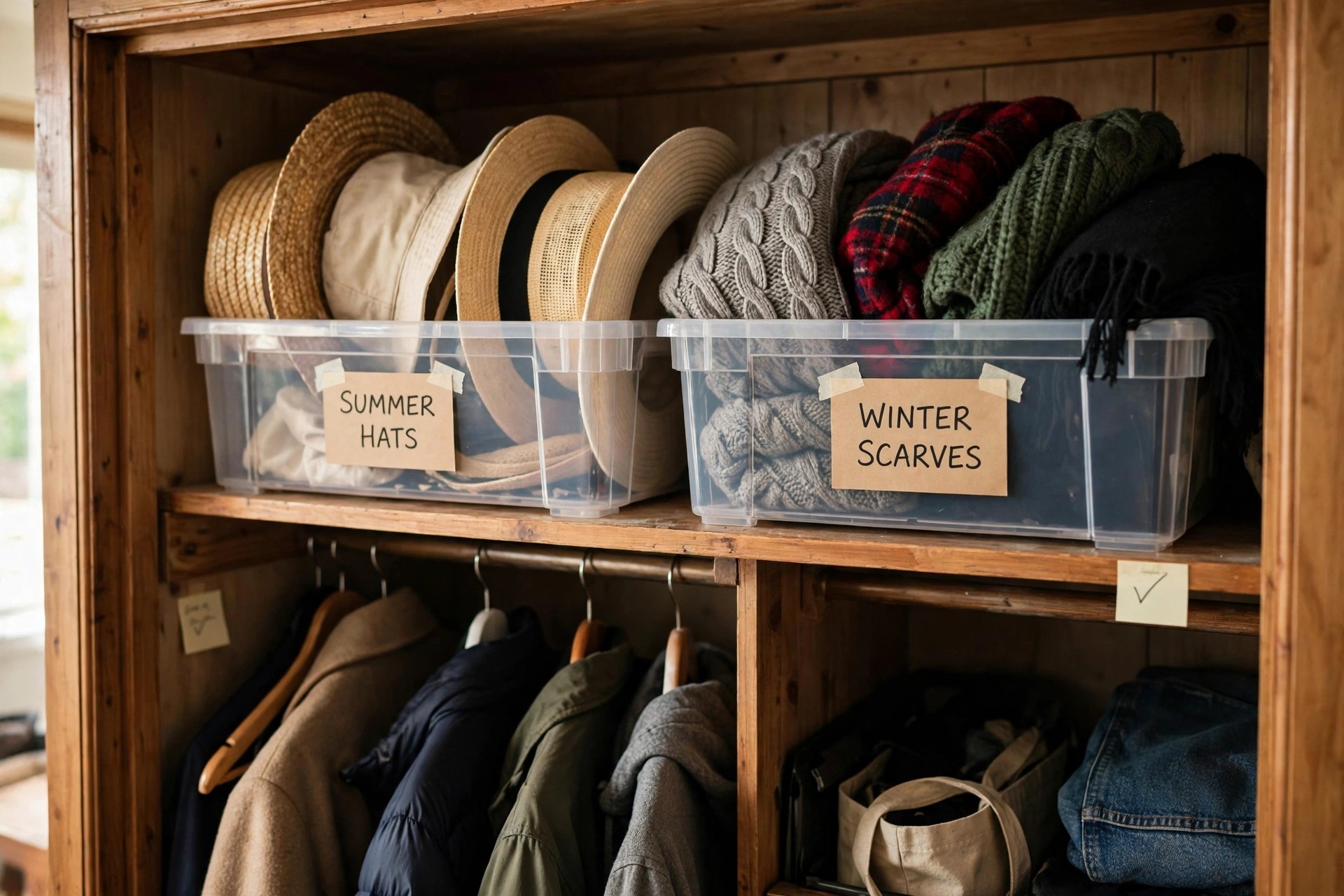
17. Stackable bins on the top shelf for out-of-season accessories
Out-of-season accessories mixed with everyday ones are how you end up wearing a winter scarf in spring because it was the one on top. Put them in stackable bins on the top shelf — one bin per kind, labelled on the front — so the summer hats live in one bin and the winter scarves in another, and the bin slides out when you need it. Stackable bins also stop the top shelf becoming a dead zone, because the bins come to you instead of you reaching into the dark. Keep the bins shallow enough that nothing gets buried at the bottom, and swap them when the season changes. One bin per kind, stacked two high at most, and the accessories stop taking over.
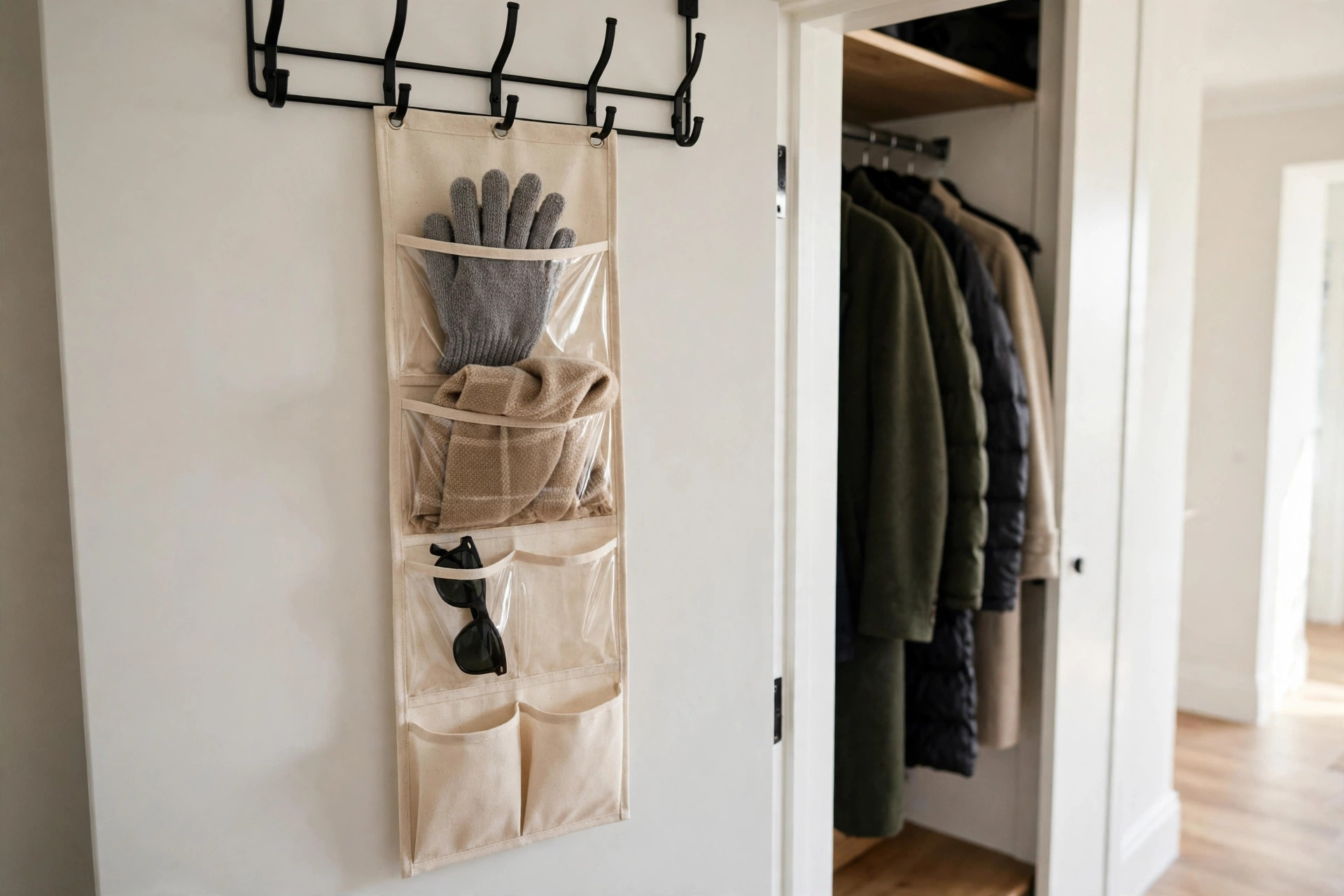
18. Use the back of the door — over-door hooks and a slim organizer
A small closet has no floor space to spare, so storage has to go on the door. Fit over-door hooks and a slim organizer on the back of the closet door, and keep the small things there — scarves, hats, the dog lead, small bags — hanging where you can see them. The door uses space that is otherwise wasted, keeps the small things visible, and costs almost nothing to fit. Keep the heavy bags off the door organizer, because that is how doors sag and hooks pull out, and keep the daily things there, not the monthly ones. One door organizer, and a tiny closet gains a whole row of storage. (Check on Amazon for an over-door organizer slim enough for your door to close.)
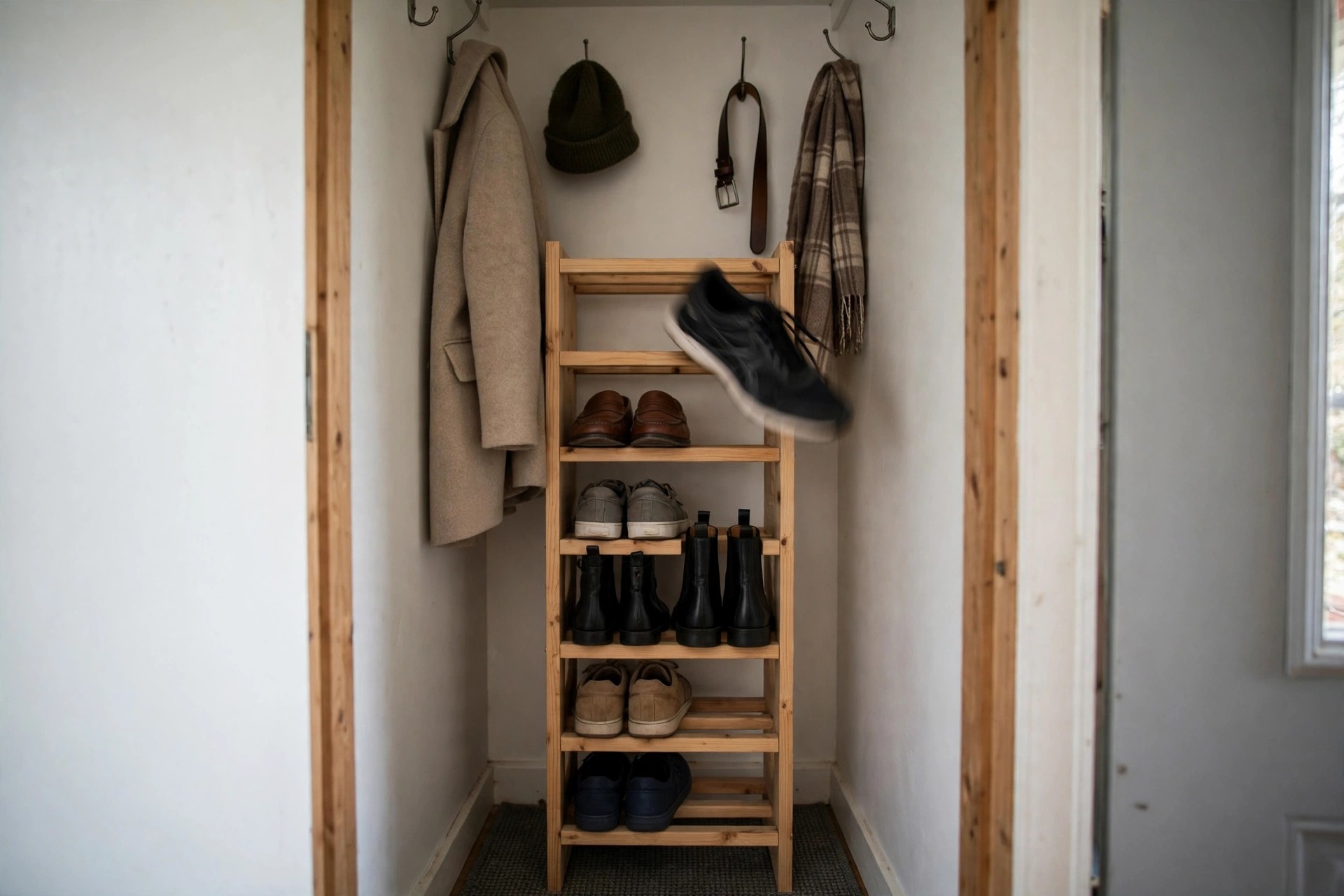
19. A narrow shoe rack that fits a shallow closet
A shallow closet cannot hold a deep shoe rack, so the shoes end up in a pile on the floor. Fit a narrow shoe rack made for shallow closets — one pair per slot, standing where you can see them — so the shoes slide in the moment they come off. A narrow rack also stops shoes spreading across the floor, because the floor is clear the moment the shoes are in. Measure the closet depth before buying, and buy a rack that fits the depth, not the other way round. One narrow rack, and the shoes stop taking over.
20. Label every bin and shelf, front and centre, in the same style
A closet with no labels is a closet only one person in the house can use, and that person is always the one tidying it. Label every bin and shelf in the same place — the front, at the same height — in the same handwriting or the same printed style, so anyone can put things away and find them. Labels also stop a bin drifting into a second zone, because the label says what belongs inside. Keep the labels short — one or two words — and replace them when the zone changes, not a year later. One label per container, and the closet works for the whole household.
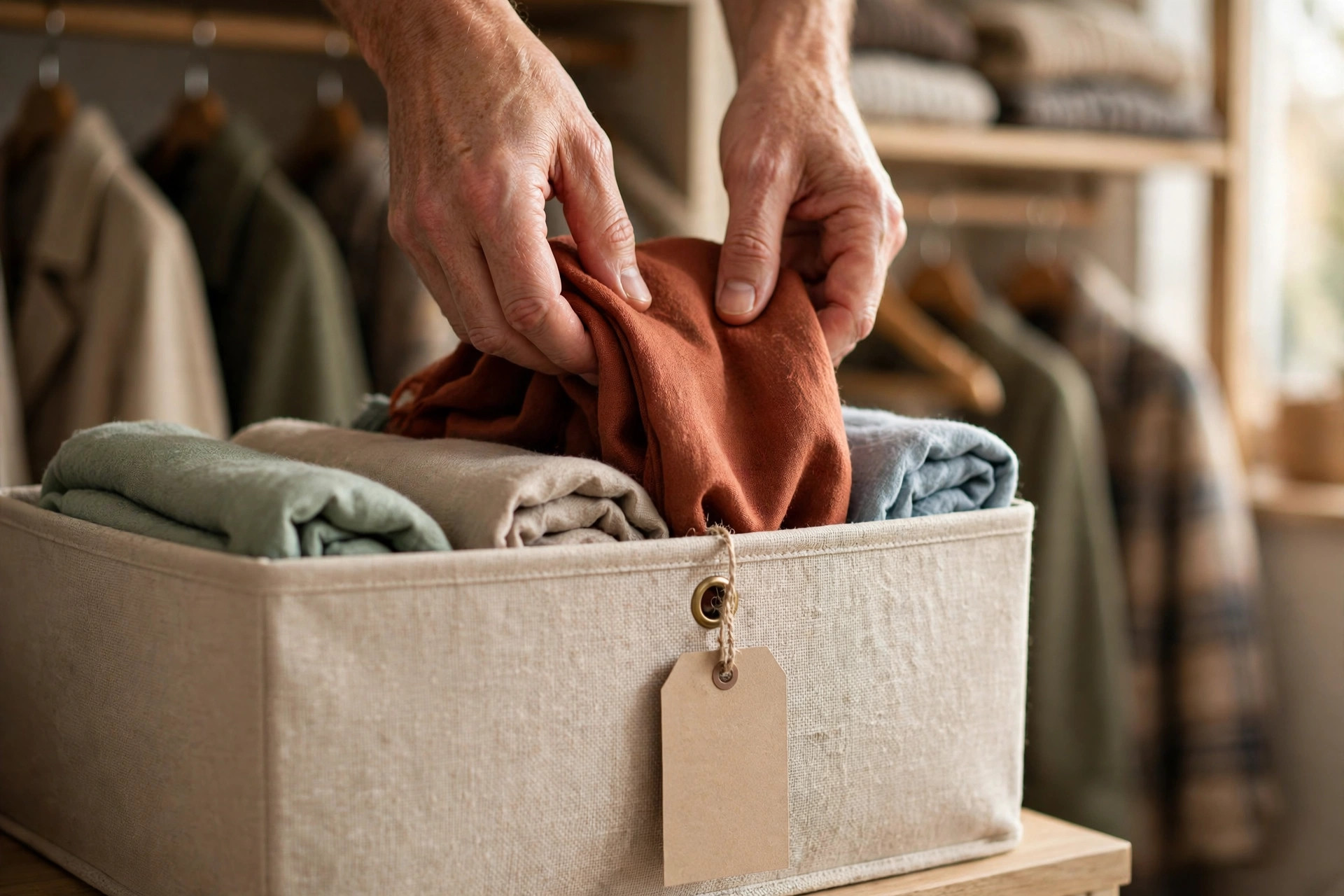
21. A seasonal swap shelf — swap, don't squeeze, when the weather turns
When the weather turns, the temptation is to squeeze the new season's coats in beside the old ones, and the closet ends up holding two seasons at once. Keep one swap shelf — the top shelf, or the high shelf — and when the season changes, swap it: take the old season down into a labelled bin, put the new season up, and add anything worn out to the donation bag. Swapping takes twenty minutes twice a year and stops the closet holding two seasons at once. The swap shelf also shows you the real count at a glance, which is the first step to owning fewer coats. Swap, don't squeeze, and the closet fits the season.
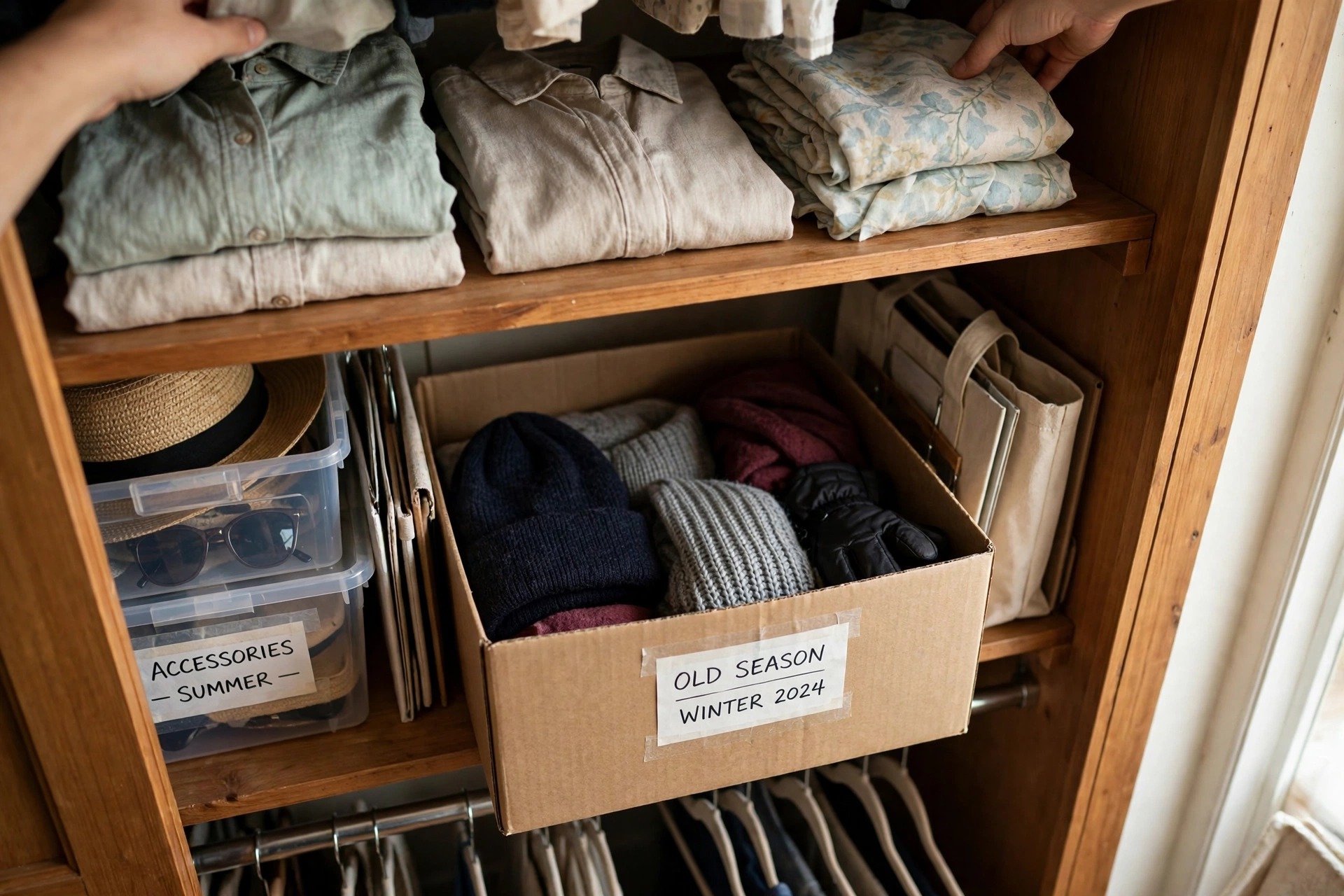
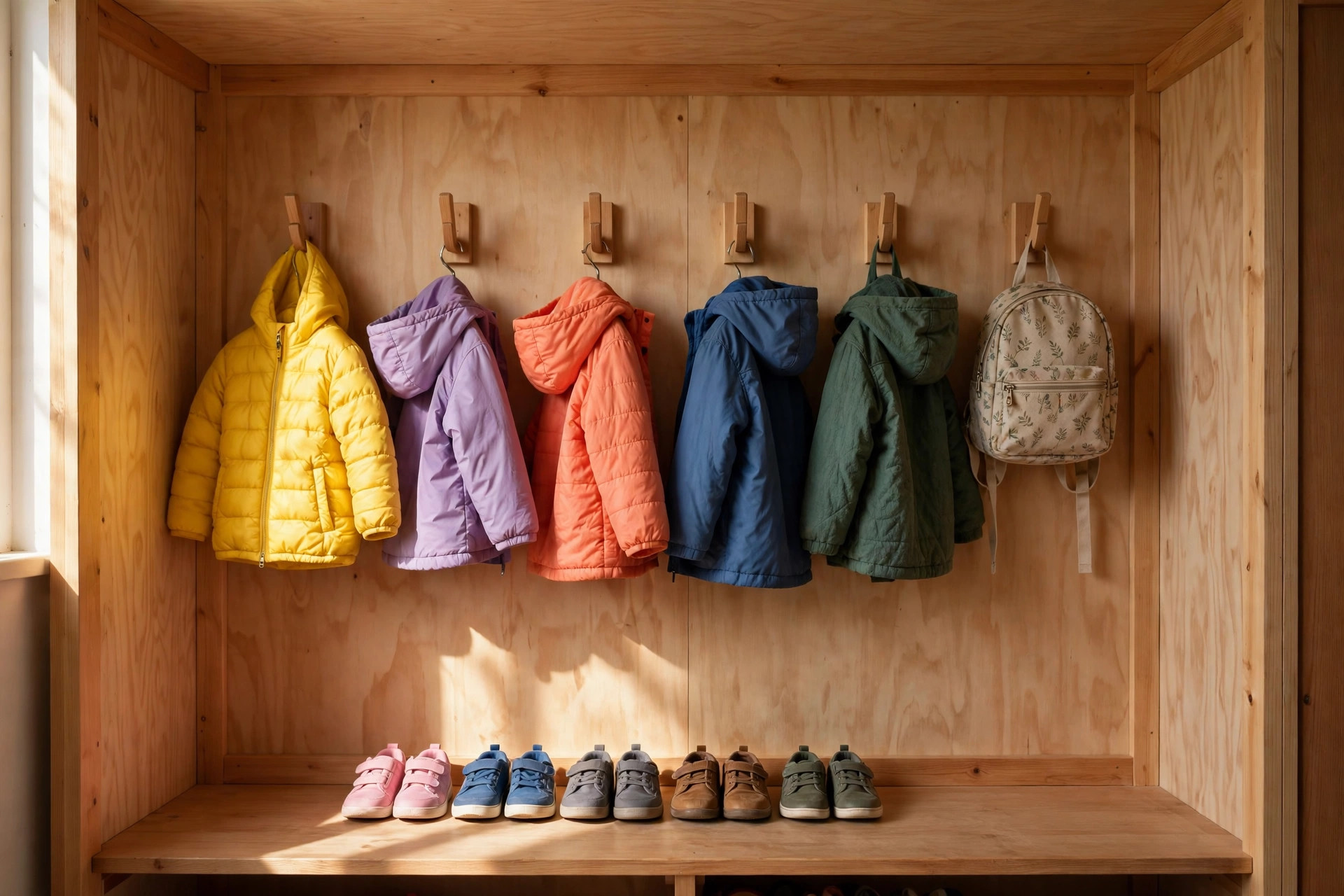
22. Kids' coats at kids' height, with their own hooks
Kids' coats on adult-height hooks get draped over chairs and dumped on the floor, because the hook is too high for the child who owns the coat. Give children their own hooks at their height — one hook per child, low on the wall or on the inside of the door — so every coat hangs where its owner can reach it. Kids' hooks also teach the habit early: a coat on its own hook is a coat that gets found in the morning. Keep one hook per child, label it with their name or a picture, and never let an adult coat take a child's hook. One hook per child, at their height, and the coats stop landing on the floor.
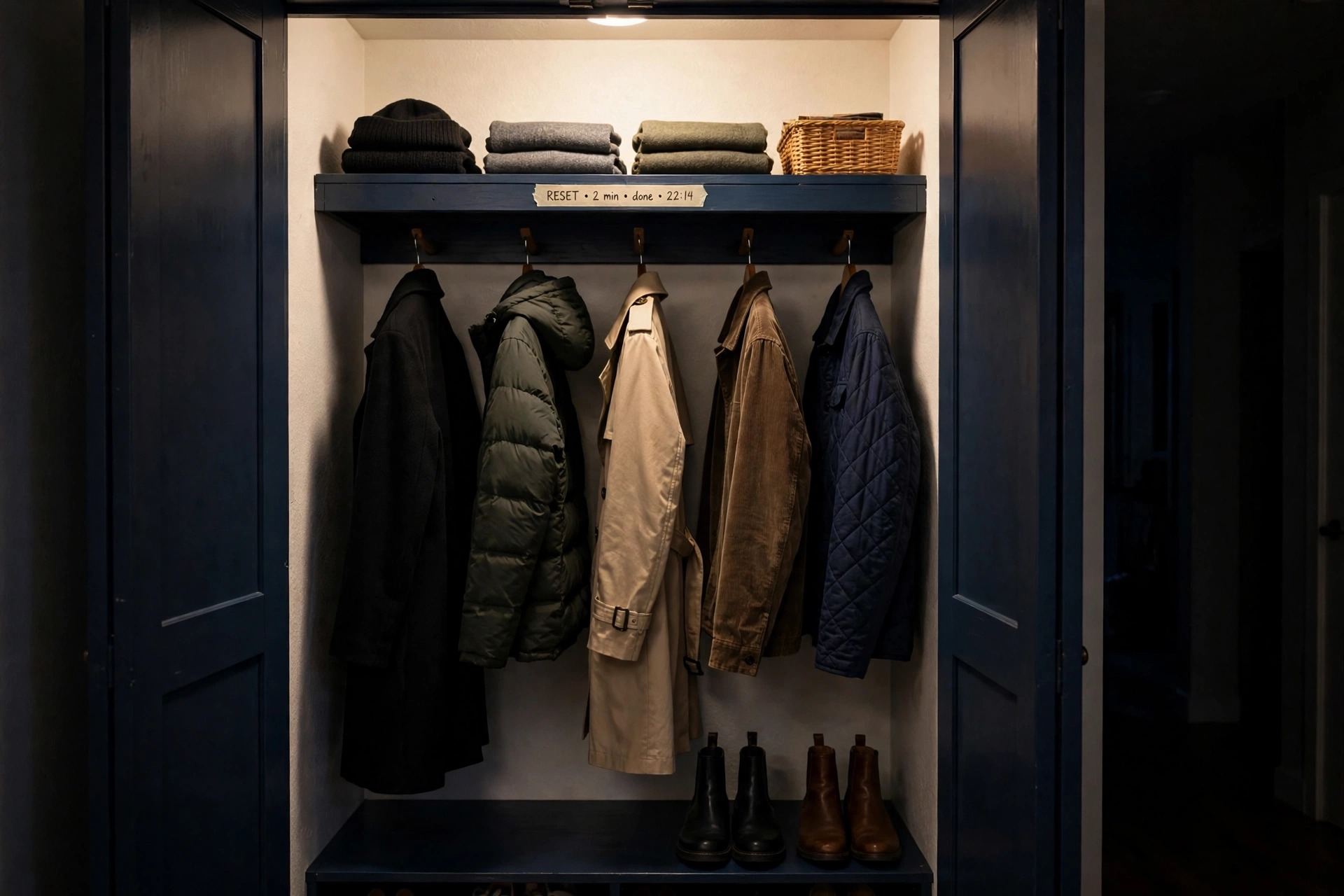
23. A two-minute nightly reset, not a yearly clear-out
A closet stays tidy with a small nightly habit, not a heroic yearly clear-out. Once a night, for two minutes, pull the front row forward, check what is out of place, move the coats back to their hooks, and put anything that has drifted back in its zone. The reset is small enough to do while the kettle boils, and it stops the slow drift that turns a tidy closet into a messy one in a week. Keep a small basket by the door for things that belong in another room, and empty it during the reset. Two minutes a night, and the closet never needs a big clear-out again.
24. Keep the floor clear — nothing stored loose on the closet floor
A closet floor with loose things on it is a closet you cannot stand in, and a closet you cannot stand in is a closet you cannot use. Keep the floor clear: shoes in their row or rack, wet shoes in the tray, and nothing stored loose on the floor — no bags, no boxes, no pile of things waiting to be put away. A clear floor also stops trips and torn coats, because there is nothing to catch a hanger on. If something has no home, it does not go on the floor — it gets a hook, a basket or a bin, or it leaves the closet. Nothing loose on the floor, and the closet stays usable.
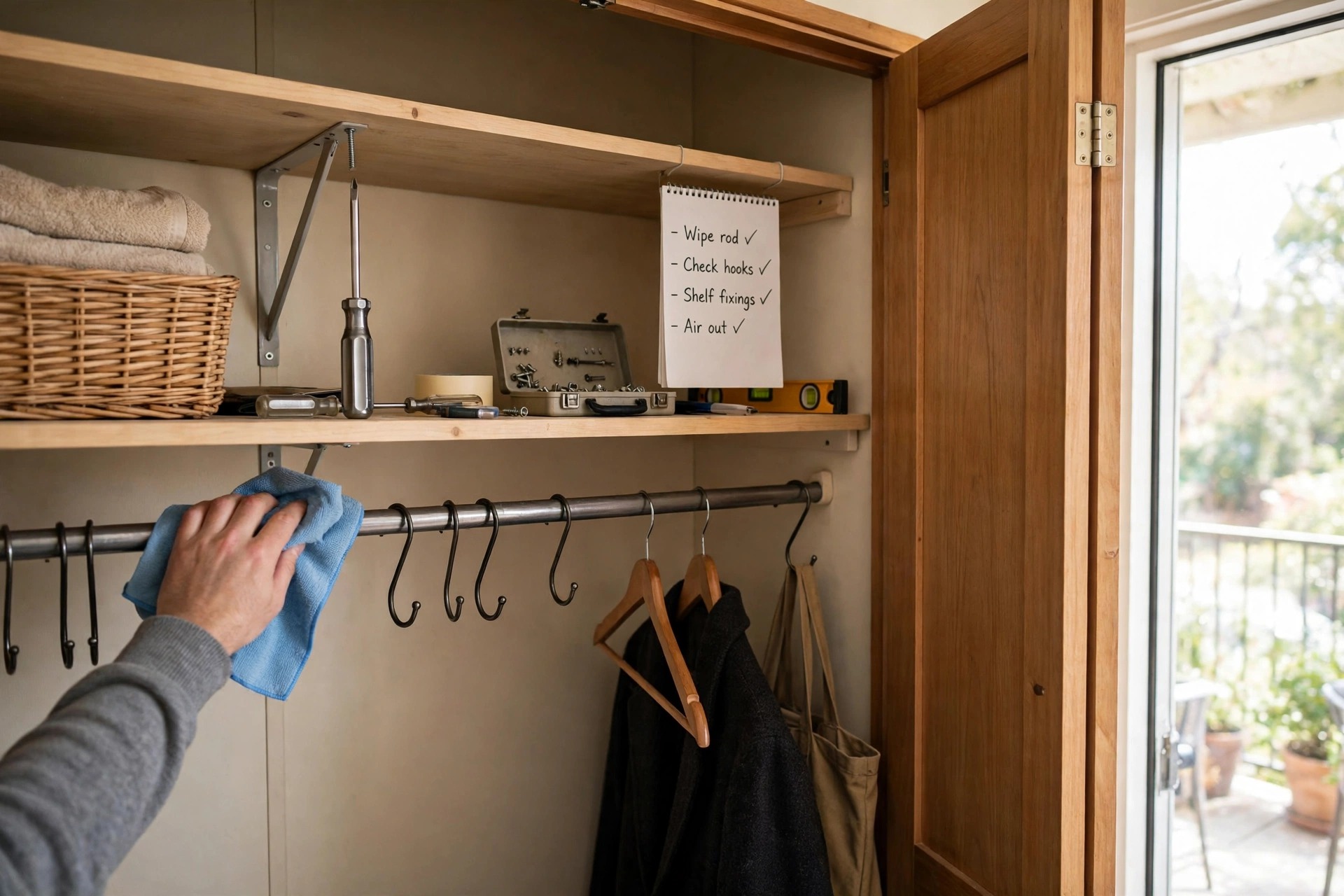
25. Care for the closet itself — wipe the rod, check hooks, air it out
Storage only helps if the closet itself is looked after. Wipe the rod once a month, check the hooks once a season, and air the closet out — open the door, let it breathe, and shake the mat after every wet day. Check the shelf fixings once a year, keep things out of direct sunlight and away from the damp of wet shoes, and never hang a heavy bag on a hook without checking it can hold it, because that is how hooks pull out of the wall. A closet looked after lightly lasts longer than one stored perfectly and never checked. Care for the closet, and the storage takes care of itself.
Which coat closet fix fits which closet?
| Closet / situation | Best first move | Budget | Tools needed |
|---|---|---|---|
| Crowded closet / too many coats | One coat per person + one-in, one-out (ideas 2, 5) | Low | Hangers |
| Small or shallow closet | Door organizer + narrow shoe rack (ideas 18, 19) | Low | Hooks / rack |
| Stacks keep toppling | Shelf dividers + labelled bins (ideas 7, 20) | Low | Dividers / labels |
| Wet shoes household | Boot tray inside the closet (idea 13) | Low | Boot tray |
| Loose bits everywhere | One basket per kind (idea 15) | Low | Baskets |
| Kids' coats on the floor | Hooks at kids' height (idea 22) | Low | Hooks |
You do not need all 25 ideas. You need the three that solve your biggest mess — usually the coats with no hook, the shoes with no row, and the top shelf that keeps toppling. Start with one coat per person, give every thing one home, and make the rule that everything goes back in its place before the day ends. Do that tonight and opening the closet will feel different by tomorrow morning.
Save this post for your next closet clear-out, and if you are finishing the front of the house too, read 22 Entryway Storage Ideas for 2026 next — it is Post 10, the closet's neighbour at the front door — and 26 Small Walk-In Closet Organization Ideas for 2026, Post 03, to carry the same system into the rest of the house. Later in this cluster, 22 Linen Closet Organization Ideas for 2026 (Post 14), 25 Utility Closet Organization Ideas for 2026 (Post 20) and 22 School Organization Ideas for 2026 (Post 12) carry the same system into the linen closet, the utility closet and the school run.
Frequently asked questions
How do I organize a small coat closet with no room for a second rod?
Use the door and the hangers, not the rod. Fit over-door hooks and a slim organizer on the back of the door, switch to slim matching hangers so the rod holds more, and keep one coat per person with a one-in, one-out rule. A narrow shoe rack and a boot tray take care of the floor, so the small closet gains storage without a second rod.
How many coats should one person keep in a coat closet?
One everyday coat per person, plus one spare for the season — and one coat out for every coat that comes in. The everyday coat hangs on its own hanger, the off-season coats live on the high shelf in a labelled bin, and anything unworn for a full season goes to the donation bag. Fewer coats, each with its own hook, is what keeps the closet usable.
How do I stop shoes piling up on the closet floor?
Give every pair one slot: shoes in a row on the floor or on a narrow rack, one pair per slot, toes out where you can see them. Wet shoes go in a boot tray by the door side, and nothing else is stored loose on the floor. A two-minute nightly reset — shoes back in their slots, tray emptied weekly — stops the pile coming back.