21 Lazy Susan Organization Ideas for 2026
A kitchen cabinet is only useful when you can reach what is inside it. Most cabinets fail the same way: the thing you need is at the back, behind the thing you bought last month, behind the thing you forgot you owned, and the only way to reach it is to pull everything out, find it, and put everything back — so you stop reaching, and the back of the cabinet becomes a graveyard of duplicates and expired jars.
These 21 lazy susan organization ideas fix that without a bigger kitchen: one rotating shelf per zone, labels facing out, one category per spin, and a rule that everything comes to you with one turn, not a reach into the dark.
Every idea below works in a real home, from a single deep corner cabinet to a full pantry. Pick three that fit your worst cabinet, start by measuring the shelf before you buy anything, and build from there. If the cabinets themselves need a rethink first, 20 Kitchen Cabinet Organization Ideas for 2026 covers the cabinet side of the same problem — the turntables below are the spinning layer that lives inside them.
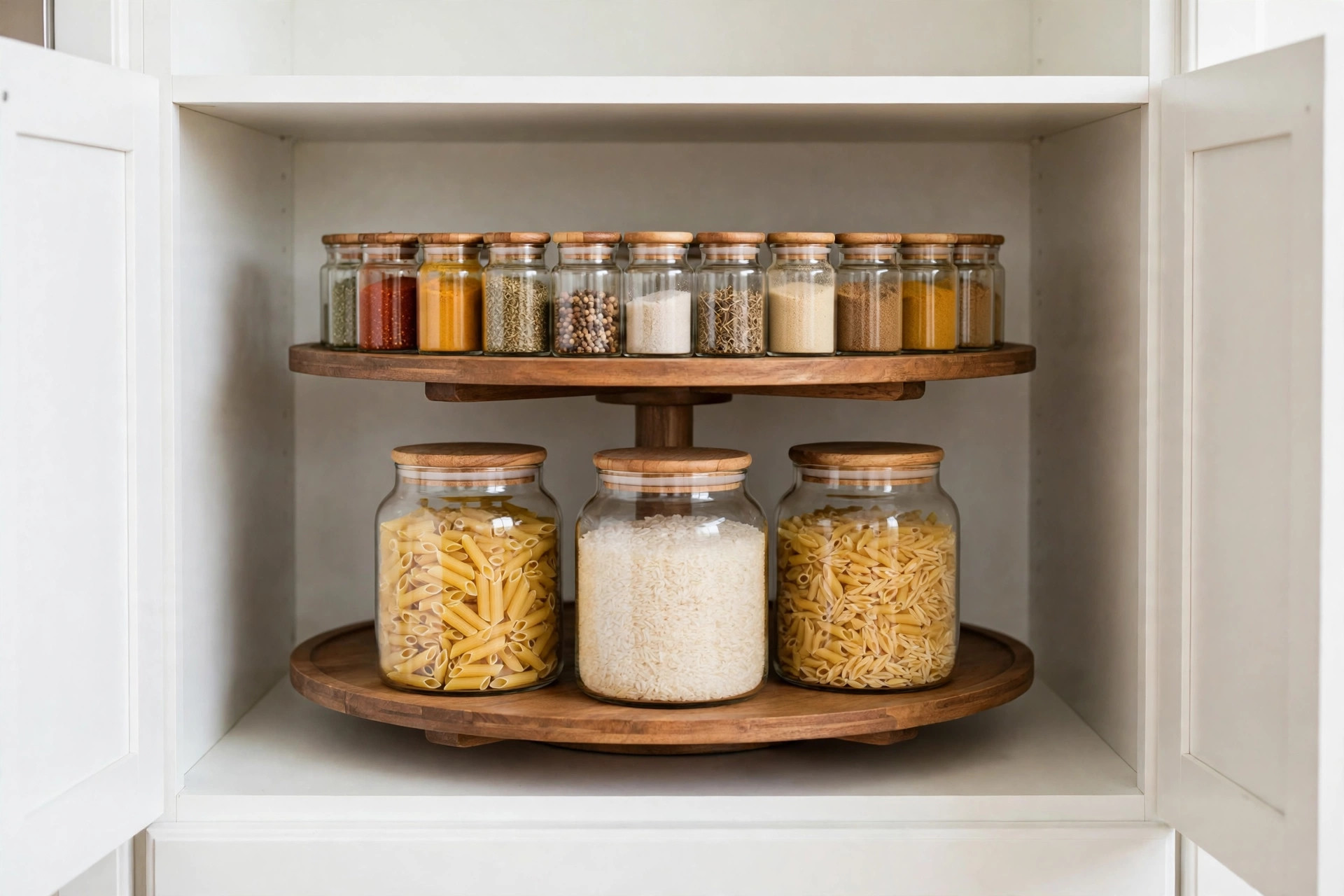
Start with the right lazy susan, not a bigger cabinet
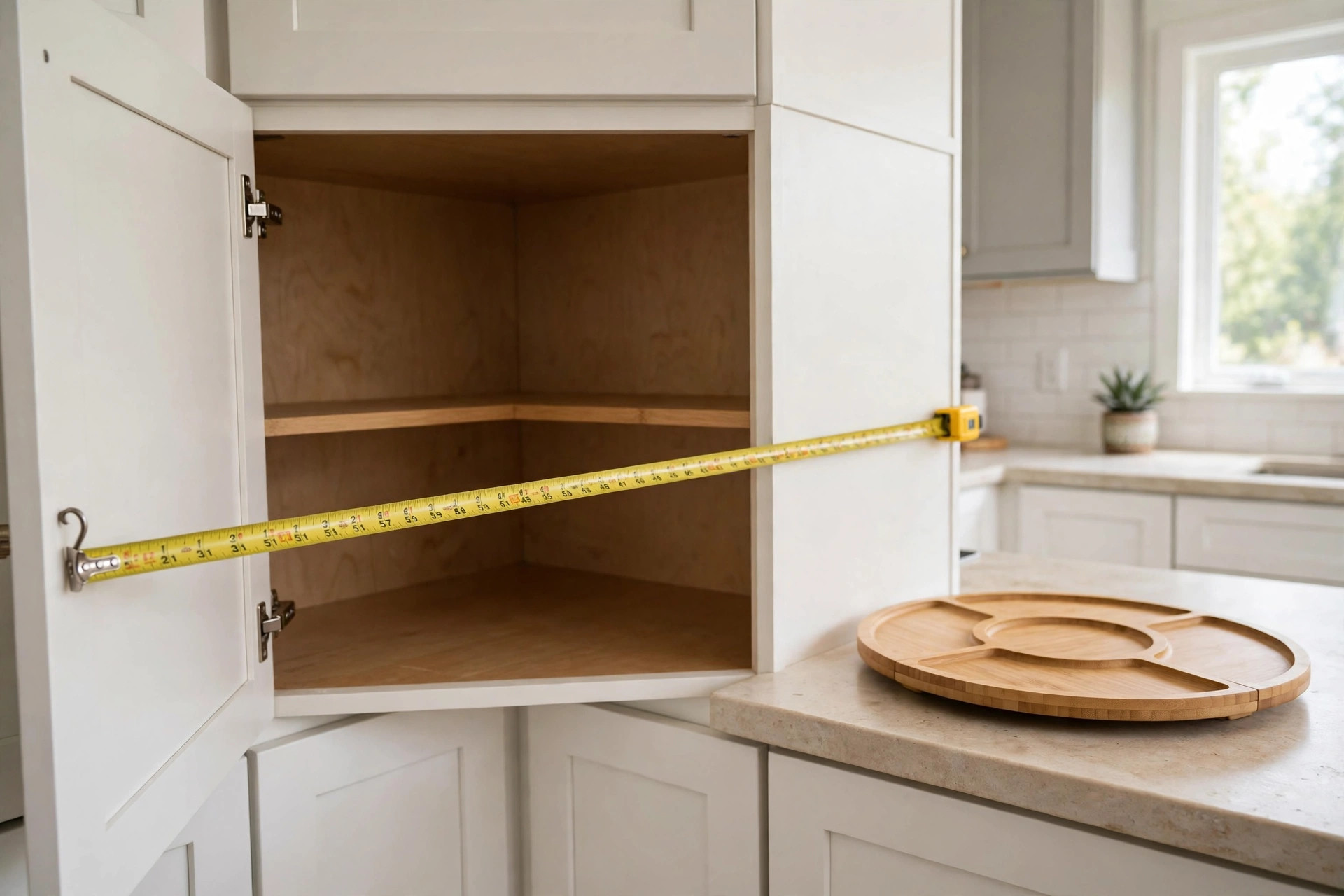
1. Measure the cabinet before buying — diameter, depth and door clearance first
A lazy susan that does not fit is a lazy susan that never spins, and a tray that never spins is just a round tray taking up shelf space. Measure three things before you buy anything: the diameter of the shelf floor, the depth of the cabinet, and the clearance of the door when the tray turns. Leave a finger's width all round so the tray spins freely, and buy to the smallest of the three numbers — a tray 2 cm too wide is a tray that jams against the door frame. Write the numbers on your phone before you shop, and check them against the box, not against your memory. Measure first, and the first spin works.
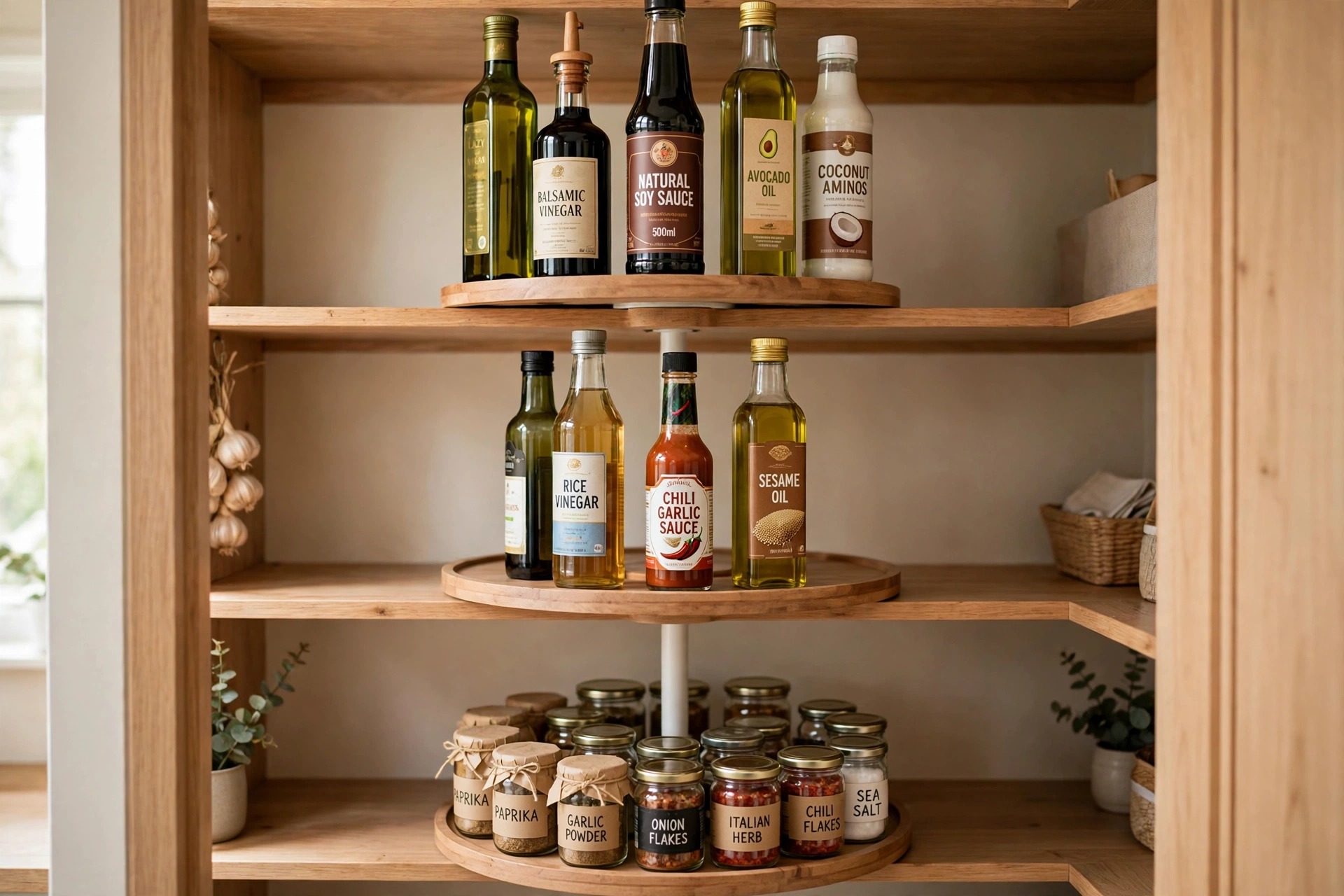
2. One turntable per shelf, not one per cabinet, so nothing hides behind another spin
One rotating shelf per cabinet is a cabinet where only the bottom shelf spins and the top shelf stays a graveyard. Give every shelf its own lazy susan, sized to that shelf: the top shelf holds the tall bottles on a single tier, the bottom shelf holds the short jars on a two-tier, and each spin brings one shelf, not a jumble. A tray on every shelf also stops the top shelf becoming the place things go to be forgotten, because the spin works the same at any height. One shelf, one spin, and nothing hides behind another spin.
3. A non-slip base or liner under every turntable, so jars stay put when it spins
Jars slide when the tray spins, and a sliding jar is a jar that falls — usually the one you use most. Put a non-slip liner or a rubber base under every lazy susan, cut to the shape of the tray, so the jars stay put through a full spin and the tray itself stops creeping across the shelf. The liner also stops a sticky jar gluing itself to the tray, because the mess stays on the liner and washes off in one go. Wash the liner when it gets sticky, replace it when it curls at the edges. Check on Amazon for a non-slip shelf liner cut to fit a lazy Susan rotating shelf. One liner per tray, and the spin stops being a landslide.
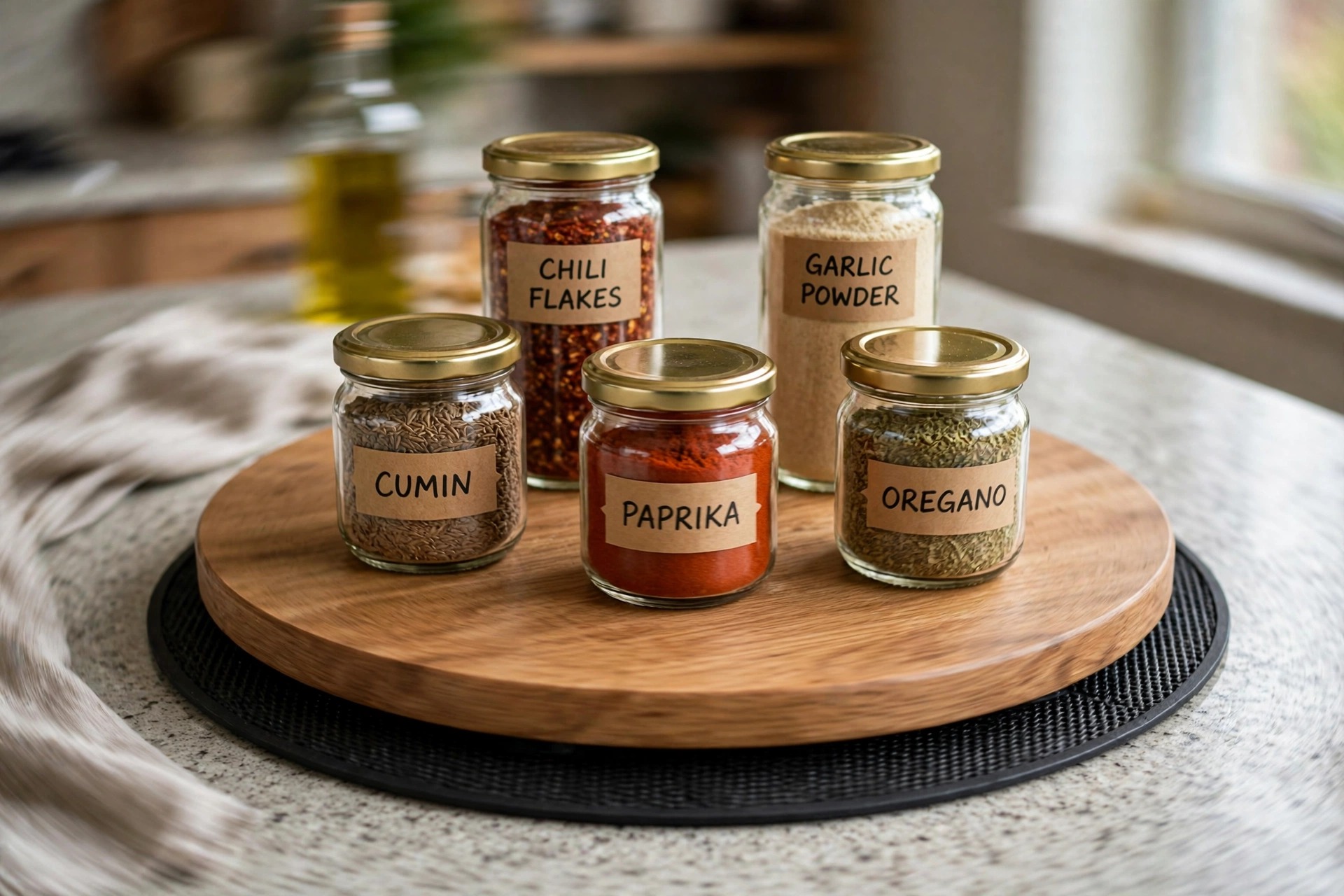
4. Pick the right height — single tier for short jars, two tiers for tall bottles
A two-tier tray for short spice jars wastes the whole top tier, and a single tier for tall bottles means the bottles fall over the moment it spins. Match the tier to the tallest thing on it: single tier for short jars and cans, two tiers for tall bottles, oils and vinegars. Leave a finger's width above the tallest bottle so the tier above never clips it, and check the shelf above before you buy, because a tray that fits the shelf but not the gap above it is a tray that never spins. One height per shelf, and every bottle stands upright.
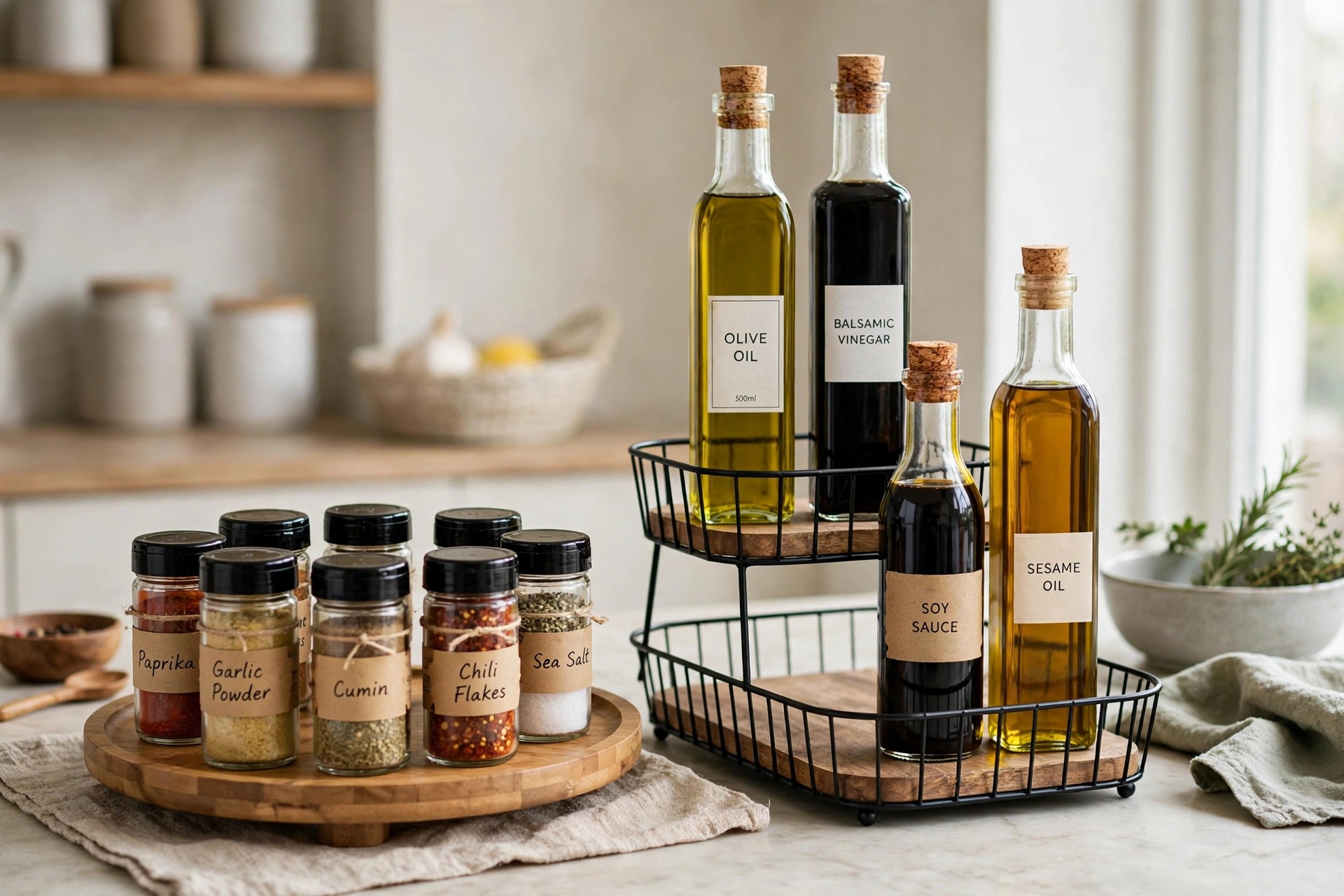
5. A raised edge or lip on the tray, so nothing slides off mid-spin
A flat tray throws things off the edge the moment it spins fast — a small bottle, a spice jar, a tin that was never quite stable. Pick a lazy susan with a raised edge or lip, even a low one, so everything stays on through a full turn. The lip also stops a knocked jar rolling off the shelf and onto the floor, which is how glass jars break and spices spread. Check the lip height before buying: too low and it does nothing, too high and tall bottles will not fit under the shelf above. One lip, and the spin stops being a spill.

Lazy susan organization for kitchen cabinets that finally work
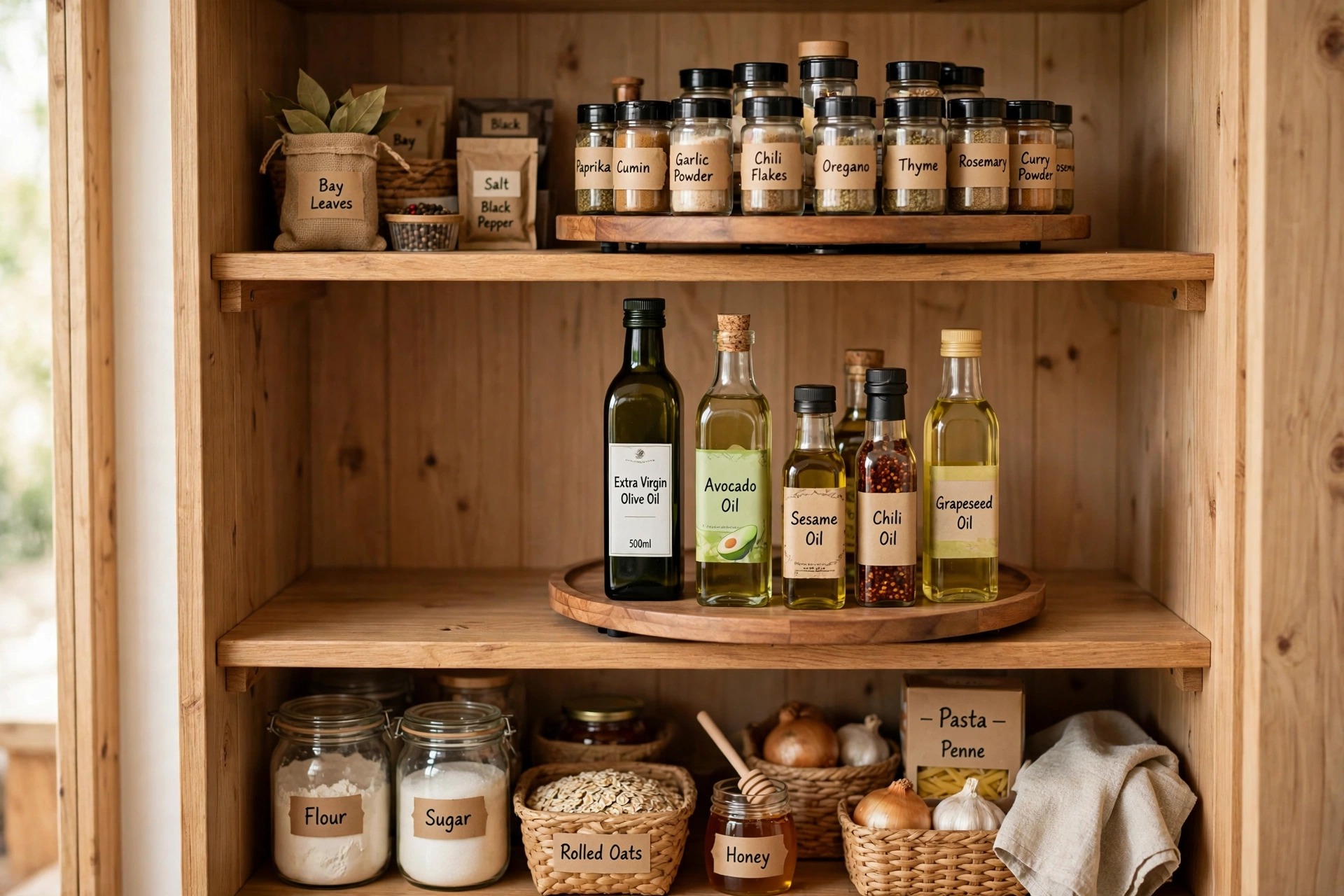
6. Spices on a two-tier turntable, labels facing out, most-used at the front
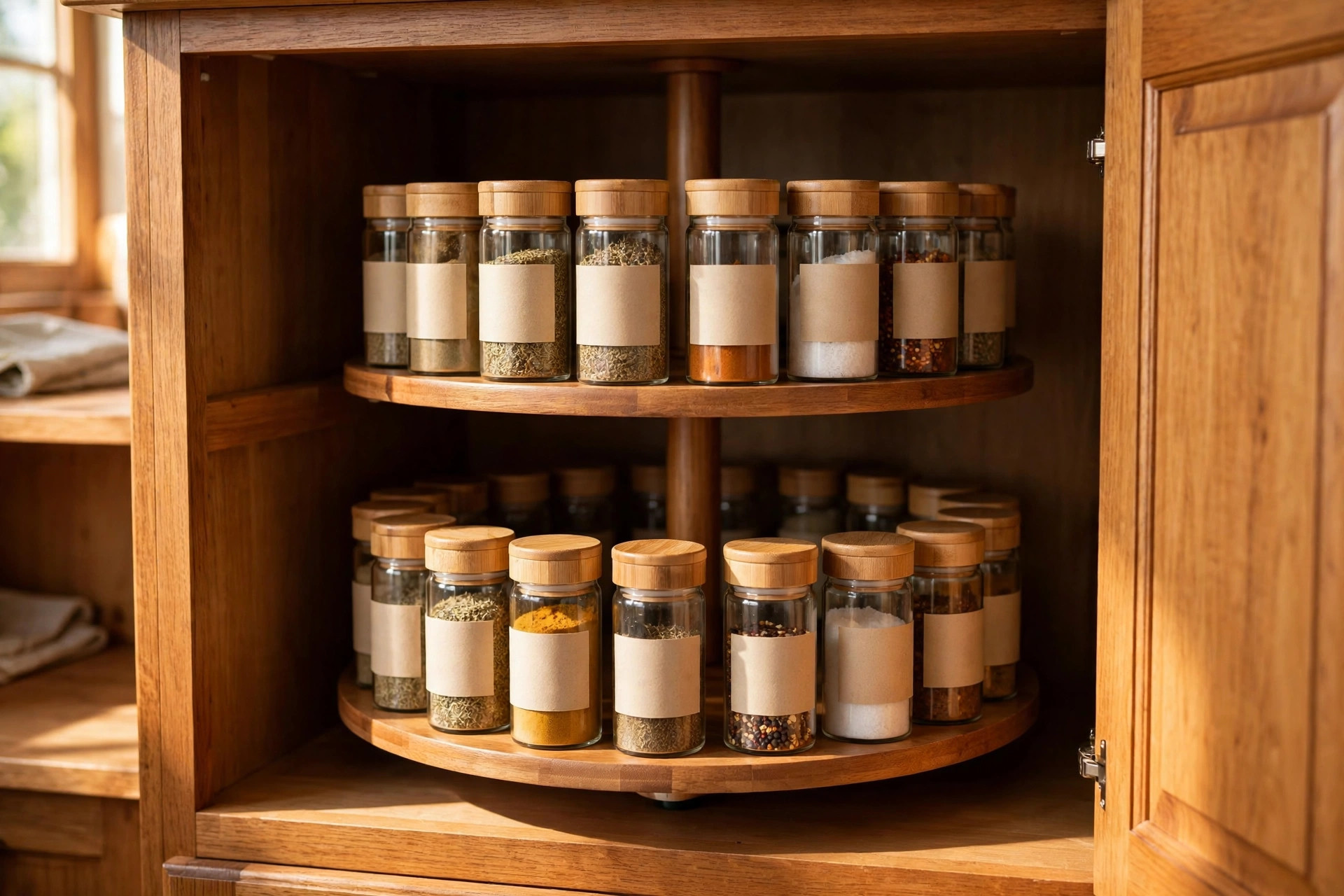
Spices fail when the jar you want is at the back with its label facing the wall, and every meal starts with turning ten jars to find one. Put the spices on a two-tier lazy Susan rotating shelf, labels facing out, most-used at the front, least-used at the back. One spin brings the paprika to you instead of you reaching past the cumin, and the two tiers mean the back row is never hidden behind the front row. Keep one category per tier — savoury below, sweet above, or the reverse — and never let a tier hold two cuisines at once. One spin, and the spice hunt ends.
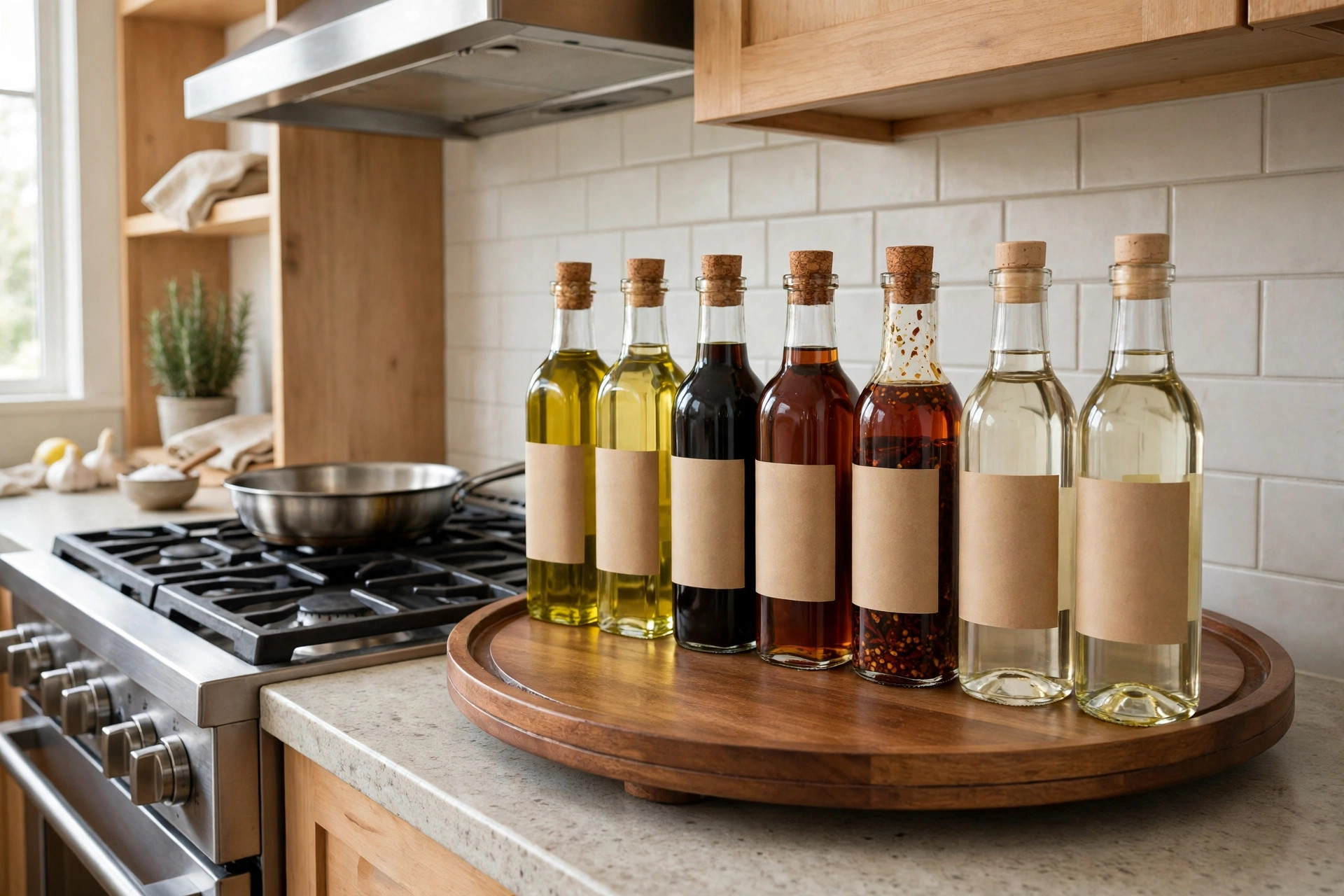
7. Oils, sauces and vinegars on one large turntable by the cooker — one spin, not a shuffle
Oils and sauces live by the cooker, and every meal starts with shuffling five bottles to reach the one at the back. Put them all on one large lazy Susan rotating shelf beside the cooker, tallest at the back, most-used at the front, one spin to reach any bottle. The big tray also stops a sticky bottle gluing itself to the shelf, because the mess stays on the tray and wipes off in one go. Keep the tray to cooking liquids only — no spice jars, no tins — and the spin stays fast. One spin, not a shuffle.
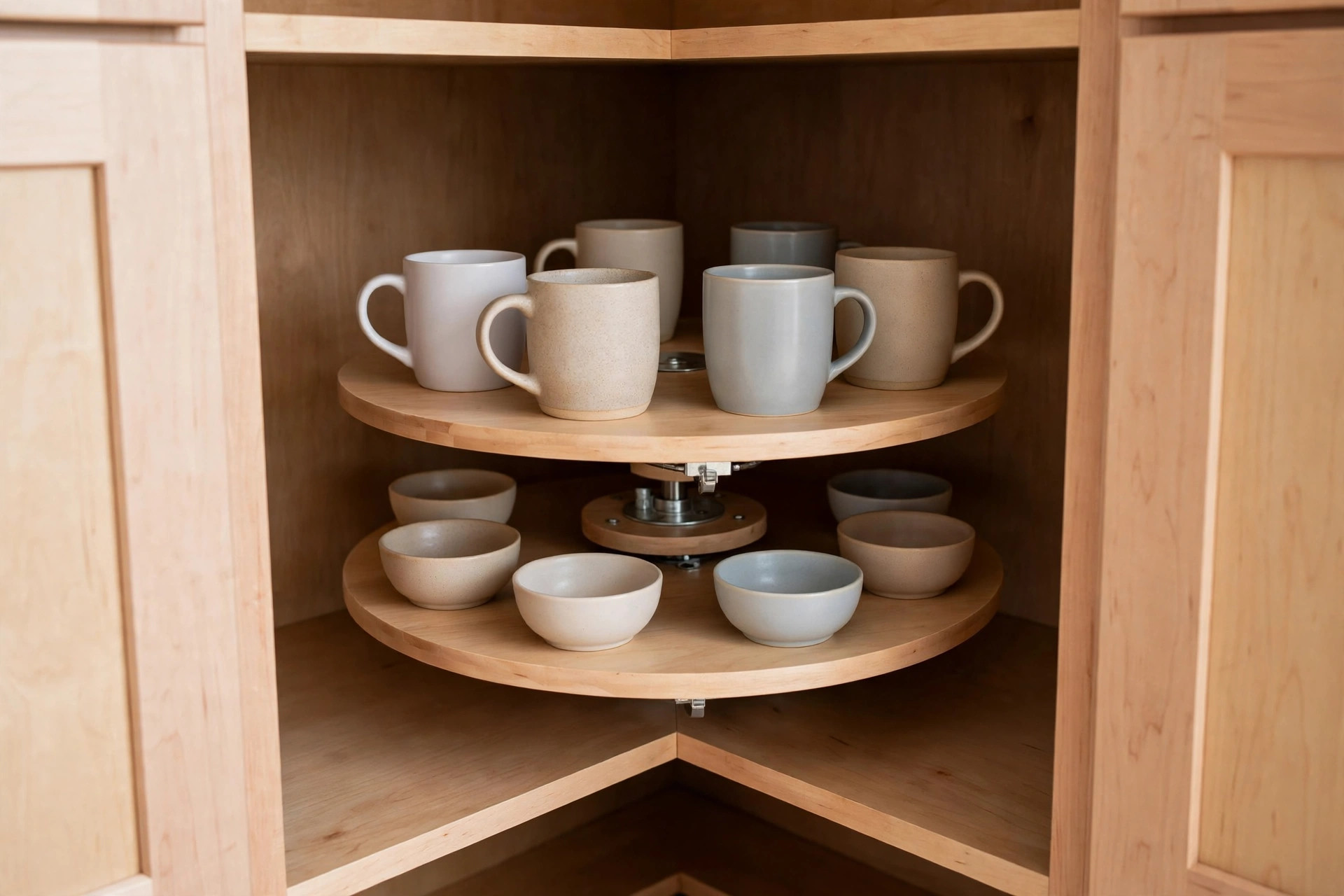
8. Mugs and small bowls on a turntable in a deep corner cabinet, no more reaching blind
Deep corner cabinets are where mugs go to be forgotten, because reaching blind to the back is how mugs chip and bowls stack crooked. Put the mugs and small bowls on a lazy Susan rotating shelf in the corner cabinet, one spin to bring the back to the front, handles facing out so nothing snags. Stack two high at most, and never let a stack hold more than it can carry without toppling when the tray turns. One spin, and the corner cabinet stops being a graveyard.
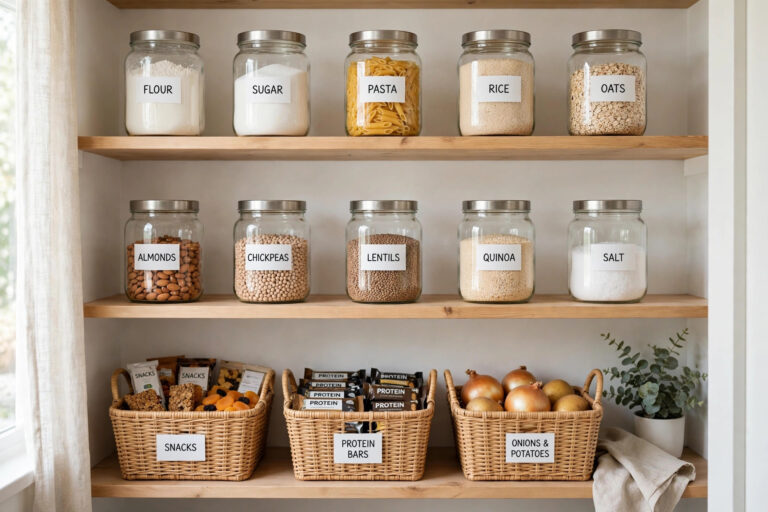
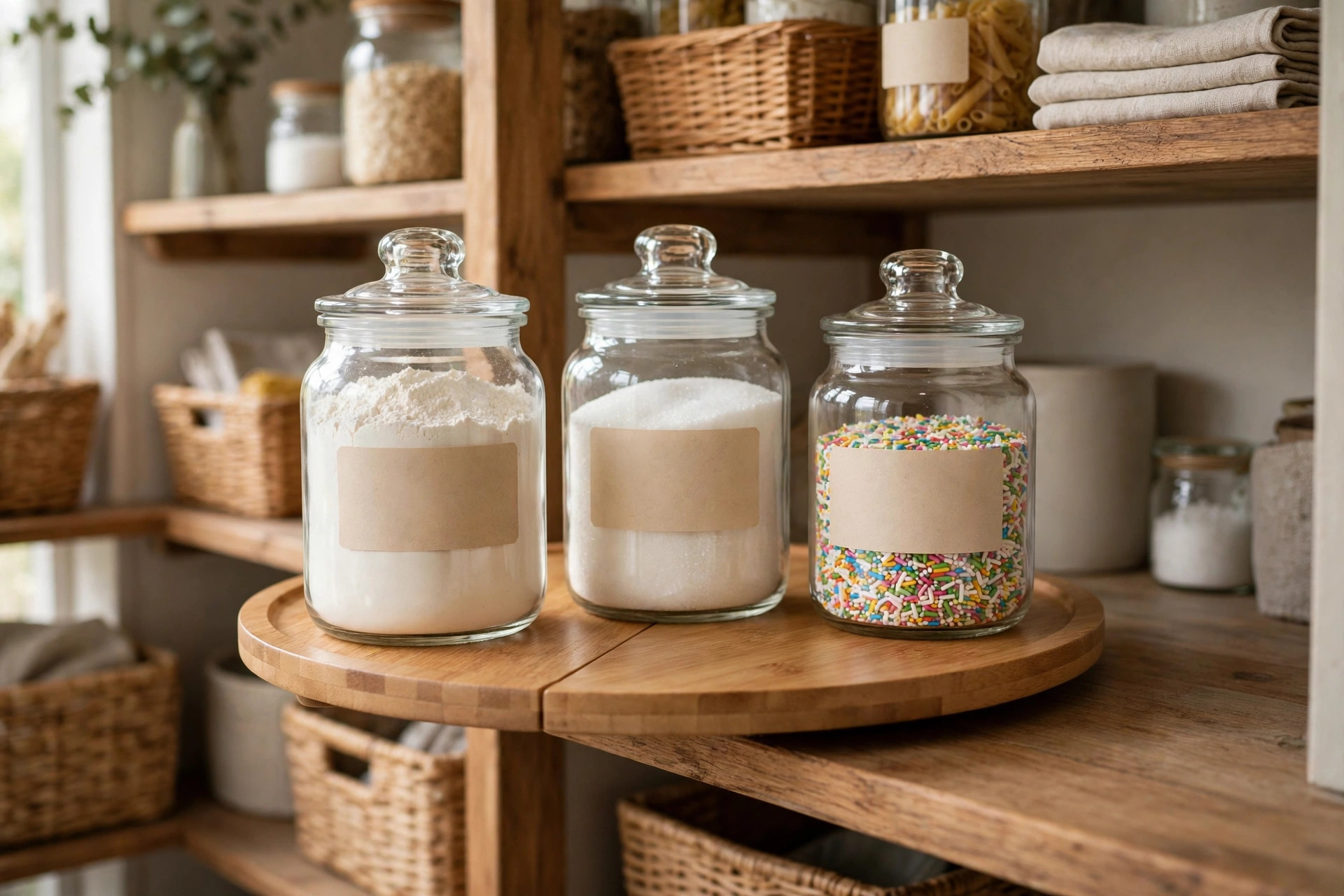
9. Baking supplies on a turntable — flour, sugar and sprinkles in labelled jars
Baking fails when the flour is behind the sugar and the sprinkles are nowhere, and mid-recipe is the worst time to find out. Put the baking supplies on a lazy Susan rotating shelf — flour, sugar and sprinkles in labelled jars, one spin to reach any of them, labels facing out so you never open the wrong jar mid-recipe. Keep the jars airtight, because a damp shelf is how flour clumps, and wipe the tray after every bake, because a sticky tray is how jars glue themselves down. One spin, and baking starts with the ingredients, not the hunt.
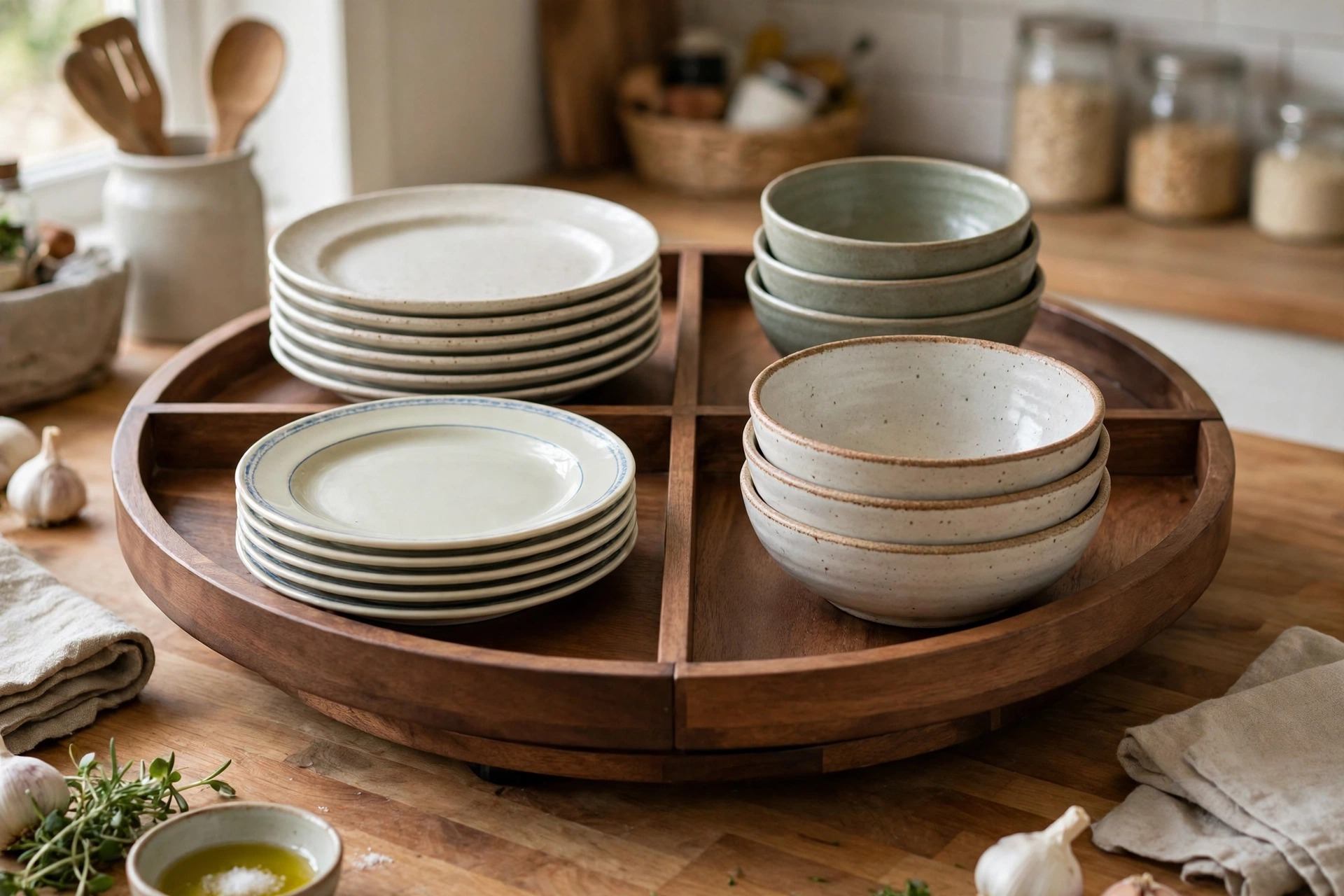
10. A turntable for the everyday plates and bowls, so the stack never topples
Everyday plates fail when the stack is too tall and the plate you want is at the bottom, and the whole stack wobbles every time you pull one out. Put the everyday plates and bowls on a lazy Susan rotating shelf, one stack per tray, sized so the stack never topples when it spins. Keep the stack to one kind — plates on one tray, bowls on another — and the spin brings the whole set to you in one turn. One spin, and the stack stops toppling.
11. Keep the turntable to one category per shelf — mixed shelves are where spins go wrong
A mixed shelf is a shelf where every spin brings the wrong thing — spices with cleaning sprays, mugs with medicine, baking with breakfast. Keep one category per shelf: spices on one spin, oils on another, baking on a third. One category per spin is the rule that makes every other idea work, because a spin that brings the right shelf is a spin worth doing, and a spin that brings a jumble is a spin you stop doing. Label the shelf edge, not the tray, so the category stays readable however it spins.
Lazy susan organization in the pantry, fridge and under the sink
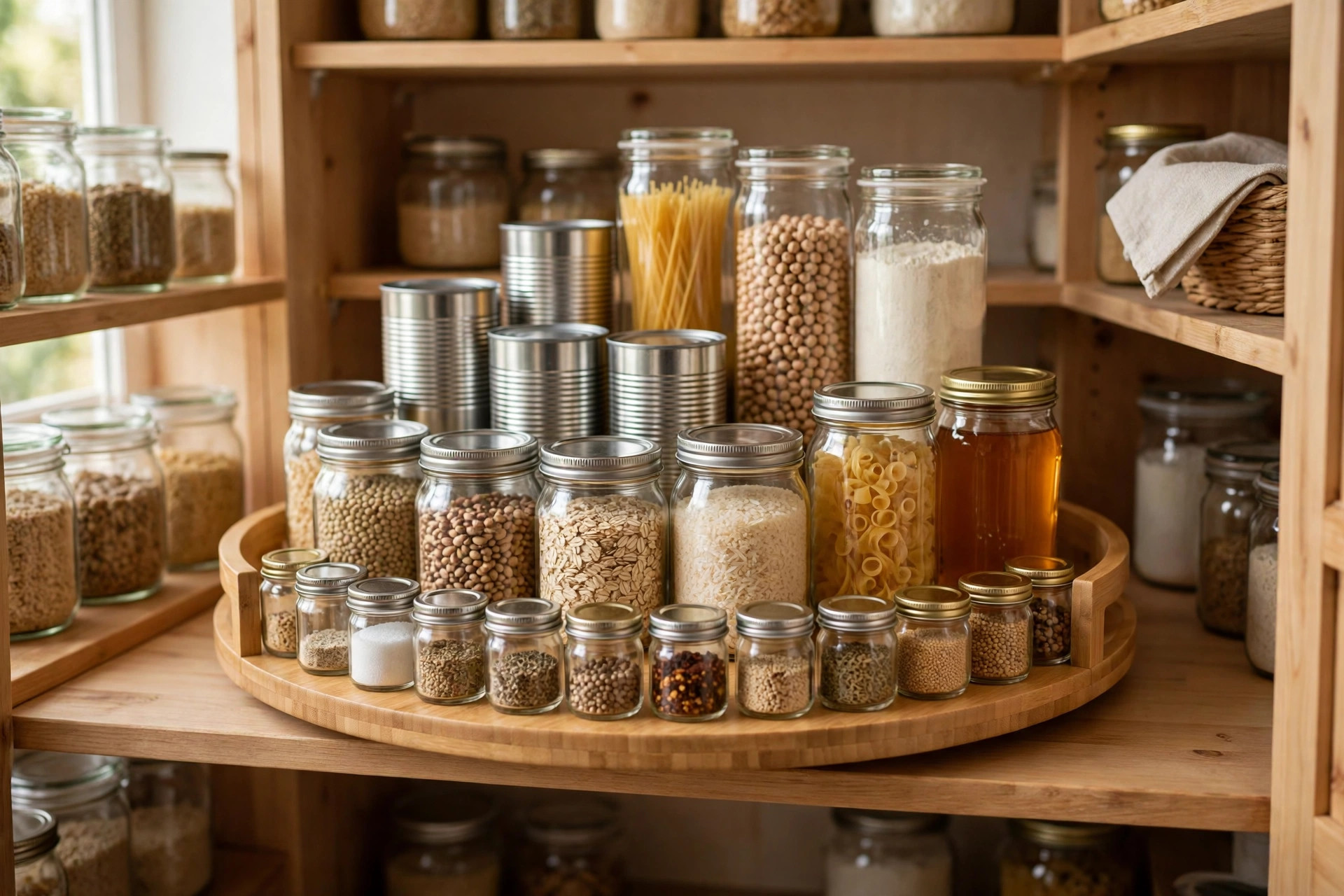
12. A pantry turntable for cans and jars, smallest at the front, tallest at the back
Pantry cans fail when the small tin hides behind the tall jar and both get bought twice, because nobody can see what is actually on the shelf. Put the cans and jars on a lazy Susan rotating shelf in the pantry, smallest at the front, tallest at the back, one spin to see the whole shelf. Keep one zone per tray — tinned tomatoes on one, beans on another — and the spin shows you the real count at a glance, which is the first step to owning fewer duplicates. One spin, and the duplicates stop.
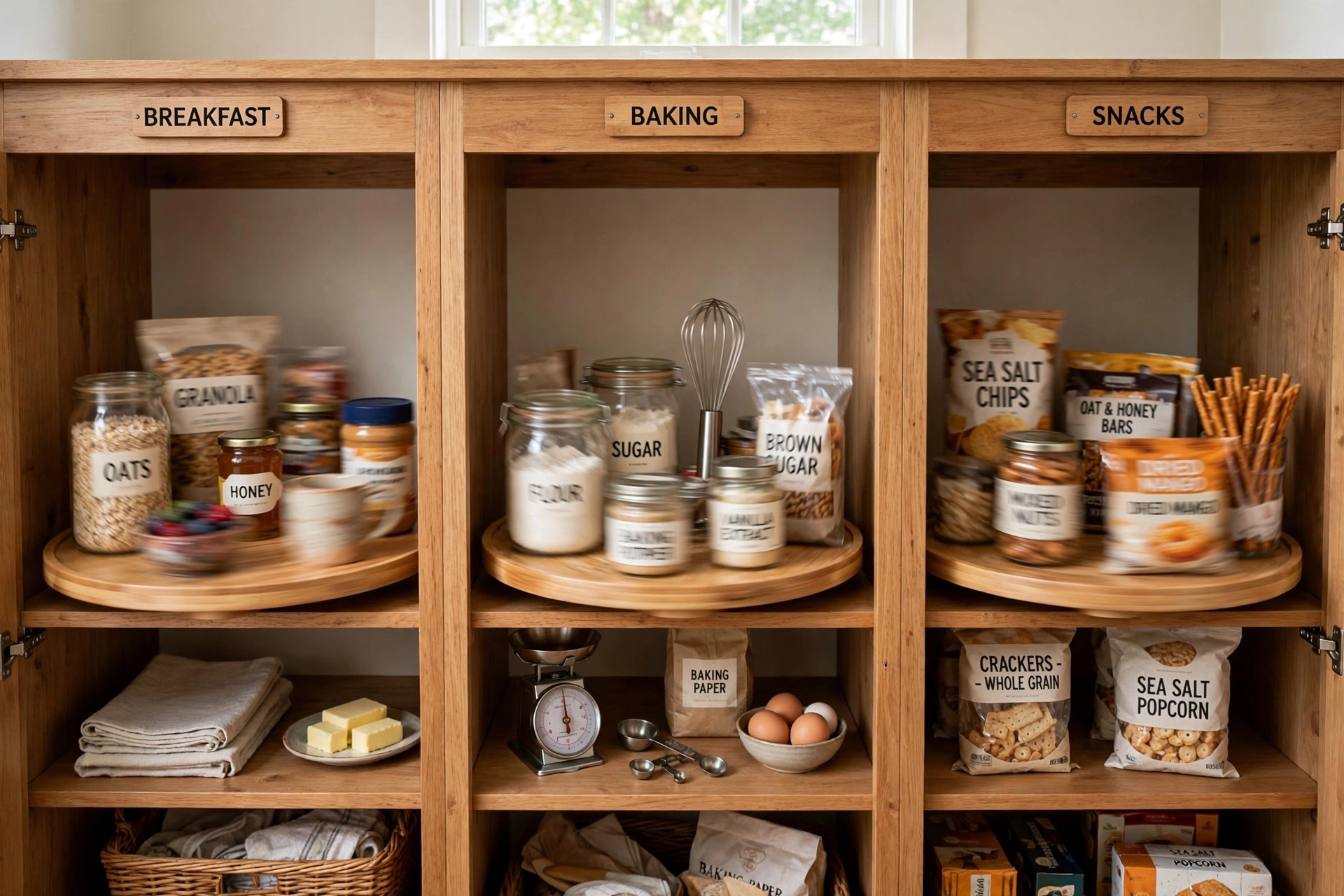
13. One turntable per pantry shelf zone — breakfast, baking and snacks each spin alone
A pantry shelf with three zones on one tray is a shelf where breakfast, baking and snacks all spin together and nothing is findable. Give each zone its own lazy Susan rotating shelf — breakfast on one, baking on another, snacks on a third — so each spin brings one zone, not a jumble. Label the shelf edge for each zone, and keep the zones separate, because a zone that holds two kinds of food is a zone that hides things. One zone, one spin.
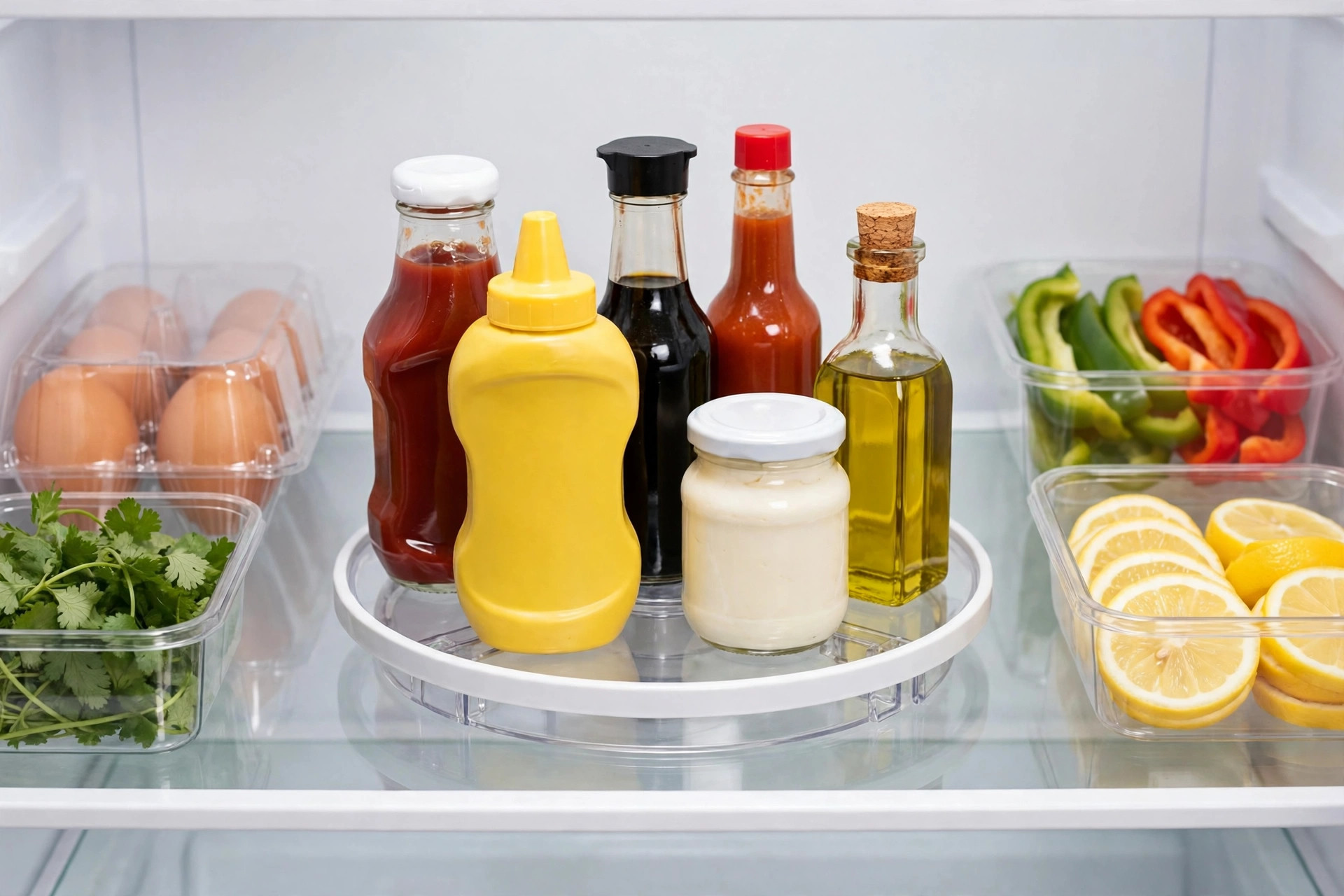
14. A fridge lazy susan for condiments, so the back of the shelf stops being a graveyard
Fridge condiments fail when the jar at the back is older than the one at the front and nobody knows, because reaching to the back of a cold shelf is the last thing anyone wants to do. Put the condiments on a small lazy Susan rotating shelf in the fridge, one spin to bring the back to the front, and check the dates every time it spins. Pick a wipe-clean plastic tray, because fridge spills happen, and keep the tray to condiments only — no leftovers, no dairy — so the spin stays fast. Check on Amazon for a small fridge-safe lazy Susan rotating shelf. One spin, and the back of the fridge stops being a graveyard.
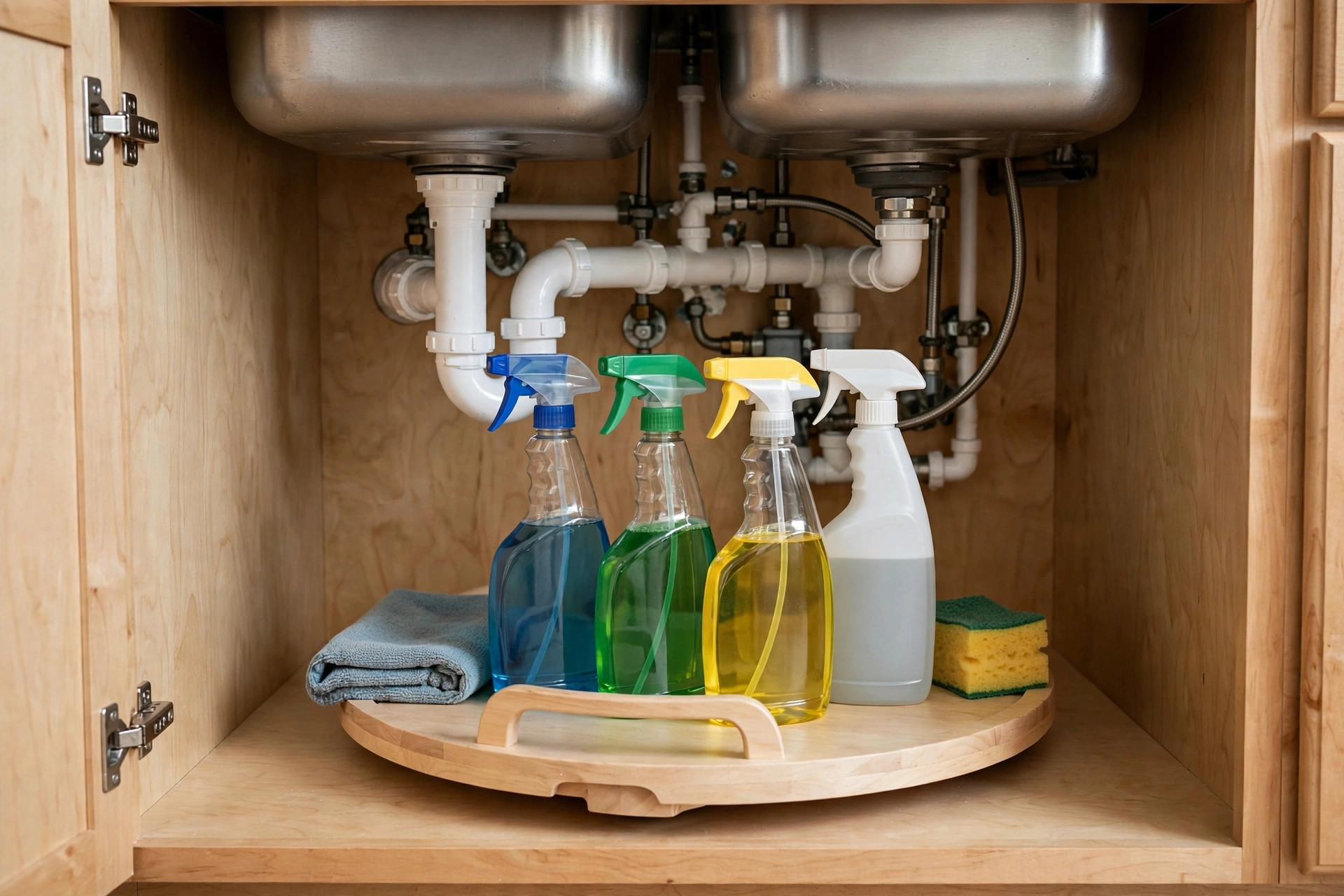
15. Under-sink cleaning supplies on a turntable with a handle — pull, spin, put back
Under-sink cleaning supplies fail when the spray you want is behind three bottles and the sink pipes, and the only way to reach it is a crouch and a blind reach. Put them on a lazy Susan rotating shelf with a handle, pull it out, spin, take what you need, put it back — one motion instead of a crouch and a reach. The handle matters: without it, the tray stays buried and the supplies stay lost. Keep the tray to cleaning only, and check for leaks once a month, because a leaking bottle under the sink is how a cabinet rots. Check on Amazon for a lazy Susan rotating shelf with a handle for under-sink cupboards. Pull, spin, put back.
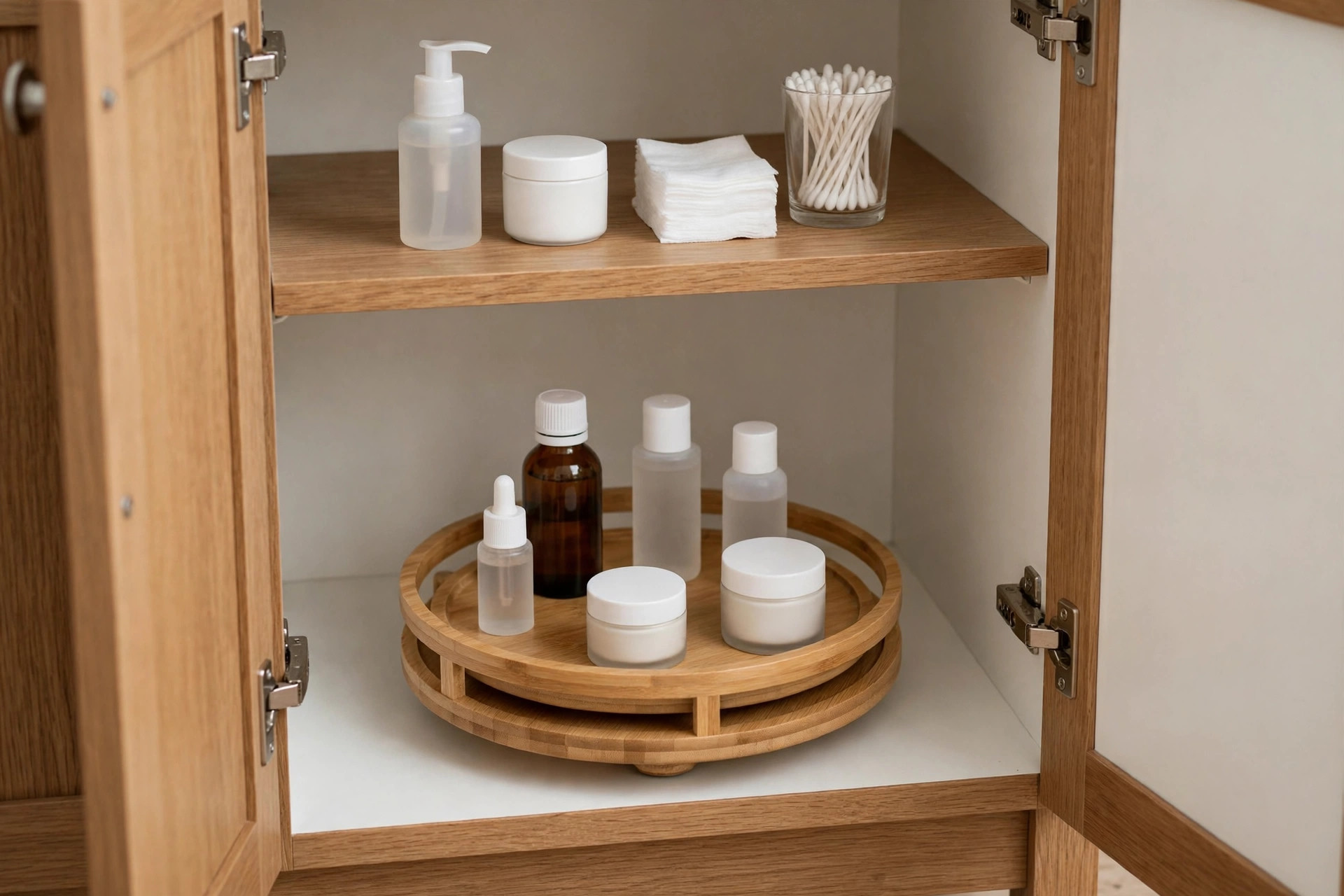
16. A small turntable in the bathroom cabinet for medicines and everyday creams
Bathroom cabinets fail when the cream you use daily is behind the medicine you use monthly, and both get knocked over reaching. Put a small lazy Susan rotating shelf in the bathroom cabinet, everyday creams at the front, medicines at the back, one spin to reach either. Keep the tray shallow so nothing falls behind it, and check the expiry dates when you spin — a monthly spin-and-check catches the expired before it gets used. One spin, and the bathroom cabinet stops being a jumble.
Beyond the kitchen, and keeping your lazy susan spinning
Craft supplies fail when the thread you need is in a box under three other boxes, and the project stops before it starts. Put the threads, buttons and small tools on a lazy Susan rotating shelf with compartments, one spin to bring any compartment to you, small things in the centre, big things at the edge. Keep one craft per tray — sewing on one, painting on another — because a mixed craft tray is a tray where nothing is findable. One spin, and the craft table stays a table, not a pile.
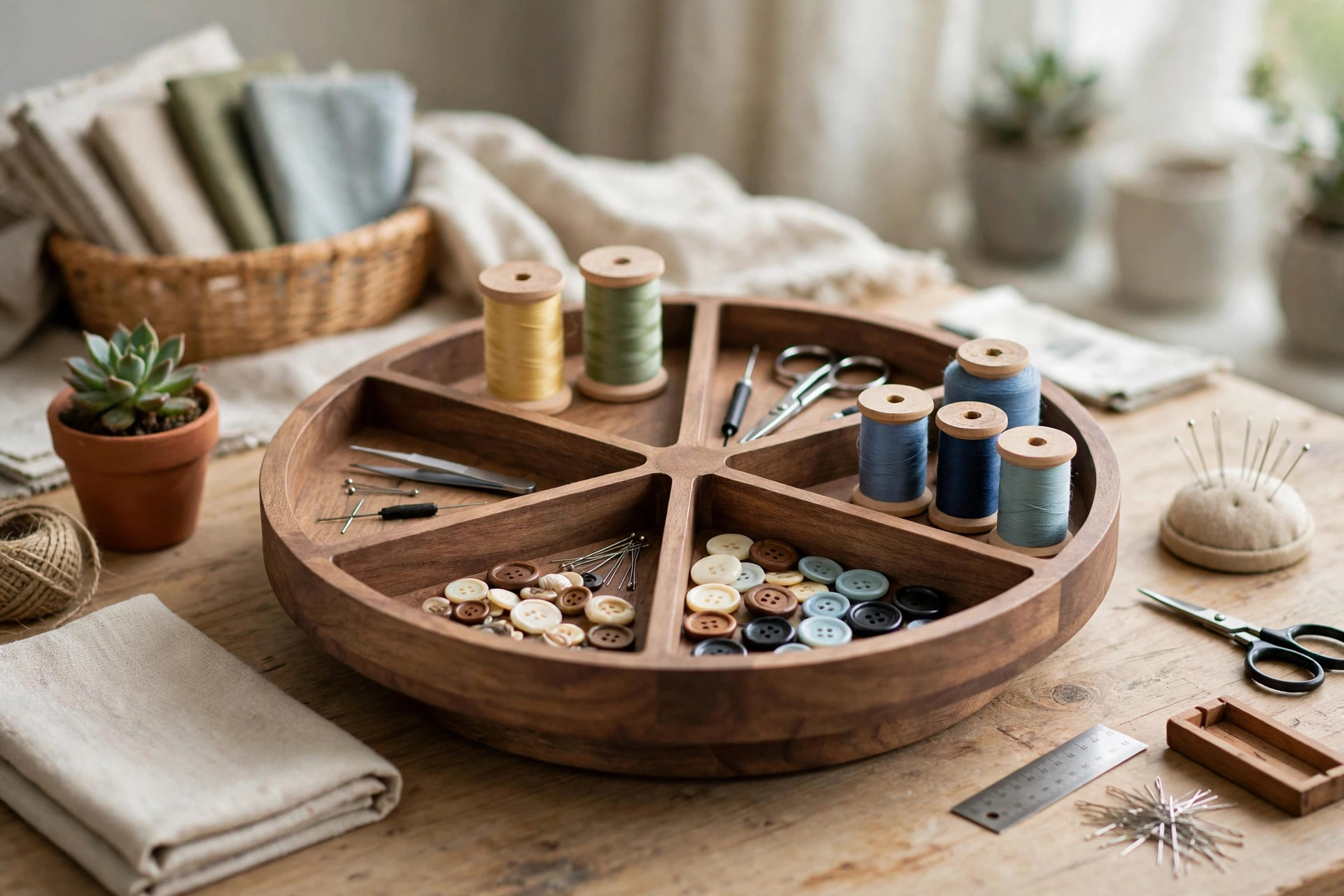
18. A desk turntable for pens, chargers and the small bits that migrate everywhere
Desk bits fail when the pen you need is under the charger and the charger is under the notebook, and the small bits migrate to a different corner every day. Put the pens, chargers and small bits on a lazy Susan rotating shelf on the desk, one spin to bring any of them to your hand, cables in the centre so they never tangle. Keep the tray to desk bits only, and clear it once a week, because a desk tray that holds everything is a tray that holds nothing useful. One spin, and the desk stops eating pens.
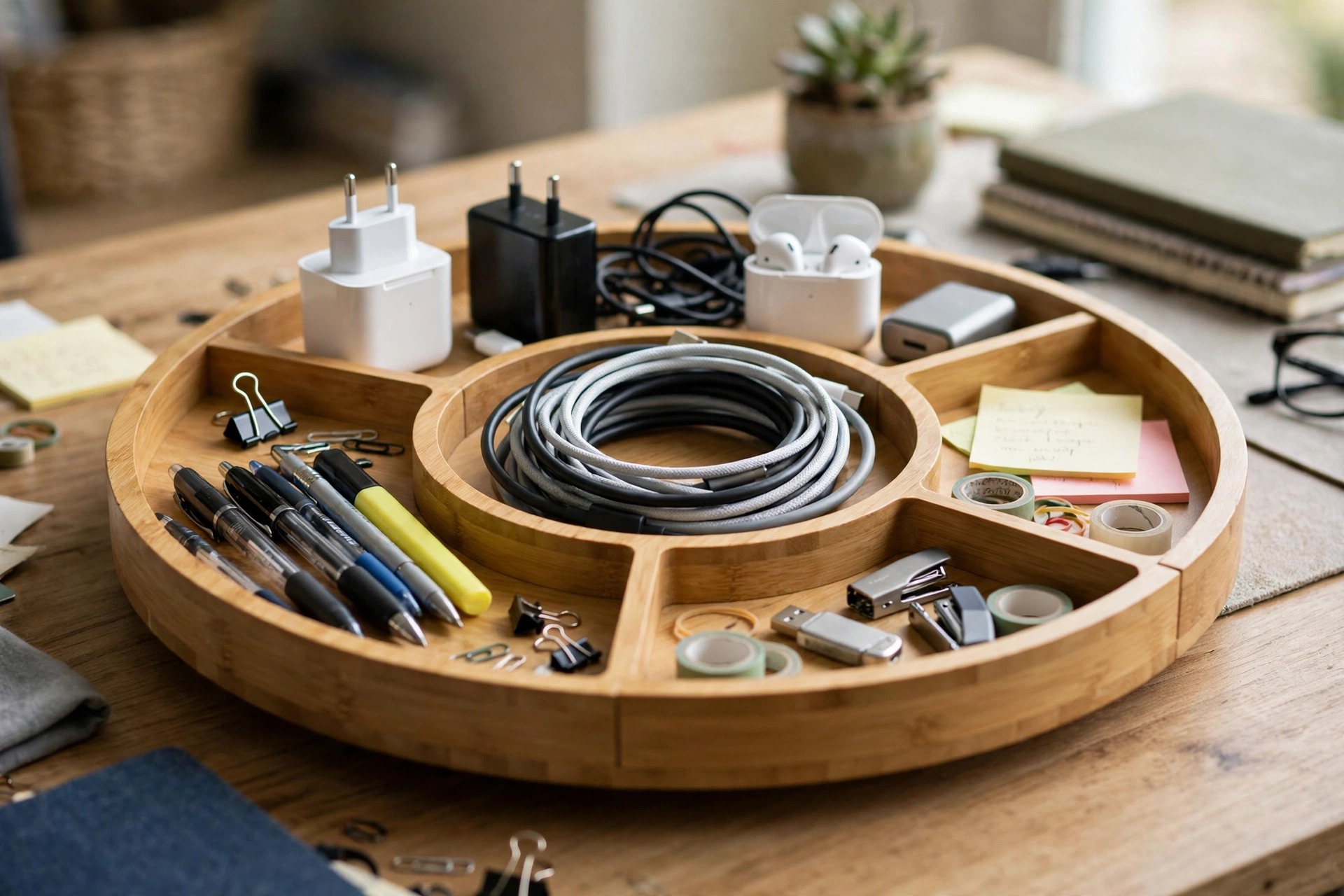
19. Label the shelf edge, not the turntable — the label stays readable however it spins
Labels on a spinning tray are labels that face the wall half the time, and a label you cannot read is a label that does not work. Put the label on the shelf edge, in the same place, in the same way, so the category stays readable however the tray spins. Keep the labels short — one or two words — and replace them when the zone changes, not a year later. One label per shelf edge, and the spin never hides what is on it.
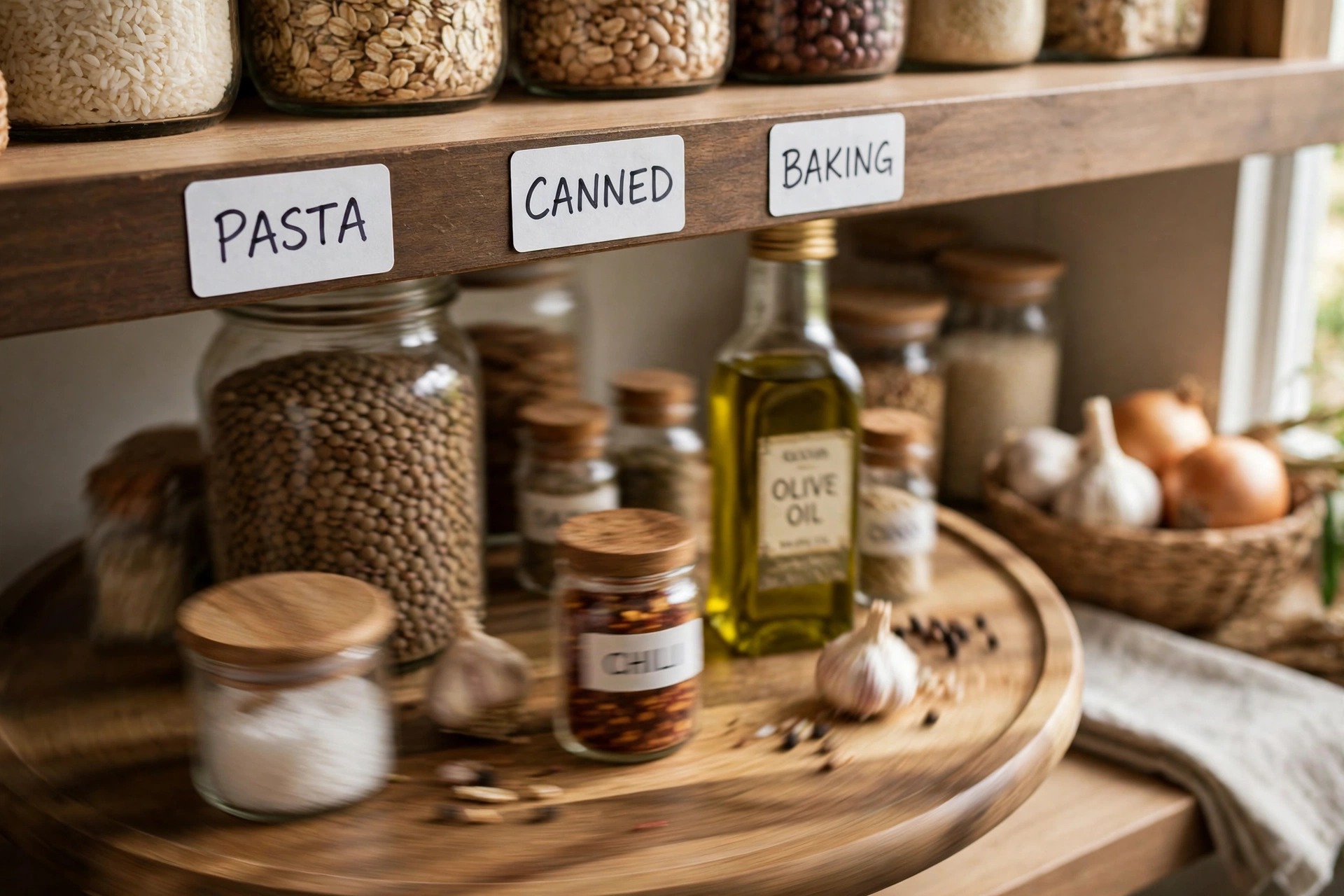
20. A five-minute monthly spin-and-check — wipe the tray, toss the expired, re-face the labels
A lazy susan stays useful with a small monthly habit, not a heroic yearly clear-out. Once a month, for five minutes, spin every tray, wipe it clean, toss the expired, re-face the labels, and put anything that has drifted back in its zone. The check is small enough to do while the kettle boils, and it stops the slow drift that turns a spinning shelf into a stuck one. Keep a small bag by the cabinet for things that belong in another room, and empty it during the check. Five minutes a month, and the turntables never stop spinning.
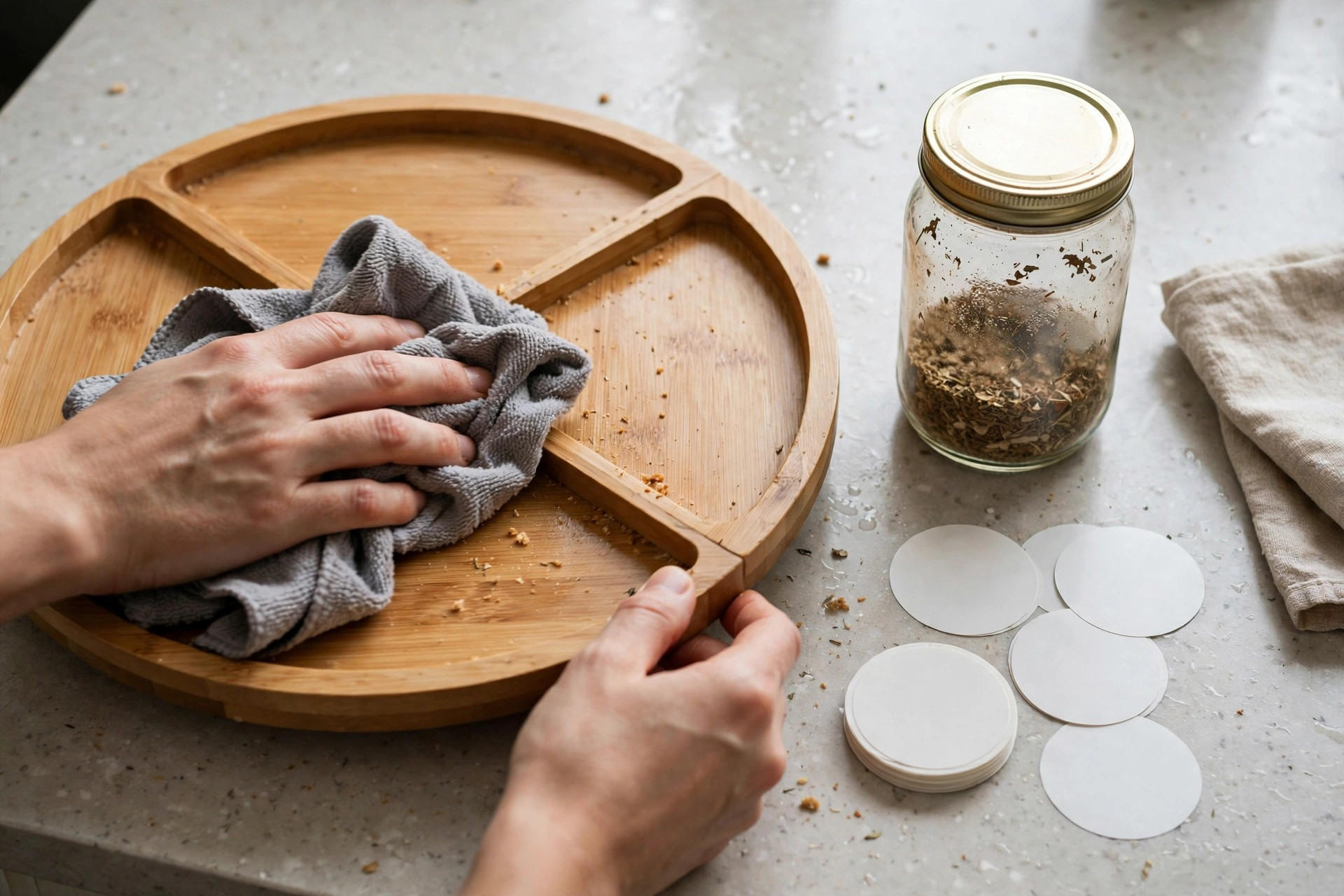
21. One turntable out, one in — when a cabinet changes use, re-home the turntable, don't add another
A cabinet that changes use — the baking shelf becomes the snack shelf — does not need a second turntable, it needs the first one moved. When a cabinet changes use, take the old tray out, clean it, and re-home it where it is needed, instead of buying another and letting the spare pile up. One tray out, one in, and the house never owns more turntables than it uses. The spares get a second life in the utility closet — the same rule that keeps the kitchen spinning keeps the whole house spinning.
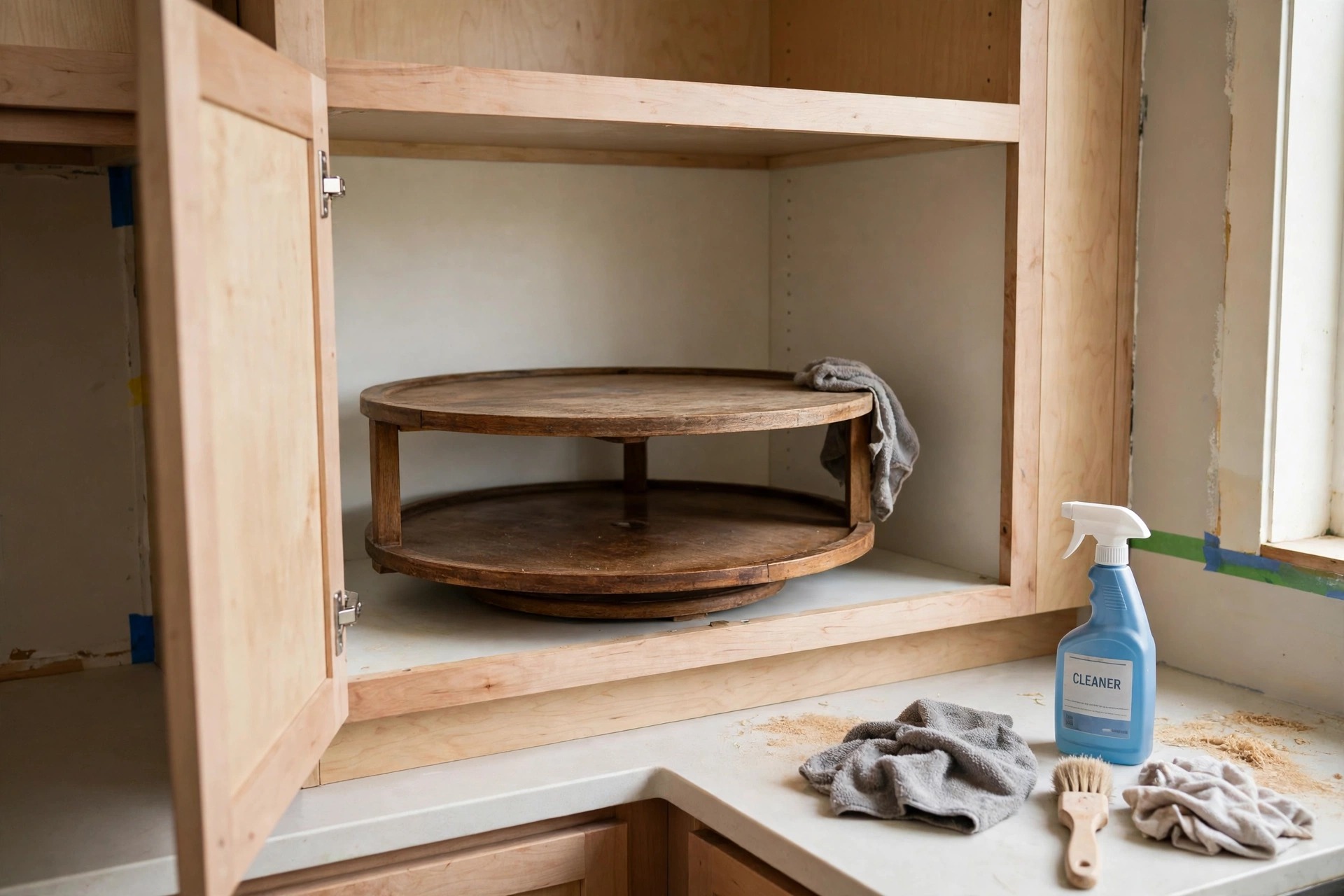
Which lazy susan fix fits which cabinet?
| Cabinet / situation | Best first move | Budget | Tools needed |
|---|---|---|---|
| Deep corner cabinet / things lost at the back | One large lazy susan per shelf (ideas 2, 8) | Low | Lazy susan rotating shelf |
| Spices everywhere / labels facing the wall | Two-tier lazy susan, labels out (idea 6) | Low | Two-tier lazy susan |
| Pantry cans and jars in rows | Pantry lazy susan, smallest front (ideas 12, 13) | Low | Lazy susan rotating shelf |
| Fridge condiments at the back | Fridge lazy susan (idea 14) | Low | Small lazy susan |
| Under-sink cleaning chaos | Handled turntable, pull and spin (idea 15) | Low | Lazy susan with handle |
| Jars sliding when it spins | Non-slip liner + raised lip (ideas 3, 5) | Low | Non-slip liner |
You do not need all 21 ideas. You need the three that solve your biggest mess — usually the spices with labels facing the wall, the deep corner cabinet with no spin, and the pantry cans you keep buying twice. Start with one turntable per shelf, give every shelf one category, and make the rule that everything comes to you with one spin, not a reach into the dark. Do that tonight and opening a cabinet will feel different by tomorrow morning.
Save this post for your next cabinet clear-out, and if you want the same spinning system in the rest of the house, read 25 Pantry Organization Ideas for 2026 next — it is Post 08 in the Storage by room cluster — and 25 Bathroom Counter Organization Ideas for 2026, Post 04, and 22 Laundry Room Storage Ideas for 2026, Post 09, to carry the same one-spin system from the kitchen to the bathroom and the laundry room. The spare turntables get a second life in 25 Utility Closet Organization Ideas for 2026, Post 20, when it lands.
Frequently asked questions
What size lazy susan fits a standard kitchen cabinet?
Measure before you buy: the diameter of the shelf floor, the depth of the cabinet, and the clearance of the door when the tray turns. Leave a finger's width all round so the tray spins freely, and buy to the smallest of the three numbers. Most standard cabinets take a 10 to 15 inch rotating shelf; deep corner cabinets take a larger one, and a tray 2 cm too wide is a tray that jams.
Will a lazy susan work in the fridge or under the sink?
Yes — a small rotating shelf works for fridge condiments, and a handled turntable works under the sink for cleaning supplies. Pick wipe-clean plastic for both, because fridge spills and sink drips happen, and keep the tray to one category so the spin stays fast. Check for leaks under the sink once a month, because a leaking bottle is how a cabinet rots.
How do I stop jars sliding off when the lazy susan spins?
Put a non-slip liner under the tray and pick a tray with a raised lip, so jars stay put through a full spin. Keep heavy jars low and centred, never overload one side, and spin slowly — a gentle turn brings the jar to you without throwing it off the edge.