22 Hallway Closet Organization Ideas for 2026
The hallway closet is the smallest closet in the house and the busiest, because every coat, every pair of shoes, every bag and every scarf passes through it twice a day, and the closet that is only sixty centimetres deep is the closet that fills up fastest. A hallway closet that works is not a big closet — it is a closet where every coat has a hook, every pair of shoes has a tray, and the door closes without a shove, because the system fits the space instead of fighting it.
These 22 hallway closet organization ideas turn a narrow hallway closet into a system that holds coats and more: measure it first, give every person one hook, double the rail, and finish with a two-minute reset when you come home — so the front door stops being a dumping ground.
Every idea below works in a real home, from a shallow closet in a flat to a narrow hallway closet in a family house with four people and one front door. The entryway around the closet is covered in 22 Entryway Storage Ideas for 2026, where the bench, the shoe tray and the front-door traffic get the same treatment — and the coat closet thinking behind this post is covered in 25 Coat Closet Organization Ideas for 2026, which this hallway closet plugs into. Pick three ideas that fit your space, start with the empty-out, and build from there.
First, see the closet clearly
1. Empty it completely — the sort that shows you what is really in there
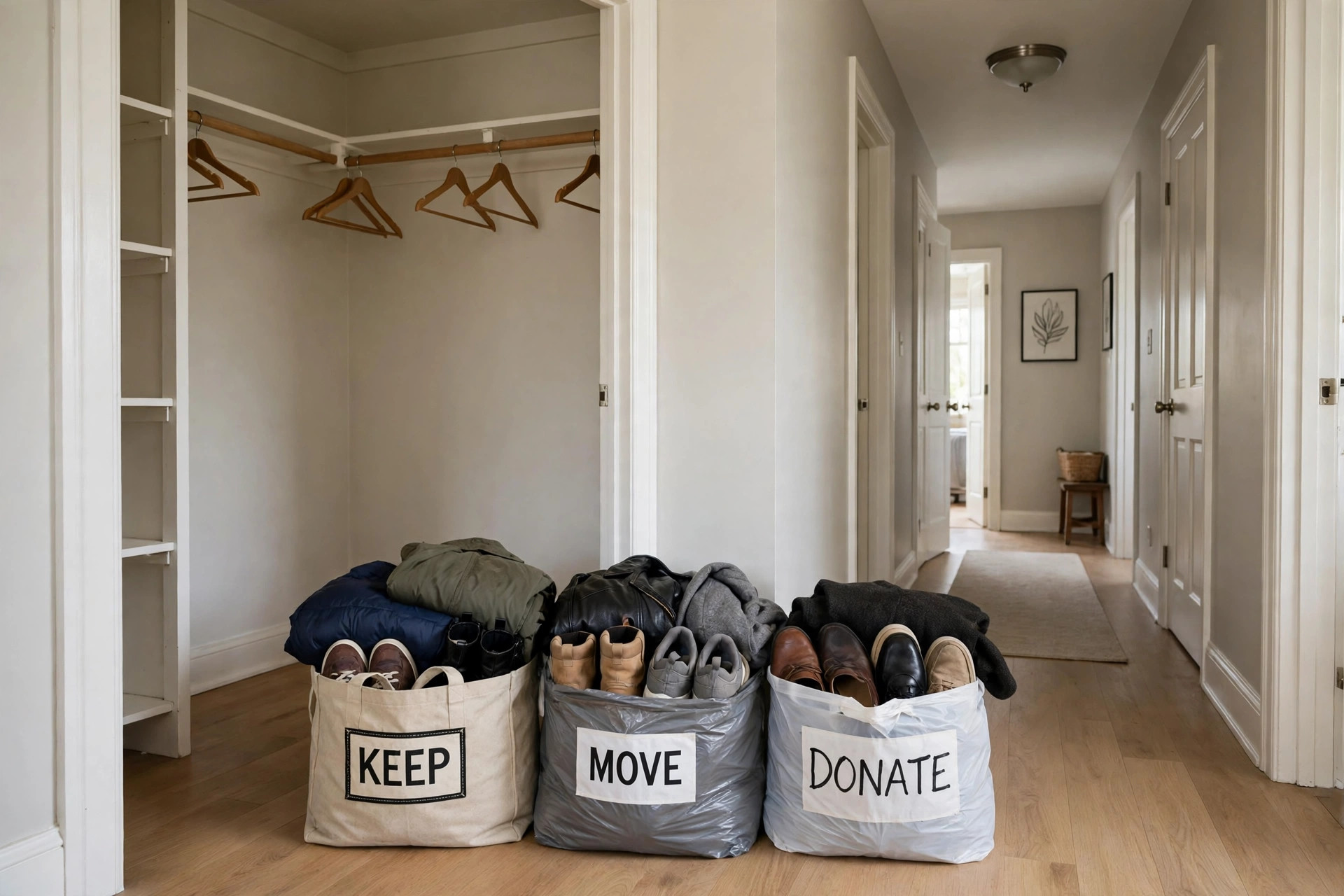
A hallway closet you have never emptied is a hallway closet you do not know, because the coats at the back are the coats nobody has worn in two winters, the shoes on the floor are the shoes that lost their pair, and the bags on the shelf are the bags that belonged to a hobby nobody does any more. Empty it completely — the sort that shows you what is really in there — so you can see the whole closet before you try to fix it. Take everything out, lay it on the hallway floor, and sort it into three piles: keep, move somewhere else, and donate, because the pile that leaves the closet is the pile that makes room for the things that belong there. The closet that is empty for one afternoon is the closet that finally fits. One empty-out, and you know what you are working with.
2. Measure the closet before buying anything — depth, width, rail height
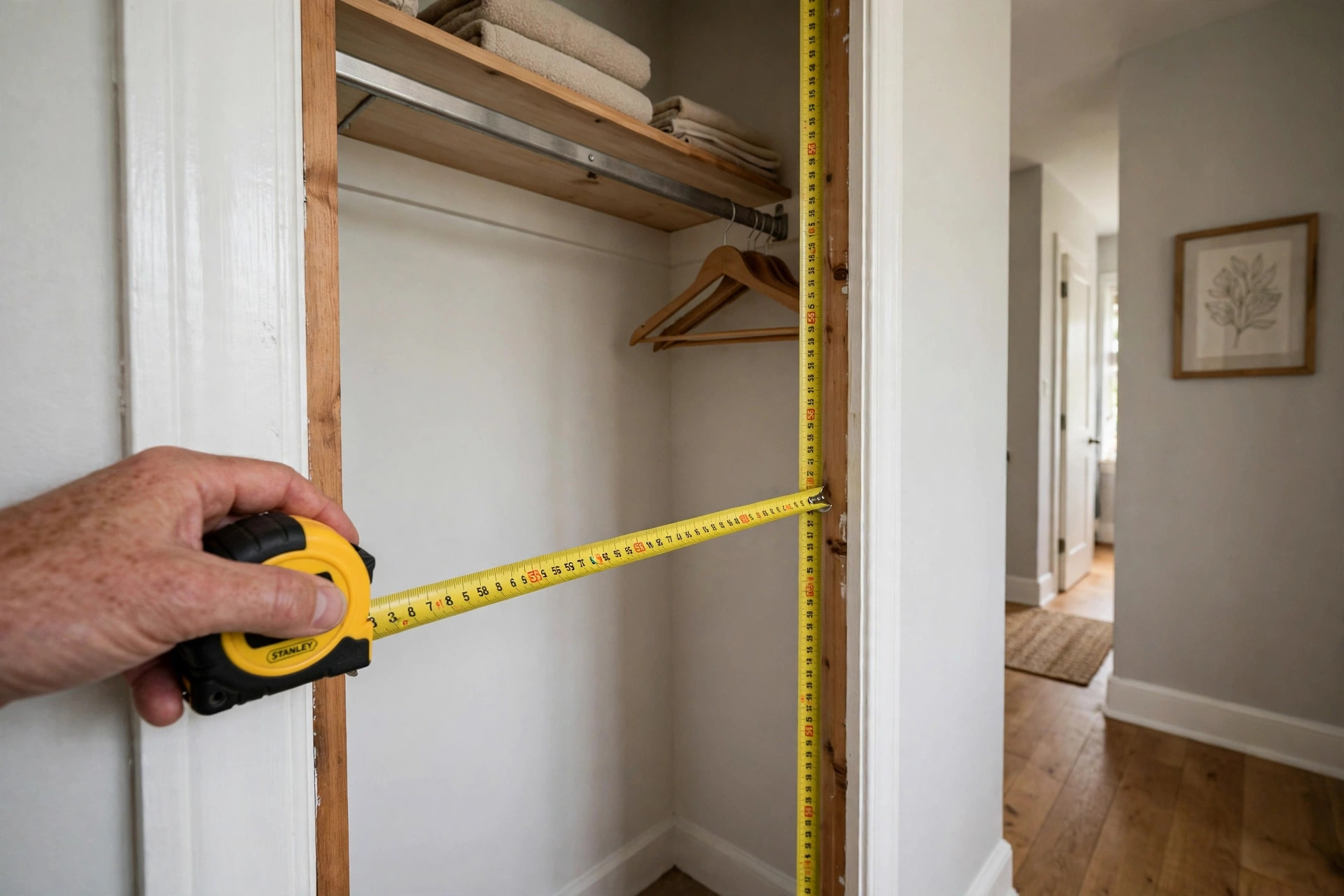
Storage bought before measuring is storage that does not fit, because the basket that is five centimetres too wide is the basket that blocks the door, the shelf that is too deep is the shelf that eats the hanging space, and the rail that is hung too low is the rail the coats drag under. Measure the closet before buying anything — depth, width, rail height — so every thing you buy fits the closet you actually have. Measure the depth from the back wall to the door frame, the width from wall to wall, and the rail height from the floor, and write the three numbers on a card you keep in your pocket when you shop, because the card with the measurements is the card that stops the wrong purchase. A hallway closet is usually only about sixty centimetres deep, and the closet measured is the closet that gets storage that fits. Measure first, buy second, and nothing comes home that does not fit.
3. Decide what actually lives here — coats, shoes, or both, not everything
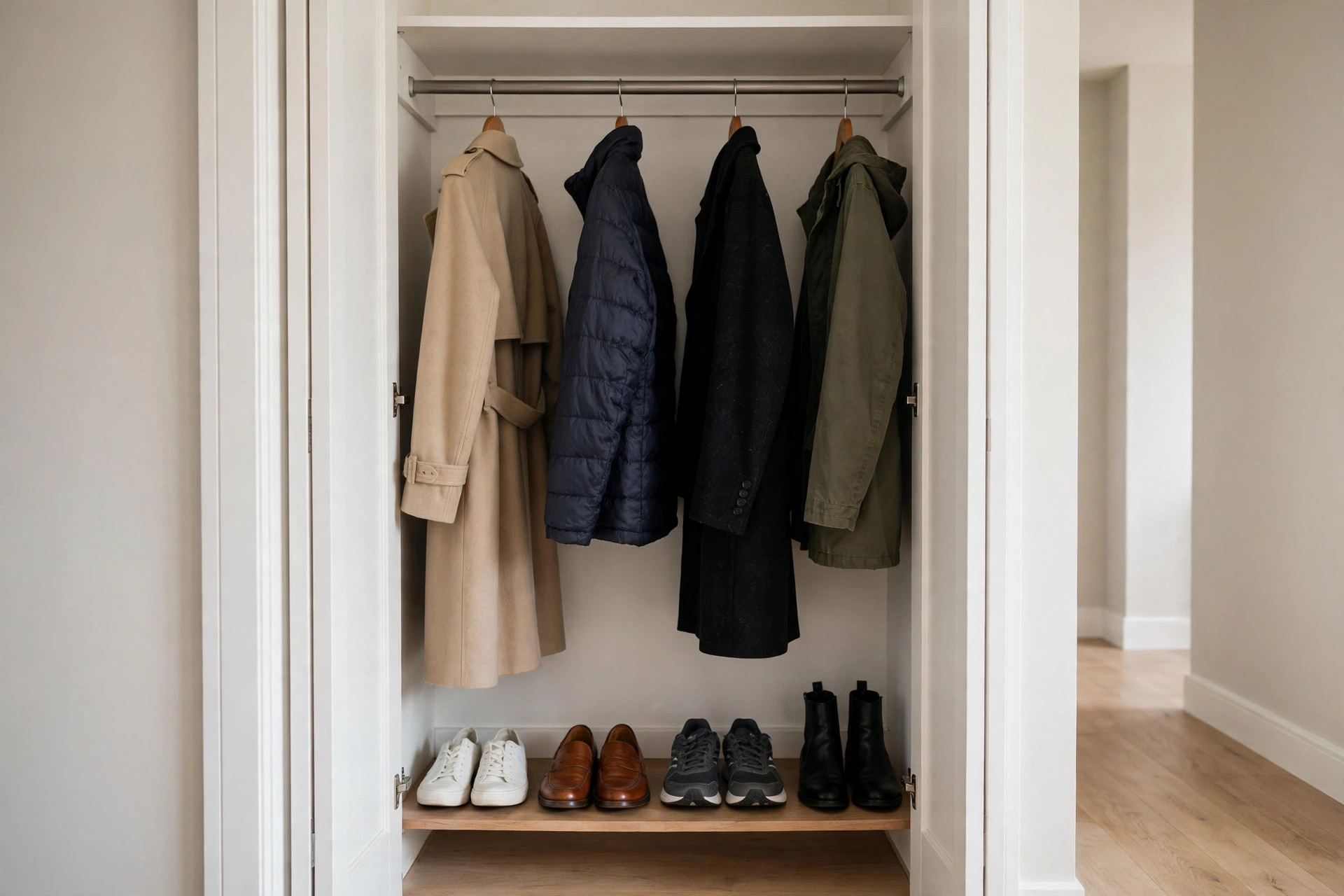
A hallway closet that holds everything is a hallway closet that holds nothing well, because the vacuum cleaner is leaning on the coats, the coats are falling on the shoes, and the shoes are under the box of Christmas lights that has lived there since last December. Decide what actually lives here — coats, shoes, or both, not everything — so the closet has one job and does it well. The hallway closet is for the coats you wear this season, the shoes you wear this week, and the bags you grab on the way out, because the things that live by the front door are the things that leave the house every day. Move the vacuum cleaner to the utility closet, the Christmas lights to the attic, and the spare bedding to the bedroom, because the closet that holds only the daily things is the closet that stays findable. One job, and the closet stops being a cupboard for everything.
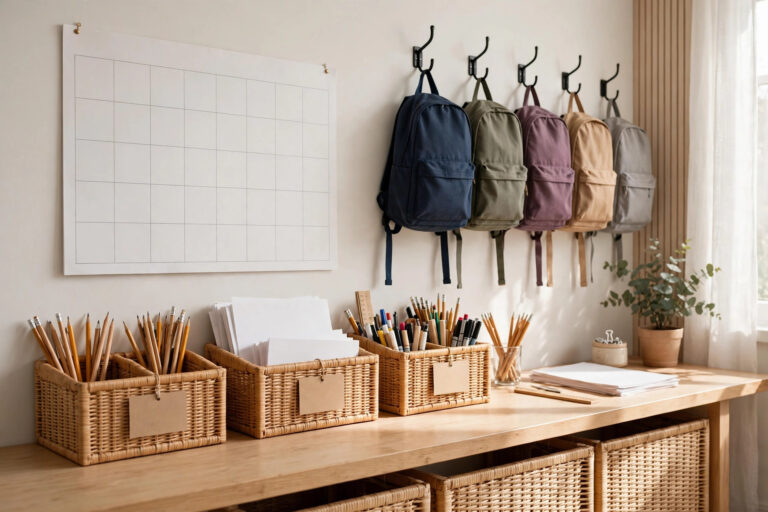
4. One hook per person, at their height — the hook rule that ends the pile
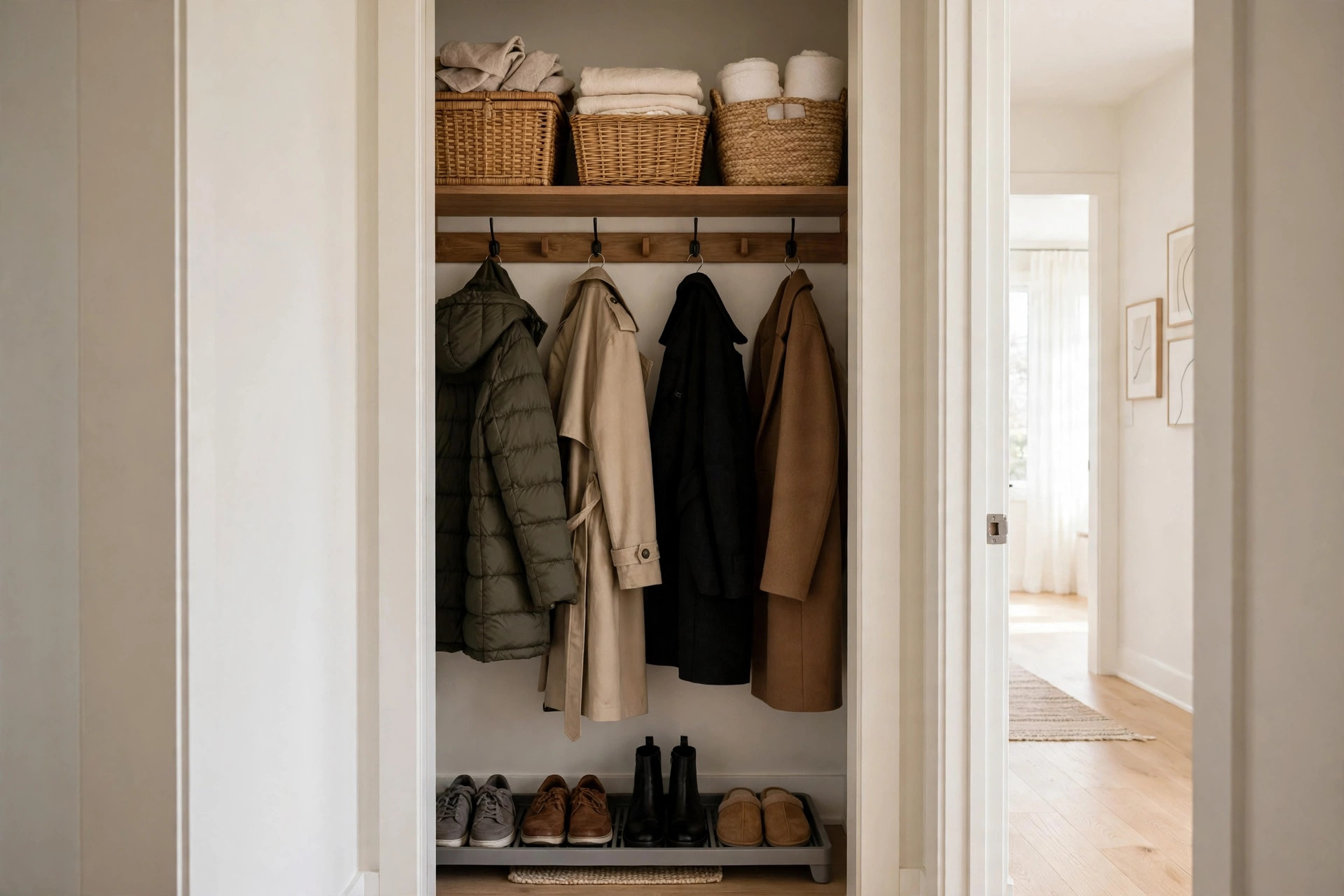
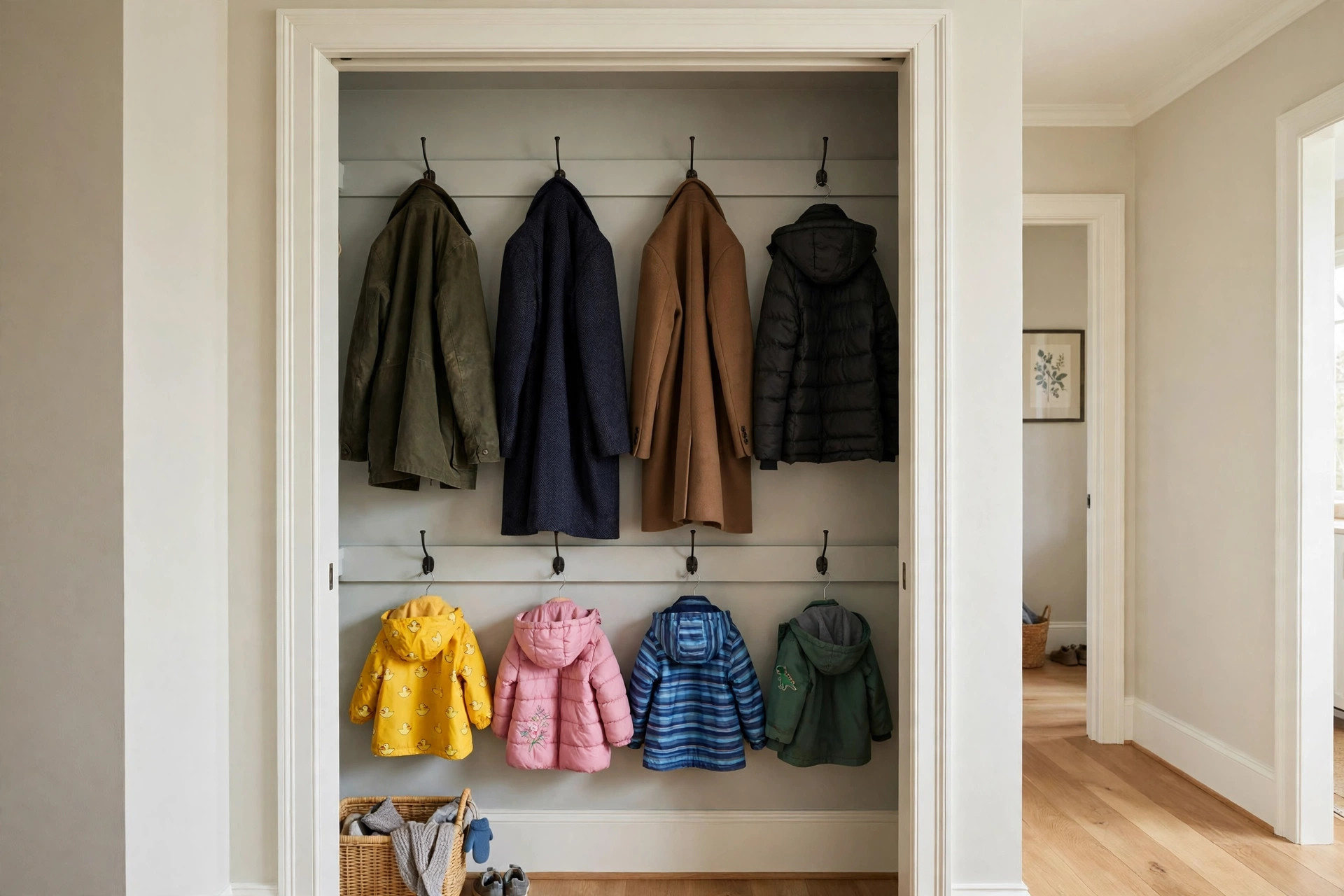
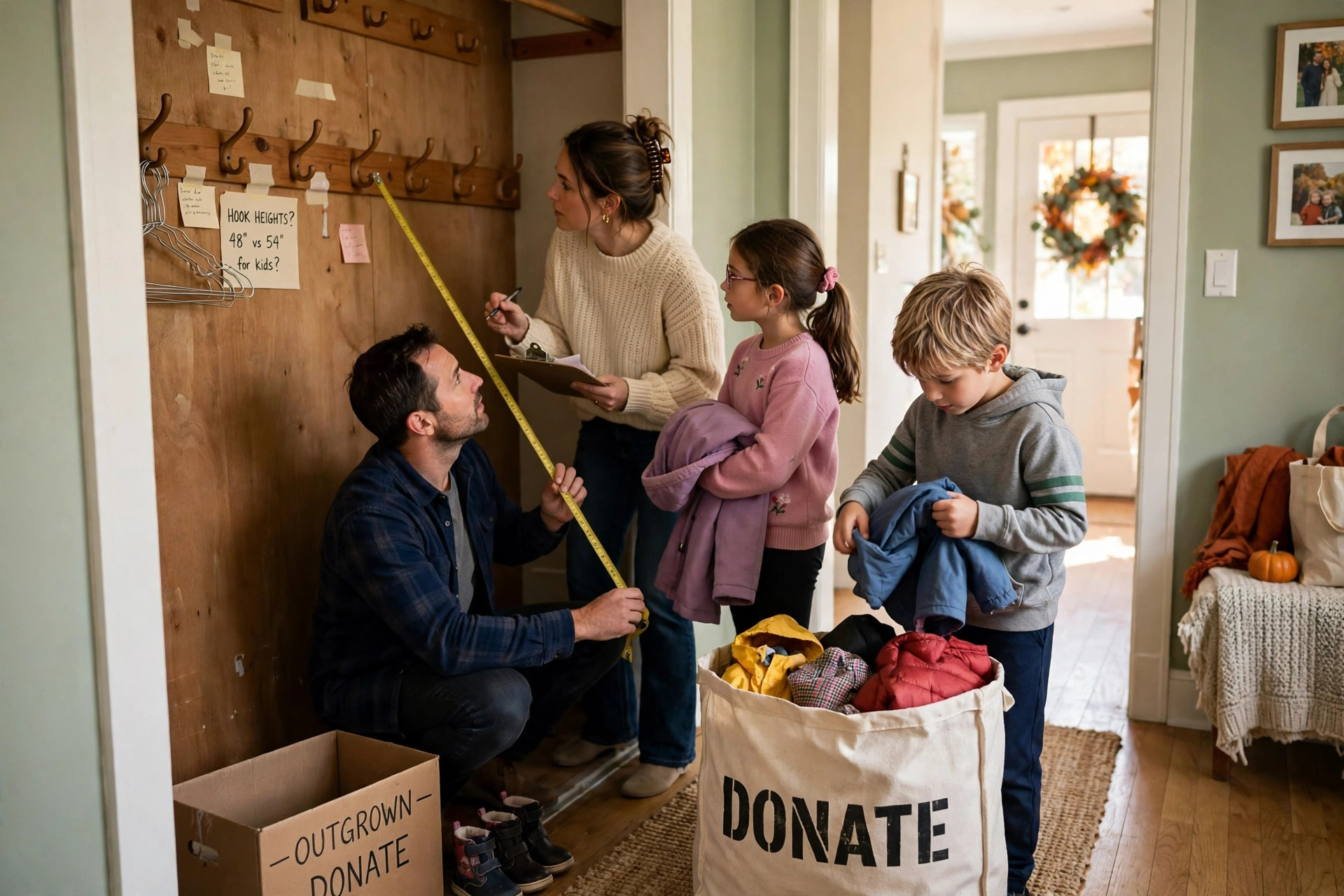
Coats on one shared hook are coats on the floor, because the hook that holds four coats is the hook that drops all four when one is pulled off, and the pile on the floor is the pile nobody picks up. Give every person one hook, at their height — the hook rule that ends the pile — so each coat has its own hook and each hook has its own coat. Hang the adults' hooks at adult height and the children's hooks lower down the wall, because the hook a child can reach is the hook a child actually uses, and the hook that is too high is the hook that never gets used. Put a name or a colour on each hook, because the hook that belongs to someone is the hook that gets used every day. One hook per person, and the pile on the floor disappears.
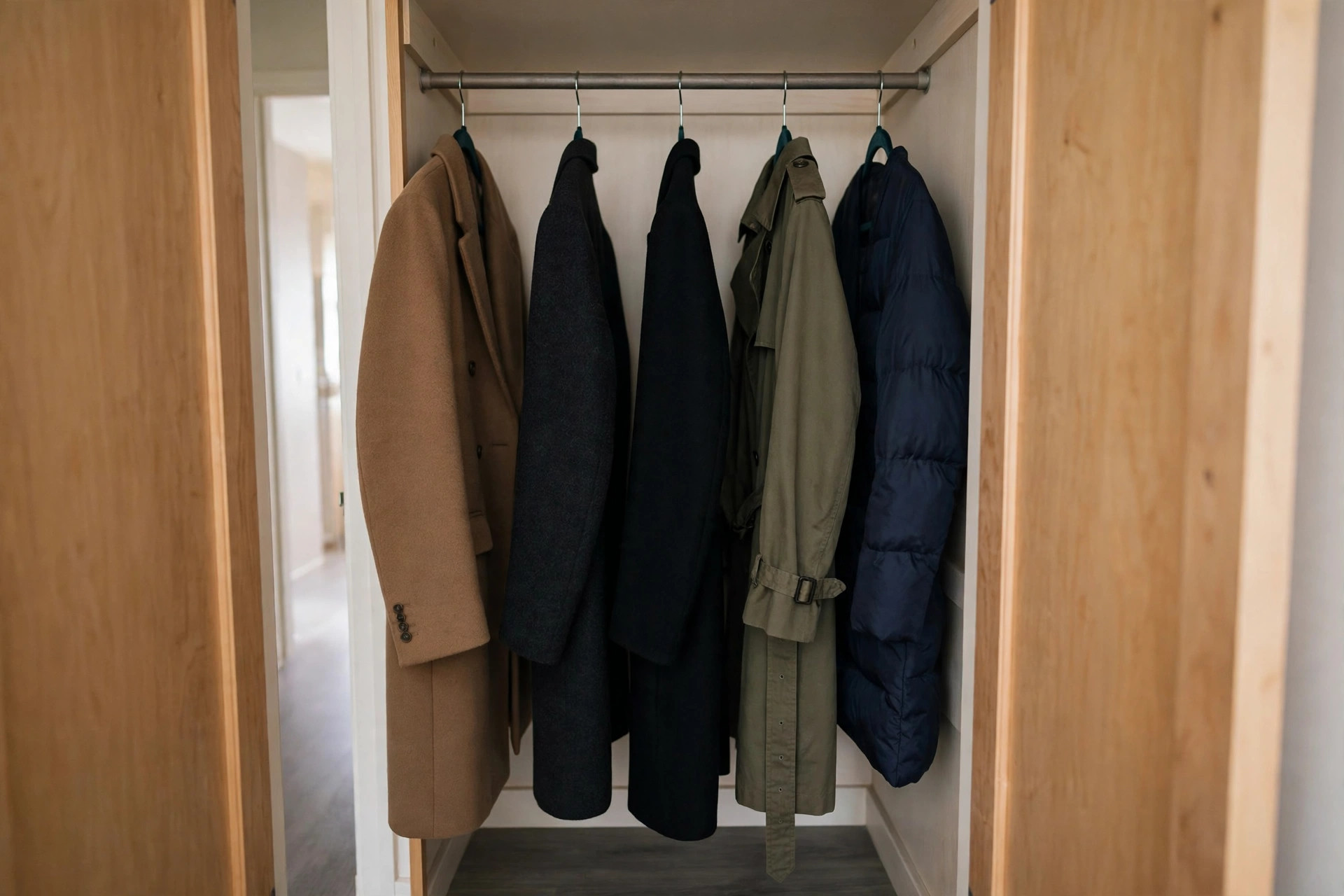
5. A shelf above the rail for the off-season — winter coats up, summer coats down
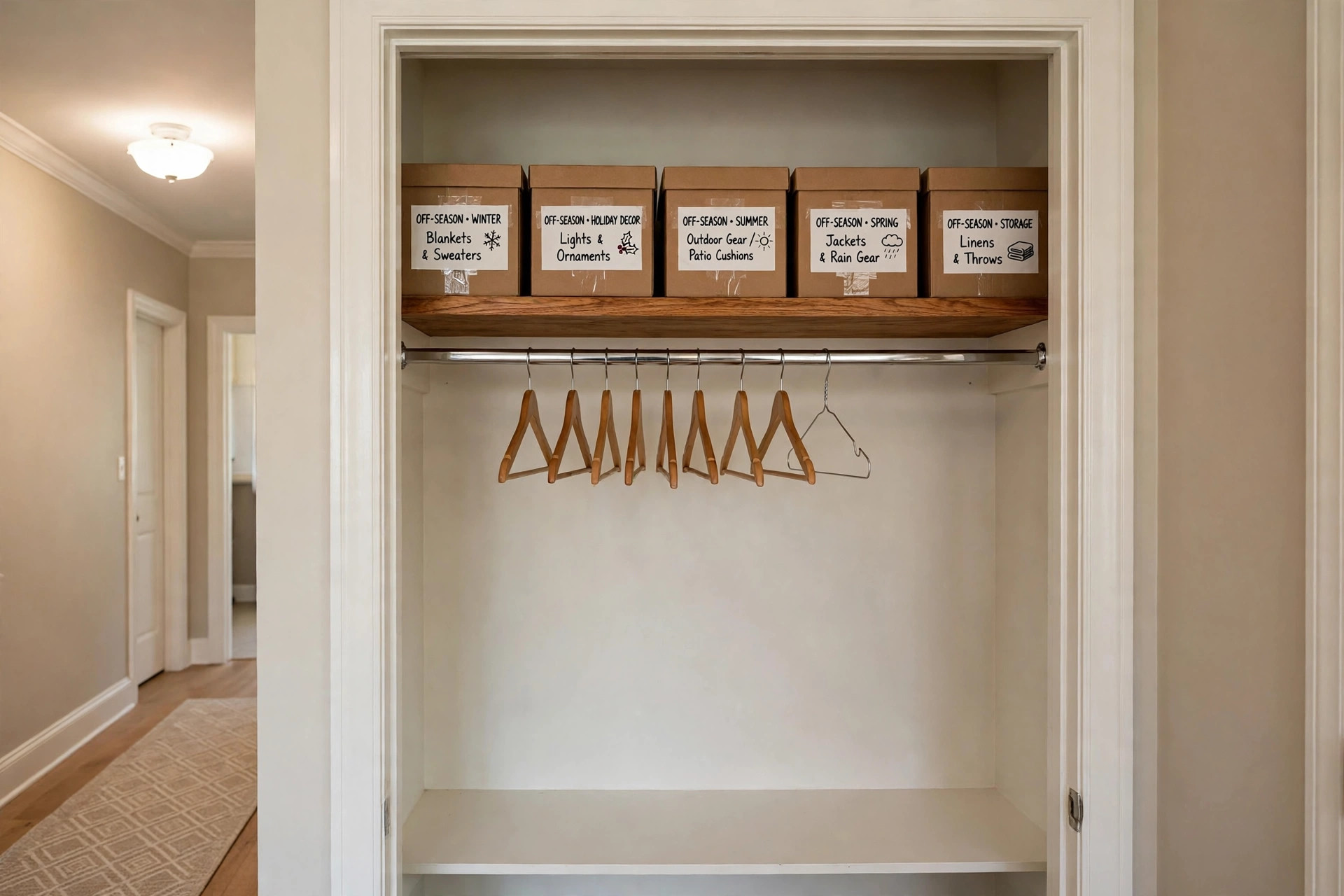
Off-season coats on the rail are off-season coats in the way, because the winter coat in June is the coat that blocks the light jacket, the light jacket is the jacket nobody can reach, and the rail that holds two seasons is the rail that holds neither well. Put a shelf above the rail for the off-season — winter coats up, summer coats down — so the coats you are not wearing live up high and the coats you are wearing hang in reach. Fold the off-season coats into labelled bins on the shelf, keep the current season on the rail, and swap the two when the weather turns, because the shelf that holds the other season is the shelf that keeps the rail clear. One shelf above the rail, and the closet holds one season at a time.
6. The door is storage too — hooks and pockets on the inside of the door
The inside of the closet door is the storage nobody uses, because the door that opens onto the hallway is the door that hides a whole wall of space, and the wall that is never used is the wall that could hold the small things. Use the door — hooks and pockets on the inside of the door — so the bags, the scarves and the dog lead live on the door instead of on the floor. Hang two or three hooks on the inside for bags and the dog lead, and slip a pocket organizer over the door for gloves, scarves and hats, because the door that holds the small things is the door that keeps them off the floor. Check the door still closes before you load it, because the door that is too full is the door that will not shut. One door, used well, and the closet gains a whole wall.
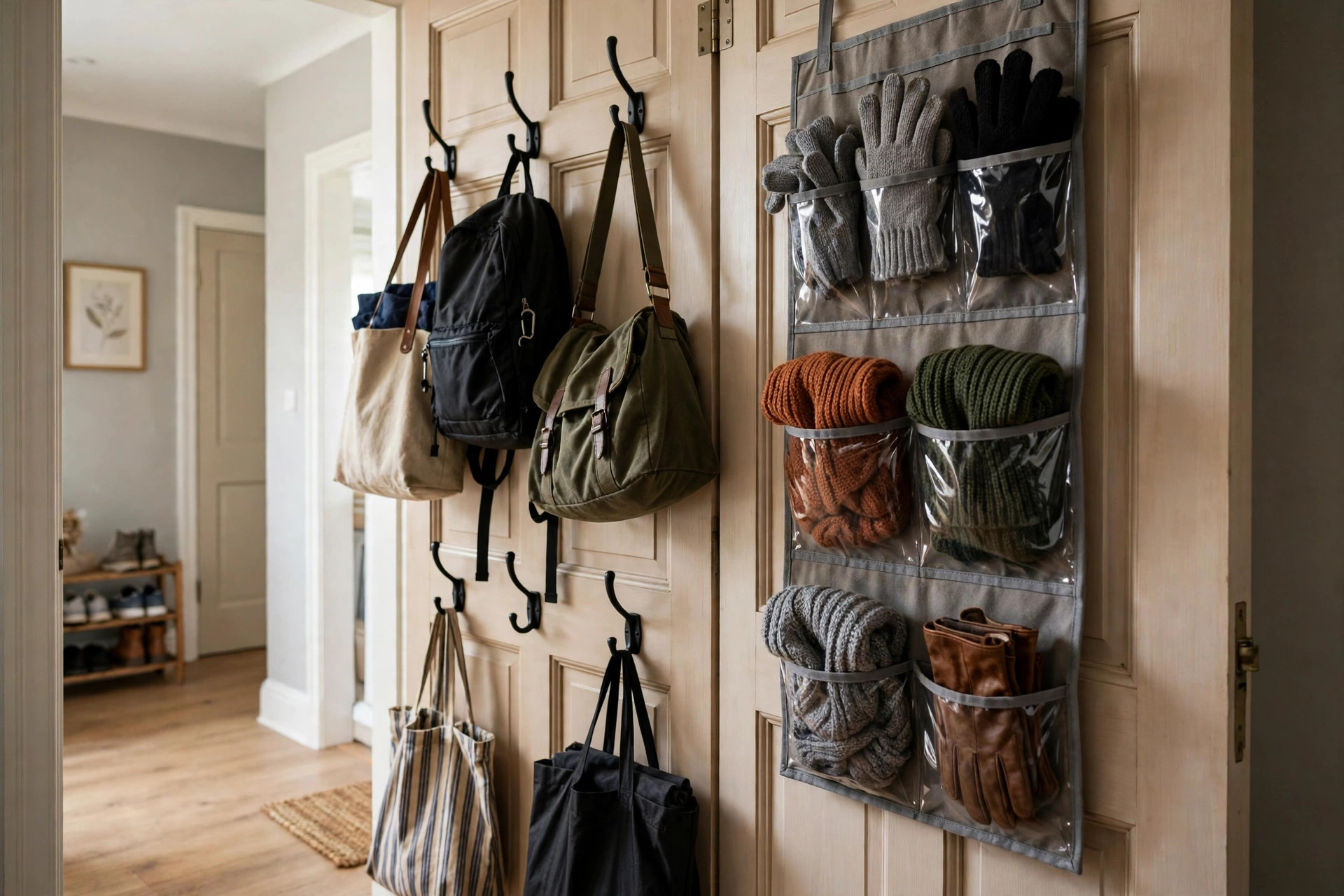
Coats, shoes and the daily jumble
7. Double the hanging space with a second rail — two rows of coats in one closet
One rail in a narrow closet is one rail that runs out, because the family has more coats than the rail has room for, the coats bunch together, and the coat at the back is the coat nobody can reach without pulling three others off. Add a second rail — two rows of coats in one closet — so the closet holds twice the coats in the same width. Hang the second rail below the first for short jackets and children's coats, and keep the long coats on the top rail where they have room to hang straight, because the rail that matches the coat length is the rail that uses the space well. Measure the height between the rails before you fit the second one, because the rails that are too close together are the rails that bunch the coats. Two rails, and the closet holds the whole family. (Check on Amazon for an adjustable double hanging rail kit sized for a narrow closet.)
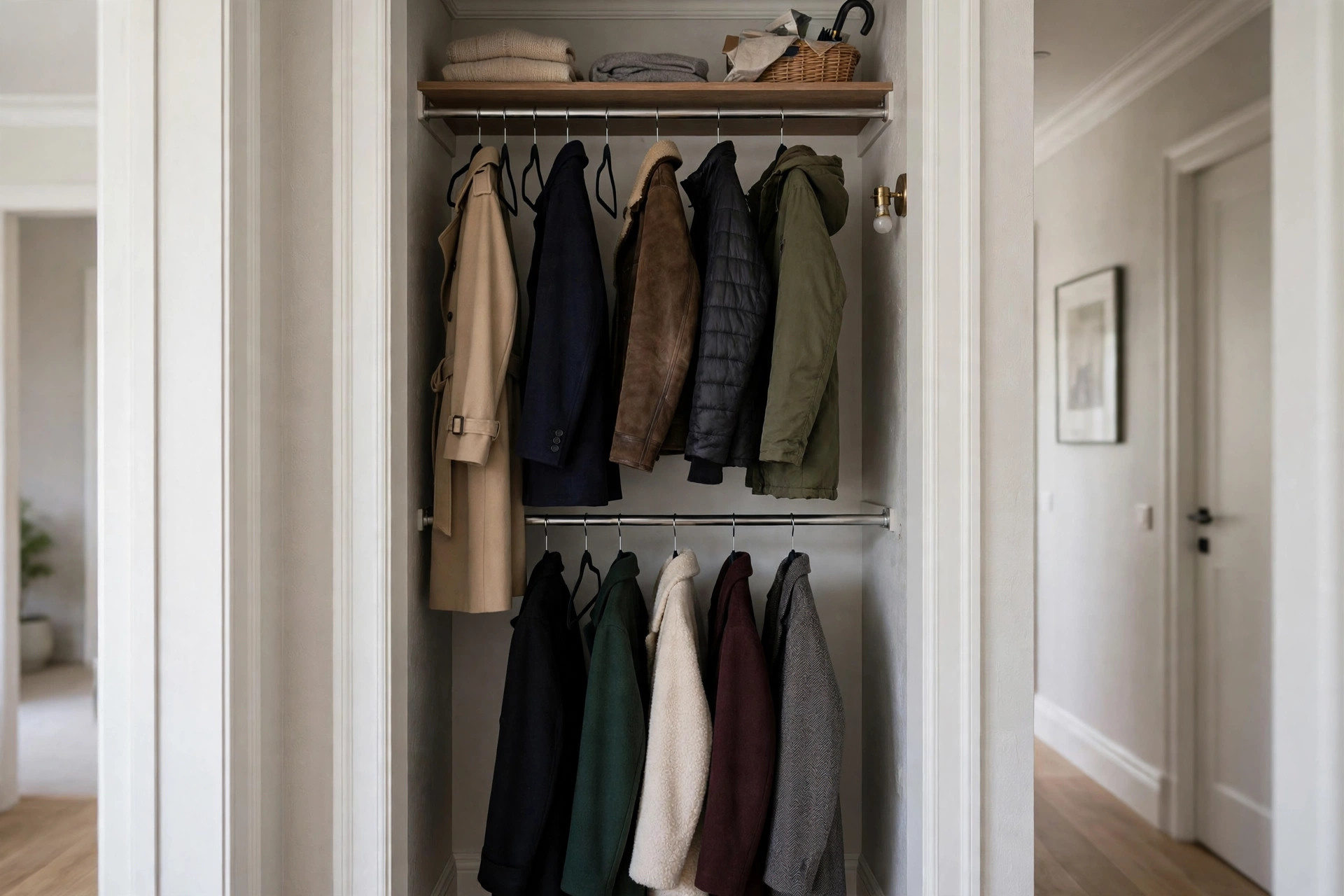
8. Slim hangers that stop the shoulder bumps — velvet hangers, one coat per hanger
Thick wooden hangers in a narrow closet are thick wooden hangers that eat the rail, because each hanger takes up two centimetres, the coats bunch together, and the coat that is squeezed is the coat that comes out creased. Switch to slim hangers — velvet hangers, one coat per hanger — so the rail holds more coats and every coat hangs straight. Slim velvet hangers take up half the space of wooden ones and stop the coats sliding off, and one coat per hanger means the coat you want comes off without pulling the others with it, because the hanger that holds one coat is the hanger that works. Replace the hangers a few at a time if the whole set is too much at once, because the rail that changes gradually is the rail that still gets used. Slim hangers, and the rail holds twice as much.
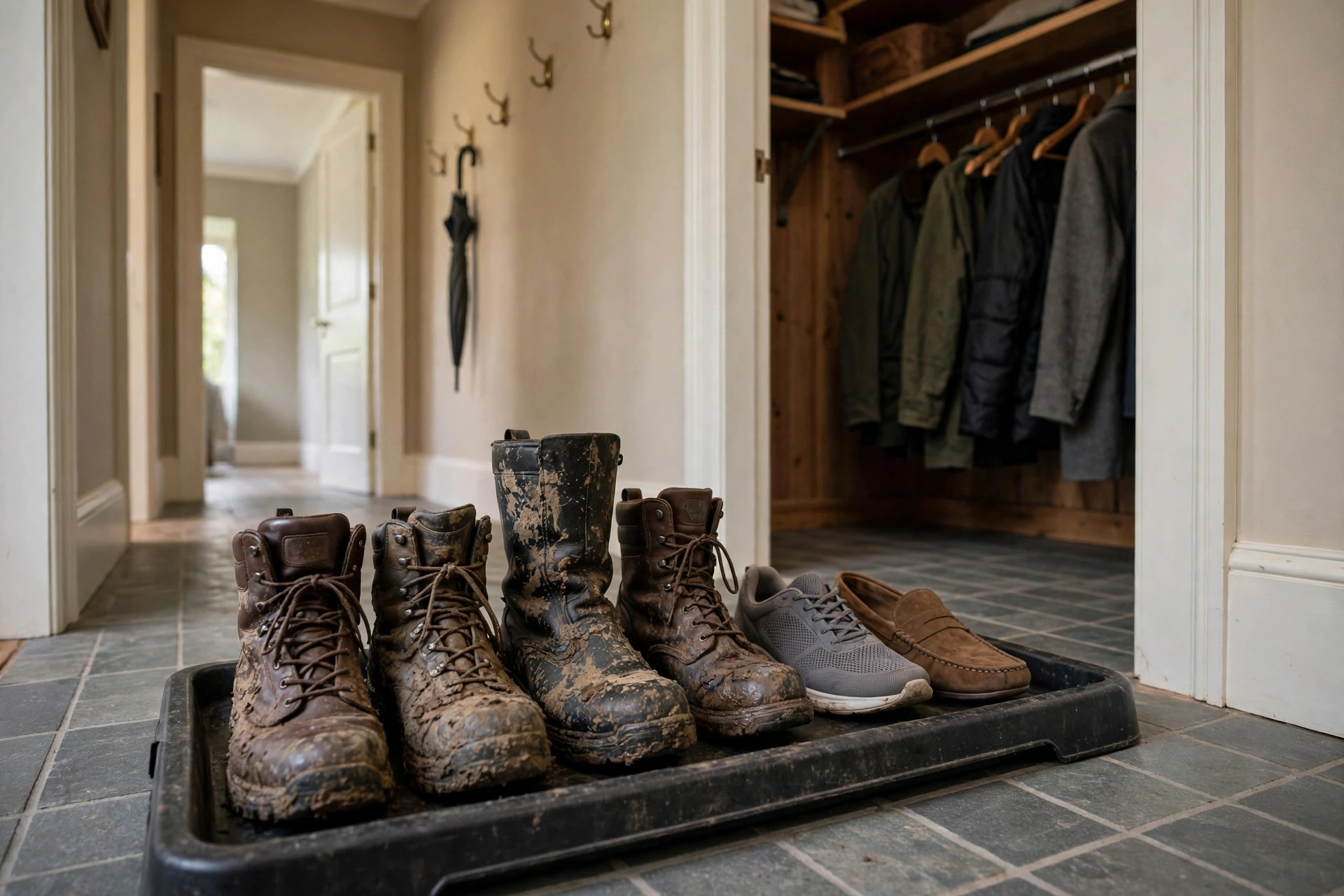
9. A shoe tray with a lip by the door — mud stays in the tray, not on the floor
Shoes on the closet floor are shoes that spread, because the muddy boots lean on the clean trainers, the trainers slide under the coats, and the floor that holds the shoes is the floor nobody can see. Put a shoe tray with a lip by the door — mud stays in the tray, not on the floor — so every pair of shoes lands in the tray and the mud stays where it can be tipped out. Pick a tray with a raised edge deep enough to hold the rain and the mud, big enough for the family's daily shoes, and narrow enough to fit the closet floor, because the tray that fits is the tray that gets used. Keep the out-of-season shoes on the shelf from idea 5, because the tray that holds only the daily shoes is the tray that never overflows. One tray, and the mud stops travelling. (Check on Amazon for a boot tray with a raised lip, sized to your closet floor.)
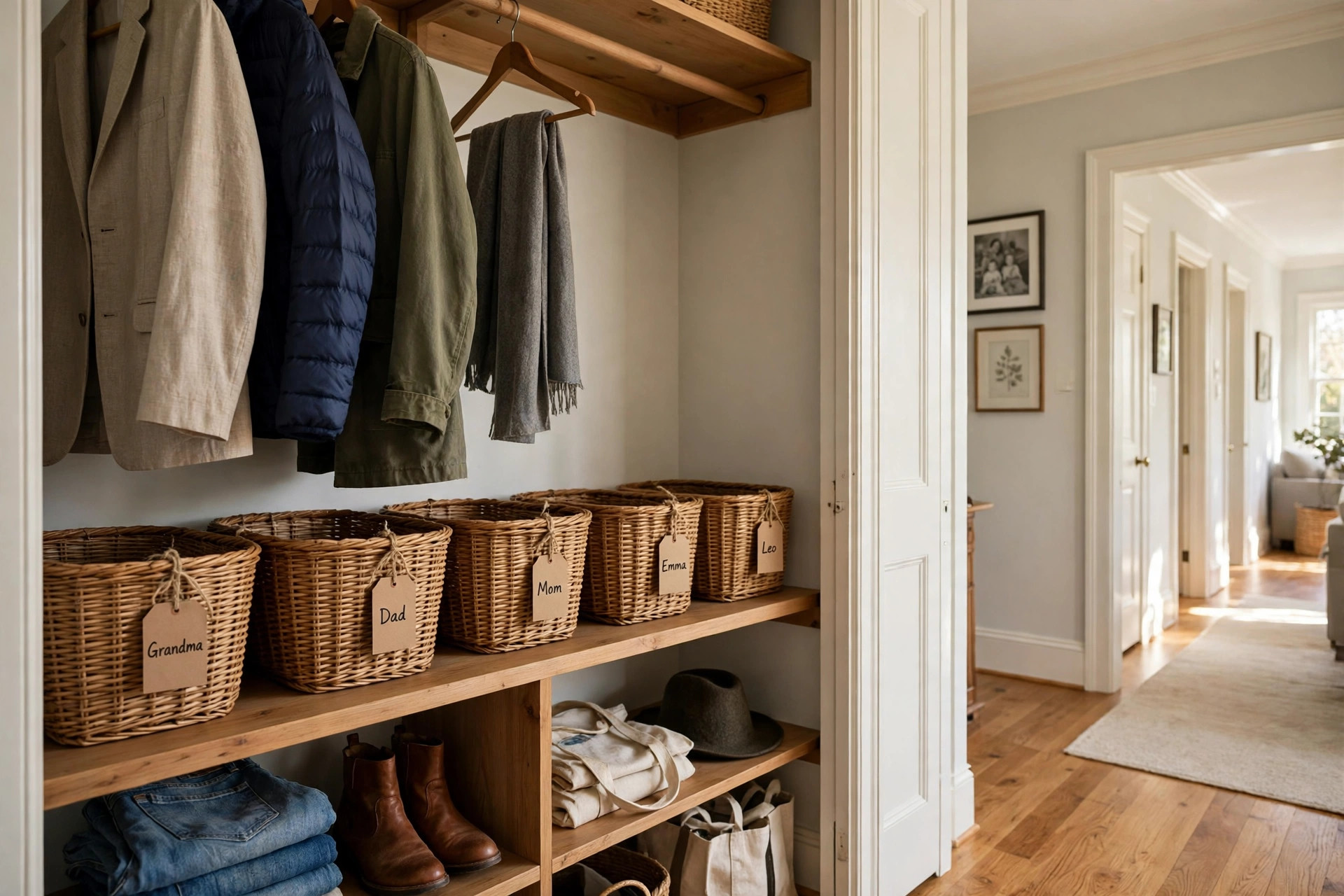
10. One basket per person for the daily grab-and-go — bag, keys, sunglasses in one place
The small daily things without a home are the small daily things that vanish, because the keys are on the shelf, the sunglasses are in the coat pocket, and the bag is under the shoes, and the person leaving the house is the person hunting for all three. Give every person one basket for the daily grab-and-go — bag, keys, sunglasses in one place — so the things that leave the house every day live together in one basket. Put the baskets on the shelf above the rail or on the closet floor beside the shoe tray, label each one with a name, and keep only the daily things inside, because the basket that holds the daily things is the basket that gets grabbed on the way out. One basket per person, and the morning hunt ends.
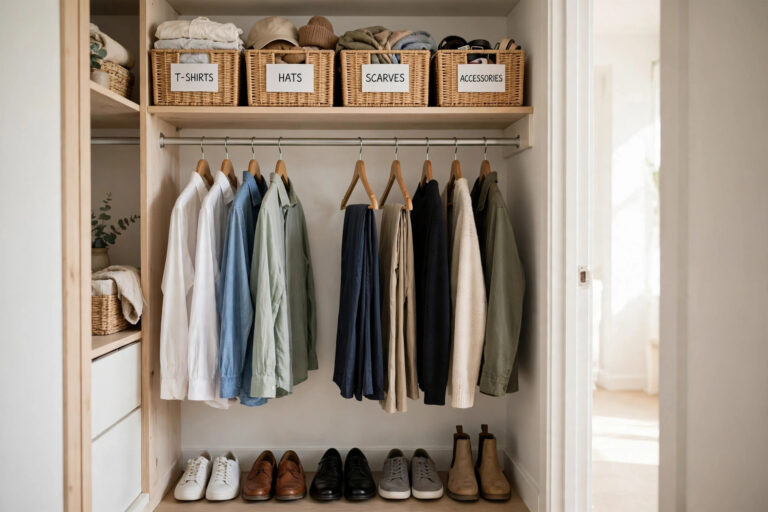
11. A narrow shelf for hats, gloves and scarves — small things up high, in reach
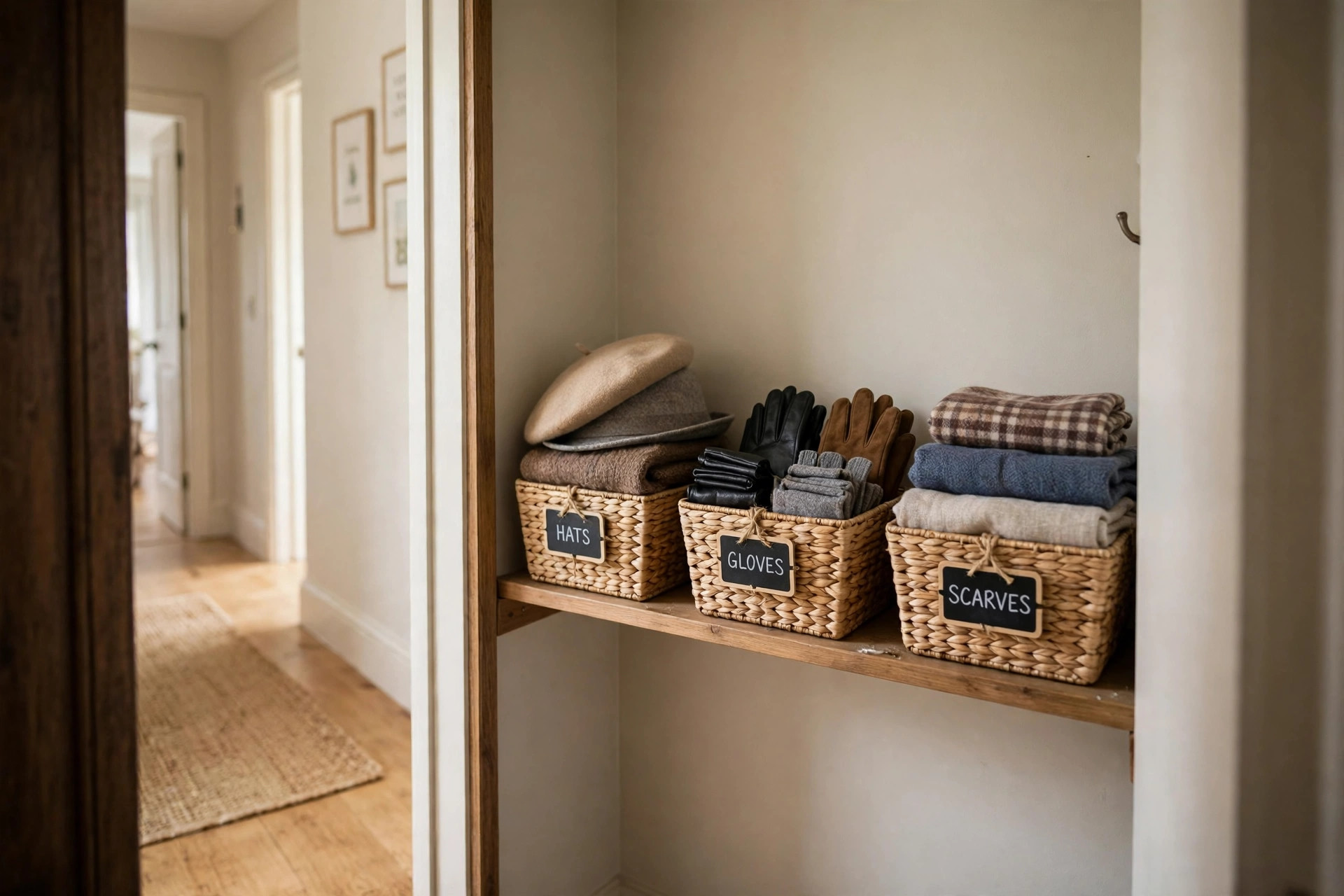
Hats, gloves and scarves loose in the closet are hats, gloves and scarves that are never found in pairs, because the glove is in the coat pocket, the scarf is under the shoes, and the hat is somewhere in the back of the closet. Add a narrow shelf for hats, gloves and scarves — small things up high, in reach — so the small winter things live together where they can be seen. Put small labelled baskets on the shelf, one for hats, one for gloves, one for scarves, and keep the shelf at a height the whole family can reach, because the shelf that is too high is the shelf that never gets used. The shelf borrows its small-basket rule from 24 Shoe Storage Ideas for 2026, where the same labelled baskets keep the shoe closet findable. One shelf, and the gloves stop going missing.
Small closets, smart systems
12. Slim bins on the top shelf, labelled — the out-of-season box that is still findable
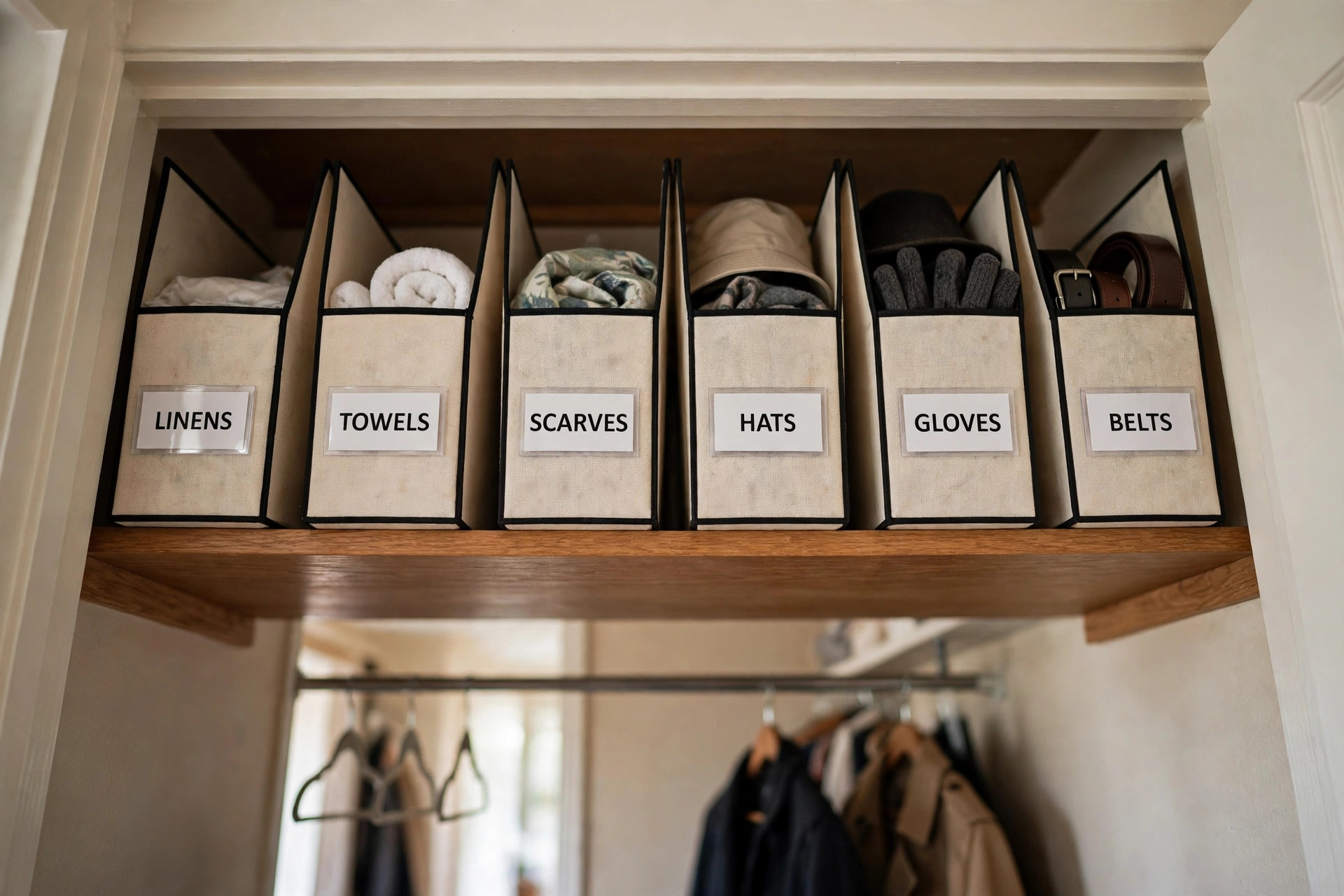
The top shelf without bins is the top shelf where things go to be forgotten, because the spare hats are in a pile, the pile slides when the door opens, and the thing you need is the thing at the bottom of the pile. Use slim bins on the top shelf, labelled — the out-of-season box that is still findable — so every thing on the top shelf lives in a bin with a label you can read from the floor. Pick bins shallow enough to fit the shelf and narrow enough to lift down with one hand, and write the label on the front, not the lid, because the label that is seen is the label that is followed. Keep one bin for the off-season coats, one for the spare gloves and scarves, and one for the things that belong elsewhere but have nowhere else to go, because the bin that is labelled is the bin that gets put back. Slim bins, and the top shelf stops being a mystery.
13. A rolling cart for the overflow — the cart that parks beside the closet
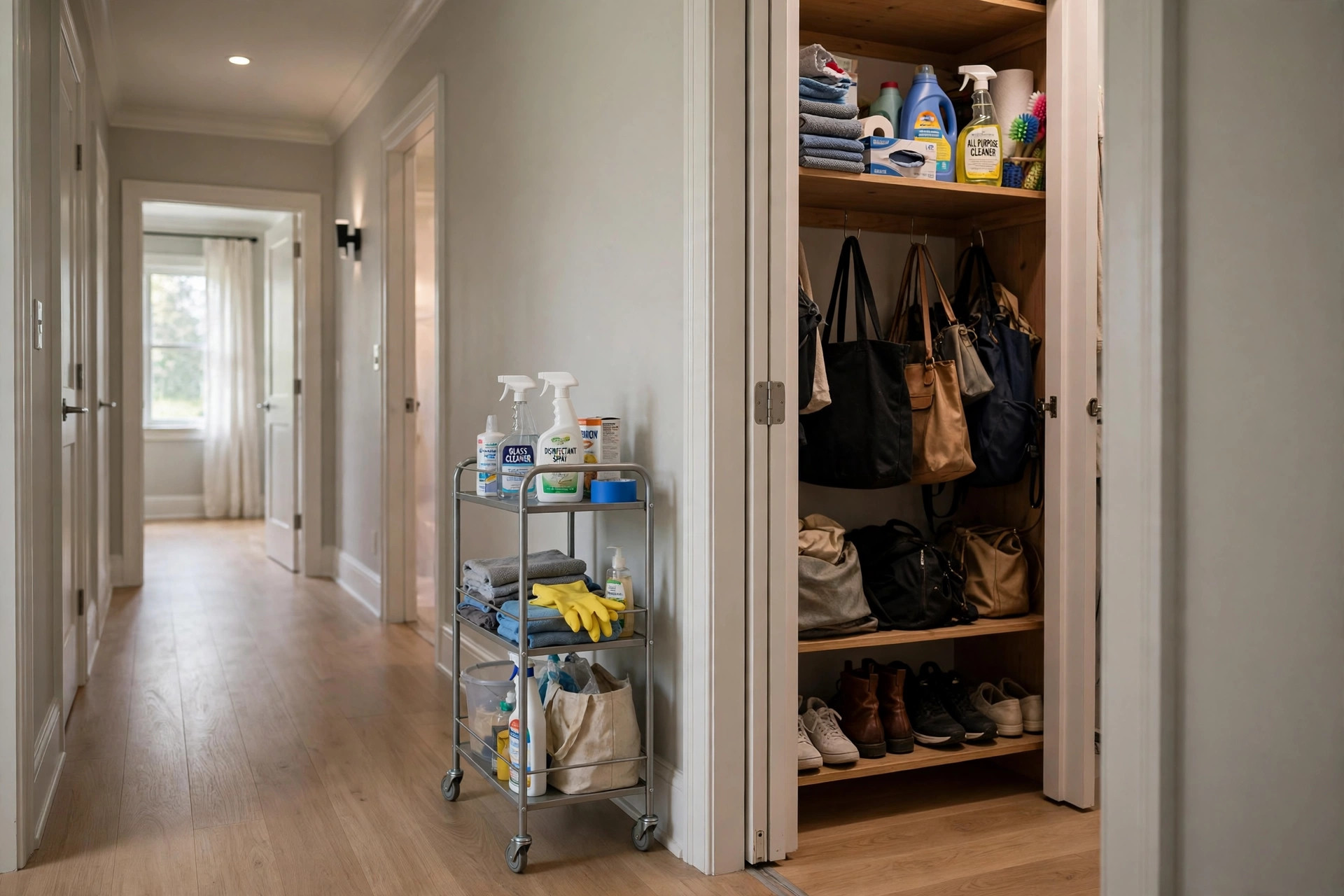
A hallway closet with no room left is a hallway closet that needs help from outside, because the shoes do not fit, the bags do not fit, and the closet that is full is the closet that starts spilling into the hallway. Use a rolling cart for the overflow — the cart that parks beside the closet — so the things that do not fit in the closet live on the cart, and the cart rolls away when the hallway needs to be clear. Load the cart with the spare shoes, the bags and the cleaning supplies, park it beside the closet, and wheel it into the utility room when guests come, because the cart that moves is the storage that fits any hallway. The rolling cart is covered in 22 Rolling Cart Organization Ideas for 2026, where the same cart works as a kitchen helper, a craft station and a hallway helper in turn. One cart, and the overflow has a home.
14. A pegboard on the side wall — hooks and pockets for the small daily things
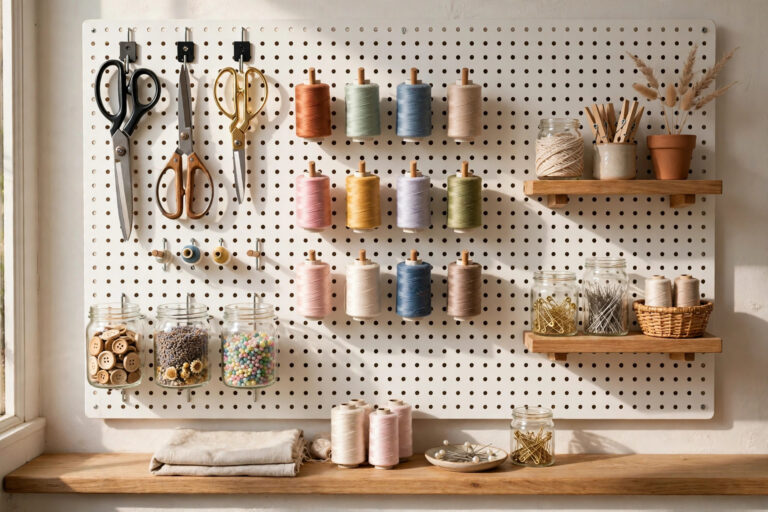
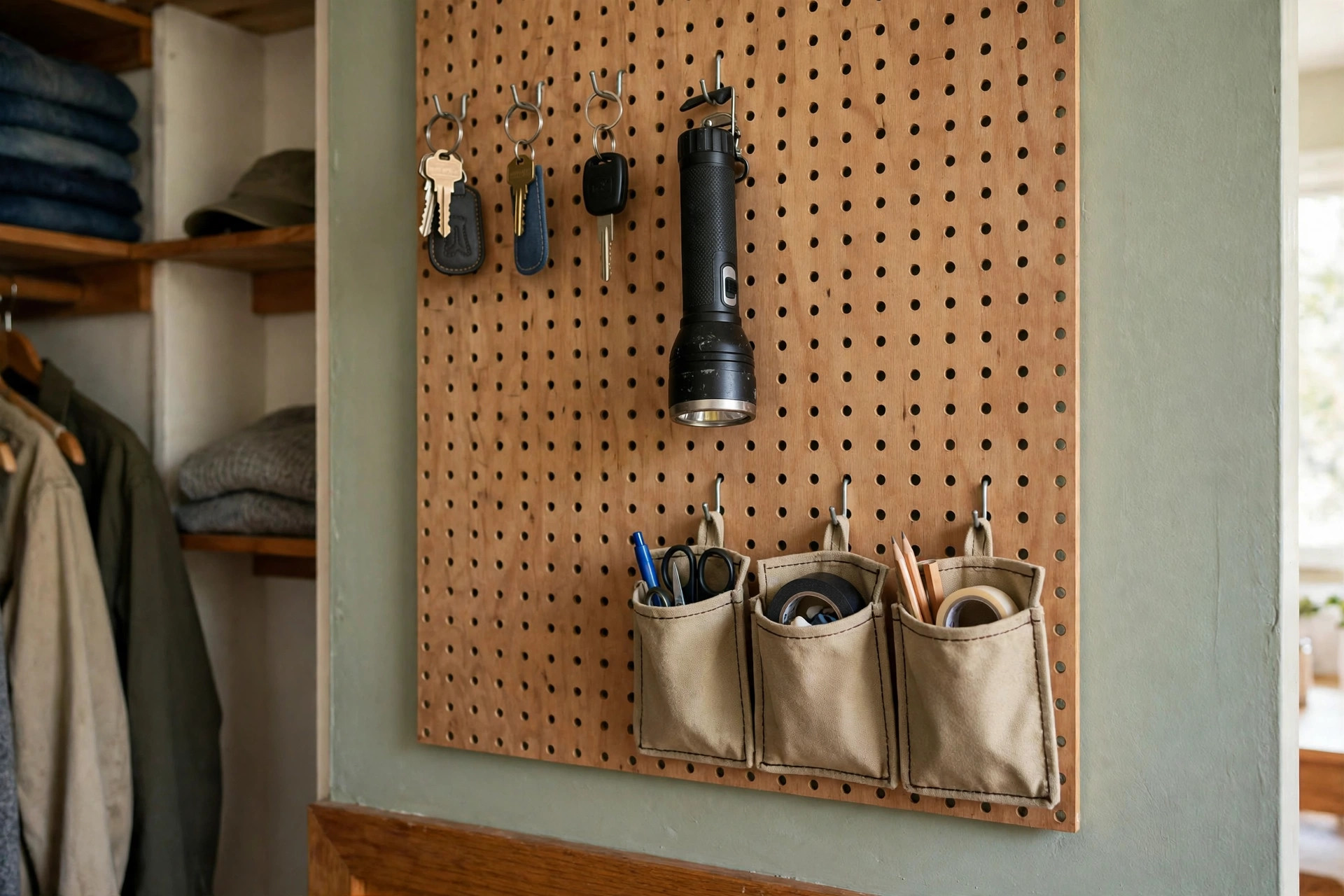
The side wall of a hallway closet is the wall nobody uses, because the coats hang on the rail, the shoes sit on the floor, and the wall beside them is the wall that could hold the small things. Hang a pegboard on the side wall — hooks and pockets for the small daily things — so the scissors, the spare keys, the torch and the tape live on the wall, in sight, in reach. Hook the things the family grabs on the way out, slip the spare keys into a pocket, and hang the torch where it can be found in the dark, because the pegboard that shows everything is the pegboard that keeps everything. The pegboard itself is covered in 20 Pegboard Organization Ideas for 2026, where the same wall-first rule keeps a whole craft room tidy. One pegboard, and the small things stop wandering.
15. Hooks for the dog lead, keys and bags — the wall beside the closet works too
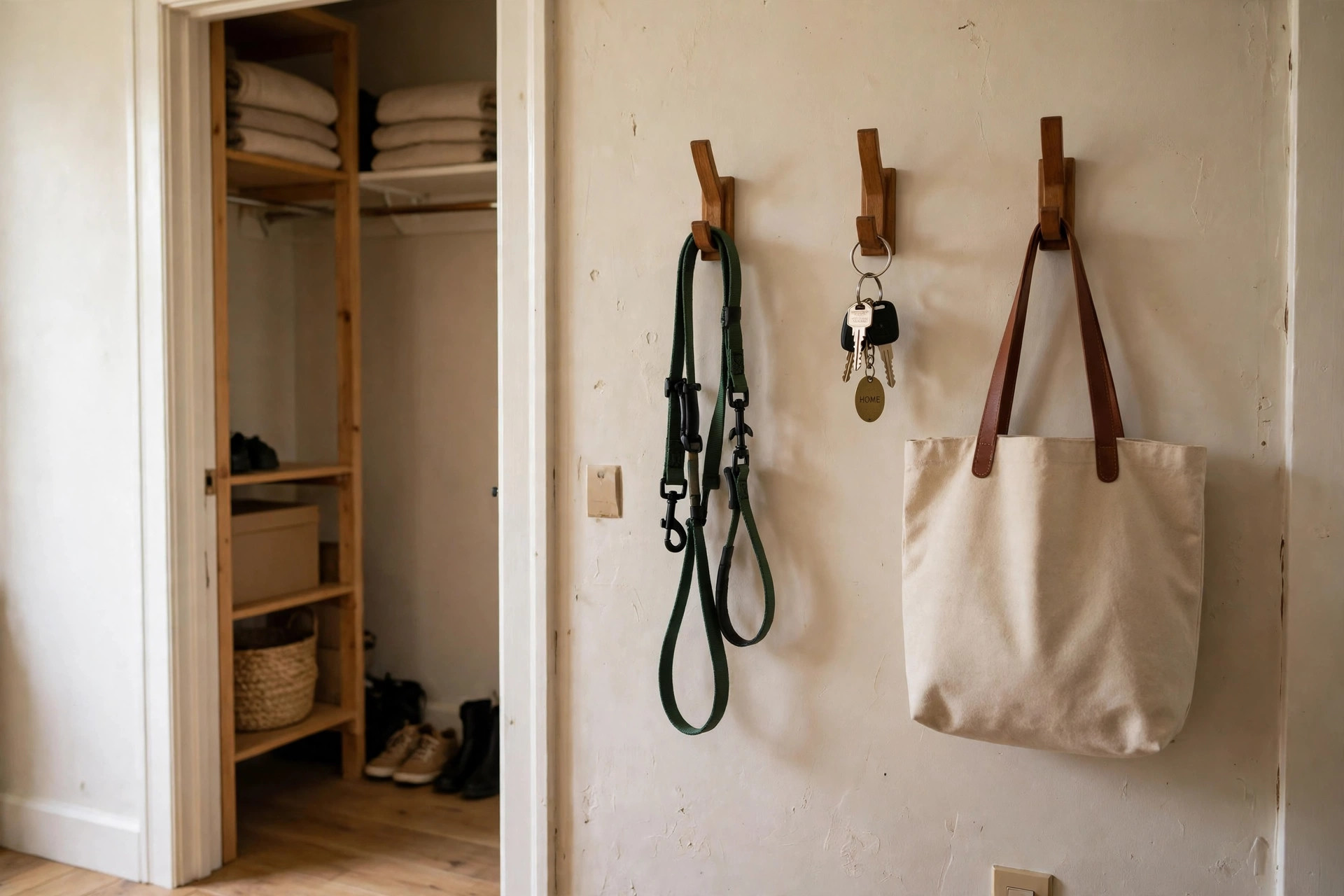
The wall beside the closet is the wall that holds the things the closet cannot, because the dog lead has no hook, the keys have no home, and the bag that hangs on the door handle is the bag that falls off every time the door opens. Put hooks on the wall beside the closet — the wall beside the closet works too — so the dog lead, the keys and the bags live on the wall, not on the door handle. Hang one hook for the dog lead at a height you can reach with the dog in one hand, one hook for the keys beside the front door, and one hook for the bag you grab every day, because the hook that is in reach is the hook that gets used. The wall beside the closet is the closet's front porch, and the front porch that is hooked is the front porch that stays tidy. Three hooks, and the door handle is free.
16. A "by the door" tray for post and parcels — in and out, sorted at the door
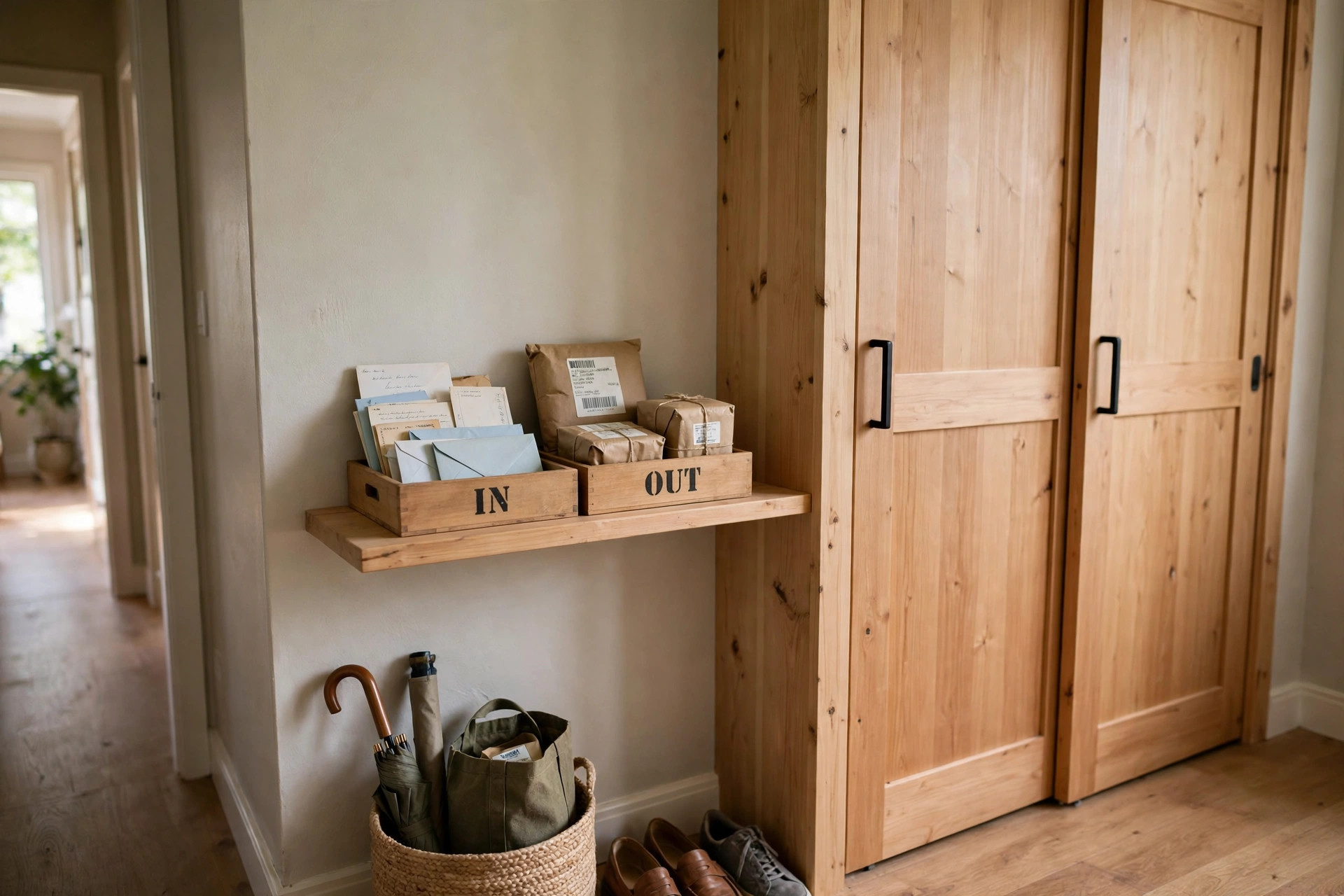
Post left on the hallway table is post that piles up, because the letters arrive, the letters land on the table, and the table that holds the post is the table that holds last week's post too. Use a "by the door" tray for post and parcels — in and out, sorted at the door — so the post that comes in lands in the tray and the post that goes out leaves from the tray. Put the tray on the shelf beside the closet or on the narrow console by the front door, split it into "in" and "out", and empty it every evening, because the tray that empties daily is the tray that never overflows. The tray borrows its in-and-out rule from the drop zone thinking in 22 Drop Zone Organization Ideas for 2026, where the same tray keeps the front door clear. One tray, and the post stops piling up.
17. A seasonal swap — one box that rotates twice a year, in with the season, out without it
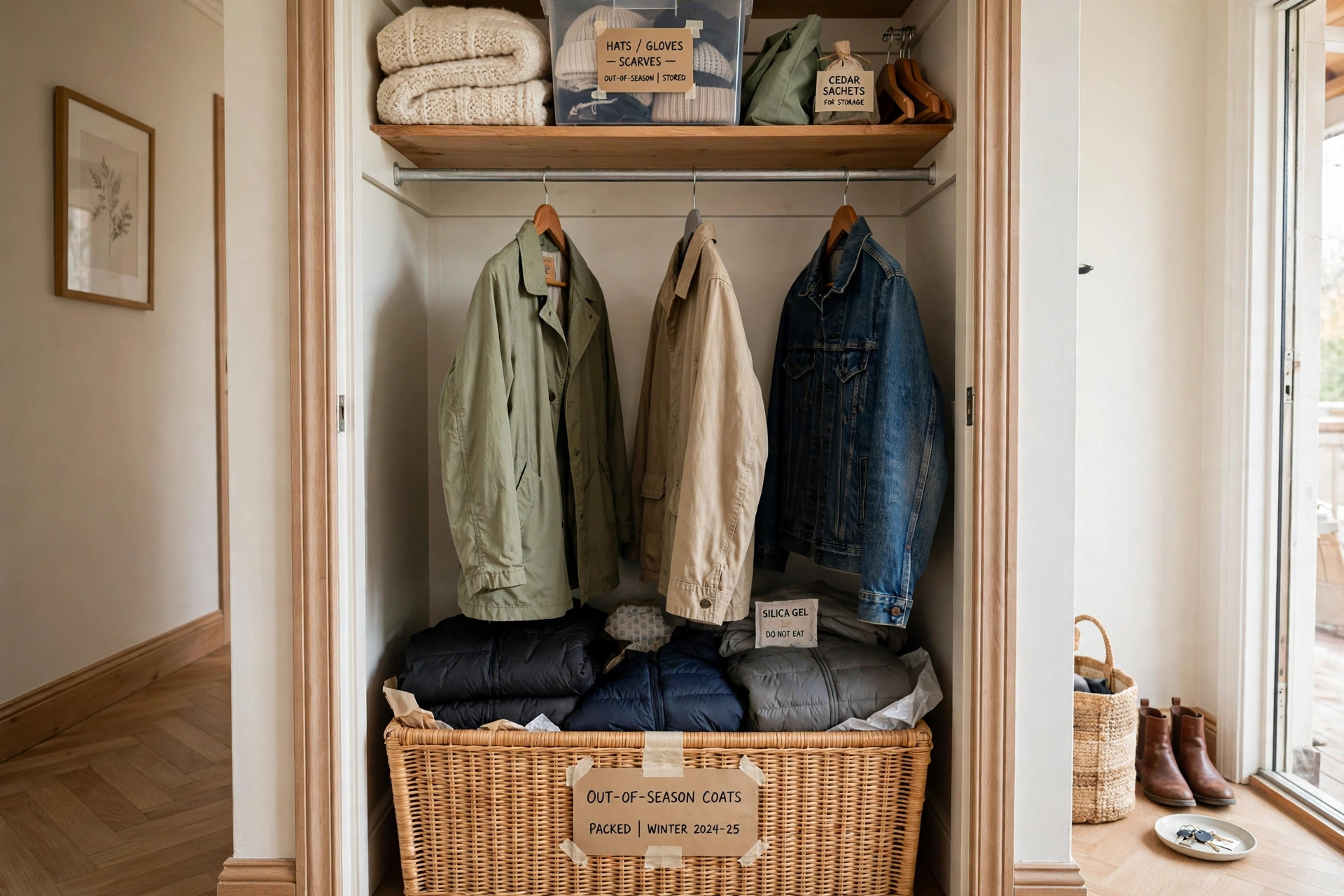
A closet that never changes with the seasons is a closet that holds two seasons at once, because the winter coats are still on the rail in June, the summer jackets are still on the shelf in December, and the closet that holds both is the closet that holds neither well. Do a seasonal swap — one box that rotates twice a year, in with the season, out without it — so the closet holds only the season you are in. Pack the out-of-season coats into the labelled bin from idea 12, bring the in-season coats down from the shelf, and do the swap on the same weekend you change the clocks, because the swap that has a date is the swap that actually happens. One box, twice a year, and the closet always fits the weather.
Keeping it tidy
18. The two-minute reset when you come home — hang it, tray it, done
No closet survives without a habit, because the closet is only tidy on the day you set it up and the mess creeps back one coat at a time. Do a two-minute reset when you come home — hang it, tray it, done — so the closet is tidy before dinner and starts clean the next day. Coat on the hook, shoes in the tray, bag in the basket, and the door shut, because the reset that takes two minutes is the reset that actually happens. Do it together for the first week, because the reset the parent does with the child is the reset the child learns to do alone. Two minutes when you come home, and the closet never needs a big clean.
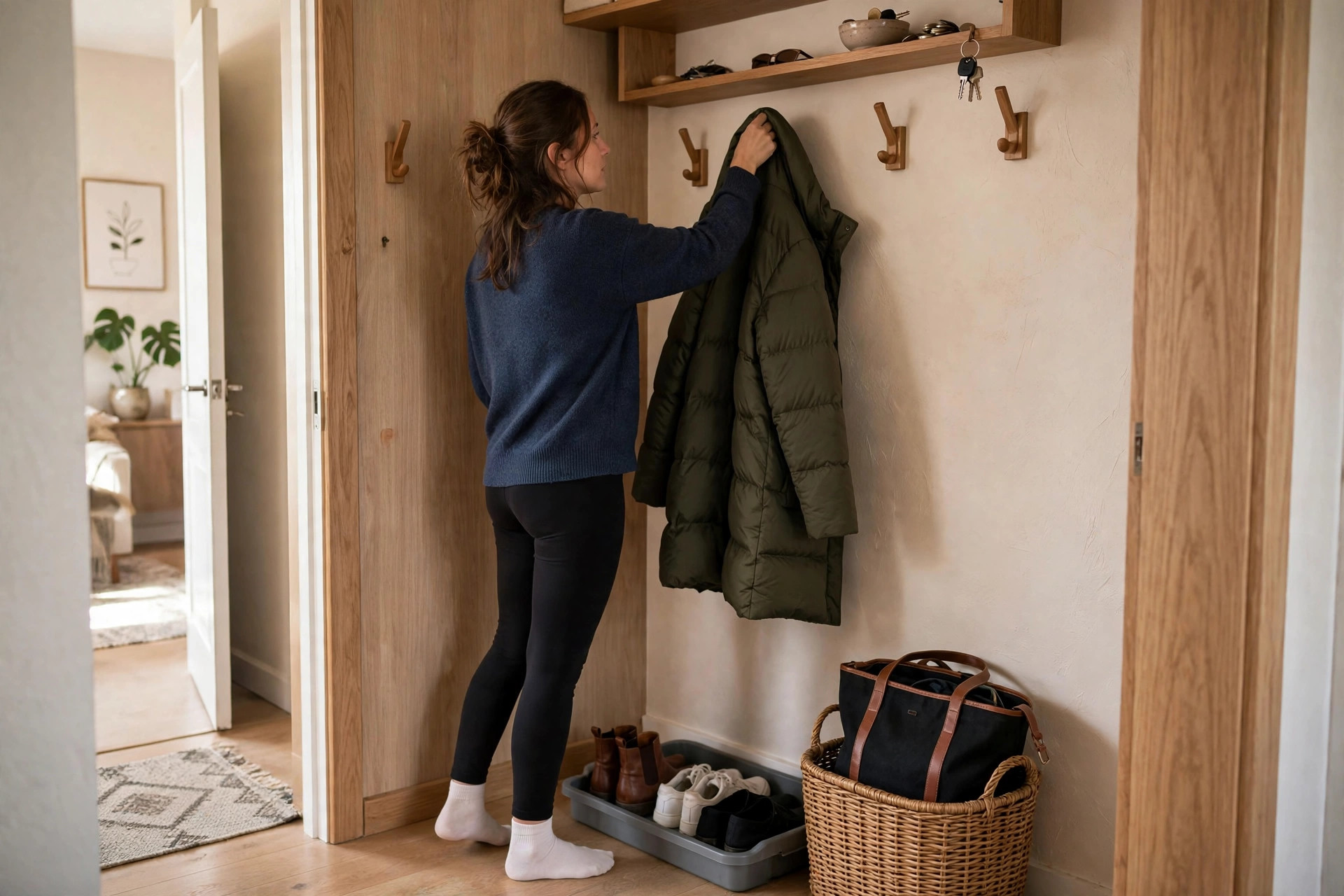
19. A weekly five-minute tidy — the habit that stops the slow creep
The two-minute reset keeps the closet tidy day to day, but the slow creep still comes, because the spare scarf lands on the shelf, the extra pair of shoes appears by the tray, and the closet that was tidy on Monday is the closet that is full again by Friday. Do a weekly five-minute tidy — the habit that stops the slow creep — so the closet gets a small reset before the weekend. Every Sunday, put the stray things back where they belong, take the shoes that do not belong in the tray back to the bedroom, and check the hooks for coats that have not been worn in a month, because the tidy that happens weekly is the tidy that stops the big clean. Five minutes a week, and the closet never creeps back.
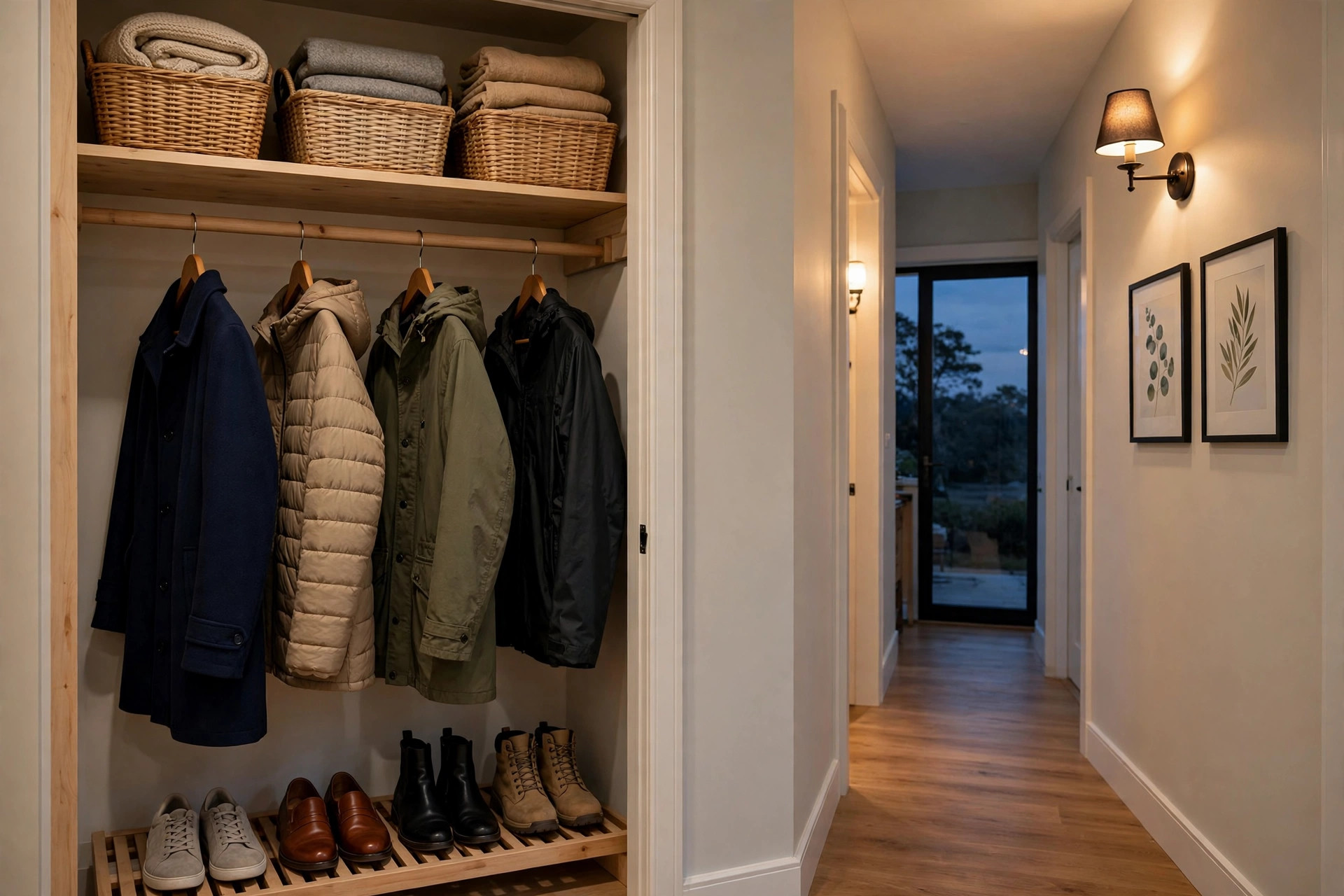
20. Label everything — the label that stops the drift
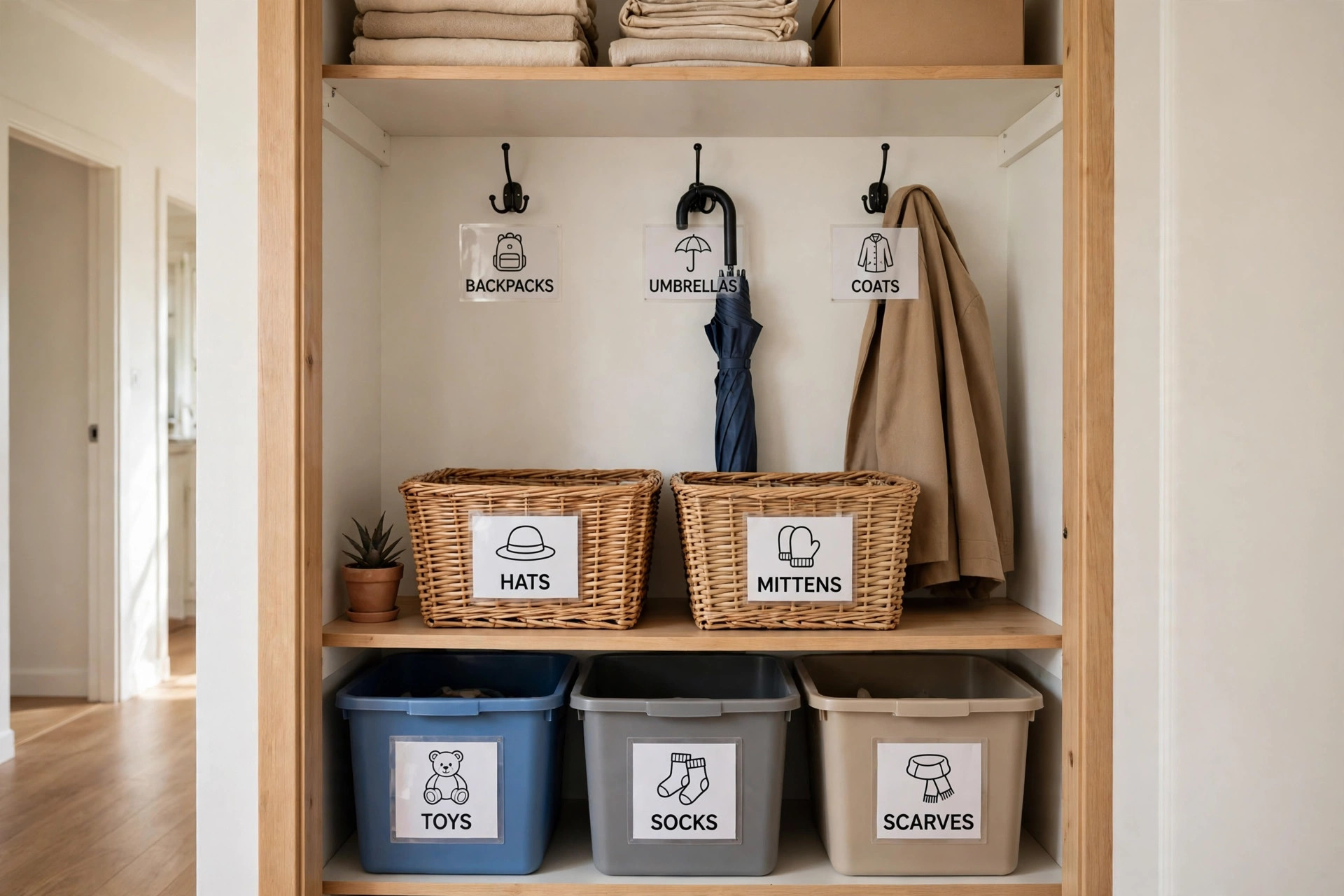
A closet without labels is a closet where everything drifts, because the bin that holds the gloves today holds the scarves tomorrow, and the person who cannot read the bin is the person who guesses. Label everything — the label that stops the drift — so every bin, basket and hook says what it holds and the things go back where they belong. Use picture labels for younger children and word labels for older ones, and put the label where the person looks — on the front of the bin, not the lid — because the label that is seen is the label that is followed. The baskets, the bins, the hooks and the shelf all get labels, because the closet that is labelled is the closet that stays sorted. (Check on Amazon for a small label maker with tape that sticks to plastic bins and woven baskets.)
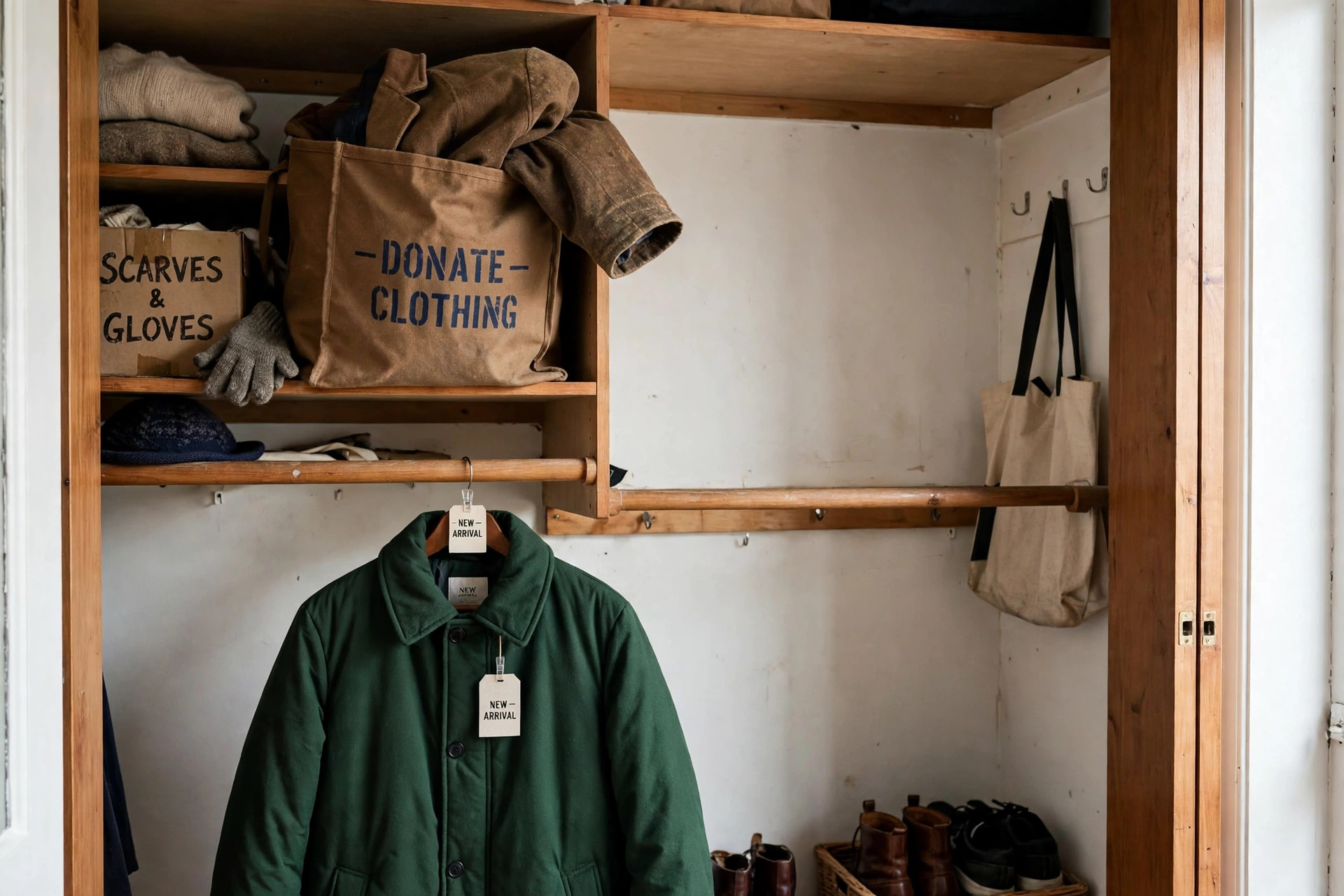
21. One in, one out — the rule that stops the closet filling up again
A closet that is organised once and never again is a closet that fills up again, because the new coat arrives, the new coat goes on the rail, and the rail that held ten coats is the rail that now holds eleven. Use the one in, one out rule — the rule that stops the closet filling up again — so every new coat means one old coat leaves. When a new pair of shoes comes home, an old pair goes to the donate bag; when a new bag arrives, an old bag leaves, because the rule that keeps the number the same is the rule that keeps the closet the same size. Put a donate bag on the top shelf so the old thing has somewhere to go straight away, because the rule that is easy is the rule that gets followed. One in, one out, and the closet never fills up again.
22. A seasonal sort-out — the closet that grows with the family
A closet set up in January is a closet that does not fit by September, because the children have grown, the coats have changed, and the hooks that were at the right height are the hooks that are now too low. Do a seasonal sort-out — the closet that grows with the family — so the closet changes as the family does. At the start of each season, clear the closet, throw away the coats that are worn out, move the outgrown coats to the donate bag, and check the hook heights, because the closet that is sorted each season is the closet that fits the family all year. The small-space thinking behind the sort-out is covered in 28 Small Apartment Storage Ideas for 2026, where the same seasonal rule keeps a whole flat tidy. One sort-out a season, and the closet grows with the family.
Which hallway closet idea fits which situation?
| Situation | Best first move | Budget | Tools needed |
|---|---|---|---|
| Closet stuffed, don't know what's in it | Empty it completely (idea 1) | Free | Bags, boxes |
| Bought storage that doesn't fit | Measure the closet first (idea 2) | Free | Tape measure |
| Closet holds everything, fits nothing | Decide what actually lives here (idea 3) | Free | None |
| Coats piled on the floor | One hook per person (idea 4) | Low | Hooks |
| Off-season coats in the way | A shelf above the rail (idea 5) | Low | Shelf |
| No room for the small things | The door is storage too (idea 6) | Low | Door hooks |
| One rail, too many coats | A second rail (idea 7) | Low | Rail |
| Coats bunched, shoulders bumped | Slim hangers (idea 8) | Low | Velvet hangers |
| Muddy shoes on the floor | A shoe tray with a lip (idea 9) | Low | Boot tray |
| Daily things scattered | One basket per person (idea 10) | Low | Baskets |
| Hats and gloves lost | A narrow shelf for small things (idea 11) | Low | Shelf |
| Closet tidy for one week only | The two-minute reset (idea 18) | Free | None |
You do not need all 22 ideas. You need the three that solve your hallway closet — usually the empty-out that shows you what is really in there, the one hook per person that ends the pile on the floor, and the two-minute reset when you come home that keeps it all tidy. Start with the empty-out, do it this weekend before the week starts, and measure the closet while it is empty. Do that and the next time the front door opens, the coat will be on the hook, the shoes will be in the tray, and the door will close without a shove.
Save this post for the next coat season, and if the entryway around the closet needs the same treatment, read 22 Entryway Storage Ideas for 2026 next — it is Post 10, the bench, the shoe tray and the front-door traffic this closet plugs into — and 26 Small Walk-In Closet Organization Ideas for 2026, Post 03, for the walk-in version of the same ideas when the closet is bigger. This is the seventh post of the new Organization by problem run — Posts 56 to 80, one problem at a time — and the run keeps going with the closets, drawers and corners the whole family passes every day. The mudroom itself gets its own deep dive in Mudroom Organization, where the bigger entryway space is covered in full.
Publish date assigned at publishing time. Updated as new hallway closet finds are tested.
Frequently asked questions
How do I organize a very narrow hallway closet?
Measure it first — depth, width and rail height — because a narrow closet is usually only about sixty centimetres deep, and storage that is five centimetres too wide blocks the door. Then use the depth you have: slim velvet hangers on the rail, a second rail for short jackets, hooks on the inside of the door, and a shoe tray on the floor. The narrow closet that is measured is the narrow closet that gets storage that fits.
What should I keep in a hallway closet?
Only the things that leave the house every day: the coats you wear this season, the shoes you wear this week, and the bags you grab on the way out. Move the vacuum cleaner, the Christmas lights and the spare bedding somewhere else — a hallway closet that holds only the daily things is a hallway closet that stays findable. Keep one basket per person for the daily grab-and-go, and the off-season coats in labelled bins on the top shelf.
How do I keep a hallway closet tidy with kids?
Give every child one hook at their height, because the hook a child can reach is the hook a child actually uses. Add one basket per child for their daily things, label everything with pictures for younger children, and do the two-minute reset together when you come home — coat on the hook, shoes in the tray, bag in the basket — until the child does it alone. A closet a child can use is a closet a child keeps tidy.