26 Small Space Closet Organization Ideas for 2026
A small closet is not a storage problem. It is a layering problem, because the closet that looks full is usually a closet that is only using half its height: one rod, one shelf, a floor covered in shoes, and a door that holds nothing at all. The clothes are not too many for the closet — the closet is too empty in the wrong places and too full in the wrong ones, and the morning hunt for a shirt is really a hunt through a closet that was never layered.
These 26 small space closet organization ideas double a tiny closet with smart layering: measure first, fit a second rod, use the top shelf and the door, and bin the small things — so the closet holds twice as much without a renovation, and the shirt you want is the shirt you can see.
Every idea below works in a real home, from a rented flat with a closet the width of a door to a kids' bedroom where one small closet holds a whole wardrobe. The walk-in version of the same system is covered in 26 Small Walk-In Closet Organization Ideas for 2026, where the layering rules are the same and the space is bigger — and the room around the closet gets its own treatment in 28 Bedroom Storage Ideas for 2026. Pick three ideas that fit your closet, start with the tape measure, and build from there.
Measure first, then layer up
1. Measure the closet before you buy anything — the tape measure that saves the returns
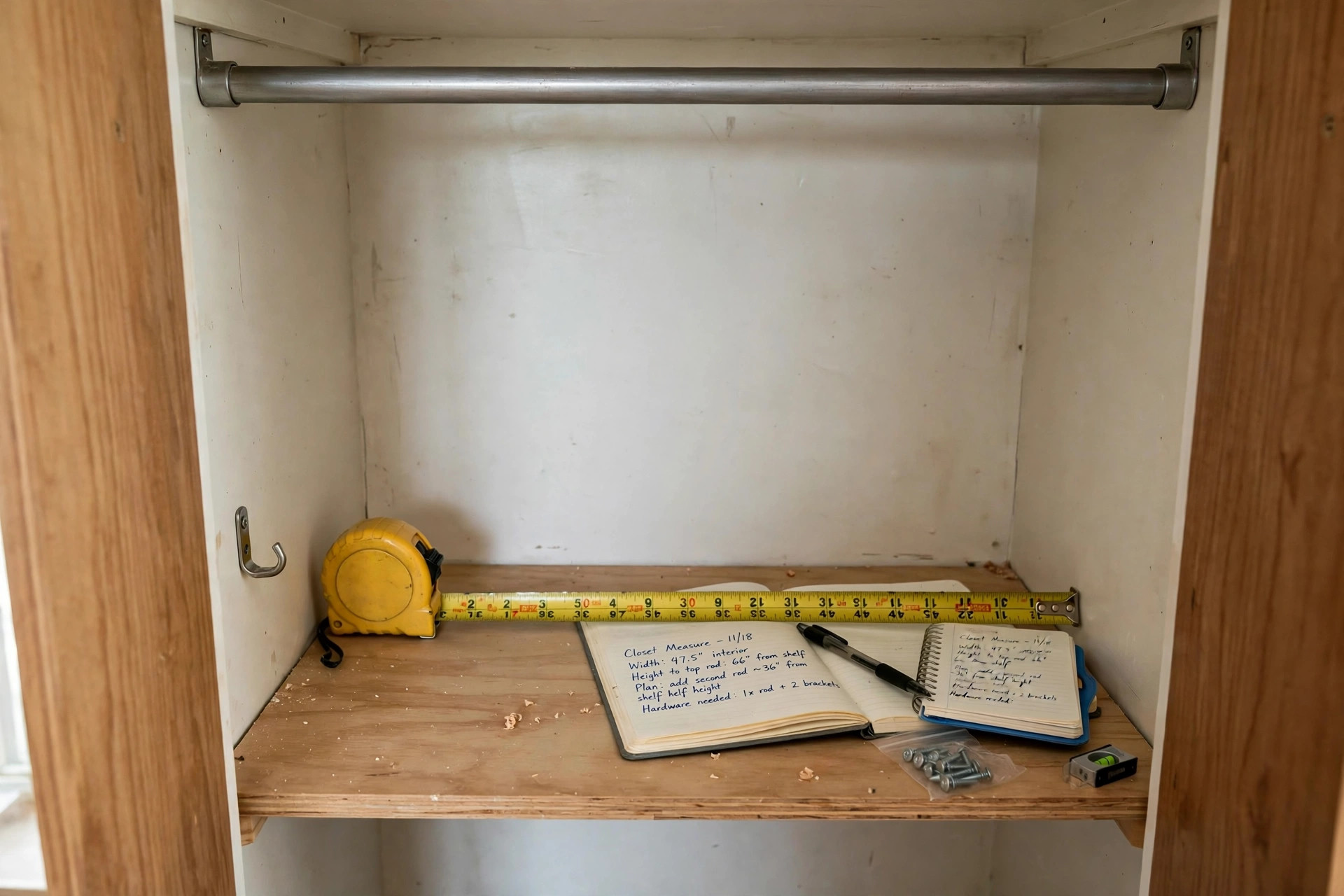
A closet organized by guessing is a closet full of things that do not fit, because the rod is two inches too long and the bins are an inch too wide. Measure the closet before you buy anything — the tape measure that saves the returns — so every rod, bin and divider you buy is bought for your closet, not for a closet in a photo. Measure the width at the rod and at the floor, because old closets are rarely square, and measure the height from the floor to the shelf and from the shelf to the ceiling, because the height is where the extra space lives. Write the numbers in a notebook and take the notebook to the shop, because the numbers that travel with you are the numbers that stop the returns. One afternoon with a tape measure, and everything you buy fits the first time.
2. Use the vertical: the top shelf is the closet's forgotten floor
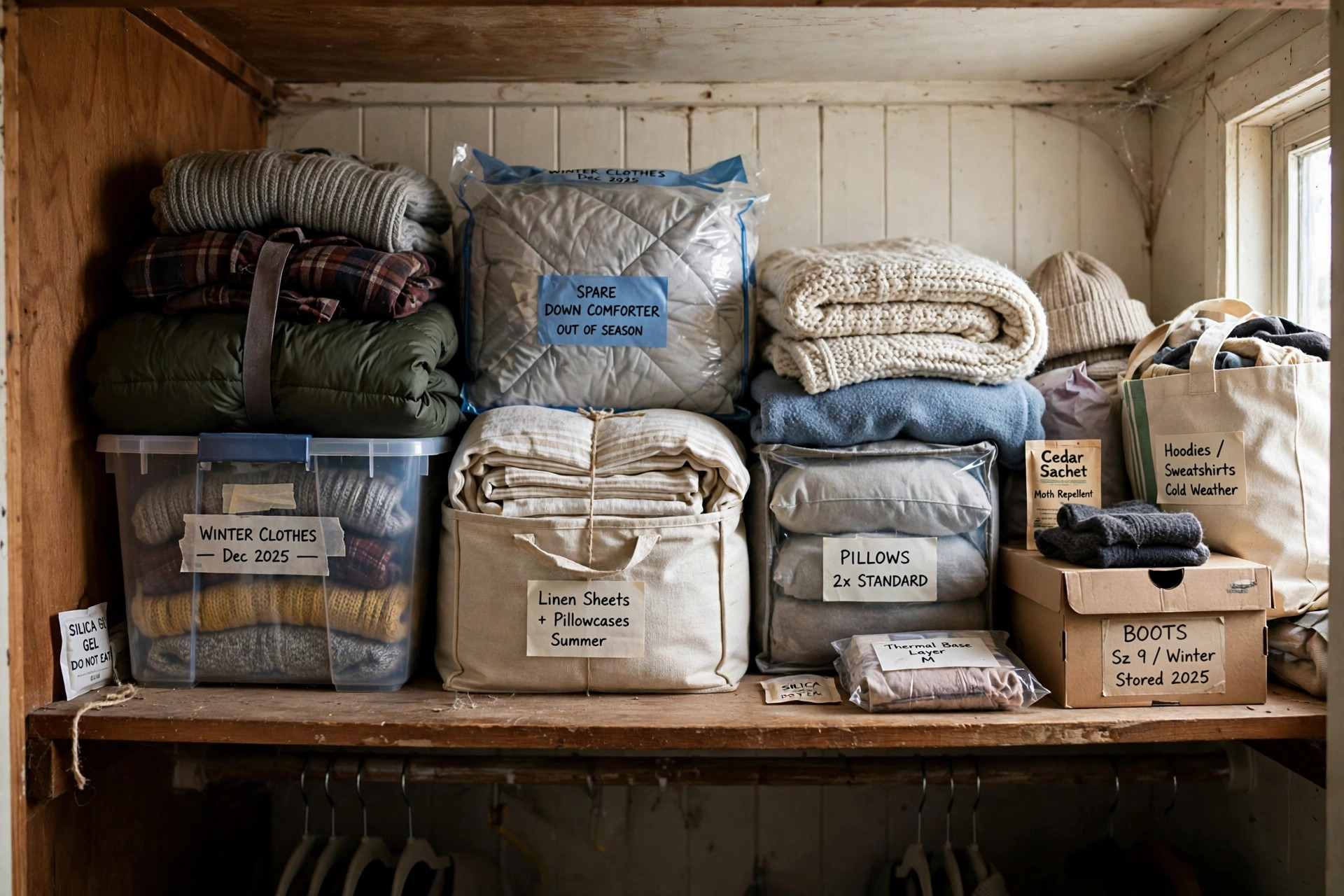
Most small closets waste their best space, because the top shelf holds three things and a layer of dust, and the height above it is empty air that nobody uses. Use the vertical — the top shelf is the closet's forgotten floor — so the shelf becomes a second floor of the closet instead of a place things go to be forgotten. Put the things you reach for least up there — out-of-season clothes, spare bedding, the bag you use twice a year — and keep the things you reach for every day at eye level, because the shelf that holds the rarely-used is the shelf that frees the rod. Add a small step stool inside the closet if the shelf is high, because the shelf that needs a chair to reach is the shelf that never gets used. One shelf used properly, and the closet gains a whole floor.
3. A second hanging rod — the one change that doubles the closet
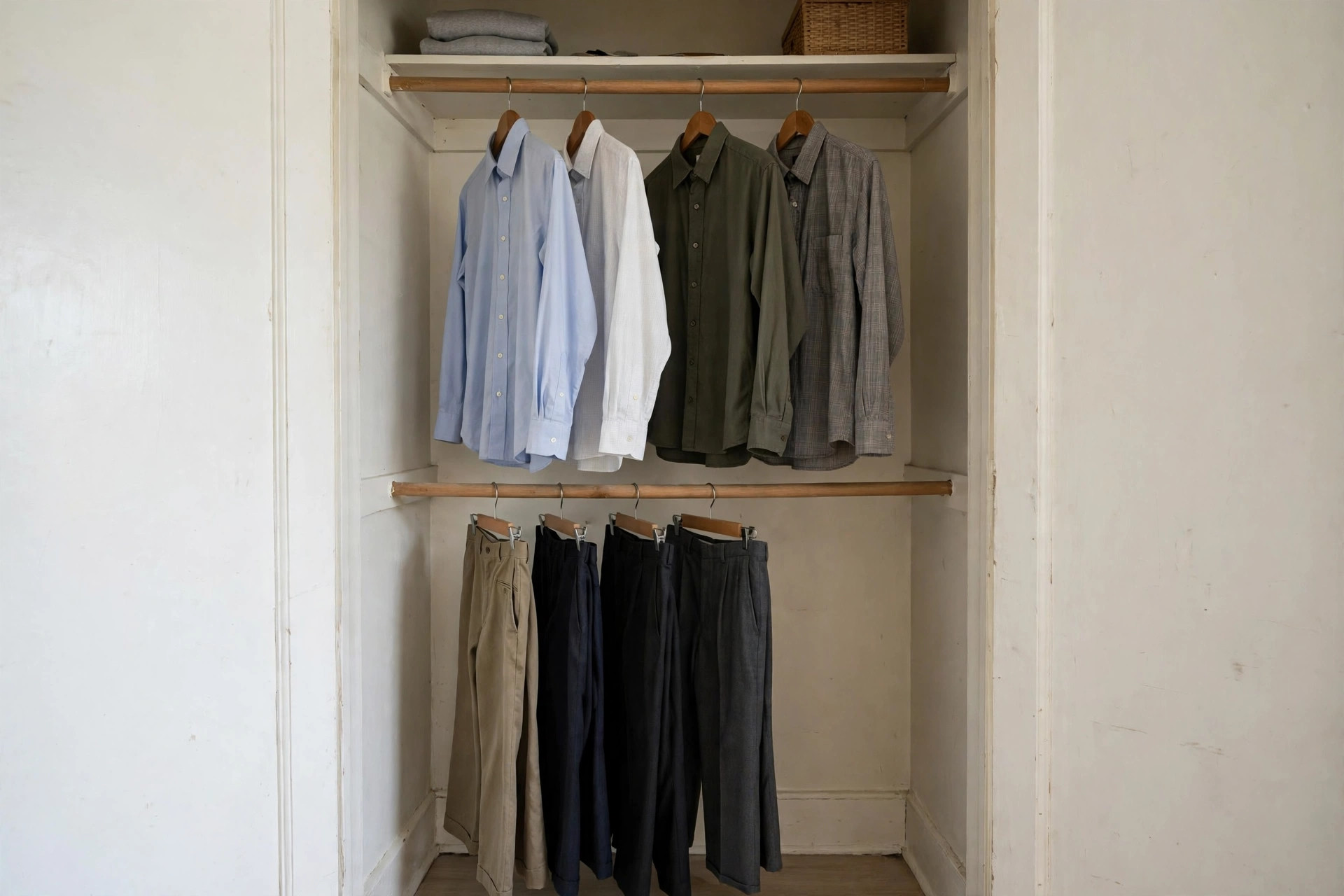
One rod is the reason a small closet feels full, because every shirt hangs at the same height, the space below the shirts is empty, and the closet that could hold two rows holds one. Fit a second hanging rod — the one change that doubles the closet — so the top rod holds the shirts and the lower rod holds the trousers, and the closet holds twice the clothes in the same width. Hang the second rod about halfway down, low enough for the shirts above it to clear the trousers below, and high enough that the trousers do not brush the floor, because the rod that is set at the right height is the rod that actually doubles the space. A tension rod works in a rented home, and a fixed rod works where you own the walls, because the rod that fits your home is the rod that stays up. One extra rod, and the closet is twice as big.
4. Shelf dividers that stop the stack from toppling
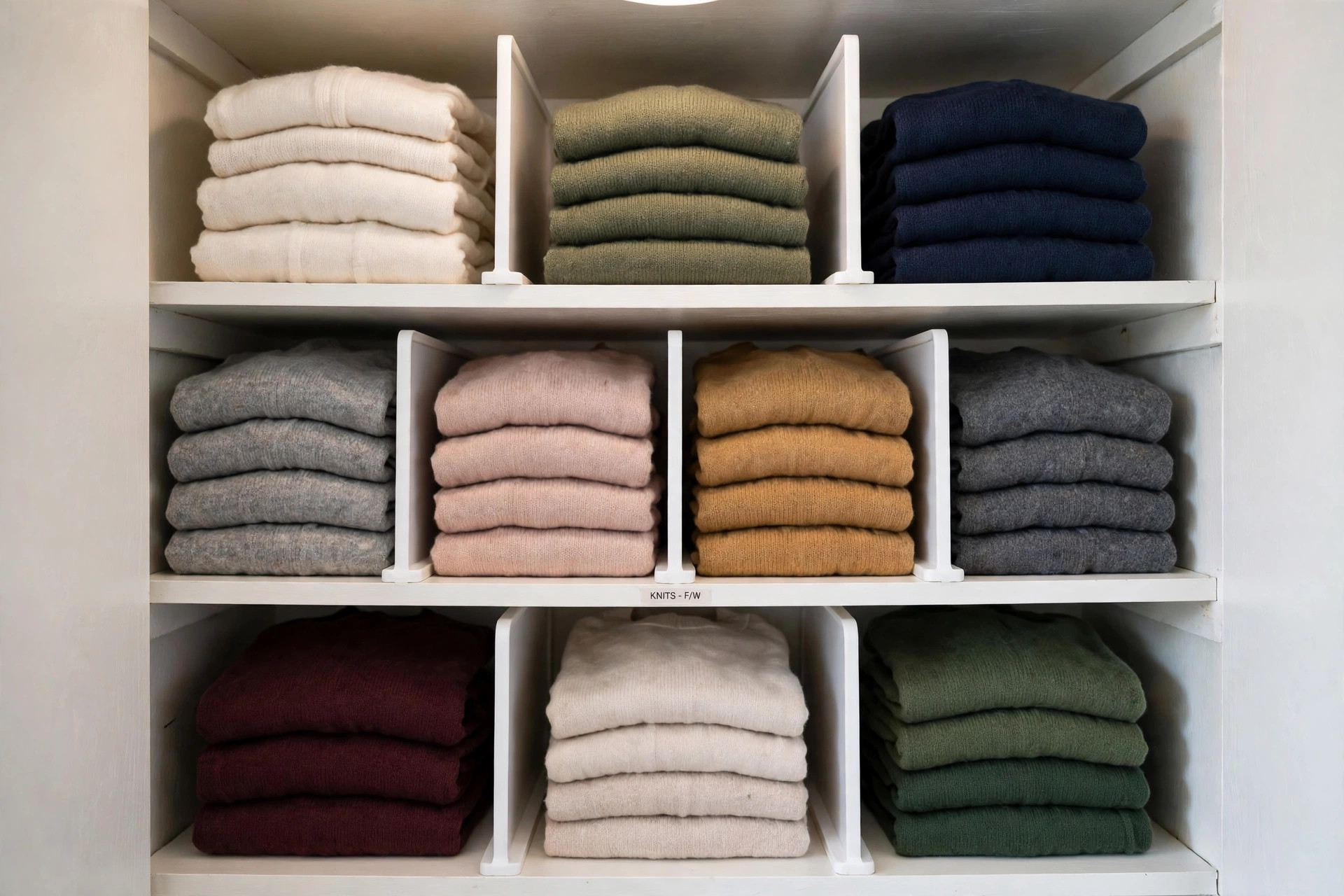
Folded clothes stacked without dividers are clothes that fall, because the stack leans, the lean becomes a slide, and the shelf that looked tidy on Sunday is a pile by Wednesday. Use shelf dividers — the dividers that stop the stack from toppling — so every stack of jumpers and T-shirts stands on its own, held upright by a divider on each side. Put one divider per stack, keep the stacks no higher than six items, and leave a finger's width between the stack and the divider, because the divider that holds the stack without squeezing it is the divider that keeps it standing. Clear acrylic dividers keep the shelf looking light, and the same upright rule keeps the linen closet tidy in 22 Linen Closet Organization Ideas for 2026, where folded sheets stack the same way. One set of dividers, and the stacks stay standing. (Check on Amazon for a set of clear acrylic shelf dividers sized for a standard closet shelf.)
5. The door is storage too — hooks and racks on the inside of the door
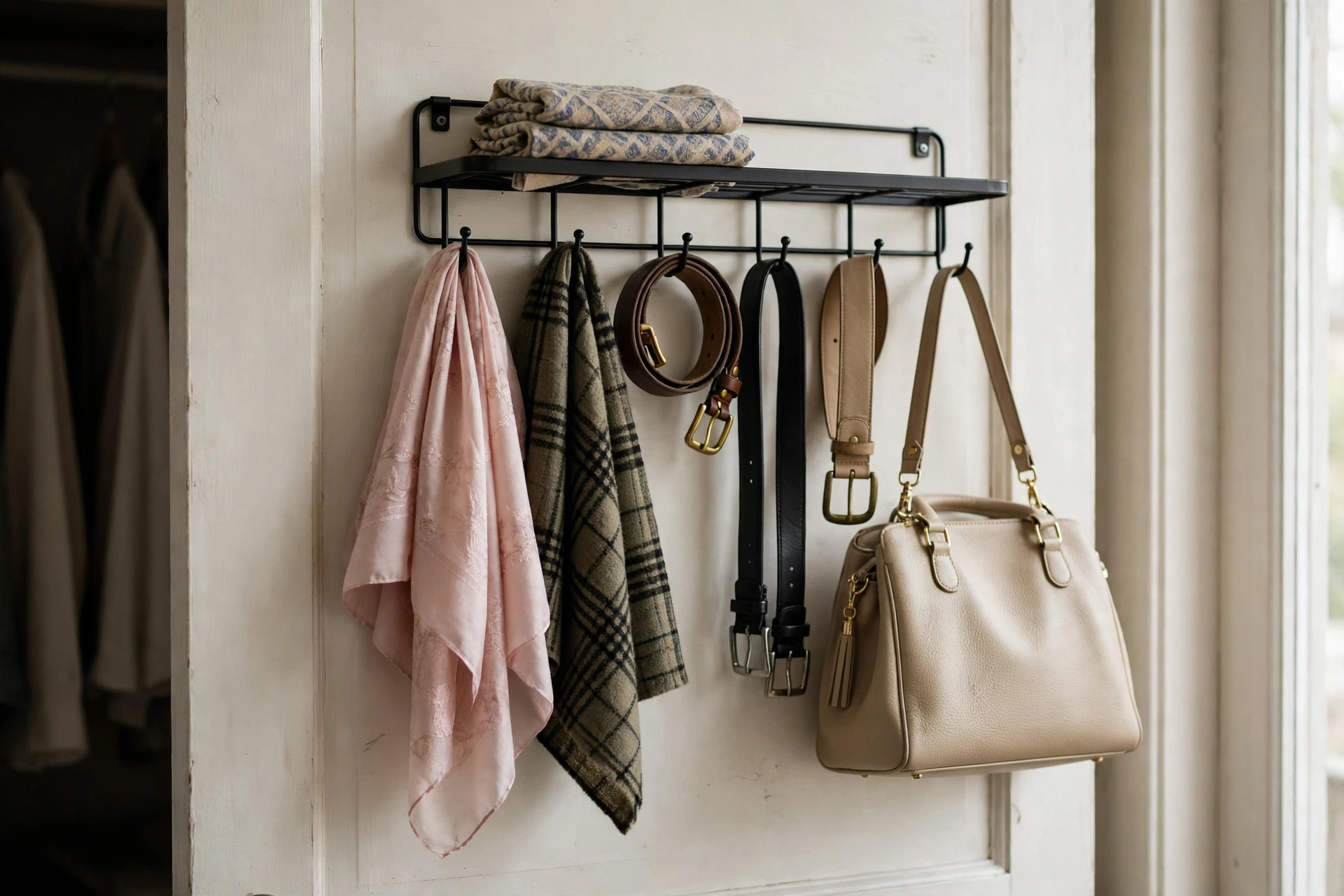
The inside of the closet door is the most wasted surface in the house, because it holds nothing, it faces the clothes, and the space it offers is space nobody thinks to use. Use the door — hooks and racks on the inside of the door — so the scarves, belts and the bag you grab every day live on the door instead of in a drawer. Hang a row of hooks at eye level for the things you wear daily, add a small rack for the belts and the jewellery, and keep the heavy things off the door, because the door that holds the light daily things is the door that still closes properly. Over-door hooks need no screws, which suits a rented home, and the same door-first rule works in the coat closet in 25 Coat Closet Organization Ideas for 2026, where the door holds the dog lead and the keys. One door used properly, and the closet gains a wall.
6. A shelf above the rod for the things you reach for least
The space above the hanging rod is the space nobody sees, because the rod is at eye level, the shelf above it is at the top of the closet, and the gap between them is where the hats and the spare bags could live. Add a shelf above the rod — the shelf for the things you reach for least — so the hats, the spare handbag and the out-of-season accessories live up high and the rod below stays free for the daily clothes. Keep the shelf shallow, and put the things you use once a month there, not the things you use every day, because the shelf that holds the rarely-used is the shelf that never gets in the way. One shelf above the rod, and the top of the closet starts working.
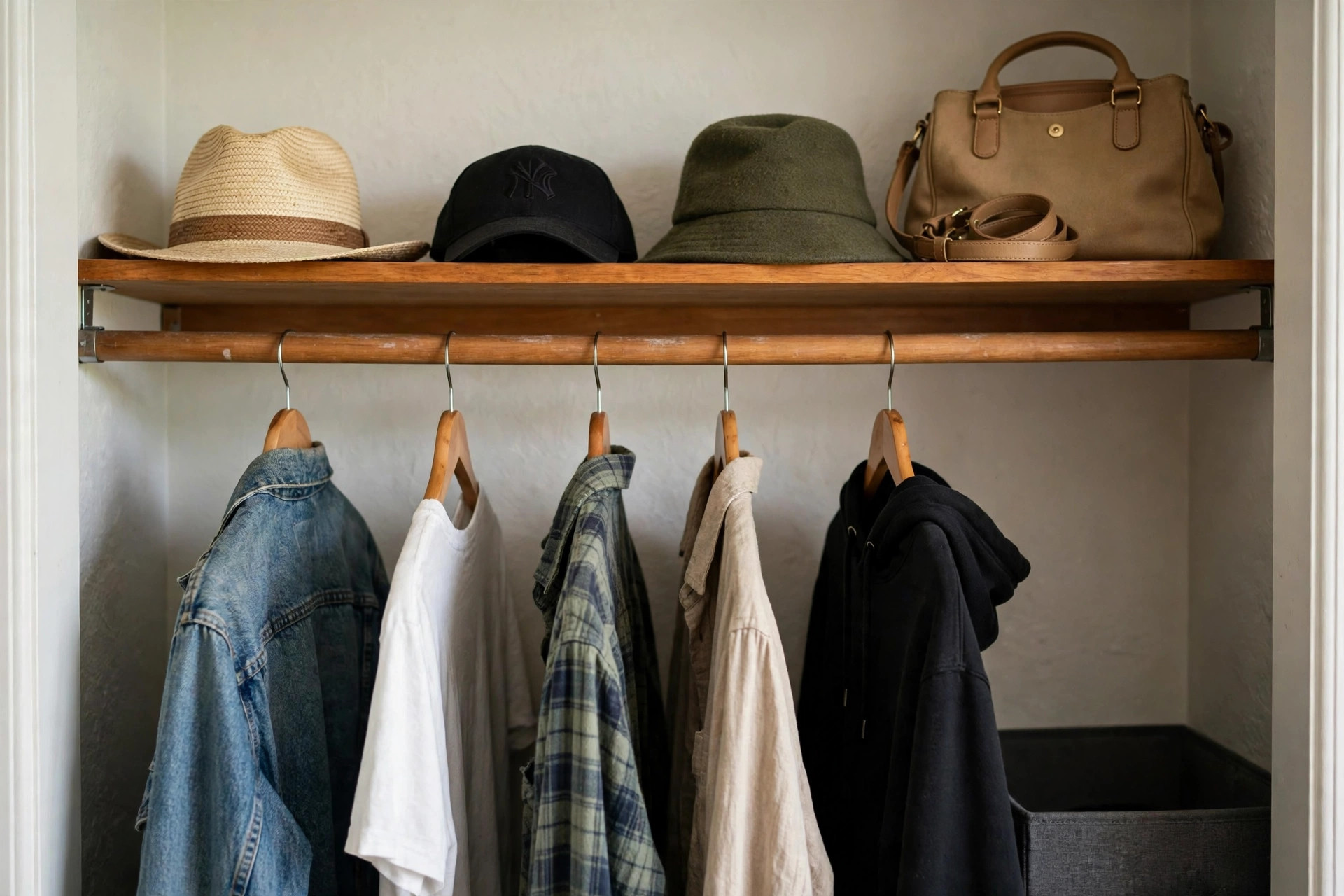
7. Clear the floor first — shoes and bags off the floor, space back
A closet floor covered in shoes and bags is a closet with no floor at all, because the shoes spread, the bags lean, and the space where the lower rod could hang is the space where the clutter lives. Clear the floor first — shoes and bags off the floor, space back — so the bottom of the closet is empty and the lower rod from idea 3 has somewhere to hang. Move the shoes to a hanging organizer or a small rack, hang the bags on the door from idea 5, and leave the floor for the one or two pairs you wear every day, because the floor that holds only the daily pair is the floor that stays clear. The shoes themselves get their full system in 24 Shoe Storage Ideas for 2026, where every pair has a home that is not the closet floor. One clear floor, and the closet feels twice as tall.
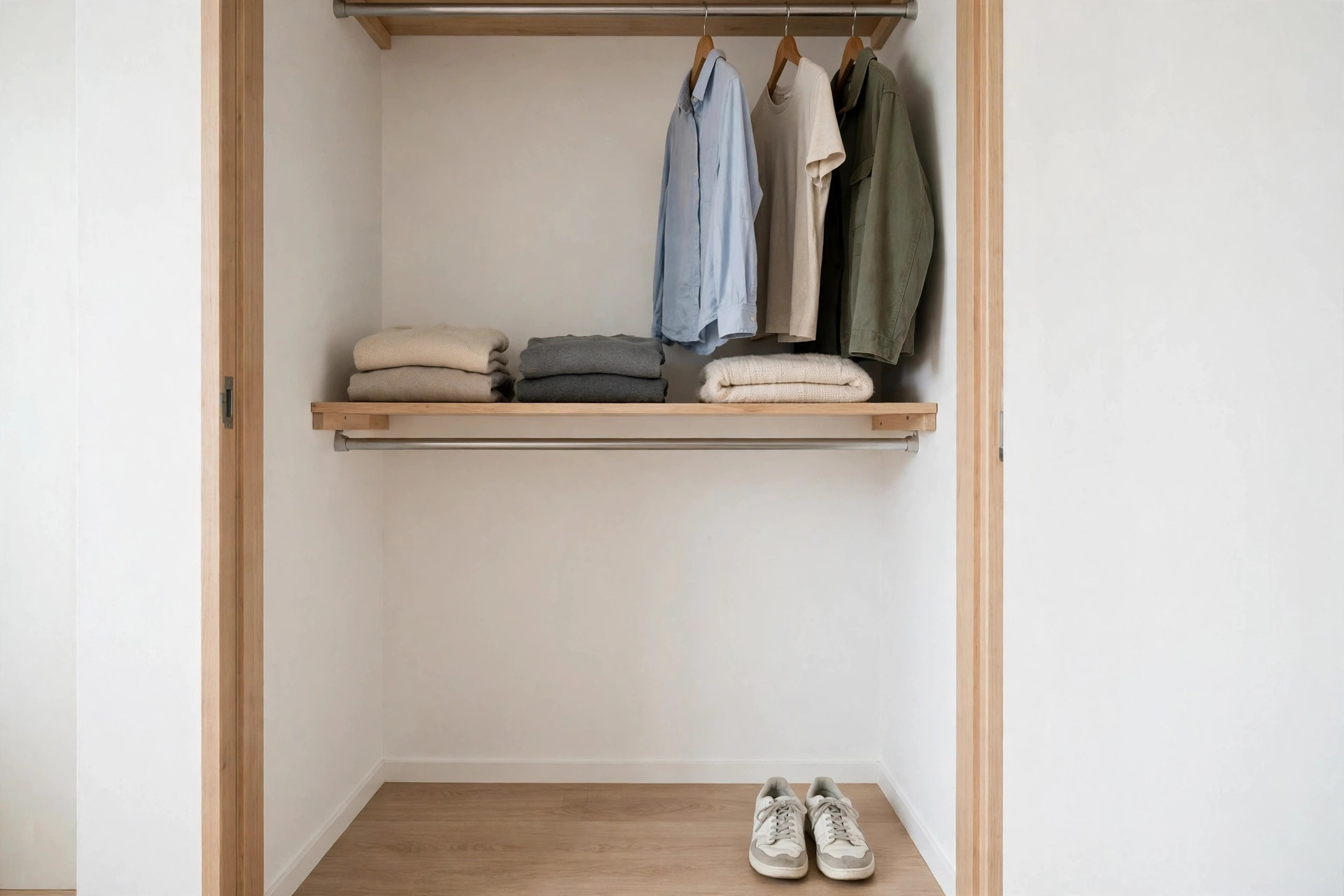
Double the hanging space
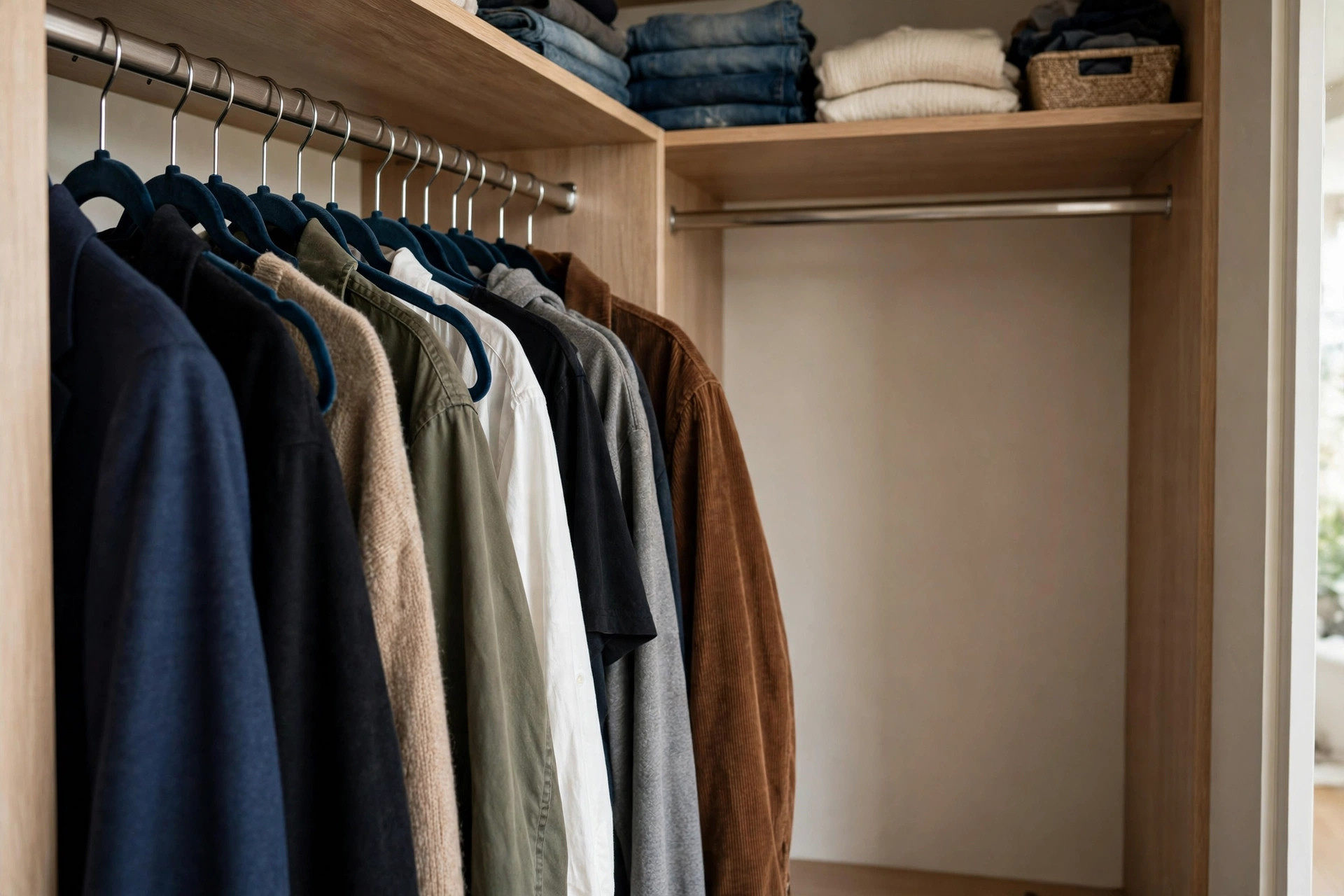
8. Slim hangers — the switch that frees a whole rod's worth of space
Thick hangers are the quiet thief of closet space, because each one is an inch wide, the inches add up across the rod, and the closet that holds forty thick hangers holds sixty slim ones in the same width. Switch to slim hangers, so the clothes hang closer together and the rod holds a fifth more. Pick velvet slim hangers, because the velvet stops the clothes sliding off, and use the same hanger for everything, because the hangers that match are the hangers that hang straight. Keep the thick wooden hangers for the heavy coats, and let the slim ones carry the everyday clothes, because the hanger that fits the garment is the hanger that keeps it in shape. One switch of hangers, and the rod gains a whole section.
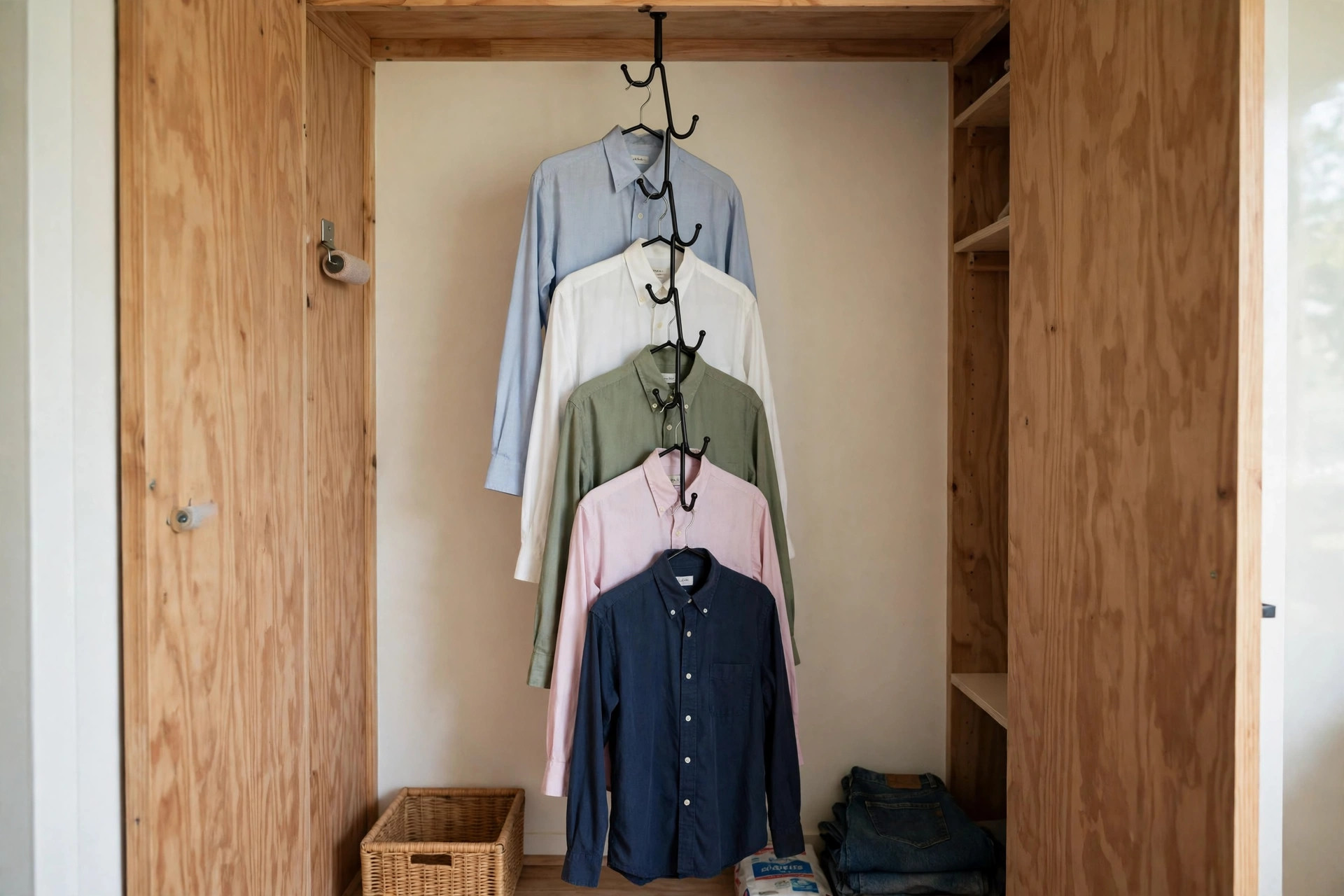
9. Cascading hooks that hang five shirts in the space of one
A rod full of shirts is a rod with no room left, because each shirt takes a hook, the hooks take the rod, and the closet that holds twenty shirts has no room for the twenty-first. Use cascading hooks — five shirts in the space of one — so one hook on the rod carries a chain of five, each shirt hanging below the last, and the rod holds five times the shirts in the same width. Hang the shirts you wear together on one chain — the work shirts on one, the weekend shirts on another — because the chain that groups the shirts is the chain that makes choosing faster. Take the chain down when you need one shirt, because the chain that comes off the rod is the chain that does not tangle. One set of hooks, and the rod holds five times as much. (Check on Amazon for a set of cascading shirt hooks that fit a standard closet rod.)
10. Hang by length: short things up top, long things down low
Clothes hung in random order waste the space below them, because a long dress hangs beside a short shirt, the dress takes the full height, and the space under the shirt is empty air that nothing uses. Hang by length — short things up top, long things down low — so the shirts and tops hang on the upper rod where the space below them is free, and the dresses and long coats hang on the lower rod where they can reach the floor. The space under the short things becomes the space for the lower rod, and the space under the long things is the space for the shoes, because the closet that is hung by length is the closet where every inch has a job. One sort by length, and the closet stops wasting its own height.
11. Hang by category, then by colour — the order you can keep
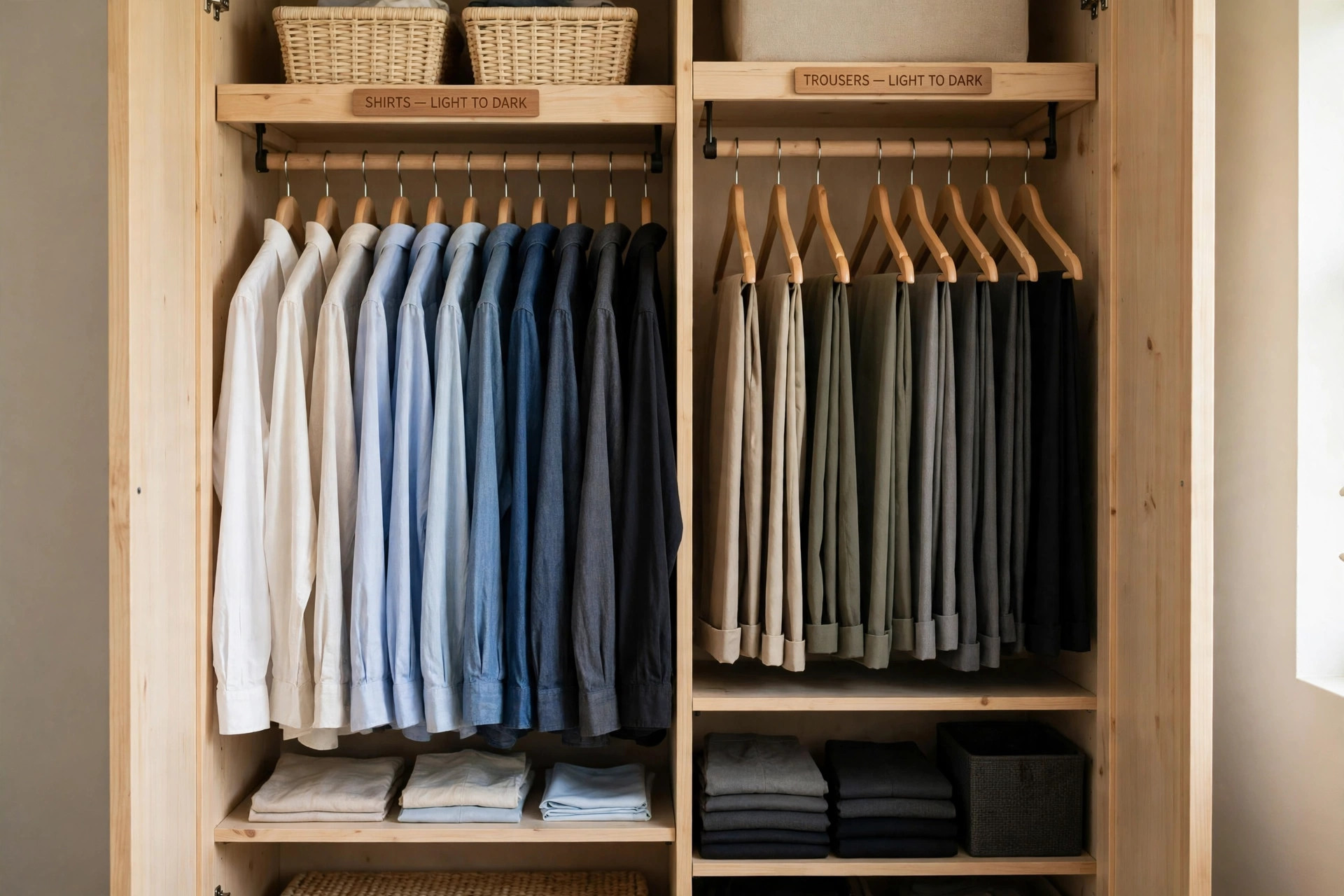
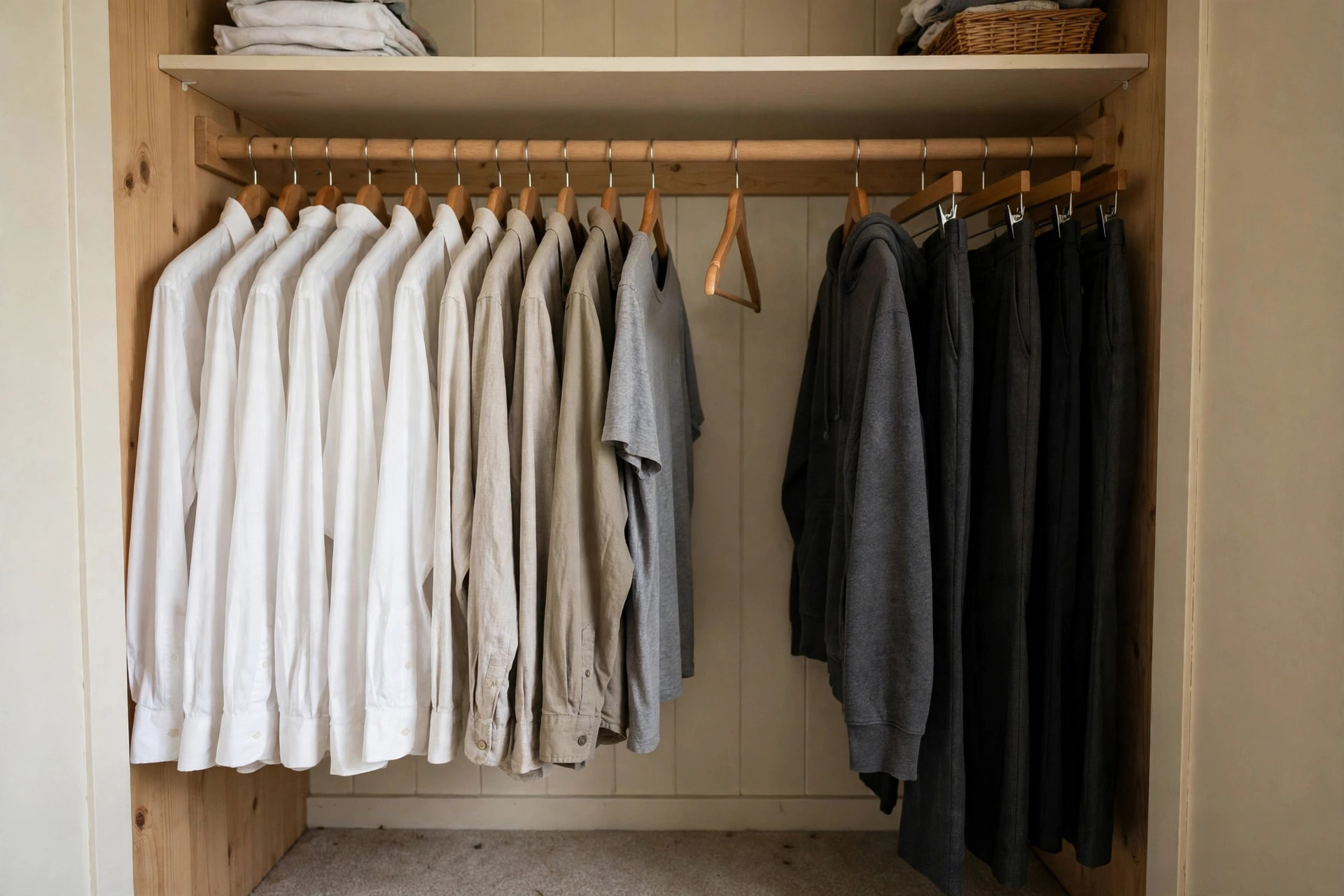
A closet with no order is a closet you cannot read, because the shirt you want is somewhere between the trousers and the jumpers, and the morning hunt is a hunt through a rail that has no system. Hang by category, then by colour — the order you can keep — so the shirts hang together, the trousers hang together, and inside each group the colours run light to dark. The order that is simple is the order that survives, because the category is easy to remember and the colour is easy to see, and the closet that is sorted by category and colour is the closet where the gaps show — the missing black top is obvious when the black section has a hole. One sort, and the closet reads like a shop rail.
12. A tiered hanger for skirts and trousers — layers, not piles
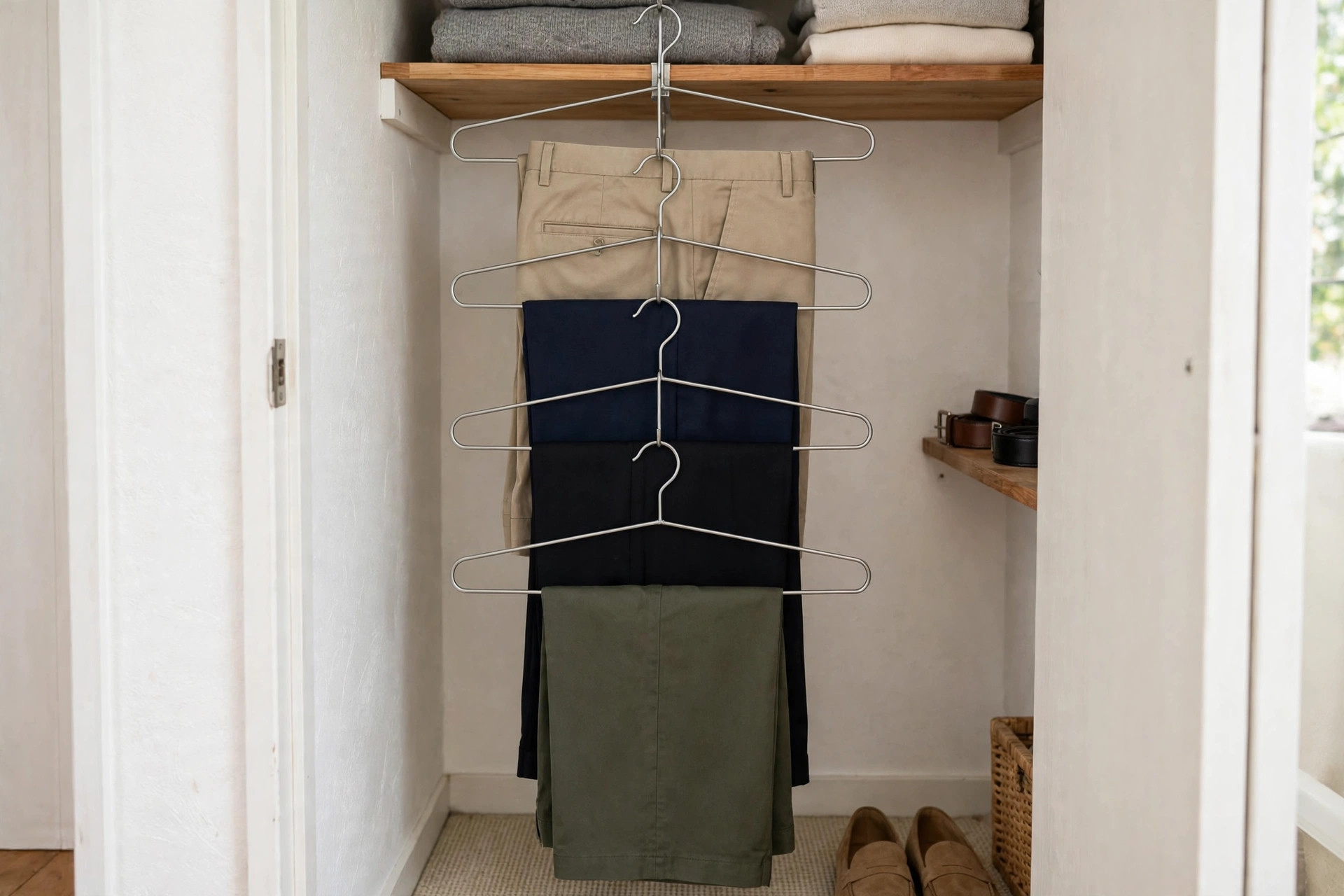
Skirts and trousers folded in a drawer are skirts and trousers that crease, because the pile presses, the bottom of the pile is never worn, and the drawer that holds the folded clothes is the drawer that hides them. Use a tiered hanger — layers, not piles — so four skirts or four pairs of trousers hang on one hanger, each on its own tier, visible and crease-free. Hang the trousers by the waistband and keep the tiered hangers on the lower rod from idea 3, because the hanger that layers is the hanger that doubles the rod. One tiered hanger, and four garments take the space of one.
13. The seasonal swap — out-of-season clothes out of the closet
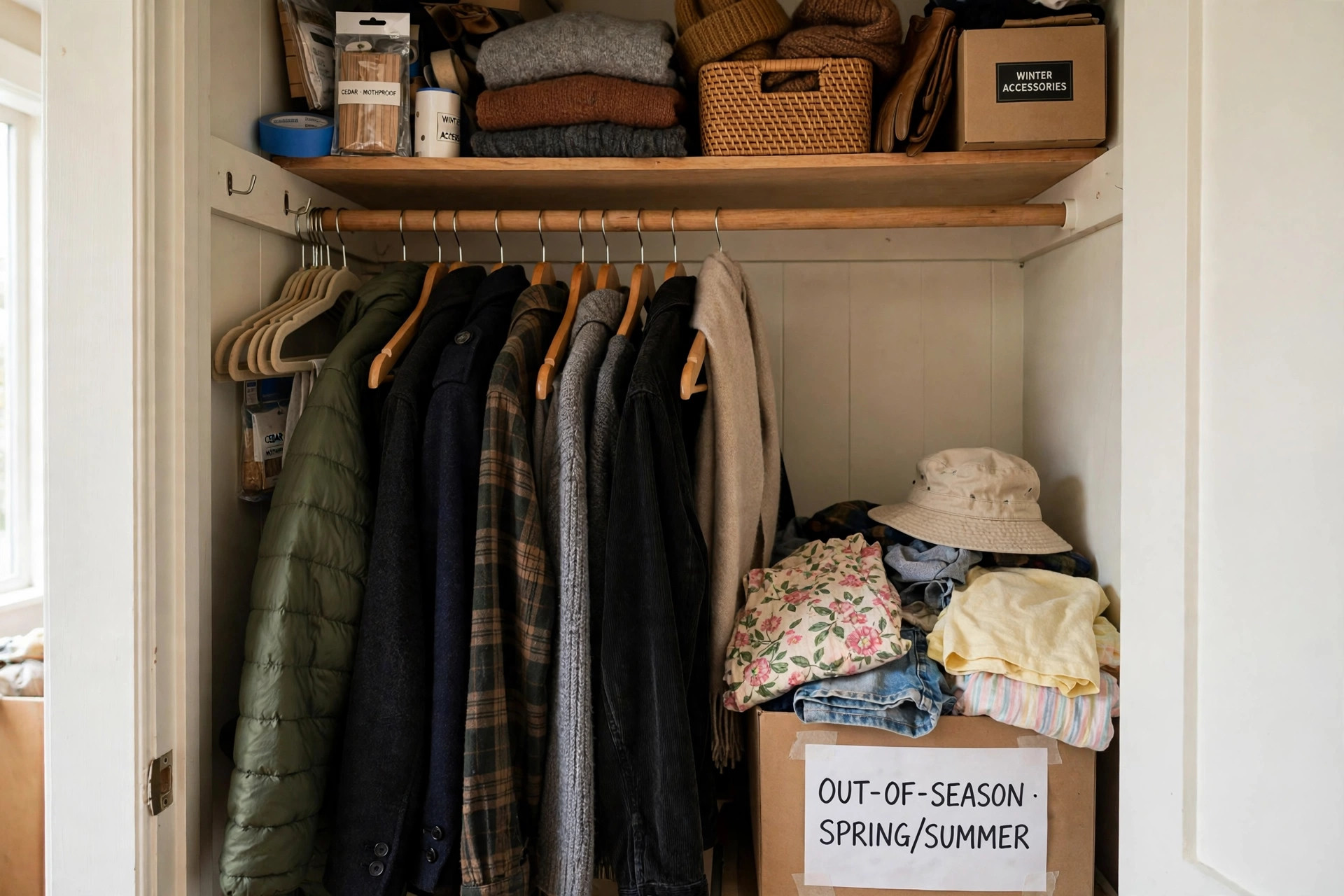
A closet that holds all four seasons at once is a closet that holds too much, because the winter coats crowd the summer dresses, and the clothes you are wearing today are buried under the clothes you will not wear for six months. Do the seasonal swap — out-of-season clothes out of the closet — so the closet holds only this season, and the rest lives in a labelled bin on the top shelf or under the bed. Swap twice a year, in spring and in autumn, and check each garment as it goes in and out, because the swap that checks the clothes is the swap that catches the ones that no longer fit. The under-bed space for the out-of-season bin is covered in 22 Under-Bed Storage Ideas for 2026, where the swap lives when it leaves the closet. One swap a season, and the closet holds only what you wear.
Bins, baskets and the small things
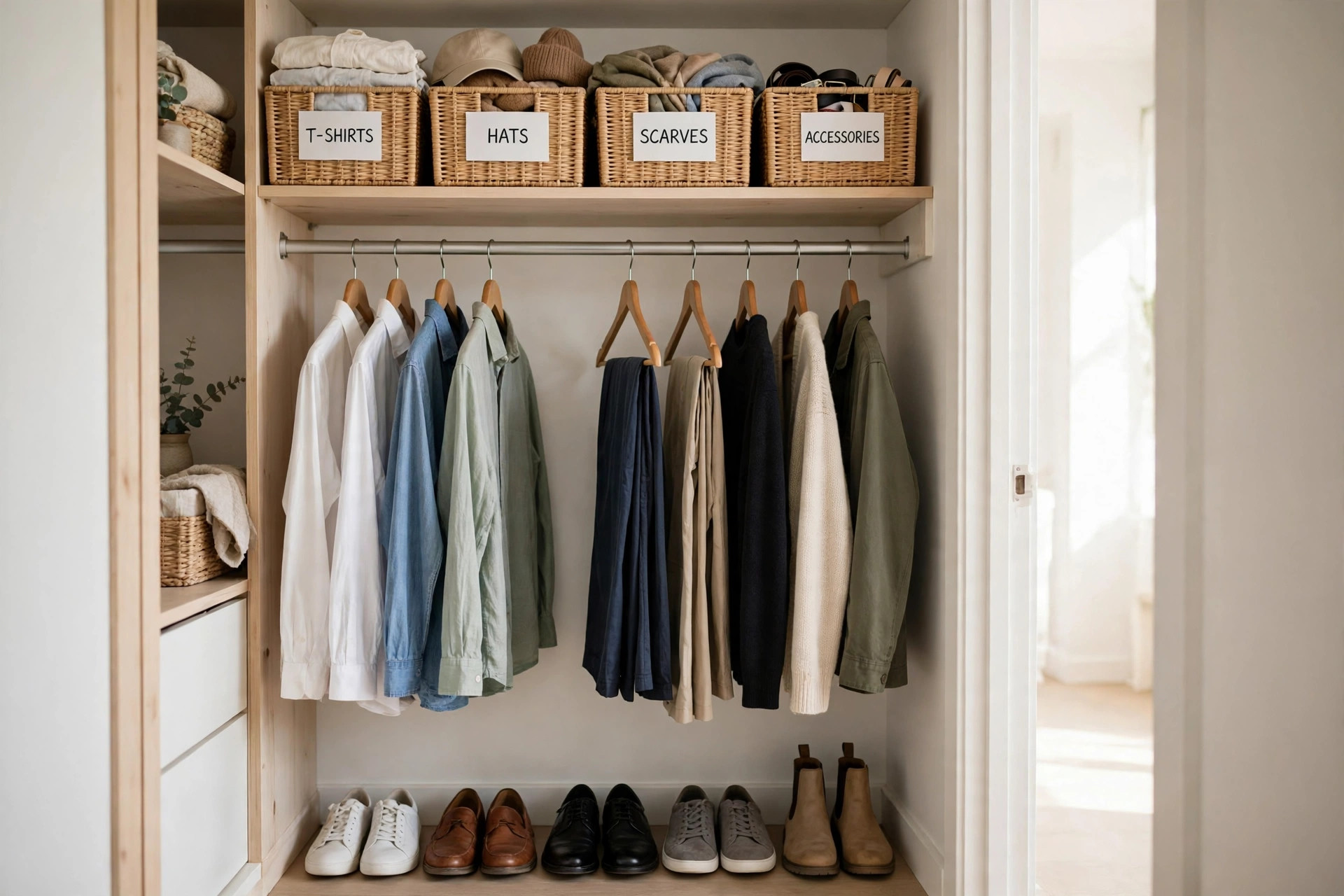
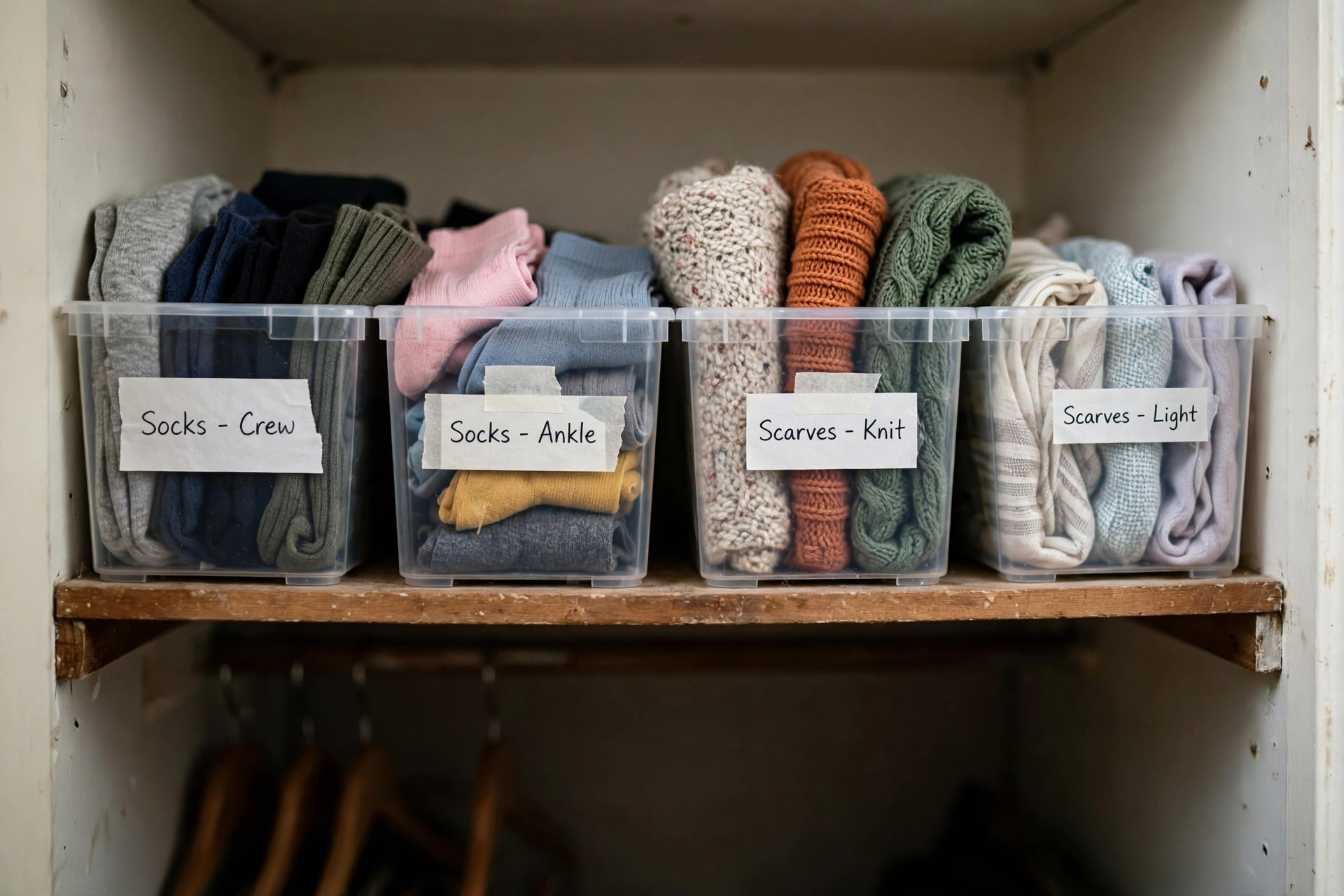
14. Labelled bins on the top shelf — the box you can find blindfold
Bins without labels are bins you have to open, because the bin that holds the scarves looks exactly like the bin that holds the spare bedding, and the top shelf that holds unlabelled bins is a shelf you never use. Use labelled bins on the top shelf — the box you can find blindfold — so every bin says what it holds and the top shelf becomes usable storage instead of a mystery. Put the label on the front of the bin, not the lid, because the label that faces you is the label you can read from the floor, and use one bin per category, because the bin that holds one thing is the bin that stays sorted. The same front-label rule keeps the bedroom bins findable in 28 Bedroom Storage Ideas for 2026, where the bins live on open shelves. One label per bin, and the top shelf stops being a mystery.
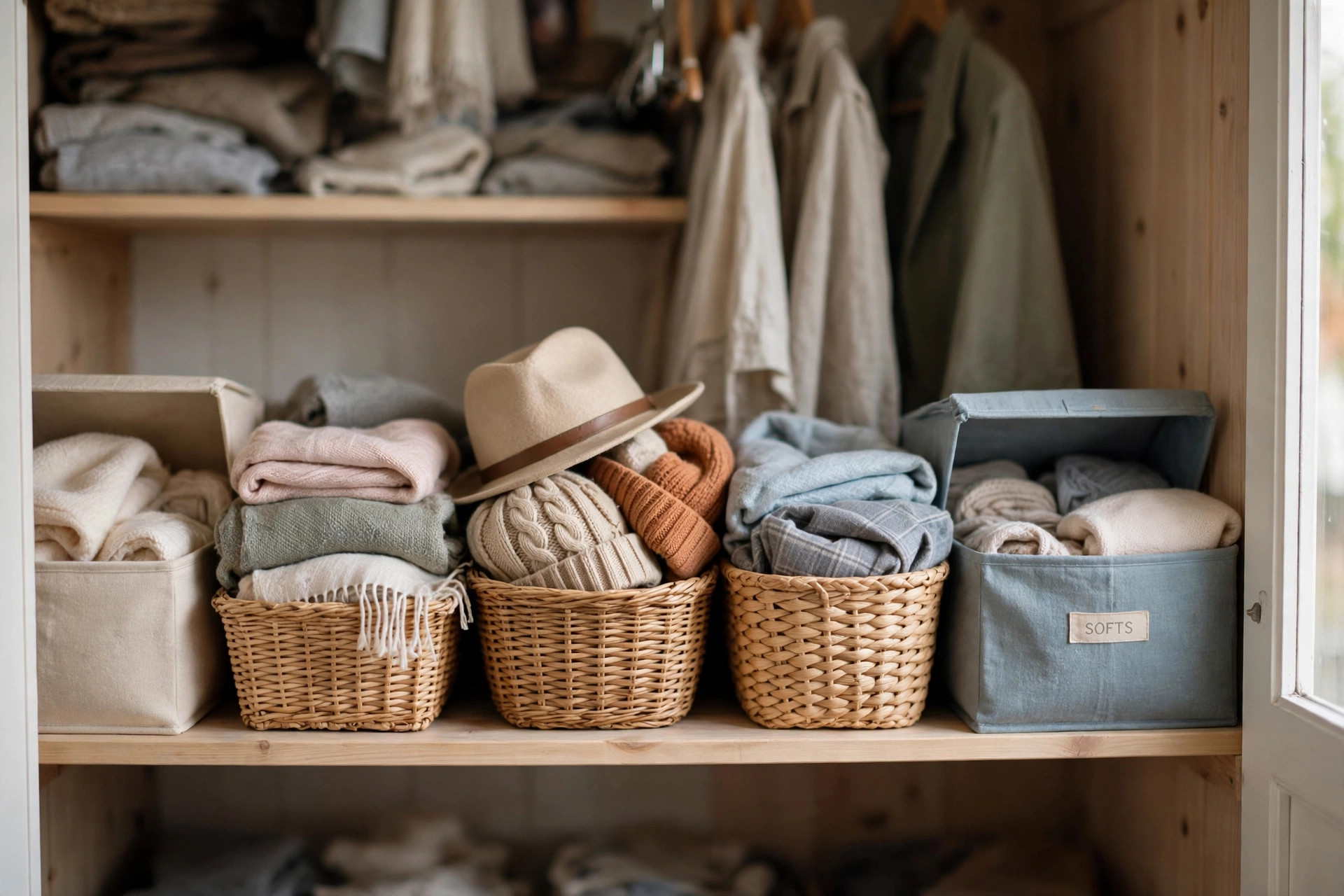
15. Baskets for the awkward middle shelf — soft things in soft boxes
The middle shelf of a small closet is the awkward shelf, because it is too high for the daily clothes and too low for the top-shelf bins, and the soft things — the scarves, the hats, the spare bedding — have nowhere that fits them. Use baskets for the awkward middle shelf — soft things in soft boxes — so the shelf holds woven baskets that fit its height and the soft things live inside them, out of sight but in reach. Pick baskets that fit the shelf with a finger's width to spare, because the basket that fits is the basket that slides out easily, and put the things you use weekly in the middle shelf, because the shelf that is in reach is the shelf that gets used. One basket per category, and the awkward shelf becomes the useful one.
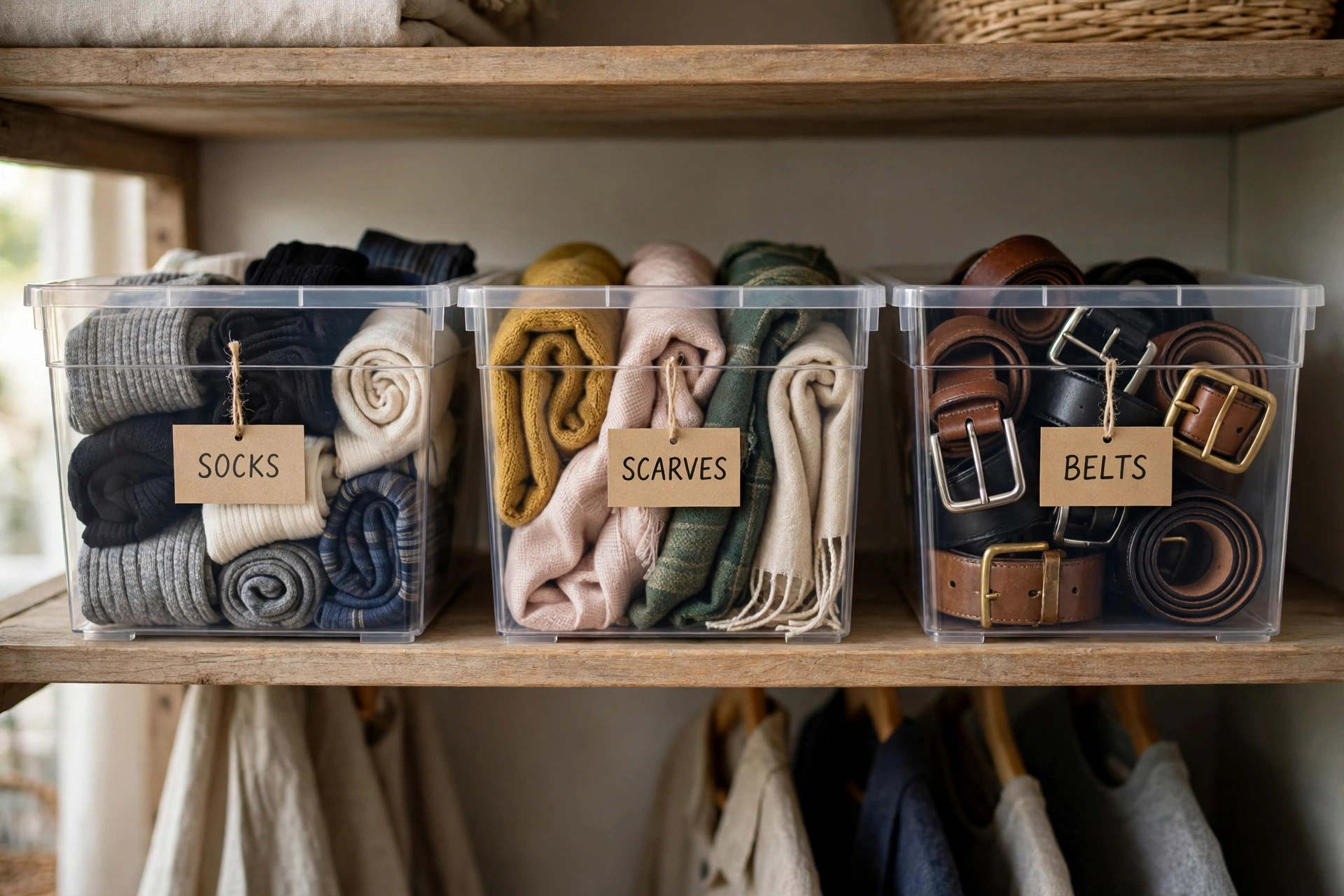
16. Clear bins for the small stuff — socks, scarves and belts in sight
Small things in opaque bins are small things that vanish, because the socks are in a bin you cannot see into, the belts are in a bin you forgot, and the drawer that holds the small things is the drawer you never open. Use clear bins for the small stuff — socks, scarves and belts in sight — so you can see what is inside without opening anything, and the small things stop disappearing. Sort the socks by colour, roll the belts instead of folding them, and keep one clear bin per category on the middle shelf, because the bin you can see into is the bin you actually use. Clear bins are the same rule that keeps the kids' small things findable in 26 Kids Room Storage Ideas for 2026, where the visible bin is the bin that gets tidied. One clear bin per category, and the small things stay visible. (Check on Amazon for a set of clear stackable bins with lids, sized for a closet shelf.)
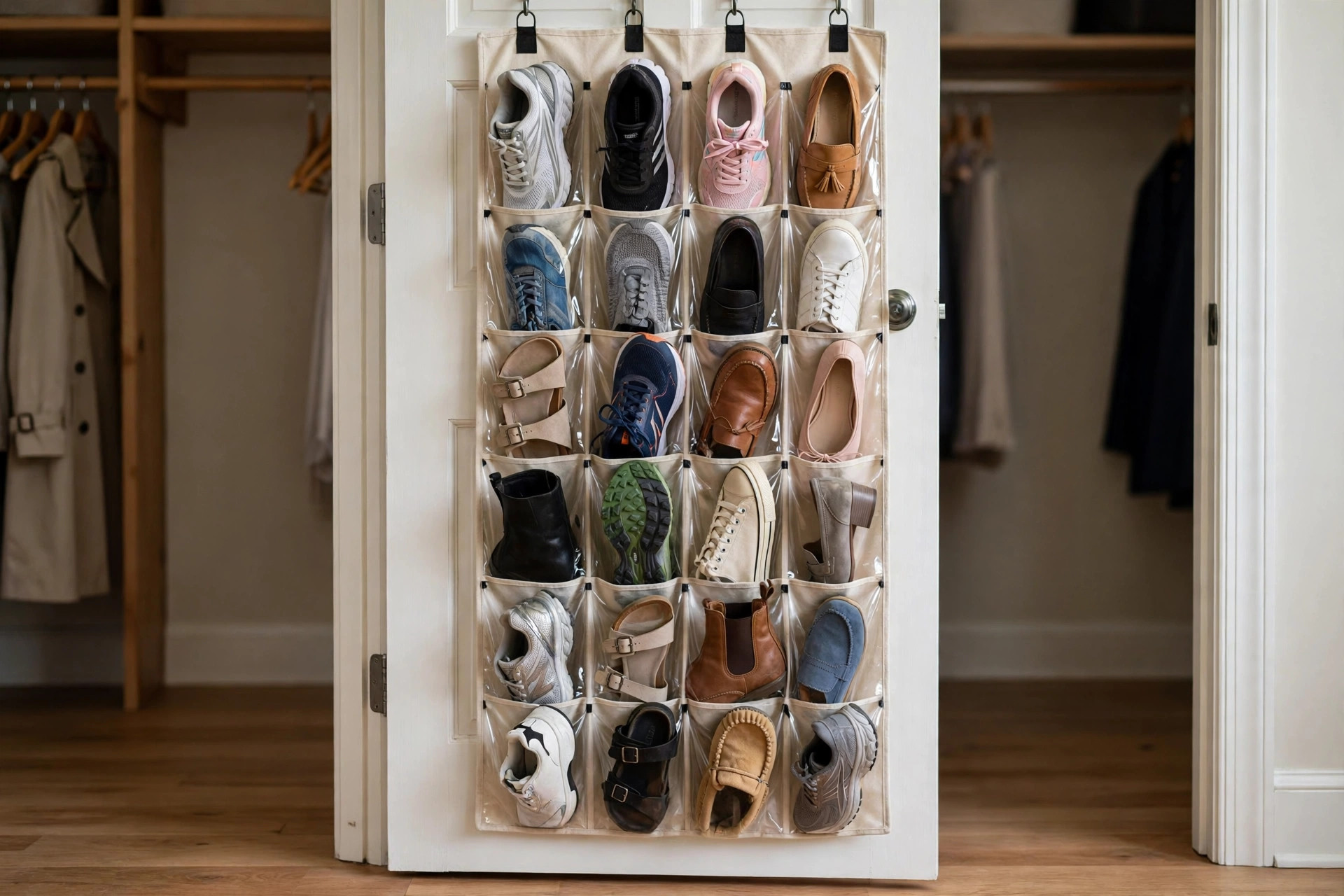
17. A hanging shoe organizer inside the closet — shoes up, floor clear
Shoes on the closet floor are shoes in the way, because they spread, they lean, and the floor that holds the shoes is the floor the lower rod cannot use. Hang a shoe organizer inside the closet — shoes up, floor clear — so the shoes live in clear pockets on the door or on the closet wall, and the floor stays empty for the lower rod. Put the shoes you wear most at eye level, the rest above and below, and keep one pair on the floor for tomorrow, because the organizer that holds the daily pair in reach is the organizer that gets used. The hanging organizer is the same fix that clears the entryway in 22 Drop Zone Organization Ideas for 2026, where the shoes leave the floor the same way. One organizer, and the floor is free.
18. A small rolling cart beside the closet — the overflow that stays tidy
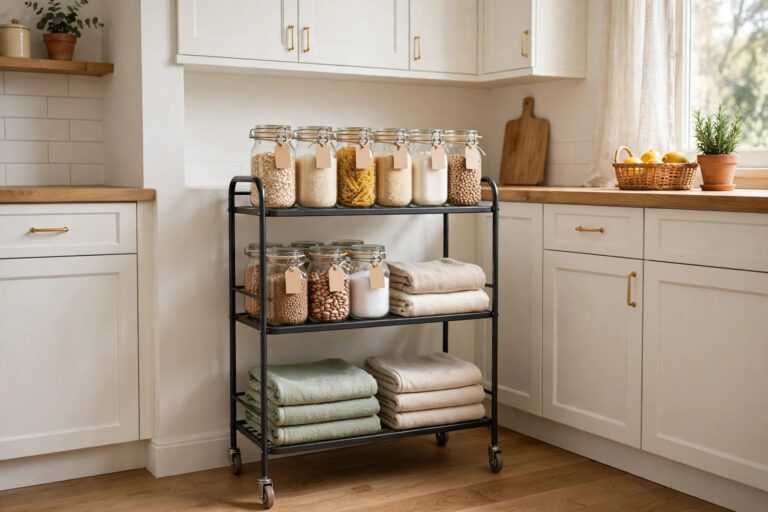
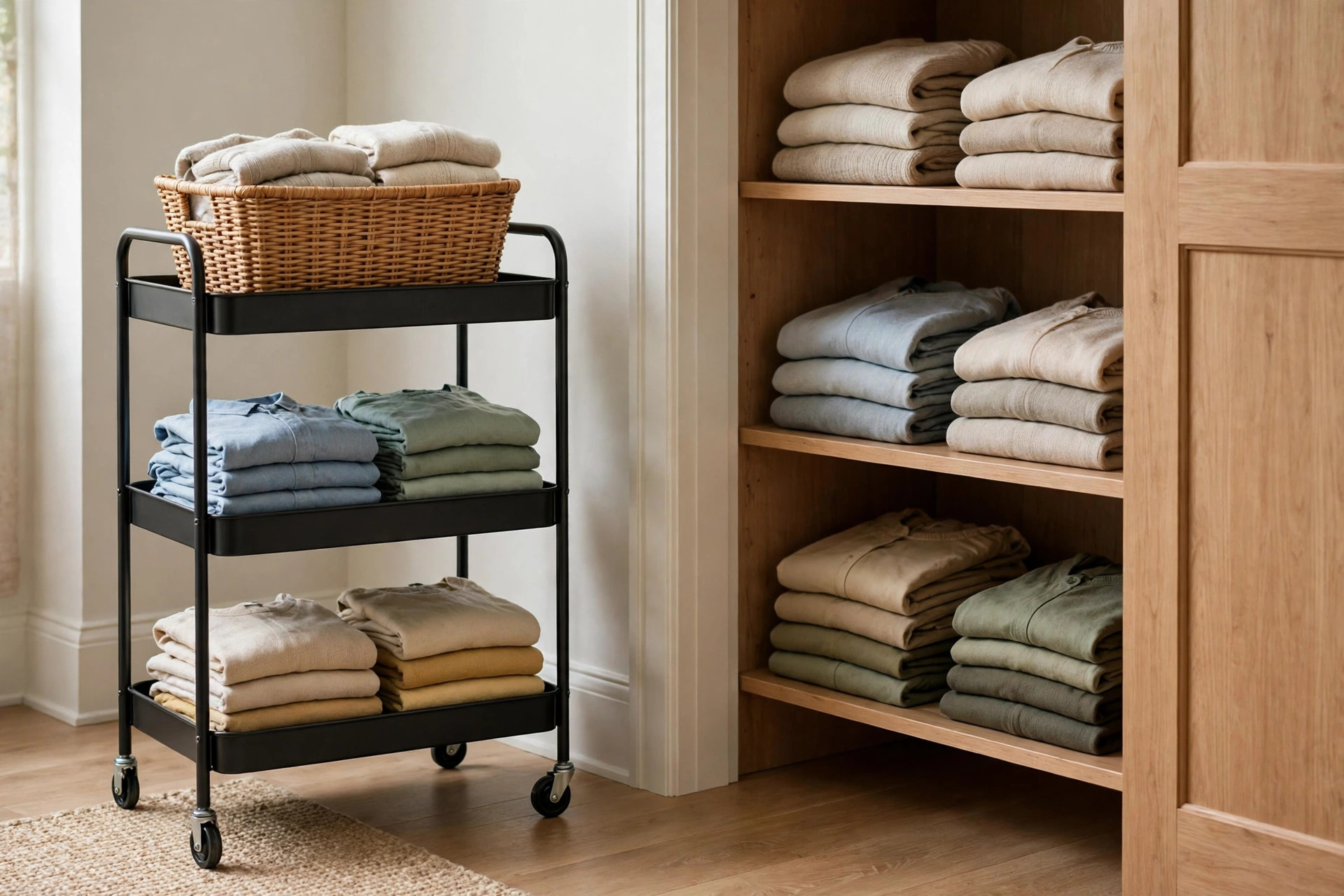
Some closets are too small even when they are layered, because the clothes fit and the extras do not, and the extras — the ironing, the spare hangers, the sewing kit — end up on the bedroom floor. Keep a small rolling cart beside the closet — the overflow that stays tidy — so the extras live on the cart, in reach of the closet, and the cart rolls away when the room needs the space. Load the cart with the things the closet cannot hold, park it beside the closet door, and roll it into the corner when guests come, because the cart that moves is the overflow that never becomes clutter. The rolling cart itself is covered in 22 Rolling Cart Organization Ideas for 2026, where the same cart works as a craft station and a closet helper in turn. One cart, and the overflow has a home.
19. Hooks for the daily rotation — tomorrow's outfit, hung tonight
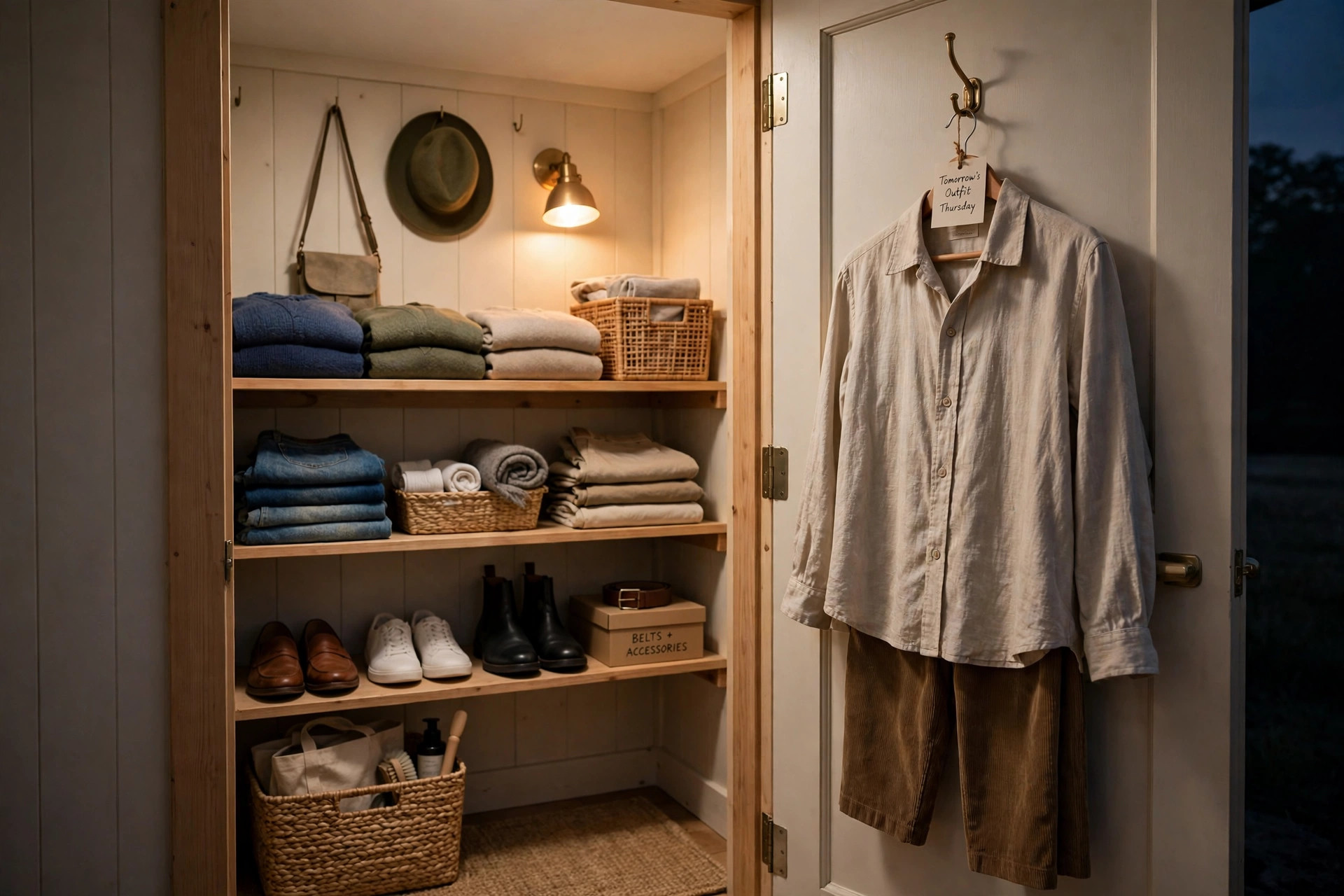
Choosing an outfit in the morning is choosing under pressure, because the clock is running, the closet is full, and the shirt you want is behind three others. Hang tomorrow's outfit on a hook tonight — the daily rotation, hung — so the morning starts with the outfit already chosen and the closet stays closed until you need it. Put one hook on the closet door or on the wall beside it, hang the full outfit — top, bottom, and the belt — and change it each evening, because the hook that holds tomorrow is the hook that saves the morning. One hook, and the morning hunt ends before it starts.
Keep it tidy for good
20. One in, one out — the rule that stops the closet refilling
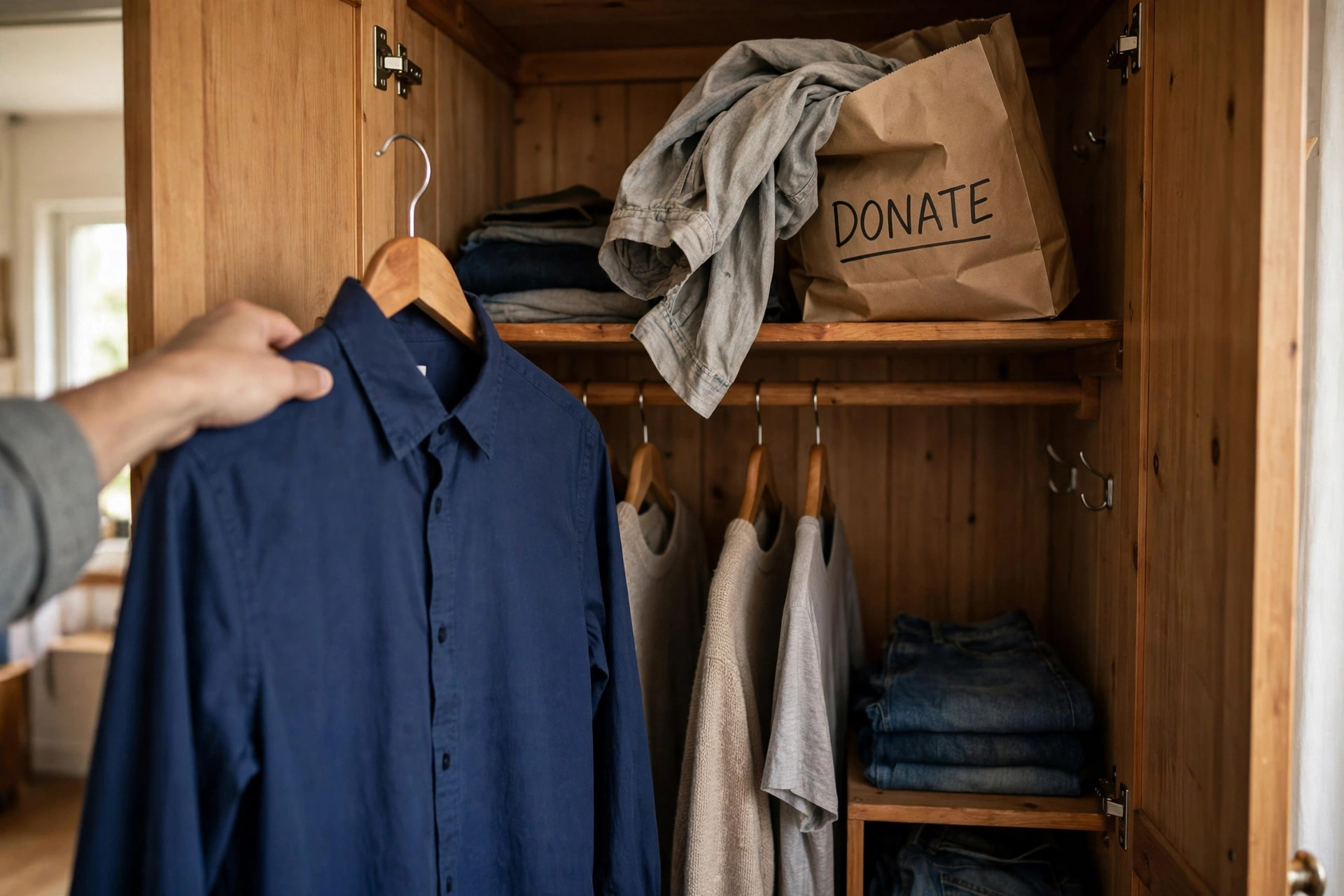
A closet organized once is a closet that refills, because every new shirt goes in, nothing comes out, and the closet that held forty things in January holds sixty by June. Use one in, one out — the rule that stops the closet refilling — so every new garment that enters the closet means one old garment leaves it, into the donate bag or the bin. Keep the donate bag on the top shelf, so the garment that leaves has somewhere to go the moment you decide, because the bag that is in the closet is the bag that gets used. One rule, and the closet never refills.
21. A weekly five-minute reset — hang, fold, put back
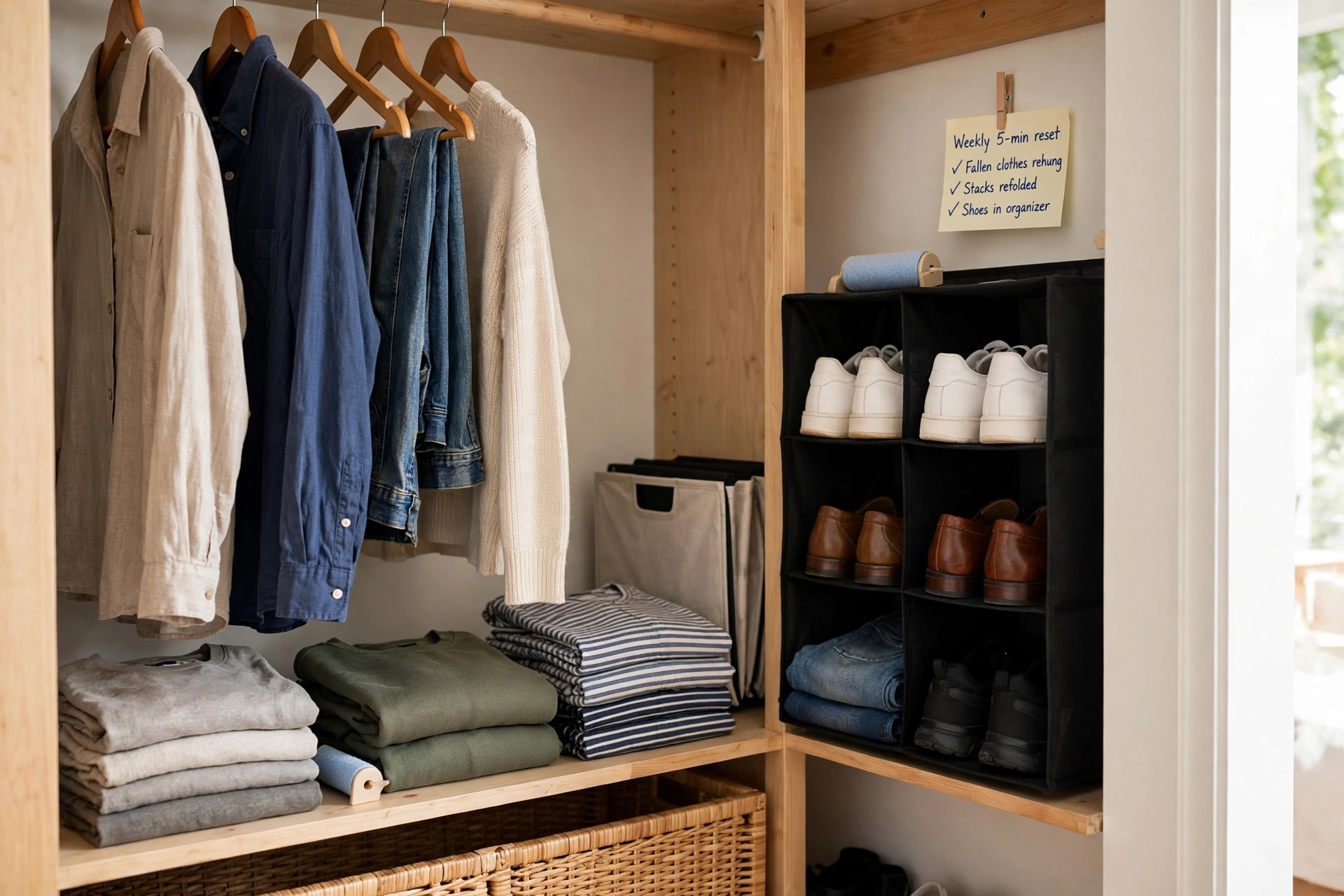
No closet stays tidy without a habit, because the closet is only tidy on the day you organize it and the mess creeps back one garment at a time. Do a weekly five-minute reset — hang, fold, put back — so the closet is tidy before the weekend and starts clean on Monday. Hang the clothes that fell off their hangers, fold the stacks that leaned, and put the shoes back in the organizer, because the reset that takes five minutes is the reset that actually happens. Five minutes a week, and the closet never needs a big clean.
22. A capsule wardrobe in a small closet — fewer clothes, more space
A small closet full of clothes you never wear is a closet that is full and empty at the same time, because the clothes you love are buried under the clothes you keep out of guilt, and the closet that holds everything holds nothing you want. Build a capsule wardrobe — fewer clothes, more space — so the closet holds thirty pieces you actually wear, and the rest leaves. Pick the pieces that fit, that match each other, and that you reached for in the last month, because the piece that was not worn in a month is the piece that will not be worn next month. The capsule that fits the closet is the capsule that makes choosing easy, and the clothes that leave go to the donate bag from idea 20. One capsule, and the closet holds only what you wear.
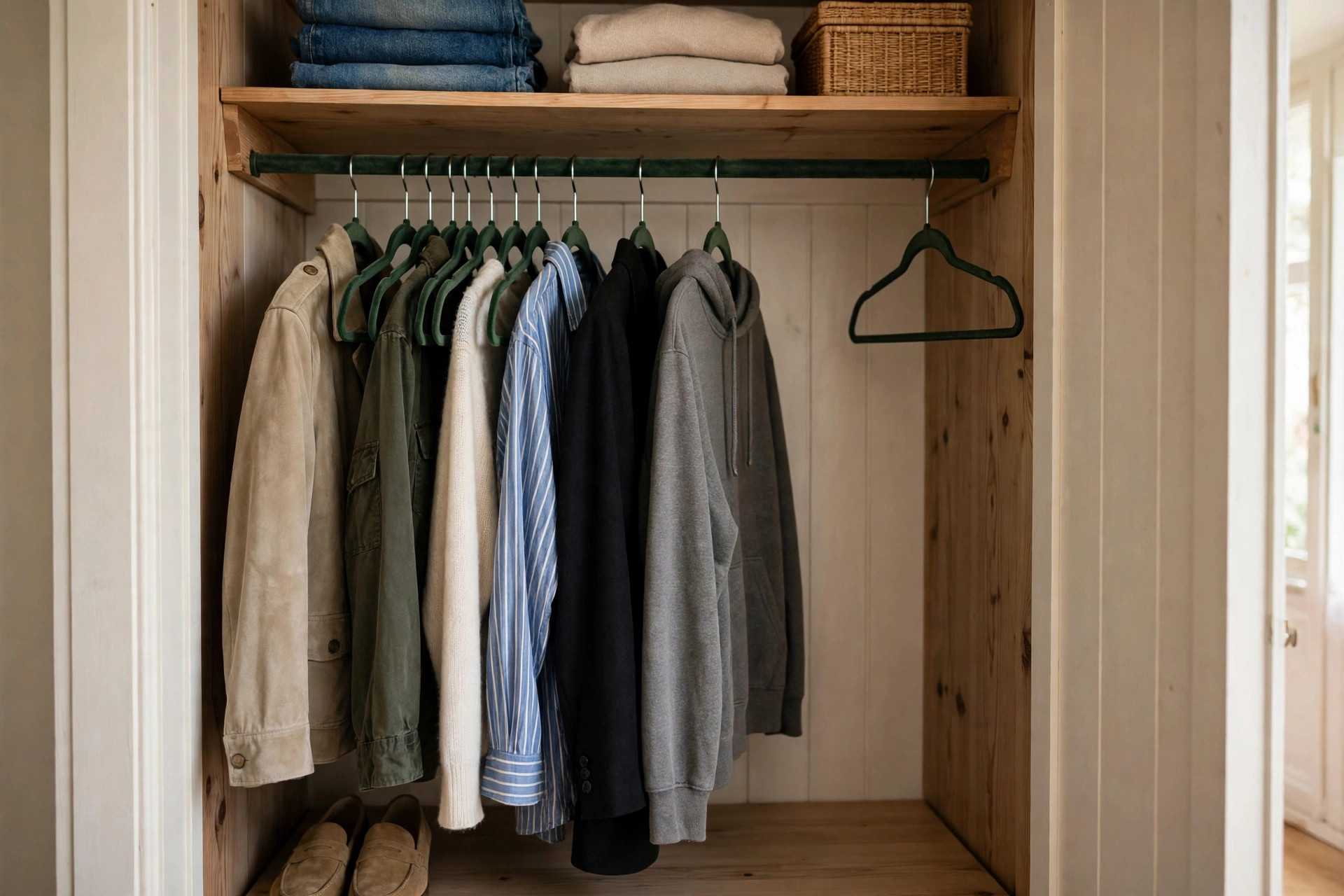
23. Colour order — the rainbow that shows the gaps
A closet sorted by colour is a closet you can read at a glance, because the whites run together, the darks run together, and the gap where a colour is missing is the gap you can see. Hang in colour order — the rainbow that shows the gaps — so the rail runs light to dark inside each category, and the morning choice is a choice by colour, not a hunt through a mixed rail. The colour order that is kept is the colour order that is simple, because light to dark is a rule anyone can follow, and the closet that runs light to dark is the closet where the missing black top is obvious. One sort by colour, and the closet reads like a shop.
24. Label everything — the label that stops the drift
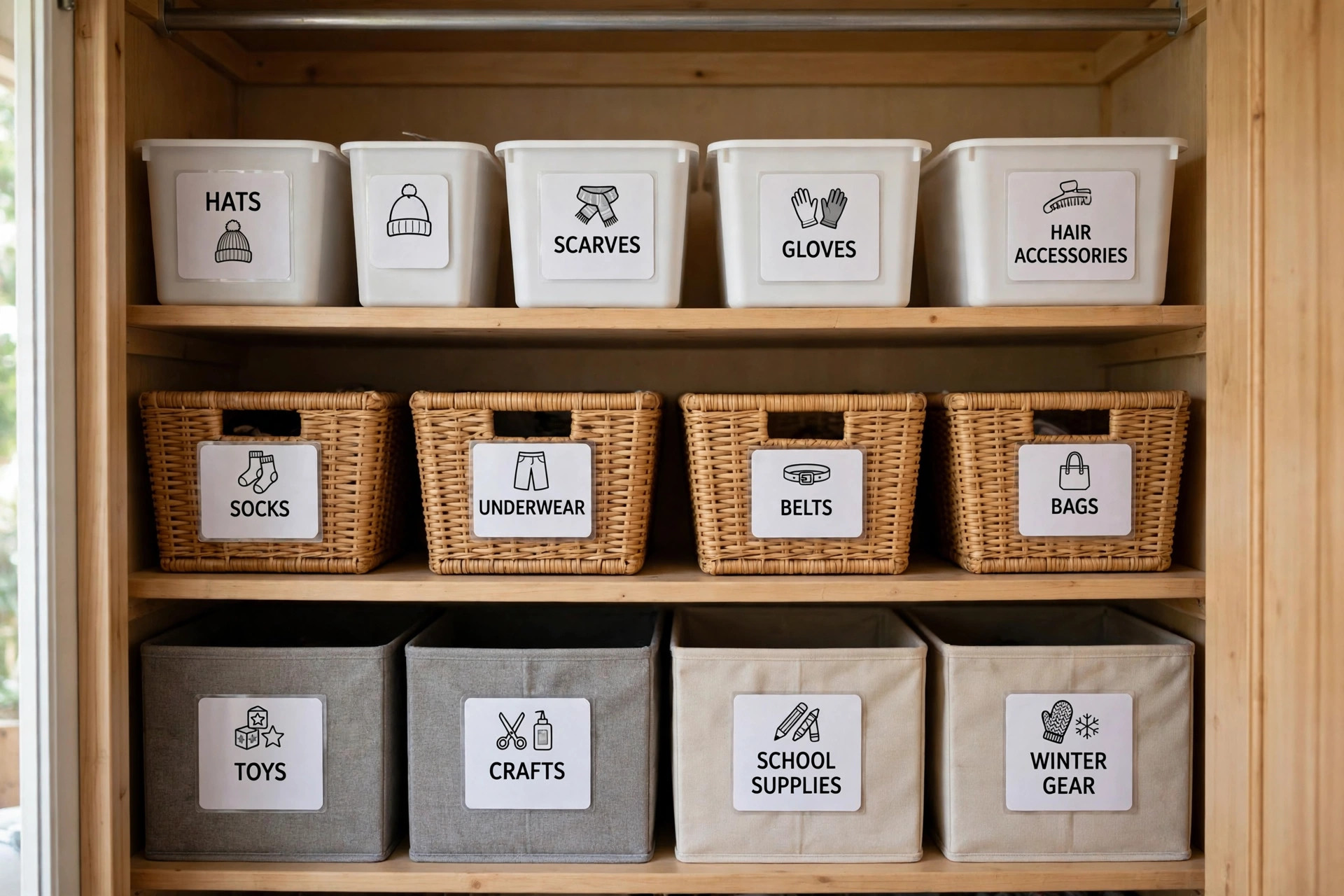
A closet without labels is a closet where everything drifts, because the bin that held the scarves last month holds the hats this month, and the person who puts things away is the person guessing. Label everything — the label that stops the drift — so every bin, basket and shelf says what it holds and the things go back where they belong. Use picture labels for younger children and word labels for adults, and put the label where you look — on the front of the bin, not the lid — because the label that is seen is the label that is followed. One label per box, and the drift stops.
25. Borrow the small-apartment thinking — the closet as one zone of a small home
A small closet in a small home cannot be solved on its own, because the closet is one zone of a small home, and the home that has no spare room is the home where every zone has to earn its space. Borrow the small-apartment thinking — the closet as one zone of a small home — so the closet follows the same rules as the rest of the flat: everything has a place, the vertical is used, and the overflow has a home that is not the floor. The same layering that doubles the closet doubles the whole flat, and the full small-home system is covered in 28 Small Apartment Storage Ideas for 2026, where the closet is one zone among many. One way of thinking, and the closet stops being the problem.
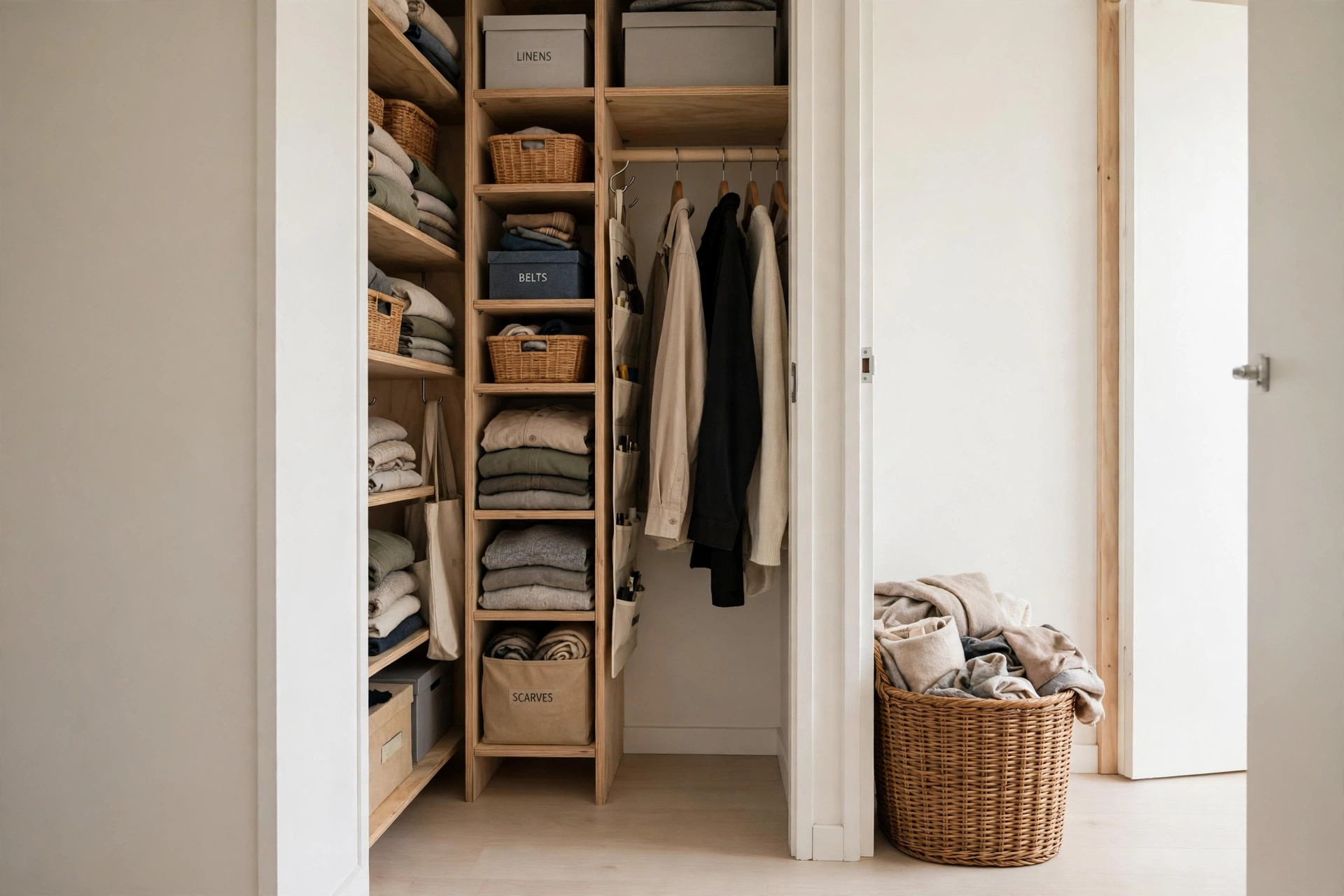
26. A seasonal sort-out — the closet that grows with the year
A closet set up in January is a closet that does not fit by July, because the seasons have changed, the clothes have changed, and the closet that held the winter coats is the closet holding the summer dresses. Do a seasonal sort-out — the closet that grows with the year — so the closet changes as the year does. At the start of each season, clear the closet, try on the clothes that came back from storage, and move the ones that no longer fit to the donate bag, because the sort-out that checks the fit is the sort-out that keeps the closet honest. The out-of-season clothes go to the labelled bin on the top shelf from idea 14, and the closet holds only this season. One sort-out a season, and the closet fits the year.
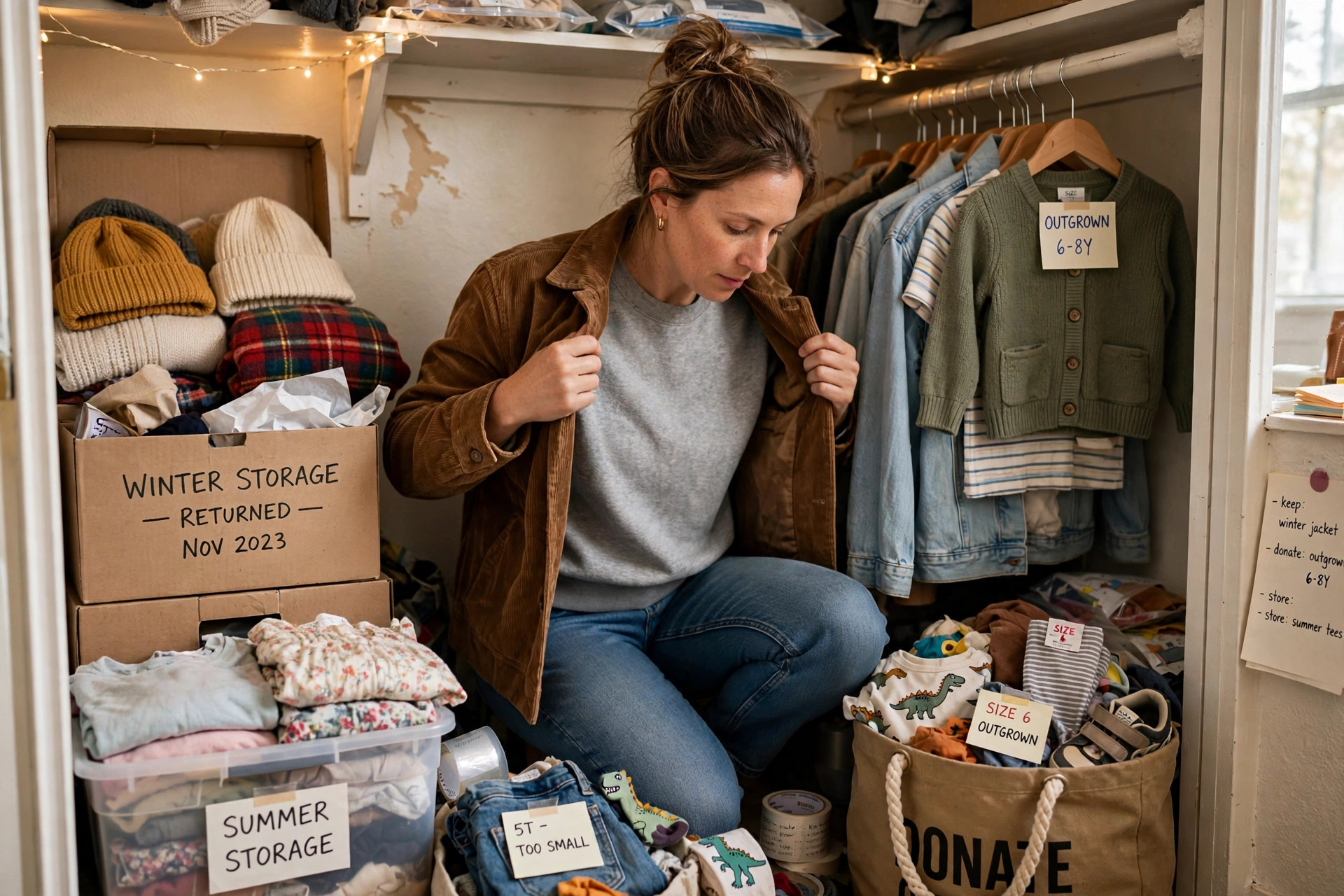
Which small space closet idea fits which situation?
| Situation | Best first move | Budget | Tools needed |
|---|---|---|---|
| Closet too small for everything | Measure before you buy (idea 1) | Free | Tape measure |
| Top shelf wasted | Use the vertical (idea 2) | Free | None |
| One rod, not enough hanging | A second hanging rod (idea 3) | Low | Rod |
| Stacks keep toppling | Shelf dividers (idea 4) | Low | Dividers |
| Door space unused | Hooks and racks on the door (idea 5) | Low | Hooks, rack |
| Floor covered in shoes and bags | Clear the floor first (idea 7) | Free | None |
| Hangers eat all the space | Slim hangers (idea 8) | Low | Hangers |
| Five shirts, one hook's worth of room | Cascading hooks (idea 9) | Low | Hooks |
| Can't find anything | Hang by category, then colour (idea 11) | Free | None |
| Small things vanish in drawers | Clear bins for the small stuff (idea 16) | Low | Bins |
| Shoes pile on the closet floor | Hanging shoe organizer (idea 17) | Low | Organizer |
| Closet refills within a month | One in, one out (idea 20) | Free | None |
You do not need all 26 ideas. You need the three that solve your closet — usually the tape measure that stops the wrong buys, the second rod that doubles the hanging, and the labelled bins that make the top shelf usable. Start with the measure, do it this weekend before the next shop, and fit the second rod. Do that and the next time you open the closet, the shirt will be on the rod, the small things will be in their bins, and the floor will be clear.
Save this post for the next closet sort-out, and if the bedroom around the closet needs the same treatment, read 28 Bedroom Storage Ideas for 2026 next — it is Post 31, the room the closet lives in — and 26 Kids Room Storage Ideas for 2026, Post 32, for the kids' closet that shares the room. This is the tenth post of the new Organization by problem run — Posts 56 to 80, one problem at a time — and the run keeps going with the closet next door. The hallway closet itself gets its own deep dive in Hallway Closet Organization, where the narrow closet by the front door gets the same layering treatment.
Publish date assigned at publishing time. Updated as new small space closet finds are tested.
Frequently asked questions
How do I organize a very small closet?
Measure it first, then layer it: a second hanging rod doubles the hanging space, the top shelf takes the things you reach for least in labelled bins, and the door holds the daily scarves, belts and bags on hooks. Clear the floor of shoes and bags so the lower rod has room to hang, and switch to slim hangers — the switch alone frees a fifth of the rod.
What is the best way to double closet space?
Fit a second hanging rod below the first, so shirts hang on top and trousers hang below, and switch to slim velvet hangers so the clothes sit closer together. Add cascading hooks for the shirts you wear together, and hang by length — short things up top, long things down low — so no height is wasted. No renovation is needed; the rod and the hangers do the doubling.
How do I keep a small closet tidy?
Use the one-in-one-out rule, so every new garment means one old one leaves in the donate bag, and do a five-minute reset once a week — hang what fell, fold what leaned, put the shoes back in the organizer. Label every bin and basket so things go back where they belong, and do a seasonal swap twice a year so the closet holds only the season you are wearing.