22 Baby Closet Organization Ideas for 2026
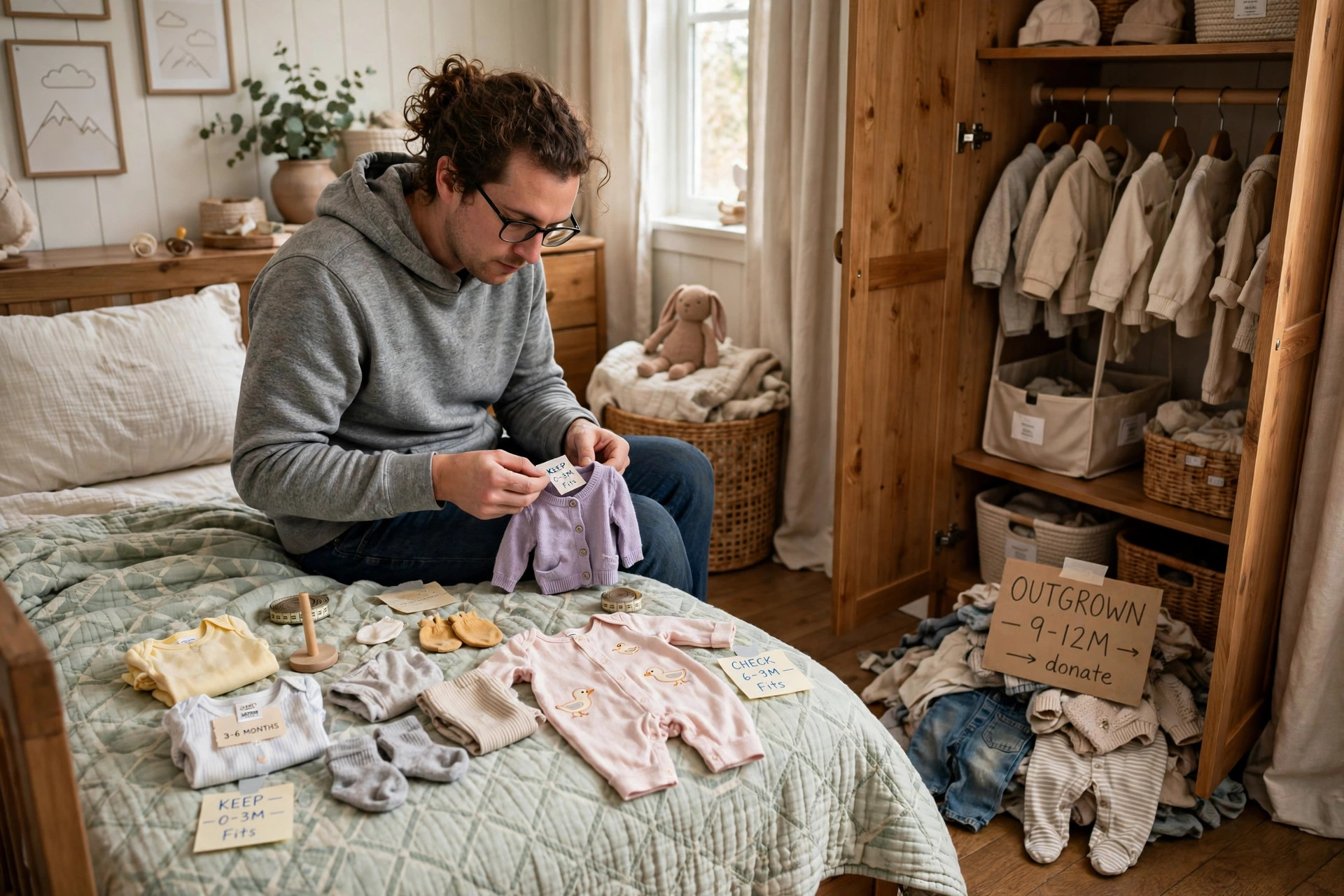
A baby closet is not a storage problem. It is a size problem, because the clothes are tiny, the sizes change every few months, and the closet that holds everything holds three sizes at once: the size baby wears now, the size baby outgrew last month, and the size baby will need next month. The outfit you want is in there somewhere — behind the outgrown sleepers, under the next-size jumpers — and the morning hunt for a 3–6 month onesie is really a hunt through a closet that was never sorted by size.
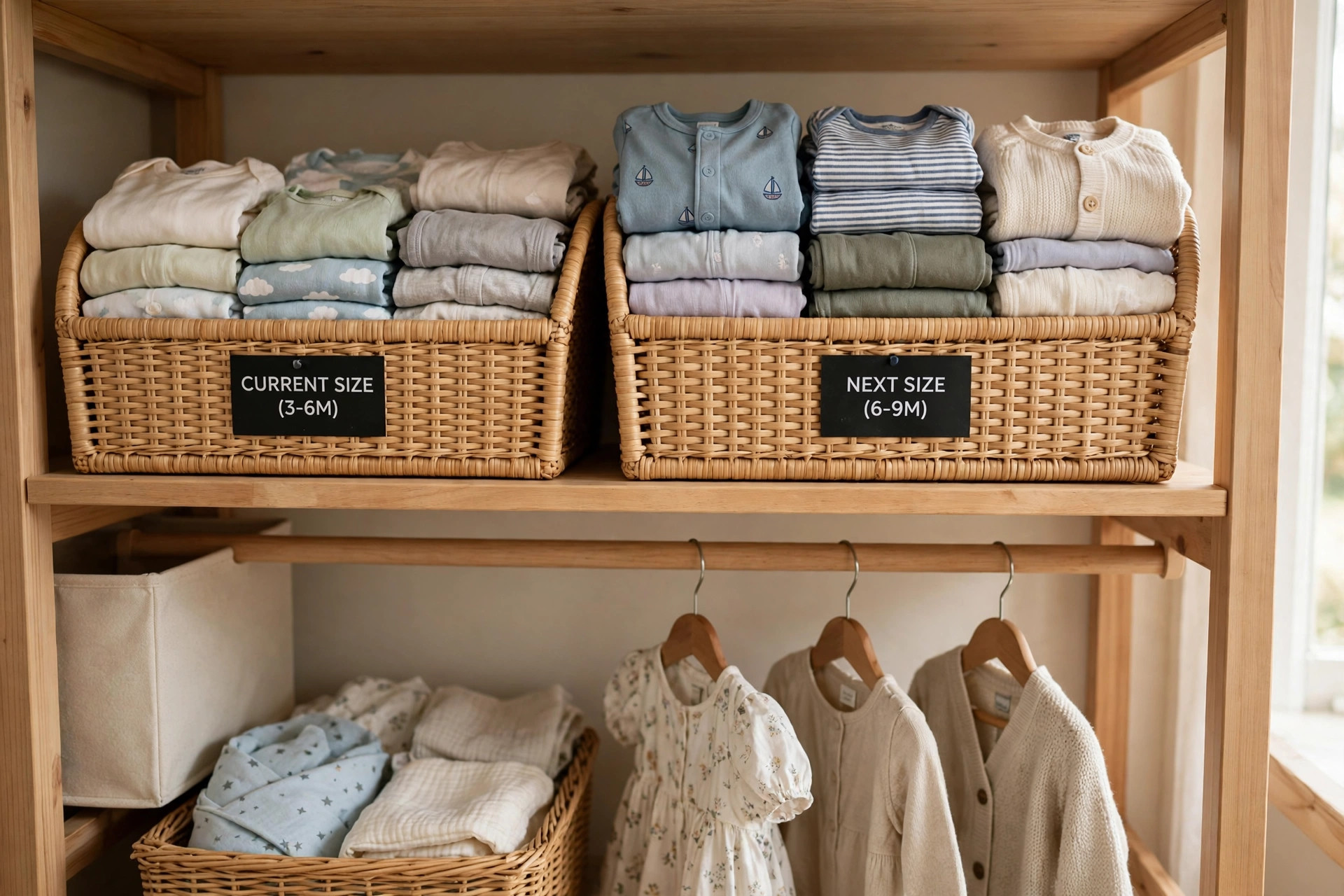
These 22 baby closet organization ideas sort the tiny clothes by size and season, so the outfit you want is the one you can find: size labels on the rod, an outgrown bin on the top shelf, a second rod for the tiny clothes, and clear bins for the socks and mittens — and the closet keeps up as the baby grows.
Every idea below works in a real nursery, from a rented flat with a closet the width of a door to a spare bedroom turned nursery where one small closet holds a whole baby wardrobe. The small-closet layering this borrows is covered in 26 Small Space Closet Organization Ideas for 2026, where the second rod and the slim hangers do the same job for grown-up clothes — and the room around the nursery gets its own treatment in 28 Bedroom Storage Ideas for 2026. Pick three ideas that fit your closet, start with the size sort, and build from there.
Sort by size first
1. Sort by size first — the size labels that stop the morning hunt
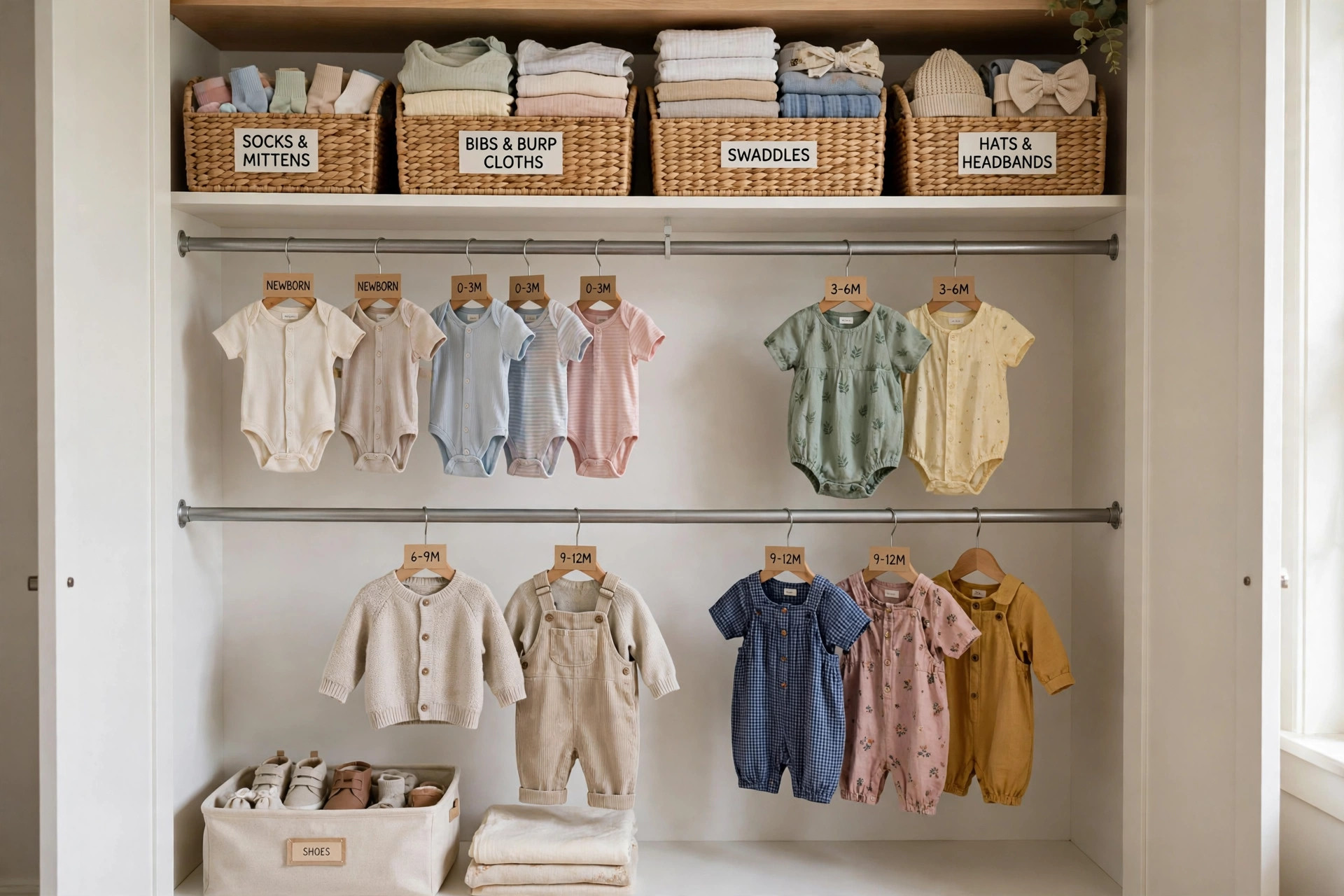
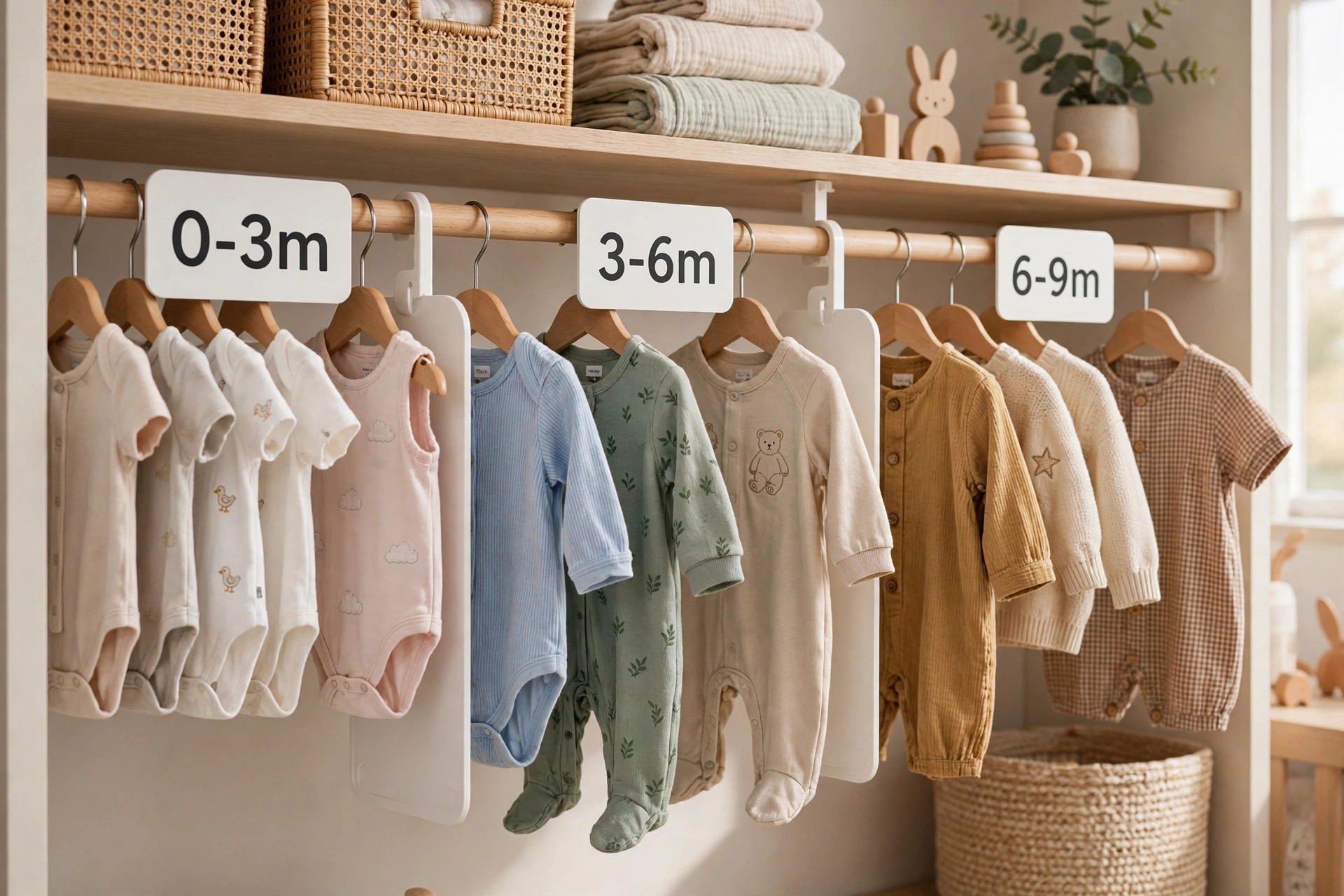
A baby closet sorted by nothing is a closet where every outfit looks the same, because a 0–3 month sleeper and a 6–9 month sleeper are the same shape in different sizes, and the morning hunt is a hunt through a rail where the sizes are mixed. Sort by size first — the size labels that stop the morning hunt — so the rod runs from smallest to largest and the size you need is the section you reach for. Hang cardboard or wooden size dividers on the rod between the sizes — 0–3m, 3–6m, 6–9m, 9–12m — because the divider that marks the size is the divider that makes the rail readable at a glance. Keep the current size in the middle of the rail, the next size up at one end, and the outgrown at the other until it goes in the bin, because the rail that is sorted by size is the rail where the morning outfit takes ten seconds. One sort by size, and the hunt ends.
2. An outgrown bin on the top shelf — the clothes baby has finished, gone in one move
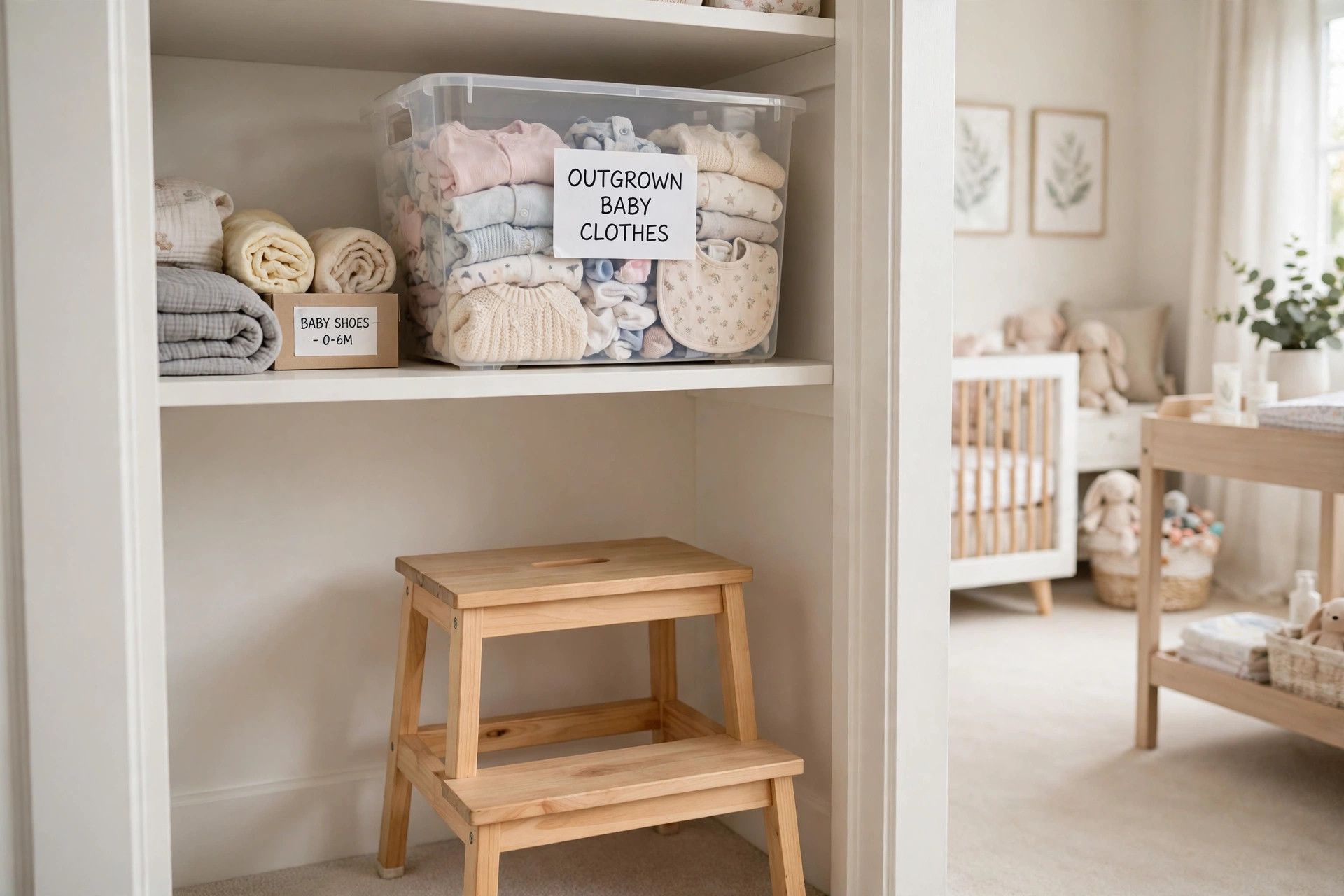
Outgrown clothes are the fastest way a baby closet fills, because the baby grows out of a size in weeks, the outgrown clothes stay on the rail, and the closet that holds the current size also holds two sizes that no longer fit. Keep an outgrown bin on the top shelf — the clothes baby has finished, gone in one move — so the moment an outfit stops fitting, it goes in the bin instead of back on the rail. Put the bin where you can reach it without a chair, label it with the size that is leaving, and empty it when it is full — into storage, to a friend, or to the donate bag — because the bin that is emptied is the bin that keeps working. The out-of-season overflow that leaves the closet entirely is covered in 22 Under-Bed Storage Ideas for 2026, where the full bins live when the closet is done with them. One bin on the top shelf, and the rail holds only the size baby wears now.
3. Rotate by season — this season in the closet, next season in a bin
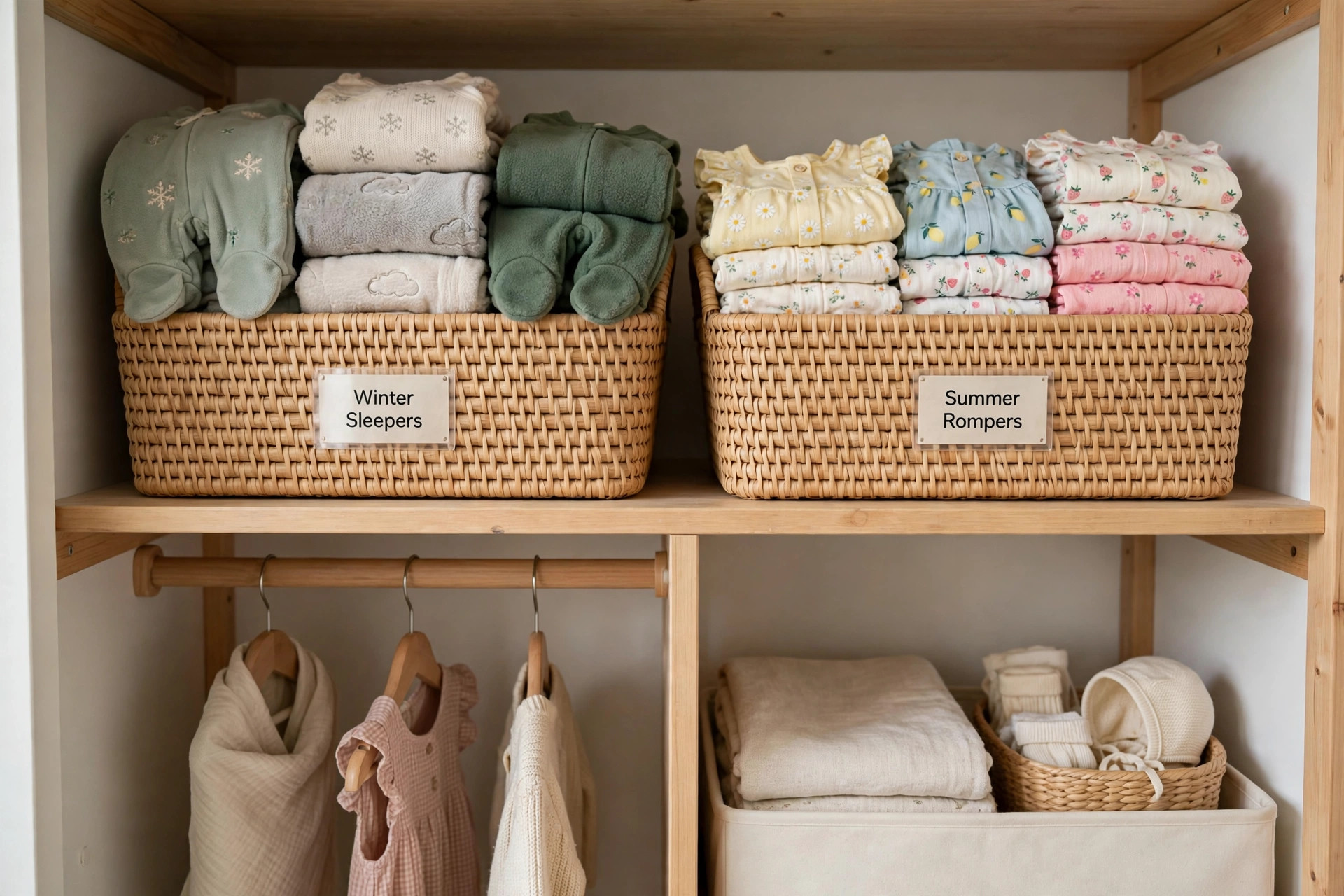
A baby closet that holds all four seasons at once is a closet that holds too much, because the winter sleepers crowd the summer rompers, and the clothes baby is wearing today are buried under the clothes baby will not wear for six months. Rotate by season — this season in the closet, next season in a bin — so the closet holds only this season, and the rest lives in a labelled bin on the top shelf or under the bed. Swap when the weather turns, and check each garment as it goes in and out, because the swap that checks the size is the swap that catches the clothes baby has already outgrown. Keep one bin per season, labelled with the size and the season, because the bin that is labelled is the bin you can find when the weather turns again. One swap a season, and the closet holds only what baby wears now.
4. Keep the everyday within reach — the daily five at eye level
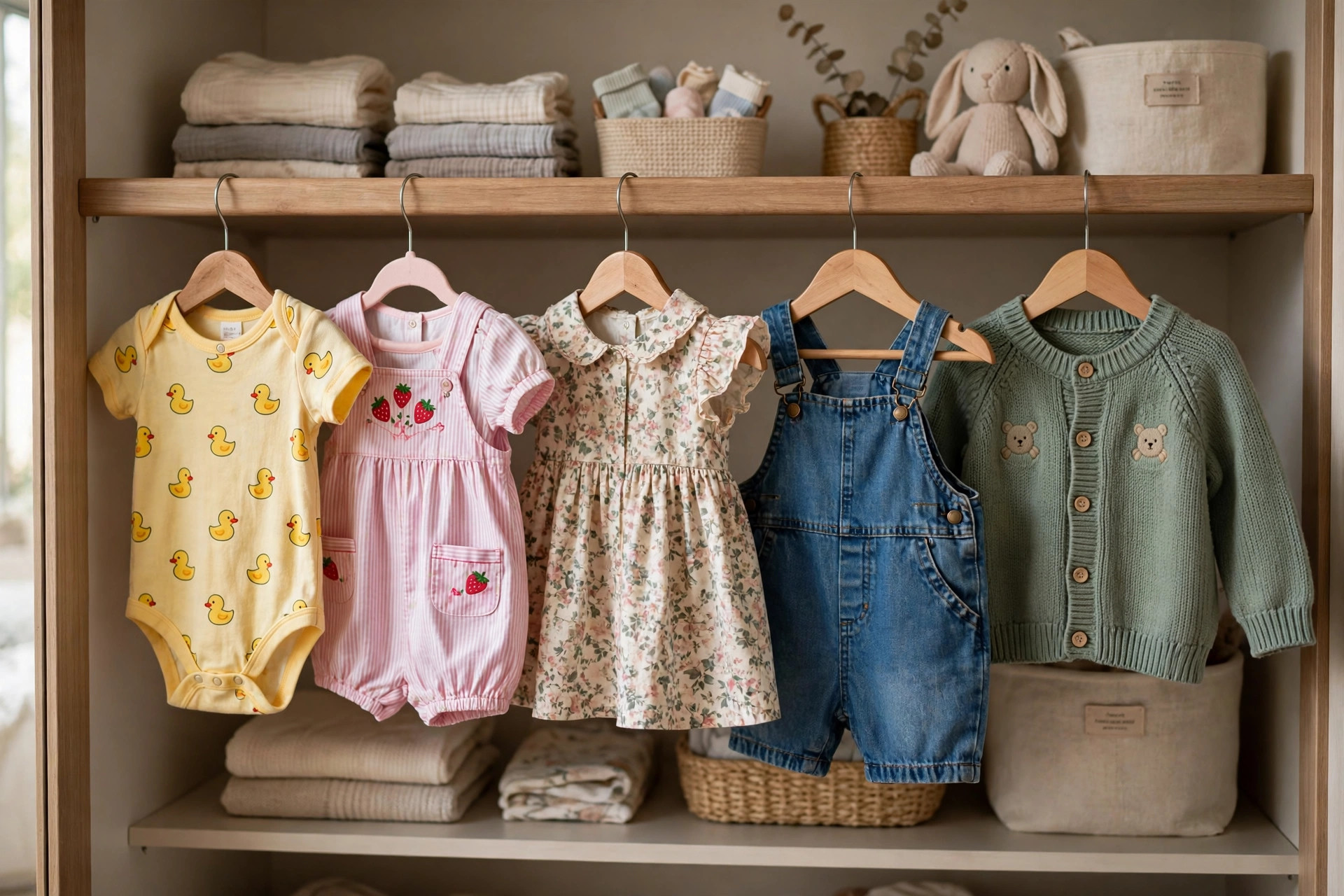
The clothes baby wears every day are the clothes you reach for half-asleep at 3 a.m., and a closet where they are buried behind the occasion outfits is a closet that fights you at the worst hour. Keep the everyday within reach — the daily five at eye level — so five everyday outfits hang at the front of the rail, at eye level, ready to grab in the dark. Pick the five you reach for most — the soft onesies, the easy sleepers — and hang them together at the front, because the front of the rail is the place your hand goes first. Keep the occasion outfits — the party dress, the smart set — at the far end of the rail, because the outfit that is worn once a month does not need the front of the closet. Five outfits at eye level, and the 3 a.m. change takes a minute.
5. A keepsake box for the firsts — the outfit worth saving, not the whole drawer
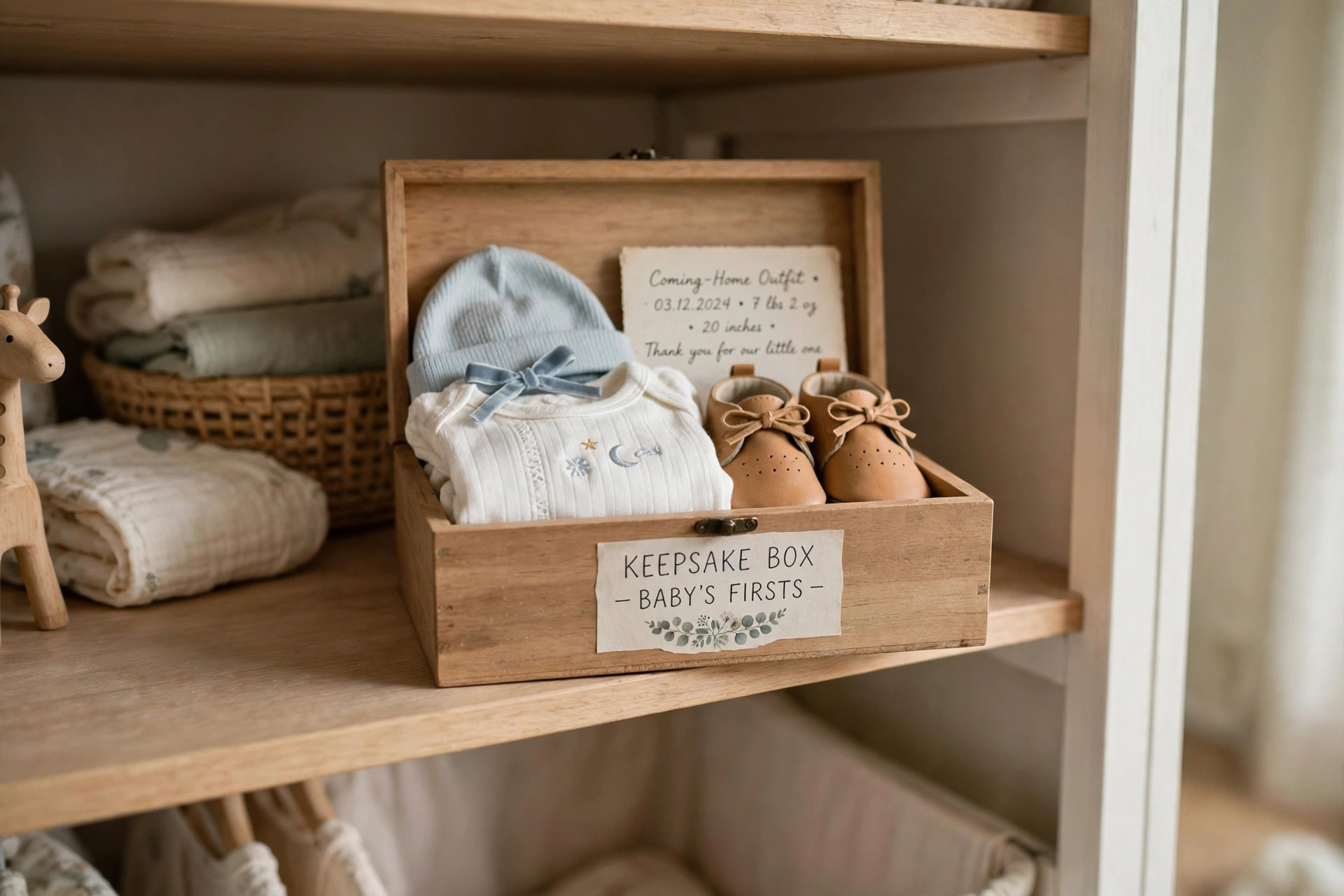
Every baby outfit feels worth keeping, and a closet that keeps them all is a closet that is full of clothes baby will never wear again, because the first outfit, the first shoes and the first hat are the keepsakes — the rest is just outgrown laundry. Keep a keepsake box for the firsts — the outfit worth saving, not the whole drawer — so one small box holds the coming-home outfit, the first shoes and the first hat, and everything else goes in the outgrown bin. Put the box on the top shelf, label it with the date, and add to it only the true firsts, because the box that holds only the firsts is the box that stays small enough to keep. The rest goes to the next baby or the donate bag, because the clothes that are passed on are the clothes that get worn twice. One small box, and the keepsakes stay keepsakes.
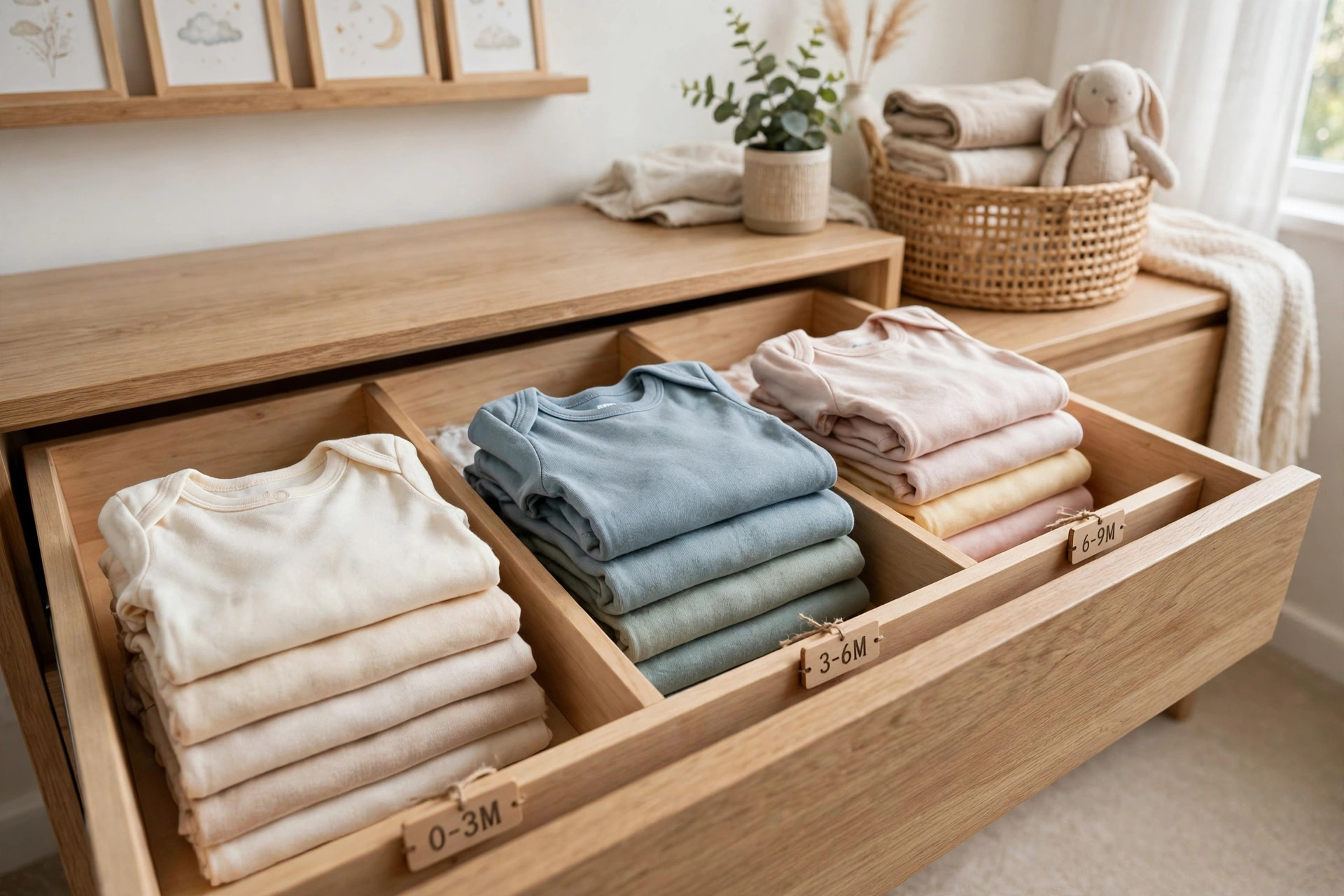
6. Fold by size, stack by colour — the drawer you can read at a glance
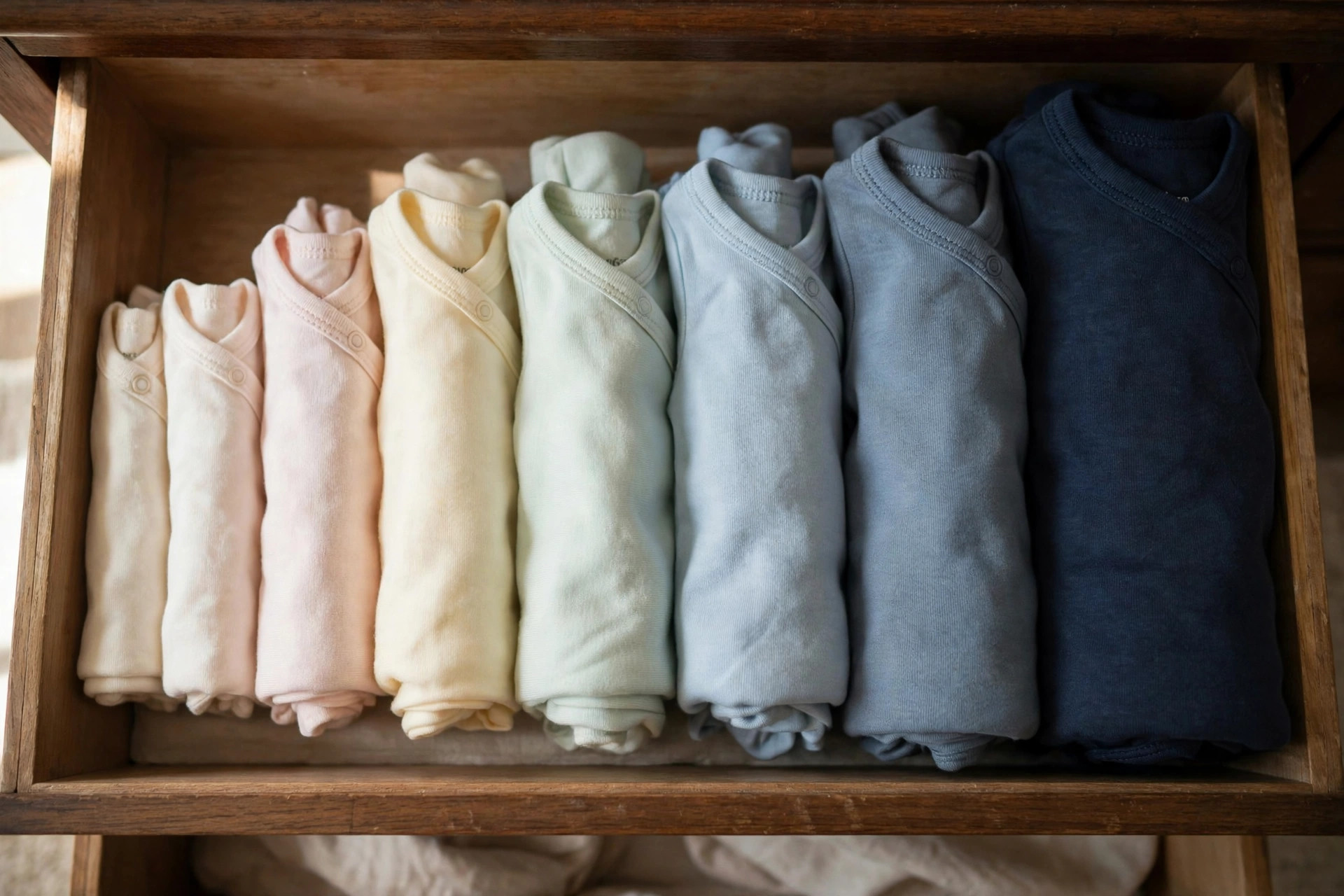
Folded baby clothes in a drawer without a system are a pile, because the onesies are all the same size when they are folded, the stacks lean, and the drawer that holds the folded clothes is the drawer you have to dig through. Fold by size, stack by colour — the drawer you can read at a glance — so the drawer runs smallest to largest and inside each size the colours run light to dark. Fold the onesies the same way every time, stack them on their sides like files so you can see every one, and keep one stack per size, because the stack that stands on its side is the stack you can read without pulling it apart. The same file-fold rule keeps the linen closet tidy in 22 Linen Closet Organization Ideas for 2026, where folded sheets stack the same way. One fold, one order, and the drawer reads like a shop rail.
Hang the tiny clothes right
7. A second rod for the tiny clothes — double the hanging in half the height
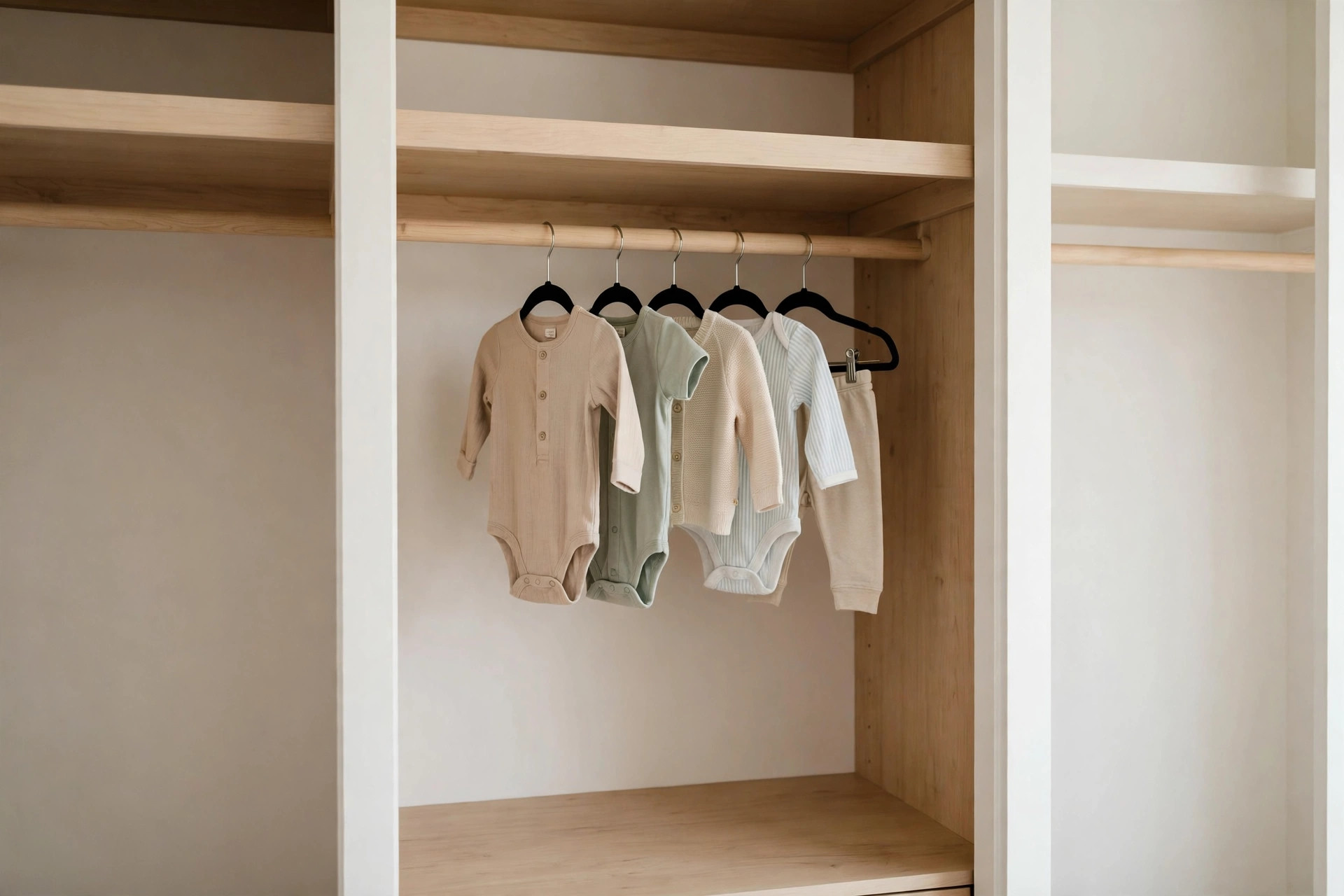
One rod is the reason a baby closet feels full, because the tiny clothes hang at the same height as grown-up clothes, the space below them is empty, and the closet that could hold two rows of tiny outfits holds one. Fit a second rod for the tiny clothes — double the hanging in half the height — so the top rod holds the outfits and the lower rod holds the sleepers, and the closet holds twice the clothes in the same width. Hang the second rod about halfway down, because baby clothes are short and two short rows fit where one long row used to hang, and keep the rods close enough that the outfits do not brush the shelf below. A tension rod works in a rented home, and a fixed rod works where you own the walls, because the rod that fits your home is the rod that stays up. One extra rod, and the baby closet is twice as big.
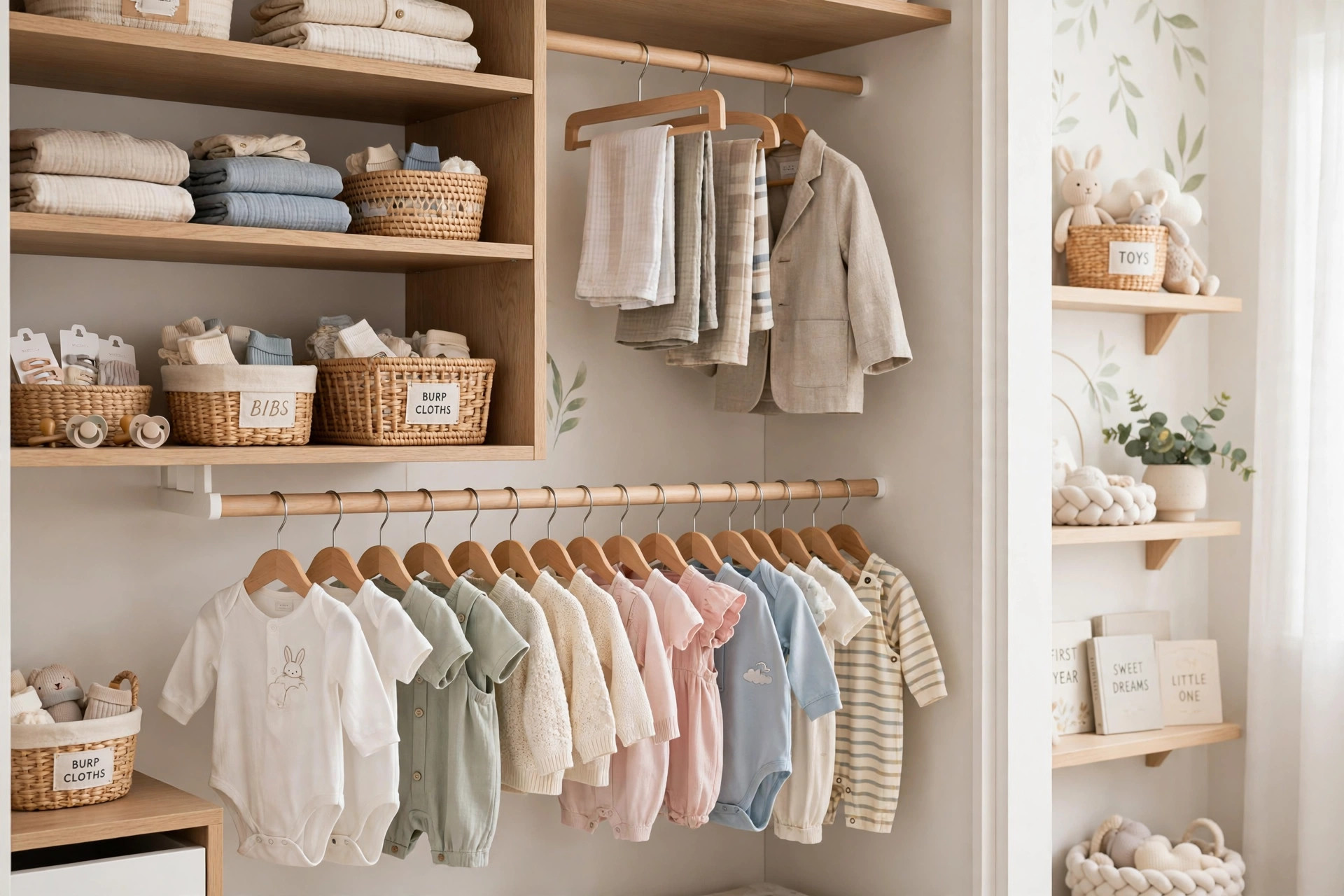
8. Slim baby hangers — the switch that fits twice as many outfits
Thick hangers are the quiet thief of a baby closet, because each one is wide, the widths add up across the rod, and the closet that holds thirty thick hangers holds sixty slim ones in the same width. Switch to slim baby hangers — the switch that fits twice as many outfits — so the tiny clothes hang closer together and the rod holds a fifth more. Pick slim velvet hangers in baby size, because the velvet stops the tiny clothes sliding off and the baby size fits the tiny shoulders without stretching them, and use the same hanger for everything, because the hangers that match are the hangers that hang straight. Keep the thick hangers for the heavy coats, and let the slim ones carry the everyday outfits, because the hanger that fits the garment is the hanger that keeps it in shape. One switch of hangers, and the rod gains a whole section. (Check on Amazon for a set of slim velvet baby hangers that fit a standard closet rod.)
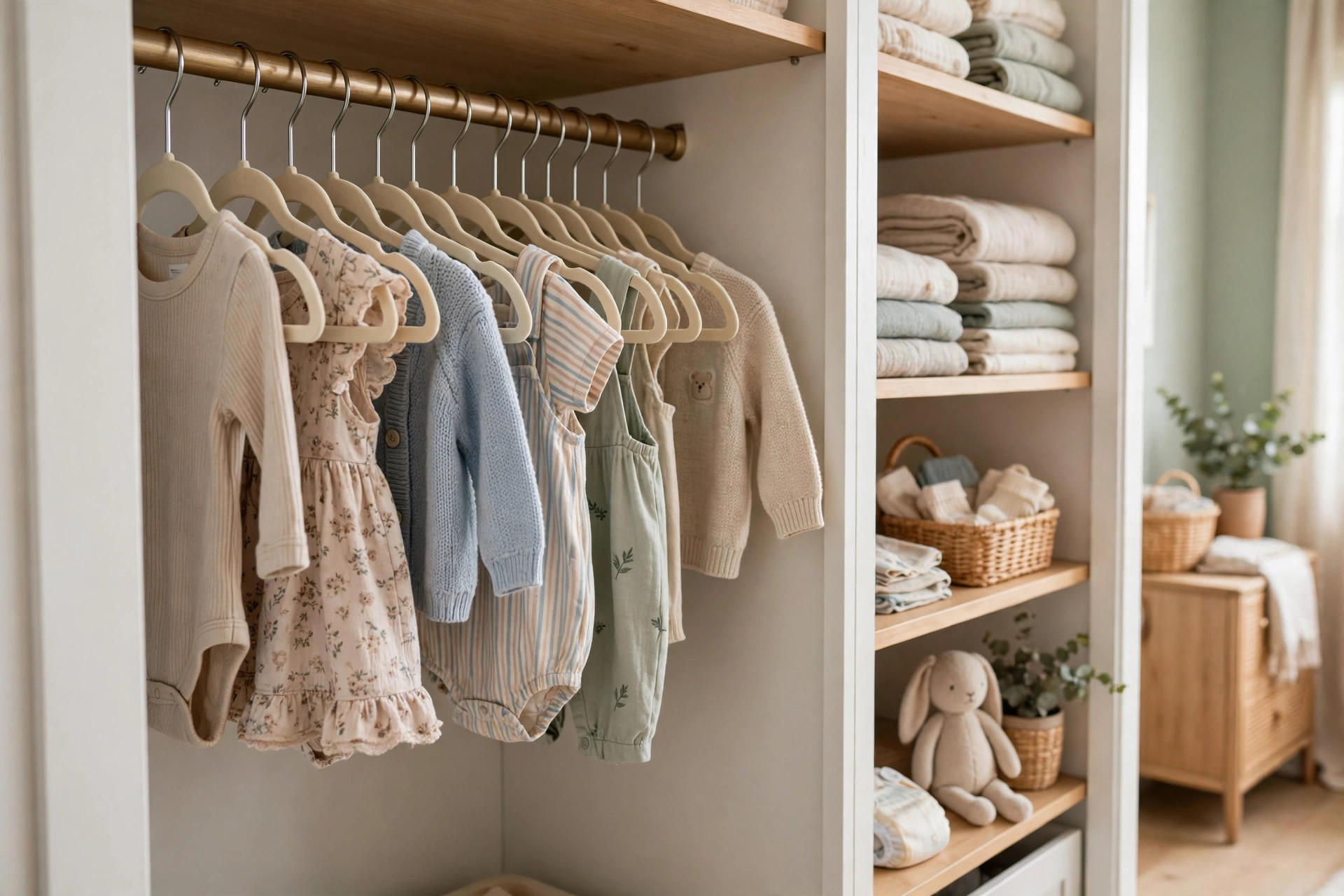
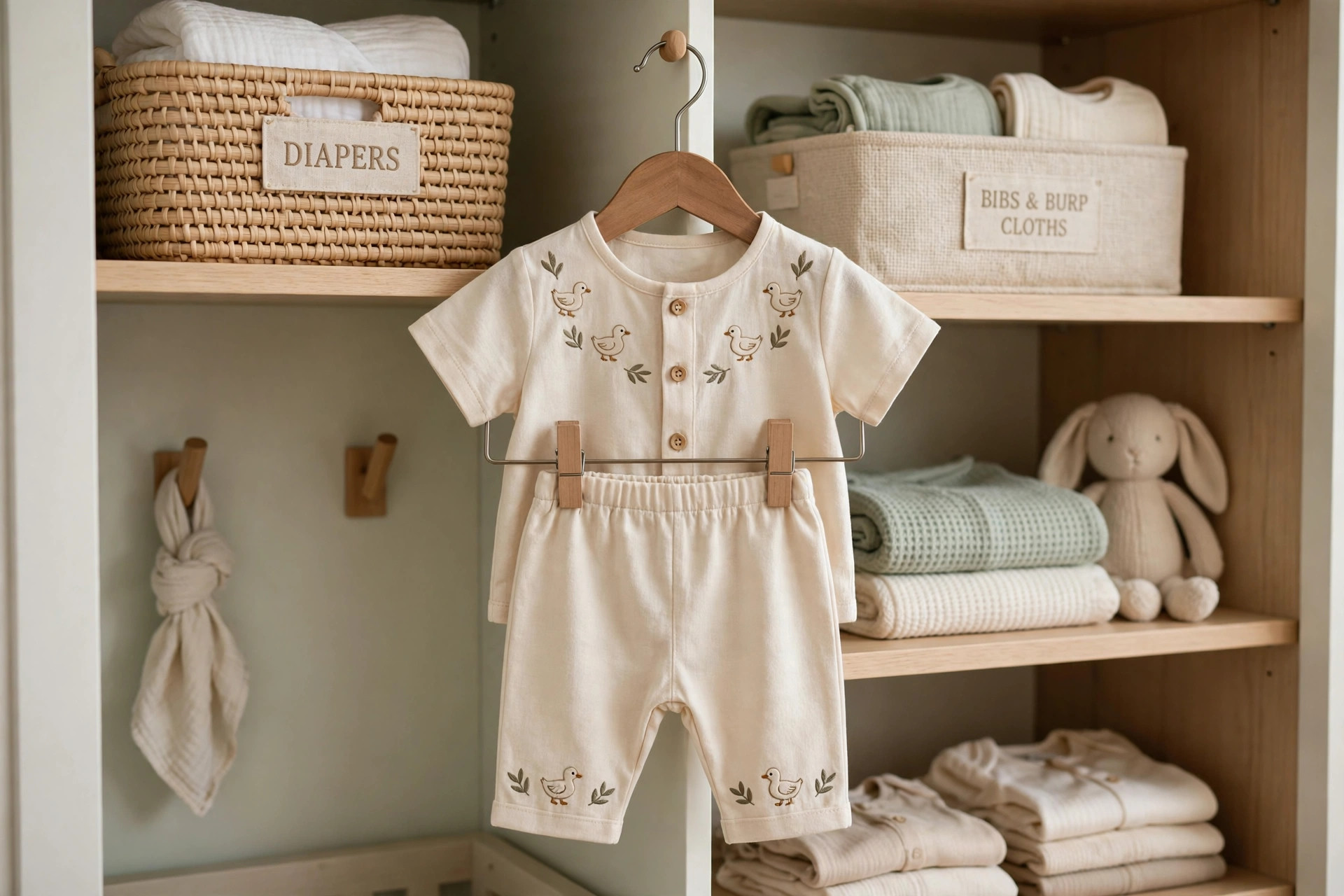
9. Hang by outfit, not by piece — the ready-to-grab set
A baby outfit hung in pieces is an outfit you have to build in the morning, because the top is on one part of the rail, the bottoms are on another, and the morning change is a hunt through two sections of closet. Hang by outfit, not by piece — the ready-to-grab set — so the top and the bottoms hang together on one hanger, and the outfit comes off the rail as a set. Clip the bottoms to the same hanger as the top, or hang the set on a small ring, because the set that hangs together is the set that goes on in one move. Group the sets by size, so the 3–6 month outfits hang together and the 6–9 month outfits hang together, because the rail that is grouped by outfit and size is the rail where the morning choice takes seconds. One hanger per outfit, and the morning change is one grab.
10. Drawer dividers for the onesies — folded stacks that stay standing
Onesies folded without dividers are onesies that fall, because the stack leans, the lean becomes a slide, and the drawer that looked tidy on Sunday is a pile by Wednesday. Use drawer dividers for the onesies — folded stacks that stay standing — so every stack of onesies stands on its own, held upright by a divider on each side. Put one divider per size, keep the stacks no higher than six onesies, and leave a finger's width between the stack and the divider, because the divider that holds the stack without squeezing it is the divider that keeps it standing. Use shallow fabric dividers that fit the drawer, because the divider that fits the drawer is the divider that stays in place when you pull a onesie out. One set of dividers, and the stacks stay standing.
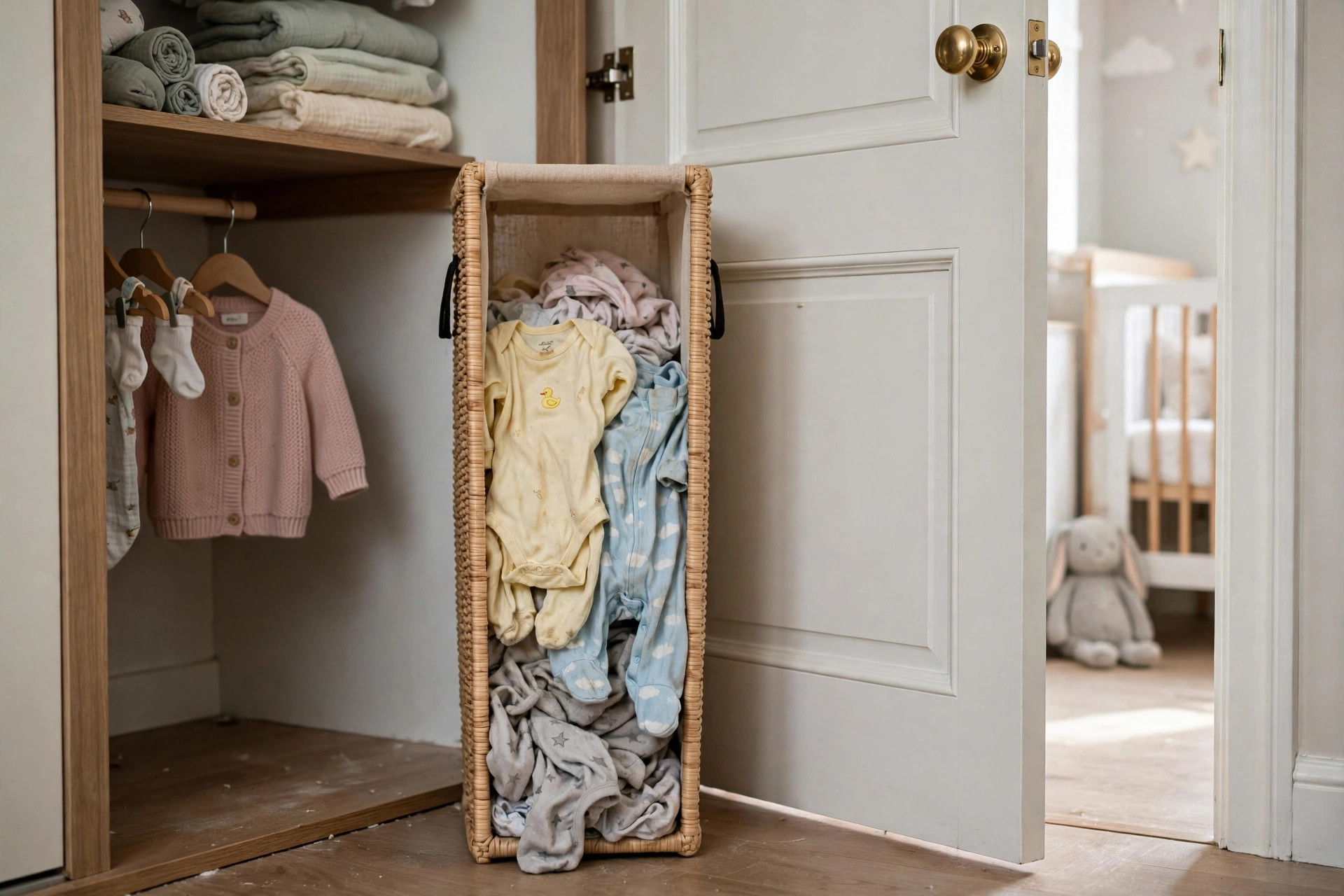
11. A small laundry hamper inside the closet — the dirty pile with a home
Baby laundry piles up faster than any other laundry, and a nursery without a hamper is a nursery where the dirty clothes land on the floor, the chair, and the top of the dresser. Keep a small laundry hamper inside the closet — the dirty pile with a home — so the dirty onesies and sleepers go straight in the hamper the moment they come off, and the nursery floor stays clear. Pick a slim hamper that fits the closet floor without blocking the lower rod, and empty it every day or two, because the hamper that is emptied is the hamper that never overflows. Put the hamper by the closet door, so the outfit that comes off goes in without a walk across the room, because the hamper that is in reach is the hamper that gets used. One small hamper, and the dirty pile has a home.
Bins, baskets and the small things
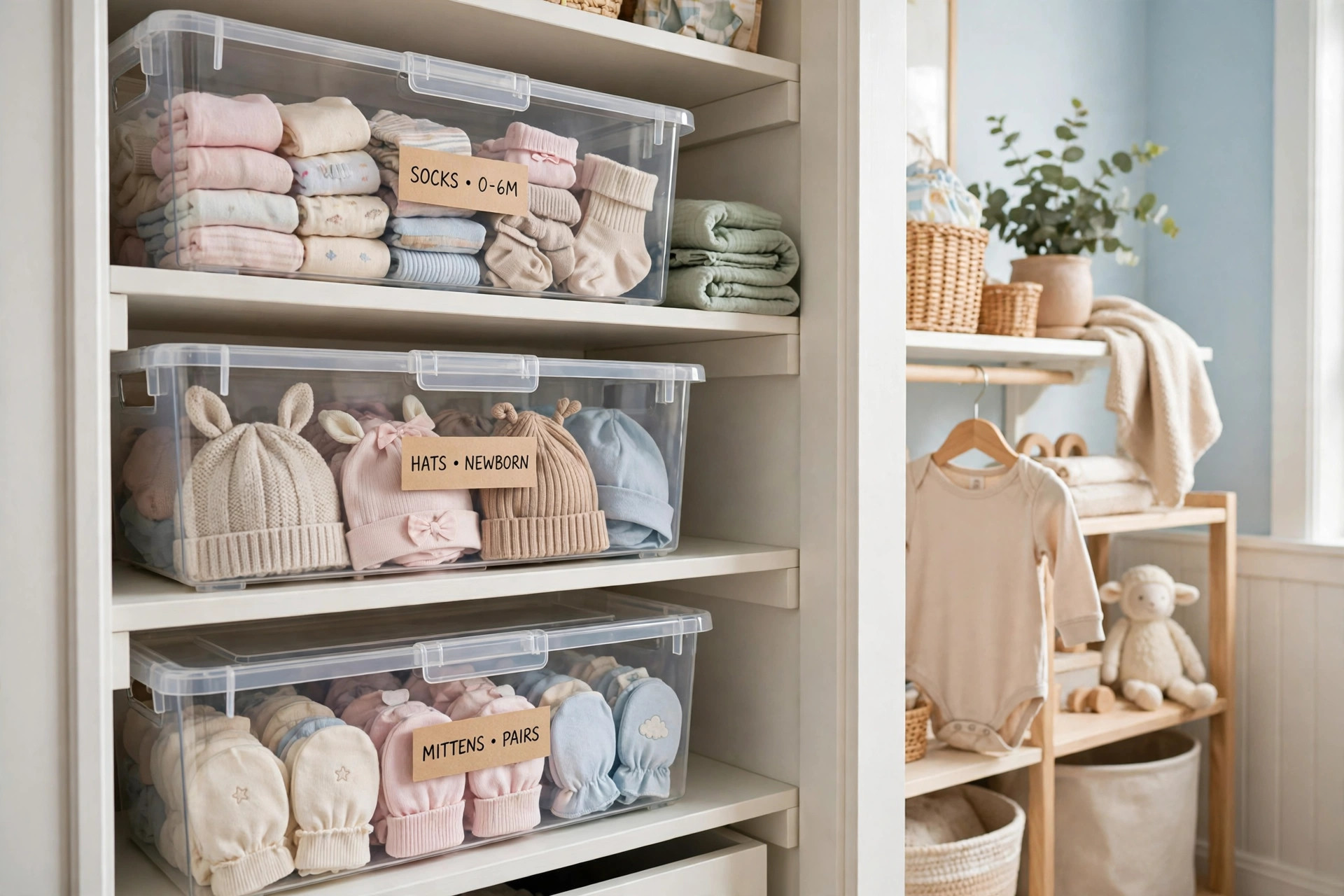
12. Clear bins for socks, hats and mittens — the small things you can see
Small baby things in opaque bins are small things that vanish, because the socks are in a bin you cannot see into, the mittens are in a bin you forgot, and the drawer that holds the small things is the drawer you never open. Use clear bins for socks, hats and mittens — the small things you can see — so you can see what is inside without opening anything, and the small things stop disappearing. Sort the socks by size, roll the mittens instead of folding them, and keep one clear bin per category on the closet shelf, because the bin you can see into is the bin you actually use. Clear bins are the same rule that keeps the kids' small things findable in 26 Kids Room Storage Ideas for 2026, where the visible bin is the bin that gets tidied. One clear bin per category, and the small things stay visible. (Check on Amazon for a set of small clear stackable bins with lids, sized for a nursery closet shelf.)
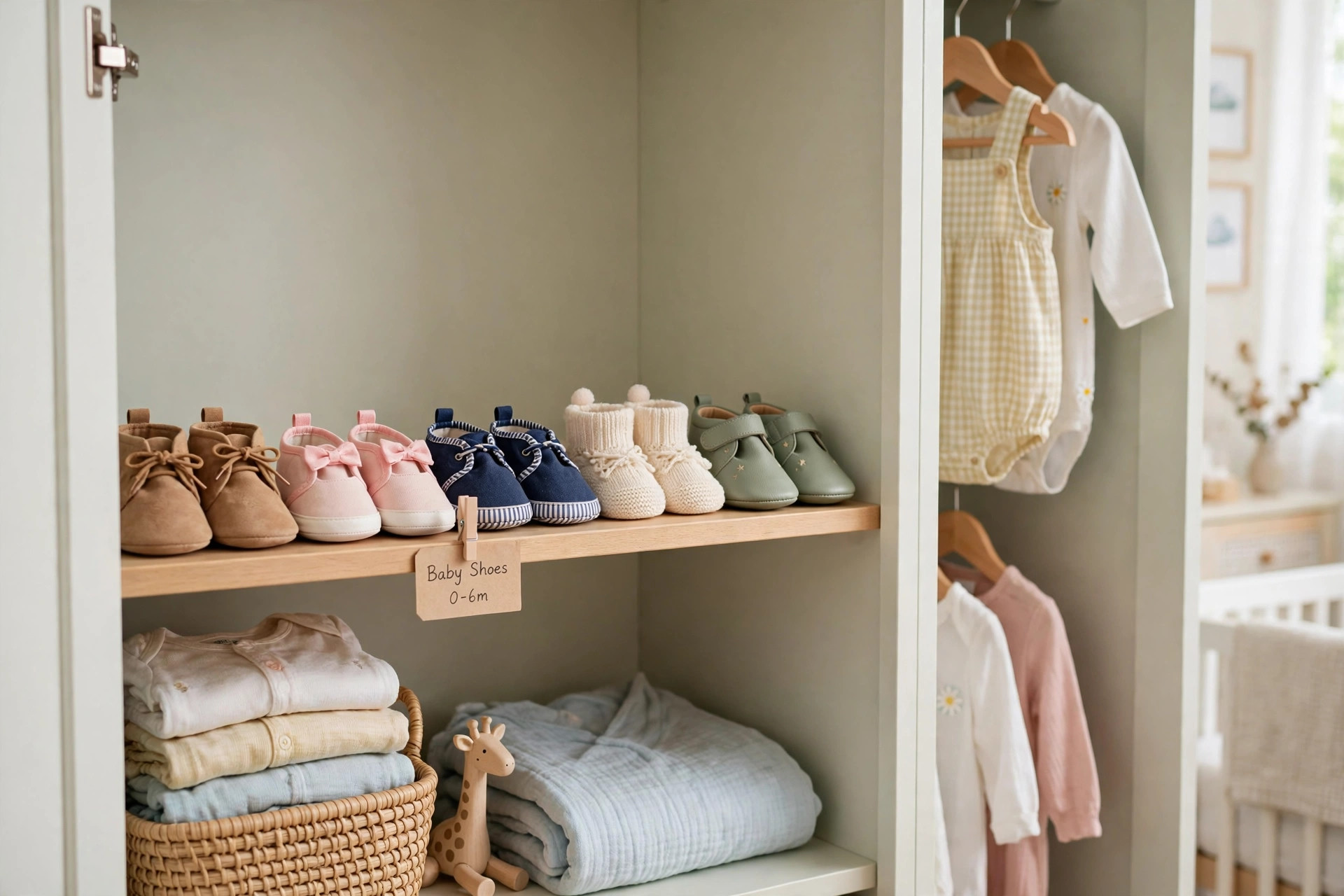
13. A shoe shelf for the tiniest shoes — pairs together, never lost
Baby shoes are the smallest things in the closet and the easiest to lose, because one shoe ends up on the floor, the other ends up in a drawer, and the pair that was together yesterday is apart today. Give them a shoe shelf for the tiniest shoes — pairs together, never lost — so every pair lives side by side on one small shelf in the closet, and the pair that goes on together stays together. Put the shelf low, at the height where you can see it while you dress the baby, and keep one pair per slot, because the shelf that holds one pair per slot is the shelf where a missing shoe is obvious. Keep the shoes baby wears most at the front, the rest behind, because the shelf that is read at a glance is the shelf that gets used. The shoes themselves get their full system in 24 Shoe Storage Ideas for 2026, where every pair has a home that is not the closet floor. One small shelf, and the pairs stay pairs.
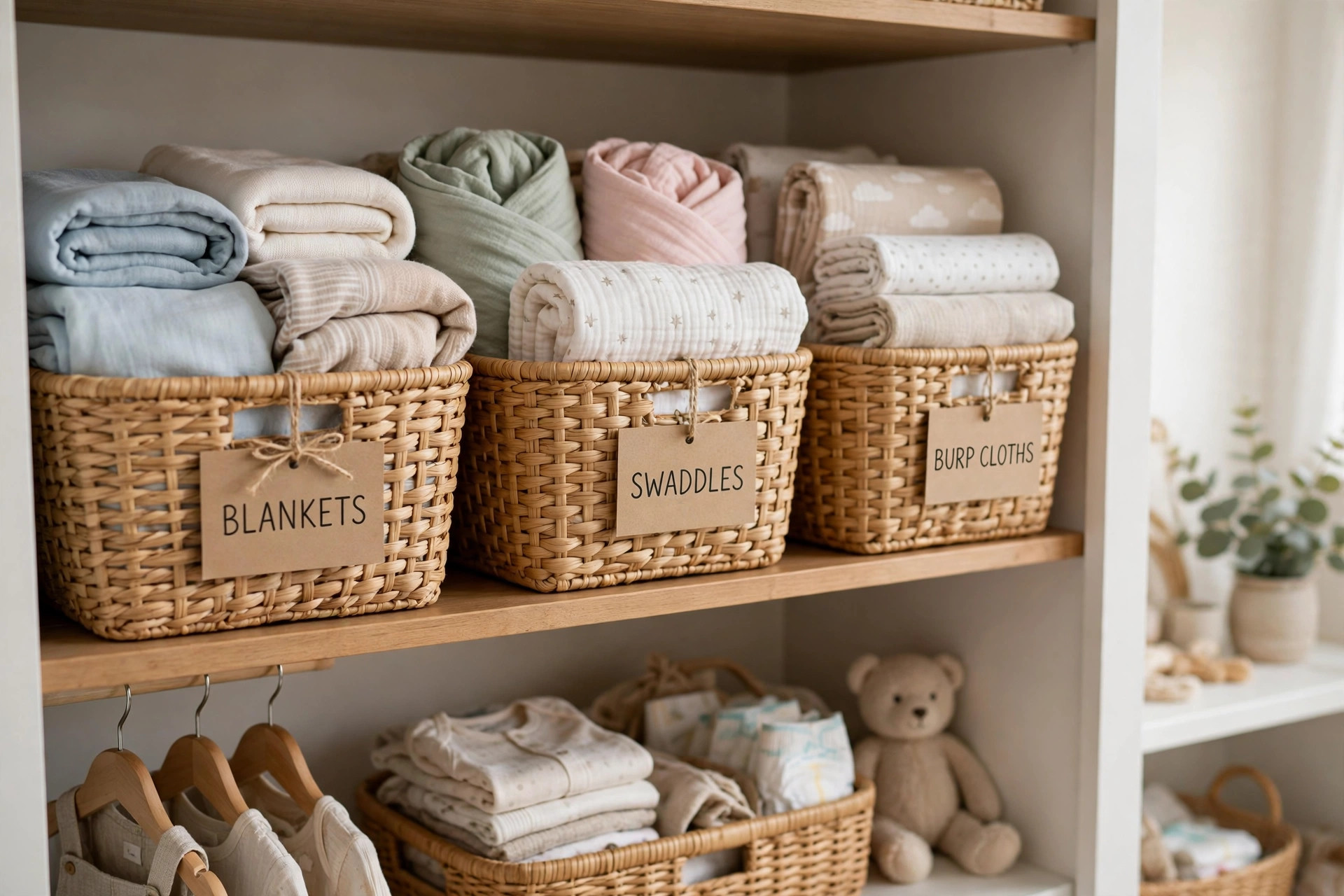
14. Labelled baskets for blankets and swaddles — soft things in soft boxes
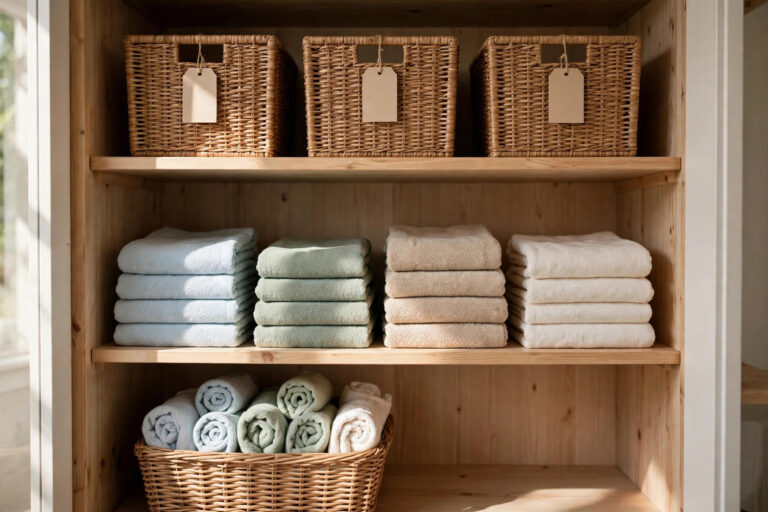
Blankets and swaddles in a baby closet without a home are a soft pile, because they are folded, then unfolded, then refolded, and the shelf that holds them is the shelf that looks messy five minutes after you tidy it. Use labelled baskets for blankets and swaddles — soft things in soft boxes — so the shelf holds woven baskets that fit its height and the soft things live inside them, out of sight but in reach. Pick baskets that fit the shelf with a finger's width to spare, because the basket that fits is the basket that slides out easily, and put the swaddles in one basket and the blankets in another, because the basket that holds one thing is the basket that stays sorted. Label the front of each basket, not the lid, because the label that faces you is the label you can read from the floor. One basket per category, and the soft things stay soft and tidy.
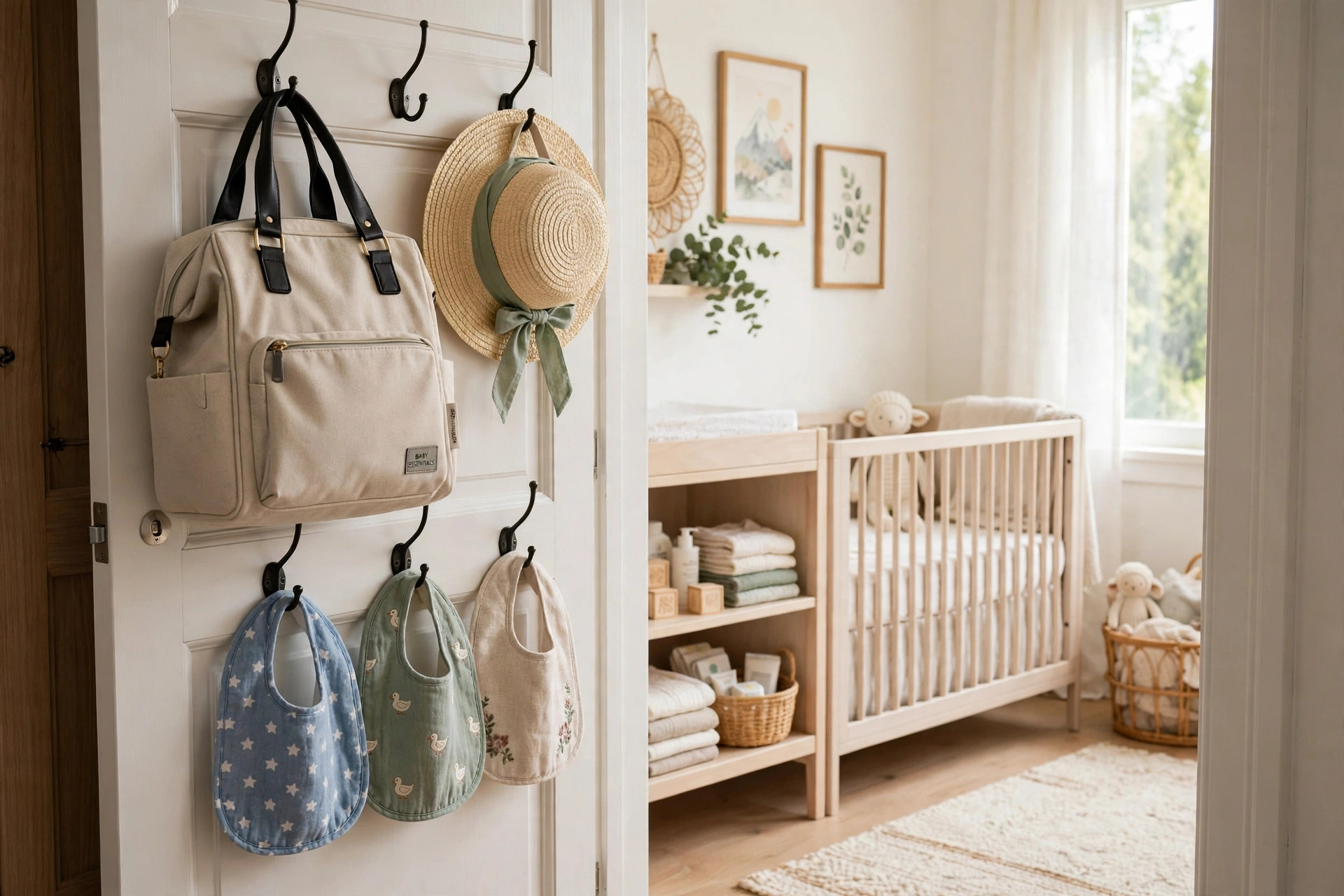
15. The door is storage too — hooks for the bibs, hats and the nappy bag
The inside of the nursery closet door is the most wasted surface in the room, because it holds nothing, it faces the clothes, and the space it offers is space nobody thinks to use. Use the door — hooks for the bibs, hats and the nappy bag — so the bibs hang in a row, the sun hat hangs by the door, and the nappy bag hangs ready to grab on the way out. Hang a row of hooks at eye level for the things you grab daily, add a small hook for the hat, and keep the heavy things off the door, because the door that holds the light daily things is the door that still closes properly. Over-door hooks need no screws, which suits a rented home, and the same door-first rule works in the coat closet in 25 Coat Closet Organization Ideas for 2026, where the door holds the dog lead and the keys. One door used properly, and the closet gains a wall.
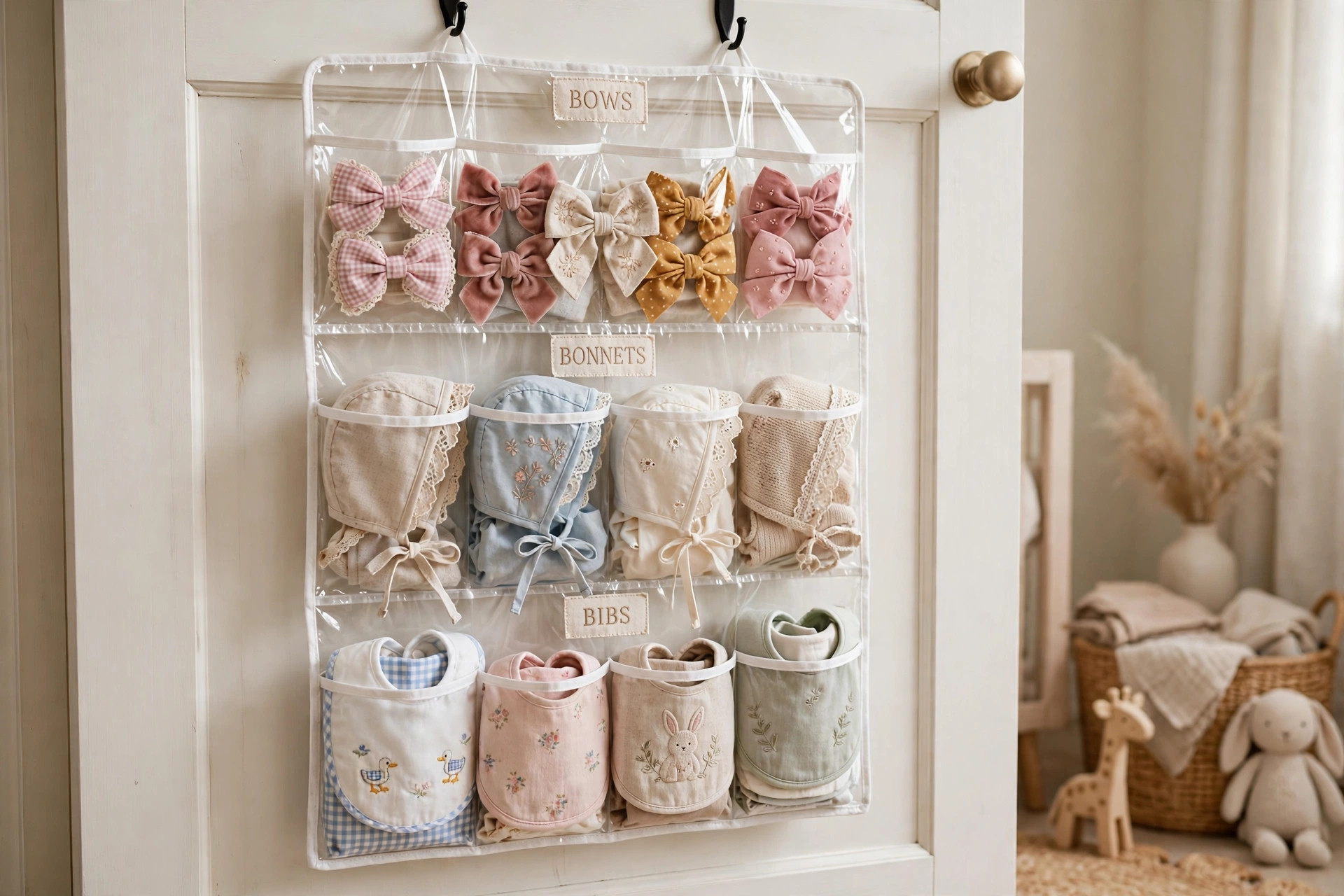
16. A hanging organizer for the accessories — bows, bonnets and bibs in pockets
Baby accessories are too small for a shelf and too many for a drawer, because the bows are tiny, the bonnets are soft, and the bibs pile up in a drawer where the one you want is always at the bottom. Hang an organizer for the accessories — bows, bonnets and bibs in pockets — so the small things live in clear pockets on the closet door or on the closet wall, each in its own pocket, visible and in reach. Put the bibs you use daily at eye level, the bows and bonnets above, and keep one pocket empty for the new things, because the organizer that has a spare pocket is the organizer that never overflows. A hanging shoe organizer works just as well for accessories, because the pocket that holds a shoe holds a bow just as neatly. One organizer, and the tiny things stop vanishing. (Check on Amazon for a clear over-door hanging organizer with small pockets, sized for a nursery closet door.)
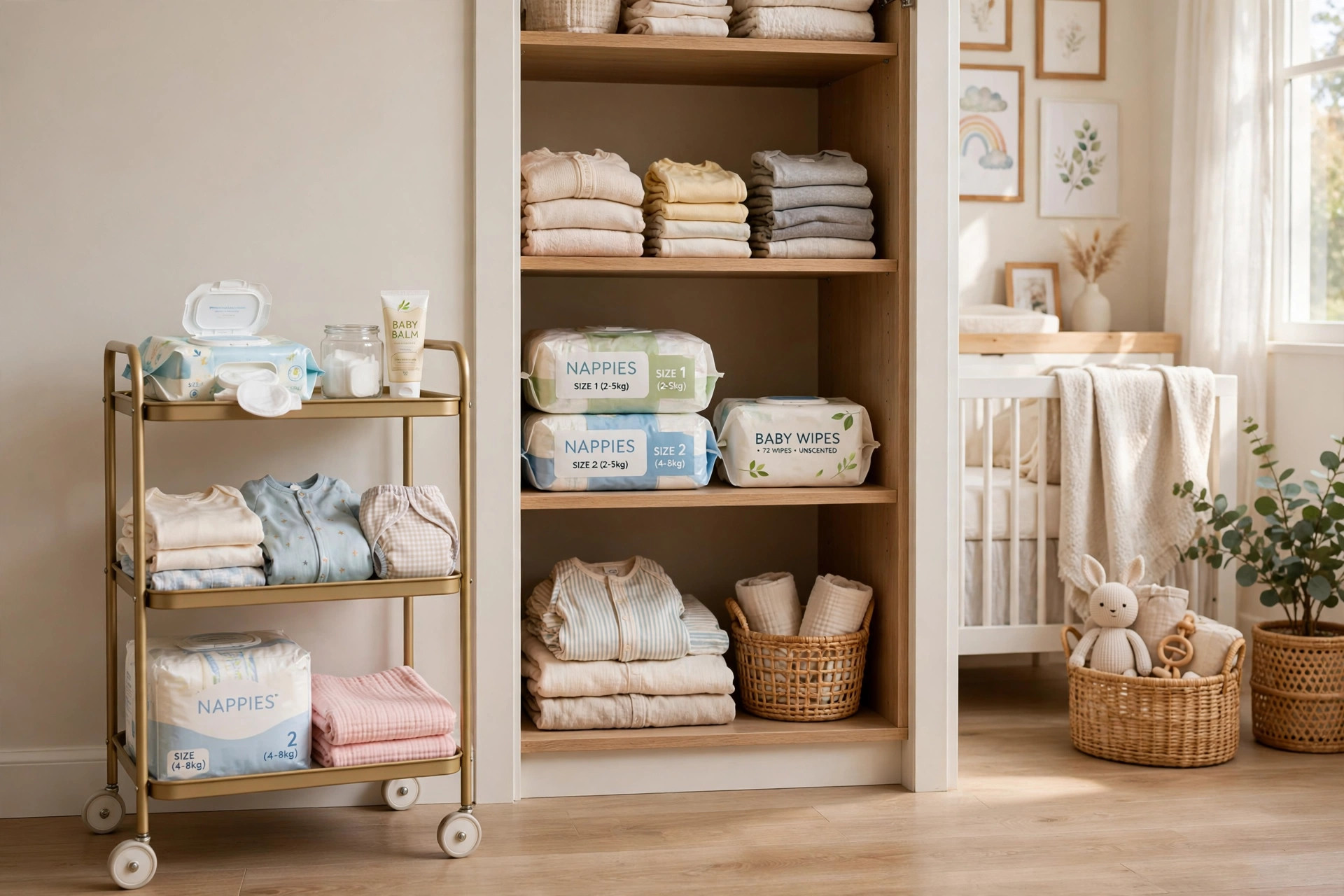
17. A rolling cart beside the closet — the nappy station that moves with you
Some nurseries are too small even when the closet is layered, because the clothes fit and the extras do not, and the extras — the nappies, the wipes, the creams — end up on every flat surface in the room. Keep a rolling cart beside the closet — the nappy station that moves with you — so the extras live on the cart, in reach of the closet and the changing table, and the cart rolls where you need it. Load the cart with the nappies on the top tier, the wipes and creams in the middle, and the spare clothes at the bottom, and park it beside the closet door, because the cart that is parked by the closet is the cart that is in reach at 3 a.m. The rolling cart itself is covered in 22 Rolling Cart Organization Ideas for 2026, where the same cart works as a craft station and a closet helper in turn. One cart, and the nappy station moves with you.
Keep it tidy as baby grows
18. One in, one out — the rule that stops the baby closet refilling
A baby closet organized once is a closet that refills, because every gift goes in, nothing comes out, and the closet that held forty things in January holds eighty by June. Use one in, one out — the rule that stops the baby closet refilling — so every new outfit that enters the closet means one old outfit leaves it, into the outgrown bin or the donate bag. Keep the outgrown bin on the top shelf from idea 2, so the outfit that leaves has somewhere to go the moment you decide, because the bin that is in the closet is the bin that gets used. Tell the gift-givers the next size up, because the gift that arrives in the next size is the gift that does not need to leave again. One rule, and the closet never refills.
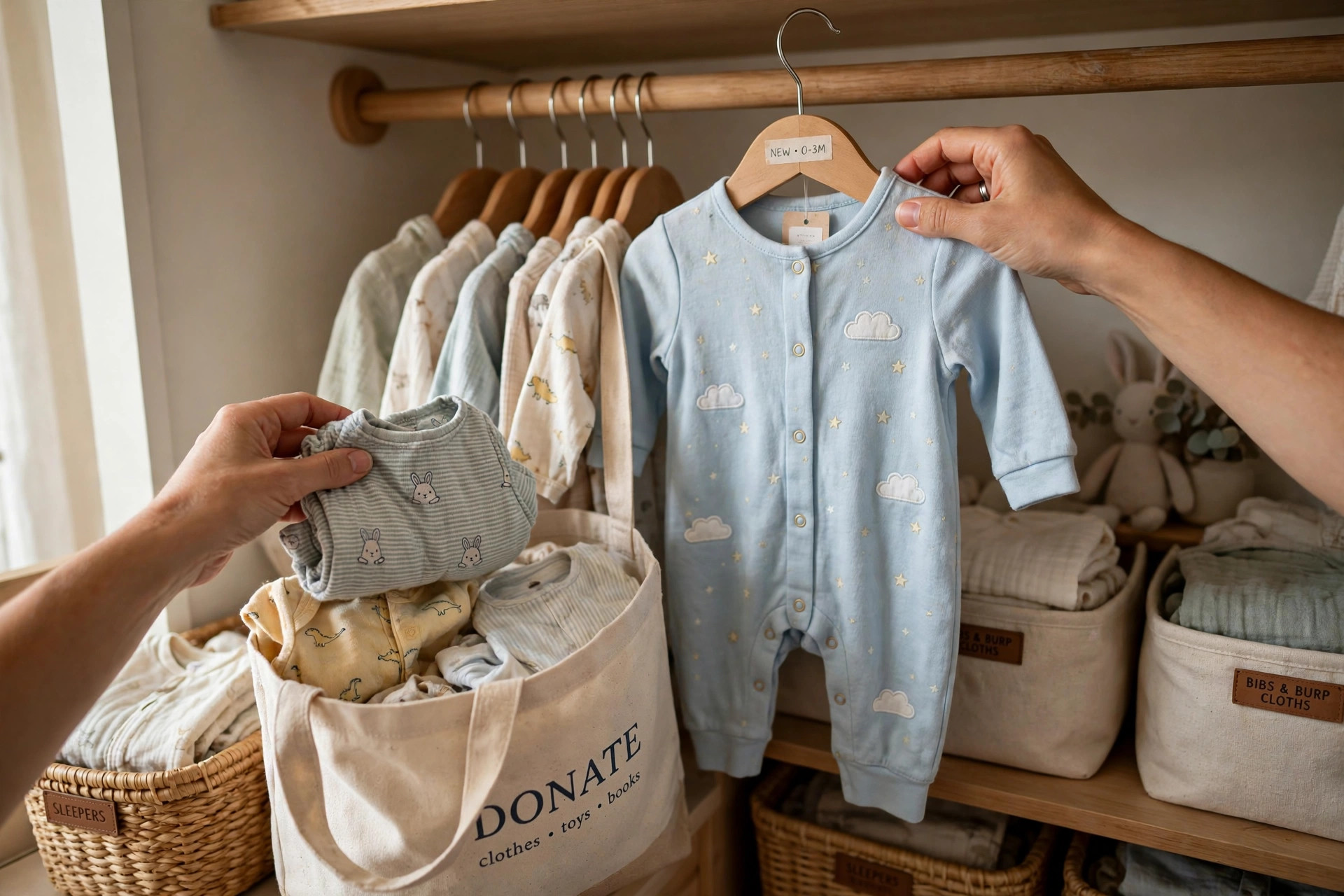
19. A monthly five-minute sort — the size check that keeps the closet honest
No baby closet stays tidy without a habit, because the baby grows every week, the sizes shift every month, and the closet is only sorted on the day you sort it. Do a monthly five-minute sort — the size check that keeps the closet honest — so the closet is checked before the new month and starts clean. Try the borderline outfits on the baby, move the outgrown ones to the bin, and pull the next size forward from the back of the rail, because the sort that takes five minutes is the sort that actually happens. Put the sort on the calendar for the first weekend of the month, because the sort that is scheduled is the sort that gets done. Five minutes a month, and the closet never needs a big clean.
20. A capsule for the nursery — fewer outfits, more space
A baby closet full of outfits baby never wears is a closet that is full and empty at the same time, because the outfits you love are buried under the outfits you keep out of guilt, and the closet that holds everything holds nothing you want. Build a capsule for the nursery — fewer outfits, more space — so the closet holds the outfits baby actually wears, and the rest leaves. Pick the pieces that fit, that match each other, and that you reached for in the last week, because the piece that was not worn in a week is the piece that will not be worn next week. Keep the capsule small — seven everyday outfits, three sleepers, two occasion sets — because the capsule that fits the closet is the capsule that makes dressing easy, and the outfits that leave go to the outgrown bin from idea 2. One capsule, and the closet holds only what baby wears.
21. Label everything — the label that stops the drift
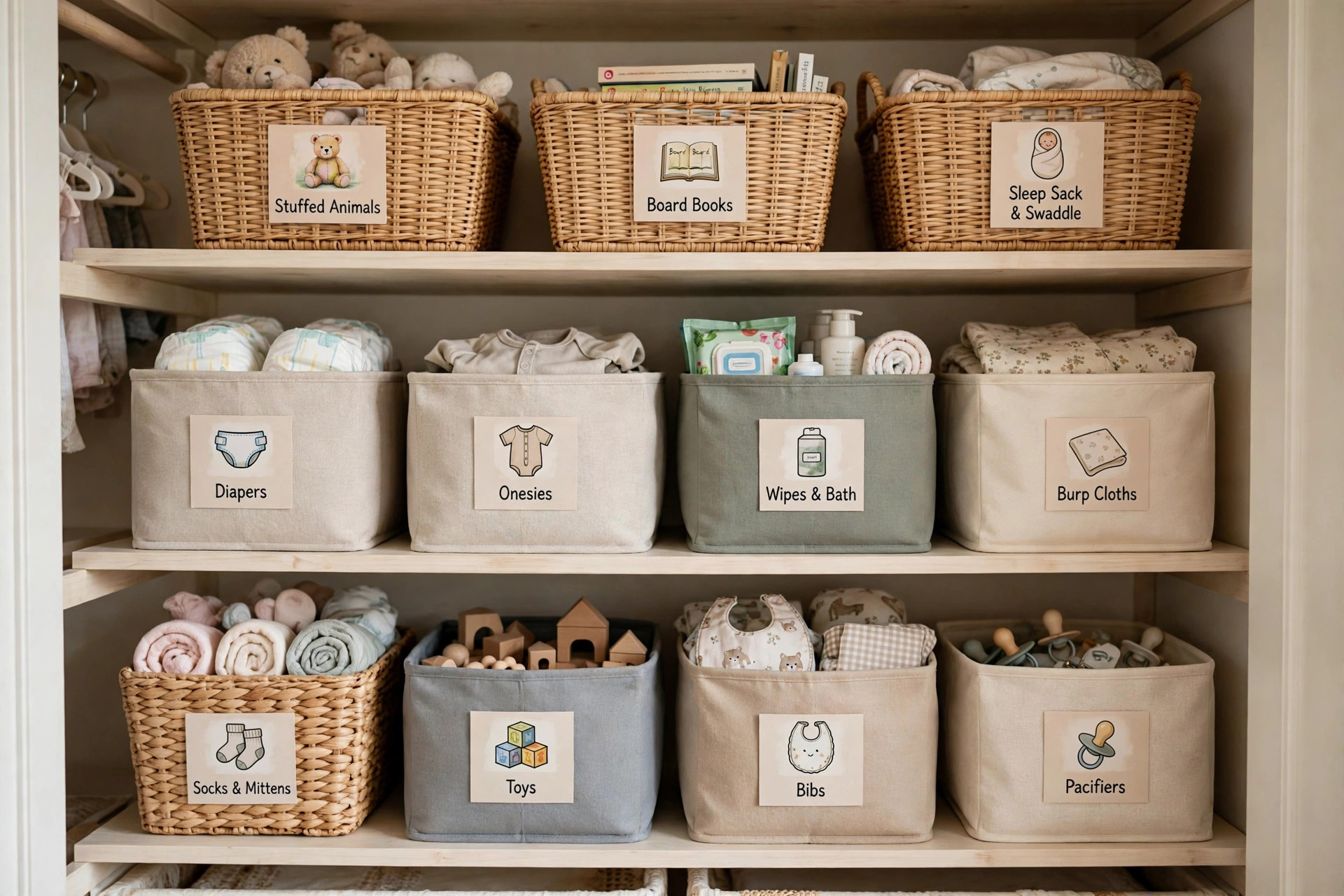
A baby closet without labels is a closet where everything drifts, because the bin that held the 0–3 month clothes last month holds the 3–6 month clothes this month, and the person who puts things away — a partner, a grandparent, a babysitter — is the person guessing. Label everything — the label that stops the drift — so every bin, basket and shelf says what it holds and the things go back where they belong. Use picture labels as well as words, so anyone can read them, and put the label where you look — on the front of the bin, not the lid — because the label that is seen is the label that is followed. One label per box, and the drift stops.
22. Plan for the next size up — the closet that grows with the baby
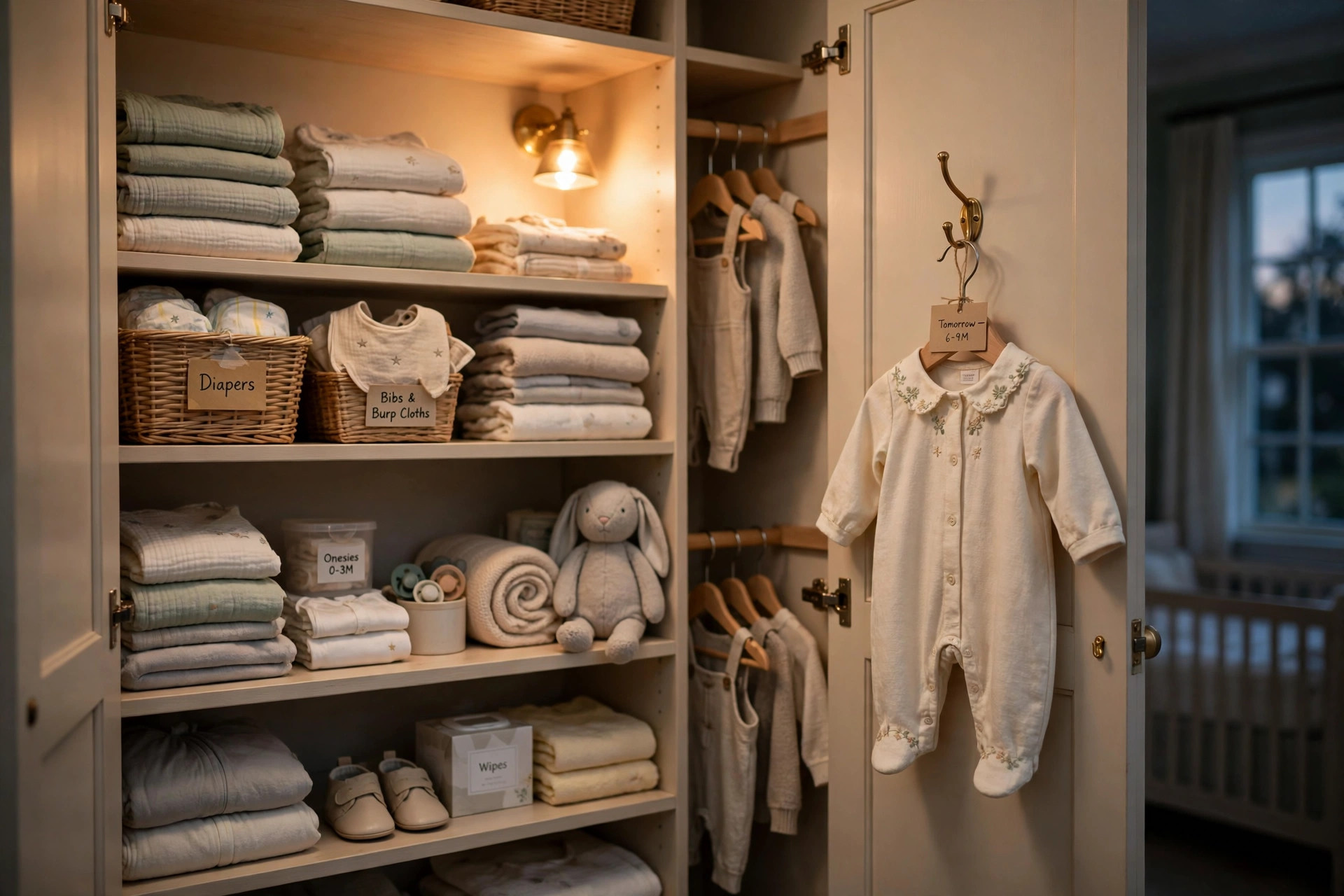
A baby closet set up for today is a closet that does not fit next month, because the baby grows, the sizes change, and the closet that held the 0–3 month clothes is the closet holding the 3–6 month clothes. Plan for the next size up — the closet that grows with the baby — so the next size is already waiting on the shelf when the current size stops fitting. Keep one bin of the next size on the top shelf, labelled and ready, and pull it forward the moment the current size gets tight, because the bin that is ready is the bin that makes the changeover take minutes. Check the next size each month in the sort from idea 19, because the plan that is checked is the plan that keeps working. One bin ahead, and the closet grows with the baby.
Which baby closet idea fits which situation?
| Situation | Best first move | Budget | Tools needed |
|---|---|---|---|
| Can't find the right size | Sort by size first (idea 1) | Free | Size dividers |
| Outgrown clothes take over | Outgrown bin on the top shelf (idea 2) | Low | Bin |
| All four seasons in one closet | Rotate by season (idea 3) | Free | Bin |
| Morning outfit hunt | Keep the everyday within reach (idea 4) | Free | None |
| One rod, not enough hanging | A second rod for tiny clothes (idea 7) | Low | Rod |
| Hangers eat all the space | Slim baby hangers (idea 8) | Low | Hangers |
| Onesies pile and topple | Drawer dividers for the onesies (idea 10) | Low | Dividers |
| Socks and mittens vanish | Clear bins for the small things (idea 12) | Low | Bins |
| Tiny shoes always lost | A shoe shelf for the tiniest shoes (idea 13) | Low | Shelf |
| Nappy things scattered | A rolling cart beside the closet (idea 17) | Low | Cart |
| Closet refills as baby grows | One in, one out (idea 18) | Free | None |
| Baby outgrows everything monthly | A monthly five-minute sort (idea 19) | Free | None |
You do not need all 22 ideas. You need the three that solve your closet — usually the size sort that stops the morning hunt, the outgrown bin that keeps the rail honest, and the second rod that doubles the hanging for the tiny clothes. Start with the size sort, do it this weekend before the next shop, and fit the second rod. Do that and the next time you open the closet, the outfit will be in its size section, the small things will be in their clear bins, and the floor will be clear.
Save this post for the next nursery sort-out, and if the room around the closet needs the same treatment, read 28 Bedroom Storage Ideas for 2026 next — it is Post 31, the room the nursery lives in — and 26 Kids Room Storage Ideas for 2026, Post 32, for the kids' room the nursery grows into. This is the eleventh post of the new Organization by problem run — Posts 56 to 80, one problem at a time — and the run keeps going with the room next door. The teen room itself gets its own deep dive in Teen Room Organization, where the teen-approved storage that actually gets used takes over from the baby closet.
Publish date assigned at publishing time. Updated as new baby closet finds are tested.
Frequently asked questions
How do I organize a baby closet?
Sort by size first, so the rod runs smallest to largest with size dividers between the sections, and keep an outgrown bin on the top shelf for the clothes baby has finished. Fit a second rod for the tiny clothes, switch to slim baby hangers, and use clear bins for the socks, hats and mittens so the small things stay visible. Hang the everyday outfits at eye level and keep the next size up in a labelled bin, ready to pull forward.
What size should I sort baby clothes by?
Sort by the size on the label — 0–3 months, 3–6 months, 6–9 months, 9–12 months — using size dividers on the rod between the sections. Keep the current size in the middle of the rail, the next size up at one end, and move the outgrown size to the bin on the top shelf the moment it stops fitting. Check the sizes monthly, because babies outgrow a size in weeks, not months.
How do I keep a baby closet tidy as my baby grows?
Use the one-in-one-out rule, so every new outfit means one old outfit leaves in the outgrown bin, and do a five-minute sort once a month — try the borderline outfits, move the outgrown ones to the bin, and pull the next size forward. Label every bin and basket so anyone putting things away can see where they go, and keep a keepsake box for the true firsts only, so the closet holds what baby wears now and nothing more.