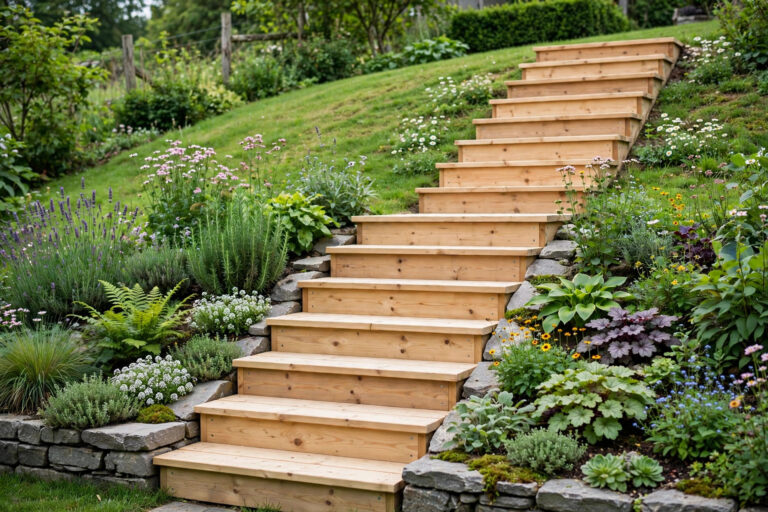
22 DIY Outdoor Lighting Ideas for 2026
A garden goes dark at sunset, and that is a shame, because the garden you worked on all day is the garden you cannot see after dinner. The patio table sits empty, the path disappears, the plants you planted vanish into the dark, and the evening that could have been spent outside moves indoors — not because the garden is finished, but because the garden has no light. The dark is not the problem — the problem is that DIY outdoor lighting feels like a job for an electrician, so the garden stays dark while the lights you could have hung yourself sit in a shop.
These 22 DIY outdoor lighting ideas turn any garden, patio or balcony into a room that glows after dark: warm string lights overhead, solar lights along the path, lanterns on the table, and a timer that turns it all on by itself — so the evening moves outside and stays there.
Every idea below works in a real home, from a balcony where the whole display is one string of fairy lights to a big garden where the path, the patio and the trees all glow. The firepit the lights gather around gets its own deep dive in 24 DIY Backyard Firepit Ideas for 2026, where the warm light over the seating is the same glow these ideas build — and the planters the path lights sit beside get their full treatment in 26 DIY Planters Ideas for 2026. Pick three ideas that fit your space, start with the string lights, and build from there.
Pick your glow first
1. Warm string lights — the glow that makes the garden feel like a room
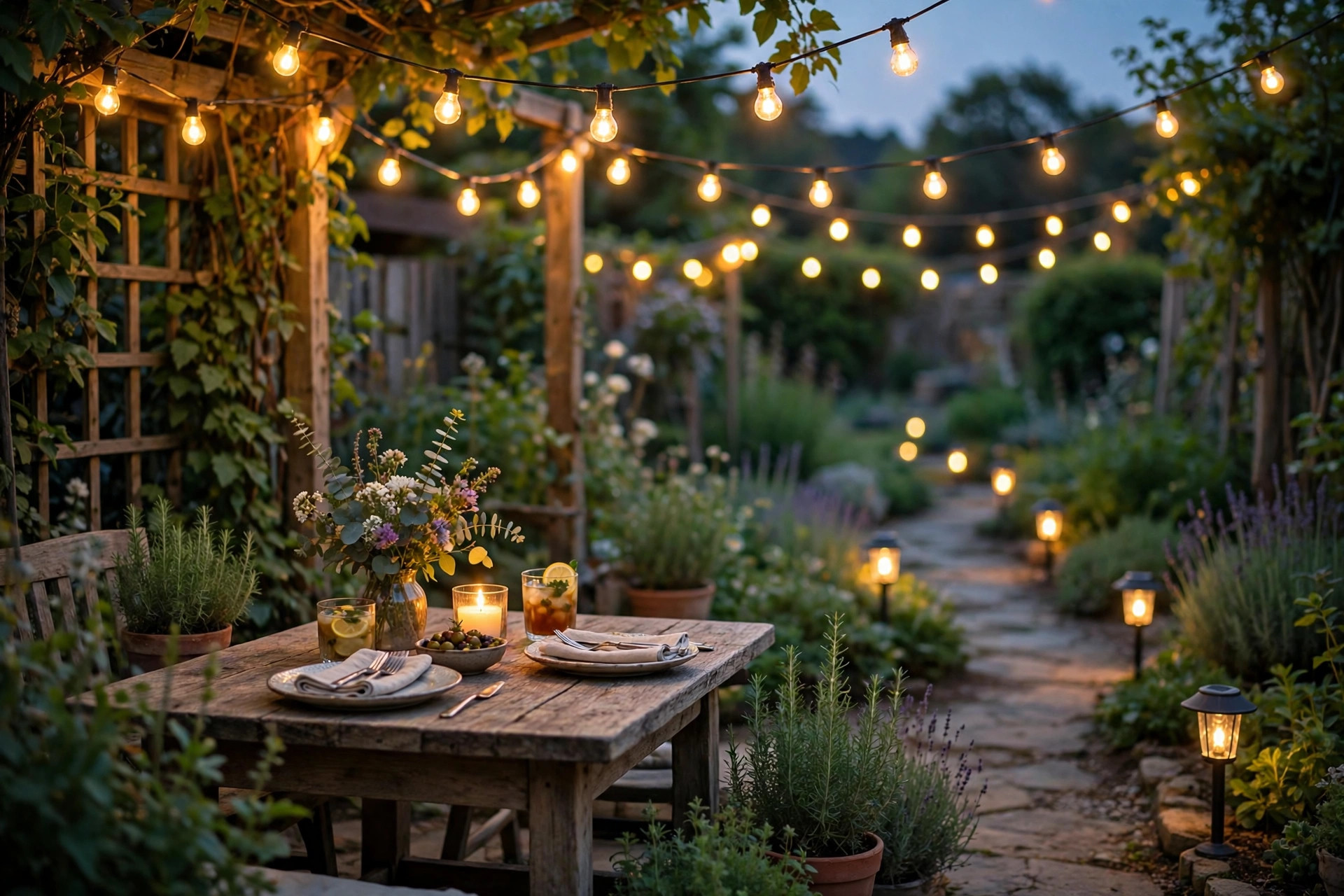
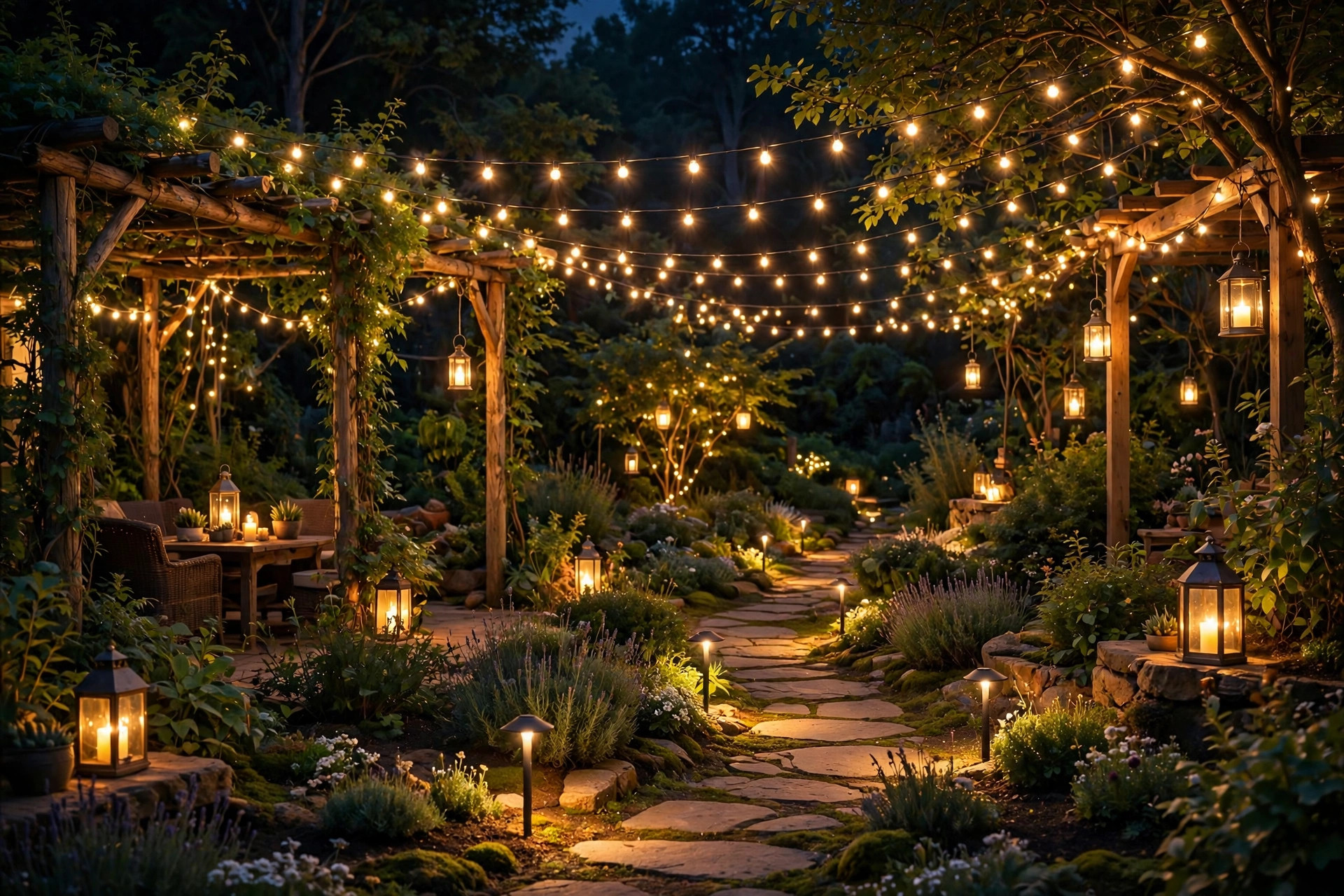
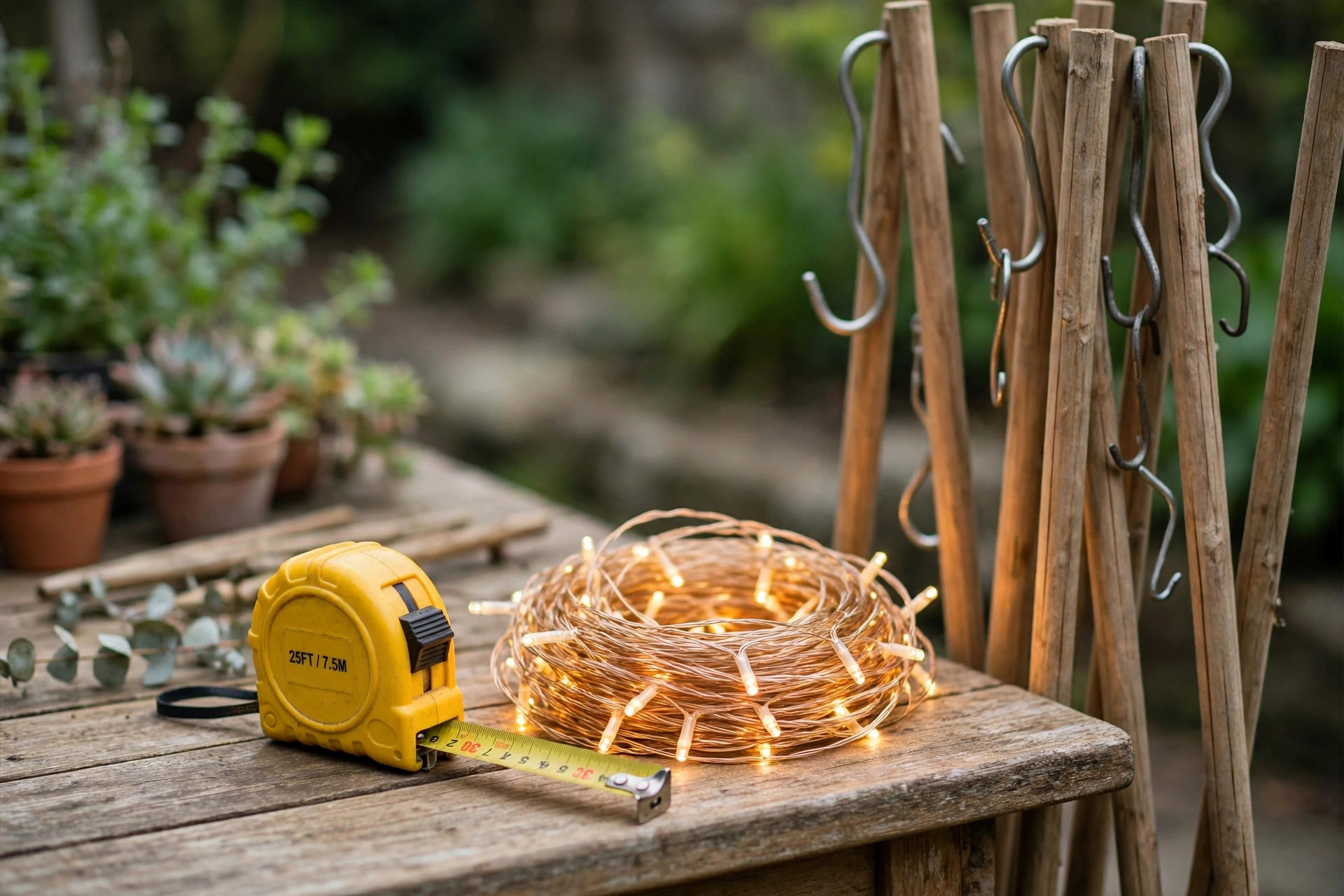
A garden with no light overhead feels like a yard, because the dark presses down, the table sits in a pool of shadow, and the evening that should feel warm feels like standing in a car park. Hang warm string lights — the glow that makes the garden feel like a room — so the lights hang above the table like a ceiling, the warm bulbs turn the dark into a soft gold, and the garden stops being a yard and starts being a room. Pick warm white bulbs, not cold white, because the warm bulbs are the bulbs that make skin look good and food look warm, and the cold bulbs are the bulbs that make the garden look like a hospital car park. Hang one strand across the patio first, plug it in, and stand back at dusk, because the strand that is hung is the strand that shows you the whole garden can glow. One strand of warm string lights, and the garden has a ceiling.
2. Solar path lights — the lights that charge themselves
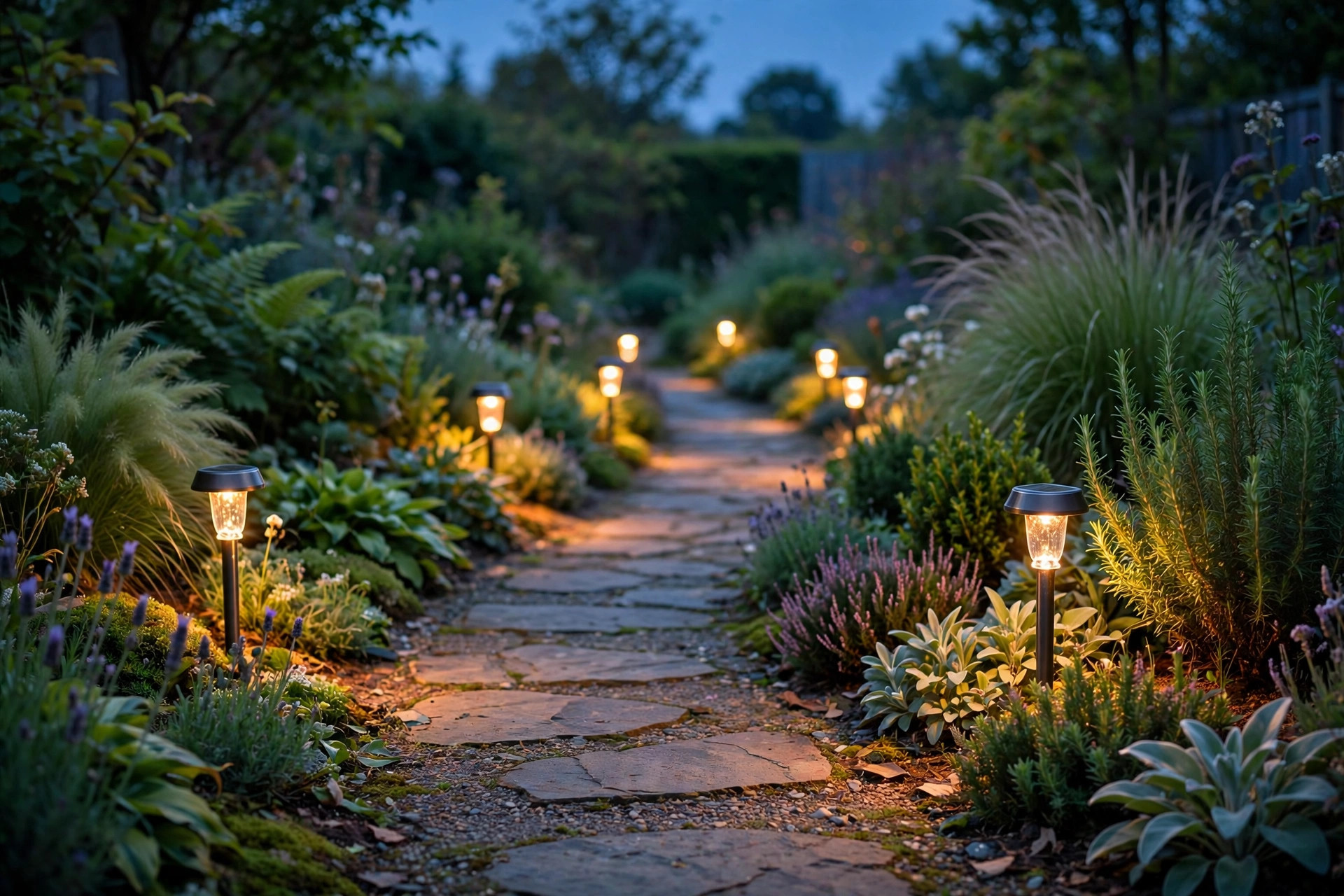
Path lights that need wiring never get installed, because the wiring means digging, the digging means a weekend lost, and the path that needs light is the path that stays dark for another year. Use solar path lights — the lights that charge themselves — so each stake sits in the soil, charges all day in the sun, and switches itself on at dusk, and the path that was dark is the path that glows without a single wire. Push the stakes into the soil along the edge of the path, a step apart, and leave them alone for a day, because the stake that charges in full sun is the stake that glows all evening. Keep the little solar panel clean and facing the sun, because the panel that is dusty is the panel that charges slowly, and the stake that is clean is the stake that glows until bedtime. One row of solar stakes, and the path lights itself.
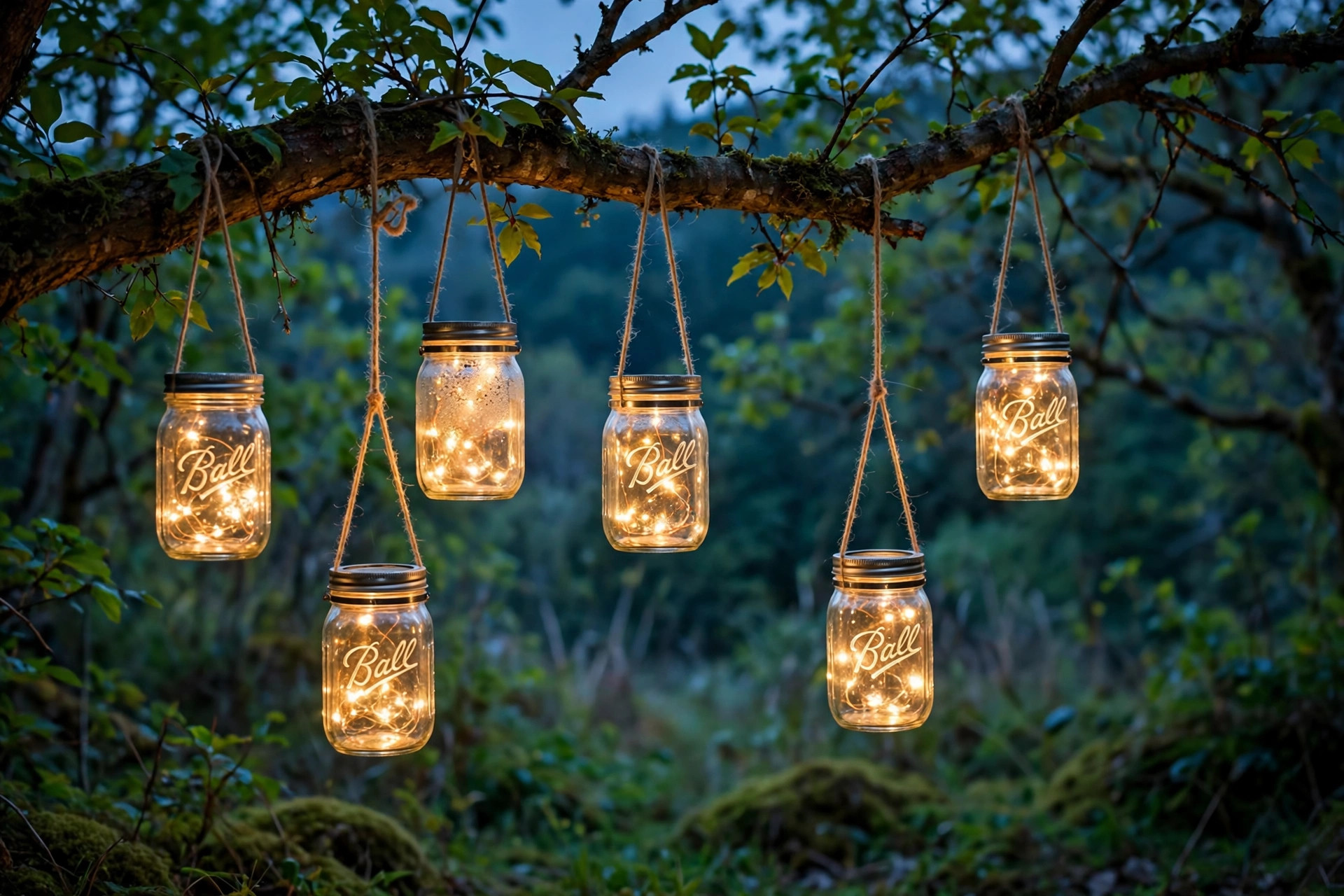
3. Mason jar lanterns — the jar lights that cost almost nothing
Lanterns from the shop cost more than the evening they light, because each lantern is a price tag, the price tags add up, and the table that needs four lanterns is the table that gets none. Make mason jar lanterns — the jar lights that cost almost nothing — so each jar holds a tea light or a short string of fairy lights, the glass turns the flame into a soft glow, and the table that had no light is the table that glows for the price of a jar. Put a tea light in the bottom of each jar, or coil a short battery fairy light inside, and set the jars along the table or on the steps, because the jar that holds the light is the jar that makes the flame safe from the wind. Hang one from a tree branch with a loop of wire, because the jar that hangs is the jar that lights the path from above, and the jars that sit on the table are the jars that light the faces around it. Four jars, and the table glows for almost nothing.
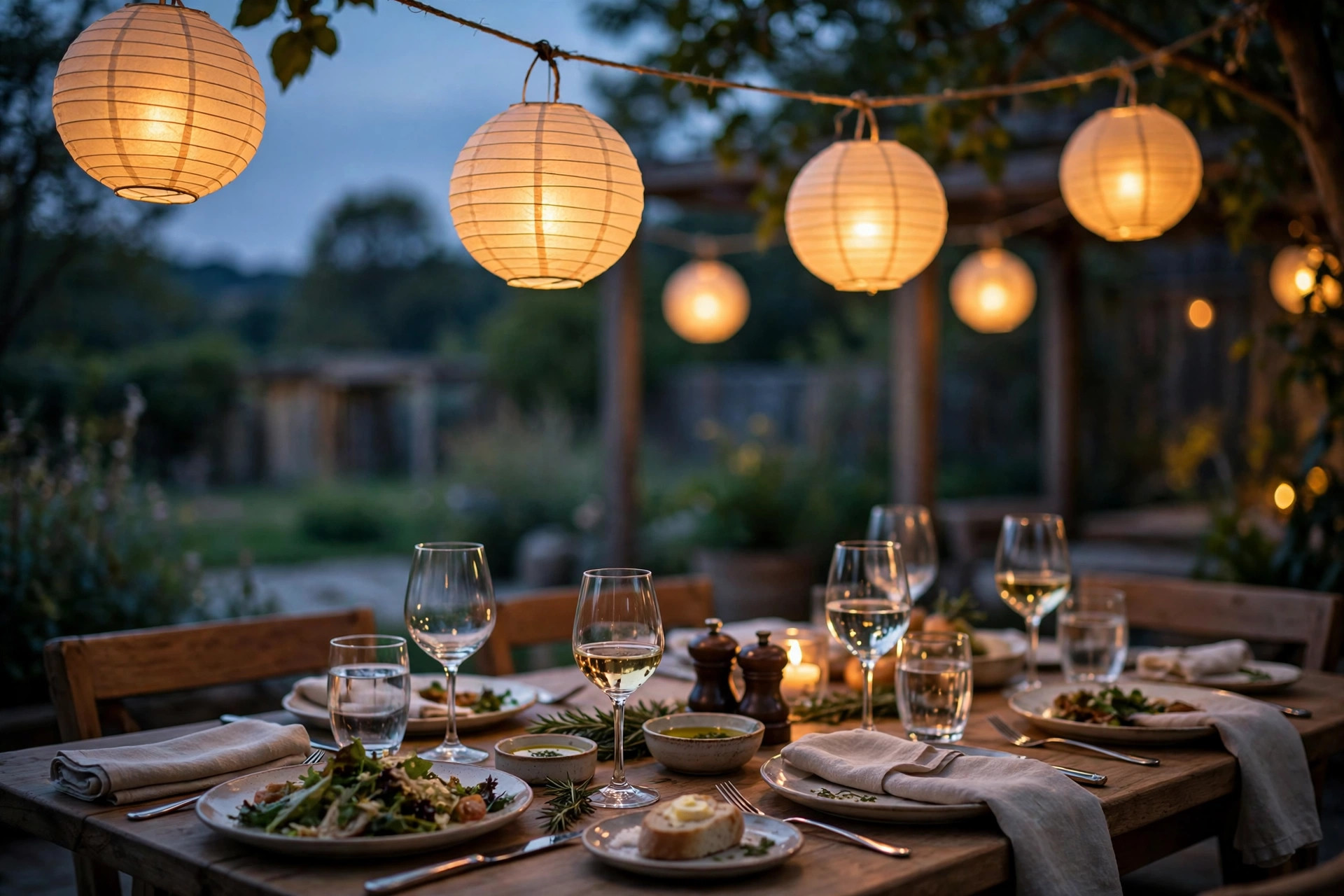
4. Paper lanterns — the soft round glow for parties
A party table with bare bulbs feels harsh, because the bulbs glare, the glare makes everyone squint, and the dinner that should feel soft feels like sitting under a street light. Hang paper lanterns — the soft round glow for parties — so each lantern wraps a bulb in paper, the paper turns the glare into a soft round glow, and the table that felt harsh is the table that feels like a celebration. Hang them over the table in a row, or cluster three at different heights over the patio, because the lantern that hangs low is the lantern that lights the plates, and the lanterns that hang high are the lanterns that light the whole patio. Keep them under a roof or bring them in when it rains, because the lantern that gets wet is the lantern that sags, and the lantern that stays dry is the lantern that glows all summer. Three paper lanterns, and the party has its glow.
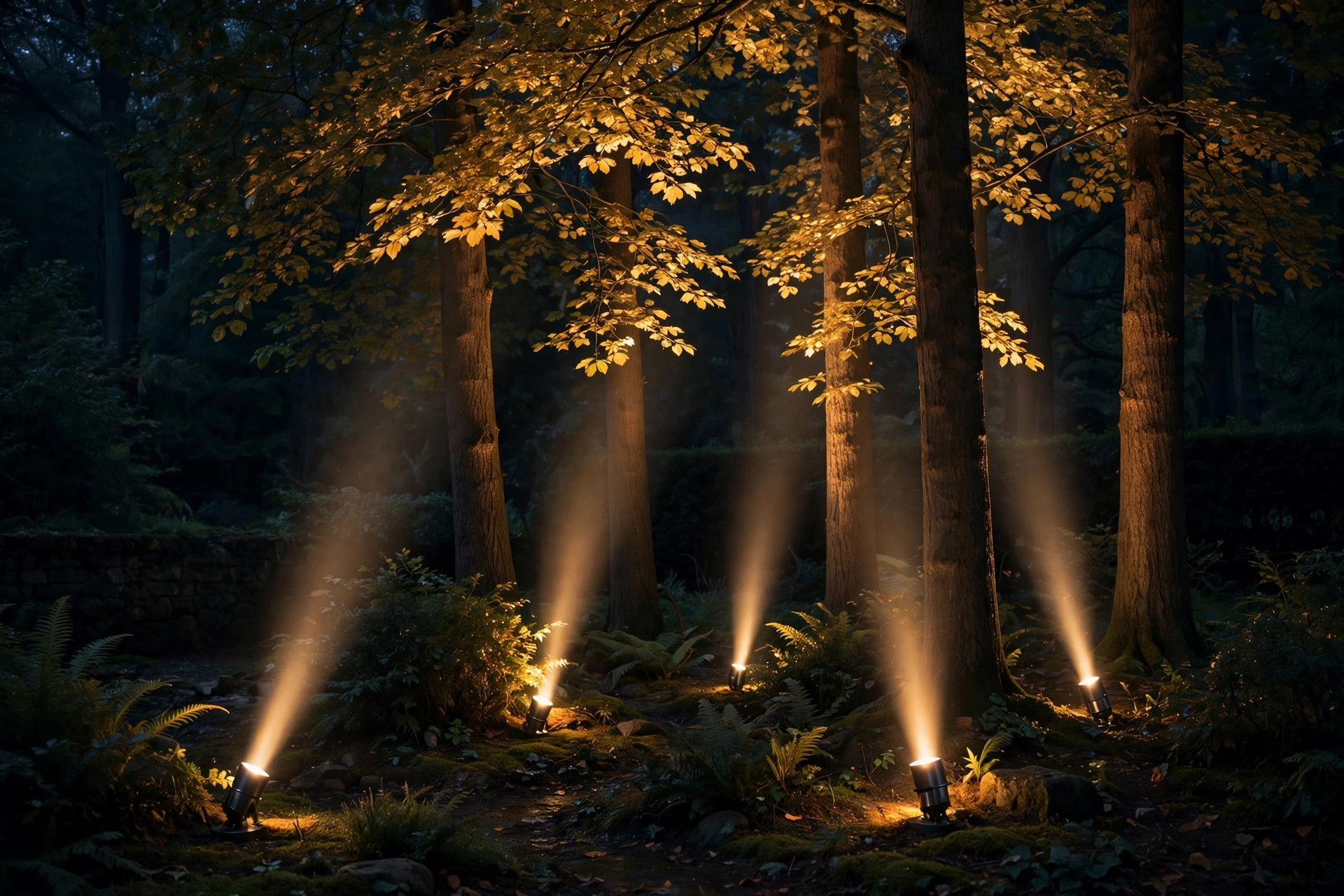
5. Spotlights on the trees — the light that makes the garden tall at night
A garden at night looks flat, because the trees vanish, the shrubs vanish, and the garden that is full of height by day is a flat black wall after dark. Put spotlights on the trees — the light that makes the garden tall at night — so each spotlight shines up into the branches, the leaves catch the light, and the garden that looked flat is the garden that looks tall again. Place the spotlight at the base of the tree, aimed up through the branches, because the light that shines up is the light that shows the shape of the tree, and the light that shines down is the light that only shows the ground. Use one spotlight per tree, not three, because the tree that is lit once is the tree that looks natural, and the tree that is lit three times is the tree that looks like a stage. One spotlight per tree, and the garden grows tall at night.
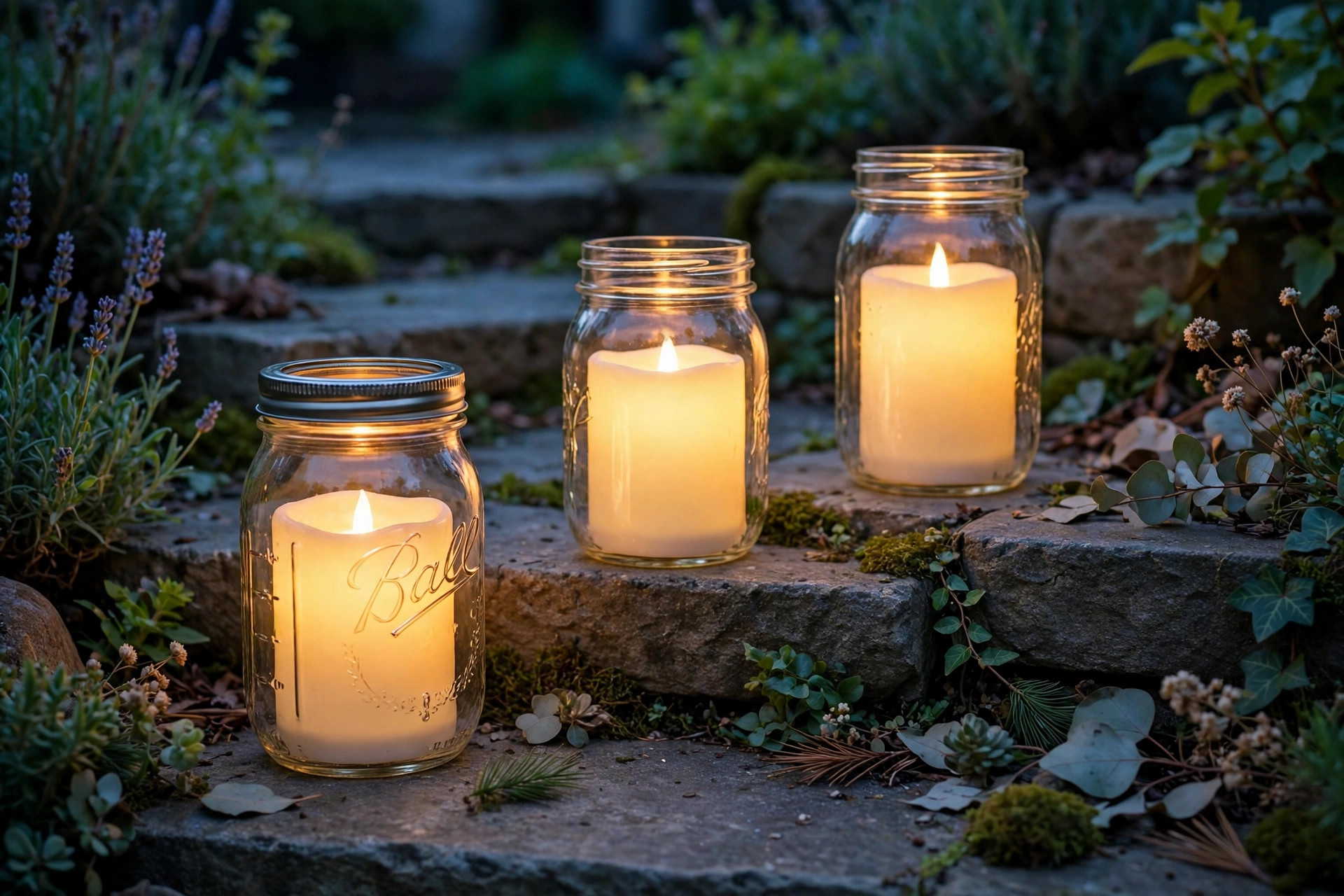
6. Flameless candles — the candlelight that never blows out
Real candles outdoors blow out, because the wind finds them, the flame flickers and dies, and the candle that should glow all evening is the candle you relight five times before dessert. Use flameless candles — the candlelight that never blows out — so each candle glows with a warm flicker, the wind cannot touch it, and the table that kept losing its candles is the table that glows all evening. Put them in the mason jars from idea 3, or line them along the steps and the window ledges, because the candle that sits in a jar is the candle that looks real, and the candles that line the steps are the candles that guide feet home. Keep a spare set of batteries in the drawer, because the candle that runs out of batteries is the candle that goes dark mid-evening, and the spare that is ready is the spare that saves the glow. One set of flameless candles, and the wind stops winning.
Build it yourself
7. Hang string lights on poles — the span that holds the lights up
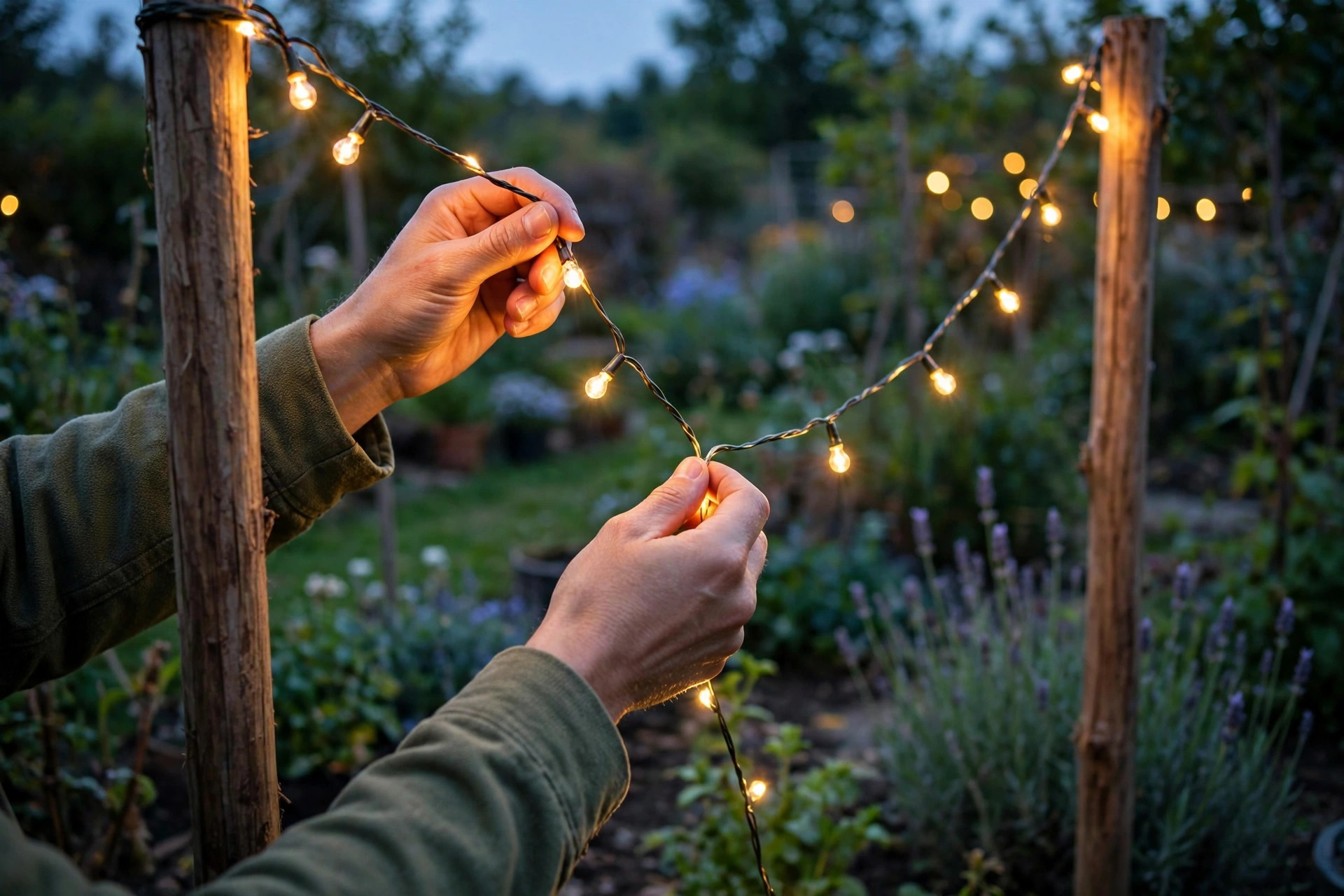
String lights need something to hang from, because the garden has no ceiling, the fence is too low, and the lights that should span the patio are the lights with nowhere to go. Hang string lights on poles — the span that holds the lights up — so two wooden poles stand at the corners of the patio, the lights run between them, and the patio that had no ceiling is the patio that glows under a canopy of bulbs. Sink the poles in planters filled with concrete, or bolt them to the deck, because the pole that is fixed is the pole that holds the lights through the wind, and the pole that leans is the pole that comes down on the table. Run the lights in a zigzag between the poles, not a straight line, because the zigzag that crosses the patio is the zigzag that lights every corner, and the straight line that crosses once is the line that leaves half the patio dark. Two poles, and the lights have somewhere to hang. (Check on Amazon for an outdoor string light hanging kit with poles and guide wires, sized for a standard patio.)
8. Make solar mason jar lights — the jar that charges by day
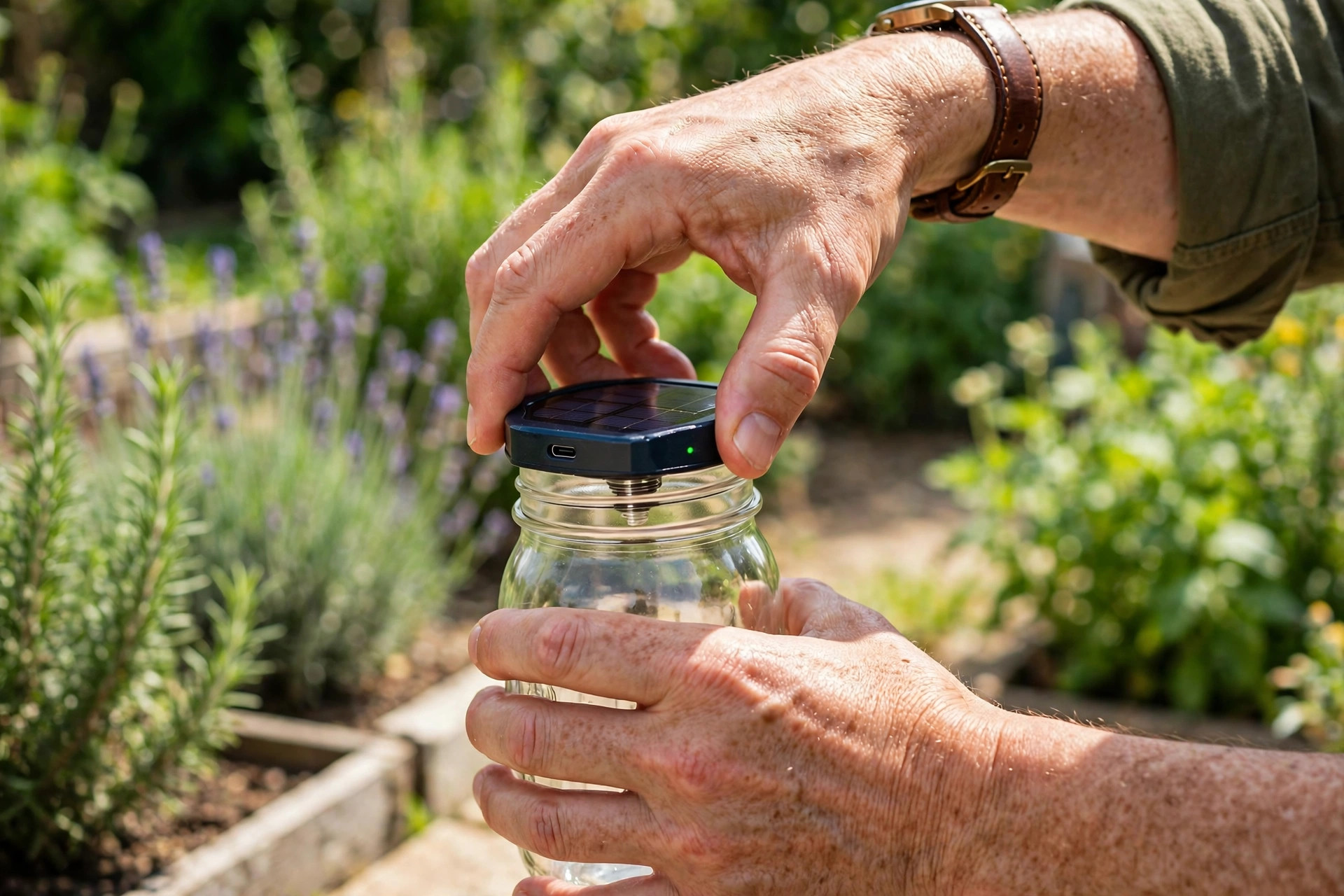
A jar with a tea light needs a match every evening, because the tea light burns out, the match comes out, and the jar that should glow on its own is the jar you have to light by hand. Make solar mason jar lights — the jar that charges by day — so each jar lid holds a small solar panel, the panel charges all day, and the jar that sat dark is the jar that glows on its own at dusk. Screw a solar lid onto a clean jar, hang the jar from a branch or set it on the wall, and leave it in the sun, because the lid that charges in full sun is the lid that glows until midnight. Keep the panel facing up and wipe it once a month, because the panel that faces the sun is the panel that charges, and the jar that is wiped is the jar that stays bright. One solar lid per jar, and the jars light themselves.
9. Tin can lanterns — the punched-tin glow
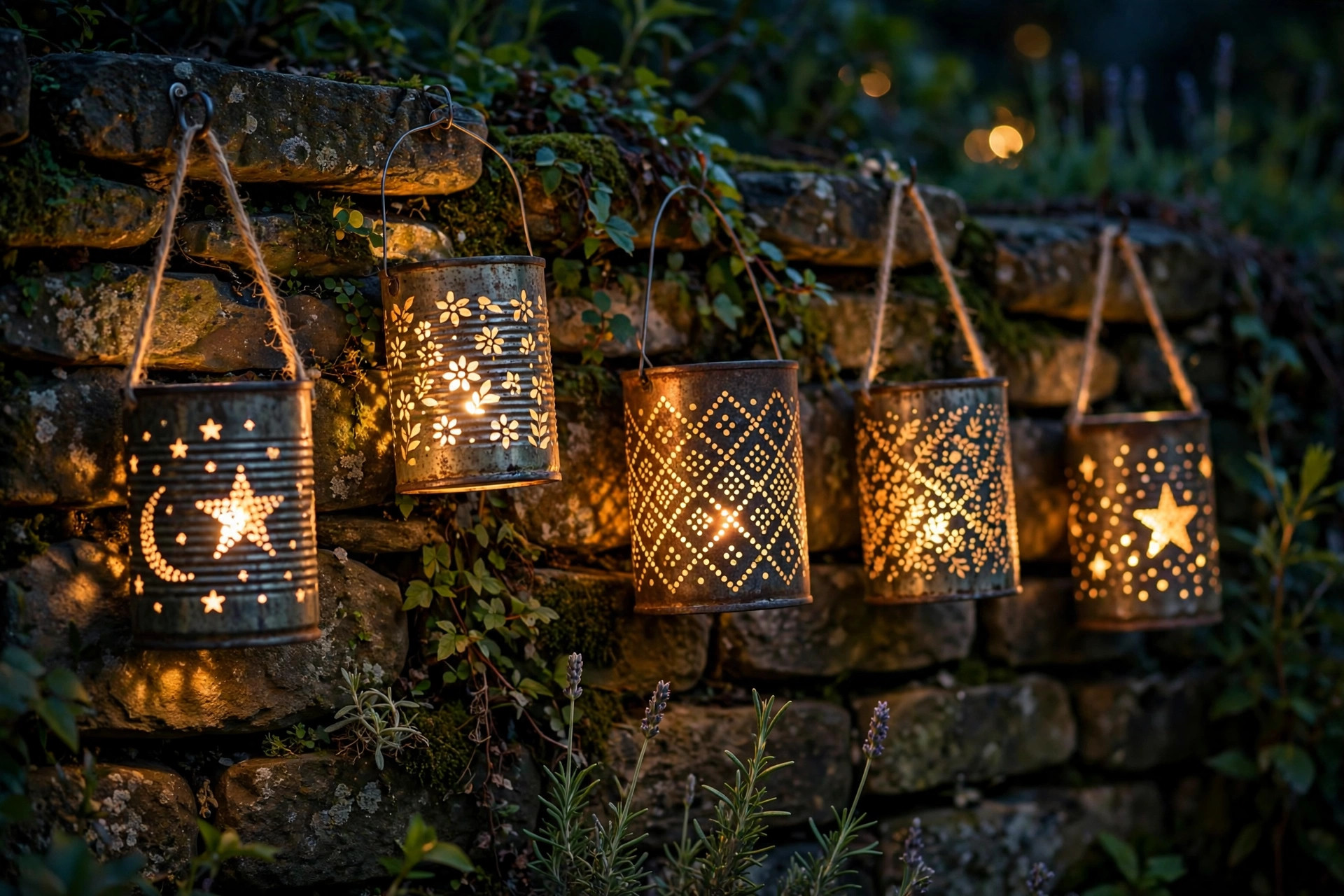
Tin cans go in the bin, because the beans are eaten, the can is empty, and the can that could have been a lantern is the can that gets thrown away. Make tin can lanterns — the punched-tin glow — so each can gets a pattern of holes punched through it, a tea light goes inside, and the can that was rubbish is the can that throws a pattern of light across the wall. Fill the can with water and freeze it first, because the ice that fills the can is the ice that stops the tin denting when you punch it, and the can that is punched on ice is the can that keeps its shape. Punch the holes with a nail and a hammer, in a star or a row of dots, because the pattern that is punched is the pattern that shows on the wall, and the can that is painted is the can that looks bought. Three tin cans, and the wall glows with stars. (Check on Amazon for a solar mason jar light kit with lids and fairy lights, to light the jars without a flame.)
10. Stake lights along the path — the line that guides feet home
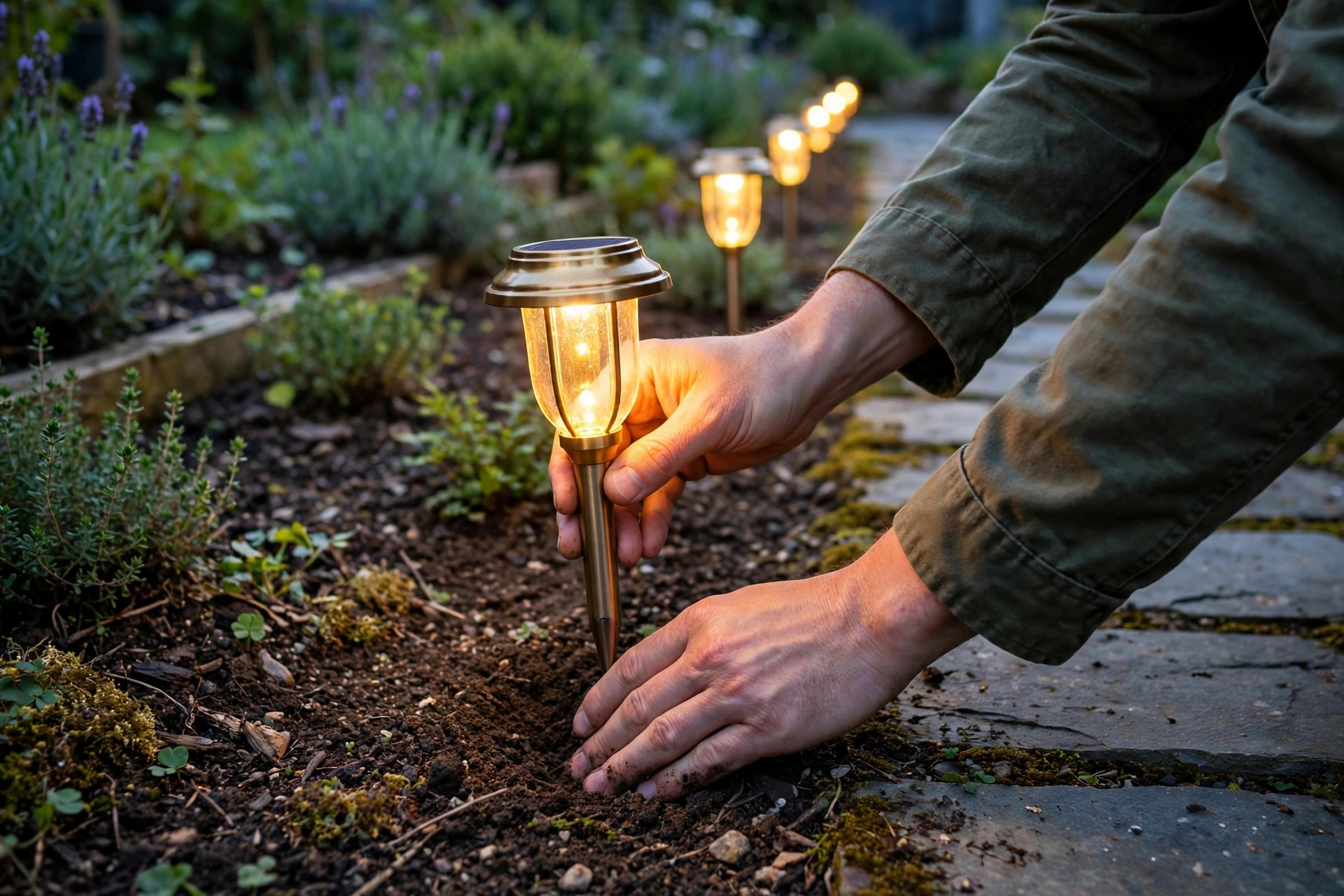
A path with no light is a path you guess, because the step is somewhere, the edge is somewhere, and the feet that walk it at night are the feet that trip. Stake lights along the path — the line that guides feet home — so the lights stand in a row along the edge, each one marking the next step, and the path that was guessed is the path that is walked with confidence. Push the stakes into the soil a step apart, alternating sides if the path is wide, because the row that alternates is the row that shows both edges, and the row that stands on one side is the row that leaves the other edge dark. Keep the stakes low and the light warm, because the light that is low is the light that shows the ground, and the light that is high is the light that blinds the walker. One row of stakes, and the path guides feet home.
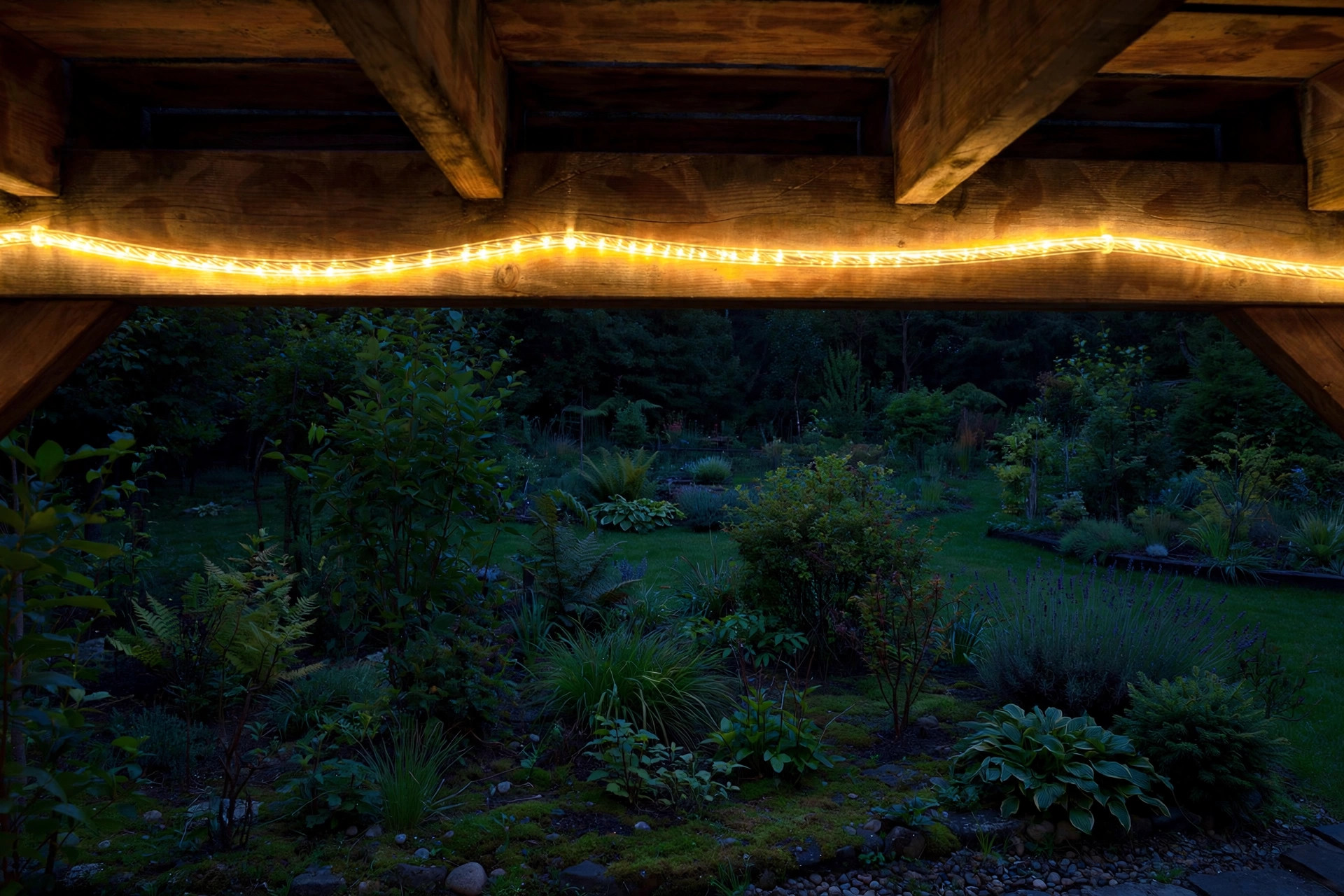
A deck at night is a dark platform, because the edge vanishes, the step down is invisible, and the deck that is safe by day is the deck you step off by accident after dark. Run rope light under the deck edge — the hidden line that outlines the deck — so the rope glows along the edge, the edge shows as a line of warm light, and the deck that vanished is the deck you can see. Stick the rope under the lip of the deck boards, or along the top of the risers, because the rope that hides under the lip is the rope that glows without glaring, and the rope that sits on top is the rope that gets kicked. Plug it into the same timer as the string lights, because the deck that lights with the rest is the deck that never gets forgotten, and the line that glows is the line that keeps feet on the deck. One rope, and the deck has an edge again.
12. Put it all on a timer — the switch that turns the garden on by itself
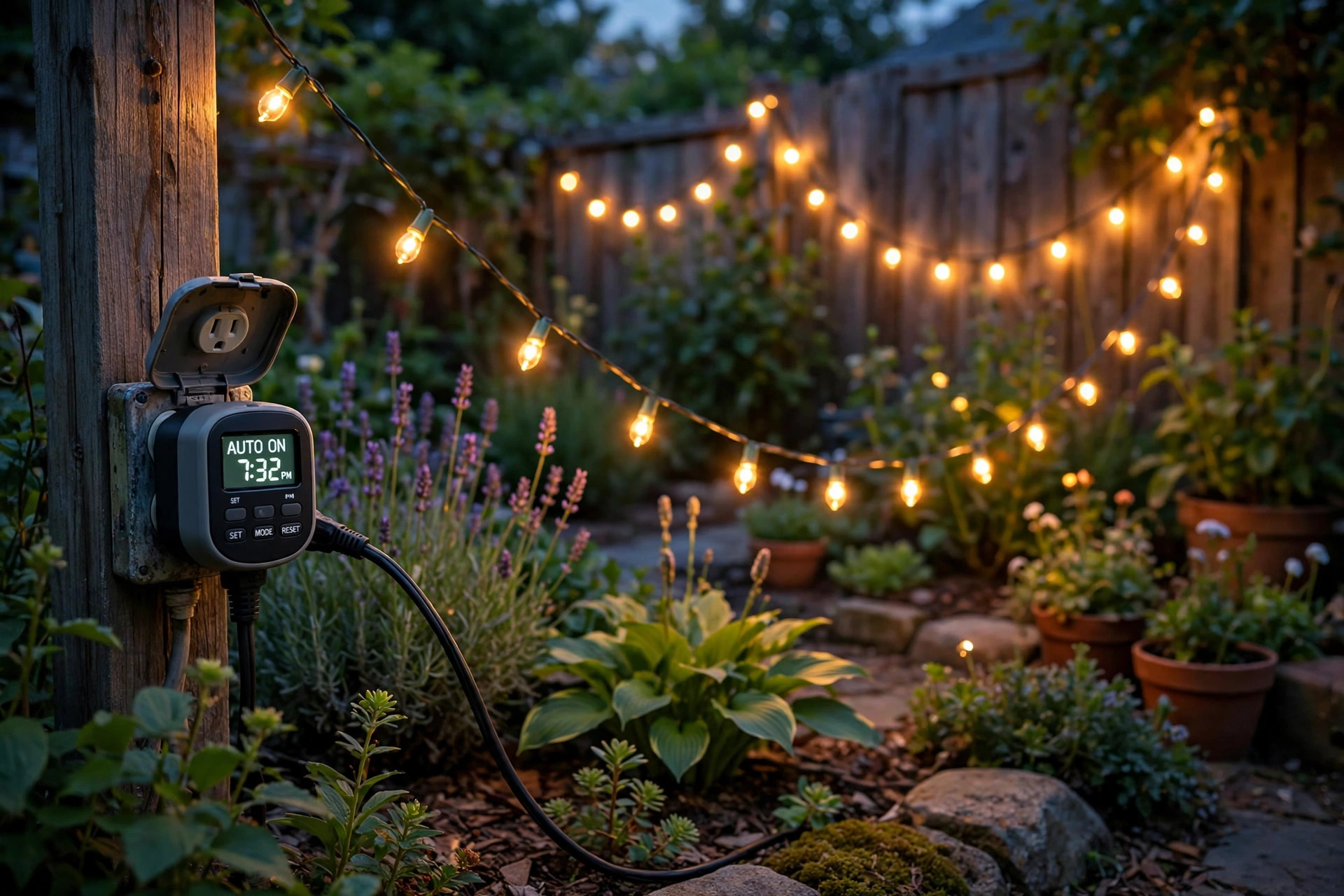
Lights you switch on by hand stay off, because the evening starts, the garden is dark, and the person who should switch the lights on is the person already sitting down with a drink. Put it all on a timer — the switch that turns the garden on by itself — so the timer plugs into the socket, the lights plug into the timer, and the garden that waited for someone is the garden that glows at dusk without anyone touching it. Set the timer to come on at dusk and off at bedtime, because the timer that matches the dark is the timer that never wastes light, and the lights that switch themselves on are the lights that are always on when you need them. Keep one spare timer in the drawer, because the timer that fails is the timer that leaves the garden dark, and the spare that is ready is the spare that saves the evening. One timer, and the garden turns itself on. (Check on Amazon for an outdoor plug-in timer with a dusk-to-dawn sensor, rated for garden lights.)
Light every spot
13. Light the patio table — the table that stays out after dark
The patio table goes inside at dusk, because the plates are dark, the faces are dark, and the dinner that started outside is the dinner that moves in before dessert. Light the patio table — the table that stays out after dark — so one lantern sits in the middle, a string of lights hangs above it, and the table that moved inside is the table that stays out until bedtime. Put the lantern in the centre and the string lights above, because the light that comes from above is the light that shows the plates, and the light that comes from the centre is the light that shows the faces. Keep the light warm and low, because the warm light is the light that makes the food look good, and the low light is the light that lets everyone see each other without squinting. One lantern and one strand, and the table stays out after dark.
14. Light the front door — the porch that welcomes people home
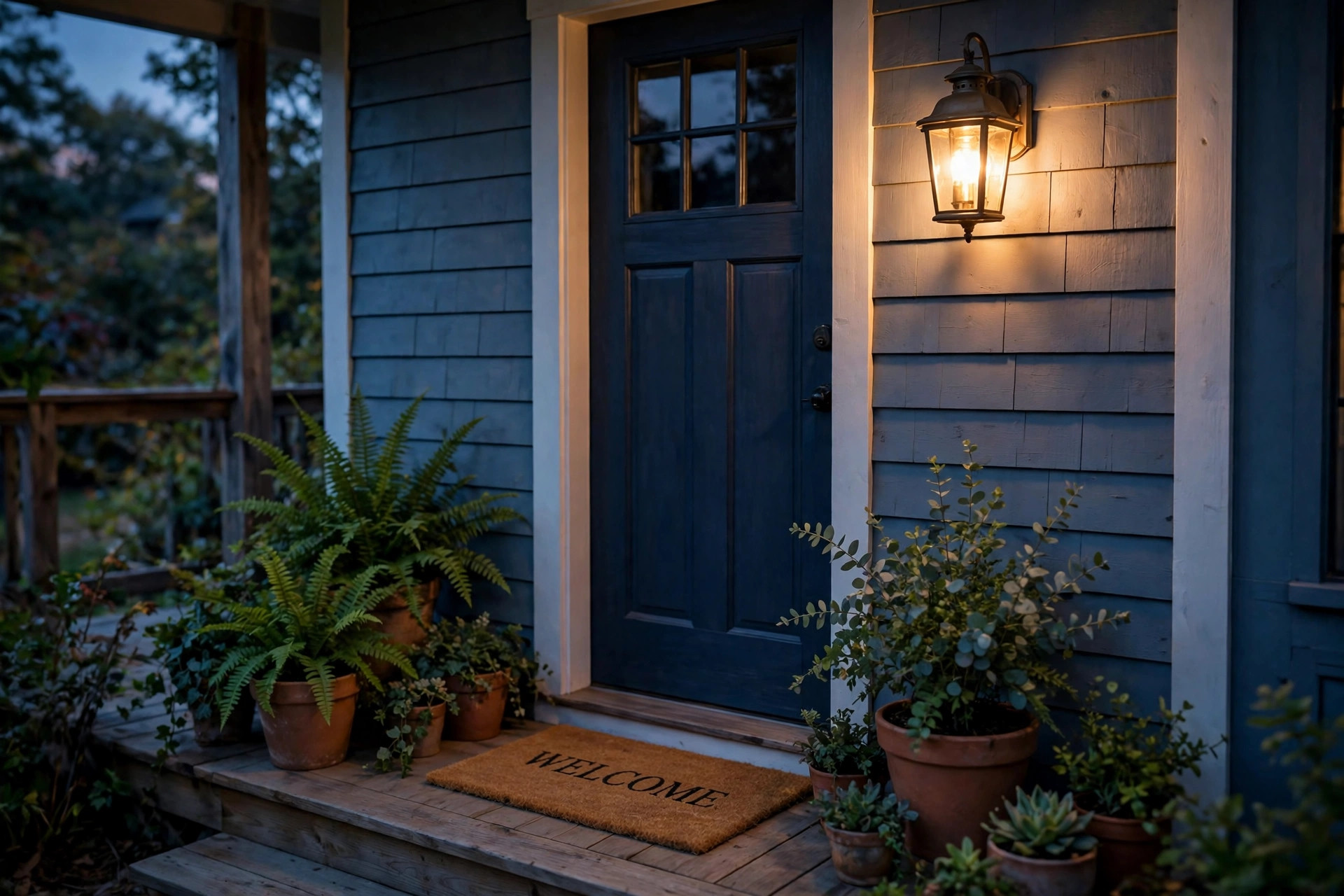
A front door in the dark feels unwelcoming, because the step is hidden, the keyhole is hidden, and the person coming home is the person fumbling at a dark door. Light the front door — the porch that welcomes people home — so one wall lantern glows beside the door, the step shows, the keyhole shows, and the door that felt unwelcoming is the door that says come in. Mount the lantern at shoulder height beside the door, not above it, because the light that sits beside the door is the light that shows the face of the person at it, and the light that sits above it is the light that throws shadows down. Put the lantern on the same timer as the garden lights, because the porch that lights with the garden is the porch that is never dark when you come home, and the door that glows is the door that welcomes you. One wall lantern, and the front door welcomes people home.
15. Light the garden path — the path you can actually walk at night
A garden path at night is a guess, because the paving is somewhere, the grass is somewhere, and the feet that walk it are the feet that step off the path onto the wet grass. Light the garden path — the path you can actually walk at night — so the stakes from idea 10 stand along the edge, the light shows the paving, and the path that was guessed is the path that is walked dry. Space the stakes a step apart and keep the light low, because the stakes that are spaced are the stakes that show every step, and the light that is low is the light that shows the ground instead of the eyes. The steps themselves get their full treatment in 20 DIY Outdoor Stairs Ideas for 2026, where the same stakes guide you down the garden steps too. One lit path, and the feet stay dry.
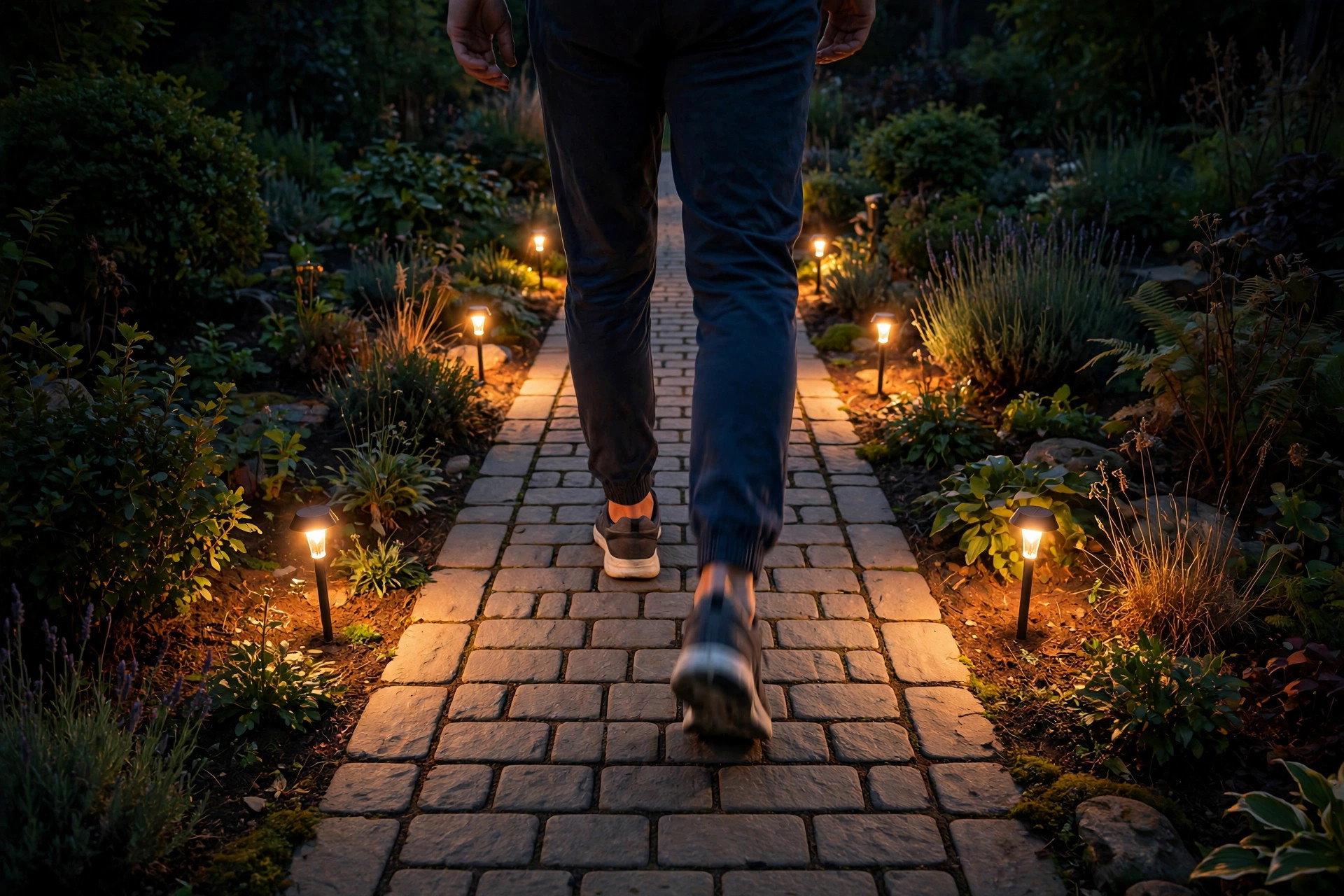
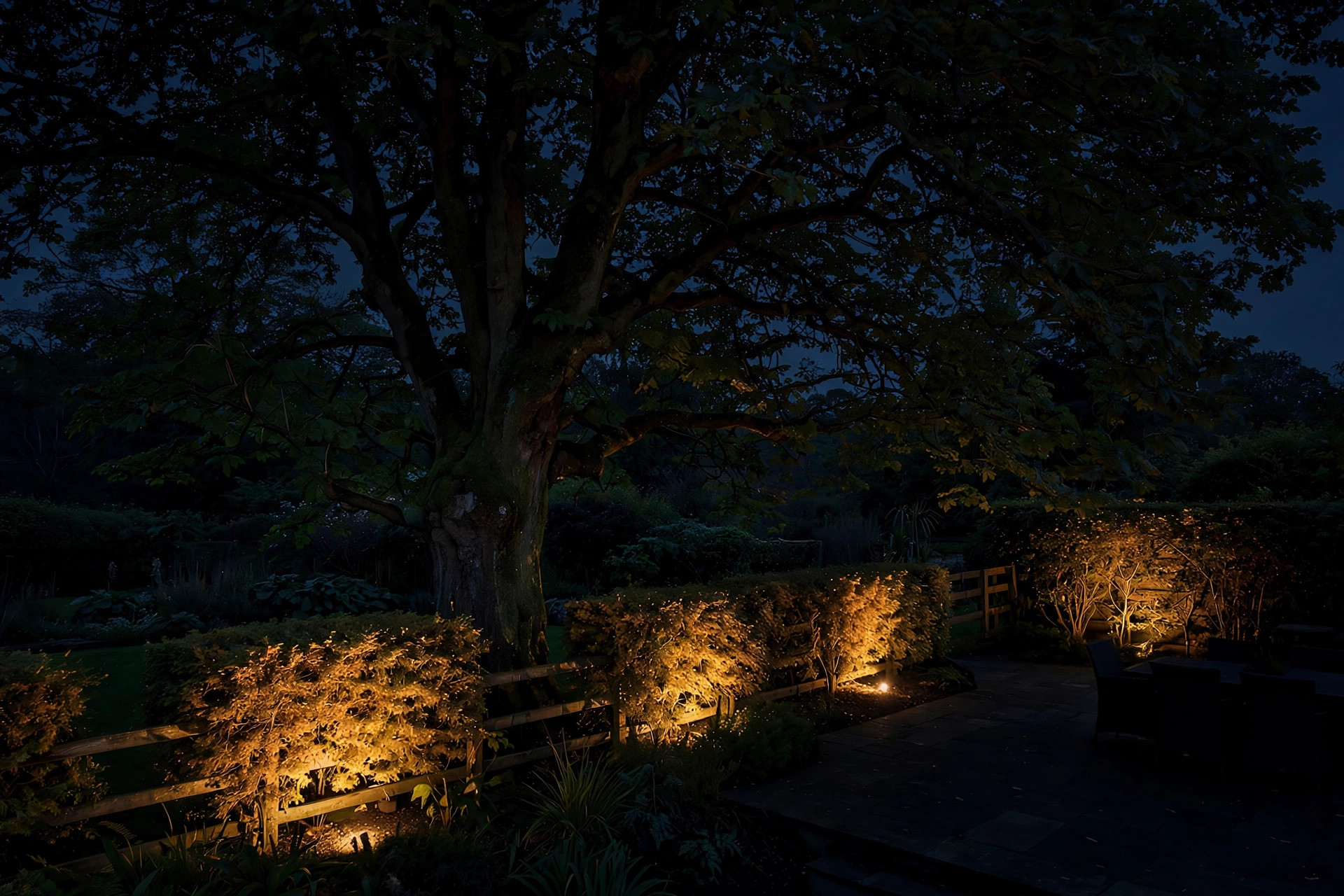
16. Light the trees and shrubs — the garden that looks bigger at night
A garden at night looks small, because the trees vanish, the shrubs vanish, and the garden that stretches to the fence by day is a garden that ends at the patio after dark. Light the trees and shrubs — the garden that looks bigger at night — so the spotlights from idea 5 shine up into the branches, the shrubs catch the light from below, and the garden that ended at the patio is the garden that stretches to the fence again. Light the biggest tree first, then the shrub by the fence, because the tree that is lit is the tree that pulls the eye to the back of the garden, and the shrub that is lit is the shrub that marks the boundary. Keep the light warm and the spots few, because the garden that is lit in three places is the garden that looks deep, and the garden that is lit everywhere is the garden that looks like a car park. Three spots of light, and the garden looks bigger at night.
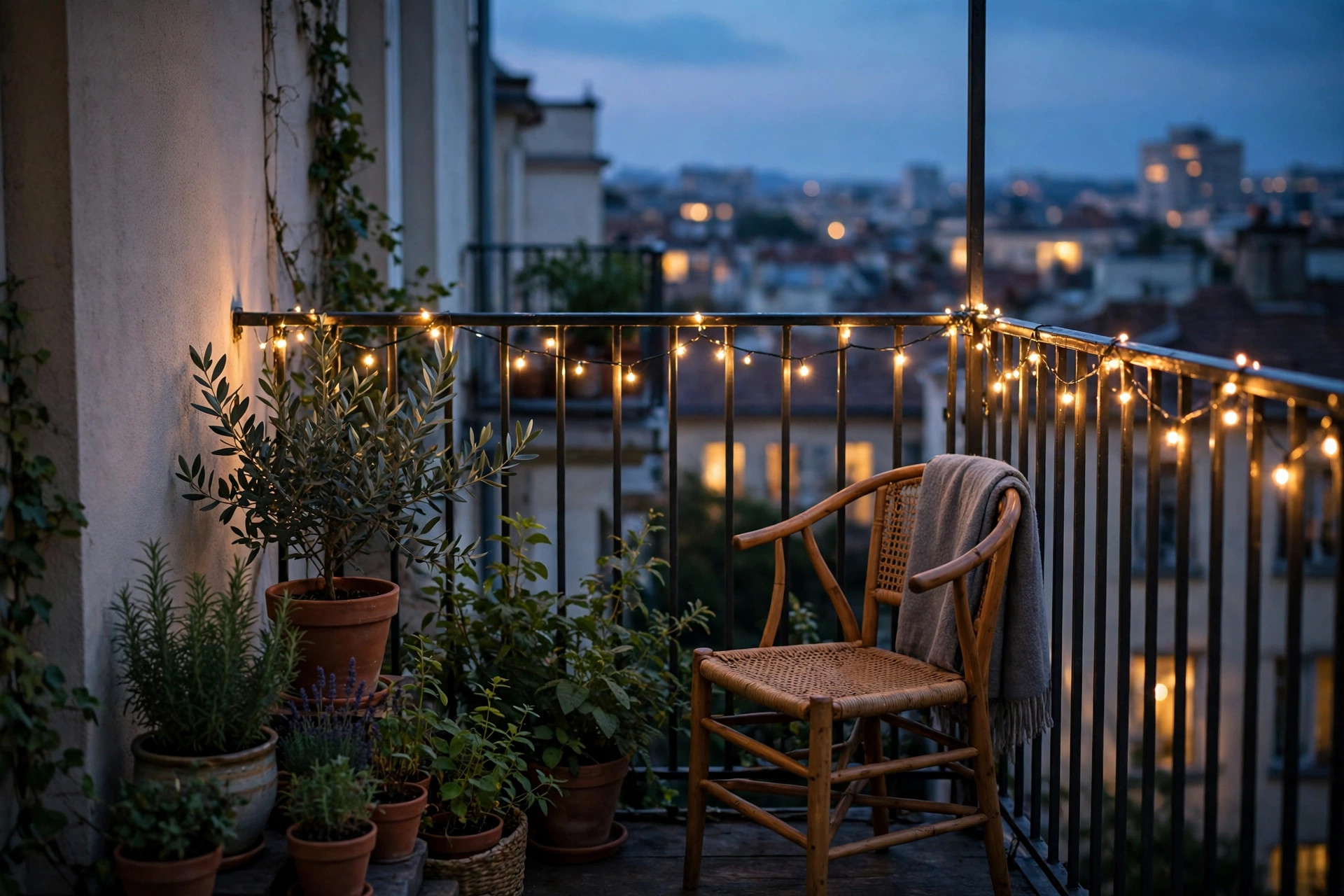
17. Light a small balcony — the tiny garden that glows too
A small balcony feels too small for lights, because the railing is short, the floor is small, and the balcony that could glow is the balcony that stays dark because it feels too small to bother with. Light a small balcony — the tiny garden that glows too — so one short string of fairy lights runs along the railing, two jar lanterns sit on the floor, and the balcony that stayed dark is the balcony that glows like a little room. Run the fairy lights along the top of the railing, not across the middle, because the lights that follow the railing are the lights that outline the balcony, and the lights that cross the middle are the lights that get in the way. Put the jars on the floor in the corners, because the jars that sit in the corners are the jars that light the plants without taking the chair's space, and the balcony that glows is the balcony you sit on after dark. One short string and two jars, and the tiny garden glows too.
Keep it glowing
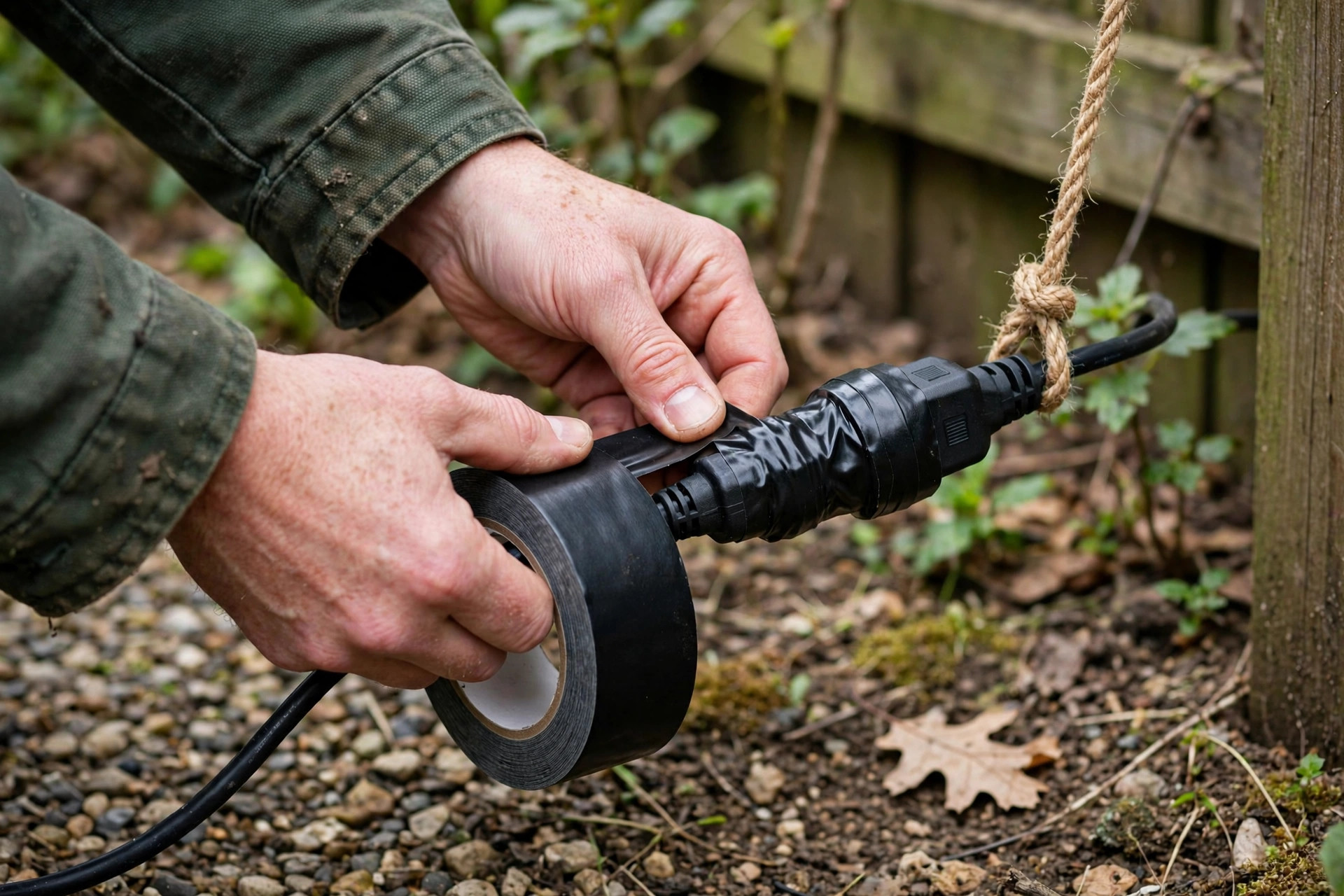
18. Weatherproof every join — the seal that stops the rain killing the lights
Outdoor lights die in the rain, because the water finds the joins, the joins corrode, and the lights that glowed all summer are the lights that go dark after the first autumn rain. Weatherproof every join — the seal that stops the rain killing the lights — so each plug and connector gets wrapped in waterproof tape, the connections sit under cover, and the lights that died in the rain are the lights that glow through it. Wrap every outdoor join in self-amalgamating tape, and keep the connections off the ground, because the join that is taped is the join that stays dry, and the connection that sits in a puddle is the connection that dies. Check the seals in spring and autumn, because the tape that is checked is the tape that gets replaced before it fails, and the lights that are sealed are the lights that glow all year. One roll of tape, and the rain stops killing the lights.
19. Check the batteries and panels — the charge that keeps the solar lights bright
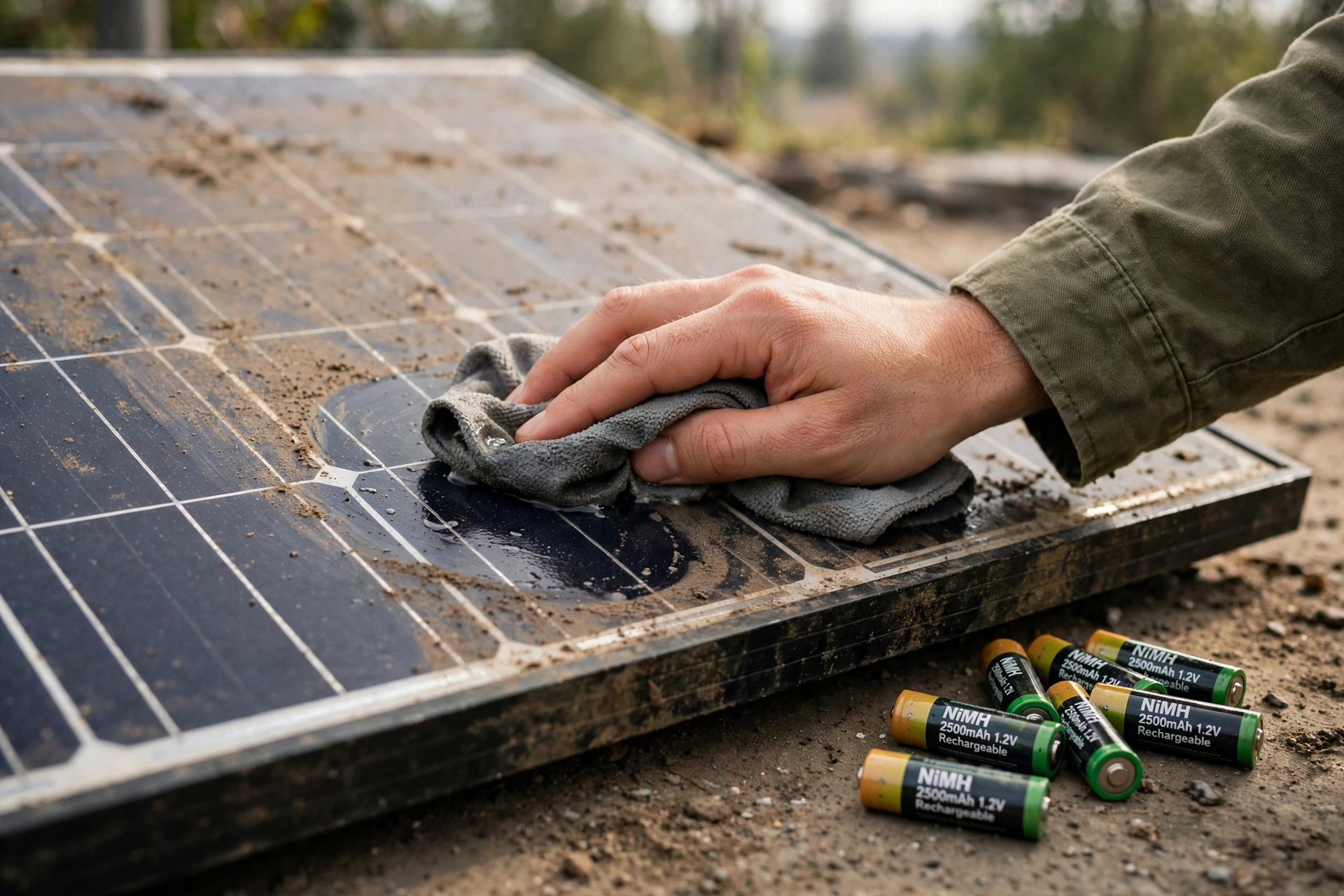
Solar lights go dim, because the panel is dusty, the battery is old, and the lights that glowed all evening in June are the lights that fade by nine in October. Check the batteries and panels — the charge that keeps the solar lights bright — so each panel gets wiped once a month, each battery gets swapped once a year, and the lights that faded are the lights that glow until bedtime again. Wipe the panels with a damp cloth, because the panel that is clean is the panel that charges, and the panel that is dusty is the panel that starves. Swap the rechargeable batteries in spring, because the battery that is new is the battery that holds a full charge, and the light that holds a charge is the light that glows all evening. One wipe a month and one swap a year, and the solar lights stay bright.
20. Swap the look by season — the same lights, a new season
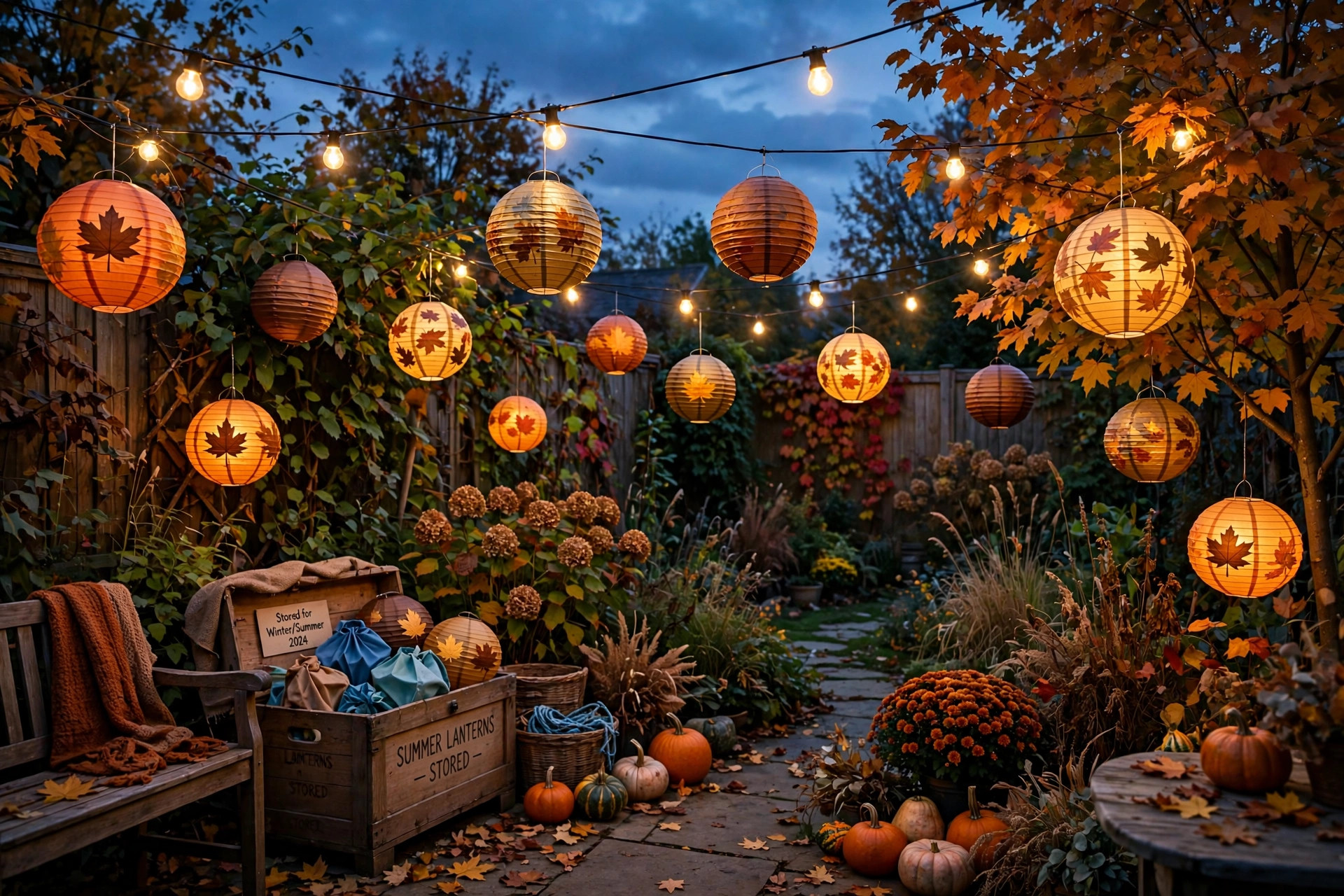
The same lights all year get boring, because the garden changes, the seasons change, and the lights that glowed in summer are the lights that feel wrong at Christmas. Swap the look by season — the same lights, a new season — so the string lights stay up, but the lanterns change, the jars change, and the garden that looked the same is the garden that feels new every season. Add paper lanterns in summer and swap them for warm jars in autumn, because the lantern that changes is the lantern that keeps the garden fresh, and the lights that stay the same are the lights you stop noticing. The seasonal swap itself gets its full treatment in the holiday decor, where the same string lights carry the Christmas glow — and the wreath that hangs on the front door in December gets its own post in DIY Wreath, plain text for now, coming next in the run. One swap a season, and the same lights feel new.
21. Keep spare bulbs and stakes — the spares that save the evening
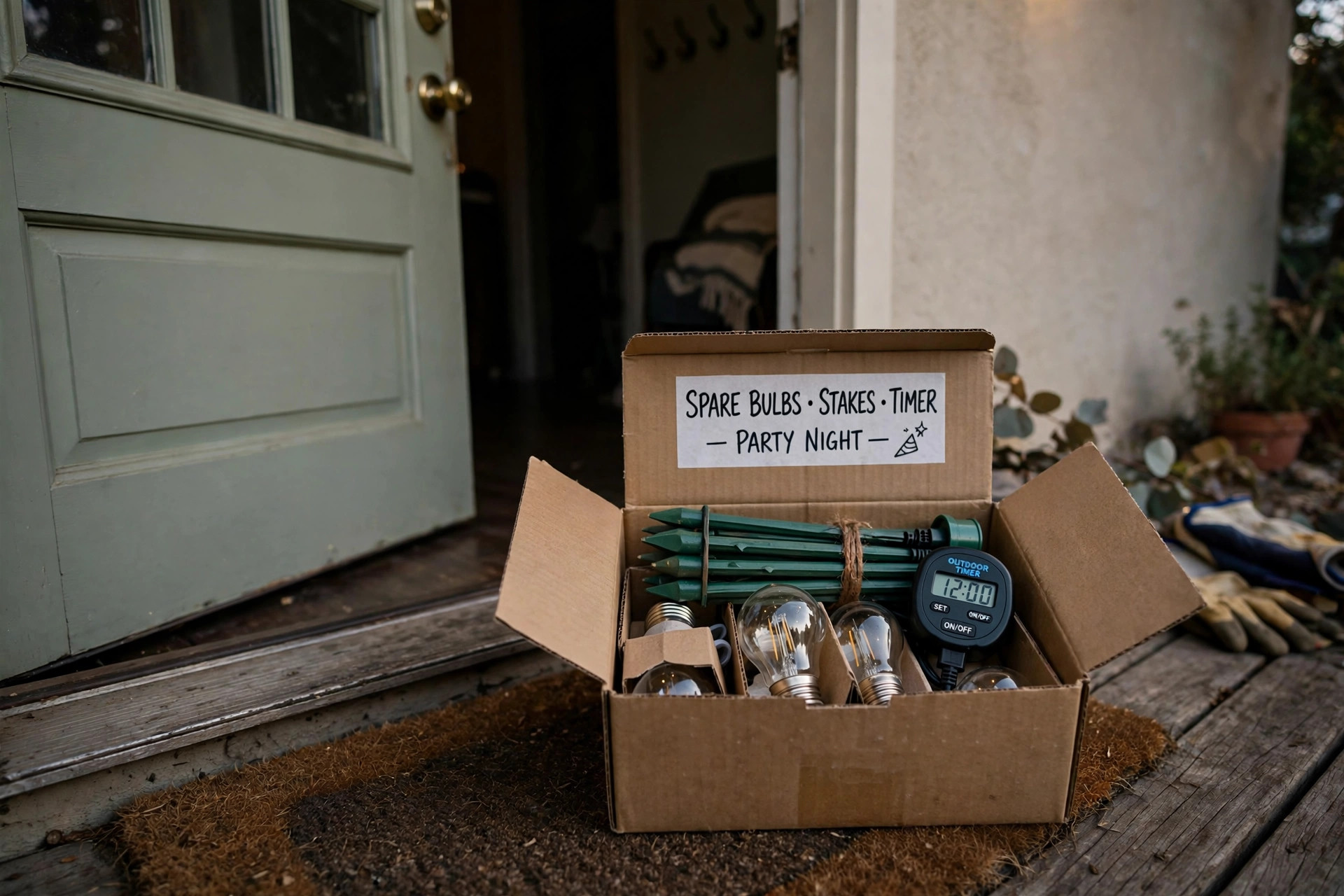
A bulb blows on party night, because the bulb is old, the evening is important, and the strand that should glow is the strand with a dark gap in the middle. Keep spare bulbs and stakes — the spares that save the evening — so a small box holds spare bulbs, spare stakes and a spare timer, and the strand that goes dark is the strand that glows again in five minutes. Keep the spares by the back door, because the box that is by the door is the box you can reach in the dark, and the spares that live in the garage are the spares you never fetch. Check the box in spring, because the box that is checked is the box that is full, and the evening that needs a spare is the evening that finds one. One small box, and the dark gap never lasts the evening.
22. A five-minute safety check — the habit that keeps the lights safe
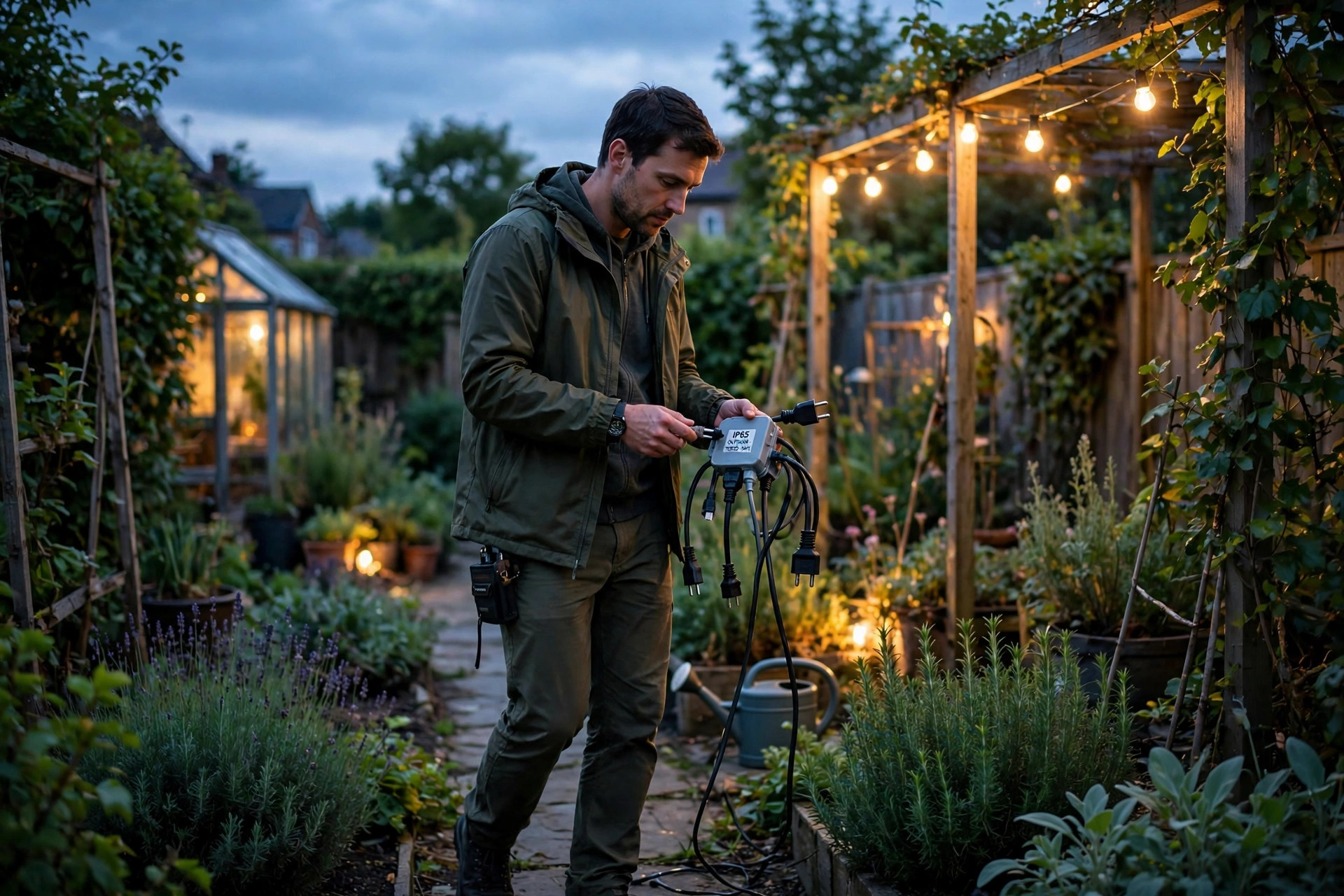
Outdoor lights are safe until they are not, because a cable frays, a plug cracks, and the lights that were fine last year are the lights that trip the breaker this year. Do a five-minute safety check — the habit that keeps the lights safe — so once a season you walk the garden, look at every cable, every plug and every stake, and the problem that is small is the problem that gets fixed before it grows. Run your hand along the cables, check the plugs for cracks, and make sure no cable lies where feet walk, because the cable that is checked is the cable that gets replaced, and the cable that lies across the path is the cable that trips someone. The shelves that hold the spare bulbs indoors get their own system in 24 DIY Wall Shelves Ideas for 2026, where the spares live in their own labelled spot — and the room the garden doors open from gets its full treatment in 28 Living Room Storage Ideas for 2026. Five minutes a season, and the lights stay safe.
Which outdoor lighting idea fits which situation?
| Situation | Best first move | Budget | Tools needed |
|---|---|---|---|
| Garden dark after sunset | Warm string lights (idea 1) | Low | String lights |
| Path you cannot see at night | Solar path lights (idea 2) | Low | Solar stakes |
| Party tonight, no budget | Mason jar lanterns (idea 3) | Free | Jars |
| Soft glow for a dinner | Paper lanterns (idea 4) | Low | Paper lanterns |
| Garden looks flat at night | Spotlights on the trees (idea 5) | Low | Spotlights |
| No poles to hang from | Hang string lights on poles (idea 7) | Low | Poles |
| Jars that glow on their own | Make solar mason jar lights (idea 8) | Low | Solar lids |
| Path with no light at all | Stake lights along the path (idea 10) | Low | Solar stakes |
| Front door in the dark | Light the front door (idea 14) | Low | Porch light |
| Tiny balcony, no space | Light a small balcony (idea 17) | Low | Fairy lights |
| Lights die after rain | Weatherproof every join (idea 18) | Free | Tape |
| Lights never turn on by themselves | Put it all on a timer (idea 12) | Low | Timer |
You do not need all 22 ideas. You need the three that solve your dark garden — usually the warm string lights that give the garden a ceiling, the solar stakes that light the path by themselves, and the timer that turns it all on without you. Start with the string lights, hang them this weekend before the next evening outside, and stand back at dusk. Do that and the garden will glow, the table will stay out after dark, and the path will guide you home.
Save this post for the next evening outside, and if the firepit the lights gather around needs the same treatment, read 24 DIY Backyard Firepit Ideas for 2026 next — it is Post 87, the warm light over the seating — and 26 DIY Planters Ideas for 2026, Post 89, for the planters the path lights sit beside. This is the twentieth and final post of the DIY by project return run — Posts 81 to 100, one project at a time — and the hundredth post of the whole NestWynn plan. The run closes with the garden glowing: the plant stands, the candle holders, the wall art and the wreath that came just before it — DIY Plant Stand, DIY Candle Holders, DIY Wall Art and DIY Wreath in plain text, the four posts that led here — and the garden they all light is the garden this post finishes.
Publish date assigned at publishing time. Updated as new outdoor lighting finds are tested.
Frequently asked questions
What is the cheapest way to light a garden at night?
Start with solar path lights and mason jar lanterns, because both cost almost nothing to run. Solar stakes charge themselves in the sun and switch on at dusk, so there is no wiring and no electricity bill. Mason jars with tea lights or a short battery fairy light inside cost the price of a jar, and four of them light a whole table. Add one strand of warm string lights over the patio when you can, because one strand turns the garden into a room — but the jars and the solar stakes alone are enough to make the garden usable after dark.
Are solar lights bright enough for a backyard?
Solar lights are bright enough to mark a path, light a table and make a garden feel lived in — but they are not floodlights, and they will not light a whole garden like mains power. Pick solar lights with a warm white glow and a clean panel facing full sun, because the panel that charges all day is the panel that glows all evening. Use solar lights for the path, the steps and the table, and add mains string lights or spotlights for the big jobs, like lighting a tree or the whole patio. The mix is what works: solar for the small glow, mains for the big glow.
How do I keep outdoor string lights safe in the rain?
Buy lights rated for outdoor use, hang them with a slight sag so rain runs off instead of pooling, and weatherproof every join with waterproof tape. Keep all plugs and connectors off the ground and under cover, because the join that sits in a puddle is the join that dies, and the join that is taped and sheltered is the join that lasts. Put the whole display on an outdoor-rated timer or a socket with a weatherproof cover, and check the cables once a season for cracks or fraying — replace anything damaged before the next rain, because the cable that is checked is the cable that stays safe.