24 DIY Wall Shelves Ideas for 2026
Every room has a blank wall, and every blank wall is storage you are not using. The floor is full, the cupboards are full, the drawers are full — but the wall above the sofa, above the desk, beside the door stands empty, holding nothing, while the things that need a home pile up on the floor below it. A wall shelf is the cheapest square footage in the house: it adds storage and display space without taking a single inch of floor, and it is one of the first DIY projects a beginner can finish in an afternoon.
These 24 DIY wall shelves ideas take you from a blank wall to a shelf that looks bought: pick a style that fits the room, measure and cut the wood, fix it properly into the wall, style it simply — and keep it strong and tidy for years.
Every idea below works in a real home, from a flat where one floating shelf above the desk holds the books, to a house where the living room wall carries a whole row of shelves. The books the shelves hold get their own system in 24 Book Storage Ideas for 2026, where the shelves are only the start — and the room the shelves finish gets its full treatment in 25 DIY Room Decor Ideas for 2026. Pick three ideas that fit your wall, start with the style, and build from there.
Pick your shelf style
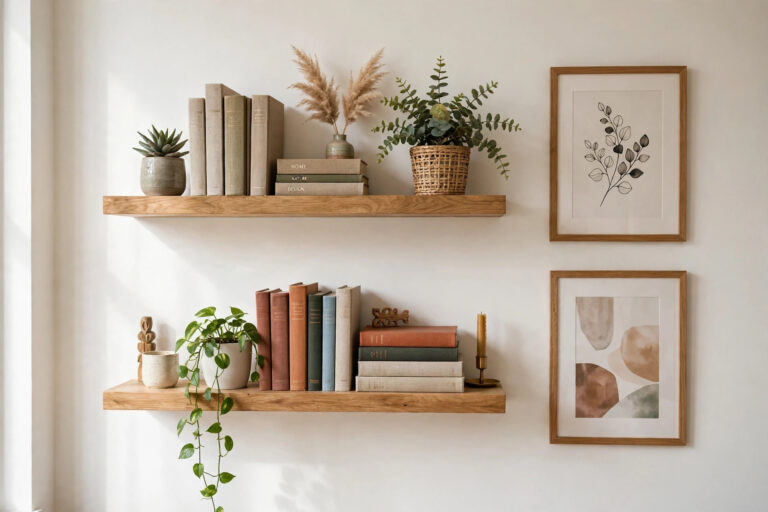
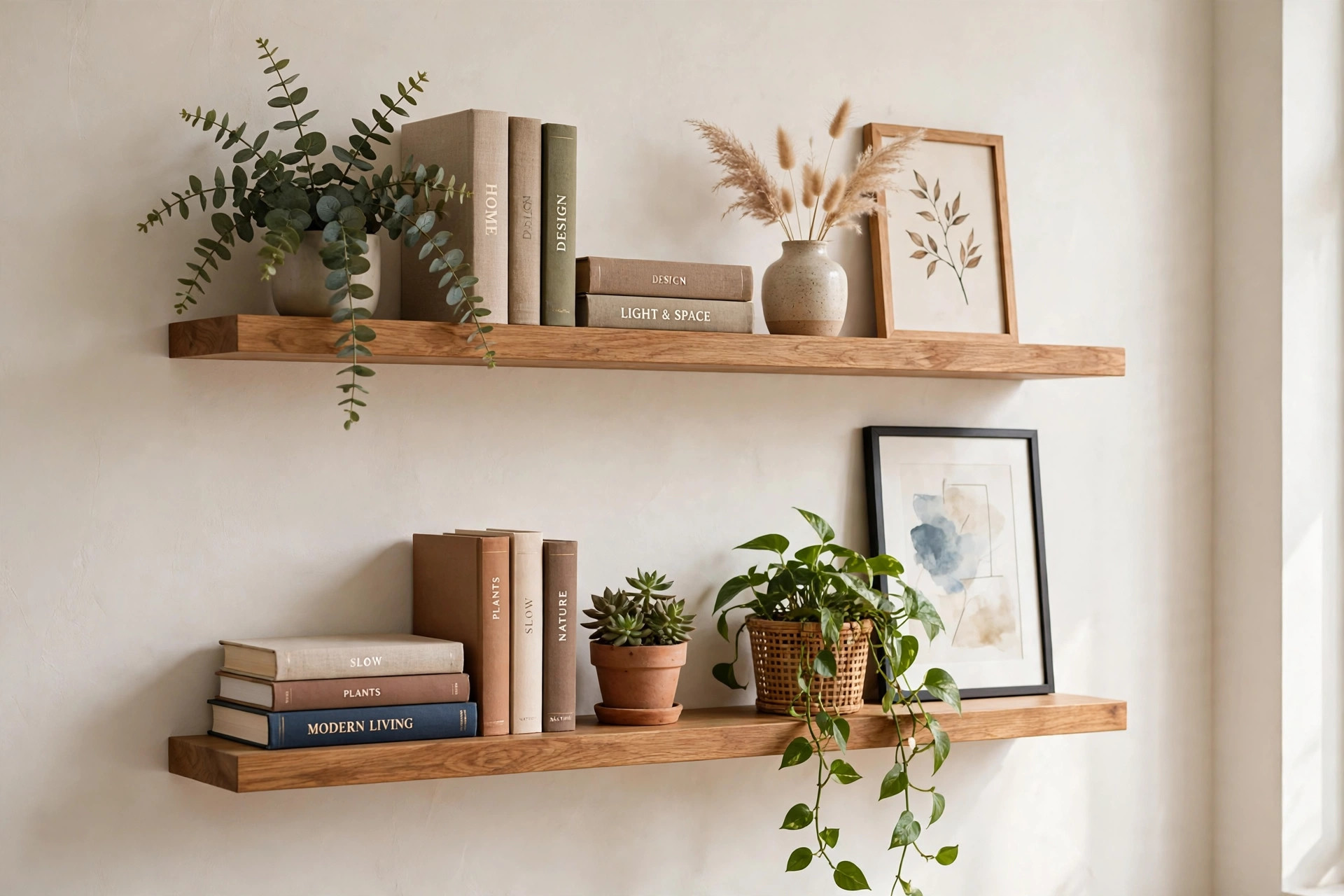
A floating shelf looks like it grows out of the wall, because there are no brackets to see, no supports underneath, and nothing breaks the clean line of the wood against the plaster. Floating shelves are the clean look with hidden brackets — a metal rod or a hidden bracket bar fixed to the wall, the shelf sliding over it, and the fixing disappearing inside the wood. Pick a shelf depth of eight to ten inches for books and plants, because the shelf that is too shallow holds nothing and the shelf that is too deep crowds the room. Hang two or three in a row with the same gap between them, because the row that is spaced evenly is the row that looks designed, and the shelf that floats alone is the shelf that looks lost. Keep the display light on a floating shelf — books, one plant, one framed print — because the floating shelf that holds a heavy vase is the shelf that sags, and the shelf that stays light is the shelf that stays level. One floating shelf, and the wall stops being blank.
2. Bracket shelves — the classic, strongest, most forgiving shelf
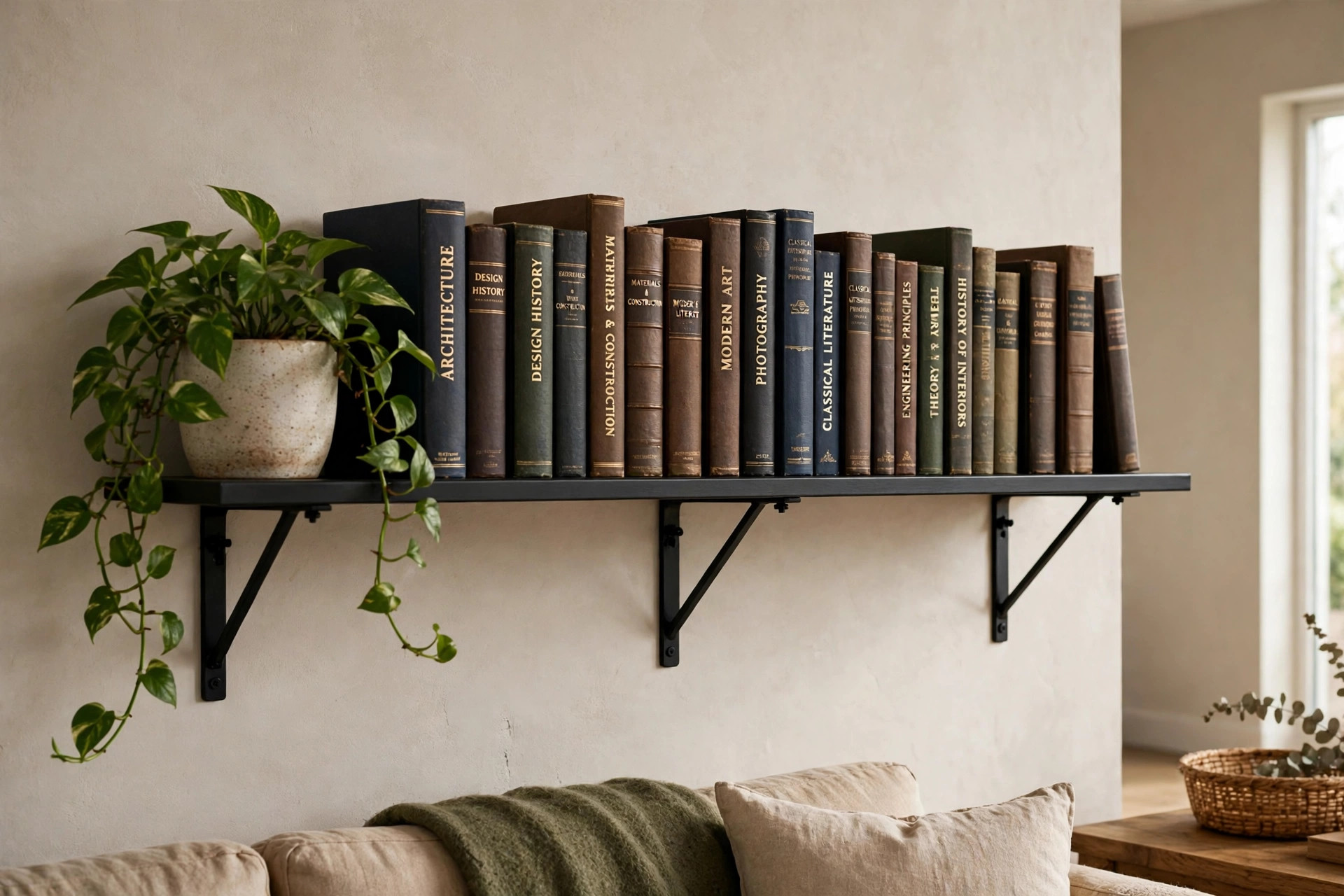
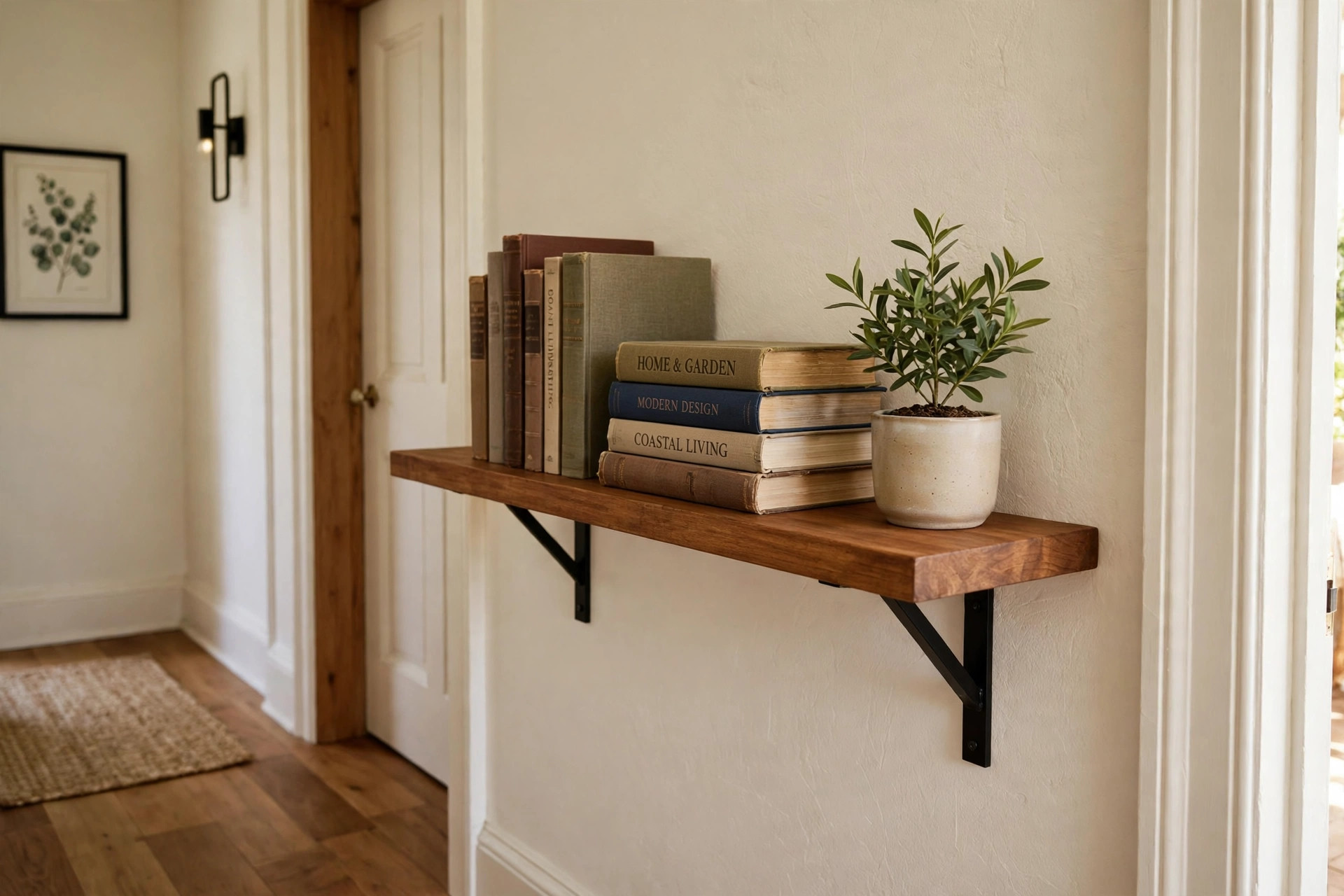
A bracket shelf is the shelf that holds the heavy things, because the bracket carries the weight down into the wall instead of asking the board to carry it alone, and the shelf that has brackets is the shelf that never sags in the middle. Bracket shelves are the classic, strongest, most forgiving shelf — two metal or wooden brackets, a board across the top, and a fixing that can be undone and moved if the height is wrong. Space the brackets no more than two feet apart, because the board that is supported every two feet is the board that stays straight, and the board that spans three feet on two brackets is the board that bows. Pick brackets that match the room — black metal for a modern room, painted wood for a cottage room — because the bracket that matches is the bracket that disappears into the look, and the shelf that matches the room is the shelf that looks like it was always there. One bracket shelf, and the heavy books have a home.
3. Box shelves — the cube that frames what it holds
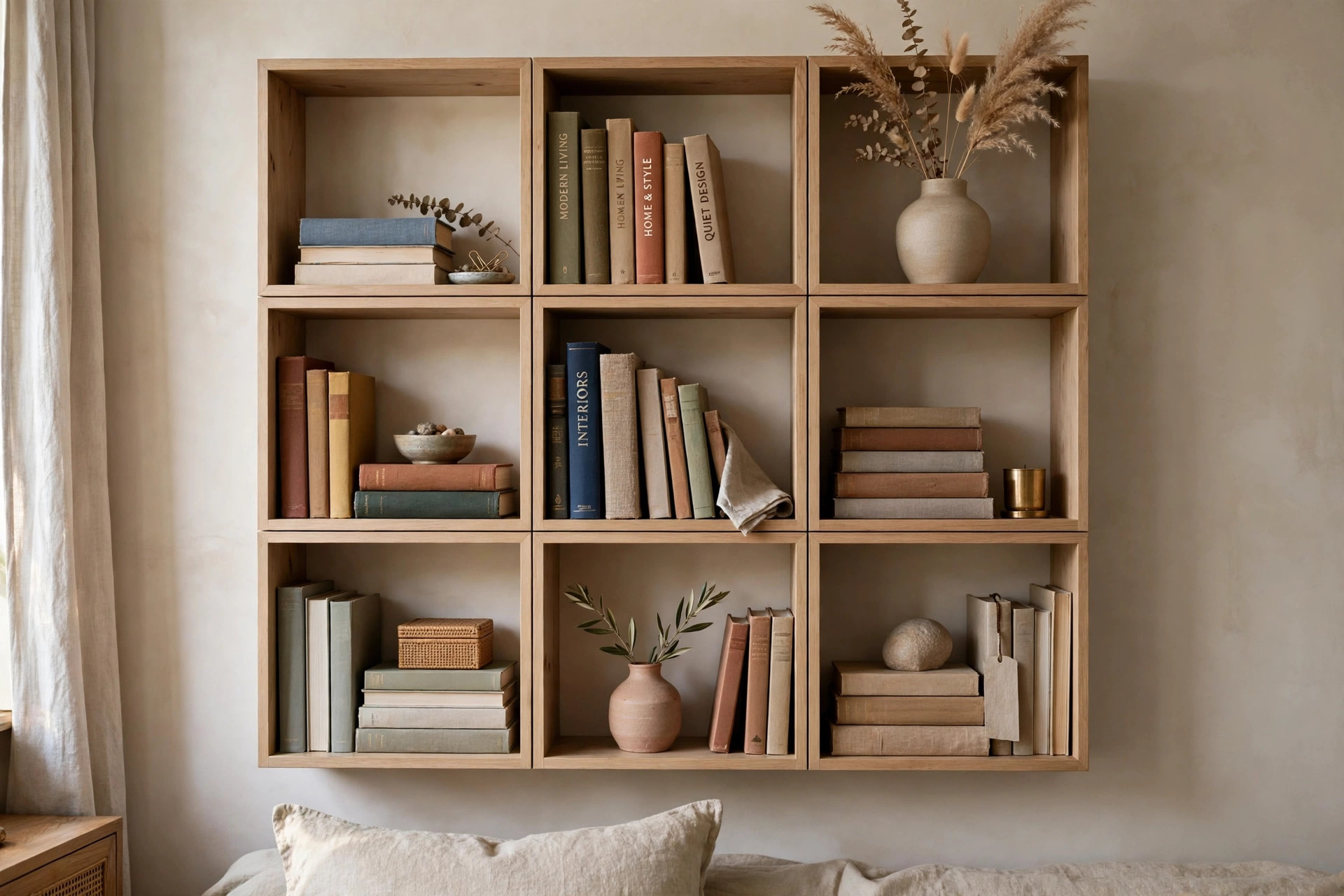
A box shelf is a shelf with sides, because the cube frames what it holds, the sides stop the books falling off the end, and the box itself becomes part of the display. Box shelves are the cube that frames what it holds — a simple open-fronted box, fixed to the wall, with the books and objects sitting inside it instead of on top of it. Hang one box on its own for a single statement, or hang three in a cluster — two small, one large — because the cluster that mixes sizes is the cluster that looks collected, and the row of identical boxes is the row that looks like a shop. Keep the inside of the box simple — three books, one plant, one object — because the box that is stuffed is the box that looks like storage, and the box that holds three things is the box that looks like a display. The box shelf that frames a plant gets its full treatment in 22 DIY Window Boxes Ideas for 2026, where the box holds flowers instead of books. One box shelf, and the wall gets a frame.
4. Ladder shelves — the leaning shelf that needs no drilling
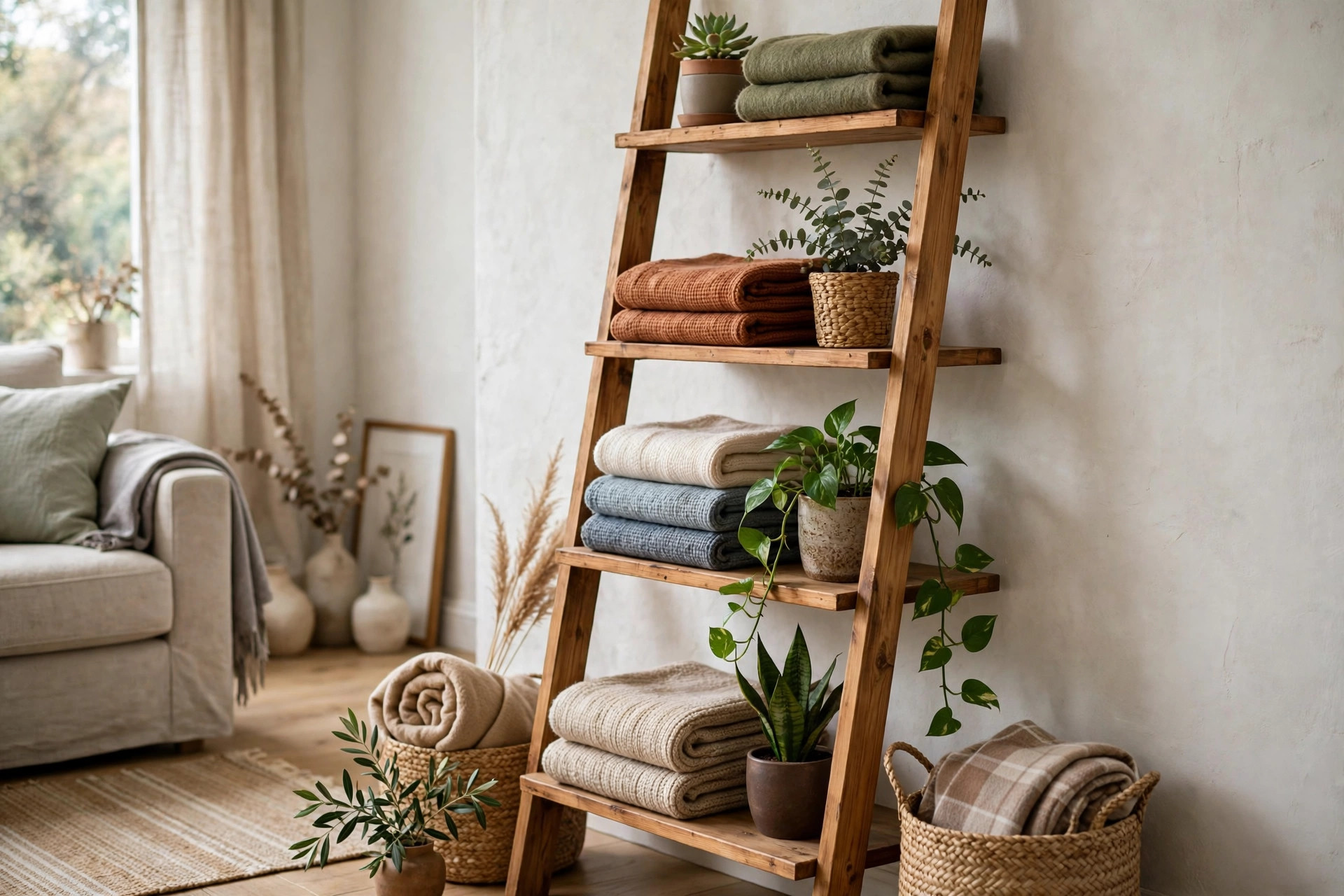
Some walls cannot be drilled, because the flat is rented, the wall is tiled, or the drill is in a box somewhere and the afternoon is short. Ladder shelves are the leaning shelf that needs no drilling — a ladder frame that leans against the wall, the shelves stepping back as they rise, and the whole thing standing on the floor instead of hanging from the wall. Lean it at a gentle angle, with the feet a foot out from the wall, because the ladder that leans too steep is the ladder that slides, and the ladder that leans gently is the ladder that stays put. Put the heavy things on the lowest shelf and the light things at the top, because the ladder that is bottom-heavy is the ladder that never tips, and the top shelf that holds a plant is the top shelf that stays safe. Fix the top to the wall with a small strap if children climb, because the strap that holds the ladder is the strap that keeps it upright, and the ladder that is strapped is the ladder that is safe in a family home. One ladder shelf, and the wall is used without a single hole.
5. Corner shelves — the triangle that rescues dead corners
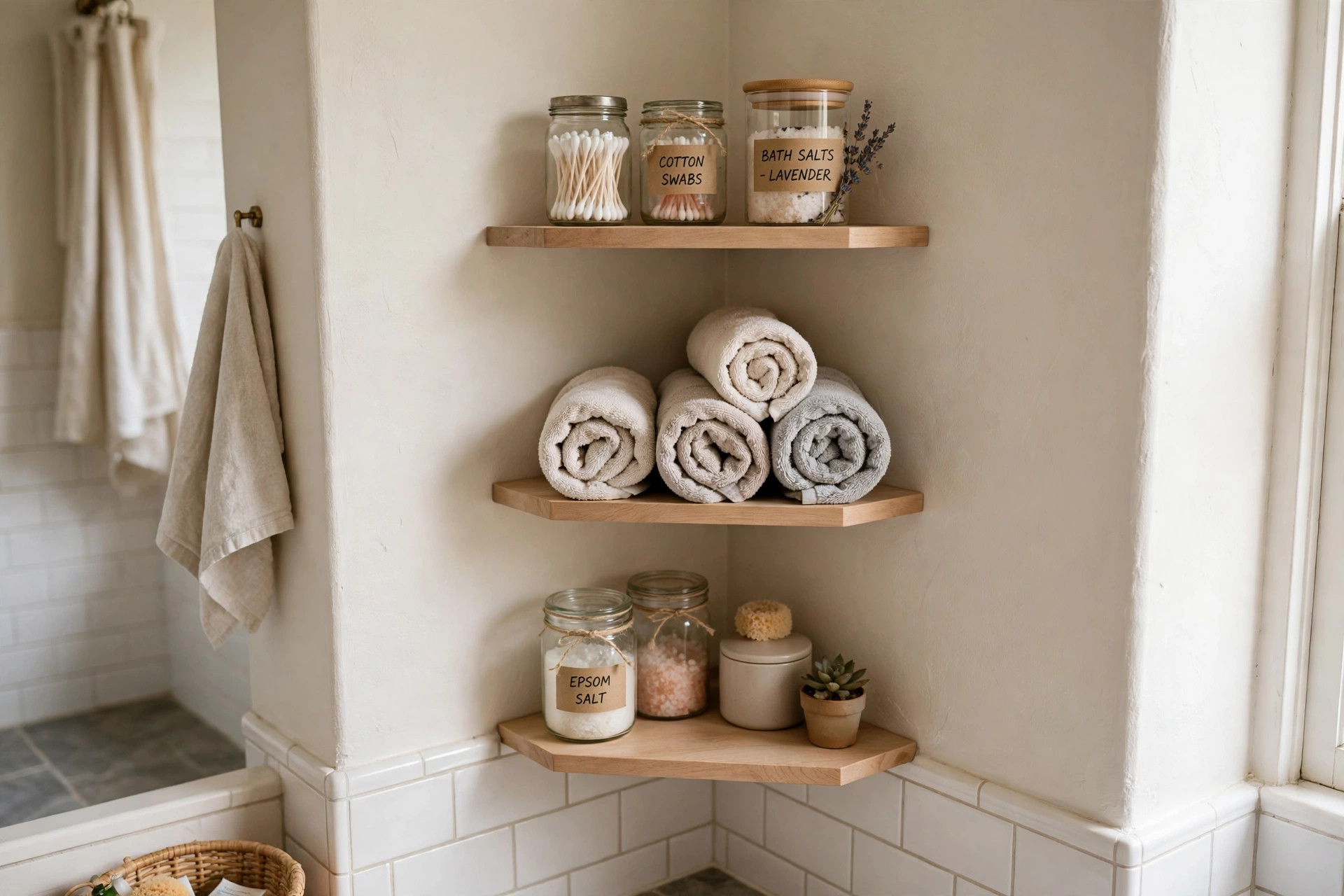
Every room has a dead corner, because the furniture stops short of it, nothing fits in it, and the corner that holds nothing is the corner that collects dust. Corner shelves are the triangle that rescues dead corners — a small triangular shelf, or two short boards meeting at a right angle, fitted into the corner so the space that was wasted becomes the space that holds a plant, a book or a lamp. Measure the corner before you cut, because the corner that is not square is the corner that shows a gap, and the shelf that is cut to the corner is the shelf that looks built in. Hang two or three at different heights, because the corner that stacks shelves is the corner that becomes a display, and the single shelf in a corner is the shelf that looks like an afterthought. Keep the display small in a corner — one plant, one book — because the corner shelf that is crowded is the corner shelf that looks cluttered, and the corner shelf that holds one thing is the corner shelf that looks deliberate. One corner shelf, and the dead corner works.
6. Picture ledges — the shallow shelf for art, books and photos
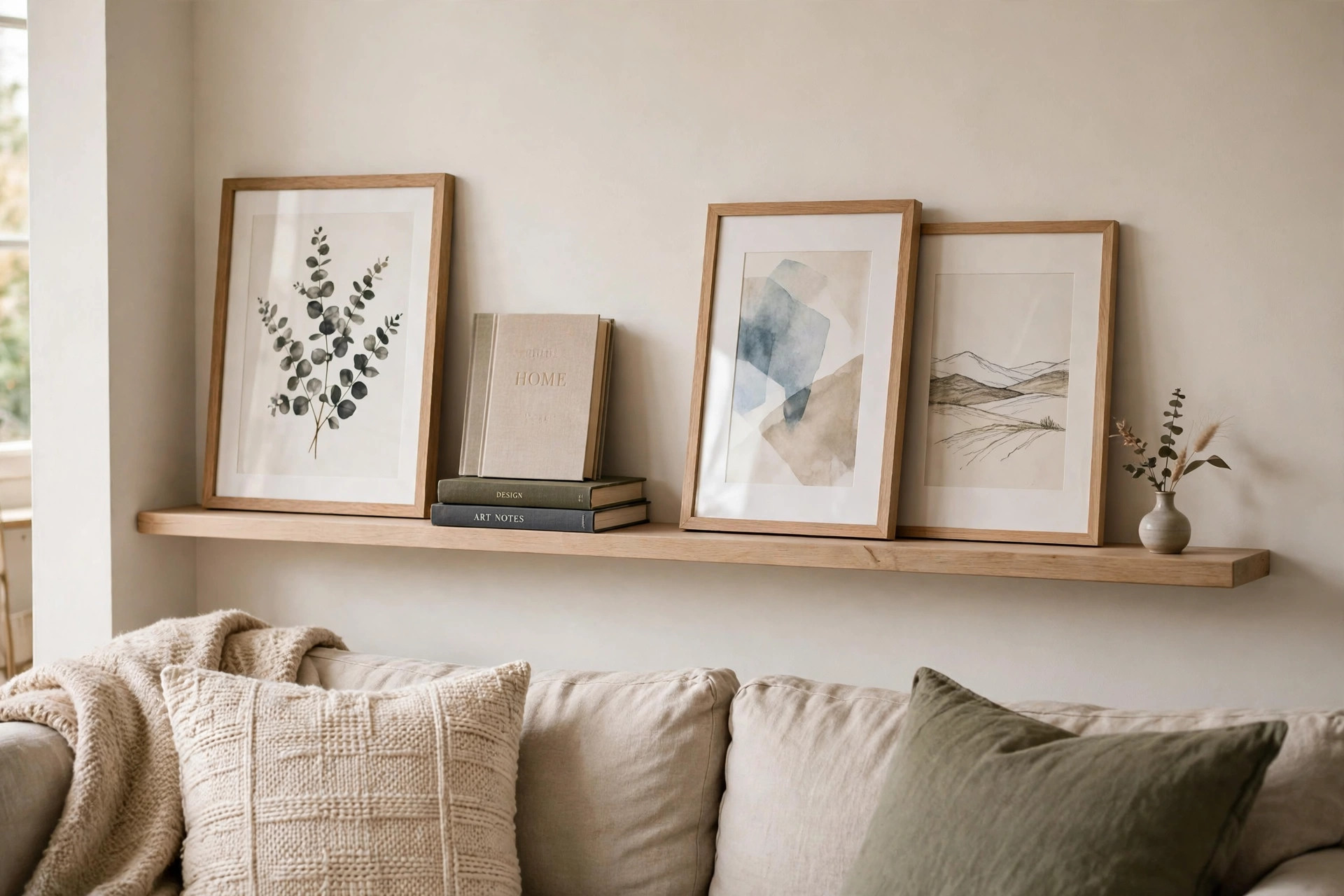
A picture ledge is a shelf that is barely a shelf, because it is only two inches deep, it holds things leaning instead of standing, and it turns a wall into a gallery you can change in five minutes. Picture ledges are the shallow shelf for art, books and photos — a narrow board with a small lip at the front, the frames leaning against the wall, and nothing fixed except the ledge itself. Hang one long ledge or two short ones, because the ledge that runs the length of the sofa is the ledge that becomes the gallery wall, and the short ledge above the desk is the ledge that holds the books you are reading now. Lean the frames, do not hang them, because the frame that leans is the frame you can swap in a minute, and the ledge that holds leaning art is the ledge that changes with the seasons. Keep the tallest frame at the back and the smallest at the front, because the ledge that layers is the ledge that looks deep, and the ledge that lines everything up in a row is the ledge that looks flat. The art that leans on the ledge gets its full treatment in 22 DIY Canvas Wall Art Ideas for 2026, where the canvas is made as well as hung. One picture ledge, and the wall becomes a gallery.
Build it yourself
7. Measure the wall before you buy the wood
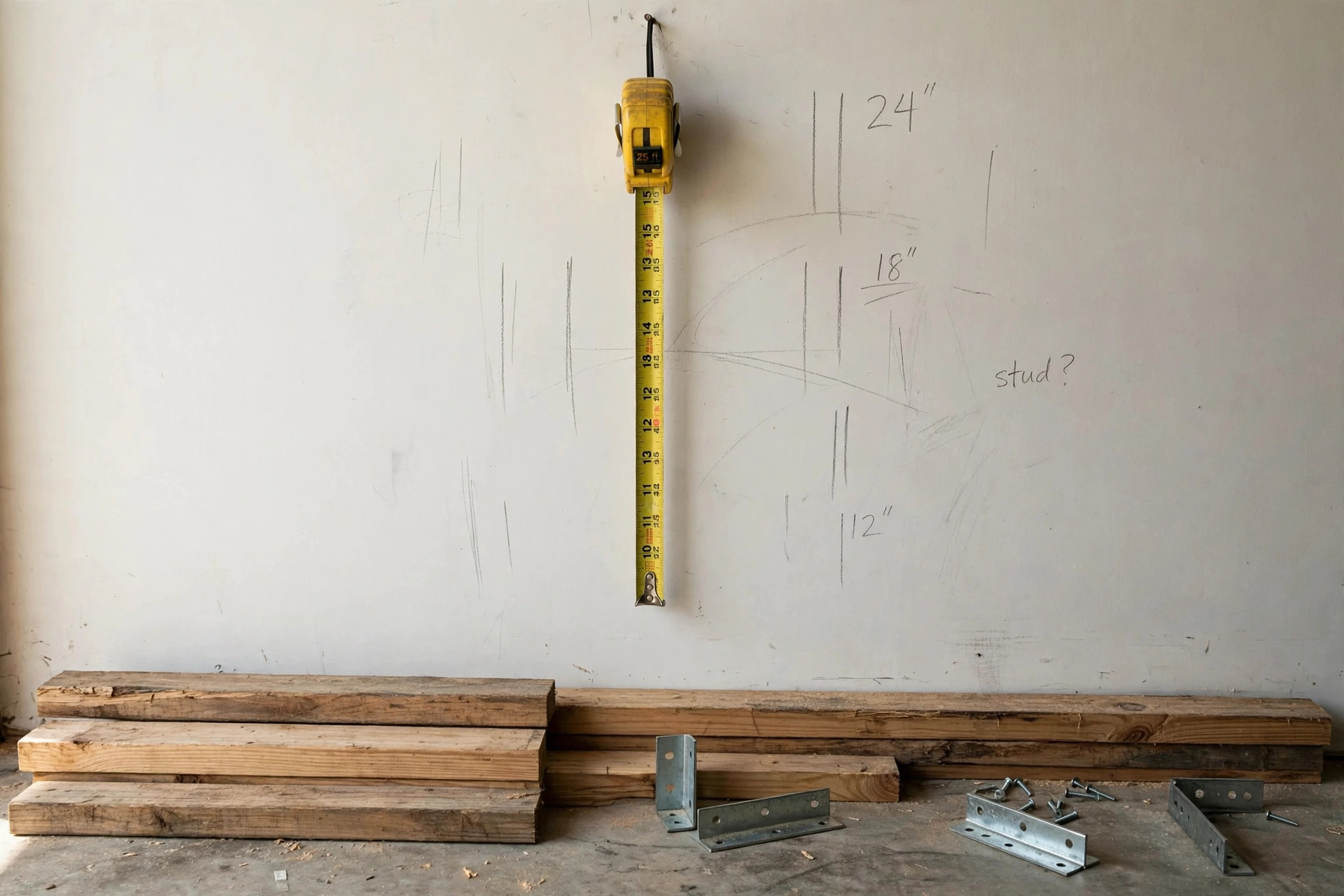
Shelf wood bought by guessing is shelf wood that does not fit, because the board is four inches too long for the wall, the brackets sit in the wrong place, and the shelf that looked right in the shop is the shelf that comes home and goes straight back. Measure the wall before you buy the wood — the tape measure that saves the returns — so every board and bracket you buy is bought for your wall, not for a wall in a photo. Measure the length of the wall, measure where the studs are, and measure the height you want the shelf at, because the numbers that travel with you are the numbers that stop the returns. Mark the height with a pencil on the wall and stand back, because the mark that you look at for a day is the mark that tells you whether the height is right, and the shelf that is hung at the right height is the shelf that gets used. Measure twice, buy once, and the shelf fits the first time.
8. Pick the right wood — pine, plywood or reclaimed boards
The wood you pick decides how the shelf looks and how much it holds, because pine is light and easy to cut, plywood is flat and strong, and reclaimed boards bring a story the new wood cannot. Pick the right wood — pine, plywood or reclaimed boards — so the shelf matches the room and the job. Pine is the beginner's wood: light, cheap, easy to sand and paint, and strong enough for books and plants on a shelf up to three feet long. Plywood is the flat wood: it never warps, it takes paint beautifully, and it is the right choice for a long shelf that must stay straight. Reclaimed boards are the character wood: old floorboards or scaffold boards, sanded smooth, with a grain that no new board has — but check them for nails and splits before you cut, because the board that hides a nail is the board that breaks the saw. Pick the wood for the room, not for the price, because the shelf that matches is the shelf that looks built in. (Check on Amazon for a pine shelf board kit with pre-cut lengths and matching brackets.)
9. Cut and sand — the straight edge that makes it look bought
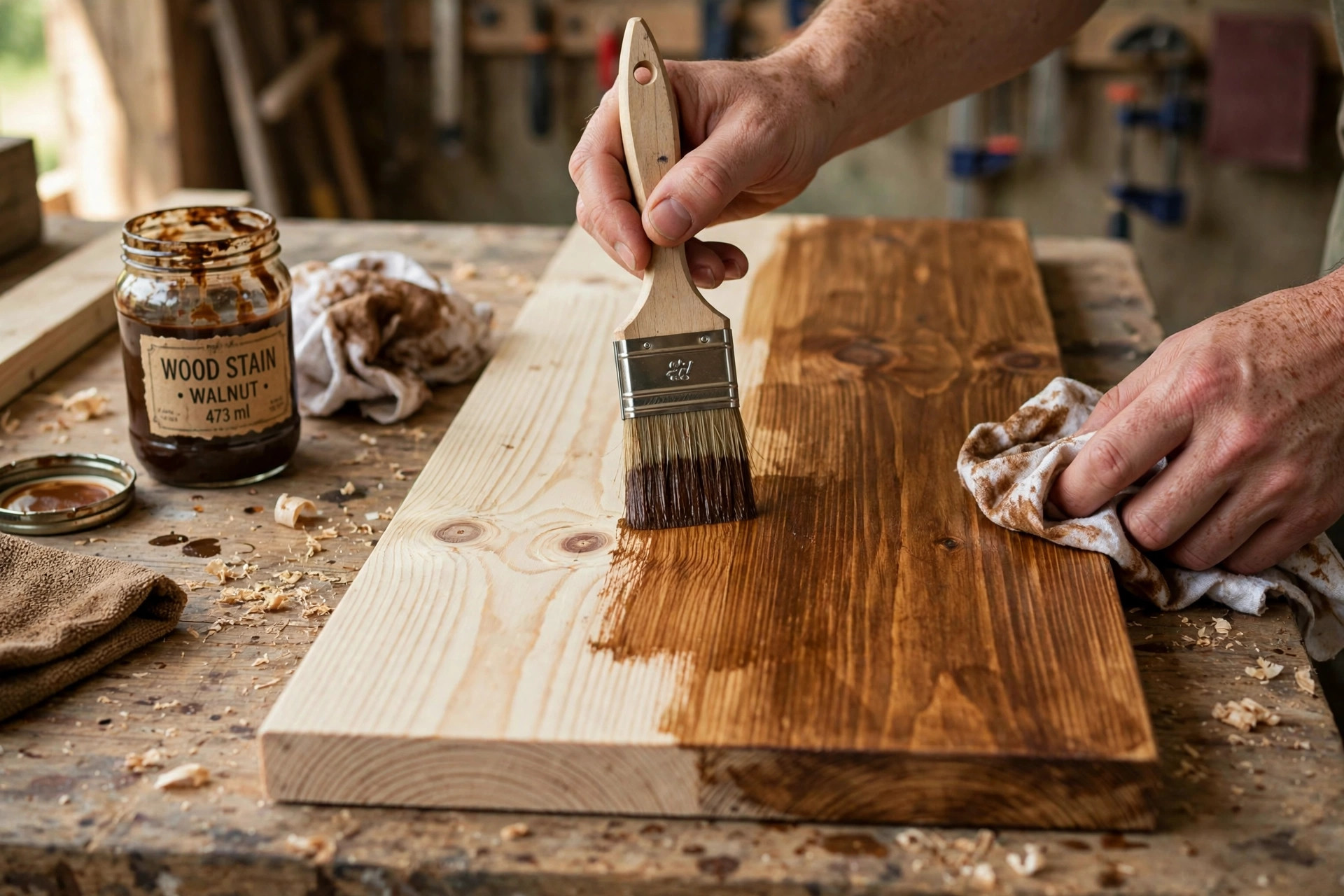
A shelf that looks bought is a shelf that was cut straight and sanded smooth, because the edge that is straight is the edge that sits flush against the wall, and the surface that is smooth is the surface that takes the finish. Cut and sand — the straight edge that makes it look bought — so the board is cut with a straight guide, the ends are square, and the whole board is sanded until it feels smooth under your hand. Mark the cut line with a pencil and a square, clamp a straight edge along it, and cut slowly, because the cut that is guided is the cut that is straight, and the board that is cut straight is the board that fits. Sand with a coarse paper first, then a fine paper, and run your hand over the board when you think you are done, because the hand that feels a rough patch is the hand that finds the spot the eye missed. One straight cut and one good sand, and the shelf looks bought.
10. Stain or paint — the finish that matches the room
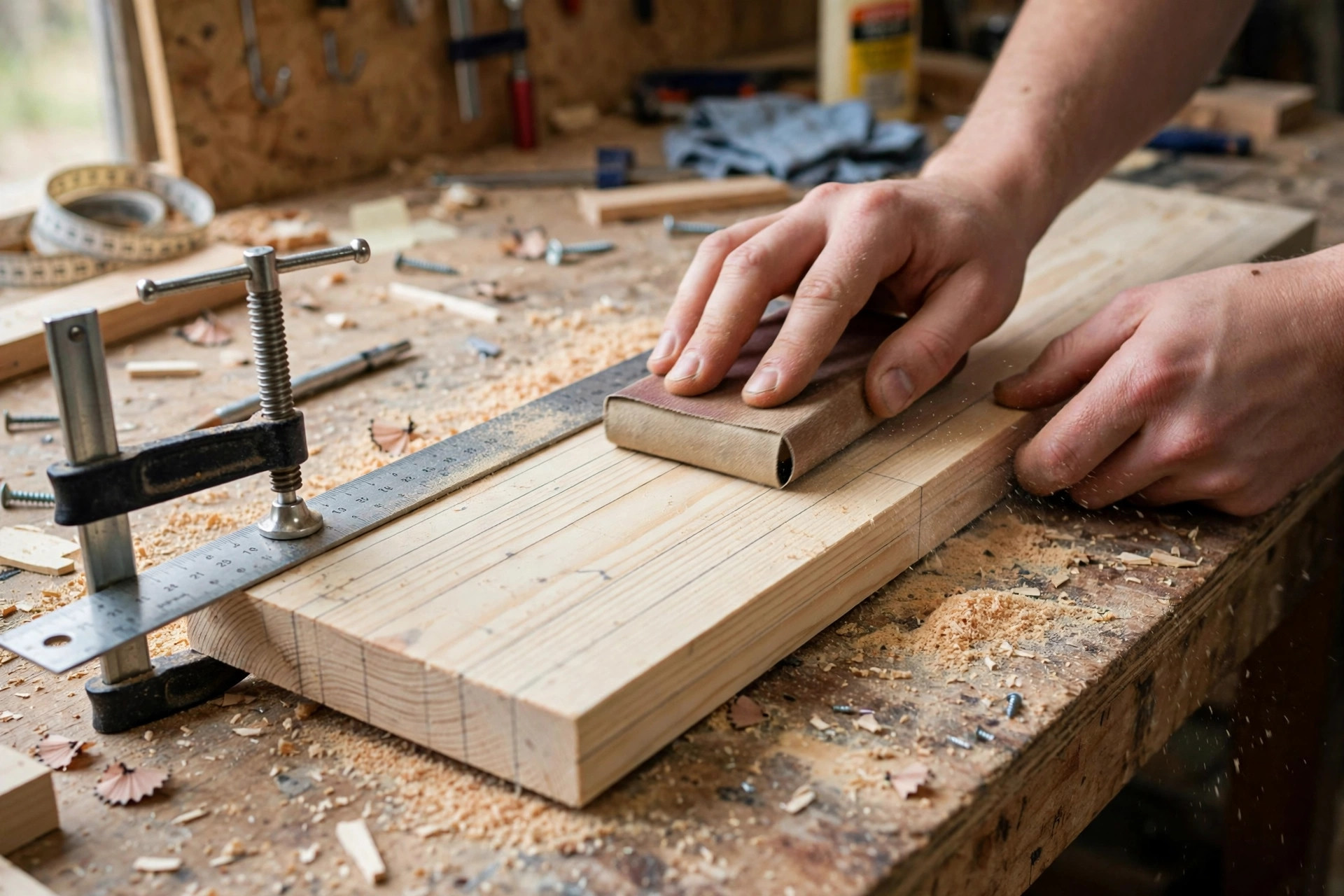
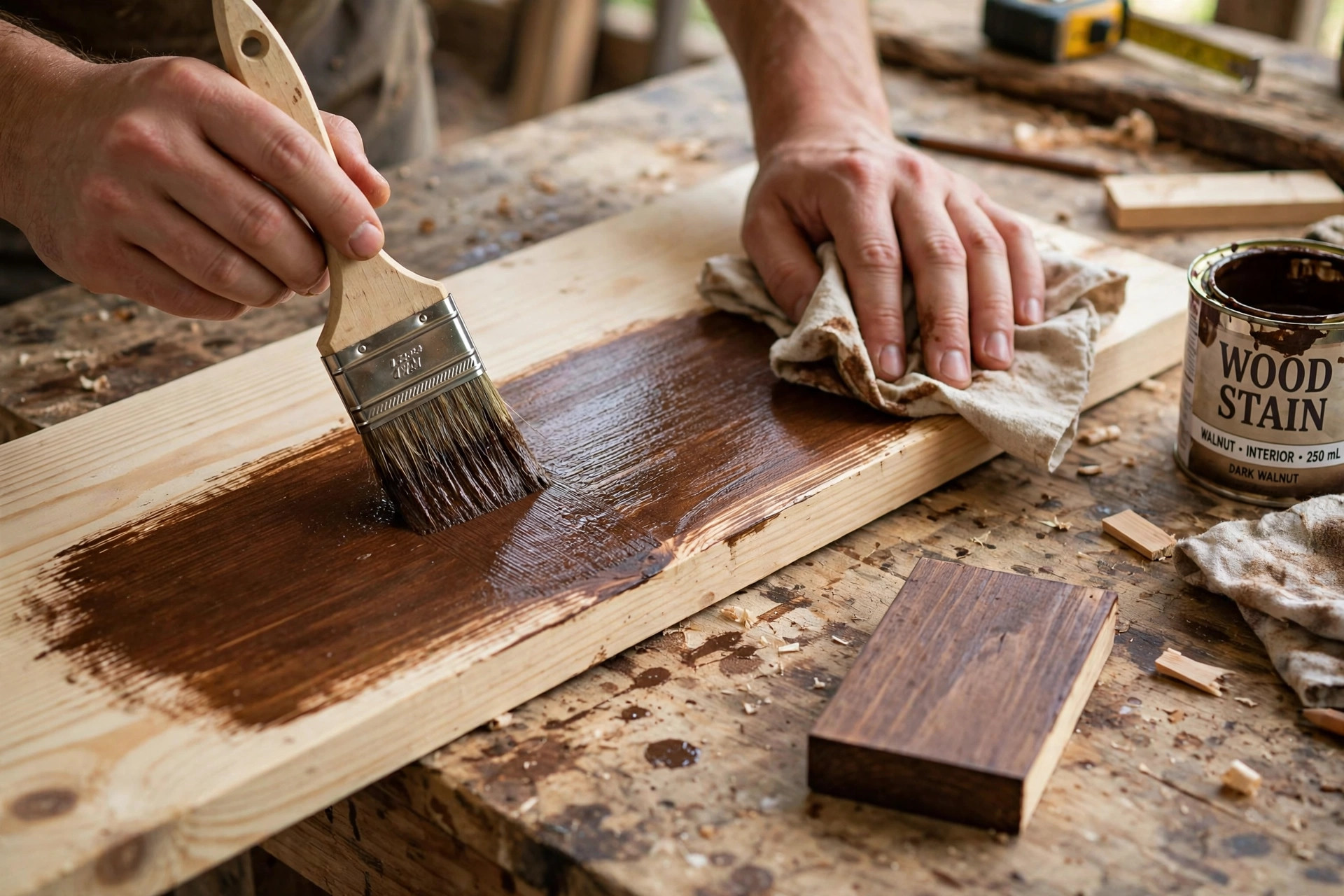
A raw board on a finished wall looks unfinished, because the pale wood stands out, the grain shows every mark, and the shelf that is not finished is the shelf that looks like a building site. Stain or paint — the finish that matches the room — so the shelf looks like it belongs. Stain brings out the grain and suits a warm room: brush it on, wipe the excess off, and let it dry before a second coat, because the stain that is wiped is the stain that is even, and the board that is stained is the board that looks like wood. Paint hides the grain and suits a painted room: prime first, then two thin coats, because the paint that is primed is the paint that sticks, and the shelf that is painted the colour of the wall is the shelf that looks built in. Test the finish on the offcut first, because the offcut that is tested is the offcut that shows you the true colour, and the shelf that is finished before it is hung is the shelf that is easy to finish. One finish, and the shelf belongs.
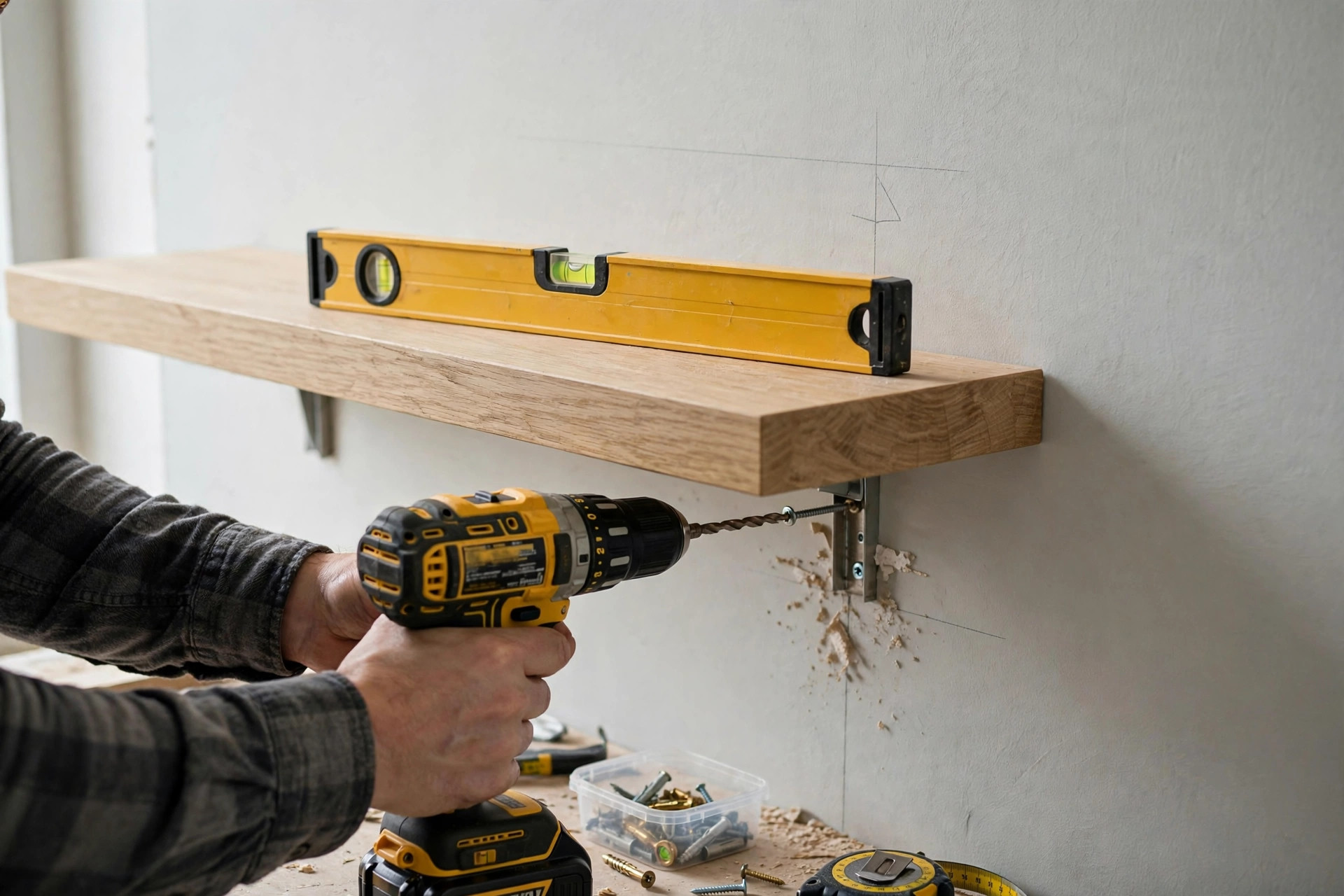
11. Fix the brackets — spacing, level and the right screws
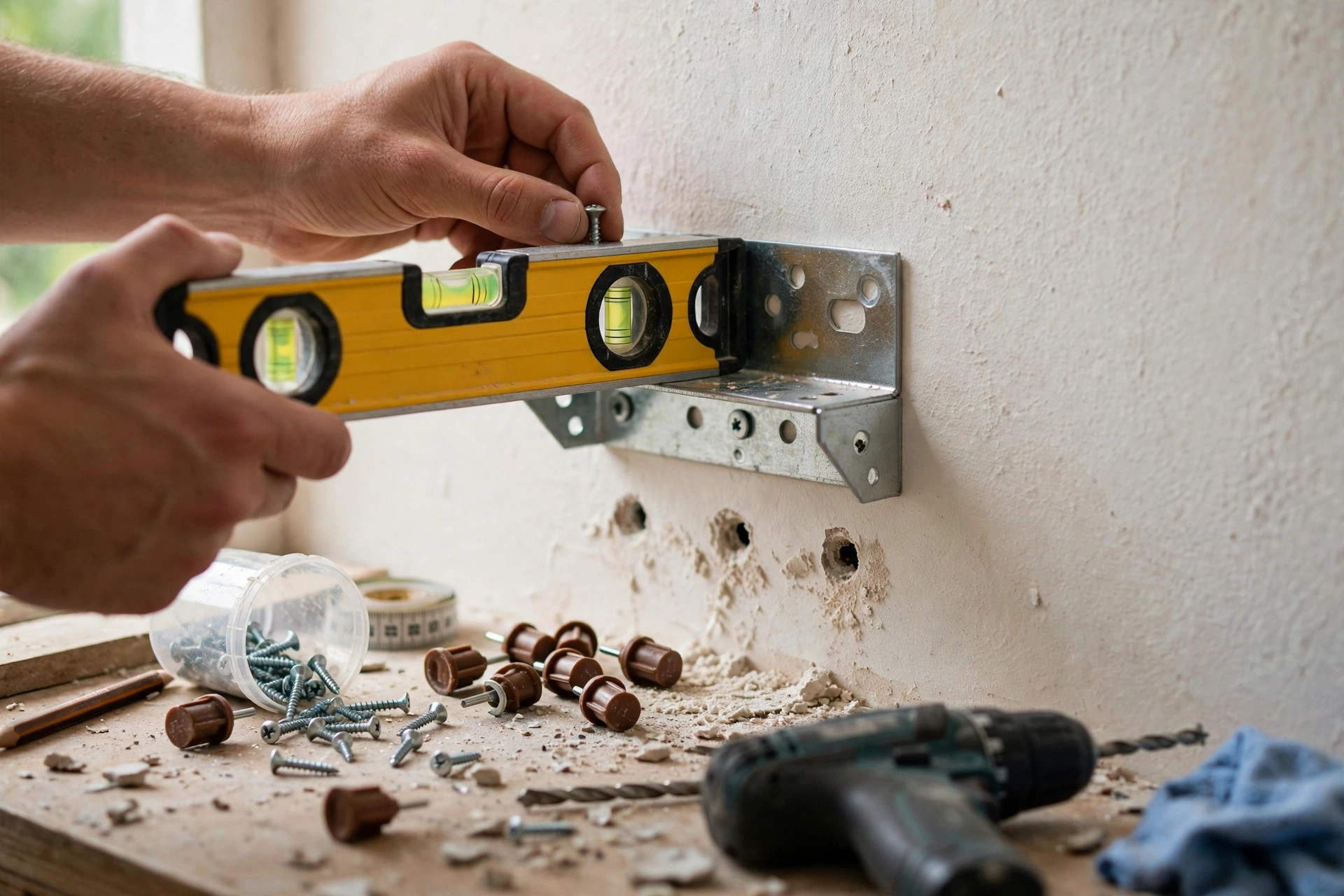
Brackets are the part of the shelf that does the work, because the board only rests on them, the wall only holds them, and the shelf that has brackets in the wrong place is the shelf that tips. Fix the brackets — spacing, level and the right screws — so the brackets sit level, spaced no more than two feet apart, and fixed with screws that suit the wall. Mark the bracket positions with a pencil and a level, drill pilot holes so the wood does not split, and drive the screws until the bracket sits tight against the wall, because the bracket that is level is the bracket that holds the board level, and the board that sits level is the board that looks right. Use the right fixings for the wall — screws into studs for a plasterboard wall, wall plugs for a brick wall — because the fixing that suits the wall is the fixing that holds, and the bracket that is fixed properly is the bracket that never comes down. The pin board that shares the wall gets its full treatment in 18 DIY Cork Board Ideas for 2026, where the same fixing logic hangs a board instead of a shelf. Two brackets, level and tight, and the shelf is ready.
12. Hang it level — the two-person trick and the long level
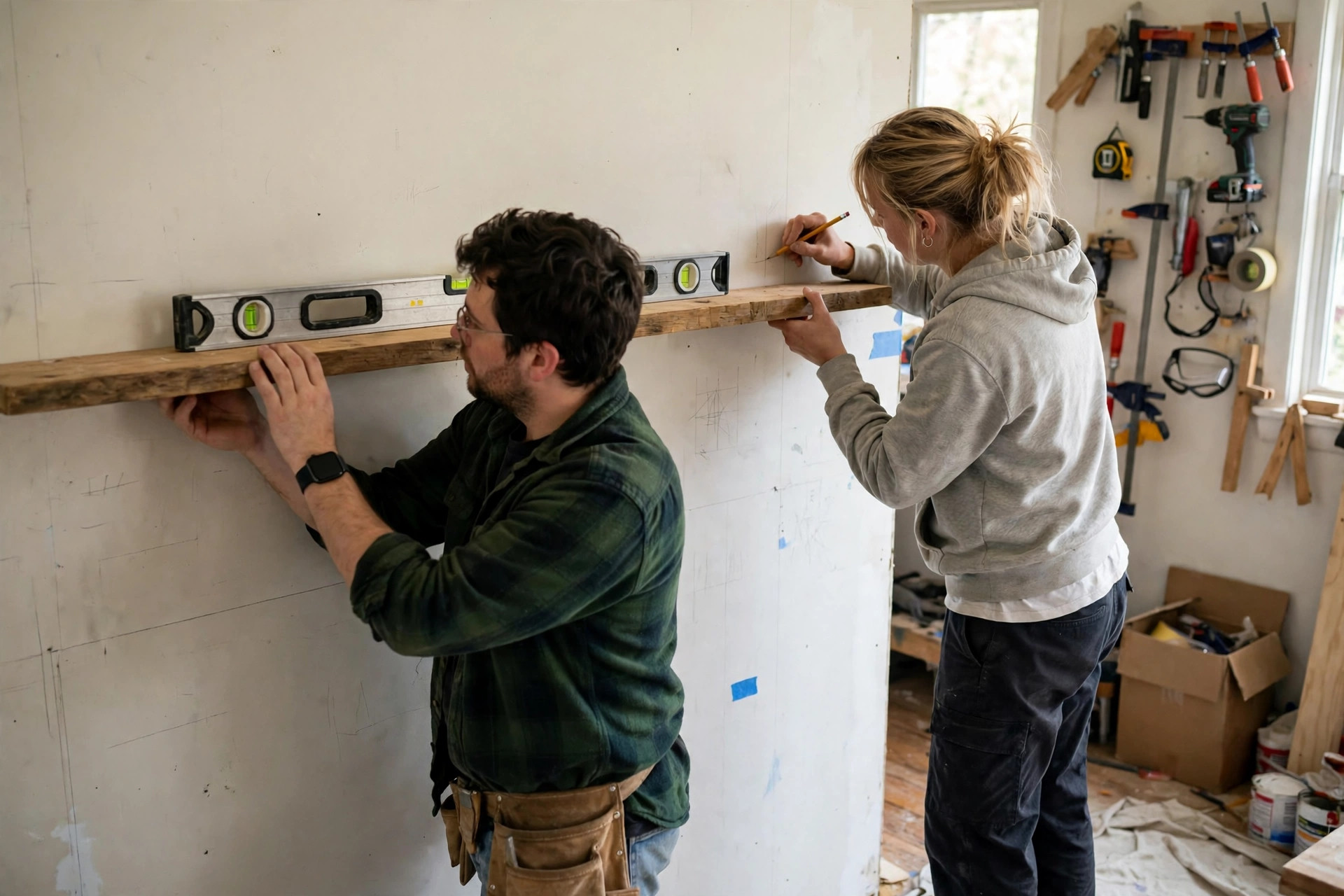
A shelf that is not level is a shelf that shows it, because the books slide to one end, the plant leans, and the shelf that slopes is the shelf the eye finds every time it enters the room. Hang it level — the two-person trick and the long level — so the shelf sits true. One person holds the shelf and the level, the other marks the wall, because the shelf that is held and marked by two people is the shelf that is level the first time, and the shelf that is hung alone is the shelf that is hung twice. Use a long level, not a short one, because the short level that sits on a bump is the short level that lies, and the long level that spans the whole shelf is the level that tells the truth. Check the level after the first screw and again after the last, because the shelf that is checked twice is the shelf that stays level, and the shelf that is checked once is the shelf that drifts. One level shelf, and the room looks straight. (Check on Amazon for a long spirit level with a magnetic edge, sized for shelf hanging.)
Style it for every room
13. Living room shelves — books, plants and one statement piece
The living room shelf is the shelf everyone sees, because it sits above the sofa, beside the television, or on the wall you face when you walk in — and the shelf that is seen is the shelf that sets the tone of the room. Style the living room shelves — books, plants and one statement piece — so the shelf looks collected, not stored. Put the books upright in a row, leave a gap, then a plant, then one statement piece — a vase, a framed print, a handmade object — because the shelf that mixes books, plants and one statement piece is the shelf that looks like a home, and the shelf that holds only books is the shelf that looks like a library. Keep the tallest things at the ends and the smallest in the middle, because the shelf that steps down to the middle is the shelf that looks balanced, and the shelf that is flat across the top is the shelf that looks like a shop display. The living room itself gets its full system in 28 Living Room Storage Ideas for 2026, where the shelves are only one of the places things live. One styled shelf, and the living room looks finished.
14. Bedroom shelves — the shelf above the bed done safely
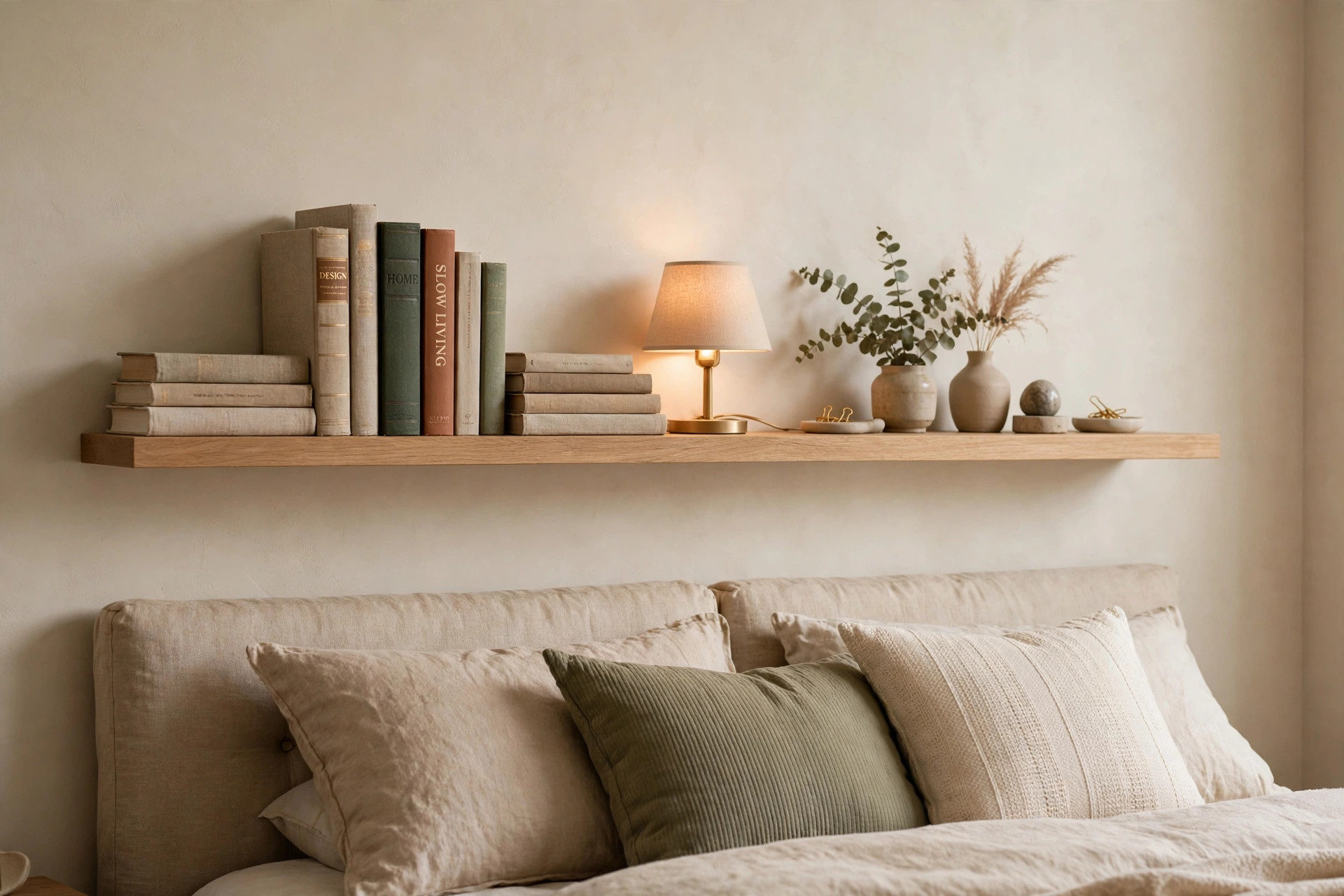
A shelf above the bed is the shelf that must be safe first and pretty second, because the shelf that holds books above a sleeping head is the shelf that cannot fall, and the shelf that is fixed properly is the shelf that lets you sleep. Style the bedroom shelves — the shelf above the bed done safely — so the shelf holds light things only: a small plant, a framed photo, one or two books. Fix it into studs, never into plasterboard alone, because the stud that holds the shelf is the stud that holds it through the night, and the shelf that hangs on plasterboard plugs alone is the shelf that worries you. Keep the shelf high enough that you cannot sit up into it, because the shelf that is out of head height is the shelf that never gets knocked, and the bed that has a safe shelf above it is the bed that stays calm. Put the books you are reading now on the shelf, not the books you keep, because the shelf that holds tonight's book is the shelf that gets used, and the shelf that holds the whole library is the shelf that is too heavy for the bedroom. The bedroom itself gets its full system in 28 Bedroom Storage Ideas for 2026, where the shelf above the bed is only the start. One safe shelf, and the bedroom feels calm.
15. Kitchen shelves — open shelving for everyday plates and jars
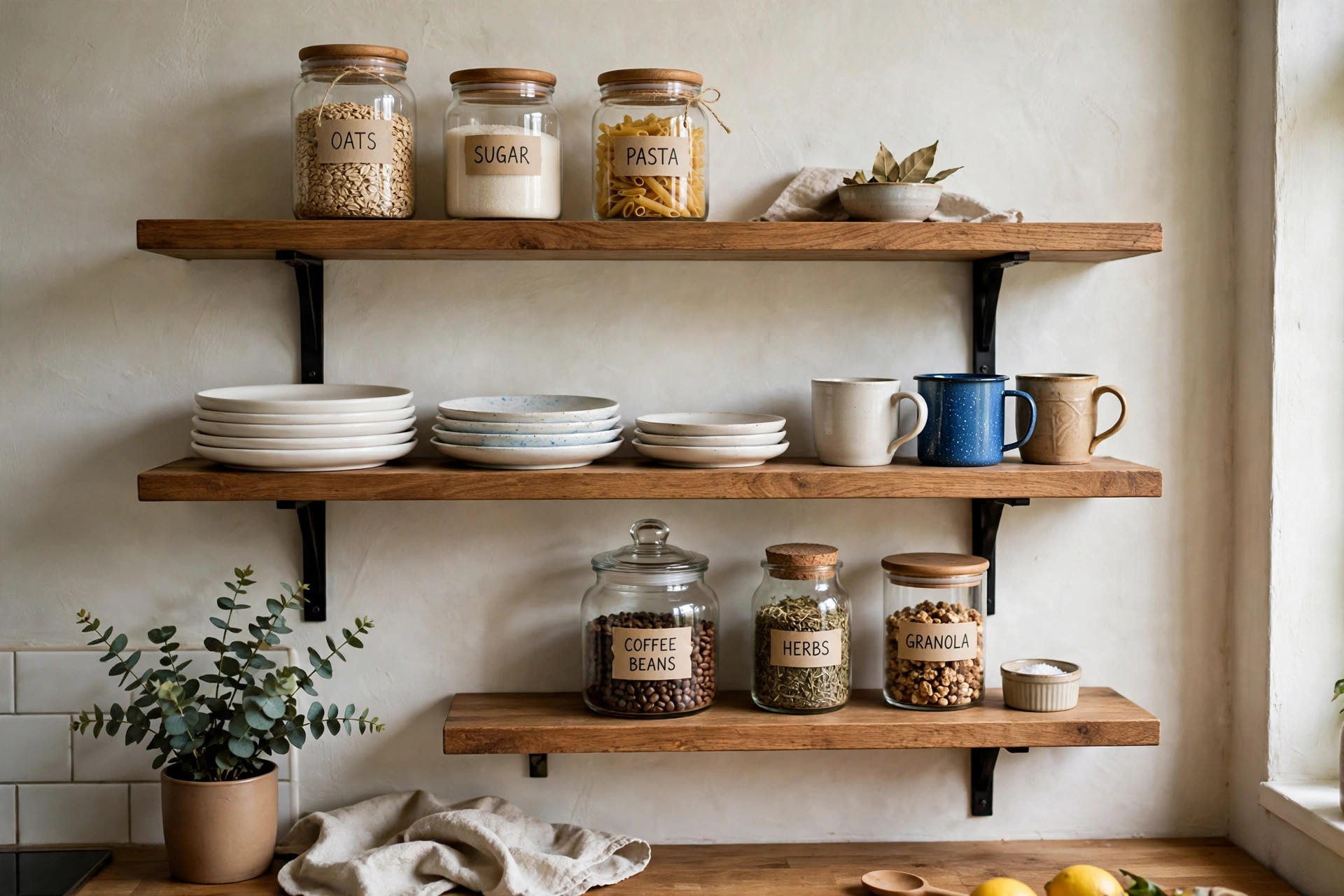
Kitchen shelves work hardest of any shelf in the house, because they hold the plates you eat from every day, the mugs you reach for every morning, and the jars you cook with every night — and the shelf that holds the everyday things is the shelf that must be easy to reach. Style the kitchen shelves — open shelving for everyday plates and jars — so the things you use most sit at eye level and the things you use least sit at the top. Stack the plates in short piles, line the mugs up by the handle, and keep the jars with their labels facing out, because the shelf that is ordered is the shelf you can cook from, and the shelf that is piled is the shelf you have to dig through. Wipe the shelves weekly, because the kitchen shelf that is wiped is the shelf that stays clean, and the shelf that collects grease is the shelf that looks tired. Keep the shelf away from the hob, because the steam that rises from the hob is the steam that coats the shelf, and the shelf that sits clear of the heat is the shelf that stays clean. The kitchen's other storage gets its full system in 20 Kitchen Cabinet Organization Ideas for 2026, where the closed cupboards hold what the open shelves do not. One open shelf, and the kitchen feels bigger.
16. Bathroom shelves — the shelf that survives steam
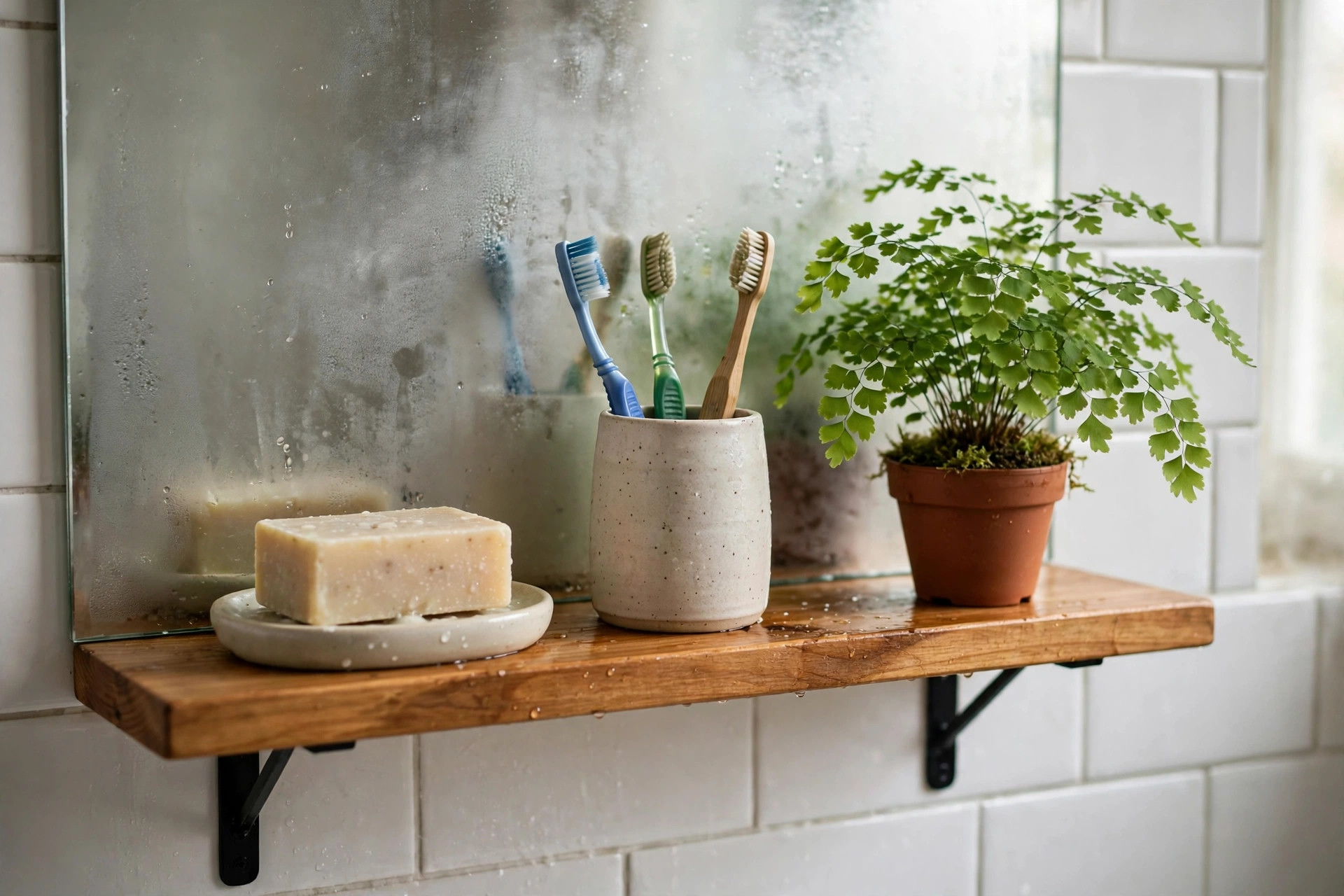
A bathroom shelf lives in steam, because the shower fills the room, the mirror fogs, and the shelf that is not built for steam is the shelf that warps, peels and grows mould. Style the bathroom shelves — the shelf that survives steam — so the shelf is sealed, the things on it are few, and the air can move. Use a sealed wood or a painted board, because the board that is sealed is the board that does not swell, and the shelf that is left raw in a bathroom is the shelf that warps in a month. Keep only what you use daily on the shelf — the soap, the toothbrush holder, one plant that likes humidity — because the shelf that holds three things is the shelf that dries, and the shelf that holds twenty is the shelf that stays damp. Leave a gap between the shelf and the wall at the back, because the gap that lets air through is the gap that stops the mould, and the shelf that breathes is the shelf that lasts. The bathroom counter below the shelf gets its full system in 25 Bathroom Counter Organization Ideas for 2026, where the shelf and the counter work as one. One sealed shelf, and the bathroom stays fresh.
17. Hallway and entryway shelves — the drop-zone shelf
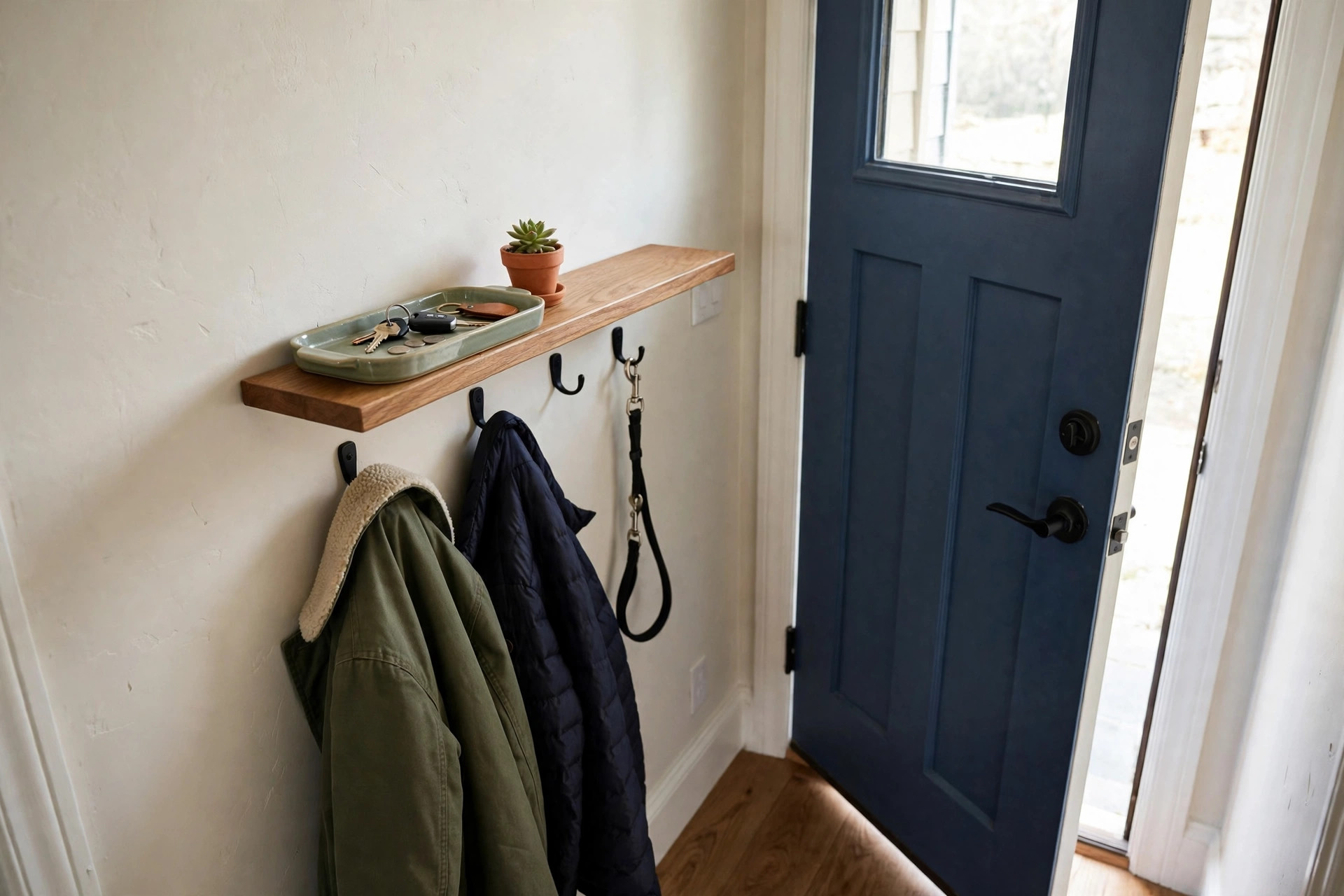
The hallway shelf is the shelf that catches the day, because the keys land on it, the post lands on it, the sunglasses land on it — and the shelf that catches everything is the shelf that keeps the hallway clear. Style the hallway and entryway shelves — the drop-zone shelf — so the shelf holds a small tray for keys, a hook below for the dog lead, and nothing else. Mount it at hand height beside the door, because the shelf that is at hand height is the shelf you use without thinking, and the shelf that is too high is the shelf you never reach. Keep a small basket on the shelf for the post, because the basket that holds the post is the basket that stops the pile on the stairs, and the hallway that has a shelf is the hallway that stays clear. Put one hook under the shelf for each person, because the hook that has a name is the hook that gets used, and the coats that hang on hooks are the coats that never land on the shelf. The entryway itself gets its full system in 22 Entryway Bench Organization Ideas for 2026, where the shelf sits above the bench. One drop-zone shelf, and the hallway stays clear.
18. Kids' room shelves — low, sturdy and book-forward
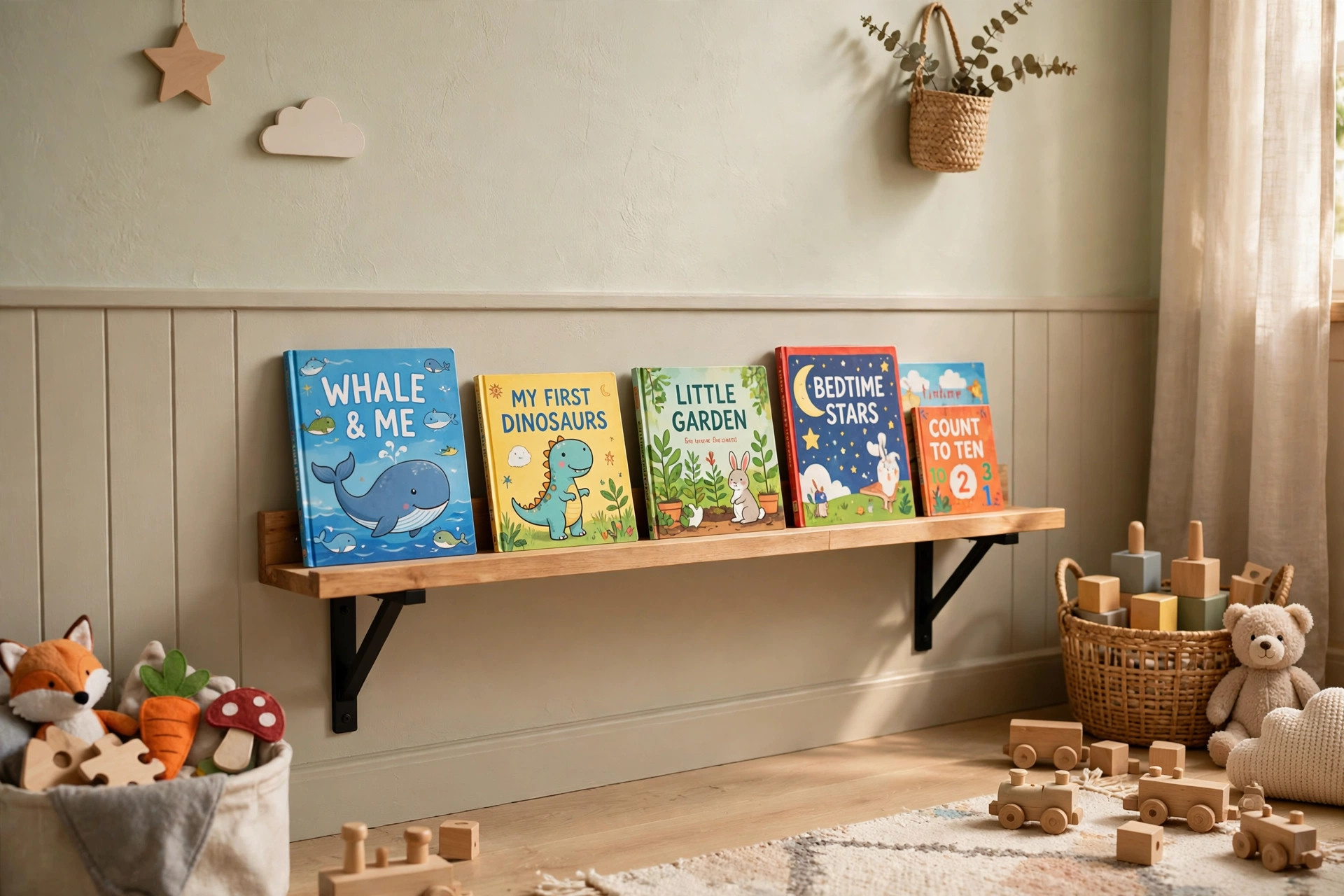
A kids' room shelf must be low, sturdy and book-forward, because the shelf that is too high is the shelf the child cannot reach, the shelf that is flimsy is the shelf that comes down, and the shelf that hides the books is the shelf the child never reads from. Style the kids' room shelves — low, sturdy and book-forward — so the shelves sit at the child's eye level, the books face outwards, and the shelf is fixed into studs. Put the books spine-out on the top shelf and face-out on the bottom shelf, because the book that shows its cover is the book the child picks up, and the shelf that faces the books out is the shelf that gets read from. Keep the toys off the book shelves, because the shelf that holds toys is the shelf that becomes a toy box, and the shelf that holds books is the shelf that teaches reading. Fix every shelf into a stud and add a safety strap, because the shelf that a child climbs on is the shelf that must hold, and the shelf that is fixed properly is the shelf that is safe. The kids' room itself gets its full system in 26 Kids Room Storage Ideas for 2026, where the shelves are only one of the places things live. One low shelf, and the books get read.
Keep it strong and tidy
19. Fix into studs — the fixing that holds real weight
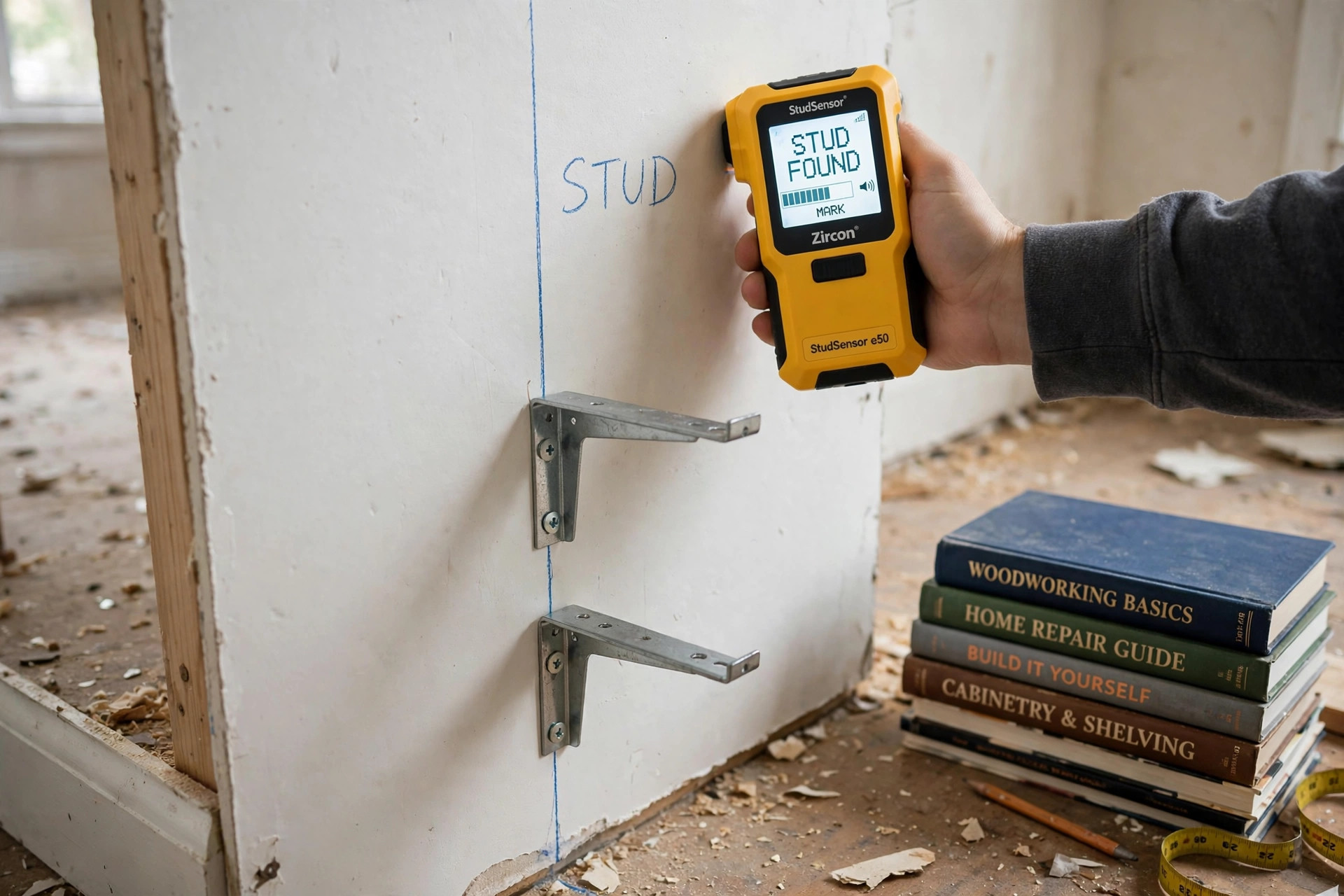
A shelf that hangs on plasterboard plugs alone is a shelf that holds books until it does not, because the plug that holds today is the plug that pulls out when the shelf is loaded, and the shelf that falls is the shelf that damages the wall and everything on it. Fix into studs — the fixing that holds real weight — so every shelf that holds books, plates or plants is screwed into the wooden studs behind the plasterboard. Find the studs with a stud finder, mark them with a pencil, and drive the screws into the stud, because the screw that bites into wood is the screw that holds, and the shelf that is fixed into studs is the shelf that holds its weight for years. If there is no stud where the shelf must go, use a proper toggle bolt, because the toggle that opens behind the board is the toggle that spreads the load, and the shelf that is fixed with toggles is the shelf that holds when there is no stud. Never trust a plain wall plug with a loaded shelf, because the plug that is trusted is the plug that fails. (Check on Amazon for an electronic stud finder with a centre-marking guide.) One stud fixing, and the shelf holds.
20. Know the weight limit — what a shelf can actually hold
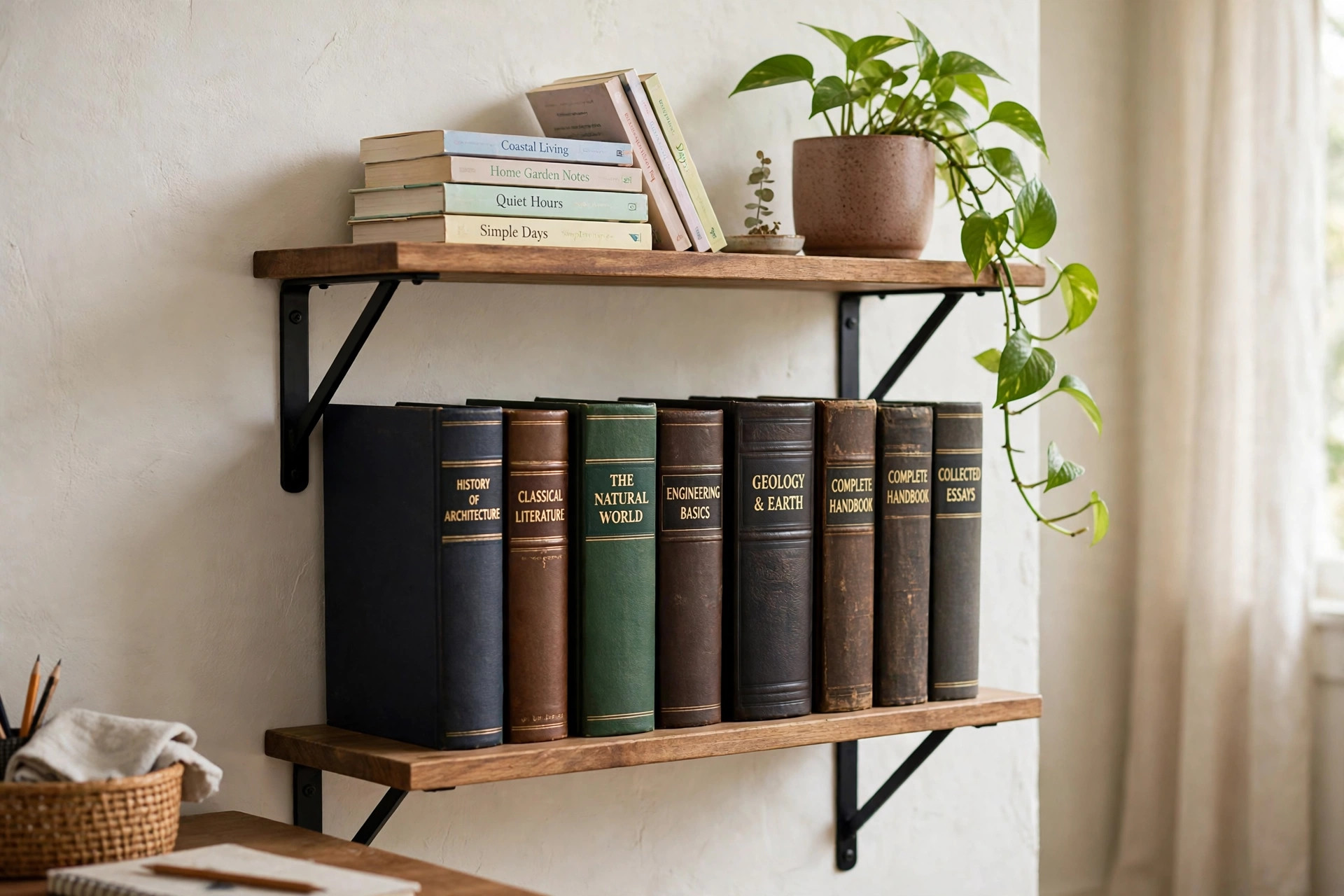
Every shelf has a weight limit, because the board bends, the brackets flex, and the fixing pulls — and the shelf that is loaded past its limit is the shelf that sags, cracks or falls. Know the weight limit — what a shelf can actually hold — so the shelf is loaded for what it is, not for what you wish it was. A floating shelf on hidden brackets holds light things: a few books, a plant, a frame. A bracket shelf fixed into studs holds heavy things: a row of hardbacks, a stack of plates, a collection of jars. Check the bracket's rating before you buy, because the bracket that is rated is the bracket that tells you the truth, and the shelf that is loaded within its rating is the shelf that stays straight. Weigh the heavy things in your hand before they go up, because the book that feels heavy is the book that is heavy, and the shelf that holds the heavy things low and the light things high is the shelf that stays safe. One weight limit, and the shelf never sags.
21. One in, one out for shelf displays
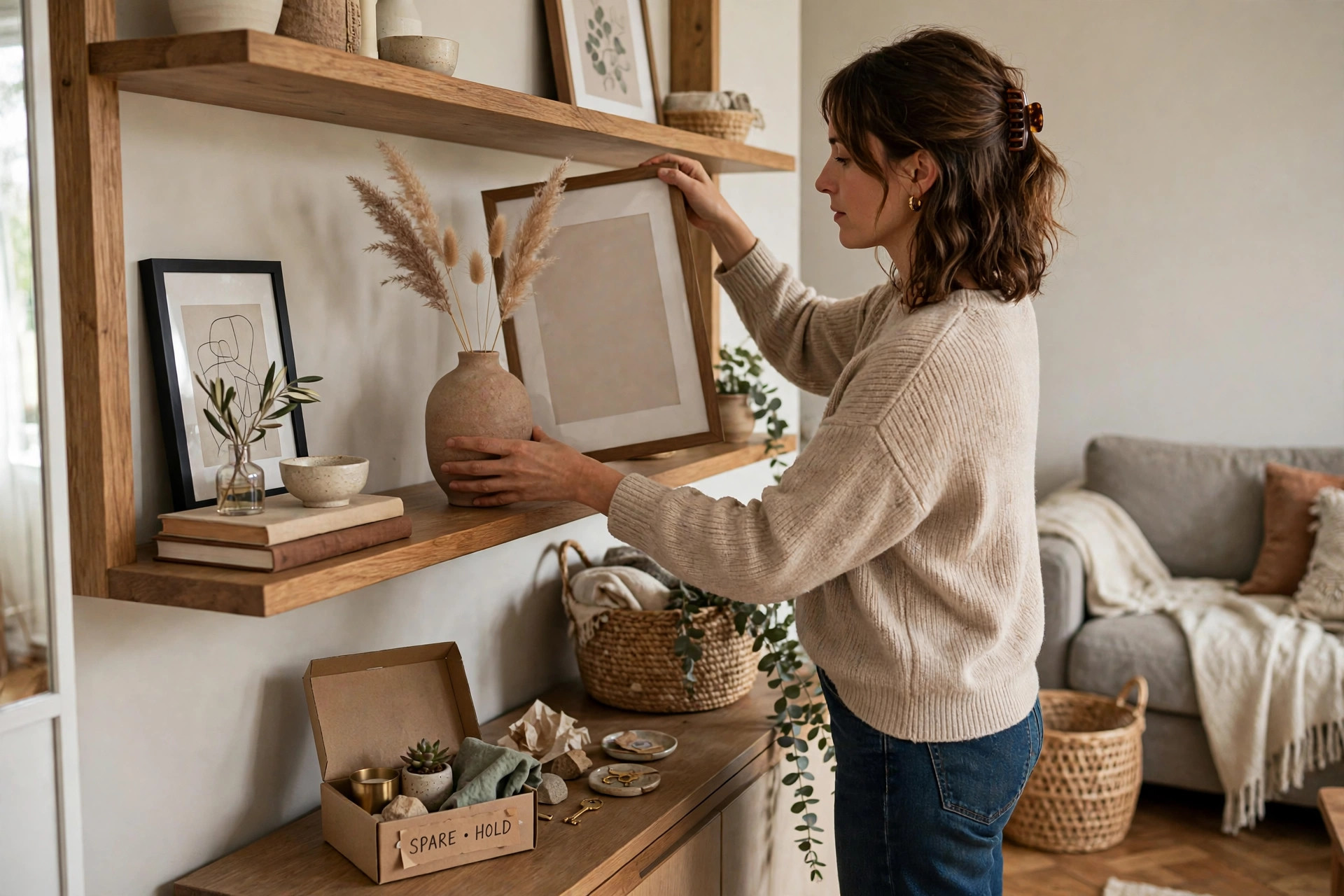
A shelf display grows on its own, because every holiday adds an object, every gift adds a frame, and the shelf that held three things in January holds twelve by December. Use one in, one out for shelf displays — the rule that stops the shelf overflowing — so every new object that goes on the shelf means one old object comes off it, into a box or onto another shelf. Keep a small box for the objects that come off, because the box that holds the spares is the box that lets you swap the display without a clear-out, and the shelf that swaps is the shelf that never looks stale. Count the objects when you do the swap, because the count that is written down is the count that shows you how many you really display, and the shelf that is counted is the shelf that stays calm. The budget styling that fills the shelf gets its full treatment in 25 Dollar Store DIY Ideas for 2026, where the objects cost little but look like much. One rule, and the shelf never overflows.
22. Dust it weekly — the five-minute shelf reset
No shelf stays tidy without a habit, because the shelf is only tidy on the day you style it and the dust creeps back one week at a time. Dust it weekly — the five-minute shelf reset — so the shelf is dusted, the objects are straightened, and the display is checked before the next week. Take everything off, wipe the board, wipe each object, and put it all back in the same order, because the reset that takes five minutes is the reset that actually happens. Keep a duster beside the shelf, because the duster that is at hand is the duster that gets used, and the shelf that is dusted weekly is the shelf that always looks styled. Check the books are still upright as you dust, because the book that has fallen is the book that starts the slide, and the shelf that is reset weekly is the shelf that never needs a big clean. Five minutes a week, and the shelf always looks styled.
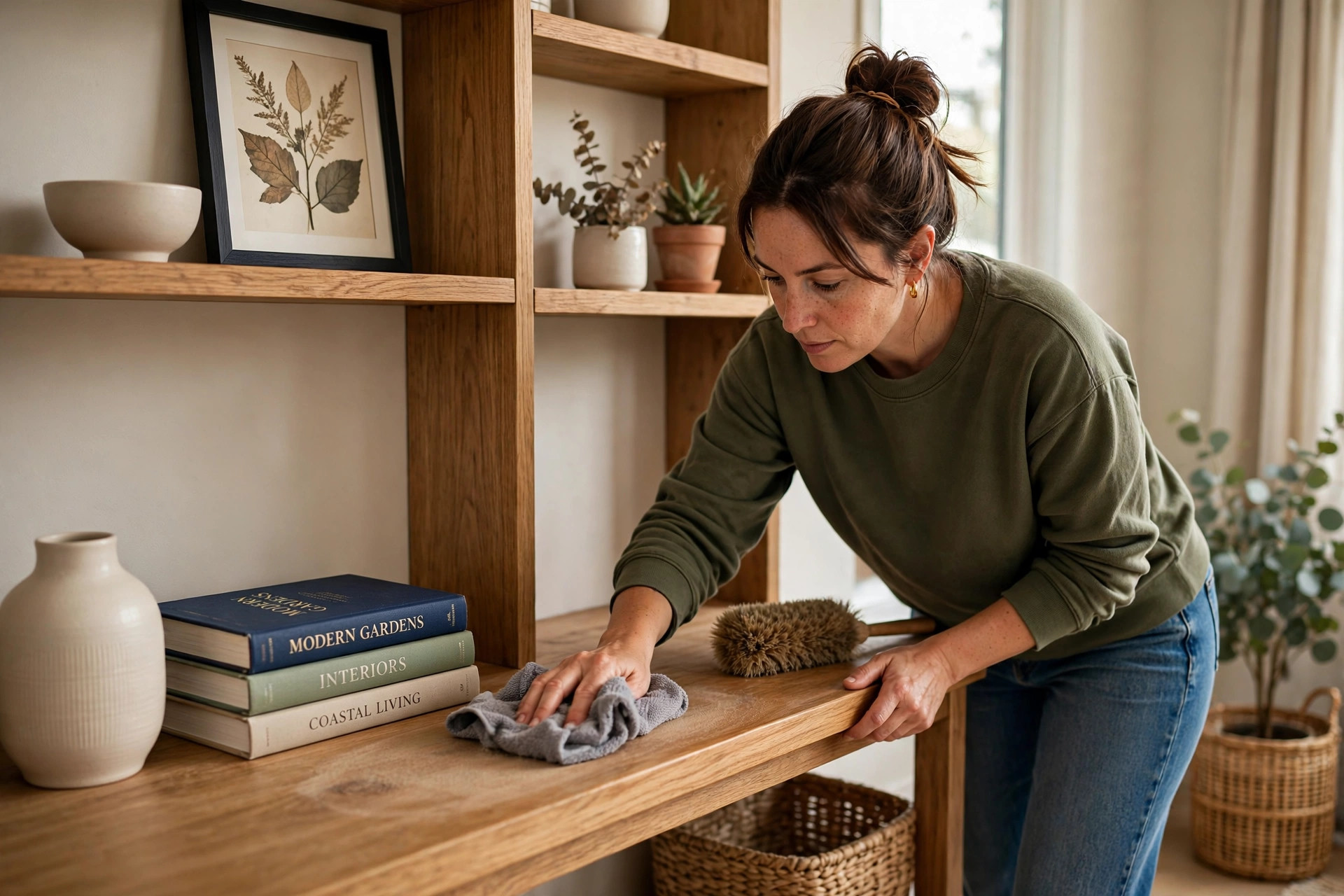
23. Swap the display seasonally — the shelf that never looks stale
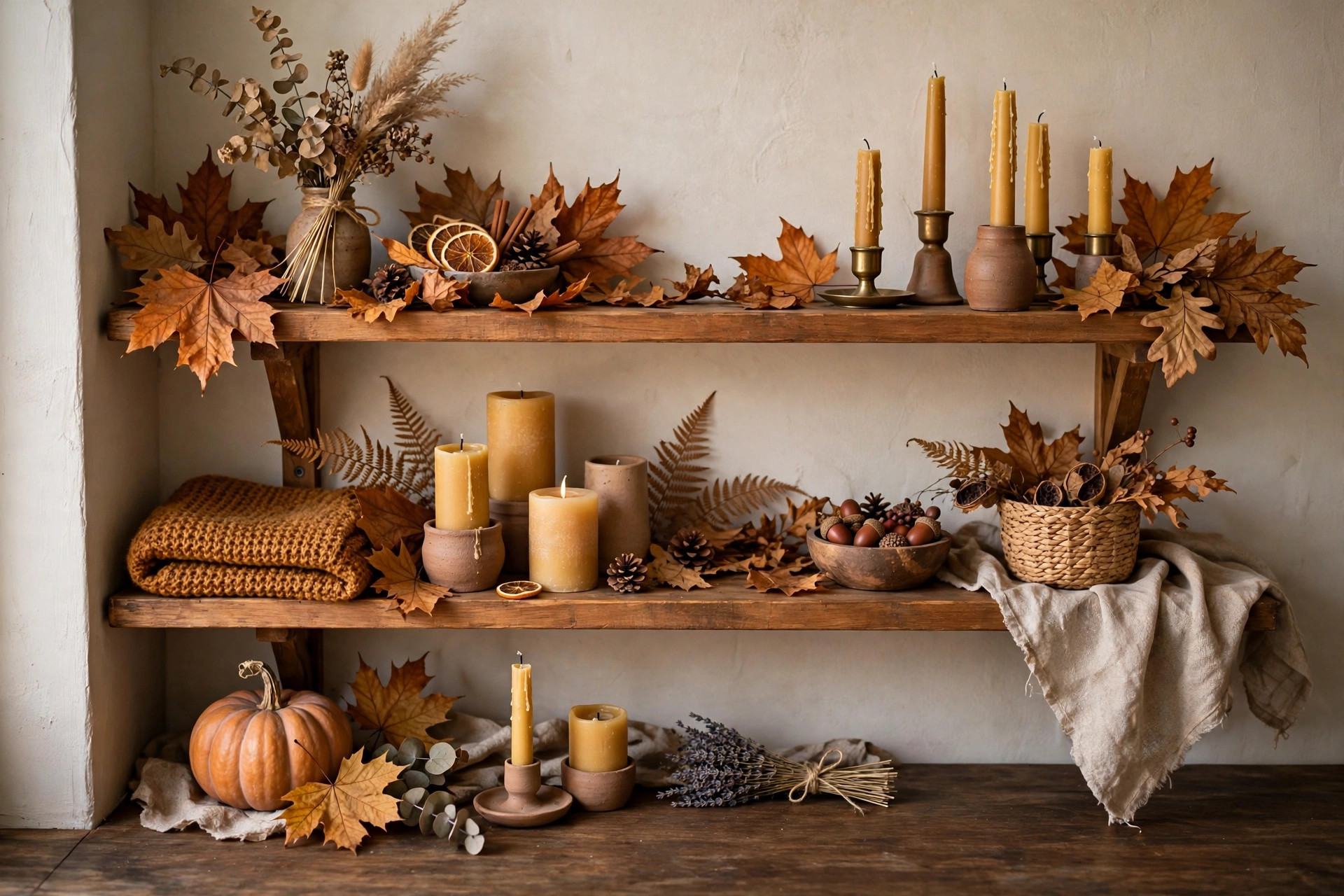
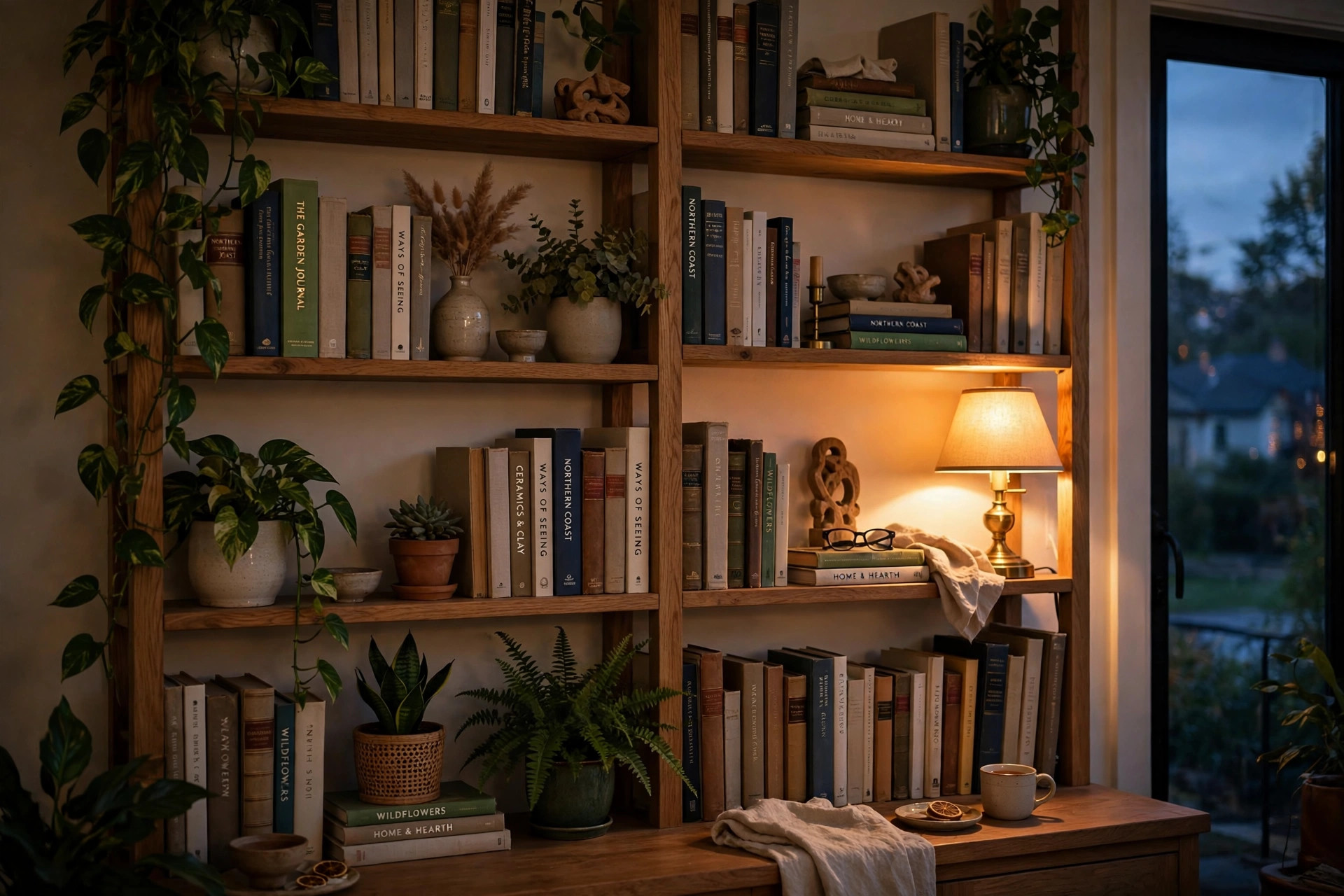
A shelf that never changes is a shelf you stop seeing, because the objects that sat there all year become part of the wall, and the shelf that is never swapped is the shelf that looks tired. Swap the display seasonally — the shelf that never looks stale — so the shelf changes four times a year and the room feels fresh. Swap in spring with green plants and light frames, in summer with bright colours and shells, in autumn with warm wood and dried leaves, in winter with candles and greenery, because the shelf that follows the seasons is the shelf that feels alive, and the shelf that holds the same objects all year is the shelf that disappears. Keep the swapped objects in a labelled box, because the box that holds the seasons is the box that makes the swap take ten minutes, and the shelf that swaps in ten minutes is the shelf that swaps every season. The soft light that finishes the winter display gets its full treatment in 20 Paper Lanterns DIY Ideas for 2026, where the lanterns glow on the shelf. One swap a season, and the shelf never looks stale.
24. Check the fixings once a year — the safety check that takes ten minutes
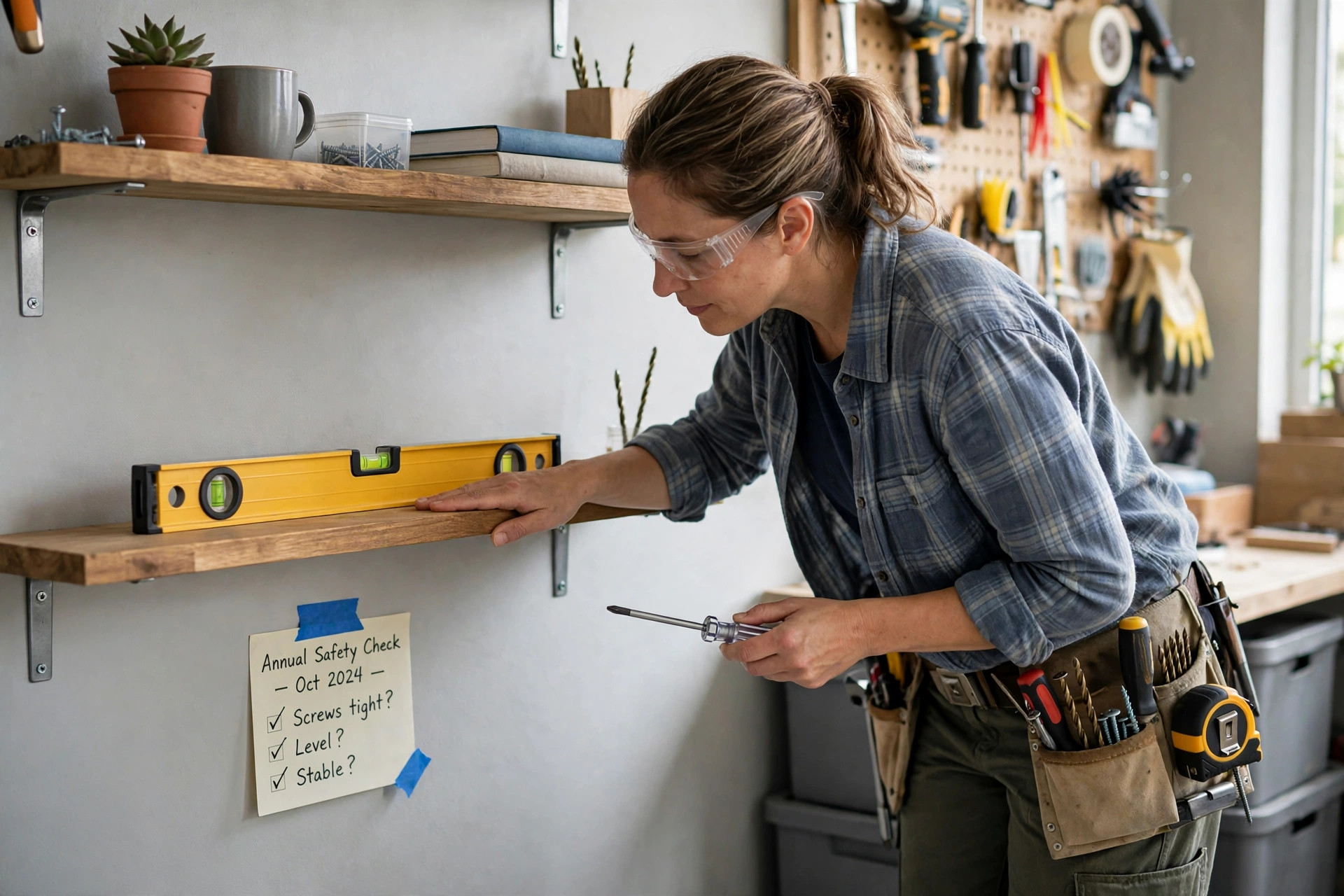
A shelf fixing loosens slowly, because the wall moves, the screws work loose, and the shelf that was solid last year is the shelf that wobbles this year. Check the fixings once a year — the safety check that takes ten minutes — so every bracket is tightened, every screw is checked, and every shelf is tested before it fails. Put your hand on the shelf and push gently, because the shelf that moves is the shelf that needs a screw, and the shelf that does not move is the shelf that is safe. Tighten every screw, check the level again, and look at the wall around the brackets for cracks, because the crack that is caught early is the crack that is fixed easily, and the shelf that is checked yearly is the shelf that never falls. Do the check when the clocks change, because the check that has a date is the check that happens, and the shelf that is checked every year is the shelf that is safe for years. The desk below the shelf gets its full system in 24 Desk Organization Ideas for 2026, where the same yearly check keeps the workspace safe. Ten minutes a year, and the shelf is safe for good.
Which DIY wall shelf idea fits which situation?
| Situation | Best first move | Budget | Tools needed |
|---|---|---|---|
| Bare wall, no storage | Floating shelves (idea 1) | Low | Drill, level |
| Want the strongest shelf | Bracket shelves (idea 2) | Low | Brackets, screws |
| Dead corner, nothing fits | Corner shelves (idea 5) | Low | Saw, brackets |
| Can't drill the wall | Ladder shelves (idea 4) | Low | None |
| Art and books to show off | Picture ledges (idea 6) | Low | Saw, level |
| Bought wood that does not fit | Measure first (idea 7) | Free | Tape measure |
| Shelf looks homemade | Cut and sand well (idea 9) | Free | Sandpaper |
| Shelf sags in the middle | Fix into studs (idea 19) | Low | Stud finder |
| Shelf overloaded | Know the weight limit (idea 20) | Free | None |
| Display looks cluttered | One in, one out (idea 21) | Free | None |
| Shelf dusty and tired | Swap the display seasonally (idea 23) | Free | None |
| Worried about safety | Check the fixings yearly (idea 24) | Free | Screwdriver |
You do not need all 24 ideas. You need the three that solve your wall — usually the floating shelf that adds storage without taking floor space, the bracket shelf that holds the heavy books, and the one in, one out rule that keeps the display calm. Start with the style, measure the wall, fix it into a stud, and style it simply. Do that and the blank wall becomes the best storage in the room, the books have a home, and the shelf stays level for years.
Save this post for the next blank wall, and if the room around the shelf needs the same treatment, read 25 DIY Room Decor Ideas for 2026 next — it is Post 84, the room the shelves finish — and 24 Book Storage Ideas for 2026, Post 47, for the books that fill the shelves. This is the tenth post of the new DIY by project run — Posts 81 to 100, one project at a time — and the run keeps going with floating shelves next. The floating shelves themselves get their own deep dive in DIY Floating Shelves, where the hidden bracket gets the full treatment.
Publish date assigned at publishing time. Updated as new wall shelf finds are tested.
Frequently asked questions
How do I hang a wall shelf without it falling down?
Fix it into the wooden studs behind the plasterboard, not into plasterboard plugs alone. Find the studs with a stud finder, mark them, and drive the screws into the stud — the screw that bites into wood is the screw that holds. If there is no stud where the shelf must go, use a proper toggle bolt, which opens behind the board and spreads the load. Space brackets no more than two feet apart, check the shelf is level after the first screw and again after the last, and never load a shelf past its weight limit.
What is the best wood for DIY wall shelves?
Pine is the best wood for a first DIY shelf: light, cheap, easy to cut and sand, and strong enough for books and plants on a shelf up to three feet long. Plywood is the best choice for a long shelf that must stay straight, because it never warps and takes paint beautifully. Reclaimed boards bring the most character, but check them for nails and splits before you cut. Whichever wood you pick, sand it smooth, stain or paint it to match the room, and test the finish on an offcut first.
How much weight can a DIY wall shelf hold?
It depends on the shelf and the fixing. A floating shelf on hidden brackets holds light things — a few books, a plant, a frame. A bracket shelf fixed into studs holds heavy things — a row of hardbacks, a stack of plates, a collection of jars. Check the bracket's rating before you buy, space brackets no more than two feet apart, and keep the heavy things low and the light things high. When in doubt, load less than you think the shelf can take — the shelf that is loaded within its limit is the shelf that stays straight for years.