22 DIY Canvas Wall Art Ideas for 2026
A blank wall is the room's unfinished sentence — the sofa is there, the cushions are there, the lamp is there, and above it all is a big white nothing that makes the whole room look like you moved in yesterday. The fix is not a framed print that costs more than the sofa, it is a canvas you paint yourself, because a painted canvas fills a wall for the price of a tube of paint and an afternoon, and it looks like you chose it on purpose.
These 22 DIY canvas wall art ideas are easy painted canvases for blank walls: start with one bold brushstroke on a single colour, sponge a sunset in three colours, add texture with plaster or dried flowers, and finish with a gold-leaf accent and a gallery wall — so every blank wall in the house has art on it by the weekend.
Every idea below works on a real wall, from a hallway with one bare stretch to a living room with a sofa and nothing above it. The paints, brushes and canvases the art is made from are in 20 Art Supply Organization Ideas for 2026, where the supplies get a home before the painting starts — so gather the paints first, then pick three ideas that fit your walls, start with the brushstroke, and build from there.
Start with paint: easy first canvases
1. A single-colour canvas with one bold brushstroke — the blank wall's first fix
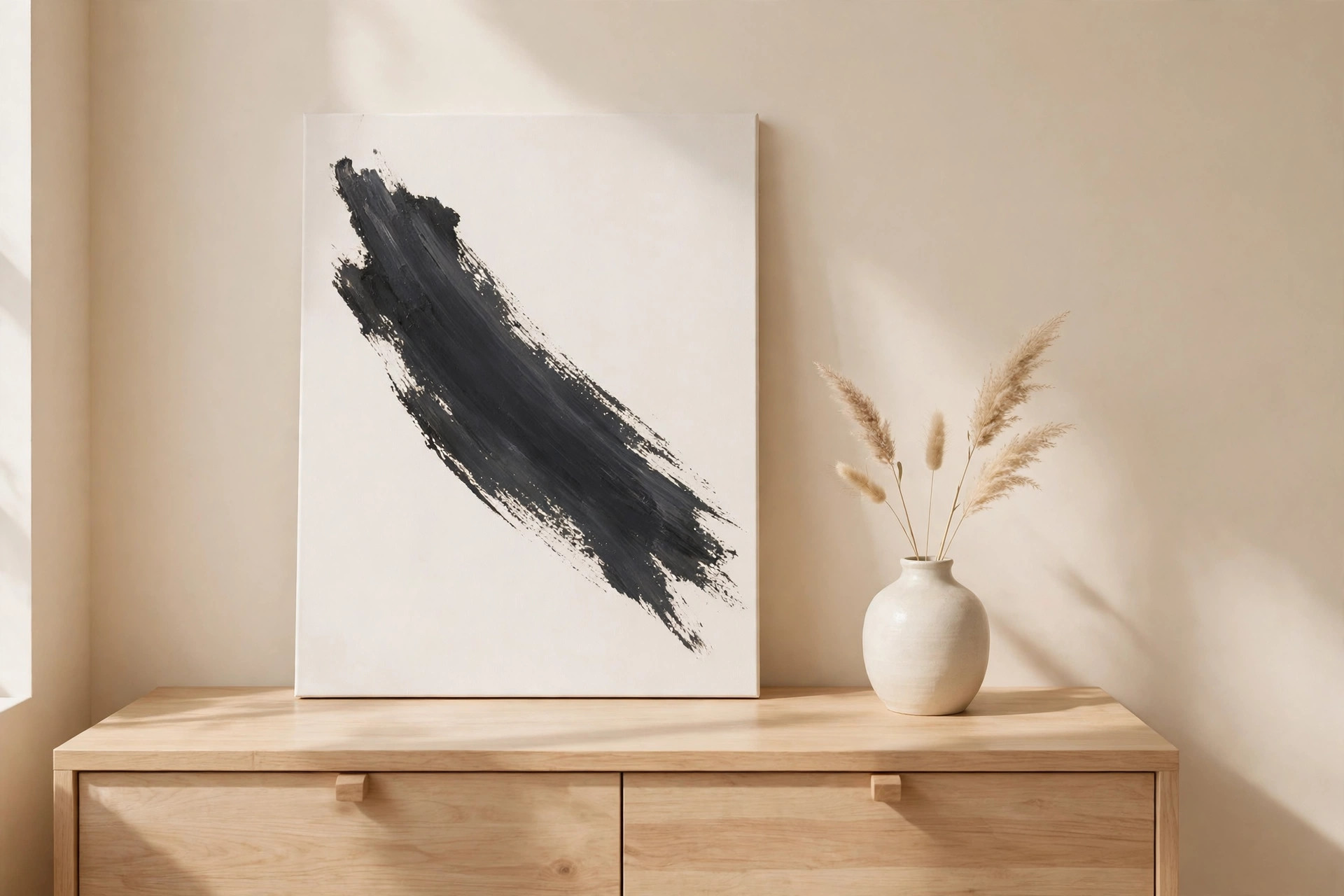
A blank wall does not need a masterpiece, it needs one mark, because the wall that has one bold stroke is a wall with art on it and the wall with nothing is a wall that looks unfinished. Paint the whole canvas one colour — sage, terracotta, warm cream — then drag one wide brushstroke across it in a second colour, because the single stroke is the art and the flat colour is the frame. Use the biggest brush you own, load it well, and make the stroke in one confident movement, because the stroke that is made in one movement looks intentional and the stroke that is fussed over looks nervous. Hang it where the wall is barest, because the canvas that is there is the canvas that finishes the room. One colour, one stroke, and the wall is no longer blank.
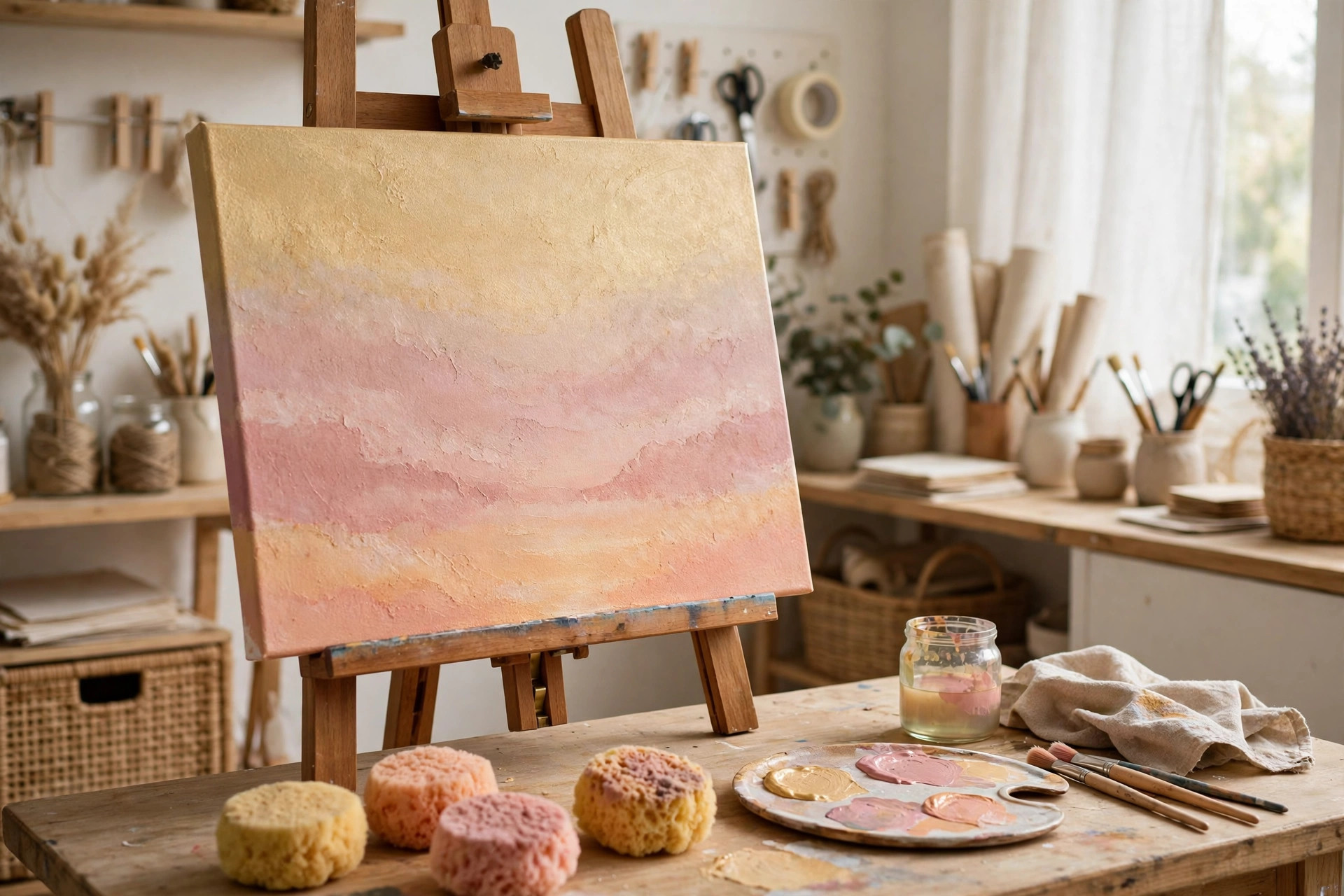
2. A sponge-painted sunset in three colours — soft sky, no brush skill needed
A sunset is the hardest thing to paint with a brush and the easiest thing to paint with a sponge, because the sponge is the tool that blends and the brush is the tool that leaves lines. Dab three colours across the canvas — a soft peach at the bottom, a warm pink in the middle, a dusty blue at the top — and let the sponge do the blending, because the sponge that overlaps the colours is the sponge that makes a sky. Work while the paint is still wet, so the colours melt into each other instead of sitting in stripes, and add a thin dark line at the bottom for the horizon, because the horizon is the line that turns blobs into a sunset. No brush skill, no drawing, and the wall has a sky on it.
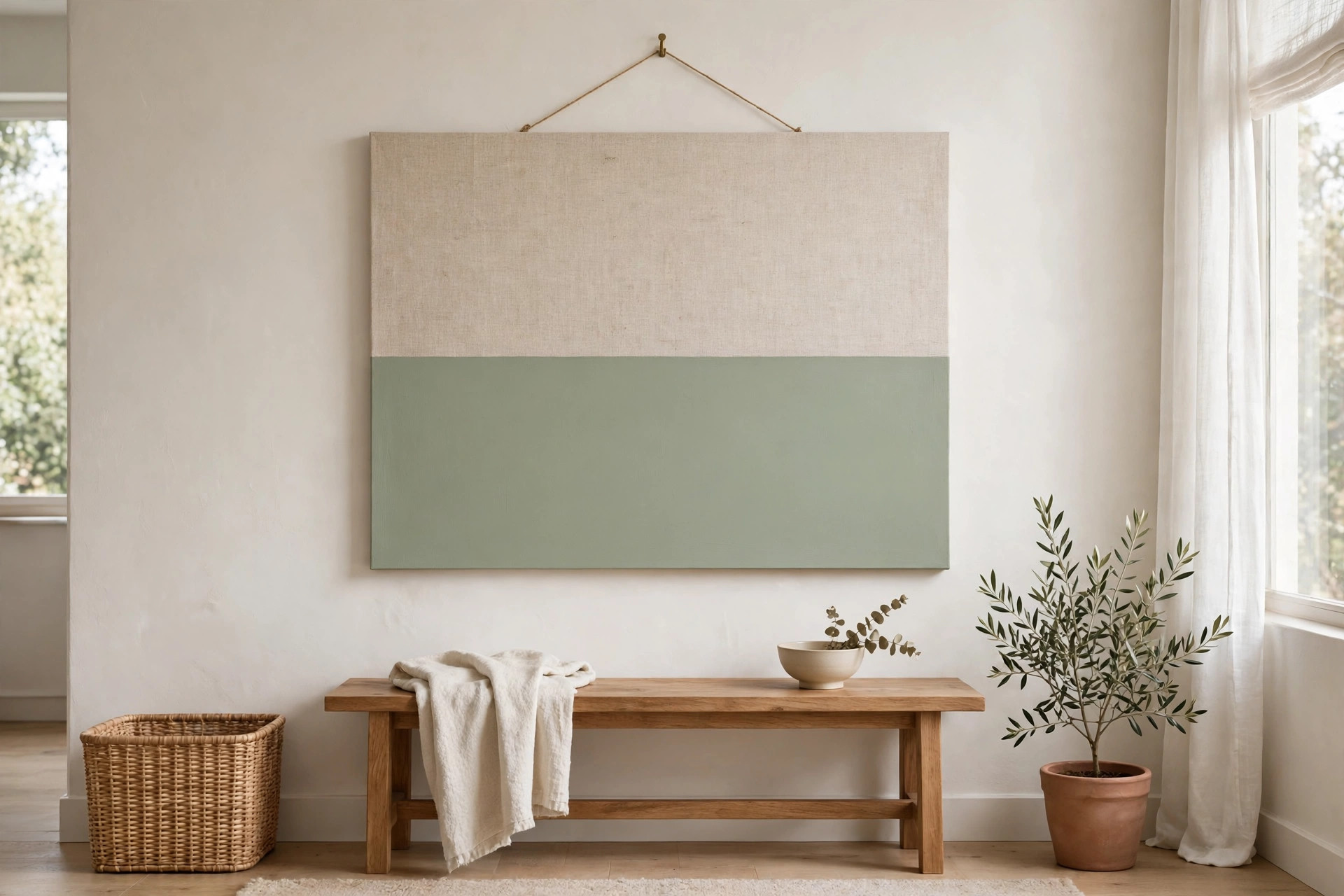
3. A two-tone half-and-half canvas — paint the bottom, leave the top bare
A canvas that is half painted and half bare looks designed, because the bare linen is the contrast and the painted half is the colour. Tape a straight line across the middle, paint the bottom half one strong colour, and peel the tape off while the paint is still slightly wet, because the tape that comes off clean is the tape that leaves a sharp edge. Leave the top half the natural linen colour of the canvas, because the linen that shows is the texture that makes the painting look expensive. Hang it with the painted half at the bottom, so the colour grounds the wall and the bare top lifts it. Half painted, half bare, and the canvas looks like it came from a gallery.
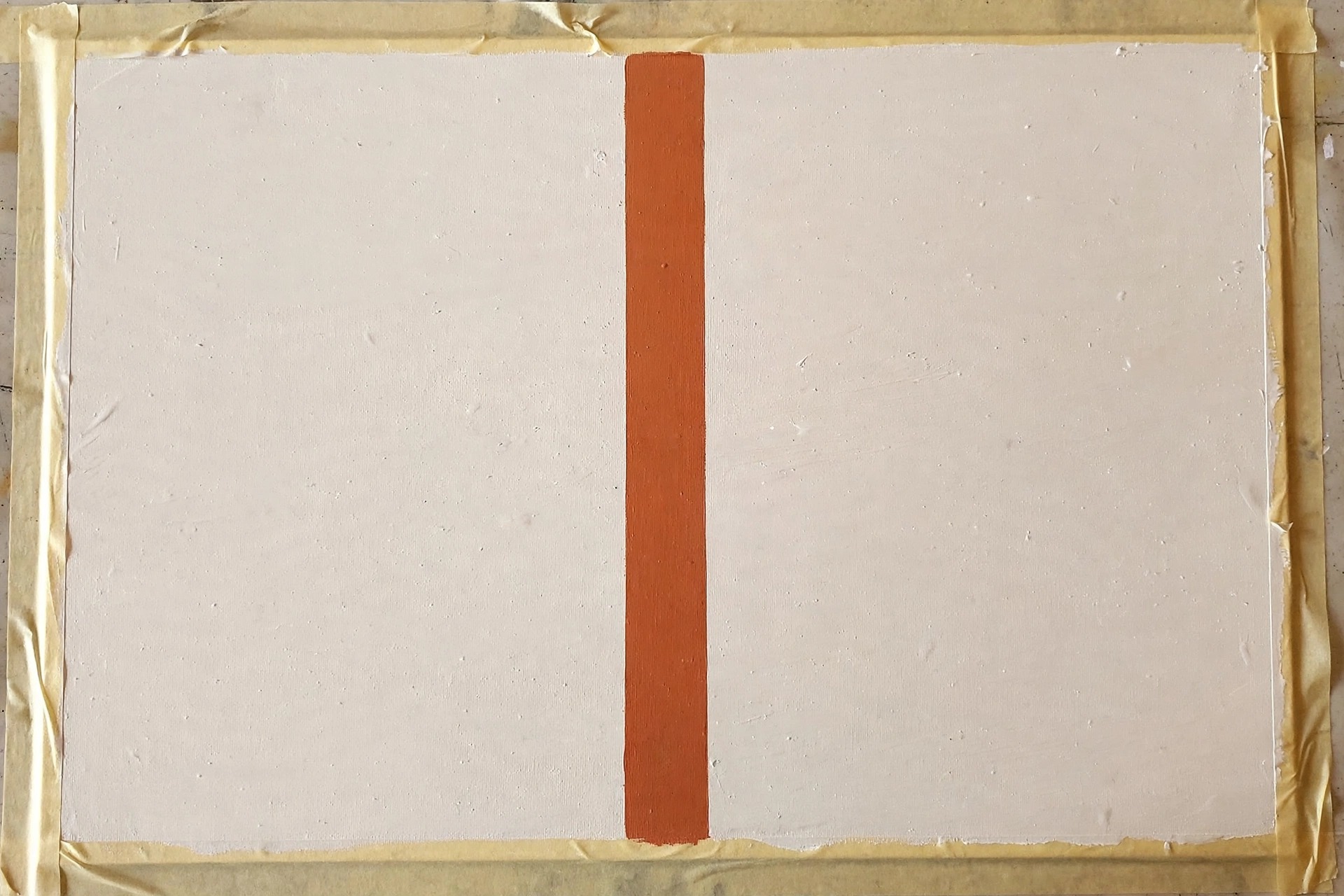
4. A canvas painted with a foam roller and one accent stripe
A foam roller covers a canvas in thirty seconds, because the roller is the tool that paints flat and the brush is the tool that paints slow. Roll the whole canvas one calm colour — warm white, pale sage, soft grey — then paint one vertical stripe down the side in a bright accent, because the stripe is the art and the flat colour is the background. Use painter's tape on both sides of the stripe, so the edges stay razor sharp, and peel it off before the paint dries fully, because the tape that waits too long is the tape that pulls the paint with it. One roller, one stripe, and the wall has a modern painting on it.
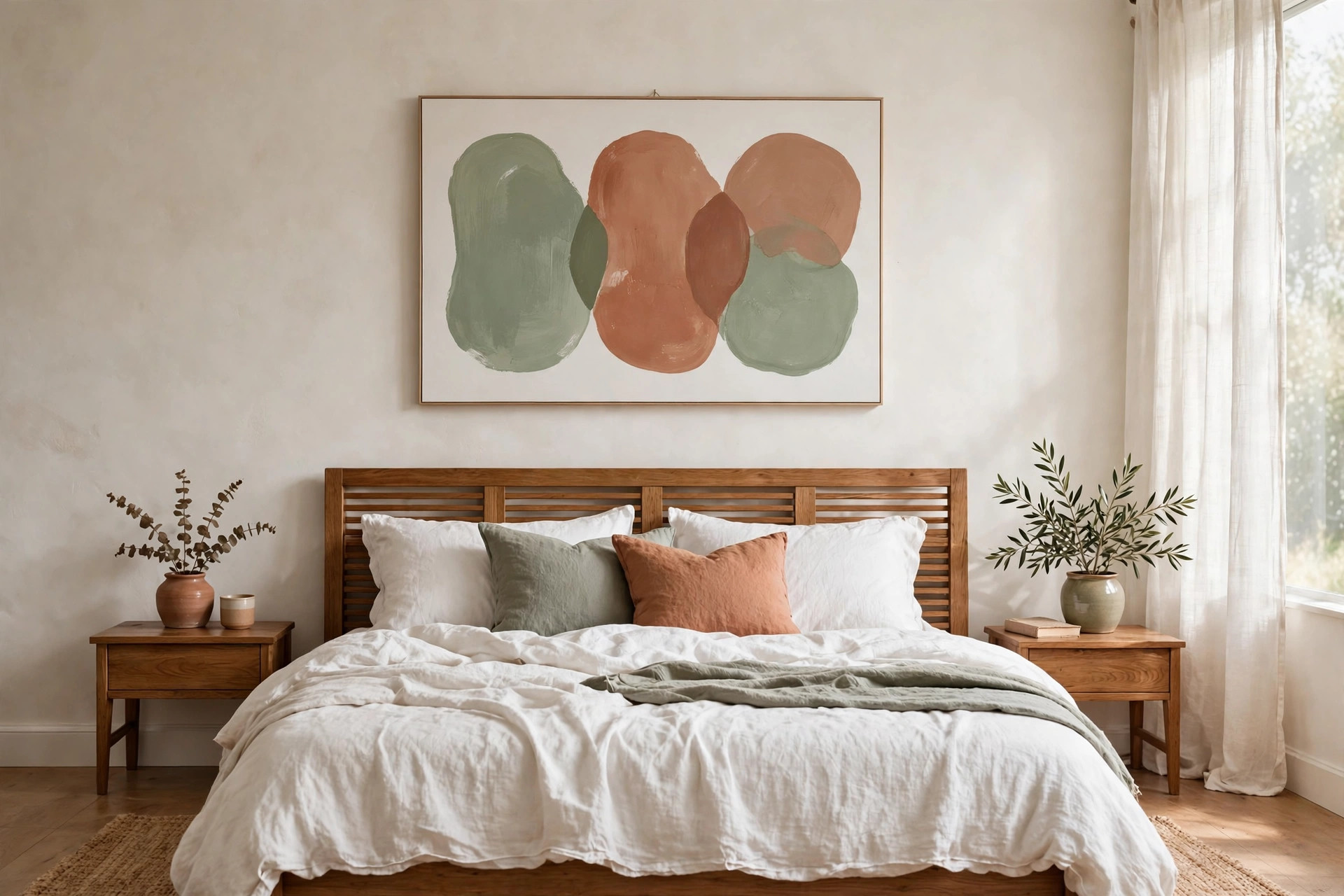
5. Abstract blobs in three matching colours — the easiest art that still looks intentional
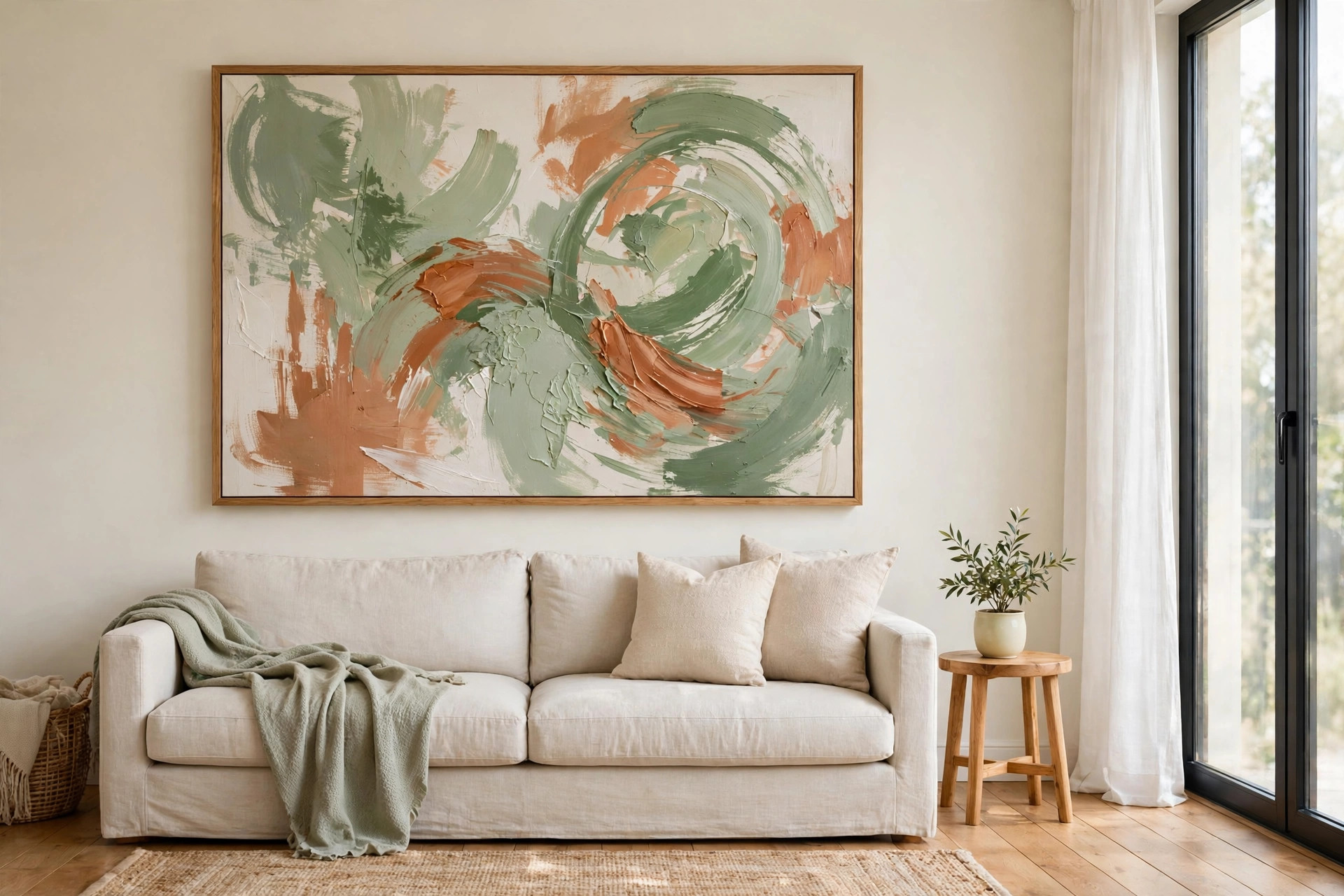
Abstract blobs look like a mistake when the colours fight and like art when the colours match, because the matching colours are the thing that makes random shapes look planned. Pick three colours that already live in the room — the cushion, the rug, the throw — and paint big soft blobs of each one across the canvas, overlapping them slightly, because the overlap is the thing that ties the blobs together. Keep the blobs big and few, three or four at most, because the canvas with three big shapes looks calm and the canvas with twenty small ones looks busy. Step back after each blob, because the painting that is judged from the sofa is the painting that hangs above it. Three colours, three blobs, and the wall looks styled.
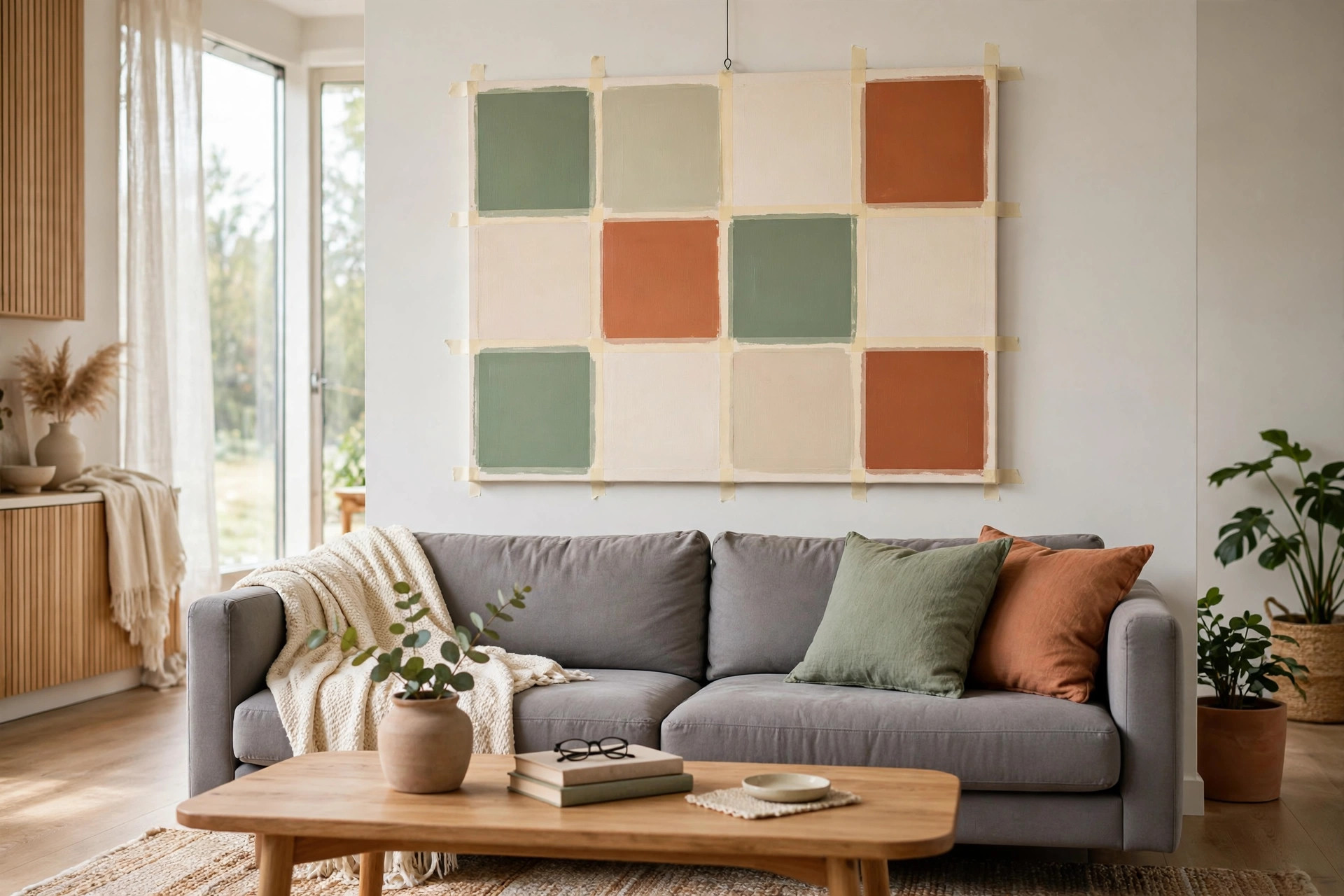
6. A painted colour-block grid — tape off squares, fill each one
A grid is the painting for people who like straight lines, because the tape is the ruler and the paint is the filling-in. Tape the canvas into a grid of squares — three across, three down — and fill each square with a different colour from the same family, because the squares that share a family are the squares that look like one painting. Use warm colours for a cosy room and cool colours for a bright one, because the colour family is the mood and the grid is the structure. Peel the tape off in one slow pull, so every edge stays crisp, and hang the grid where the wall is widest, because the grid that is centred is the grid that looks deliberate. Tape, paint, peel, and the wall has a modern grid on it.
Texture and mixed media: canvases with something extra
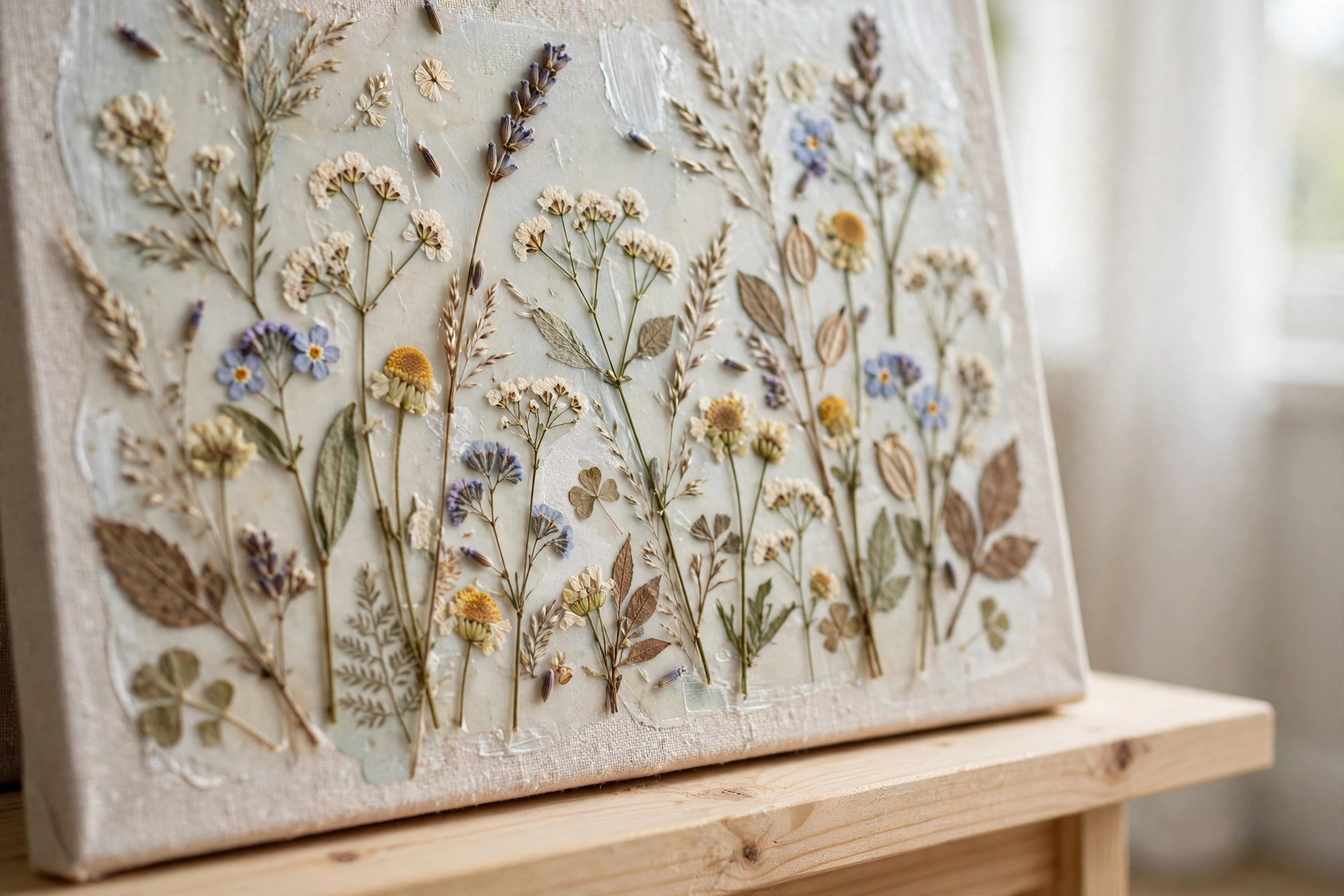
7. A canvas with dried flowers pressed under a thin paint wash
A dried flower on a canvas is a flower that lasts, because the paint wash is the seal and the canvas is the frame. Arrange the dried flowers flat on the canvas — lavender, daisies, a fern frond — and brush a thin wash of pale paint over the top, so the flowers show through like a watercolour and the wash holds them down. Keep the wash thin, mostly water, because the wash that is too thick is the wash that hides the flowers. Press the flowers under a book first, so they lie flat and the paint goes on evenly, and hang the canvas away from direct sun, because the sun that hits the flowers is the sun that fades them. Dried flowers, a thin wash, and the wall has a garden on it.
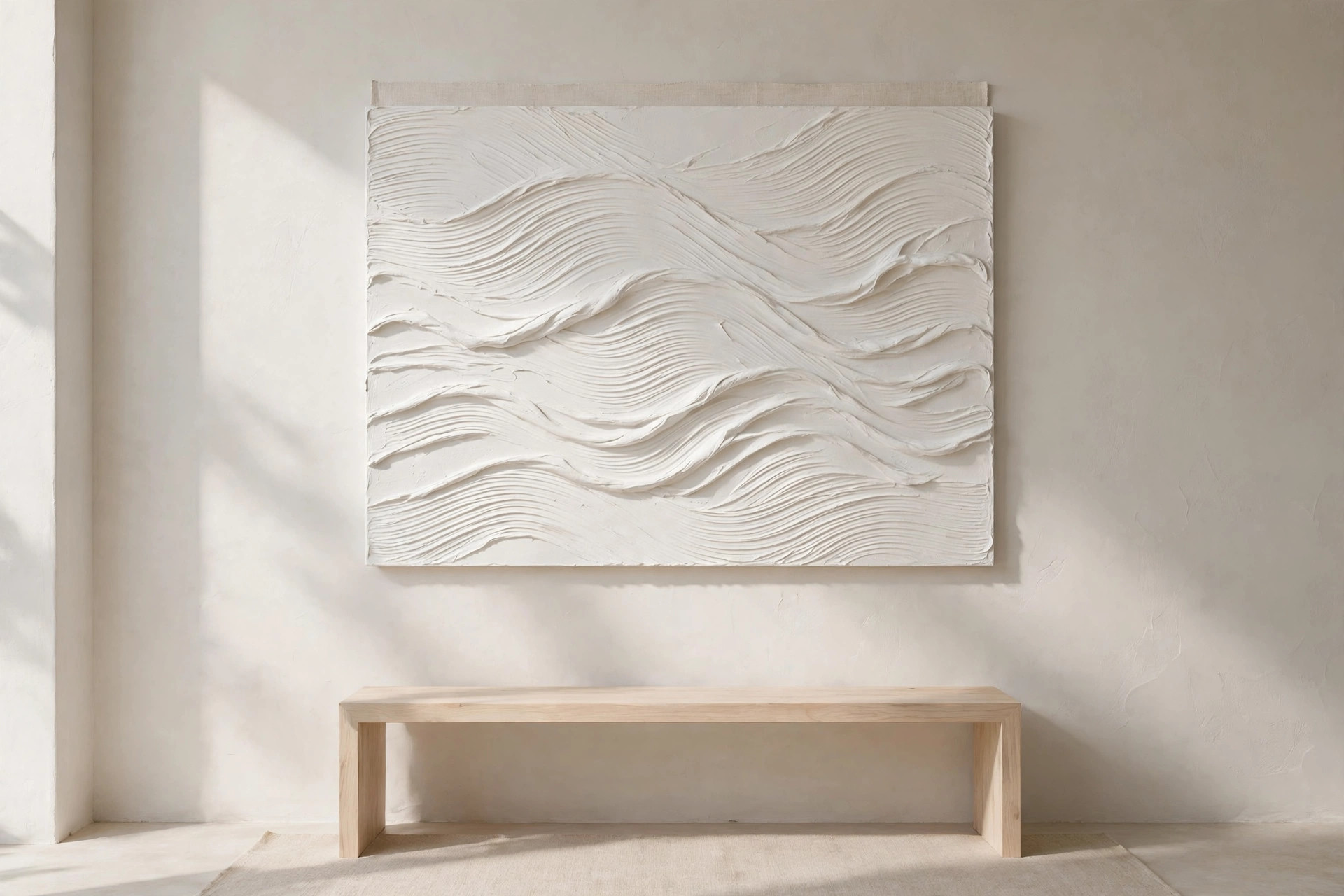
8. A plaster-textured canvas — spread plaster, comb it, paint it white
A flat canvas is a flat painting, and a plaster canvas is a sculpture, because the plaster is the texture and the paint is the finish. Spread a thin layer of plaster across the canvas with a palette knife, comb it into ridges and waves, and let it dry completely before you paint it, because the plaster that is still damp is the plaster that cracks under paint. Paint the whole thing one colour — white for a calm room, sage for a warm one — so the texture does the talking and the colour stays quiet. Keep the layer thin at the edges, so the canvas still sits flat against the wall, and seal it with a clear varnish, because the varnish is the thing that stops the plaster dusting off. Plaster, a comb, one colour, and the wall has texture on it. (Check on Amazon for plaster of Paris or ready-mixed joint compound, which spreads smoothly and dries hard.)
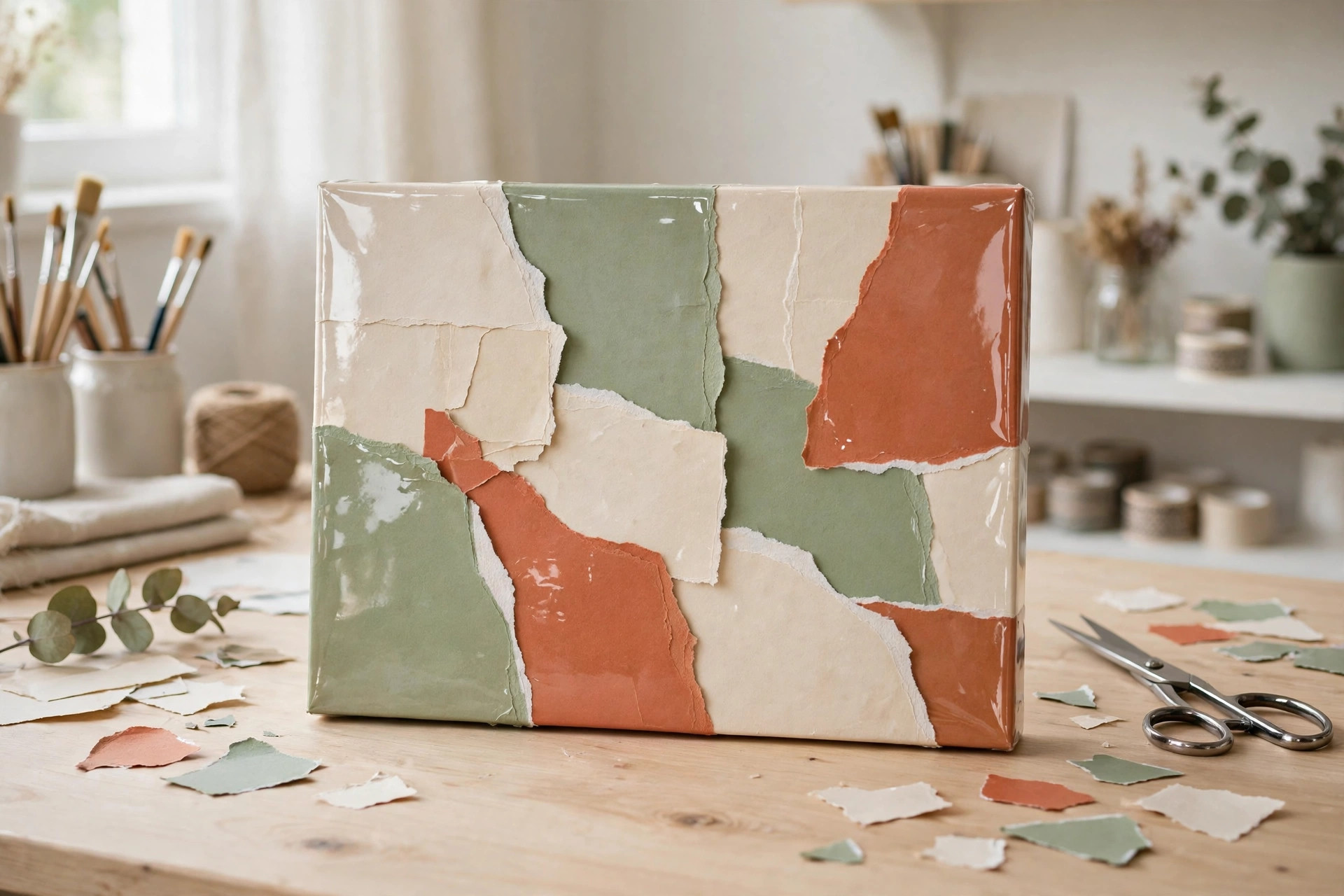
9. A canvas with torn paper collage sealed under varnish
Torn paper looks soft where cut paper looks sharp, because the torn edge is the texture and the straight edge is the line. Tear coloured paper, old maps, pages from a magazine you love, and glue the pieces across the canvas in overlapping layers, because the overlap is the depth and the torn edges are the softness. Brush varnish over the whole surface when the glue is dry, so the paper is sealed and the canvas shines like a painting instead of a school project. Keep the colours to one family, because the collage that shares a palette is the collage that looks like art and the collage that uses every colour is the collage that looks like clutter. Torn paper, glue, varnish, and the wall has a collage on it.
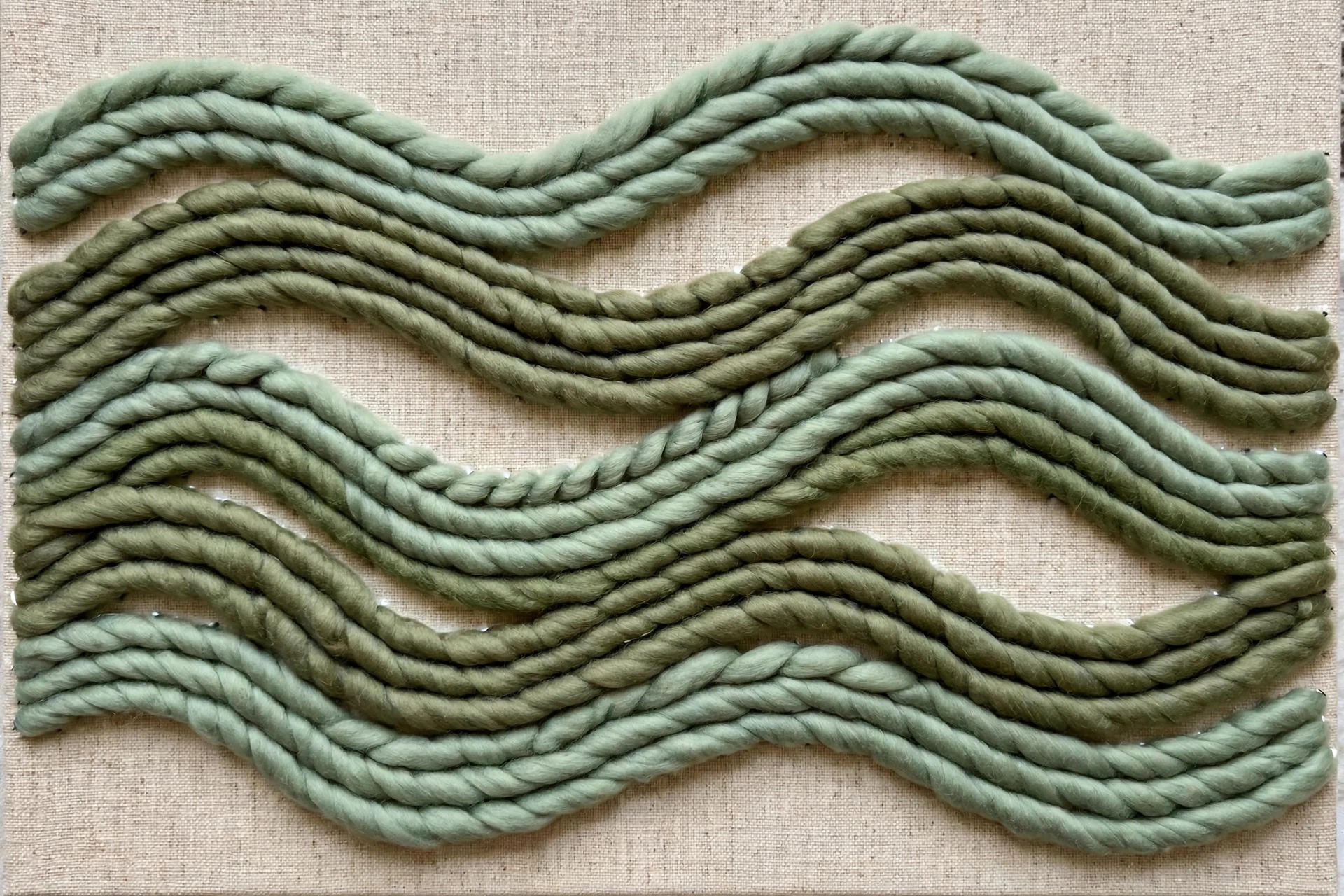
10. A yarn-wrapped canvas — glue yarn in waves across the surface
Yarn on a canvas is the cosiest art there is, because the yarn is the warmth and the canvas is the structure. Glue thick yarn across the canvas in slow waves — side to side, top to bottom — and let the waves overlap a little, because the overlap is the pattern and the wave is the movement. Use two or three colours that match the room, and keep the yarn taut as you glue it, because the yarn that sags is the yarn that looks messy. Start at the top and work down, so your hand never drags across the finished rows, and trim the ends flush with the canvas edge, because the edge that is neat is the edge that looks finished. Yarn, glue, waves, and the wall has something soft on it.
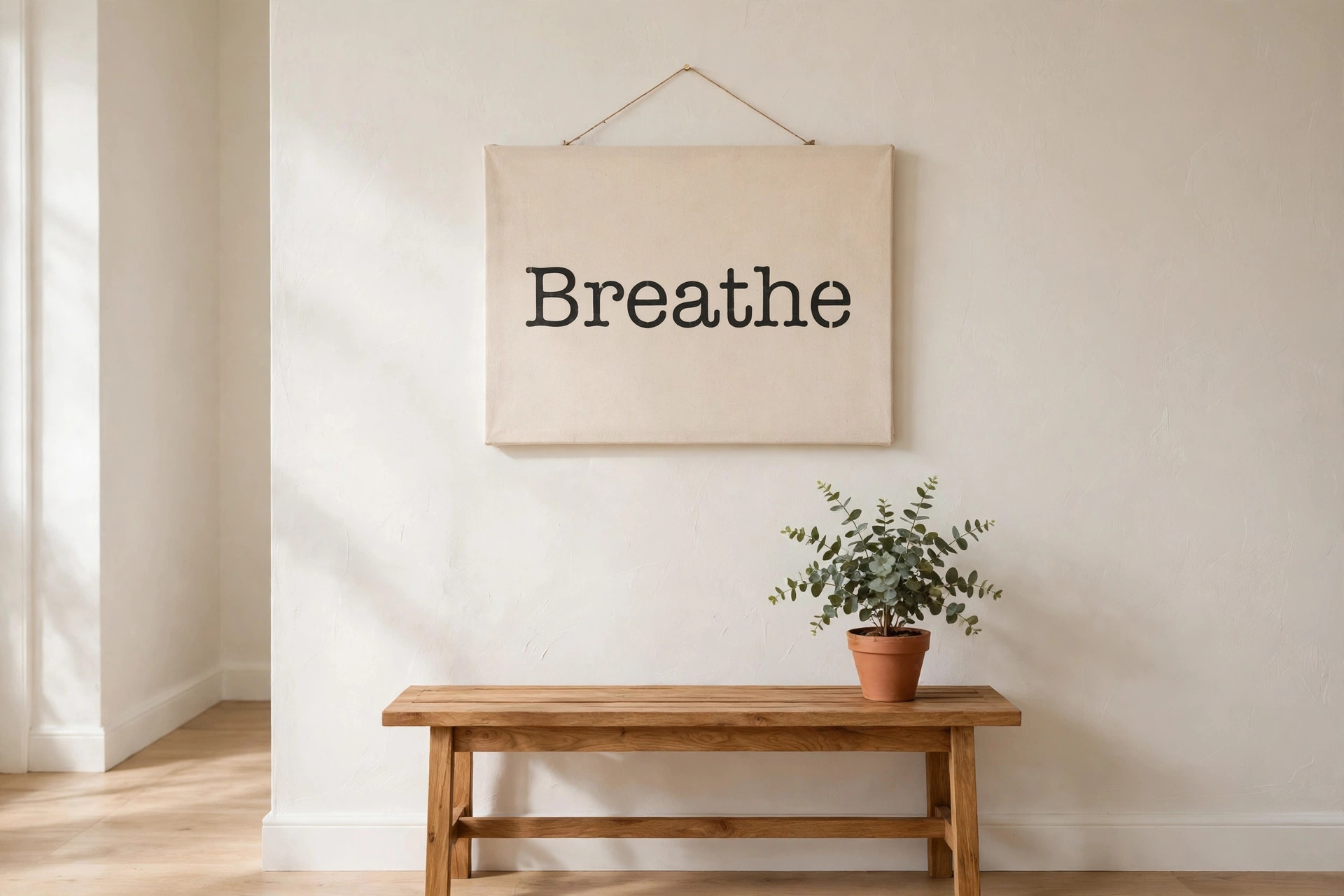
11. A canvas with a stencilled word or quote in one colour
A stencilled word is the fastest way to put meaning on a wall, because the stencil is the lettering and the paint is the colour. Choose one word — calm, home, gather — or a short quote you actually live by, and stencil it in one colour across a plain canvas, because the one colour is the elegance and the word is the message. Tape the stencil flat before you paint, and dab the paint on with a sponge instead of brushing it, because the sponge that dabs is the sponge that stops paint bleeding under the stencil. Peel the stencil off while the paint is still wet, so the edges stay crisp, and hang the canvas where you will read it every day, because the word you see is the word you remember. One word, one colour, and the wall says something. (Check on Amazon for a reusable alphabet stencil set, which works for every room and every quote after this one.)
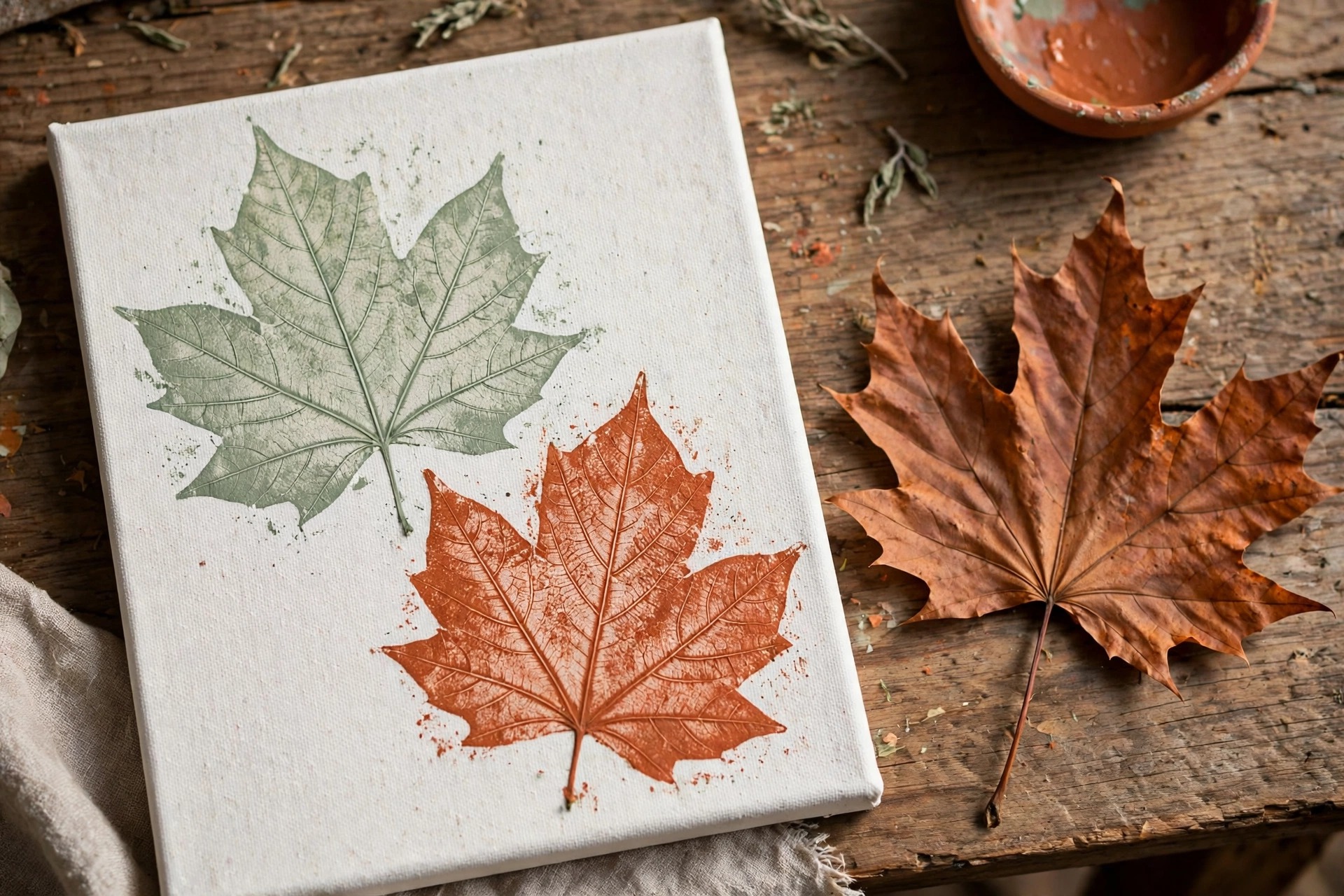
12. A leaf-print canvas — paint a real leaf, press it, lift it
A leaf is the only stamp you will ever need, because the leaf is the shape and the paint is the print. Paint one side of a large leaf with acrylic — sage, terracotta, deep green — press it painted-side down onto the canvas, and lift it off in one smooth movement, because the lift that is smooth is the lift that leaves a clean print. Repeat the print three or four times across the canvas, turning the leaf a little each time, because the repeated print is the pattern and the turn is the variety. Use leaves with strong veins, like a maple or an oak leaf, because the veins are the detail that makes the print look like a drawing. Real leaves, real paint, and the wall has a botanical print on it.
Canvas art for every room
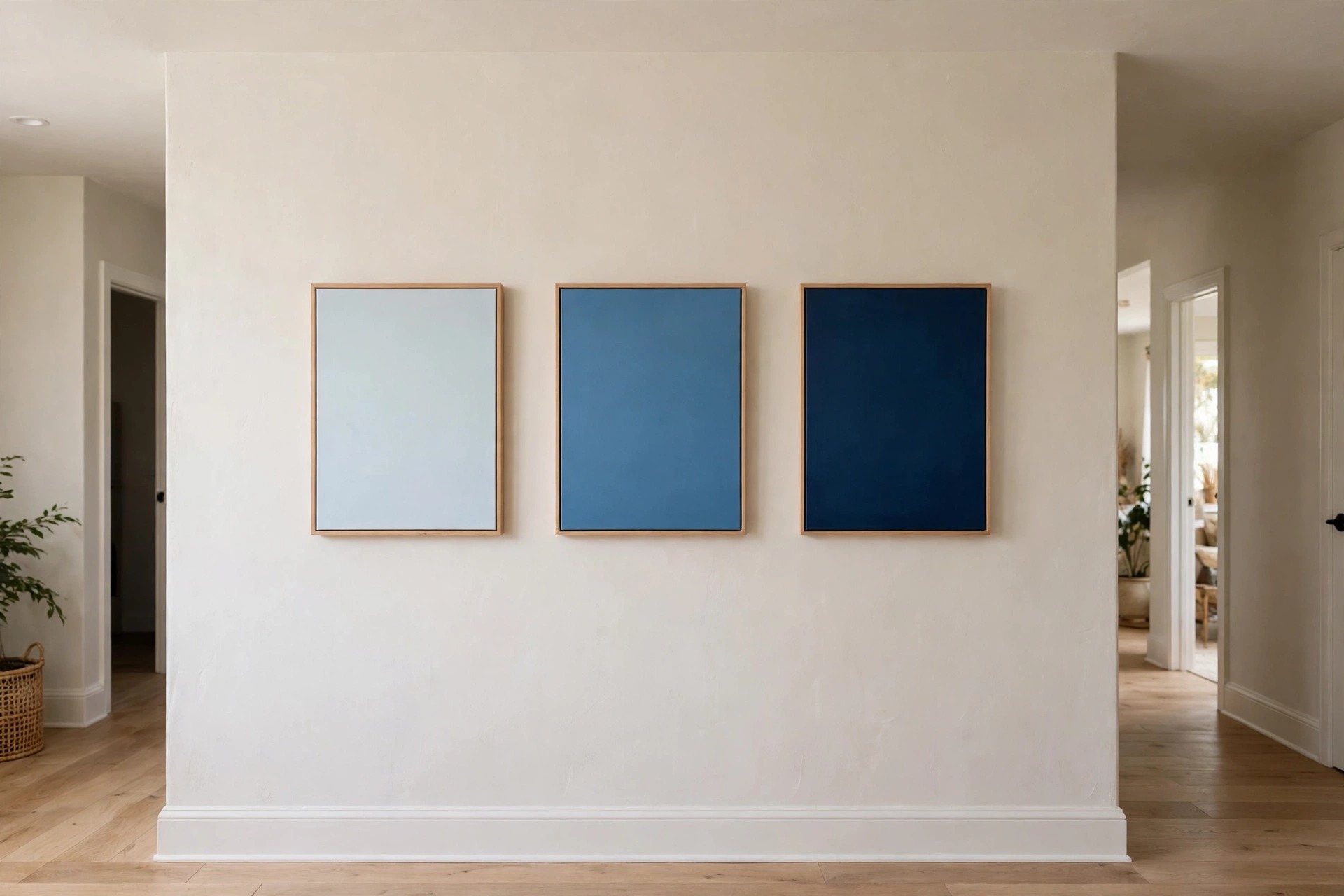
13. A set of three small canvases for the hallway — one colour, three shades
A hallway is the room with the longest wall and the least art, because the hallway is the place you walk through and the art is the thing you forget. Hang a set of three small canvases in a row — one colour, three shades, lightest to darkest — so the hallway gains a rhythm and the wall stops being a corridor. Paint each canvas the same simple shape, a blob or a stripe, in a different shade of the one colour, because the same shape is the set and the shades are the movement. Space them evenly, a hand's width apart, and hang them at eye level, because the set that is level is the set that looks bought. Three small canvases, one colour, and the hallway has art on it.
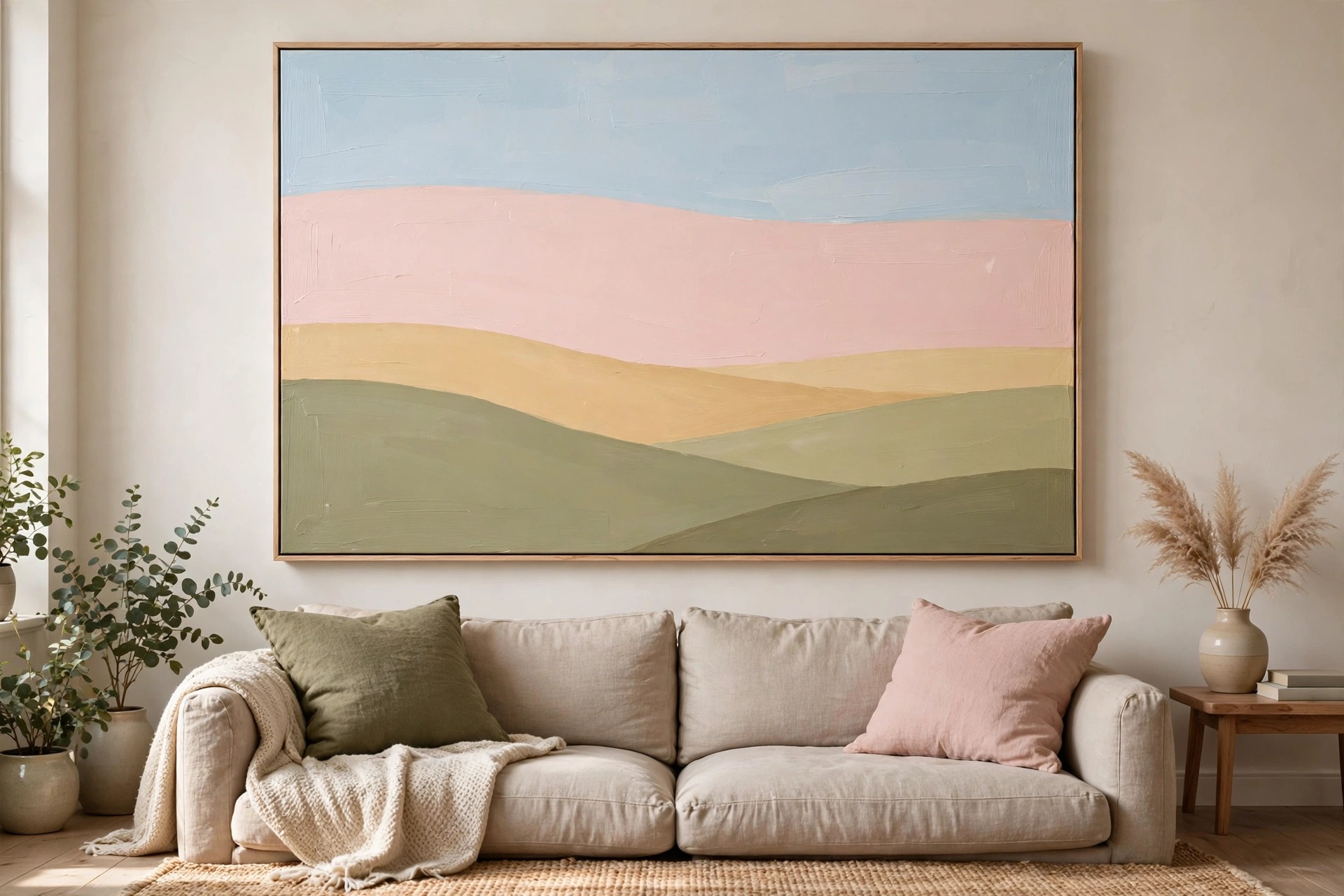
14. A big statement canvas above the sofa — one landscape, painted in an afternoon
The wall above the sofa is the biggest blank wall in the house, and it needs the biggest canvas, because the small canvas above a big sofa is the canvas that looks lost. Paint one large landscape — a soft hill, a wide sky, a strip of sea — in three or four colours, because the landscape that is simple is the landscape that reads from across the room. Keep the shapes big and the colours soft, so the painting calms the room instead of shouting at it, and hang it so its centre sits at eye level when you are sitting down, because the canvas that is centred on the sitter is the canvas that belongs above the sofa. The living room the canvas hangs in is in 28 Living Room Storage Ideas for 2026, where the room gets its storage sorted before the art goes up. One big canvas, one afternoon, and the living room looks finished.
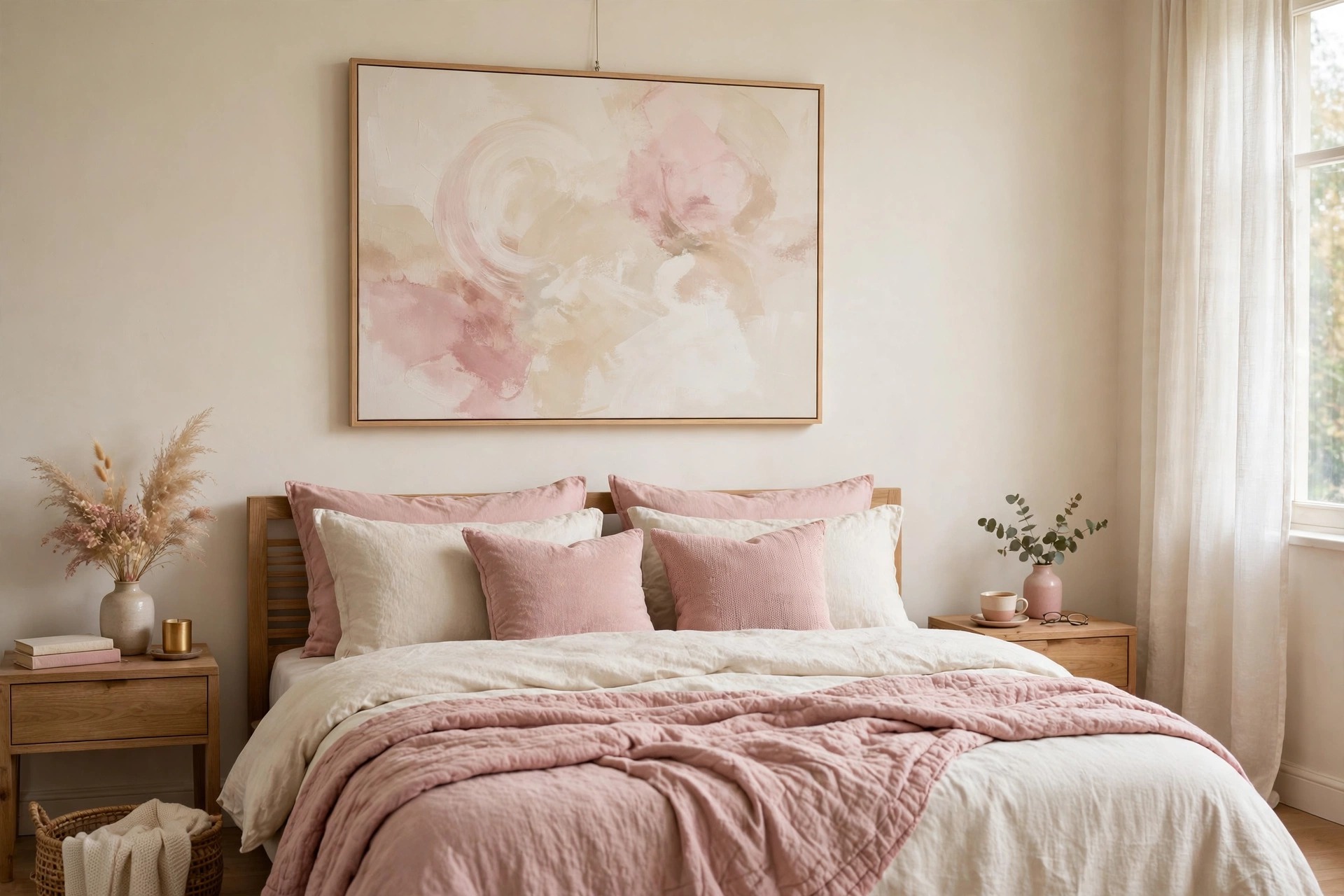
15. A canvas for the bedroom — soft neutrals that match the bedding
A bedroom canvas should whisper, not shout, because the bedroom is the room you sleep in and the art is the last thing you see at night. Paint soft neutrals — warm cream, pale sage, dusty pink — in gentle shapes that match the bedding, because the canvas that matches the bed is the canvas that belongs in the room. Keep the painting simple, a few soft blobs or one wide brushstroke, because the simple painting is the one that calms you and the busy painting is the one that keeps you awake. Hang it above the bed or on the wall you face when you wake up, because the canvas you wake up to is the canvas that sets the morning. Soft neutrals, one calm painting, and the bedroom feels finished.
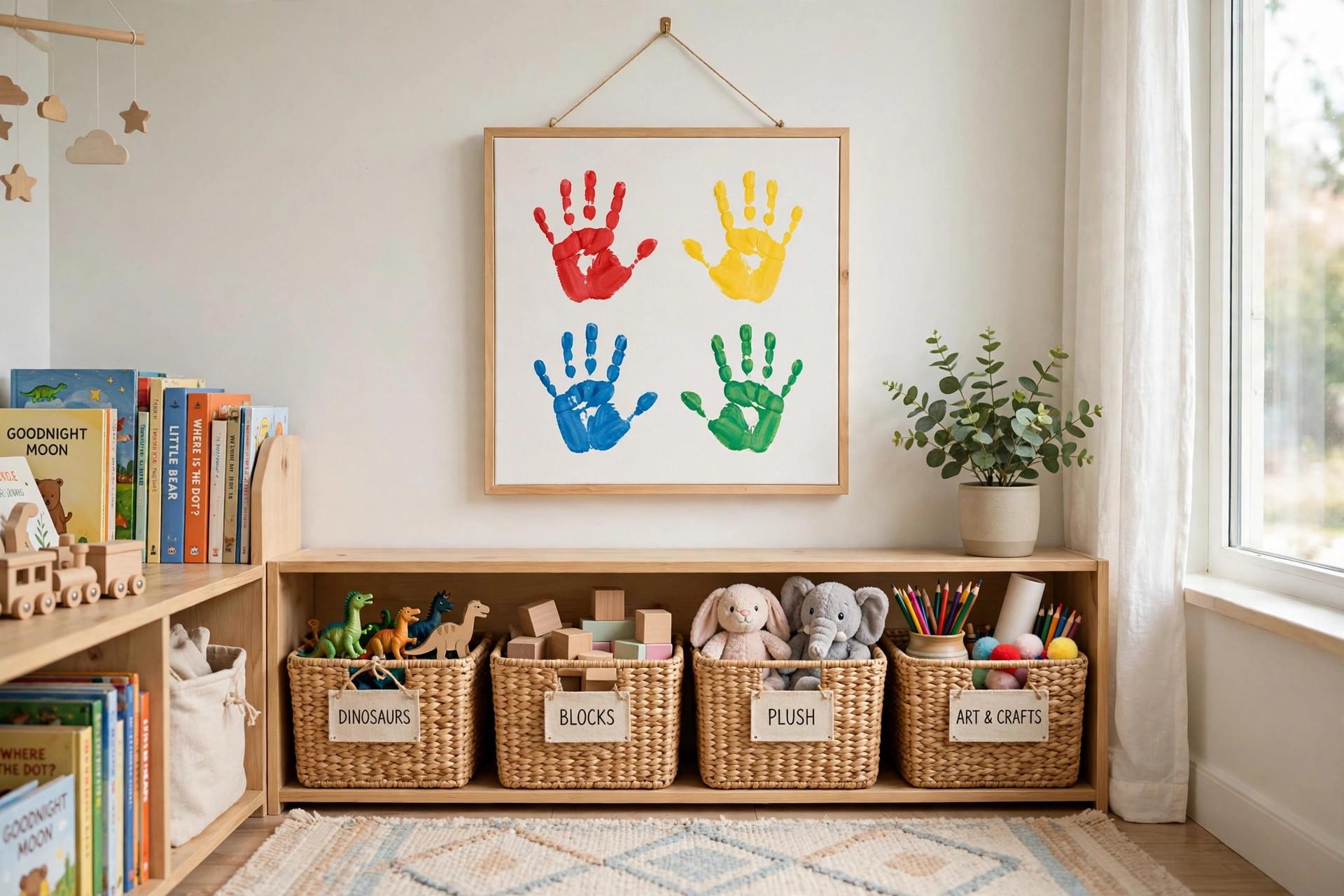
16. A kids' room canvas — handprints and bright shapes the kids help paint
A kids' room canvas is the only art the kids will ever love as much as you do, because the handprints are theirs and the painting is the memory. Let the kids press their painted hands onto the canvas, add bright shapes around the prints — suns, stars, blobs — and hang it where they can reach it, because the canvas they helped make is the canvas they will point at. Use washable paint, because the paint that washes off is the paint that does not ruin the clothes, and seal the finished canvas with varnish, because the varnish is the thing that keeps the handprints from fading. The playroom the canvas hangs in is in 22 Playroom Organization Ideas for 2026, where the toys get a home before the art goes on the wall. Handprints, bright shapes, and the kids' room has art with a story.
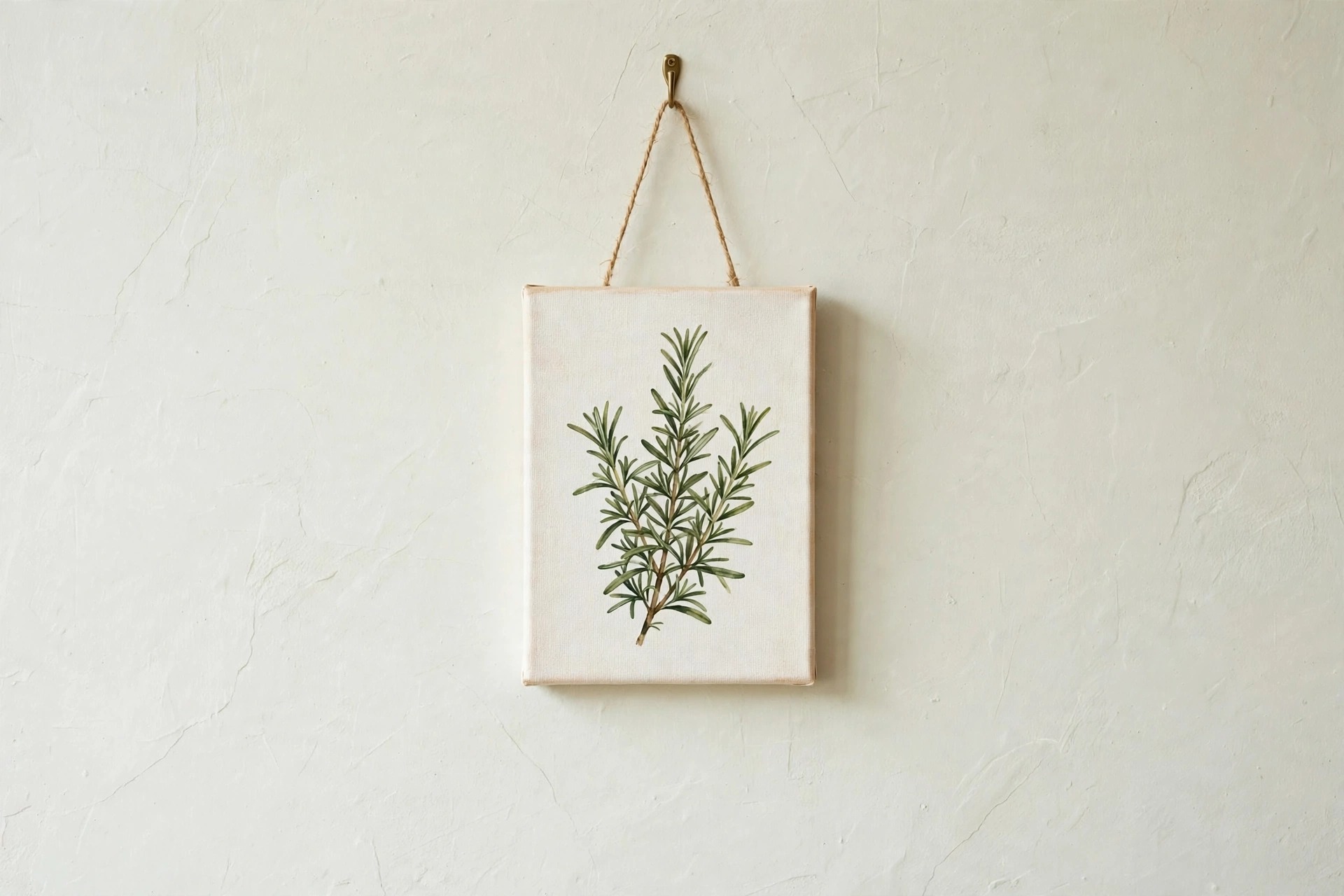
17. A kitchen canvas — a painted herb or fruit print for a blank wall
A kitchen wall is the wall that gets splashed, steamed and forgotten, because the kitchen is the room that works and the art is the thing that never arrives. Paint a simple herb or fruit print — a sprig of rosemary, a lemon, a tomato vine — on a small canvas, because the herb that is painted is the herb that suits the room it hangs in. Keep the background pale and the painting bold, so it reads across the kitchen, and seal it with varnish, because the varnish is the thing that wipes clean when the cooking splashes. Hang it away from the hob, where the steam is thinnest, because the canvas that stays dry is the canvas that lasts. One herb, one canvas, and the kitchen wall has art on it.
Canvas art that looks bought (but isn't)
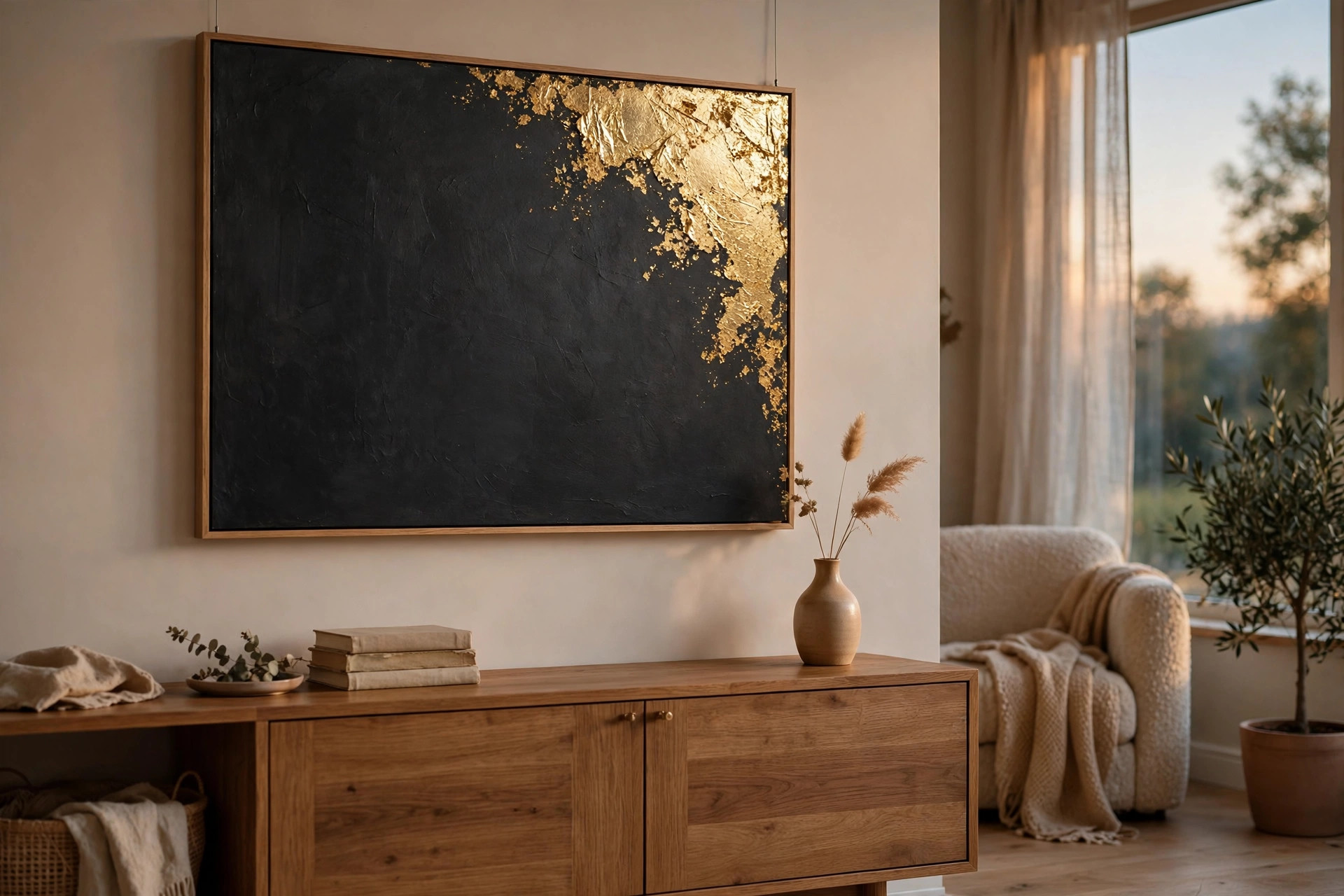
18. A gold-leaf accent canvas — one corner of gold leaf on a dark background
Gold leaf is the cheapest way to make a canvas look expensive, because the gold is the luxury and the dark background is the contrast. Paint the canvas a deep colour — charcoal, forest green, navy — then press gold leaf onto one corner with adhesive, because the gold that sits on dark paint is the gold that shines. Keep the gold to one corner, no more, because the accent that is small is the accent that looks deliberate and the gold that covers everything is the gold that looks gaudy. Seal the leaf with varnish, because the varnish is the thing that stops the gold flaking off, and hang the canvas where the light hits it, because the gold that catches the light is the gold that earns its keep. One corner of gold, and the wall looks expensive. (Check on Amazon for gold leaf sheets with adhesive, which is all you need for one corner.)
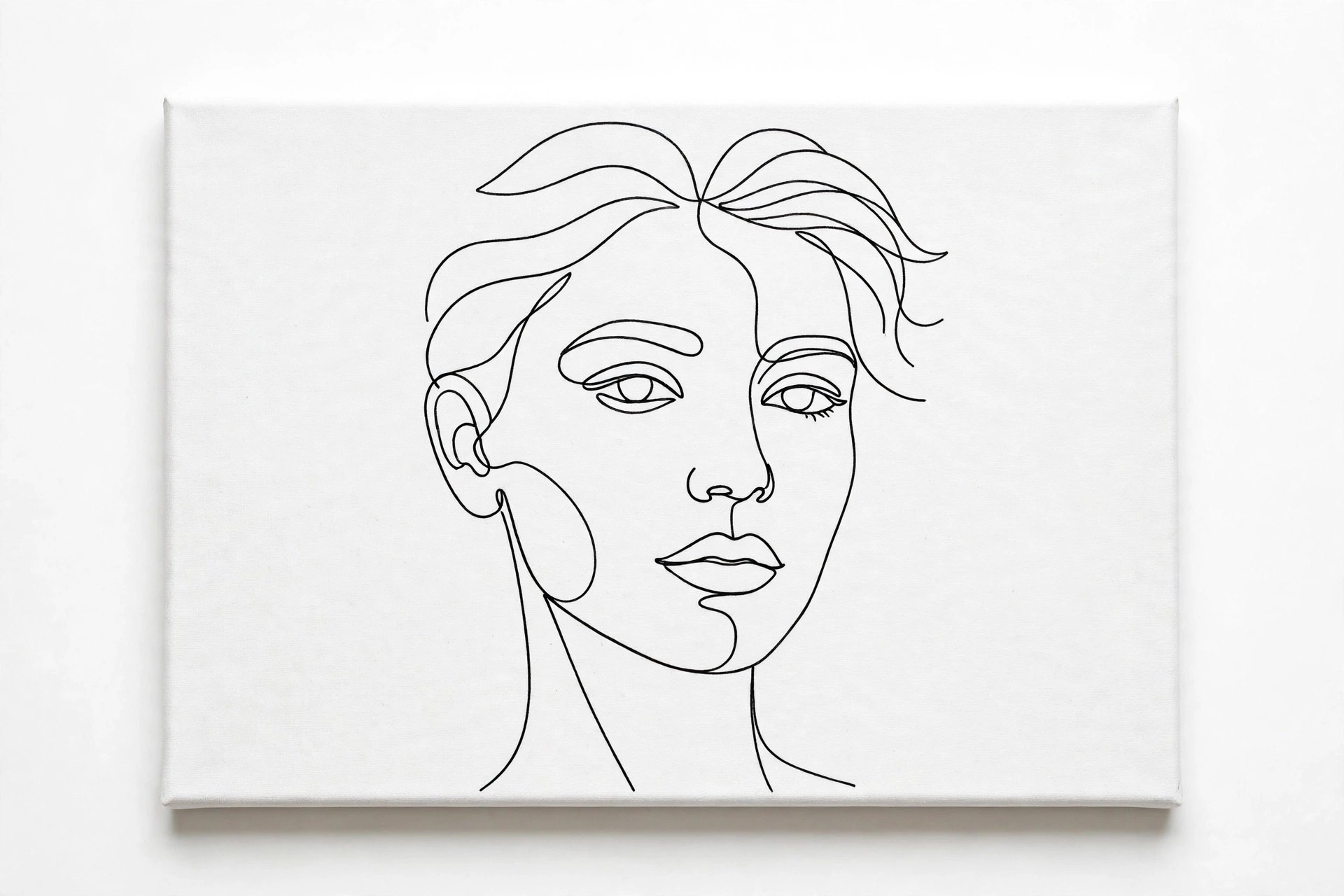
19. A black-and-white line drawing canvas — one continuous line, framed by the canvas edge
A line drawing is the bravest canvas there is, because the line is the whole painting and there is nowhere to hide. Draw one continuous line across the canvas — a face, a figure, a flower — without lifting the pen, because the line that never lifts is the line that looks like art. Use a thick black marker or a thin brush loaded with black paint, and keep the background white, because the black on white is the contrast that makes the line sing. If the line wobbles, leave it, because the wobble is the proof a human drew it and the perfect line is the line that looks printed. One line, black on white, and the wall has a drawing on it.
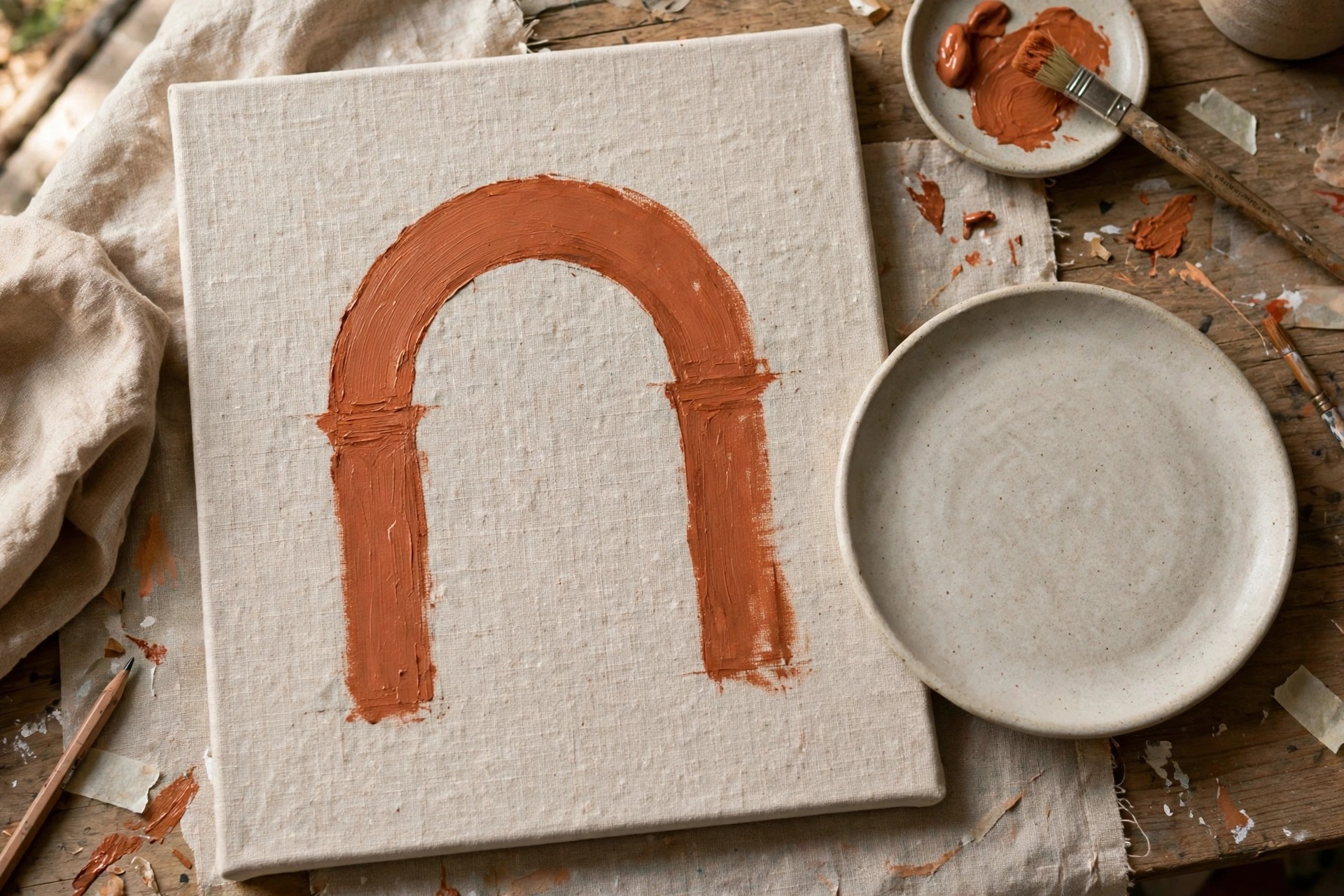
20. A canvas with a painted arch — the arch trend, done with a plate as a guide
The painted arch is the shape of the moment, and it is the easiest shape to paint, because the plate is the guide and the paint is the filling-in. Put a plate on the canvas, trace around the top half for the arch curve, draw straight lines down from each side, and fill the whole arch with one warm colour, because the arch that is filled is the arch that looks like a doorway. Use terracotta for a warm room and sage for a calm one, because the colour is the mood and the arch is the shape. Keep the background the natural linen of the canvas, because the linen that shows is the contrast that makes the arch stand out. A plate, a pencil, one colour, and the wall has the arch trend on it.
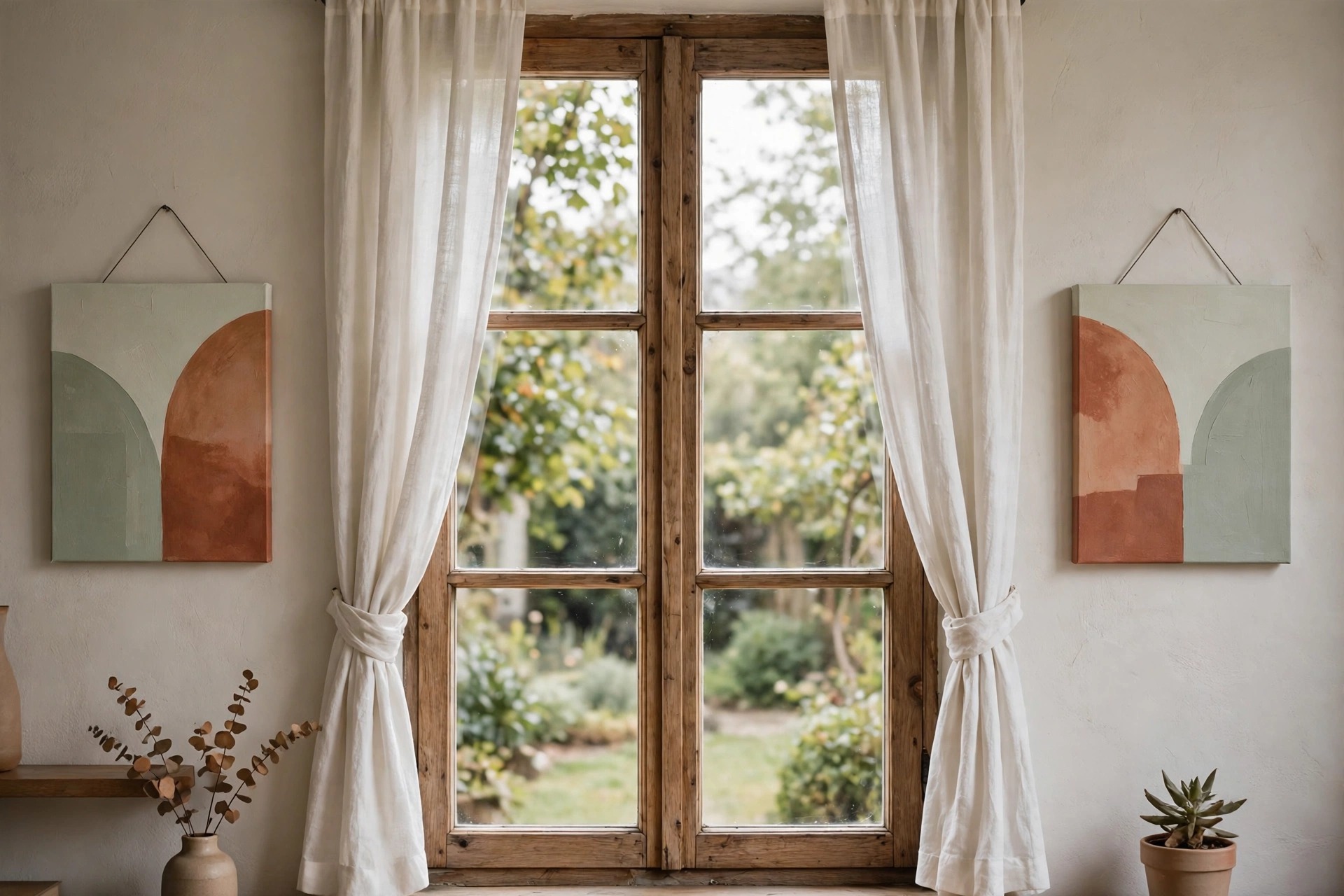
21. A pair of matching canvases for either side of a window
A window with bare wall on both sides is a window that looks unfinished, because the window is the feature and the bare walls are the gap. Paint a pair of matching canvases — the same colours, the same shapes, mirrored — and hang one on each side of the window, because the pair that matches is the pair that frames the window. Keep the paintings simple, one shape each, so they do not fight the view, and hang them at the same height, because the pair that is level is the pair that looks like one piece. The cork board that hangs beside the pair is in 18 DIY Cork Board Ideas for 2026, where the wall gets a display to match the art. Two canvases, one window, and the wall looks framed.
22. A gallery wall of small canvases — six little paintings, one weekend
A gallery wall is six small paintings that add up to one big one, because the small canvases are the pieces and the wall is the whole. Paint six little canvases in one weekend — a blob, a stripe, a leaf print, a sunset, a word, a gold corner — all in the same three colours, because the shared colours are the thing that makes six different paintings look like one set. Lay them on the floor first, and move them around until the arrangement feels right, because the floor is the place to plan and the wall is the place to commit. Hang them in two rows of three, a hand's width apart, and step back, because the gallery that is judged from the sofa is the gallery that hangs above it. Six little canvases, one weekend, and the blank wall is a gallery.
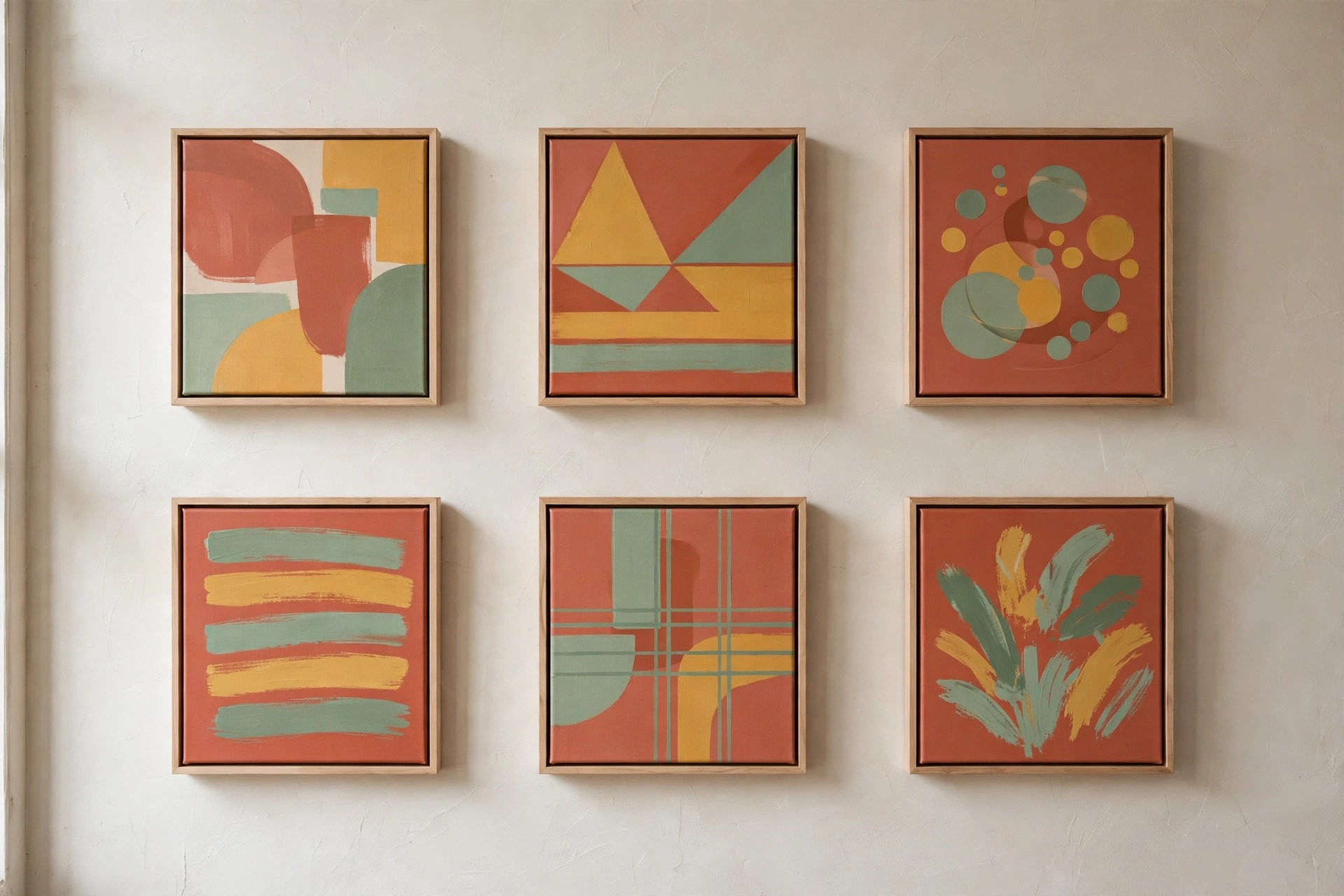
Which DIY canvas wall art fits which situation?
| Situation | Best first move | Budget | Tools needed |
|---|---|---|---|
| The wall is totally blank | Single-colour canvas, one bold brushstroke (idea 1) | Low | Canvas, paint, big brush |
| No brush skill at all | Sponge-painted sunset (idea 2) | Low | Sponge, 3 paints |
| You like straight lines | Colour-block grid (idea 6) | Low | Tape, paints |
| The canvas looks too flat | Plaster-textured canvas (idea 8) | Low | Plaster, palette knife |
| You want words on the wall | Stencilled word canvas (idea 11) | Low | Stencil, sponge |
| A long hallway wall | Three small canvases, one colour (idea 13) | Low | 3 small canvases |
| The wall above the sofa | Big statement landscape (idea 14) | Low | Large canvas, paints |
| A kids' room wall | Handprint canvas (idea 16) | Low | Washable paint |
| You want it to look expensive | Gold-leaf accent canvas (idea 18) | Low | Gold leaf, adhesive |
| You want the current trend | Painted arch canvas (idea 20) | Low | Plate, paint |
| Bare walls either side of a window | Matching pair of canvases (idea 21) | Low | 2 canvases |
| One weekend, one whole wall | Gallery wall of six small canvases (idea 22) | Low | 6 small canvases |
You do not need all 22 ideas. You need the three that solve your blank wall — usually the bold brushstroke where the wall is barest, the big statement canvas above the sofa, and the gallery wall that turns six little paintings into one finished wall. Start with the brushstroke, paint it this weekend, and hang it where the wall is emptiest. Do that and the next time you walk into the room the wall will have art on it, for the price of a canvas and an afternoon.
Save this post for your next blank wall, and if the next project needs making first, read 20 Paper Lanterns DIY Ideas for 2026 next — it is Post 23, the paper lanterns that hang beside the canvas — and 22 DIY Bookends Ideas for 2026, Post 22, for the handmade bookends that sit under the art. This is the ninth post of the DIY by project cluster — Posts 21 to 30, one project at a time — and the next posts carry the same budget system into the projects that follow.
Publish date assigned at publishing time. Updated as new DIY canvas wall art finds are tested.
Frequently asked questions
What kind of paint works best on canvas for beginners?
Acrylic paint — it dries fast, cleans up with water, and costs very little, so a mistake is a fresh layer of paint, not a ruined canvas. Buy three or four basic colours and mix the rest yourself, because the mixed colour is the colour that matches the room and the shop-bought shade is the shade that almost matches. Start with acrylic, a big brush and a sponge, and you have everything the ideas in this post need.
Do I need to prime a canvas before painting?
Most canvases from the shop come pre-primed, ready to paint straight out of the packet — check the label for "pre-primed" or "triple-primed" and you can start at once. Raw canvas, the rough linen kind, needs a coat of gesso first, because the gesso is the seal that stops the paint soaking into the fabric and the unsealed canvas is the canvas that drinks your paint. One coat of gesso, dry overnight, and the raw canvas paints like a shop-bought one.
How do I hang a canvas without damaging the wall?
Use adhesive picture-hanging strips for canvases up to a couple of kilos — press them to the back of the frame, press the frame to the wall, and the canvas hangs with no holes at all. For a big statement canvas, use a sawtooth hanger and one nail, because the nail that goes into a stud or a wall plug is the nail that holds, and the nail in bare plaster is the nail that pulls out. Check the weight on the strip packet before you hang, because the strip that matches the weight is the strip that stays up.