22 DIY Bookends Ideas for 2026
A bookshelf without bookends is a bookshelf that slowly leans — one book tips, the next one follows, and by the end of the month the whole row is lying on its side like a row of dominoes that gave up. A shop-bought pair costs more than the books it holds, and the ones that look good are the ones that weigh nothing, so the books fall anyway. The fix is to make them yourself: a bookend only has two jobs, be heavy enough to hold a row of books and look like it belongs on the shelf, and both jobs are easy with things already in the house — a tin of concrete, a wood offcut, an old toy, a tin of gold paint.
These 22 DIY bookends ideas work for every shelf in the house: concrete and brick for the heavy rows, toy animals and driftwood for the quirky ones, marble paper and gold paint for the styled shelves, and a few pairs that work harder — a phone stand, a vase, a candle holder — so the bookend earns its place twice.
Every idea below is a real afternoon project, from a pair of paint tins filled with sand to a ceramic pair shaped from air-dry clay. If the shelf itself needs styling first, 28 Living Room Storage Ideas for 2026 covers the living-room shelves these bookends finish — the ideas below are the pair that holds the row up. Pick three ideas that fit your worst shelf, start with the heaviest pair, and build from there.
Start simple: heavy, stable bookends first
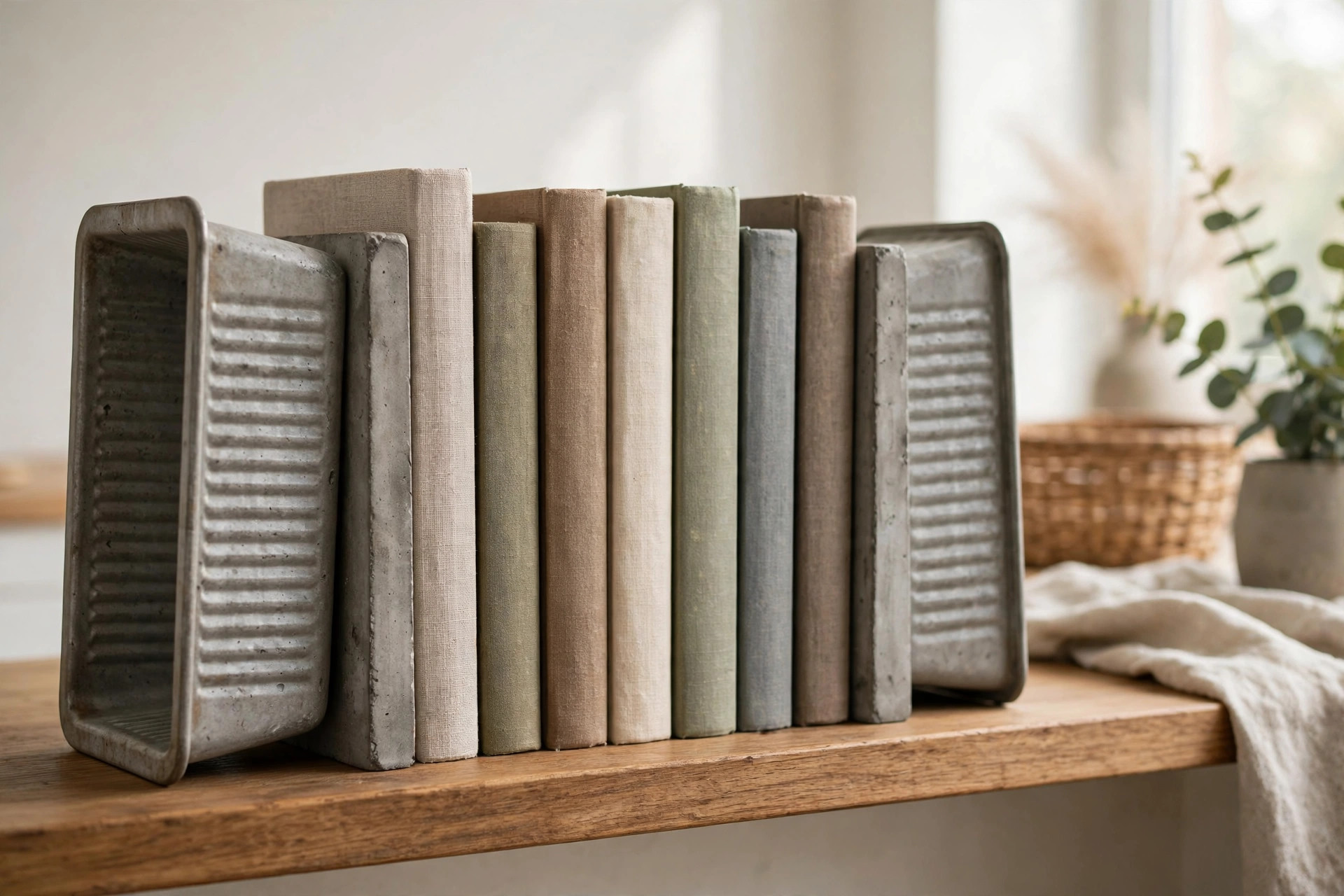
1. Concrete bookends cast in a loaf tin — the heavy pair that holds a whole row
A bookend that weighs nothing holds nothing, because the row of books leans on it and it slides, and the books fall anyway. Cast a pair in concrete and the weight does the work — mix the concrete, pour it into a loaf tin lined with cling film, and let it set overnight, then slide the block out and sand the sharp edges. A concrete bookend also looks like stone, so the heavy pair is the pretty pair too, and the grey goes with every shelf in the house. Keep the block low and wide so it cannot tip, seal it so it does not dust on the books, and never make a pair taller than the books it holds, because that is how the bookend becomes a decoration instead of a support. Heavy, simple, stone-look, and the row stays up. (Check on Amazon for a small bag of quick-set concrete mix made for crafts.)
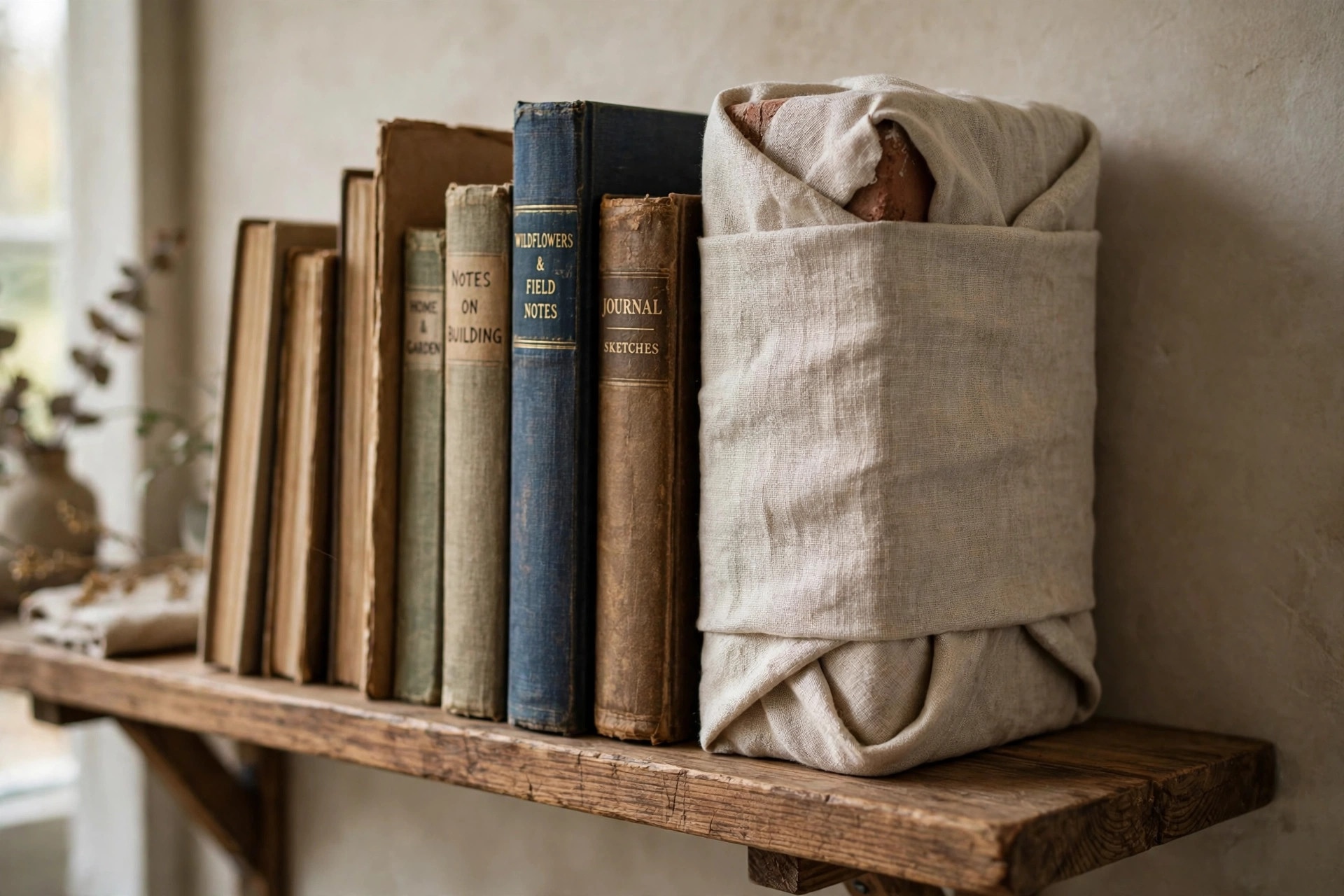
2. Bricks wrapped in fabric or paper — the heaviest bookend is the one you already own
A brick is the cheapest heavy thing in the house, and the only reason it does not live on the shelf is that it looks like a brick. Wrap it in fabric and it becomes a bookend — a brick wrapped in a linen offcut, the ends tucked in and glued, or a brick covered in pretty wrapping paper, the pattern showing and the weight doing the work. A wrapped brick also costs nothing, because the brick is already in the garden and the fabric is already in the scrap box, and the pair takes ten minutes. Keep the wrap tight so it does not peel, use fabric that matches the room, and never wrap a brick that is crumbling, because that is how the dust gets on the books. The fabric scraps live in 22 Sewing Room Organization Ideas for 2026, where the offcuts wait for a job like this. Brick, fabric, ten minutes, and the row stays up.
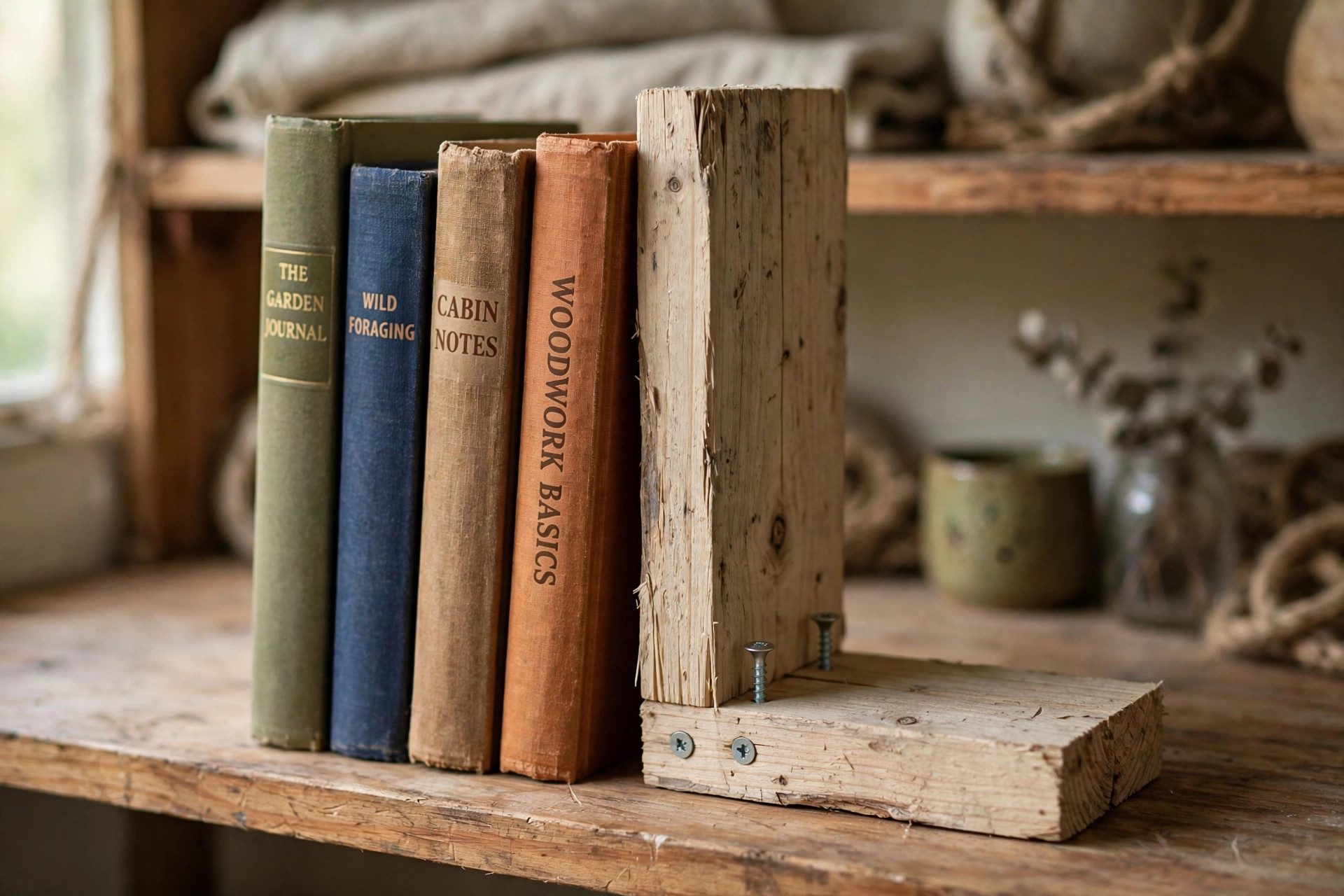
3. Wood offcuts in an L — two cuts, one bracket, a bookend that never tips
A wood offcut is a bookend waiting to happen, because an L-shape is the shape that holds books — one leg under the books, one leg against them — and the books themselves hold the bookend down. Cut two offcuts, screw them into an L, add a small metal bracket underneath, and the pair is done before the glue dries. An L-shaped bookend also never tips, because the weight of the books sits on its foot and the foot is the anchor. Keep the foot long enough to hold three books, sand the edges so they do not snag a cover, and never make the upright taller than the books, because that is how the bookend pokes above the row. Two cuts, one bracket, and the books stay where you put them.
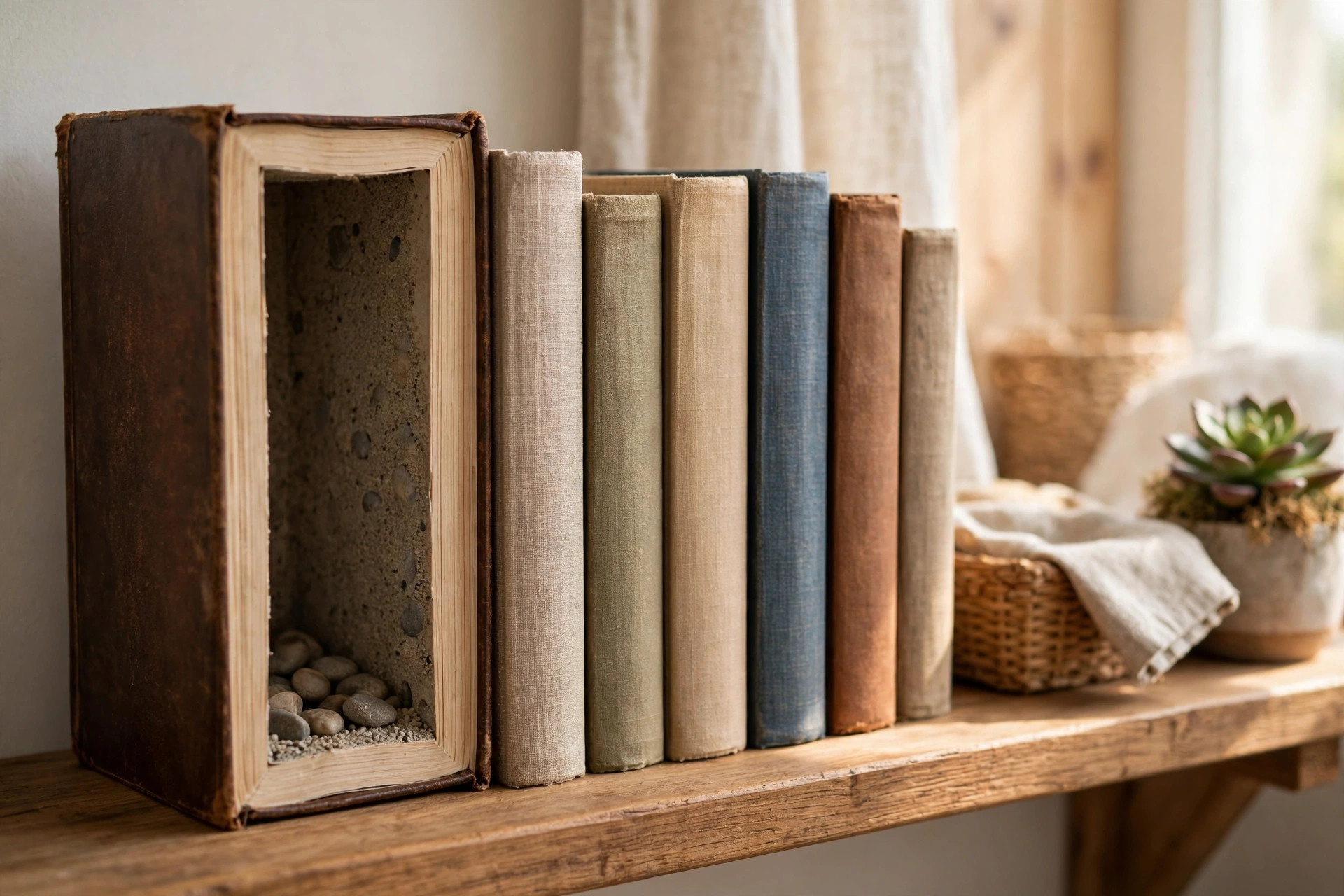
4. A bookend from a book — a hardback hollowed out and weighted
A hardback nobody reads is a bookend hiding in plain sight, because the book that holds other books up is the book that earns its shelf twice. Hollow out a thick hardback — cut the pages into a block, glue the edges, fill the middle with sand or a bag of pebbles, and glue the cover back on — and the book stands on the shelf holding the row, looking like a book and working like a brick. A book bookend also costs nothing and confuses nobody, because the shelf looks like books all the way across and the support is invisible. Keep the fill heavy enough that the book does not slide, seal the edges so the sand stays in, and never hollow out a book worth keeping, because that is how a first edition becomes a paperweight. A book holding books, and the row never knows the difference.
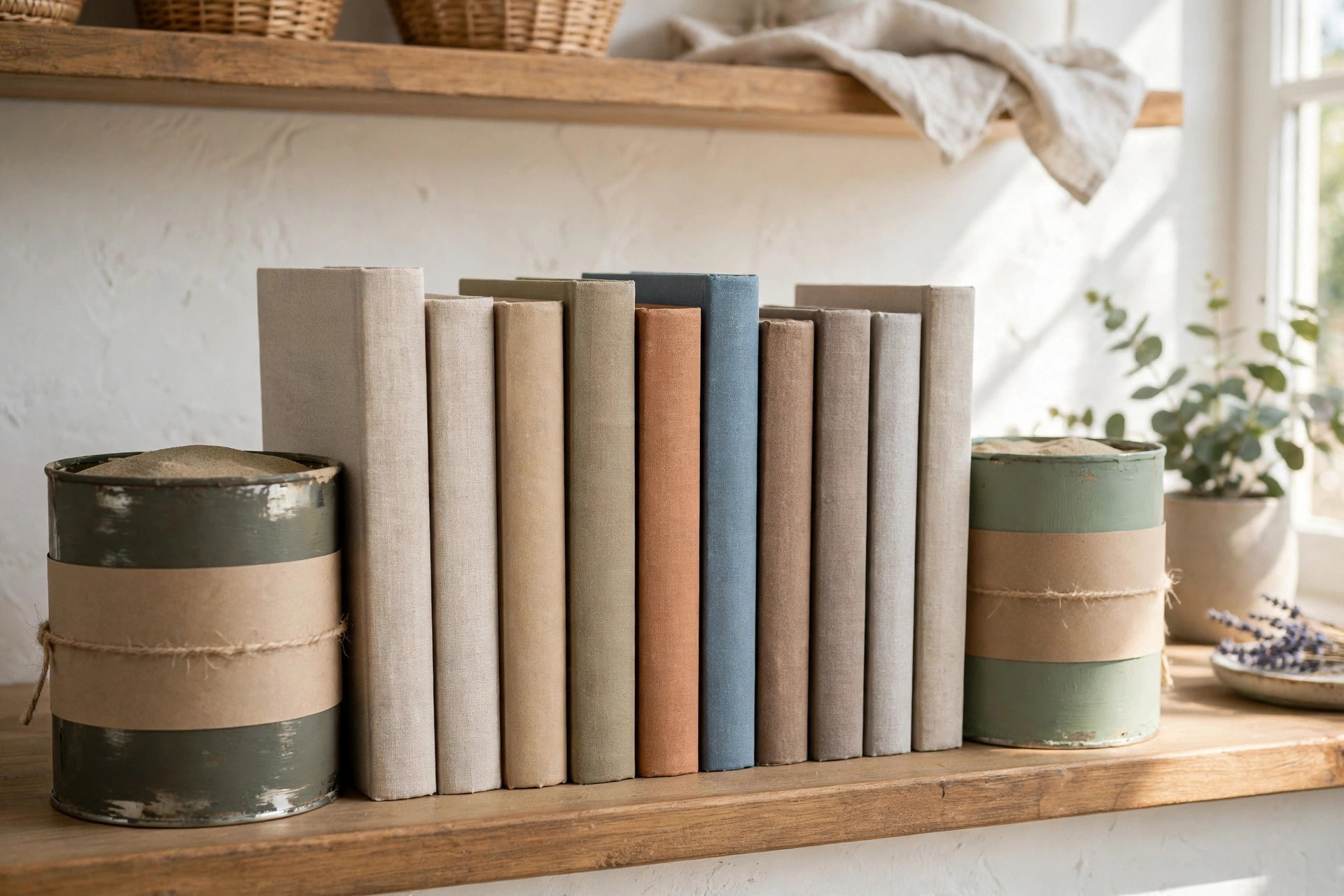
5. Paint tins filled with sand — the budget bookend that holds a whole row
A paint tin is a bookend with a handle, because the tin is heavy when it is full and the handle is how you move it, and the sand inside is the weight that holds the row. Fill two clean paint tins with sand, put the lids on, and wrap them in kraft paper with a blank label — the tins stand on the shelf like a pair of storage jars, and the books lean on them without moving them an inch. Paint tins also cost nothing, because the tins are already in the garage and the sand is already in the garden, and the pair takes five minutes. Keep the lids tight so the sand stays in, label them if you like, and never fill a tin that rusts, because that is how the shelf gets stained. Tin, sand, five minutes, and the whole row stays up.
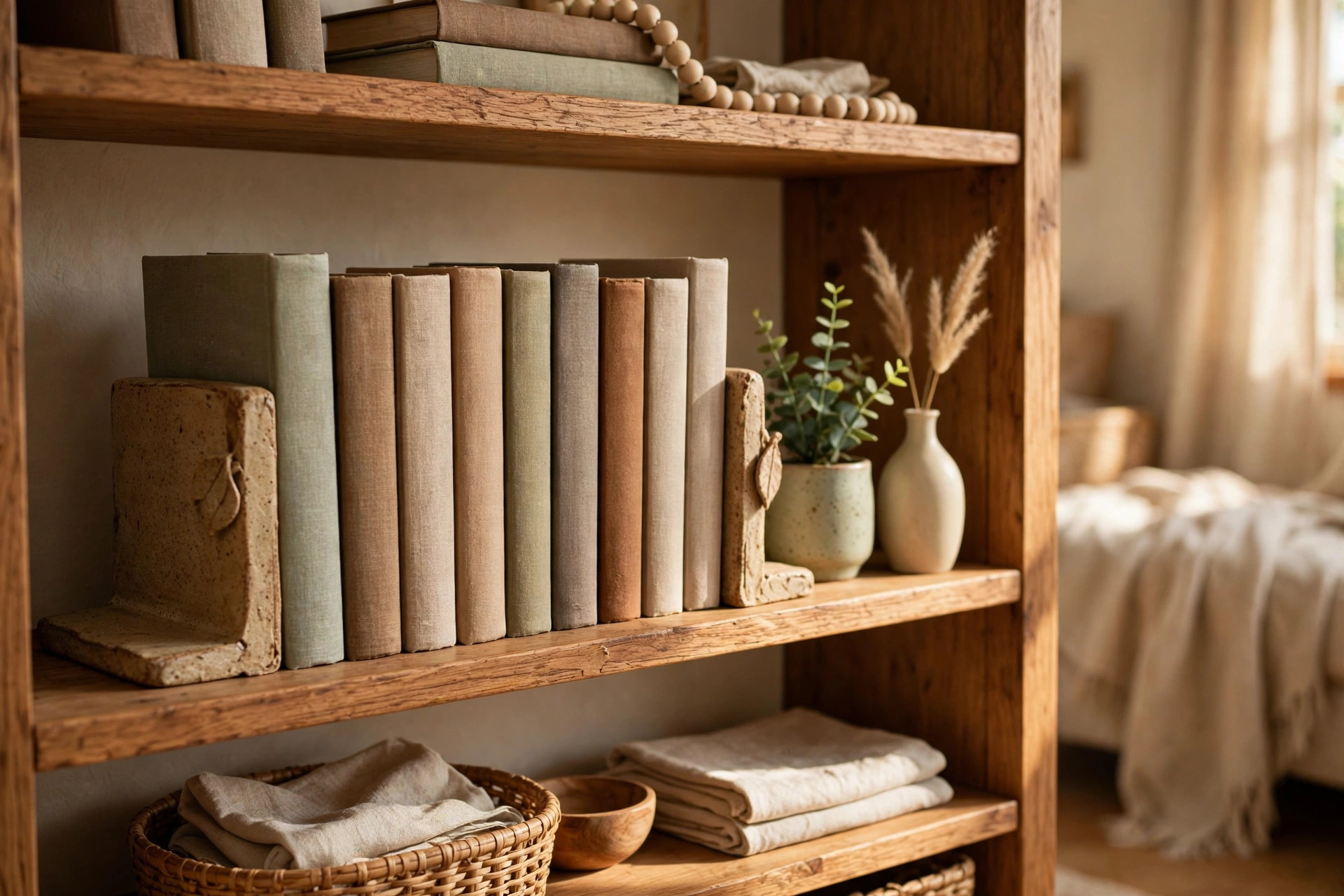
Quirky and handmade
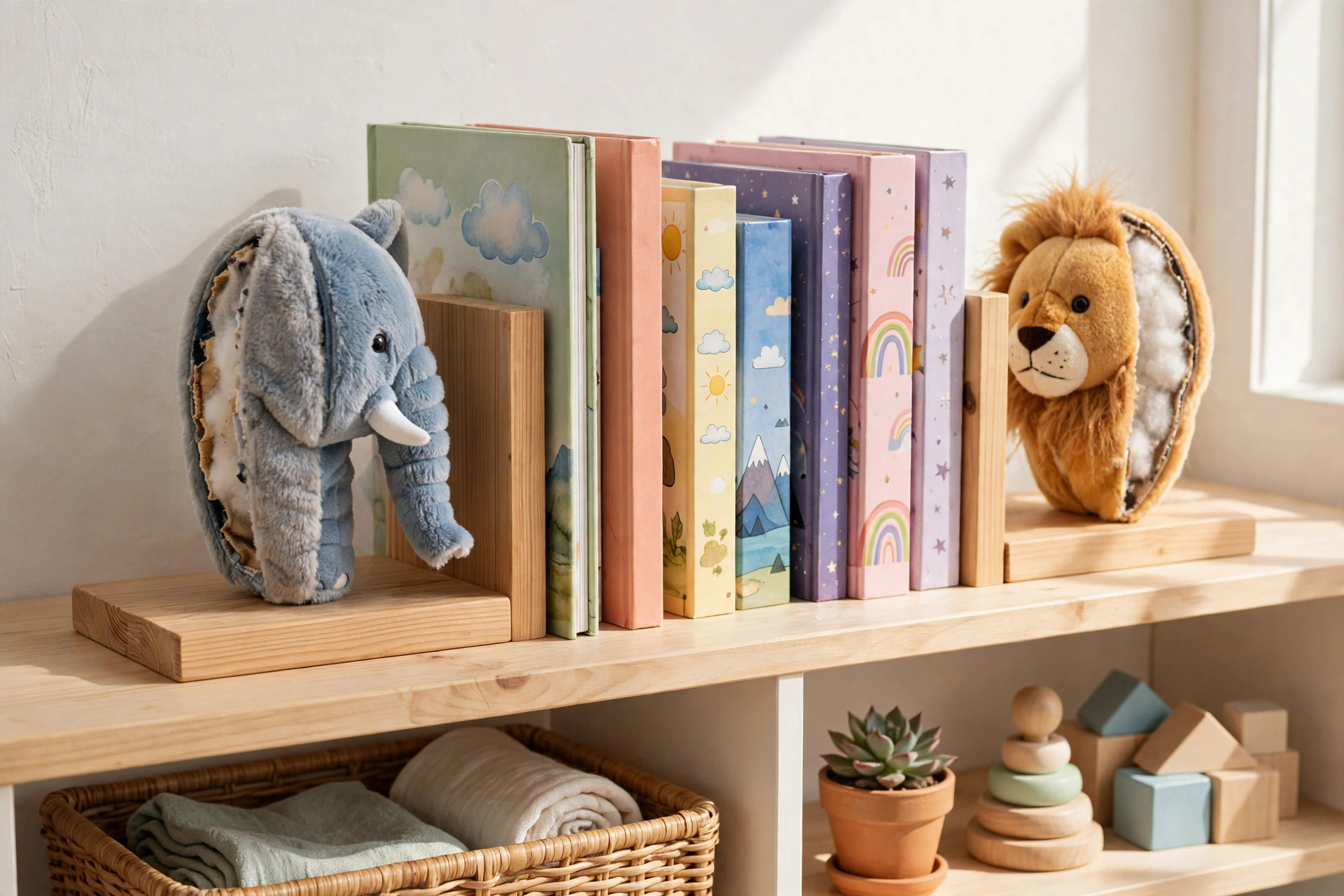
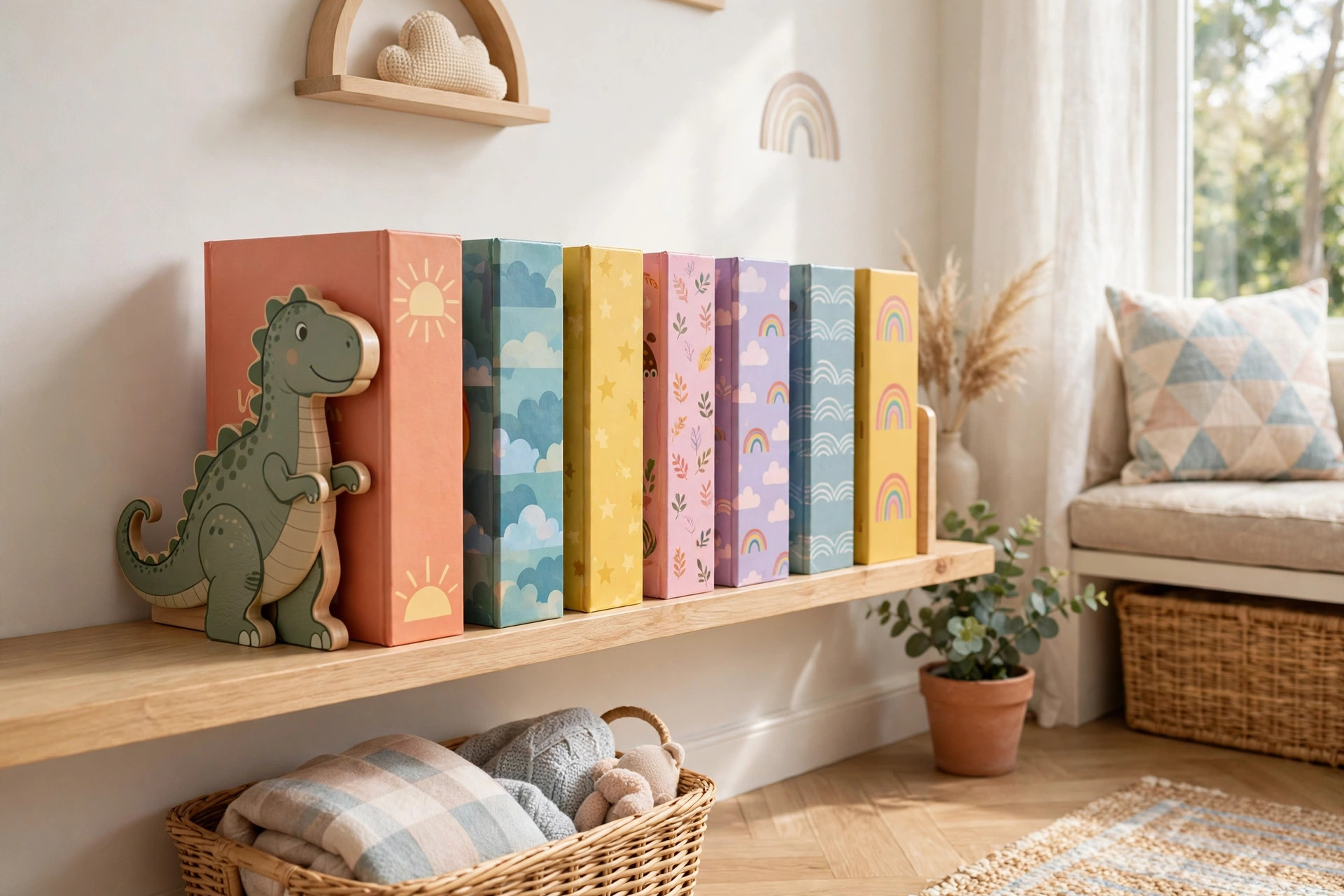
6. Toy animals cut in half and mounted on wood — the bookend that makes kids read
A bookshelf in a child's room should look like a bookshelf in a child's room, and nothing says that faster than a toy animal cut in half and mounted on a wooden base, holding the picture books up. Cut a plastic animal in half lengthways, glue the flat side to a wooden base, paint the base the colour of the shelf, and the animal stands on the shelf like it is holding the books up with its back. A toy animal bookend also makes the child want to read, because the shelf has a lion on it and the books are the lion's job. Keep the animal big enough to see across the room, use strong glue so it never comes off, and never use a toy the child still plays with, because that is how the bookend walks away. The old toys waiting for a job are in 35 Clever Toy Storage Ideas for 2026, where the outgrown ones live. Half an animal, a wooden base, and the kids reach for the books.
7. Bookends from old toys — dinosaurs, cars and robots holding the shelf up
A dinosaur that holds books up is a dinosaur with a job, and the shelf with a dinosaur on it is the shelf the children remember. Take the old toys the children have outgrown — dinosaurs, cars, robots — glue them to a wooden base, paint the whole thing one colour, and the toy becomes a bookend that looks like it was made that way. Old toys also cost nothing, because they are already in the toy box, and the pair takes an afternoon. Keep the toy big enough to hold a row, paint it one colour so it looks deliberate, and never use a toy with small parts that fall off, because that is how the bookend becomes a hazard. Dinosaur, car, robot — one each end of the row — and the shelf becomes the favourite shelf in the house.
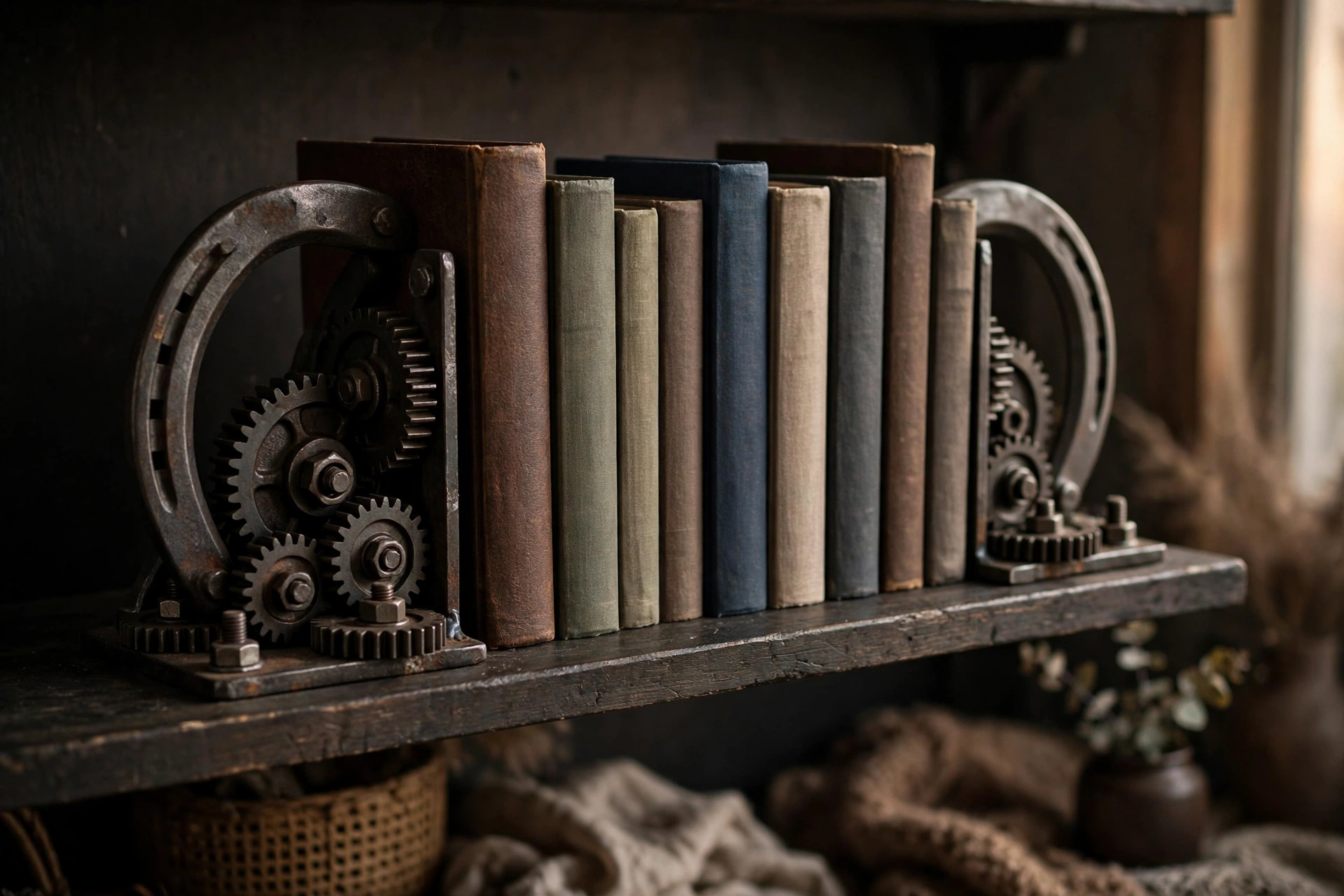
8. Horseshoes, gears and found metal — industrial bookends from the scrap box
A shelf with an industrial look needs bookends with an industrial look, and nothing says that like a horseshoe or a gear from the scrap box standing on end and holding the books up. Weld or glue a horseshoe to a steel base, or stand a big gear on its edge and bolt it to a plate, and the metal holds the row because metal is heavy and the shape is solid. Found metal also costs nothing, because the scrap box is already full of it, and the pair looks like it came from a workshop, not a shop. Keep the metal clean so it does not rust on the shelf, use a base wide enough that it cannot tip, and never use a piece with a sharp edge at book height, because that is how a cover gets torn. Horseshoe, gear, scrap metal, and the shelf looks like it means it.
9. Bookends shaped like animals — a cat, a fox, a bear keeping the books in line
A bookend shaped like an animal is a bookend that makes people smile, and the smile is the reason the shelf gets noticed. Cut the shape from wood with a jigsaw — a cat sitting, a fox standing, a bear on its hind legs — sand it smooth, paint it one colour, and stand it at the end of the row, where the animal looks like it is guarding the books. An animal bookend also suits a nursery or a reading corner, because the shape is friendly and the books are the animal's job. Keep the shape simple so it reads from across the room, make the base wide enough that the animal cannot tip, and never make the animal taller than the books, because that is how the animal becomes a decoration instead of a support. Cat, fox, bear — one each end — and the books have a guard.
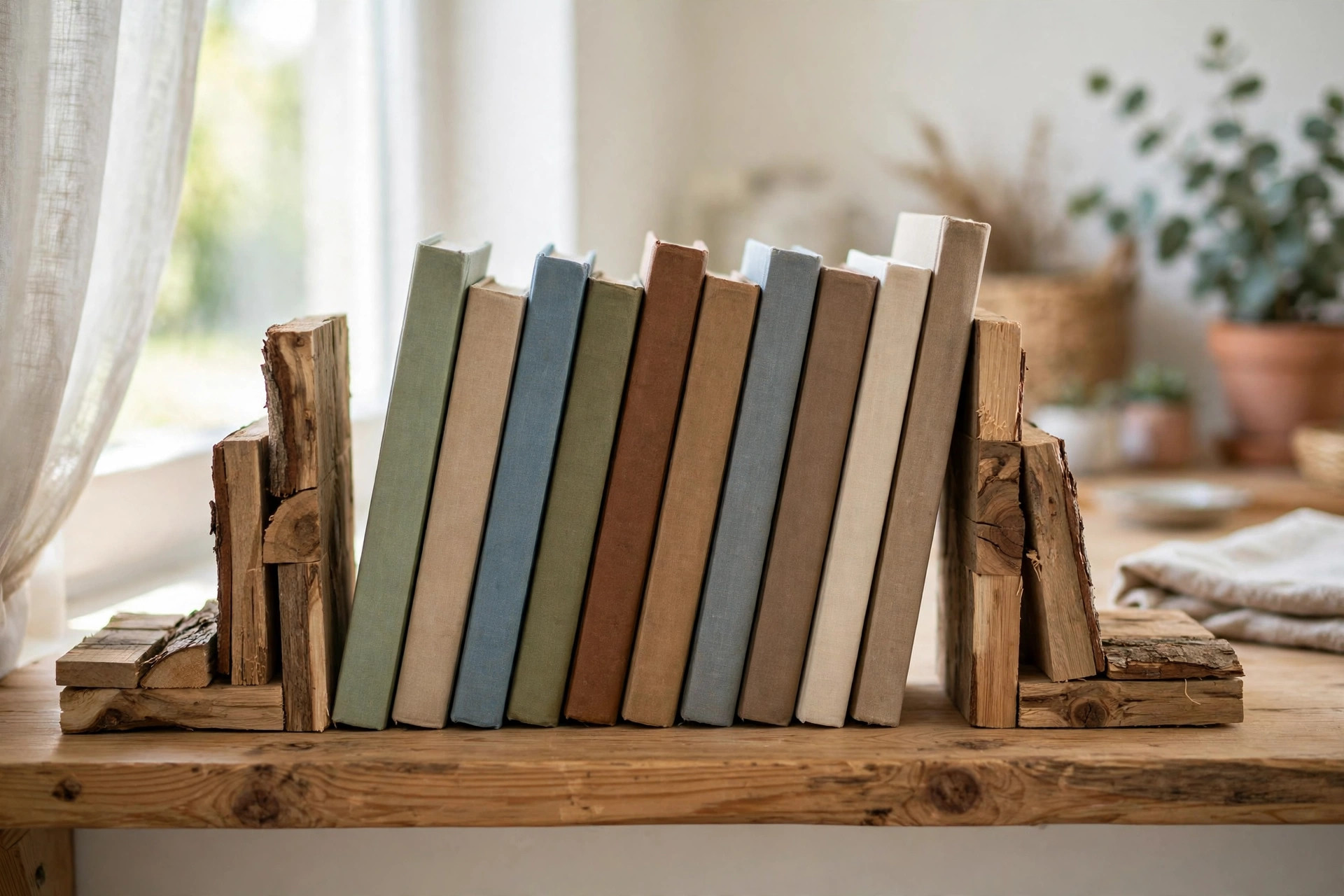
10. A pair of bookends from one piece of driftwood — split it, sand it, stand it up
A piece of driftwood is a pair of bookends waiting to be split, because the wood is already weathered and the shape is already interesting, and the split gives you two pieces that match. Split one piece of driftwood down the middle, sand the flat side, stand the two halves on their flat sides at each end of the row, and the wood holds the books up while looking like it washed up on the shelf. Driftwood also costs nothing, because the beach is free and the wood is already beautiful, and the pair takes an hour. Keep the flat side truly flat so the wood stands straight, sand it smooth so it does not snag a cover, and never use a piece that is rotting, because that is how the shelf gets damp. One piece, split in two, and the shelf looks like the seaside.

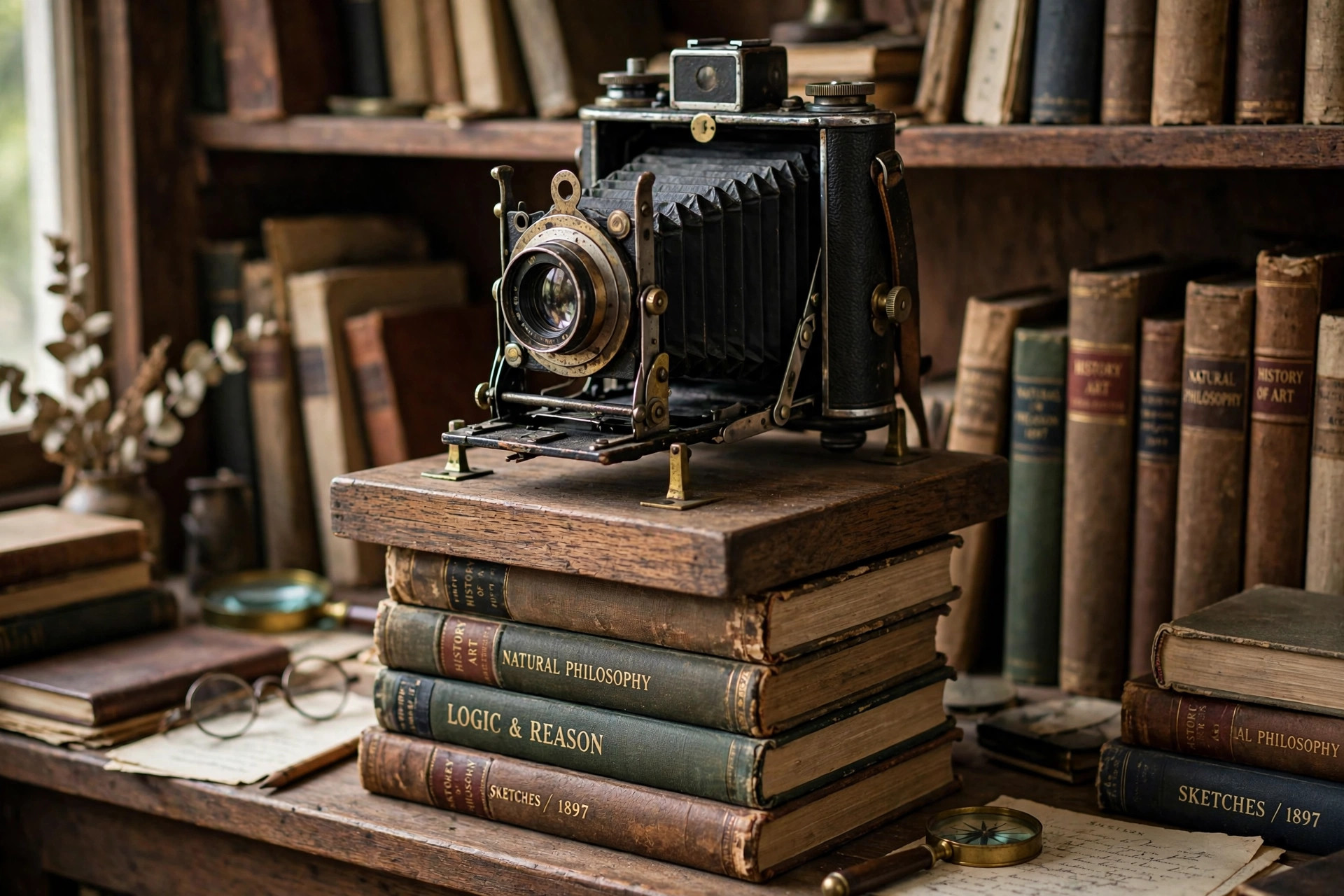
11. Bookends from vintage cameras or typewriter keys — the shelf that tells a story
A shelf that tells a story needs bookends that tell a story, and a vintage camera or a row of typewriter keys is a story in an object. Mount an old camera on a wooden base, or glue typewriter keys in a row on a block, and the bookend holds the books up while the shelf says something about the person who owns it. Vintage objects also suit a study or a home office, because the shelf is the room's personality and the bookends are the punctuation. Keep the object solid enough to hold a row, mount it firmly so it never falls, and never use a camera worth collecting, because that is how a valuable thing becomes a doorstop. Camera, keys, a story on the shelf, and the books have company worth looking at.
Pretty bookends for styled shelves
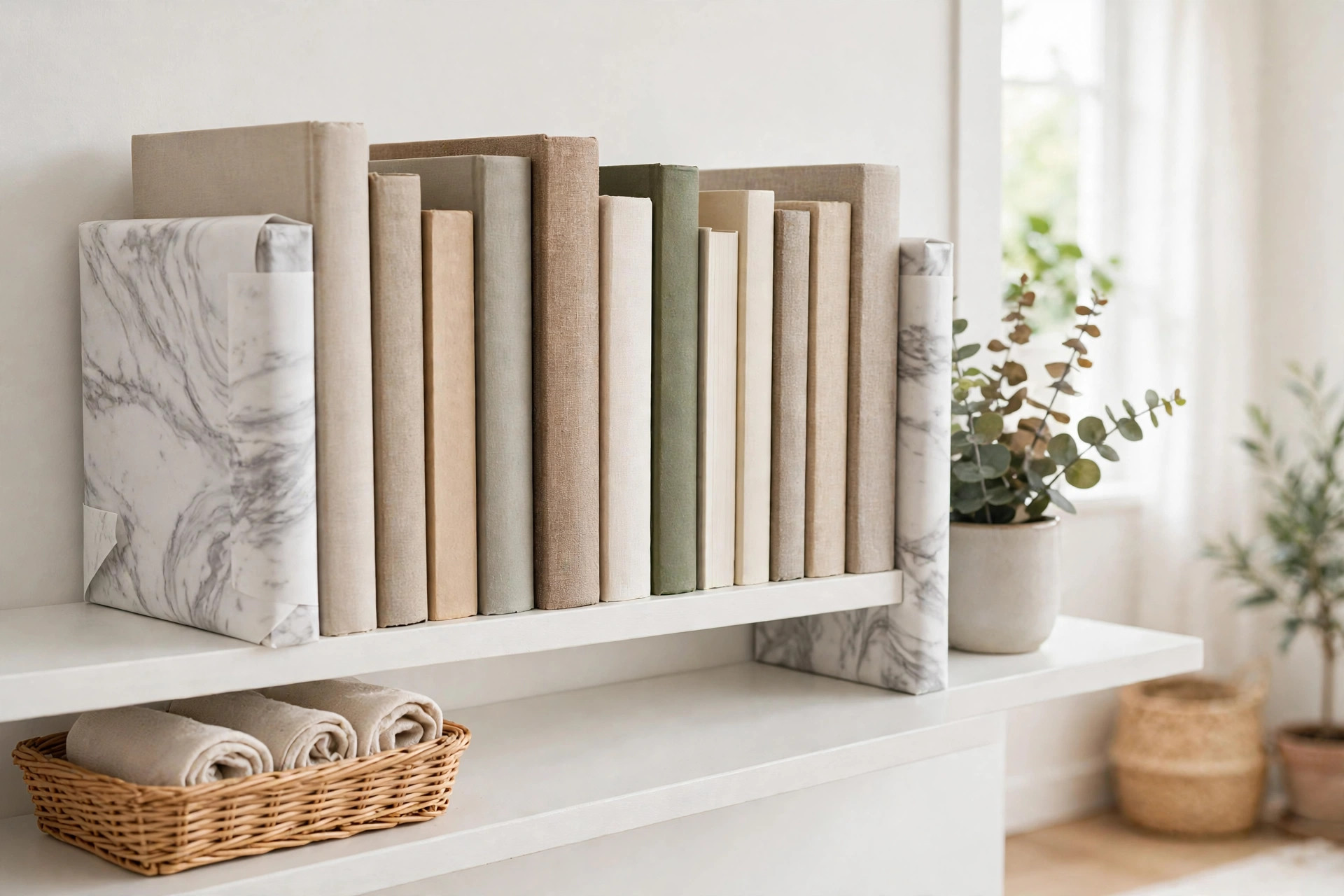
12. Marble-effect bookends from contact paper — stone look, paper budget
A marble bookend costs a fortune and a contact-paper bookend costs a roll, and on the shelf nobody can tell the difference. Wrap a wooden block or a brick in marble-effect contact paper, smooth out the bubbles, trim the edges, and the block looks like stone — white with grey veins, cool to the eye, and heavy enough to hold a row. Contact paper also lets you change the look, because the paper peels off and the block takes a new pattern next year. Keep the wrap tight and bubble-free, use a block heavy enough to hold books, and never wrap a block that is too light, because that is how the marble look falls over. Stone look, paper budget, and the shelf looks expensive.
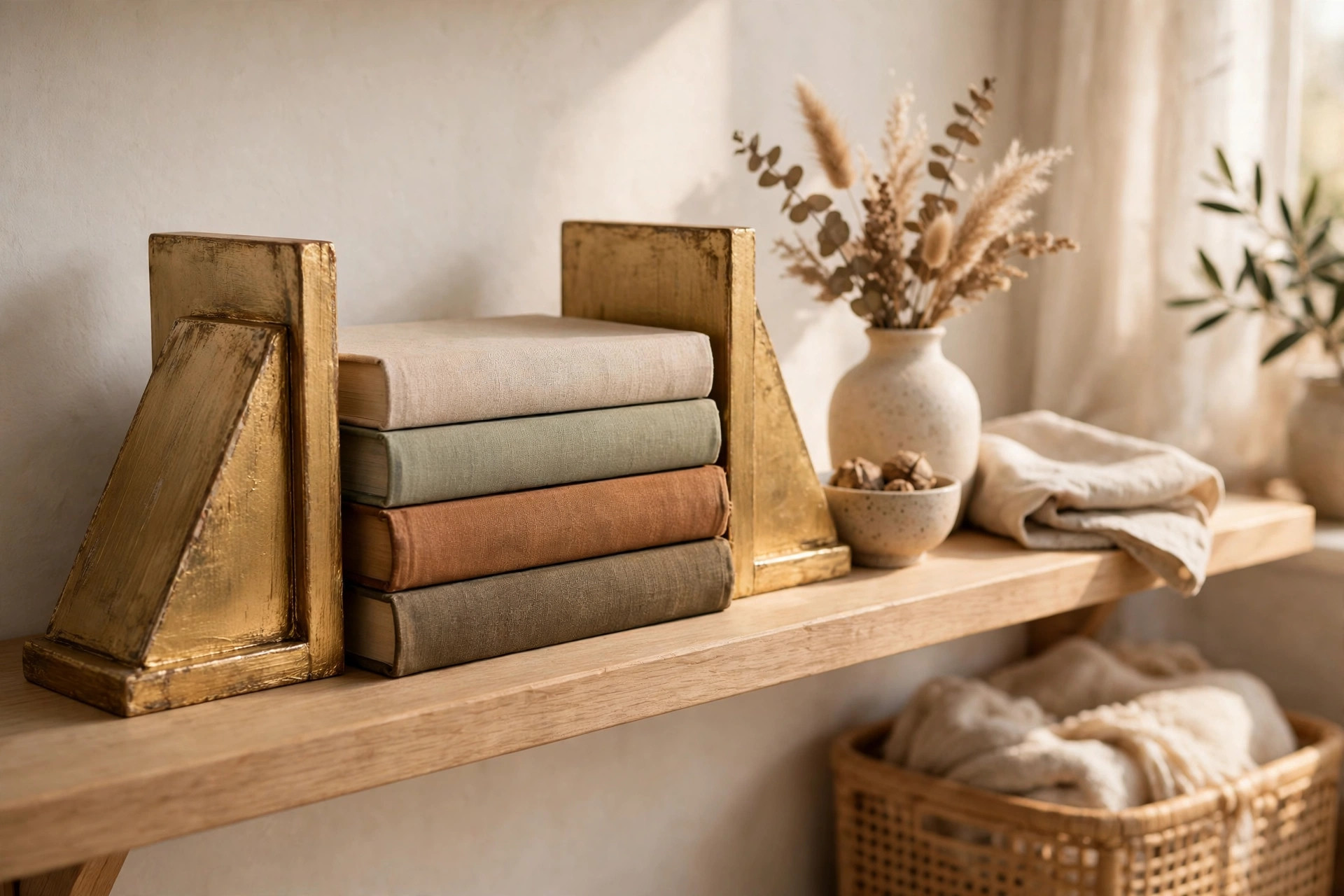
13. Gold-painted bookends — spray paint turns scrap wood into shelf jewellery
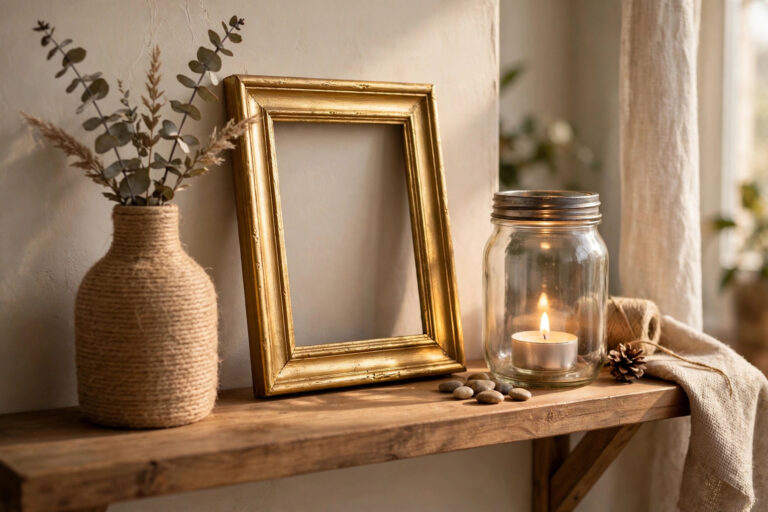
A scrap of wood painted gold is not a scrap of wood any more, because gold paint turns anything into shelf jewellery and the shelf with gold on it looks styled, not stacked. Take two wooden blocks, or two bricks, or two old bookends, and spray them gold — two thin coats, a day to dry — and the pair stands on the shelf like a piece of jewellery holding the books up. Gold paint also suits a living room or a bedroom shelf, because the gold catches the light and the books look like they belong next to it. Keep the coats thin so they do not drip, paint outside so the smell stays out of the house, and never spray a bookend that will be handled by children, because that is how the gold ends up on small hands. Scrap wood, gold paint, and the shelf looks dressed. (Check on Amazon for a gold spray paint made for wood and metal.)
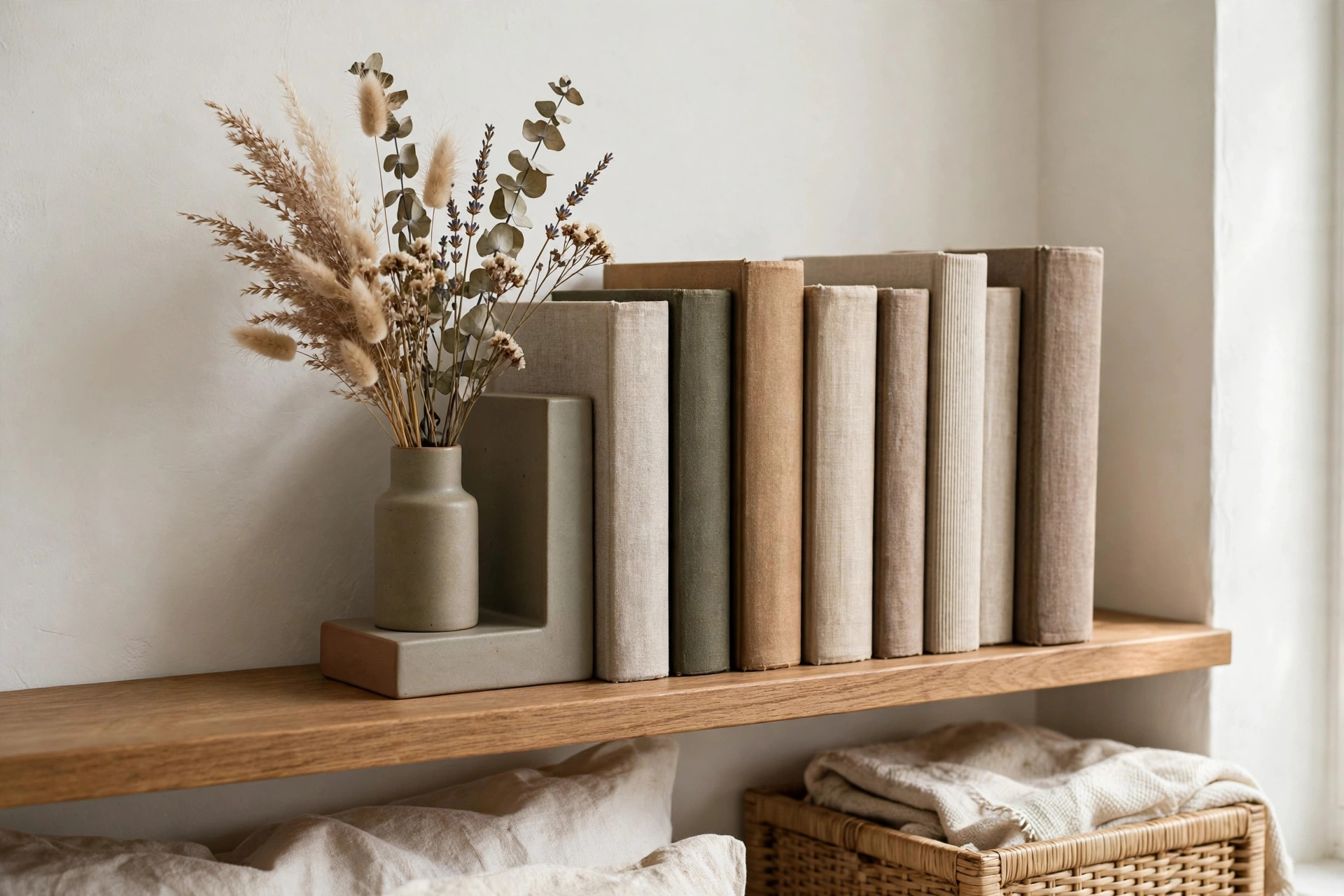
14. Bookends with dried flowers under resin — the pretty pair for the bedroom shelf
A bookend with dried flowers inside it is a bookend that holds books and flowers at the same time, and the bedroom shelf is the shelf that deserves it. Press dried flowers flat, lay them in a shallow mould, pour resin over them, and let it set — the flowers sit inside the clear block like a paperweight, and the block stands on the shelf holding the books up. Resin bookends also suit a gift, because the flowers are the message and the bookend is the use. Keep the flowers flat so they do not poke through the resin, pour in thin layers so no bubbles form, and never use fresh flowers, because that is how the resin goes cloudy. Flowers, resin, a clear block, and the shelf smells of summer without a vase.
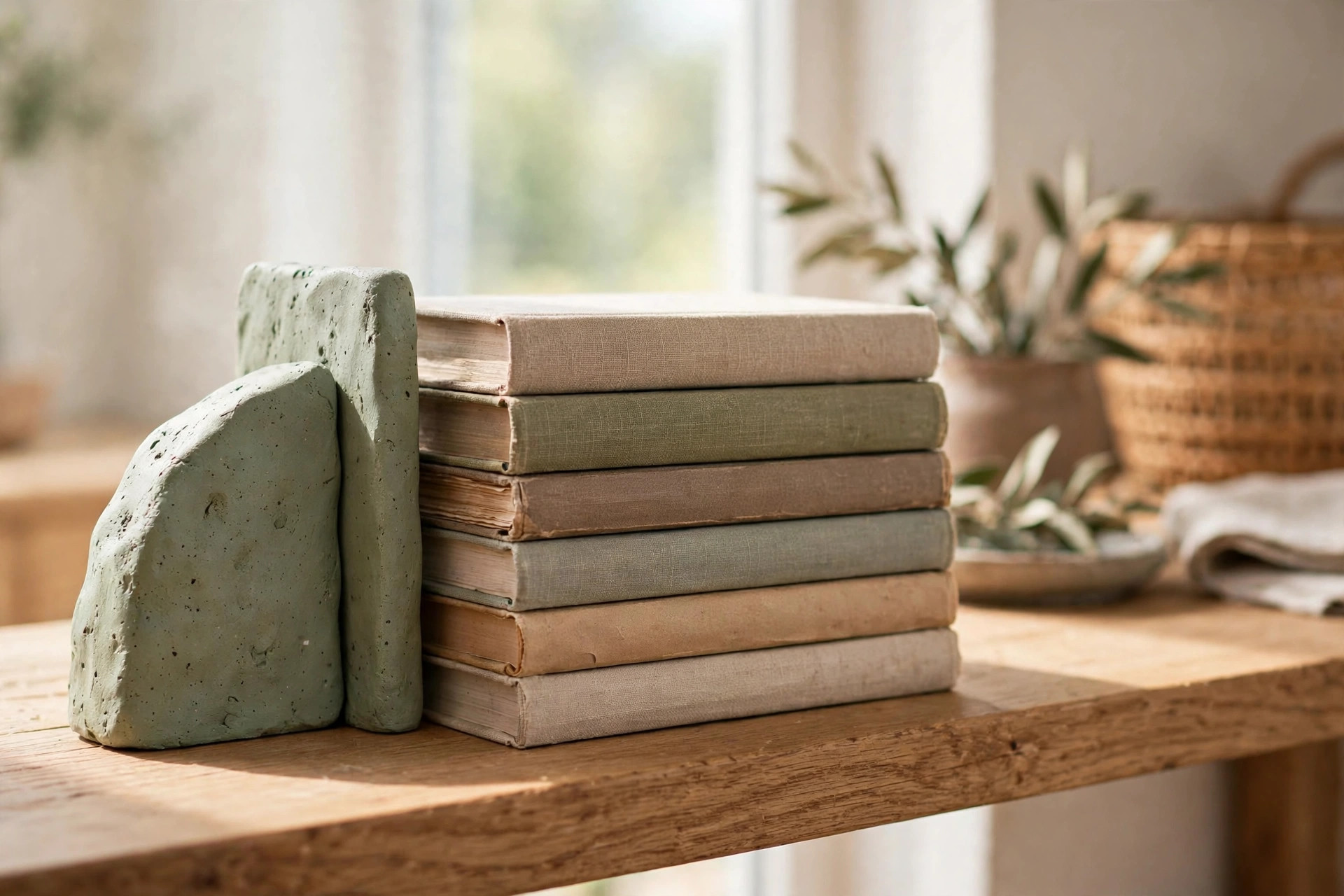
15. Ceramic bookends from air-dry clay — pinch, shape, paint, done
Air-dry clay is the easiest way to make a bookend that looks like it came from a pottery studio, because the clay needs no kiln and the shaping is as simple as pinching a block. Shape two blocks, press a pattern into them with a fork or a leaf, let them dry for two days, and paint them — sage green, cream, or whatever the room needs — and the pair stands on the shelf like handmade ceramics. Air-dry clay also suits a first project, because the clay forgives mistakes and the drying does the hard work. Keep the blocks thick enough that they do not crack, let them dry fully before painting, and never make a pair too light, because that is how the clay bookend slides. Pinch, shape, paint, done, and the shelf has ceramics. The clay and the paint live in 20 Art Supply Organization Ideas for 2026, where the craft supplies wait in their jars. (Check on Amazon for a pack of air-dry clay that dries hard and paintable.)
16. Bookends in sage green and cream — the NestWynn palette on the shelf
A shelf that matches the room looks styled and a shelf that does not looks accidental, and the easiest way to match the room is to paint the bookends the colour of the room. Take any pair — wood, concrete, clay — and paint them sage green and cream, the NestWynn palette, so the bookends sit on the shelf like they were made for it. A matched pair also ties the shelf to the rest of the room, because the colour repeats and the eye reads the room as one thing. Keep the paint matte so it does not shine, use two coats so the colour is even, and never paint a bookend a colour that fights the books, because that is how the shelf looks busy. Sage green, cream, a matched pair, and the shelf belongs to the room.
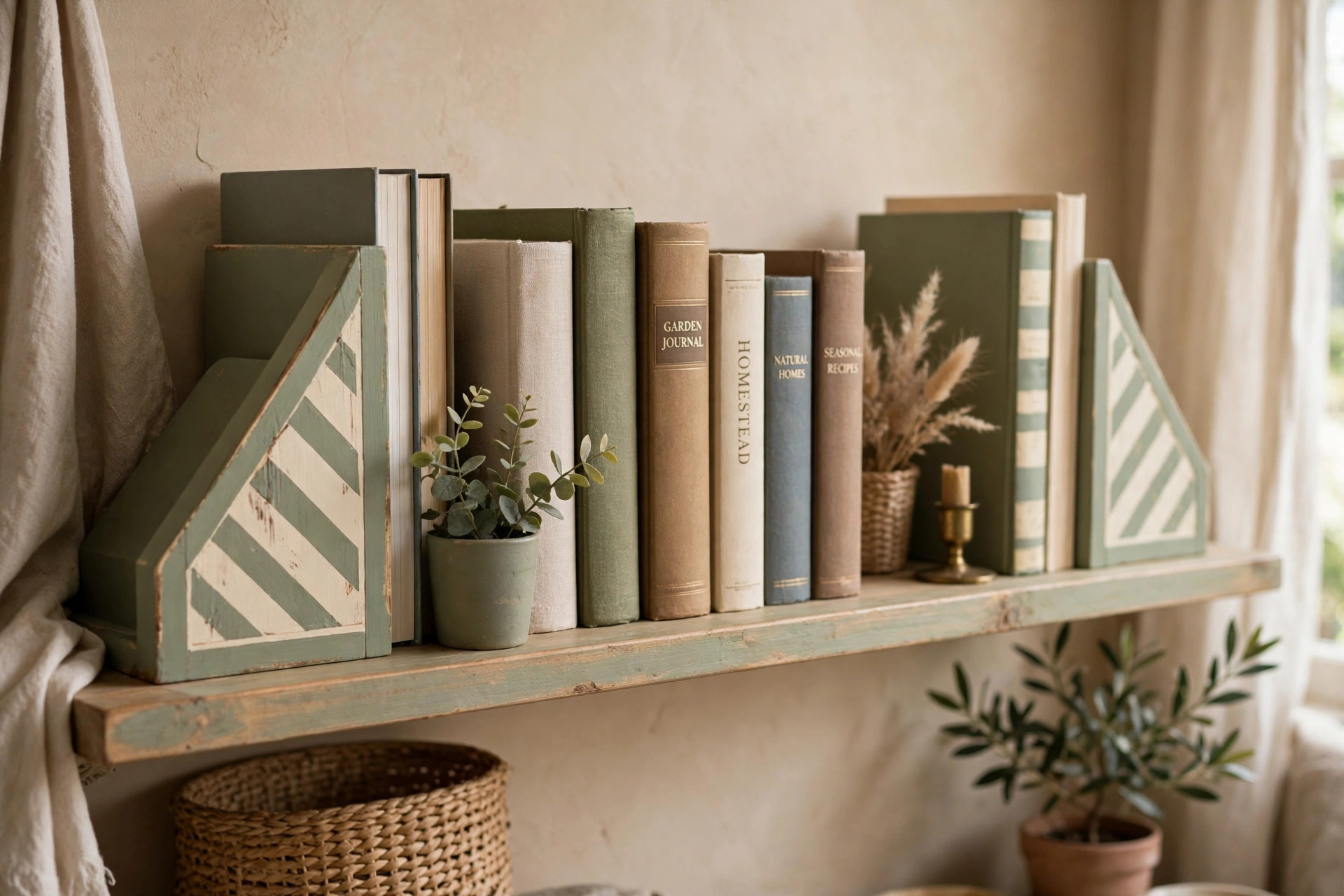
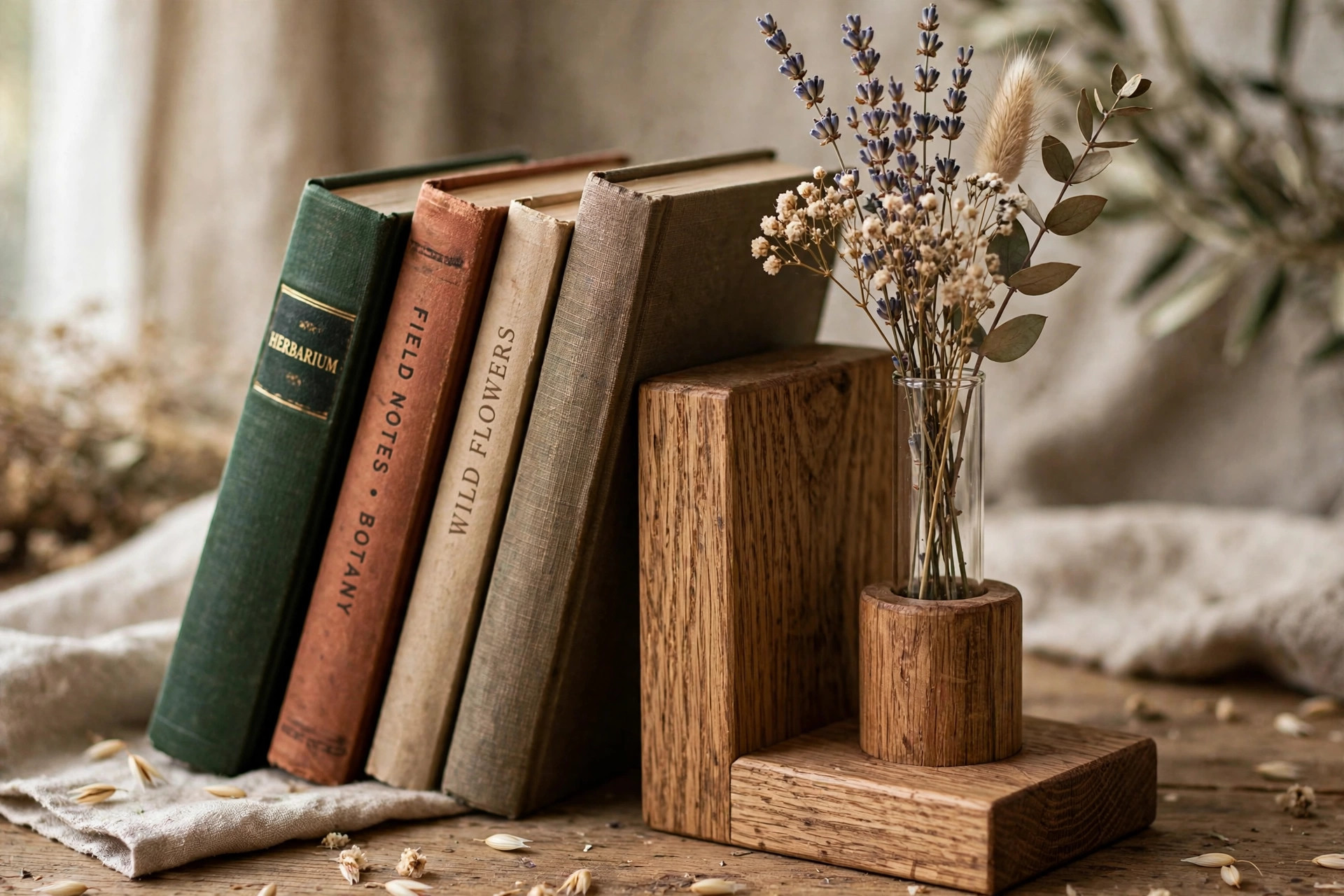
17. A bookend that doubles as a vase or a candle holder — two jobs, one object
A bookend that only holds books is a bookend that takes a whole shelf spot for one job, and a small shelf cannot afford that. Make a bookend that doubles as a vase — a block with a hole for a test tube, dried flowers in it — or a candle holder — a block with a tea light on top — and the object holds the books up and holds the flowers, or the candle, at the same time. A two-job bookend also suits a small shelf, because the vase does not need a second spot and the candle does not need a second surface. Keep the vase small so it does not tip the bookend, use a battery candle if the shelf is near books, and never put a real flame next to paper, because that is how a bookend becomes a fire. Two jobs, one object, and the shelf does double duty.
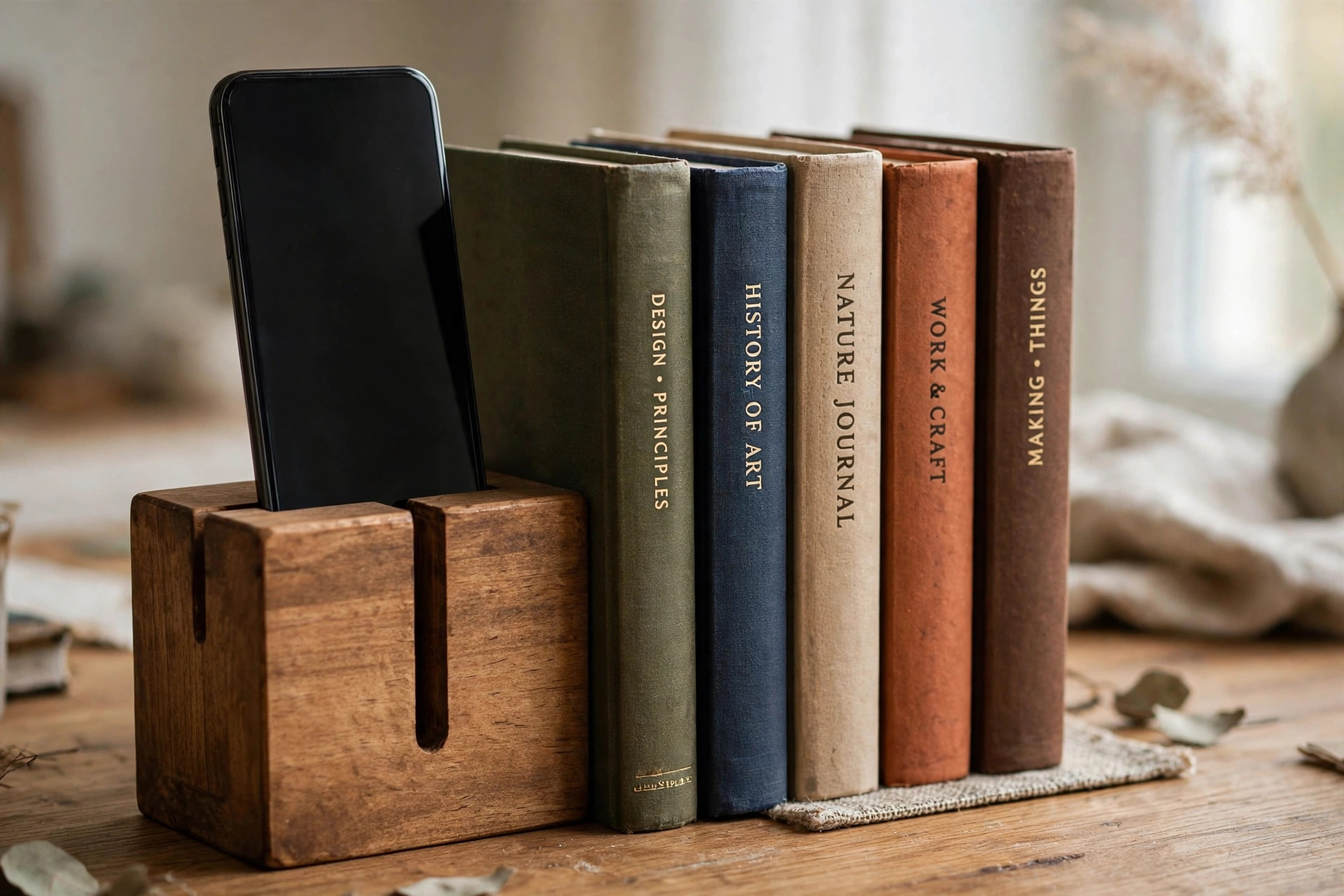
Bookends that work harder
A phone on a bookshelf is a phone that slides off the books, because the shelf is not a stand and the phone has nowhere to lean. Cut a slot in the top of a wooden bookend, wide enough for a phone, and the bookend holds the books up and holds the phone up at the same time — the phone leans in the slot, the screen faces the room, and the shelf charges nothing but holds everything. A phone-stand bookend also suits a bedside shelf, because the phone is the alarm clock and the bookend is the stand. Keep the slot wide enough for a phone in a case, cut it at a slight angle so the phone leans back, and never cut the slot so deep that the bookend weakens, because that is how the bookend snaps. A slot in the top, and the shelf holds the phone too.
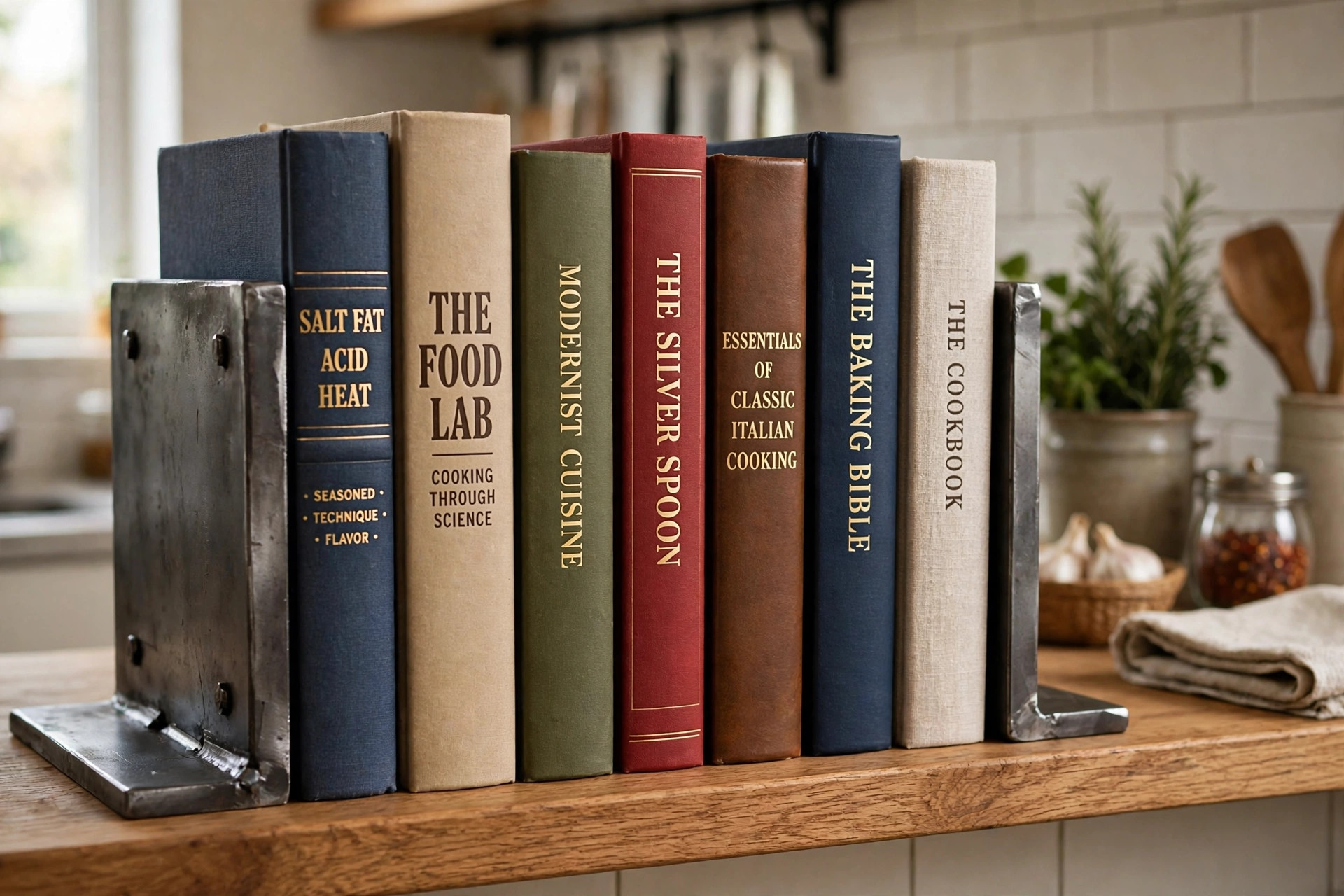
19. Bookends for heavy cookbooks — the kitchen shelf that holds its weight
Cookbooks are the heaviest books in the house, and the kitchen shelf is the shelf that needs the heaviest bookends, because a row of cookbooks leans harder than a row of novels. Make a pair from steel plates or concrete blocks — heavy, low, and wide — and the cookbooks lean on them without moving them, because the bookend weighs more than the books lean. Heavy bookends also suit a kitchen, because the kitchen is the room where things get knocked and the bookend that does not move is the bookend that works. Keep the pair low so it does not block the shelf above, use a base wide enough for the weight, and never use a pair that slides on a smooth shelf, because that is how the cookbooks fall on the counter. Heavy, low, wide, and the cookbooks stay where the cook put them. The kitchen shelves they stand on are in 20 Pegboard Organization Ideas for 2026, where the wall holds the tools and the shelf holds the books.
20. Bookends for kids' shelves — low, rounded, impossible to hurt yourself on
A child's shelf needs bookends a child cannot hurt themselves on, because the bookend a child pulls down is the bookend that lands on a foot. Make a pair low and rounded — wooden blocks with every edge sanded round, or fabric-covered bricks with no corners at all — and the bookend holds the books up while being safe to pull, push and sit on. Kids' bookends also suit a reading corner, because the shelf is at the child's height and the bookend is part of the furniture, not a hazard. Keep the pair heavy enough to hold books but light enough to lift, sand every edge until it is round, and never use metal or glass on a child's shelf, because that is how a bookend becomes a bruise. The reading shelves they guard are in 22 School Organization Ideas for 2026, where the books live at the child's height. Low, rounded, safe, and the children reach for the books themselves.
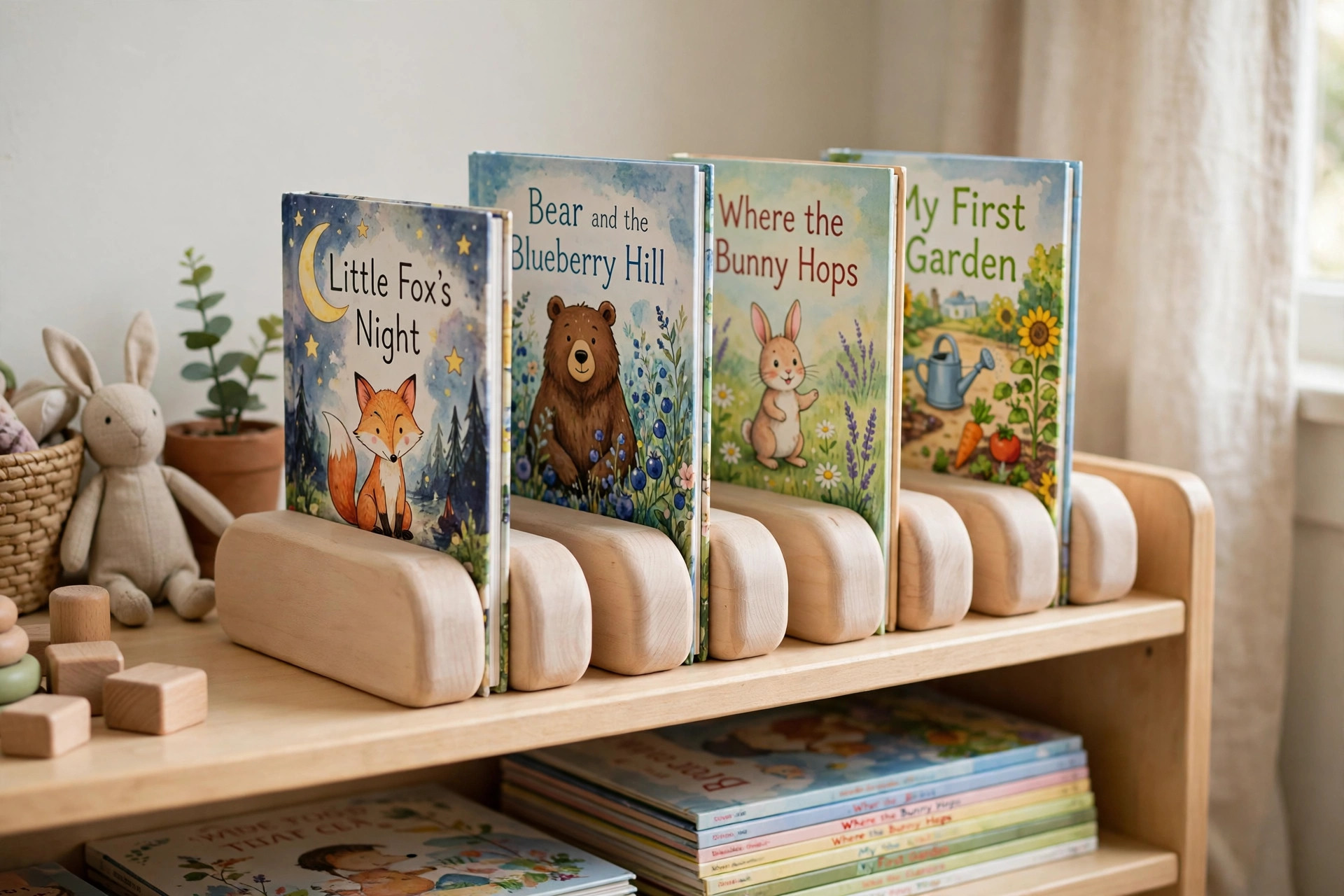
21. Bookends that match the room — one pair per shelf, one style per room
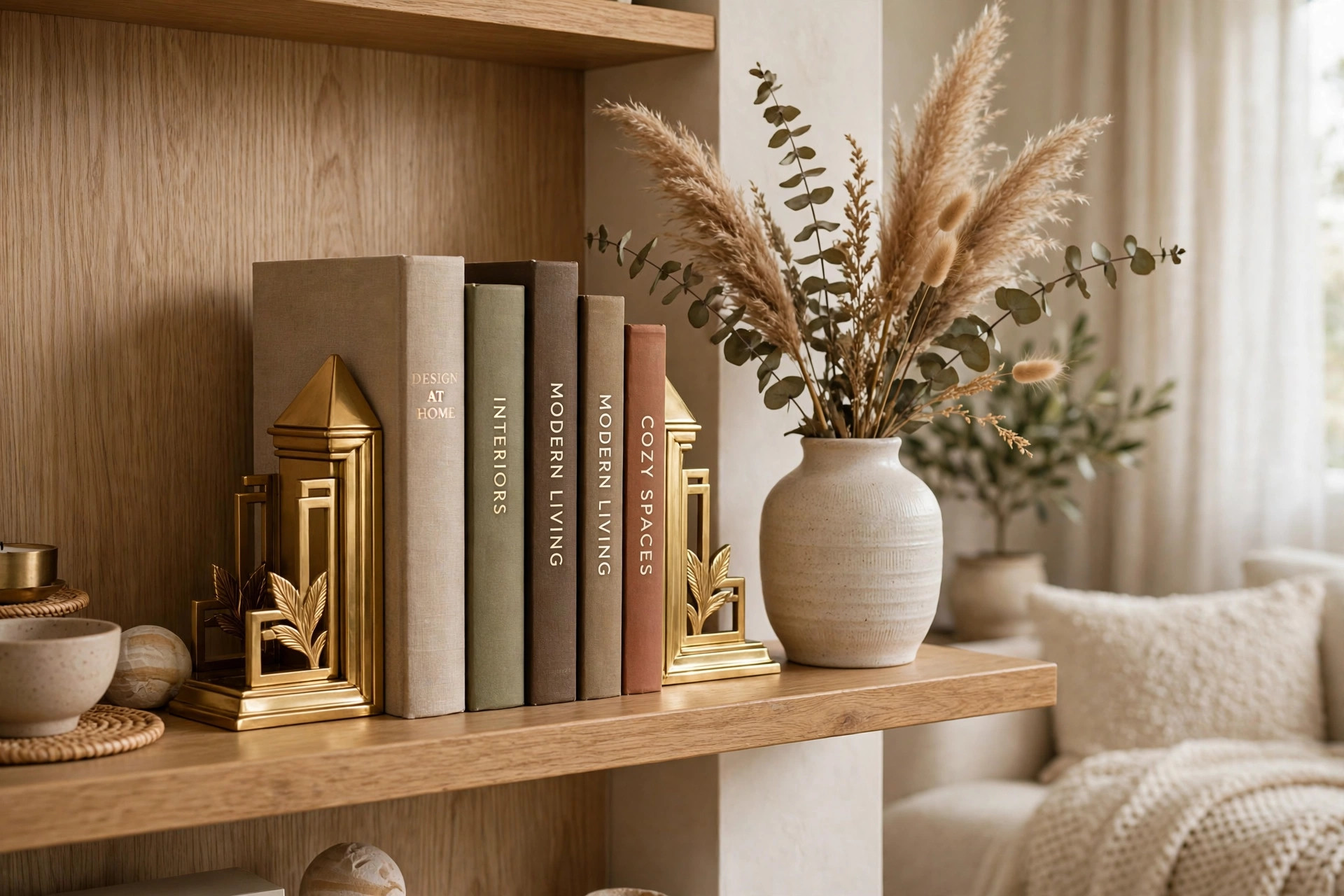
A house with the same bookends on every shelf looks like a shop, and a house with one pair per shelf looks like a home, because each room has its own style and the bookends should match it. Make one pair per shelf — gold for the living room, driftwood for the bedroom, toy animals for the children's room, steel for the kitchen — and the bookends become part of the room instead of an afterthought. Matching the room also stops the shelves looking random, because the bookend says which room it belongs to. Keep one style per shelf, repeat the colour somewhere else in the room, and never mix three styles on one shelf, because that is how the shelf looks like a jumble sale. One pair per shelf, one style per room, and the house reads as a home.
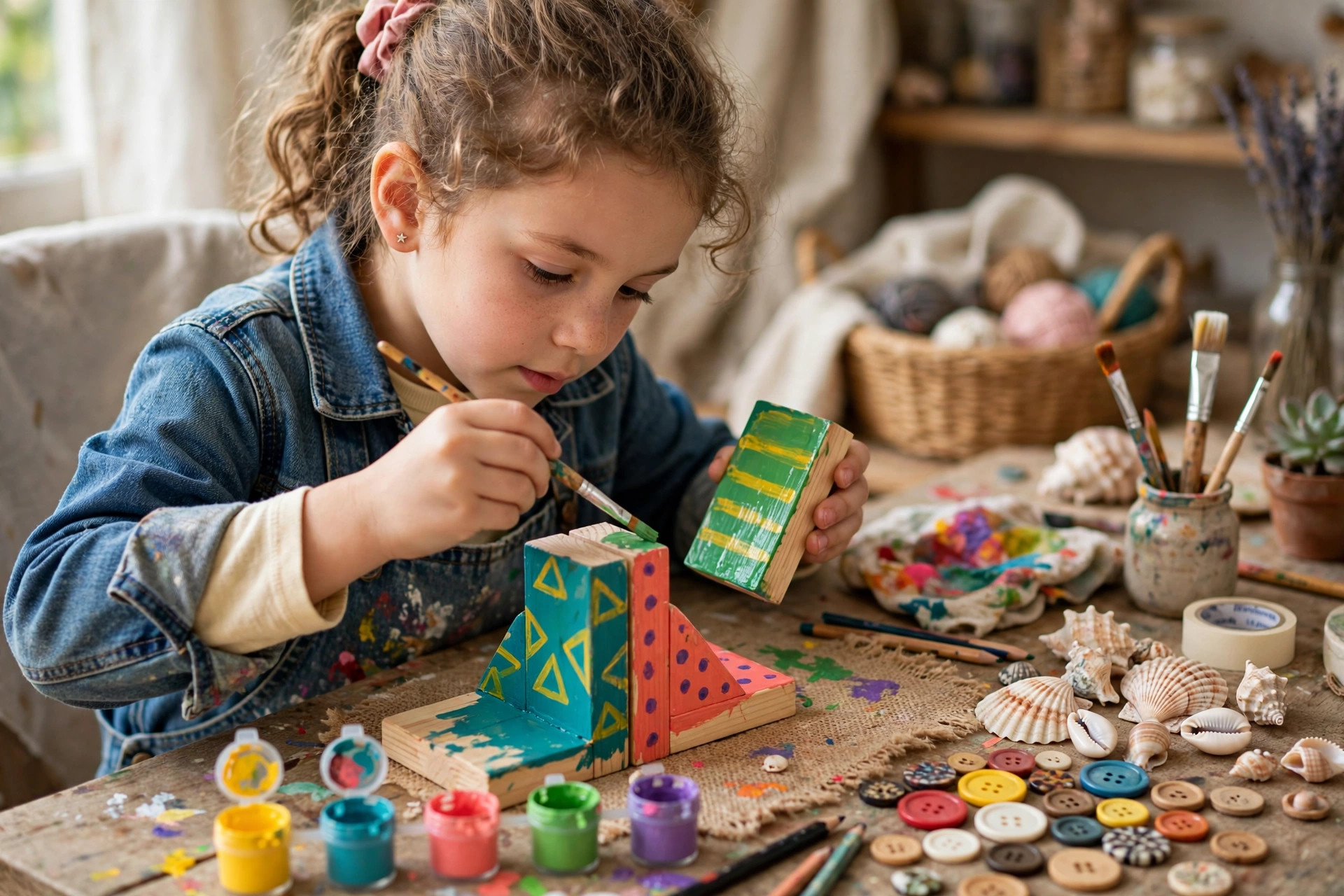
22. A bookend you make with the kids — the pair they will never let you move
A bookend you make with the kids is a bookend the kids will never let you move, because the pair they painted is the pair they guard, and the shelf with their bookends is the shelf they read from. Make a pair together — paint wooden blocks, glue on shells or buttons, let them choose the colours — and the bookends hold the books up while the children hold the memory of making them. Making bookends with the kids also teaches them that the shelf is theirs, because the pair they made is the pair that guards their books. Keep the project simple enough for small hands, use paint that washes off, and never let the glue gun near a child, because that is how a craft afternoon becomes a burn. Paint, glue, shells, and the pair they will never let you move.
Which DIY bookend fits which situation?
| Situation | Best first move | Budget | Tools needed |
|---|---|---|---|
| Row of books keeps falling | Concrete or brick pair, heavy and low (ideas 1, 2) | Low | Loaf tin, concrete |
| No budget at all | Paint tins with sand, or wrapped bricks (ideas 2, 5) | Low | Sand, kraft paper |
| First DIY project | Wood offcuts in an L (idea 3) | Low | Saw, screws |
| Children's shelf | Toy animals, or low rounded blocks (ideas 6, 20) | Low | Glue, wooden base |
| Industrial or workshop look | Horseshoes, gears, found metal (idea 8) | Low | Glue or bolts |
| Styled living-room shelf | Gold-painted or marble-effect pair (ideas 12, 13) | Low | Spray paint, contact paper |
| Bedroom shelf | Dried flowers under resin, or a vase bookend (ideas 14, 17) | Medium | Resin, mould |
| First clay project | Air-dry clay, pinch and paint (idea 15) | Low | Clay, paint |
| Heavy cookbooks | Steel plates or concrete, low and wide (idea 19) | Medium | Steel, concrete |
| Phone always sliding off | Bookend with a hidden phone slot (idea 18) | Low | Saw, wood block |
| Shelf should match the room | Paint the pair the room's colours (idea 16) | Low | Paint |
| Make it with the kids | Painted blocks with shells or buttons (idea 22) | Low | Paint, glue |
You do not need all 22 ideas. You need the pair that solves your worst shelf — usually the row that keeps falling, the shelf that looks accidental, and the children's books that never stay up. Start with the heaviest pair, concrete or brick, and paint the next pair to match the room. Do that this weekend and the next time you look at the shelf the books will be standing straight, the gold will catch the light, and the toy dinosaur will be holding the picture books up like it was always his job.
Save this post for your next shelf project, and if the craft supplies need sorting first, read 20 Art Supply Organization Ideas for 2026 next — it is Post 16, the jars and the clay and the paint that these bookends are made from — and 28 Living Room Storage Ideas for 2026, Post 01, for the styled shelves these bookends finish. This is the second post of the DIY by project cluster — Posts 21 to 30, one project at a time — and the next project carries the same system into the next thing you can make yourself.
Publish date assigned at publishing time. Updated as new DIY bookend finds are tested.
Frequently asked questions
How do I make bookends heavy enough to hold books?
Weight is the whole job — a bookend that weighs nothing holds nothing, so the pair has to be heavy, low and wide. Concrete cast in a loaf tin is the heaviest easy option, and a brick wrapped in fabric or a paint tin filled with sand does the same job for nothing. Keep the foot long enough to hold three books under it, because the weight of the books on the foot is what anchors the pair, and make the upright no taller than the books it holds. Heavy, low, wide, and the row stays up.
What is the easiest DIY bookend for a beginner?
Wood offcuts in an L are the easiest first project — two cuts, one bracket, and the books themselves hold the bookend down. Paint tins filled with sand are even simpler, five minutes and no tools at all, and a brick wrapped in fabric takes ten minutes with a glue gun. Start with the L-shape if you own a saw, start with the paint tins if you do not, and paint the pair to match the room once it works. Easy, heavy, and done in an afternoon.
How do I make bookends that match my room?
Paint the pair the colour of the room — sage green and cream for a NestWynn shelf, gold for a living room, white for a bedroom — and the bookends sit on the shelf like they were made for it. Keep one style per shelf and repeat the colour somewhere else in the room, so the eye reads the room as one thing, and never mix three styles on one shelf. Match the room, one pair per shelf, and the shelf stops looking accidental.