26 DIY Yard Decor Ideas for 2026
A yard does not need a landscaper to look expensive — these DIY yard decor ideas need only a painted door, a few planters that match, and light in the evening, and most of them cost less than a takeaway dinner. The yard most people have is a patch of grass, a fence that could use a coat of paint, and a back door that opens onto nothing in particular — and the fix is not a bigger budget, it is a weekend of small projects that each change one thing you see every day.
These 26 DIY yard decor ideas are budget yard makeovers with a big visual payoff: start at the front door, build planters from wood you already have, hang lights for the evening, and finish with furniture and storage that hides the mess — so the yard looks like it cost ten times what it did.
Every idea below works in a real yard, from a small front garden to a long back garden with a fence that has seen better days. The yard the decor lives in is covered in 20 Outdoor Toy Storage Ideas for 2026, where the outdoor toys get their own home before the decorating starts — and the front door the yard leads to is in 22 Entryway Storage Ideas for 2026, so the inside and the outside match. Pick three ideas that fit your worst corner, start at the front door, and build from there.
First impressions at the front
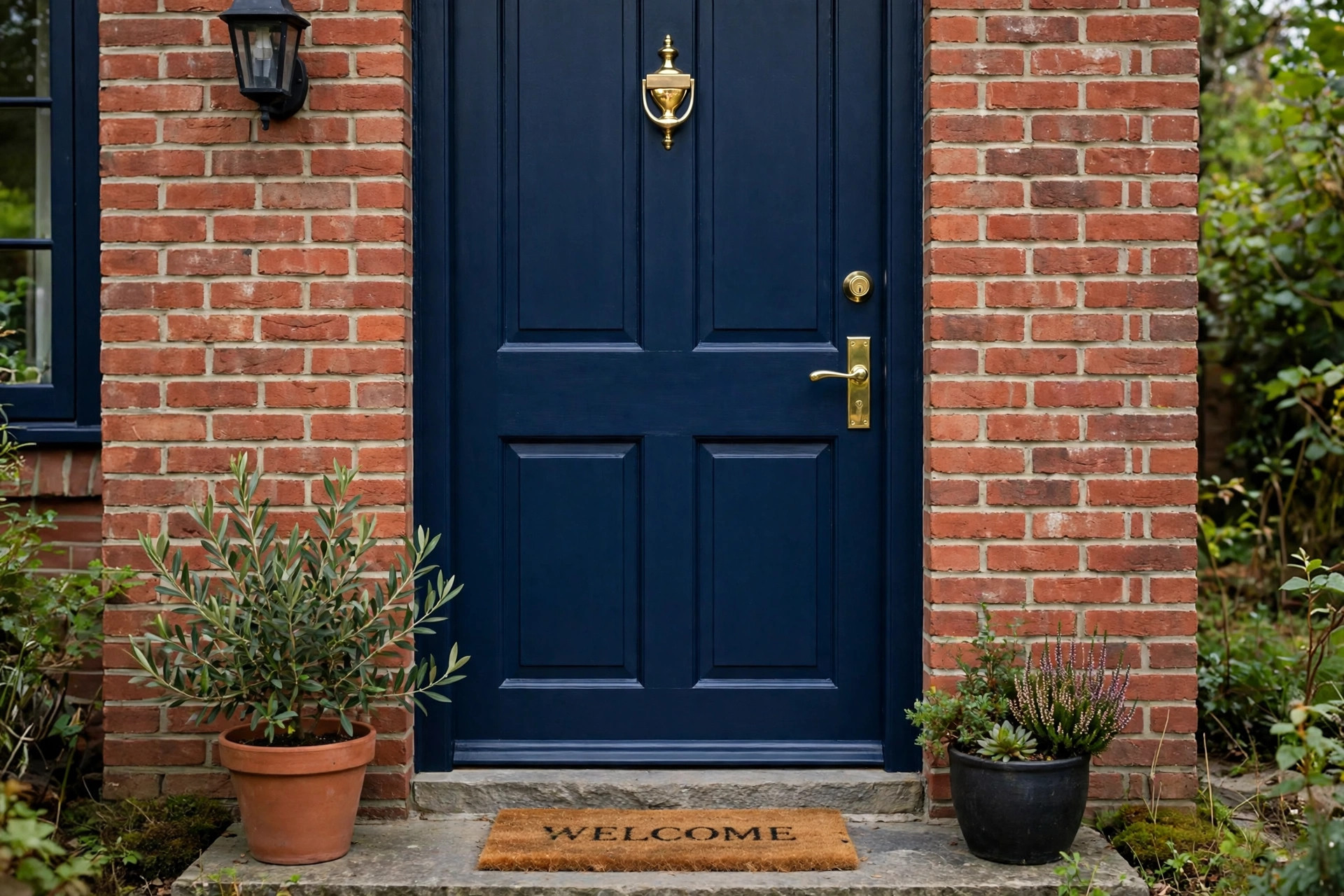
1. A painted front door is the cheapest yard makeover there is — one tin of paint changes the whole house
A tired front door makes the whole house look tired, because the door is the first thing anyone sees and the last thing most people paint. One tin of paint changes the whole house — a sage green, a deep navy, a warm terracotta — and the door you walk through every day becomes the thing people compliment. Paint the door properly and it lasts years: sand it lightly, wipe it clean, one coat of primer and two coats of exterior paint, and let it dry between coats so it does not stick. Pick a colour that suits the house, not the trend of the month, because the door you love is the door you keep. One tin, one afternoon, and the house looks like it had a makeover.
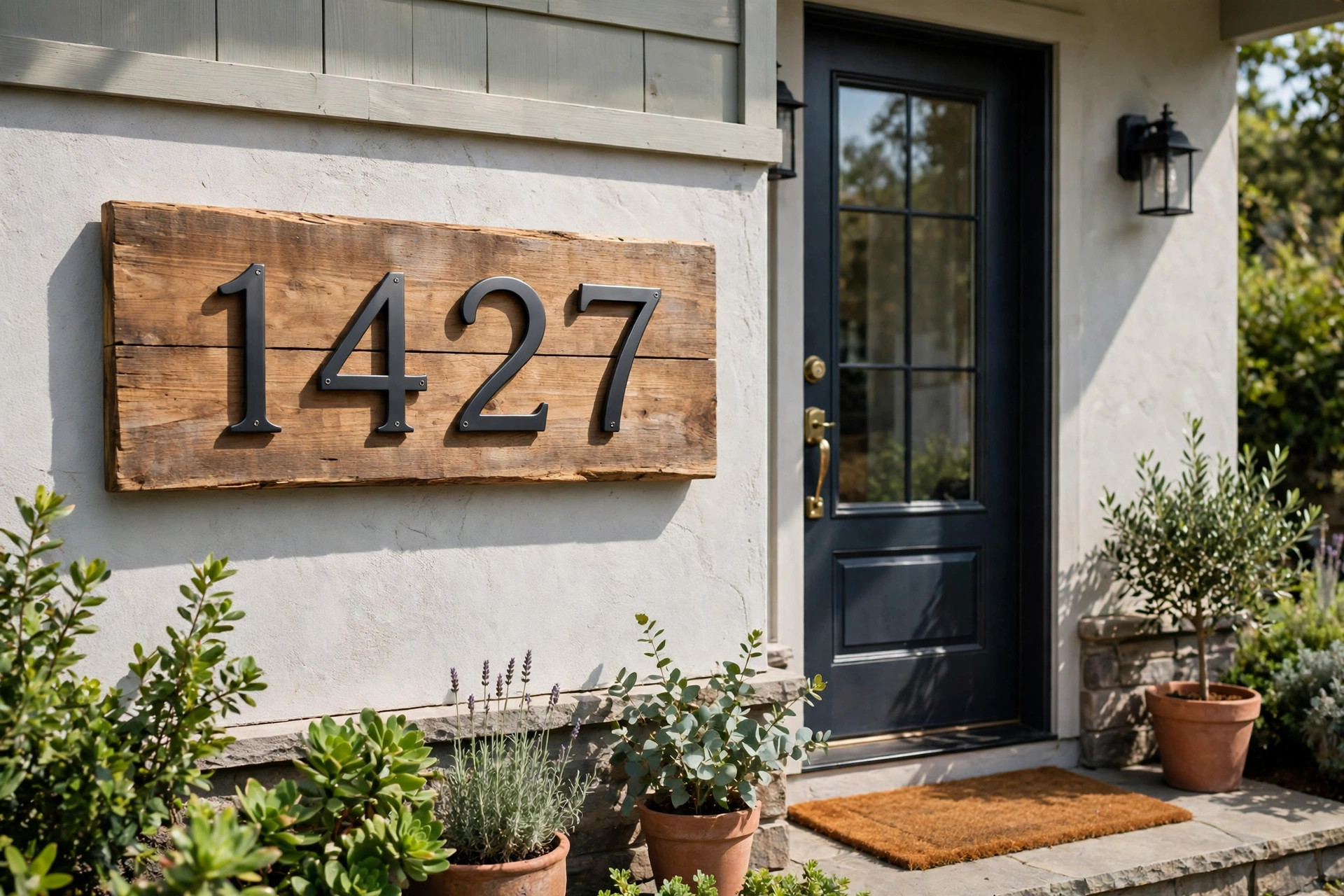
2. House numbers you can actually read from the street — big, bold and mounted on wood
House numbers that are tiny, rusty or missing make the house hard to find and harder to love, because the visitor who cannot find the number is the visitor who drives past. Put up numbers you can actually read from the street — big, bold and mounted on a board of wood, so the number is a feature and not an afterthought. Mount the numbers on a painted board beside the door, at eye height, in a colour that stands out against the wall, and space them evenly so they read as one number and not a row of strangers. Big numbers also help the delivery driver, the guest and the emergency services, because the house that can be found is the house that gets visited. Bold numbers on wood, and the house is easy to find.
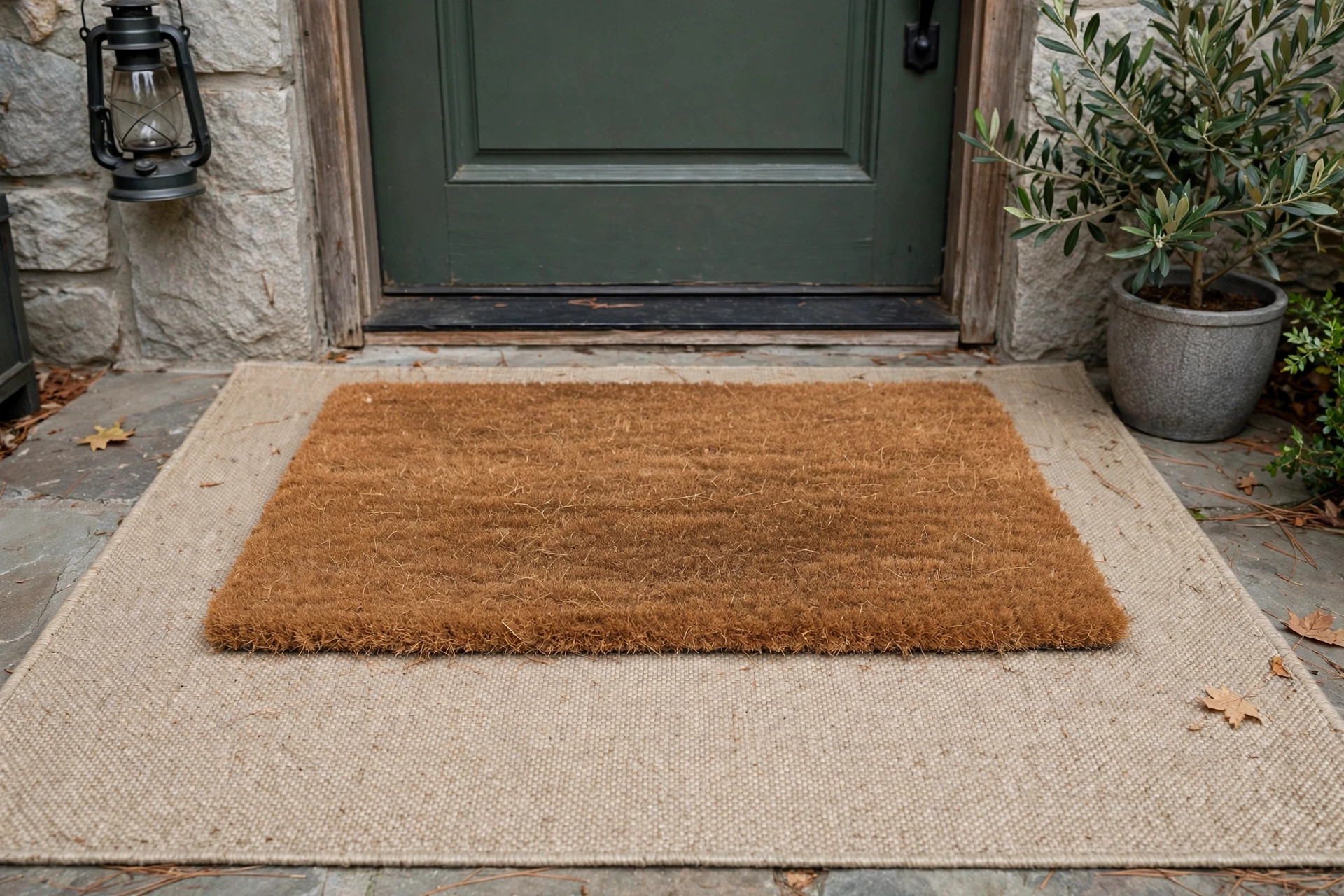
3. A doormat that says welcome, not sorry — layered over a plain outdoor rug
A thin, curled-up doormat says the house gave up at the door, because the mat is the first thing under a visitor's feet and the last thing anyone replaces. Get a doormat that says welcome, not sorry — a thick coir mat with a clear message, layered over a plain outdoor rug that is a size bigger, so the door has a frame and the mat has a border. Layering also stops the mat sliding, because the rug underneath holds it still and the mat on top does the wiping. Keep the rug plain and the mat patterned, or the mat plain and the rug patterned, and never let both shout at once, because that is how the doorway becomes a jumble. A good mat on a plain rug, and the door says welcome.
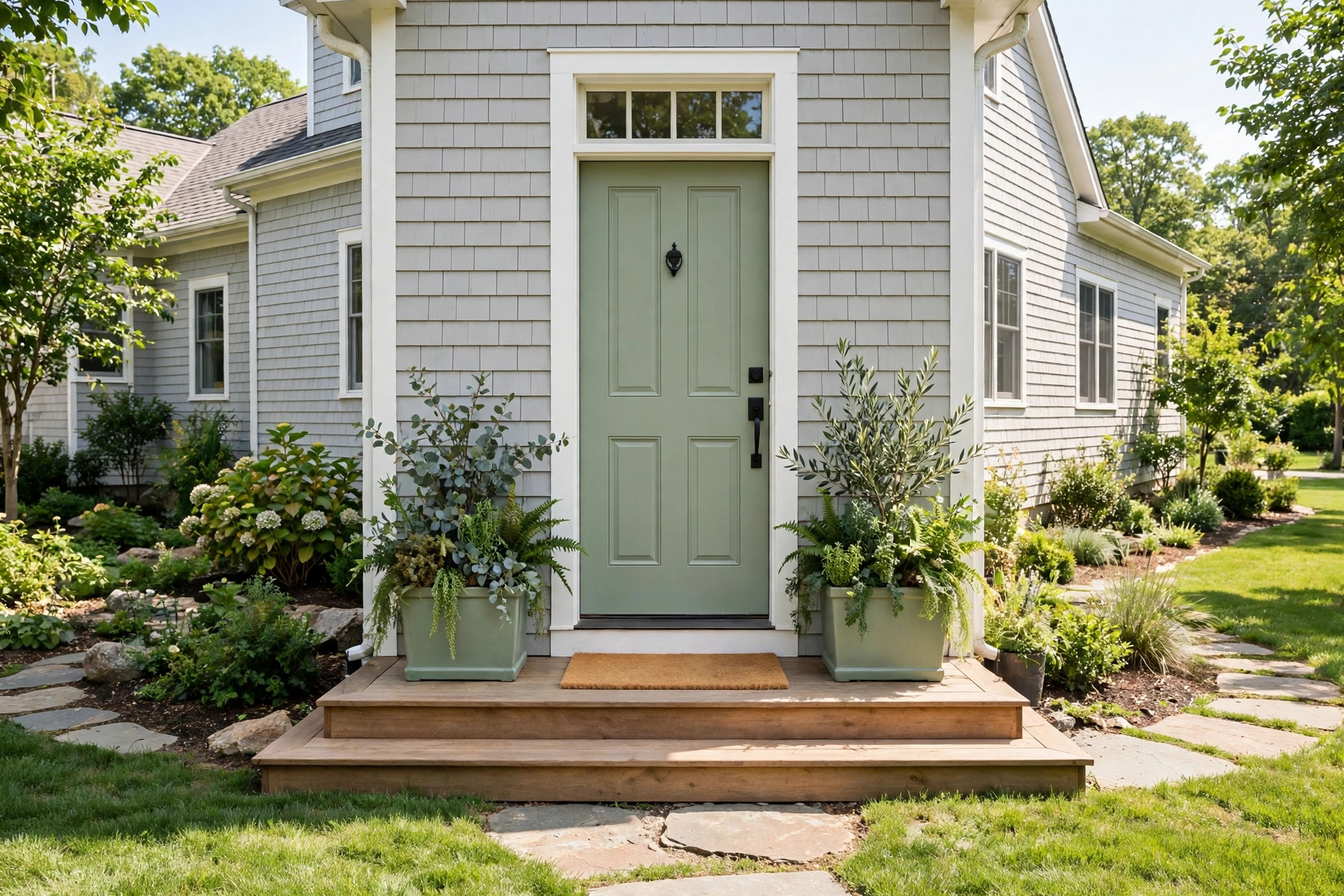
4. Planters flanking the front door, a matched pair — the same pot, the same plant, both sides
One planter by a front door looks like an accident, because a single pot has no partner and the door has no balance. Put planters flanking the front door, a matched pair — the same pot, the same plant, both sides — so the door has symmetry and the house looks deliberate. A matched pair also stops the door looking lopsided, because the eye reads both sides at once and the door sits in the middle. Fill them with the same plant at the same height, water them together, and replace them together when the season changes, so the pair stays a pair. The planters in detail are in 22 Rolling Cart Organization Ideas for 2026, where the rolling cart carries the heavy pots to the door instead of your back. Same pot, same plant, both sides, and the door looks finished.
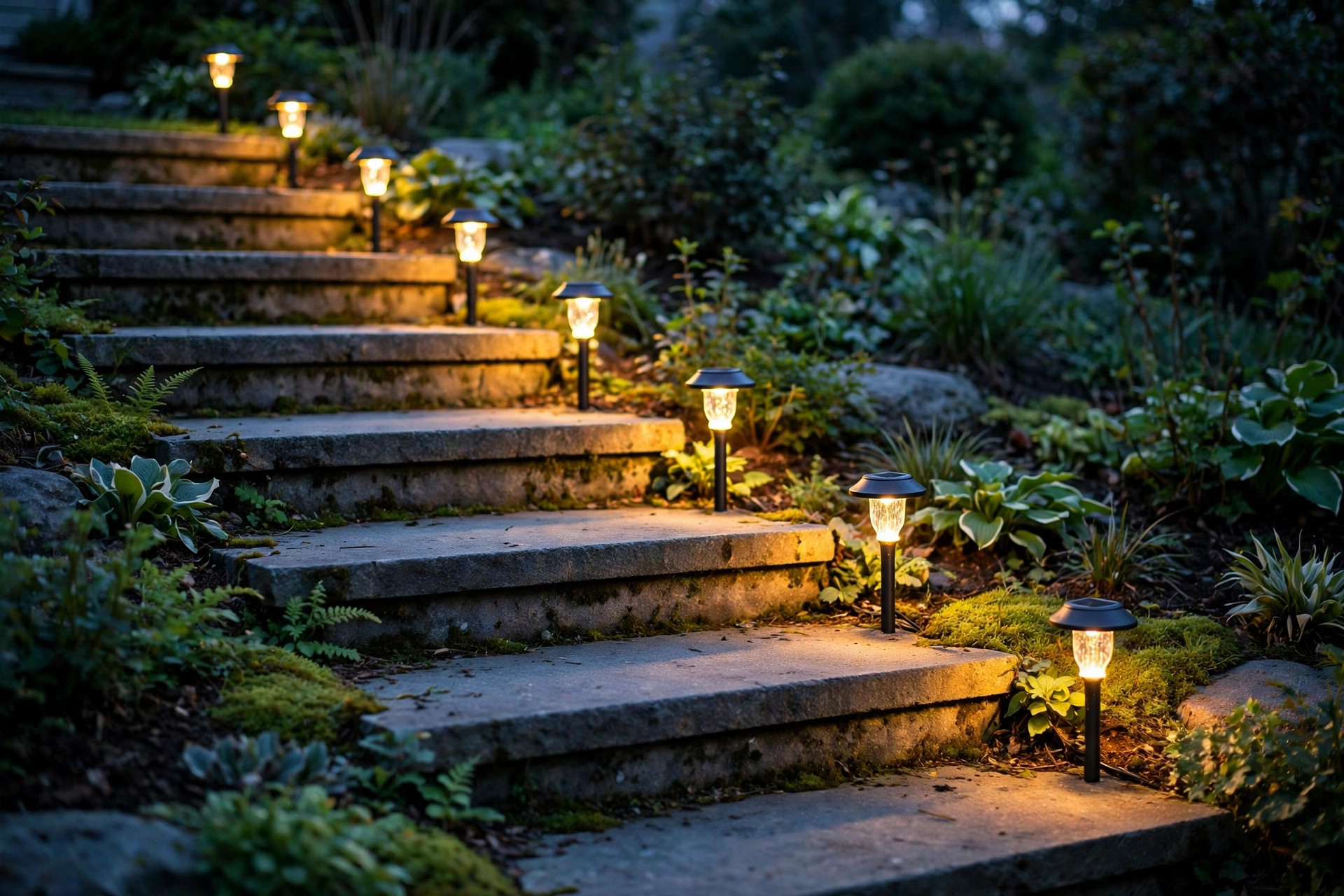
5. A path light on every step, solar not wired — no electrician, no cable, just sun
Steps you cannot see in the dark are steps you trip on, because the path to the door is the path you walk every evening and the dark is the thing that makes it dangerous. Put a path light on every step, solar not wired — no electrician, no cable, just sun — so each step has its own light and the path is safe after dark. Solar lights charge by day and switch on by themselves at dusk, which means there is nothing to wire and nothing to remember, and the only job is to push them into the ground where the sun reaches them. Keep them in a straight line, one per step, and clean the panels once a month so they charge properly. Lights on every step, and the path is safe at night. (Check on Amazon for solar path lights with a warm white glow.)
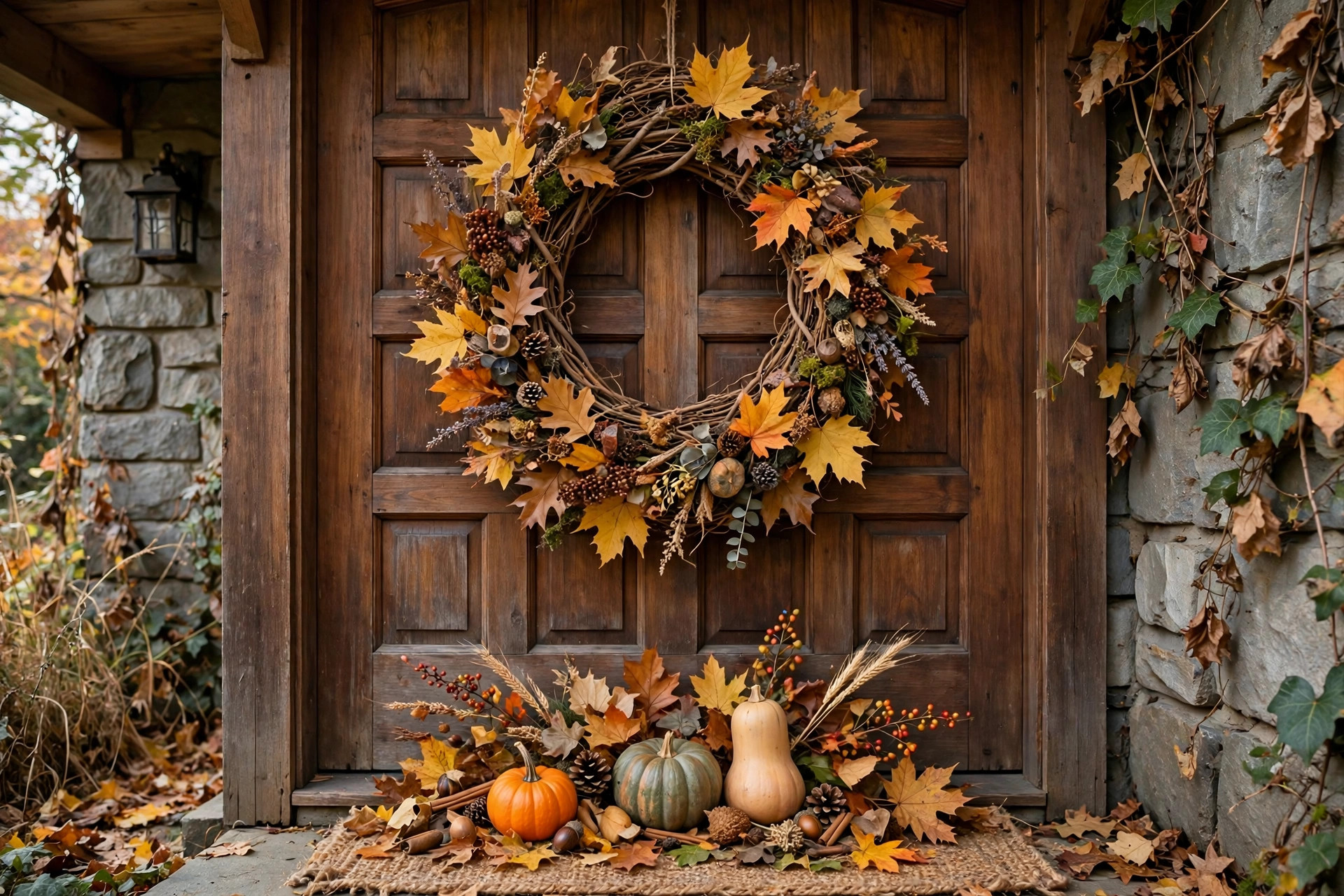
6. A wreath on the door that changes with the season — one base, four swaps a year
A bare door in December looks forgotten, because the season changes and the door stays the same. Hang a wreath on the door that changes with the season — one base, four swaps a year — so the door says something different in spring, summer, autumn and winter without buying a new wreath each time. Make the base from a grapevine ring or a plain foam ring, then swap the decorations: blossom in spring, greenery in summer, leaves in autumn, pine in winter, and store the swaps in a labelled box between seasons. A wreath that changes also stops the door looking dated, because the door keeps up with the season. One base, four swaps, and the door is never out of season.
Planters and beds that cost almost nothing
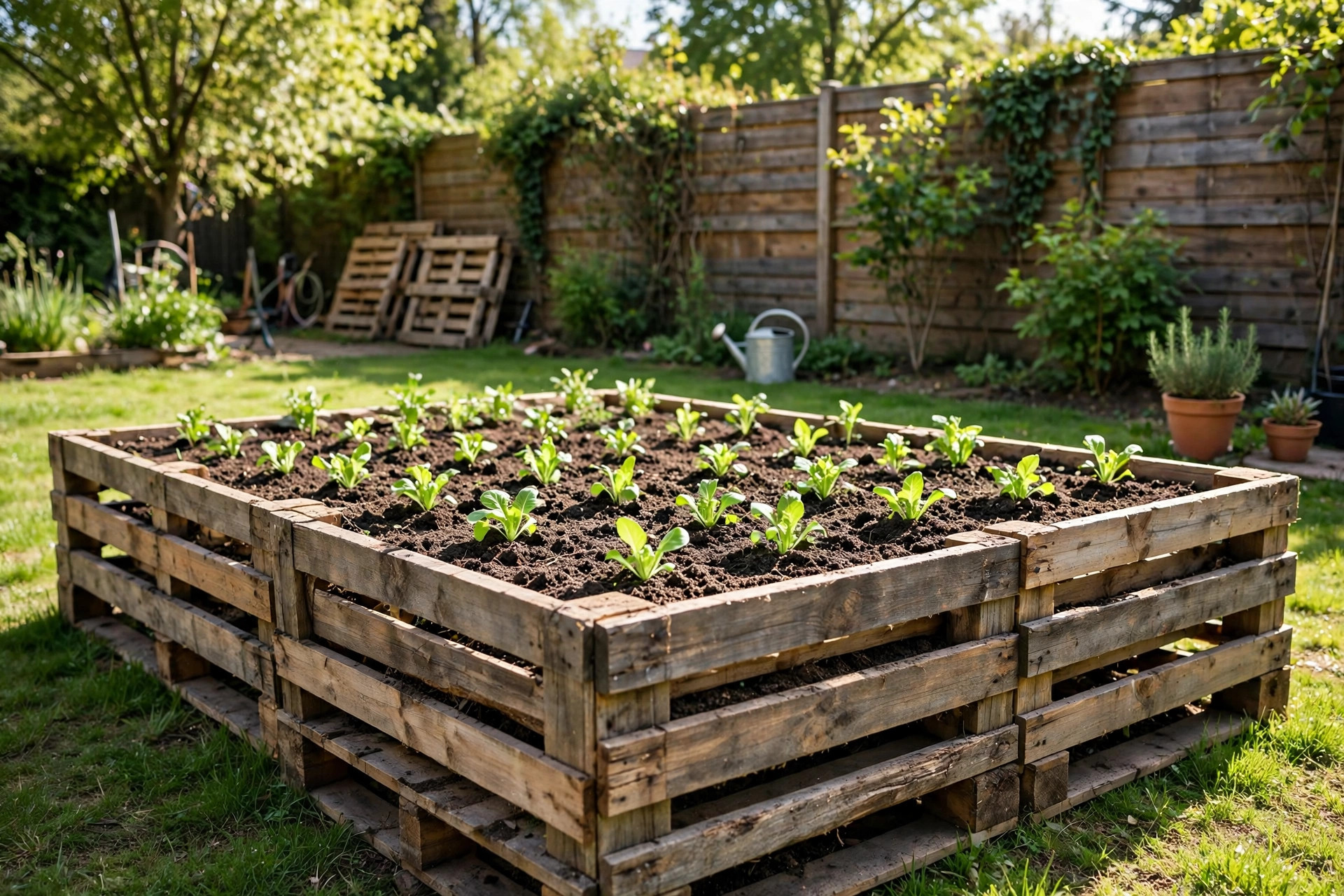
7. A raised bed from pallets, built in an afternoon — free wood, a few screws, soil in by evening
A raised bed from a shop costs more than the vegetables it grows, because the kit is the expensive part and the wood is the cheap part. Build one from pallets in an afternoon — free wood, a few screws, soil in by evening — so the bed costs almost nothing and the vegetables cost even less. Pull the pallets apart, cut the boards to length, screw them into a rectangle, and line the inside with landscape fabric so the soil stays in and the wood lasts longer. Fill it with soil, plant it the same day, and water it well, because the bed that is planted today is the bed that feeds you in summer. Free pallets, a few screws, and the garden has a bed by evening.
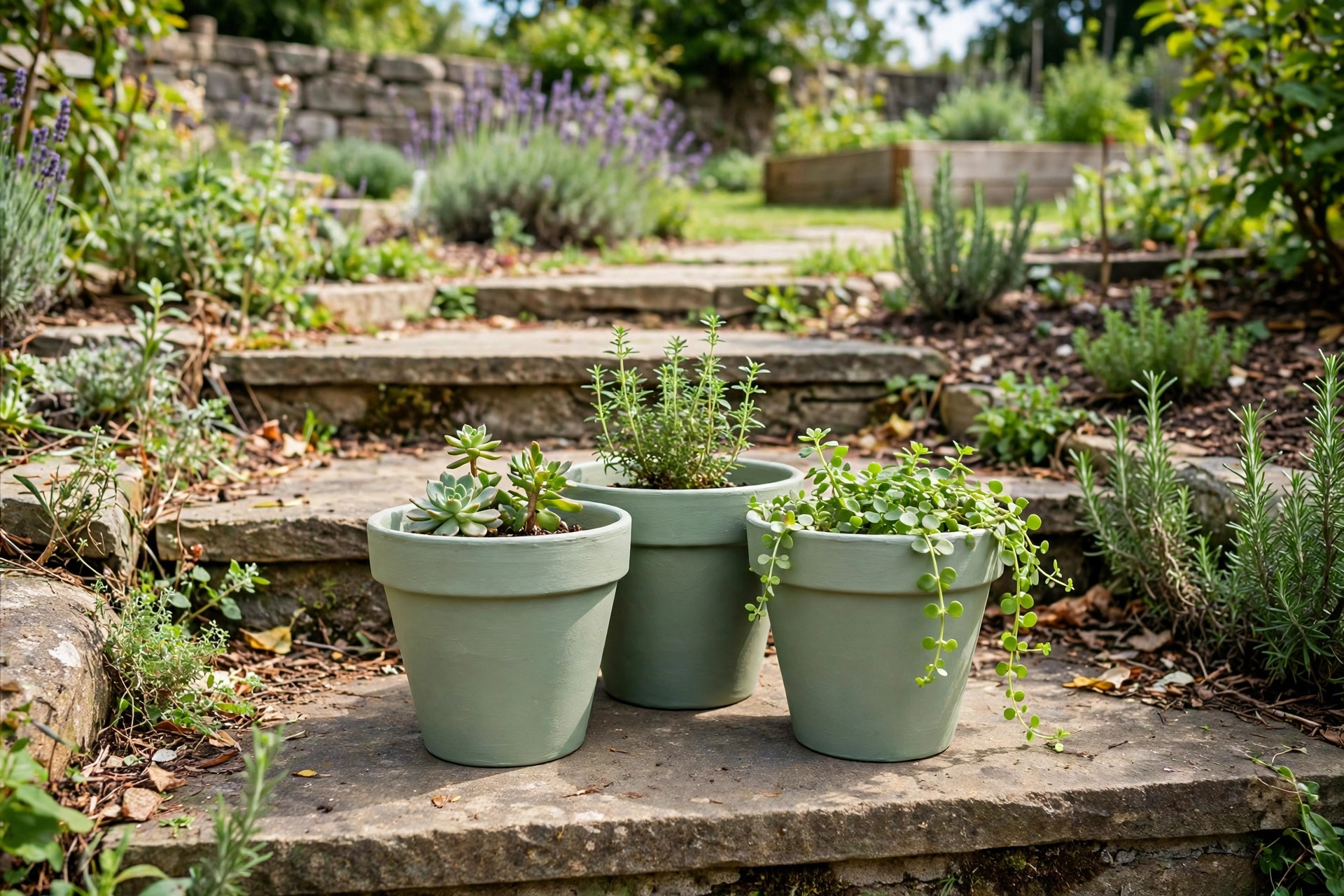
8. Terracotta pots painted one colour, grouped in threes — three pots beat one pot every time
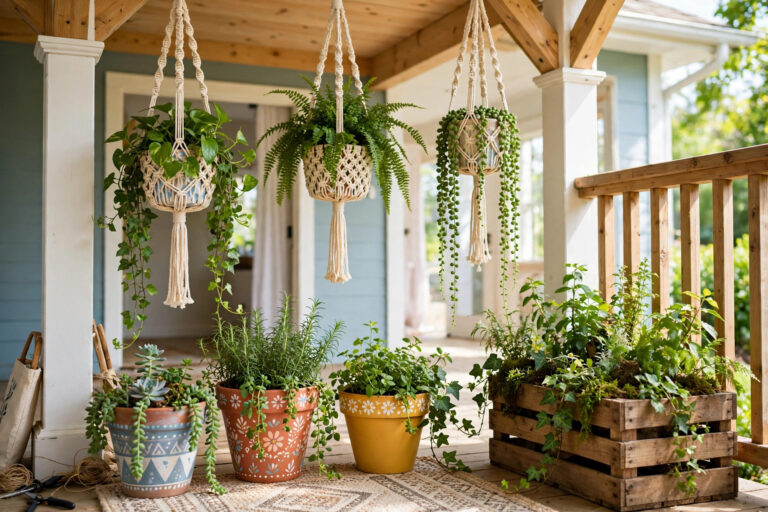
One terracotta pot on a step looks lost, because a single pot has no company and the step has no point. Paint terracotta pots one colour and group them in threes — three pots beat one pot every time — so the step has a group and the group has a shape. Paint them all the same colour, sage green or warm white, so they read as a set and not as three random pots, and put them at different heights, one on the step, one on the ground, one on a small stand. Grouping in threes also stops the pots looking scattered, because three is a group and one is a stray. One colour, three pots, and the step looks styled.
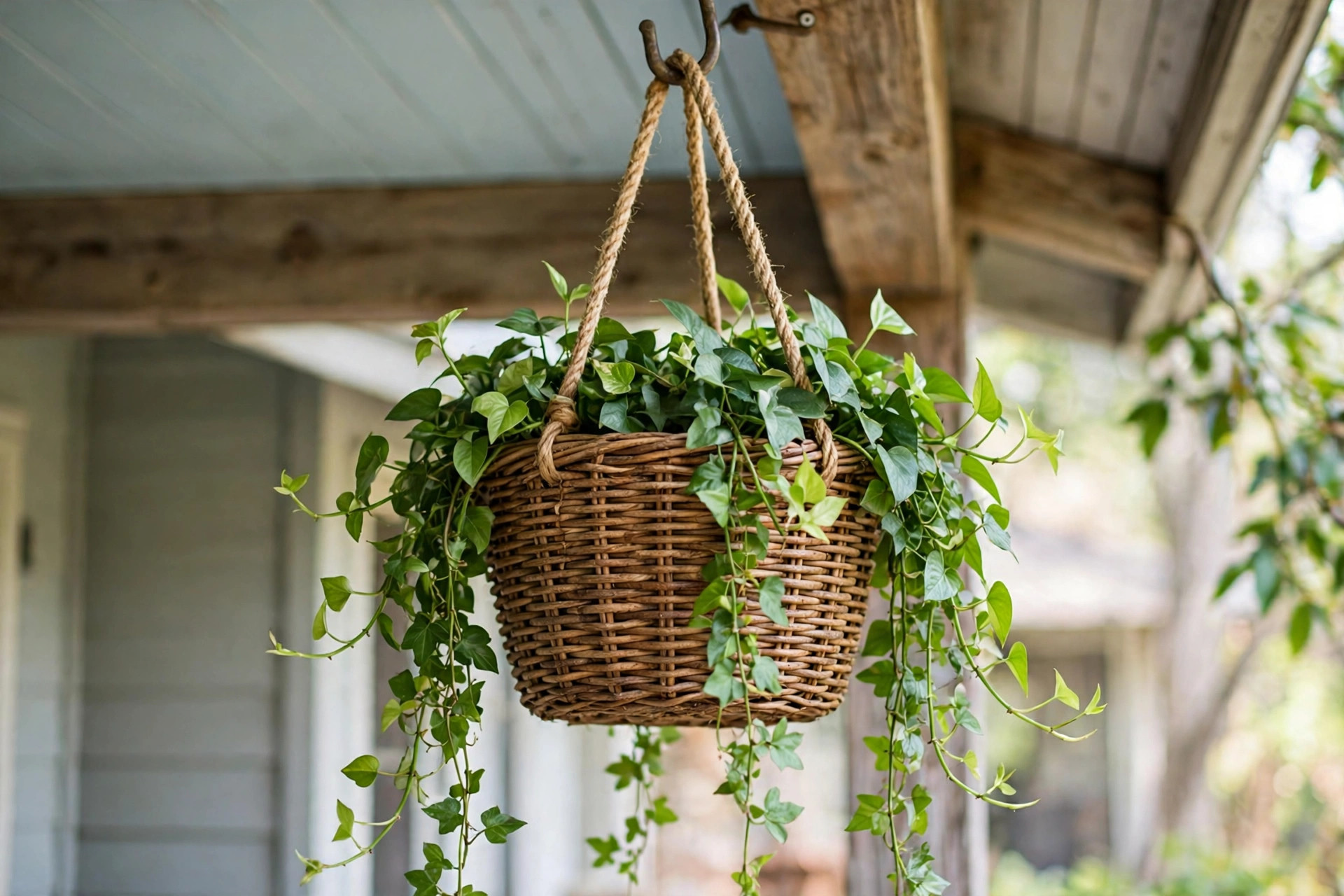
9. A hanging planter from a basket you already own — rope, a hook and a basket from the cupboard
A basket in the cupboard is a basket doing nothing, because the basket you do not use is the basket that gathers dust. Turn it into a hanging planter — rope, a hook and a basket from the cupboard — so the basket holds a plant instead of dust and the yard gains a planter for free. Thread rope through the sides, knot it underneath, hang it from a hook on the porch or a branch, and line it with a plastic bag with holes in it so the water drains and the basket does not rot. Hang it where it gets sun and where you can reach it to water it, because the planter you cannot reach is the planter that dies. Rope, a hook and a basket, and the cupboard is one basket lighter.
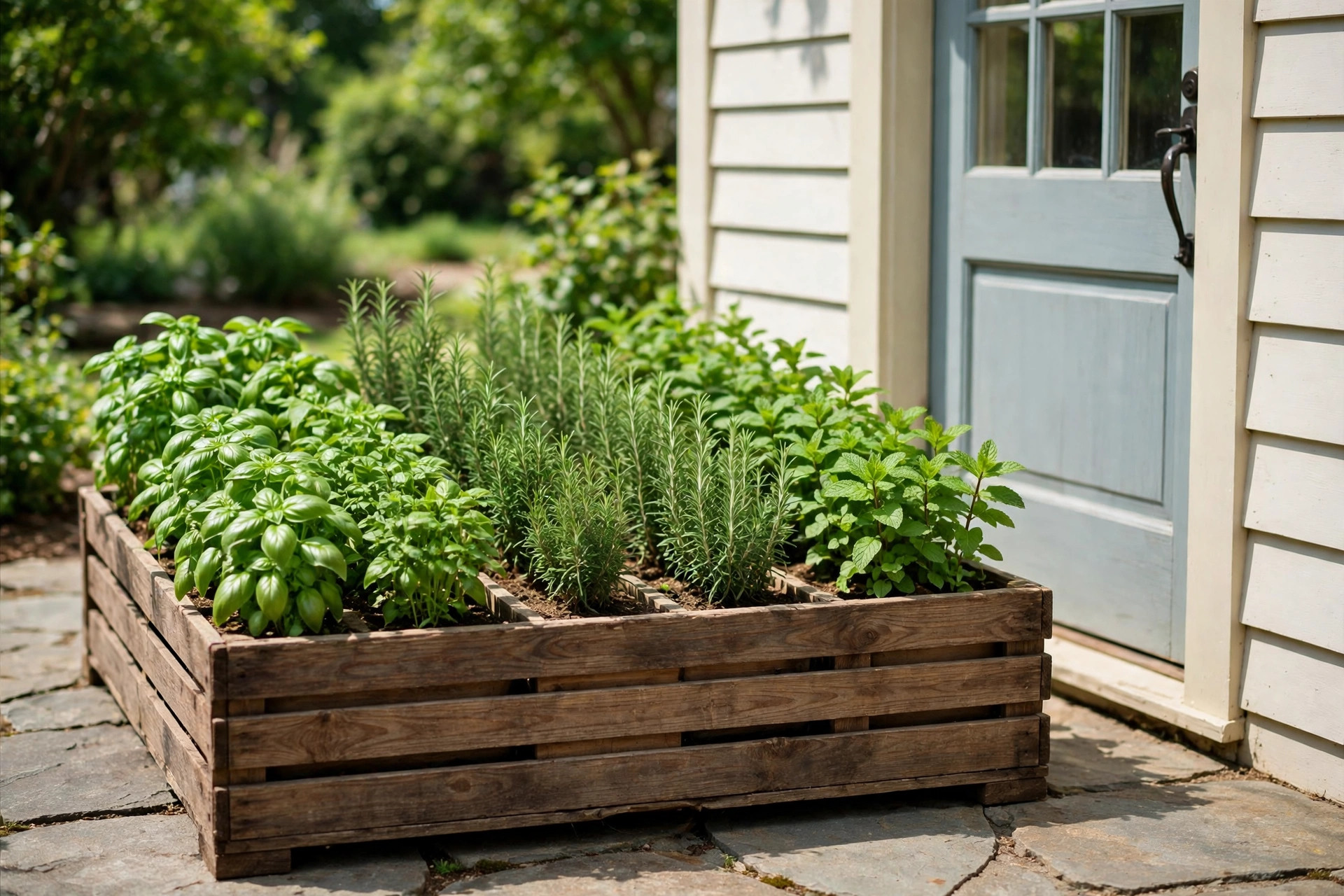
10. A herb garden by the back door in a wooden crate — the herbs you cook with, an arm's reach away
Herbs in a bed at the far end of the garden are herbs you never pick, because the cook who has to walk to the far end for basil is the cook who uses dried basil instead. Put a herb garden by the back door in a wooden crate — the herbs you cook with, an arm's reach away — so the basil is there when the pasta is on and the mint is there when the tea is made. Fill the crate with soil, plant one herb per corner, and label each one, because the herbs that are labelled are the herbs that get used and not the ones that get mixed up. Keep the crate by the door, water it when you pass, and cut it often, because the herbs that are cut grow back bushier. A crate by the door, and the cooking changes.
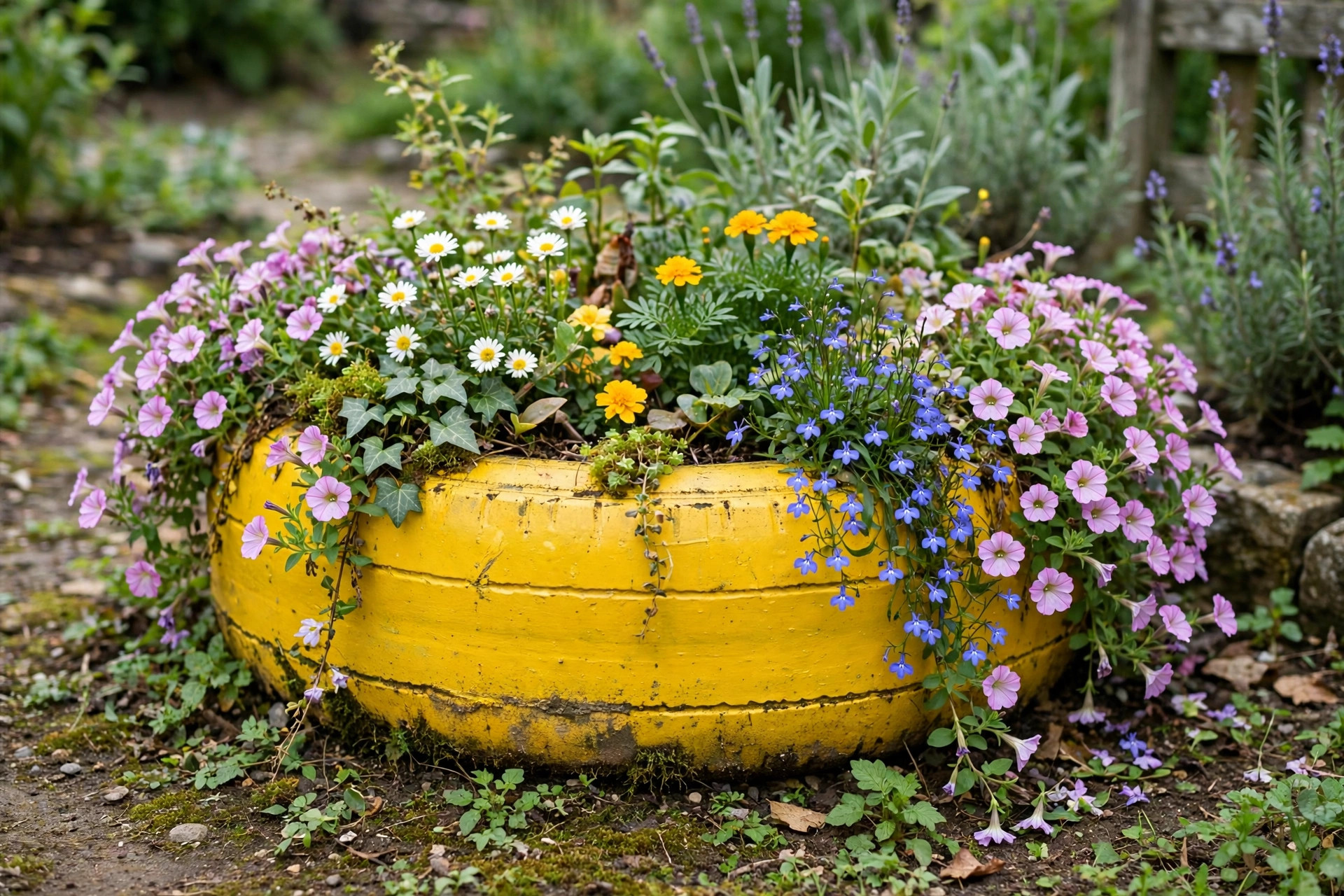
11. An old tyre turned into a planter, painted bright — the tyre nobody wanted becomes the brightest pot in the yard
An old tyre in the corner is the ugliest thing in the yard, because the tyre nobody wanted is the tyre nobody looks at. Turn it into a planter, painted bright — the tyre nobody wanted becomes the brightest pot in the yard — so the ugly thing becomes the thing people photograph. Scrub the tyre clean, paint it a bright colour with exterior paint, fill it with soil, and plant it with something that spills over the edge, so the tyre disappears under the flowers. Stack two tyres for a taller planter, or hang one on the fence, and never let the tyre stay black, because the black tyre is the ugly thing and the bright tyre is the planter. Paint it bright, plant it full, and the tyre is the star of the yard.
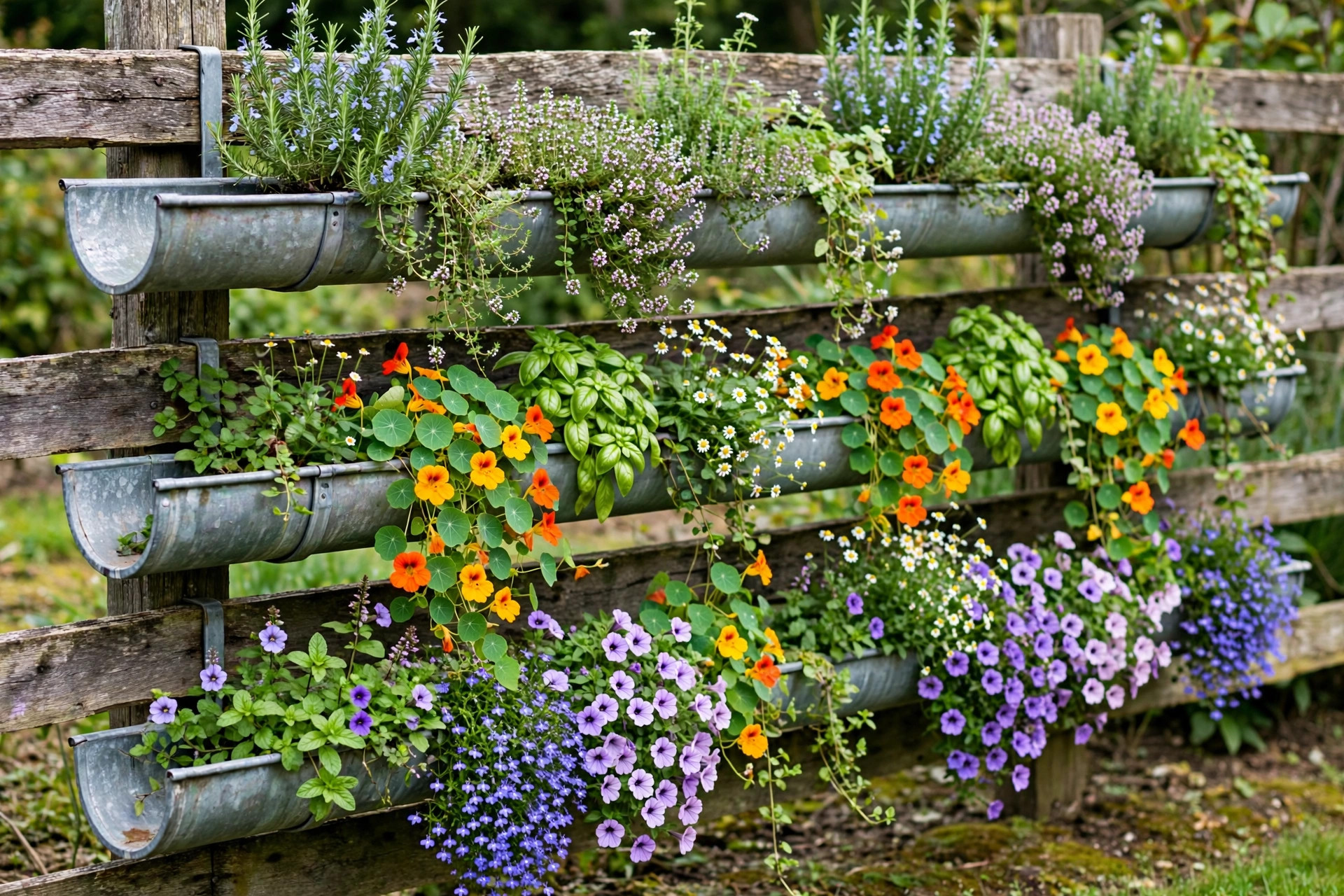
12. A vertical garden on a fence from guttering — the fence you already have becomes a wall of plants
A bare fence is a wasted wall, because the fence you already have is the fence that could hold a garden. Build a vertical garden on it from guttering — the fence you already have becomes a wall of plants — so the small yard gains a garden without losing a single square of ground. Cut guttering to length, cap the ends, drill drainage holes, screw the brackets to the fence, and fill each length with soil and plants that trail or spill. Plant herbs at hand height and flowers up high, water from the top so it trickles down, and keep the guttering level, because the guttering that tilts is the guttering that floods one end and dries the other. Guttering on a fence, and the yard grows upwards.
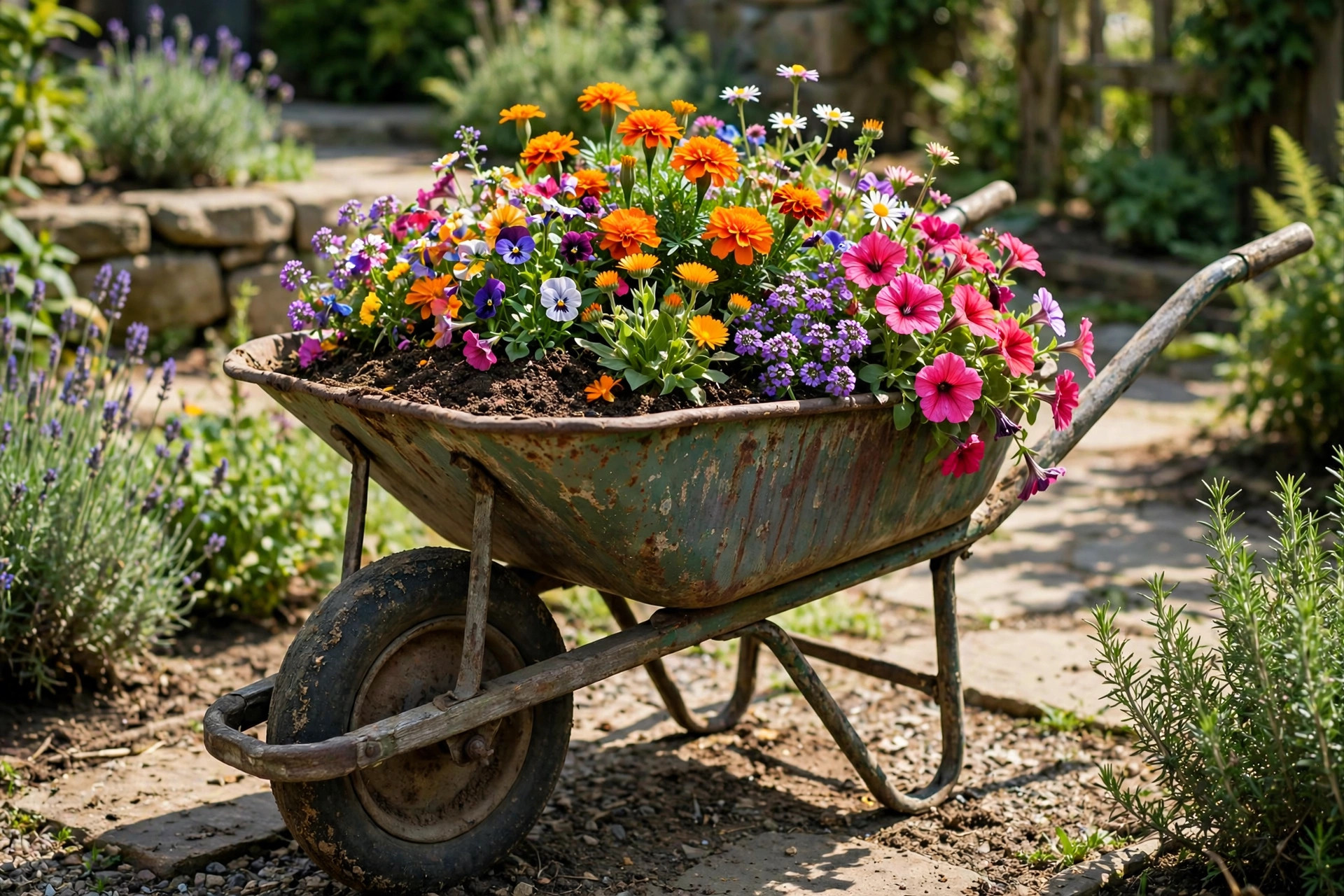
13. A wheelbarrow planter that moves where the sun is — the barrow with a hole in it earns its keep
A wheelbarrow with a hole in it is a wheelbarrow that cannot carry soil, because the hole is the thing that makes it useless. Turn it into a planter that moves where the sun is — the barrow with a hole in it earns its keep — so the broken barrow becomes the most useful planter in the yard. Drill a few more drainage holes, fill it with soil, plant it with flowers that like the sun, and wheel it to the sunny spot in the morning and the shady spot in the afternoon. A planter on wheels also stops the plants baking, because the barrow moves and the plants follow the light. Fill it, plant it, wheel it to the sun, and the broken barrow works again.
Light, fire and evenings outside
14. String lights across the yard, not just the porch — one long run changes the whole evening
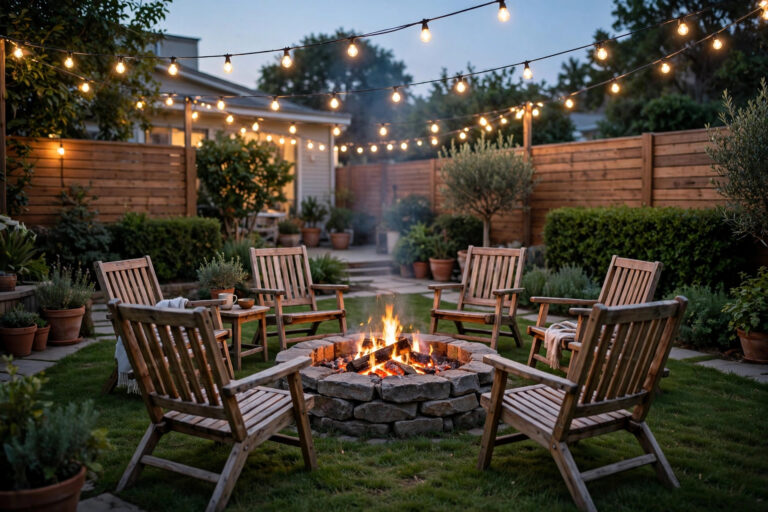
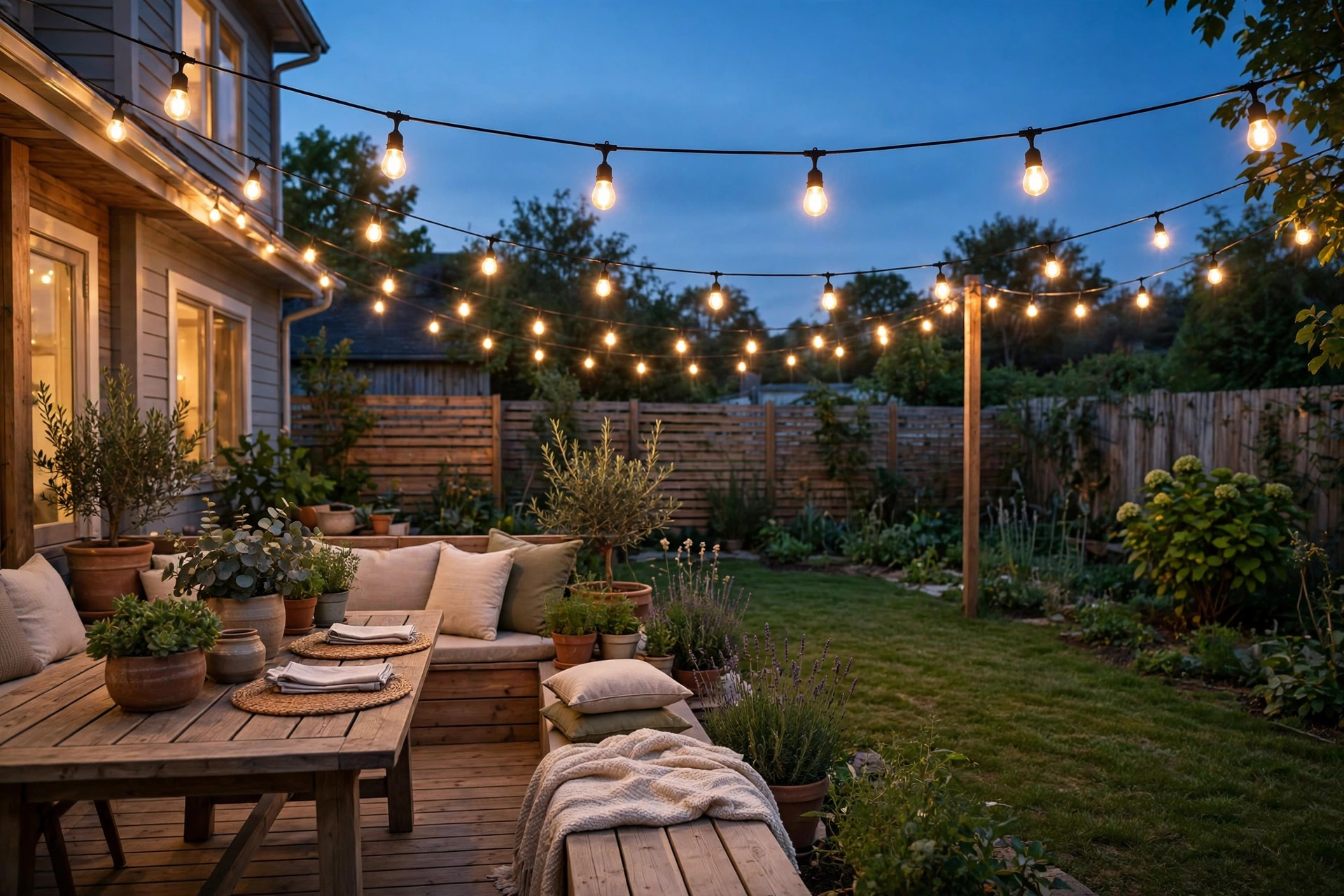
String lights only on the porch make the porch pretty and the yard dark, because the light stops where the porch stops and the rest of the yard disappears. Run string lights across the yard, not just the porch — one long run changes the whole evening — so the yard glows from the house to the fence and the evening feels like a place, not a porch. Hang them from the house to a post, from a post to a tree, in a gentle sag so they look relaxed and not strung tight, and use warm white bulbs, because the warm light is the light that makes people stay outside. One long run, warm white, and the yard becomes the room you use in summer. (Check on Amazon for outdoor string lights with warm white bulbs and a weatherproof plug.)
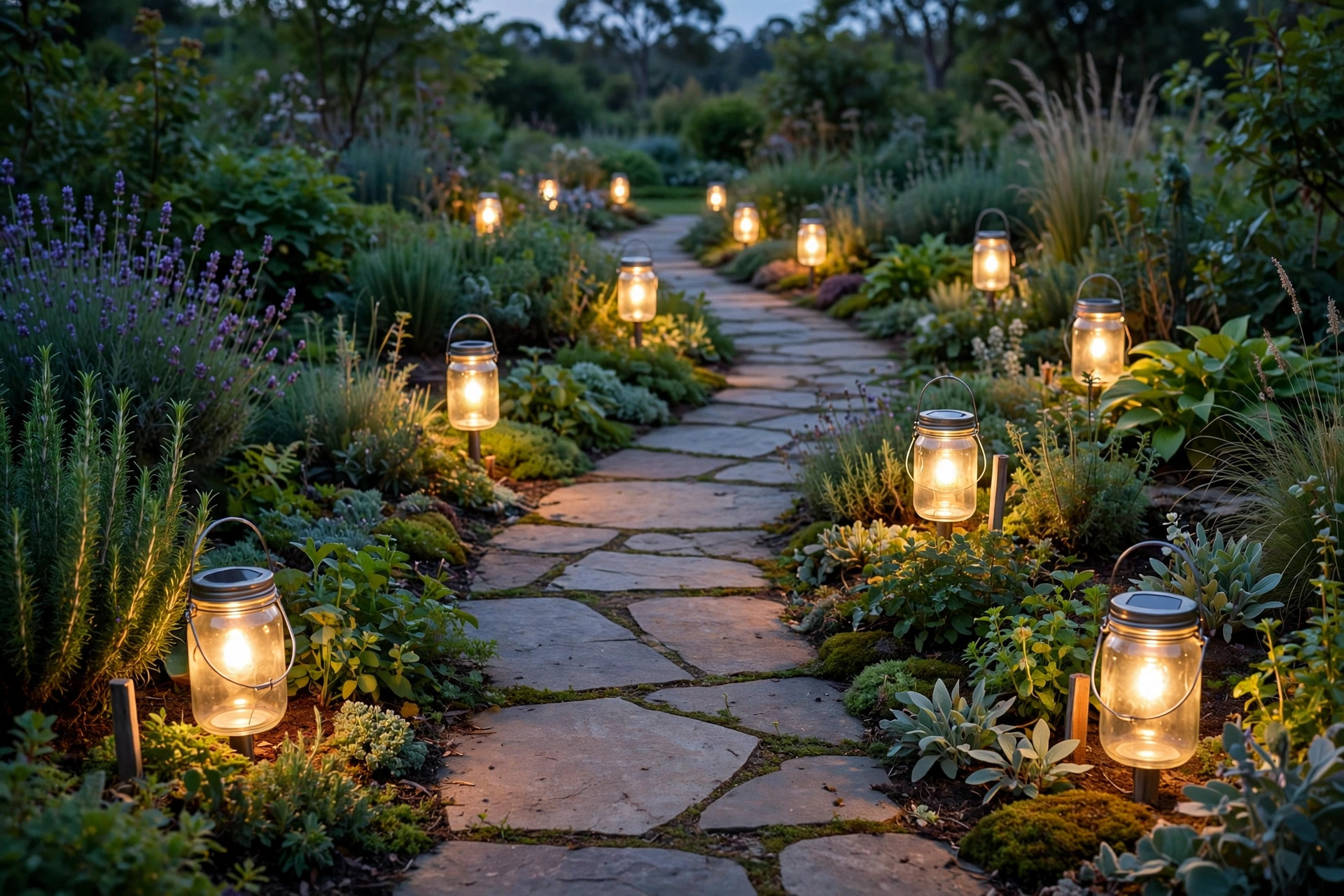
15. Solar lanterns along the path, no wiring needed — they charge by day and glow by night
A path with no light is a path you do not walk after dark, because the dark is the thing that keeps you inside. Line it with solar lanterns, no wiring needed — they charge by day and glow by night — so the path lights itself and the yard is safe to walk in after dinner. Push the lanterns into the ground along the path, one every few steps, where the sun reaches them by day, and let them switch on by themselves at dusk, because the lantern that switches itself on is the lantern you never forget. Keep them in a line, at the same height, and clean the solar panels once a month, because the panel that is dirty is the panel that does not charge. Lanterns on the path, and the evening walk is safe. (Check on Amazon for solar lanterns with a flickering flame effect.)
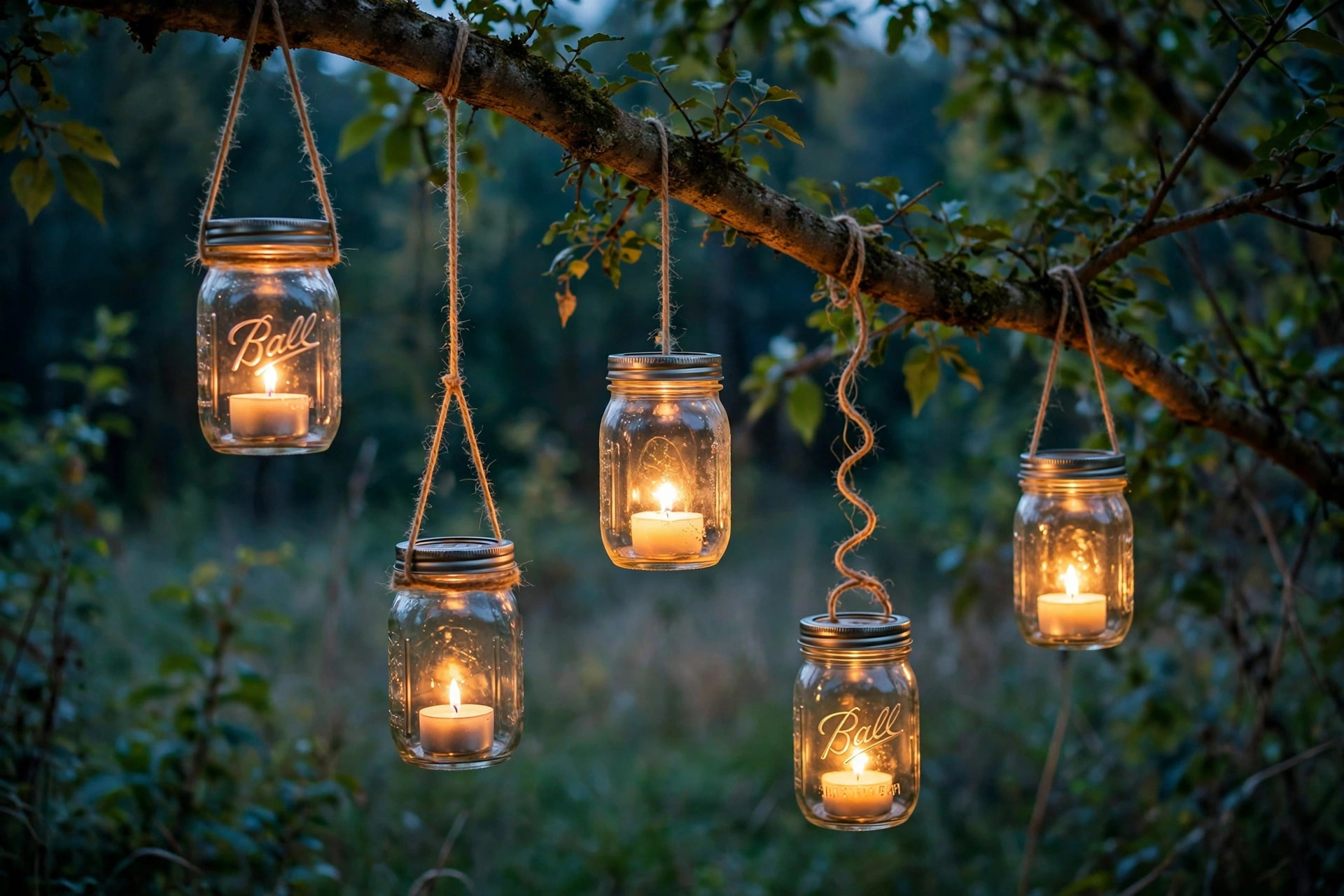
16. Mason jar lights hung from a branch — jars, wire and a tea light, nothing more
A branch over the garden is a branch doing nothing, because the branch you do not use is the branch that just shades the grass. Hang mason jar lights from it — jars, wire and a tea light, nothing more — so the branch holds light and the garden glows after dark. Wrap wire around the neck of each jar, hang them from the branch at different heights, and put a tea light in each one, because the jar protects the flame and the branch holds the jars. Hang them where they will not swing into anyone's head, light them at dusk, and blow them out before bed, because the jar that is left lit is the jar that is forgotten. Jars, wire and a tea light, and the branch lights the garden.
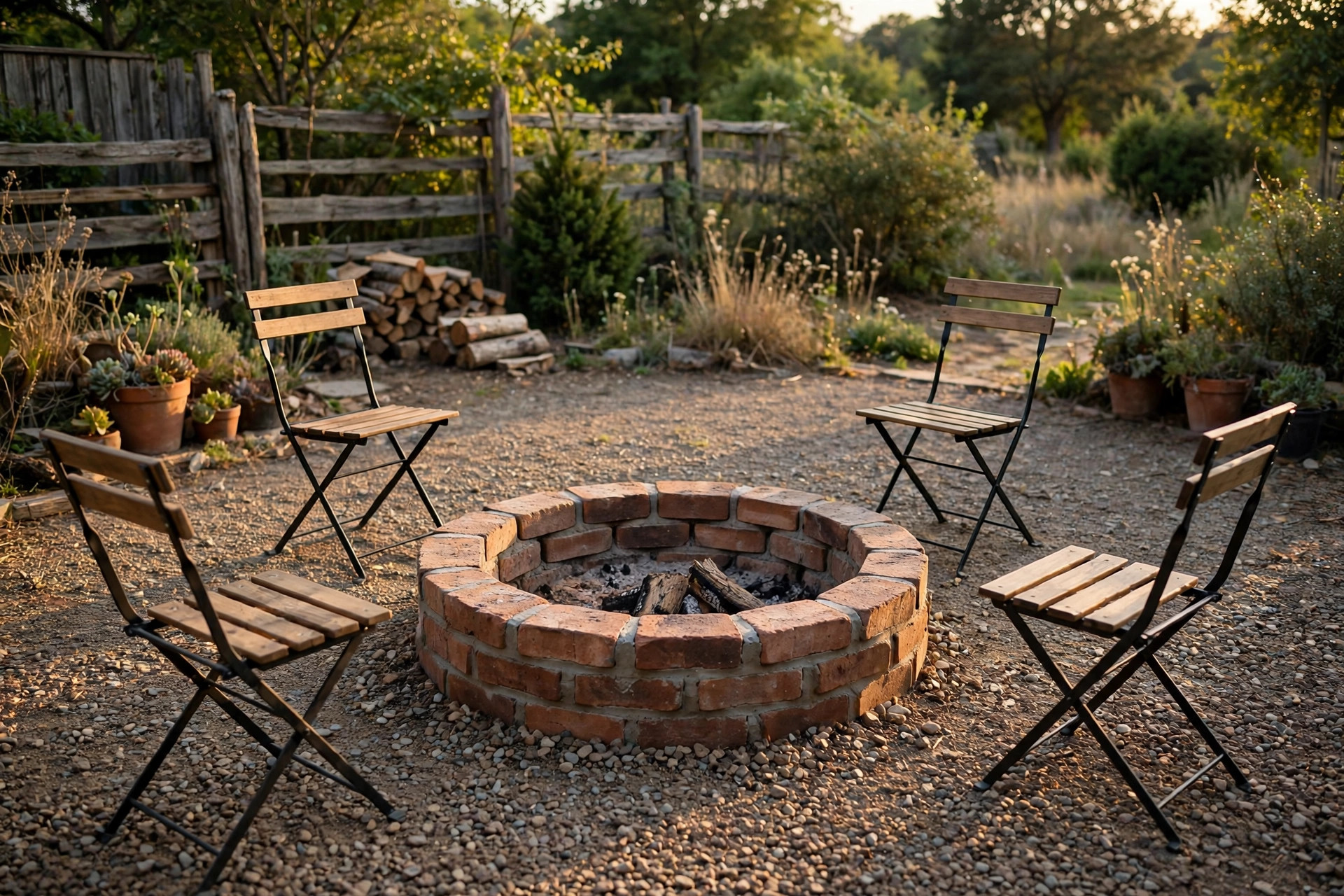
17. A fire pit from bricks, not a kit — a ring of bricks, gravel under it, chairs around it
A fire pit kit costs more than the bricks it is made of, because the kit is the expensive part and the bricks are the cheap part. Build one from bricks, not a kit — a ring of bricks, gravel under it, chairs around it — so the fire pit costs the price of the bricks and the evening costs nothing. Lay a circle of gravel, stack the bricks in a ring two high, leave gaps for air, and put the chairs around it at a distance where the heat reaches but the smoke does not. Keep a bucket of water nearby, never leave the fire alone, and check the local rules before you light it, because the fire pit that is safe is the fire pit that gets used. Bricks, gravel and chairs, and the yard has a fire pit by evening.
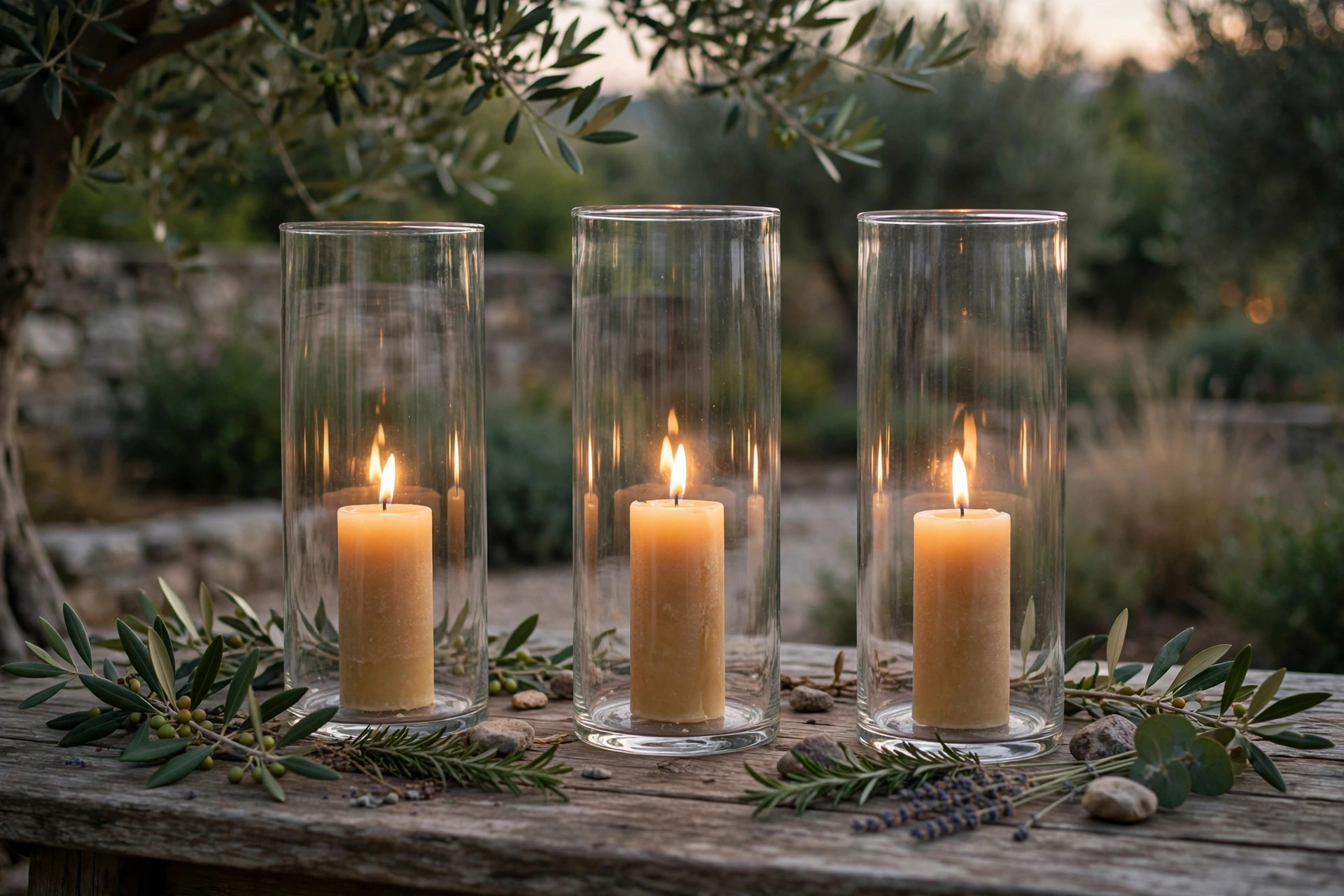
18. Outdoor candles in jars the wind cannot reach — deep jars keep the flame lit
A candle outside is a candle the wind blows out, because the flame that is open to the wind is the flame that never stays lit. Put outdoor candles in jars the wind cannot reach — deep jars keep the flame lit — so the candle burns all evening and the table glows instead of going dark. Use tall jars, put the candle at the bottom, and let the glass block the wind while the flame warms the glass, because the deep jar is the windbreak and the candle is the light. Put a jar on every table, light them at dusk, and never leave them burning alone, because the candle that is watched is the candle that is safe. Deep jars, and the candles stay lit all evening.
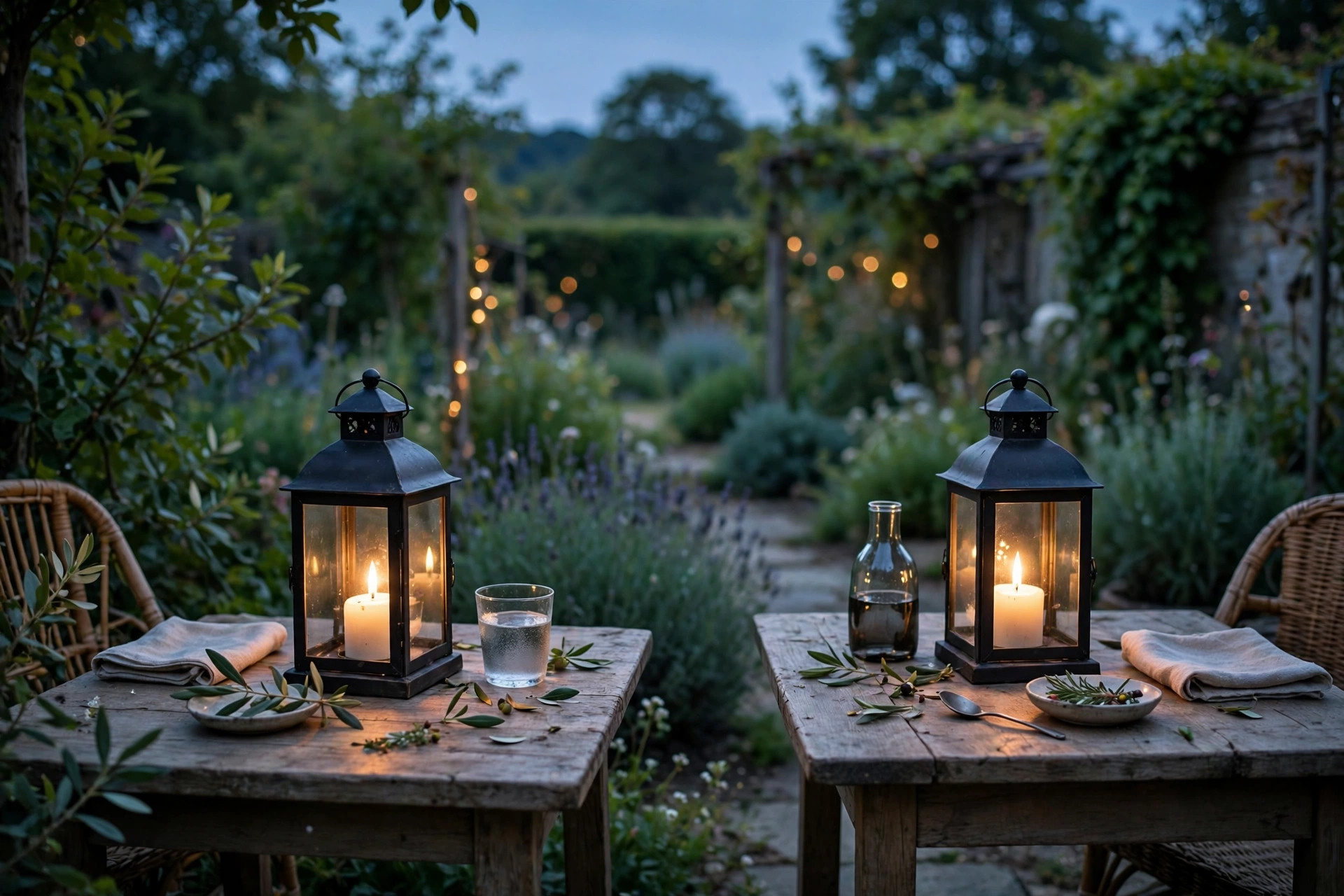
19. A lantern on every outdoor table — one lantern per table, and the yard feels finished
A table with no light is a table you leave when the sun goes down, because the dark is the thing that ends the evening. Put a lantern on every outdoor table — one lantern per table, and the yard feels finished — so every table has its own light and the evening goes on as long as you want it to. Use the same lantern on every table, so the yard reads as one place and not as a collection of different lights, and fill them with the same candles or the same solar lights, because the lantern that matches is the lantern that finishes the yard. One lantern per table, same lantern everywhere, and the yard feels done.
Furniture, storage and the finishing touches
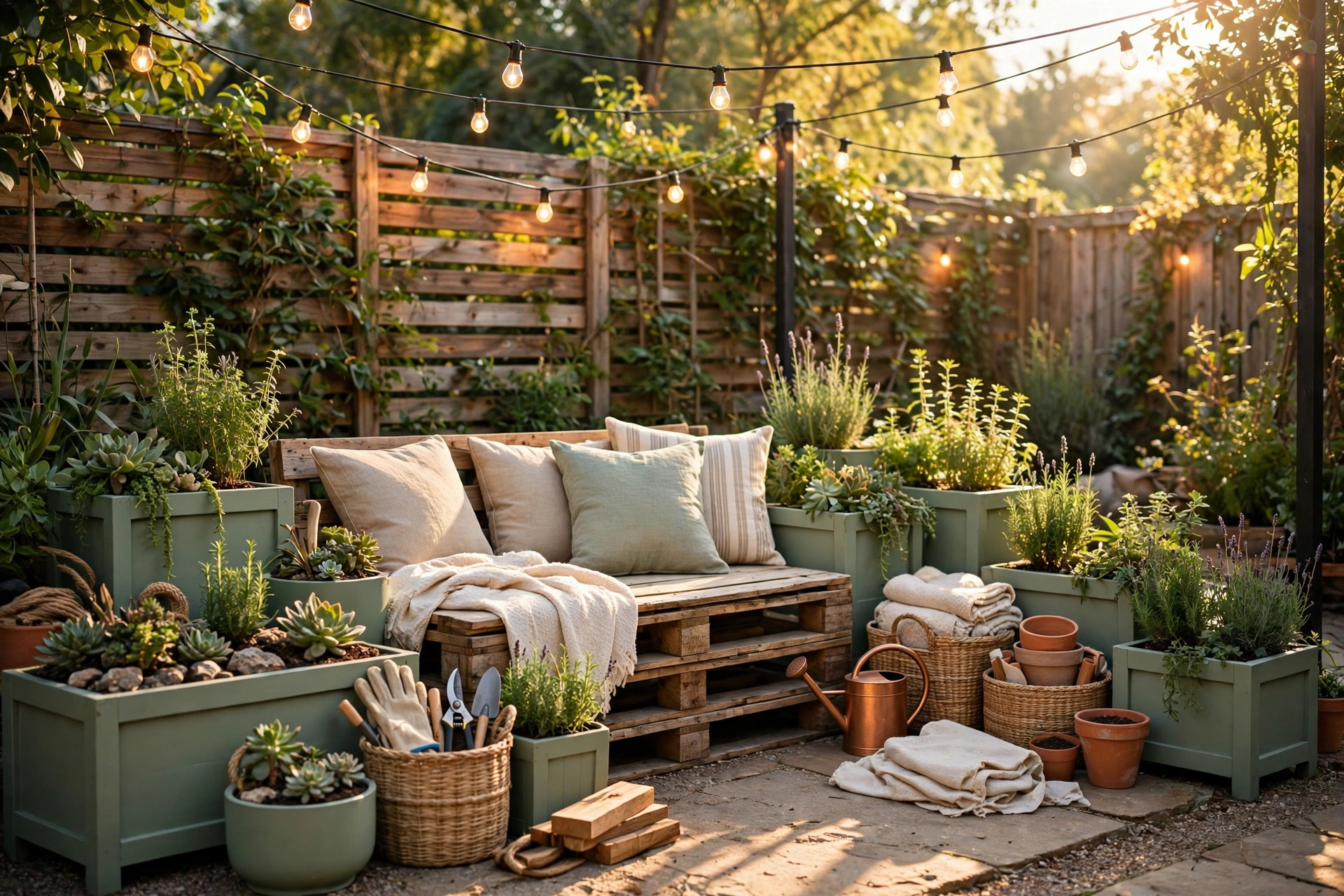
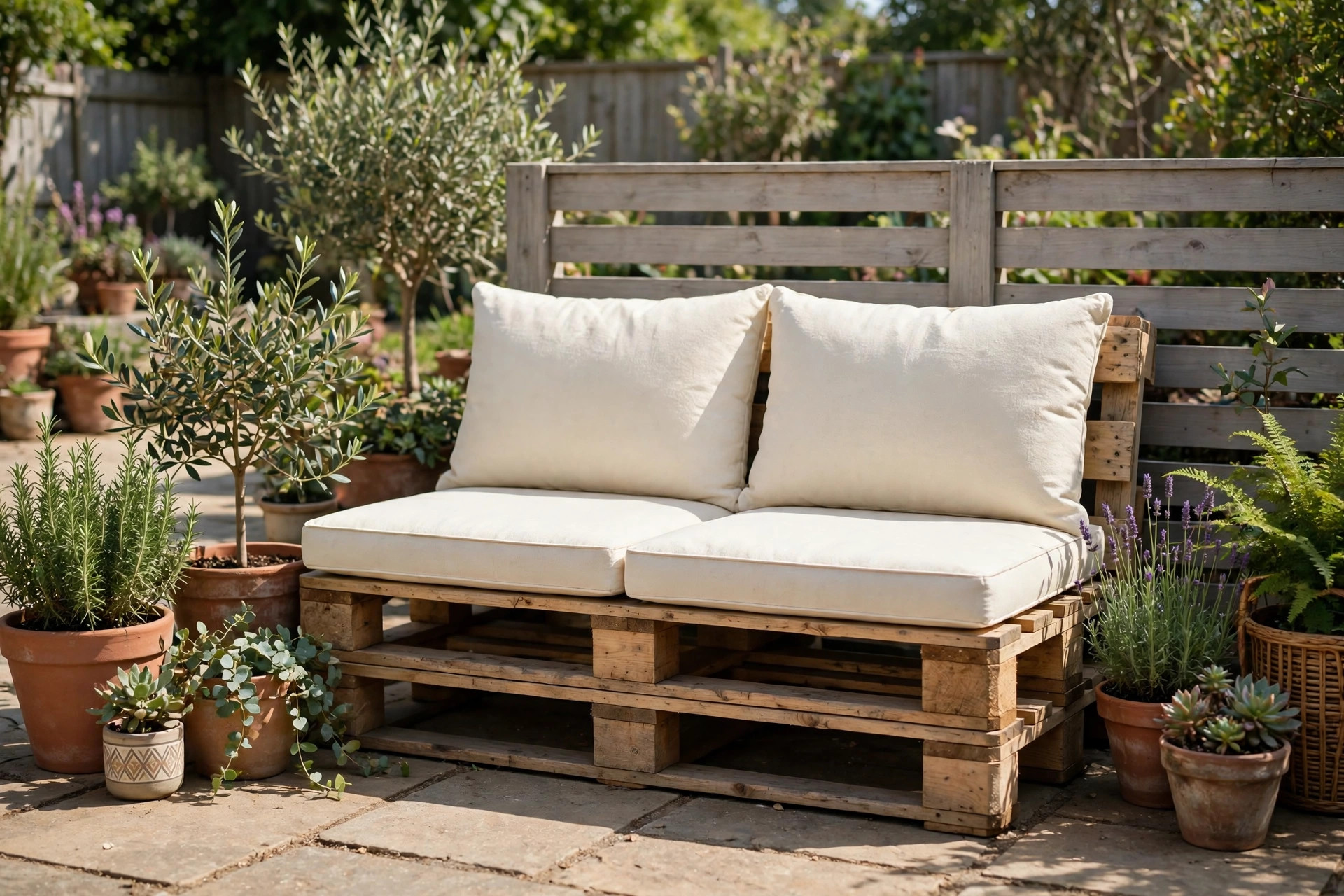
20. A pallet bench with outdoor cushions — two pallets, a cushion each, a bench for the price of the cushions
A bench from a shop costs more than the cushions on it, because the bench is the expensive part and the cushions are the cheap part. Build one from pallets — two pallets, a cushion each, a bench for the price of the cushions — so the bench costs almost nothing and the sitting costs even less. Stack two pallets, screw them together, sand the edges so nobody gets a splinter, and put an outdoor cushion on each one, because the cushion is the comfort and the pallet is the bench. Paint the pallets if you like, or leave them plain, and keep the cushions indoors when it rains, because the cushion that stays out is the cushion that goes mouldy. Two pallets, two cushions, and the yard has a bench.
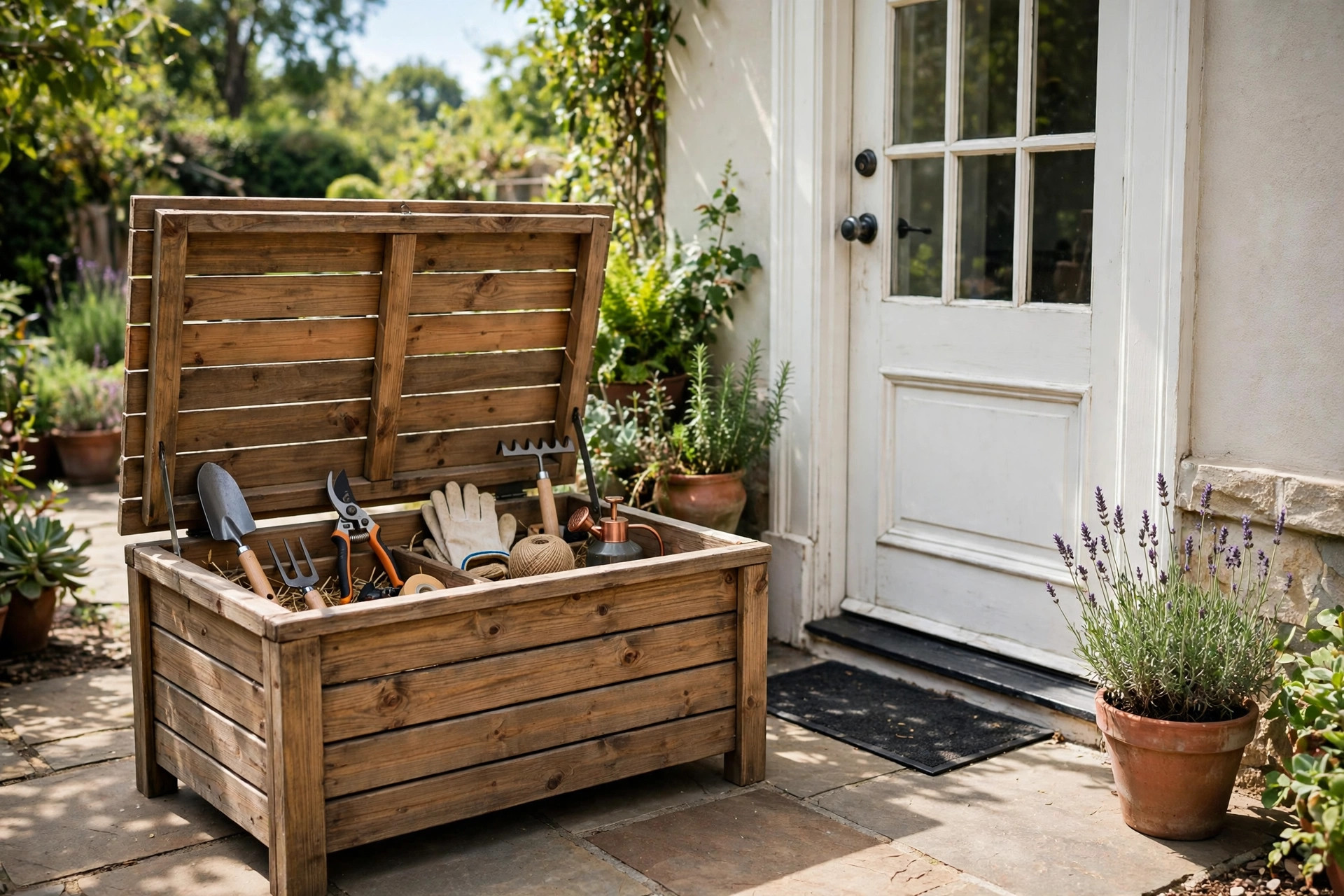
21. A storage bench that hides the garden tools — the tools live in the bench, not in a pile by the door (see Post 19)
Garden tools in a pile by the door are tools you trip over, because the pile by the door is the pile that grows and the door is the thing it blocks. Build a storage bench that hides them — the tools live in the bench, not in a pile by the door — so the bench is a seat and a store at the same time, and the door stays clear. Hinge the lid, put the tools inside in a row, and keep the bench by the back door, because the bench that is by the door is the bench that gets used. The tools that live in the bench also stay dry, because the lid keeps the rain off and the bench keeps the tools out of sight. The pegboard for the small tools is in 20 Pegboard Organization Ideas for 2026, where the panel on the shed wall holds the screwdrivers and the tape. Tools in the bench, and the door stays clear.
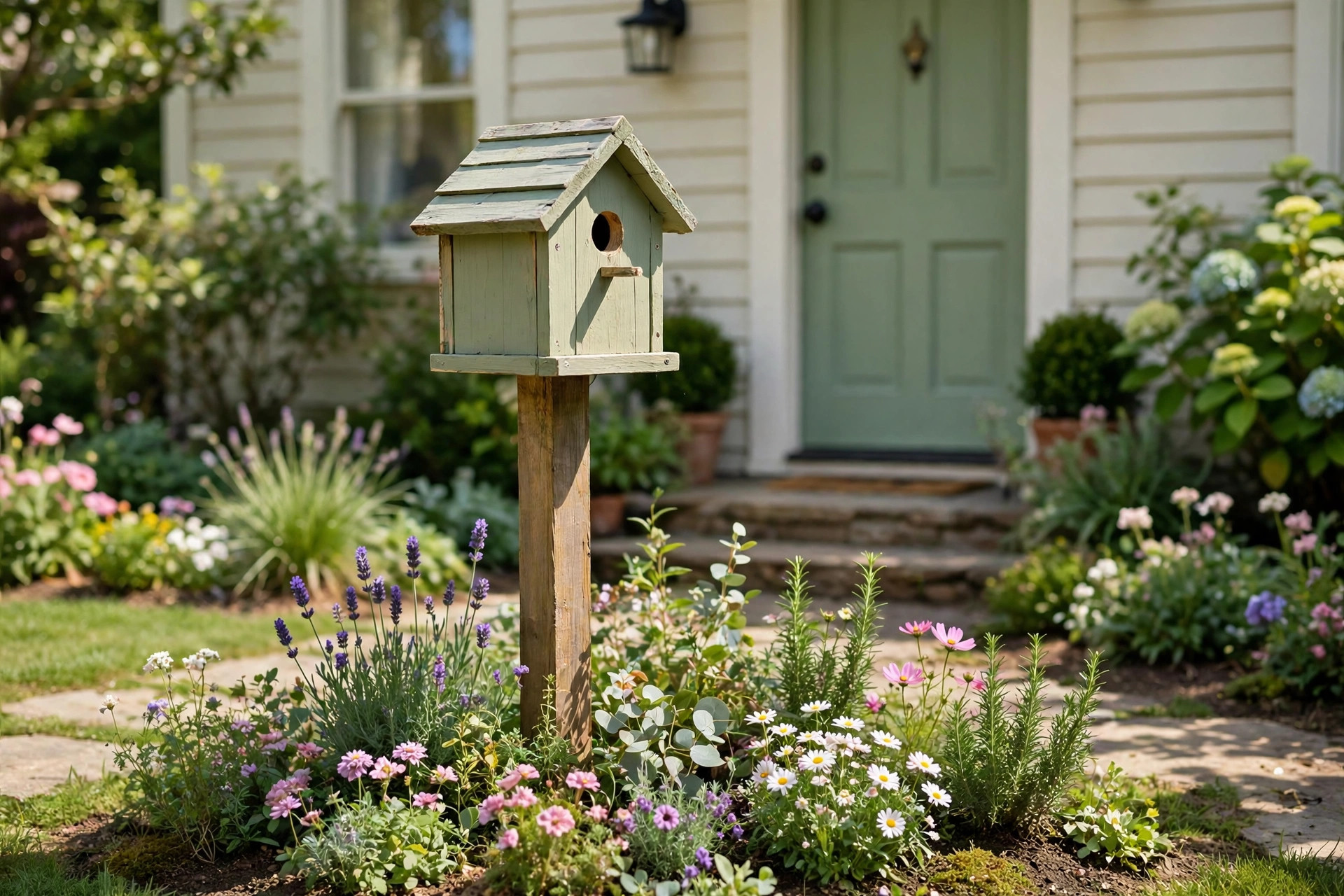
22. A birdhouse on a post, painted to match the door — the smallest project with the biggest charm
A yard with no birds is a yard that is quiet, because the birds are the thing that makes a garden feel alive. Put a birdhouse on a post, painted to match the door — the smallest project with the biggest charm — so the yard has a birdhouse and the birds have a home. Build it from offcuts, paint it the same colour as the front door, and put it on a post where the cats cannot reach it and the birds can find it, because the birdhouse that is safe is the birdhouse that gets used. Clean it out once a year, in autumn, and never paint the inside, because the birds like the inside plain. A birdhouse on a post, and the yard has birds.
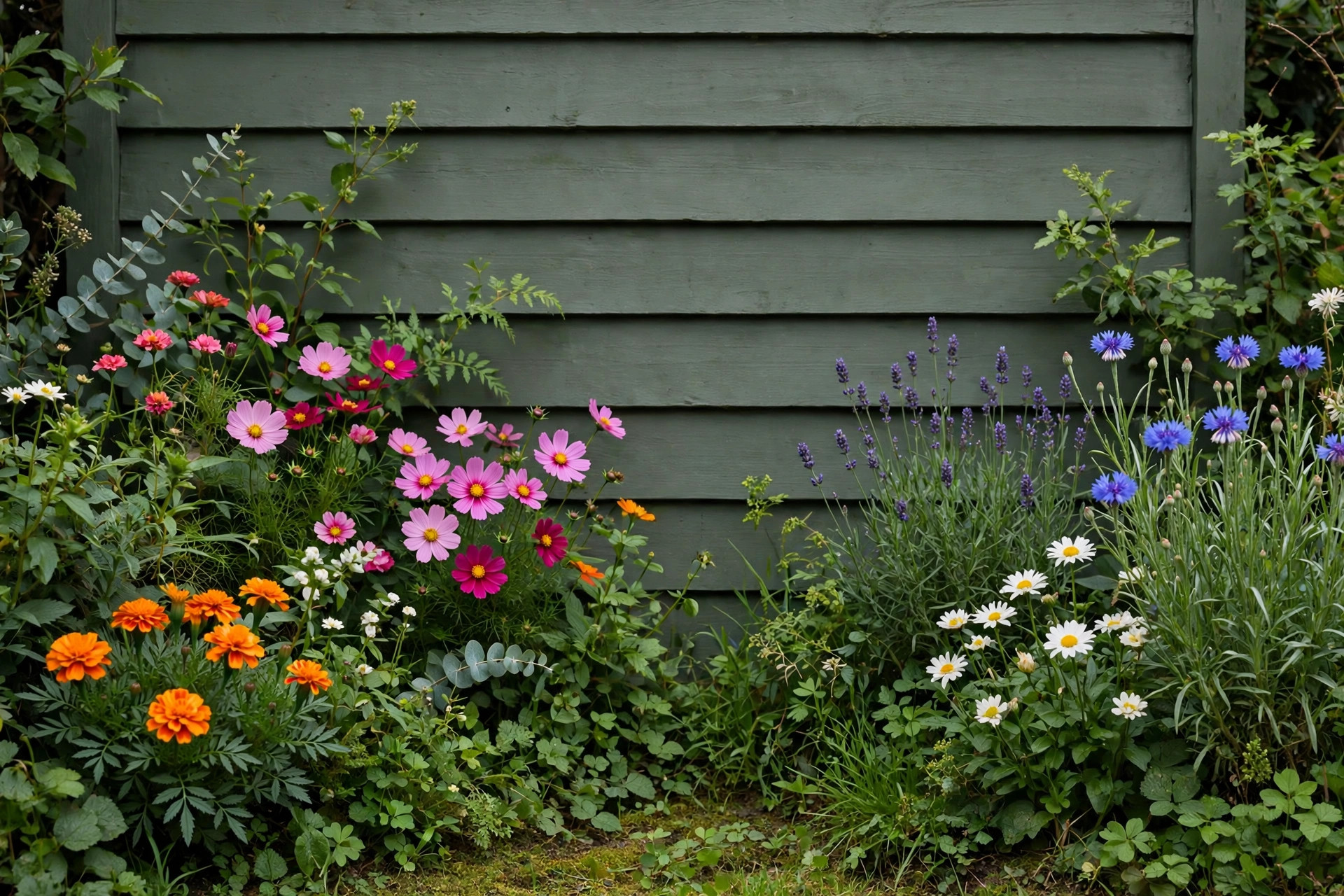
23. A painted fence panel as a backdrop — one panel, one colour, and the whole yard photographs better
A fence that is grey and weathered makes the whole yard look grey and weathered, because the fence is the biggest thing in the yard and the biggest thing is the thing you see most. Paint one fence panel as a backdrop — one panel, one colour, and the whole yard photographs better — so the plants in front of it stand out and the yard has a background. Pick a dark colour, sage or charcoal, because the dark panel makes the green plants look greener and the flowers look brighter, and paint it properly, two coats, so it lasts. One panel is enough to change the whole yard, because the panel behind the plants is the panel the camera sees. One panel, one colour, and the yard photographs like a magazine.
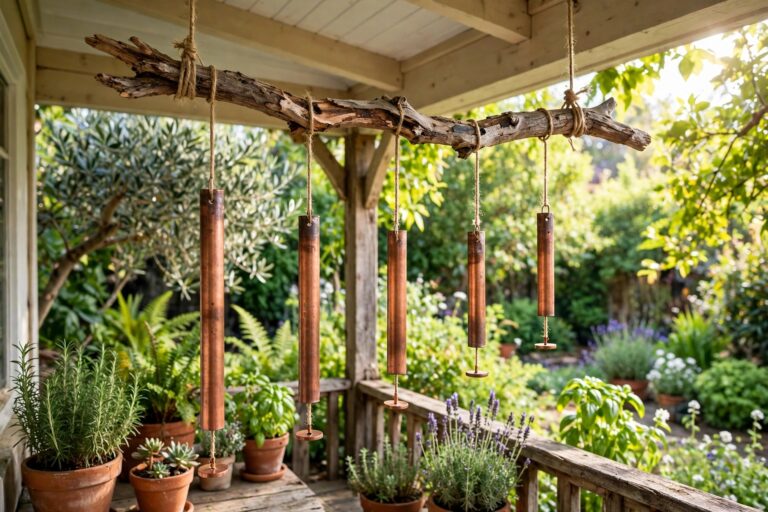
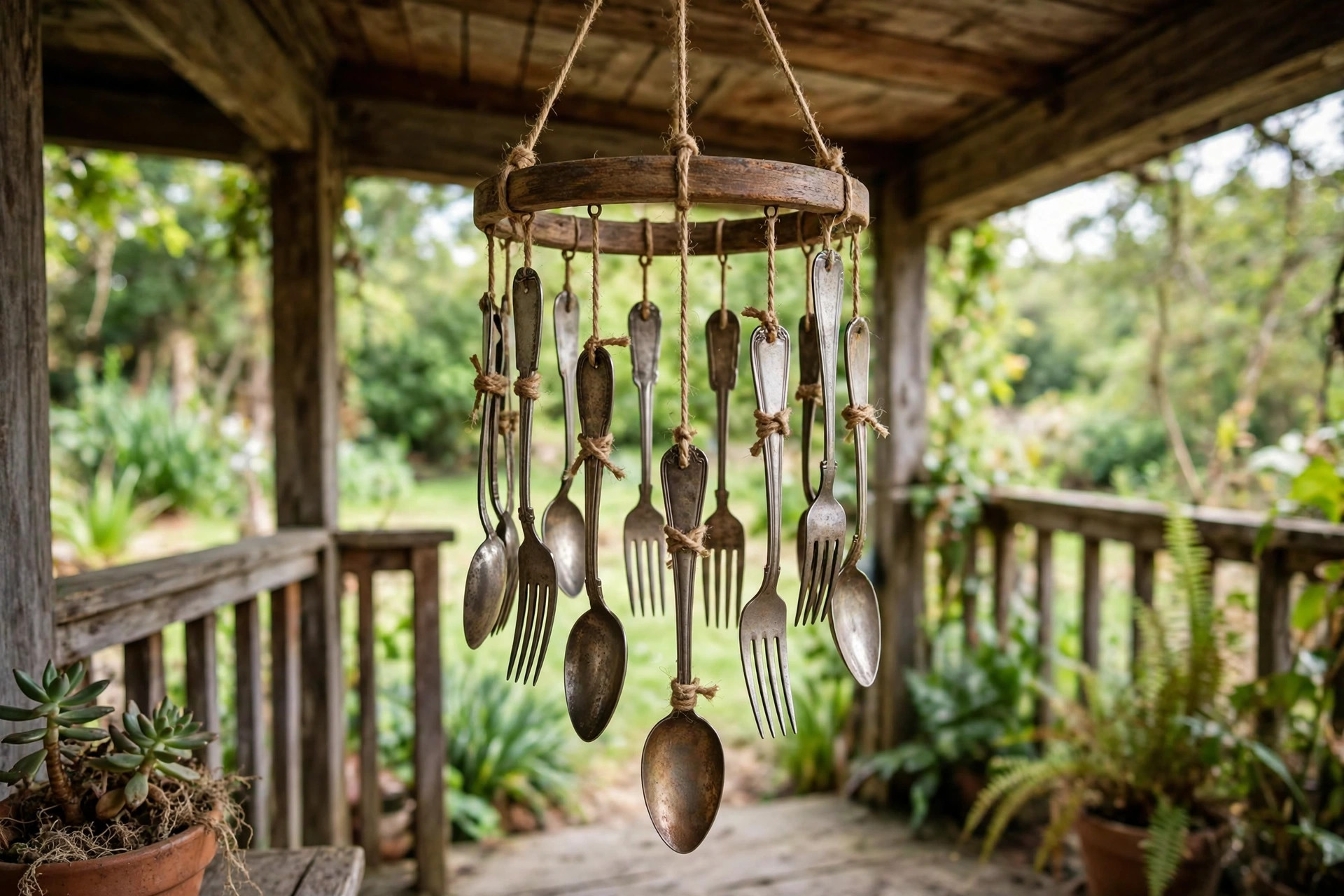
24. Wind chimes from old cutlery — the forks and spoons nobody uses become the sound of the yard
Old cutlery in a drawer is cutlery nobody uses, because the forks and spoons that do not match are the ones that stay in the drawer. Turn them into wind chimes — the forks and spoons nobody uses become the sound of the yard — so the drawer is lighter and the yard has a sound. Hang them from a wooden ring or a branch, at different lengths, so they catch the wind and each other, and hang the chimes where the breeze reaches them but the neighbours do not mind them. Keep them light, because the chime that is heavy is the chime that does not move, and the chime that moves is the chime that sings. Old cutlery, and the yard has a sound.
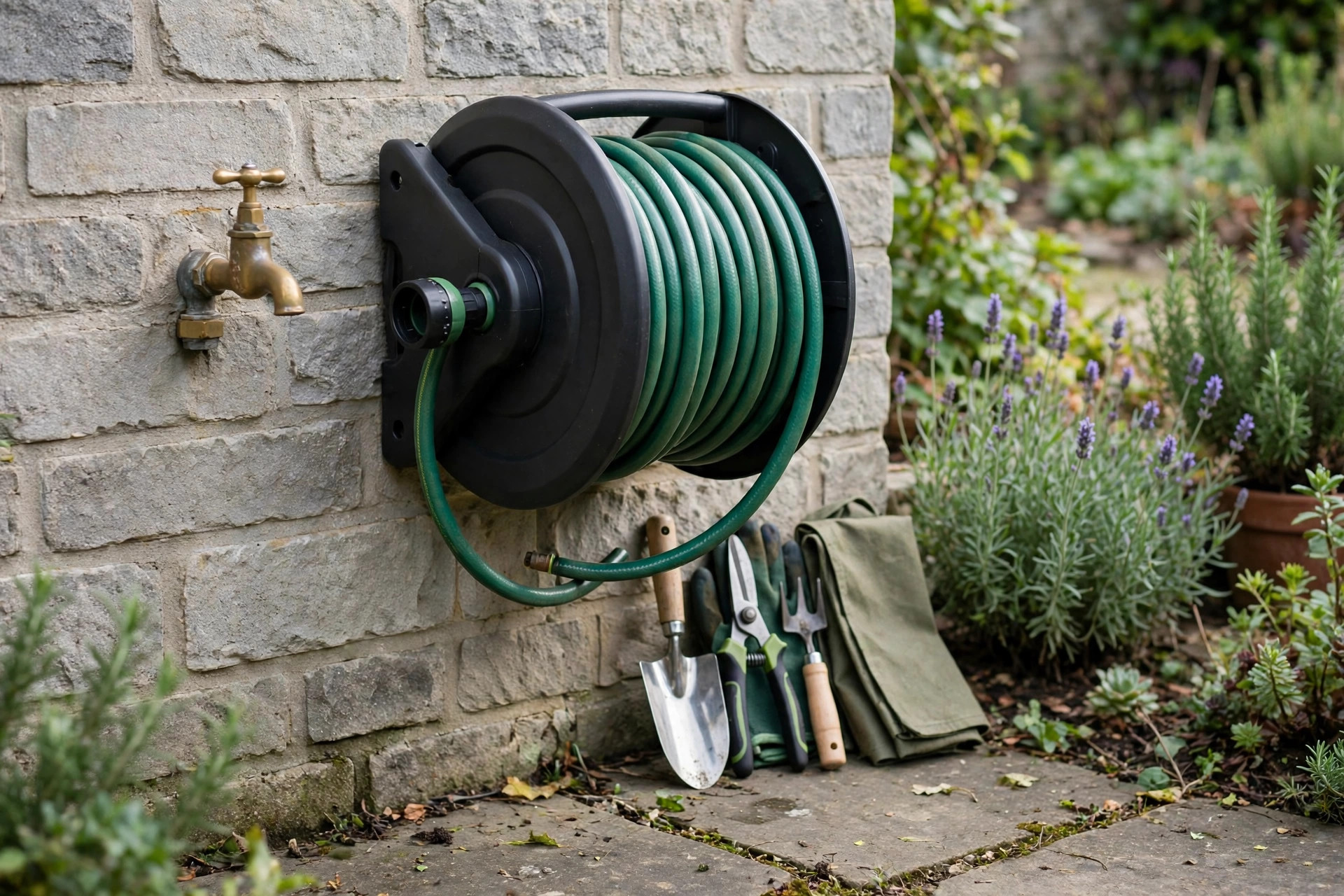
25. A garden hose holder that is not a tangled pile — a reel on the wall, and the hose stops being a trip hazard
A hose in a pile on the ground is a hose you trip over, because the pile is the thing that grows and the ground is the thing you walk on. Put a reel on the wall — a garden hose holder that is not a tangled pile — so the hose winds onto the reel and the ground stays clear. Screw the reel to the wall by the tap, wind the hose on after every use, and keep the nozzle on the reel too, because the hose that is wound up is the hose that lasts longer and the hose that is in a pile is the hose that kinks. A reel on the wall, and the hose stops being a trip hazard.
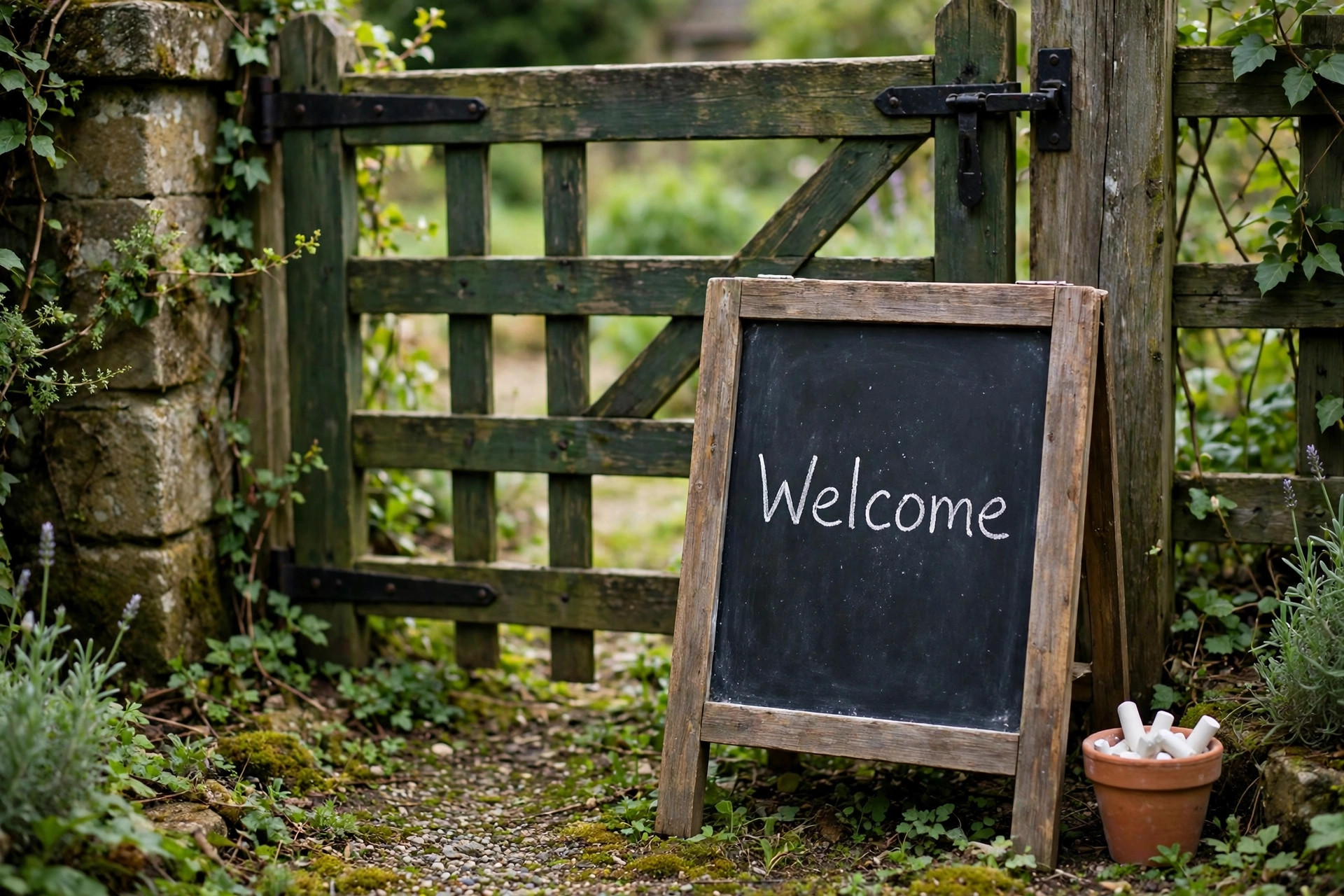
26. A chalkboard sign by the gate for the season — one board, one message, changed when the season changes
A gate with nothing on it is a gate that says nothing, because the gate is the first thing a visitor sees and the last thing anyone decorates. Hang a chalkboard sign by the gate for the season — one board, one message, changed when the season changes — so the gate says welcome in summer, happy autumn in October, and merry Christmas in December, without buying a new sign each time. Write the message in chalk, change it when the season changes, and keep the chalk in a small pot by the gate, because the sign that is easy to change is the sign that gets changed. One board, one message, and the gate speaks for the season.
Which DIY yard decor fix fits which situation?
| Situation | Best first move | Budget | Tools needed |
|---|---|---|---|
| Front of the house looks tired | Paint the front door, add a doormat (ideas 1, 3) | Low | Paint, brush |
| House hard to find | Big house numbers on wood (idea 2) | Low | Numbers, board |
| Steps dangerous after dark | Solar path lights on every step (idea 5) | Low | Solar lights |
| Door looks bare | Matched planters, seasonal wreath (ideas 4, 6) | Low | Pots, wreath base |
| Nowhere to grow anything | Raised bed from pallets (idea 7) | Low | Pallets, screws |
| Steps and corners look bare | Terracotta pots in threes (idea 8) | Low | Pots, paint |
| Herbs never picked | Herb crate by the back door (idea 10) | Low | Crate, soil |
| Fence bare and ugly | Vertical garden from guttering (idea 12) | Low | Guttering, brackets |
| Yard dark after dinner | String lights across the yard (idea 14) | Medium | String lights |
| Path dark at night | Solar lanterns along the path (idea 15) | Low | Solar lanterns |
| Nowhere to sit outside | Pallet bench with cushions (idea 20) | Low | Pallets, cushions |
| Tools in a pile by the door | Storage bench that hides them (idea 21) | Medium | Bench, hinges |
| Yard feels unfinished | Lantern on every table, painted fence panel (ideas 19, 23) | Low | Lanterns, paint |
You do not need all 26 ideas. You need the three that solve your worst corner — usually the front door that has never been painted, the planters that do not match, and the yard that goes dark at dinner time. Start at the front door, paint it, put a matched pair of planters beside it, and hang the string lights before the weekend is over. Do that and the next time you come home the house will look like it had a makeover, for the price of a tin of paint and a few pots.
Save this post for your next weekend in the yard, and if the yard itself needs sorting first, read 20 Outdoor Toy Storage Ideas for 2026 next — it is Post 06, the yard the decor lives in — and 28 Living Room Storage Ideas for 2026, Post 01, for the room the yard is seen from. This is the first post of the DIY by project cluster — Posts 21 to 30, one project at a time — and the next posts carry the same budget system into the projects that follow.
Publish date assigned at publishing time. Updated as new DIY yard finds are tested.
Frequently asked questions
What is the cheapest way to make a yard look better?
Paint the front door — one tin of exterior paint changes the whole house for the price of a takeaway dinner, and it lasts for years. After the door, add a matched pair of planters beside it and a thick doormat layered over a plain outdoor rug, so the doorway looks deliberate instead of forgotten. Then hang string lights across the yard, because one long run of warm white lights changes the whole evening for the price of a single roll. Door, planters, lights — three cheap moves, and the yard looks like it cost ten times more.
How do I decorate a yard on a small budget?
Build from wood you already have: a raised bed from pallets, a pallet bench with outdoor cushions, and a herb garden in a wooden crate all cost almost nothing, and they look like they were bought. Group terracotta pots in threes and paint them one colour, so three cheap pots read as a styled set, and use solar lights — path lights, lanterns, string lights — because there is nothing to wire and nothing to pay an electrician for. Spend the money on one thing, usually the paint or the cushions, and let the free wood and the sun do the rest.
What DIY yard decor lasts through winter?
Paint and solid wood last — a painted front door, a painted fence panel and a pallet bench will all survive winter if the paint is exterior grade and the wood is sealed. Solar lights will fade in the dark months, so bring the lanterns and the string lights inside when the evenings get short, and store the garden tools in the utility closet or the storage bench so they stay dry. Terracotta pots crack in a hard frost, so move them under cover or empty them before winter, and the planters that stay out should be frost-proof. Paint, wood and storage, and the yard survives the winter.