20 Outdoor Toy Storage Ideas for 2026
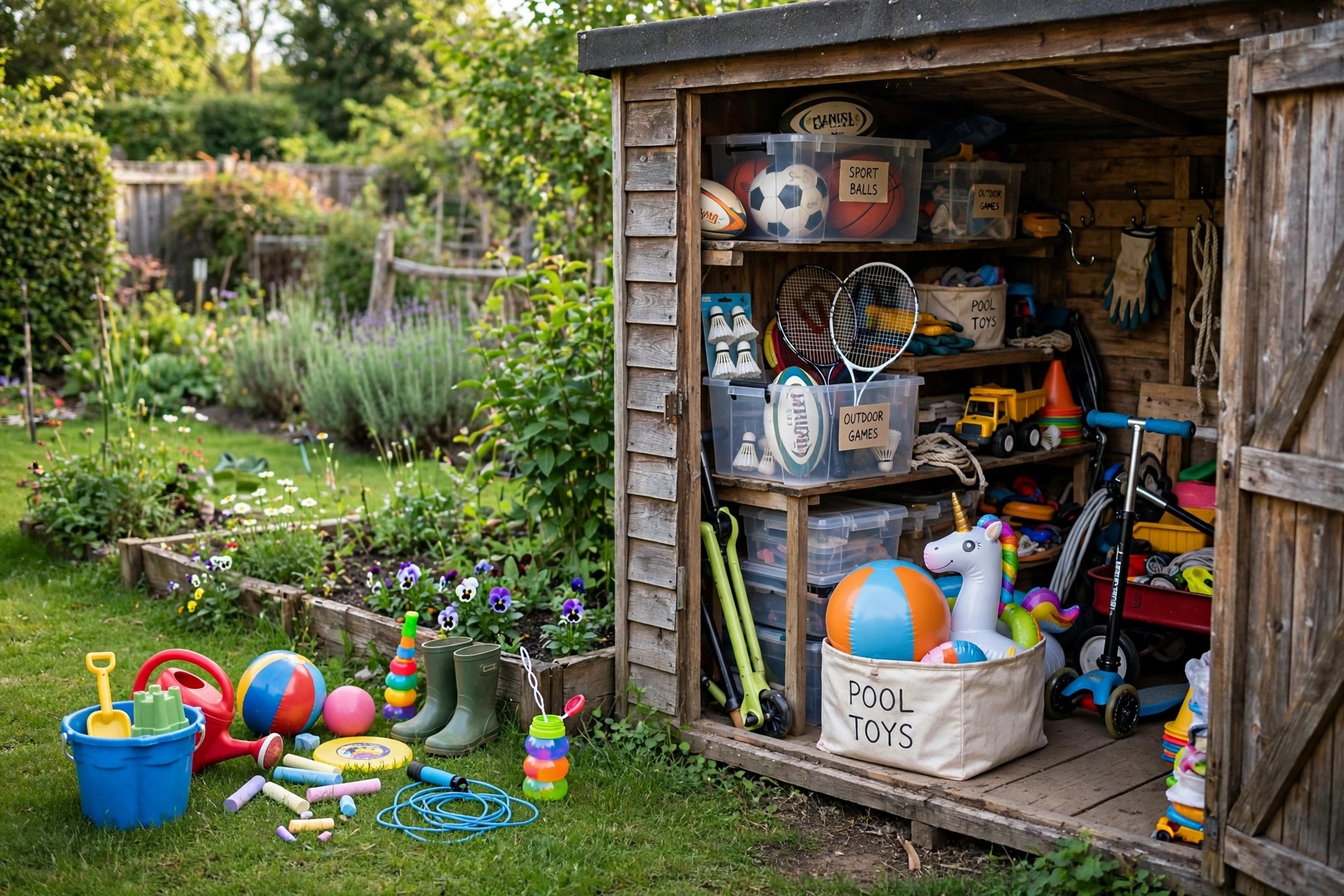
Outdoor toys are the hardest toys to store. They are big, they are muddy, they get wet, and they never quite fit through the back door — so they end up scattered across the lawn, rusting in the rain and tripping everyone who crosses the garden.
These 20 outdoor toy storage ideas fix that without a bigger garden: one weatherproof home by the door, a deck box that doubles as a bench, racks for bikes and scooters, and a rule that outdoor toys never come past the back door.
Every idea below works in a real garden, balcony or small yard. Pick three that fit your worst corner, start with one big weatherproof bin by the door, and build from there.
Start outside: one home, weatherproof first
1. One home by the back door, and only one home
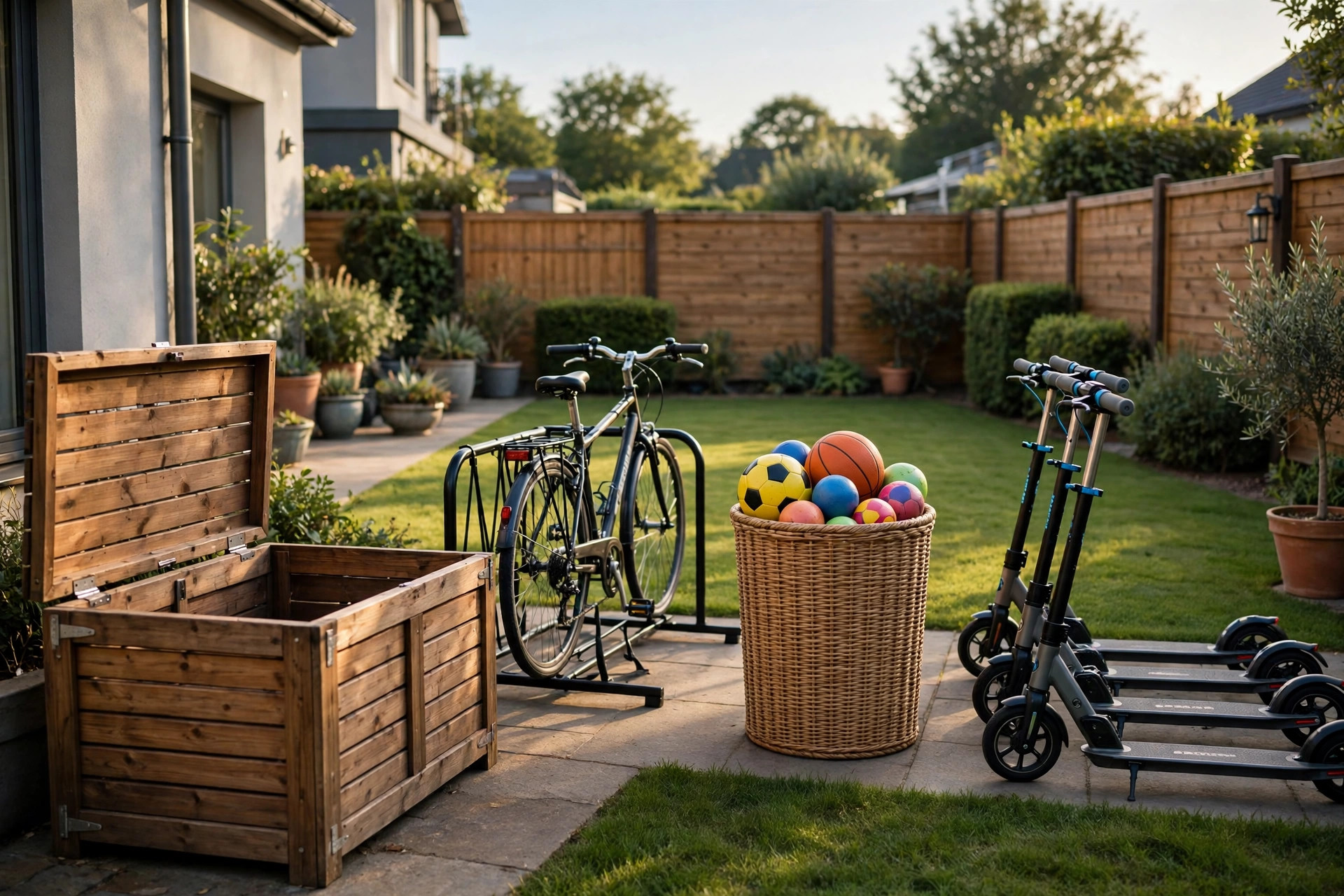
Outdoor toys need a single home, just like indoor toys — and that home should be outside, by the back door. Pick one spot, a deck box or a big bin, and make it the only place outdoor toys live. When a ball or a scooter has one home, children learn the route: out of the box to play, back in the box when they come in. A toy with two homes ends up on the lawn between them. Put the home where the playing happens, not where it looks tidy from the kitchen window, and the system runs itself.
2. The rule that saves the house: outdoor toys never come inside
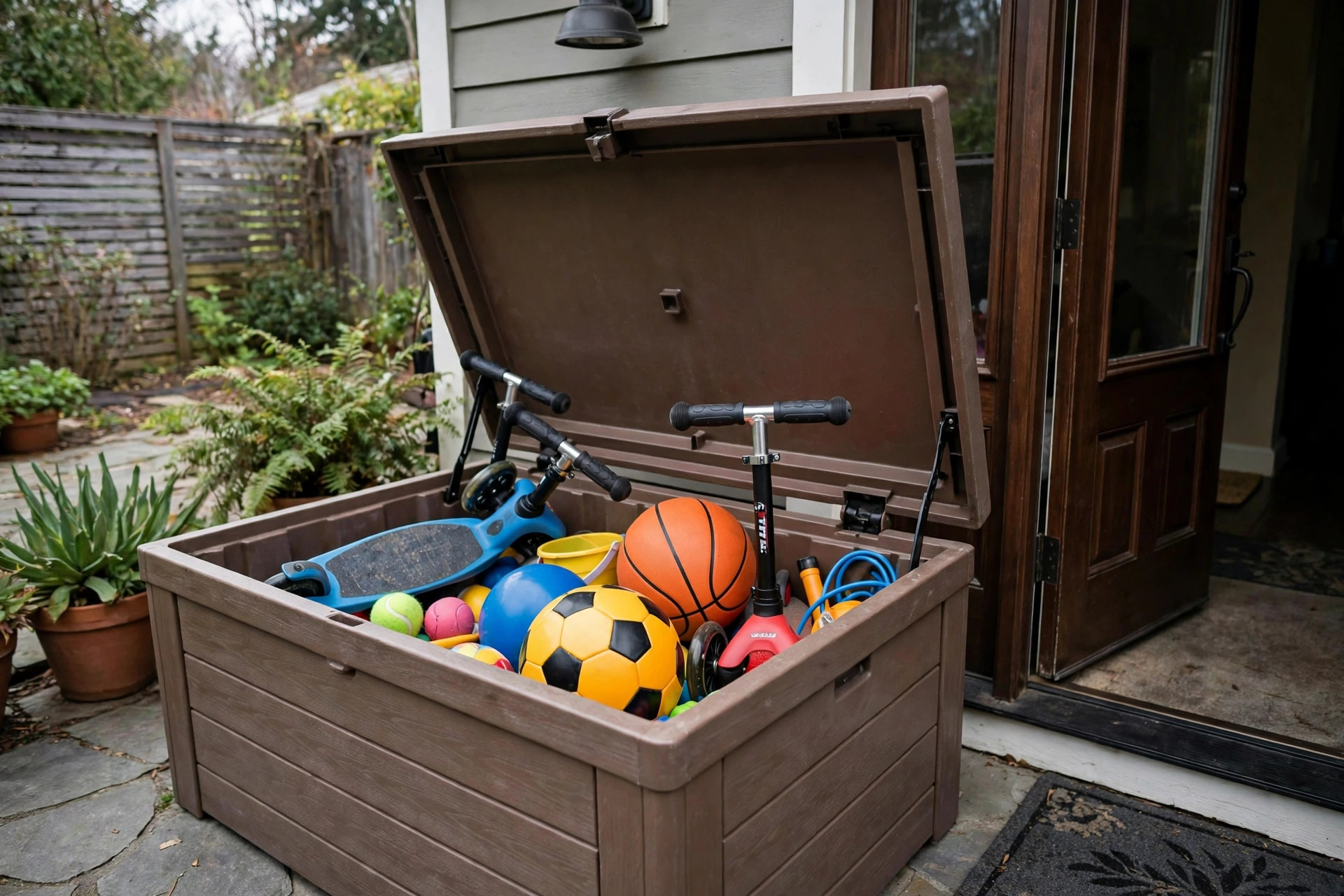
The simplest outdoor storage idea costs nothing: outdoor toys stay outdoors. Balls, bats, buckets, scooters and water toys live in the garden, and the rule is the same every day — nothing muddy crosses the threshold. Children grab a ball on the way out and drop it back in the bin on the way in, without an adult carrying anything. Keep one small basket by the door for the one exception, the favourite toy that is allowed in for the night, and everything else stays out. One rule, repeated for a week, and the hallway stops being a toy cupboard.
3. Sort before you buy a single box
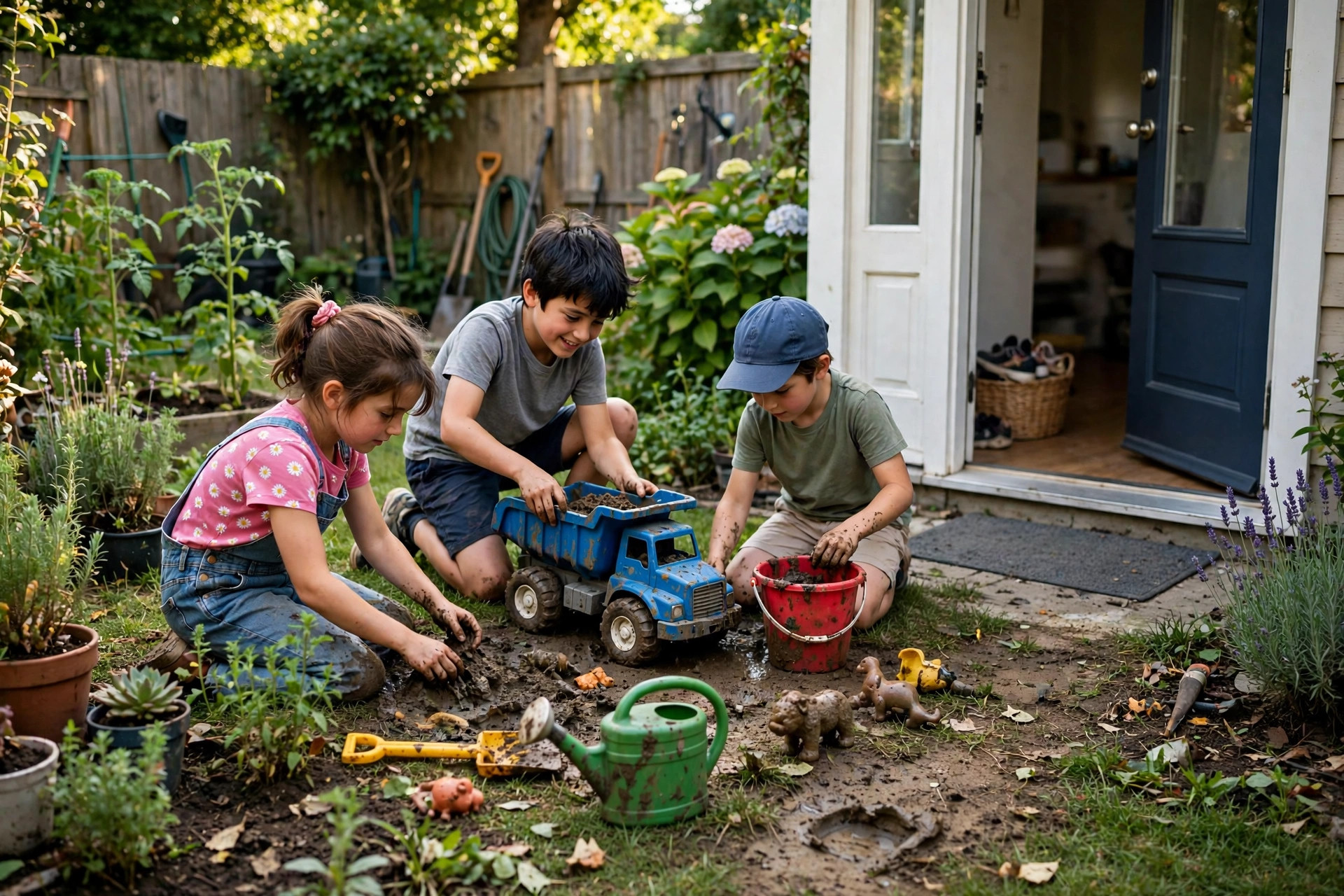
Buying a deck box before sorting is how outdoor storage fails. Tip every outdoor toy onto the lawn, sort into piles — balls, bikes and scooters, water toys, sand and digging toys, ride-ons — and only then count what you actually have. Most families find a third of the pile is broken, outgrown or missing pieces, and it leaves before a single box is bought. Sorting first also tells you the real sizes: bikes need a rack, balls need a tall bin, sand toys need a mesh bag, not a box. Do the sort once, and every idea below gets easier.
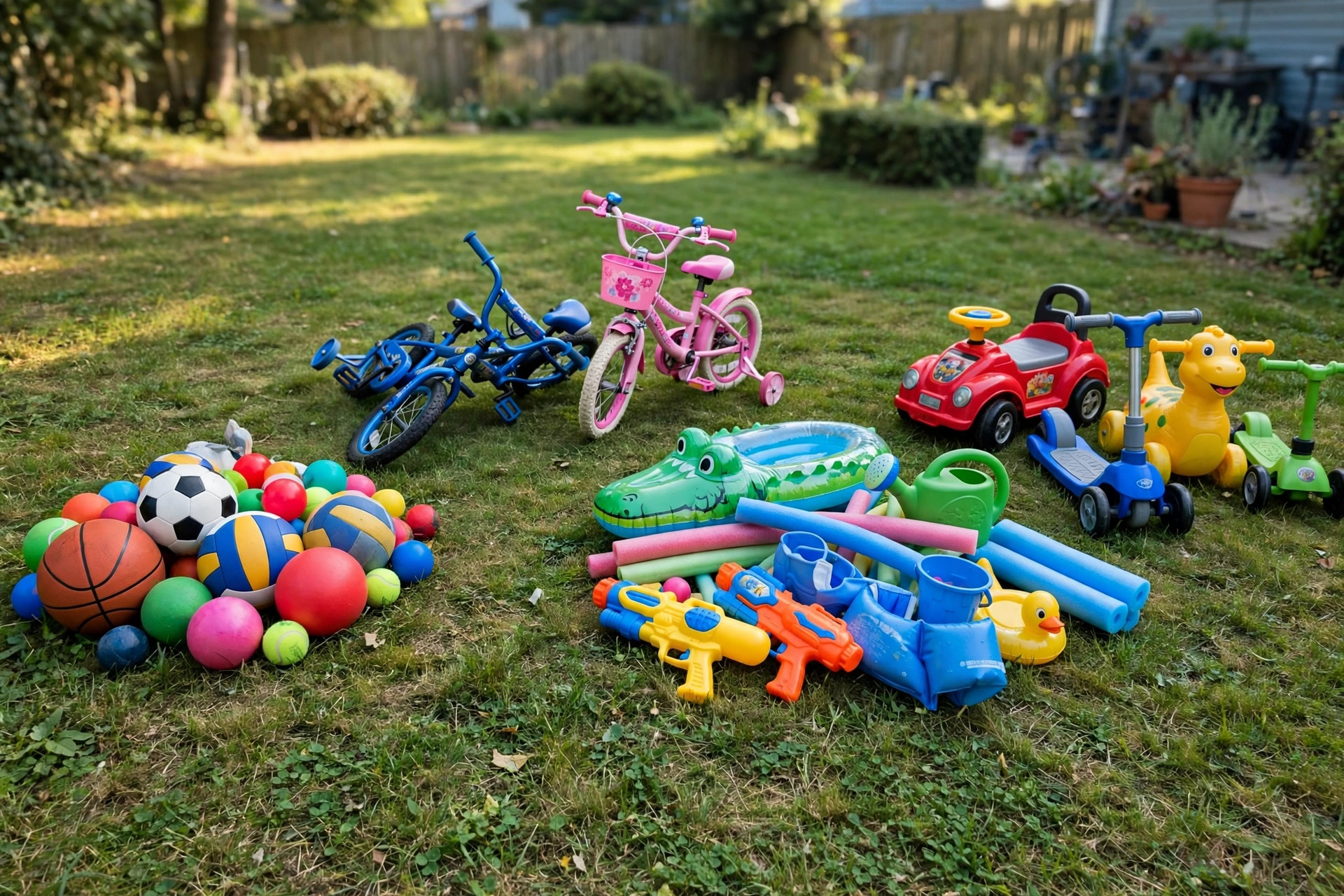
4. A weatherproof deck box that doubles as a bench
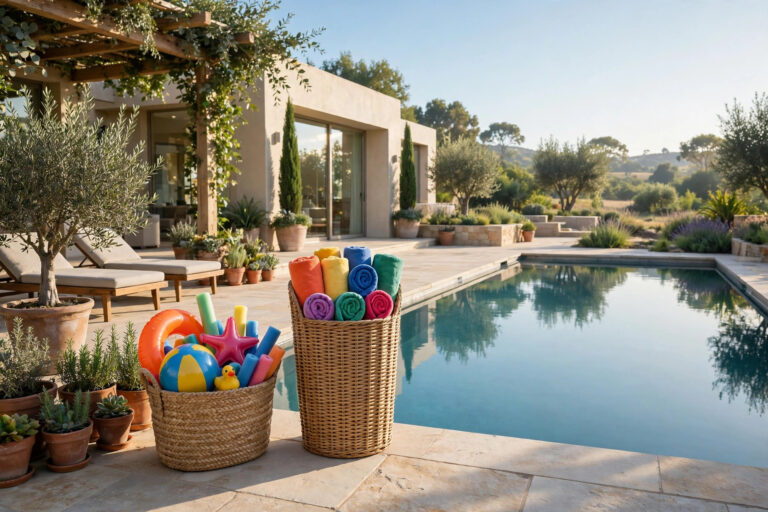
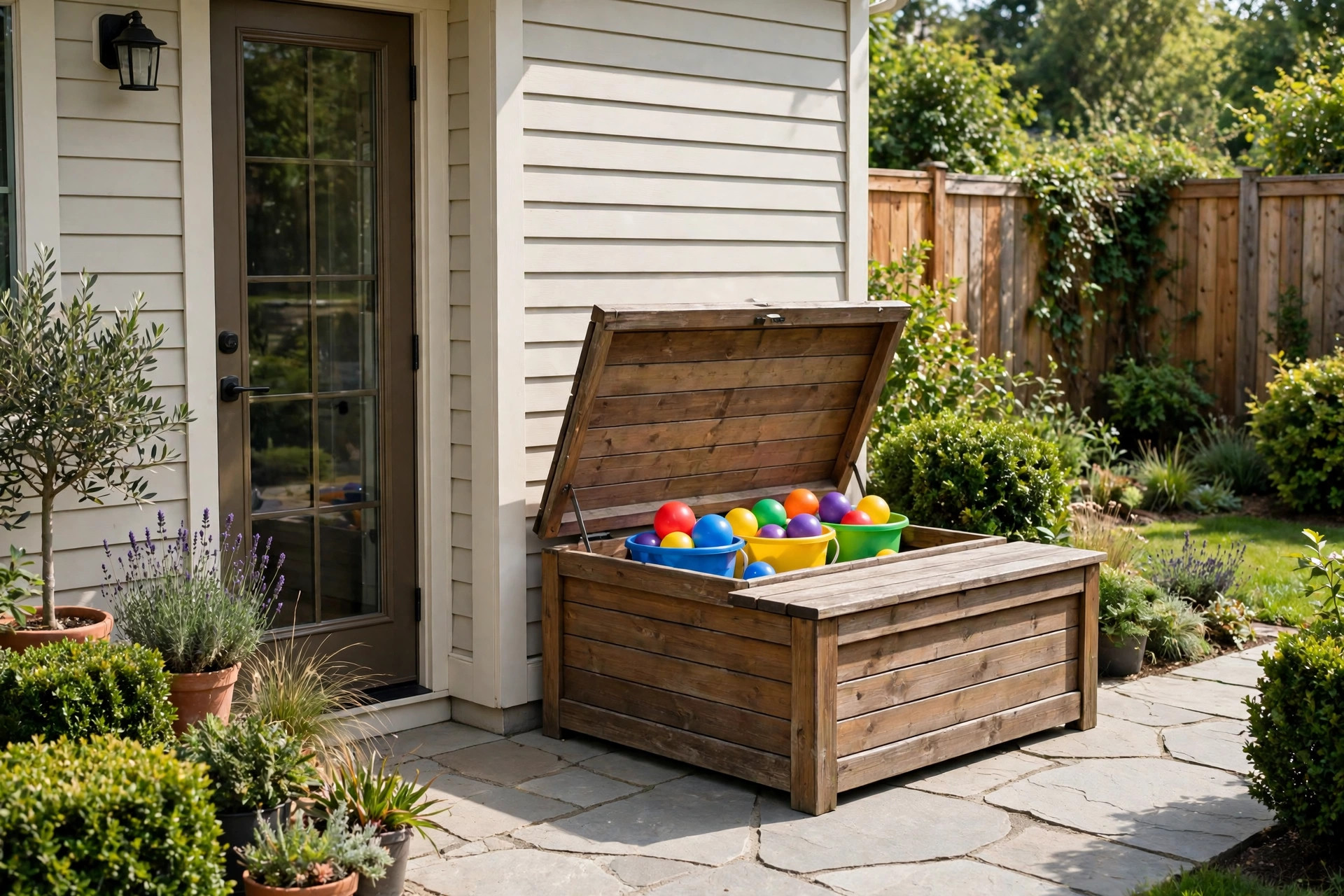
A deck box is the workhorse of outdoor toy storage, and the best ones do two jobs. Choose a weatherproof box with a lid that stays shut in wind and rain, big enough for balls, bats and buckets, and use it as a bench when it is closed. Put it against the house wall by the back door, where it is easy to reach and easy to see. Children can lift the lid themselves, which matters more than it sounds — a box they cannot open is a box they will not use. One box, by the door, and the lawn is clear in five minutes.
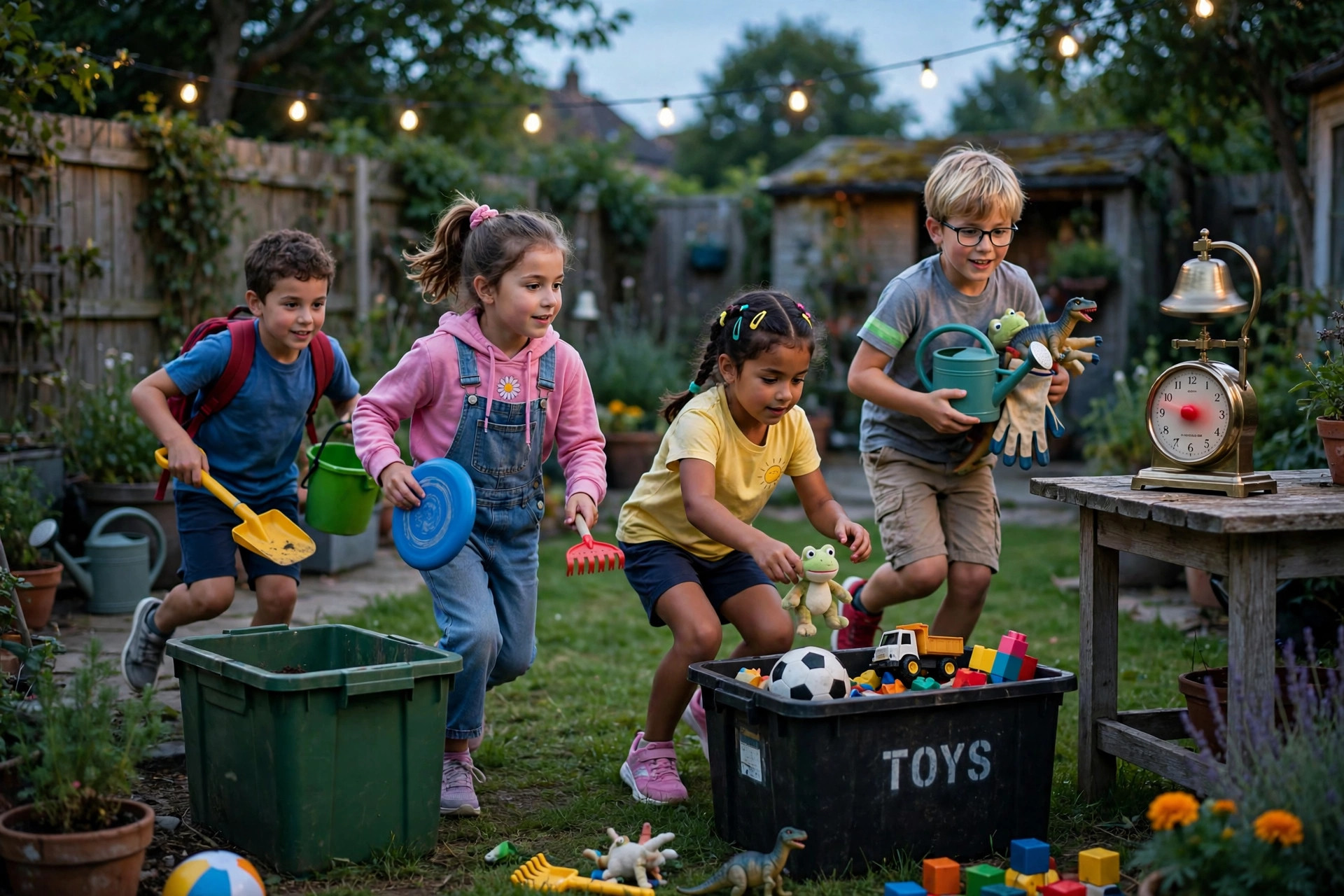
5. A 5-minute garden tidy-up, every evening
Storage only helps if toys go back into it. Make the garden tidy-up a five-minute game before dinner: set a timer, and race to get every toy back to its home before it rings. Children who will not tidy for twenty minutes will tidy for five, especially outside where they can run. Keep the rule simple — everything off the lawn, nothing left out overnight — and praise the finished garden, not the speed. If tidy-up takes longer than five minutes every night, there are too many toys out, not too little storage. Start tonight, and tomorrow morning the garden will feel different.
Bins, boxes and sheds that survive the rain
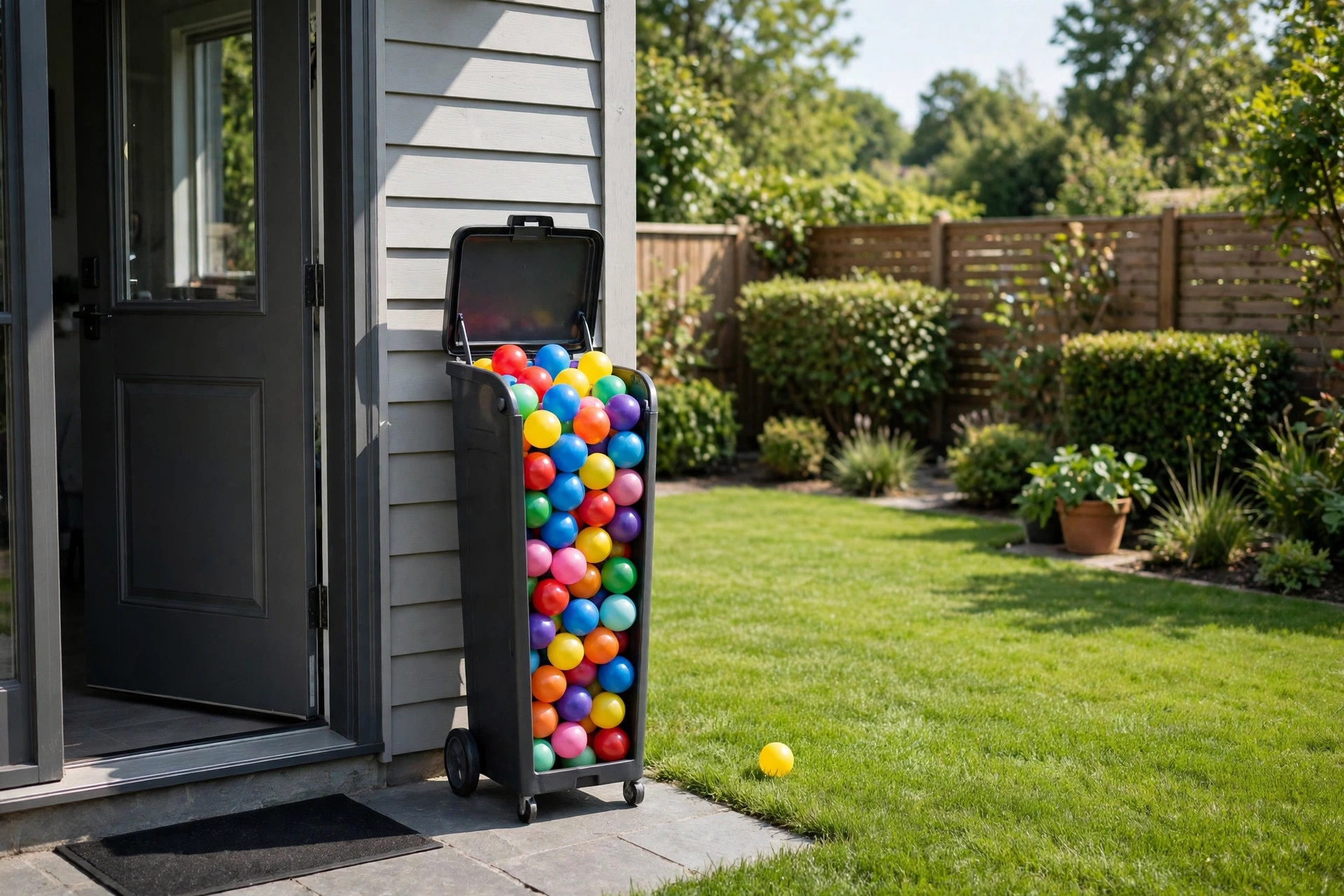
6. One big bin for balls, and only balls
Balls are the toy that escapes most often, because they roll. Give them one tall, narrow bin — a laundry basket, a tall planter or a ball bin with a lid — and nothing else goes in it. A ball bin by the door means a child can drop a ball in from a step away, which is exactly how it gets used. Keep the big balls at the bottom and the small ones on top, and empty the bin once a month to check for flat or burst balls. One bin, one toy type, and the balls stop living under the hedge.
7. A small shed or storage bench for the big toys
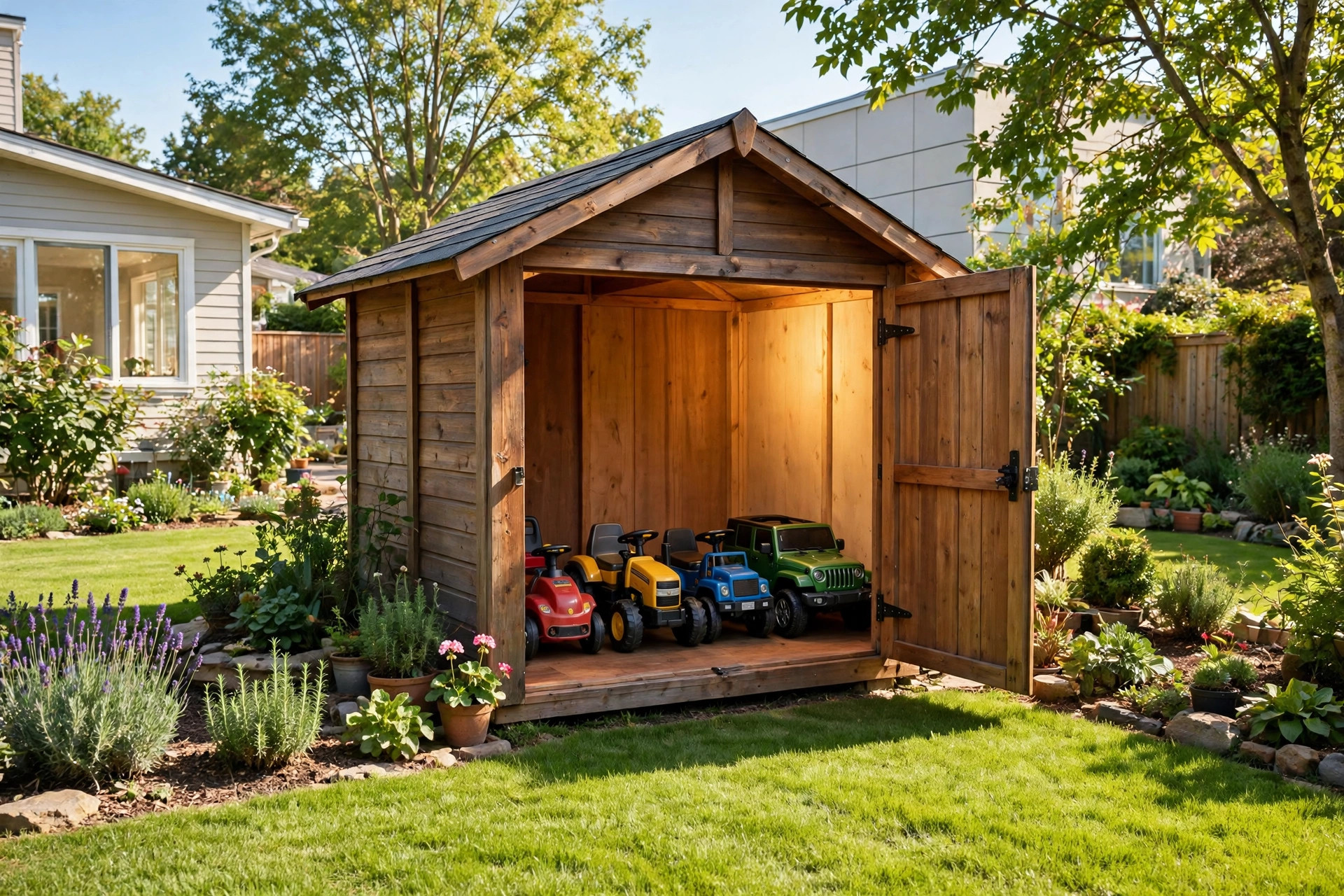
Ride-ons, scooters and large water toys do not fit in a deck box, and they should not live on the lawn. A small garden shed, a storage bench or even a covered corner of a carport gives them a dry home with a roof. Keep the big toys in a row, largest at the back, so a child can pull out the scooter without dragging everything else with it. Put a hook on the wall for helmets, so the helmet is with the bike, not in the house. One covered home, and the big toys last years longer.
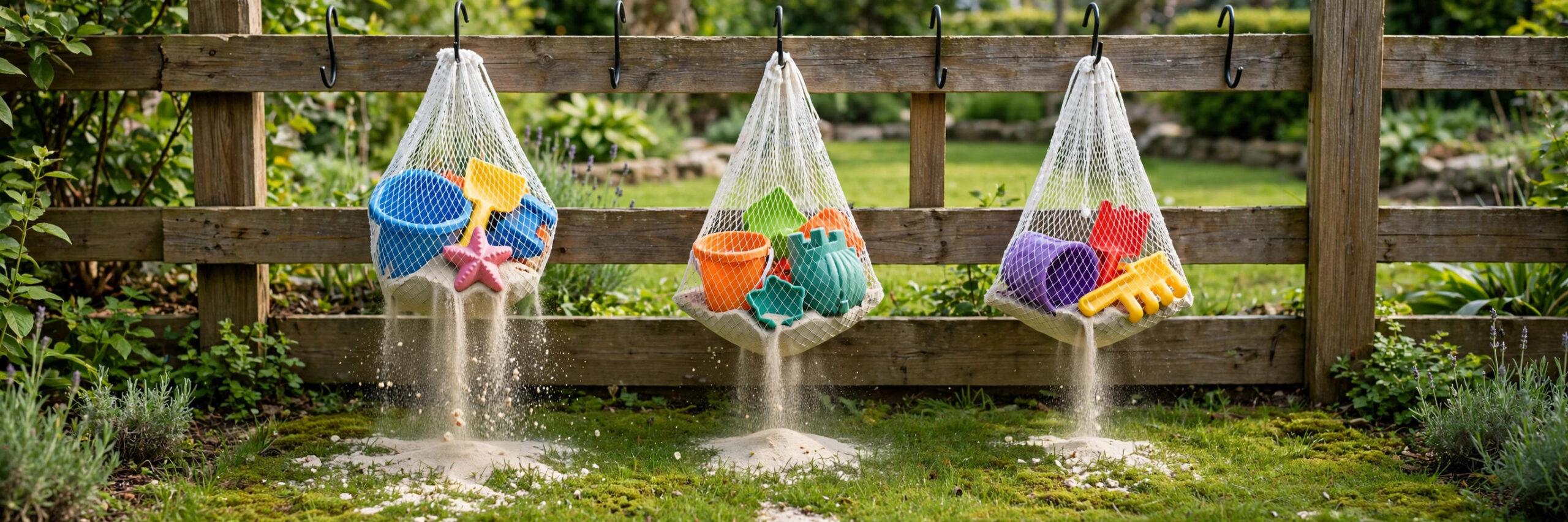
8. Mesh bags for sand toys, hung on a hook
Sand toys are small, sandy and impossible to stack — and a closed box turns them into a damp, sandy mess. Use a mesh bag with a drawstring, hung on a hook by the door or on the fence, and the sand falls out while the toys dry. Children can see what is in the bag through the mesh, so they grab the bucket they want without emptying the whole bag. Rinse the bag once a week, hang it back up, and the sand toys stop migrating into the house in pockets and shoes. One bag per child is enough; if you need a third, you have too many sand toys.
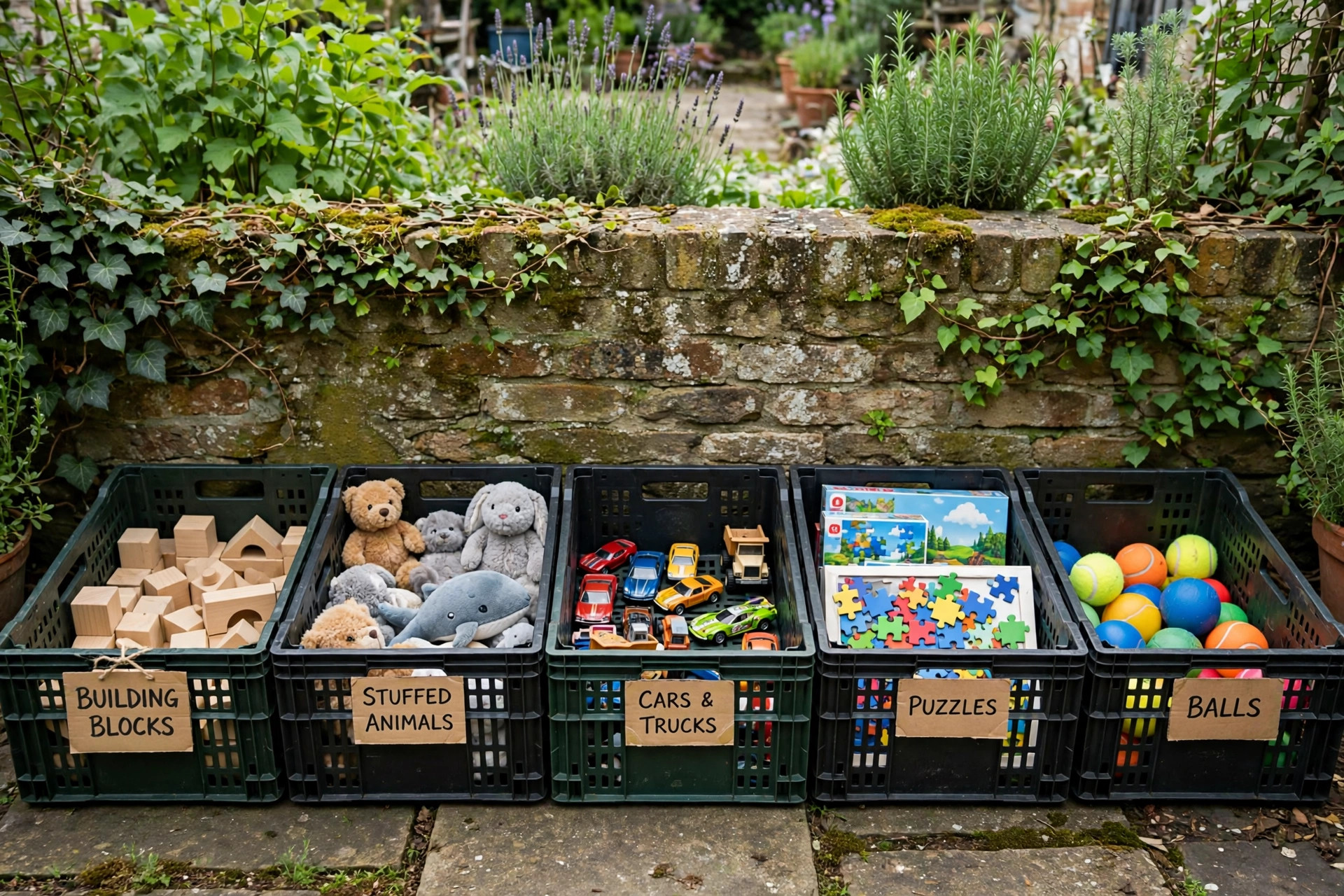
9. Stackable crates that drain, not boxes that drown
Outdoor storage that holds water is worse than no storage at all. Choose crates and bins with drainage holes or slatted bottoms, so rain runs out instead of pooling around the toys. Stackable crates work well against a wall: one crate per toy type, labels on the front, the heaviest at the bottom. In winter, turn the top crate upside down as a lid, or pull a tarpaulin over the stack. Drainage is the difference between toys that dry and toys that go mouldy, and it costs nothing to check before you buy.
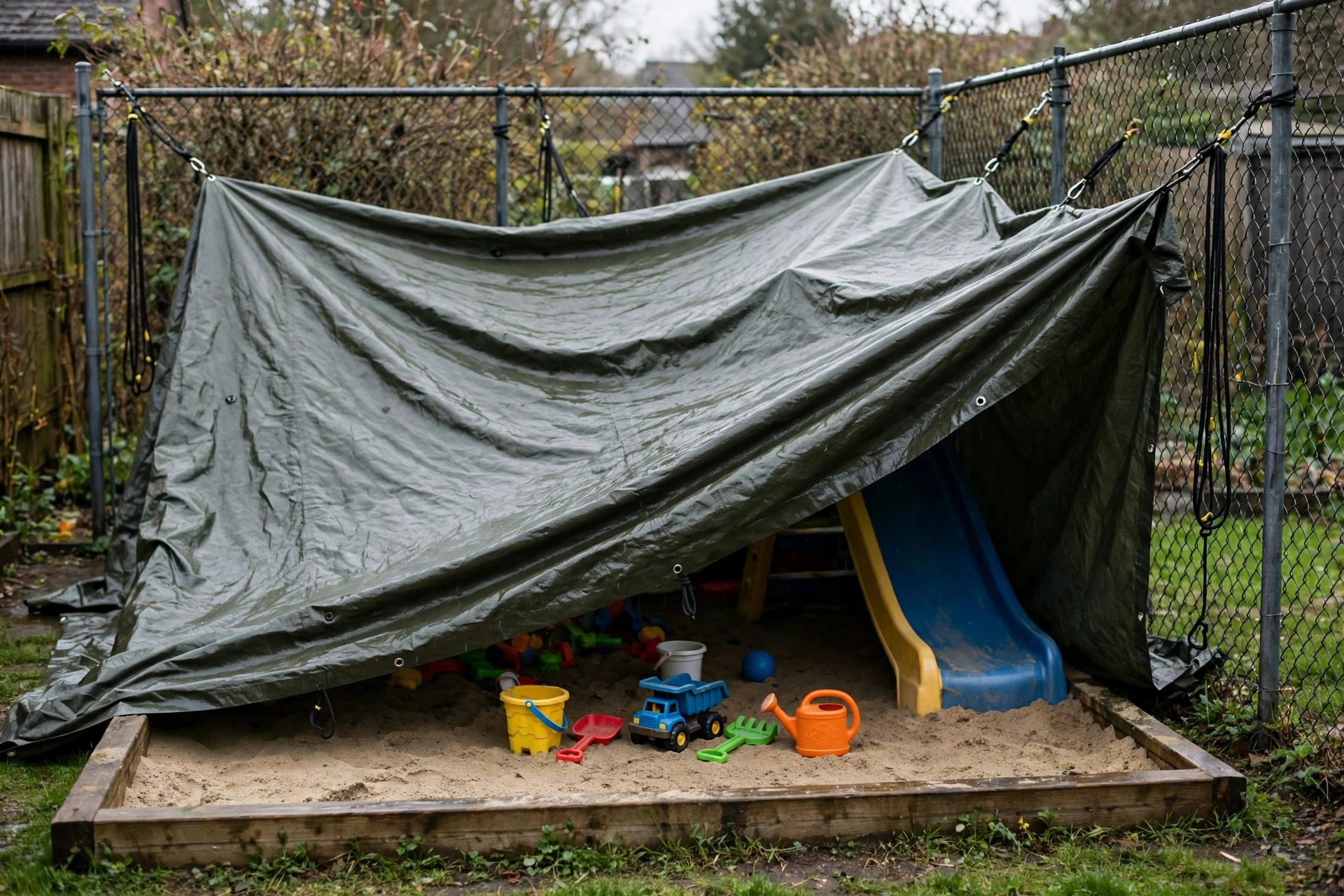
10. A tarpaulin and two bungee cords for the rainy weeks
Not every garden needs a shed, and not every toy needs a box. For the toys that live outside in the open — a slide, a sandpit, a large ride-on — a heavy tarpaulin and two bungee cords are enough. Cover the toys before rain, hook the cords to the fence or the legs, and the toys stay dry without a single purchase. Teach children to pull the cover back on after playing, the same way they put a toy back in a box. It takes thirty seconds, and it is the cheapest weatherproof storage there is.
Storage by toy type: balls, bikes, water and sand
11. A bike and scooter rack, in a row, by the fence
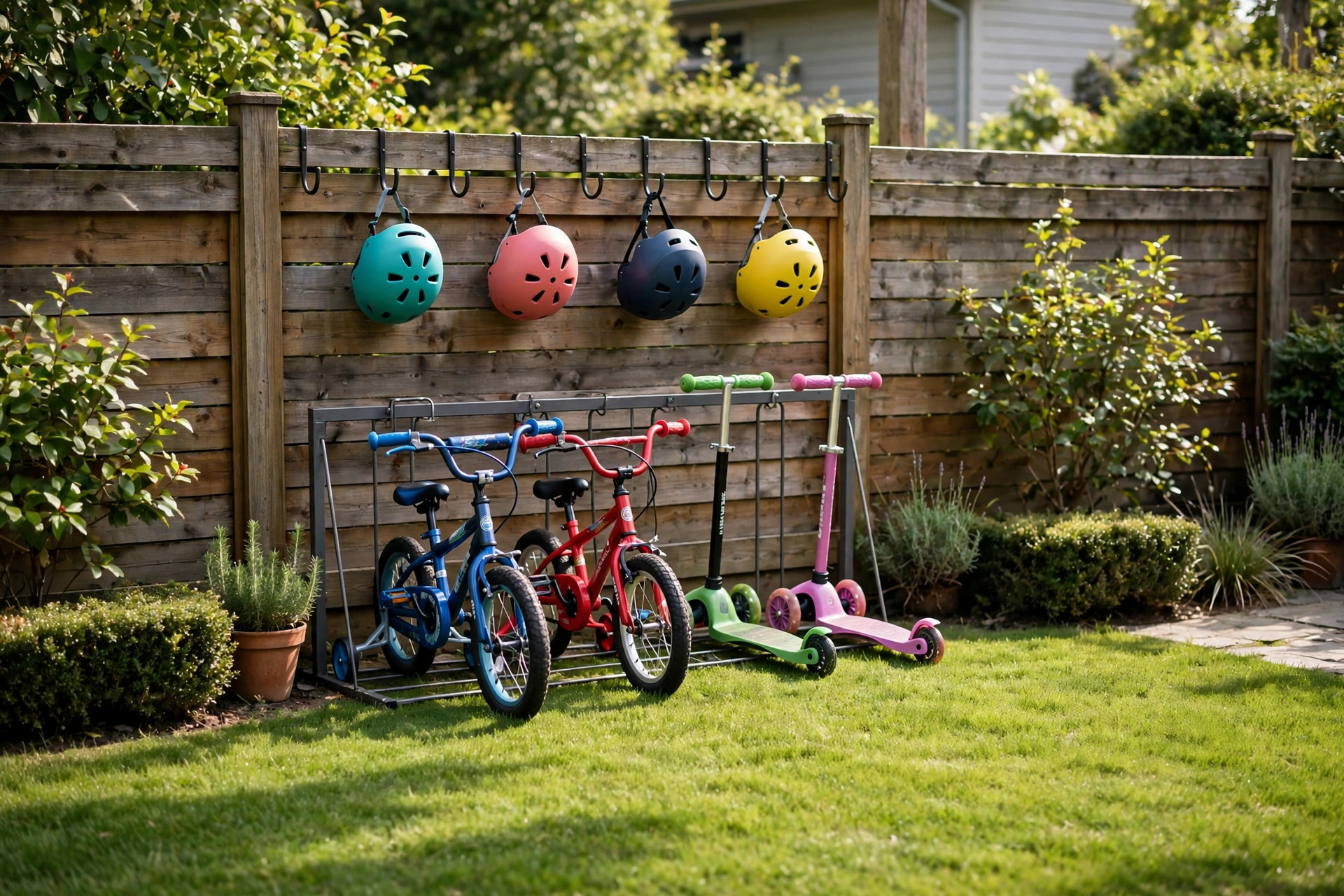
Bikes and scooters left on the lawn fall over, rust and block the path. A simple wall rack, a row of hooks or a freestanding bike stand by the fence gives each one a parking space, in a row, largest first. Children park their own bike the way they park a car — in its space, facing out — and the row stays tidy because every space has an owner. Put the helmets on the same hooks, so the helmet is never the thing left behind. One rack, one row, and the bikes stop being a trip hazard.
12. A tall bin for bats, rackets and sticks
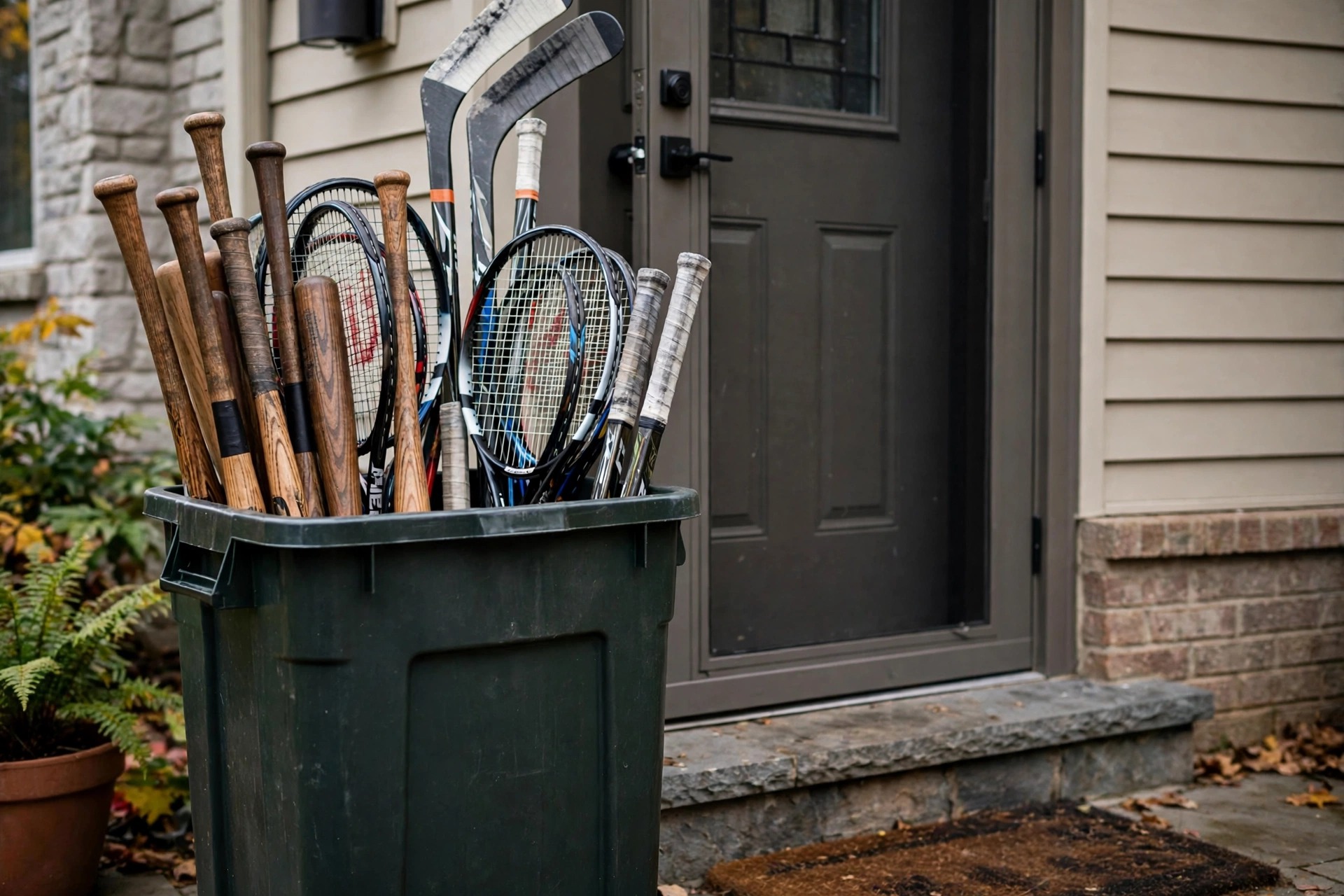
Long, thin toys are the ones that snap when they are piled in a box. Stand them upright in a tall bin, a large umbrella stand or a clean dustbin by the door — bats, rackets, hockey sticks and fishing nets, handles down, heads up. Children can see every handle at a glance and pull out the one they want without dragging the rest. Keep the bin under cover, so the handles stay dry, and check the grips once a month. One tall bin, and the long toys stop breaking at the bottom of a pile.
13. A water toy station: one crate, one hose, one drying line
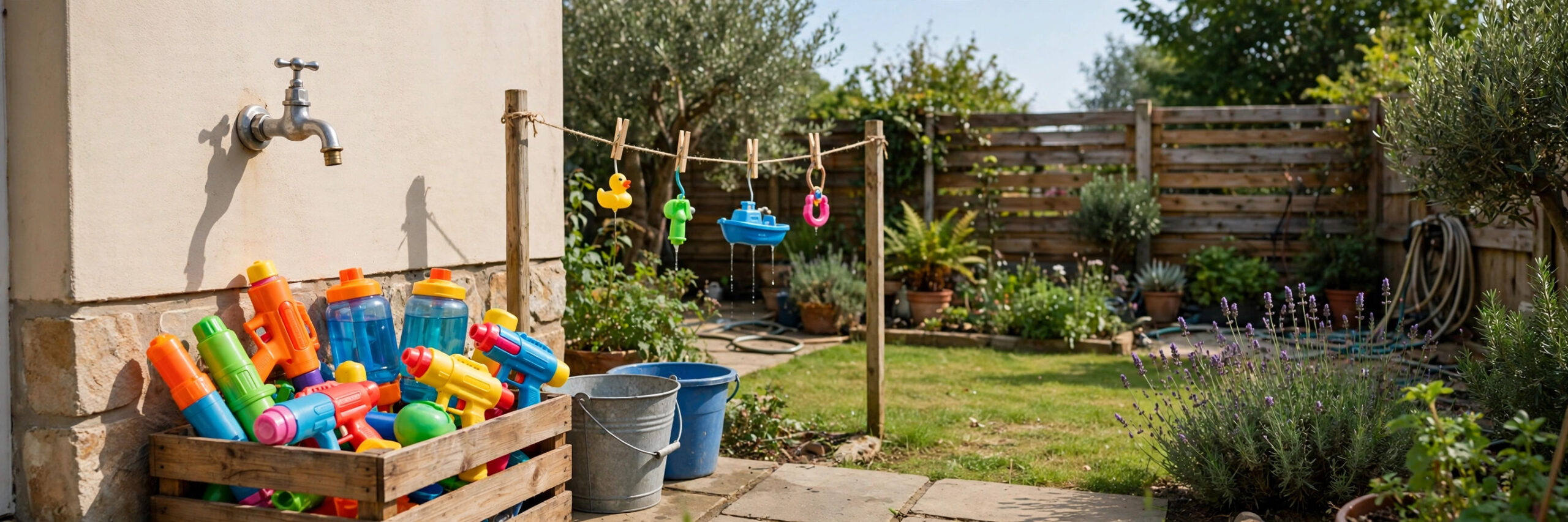
Water toys live in a different world from dry toys, and they need their own station. Keep one crate by the outside tap for water pistols, buckets and paddling pool toys, and hang a short drying line or a row of hooks beside it. After playing, toys go back in the crate to drip, then onto the line to dry, and only then into the deck box. A small hose or a watering can by the tap means muddy toys get rinsed before they are stored, not after. One crate, one line, and the water toys stop going mouldy in a closed box.
14. A sandpit with a lid, and a toy box that lives under it
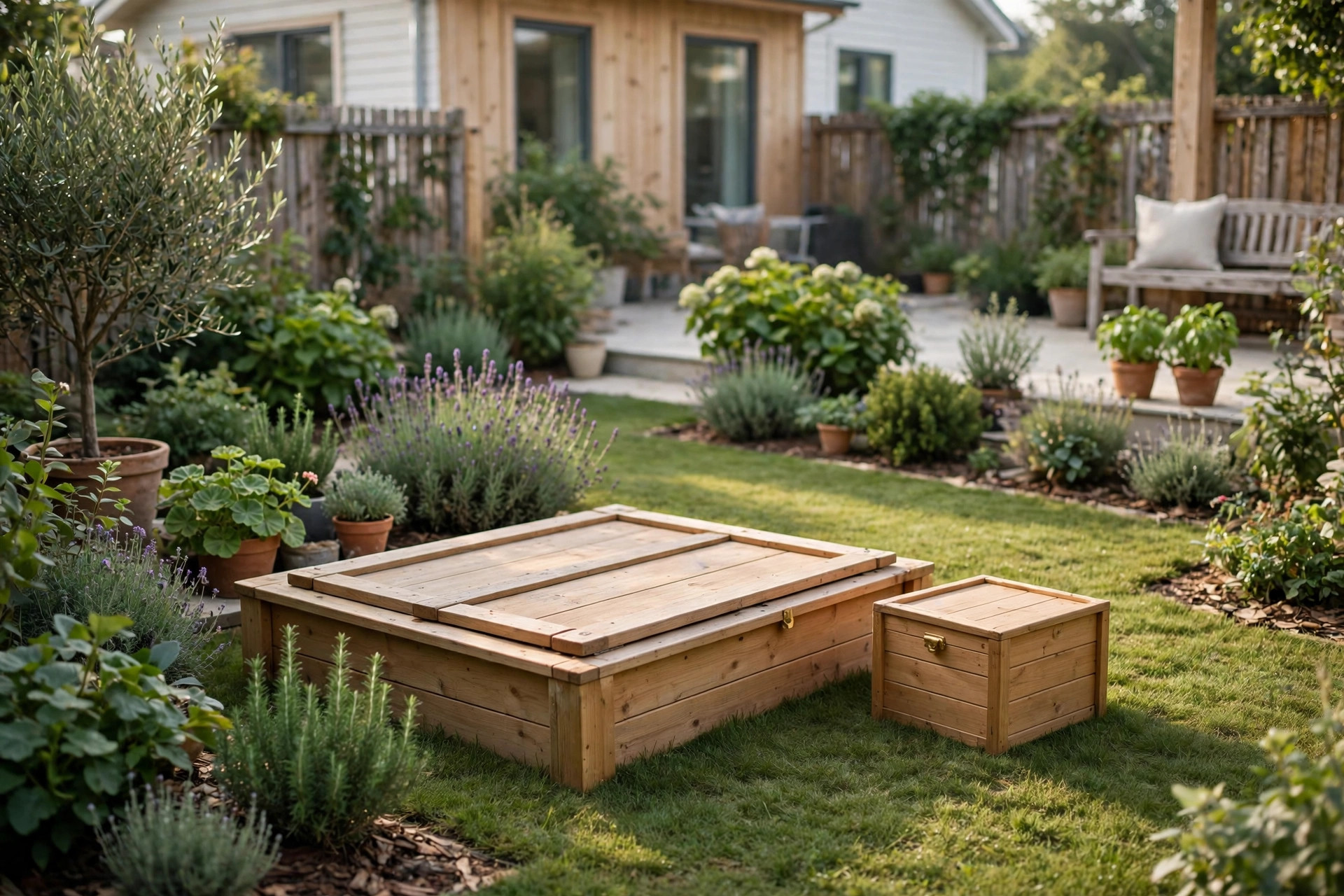
A sandpit without a lid becomes a litter tray, a puddle and a pile of leaves. Choose a sandpit with a fitted lid, or make one from a tarpaulin and a frame, and keep the sand toys in a box that lives under the lid or beside the pit. When play ends, toys go in the box, the box goes under the lid, and the lid goes on — three moves, one habit. Check the sand once a month, top it up when it gets low, and replace it if it starts to smell. A lid is storage, and it is the cheapest way to keep a sandpit usable.
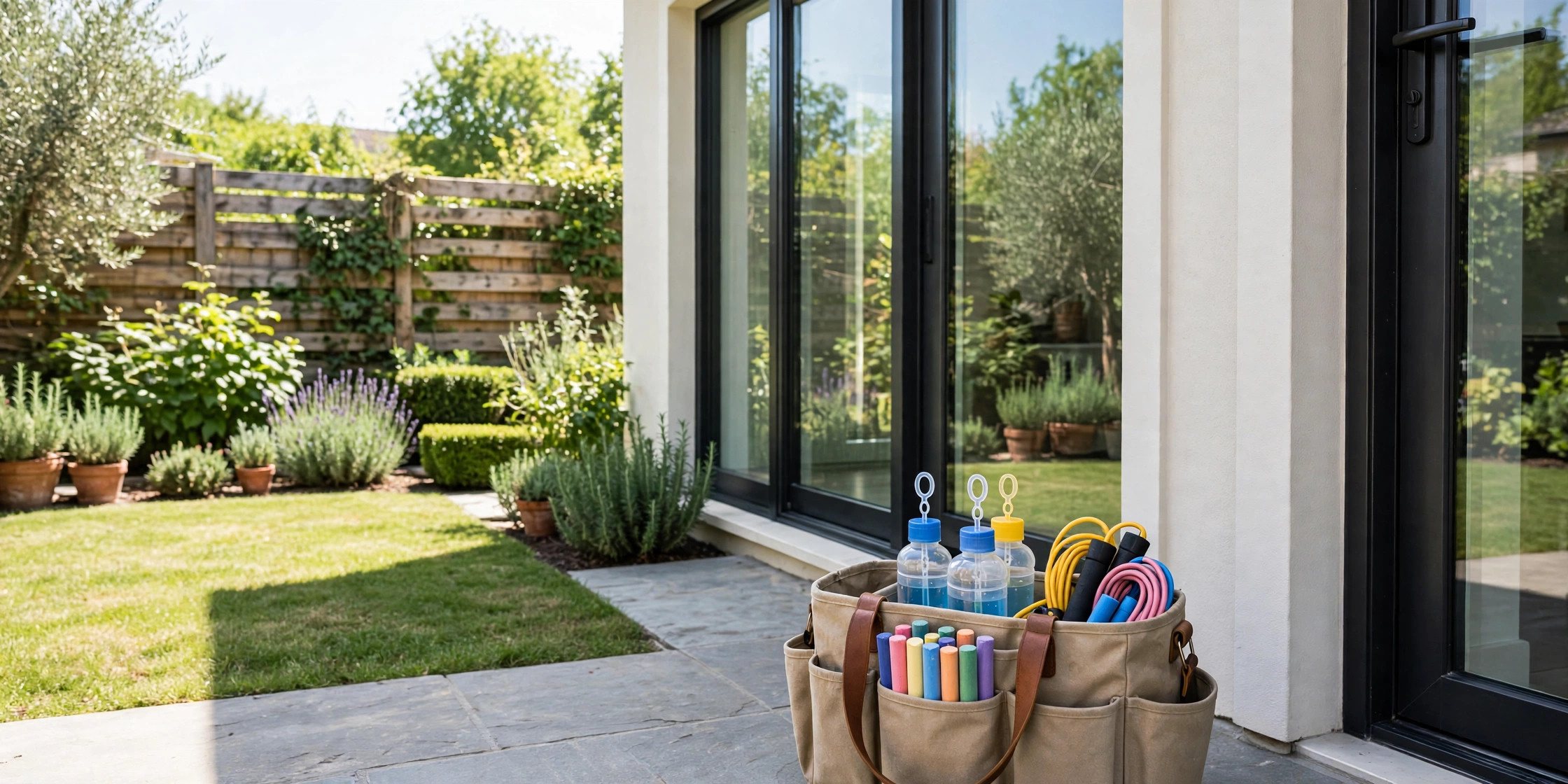
15. A chalk and bubble caddy by the patio
Chalk, bubbles and pavement toys are small, and they vanish into the garden if they have no home. Keep a caddy — a bucket, a tool tote or a small crate with a handle — by the patio door, with chalk in one compartment, bubbles in another and skipping ropes on top. Children carry the whole caddy out, play, and carry it back in one trip, which is the whole point: one handle, one journey. Store the caddy under cover, so the chalk stays dry and the bubble mixture does not spill. One caddy, by the door, and the small outdoor toys stop disappearing.
Small gardens, balconies and tidy habits
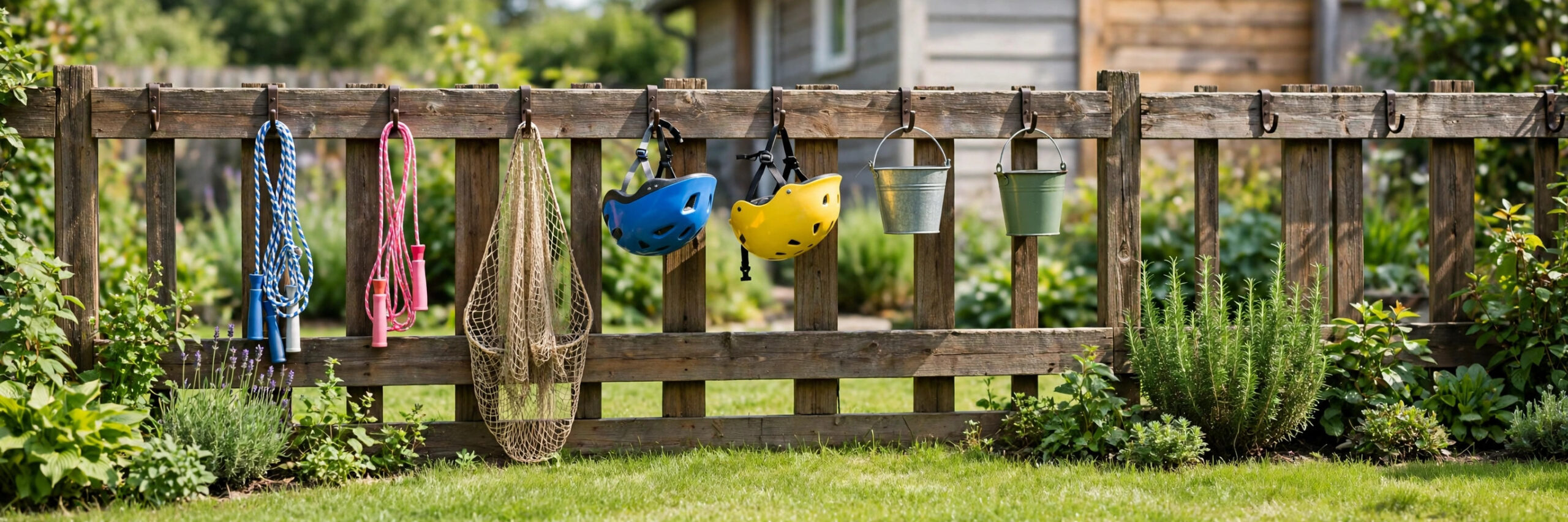
16. Vertical storage for a small garden: hooks, not floor space
A small garden has no floor space to spare, so storage has to go up. Screw a row of hooks into the fence or the wall, and hang the light toys — skipping ropes, nets, small buckets, helmets — where they can be seen and reached. Hang the heavier toys on lower hooks, the light ones up high, and keep the floor for the toys that cannot hang. A vertical strip of hooks costs almost nothing, uses no lawn at all, and makes a tiny garden feel twice as big. Measure the fence first, and buy hooks to match the toys, not the other way round.
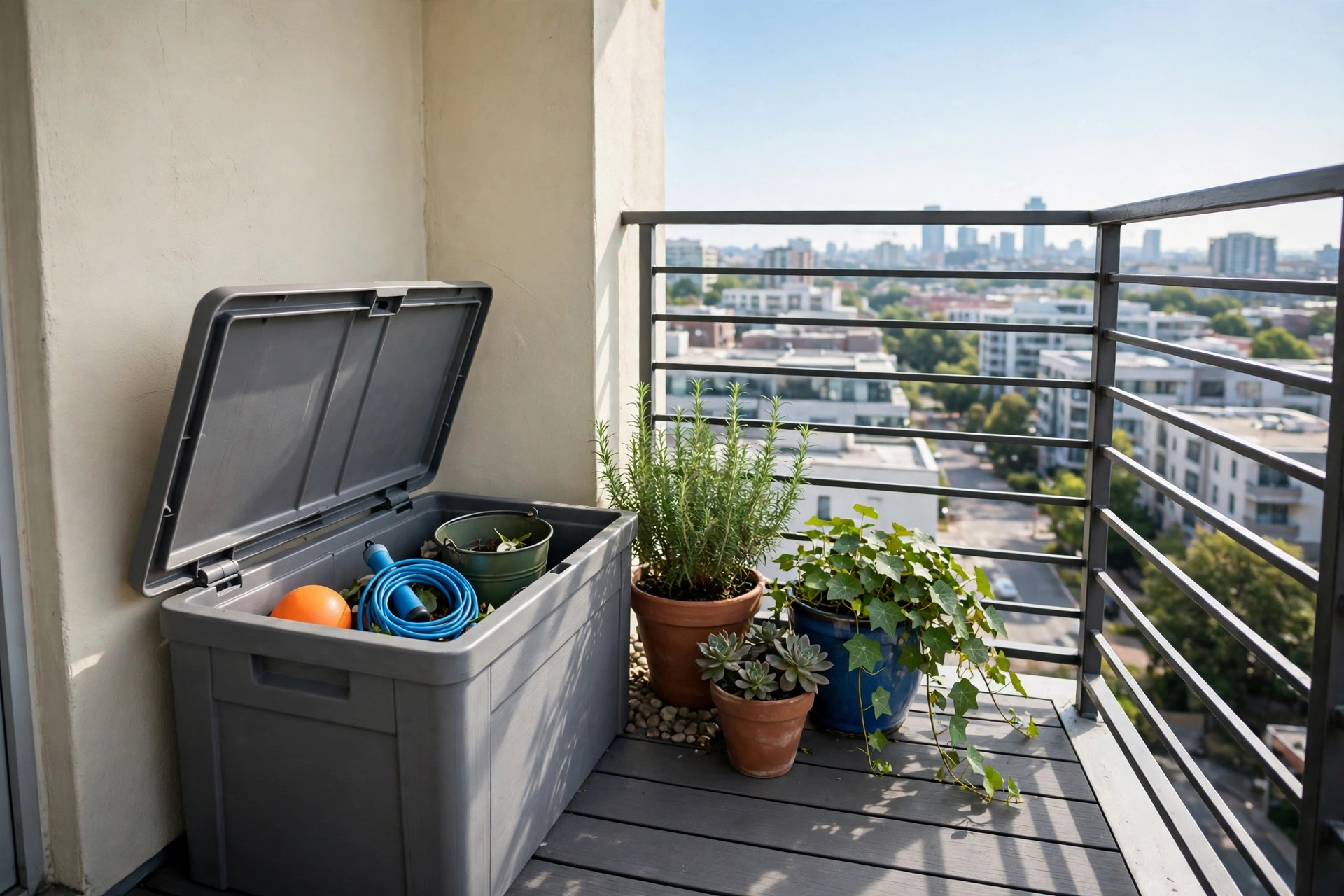
17. A balcony box: one weatherproof bin, nothing more
A balcony is not a garden, and it should not try to be one. One weatherproof bin, small enough to fit against the wall, is the whole system: a few balls, a skipping rope, a bucket and a watering can, and nothing else. If a toy does not fit in the bin, it does not live on the balcony — it lives in the house or it leaves. Keep the bin lid shut in rain, and check the drainage holes once a month, so the bin never becomes a puddle. One bin, one rule, and a small balcony stays a balcony instead of a storage yard.
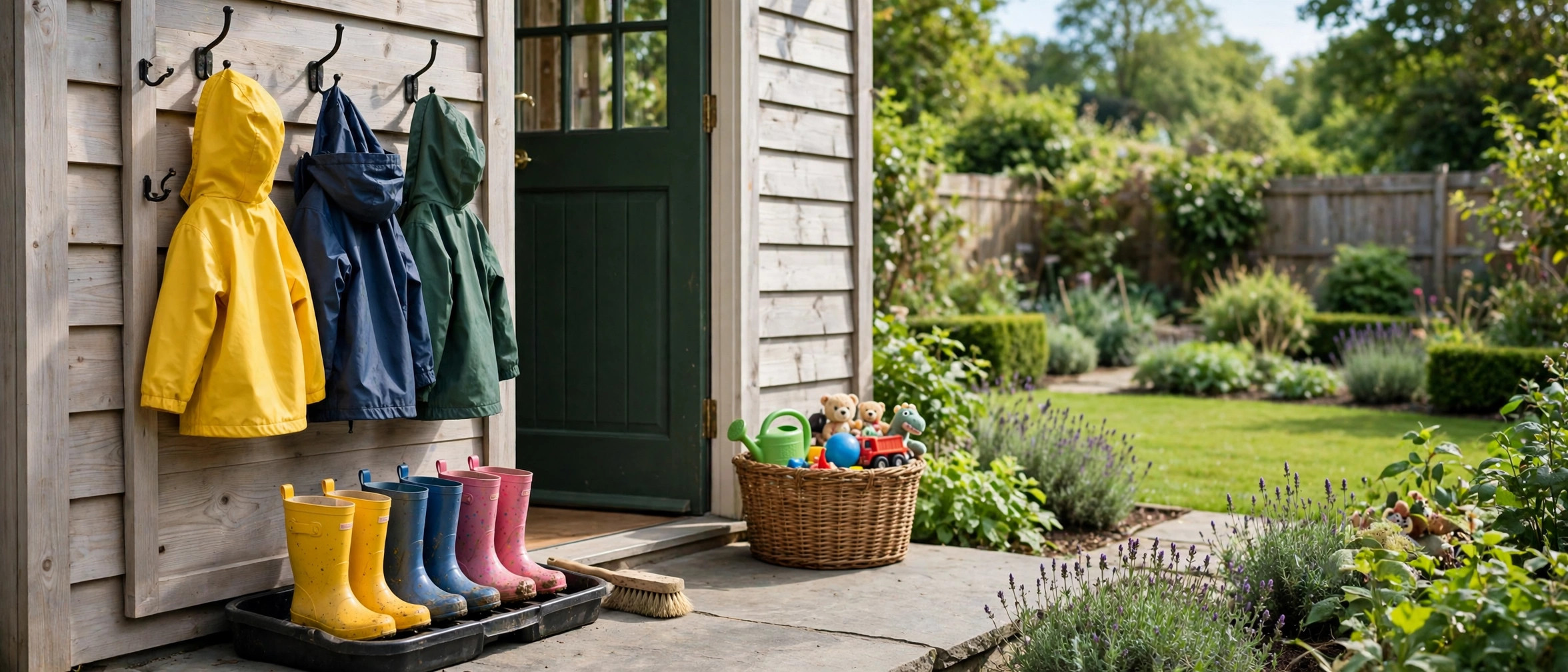
18. A muddy-boots station by the door
Outdoor play ends at the door, and the mud should end there too. Put a boot tray, a row of hooks and a small brush by the back door, and make it the station where boots come off, coats hang and hands get washed. Keep one basket on the station for the toys that are allowed in for the night, and everything else stays outside. Children learn the route in a week: boots off, toys in the box, hands washed, then inside. A station by the door is storage for the mess, not just for the toys, and it keeps the house clean.
19. Rotate the outdoor toys, like the indoor ones
Children ignore toys they see every day, outdoors as well as indoors. Split the outdoor toys into two groups, keep one group out and store the other in the shed or the garage, and swap them every two weeks. The "new" toys feel new without spending anything, and only half the toys can be out at once, so the garden never looks full. Keep the swap on the same day as the indoor rotation, so it becomes one habit instead of two. Rotation is the cheapest way to make a small toy collection feel big.
20. One beautiful thing on display, on purpose
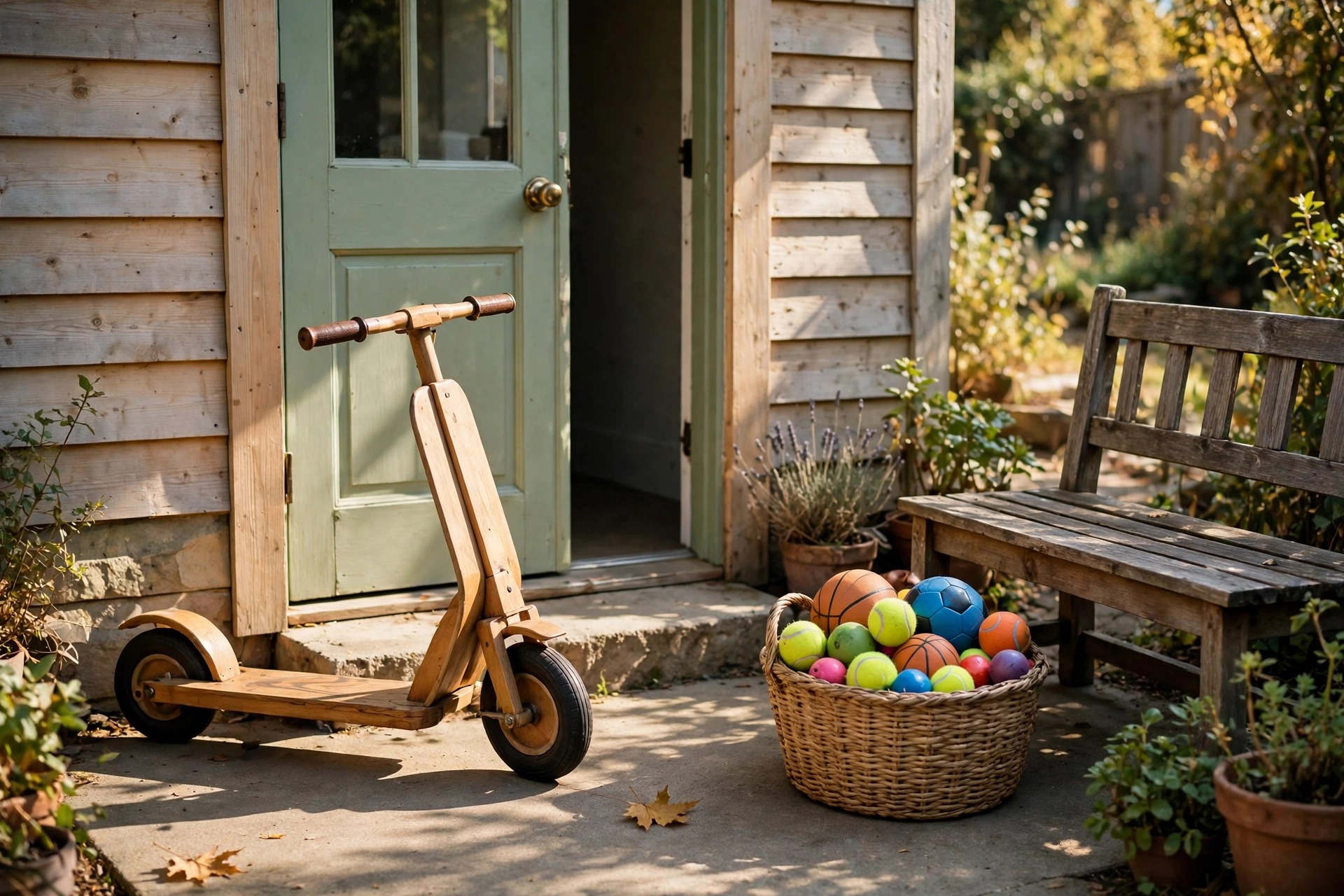
A garden with no toys on show looks empty; a garden with toys everywhere looks messy. The answer is one beautiful thing, chosen on purpose: a wooden scooter parked by the door, a woven basket of balls by the bench, or a colourful sandpit with its lid on, sitting in the sun. It is the signal that children play here and the garden is finished, not abandoned. Keep it to one display, keep it tidy, and keep it where it photographs well — it is the reason the garden still looks like a garden.
Which outdoor toy storage fits which home?
| Home / situation | Best first move | Budget | Tools needed |
|---|---|---|---|
| Big garden / lots of toys | Deck box + shed for big toys (ideas 4, 7) | Medium | None |
| Small garden / no shed | Vertical hooks + stackable crates (ideas 16, 9) | Low | Screws / hooks |
| Balcony only | One weatherproof bin (idea 17) | Low | None |
| Bikes and scooters | Rack in a row by the fence (idea 11) | Low–medium | Screws / hooks |
| Water play heavy | Water toy station + drying line (idea 13) | Low | None |
| Muddy play / rainy climate | Muddy-boots station + tarpaulin (ideas 18, 10) | Low | None |
You do not need all 20 ideas. You need the three that solve your biggest mess — usually the toys with no home, the balls that roll everywhere, and the bikes that block the path. Start with the sort, put one weatherproof box by the back door, and make the rule that outdoor toys never come inside. Do that tonight and the lawn will feel different by tomorrow morning.
Save this post for your next garden tidy-up, and if you are planning the indoor side too, read 35 Clever Toy Storage Ideas for 2026 next — it is Post 05 in the same Storage by room cluster — and 28 Living Room Storage Ideas for 2026, Post 01, to carry the same system room by room.
Published 12 November 2026. Updated as new outdoor toy storage finds are tested.
Frequently asked questions
What is the best outdoor toy storage for a small yard?
A deck box bench by the back door covers most of it. It holds balls, bats and water toys, gives you a seat for putting shoes on, and keeps everything within a few steps of the door so clean-up takes a minute.
How do I store bikes and scooters outside?
Park them along the fence on a rack. Bikes and scooters stand upright in a rack or hang from vertical fence hooks, which frees the lawn and keeps them off the ground. Cover them or keep them under the deck box lid in wet weather.
How do I keep outdoor toys from getting ruined in the rain?
Choose storage that drains or closes. A deck box with a lid keeps rain out, ride-on toys go in the garden shed, the sandpit gets a wooden lid, and mesh bags let sand toys drip dry instead of sitting in water.