35 Clever Toy Storage Ideas for 2026
Toys do not stay in the playroom. They migrate to the living room, the hallway, the kitchen table and the bottom of the stairs — and by Friday the whole house looks like a toy shop after closing time.
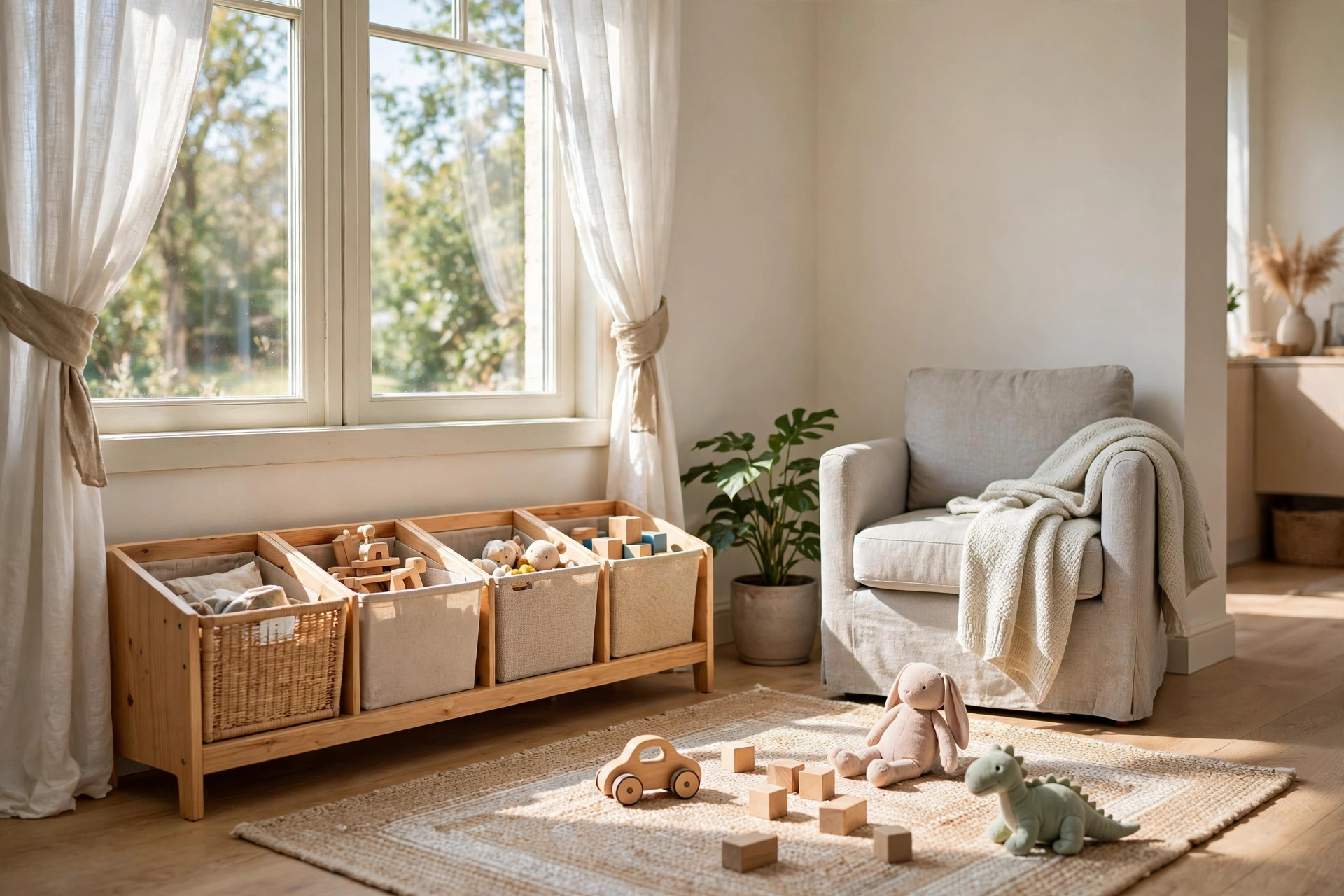
These 35 clever toy storage ideas fix that without a bigger house: bins kids can reach, a rotation that keeps old toys new, zones by activity and furniture that hides the mess in plain sight.
Every idea below works in a real, lived-in home with real children. Pick three that fit your worst corner, start with one labelled bin per toy type, and build from there.
Start with a system, not a box
1. Sort by type before you buy anything
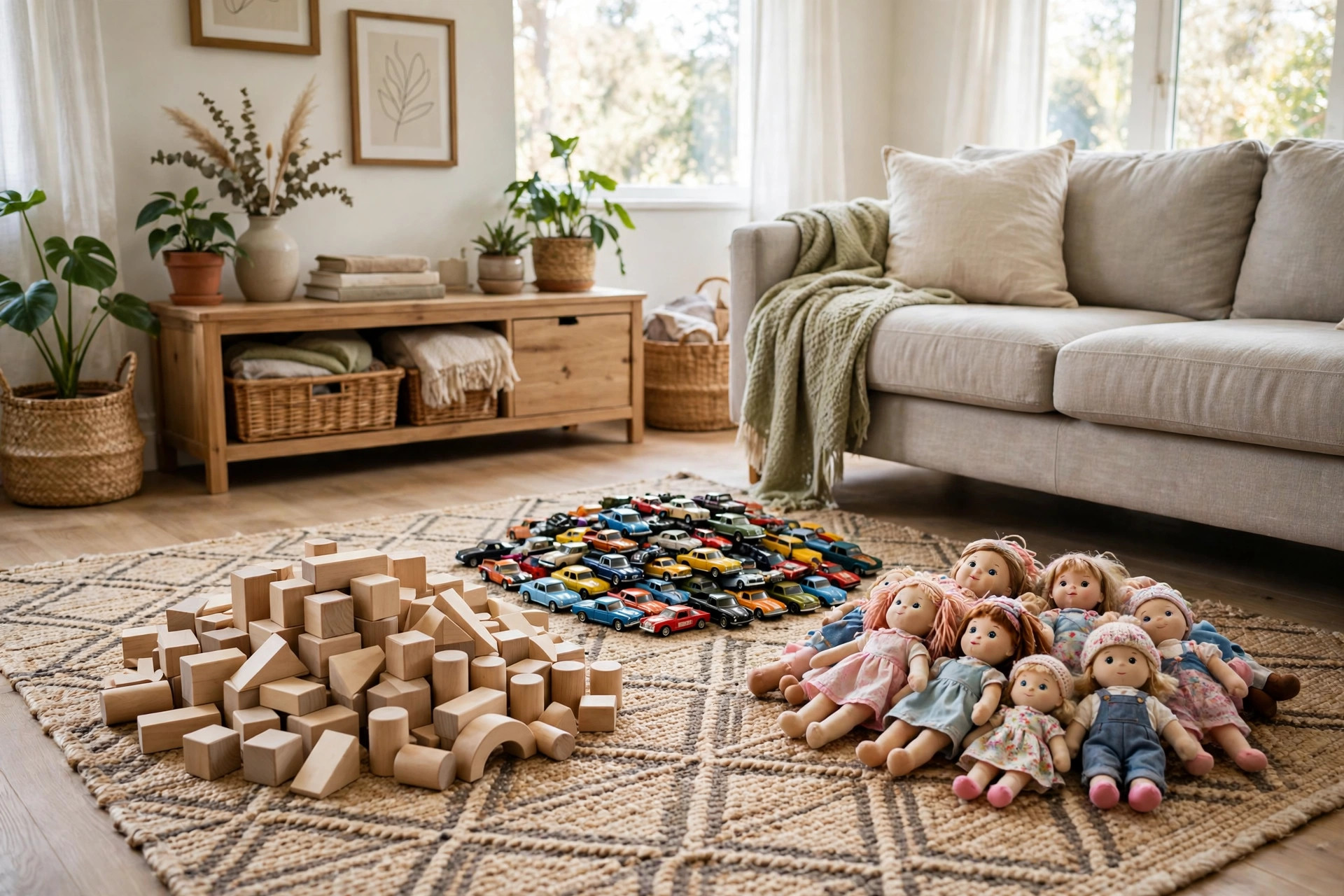
Buying bins before sorting is how toy storage fails. Tip every toy box onto the floor, sort into piles by type — blocks, dolls, cars, art, books, dress-up, outdoor — and only then count what you actually have. Most families find a third of the pile is broken, missing pieces or never played with, and it leaves before a single bin is bought. Sorting first also tells you the real sizes: blocks need a deep bin, cars need a shallow tray, books need a shelf, not a box. Do the sort once, and every idea below gets easier.
2. One home for every toy, and only one home
A toy with two homes ends up in neither — it lives on the floor between them. Give every type exactly one place: cars in the car bin, blocks in the block bin, dolls on the doll shelf. When a child asks where something goes, the answer is always the same, and tidy-up stops being a negotiation. Label the home with a picture as well as a word, so a child who cannot read yet can still put things back. If a toy has no home, it does not get a new box — it gets donated or stored.
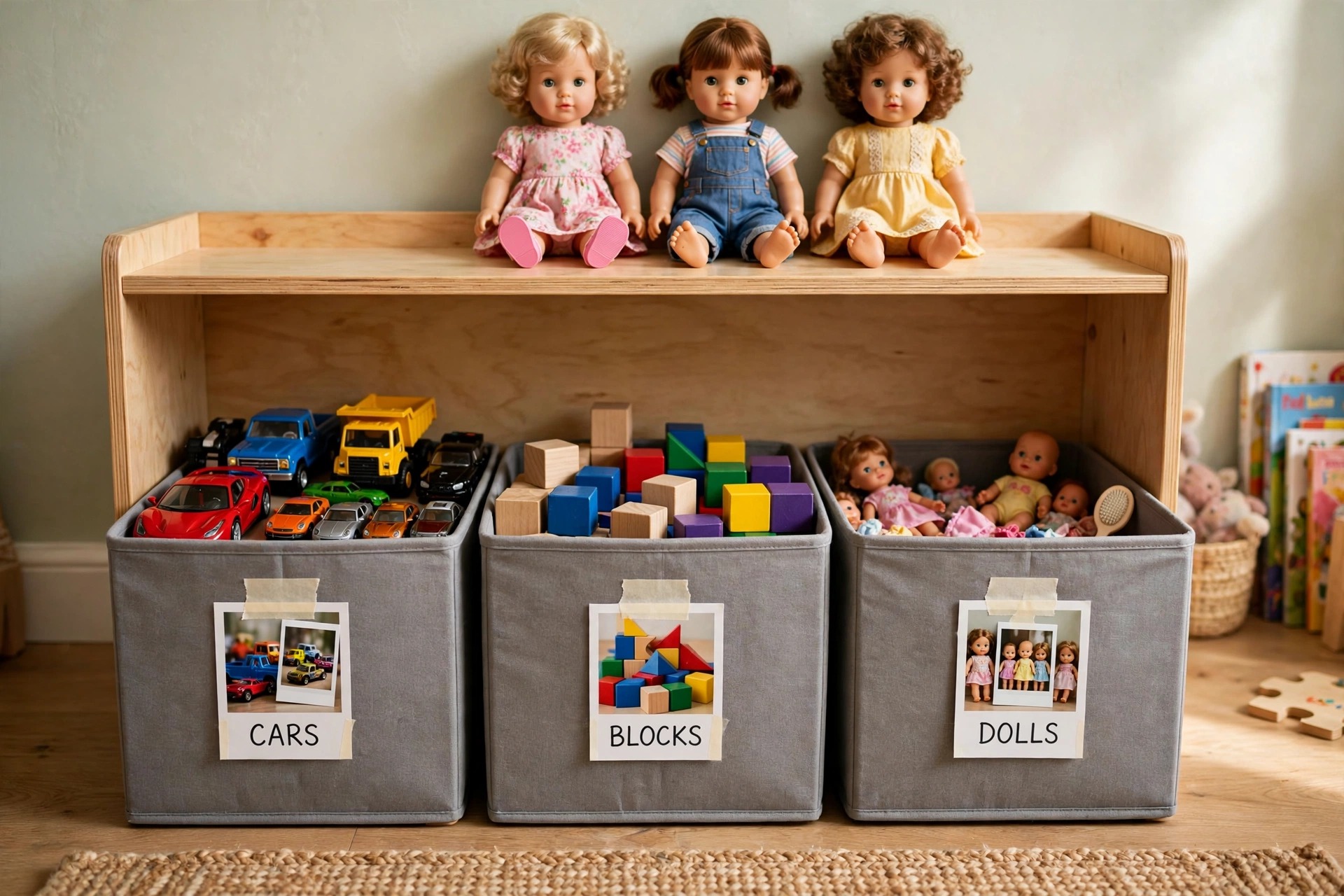
3. The toy rotation that makes old toys new again
Children ignore toys they see every day and rediscover toys they have not seen for a month. Split the toys into three groups, keep one group out and store the other two in labelled boxes in a closet or under a bed. Swap one group every two weeks, and the "new" toys feel new without spending anything. Rotation also caps the mess: only a third of the toys can be out at once. Keep the swap on the same day you do the laundry, so it becomes a habit instead of a project.
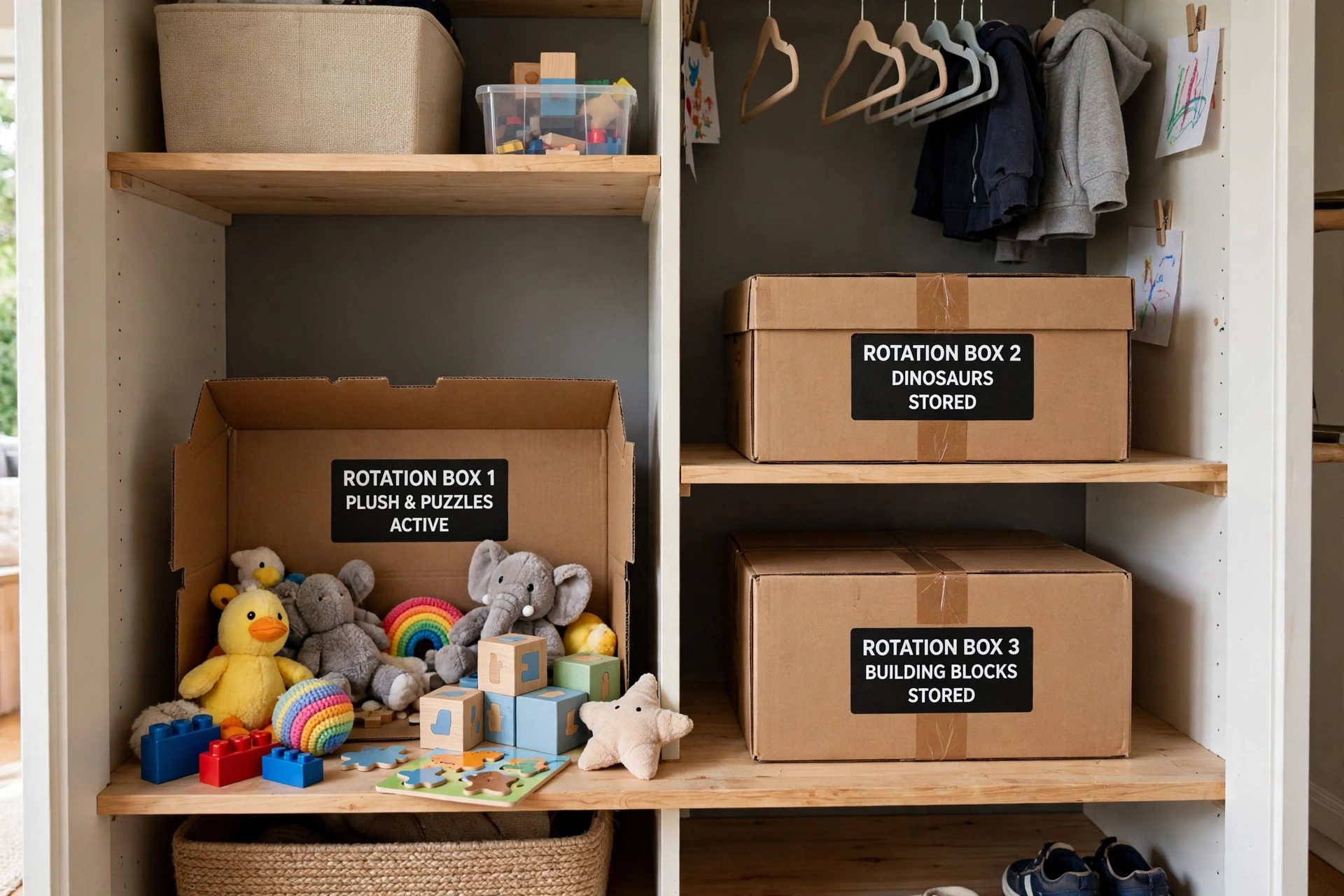
4. A clear toy library box for the swap
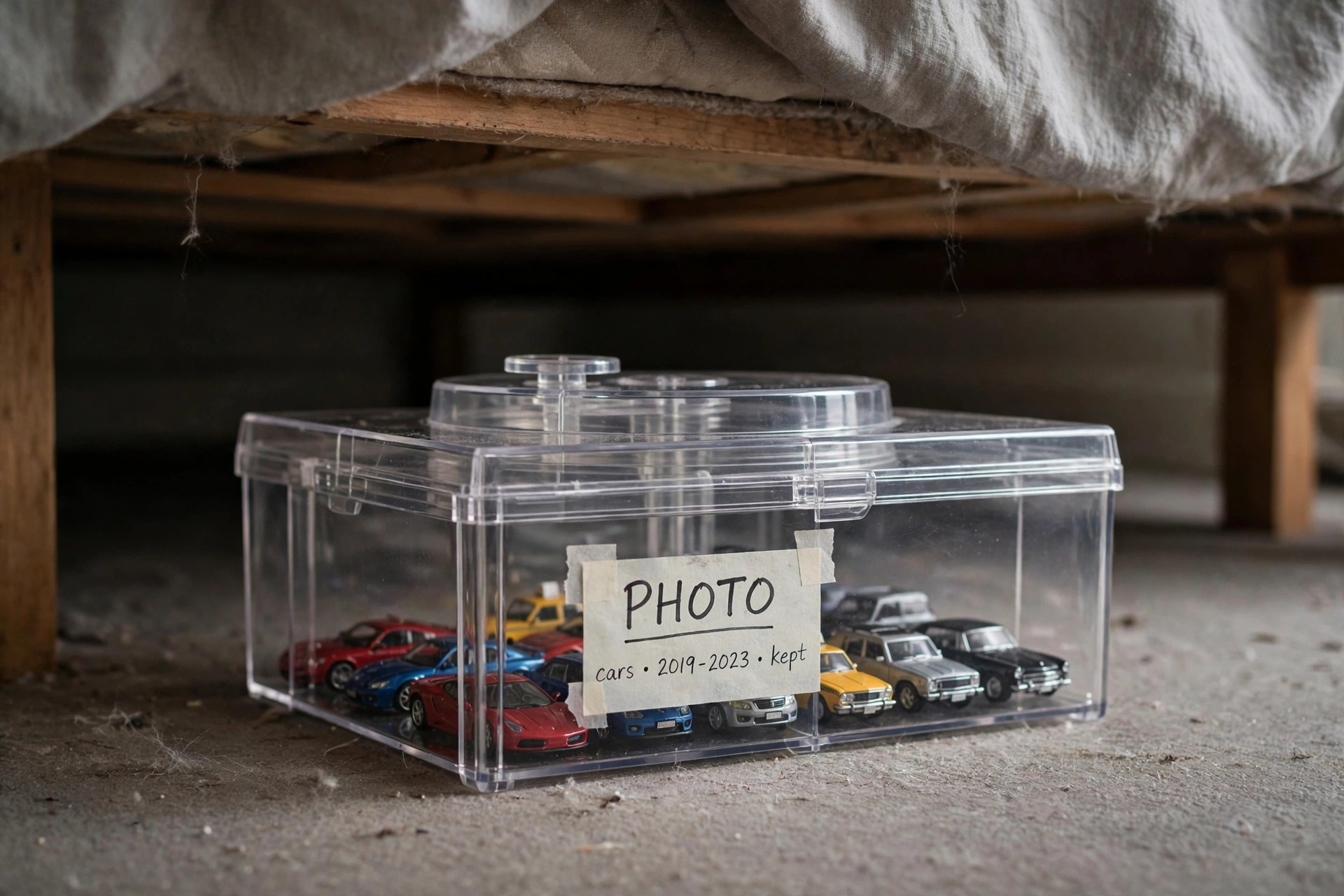
Rotation only works if the stored toys are easy to find again. Use one clear box per rotation group, with a photo label on the front showing what is inside, so you can grab the right box without opening three. Clear boxes beat coloured ones here — you can see at a glance whether the box holds cars or craft supplies. Stack them in a closet, on a high shelf or under a bed, out of reach but not out of mind. One box per group is enough; if you need a fourth, you have too many toys, not too few boxes.
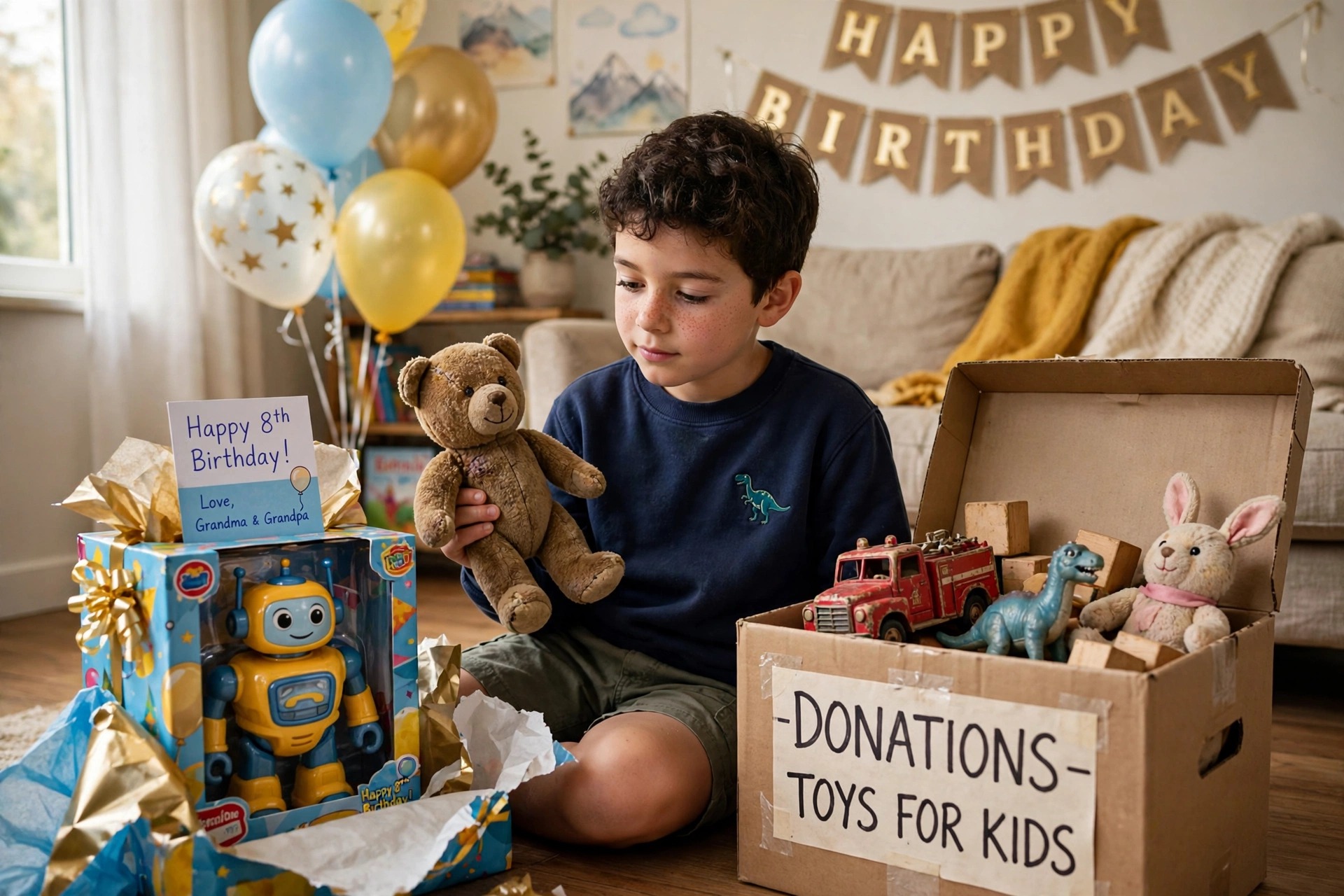
5. The one-in, one-out rule for birthdays and holidays
Every birthday and holiday brings new toys into a house that is already full. Make the rule before the next one arrives: for every new toy that comes in, one old toy leaves — donated, passed on or stored for rotation. Tell children the rule in advance and let them choose which toy goes, so it feels like their decision. Keep a donation bag in the closet, always open, so the outgoing toy leaves the house instead of drifting back to the floor. It takes five minutes and stops the toy pile growing every December.
6. Zone the play area by activity, not by toy
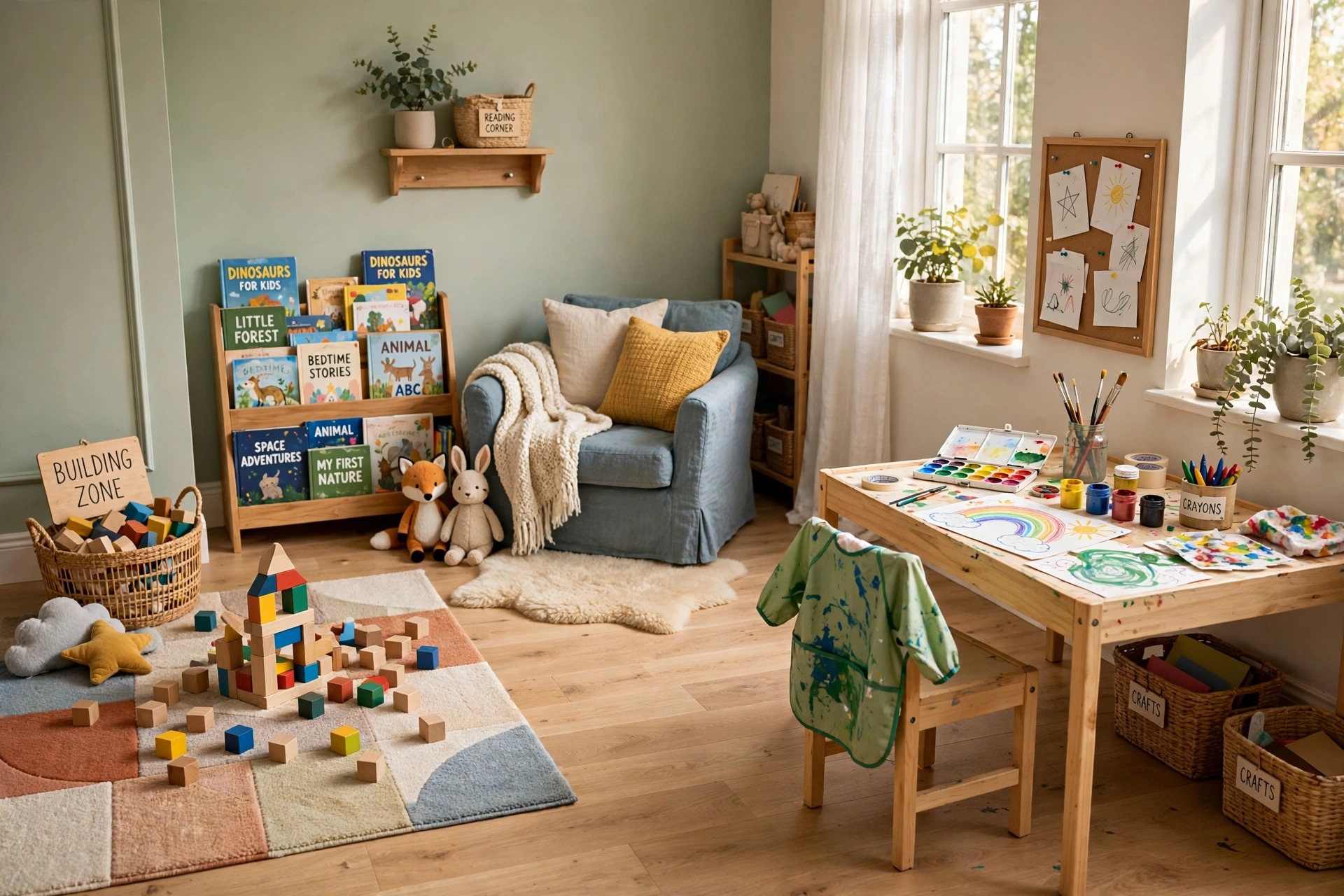
A playroom sorted by toy type still turns into chaos if every activity happens everywhere. Divide the room into zones — building, reading, art, pretend play — and give each zone its own corner, rug or table. Blocks stay in the building zone, books stay in the reading corner, paint stays at the art table. When everything has a zone, tidy-up is just carrying a toy back to its corner, and children learn the system by walking it. This is a habit, not a purchase, and it makes every bin on this list work better.
7. A 5-minute tidy-up song, every evening
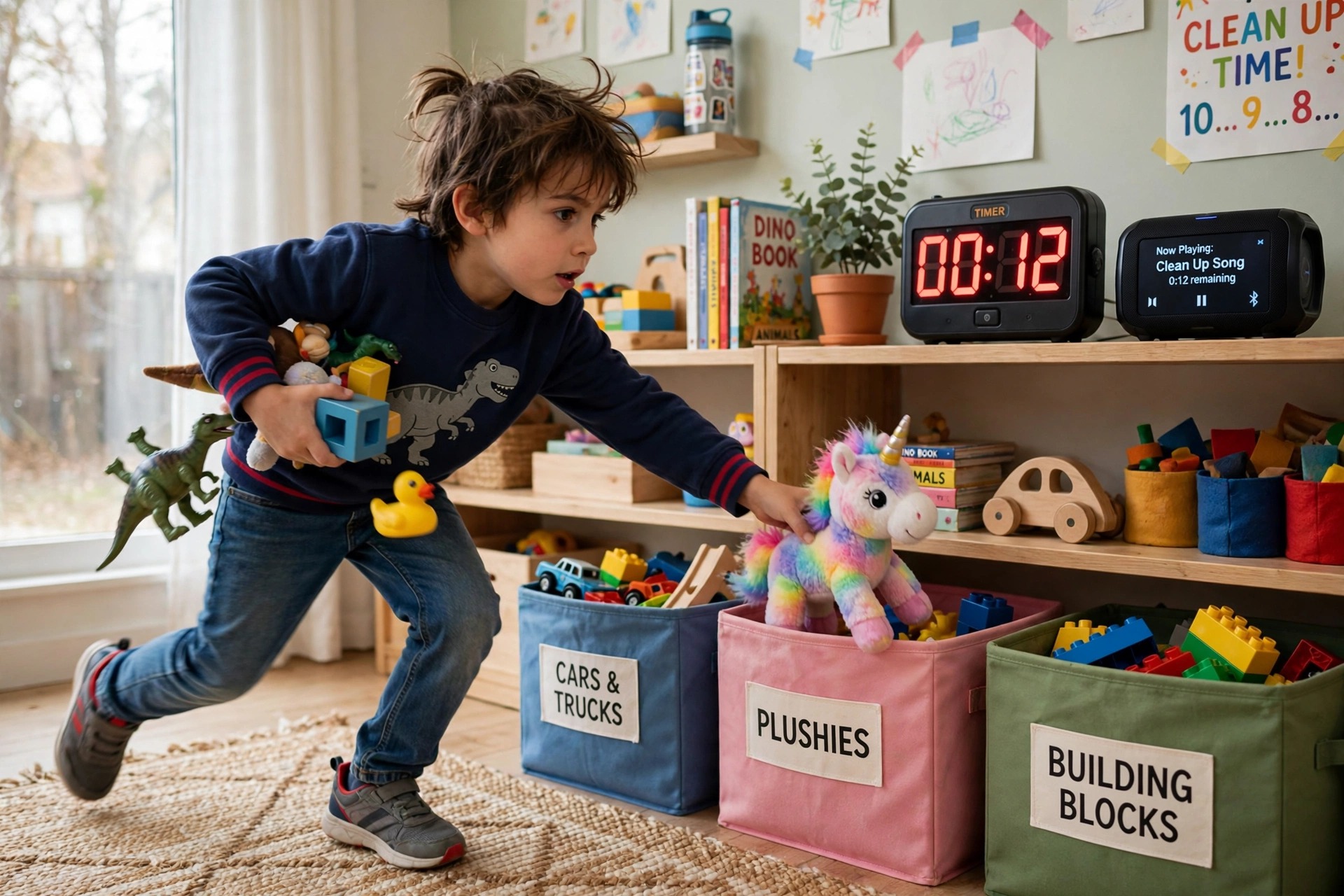
Storage only helps if toys go back into it. Make tidy-up a five-minute game before bed: set a timer, play one song, and race to get every toy back to its home before the music stops. Children who will not tidy for twenty minutes will tidy for one song. Keep the rule simple — everything off the floor, nothing left out — and praise the finished room, not the speed. If tidy-up takes longer than five minutes every night, there are too many toys out, not too little storage. Start tonight, and tomorrow morning will feel different.
8. Keep favourites at child height, the rest up high
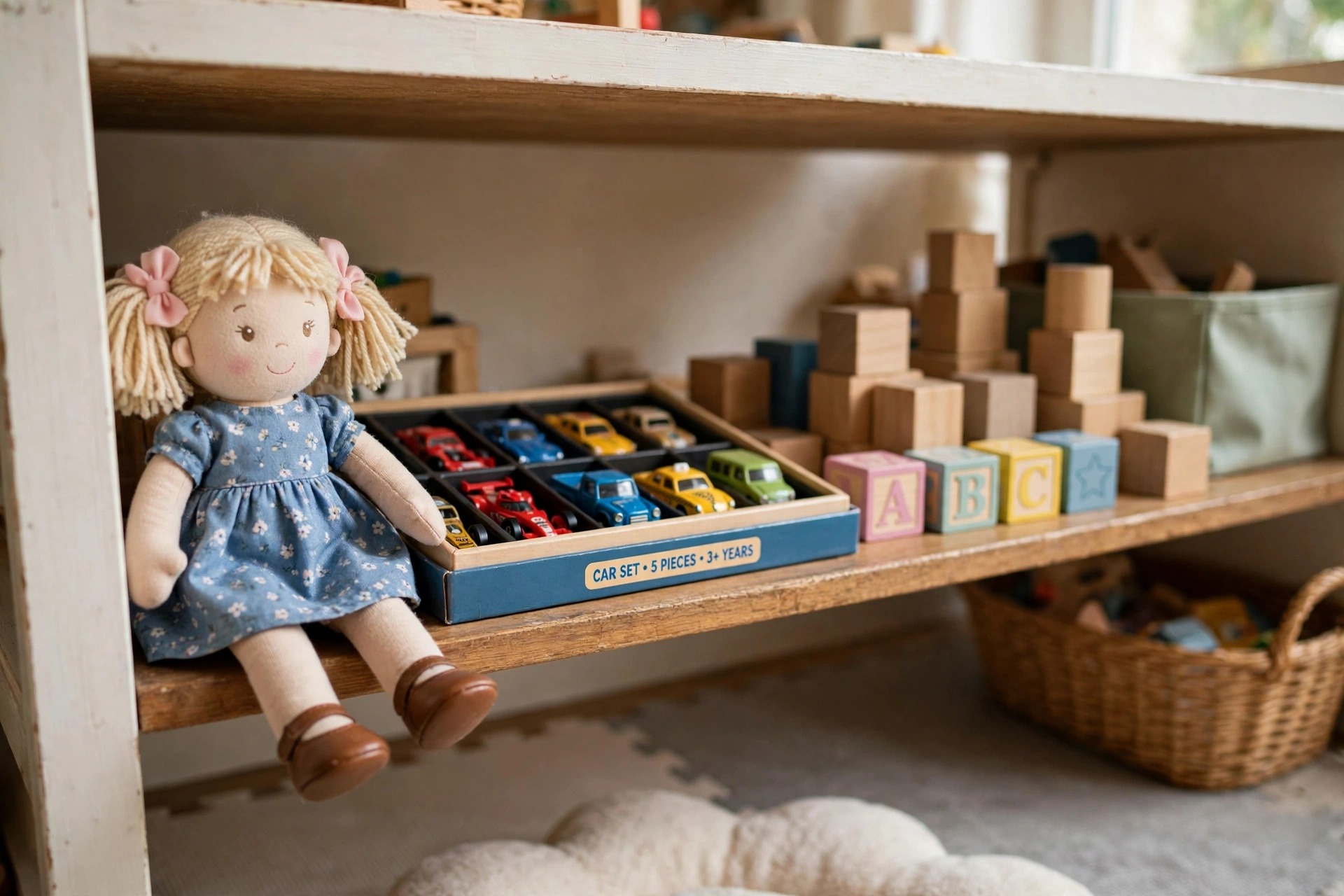
The toys children reach for daily should be at their height; the toys they use weekly belong on a higher shelf, and the toys they use monthly belong in a closet. Put the daily five — the current favourite doll, the car set, the book, the blocks, the craft box — on the lowest shelf, where a small child can take them out and put them back alone. Everything else goes up, where an adult hands it down on request. When the lowest shelf is full, something has to move up before anything new comes down, which is the whole system in one rule.
9. A "broken or missing pieces" box, checked monthly
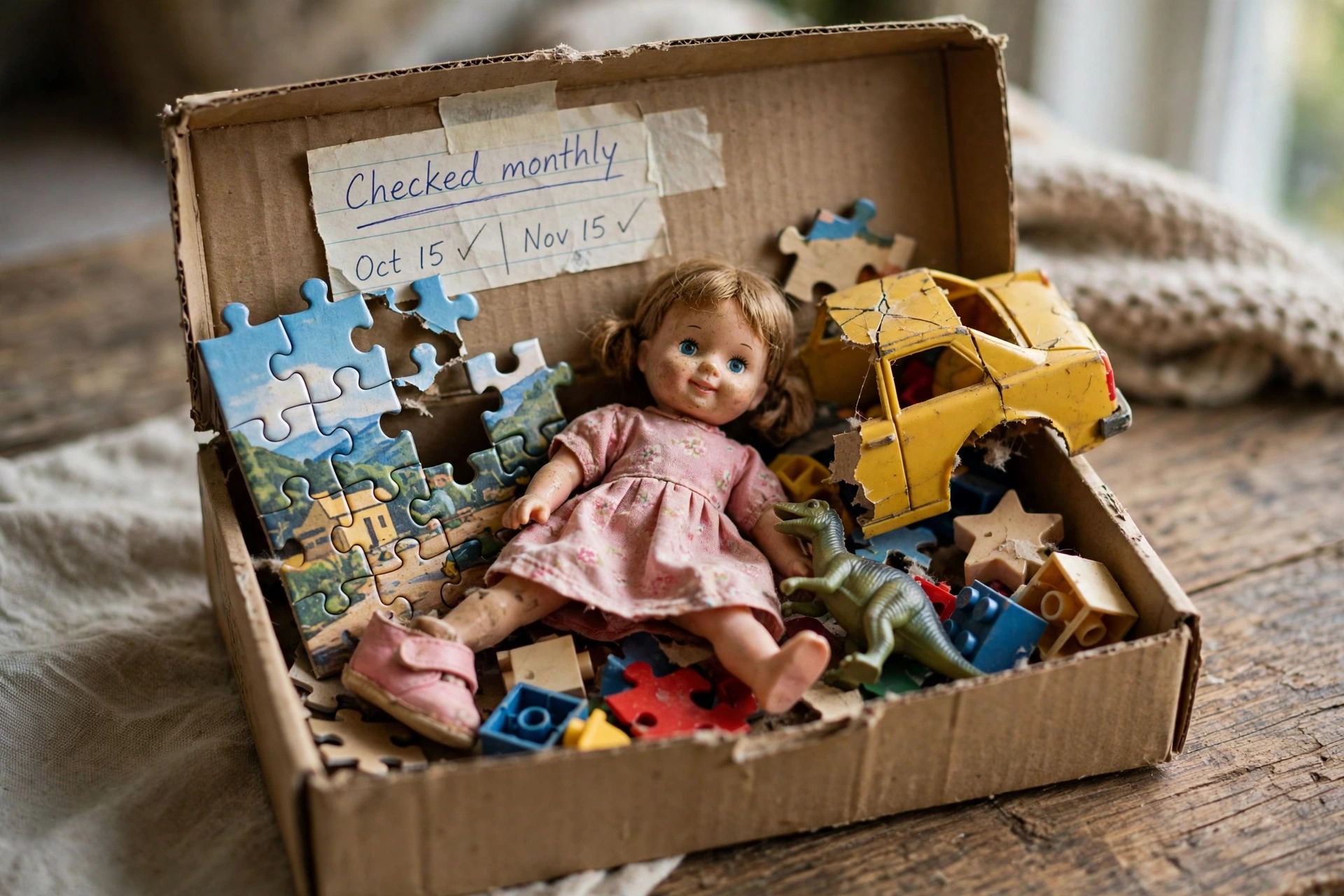
Half a puzzle, a doll with one shoe and a car with no wheels are not toys — they are clutter that blocks the real toys. Keep one small box for broken or incomplete toys, and check it on the first of the month. Fix what can be fixed, bin what cannot, and return the rescued pieces to their proper home. Children forget about the broken toys within a day, and the shelf they were blocking suddenly has room again. One box, one check a month, and the toy collection stops growing by accident.
Bins, baskets and labels that actually work
10. One bin per toy type, in the same size
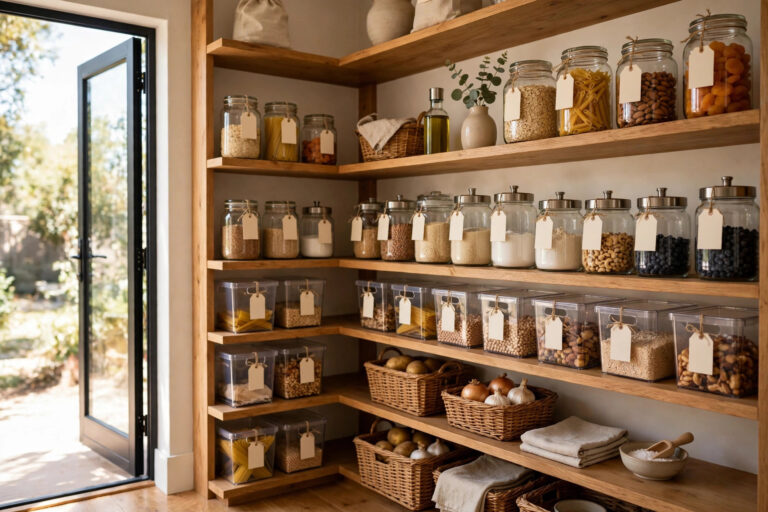
Ten different bins in ten different sizes look messy even when they are tidy. Pick one bin size — a low, wide bin a child can carry — and use it for every toy type. Same size means they stack, they fit the same shelf, and a child can swap one bin for another without thinking. Choose bins with handles or a lip a small hand can grip, and keep the lids off for daily toys so putting away takes one motion, not three. Same-size bins are the cheapest styling trick in the whole list.
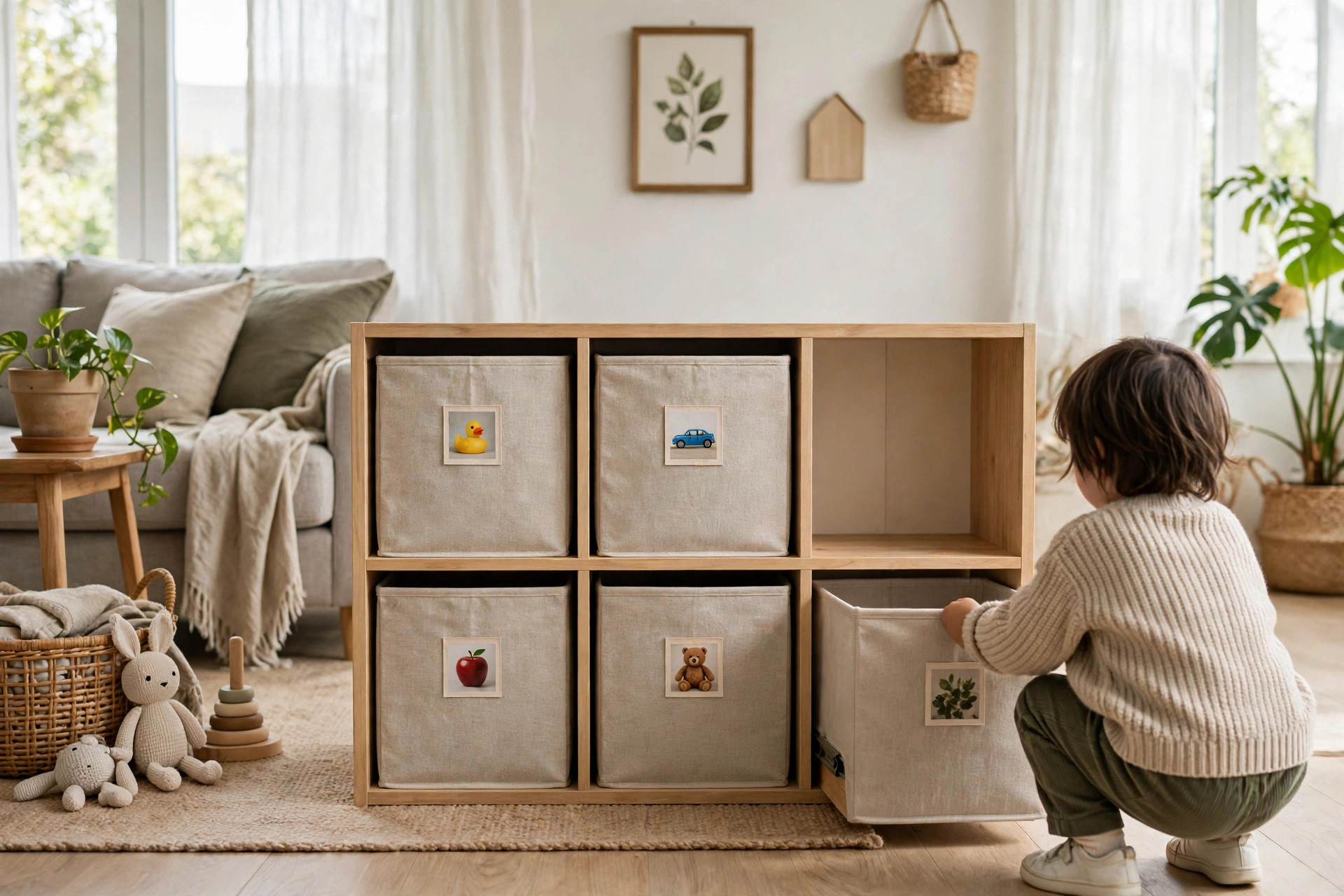
11. Clear bins with a photo label, not a word label
A word label means nothing to a three-year-old, and a bin with no label means nothing to anyone. Stick a photo of the toys inside on the front of each clear bin — cars on the car bin, blocks on the block bin — with the word underneath for older children. A child can match the photo to the toy in their hand in two seconds, and tidy-up becomes a matching game instead of a chore. Take the photos on your phone, print them at home, and tape them on; they do not need to be pretty, they need to be obvious.
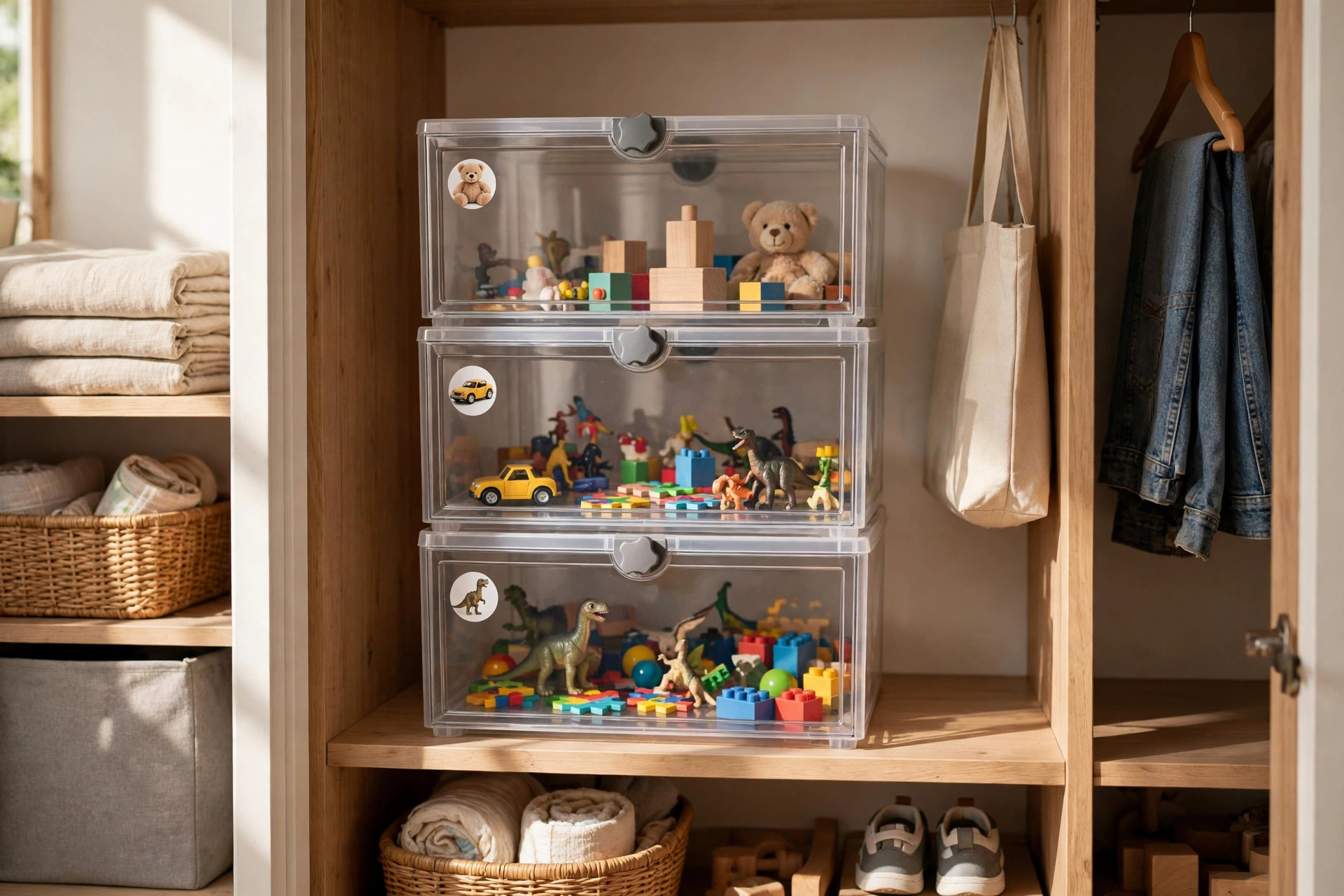
12. Soft baskets for soft toys, hard bins for hard toys
Soft toys in a hard bin get squashed and lost; hard toys in a soft basket poke through and tip over. Match the container to the toy: soft fabric baskets or laundry-style hampers for teddies and dress-up, hard bins with straight sides for blocks, cars and figures. Soft baskets can be squeezed into a gap on a shelf or under a bed; hard bins stack neatly on a shelf. Keep one soft basket per child for their special soft toys, and the rest go in the big basket by the bed.
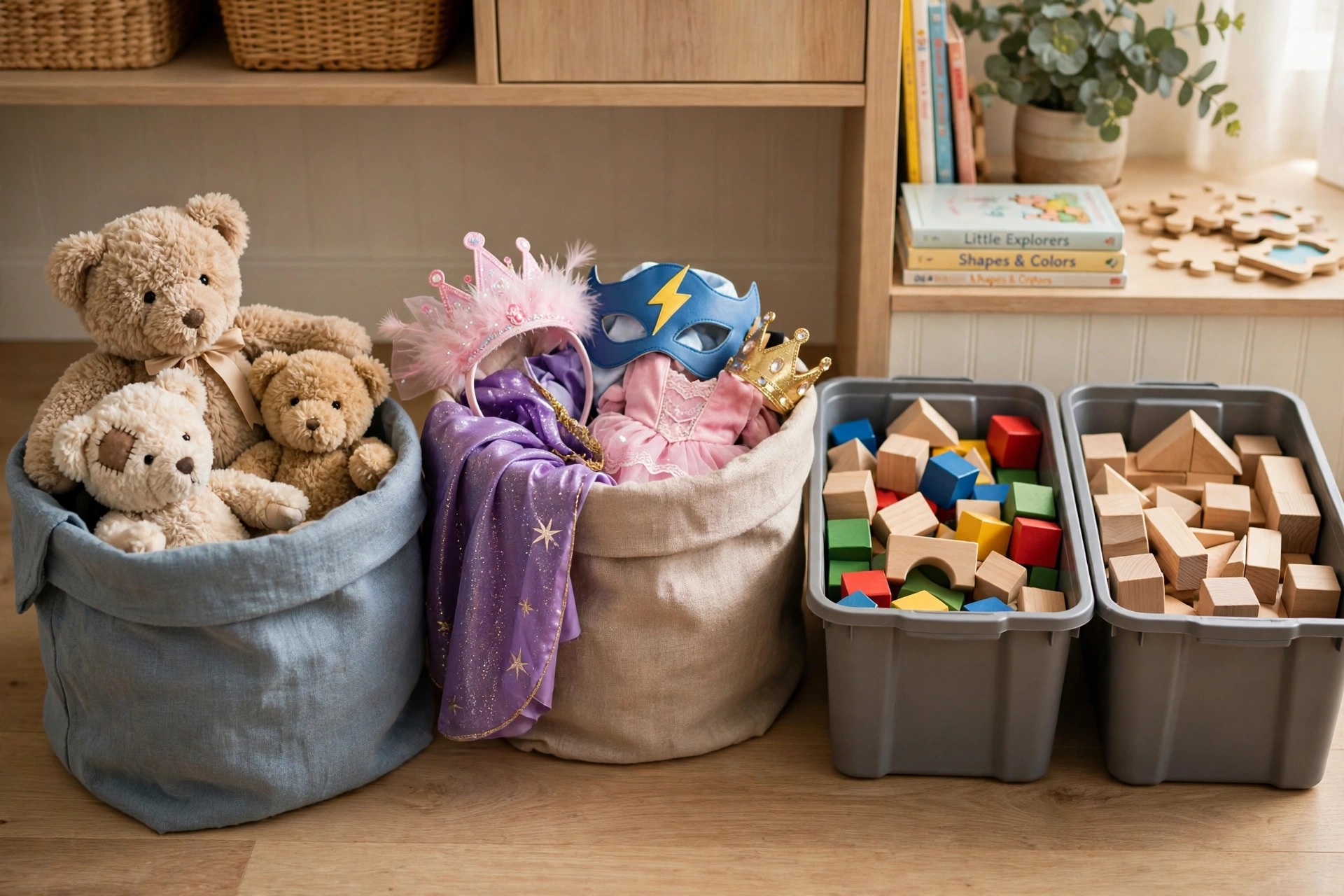
13. A rolling cart for the toy of the week
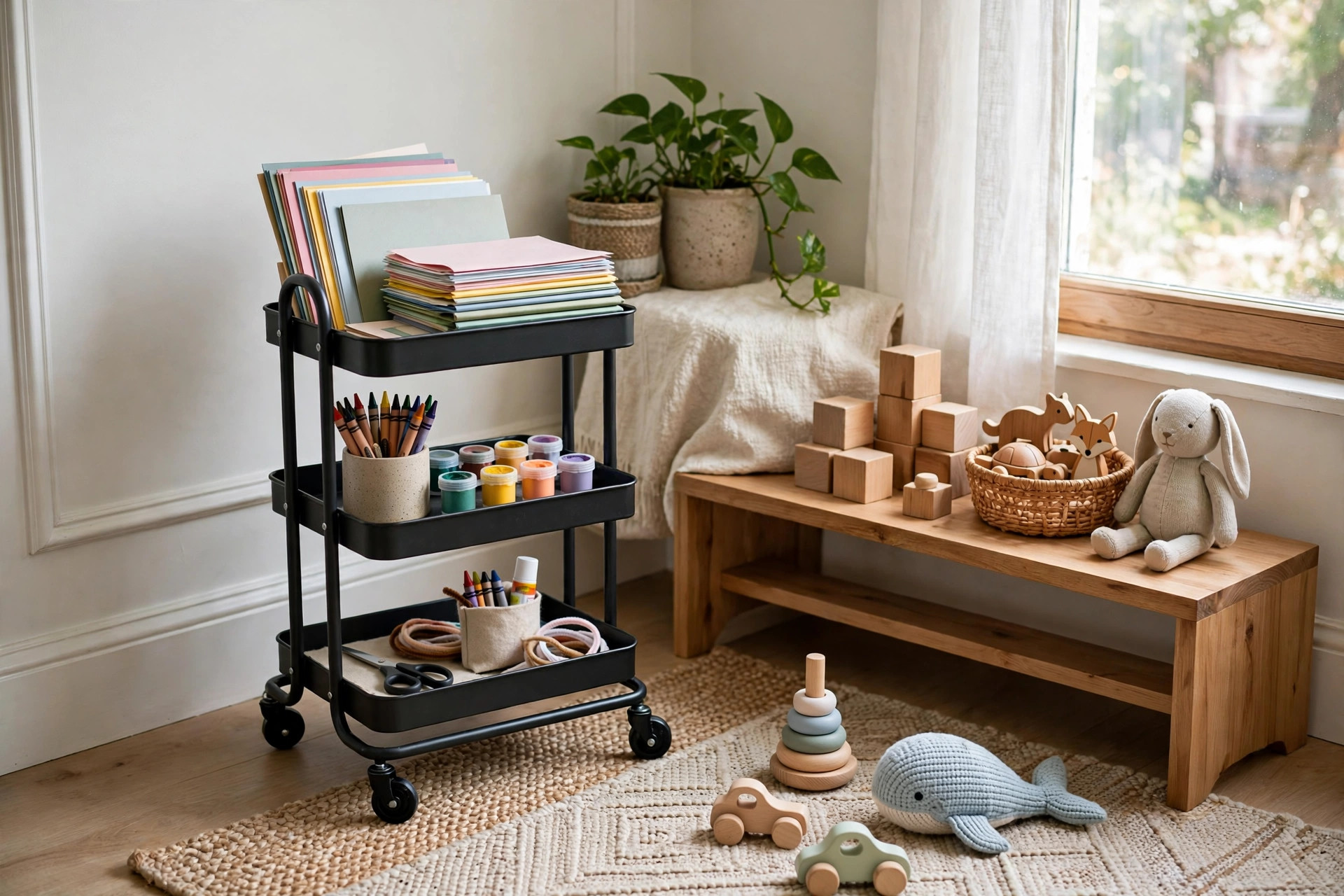
Some toys need to travel — the craft set goes to the kitchen table, the cars go to the hallway, the dolls go to the bedroom. A small three-tier rolling cart holds the current week's toys and rolls wherever the playing happens, then rolls back to its corner at night. Each tier holds one type, so nothing mixes, and the wheels mean a child can move it alone. When the week ends, empty the cart, refill it from the rotation boxes, and the next week starts tidy. This is the cheapest portable storage in the whole list.
14. Stackable drawers under the bed for the overflow
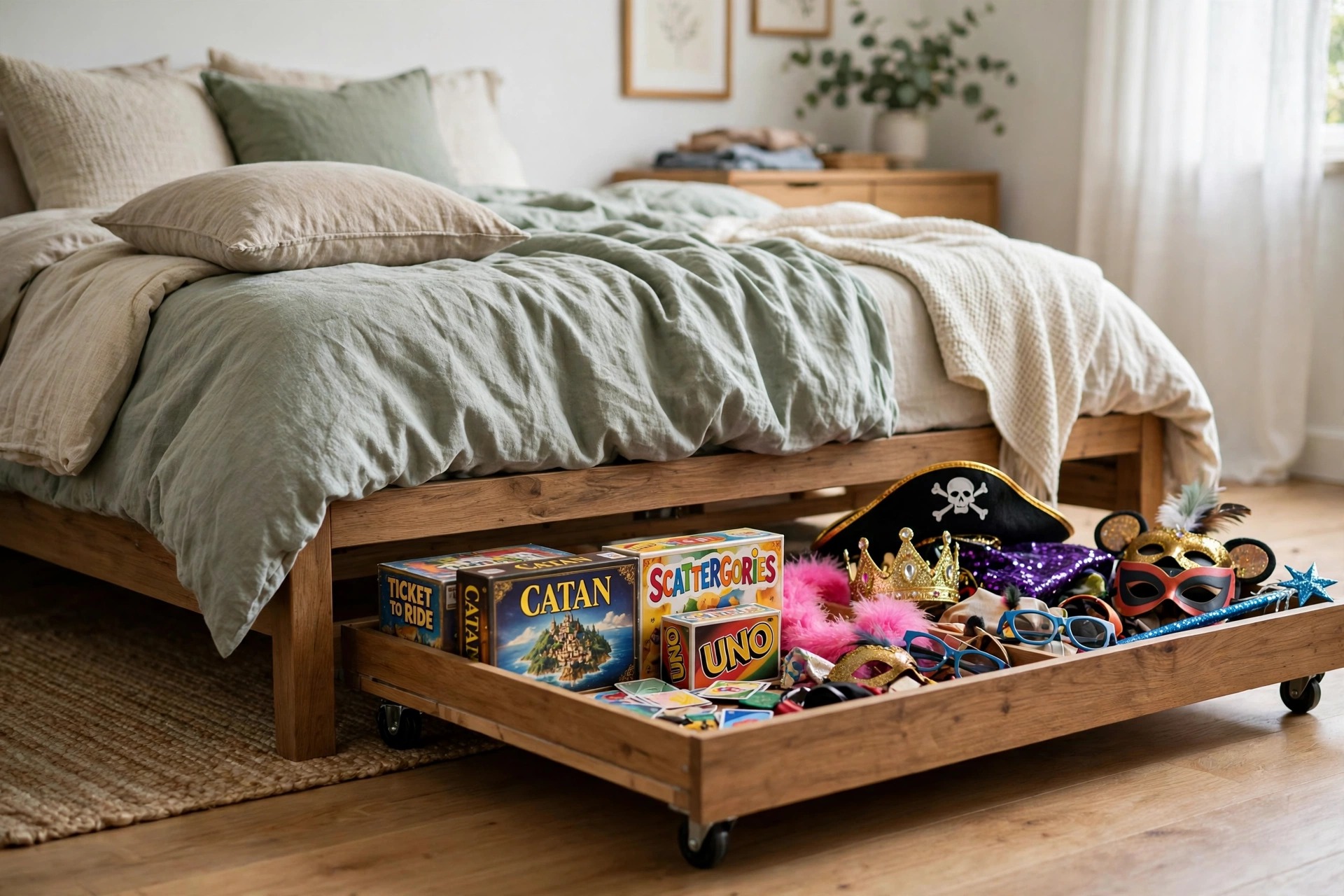
Under the bed is the biggest unused toy shelf in most houses. Use low, flat drawers or boxes on wheels — one for board games, one for dress-up, one for the rotation group — and slide them out only when needed. Under-bed storage keeps the overflow out of sight but still in the room, so children can find it without an adult climbing into a closet. Label the front edge, keep it to three boxes, and the space under the bed stops being a graveyard for lost toys.
15. A shoe organiser on the door for small toys
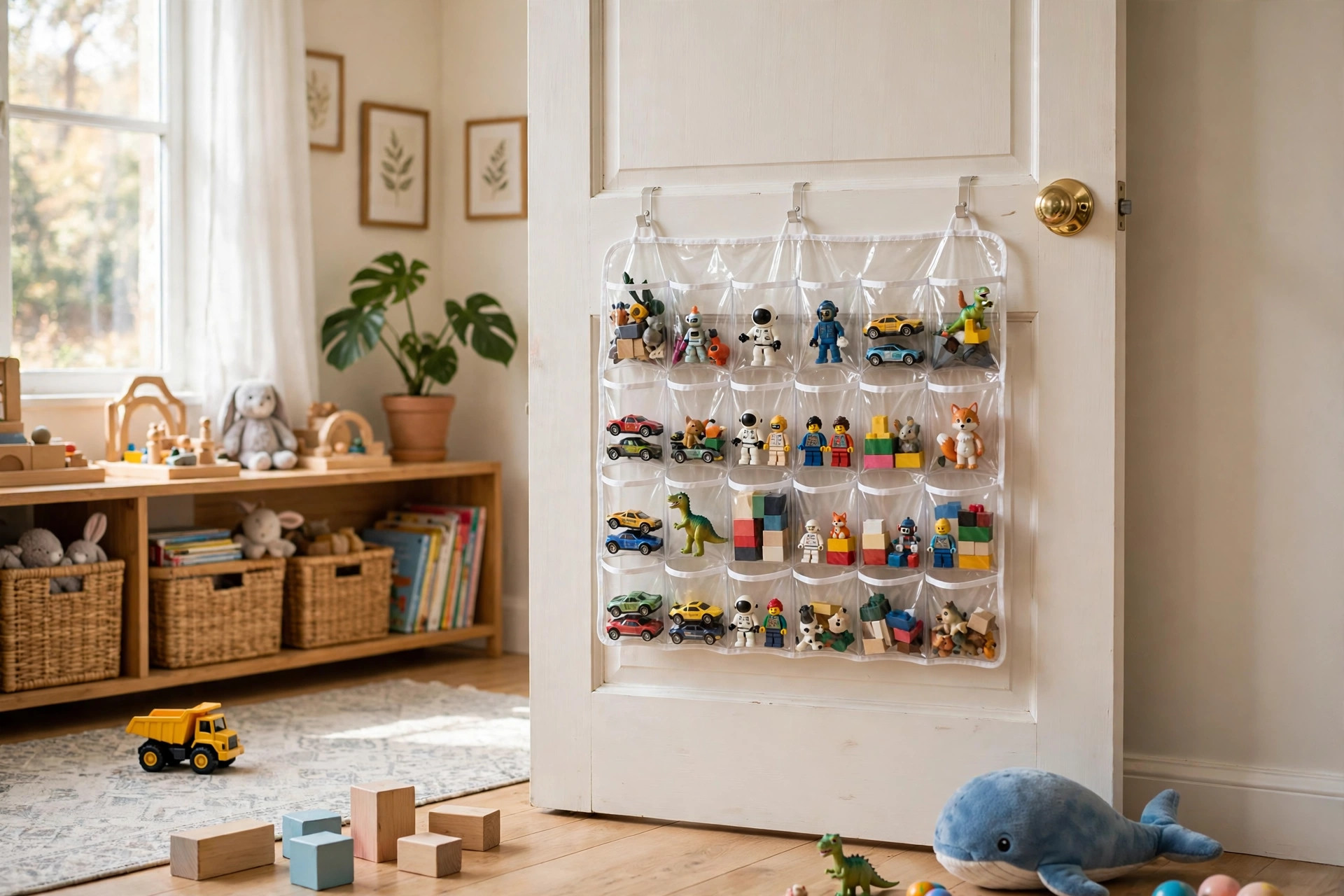
A clear over-the-door shoe organiser is the best small-toy storage ever made: twenty-four pockets, each one holding a handful of cars, figures, crayons or hair accessories, all visible at a glance. Hang it on the playroom door or the inside of a closet door, and every small toy has a pocket of its own. Children love choosing a pocket, and nothing falls to the bottom of a deep bin. Keep the bottom pockets for the toys they reach for daily, and the top pockets for the ones they need help with.
16. Zip bags inside bins for the tiny pieces
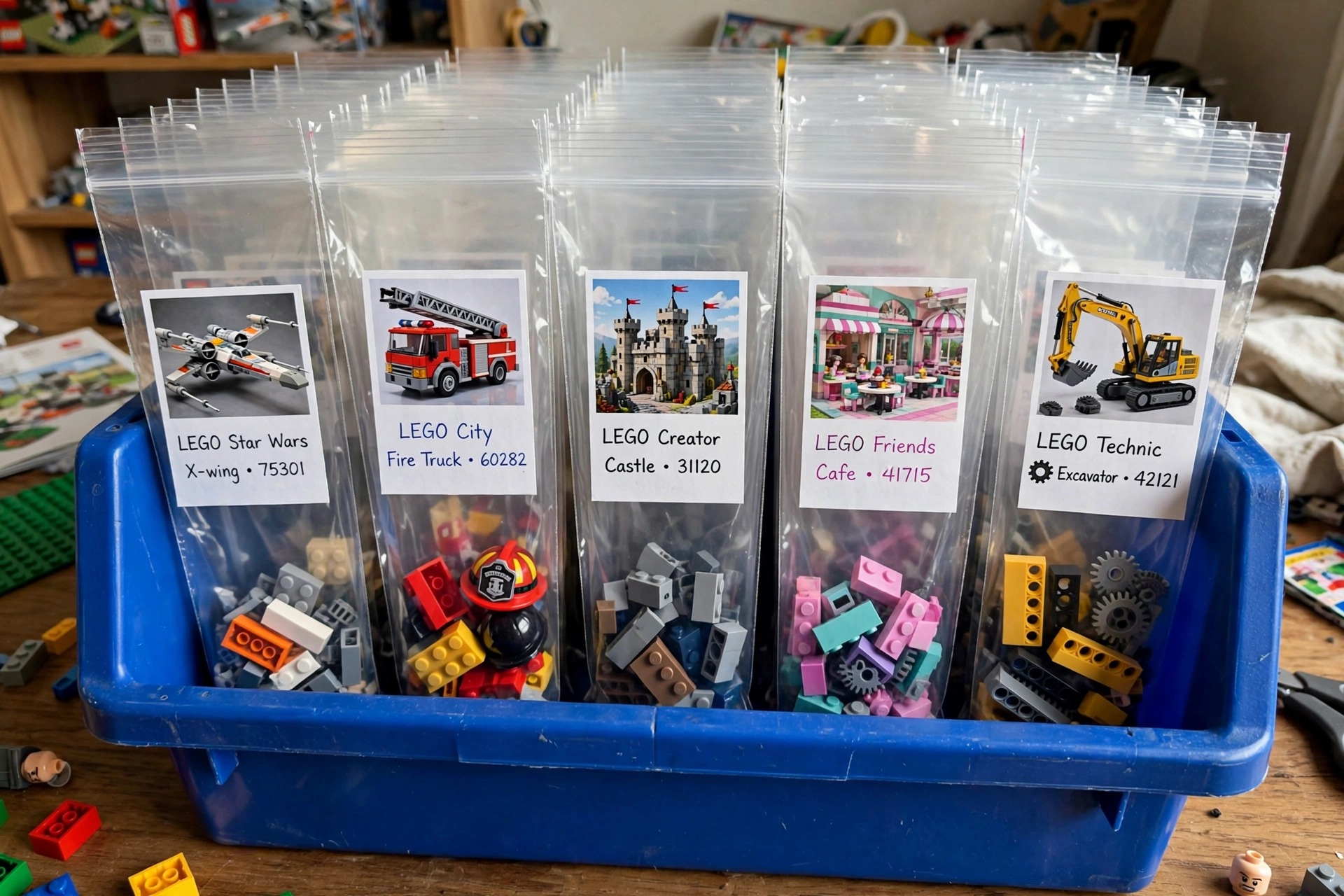
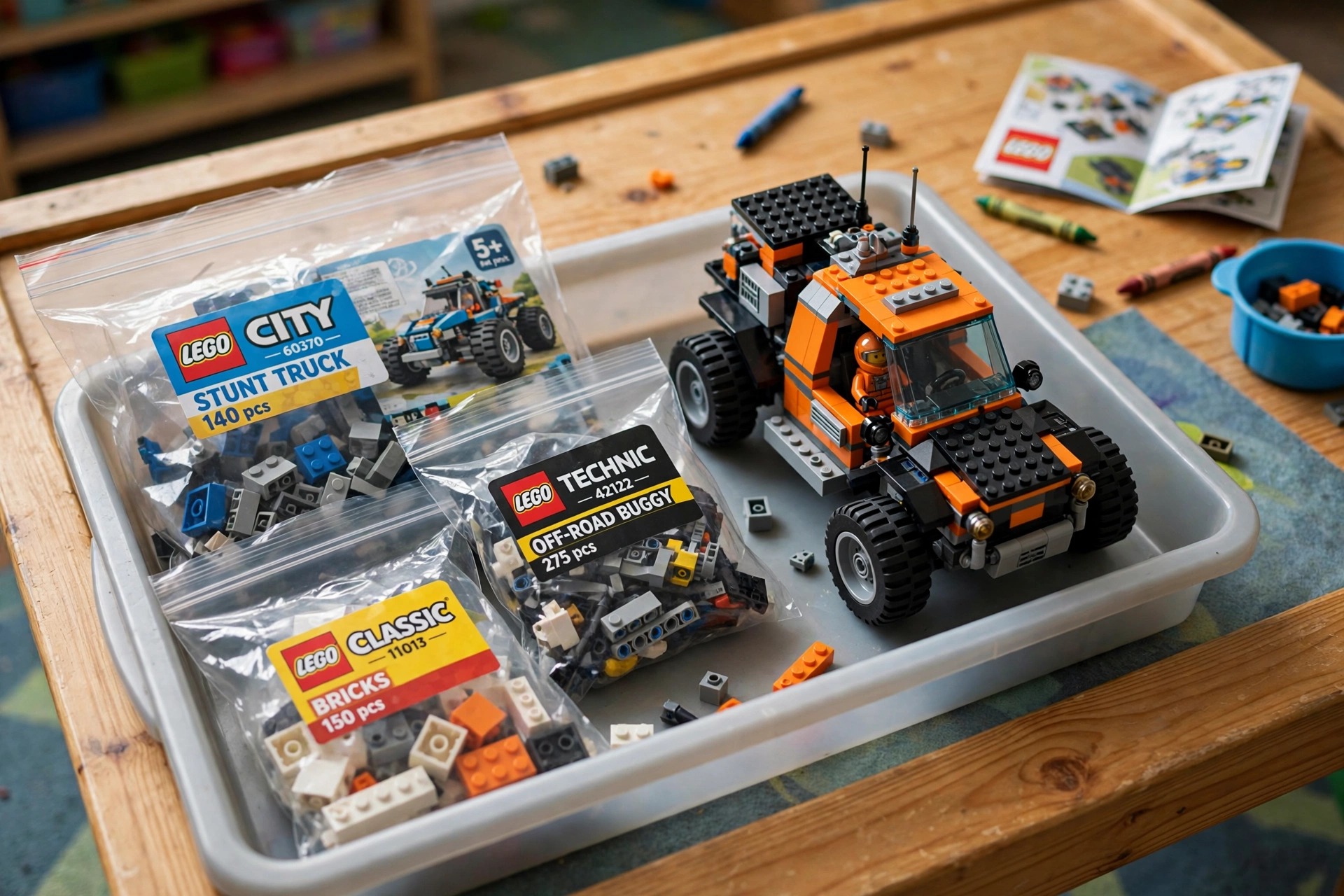
Lego, puzzle pieces and doll accessories disappear inside a big bin, and a bin of mixed small pieces is a bin nobody plays with. Put each set in its own zip bag, label the bag with a photo, and keep the bags standing upright in the bin like files. A child can pull out one bag, play with one set, and put one bag back — instead of tipping the whole bin onto the floor to find one piece. One bin, five bags, and the small pieces stop vanishing.
17. A basket by the door for the daily dump
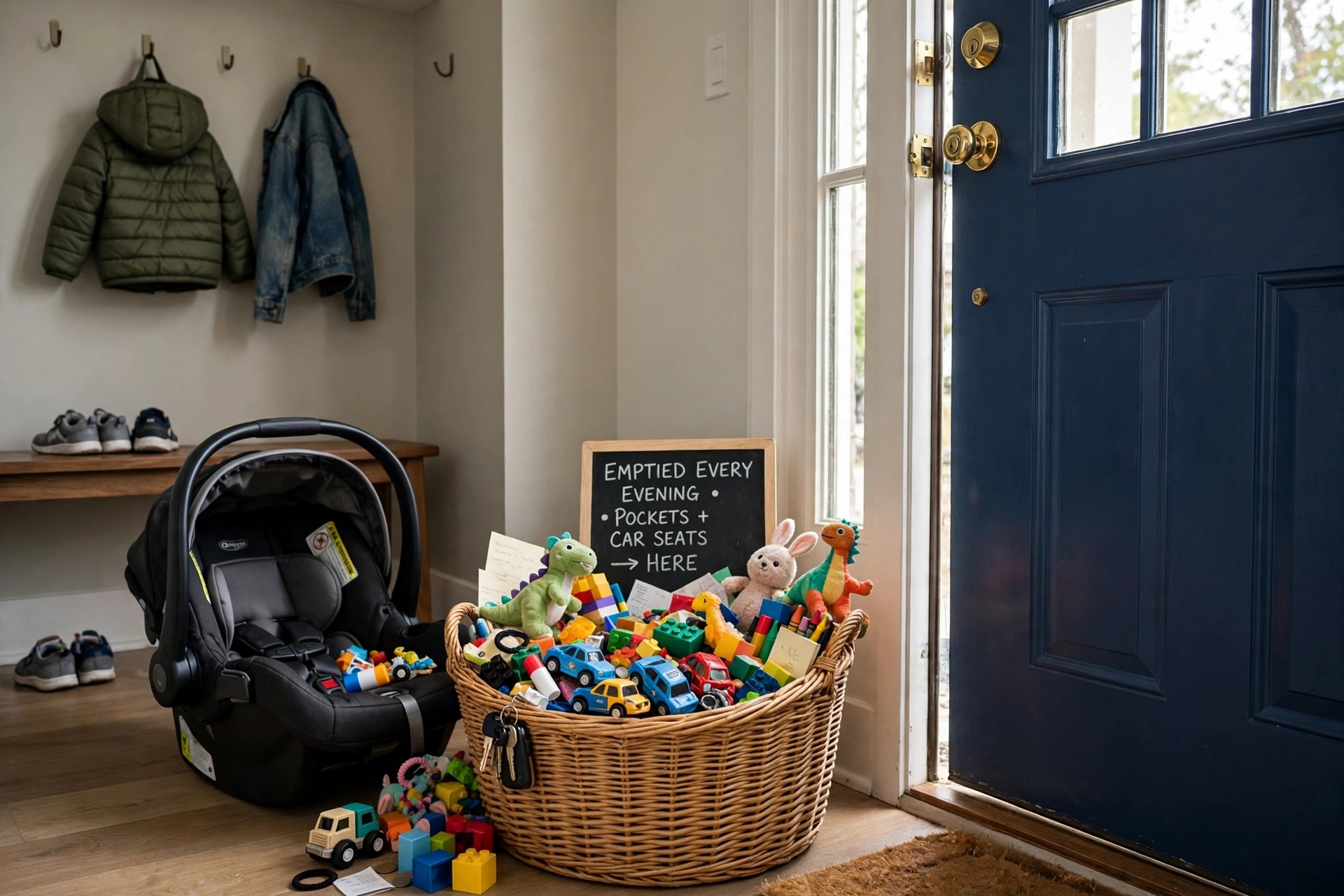
Toys come home in pockets, bags and car seats, and they get dumped by the front door. Put one basket by the door — the daily dump basket — and everything that comes in goes straight into it. Every evening, empty the basket back to each toy's proper home, which takes two minutes when the basket is the only stop. Without the basket, the same toys end up on the stairs, the kitchen counter and the sofa. One basket, emptied nightly, and the hallway stops being a toy shop.
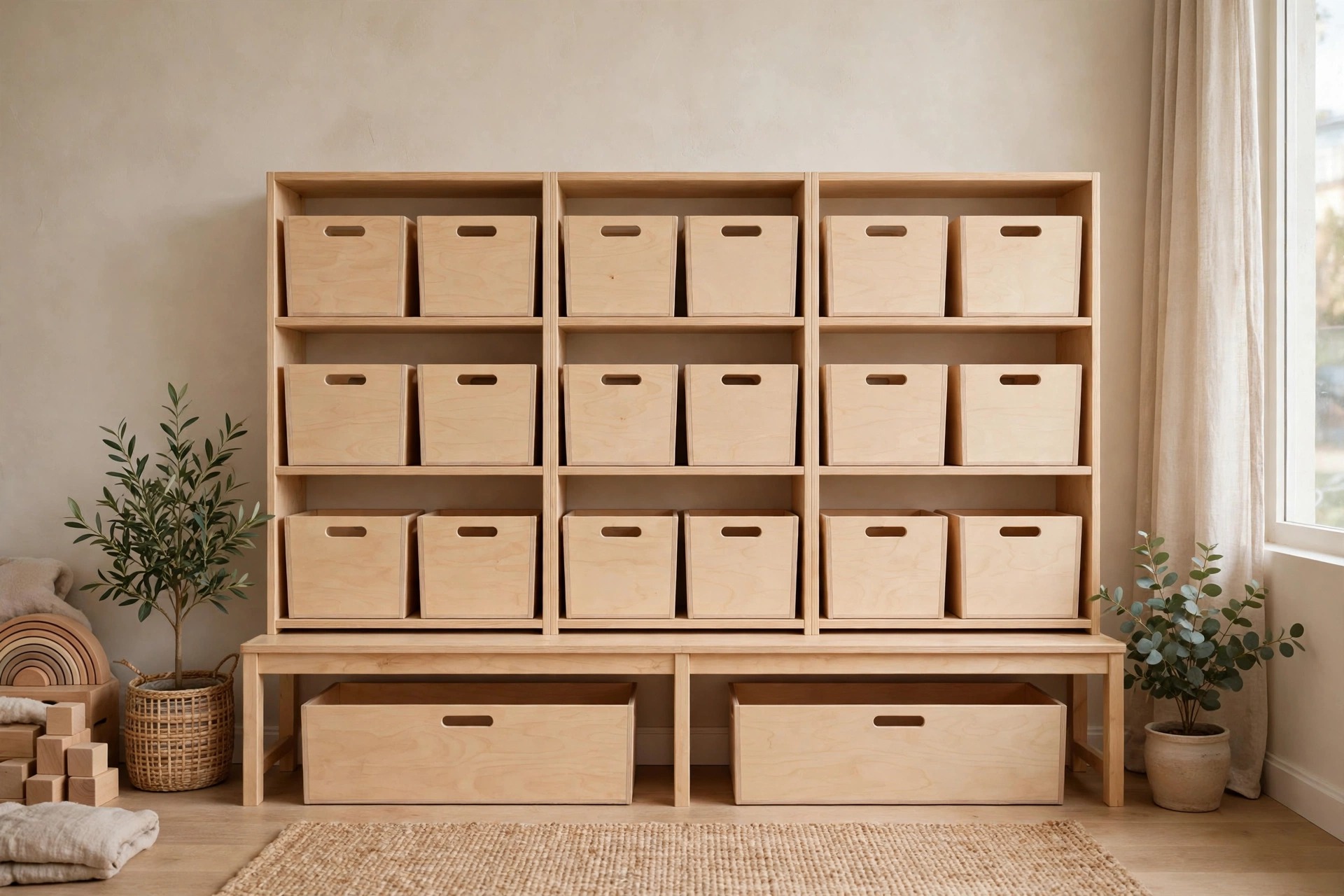
18. Matching bins, one colour, one material
When every bin is a different colour, the playroom looks like a toy shop even when it is tidy. Pick one material and one neutral colour — natural wood, white, or a single soft colour — and use it for every visible bin. The storage is still there, but the eye reads it as one calm system instead of ten separate boxes. This works in a living room corner as well as a playroom, which matters when the toys live where the adults live. Replace one bin at a time, starting with the ones in the living room.
Furniture that hides the mess
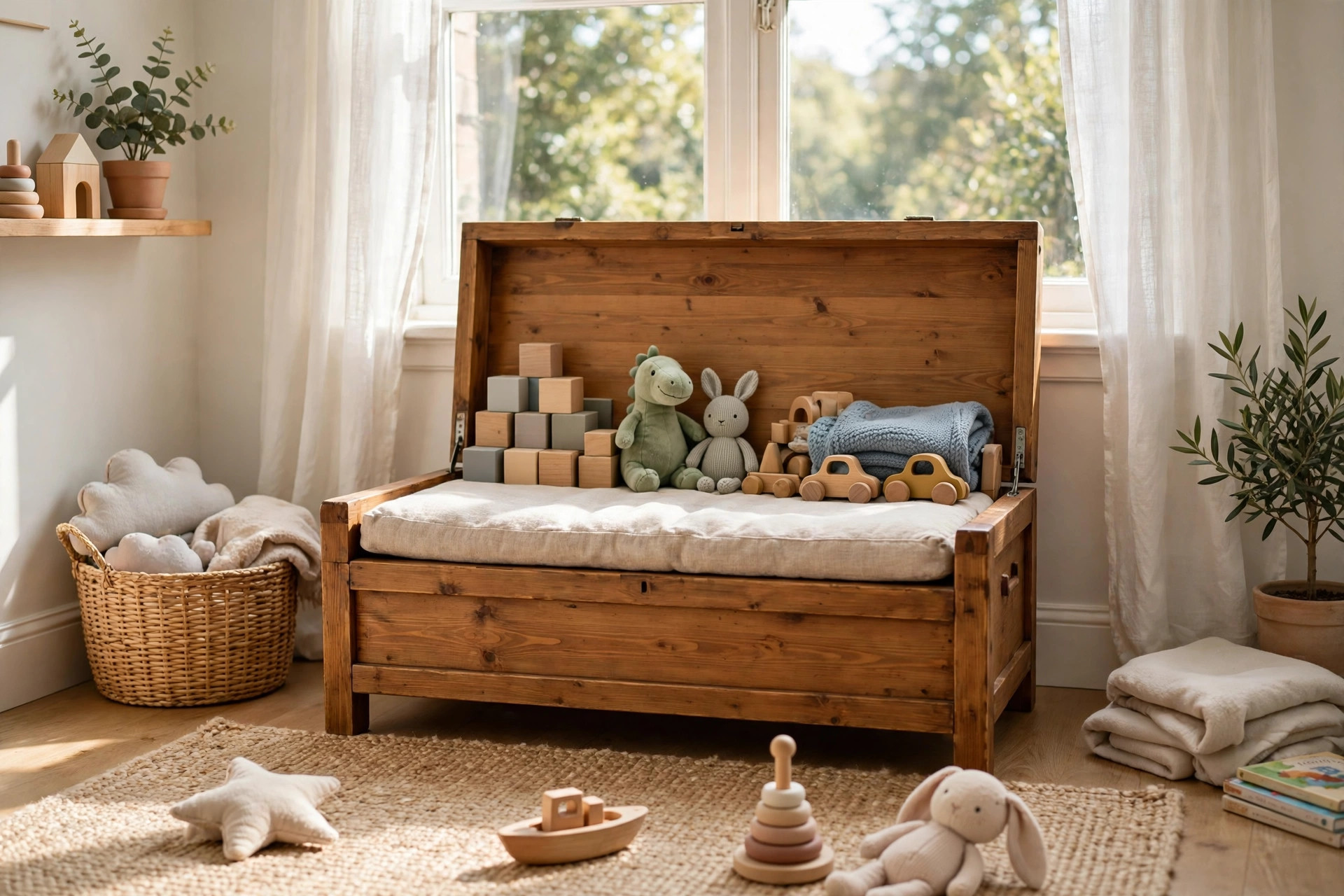
19. A toy chest that doubles as a bench
A toy chest with a flat lid is storage and seating in one: toys inside, a cushion on top, and a reading spot by the window. Choose a chest with a slow-close lid and finger guards, so small hands never get caught, and keep the heaviest toys at the bottom so it never tips. Put the daily toys in the chest and the weekly toys on the shelf above it, so the most-used things are the easiest to reach. One chest in the living room hides more mess than three bins on a shelf.
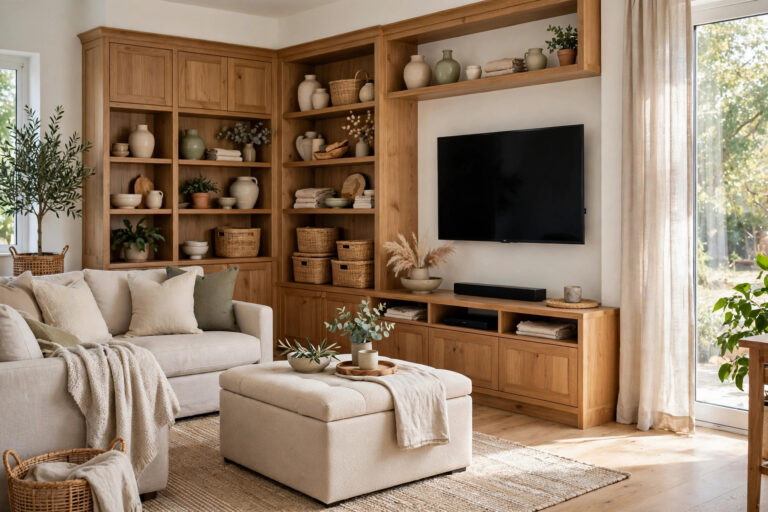
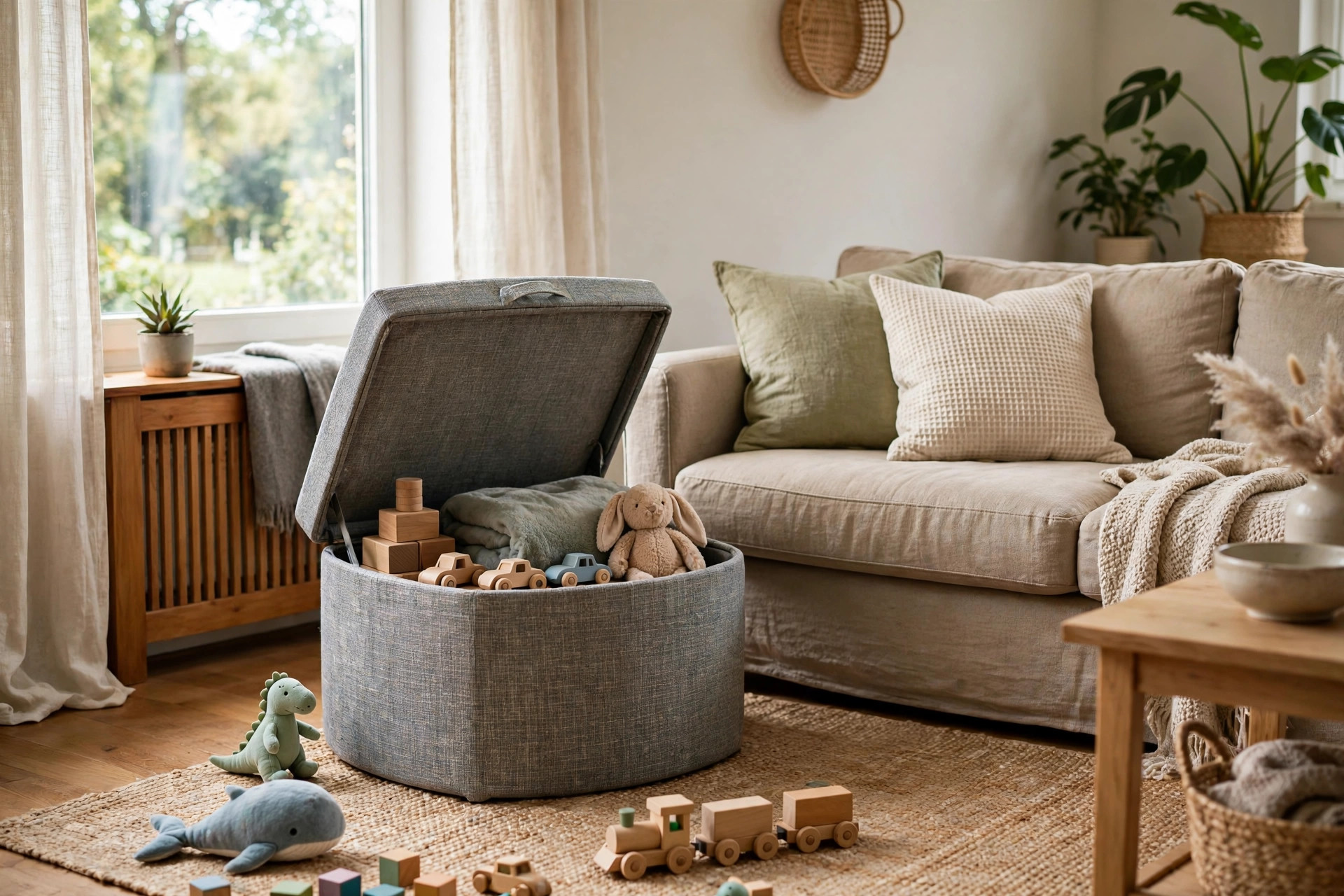
20. An ottoman with storage inside, in the living room
The living room is where toys migrate, so the living room needs storage that looks like furniture. A storage ottoman holds the toys that live in the living room — the cars, the books, the current craft box — and closes over them in one motion when guests arrive. Pick one that matches the sofa, with a lid a child can lift alone, and keep it to living-room toys only, so it never becomes a second toy chest. Five seconds to close the lid, and the living room is an adult room again.
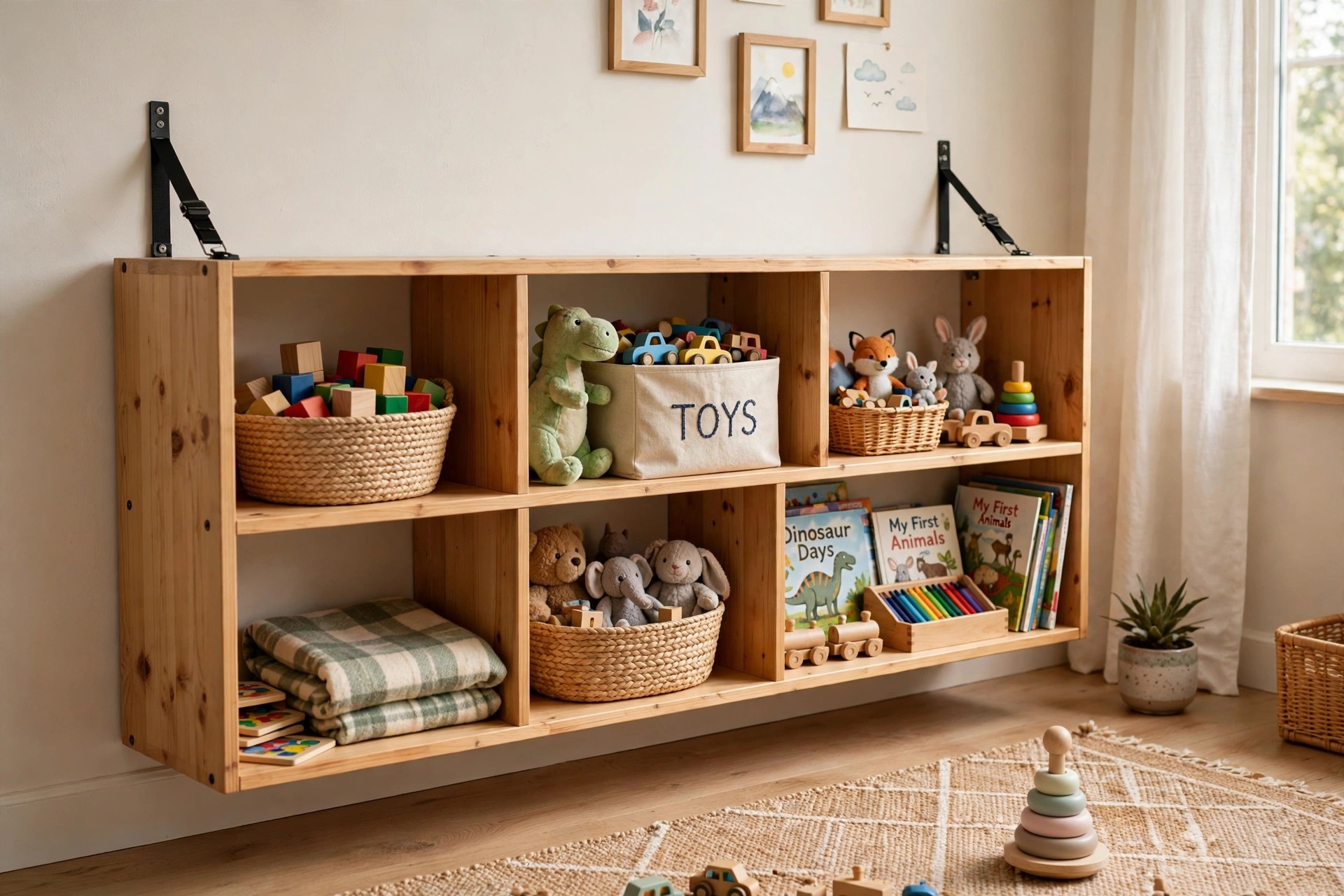
21. A low bookcase turned on its side, as a toy shelf
A standard bookcase is too tall for small children; turn it on its side and it becomes a low, wide toy shelf with cubbies at exactly the right height. Each cubby holds one bin, one type, and a child can see every toy without climbing. Anchor it to the wall — a low shelf tips just as easily as a tall one when a child climbs it — and keep the top surface clear for the toy currently being played with. This is the cheapest toy furniture in the whole list, and it works in a bedroom as well as a playroom.
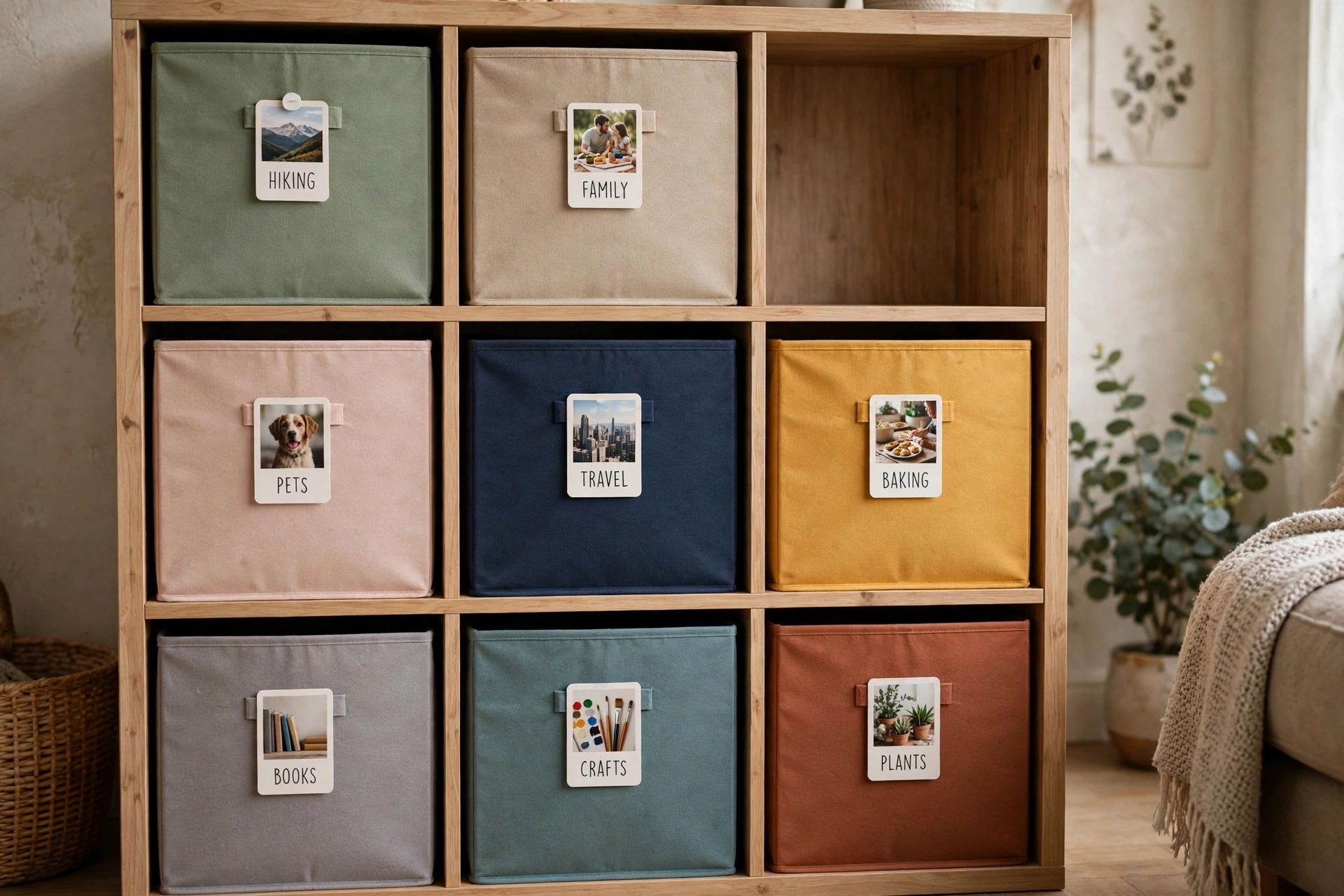
22. A cube shelf with one bin per cube
Cube shelves are made for toy storage: one cube, one bin, one toy type, all visible from the front. Use fabric bins that slide in and out like drawers, with a photo label on each one, and leave one cube empty for the toy in use. Children learn the system in a day — take a bin out, play, put the bin back — and the shelf never looks messy because the bins hide the contents. Keep the shelf low, anchor it, and put the books on the top row where they cannot be pulled down.
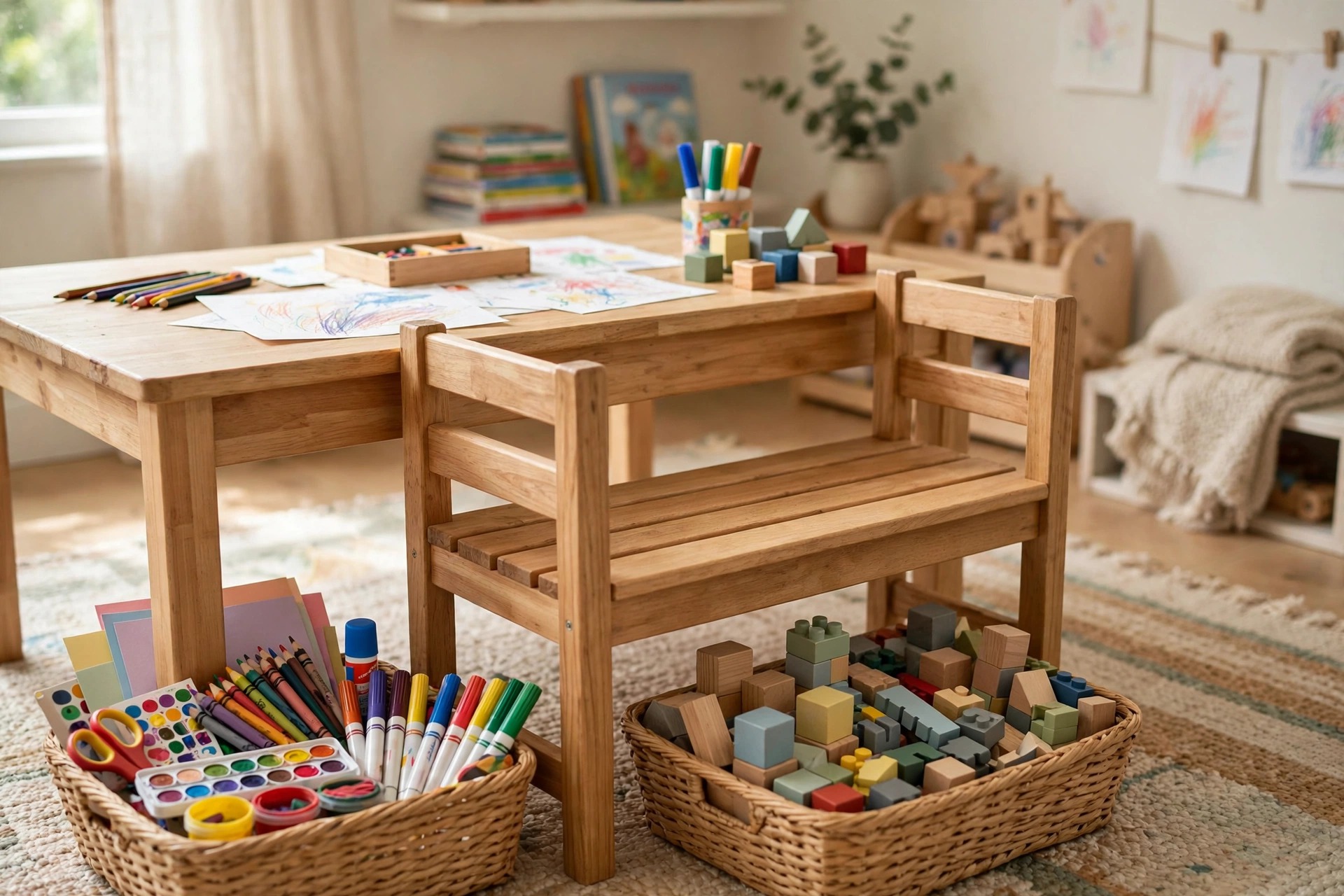
23. A bench with baskets underneath, by the play table
A small bench at the play table gives children somewhere to sit, and the space underneath it gives the table toys somewhere to live. Slide two low baskets under the bench — one for the art supplies, one for the current building set — and tidy-up is just pushing the baskets back under the bench. The table stays clear for the next activity, and the toys are never more than an arm's reach away. Choose a bench low enough for small legs, and the baskets low enough to slide without lifting.
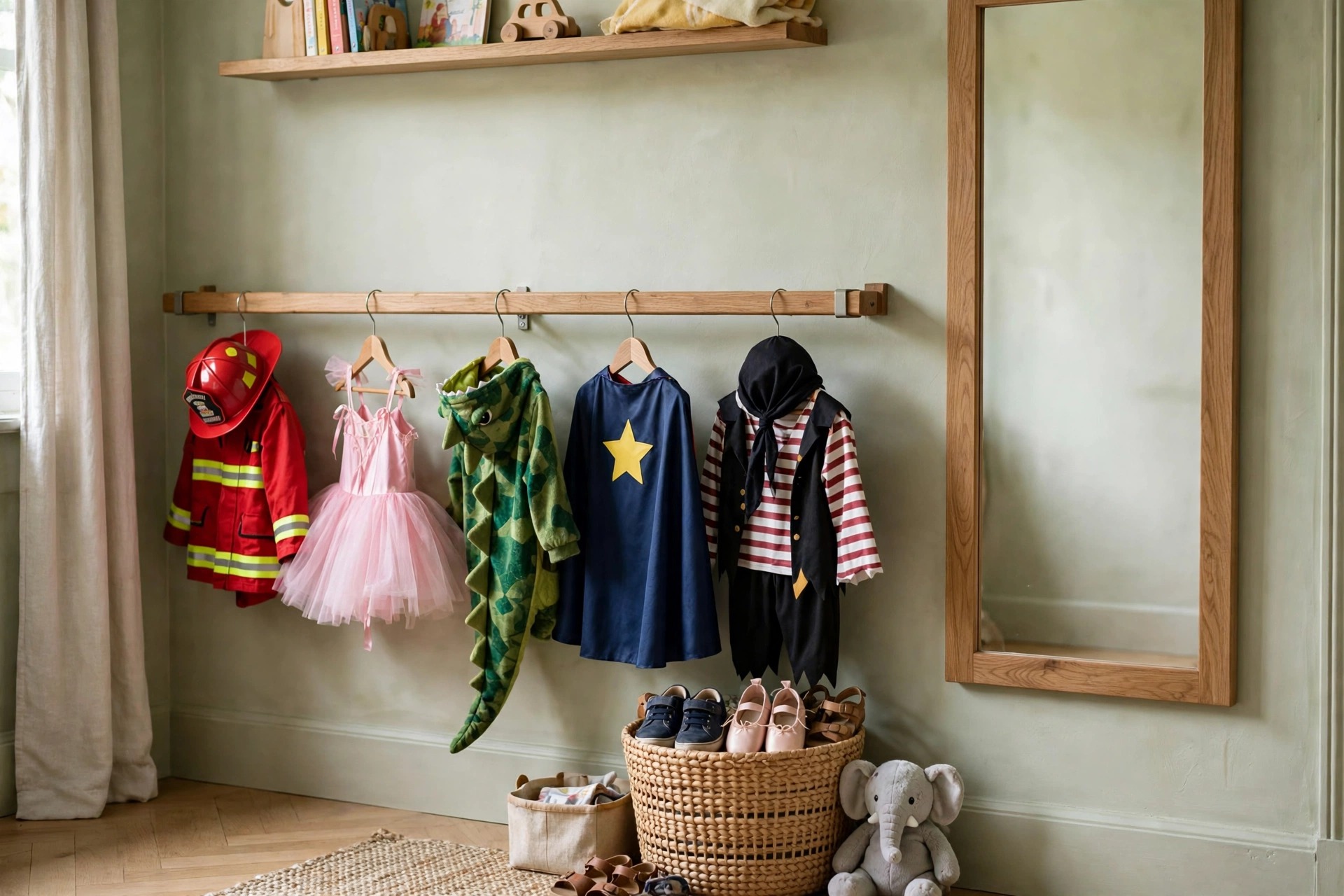
24. A wardrobe rail lowered for dress-up
Dress-up clothes in a pile on the floor get stepped on, tangled and forgotten. Lower one rail in a closet or wardrobe to child height, hang the costumes on small hangers, and put a mirror at the same height beside it. Children can choose, dress up and hang things back alone, which is the whole point of dress-up. Keep a small basket underneath for shoes, hats and wands, and the dress-up corner stays a corner instead of a mountain. One rail, a few hangers, and the costumes stop living on the bedroom floor.
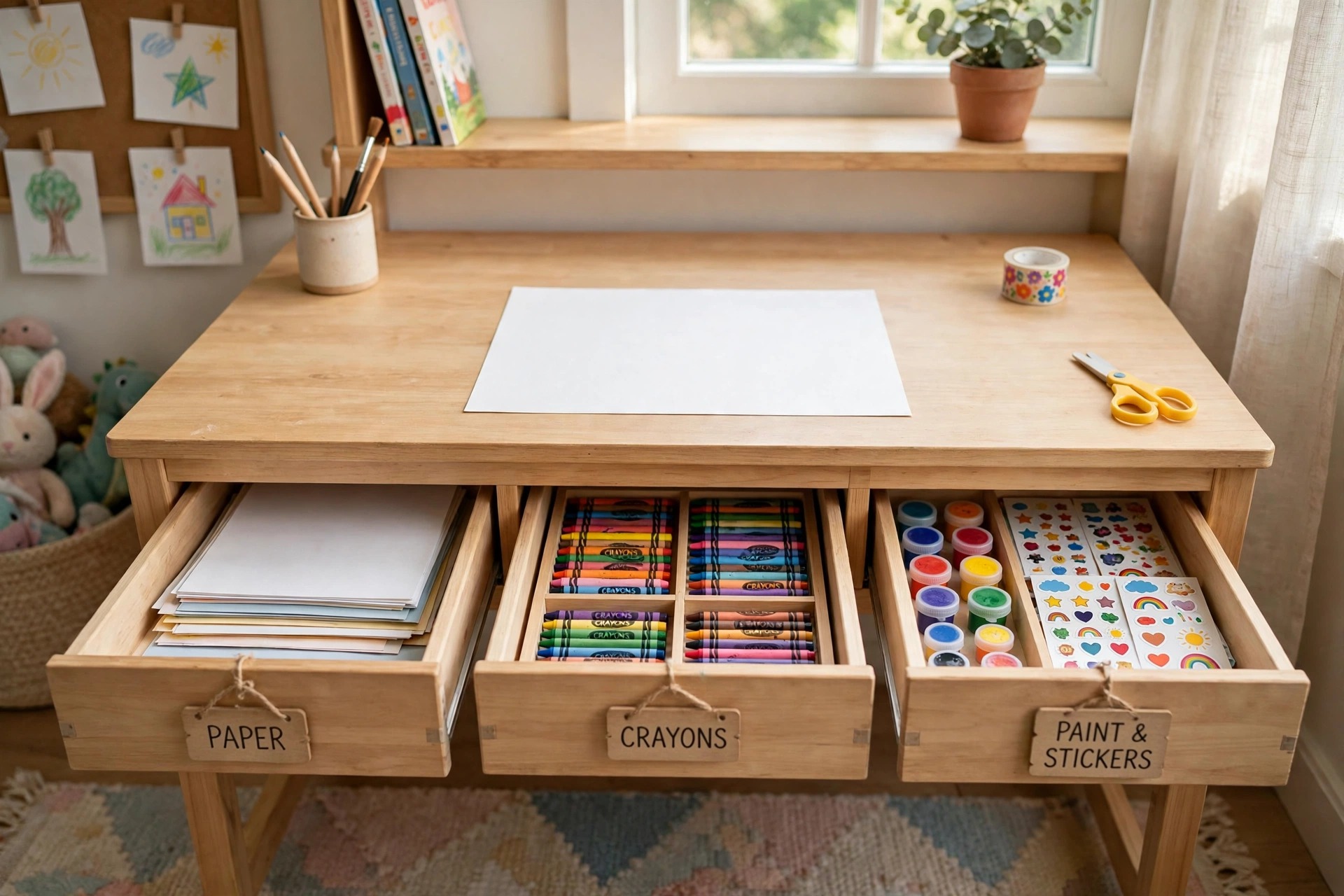
25. A desk with drawers for art, not a table full of supplies
Art supplies spread across a table stay spread across the table. Give art its own desk or trolley with drawers — one drawer for paper, one for crayons, one for paint, one for stickers — and the table is only for the artwork in progress. When the drawing is done, the supplies go back in their drawers in one motion, and the table is clear for dinner. Keep the desk in the play zone, not the kitchen, so the art mess stays where it belongs.
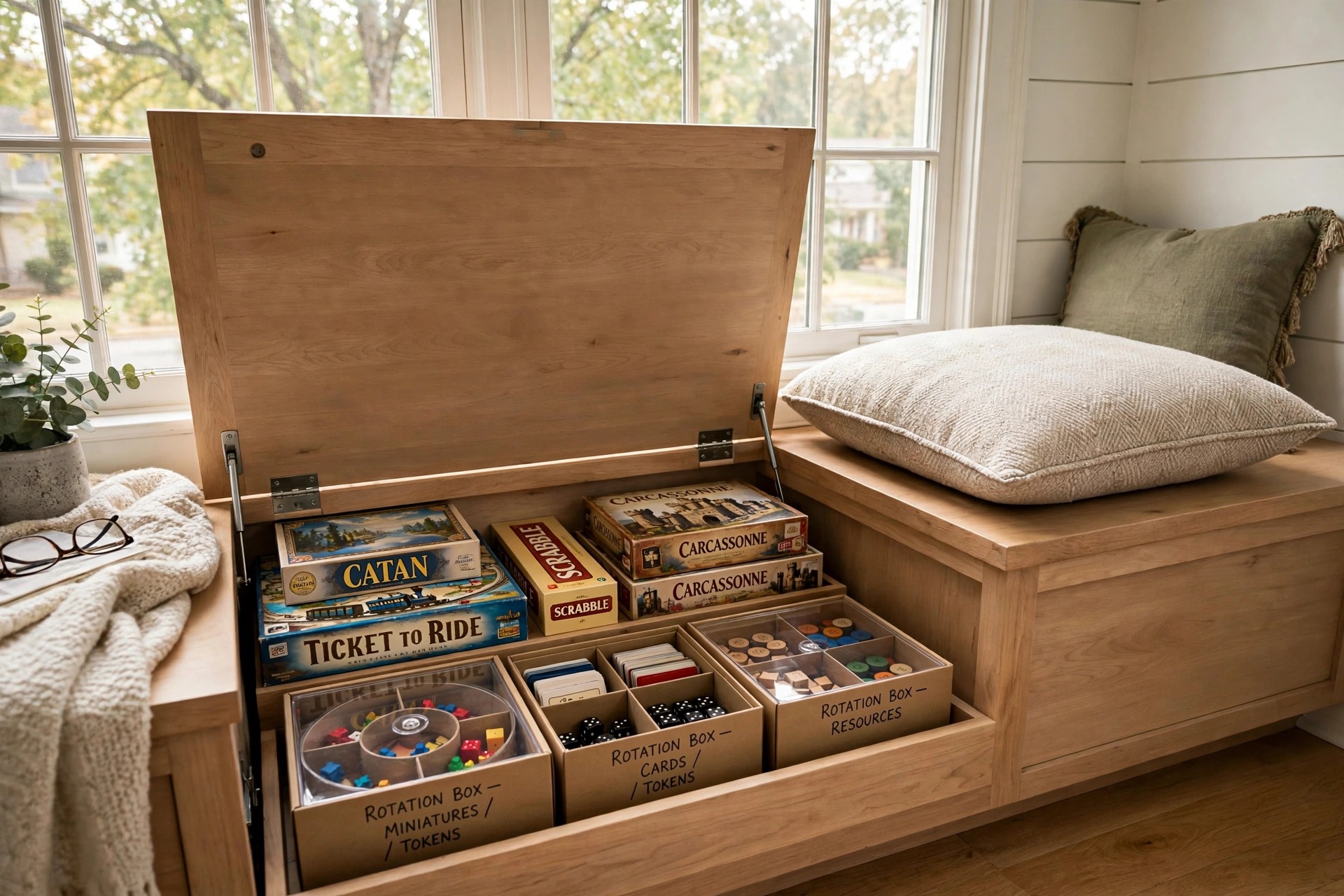
26. A window seat with toy storage under the lid
A window seat is wasted space until you lift the lid. Build or buy one with storage underneath — deep enough for board games, large soft toys and the rotation boxes — and the seat becomes the reading corner as well. Add a cushion and a small bookshelf beside it, and children will choose the window seat over the sofa. Keep the heaviest items at the bottom, the books on top, and the lid light enough for a child to open alone. One seat, one cushion, and a whole toy collection hidden underneath.
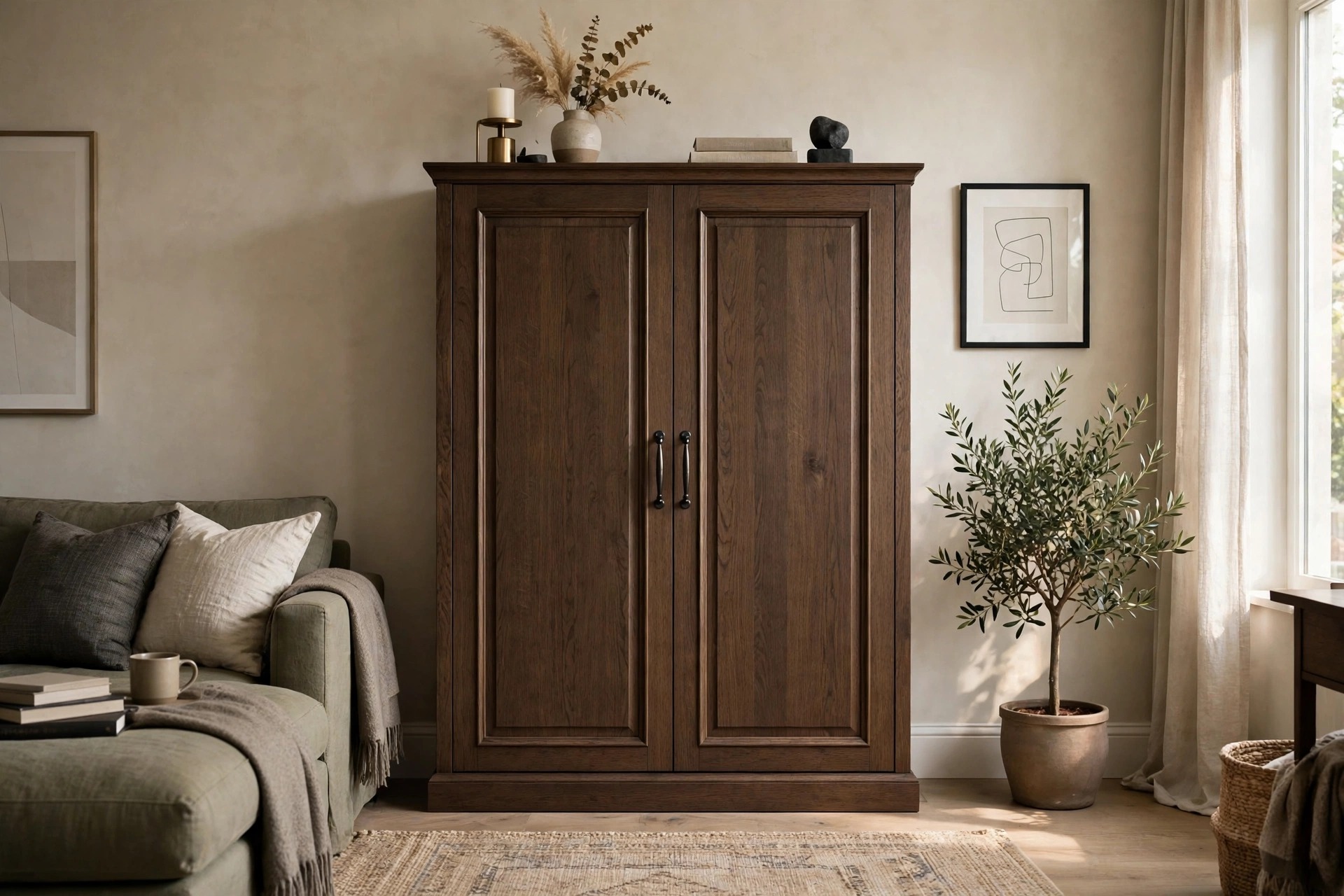
27. A tall cabinet with doors, for the grown-up-looking room
When the toys live in a room adults also use, open shelves always look like a playroom. A tall cabinet with doors — one shelf per toy type inside, doors closed over all of it — lets the room be a living room again in five seconds. Inside, use the same bins and photo labels as everywhere else, so children can still find things when the doors open. Keep the daily toys in the lowest section, behind the easiest door, and the rest higher up. Closed doors are the fastest tidy-up in the whole list.
Small-space tricks and storage by toy type
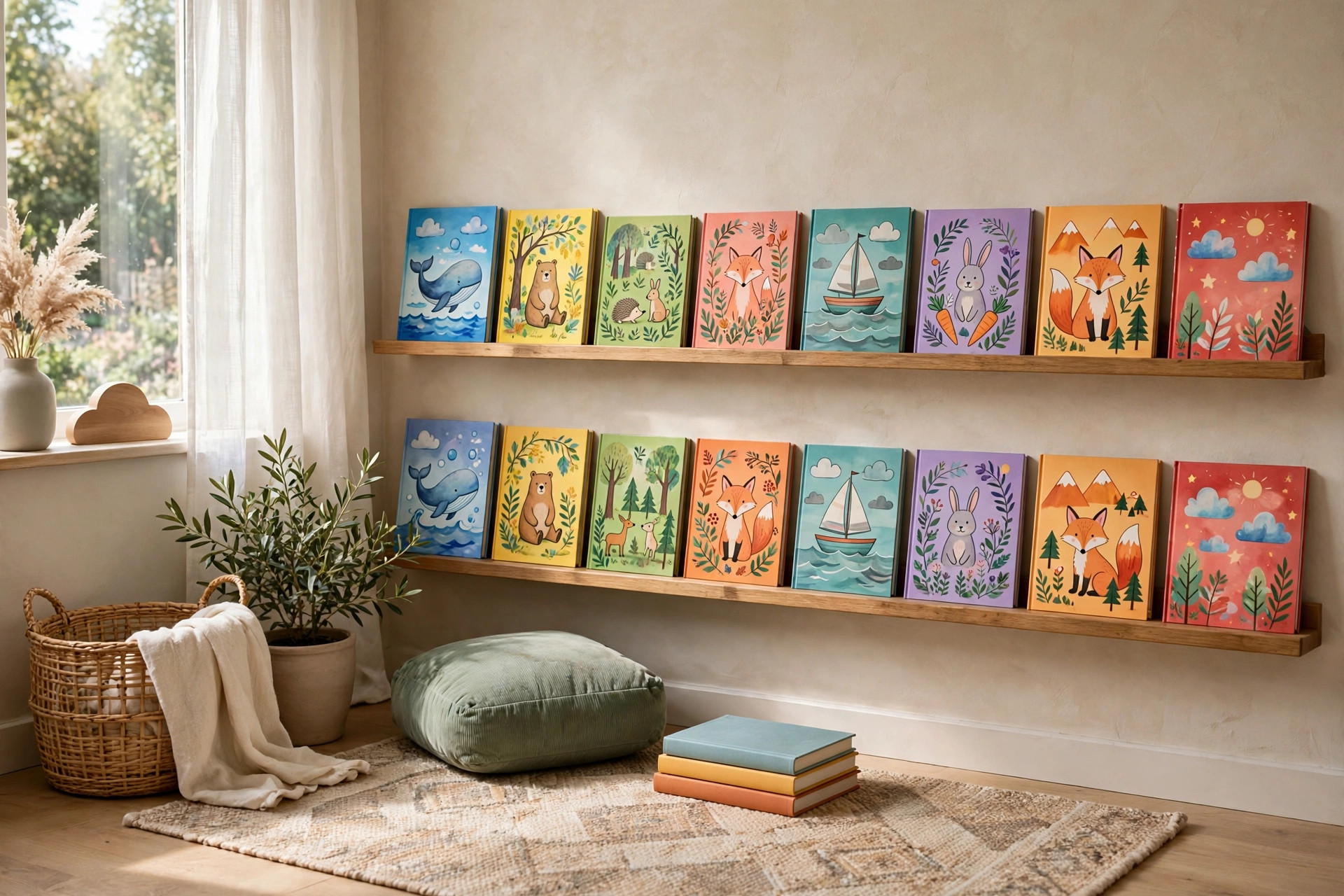
28. Books forward-facing, on a low picture ledge
Books spine-out on a shelf get ignored; books face-out on a low picture ledge get picked up. Fix two or three shallow ledges at child height, stand the books facing forward like a bookshop, and rotate the display every week from the book box. Children choose by the cover, which is how they learn to love reading, and the ledge holds fewer books than a shelf — so the rest stay in the book box, out of the way. One ledge, ten books, and the reading corner runs itself.
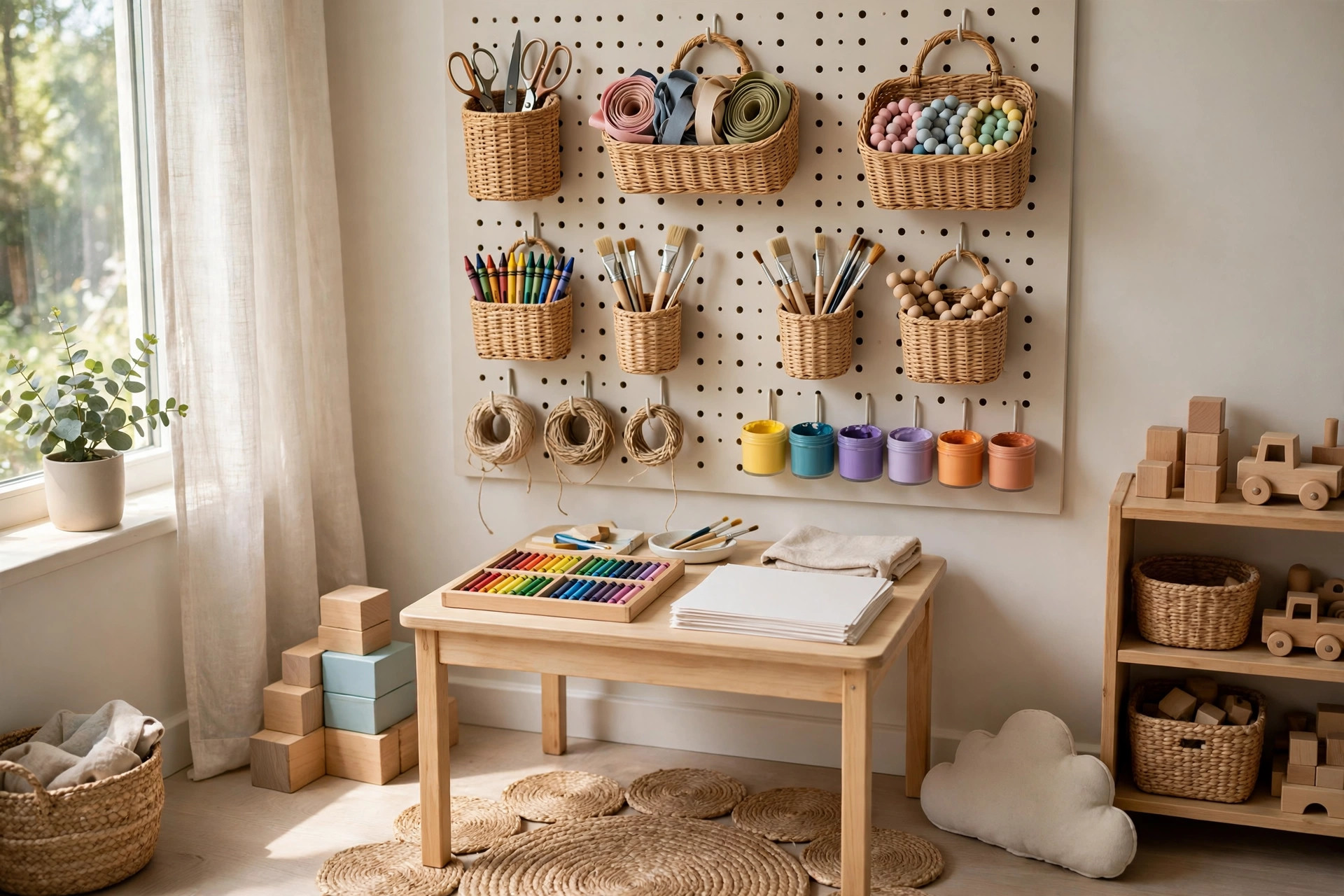
29. A pegboard wall for craft and building toys
A pegboard on the playroom wall turns storage into display: hooks for scissors and ribbons, small baskets for beads and buttons, shelves for paint pots, all visible and all in reach. Children can see every craft supply at once, which means they actually use them, and putting things back is just hanging them on their hook. Keep the pegboard at child height, the sharp things on the top row, and the daily supplies on the middle row. One board, a few hooks, and the craft table stays clear.
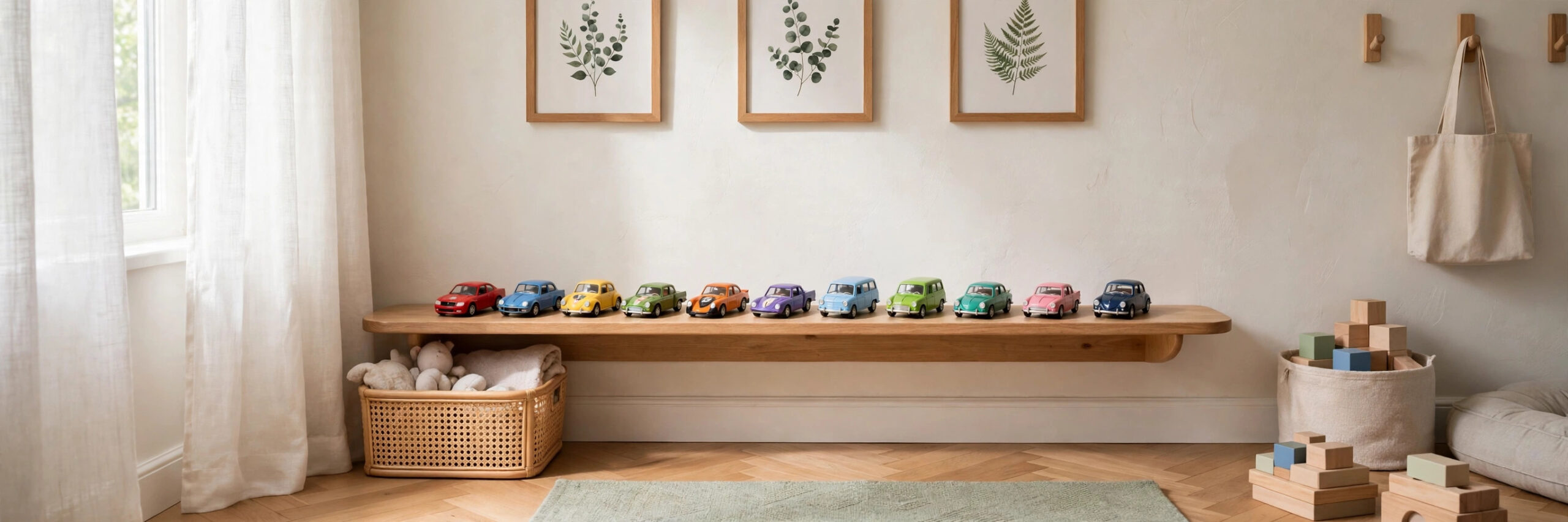
30. Cars in a row on a magnetic strip or a display shelf
Cars in a bin get scratched, buried and forgotten; cars lined up on a low display shelf or a magnetic strip get played with, admired and put back in order. Fix a narrow shelf at child height, line the cars up like a car park, and let the child choose today's car from the row. Keep the collection to what fits on the shelf — when a new car arrives, one car leaves, by the one-in, one-out rule. One shelf, one row, and the cars stop living in a pile on the floor.
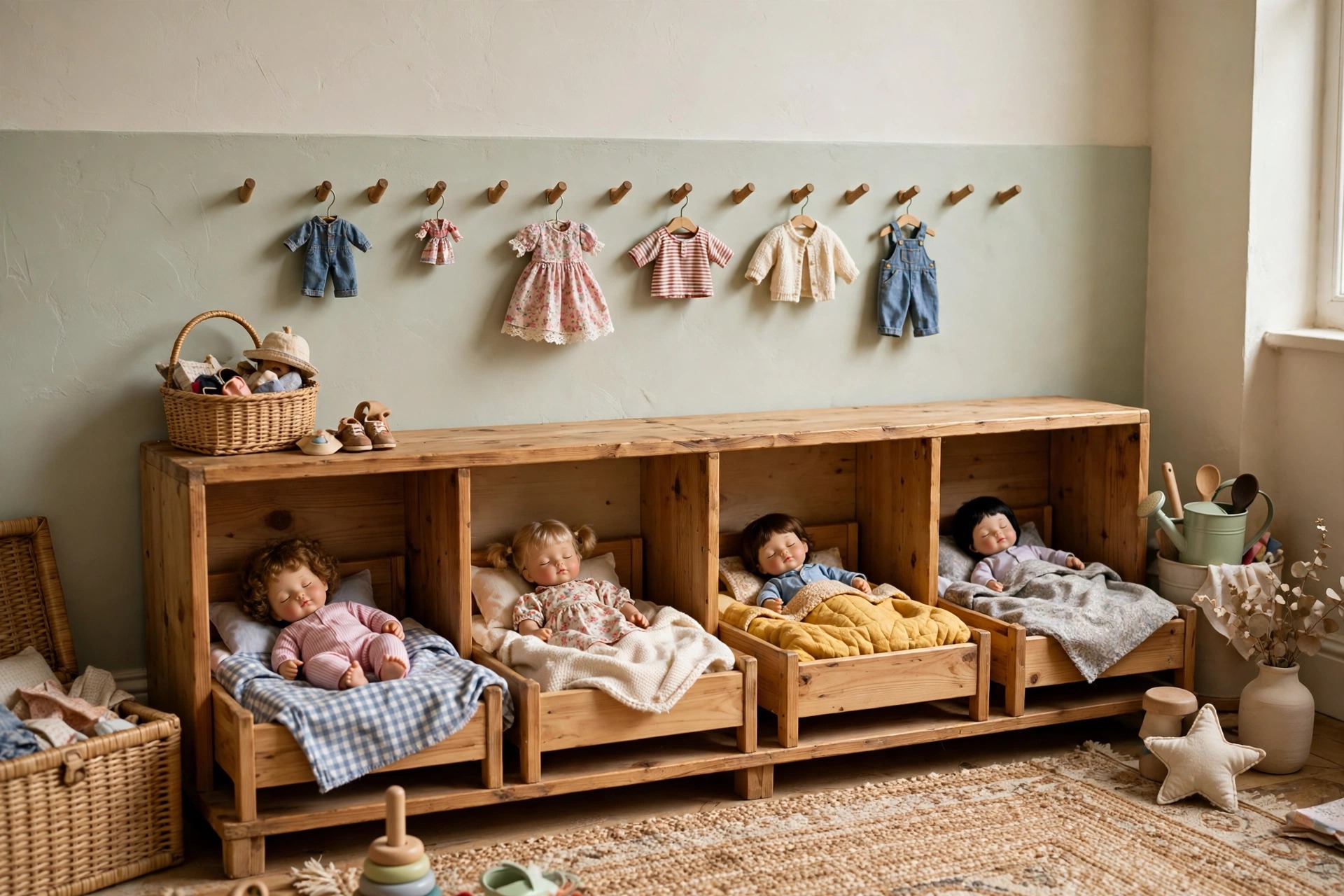
31. Dolls on a shelf with their own little beds
Dolls in a bin get tangled, lose their clothes and get forgotten. Give dolls a low shelf with a small bed or a row of hooks for their clothes, and each doll has a visible home. Children put dolls to bed at night, which is tidy-up disguised as play, and the dolls stay clean and dressed. Keep the doll shelf in the pretend-play zone, next to the dress-up rail, so the whole game happens in one corner. One shelf, a few tiny beds, and the dolls stop living under the sofa.
32. Lego on a play table with a tray underneath
Lego on the floor gets stepped on, hoovered up and lost; Lego on a play table with a tray underneath gets built, saved and finished. Use a table with a shallow tray or a baking tray on top, build on the tray, and slide the whole tray under the bed when dinner is ready. Keep each set in its own zip bag inside the tray, so a half-built model never has to be taken apart. One table, one tray, and Lego stops being a floor hazard.
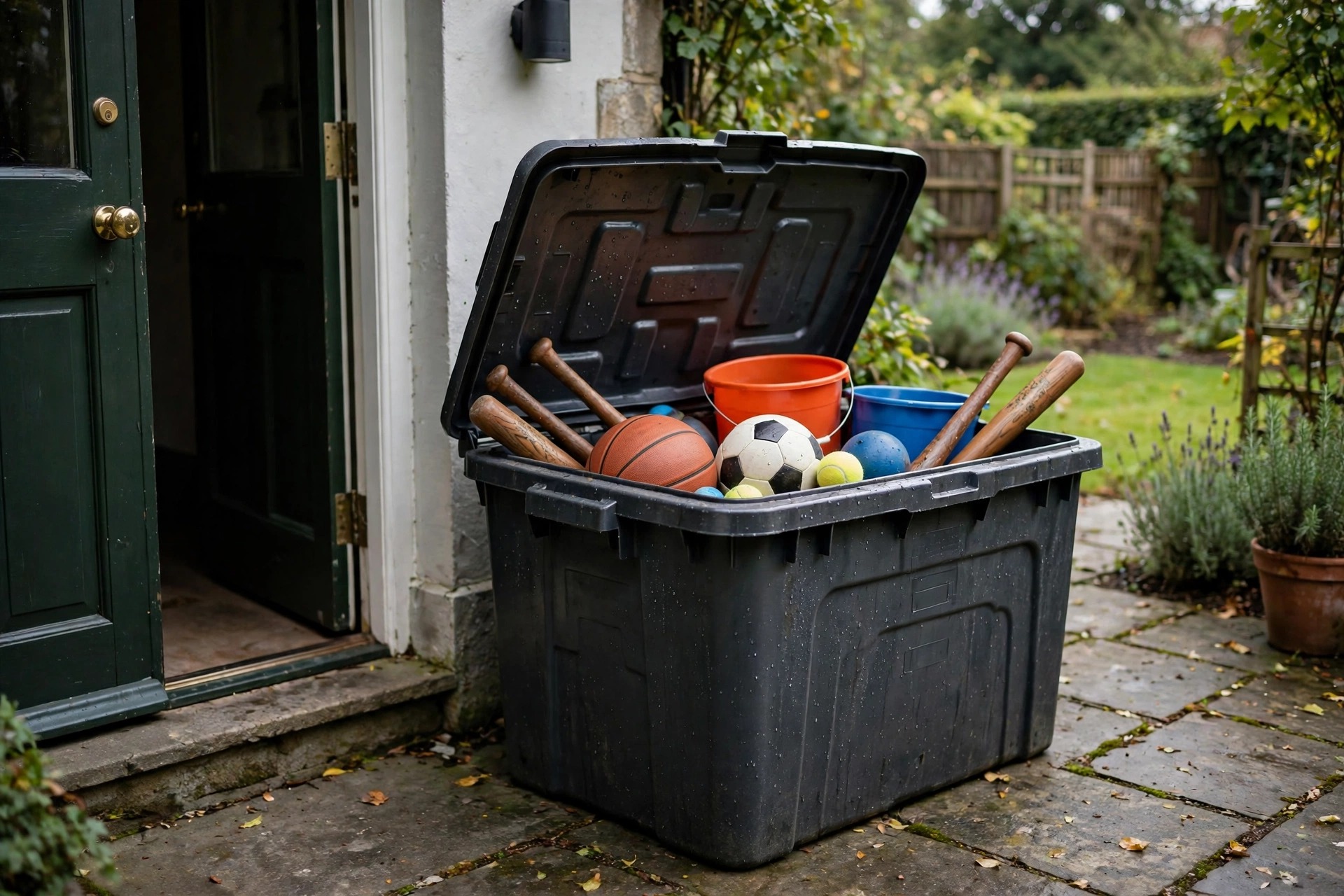
33. Outdoor toys by the back door, in one big bin
Outdoor toys belong by the back door, not in the playroom. Keep one big weatherproof bin or a deck box by the door — balls, bats, buckets and scooters inside, one bin for everything — and the rule is simple: outdoor toys never come past the door. Children grab a ball on the way out and drop it back in the bin on the way in, without an adult carrying anything. Empty the bin once a month, hose it out, and the outdoor toys stop migrating indoors.
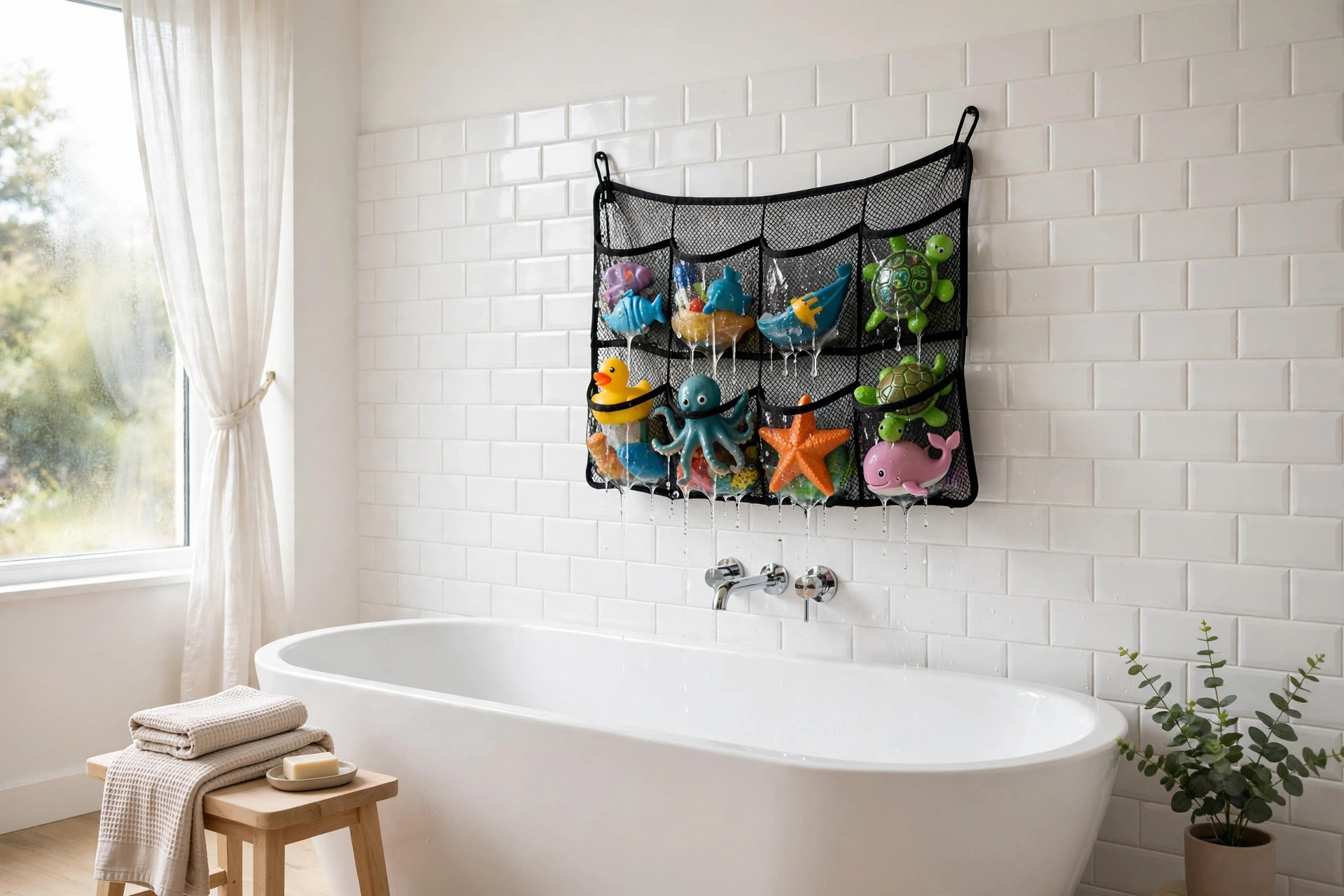
34. A hanging organiser in the bath for bath toys
Bath toys in a pile on the bath edge get mouldy, fall in the water and block the plughole. Hang a mesh organiser with suction cups on the bath wall, and every bath toy goes into it to drip-dry after the bath. The mesh lets water drain and air circulate, so the toys dry instead of going mouldy, and children can see and choose their toys through the net. Rinse the organiser once a week, and the bath stays a bath instead of a toy box.
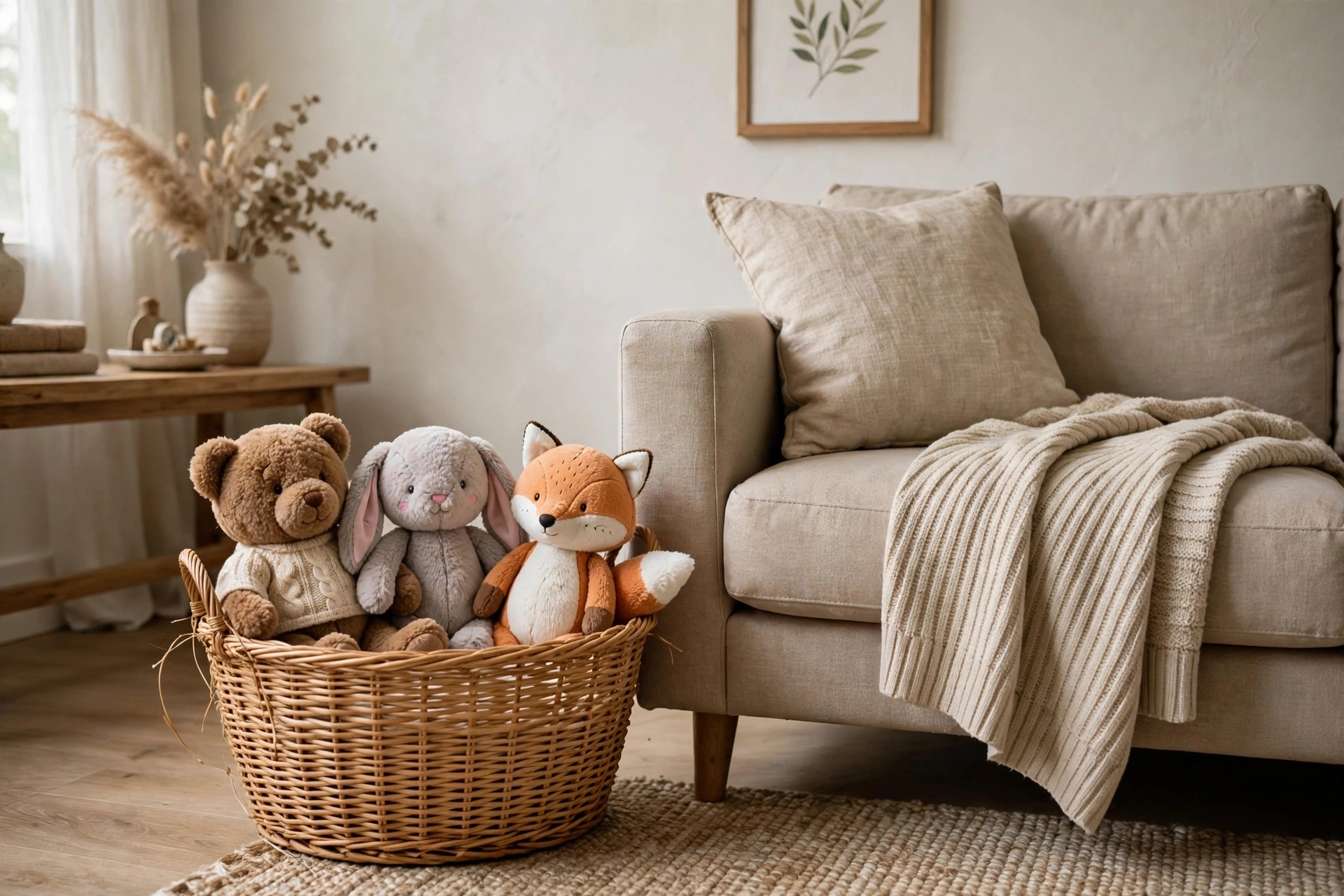
35. One beautiful basket on display, on purpose
A room with no toys on show looks empty; a room with toys everywhere looks messy. The answer is one beautiful basket, chosen on purpose: a woven basket with the three favourite soft toys, or the current book stack, sitting beside the sofa. It is the signal that children live here and the room is finished, not abandoned. Keep it to one basket, keep it tidy, and keep it where it photographs well — it is the reason the living room still looks like a living room.
Which toy storage fits which home?
| Home / situation | Best first move | Budget | Tools needed |
|---|---|---|---|
| Tiny flat / one play corner | Rotation + one bin per type (ideas 3, 10) | Low | None |
| Rented / no drilling | Cube shelf + rolling cart (ideas 22, 13) | Low–medium | None |
| Living-room toys | Storage ottoman + toy chest bench (ideas 20, 19) | Medium | None |
| Lots of small toys | Door organiser + zip bags (ideas 15, 16) | Low | None |
| Big collection | Rotation boxes + tall cabinet (ideas 4, 27) | Low–medium | None |
| Art / craft heavy | Pegboard + desk with drawers (ideas 29, 25) | Low–medium | Adhesive / screws |
You do not need all 35 ideas. You need the three that solve your biggest mess — usually the unsorted pile, the toys with no home, and the living room that never looks tidy. Start with the sort, put one bin per toy type on a low shelf, and start the rotation this week. Do that tonight and the floor will feel different by tomorrow morning.
Save this post for your next toy tidy-up, and if you are planning a whole-home refresh, read 25 Bathroom Counter Organization Ideas for 2026 next — it is Post 04 in the same Storage by room cluster — and 28 Living Room Storage Ideas for 2026, Post 01, to carry the same system room by room.
Published 11 November 2026. Updated as new toy storage finds are tested.
Frequently asked questions
How do I organize toys in a small living room?
Hide toys in furniture that belongs in the room. A cube shelf with labelled bins, a storage ottoman and a toy chest bench under the window hold most of the toys while looking like normal living room furniture, so the room still feels like a living room.
What is toy rotation and does it work?
Toy rotation means keeping only some toys out and the rest in labelled boxes in a closet. Swap the boxes every few weeks and the old toys feel new again — fewer toys out means a tidier room and kids actually play with what they have.
How do I store small toys like cars and craft supplies?
Give small things their own small homes. A rolling cart holds craft supplies, a pegboard keeps tools visible, a display shelf shows off toy cars, and an over-door shoe organiser turns a door into pockets for dolls, figures and small parts.