22 Basement Storage Ideas for 2026
Every basement starts as extra space and ends as a dumping ground — a box by the stairs, a bag behind the boiler, a pile that nobody remembers carrying down and nobody wants to carry back up. The fix is not more boxes, it is a basement with zones: dry labelled zones, bins off the floor, and bulky things on the wall, so the room works like a store room instead of a landfill.
These 22 basement storage ideas are dry organised zones for bulky items: start by walking the basement after rain, zone it by use, put everything in clear stackable bins off the floor, and finish with a dehumidifier and a flood plan — so the things you store down there come back up in the same condition they went down.
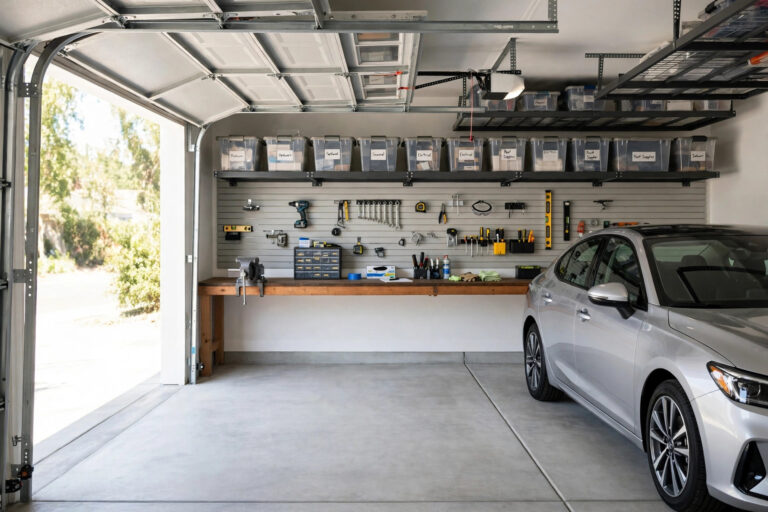
Every idea below works in a real basement, from a dry finished room with carpet to a bare concrete cellar with one bulb. The garage the basement system mirrors is in 25 Garage Storage Ideas for 2026, where the same zone-and-bin logic keeps bulky things off the floor — and the small-space zones the basement copies are in 25 Utility Closet Organization Ideas for 2026, so the tightest cupboard in the house and the biggest room in it run on the same system. Pick three ideas that fit your basement, start with the walk after rain, and build from there.
Sort first: dry zones before bins
1. Walk the basement after rain — find the damp spots before you store a thing
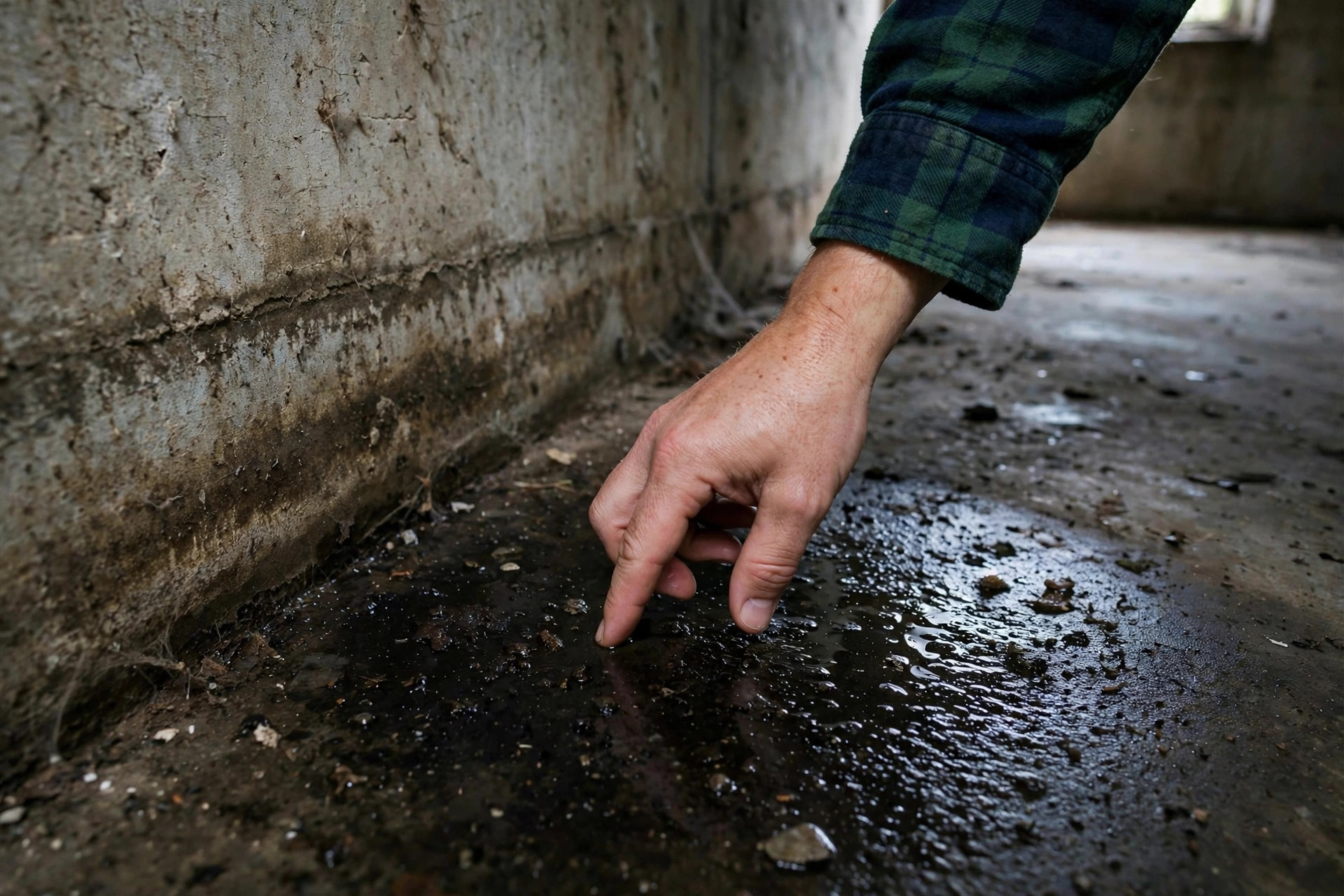
A basement that looks dry on a sunny day is not always dry, because the damp is the thing that shows up after rain and the boxes are the things that sit in it. Walk the basement the morning after heavy rain — find the damp spots before you store a thing — so you know which corners stay dry and which ones never should hold a box. Look for dark patches on the floor, a tide mark on the wall, and any box that feels soft at the bottom, because the soft box is the box that already got wet. Mark the wet corners with painter's tape and keep them empty, because the empty corner is the corner that cannot ruin anything. One wet morning, and the whole basement plan gets honest.
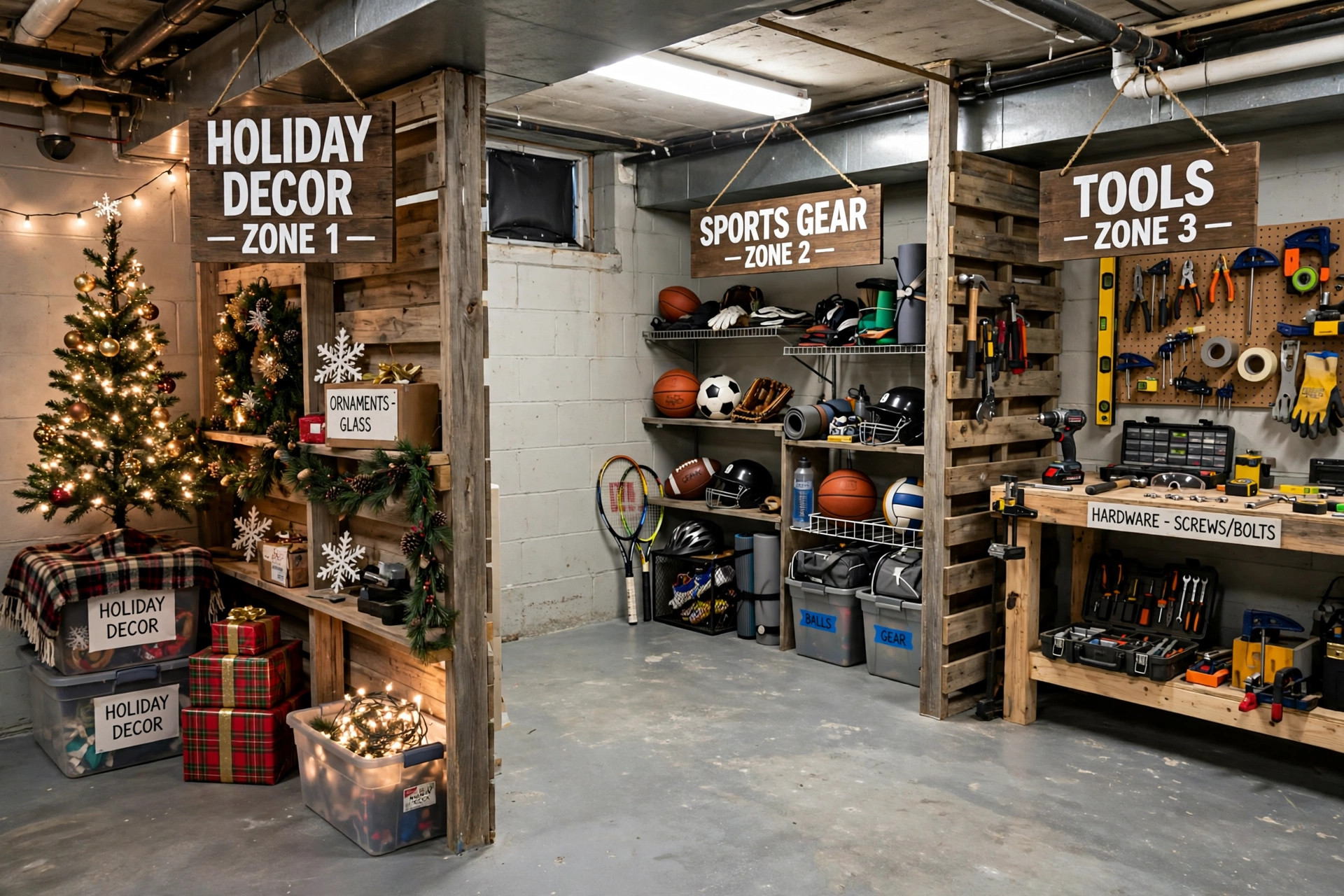
2. Zone the basement by use — one zone per job, not one pile per room
A basement with no zones is a basement with one big pile, because the things that arrive together are the things that land together and the pile is the thing that grows. Zone the basement by use — one zone per job, not one pile per room — so the holiday decor lives in one place, the sports gear in another, and the tools in a third. Give each zone a corner and a name, because the zone with a name is the zone that gets used properly, and the pile with no name is the pile that eats everything. Walk the room and point: decor here, sports there, tools by the door. Three zones, and the basement has a map.
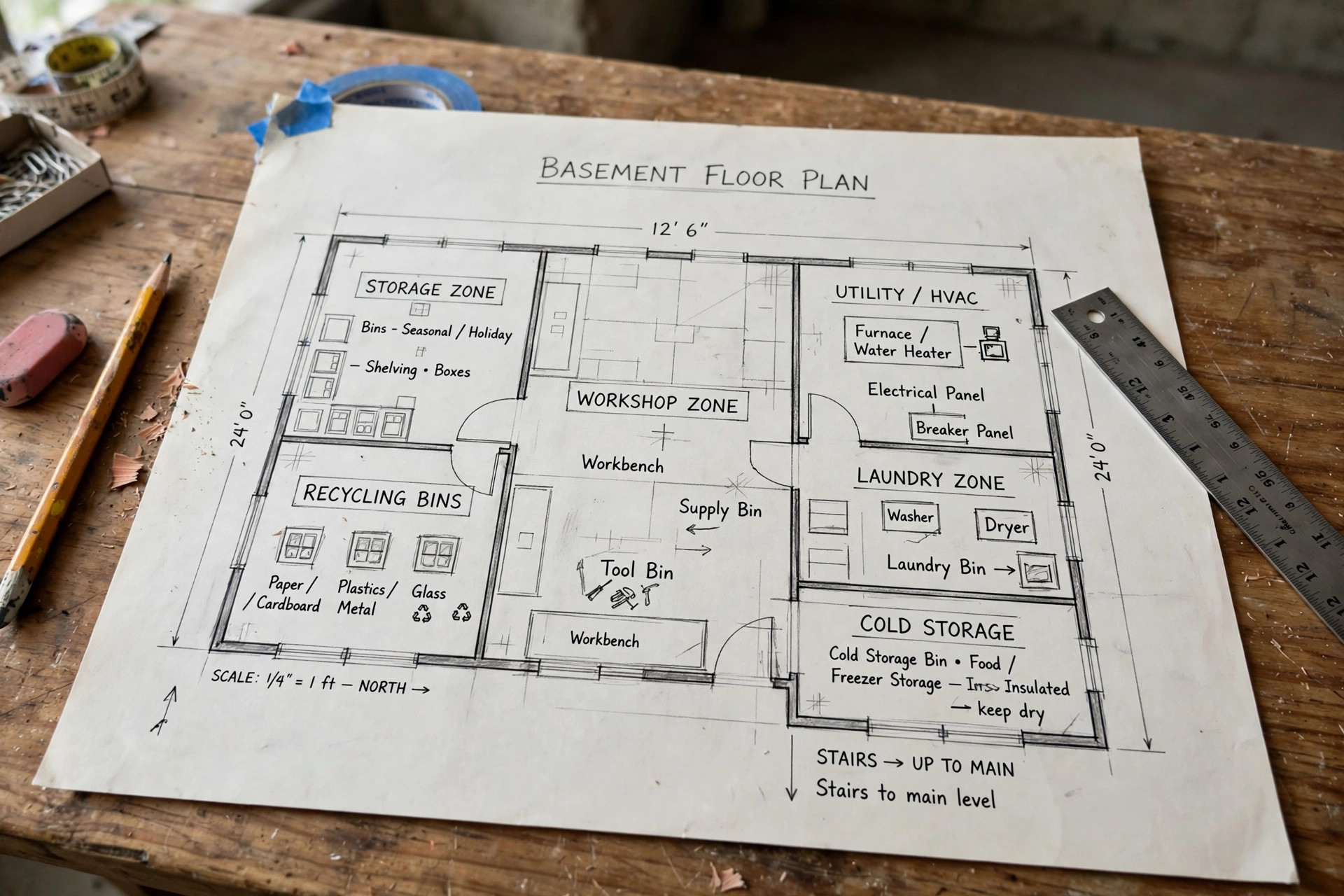
3. Draw a floor plan on paper — every bin gets a home before it comes downstairs
A bin with no home is a bin on the stairs, because the bin you carry down is the bin that needs a shelf and the shelf is the thing that does not exist yet. Draw a floor plan on paper — every bin gets a home before it comes downstairs — so the shelves, the hooks and the zones are decided before a single box moves. Sketch the room, mark the damp corners from idea 1, and draw a box for every zone, because the plan on paper is the plan that stops the pile. Tape the plan to the wall by the stairs, because the plan you can see is the plan you follow. One sheet of paper, and the basement is organised before it is touched.
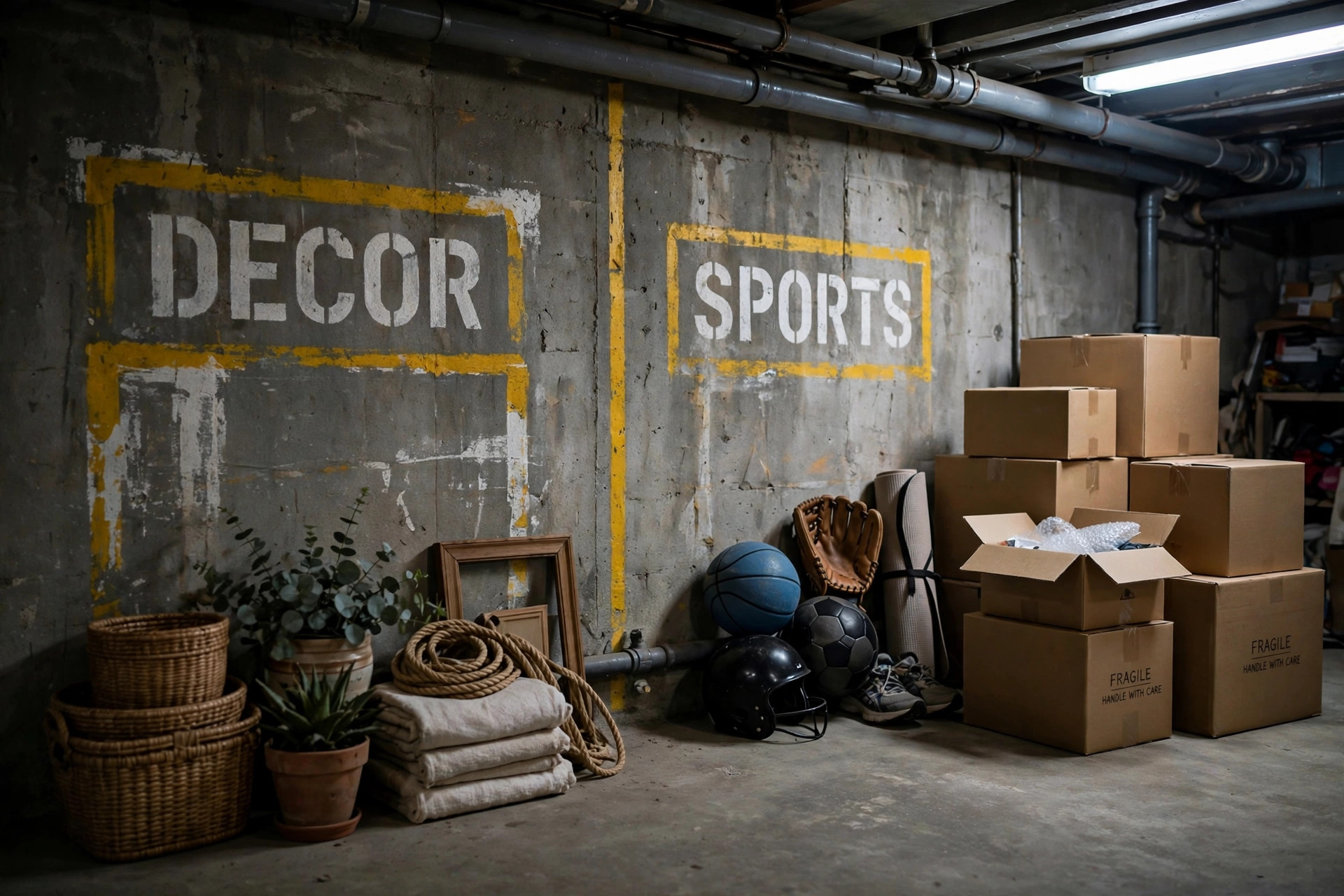
4. Label every zone on the wall — a painted sign beats a memory
A zone with no label is a zone nobody respects, because the person carrying a box down is the person who puts it in the first empty spot and the first empty spot is the wrong zone. Label every zone on the wall — a painted sign beats a memory — so the decor zone says DECOR, the sports zone says SPORTS, and the box lands where it belongs. Use a painted board, a laminated card or masking tape and a marker, because the label that is there is the label that gets read. Put the label at eye height, so you see it while your hands are full. A sign on the wall, and the zones stay zones.
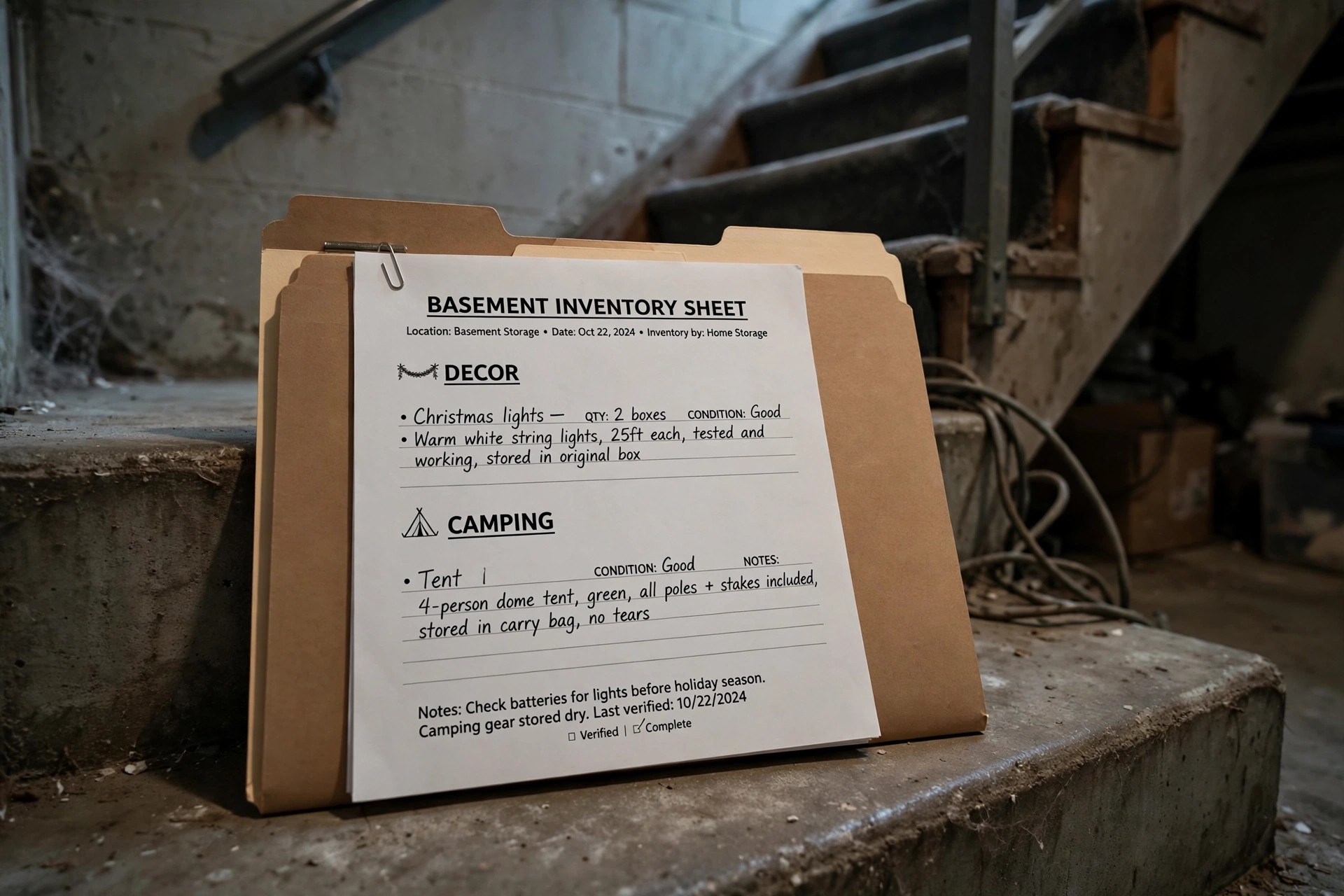
5. Keep a one-page inventory — what is down there, and which zone it lives in
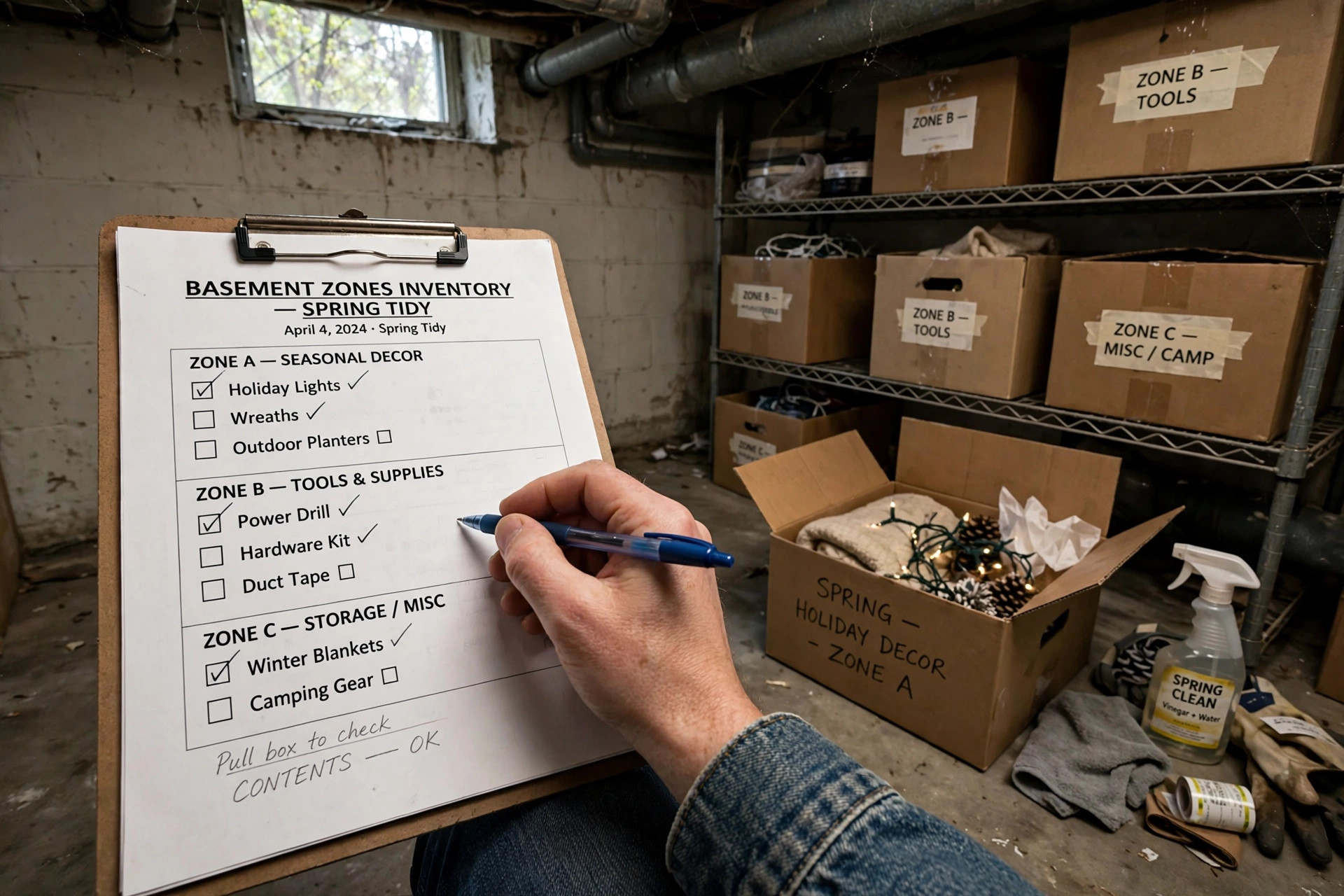
A basement with no inventory is a basement you have to search, because the thing you need is the thing you cannot remember storing and the search is the thing that takes an hour. Keep a one-page inventory — what is down there, and which zone it lives in — so the Christmas lights are listed under DECOR, the tent under CAMPING, and the drill under TOOLS. Write it on one sheet, keep it in a folder by the stairs, and cross things off when they leave, because the list that is current is the list that saves the search. Update it the day you add a bin, not the day you need one. One page, and the basement stops hiding things.
Bins and shelves that survive a basement
6. Heavy-duty shelving, bolted to the wall — the shelves that do not wobble when loaded
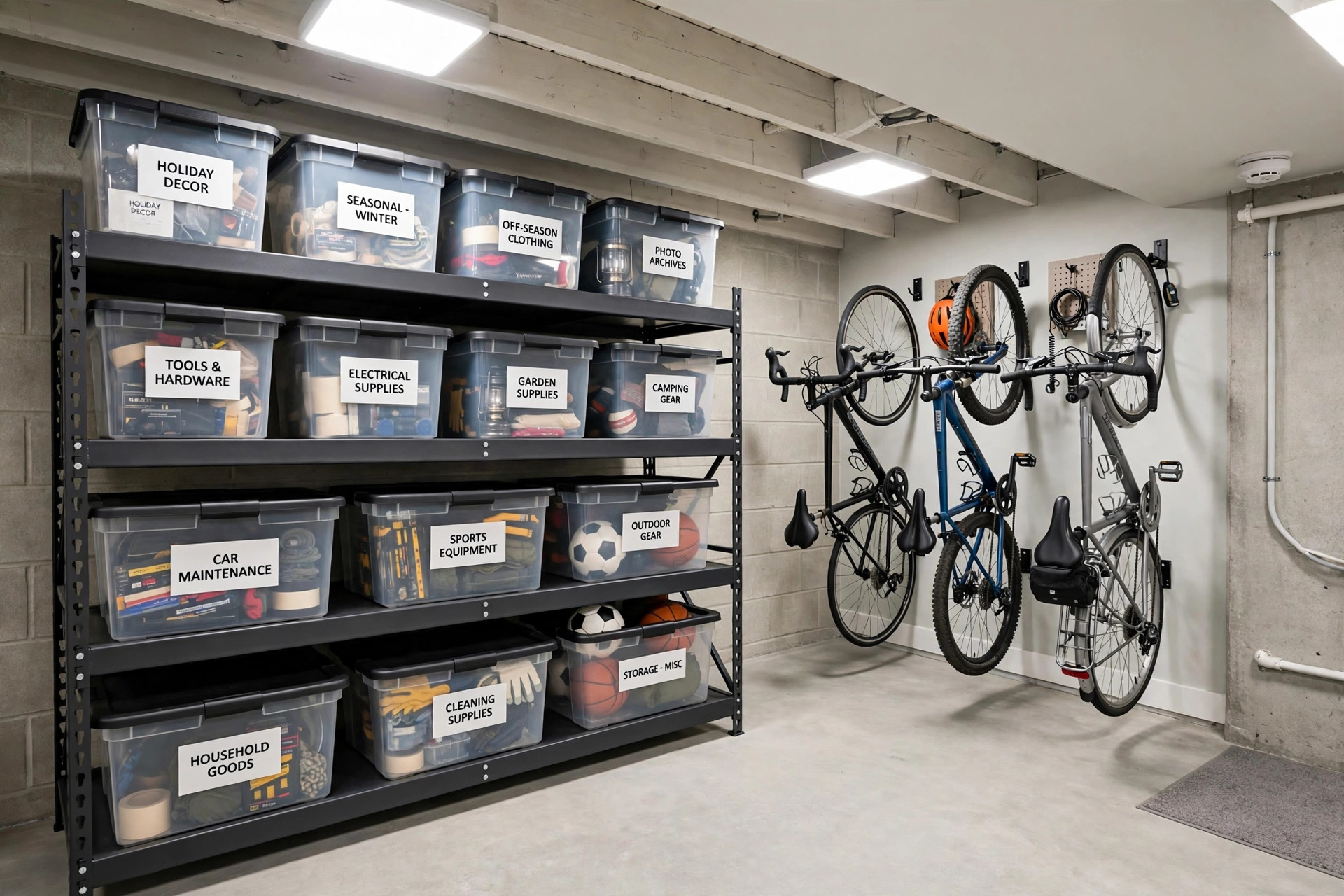
A shelf that wobbles is a shelf that falls, because the bins are heavy, the shelf is loaded, and the wobble is the warning nobody hears. Use heavy-duty shelving, bolted to the wall — the shelves that do not wobble when loaded — so the bins sit still and the shelf stays upright for years. Choose metal shelving with a high weight rating, bolt the uprights into the wall studs, and load the heaviest bins at the bottom, because the bottom is the place the weight belongs. Test the shelf by pushing it hard before you load it, because the shelf that moves empty is the shelf that falls full. (Check on Amazon for a heavy-duty metal shelving unit with adjustable shelves, which fits the bins you already own.) Bolted shelves, and the basement holds its weight.
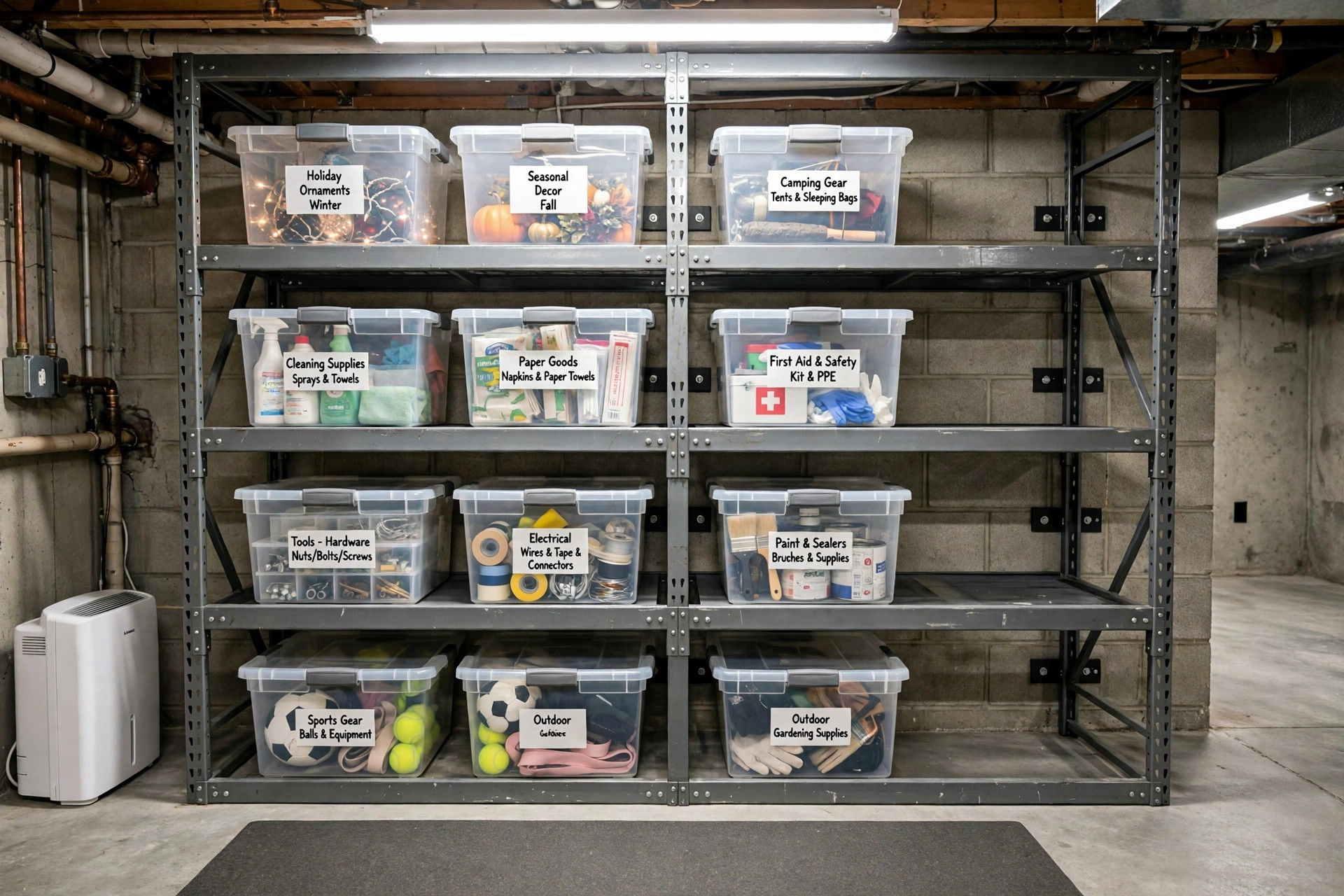
7. Clear stackable bins with lids — see what is inside without opening a thing
A bin you cannot see into is a bin you have to open, because the label is the thing you trust and the label is the thing that lies when a box gets refilled. Use clear stackable bins with lids — see what is inside without opening a thing — so the contents are visible from the shelf and the lid keeps the dust out. Pick one size and buy it again and again, because the same bin stacks, swaps and fits every shelf, and the odd bin is the bin that wastes a shelf. Put the label on the short end, facing out, because the end you see is the end you read. Clear bins, and the basement tells you what it holds.
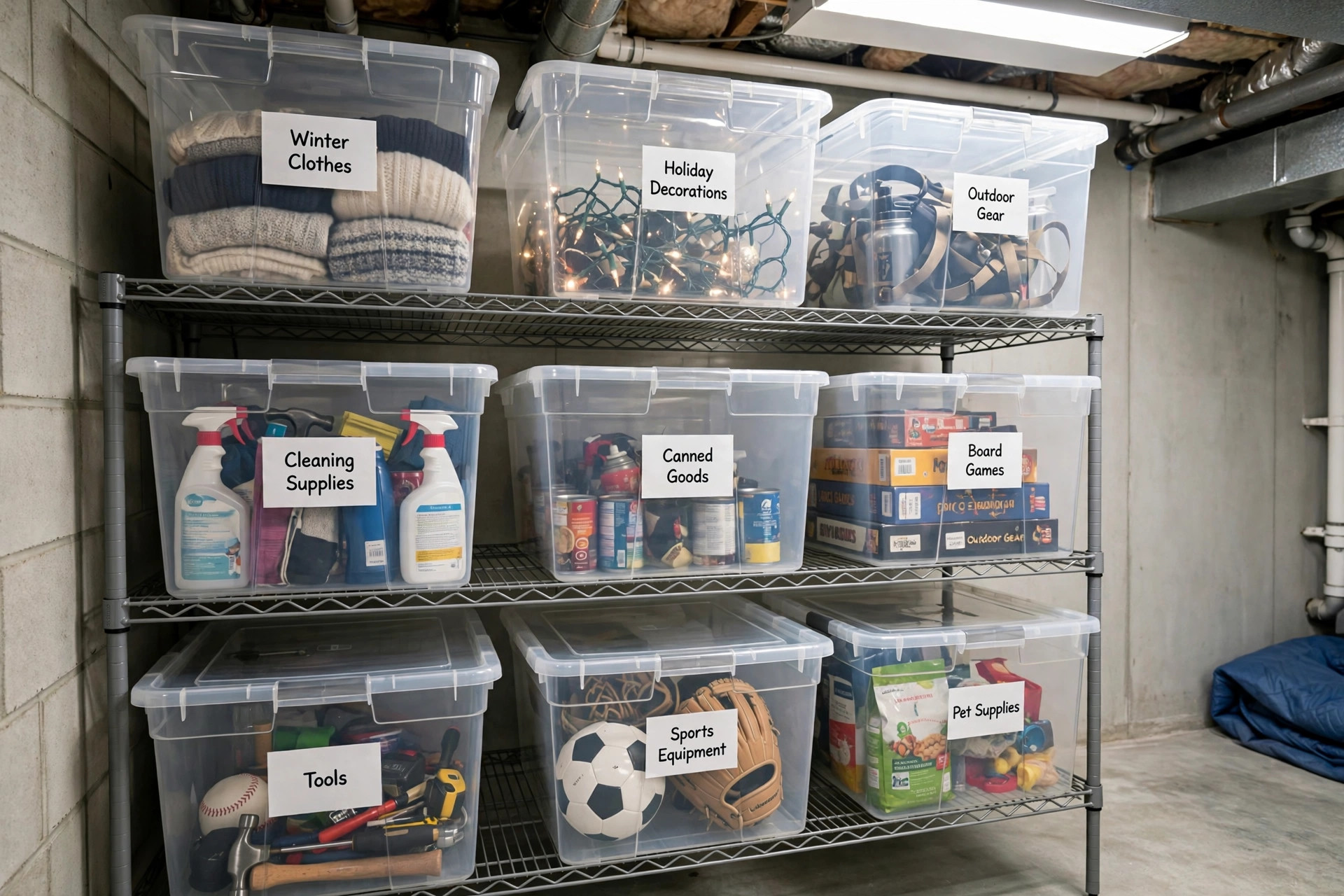
8. Everything off the floor — pallets, risers and shelf legs beat a puddle
A box on the floor is a box in the water, because the basement floor is the place the water goes first and the box is the thing sitting in it. Keep everything off the floor — pallets, risers and shelf legs beat a puddle — so a small leak wets the pallet and the bins stay dry. Slide a wooden pallet under the lowest shelf, or use plastic risers under freestanding bins, because the four inches of air is the four inches that saves the contents. Never store a box flat on concrete, even in a dry corner, because the dry corner is the corner that floods first. Off the floor, and a puddle is an annoyance instead of a disaster.
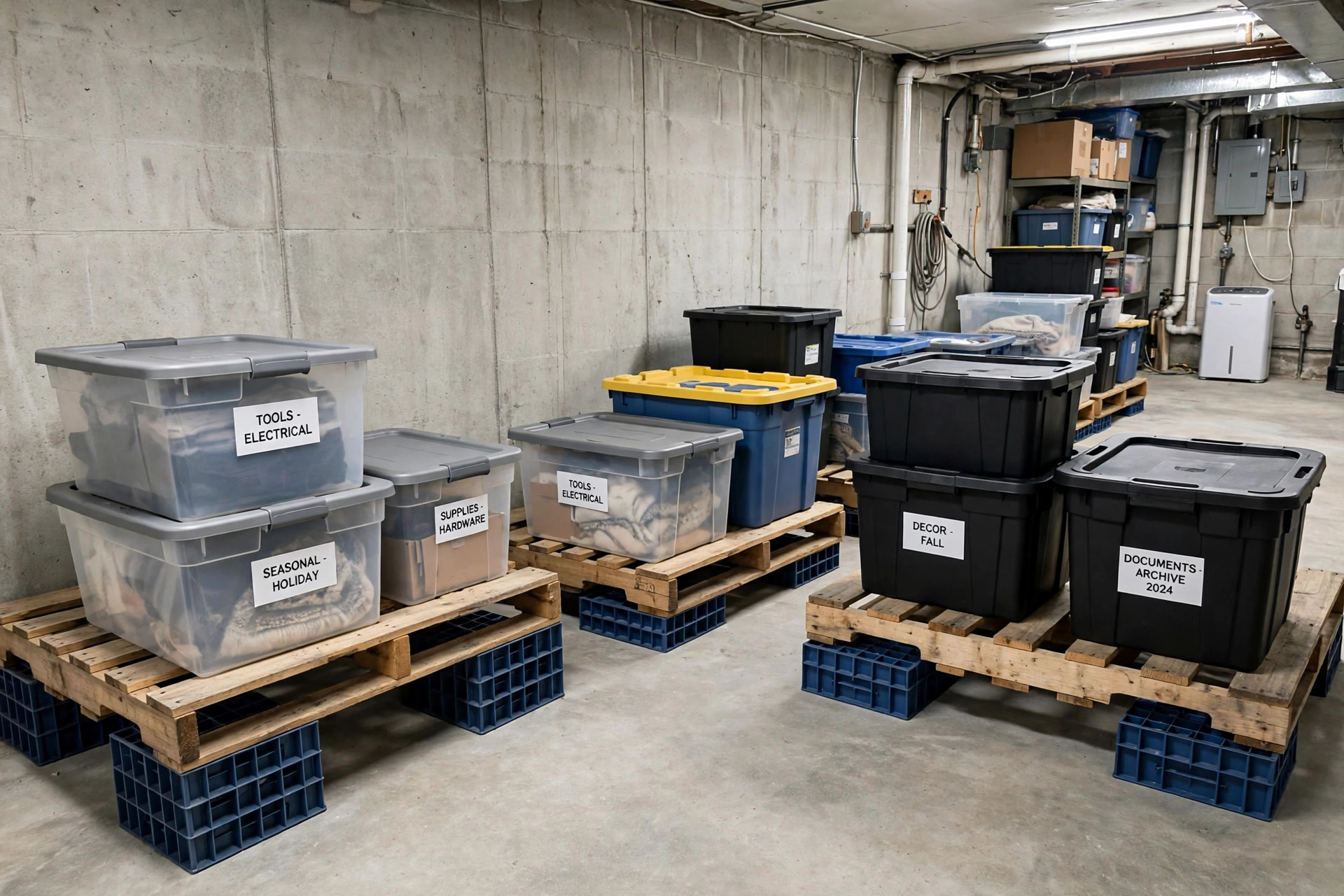
9. Watertight bins for the things that matter — holiday keepsakes and photos stay sealed
A keepsake in a cardboard box is a keepsake at risk, because the damp is the thing that creeps in slowly and the photo is the thing that cannot be replaced. Use watertight bins for the things that matter — holiday keepsakes and photos stay sealed — so the lid clicks shut, the gasket seals, and the contents stay dry even if the shelf gets splashed. Keep the photos in a sealed bag inside the bin, because the bag is the second seal and the bin is the first. Label the bin KEEPSAKES in big letters, because the bin that matters is the bin you grab first. (Check on Amazon for a watertight storage bin with a gasket-sealed lid, sized for photo boxes and keepsakes.) Sealed bins, and the irreplaceable stays safe.
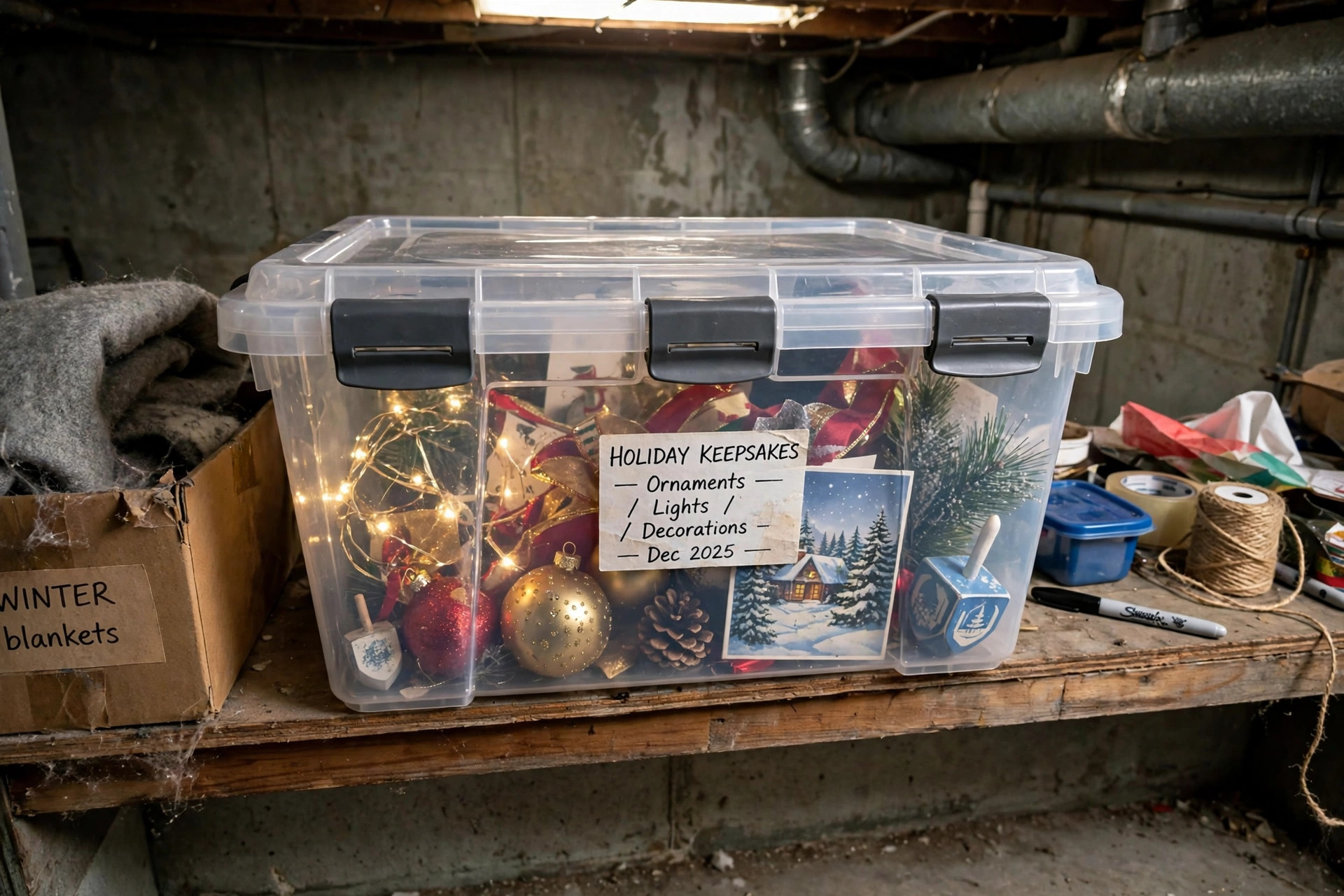
10. Metal and plastic, not cardboard — cardboard boxes soak, sag and invite pests
A cardboard box in a basement is a cardboard box with a countdown, because the damp softens it, the weight sags it, and the mice chew it. Use metal and plastic, not cardboard — cardboard boxes soak, sag and invite pests — so the storage lasts years instead of one damp winter. Move everything out of cardboard as you sort, and recycle the boxes the same day, because the box that stays is the box that becomes a nest. Keep one small cardboard box only for the things leaving the house, because the box that leaves is the box that does not matter. Plastic and metal, and the basement stops feeding the mice.
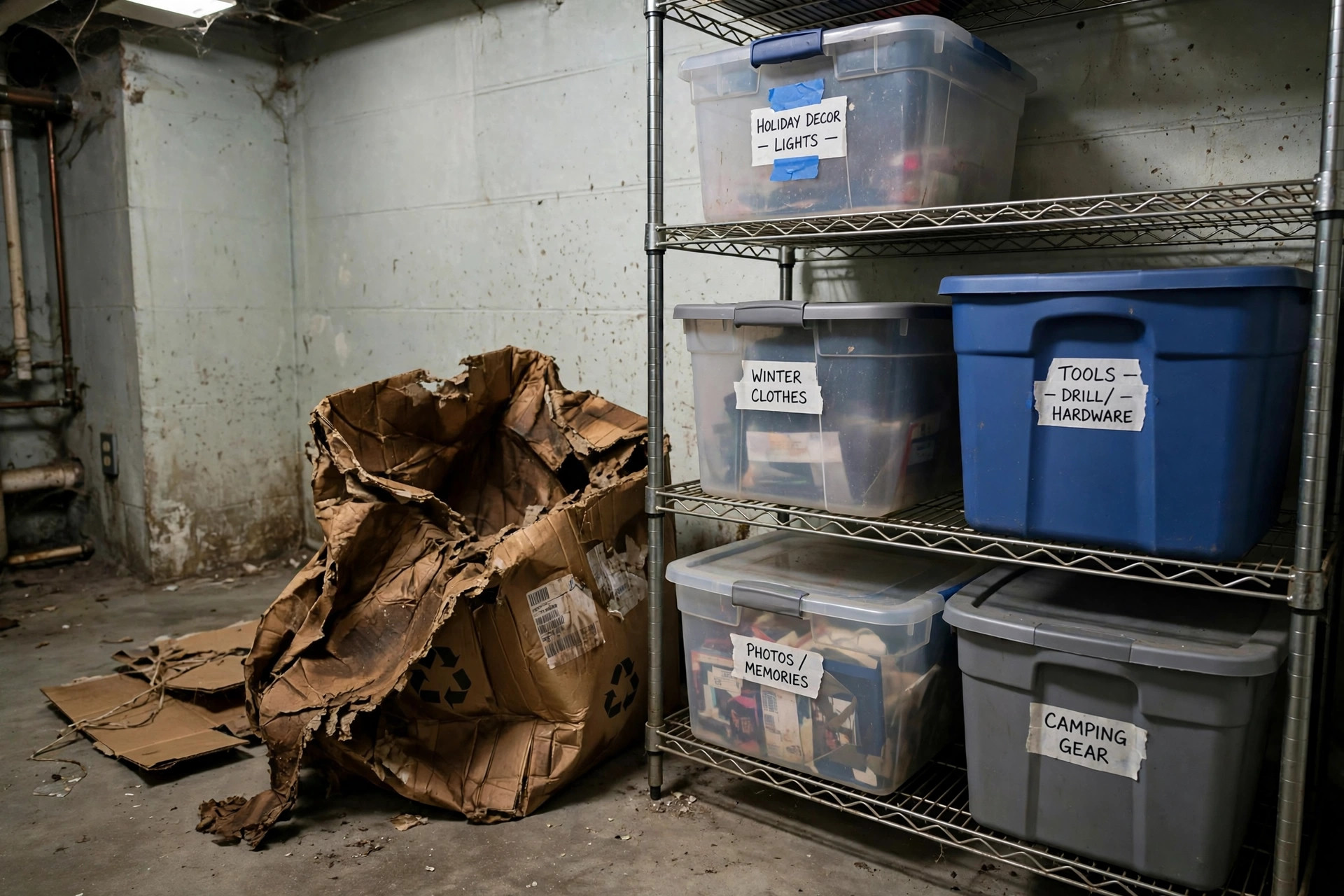
11. One size of bin, everywhere — the same bin stacks, swaps and fits every shelf
A basement full of different bins is a basement full of wasted space, because the odd bin is the bin that does not stack, the tall bin is the bin that does not fit, and the shelf is the thing that ends up half empty. Use one size of bin, everywhere — the same bin stacks, swaps and fits every shelf — so every bin fits every shelf and every stack is straight. Measure the shelf depth first, then buy the bin that fits it with an inch to spare, because the bin that fits is the bin that stacks. When a bin breaks, replace it with the same one, because the matching bin is the bin that keeps the system. One size, and the shelves fill properly.
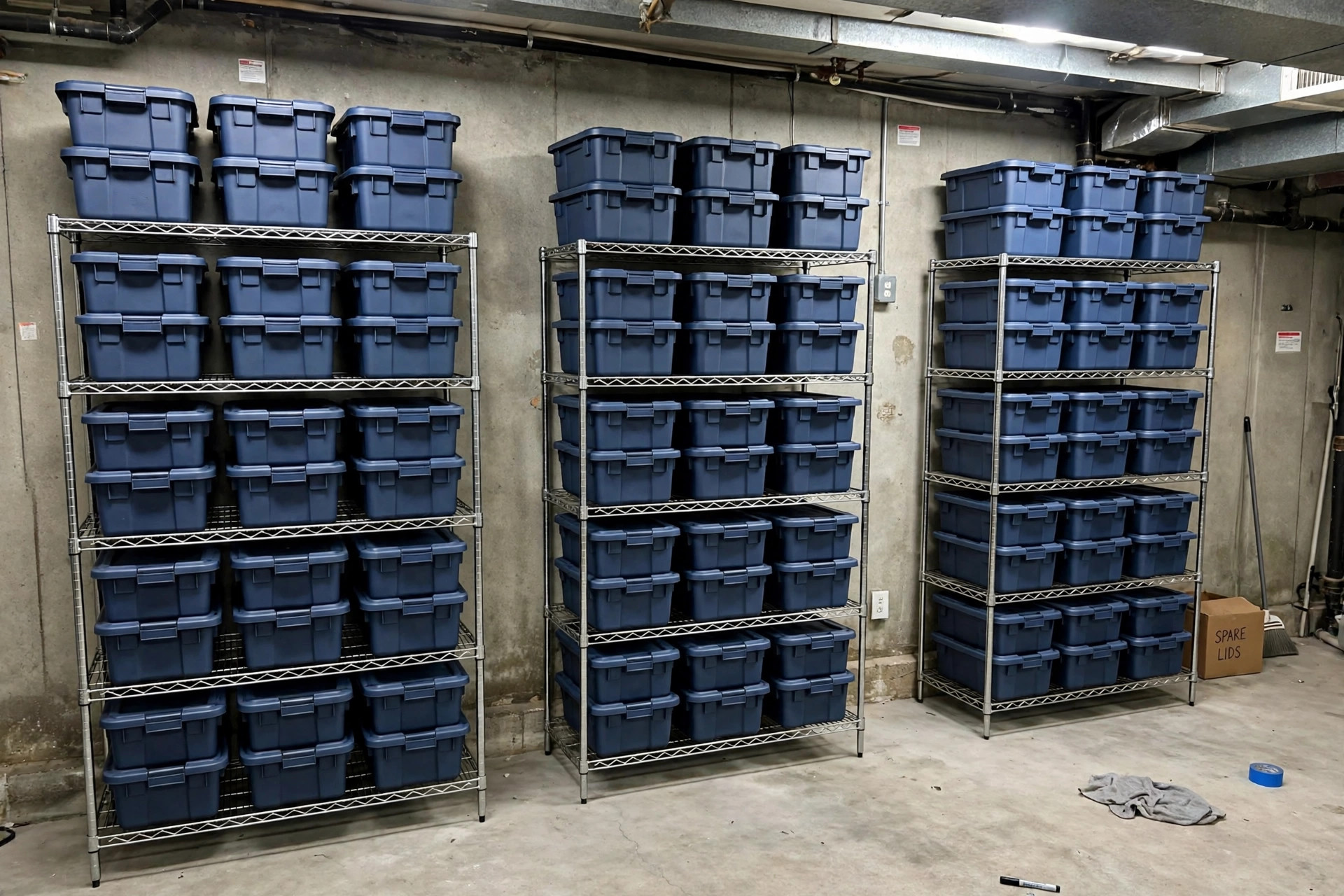
Bulky things, given a home
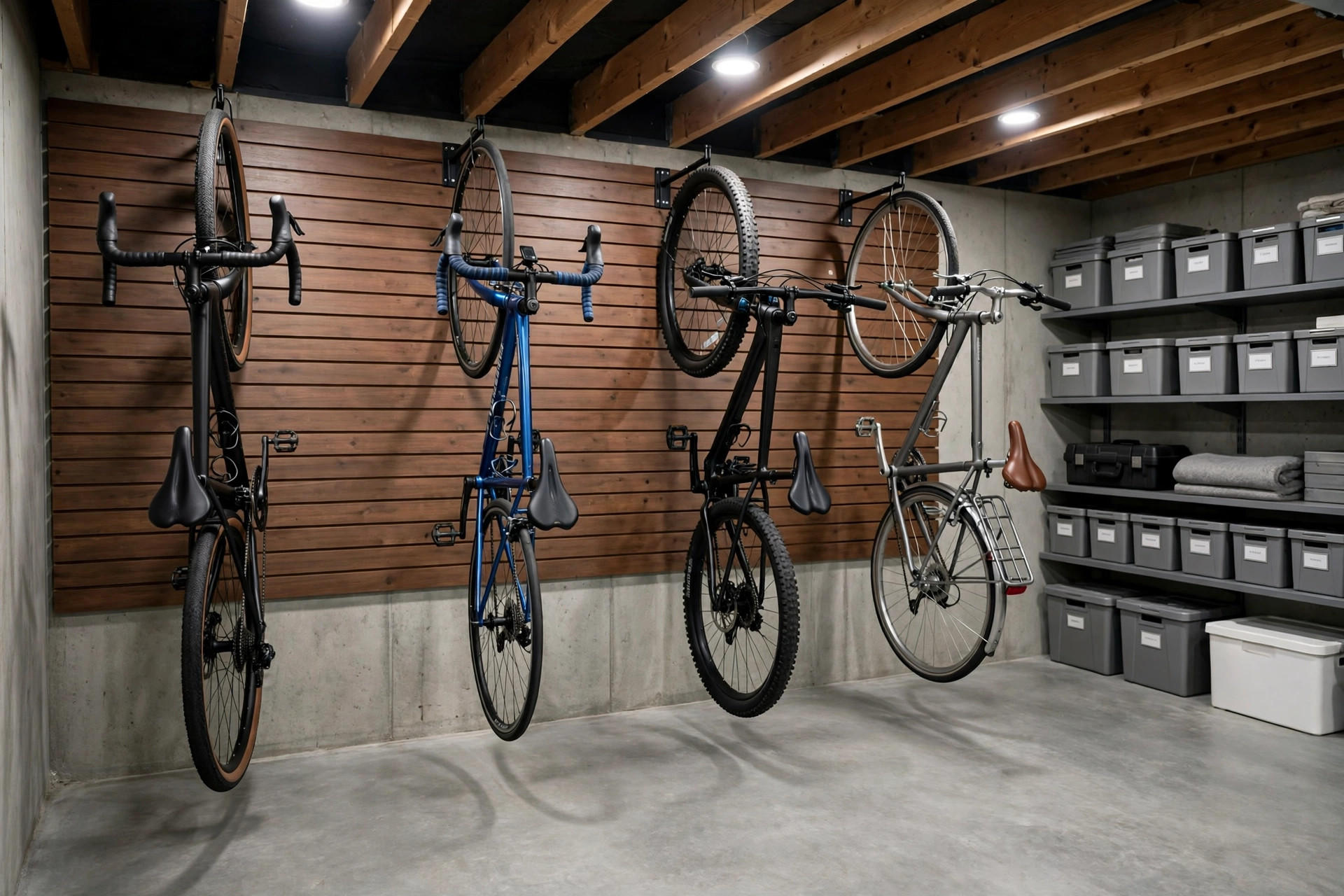
12. Bikes on wall hooks — the bikes hang, the floor stays free
A bike on the floor is a bike in the way, because the bike is long, the basement is narrow, and the handlebars are the things that catch every passing box. Hang the bikes on wall hooks — the bikes hang, the floor stays free — so the wheels leave the ground and the walkway opens up. Screw heavy hooks into the wall studs, hang the bikes by the front wheel, and leave a hand's width between them, because the gap is the thing that stops the pedals tangling. Put the kids' bikes lowest, because the lowest hook is the hook they can reach themselves. Bikes on the wall, and the floor is a floor again.
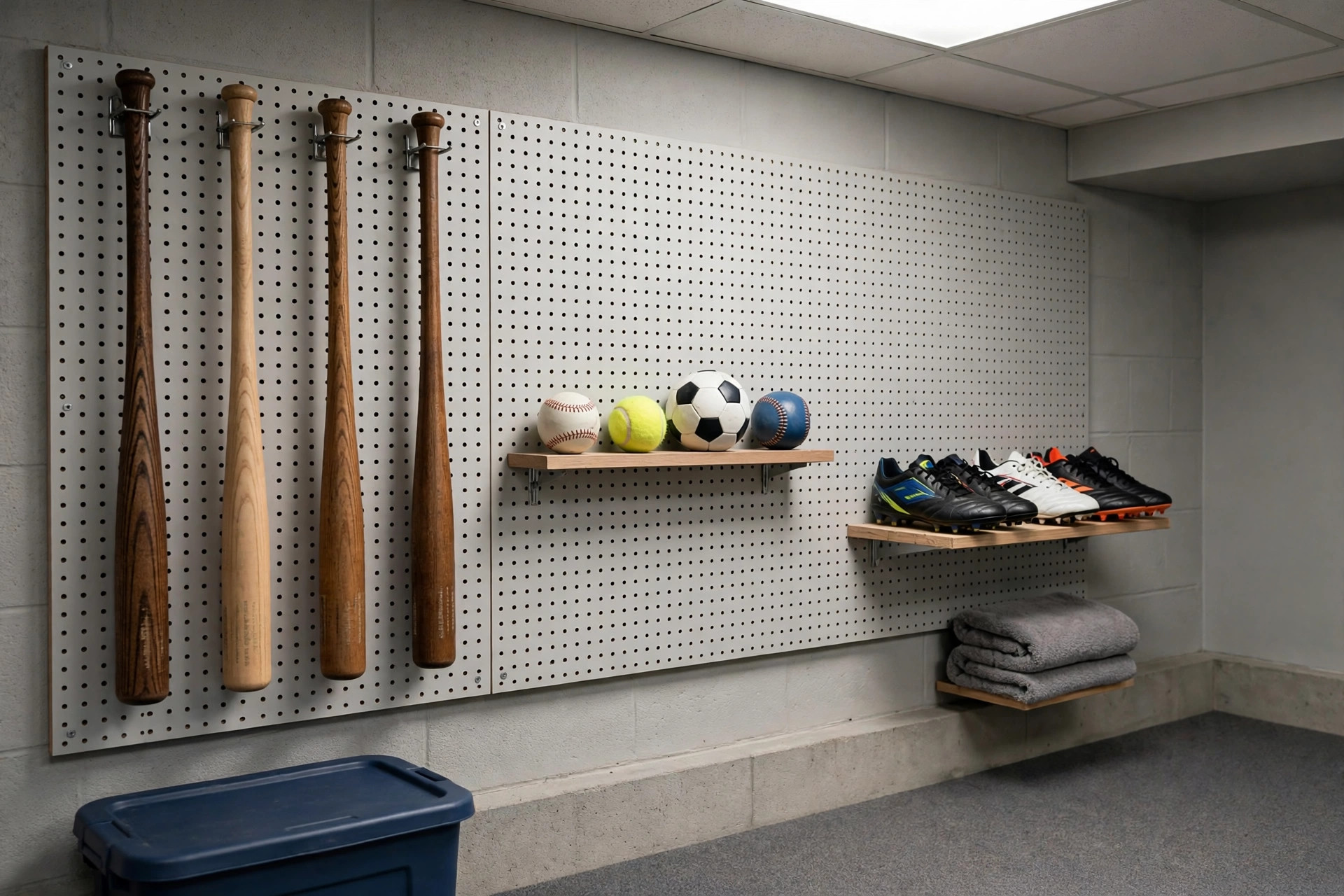
13. Sports gear on one wall — bats, balls and boots in a single grab-and-go row
Sports gear scattered across a basement is sports gear you cannot find on a Saturday morning, because the bat is here, the ball is there, and the boots are under a box. Put the sports gear on one wall — bats, balls and boots in a single grab-and-go row — so the whole kit lives together and the game starts on time. Hang the bats on hooks, drop the balls in a tall bin, and line the boots on a low rack, because the wall that holds everything is the wall that gets used. Keep the wall by the stairs, because the gear by the door is the gear that leaves with you. One wall, and Saturday mornings get easier.
14. A seasonal decor wall — holiday bins in order, Christmas nearest the stairs
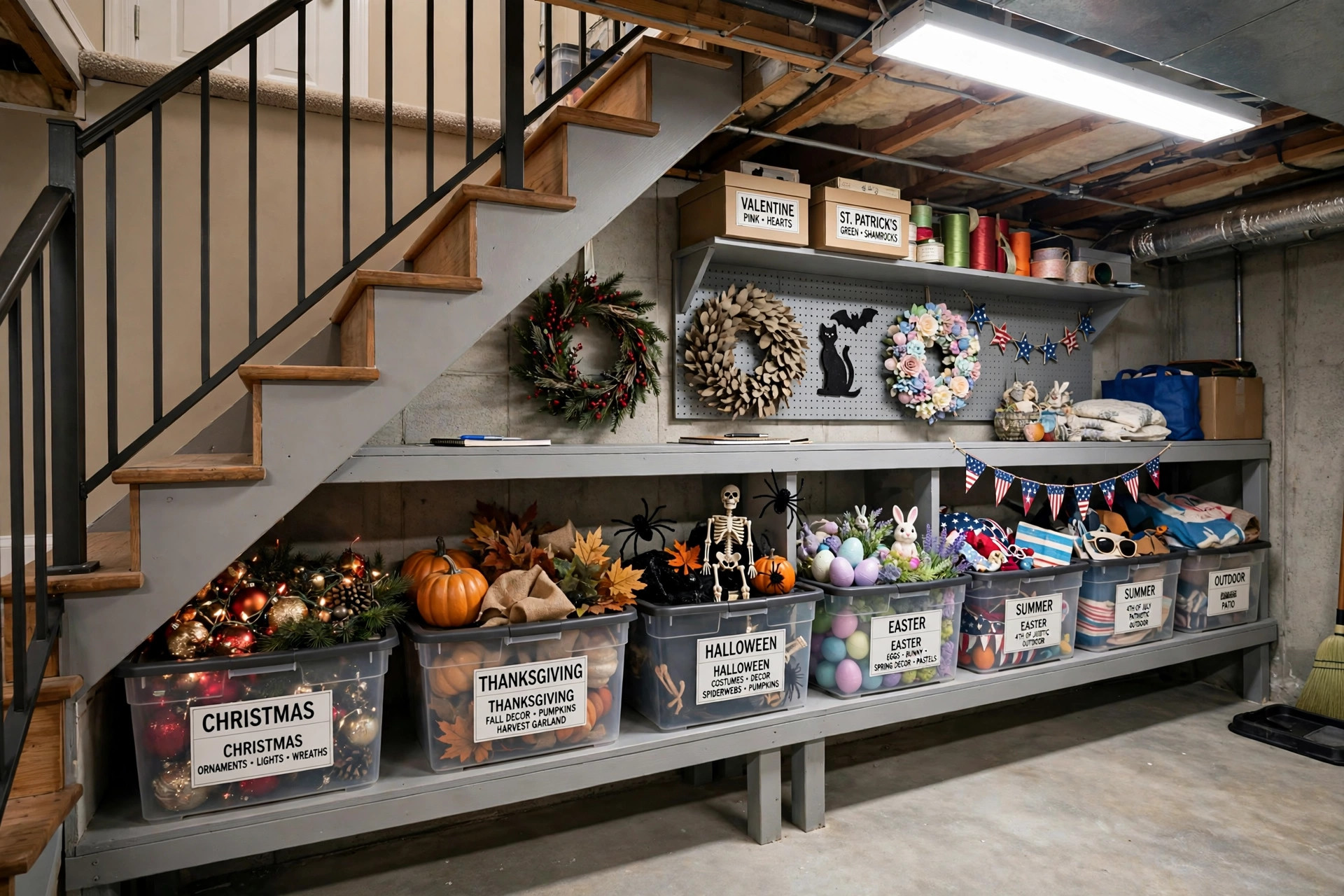
Holiday bins buried behind the camping gear are holiday bins you dread fetching, because the bin you need is the bin at the back and the back is the place behind everything else. Build a seasonal decor wall — holiday bins in order, Christmas nearest the stairs — so the bin you need next is the bin you can reach first. Order the bins by the calendar: the next holiday nearest the stairs, the last one furthest away, because the order that follows the year is the order that works. The holiday bins themselves are in 25 Holiday Decor Storage Ideas for 2026, where the labelled bins make decorating easy before they ever reach this wall. A wall in calendar order, and decorating starts with a reach instead of a dig.
15. Luggage stacked like books — suitcases on a shelf, smallest inside largest
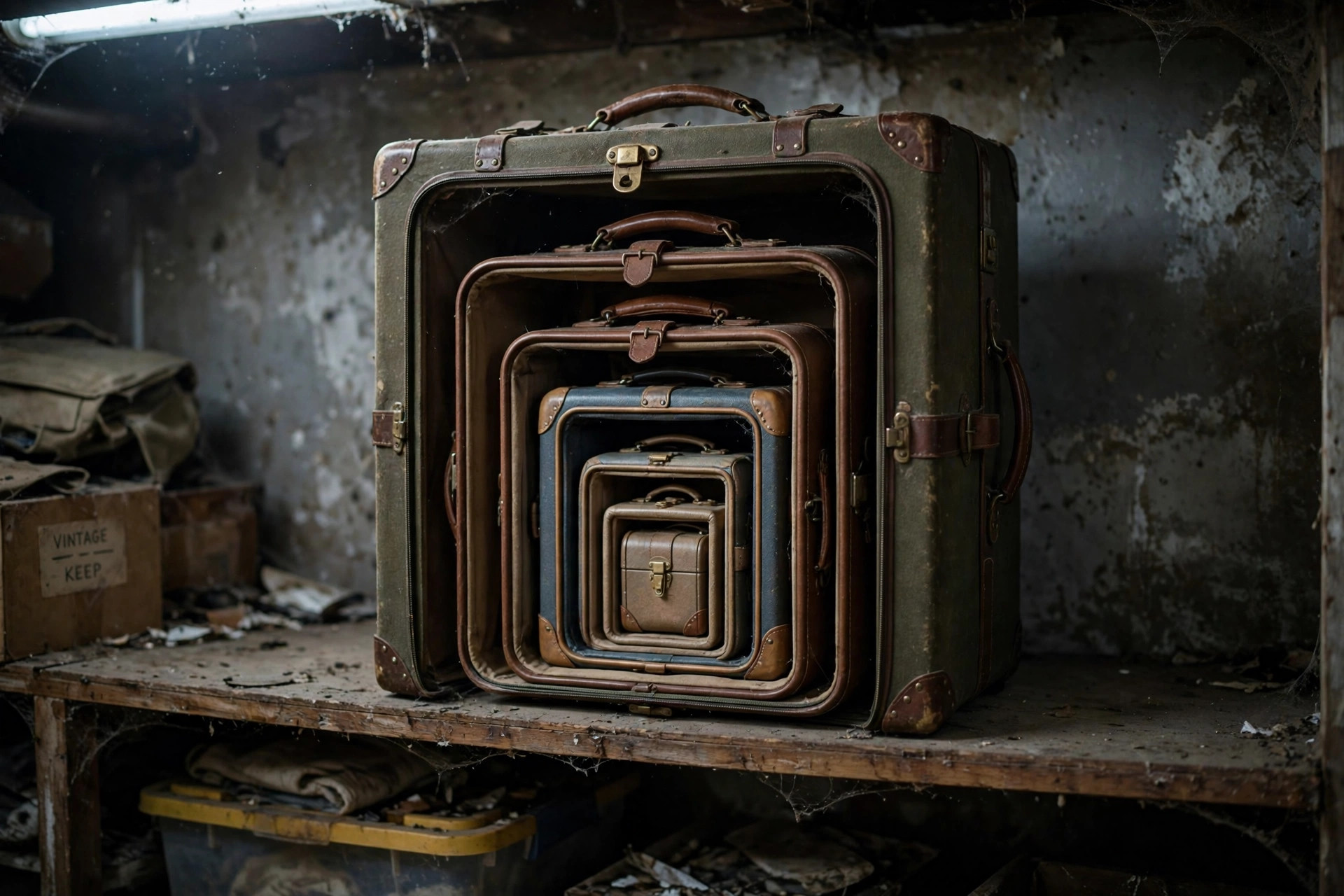
Suitcases loose on the floor are suitcases in the way, because the big one leans on the wall, the small one hides behind it, and the set is the thing that takes up a whole corner. Stack the luggage like books — suitcases on a shelf, smallest inside largest — so the whole set takes one shelf and the corner is free. Nest the small cases inside the large ones, stand the set upright on a deep shelf, and keep the one you use most at the front, because the front case is the case you grab. Wipe the wheels before they go back, because the clean wheels are the wheels that do not mark the shelf. Luggage on a shelf, and the corner is yours again.
16. Tools on a pegboard — every tool in sight, nothing lost in a box
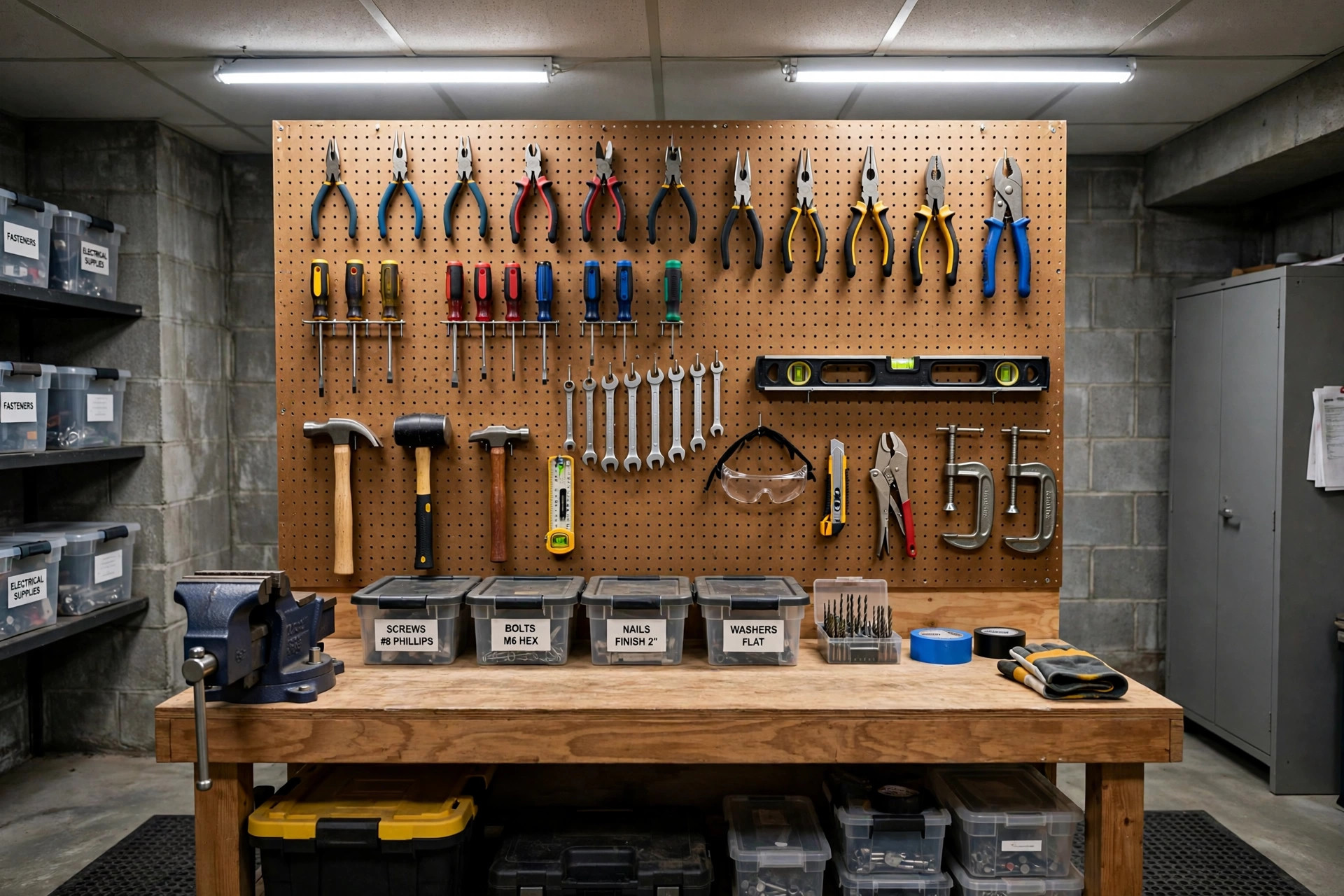
A tool in a box is a tool you cannot find, because the box is the thing that hides it and the job is the thing that waits while you dig. Put the tools on a pegboard — every tool in sight, nothing lost in a box — so the hammer, the drill and the saw hang where you can see them and the job starts at once. Screw the pegboard to the wall by the workbench, outline each tool in marker, and hang it back in its outline, because the outline is the thing that shows what is missing. Keep the tools you use most at eye height, because the eye-height hook is the hook your hand finds first. A pegboard, and the toolbox becomes a wall.
17. A camping corner — tents, chairs and coolers in one zone by the door
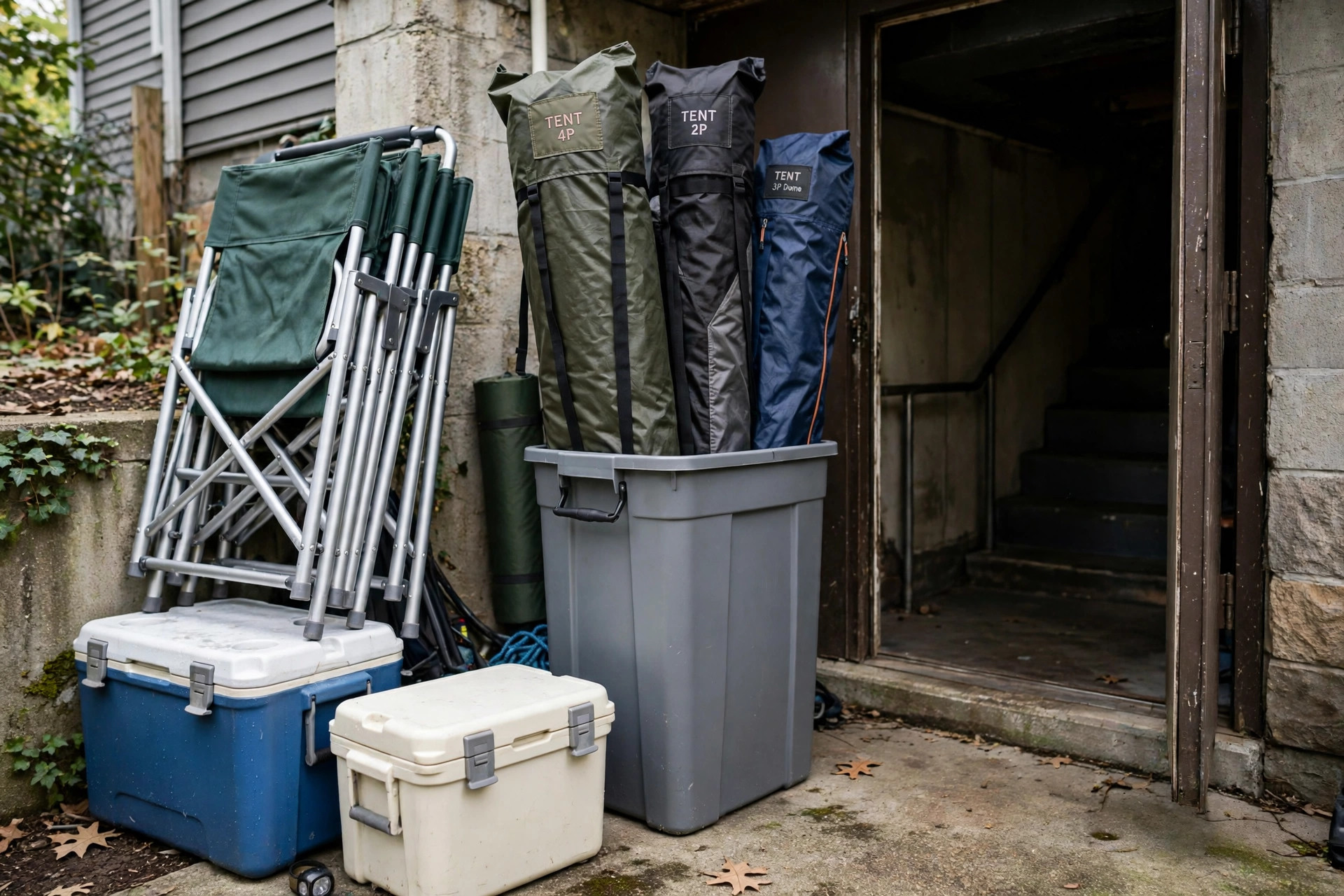
Camping gear spread across a basement is camping gear you pack twice, because the tent is here, the chairs are there, and the cooler is the thing you forgot until the car is loaded. Give it a camping corner — tents, chairs and coolers in one zone by the door — so the whole trip lives in one place and packing takes an hour, not a day. Stand the tent bags upright in a tall bin, stack the chairs beside them, and put the coolers on the bottom shelf, because the corner by the door is the corner that loads the car. Check the gear when it comes home, before it goes back, because the tent that is checked is the tent that works next time. One corner, and the trip starts at the door.
Keep it dry and findable
18. A dehumidifier that runs itself — set the level, empty the tank, forget it
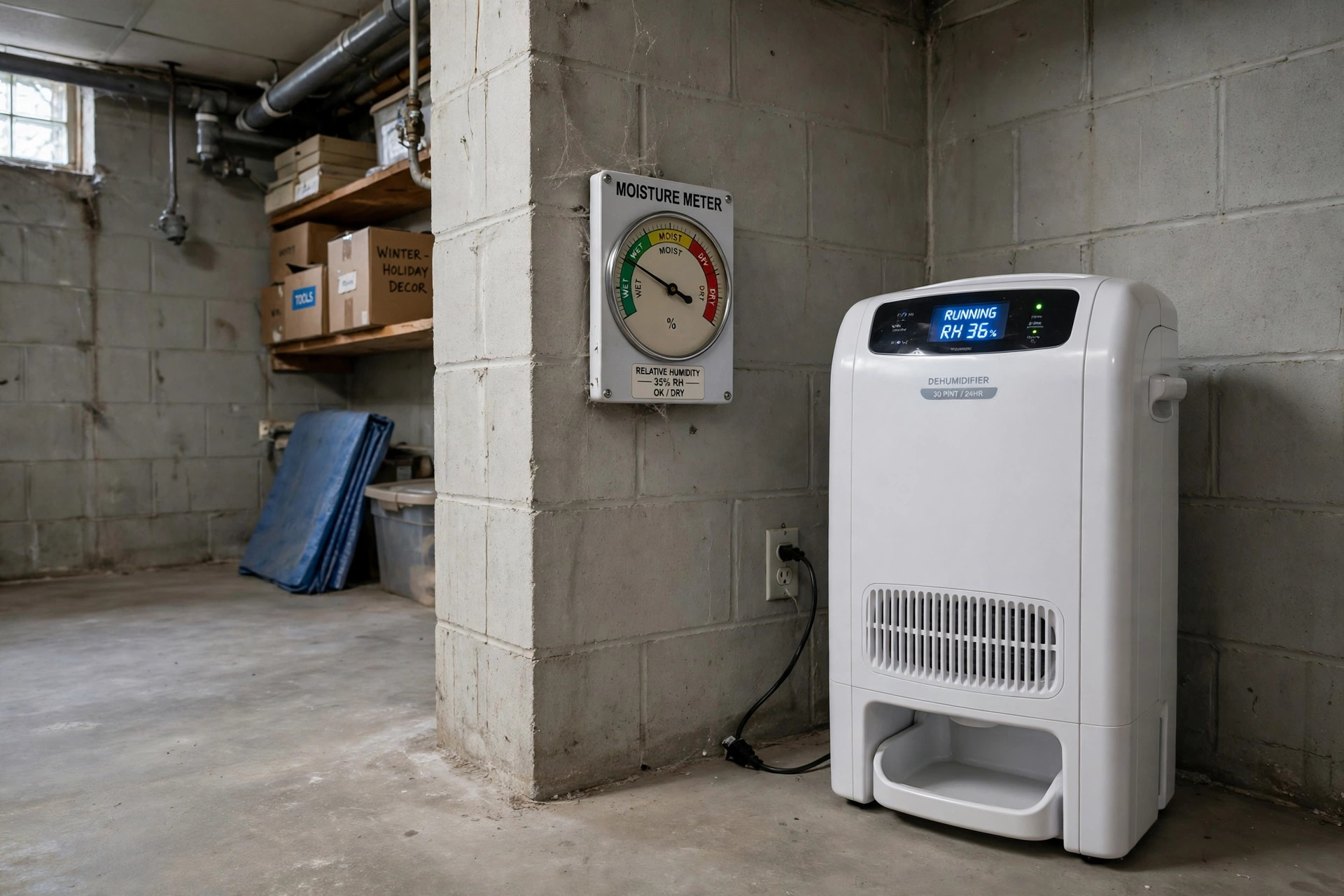
A damp basement is a basement that ruins things slowly, because the damp is the thing you cannot see and the mould is the thing that shows up months later. Run a dehumidifier that runs itself — set the level, empty the tank, forget it — so the air stays dry without you thinking about it. Set it to around 50 percent humidity, put it in the middle of the room, and run the drain hose to a sink or a floor drain if you can, because the hose is the thing that empties itself. Empty the tank every few days if there is no hose, because the full tank is the tank that switches itself off. (Check on Amazon for a dehumidifier with a drain hose and a humidistat, so it runs only when the air needs it.) A dehumidifier, and the basement air stays honest.
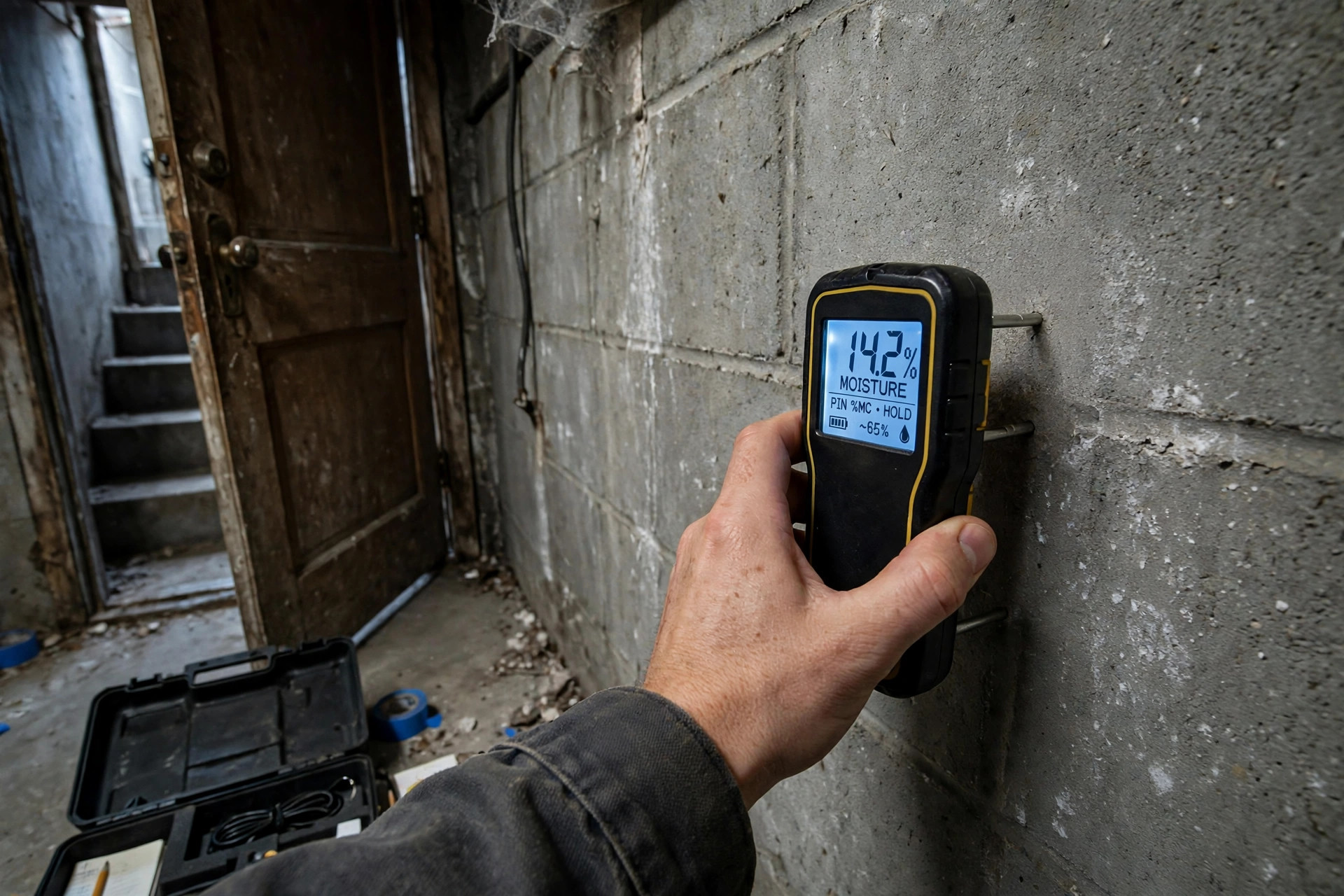
19. A moisture meter by the door — check the number before you store anything new
A basement that feels dry is not always dry, because the feeling is the thing that lies and the number is the thing that tells the truth. Keep a moisture meter by the door — check the number before you store anything new — so you know the wall is dry before the bin goes against it. Press the meter to the wall and the floor, read the number, and wait a day if it is high, because the day of waiting is the day that saves the contents. Write the reading on the inventory sheet once a month, because the number that is tracked is the number that warns you early. A meter by the door, and the basement never surprises you.
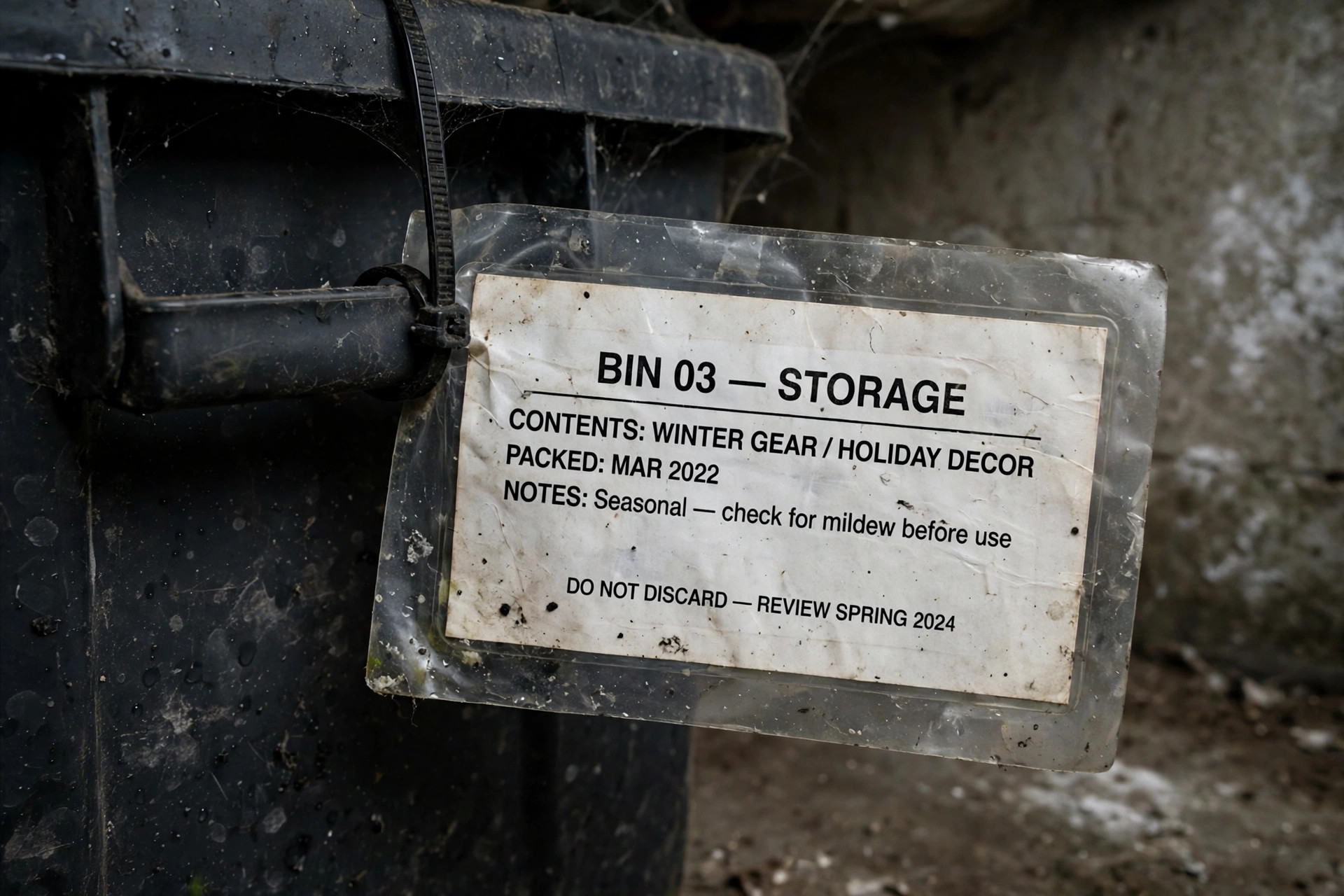
A paper label in a damp basement is a label that peels, because the damp is the thing that lifts the edges and the bin is the thing that becomes a mystery. Use moisture-proof labels that stay stuck — laminated tags, not paper that peels — so the label is readable in two years, not two months. Print the label, slip it in a laminating pouch, and tie it to the bin with a cable tie, because the tie is the thing that holds when the glue gives up. Write in big block letters, because the big letters are the letters you read from the stairs. Laminated tags, and the bins keep their names.
21. A twice-a-year basement tidy — spring and autumn, one hour, every zone checked
A basement tidy done once is a basement tidy that fades, because the boxes arrive all year and the zones are the things that drift. Do a twice-a-year basement tidy — spring and autumn, one hour, every zone checked — so the drift gets caught before it becomes a pile. Walk each zone with the inventory sheet, pull out anything that does not belong, and check the damp corners from idea 1, because the hour that checks is the hour that keeps the system. Put the tidy on the calendar, the same weekend every time, because the date that repeats is the date that happens. Two hours a year, and the basement stays a store room.
22. A flood plan in one bin — the grab bag by the stairs, ready before the rain
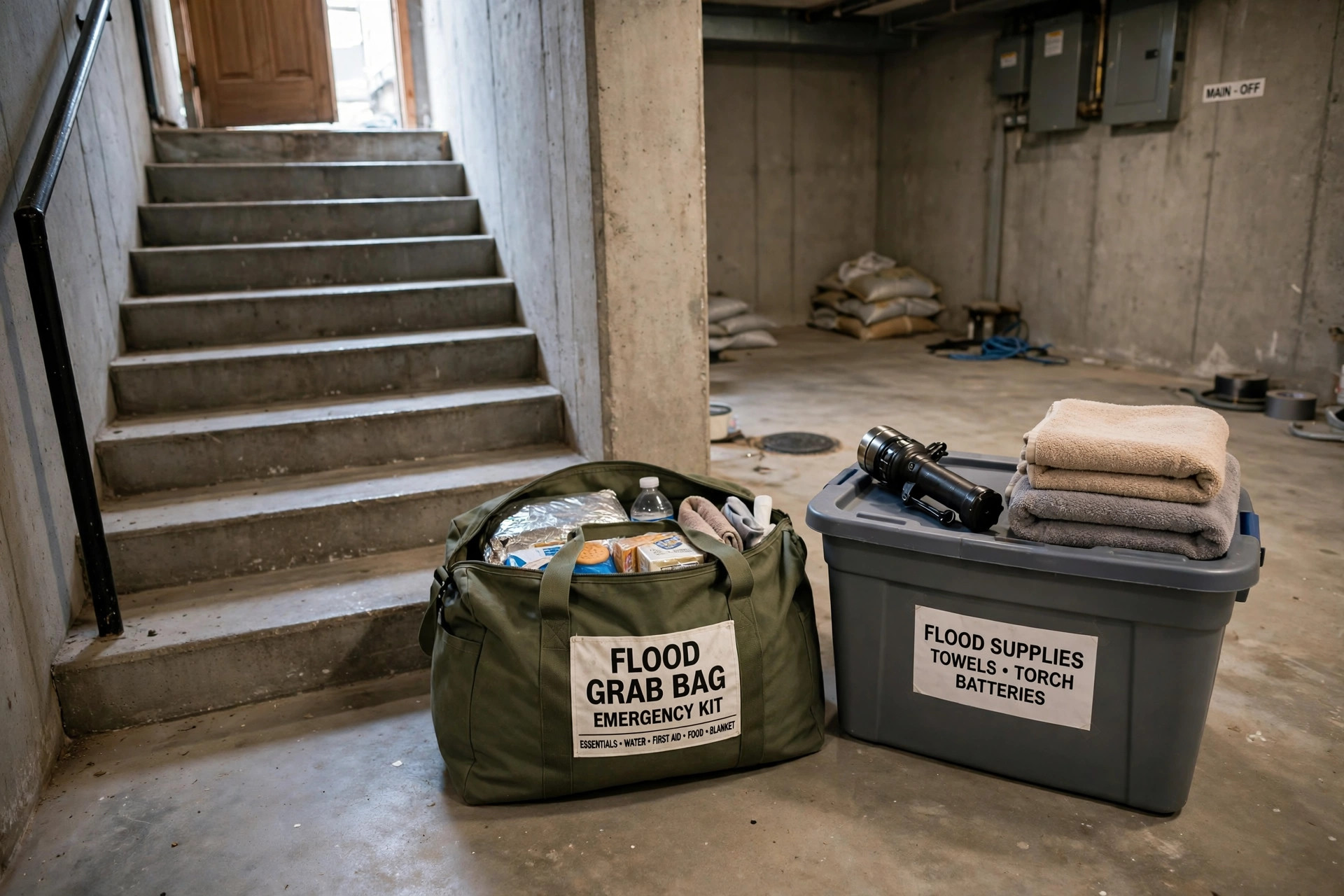
A flood with no plan is a flood that takes the keepsakes, because the water is the thing that rises fast and the panic is the thing that wastes the minutes. Keep a flood plan in one bin — the grab bag by the stairs, ready before the rain — so the torch, the towels and the pump are in one place and the first ten minutes are spent moving things, not searching for them. Put the bin by the stairs, label it FLOOD, and keep the keepsake bin from idea 9 on the top shelf above it, because the top shelf is the shelf the water reaches last. Check the bin every autumn, because the bin that is checked is the bin that works. One bin by the stairs, and the worst day is a bad day instead of a disaster.
Which basement storage idea fits which situation?
| Situation | Best first move | Budget | Tools needed |
|---|---|---|---|
| Basement feels damp | Walk it after rain (idea 1) | Free | Painter's tape |
| One big pile, no order | Zone by use (idea 2) | Free | None |
| Bins land anywhere | Floor plan on paper (idea 3) | Free | Paper, pen |
| Zones keep drifting | Label the zones (idea 4) | Low | Marker, tape |
| You cannot find anything | One-page inventory (idea 5) | Free | Paper, pen |
| Shelves wobble when loaded | Bolted heavy-duty shelving (idea 6) | Medium | Shelving, drill |
| You open every bin to check | Clear stackable bins (idea 7) | Low | Bins |
| Small leaks ruin boxes | Everything off the floor (idea 8) | Low | Pallets, risers |
| Keepsakes and photos at risk | Watertight sealed bins (idea 9) | Low | Sealed bins |
| Cardboard going soft | Metal and plastic only (idea 10) | Low | Bins |
| Bins never stack properly | One size everywhere (idea 11) | Low | Bins |
| Bikes block the walkway | Wall hooks (idea 12) | Low | Hooks, drill |
| Sports gear always missing | One grab-and-go wall (idea 13) | Low | Hooks, bin |
| Holiday bins buried at the back | Seasonal wall, calendar order (idea 14) | Free | None |
| Suitcases eat a corner | Stack like books (idea 15) | Free | Shelf |
| Tools lost in a box | Pegboard on the wall (idea 16) | Low | Pegboard, hooks |
| Camping gear packed twice | One corner by the door (idea 17) | Free | None |
| Air feels damp all year | Dehumidifier on auto (idea 18) | Medium | Dehumidifier |
| You guess whether it is dry | Moisture meter by the door (idea 19) | Low | Moisture meter |
| Labels keep peeling off | Laminated tags (idea 20) | Low | Laminator, ties |
| Zones drift every year | Twice-a-year tidy (idea 21) | Free | Calendar |
| You worry about a flood | Flood bin by the stairs (idea 22) | Low | Bin, torch |
You do not need all 22 ideas. You need the three that solve your basement — usually the walk after rain that finds the damp, the heavy-duty shelving that gets everything off the floor, and the dehumidifier that keeps the air dry while you forget about it. Start with the walk, do it the morning after the next rain, and mark the wet corners before a single bin moves. Do that and the next time you carry something downstairs it will have a zone, a shelf and a label, for the price of a roll of tape and an afternoon.
Save this post for your next basement sort, and if the bulky gear needs sorting first, read 25 Garage Storage Ideas for 2026 next — it is Post 33, the garage zones this basement system mirrors — and 18 Storage Bin Rack DIY Ideas for 2026, Post 26, for the bin rack the basement shelves are built from. This is the twenty-second post of the Storage by room/object return run — Posts 31 to 55, one room at a time — and the next posts carry the same zone-and-bin system into the rooms that follow. The attic twin of this system, 20 Attic Storage Ideas for 2026, is Post 51, drafted alongside this post.
Publish date assigned at publishing time. Updated as new basement storage finds are tested.
Frequently asked questions
How do I keep things dry in a basement?
Keep everything off the floor, use clear bins with lids, and run a dehumidifier set to around 50 percent humidity. The floor is where the water goes first, so pallets or risers under the lowest shelf buy you four inches of safety, and a sealed bin protects the things that matter most. Check the damp corners after rain before you store anything new, and never trust a cardboard box in a basement — plastic and metal last, cardboard soaks and sags.
What is the best way to store things in a basement without damp?
Zone the basement first and store by use, not by whatever box arrives next. Use one size of clear stackable bin everywhere, label every zone on the wall, and keep the bins on heavy-duty shelving bolted to the wall rather than on the floor. A moisture meter by the door tells you whether the air and walls are dry enough, and a dehumidifier on auto keeps the humidity down without you thinking about it.
How do I organize a basement so I can actually find things?
Give the basement a map: zones by use, a one-page inventory by the stairs, and a label on every zone and every bin. Put the things you need most nearest the stairs — the seasonal decor wall in calendar order, the sports gear on one grab-and-go wall — and keep a twice-a-year tidy on the calendar so the zones do not drift back into one big pile. If you can find it from the stairs without opening a bin, the system works.