25 Garage Storage Ideas for 2026
A garage is the one room in the house that is allowed to be messy — and that is exactly why it ends up the messiest room in the house. The car squeezes in beside the boxes, the bikes lean on the boxes, the tools live in a pile on the floor, and the thing you need is always at the bottom of the pile. The fix is not a bigger garage, it is a garage where everything has a wall, a hook or a shelf to live on, so the floor is for the car and nothing else.
These 25 garage storage ideas are wall-to-wall systems that free up floor space: start with slatwall panels and a pegboard wall for the tools, lift the boxes onto ceiling racks above the car, build a workbench zone along one wall, and finish with labelled bins and a shoe station by the door — so the car fits, the tools are in sight, and the floor stays clear.
Every idea below works in a real garage, from a single-car garage with one free wall to a two-car garage with room for a workbench. The pegboard wall the tools hang on is covered in 20 Pegboard Organization Ideas for 2026, where the pegboard gets its own hooks and layout before it goes on the garage wall — and the cleaning gear that lives in the garage corner is in 25 Utility Closet Organization Ideas for 2026, so the mops and the vacuum have a home of their own. Pick three ideas that fit your garage, start with the wall, and build from there.
Start with the walls: get everything off the floor
1. Slatwall panels with hooks — the wall that holds everything
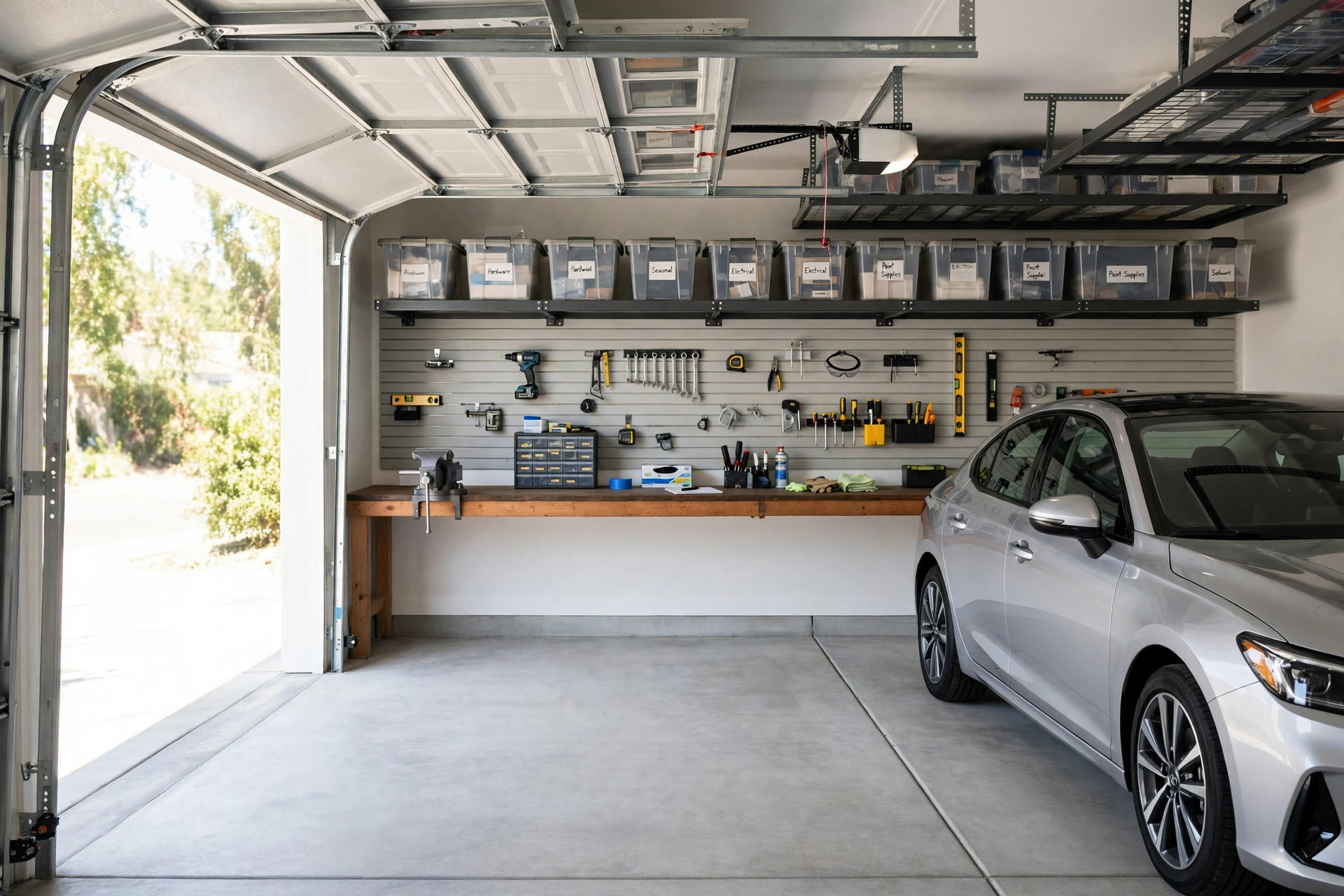
A garage wall with nothing on it is a garage wall doing nothing, because the wall you do not use is the wall the boxes lean against and the boxes are the things that eat the floor. Put up slatwall panels with hooks — the wall that holds everything — so the tools, the bikes and the garden gear hang on the wall and the floor is free for the car. Screw the panels to the studs, slide the hooks into the slots, and hang the heaviest things low and the lightest things high, because the hooks that slide are the hooks you can move when the garage changes. Start with one wall, the wall beside the car door, because the wall you see every day is the wall you use every day. One wall of slatwall, and the floor starts to appear. (Check on Amazon for a slatwall panel kit with hooks, which covers one wall for the price of a dinner out.)
2. A pegboard wall for hand tools — every tool in sight
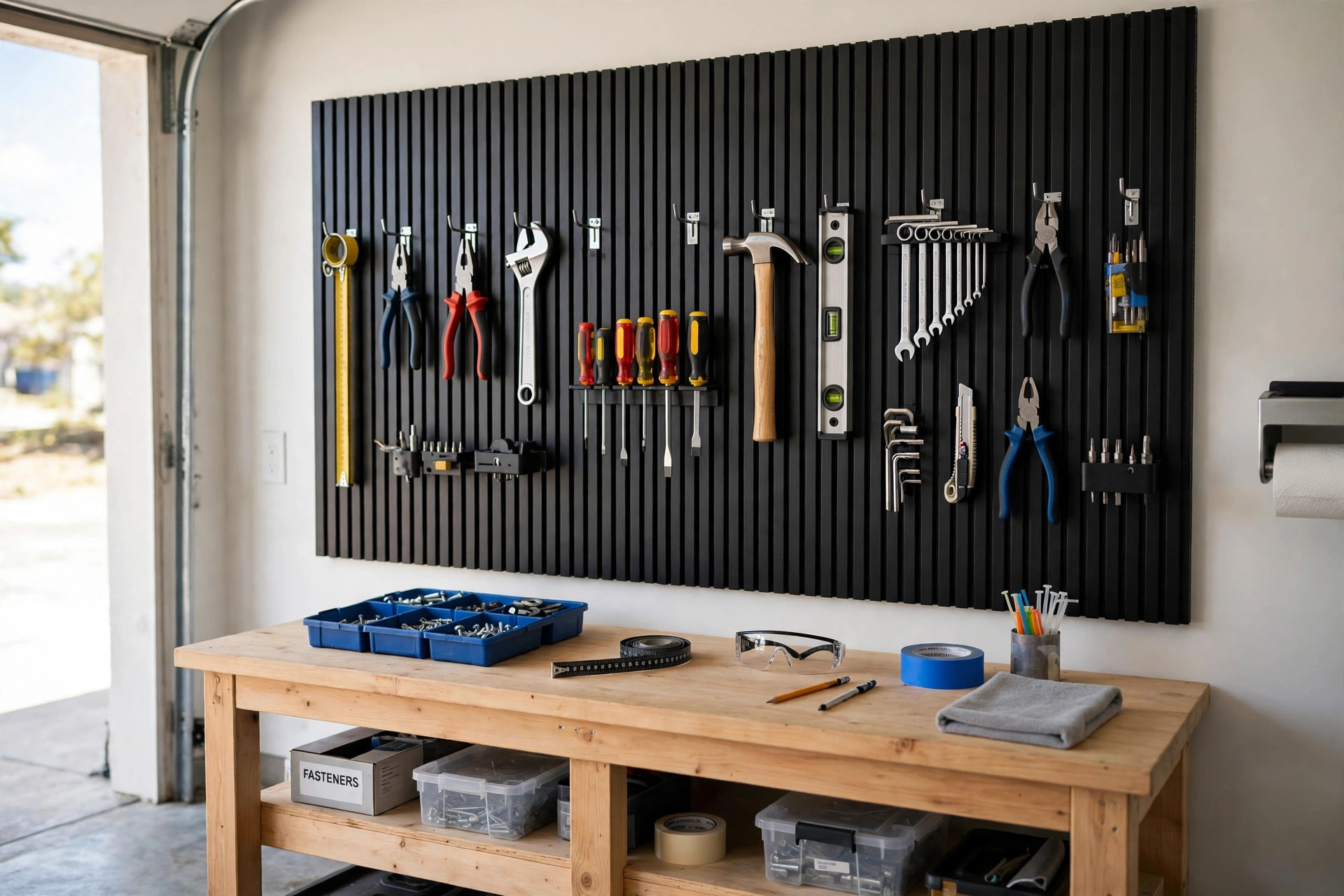
Tools in a drawer are tools you cannot find, because the drawer is the place tools go to hide and the pile in the drawer is the pile you have to dig through. Hang them on a pegboard wall — every tool in sight — so the hammer, the screwdrivers and the wrenches hang where your hand reaches and the drawer is free for the things that do not hang. Screw the pegboard to the wall with spacers behind it, so the hooks have room to go in, and trace each tool in marker on the board, because the outline is the thing that shows you what is missing. Keep the tools you use every week at eye height and the ones you use twice a year at the top, because the tools at eye height are the tools you grab without thinking. A pegboard wall, and the tools stop hiding.
3. Heavy-duty wall shelves above head height — the shelf that holds the boxes you reach for twice a year
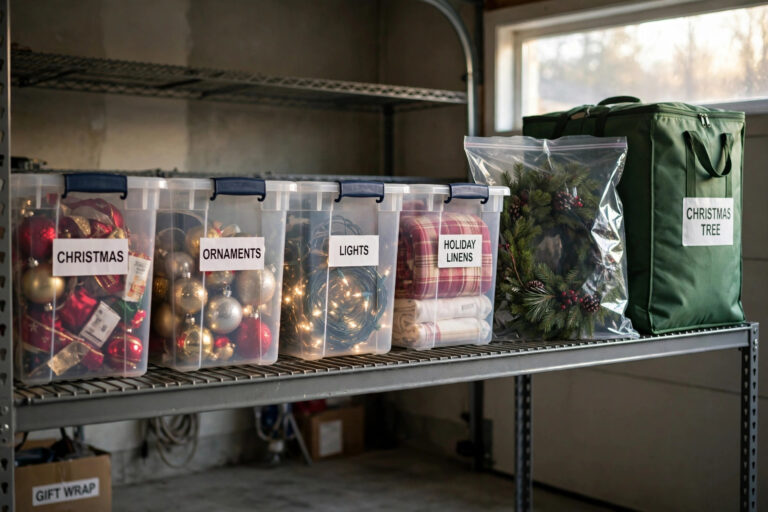
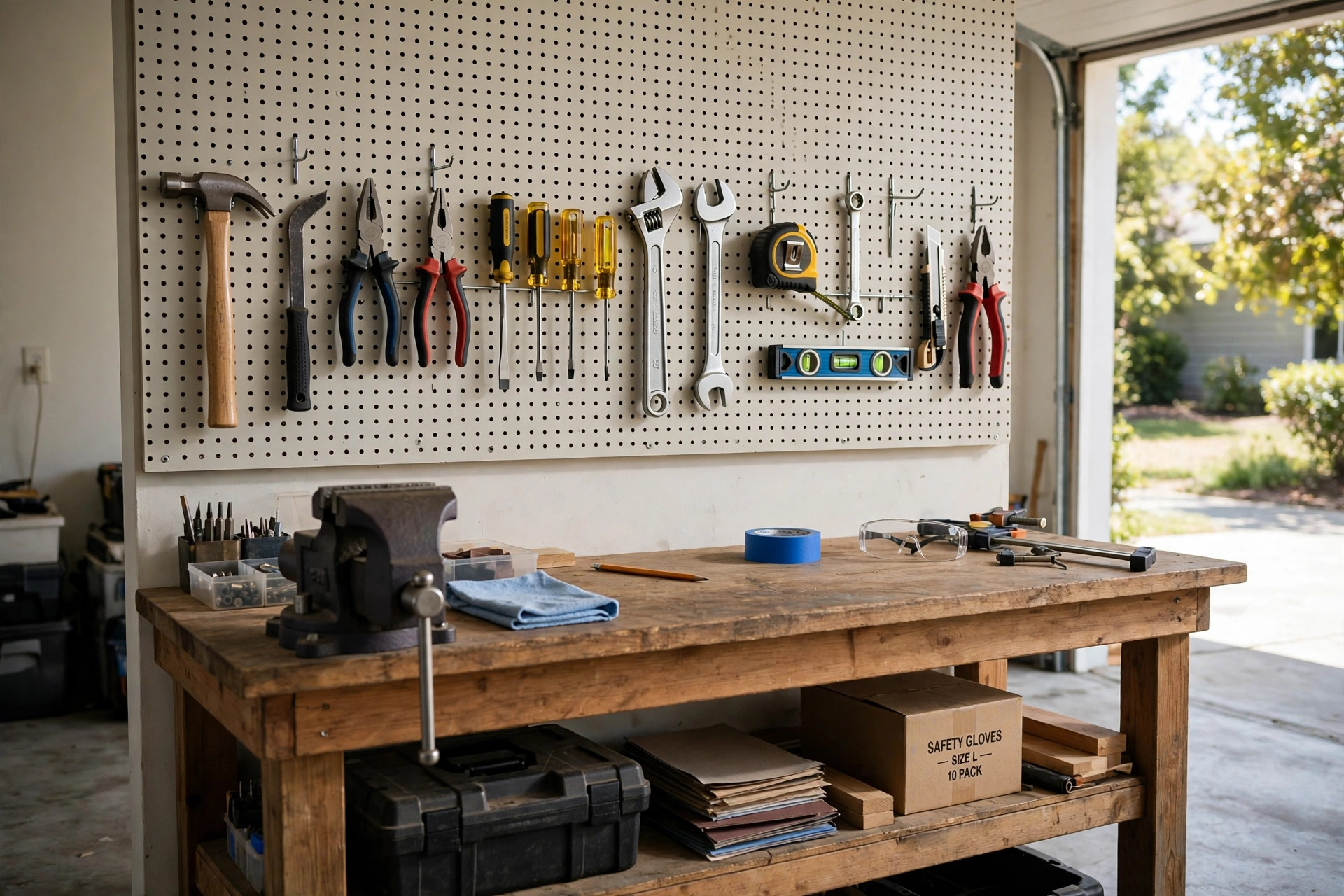
Boxes on the floor are boxes in the way, because the box on the floor is the box the car has to drive around and the box the bikes lean on. Lift them onto heavy-duty wall shelves above head height — the shelf that holds the boxes you reach for twice a year — so the holiday decorations, the camping gear and the spare paint live above the car and the floor stays clear. Bolt the shelf brackets into the studs, not the plasterboard, because the shelf that holds boxes is the shelf that needs studs, and keep the shelf deep enough for a standard box but not so deep you cannot reach it. Label every box on the side that faces out, because the label you can read is the label that saves you taking the box down. Shelves above head height, and the boxes stop living on the floor.
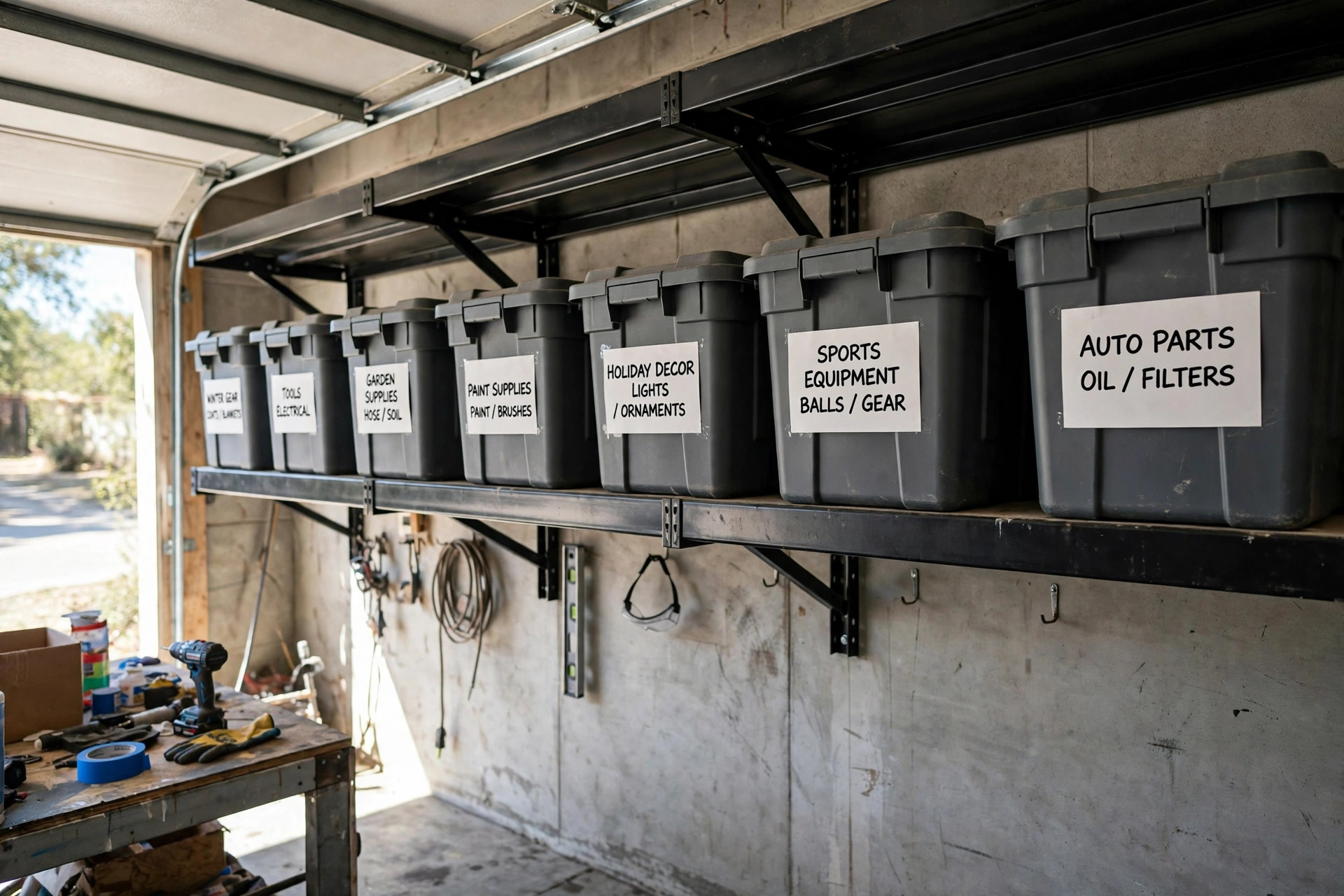
4. Wall-mounted bike hooks — bikes off the floor, up on the wall
A bike leaning on the wall is a bike that falls over, because the bike that leans is the bike that slides and the bike that slides is the bike that scratches the car. Hang it on wall-mounted bike hooks — bikes off the floor, up on the wall — so the bikes live vertically on the wall and the floor underneath is free for the car. Screw the hooks into the studs at a height where the front wheel lifts on easily, and hang the bikes by the front wheel with the back wheel resting on the wall, because the hook that holds the wheel is the hook that holds the bike. Space the hooks a bike-width apart, so the handlebars do not tangle, and hang the kids' bikes low enough for the kids to lift them down. Bikes on hooks, and the floor is for the car again.
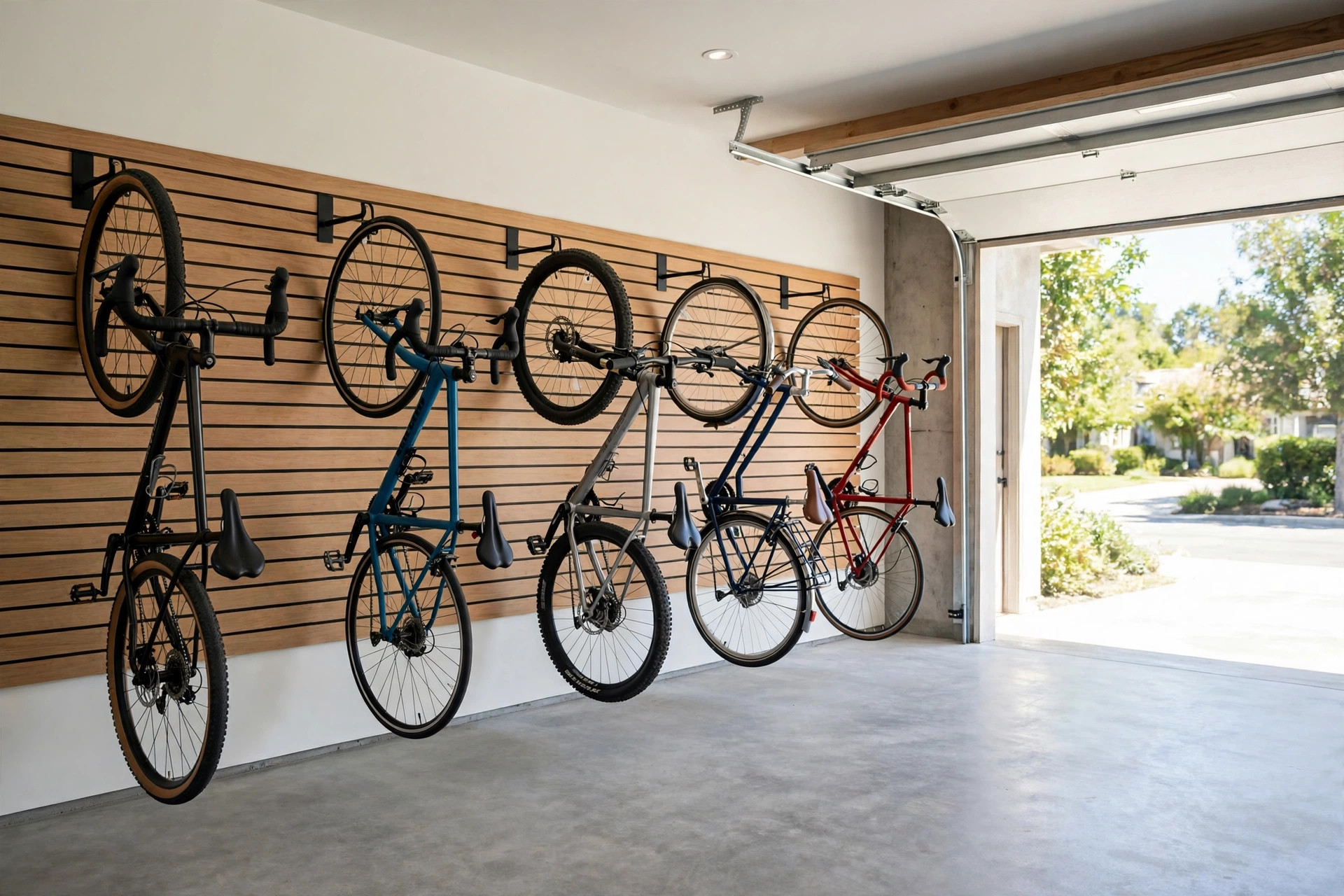
5. A wall rail for long-handled tools — shovels, rakes and brooms in a row
Long-handled tools in a corner are long-handled tools in a pile, because the shovel that leans in the corner is the shovel that slides and the pile that slides is the pile that falls on the car. Hang them on a wall rail — shovels, rakes and brooms in a row — so every long handle has a hook and the corner is empty. Screw a rail with spring clips to the wall at chest height, clip each handle into a clip, and let the heads hang down, because the clip that grips the handle is the clip that holds the tool. Keep the rail by the garage door, so the shovel is the first thing you grab on the way out and the first thing you hang up on the way back in. A rail on the wall, and the corner stops being a pile.
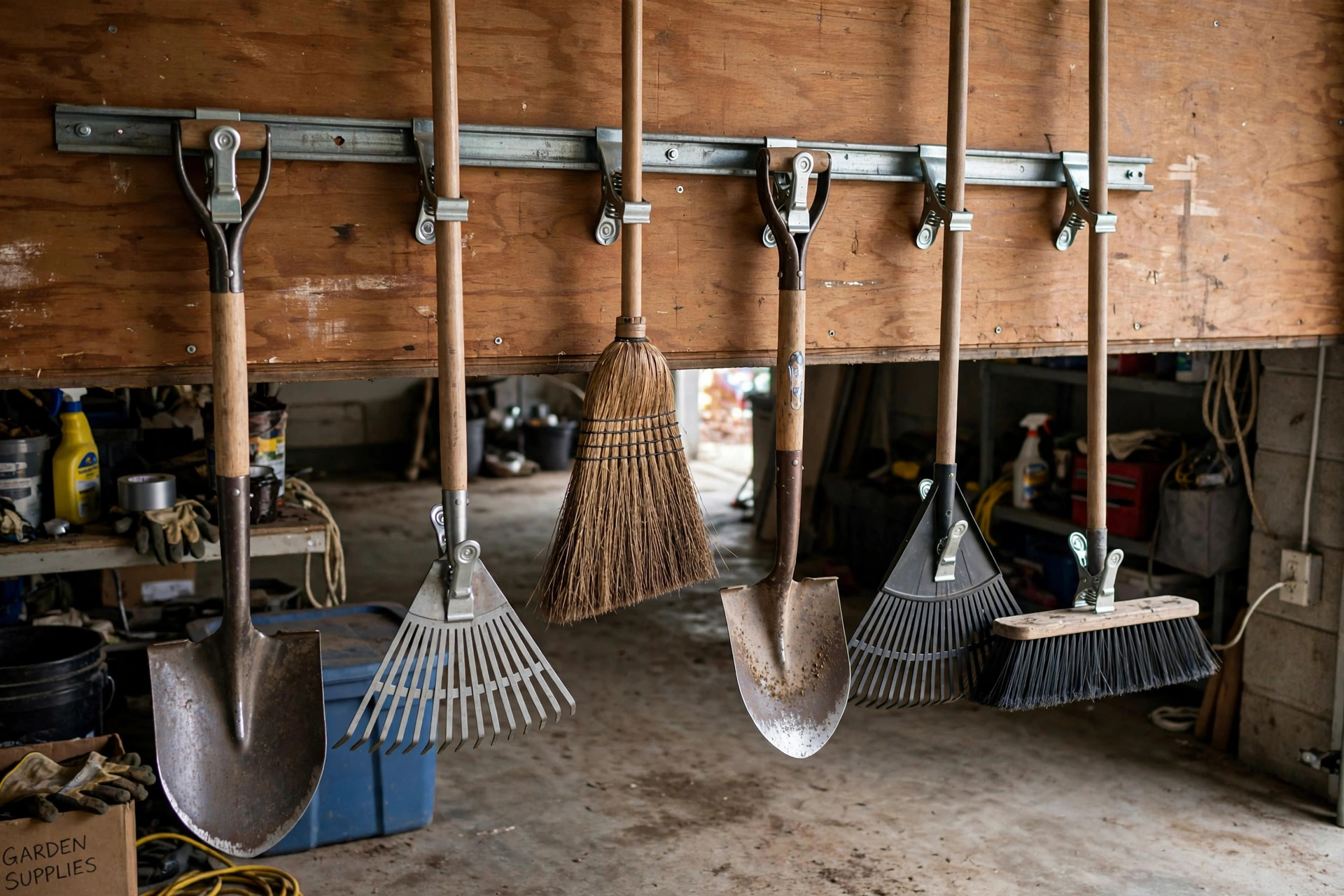
6. Magnetic strips for small metal tools — screwdrivers and wrenches in a line
Small metal tools in a toolbox are small metal tools at the bottom of the box, because the screwdriver you need is always under the screwdrivers you do not need. Stick them on magnetic strips — screwdrivers and wrenches in a line — so the small tools hang in a row where you can see them and the toolbox holds only the big things. Screw a magnetic strip to the wall above the workbench, press the tools onto it, and they stay put until you pull one off, because the magnet is the holder and the wall is the toolbox. Keep the strip short and the tools in size order, because the strip that holds ten tools is the strip you can read at a glance. Magnetic strips, and the small tools stop hiding at the bottom of the box.
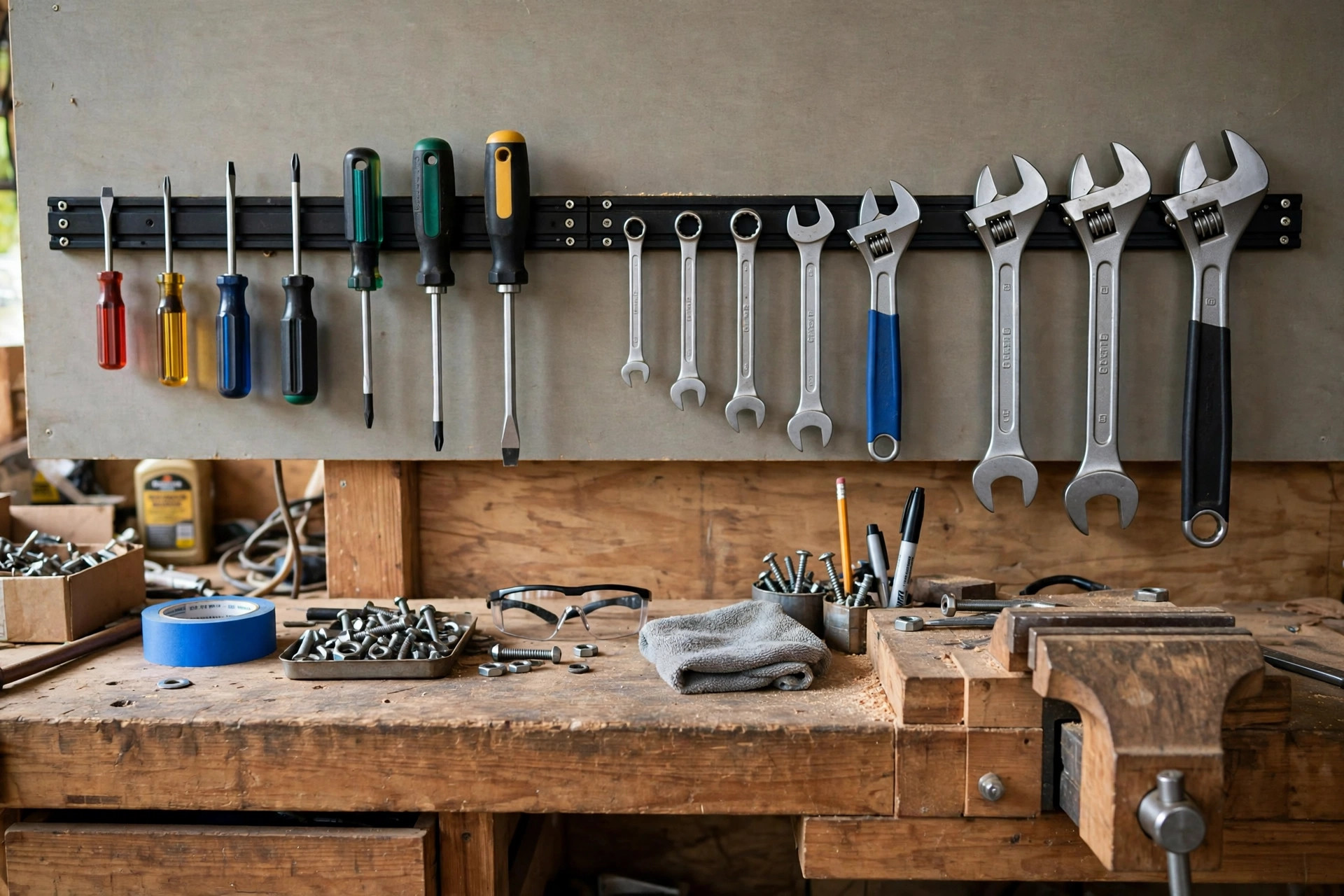
Overhead and ceiling storage: the space above the car
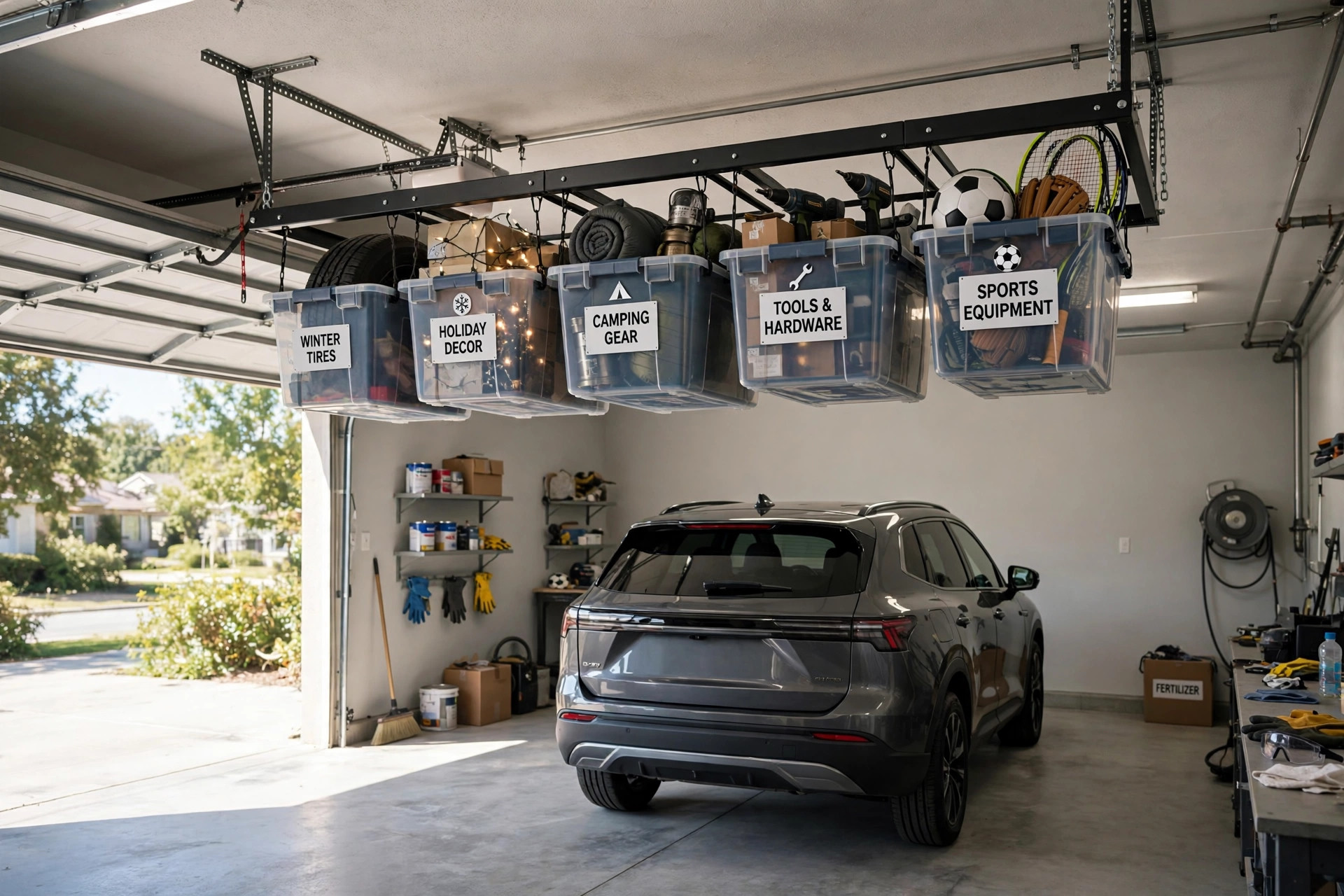
7. Ceiling-mounted racks above the car — boxes you only touch twice a year
The space above the car is the biggest empty space in the house, because the ceiling is the place nobody stores anything and the car is the thing that leaves the space above it free. Put ceiling-mounted racks up there — boxes you only touch twice a year — so the holiday boxes, the camping gear and the out-of-season clothes live above the car and the walls stay free for the tools. Bolt the racks to the ceiling joists, not the plasterboard, because the rack that holds boxes is the rack that needs joists, and slide the boxes in from the side, because the rack that slides is the rack you can load without a ladder. Keep the racks above the car, not above the walkway, so nothing hangs over your head when you walk in. Racks above the car, and the biggest empty space in the house starts working. (Check on Amazon for a ceiling-mounted storage rack with a weight rating that matches your boxes, and check the joist spacing before you buy.)
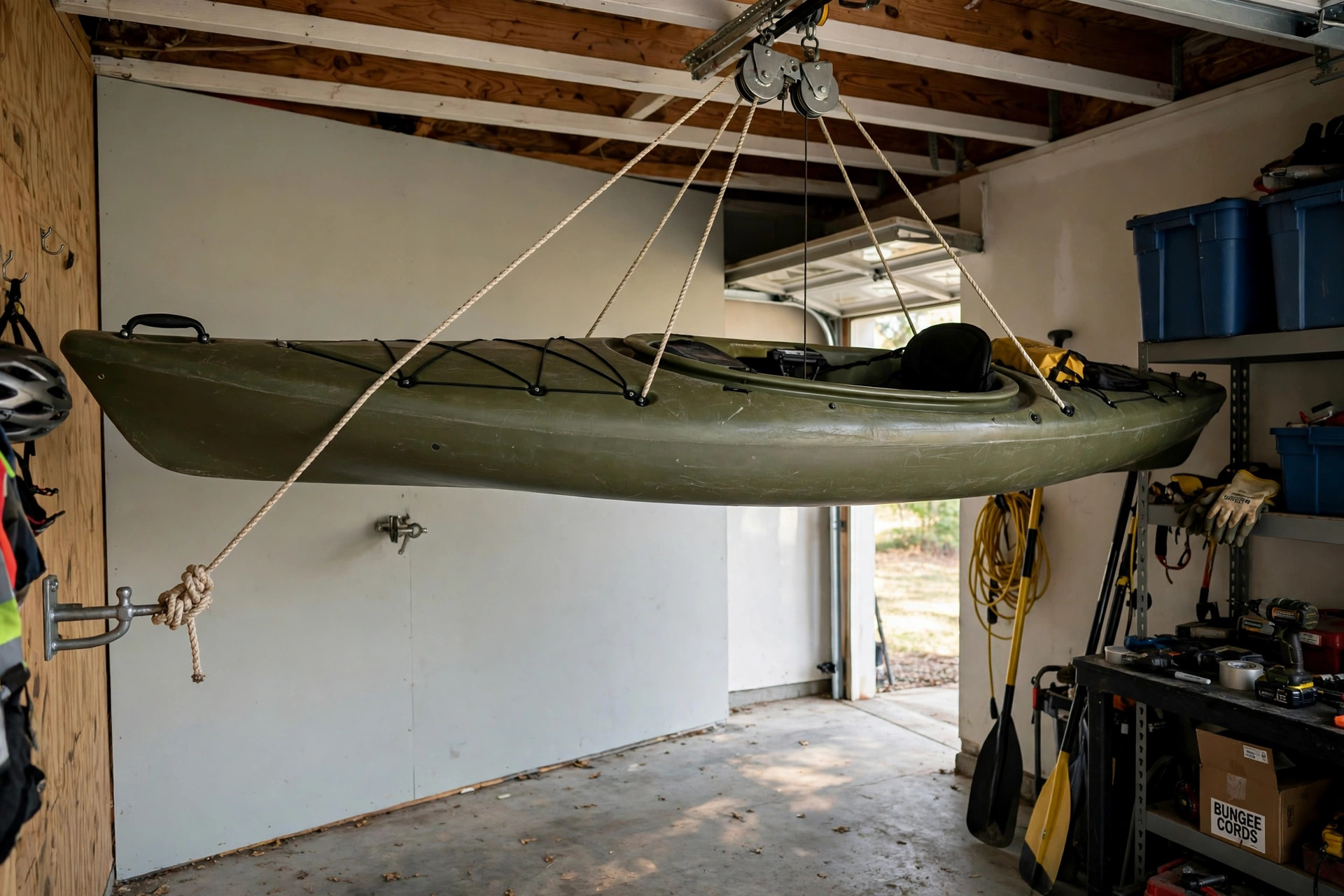
8. Overhead pulley hoists for kayaks and bikes — the hoist that lifts the heavy things
A kayak on the floor is a kayak taking up a parking space, because the kayak is long, the garage is not, and the car is the thing that loses. Lift it on an overhead pulley hoist — the hoist that lifts the heavy things — so the kayak hangs flat against the ceiling and the floor is free. Bolt the pulleys to the joists, run the ropes through them, and pull the kayak up until it sits just below the ceiling, because the pulley is the thing that does the lifting and your arms are the things that do not have to. Tie the rope off on a wall cleat, so the kayak stays up even if you let go, and lower it the same way when you want it down. A hoist on the ceiling, and the kayak stops costing you a parking space.
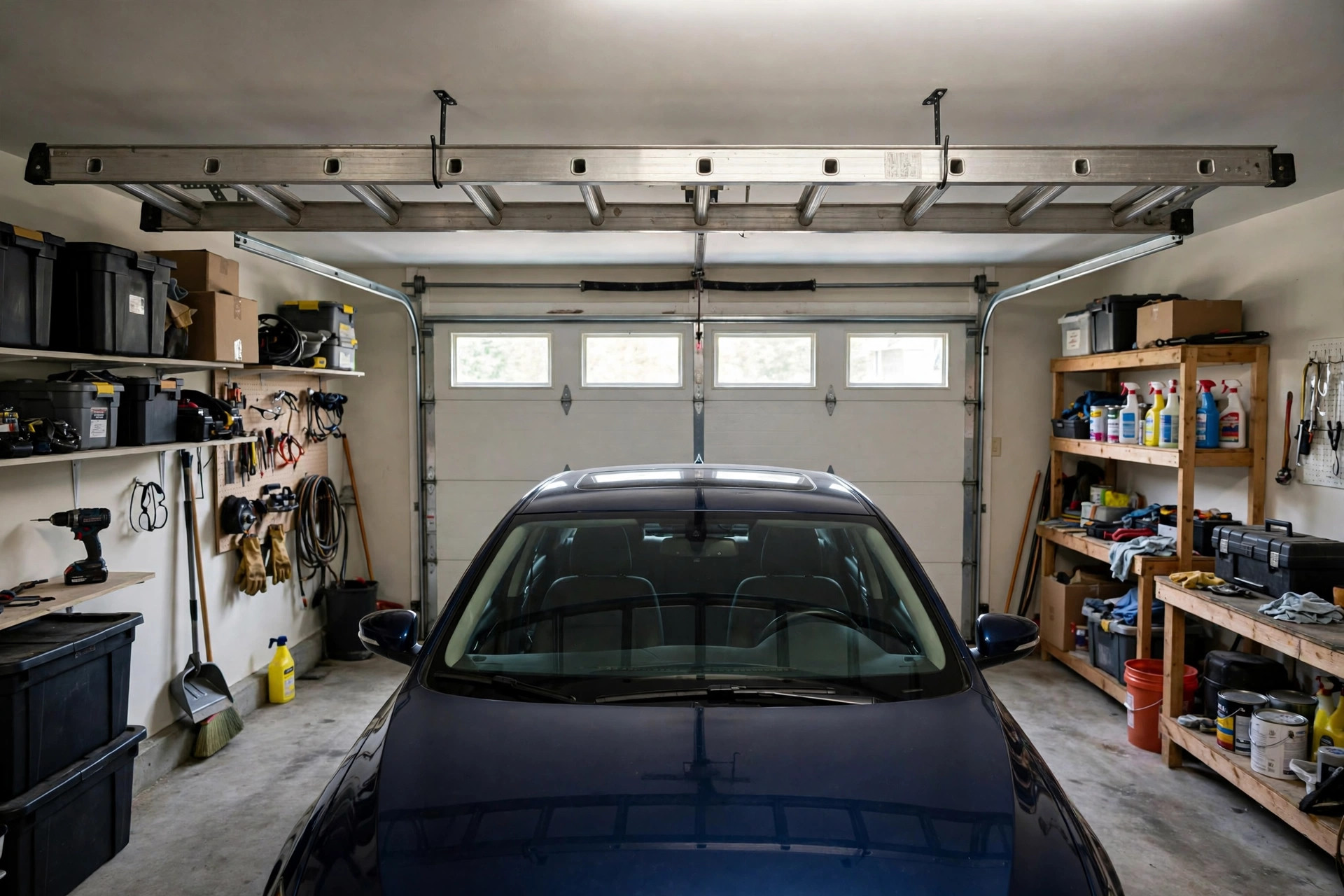
9. Ceiling hooks for ladders — the ladder lives flat against the ceiling
A ladder leaning on the wall is a ladder in the way, because the ladder is long, the wall is busy, and the ladder is the thing that falls on the car. Hang it on ceiling hooks — the ladder lives flat against the ceiling — so the ladder is up high, out of the way, and the wall is free for the tools. Screw two heavy hooks into the joists, lift the ladder up, and rest it flat across the hooks, because the hooks that hold the rails are the hooks that hold the ladder. Keep the ladder above the car, where the ceiling is free, and not above the walkway, because the ladder above the walkway is the ladder you walk under. Ceiling hooks, and the ladder stops leaning on everything.
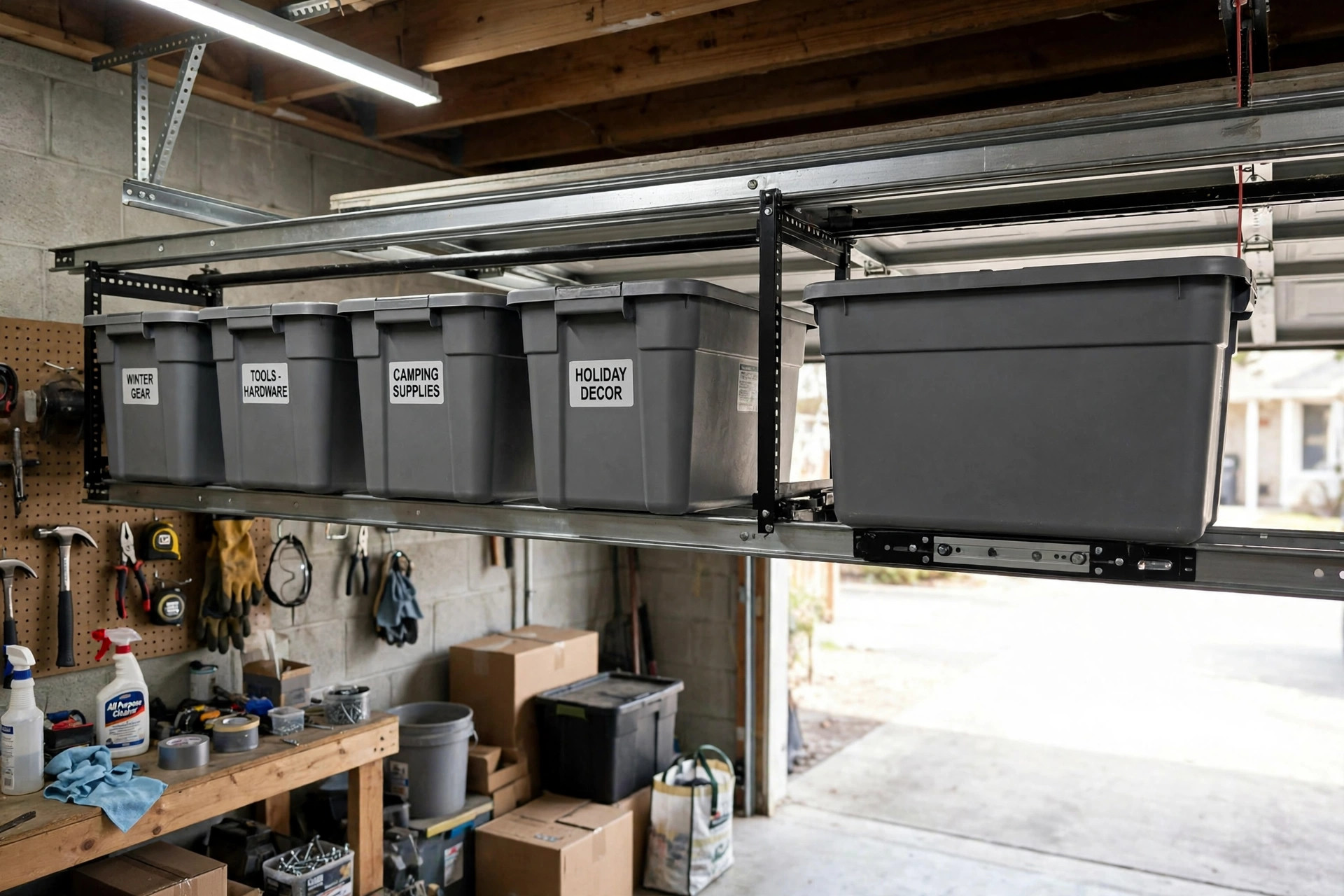
10. Overhead bins on sliding rails — holiday boxes that slide out
Boxes on a ceiling rack are boxes you have to reach for, because the rack is high, the boxes are heavy, and the ladder is the thing you have to fetch. Put them on sliding rails — holiday boxes that slide out — so the bin slides toward you on its rail and you lift it down without climbing. Mount the rails to the joists, hang the bins from them, and pull the bin you want out along the rail, because the rail is the thing that brings the box to you. Label the end of each bin, so you can read the label from the floor and pull the right one first. Sliding rails, and the boxes come to you instead of you climbing to them.
11. A ceiling-mounted cargo net — soft things up high
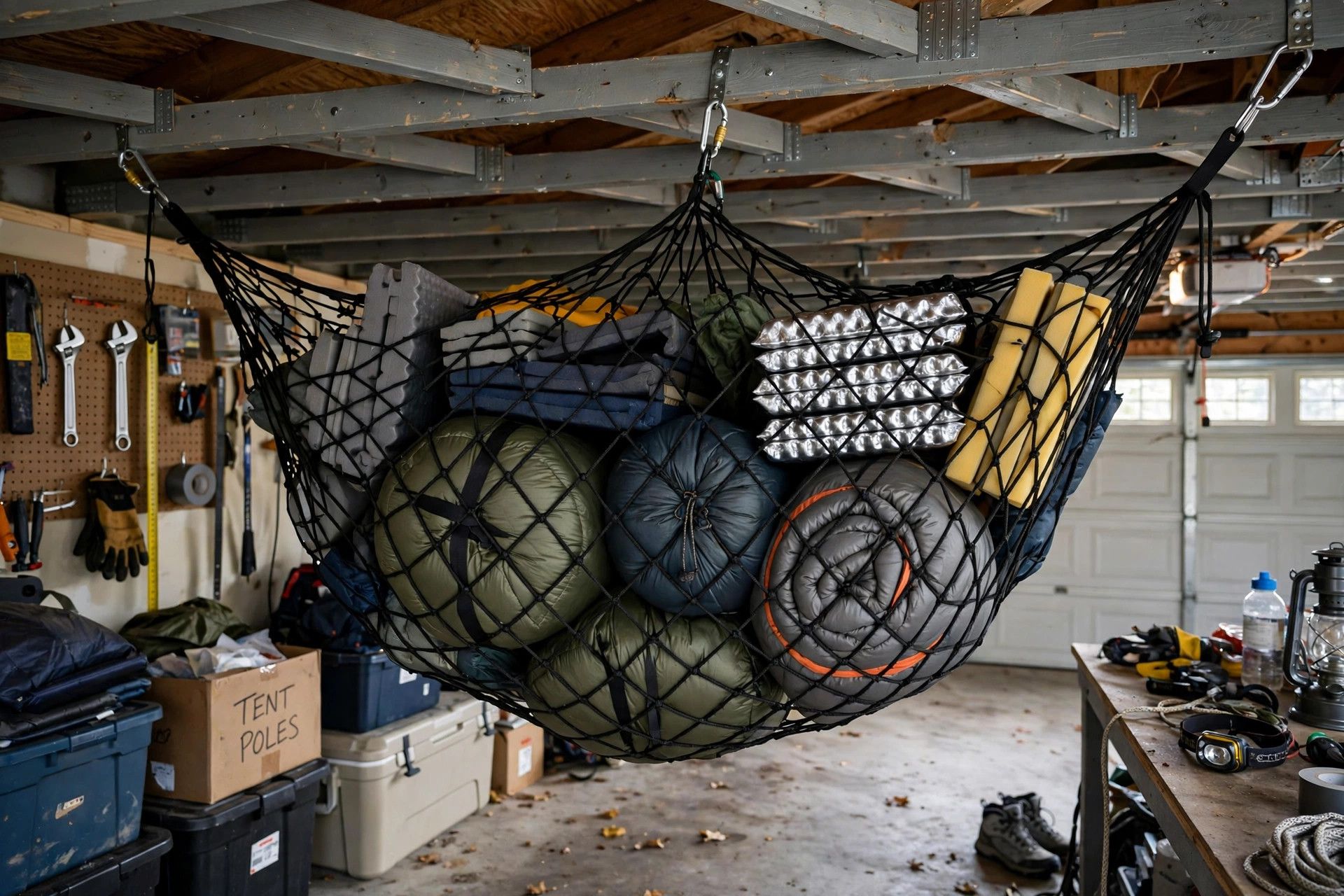
Soft things in a garage are soft things on the floor, because the sleeping bags, the cushions and the camping pads have no shelf and the floor is the place they land. Put them in a ceiling-mounted cargo net — soft things up high — so the soft things live in a net under the ceiling and the floor stays clear. Stretch the net between the joists, tuck the soft things into it, and they stay put because the net is the shelf and the ceiling is the place it hangs. Keep the net shallow, so you can see what is in it from the floor, and do not put anything heavy in it, because the net that holds soft things is the net that works. A cargo net, and the soft things stop living on the floor.
12. Joist shelves between the ceiling joists — the free shelf you already own
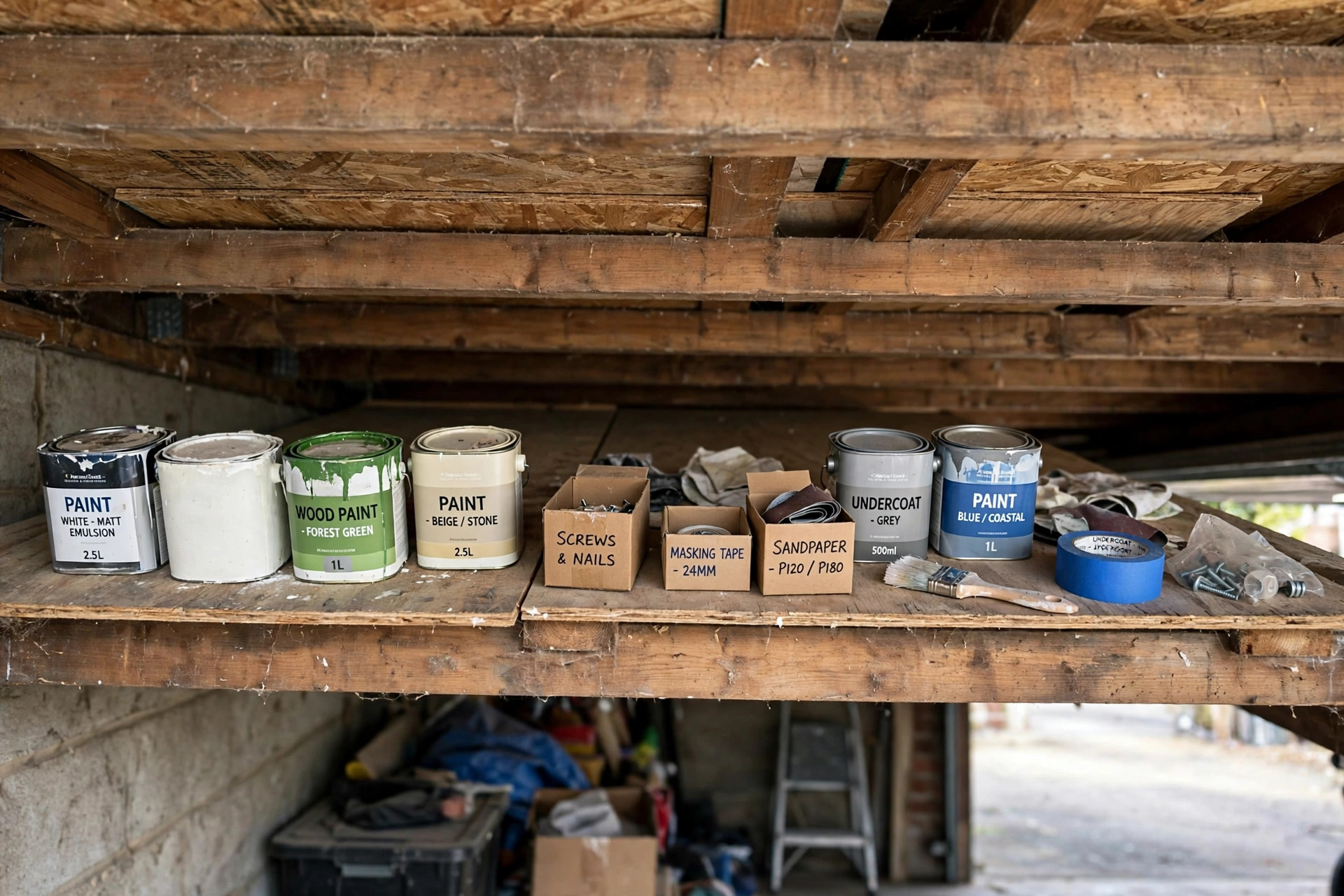
The gaps between the ceiling joists are shelves you already own, because the joists are the beams that hold the ceiling up and the gaps between them are the spaces nobody uses. Lay boards across them — the free shelf you already own — so paint tins, small boxes and spare parts live between the joists and the walls stay free. Cut a board to fit across two joists, rest it on the joist edges, and slide the small things in, because the board is the shelf and the joists are the brackets. Keep the load light, because the joists are the ceiling and the ceiling is not a warehouse, and keep the boards short enough to lift out, so you can get to the things behind them. Joist shelves, and the ceiling starts holding the small stuff for free.
Zones that work: a garage that works like a workshop
13. A workbench along one wall — the bench that does the work
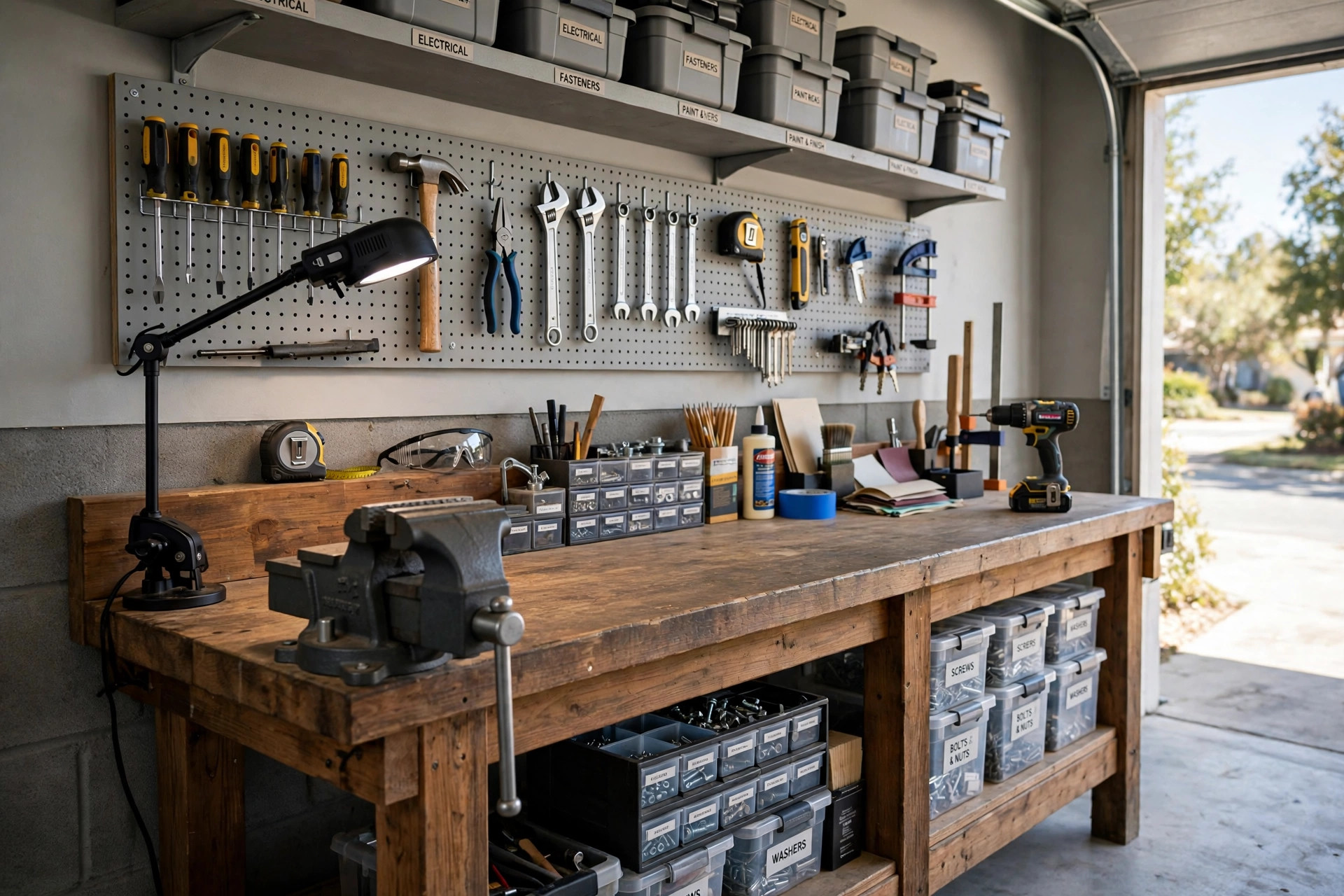
A garage with no workbench is a garage where every job happens on the floor, because the floor is the only flat surface and the floor is the place your knees go. Build a workbench along one wall — the bench that does the work — so every repair, every build and every fix has a surface at waist height and the floor is for standing, not kneeling. Bolt a thick top to legs or brackets on the wall, leave the space underneath open for a stool and a toolbox, and put a lamp above it, because the bench that is lit is the bench you use after dark. Keep the bench clear when you are not using it, because the bench that is clear is the bench that is ready. A workbench on the wall, and the jobs stop happening on your knees.
14. A rolling tool cart — the cart that follows the job
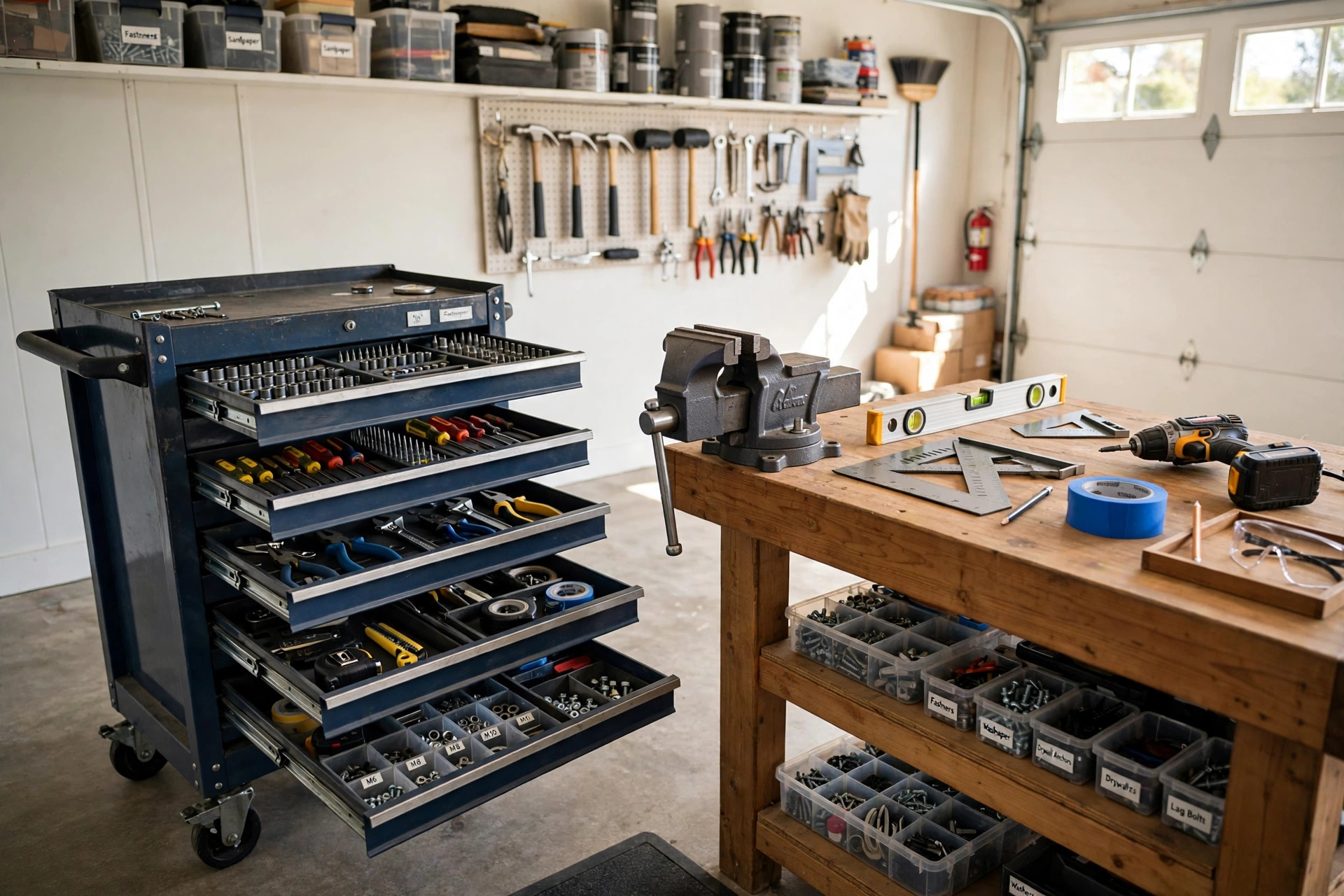
A toolbox on the workbench is a toolbox in the wrong place, because the job is by the car, the tools are on the bench, and your feet are the things that do the walking. Put the tools on a rolling tool cart — the cart that follows the job — so the cart rolls to the car, to the bench and to the door, and the tools are always where the job is. Fill the drawers in order, the tools you use most on top, and lock the wheels when you stop, because the cart that rolls is the cart that follows and the cart that locks is the cart that stays. Keep the top of the cart clear for the tool you are using right now, because the clear top is the work surface that travels with you. A rolling cart, and the tools come to the job instead of the job coming to the tools. (Check on Amazon for a rolling tool cart with drawers that lock, so the drawers stay shut when the cart rolls.)
15. A small-parts station with labelled jars — screws, nails and bolts in sight
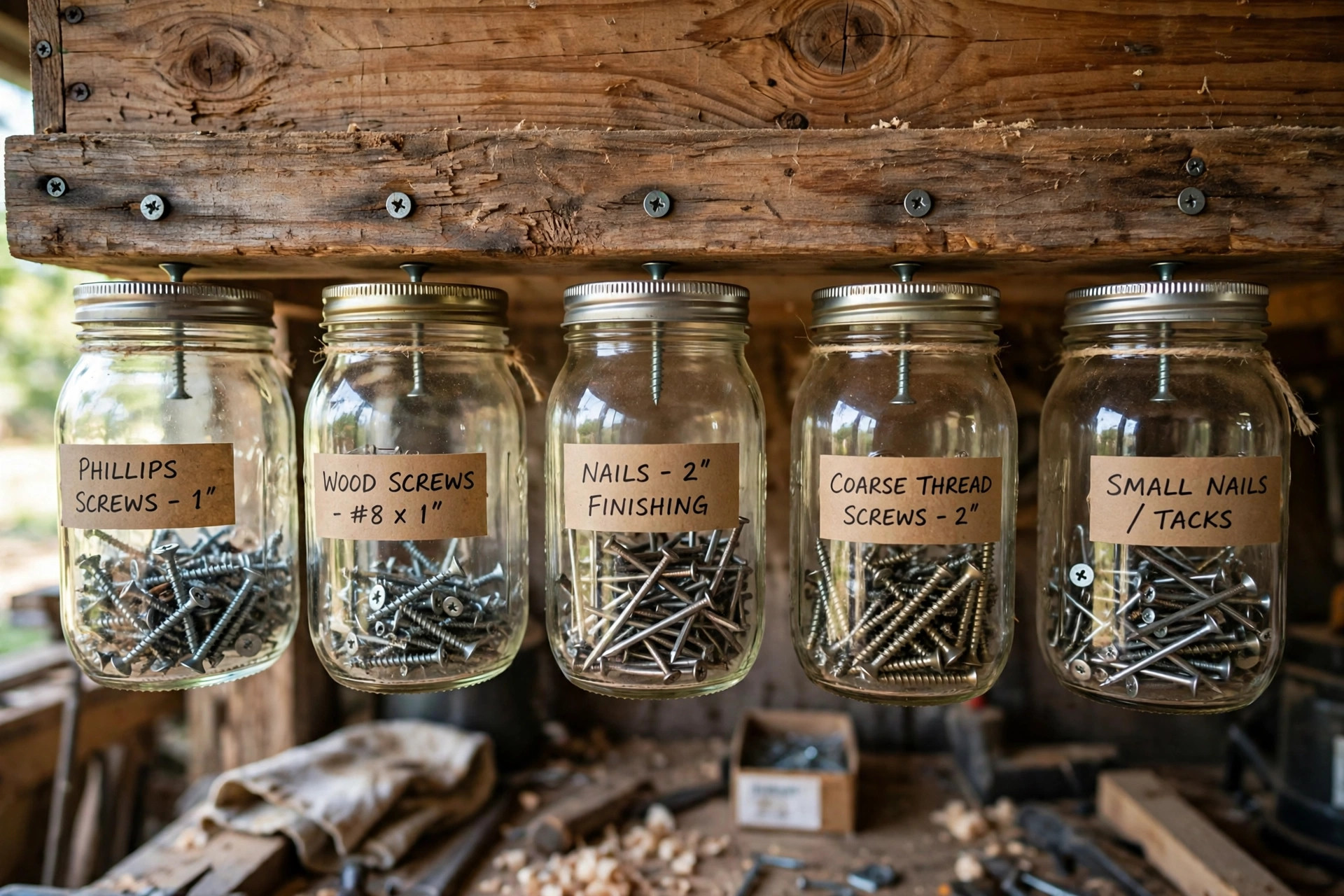
Small parts in a box are small parts mixed together, because the screws, the nails and the bolts all live in one box and the one you need is always at the bottom. Put them in labelled jars — screws, nails and bolts in sight — so every size has its own jar and the jar you need is the jar you can see. Screw the jar lids to the underside of a shelf, fill the jars, and twist them onto the lids, because the lid on the shelf is the holder and the jar hanging below is the display. Label each jar on the glass, not the lid, because the label on the glass is the label you read when the jar is hanging. Small jars on a shelf, and the small parts stop hiding in one big box.
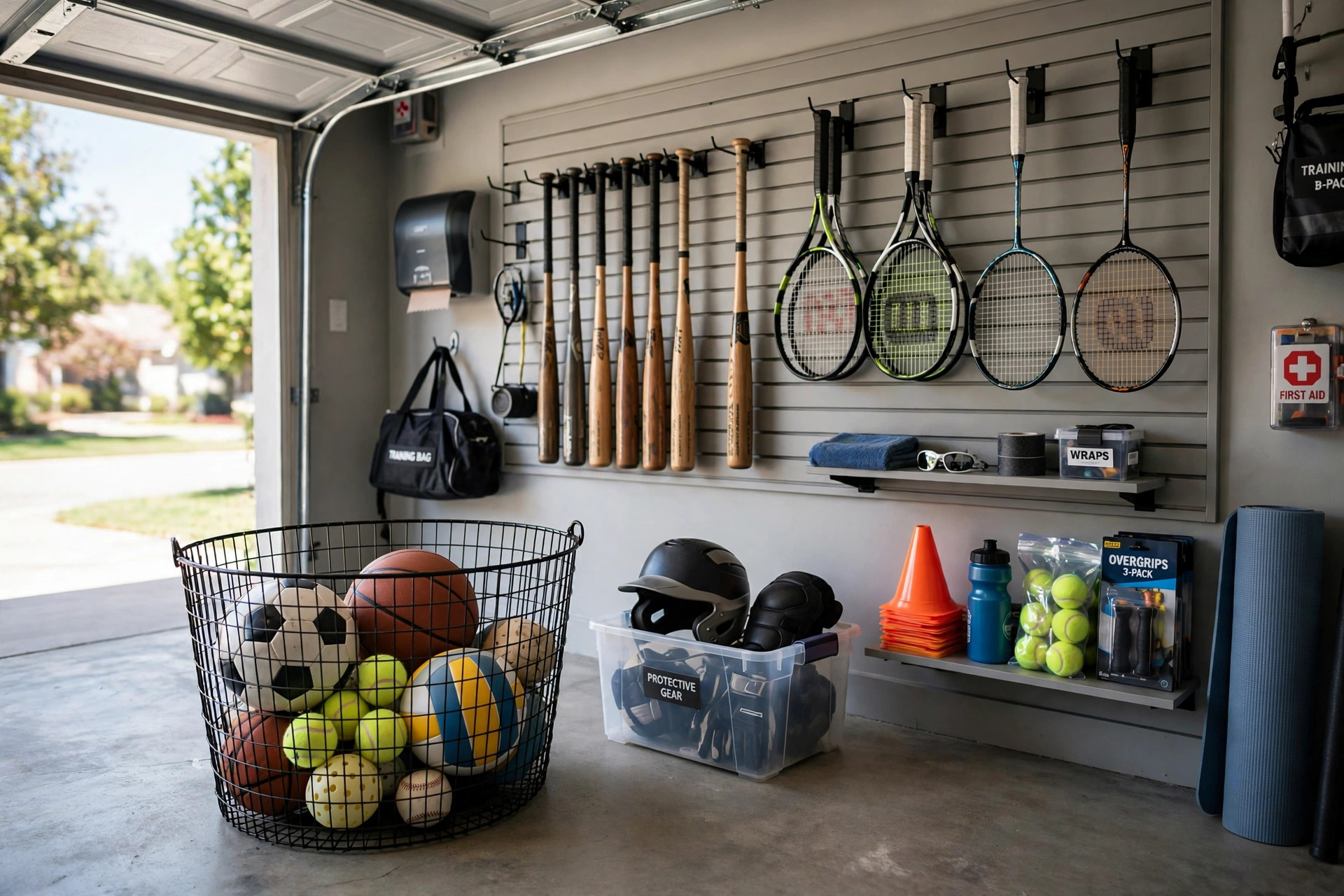
16. A sports zone with a ball bin — balls, bats and rackets in one place
Sports gear in a garage is sports gear everywhere, because the balls roll, the bats lean and the rackets hang on whatever they can find. Give it a zone with a ball bin — balls, bats and rackets in one place — so the whole game lives in one corner and the rest of the garage is free. Put a tall bin or a mesh bag for the balls, hooks on the wall for the bats and rackets, and a small shelf for the gloves and the helmets, because the bin is the balls, the hooks are the bats, and the shelf is the rest. Keep the zone by the garage door, so the kids grab the gear on the way out and drop it back on the way in, and the gear never makes it into the house. The bikes and the bigger gear that live in the garage are in 20 Outdoor Toy Storage Ideas for 2026, where the outdoor toys get their own homes before they reach the garage. A sports zone, and the game stays in its corner.
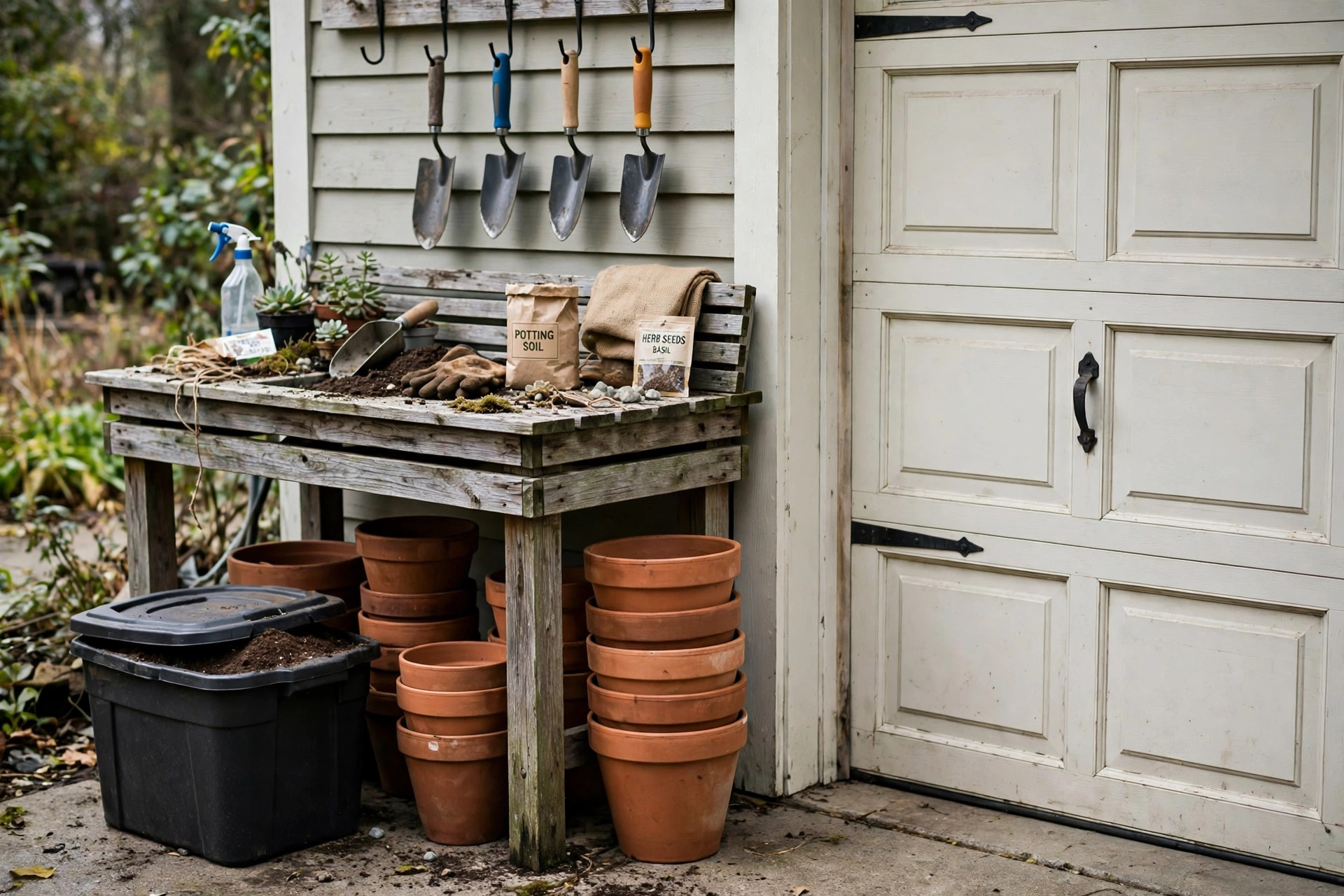
17. A garden zone by the door — pots, soil and tools together
Garden tools in a garage are garden tools in a pile, because the pots are here, the soil is there, and the trowel is somewhere in between. Give them a zone by the door — pots, soil and tools together — so everything for the garden lives in one place and the trip to the garden starts at the garage door. Put a small potting bench or a shelf by the door, stack the pots below it, keep the soil in a lidded bin beside it, and hang the trowels and the hand forks on hooks above, because the bench is the work, the bin is the soil, and the hooks are the tools. Keep the zone by the door you use for the garden, so the muddy boots never cross the garage, and sweep the bench when you finish, because the bench that is swept is the bench that is ready next time. The plants and the yard they go into are in 26 DIY Yard Decor Ideas for 2026, where the garden gets its own projects before the tools come back inside. A garden zone by the door, and the garden stops spreading across the garage.
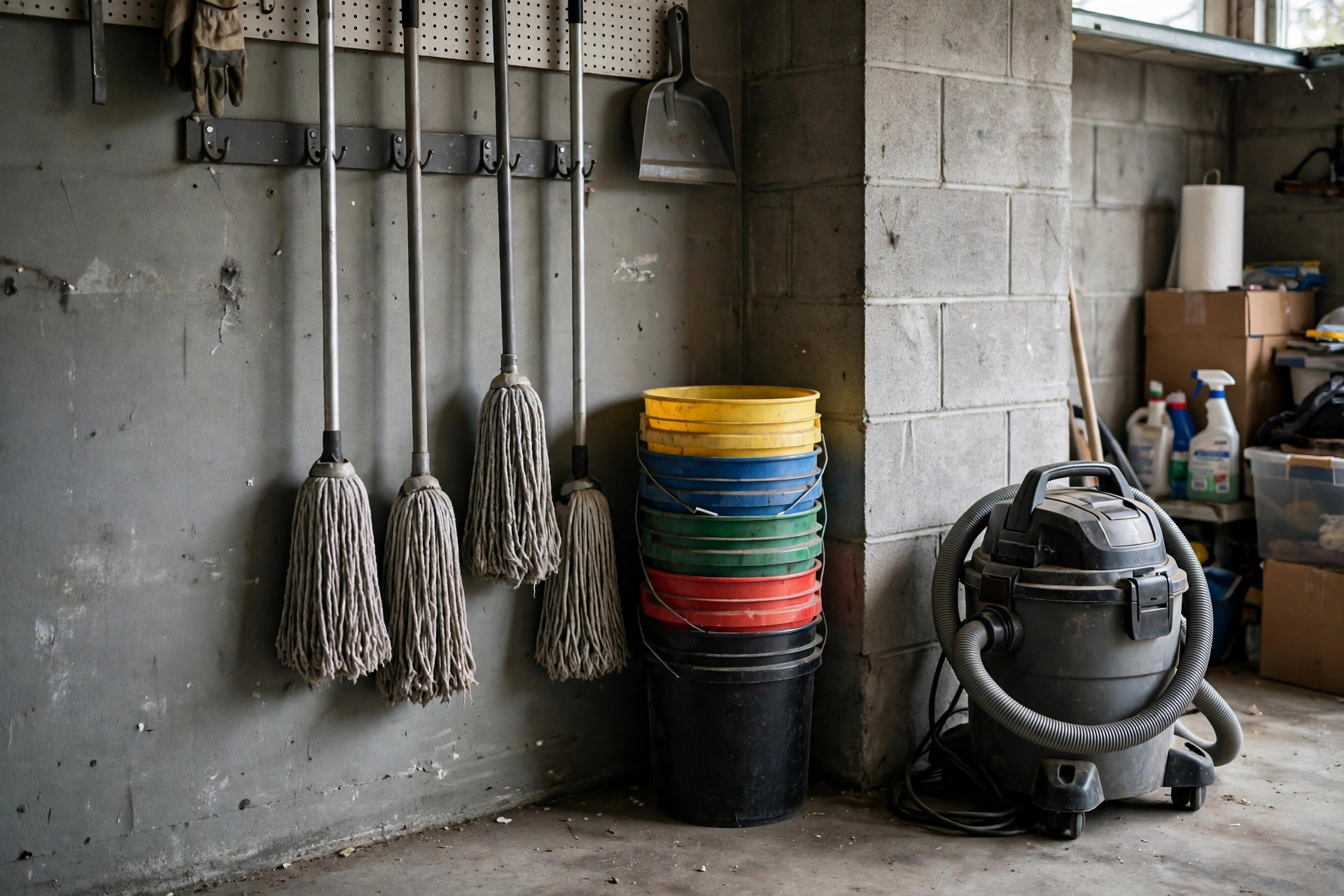
18. A utility corner for cleaning gear — mops, buckets and the vacuum
Cleaning gear in a garage is cleaning gear in the way, because the mop leans on the car, the buckets stack in the walkway, and the vacuum lives wherever it was last dropped. Give it a utility corner — mops, buckets and the vacuum — so the cleaning gear has one corner and the rest of the garage is free. Hang the mops and the brooms on hooks on the wall, stack the buckets in the corner, and park the vacuum beside them with its hose wrapped, because the hooks are the mops, the corner is the buckets, and the vacuum is the thing that needs a parking space too. Keep the corner near the door, so the gear is the first thing you grab when the house needs cleaning and the last thing you put back. The cleaning gear that lives inside the house is in 25 Utility Closet Organization Ideas for 2026, where the mops and the vacuum get a home of their own. A utility corner, and the cleaning gear stops leaning on the car.
Floor space back: bins, cabinets and the car
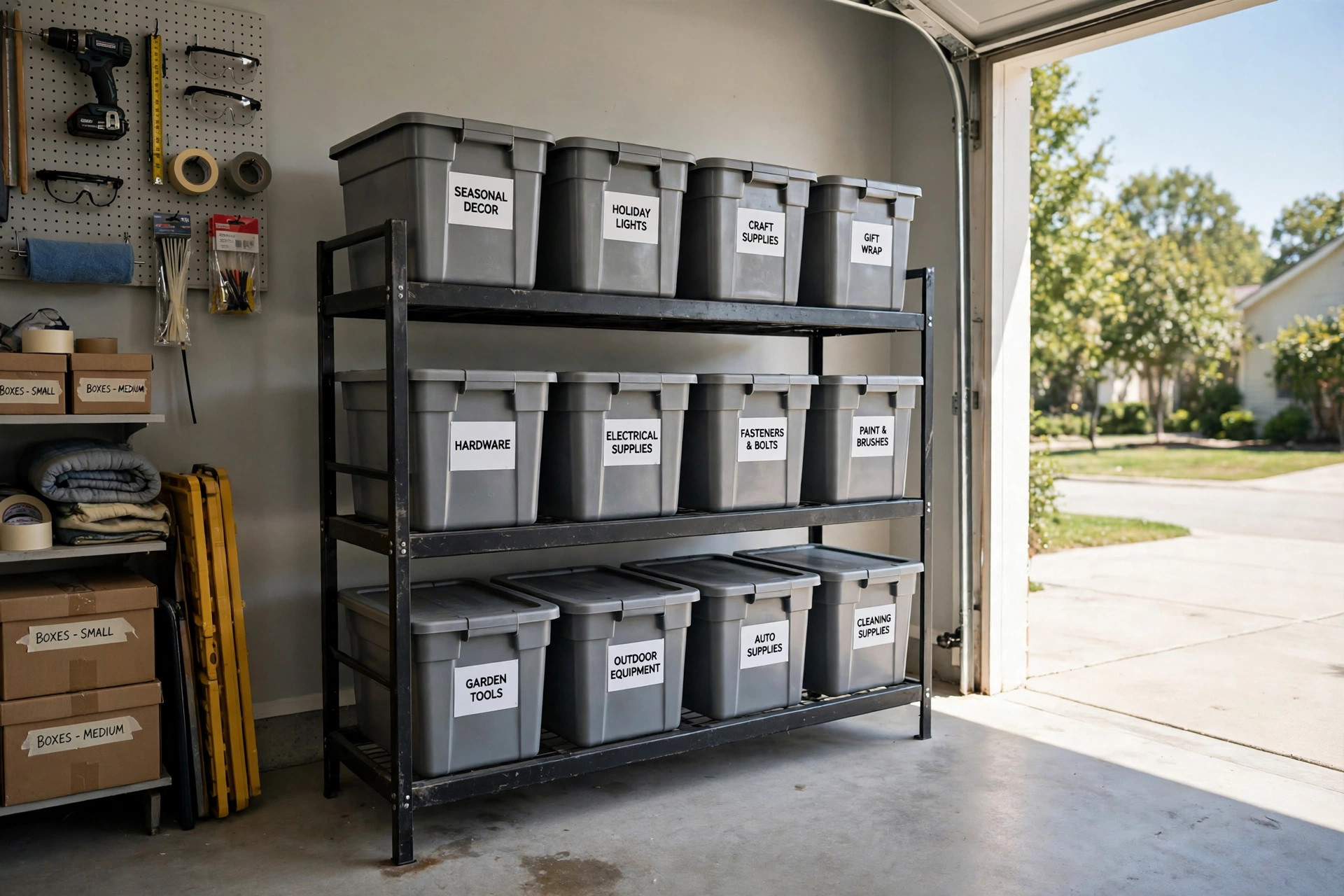
19. Stackable labelled bins on a rack — one bin per season
Bins on the floor are bins in the way, because the bin on the floor is the bin the car has to drive around and the bin the bikes lean on. Stack them on a rack — one bin per season — so the winter bin, the summer bin and the holiday bin live in a tower and the floor is free. Put the rack against the wall, stack the bins in season order with the one you need next on top, and label the front of every bin, because the label on the front is the label you read without taking the bin down. Keep one bin empty, because the empty bin is the bin that holds whatever comes in next. A rack of labelled bins, and the seasons stop living on the floor.
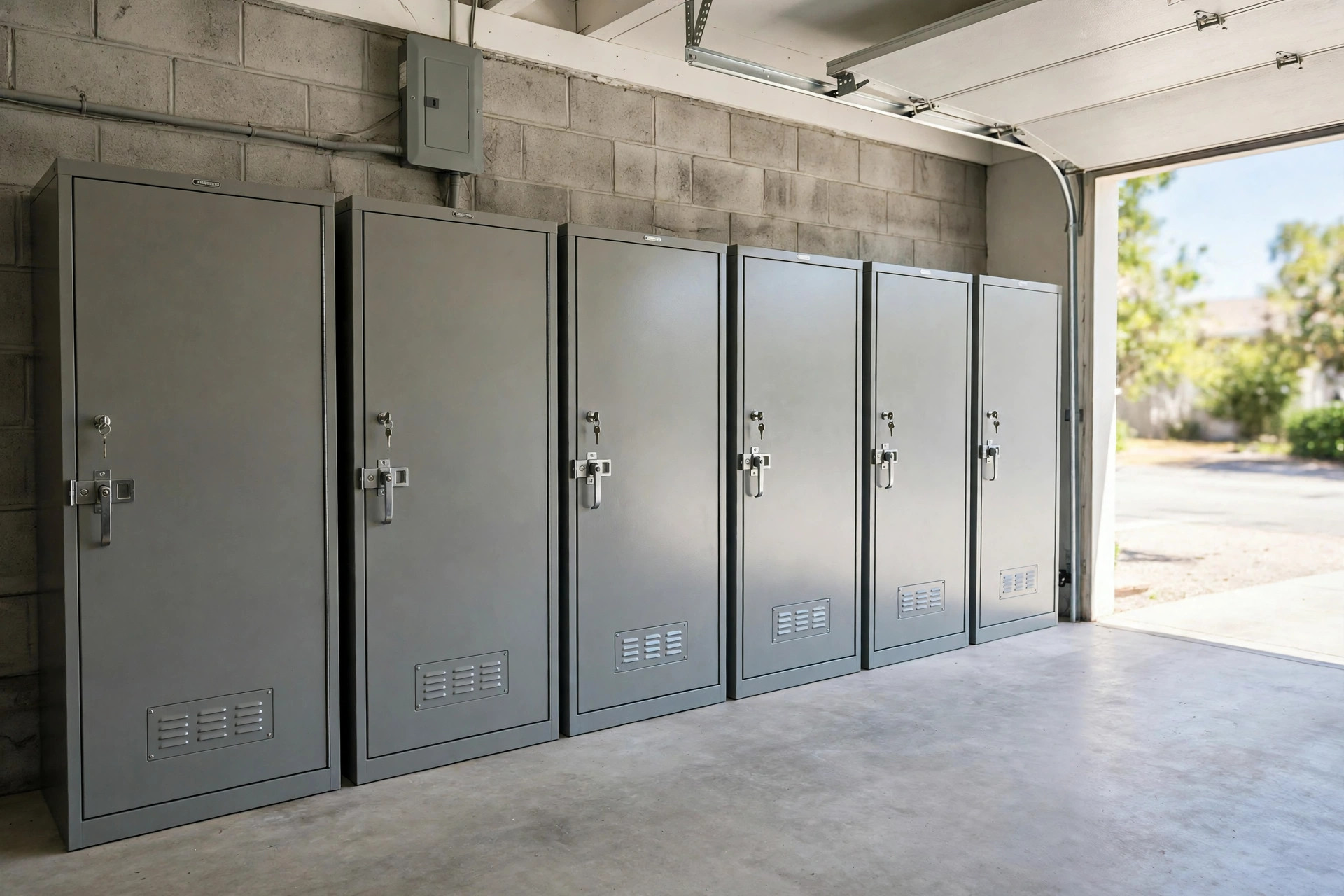
20. Lockable metal cabinets — the cabinet that hides the mess
A garage with everything on show looks messy even when it is tidy, because the paint tins, the chemicals and the half-finished projects are the things that make a garage look like a garage. Put them in lockable metal cabinets — the cabinet that hides the mess — so the doors close and the garage looks like a room instead of a storage unit. Bolt the cabinets to the wall, so they cannot tip, and keep the dangerous things — the paint, the chemicals, the sharp tools — behind the lock, because the lock is the thing that keeps the kids out. Label the inside of each door with what lives behind it, because the label inside is the label that finds the thing fast. Metal cabinets with locks, and the garage looks finished.
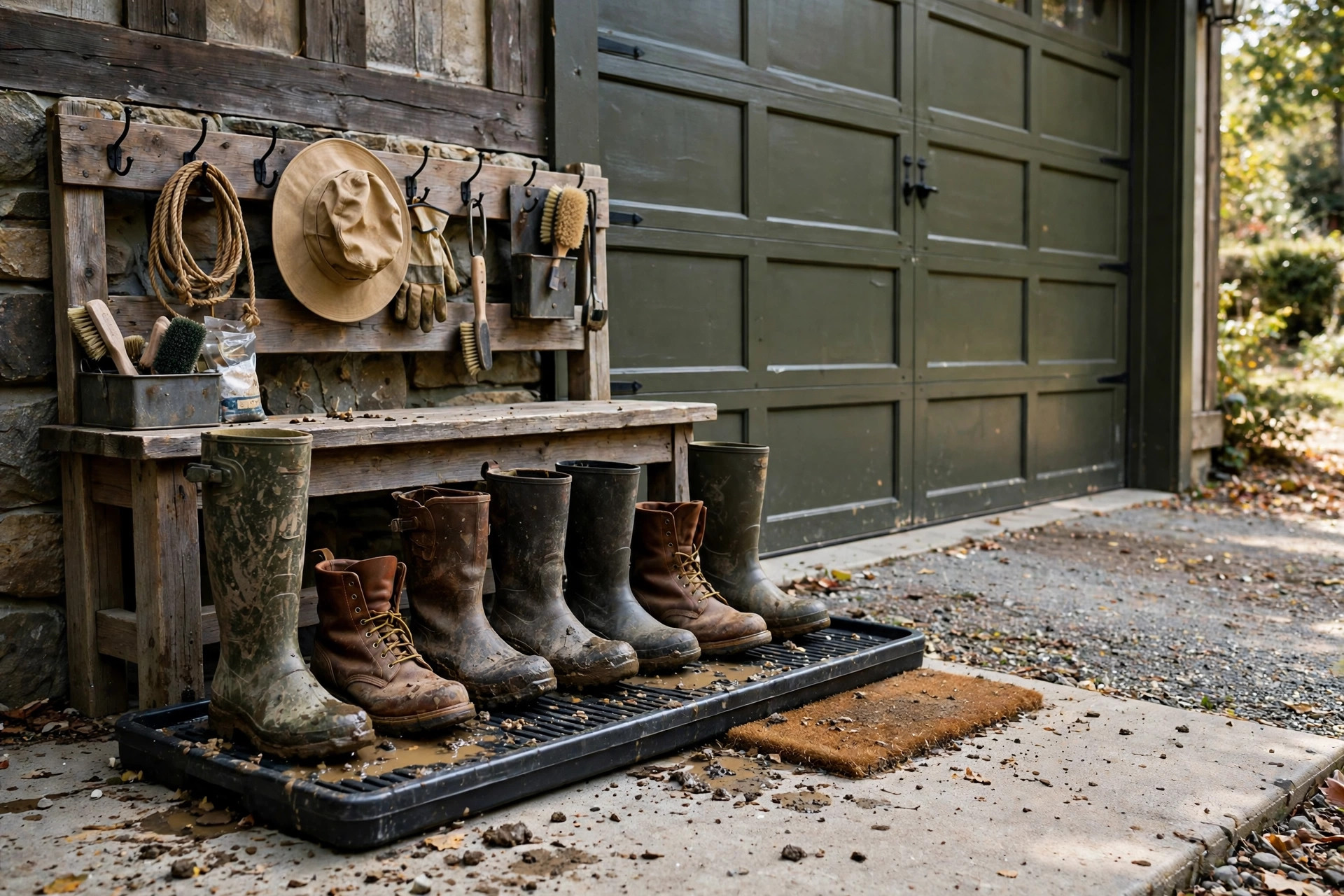
21. A shoe and boot station by the garage door — muddy shoes stop at the door
Muddy shoes in a garage are muddy shoes everywhere, because the shoes come off at the door and the mud walks in with them. Build a shoe and boot station by the garage door — muddy shoes stop at the door — so the shoes live on a tray or a low rack right where they come off and the mud stops at the door. Put a boot tray on the floor for the muddy pairs, a low rack above it for the clean pairs, and a small bench to sit on while the shoes come off, because the tray is the mud, the rack is the shoes, and the bench is the place you sit. Keep the station by the door the family uses, not the far wall, because the station by the door is the station that gets used. The entryway the shoes come from is in 22 Entryway Storage Ideas for 2026, where the shoes get a home inside the house too. A shoe station by the door, and the mud stops at the door.
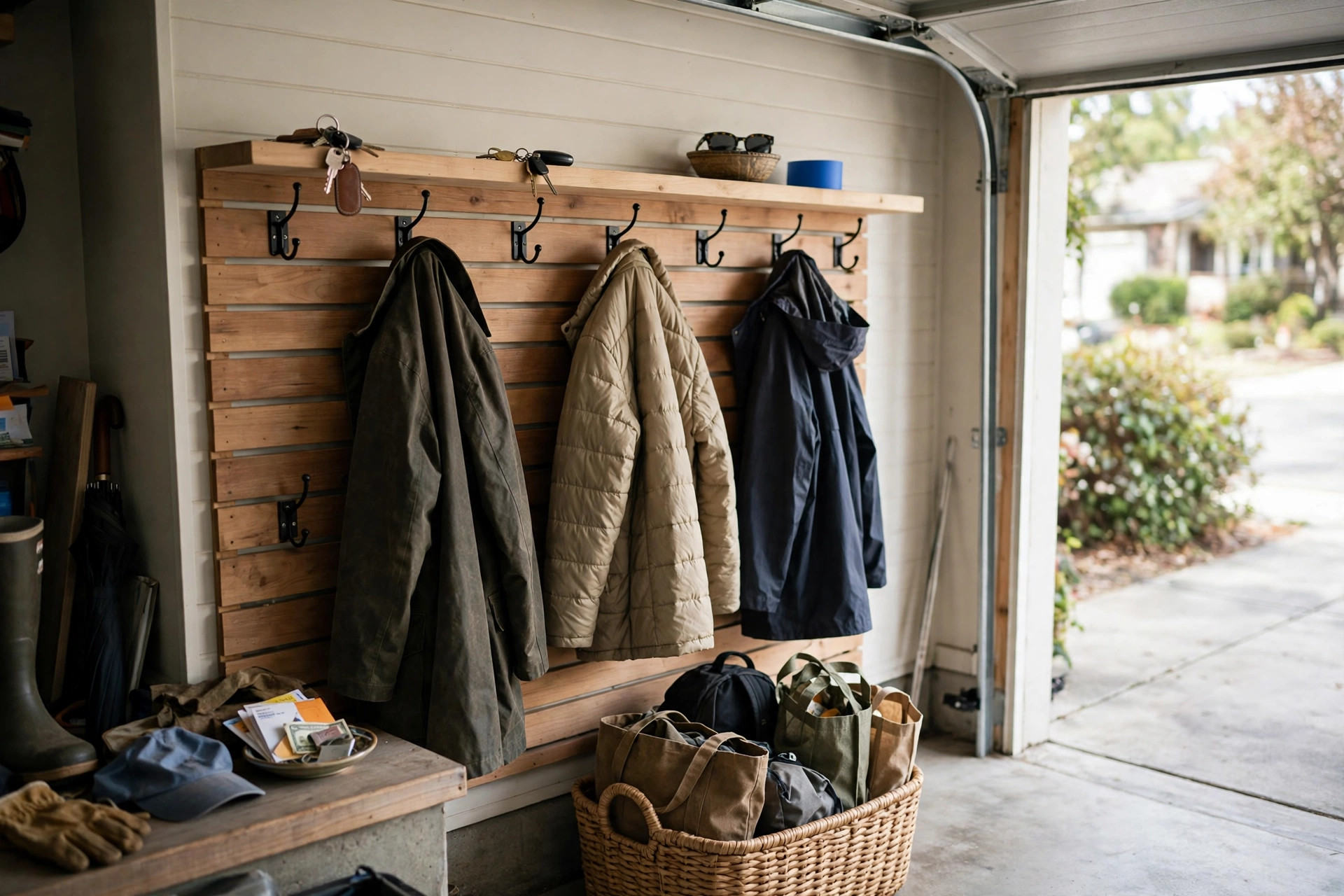
22. A drop zone inside the garage door — coats, keys and bags on the way in
A garage with no drop zone is a garage where everything lands on the car, because the coats, the keys and the bags come in with you and the car is the nearest surface. Build a drop zone inside the garage door — coats, keys and bags on the way in — so everything has a hook and a shelf the moment you step inside. Screw a row of hooks to the wall for the coats, put a small shelf above them for the keys and the sunglasses, and a basket below for the bags, because the hooks are the coats, the shelf is the keys, and the basket is the bags. Keep the drop zone at the door you use every day, so the habit forms in a week, and empty the basket once a week, because the basket that is emptied is the basket that stays a drop zone. A drop zone by the door, and the car stops being the coat rack.
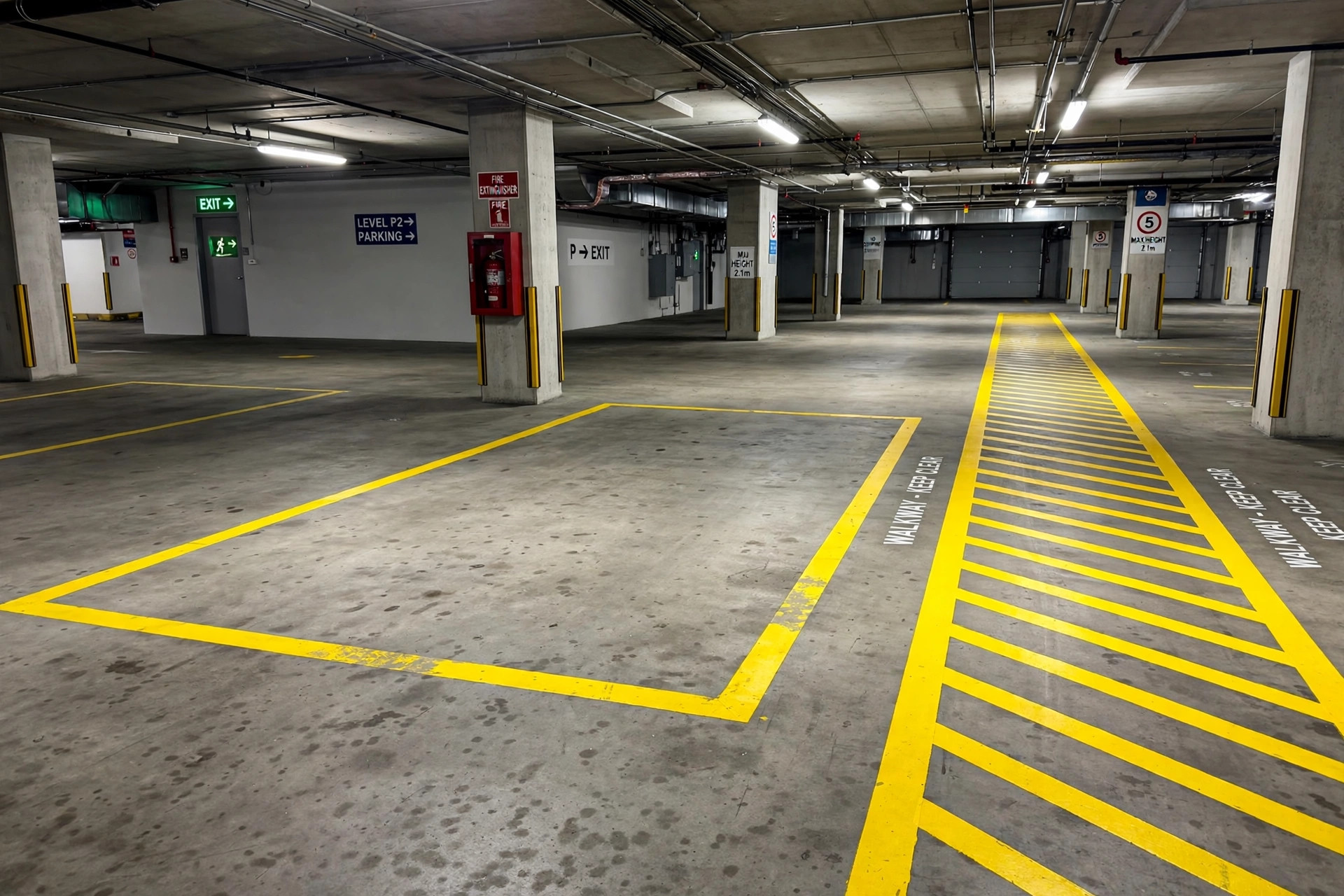
23. Floor tape zones — a parking box for the car and a walkway that stays clear
A garage with no lines is a garage where everything drifts, because the car parks a little further left every day and the boxes creep a little further into the middle. Tape the floor — a parking box for the car and a walkway that stays clear — so the car has a box to park in and the walkway has a line nobody crosses. Lay bright floor tape in a rectangle where the car goes and a strip along the wall where you walk, because the tape is the rule and the rule is the thing everyone can see. Keep the tape fresh, because the tape that peels is the tape nobody follows, and re-tape it when you rearrange the garage, because the zones that move are the zones that need new lines. Floor tape, and the garage knows where everything goes.
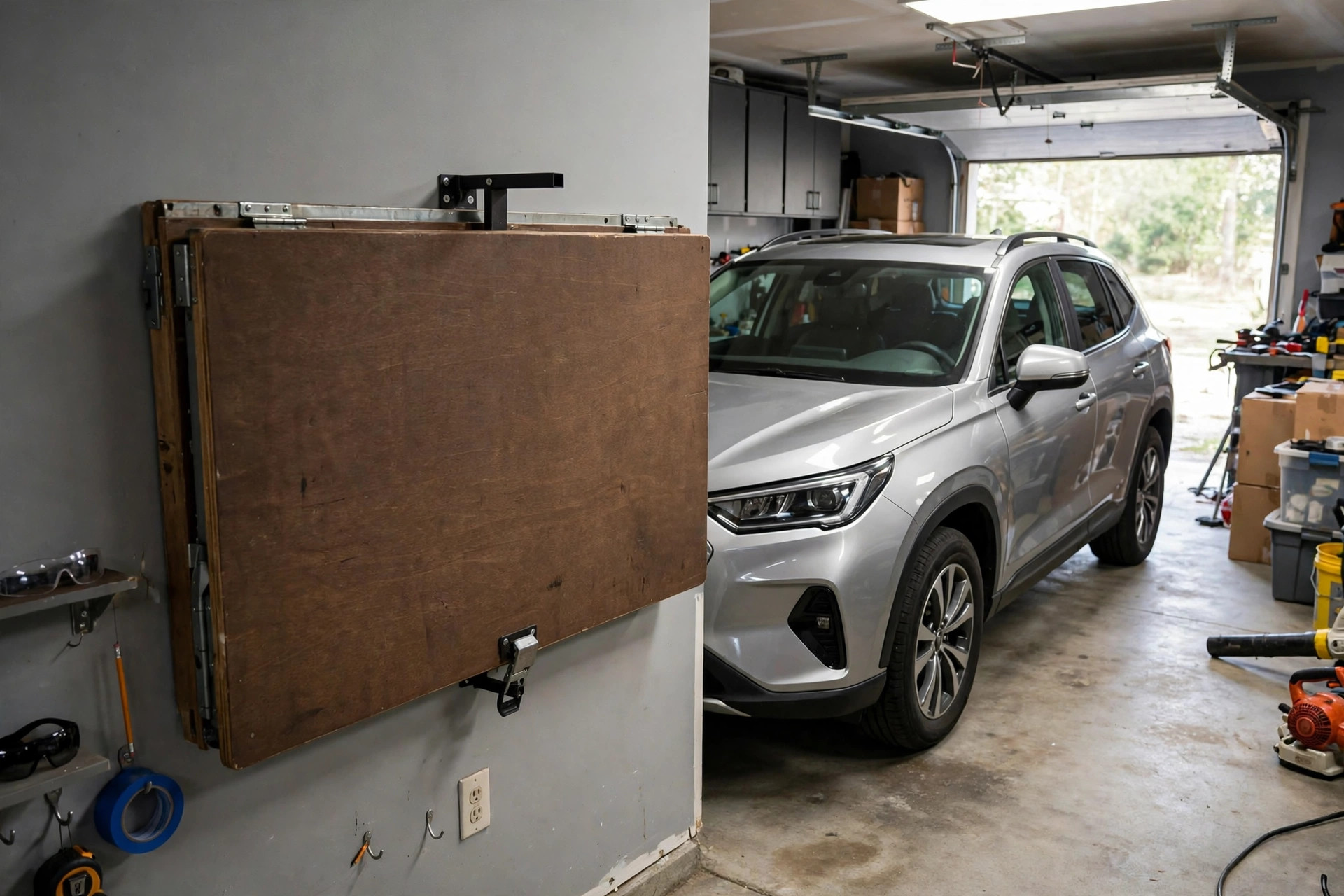
24. A fold-down work table — the table that disappears when the car comes home
A work table in a garage is a work table in the way, because the table is big, the garage is not, and the car is the thing that needs the space. Put up a fold-down table — the table that disappears when the car comes home — so the table folds up when you need it and folds down when the car does. Hinge a tabletop to the wall, add folding legs or a bracket that holds it up, and fold it flat against the wall when you finish, because the table that folds is the table that gives the space back. Keep the wall above the table clear for the tools you use at it, because the tools above the table are the tools that are there when the table comes up. A fold-down table, and the garage has a workbench and a parking space.
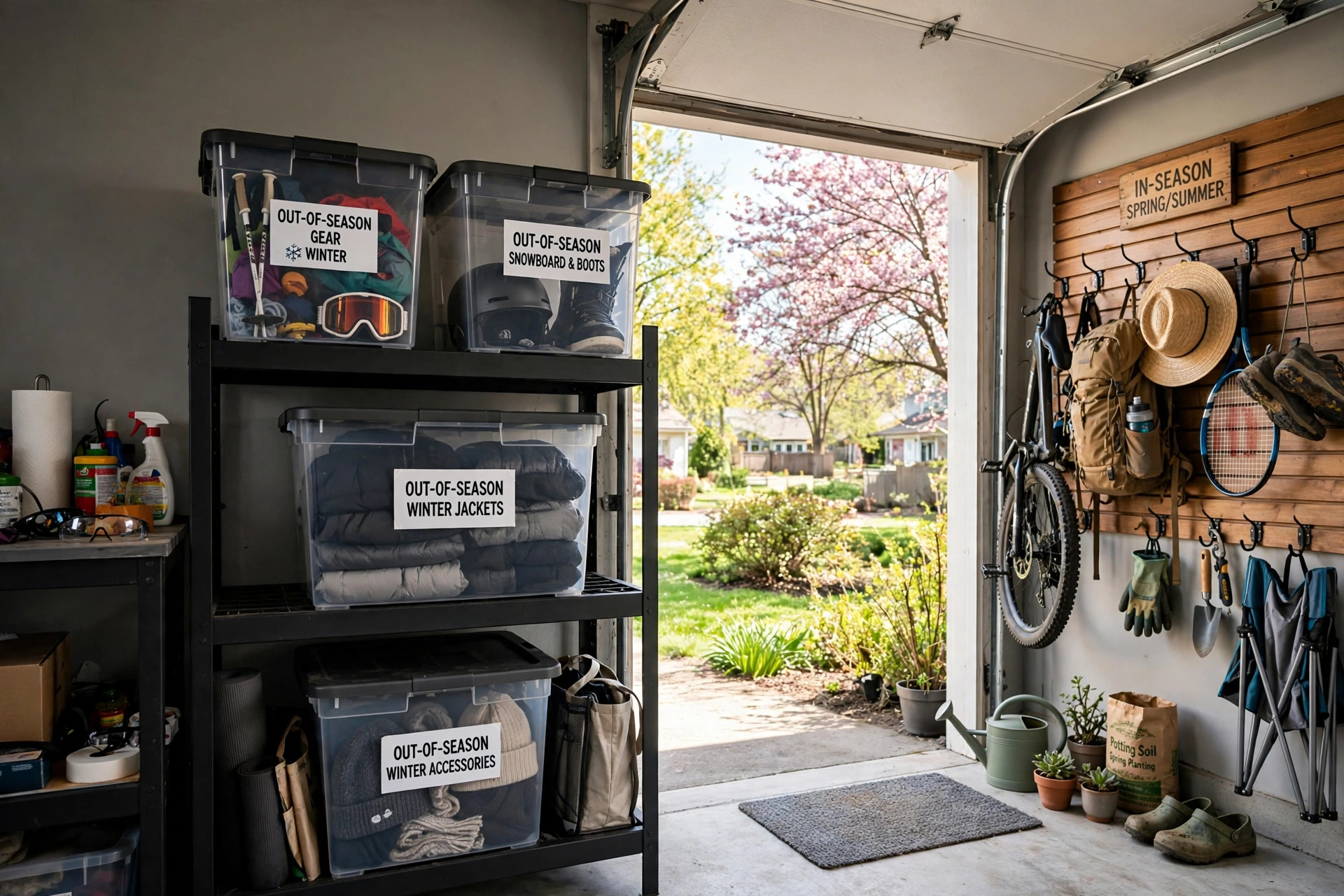
25. A seasonal swap routine — the garage stays clear because the swap happens twice a year
A garage that is sorted once is a garage that is messy again in six months, because the seasons change, the gear changes, and the garage is the place it all lands. Build a seasonal swap routine — the garage stays clear because the swap happens twice a year — so the swap happens on a date, not when the mess gets too big. Twice a year, in spring and in autumn, take everything out, put the out-of-season gear into the labelled bins on the rack, and bring the in-season gear down to the hooks by the door, because the swap is the routine and the routine is the thing that keeps the garage clear. The out-of-season bedding and clothes go into the under-bed boxes inside the house, and the shoes move to the rack by the door, so the garage only holds the season you are in. Put the swap on the calendar, because the swap on the calendar is the swap that happens. A swap twice a year, and the garage stays clear.
Which garage storage idea fits which situation?
| Situation | Best first move | Budget | Tools needed |
|---|---|---|---|
| Tools in a pile on the floor | Slatwall panels with hooks (idea 1) | Low | Drill, stud finder |
| Tools hiding in a drawer | Pegboard wall (idea 2) | Low | Pegboard, hooks |
| Boxes on the floor | Heavy-duty wall shelves (idea 3) | Low | Shelf brackets |
| Bikes leaning on the car | Wall-mounted bike hooks (idea 4) | Low | Bike hooks |
| Shovels in a corner pile | Wall rail for long handles (idea 5) | Low | Rail, clips |
| Small tools at the bottom of the box | Magnetic strips (idea 6) | Low | Magnetic strip |
| Holiday boxes everywhere | Ceiling racks above the car (idea 7) | Medium | Rack, drill |
| Kayak taking a parking space | Overhead pulley hoist (idea 8) | Medium | Hoist kit |
| Ladder leaning on the wall | Ceiling hooks for ladders (idea 9) | Low | Ceiling hooks |
| Boxes you have to climb for | Sliding-rail bins (idea 10) | Medium | Rails, bins |
| No work surface | Workbench along one wall (idea 13) | Medium | Timber, brackets |
| Tools never where the job is | Rolling tool cart (idea 14) | Medium | Tool cart |
You do not need all 25 ideas. You need the three that solve your garage — usually the slatwall wall that gets the tools off the floor, the ceiling rack that lifts the boxes above the car, and the workbench that gives every job a surface. Start with the wall, put it up this weekend, and hang the tools on it before the car comes home. Do that and the next time you open the garage door the floor will be clear, for the price of a panel, a few hooks and an afternoon.
Save this post for your next garage sort, and if the door the garage opens into needs sorting first, read 22 Entryway Storage Ideas for 2026 next — it is Post 10, the shoe station and drop zone that keep the mud out of the house — and 20 Outdoor Toy Storage Ideas for 2026, Post 06, for the bikes and sports gear that live in the garage. This is the third post of the Storage by room/object return batch — Posts 31 to 35, one room at a time — and the next posts carry the same wall-to-wall system into the rooms that follow.
Publish date assigned at publishing time. Updated as new garage storage finds are tested.
Frequently asked questions
How do I organize a garage on a small budget?
Start with the walls, because the walls are free and the floor is not — slatwall panels or a pegboard wall, a few hooks and some labelled bins will clear most of a garage for the price of a dinner out. Use what you already own first: old shelves, spare bins and a rail for the long-handled tools, and only buy the big things — the ceiling rack, the workbench — once the cheap fixes are done. One wall and a weekend, and the garage looks different for very little money.
What is the best way to store things in a garage without them getting damp?
Keep everything off the concrete floor, because the floor is the thing that wicks up damp and the boxes on it are the boxes that go soft. Use wall shelves, ceiling racks and sealed plastic bins with lids, and never store cardboard boxes or fabric directly on the floor — put them on a rack or a pallet first. If the garage gets damp in winter, add a small dehumidifier or leave a vent open, and check the bins once a season for condensation. Off the floor, lids on, and the things stay dry.
How do I keep a garage organized once it is sorted?
Give everything a labelled home and do a seasonal swap twice a year, because the garage that has a home for everything is the garage that stays sorted and the swap is the routine that keeps it that way. Put the tools back on their hooks the same day you use them, keep the floor tape zones clear, and once a season walk the garage with a bin bag and take out anything that has not been used in a year. A home for everything, a swap twice a year, and the garage stays clear.