26 Small Walk-In Closet Organization Ideas for 2026
A small walk-in closet is the most hopeful room in the house — it has a door, it has walls, it should work. Instead it becomes the place where clothes go to be forgotten: one rail, one shelf, and a floor full of shoes you cannot find in the morning.
These 26 small walk-in closet organization ideas fix that without a remodel: double hanging, zones, shoe storage and a seasonal rotation that make a small closet hold twice as much.
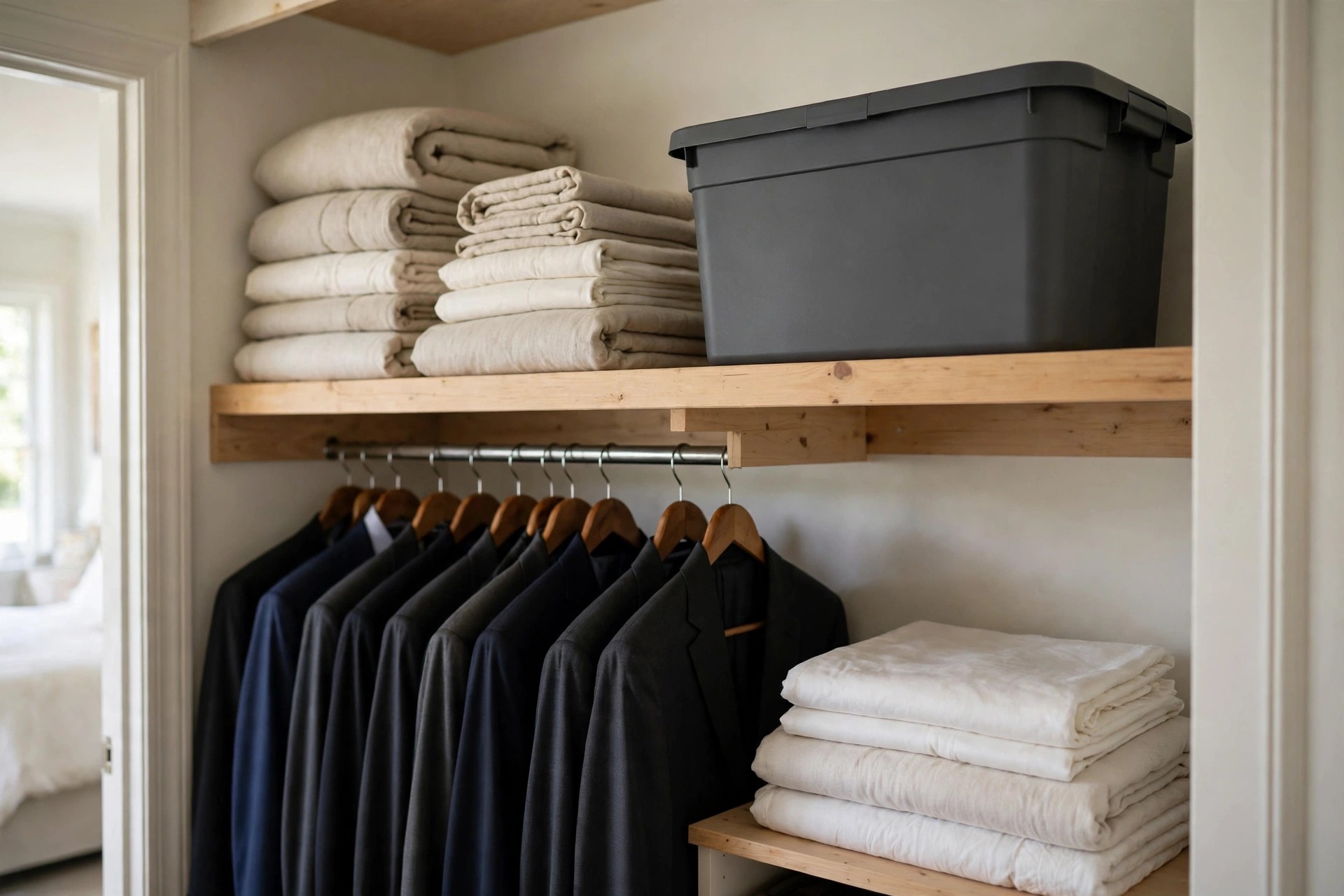
Every idea below works in a real, rented or owned closet. Pick three that fit your worst corner, start with the rail you reach for every morning, and build from there.
Make every inch of the closet work
1. Double hanging rails instead of one long rail
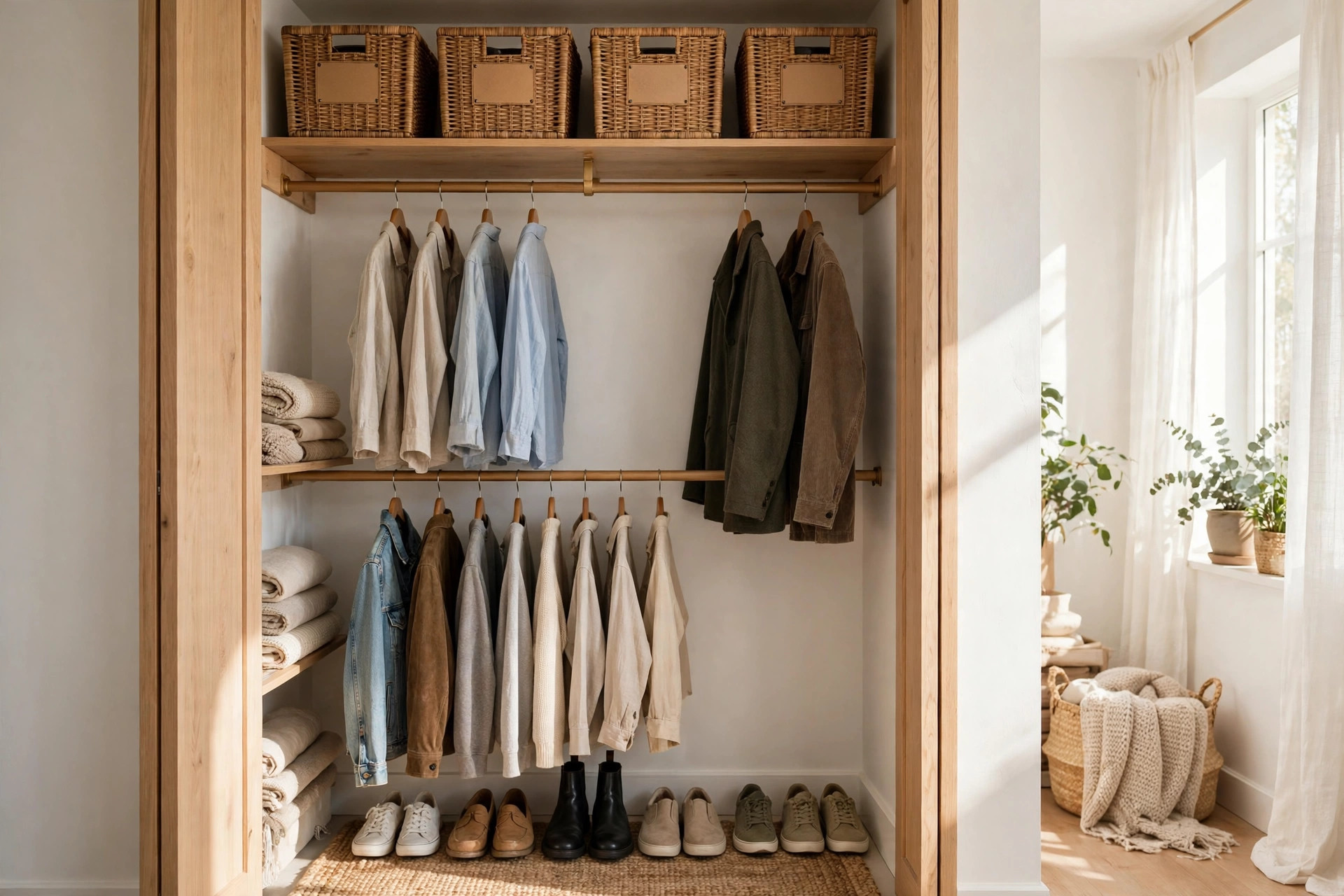
One long rail wastes the whole lower half of a closet. Two rails — one at eye level, one just below it — double your hanging space in the same width, with shirts and blouses on top and trousers and skirts below. Keep dresses and long coats on a single short rail at one end, so the double section stays for the clothes you wear most. This is the single biggest capacity gain in a small walk-in, and it costs less than one new wardrobe. Measure your longest top first, so the lower rail clears it by a few centimetres.
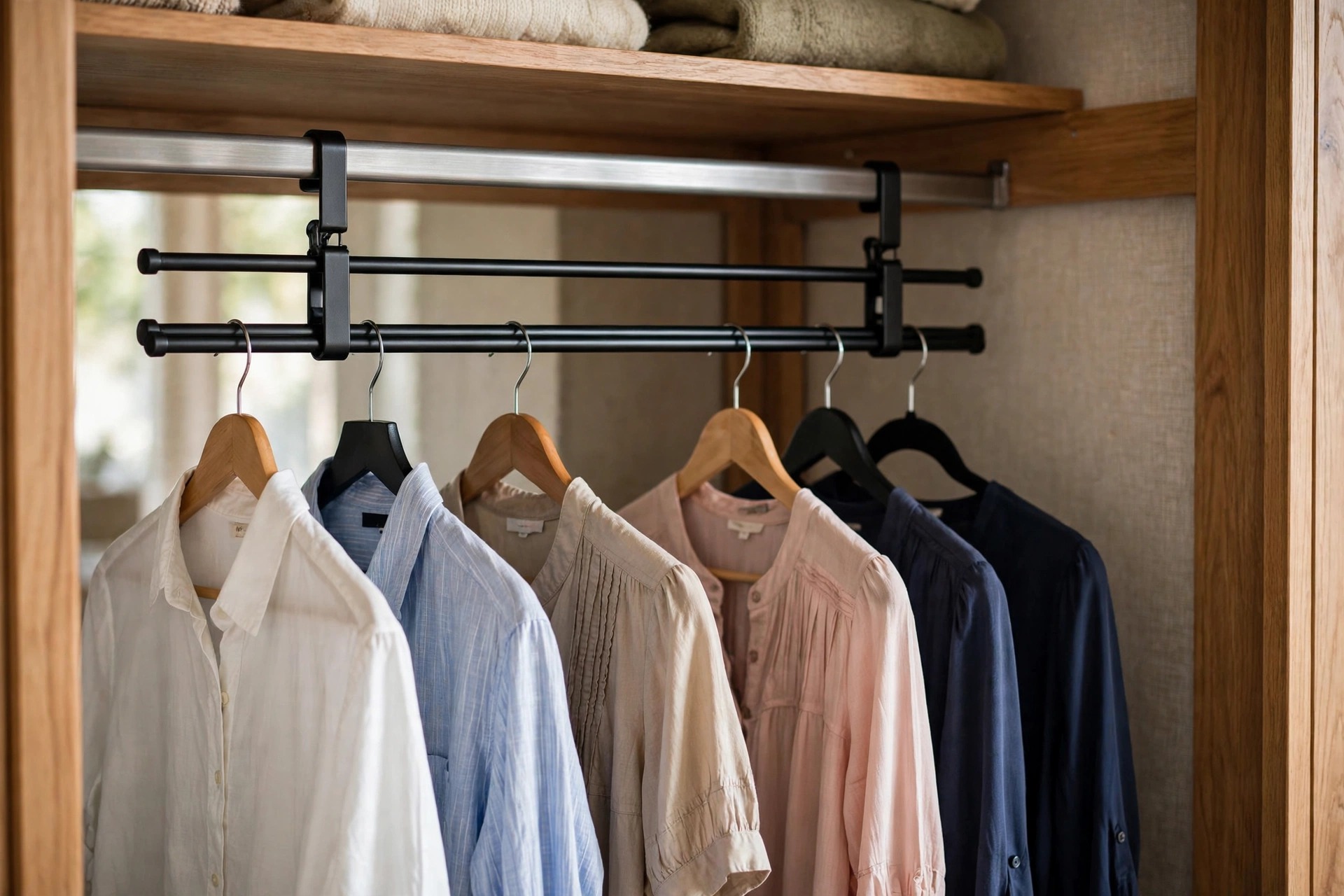
2. A second rod that hangs from the first
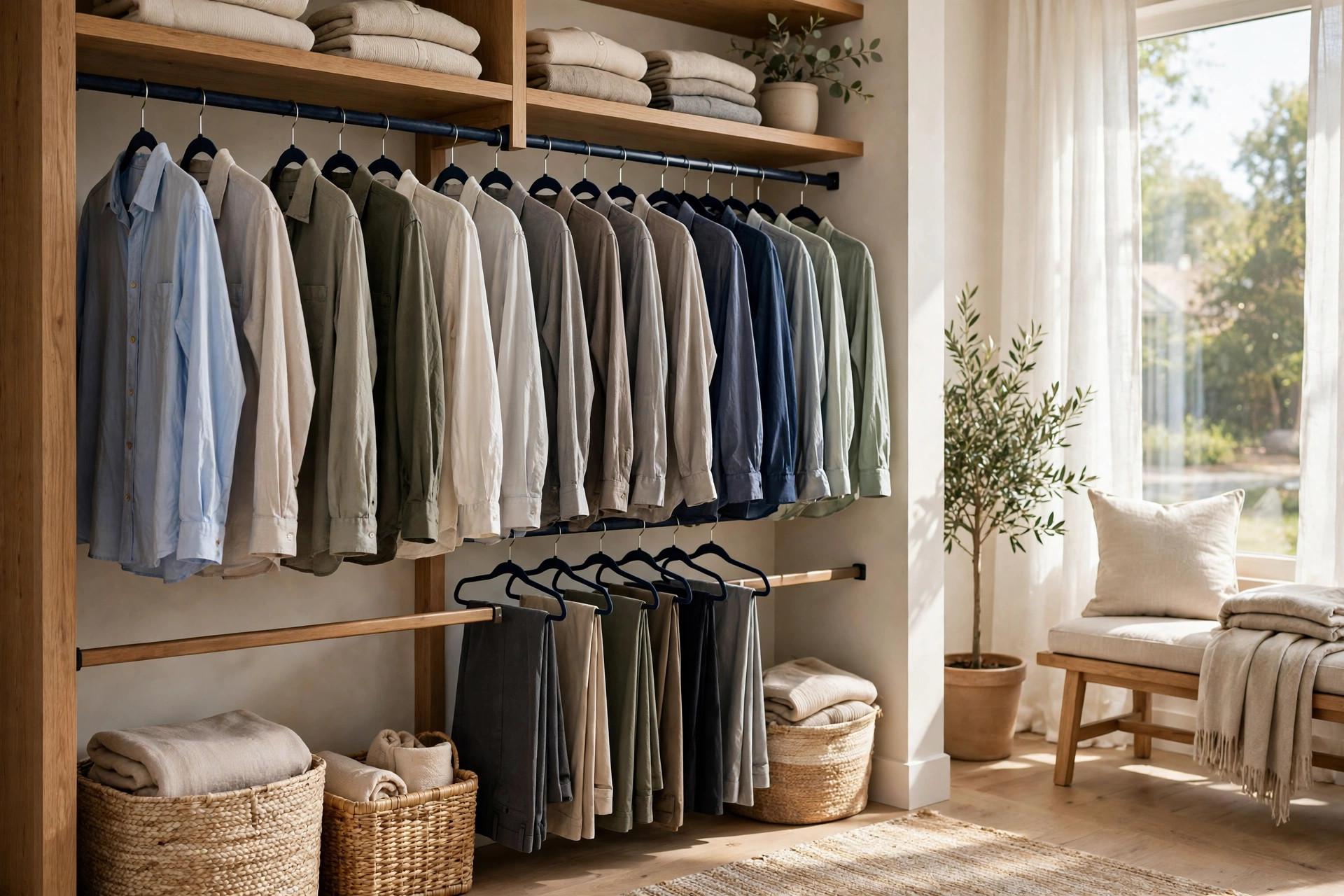
If you rent, or you do not want to drill, a hanging double rod clips onto your existing rail and gives you the same second level with no tools. It holds lighter items best — shirts, blouses and children's clothes — while heavier coats stay on the fixed rail. Use one on the side of the closet you open first, and keep it for the clothes you reach for daily, so the extra rail earns its place. When you move, it comes down in a minute and leaves no holes behind.
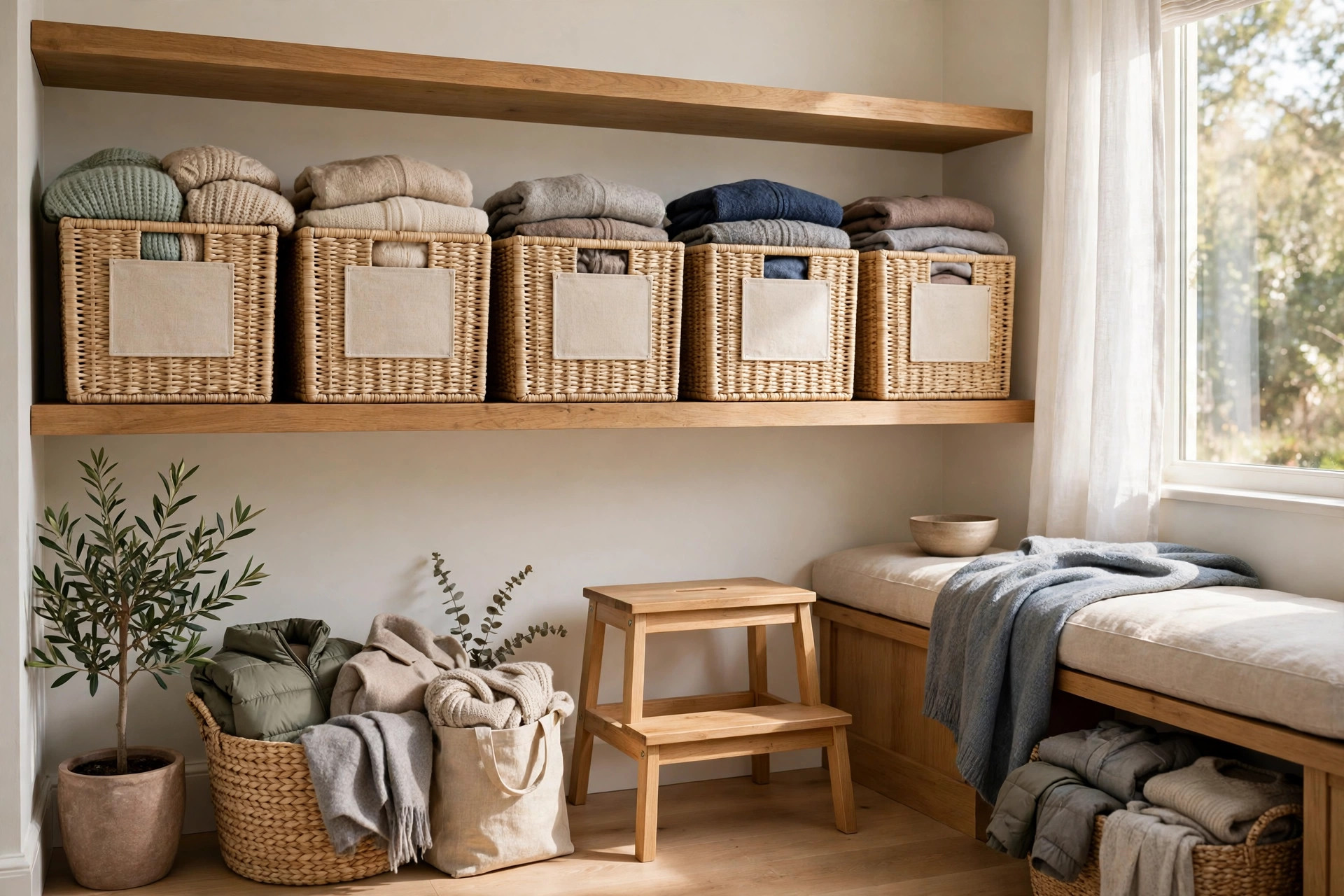
3. Use the top shelf as a real shelf, not a dumping ground
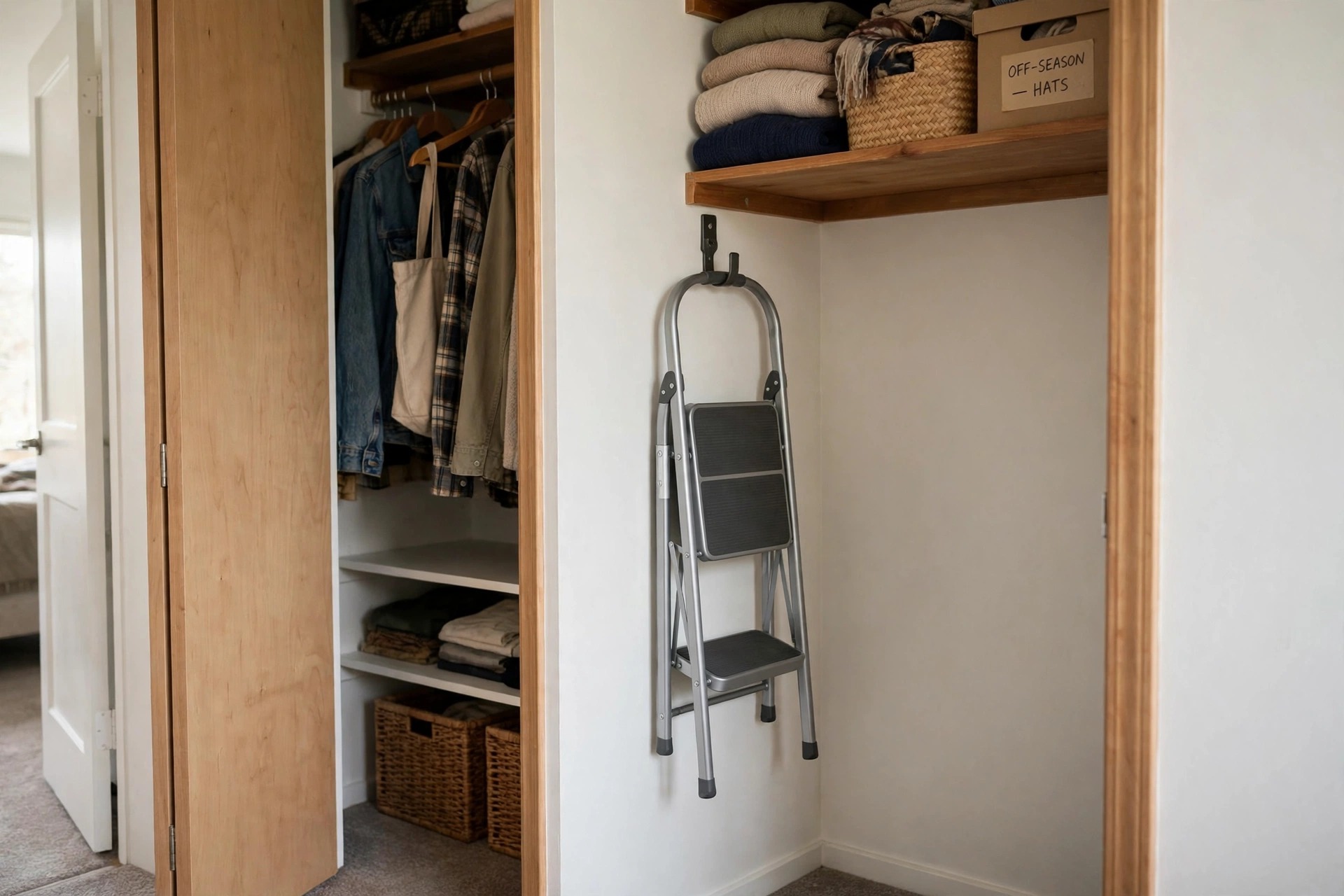
The top shelf in a walk-in is usually where things go to disappear. Give it a job: labelled bins for out-of-season clothes, one bin per category, all the same colour, with the label facing out. Keep daily items off it entirely — if you have to climb to reach something, it is not a daily item. A small step stool kept just inside the closet door makes the top shelf usable instead of forgotten, and it stops the pile from growing every time you open the door.
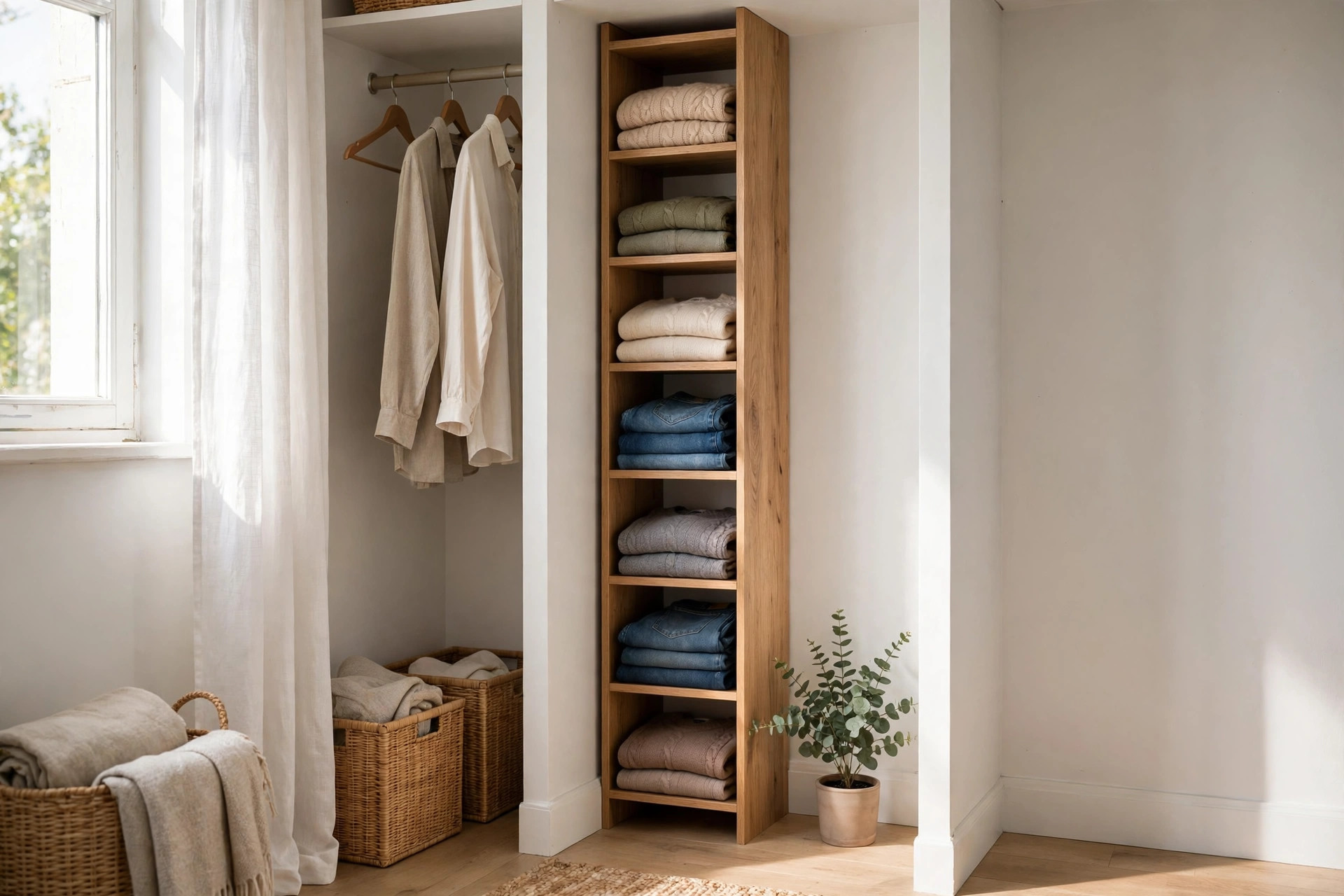
4. A narrow shelf tower in the dead corner
Every walk-in has a corner that the rail cannot reach. A narrow shelf tower — four or five cubbies, about 30 cm wide — turns that dead corner into folded storage for jumpers, jeans and T-shirts. Folded clothes in cubbies are easier to see than a stack on a shelf, and each cubby holds one category, so nothing slides. Put the tower in the corner furthest from the door, where hanging clothes would only block the light anyway.
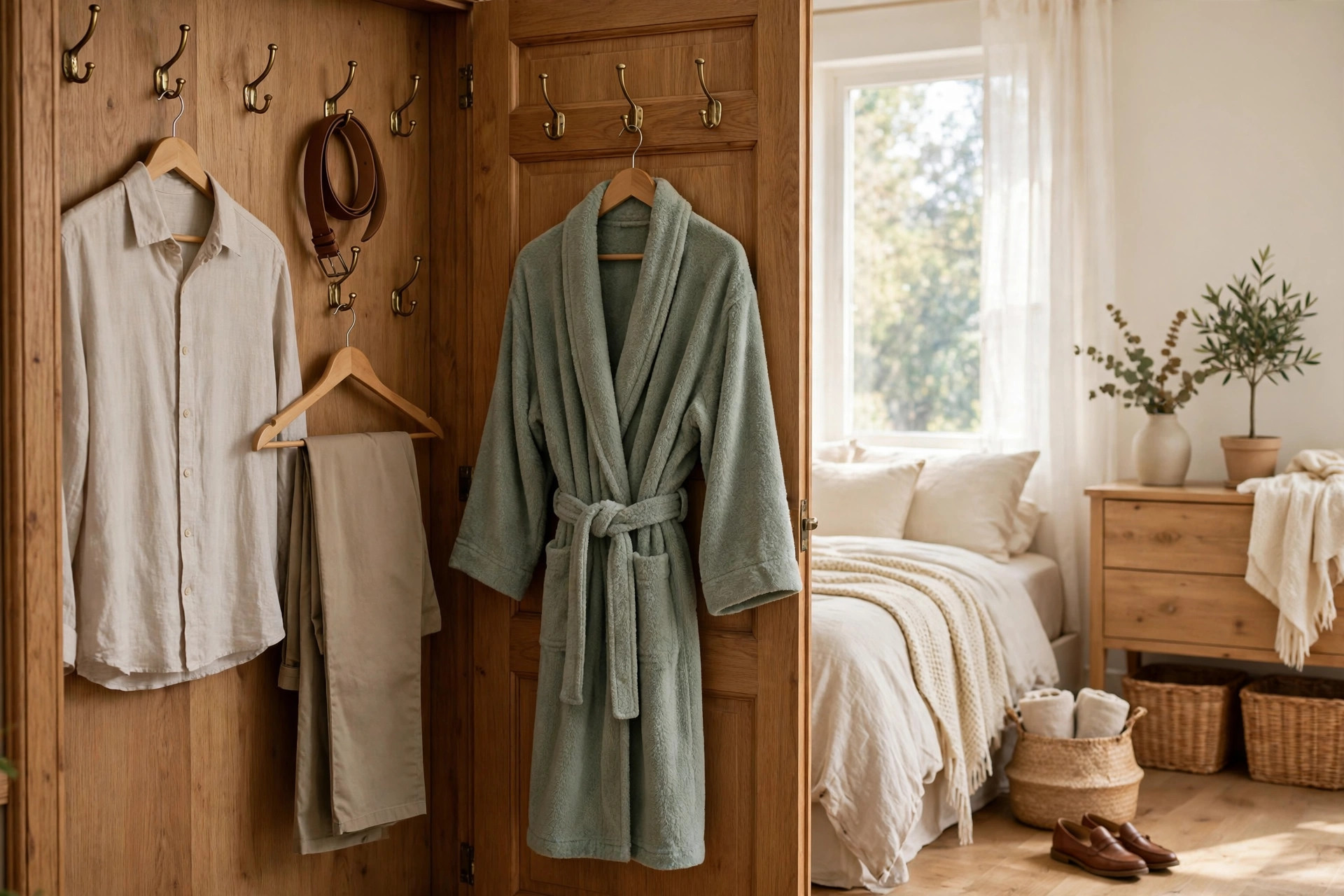
5. Hooks on the back of the door for tomorrow's outfit
The back of the closet door is free space that is already at hand height. Two or three hooks there hold tomorrow's outfit, a dressing gown, or the bag you use daily, so the morning starts without opening three drawers. Keep it to what you will wear in the next 24 hours — if a hook holds something for a week, it belongs on a rail or in a bin. In a shared closet, give each person their own hook and the morning argument disappears.
6. Slim hangers, all the same
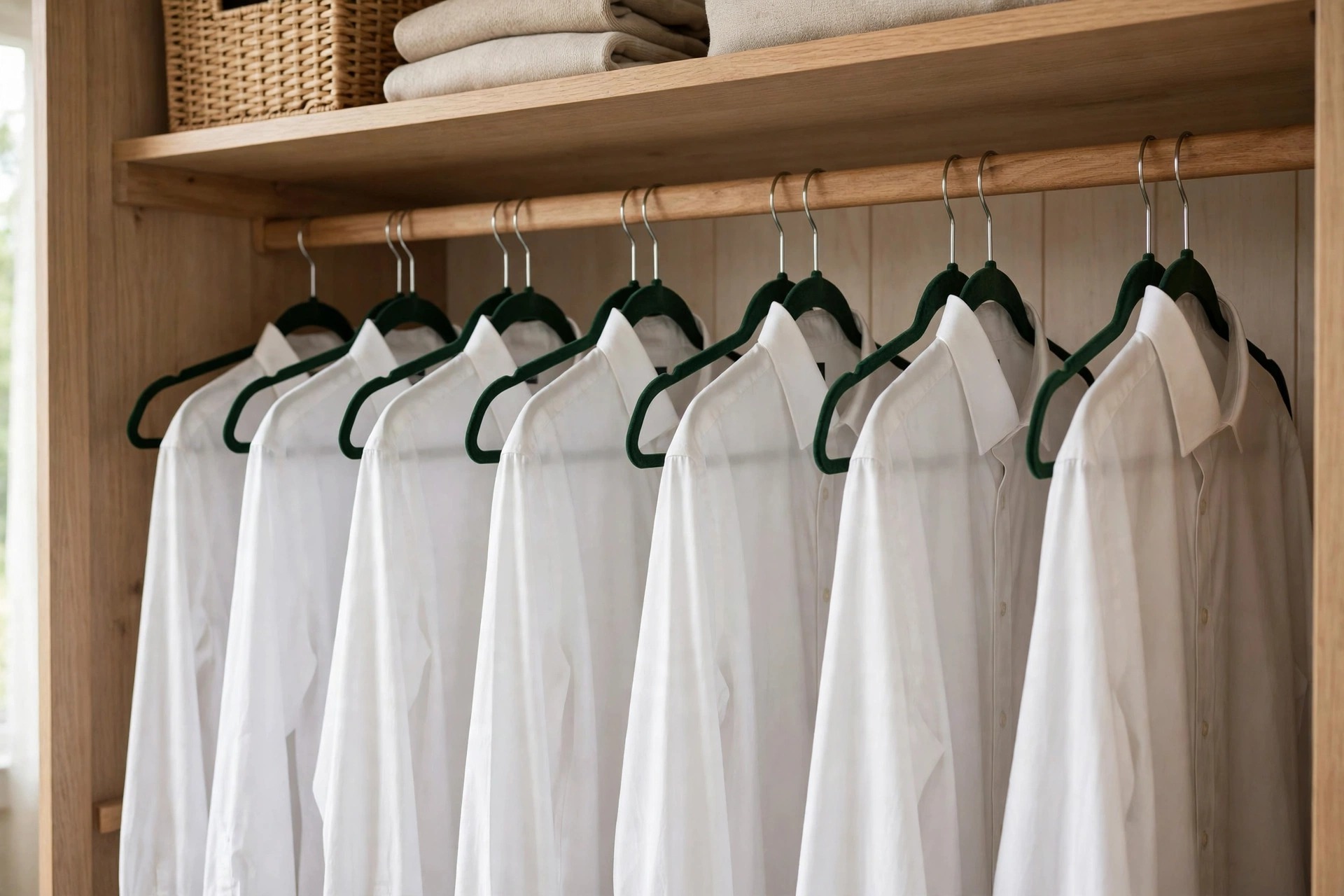
Thick wooden hangers and a mix of wire, plastic and hotel hangers waste centimetres on every rail. Slim velvet hangers, all the same colour, are thinner, grip clothes so they do not slide off, and make the whole closet look like one calm system instead of a jumble. Swap one rail at a time — start with the shirts you wear weekly — and donate the old hangers as you go. The visual difference after one rail is enough to convince you to finish the rest.
7. A full-length mirror on the inside wall
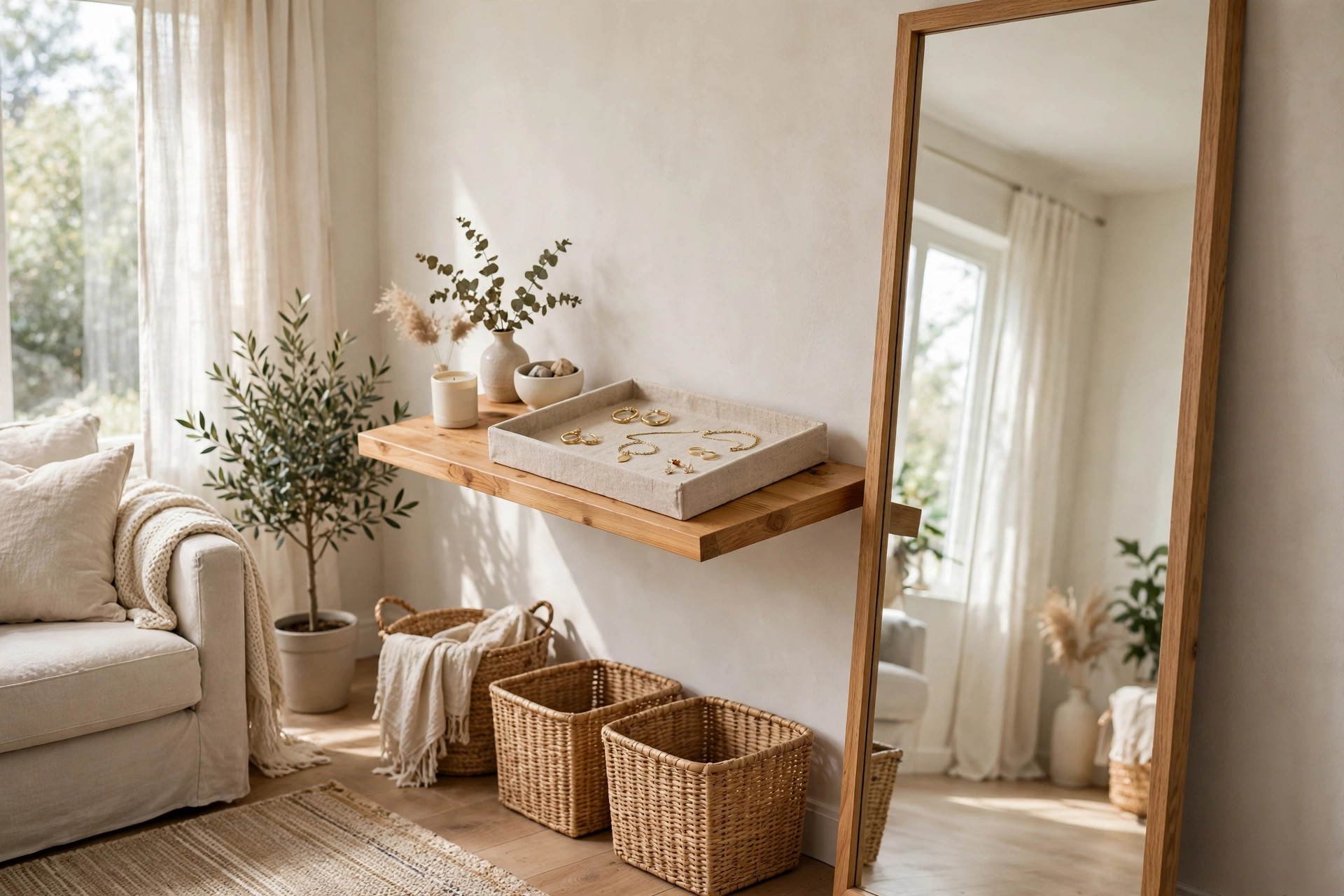
A small walk-in feels smaller when you have to leave it to check an outfit. A full-length mirror on the inside wall — or on the back of the door if the wall is taken — keeps you in the closet, and it bounces light into the corners so the back rail is easier to see. Choose a slim mirror that does not eat hanging space, and hang it where it catches the light from the door, not where it faces a dark wall.
Zones that make getting dressed fast
8. Zone the closet by task, not by colour
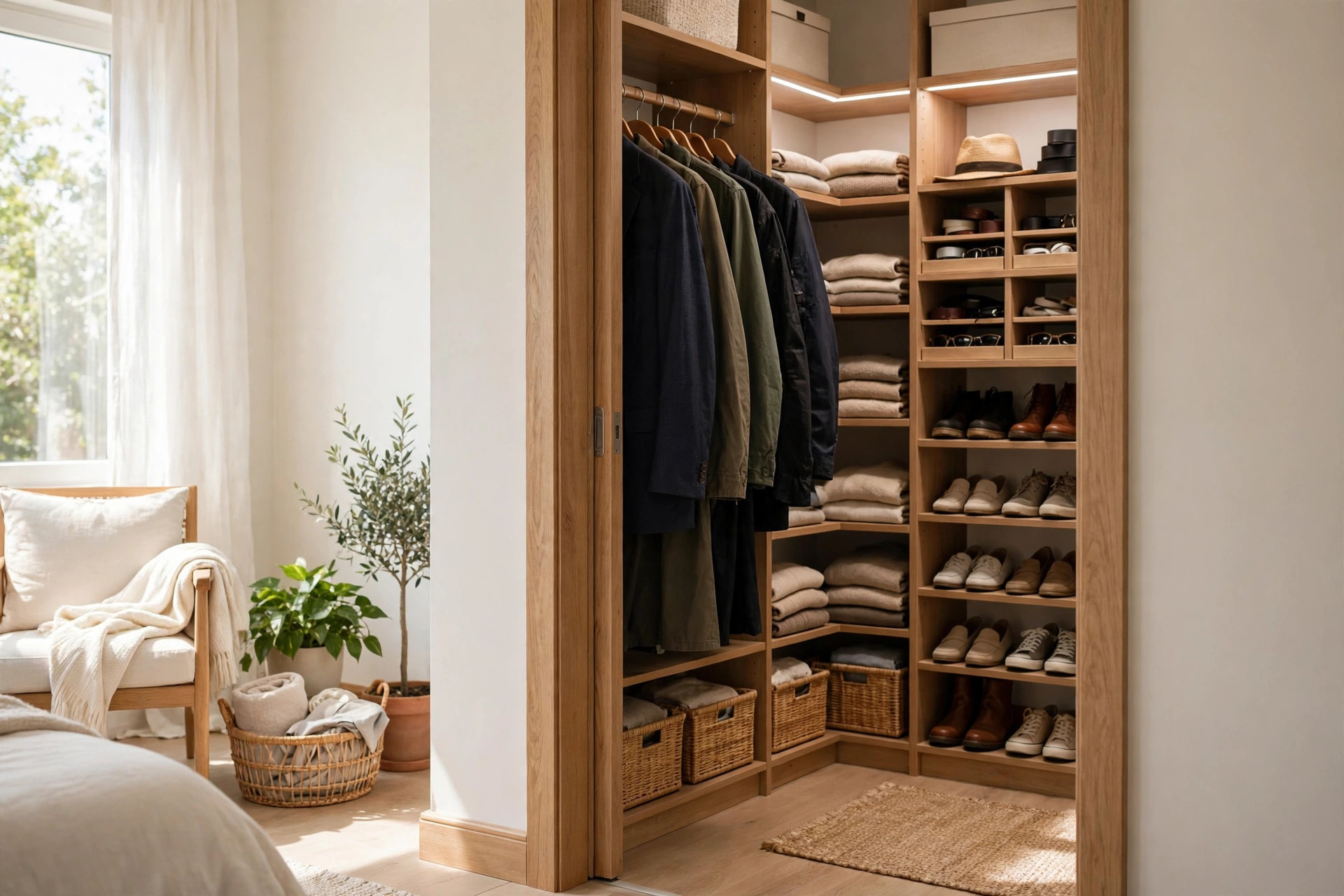
Divide the closet into zones — work, everyday, evening, and gym — and give each zone its own rail or shelf section. The work zone, nearest the door, holds the clothes you reach for on a weekday morning; the evening zone, at the back, holds the pieces you wear once a week. When everything has a zone, getting dressed takes two minutes instead of a decision, and putting laundry away takes five seconds because every item already has a home. This is a habit, not a purchase, and it makes every other idea on this list work better.
9. Keep daily clothes at eye level, everything else up or down
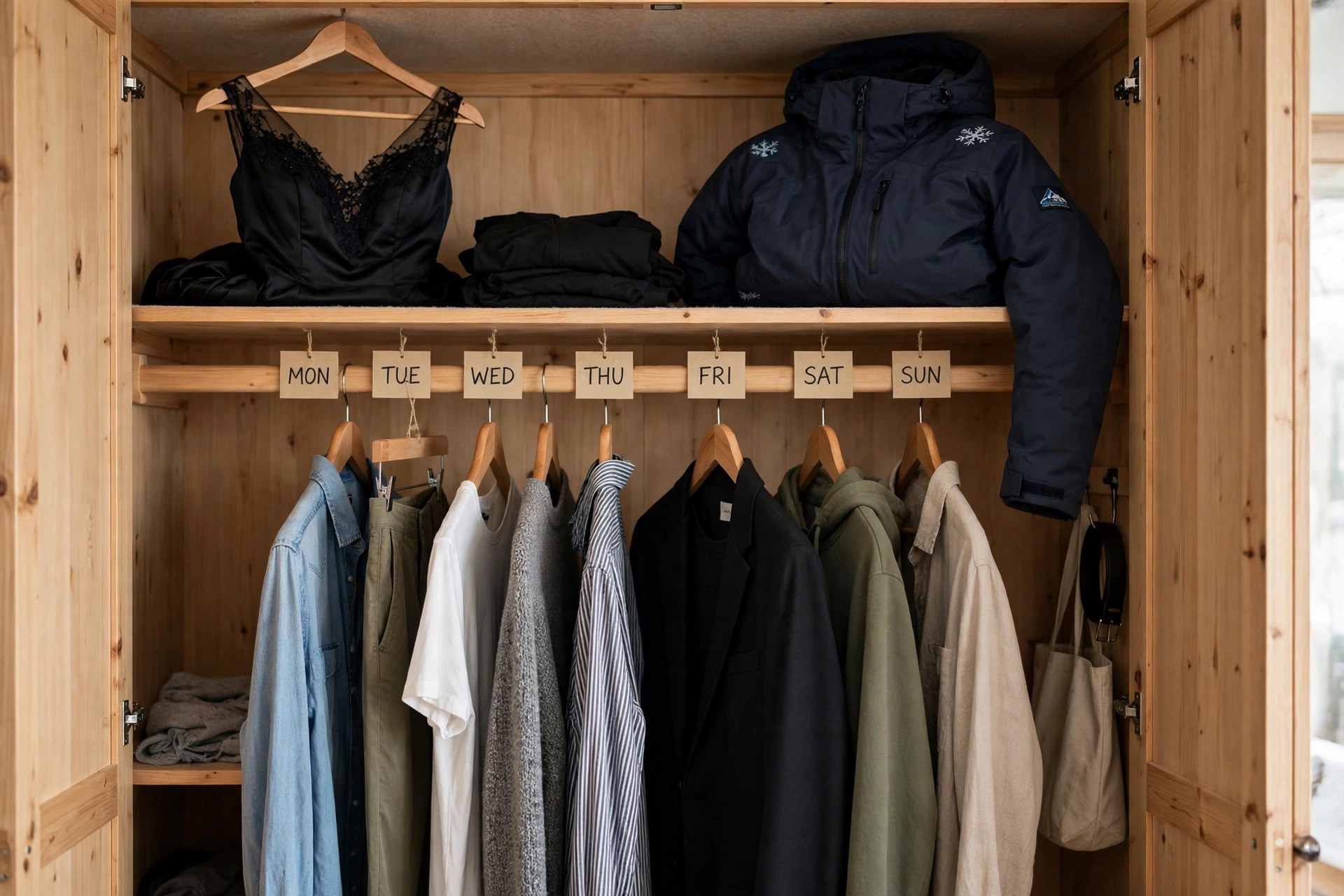
Prime closet space — the rails and shelves at eye level, nearest the door — should hold only what you wear weekly. Everything else — the formal dress, the ski jacket, the spare bedding — belongs on the top shelf, the floor bins, or another room. Audit once: pull everything off one rail, put back only the weekly items, and move the rest. You will be shocked how much space appears, and how much faster mornings feel when the rail you open most is the one with the least on it.
10. A seasonal rotation box, swapped twice a year
A small closet cannot hold four seasons at once. Keep one labelled box per season on the top shelf or under the bed, and swap it twice a year — winter clothes out in spring, summer clothes out in autumn. The swap takes an hour, it is the perfect moment to mend, donate or retire anything you did not wear, and the closet you use daily finally holds only the season you are living in. Label the box with the season and the year, so next year's swap starts with the right box.
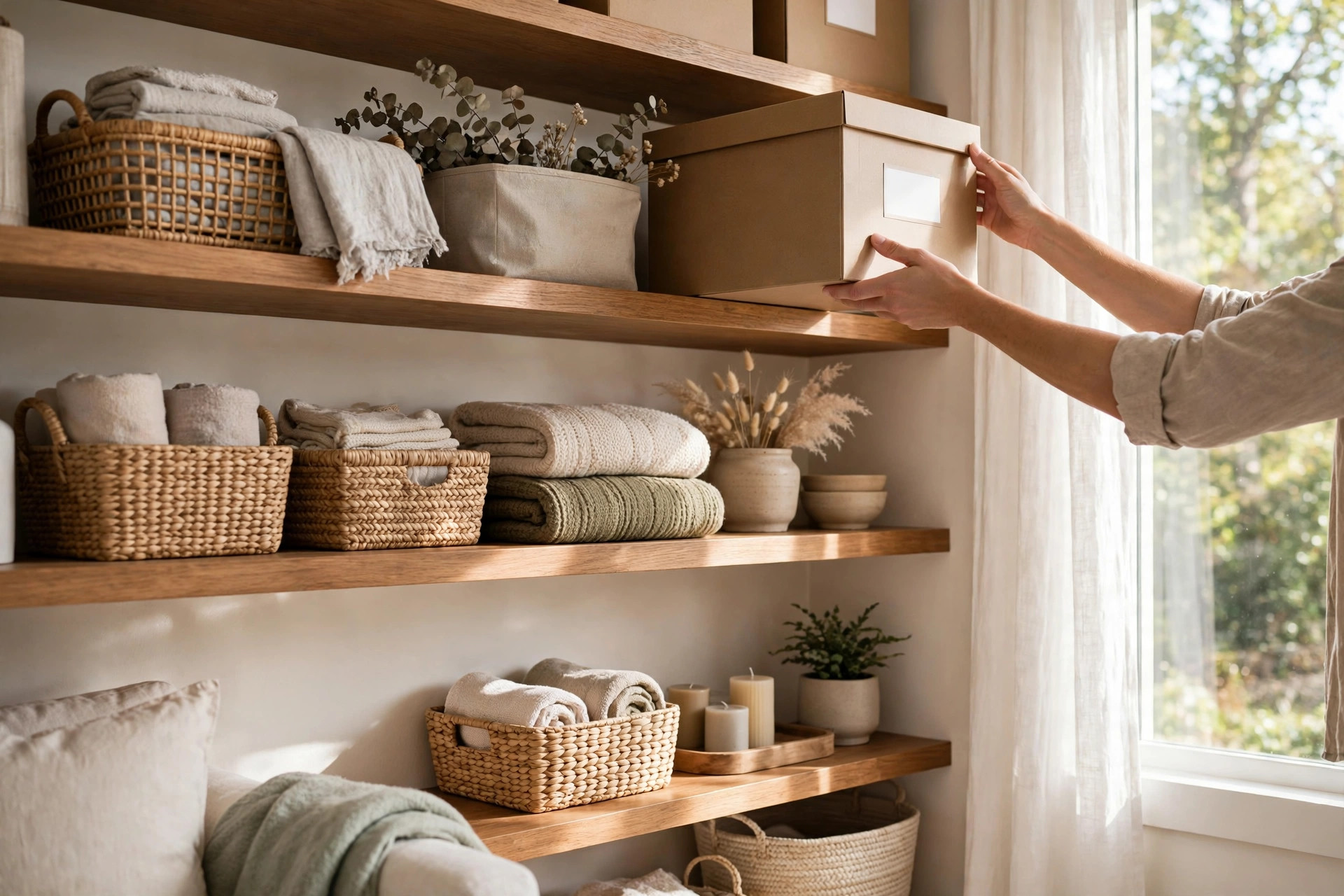
11. Fold, don't hang, the heavy knits
Heavy jumpers stretched on hangers lose their shape and take up rail space for months. Fold them in a cubby or a shelf tower, one stack per colour or weight, and they keep their shape and free a whole section of rail for shirts. Roll T-shirts instead of folding them if your shelves are narrow — rolled shirts show their colour at a glance and do not topple when you pull one out. This is the cheapest capacity gain in the whole list, and it needs no new furniture at all.
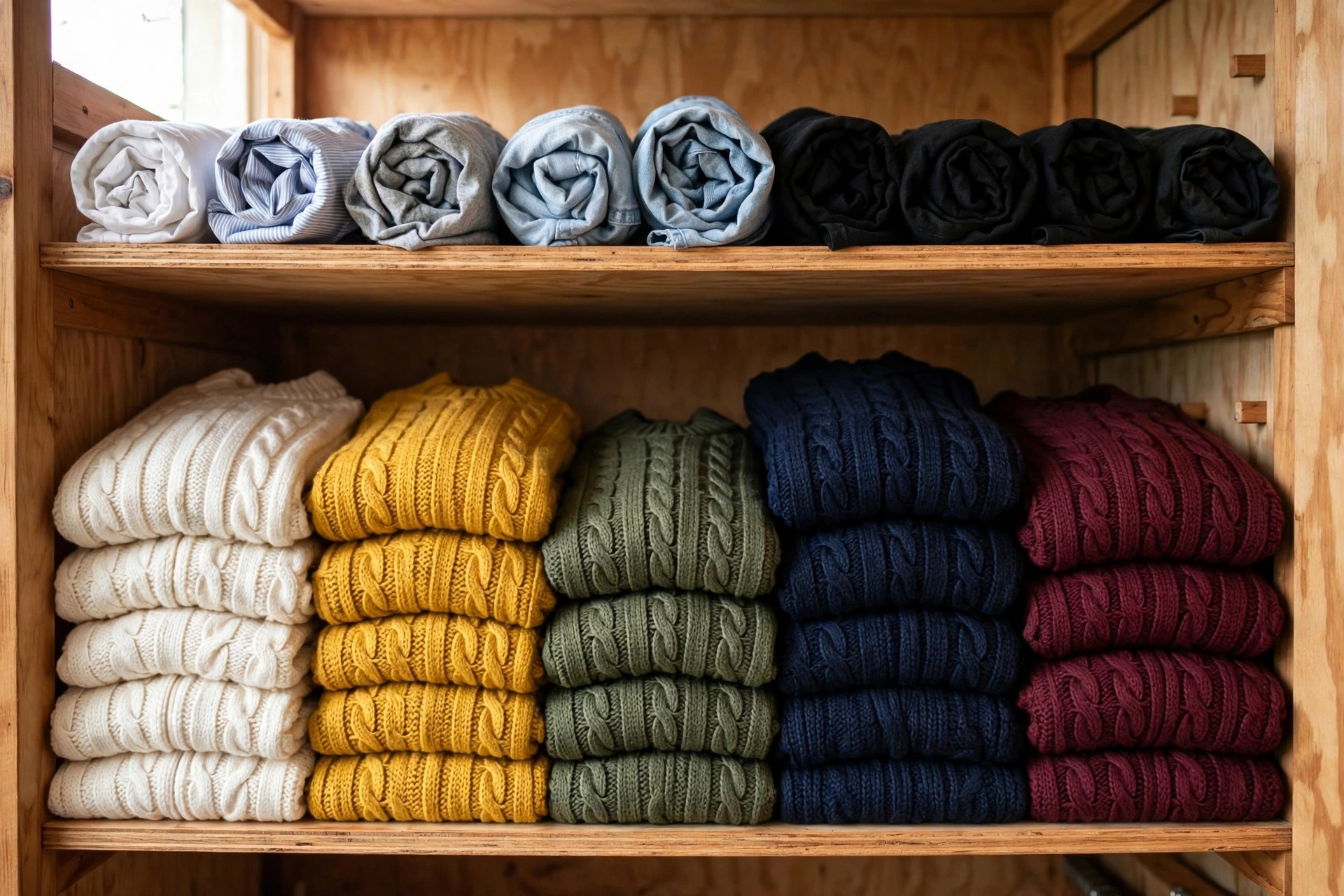
12. One colour for all your bins and boxes
When every bin, box and basket is a different colour, the closet looks like a storage unit when you open the door. Pick one material and one neutral colour — clear plastic, warm wood, or matte white — and use it for every visible container. The storage is still there, but the eye reads it as one calm system instead of ten separate objects. This is the cheapest styling trick in the whole list, and it works in a rented closet with nothing fixed to a wall.
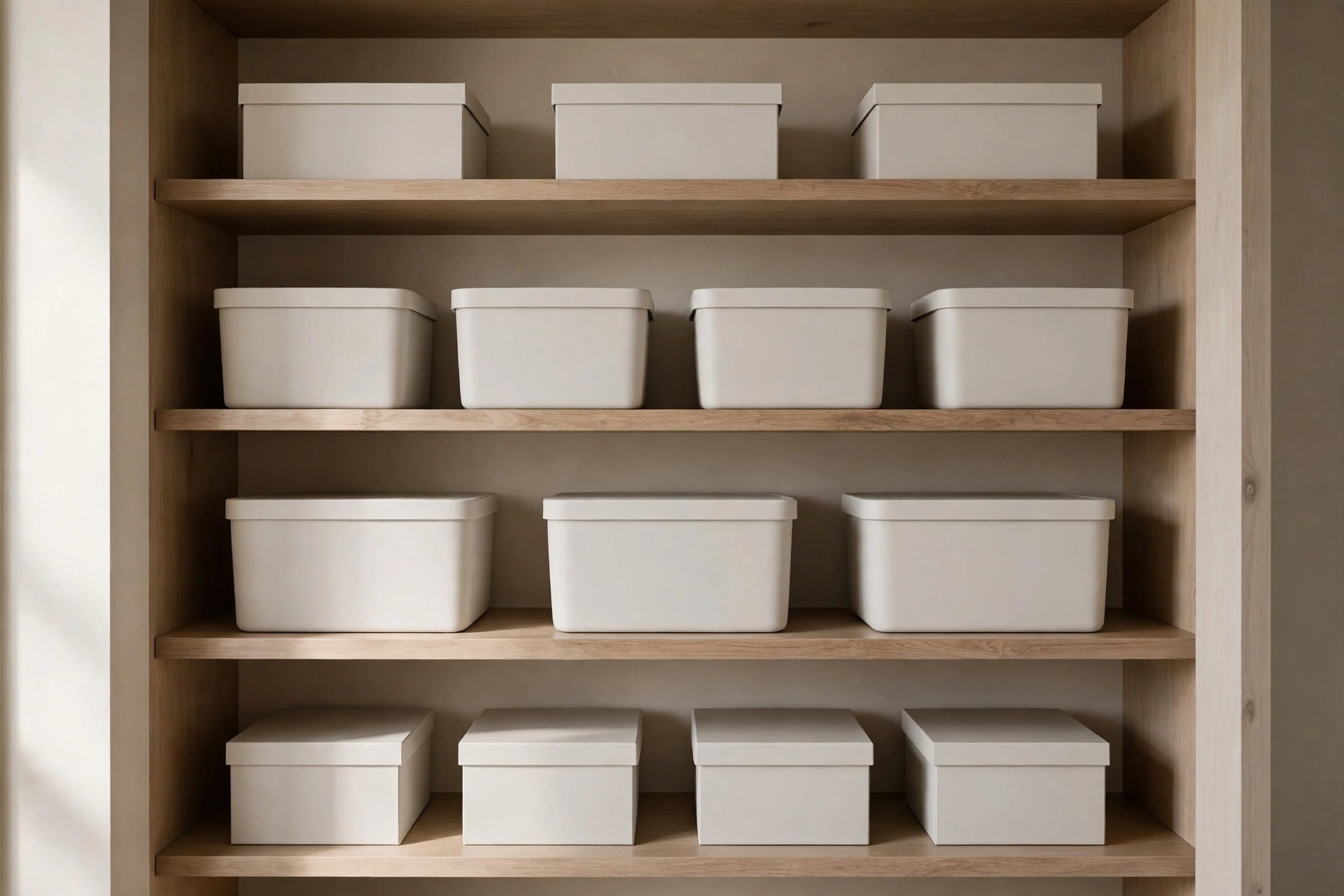
13. A small laundry hamper inside the closet
Clothes end up on the closet floor because there is nowhere else for them to go at the end of the day. A slim hamper just inside the door — or a hanging laundry bag on the back of it — catches worn clothes before they become a pile, and keeps the floor clear for shoes. Choose a hamper that fits the gap beside the shelf tower, empty it on laundry day, and the closet floor stays visible, which is the fastest way to know the system is still working.
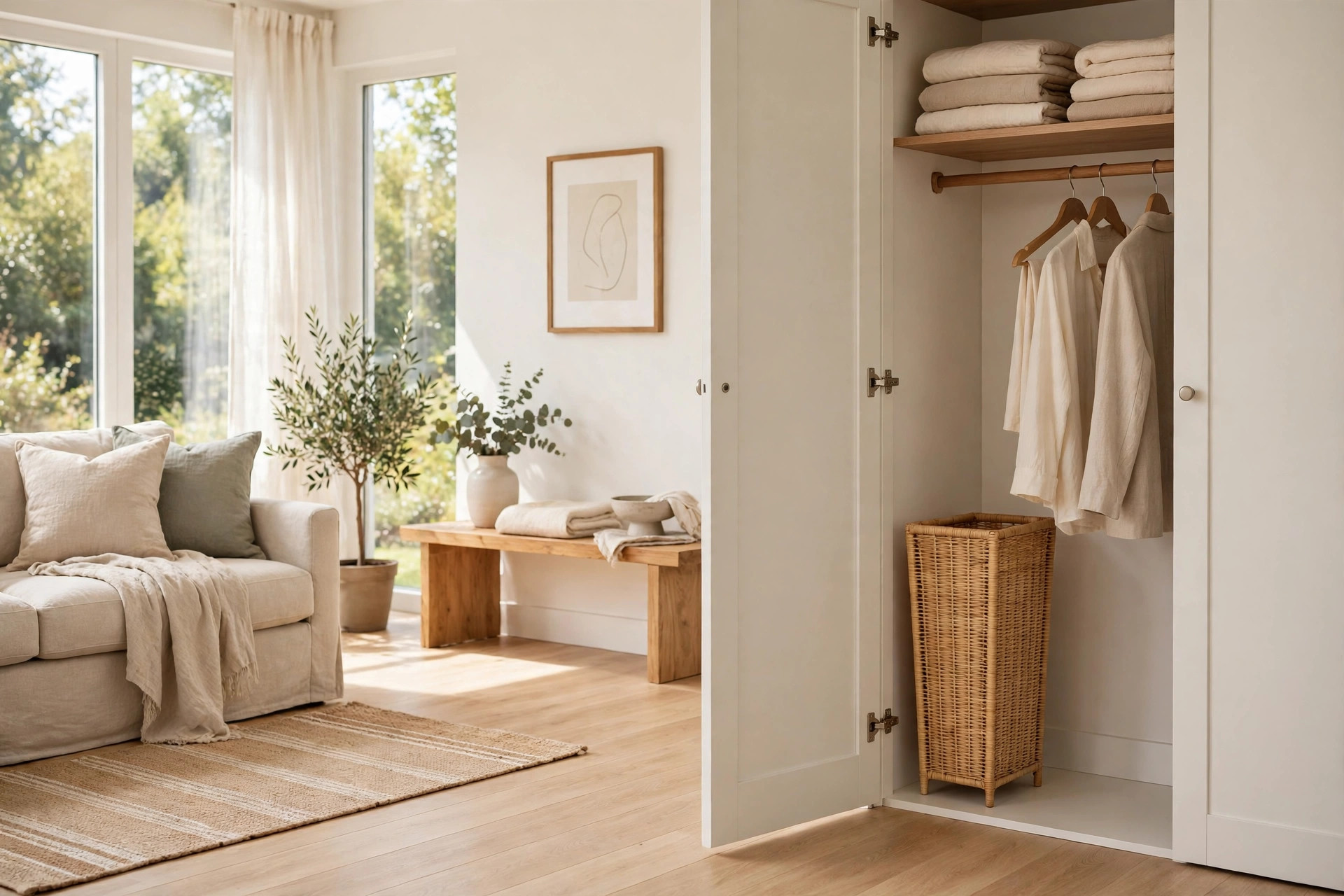
14. Label every bin, even if you think you will remember
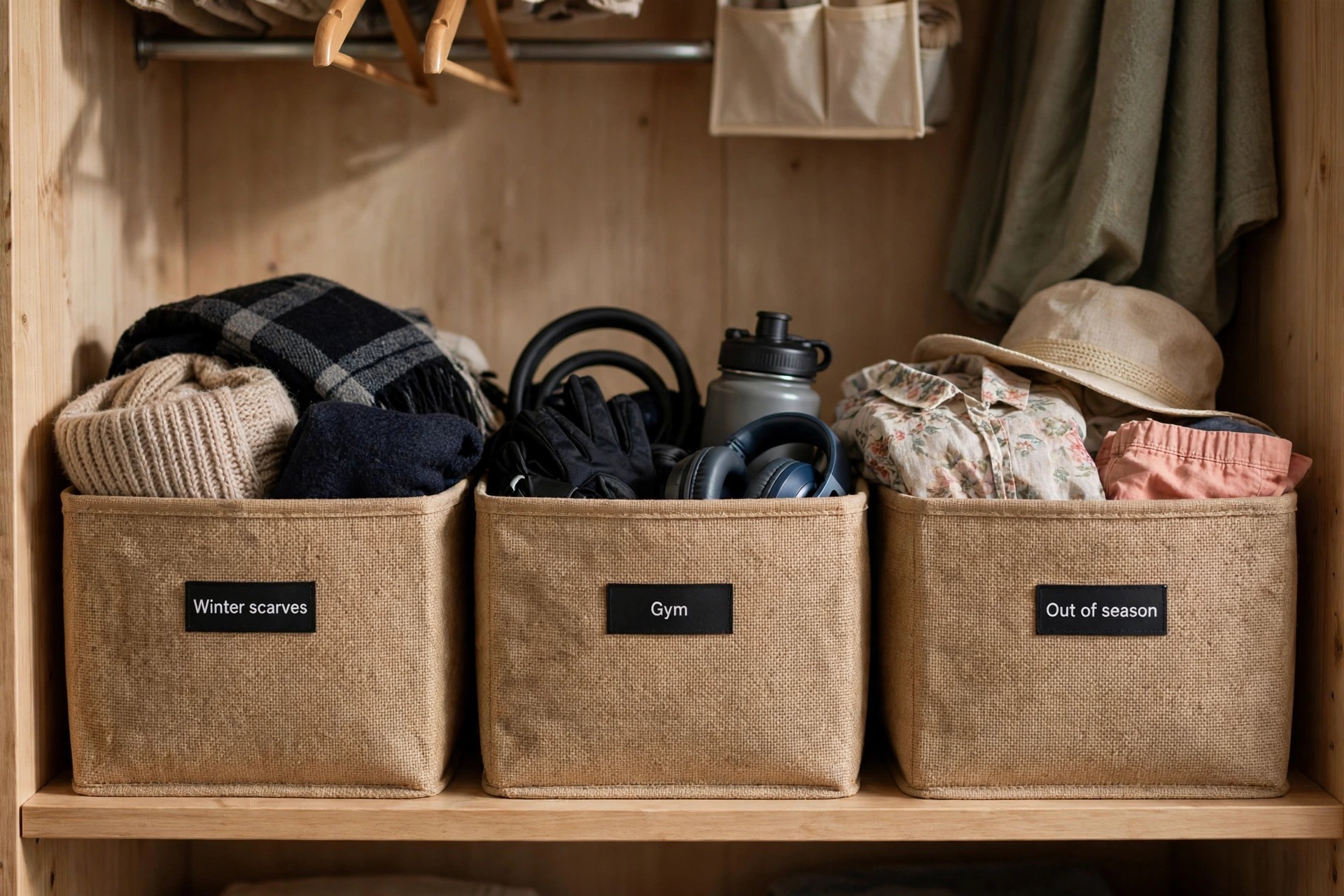
A bin without a label becomes a mystery box in a month. A simple label on the front — "Winter scarves", "Gym", "Out of season" — means anyone in the house can put things back in the right place, and you can find something without opening five boxes. Use the same label style on every bin, keep the words short, and put the label at eye level on the front, not on the lid you have to lift to read.
Shoes, bags and accessories without the pile
15. Shoes in a straight line, not a pile
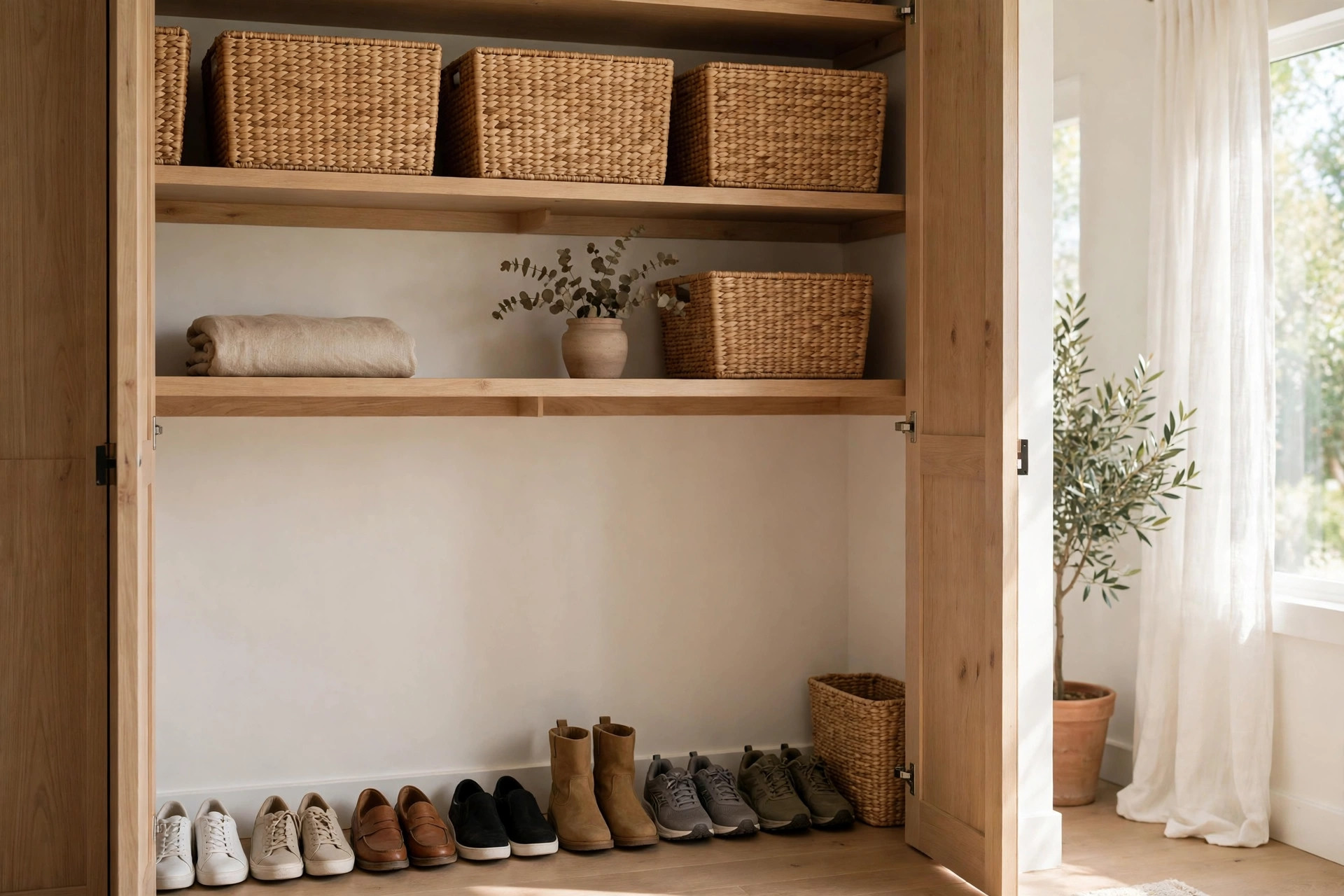
Shoes in a pile are shoes you will not wear. A low shoe rack, a row of cubbies, or even a single shelf along the floor keeps every pair in a straight line, visible at a glance, with the pair you wear most nearest the door. Keep it to the shoes you wear this season — the rest belong in a labelled box on the top shelf. If floor space is tight, a hanging shoe organizer on the back of the door holds flats and trainers without touching the floor at all.
16. A shoe shelf that uses the floor, not the rail
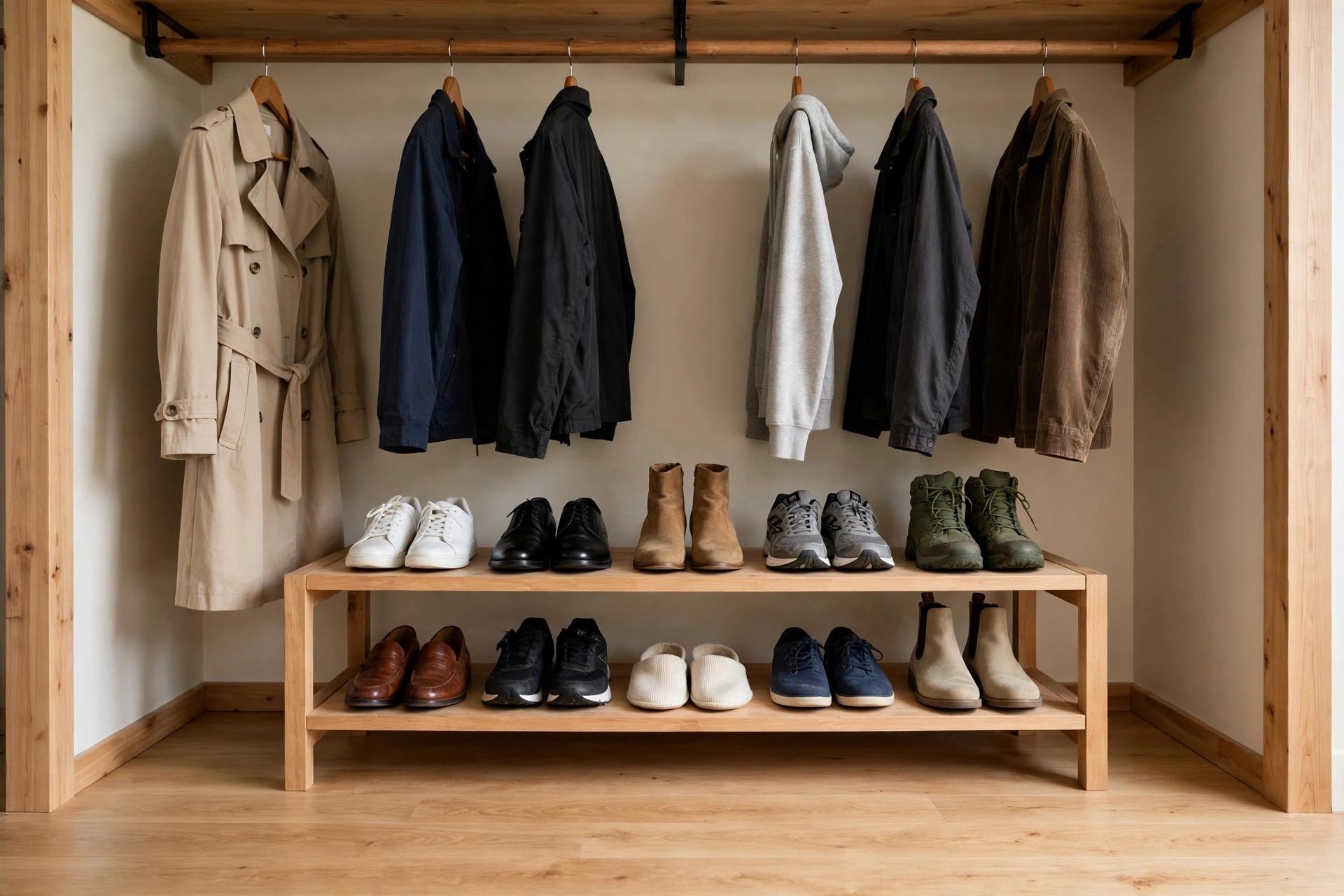
The floor under a hanging rail is usually wasted on a few pairs kicked into a corner. A two-tier shoe shelf there uses the same footprint to hold twice as many pairs, keeps them off the carpet, and stops the pile from creeping across the whole closet. Choose a shelf that leaves a gap at the front so you can see every pair, and keep boots upright on the top tier so they do not flop over the shoes below them.
17. Bags on hooks, not stacked on a shelf
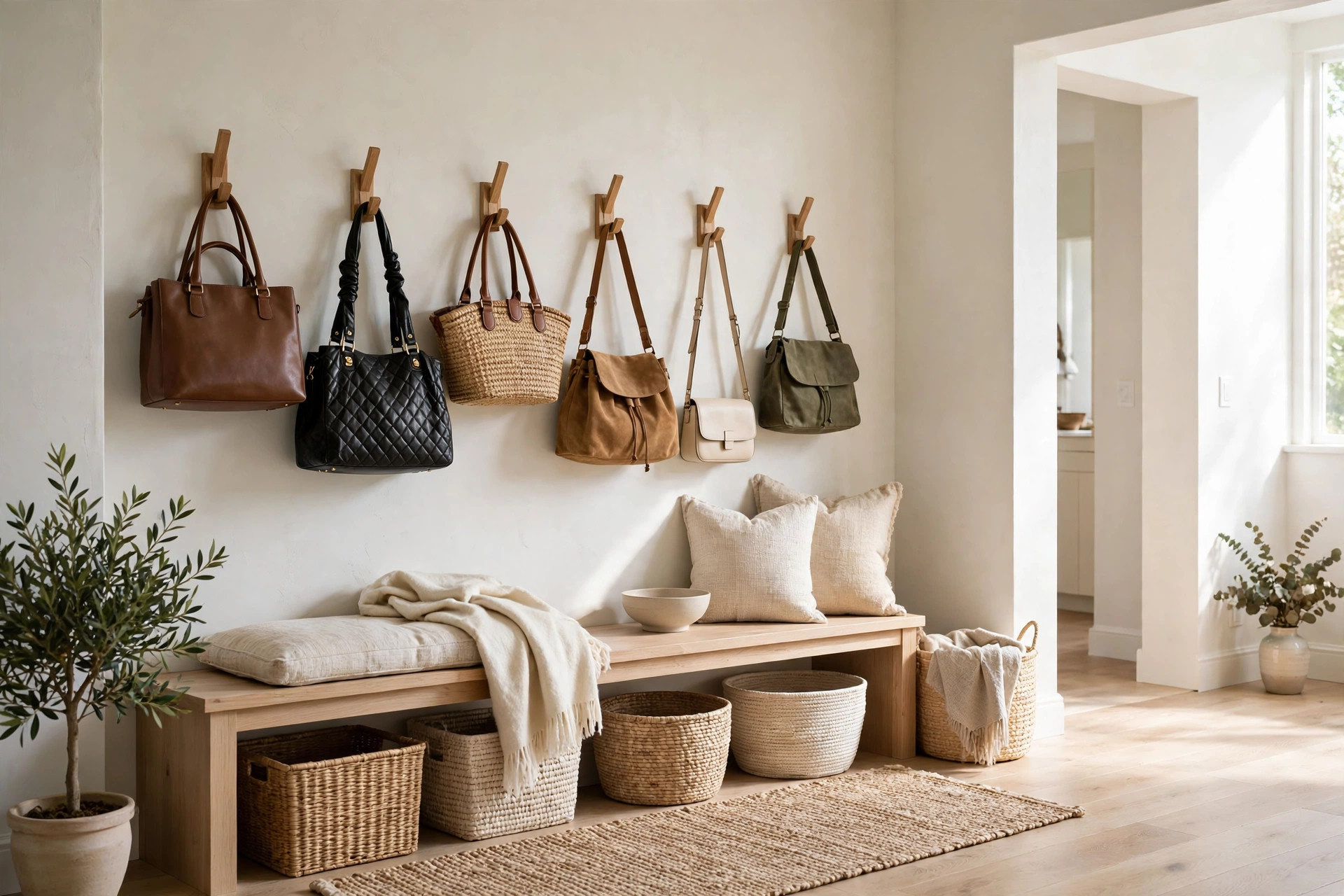
Handbags stacked on a shelf lose their shape and hide the one you want at the bottom. Hooks on the inside wall hold each bag by its handle, visible and in shape, with the bag you use daily at hand height. Keep it to the bags you actually carry — the rest belong in dust bags in a labelled bin on the top shelf. One hook per bag also stops the stack from growing, because a full row of hooks is a clear signal to stop buying.
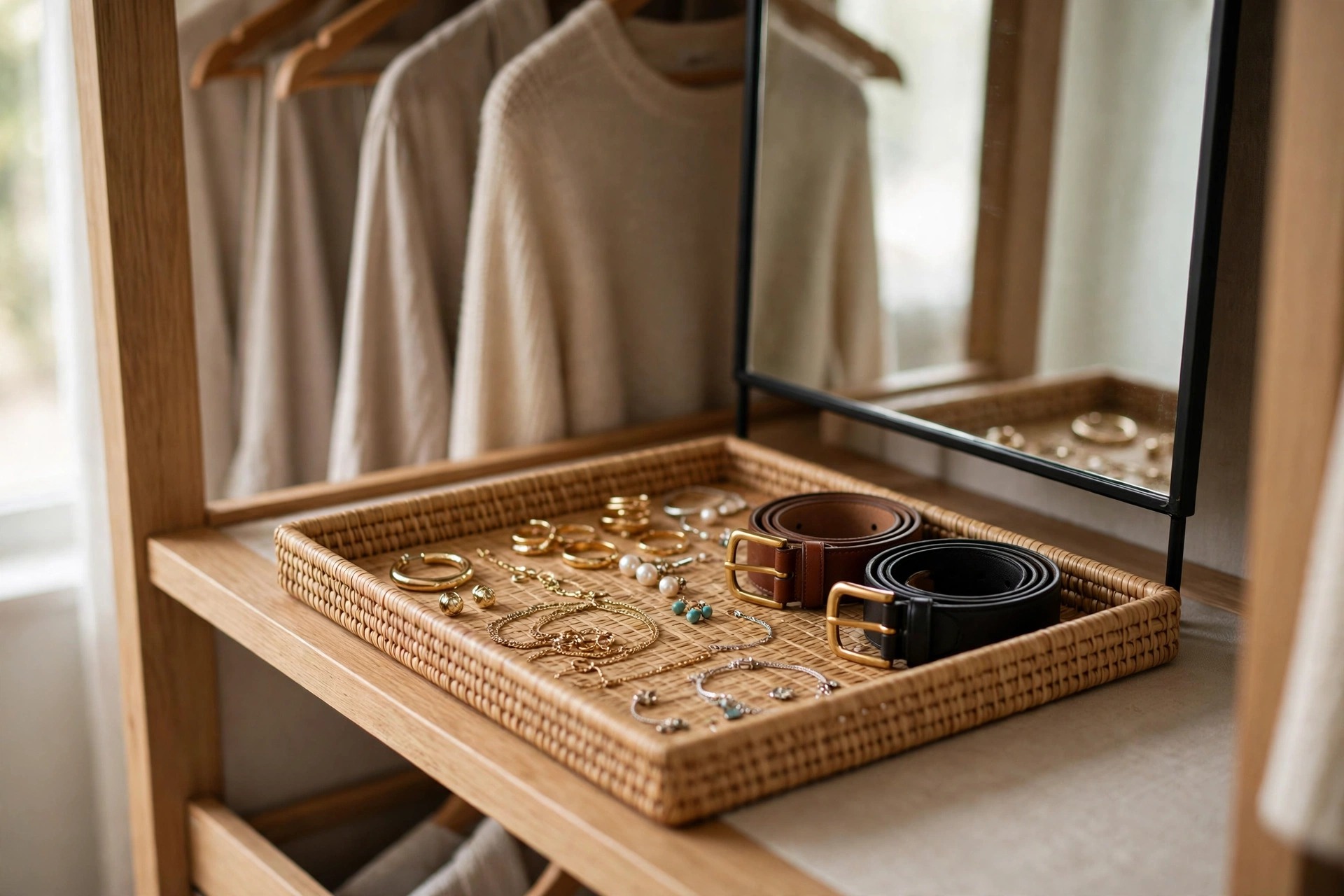
18. A small tray for jewellery and accessories
Jewellery, belts and scarves end up in a drawer because there is nowhere small enough to hold them in a closet. A shallow tray on a shelf — or a hanging organizer with clear pockets on the door — gives every piece a visible home, so you actually wear the accessories you own. Keep the tray near the mirror, one layer deep, and put each piece back after wearing it; a tray that is full is a tray that is working, a tray that is overflowing is a drawer in disguise.
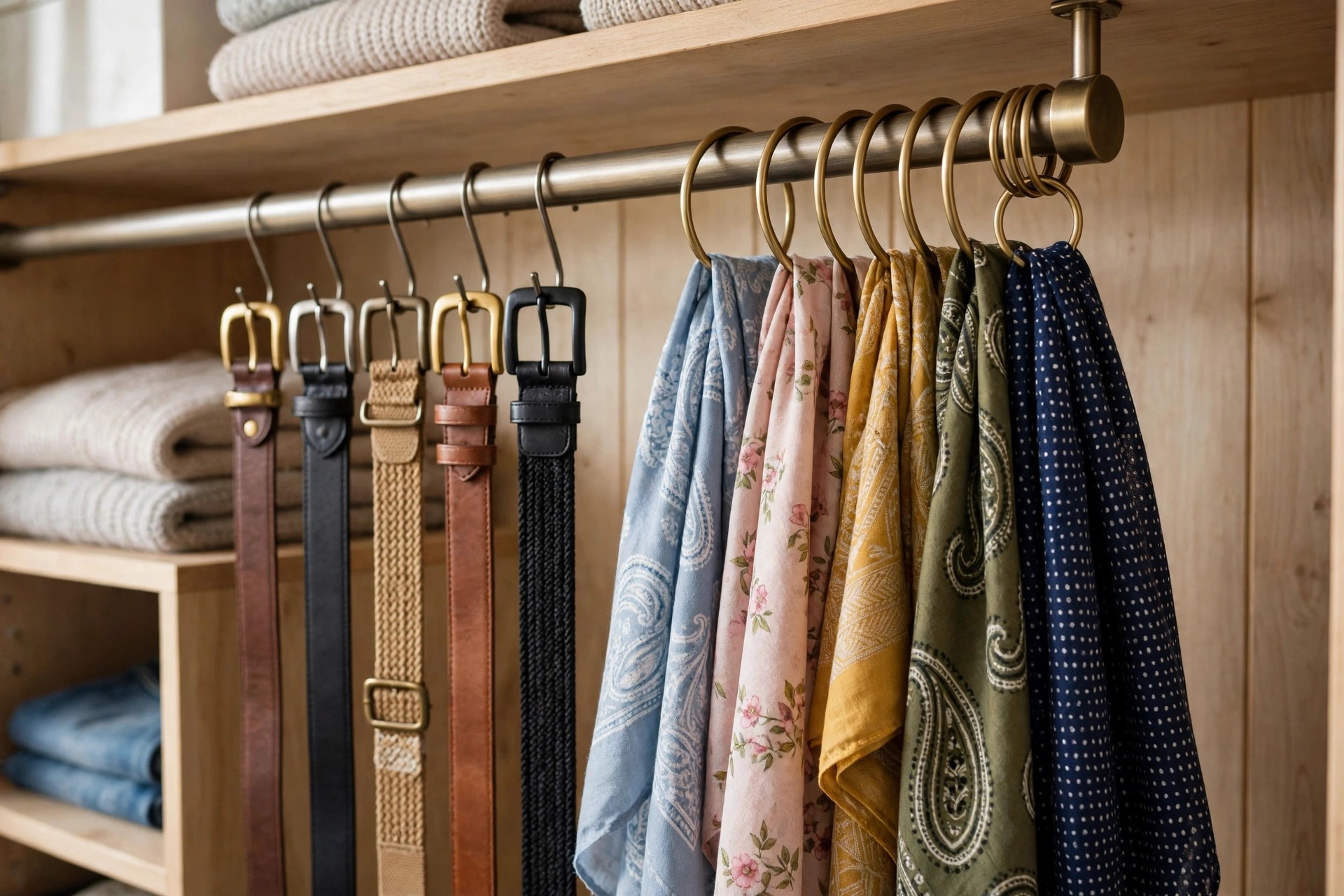
19. Scarves and belts on one ring, not in a drawer
Scarves folded in a drawer become a tangled ball, and belts coiled in a box are never the one you want. A single ring hanger or a row of hooks holds scarves draped and belts hanging, each one visible, each one easy to pull out without disturbing the rest. Put the ring on the end of a rail, where it does not block clothes, and keep it to the scarves and belts you wear this season — the rest belong in the seasonal rotation box.
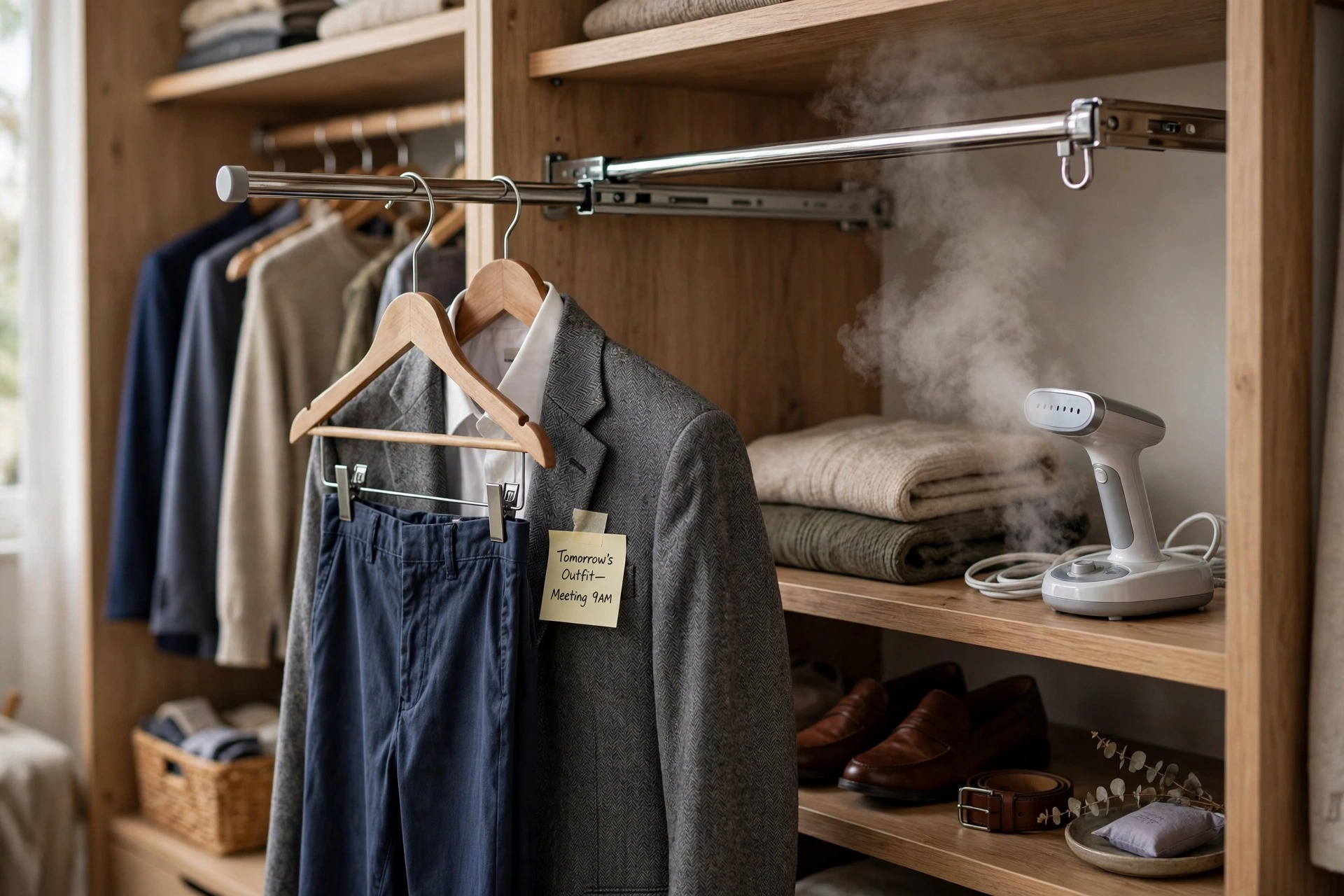
20. A valet rod for the outfit you are about to wear
A small pull-out valet rod — or a single sturdy hook at the end of the rail — holds the outfit you have chosen, the jacket you are about to steam, or the clothes you are packing. It keeps the bed and the chair clear, and it gives you a place to lay out tomorrow's clothes the night before, so the morning starts dressed instead of deciding. If a built-in rod is out of budget, a removable hook in the same spot gives you most of the benefit.
Small walk-in tricks that keep it tidy
21. Light the back of the closet
A dark back corner is a corner you will not use. A battery strip light under the top shelf, or a small motion-sensor light inside the door, makes the back rail as visible as the front one, and the whole closet feels twice as big. Choose warm light that matches the room, stick it where it lights the clothes rather than your eyes, and change the batteries when you do the seasonal swap so it never goes dark unnoticed.
22. A step stool that lives in the closet
The top shelf is only useful if you can reach it without dragging a chair from another room. A slim folding step stool kept just inside the closet door — or hung on a hook on the wall — makes the top shelf part of the daily system instead of a place things go to be forgotten. Choose one that folds flat, keep it in the same spot every time, and the whole closet becomes reachable in seconds.
23. The one-in, one-out rule for a small closet
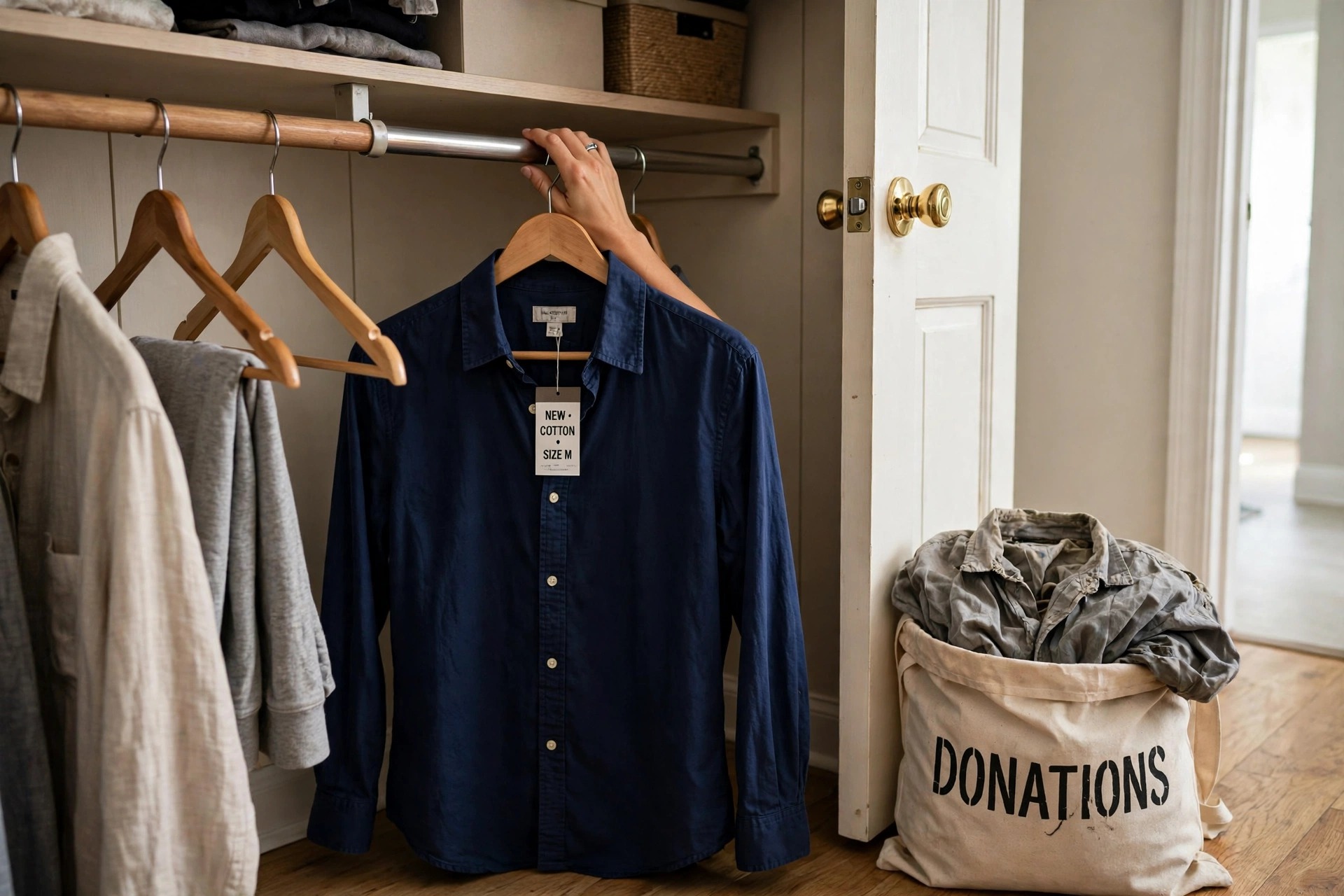
A small closet has a fixed capacity, and every new item needs an old one to leave. When something new comes in, choose one item to donate, sell or retire before the new one goes on the rail. It takes thirty seconds, it stops the closet from filling up again after a tidy, and it makes every purchase a real decision instead of an addition to a pile. Put a small donation bag on the top shelf so the outgoing item leaves the house, not just the rail.
24. A 10-minute reset, once a week
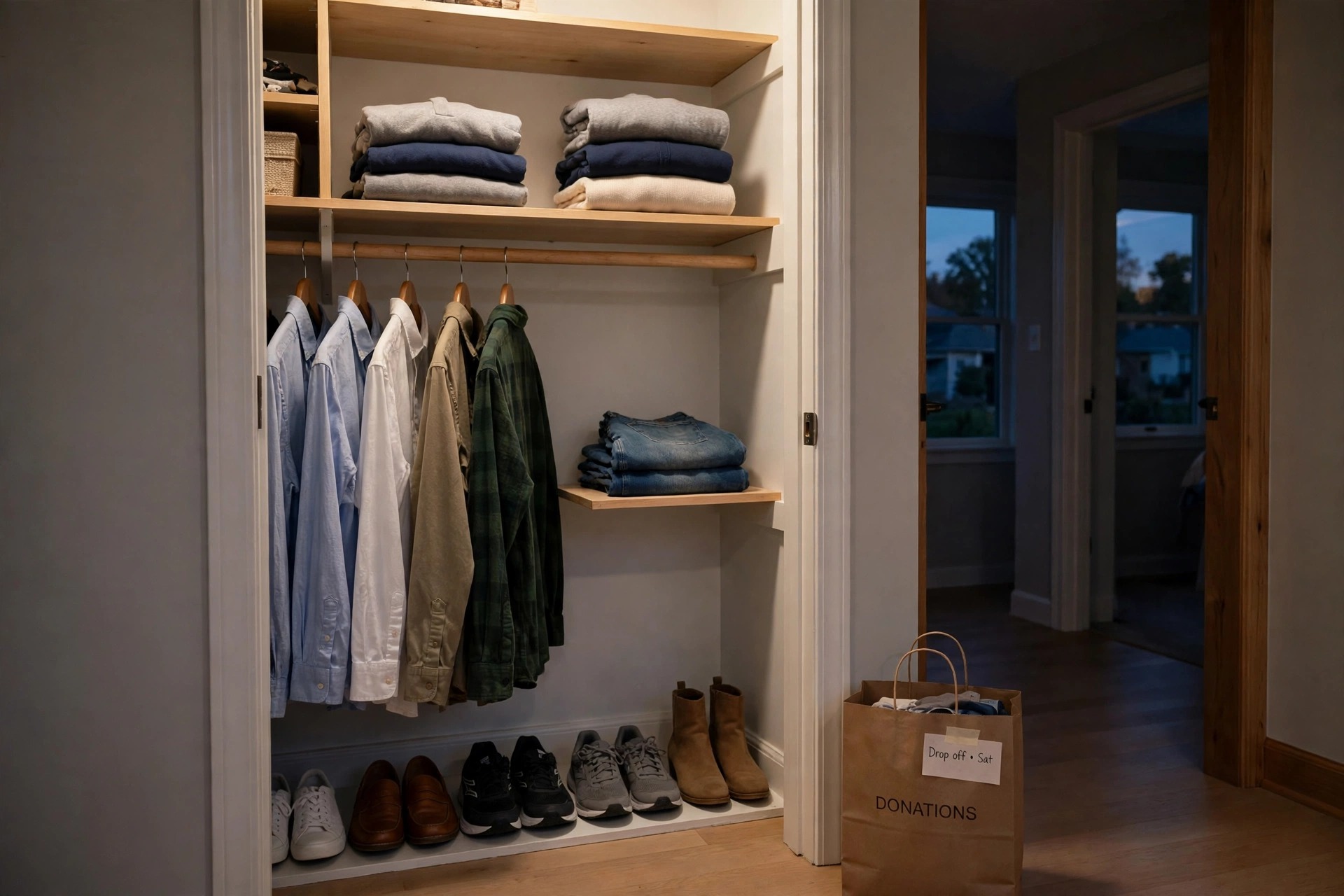
Keep one evening a week for a ten-minute closet reset: hang anything on the floor, return shoes to their line, fold the stack that toppled, and put the donation bag by the door. It takes ten minutes, it needs no new furniture, and it is the system that makes all the other storage on this list actually work — because storage only helps if things go back into it. If the reset takes longer than ten minutes every week, you have too much in the closet, not too little storage.
25. Keep the floor visible
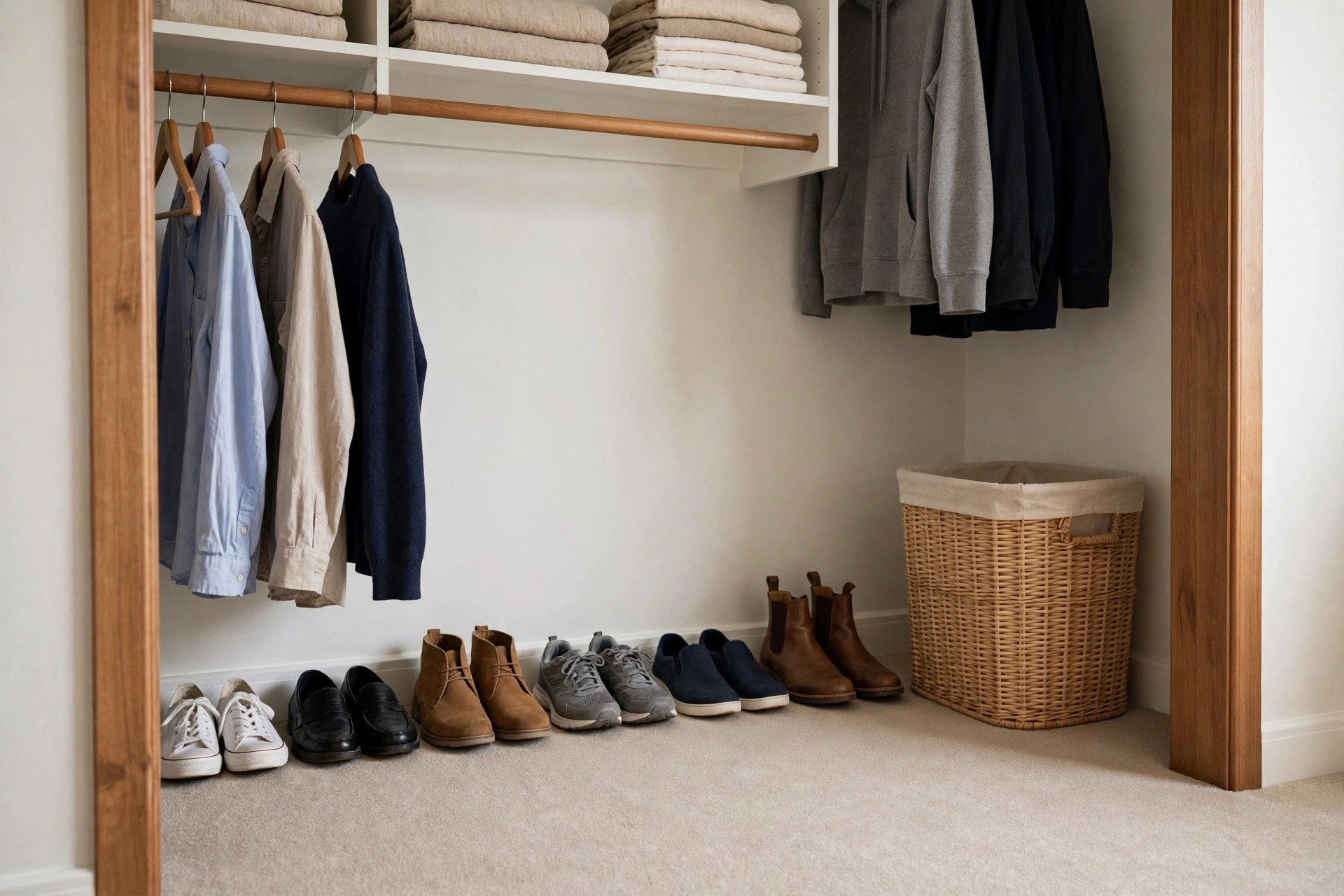
The fastest test of a working closet is whether you can see the floor. If the floor is clear, the shoes are in their line, the hamper is doing its job, and nothing is living where it should not. If the floor has disappeared under bags and clothes, the system has broken somewhere upstream — usually the seasonal box, the donation bag, or a rail that is holding clothes you do not wear. Clear the floor first, and the rest of the closet follows.
26. A closed bin for the things you use once a month
Every closet has a category that is used rarely but has nowhere else to go — the formal wear, the costume pieces, the spare bedding. Give that whole category one closed bin, one high shelf, or one lidded box on the top shelf, and stop letting it live on the prime rails. When rarely used things are closed away, the clothes you wear daily finally have room to breathe, and the closet stops looking like it is storing someone else's life.
Which closet fix fits which closet?
| Closet | Best first move | Budget | Tools needed |
|---|---|---|---|
| Rented / no drilling | Hanging double rod + slim hangers (ideas 2, 6) | Low | None |
| Narrow walk-in | Double rails + shoe shelf (ideas 1, 16) | Low–medium | Screwdriver |
| Shared closet | Zones + door hooks per person (ideas 8, 5) | Low | None |
| Lots of shoes | Shoe line + two-tier shelf (ideas 15, 16) | Low | None |
| Seasonal overload | Rotation box + top-shelf bins (ideas 10, 3) | Low | None |
| Dark back corner | Strip light + step stool (ideas 21, 22) | Low | Adhesive / none |
You do not need all 26 ideas. You need the three that solve your biggest mess — usually the single rail, the shoe pile, and the top shelf that became a dumping ground. Start with double hanging, put shoes in a straight line, and give the top shelf labelled bins. Do that this weekend and getting dressed will feel different by Monday morning.
Save this post for your next closet tidy-up, and if you are planning a whole-home refresh, read 28 Living Room Storage Ideas for 2026 next — it is Post 01 in the same Storage by room cluster — and 20 Kitchen Cabinet Organization Ideas for 2026, Post 02, to carry the same system room by room.
Published 10 November 2026. Updated as new closet storage finds are tested.
Frequently asked questions
How do I organize a small walk-in closet with no built-ins?
Build your own system with freestanding pieces. Double hanging rails instantly double your hanging space, a narrow shelf tower adds folded storage, and hooks on the back of the door hold tomorrow's outfit, bags and scarves without drilling into walls.
What is the best way to store shoes in a small closet?
Line shoes up along one wall at floor level so every pair is visible. Keep everyday pairs at the front, rotate seasonal pairs into a labelled box on the top shelf, and leave one empty spot per row so putting shoes away stays easy.
How do I keep a small closet tidy long term?
Give everything a zone and keep a rotation box handy. When something doesn't fit the season, it goes in the rotation box on the top shelf instead of crowding the rails. A five-minute weekly reset — re-hanging, re-folding, returning strays — keeps the system working.