20 Freezer Organization Ideas for 2026
A freezer is the easiest place in the house to lose food, because the food you put in is the food you cannot see, and the food you cannot see is the food you buy twice. You dig for the chicken and find three bags of peas. You buy more bread and find two loaves already frozen at the bottom. The bag at the back has no label, no date, and no name anyone in the house recognises, so it stays there until the next defrost, when it goes in the bin.
These 20 freezer organization ideas end the deep freeze dig: start with one labelled bin per category, flat-freeze the soups and sauces so they file upright like books, map the chest freezer on its lid so you know where everything lives, and finish with a door list and a weekly "freezer Friday" meal — so the food you freeze is the food you actually eat.
Every idea below works in a real freezer, from a small drawer under the fridge to a chest freezer in the garage. The fridge above it is covered in Fridge Organization Ideas for 2026, Post 41, so the cold food has one system from top to bottom — and the pantry the frozen food cooks with is in 25 Pantry Organization Ideas for 2026, where the dry food gets its own bins before the freezer arrives. Pick three ideas that fit your freezer, start with the bins, and build from there.
Stop the dig: bins, zones and labels
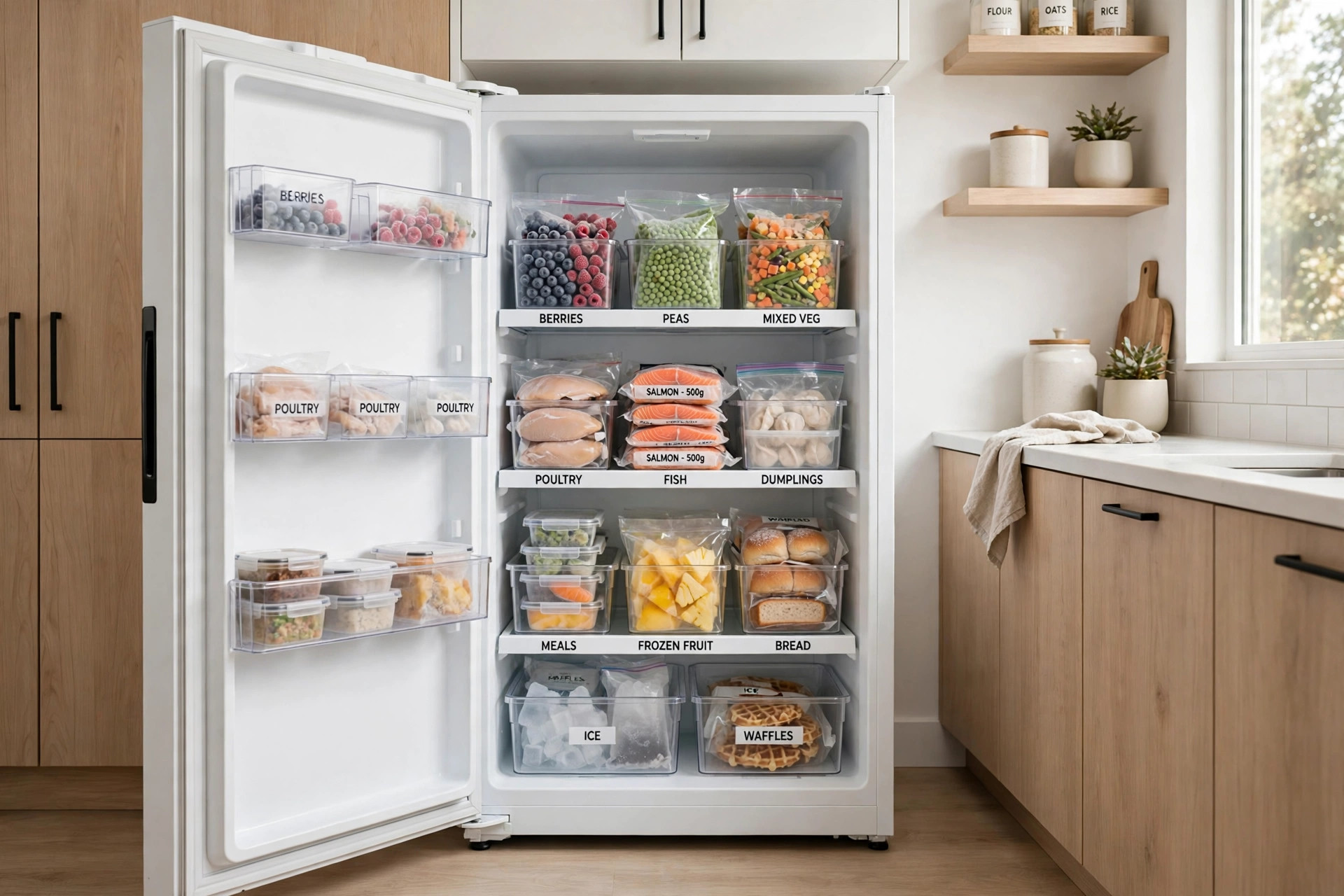
1. One bin per category — meat, veg, bread, ready meals, ice cream
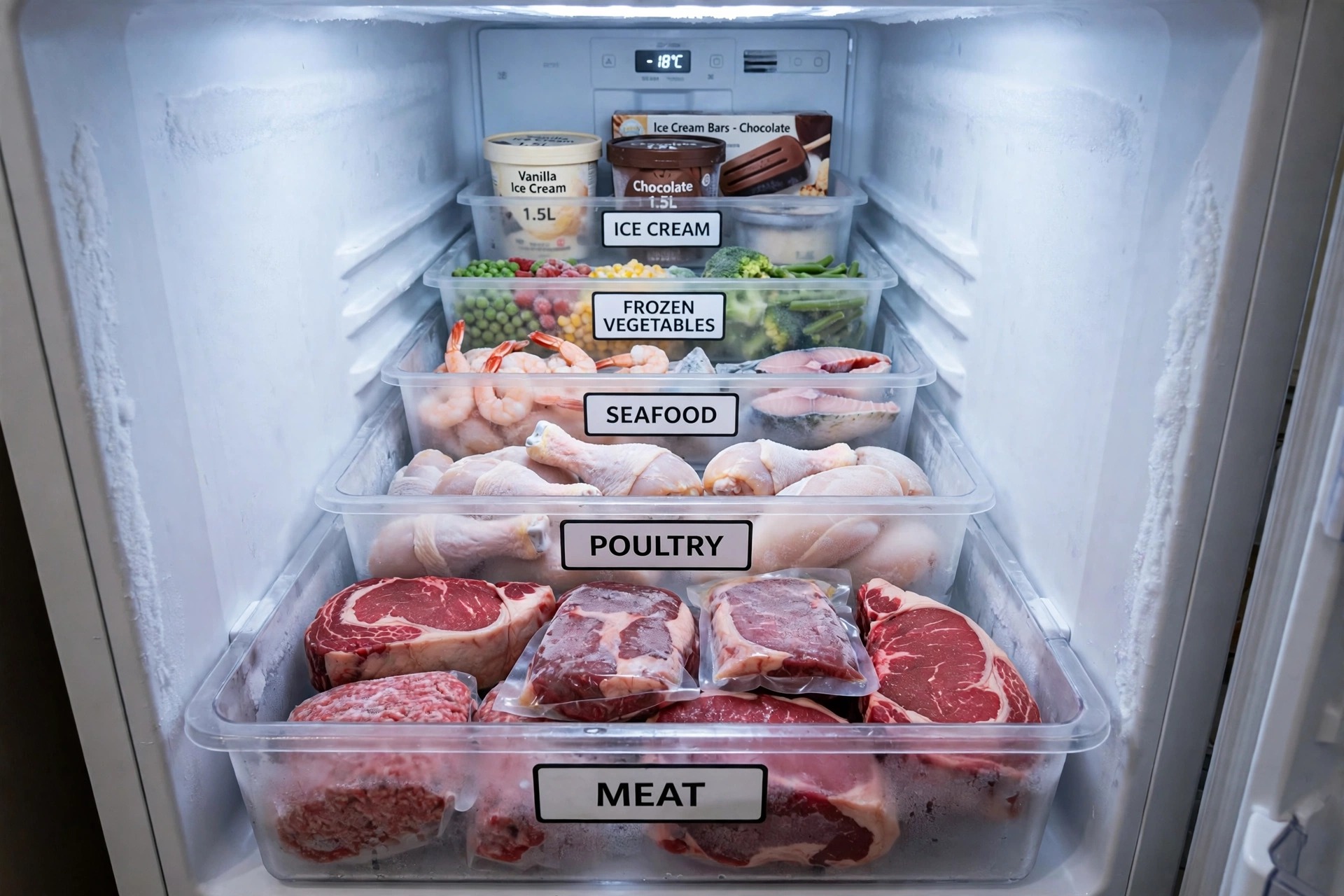
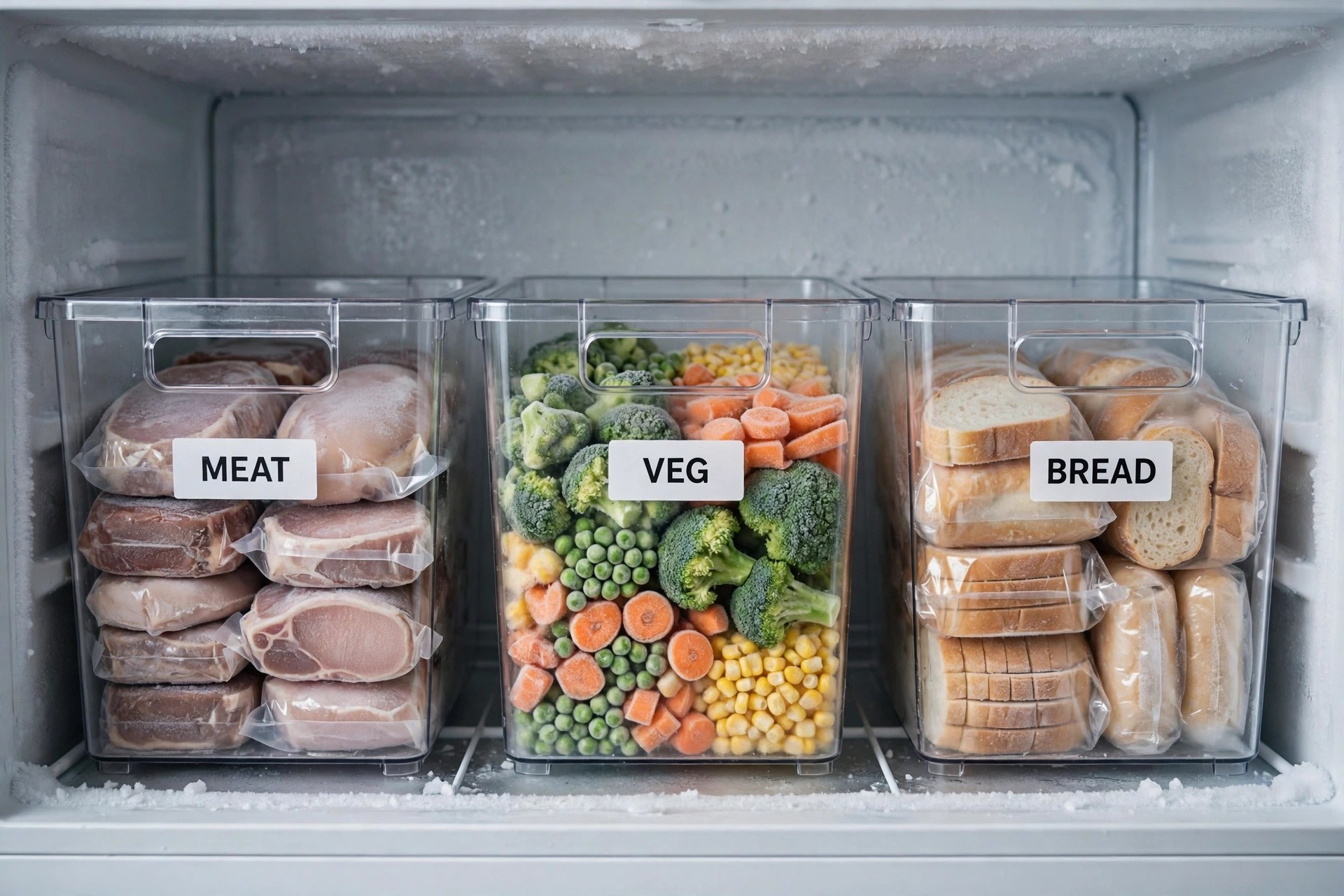
A freezer with no zones is a freezer you dig in, because the meat is under the bread, the bread is under the veg, and the thing you want is always at the bottom. Give every category its own bin — meat, veg, bread, ready meals, ice cream — so the freezer has five homes and the dig never starts. Put the bin you reach for most at the top or the front, and the bin you reach for least at the bottom or the back, because the front bin is the bin your hand finds first. Keep the bins the same size where you can, because the bins that match are the bins that stack and slide without gaps. Five bins, five categories, and the freezer stops being a hole you dig in.
2. Clear bins with handles, so you can lift the whole zone out
A bin you cannot see through is a bin you have to open to check, because the solid bin hides its food and the hidden food is the food you forget. Use clear bins with handles — so you can lift the whole zone out — and the freezer becomes a set of drawers you can pull out, check and put back in one move. Lift the meat bin out, find the chicken, put the bin back, because the handle is the thing that makes the bin a drawer. Choose bins with a low front edge, so you can see the food without lifting the bin out every time, and measure the shelf before you buy, because the bin that fits is the bin that slides. Clear bins, handles on the front, and the zone comes to you. (Check on Amazon for clear freezer bins with handles, which are sized for standard freezer shelves.)
3. Label every bin with one big word, not a code
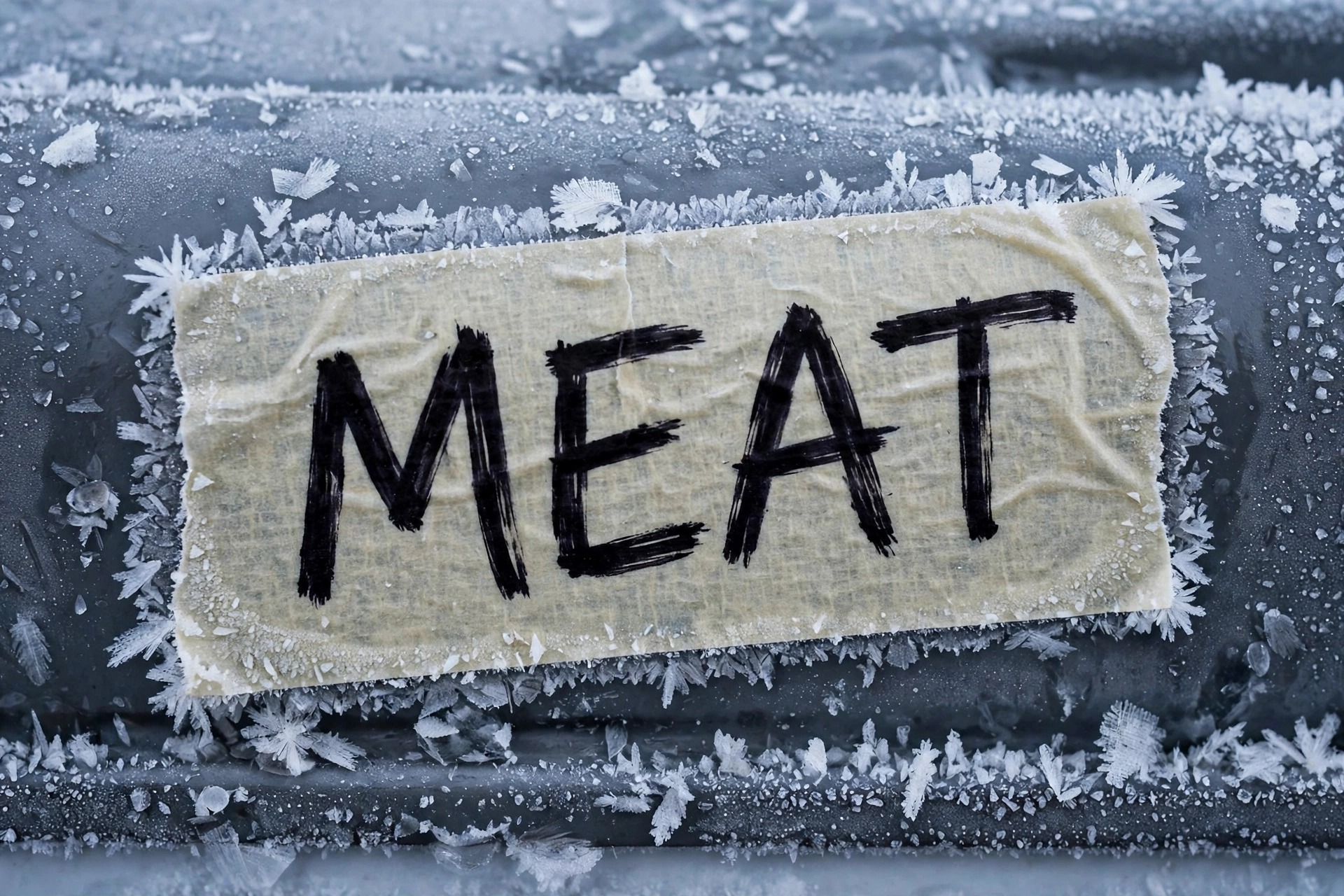
A bin labelled "M" is a bin nobody can read in a hurry, because the code is the thing only the person who wrote it understands, and the person who wrote it is not always the person cooking. Label every bin with one big word — MEAT, VEG, BREAD — not a code, so anyone in the house can find the food without asking. Write the word on a strip of masking tape in thick marker, or use a label maker, because the big word is the label that reads through frost. Put the label on the front of the bin, where your eyes land when you open the door, and keep the words short, because the short word is the word you read in one glance. One big word per bin, and the freezer reads itself.
4. A "use first" bin at the front for the oldest food
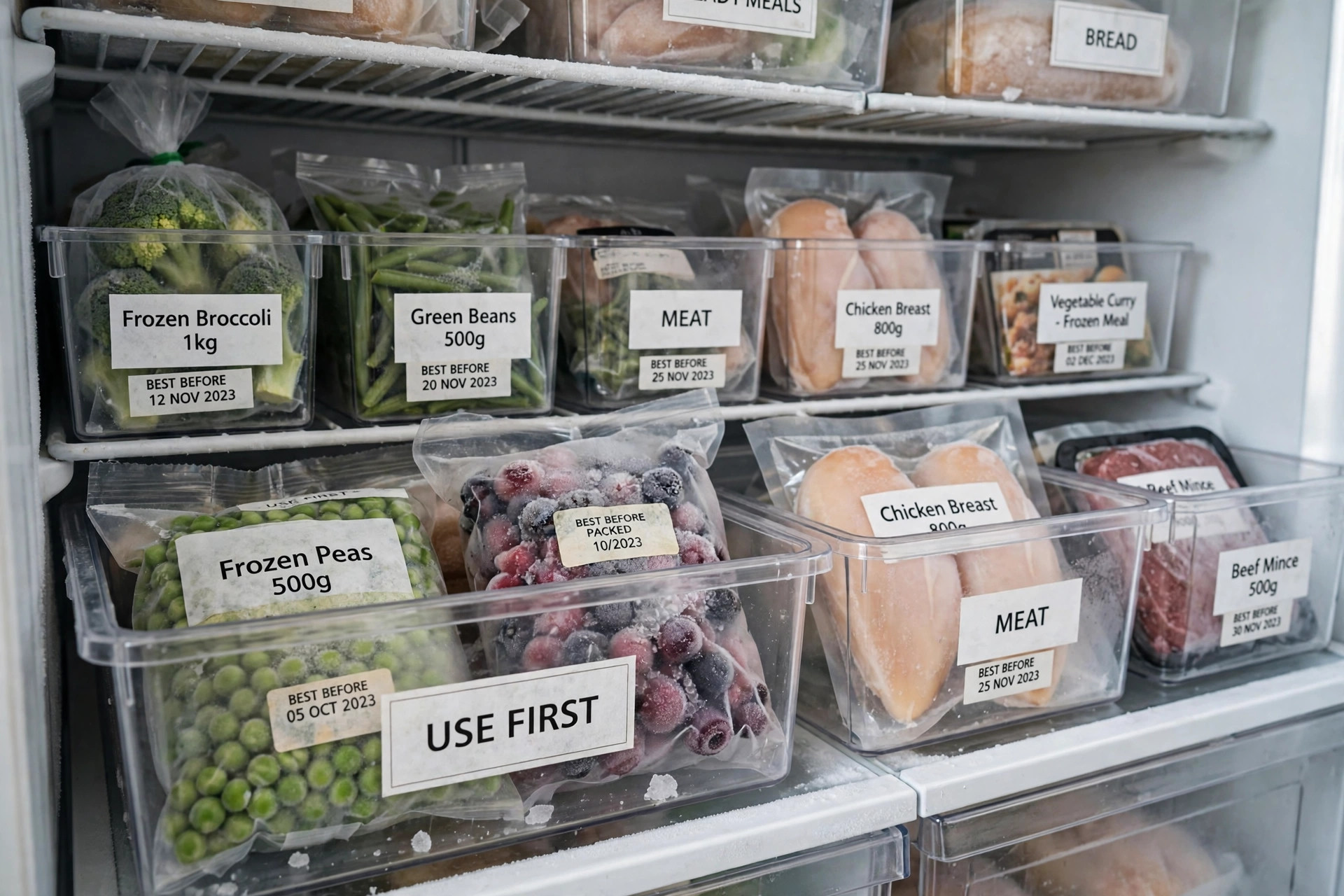
The oldest food in a freezer is the food at the back, because the new food always goes on top and the old food sinks to the bottom, where it waits until it is too old to eat. Put a "use first" bin at the front for the oldest food — so the food that must go first is the food your hand reaches first. Every time you freeze something new, move the oldest bag into the use-first bin, because the bin that is full is the bin that tells you what to cook tonight. Keep the bin small, so it empties every week, and label it in a different colour, because the coloured bin is the bin nobody misses. One small bin at the front, and the oldest food gets eaten first.
5. A small basket for the odds and ends that always sink to the bottom
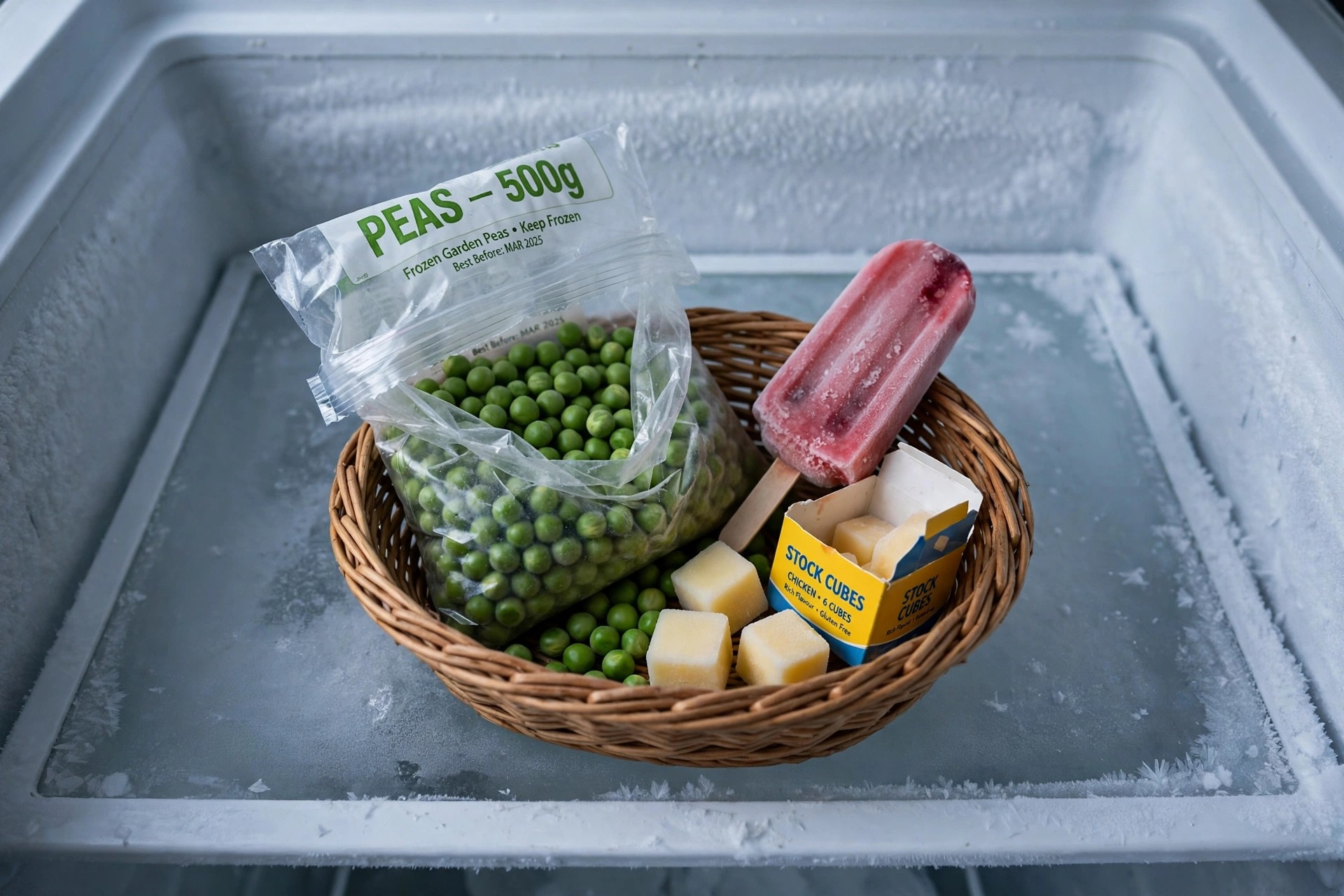
Every freezer has a layer of small things at the bottom — half a bag of peas, one ice lolly, a bag of stock cubes — because the small things are the things that fall through the gaps and the gaps are the places they stay. Give them a small basket — for the odds and ends that always sink to the bottom — so the little things have one home and the bottom of the freezer stays clear. Put the basket in the same spot every time, because the basket that moves is the basket that gets lost under the big bags. Empty it once a week into a meal, because the basket that is full is the basket that tells you what to cook. One small basket, and the bottom stops collecting strays.
Flat-freeze and stack: bags, trays and containers
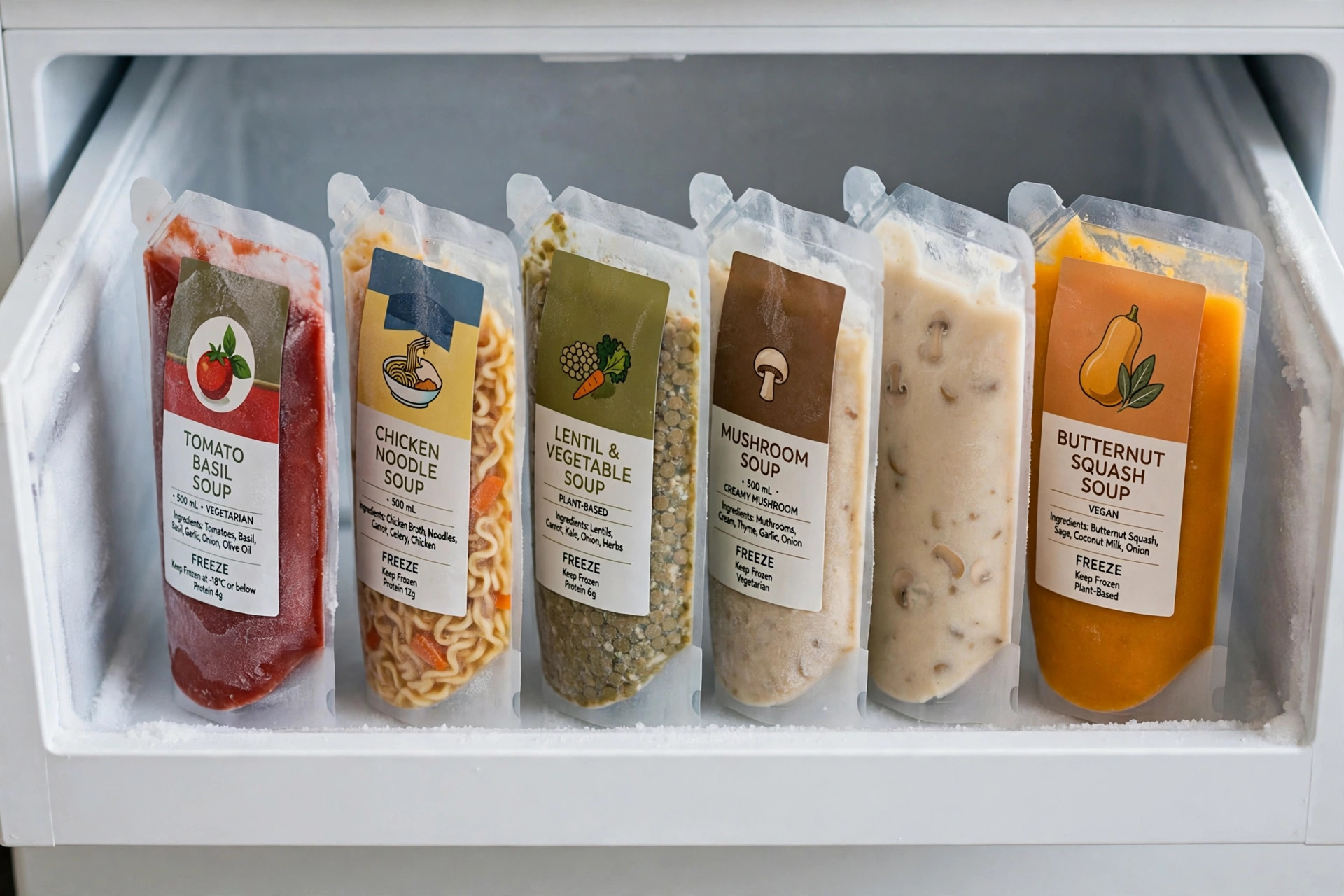
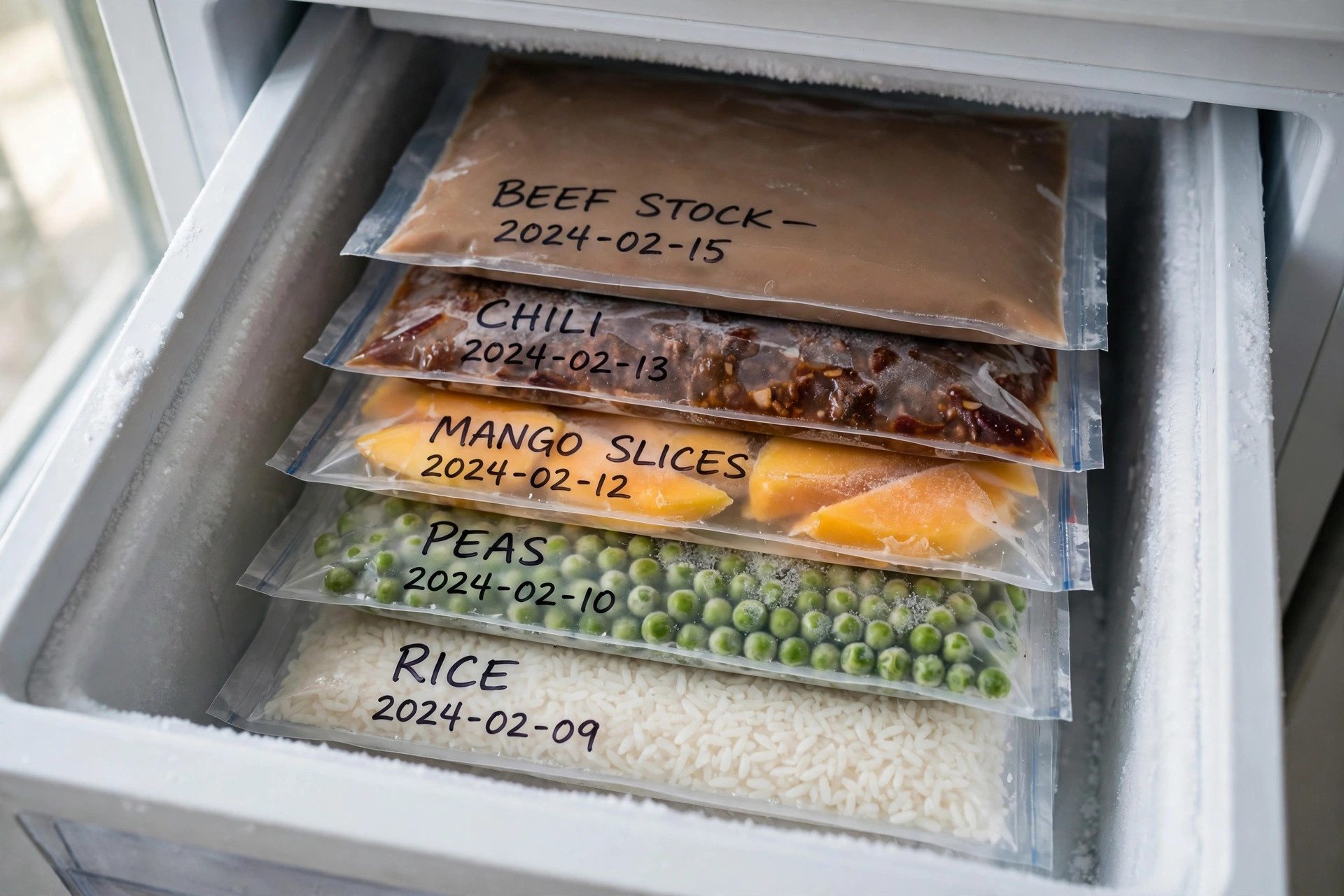
6. Flat-freeze soups and sauces in bags, then file them upright like books
A tub of soup takes up the space of a brick, because the tub is the thing that stacks badly and the freezer is the thing that fills up with bricks. Flat-freeze soups and sauces in bags — then file them upright like books — so a whole week's cooking stands in a row and takes up half the space. Pour the soup into a freezer bag, press the air out, lay it flat on a tray until it freezes solid, then stand the flat bags upright in a bin, because the flat bag is the bag that files and the tub is the tub that wastes space. Label each bag with the soup and the date, because the labelled bag is the bag you can pick without thawing it first. Flat bags, filed like books, and the freezer holds twice as much.
7. Square containers, not round — they stack without wasted space
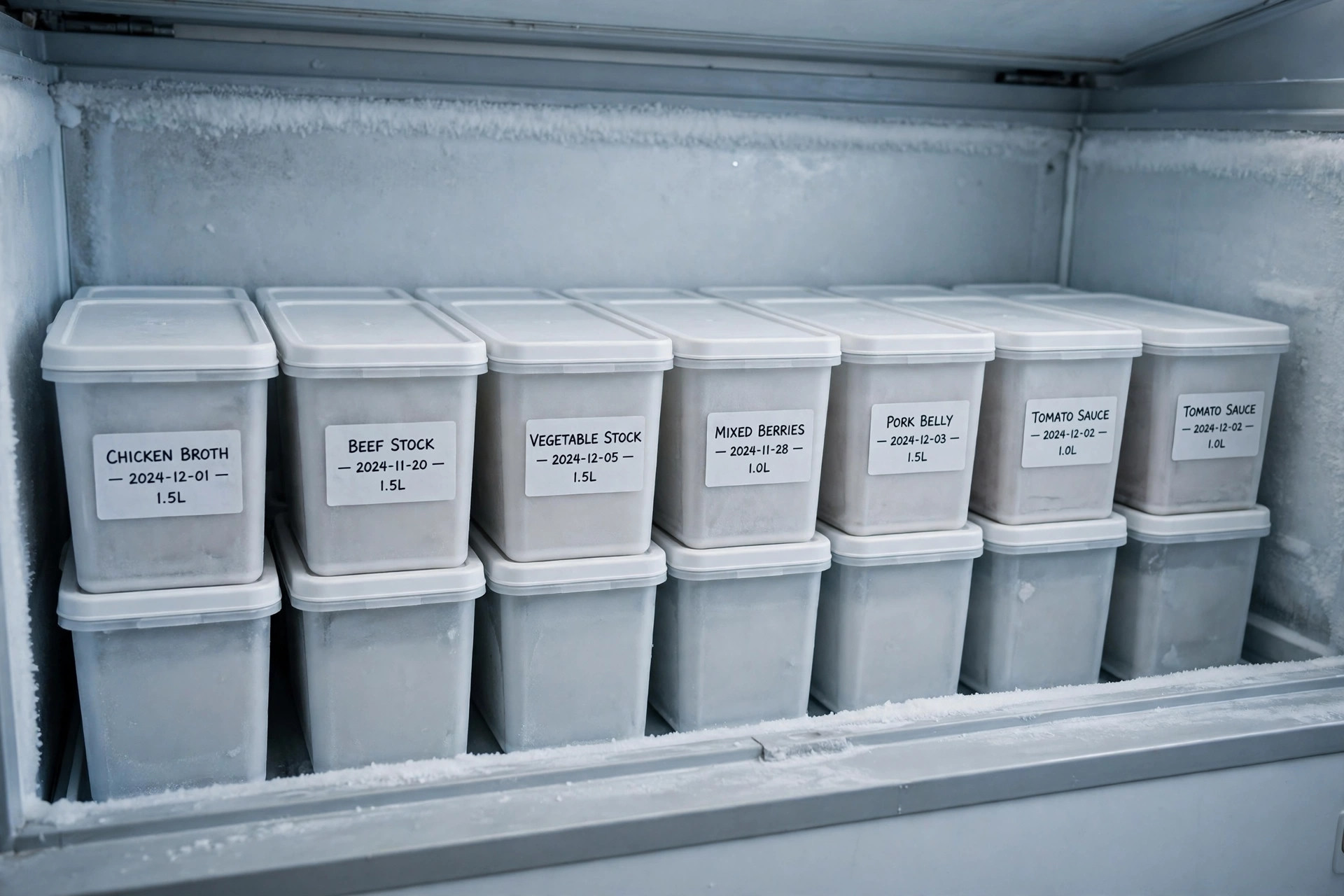
A round tub in a square freezer wastes the corners, because the round shape is the shape that leaves gaps and the gaps are the space you pay to freeze. Use square containers, not round — they stack without wasted space — so every shelf fills edge to edge and the freezer holds more food in the same cold air. Choose containers with lids that lock and stack, because the lid that locks is the lid that lets you stack three high without a slide. Keep one size for leftovers and one for soups, because the two sizes that match are the two sizes that stack neatly together. Square tubs, straight edges, and the corners stop being wasted.
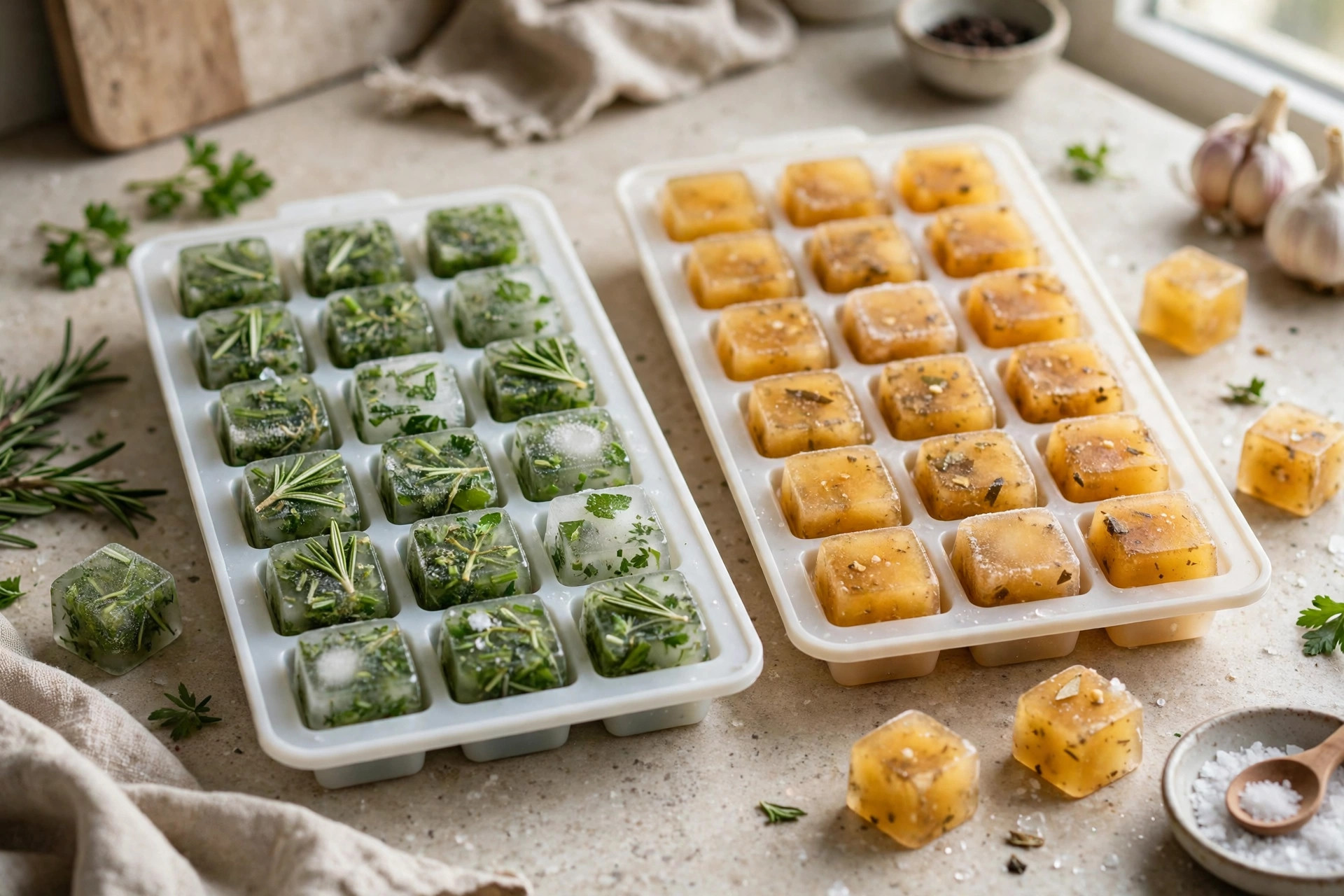
8. Ice cube trays for sauces, herbs and stock — freeze in portions
A whole tub of stock is a whole tub you have to thaw, because the tub is the thing that only comes in one size and the recipe is the thing that needs two spoonfuls. Freeze sauces, herbs and stock in ice cube trays — freeze in portions — so you take out one cube at a time and the rest stays frozen. Pour the stock into the tray, freeze it, then tip the cubes into a labelled bag, because the bag of cubes is the bag that lasts for months and the tray is the tray that goes back in the drawer. Chop herbs, cover them with oil or water, and freeze them the same way, because the herb cube is the cube that drops straight into the pan. One tray, small portions, and the freezer stops wasting food.
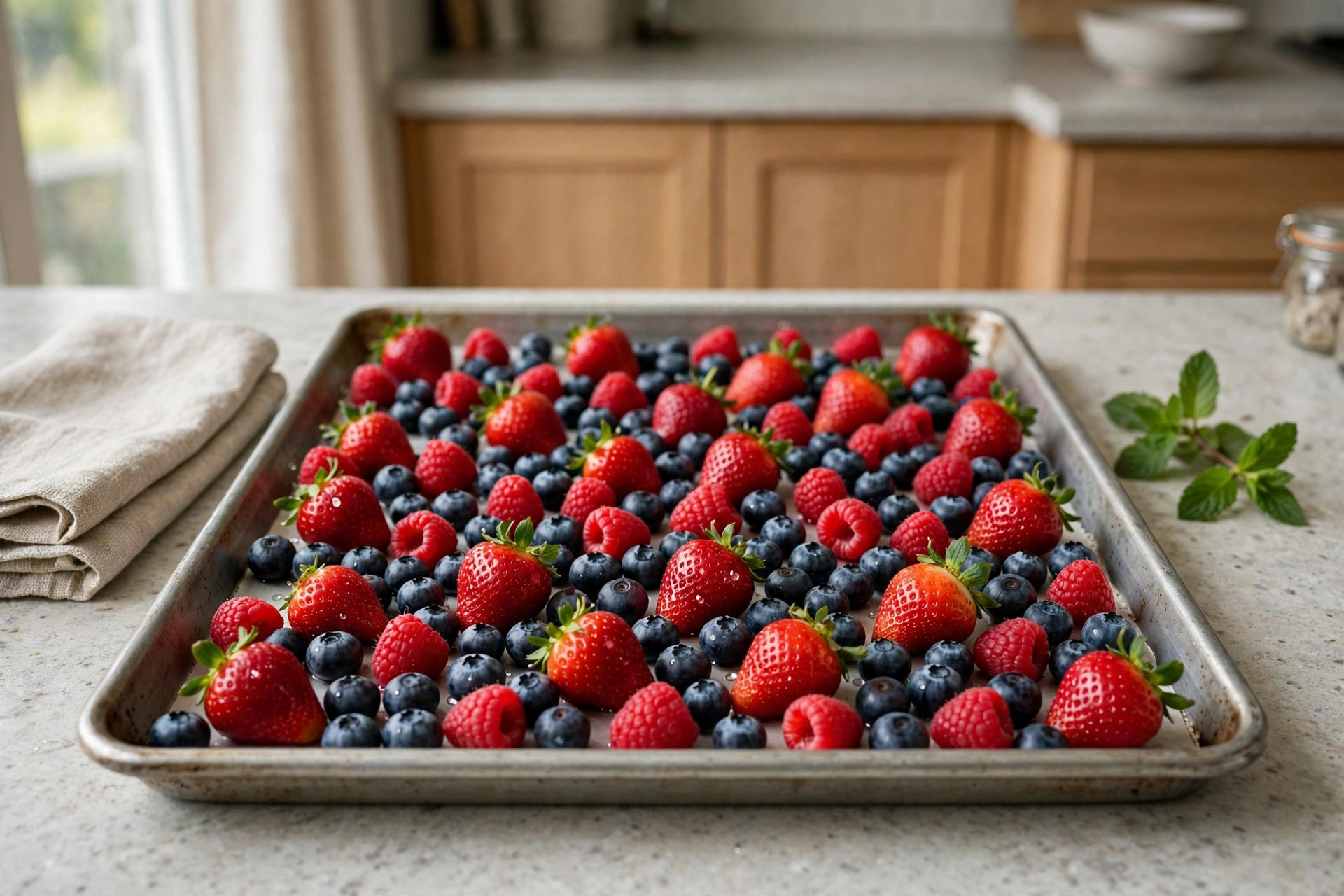
9. A baking tray as a flat-freeze shelf for berries and dumplings
Berries frozen in a bag freeze into a lump, because the berries are the things that touch each other and the touching berries are the berries that stick. Use a baking tray as a flat-freeze shelf — for berries and dumplings — so each one freezes on its own and stays separate in the bag. Spread the berries in one layer on the tray, freeze them solid, then tip them into a bag, because the tray is the shelf and the bag is the storage. Do the same for dumplings, meatballs and fish fingers, because the food that freezes apart is the food you can pour out one piece at a time. One tray, one layer, and the berries stop being a lump.
10. Freezer bags with the air pressed out, labelled with the date
A freezer bag full of air is a bag full of frost, because the air is the thing that freezes into ice crystals and the ice crystals are the things that dry the food out. Use freezer bags with the air pressed out — labelled with the date — so the food stays close to the bag and the freezer burn never starts. Lay the bag flat, press the air out from the bottom to the top, seal it almost shut, press the last bit of air out, then close it, because the bag with no air is the bag that keeps the food. Write the food and the date on the bag before you fill it, because the label written after is the label that smudges in the cold. Air out, date on, and the food keeps for months.
The deep freeze and the chest freezer
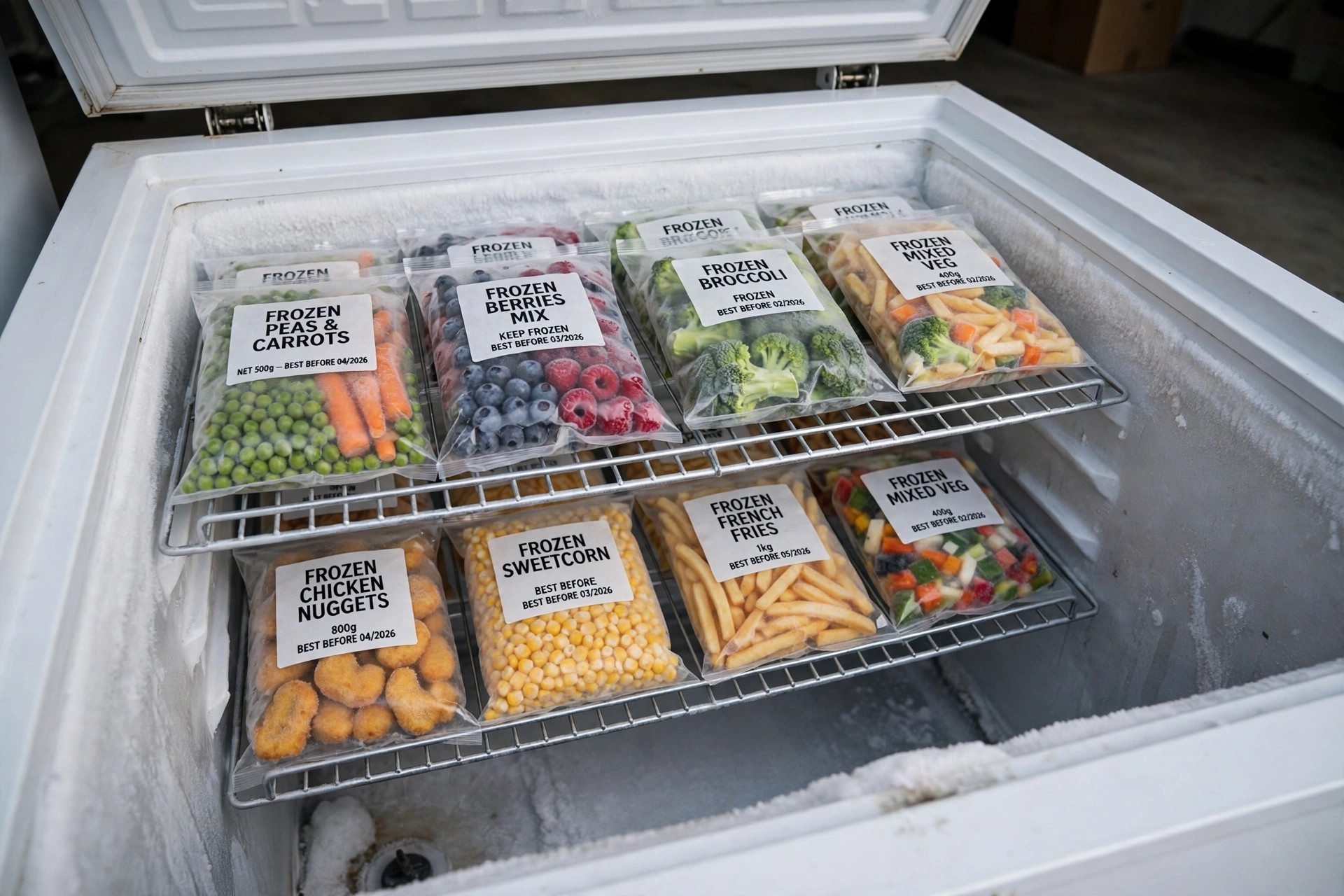
11. Stackable wire shelves to double a chest freezer's layers
A chest freezer has one layer — the top — because the food you put in is the food that piles up, and the pile is the thing you dig through to find the bottom. Add stackable wire shelves — to double a chest freezer's layers — so the freezer has a top layer and a bottom layer, and the bottom is reachable without emptying the top. Put the shelves in, load the bottom layer first, then the top, because the shelf is the floor that divides the pile into two. Choose wire shelves that fit the freezer's width, because the shelf that fits is the shelf that does not wobble, and keep the heavy food on the bottom layer, because the heavy food is the food that should not fall on the light food. Two layers, one chest, and the dig is cut in half. (Check on Amazon for stackable wire freezer shelves, which come in sets sized for chest freezers.)
12. A chest freezer map on the lid — a sketch of what lives where
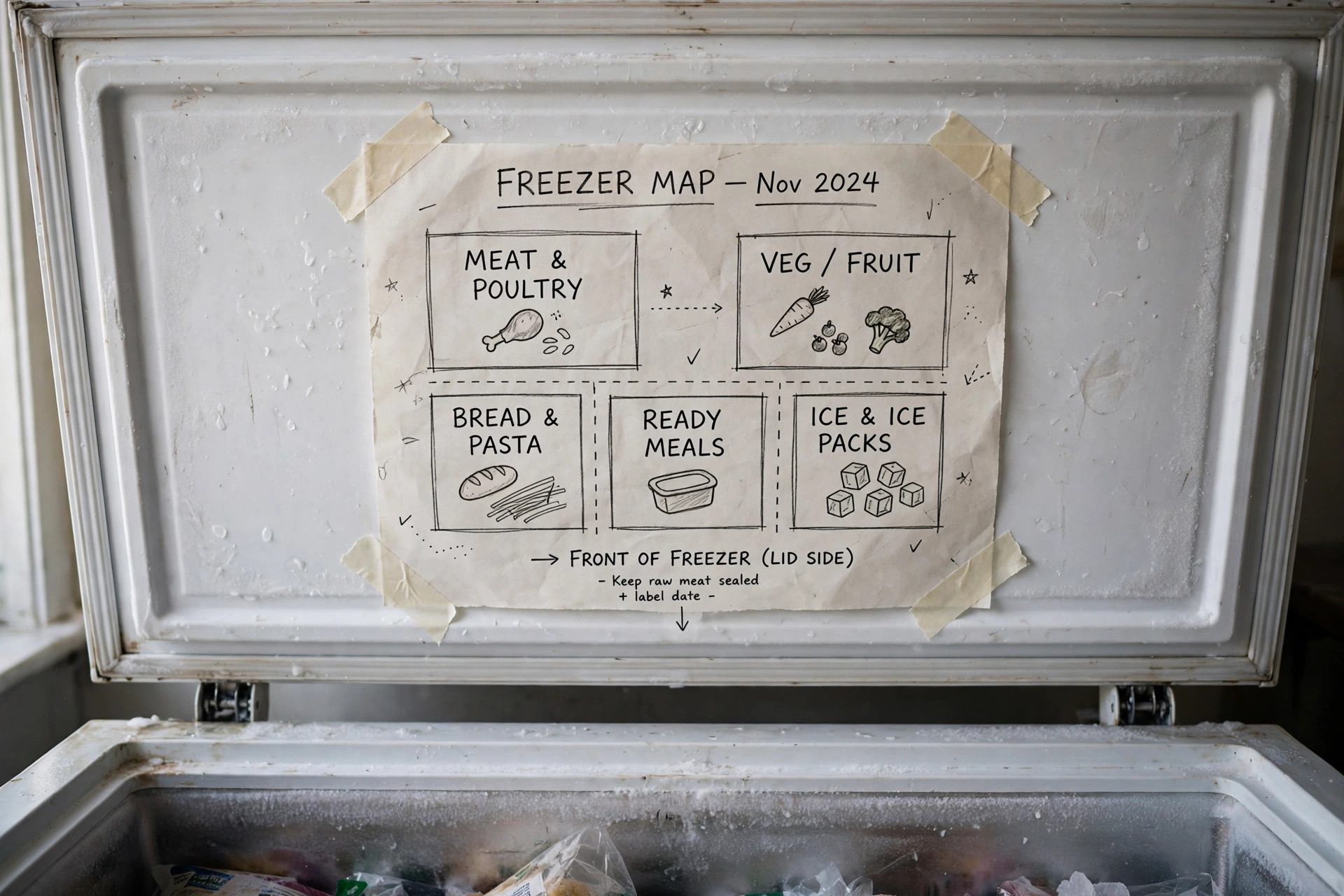
A chest freezer with no map is a chest freezer you open and stare into, because the food is the thing under the food and the food under the food is the food you cannot see. Draw a chest freezer map on the lid — a sketch of what lives where — so you know where the chicken is before you open it. Sketch the freezer as a rectangle, divide it into the bins and baskets inside, and write the food in each square, because the map is the thing that tells you where to dig. Tape the map to the inside of the lid, where your eyes land when you lift it, and update it when you add a big bag, because the map that is current is the map that saves the dig. One sketch on the lid, and the chest freezer stops being a mystery.
13. Baskets in the chest freezer, one per layer of the map
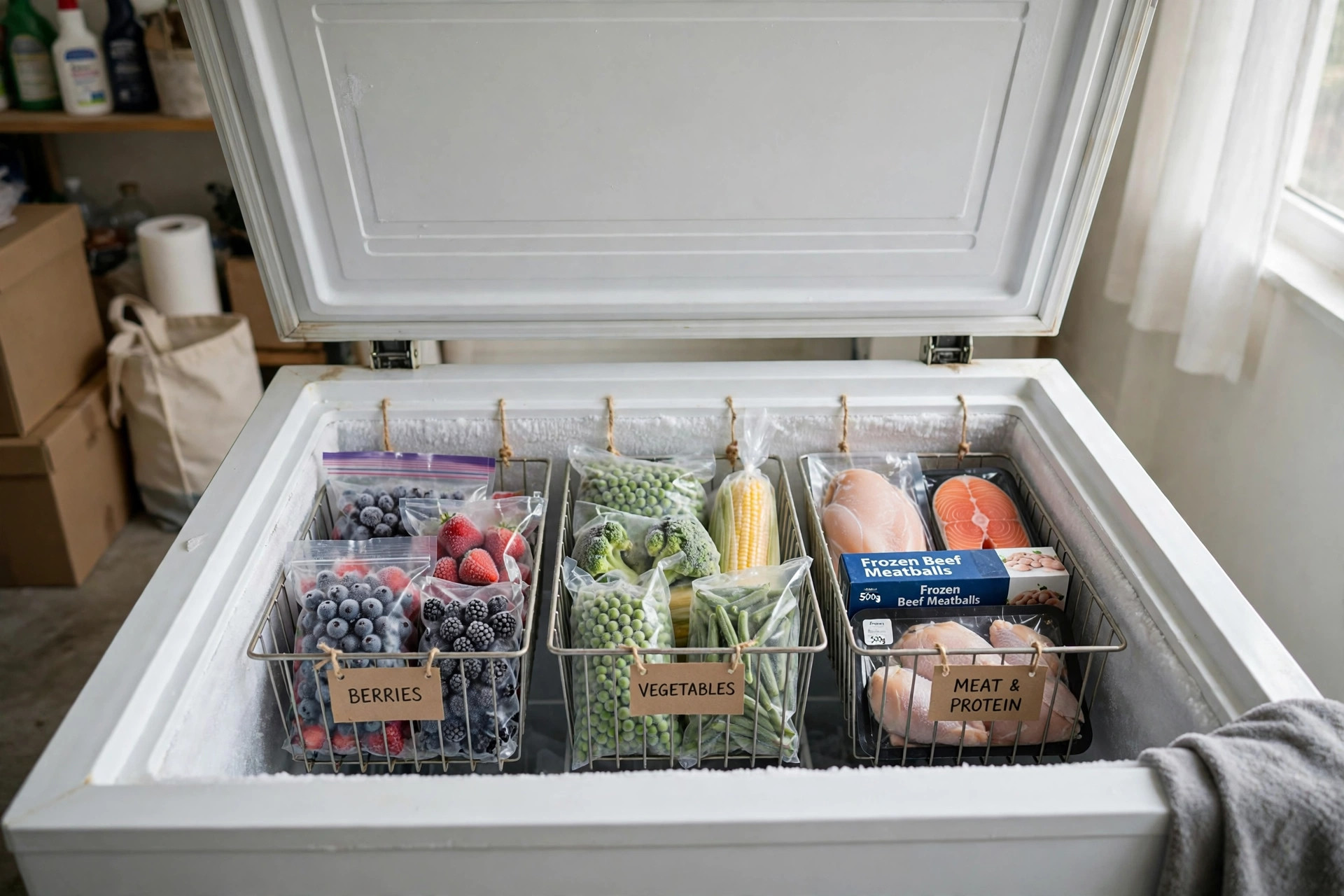
A chest freezer without baskets is a chest freezer with one big pile, because the pile is the thing that has no divisions and the divisions are the things that make food findable. Put baskets in the chest freezer — one per layer of the map — so each square on the map has a basket in real life and the food lives where the map says it does. Use wire or plastic baskets with handles, because the handle is the thing that lifts the basket out, and keep the basket for meat on the left and the basket for veg on the right, because the left and the right are the directions the map uses. Label each basket to match its square on the map, because the label that matches is the label that makes the map true. One basket per square, and the pile becomes a plan.
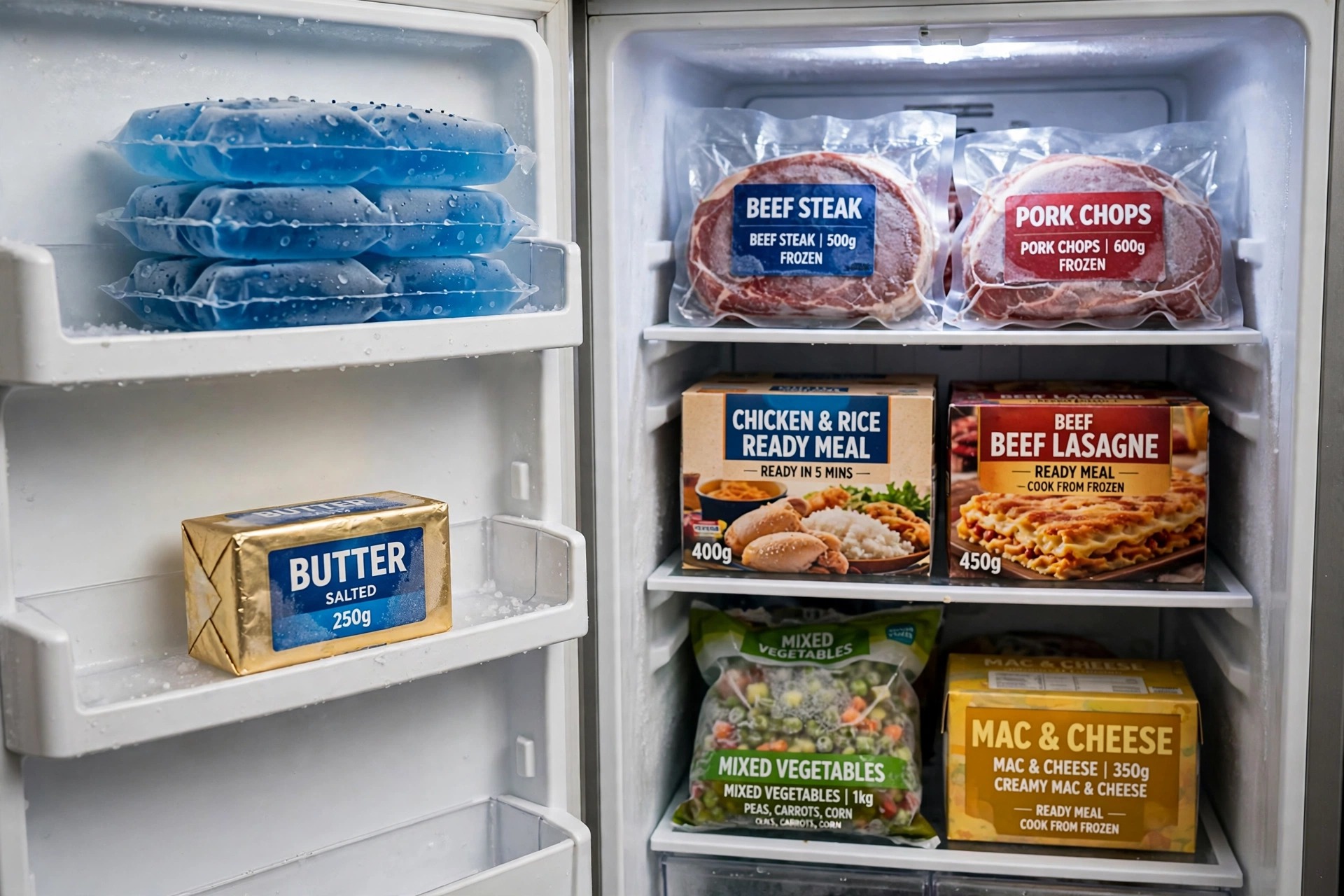
14. Keep the door shelf for ice packs and butter, not for meals
The door shelf is the warmest part of the freezer, because the door is the thing that opens and the opening is the thing that lets warm air in. Keep the door shelf for ice packs and butter — not for meals — so the food that must stay coldest never lives where the temperature swings. Put the ice packs, the butter and the bread rolls in the door, because the door food is the food that thaws a little and freezes again without harm, and keep the meat and the ready meals on the cold shelves inside, because the cold shelf is the shelf that stays frozen. If the door shelf holds a meal, move it inside, because the meal in the door is the meal that thaws a little every day. Door for ice packs, shelves for meals, and the food stays properly frozen.
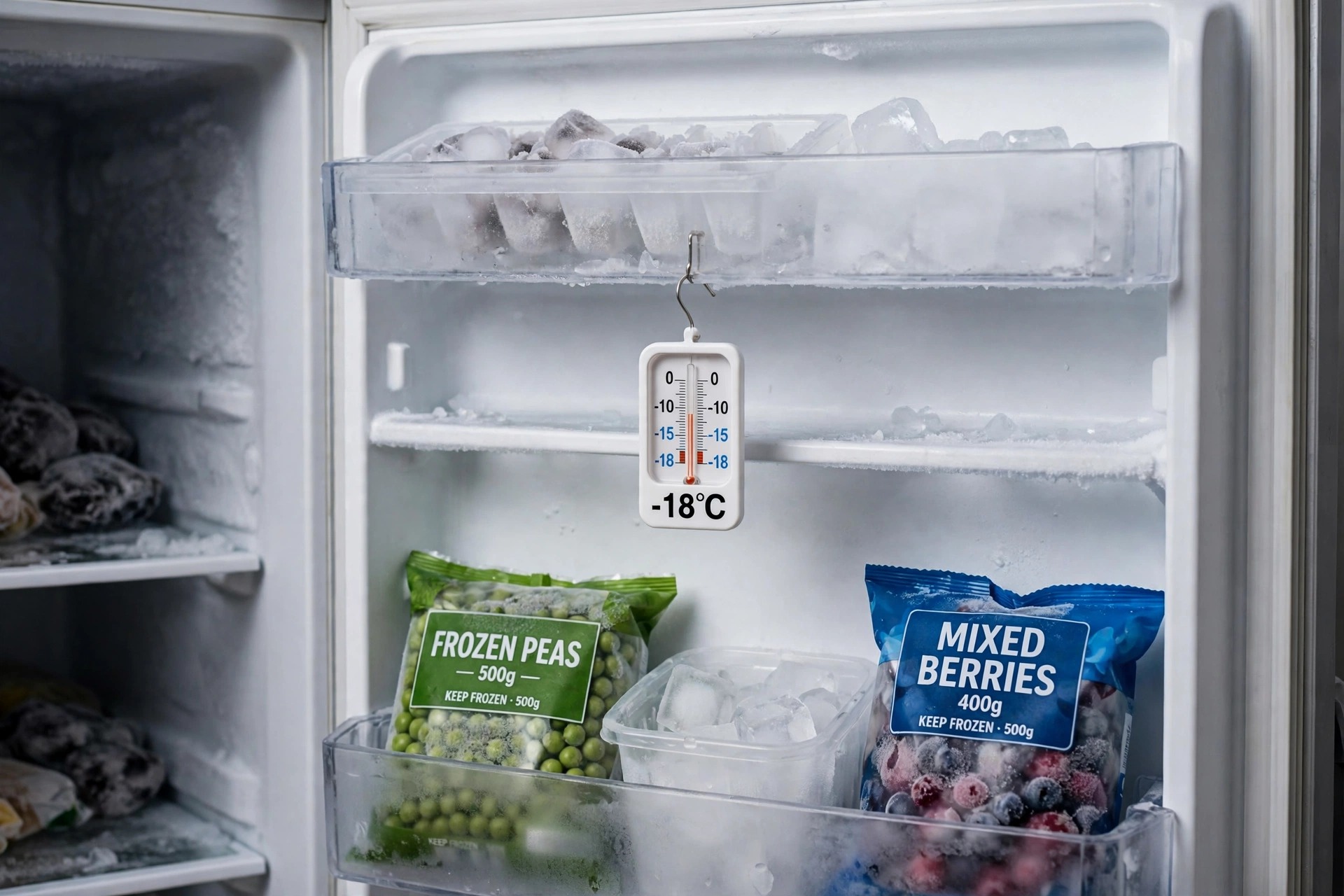
15. A thermometer in the freezer — check it stays at -18°C
A freezer with no thermometer is a freezer you trust blindly, because the dial is the thing that says a number and the food is the thing that needs a temperature. Put a thermometer in the freezer — check it stays at -18°C — so you know the food is frozen properly and not slowly going soft. Hang the thermometer where you can see it when you open the door, and check it once a week, because the check that is weekly is the check that catches a failing seal before the food spoils. If the temperature creeps up, check the door seal and the vents, because the warm freezer is the freezer that costs you food. One small thermometer, and the freezer stops being a guess.
Keep it frozen, keep it fresh: inventory and upkeep
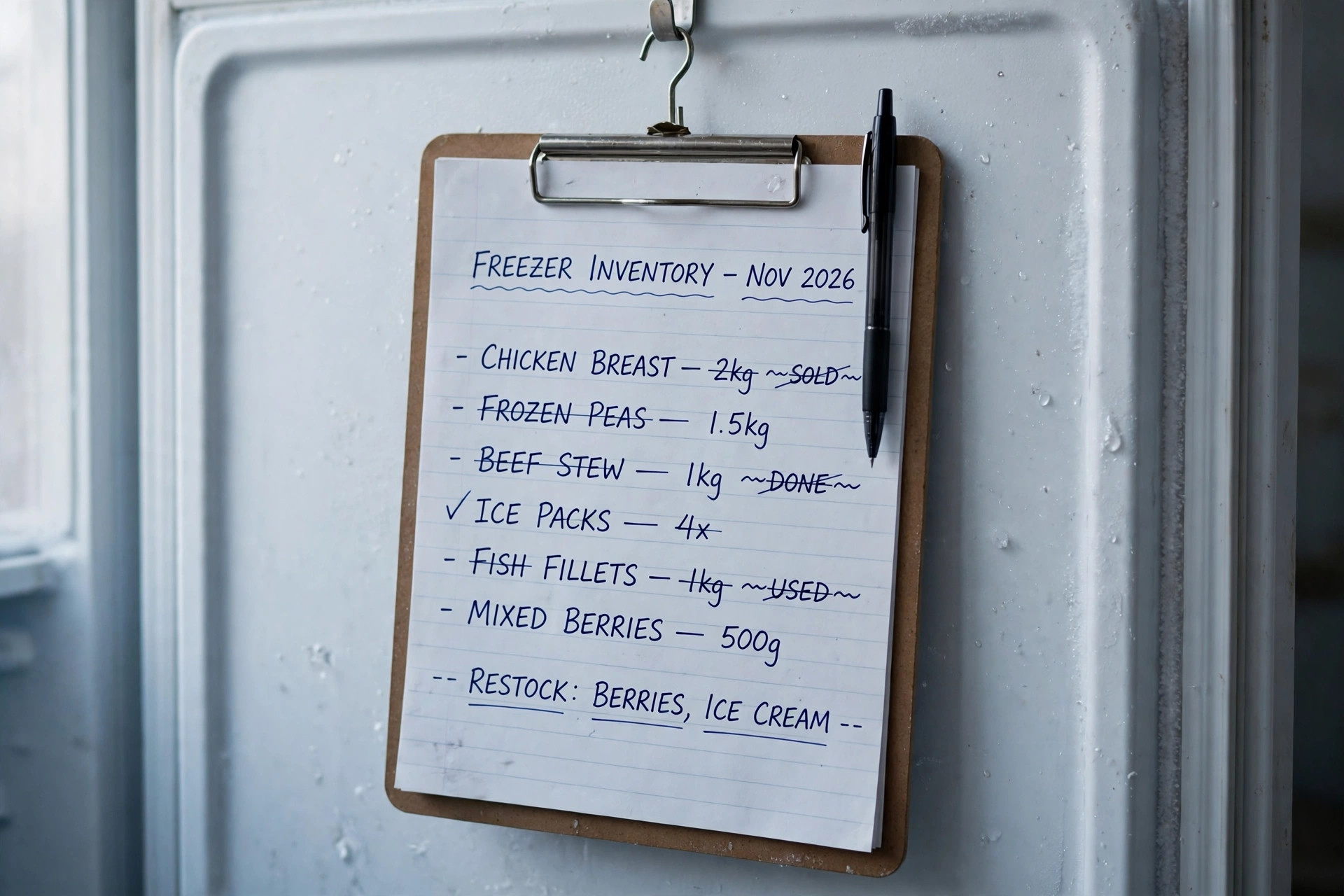
16. An inventory list on the door — cross off as you use it
A freezer with no list is a freezer you shop for twice, because the food inside is the food you cannot see and the food you cannot see is the food you buy again. Keep an inventory list on the door — cross off as you use it — so the shopping list starts from what is actually in the freezer. Write the food in columns by bin, stick the list to the door with a magnet, and cross each item off when you take it out, because the crossed-off item is the item that is gone and the list that is current is the list that stops double-buying. Add to the list when you freeze something new, and rewrite it once a month, because the list that is fresh is the list you trust. One list on the door, and the freezer stops costing you double. (Check on Amazon for a magnetic whiteboard for the freezer door, which wipes clean for the next list.)
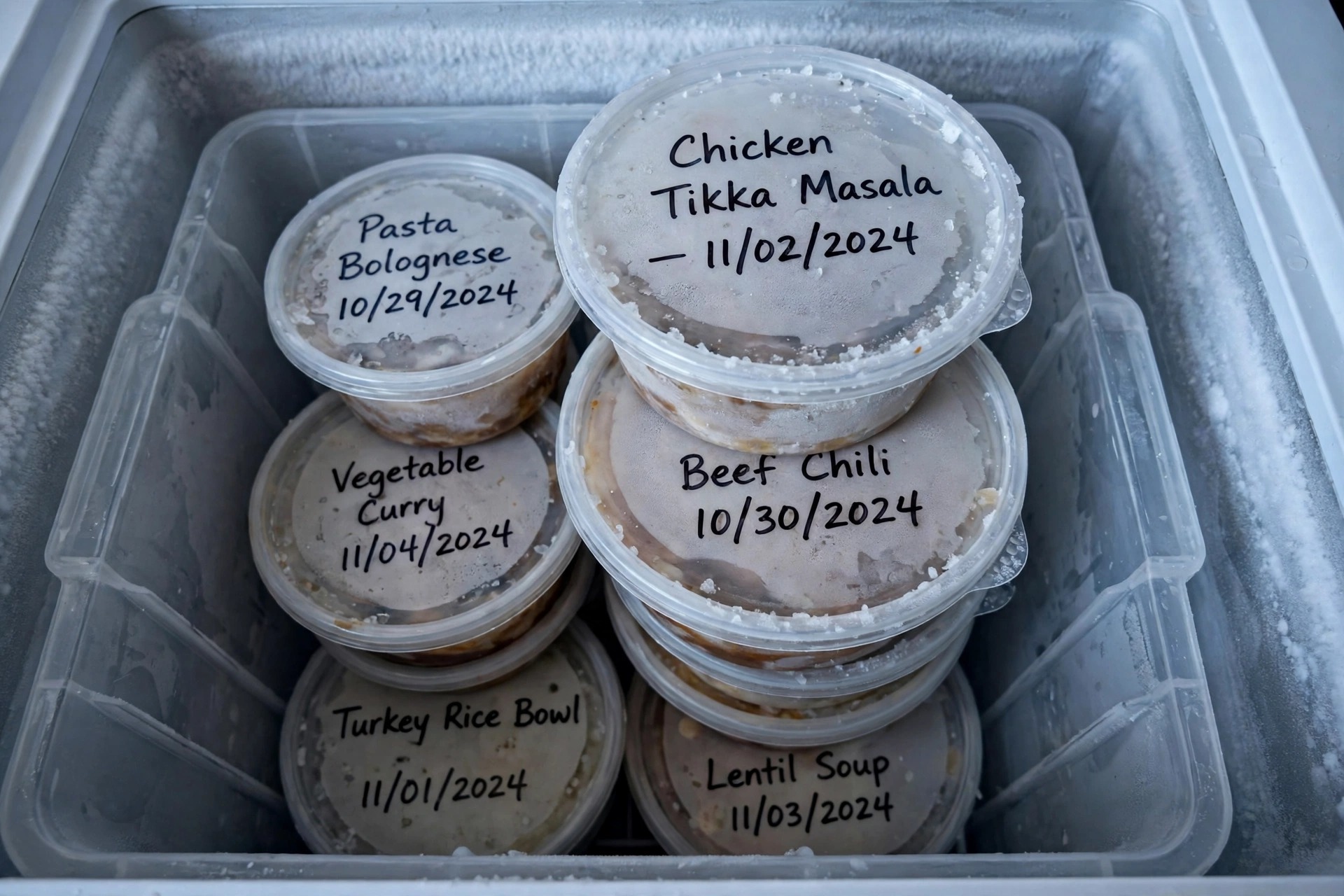
17. Freeze leftovers in single portions, labelled with the meal name
A tub of leftover stew is a tub nobody wants to thaw, because the tub is the thing that feeds four and the house is the thing that needs one lunch. Freeze leftovers in single portions — labelled with the meal name — so lunch is one tub out of the freezer and into the microwave. Spoon the stew into single tubs, write the meal name and the date on the lid, and stack them in one bin, because the single tub is the tub that gets eaten and the big tub is the tub that waits. Keep a mix of meals in the bin, so lunch is a choice, and eat the oldest first, because the oldest tub is the tub that must go before the new ones. Single portions, named and dated, and the leftovers stop being waste. The pantry the leftovers cook from is in 25 Pantry Organization Ideas for 2026, where the dry food gets its own bins before the freezer arrives.
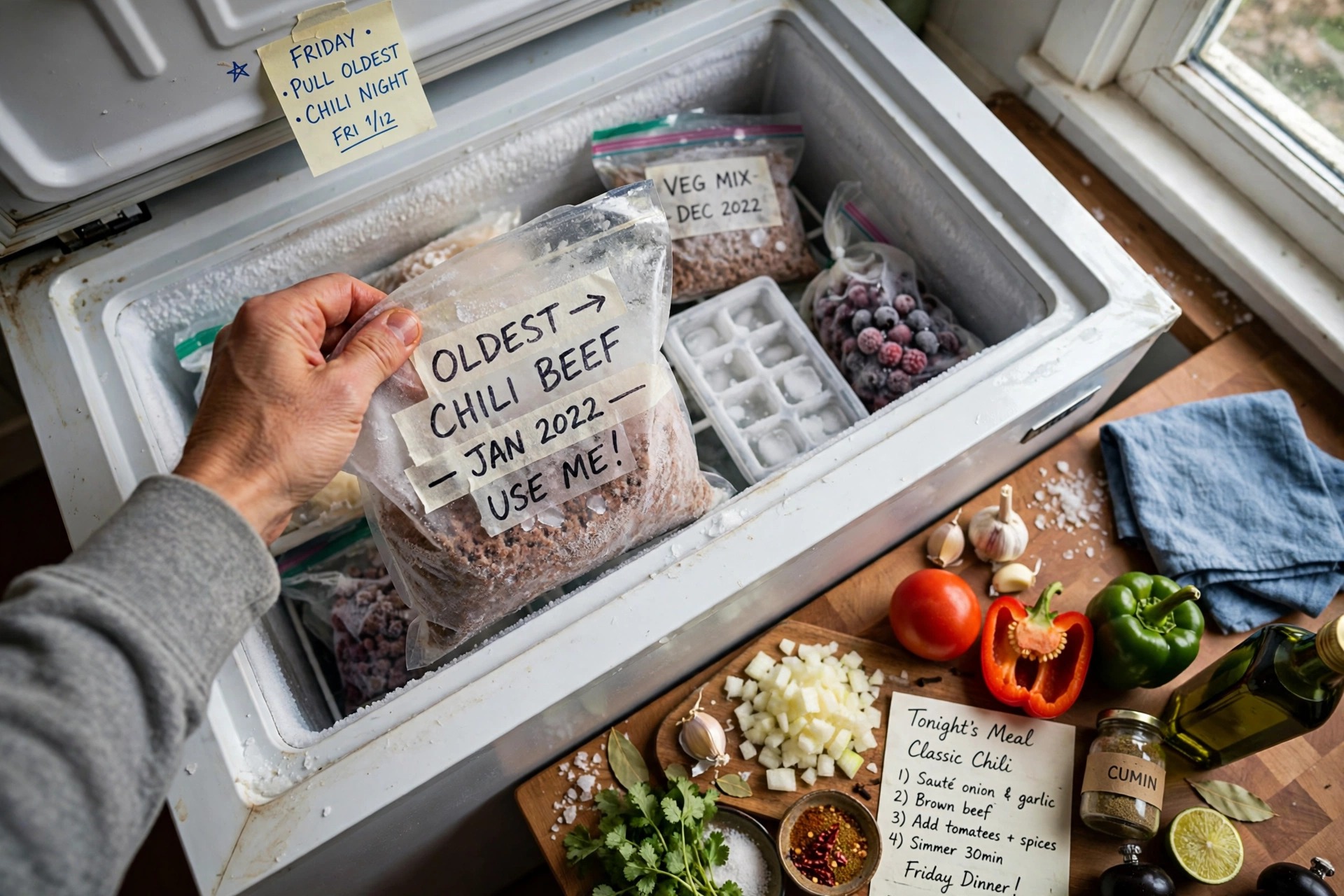
18. A "freezer Friday" meal from the oldest bag, once a week
The oldest bag in the freezer is the bag nobody chooses, because the new food is the food that looks good and the old food is the food that has been there for months. Make a "freezer Friday" meal from the oldest bag — once a week — so the old food gets eaten on purpose instead of going in the bin. Pick the oldest bag on Friday morning, build the meal around it, and cook it that night, because the Friday meal is the meal that empties the freezer on a schedule. Keep the rule simple — one bag, one meal, every Friday — because the simple rule is the rule the house keeps. One Friday meal a week, and the freezer stops growing old food.
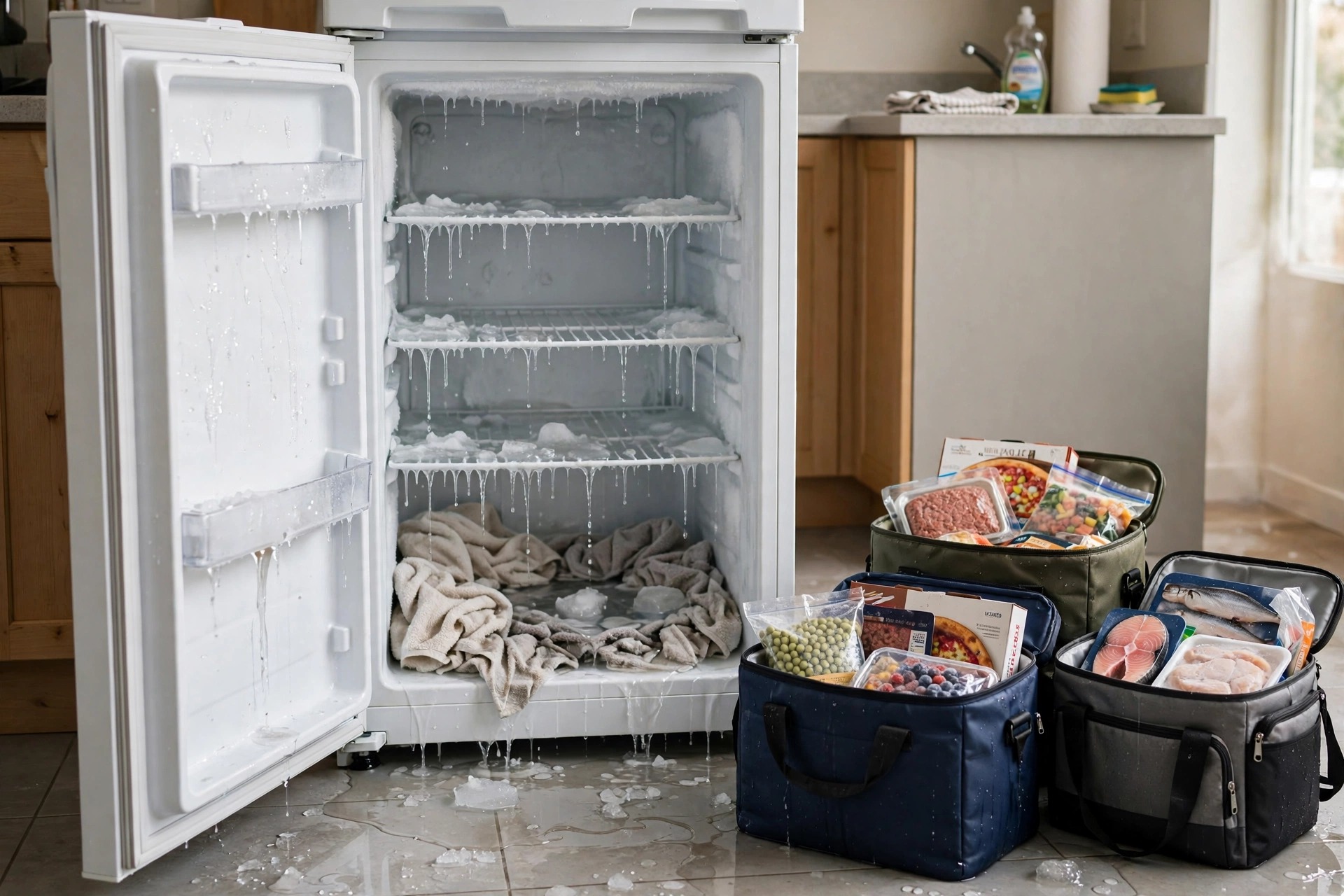
19. Defrost on a schedule, not when the ice is an inch thick
A freezer with an inch of ice is a freezer that costs more to run, because the ice is the thing that insulates the cold and the insulated cold is the cold that works harder. Defrost on a schedule — not when the ice is an inch thick — so the freezer runs cheap and the food stays frozen properly. Pick a date every six months, empty the freezer into cool bags, switch it off, let the ice melt, wipe it dry, and switch it back on, because the scheduled defrost is the defrost that happens before the ice costs you money. If the ice builds up faster, check the door seal, because the seal that leaks is the seal that makes ice. A date on the calendar, and the freezer stays cheap to run. The second freezer and bulk storage that live outside the kitchen are in 25 Utility Closet Organization Ideas for 2026, where the garage freezer gets the same schedule.
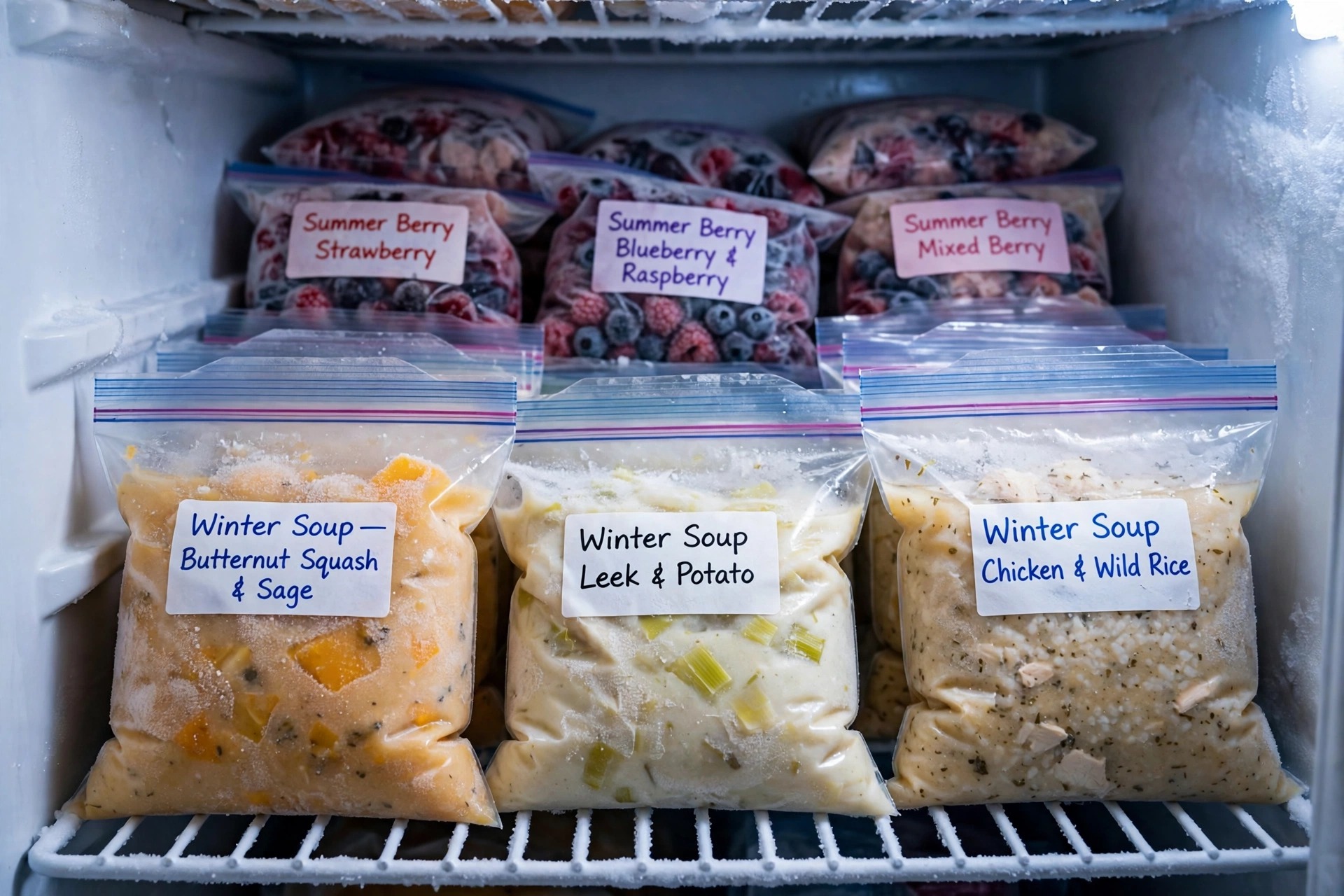
20. A seasonal swap — summer berries out, winter soups in
A freezer that holds summer berries in January is a freezer holding the wrong season, because the berries are the food for summer puddings and the soups are the food for winter nights. Do a seasonal swap — summer berries out, winter soups in — so the freezer matches the cooking you actually do. In autumn, eat the last of the berries and freeze the first soups, and in spring, eat the last of the soups and freeze the first berries, because the swap is the thing that keeps the freezer full of food you will eat. Label the seasonal bags with the season, because the labelled season is the season you remember to swap. Two swaps a year, and the freezer cooks with the calendar.
Which freezer organization idea fits which situation?
| Situation | Best first move | Budget | Tools needed |
|---|---|---|---|
| Freezer is one big pile | One bin per category (idea 1) | Low | Bins |
| You cannot see the food | Clear bins with handles (idea 2) | Low | Clear bins |
| Nobody can read the labels | One big word per bin (idea 3) | Free | Marker, tape |
| Old food gets forgotten | "Use first" bin at the front (idea 4) | Free | Small bin |
| Small things sink to the bottom | Small basket for odds and ends (idea 5) | Low | Basket |
| Soups take up too much room | Flat-freeze in bags (idea 6) | Low | Freezer bags |
| Round tubs waste the corners | Square containers (idea 7) | Low | Square tubs |
| Stock only comes in big tubs | Ice cube trays for portions (idea 8) | Low | Ice cube trays |
| Berries freeze into a lump | Baking tray flat-freeze shelf (idea 9) | Free | Baking tray |
| Food gets freezer burn | Air pressed out, date on (idea 10) | Low | Freezer bags |
| Chest freezer has one layer | Stackable wire shelves (idea 11) | Low | Wire shelves |
| You open it and stare | Chest freezer map on the lid (idea 12) | Free | Paper, marker |
| The pile has no divisions | Baskets, one per map layer (idea 13) | Low | Baskets |
| Door shelf holds meals | Door for ice packs only (idea 14) | Free | — |
| You trust the dial blindly | Thermometer at -18°C (idea 15) | Low | Freezer thermometer |
| You buy food twice | Inventory list on the door (idea 16) | Free | Paper, magnet |
| Leftovers never get eaten | Single portions, named (idea 17) | Low | Small tubs |
| Oldest bag never gets chosen | "Freezer Friday" weekly meal (idea 18) | Free | — |
| Ice is an inch thick | Defrost on a schedule (idea 19) | Free | Cool bags |
| Freezer holds the wrong season | Seasonal swap (idea 20) | Free | — |
You do not need all 20 ideas. You need the three that stop your dig — usually the labelled bins that give every category a home, the flat-freeze bags that file the soups upright like books, and the door list that stops you buying food twice. Start with the bins, do it this weekend, and put the "use first" bin at the front where your hand reaches when the door opens. Do that and the next time you open the freezer you will find the chicken in one move, for the price of a few bins and an afternoon.
Save this post for your next freezer sort, and if the kitchen needs sorting first, read 20 Kitchen Cabinet Organization Ideas for 2026 next — it is Post 02, the cabinets the freezer sits between — and 25 Dollar Store DIY Ideas for 2026, Post 28, for the cheap bins and baskets the whole freezer system is built from. This is the twelfth post of the Storage by room/object return run — Posts 31 to 55, one room at a time — and the next posts carry the same storage system into the rooms that follow.
Publish date assigned at publishing time. Updated as new freezer organization finds are tested.
Frequently asked questions
How do I stop food getting lost in a chest freezer?
Give every category its own basket and draw a map of the chest freezer on the lid, so you know where the chicken is before you open it. Stackable wire shelves split the pile into two layers, and a "use first" basket at the top holds the food that must go first. Baskets, a map and a top basket, and the dig is cut in half.
What is the best way to label food in the freezer?
Write the food name and the date on the bag or tub before you fill it, in thick marker, because a label written after is a label that smudges in the cold. Use one big word per bin — MEAT, VEG, BREAD — so anyone in the house can read it through frost, and keep a pen by the freezer so labelling takes seconds. Name and date before filling, big words on bins, and nothing in the freezer is a mystery.
How long can food stay in the freezer before it goes off?
Most home-frozen food keeps well for three to six months if it is sealed with the air pressed out and the freezer stays at -18°C — soups and stews around three months, raw meat up to six. After that it is usually safe but dries out and loses flavour, which is why the date on every bag matters. Eat the oldest first with a weekly "freezer Friday" meal, and the food never sits long enough to go off.