22 DIY Window Boxes Ideas for 2026
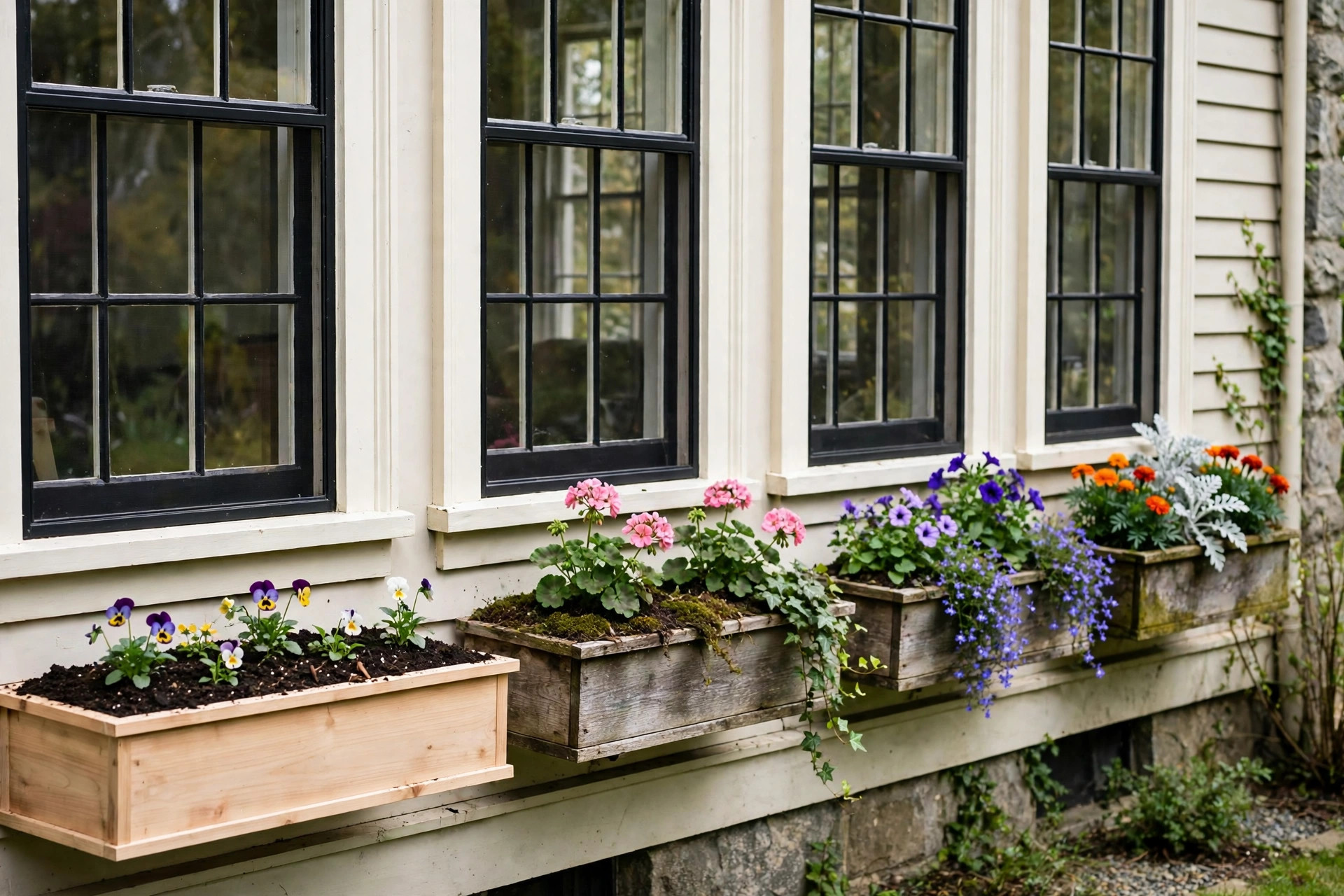
A window box is the cheapest way to make a house look loved. One wooden box, a few flowers, and a plain window suddenly has colour, and the whole front of the house looks cared for from the street — no new paint, no new door, no builder, just a box you made yourself on a Saturday morning. The window box is not the project — the project is the curb appeal, and the box is how you get it for the price of a few boards and a bag of compost.
These 22 DIY window boxes ideas give you a handmade box that fits your window, flowers that suit your sun or shade, and a style that flatters the house — so the window that was plain is the window people stop to look at.
Every idea below works in a real home, from a flat where the box hangs on a balcony rail to a house where every ground-floor window gets one. The porch around the window gets its own treatment in 26 DIY Yard Decor Ideas for 2026, where the box joins the rest of the front garden — and the bench under the window gets its build in 26 DIY Outdoor Bench Ideas for 2026. Pick three ideas that fit your window, start with the wood, and build from there.
Build the box
1. Choose the right wood — cedar, redwood or treated pine
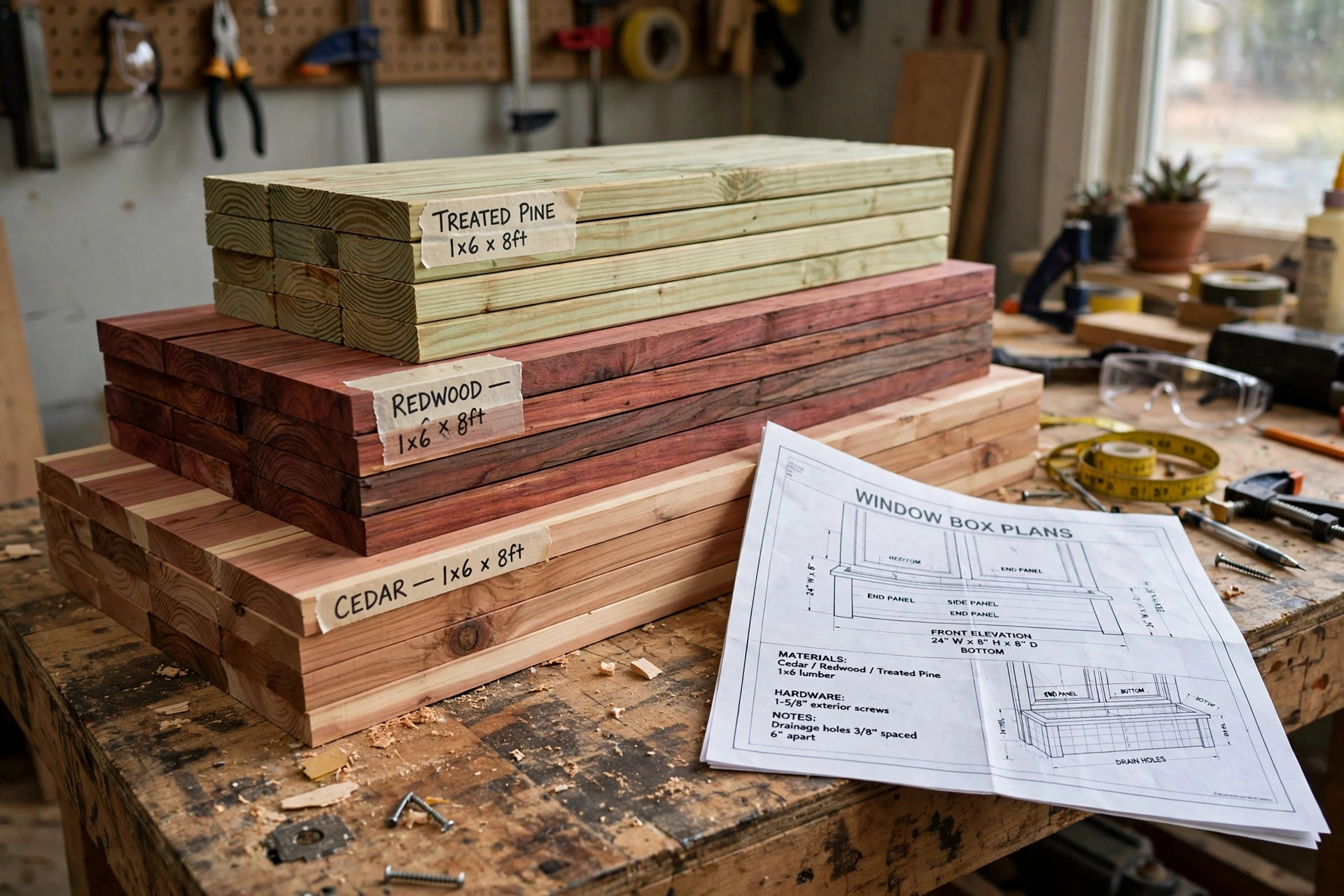
A window box lives outside in all weather, so the wood is the decision that decides whether the box lasts one summer or ten. Choose cedar, redwood or treated pine — the woods that survive rain without rotting through in a season — because the box that is built from the right wood is the box that is still holding flowers in year five. Cedar is the classic choice: it resists rot on its own, it smells good, and it weathers to a soft grey if you leave it unpainted. Treated pine is the budget choice, and it works just as well once it is sealed or painted, because the treatment is what keeps the damp out. Avoid untreated softwood and pallet wood for a box that holds wet soil, because the wood that soaks up water is the wood that rots from the inside, and the box that rots is the box that dumps its flowers on the path. One right choice of wood, and the box lasts.
2. Measure the window before you cut a single board
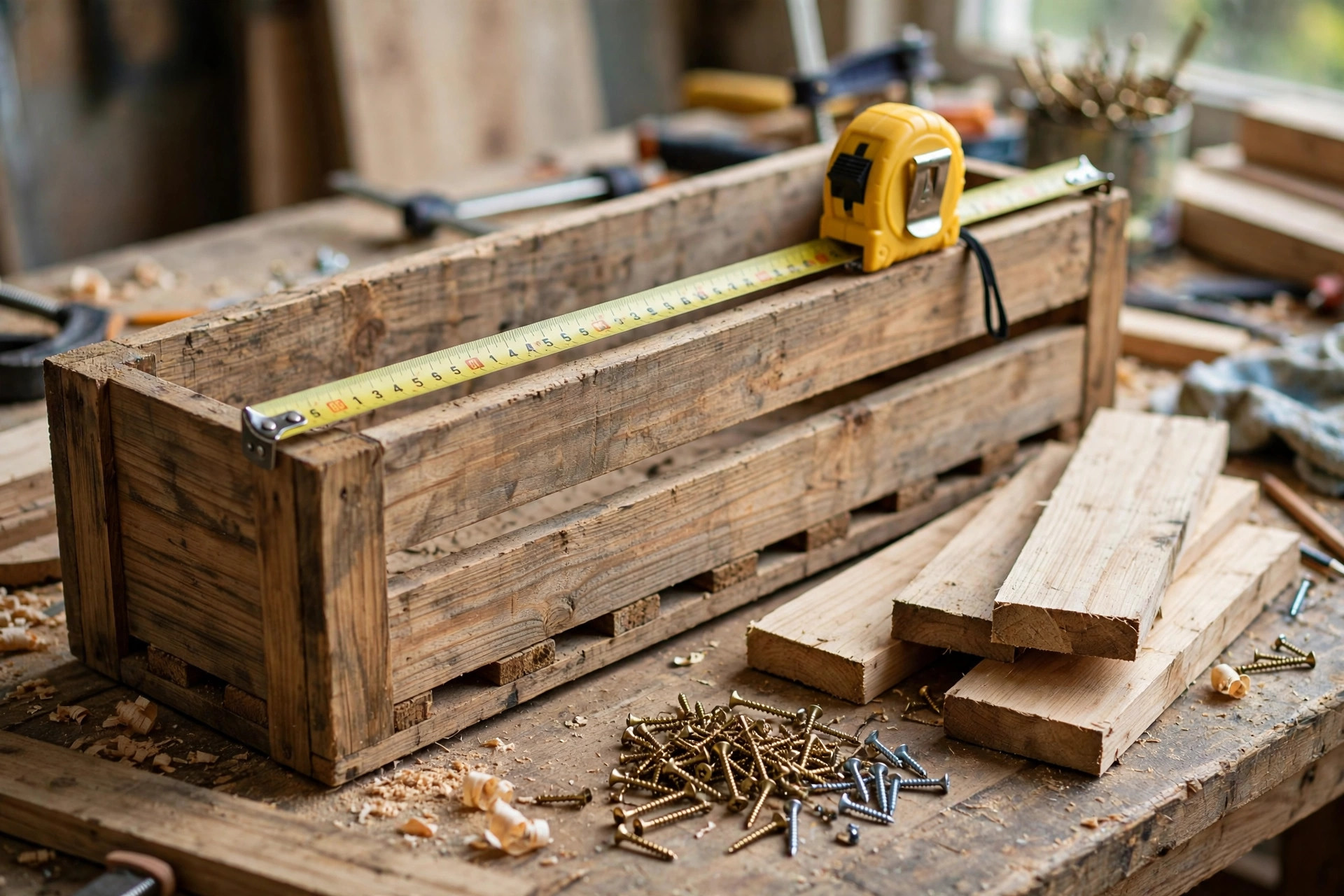
A window box that is too short looks lost under the window, and a box that is too long sticks out past the frame and catches every passer-by. Measure the window before you cut a single board — the tape measure that saves the returns — so the box is the width of the window frame, or an inch or two wider, and sits neatly under the sill. Measure the width of the frame end to end, measure the depth of the sill so the box does not stick out too far, and measure the height under the sill so the box does not block the window opening, because the numbers that travel with you to the timber yard are the numbers that stop the box coming home wrong. Write them in a notebook and take the notebook with you, because the box that is measured once is the box that fits the first time. One afternoon with a tape measure, and everything you build fits.
3. Build a simple box from five boards and screws
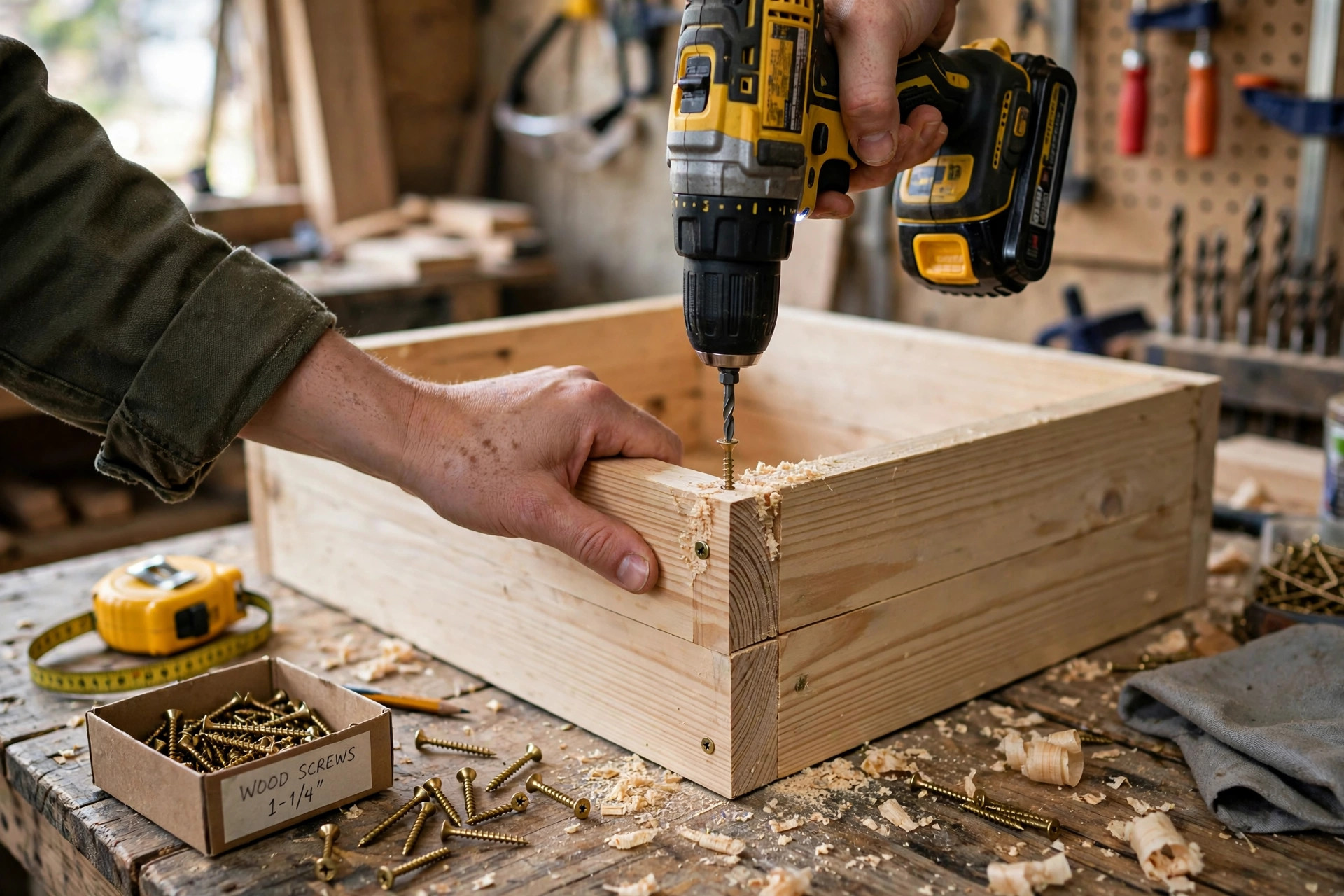
A window box is five boards: a bottom, two long sides, two short ends — and the build is the easiest woodwork a beginner can do. Build a simple box from five boards and screws, so the bottom sits inside the sides, the screws go in from the sides into the bottom edge, and the whole thing is square before you tighten the last screw. Cut the boards to your window measurements, drill pilot holes so the wood does not split, and use exterior screws that will not rust, because the screw that rusts is the screw that stains the wood and weakens the joint. Check the corners with a square as you go, because the box that is square is the box that sits level on its brackets, and the box that is wonky is the box that leans and spills soil. The same five-board logic builds the bin rack in 18 Storage Bin Rack DIY Ideas for 2026, where the boards are bigger but the joints are the same. One box, five boards, and you have built something.
4. Line the box so the soil stays in and the wood stays dry
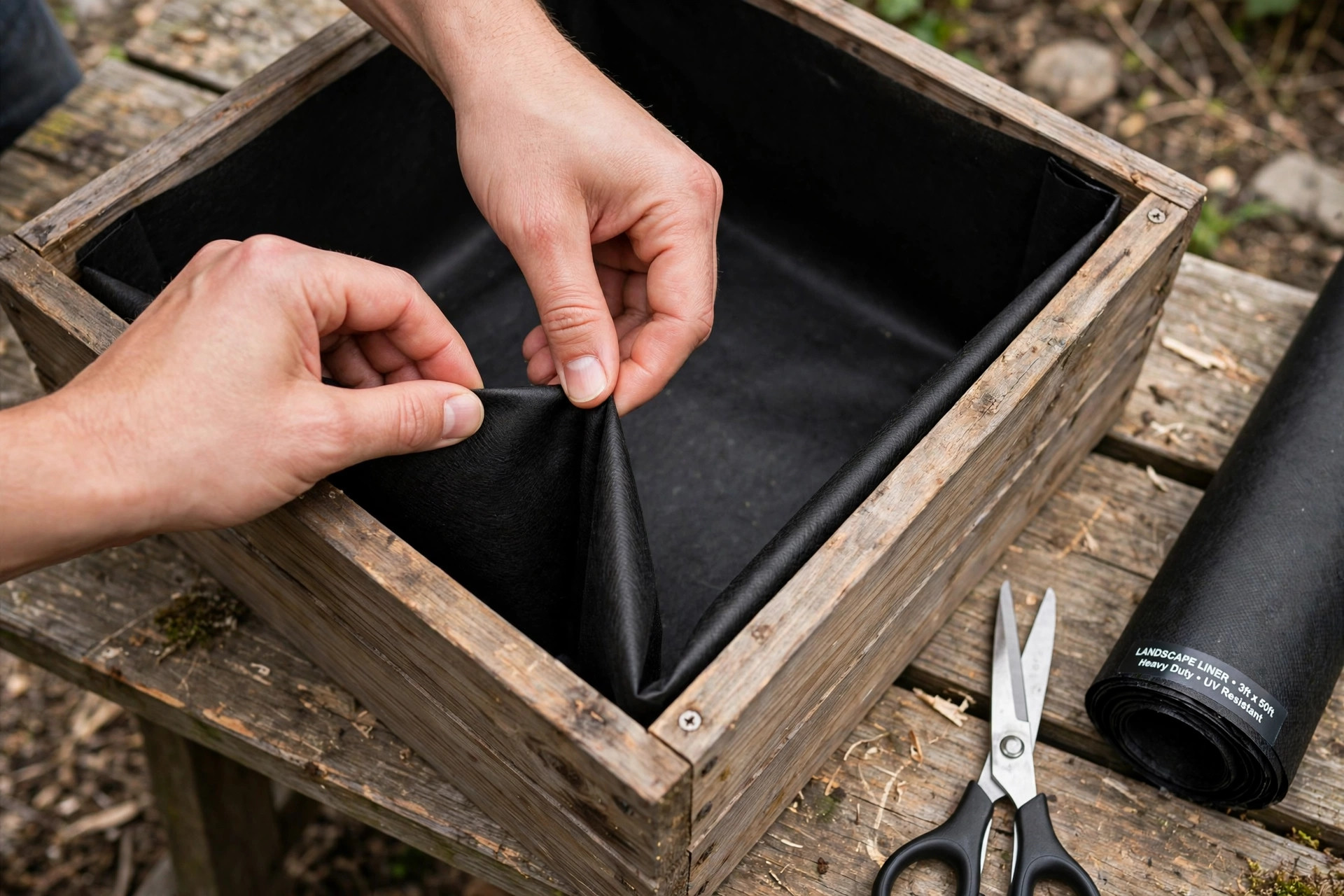
Wet soil pressed against bare wood is what rots a window box from the inside, because the soil never dries, the wood never dries, and the box that looked solid in spring is soft by autumn. Line the box so the soil stays in and the wood stays dry — a sheet of black plastic liner, a landscape fabric liner, or a fitted plastic trough — so the liner holds the soil and the wood only ever touches the liner. Cut the liner to fit with a little overlap at the top, fold the corners neatly, and poke drainage holes through the liner where they line up with the holes in the bottom, because the liner that is pierced in the wrong place is the liner that holds a puddle. The liner also stops the soil washing out through the joints in the first rain, because the soil that stays in the box is the soil the flowers grow in. One liner, and the box stays dry inside.
5. Drill drainage holes — the five-minute job that stops rot
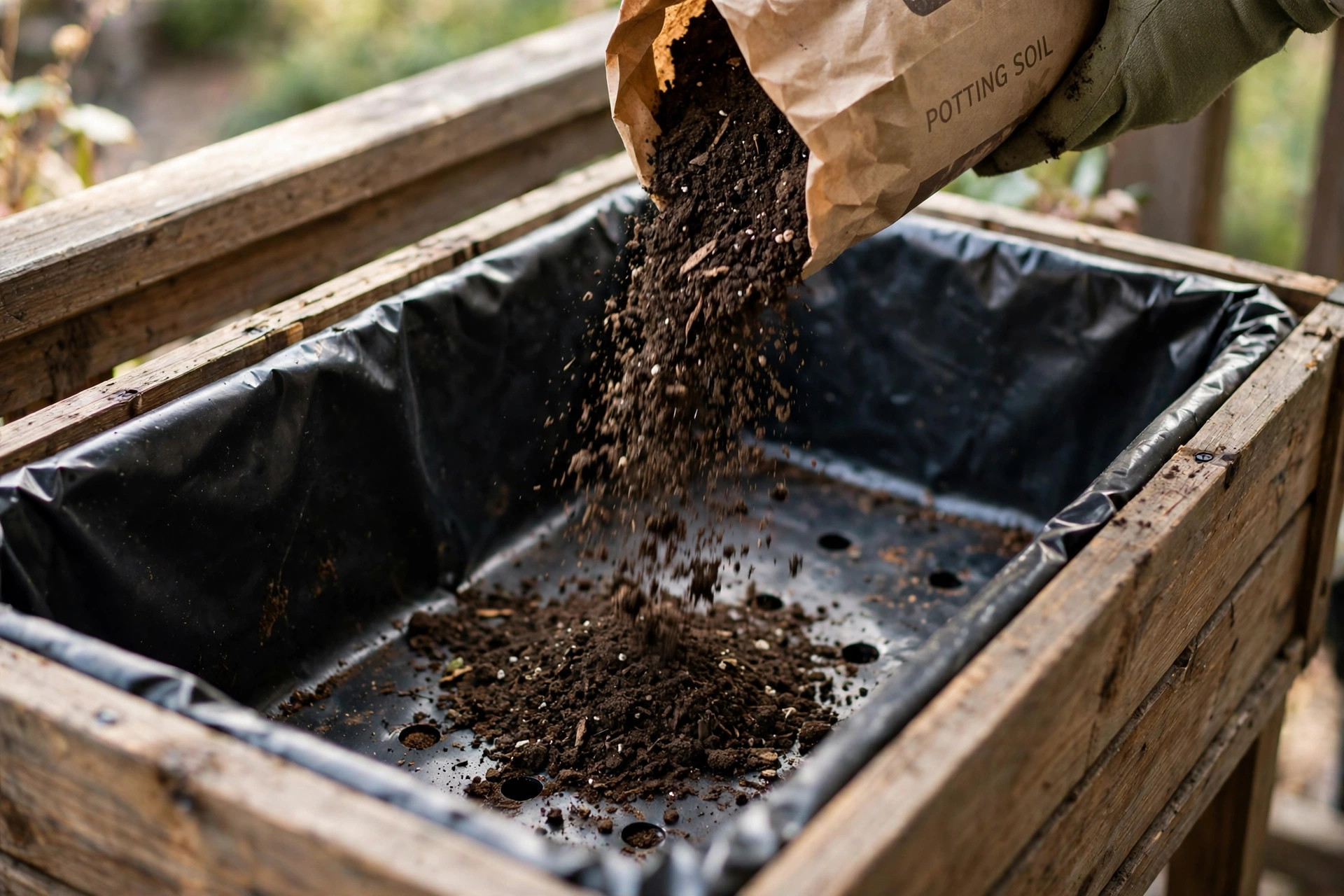
A window box with no drainage is a pond with flowers in it, because the rain fills the box, the roots sit in water, and the plants drown while the wood rots underneath them. Drill drainage holes — the five-minute job that stops rot — so every box has four or five holes in the bottom, a finger's width across, and the water that falls in the box can fall out again. Drill them before you line the box, line up the liner holes with the wood holes, and cover each hole inside with a small piece of broken pot or a mesh square, because the hole that is covered is the hole that lets water out and keeps soil in. Put the holes in before the box goes on the wall, because the hole that is drilled on the workbench is the hole that is drilled straight, and the box that drains is the box whose flowers live. (Check on Amazon for a drill bit set with a large bit sized for drainage holes in timber.) Five minutes, and the box never floods.
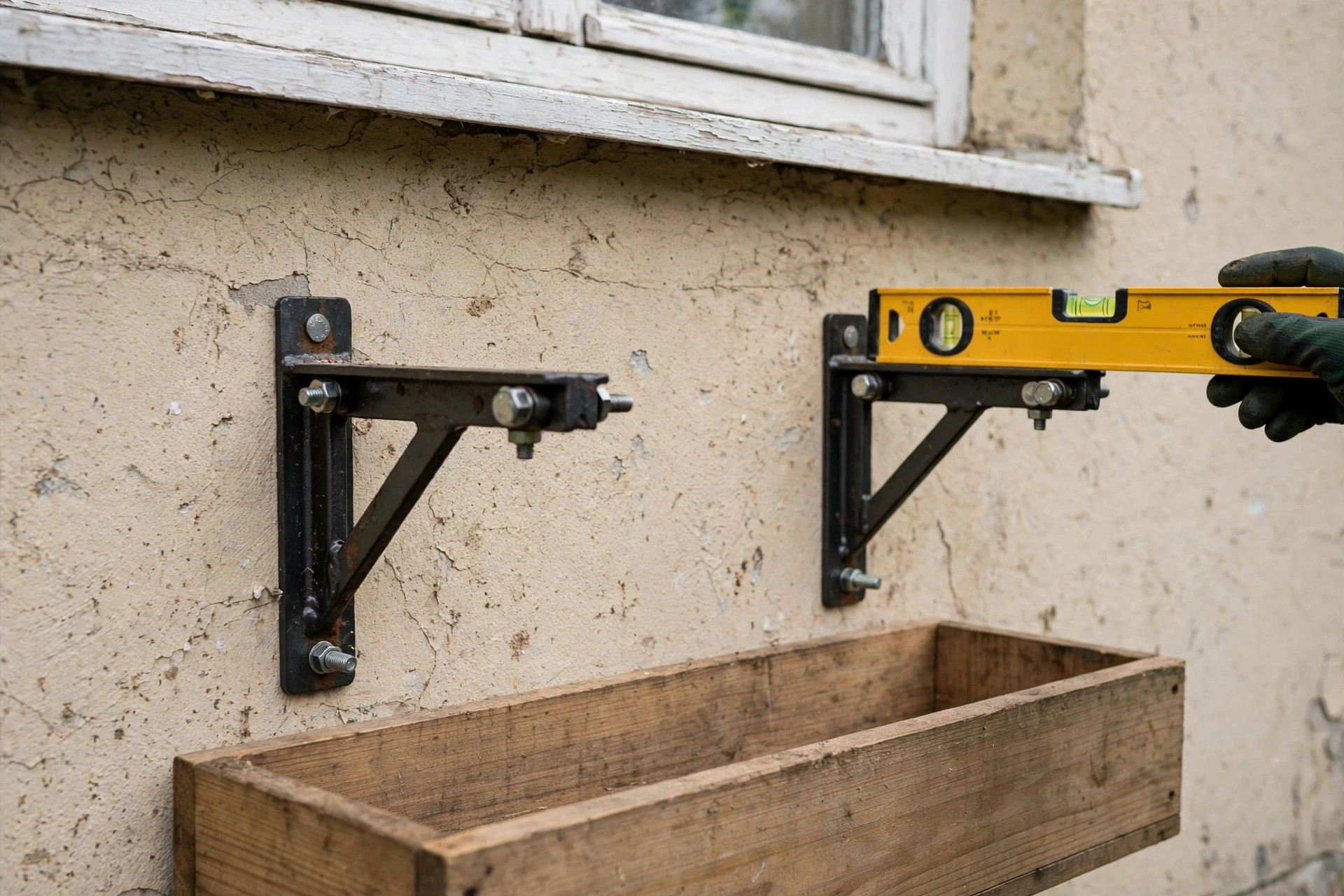
6. Hang it on brackets that can actually hold the weight
A window box full of wet soil and flowers is heavy — far heavier than it looks — and the bracket that holds it is the bracket that decides whether the box stays on the wall or lands on the path. Hang it on brackets that can actually hold the weight, because the bracket that is rated for the load is the bracket that holds through a wet winter, and the bracket that is guessed is the bracket that bends. Use two brackets for a small box and three for a long one, fix them into the wall with proper plugs or into the timber frame, and check the box sits level before you fill it, because the bracket that is level is the bracket that shares the weight evenly. Fill the box after it is hung, not before, because the box that is filled on the wall is the box you never have to lift full, and the back that is saved is the back that builds the next box. One pair of proper brackets, and the box stays up.
Fill it with flowers
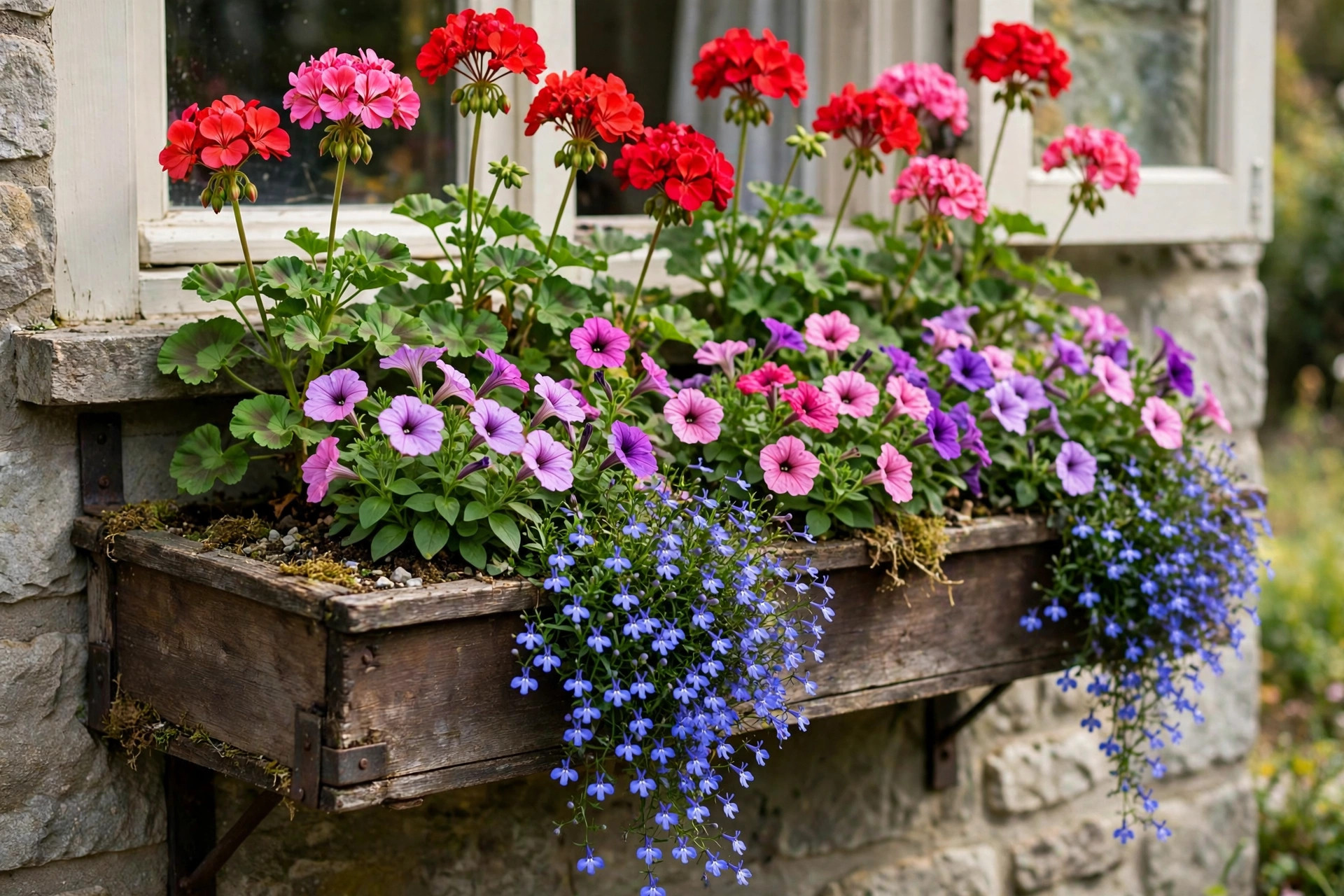
7. Thriller, filler, spiller — the three-part planting formula
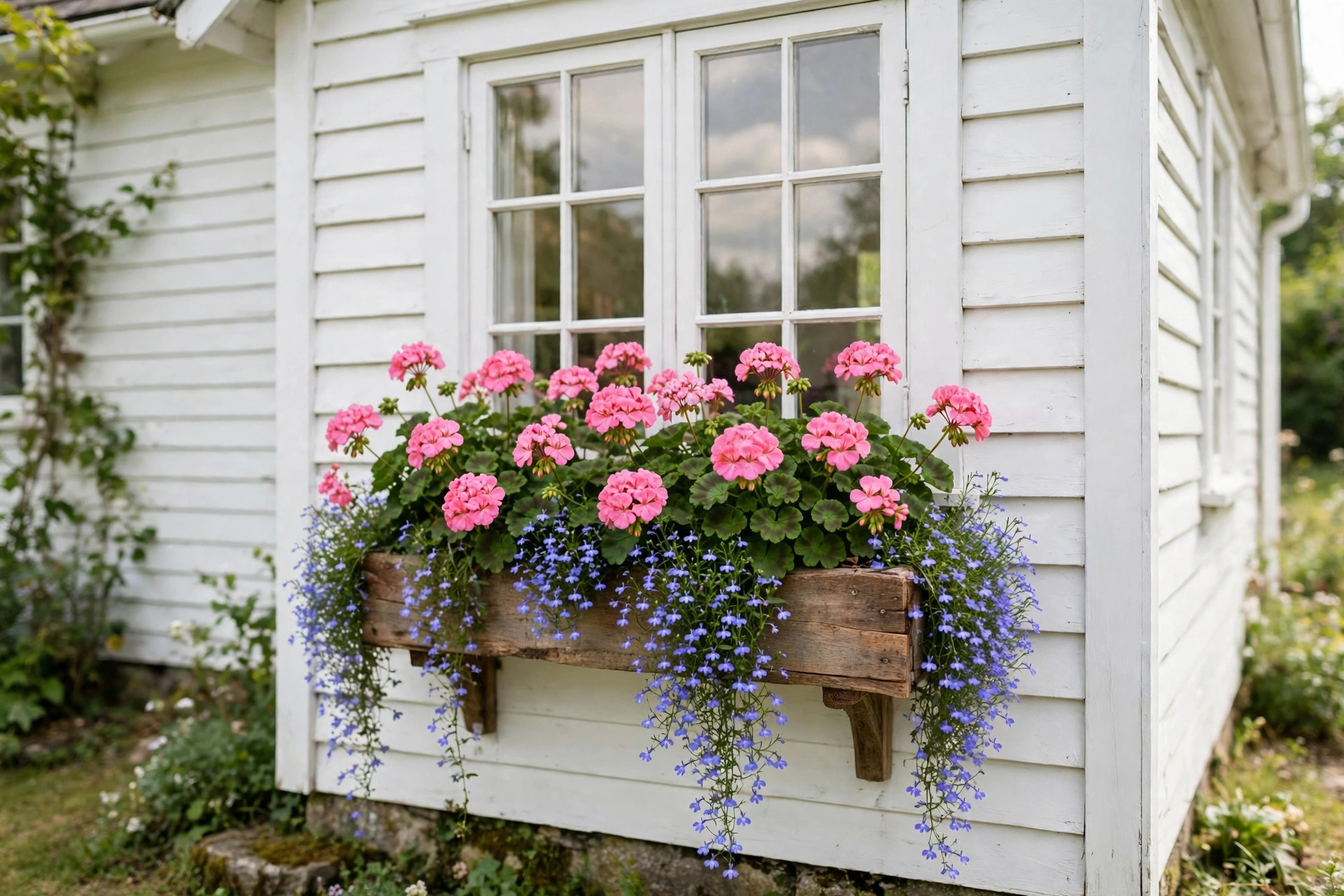
A window box planted at random looks like a jumble, because the tall plants hide the short ones, the colours fight, and the box that should look lush looks messy. Use thriller, filler, spiller — the three-part planting formula — so the tall thriller stands at the back, the filler fills the middle, and the spiller trails over the front edge, and the box looks designed instead of accidental. Pick one thriller — a tall geranium, a spike of salvia — then two or three fillers in one or two colours, then one spiller each end — lobelia, trailing petunia, ivy — because the formula that has three parts is the formula that always looks full. Plant the thriller first, then the fillers around it, then the spillers at the front corners, because the box that is planted in order is the box that grows into shape. One formula, and every box looks professional.
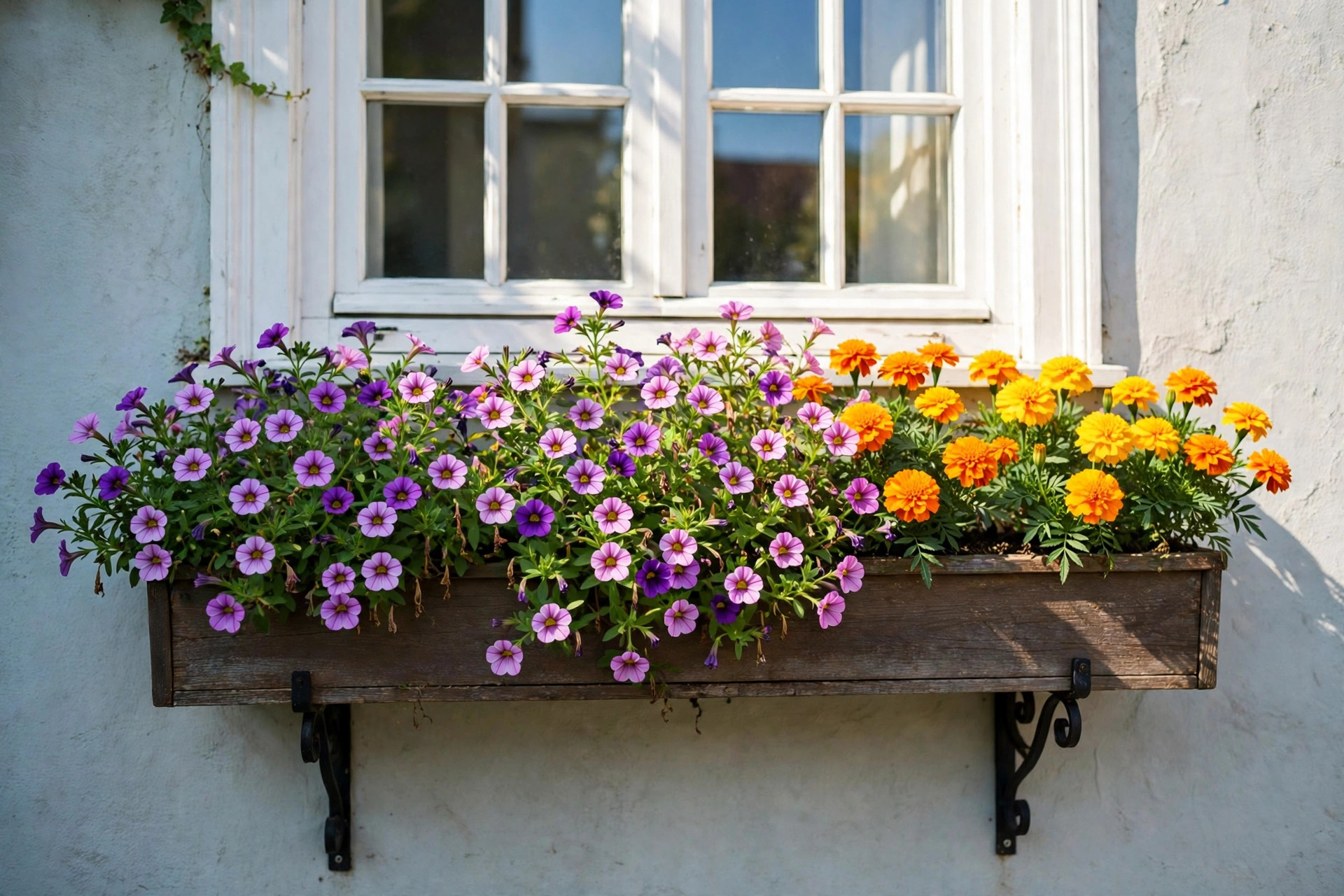
8. Sunny window? Plant for sun — petunias, geraniums, marigolds
A sunny window is the easiest window to plant, because the sun does the work and the flowers that love sun will flower all summer with almost no help. Plant for sun — petunias, geraniums, marigolds — so the box that faces south or west is full of colour from June to September, and the flowers that are chosen for the sun are the flowers that never sulk in it. Petunias trail and fill, geraniums stand tall and flower for months, marigolds add orange and gold and keep the pests away, because the plants that are chosen for the light are the plants that thrive in it. Water a sunny box more often than a shady one, because the sun that makes the flowers is the sun that dries the soil, and the box that is watered in the morning is the box that survives the afternoon. One sunny planting, and the box blazes all summer.
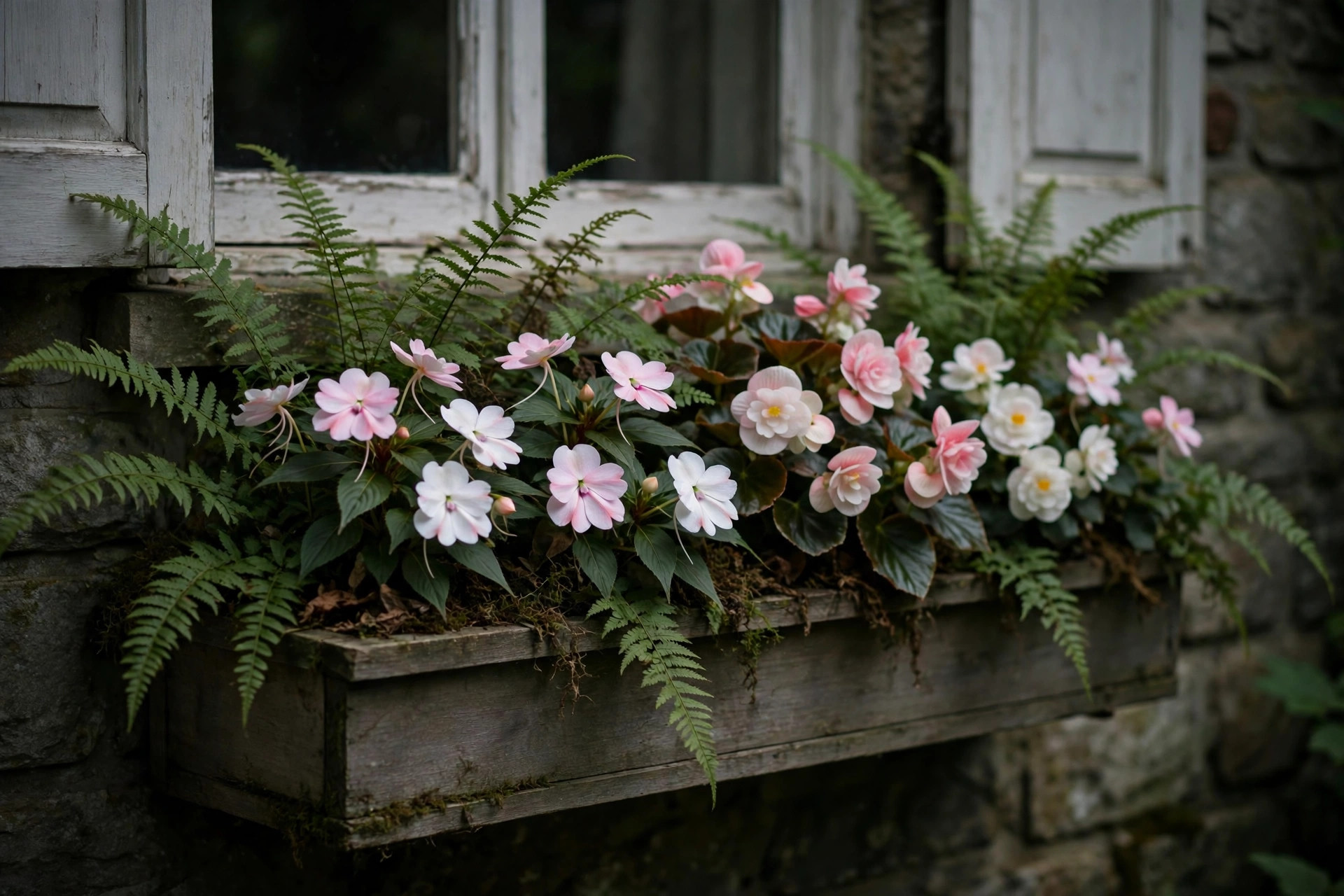
9. Shady window? Plant for shade — impatiens, ferns, begonias
A shady window is not a hopeless window — it is a different window, and the plants that love shade will flower where sun-lovers would sulk and die. Plant for shade — impatiens, ferns, begonias — so the box that faces north or sits under a porch roof is full of soft colour and green texture instead of empty soil. Impatiens flower in shade all summer, ferns add the green that makes the colours pop, and begonias bring pink and red without needing a ray of sun, because the plants that are chosen for the shade are the plants that thrive in it. A shady box dries out slower than a sunny one, so water it less and check the soil before you water, because the box that is watered when it is already wet is the box whose roots rot. (Check on Amazon for a shade-loving flower seed mix sized for window boxes.) One shady planting, and the dark window blooms too.
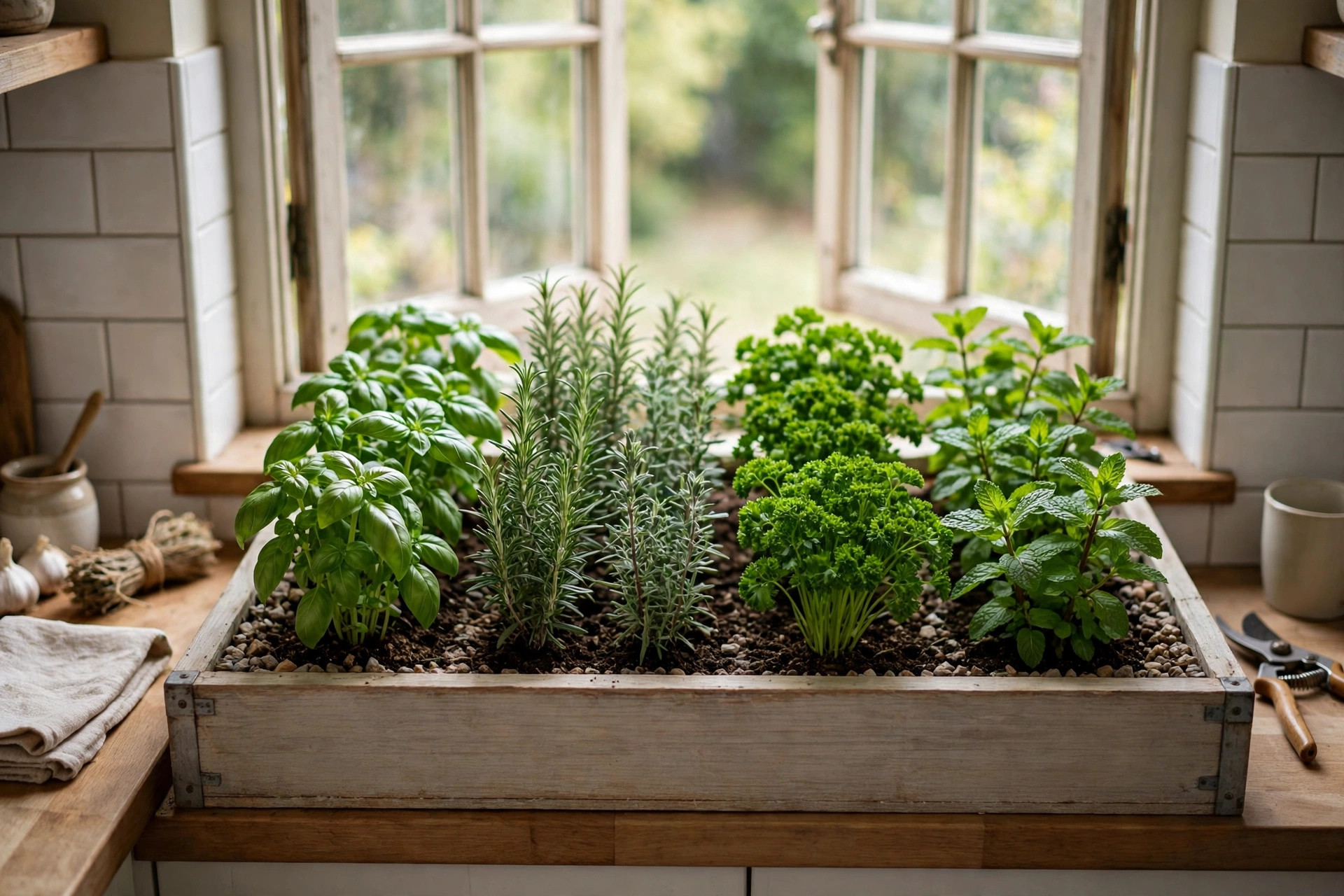
10. A herb window box by the kitchen window
A window box by the kitchen window is the most useful box in the house, because the herbs are where you cook, and the dinner that needs basil is the dinner where the basil is an arm's length away. Plant a herb window box by the kitchen window — basil, rosemary, parsley and mint in neat rows — so the box that feeds the kitchen is the box that gets used every day, and the herbs that are picked fresh are the herbs that taste like something. Keep the mint in its own pot inside the box, because the mint that is planted loose is the mint that takes over the whole box, and the herbs that are picked often are the herbs that grow bushy. Snip the herbs in the morning when the oils are strongest, because the herb that is snipped in the morning is the herb that flavours the evening meal. One herb box, and the kitchen has a garden.
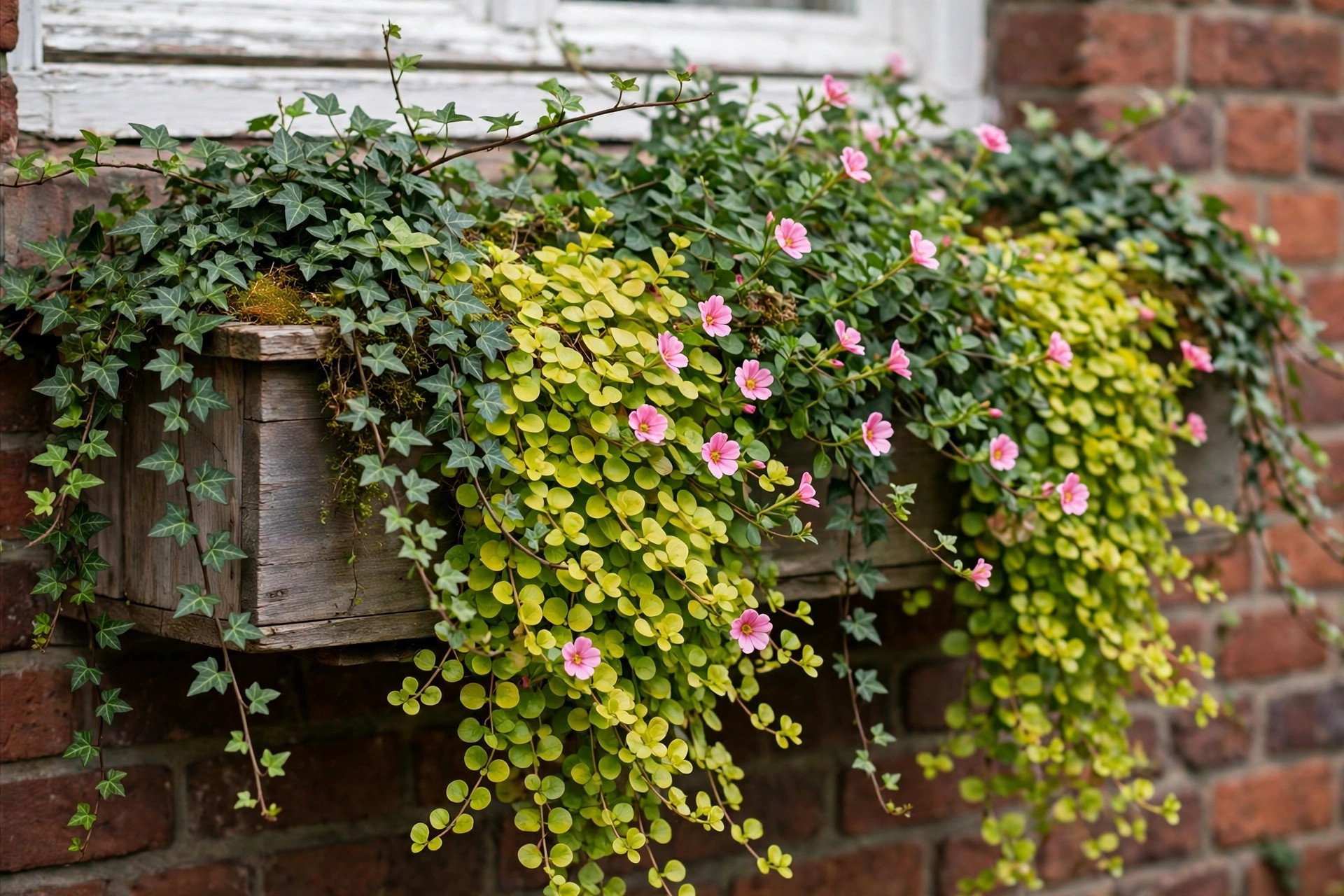
11. Trailing plants that soften the box edge
A window box with a hard wooden edge looks like a box, but a window box with plants trailing over the edge looks like a garden. Plant trailing plants that soften the box edge — lobelia, trailing petunia, ivy, creeping jenny — so the green spills over the front of the box and the wood disappears under the flowers, and the box that was a box becomes a waterfall of colour. Plant the trailers at the front corners where they can fall freely, and let them grow long before you trim them, because the trailer that is cut short is the trailer that looks like a hedge, and the trailer that is left to fall is the trailer that softens the whole window. One trailing plant each end, and the box looks twice as full.
Style it for curb appeal
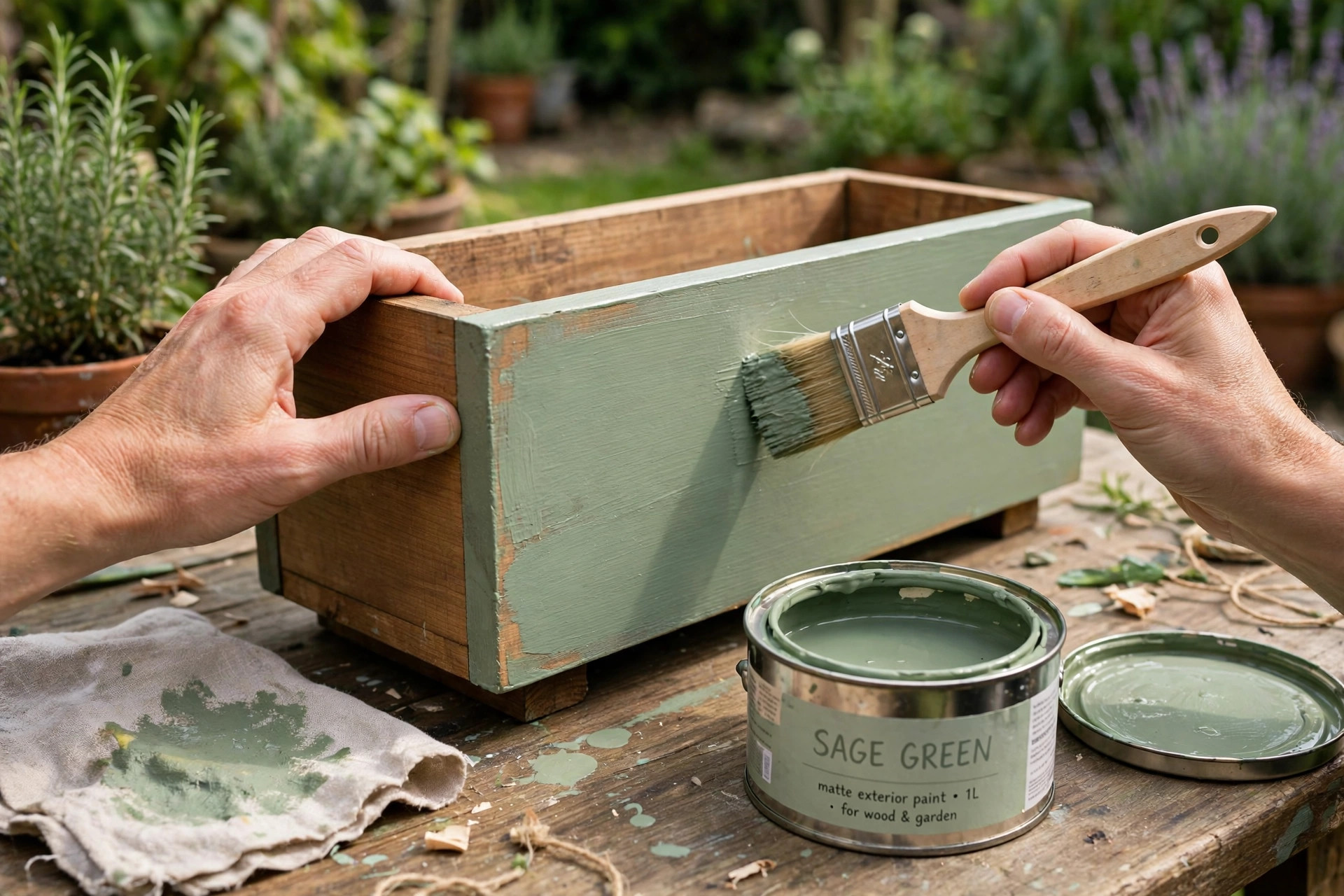
12. Paint the box a colour that flatters the house
A plain wooden box under a window is fine, but a painted box under a window is a decision — and the colour you choose is the colour that ties the box to the house. Paint the box a colour that flatters the house, so the box that is sage green under a cream house, charcoal under a white house, or terracotta under a brick house looks like it belongs, and the window that was plain is the window that looks designed. Use exterior paint or wood stain so the colour survives the rain, paint the box before you fill it, and let it dry properly, because the paint that is rushed is the paint that peels, and the box that is painted well is the box that looks good for years. The same paint-and-style thinking colours the walls in 22 DIY Canvas Wall Art Ideas for 2026, where the colour is the decision that makes the room. One coat of the right colour, and the box belongs to the house.
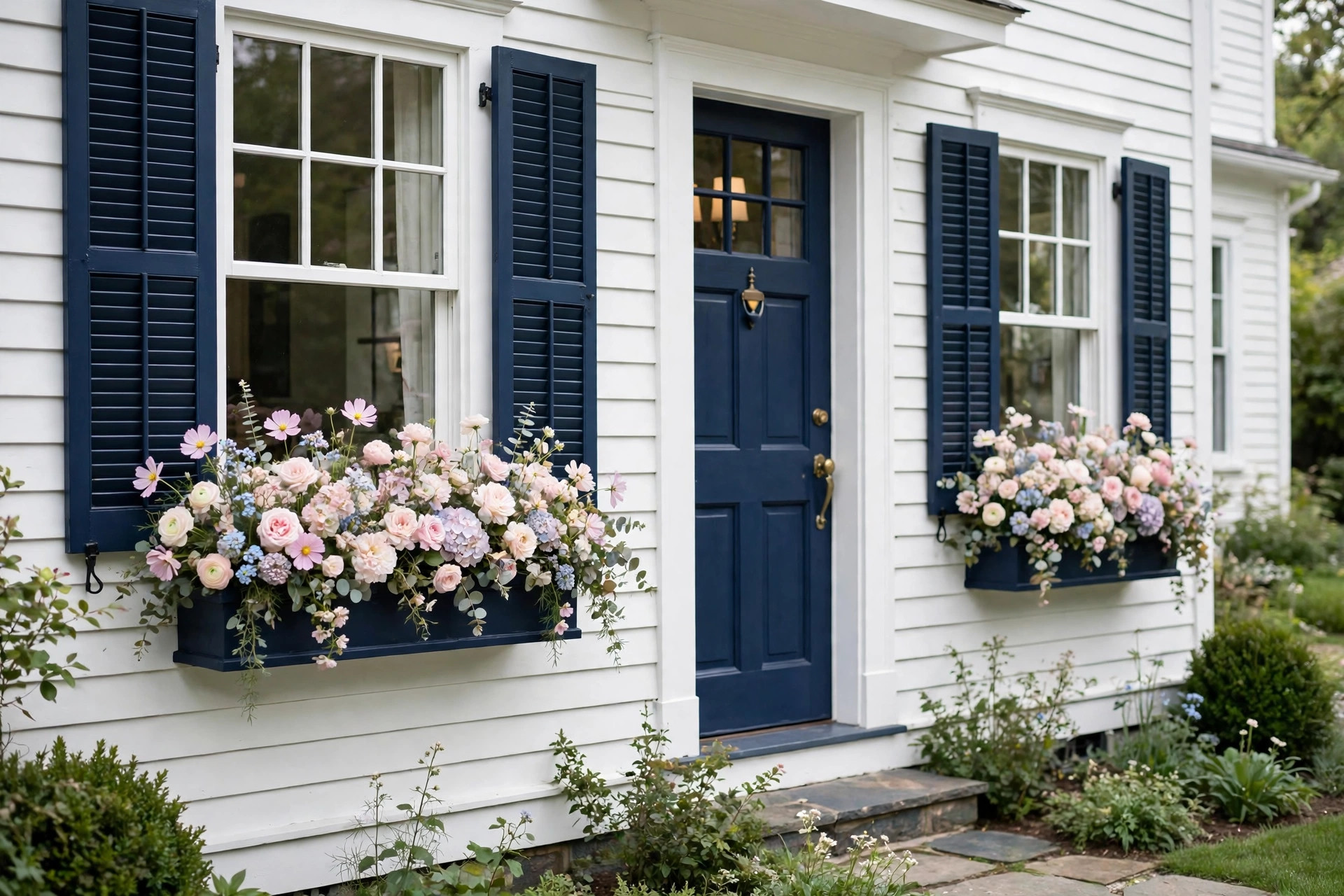
13. Match the box to the shutters and the front door
A window box that matches nothing looks like an afterthought, but a window box that matches the shutters and the front door looks like part of the house. Match the box to the shutters and the front door — same colour, same style — so the front of the house reads as one picture, and the box that echoes the door is the box that makes the whole facade look intentional. If the door is navy, paint the box navy; if the shutters are sage, paint the box sage; if there are no shutters, match the door and let the box be the echo, because the match that is repeated is the match that the eye reads as design. Keep the flowers in colours that sit with the paint, because the flowers that clash with the box are the flowers that fight it, and the box that matches is the box that makes the house look finished. One match, and the front of the house comes together.
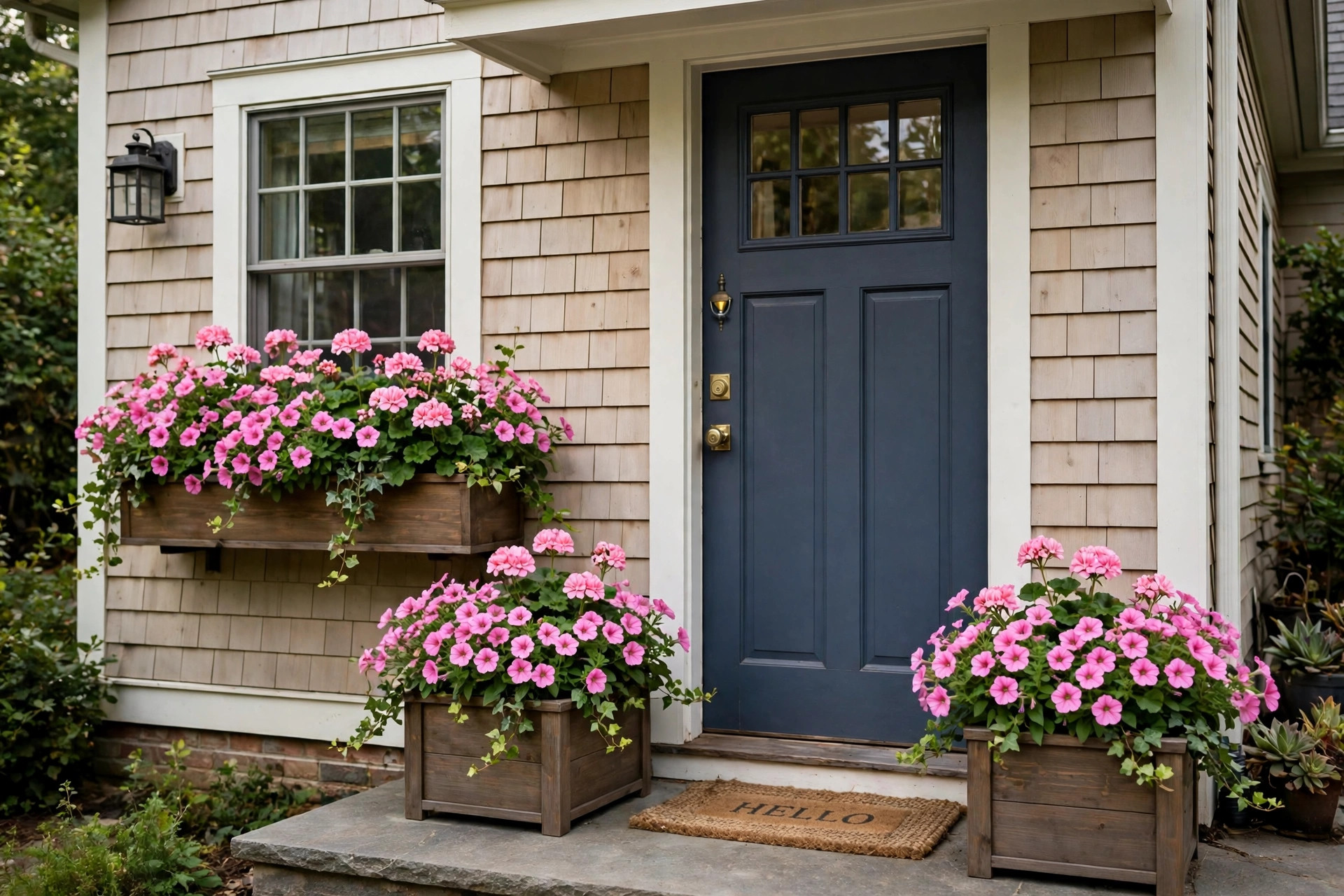
14. Pair the window box with planters on the porch
One window box is lovely, but one window box plus planters on the porch is a garden — and the porch that has both is the porch that looks like someone lives there and loves it. Pair the window box with planters on the porch, so the same flowers appear in the box and in the pots by the door, and the front of the house reads as one planting instead of one box. Use the same colours in the box and the pots, keep the planters the same style as the box, and put the tallest planter by the door, because the pairing that repeats is the pairing that ties the house together. The balcony version of the same trick lives in 18 Balcony Storage Ideas for 2026, where the box hangs on the rail and the pots sit on the floor. One box plus two pots, and the porch is a garden.
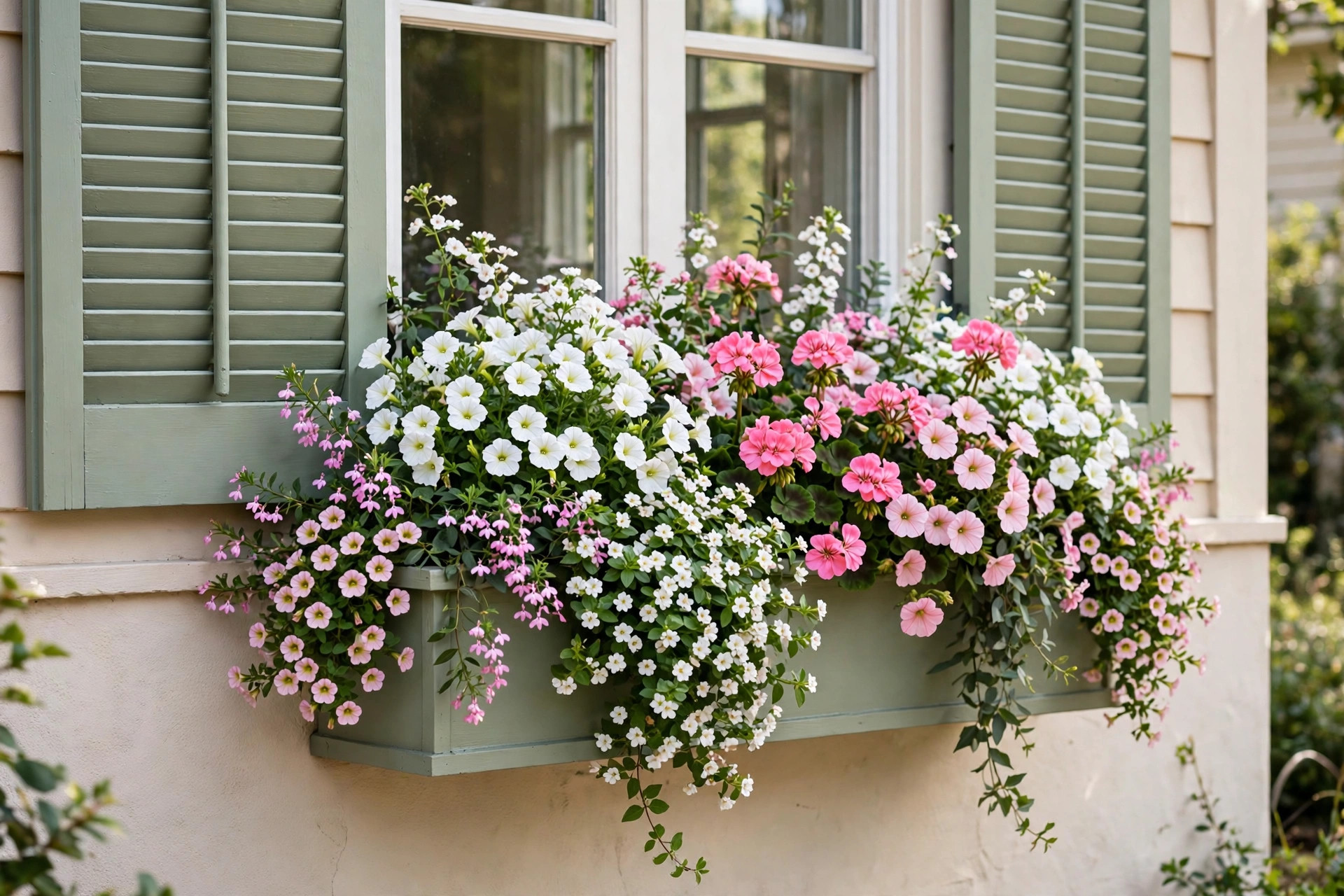
15. A cottage window box — overflowing, loose and romantic
A cottage window box does not follow the rules — it overflows, it mixes, it spills, and it looks like the garden grew itself up the wall. Build a cottage window box — overflowing, loose and romantic — so the box is packed tight with mixed flowers, the trailers fall long, and the colours are soft pinks, whites and blues instead of one sharp colour. Plant more than the box looks like it holds, because the cottage box that is packed is the cottage box that looks abundant, and the flowers that crowd each other are the flowers that look like a cottage garden. Let the box go a little wild, because the cottage box that is too tidy is the cottage box that is not a cottage box, and the window that overflows is the window that people photograph. One overflowing box, and the house looks like a cottage.
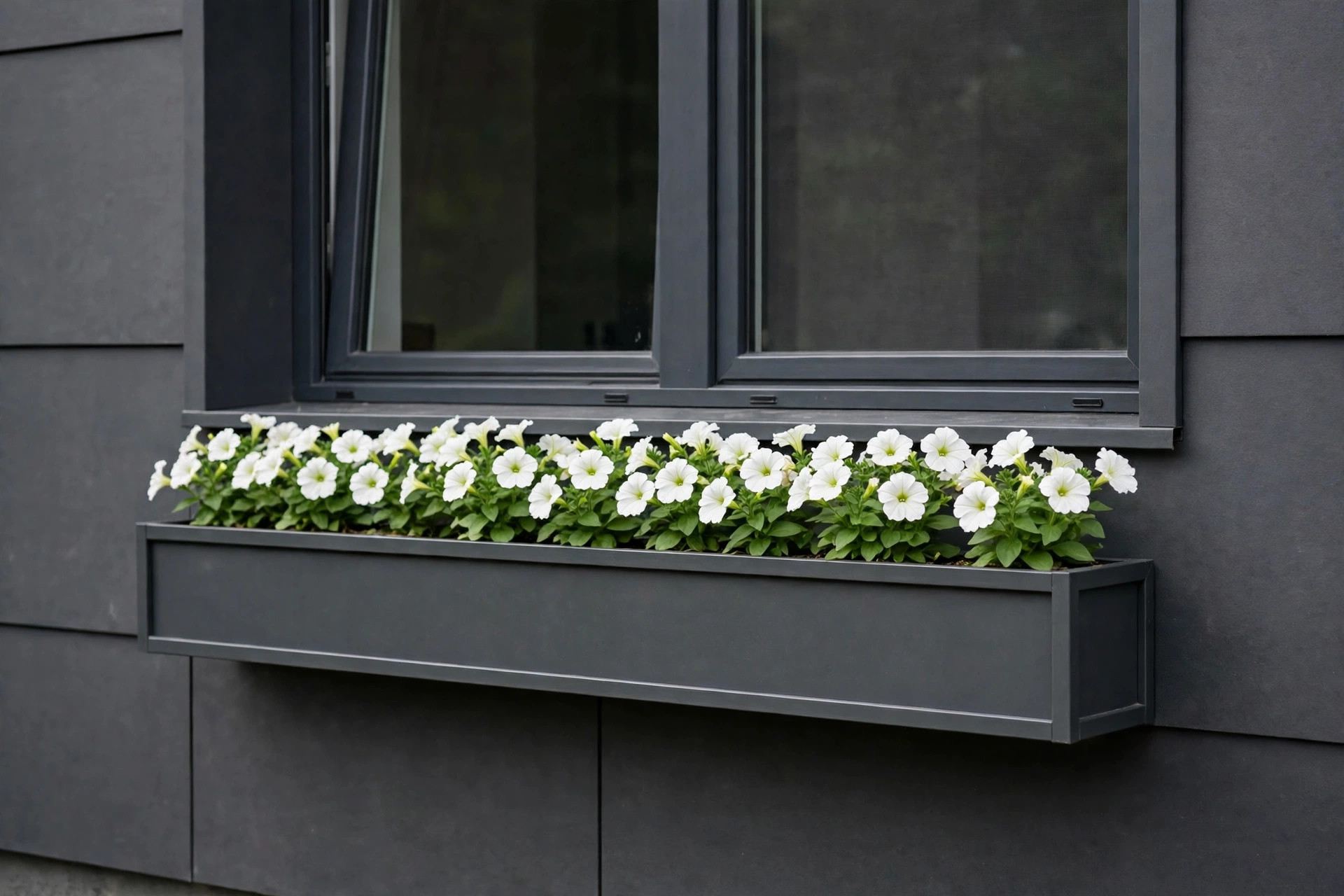
16. A modern window box — one plant, one colour, clean lines
A modern window box is the opposite of the cottage box — one plant, one colour, clean lines, and nothing extra. Build a modern window box — one plant, one colour, clean lines — so the box is painted charcoal or white, the flowers are all white petunias or all green grasses, and the window that was busy is the window that is calm. Plant a single row of the same plant, keep the trailers out, and let the box be a stripe of green against the wall, because the modern box that is simple is the modern box that looks expensive. The budget version of the same clean look comes from the dollar store in 25 Dollar Store DIY Ideas for 2026, where the pots are cheap but the look is the same. (Check on Amazon for a slim modern window box planter in matte charcoal.) One plant, one colour, and the window looks designed.
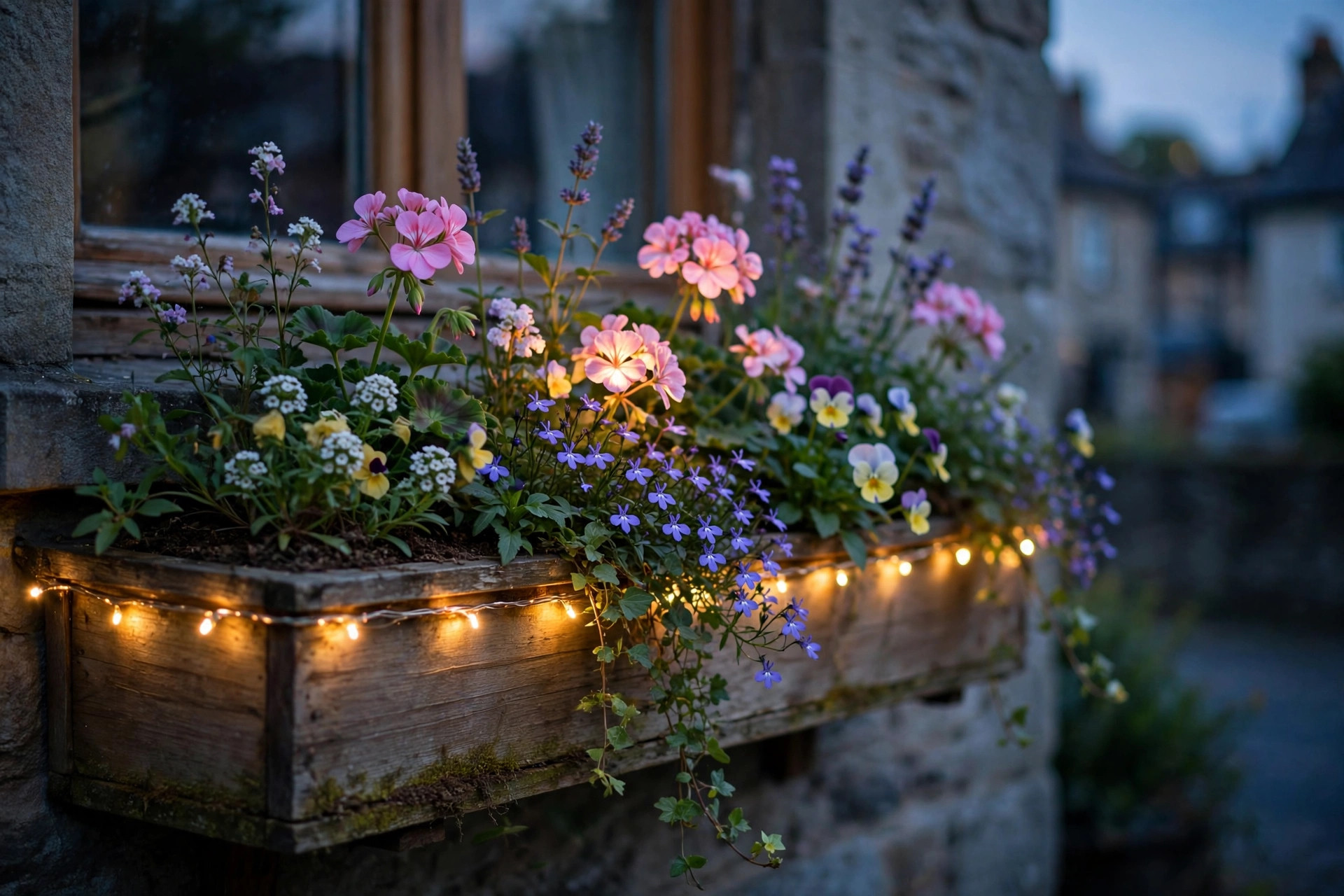
17. Fairy lights along the box for evening glow
A window box is a daytime thing — until you put fairy lights along it, and then it is an evening thing too. String fairy lights along the box for evening glow, so the box that was pretty at noon is glowing at dusk, and the front of the house that was dark is the front of the house that welcomes you home. Run a solar string along the front edge of the box, tuck the panel where it catches the sun, and let the lights come on by themselves at dusk, because the lights that are solar are the lights you never have to switch on. Keep the lights warm white, not coloured, because the warm light that glows is the warm light that flatters the flowers, and the box that glows is the box that is seen after dark. One string of lights, and the box works all evening.
Keep it alive and tidy
18. Water little and often — the routine that keeps boxes alive
A window box holds very little soil, so it dries out fast — and the box that is watered once a week is the box whose flowers wilt by Wednesday. Water little and often — the routine that keeps boxes alive — so the box gets a small drink every morning or every evening, and the soil stays damp without ever sitting in water. Water in the morning in summer, because the water that goes on in the morning is the water the plants use all day, and the leaves that are wet at night are the leaves that get mildew. Check the soil with a finger before you water, because the soil that is damp an inch down is the soil that does not need water yet, and the box that is watered on a routine is the box whose flowers never wilt. One small drink a day, and the box stays alive.
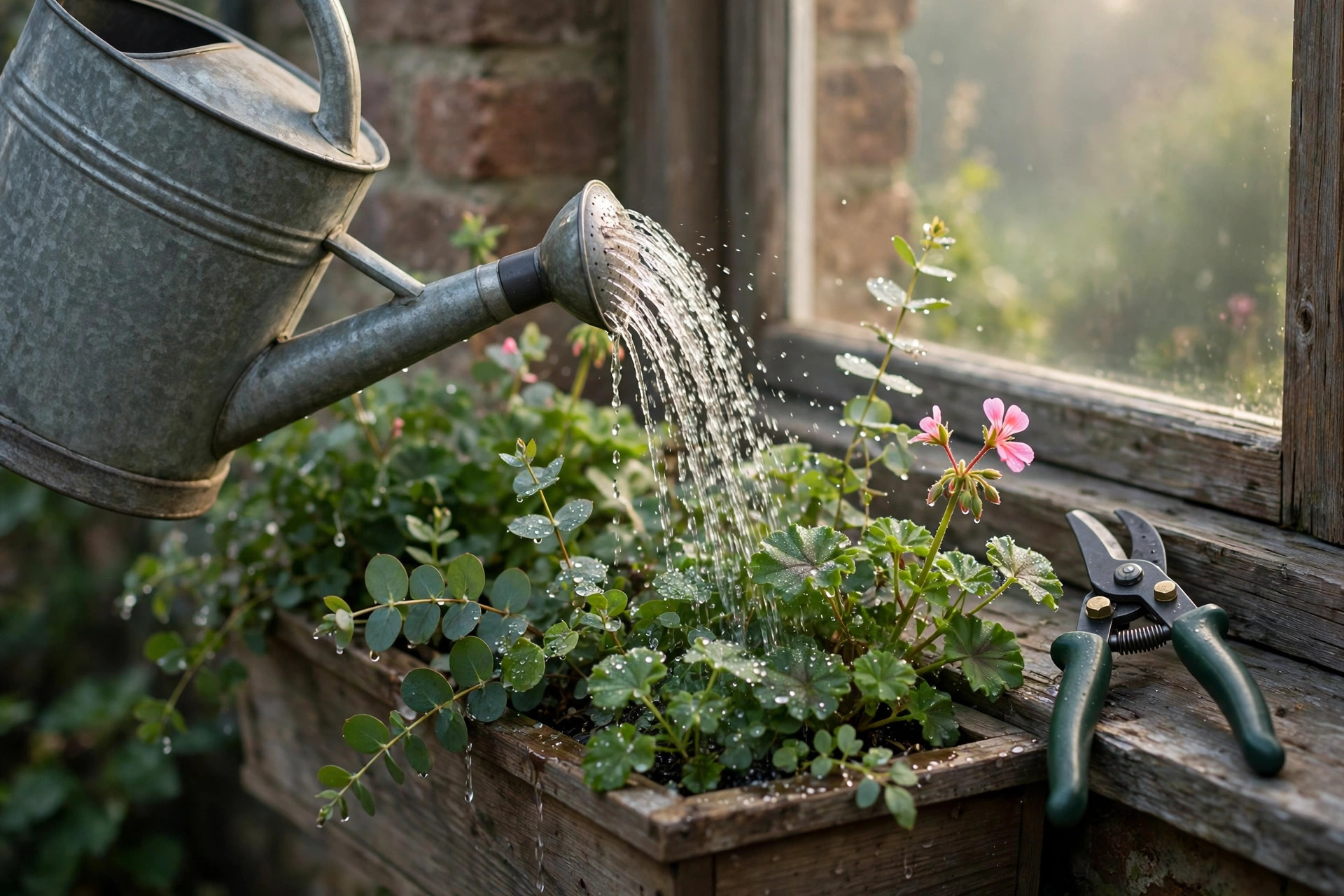
19. A self-watering liner for the forgetful gardener
Some gardeners forget to water, and the window box is the first thing that shows it — because the box that is forgotten is the box that is dead by July. Use a self-watering liner for the forgetful gardener, so the liner holds a reservoir of water under the soil, the soil draws up what it needs, and the box that is watered once a week is the box that stays alive all week. Fit the liner inside the box before you fill it, fill the reservoir through the tube at the corner, and check the water level once a week, because the liner that is checked is the liner that never runs dry. A self-watering liner costs little and saves the whole box, because the box that waters itself is the box that survives the holiday. One liner, and the forgetting stops mattering.
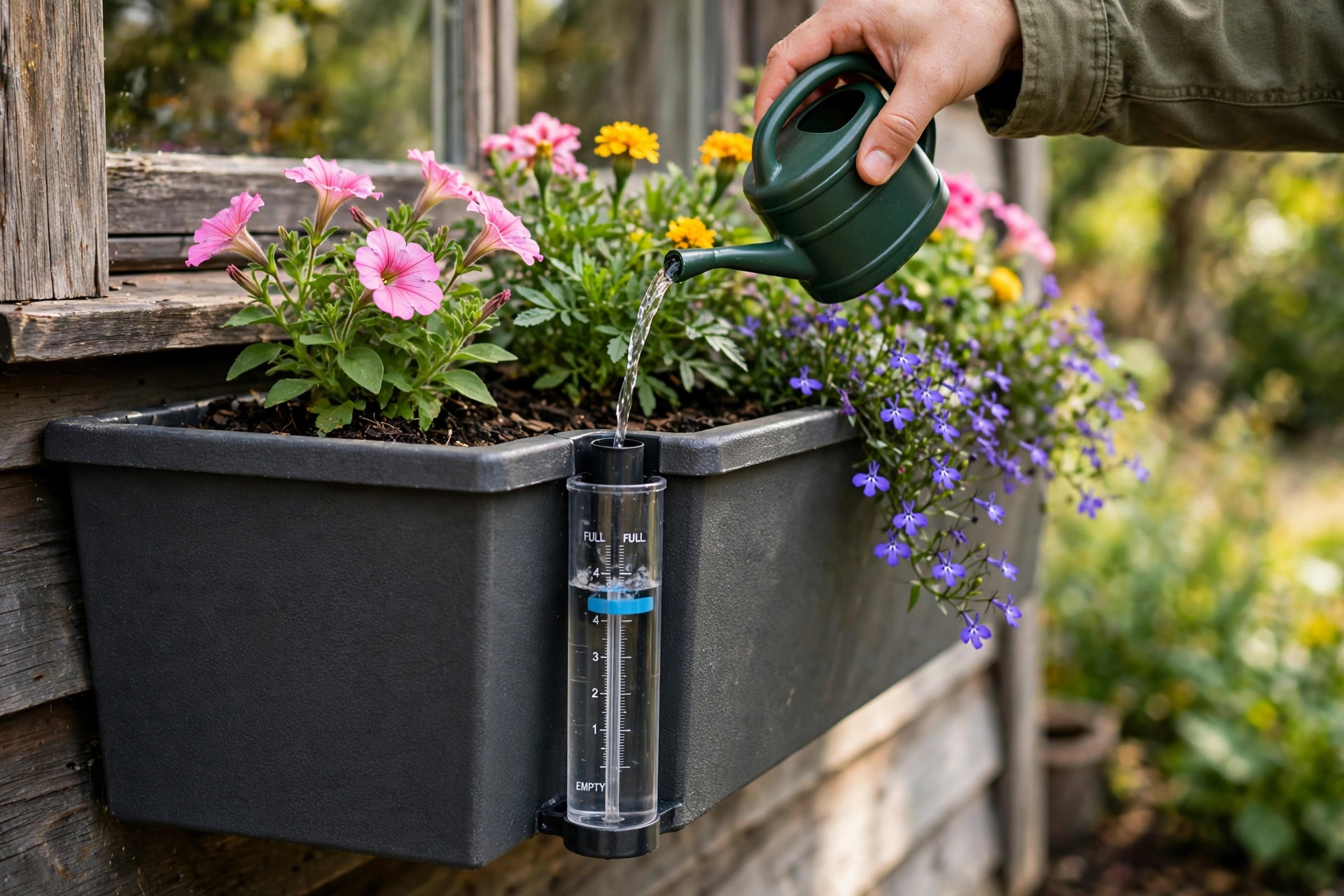
20. Deadhead weekly and the flowers keep coming
Flowers that are left to go to seed stop flowering, because the plant that has made seed thinks its job is done, and the box that was full of colour in June is full of seed heads in July. Deadhead weekly and the flowers keep coming, so every spent flower is snipped off, the plant makes new buds instead of seed, and the box that is deadheaded is the box that flowers until the frost. Snip the dead flower just above the next leaf, carry the secateurs on your morning round, and drop the deadheads in the compost, because the snip that takes a second is the snip that buys a week of flowers. The outdoor storage around the garden gets its own system in 20 Outdoor Toy Storage Ideas for 2026, where the same weekly habit keeps the garden tidy. One snip a week, and the flowers never stop.
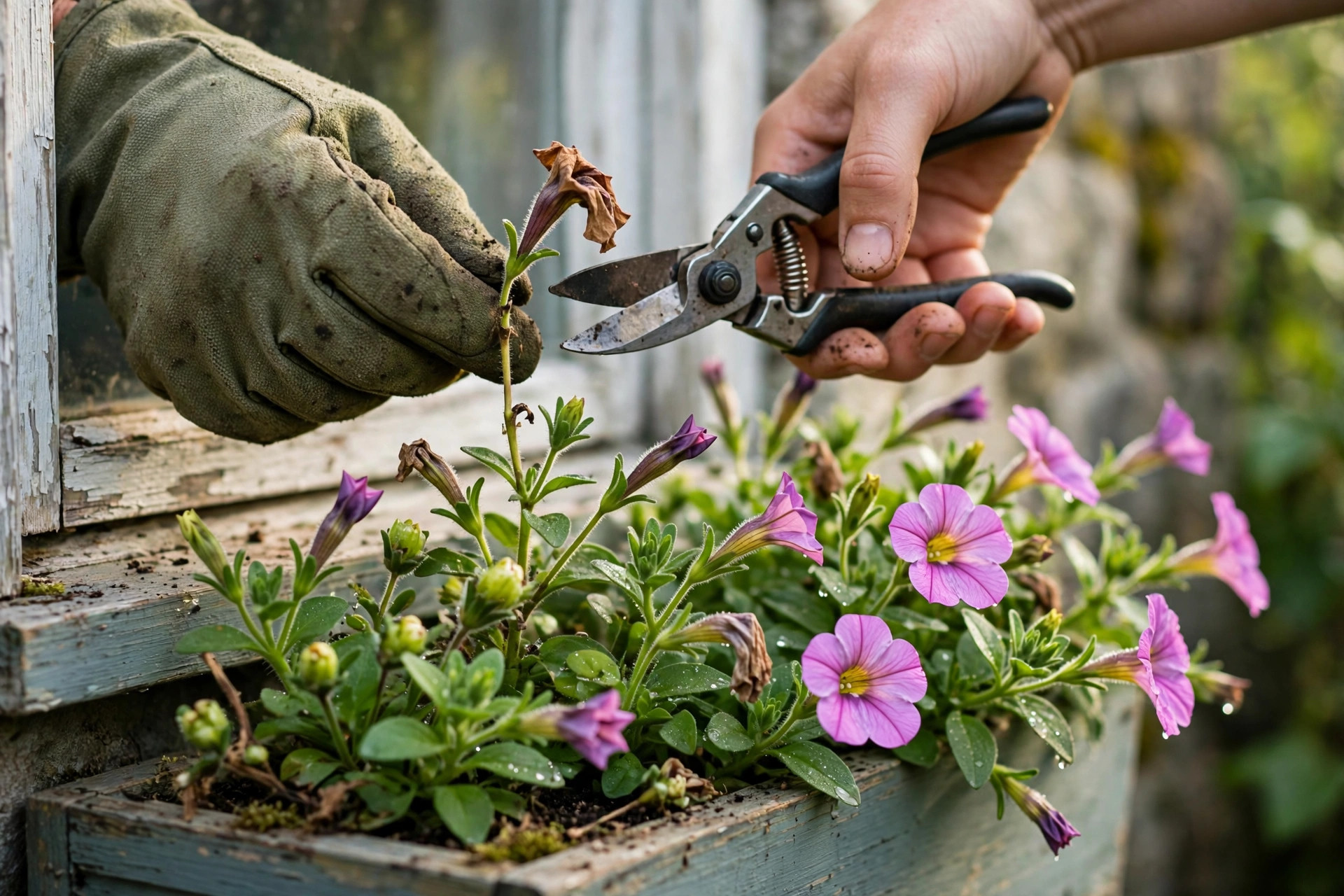
21. Winter care — empty, clean and store, or plant evergreens
A window box left full of dead plants through winter is a window box that rots, because the wet soil freezes, the wood cracks, and the box that was lovely in summer is a mess by spring. Give the box winter care — empty, clean and store, or plant evergreens — so the box that is emptied in autumn is the box that is cleaned, dried and stored under cover, and the box that stays up is the box that is planted with small evergreens and pine cones. Empty the dead plants into the compost, scrub the box out, let it dry in the sun, and store it in the garage, because the box that is stored dry is the box that lasts another year. The garage that stores it gets its full system in 25 Garage Storage Ideas for 2026, where the spare boxes live with the tools. One winter clean, and the box is ready for spring.
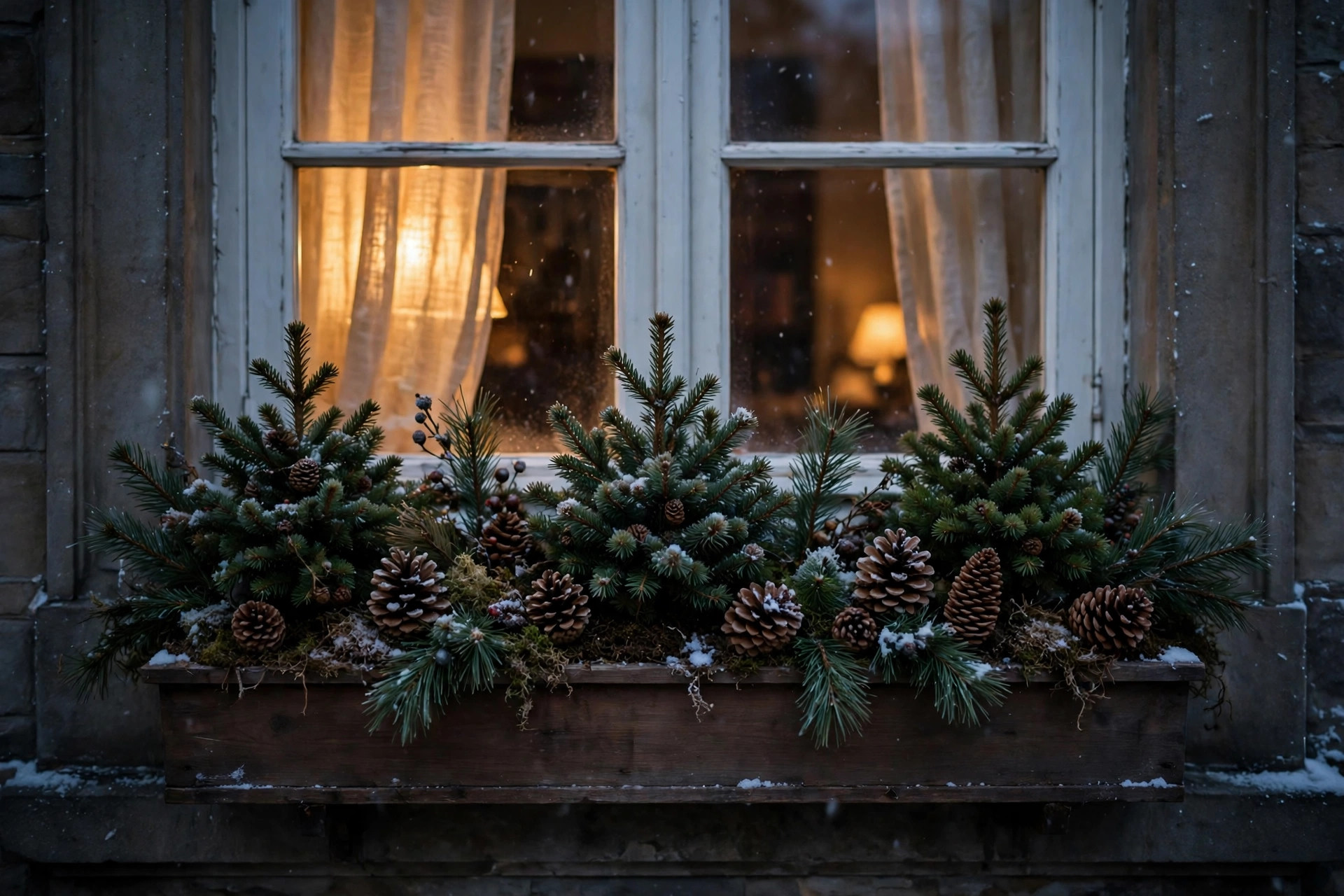
22. One in, one out — refresh one box a season, not all of them at once
A house with four window boxes that all need refreshing at once is a house with a big job, because the soil, the plants and the paint all need doing, and the job that is big is the job that never gets done. Use one in, one out — refresh one box a season, not all of them at once — so the box that is refreshed this spring is the box that gets new soil, new plants and a fresh coat of paint, and the other boxes wait their turn. Rotate the refresh around the house, one box a season, because the rotation that is steady is the rotation that keeps every box good, and the house that is refreshed one box at a time is the house that always looks loved. One box a season, and the whole house stays fresh.
Which window box idea fits which situation?
| Situation | Best first move | Budget | Tools needed |
|---|---|---|---|
| No idea what wood to use | Choose cedar or treated pine (idea 1) | Low | None |
| Box will not fit the window | Measure the window first (idea 2) | Free | Tape measure |
| Never built anything before | Five boards and screws (idea 3) | Low | Saw, drill |
| Box rots after one winter | Line it and drill drainage (ideas 4–5) | Low | Liner, drill |
| Sunny window, dead plants | Plant for sun (idea 8) | Low | Plants |
| Shady window, dead plants | Plant for shade (idea 9) | Low | Plants |
| House looks plain from the street | Paint the box (idea 12) | Low | Paint |
| Box looks empty by August | Deadhead weekly (idea 20) | Free | Secateurs |
| Always forgets to water | Self-watering liner (idea 19) | Low | Liner |
| Boxes die every winter | Winter care (idea 21) | Free | None |
You do not need all 22 ideas. You need the three that solve your window — usually the right wood that lasts, the planting formula that fills the box, and the colour that flatters the house. Start with the wood, build the box this weekend, and plant it before the next sunny day. Do that and the window that was plain will be the window people stop to look at, the flowers will spill over the edge, and the house will look loved from the street.
Save this post for the next planting season, and if the yard around the window needs the same treatment, read 26 DIY Yard Decor Ideas for 2026 next — it is Post 21, the yard the box faces — and 26 DIY Outdoor Bench Ideas for 2026, Post 30, for the bench under the window. This is the third post of the new DIY by project return run — Posts 81 to 100, one project at a time — and the run keeps going with the room decor next door. The room inside the window gets its own deep dive in DIY Room Decor, where the handmade look moves indoors.
Publish date assigned at publishing time. Updated as new window box finds are tested.
Frequently asked questions
What is the best wood for a DIY window box?
Cedar is the best wood for a DIY window box, because it resists rot on its own, weathers well, and needs no treatment to survive outside. Redwood is just as good where it is available. Treated pine is the best budget choice — it works just as well once it is sealed or painted. Avoid untreated softwood and pallet wood for a box that holds wet soil, because the wood soaks up water and rots from the inside within a season.
How do I keep a window box from rotting?
Line the box and drill drainage holes. Line it with black plastic liner or landscape fabric so wet soil never touches the bare wood, and drill four or five drainage holes in the bottom so rain can escape instead of pooling. Cover each hole inside with a piece of broken pot or mesh so the soil stays in and the water gets out. Empty the box in autumn, clean it, let it dry, and store it under cover if you do not plant evergreens for winter.
What flowers grow best in a window box?
It depends on the sun. For a sunny window, plant petunias, geraniums and marigolds — they flower all summer and love the heat. For a shady window, plant impatiens, ferns and begonias — they flower in shade and bring soft colour where sun-lovers would die. Use the thriller, filler, spiller formula: one tall plant at the back, fillers in the middle, and a trailing plant at each front corner so the flowers spill over the edge.