24 DIY Backyard Firepit Ideas for 2026
The backyard is the biggest room in the house and the one that gets used least, because the garden is where the chairs live in summer and the evenings end when the sun goes down — and the patch of grass that should be the best seat in the house is the patch that goes dark at eight o'clock. The garden is not the problem — the problem is that the garden has no heart, no place where everyone sits down together, so the evenings drift inside and the backyard waits until next summer. These 24 DIY backyard firepit ideas give the garden a heart: a circle of stone with a fire in the middle, chairs pulled close, and the evenings that start at dusk and end when the last log burns down.
Every idea below works in a real garden, from a flat where the whole firepit is a tabletop bowl on the patio to a house where the firepit is a brick ring with a paver patio around it. The yard itself gets its full treatment in 26 DIY Yard Decor Ideas for 2026, where the firepit corner sits among the planters and the paths — and the water feature that shares the evening gets its own build in 20 DIY Water Fountain Ideas for 2026. Pick three ideas that fit your space, start with the style, and build from there.
Pick your firepit style
1. The classic stone circle — the firepit that costs almost nothing
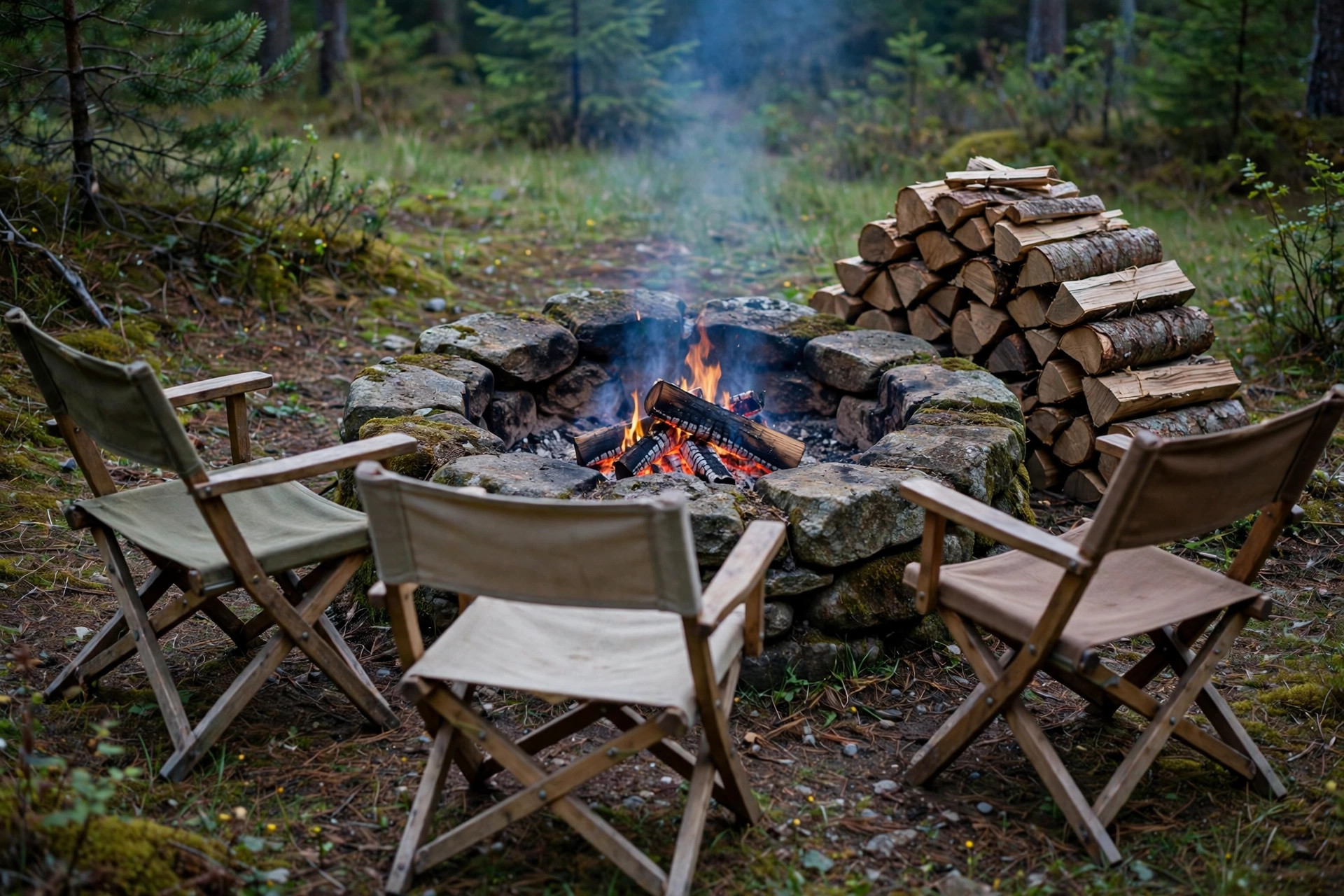
A firepit does not have to be bought, because the stones are already in the garden, the ring is a circle you can draw with a stick, and the firepit that costs almost nothing is the firepit that gets built this weekend instead of next year. The classic stone circle — the firepit that costs almost nothing — is a ring of flat stones laid in a circle on bare ground, and it works because the stones hold the fire in, the fire stays where you put it, and the circle is the shape every firepit has been since people first sat around one. Walk the garden first and gather the flat stones, the ones that sit steady and do not wobble when you press them, because the ring that is built from found stone is the ring that costs nothing and looks like it has always been there. Lay the stones in a circle about a metre across, leave a gap at the bottom for air, and put the fire in the middle, because the circle that breathes is the circle that burns well. One circle of found stone, and the garden has a heart.
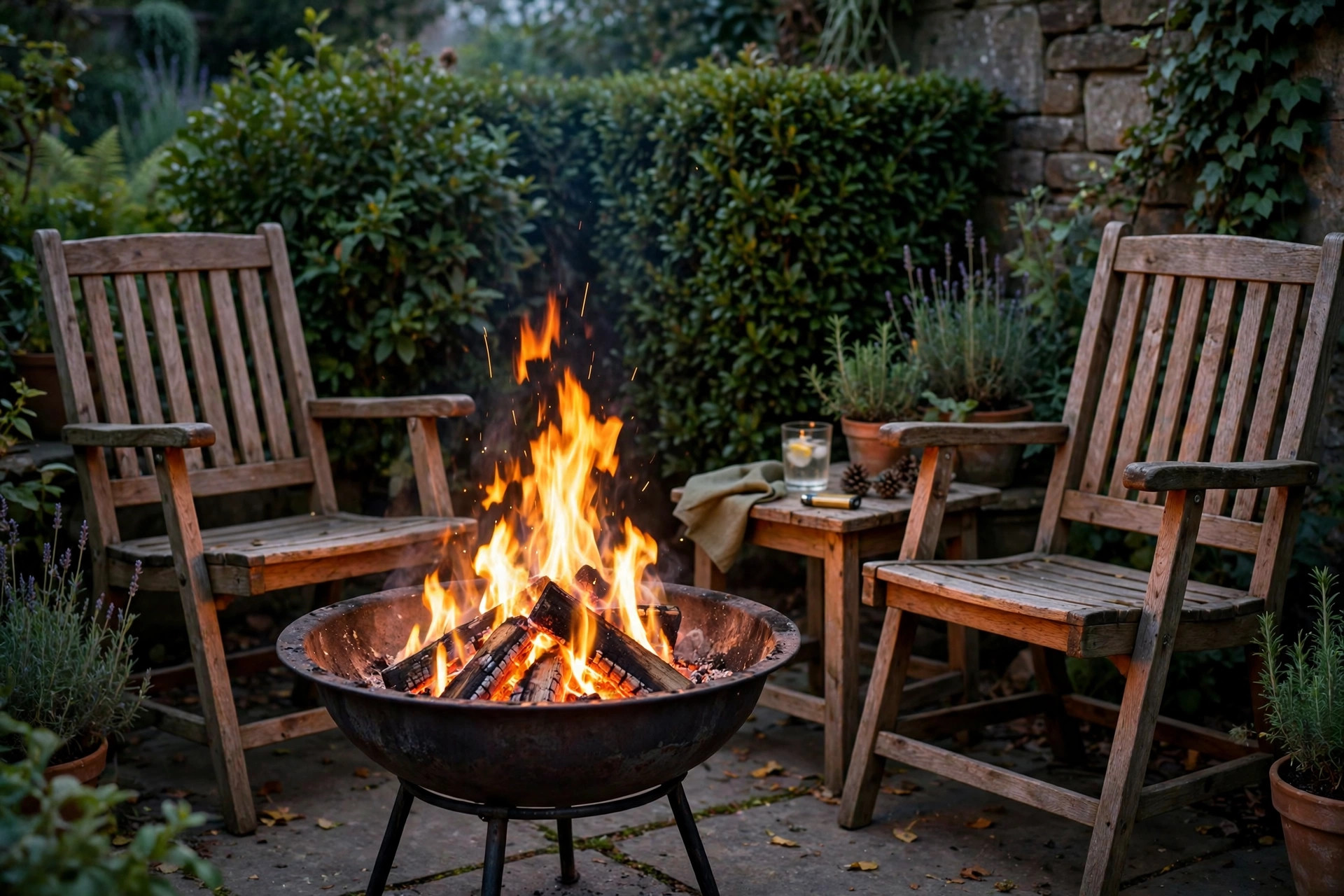
2. A metal bowl firepit — the bowl that moves wherever the chairs go
A fixed firepit is a firepit that stays where it was built, because the stones are heavy, the ring is set in the ground, and the evening that wants to sit on the other side of the garden has to walk to the firepit instead of the firepit walking to the evening. A metal bowl firepit — the bowl that moves wherever the chairs go — is a steel bowl on short legs that you can carry to wherever the chairs are, and it works because the bowl holds the fire, the legs hold the bowl off the grass, and the whole thing moves when the evening moves. Set the bowl on a flat patch, keep it away from the fence and the overhanging branches, and pull the chairs into a circle around it, because the bowl that moves is the bowl that is always in the right place. Let the bowl cool before you move it again, because the bowl that is carried hot is the bowl that burns the hands, and the bowl that is moved cold is the bowl that is ready for the next evening. One metal bowl, and the fire goes where the chairs go.
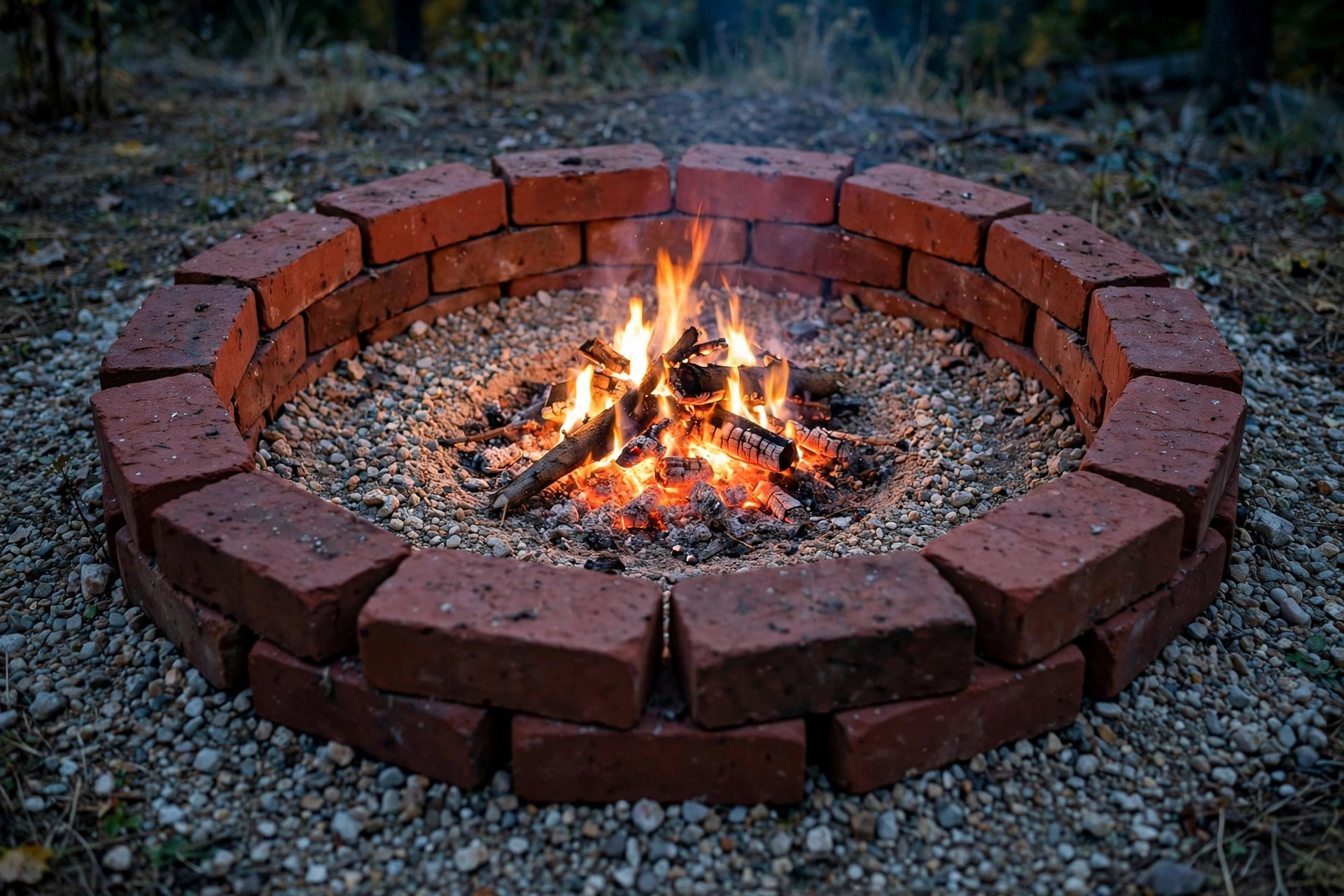
3. A brick firepit — the weekend build that lasts for years
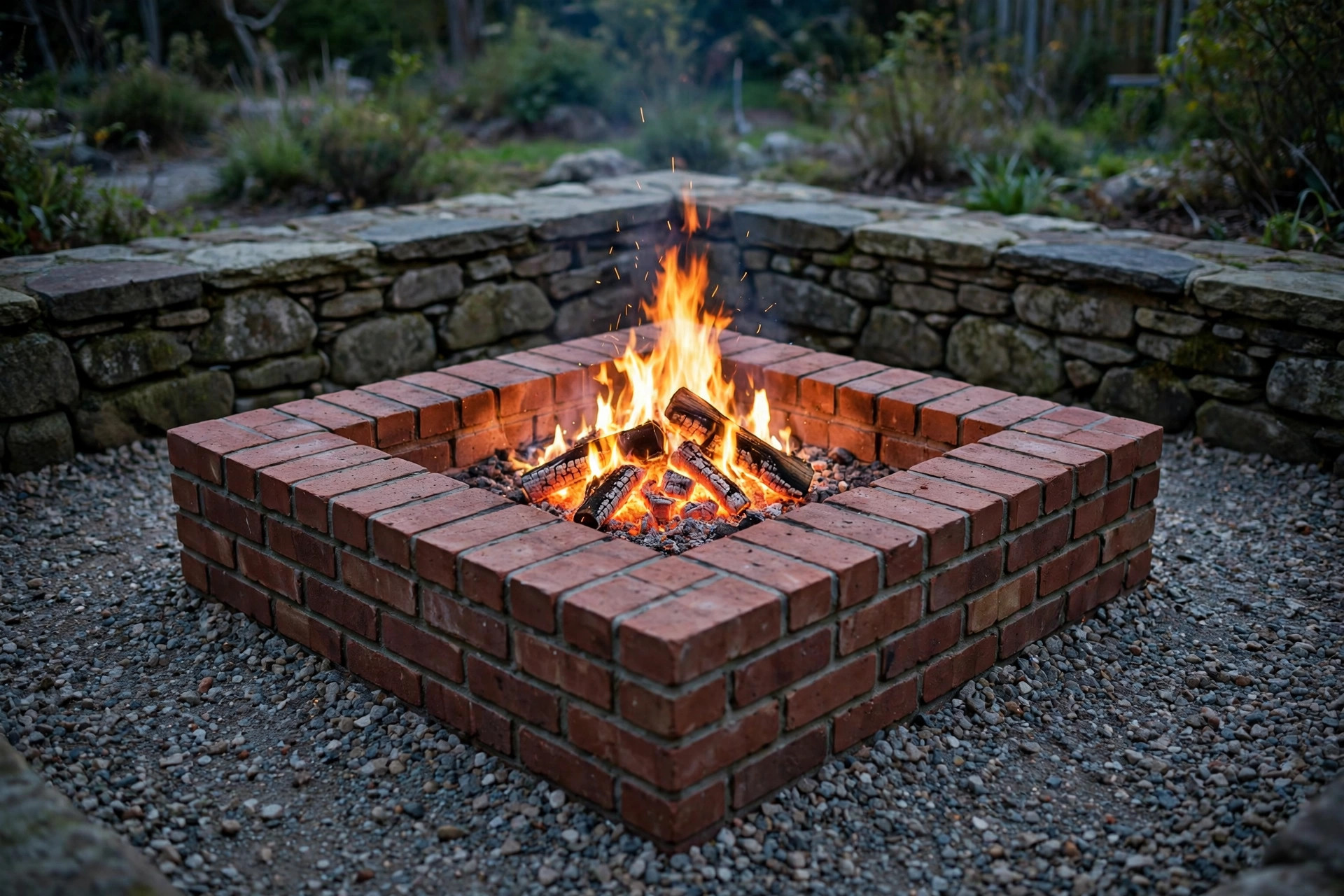
A firepit built in an afternoon can last for years, because the bricks are made for heat, the ring is laid in a circle, and the build that takes one weekend is the build that is still standing when the children are grown. A brick firepit — the weekend build that lasts for years — is a ring of fire bricks or old house bricks laid in two or three courses, and it works because the bricks hold the heat, the mortar holds the bricks, and the ring that is built properly is the ring that never needs rebuilding. Dig a shallow circle first, lay a gravel base so the water drains, and lay the bricks in a running bond so no joint lines up with the one below it, because the ring that is bonded is the ring that stands. Leave the inside of the ring unmortared if you want to take it apart later, because the ring that is dry-laid is the ring that can be moved, and the ring that is mortared is the ring that stays. One weekend of bricks, and the firepit lasts for years.
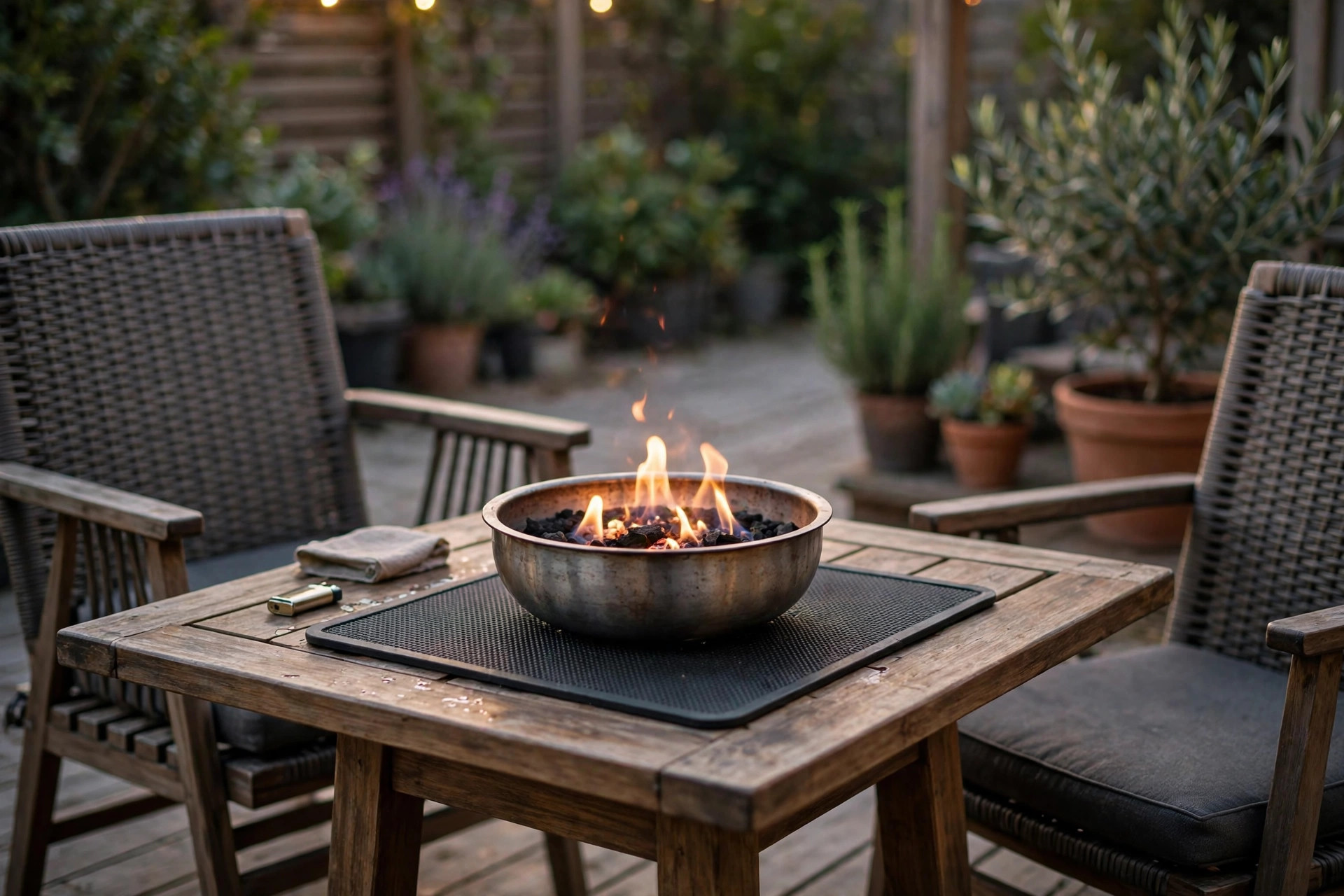
4. A tabletop fire bowl — the firepit for the smallest garden
A small garden still deserves a fire, because the patio is only a few steps across, the balcony is barely wide enough for two chairs, and the garden that is small is the garden where a full firepit will not fit. A tabletop fire bowl — the firepit for the smallest garden — is a small steel or ceramic bowl that sits on the patio table, and it works because the fire is small, the bowl is steady, and the evening that is lit by a tabletop flame is the evening that feels just as cosy as the one around a full ring. Put the bowl on a heatproof mat, keep it in the middle of the table where no one can knock it, and burn only small pieces of wood or a gel fuel canister, because the bowl that is small is the bowl that is safe on a table. Never leave a tabletop bowl burning on a wooden table without the mat, because the mat that protects the table is the mat that stops the scorch mark, and the bowl that sits on stone or metal is the bowl that is safe. One small bowl, and the smallest garden has a fire.
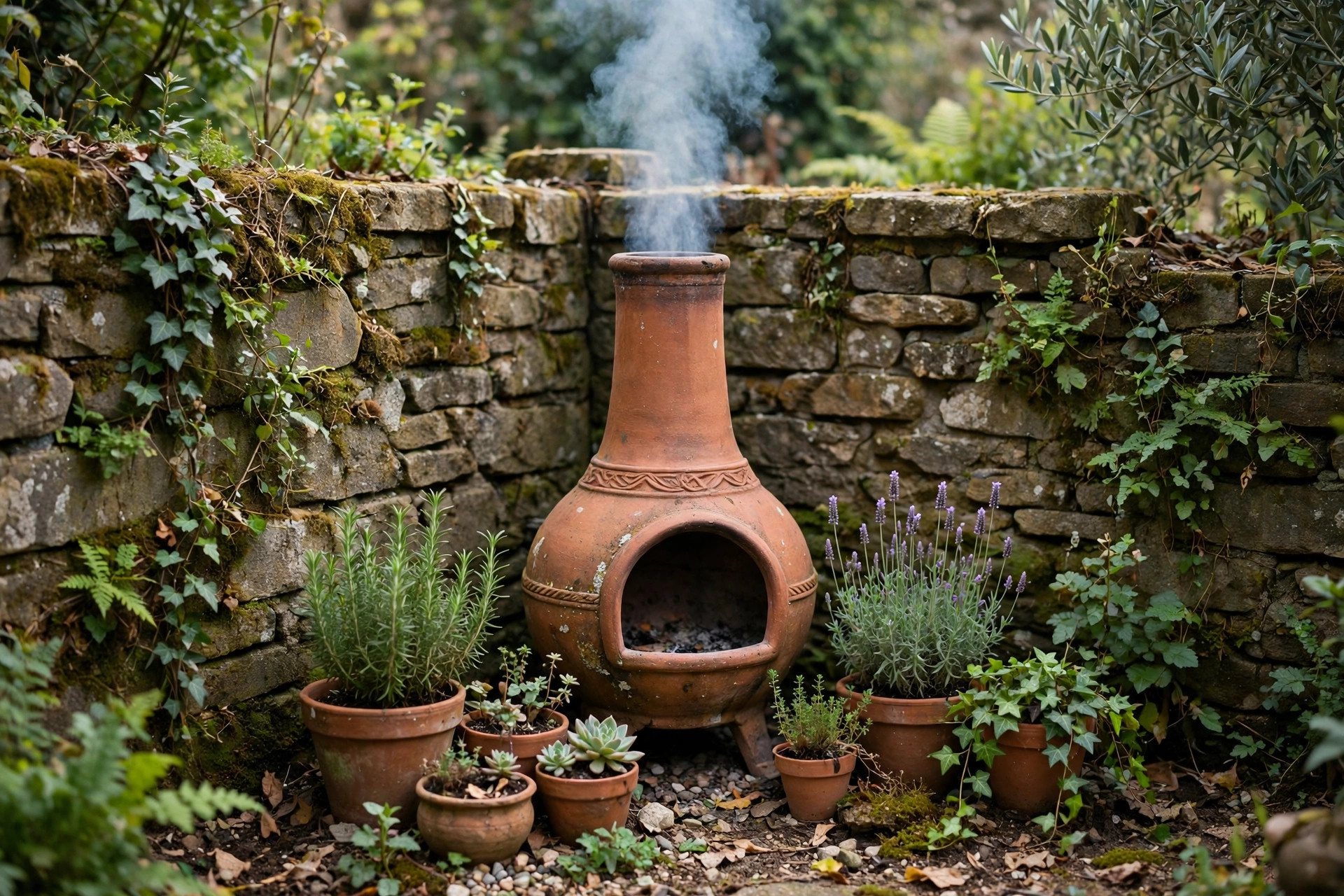
5. A chiminea in the corner — the fire that draws the smoke up, not out
Smoke is the part of a firepit that ruins the evening, because the smoke follows the wind, the wind follows the chairs, and the evening that should smell of woodsmoke smells of it in your eyes instead. A chiminea in the corner — the fire that draws the smoke up, not out — is a clay or cast-iron stove with a tall chimney that pulls the smoke straight up, and it works because the chimney draws the smoke away from the chairs, the fire burns hot inside the belly, and the corner that holds the chiminea is the corner that stays smoke-free. Stand the chiminea on a flat stone base, keep it in the corner where the wind cannot push the smoke back at the chairs, and light it with dry wood so the chimney draws properly, because the chiminea that is lit with dry wood is the chiminea that draws. Cover it when it rains, because the clay that gets wet and then hot is the clay that cracks, and the chiminea that is covered is the chiminea that lasts. One chiminea in the corner, and the smoke goes up instead of out.
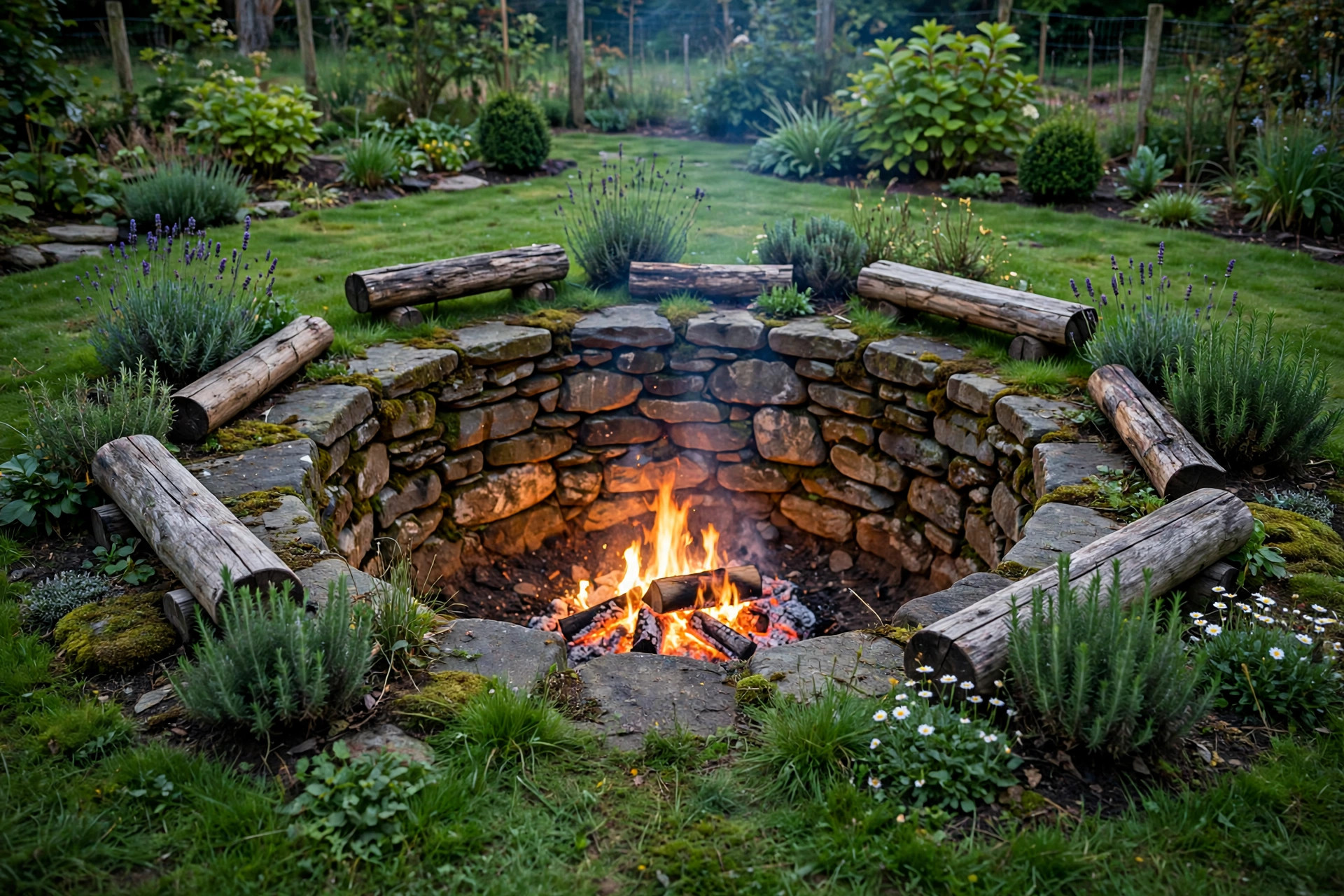
6. A sunken firepit — the pit that feels like a room outdoors
A firepit on flat ground is a firepit you sit beside, but a firepit sunk into the ground is a firepit you sit inside, because the ground drops away, the walls rise around you, and the evening that happens in a sunken pit is the evening that feels like a room with no roof. A sunken firepit — the pit that feels like a room outdoors — is a shallow bowl dug into the ground with seating built into the sides, and it works because the earth holds the heat, the wind cannot reach the fire, and the pit that is sunk is the pit that is warm on the coldest evening. Dig the bowl about knee-deep, line the sides with stone so the earth does not crumble, and lay a gravel floor so the rain drains, because the pit that drains is the pit that never turns into a pond. Put the seating on the rim, not in the bowl, because the seat that is on the rim is the seat that is safe from the heat, and the pit that is rimmed with seats is the pit that is a room. One sunken pit, and the garden has a room outdoors.
Build it yourself
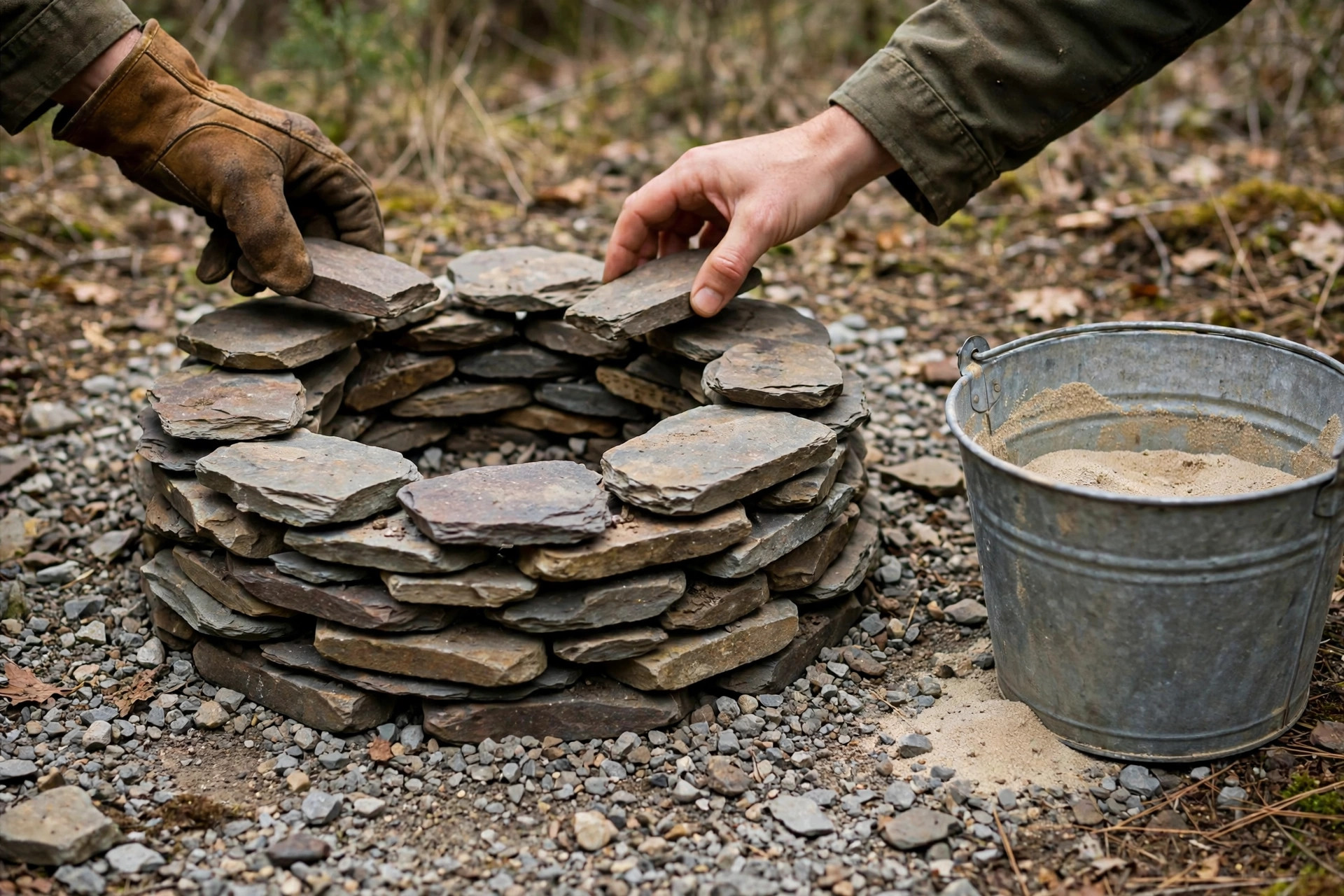
7. Stacked stone with no mortar — the dry-stone ring that anyone can build
Mortar is the part of building that puts people off, because the mix has to be right, the joints have to be pointed, and the build that needs mortar is the build that waits for a dry weekend and a steady hand. Stacked stone with no mortar — the dry-stone ring that anyone can build — is a ring of flat stones laid one on top of the other with nothing between them, and it works because the weight of the stones holds them, the gaps let the air in, and the ring that is dry-laid is the ring that anyone can build in an afternoon. Pick flat stones that sit steady, lay the first course in a circle on level ground, and set each stone so it bridges the joint below it, because the stone that bridges is the stone that locks the ring. Build two or three courses high and no higher, because the ring that is low is the ring that is stable, and the ring that is stacked too high is the ring that leans. One afternoon of stacking, and the ring stands on its own.
8. Cinder blocks in a square — the cheapest firepit you will ever make
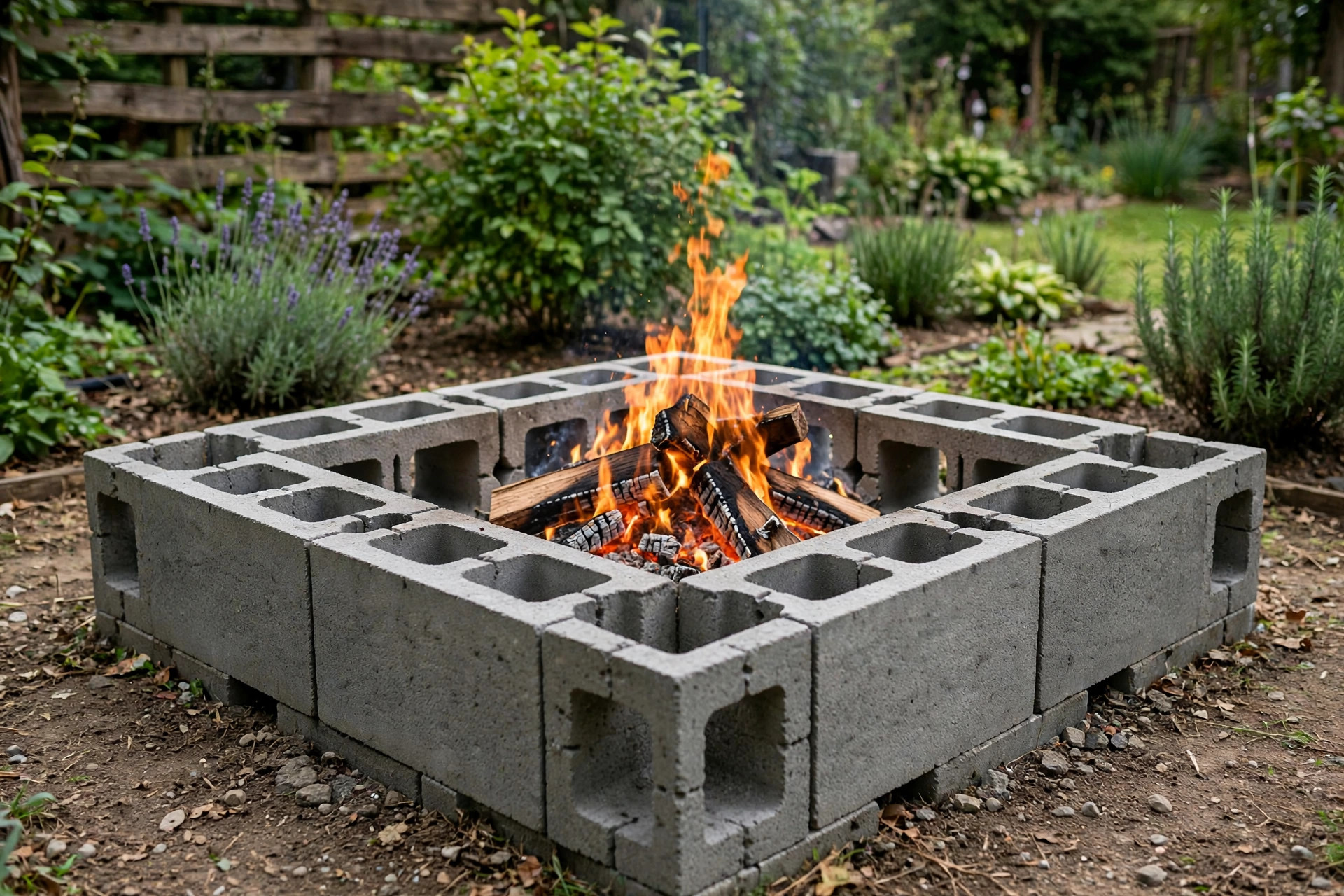
A firepit does not have to be round, because the blocks are square, the square is the shape they want to be, and the firepit that is built from cinder blocks is the firepit that costs less than a takeaway. Cinder blocks in a square — the cheapest firepit you will ever make — are twelve blocks laid in a square with a gap at each corner for air, and it works because the blocks are made for heat, the square is quick to lay, and the pit that is square is the pit that is built in an hour. Lay the blocks on flat ground, set them tight against each other, and leave the top course slightly open at the corners, because the gaps that let the air in are the gaps that keep the fire burning. Paint the blocks with heatproof paint if the grey bothers you, because the paint that is heatproof is the paint that stays, and the square that is painted is the square that looks deliberate. One hour of blocks, and the cheapest firepit is lit.
9. A steel ring insert — the ring that stops the stones cracking
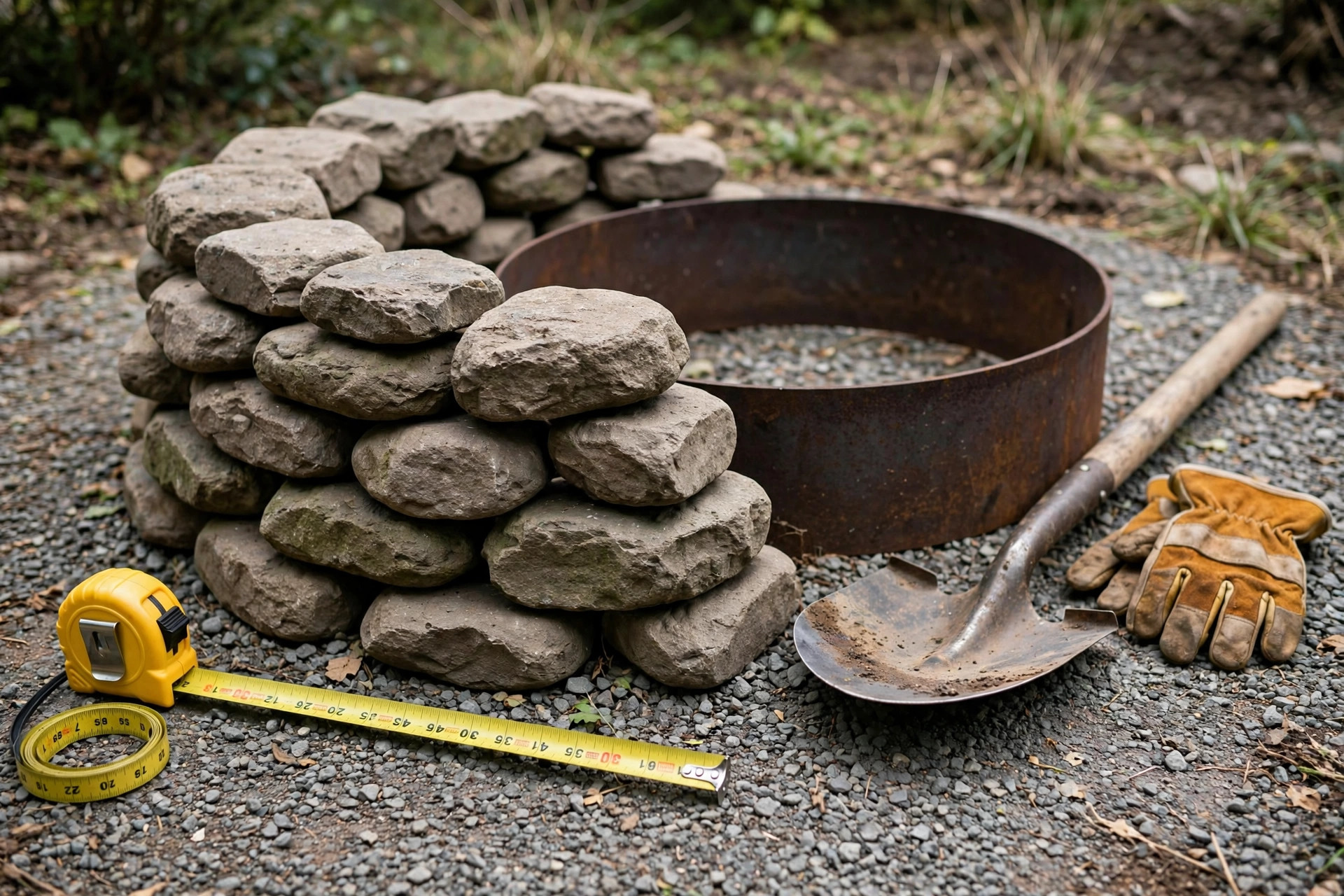
Stone cracks when it gets hot, because the heat expands the stone, the stone cannot move, and the ring that looked solid in spring is the ring with a crack down one side by autumn. A steel ring insert — the ring that stops the stones cracking — is a steel band that sits inside the stone ring and takes the heat, and it works because the steel expands and contracts without breaking, the stones never touch the fire, and the ring that is lined is the ring that never cracks. Measure the inside of your stone ring, buy a steel ring an inch smaller so it drops in easily, and set it so its top edge sits just below the top of the stones, because the ring that sits low is the ring that is hidden, and the stones that are lined are the stones that last. The steel will rust and darken, and that is fine, because the ring that is dark is the ring that has been used, and the fire that burns inside steel is the fire that burns clean. One steel ring, and the stones never crack. (Check on Amazon for a heavy-gauge steel firepit ring sized for a 36-inch stone circle.)
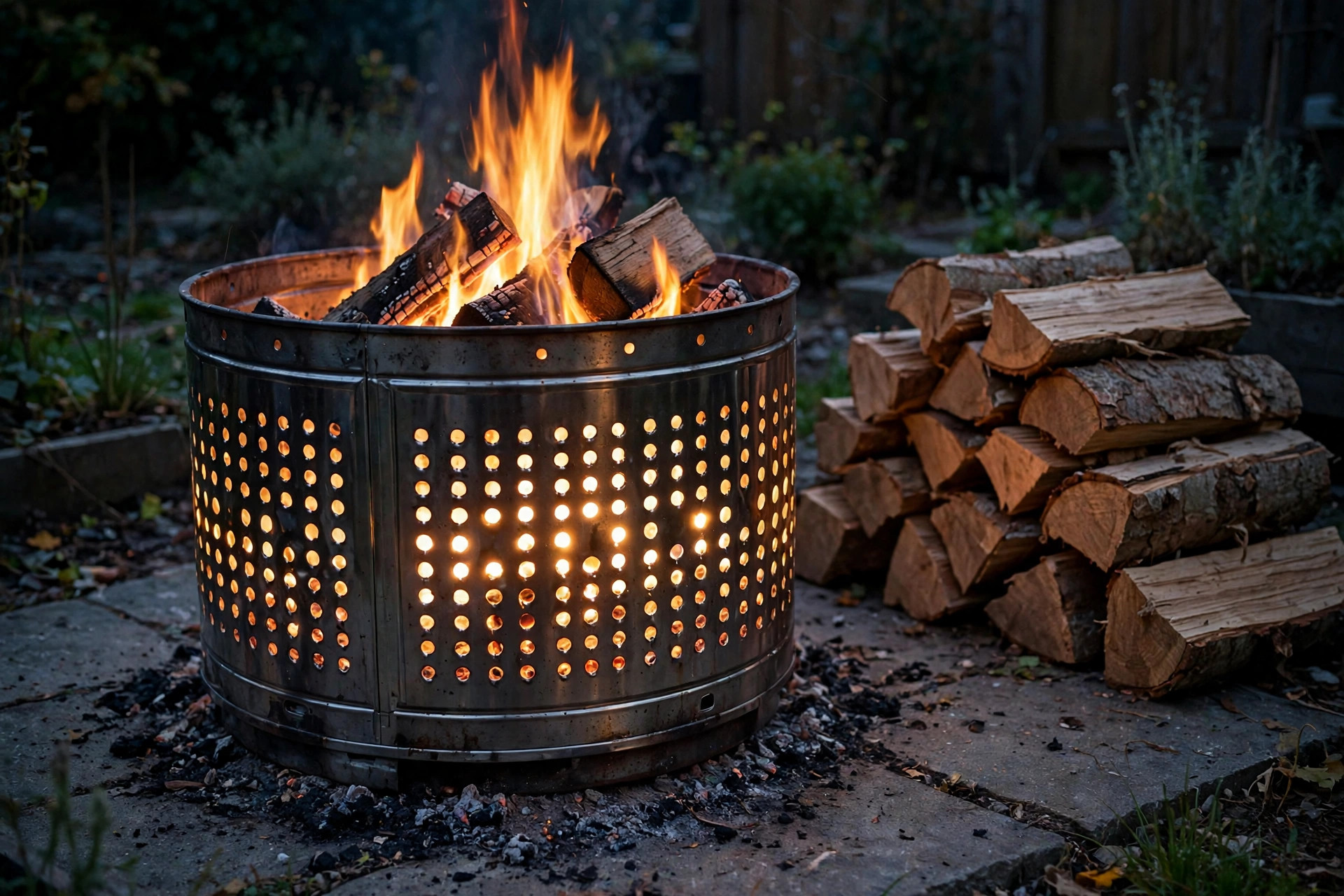
10. A washing machine drum firepit — the drum that becomes the best firepit on the street
An old washing machine drum is the best firepit almost nobody knows about, because the drum is steel, the holes are already punched, and the drum that was going to the scrapyard is the drum that becomes the firepit everyone asks about. A washing machine drum firepit — the drum that becomes the best firepit on the street — is a stainless drum set on short legs with the holes letting the air in from every side, and it works because the holes feed the fire, the steel takes the heat, and the drum that is round is the drum that burns hot and clean. Ask at a repair shop for a dead machine, take the drum out, and grind off any sharp edges, because the drum that is smooth is the drum that is safe to sit beside. Weld or bolt on three short legs, because the legs that hold the drum off the ground are the legs that stop the grass scorching, and the drum that stands on legs is the drum that can be moved. One old drum, and the scrapyard gives you the best firepit on the street.
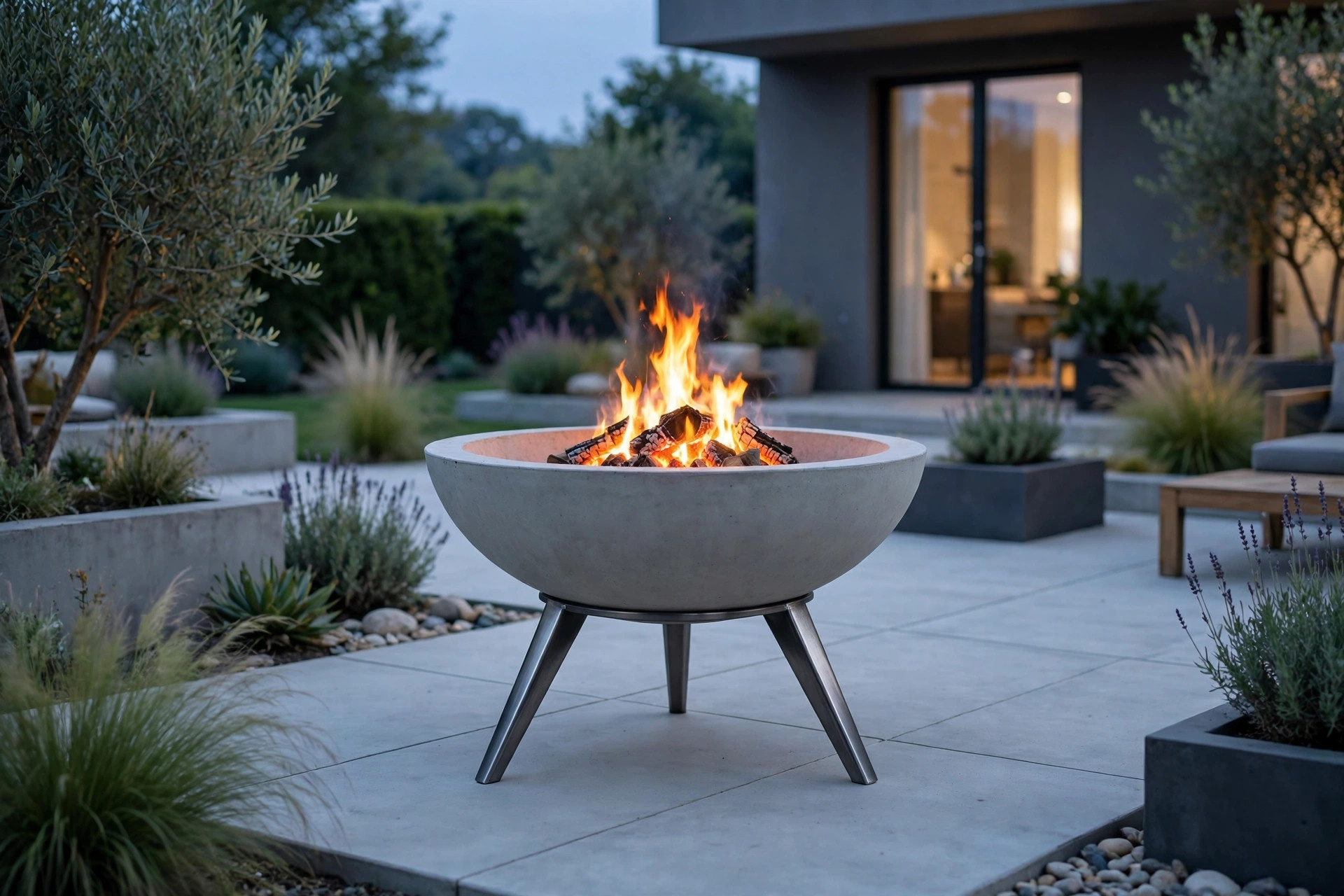
11. A concrete bowl on legs — the modern firepit that looks shop-bought
A firepit can look like it came from a shop and still be made in the garden, because the concrete is poured into a mould, the bowl is lifted out when it sets, and the firepit that is cast in a weekend is the firepit that looks like it cost ten times what it did. A concrete bowl on legs — the modern firepit that looks shop-bought — is a shallow concrete bowl cast in a large tub, set on three steel legs, and it works because the concrete takes the heat, the legs hold it off the ground, and the bowl that is smooth is the bowl that looks designed. Oil the mould first so the concrete releases, pour in one go so there are no cold joints, and let it cure for a week before you light a fire in it, because the bowl that is cured is the bowl that will not crack. Seal the outside with a concrete sealer, because the sealer that keeps the rain out is the sealer that keeps the bowl looking new. One weekend of casting, and the garden has a designer firepit.
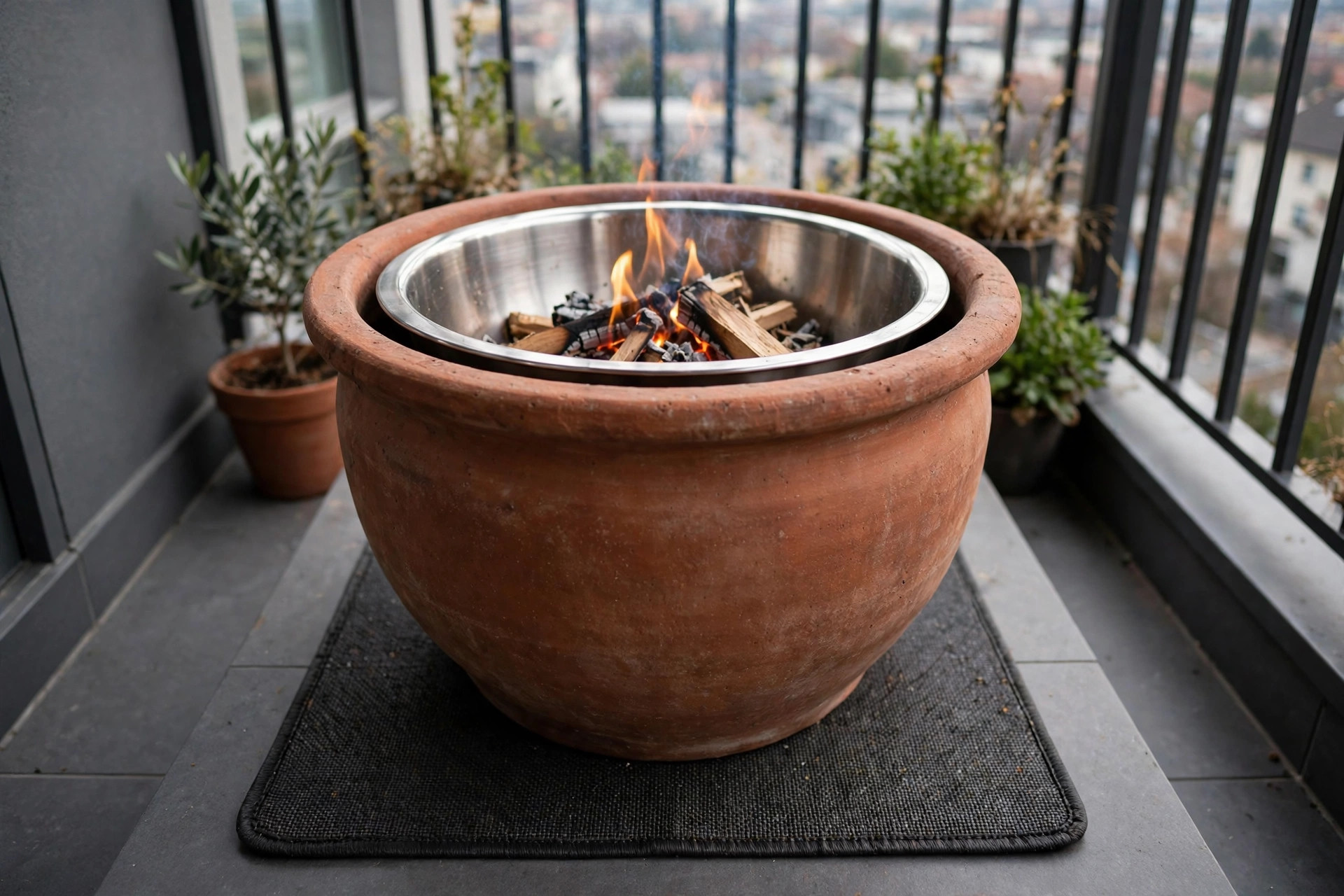
12. A terracotta pot fire bowl — the small firepit for a balcony or patio
A balcony still deserves a fire, because the balcony is where the evening happens, the patio is where the chairs live, and the garden that has no lawn is the garden where a full firepit will not fit. A terracotta pot fire bowl — the small firepit for a balcony or patio — is a large terracotta pot lined with a steel bowl, and it works because the pot holds the heat, the steel bowl holds the fire, and the pot that is lined is the pot that will not crack. Pick a pot at least eighteen inches across, line it with a steel mixing bowl that fits inside, and fill the gap with sand, because the sand that fills the gap is the sand that insulates the pot. Set the pot on a heatproof mat on the patio, and burn only small pieces of wood, because the pot that is small is the pot that is safe on a balcony. Keep it away from the wall and the railing, because the pot that is clear of the wall is the pot that is safe. One terracotta pot, and the balcony has a fire.
Set the scene around it
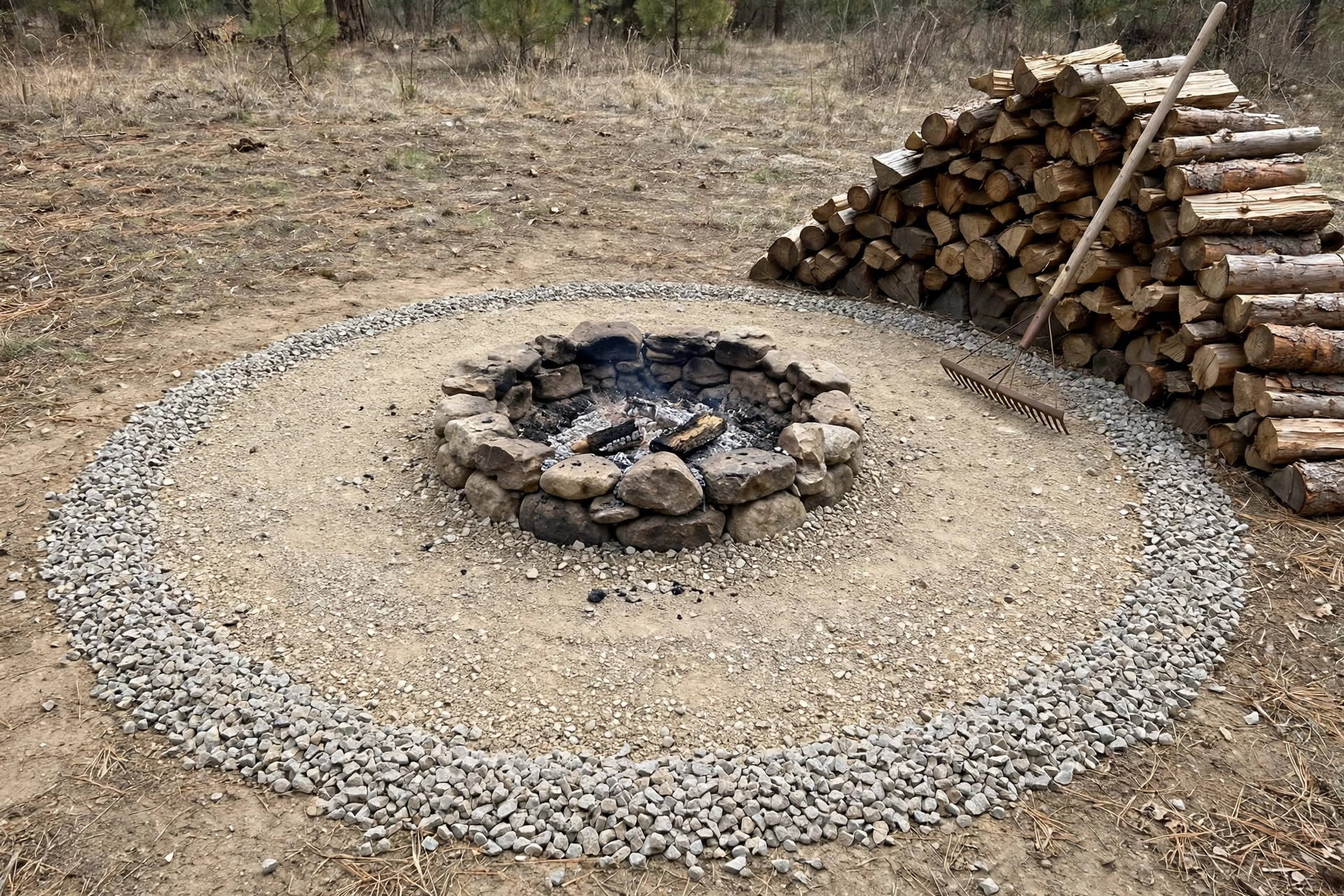
13. A gravel base that drains — the ground that never turns to mud
A firepit on grass turns the ground to mud, because the feet wear the grass, the rain softens the soil, and the circle around the fire is the circle that is bare and muddy by October. A gravel base that drains — the ground that never turns to mud — is a circle of gravel laid under and around the firepit, and it works because the gravel drains the rain, the feet stay dry, and the ground that is gravel is the ground that never turns to mud. Mark a circle a metre wider than the firepit, dig out the grass, and lay landscape fabric so the weeds cannot grow through, because the fabric that blocks the weeds is the fabric that keeps the gravel clean. Tip in the gravel and rake it level, because the gravel that is level is the gravel that is easy to walk on, and the circle that is gravel is the circle that is dry in the rain. One afternoon of gravel, and the mud never comes back.
14. A paver patio circle — the patio that frames the fire
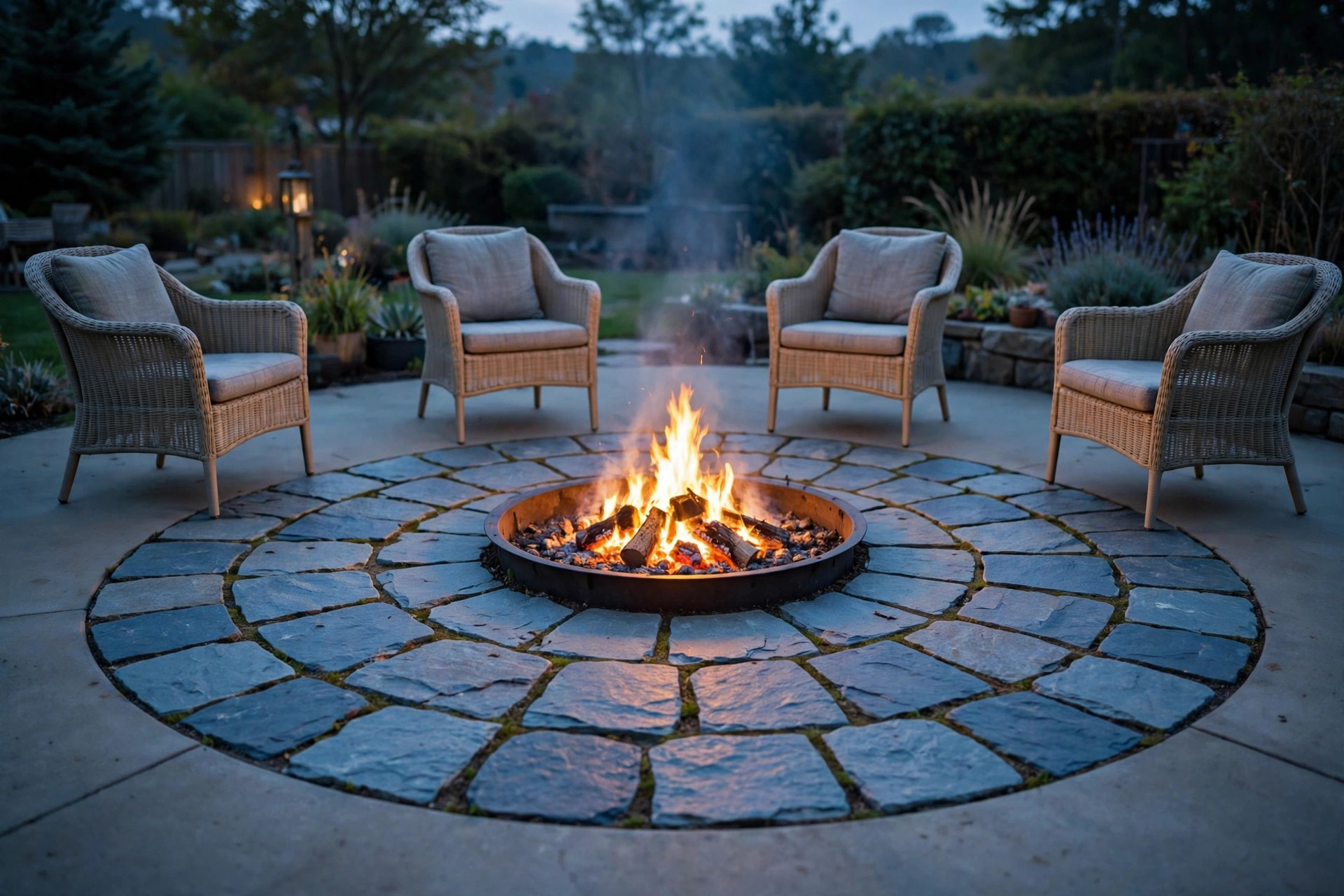
A firepit on gravel is a firepit in a circle of stones, but a firepit on pavers is a firepit in a room, because the pavers are flat, the chairs sit steady, and the patio that is paved is the patio that feels finished. A paver patio circle — the patio that frames the fire — is a circle of pavers laid around the firepit, and it works because the pavers give the chairs a flat floor, the fire a safe surround, and the circle that is paved is the circle that frames the fire like a picture. Lay the pavers on a sand bed, set them tight together, and sweep sand into the joints, because the sand that fills the joints is the sand that locks the pavers. Leave a gap for the firepit itself, because the fire that sits on gravel is the fire that drains, and the patio that surrounds it is the patio that is dry. The bench that sits on the patio gets its full build in 26 DIY Outdoor Bench Ideas for 2026, where the seating is made to match the patio. One circle of pavers, and the fire has a room.
15. Log storage that doubles as seating — the woodpile that is also a bench
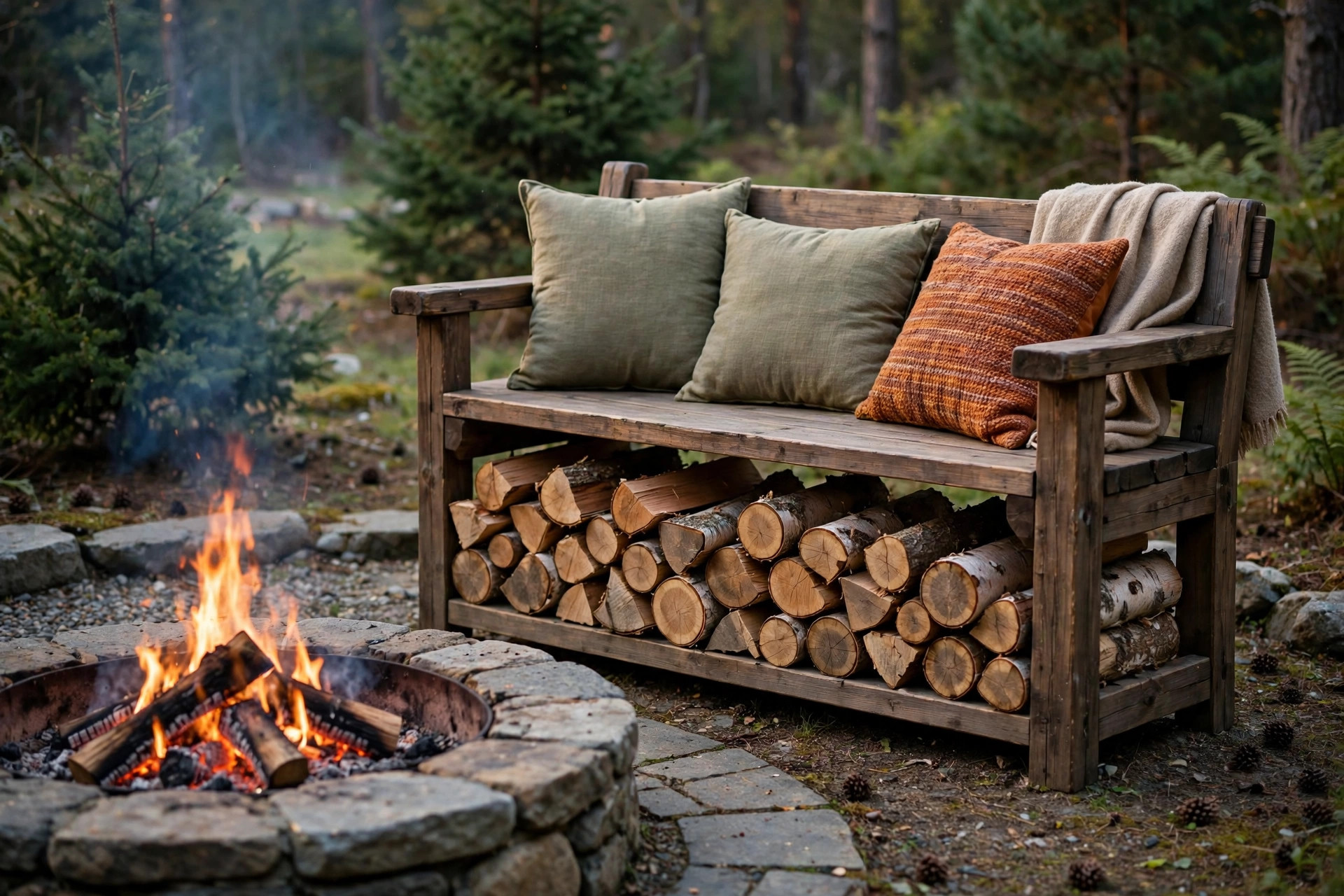
Firewood has to live somewhere, because the logs are too many for the house, too wet for the garage, and the pile that sits in the garden is the pile that looks like a mess. Log storage that doubles as seating — the woodpile that is also a bench — is a low wooden box that holds the logs underneath and a cushion on top, and it works because the logs stay dry under the seat, the seat is always where the fire is, and the box that holds the wood is the box that is also the bench. Build the box from treated timber, leave the front open so the air can dry the logs, and put a cushion on the lid, because the box that breathes is the box that keeps the wood dry. Keep the box close to the fire but not close enough to catch a spark, because the box that is near is the box that is handy, and the box that is too near is the box that is a risk. One box, and the woodpile is a bench.
16. String lights above the fire — the evening that starts at dusk
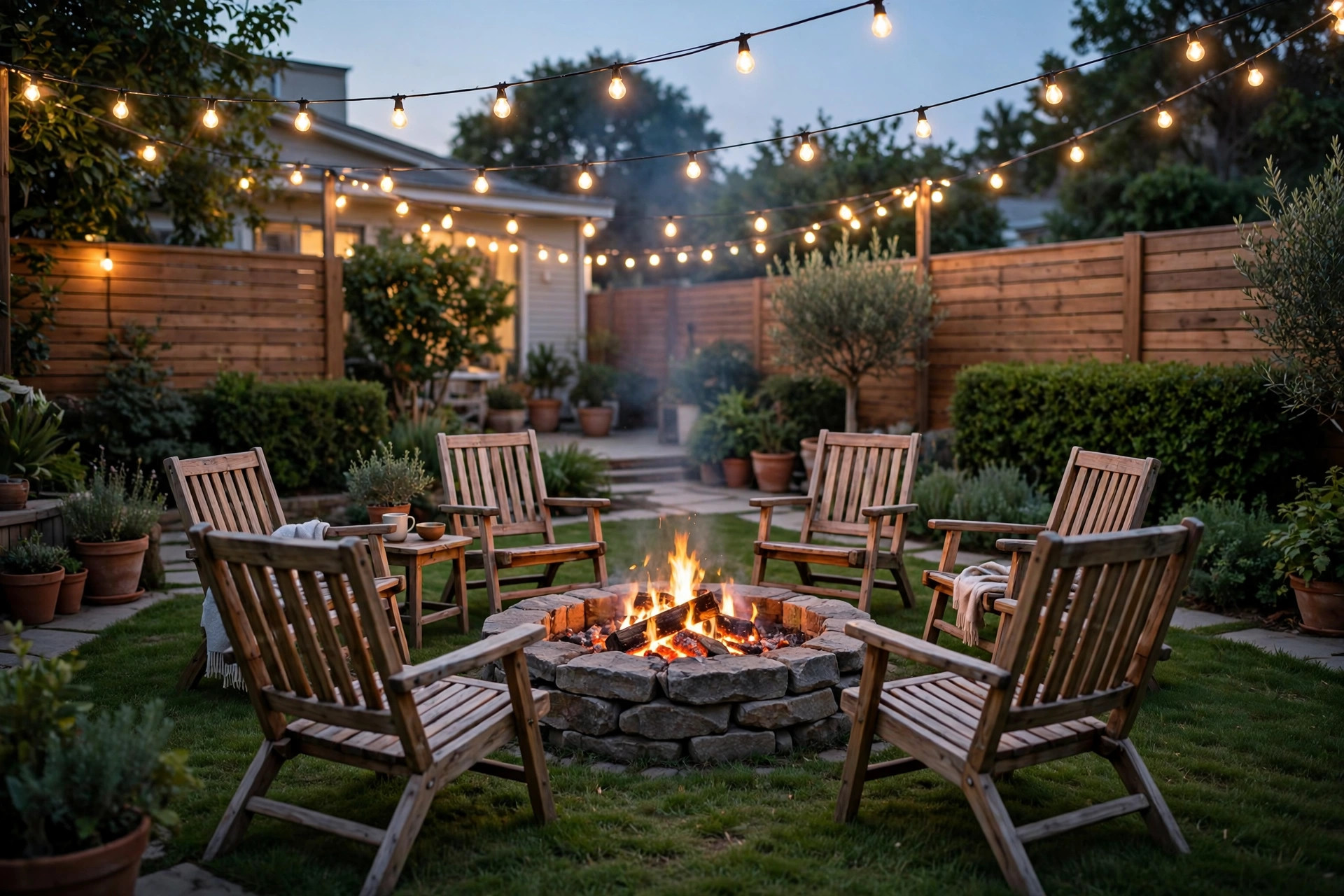
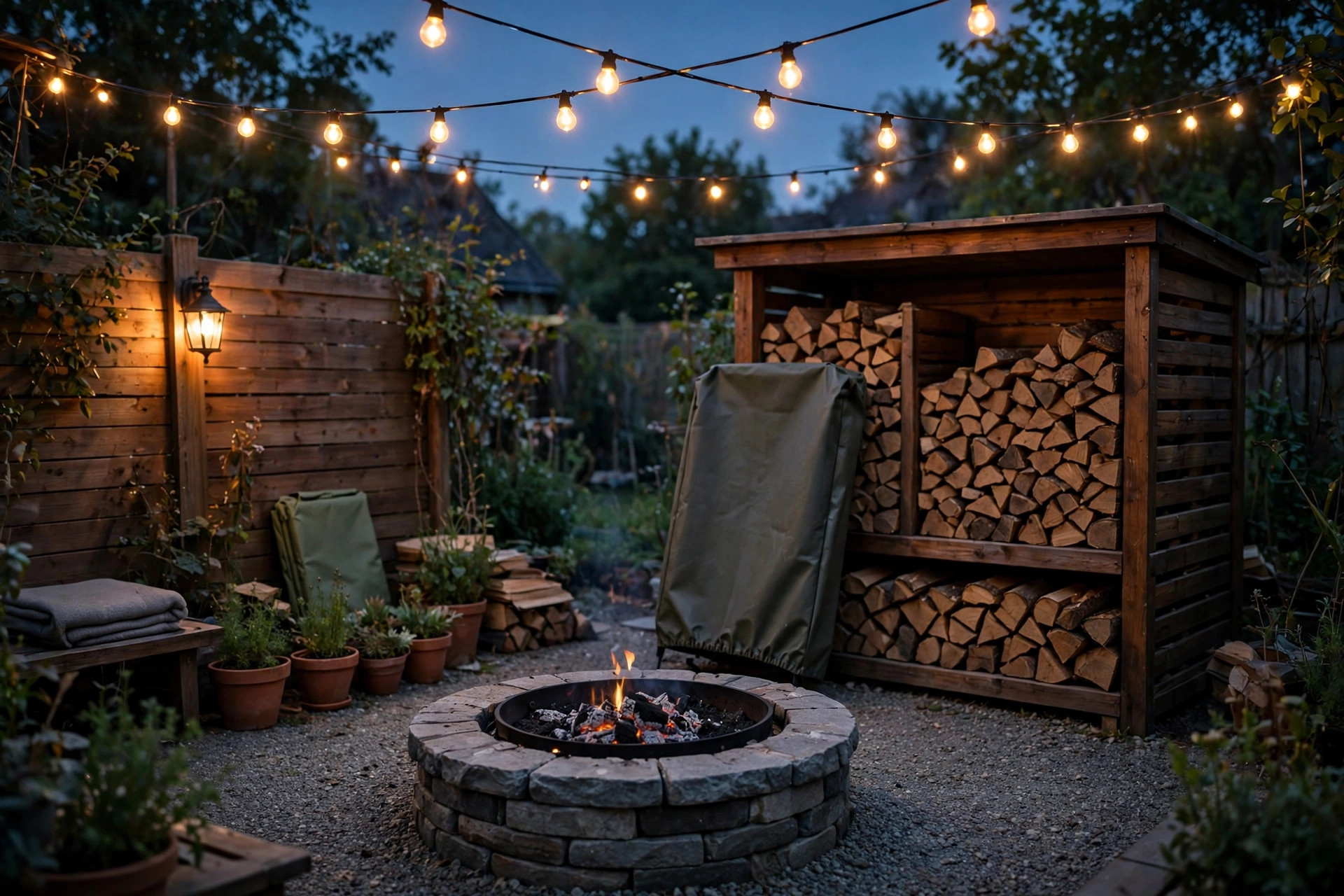
A firepit without lights is a firepit that goes dark when the fire dies, because the flames are the only light, the chairs are in shadow, and the evening that should go on until midnight ends when the last log burns down. String lights above the fire — the evening that starts at dusk — are festoon lights strung between two posts or from the house to a tree, and they work because the lights glow when the fire is low, the circle is lit even when the flames are small, and the evening that is lit is the evening that goes on. Hang the lights high enough that no one can reach them from a chair, and keep them well away from the flames, because the lights that are high are the lights that are safe. Use outdoor-rated lights with a warm glow, because the warm light is the light that makes the fire look better, and the evening that is warm-lit is the evening that feels cosy. One string of lights, and the evening starts at dusk. (Check on Amazon for outdoor festoon string lights with warm white bulbs and a weatherproof cable.)
17. A windbreak of planters — the planters that keep the smoke off your face
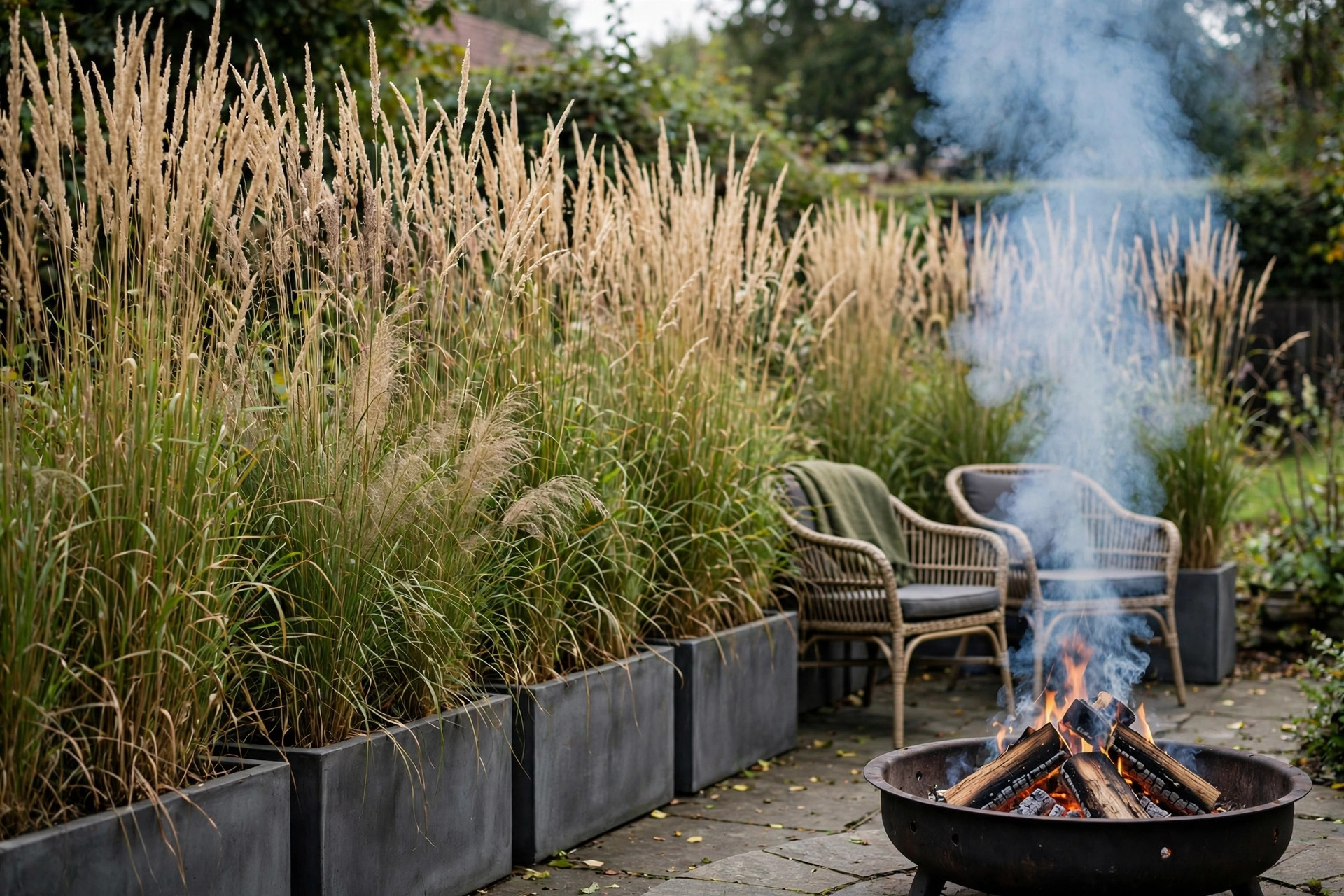
Wind is the enemy of a firepit evening, because the wind pushes the smoke, the smoke follows the chairs, and the evening that should smell of woodsmoke is the evening where everyone is squinting. A windbreak of planters — the planters that keep the smoke off your face — is a row of tall planters filled with grasses or bamboo on the windy side of the fire, and it works because the plants break the wind, the smoke rises instead of blowing sideways, and the circle that is sheltered is the circle where no one squints. Put the planters on the side the wind comes from, use tall grasses that bend instead of breaking, and keep the planters far enough from the fire that the leaves cannot catch, because the planters that are far are the planters that are safe. The planters themselves get their full treatment in 26 DIY Planters Ideas for 2026, where the handmade pots are made to match the garden. One row of planters, and the smoke goes up instead of sideways.
18. A low stone wall to sit on — the wall that is also the seating
Chairs around a firepit are chairs that get carried out and carried back in, because the chairs live in the shed, the evening starts with a trip to the shed, and the fire that is lit is the fire that waits for the chairs. A low stone wall to sit on — the wall that is also the seating — is a ring of stone built at knee height around the fire, and it works because the wall is always there, the seating is never carried, and the circle that has a wall is the circle that is ready the moment the fire is lit. Build the wall from the same stone as the firepit, cap it with flat stones so it is comfortable to sit on, and leave a gap for getting in, because the wall that is capped is the wall that is a seat. Keep the wall low enough to sit on easily, because the wall that is knee-high is the wall that is a seat, and the wall that is waist-high is the wall that is a barrier. One low wall, and the seating is always there.
Cook, gather and keep it safe
19. A grill grate over the fire — the firepit that cooks dinner
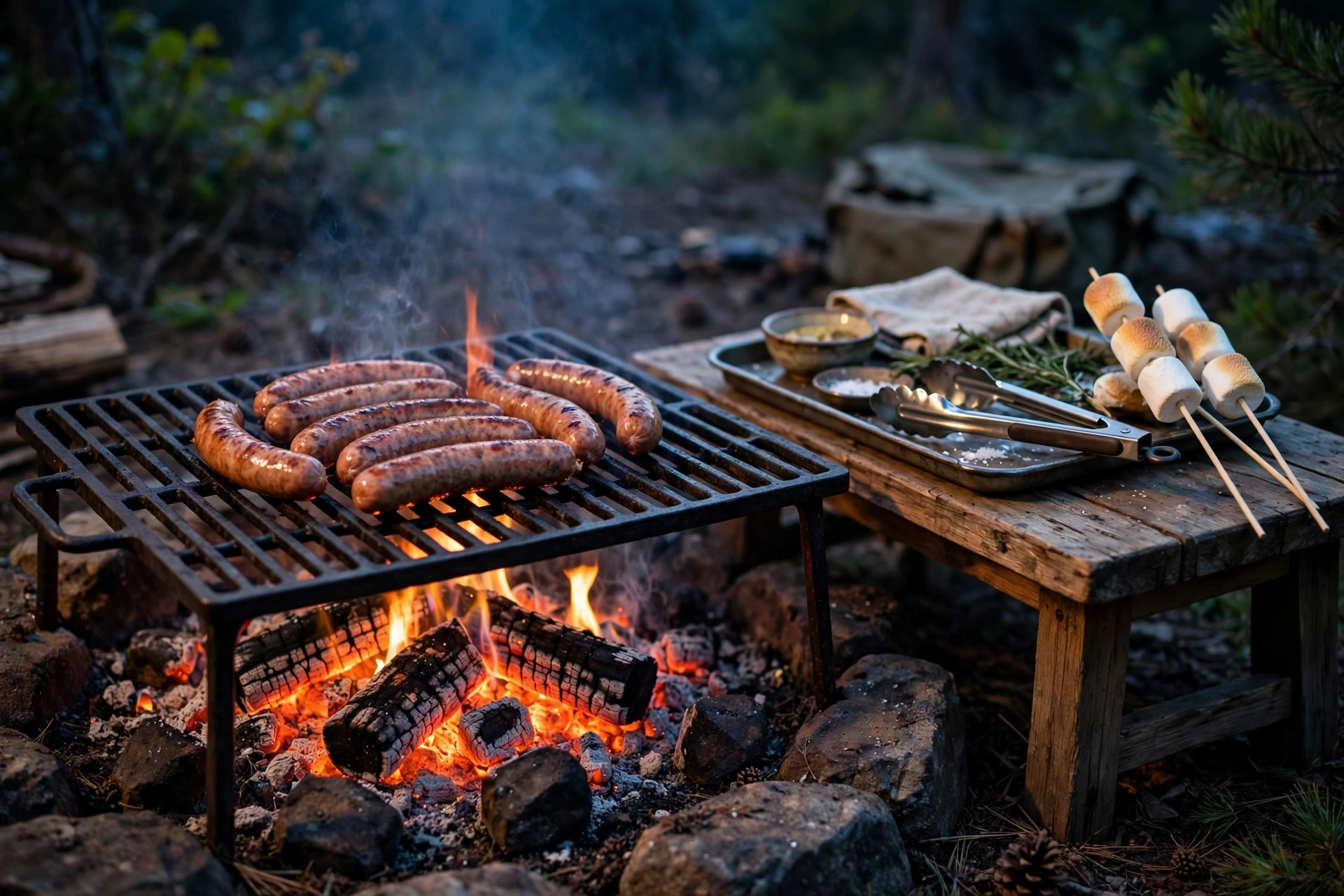
A firepit that only warms is a firepit that is half-used, because the fire is hot, the food is in the kitchen, and the evening that could be dinner by the fire is the evening that is just sitting by the fire. A grill grate over the fire — the firepit that cooks dinner — is a steel grate that sits across the top of the ring, and it works because the fire cooks the food, the grate holds the food over the flames, and the firepit that cooks is the firepit that is used twice as often. Set the grate on the rim when the fire has burned down to glowing coals, because the coals that glow are the coals that cook evenly, and the flames that are high are the flames that burn the food. Keep the grate clean and oiled, because the grate that is oiled is the grate that does not stick, and the dinner that is cooked on the fire is the dinner that tastes of woodsmoke. One grill grate, and the firepit cooks dinner. (Check on Amazon for a round steel grill grate sized to sit across a 36-inch firepit ring.)
20. Marshmallow sticks and a s'mores tray — the firepit that feeds the kids
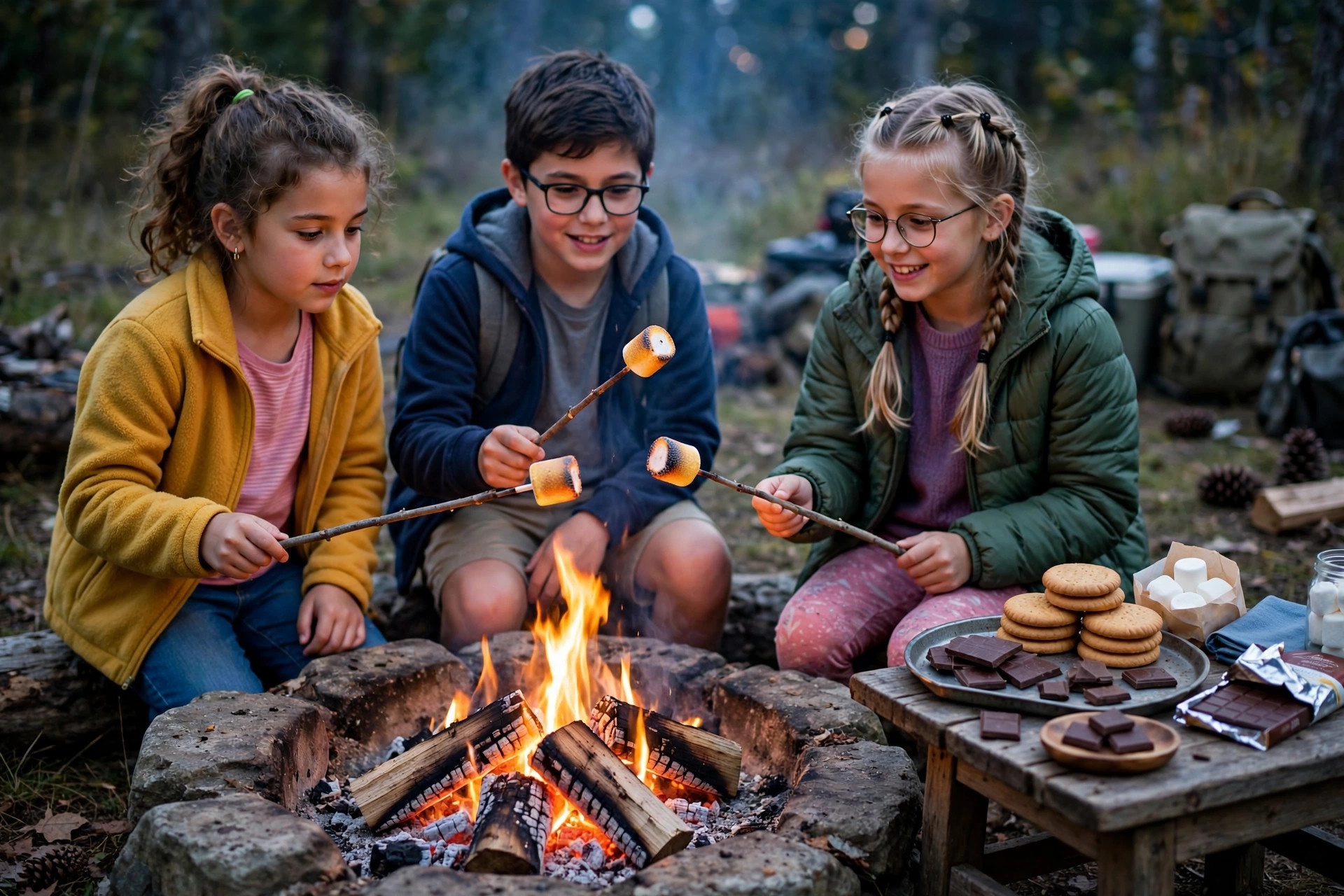
Children do not remember the firepit, because the fire is hot, the chairs are for adults, and the evening that the children remember is the evening where they got to do something. Marshmallow sticks and a s'mores tray — the firepit that feeds the kids — are long sticks for toasting marshmallows and a tray with biscuits and chocolate, and they work because the children toast their own marshmallows, the tray holds everything in one place, and the firepit that feeds the kids is the firepit the children ask for. Cut the sticks from green wood or buy long metal skewers, because the stick that is long is the stick that keeps small hands away from the fire. Keep a bucket of water beside the tray, because the bucket that is beside the tray is the bucket that is there if a marshmallow catches, and the evening that has a bucket is the evening that is safe. One tray of s'mores, and the children remember the firepit.
21. A spark screen for the embers — the screen that keeps the sparks in
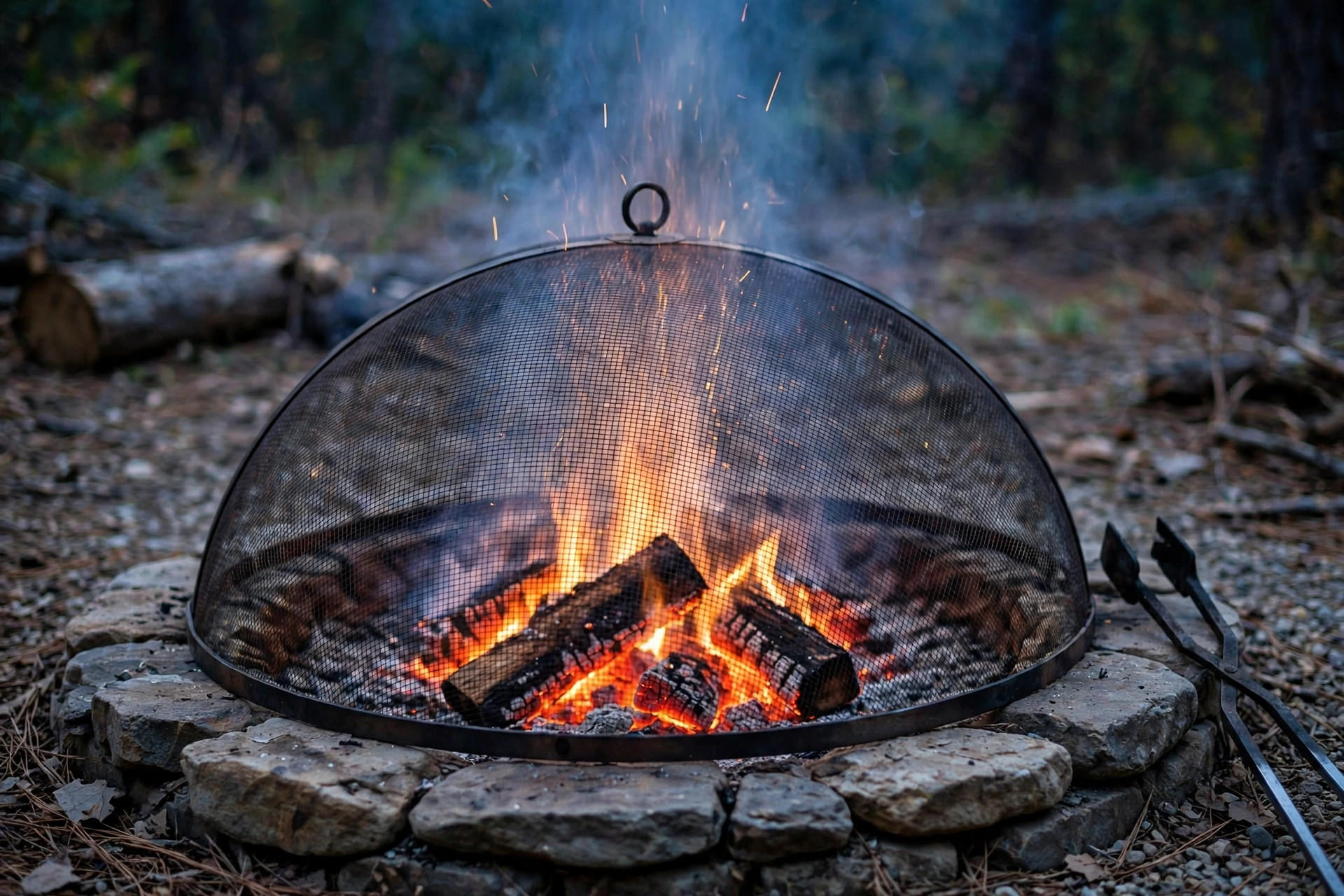
Sparks are the part of a firepit that worries everyone, because the sparks rise, the wind carries them, and the evening that should be relaxing is the evening where everyone is watching the embers. A spark screen for the embers — the screen that keeps the sparks in — is a fine mesh dome that sits over the fire, and it works because the mesh lets the heat out and keeps the sparks in, the fire burns just as hot underneath, and the circle that is screened is the circle where no one watches the sky. Buy a screen that fits your ring, or make one from steel mesh bent into a dome, because the screen that fits is the screen that stays on. Lift it with a long handle or a pair of tongs, because the screen that is lifted by hand is the screen that burns, and the screen that is lifted with tongs is the screen that is safe. One spark screen, and the sparks stay in.
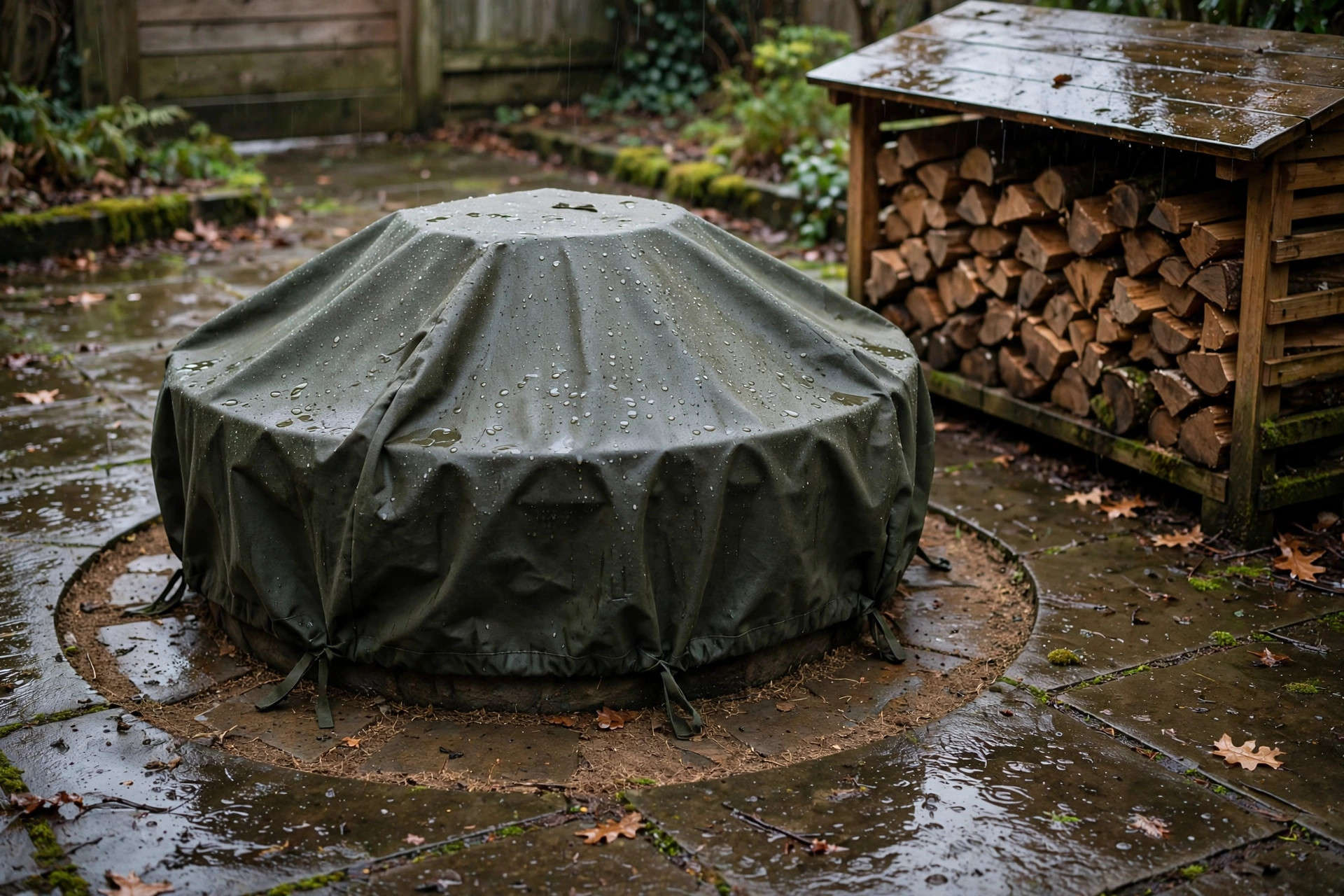
22. A fitted cover for the rain — the cover that doubles the firepit's life
Rain is the part of a firepit that no one thinks about until it rains, because the fire is out, the pit fills with water, and the firepit that was dry yesterday is the firepit that is a puddle today. A fitted cover for the rain — the cover that doubles the firepit's life — is a steel or heavy canvas cover that fits over the ring, and it works because the cover keeps the rain out, the pit stays dry, and the firepit that is covered is the firepit that lights first time next weekend. Measure the ring and buy a cover an inch wider, because the cover that fits is the cover that stays on in the wind. Put the cover on as soon as the fire is cold, because the cover that goes on cold is the cover that is safe, and the pit that is covered is the pit that never rusts. One fitted cover, and the firepit lives twice as long.
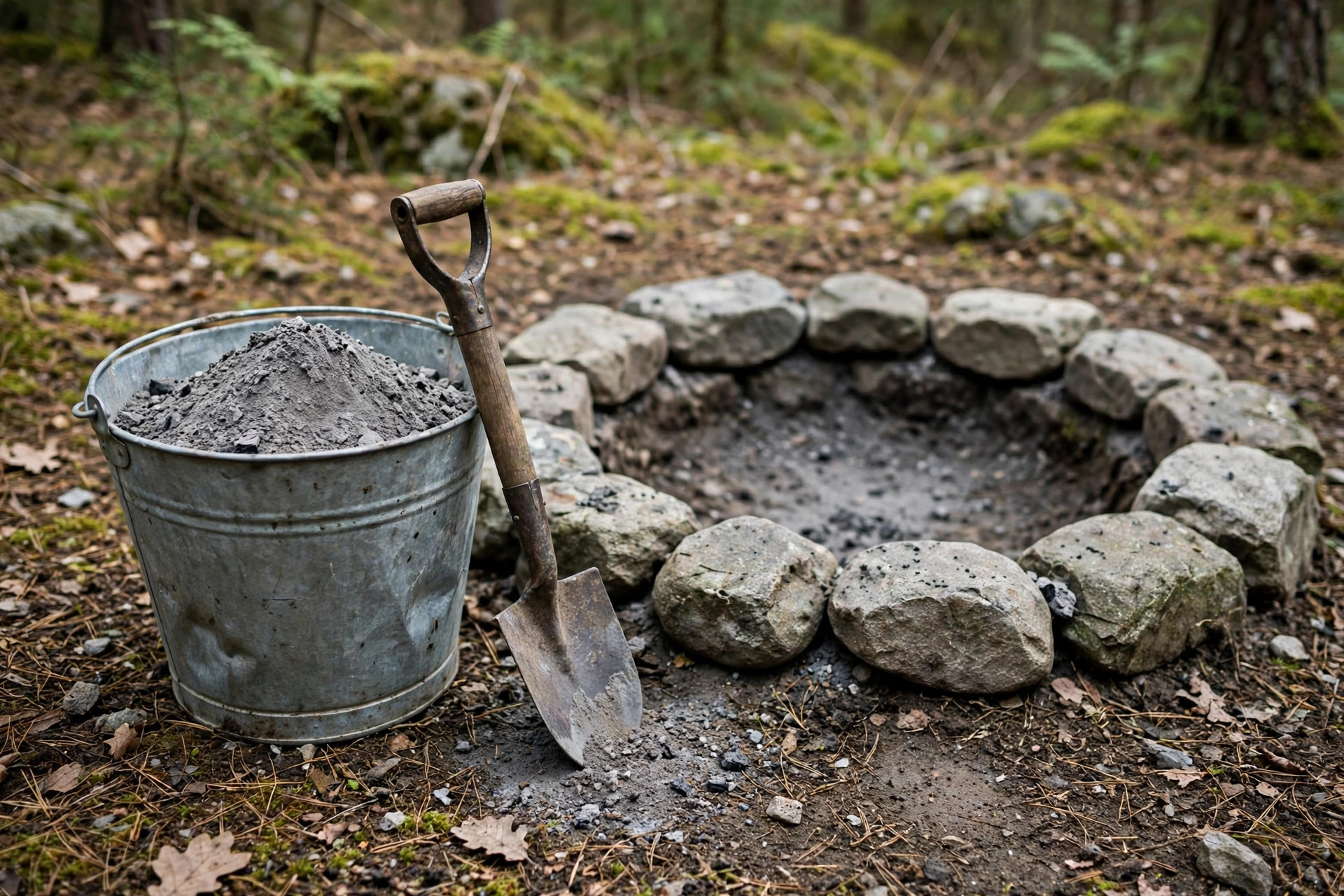
23. Ash clean-out the easy way — the bucket and shovel that keep it tidy
Ash is the part of a firepit that builds up quietly, because the fire burns, the ash settles, and the pit that was clean last month is the pit that is full of grey dust by the next fire. Ash clean-out the easy way — the bucket and shovel that keep it tidy — is a metal bucket and a small shovel kept beside the firepit, and it works because the ash is scooped out after every fire, the pit stays clean, and the fire that burns in a clean pit is the fire that burns hot. Wait until the ash is completely cold, scoop it into the metal bucket, and tip it on the garden beds, because the ash that is cold is the ash that is safe, and the ash that feeds the soil is the ash that is useful. Never use a plastic bucket, because the bucket that is plastic is the bucket that melts, and the bucket that is metal is the bucket that is safe. One bucket and shovel, and the pit is always clean.
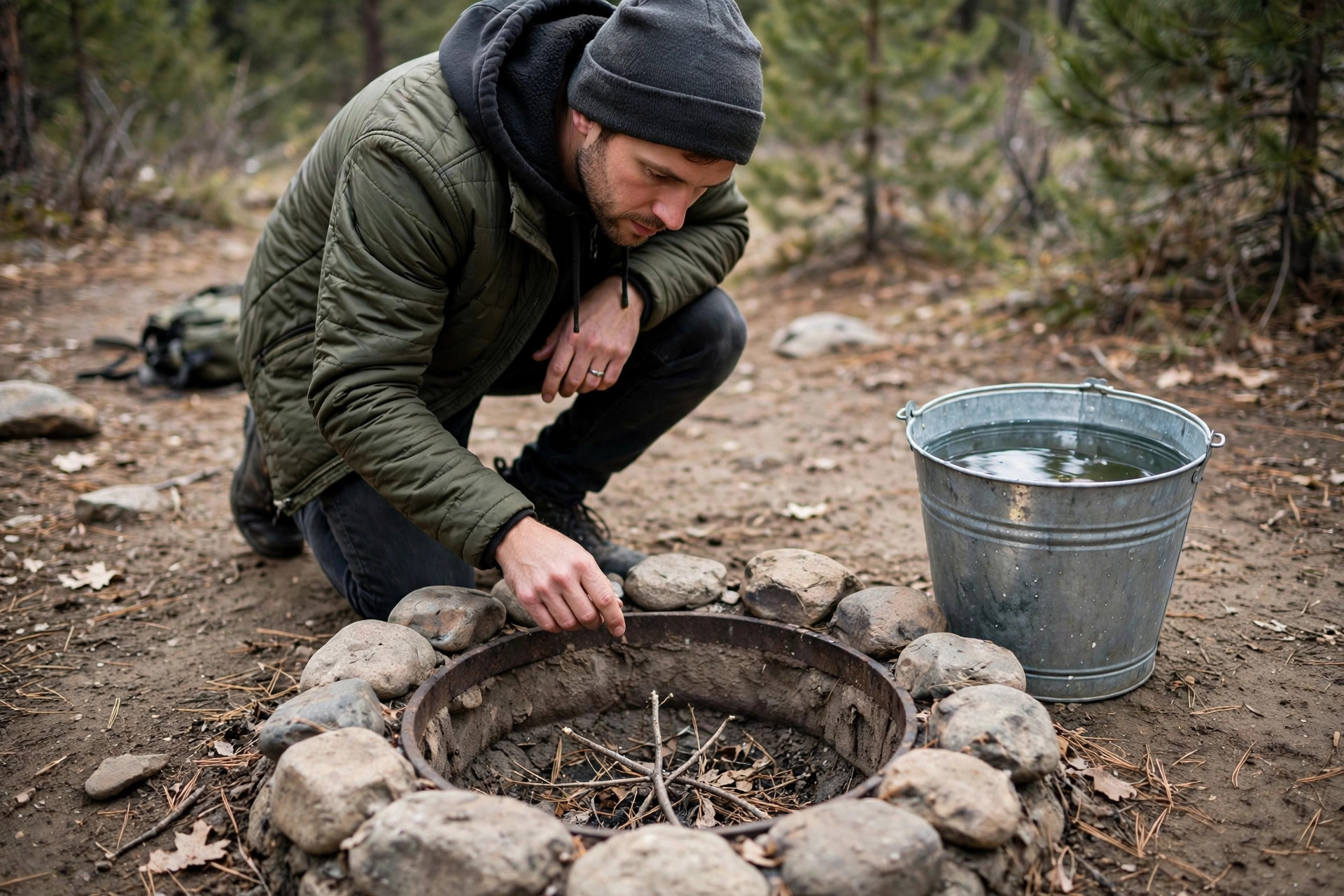
24. A five-minute safety check — the habit that keeps every fire safe
No firepit is safe without a habit, because the firepit is only safe on the day you build it and the care creeps away one evening at a time. A five-minute safety check — the habit that keeps every fire safe — is a quick look before every fire: the ring is sound, the ground is clear, the bucket of water is full, the children know the line, and the fire is out before you go inside, because the check that takes five minutes is the check that actually happens. Keep a bucket of water or a hose beside the fire every time, because the water that is beside the fire is the water that is there if it is needed, and the fire that is watched is the fire that is safe. The tools themselves get their own system in 22 Garden Tool Organization Ideas for 2026, where the shovel and the bucket live with the rest of the garden tools. Five minutes a fire, and every fire is safe.
Which DIY backyard firepit idea fits which situation?
| Situation | Best first move | Budget | Tools needed |
|---|---|---|---|
| No budget at all | The classic stone circle (idea 1) | Free | None |
| Want to move it around | A metal bowl firepit (idea 2) | Low | None |
| Small garden or patio | A tabletop fire bowl (idea 4) | Low | None |
| Smoke bothers you | A chiminea (idea 5) | Medium | None |
| Never built anything | Stacked stone, no mortar (idea 7) | Low | Gloves |
| Cheapest build possible | Cinder blocks in a square (idea 8) | Low | Level |
| Stones keep cracking | A steel ring insert (idea 9) | Low | Steel ring |
| Ground turns to mud | A gravel base (idea 13) | Low | Gravel, rake |
| Nowhere to sit | Log storage that doubles as seating (idea 15) | Low | Logs |
| Wind blows the smoke at you | A windbreak of planters (idea 17) | Low | Planters |
| Want to cook on it | A grill grate (idea 19) | Low | Grill grate |
| Worried about safety | A five-minute safety check (idea 24) | Free | Bucket, hose |
You do not need all 24 ideas. You need the three that make your evenings happen — usually the stone circle that costs almost nothing, the gravel base that never turns to mud, and the string lights that keep the evening going after the fire dies. Start with the circle, do it this weekend before the next clear evening, and lay the first course of stones. Do that and the garden will have a heart, the chairs will pull themselves into a circle, and the evenings will start at dusk instead of ending at eight.
Save this post for the next clear evening, and if the yard around the firepit needs the same treatment, read 26 DIY Yard Decor Ideas for 2026 next — it is Post 21, the yard the firepit lives in — and 26 DIY Outdoor Bench Ideas for 2026, Post 30, for the seating that goes around the fire. This is the seventh post of the new DIY by project run — Posts 81 to 100, one project at a time — and the run keeps going with the fruit trays next door. The party food itself gets its own deep dive in 18 DIY Fruit Tray Ideas for 2026, where the trays are made for the same firepit evenings.
Publish date assigned at publishing time. Updated as new firepit builds are tested.
Frequently asked questions
How much does it cost to build a DIY backyard firepit?
A basic stone circle costs almost nothing if you gather the stones from the garden — just a few hours and a level patch of ground. A cinder block square costs less than a takeaway, a steel ring insert adds a small amount, and a brick firepit with a gravel base and paver patio runs into the low hundreds. Start with the stone circle, and add the gravel base and the seating once you know the firepit gets used.
What is the safest surface to put a firepit on?
Gravel, pavers or bare earth — never grass, decking or a wooden patio without a heatproof barrier. A gravel base is the safest easy option: it drains the rain, it does not catch fire, and it stays level under the chairs. Keep the firepit at least three metres from the house, the fence and any overhanging branches, and always keep a bucket of water or a hose beside the fire.
Can I build a firepit in a small backyard?
Yes — pick a small firepit, not a small version of a big one. A tabletop fire bowl fits on a patio table, a terracotta pot fire bowl fits on a balcony, and a metal bowl firepit moves to wherever the chairs are. Keep the fire small, burn only dry wood, and leave enough room around the fire for everyone to sit at a safe distance — the evening is just as cosy around a small flame.