26 Kids Room Storage Ideas for 2026
A kids room is the only room in the house that gets messy by itself — you tidy it in the morning, and by lunchtime the toys are on the floor, the books are under the bed, and one sock is on the lamp. The fix is not a bigger room, it is storage a child can actually use, bins low enough to reach, labels a child can read before they can read, and a place for everything that is easier to use than the floor.
These 26 kids room storage ideas are playful, kid-friendly storage kids actually use: start with low open bins they can reach, add picture labels and a toy rotation box, give the clothes and the craft supplies their own homes, and finish with under-bed drawers and a one-in-one-out box — so the room stays tidy without a daily battle.
Every idea below works in a real kids room, from a small box room with one bed and a toy box to a shared room where two children need one side each. The toys that live here are covered in 35 Clever Toy Storage Ideas for 2026, where the toy storage system starts — and the playroom next door is in 22 Playroom Organization Ideas for 2026, so the two rooms work as one. Pick three ideas that fit your room, start with the low bins, and build from there.
Start simple: bins kids can reach
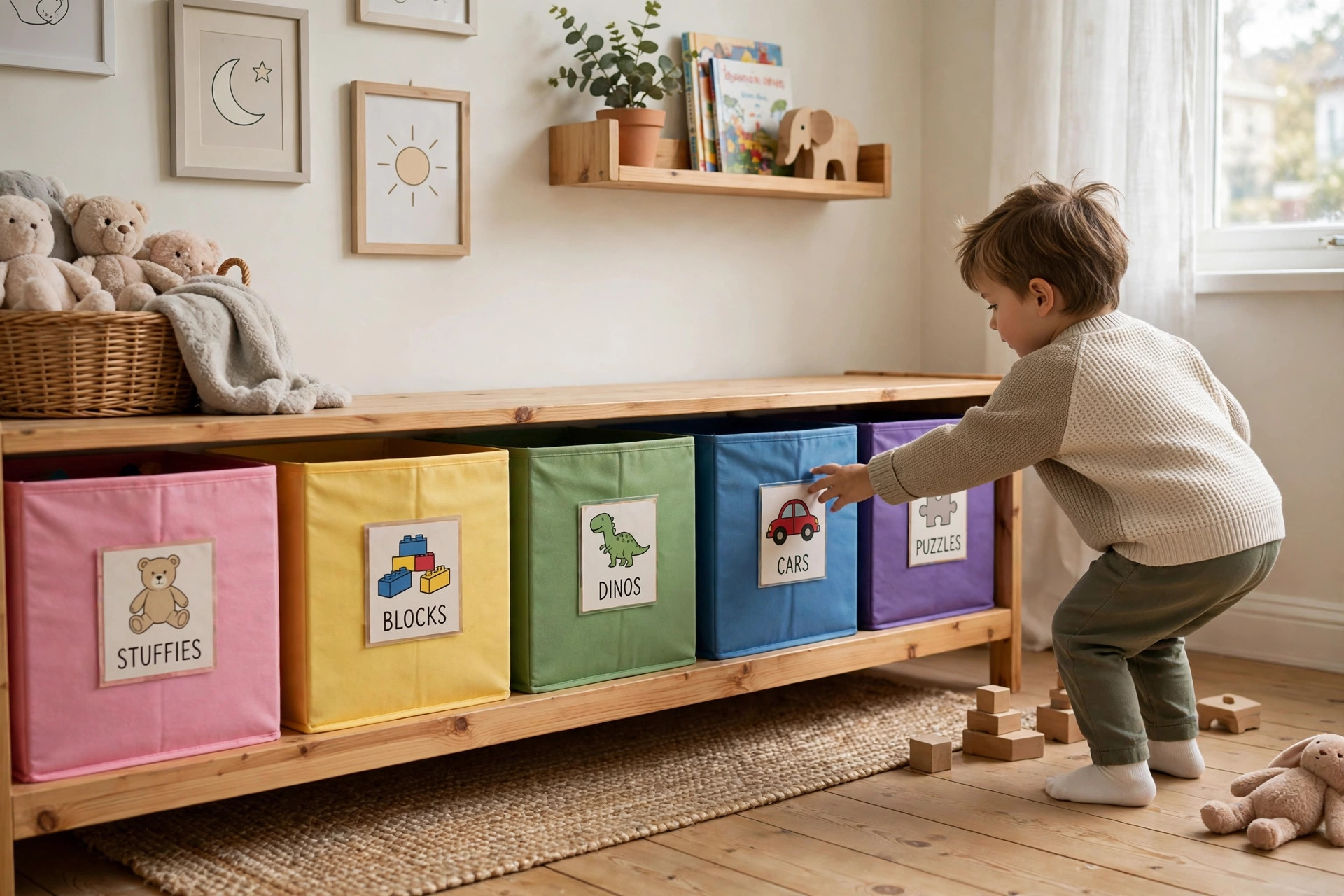
1. Low open bins on the floor — the bins kids can reach without help
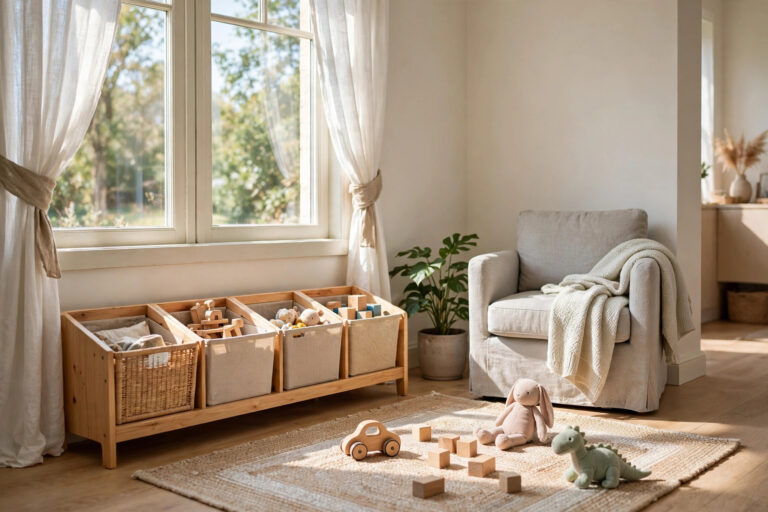
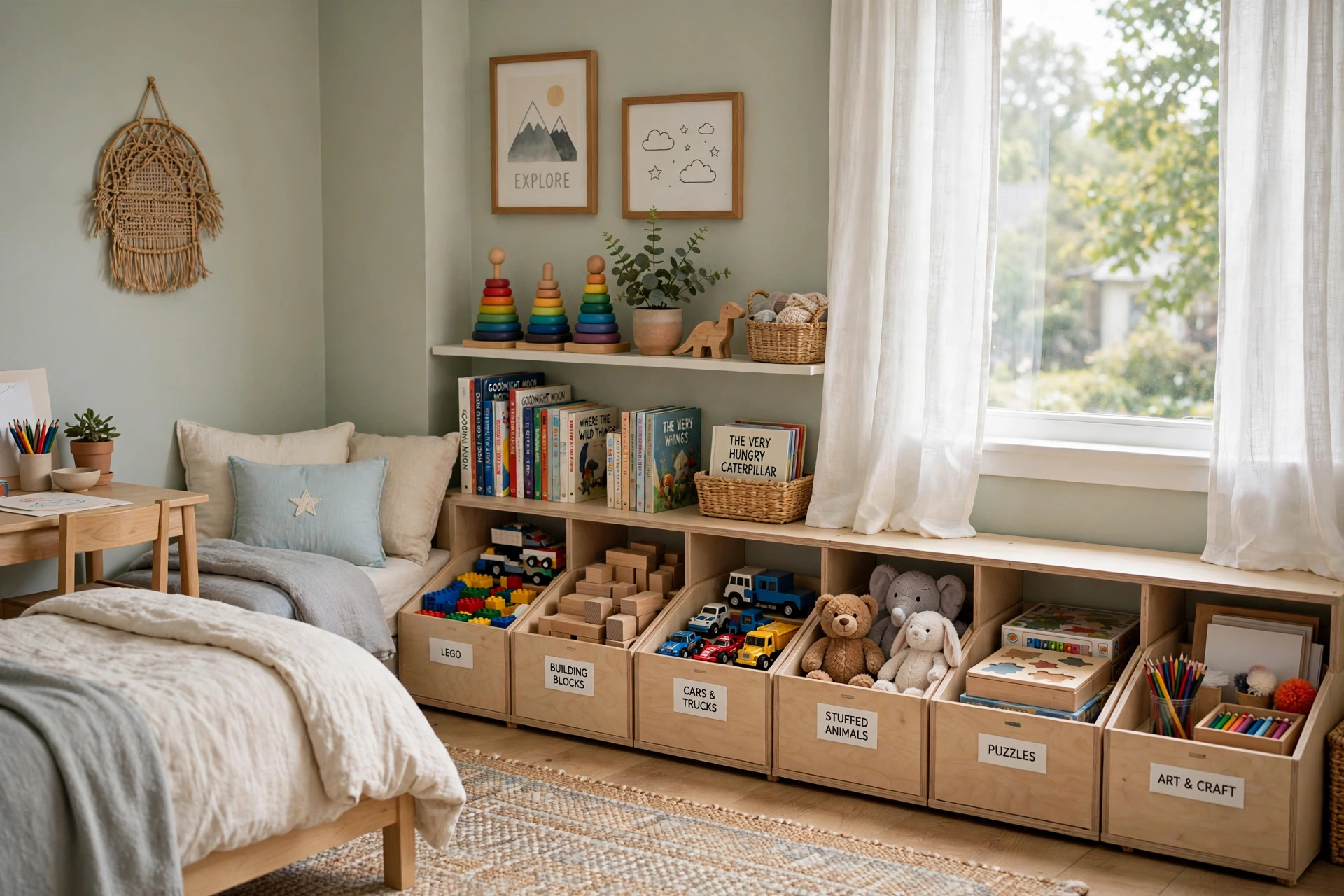
A toy on a high shelf is a toy on the floor, because the shelf a child cannot reach is the shelf that might as well not exist, and the floor is where the toy ends up. Put low open bins on the floor — the bins kids can reach without help — so the toys live where the hands are and the tidy-up takes thirty seconds instead of thirty minutes. Choose bins with no lids, because a lid is one more thing to open and the bin without a lid is the bin that gets used, and keep them on the floor or on the lowest shelf, where a toddler can reach them without climbing. One bin per kind of toy, blocks in one, cars in another, because the bin with one kind in it is the bin a child can tidy without thinking. Low bins on the floor, and the toys go home by themselves.

2. A toy rotation box — the box that keeps half the toys out of sight
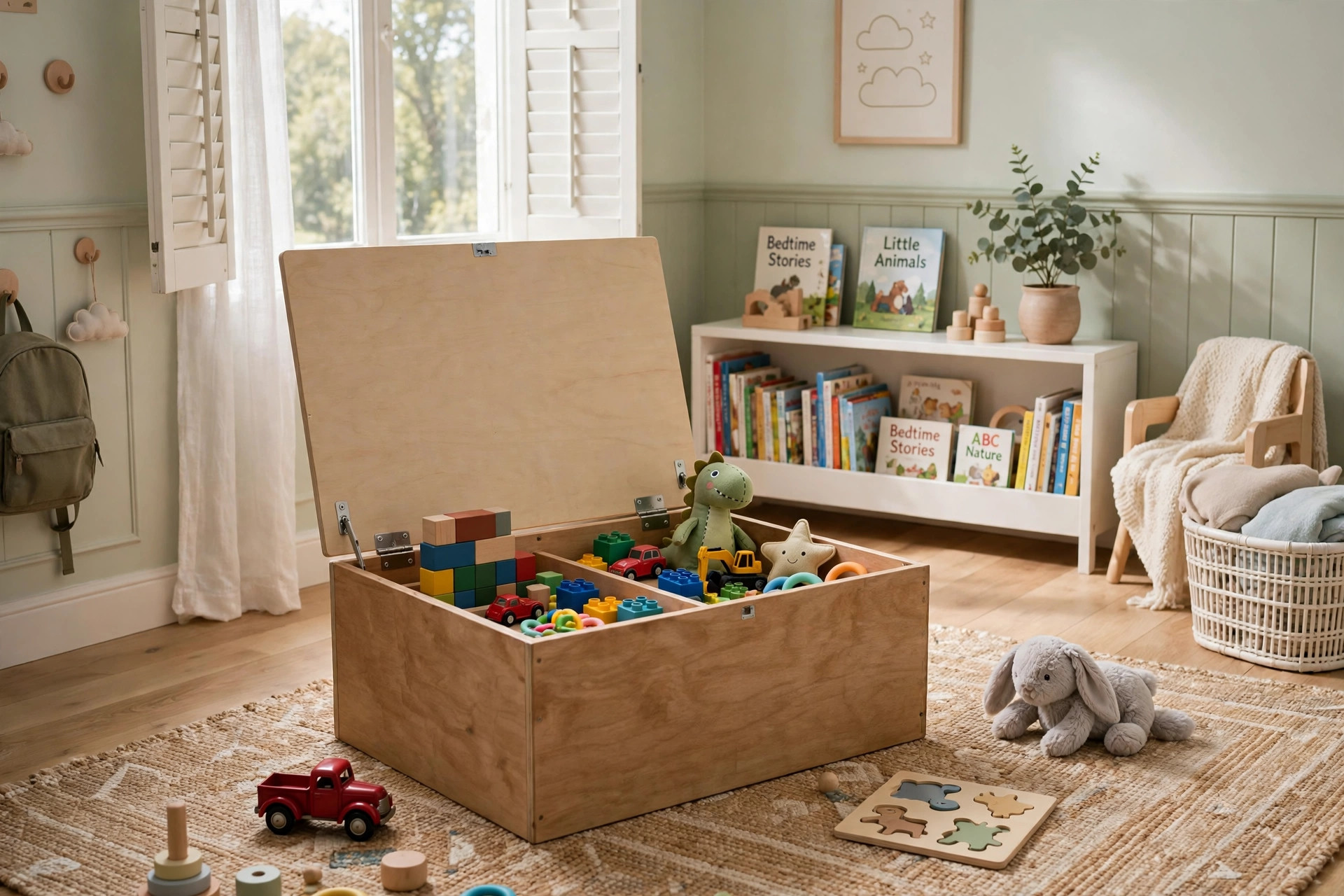
A room with every toy out at once is a room no child can tidy, because the toys that are all out are the toys that are all on the floor, and the child who faces all of them faces a mountain. Keep a toy rotation box — the box that keeps half the toys out of sight — so only some toys are out at a time and the room feels half as full. Put half the toys in the box, shut it, and put it in the closet or on the top shelf, then swap the toys every two weeks, because the toys that come back feel new and the toys that go away feel like a treat when they return. The box is also the tidy-up: when the room is a mess, the toys that do not fit in the open bins go into the rotation box, and the room is done. Half the toys out, half in the box, and the room stays playable.
3. Labelled bins with picture labels — the labels kids can read before they can read
A bin with no label is a bin with everything in it, because the child who cannot read the label is the child who guesses, and the guess is usually the wrong bin. Stick picture labels on the bins — the labels kids can read before they can read — so a three-year-old can tidy up without asking where things go. Cut a photo of the toy out of a catalogue, or draw a simple picture of a car or a block, and stick it on the front of the bin, because the picture is the label and the label is the instruction. Add the word underneath for the older children, because the word is the reading practice and the picture is the reminder. Keep the labels big and at the front, because the label a child can see is the label a child follows. (Check on Amazon for picture label stickers for toy bins, which peel off cleanly when the toys change.) A picture on every bin, and the room tidies itself.
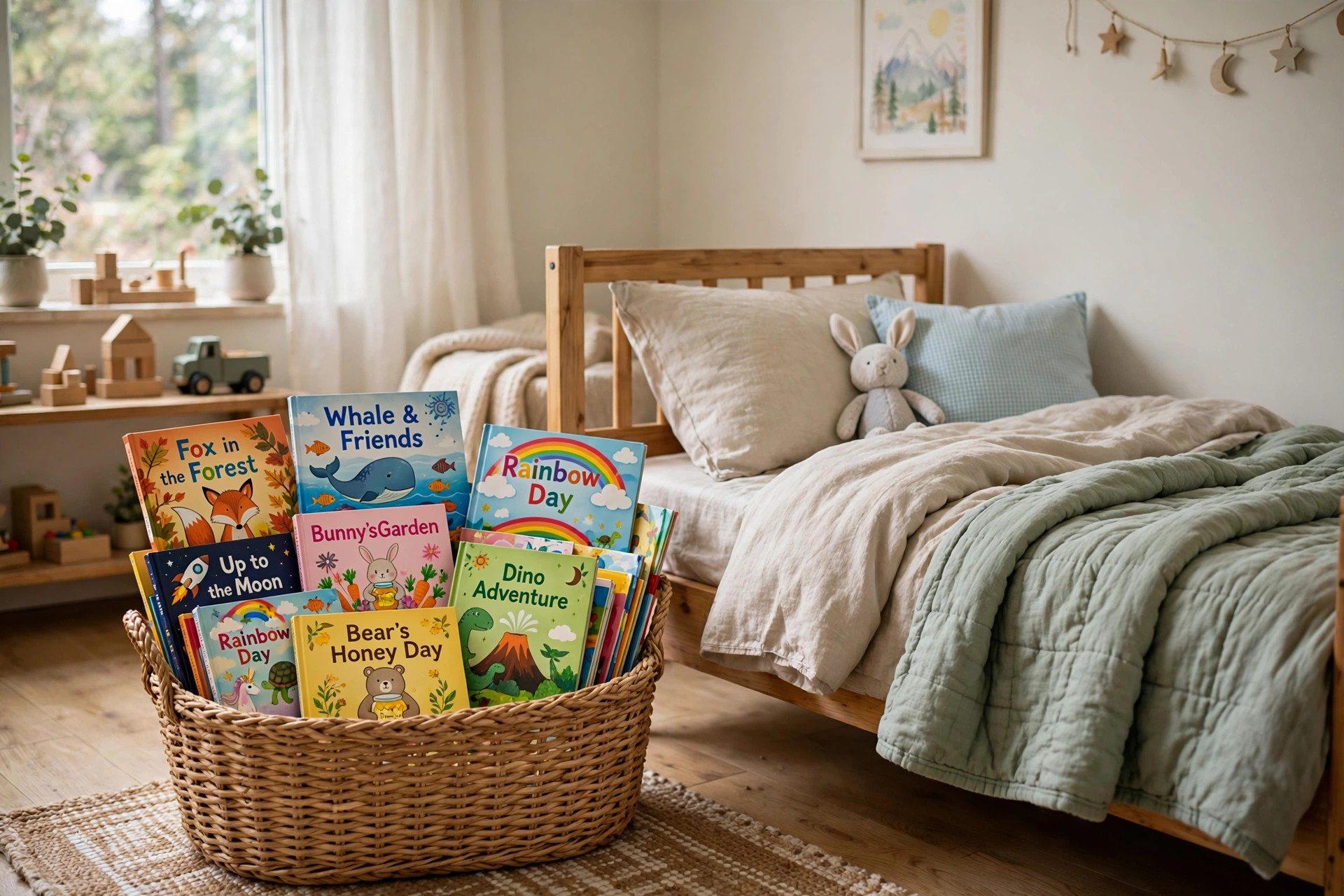
4. A book basket by the bed — the books that live where bedtime happens
Books on a shelf across the room are books nobody reads at bedtime, because the shelf that is far away is the shelf that takes effort, and bedtime is the moment nobody has effort left. Put a book basket by the bed — the books that live where bedtime happens — so the bedtime story is within arm's reach and the books go back in the basket when the story ends. Choose a basket that holds five or six books, no more, because the basket that holds five is the basket a child can choose from and the basket that holds fifty is a pile. Keep the basket on the floor beside the bed, not on a shelf, because the basket on the floor is the basket a child can reach in the dark. Swap the books every week, because the books that change are the books that get read. A basket by the bed, and bedtime reads itself.
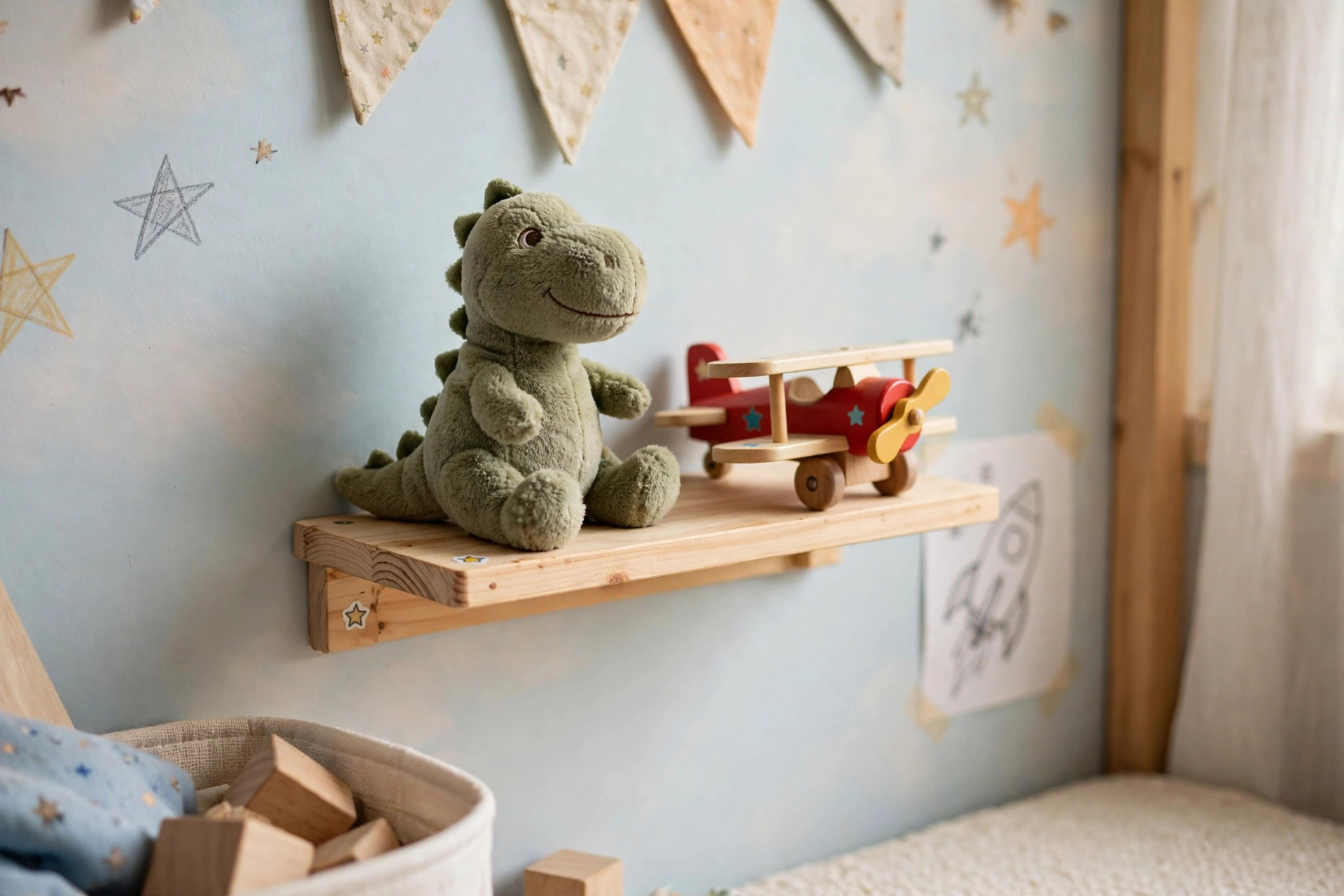
5. A small shelf at kid height — the shelf the toys come back to
A shelf at adult height is a shelf for adults, because the shelf a child cannot reach is the shelf a child cannot use, and the toys that live on it live there because you put them there. Hang a small shelf at kid height — the shelf the toys come back to — so the favourite toys have a home the child can reach without a chair. Put it at the height of the child's chest, with two or three favourite things on it, because the shelf with three things is a display and the shelf with thirty is a dumping ground. Keep the shelf short, one board, because the shelf that is short is the shelf a child can keep tidy, and let the child choose what lives on it, because the shelf a child chose is the shelf a child looks after. A shelf at their height, and the favourites have a home.
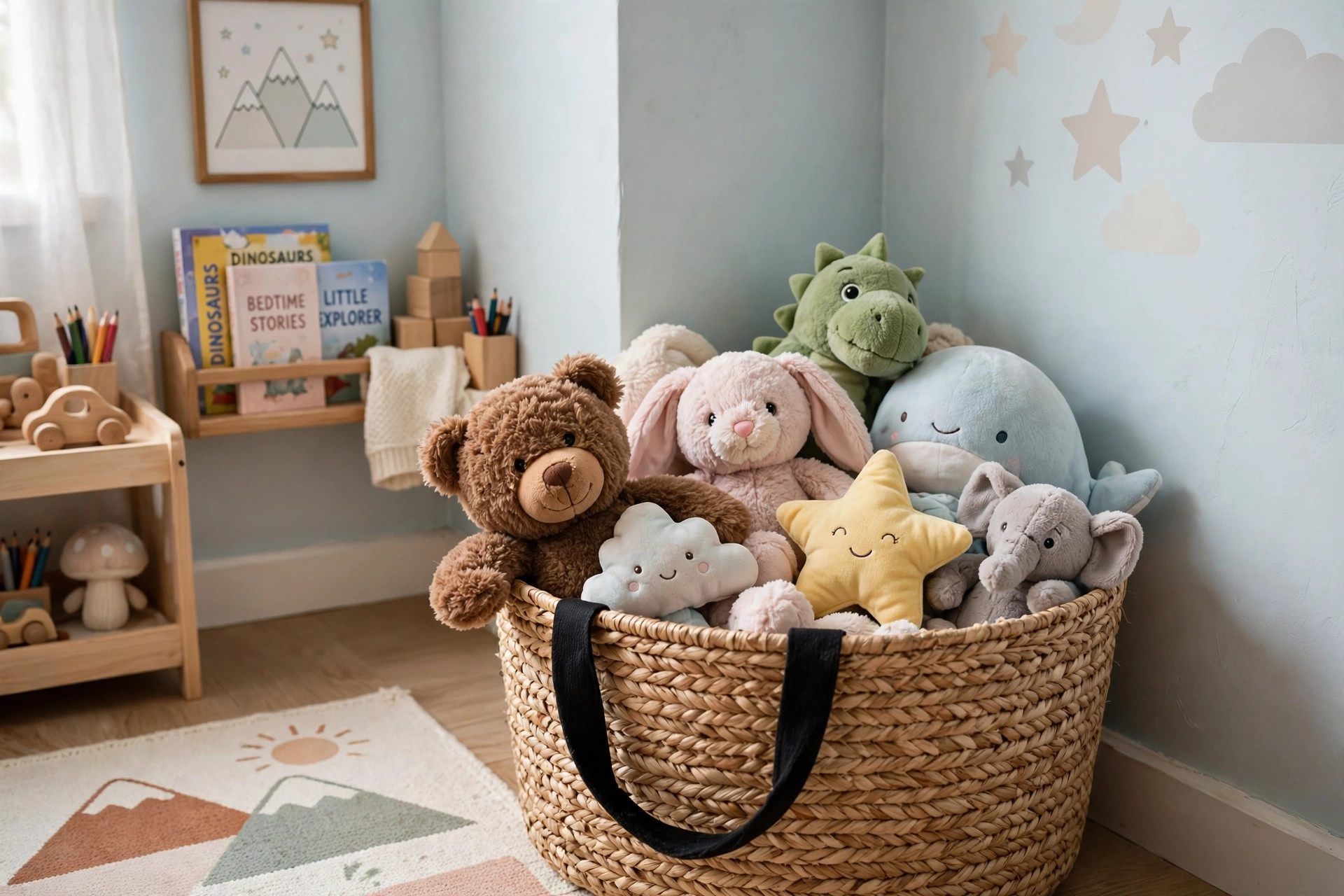
6. A laundry basket that doubles as a toy basket — the basket that already exists
A toy basket you have to buy is a toy basket you have to find room for, because the basket that is new is the basket that needs a place, and the room is the thing that has no place left. Use a laundry basket that doubles as a toy basket — the basket that already exists — so the toys get a home for free and the laundry gets a basket that works twice as hard. Pick a sturdy basket with handles, put the soft toys in it, and keep it in the corner, because the basket in the corner is the basket the toys get thrown into at tidy-up time. When the toys are outgrown, the basket goes back to the laundry, because the basket that already exists is the basket that costs nothing. A laundry basket, and the soft toys have a home for free.
Clothes and closets
7. A low hanging rail in the closet — clothes at kid height
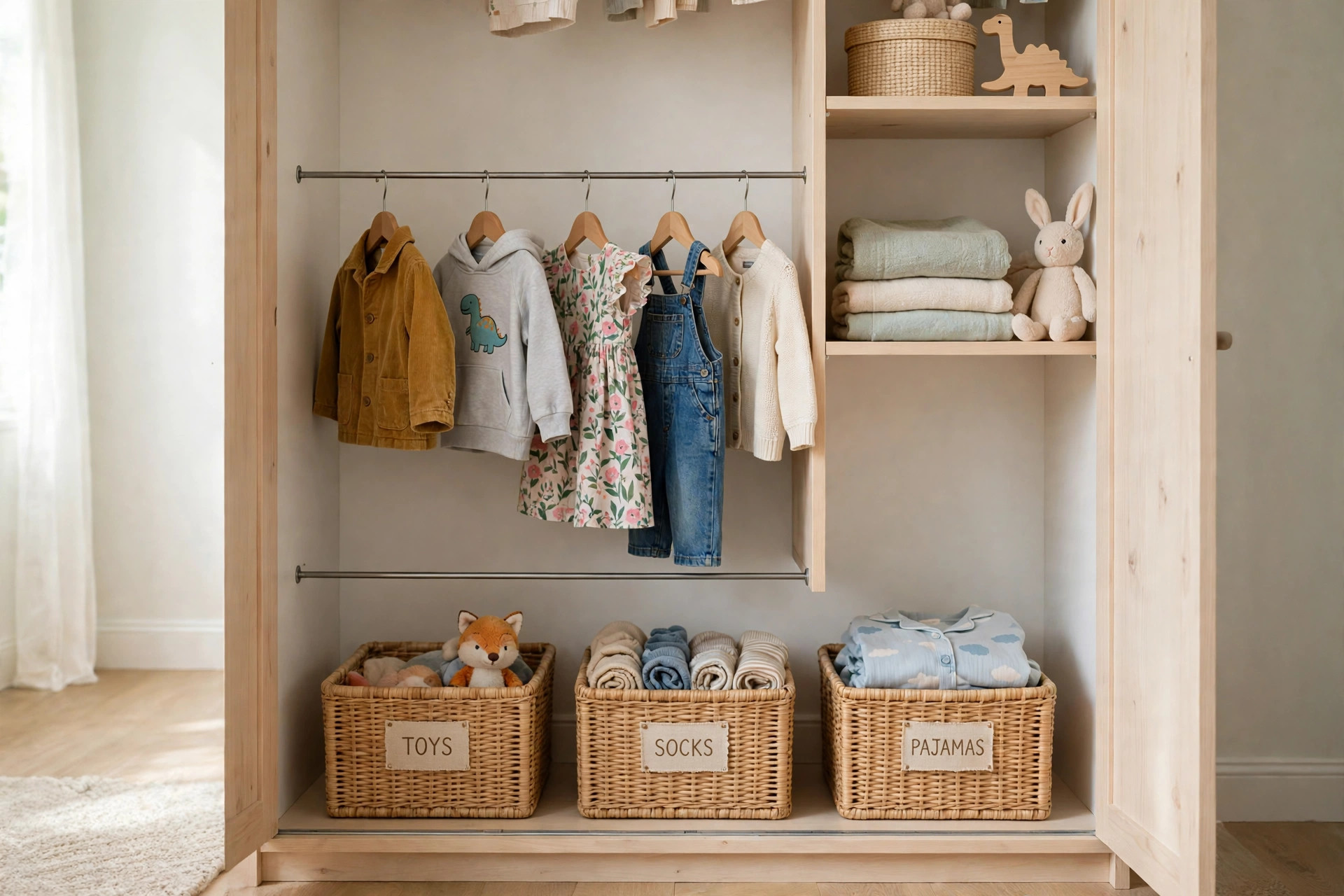
Clothes on a rail at adult height are clothes a child cannot choose, because the rail that is too high is the rail that needs you, and the mornings that need you are the mornings that run late. Hang a low rail in the closet — clothes at kid height — so the child can pick their own clothes and the mornings run themselves. Fix a second rail halfway down the closet, or hang a short rail from the top one with hooks, and put the everyday clothes on it, because the rail at their height is the rail they can reach without standing on a chair. Keep it to five or six outfits, because the rail with five is a choice and the rail with fifty is a mess. A low rail, and the child dresses themselves.
8. Drawer dividers for small clothes — the socks stop disappearing
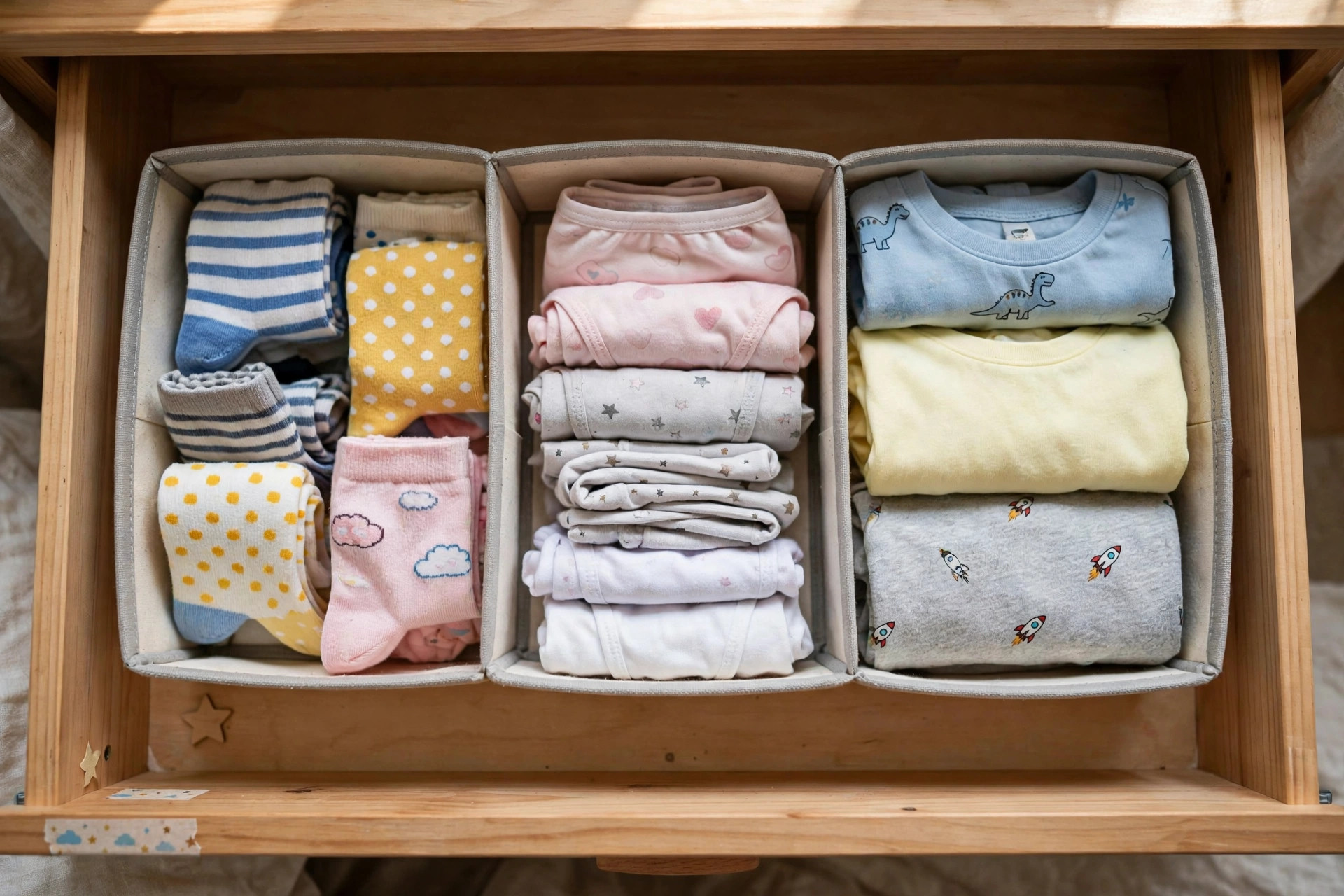
A drawer with no dividers is a drawer with everything mixed up, because the socks that have no home are the socks that end up everywhere, and the drawer that has no order is the drawer you have to dig through. Put dividers in the drawers — the socks stop disappearing — so every small thing has a square of its own and the drawer opens to order instead of chaos. Use small boxes, cut-down cardboard, or fabric dividers, one square for socks, one for underwear, one for t-shirts, because the square is the home and the home is the habit. Keep the dividers low, so the clothes still fit over the top, and let the child put the folded clothes in the right square, because the drawer a child helped organise is the drawer a child keeps organised. Dividers in the drawers, and the small things stop vanishing.
9. A dress-up rail with hooks — costumes on display, not in a pile
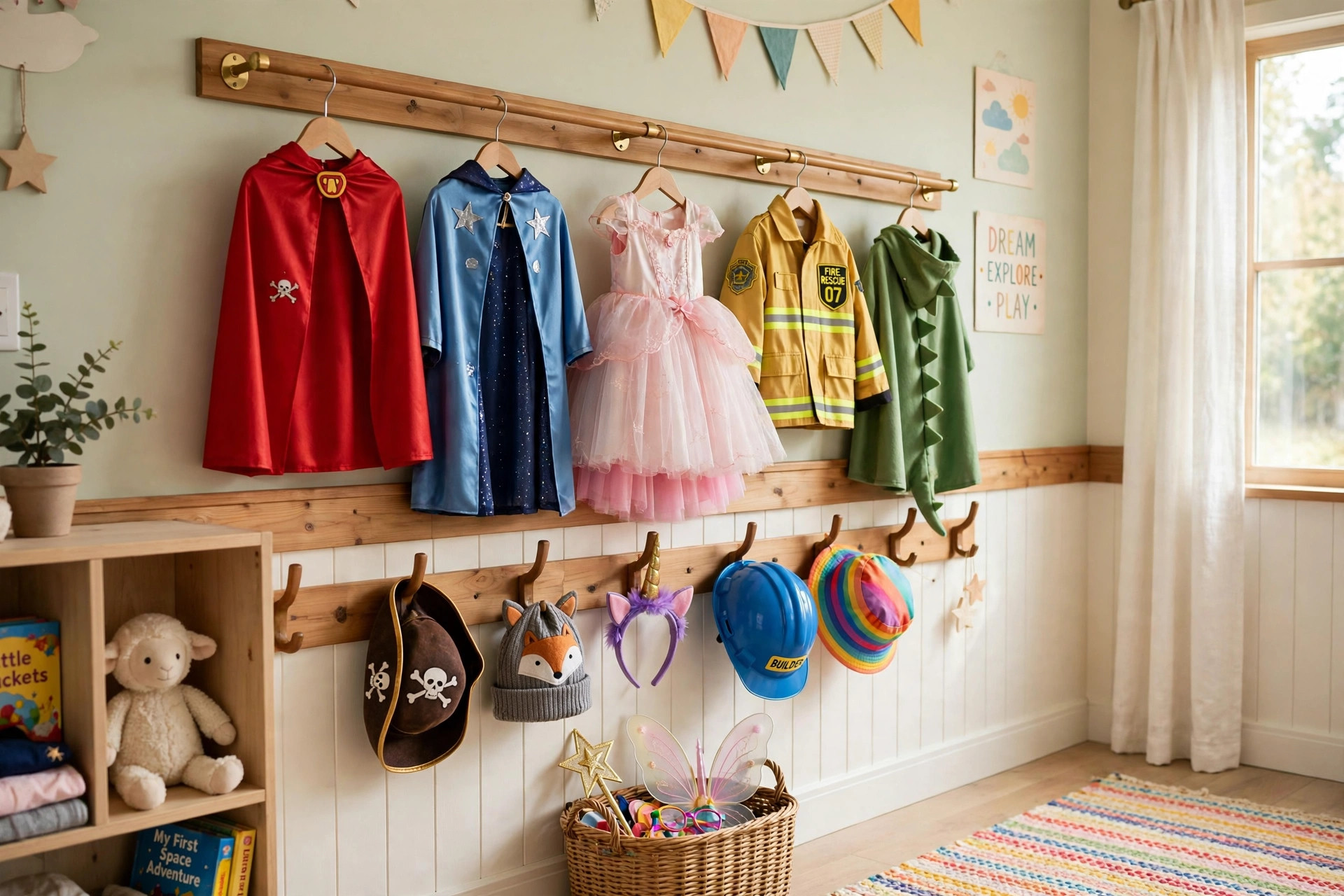
Dress-up clothes in a box are dress-up clothes nobody wears, because the box is the thing that hides them and the pile at the bottom is the thing nobody digs through. Hang a dress-up rail with hooks — costumes on display, not in a pile — so the capes and crowns are the first thing a child sees and the dressing up starts the moment they walk in. Fix a row of hooks on the wall at kid height, hang the costumes one per hook, and put a small mirror beside them, because the mirror is the stage and the hooks are the wardrobe. Keep the hooks to the five best costumes, because the rail with five is a dressing room and the rail with fifty is a jumble sale. A rail and hooks, and the dressing up never stops.
10. Shoe cubbies by the door — shoes in, shoes out
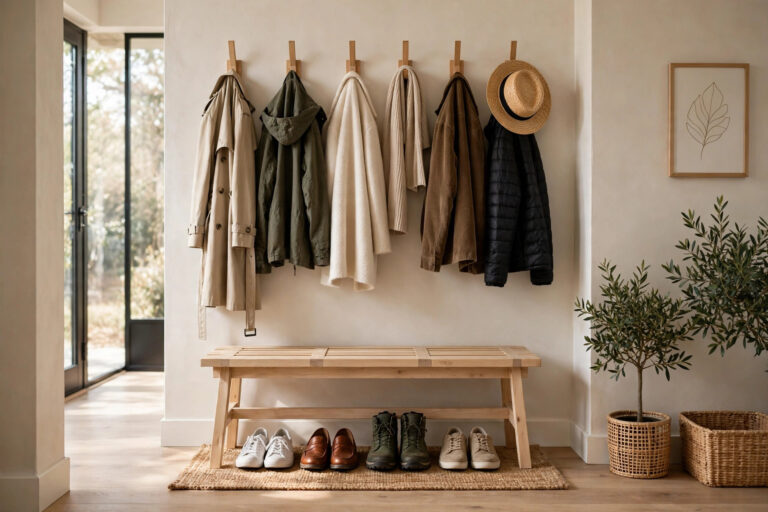
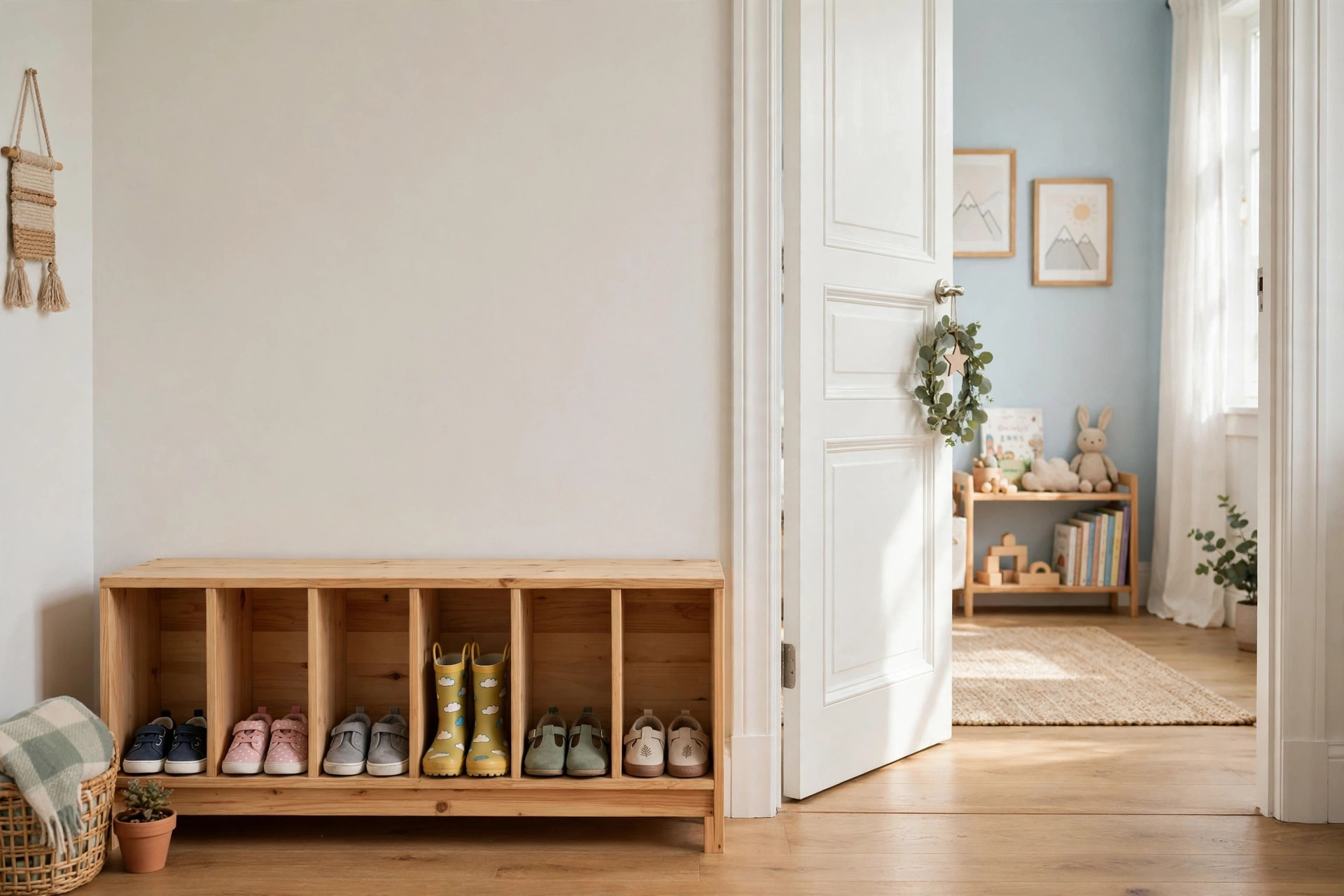
Shoes with no home are shoes by the door, in the hallway, and under the sofa, because the shoes that have nowhere to go are the shoes that go everywhere. Put shoe cubbies by the door — shoes in, shoes out — so the shoes live in one place and the hallway stays clear. Use a low cubby unit, one square per pair, and put it right by the door the child uses, because the cubby by the door is the cubby the shoes go into without thinking. Label each square with a picture of the shoes, because the picture is the reminder and the cubby is the habit, and keep the cubbies low, because the cubby a child can reach is the cubby a child uses. Shoes in the cubbies, and the hallway stays clear.
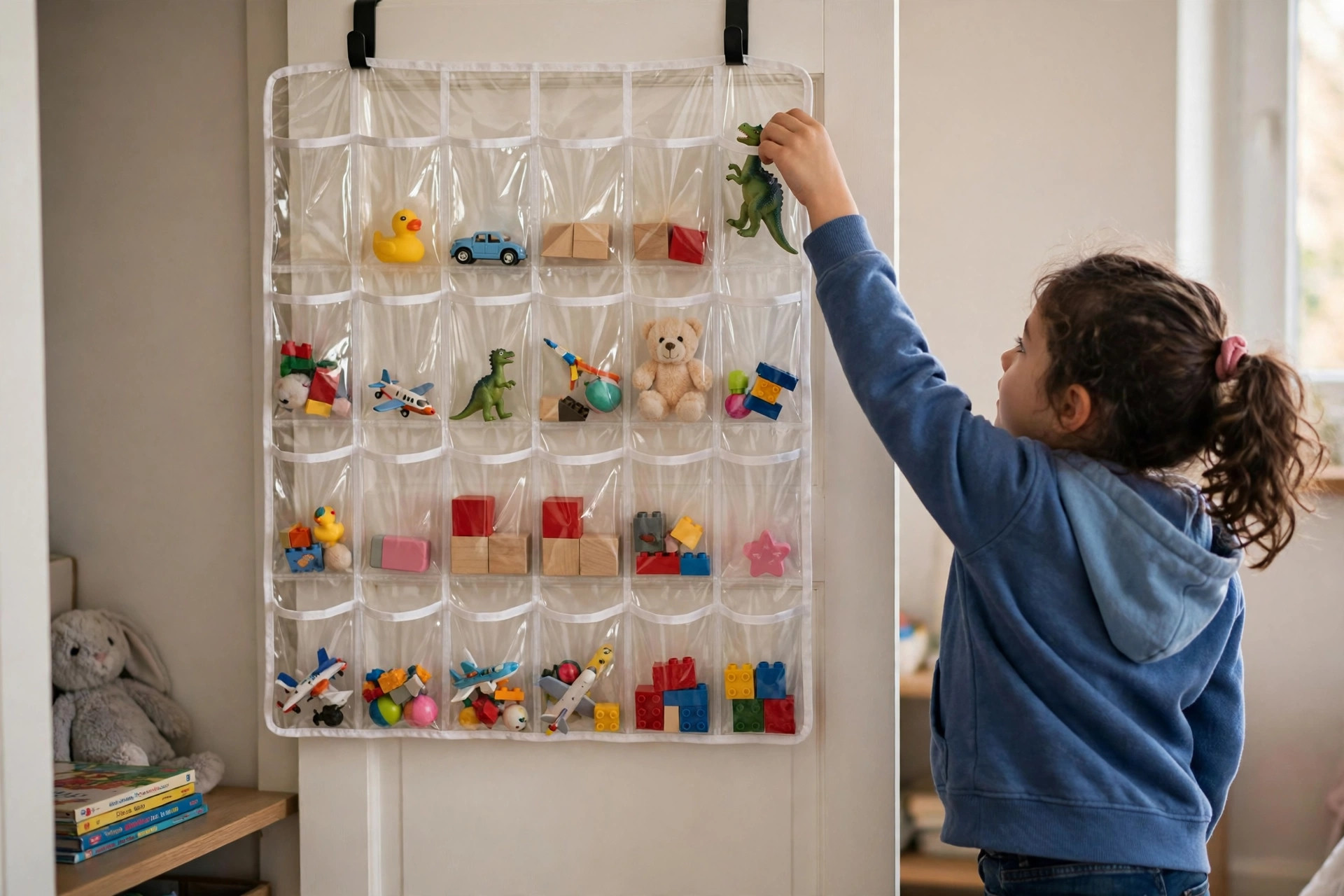
11. A closet door shoe organiser for small toys — pockets for the little things
Small toys with no home are small toys in every drawer, because the tiny figures and the hair clips and the crayons are the things that fit everywhere and belong nowhere. Hang a shoe organiser on the closet door — pockets for the little things — so the small toys each get a pocket and the drawers stay clear. Use a clear over-door organiser, one pocket per kind of small thing, because the clear pocket is the pocket a child can see into and the pocket a child can see into is the pocket a child uses. Keep it on the inside of the closet door, because the door that closes is the door that hides the clutter, and keep the pockets at kid height, because the pocket a child can reach is the pocket that gets used. Pockets on the door, and the little things have a home.
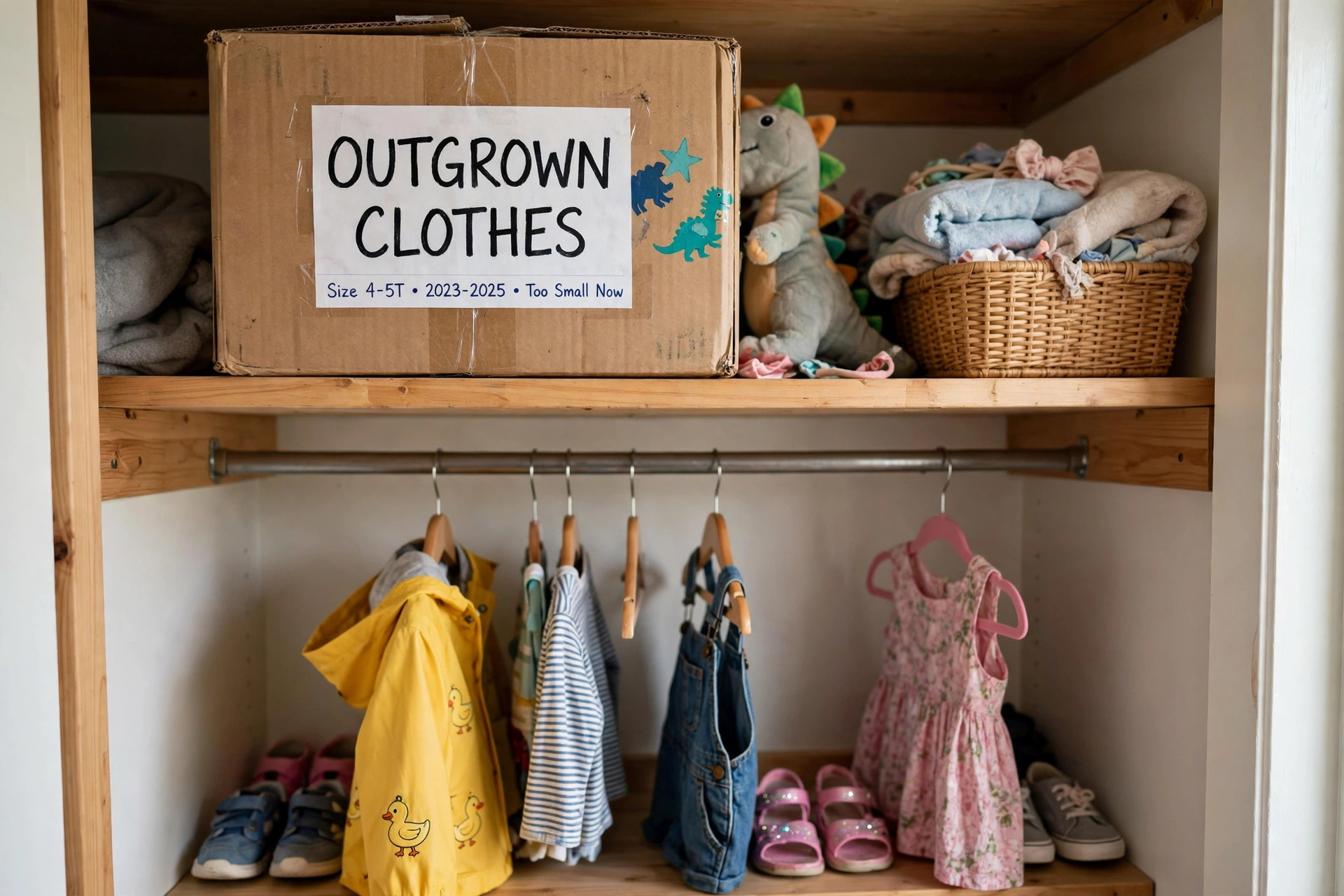
12. An outgrown clothes box on the top shelf — the box that keeps the closet current
A closet full of clothes that no longer fit is a closet with no room for the clothes that do, because the clothes that are too small are the clothes that take up the space, and the space is the thing the new clothes need. Keep an outgrown clothes box on the top shelf — the box that keeps the closet current — so the too-small clothes leave the closet the moment you notice them. Put a box or a bag on the top shelf, and every time a top or a pair of trousers no longer fits, fold it into the box, because the box is the habit and the habit is the tidy closet. When the box is full, pass the clothes on, because the box that leaves the house is the box that makes room. A box on the top shelf, and the closet only holds clothes that fit.
Toys, books and craft supplies
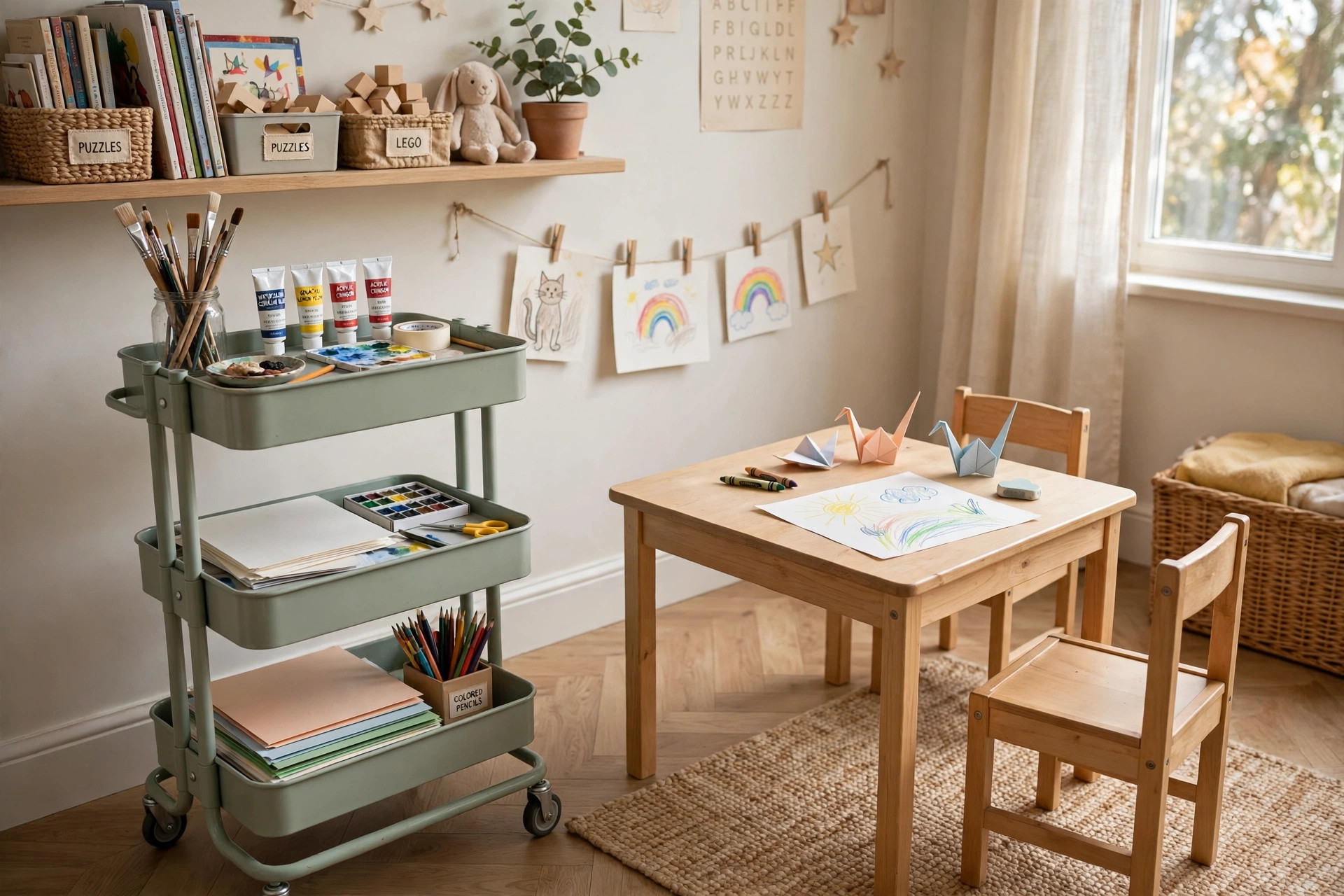
13. A rolling cart for art supplies — the cart that rolls to the table and back
Art supplies in a cupboard are art supplies nobody uses, because the cupboard is the thing that hides them and the table is the thing that is too far away. Keep them on a rolling cart — the cart that rolls to the table and back — so the paints and the paper come to the child and go away again when the picture is done. Load the cart with the paper on one shelf, the paints on another, and the brushes in a pot on top, because the cart with a place for everything is the cart that tidies itself. Roll it to the kitchen table for craft time, and roll it back to the corner when the picture is finished, because the cart that moves is the cart that never gets in the way. (Check on Amazon for a three-tier rolling cart with wheels that lock, so it stays put while the painting happens.) A cart on wheels, and the art supplies are always where the art is.
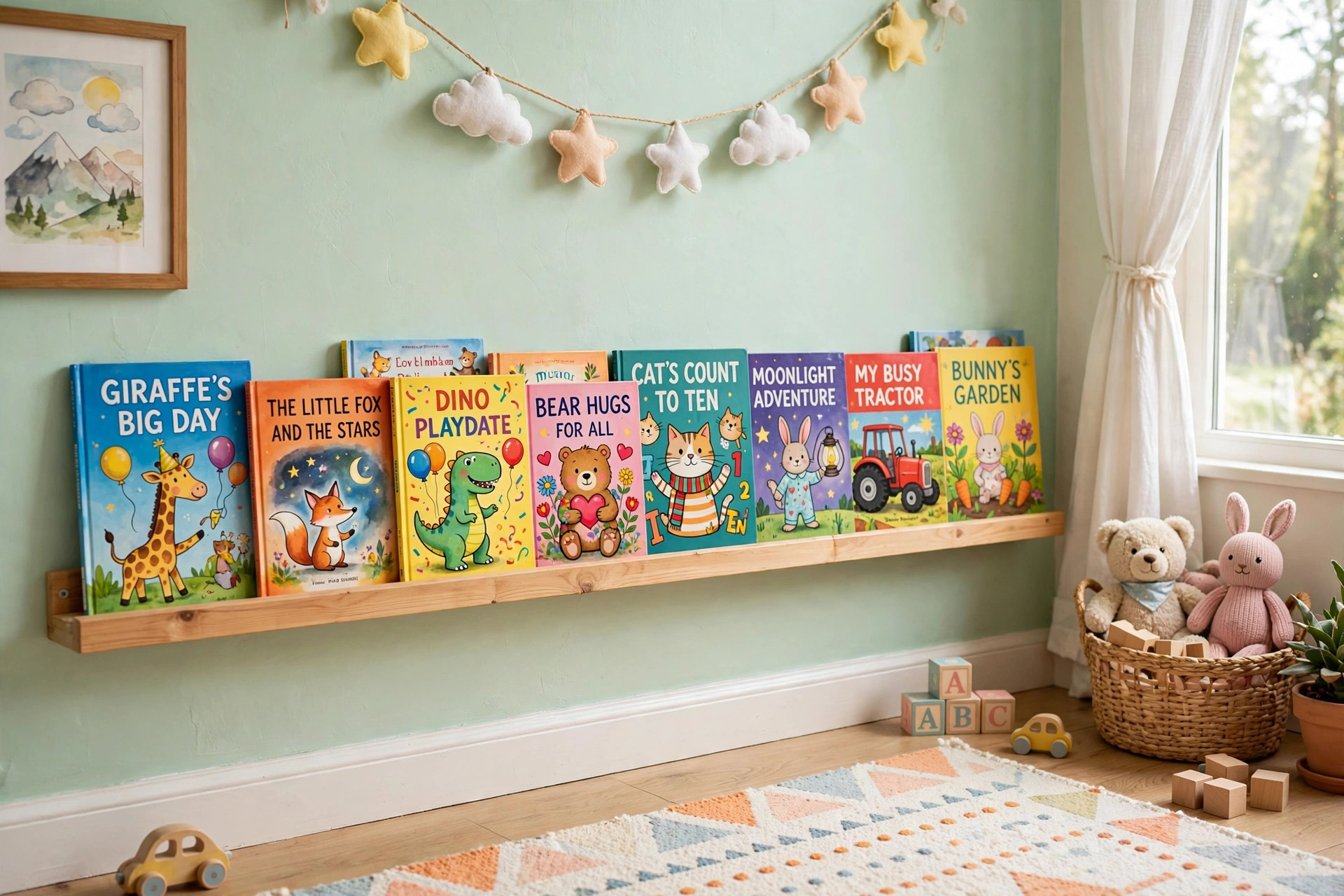
14. A book ledge that shows the covers — the books kids choose by the picture
Books with their spines out are books nobody chooses, because the spine is the thing that tells you nothing and the cover is the thing that makes a child reach for it. Hang a book ledge that shows the covers — the books kids choose by the picture — so the books face out like a shop and the child picks by the picture on the front. Fix a shallow ledge on the wall, one board with a small lip, and stand five or six books on it facing out, because the ledge with five is a bookshop and the ledge with fifty is a wall of noise. Change the books every week, because the books that change are the books that get picked up, and keep the ledge at kid height, because the ledge a child can reach is the ledge a child uses. A ledge with the covers out, and the books get read.
15. A Lego table with storage underneath — build on top, tidy below
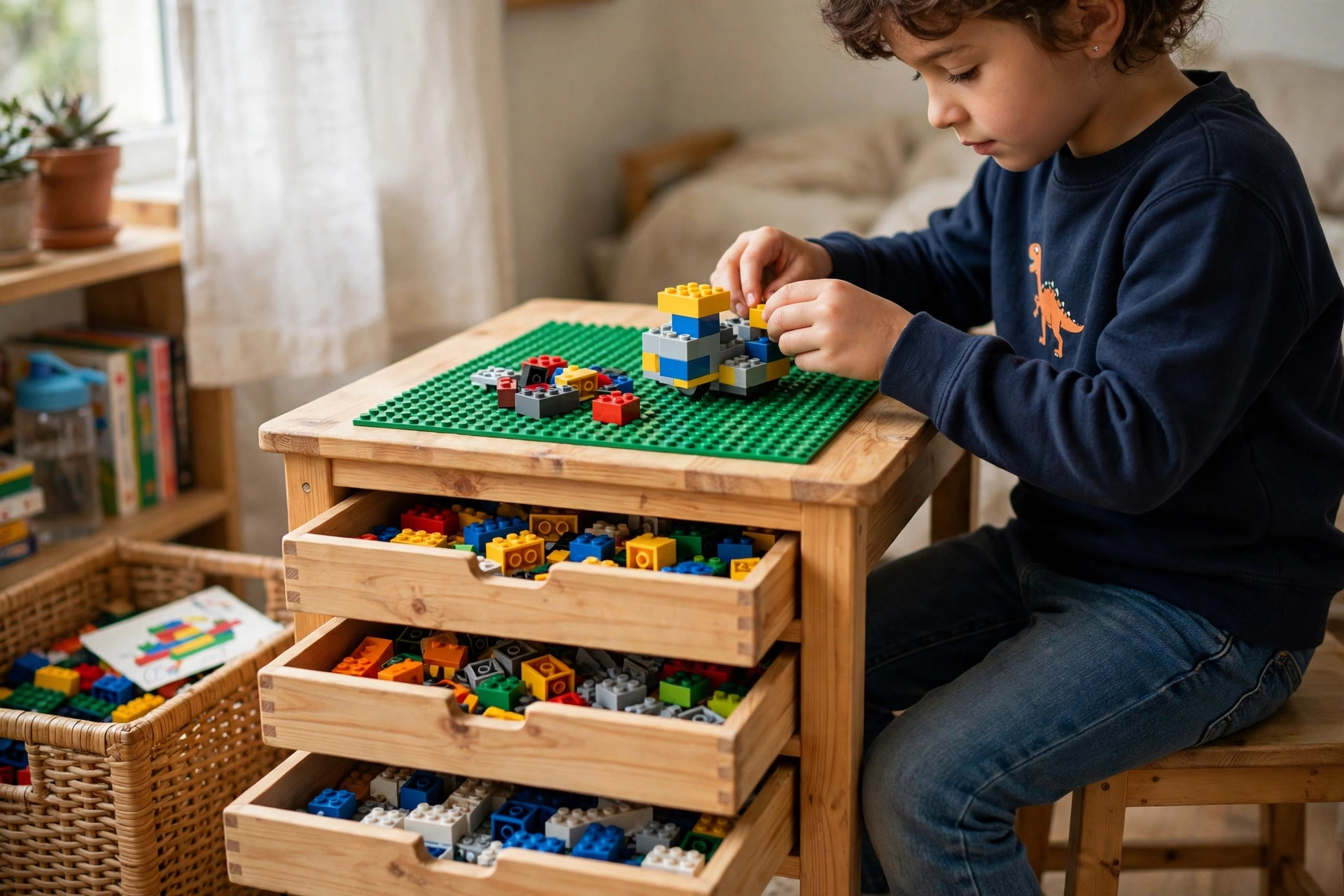
Lego on the floor is Lego under your feet, because the bricks that are loose are the bricks that are everywhere, and the floor is the thing you walk on. Give the bricks a table with storage underneath — build on top, tidy below — so the building happens on the table and the bricks live in the drawers below it. Use a small table with a flat top, fix a baseplate to it if you like, and put shallow drawers or bins underneath, one for each colour or kind, because the drawer is the home and the table is the building site. When playtime ends, the bricks sweep off the table into the drawers, because the table with storage is the table that tidies in one sweep. (Check on Amazon for a small kids table with storage bins underneath, which works as a Lego table without any building.) Build on top, tidy below, and the Lego stays off the floor.
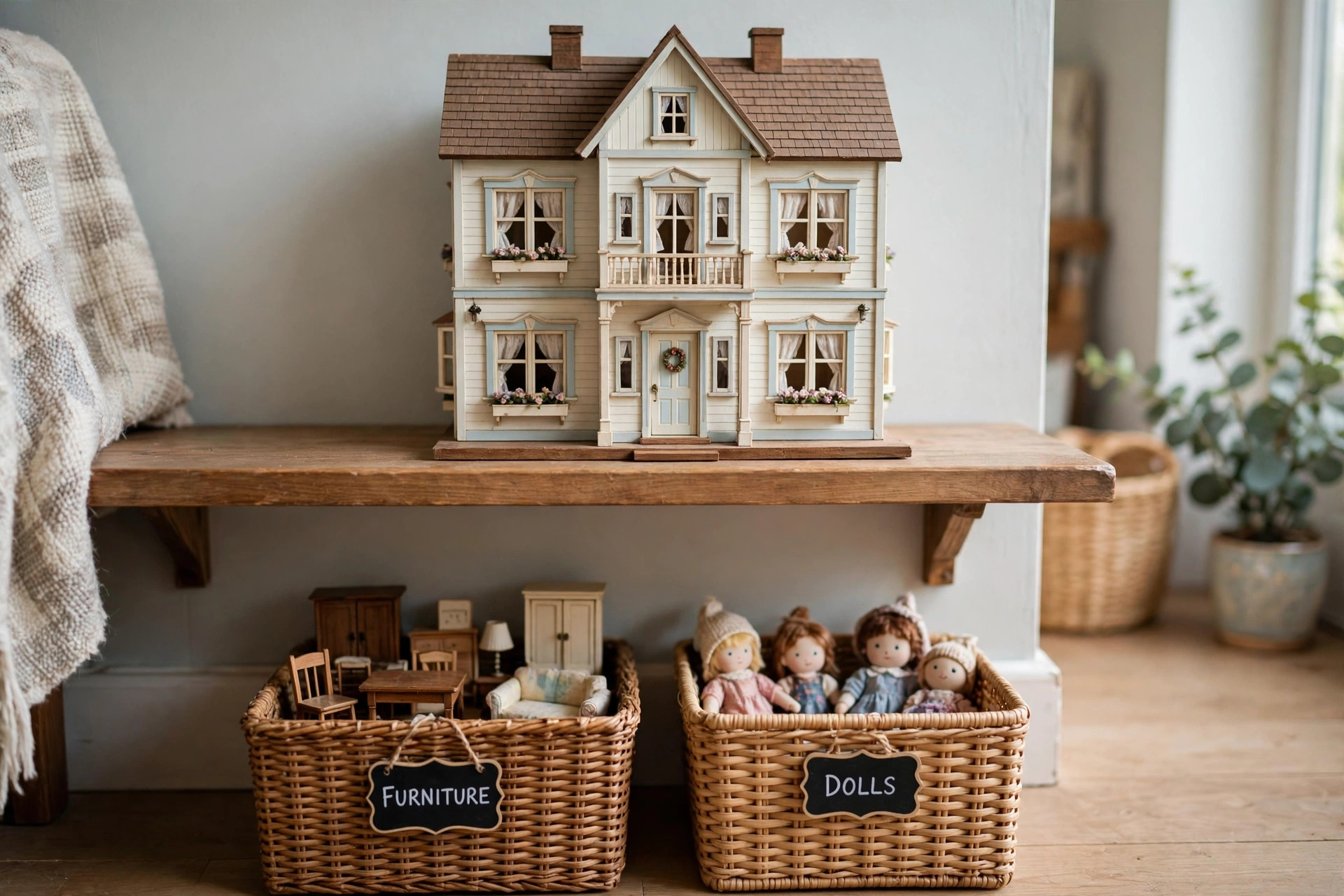
16. A dollhouse shelf with bins below — the house on top, the pieces below
A dollhouse with its furniture in a box is a dollhouse nobody plays with, because the furniture that is in a box is the furniture that takes ten minutes to find, and ten minutes is longer than a child will wait. Put the dollhouse on a shelf with bins below — the house on top, the pieces below — so the house stays set up and the little pieces live in the bins underneath it. Keep the shelf at kid height, with the house on top and two small bins below, one for the furniture and one for the dolls, because the bin below is the bin a child can reach without moving the house. When playtime ends, the pieces go back in the bins, because the bins below are the bins that are already there. A shelf with the house on top, and the dollhouse is always ready to play with.
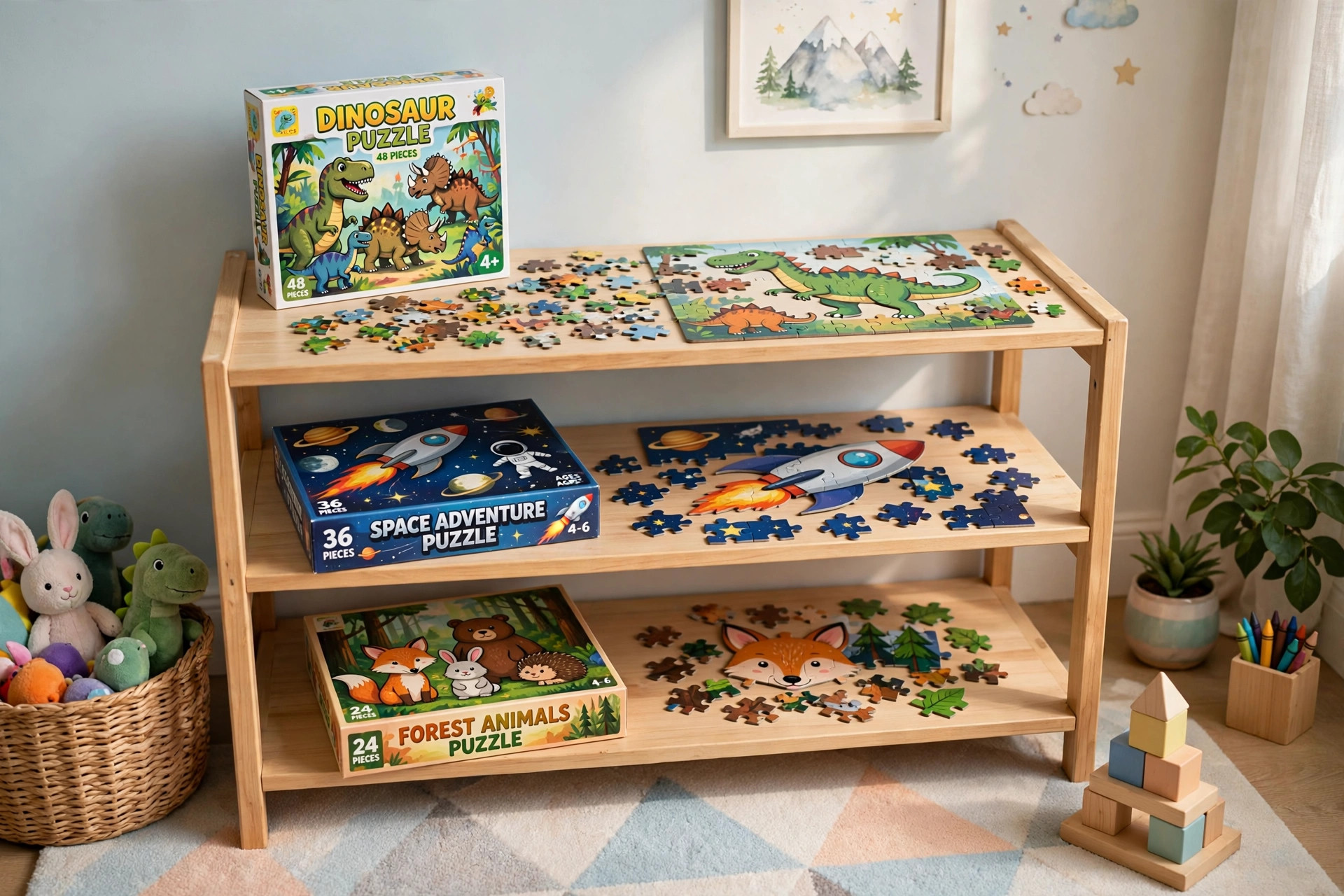
17. A puzzle shelf with one puzzle per shelf — the puzzles that stay complete
Puzzles in a pile are puzzles with missing pieces, because the pile is the thing that mixes them up and the missing piece is the thing that ruins the puzzle. Give each puzzle its own shelf — the puzzles that stay complete — so the pieces stay with their box and the puzzle that is finished is the puzzle that can be finished again. Use a low shelf with one puzzle per shelf, box and pieces together, because the shelf with one puzzle is the shelf that keeps the pieces together. Keep the shelf short, five or six puzzles, because the shelf with five is a collection and the shelf with fifty is a pile, and put the puzzle the child is working on at the front, because the puzzle at the front is the puzzle that gets finished. One puzzle per shelf, and the pieces stop going missing.
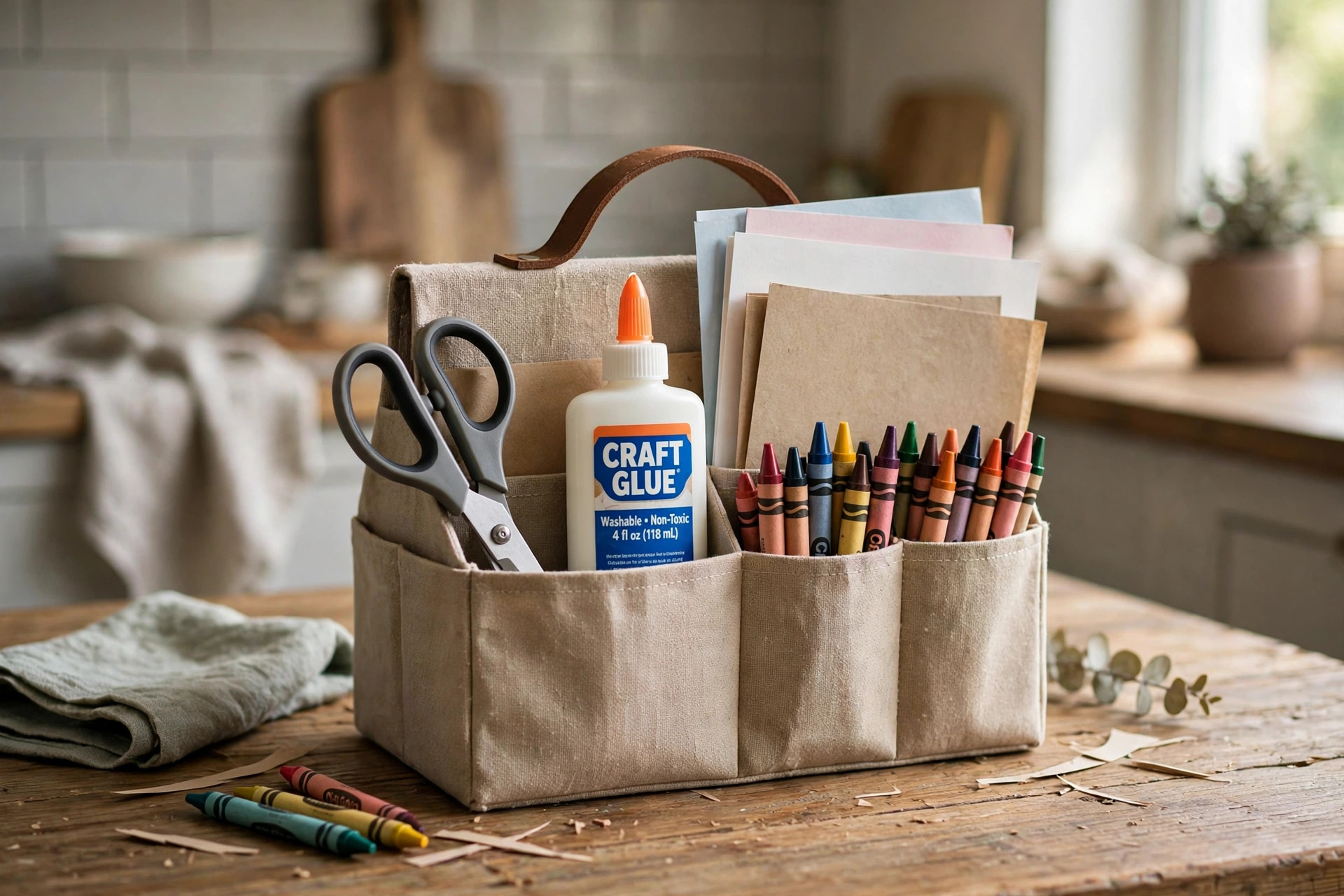
18. A craft caddy with a handle — the caddy that carries the craft to the kitchen table
Craft supplies spread across the room are craft supplies that never get used together, because the scissors are here, the glue is there, and the paper is somewhere else entirely. Keep them in a craft caddy with a handle — the caddy that carries the craft to the kitchen table — so the whole craft kit travels in one hand and the table is the only place it lands. Fill the caddy with the scissors, the glue, the crayons and the paper, because the caddy with everything in it is the caddy that makes a craft possible in five minutes. Carry it to the kitchen table, craft, and carry it back, because the caddy that travels is the caddy that never leaves a mess behind. A caddy with a handle, and the craft kit is always ready.
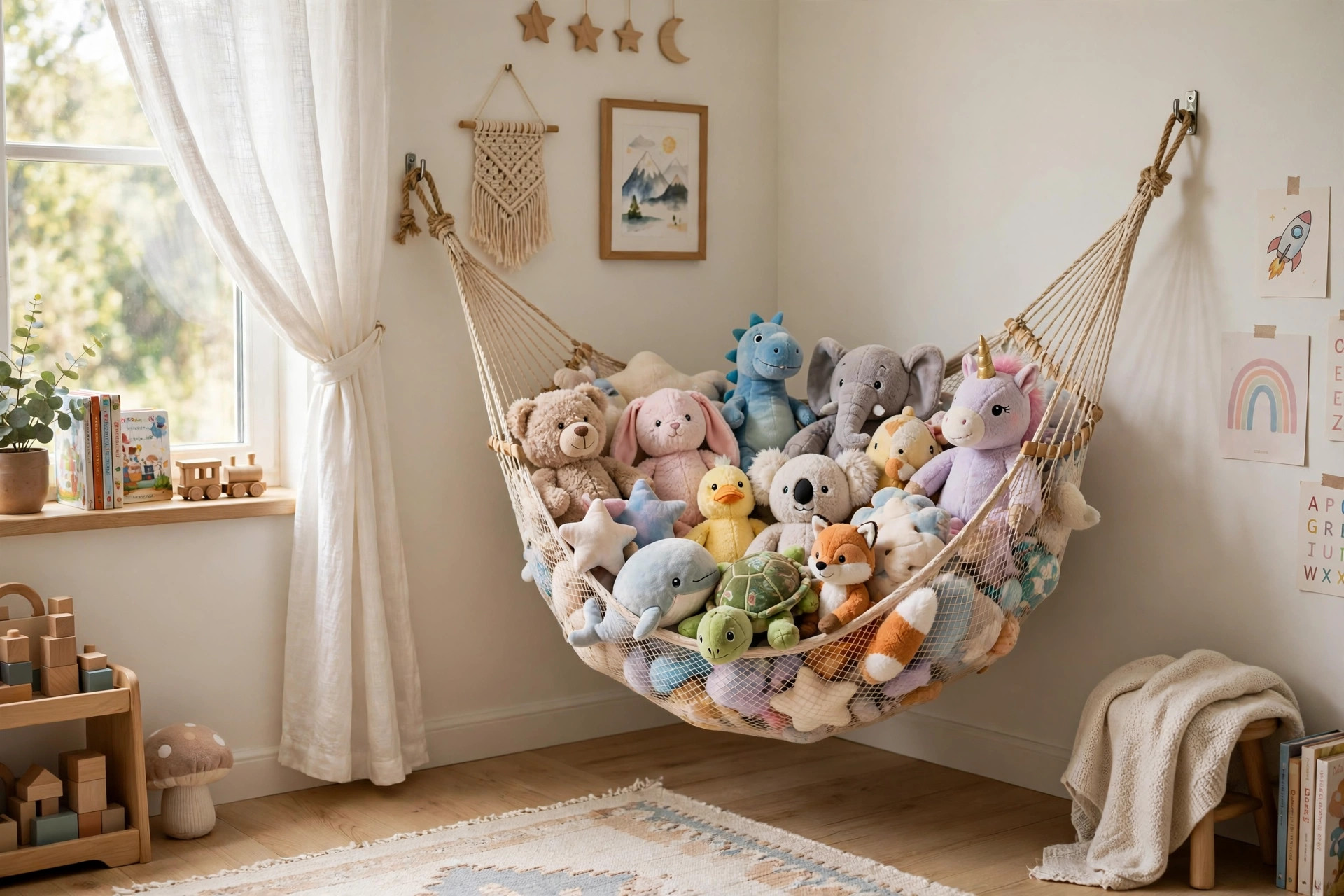
19. A stuffed animal hammock — the soft toys in one place, not on the bed
Soft toys on the bed are soft toys you have to move before you can sleep, because the bed is the thing that fills up and the child is the thing that needs the space. Hang a stuffed animal hammock — the soft toys in one place, not on the bed — so the soft toys live in the corner and the bed stays clear for sleeping. Fix a fabric hammock across a corner, high enough to be out of the way and low enough to reach, and pile the soft toys into it, because the hammock is the home and the corner is the place that was doing nothing. Keep the five favourites on the bed, because the bed with five is a bed and the bed with fifty is a toy box. A hammock in the corner, and the bed is for sleeping again.
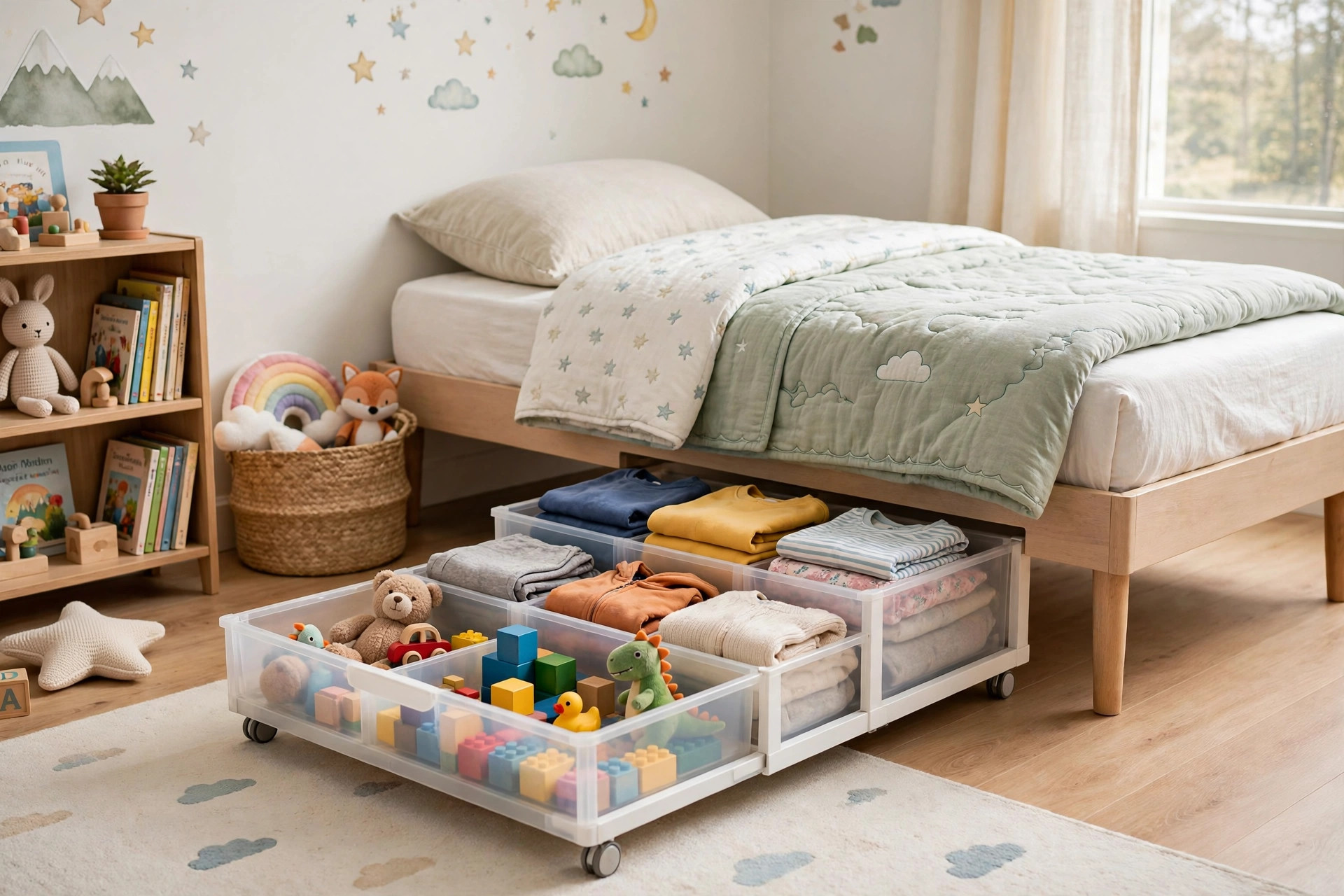
20. Under-bed rolling drawers — the space under the bed finally works
The space under the bed is the biggest empty space in the room, because the bed is the thing that takes up the floor and the space underneath is the space nobody uses. Put rolling drawers under it — the space under the bed finally works — so the toys and the out-of-season clothes live under the bed instead of on the floor. Use shallow drawers on wheels, one for toys, one for clothes, and roll them out when you need them, because the drawer on wheels is the drawer a child can pull out without help. Keep the drawers shallow, because the drawer that is shallow is the drawer that slides back under the bed, and label the front, because the label is the reminder of what lives inside. Drawers under the bed, and the biggest empty space in the room finally has a job.
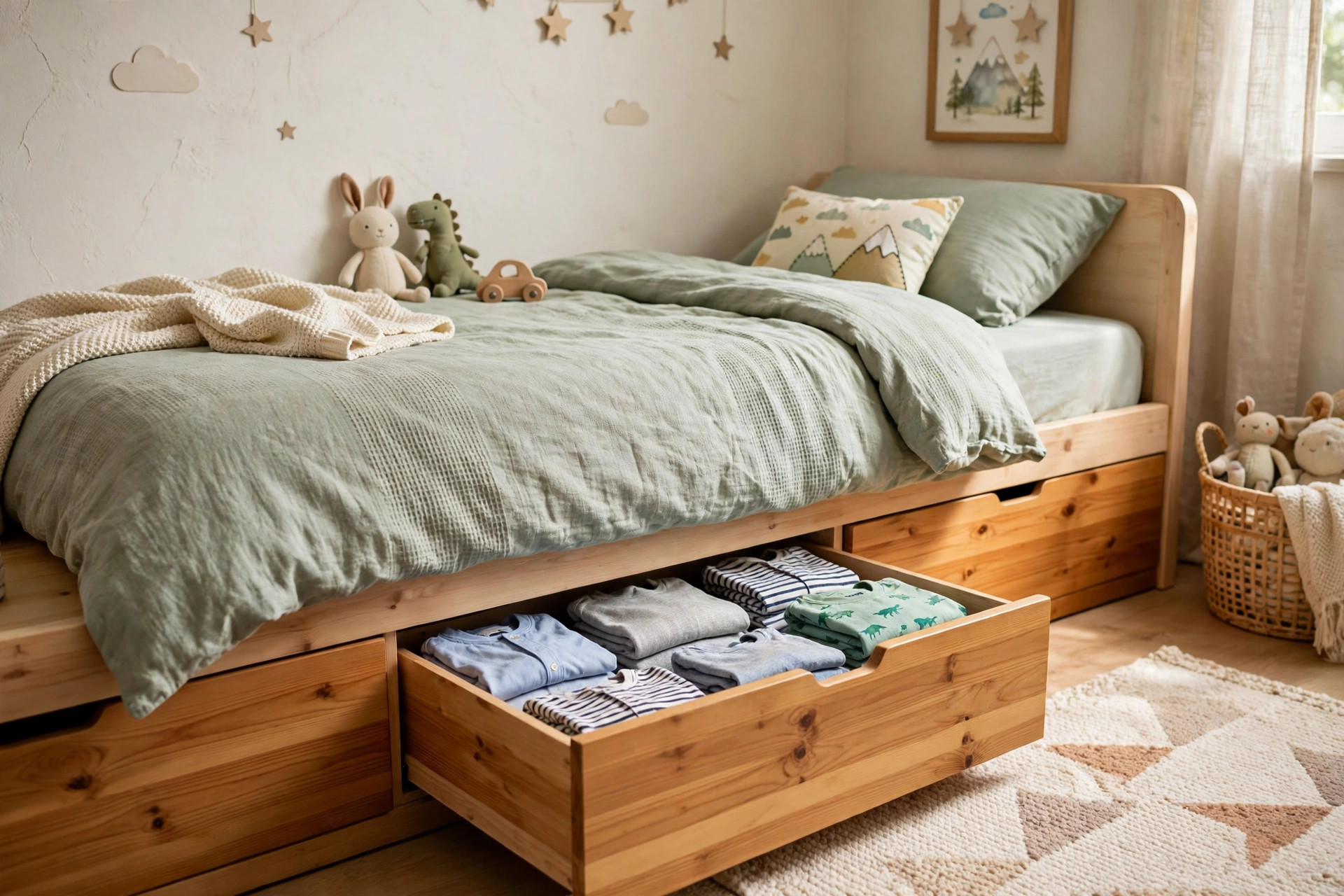
21. A bed with built-in drawers — the bed is the storage
A bed with nothing underneath it is a bed wasting a whole wardrobe of space, because the bed is the biggest piece of furniture in the room and the space underneath it is the space that does nothing. Choose a bed with built-in drawers — the bed is the storage — so the clothes and the toys live in the bed itself and the room needs one less piece of furniture. Use the drawers for the clothes that do not fit in the closet, or for the toys that come out every day, because the drawer in the bed is the drawer that is always there. Keep the drawers for the everyday things, because the drawer that holds the everyday is the drawer that gets opened, and the bed with drawers is the bed that earns its floor space. A bed with drawers, and the room gains a wardrobe without losing a step.
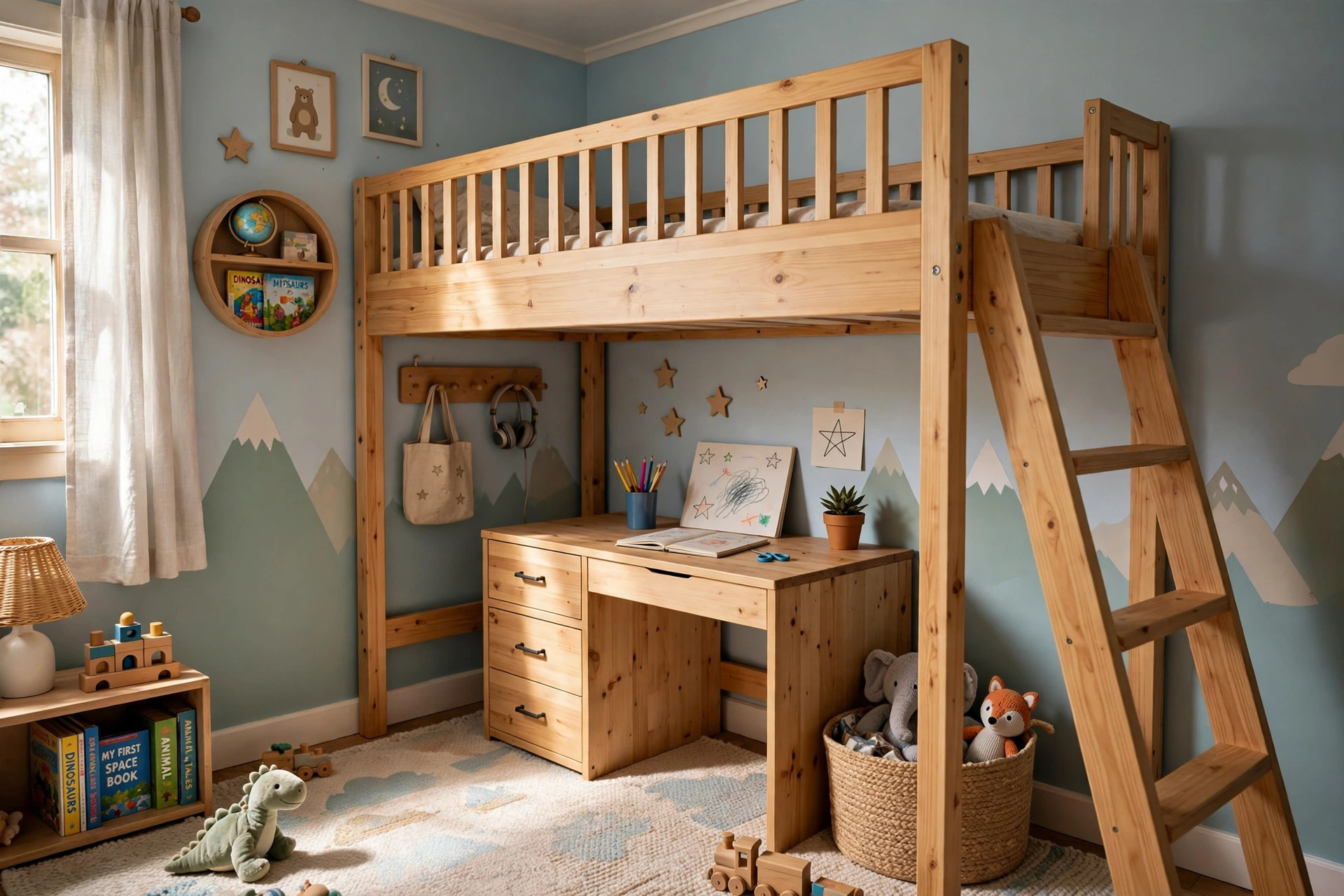
22. A loft bed with a desk and drawers below — sleep up top, store underneath
A small room with a bed, a desk and a wardrobe is a small room with no floor left, because the bed takes the floor, the desk takes the wall, and the wardrobe takes the corner. Raise the bed — sleep up top, store underneath — so the desk and the drawers live under the bed and the floor comes back. Put a small desk under the loft bed, with drawers beside it for the school things and the clothes, because the space under the bed is the space that was already there. Keep the ladder safe and the rail high, because the bed that is safe is the bed a parent can relax about, and use the space underneath for the things the child uses every day, because the space under the bed is the space that is closest to hand. Sleep up top, store underneath, and the small room gains a whole desk.
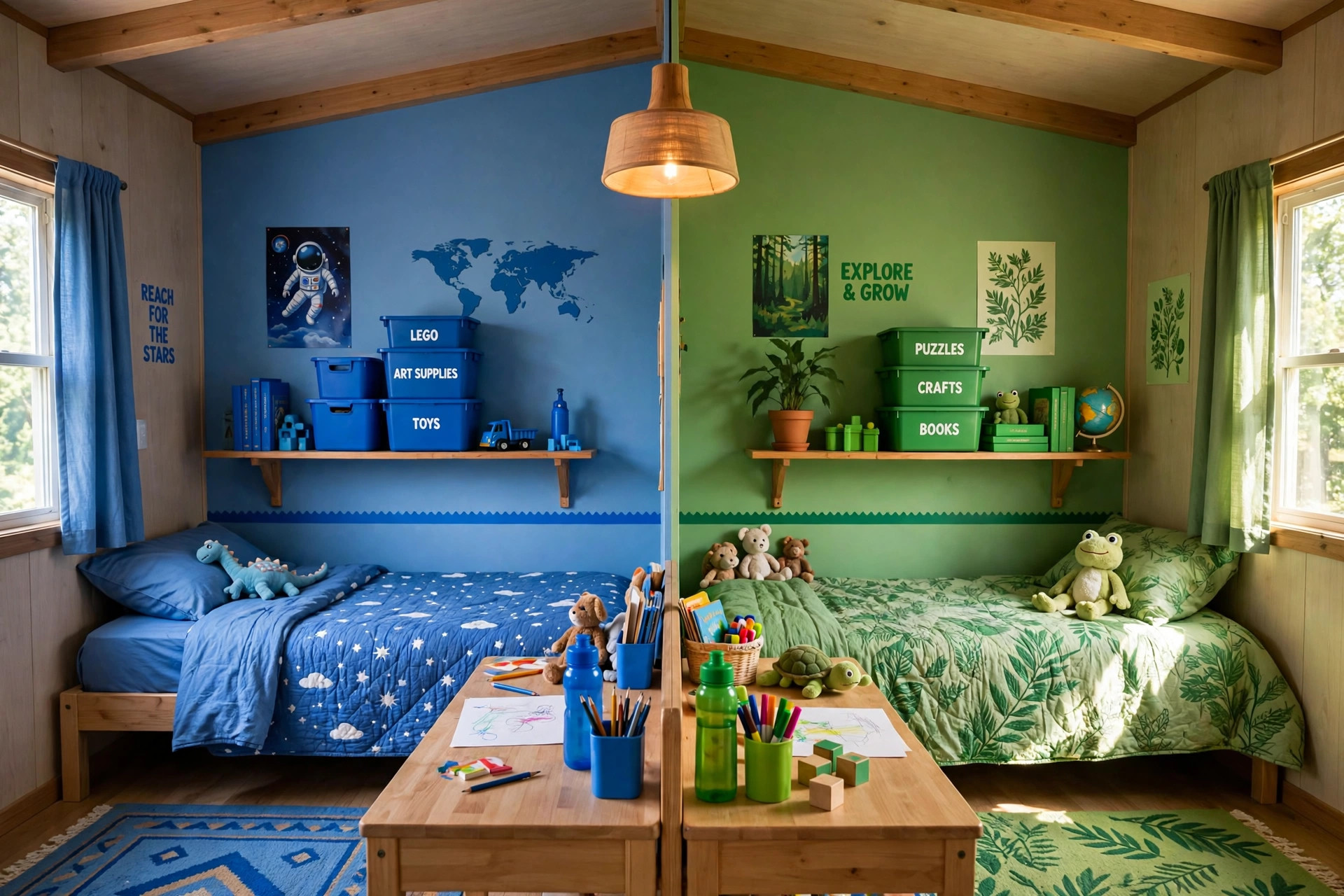
A shared room with no split is a shared room with no peace, because the toys that belong to nobody are the toys that cause the arguments, and the room that has no sides is the room that has no rules. Split the room — one side each, colour-coded — so each child has a side, a colour, and a set of bins, and the arguments have nowhere to start. Give one child the blue bins and the other the green, one shelf each, one drawer each, because the colour is the boundary and the boundary is the peace. Keep the shared things in the middle, the books and the games, because the middle is the place that belongs to both, and let each child choose what lives on their side, because the side a child chose is the side a child looks after. One side each, and the shared room stops being a battleground.
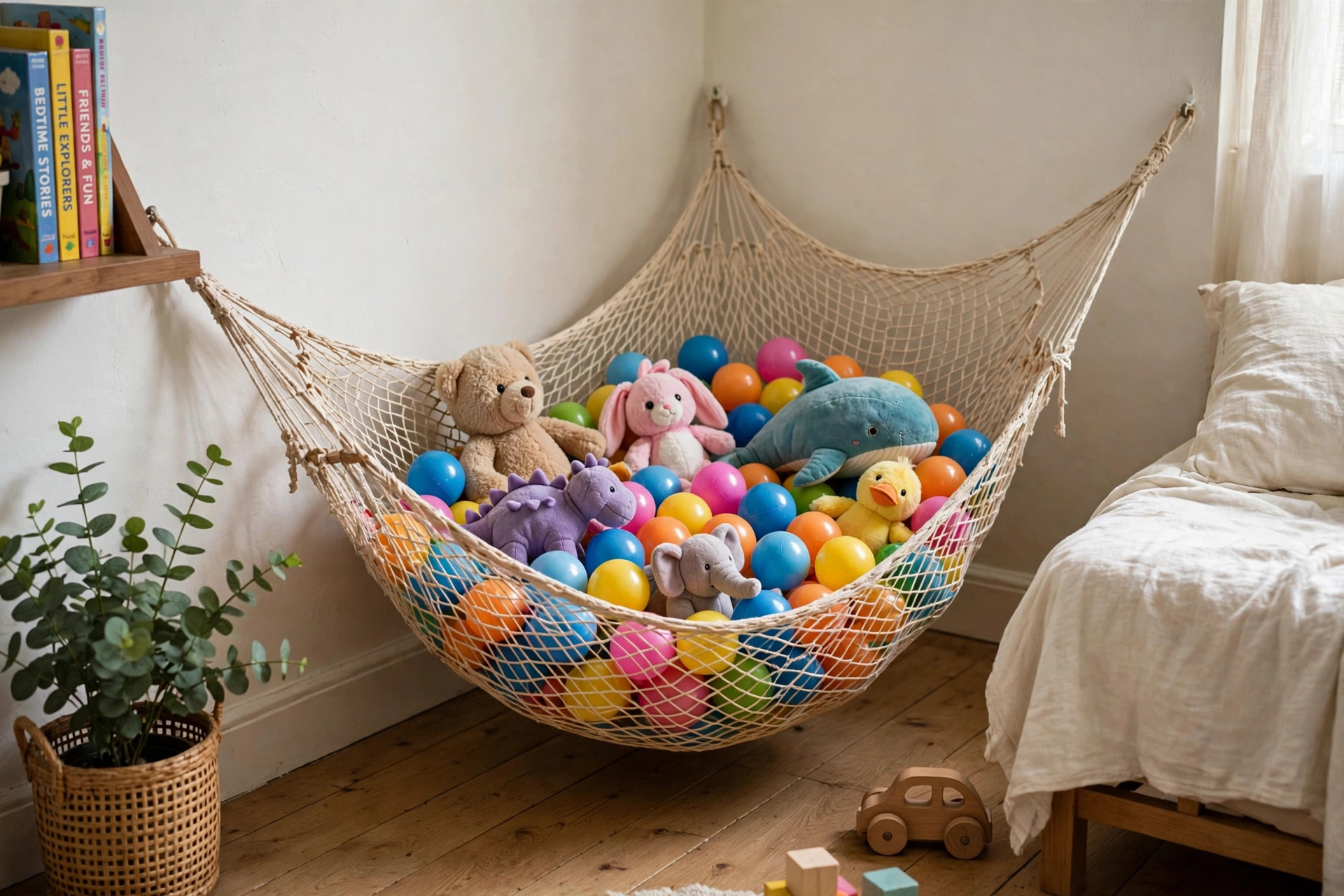
24. A toy hammock in the corner — the corner that holds the balls
Balls in a room are balls everywhere, because the ball is the thing that rolls and the corner is the thing that does nothing to stop it. Hang a toy hammock in the corner — the corner that holds the balls — so the balls live in the net and the floor stays clear for playing. Fix a mesh hammock across a corner, low enough for a child to reach, and pile the balls and the soft toys into it, because the net is the home and the corner is the place that was empty. Keep the hammock for the light things, balls and soft toys, because the net that holds light things is the net that stays up, and let the child throw the balls into it at tidy-up time, because the tidy-up that feels like a game is the tidy-up that happens. A hammock in the corner, and the balls stop rolling under the bed.
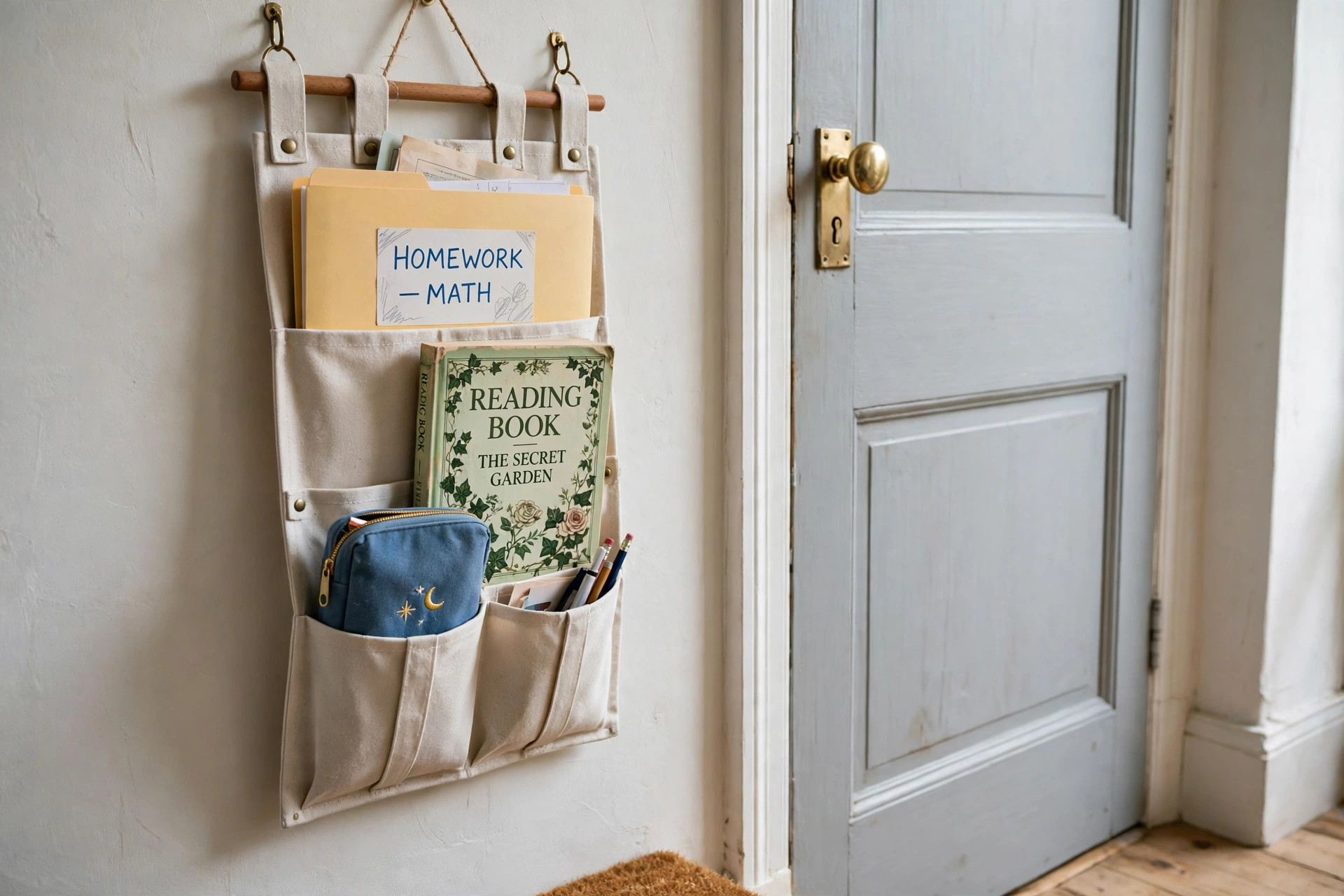
25. A wall-mounted pocket organiser for school things — homework in one place
School things with no home are school things in the morning rush, because the homework is on the table, the reading book is on the bed, and the pencil case is in the car. Hang a pocket organiser on the wall — homework in one place — so the school bag, the homework and the reading book live in one row of pockets by the door. Use a fabric organiser with big pockets, one for the homework folder, one for the reading book, one for the pencil case, because the pocket is the home and the home is the habit. Hang it by the door the child leaves through, because the organiser by the door is the organiser the school things go into without thinking. The school things themselves are in 22 School Organization Ideas for 2026, where the mornings get their own system. Pockets on the wall, and the mornings stop being a search.
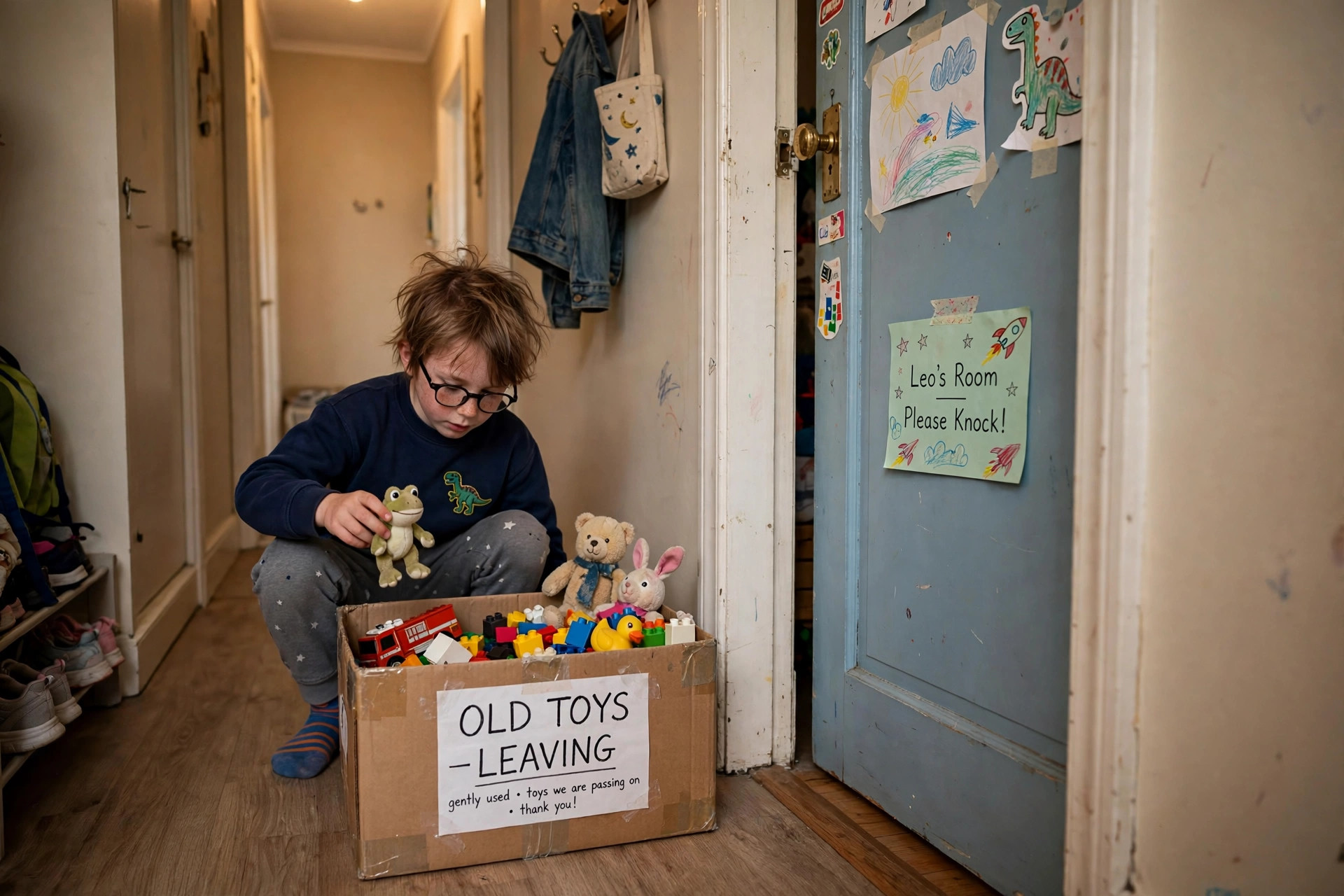
26. A "one in, one out" box by the door — the box that stops the room filling up
A kids room fills up because new toys arrive and old toys never leave, because the toy that arrives is the toy that stays and the toy that stays is the toy that takes up space. Keep a "one in, one out" box by the door — the box that stops the room filling up — so every new toy means one old toy leaves, and the room stays the same size. Put a box or a bag by the door, and when a new toy arrives, the child picks one toy to put in the box, because the box is the rule and the rule is the habit. When the box is full, pass the toys on, because the box that leaves the house is the box that makes room for the next birthday. The outdoor toys that come back inside are in 20 Outdoor Toy Storage Ideas for 2026, where the garden toys get their own home. A box by the door, and the room never fills up again.
Which kids room storage idea fits which situation?
| Situation | Best first move | Budget | Tools needed |
|---|---|---|---|
| Toys all over the floor | Low open bins (idea 1) | Low | Open bins |
| Too many toys out at once | Toy rotation box (idea 2) | Free | Box with lid |
| Child cannot read labels yet | Picture labels (idea 3) | Low | Printed pictures |
| No bedtime reading habit | Book basket by the bed (idea 4) | Low | Basket |
| Favourite toys have no home | Shelf at kid height (idea 5) | Low | One shelf board |
| Clothes the child cannot reach | Low hanging rail (idea 7) | Low | Rail, hooks |
| Socks vanish in the drawer | Drawer dividers (idea 8) | Low | Small boxes |
| Dress-up clothes in a pile | Dress-up rail with hooks (idea 9) | Low | Hooks |
| Art supplies hidden away | Rolling cart (idea 13) | Low | Rolling cart |
| Books never get chosen | Book ledge, covers out (idea 14) | Low | Ledge board |
| Lego under your feet | Lego table with storage (idea 15) | Medium | Table, bins |
| Small room, no floor left | Loft bed with desk below (idea 22) | Medium | Loft bed |
You do not need all 26 ideas. You need the three that solve your room — usually the low open bins the child can reach, the picture labels that tell them where things go, and the toy rotation box that keeps half the toys out of sight. Start with the bins, put them on the floor this weekend, and let the child help stick the pictures on. Do that and the next tidy-up will take five minutes, for the price of three bins and an afternoon.
Save this post for your next kids room sort, and if the toys need sorting first, read 35 Clever Toy Storage Ideas for 2026 next — it is Post 05, the toy storage system this room builds on — and 22 Playroom Organization Ideas for 2026, Post 13, for the playroom that joins onto the kids room. This is the second post of the Storage by room/object resumption — Posts 31 to 35, one room at a time — and the next posts carry the same storage system into the garage, under the bed, and the shoe pile by the door.
Publish date assigned at publishing time. Updated as new kids room storage finds are tested.
Frequently asked questions
How do I get my child to actually put toys away?
Make the tidy-up easier than the mess — low open bins with picture labels, one kind of toy per bin, and a clear finish line: everything off the floor, nothing more. Tidy up together for five minutes at the same time every day, before bath time or before dinner, and make it a race or a song, because the tidy-up that is quick and the same every day is the tidy-up a child will do without being asked. Never ask a child to tidy a whole room at once — ask for the blocks, then the cars, one kind at a time, and praise the finished bins, not the mess that was there before.
What is the best storage for a small kids room?
Low open bins and under-bed drawers, because they use the floor and the space under the bed instead of taking up wall space the room does not have. Start with three or four open bins on the floor for the everyday toys, add rolling drawers under the bed for the clothes and the toys that come out less often, and keep one shelf at kid height for the favourites. Skip tall bookcases and deep toy boxes, because the tall shelf is the shelf a child cannot reach and the deep box is the box where toys go to disappear.
Give each child a colour and a set of bins, so the blue bins belong to one child and the green bins to the other, and keep the shared toys — books, games, building blocks — in the middle of the room where both can reach them. Use one shelf and one drawer each, label them with each child's name or picture, and let each child choose what lives on their side, because the side a child chose is the side a child looks after. Agree one rule together: anything left on the floor at bedtime goes into the shared box, and the shared box gets sorted on Saturday.