22 Entryway Bench Organization Ideas for 2026
The entryway bench is the first thing you see when you come home and the last thing you pass when you leave — and in most houses it is doing no job at all, because the shoes are on the floor in front of it, the bags are on top of it, the coats are draped over one end, and the bench itself has disappeared under the pile. The bench is not the problem — the problem is that entryway bench organization has no system, so every shoe, bag and coat drifts to wherever there was a gap, and the gap is always the bench.
These 22 entryway bench organization ideas turn the bench into a landing zone: shoes tucked below in cubbies, bags and coats on hooks above, keys in one bowl on top, and one cubby per person — so the next time you walk in the door, everything has a place and the hallway stays clear.
Every idea below works in a real home, from a flat where the whole bench is one slim shelf by the door to a house where the bench runs the full mudroom wall. The entryway around the bench gets its full treatment in 22 Entryway Storage Ideas for 2026, where the landing zone lives — and the drop zone the bench belongs to gets its own system in 22 Drop Zone Organization Ideas for 2026. Pick three ideas that fit your space, start with the one job, and build from there.
Set up the bench
1. Give the bench one job — the landing zone that stops the scatter
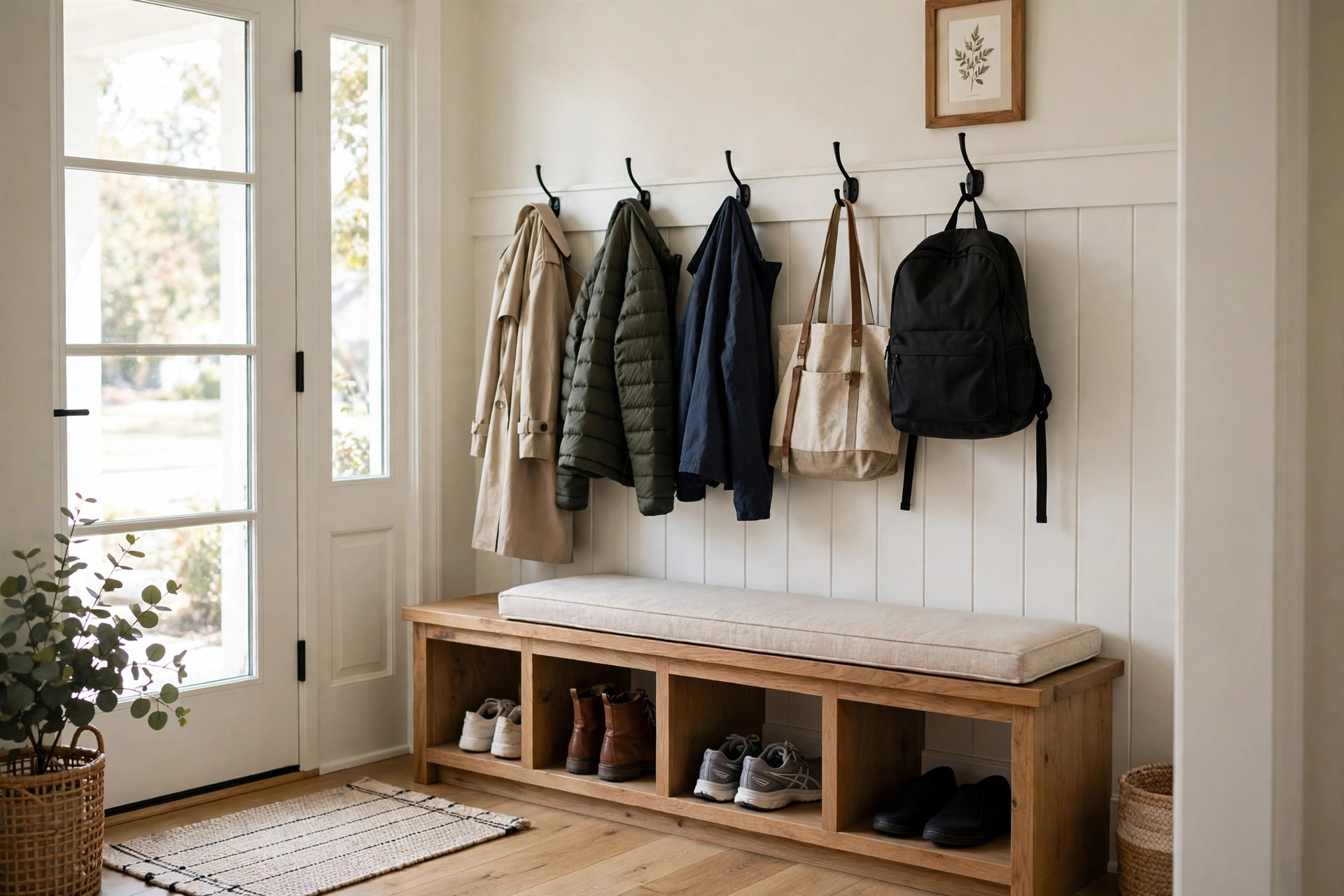
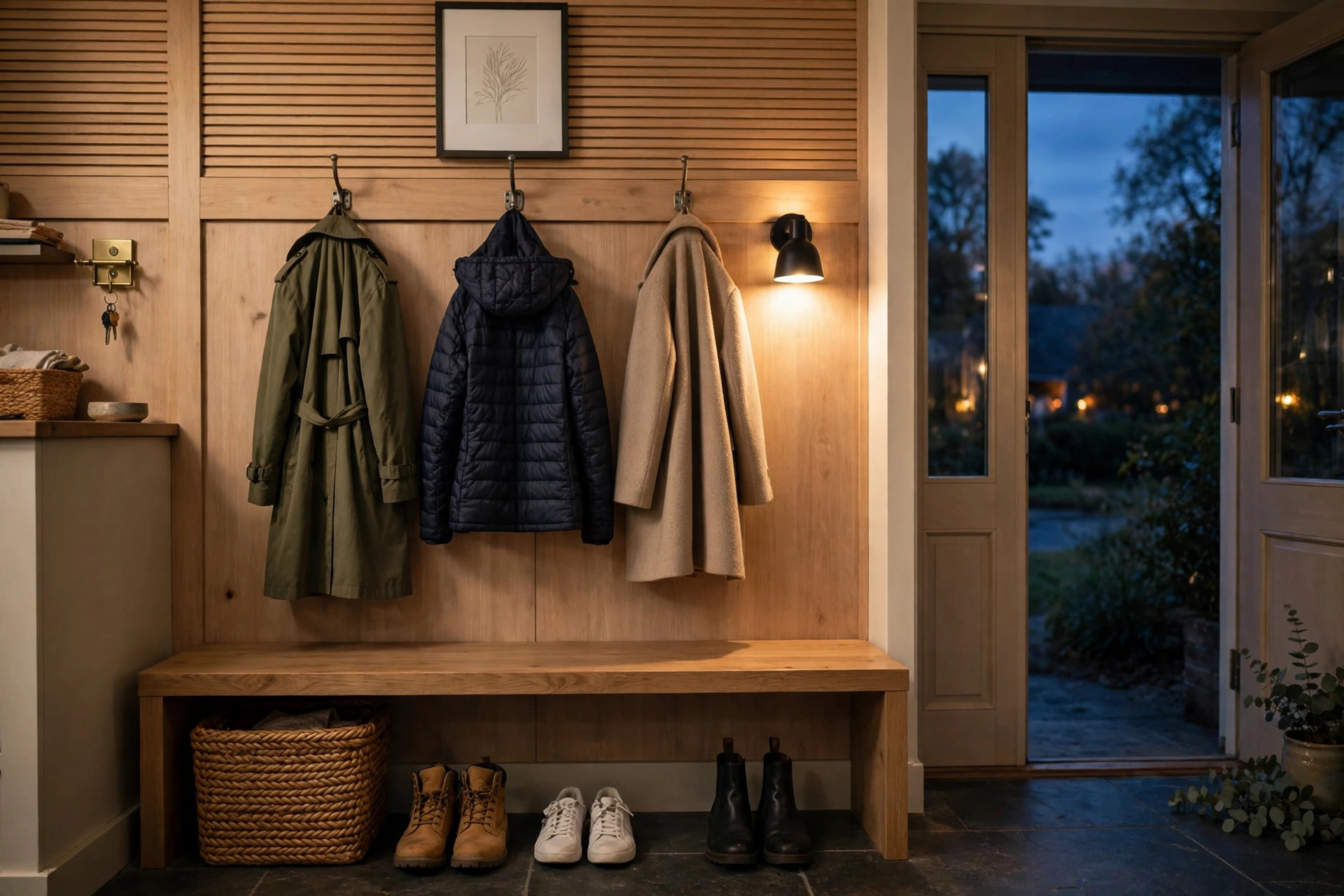
A bench that tries to be everything is a bench that does nothing, because the shoes pile on top of it, the bags pile on top of the shoes, the coats drape over the bags, and the bench that was bought for sitting on is the bench nobody can sit on. Give the bench one job — the landing zone that stops the scatter — so the bench is where things land when you come in and where things wait when you go out, and nothing else. Decide the job first: shoes below, bags and coats above, keys and mail on top, because the bench that has one job is the bench that gets used the same way every day. Tell the household the rule out loud, because the bench that everyone understands is the bench that stays a landing zone instead of sliding back into a dumping ground. Clear everything off it in one go, and the next thing that lands on it is the thing that belongs there. One job, and the scatter stops.
2. Measure the bench before you buy storage
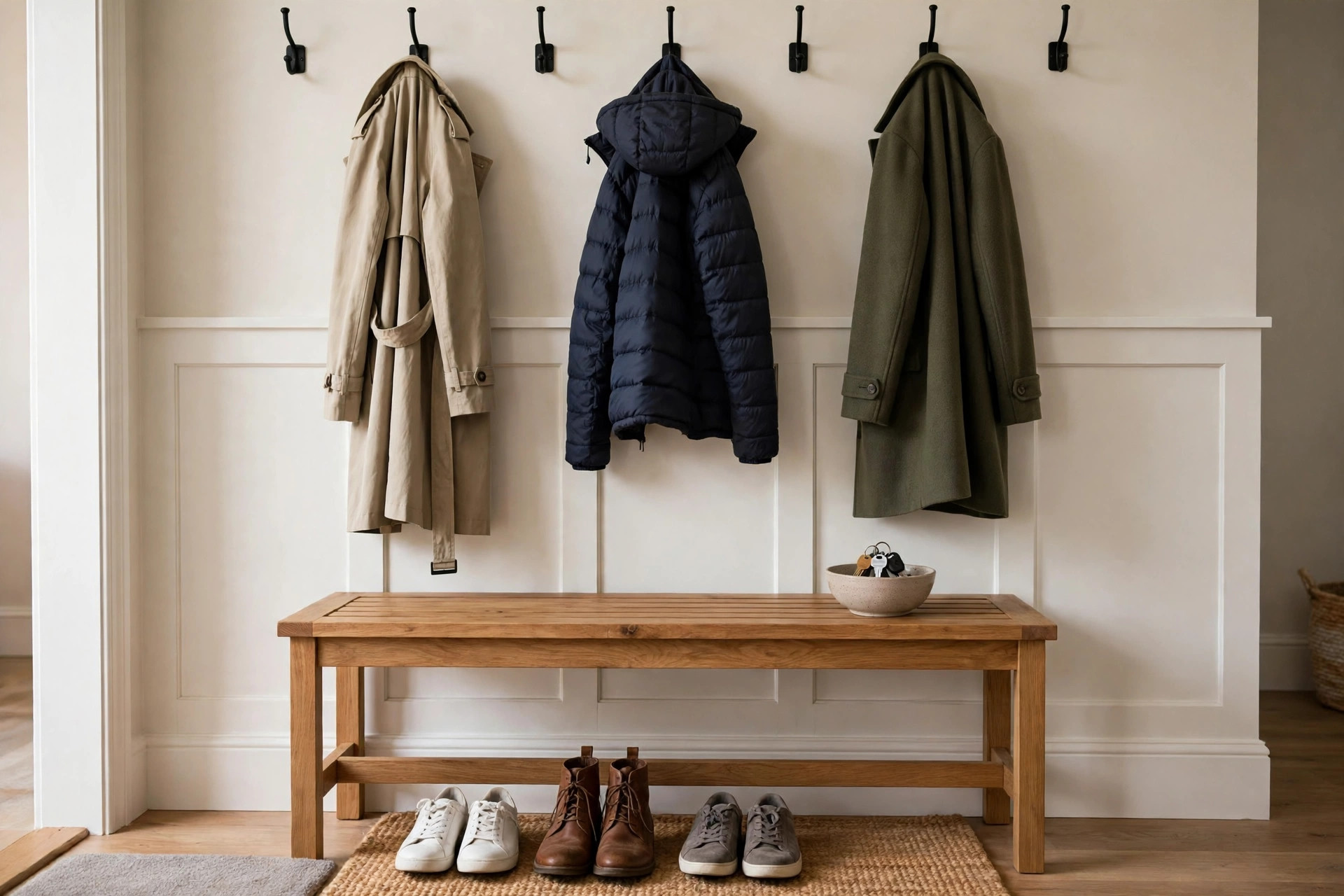
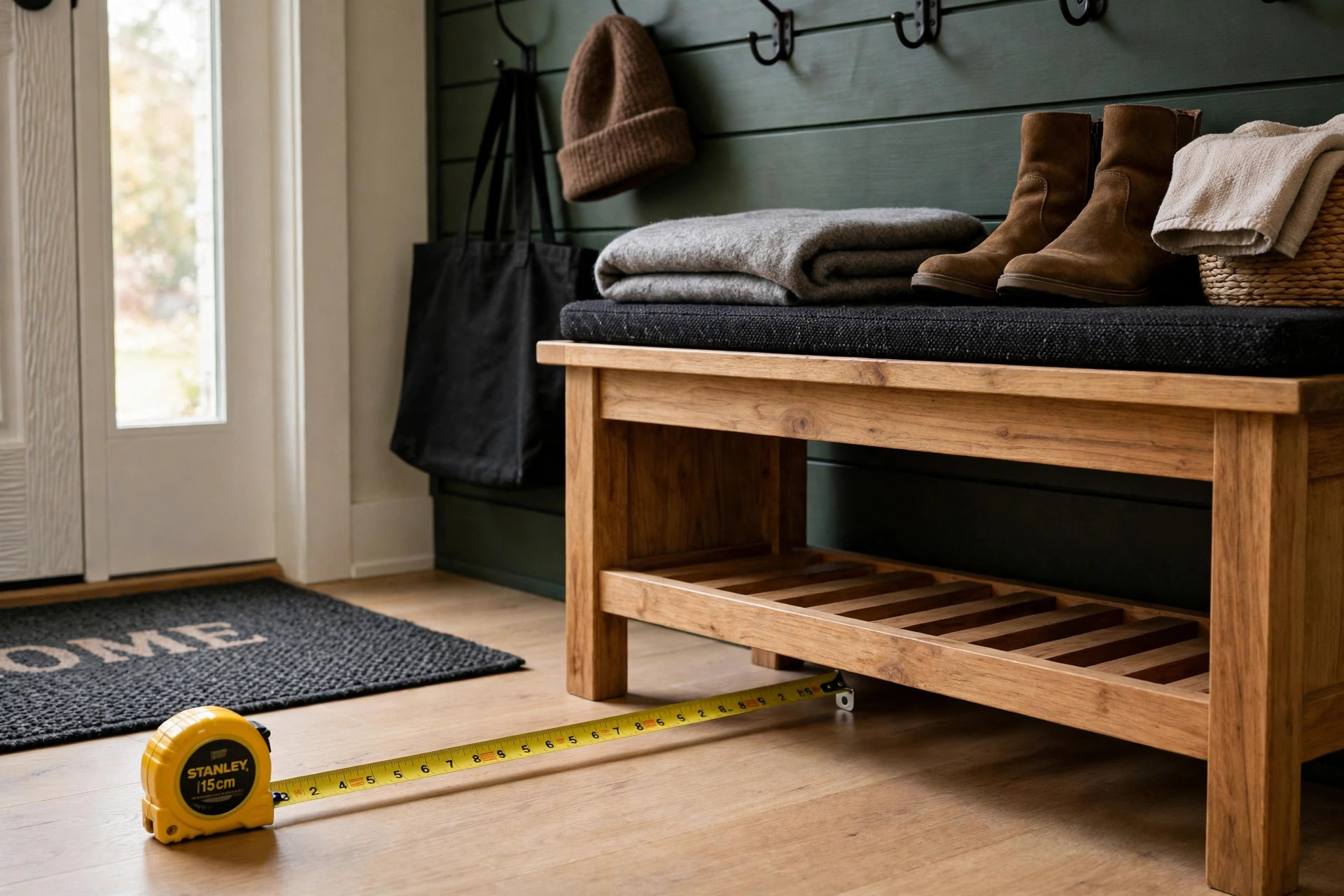
Bench storage bought by guessing is bench storage that does not fit, because the cubby is two inches too tall for the space under the bench, the basket is wider than the shelf, and the organizer that looked right in the shop is the organizer that comes home and goes straight back. Measure the bench before you buy storage — the tape measure that saves the returns — so every cubby, basket and tray you buy is bought for your bench, not for a bench in a photo. Measure the height under the bench, the depth of the shelf, and the width of each section, because the numbers that travel with you are the numbers that stop the returns. Write them in a notebook and take the notebook to the shop, because the bench that is measured once is the bench that fits the first time. Measure the space above the bench too — the wall where the hooks will go — because the hook that is placed by guessing is the hook that ends up too high for the kids or too low for the coats. One afternoon with a tape measure, and everything you buy fits.
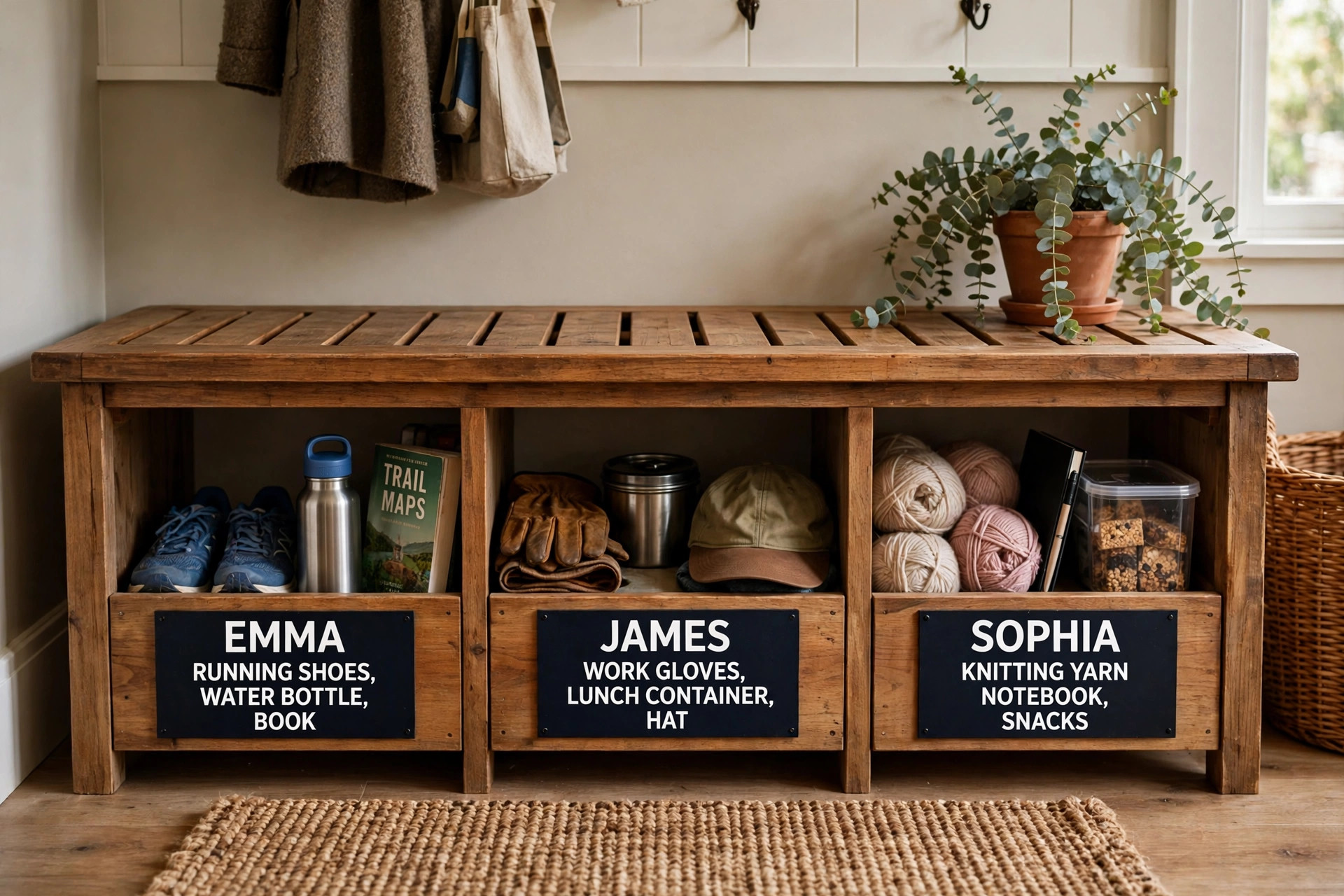
3. One cubby per person — sort by who, not by what
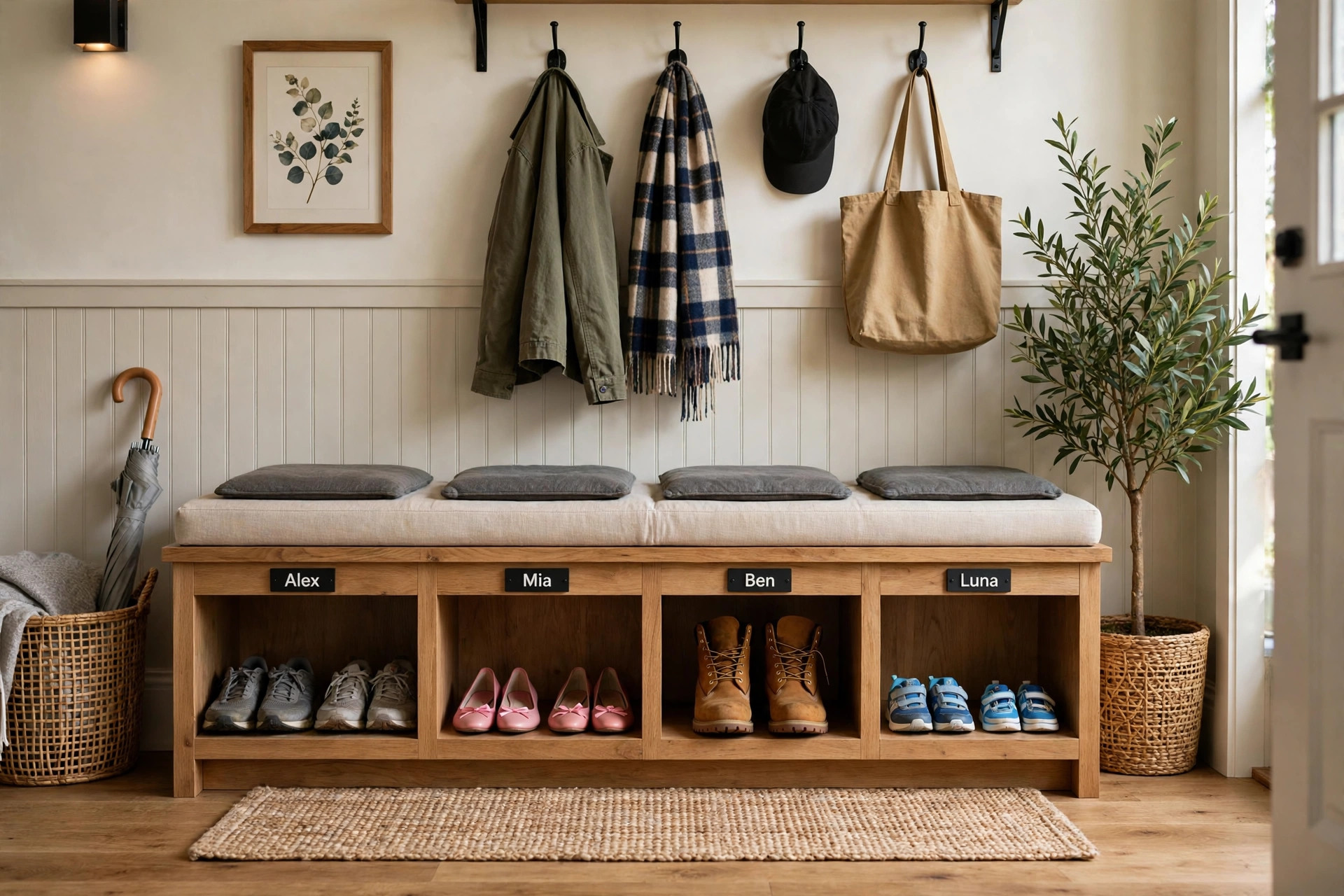
A bench sorted by type is a bench nobody can use, because the trainers are together but nobody knows whose trainers are whose, the boots are together but the small boots are under the big boots, and the morning starts with everyone digging through everyone else's shoes. Give one cubby per person — sort by who, not by what — so each person has their own section under the bench and the morning starts with reaching, not digging. Put the kids' cubbies low where they can reach them and the adults' cubbies higher up, because the cubby that matches the person is the cubby that gets used. Label each cubby with a name, because the label that says whose it is is the label that stops the shoes wandering into the wrong section, and the bench that is sorted by person is the bench where the shoes are always where their owner left them. The coats that come off at the bench get the same treatment in 25 Coat Closet Organization Ideas for 2026, where each coat has its own hook too. One cubby per person, and the morning dig ends.
4. Shoes live below the bench — the floor stays clear
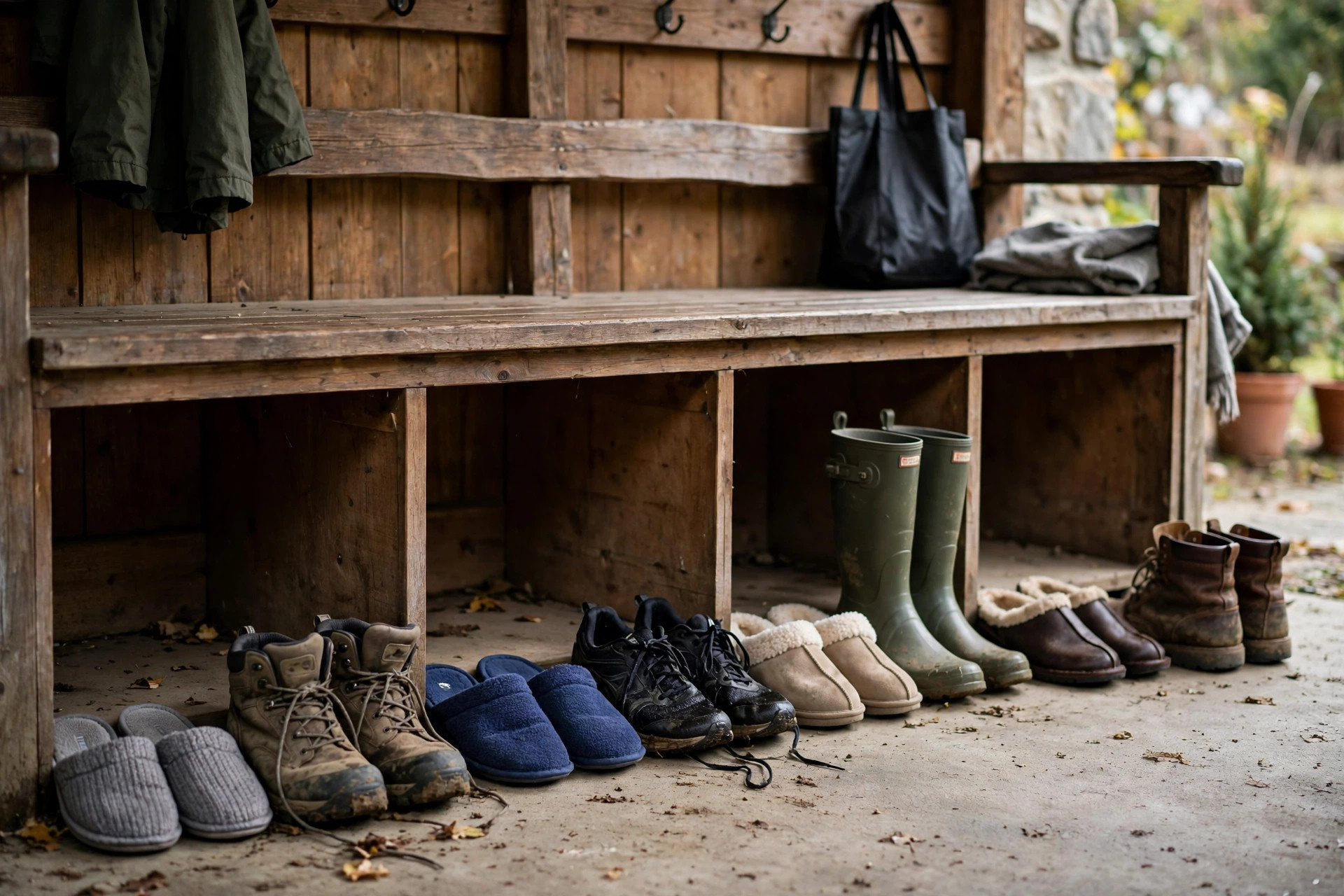
Shoes on the floor are shoes that trip everyone, because the hallway is narrow, the shoes spread past the bench, and the floor that should be a walkway is a floor that needs stepping over. Keep the shoes below the bench — the floor stays clear — so every pair lives under the bench in a cubby or on a shelf, and the hallway floor is a floor again. Set the rule that a shoe that comes off goes straight under the bench, because the shoe that goes under the bench at once is the shoe that never joins the pile on the floor. Keep one pair of slippers by the door for inside, because the slippers that wait by the door are the slippers that get worn instead of the outdoor shoes staying on. If the bench has no shelf underneath, a low shoe rack slid under it does the same job, because the rack that fits under the bench is the rack that turns the dead space into shoe storage. One rule, and the floor stays clear.
5. A boot tray that catches the mud
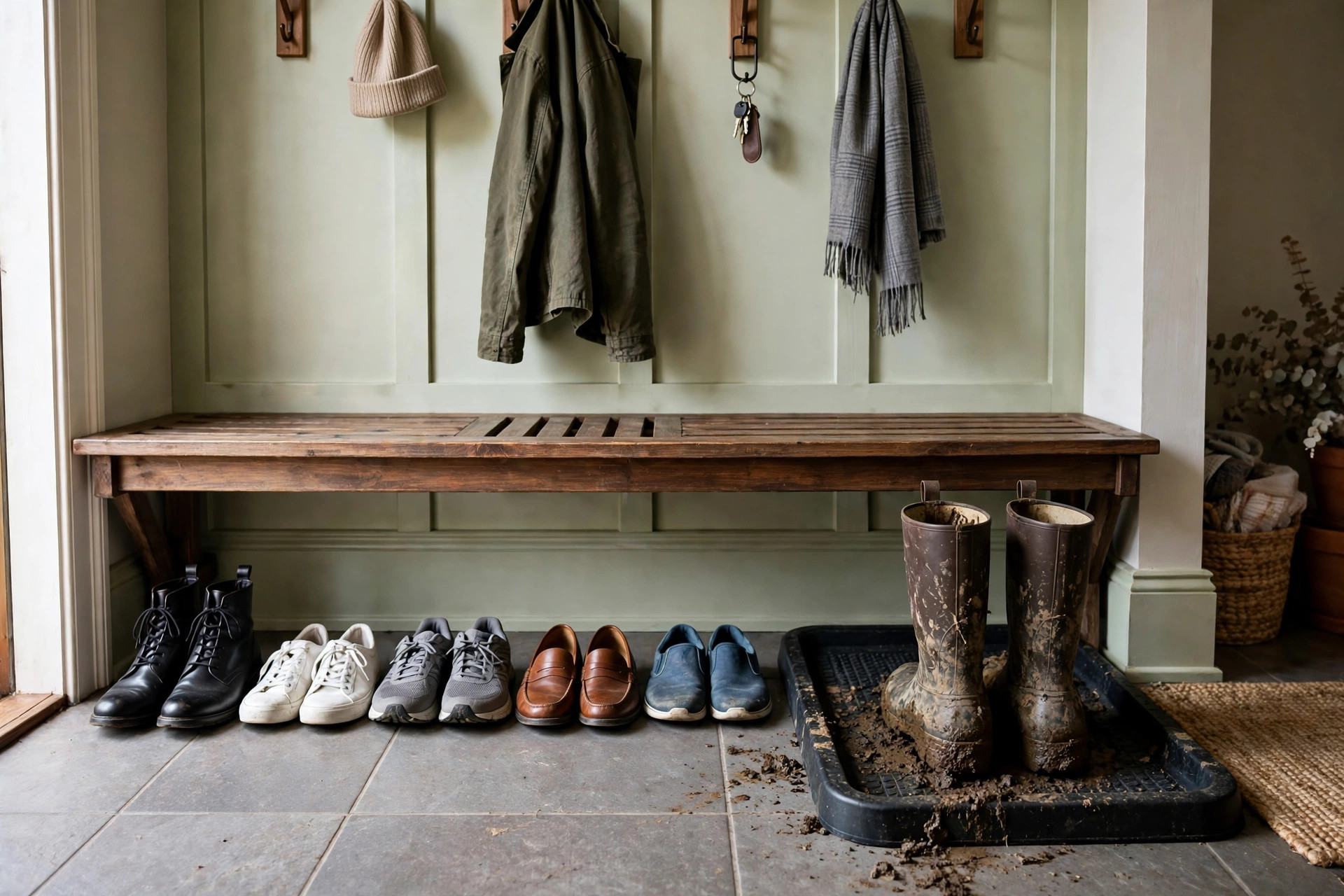
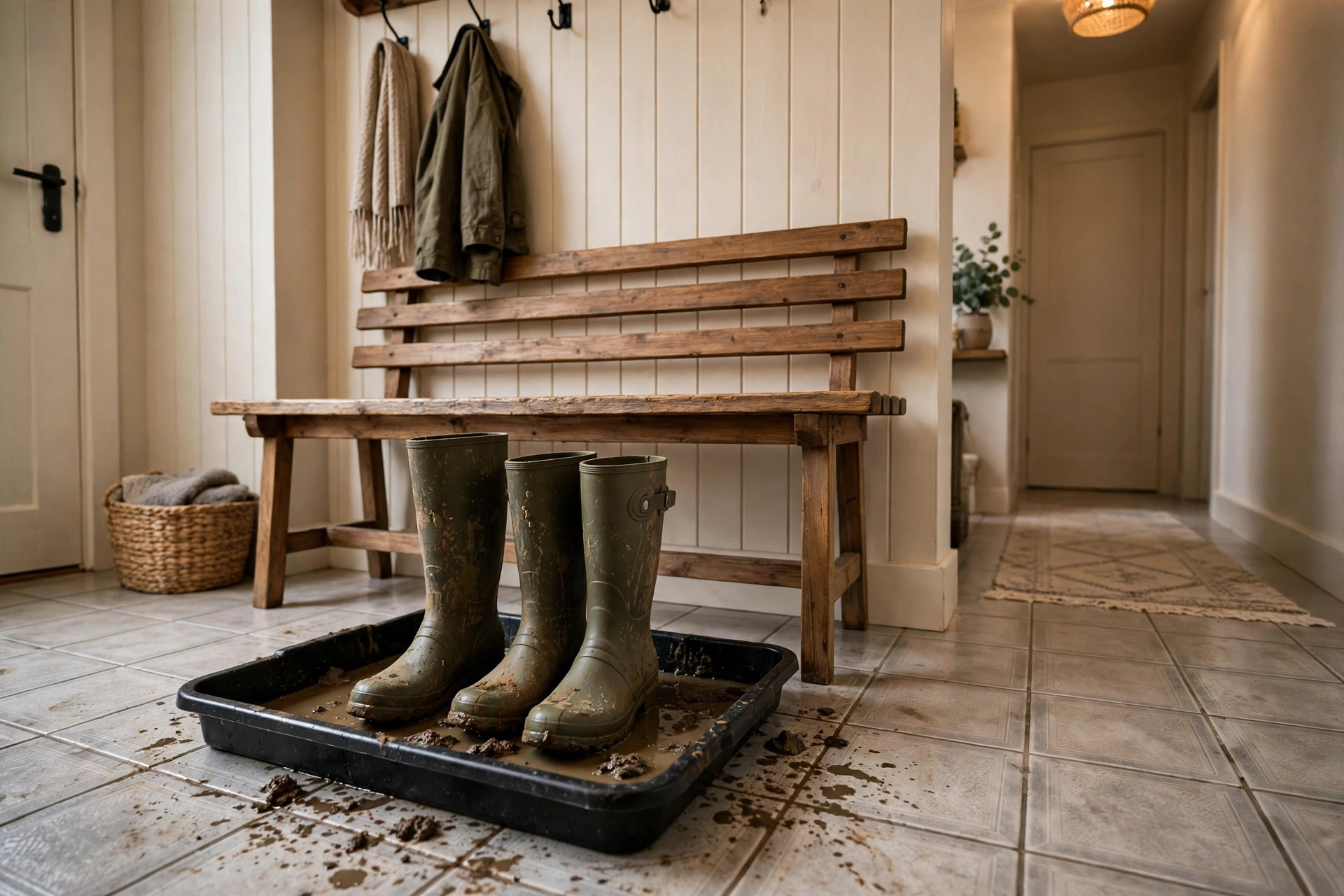
Mud on the hallway floor is mud that walks through the house, because the boots come in wet, the boots stand on the bare floor, and the floor that was clean at breakfast is the floor that needs mopping by dinner. Put a boot tray that catches the mud under the bench — the tray that stops the mud at the door — so the wet boots stand in the tray, the mud and rain drip into the tray instead of onto the floor, and the hallway stays clean. Pick a tray with a raised edge and a lip deep enough to hold a day of rain, and keep it under the bench where the boots already live, because the tray that is where the boots are is the tray that gets used. Empty it and wipe it once a week, because the tray that is emptied is the tray that keeps working, and the tray that is left full is the tray that overflows onto the floor. One boot tray, and the mud stops at the door. (Check on Amazon for a boot tray with a raised lip, sized to fit under a standard entryway bench.)
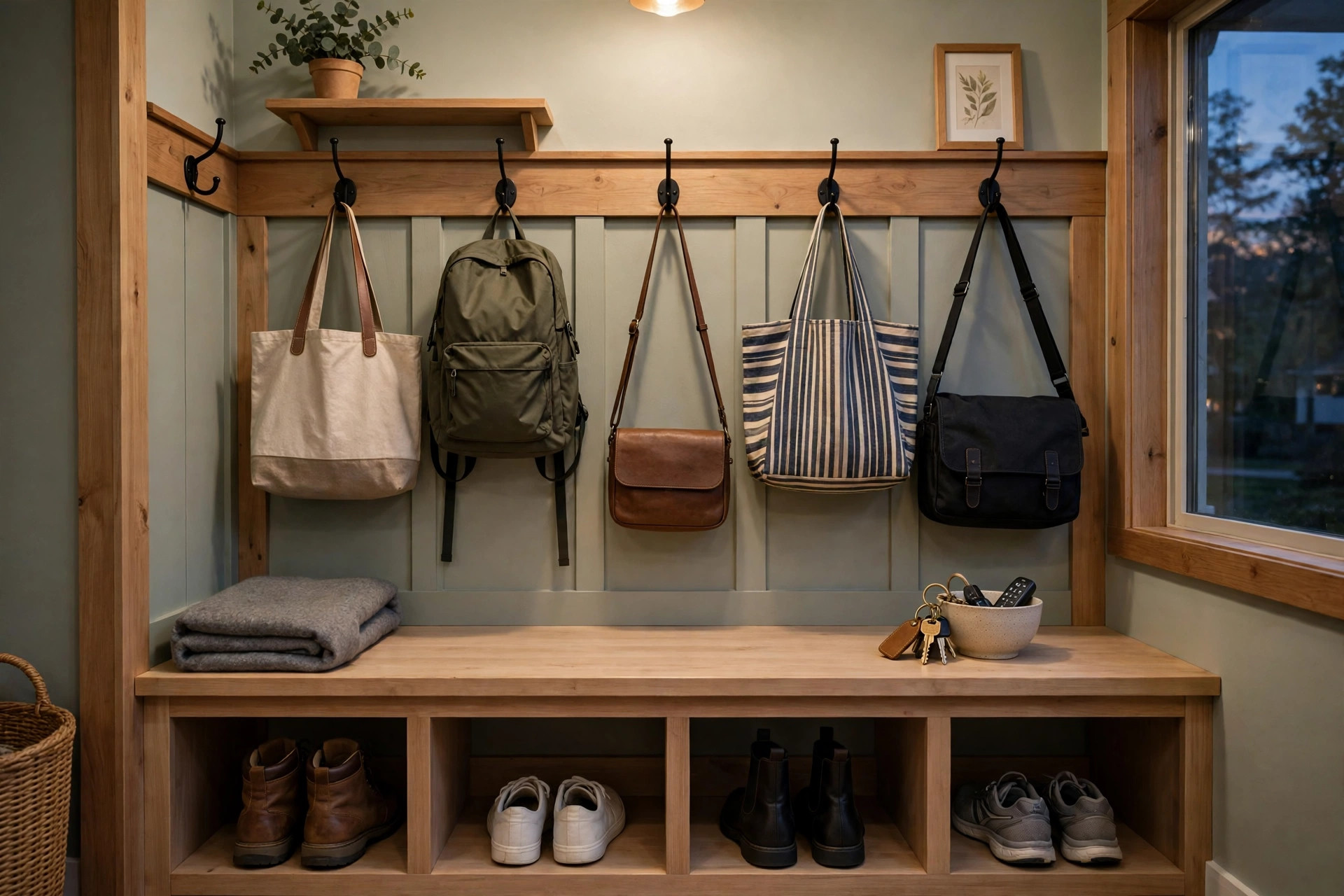
6. Hooks above the bench — coats and bags off the floor
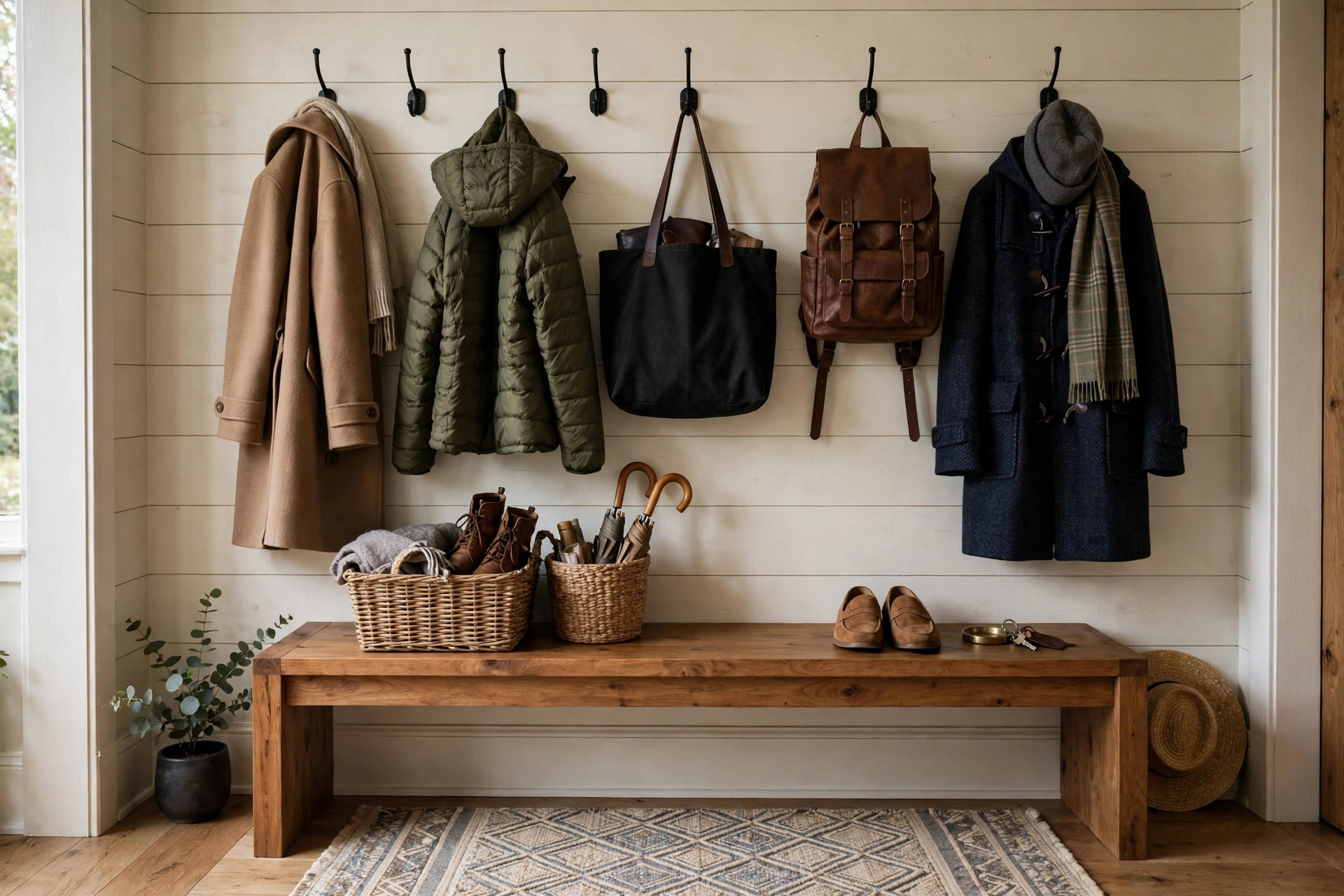
Coats and bags with nowhere to hang end up on the bench, because the coat comes off and the bench is right there, the bag comes off and the bench is right there, and the bench that should hold people is the bench that holds a pile. Put hooks above the bench — coats and bags off the floor — so each coat and bag has a hook on the wall, the bench stays clear for sitting, and the floor stays clear for walking. Mount the hooks at two heights, low for the kids and high for the adults, because the hook that matches the person is the hook that gets used, and leave a hook empty for guests, because the hook that is free is the hook that welcomes the visitor. Fix the hooks into a stud or use proper wall plugs, because the hook that holds a heavy winter coat is heavier than it looks, and the hook that is fixed properly is the hook that never comes down mid-winter. One row of hooks, and the bench is free again.
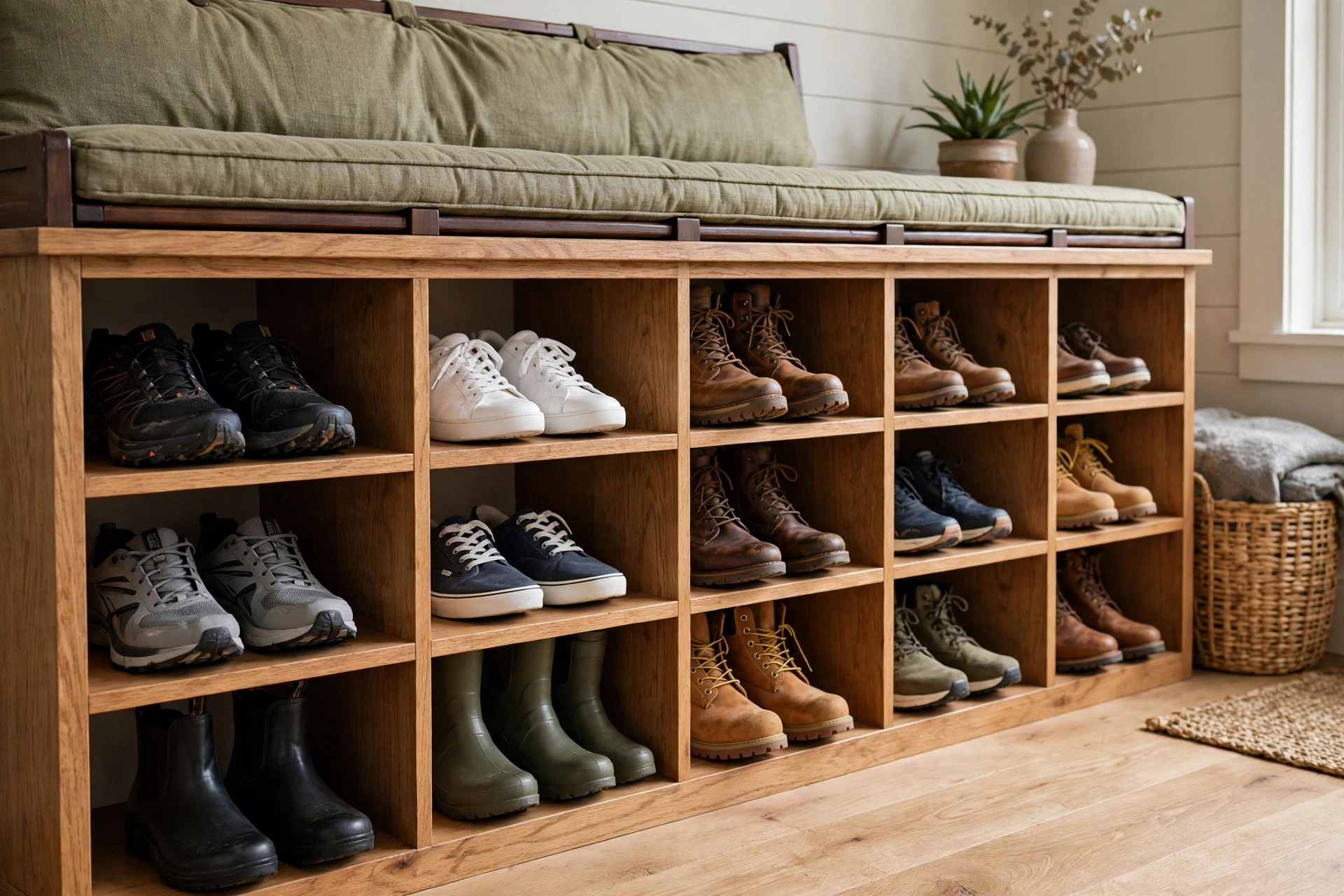
Shoes and boots under the bench
7. Shoe cubbies sized to the shoes
Cubbies that are all one size waste the bench, because the trainers rattle around in a space made for boots, the boots will not fit in a space made for trainers, and the bench that holds six cubbies holds four pairs of shoes. Size the shoe cubbies to the shoes — the cubbies that fit what they hold — so the trainers get a low cubby, the boots get a tall cubby, and every inch under the bench is used. Measure your tallest boot and your widest trainer before you buy, because the cubby that is sized to the shoe is the cubby that holds the shoe without a squeeze. Use an adjustable cubby organizer where the shelves move, because the organizer that adjusts is the organizer that changes with the seasons, and the bench that is sized right is the bench that holds the whole household's shoes. One set of sized cubbies, and the wasted space stops. (Check on Amazon for an adjustable shoe cubby organizer with movable shelves, sized for under-bench spaces.)
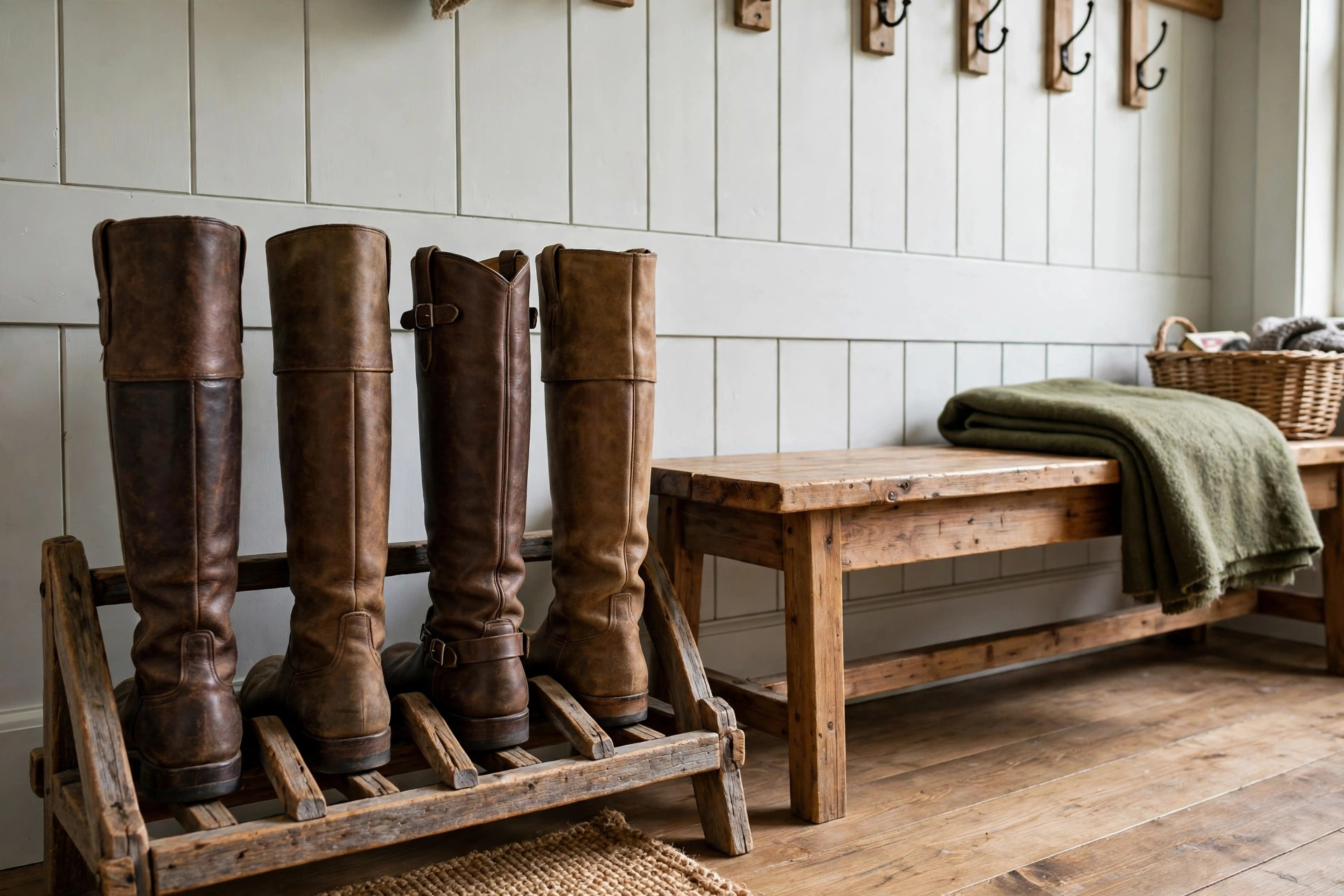
8. Tall boots stand upright — never folded
Tall boots folded over crease and flop, because the shaft bends, the leather creases where it folds, and the boots that looked smart in the shop are the boots with a permanent kink by February. Keep the tall boots standing upright — never folded — so each boot stands on its own, the shaft stays straight, and the boots keep their shape all winter. Stand them in a boot rack or a tall cubby under the bench, and slip a boot shaper or a rolled magazine inside each shaft, because the boot that is supported is the boot that stands straight. Keep the boots in pairs, side by side, because the pair that stands together is the pair you can grab in the morning without a hunt. The shoe systems the bench borrows from get their full treatment in 24 Shoe Storage Ideas for 2026, where the tall boots get their own section too. One upright rule, and the creases stop.
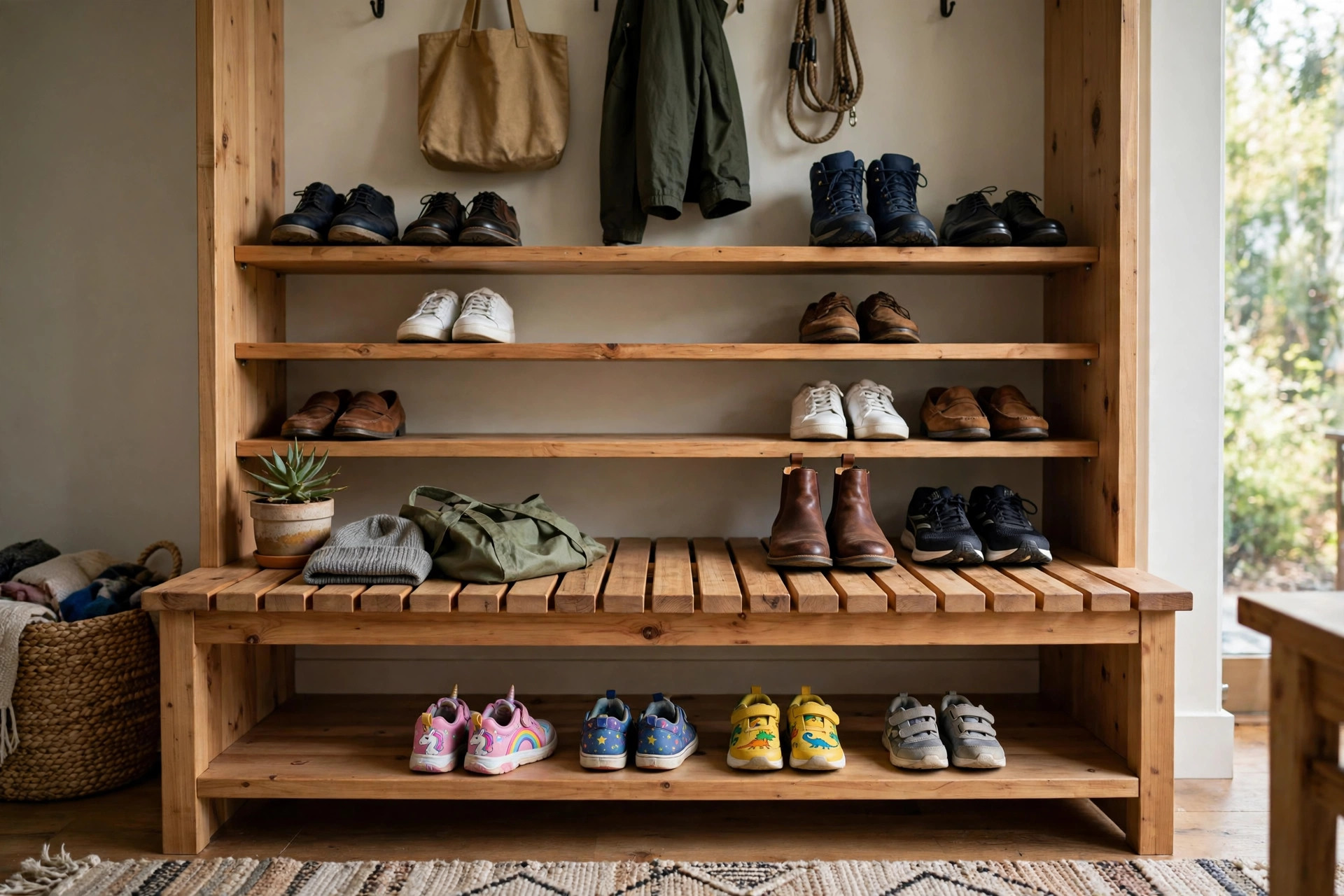
9. Kids' shoes low, adults' shoes high
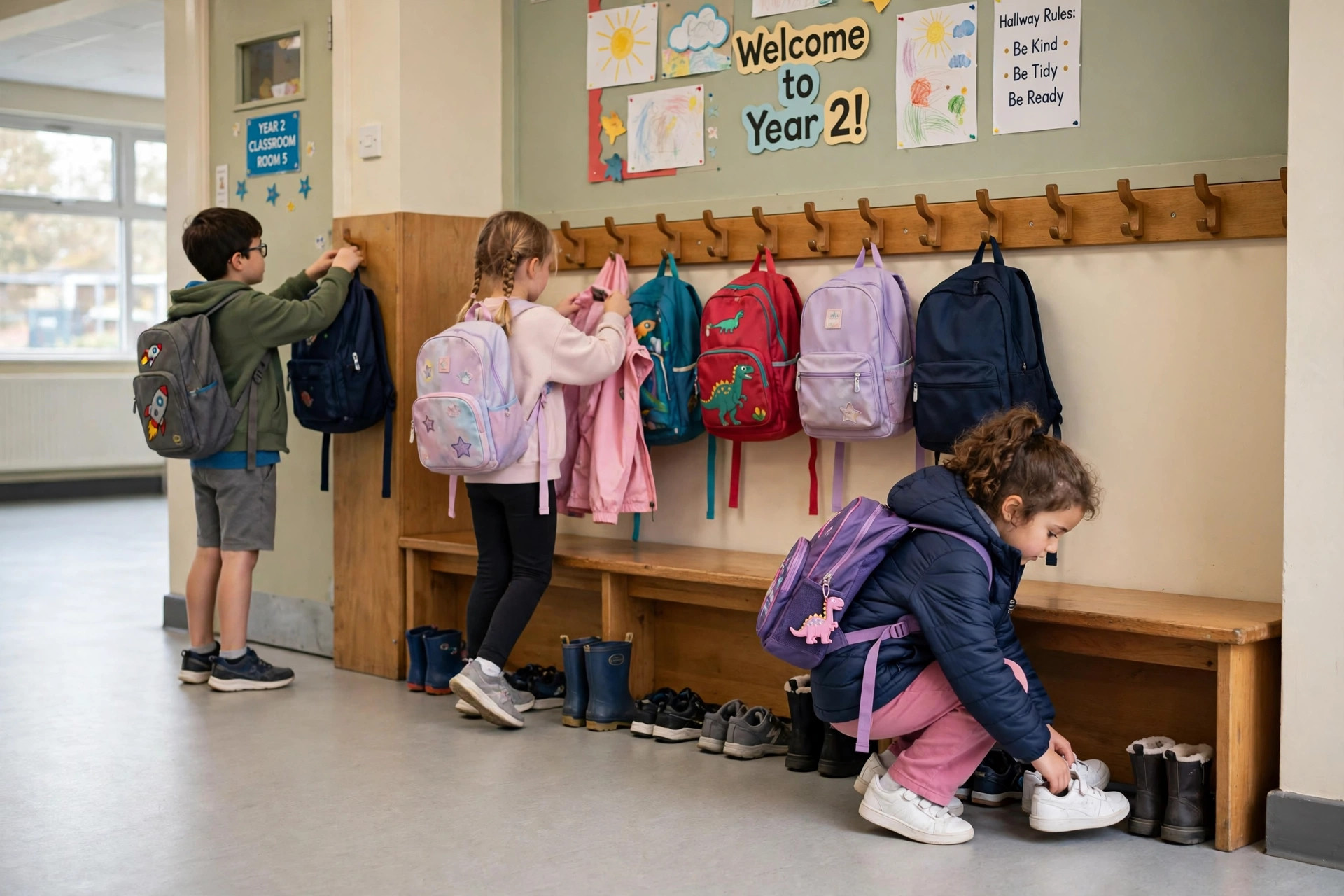
Shoes stored at adult height are shoes the kids cannot reach, because the small shoes live on the top shelf, the kids cannot reach the top shelf, and the morning ends with a parent fetching shoes for everyone. Keep the kids' shoes low and the adults' shoes high — the heights that match the people — so the kids can reach their own shoes, put them away themselves, and the bench teaches the habit instead of fighting it. Put the smallest shoes on the lowest shelf under the bench, the school shoes just above them, and the adults' shoes on the top shelf, because the shelf that matches the child is the shelf the child uses. Label the low cubbies with the child's name or a picture, because the label that a child can read is the label that sends the shoes home. One height rule, and the fetching stops.
10. A seasonal swap — winter boots out, sandals in
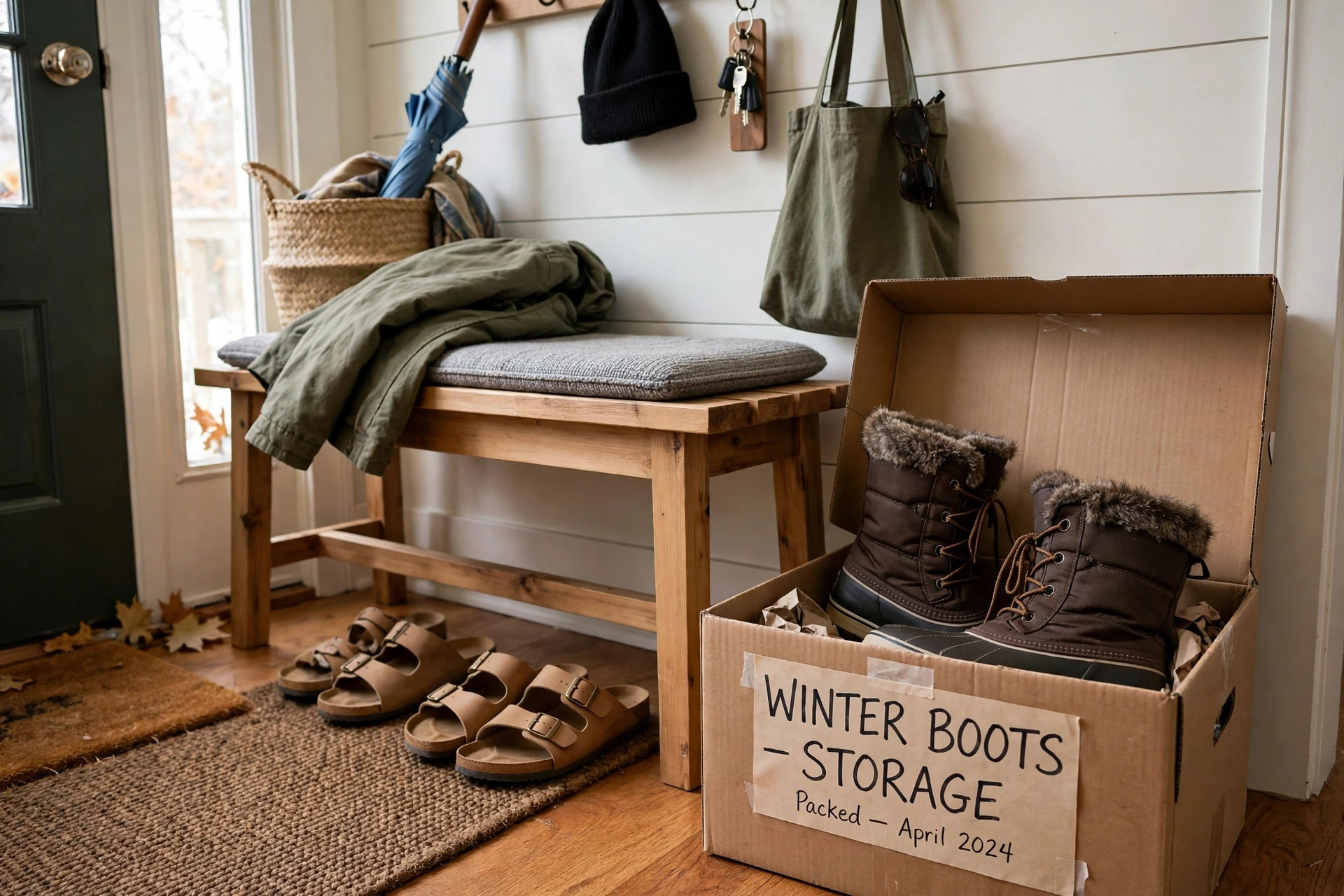
A bench that holds all four seasons at once is a bench that holds too much, because the winter boots crowd the sandals, the sandals crowd the trainers, and the shoes you need today are buried under the shoes you will not need for six months. Do a seasonal swap — winter boots out, sandals in — so the bench holds only this season, and the rest lives in a labelled box on the top shelf or under the bed. Swap twice a year, when the coats change, and check each pair as it goes in and out, because the swap that checks the shoes is the swap that catches the ones that are outgrown or worn out. Wipe the cubbies down during the swap, because the swap that cleans is the swap that finds the mud that dried in the corners, and the bench that is cleaned twice a year is the bench that is always ready. The out-of-season boots themselves get their home in 22 Under-Bed Storage Ideas for 2026, where the long flat things live. One swap a season, and the bench holds only what you wear now.
11. Slippers by the door — the pair you grab first
Slippers that live in the bedroom are slippers you never wear, because the outdoor shoes come off at the door, the slippers are upstairs, and the house gets walked in outdoor shoes all evening. Keep the slippers by the door — the pair you grab first — so each person has one pair of slippers waiting under the bench, the outdoor shoes come off, and the slippers go on before the first step inside. Keep the slippers in the front of each person's cubby, because the slippers that are in front are the slippers that get grabbed, and the pair that waits by the door is the pair that keeps the floors clean. Give guests a spare pair too, because the guest who is offered slippers is the guest who feels at home, and the bench that holds a spare pair is the bench that is ready for anyone. One pair each, and the outdoor shoes stop at the door.
Bags, coats and the small things
12. One bag per person on a hook
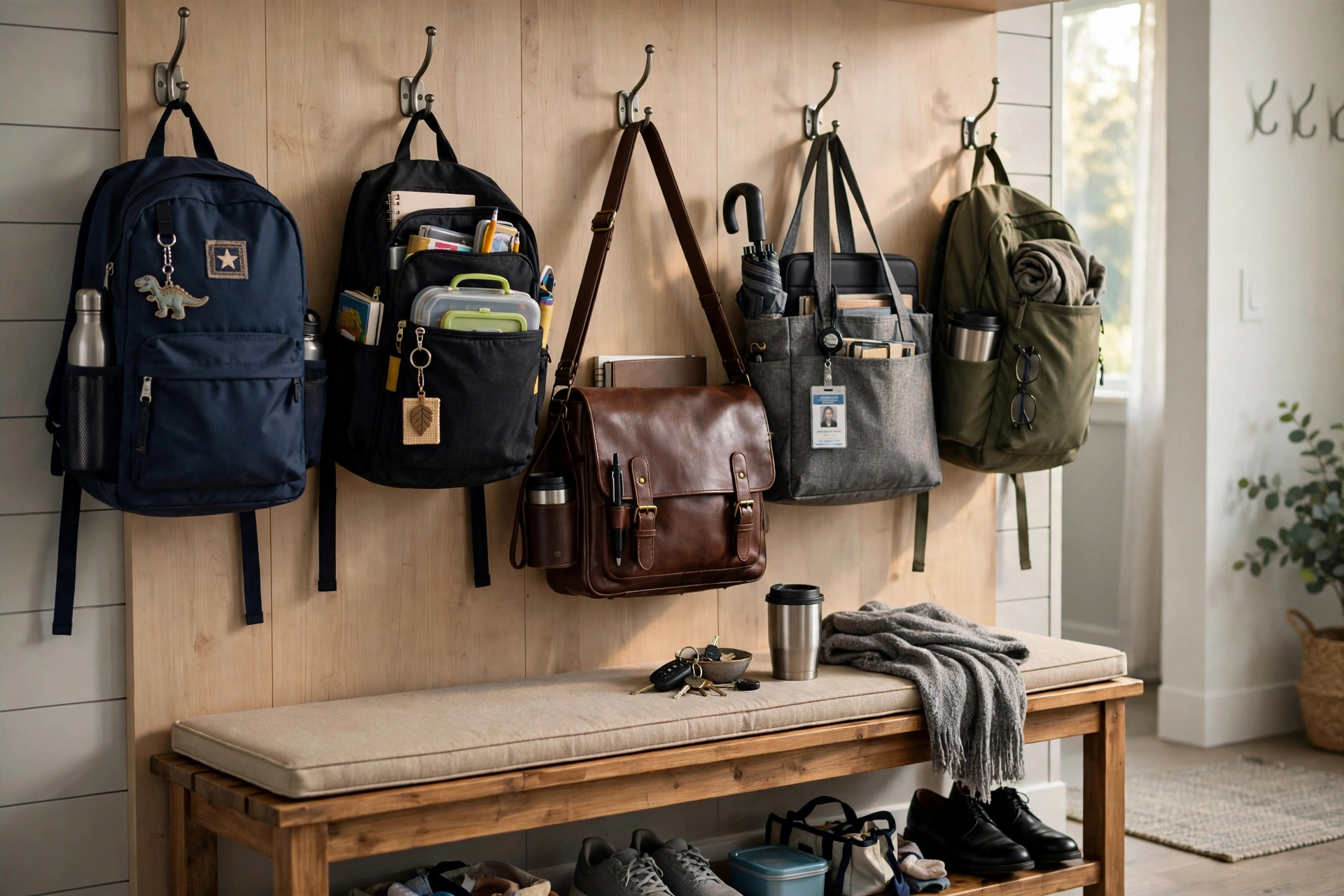
Bags in a pile are bags you have to dig through, because the school bag is under the gym bag, the gym bag is under the work bag, and the bag you need is always the bag at the bottom. Give one bag per person on a hook — the hook that holds the day — so each person's bag hangs on their own hook above the bench, ready to grab on the way out, and the bench stays clear underneath. Hang the bag the night before, packed and ready, because the bag that is packed at night is the bag that leaves on time in the morning. Keep one hook spare for the bag that comes home from a trip or a shop, because the hook that is free is the hook that catches the extra bag instead of the bench. The full-size version of this system gets its treatment in 25 Mudroom Organization Ideas for 2026, where the bench runs the whole wall and every bag has its own bay. One hook per person, and the dig for the bag ends.
13. A key bowl that never moves
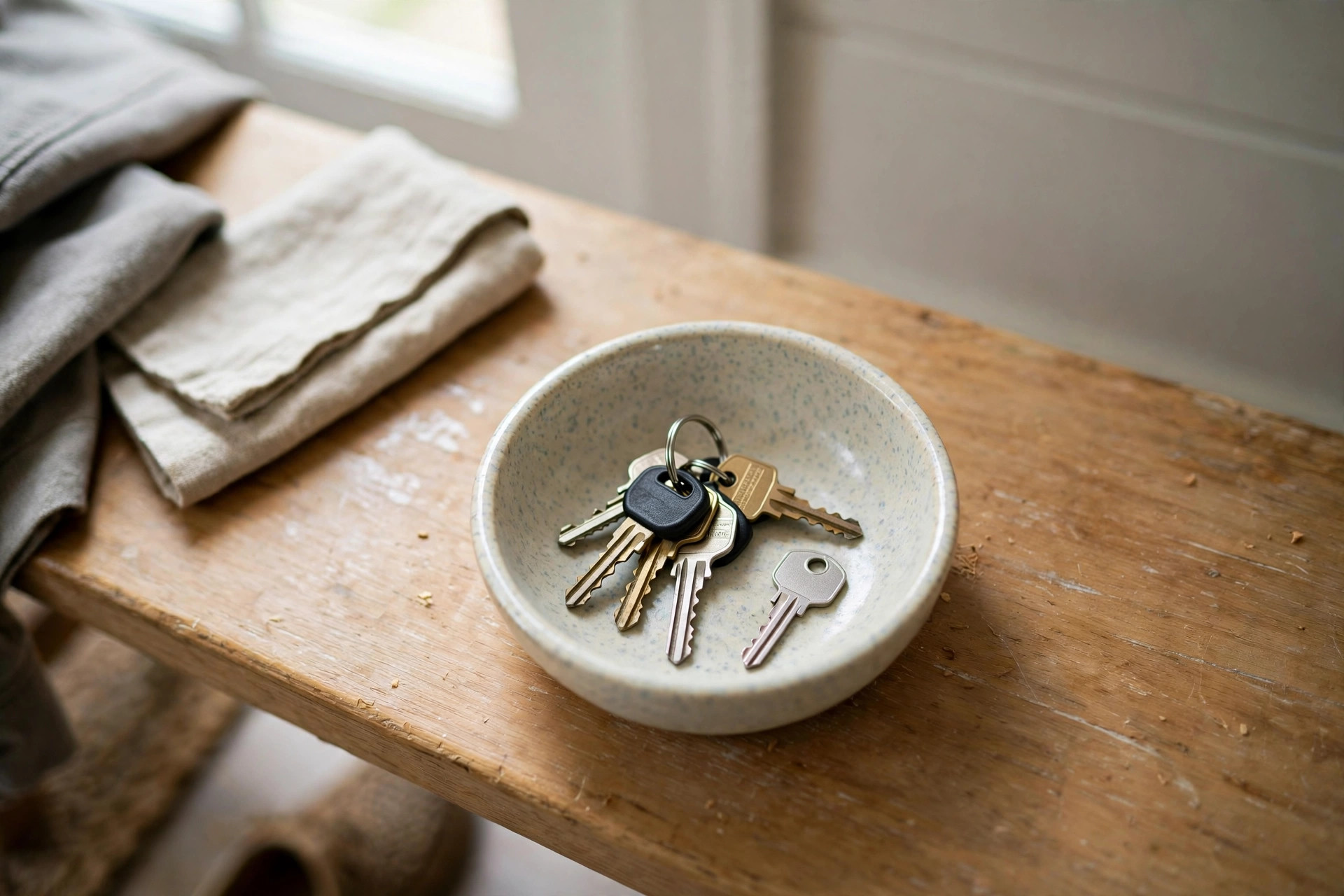
Keys that live wherever they land are keys that vanish, because the keys are on the bench today, in a coat pocket tomorrow, and on the kitchen counter the day after — and the morning starts with a hunt that makes everyone late. Keep a key bowl that never moves — the bowl that holds the keys — so the keys go in the bowl the moment you walk in, the bowl lives on the bench in the same spot every day, and the keys are always where they were left. Put the bowl on the bench top where you see it the moment you come in, because the bowl that is seen is the bowl that gets used. Keep one spare key in the bowl too, because the spare that is in the bowl is the spare that saves the day the main key goes missing, and the bowl that never moves is the bowl that ends the hunt. One bowl, and the keys are always there.
14. A mail tray — post in, post out
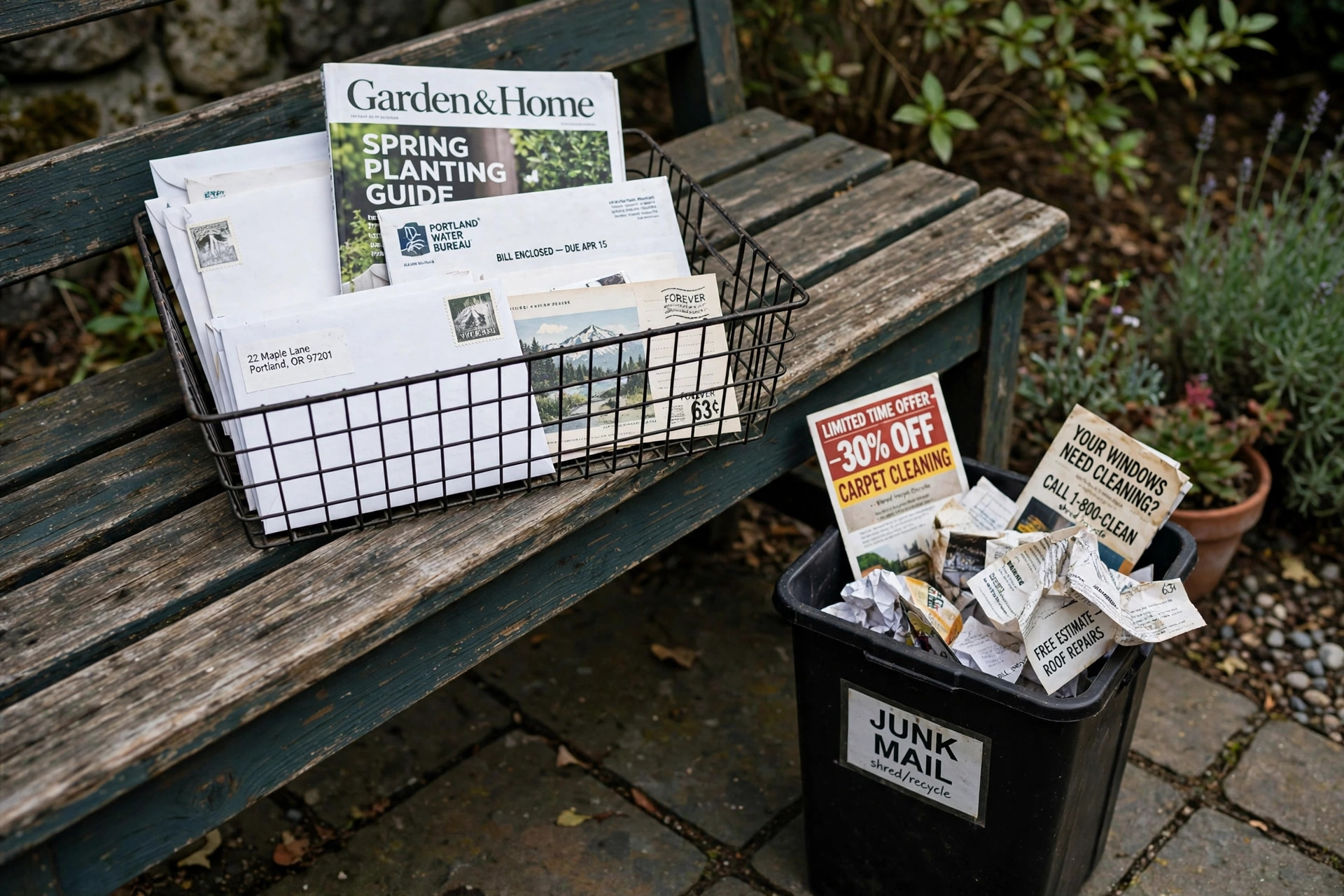
Post with no home becomes a pile on the bench, because the letters come in, the bench is right there, and the pile that looked small on Monday is a stack of unopened envelopes by Friday. Put a mail tray on the bench — post in, post out — so the post lands in the tray, the tray holds it until it is dealt with, and the bench stays clear. Sort the tray once a day, because the tray that is sorted daily is the tray that never becomes a pile, and the letter that is opened at once is the letter that never gets lost. Keep a small bin beside the tray for the junk mail, because the junk that is binned at once is the junk that never joins the pile, and the tray that holds only the real post is the tray that works. One tray, and the pile stops.
15. Dog leads and the walking kit on one hook
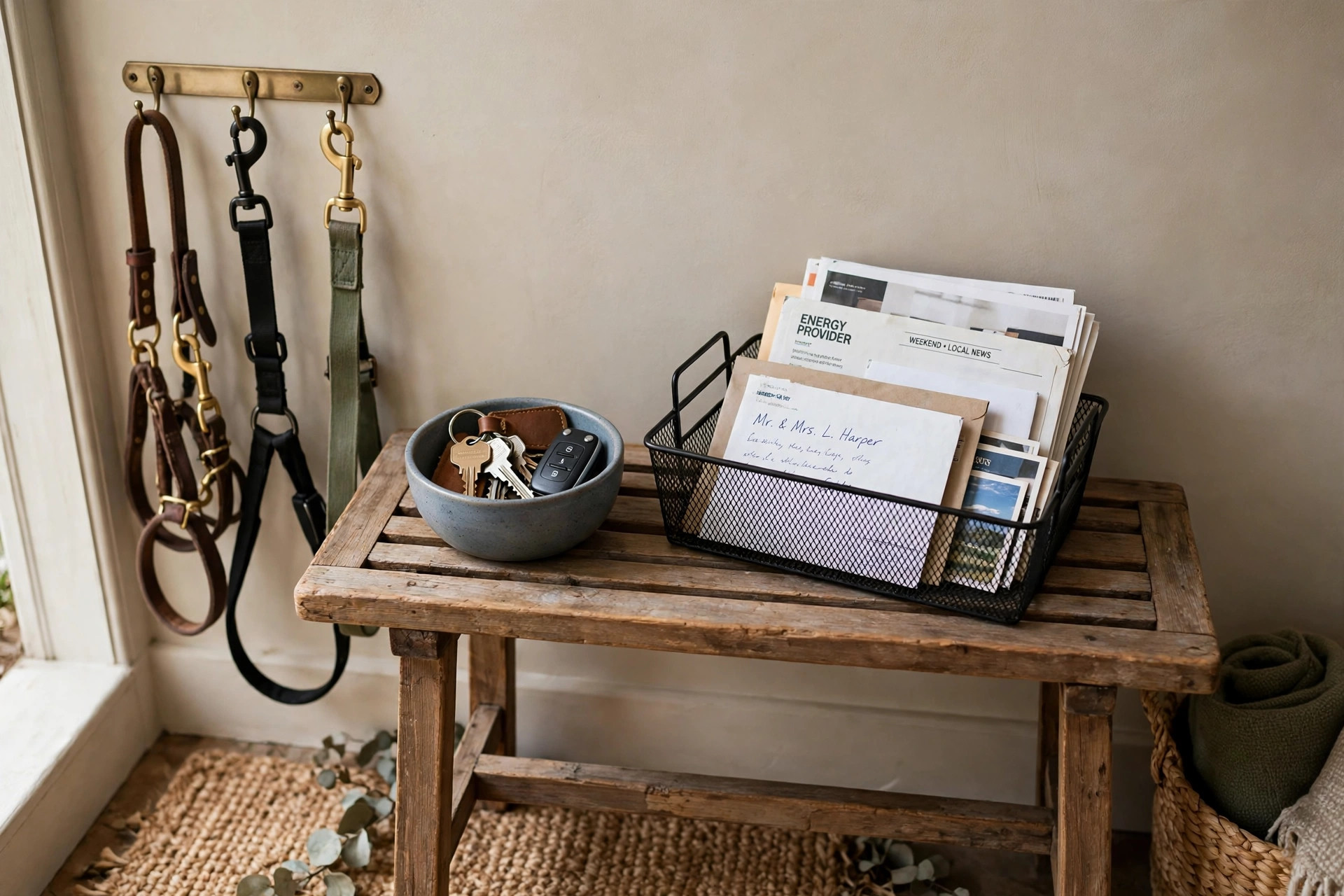
Dog leads that live in a drawer are leads you have to hunt for, because the lead is in the kitchen drawer, the poo bags are in a coat pocket, and the dog is at the door ready while you search two rooms. Keep the dog leads and the walking kit on one hook — the hook by the door — so the lead, the bags and the treats hang together above the bench, and the walk starts at the door instead of starting with a search. Hang the hook at the end of the row, nearest the door, because the hook that is nearest the door is the hook you reach on the way out. Keep a small basket under the hook for the treats and the towel, because the basket that holds the walking kit is the basket that goes out with you and comes back to the same spot. One hook, and the walk starts on time.
16. A charging drawer in the bench — phones off the top
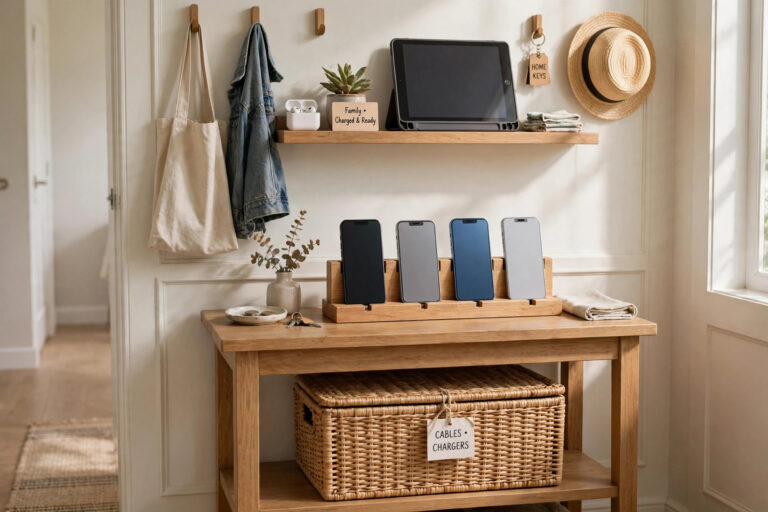
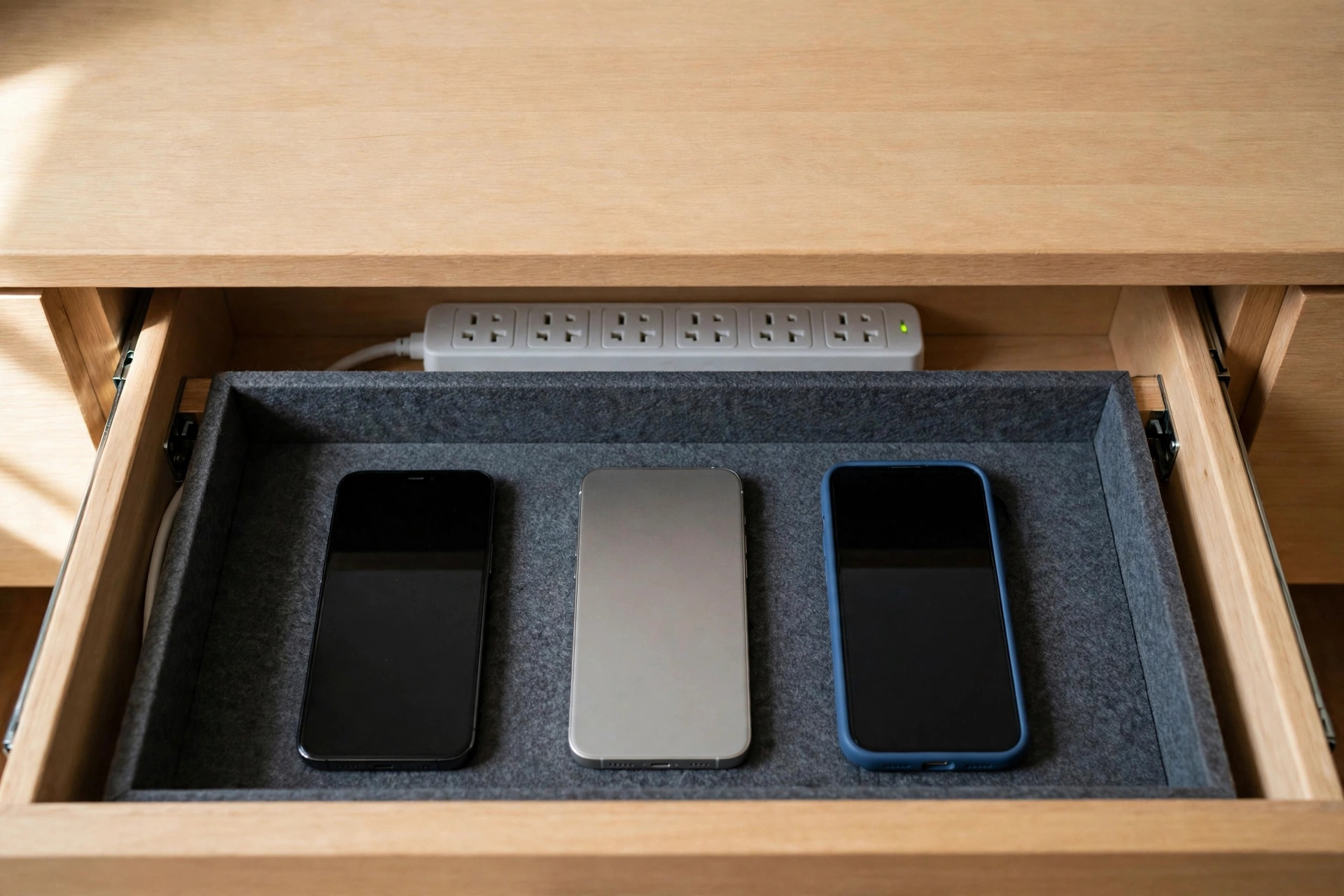
Phones charging on the bench top are phones that get knocked off, because the bench top is where the bags land, the bags knock the phone, and the phone that was charging is the phone on the floor. Put a charging drawer in the bench — phones off the top — so the phones charge inside a drawer, the cables stay hidden, and the bench top stays clear for keys and mail. Fit a small power strip inside the drawer and drill a cable hole at the back, because the drawer that charges is the drawer that hides the mess. Keep the drawer for charging only, because the drawer that holds the chargers is the drawer that never becomes a junk drawer, and the phone that charges in the drawer is the phone that is safe from the bags. The charging setup itself gets its own deep dive in Charging Station Organization, where the whole household's chargers get one home. One drawer, and the phones are safe.
17. Hats, gloves and scarves in a basket per person
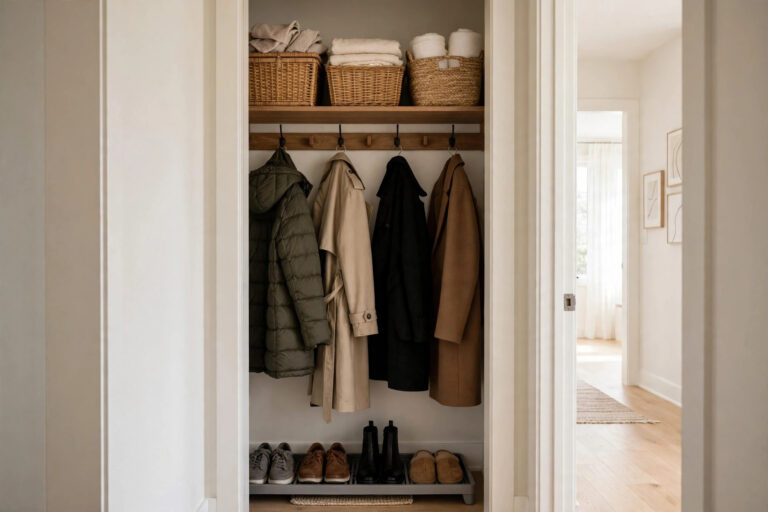
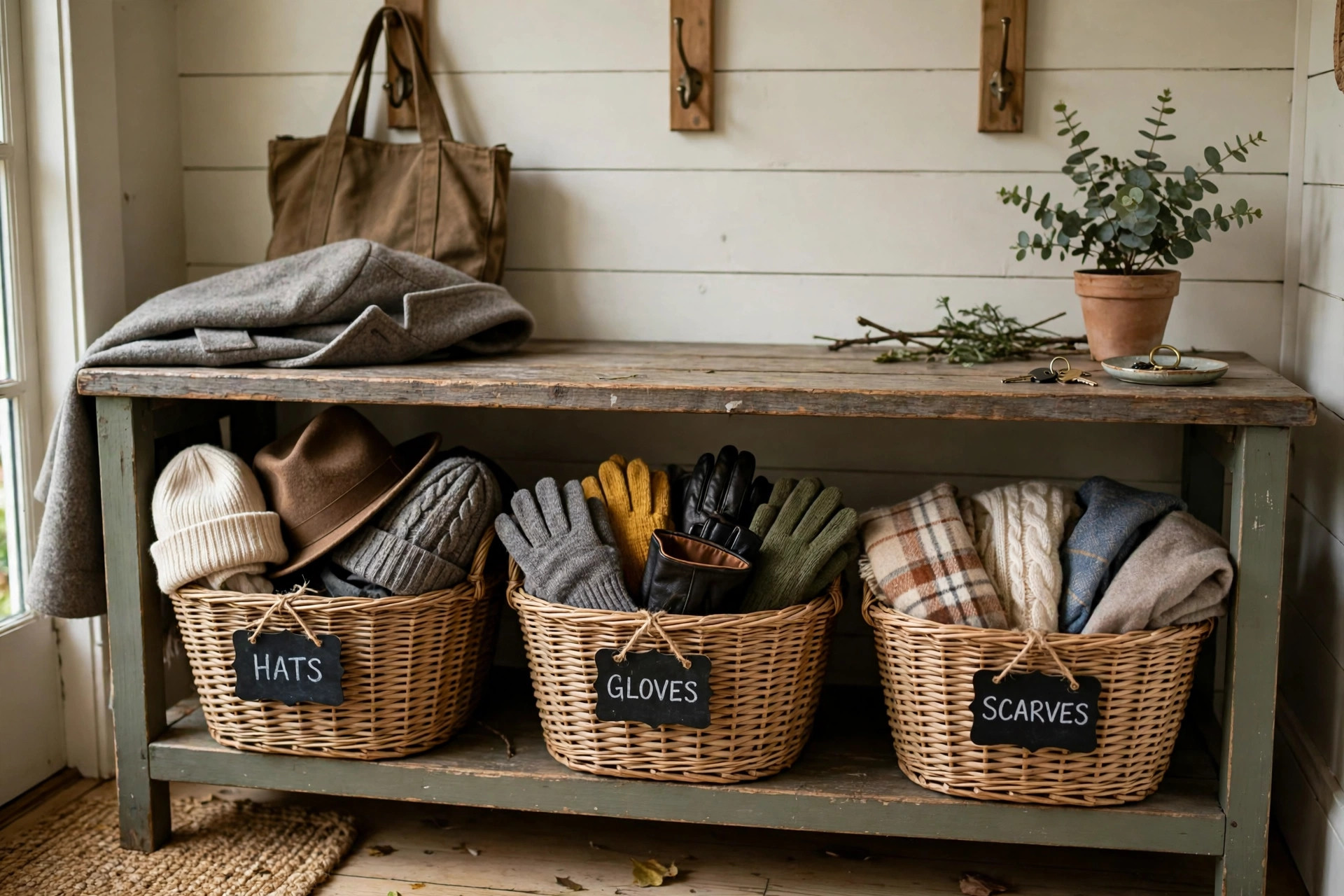
Hats and gloves in one big basket are hats and gloves you cannot find, because the gloves are at the bottom, the hats are tangled in the scarves, and the basket that holds everyone's winter things is the basket nobody wants to dig through. Give hats, gloves and scarves a basket per person — the basket that holds one person's winter — so each person's hat, gloves and scarf live in their own basket on the bench shelf, and the morning starts with reaching, not digging. Put the kids' baskets low where they can reach them, because the basket that matches the child is the basket the child uses. Label each basket, because the label that says whose it is is the label that stops the gloves wandering, and the bench that holds one basket per person is the bench where the winter things are always where they belong. The closet beside the bench takes the overflow in 22 Hallway Closet Organization Ideas for 2026, where the spare hats and scarves live. One basket per person, and the dig ends.
Keep it tidy for good
18. Label every cubby — the label that stops the dig
Cubbies without labels are cubbies you have to open, because the cubby that holds the school shoes looks exactly like the cubby that holds the trainers, and the bench that holds unlabelled cubbies is a bench you never use properly. Label every cubby — the label that stops the dig — so each cubby says what it holds and whose it is, and the bench becomes usable instead of a mystery. Put the label on the front of the cubby, not inside it, because the label that faces you is the label you can read from the door, and use one label per cubby, because the cubby that holds one person is the cubby that stays sorted. Write the label in big clear letters and put it where you look when you walk in, because the label that is big is the label that is read, and the cubby that is labelled is the cubby that gets used first. One label per cubby, and the dig stops.
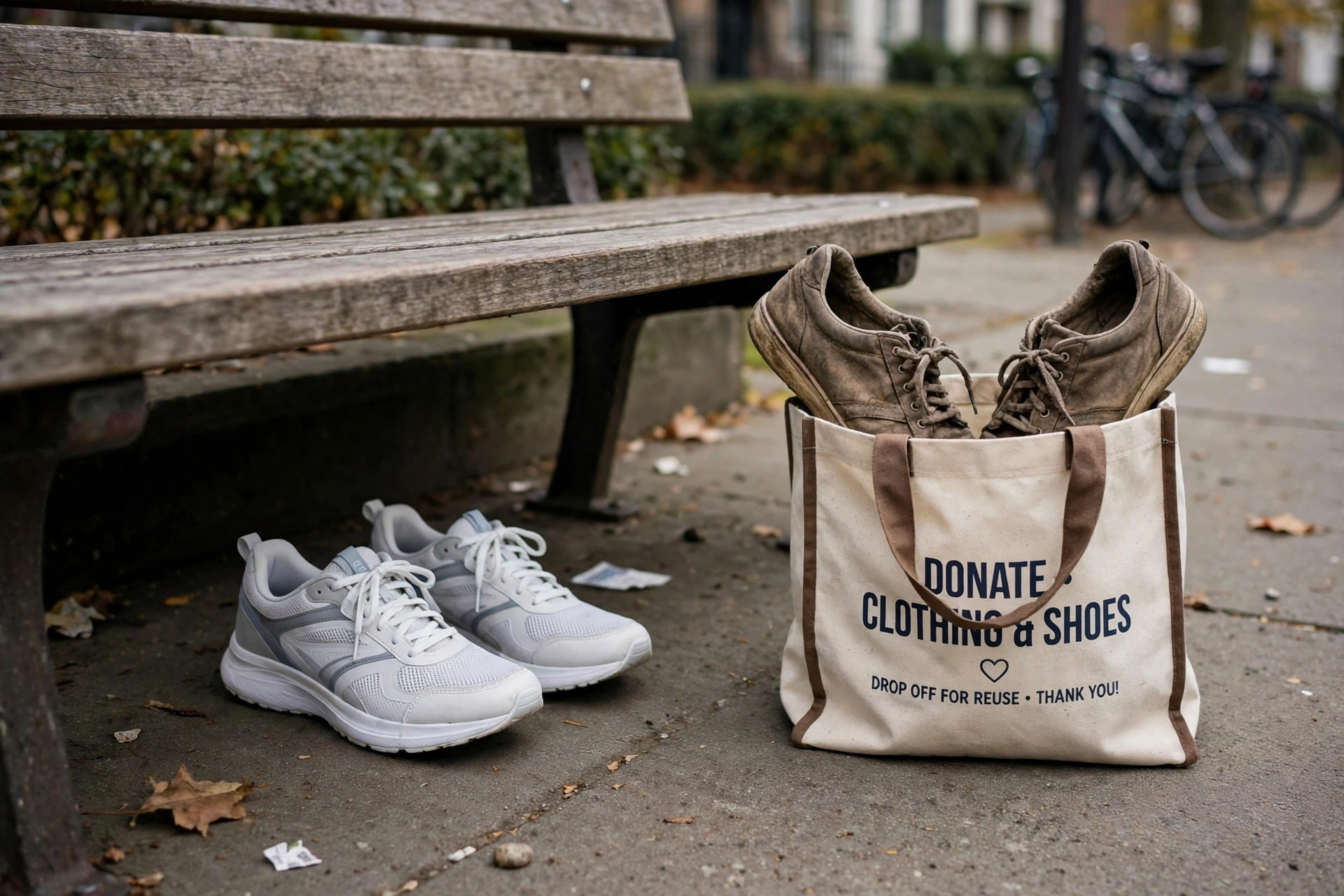
19. One in, one out for the shoes
A shoe collection grows on its own, because every sale adds a pair, every season adds two more, and the bench that held eight pairs in January holds twenty by December. Use one in, one out for the shoes — the rule that stops the bench overflowing — so every new pair that enters the bench means one old pair leaves it, into the donate bag or the bin. Keep the donate bag by the bench, so the pair that leaves has somewhere to go the moment you decide, because the bag that is by the bench is the bag that gets used. Count the pairs when you do the swap, because the count that is written down is the count that shows you how many you really own, and the bench that is counted is the bench that stops growing. One rule, and the bench never overflows.
20. A weekly bench reset — five minutes on Sunday
No bench stays tidy without a habit, because the bench is only tidy on the day you organize it and the mess creeps back one pair of shoes at a time. Do a weekly bench reset — five minutes on Sunday — so the shoes go back in their cubbies, the bags go back on their hooks, the keys go back in the bowl, and the bench starts Monday clean. Put the stray shoes away, hang the stray coats, bin the junk mail, and wipe the bench top, because the reset that takes five minutes is the reset that actually happens. Do it on Sunday evening, because the reset that happens before the week starts is the reset that makes Monday morning easy, and the bench that is reset every week is the bench that never needs a big clean. Five minutes a week, and the bench never gets away from you.
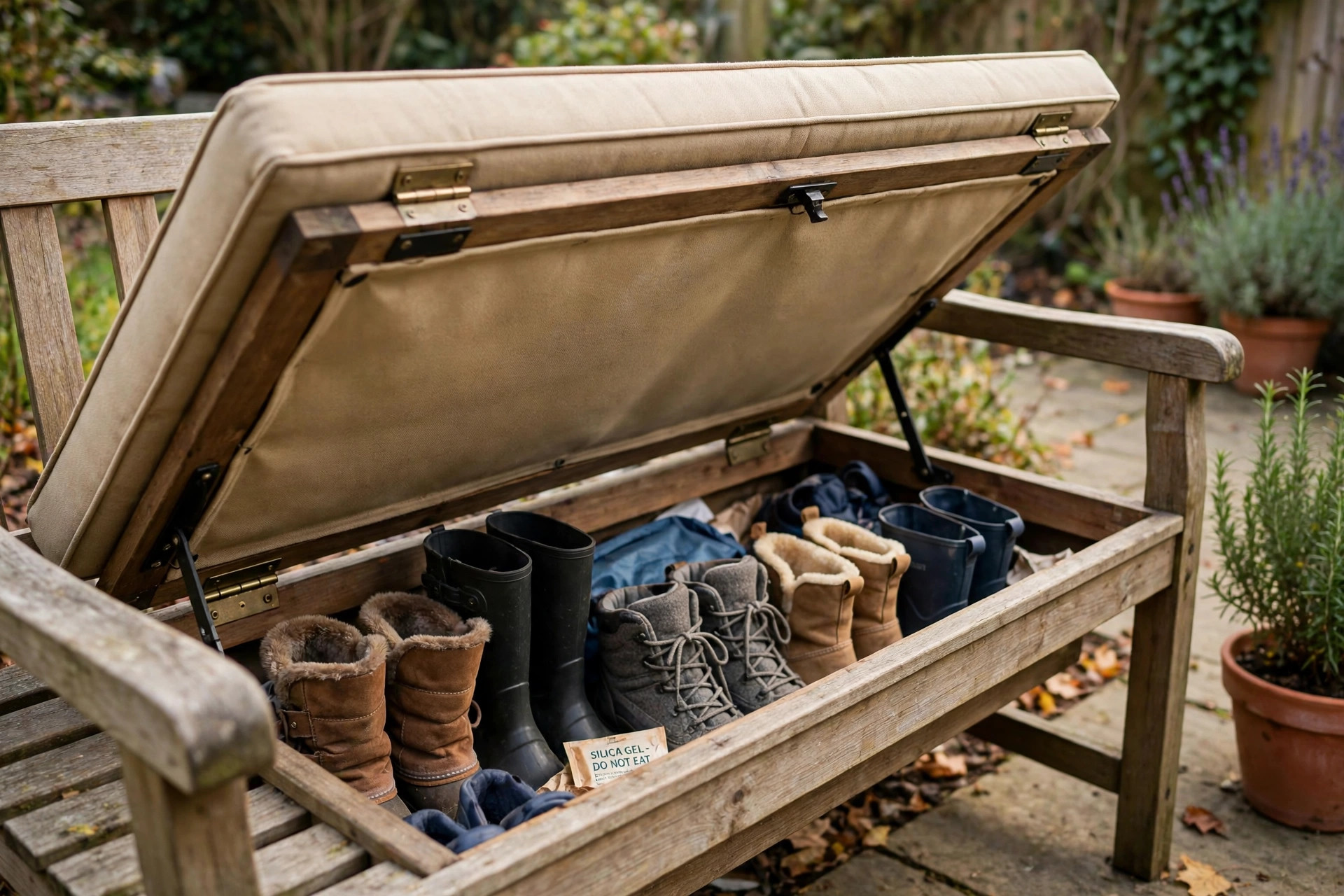
A bench with a solid seat wastes the biggest space it has, because the seat is a box, the box is empty, and the bench that could hold a whole season of shoes holds nothing at all. Use a bench cushion that lifts — hidden storage inside — so the seat lifts on hinges, the space underneath holds the out-of-season shoes, the spare bags and the things you need rarely, and the bench holds twice as much. Keep the things you use every day in the cubbies below and the things you use rarely inside the seat, because the seat that holds the rarely-used things is the seat that stays shut most of the time. Put a soft cushion on top, because the cushion that is comfortable is the cushion that gets sat on, and the bench that you sit on is the bench that gets used. One lifting seat, and the bench doubles. (Check on Amazon for a storage bench with a hinged lift-up seat and a washable cushion, sized for a standard hallway.)
22. A five-minute reset after every school run
The bench falls apart fastest after the school run, because the shoes come off in a rush, the bags land wherever they fall, and the bench that was tidy at breakfast is a pile by half past three. Do a five-minute reset after every school run — shoes under the bench, bags on the hooks, keys in the bowl — so the bench is tidy before dinner and starts clean the next morning. Get the kids to do their own reset, because the reset that the kids do themselves is the reset that teaches the habit, and the bench that the kids reset is the bench that stays tidy without a parent. Keep a small bin for the rubbish that comes home in the bags, because the rubbish that is binned at once is the rubbish that never becomes clutter, and the bench that is reset after every school run is the bench that is tidy on Monday morning. Five minutes a run, and the bench never needs a big clean.
Which entryway bench idea fits which situation?
| Situation | Best first move | Budget | Tools needed |
|---|---|---|---|
| Bench buried under coats and bags | Give the bench one job (idea 1) | Free | None |
| Bought storage that does not fit | Measure the bench first (idea 2) | Free | Tape measure |
| Shoes mixed up every morning | One cubby per person (idea 3) | Free | Labels |
| Shoes all over the hallway floor | Shoes live below the bench (idea 4) | Free | None |
| Mud tracked through the house | A boot tray that catches the mud (idea 5) | Low | Boot tray |
| Coats and bags on the floor | Hooks above the bench (idea 6) | Low | Hooks |
| Shoes squeezed and creased | Shoe cubbies sized to the shoes (idea 7) | Low | Cubby organizer |
| Tall boots flop and crease | Boots stand upright (idea 8) | Low | Boot rack |
| Can't find the right shoes | A seasonal swap (idea 10) | Free | Storage box |
| Keys vanish every morning | A key bowl that never moves (idea 13) | Free | Bowl |
| Hats and gloves everywhere | A basket per person (idea 17) | Low | Baskets |
| Bench messy again by Friday | A five-minute reset (idea 22) | Free | None |
You do not need all 22 ideas. You need the three that solve your bench mess — usually the one job that stops the scatter, the cubby per person that ends the morning dig, and the boot tray that stops the mud at the door. Start with the one job, do it this weekend before the next school run, and put the shoes under the bench. Do that and the next morning will start with reaching instead of digging, the keys will be in the bowl where you left them, and the hallway floor will be a floor again.
Save this post for the next hallway reset, and if the mudroom around the bench needs the same treatment, read 25 Mudroom Organization Ideas for 2026 next — it is Post 61, the bench at full size — and 22 Entryway Storage Ideas for 2026, Post 10, for the landing zone the bench belongs to. This is the twenty-fourth post of the new Organization by problem run — Posts 56 to 80, one problem at a time — and the run closes with the smallest room in the house. The small bathroom gets its own deep dive in Small Bathroom Organization, where the same one-cubby-per-person thinking fits a room half the size.
Publish date assigned at publishing time. Updated as new entryway bench finds are tested.
Frequently asked questions
How do I organize shoes under an entryway bench?
Give every pair a cubby of its own, sized to the shoe, with one cubby per person. Put the kids' shoes on the lowest shelf where they can reach them and the adults' shoes higher up, label each cubby with a name, and keep a boot tray under the bench for the wet and muddy pairs. The rule that makes it stick is simple: a shoe that comes off goes straight under the bench, never on the floor in front of it.
What is the best way to organize a small entryway bench?
Give the bench one job and measure it before you buy anything. Shoes live below the bench, bags and coats hang on hooks above it, and keys and mail sit in one bowl and one tray on top. In a small hallway, a slim bench with a low shoe rack underneath and two rows of hooks above it holds the whole household, and a bench cushion that lifts adds hidden storage inside the seat for the things you use rarely.
How do I keep an entryway bench from getting cluttered?
Use one in, one out for the shoes, so every new pair that enters the bench means one old pair leaves it, and do a five-minute reset after every school run — shoes under the bench, bags on the hooks, keys in the bowl. Add a weekly five-minute reset on Sunday so the bench starts Monday clean, and do a seasonal swap twice a year so the bench holds only this season's shoes instead of all four seasons at once.