24 Sports Gear Organization Ideas for 2026
Sports gear does not stay where you put it. The footballs live under the car, the bats live in a pile by the garage door, the bikes lean against each other until one falls and takes the rest down, and every practice starts with a hunt through the garage for the helmet that was definitely here yesterday. The gear is not the problem — the problem is that sports gear has no zone, so every ball, bat and bike drifts to wherever there was a gap, and the gap is never where you are standing when practice starts in twenty minutes.
These 24 sports gear organization ideas give every ball, bat and bike one zone: a garage wall with a bay per sport, balls on a rack, bikes on hooks, and a bag that is packed before practice — so the next practice starts at the door instead of starting with a hunt through the garage.
Every idea below works in a real home, from a single-car garage where the whole zone fits on one wall to a house where the gear lives across the garage and the garden shed. The garage itself gets its full treatment in 25 Garage Storage Ideas for 2026, where the gear zone sits alongside the tools and the bins — and the outdoor toys that share the wall get theirs in 35 Clever Toy Storage Ideas for 2026. Pick three ideas that fit your space, start with the one zone, and build from there.
Zone the garage
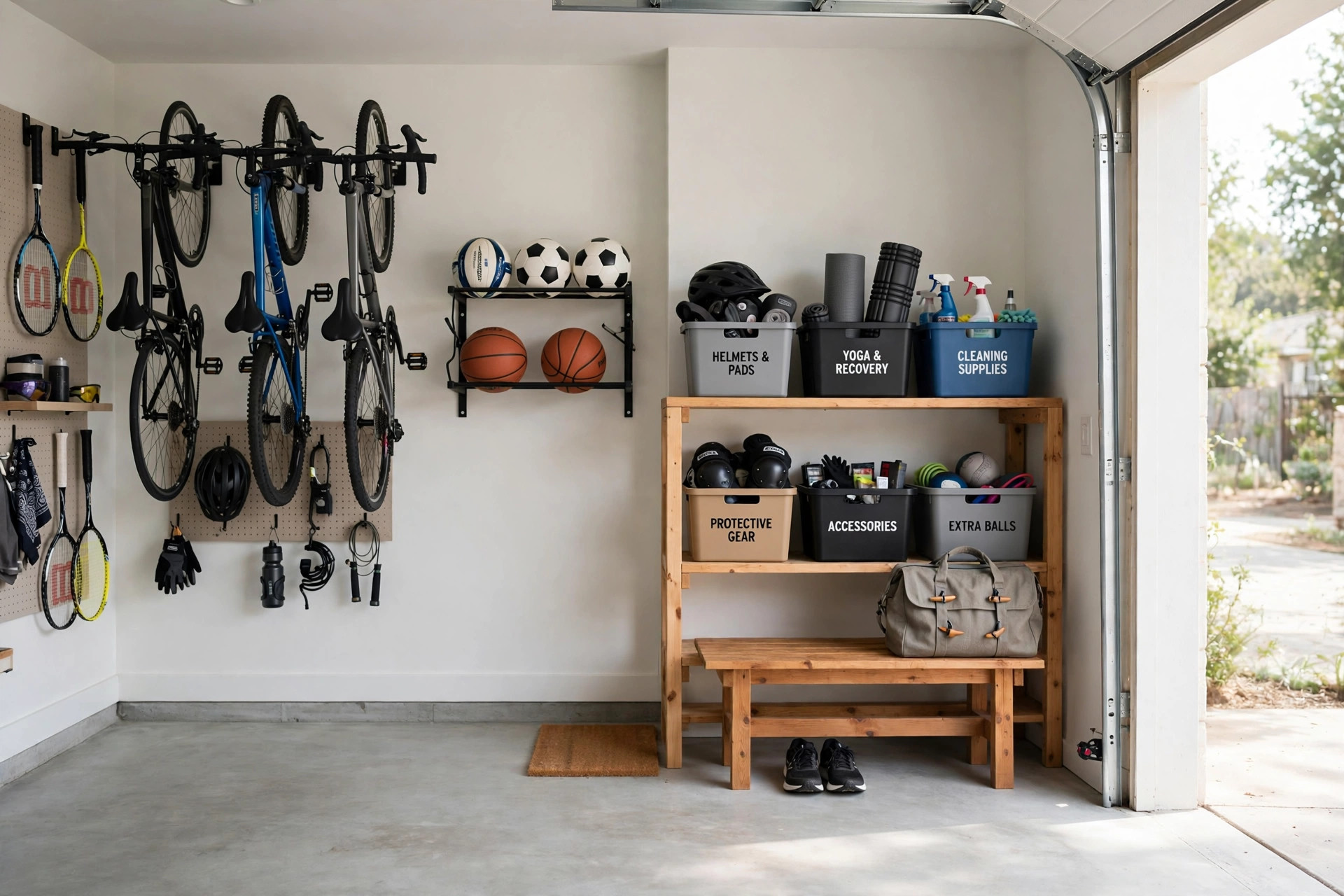
1. Give sports gear one zone — the garage wall that ends the scatter
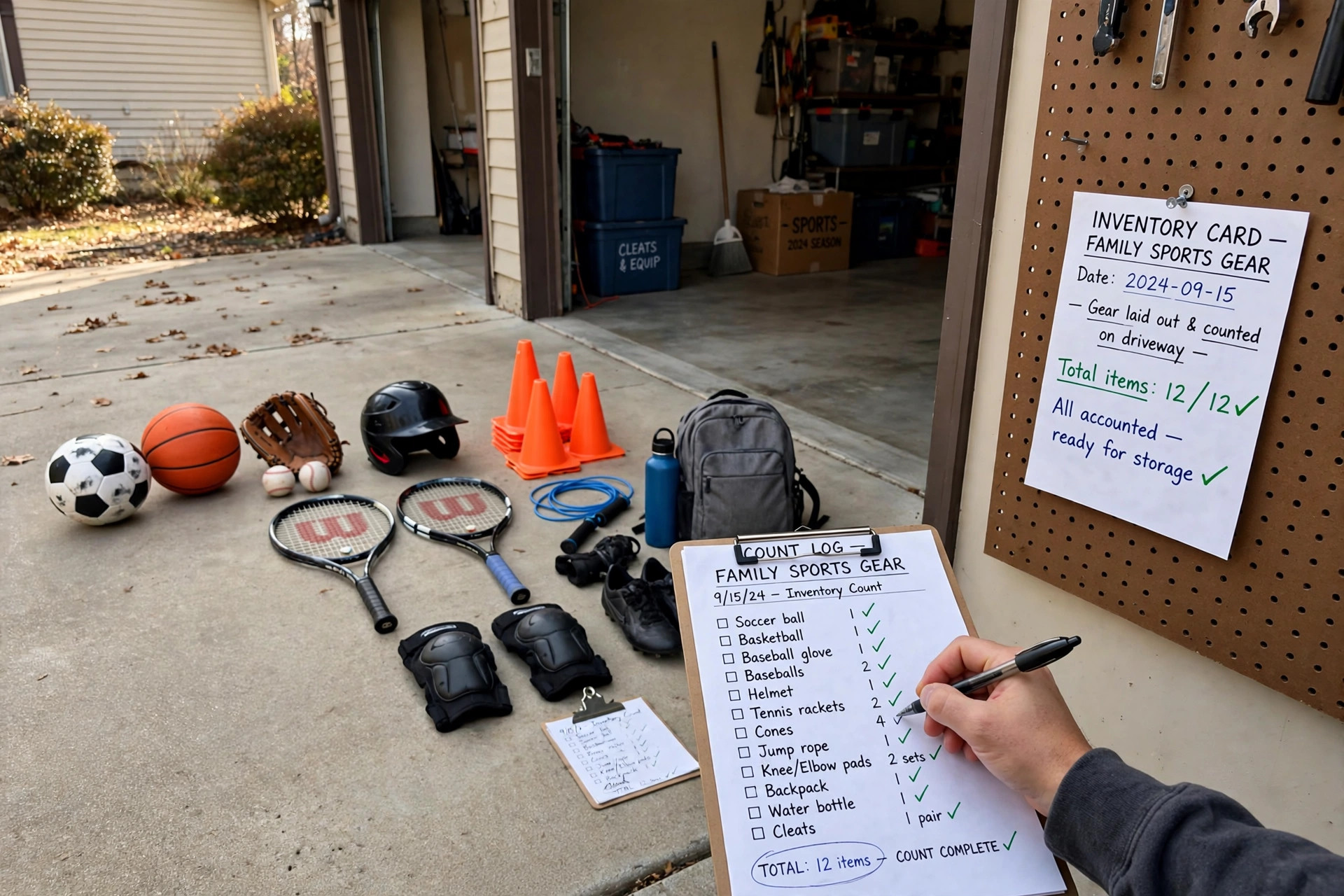
Sports gear scattered across the garage is sports gear you cannot use, because the football is under the car, the tennis rackets are on top of the freezer, and the kit bag is behind the paint tins — and practice starts in twenty minutes while you hunt through it all. Give sports gear one zone — the garage wall that ends the scatter — so every ball, bat, bike and bag lives on one wall, and the hunt ends. Pick the wall first: the wall by the door, the long wall beside the car, or the back wall under the window, because the zone that has a fixed wall is the zone that gets used. Move everything there in one go, and the next practice starts at the zone instead of starting with a search. Start by pulling every piece of gear out onto the driveway — the balls, the bats, the bikes, the bags — because the zone cannot hold what is still hidden, and seeing the whole pile at once is what shows you how much gear you actually own. One wall, and the scatter stops.
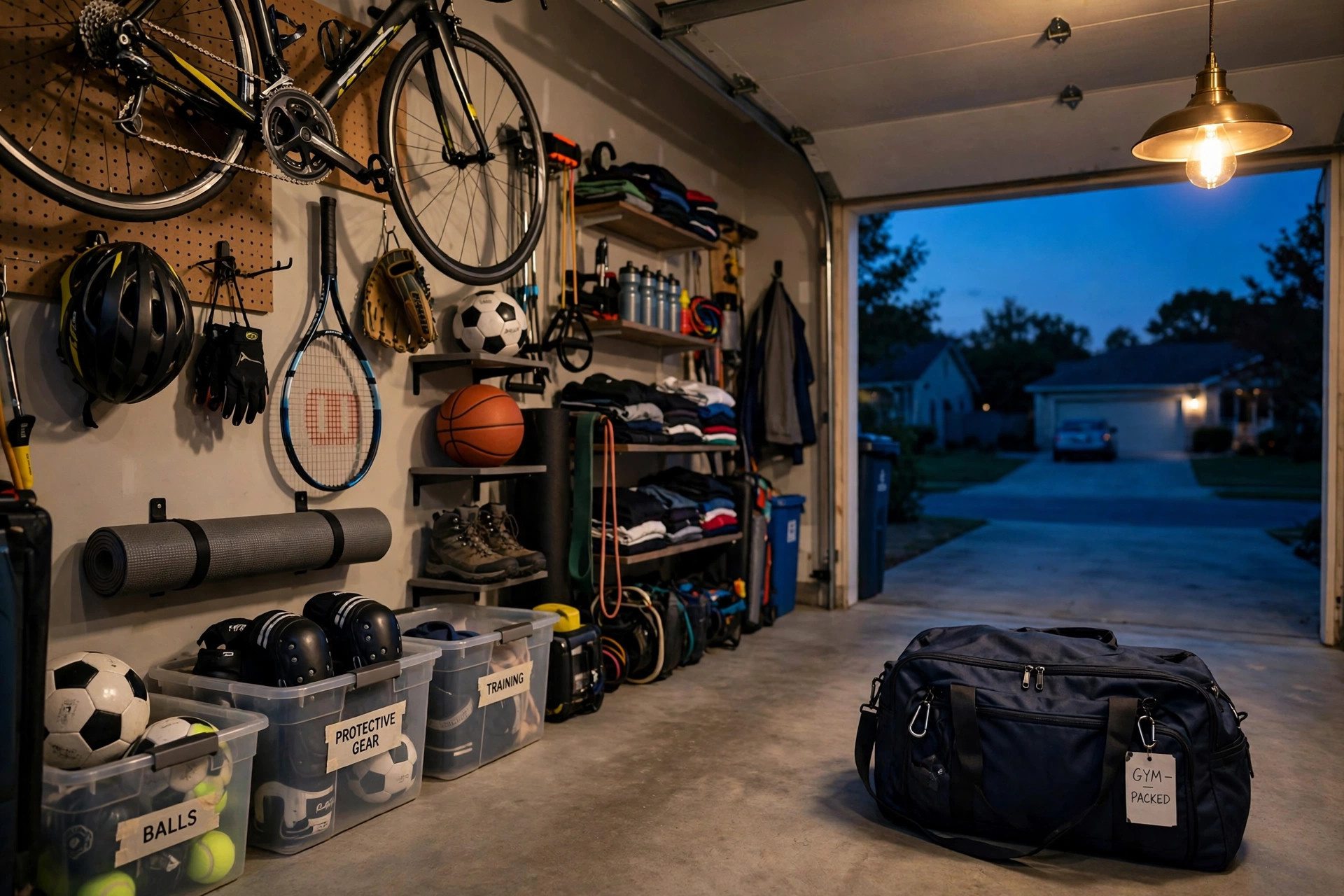
2. Sort by sport before you buy anything
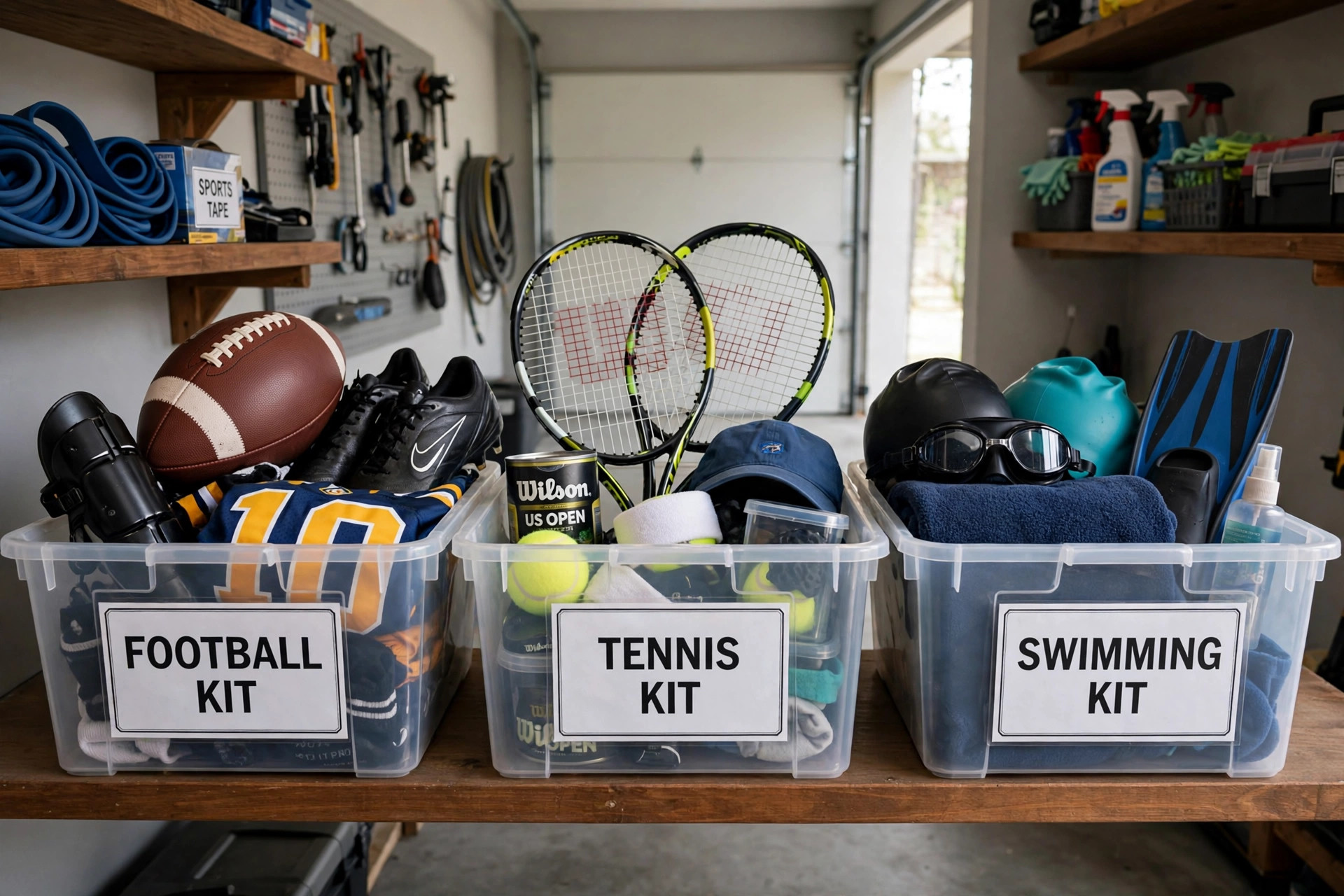
A pile of mixed gear is a pile you have to dig through, because the footballs are under the tennis rackets, the swimming kit is behind the cricket bag, and the gear you want is always the gear at the bottom. Sort by sport before you buy anything — football, tennis, swimming, cycling — so each sport has its own bin, its own hook, or its own section of the wall, and the gear you want is the gear you can reach. Keep the football gear together because it goes out in one season, keep the swimming kit together because it goes out all year, and keep the cycling gear together because it lives by the bikes, because the sort that follows the sport is the sort that matches how you actually play. Keep a small section for the odds and ends as well, because the spare ball, the spare pump and the spare water bottle are the things that cover the forgotten item, and the zone that holds a spare is the zone that is never stuck. One sort by sport, and the dig ends.
3. One zone per child — the labelled bay that stops the mix-up
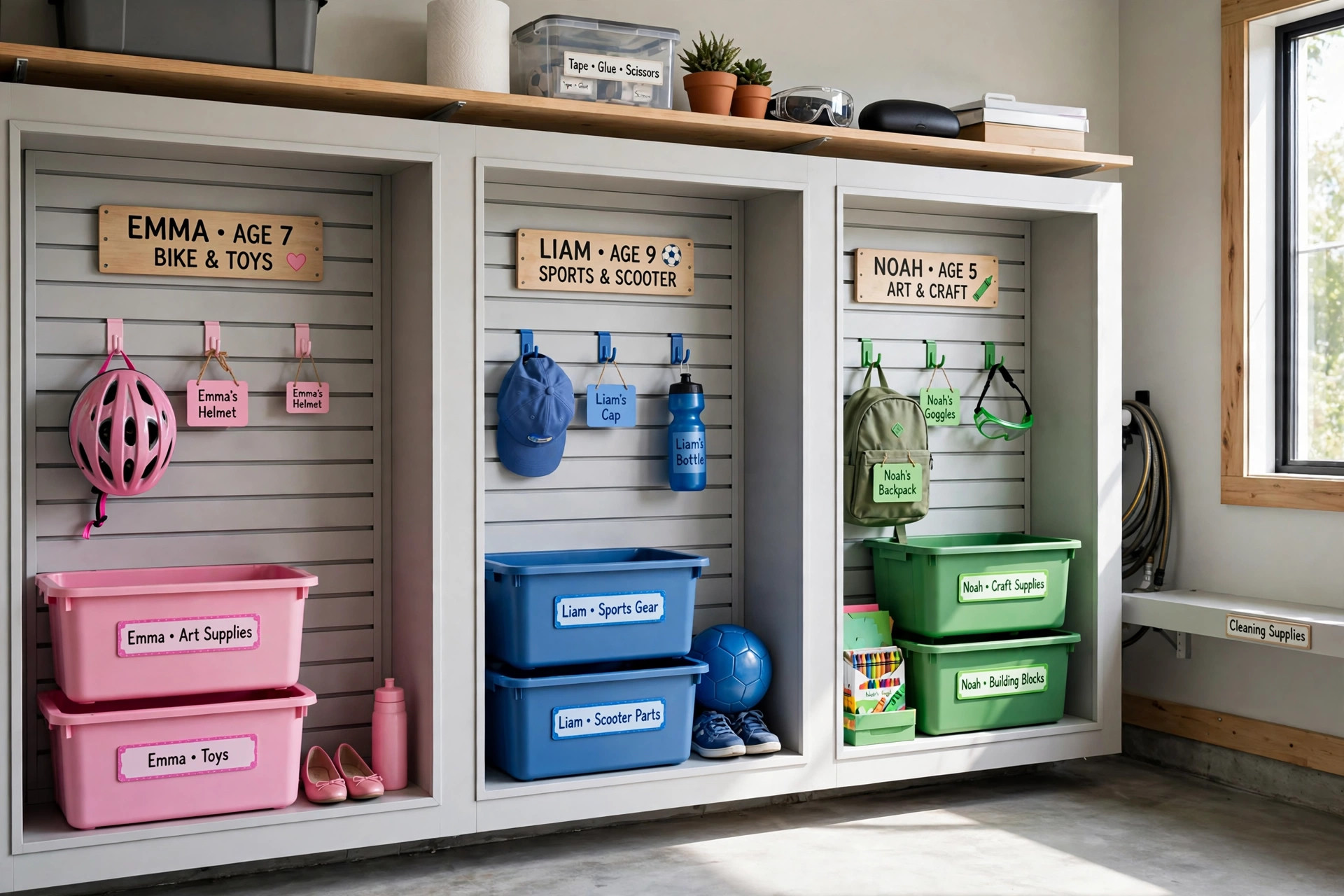
Gear shared between children gets mixed up, because the big child's racket goes to the small child's practice, the small child's helmet ends up on the big child's bike, and the argument about whose ball it is starts before you have even left the house. Give each child one zone — the labelled bay that stops the mix-up — so every child has a bay with their name on it, their own hooks and their own bin, and the gear that belongs to them is the gear in their bay. Put the name label at eye level for that child, low for the little ones and higher for the teenagers, because the bay that is labelled with a name is the bay that gets used by the right child. Let each child pick a colour for their bay, because the bay that is theirs in colour is the bay they take care of, and the gear that has a named home is the gear that comes back to it. The rooms the gear spills out of get their own system in 26 Kids Room Storage Ideas for 2026, where the same one-bay-per-child thinking works for the bedroom. One bay per child, and the mix-up stops.
4. Measure the wall and the gear before you buy storage
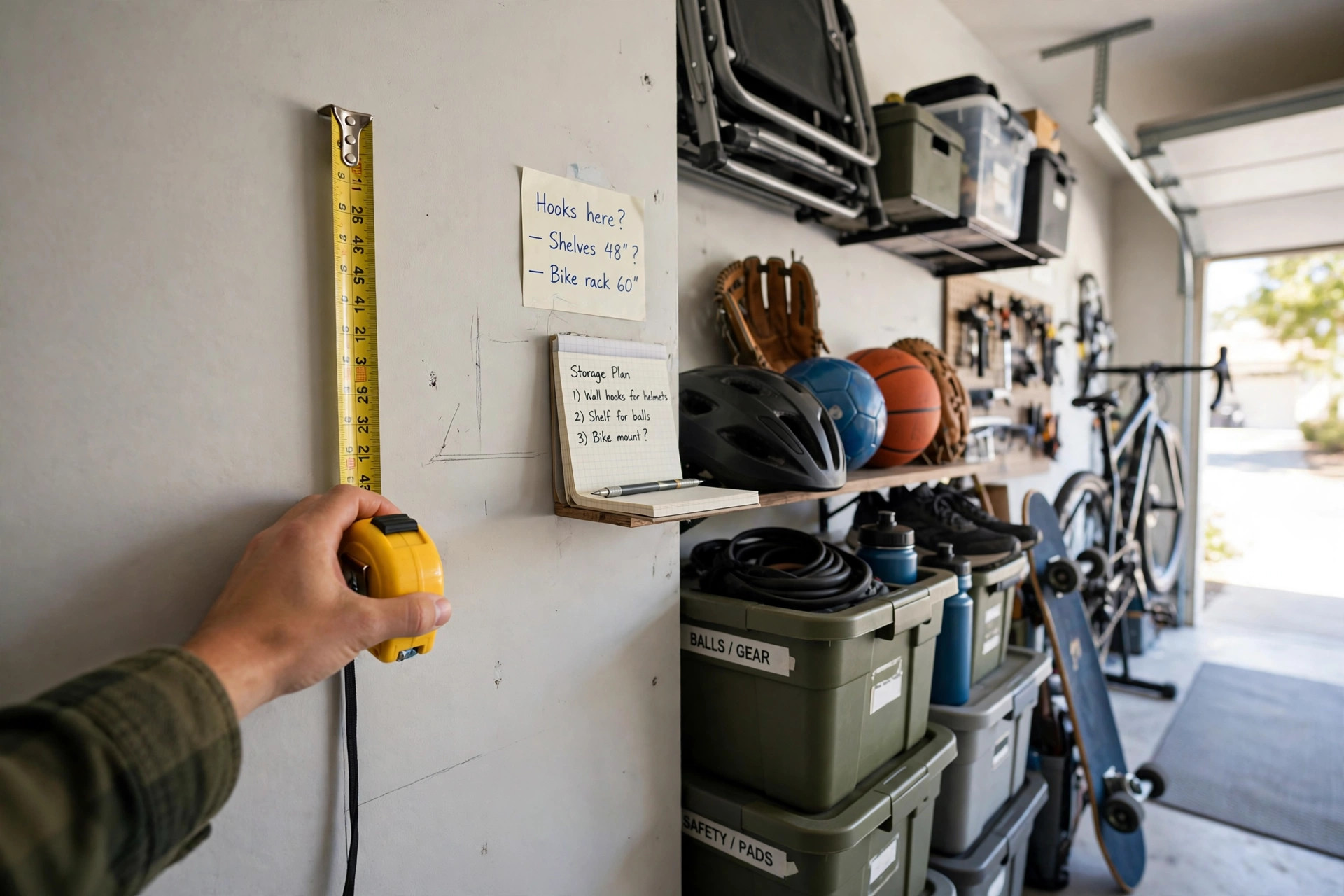
Gear storage bought by guessing is gear storage that does not fit, because the bike is six inches wider than the hook spacing, the ball rack is too short for the basketballs, and the organizer that looked right in the shop is the organizer that comes home and goes straight back. Measure the wall and the gear before you buy storage — the tape measure that saves the returns — so every rack, hook and bin you buy is bought for your wall and your gear, not for a wall in a photo. Measure the longest bat, measure the diameter of the biggest ball, and measure the wall the zone will live on, because the numbers that travel with you are the numbers that stop the returns. Write them in a notebook and take the notebook to the shop, because the gear that is measured once is the gear that fits the first time. Measure the space too — the width of the wall, the height under the shelf, the depth of the floor space — because the rack that fits the gear but not the wall is the rack that lives on the floor, and the wall that is measured is the wall that holds the zone. One afternoon with a tape measure, and everything you buy fits.
5. Keep the everyday gear by the door — grab-and-go
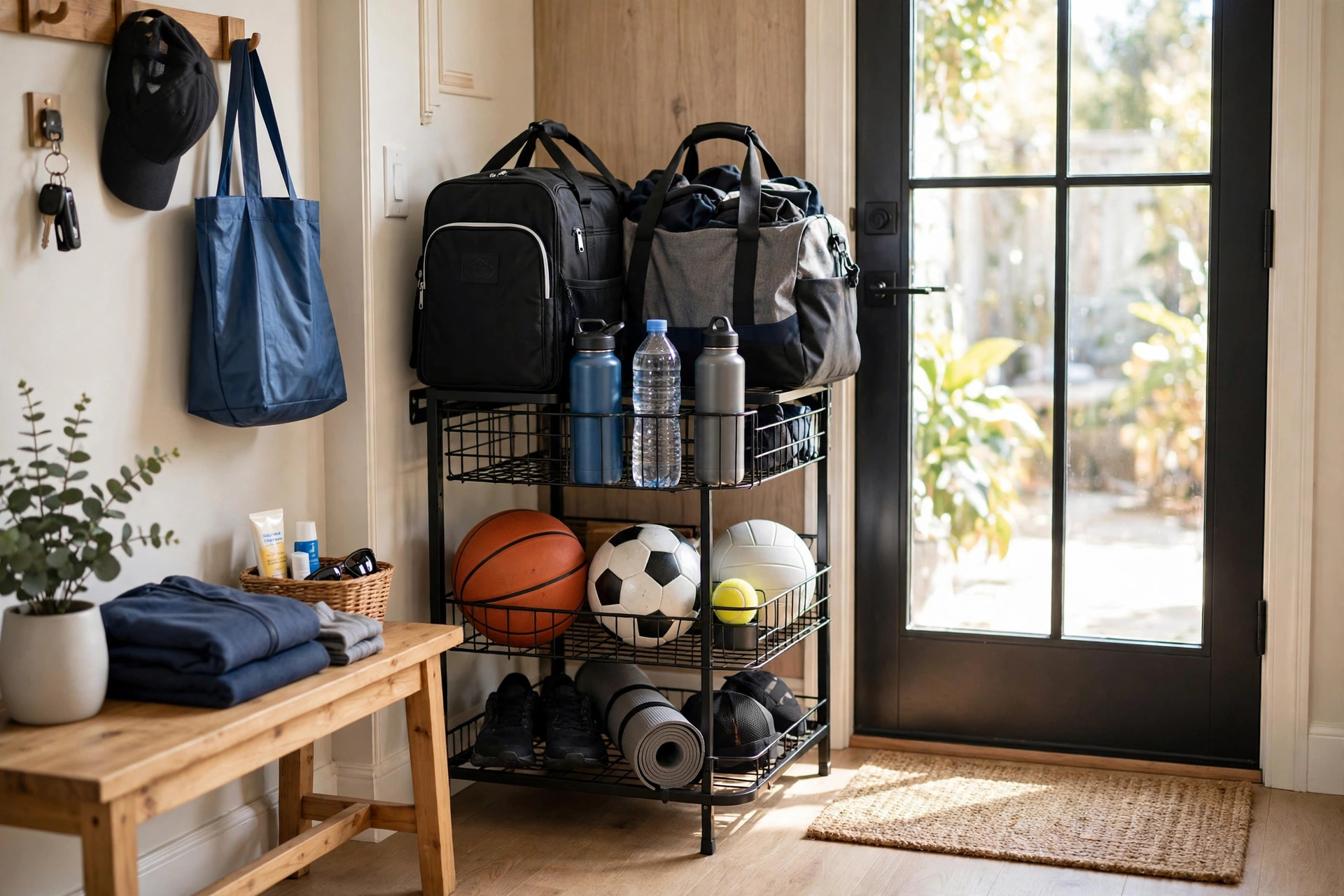
The gear you use most should be the gear you can reach fastest, because the football comes out every week, the water bottle comes out every day, and the gear buried at the back of the zone is the gear you never reach for. Keep the everyday gear by the door — grab-and-go — so the two or three things you use all the time hang on hooks by the back door, in reach the moment you open it, and the rest stays in the zone. Keep the heavy gear in the zone and the light, everyday gear by the door, because the door that holds the light gear is the door that still closes properly. Check the door still closes before you load the hooks, because the hooks that are too deep are the hooks that stop the door, and the door that closes is the door that keeps the gear hidden and tidy. One grab-and-go spot, and the everyday gear is always in reach.
6. A family gear inventory — know what you own before you buy more
A gear cupboard grows on its own, because every season adds a ball, every birthday adds a racket, and the zone that held ten things in January holds thirty by December — with three of the same ball and no pump that works. Do a family gear inventory — know what you own before you buy more — so every piece of gear gets counted, the duplicates get spotted, and the next purchase is a purchase you actually need. Write the list on a card and pin it inside the zone, because the list that is pinned is the list that gets checked before the next shop, and the gear that is counted is the gear that stops duplicating. Check each item as you count it, because the count that checks the gear is the count that finds the flat ball, the cracked bat and the helmet that no longer fits, and the zone that is inventoried is the zone that never holds three of the same thing. One inventory, and the buying stops being guesswork.
Balls, bats and the bulky stuff
7. A rolling cart for the practice gear
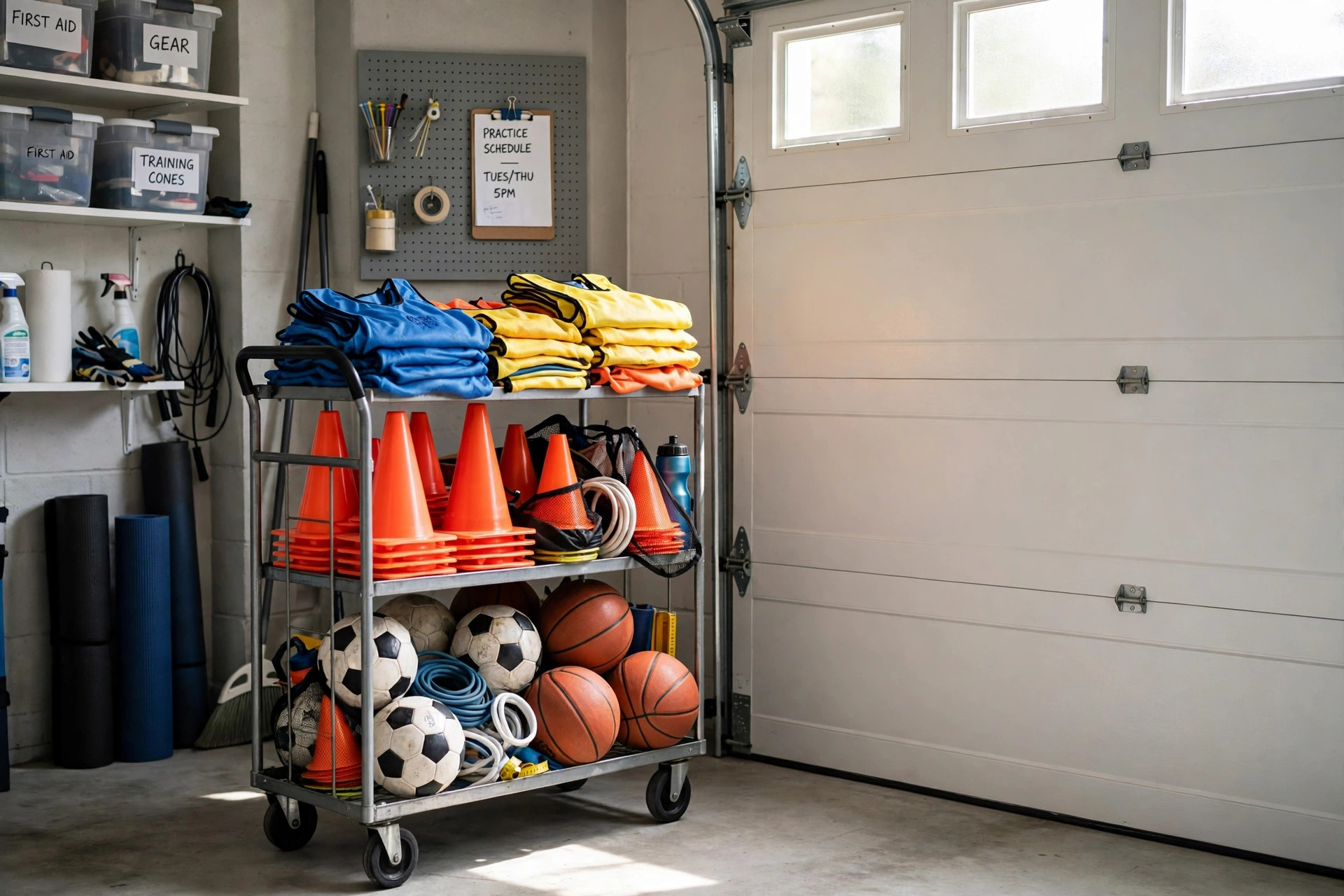
Practice gear in a pile is practice gear that takes ten minutes to load, because the cones are under the bibs, the bibs are under the balls, and the bag that should be ready is the bag you are still packing when you should be leaving. Load a rolling cart for the practice gear — the cart that rolls to the car — so the cones, bibs and balls live on the cart, the cart rolls to the car in one trip, and practice starts on time. Keep the cart by the garage door with the wheels facing out, because the cart that faces the door is the cart that rolls out, and load it the night before practice, because the cart that is loaded at night is the cart that leaves in the morning without a rush. The rolling cart that carries the practice gear gets its full system in 22 Rolling Cart Organization Ideas for 2026, where the same cart works as a practice station and a craft station in turn. One rolling cart, and the loading takes one trip.
8. A wall-mounted ball rack — balls in a row, off the floor
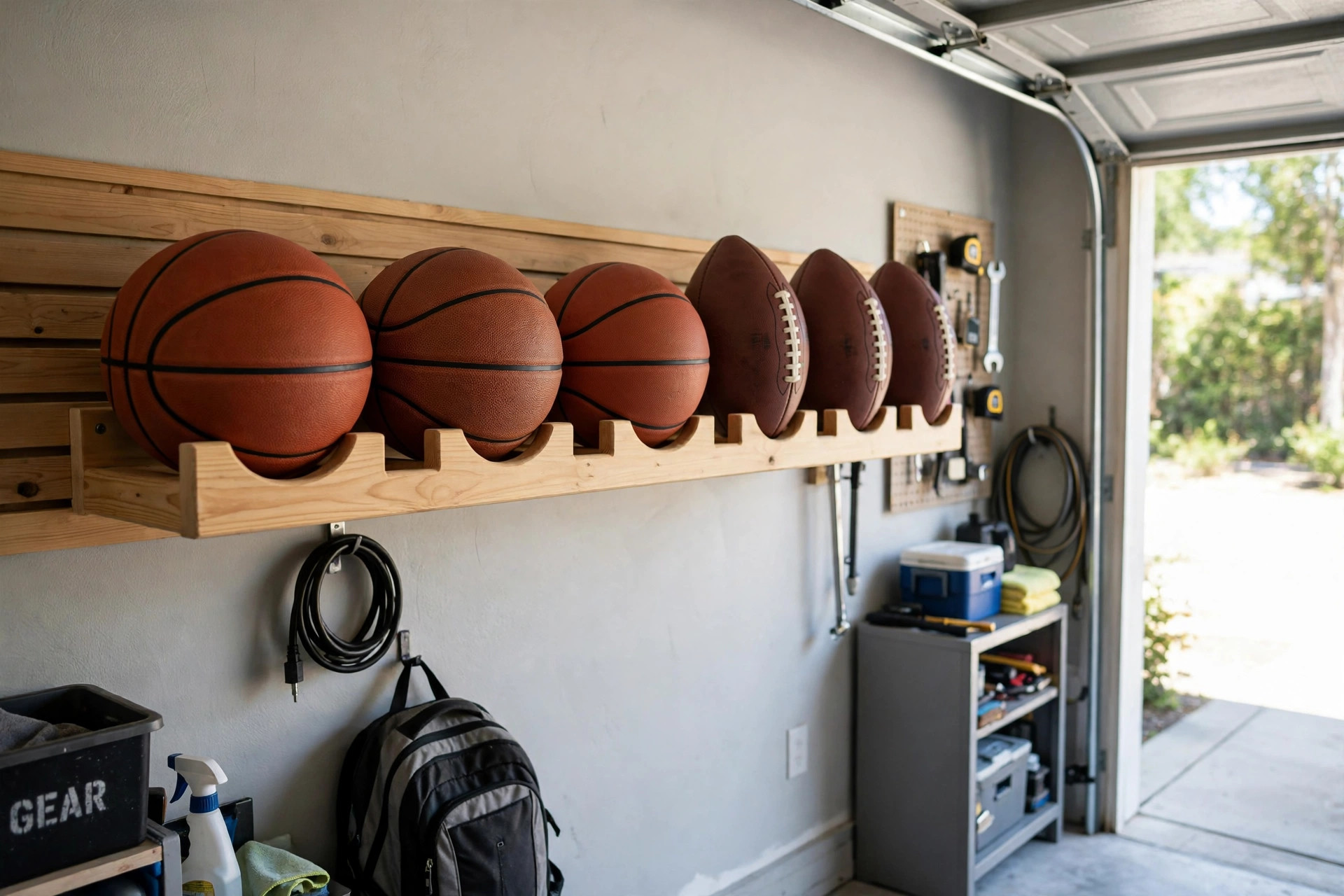
Balls on the floor roll, because the floor is where they live, the floor is where they escape, and the garage floor that holds six balls holds nothing else — while the wall above the zone stands empty. Mount a wall rack for the balls — balls in a row, off the floor — so the balls sit in a rack on the wall, in a neat row, and the floor below stays clear for the car and the bikes. Mount the rack at a height the children can reach, so the ball they want slides out without a step stool, and leave a finger's width between the balls, because the rack that is spaced is the rack that lets you pull one ball without pulling them all. Fix the rack into a stud or use proper wall plugs, because the rack that holds six balls is heavier than it looks, and the rack that is fixed properly is the rack that never comes down mid-season. One ball rack, and the floor is clear again. (Check on Amazon for a wall-mounted ball rack that holds footballs and basketballs, sized for your biggest ball.)
9. Bats and rackets on hooks — the wall that holds the long gear
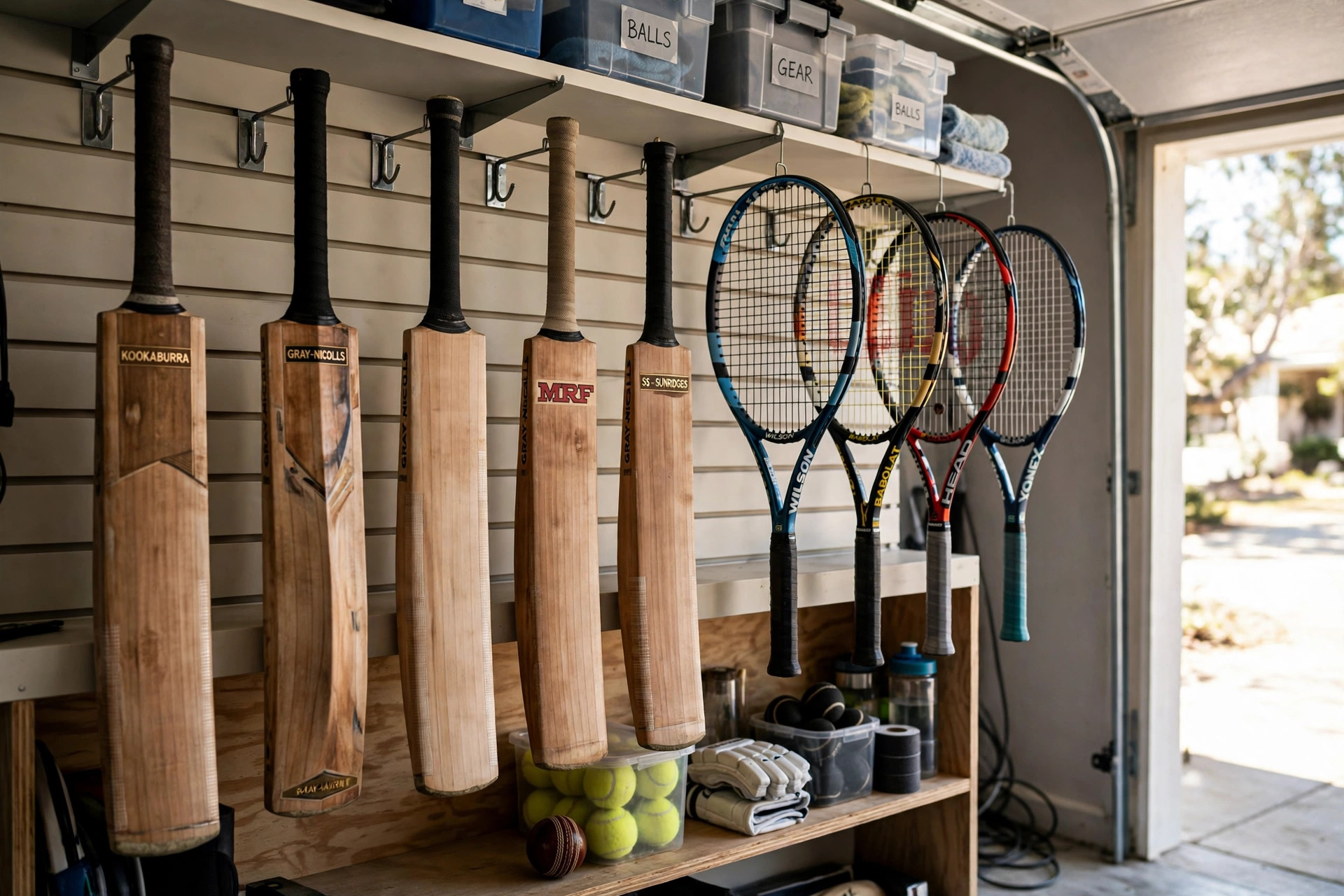
Bats and rackets in a pile get damaged, because the pile leans, the pile falls, and the racket at the bottom takes the weight of the rackets above it — and the bat that looked fine in the shop is the bat with a cracked handle by the second match. Hang the bats and rackets on hooks — the wall that holds the long gear — so each bat and racket hangs by its handle on its own hook, nothing presses on it, and the gear stays straight and ready. Hang them handles down so the grip is where your hand reaches, and sort them by sport along the wall, because the wall that is sorted is the wall where the tennis racket is always beside the tennis balls. Leave a hand's width between the hooks, because the hooks that are spaced are the hooks that let you take one racket without knocking the rest off the wall. One row of hooks, and the long gear stops breaking.
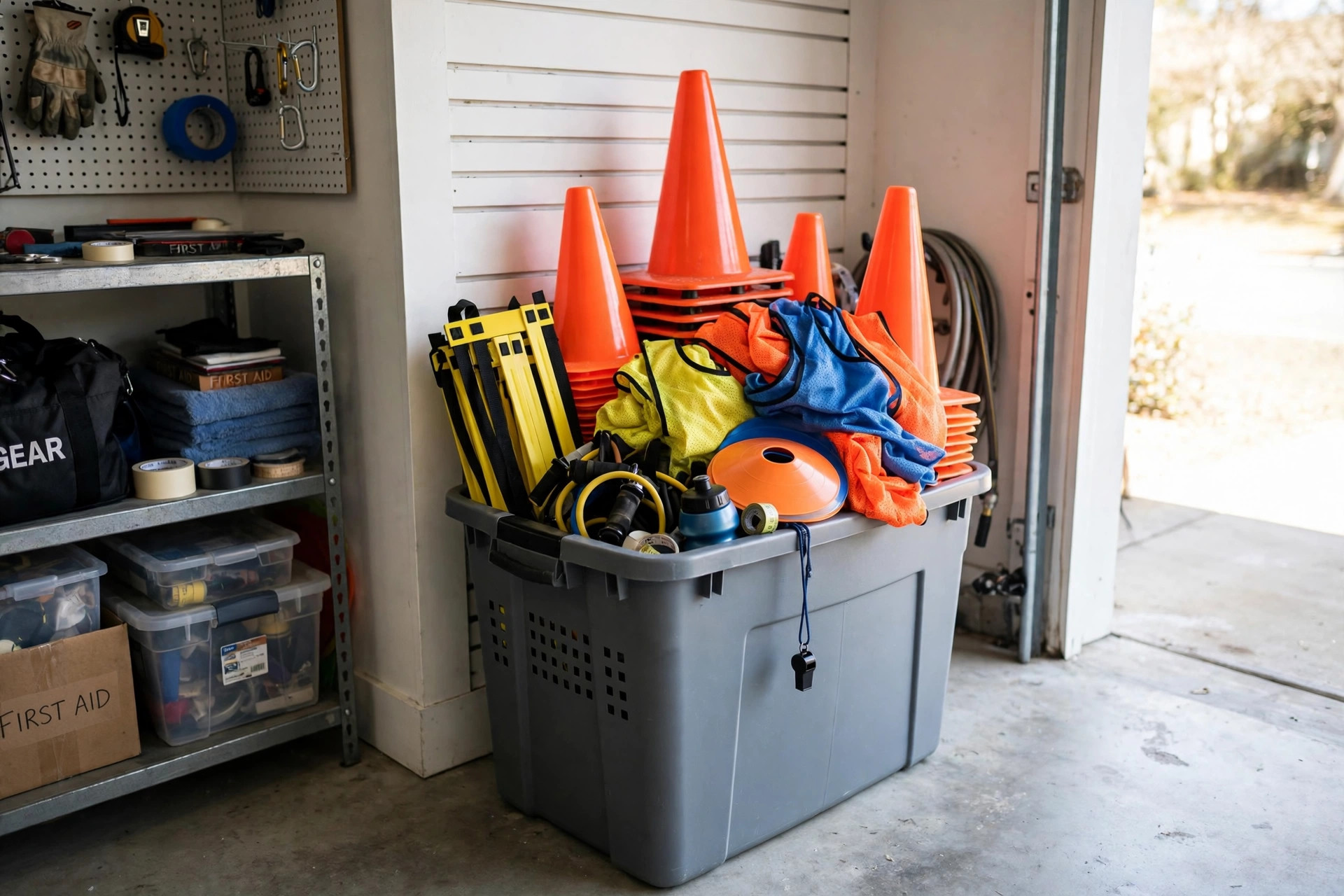
10. A tall bin for the soft stuff — cones, bibs and training gear
Cones, bibs and training gear in a bag become one tangle, because the cones stack badly, the bibs wrap around the cones, and the bag that holds the soft stuff is the bag you have to empty onto the floor to find one bib. Put the soft stuff in a tall bin — cones, bibs and training gear standing up — so the cones stack in the bin, the bibs fold beside them, and the bin holds the whole training kit in one place. Pick a bin tall enough for the cones with an inch to spare, and keep the bin in the zone where it cannot be knocked over, because the bin that stands in its corner is the bin that stays upright. Keep the bin upright and never lay it on its side for storage, because the bin that tips over is the bin whose cones spill across the floor, and the bin that stands in its corner is the bin that keeps the training kit together. One tall bin, and the soft stuff stops tangling.
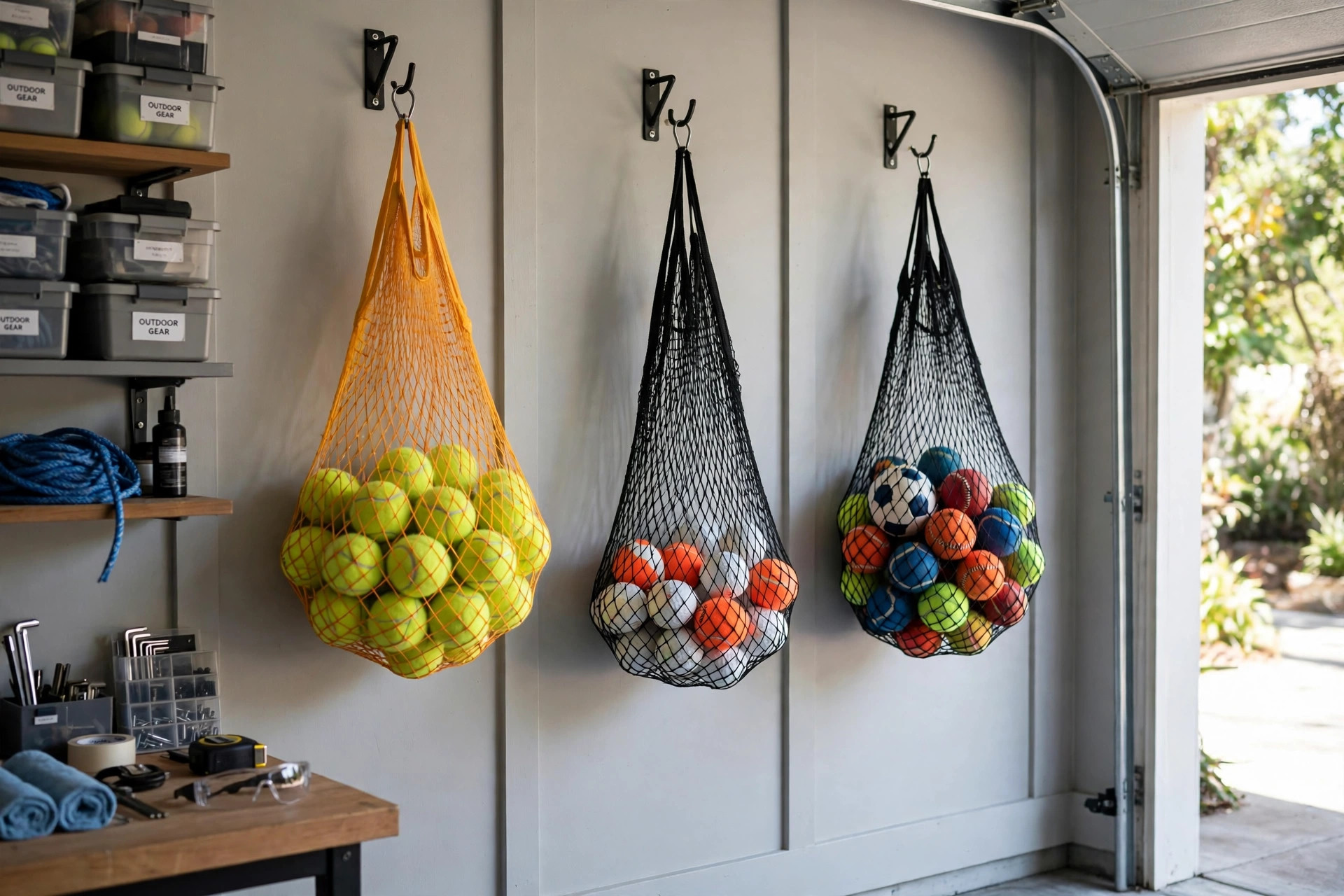
11. Net bags for balls — the bag that hangs and breathes
Balls in a closed bag go musty, because the bag is shut, the air cannot move, and the balls that came home damp stay damp until the next practice. Put the balls in net bags — the bag that hangs and breathes — so the balls sit in a mesh bag hung from a hook on the wall, the air flows through the mesh, and the balls dry between practices. Hang the bag at a height the children can reach, and sort one bag per sport, because the bag that is labelled is the bag that gets used for the right balls. Keep the bag off the floor, because the bag that hangs is the bag that dries, and the bag that is on the floor is the bag that stays damp. One net bag per sport, and the musty balls stop.
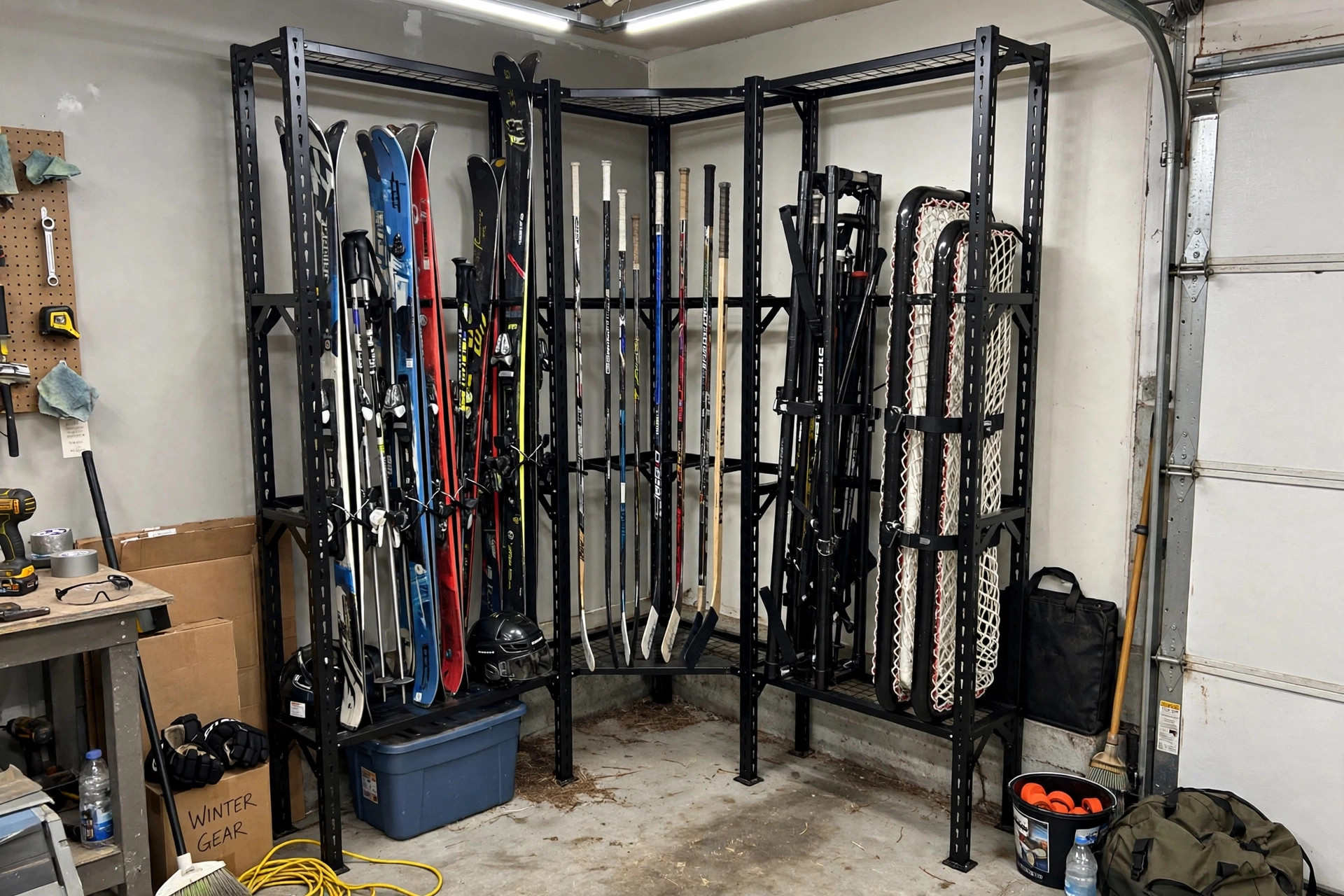
12. A corner tower for the big gear — skis, sticks and goals
Big gear has nowhere to go, because the skis are too long for any shelf, the hockey sticks are too long for any bin, and the goal that comes apart lives in pieces across the garage floor. Build a corner tower for the big gear — skis, sticks and goals in one corner — so the long things stand upright in a tall corner rack, the goal pieces stack beside them, and the corner that held nothing now holds the gear that fit nowhere else. Fix the tower to the wall so it cannot tip, because the tower that holds long gear is heavier at the top than it looks, and the tower that is fixed is the tower that never comes down. Keep the tower in the corner furthest from the door, because the gear that is used least is the gear that lives furthest away, and the corner that holds the big gear is the corner that frees the rest of the wall. The off-season gear that leaves the tower gets its own home in 22 Under-Bed Storage Ideas for 2026, where the long flat things live. One corner tower, and the big gear has a home.
Bikes, boards and wheels
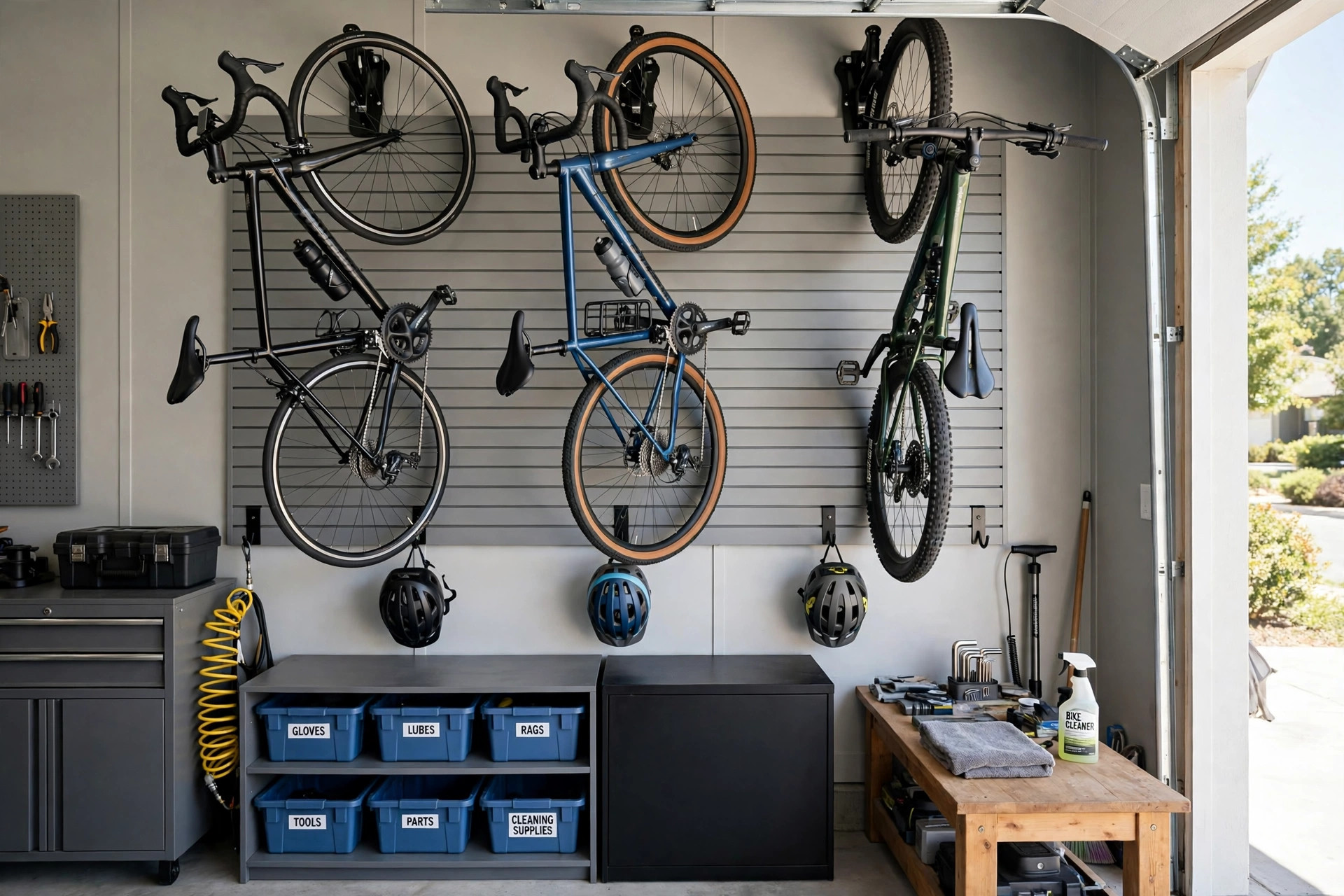
13. Bikes on wall hooks — the bikes that hang, not lean
Bikes leaning against the wall fall, because the lean is never quite right, one bike slips, and the bike that falls takes the rest down with it — scratching the frames and blocking the door. Hang the bikes on wall hooks — the bikes that hang, not lean — so each bike hangs from its front wheel on a heavy-duty hook, off the floor, and the wall holds the bikes that used to hold each other up. Mount the hooks at a height you can lift the bike to without straining, and stagger them so the handlebars do not clash, because the hooks that are staggered are the hooks that let you take one bike without moving the rest. Fix every hook into a stud or use proper heavy-duty wall plugs, because the hook that holds a bike is holding real weight, and the hook that is fixed properly is the hook that never comes out of the wall. One row of hooks, and the bikes stop falling. (Check on Amazon for heavy-duty bike wall hooks rated for your heaviest bike, with a rubber coating to protect the rim.)
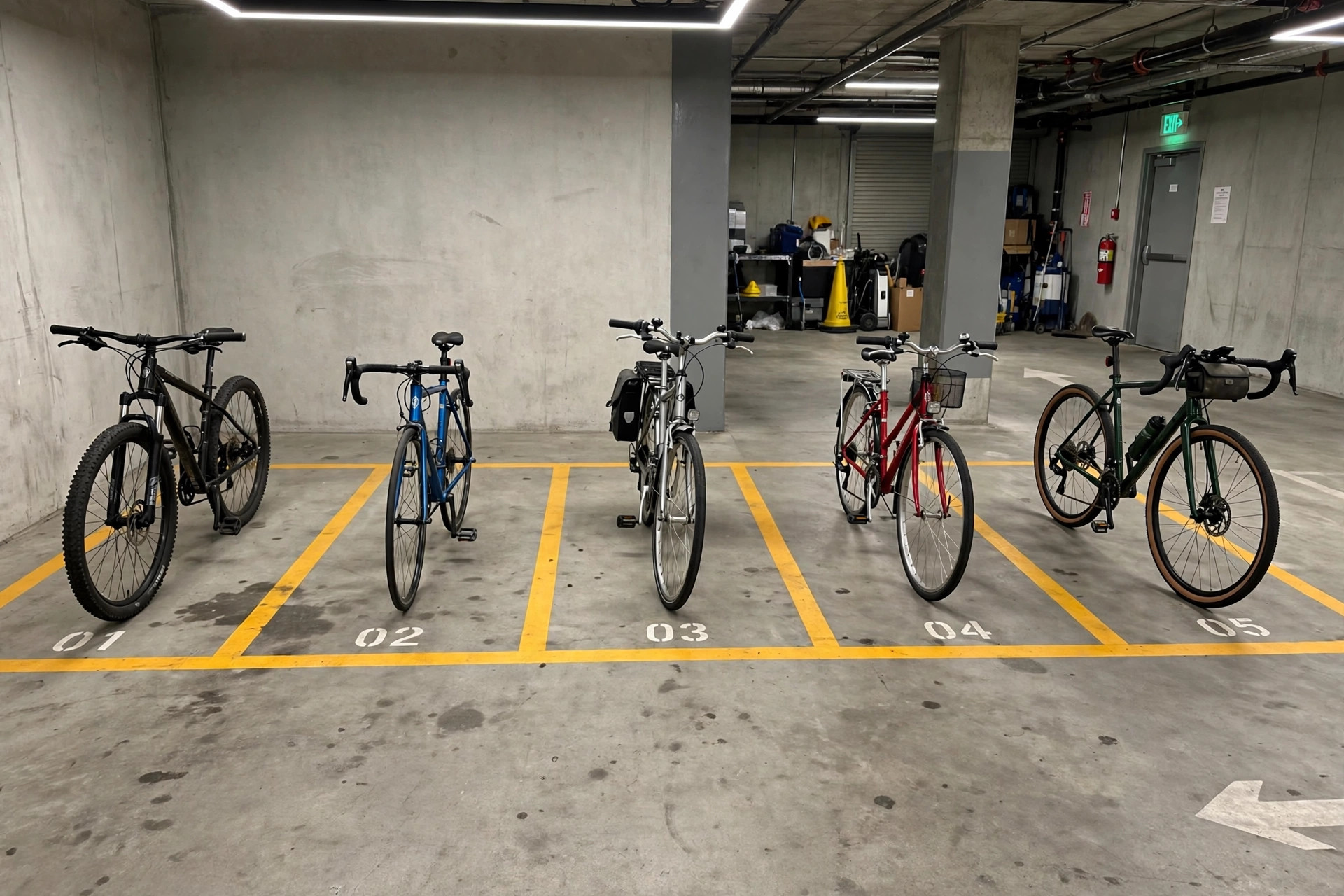
14. A bike zone on the floor — the painted parking bays
Bikes on the floor drift, because the floor is open, the bikes get pushed aside, and the garage floor that held two bikes neatly holds four bikes in a tangle by the end of the week. Paint a bike zone on the floor — the painted parking bays — so each bike has a marked bay, the front wheel goes in the bay, and the bikes stay where they belong. Paint the bays with floor paint or mark them with tape, one bay per bike, with a gap between them for the handlebars, because the bay that is marked is the bay that gets used. Put the bays against the wall furthest from the door, because the bikes that are parked are the bikes that are out of the way, and the floor that is marked is the floor that stays tidy. The door the bikes roll out of gets its own system in 22 Entryway Storage Ideas for 2026, where the grab-and-go thinking works for the bikes too. One painted zone, and the bikes stay parked.
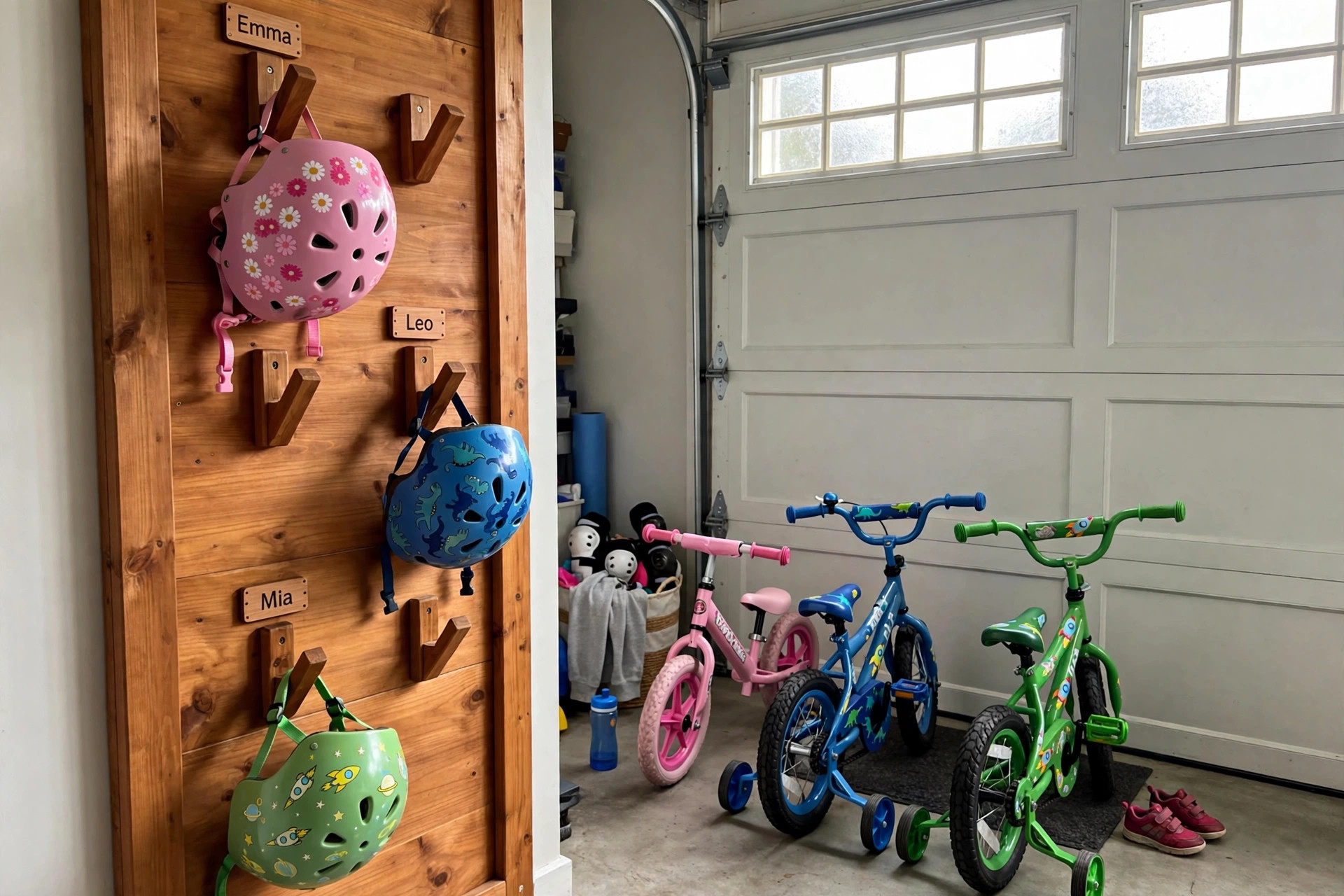
15. Helmets on hooks by the door — the helmet that is always in reach
Helmets without a home vanish, because the helmet goes on the car seat, the helmet goes on the kitchen chair, and the helmet that was definitely here yesterday is the helmet you cannot find when the bike is already out of the garage. Hang the helmets on hooks by the door — the helmet that is always in reach — so each helmet hangs on its own hook beside the bikes, at a height the child who wears it can reach, and the helmet is there the moment the bike comes out. Put one hook per helmet, and label the hook with the child's name, because the hook that is named is the hook that gets used by the right child. Keep the helmets off the floor, because the helmet that is on the floor is the helmet that gets stepped on, and the helmet that hangs by the door is the helmet that is always in reach. One hook per helmet, and the hunt for the helmet ends.
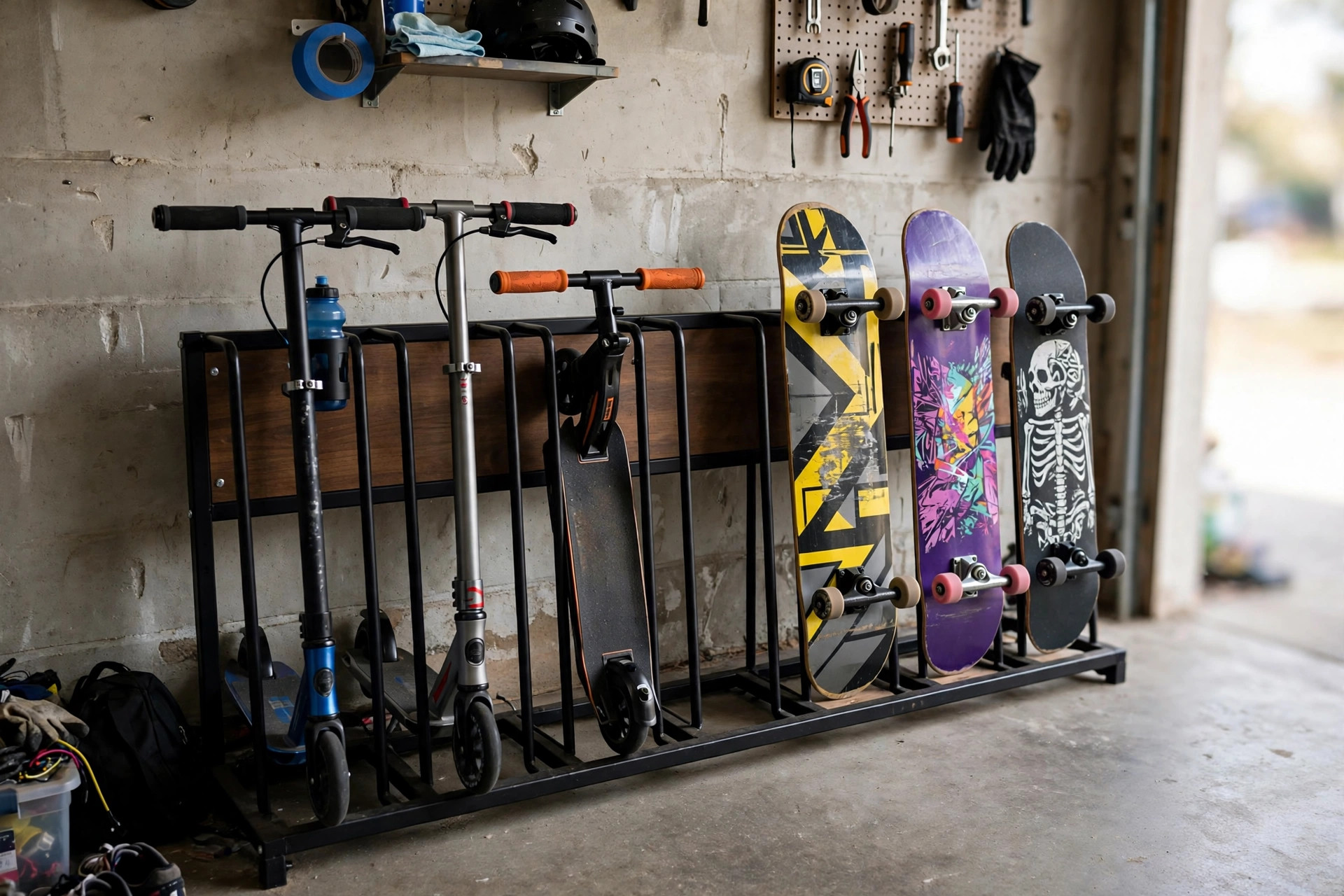
16. Scooters and skateboards on a rack
Scooters and skateboards on the floor trip you, because they lie flat, they slide under the car, and the garage floor that holds a scooter holds a hazard for everyone who walks through it. Stand the scooters and skateboards on a rack — the rack that holds the flat gear upright — so each scooter stands in its own slot and each skateboard leans in its own bay, and the floor is clear. Pick a rack with slots wide enough for the scooter decks, and keep the rack by the bikes, because the rack that lives with the wheels is the rack that gets used. Keep the rack against the wall, because the rack that stands against the wall is the rack that cannot be knocked over, and the floor that is clear is the floor that is safe to walk across. One rack, and the flat gear stops tripping you.
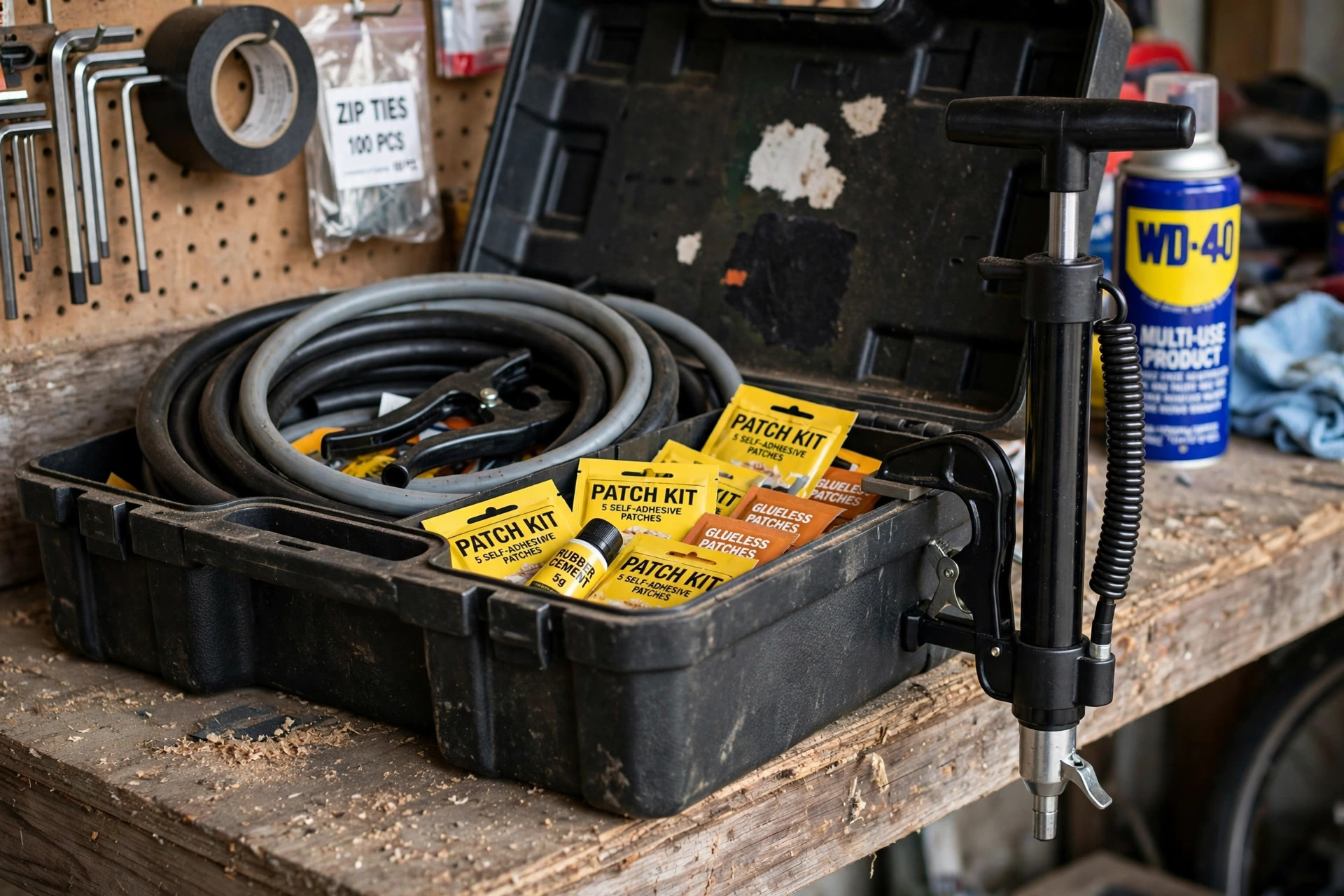
17. A pump and repair station — the small tools in one box
The pump is always missing, because the pump goes to the car, the pump goes to the shed, and the flat tyre that needs the pump is the tyre that waits while you hunt for it. Keep a pump and repair station — the small tools in one box — so the pump, the patches, the spare tubes and the multi-tool live in one box on a shelf in the zone, and the repair starts the moment you open the box. Put the box on a shelf at waist height, because the box that is at waist height is the box you can reach with the bike in front of you, and keep the pump clipped to the side of the box, because the pump that is clipped is the pump that is always there. Check the box once a month, because the box that is checked is the box that never runs out of patches, and the repair that starts at once is the repair that finishes before practice. One box, and the pump is never missing again.
18. A drying rail for wet kit — the rail that stops the smell
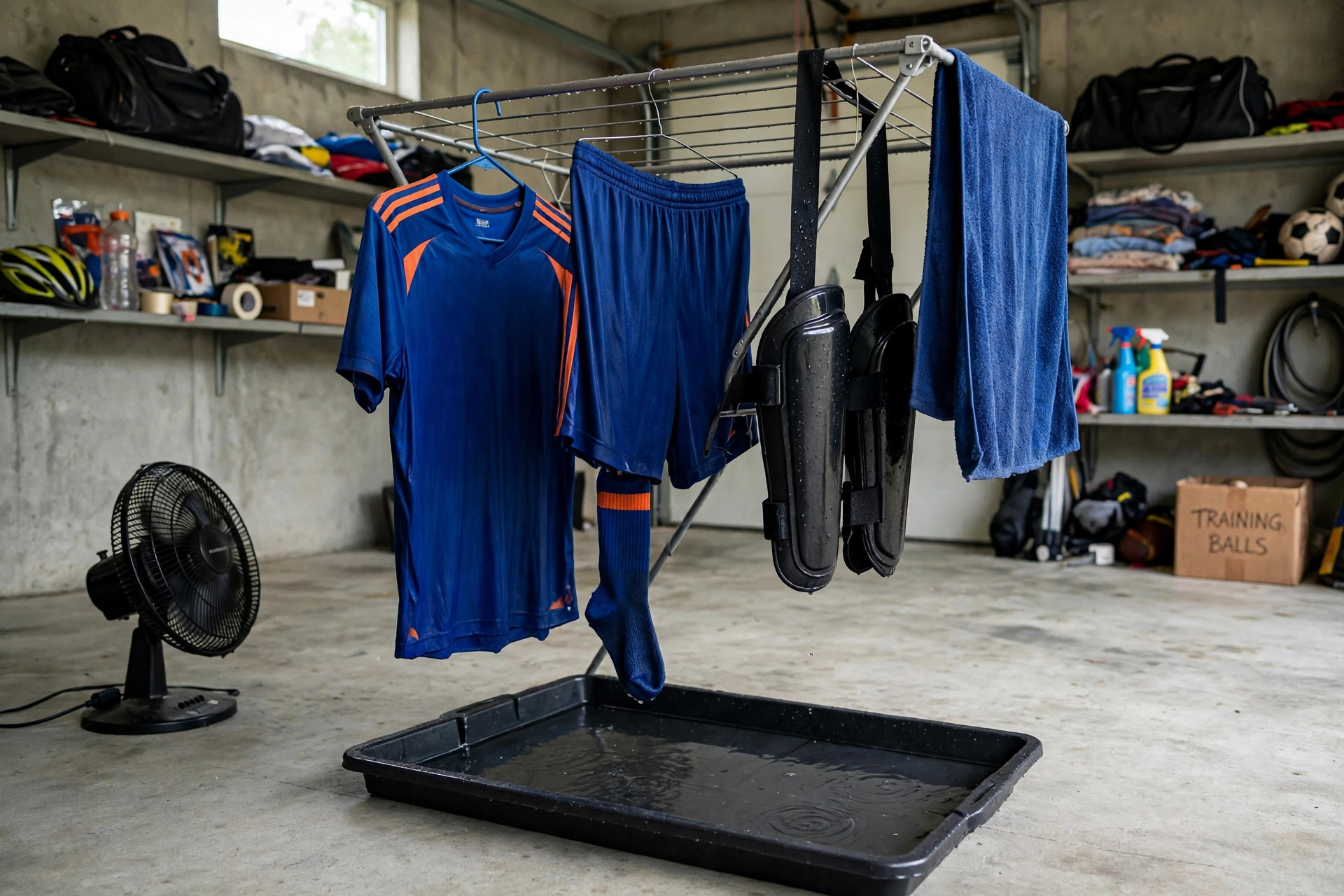
Wet kit in a bag smells, because the bag is shut, the kit stays damp, and the bag that came home wet on Saturday is the bag that smells on Monday. Hang a drying rail for wet kit — the rail that stops the smell — so the damp kit hangs on a rail in the garage, the air moves around it, and the kit dries before the next practice. Mount the rail on the wall near the door, where the air flows, and hang the kit by its hangers, because the kit that hangs is the kit that dries, and the kit that stays in the bag is the kit that smells. Keep a drip tray under the rail, because the rail that drips is the rail that wets the floor, and the kit that is dry by morning is the kit that is ready to wear. One drying rail, and the smell stops.
Keep it tidy for good
19. Label every bay — the label that stops the dig
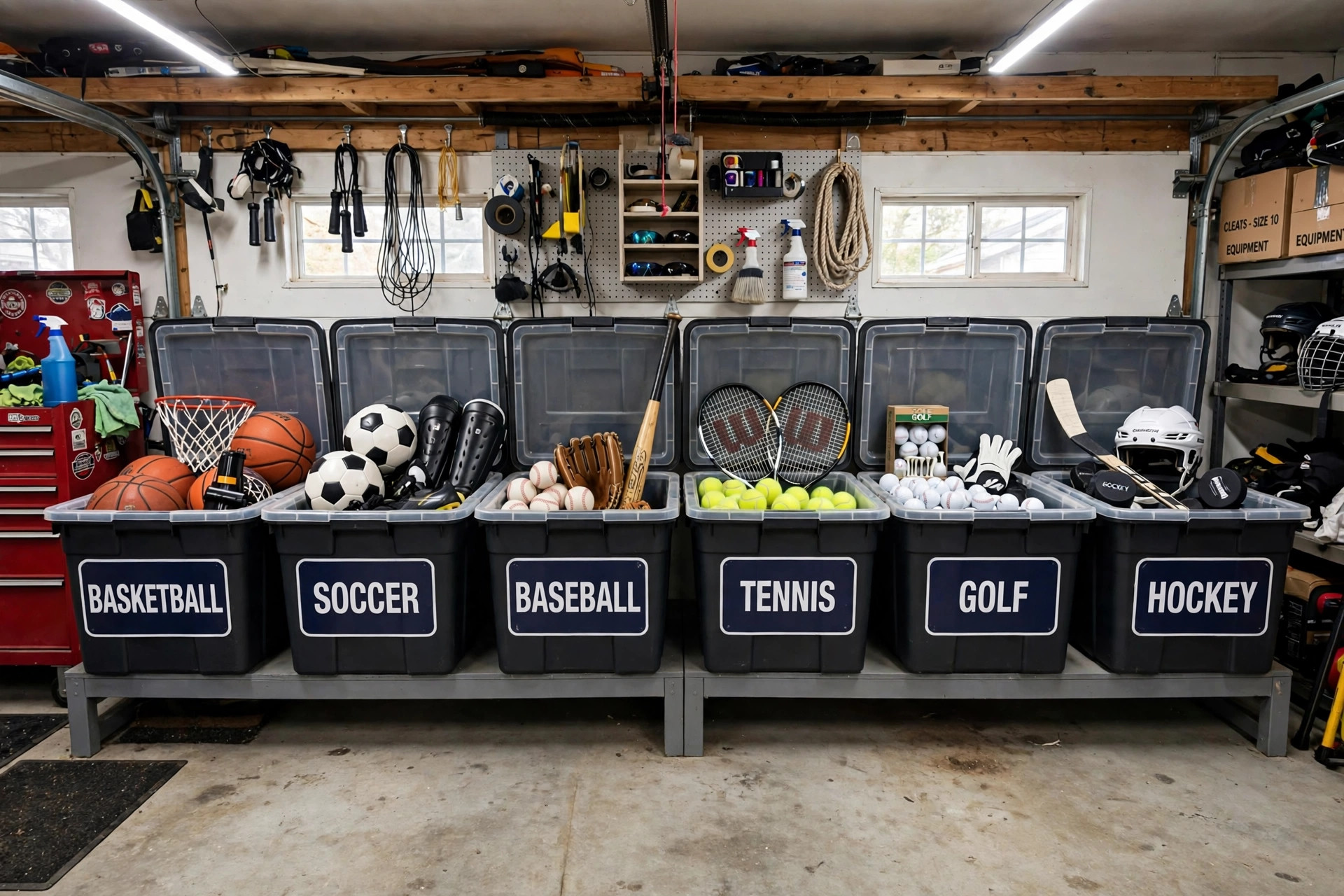
Bays without labels are bays you have to open, because the bay that holds the footballs looks exactly like the bay that holds the tennis gear, and the zone that holds unlabelled bays is a zone you never use. Label every bay — the label that stops the dig — so each bay says what it holds and the zone becomes usable instead of a mystery. Put the label on the front of the bin, not the lid, because the label that faces you is the label you can read from the door, and use one label per bay, because the bay that holds one sport is the bay that stays sorted. Write the label in big clear letters and put it where you look when you open the garage, because the label that is big is the label that is read, and the bay that is labelled is the bay that gets used first. The labels themselves can be made for pennies, and the budget way to make them gets its full treatment in 25 Dollar Store DIY Ideas for 2026, where the same labels work on every bin in the house. One label per bay, and the dig stops.
20. Mesh bags for dirty kit — the bag that goes straight to the wash
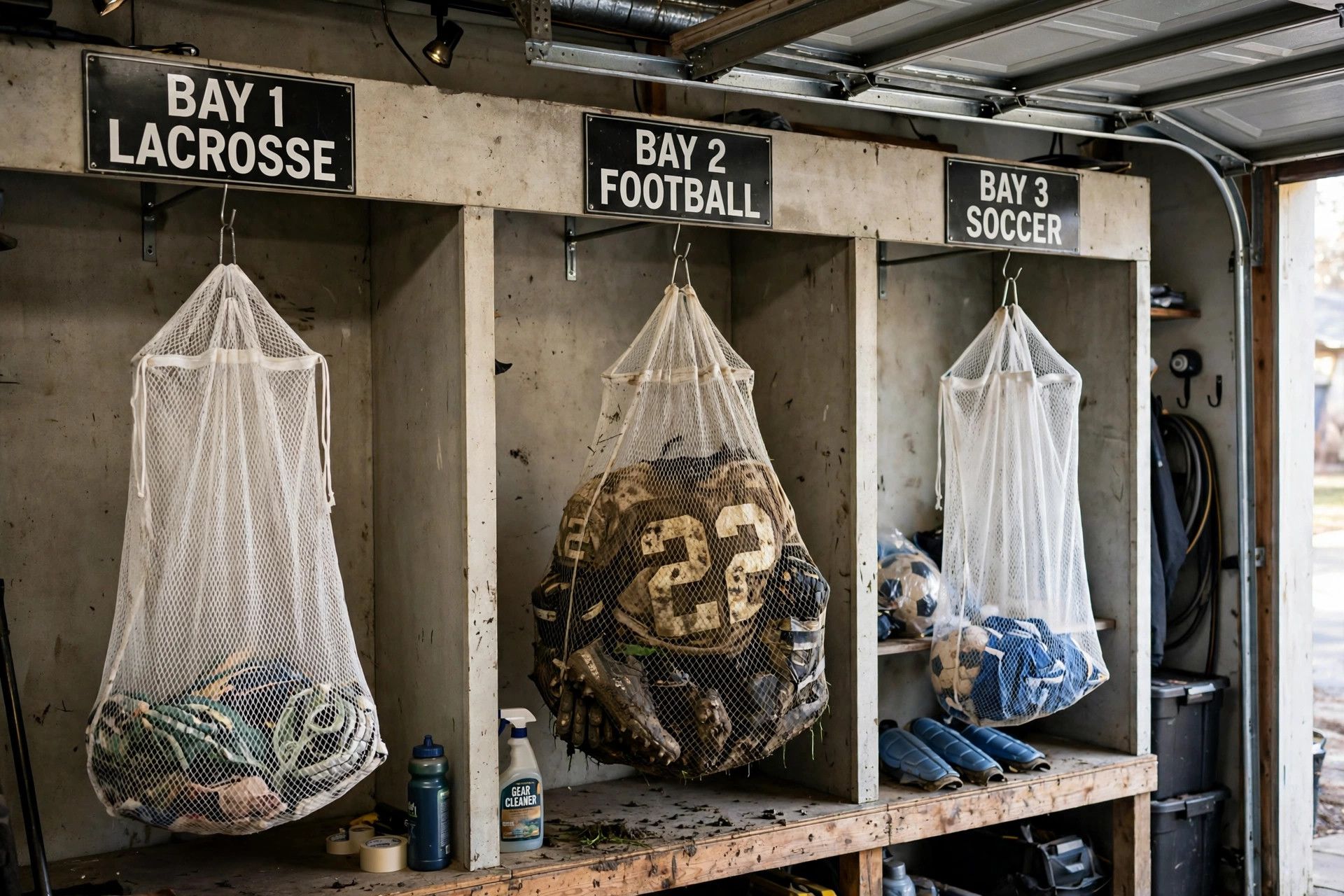
Dirty kit in the kit bag goes straight into the laundry pile, because the bag is emptied, the kit is sorted, and the bag that held the muddy kit is the bag that needs washing too. Use mesh bags for dirty kit — the bag that goes straight to the wash — so the muddy kit goes into a mesh bag at the zone, the bag goes into the machine as it is, and the kit comes out clean without ever being sorted. Keep one mesh bag per child hanging on their bay, because the bag that hangs on the bay is the bag that gets filled the moment practice ends. Wash the bag with the kit inside, because the bag that goes in the machine is the bag that comes out clean, and the kit that is bagged is the kit that never stains the rest of the wash. One mesh bag per child, and the dirty kit sorts itself.
21. One in, one out for the gear the kids outgrow
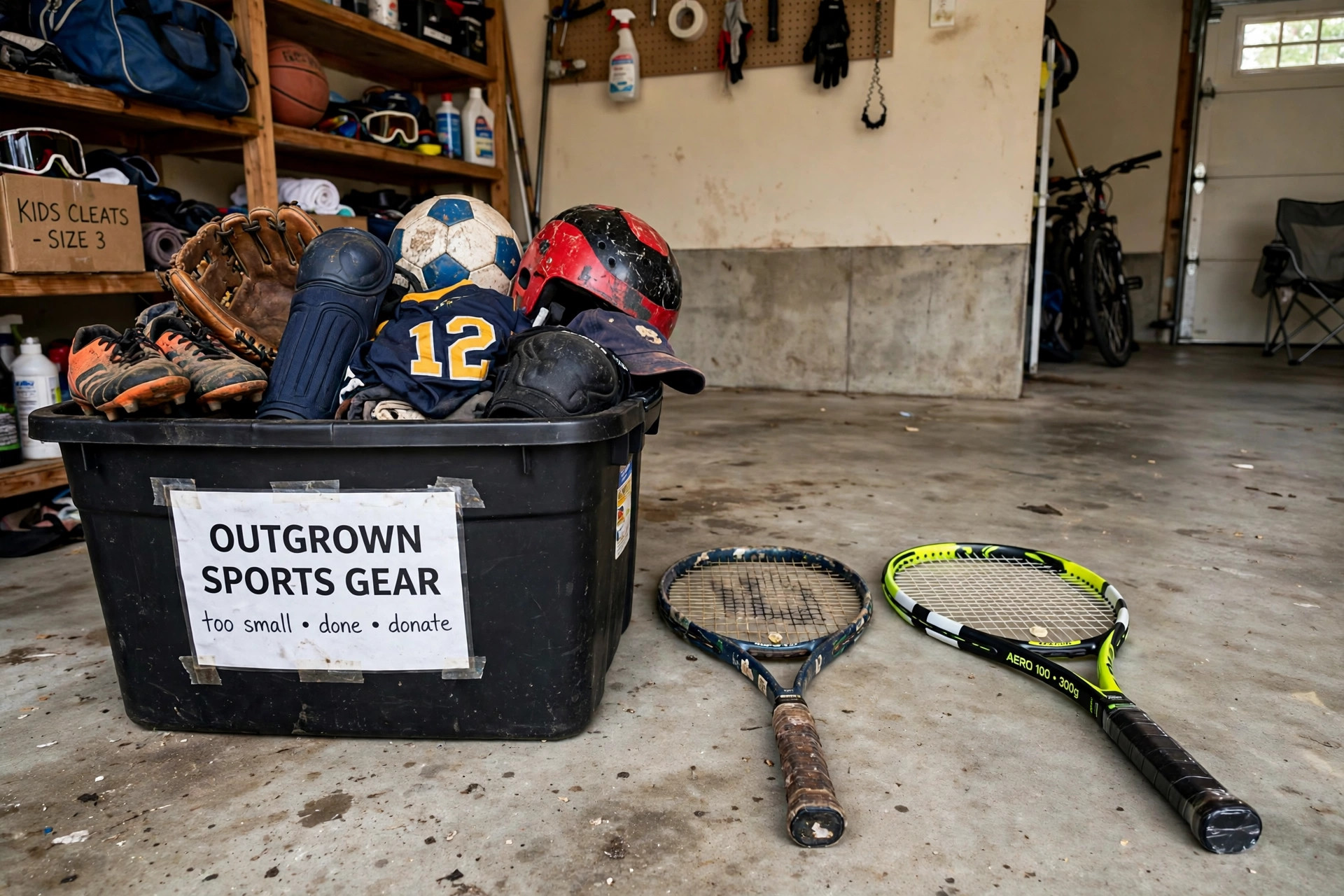
A gear zone grows on its own, because every season adds a ball, every growth spurt adds a new racket, and the zone that held ten things in January holds thirty by December — with gear the children have outgrown still taking up the best hooks. Use one in, one out for the gear the kids outgrow — the rule that stops the zone overflowing — so every new piece of gear that enters the zone means one outgrown piece leaves it, into a labelled bin for the next child or the donate bag. Keep the outgrown-gear bin in the zone, so the gear that leaves has somewhere to go the moment you decide, because the bin that is at the zone is the bin that gets used. Check the fit when you do the swap, because the swap that checks the fit is the swap that catches the helmet that no longer fits and the racket that is now too short, and the zone that is swapped is the zone that never holds gear nobody can use. One rule, and the zone never overflows. (Check on Amazon for a large labelled storage bin with a lid, sized for outgrown balls, bats and kit.)
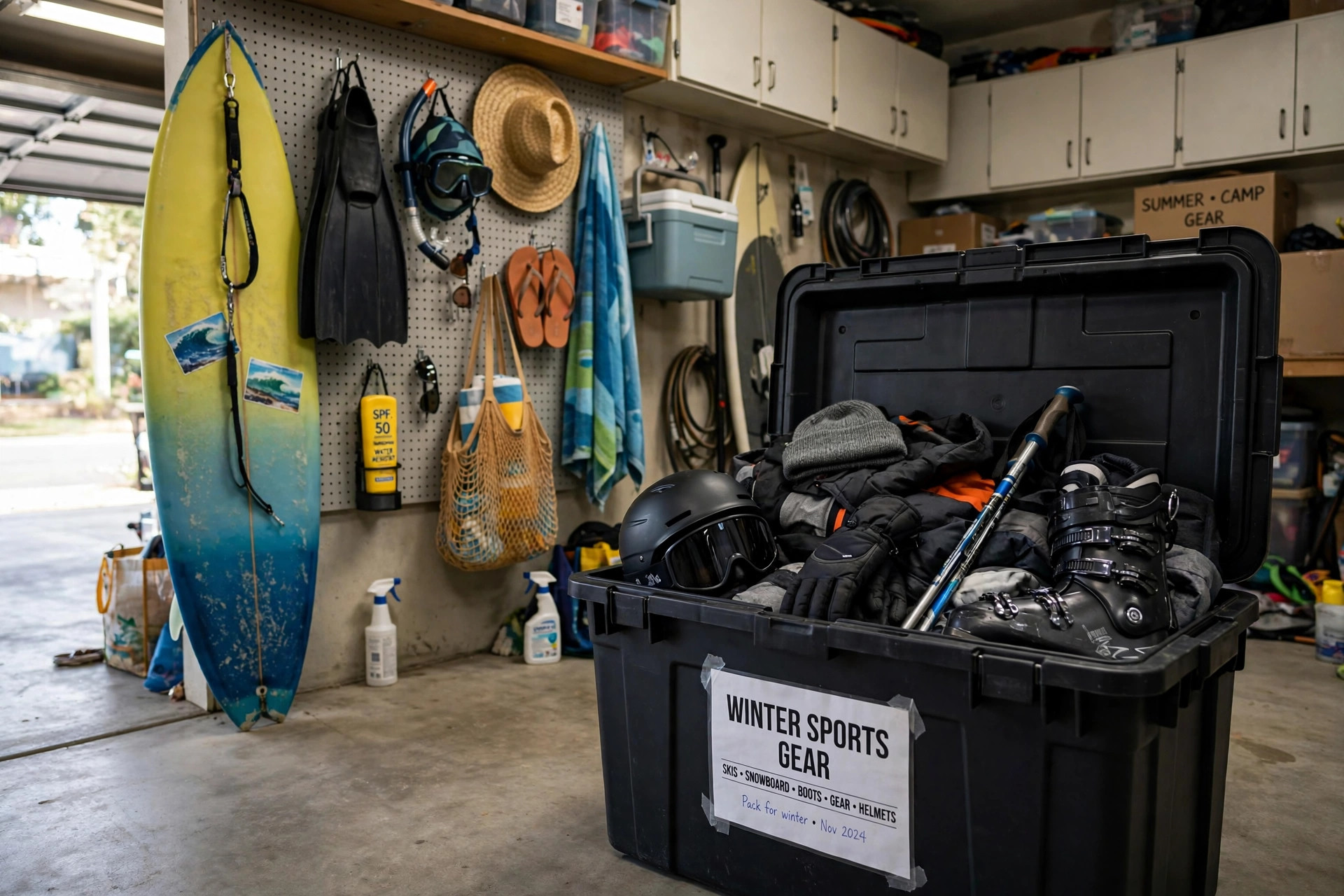
22. A seasonal swap — winter gear out, summer gear in
A zone that holds all four seasons at once is a zone that holds too much, because the skis crowd the cricket bats, and the gear you need today is buried under the gear you will not need for six months. Do a seasonal swap — winter gear out, summer gear in — so the zone holds only this season, and the rest lives in a labelled bin on the top shelf or in the shed. Swap twice a year, after the winter season and before the summer one, and check each piece as it goes in and out, because the swap that checks the gear is the swap that catches the ones that are cracked or nearly worn out. Wipe the zone down during the swap, because the swap that cleans is the swap that finds the flat ball and the bent racket, and the zone that is cleaned twice a year is the zone that is always ready. One swap a season, and the zone holds only what you play now.
23. A five-minute reset after practice
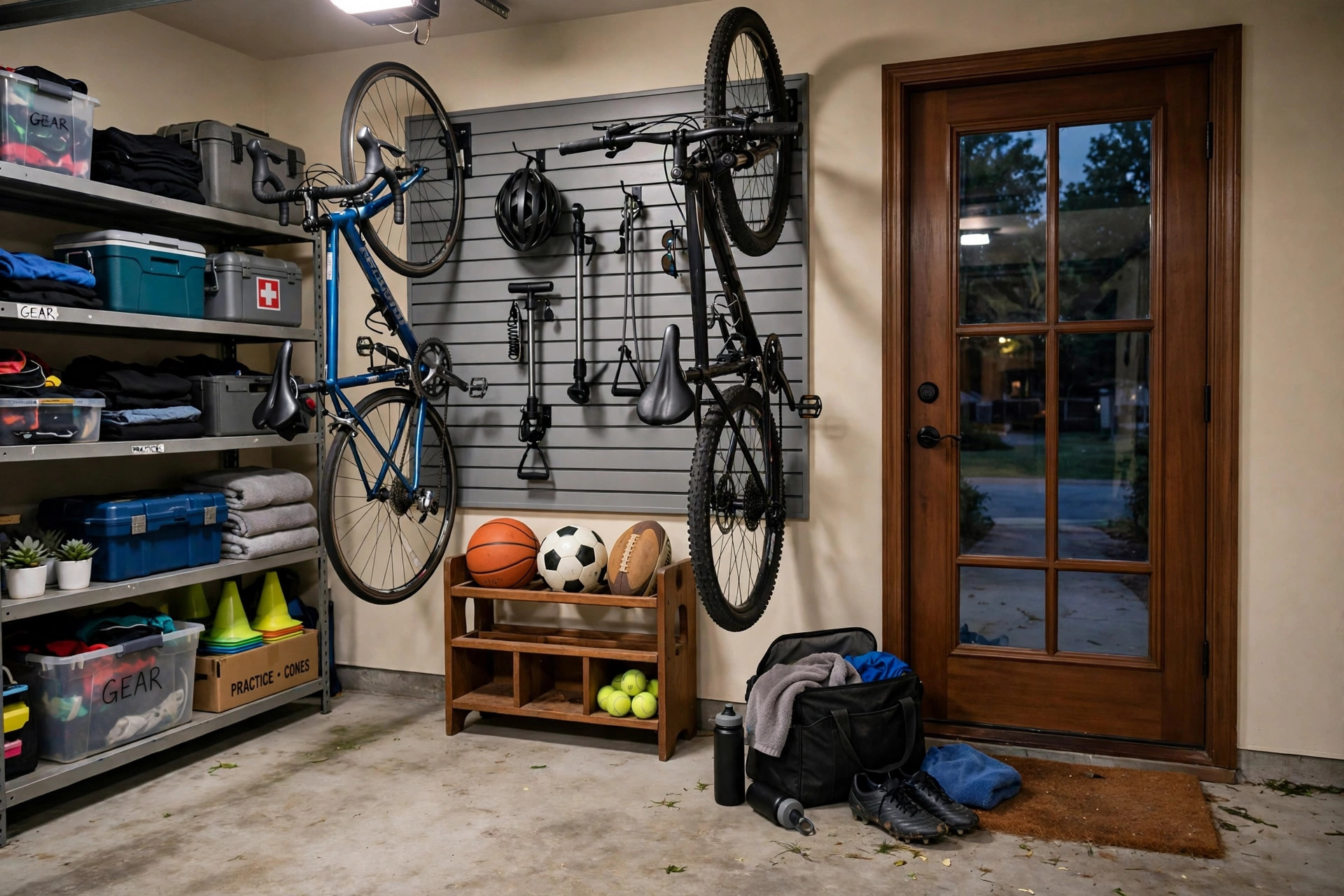
No gear zone stays tidy without a habit, because the zone is only tidy on the day you organize it and the mess creeps back one practice at a time. Do a five-minute reset after practice — balls back on the rack, bikes back on the hooks, kit in the mesh bag — so the zone is tidy before the next practice and starts clean every time. Hang the helmets, clip the pump back on its box, and put the kit bag by the door, because the reset that takes five minutes is the reset that actually happens. Keep a small bin for the rubbish beside the zone, because the tape and the broken bits that are binned at once are the bits that never become clutter, and the zone that is reset after every practice is the zone that is tidy on match day. Five minutes a practice, and the zone never needs a big clean.
24. The Sunday gear check — balls pumped, kit washed, bags packed
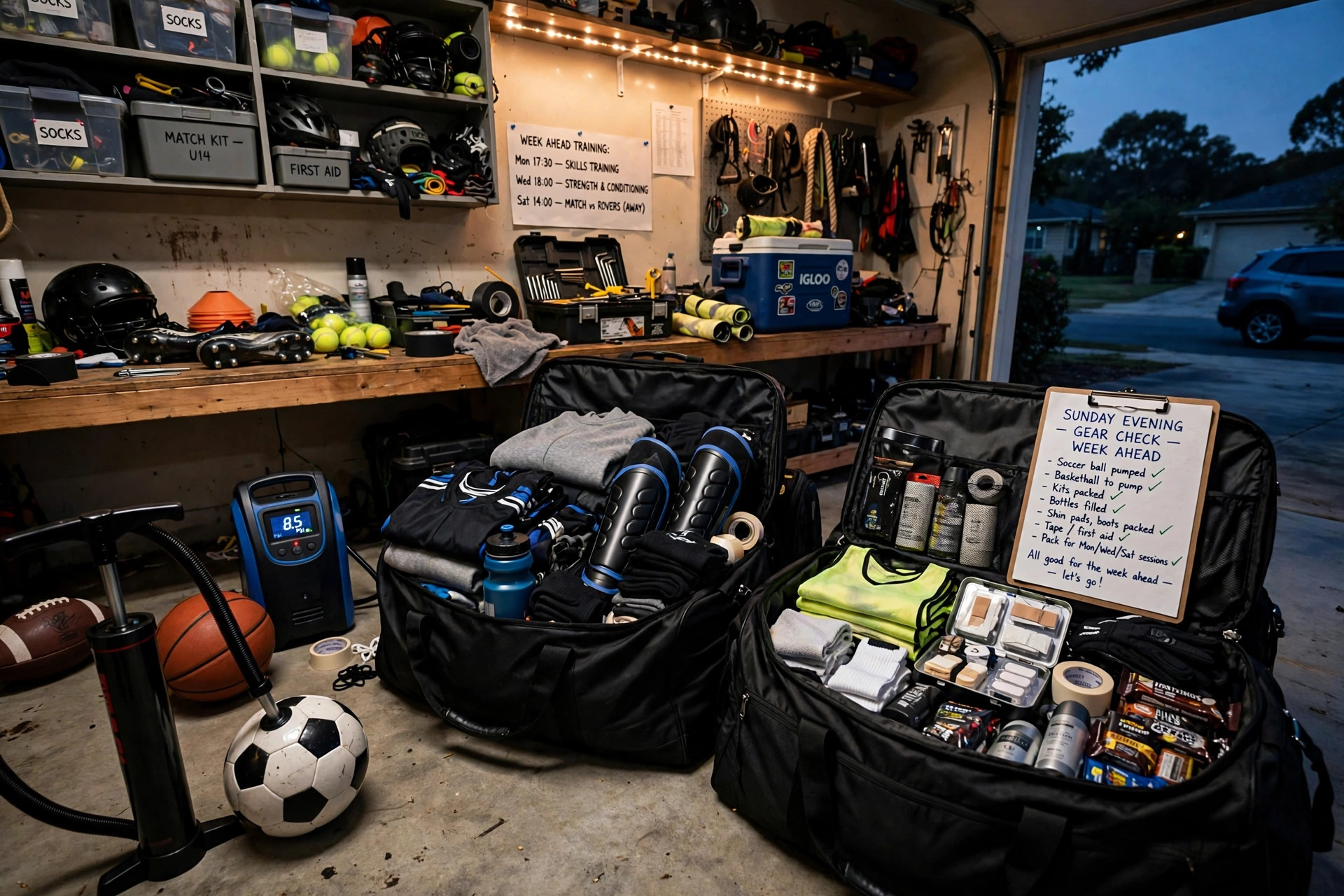
No zone works if the gear inside it is not ready, because the ball is flat on match day, the kit is still in the wash, and the bag that should be packed is the bag you are packing at the door. Do a Sunday gear check — balls pumped, kit washed, bags packed — so every Sunday evening the balls get pumped, the kit gets washed, and the bags get packed for the week ahead. Check the pump, the water bottles and the spare socks at the same time, because the check that looks at everything is the check that catches the flat ball before match day. Pack the bags on Sunday, because the bag that is packed on Sunday is the bag that leaves on time on Monday, and the week that starts with a gear check is the week that never starts with a hunt. One check a week, and the gear is always ready.
Which sports gear idea fits which situation?
| Situation | Best first move | Budget | Tools needed |
|---|---|---|---|
| Gear scattered across the garage | Give sports gear one zone (idea 1) | Free | None |
| Bought storage that does not fit | Sort by sport, then measure (idea 2) | Free | Tape measure |
| Kids mix up each other's gear | One zone per child (idea 3) | Low | Labels |
| Practice gear never ready | Keep the everyday gear by the door (idea 5) | Free | Hooks |
| Balls rolling everywhere | A wall-mounted ball rack (idea 8) | Low | Rack |
| Bats and rackets in a pile | Bats and rackets on hooks (idea 9) | Low | Hooks |
| Bikes leaning and falling | Bikes on wall hooks (idea 13) | Low | Hooks |
| Helmets always missing | Helmets on hooks by the door (idea 15) | Low | Hooks |
| Wet kit smells by Monday | A drying rail for wet kit (idea 18) | Low | Rail |
| Can't find anything | Label every bay (idea 19) | Low | Labels |
| Gear outgrown but still there | One in, one out (idea 21) | Free | Bin |
| Garage messy again by October | A five-minute reset (idea 23) | Free | None |
You do not need all 24 ideas. You need the three that solve your gear mess — usually the one zone that stops the scatter, the ball rack that clears the floor, and the bike hooks that end the falling. Start with the one zone, do it this weekend before the next practice, and hang the bikes. Do that and the next practice will start at the door, the ball will be on the rack where you left it, and the helmet will be on its hook where you hung it.
Save this post for the next sports season, and if the garage around the zone needs the same treatment, read 25 Garage Storage Ideas for 2026 next — it is Post 33, the room the zone lives in — and 26 Kids Room Storage Ideas for 2026, Post 32, for the bedrooms the gear spills out of. This is the nineteenth post of the new Organization by problem run — Posts 56 to 80, one problem at a time — and the run keeps going with the board games next. The family games themselves get their own deep dive in Board Game Storage, where the shelves get the same zone treatment.
Publish date assigned at publishing time. Updated as new sports gear finds are tested.
Frequently asked questions
How do I organize sports gear in a small garage?
Give it one zone — a single wall, even if the whole zone is one ball rack, one row of hooks and a tall bin. Sort the gear by sport first so each sport has its own bin, mount the balls on a wall rack so the floor stays clear, hang the bikes on hooks instead of leaning them, and keep the everyday gear by the door so practice starts at the door. Measure the wall and the gear before you buy anything, label every bay so the zone stays usable, and do a seasonal swap so the zone holds only this season's gear.
What is the best way to store sports balls so they don't roll everywhere?
Mount a wall rack for the balls, so they sit in a row on the wall and the floor below stays clear. Mount the rack at a height the children can reach, leave a finger's width between the balls so one slides out without pulling the rest, and fix the rack into a stud or use proper wall plugs because a rack full of balls is heavier than it looks. For balls that come home damp, use net bags hung from hooks — the mesh lets the air through so the balls dry between practices instead of going musty in a closed bag.
How do I keep kids' sports gear from taking over the house?
Give each child one labelled bay in the garage, so every child's gear has a named home and the mix-ups stop. Keep the everyday gear by the back door in a grab-and-go spot, hang the helmets on hooks beside the bikes, and put the dirty kit straight into a mesh bag on the child's bay so it goes to the wash without ever being sorted. Use one in, one out for the gear they outgrow, and do a five-minute reset after every practice so the zone is tidy before the next one.