20 Pet Supply Organization Ideas for 2026
Pet supplies do not stay where you put them. The kibble lives in a bag that will not close, the leads live in a drawer that will not open, the toys live all over the living room floor, and every walk starts with a hunt through three rooms for the lead while the dog waits by the door. The pet is not the problem — the problem is that pet supply organization has no home, so every bag, lead and squeaky toy drifts to wherever there was a gap, and the gap is never where you are standing when it is time for a walk.
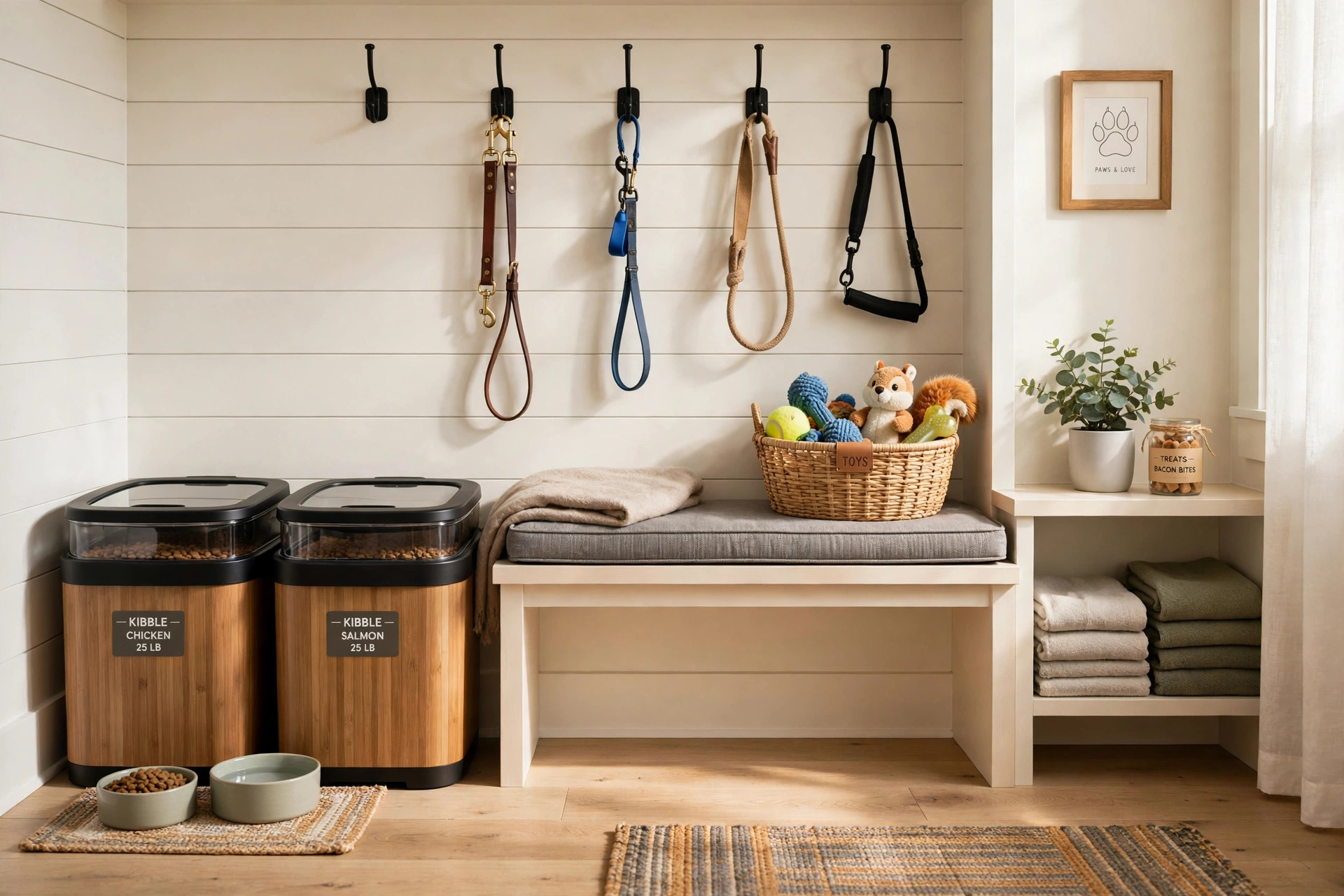
These 20 pet supply organization ideas give every bag, lead and toy one home: a pet station with the food in airtight bins, the leads on hooks by the door, the toys in a basket with a lid, and a feeding spot that catches the mess — so the next walk starts at the door instead of starting with a hunt.
Every idea below works in a real home, from a flat where the whole station fits in one corner of the kitchen to a house where the pet station lives in the mudroom. The mudroom itself gets its full treatment in 25 Mudroom Organization Ideas for 2026, where the station sits beside the coats and the shoes — and the entryway where the leads hang gets its own system in 22 Entryway Storage Ideas for 2026. Pick three ideas that fit your space, start with the one home, and build from there.
Set up the pet station
1. Give pet supplies one home — the station that stops the scatter
Pet supplies scattered across the house are pet supplies you cannot use, because the kibble is in the kitchen, the leads are in the hall drawer, and the toys are under the sofa — and the dog that needs a walk tonight is waiting while you hunt through three rooms. Give pet supplies one home — the station that stops the scatter — so every bag, lead, toy and towel lives in one place and the hunt ends. Pick the corner first: a shelf in the mudroom, a basket by the back door, or one end of the utility closet, because the station that has a fixed spot is the station that gets used. Move everything there in one go, and the next walk starts at the station instead of starting with a search. One home, and the scatter stops.
2. Measure the space before you buy storage
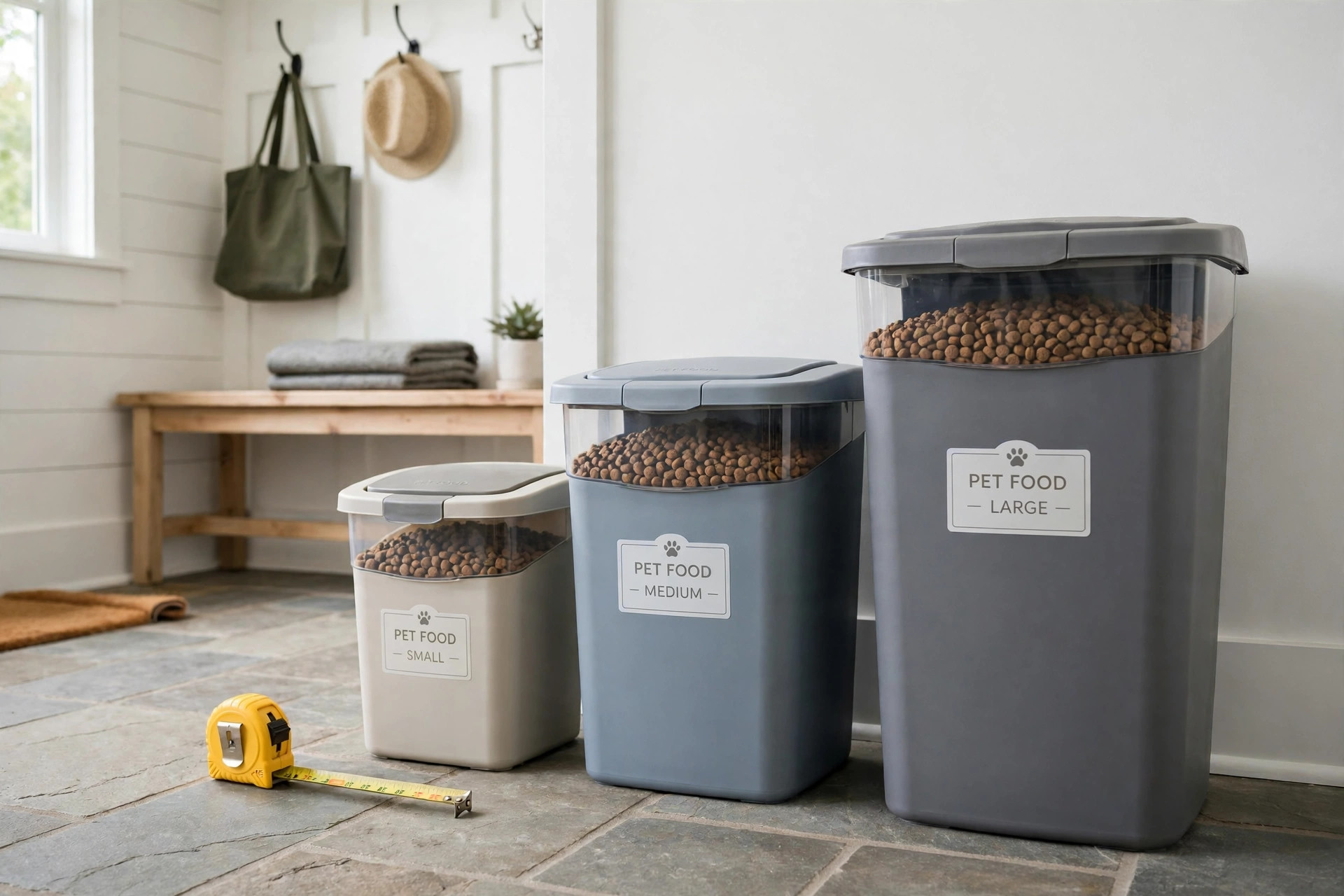
Pet storage bought by guessing is pet storage that does not fit, because the food bin is two inches too wide for the shelf, the basket is too tall for the cupboard, and the organizer that looked right in the shop is the organizer that comes home and goes straight back. Measure the space before you buy storage — the tape measure that saves the returns — so every bin, basket and hook you buy is bought for your corner, not for a corner in a photo. Measure the food bin against the shelf it will live on, measure the height under the shelf for the toy basket, and measure the wall where the hooks will go, because the numbers that travel with you are the numbers that stop the returns. Write them in a notebook and take the notebook to the shop, because the bin that is measured once is the bin that fits the first time. One afternoon with a tape measure, and everything you buy fits.
3. Sort by pet — one zone per pet
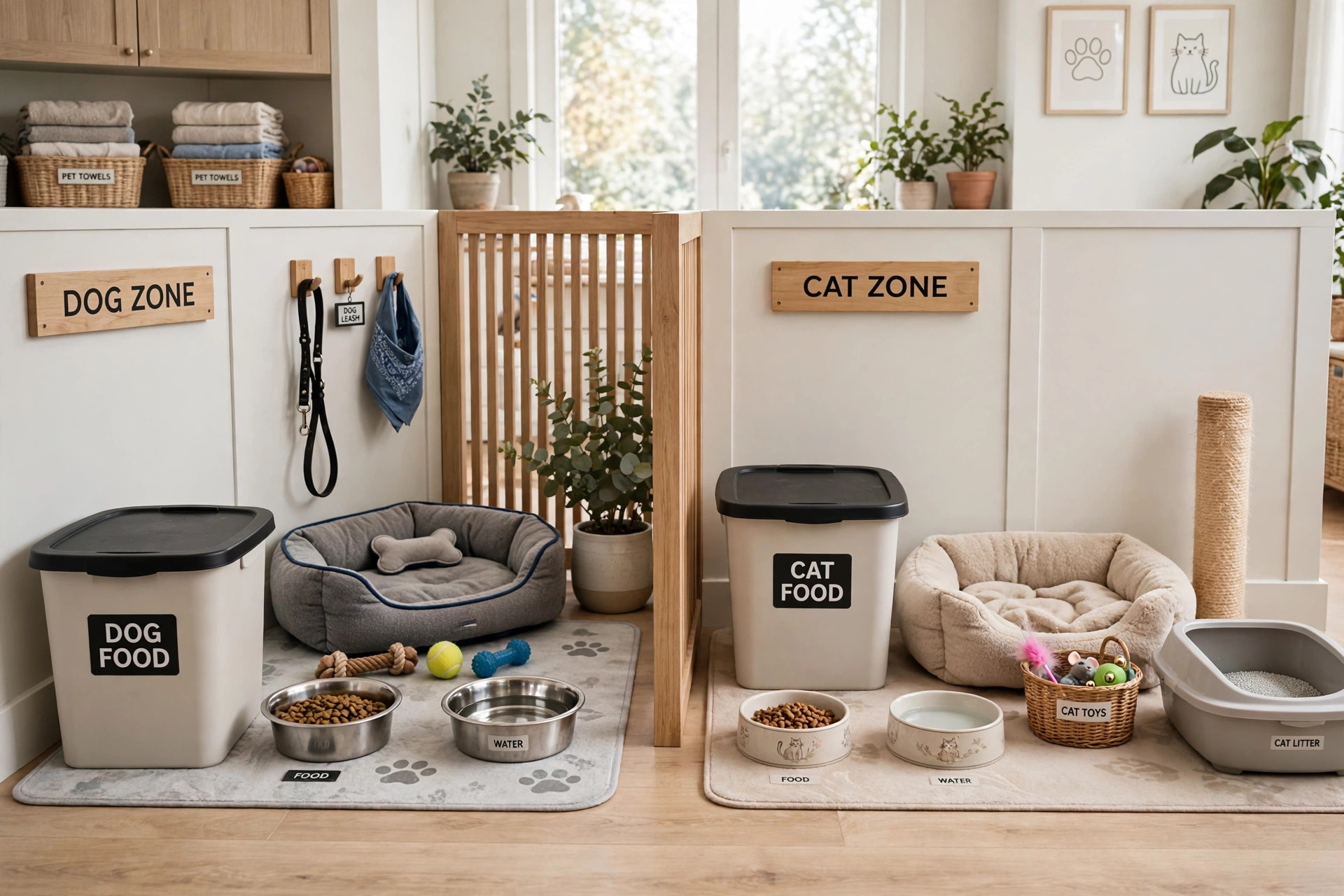
Two pets sharing one pile is two pets sharing one mess, because the dog's kibble is in the cat's treats, the cat's toys are under the dog's bed, and the pile that holds both pets is the pile where nothing belongs to anyone. Sort by pet — one zone per pet — so each pet has its own bin, its own shelf or its own section of the station, and the food, toys and grooming kit for each pet stay separate. Keep the dog's food in the dog's bin and the cat's food in the cat's bin, because the sort that follows the pet is the sort that stops the wrong food going in the wrong bowl. Label each zone with the pet's name as well as what is inside it, because the zone that is labelled is the zone the whole family can use, and the dog walker who comes at lunchtime is the dog walker who needs to find the right lead without asking. One sort by pet, and the mix-up ends.
4. Leads and collars by the door — the grab-and-go hooks
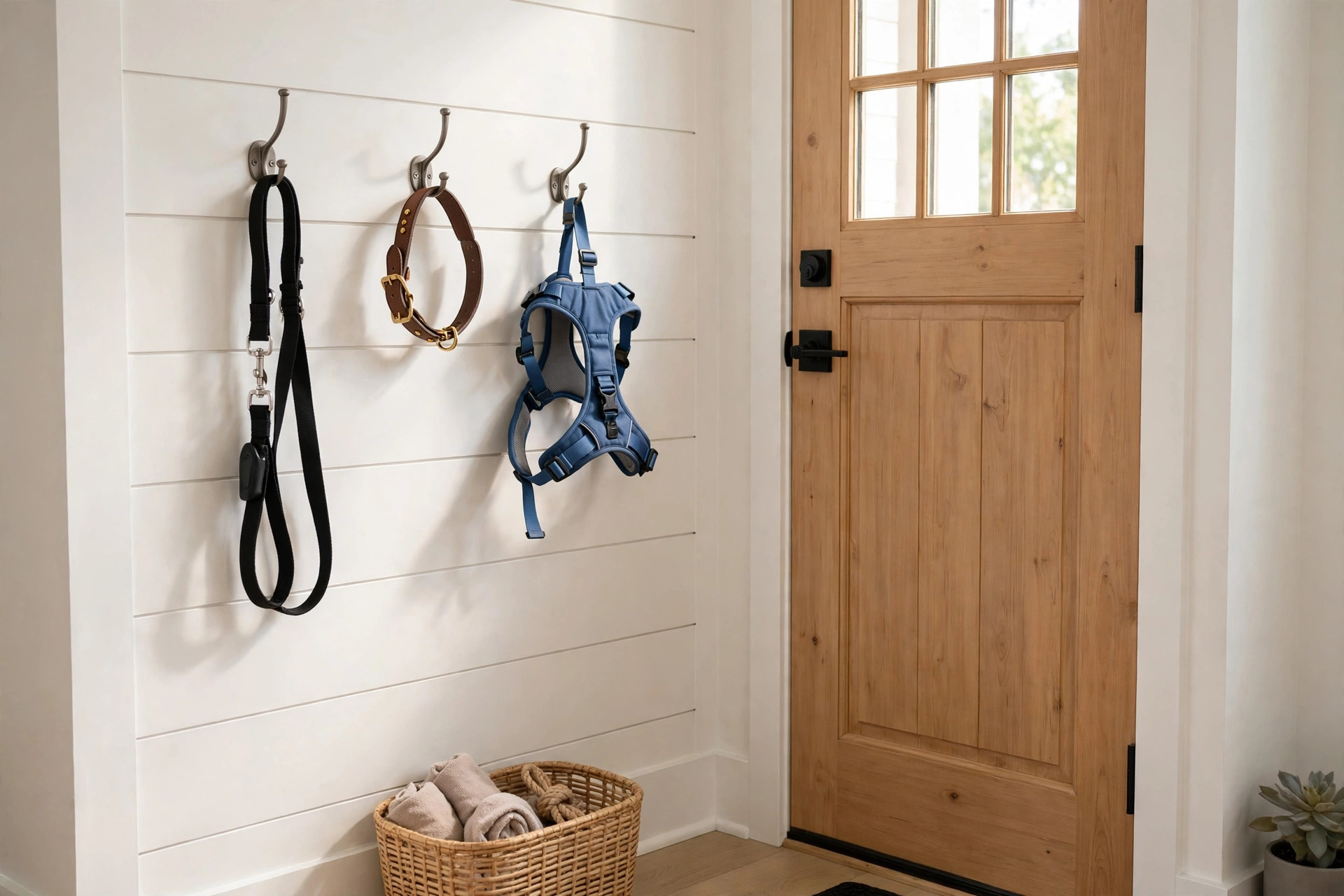
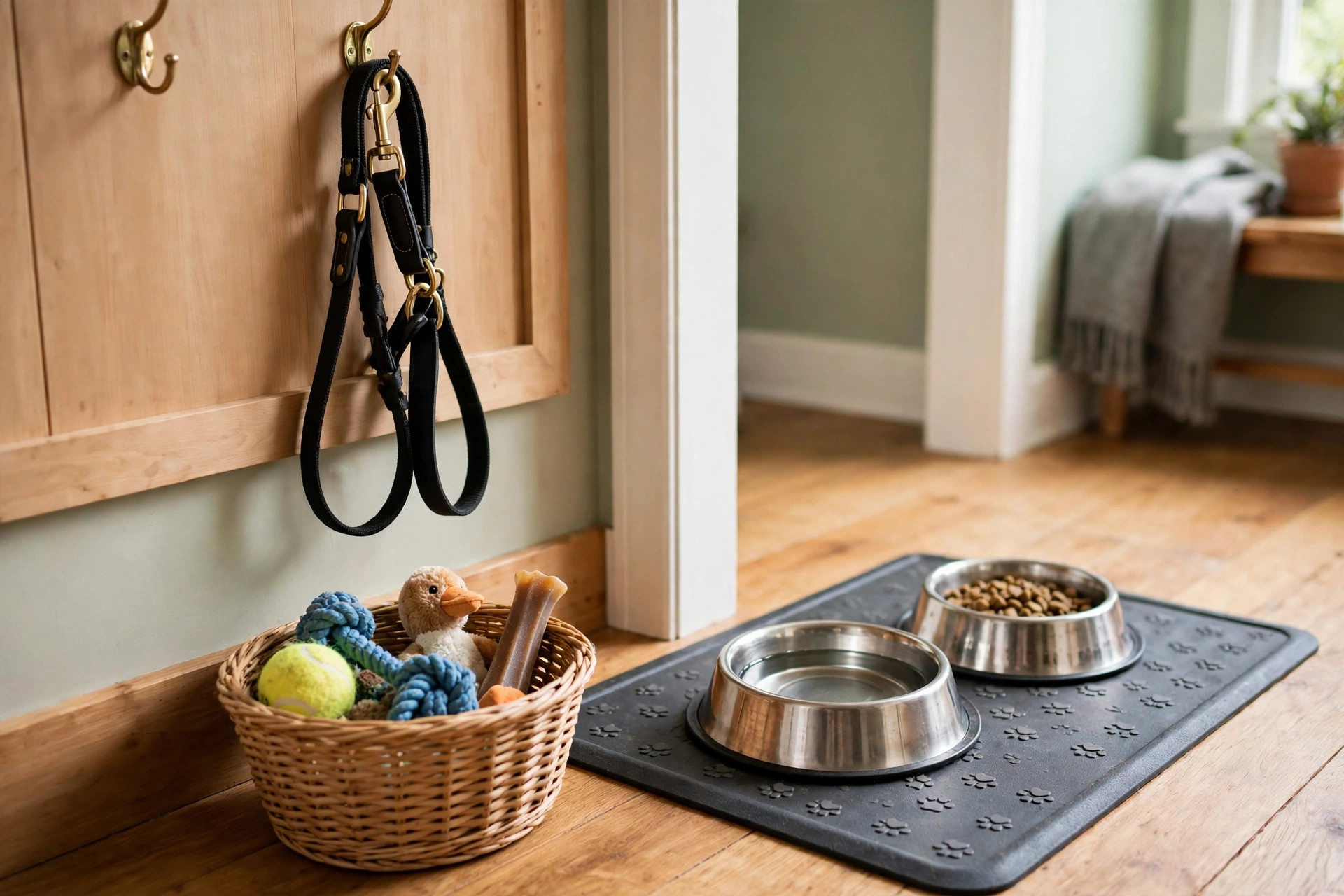
The leads are the part of pet supplies that wanders most, because the lead goes back to the hall drawer, the collar goes back to the coat hook, and the harness goes back to wherever it was last seen — and the walk starts with a hunt for the lead every single time. Hang the leads and collars by the door — the grab-and-go hooks — so the hooks live beside the front door or the back door and the lead is in your hand before the dog has finished sitting down. Put one hook per pet, plus one spare hook for the harness and one small hook for the poo bag holder, and keep the hooks at the height you reach without thinking, because the hooks that are by the door are the hooks that get used. Label each hook with the pet's name, so the dog walker who comes at lunchtime takes the right lead, because the hook that is labelled is the hook that sends the right pet out the door. The same hook logic keeps the entryway tidy in 22 Drop Zone Organization Ideas for 2026, where the leads hang beside the coats and the keys. One row of hooks, and the hunt for the lead ends.
5. A pet station in the mudroom — the station that lives where the mess comes in
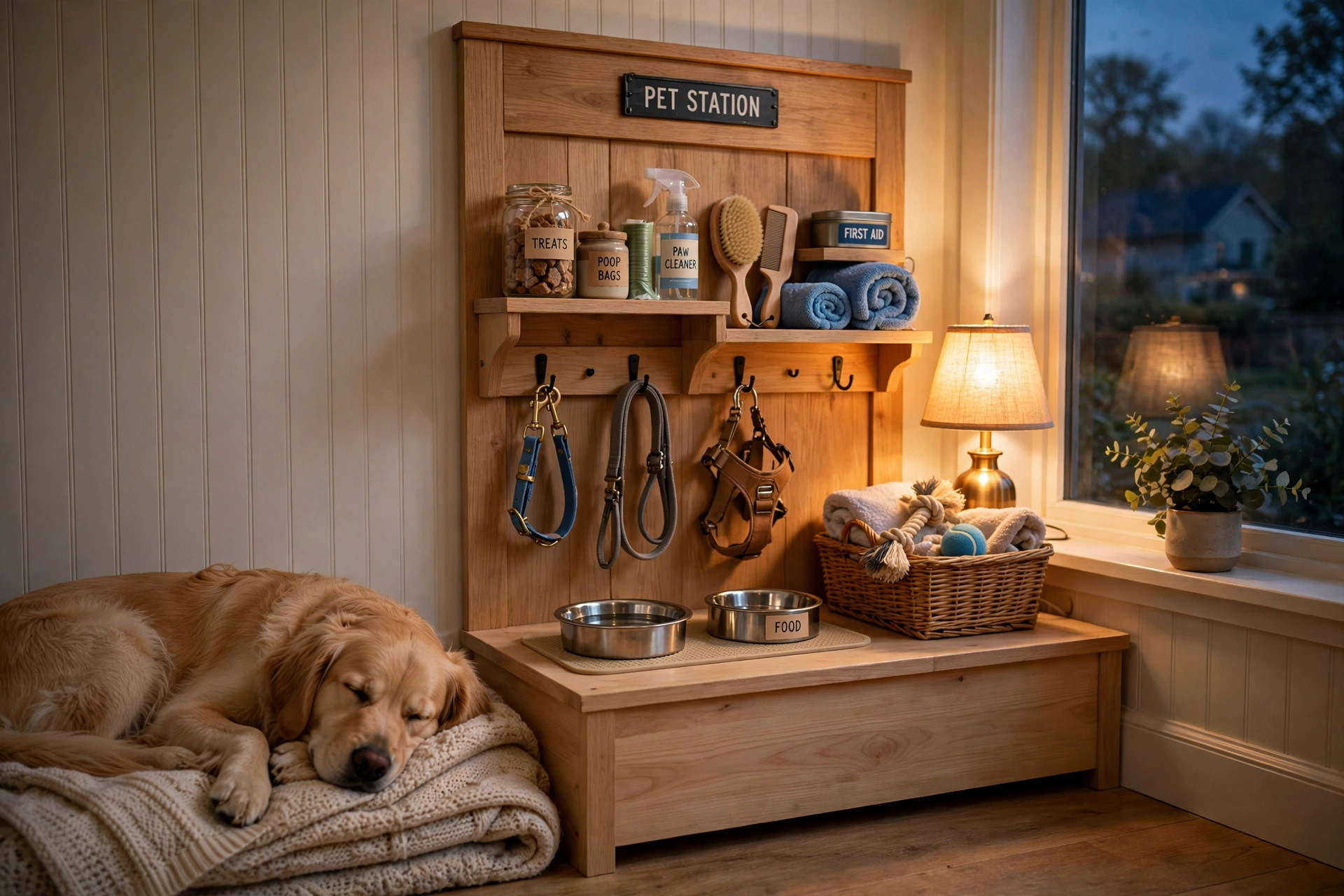
The mudroom is where the pet mess comes in, because the muddy paws come through the back door, the wet dog shakes in the hallway, and the leads that should live by the door end up draped over the banister instead. Put the pet station in the mudroom — the station that lives where the mess comes in — so the food bins, the lead hooks, the toy basket and the towels all live in the room where the dog actually arrives. Keep the towels on the lowest hook so the muddy paws get wiped before the dog gets past the mudroom, and keep the food bins on the shelf above the mess, because the station that lives in the mudroom is the station that catches the mess at the door instead of letting it travel through the house. The mudroom itself gets its full system in 25 Mudroom Organization Ideas for 2026, where the pet station sits beside the coats and the shoes. One station in the mudroom, and the mess stops at the door.
Food, treats and feeding — the heart of pet supply organization
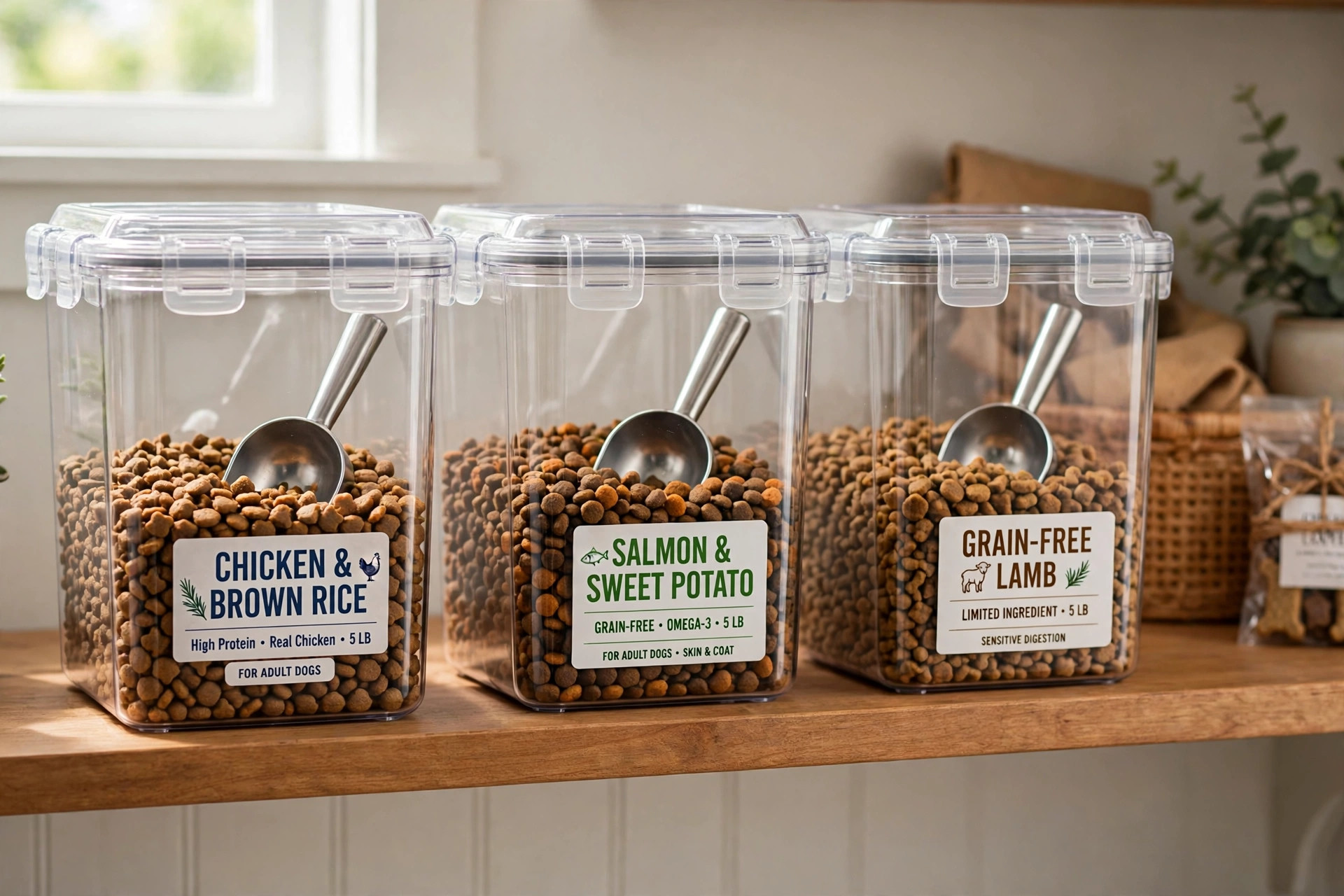
6. Airtight food bins — the food that stays fresh
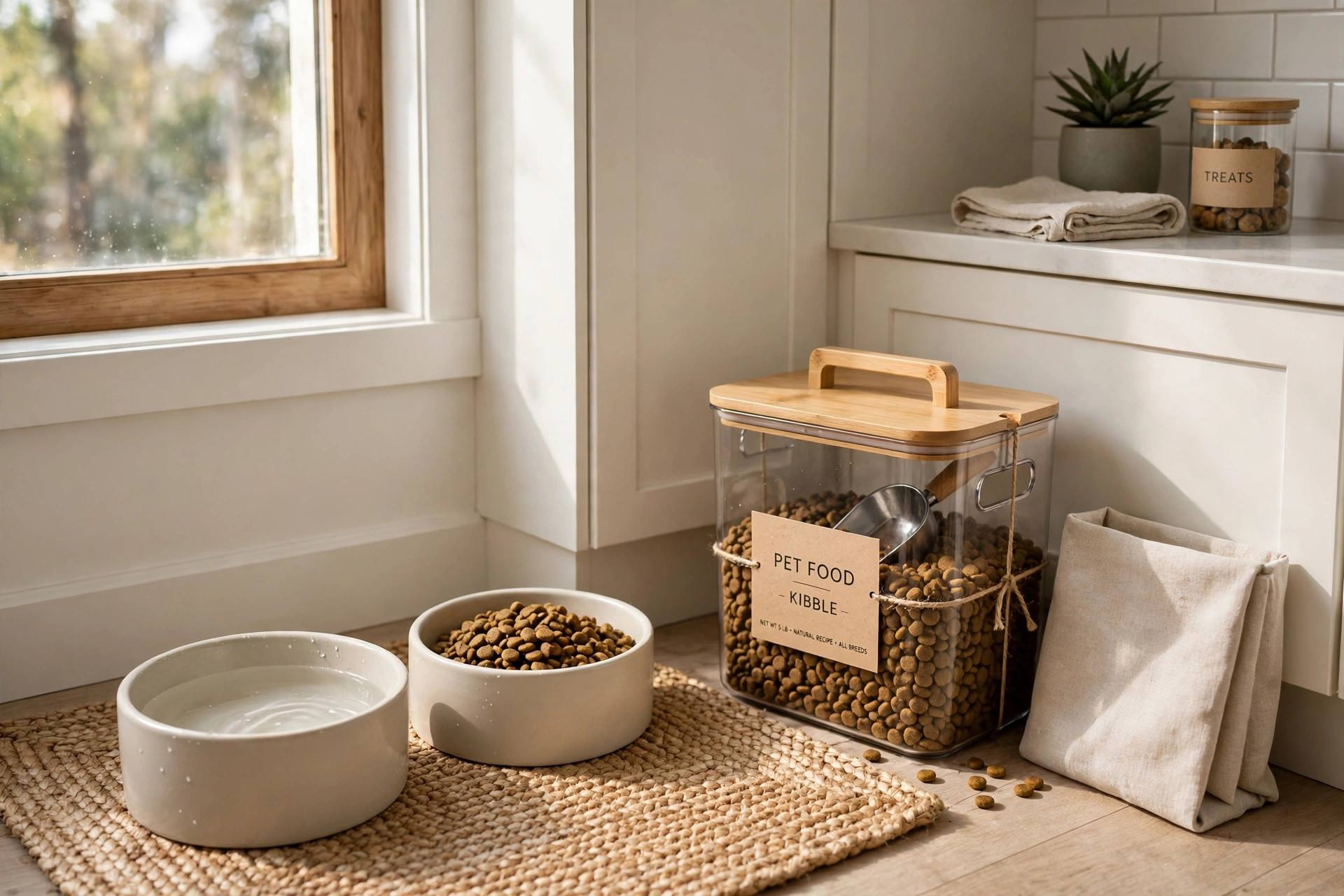
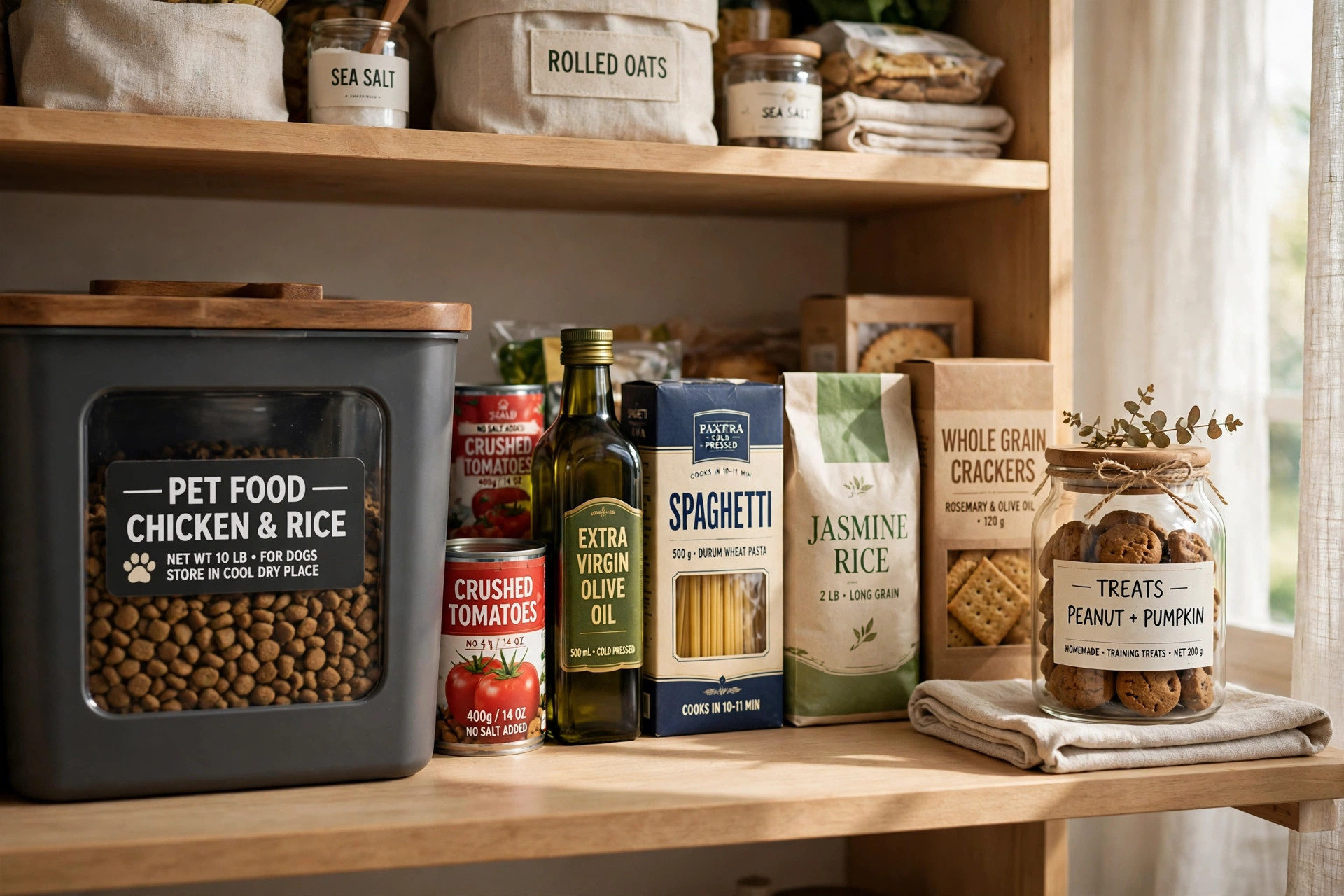
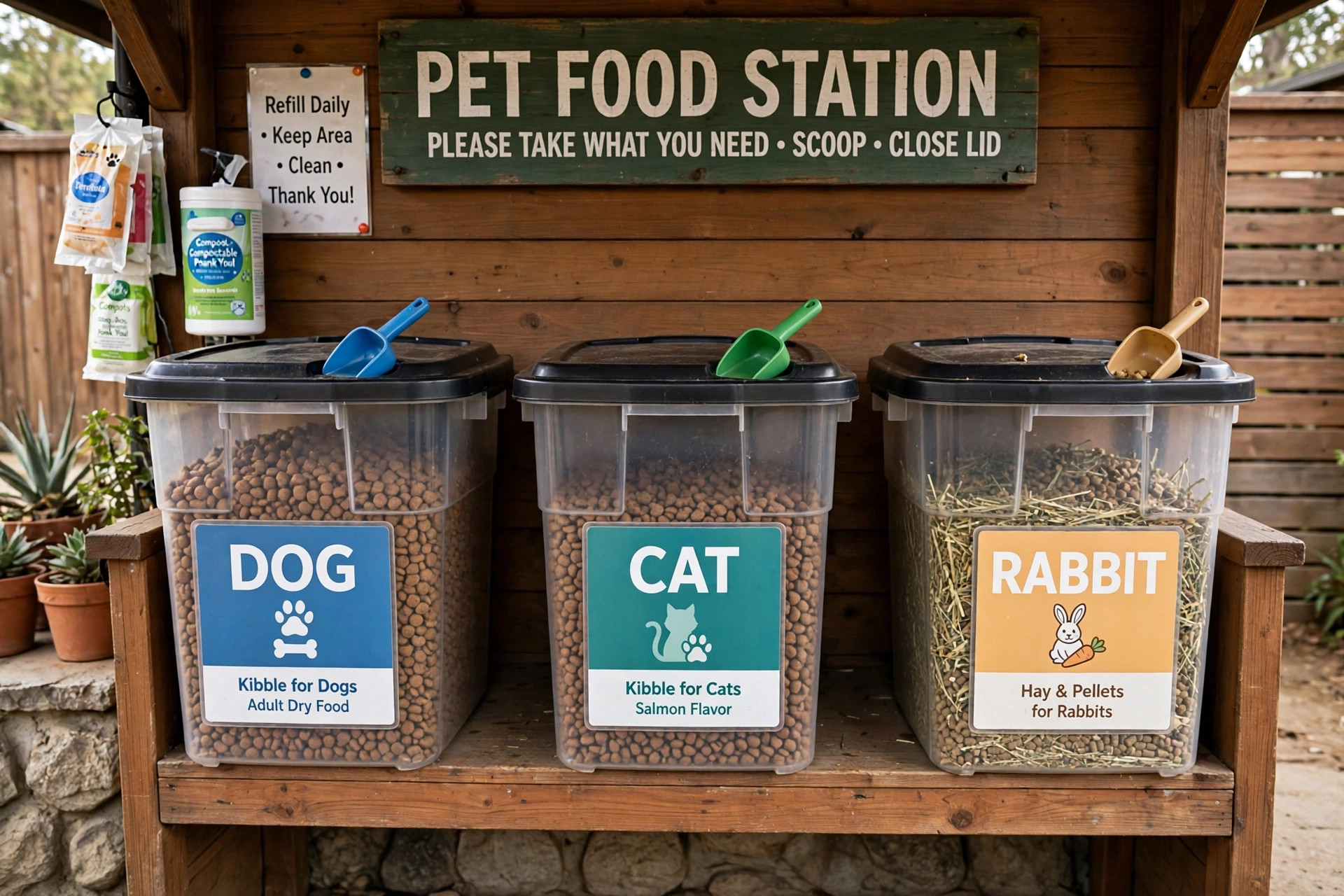
Kibble in an open bag goes stale, because the bag will not close properly, the air gets in, and the food that should last a month tastes tired after a week — while the bag that is clipped shut is the bag that spills every time it tips over. Store the food in airtight bins — the food that stays fresh — so each bin seals shut, the kibble stays crisp, and the scoop lives inside the bin where you can always find it. Pick a bin with a clear lid or a clear side so you can see how much food is left without opening it, and keep the bin on the floor or the lowest shelf, because the bin that is low is the bin you can fill without lifting a heavy bag. One airtight bin, and the stale kibble stops. (Check on Amazon for an airtight pet food container with a scoop, sized for a standard 10kg bag.)
7. Treats in labelled jars on a shelf
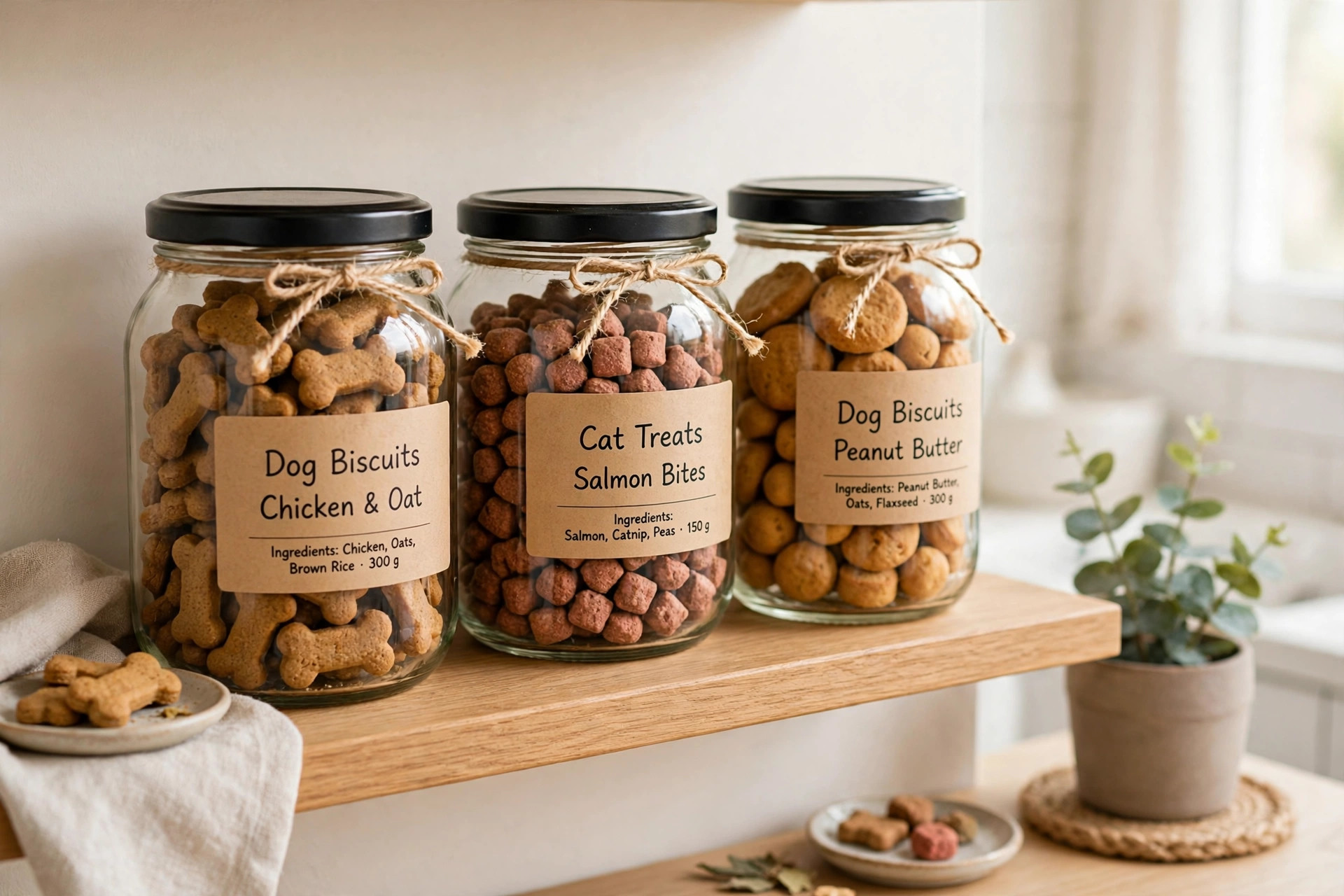
Treats in five open bags are treats you cannot find, because the dog biscuits are in the kitchen drawer, the cat treats are in the cupboard, and the training treats are in a bag that tore open last week. Put the treats in labelled jars on a shelf — the treats you can see and reach — so each kind of treat has its own jar, the jar says what is inside it, and the shelf holds them all in one row. Use glass jars with lids that seal, because the jar that seals is the jar that keeps the treats fresh, and the jar that is clear is the jar that shows you when it is time to buy more. Keep the everyday training treats on the lowest shelf and the special occasion treats higher up, because the jar that is low is the jar you reach for ten times a day, and the shelf that holds the jars is the shelf that stops the open bags. Label each jar with the treat and the pet it belongs to, because the jar that is labelled is the jar the whole family can use without asking. One row of jars, and the open bags stop.
8. A feeding mat that catches the mess
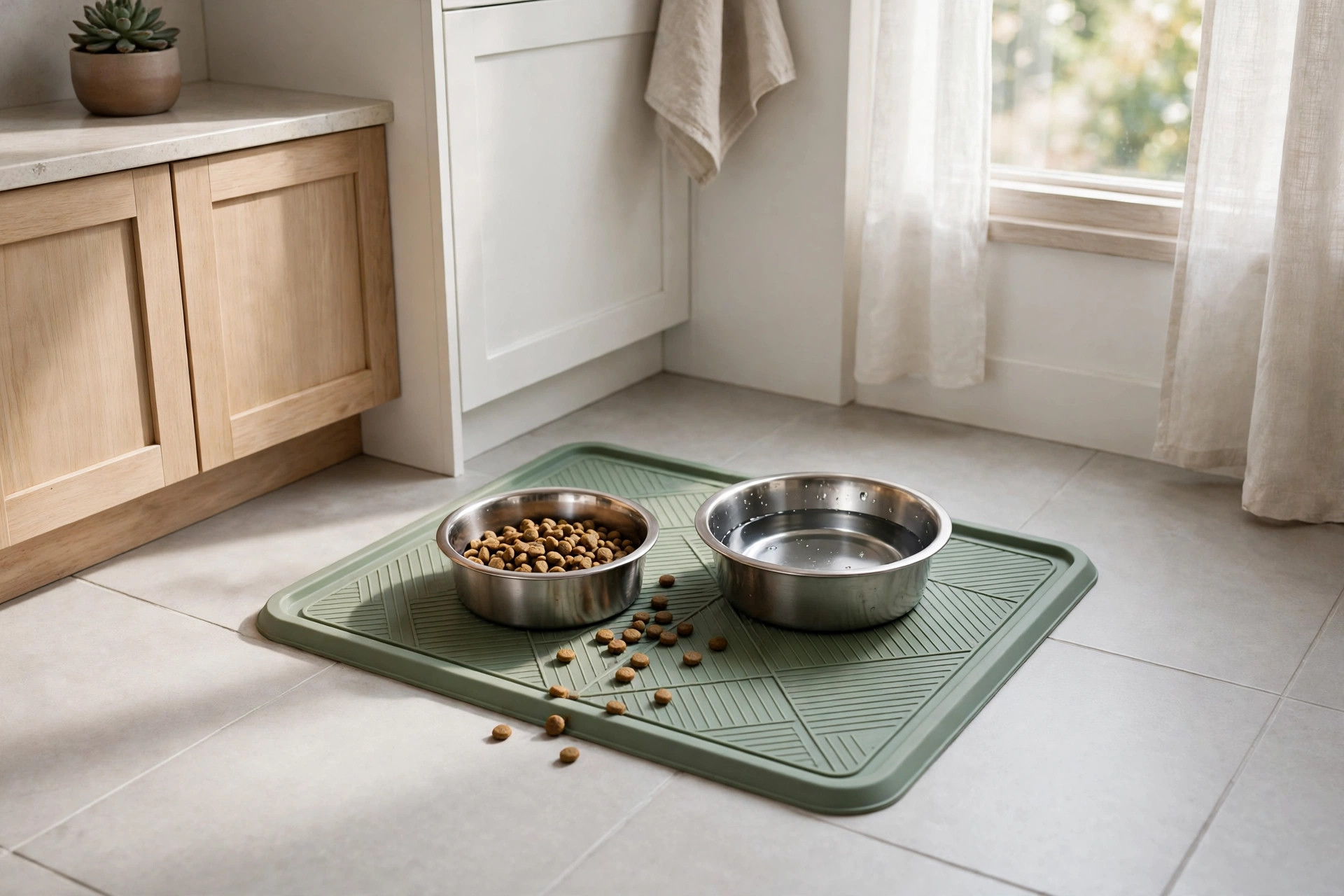
Feeding time without a mat is feeding time all over the floor, because the kibble scatters, the water sloshes, and the floor that should be clean is the floor you mop after every meal. Put a feeding mat under the bowls — the mat that catches the mess — so the mat sits under the food and water bowls, the spilled kibble lands on the mat instead of the floor, and the mat lifts out for a shake and a wash. Pick a mat with a raised edge so the water stays on the mat instead of running onto the floor, and pick a mat big enough for both bowls with room to spare, because the mat that is big enough is the mat that catches the mess. Wash the mat once a week, because the mat that is washed is the mat that does not smell, and the floor that stays dry is the floor that stays clean. One feeding mat, and the mop stays in the cupboard.
9. Bulk food in the garage — the spare bag that stays dry
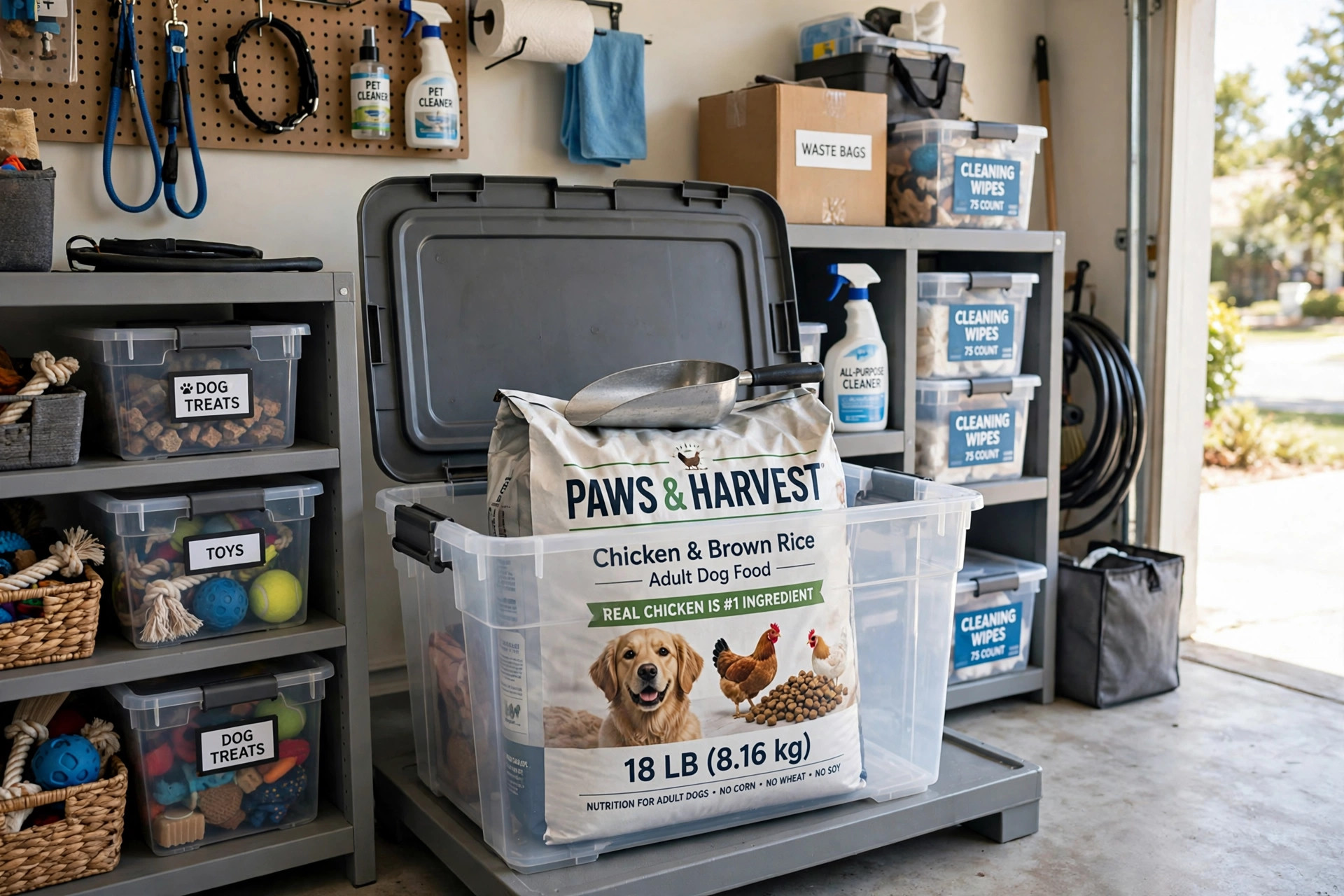
A spare bag of pet food in the house is a spare bag in the way, because the bag is heavy, the bag is big, and the bag that lives in the kitchen is the bag you trip over every morning. Keep the bulk food in the garage — the spare bag that stays dry — so the big bag lives in a sealed bin in the garage, and only the working bin lives in the house. Pour the food into the sealed bin the day it arrives, because the bin that seals is the bin that keeps the damp and the mice out, and the scoop that lives in the bin is the scoop you use to fill the working bin. Label the garage bin with the food and the date you opened it, because the bin that is labelled is the bin you can check without opening, and the bag that is sealed is the bag that stays fresh until you need it. The garage itself gets its full system in 25 Garage Storage Ideas for 2026, where the bulk food lives beside the holiday decor. One sealed bin in the garage, and the heavy bag stops living in the kitchen.
10. Pet food in the pantry — the kibble that lives with the groceries
Pet food that lives nowhere lives everywhere, because the kibble bag is on the kitchen counter, the treats are in the drawer, and the food that should be with the groceries is the food that is in the way of the groceries. Keep the pet food in the pantry — the kibble that lives with the groceries — so the working bin sits on a pantry shelf beside the food you buy for the family, and the pet food becomes part of the shopping list instead of an afterthought. Give the pet food its own shelf or its own section of a shelf, because the shelf that holds the pet food is the shelf you see when you check what to buy, and the bin that is labelled is the bin the whole family can find. The pantry itself gets its full system in 25 Pantry Organization Ideas for 2026, where the pet food sits beside the tins and the pasta. One pantry shelf, and the kibble stops living on the counter.
Toys, grooming and the small things
11. A toy basket with a lid — the toys that get put away
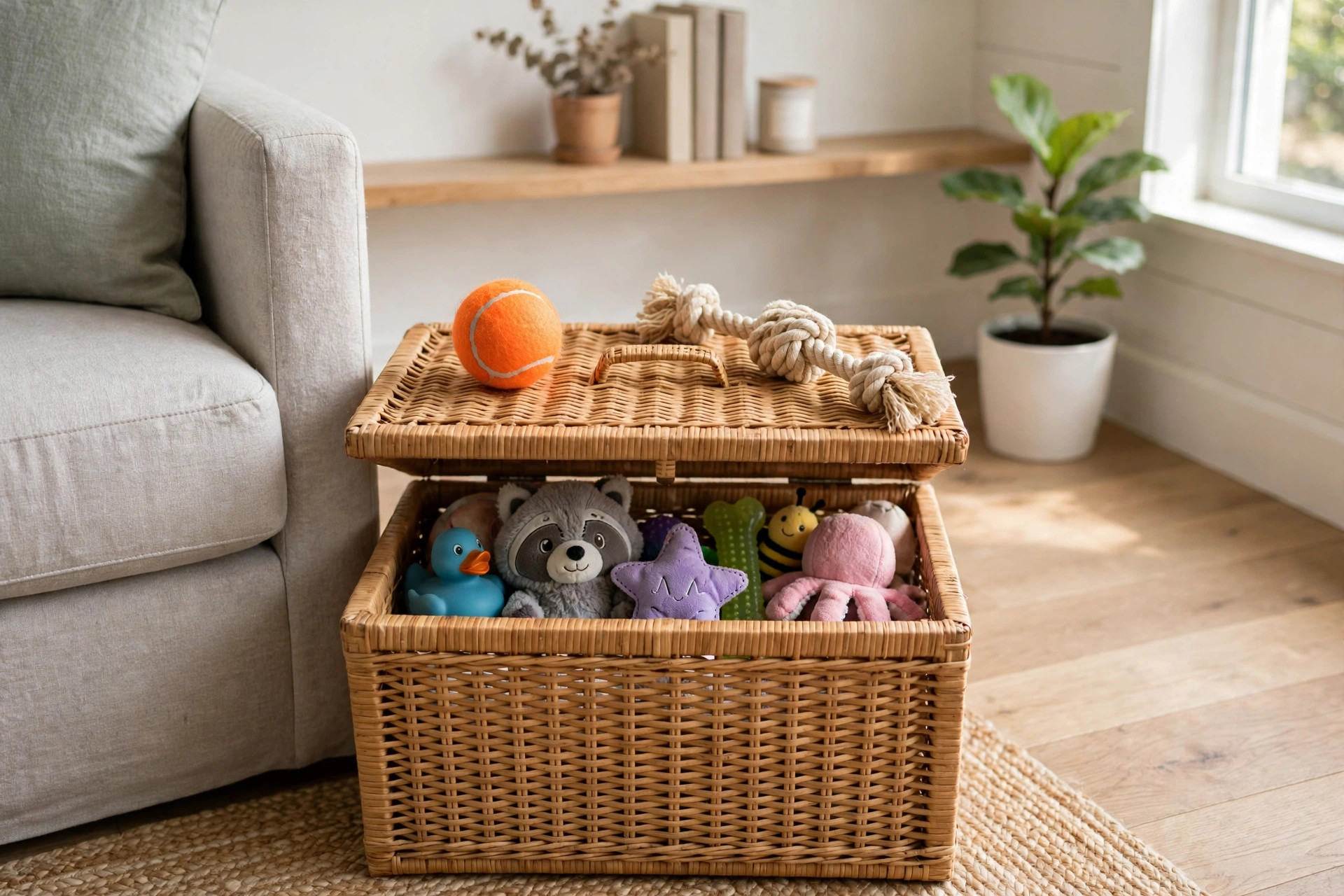
Pet toys on the floor are pet toys underfoot, because the ball rolls under the sofa, the rope toy lives by the back door, and the living room that should be tidy is the living room you tidy three times a day. Keep the toys in a basket with a lid — the toys that get put away — so each toy has a home, the basket holds them all, and the lid keeps them out of sight when the toys are not in use. Pick a basket big enough for the toys your pet actually plays with, not the toys your pet has forgotten, and keep the basket where the pet plays, because the basket that is in the room is the basket that gets used. Put the toys away at the end of the day, because the basket that is tidied nightly is the basket that keeps the floor clear, and the living room that holds one basket is the living room that looks tidy in five minutes. The same basket logic keeps the children's toys tidy in 35 Clever Toy Storage Ideas for 2026, where the lids and labels do the same job. One basket with a lid, and the toys stop living on the floor. (Check on Amazon for a lidded toy storage basket with handles, big enough for balls and rope toys.)
12. Toy rotation — the toys that stay exciting
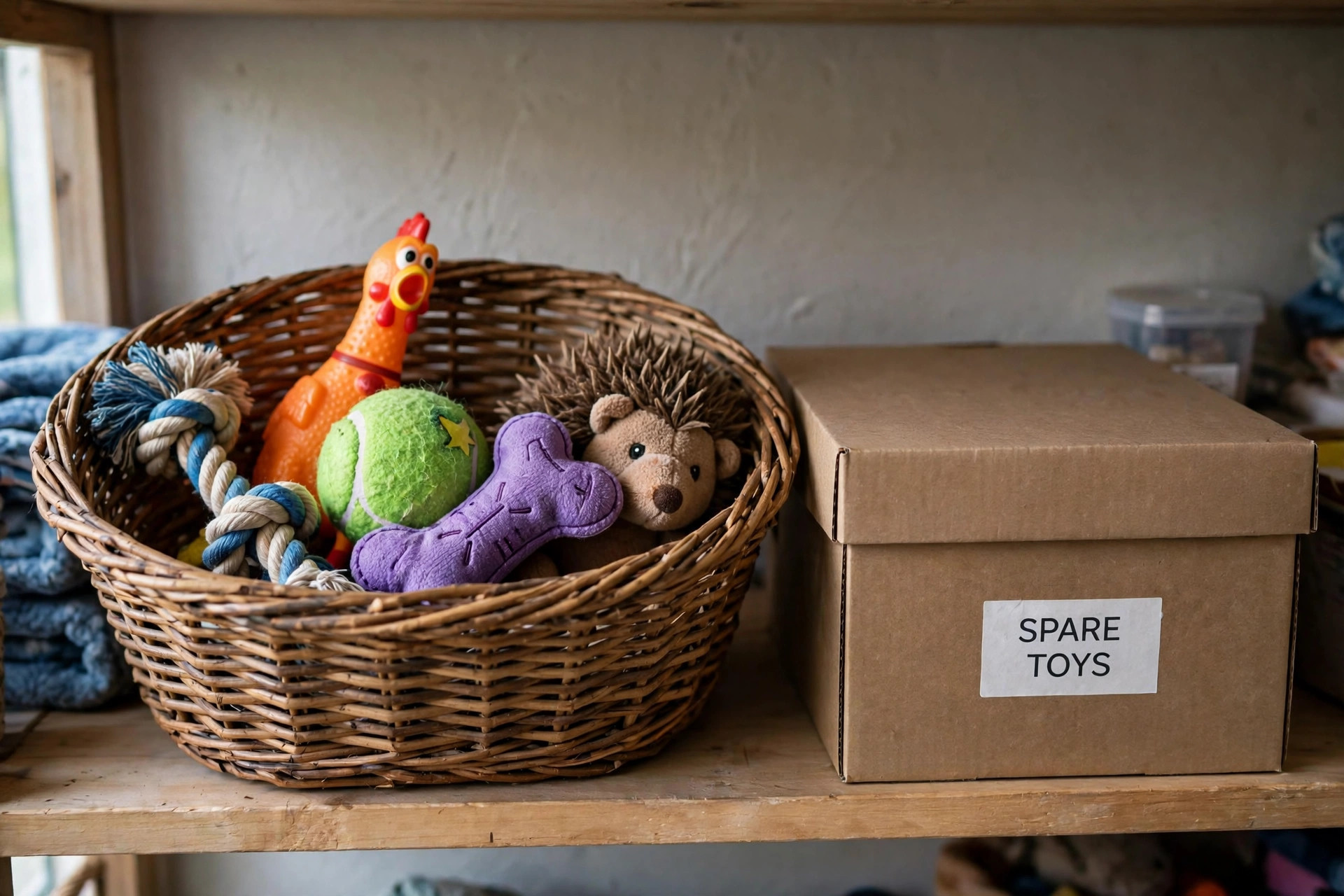
A toy that is always out is a toy that is always boring, because the pet plays with it for a week, forgets it for a month, and the basket that holds twenty toys is the basket where nineteen of them never get touched. Rotate the toys — the toys that stay exciting — so only five or six toys live in the basket at a time, and the rest live in a labelled box on the top shelf, swapped in every two weeks. Keep the box labelled by pet and by type, because the box that is labelled is the box you can open and pick from without a dig, and the toy that comes back after two weeks away is the toy that feels brand new. One rotation a fortnight, and the toys stay exciting.
13. A grooming kit in one caddy — brushes, shampoo and towels together
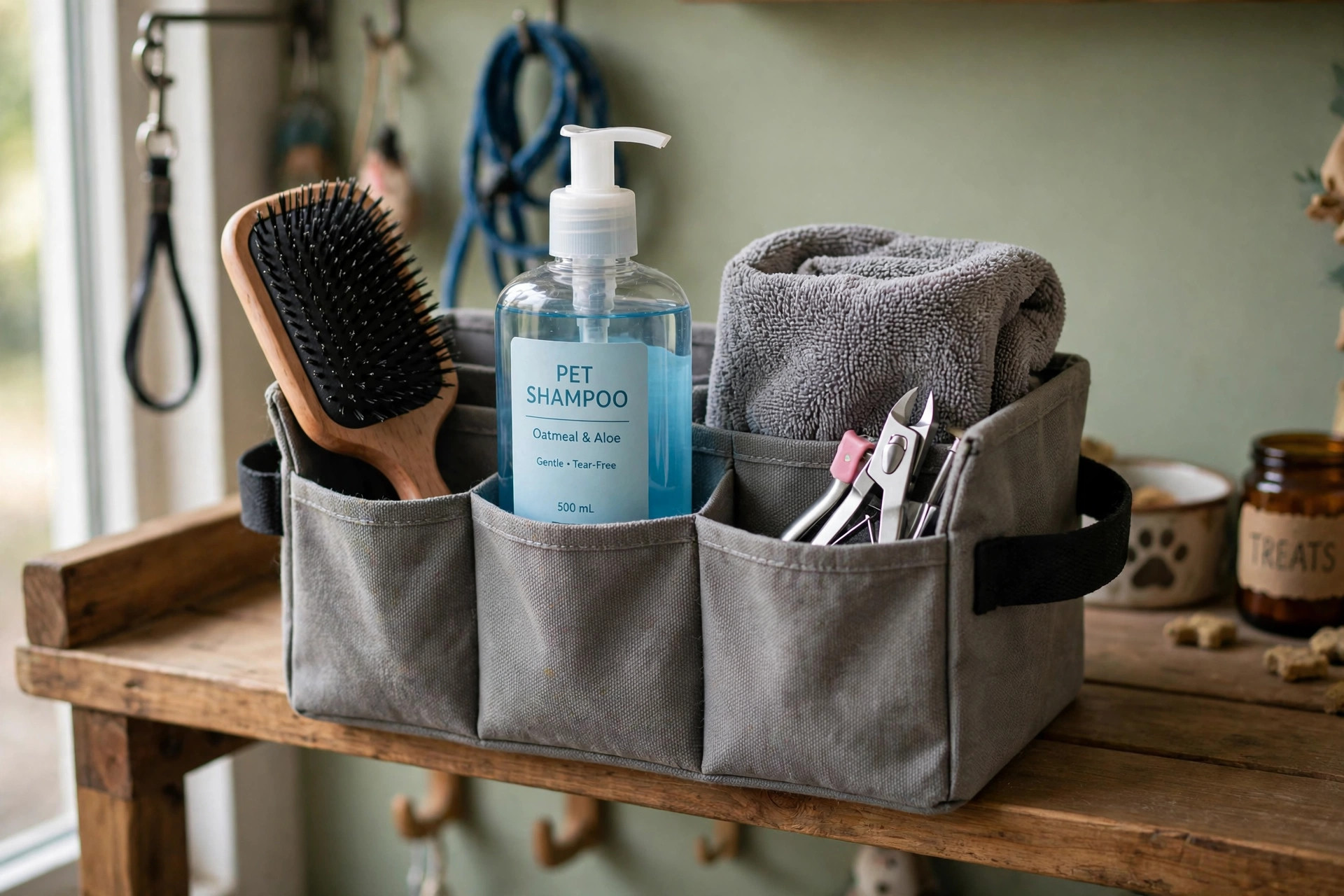
Grooming supplies in three drawers are grooming supplies you never use, because the brush is in the bathroom, the shampoo is under the sink, and the towels are in the airing cupboard — and the dog that needs a brush tonight is the dog that gets brushed next week instead. Keep the grooming kit in one caddy — brushes, shampoo and towels together — so the caddy lives at the pet station and the whole kit travels to the dog in one trip. Put one brush, one shampoo, one towel and the nail clippers in the caddy, and keep the caddy on the shelf above the food bins, because the caddy that stays at the station is the caddy that is there when you need it. Label the caddy too, so the next person who grooms the pet knows where the brush lives, because the caddy that is labelled is the caddy that comes back to the station instead of wandering off to the bathroom. One caddy, and the grooming kit is always together. (Check on Amazon for a grooming caddy with compartments for brushes, shampoo bottles and towels.)
14. Meds and vet papers in a file box — the papers you can find in a panic
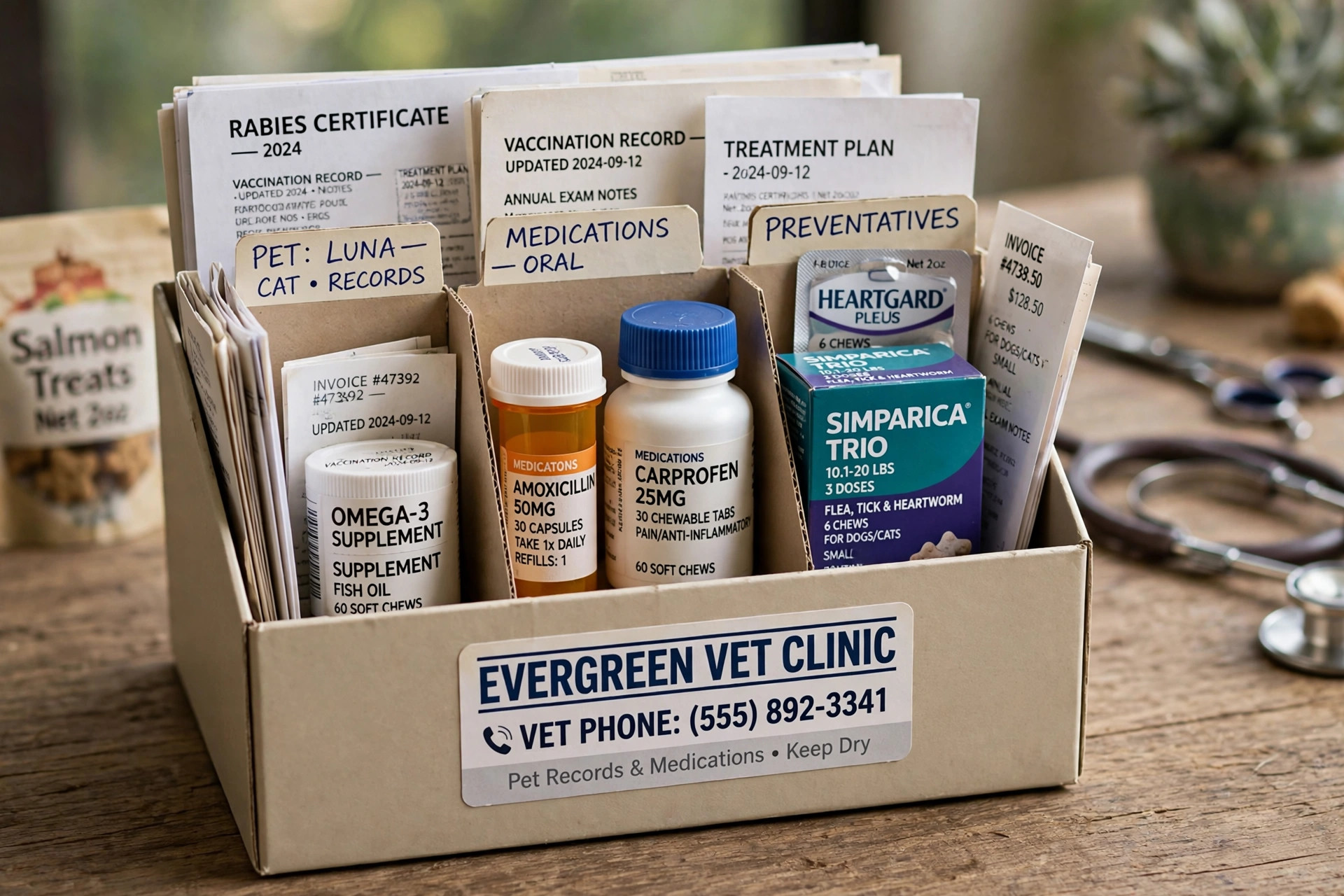
Vet papers in a drawer are vet papers you cannot find, because the vaccination record is under the insurance papers, the insurance papers are under the receipts, and the drawer that holds the pet's papers is the drawer you have to dig through at midnight when the pet is sick. Keep the meds and vet papers in a file box — the papers you can find in a panic — so the box holds the vaccination record, the insurance details, the vet's phone number and the medicines, all in one place. Use a small file box with dividers, one section per pet, because the box that is divided is the box you can open and see everything at once. Keep the vet's phone number on the front of the box, because the number that is on the front is the number you can read in a panic, and the box that holds the meds is the box that keeps them away from the children. One file box, and the panic stops.
Keep it tidy for good — pet supply organization that lasts
15. Label every bin — the label that stops the dig
Bins without labels are bins you have to open, because the bin that holds the dog's kibble looks exactly like the bin that holds the cat's kibble, and the station that holds unlabelled bins is a station you never use. Label every bin — the label that stops the dig — so each bin says what it holds and which pet it belongs to, and the station becomes usable instead of a mystery. Put the label on the front of the bin, not the lid, because the label that faces you is the label you can read from the door, and use one label per bin, because the bin that holds one food is the bin that stays sorted. Write the label in big clear letters and put it where you look when you open the cupboard, because the label that is big is the label that is read, and the bin that is labelled is the bin that gets used first. One label per bin, and the dig stops.
16. One in, one out for the pet stash
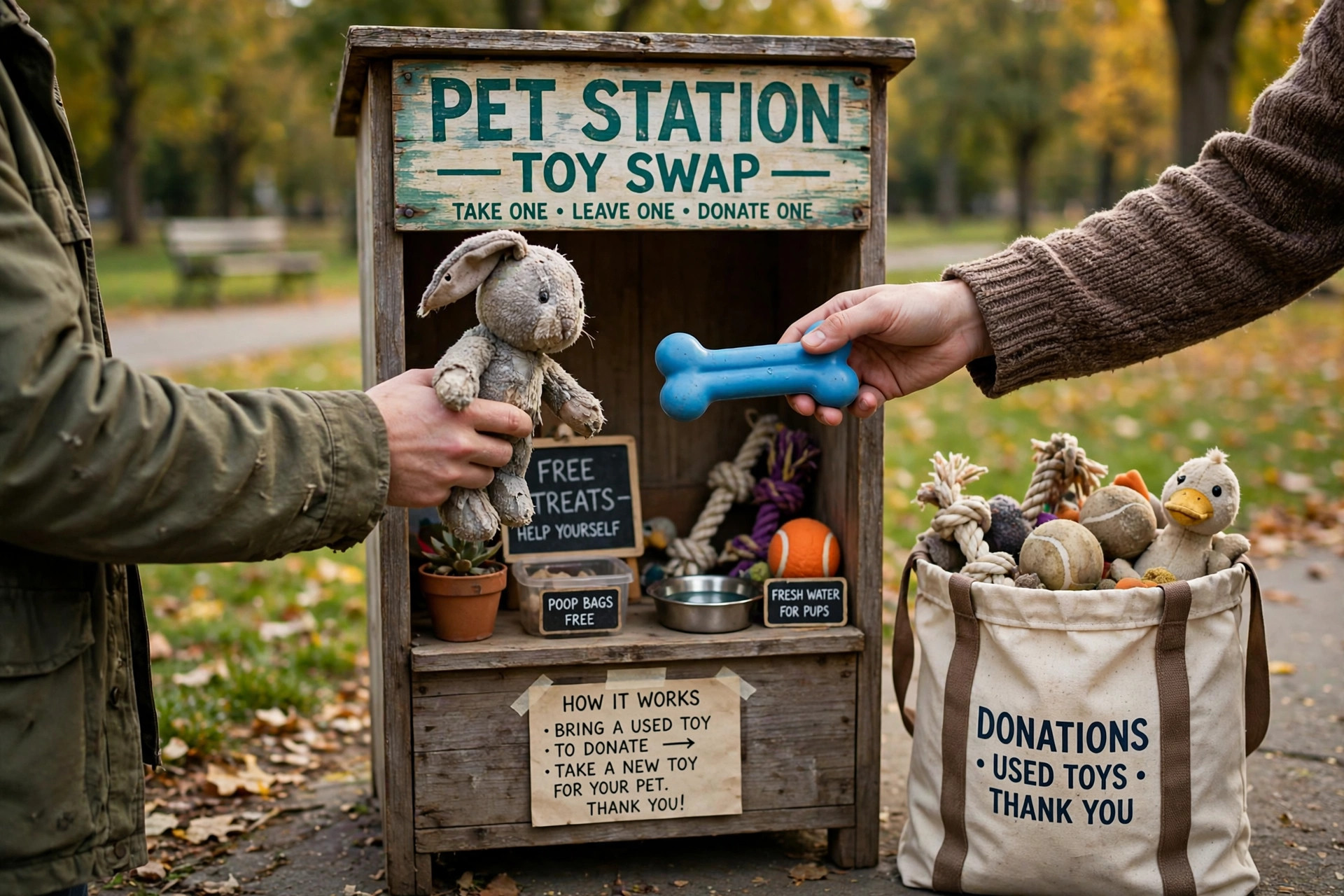
A pet stash grows on its own, because every sale adds a toy, every Christmas adds three more, and the station that held ten toys in January holds thirty by December. Use one in, one out for the pet stash — the rule that stops the station overflowing — so every new toy that enters the station means one old toy leaves it, into the donate bag or the bin. Keep the donate bag at the station, so the toy that leaves has somewhere to go the moment you decide, because the bag that is at the station is the bag that gets used. Count the toys when you do the swap, because the count that is written down is the count that shows you how many you really own, and the stash that is counted is the stash that stops growing. One rule, and the station never overflows.
17. Washable bedding and blankets in a labelled basket
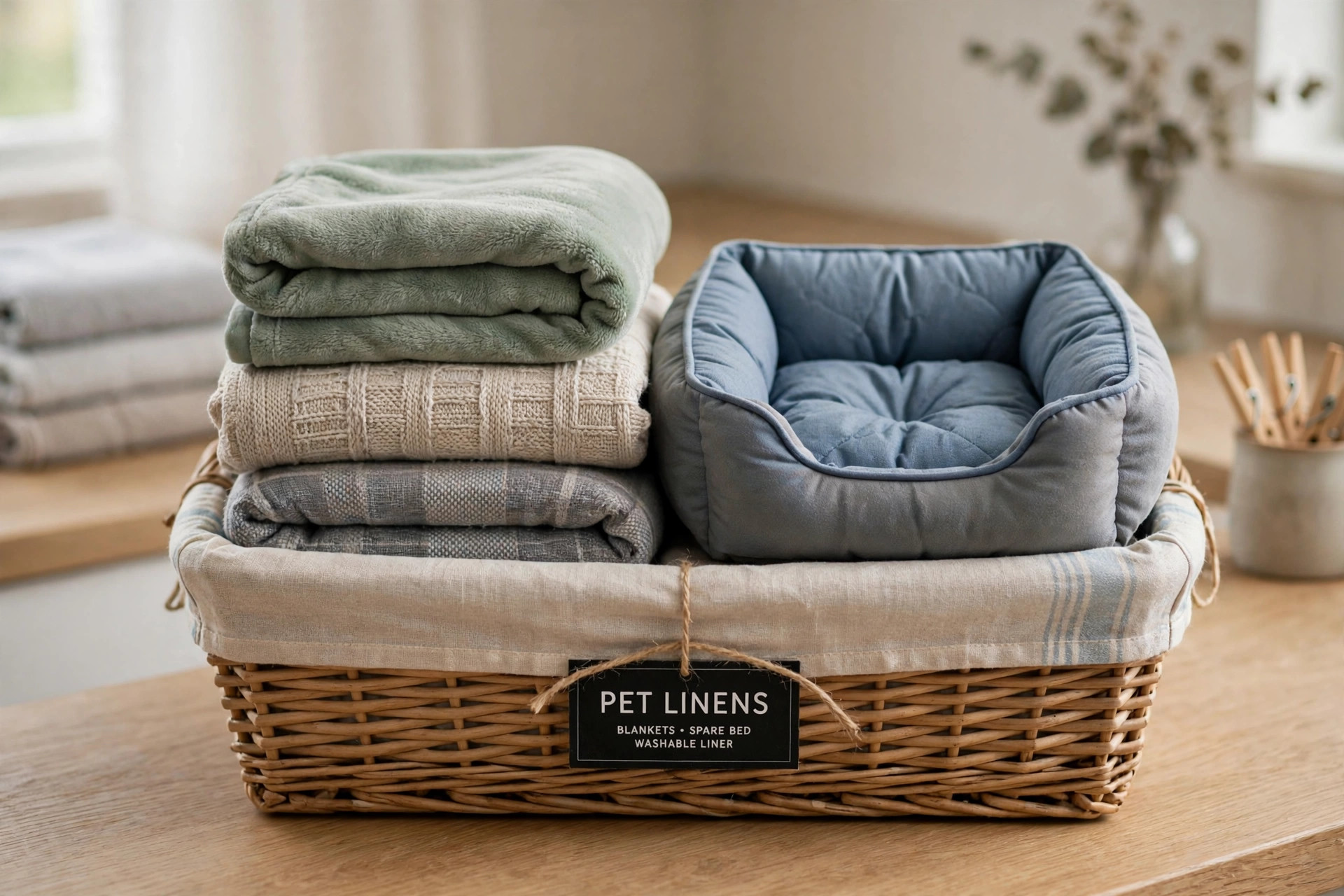
Pet bedding in a pile is pet bedding that smells, because the blanket lives on the floor, the bed lives in the corner, and the pile that holds the spare bedding is the pile that never gets washed. Keep the washable bedding and blankets in a labelled basket — the bedding that gets washed — so the spare bed and the clean blankets live in one basket, and the dirty ones go straight in the wash. Pick a basket with a washable liner, because the basket that is washable is the basket that does not hold the smell, and the basket that is labelled is the basket the whole family can use. One labelled basket, and the bedding stops living in a pile.
18. A travel bag always packed — the bag that is ready to go
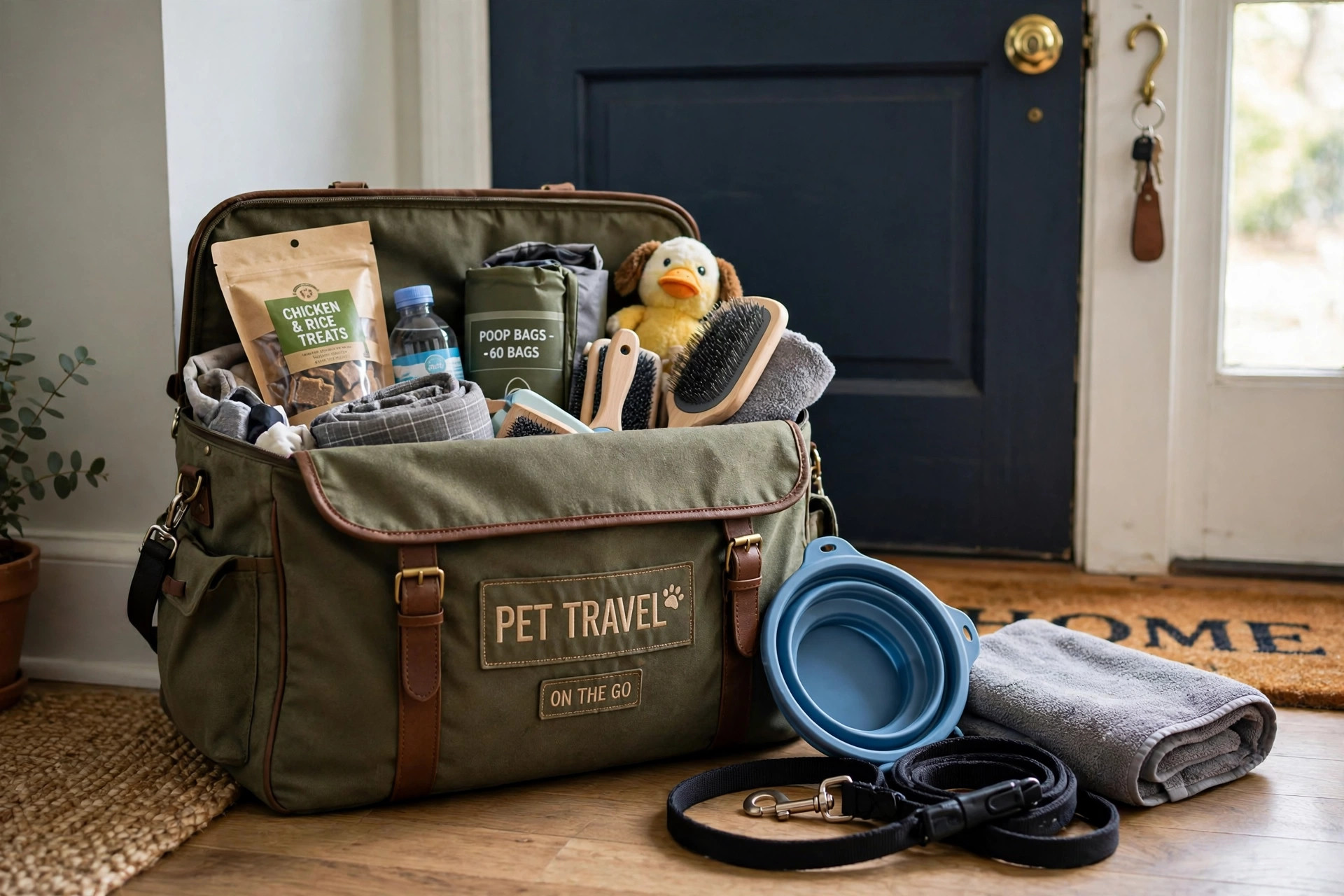
A trip with a pet starts with a pack, because the food has to be measured, the lead has to be found, the water bowl has to be dug out of the cupboard, and the pet that should be in the car in five minutes is the pet that waits while you pack for half an hour. Keep a travel bag always packed — the bag that is ready to go — so the bag holds a day's food, a collapsible bowl, a spare lead, poo bags and a towel, and the bag lives at the pet station ready to grab. Check the bag once a month, because the bag that is checked is the bag whose food is never stale, and the bag that is packed is the bag that turns a trip into a five-minute job. Keep the bag by the door, because the bag that is by the door is the bag you grab on the way out, and the car that holds the bag is the car that is ready for the vet, the park or the holiday. One packed bag, and the trip starts on time.
19. A five-minute reset after every walk
No pet station stays tidy without a habit, because the station is only tidy on the day you organize it and the mess creeps back one walk at a time. Do a five-minute reset after every walk — leads back on the hooks, toys back in the basket, bowls back on the mat — so the station is tidy before the next walk and starts clean every time. Wipe the muddy paws, shake the feeding mat, and put the towel back on its hook, because the reset that takes five minutes is the reset that actually happens. Keep a small bin for the rubbish beside the station, because the poo bag that is binned at once is the poo bag that never becomes clutter, and the station that is reset after every walk is the station that is tidy on Christmas morning. The rolling cart that carries the pet supplies to the garden gets its full system in 22 Rolling Cart Organization Ideas for 2026, where the same cart works as a pet station and a garden station in turn. Five minutes a walk, and the station never needs a big clean.
20. A seasonal swap — winter coats out, summer gear in
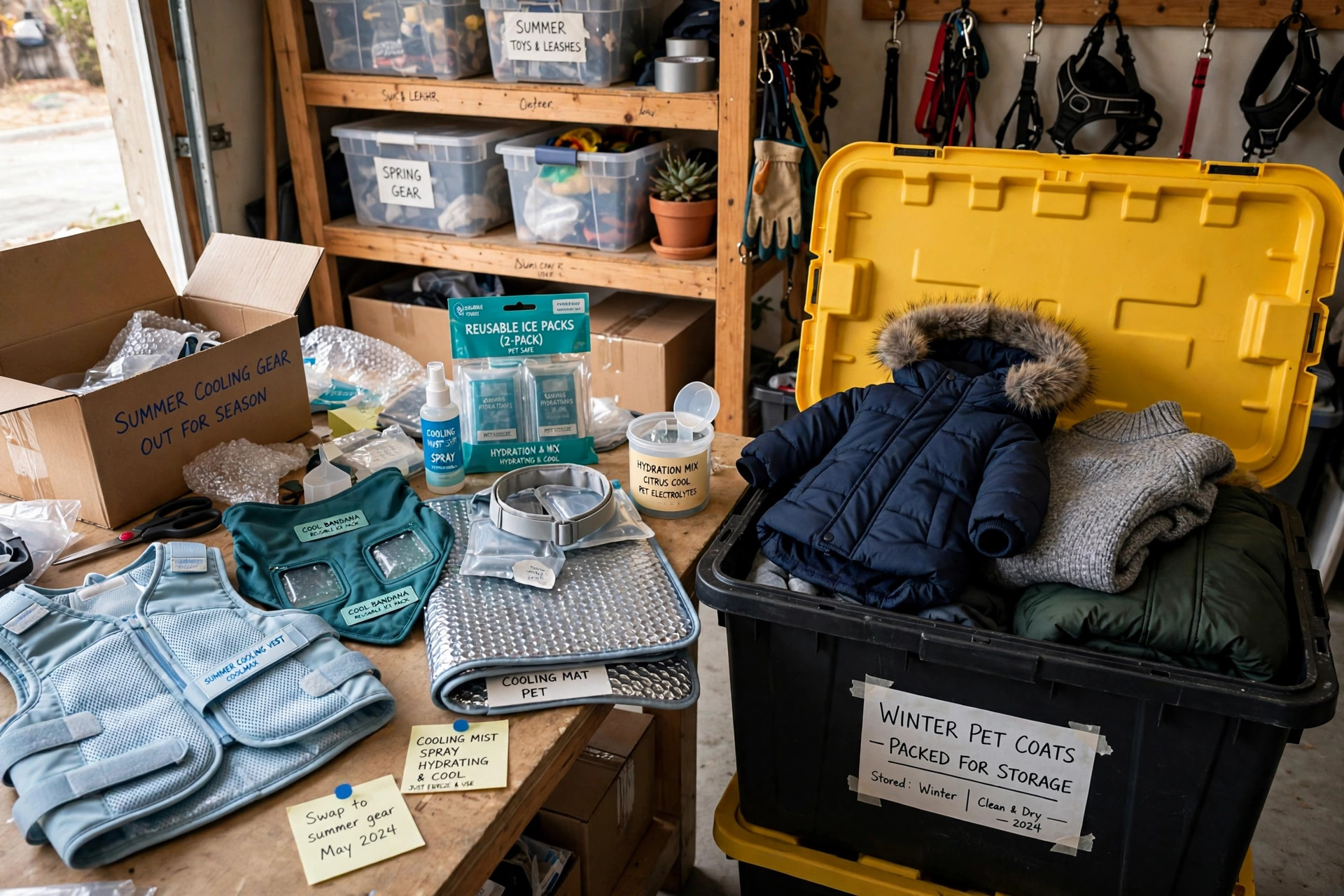
A station that holds all four seasons at once is a station that holds too much, because the winter coats crowd the summer cooling mat, and the gear you need today is buried under the gear you will not need for six months. Do a seasonal swap — winter coats out, summer gear in — so the station holds only this season, and the rest lives in a labelled bin on the top shelf or in the garage. Swap twice a year, before winter and before summer, and check each item as it goes in and out, because the swap that checks the gear is the swap that catches the coat that no longer fits and the lead that is frayed. Wash the coats as they come out of storage, because the coat that is washed is the coat that is ready to wear, and the station that is swapped twice a year is the station that is always ready. The small-space thinking that makes the swap work in a flat gets its full system in 28 Small Apartment Storage Ideas for 2026, where the seasonal bin lives on the top shelf. One swap a season, and the station holds only what your pet wears now.
Which pet supply idea fits which situation?
| Situation | Best first move | Budget | Tools needed |
|---|---|---|---|
| Pet stuff scattered in three rooms | Give pet supplies one home (idea 1) | Free | None |
| Bought storage that does not fit | Measure the space first (idea 2) | Free | Tape measure |
| Two pets, one messy corner | Sort by pet (idea 3) | Free | Labels |
| Leads missing at walk time | Leads by the door (idea 4) | Low | Hooks |
| Muddy paws all over the floor | A pet station in the mudroom (idea 5) | Low | Mat |
| Kibble gone stale in the bag | Airtight food bins (idea 6) | Low | Airtight bin |
| Treats in five open bags | Treats in labelled jars (idea 7) | Low | Jars |
| Food and water all over the floor | A feeding mat (idea 8) | Low | Mat |
| Toys all over the living room | A toy basket with a lid (idea 11) | Low | Basket |
| Grooming stuff in three drawers | A grooming kit in one caddy (idea 13) | Low | Caddy |
| Vet papers lost in a panic | Meds and vet papers in a file box (idea 14) | Free | File box |
| Station messy again by spring | A five-minute reset (idea 19) | Free | None |
You do not need all 20 ideas. You need the three that solve your pet mess — usually the one home that stops the scatter, the airtight bin that keeps the food fresh, and the hooks by the door that end the hunt for the lead. Start with the one home, do it this weekend before the next walk, and hang the leads by the door. Do that and the next walk will start at the door, the kibble will be crisp in its bin, and the toys will be in the basket where you left them.
Save this post for the next time the pet stuff takes over, and if the mudroom around the station needs the same treatment, read 25 Mudroom Organization Ideas for 2026 next — it is Post 61, the room the station lives in — and 22 Drop Zone Organization Ideas for 2026, Post 56, for the hooks and baskets by the door. This is the seventeenth post of the new Organization by problem run — Posts 56 to 80, one problem at a time — and the run keeps going with the garden tools next door. The cleaning supplies themselves get their own deep dive in Cleaning Supply Organization, where the under-sink caddy gets the same station treatment.
Publish date assigned at publishing time. Updated as new pet supply finds are tested.
Frequently asked questions
How do I store pet food so it stays fresh?
Store the food in airtight bins, so each bin seals shut and the kibble stays crisp instead of going stale in an open bag. Pick a bin with a clear lid or a clear side so you can see how much food is left without opening it, and keep the scoop inside the bin where you can always find it. Keep the original bag's feeding guide tucked inside the lid, and keep the spare bag in a sealed bin in the garage — never leave a bag open, because the bag that is open is the bag that goes stale and spills.
What is the best way to organize pet supplies in a small space?
Give them one home — a single station, even if the whole station is one corner of the kitchen with a food bin, a basket and a row of hooks. Stand the food in an airtight bin on the floor, hang the leads on hooks by the door, keep the toys in a basket with a lid, and put the treats in labelled jars on one shelf. Measure the corner before you buy storage, sort by pet so each pet has its own zone, and do the five-minute reset after every walk so the small station never overflows.
How do I keep pet toys from taking over the house?
Keep the toys in a basket with a lid, so each toy has a home and the basket keeps them out of sight when they are not in use. Rotate the toys — only five or six in the basket at a time, the rest in a labelled box on the top shelf, swapped in every two weeks — because the toy that comes back after two weeks away feels brand new. Put the toys away at the end of every day, and use one in, one out, so every new toy that enters the station means one old toy leaves it.