22 Homework Station Organization Ideas for 2026
Homework does not start when the child sits down. It starts ten minutes earlier, in the hunt: the pencil that is not in the drawer, the worksheet that is under the sofa, the charger that is in the kitchen, and the book that is still in the school bag from yesterday. A homework station ends the hunt, because everything the child needs is in one corner, in reach, in the same place every single day — and the child who can find their pencil in five seconds is the child who starts homework without a sigh.
These 22 homework station organization ideas build a kid-ready homework corner with supplies in reach: pick one corner and zone it, put the pencils in a caddy and the folders in a sorter, and finish with a five-minute reset after homework — so the station is ready before the school bag hits the floor.
Every idea below works in a real home, from a spare corner of the living room to a shared kids' bedroom with two children and one desk. The school systems around the station are covered in 22 School Organization Ideas for 2026, where the morning routine and the school bag get the same treatment — and the corner itself often shares a room with the toys, so the playroom thinking in 22 Playroom Organization Ideas for 2026 keeps the two zones from swallowing each other. Pick three ideas that fit your space, start with the corner, and build from there.
Set up the station: one corner, zoned
1. Pick one corner, not a whole room — the homework corner that is always ready
A homework station does not need a room of its own, because the room of its own is the room that becomes a storage cupboard by October, and the corner that is always ready is the corner that gets used every day. Pick one corner, not a whole room — the homework corner that is always ready — so the child knows exactly where homework happens and the rest of the house stays free. Choose a corner with daylight and a wall behind it, because the wall behind the desk is the wall that holds the shelf and the pegboard, and the daylight is the light that keeps the child awake. Put the desk there and leave it there, because the corner that never moves is the corner the child walks to without being told. One corner, always ready, and homework has a home.
2. A desk that fits the child, not the room — right height, right chair
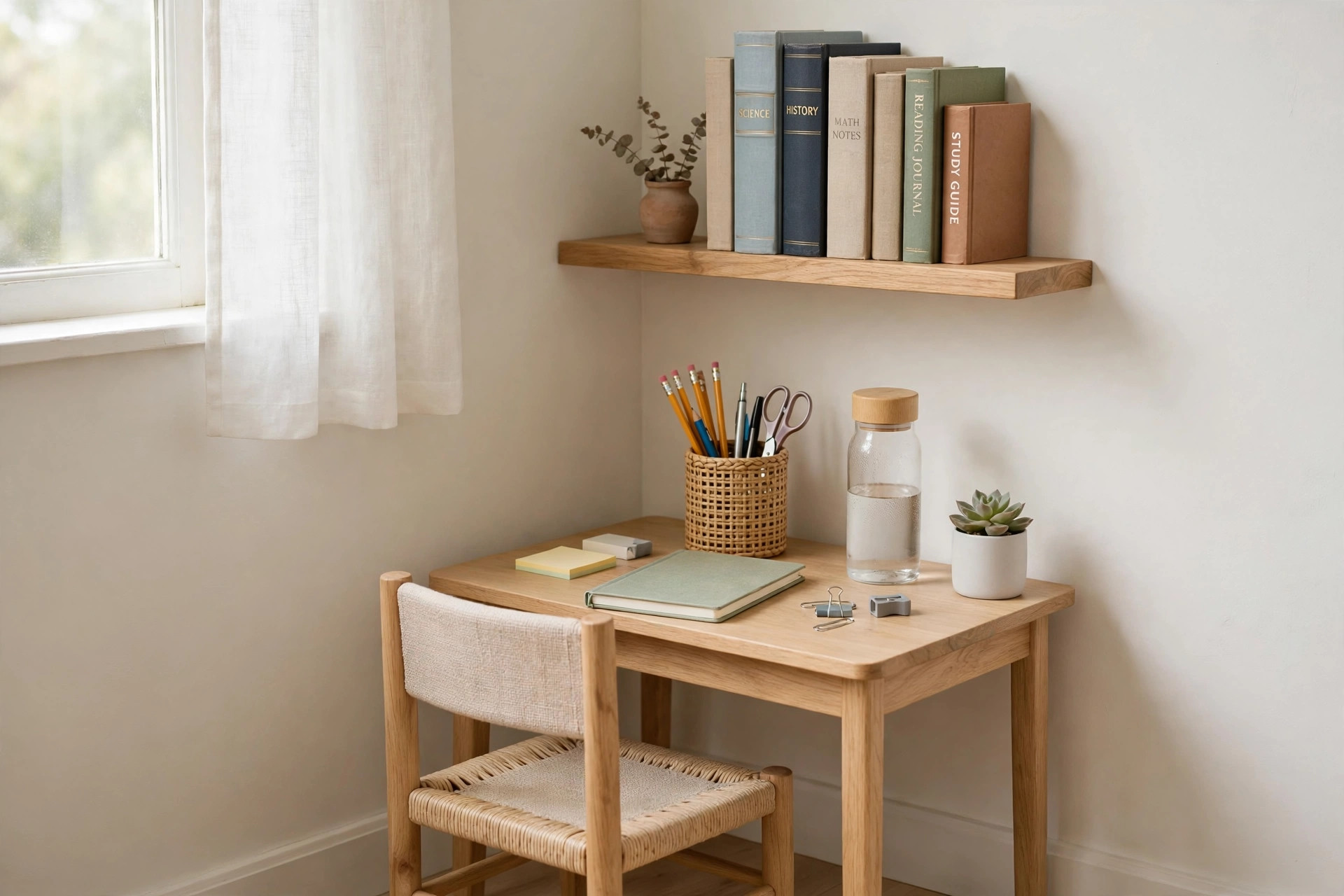
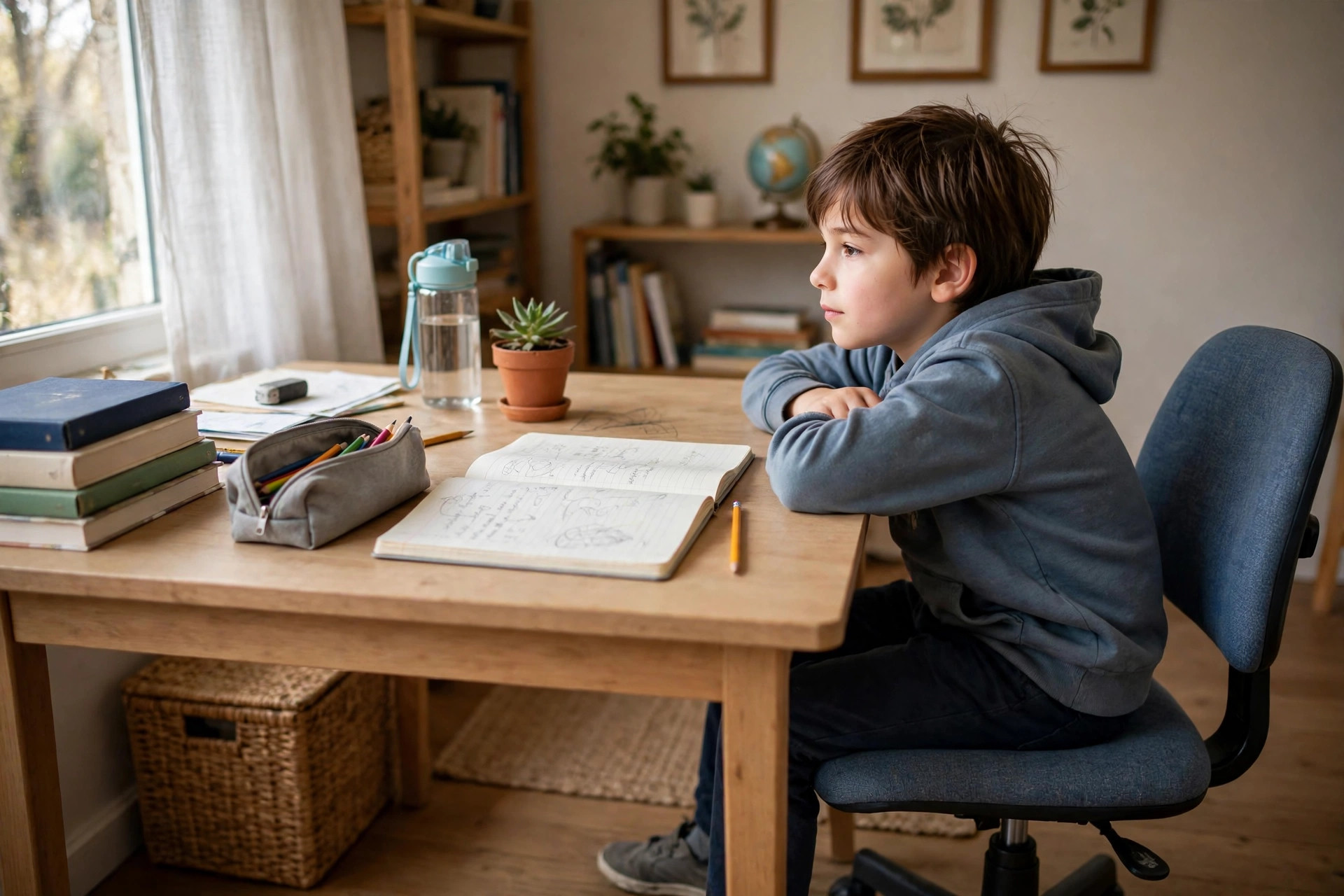
A desk bought for the room is a desk the child cannot use, because the chair is too low, the desktop is too high, and the child who has to climb to reach the paper is the child who gives up and does homework on the floor. Buy a desk that fits the child, not the room — right height, right chair — so the child's feet touch the floor and their elbows rest on the desktop without a shrug. The desk top should sit at elbow height when the child is sitting, the chair should let their knees bend at a right angle, and the whole setup should leave room for their legs underneath, because the desk that fits is the desk that gets sat at. A footrest helps for younger children, and the desk itself gets its own deep dive in Desk Organization, where sizes and setups are covered in full. One desk that fits, and the child sits down without a fight.
3. Zone the station: work, supplies, finished — three zones on one small desk
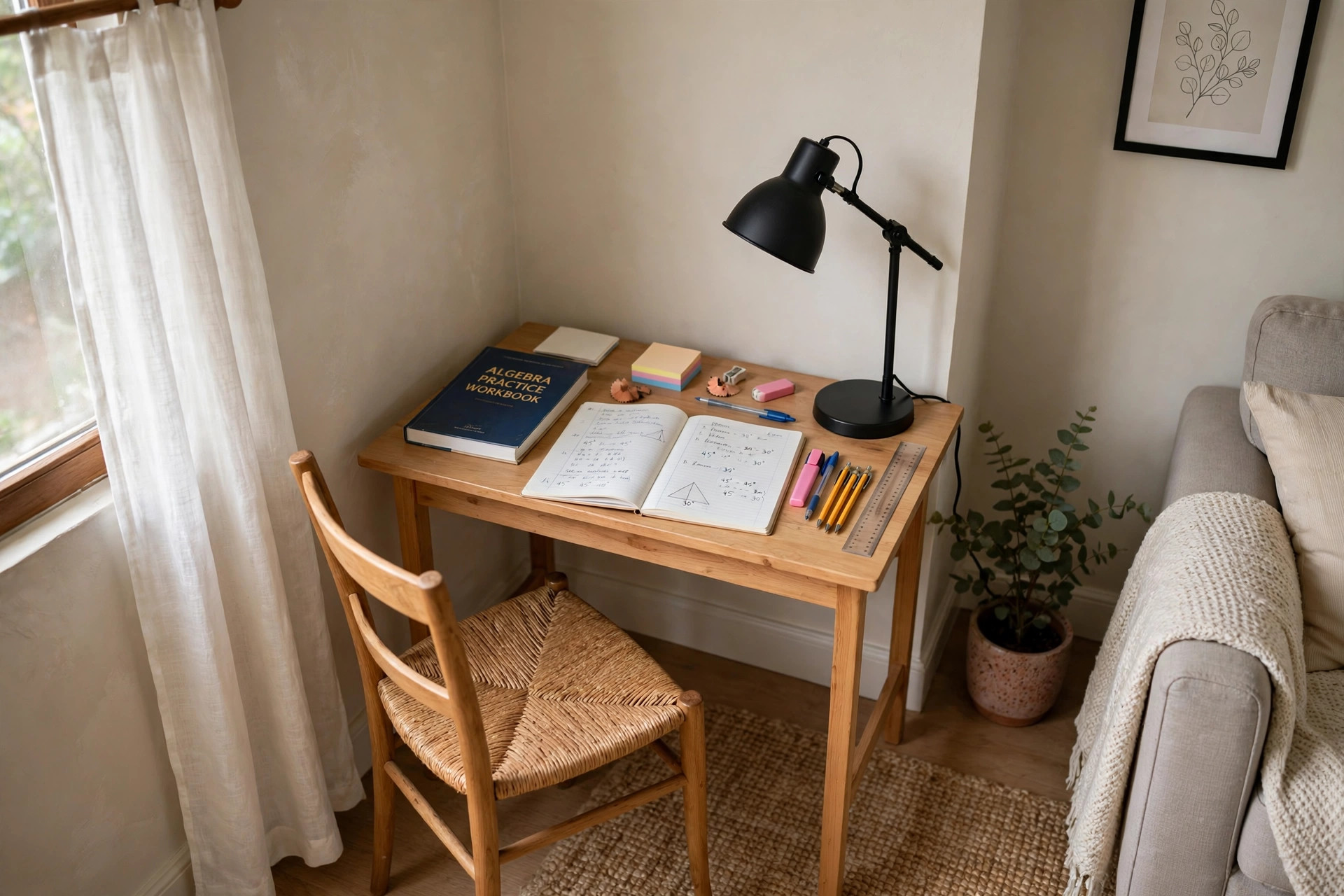
A desk where everything lives everywhere is a desk where nothing is findable, because the pencils are on the worksheet, the worksheet is under the book, and the book is on top of the finished homework. Zone the station — work, supplies, finished — three zones on one small desk — so every thing has a patch of desk and the patches never mix. The middle of the desk is the work zone, the left side holds the caddy and the supplies, and the right side holds the finished-work tray, because the zone that matches the job is the zone that stays tidy. Mark the zones with a strip of tape for younger children, because the tape on the desk is the line the child can see, and take the tape off once the habit sticks. Three zones, and the desk stops being a pile.
4. A desktop caddy that carries the supplies — pencils, pens and scissors sorted by type
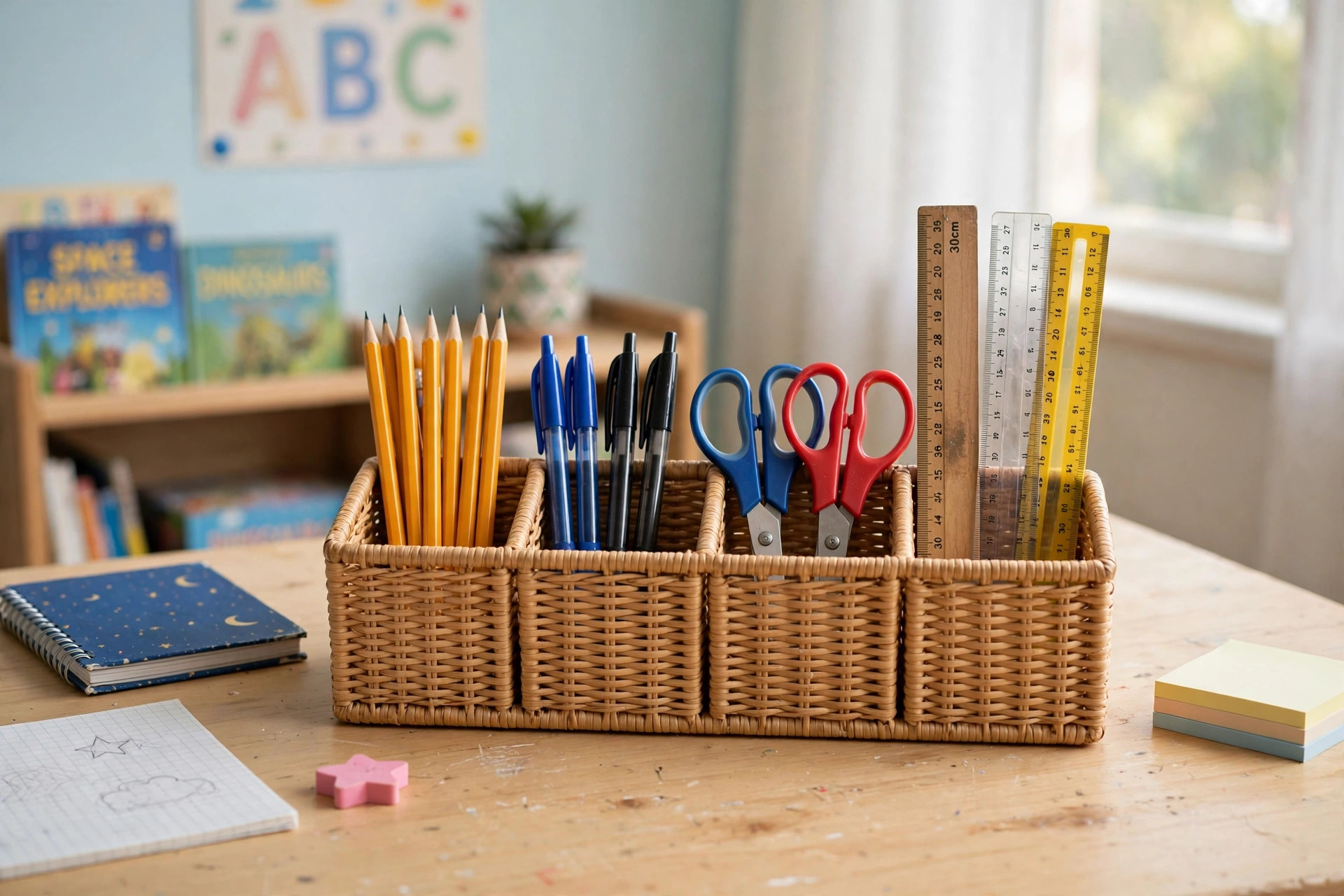
Supplies loose in a drawer are supplies that vanish, because the pencil is under the ruler, the ruler is under the glue stick, and the drawer that holds everything is the drawer that holds nothing findable. Use a desktop caddy — pencils, pens and scissors sorted by type — so every supply stands upright in its own compartment and the child can see all of it at a glance. Put pencils in one section, pens in another, scissors and rulers in the third, and keep the caddy in the supplies zone from idea 3, because the caddy that stays in its zone is the caddy that stays full. The pencil cups inside the caddy borrow their colour-coding from 18 Pencil Storage Ideas for 2026, where one colour per child stops the mixing before it starts. One caddy on the desk, and the hunt for a pencil ends. (Check on Amazon for a desktop organizer caddy with at least four compartments, sized for a child's desk.)
5. A wall shelf above the desk — books and boxes up, desk clear
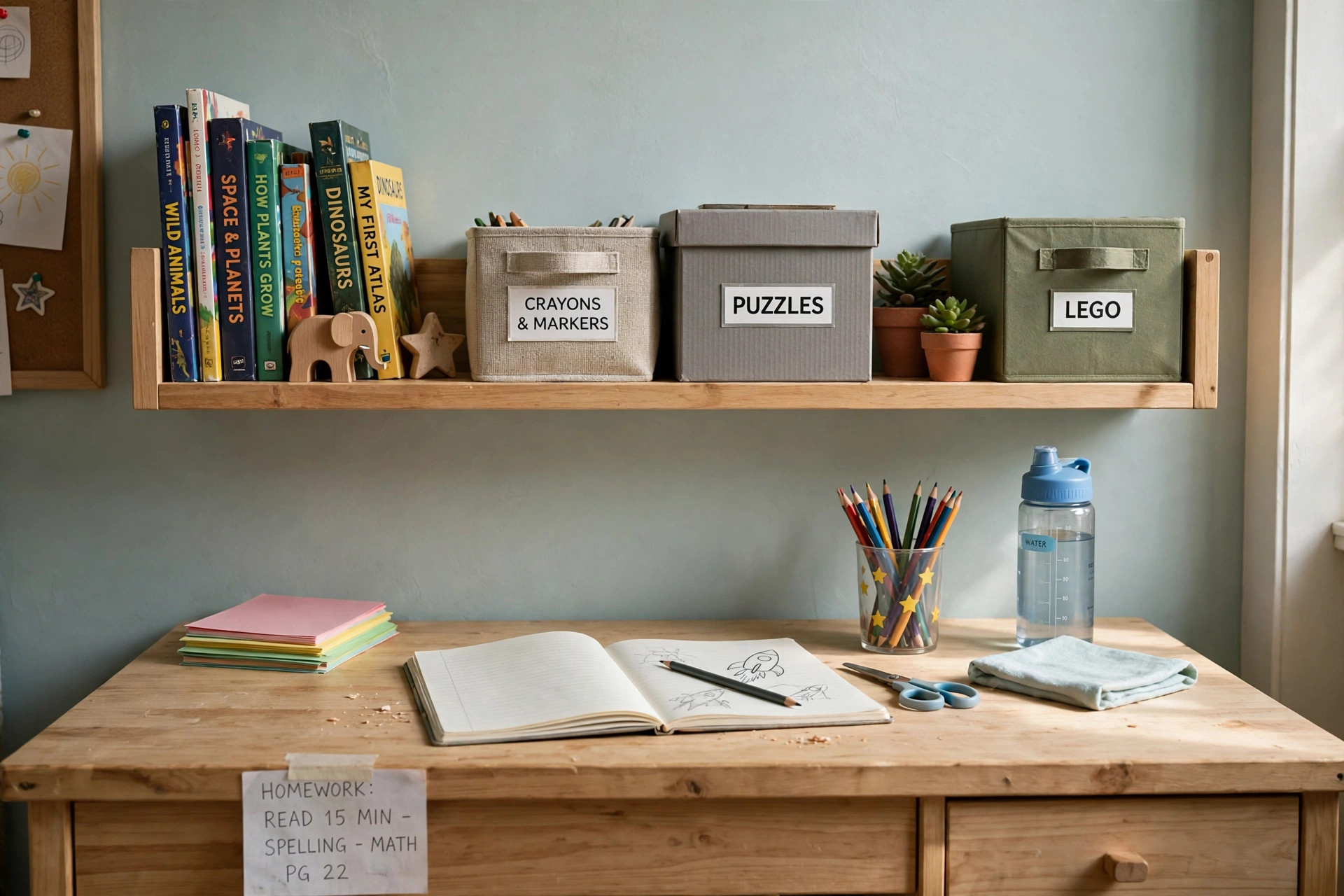
Books piled on the desk are books in the way, because the book the child needs is at the bottom of the pile, the pile slides when the desk is bumped, and the desk that holds the library is the desk with no room to write. Hang a wall shelf above the desk — books and boxes up, desk clear — so the books live at eye level and the desktop stays empty for the work. Put the books the child uses every day on the shelf, the reference books beside them, and a small labelled box for the spare supplies, because the shelf that holds the daily books is the shelf the child reaches for without standing up. Fix the shelf at the child's standing eye level, not yours, because the shelf that is too high is the shelf that never gets used. One shelf above the desk, and the desktop is free.
6. A pegboard above the desk — hooks and pockets for the things used every day
The small things a child uses every day are the small things that vanish, because the scissors are in the toy box, the headphones are on the bed, and the clock is somewhere in the kitchen. Hang a pegboard above the desk — hooks and pockets for the things used every day — so the small things live on the wall, in sight, in reach. Hook the scissors and the headphones on pegs, slip the timetable and the spelling list into a pocket, and hang the small clock where the child can see it without turning round, because the pegboard that shows everything is the pegboard that keeps everything. The pegboard itself is covered in 20 Pegboard Organization Ideas for 2026, where the same wall-first rule keeps a whole craft room tidy. One pegboard, and the small things stop wandering.
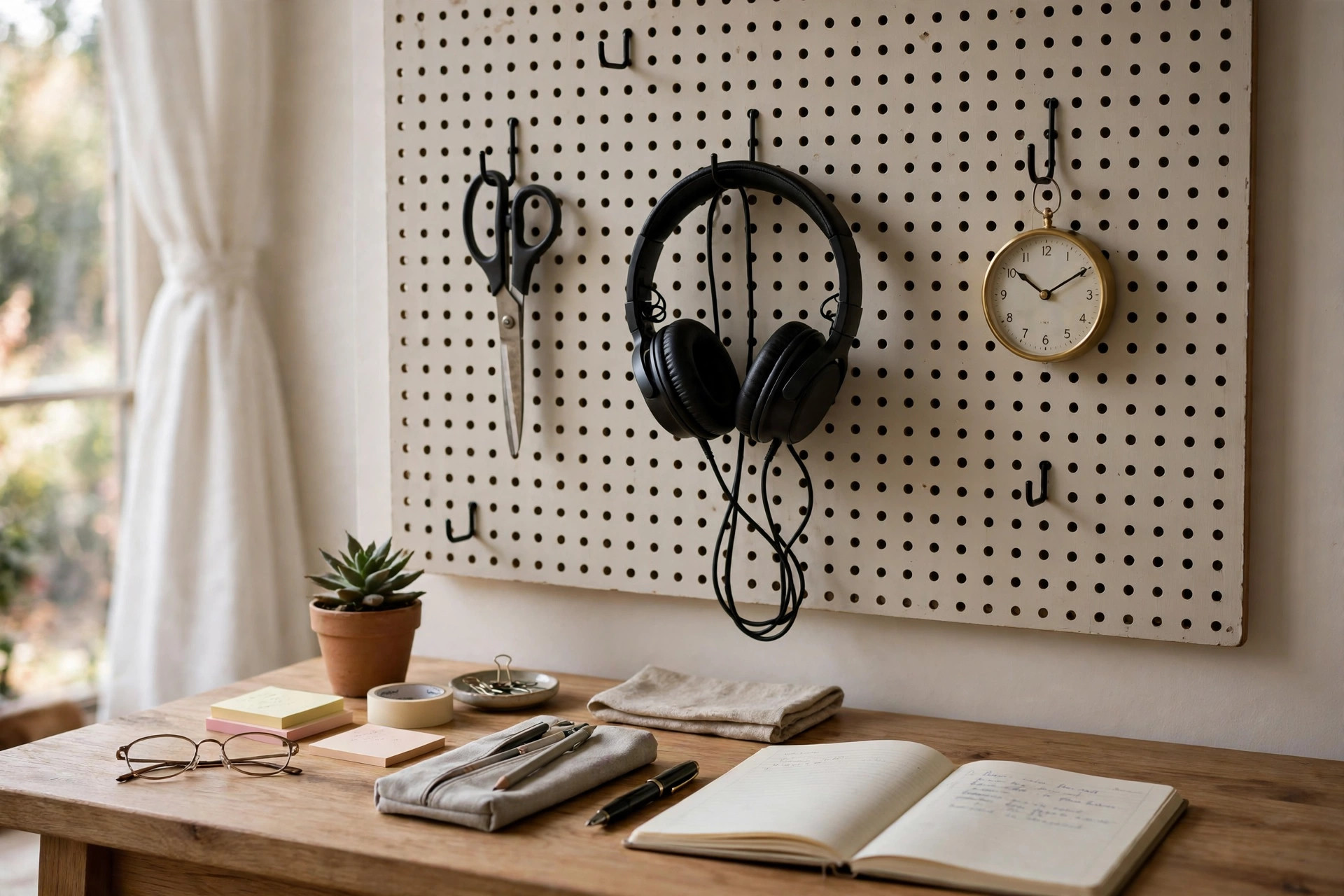
Supplies in reach: pencils, paper, books
7. One pencil cup per child — colour-coded cups, no mixing
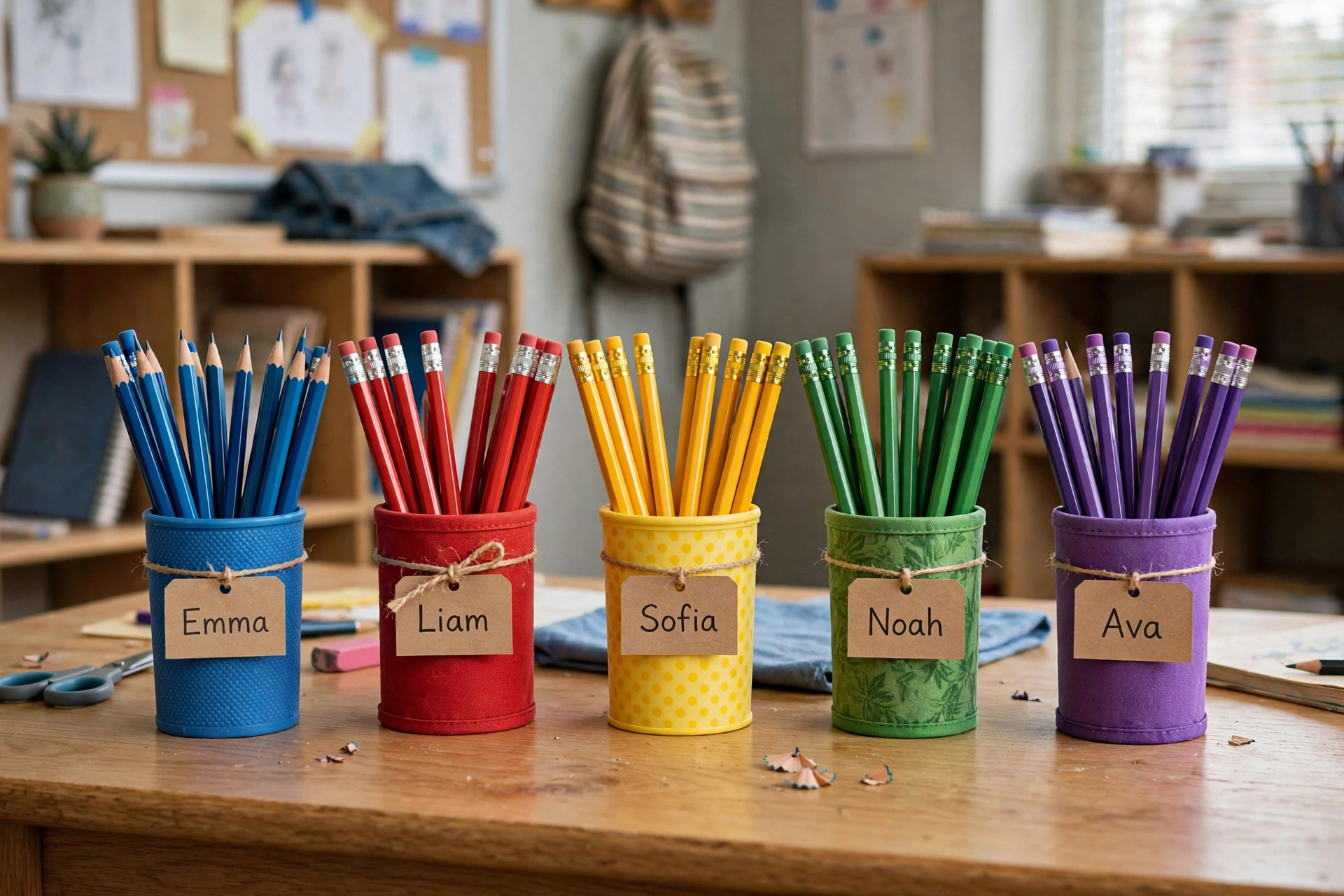
Pencils in one shared pot are pencils nobody owns, because the red pencil is in the blue child's hand, the blue pencil is under the sofa, and the child who needs a pencil is the child digging through everyone else's. Give each child their own cup — one pencil cup per child, colour-coded, no mixing — so the red cup is one child's pencils and the blue cup is another's, and the morning pencil hunt takes five seconds. Stand the cups in the caddy from idea 4 or in a row on the desk, and keep one spare cup for the pencils that belong to no one, because the spare cup is the cup that stops the borrowing. One cup per child, and the pencils stay where they belong.
8. Paper sorted by type — plain, lined, drawing — in a desktop file sorter
Paper in one pile is paper that is never the right paper, because the lined paper is under the drawing paper, the drawing paper is under the plain paper, and the child who needs lined paper is the child tearing a sheet off the wrong pad. Sort the paper by type — plain, lined, drawing — in a desktop file sorter, so the child pulls the right paper from the right slot without thinking. Put the sorter in the supplies zone, label each slot with a picture for younger children, and keep a small stack of each type, because the sorter that holds a little of everything is the sorter that never runs out at the wrong moment. Paper sorted, and the right sheet is always on top.
9. A homework folder system — one folder per subject, in tray and out tray
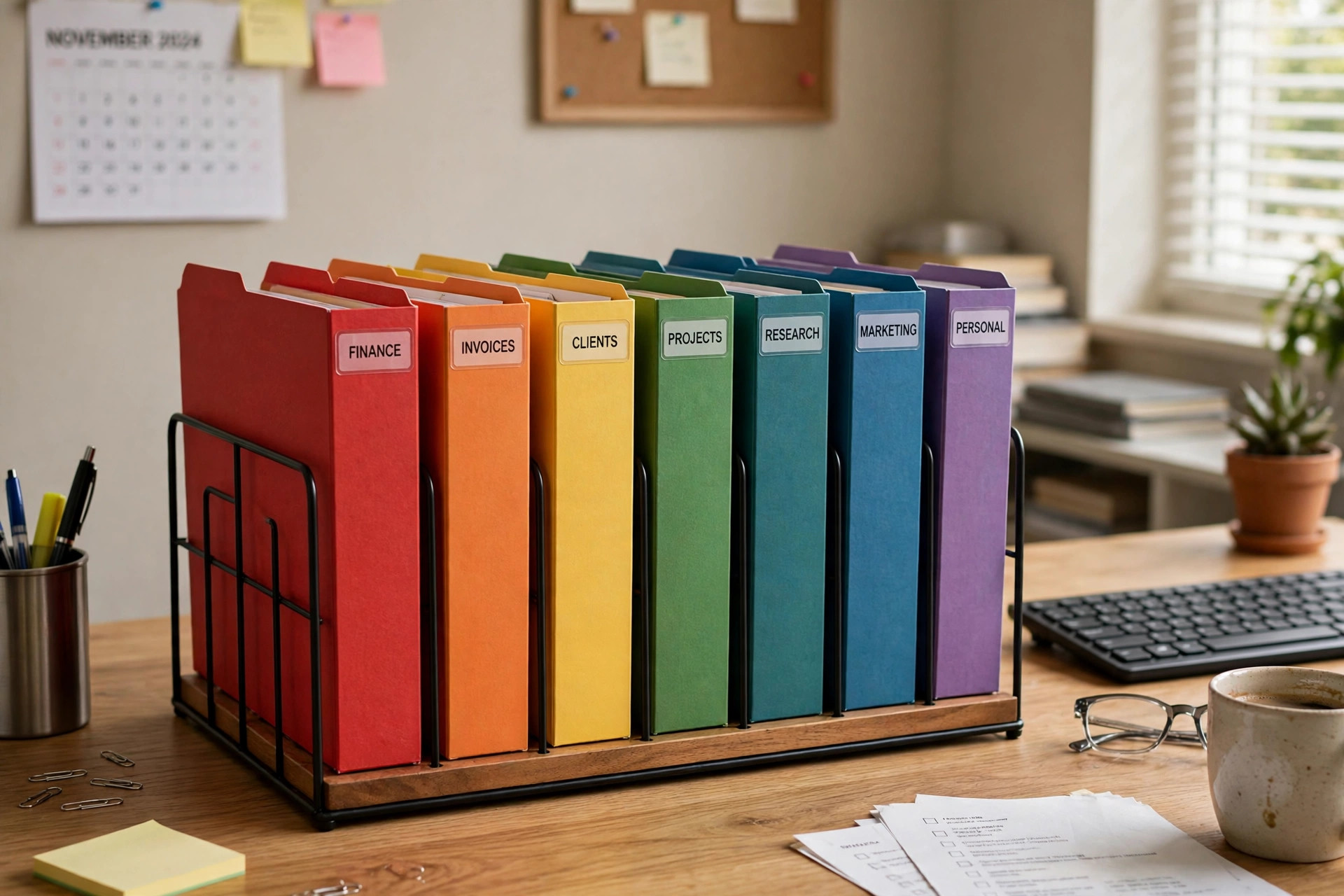
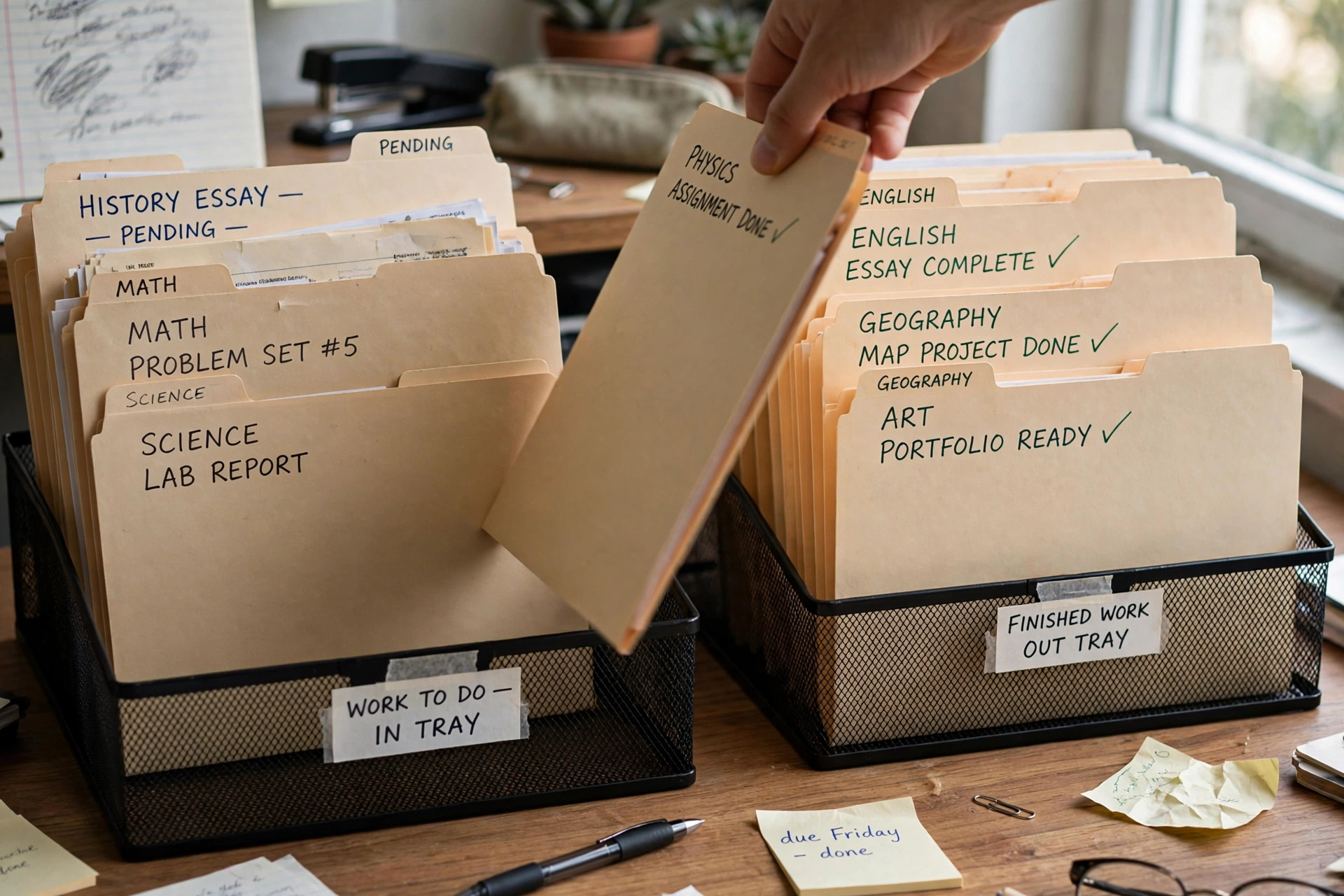
Homework without folders is homework that gets lost, because the maths sheet is in the English book, the English sheet is in the school bag, and the sheet that is nowhere is the sheet that was never handed in. Use one folder per subject — one folder per subject, in tray and out tray — so every sheet has a folder and every folder has a tray. Work that needs doing goes in the "in" tray, work that is finished goes in the "out" tray, and the folder for each subject holds its own sheets, because the folder that holds one subject is the folder that never mixes them up. Colour the folders to match the school timetable, because the colour that matches the lesson is the colour the child grabs without reading. One folder per subject, and nothing gets lost. (Check on Amazon for a set of colour-coded subject folders with an in tray and an out tray.)
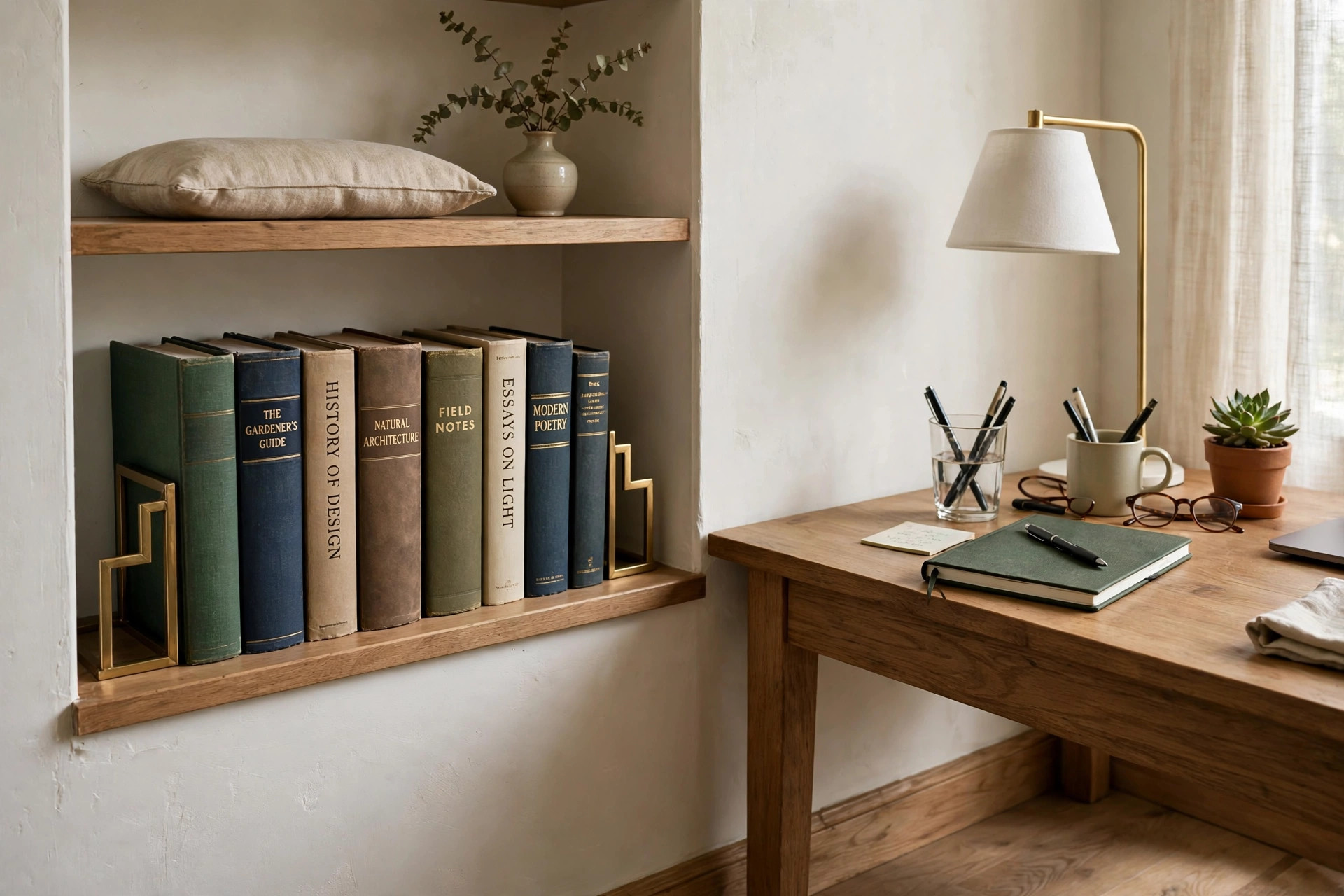
10. A book nook beside the desk — books standing, not stacked
Books stacked flat are books that are never read, because the book at the bottom of the stack is the book that stays there, and the stack that looks tidy is the stack that hides everything under the top book. Build a book nook beside the desk — books standing, not stacked — so the child can see every spine and pull the right book without disturbing the rest. Stand the books upright between two bookends, keep the books for this term in the nook and the rest on the shelf from idea 5, and leave a finger's width of space at the end, because the nook with room to grow is the nook that stays tidy. The book nook borrows its standing rule from 24 Book Storage Ideas for 2026, where the same upright row keeps a whole bookshelf findable. Books standing, and the right book is always in sight.
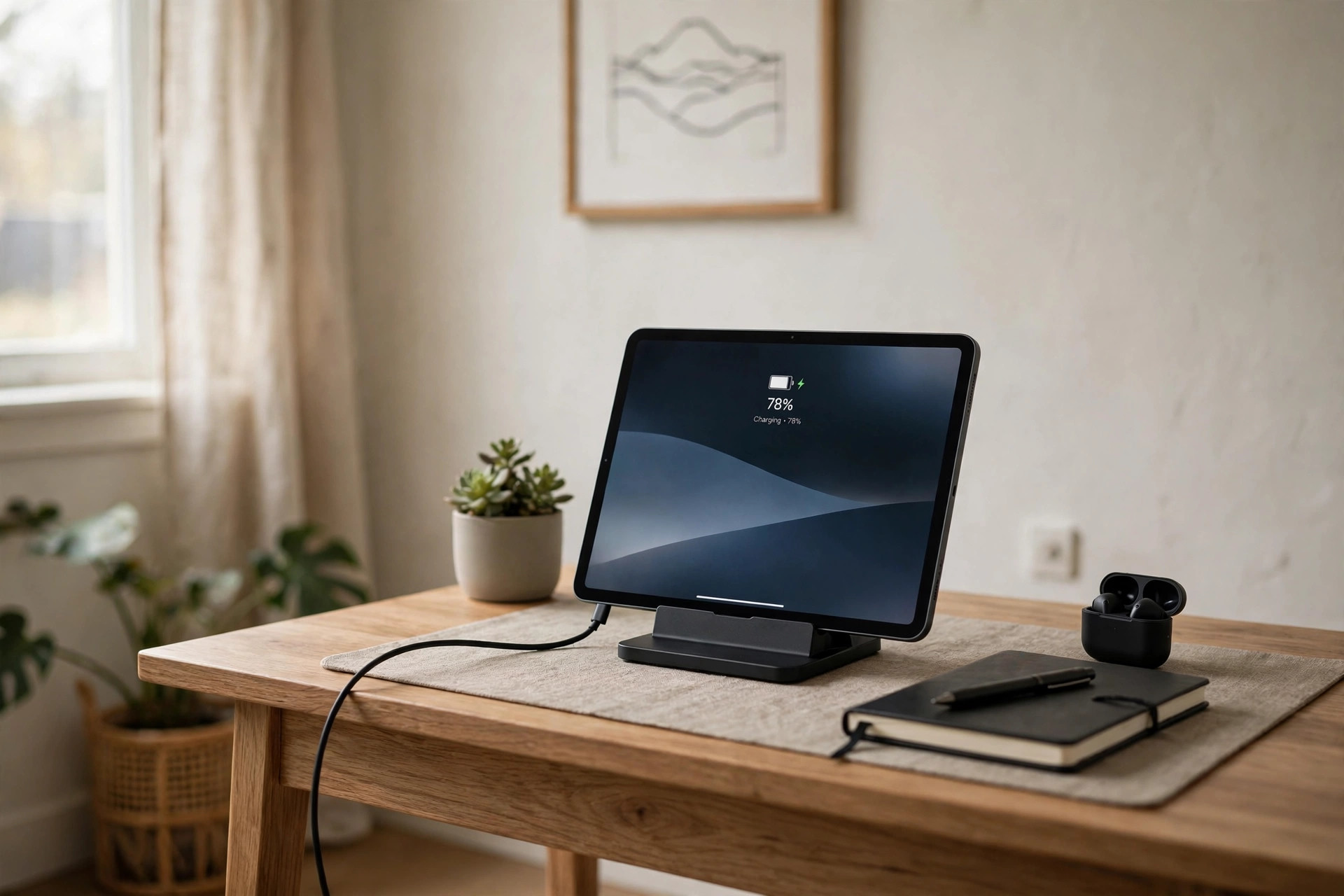
11. A charging spot for the tablet — one cable, one place
A tablet that charges wherever it was dropped is a tablet that is flat when homework starts, because the cable is in the kitchen, the tablet is in the bedroom, and the child who needs the tablet for homework is the child waiting for it to charge. Give the tablet one charging spot — one cable, one place — so the tablet lives on its dock beside the desk and is always charged when homework starts. Put the dock in the supplies zone, run the cable behind the desk so it never dangles, and make the rule that the tablet goes back on the dock when homework ends, because the dock that is the tablet's home is the dock that is always used. One cable, one place, and the tablet is never flat at homework time.
Routines that keep it tidy
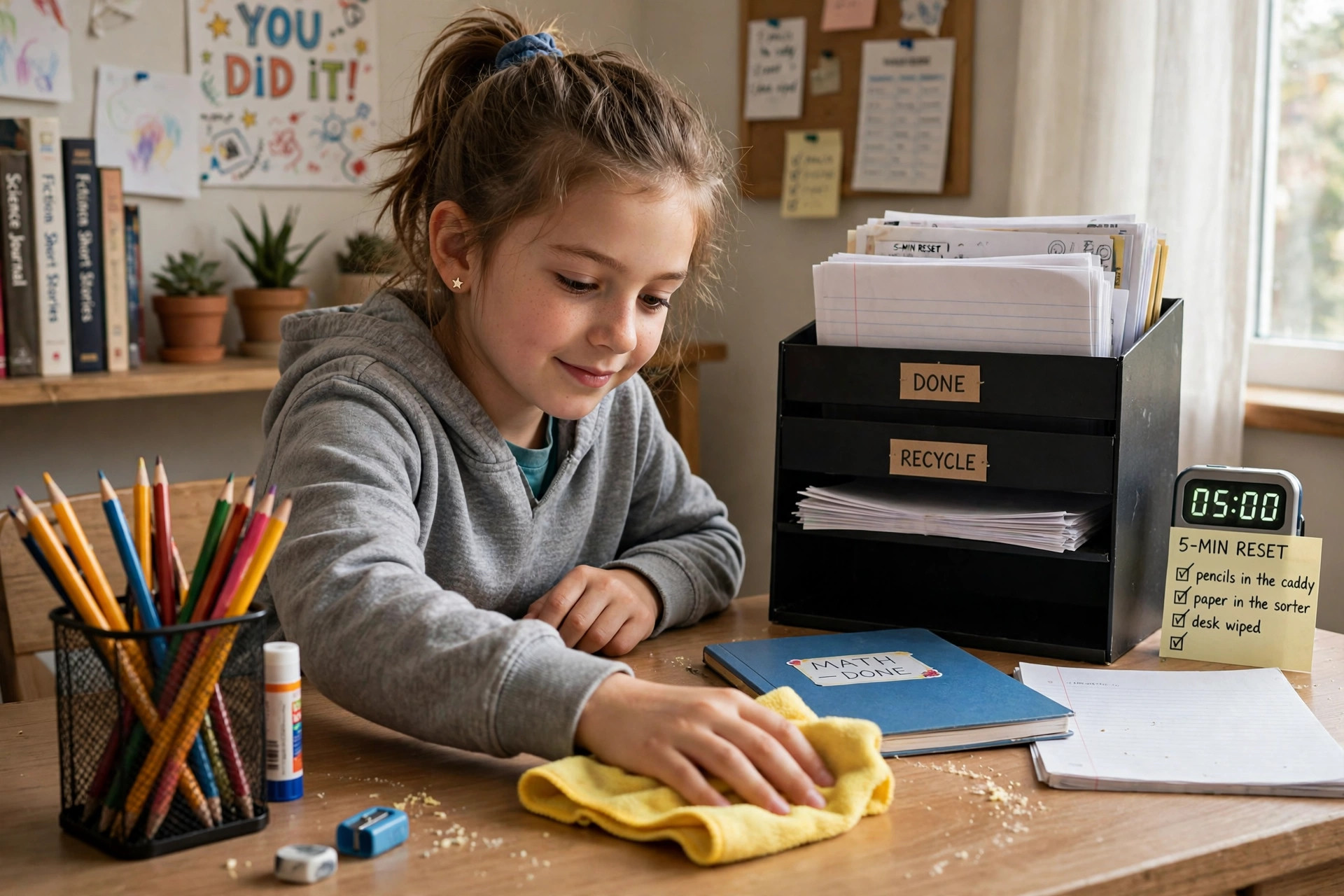
12. A five-minute reset after homework — the habit that keeps the station clear
No station survives without a habit, because the desk is only tidy on the day you set it up and the mess creeps back one pencil at a time. Do a five-minute reset after homework — the habit that keeps the station clear — so the desk is tidy before dinner and starts clean the next day. Pencils back in the caddy, paper back in the sorter, finished work in the out tray, and the desk wiped, because the reset that takes five minutes is the reset that actually happens. Do it together for the first week, because the reset the parent does with the child is the reset the child learns to do alone. Five minutes after homework, and the station never needs a big clean.
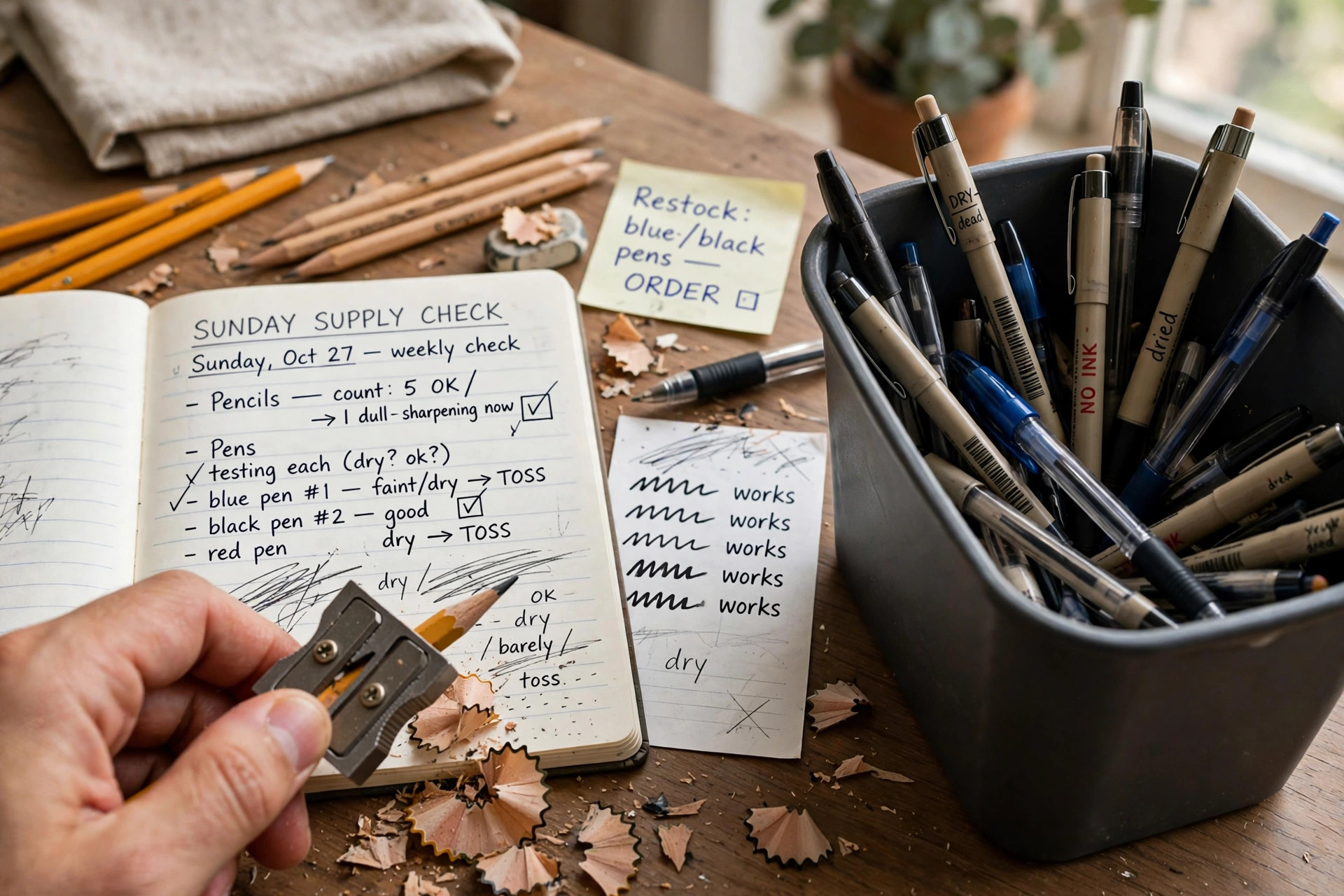
13. A weekly supply check — sharpen, refill, toss the dried pens
Supplies run out at the worst moment, because the pencil is blunt on the day of the spelling test, the glue stick is empty on the day of the collage, and the pen that worked yesterday is the pen that dried out overnight. Do a weekly supply check — sharpen, refill, toss the dried pens — so the station is stocked before the week starts. Every Sunday, sharpen the pencils, refill the paper sorter, test the pens and throw away the dried ones, and write the shopping list for anything that is running low, because the check that happens weekly is the check that stops the mid-homework emergency. Keep the spare supplies in the labelled box on the shelf from idea 5, because the spares that are in reach are the spares that get used. One check a week, and the station never runs dry.
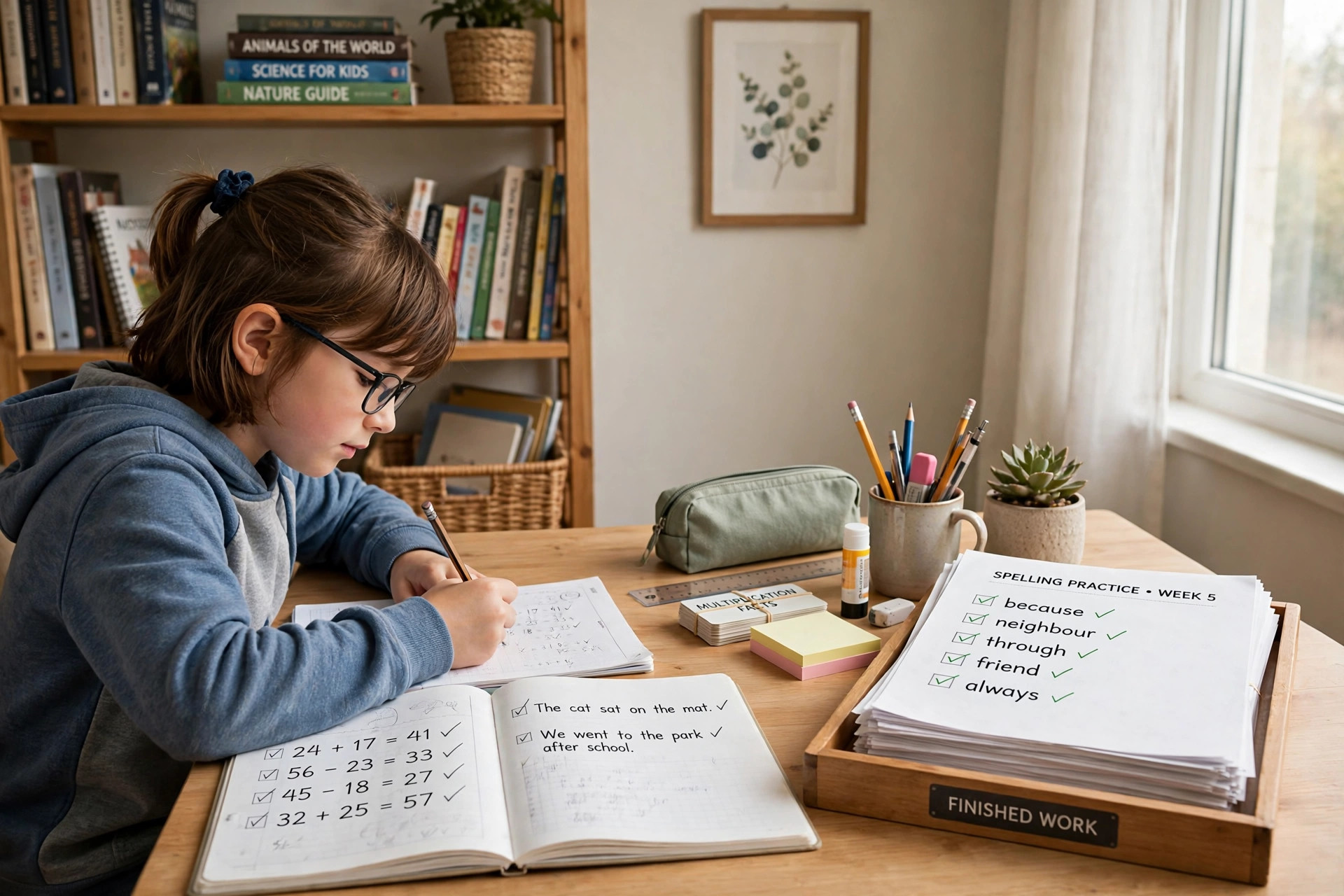
14. A "finished work" tray — completed homework goes here, not on the desk
Finished homework left on the desk is finished homework that gets mixed up with the work still to do, because the completed sheet is under the next worksheet, the next worksheet is under the book, and the parent who checks the homework is the parent digging through the pile. Use a "finished work" tray — completed homework goes here, not on the desk — so every finished sheet lands in one place and the desk holds only the work that is still open. Put the tray in the finished zone from idea 3, and empty it into the school bag the night before, because the tray that empties nightly is the tray that never overflows. One tray, and the finished work is always findable.
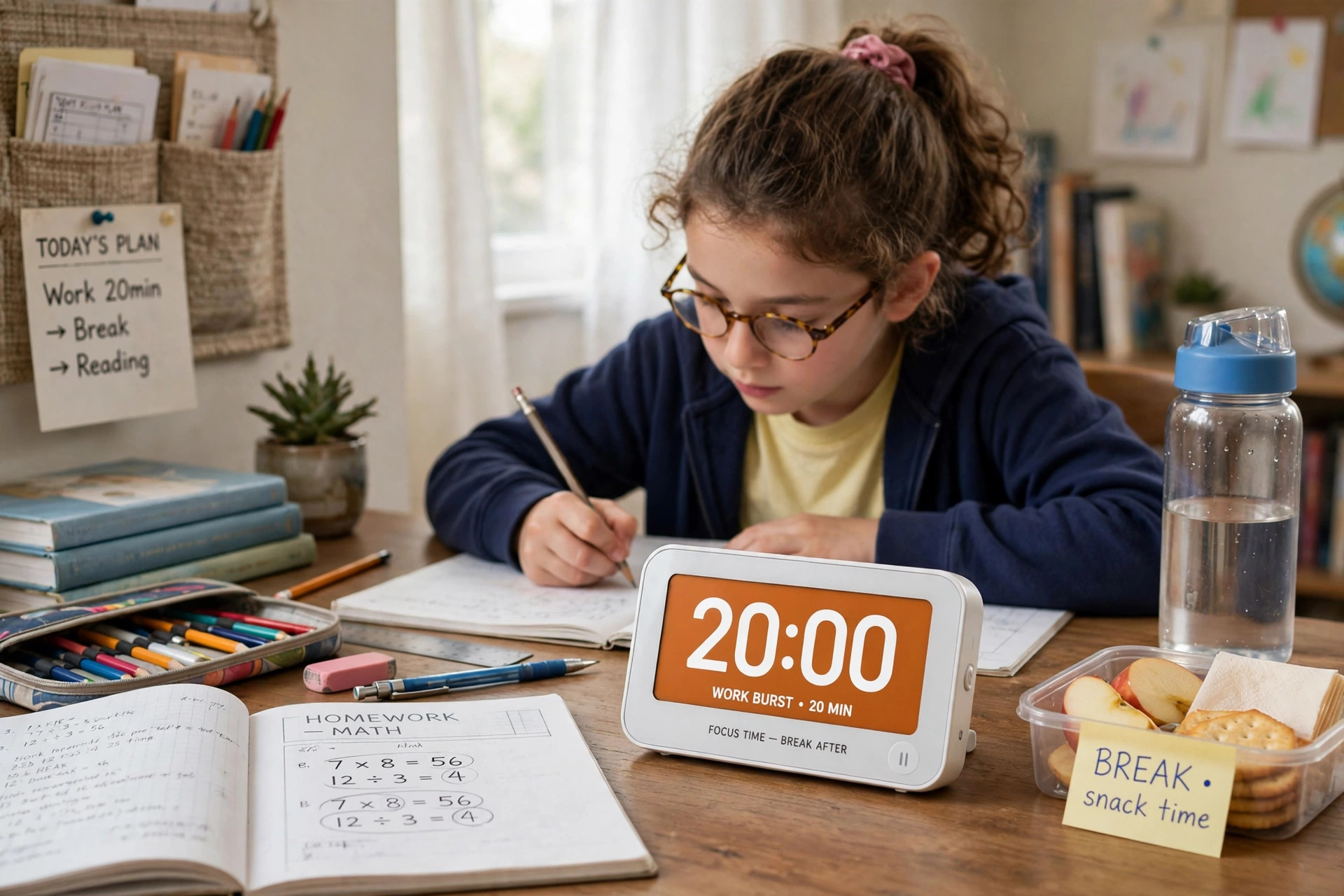
15. A homework timer on the desk — work in bursts, tidy in the breaks
Homework without a timer is homework that drags, because the child who has no end in sight is the child who drifts, and the desk that holds a drifting child is the desk that slowly fills with fiddling. Put a timer on the desk — work in bursts, tidy in the breaks — so the child works for twenty minutes, then has five minutes to stretch and put one thing away. Set the timer where the child can see it, agree the burst length together, and use the break to clear one small thing — a pencil back in the cup, a paper back in the sorter — because the break that tidies is the break that keeps the desk clear. A timer on the desk, and homework has a rhythm.
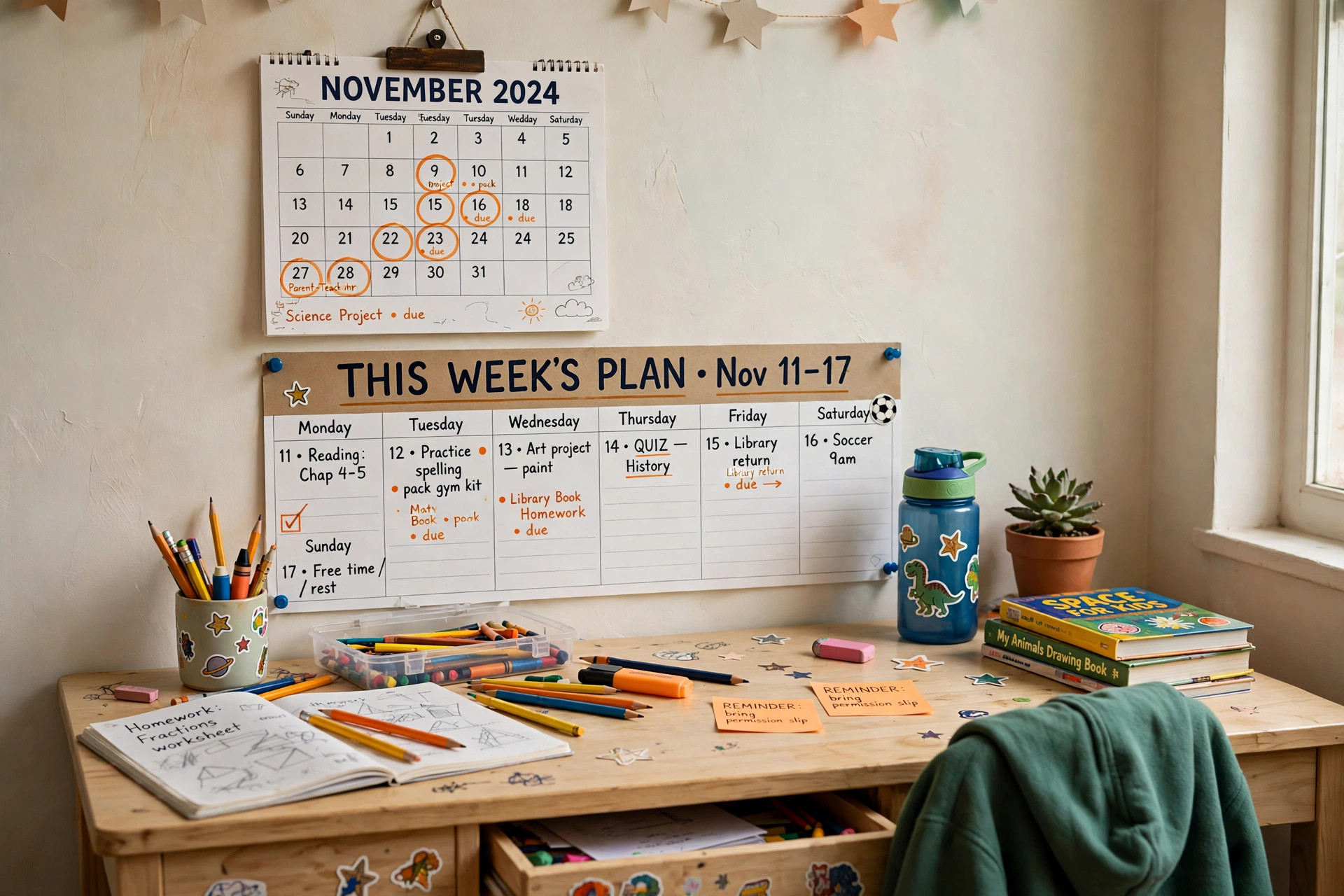
16. A wall calendar and a weekly planner — due dates where the child can see them
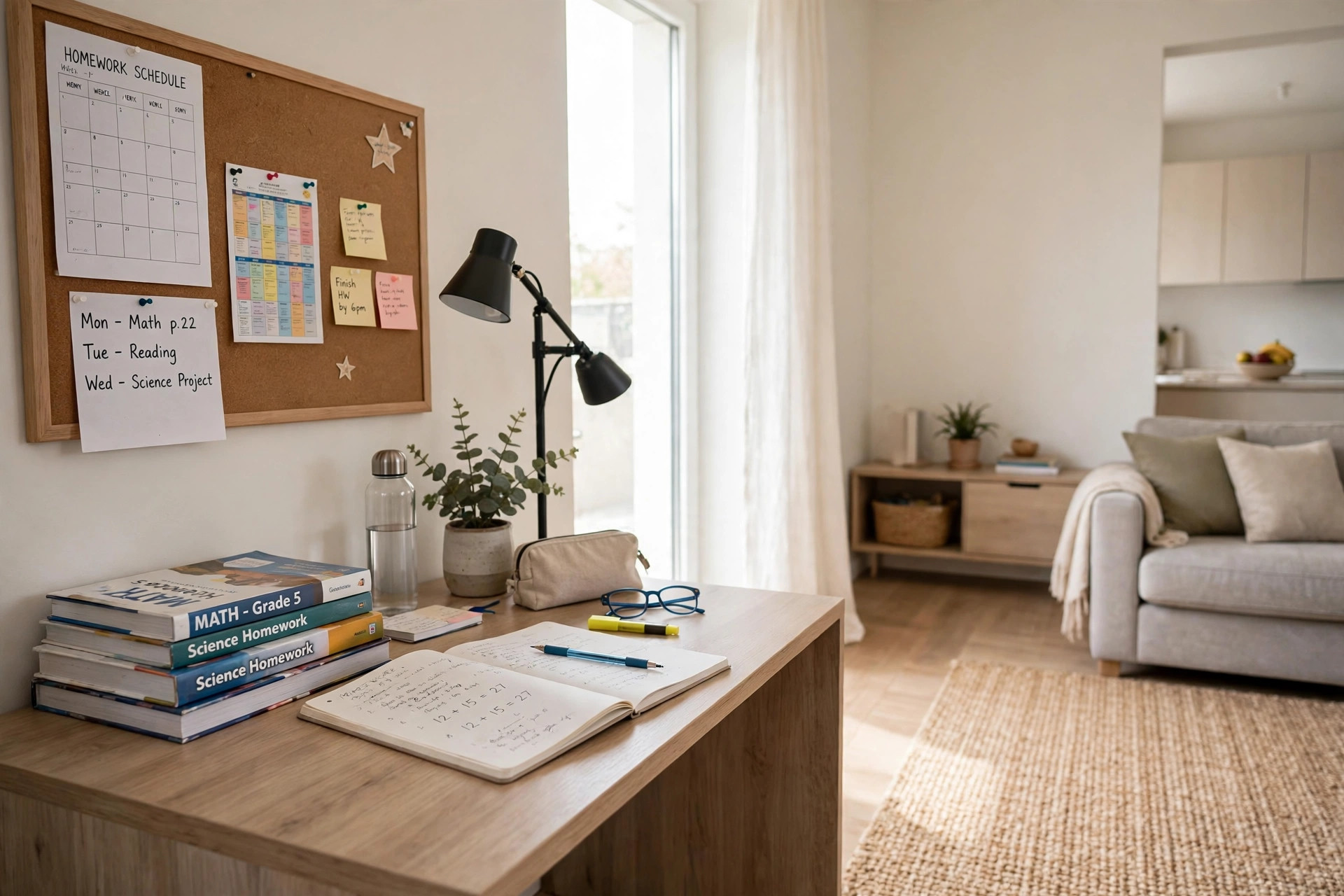
Due dates that live only in the school planner are due dates that get forgotten, because the planner is in the school bag, the school bag is by the door, and the child who never opens the planner is the child who remembers the project the night before it is due. Hang a wall calendar and a weekly planner above the desk — due dates where the child can see them — so the week is on the wall and nothing sneaks up. Write the due dates in one colour, the clubs and activities in another, and check the calendar together every Sunday, because the calendar that is checked weekly is the calendar that catches the forgotten project. One calendar on the wall, and the due dates stop surprising anyone.
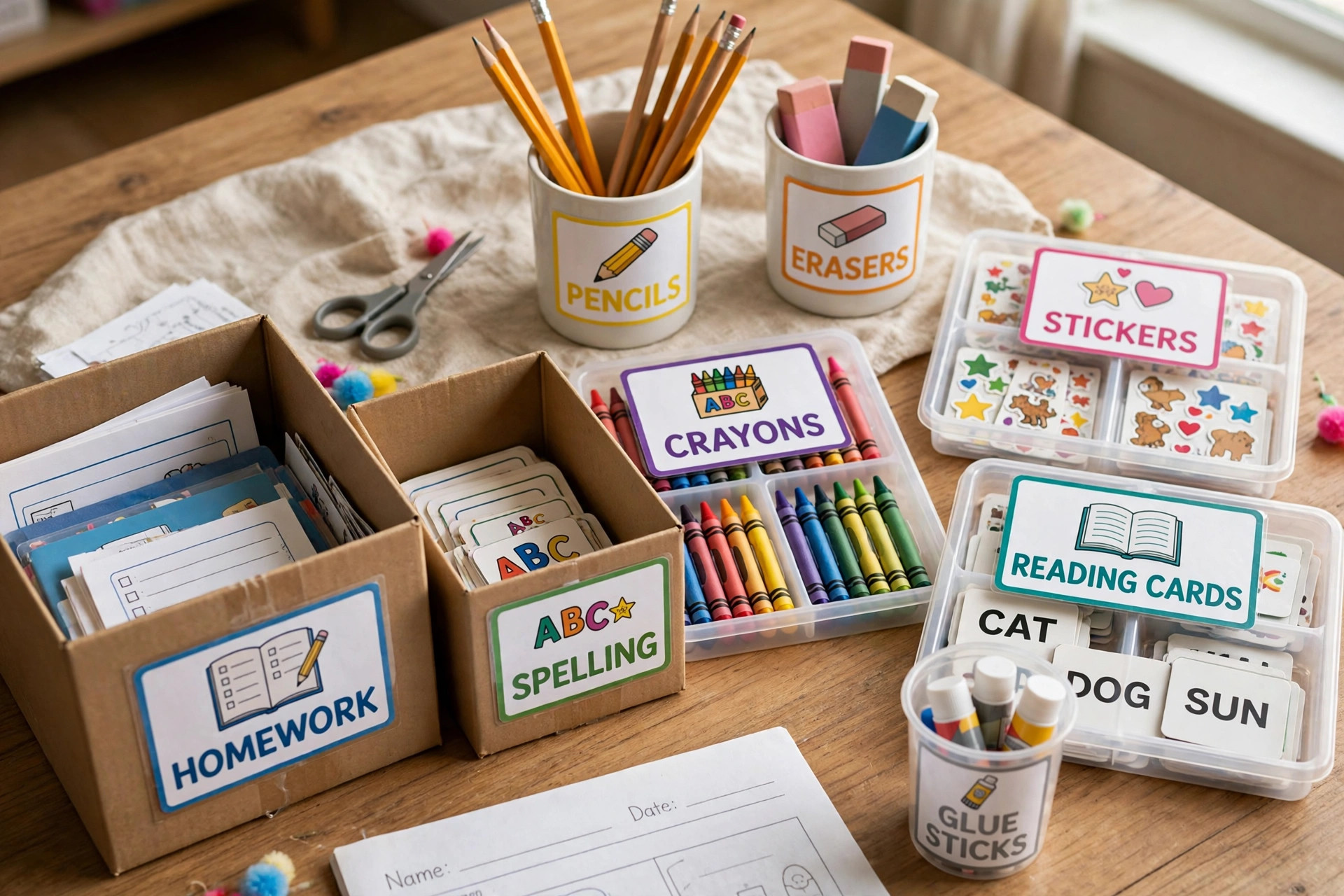
17. Label everything — the label that stops the mixing
A station without labels is a station where everything drifts, because the box that holds the pencils today holds the Lego tomorrow, and the child who cannot read the box is the child who guesses. Label everything — the label that stops the mixing — so every box, cup and tray says what it holds and the things go back where they belong. Use picture labels for younger children and word labels for older ones, and put the label where the child looks — on the front of the box, not the lid — because the label that is seen is the label that is followed. The caddy, the sorter, the trays and the shelf boxes all get labels, because the station that is labelled is the station that stays sorted. (Check on Amazon for a small label maker with tape that sticks to plastic bins and paper folders.)
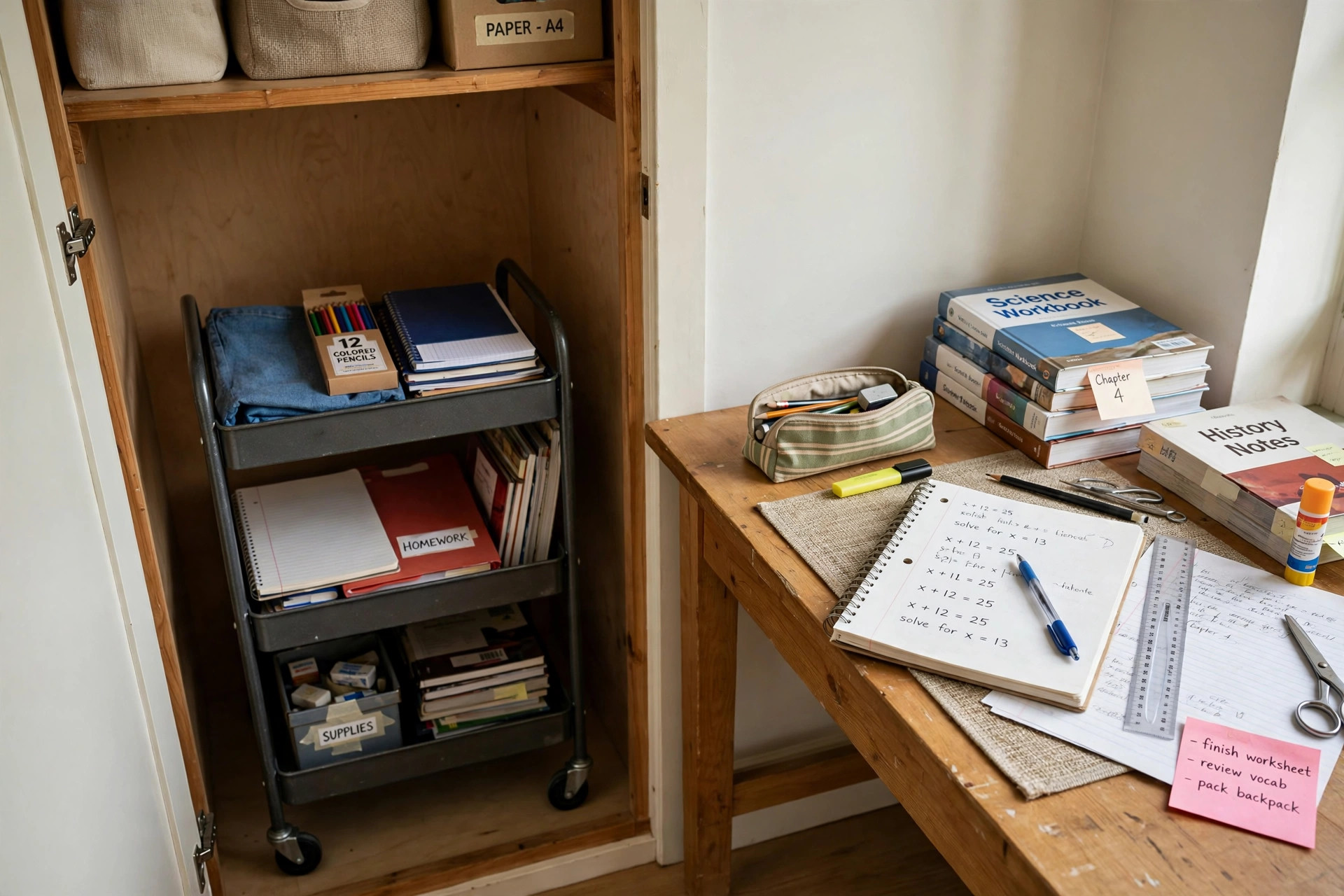
18. A rolling cart station — the homework cart that parks in a cupboard
A home with no room for a desk is a home where homework happens on the kitchen table and the supplies live in a drawer somewhere else, because the table that is also the dinner table is the table that has to be cleared twice a day. Use a rolling cart — the homework cart that parks in a cupboard — so the whole station rolls to the table when homework starts and rolls away when dinner is served. Load the cart with the caddy, the folders and the pencil cups, wheel it to the table, and park it in the cupboard when the meal is ready, because the cart that moves is the station that fits any home. The rolling cart is covered in 22 Rolling Cart Organization Ideas for 2026, where the same cart works as a kitchen helper, a craft station and a homework station in turn. One cart, and the station goes where the child goes.
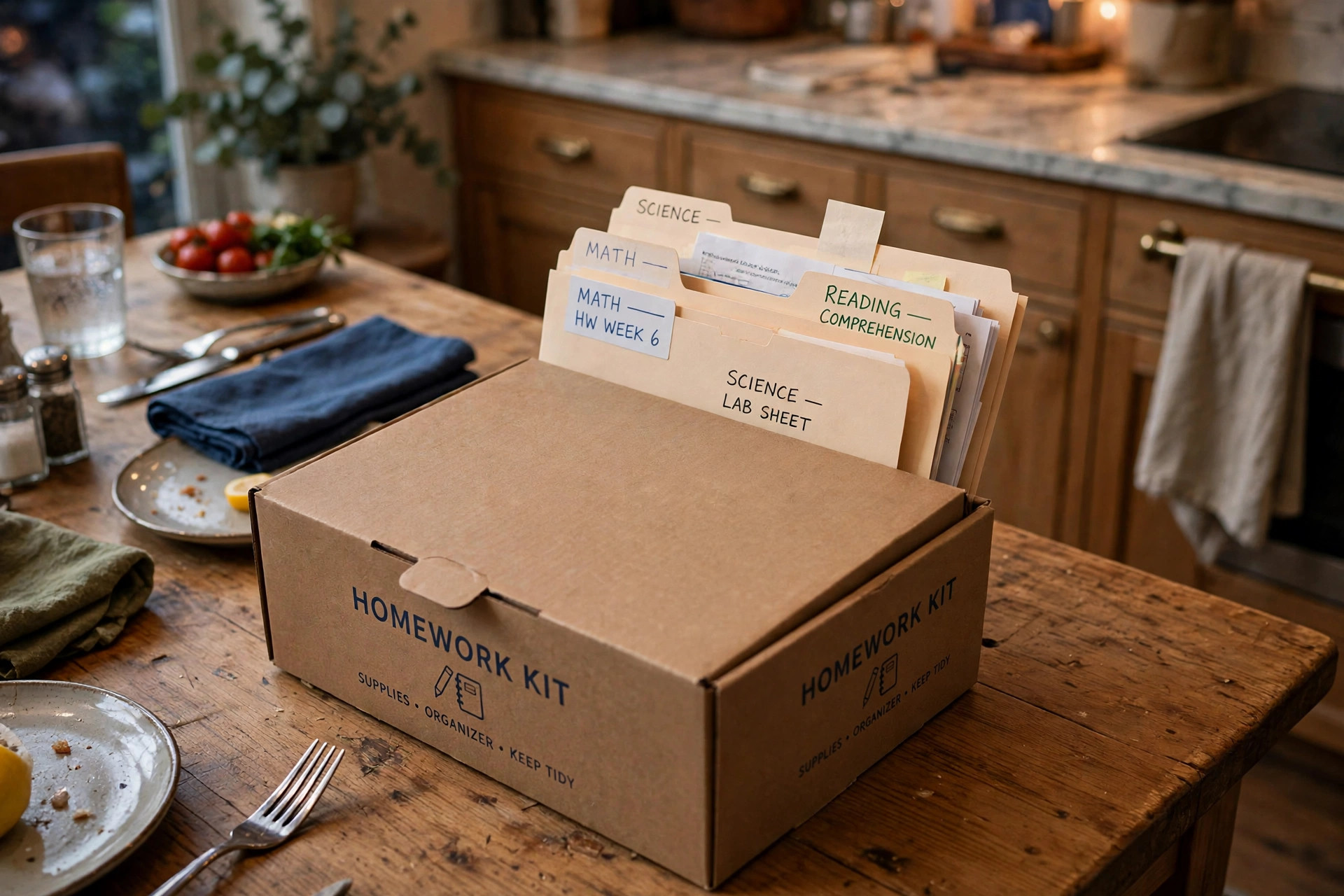
19. The kitchen table homework kit — a box that opens for homework and closes for dinner
Homework at the kitchen table without a kit is homework that takes over the table, because the pencils spread, the paper spreads, and the table that was set for dinner is the table that is still covered in worksheets. Pack a homework kit in one box — a box that opens for homework and closes for dinner — so the whole station lifts off the table in one move. Put the caddy, the folders, the pencil cups and the timer in the box, open it when homework starts, and close it and slide it onto a shelf when dinner is ready, because the box that closes is the box that keeps the table free. Keep the box by the table, not in another room, because the kit that is in reach is the kit that gets opened. One box, and the kitchen table does two jobs.
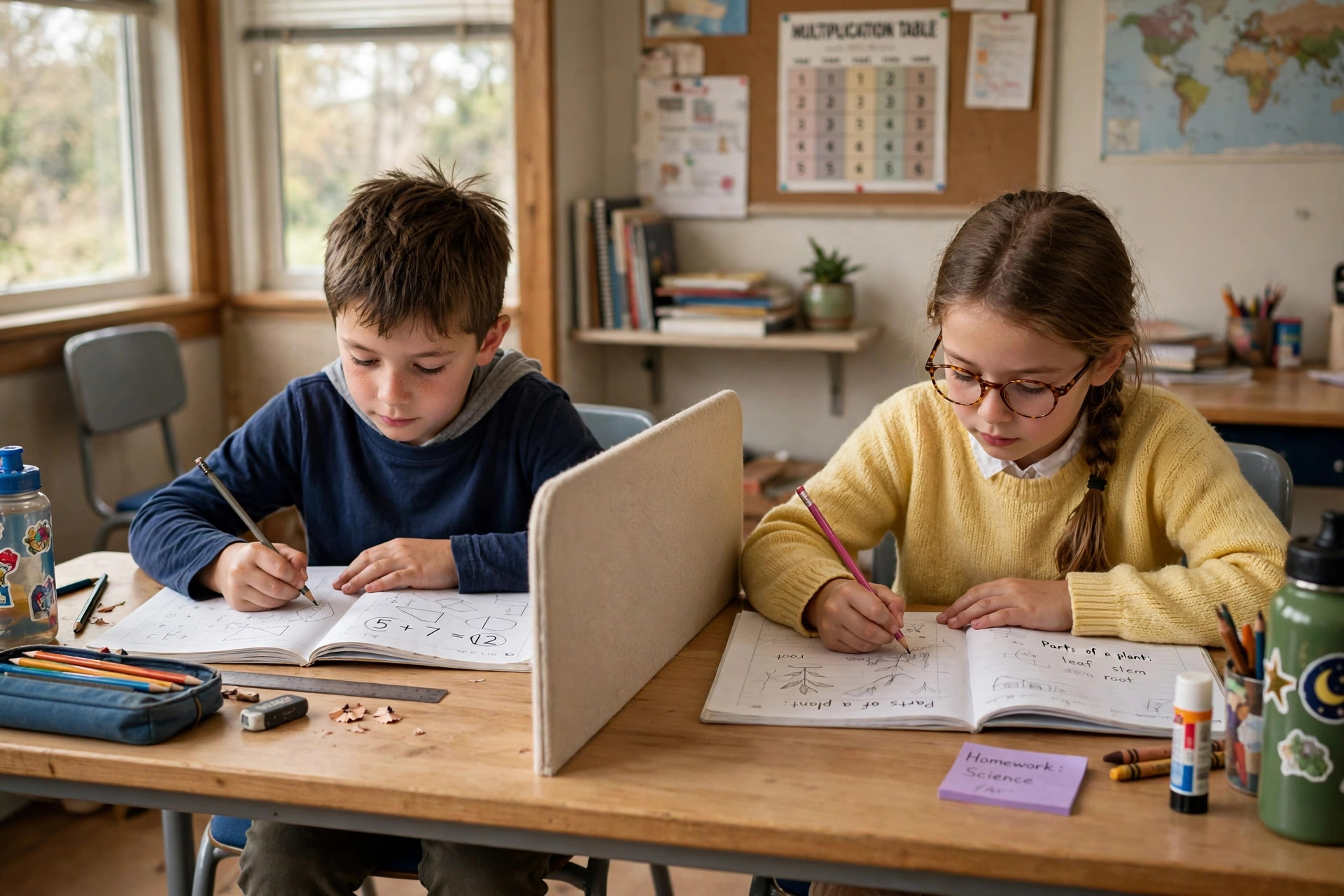
20. A homework station for two — siblings side by side, one divider between them
Two children sharing one desk is two children sharing one mess, because the pencils mix, the papers mix, and the child who loses their worksheet is the child blaming the sibling beside them. Build a station for two — siblings side by side, one divider between them — so each child has their own half of the desk and their own supplies. Put a small divider or a bookend row down the middle, give each child their own caddy and their own pencil cup in their own colour, and keep the shared things — the sharpener, the ruler — in the middle, because the divider that marks the halves is the divider that stops the mixing. The shared room itself is covered in 26 Kids Room Storage Ideas for 2026, where two children in one room get their own zones without a fight. One desk, one divider, and both children have a station.
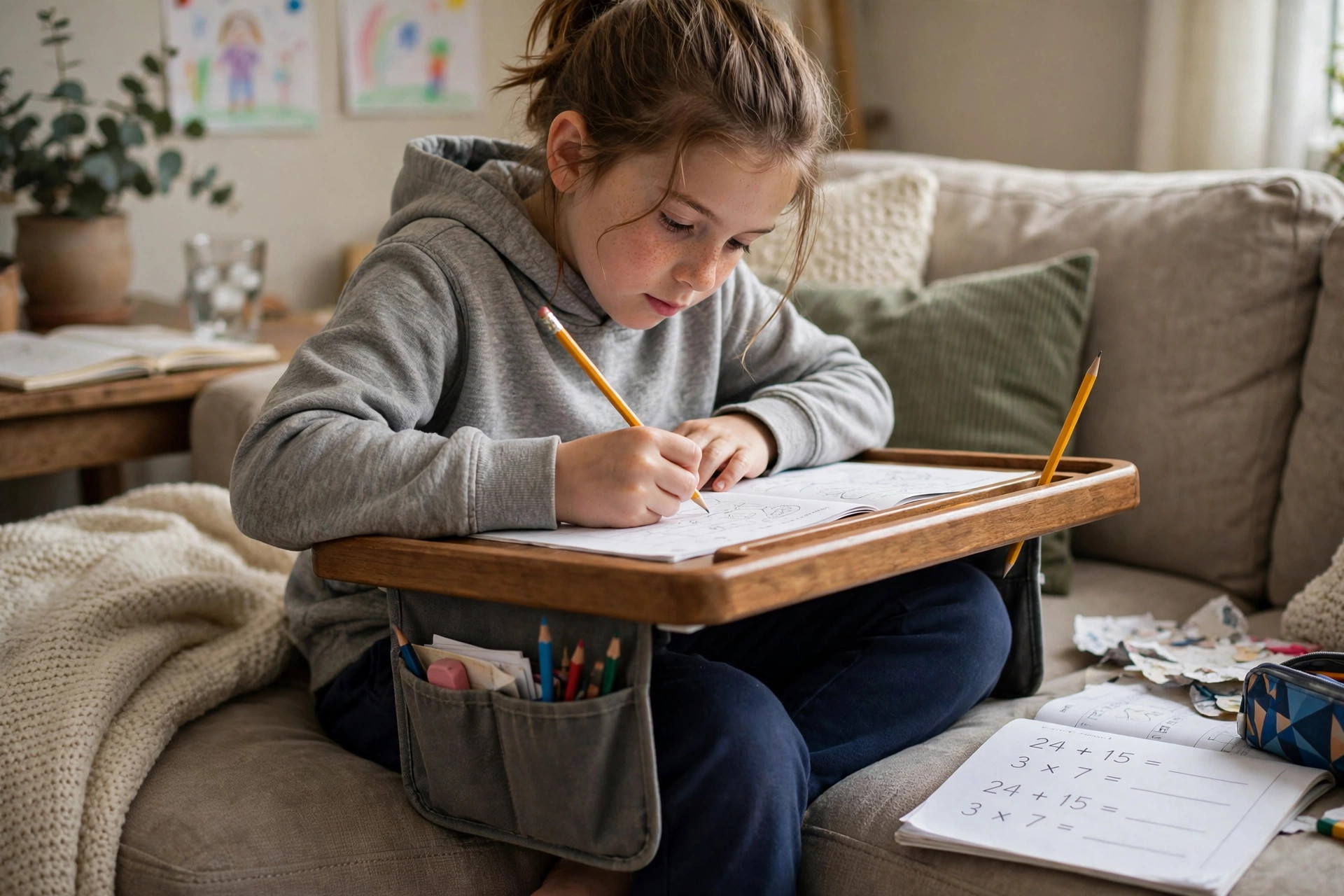
21. A lap desk for the sofa — homework without a desk at all
Some homes have no desk and no corner to spare, because the living room is small, the bedrooms are shared, and the child who has nowhere to write is the child doing homework balanced on a cushion. Use a lap desk — homework without a desk at all — so the child has a firm surface wherever they sit. Pick a lap desk with a raised edge to stop the pencil rolling off, a pocket underneath for the paper, and a flat top big enough for the worksheet and the book, because the lap desk that holds the work is the lap desk that gets used. Pair it with the homework kit from idea 19, so the lap desk and the box together are a station that fits in a cupboard. One lap desk, and homework happens anywhere.
22. A seasonal sort-out — the station that grows with the school year
A station set up in September is a station that does not fit by February, because the child has grown, the subjects have changed, and the folders that held the autumn term are the folders holding last term's work. Do a seasonal sort-out — the station that grows with the school year — so the station changes as the child does. At the start of each term, clear the desk, throw away the finished work that is no longer needed, move the old folders to a storage box, and check the chair height, because the station that is sorted each term is the station that fits the child all year. The art supplies that outgrow the caddy move to their own home in 20 Art Supply Organization Ideas for 2026, where the bigger collection gets the space it needs. One sort-out a term, and the station grows with the child.
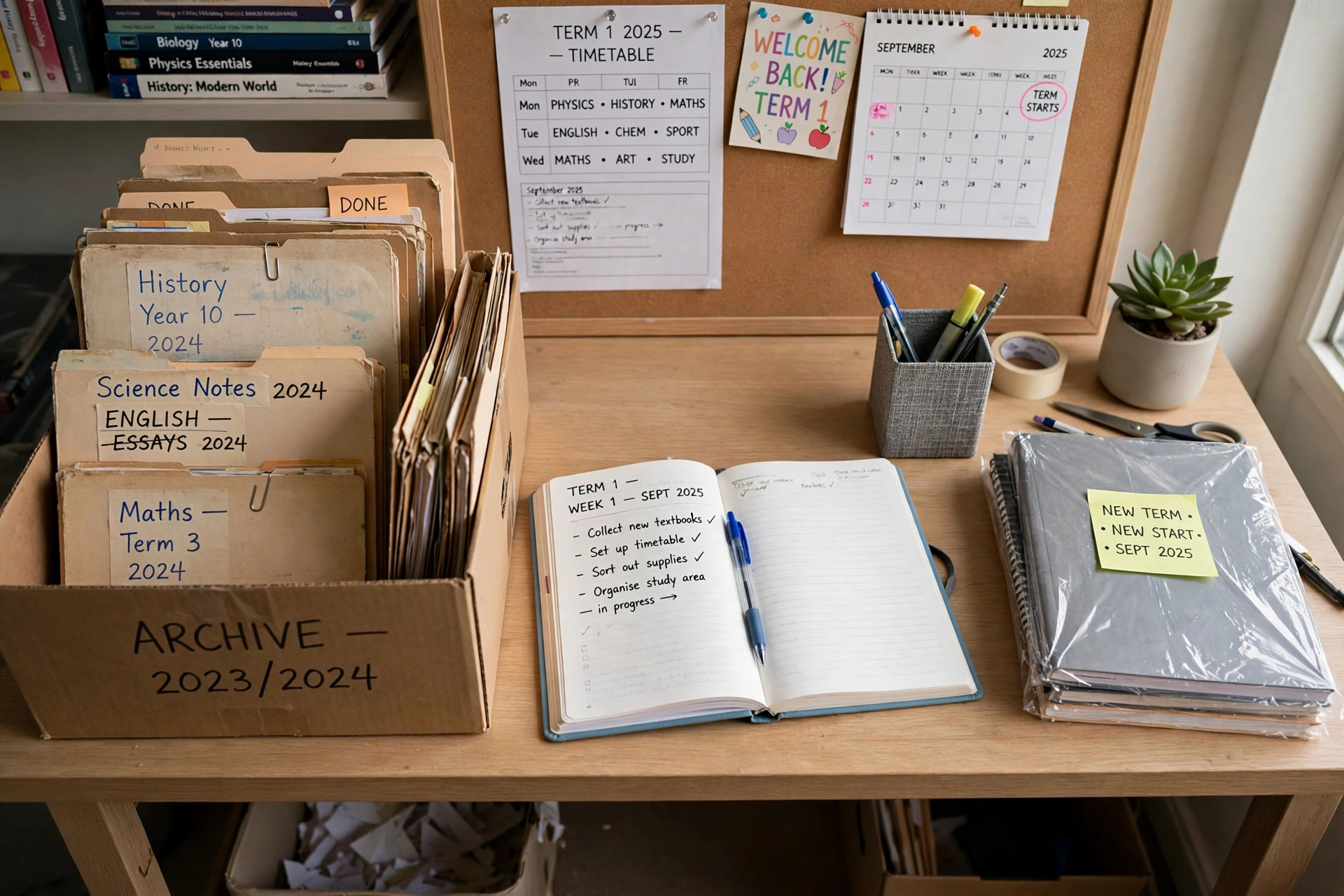
Which homework station idea fits which situation?
| Situation | Best first move | Budget | Tools needed |
|---|---|---|---|
| No dedicated homework spot | Pick one corner, not a whole room (idea 1) | Free | None |
| Desk too big or too small | A desk that fits the child (idea 2) | Low–Medium | Desk, chair |
| Desk always cluttered | Zone it: work, supplies, finished (idea 3) | Free | Labels |
| Supplies scattered everywhere | A desktop caddy (idea 4) | Low | Caddy |
| Books piled on the desk | A wall shelf above the desk (idea 5) | Low | Shelf |
| Small things vanish daily | A pegboard above the desk (idea 6) | Low | Pegboard, hooks |
| Pencils mixed between siblings | One pencil cup per child (idea 7) | Low | Cups |
| Paper everywhere | Sort by type in a file sorter (idea 8) | Low | File sorter |
| Homework lost between subjects | One folder per subject (idea 9) | Low | Folders, trays |
| Books stacked, never found | A book nook beside the desk (idea 10) | Low | Bookends |
| Tablet cable chaos | One charging spot (idea 11) | Low | Dock, cable |
| Station tidy for one day only | Five-minute reset after homework (idea 12) | Free | None |
You do not need all 22 ideas. You need the three that solve your homework corner — usually the one corner that is always ready, the desktop caddy that keeps the supplies in reach, and the five-minute reset after homework that keeps it all tidy. Start with the corner, do it this weekend before the school week starts, and put the caddy on the desk. Do that and the next time the school bag hits the floor, the pencil will be in the cup, the folder will be in the tray, and homework will start without the hunt.
Save this post for the next school term, and if the school systems around the station need the same treatment, read 22 School Organization Ideas for 2026 next — it is Post 12, the morning routine and school bag systems this station plugs into — and 20 Art Supply Organization Ideas for 2026, Post 16, for the art supplies that share the caddy. This is the fifth post of the new Organization by problem run — Posts 56 to 60, one problem at a time — and the run closes with the corner where homework actually happens. The desk itself gets its own deep dive in Desk Organization, where sizes, setups and small-space desks are covered in full.
Publish date assigned at publishing time. Updated as new homework station finds are tested.
Frequently asked questions
How do I set up a homework station in a small space?
Pick one corner, not a whole room — a small desk against a wall with daylight is enough. Use the wall above the desk for a shelf and a pegboard, so the books and small things live up high and the desktop stays clear for writing. If there is no room for a desk at all, a rolling cart or a homework kit in one box gives the same station in a form that parks in a cupboard when dinner is served.
What supplies should a homework station have?
Pencils, pens, scissors, a ruler, paper sorted by type, one folder per subject, and a charging spot if the child uses a tablet. Keep them in a desktop caddy and a file sorter on the desk, not in a drawer — supplies the child can see are supplies the child actually uses. One pencil cup per child, colour-coded, stops the mixing when siblings share the station.
How do I get my child to actually use the homework station?
Let the child help set it up — choosing their pencil cup colour and labelling their own folders makes the station theirs. Then keep it ready: a five-minute reset after homework means the desk is tidy when the child sits down, and a timer with short work bursts keeps homework from dragging. A station that is ready and a routine that is short are what turn the corner into a habit.