22 Spice Storage Ideas for 2026
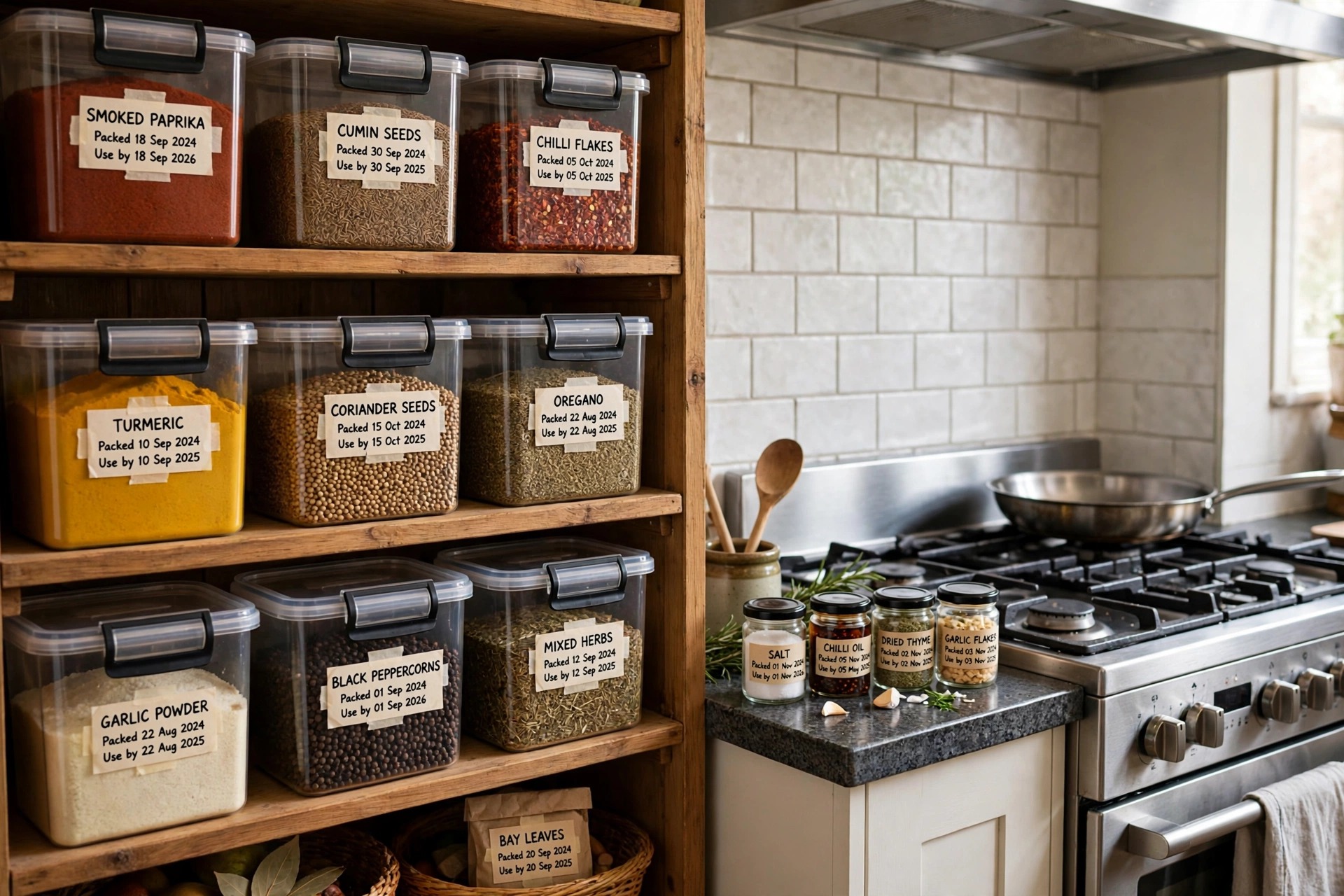
A spice you cannot find is a spice you do not use, and a spice you do not use is a jar that sits in the cupboard for three years until it tastes of nothing. The fix is not a bigger spice cupboard, it is a spice setup where every jar is labelled, every label faces you, and the jar you reach for is the jar you find in two seconds.
These 22 spice storage ideas are labelled spice setups that speed up cooking: start with matching jars and clear labels, put a rotating shelf in the corner cupboard, slide a drawer insert under the cutlery, and finish with a refill station in the pantry — so dinner gets faster and the spices stay fresh.
Every idea below works in a real kitchen, from a small flat with one cupboard to a family kitchen with a pantry. The kitchen cabinets the spices live in are covered in 20 Kitchen Cabinet Organization Ideas for 2026, where the cupboards get their own system before the jars arrive — and the pantry the bulk jars are kept in is in 25 Pantry Organization Ideas for 2026, so the big bags have a home too. Pick three ideas that fit your kitchen, start with the labels, and build from there.
Start simple: jars, labels and one shelf
1. Matching glass jars with labels — the same jar, the same label, every spice visible
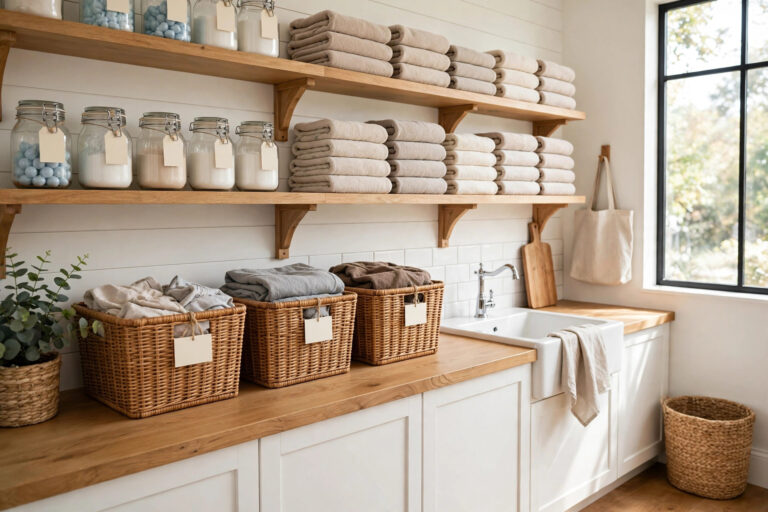
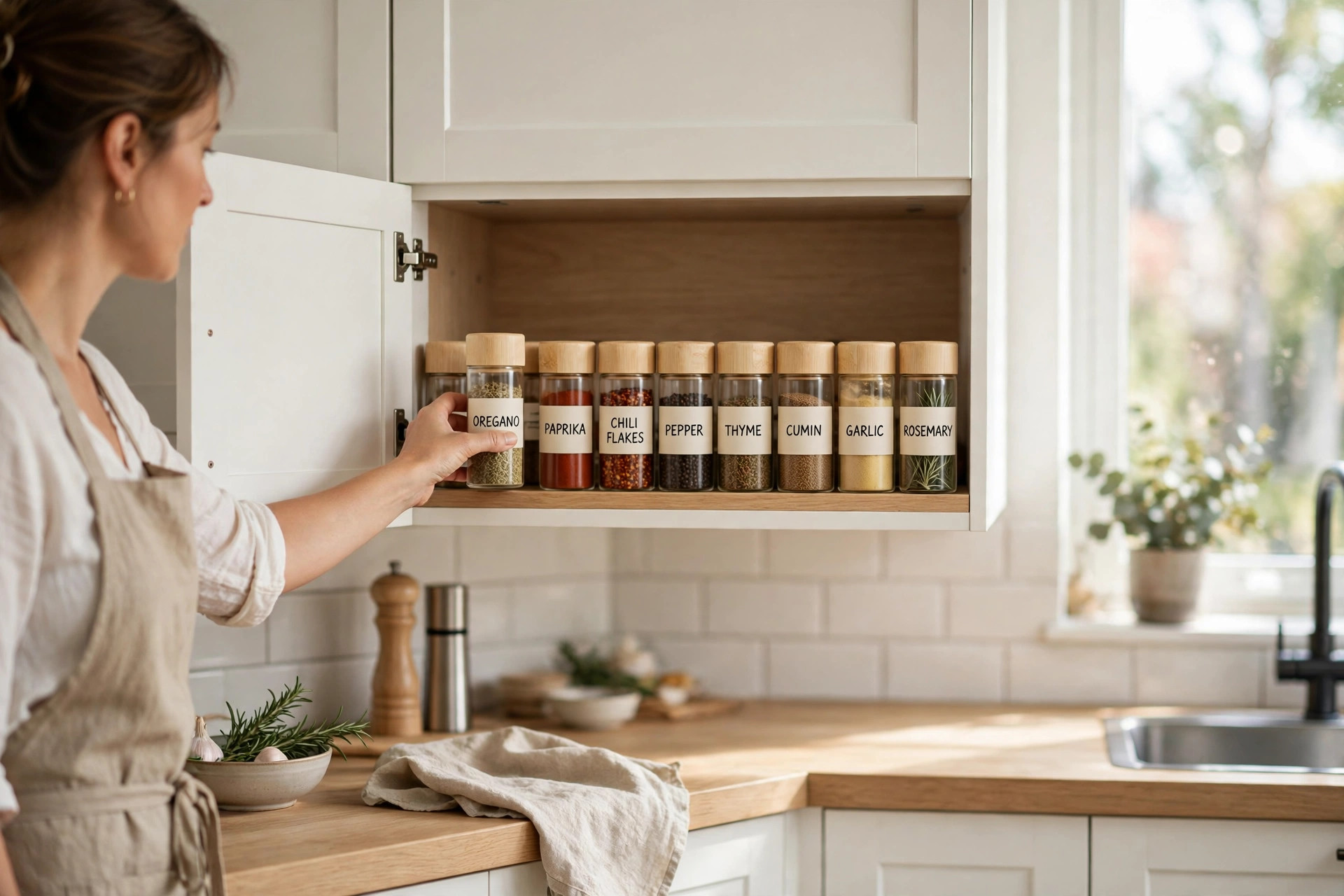
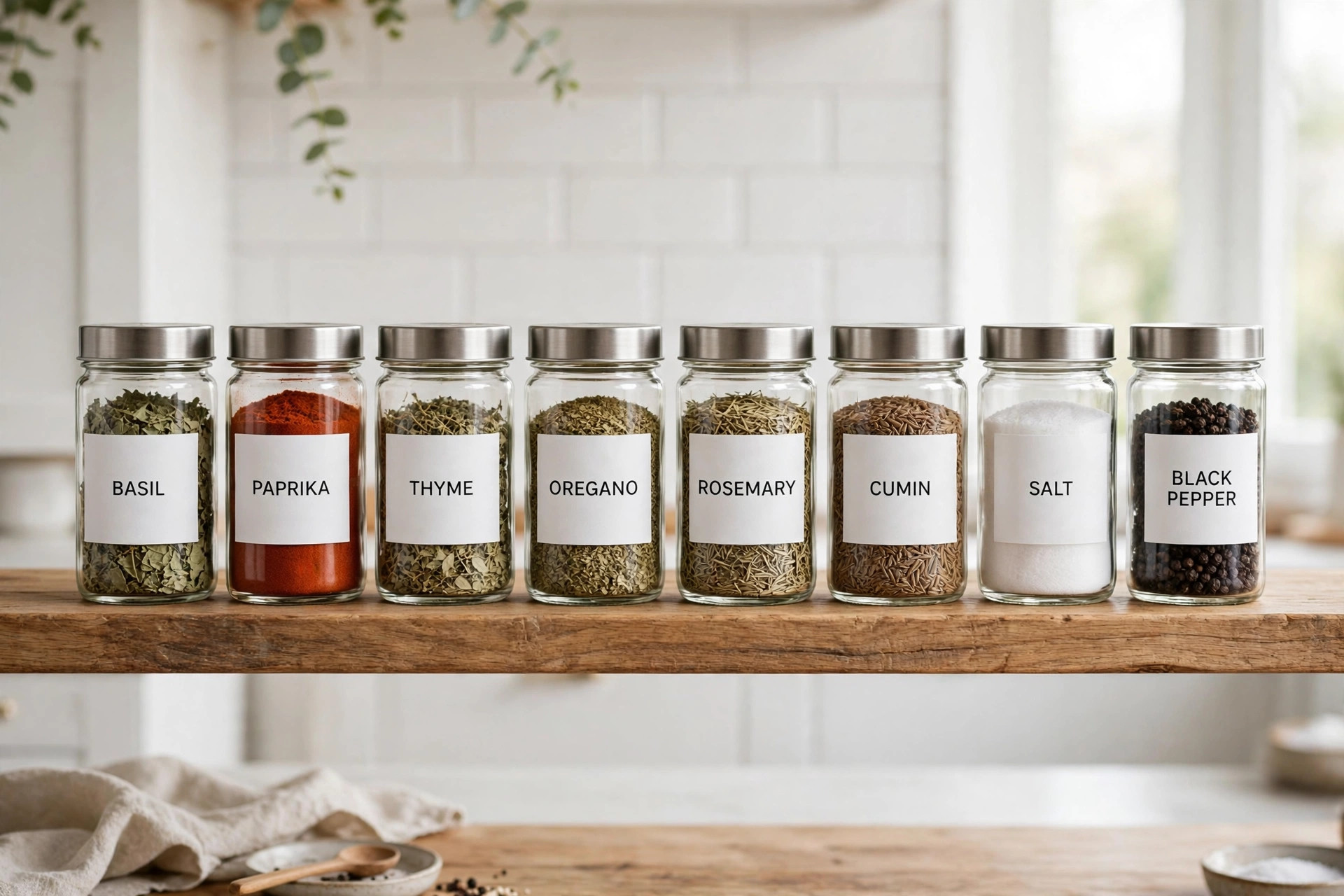
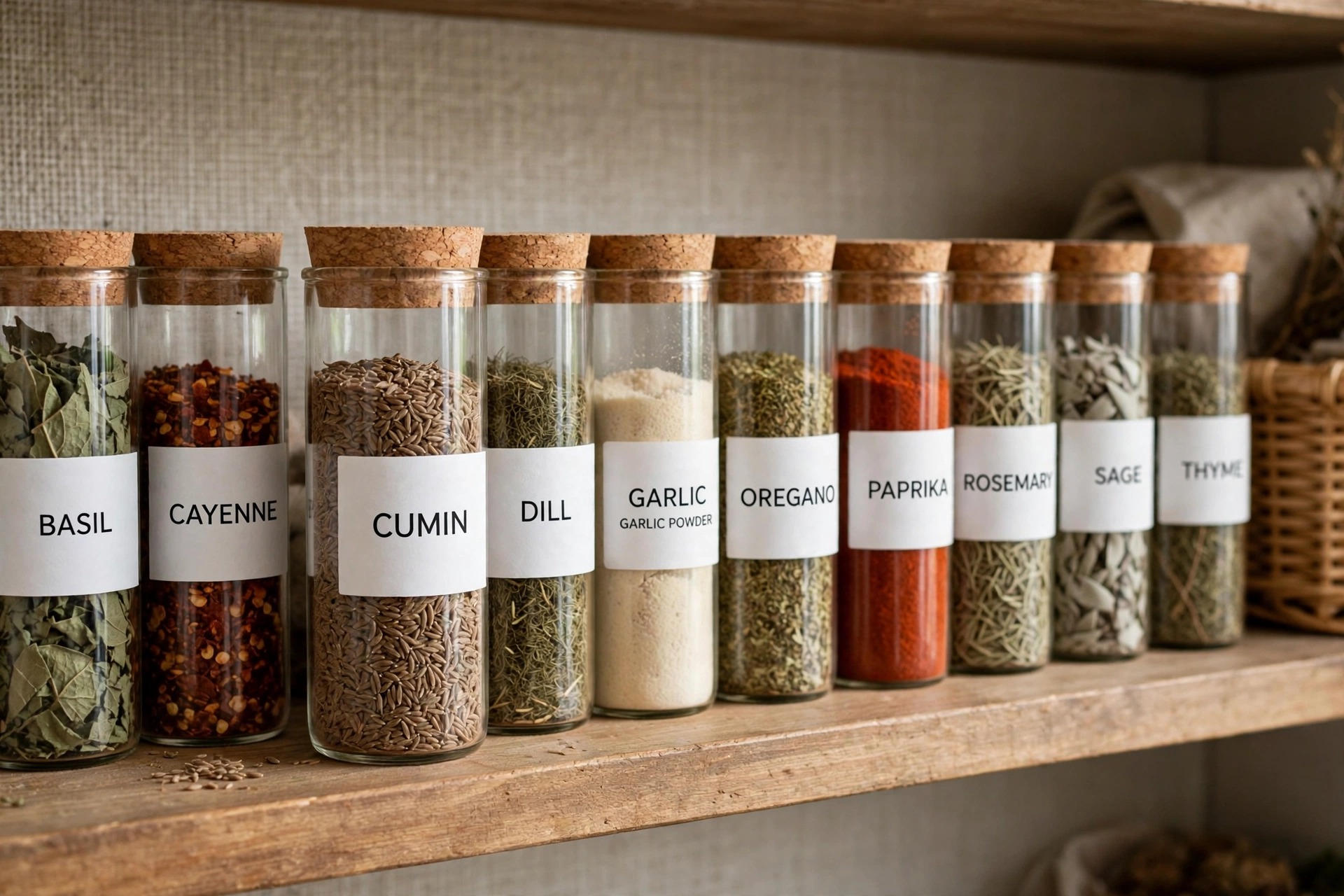
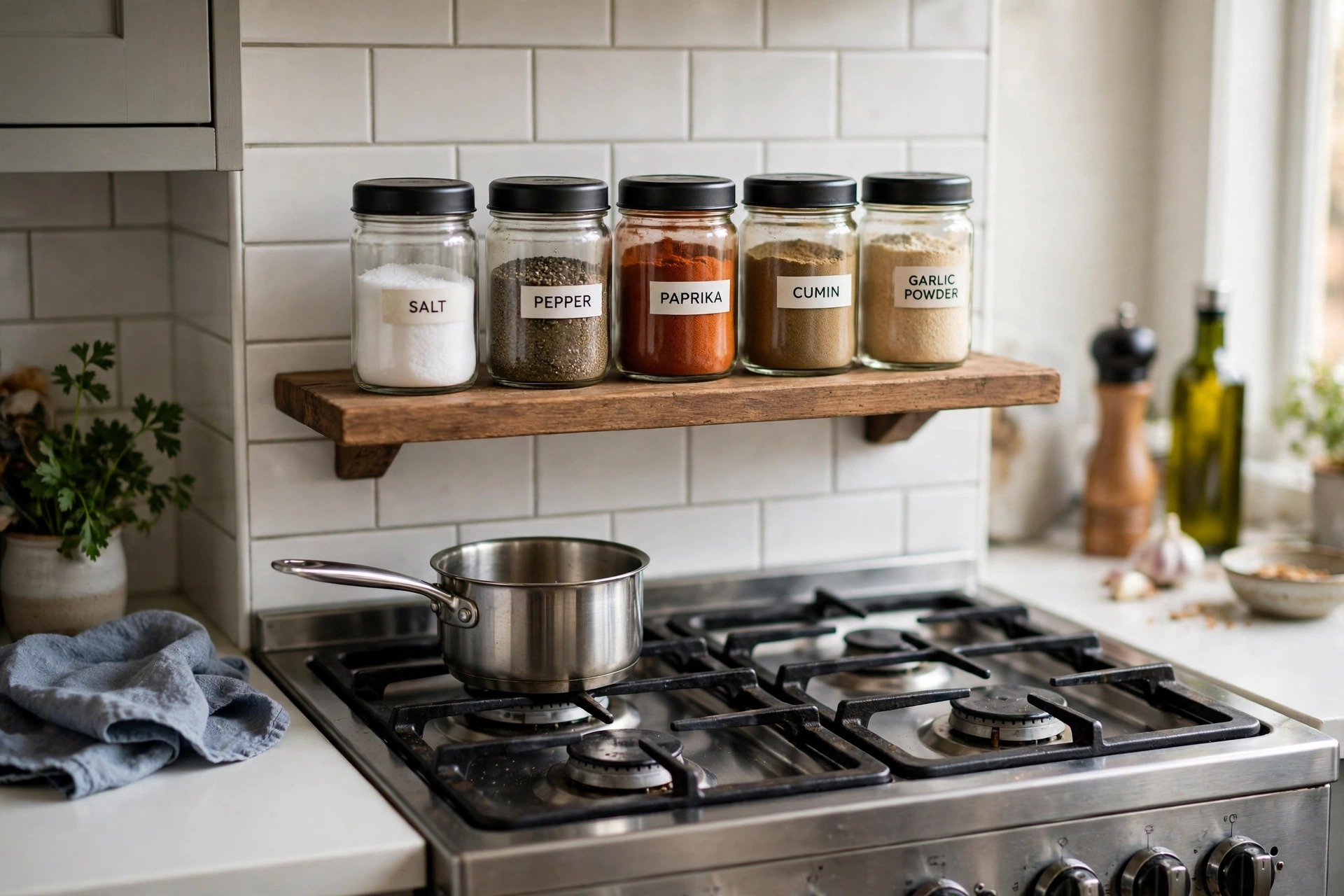
Spices in different jars are spices you cannot see, because the tall jar hides the short jar and the short jar hides the one behind it, and the jar you need is the jar at the back. Decant them all into matching glass jars — the same jar, the same label, every spice visible — so the shelf reads as one neat row and every spice is visible at a glance. Use the same jar for everything, square or round, and the same label in the same place on every jar, because the shelf that matches is the shelf you can read in two seconds. Glass shows the colour of the spice, so you can tell the paprika from the chilli powder before you open the jar, and a tight lid keeps the spice fresh for months. Label the lid as well as the front, because the lid is the label you see when the jar is on a high shelf. Matching jars and matching labels, and the spice shelf looks like a shop display. (Check on Amazon for a set of matching glass spice jars with lids, which keeps every jar the same size and shape.)
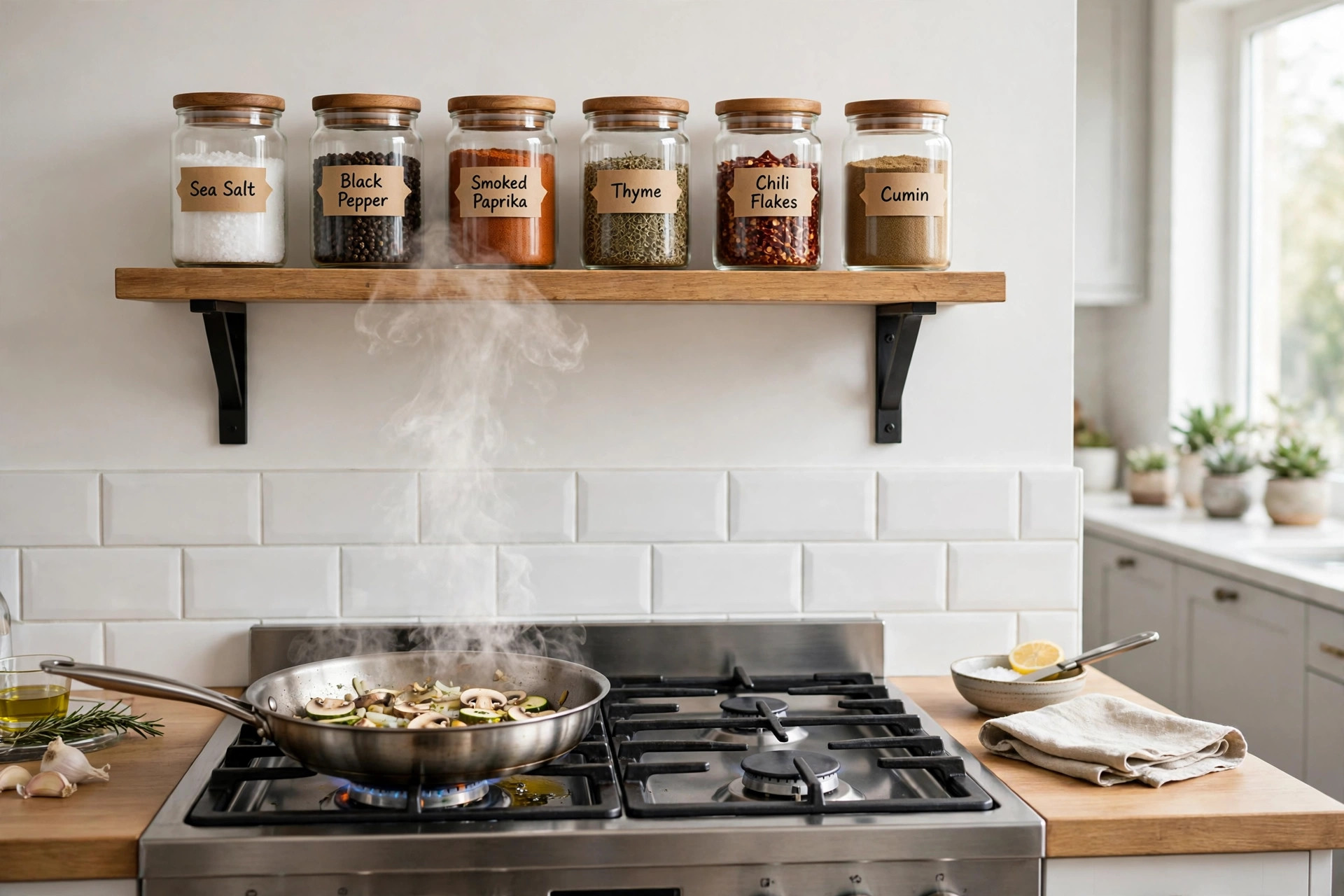
2. A spice shelf above the cooker — the spices you reach for live where you cook
Spices in a cupboard across the kitchen are spices you walk to get, because the cupboard is the place they live and the cooker is the place you use them, and every trip across the kitchen is a trip you skip when you are in a hurry. Put a small shelf above the cooker — the spices you reach for live where you cook — so the salt, the pepper and the five spices you use every day are within arm's reach of the pan. Keep it to one shelf and one row, because the shelf that holds one row is a shelf you can read and the shelf that holds three rows is a shelf that hides jars. Choose jars with tight lids, because the steam from the cooker is the thing that clumps the spices, and wipe the shelf once a week when you wipe the hob. A shelf above the cooker, and the spices are where the cooking happens.
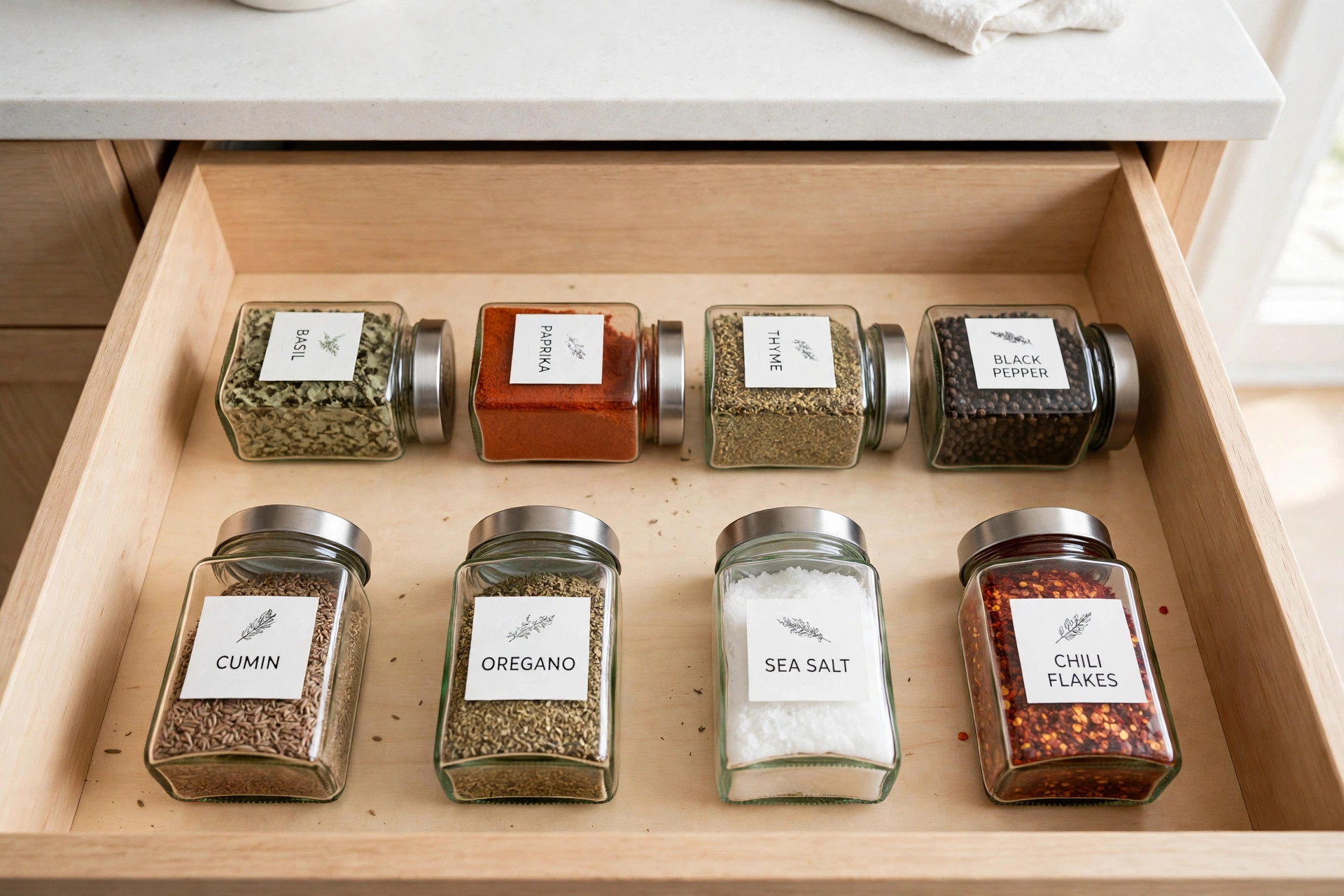
3. A drawer spice insert — flat jars in a drawer, labels facing up
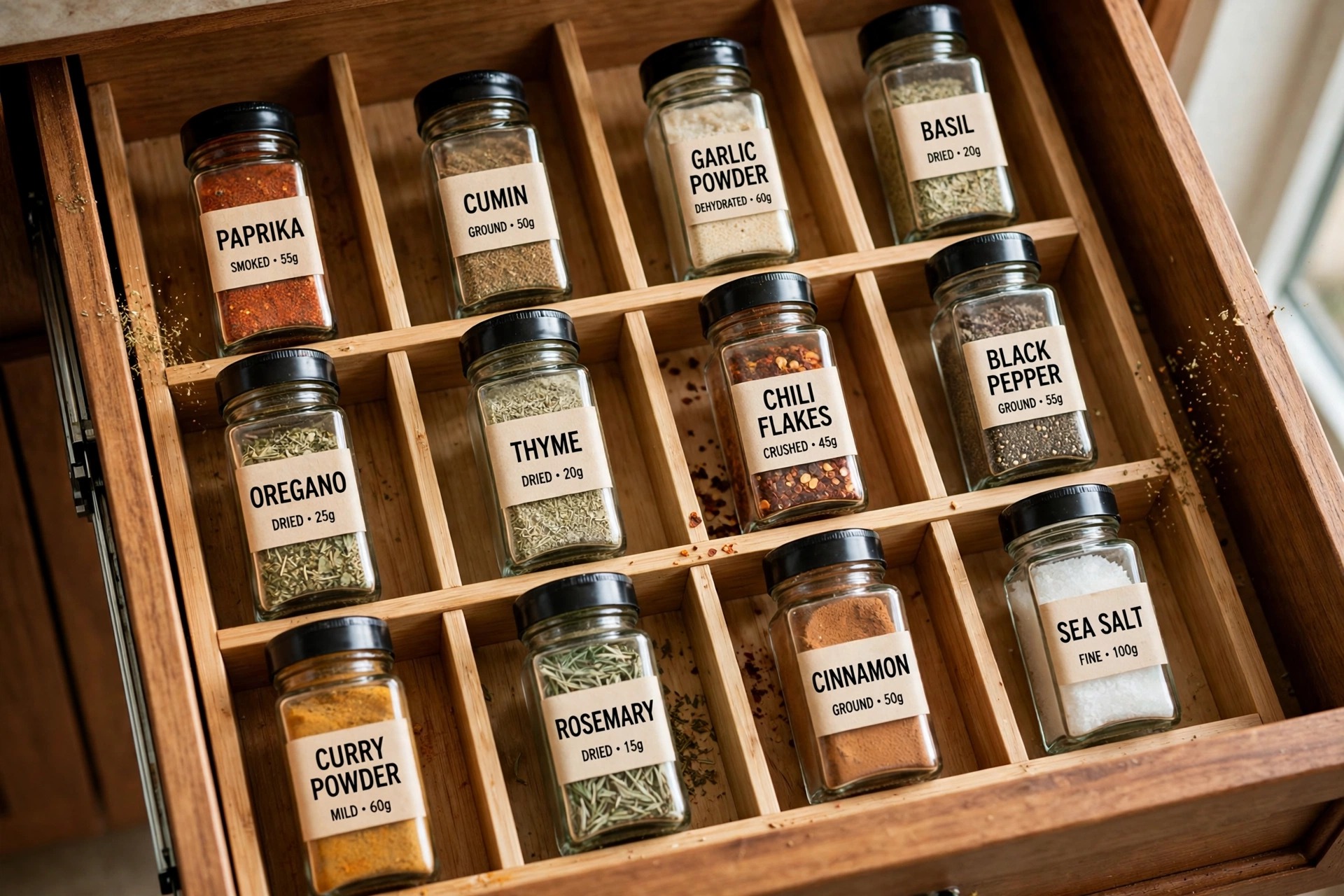
A spice cupboard with jars stacked three deep is a cupboard you have to dig through, because the jar at the front is the jar you can see and the jar at the back is the jar you forget. Move the spices into a drawer — flat jars in a drawer, labels facing up — so every jar lies flat and every label faces you when you pull the drawer open. Use a shallow drawer near the cooker and a simple insert that holds the jars in rows, because the insert is the thing that stops the jars rolling and the rows are the thing that keeps them in order. Lay the jars on their sides with the labels up, so you can read the whole drawer in one look, and keep the tall jars out of this drawer, because the tall jar is the jar that stops the drawer closing. A drawer insert, and the spices are flat, labelled and visible.
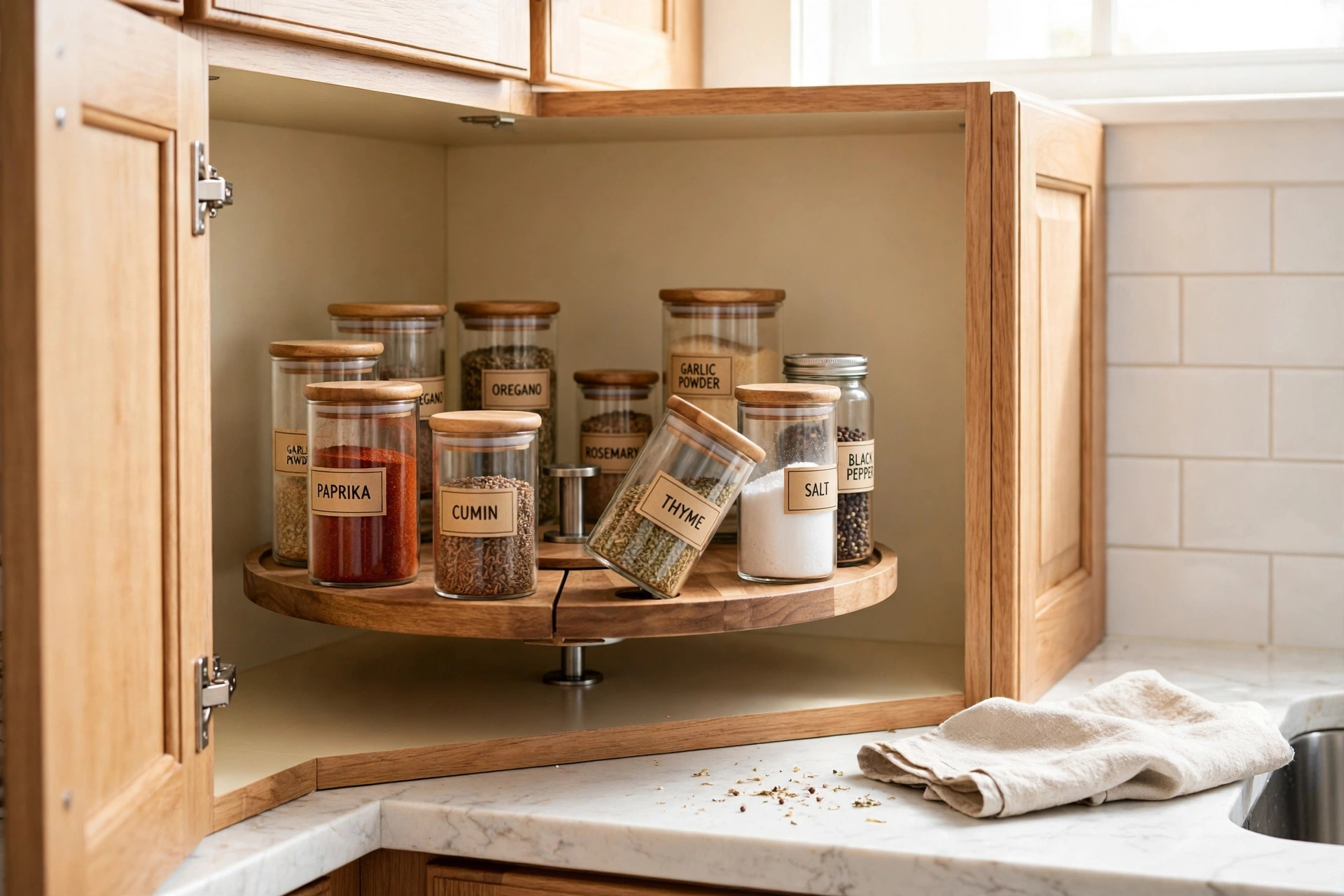
4. A rotating shelf in the corner cupboard — one spin, every spice in reach
A corner cupboard is a cupboard where spices go to die, because the back corner is the place you cannot reach and the jar that goes to the back is the jar you never see again. Put a rotating shelf in it — one spin, every spice in reach — so the whole shelf turns and the jar at the back comes to the front. Choose a two-tier rotating shelf that fits the cupboard, because the two tiers are the thing that doubles the space and the spin is the thing that finds the jar. Keep the tall jars on the bottom tier and the small ones on the top, so nothing tips when the shelf turns, and leave a gap at the edge, because the shelf that turns freely is the shelf that gets used. The rotating shelf the corner cupboard needs is in 21 Lazy Susan Organization Ideas for 2026, where the shelf gets sized for the cupboard it lives in. One spin, and the corner cupboard stops hiding spices. (Check on Amazon for a two-tier rotating shelf with a non-slip surface, which keeps the jars from sliding when it spins.)
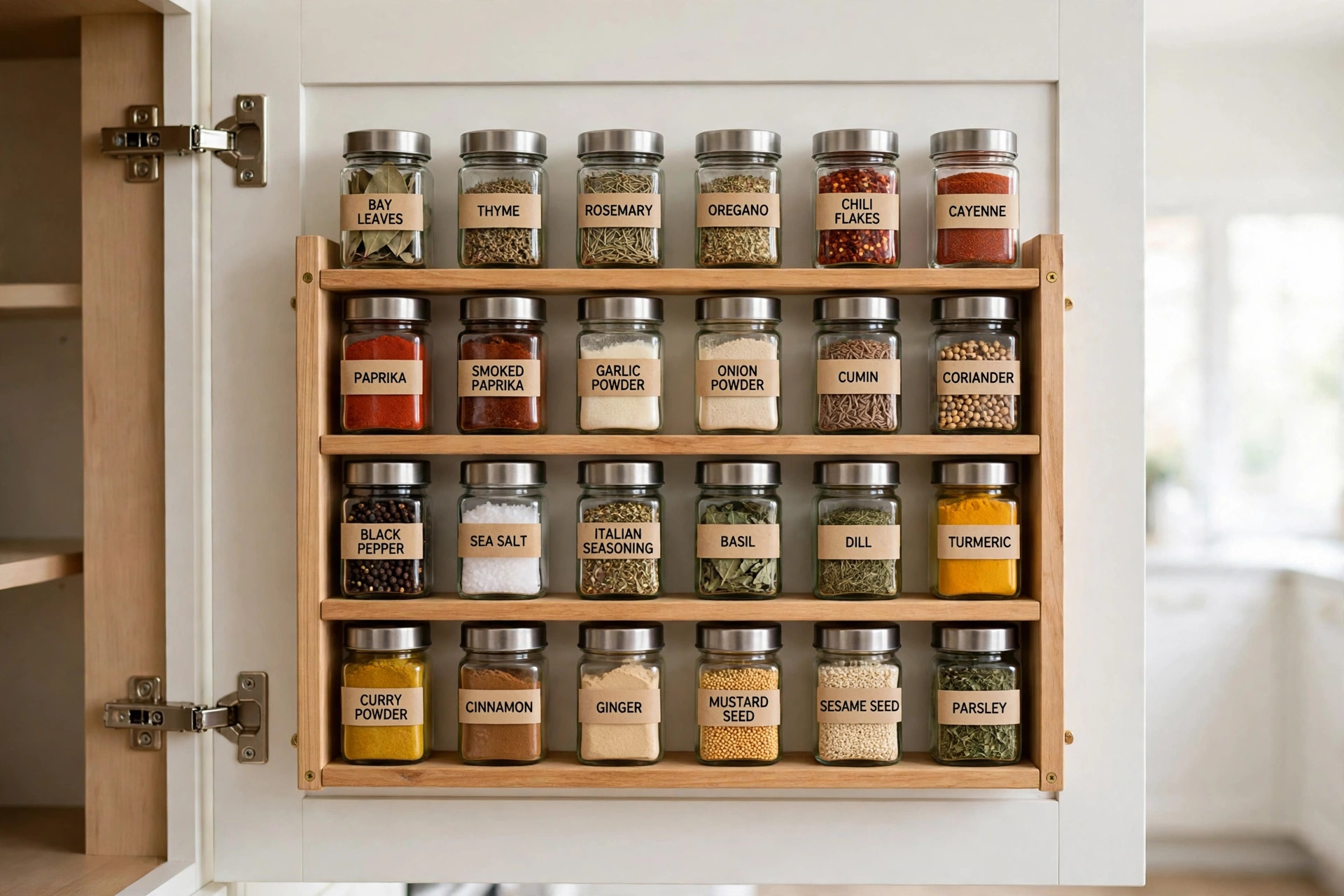
5. A spice rack on the inside of the cupboard door — the door nobody uses becomes storage
The inside of a cupboard door is storage nobody uses, because the door is the thing you open and close and the inside of it is the space you never think about. Screw a narrow rack to it — the door nobody uses becomes storage — so the small spice jars live on the door and the shelf inside the cupboard stays free for the tall jars. Choose a rack with a low lip, because the lip is the thing that stops the jars falling when the door swings, and keep the jars small, because the small jar is the jar that fits on a door without bumping the shelf. Put the spices you use least on the door, because the door rack is the rack you open to see and the shelf is the rack you reach for every day. A rack on the door, and the cupboard gains a whole extra shelf for free.
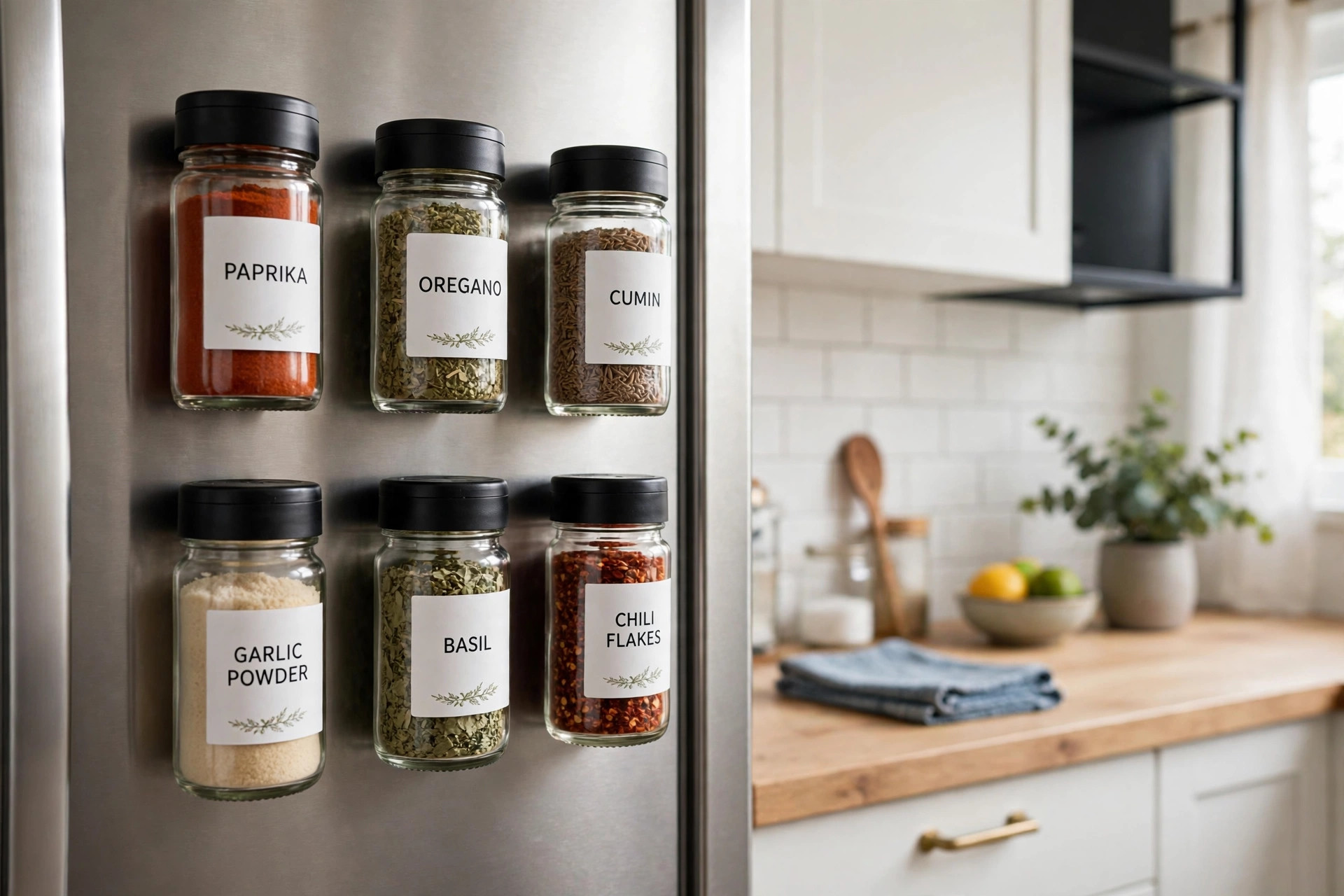
6. Magnetic spice jars on the fridge — spices on the side of the fridge, off the counter
A spice collection with nowhere to go ends up on the counter, because the counter is the place that is always there and the jars are the things that pile up on it. Stick them to the fridge instead — spices on the side of the fridge, off the counter — so the jars live on a surface that was doing nothing and the counter stays clear for cooking. Use small magnetic jars with clear lids, because the clear lid is the label you read from across the kitchen and the magnet is the thing that holds the jar on the fridge. Keep them on the side of the fridge, not the front, because the side is the surface nobody opens and the front is the surface that gets opened a hundred times a day. Fill the jars halfway, so they are light enough for the magnet, and label every lid, because the lid is the label you see when the jar is stuck to the fridge. Magnetic jars on the fridge, and the counter is free.
Racks, drawers and doors
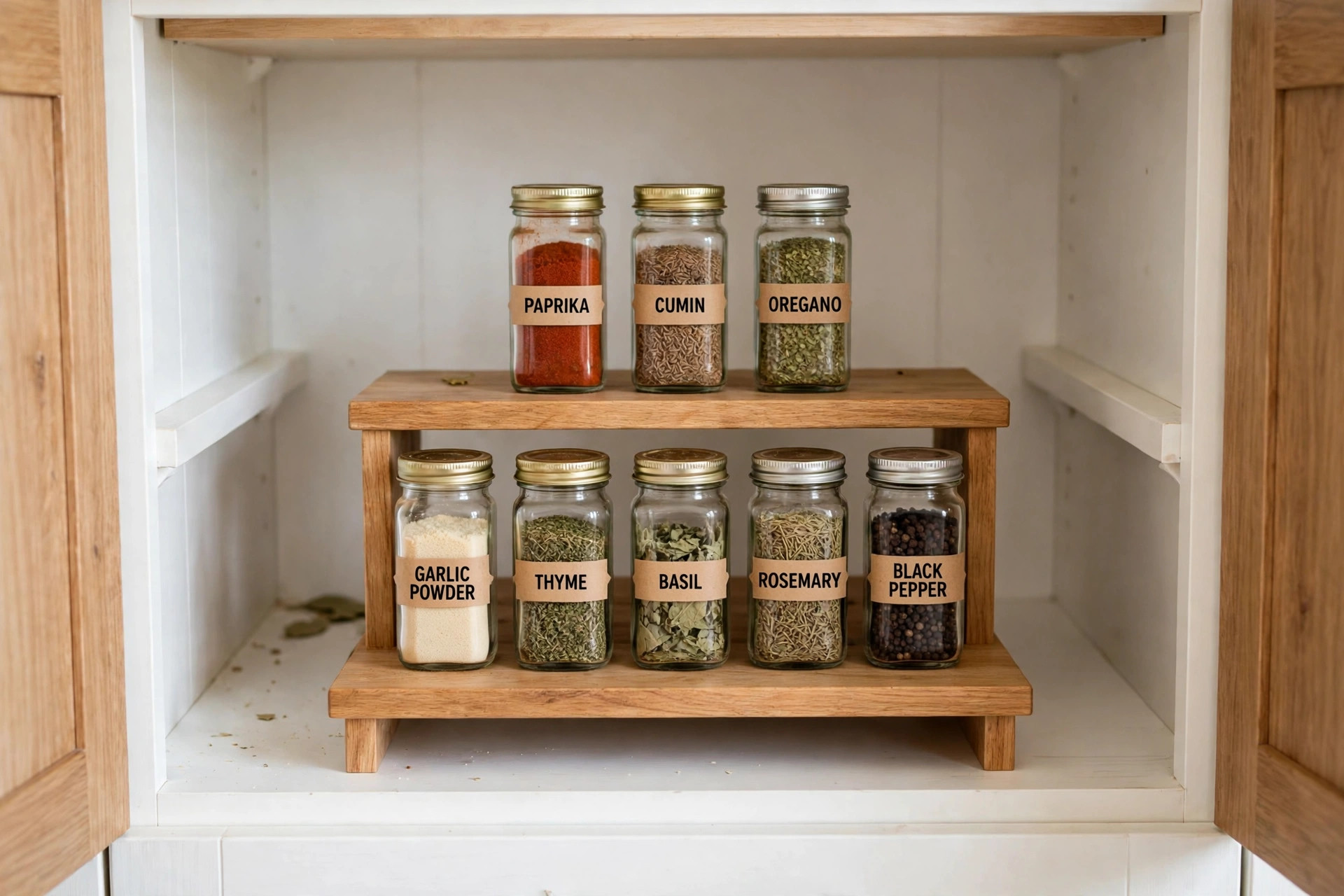
A cupboard shelf with jars in one row wastes the height above it, because the jars are short and the shelf is tall, and the space above the jars is the space that does nothing. Put a tiered riser on the shelf — two levels, no jar hidden behind another — so the back row sits higher than the front row and every label is visible. Use a simple two-step riser that fits the cupboard, because the steps are the thing that lifts the back row into view and the riser is the thing that costs the price of a lunch. Put the tall jars at the back on the top step and the short jars at the front, because the back row is the row that needs the lift and the front row is the row you reach for first. A tiered riser, and the cupboard shelf holds twice the spices with nothing hidden.
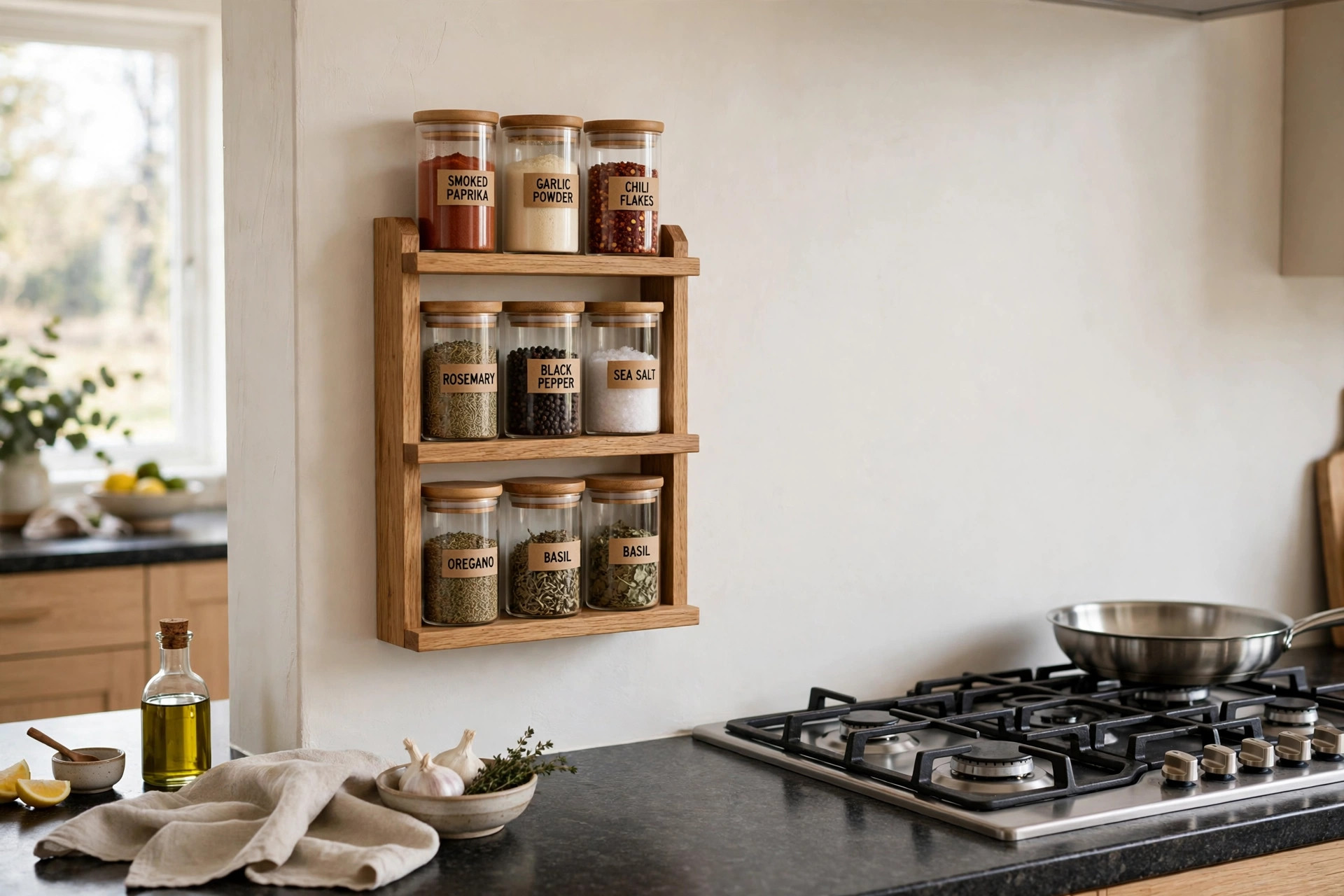
8. A wall-mounted spice rack by the hob — spices on the wall, hands free
A spice rack that sits on the counter takes up the counter, because the counter is the place you chop and the rack is the thing that sits where the chopping board should go. Move it to the wall — spices on the wall, hands free — so the jars live beside the hob and the counter stays clear for the board. Screw a narrow rack to the wall at arm's height, because the height is the thing that lets you reach a jar without stepping back from the pan. Keep it to the spices you use while you cook, not the whole collection, because the wall rack is the rack for cooking and the cupboard is the rack for storage. Choose jars with tight lids, because the wall rack is the rack that catches the steam, and wipe it once a week when you wipe the hob. A rack on the wall, and the spices are beside the pan.
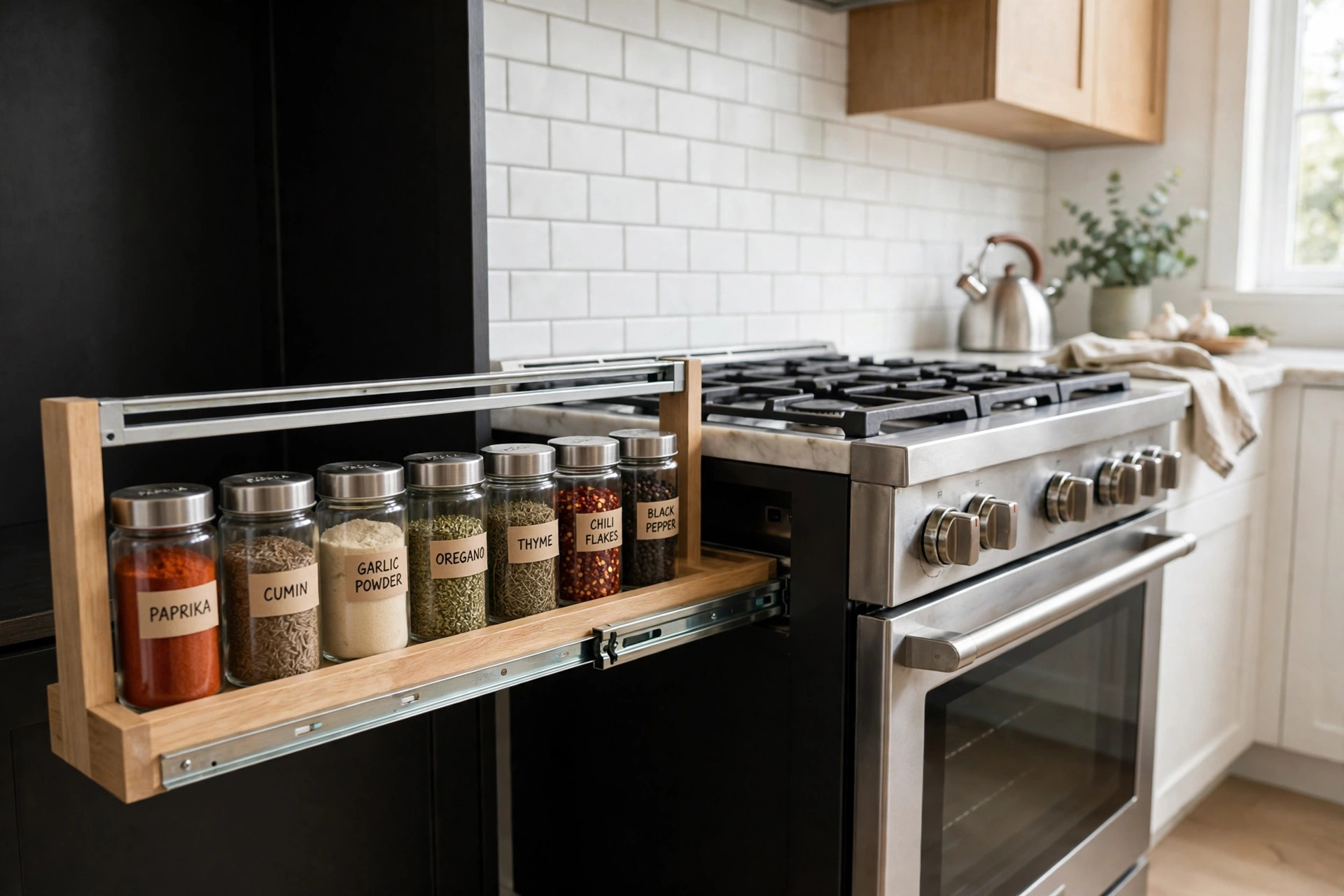
9. A pull-out spice rack beside the cooker — the narrow gap becomes a spice tower
The narrow gap beside the cooker is a gap that holds nothing, because the gap is too narrow for a shelf and too wide to leave empty, and the space beside the cooker is the space that wastes itself. Slide a pull-out rack into it — the narrow gap becomes a spice tower — so the jars live in a tall, thin rack that pulls out when you cook and slides away when you don't. Measure the gap first, because the rack that fits is the rack that slides and the rack that is a centimetre too wide is the rack that never goes in. Put the everyday spices at the top of the rack, because the top is the shelf your hand reaches first, and the baking spices at the bottom, because the bottom is the shelf you visit once a week. A pull-out rack, and the gap beside the cooker becomes the best spice storage in the kitchen. (Check on Amazon for a slim pull-out spice rack with a soft-close slide, which keeps the jars from rattling when it shuts.)
10. Small jars decanted from big bags — buy big, store small, label everything
Big bags of spice are cheap and impossible to store, because the bag is the thing that tears and the spice is the thing that spills, and the bag you open is the bag that never closes properly again. Decant them into small jars — buy big, store small, label everything — so the jar by the cooker holds a month's worth and the bag lives sealed in the pantry. Keep the big bag in a clip-top tub in the pantry, because the pantry is the place for bulk and the cooker is the place for the small jar. Label the small jar with the name and the date you filled it, because the date is the label that tells you when the spice stops tasting fresh. Refill the small jar from the bag, not the other way round, because the small jar is the jar you use and the bag is the jar you store. Small jars by the cooker, big bags in the pantry, and the spice bill drops while the spices stay fresh.
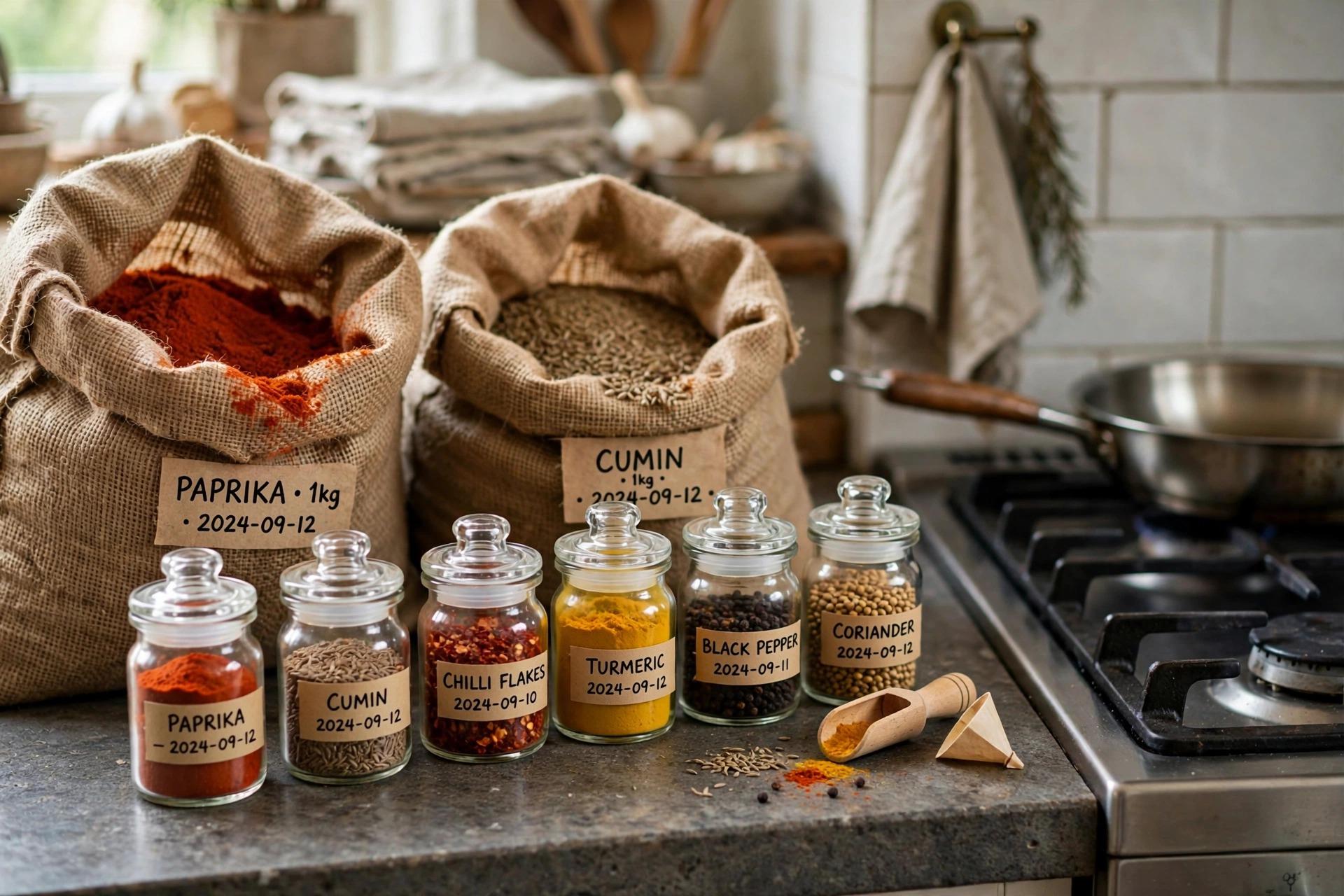
11. A spice drawer with angled inserts — jars tilted so you can read every label
A flat drawer of spice jars is a drawer you have to lean over, because the jars lie flat and the labels face the ceiling, and the label you cannot read is the label you have to pick up. Tilt them — jars tilted so you can read every label — so the drawer opens and the whole collection reads like a book. Use angled inserts that hold each jar at a slope, because the slope is the thing that lifts the label into view and the insert is the thing that stops the jars rolling. Put the jars in alphabetical order down the drawer, because the order is the thing that finds the cumin in two seconds, and keep the drawer near the cooker, because the drawer near the cooker is the drawer you open while the pan is on. Angled inserts, and the drawer reads itself.
Small kitchens and tight corners
12. Alphabetical spice order — A to Z, so you never hunt for the cumin
A spice shelf with no order is a shelf you have to search, because the cumin is next to the cinnamon and the cinnamon is next to the curry powder, and the jar you want is the jar you find last. Put them in alphabetical order — A to Z, so you never hunt for the cumin — so your hand goes to the right place before your eyes have finished looking. Keep the order when you put a jar back, because the shelf that stays in order is the shelf that works and the shelf that drifts is the shelf you search again. Label the jars clearly, because the label is the thing the order depends on, and put the spices you use most at the front of their letter, because the front is the place your hand reaches first. Alphabetical order, and the spice hunt ends.
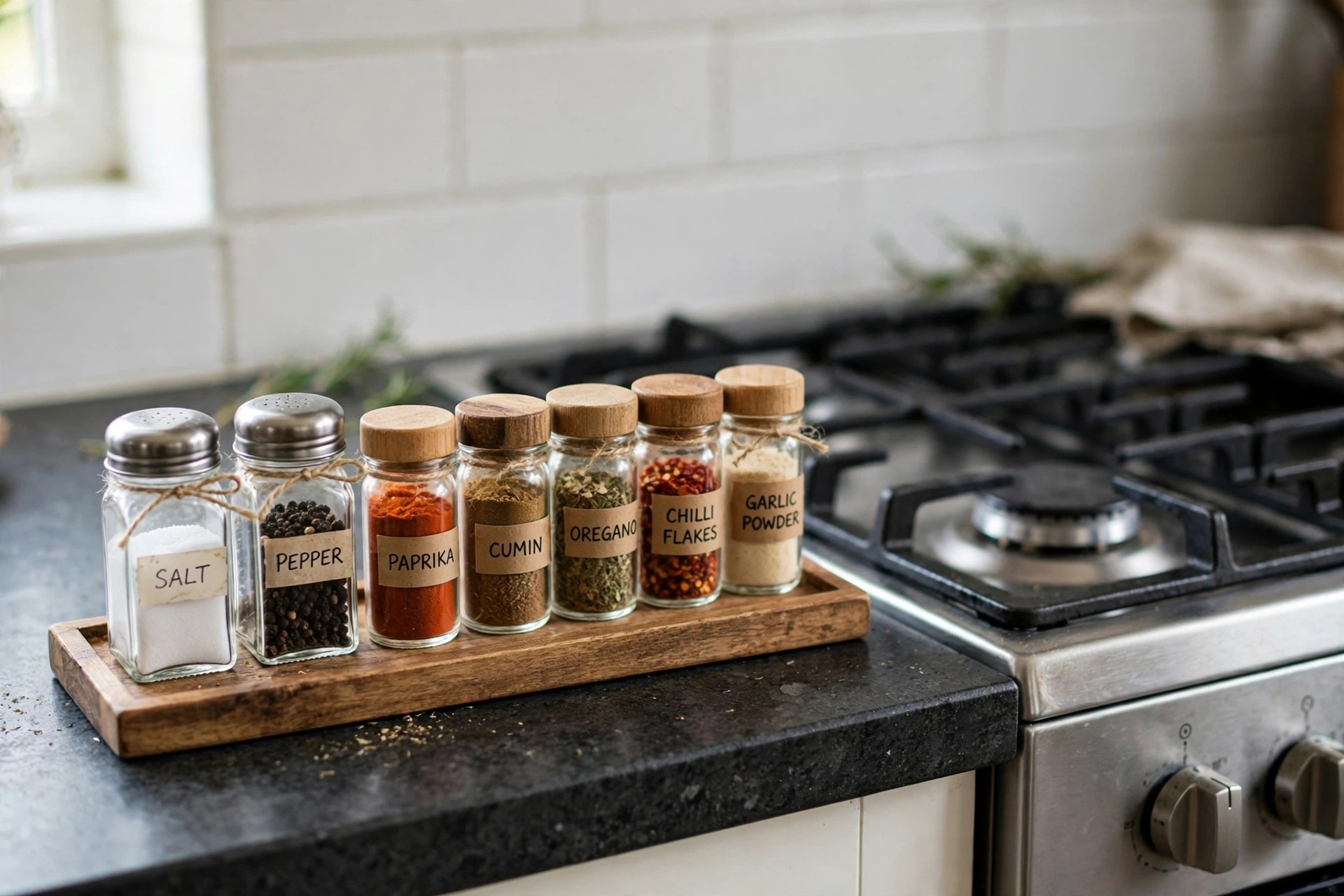
13. A spice station for the spices you use every day — salt, pepper and the five you reach for most
A spice collection of forty jars is a collection you only use five of, because the five you reach for are the five that season dinner and the other thirty-five are the ones that sit there for the special dish. Build a station for the five — salt, pepper and the five you reach for most — so the everyday spices live together by the cooker and the rest stay in the cupboard. Use a small tray or a short rack, because the tray is the thing that keeps the five together and the rack is the thing that keeps them upright. Keep the station to one tray, no more, because the tray that holds five jars is a station and the tray that holds fifteen is a pile. Refill the five from the cupboard jars, because the station is the place for cooking and the cupboard is the place for storage. A station for the five, and dinner gets faster.
14. A spice shelf for the small kitchen — one shelf, not a whole cupboard
A small kitchen has no cupboard to spare for spices, because the cupboards are the things that hold the plates and the pans, and the spices are the things that get squeezed in wherever they fit. Give them one shelf — one shelf, not a whole cupboard — so the spices have a home that is theirs and the cupboards keep the plates. Choose the shelf nearest the cooker, because the shelf near the cooker is the shelf you reach without walking, and keep it to one row of matching jars, because the row that matches is the row you can read. Put the everyday five at the front of the shelf, because the front is the place your hand reaches first, and the rest behind them in alphabetical order, because the order is the thing that finds the jar. One shelf, and the small kitchen has a spice system.
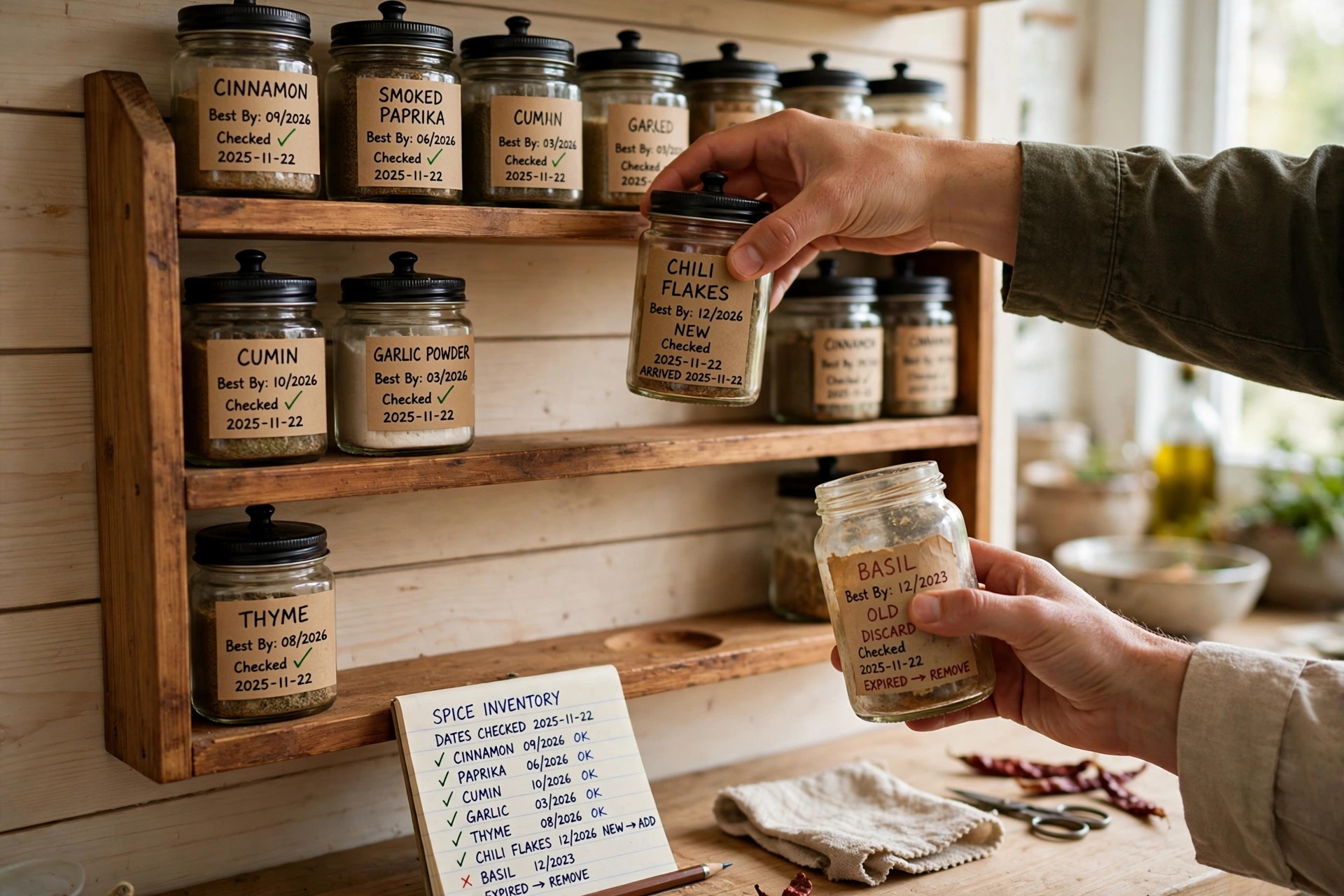
15. Clear labels with the date you opened the jar — old spices out, fresh spices in
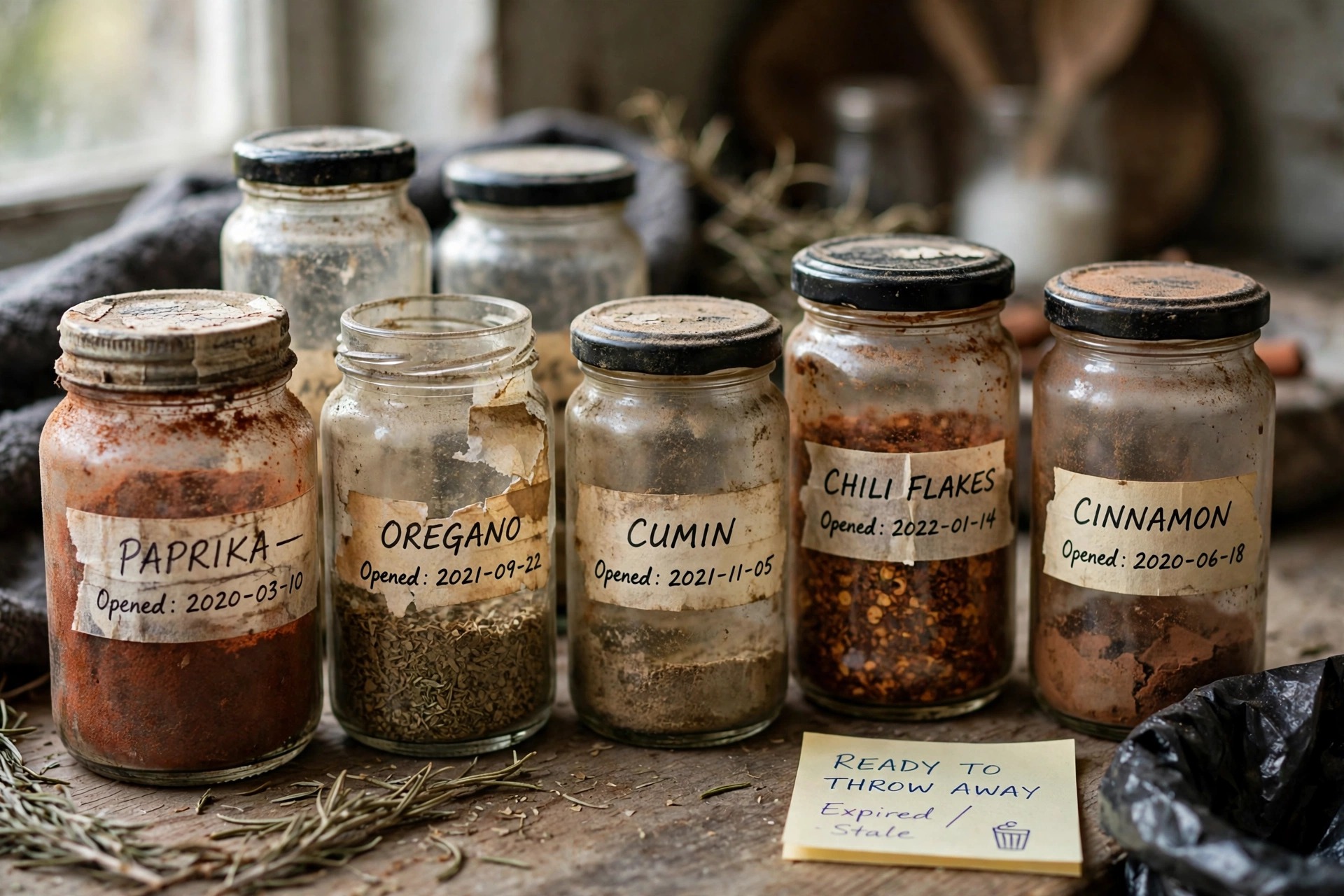
A spice jar with no date is a jar you cannot trust, because the spice inside could be three months old or three years old, and the spice that is three years old is the spice that tastes of nothing. Label every jar with the date you opened it — old spices out, fresh spices in — so you can see at a glance which jars to keep and which to throw away. Write the date on the label when you decant the spice, because the label is the record and the date is the thing that tells the truth. Ground spices last about six months, whole spices about a year, because the ground spice is the spice that loses its flavour fastest. Check the dates once a season, because the check is the thing that keeps the shelf honest. Dated labels, and the spices stay fresh.
16. A spice caddy that moves to the table — the caddy goes where the food goes
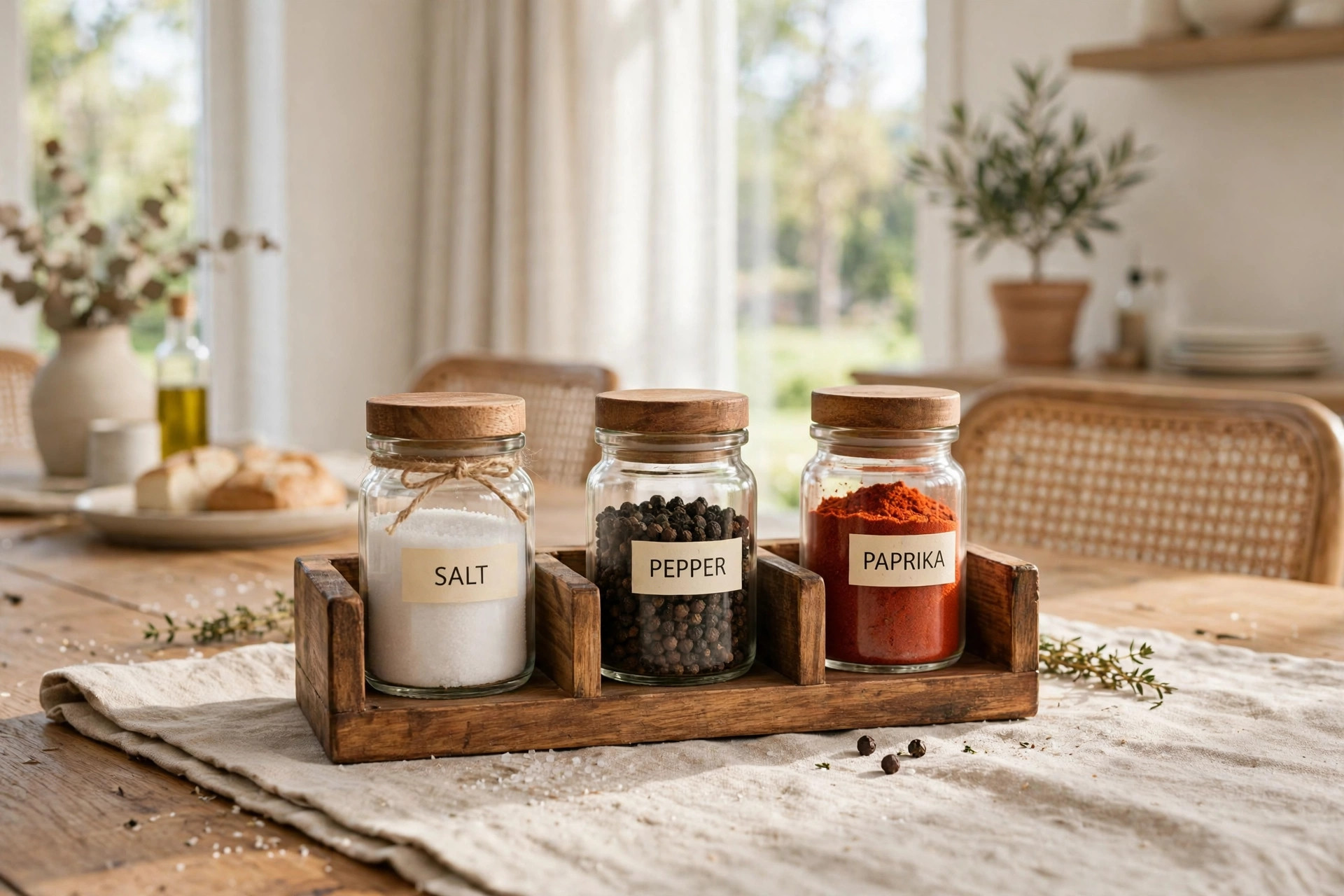
Spices that live in the kitchen never make it to the table, because the table is the place you eat and the kitchen is the place you cook, and the salt you need at the table is the salt that stays in the cupboard. Put a caddy together — the caddy goes where the food goes — so the salt, the pepper and the chilli flakes travel to the table in one carry and back to the kitchen when dinner is done. Use a small wooden caddy with a handle, because the handle is the thing that carries it and the caddy is the thing that keeps the jars together. Keep it to five jars, no more, because the caddy that holds five is a caddy you can carry with one hand. Put the caddy by the cooker between meals, because the cooker is the place the caddy lives and the table is the place it visits. A caddy, and the spices go where the food goes.
Spice storage that cooks faster
17. A spice rack for the baking cupboard — cinnamon, vanilla and baking powder in one place
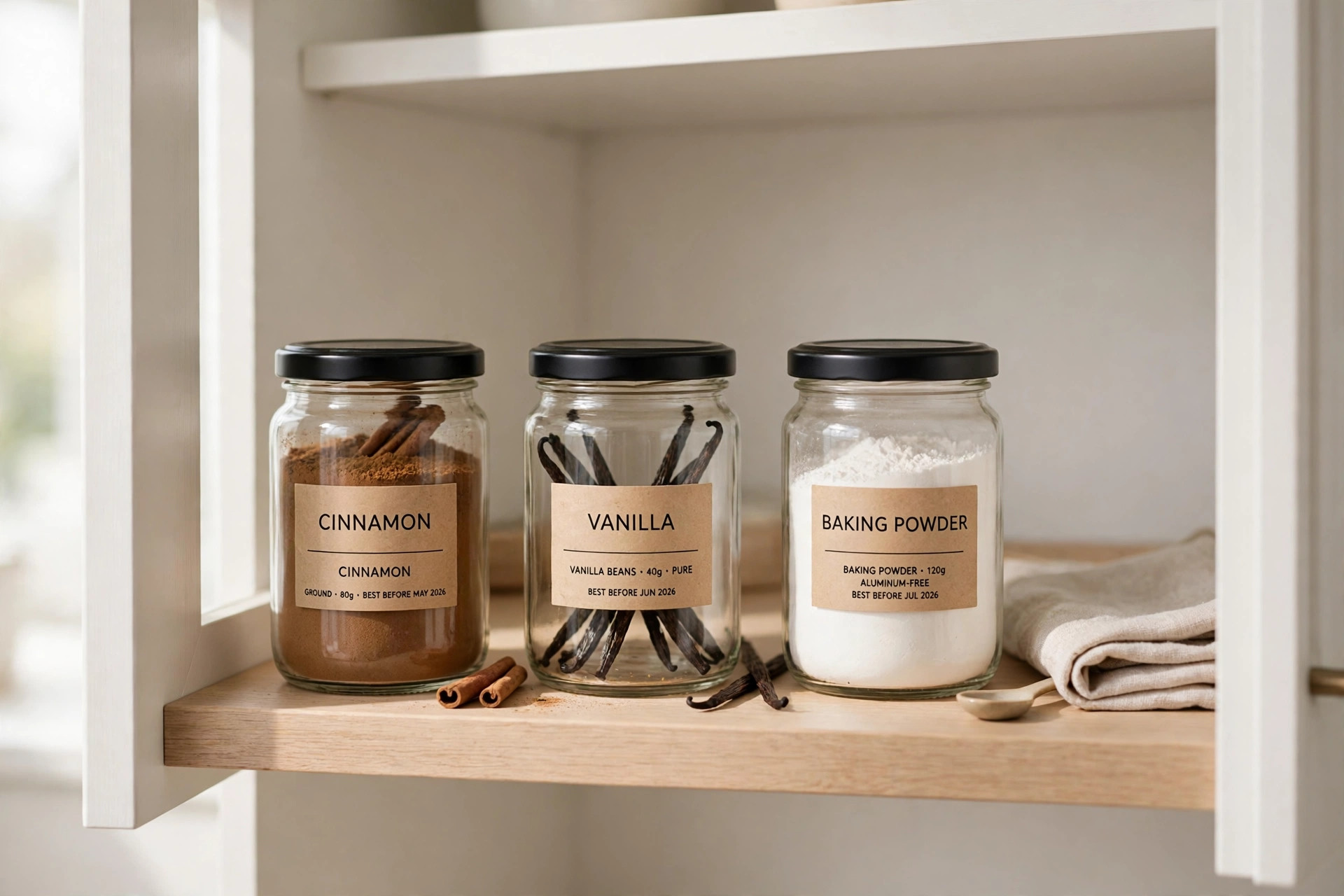
Baking spices mixed in with the cooking spices are spices you have to hunt for, because the cinnamon is next to the cumin and the vanilla is next to the paprika, and the jar you want for the cake is the jar you find last. Give baking its own rack — cinnamon, vanilla and baking powder in one place — so the baking cupboard has its own shelf and the cake starts in two minutes. Keep the rack small and near the mixing bowls, because the rack near the bowls is the rack you reach while the oven heats. Put the cinnamon, the vanilla, the baking powder and the cocoa together, because the baking spices are the spices that belong together, and label them clearly, because the label is the thing that keeps the cinnamon out of the curry. A rack for baking, and the cake starts faster.
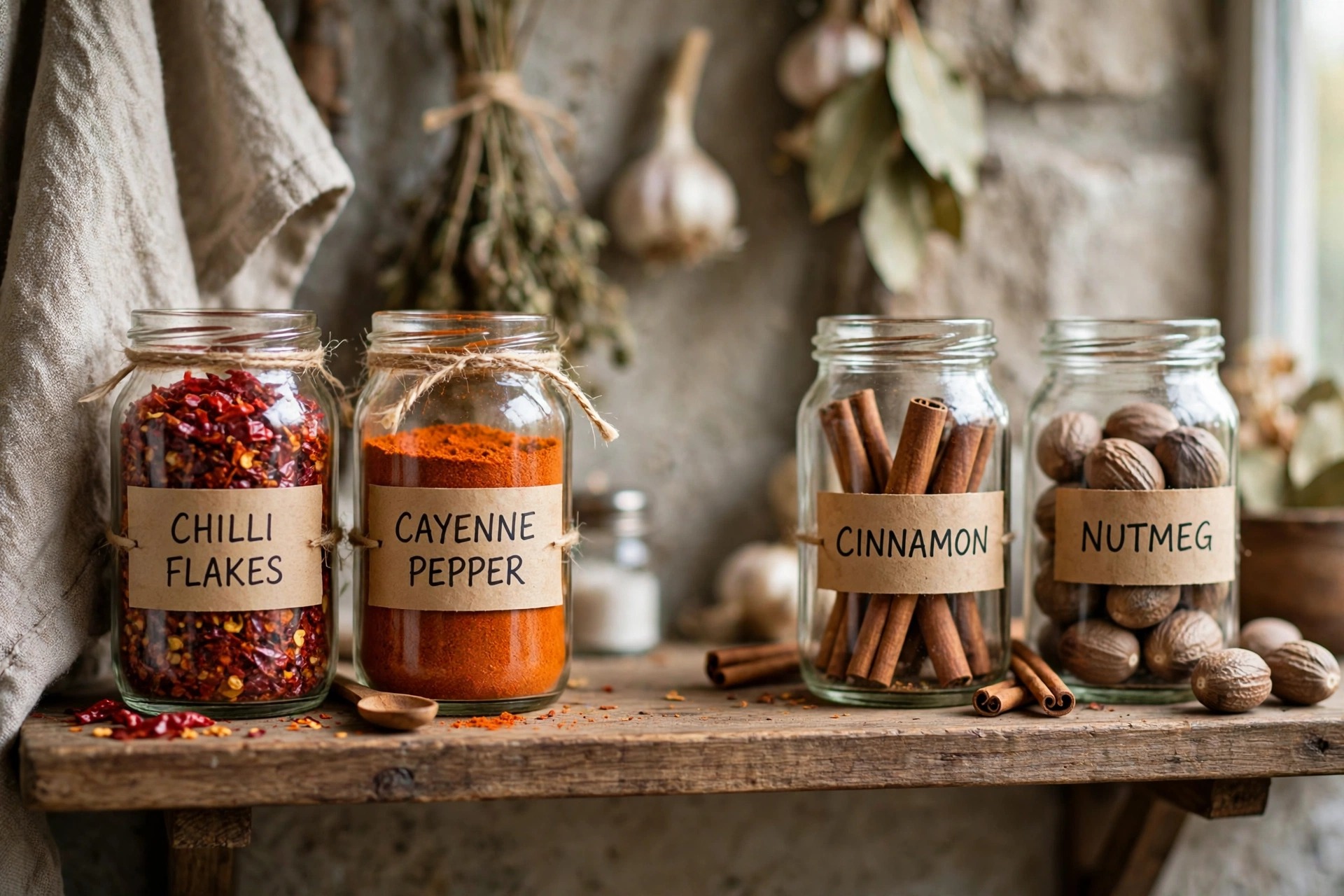
18. Chilli and heat in one row — the hot spices together, away from the sweet ones
Hot spices mixed with sweet spices are spices that get confused, because the chilli powder looks like the paprika and the cayenne looks like the cinnamon, and the jar you grab in a hurry is the jar that ruins the dish. Put the heat together — the hot spices together, away from the sweet ones — so the chilli, the cayenne and the hot paprika live in one row and the cinnamon and the nutmeg live in another. Label the hot row clearly, because the label is the thing that stops the chilli going into the apple crumble. Keep the hot row at the back of the shelf, because the back is the place for the spices you use carefully, and the sweet spices at the front, because the front is the place for the spices you reach for every day. Heat in one row, sweet in another, and the dishes stop getting mixed up.
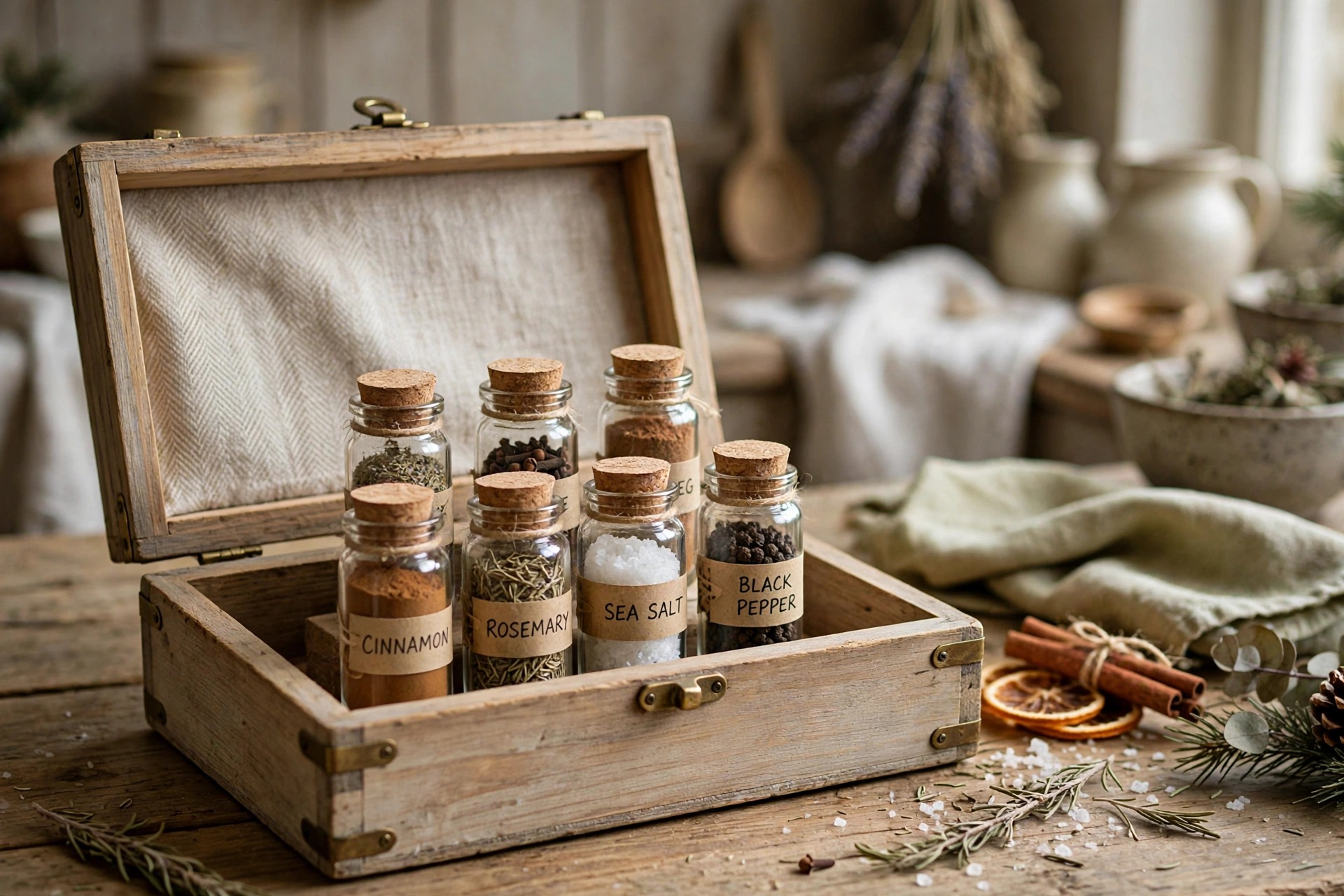
19. A travel spice kit for the caravan or the holiday cottage — the spices you need, in one small box
A holiday kitchen with no spices is a kitchen where dinner is bland, because the cottage has salt and nothing else, and the spices you cook with at home are the spices you left behind. Pack a travel kit — the spices you need, in one small box — so the salt, the pepper, the paprika, the cumin and the mixed herbs travel with you and the holiday dinner tastes like dinner. Use tiny jars in a small lidded box, because the box is the thing that keeps them together and the lid is the thing that stops them spilling in the car. Keep the kit to seven jars, no more, because the kit that holds seven is a kit that fits in a bag. Refill the kit from the home jars when you get back, because the home jars are the store and the kit is the travel copy. A travel kit, and the holiday dinner tastes like home.
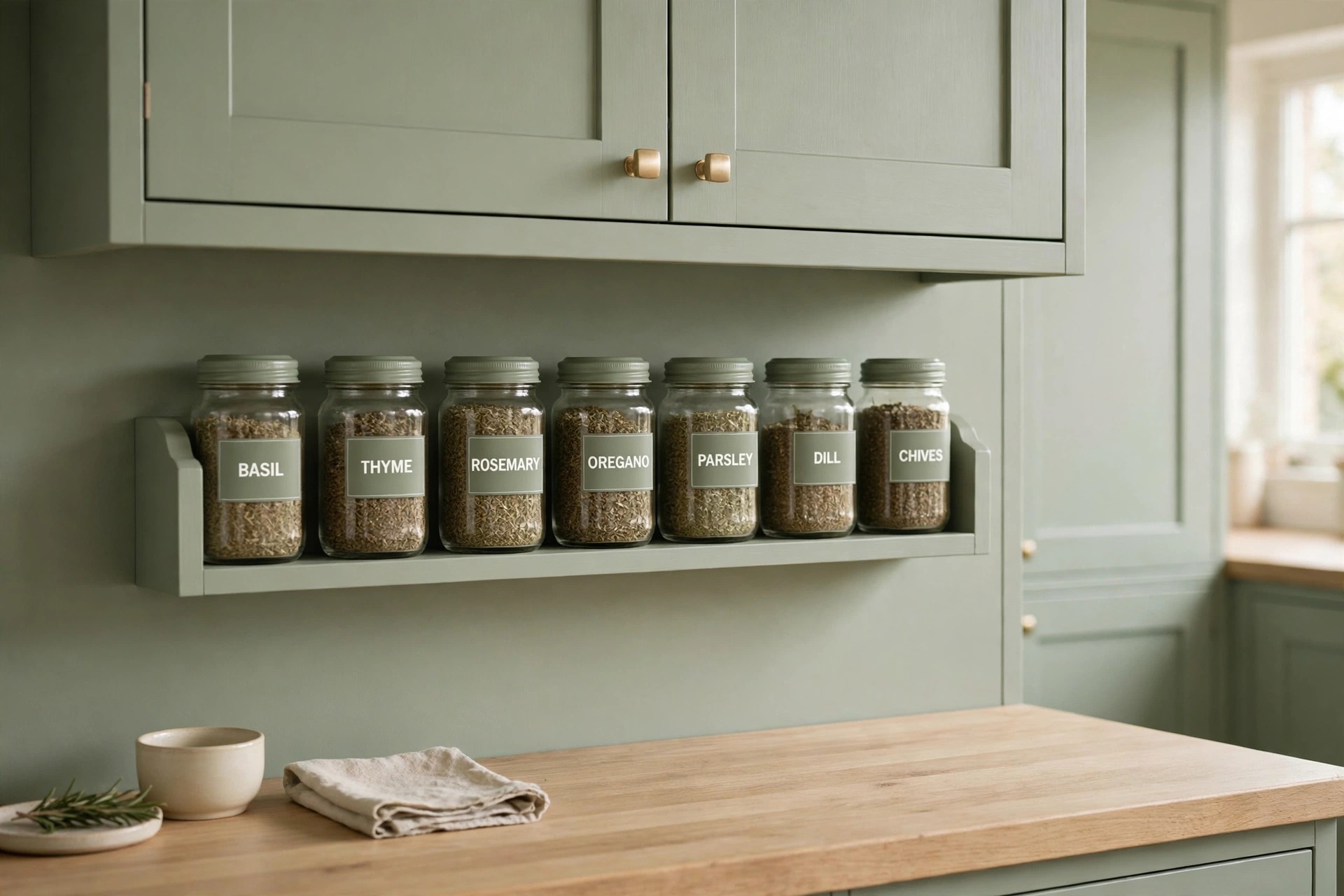
20. A spice rack painted to match the kitchen — one colour, one finish, and the rack disappears into the room
A spice rack in the wrong colour stands out, because the colour that does not match is the colour that shouts. Paint the rack to match the kitchen — one colour, one finish, and the rack disappears into the room — so the rack looks like it was always there and the kitchen reads as one piece. Paint the rack the same sage, white or wood tone as the cabinets, and use the same finish, matt or gloss, because the finish that matches is the finish that blends. Test the paint on the back of the rack first, because the paint that matches on the back is the paint that matches on the front. Keep the jars the only colour on the rack, because the jars are the display and the rack is the frame. One colour, one finish, and the rack belongs to the room.
21. The one-in-one-out spice rule — a new spice in means an old spice out
A spice shelf that only grows is a shelf that runs out of room, because every new jar is a jar that stays and no jar ever leaves, and the shelf that only grows is the shelf that ends up with forty jars and no space. Use the one-in-one-out rule — a new spice in means an old spice out — so the shelf stays the same size and every jar on it earns its place. When a new spice comes home, pick the jar you have not used in a year and throw it away, because the jar you have not used is the jar you do not need. Check the dates on the labels when you do it, because the date is the thing that tells you which jar goes. One in, one out, and the spice shelf stays the size it should be.
22. A spice refill station in the pantry — bulk jars stay in the pantry, small jars stay by the cooker
Bulk spice bags in the kitchen are bags that spill, because the kitchen is the place you cook in a hurry and the bag is the thing that tears when you are in a hurry. Keep the bulk in the pantry — bulk jars stay in the pantry, small jars stay by the cooker — so the big bags live where there is room to open them and the small jars live where you cook. Use clip-top tubs for the bulk bags, because the tub is the thing that keeps the spice fresh and the clip is the thing that stops the spill. Label the tubs with the name and the date, because the label is the record and the date is the thing that tells you when to buy more. The pantry the bulk jars live in is in 25 Pantry Organization Ideas for 2026, where the shelves get a system for everything that comes in bulk. Refill the small jar from the pantry tub once a month, because the small jar is the jar you use and the tub is the jar you store. A refill station in the pantry, and the kitchen stays tidy while the spices stay fresh.
Which spice storage idea fits which situation?
| Situation | Best first move | Budget | Tools needed |
|---|---|---|---|
| Jars all different sizes | Matching glass jars with labels (idea 1) | Low | Glass jars, labels |
| Spices live far from the cooker | Spice shelf above the cooker (idea 2) | Low | Shelf, brackets |
| Cupboard jars stacked three deep | Drawer spice insert (idea 3) | Low | Drawer insert |
| Corner cupboard hides jars | Rotating shelf (idea 4) | Low | Rotating shelf |
| Cupboard shelf is full | Rack on the inside of the door (idea 5) | Low | Door rack |
| Counter is covered in jars | Magnetic jars on the fridge (idea 6) | Low | Magnetic jars |
| Back row of jars is hidden | Tiered shelf riser (idea 7) | Low | Shelf riser |
| Chopping board has no room | Wall rack by the hob (idea 8) | Low | Wall rack |
| Narrow gap beside the cooker | Pull-out spice rack (idea 9) | Low | Pull-out rack |
| Big bags keep tearing | Small jars decanted (idea 10) | Low | Small jars, labels |
| Drawer labels face the ceiling | Angled inserts (idea 11) | Low | Angled insert |
| You hunt for the cumin | Alphabetical order (idea 12) | Free | Labels |
| Only five spices get used | Everyday spice station (idea 13) | Low | Tray or short rack |
| No cupboard to spare | One shelf for spices (idea 14) | Low | Shelf |
| Spices taste of nothing | Dated labels (idea 15) | Free | Labels, pen |
| Salt never makes it to the table | Spice caddy (idea 16) | Low | Caddy |
| Baking spices lost in the mix | Baking cupboard rack (idea 17) | Low | Small rack |
| Chilli went into the crumble | Heat in one row (idea 18) | Free | Labels |
| Holiday dinners taste bland | Travel spice kit (idea 19) | Low | Small box, tiny jars |
| Rack clashes with the kitchen | Paint it to match (idea 20) | Low | Paint, brush |
| Shelf keeps growing | One-in-one-out rule (idea 21) | Free | None |
| Bulk bags spill in the kitchen | Pantry refill station (idea 22) | Low | Clip-top tubs |
You do not need all 22 ideas. You need the three that solve your kitchen — usually the matching jars with labels, the rotating shelf in the corner cupboard, and the everyday station by the cooker. Start with the labels, do it this weekend, and put the jars where your hand reaches while the pan is on. Do that and the next time you cook, the cumin will be in your hand in two seconds, for the price of a set of jars and an afternoon.
Save this post for your next kitchen sort, and if the kitchen needs sorting first, read 20 Kitchen Cabinet Organization Ideas for 2026 next — it is Post 02, the cabinets the spice jars live in — and 18 Storage Bin Rack DIY Ideas for 2026, Post 26, for the DIY rack the jars can sit on. This is the tenth post of the second Storage by room/object run — Posts 31 to 55, one room at a time — and the next posts carry the same budget system into the rooms that follow.
Publish date assigned at publishing time. Updated as new spice storage finds are tested.
Frequently asked questions
How long do spices last once the jar is open?
Ground spices stay at their best for about six months after opening, and whole spices for about a year, because the ground spice loses its flavour fastest once air gets in. Keep the jars tightly lidded, away from heat and steam, and label each jar with the date you opened it — when the date is past six months for ground spices, throw the jar out and refill it. A dated label is the simplest way to know which jars are still worth cooking with.
What is the best way to store spices in a small kitchen?
Give the spices one shelf near the cooker and keep it to matching jars in a single row, because one shelf you can read beats a whole cupboard you have to dig through. Put the five spices you use every day at the front, the rest behind them in alphabetical order, and keep the bulk bags in the pantry with small jars decanted for the kitchen. One shelf, matching jars and clear labels, and the small kitchen has a spice system that works.
Should spices go in the fridge or the cupboard?
Keep spices in a cool, dark cupboard, not the fridge, because the fridge is damp and the damp is the thing that clumps ground spices and dulls their flavour. The cupboard should be away from the cooker and the kettle, because heat and steam are the things that age spices fastest. A dry cupboard with tight lids is the best home for almost every spice — the only exception is fresh chilli paste or a spice blend with fresh ingredients, which the label will tell you to refrigerate.