17 DIY Sensory Bin Ideas for 2026
A toddler with nothing to touch is a toddler climbing the furniture, because little hands need something to do and the sofa is the thing that is there. A sensory bin fixes it for the price of a tub and a bag of rice — one box of stuff to scoop, pour, dig and sort, and the child plays for half an hour while you drink your coffee while it is still hot.
These 17 DIY sensory bin ideas are colourful sensory play setups for little kids: start with rainbow rice and a water play bin, dig through garden soil and fake snow, hunt for letters in rice and count beads into numbered cups, and finish with a slime bin and a calm-down bin — so the playroom has a bin for every mood and every afternoon.
Every idea below uses things you already own or can buy for a few dollars, and every bin works on a real playroom table or a kitchen floor with a towel underneath. The playroom the bins live in is covered in 22 Playroom Organization Ideas for 2026, where the playroom gets its zones before the bins arrive — and the toys the bins are stored beside are in 35 Clever Toy Storage Ideas for 2026, so the bins have a shelf to live on when playtime ends. Pick three bins that fit your child's age, start with the rainbow rice, and build from there. Always supervise little kids with sensory bins, and skip small beads, pom-poms and dried beans for children under three who still put everything in their mouths — taste-safe fillers like cooked pasta, cereal and cloud dough are the safe first bins.
Start simple: water, rice, and the first sensory bin
1. A rainbow rice bin — dyed rice in every colour, scoops and cups
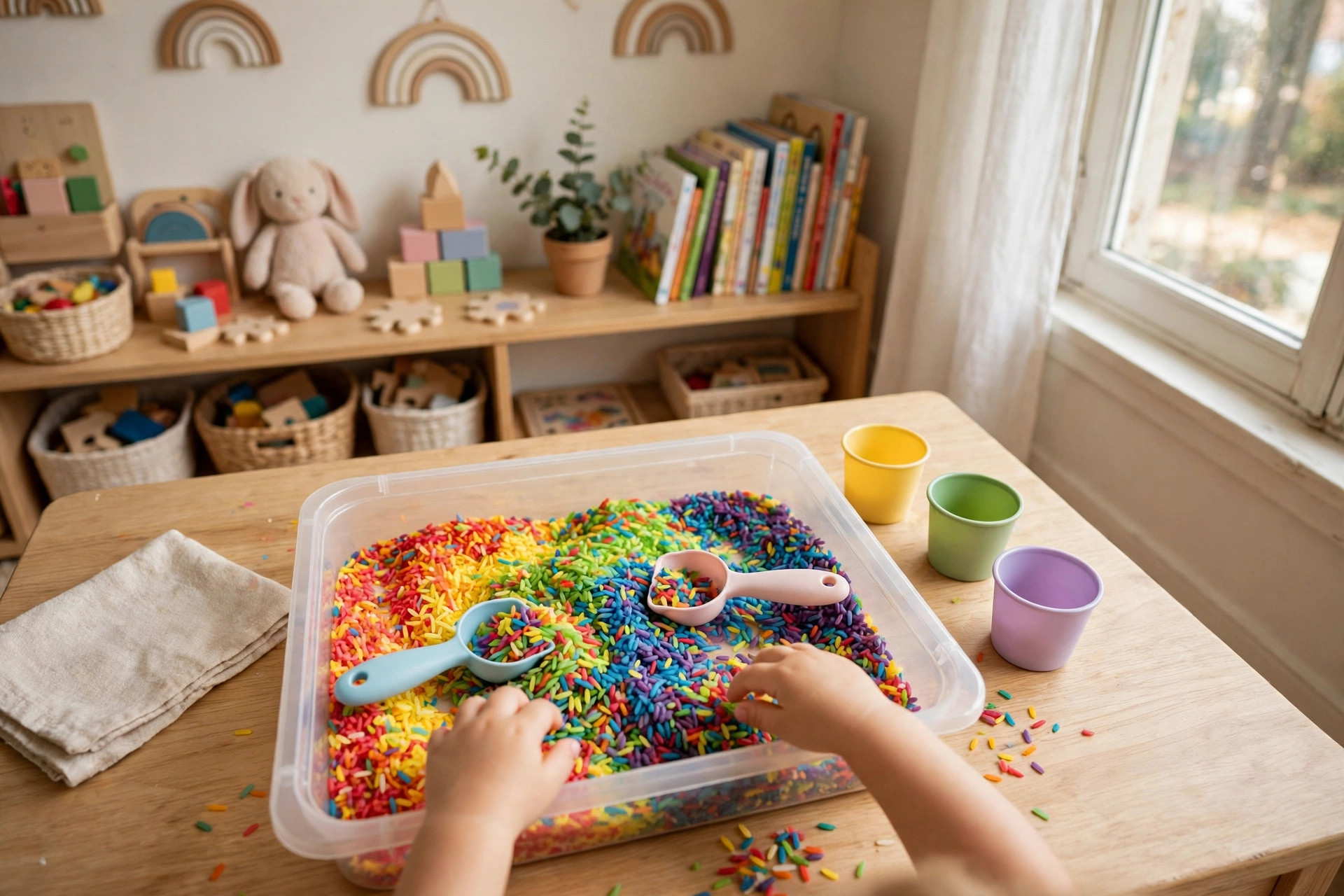
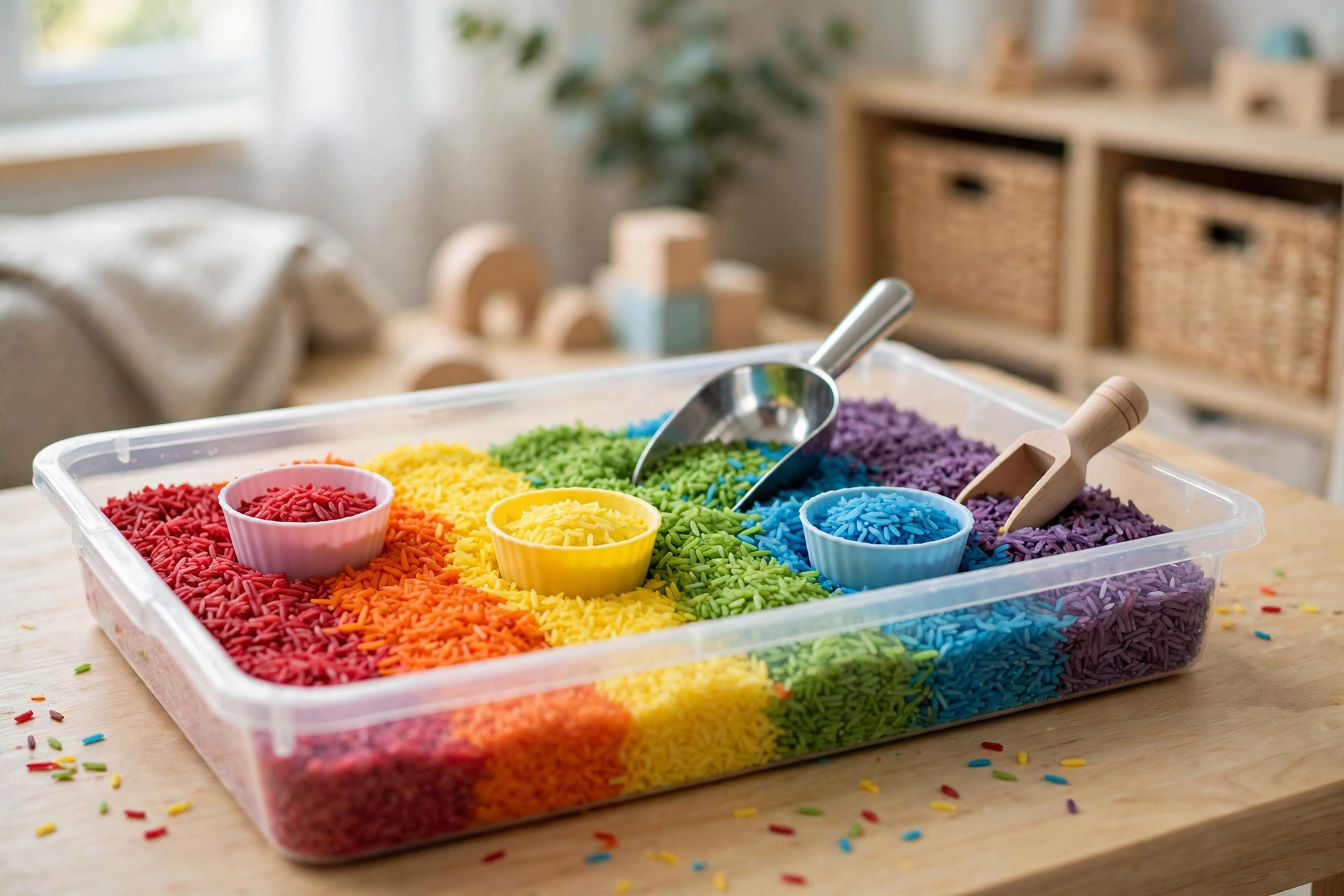
A plain tub of rice is a tub of rice, because the rice that is one colour is the rice nobody looks at twice. Dye it rainbow — dyed rice in every colour, scoops and cups — so the bin looks like a sweet shop and the child scoops for half an hour. Shake a cup of dry rice with a few drops of food colouring and a splash of vinegar in a sealed bag, spread it on a tray to dry, and repeat for four or five colours, because the rice that dries overnight is the rice that does not stain hands. Pour the colours into the bin in stripes, add scoops, cups and a funnel, and let the child mix them, because the mixing is the play and the scoops are the tools. Keep the bin on a towel, because the rice that escapes is the rice that crunches underfoot, and store it in a lidded tub when play ends, because dry rice keeps for months. Rainbow rice, and the first sensory bin is done.
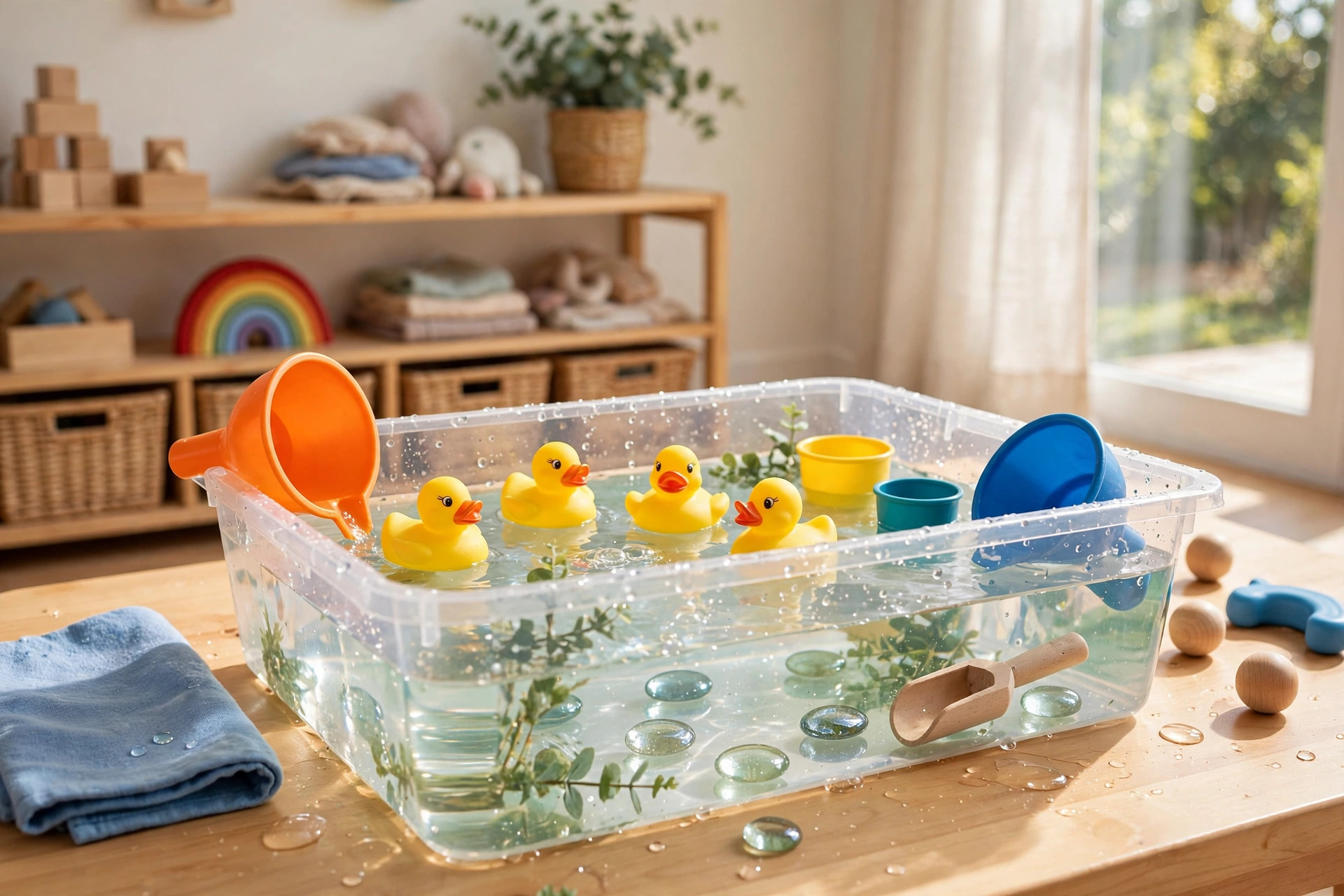
2. A water play bin — cups, funnels and floating toys
A child who loves the bath loves a water bin, because the water that pours is the water that fascinates and the bath is the place you cannot stay all day. Bring the water to the table — cups, funnels and floating toys — so the pouring happens on the playroom floor instead of the bathroom floor. Fill a shallow tub with a few inches of lukewarm water, add cups, a funnel, a sponge and floating toys like rubber ducks, because the funnel is the thing that teaches pouring and the sponge is the thing that teaches squeezing. Put the bin on a towel or a tray with a rim, because the water that splashes is the water that soaks the rug, and play outside in summer if you can, because the bin that lives on the patio is the bin that never floods the house. Change the water after each play, because the water that sits is the water that goes stale, and add a drop of food colouring or a few ice cubes when the bin feels tired, because a new colour is a new bin. Water, cups and a funnel, and the afternoon is sorted.
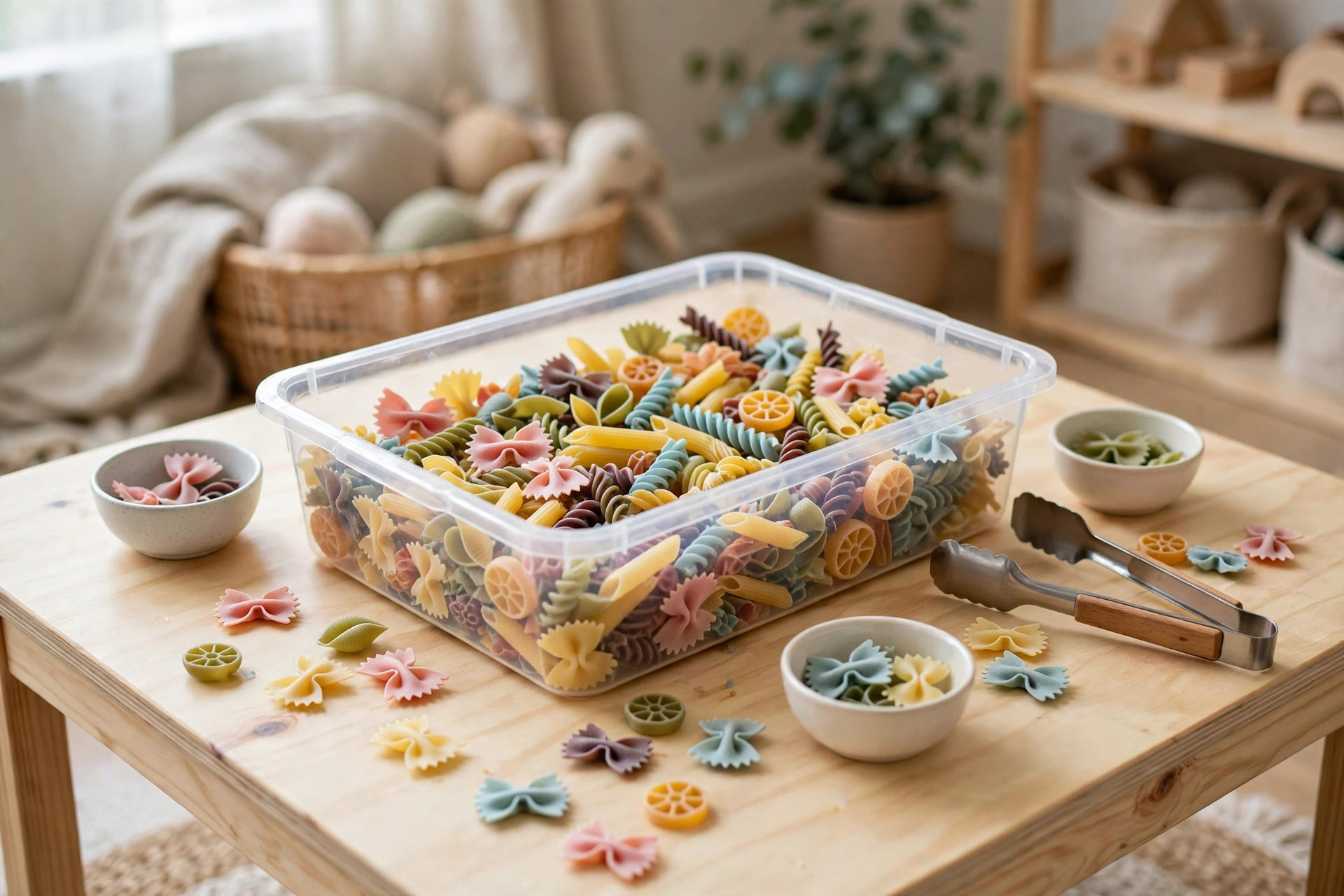
3. A dry pasta bin — coloured pasta, tongs and small bowls
Dry pasta is the cheapest sensory filler there is, because the pasta you already own is the pasta that costs nothing and the bag in the cupboard is the bag nobody misses. Colour it — coloured pasta, tongs and small bowls — so the bin looks like a sweet shop and the child sorts, scoops and threads for an hour. Dye penne, fusilli and farfalle the same way as the rice, in three or four colours, and let them dry on a tray, because the pasta that dries fully is the pasta that does not stain hands. Add tongs, small bowls and a few pipe cleaners to thread the penne onto, because the tongs are the fine-motor practice and the threading is the quiet focus. Use big pasta shapes for toddlers who still mouth things, because the pasta that is big is the pasta that cannot be swallowed, and skip the tiny beads until the child is older. Coloured pasta, and the bin costs less than a coffee.
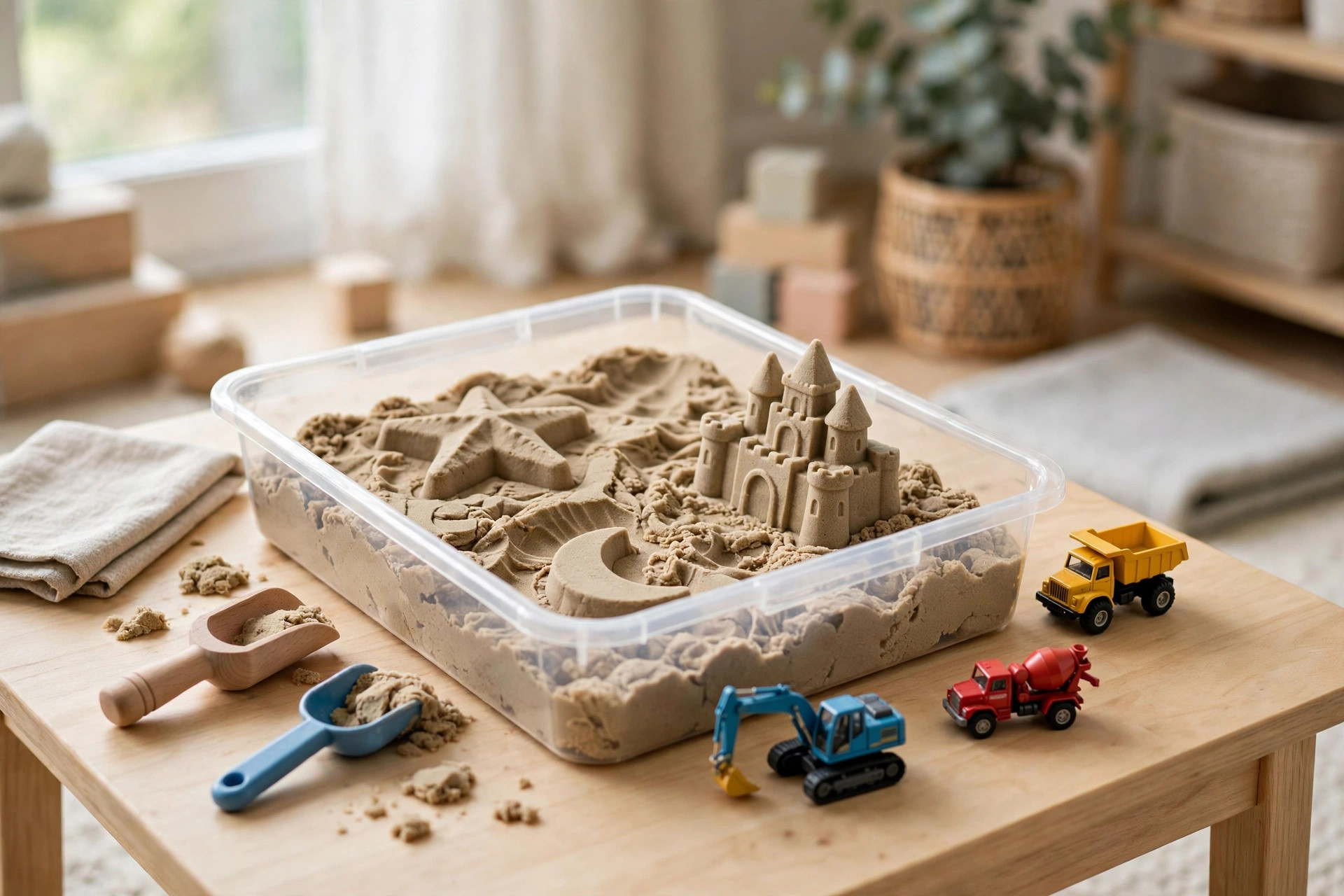
4. A kinetic sand bin — moulds, scoops and tiny trucks
Kinetic sand is the filler that behaves, because the sand that sticks to itself is the sand that does not stick to the floor and the bin that holds its shape is the bin that cleans itself up. Set it up — moulds, scoops and tiny trucks — so the child builds roads and castles while the sand stays in the tub. Pour two or three bags of kinetic sand into a deep bin, add sand moulds, a scoop and a few tiny trucks, because the trucks are the diggers and the moulds are the castles. Keep the bin deep and the sand shallow, because the sand that is deep is the sand that pours over the edge, and play on a tray if the floor is carpeted, because the tray is the thing that catches the crumbs. Kinetic sand never dries out, so the bin is ready every day, and the sand that sticks together is the sand that sweeps up in one go. (Check on Amazon for kinetic sand in a natural sand colour, which looks like a beach and hides the crumbs best.) Sand, moulds and trucks, and the bin is the calmest one you own.
Nature and seasons in a bin
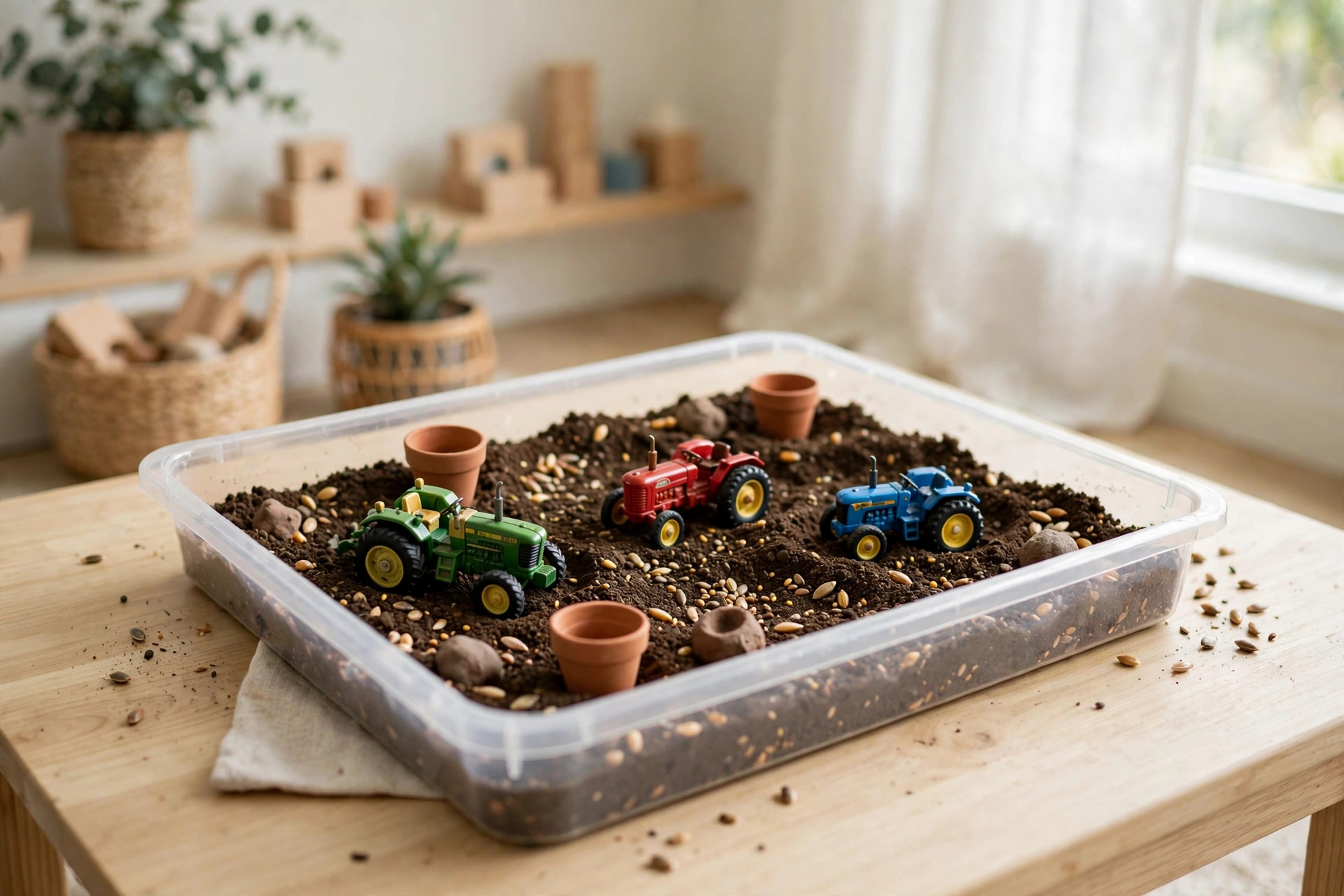
5. A garden soil bin — toy tractors, seeds and little pots
A child who digs in the garden wants to dig inside too, because the soil that is outside is the soil that is cold and the digging is the play that never ends. Bring the garden in — toy tractors, seeds and little pots — so the digging happens on the playroom table. Fill a bin with clean potting soil, add toy tractors, a few seed packets and little terracotta pots, because the tractor is the digger and the pots are the planting. Let the child scoop the soil into the pots and press a seed into each one, because the planting is the story and the tractor is the fun, and water the pots together afterwards, because the seed that gets watered is the seed that grows on the windowsill. Use bagged potting soil, never garden soil, because the bagged soil is the soil that is clean, and wash hands after play, because the soil that is clean is still soil. Tractors, seeds and pots, and the garden comes indoors.
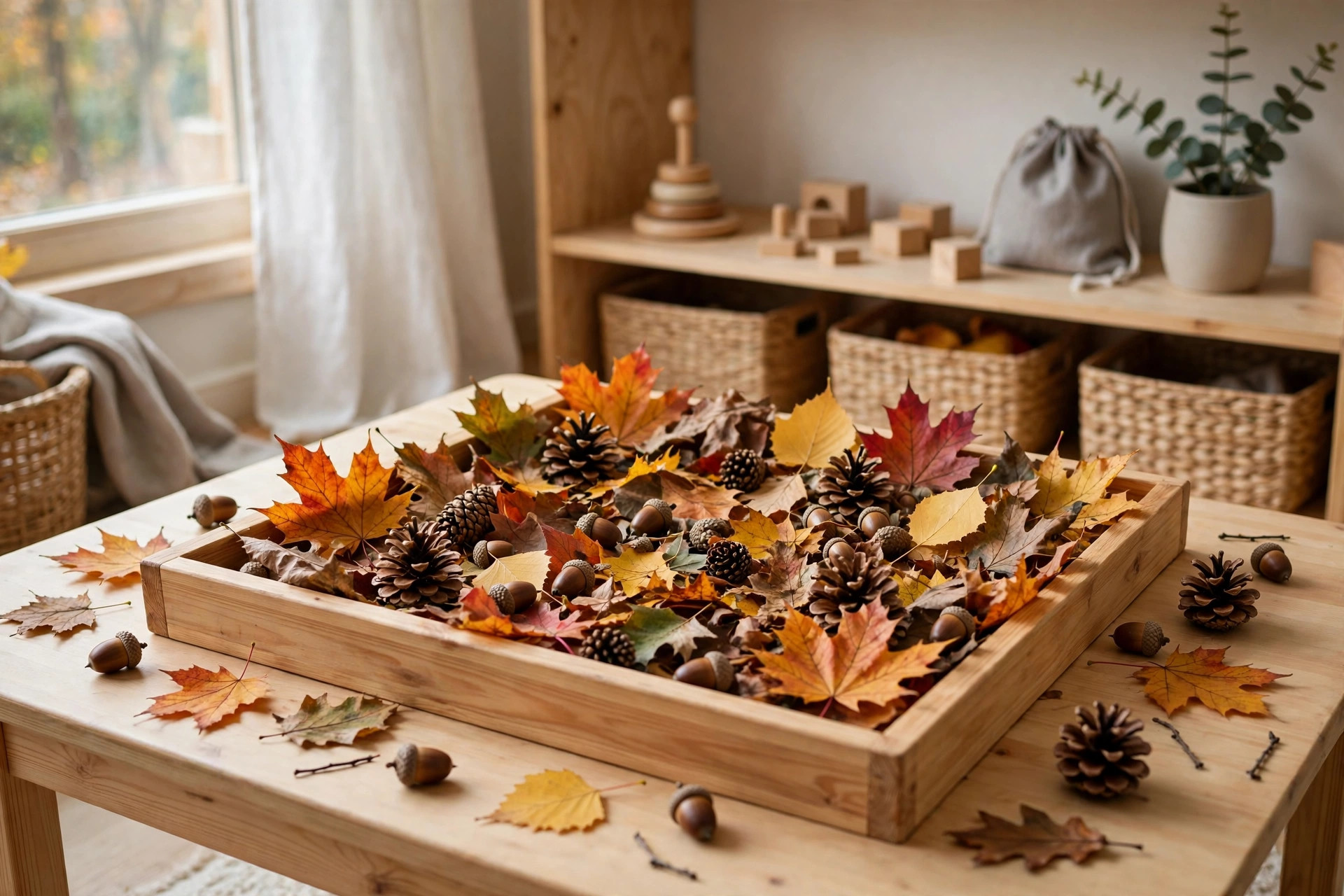
6. An autumn leaves bin — leaves, pinecones and acorns to sort
Autumn gives you a sensory bin for free, because the leaves that fall are the leaves that are everywhere and the pinecones are the things children pick up anyway. Collect them — leaves, pinecones and acorns to sort — so the walk home becomes the bin. Gather dry leaves in red, yellow and brown, a handful of pinecones and a few acorns, and tip them into a shallow tray, because the sorting is the play and the colours are the lesson. Add small bowls and ask the child to sort the leaves by colour, the pinecones by size and the acorns by count, because the bin that sorts is the bin that teaches, and keep a magnifying glass nearby, because the leaf that is looked at closely is the leaf with veins to see. Dry the leaves first, because the leaf that is wet is the leaf that goes mouldy, and refresh the bin with a new walk when the leaves crumble. Leaves, pinecones and acorns, and autumn costs nothing.
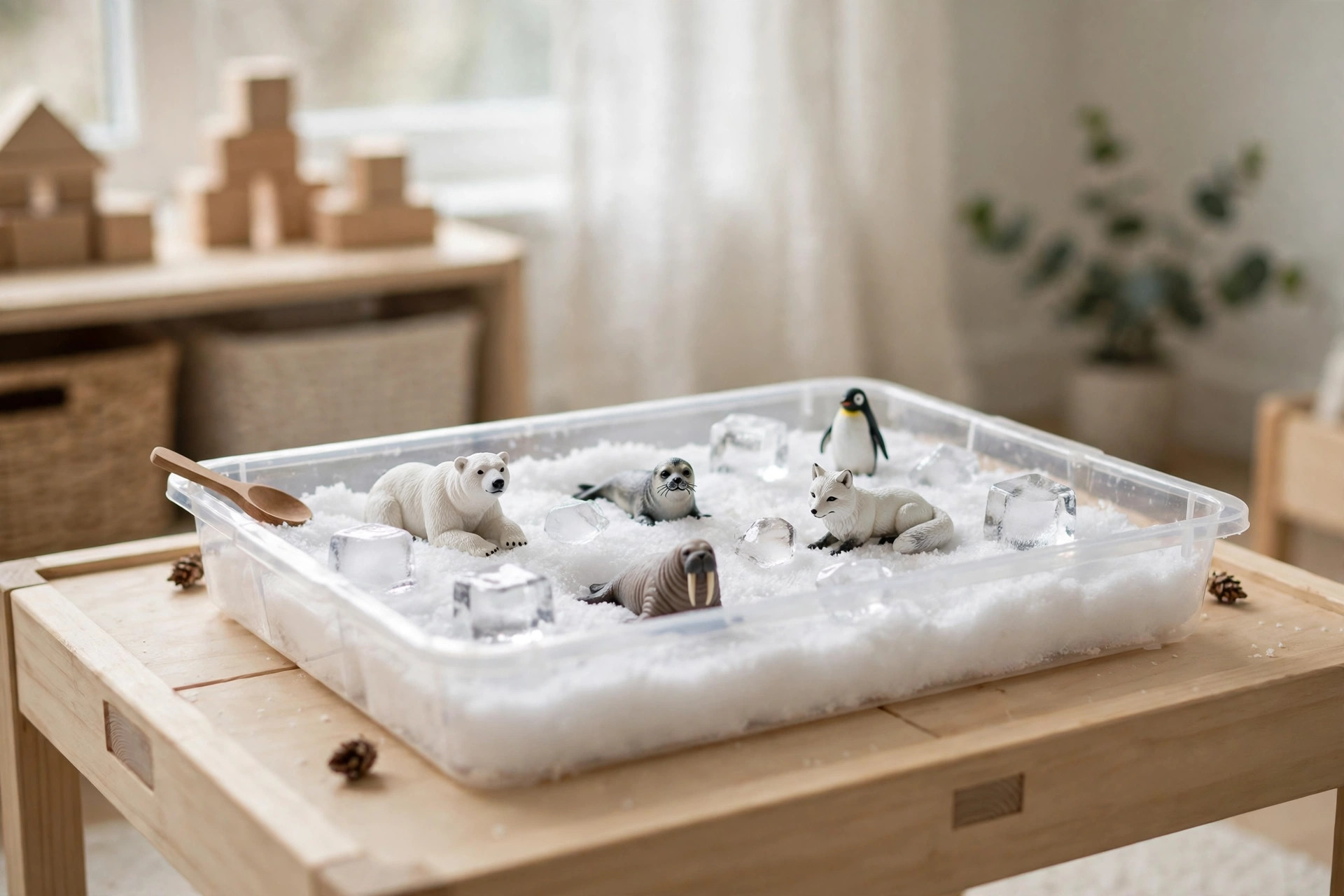
7. A snow bin — fake snow, polar animals and an ice rescue
A snow bin is the winter bin, because the snow that is fake is the snow that never melts and the polar animals are the toys that live in it. Build it — fake snow, polar animals and an ice rescue — so the child plays in the snow without a coat. Fill a bin with fake snow or shaving foam, add polar bear and penguin figures, and freeze a few small toys in ice cubes, because the ice rescue is the game and the warm water is the tool. Give the child a cup of lukewarm water and a spoon to melt the ice, because the melting is the science and the freed toy is the prize, and add a blue scarf as the frozen river, because the scarf is the river and the animals are the story. Use fake snow from a packet, not real snow, because the real snow is the snow that melts on the floor, and keep the bin on a towel, because the foam that escapes is the foam that wipes up easily. Snow, polar animals and an ice rescue, and winter comes indoors.
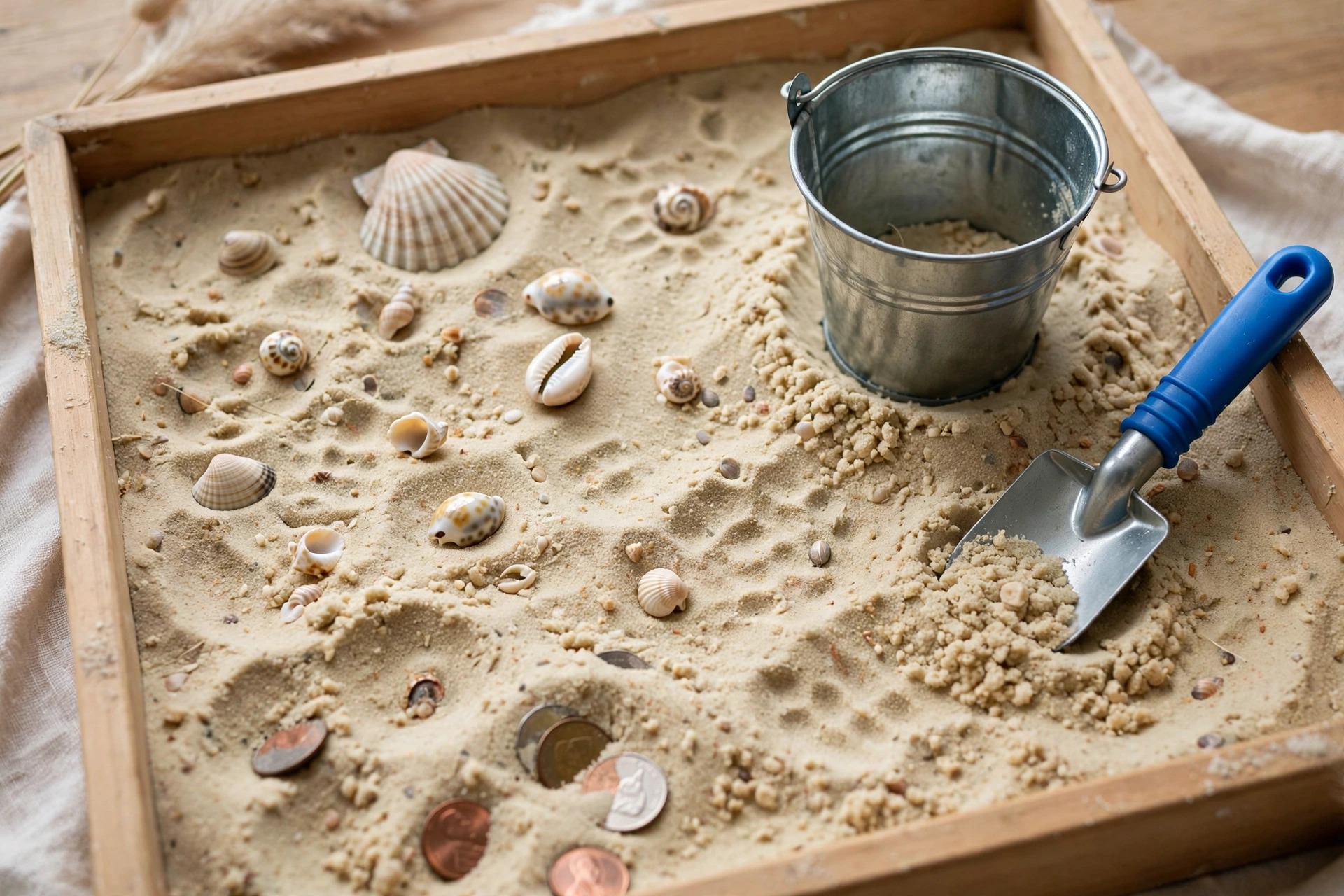
8. A beach sand bin — shells, buckets and a buried treasure hunt
A beach bin is the summer bin, because the sand that is in a tub is the sand that never gets in the car and the shells are the things children collect anyway. Set it up — shells, buckets and a buried treasure hunt — so the seaside comes to the playroom. Fill a bin with play sand, add shells, a small bucket and spade, and bury a few coins or shiny stones, because the treasure hunt is the game and the spade is the tool. Let the child dig for the treasure, sort the shells by size and build a sandcastle in the corner of the bin, because the digging is the play and the sorting is the quiet part, and add a strip of blue fabric as the sea, because the fabric is the water and the sand is the beach. The outdoor play the beach bin belongs to is in 20 Outdoor Toy Storage Ideas for 2026, where the buckets and spades live when the sand goes away. Keep the sand in a lidded bin, because the sand that is lidded is the sand that stays clean, and shake the shells before they go back in, because the shell that is clean is the shell that does not bring sand to the shelf. Sand, shells and a treasure hunt, and the beach is in the playroom.
Colour, letters and learning bins
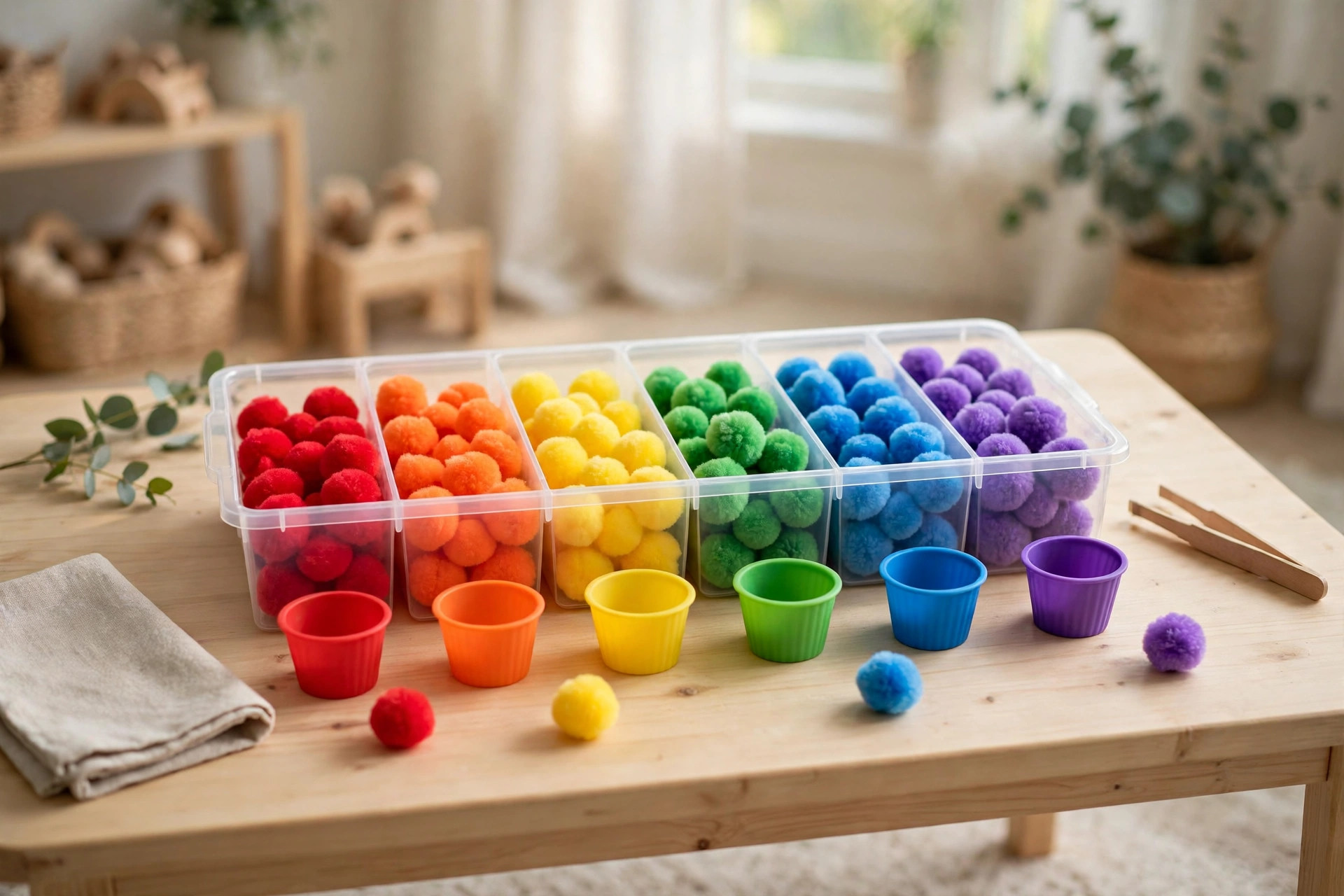
9. A colour sorting bin — one colour per cup, pom-poms to match
A bin of mixed colours is a bin of chaos, because the pom-poms that are everywhere are the pom-poms that teach nothing. Sort them — one colour per cup, pom-poms to match — so the play is a game with a right answer. Fill the bin with pom-poms in four colours and set out four cups, one in each colour, because the cup that matches is the cup that gets the pom-pom. Let the child pick up each pom-pom with tongs or fingers and drop it in the matching cup, because the tongs are the fine-motor practice and the matching is the learning, and count the pom-poms in each cup when the bin is empty, because the counting is the second game. Use big pom-poms for little kids, because the pom-pom that is big is the pom-pom that cannot be swallowed, and save the tiny ones for children over three who have stopped mouthing things. Coloured cups and pom-poms, and sorting becomes a game.
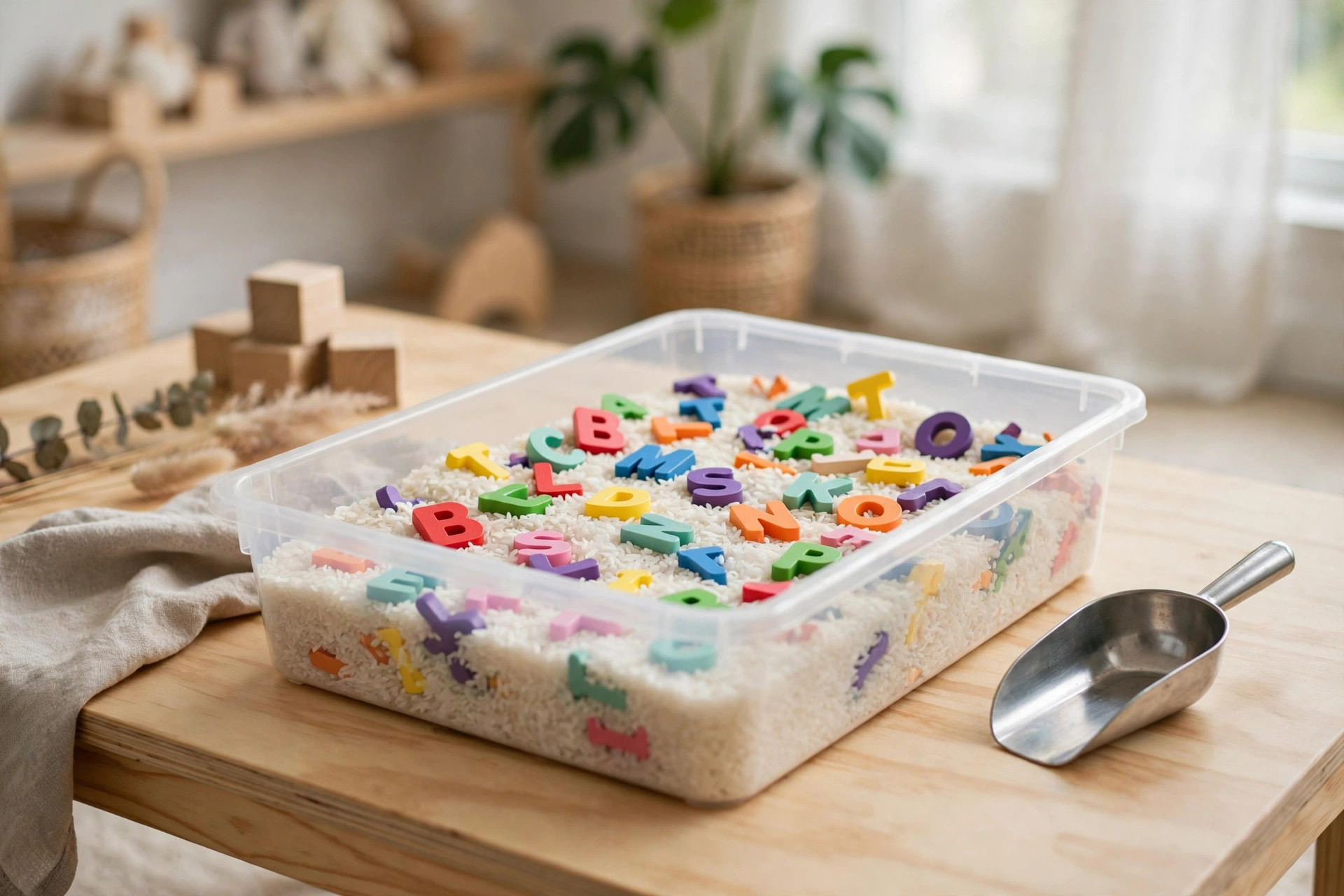
10. A letter hunt bin — magnetic letters buried in rice
A child who digs for treasure will dig for letters too, because the letter that is buried is the letter that is a prize and the rice is the thing that hides it. Bury them — magnetic letters buried in rice — so the alphabet is a treasure hunt. Fill a bin with plain or rainbow rice, hide a set of magnetic letters in it, and lay out a cookie tray, because the tray is the place the letters go when they are found. Ask the child to dig out the letters of their name first, then the letters of the week, because the name is the word they care about and the letters are the lesson, and stick the found letters on the fridge afterwards, because the fridge is the display and the bin is the game. Use chunky magnetic letters, because the letter that is big is the letter a small hand can hold, and keep the small letter tiles for older children. (Check on Amazon for chunky magnetic letters in bright colours, which are easy for little hands to grip and hard to lose in the rice.) Letters in the rice, and the alphabet hides in a bin.
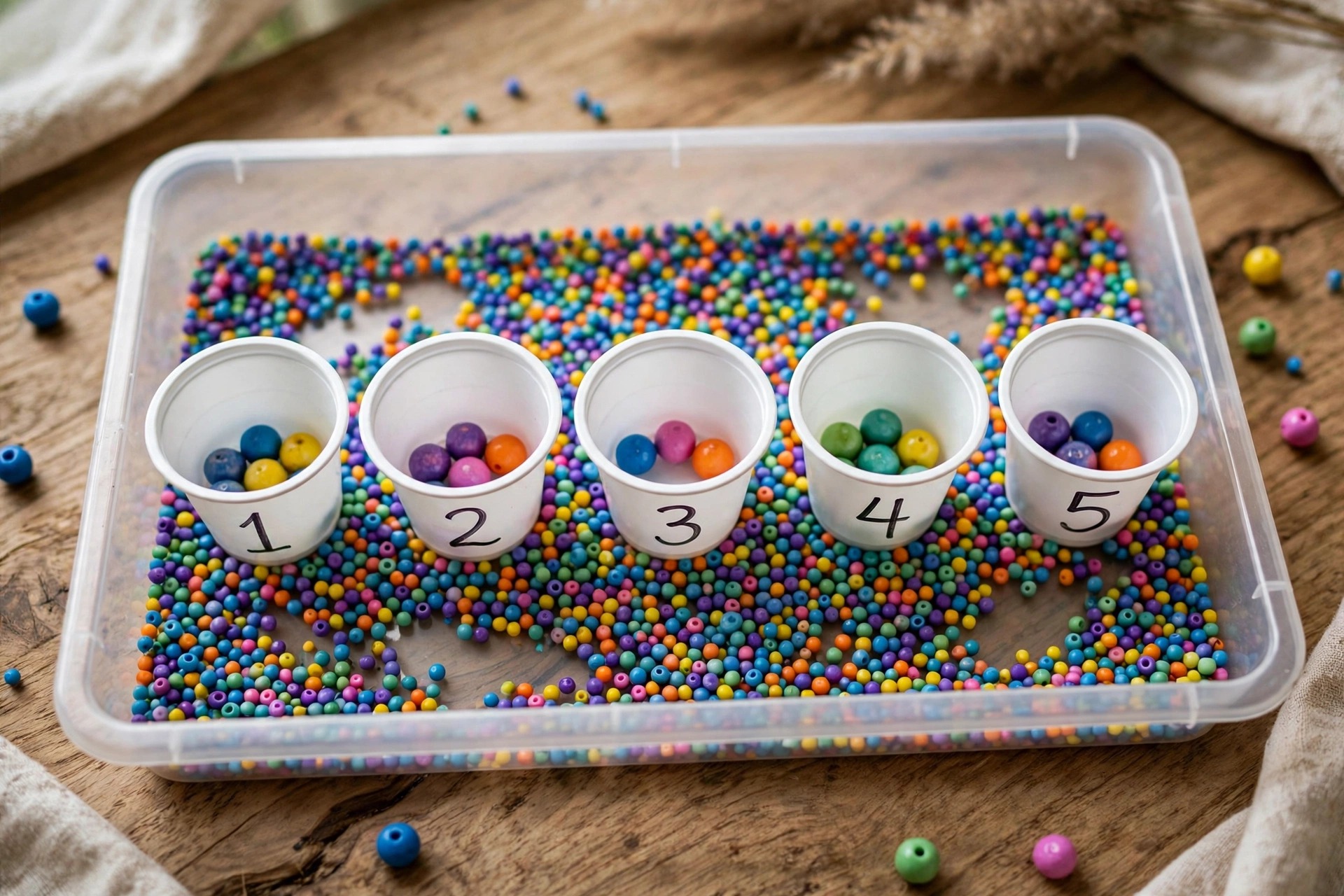
11. A counting bin — numbered cups and exactly that many beads
Counting is hard until it is a game, because the number that is on a page is the number that means nothing and the bead that is in a cup is the bead that can be counted. Make it a bin — numbered cups and exactly that many beads — so the counting has something to hold. Number five cups from one to five, fill the bin with beads or dried chickpeas, and ask the child to put exactly the right number in each cup, because the cup that says three is the cup that gets three beads. Start with one to three for toddlers and add four and five when they are ready, because the bin that grows is the bin that lasts, and let the child tip the cups out and start again, because the starting again is the practice. The learning-play side of the counting bin is in 22 School Organization Ideas for 2026, where the counting cups and number cards have a shelf of their own. Use big wooden beads or chickpeas for little kids, because the bead that is big is the bead that is safe, and keep the tiny beads for children over three. Numbered cups and beads, and counting fits in a tub.
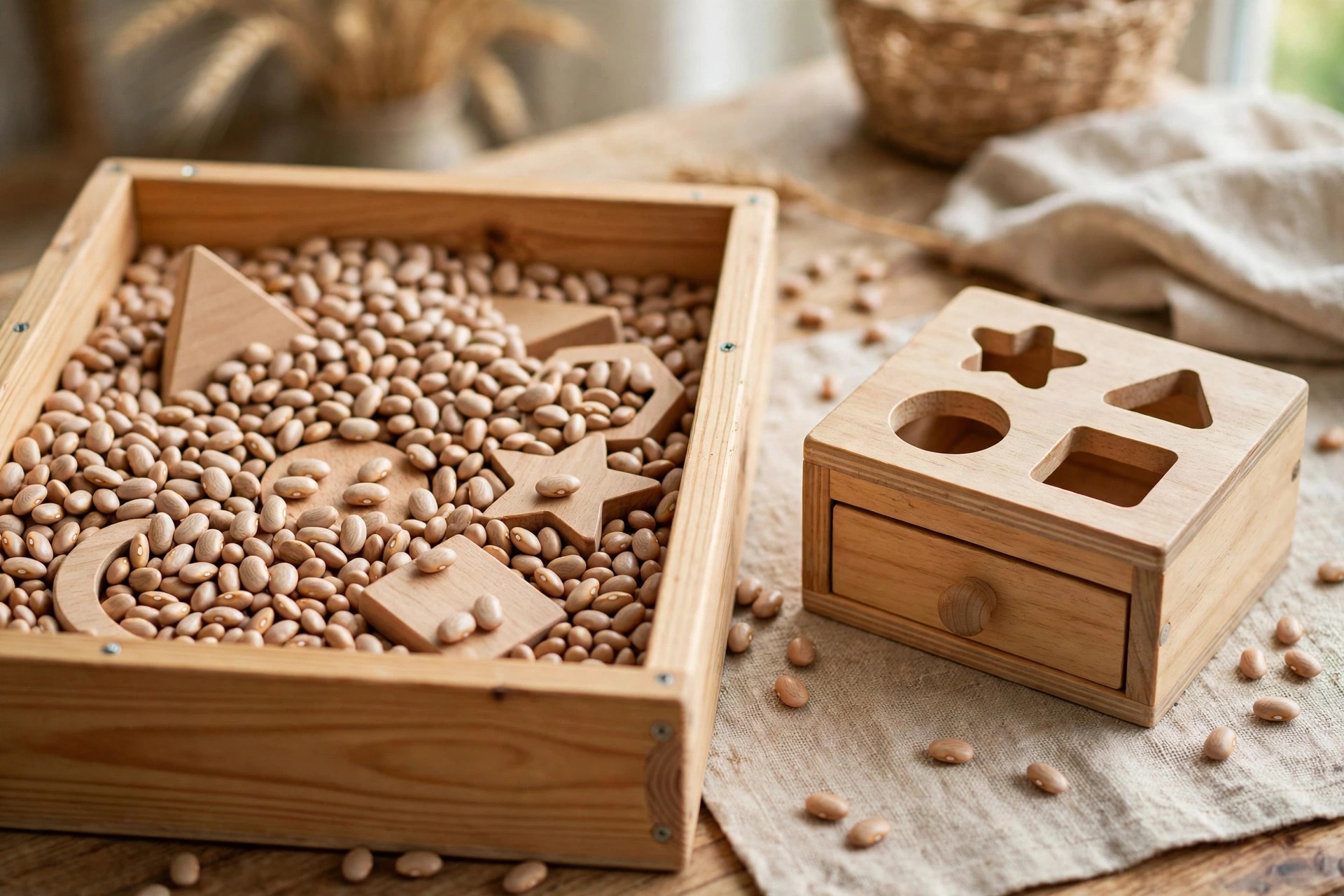
Shapes are easier to learn by touch than by sight, because the shape that is in a hand is the shape that is understood and the shape that is on a flashcard is the shape that is forgotten. Hide them — wooden shapes hidden in dried beans — so the finding is the learning. Fill a bin with dried beans, bury wooden circles, squares, triangles and stars, and set out a shape sorter or four small bowls, because the bowl that matches is the bowl that gets the shape. Let the child dig with both hands and pull out one shape at a time, because the digging is the sensory play and the naming is the lesson, and ask them to find the circle, then the triangle, because the shape that is named is the shape that is learned. Use dried beans, not rice, because the beans are the filler that hides the shapes properly, and keep the beans for children over three who have stopped mouthing things — for younger children, use big pasta shapes instead, because the pasta that is big is the pasta that is safe. Wooden shapes in beans, and geometry hides in a bin.
Messy, calming and grown-up-proof bins
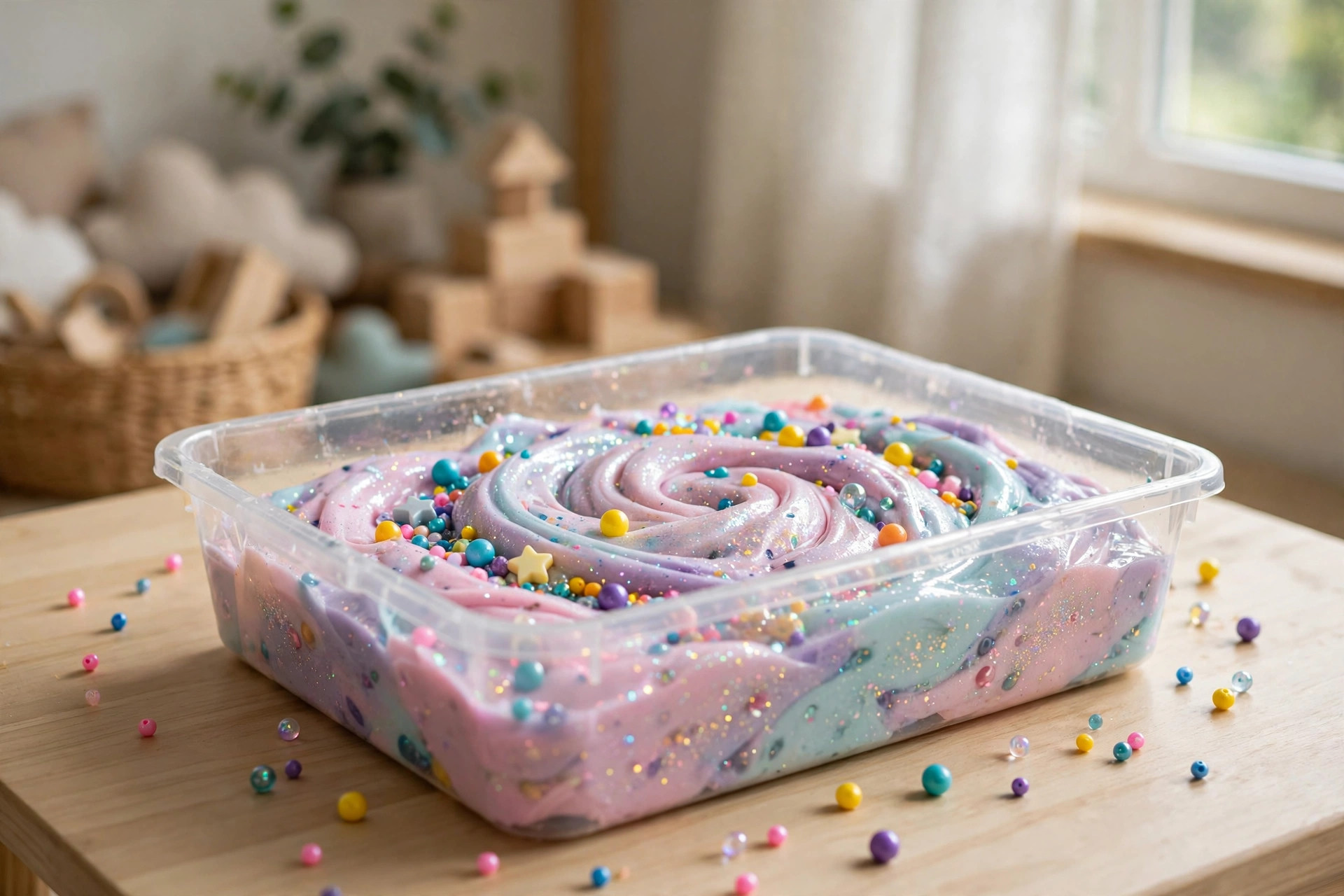
13. A slime and goo bin — homemade slime with glitter and beads
Slime is the sensory bin children ask for by name, because the slime that stretches is the slime that fascinates and the goo is the thing that never gets boring. Make it at home — homemade slime with glitter and beads — so the bin costs a bottle of glue and an afternoon. Mix white glue, a spoonful of baking soda and a splash of contact lens solution, stir in glitter and a handful of beads, and knead it until it stretches, because the kneading is the play and the glitter is the magic. Keep the slime in the bin, not on the carpet, because the slime that stays in the tub is the slime that does not stick to the sofa, and store it in a sealed tub between plays, because the slime that is sealed is the slime that lasts for weeks. Make it with children over three only, because the slime that is homemade is the slime that is not for mouthing, and wash hands after play, because the glitter that is on the hands is the glitter that ends up everywhere. Slime, glitter and beads, and the bin is the one they ask for.
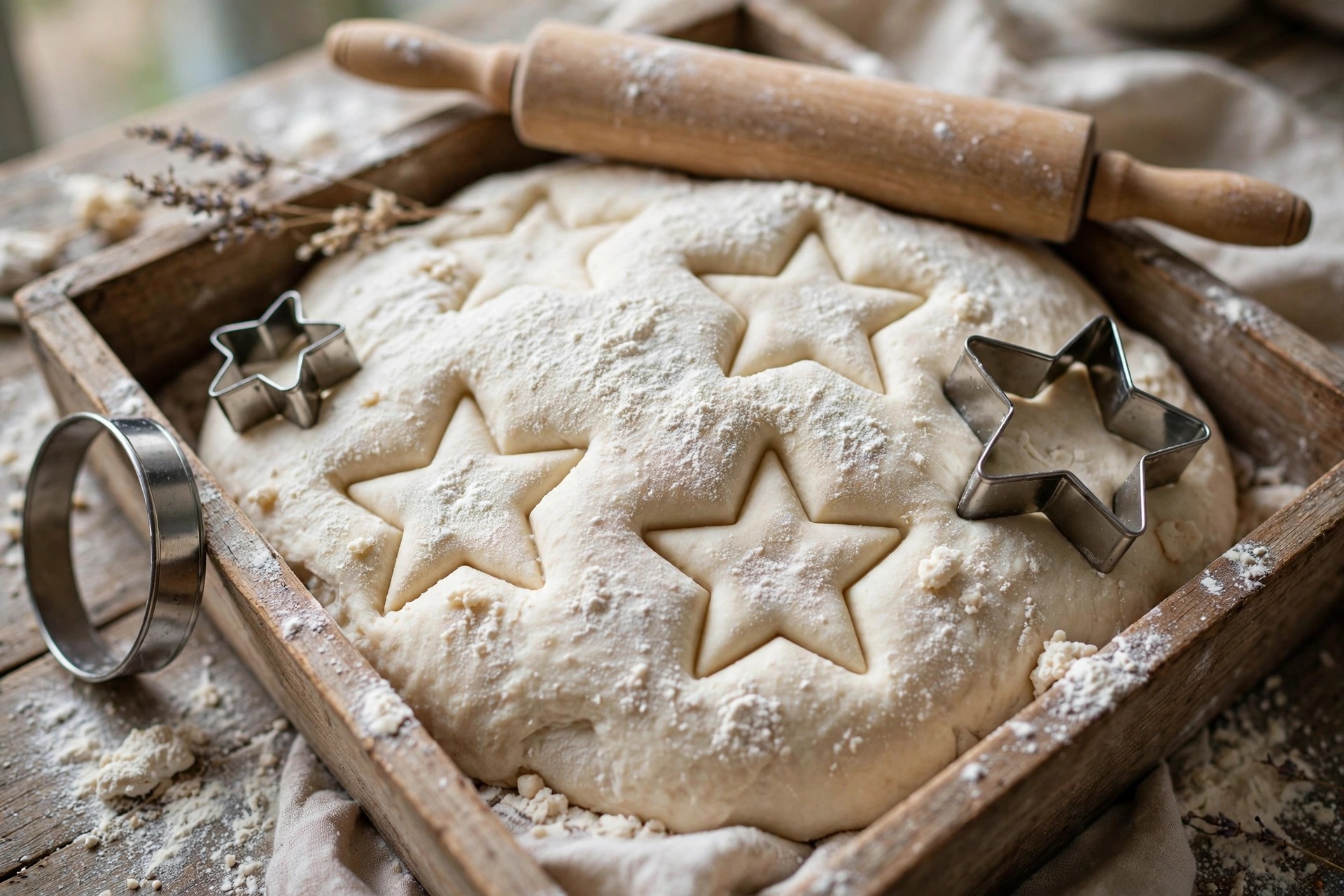
Cloud dough is the softest filler there is, because the dough that is flour and oil is the dough that feels like silk and the bin that is cloud dough is the bin that smells like cake. Mix it — soft flour dough with cookie cutters — so the child bakes without an oven. Stir eight cups of plain flour with one cup of vegetable oil until it holds together when squeezed, pour it into a bin, and add cookie cutters, a rolling pin and small cups, because the cutters are the baking and the rolling pin is the fun. Let the child press stars and hearts, fill the cups and tip them out again, because the pressing is the play and the tipping is the second game, and use taste-safe ingredients only, because the dough that is flour and oil is the dough that is safe if a toddler tastes it. Cloud dough keeps for weeks in a sealed tub, and the flour that is dry is the flour that sweeps up easily, because the dough that crumbles is the dough that never stains. Flour, oil and cookie cutters, and the bakery fits in a bin. The craft supplies the messy bins use are kept tidy in 20 Art Supply Organization Ideas for 2026, where the paints, dough tools and cutters each have a home.
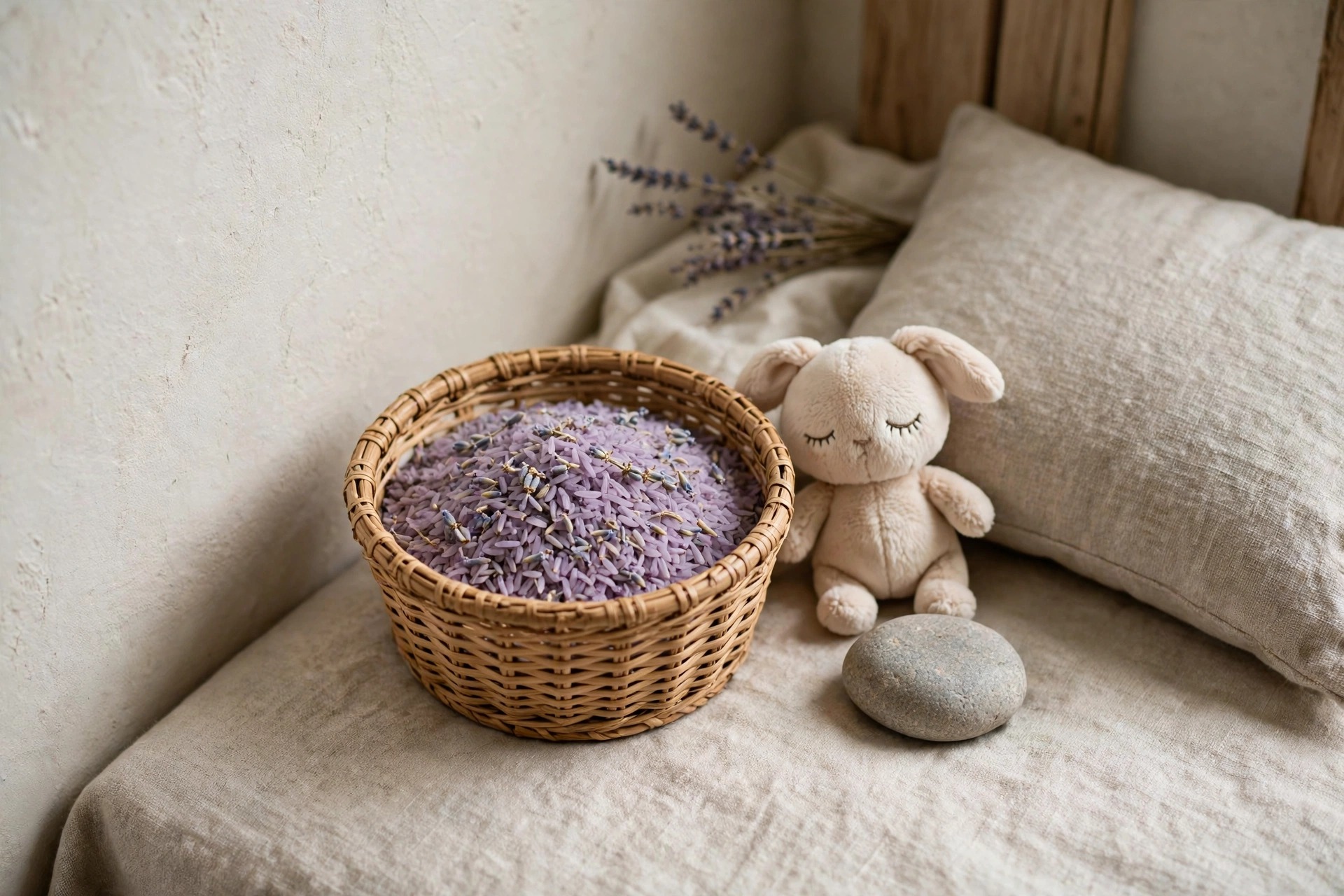
15. A calm-down bin — lavender rice, soft toys and a quiet corner
A child who is overwhelmed needs a bin that calms, not a bin that excites, because the child who is overstimulated is the child who needs less, not more. Build the quiet one — lavender rice, soft toys and a quiet corner — so the bin is the place to settle. Fill a small bin with rice scented with a drop of lavender oil, add a soft toy, a smooth stone and a small blanket, because the lavender is the calm and the soft toy is the comfort. Put the bin in a quiet corner with a cushion, and let the child run their hands through the rice slowly, because the slow scooping is the settling and the quiet corner is the safe place, and never force the bin on a child who is upset, because the bin that waits is the bin that works. Keep this bin small and the filler plain, because the bin that is calm is the bin that is simple, and refresh the lavender every few weeks, because the scent that fades is the scent that needs topping up. Lavender rice and a soft toy, and the bin becomes a hug.
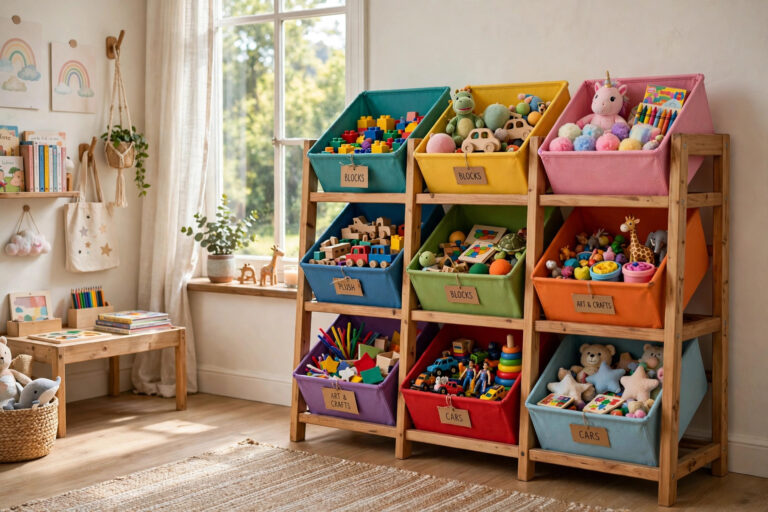
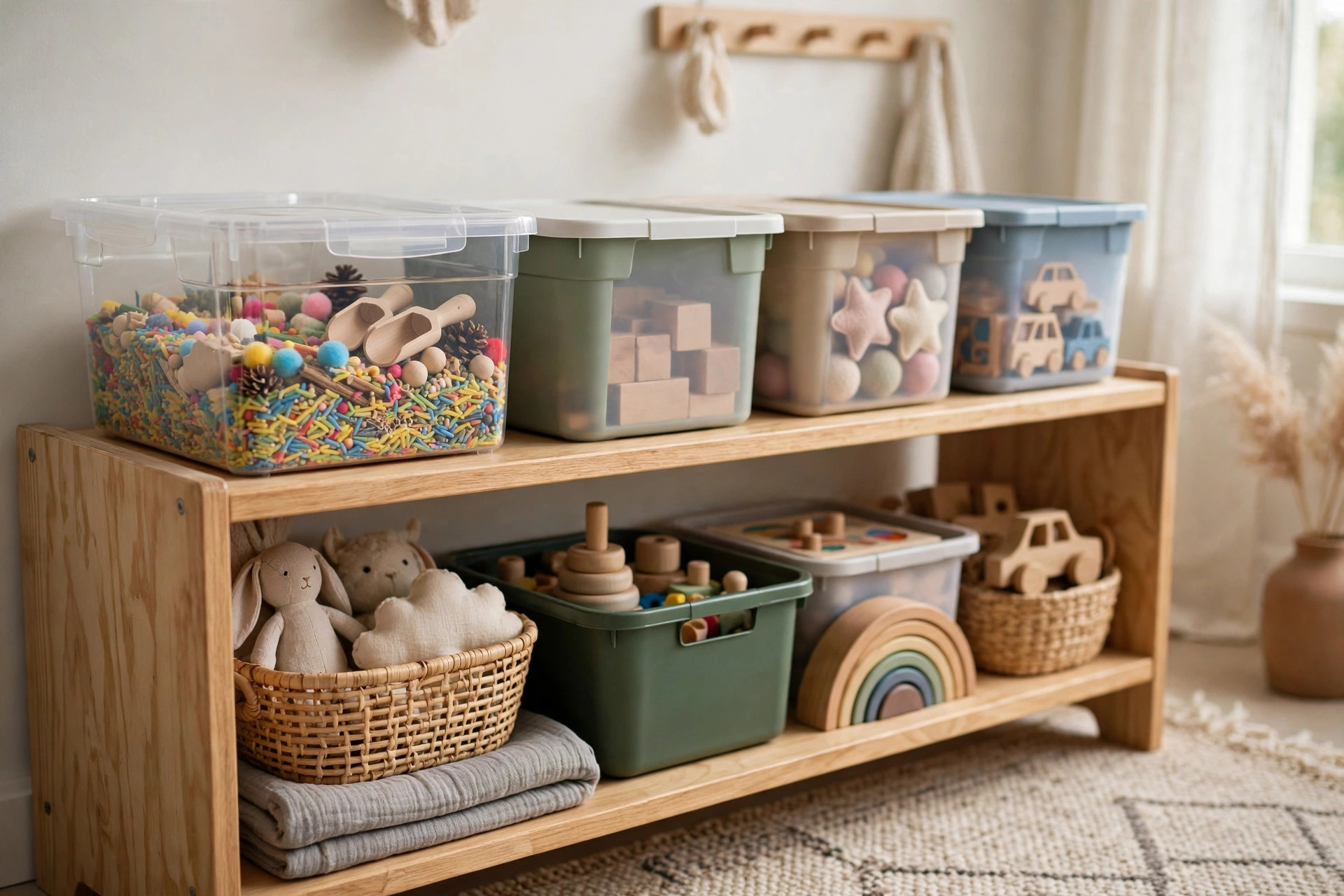
16. A bin with a lid that doubles as storage — the bin that tidies itself
A sensory bin with no lid is a sensory bin that spills, because the bin that is open is the bin that tips over and the filler that is loose is the filler that ends up on the floor. Choose a bin with a lid — the bin that tidies itself — so playtime ends with a lid, not a broom. Pick a shallow storage box with a snap-on lid, play with the lid off, and snap it on when the child is done, because the lid is the tidy-up and the box is the storage. Stack the lidded bins on a shelf when play ends, because the bin that stacks is the bin that fits in a playroom, and label each lid with what is inside, because the labelled bin is the bin that gets found again. (Check on Amazon for shallow clear storage boxes with snap-on lids, which stack neatly and let you see the filler inside.) The toys the bins stack beside are kept in 35 Clever Toy Storage Ideas for 2026, where every toy has a labelled home, and the rack that holds the lidded bins is the storage bin rack DIY post, which turns a shelf of boxes into a tidy playroom wall. A lid on the bin, and the mess tidies itself.
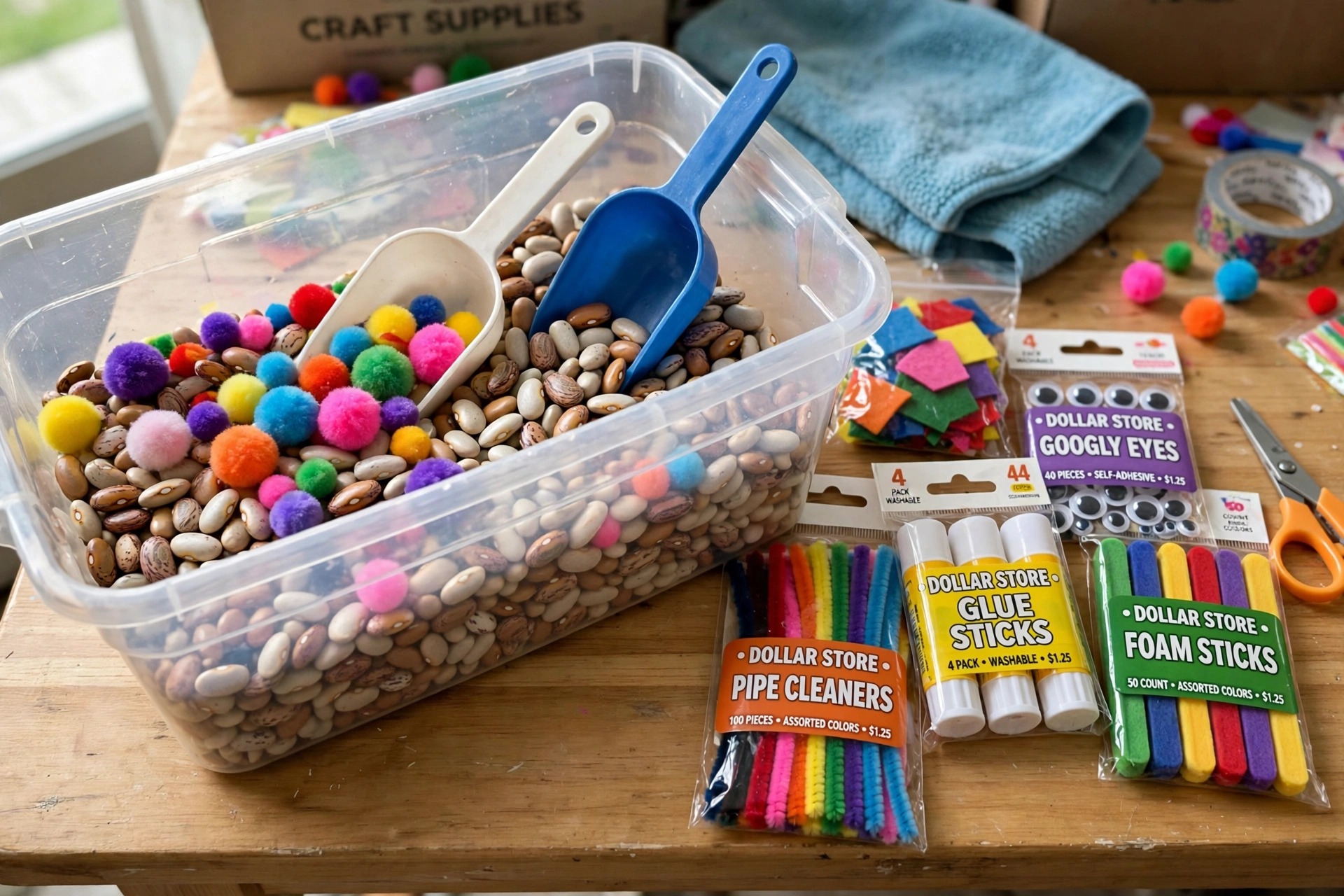
17. A dollar-store bin — the whole bin for under ten dollars
A sensory bin does not need a craft shop, because the dollar store is the shop that sells everything a bin needs and the bin that costs ten dollars is the bin anyone can make. Shop it — the whole bin for under ten dollars — so the play is cheap and the filling is fun. Buy a plastic tub, a bag of dried beans, a pack of pom-poms, a set of scoops and a few small toys, because the tub is the bin and the rest is the filling, and skip the branded fillers, because the filler that is plain is the filler that works the same. Let the child help choose the colours, because the bin that is chosen is the bin that gets played with, and keep the receipt, because the bin that costs under ten dollars is the bin you can make again next month. The dollar store DIY ideas in the dollar store DIY post use the same cheap finds for the whole house, so the bin is the first project and the house is the next one. A tub, beans and pom-poms, and the bin costs less than lunch.
Which DIY sensory bin fits which situation?
| Situation | Best first move | Budget | Tools needed |
|---|---|---|---|
| First sensory bin ever | Rainbow rice bin (idea 1) | Low | Rice, food colouring |
| A child who loves the bath | Water play bin (idea 2) | Free | Tub, cups, funnel |
| Cheapest possible bin | Dry pasta bin (idea 3) | Free | Pasta, food colouring |
| A bin that never makes a mess | Kinetic sand bin (idea 4) | Low | Kinetic sand, moulds |
| A child who digs outside | Garden soil bin (idea 5) | Low | Potting soil, tractors |
| Autumn walk, free filler | Autumn leaves bin (idea 6) | Free | Leaves, pinecones |
| Winter, no coat needed | Snow bin with ice rescue (idea 7) | Low | Fake snow, ice cubes |
| Summer, seaside at home | Beach sand bin (idea 8) | Low | Play sand, shells |
| Learning colours | Colour sorting bin (idea 9) | Low | Pom-poms, cups |
| Learning the alphabet | Letter hunt bin (idea 10) | Low | Magnetic letters, rice |
| Learning to count | Counting bin (idea 11) | Low | Numbered cups, beads |
| Learning shapes | Shape bin (idea 12) | Low | Wooden shapes, beans |
| A child who asks for slime | Slime and goo bin (idea 13) | Low | Glue, baking soda |
| Taste-safe messy play | Cloud dough bin (idea 14) | Low | Flour, oil |
| An overwhelmed child | Calm-down bin (idea 15) | Low | Lavender rice, soft toy |
| A bin that tidies itself | Lidded storage bin (idea 16) | Low | Storage box with lid |
| Under ten dollars total | Dollar-store bin (idea 17) | Low | Tub, beans, pom-poms |
You do not need all 17 bins. You need the three that fit your child right now — usually the rainbow rice bin for everyday play, the water bin for hot afternoons, and the calm-down bin for the days that go wrong. Start with the rainbow rice, make it this weekend, and put it on a towel on the playroom table. Do that and the next time little hands need something to do, the bin will be there, for the price of a bag of rice and an afternoon.
Save this post for your next rainy afternoon, and if the playroom needs sorting first, read 22 Playroom Organization Ideas for 2026 next — it is Post 13, the zones and shelves the bins live in — and 20 Art Supply Organization Ideas for 2026, Post 16, for the paints, dough tools and craft supplies the messy bins use. This is the seventh post of the DIY by project cluster — Posts 21 to 30, one project at a time — and the next posts carry the same budget system into the projects that follow.
Publish date assigned at publishing time. Updated as new DIY sensory bin finds are tested.
Frequently asked questions
What age is a sensory bin safe for?
A sensory bin is safe from around 18 months with the right filler — taste-safe fillers like cooked pasta, cereal, cloud dough and water are the safe first bins, because a toddler who mouths everything needs a filler that is safe to taste. Small beads, pom-poms, dried beans and rice are for children over three who have stopped putting things in their mouths. Whatever the age, always supervise sensory play, because a bin that is watched is a bin that is safe.
How do I keep the mess from a sensory bin contained?
Play on a towel, a tray with a rim or a cheap shower curtain on the floor, because the towel is the thing that catches the spills and the tray is the thing that keeps the filler in one place. Keep the filler shallow — two inches is plenty — because the bin that is shallow is the bin that spills less, and choose a bin with a lid so play ends with a lid, not a broom. A towel underneath and a shallow fill, and the mess stays in the bin.
How do I store sensory bin fillers between uses?
Keep dry fillers like rice, pasta and beans in a sealed tub or a zip bag, because the filler that is sealed is the filler that stays clean and dry for months. Wet fillers like slime and cloud dough go in a sealed tub in a cool place, and water play bins get fresh water every time, because the water that sits is the water that goes stale. Label each tub with what is inside, because the labelled tub is the tub that gets found again — and throw away any filler that smells off or has gone damp.